
Phone: 707-826-4189
Fax: 707-826-4783
research.humboldt.edu
Phone: 707-826-4189
Fax: 707-826-4783
research.humboldt.edu
Join Sponsored Programs Foundation for an in-person discussion on the current grant landscape, including recent changes to application and contracting processes and broader trends affecting sponsored research.
The session will also address how to navigate potential grant cancellations, available mechanisms for appeal, and system-wide support resources.
Attendees will have the opportunity to ask questions and share concerns in an open forum.
All Cal Poly Humboldt faculty and staff are welcome. Register to attend by following the link to the event Google form. A Google calendar invitation will be sent following registration.
Date & Time: February 24, 2026 | 5–6 pm
Location: Library Fishbowl (LIB 209)
Format: In-person
As we enter spring 2026, I want to take a moment to reflect on the year behind us and acknowledge the resilience it has required from our research community. This past year in research administration was, without question, one of the most challenging in my 15 years with SPF. We faced difficult decisions, including saying goodbye to some long standing programs that have meant a great deal to our campus. At the same time, we experienced moments of hope, welcoming new funding opportunities even as we navigated loss.
We also saw progress through perseverance. Legal victories in the courts allowed us to reinstate some critical programs, while others, unfortunately, could not be sustained. These outcomes were often bittersweet, underscoring the complexity of the landscape we continue to navigate together.
Through it all, your dedication to research, creative activity, and student success has remained a constant source of inspiration. The Cal Poly Humboldt Sponsored Programs Foundation remains committed to standing beside our PIs; advocating, adapting, and working creatively to support your work in an evolving environment.
We know uncertainty remains, but so does our optimism. We look forward to continuing these conversations at our upcoming Principal Investigator Open Forum at the end of February and welcome your partnership as we move forward; resilient, collaborative, and committed to the future of research at Humboldt.
With appreciation, Kacie Flynn
You’re invited to take part in the 13th Annual ideaFest on Friday, May 1! More than 400 students, staff, and faculty from Humboldt will showcase innovative research, performances, digital projects, and more. The event is sponsored by SPF, the Library, and Marketing & Communications (MarCom), in collaboration with all Colleges.
Key Dates:
Registration Opens: Monday, March 9, 2026
Registration Deadline: April 17, 2026
13th Annual ideaFest: Friday May 1, 2026
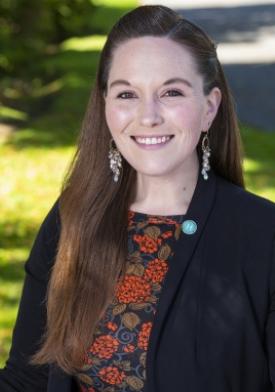
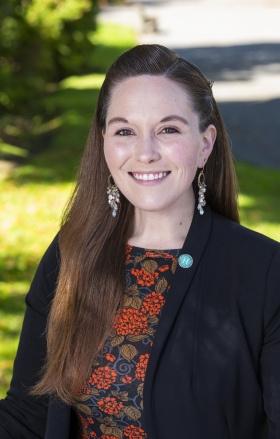
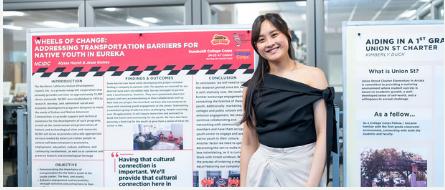
Photo from ideaFest 2025, via Kellie Jo Brown.
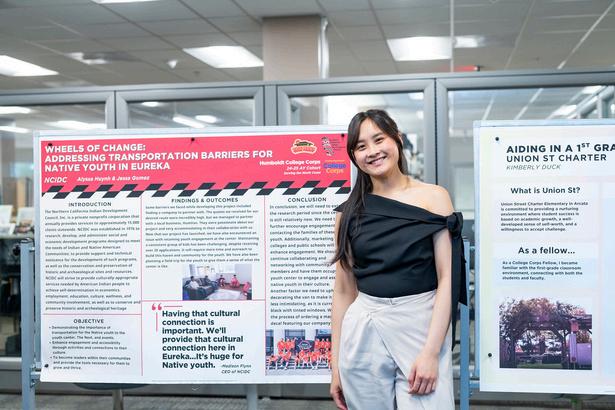
For more information, visit the ideaFest website or get in touch with Ideafest Coordinator Jessica Welch at jessica.welch@humboldt.edu
$203M
Currenttotalvalueof allawardsrecieved

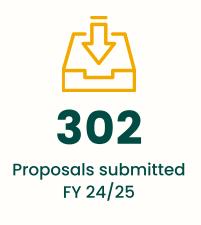
302
Proposalssubmitted FY24/25
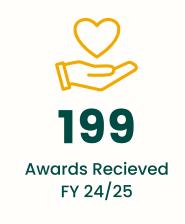
AwardsRecieved FY24/25 199
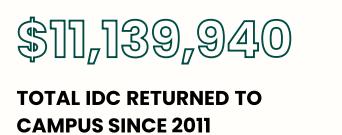
$11,139,940
TOTALIDCRETURNEDTO CAMPUSSINCE2011
ReturningIndirectCost(IDC)tothecampus facilitatesadditionalresearchopportunitieswithin academicdivisions.TheIDCdistributionhas successfullyfundednewprogramsand community-basedprojects,includingsupportfor grant-writing.CalPolyHumboldtfundsanumber ofuniversityexpenseswiththeIDCReturnsuchas FacultyStart-Upcosts,labs,andequipment.There havebeendistributionsin13/14yearssincethe policystarted.
664
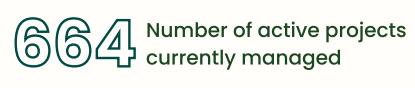
Numberofactiveprojects currentlymanaged
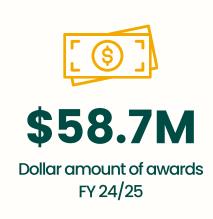
Dollaramountofawards FY24/25 $58.7M
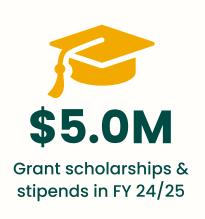
$5.0M
Grantscholarships& stipendsinFY24/25

Check out our interactive map!
If there are any projects that you’d like to see added, you can leave suggestions in this Google Form

The Team Review Program is designed to facilitate review and direct feedback on your grant proposal from an expert (or experts) in your field. Visit our Funding Support page for more details.
As the grant landscape continues to evolve, staying proactive in identifying new funding opportunities is more important than ever. Our office offers several resources to help you expand and diversify your funding sources:
Non-Federal Grant Round-Up: SPF shares regular emails highlighting non-federal funding opportunities through our research portal. Not subscribed yet? Sign up by visiting our quick tutorial on Scribe.
Engagement Hub: A centralized platform for internal funding opportunities across the Humboldt campus. Find calls for funding, minigrants, awards, and stipends all in one place.
Pivot Curated Lists: Access curated funding lists organized by theme or college (e.g., CAHSS, CPS, CNRS, social justice and equity, interdisciplinary grants, and more). These lists are available under the Home tab in Pivotjust sign in with your institutional login.
Do you have travel claims, reimbursements, advances, etc., and you’re unsure how to complete the forms?
SPF offers Drop-In Zoom Hours every weekday from 2:00-3:00pm.
If you can’t make these hours, or the daily office hours, contact our Front Office at (707) 826-4189 or hsuf@humboldt.edu
SPF also provides individualized funding search assistance. Visit our website’s Find Funding page to explore available resources, or reach out to a Research Development Support Coordinator for personalized support. Contact information can be found on ou website staff page.
SPF is now using Axios to distribute monthly email bulletins! The type of information included in these bulletins- such as procedural updates, policy changes, and office news- was previously shared through our quarterly newsletters. This new format allows us to provide updates more quickly and efficiently, keeping the campus community well informed.
Please visit our bulletin sign-up page to subscribe!
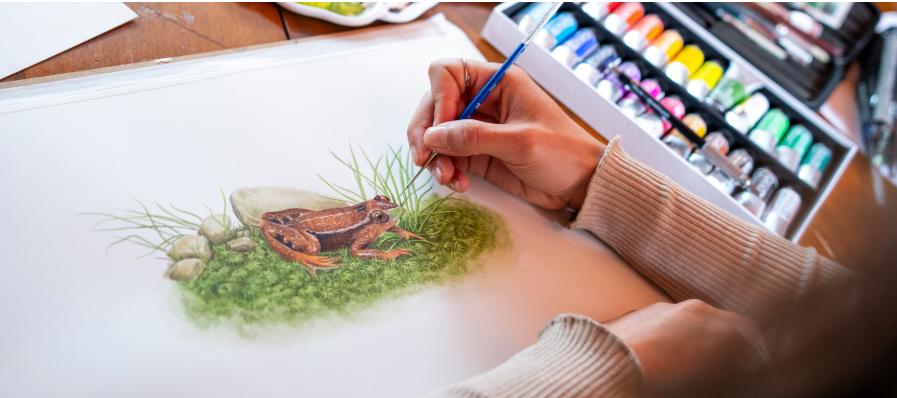
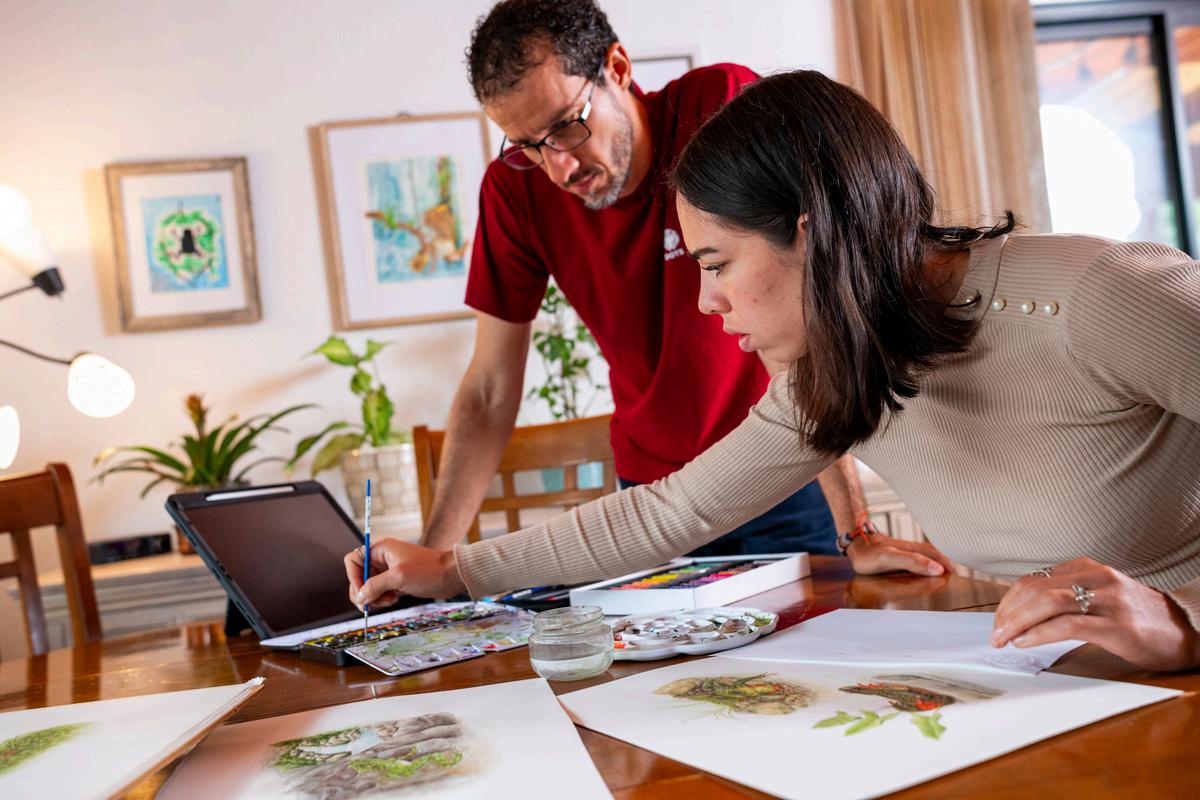
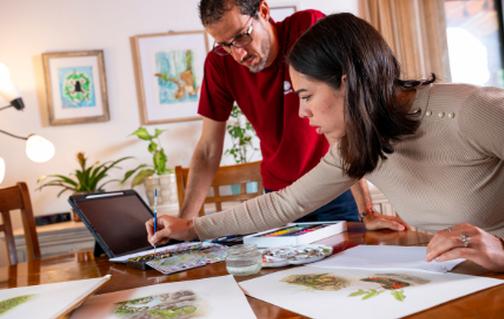
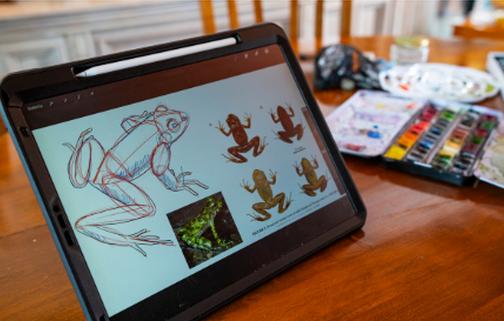
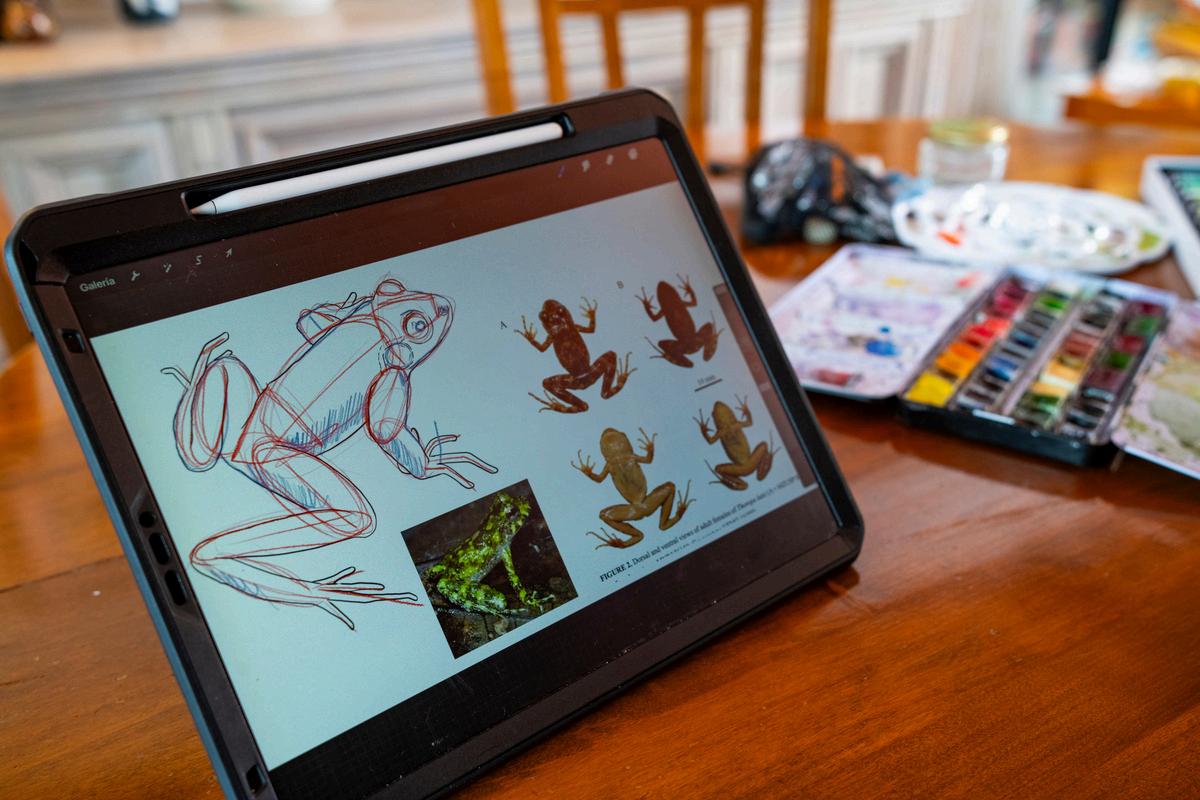
Artist-in-residence intern works on scientific illustration. Via Kellie Jo Brown.
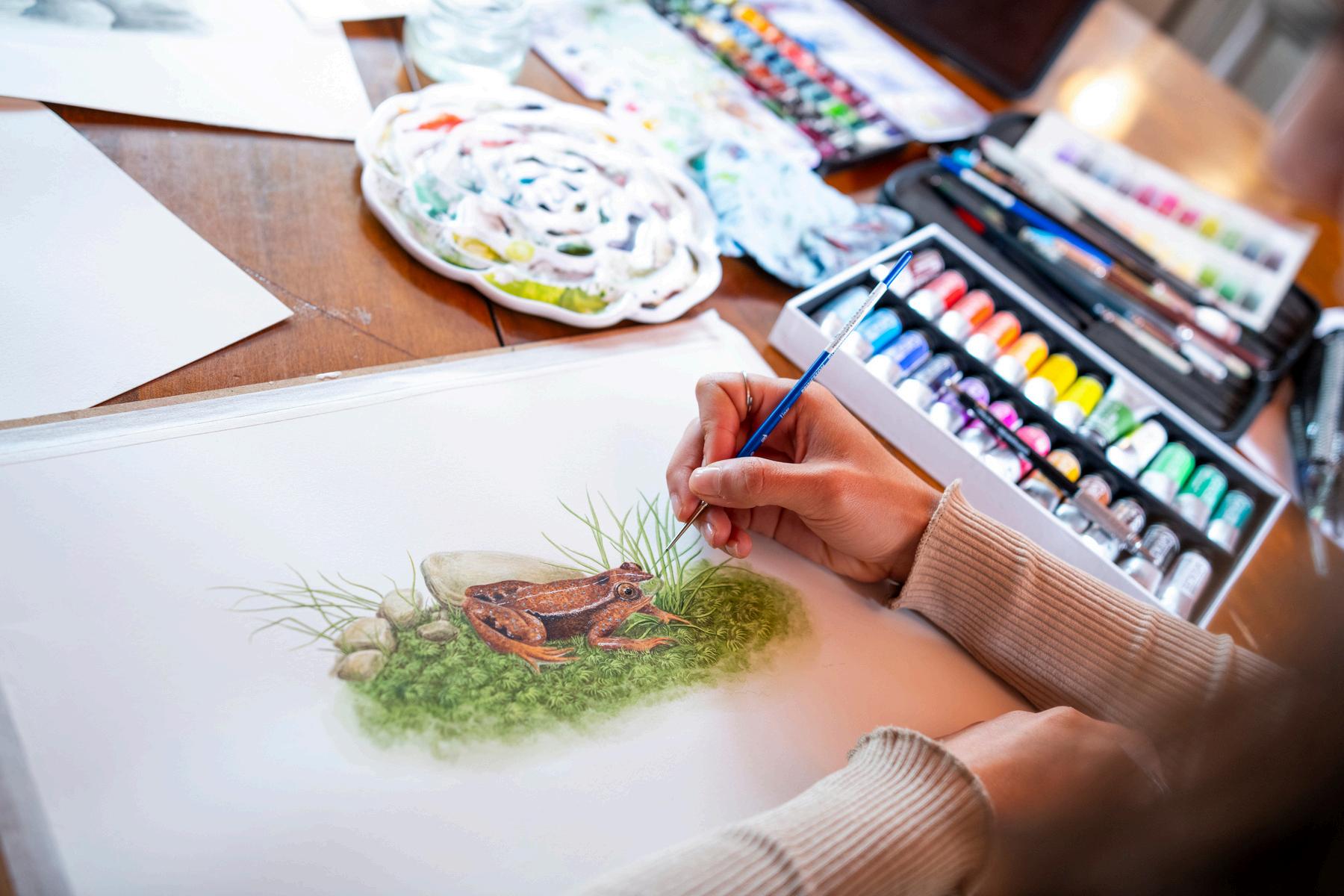
Dr.PedroPeloso+BrandiceGuerra
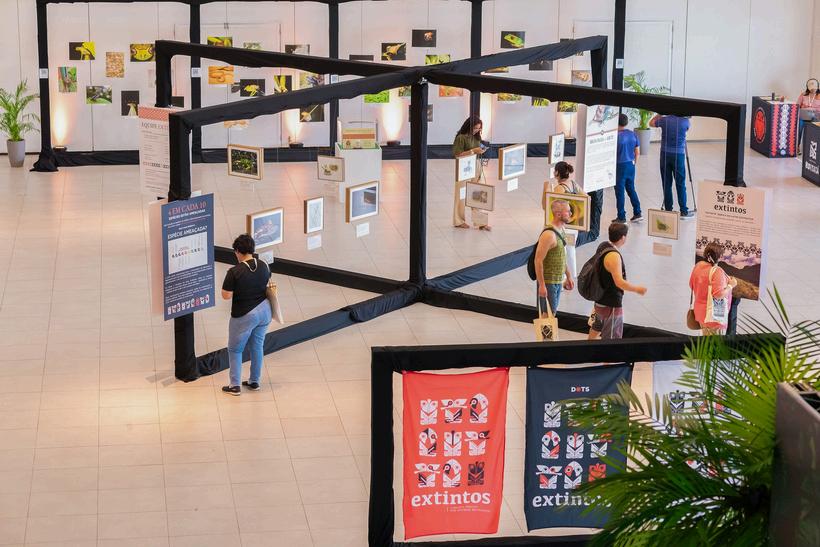
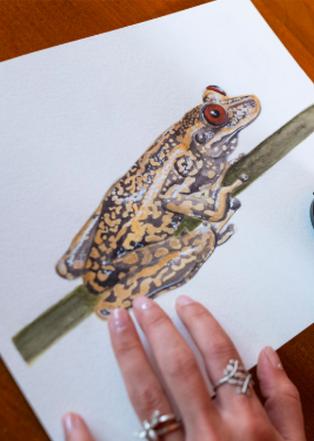
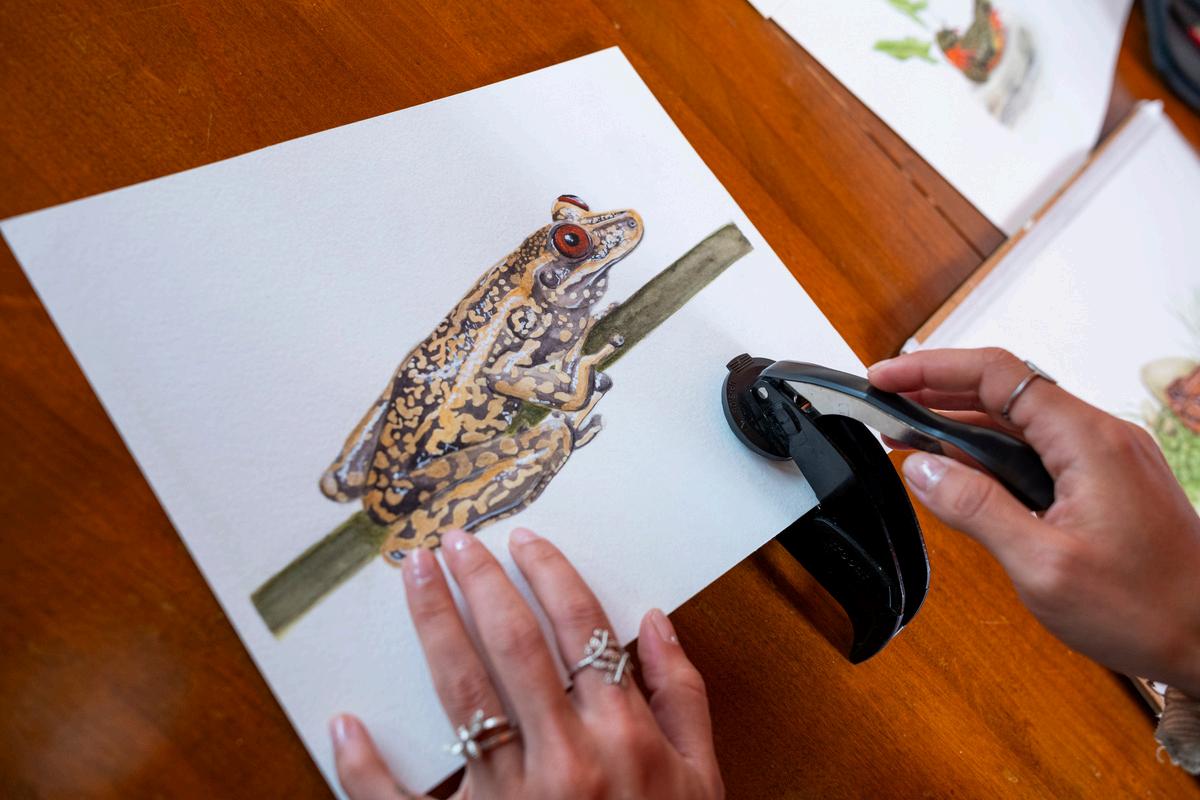
Endangered amphibians in Brazil are getting a spotlight thousands of miles away, thanks to a unique collaboration at Cal Poly Humboldt. Recently, the university has launched EXTINTOS (the Brazilian word for "extinct”), a scientific illustration artist-in-residence intern program that highlights endangered species.
Professors Pedro Peloso (Biological Sciences) and Brandice Guerra (Arts + Film) welcomed Mexican illustrator Dani Cafaggi for a four-month internship focused on creating modern portraits of Brazil’s most threatened amphibians. It’s important to make these species visible, legible, and memorable so that people care about their future. For species that are critically endangered or already extinct, scientific illustration also becomes a form of permanent scientific record.
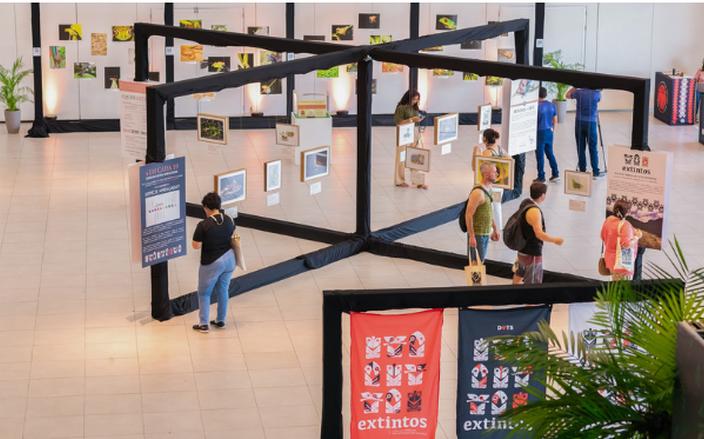
Dani’s work, combined with pieces from recent graduate and past intern Jamie Hefley, illustrations from a Brazilian artist and photos from Dr. Peloso’s collection, debuted at Cal Poly Humboldt’s Reese Bullen Gallery in Fall 2025, after being showcased at Brazil’s XI Congress of Herpetology. Learn more about the EXTINTOS Art Exhibit in this Humboldt NOW article.
Speaking with Dr. Peloso, he offered the following reflections on what made the project successful:
Successful proposals often reflect genuine enthusiasm rather than reliance on catch phrases intended to appeal to evaluators. “When you’re reading a proposal, you can usually tell if the person writing it is excited about the work, or if they’re just using buzzwords.” Peloso explained that when an applicant is deeply invested in their work, that authenticity is evident in the proposal. The project was funded because it aligned deeply with Peloso’s genuine interests at the intersection of biology, art, and conservation, not because it chased funding trends.
The EXTINTOS program benefits the visiting illustrator as well as local students. The artist gains experience by working closely with both a biology professor and an art professor, while local students benefit from taking art classes alongside them. Local students also have opportunities to interact with recent graduates, asking about portfolio development and how they found professional opportunities. Peloso added that these exchanges are valuable for everyone involved, and that the exhibit in the University’s on-campus Reese Bullen Gallery allows local students to observe the entire creative process from the early stages to the final completed pieces.
Peloso recommends selecting students based on both interest and skill, noting that genuine enthusiasm for a project is often more important than academic performance alone. Requiring a portfolio and letter of intent helped ensure students were motivated, which leads to stronger and more enjoyable work. GPA may not always indicate talent or vice versa, so passion and enthusiasm is key. “It might not be a 4.0 GPA, but if a student is very interested and willing to dedicate time, you can have great results.”
Peloso discovered that scientists and artists had different priorities, with scientists focused on accuracy and artists more focused on aesthetics. The tension was challenging but ultimately produced stronger work. Peloso says, “I was interested in
getting the details right, and the artist was more concerned about the background and colors… getting that balance was what excited me the most.”
As is often the case, implementation of the project revealed where earlier planning fell short. Peloso noted that early iterations of the project underestimated the logistical and cognitive load on visiting artists; such as relocation, acclimation, and time constraints. “They’re adapting to the city, and getting rentals, so we have less time to work.” Changes were made in later cycles that improved outcomes by front-loading preparation.
This work was supported by the Science Illustration Internship Grant from the Maxwell/Hanrahan Foundation.
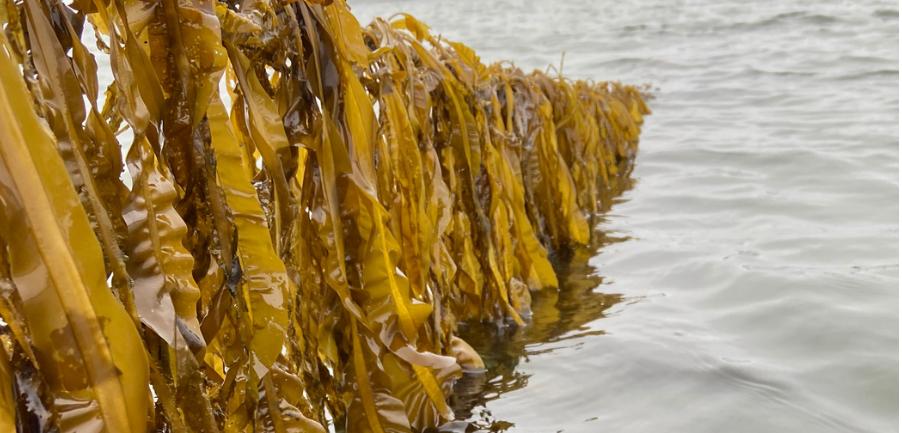
A recent study led by Dr. Rafael Cuevas Uribe and graduate student Evan Simpson, who led the experimental work, marks the first successful cultivation of the edible kelp Alaria in Humboldt Bay. The project tested different growing systems across seasons to determine when and where this coldwater kelp thrives.
Alaria is valued as a nutritious sea vegetable in many parts of the world and is commonly used in soups, salads, and other foods. The team found that it grows best in cool winter and spring conditions at depths of 1–2 meters, while warmer summer waters lead to die-offs.
These findings lay the groundwork for future kelp farming along California’s North Coast and provide new insights into local aquaculture potential.
Dr. Cuevas Uribe discussed some of the key elements that shaped the project, including funding, collaboration, and adaptive problem-solving.
that although the required match funding initially posed a barrier when he arrived at Humboldt 11 years ago, support from the Sponsored Programs Foundation enabled him to apply for his first ARI grant around 2018.
Cuevas Uribe also noted that while ARI funding is not guaranteed, applicants often face a higher likelihood of success than with major external grants.
At the start of the project, the research team expected kelp to reproduce year-round. They later discovered that Alaria releases spores only during specific seasons, an unexpected challenge that required a shift in approach. This setback led to creative problem solving, and the team developed alternative approaches, including the creation of a gametophyte bank to provide a year-round resource.
Cuevas Uribe added that while earlier knowledge of the kelp’s spawning cycle would have been helpful, the difficulties were partly due to the project’s pioneering nature, as it was the first effort to grow this type of kelp on longlines in California.
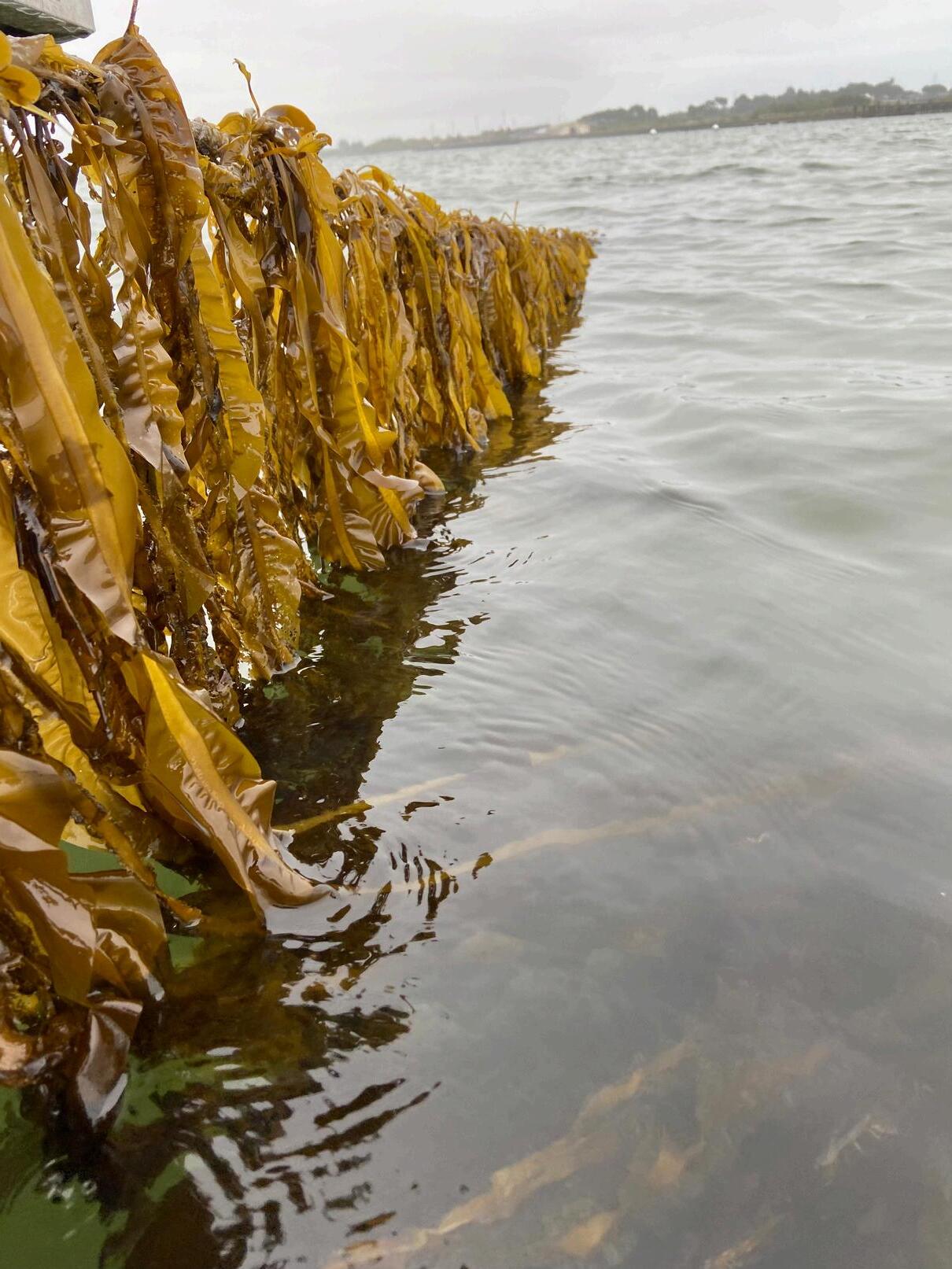
California State University Agricultural Research Institute (ARI) grants have played an important role in supporting Cuevas Uribe’s research. He explained
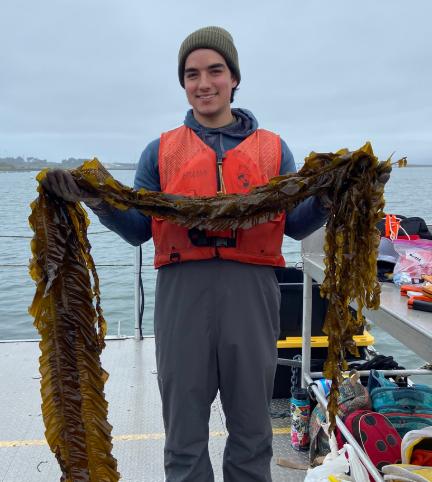
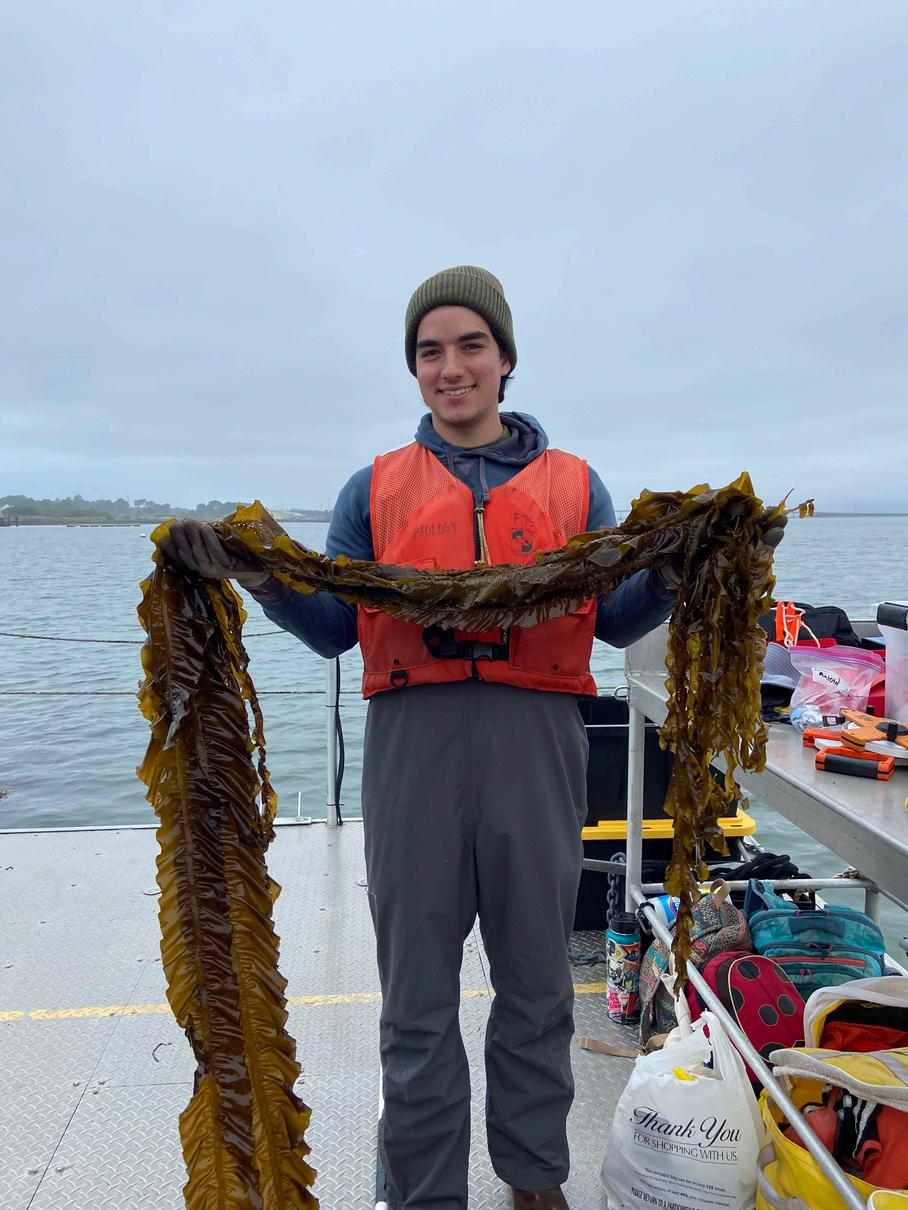
Collaboration played a critical role in the project’s success. Cuevas Uribe noted that this project emerged through a partnership formed at a workshop in Moss Landing. Attending professional events helped identify collaborators working in similar fields and ultimately supported the development of California’s first open-water seaweed farm.
Public interest in seaweed aquaculture was immediate. A hands-on workshop offered through the California Seaweed Festival reached capacity almost as soon as registration opened. “Within the first day … the workshop was sold out,” Cuevas Uribe recalled, highlighting strong community demand for practical, place-based aquaculture knowledge. Additionally, public interest was cultivated in presentations in national and international conferences such as the World Aquaculture Society and the International Seaweed Symposium.
The project served as a hands-on training ground for both graduate and undergraduate students, integrating research, coursework, and public-facing education. Students learned the full production cycle of seaweed farming, from early cultivation to field
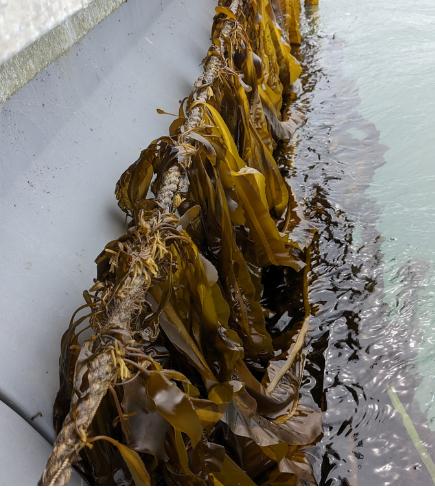
deployment. “We taught the students how to become seaweed farmers … from seeding to outplanting in the bay,” Cuevas Uribe said.
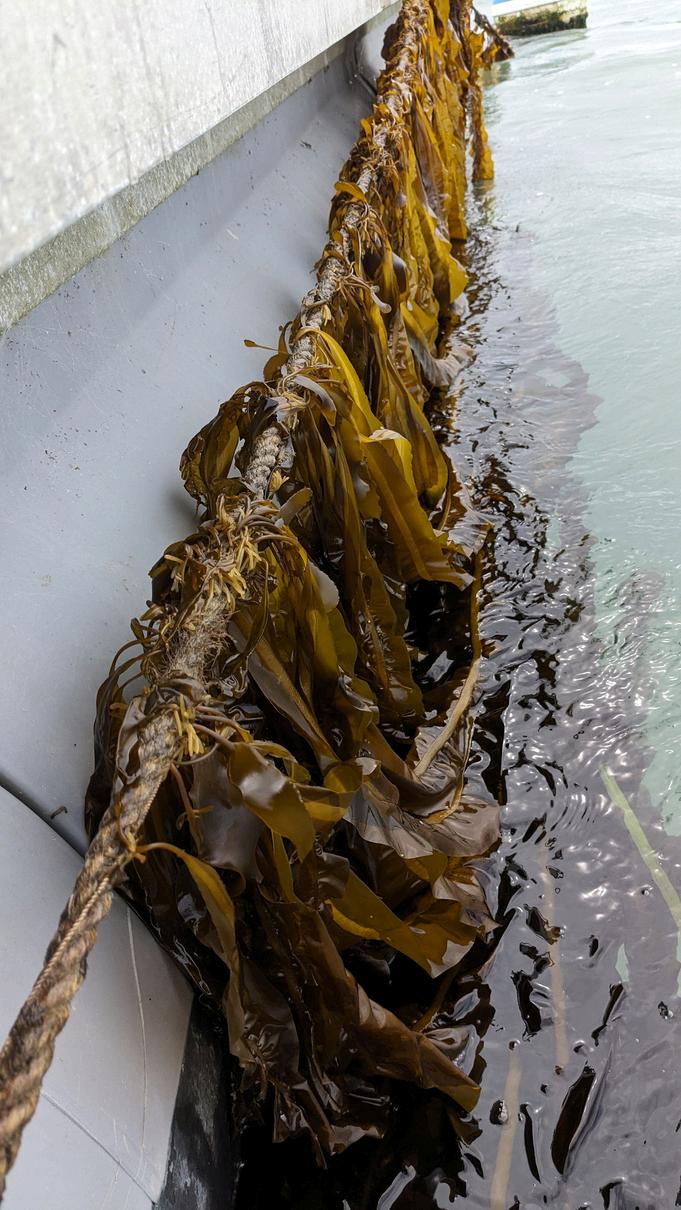
To maintain continuity alongside a heavy teaching load, Evan was assigned primary responsibility for the project and wrote his thesis based on the seaweed farm. Regular mentoring and weekly check-ins helped distribute day-to-day responsibilities and keep the research moving forward. As Cuevas Uribe noted, “Definitely to have a graduate student adopting the project … it’s going to free up some of your responsibilities.” To learn more about Evan’s thesis, visit Cal Poly Humboldt’s Digital Commons.
Beyond enrolled students, the project’s novelty and hands-on nature attracted strong volunteer interest and Cuevas Uribe promoted the seaweed farm in classes. Volunteers participated through academic credit, extending the project’s educational reach while reinforcing its connection to experiential learning.
This work was supported by the California State University Agricultural Research Institute (ARI).
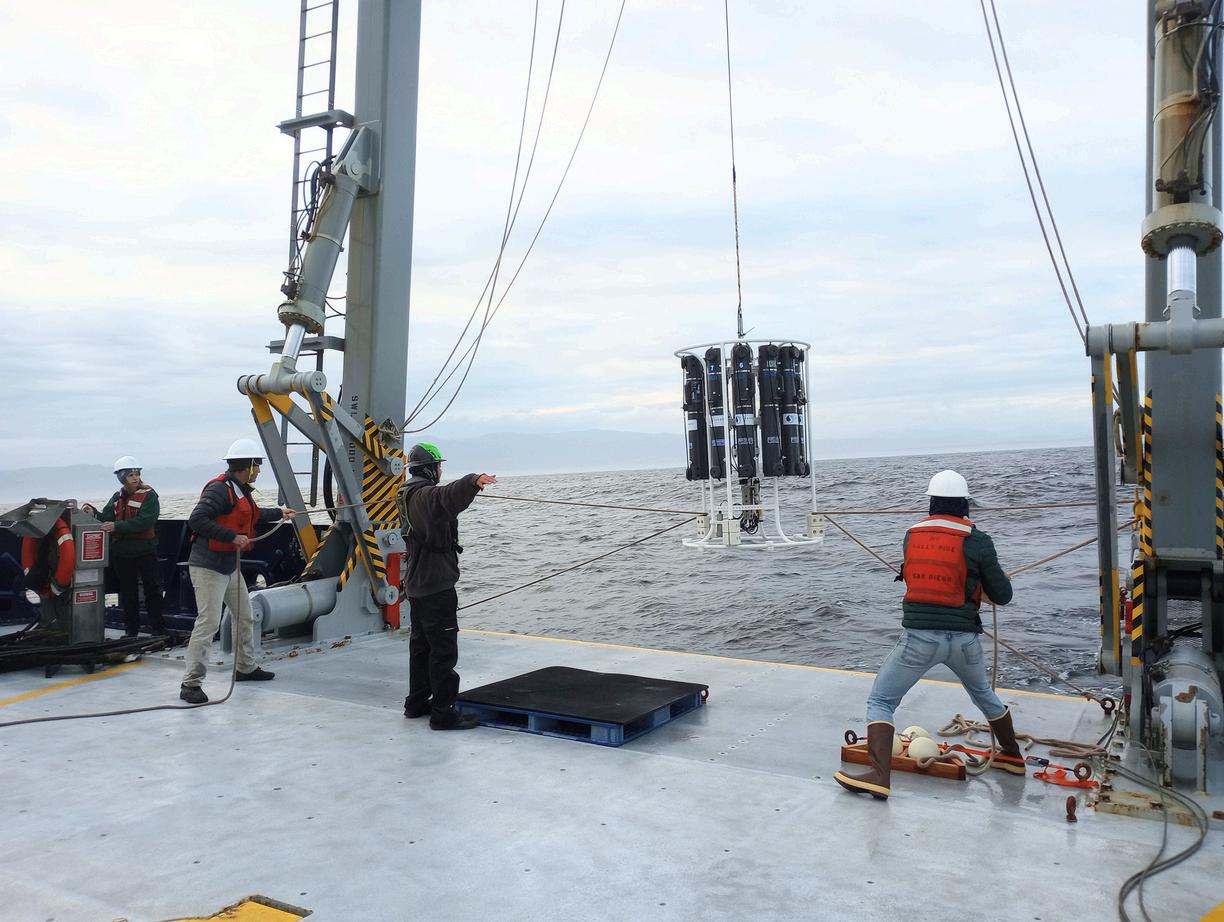
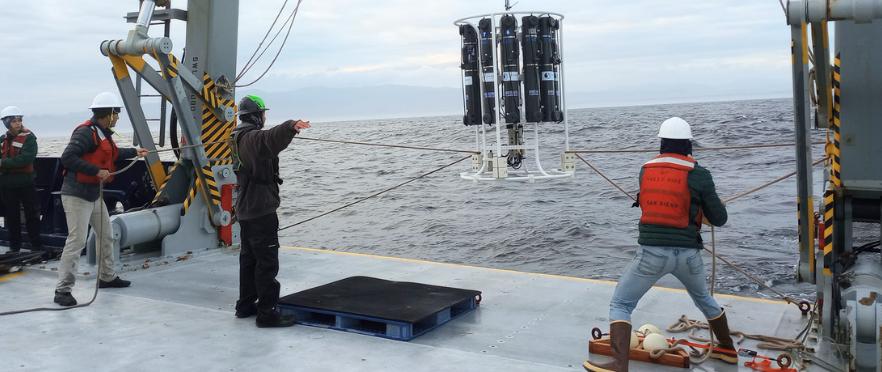
Trace metal team members collect seawater during a two-week research cruise in summer 2023 aboard the R/V Sally Ride off the California and Oregon coasts. From left are Shelby Bishop, a chemistry and oceanography double major (’24); Dr. Matthew Hurst of the chemistry department; an unidentified marine technician not affiliated with Cal Poly Humboldt; and Peter Bright, a chemistry major (’21). Photo via Dr. Claire Till.
Tiny marine plants called phytoplankton produce at least half of the oxygen we breathe and form the base of nearly all ocean food webs. To photosynthesize and draw carbon dioxide out of the atmosphere, they rely on trace amounts of iron. Across much of the open ocean, iron is in such short supply that phytoplankton are effectively iron-starved—able to grow more if only a little extra iron were available. Studying this limitation is challenging, however, because iron behaves in complex and often elusive ways in seawater.
To get around this, Dr. Claire Till uses scandium, a rare element with simpler chemistry that tends to move through the ocean alongside iron. By measuring scandium, researchers can gain insight into iron’s pathways—where it enters the ocean, how it is transported, and how long it remains available to marine life. This approach is opening new windows into how iron controls phytoplankton growth and, in turn, influences Earth’s carbon cycle as the climate changes.
Dr. Till also reflected on the experiences that shaped this work, from early ideas to field research at sea, as co-chief scientist on the research cruise, and on the role of student involvement throughout the project.
Theprojectgrewoutofunansweredquestionsfrom Dr.Till’sPhDresearch.Sheinitiallyviewedthose ideasasastartingpointthatothersmightbuildupon. Afterseveralyearspassedwithoutthathappening, Dr.Tillrealizedshecouldbetheonetopursuethese questions.
WhenherSponsoredProgramsFoundation(SPF) Pre-AwardSpecialistflaggedacampusfunding opportunitythatshewasuniquelyeligiblefor,Dr.Till feltbothinspiredandsupported.Thatcombinationof scientificmomentumandinstitutional encouragementpromptedhertoapply.
BUILDINGCONFIDENCETHROUGHRESEARCH
Lookingback,Dr.Tillsaysshewouldtellherearlier selfthat“researchishard,andthat’sokay.”What sheinitiallyinterpretedassignsofpotential incompetenceweresimplytherealityofgettingupto speedwithhavingaleadershiproleinacomplex, multi-weekresearchcruisewith22scientistsfrom13 differentinstitutions-whichwasalsodelayedbya yearontwoseparateoccasionsbythepandemic. Onceshefinallysteppedontotheship,thefear dissolved.Sherealizedshewascapableofleadingthe
work. The difficulty wasn’t a sign that she wasthe wrong person for the job, it was simply part of the process. “Once I realized that,” she said, “I felt much more able to handle it.”
While Dr. Till had prior experience participating in research cruises, leading one was an entirely different challenge. She approached the uncertainty by breaking it into manageable pieces and asking questions relentlessly.
Coordinating shipboard lab space, learning specialized equipment, and aligning the needs of multiple researchers required extensive planning. “I thought it through a million times,” she said, crediting colleagues and ship staff for helping her navigate unfamiliar territory.
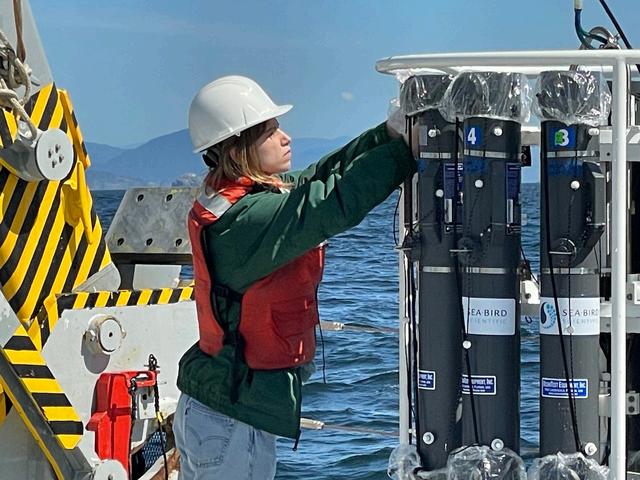
When asked what students gained from the experience, Dr. Till said that one undergraduate, Shelby Bishop, joined the three-week cruise and took on responsibilities usually handled by more senior personnel. She operated the vessel’s J-frame during sample collection, pulled daily satellite data to guide ship navigation decisions, and later mentored new students analyzing samples onshore. Additionally, two other recent graduates (Peter Bright, pictured on page 11, and Ben Freiberger, who graduated in spring 2020 with double majors in chemistry and oceanography) were also onboard the cruise contributing to the project. They were invited to join the cruise through their connections with Dr. Till and/or Dr. Hurst.
The experience was incredibly hands-on and immersive, providing the student with meaningful research responsibility and contributing to her academic and professional development.
Dr. Till says that small lab projects during the semester allow students to learn foundational skills and help both students and faculty determine whether a larger commitment is a good fit. She also finds that well-structured teams accelerate learning and build momentum. When possible, pairing experienced students with newcomers works well, but faculty involvement remains essential. “The more I’m in the lab with them,” she said, “the better.”
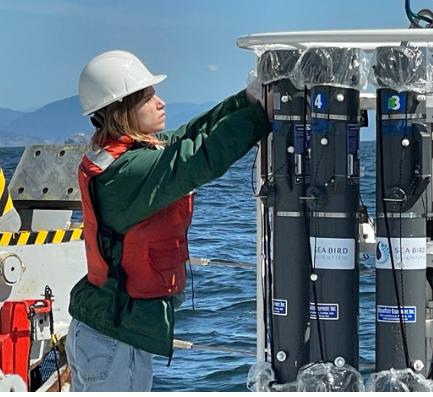
Undergraduate Shelby Bishop covering sampling bottles with shower caps, an important step to make sure that samples don't get contaminated with dust or soot from the ship. Photo via Miriam Sutton/Science by the Sea.
According to Dr. Till, feedback was essential to securing this grant. She shared proposal drafts with both her Pre-Award Specialist and a former professor who understood the award’s expectations and the scientific context. The critiques were candid, sometimes blunt, but exactly what the proposal needed. That combination of editorial clarity and disciplinary insight strengthened the application and made a huge difference.
Reflecting on the experience, Dr. Till said, “I’ve definitely learned more about what I’m capable of. I’ve now done things I might have not thought I could do.” For others hesitating on a dream project, her advice is simple: “Go for it.”
Building on this work, Dr. Till’s research is expanding beyond the California Current System to the Galápagos. Her team collected samples there last summer and is now comparing the two regions to determine where patterns hold and where new dynamics emerge.
This work was supported by a grant from the Research Corporation for Science Advancement through Cottrell Scholar Award #26844.
Dr. Andre Buchheister
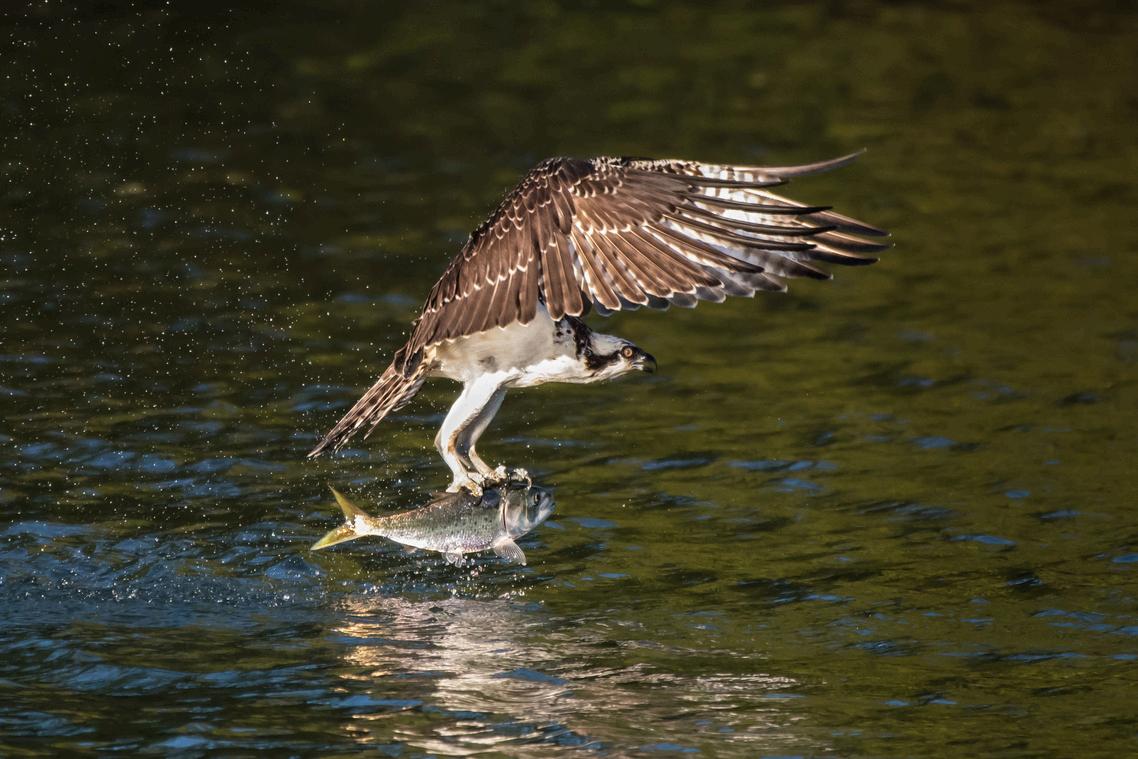
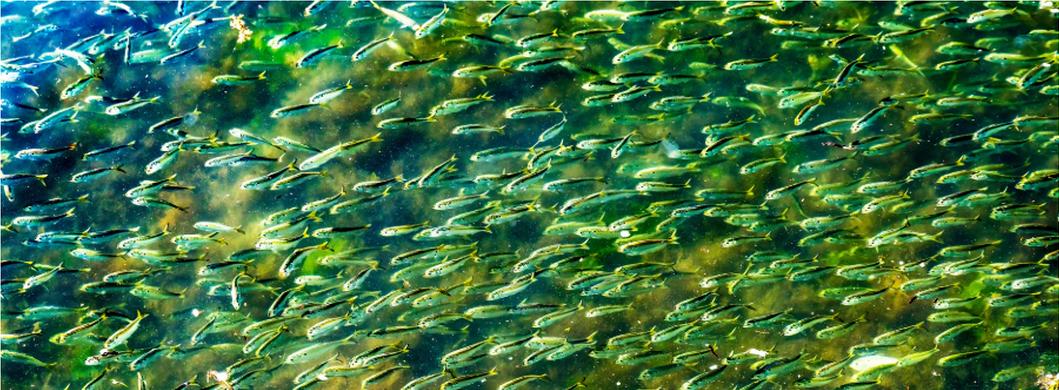
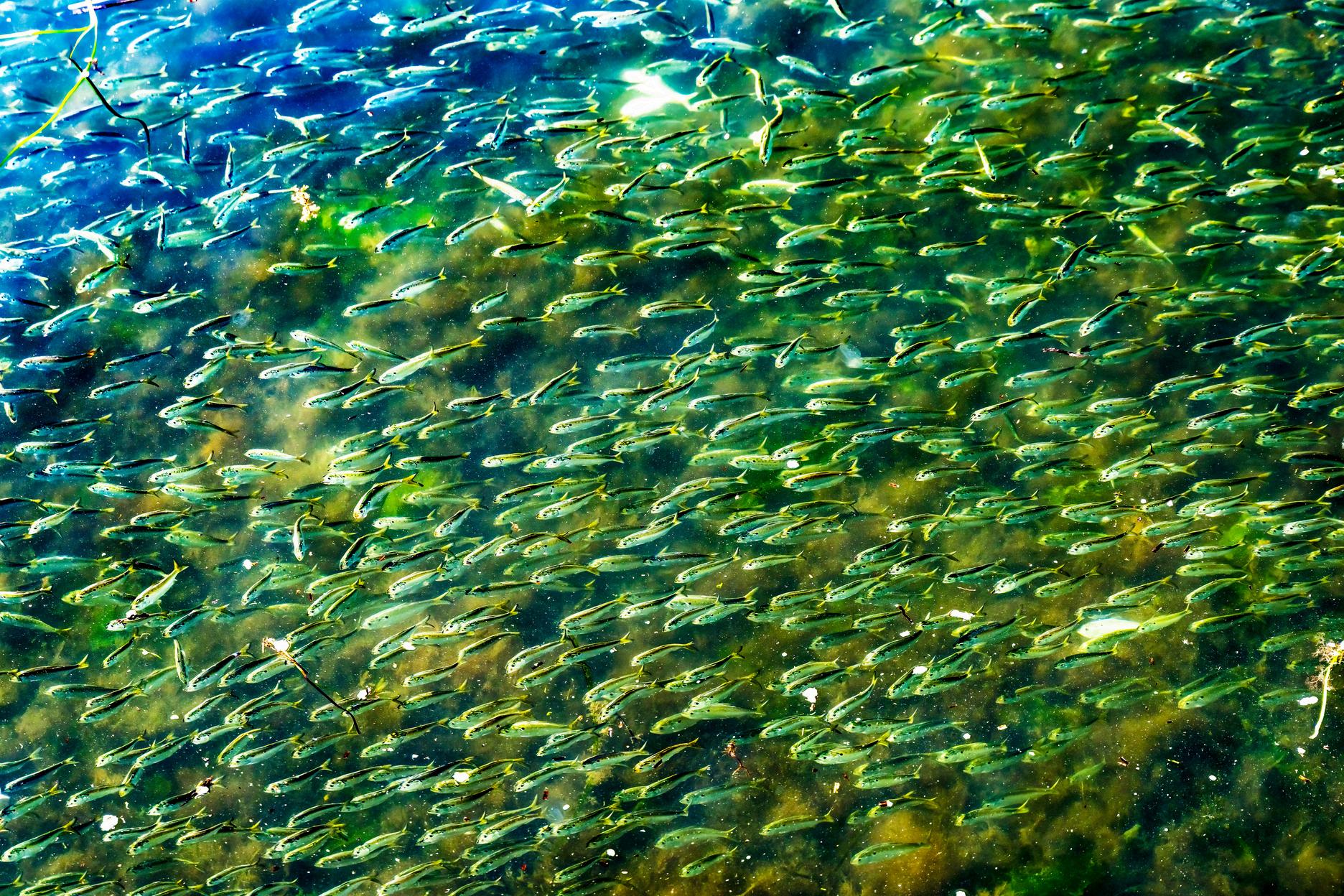
Atlanticmenhadenaresmallfishwithabigrole. Theyareakeyfoodsourceformanyspecies, includingstripedbass,whales,seabirds,and dolphins,andtheyalsosupportthelargestfisheryon theU.S.EastCoast.Becausesomanyspeciesdepend onthem,howmenhadenaremanagedaffectsthe entiremarinefoodweb.
AsDr.AndreBuchheisterexplained,“There’sthis tensionbetweenwhetherwe’retakingtoomuch,or whetherwe’releavingenoughinthewaterfor predators.”
Tobetterunderstandandmanagethosetrade-offs, scientistslikeBuchheisterareusingecosystembasedmodelsthatlookbeyondasinglespeciesata time “Whatwe’vedoneisbuildanecosystem model,”hesaid,“...whereyoucanaskthese questionsofwhataretheimpactsoffishingthisone speciesontherestofthefoodweb?”
Thisprojectrepresentsoneofthefirstapplications ofecosystem-basedmodelsinU.S.fisheries management,examininghowfishingasinglespecies affectsthebroaderfoodwebanditspredators
One of these models is already influencing management decisions, and ongoing collaboration with resource managers and research scientists is focused on refining and improving the approach.
These tools help reveal how harvesting menhaden affects the animals that rely on them for food and support efforts to balance fishing activity with healthy ecosystems. This research provides fishery managers with clearer, science-based information to guide decisions that promote sustainable fisheries and resilient ocean ecosystems.
We spoke with Dr. Buchheister, who shared insights into the scientific, collaborative, and practical elements that shaped the project.
Balancing teaching responsibilities with research that largely takes place during the summer can be particularly challenging. Buchheister added that early hurdles affected the first summer of the project and carried into the second, a common challenge in academic research. Starting a project early is always a good idea.
collaborative work strengthened the application, as did the ability to speak knowledgeably and in-depth about the research topic.
The project’s broader relevance also played a role. Addressing issues “that people care about,” particularly those with real-world management implications, helps research resonate beyond the academic community.
The primary challenge Buchheister faced stemmed from novelty, particularly the integration of new ecosystem-based approaches into Fisheries Management. Buchheister credited close collaboration with a key partner for helping navigate these challenges, describing the partnership as mutually beneficial and central to problem-solving and shared learning throughout the project.
The work on this project has informed Buchheister’s teaching by providing real world case studies for courses, strengthening connections between research and student learning.
More broadly, Buchheister suggests approaching graduate students as collaborators rather than assistants, viewing the relationship as a partnership where learning flows in both directions. While some graduate students require more structure than
of clearer frameworks and stronger guidance to support their learning.
The project reinforced how complex and uncomfortable management trade-offs can be, particularly when uncertainty is involved. Ecosystem-based research often highlights gaps in knowledge that have been overlooked because they are difficult, but confronting those uncertainties directly is valuable. The process of navigating the unknown is one of the most interesting aspects of the work, Buchheister says. “We’re always faced with trade-offs in making management decisions,” he said, emphasizing the importance of approaching uncertainty honestly and transparently.
Buchheister encourages researchers to embrace collaboration and pursue ambitious ideas, while being mindful of work–life balance. Managing time and energy is an ongoing challenge, he noted, stressing the importance of not burning out in the process. He also highlighted the value of support from the SPF staff during both pre- and post-award stages, as well as guidance from mentors, collaborators, and partners outside the university.
This work was supported by funding from the University of Florida (NOAA prime).
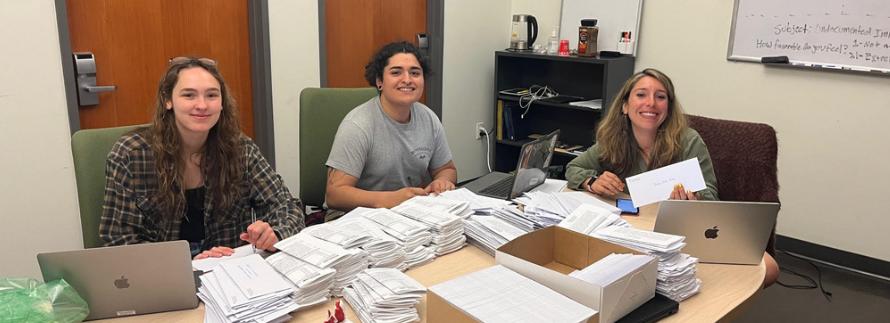
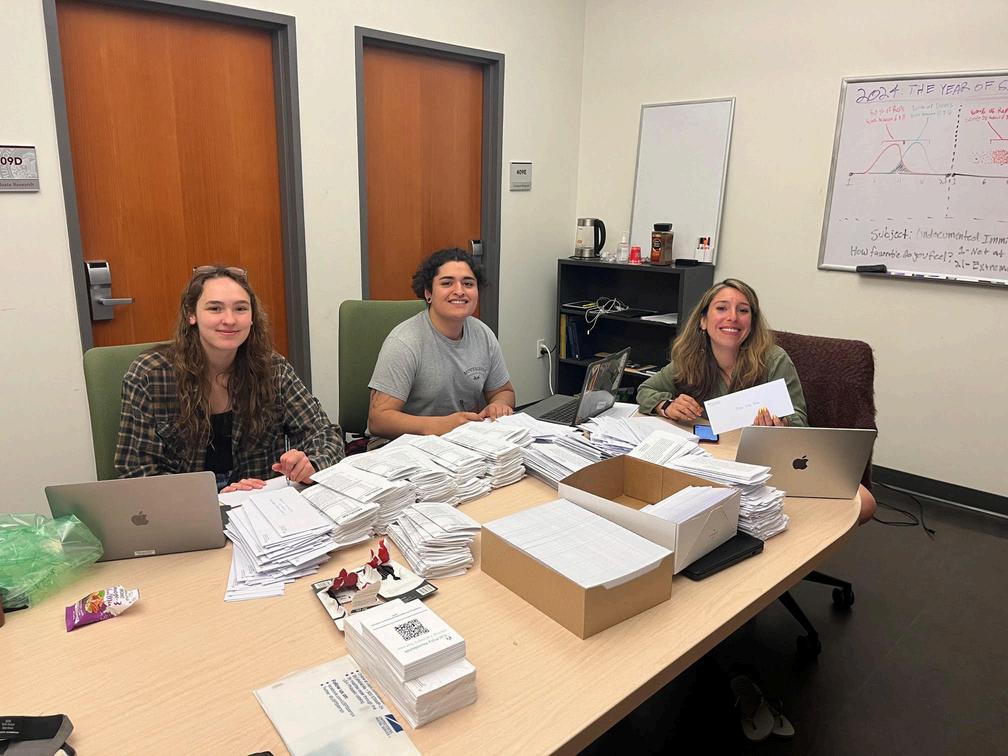
California’s hemp industry is facing challenges, only 19% of surveyed farmers turned a profit in 2023, and many plan to leave the field entirely. A new report from Cal Poly Humboldt researchers Gregg Gold, Erick Eschker, and Joshua Zender explain why: strict THC testing rules make it hard to bring products to market, and most farmers lack access to processors for hemp grain, fiber, or CBD.
This is especially concerning given the industry’s enormous potential in textiles, bioplastics, and food, which could generate billions in annual revenue for the state if more fully developed.
Looking into strategies that improve farm outcomes, the researchers found that farms do better when they lock in buyers early, grow non-hemp products simultaneously, and connect with experienced mentors. Their report offers specific policy recommendations for lawmakers to stabilize the industry and help it grow sustainably. To learn more, you can view the report via ScholarWorks.
We spoke with Dr. Gold who was struck by farmers’ passion. “They truly believe hemp can serve the common good—absorbing carbon, replacing plastic, offering renewable solutions. Their excitement was contagious, even as they expressed real frustration with taxes and regulations.”
Here are some additional highlights from our conversation:
Dr. Gold emphasized the importance of a diverse team including expertise in economics, business, and psychology, which contributed to the proposal's uniqueness and success. Dr. Gold said “it was unusual to have someone look at the business end of farming rather than a biological or agricultural lens.” He added, “You need both the farming and business skills.”
The project not only provided insights for policymakers, but also gave students hands-on research experience and exposed them to real-world industry work. This complements the more theoretical work that they do in class. Dr. Gold emphasized the value of paying students for research, highlighting how it enhances their selfefficacy and reduces imposter syndrome.
Recruiting participants proved difficult in a shrinking industry, with the number of hemp farmers in California falling from over a thousand to fewer than one hundred. To boost engagement, Dr. Gold said the team found more success offering gift cards up front and personalizing outreach with handwritten mailings.
This work was supported by a California State University Agricultural Research Institute grant.
Supports the development, production, and distribution of radio programs, podcasts, documentary films, and documentary film series that engage general audiences with humanities ideas in creative and appealing ways. Projects must be grounded in humanities scholarship and demonstrate an approach that is thoughtful, balanced, and analytical. Funding varies by project type, and ranges from $75,000 to $1 mil.
Anticipated deadline June 25, 2026
The program is intended to support high-risk theoretical mathematics, physics and computer science projects of exceptional promise and scientific importance on a case-by-case basis. It provides funding for up to five years. The funding level and duration is flexible and should be appropriate based on the type of support requested in the proposal.
Letter of intent accepted on a rolling basis.
Promotes new connections between scholars, practitioners, educators, and/or communicators working to understand and mitigate the impacts of climate change on human health. Also of interest is work piloting new approaches or new interactions toward reducing impact on healthcentered activities, for example, developing more sustainable systems for health care. It also supports work that prepares for the impacts of extreme weather that can impact delivery of health care. Awards $2,500–$50k.
Application Deadline: July 23, 2026
Focuses on the causes and consequences of social, political, and economic inequalities in the U.S. The program examines the factors that contribute to social, political, and economic inequalities in the U.S., and the extent to which those inequalities affect social, political, psychological, and economic outcomes. Awards up to $200,000.
Letter of Intent due March 11, 2026
Supports projects from all disciplines that are primed to impact health equity. Ideas should address one of these areas of focus: Future of Evidence; Future of Social Interaction; Future of Food; Future of Work. RWJF also welcomes ideas outside of these focus areas, but which offer unique approaches to advancing health equity. No award ceiling specified.
Applications accepted on rolling basis.
Funds the collaborative planning of innovative, methodologically diverse, interdisciplinary research on education that contributes to transforming education systems for equity. Vision Grants are research planning grants to bring together a team, for 6 to 12 months, to collaboratively develop ambitious, large-scale research projects focused on transforming educational systems toward greater equity. Awards up to $75,000.
Receiving a Vision Grant is a prerequisite to apply for the foundation’s Transformative Research Grant, supporting large-scale projects that transform education systems for equity.
Letter of intent deadline anticipated Feb. 2026.