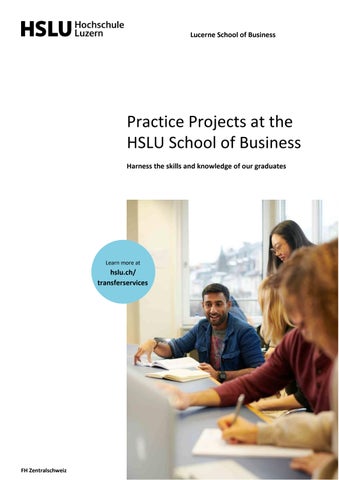

Practice Projects at the HSLU School of Business
Harness the skills and knowledge of our graduates

Harness the skills and knowledge of our graduates
We Are Looking Forward to Working With You
Are you an entrepreneur, an employee of a company or public institution, a member of an association or a private person with a business or business psychology-related issue or task? Would you like our students to address it by applying their skills and knowledge?
In this case, you will find the information in this leaflet very useful: it provides an overview of our practice-based student projects. The leaflet will help you identify possible topic areas, and it showcases two recent project examples. It will give you an idea of what our service is all about and inspire you with input and ideas.
If you are interested in enlisting the support of one of our graduates, we will be happy to help. The Careers Service of the Lucerne University of Applied Sciences and Arts offers a wide range of services. Visit careershslu.ch. to learn all about it.
If you have any queries, do not hesitate to get in touch with us.
We are looking forward to hearing from you!
Thomas Fosco, Martina Frei and Annekathrin Pekarek
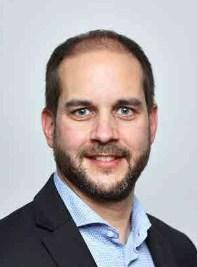
Thomas Fosco Head of Transfer Services
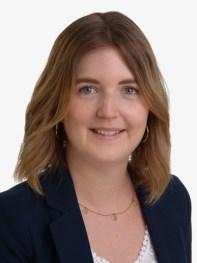
Martina Frei Assistant, Transfer Services
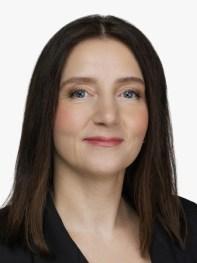
Annekathrin Pekarek Assistant, Transfer Services
Harness the skills and knowledge of our graduates
The Programme in a Nutshell
Our students work on a variety of tasks in an operational, business and business psychology context within companies and organisations.
There are three types of practice-based bachelor projects: project work, business plans and bachelor's theses, The project timelines are organised around the academic calendar. Topic and assignment proposals may be submitted until July or August. The duration of the projects is typically between six and eleven months. For business plans and bachelor's theses, a cost contribution of CHF 800 is expected, plus coverage of the students’ work-related expenses. Student projects are free of charge.
At master’s level, there is also the option of a scientific practice project. Topics may be submitted any time, independent of the semester schedule. The practical projects are free of charge.
We will be happy to advise you with any queries you may have about student projects.
Should your proposed timeline or topic prove unsuitable for a student project, you may instead consider a service project with our lecturers and research associates. In this case, too, we will be happy to provide further details and help you establish contact with our in-house specialists.
Harness the skills and knowledge of our graduates
Our Degree Programmes
Bachelor of Science in Business Administration with the following majors
– Controlling & Accounting
– Corporate Development
– Finance & Banking
– Human Resource Management
– Real Estate
– Communication Management & Creative AI
– Management & Law
– Marketing
– Hospitality Management SHL
Bachelor of Science in International Business Administration
Bachelor of Science in Business Psychology with the following majors
– Work and Organisational Psychology
– Market and Consumer Psychology
Bachelor of Science in Mobility, Data Science and Economics
Bachelor of Science in International Sustainable Tourism
1taught in English
2 taught in English and German
Bachelor of Arts in in Hospitality Management
Master of Arts of Science in Business Administration with the following majors
– AI Business Leadership1
– Business Innovation & Entrepreneurship2
– Health Business & Management1
– International Tourism Management1
– Online Business and Marketing1
– People Management and Organisation1
Master of Science in Applied Information and Data Science1
Master of Science in Banking and Finance2
Master of Science in International Financial Management1
Master of Science in Real Estate1
Master of Science in Business Psychology with the following majors
– Work and Organisational Psychology
– Market and Consumer Psychology
Harness the skills and knowledge of our graduates
Your Business or Business Psychology-Related Topic
Business Plans
In their final study year, students develop structured business plans for companies, private persons, or for their own business endeavours. They may be based on a new business idea, a new area of business or a market expansion. The projects are organised as group work and supervised by lecturers and specialists in the field.
Business Plans in Brief
– Group work
– Students in their final year
– Submission of topic proposal by mid-August
– Selection of topic: mid-September
– Submission of project: January
– Cost contribution: CHF 800 plus expenses (according to budget)
Harness the skills and knowledge of our graduates
Bachelor’s Projects
An Analytical View of Practical Issues
Project work combines issues of practical relevance with a scientific approach and precise analysis. If you need a sound foundation for your decision making, you might consider commissioning a student project.
Student projects are always organised along the same lines. Groups of students explore a specific issue using qualitative social research methods, familiarising themselves with the latter in the process. Expert interviews, rather than large-scale standardised surveys, are at the centre of this approach. The process is less about large-scale standardised surveys and more about the systematic analysis of interviews conducted with a selected set of people. Possible interview subjects range from customers, experts, people affected by change processes, potential business partners, or competitors. The interviews are being recorded and analysed with a view to answering the research question and to testing any underlying hypotheses. The collected data often brings new and unexpected aspects to light. In addition to interviews, students may also explore the subject through observation.
Students are supervised and supported by experienced specialist and methodology coaches.
Possible Topics
Identifying unexplored potential in a family business, identification of previously undetected problems in an organisation, re-structuring a business to the benefit of all stakeholders, ensuring the smooth transfer of a family business to the next generation, analysis of the impact of the internet on the management of a tourism destination
Project Examples
– Online Marketing in the Travel Industry: How do potential customers behave when looking for accommodation on the internet?
– Knowledge management as a factor for success
– Strategic market analysis for startups and SMEs
– Real-life types of change: How was change experienced during and after the financial crisis by team leaders working in the Swiss banking industry?
– Management of expert organisations
– Employee surveys - current business practices
Student Project in Brief
– Group work
– Second-year students Year of study
– Submission of topic proposal by end of July
– Selection of topic: September
– Submission of project: January
– Cost contribution: none
Harness the skills and knowledge of our graduates
Master's Project Scientific Practice Project
In most MSc programmes and unlike in the student projects at BSc-level, students define their research question during the development of their project. Concurrently, they also derive and substantiate a recommendation for the client in the process.
Scientific Practice Project in Brief
– Group work
– First-year students Year of study
– Submission of topic proposal: any time
– Selection of topic: September/November
– Submission of project: January/June
– Cost contribution: none

Harness the skills and knowledge of our graduates
Project Example
Seetal lake water as an energy source
At the beginning of every piece of project work, there is a desire to learn, an idea or a question relating to an open future. The case of Hochtal-based development agency IDEE SEETAL, which carries the company motto in its name, was no exception. Their research question aimed at determining whether and to what extent it is possible and useful to use lakes Baldegg and Hallwil as a source of energy. There are many technical and scientific facets to this highly relevant topic, which is why it did not immediately seem suited for qualitative research methods. Upon closer inspection, however, the true complexity of the subject matter became apparent. The many legal, economic and political questions were answered in a variety of ways by experts, local residents, planners and experienced technical specialists. Some of the answers directly contradicted each other, while others required further interpretation. In their extensive interviews, the students not only learned about the diverging assessments of the environmental risks and chances involved, but also about the fast-reproducing wandering mussel, which plays an important role in similar projects elsewhere. A systematic analysis of the interview transcripts forms the basis for the client’s future decision-making.
Methodology Coach
Dr Marianne Rychner, lecturer
Specialist Coach
Ivo
Willimann, lecturer
“The “Seewärme” student project has provided valuable insight for a strong and energy self-sufficient Seetal region.”
Client: Daniela Ammeter Bucher Board of Directors, IDEE SEETAL, initiator of the student project
“We found it inspiring to delve into a previously unfamiliar topic that turned out to of practical use, too.”
Students: Samuel Häller, Sabrina Kamer and Reto Köpfli
Harness the skills and knowledge of our graduates

Harness the skills and knowledge of our graduates
Bachelor's Thesis
Concluding the Bachelor’s Programme
The bachelor's thesis is the final assignment of every BSc student. The selected topics are as diverse as the business world itself. They can be marketing, controlling or organisational issues, but what matters most is that they are rooted in professional practice. The bachelor's thesis is an individual assignment with the purpose of showing that a student has learned to correctly identify a practical challenge and to find a sound theoretical and methodological approach to address it. In the framework of their thesis, students apply the skills and knowledge they have acquired over the course of their degree programme.
Graduates are generally expected to source and analyse their own data for their bachelor's thesis. To this end, they may use qualitative methods (e.g., interviews), quantitative methods (e.g., surveys) or a combination of the two. The methods used are expected to produce replicable results which can be applied and implemented in a practical context. That is why every bachelor’s thesis is unique: they are each tailored to answering a client’s specific question.
Possible Topics
Development of communication and marketing strategies, evaluation of processes and instruments, assessment of client needs, development of internal control system plans, market analyses, etc.
Examples of Bachelor's Theses
– Marketing and distribution strategy for “age” marketing - accessible packaging and products
– Health management
– Sustainabile urban tourism
– Structure of a competitive destination management organisation
Bachelor's Projects in Brief
– Individual work
– Students in their final year
– Submission of topic proposal by mid-August
– Selection of topic: September/October
– Submission of project: beginning of June
– Pre-study and actual bachelor's thesis
– Cost contribution: CHF 800 plus expenses (according to budget)
Harness the skills and knowledge of our graduates
Example of a Bachelor's Thesis
Integrated communication strategy for a yacht yard
There is something spectacular and dazzling about a yacht yard, it evokes feelings of freedom, of wanting to go on an extensive holiday. Sadly, the same cannot be said about a communication strategy. When I was asked to supervise a bachelor's thesis on an integrated communication strategy for a yacht yard, I expected a decent, if somewhat unspectacular piece. Of course, I was thrilled to discover that it was anything but. Ms Kulendik’s study constitutes an excellent and solid piece of research, but also delivers relevant, spot-on insights. The communication measures she suggests have been systematically established and reveal her extraordinary language skills. Needless to say, her thesis was a pleasant read throughout. The author studied the relevant literature diligently and critically and interpreted it to the benefit of the client. She knows about the practical merits of theory. Academic writing encompasses the three dimensions that are knowledge, language and communication. This thesis has been particularly successful in combining them. This thesis has been particularly successful in combining them; it is also exemplary in how it blends knowledge gained from the degree programme with independently acquired information.
Supervisor Dr Katrin Burkhalter, lecturer
“The study confirms many things, but it also provided a great deal of new impulses. It has a high practical value. Kathrin Kulendik clearly goes beyond proposing run-ofthe-mill measures.”
Client:
Franz Faul
CEO
of Faul AG yacht yard in Horgen ZH
“The bachelor's theses at the Lucerne School of Business are designed to bring together theory and practice. I’m pleased to have helped build that bridge with my study.”
Student: Kathrin Kulendik Major
Lucerne School of Business
The Lucerne School of Business is the preeminent centre of excellence for higher management education in Central Switzerland. We train specialists and business leaders and support organisations and institutions in business-related matters.
Lucerne School of Business Transfer Services
Walter-von-Moos-Promenade 1 6005 Lucerne
T +41 41 228 42 07 transfer.wirtschaft@hslu.ch hslu.ch/wirtschaft

Learn more about our practice projects at the HSLU School of Business