The Official Publication of the Hawaii Society of Certified Public Accountants








Officers
President Trisha Nomura
President-elect Adrian Hong
Vice President Chantal Mentzer
Secretary/Treasurer Chad Funasaki
Assistant Secretary Ryan Suekawa
Directors * 2026-2028
Grayson Nose
Norman Okimoto
Joel Peralto (Hilo)
Directors * 2025-2027
Ronald Heller
Jill Ishimitsu
Ed Nakano
Darryl Nitta
Natalie Taniguchi
Immediate Past President
Frank Kudo

AICPA Council
The Official Publication of the Hawaii Society of Certified Public Accountants
Frank Kudo (Designated)
Darryl Nitta (Elected)
Trisha Nomura (At-Large)
Executive Director
August 2026
President’s Message . . .
By Trisha Nomura
The One Dollar Solution . . .
. By Tom Yamachika
4
6
Kathy Castillo
Administrative Assistant
Debbie Cortes
Hawaii Society of CPAs
1000 Bishop Street, Suite 802
P.O. Box 1754
Honolulu, HI 96806
Tel: (808) 537-9475
E-mail: info@hscpa.org
Web: www.hscpa.org

This publication is designed to provide general information only, and should not be used as a substitute for professional advice. The authors and editors disclaim any liability for any loss or damage resulting from the use of any information or advice herein. Although a reasonable attempt has been made to be accurate, neither the HSCPA nor the authors and editors can guarantee that all information contained herein is correct as of the date of publication.
KALA (the Hawaiian word for money) is published periodically and is the official publication of the Hawai’i Society of Certified Public Accountants. Please direct all inquiries regarding editorial content to HSCPA, P.O. Box 1754, Honolulu, Hawai’i 96806.
HSCPA 66 Annual th Conference
Hawaii COSTS Different . . . . . . . . . By Colin Fujiki & Ryan Stillinger
Why Belonging is a Leadership Competency for the Accounting Profession By Donny Shimamoto
Y-CPA Buzz: New Squad Member By Britney Delima
HSCPA College Bridging Scholarship .
Accounting Opportunities Experience 2026
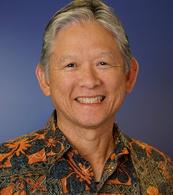
Norman’ Book Review
Miles Masterclass AI in Accounting
7 16 19
8 10 12 14 15
that CPAs across the nation join forces each fall for the Accounting Opportunities Experience (AOE)? Originally started in 2022, AOE has grown into a month-long initiative to introduce high school students to the accounting profession. State societies throughout the United States work with their members to visit classrooms and inspire the next generation of accounting professionals.
Here in Hawai‘i, we have designated October and November as the official months for AOE. Last year, we delivered 28 presentations at 15 schools and reached 1,020 students. This year, we hope to reach even more students—but we need your help!
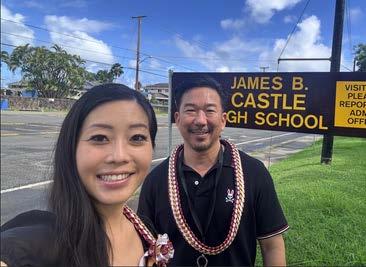
The HSCPA provides a standard presentation you can use, but you also have the flexibility to customize it based on what works best for you and the teacher. I usually ask whether there is anything in particular they would like me to cover, then tailor the presentation to the audience.
No matter what type of class I am speaking to, there are always students who feel as though going to college is out of reach.
Sometimes it is because they would be the first in their family to attend college; other times, it is because of financial challenges. I talk about my own experience applying for scholarships and how I was able to attend college on the mainland. They also really love hearing about study abroad opportunities.
me along the way, and pass along lessons that I have learned. At least once in every presentation, I see someone’s eyes light up because they hear something about accounting they did not know before. That moment always makes it worthwhile. At the end of my talk, I let students know I am available to help and
Very commonly, students have had little to no exposure to accounting, so I try to address misconceptions —such as the idea that you have to be really good at math or that all accountants do is sit at a desk crunching numbers.
I also talk about why I decided to major in accounting—hello, language of business!—explain the different career paths accounting can lead to, describe the many wonderful benefits this profession has provided to
emphasize the importance of making connections and asking for help when they need it.
Over the years, students have taken me up on it and reached
out to ask me to review a resume, help them practice interviewing, provide career guidance, or simply serve as a sounding board as they make important decisions.
It is meaningful for students to hear from anyone willing to take the time to visit their schools, but I cannot emphasize enough how much it means when an alum returns to share their story. It makes a real difference for students to meet someone who was once in their shoes and hear about the path that person has taken. They see themselves in you!
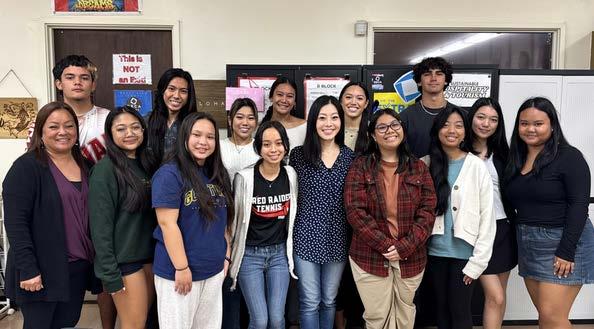
As school begins this month and we start the process of seeking volunteers, I ask you to help us in our quest to inspire students across Hawai‘i. Every presentation
matters, and every volunteer helps open a student’s eyes to possibilities they may not have imagined before.
Please consider signing up for one classroom visit this fall. Email info@hscpa.org to get connected with an opportunity. If you would
like a partner for your first visit, I’d be happy to join you for a presentation—all you have to do is ask ��. I look forward to sharing about all of our visits in a future message!

A unique program for high school students to spark curiosity, build confidence, and explore the world of business and accounting. Help us shape the next generation of Hawaii’s professionals. Your support - whether through volunteering, mentoring, or simply championing the programcreates meaningful opportunities for students who are just beginning to imagine their future. If you believe in strengthening Hawaii’s workforce and investing in tomorrow’s leaders, C.O.R.E. is a powerful place to start.
Contact the HSCPA at info@hscpa.org.

TFH’smoney.Tosupport donatemission,please here.
The Governor’s final veto decisions are in. Out of 267 bills that the 2026 Legislature sent to him, he vetoed one of them and reduced an appropriation line item in another.
In this column, we will be discussing the line-itemed bill, SB 2600.
Back in 1978 when we last had a constitutional convention, delegates thought that government shouldn’t be keeping the people’s money if it didn’t have to. “Your Committee believes that it is proper for the State’s taxpayers to benefit from any surplus in the State’s general fund balance,” they said. Thus, they put before the voters, and the voters approved, what became Article VII, section 6 of our Constitution. It says that if our general fund balance is more than 5% of general fund revenues for two fiscal years in a row, then the legislature is supposed to enact a tax credit or refund to give some of that money back to us taxpayers.
As we wrote about earlier, it only took lawmakers a couple of years to squash this provision into insignificance. In nearly every year between 1983 and 2009, lawmakers gave us a $1 credit, called the general income tax credit, whenever the constitutional provision was triggered. The

exceptions were in 1989 and 1990. And in 2010, at lawmakers’ urging, we voters approved an escape hatch for this provision, allowing lawmakers to feed our rainy day fund instead of giving us a credit. In later years, again at lawmakers’ urging, we approved other amendments allowing lawmakers to send the surplus to funds intended to pay down the State’s debt or fund its pension obligations to State workers.
In recent years, our Legislature routinely considers a bill to satisfy Article VII, Section 6. The bill provides for a tax credit in a blank amount, an appropriation to the rainy day fund in a blank amount, and appropriations to the debt service and post-employment benefit funds, again in blank amounts. SB 2600, as originally introduced, was that bill this year.
it was what we call a Blankety Blank bill.
As the bill traveled through the Senate, and then through the House, lawmakers were urged to approve the bill as is, although it was impossible to know whether they were thinking about giving taxpayers a credit in any amount, or how much general fund money was going to go through one or more of the three constitutional escape hatches.
Lawmakers played along. That’s why the subsequent drafts of the bill, Senate Draft 1 and House Draft 1, look pretty much the same as the original, with none of the blanks filled in.The only draft that had a specific number in it, Conference Draft 1, was filled in after closeddoor conference committee meetings. At that time, no public input was invited or accepted.
It’s like going to an appliance dealership where the salesperson asks you to sign a contract to buy an appliance where the price and terms are blank. “Don’t worry!” says the salesperson. “I’ll get you the best possible deal on the best possible terms! Trust me on this!”
Continued on Page 9
th
November 13, 2026
8:30 am. to 3:00 p.m.





By Colin Fujiki and Ryan Stillinger
all know the feeling. The total is higher than it should be, and not always where you expect. Hawaii costs different, and most of us have made peace with it. For owners of income-producing real estate, that same difference can quietly work in their favor through a study many CPAs know well: cost segregation.
automatic consent. One trap: the bonus rate locks to the placed-inservice date. A 2023 building catches up at 80%, 2024 at 60%, not today’s 100%.
What a cost segregation study does
A return typically treats a purchased building as a single asset depreciated over 39 years, or 27.5 for residential. But a building is not one thing: walls, roof, flooring, electrical, A/C, plumbing, exterior improvements, and many of those components carry shorter lives. A cost segregation study is an engineering-based analysis that separates them, moving qualified components into 5-, 7-, and 15-year classes. And since the One Big Beautiful Bill Act made 100% bonus depreciation permanent for property acquired after January 19, 2025, reclassified components can often be depreciated in year one.
The overlooked Everyone thinks about cost segregation at purchase. The bigger opportunity is often an asset bought years ago with no study done. A study on a building held more than a year is simply a change in accounting method: Form 3115, a §481(a) adjustment, and the missed depreciation lands as one deduction on the current return. No amended returns, and most filings clear under
The IRS Audit Techniques Guide (Publication 5653) is direct: the most reliable studies are built on actual construction cost data. A desktop study applies generic mainland costs to a building no one has walked. Landto-value ratios run high, frequently 35 to 55%, and land is not depreciable, so on fee-simple property the land allocation has to be right. Much of what changes hands here cuts the other way. Leasehold property carries no land basis, and CPR and HOA interests typically carry little, so nearly the entire purchase price is depreciable. And local construction costs, shaped by labor, shipping, and site constraints, do not match mainland models.
In a recent study, a Waikiki short-term rental with a $698,000 basis and no land value (leasehold) came with a national desktop study in hand: 34.9% segregated to the 5-year class. Repricing from Hawaii construction costs and identifying assets the desktop study missed through a professional site walk moved the 5year segregation to 37.8%. The national model booked carpet where the unit has vinyl plank and applied a 1.2 “Hawaii factor” uniformly to every line, never adjusting the segregation
ratio. At 37.8%, that is roughly $264,000 of 5-year property, and at today’s 100% bonus, about $20,000 of added first-year depreciation, 8.5% more than the desktop study delivered. Where furnishings are in the purchase basis, common for Waikiki rentals sold turnkey, the gap widens further.
honest caveat
Where construction meets tax Translating a physical building into defensible cost components is construction work before it is tax work. Done well, it hands the CPA something organized and well grounded. A study is worth a look when a client owns income-producing property with a basis north of $500,000, has held it more than a year without a study, or placed property in service after January 19, 2025.
Cost segregation is not new and not aggressive. It is a careful reading of what a building is actually made of, and in Hawaii, that reading is best done from Hawaii costs. Everyone here has made their peace with paying more. For clients holding incomeproducing real estate, this is one of the few places the difference pays back.
Colin Fujiki is a Hawaii preconstruction and costestimating consultant with more than 20 years in Hawaii construction. Ryan Stillinger coordinates tax-side classification and reporting at COSTS, a Hawaii-based cost segregation practice supporting CPAs and their clients. Reach them at colin@coststs.com and ryan@coststs.com.
I would never sign such a contract or recommend that anyone do that. “Know what you are signing before you sign” is essential consumer advice, so shouldn’t it apply to lawmakers too? To me, asking lawmakers to vote on a Blankety Blank bill fails to respect the lawmakers and their responsibilities. It’s telling them to
vote on a bill when they have no idea of or control over its content. The final draft of SB 2600 appropriated $50 million to the rainy day fund. The Governor didn’t like that because our rainy day fund already has more money in it than it has ever had and we have current
and pressing state needs, so he cut the amount down to $1.
That, for this year, was the one dollar solution.
Tom Yamachika is President of the Tax Foundation of Hawaii - the ‘watchdog’ that keeps an eye on Hawaii’s taxes. Tom is also the owner of Aloha State Tax, a small law firm with emphasis on State taxes. Prior to going solo and the TFH, Tom was a principal with Accuity LLP where he managed the tax consulting practice, including quality and risk management and practice development.

Organizations navigating change need leaders who can build trust, foster belonging, and engage people to contribute at their full potential.
Leadership in accounting and finance is changing. That change isn’t limited to technology adoption, new business models, or evolving expectations. It’s also about how professionals experience the workplace— and what organizations need from leaders in return.
For years, success in many accounting and finance settings tended to follow an unspoken script: fit the mold. Be professional. Be polished. Blend in. Minimize uncertainty, show how well you fit the accountant stereotype.

Inclusion Is About More Than Personal Expression People often associate inclusion with accepting self-expression or workplace culture initiatives. Those conversations matter. But belonging also has practical implications for organizational performance and leadership development—authenticity.
driver of stronger collaboration, innovation, and team effectiveness.
For accounting and finance professionals, this matters. Our work now requires more than technical accuracy; it demands leaders who can navigate ambiguity, build cross-functional relationships, communicate tough realities, and help teams adapt in uncertain times.

Those norms aren’t always intentional, but as firms, businesses, government agencies, educational institutions, and nonprofits work to attract talent, develop their leadership pipelines, and navigate ongoing transformation, a critical question has emerged: What happens when people feel they must hide parts of themselves to succeed?
Authenticity shapes trust.
It influences whether professionals feel comfortable asking questions, sharing concerns, admitting mistakes, offering new ideas, or challenging assumptions— behaviors essential in environments shaped by rapid change, technological disruption, and growing complexity. In short, authenticity contributes to psychological safety—a proven
These leadership behaviors are harder to sustain when people feel pressured to constantly edit, minimize, or conceal important parts of who they are.
The Hidden Cost of “Professional Masking” Many professionals learn to read organizational expectations and adapt accordingly. Adaptation can be healthy—professionalism includes understanding audiences, exercising judgment, and communicating appropriately for the audience.
But there’s a difference between adapting professionally and feeling

that advancement requires abandoning authenticity. When candor, seeking support, acknowledging caregiving responsibilities, discussing mental health challenges, sharing diverse perspectives, or bringing full experiences into work are stifled, organizations pay a hidden price:
Engagement can decline.
Creativity and innovation can suffer.
Trust may erode.
Talented professionals may disengage from leadership pathways.
This isn’t merely a “culture issue.” It’s a leadership-pipeline issue. If visibility, sponsorship, and advancement favor a narrow image of leadership, organizations risk overlooking voices that could strengthen decision-making and resilience—an especially important consideration as succession planning and leadership development efforts intensify.
WhyThis Matters in a Transforming Profession Transformation requires honest, courageous conversation. It does not flourish in environments where people fear speaking up, raising concerns, or questioning outdated assumptions. Whether implementing new technologies, navigating regulatory changes, improving cross-functional collaboration, modernizing education pathways, or rethinking
By Donny Shimamoto
Founder & Inspiration Architect Center for Accounting Transformation
rethinking workforce strategies, organizations need leaders who foster trust and create room for candor.
Authenticity isn’t about sharing everything or abandoning boundaries. It’s about consistency between values, actions, and communications. It’s about modeling transparency, encouraging respectful dialogue, and building the trust that underpins teams, partnerships, and organizational resilience.
That leadership approach strengthens belonging—not as a standalone initiative, but as a core organizational capability. People who feel seen, respected, and connected are more likely to engage, contribute, collaborate, and envision a future for themselves in the profession. And visibility matters: when leadership roles feel attainable to people from diverse backgrounds, more future leaders actually rise.
Building cultures where authenticity and belonging thrive requires more than slogans or annual observances. It requires deliberate leadership and concrete practices.
Practical steps to consider include:
Reexamining how leadership potential is defined, identified, and advanced.
Expanding mentorship, sponsorship, and leadershipdevelopment opportunities. Creating environments that welcome respectful disagreement and candid dialogue.
Reassessing workplace norms that unintentionally discourage flexibility or diverse leadership styles. Encouraging leaders to model transparency, accountability, and humanity alongside technical excellence
These actions uphold professional standards while broadening our view of effective leadership in a changing profession.
Leadership for the Profession We Are Building
The future of accounting and finance will be shaped not only by technology, policy, and macro conditions, but by who stays, who leads, and whether organizations create ecosystems where professionals can contribute fully, grow confidently, and lead authentically.
Creating belonging is no soft skill detached from business outcomes. Increasingly, it is a leadership competency—and in a profession undergoing continuous transformation, it may be one of the most critical capabilities we can develop.
By Britney Delima

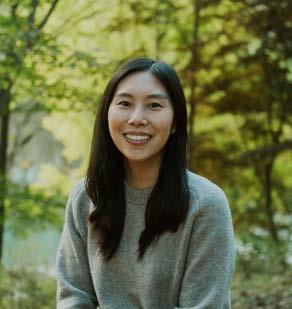
The HSCPA Y-CPA Squad is excited to introduce our newest member, Kelly Kuroda. Kelly is a manager in the Solutions division at KMH, LLP. Kelly grew up in Mililani and attended Mililani High School (go Trojans!). She continued her education at the University of Hawai’i at Mānoa, where she received her degree in accounting. Growing up, Kelly danced hula, participated in student government, and played volleyball. Fun fact: Kelly was part of the Mililani High School girls’ volleyball team that won the school’s first OIA championship.
Kelly’s background and perspective will be a valuable addition to our squad as we continue to advance our initiatives. I recently had the opportunity to interview Kelly to learn more about her and her journey in accounting.
BD: Why did you decide to pursue a career in accounting and what drew you to start your career in Solutions?
KK: Some might say accounting is in my blood—my grandpa, both of my parents, and my sister all worked in accounting. Although they never pushed me to follow in their footsteps, I knew I wanted to major in business. After taking introductory courses at the Shidler College of Business, accounting stood out to me because it felt like solving puzzles. I also understood that accounting is the language of business and that the knowledge and skills I gained could be valuable no matter where my career path led.
Solutions was an opportunity I didn’t know existed until I started at KMH as a tax return scanner. I was initially drawn to Solutions because of the variety of work and the broad exposure it offered.
BD: What do you enjoy most about your career?
KK: I find a lot of professional fulfillment in the work we do in Solutions, especially in helping clients navigate through change. I also value the constant learning that comes from serving clients, collaborating with colleagues, and interacting with business leaders in our community.
BD: What are you hoping to contribute to the YCPA community and what do you hope to accomplish during your time on the YCPA Squad?
KK: I hope to bring new ideas, be a supportive teammate to my fellow
YCPA Squad members, and to foster community amongst young CPAs in Hawaii!
BD: What advice would you give to students or young professionals considering a career in accounting?
KK: With the rise of AI, I think it’s important to develop yourself beyond just being a “good” accountant. If you think of accounting as a tool to help others solve problems you’ll have a lot of opportunities to help the business community and advance in your career.
BD: What accomplishments are you most proud of so far in your career?
KK: There’s not a specific event or accomplishment that I am most proud of. But I have a number of clients that I’ve worked with since I started my career, so it’s been very fulfilling to grow up on the engagement, to see how the organization has improved over time, and to reflect on how I’ve grown professionally and personally.
BD: If you weren’t an accountant, what career do you think you’d have?
KK: If I chose a career purely on something that interests me and that I would like to learn more about, I think I would pursue a career in horticulture and/or floristry. If I have the energy in retirement, I could see myself working part-time at a florist.

BD: What do you enjoy doing outside of work?
KK: I still dance hula with the same halau I started with as a child, enjoy playing mahjong and board games with friends, and spend a lot of time with my family.
BD: What is one thing people would be surprised to learn about you?
KK: I’m not a good singer, but I love karaoke and can do it 100% sober.
BD: What is your favorite thing about living and working in Hawaii?
KK: Hawai’i will always be home for me. I feel so lucky to be able to live where my family and friends are and to have the opportunity to impact the local business community through my career.
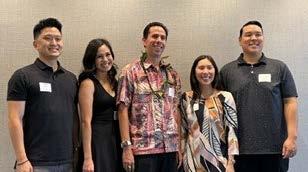
Thank you, Kelly, for the taking the time to share your story and insights with us. We appreciate your willingness to get involved and look forward to working alongside you. We know that your experience and perspective will make a meaningful impact as we continue to support and engage Hawaii’s young
Tayler Mori
Britney Delima
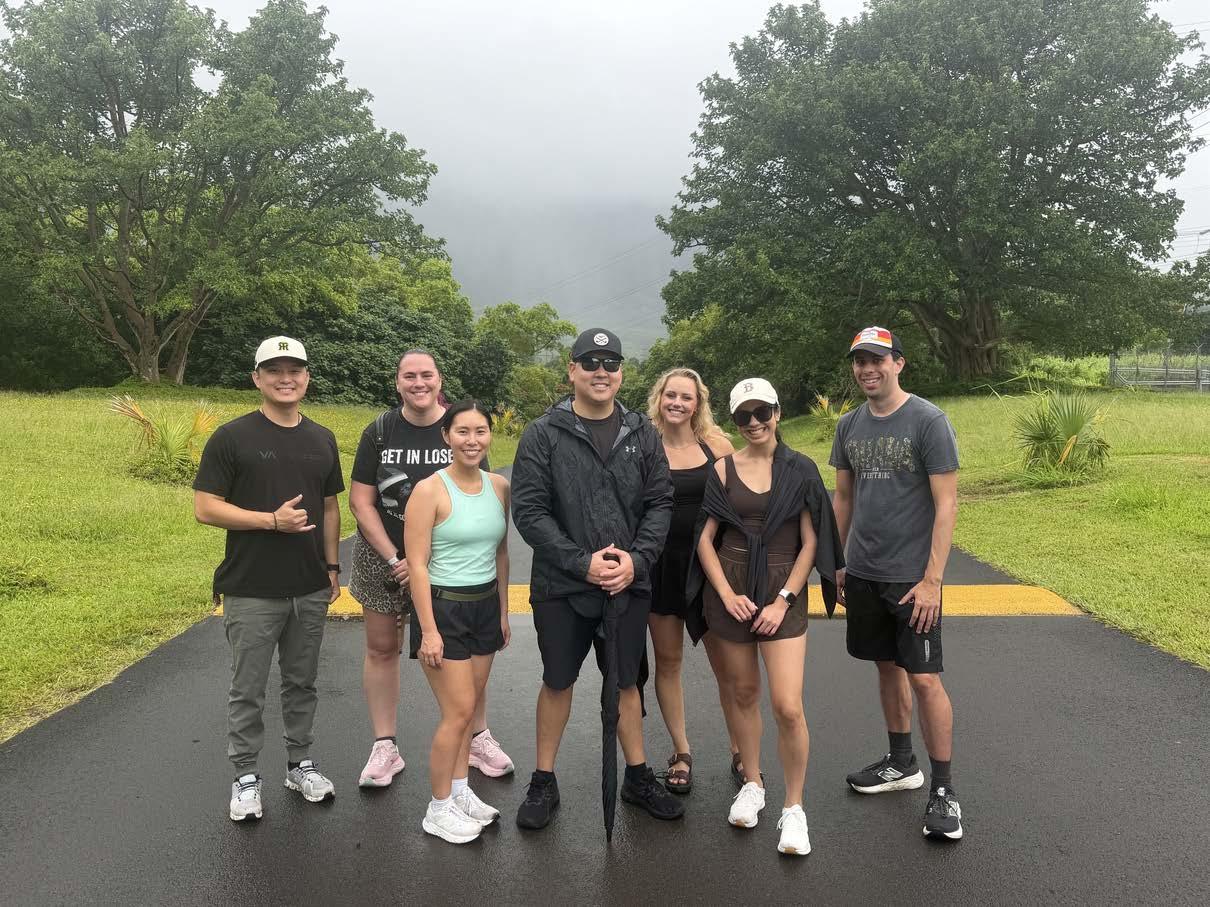
Just a beautiful Saturday with Y-CPAs at Ho’omaluhia Botanical Gardens
Tayler Evelyna
Kelly Evan
Madeline
Britney Adrian
Adrian Hong
Kelly Kuroda
Evan Yamamoto
Missing: Katie Landgraf

The HSCPA is proud to congratulate Lindsay Lloyd, who recently earned her Associate's in Accounting degree from Kauai Community College. She will continue her academic journey this fall, pursuing a Bachelor's in Business Administration with an Accounting concentration at the University of HawaiiWest Oahu.
Lindsay reflects on how far she's come since 2015, when her high school diploma and a trade school degree were just enough to qualify for an entry-level desk job answering phones. After thoughtful consideration, she made the difficult decision to leave her dream job in broadcasting to focus on increasing her earning potential and building long-term stability. Higher education – and ultimately earning a bachelor's degree – became her path forward.
While attending UHWO, Lindsay will continue serving her community as a volunteer programmer at Kauai Community Radio where she has spent the past decade broadcasting timely and essential information to the island. She shares that she is honored and grateful to the HSCPA for helping kickstart her financial journey and supporting her next chapter.
Hilo CPA Practice - $703K gross revenue. Revenue is nicely mixed between profitable tax (43%), accounting/ bookkeeping (36%), and payroll (22%). Turn-key opportunity ideal for an experienced CPA. For more information, please call 1-800-397-0249 or visit www.APS.net to see listing details and register for free email updates.
Thinking of Selling Your Practice? Accounting
Practice Sales is the leading marketer of accounting and tax practices in the world. We have a large pool of buyers looking for practices as well as the experience to help you find the right fit for your firm and negotiate the best price and terms. To learn more about our risk-free and confidential services, call Ryan Pannell with The Holmes Group at 1-800397-0249 or email Ryan@apsholmesgroup.com


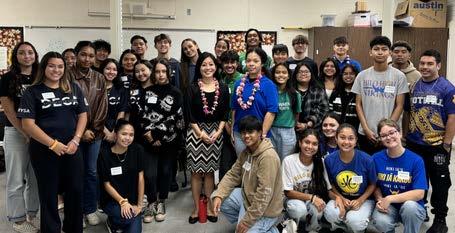
Our third year, the HSCPA is pleased to designate OctoberandNovember2026 as the official months for the Accounting Opportunities Experience (AOE) at Hawaii high schools!
This collaborative effort with state CPA societies and the AICPA aims to ignite student interest in accounting and spotlight the countless career paths the profession offers.
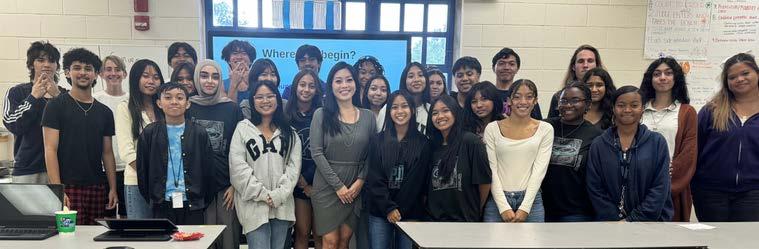
We invite you to share your story and career journey by visiting a local classroom — in person or virtually. Your presence and insights can make all the difference.
Interested in participating? Please complete the AOE Volunteer Form here, SAVE it, and email it to info@hscpa.org.
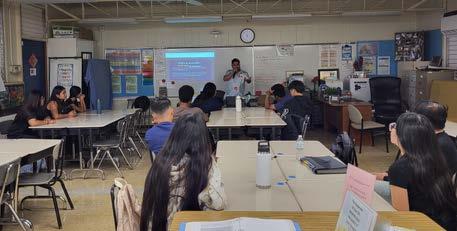
Presentation dates are being coordinated based on teacher requests and classroom availability. However, you'll have the opportunity to choose the school and class you'd like to visit. Most presentations run approx. 1 hour with 10-20 students.
Become a Sparkler — Your commitment sparks curiosity, pride, and possibility in tomorrow’s CPAs!



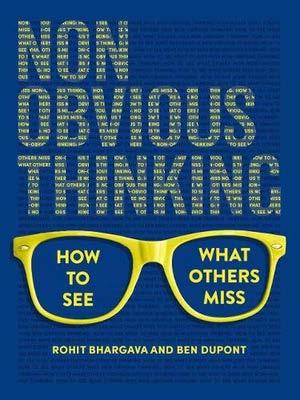
by Rohit Bhargava and Ben DuPont
competitive, fast‑changing world, everyone is searching for an edge —whether to achieve breakout success or simply make it through another year.
One powerful approach is learning to think differently and “see what others miss.” That’s where this book shines. It pushes you to examine your own thinking and consider new perspectives. I first discovered it when Rohit Bhargava spoke at a national credit union conference and wowed the audience.
Below are excerpts I found most compelling, offering a glimpse into how useful this book can be. It’s a quick, engaging, and highly entertaining read.
The authors use the SIFT acronym to help you develop the mental flexibility to be open to new ideas. “S” is for creating more mental space. “I” is for uncovering more insights. Once you obtain more insights, “F” stands for the ability to focus on the things that matter most. Lastly, “T” stands for twist, where you challenge yourself mentally to greater heights.
Breathing shapes thinking: shallow breaths often lead to shallow thoughts. The book highlights the science-backed “perfect breath,” described by James Nestor as inhaling for 5.5 seconds and exhaling for 5.5 seconds—an easy rhythm that helps unlock clearer, more expansive thinking.
Having difficulty identifying quality candidates? Try asking follow-up questions based on their previous answers rather than relying on a fixed script. Pulitzer Prize-winning journalist Jacqui Banaszynski notes that this dynamic, circular technique elicits more candid responses, uncovers memorable

CPAs - and most people - rely on morning rituals to start their day. But, when your thinking feels stuck, the authors recommend shaking up those routines. Tweaking even small habits can nudge your brain out of its familiar patterns and create room for fresh ideas.

stories, and often reveals unexpected insights about the person.
You can improve your mental insights by honing your nunchi, a familiar skill in Korean culture where you try to understand what
others think and feel without asking them directly. In Japan, this skill is referred to as kuuki wo yomu, roughly translated to “reading the air” or being able to discern the unspoken meaning behind what people say or do.

modern entrepreneurship. The authors note, however, the path to non-obvious thinking starts with focusing on solving the right problem, which often is more nuanced than it appears.

The authors encourage exploring magazines, videos, and other content on topics you normally ignore—or even disagree with. Engaging with unfamiliar viewpoints can spark unexpected insights and open your mind in ways that invite non‑obvious ideas to emerge.
Shaped the Way They Are?
Japan engineers looked to nature and shaped the bullet train engine after the beak of a kingfisher bird to lower fuel consumption.
of Solutions
Falling in love with problems rather than solutions is the mantra of
When making a decision, having clear criteria matters. A picker feels overwhelmed by options. A chooser focuses on what truly matters, considers alternatives when needed, then moves forward with confidence—no regret, minimal second‑guessing. In short: be a chooser, not a picker.
Having constraints can be beneficial because it forces you to be more creative by pushing you to do more with less. Looking back in history, Dr. Seuss was challenged to write a book using no more than 225 different words from a pre-determined list of 348. He wrote “The Cat in the Hat”
using 236 words. Challenged to write a children’s book using only 50 unique words, he wrote “Green Eggs and Ham.”
In the mid-1980’s Nintendo game music composer Koji Kondo, under orders to use as little data storage as possible, composed the soundtrack for the original Super Mario Brothers game using just five repeating tones that were looped in unexpected ways to avoid being boring or annoying.
Intersection thinking is where two seemingly unrelated ideas can be combined into something groundbreaking and new. This also includes blending old and new knowledge together. You may be able to spot a non-obvious solution or idea in the process.
I was truly inspired by the authors’ final thoughts at the end of the book.
"Opening your mind to see other perspectives takes bravery. Choosing to engage with people unlike yourself or seeking information that is outside your usual media diet does too. More than anything else, this book is about unlocking this sort of mental courage in yourself and using it to see the things that others miss. That’s what non-obvious thinkers do, and the more of us there are in the world, the better the future will be."
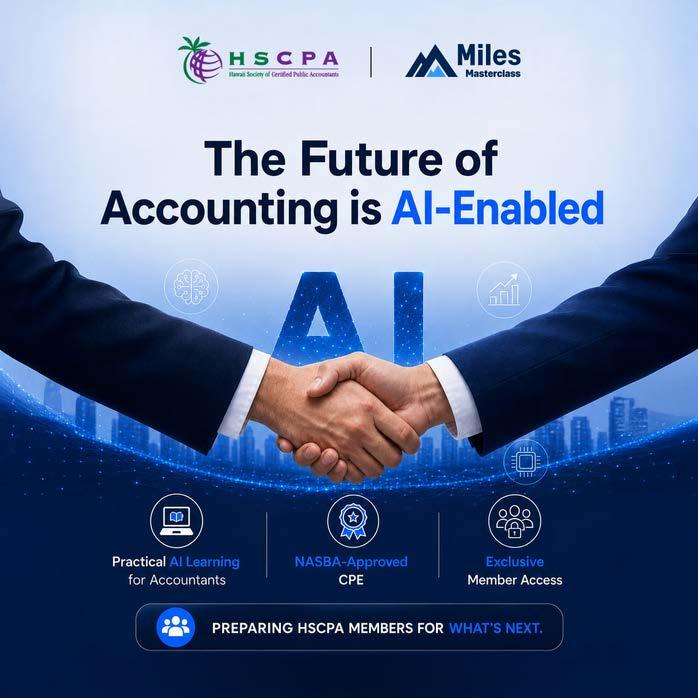

accounting is AI enabled, and HSCPA members will not be watching from the sidelines.

We are pleased to announce our partnership with Miles Masterclass, a practitioner-led learning platform built specifically for accounting professionals.
Most of us already know AI matters.
The real challenge is turning that awareness into everyday capability by using AI confidently in audit, tax, advisory, and finance work.That is exactly the gap this partnership is designed to address.
Through Miles Masterclass, HSCPA members receive:
Practical, practitioner led AI education built specifically for accountants
NASBA approved CPE integrated with emerging technology learning A structured AI in Accounting Competency Framework, from foundational concepts to function specific application
The Certified AI Ready Accountant (CAIRA) credential pathway Masterclasses, webinars, podcasts, and microlearning designed to fit around client work
As an exclusive member benefit, HSCPA members also receive discounted access to the platform. The profession does not need more conversations about AI. It needs more accountants who know how to apply it with confidence.
Stay tuned for more information!