at HSCPA’s Elect & Engage on June 19 at the Prince Waikiki, our members’ meeting and reception, and enjoy an afternoon of connection, insight, and celebration
Get a quick issues update, learn how HSCPA is strengthening the future talent pipeline, and see how you can help shape what’s next for our profession.
As a Members Only event, your registration directly supports our Student & Young Professionals initiatives a simple way to invest in the next generation while spending time with your peers.
Expect lively conversations, meaningful connections, and a spread of hors d’oeuvres and libations Come for the updates, stay for the camaraderie, and raise a glass to the future we’re building together. REGISTER!
Officers
President Frank Kudo
The Official Publication of the Hawaii Society of Certified Public Accountants
President-elect Trisha Nomura
AICPA Council
Frank Kudo (Designated)
Darryl Nitta (Elected)
Vice President Adrian Hong Trisha Nomura (At-Large)
Secretary/Treasurer Chad Funasaki
Assistant Secretary Grayson Nose
Directors * 2025-2027
Ronald Heller
Jill Ishimitsu
Ed Nakano
Darryl Nitta
Natalie Taniguchi
Directors * 2024-2026
Chantal Mentzer (Kauai)
Norman Okimoto
Joel Peralto (Hilo)
Immediate Past President
Ryan K. Suekawa
Executive Director
Kathy Castillo
Administrative Assistant
Debbie Cortes
Hawaii Society of CPAs
1000 Bishop Street, Suite 802
P.O. Box 1754
Honolulu, HI 96806
Tel: (808) 537-9475
E-mail: info@hscpa.org Web: www.hscpa.org
This publication is designed to provide general information only, and should not be used as a substitute for professional advice. The authors and editors disclaim any liability for any loss or damage resulting from the use of any information or advice herein. Although a reasonable attempt has been made to be accurate, neither the HSCPA nor the authors and editors can guarantee that all information contained herein is correct as of the date of publication.
KALA (the Hawaiian word for money) is published periodically and is the official publication of the Hawai’i Society of Certified Public Accountants. Please direct all inquiries regarding editorial content to HSCPA, P.O. Box 1754, Honolulu, Hawai’i 96806.
June 2026
This Issue
President’s Aloha Message . . . . . By Dr. Frank Kudo
Follow the Yellow Brick Road .
By Tom Yamachika
AICPA Spring Council Meeting
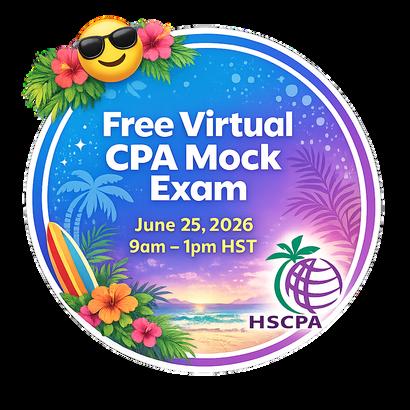
Virtual CPA Mock Exam
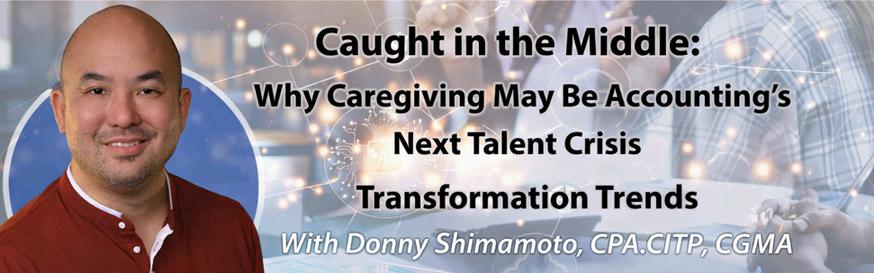
Why Caregiving May Be Accounting’s Next Talent Crisis
By Donny Shimamoto
America’s “Hidden” Financial Statements By Michael Doorley
Y-CPA Buzz: Trading Seattle for Hawaii: Reflections from Leaving the “Big 4”
By Tayler Mori
Norman’s Book Review
The Future of Accounting By Bart Nichols
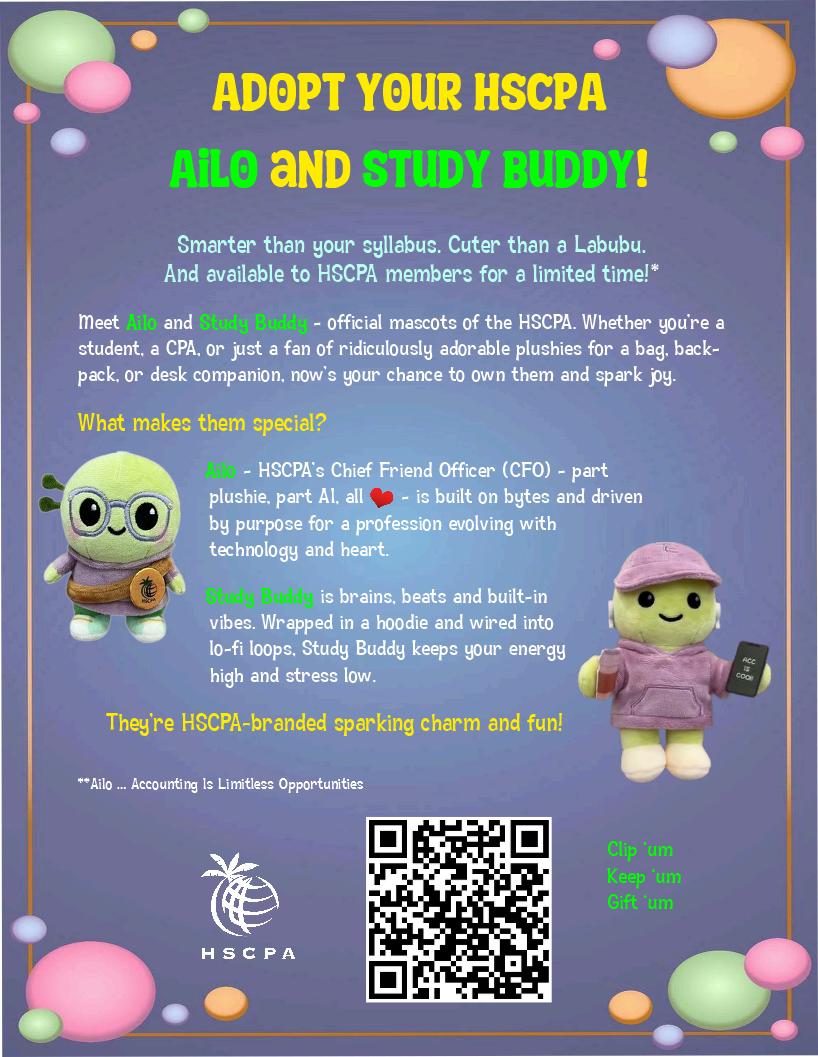
HSCPA Mascots 4 6 8 9 10 12 14 16 18 20
President’s Message Aloha
PUEO the Hawaiian Owl ... hoot!
About nine months ago, I was golfing with my brother when he pointed out an owl lying on the ground next to a hedge. I’ve never seen an owl up close beforeonly from a distance hovering over the fields in Kapolei in the early morning hours The sight made me wonder when and why owls came to inhabit the Hawaiian Islands I would think they belonged in the Midwest, flying above the corn and wheat fields, or deep within the forests of the U S In fact, most times owls are depicted living and hunting in the forest - or at least that’s what I had always assumed.
Well, getting back to the owl on the golf course, I drove my cart over to see it up close, and what I saw amazed me. A large bird lay there with pristine feathers in shades of brown and white, with what looked like a tinge of yellow It was such a beautiful creature, yet clearly something had attacked it as it lay lifeless beside what appeared to be a burrow in the ground, likely its nest
After the golf game, I kept thinking of the owl and how it ended up in Kahala My brother said it was a Hawaiian owla Pueo. At that moment when he said Pueo, it caught my attention. The institution that I teach at - UH West O`ahu - has a Pueo mascot - what a coincidence.
The next day, I decided to do some research about this bird and how it ended up in Hawaii. Researchers think that the bird flew in from the U.S. mainland around the same time the Polynesians settled in Hawaii, roughly 1000 CE The Pueo is capable of longdistance flight, but what surprised me was learning that its mainland relatives typically nest in trees - not on the ground That contrast made the Pueo’s presence, and its ground burrow on the golf course, even more intriguing
The Pueo nests in burrows on the ground, which makes it especially vulnerable to predators such as mongoose, cats and dogs. It feeds primarily on rodents and insects - a carnivorous species classified as a short-eared owl, known for its ability to fly long distances, even across the Pacific Ocean Unlike its mainland relatives, which hunt mostly at night, the Pueo is active during the day, gliding over grasslands, open fields and volcanic slopes in search of prey Researchers believe the Pueo adapted to life in Hawai’i by feeding on rats, rodents, small birds and insects that became abundant as the Hawaiian population settled in the Islands.
The Hawaiian people associated the Pueo as a spiritual being, closely associated with chiefly and warrior traditions. The saying “ka pueo kani kaua” - the owl who sings of warreflects its role as a protector, believed to warn warriors of danger and guide them in battle. Over generations, the Pueo became recognized as an “aumakua”, an ancestral guardian spirit linked to wisdom, divine protection, and the powerful forces that shape both warfare and leadership
On Oahu, stories were told of Pueo chiefs or protectors in Manoa Valley On Maui, the Pueo spirit is said to help guide lost souls safely home Just seeing a Pueo during the day time is considered spiritually meaningful or symbolic.
The Department of Land and Natural Resources notes that it is difficult to determine the exact number of Pueo in the State, as it is very difficult to obtain an accurate population count. What scientists do know is that the Pueo species is in decline, largely due to habitat loss from urban development. On O’ahu, the Pueo is officially listed as an endangered species, and some estimates suggest that only about 800 Pueo owls remain on the island
So, here is the correlation: the Board of Directors of the HSCPA is blessed with the spirit of the Pueo It protects the profession from adverse legislation, offers wisdom by advancing the essential knowledge and skills needed to stay relevant, and faithfully guides the profession along a righteous and ethical path.
As my term as President comes to a close, I would like to thank Kathy Castillo, Executive Director, for her commitment, passion and insight I am equally grateful to the HSCPA Board members, who have worked diligently to serve the CPA profession with integrity and purpose, demonstrating true leadership by giving of themselves for the benefit of our membership I bid you farewell … ka pueo kani kaua.
Aloha! Frank Kudo
In In In
our Hawaii legislative session, many bills are making the trek along the yellow brick road to the fifth floor of the Capitol Here are some of the more significant ones
Senate Bill 3125, now Act 24, is this year’s tax rate bill The 2024 changes to the standard deduction are left intact The tax bracket changes from the 2024 law are left in place for taxpayers making $350,000 or less (for joint filers, $175,000 single). For those making more, the tax brackets that apply this year will remain in effect. And there is a new 13% tax bracket for taxpayers making $1 million or more (for joint filers, $500,000 single) The Capital Goods Excise Tax Credit, the High Technology Business Investment Tax Credit, the Renewable Fuels Production Tax Credit, the Technology Infrastructure Renovation Tax Credit, and the Tax Credit for Research Activities were all given sunset dates in either 2028 or 2029. The Renewable Energy Technologies Credit (for photovoltaic installations, for example) is going to be available with an income limit ($350,000 joint, $175,000 single) and a statewide cap of $40 million until it sunsets on January 1, 2031
House Bill 2329 conforms our state tax law to provisions of the One Big
Beautiful Bill Act But there are several notable omissions
To start with, the federal code includes new provisions based on some of President Trump’s campaign promises. Our bill does pick up “No Tax on Tips,” which we previously reported on. It does not pick up “No Tax on Overtime,” which we discussed here, nor does it allow the federal deduction for car loan interest. Enhanced standard deduction for senior citizens? We don’t pick that up either, probably because we already allow an enhanced personal exemption for our kupuna
The federal “Pease Limitation” started eating away at itemized deductions once a taxpayer reached a certain income level, disallowing more and more itemized deductions if the taxpayer’s income was higher, until the taxpayer could use only 20% of the itemized deductions otherwise available. The One Big Beautiful Bill Act enacted a more taxpayerfriendly version of the limitation that disallows at most 2/37 of itemized deductions allowable, but for Hawaii tax purposes we are keeping the older, nastier version of the law, with the federal income thresholds that existed in — get this 2009
($2,000 for joint filers) charitable deduction to be taken by folks who don’t itemize their deductions, and it also incorporates the federal deduction floors Thus, individuals can only take itemized charitable contribution deductions only to the extent that their contributions exceed 0 5% of adjusted gross income, and corporations are allowed charitable contribution deductions only to the extent that their contributions exceed 1% of taxable income.
And then there is Senate Bill 2921, the raid bill that was introduced to scoop excess balances from hundreds of special and revolving funds The Conference Draft of the bill is the first one in which there are actual numbers The bill targets 18 funds for a total haul of $47 million, with the two largest victims being the tax administration special fund ($23 million) and the beverage container deposit special fund ($12 million). This raid bill is somewhat underwhelming, especially given lawmakers’ focus earlier in the session on a $430 million unencumbered balance in the University of Hawaii tuition and fees special fund, which was targeted in Senate Bill 2602 and which we wrote about here
For charitable giving, our state tax bill conforms to the federal provisions allowing up to a $1,000
Continued on page 7
Senate Bill 2602 quietly died in conference.
For those interested in the state GET, income tax, and unemployment tax benefits for enterprise zones, Senate Bill 2360 adds new qualifying activities, including biotechnology products, whether or not genetically engineered; medical and health care services, including home health care, specialized care practices, and health coaching; research and development activities in aerospace technology; and information technology design and production. In addition, the qualification period is extended from the current 7 years to 9 years. Those who are working in newly qualified fields should check to see if they are in an enterprise zone or wouldn’t mind moving to one.
And, for those interested in the motion picture and TV production credit, Senate Bill 2580 makes several important changes. An additional 5% is allowed to productions that have at least 80% local hires. The per-production cap is raised from $17 million to $20 million, where unused production cap is allowed to carry over to the following year Productions with $60 million or more in production spending are exempt from the cap altogether Productions for a streaming platform qualify And the bill legislatively nullifies a troublesome interpretation of the General Excise Tax, stated in Tax Information Release 2024-04, that had dramatically increased production payroll costs.
Stay tuned for further news on the bills advancing toward the Land of Oz.
Tom Yamachika is President of the Tax Foundation of Hawaii - the ‘watchdog’ that keeps an eye on Hawaii’s taxes. Tom is also the owner of Aloha State Tax, a small law firm with emphasis on State taxes. Prior to going solo and the TFH, Tom was a principal with Accuity LLP where he managed the tax consulting practice, including quality and risk management and practice development
AICPA SPRING COUNCIL MEETING
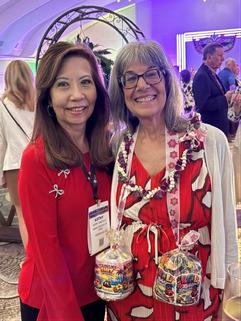
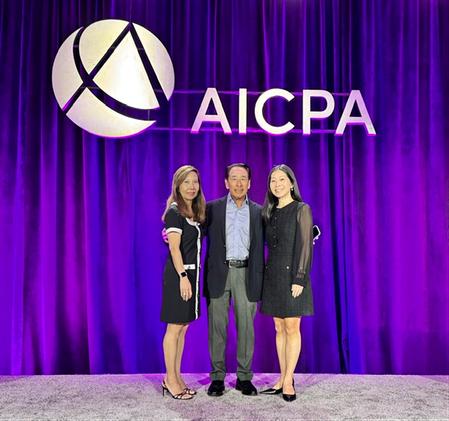
The Hawaii AICPA Council delegation recently joined peers from across the country at the Spring Meeting of Council in New Orleans, where conversations centered on shaping the future of accounting and finance, strengthening the human edge in an automated world, and advancing the CPA Trust campaign to elevate the value of the credential for those who rely on CPA services. The campaign is also a meaningful opportunity to celebrate the profession alongside our members and CPA employers.
Here at home, that momentum continued through HSCPA’s collaboration with the Center for Accounting Transformation as we co hosted the Hawaii Visioning Workshop a forward looking, Hawaii specific session exploring what accounting and auditing should look like across our islands in the years ahead
Shaping the future of the profession takes more than one perspective. Join professionals from across Hawaii as we focus on what comes next for accounting and auditing. our aura reading
The conversation is far from over Your voice matters Share your ideas, your concerns, and your hopes for the profession’s future in Hawaii Join us at Elect & Engage on June 19 at the Prince Waikiki to be part of the dialogue, or send your thoughts anytime to info@hscpa org
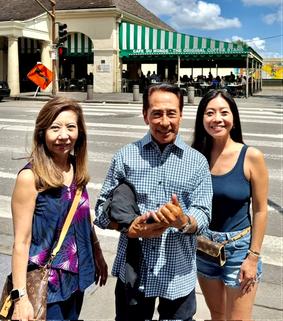
Retiring after 29 years,
must-have - nothing like having coffee & beignets at Cafe du Monde
NOLA
Dana Rubenstein of the Delaware Society of CPAs
Kathy Castillo, Frank Kudo, Trisha Nomura
Are you — or someone you know — planning to sit for the CPA Exam soon? This is your chance to put those skills to the test and see just how Exam‑ready you are. Test it out on June 25, 2026!
revenue For more information, please call 1 800 397 0249 or visit www.APS.net to see listing details and register for free email updates.
ThinkingofSellingYourPractice? Accounting Practice
Sales is the leading marketer of accounting and tax practices in the world We have a large pool of buyers looking for practices as well as the experience to help you find the right fit for your firm and negotiate the best price and terms. To learn more about our risk-free and confidential services, call Ryan Pannell with The Holmes Group at 1-800-397-0249 or email Ryan@apsholmesgroup.com.
Hawaii Practices for Sale
As accounting organizations focus on retention and leadership development, many may be overlooking one growing reality affecting professionals across the workforce: caregiving.
The accounting profession has spent years discussing staffing shortages, burnout, flexibility, and leadership pipelines But another issue may quietly be influencing all of them. Many professionals today are balancing demanding careers alongside major caregiving responsibilities raising children, supporting aging parents, or managing both simultaneously. And increasingly, they are doing so during the very years when organizations hope to develop future leaders
organizations are navigating similar challenges And many organizations are beginning to realize that belonging and workplace culture may play a bigger role in retention than previously understood.
Belonging Matters More Than Terminology
That reality is the focus of the Accounting MOVE Project’s 2026 research theme, “Caught in the Middle,” which examines how caregiving responsibilities may be reshaping advancement and retention across the profession. Importantly, this conversation extends far beyond public accounting firms alone.
Professionals across business and industry, government, education, consulting, and nonprofit
Overthepastseveralyears, organizationshavedebated languagearoundworkplace culture,inclusion,andprofessional support Butformany professionals,theterminology mattersfarlessthanlived experience
Do leaders demonstrate empathy and understanding? Can professionals continue advancing while balancing personal responsibilities?
Those questions directly influence whether people remain engaged and envision long-term futures within their organizations. Professionals who feel respected and understood are more likely to stay, contribute, and grow.
That’s why belonging has become such an important conversation. Not because it is trendy, but because it affects retention, leadership development, and organizational resilience
A Leadership Pipeline at Risk
Many organizations are already seeing signs of strain among experienced professionals managing caregiving responsibilities. Some reduce hours. Some step away from advancement opportunities. Others leave entirely.
When professionals feel they truly belong, they are more likely to stay, grow, and lead.
Culture Matters More Than Policy
Often, it is not because they lack ambition or capability. Instead, the systems around them may no longer align with modern realities Historically, many career models assumed professionals had relatively consistent availability during peak advancement years Today, many mid-career professionals are simultaneously managing leadership responsibilities and caregiving obligations. When organizations fail to adapt, they risk losing highly experienced team members at critical stages of development. That affects succession planning, institutional knowledge, client continuity, and long-term stability
The Accounting MOVE Project has long studied advancement through the lens of Money, Opportunity, Vital Supports, and Entrepreneurship the “MOVE” framework This year’s caregiving focus recognizes that career growth cannot be separated from the realities professionals face outside of work.
Many organizations have implemented flexible work arrangements in recent years While flexibility remains important, policies alone do not automatically create belonging. Professionals often say flexibility exists “ on paper” while workplace culture discourages actually using it. Some fear being viewed as less committed if they establish caregiving boundaries. Others worry stepping back temporarily could permanently affect advancement opportunities That’s why leadership behavior matters
Organizations that retain talented professionals often create cultures where support is visible and normalized Leaders openly acknowledge caregiving realities, evaluate performance based on contribution rather than visibility alone, and demonstrate healthy boundaries themselves Those actions help create environments where professionals feel they can succeed without hiding significant parts of their lives.
The Opportunity Ahead
The good news is that the accounting profession has repeatedly demonstrated resilience and adaptability The profession successfully navigated remote work transitions, technological disruption, regulatory changes, and increasing client complexity It can also evolve in how it supports people
That evolution may become increasingly important as organizations compete for talent and work to strengthen leadership pipelines for the future The organizations that recognize caregiving as a workforce reality rather than a temporary inconvenience may ultimately be better positioned to retain experienced professionals and build stronger cultures
Because when professionals feel they truly belong, they are more likely to stay, grow, and lead.
Learn More:
The Accounting MOVE Project helps organizations benchmark advancement, retention, and workplace culture trends affecting the accounting profession. The 2026 research theme, “Caught in the Middle,” focuses on caregiving and leadership pipeline challenges.
America’s “Hidden” Financial Statements: Why the Federal Government’s Financial Report Matters
by Michael Doorley, CPA
Eachyear,
the federal government publishes one of the most comprehensive financial reports in the world, yet most Americans and financial professionals have little awareness that it exists
On March 19, the U S Treasury released the Financial Report of the United States Government for Fiscal Year 2025. The Financial Report presents audited, accrualbased financial statements for the federal government. It resembles the annual report of a large corporation, containing consolidated financial statements, management discussion and analysis, notes to the financial statements, required supplementary information, and an independent auditor’s report issued by the Government Accountability Office (GAO)
For CPAs, the report should feel familiar. It applies many of the same accounting concepts used in private-sector reporting, including accrual accounting, liability recognition, sustainability analysis, internal controls, and audit reporting Yet despite its significance, the report remains largely absent from mainstream financial discussions, media coverage, and public policy debates
Constitutional Origins and Modern Financial Reporting
Federal financial accountability has been embedded in the nation’s framework since the adoption of the Constitution. Article I, Section 9, Clause 7 requires that “ a regular Statement and Account of the Receipts and Expenditures of all public Money shall be published from time to time.”
This requirement is fulfilled primarily through cash-based reporting centered on annual receipts, expenditures, and deficits As the federal government expanded throughout the twentieth century, however, the limitations of cashbased reporting became increasingly apparent. Programs such as Social Security, Medicare, federal pensions, and veterans’ benefits created longterm obligations that were not fully reflected in annual budget measures.
After decades of discussions, Congress enacted the Chief Financial Officers Act of 1990 The Act established CFO positions at major federal agencies. And required annual, audited, consolidated accrualbased financial statements for the government The first audit was for fiscal year 1997
liabilities under federal accounting standards, they provide important context regarding long-term fiscal sustainability
Throughout the report, the government repeatedly warns that current fiscal policies are “unsustainable.” These warnings are not political commentary. They are formal disclosures contained within audited financial statements
Continuing Audit Challenges
Since fiscal year 1997, the GAO has consistently issued disclaimers of opinion
The reasons include material weaknesses in internal controls over financial reporting, scope limitations including at the Department of Defense, insufficient audit evidence, and ongoing challenges involving accounting systems and interagency balances
Importantly, many individual federal agencies do receive unmodified opinions However, the scale and complexity of consolidating the entire federal government continue to present substantial reporting challenges
Why This Matters to CPAs
Arguably, the Financial Report remains one of the most comprehensive yet underutilized financial documents in America It provides a broader and more complete perspective on the government’s financial condition
than cash-based budget measures alone.
For CPAs, the report serves as a real-world case study in accrual accounting, long-term liability recognition, financial transparency, internal controls, and audit complexity. It also demonstrates the importance of understanding the difference between cash-based budgeting and accrual-based financial reporting when evaluating financial sustainability
The accounting profession has long emphasized transparency, comparability, and informed decision-making. The AICPA has supported efforts to increase awareness of federal financial reporting, including bipartisan legislation such as the Fiscal State of the Nation Act, which would require annual presentations to Congress of the government’s audited financial statements
CPAs are positioned to explain the distinctions between budget deficits, net operating costs, liabilities, and long-term obligations in a way that is objective and understandable to the public. The information exists The question may simply be why more people including CPAs are not paying attention to it.
Michael Doorley, a CPA explaining the audited financial statements of the United States government and Founder U.S. Debt Forum. mikedoorley@gmail.com
By Tayler Mori
fter nearly a decade of working at the Big 4 on the mainland, I made the decision to return home to Hawaiʻi and join a local public accounting firm The move represented both a personal and professional transitionone shaped by evolving priorities, changing career goals, and a renewed appreciation for the place I grew up
While the Big 4 provided a strong technical foundation and exposure to a wide range of complex accounting and auditing matters, my experience at a local firm has offered a different perspective on the accounting profession one that emphasizes breadth, adaptability, and relationships For CPAs considering a similar path, the transition offers both meaningful opportunities and important considerations
Life in the Big 4
Over the course of nine years at the Big 4, I worked in audit with a primary focus on the technology, media, and telecommunications (TMT) sector, progressing to the role of Senior Manager. This experience provided me with exposure to a number of large, complex, public and private organizations that operate in dynamic, fast-paced environments
Reflections from Leaving the “Big 4”
The Big 4 model is structured to develop deep technical expertise, with clearly defined roles, industry alignment, and engagement teams that vary in size This was further supported by dedicated internal training resources, including, but not limited to, programs tailored to different levels, industries, and technical areas
While this is not always typical, it provided exposure to different teams and working styles across the firm
Why I Made the Move
Each path offers distinct advantages, and the right choice depends on individual priorities.
This structure, while effective in developing deep technical expertise, can also result in a more specialized experience. For the majority of my time at the Big 4, I was staffed on large, recurring engagements that provided consistency and the opportunity to build deeper institutional knowledge Toward the latter part of my tenure, changes in client portfolios led to fewer recurring roles, and I supported a range of teams across various offices without a consistent ‘home’ engagement
The decision to return to Hawaiʻi developed gradually over time After spending 13 years away from home, I began to reassess my priorities. Family played a central role, along with a desire to build a local professional network earlier in my career.
Professionally, I was seeking change and greater continuity in my work A particularly demanding busy season further reinforced the importance of long-term sustainability and balance These factors ultimately led me to pursue a transition that better aligned with both my personal priorities and long-term professional goals.
Transition to a Local Firm
I joined a local Hawaiʻi firm as an Audit Senior Manager, working primarily with nonpublic and government entities, industries that were largely outside my prior area of expertise Transitioning into
these industries required significant personal investment to develop the technical knowledge needed to obtain a level of proficiency comparable to my prior experience in the TMT industry.
Compared to my prior experience, this role involves more direct engagement in all phases of the audit, as well as closer, hands-on involvement in coaching team members It also includes contributions to firm operations such as internal inspections, software evaluations, and scheduling, areas that were more functionally separated at the Big 4
Challenges and Adjustments
The transition to a local firm involved a number of professional adjustments Among them was the need to adapt the audit approach I had developed in the Big 4 to align with my current firm’s audit methodology, while continuing to
maintain audit quality and compliance with professional standards
Beyond these technical adjustments, practical considerations such as differences in compensation, cost of living, and professional norms were also among the challenges associated with the transition. While these were anticipated, experiencing them firsthand required a degree of recalibration as I adjusted to both a new professional environment and a different pace of life
Hawaiʻi Work Culture and Client Relationships
In Hawaiʻi, business is relationship driven. Client interactions tend to be more personal, and trust and respect are central to professional relationships The local culture reflects an “aloha first, business second” approach that emphasizes connection and community This dynamic has influenced how I approach client interactions, reinforcing the importance of
building trust and relationships alongside delivering technical expertise
Reflection and Perspective
The most rewarding aspect of this transition has been the opportunity to live and work in Hawaiʻi Having grown up here, it was easy to take that experience for granted; however, returning has brought a deeper appreciation for the community, lifestyle, and the ability to build both personal and professional roots in a place that feels like home.
At the same time, I continue to value the relationships built during my time in the Big 4, where long hours and shared experiences fostered strong professional connections Maintaining those relationships has been an important reminder that each stage of my career has contributed meaningfully to my development, both professionally and personally
Closing Thoughts
The decision to transition from the Big 4 to a local firm in Hawaiʻi was both professional and personal. Each path offers distinct advantages, and the right choice depends on individual priorities.
HE
TTHE
CCOMING OMING DDISRUPTION ISRUPTION
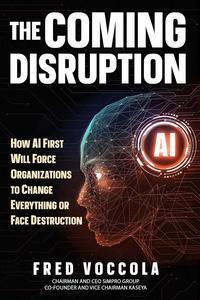
by Fred Voccola
About Fred Voccala
HSBC eliminated 20,000 jobs (10% of workforce), Amazon dropped 30,000 jobs, Intuit shrank their workforce by 17%, and so on. Why are profitable and large companies getting skinnier instead of increasing their headcount? Two words Artificial Intelligence (AI) These companies are shredding more traditional jobs and loading up on AI related positions This trend will continue and affect all companies, big and small Heck, it will affect everyone and everything … consultants, accountants, lawyers, government, health care, how wars are waged, etc.
As the author states at the outset, “AI is the single mos important development in the history of our species AI changes how the world changes ” This book stands out as one of the most essential reads for understanding how business and society are transforming and what the near future, and beyond, will look like. There is no time to wait because SPEED is king now. A big shout out to Glenn and Debbie Furuya of Leadership Works for recommending this book to my credit union’s leadership. Glenn and Debbie are always at the forefront of what businesses need to be successful
Fred is an entrepreneur, philanthropist, builder, scaler and industry disrupter. In addition to being co-founder, CEO and current Vice Chairman of Kaseya, he is also Chairman and CEO of Simpro Group He has used AI - and continues to use it - to reshape entire industries, redefine how companies operate, restructure teams, accelerate decisionmaking, and outmaneuver/crush
The following are some insights from the book to give you a feel of the 285- page book, and why you should read it, if what I’ve said so far haven’t convinced you already
AI First or AI Laggards
You are either AI First or an AI Laggard You are in a battle for AI adoption at scale in your workflows, culture, products and workers mindset. Who will be the one to use AI to build the fastest, leanest, most productive organization in history? The companies that make the leap will dominate their industries, while the rest slowly bleed relevance
competitors. His writing style mirrors how he leads: direct, bold, fast-moving, and unapologetically real. I can definitely attest to that. I had to “buckle up” my brain because the book was riveting, uncomfortable, insightful and thought-provoking all at once I immediately started thinking about my credit union and what we must do to stay relevant now and survive the future
New Leadership Profile
The successful leader in the AI world is a disruptor of the status quo and has an entrepreneurial mindset, because in this new world, hesitation is fatal, and comfort is the enemy. Traits of this new leader are: thrives in urgency, drives action opposed to building consensus, makes decisions with incomplete information, is comfortable replacing people
quickly, communicates relentlessly and without sugarcoating, and sees disruption as a constant, not an event
Spotting An Entrepreneur in Your Company
You must look past job titles and instead focus on behaviors. Employees with entrepreneurial DNA take ownership for problems no one else wants, find ways to cut through red tape and deliver results, consistently volunteer for messy, undefined projects and deliver outcomes where others stall, experiment with new tools, especially AI, without being told, etc.
You Are Dying …
You are dying if you’re built for hierarchy instead of entrepreneurship and outcomes, because the AI First world doesn’t reward who you were, it exposes who you are
Ferrari Never Leaves the Garage
AI is the engine. Entrepreneurial leaders are the drivers. Without the right structure, the Ferrari never leaves the garage.
AI = Exponential Capability with No Incremental Cost
AI is such a game changer because it is unlimited talent with zero increased marginal cost It’s like having a team of the world’s best specialists at your fingertips,
24/7, for free! AI doesn’t sleep, eat, complain, need benefits, or gets distracted It instantly combines the collective knowledge of humanity with real-time problem solving for you on demand. It is the most powerful force-multiplier in human history! It is the ultimate productivity engine, capable of delivering decades or even centuries of progress in months. But how do you have this “army” of experts deliver the outcome you want? The answer is prompting
Prompting
Prompting is the communication paradigm of the AI First era It is articulating the result you want, providing the right context and constraints, and refining the message until the output matches your vision. Prompt literacy and proficiency will separate the relevant worker from the irrelevant one. The best prompters not only save time, they save millions and win markets
Job Function Projections
Per McKinsey, Goldman Sacs, the World Economic Forum studies, and the author, 60-70% of today’s white-collar roles will permanently be eliminated. The majority of repetitive, process-heavy jobs will also vanish. For example, in Accounting and Finance, 80% of routine roles will be gone. Only strategic CFO-level and niche financial advisory roles will survive. In Legal, 70% of paralegal
and case-prep roles will disappear Litigation and negotiation remain, but slimmed down
In contrast, manual jobs grow exponentially in prestige and pay, supported by new types and structures of unionization. Society flips its prestige pyramid: “dirty hands” jobs become the new white-collar dream.
Author’s Gift
In addition to the “why” and “what” of AI being the most important transformation in history, the author addresses the “how” of making your organization AI First and successful in this new world
He devotes one chapter to a field manual for AI First success, which is his gift to us. He covers the seven steps to AI First, as opposed to being obsolete. They are Leadership Commitment and Communication, Benchmark the Baseline, Software Vendor Assessment and Selection, Flatten the Organization, Move NonLinearly, Drive Accountability Down to the Individual Level, and HR as the Tip of the Spear
As the author states at the end of his book, AI is unstoppable AI First is happening now. For the first time in human history, literally everything – all aspects of our lives will be affected. The choice is binary: AI First – or AI Finished.
THEFUTUREOFACCOUNTING THE FIRMS THAT WILL LEAD
By Bart Nichols of Boomer Consulting, Inc.
The accounting profession is entering a significant period of change. Technology is evolving rapidly Client expectations are shifting. Talent dynamics are becoming more complex And many firms are preparing for the largest leadership transition they’ve ever experienced.
For firm leaders, these changes raise an important question: What will separate the firms that thrive from those that struggle in the years ahead?
The answer is not simply technology, size or even technical expertise Leading firms will have leaders who learn, adapt and evolve faster than the profession around them.
A profession in transformation
For decades, the accounting profession operated within a relatively stable model Firms built their reputation on technical expertise Compliance services provided steady demand and career paths followed a predictable progression.
Today, that model is evolving Automation and artificial intelligence are reshaping routine work, reducing the time spent on manual processes and allowing professionals to focus on higher-value insight and advisory services
At the same time, clients increasingly expect accountants to
serve as strategic advisors They turn to professionals for help interpreting financial data, navigating uncertainty, and making better business decisions
These changes are a fundamental shift in how value is delivered in the profession. Many industry observers believe CPA firms will look dramatically different within the next decade as technology, talent dynamics and client expectations continue to reshape the profession.
The real challenge isn’t technology
Much of the conversation about the future of accounting focuses on technology, including artificial intelligence, automation, cloud platforms and data analytics
These tools are undeniably important. But technology alone does not determine a firm's success Leadership does.
Technology decisions require strategic thinking. Talent development requires strong culture and mentorship. Advisory services require new ways of engaging clients.
These changes happen when leaders intentionally guide their firms through transformation And that kind of leadership requires more perspective than ever before.
The risk of leading in isolation Historically,manyfirmleadersrelied primarilyoninternalexperience whenmakingstrategicdecisions. Theyevaluatedopportunitieswithin theirfirm,thentestedideasthrough internaldiscussionsandfinally learnedthroughtrialanderror.
Bart Nichols is a Solutions Advisor at Boomer Consulting, where he works closely with accounting firms of 200 employees and under, helping them get the most value out of Boomer’s peer communities. With a master’s degree and certification as an Associate Certified Coach through the International Coaching Federation, Bart brings both structure and depth to every client interaction