The Official Publication of the Hawaii Society of Certified Public Accountants
President-elect Trisha Nomura
AICPA Council
Frank Kudo (Designated)
Darryl Nitta (Elected)
Vice President Adrian Hong Trisha Nomura (At-Large)
Secretary/Treasurer Chad Funasaki
Assistant Secretary Grayson Nose
Directors * 2025-2027
Ronald Heller
Jill Ishimitsu
Ed Nakano
Darryl Nitta
Natalie Taniguchi
Directors * 2024-2026
Chantal Mentzer (Kauai)
Norman Okimoto
Joel Peralto (Hilo)
Immediate Past President
Ryan K. Suekawa
Executive Director
Kathy Castillo
Administrative Assistant
Debbie Cortes
Hawaii Society of CPAs
1000 Bishop Street, Suite 802
P.O. Box 1754
Honolulu, HI 96806
Tel: (808) 537-9475
E-mail: info@hscpa.org
Web: www.hscpa.org
This publication is designed to provide general information only, and should not be used as a substitute for professional advice. The authors and editors disclaim any liability for any loss or damage resulting from the use of any information or advice herein. Although a reasonable attempt has been made to be accurate, neither the HSCPA nor the authors and editors can guarantee that all information contained herein is correct as of the date of publication.
KALA (the Hawaiian word for money) is published periodically and is the official publication of the Hawai’i Society of Certified Public Accountants. Please direct all inquiries regarding editorial content to HSCPA, P.O. Box 1754, Honolulu, Hawai’i 96806.
President’s Message
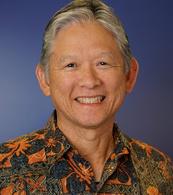
By Dr. Frank Kudo
Where’s Your Second Tax Return
By Tom Yamachika
Shaping the Future of Accounting Together By Donny Shimamoto
CPAs in the Classroom for JA at Ma’ema’e
Y-CPA Buzz: Profession or Not?
By Dr. Katie Landgraf
Make Sure Your Transformation Initiatives Support Firm Culture By Arianna Campbell
The New Standard for Client Experience
By John McGowen
Norman’s Book Review
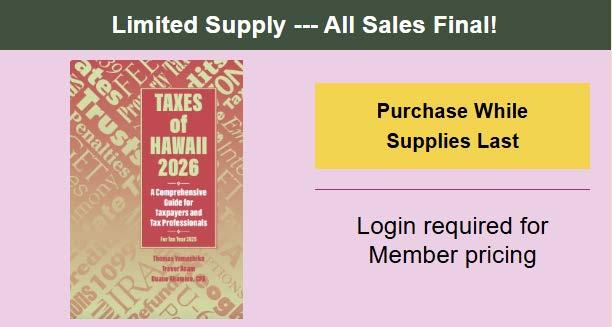
2026 Taxes of Hawaii
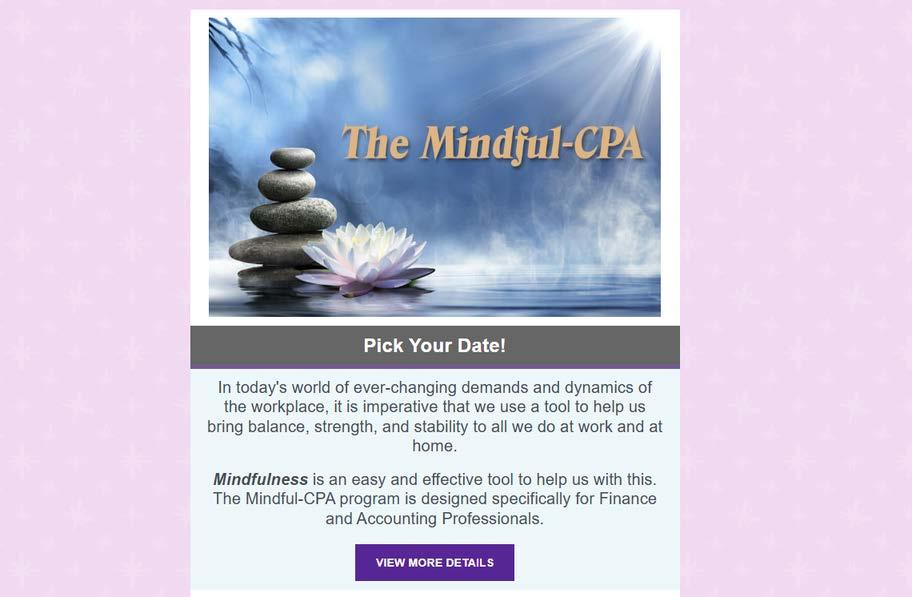
The Mindful-CPA
Pickle & Mingle Smash some fun!
Elect & Engage 4 6 8 10 11 12 14 16 18 18 19 20
President’s Message
By Dr. Frank Kudo
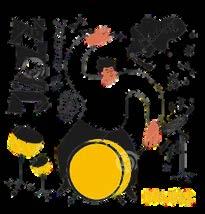
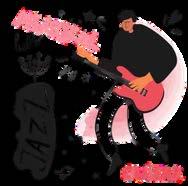
approaching the end of my term as President of the Hawaii Society of CPAs, I want to write about something that I am passionate about - Jazz - how it became a significant part of my youth, then into my adult life, and what I have learned from studying this type of music as well as other types of music genre I was exposed to.
instruments perform at such a high level, as if it were their voices singing to a melody. There was musical structure yet there seemed there wasn’t. The jazz musicians played with all their soul and heart, what they heard inside of them.
One day my brother dropped off an application to the Jamey Abersold Jazz Camp at the University of Louisville School of Music and told me to fill it out and apply. I listened to jazz but never played jazz drumming rhythms such as swing, blues, ballads, Afro-American Latin, etc.
th bother the neighbors. We played rock-n- roll from the Ventures to the Stones for three consecutive years.
When I was in the 10 grade, my brother and I formed a rock group and played every weekend for dances and Battle of the Band competitions. We also, as a music group, rotated rehearsals at various homes of the band members, so we wouldn’t
Well, I soon graduated from high school and my father sold my Ludwig drum kit and I was off to college. Fast forward listening to music in college during the Woodstock era, and of course the rhythm and blues period of Jimi Hendrix, Eddie Crocker, Doors, Led Zeppelin, Fleetwood Mac, The
During that time, we had to listen to LPs or 45 RPM discs to try to recreate the music that our audiences loved. I played drums and my twin brother played rhythm guitar. We also had a bassist, electric piano player, singer and lead guitarist. It was then that I started to collect jazz records of Cal Tjader, Duke Ellington, Dave Brubeck, Jazz Crusaders, Miles Davis Quintet, Dizzy Gillespie, etc.
What fascinated me was the level of musicianship and freedom of expression I heard playing those albums over and over again. I wondered how these musicians were able to make their
Temptations, Gladys Knight, Marvin Gaye, Smokey Robinson, Earth Wind and Fire, and a long list of talented groups and singers.
During college I yearned to play my drums again, but it wasn’t until I reached the age of 50+ when my brother bought me a Pearl drum kit for my birthday with a note that said … let’s start a band! It was more than rust that plagued my hands and wrists, but also my brain had lost the rhythmic patterns I once thought I had. Rust Oleum could not loosen my hands.
We both attended jazz camp during the summer for eight years then four more years at the Centrum Jazz Workshops in Port Townsend, Washington under the direction of John Clayton and Jeff Hamilton, both who are highly-respected jazz musicians. Master classes, music theory classes, technique seminars, and playing in selected combos were the every day schedule. Wow … a wonderful experience.
Both schools kept you on the edge, wondering, “What am I doing here? I’m not good enough. This piece is too difficult. I’m going to screw up.” And just when the pressure felt like enough, the programs ended with a public recital—friends, family, and strangers all waiting to hear your combo perform.
Auditioning for both schools was nerve‑racking, especially knowing those auditions determined your admission and placement. Then came the real test: performing in a combo matched to your skill level and expected to rise to it.
Intense, anxiety‑filled… but your passion pushes you through, and you persevere.
For me, jazz is really about America. It represents freedom and the right of free expression and creativity without censure or political pressures to conform. It has structure yet it doesn’t … like magic or America. Try it out sometimes - I think you will be intrigued and love the genre.
This is something from the Jazz Foundation that really reflects my feelings about the uniqueness of jazz:
“Jazz is more than just a genre of music; it is a profound expression of human emotion, culture, and innovation. Emerging in the late 19th and early 20th centuries in the United States, jazz is deeply rooted in African American traditions, drawing influence from blues, ragtime, and brass band music. Over the decades, it has evolved into a global phenomenon, impacting not only music but also social, cultural, and political landscapes. Its soul-stirring qualities, improvisational nature, and rhythmic complexity make it one of the most dynamic and influential art forms in the world.
At its core, jazz is about freedom. The genre is characterized by its emphasis on improvisation, where musicians are encouraged to explore and express their creativity in real-time. Unlike classical music, which adheres to strict written compositions, jazz musicians take the framework of a melody or chord progression and spontaneously create new ideas within that structure. This sense of freedom allows for a deep connection between the musician and the music, where every performance can be a unique, one-of-a-kind experience. The improvisational aspect of jazz requires not only technical skill but also emotional depth, as musicians draw upon their own life experiences and personal expression to shape their performance.
The rhythmic structure of jazz is another key feature that sets it apart from other musical genres. It is built on complex rhythms, syncopation, and swing, creating a lively and unpredictable feel that engages both musicians and listeners alike. The concept of "swing" refers to the rhythmic feel that emphasizes off-beats, creating a sense of movement and energy. This element of jazz rhythm encourages a playful and spontaneous interaction between performers, pushing the boundaries of traditional time signatures and giving the music an infectious groove.”
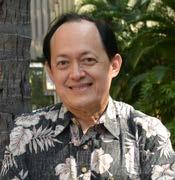
On our way to a Jazz Camp in Louisville
Which one is Frank?
Taxseason
is here.
Where’s your second Where’s your second tax return?
Most of us dread the prospect of filling out and filing our tax returns. We have to bare our souls to the government every year at about this time, telling them intimate details of what we made and what we lost — but at least that information is kept private so your nosy neighbor down the street can’t see it or use it to set up spam marketing lists.
One bill still moving in the Legislature, House Bill 2429 House Draft 2, would change all of that.
That bill has what seems to be a noble purpose of collecting good and accurate data to evaluate the dozens of income tax credits and general excise tax exemptions that we now have. “Regular evaluation strengthens accountability, supports sound budget decisions, ensures equitable competition, and ultimately maximizes benefits for taxpayers,” the bill preamble reads. So far, so good.
To gather this data, the bill says that people who are claiming credits and exemptions hereafter need to file an information statement with DBEDT. That statement would contain the taxpayer’s name, GE license number if it is a GET exemption, the
name of the credit or exemption being claimed, the amount of credit or exemption being claimed, and the total cost to the State for the taxable year. This statement would be filed on or before the date on which the taxpayer’s annual return is filed, and filing the statement would be a condition of claiming the credit or exemption, meaning that if you don’t file this statement in addition to your tax return, the credit or or exemption that you are trying to claim will be disallowed.
And, by the way, the statement filed with DBEDT is not confidential. It is open to public inspection.
Whoa.
So, according to this bill, it isn’t enough to file just one tax return any more. You need to file two of them. And one of them will be open to the public.
tax return?
This bill is going to affect lots more people than, perhaps, its proponents intended. Suppose you are an employee making $50,000. You might not know this, but you are taking advantage of a GET exemption (HRS section 237-24(6)) for salaries and wages. That’s why you don’t have to file a GET return. So, under this bill you need to file a public statement declaring your salary, and if you don’t, your $50,000 becomes subject to GET. $2,250 please. Plus penalties and interest, of course.
Never mind that the State Auditor is already tasked with evaluating these same credits and exemptions on a rolling basis.
And what’s the theory behind requiring a taxpayer to disclose not only the credit or exemption amount but also the cost to the State? Isn’t that easy enough to calculate just from the credit or exemption amount (credit amount = cost to the State, exemption amount x tax rate = cost to the State)?
It seems that the information the State needs to analyze the revenue impact of credits and exemptions
is already filed with the tax returns. Why, then, don’t we simply open the information pipeline from DOTAX to DBEDT to allow them to pull statistics to do their data analyses? This is what the Feds do. Internal Revenue Code 6103(j) says that certain agencies such as the Department of Commerce may access statistical tax return information to do their analyses and studies.
Somebody needs to rewrite this bill or put it out of its misery.
Tom Yamachika is President of the Tax Foundation of Hawaii - the ‘watchdog’ that keeps an eye on Hawaii’s taxes. Tom is also the owner of Aloha State Tax, a small law firm with emphasis on State taxes. Prior to going solo and the TFH, Tom was a principal with Accuity LLP where he managed the tax consulting practice, including quality and risk management and practice development.
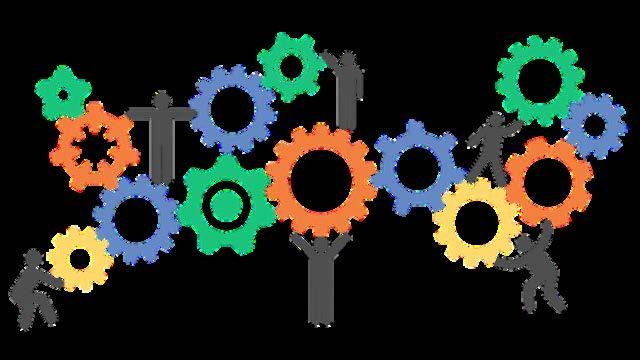
oday’s accounting professionals are more than technical experts —we are trusted advisors, strategic thinkers, and community leaders. In a world shaped by constant change, accounting has evolved into a profession of impact, innovation, and purpose. At the Center for Accounting Transformation, we believe it’s time the world sees that, too.
S Sh ha ap pi in ng
g Shaping the Future of the Future of Accounting Together Accounting Together
Doing This
That’s why we launched the Agents of Transformation initiative: to spotlight professionals who are using their skills, leadership, and creativity to make a positive impact through accounting. We have been especially proud to partner with the state accounting associations, whose support and participation has helped us amplify these stories and inspire the next generation of changemakers. The accounting profession is at a crossroads. Demand for Why We're
continues to rise, but fewer students are majoring in accounting. Too often, accounting is misrepresented as nothing more than number-crunching and spreadsheets. We know the truth: accounting is about problemsolving, building trust, shaping sustainable businesses, and accelerating innovation.
Through Agents of Transformation, we’re working to reshape perceptions. We’re showcasing real people—taking both traditional and non-traditional paths—who are driving progress, strengthening communities, and creating new opportunities.
YOur Role: Why We Need You
We are looking for both accounting professionals and other professionals working at accounting firms who are ready to champion the future of our profession. By joining the Agents of Transformation network, you’ll:
Inspire students and career explorers with your journey and leadership.
Help reframe what it means to be an accounting professional —moving beyond stereotypes to showcase the real opportunities the profession offers.
Help non-accountants see how they can #improvetheworld by working at an accounting firm. Support a vibrant, diverse, and forward-looking future for accounting and finance.
By highlighting these stories, we can inspire the next generation to see the accounting profession not just as a career, but as a platform for making a difference in our world.
Trends Trends
By Donny Shimamoto
CPA.CITP, CGMA Founder & Inspiration Architect Center for Accounting Transformation
You don’t need to be a CFO or tech guru to make a difference. Whether you're a staff accountant, a CEO, or even a marketing manager in an accounting firm—your story matters. As an Agent of Transformation, you have the opportunity to show others what this profession is really about: purpose, impact, and possibility. If you care about shaping the future of the accounting profession and want to inspire the next generation, all it takes is your story.
The Spirit Behind the Movement
Transformation isn't just about technology or trends—it’s about people. It’s about embracing collaboration, innovation, responsibility, and resilience. Rooted in values like responsibility and accountability, family and community, and unity and harmony, this movement calls on all of us to lead with heart and purpose.
For those of us in the accounting profession, this initiative is a
chance to live those values—by sharing stories, advocating for belonging, driving innovation, and leading with integrity. Whether you're championing sustainable business practices, embracing new technologies, or mentoring future professionals, your actions help
If you care about shaping the future of the accounting profession and want to inspire the next generation, all it takes is Your Story.
shape a profession that is as ethical and adaptive as it is impactful.
Together, we can create a profession that is more universal, more innovative, and more inspiring than ever before. Let’s move forward, knowing that every story shared and every effort made
contributes to a future where accounting empowers individuals, builds business resilience, strengthens communities, and drives meaningful change.
Join our Mission
If you’re ready to be part of the change—we invite you to join our mission. Help students and professionals see the full potential of a career in accounting.
Visit https://we.improvetheworld.net/s hare/ to learn more, share your story, and become an Agent of Transformation.
Together, we can #EnableTransformation to #ImprovetheWorld.
From Accountability to Impact: Help Us Transform the Profession. Accounting is a profession of impact, leadership, and innovation—and your story can inspire the next generation. Join the Center for Accounting Transformation’s Agents of Transformation initiative to help reshape how students and career explorers see the future of accounting. Together, we can build a community of professionals leading with purpose. Join our mission at https://we.improvetheworld.net/share/.
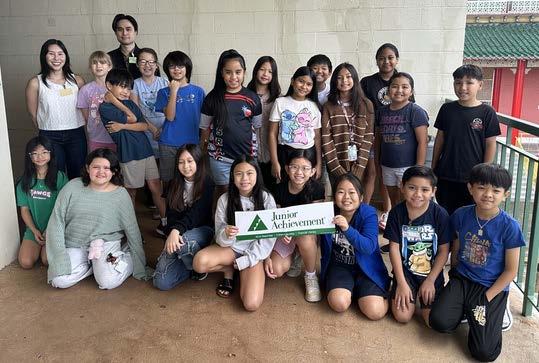
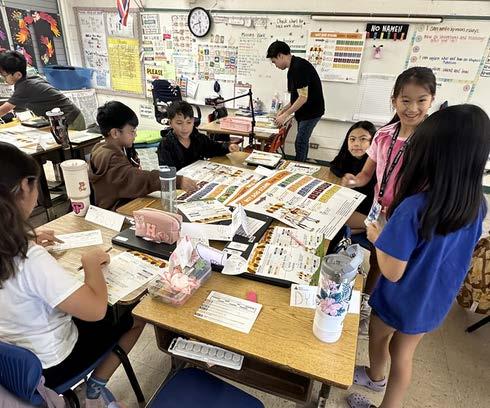
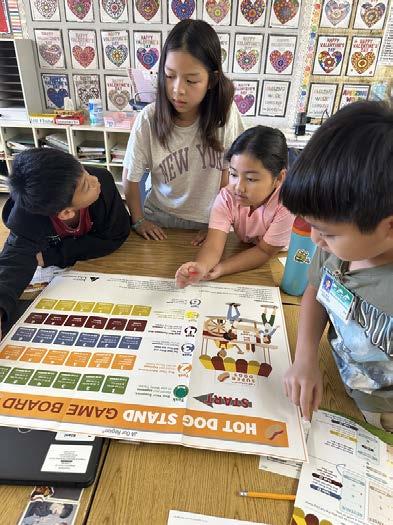
“We spent two sessions with a class of 27 fourth‑grade students, exploring entrepreneurship, different types of businesses, and how regions and resources shape what businesses do. We talked about what it’s like to run a business, how owners solve problems, and how businesses rely on one another. The students were welcoming, engaged, and eager to participate, and their questions and energy made the experience especially rewarding.”
By Dr. Katie Landgraf
Accounting: ProfessionorNot?
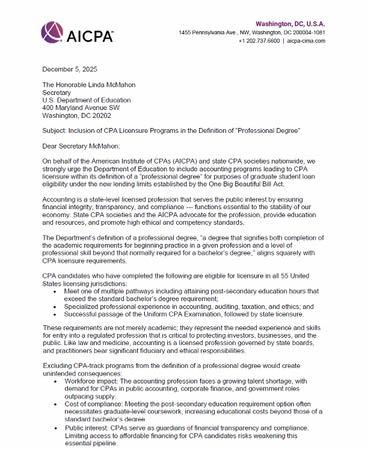
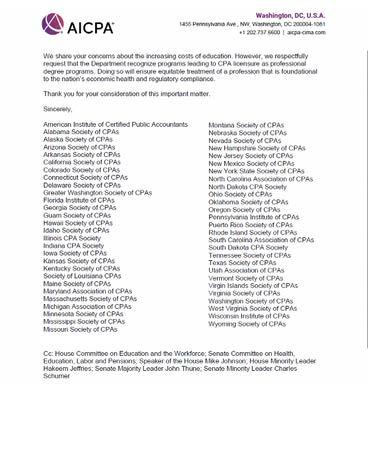
a world where college tuition keeps rising, students need financial options to consider obtaining a degree. In fact, 59% of students shared that the amount of financial aid they receive determines whether they can attend college at all. But now, the U.S. Department of Education’s proposed One Big Beautiful Bill Act (OBBBA) could reshape how students select their majors - and accounting may not make the short list.
The OBBBA proposes to remove accounting as a profession. Money-wise, this will affect how much financial aid students can borrow (a drop of $29,500/year) and what loan programs students qualify for.
Reputation-wise, this could affect the value and perception students place on the accounting profession. With an extreme shortage of accountants, the industry cannot
afford to lose students. If this bill passes, the industry will face more issues than just a drop in accounting students.
University accounting programs may also take a pay-cut to reallocate funds to degrees labeled as professional (doctors, lawyers, etc.). Further, the removal of accounting as a profession could reduce future influence in policy discussions (like regulatory attention, etc.).
Accounting may not require the level of degrees a doctor needs to practice, but we help make impactful decisions based on visible (and invisible) symptoms. At the least, my push is that the DOE would consider an accounting degree with a desire for the CPA license as a profession. The CPA license’s specialized knowledge, work experience, continued ethical standards, and professional oversight should be considered rigorous enough to classify this field as a profession.
By Arianna Campbell of Boomer Consulting, Inc.
yet to meet an accounting firm leader who wants to damage firm culture. Their transformation initiatives start with good intentions. They want to improve efficiency, modernize systems, attract talent and better serve clients. Yet we’ve all seen the opposite outcome: morale dips, confusion and resistance.
The problem is how the change shows up for people rather than the change itself.
Here’s a simple gut check for leaders: Can your team explain why this transformation matters and how it connects to the firm’s strategy? (Not just what tools and processes are changing).
When leaders consistently model the change, people stop waiting it out and start leaning in.
Transformation is a business initiative and a cultural shift. Whether that shift strengthens or strains your firm depends on how intentional you are about five areas: clarity, consistency, communication, collaboration and continuous improvement.
Here are the questions that matter most in each area.
Clarity:
Do people actually know what this is about?
People tend to fill in the blanks when clarity is missing from transformation initiatives. That’s when rumors start, and anxiety rises.
If you hear questions like, “Is this just the latest initiative?” or “Are we doing this instead of what we were told to do last year?” that’s a signal clarity hasn’t landed yet.
To improve clarity, be explicit about what is changing and what isn’t. Tie every major change back to firm goals, and share concrete examples of progress so people see alignment in action.
Clarity is something you reinforce repeatedly, even when other priorities are competing for your attention.
Consistency:
Do leaders model what they’re asking for?
Nothing erodes trust faster than leaders saying one thing and rewarding another.
The leadership team should ask whether they’re reinforcing the behaviors they want or just tracking the outcomes they hope to see.
Many firms rely heavily on KPIs to measure success. That’s important, but outcomes alone don’t tell the whole story. During transformation, you also need to pay attention to how you achieve those results. The behaviors that lead to good outcomes are what sustain change.
Consistency shows up when leaders are visibly aligned, coach and recognize desired behaviors, and reinforce the culture in their day-to-day actions.
When leaders consistently model the change, people stop waiting it out and start leaning in.
Communication: Are the right people hearing the right messages?
One common mistake firms make is assuming communication
equals sending more emails. A better approach is to ensure messages come from people employees trust most at the moments they matter most.
Research from ProSci consistently shows that people want to hear about change that impacts the business or the organization from the people in charge, such as a senior manager or executive. But they want to hear about changes that affect their own daily work from their manager. This gives them an opportunity to ask questions about how it impacts their team, their own day-to-day responsibilities, and what’s in it for them.
If people managers aren’t equipped to explain the change, address concerns and manage resistance, even the best strategy will stall.
Strong communication during transformation means leaders openly acknowledge challenges rather than minimize them, tailor messages to the audience and address resistance respectfully and directly. When communication is working, you’ll have less grumbling in the breakroom and more thoughtful dialogue.
Collaboration: Are you designing change with people or for them?
Transformation feels different depending on whether people feel included.
Consider whether team members at different levels have a real way to contribute ideas and influence decisions. Are they only involved after decisions are made?
Firms that protect culture during change create intentional ways for collaboration to happen. That might mean structured idea submissions, cross-functional teams or clear feedback loops that lead to visible action.
learning process the team will refine together.
Continuous improvement means pausing to reflect on what worked, what didn’t and what actions could improve the experience going forward.
Culture remains healthy when feedback drives real course corrections. When people see their feedback matters, trust grows even when things aren’t perfect.
Collaboration strengthens firm culture when leaders welcome and consider input, recognize wins, and encourage innovation across the firm. When people see their ideas shaping the future, they feel like they’re part of it; it’s not happening to them.
Continuous improvement: Are you learning as you go?
Transformation is rarely linear. Firms that maintain strong cultures accept this and adjust accordingly.
Consider whether you treat this as a fixed plan to execute or a
Change won’t break culture unless you ignore culture during the change initiative. Think about these five areas and be honest about where you’re strong and where you’re not. Pick one area to focus on, take visible action and keep the conversation going.
That’s how transformation becomes something your firm grows through.
Arianna Campbell is the Chief Operating Officer at Boomer Consulting, Inc., where she helps CPA firms lead transformative change by aligning people, process, and leadership. A nationally recognized speaker and one of Accounting Today's Top 100 Most Influential People, she facilitates peer communities that shape the future of firm leadership and operations. When she’s not guiding change, Arianna is beach-hopping or volunteering with local nonprofits.
By John McGowen of HubSync
The New Standard for Client Experience The New Standard for Client Experience in Tax and Accounting in Tax and
Accounting
How digital workspaces, automation, and AI are transforming accounting into a seamless, transparent client experience
There is a new standard for client experience in tax and accounting. Firms across the profession are feeling the effects of a major shift in how clients expect to work with their accounting partners. Younger decision makers want clarity, transparency, and the ability to check progress without scheduling another call or chasing an email thread. That shift is already evident in firm retention metrics, with 70% of U.S. companies stating that they are likely to switch audit firms within the next three years.
Communication gaps and perceived lack of innovation are listed among the top reasons for leaving.
This shift is not driven by impatience but reflects how work actually gets done in modern organizations. Every day, teams collaborate in shared digital spaces, track projects in real time, and rely on tools that automatically show progress rather than requiring constant follow-up. When the accounting process still unfolds across scattered emails and spreadsheets, the experience feels disconnected from the rest of the business. As that gap erodes, it directly impacts how clients perceive the firm.
As a result, client trust and confidence erode even when the technical work is sound. When all parties cannot easily tell what’s complete or what comes next, the process becomes one of the biggest friction points in modern client relationships.
Why Shared Digital Workspaces Matter Now
Forward-looking firms are addressing this gap by rethinking how collaboration happens across an engagement. Instead of layering new tools on top of old workflows, they are consolidating communication, document exchange, and progress tracking into shared digital workspaces.
These environments provide clients with a clear view of what has been requested, what has been received, and how the work is progressing. That visibility reduces status checks, prevents last-minute scrambles, and creates a more predictable cadence for both sides. Internally, firms benefit from fewer manual follow-ups and less time spent coordinating across disconnected systems.
The benefits extend far beyond convenience. When firms centralize the exchange of documents, data, and messages, issues surface more easily, and closing cycles shorten. A simple reduction in “just checking in” or “any update on this” messages can free up meaningful time for firms, especially during peak periods. Transparency becomes proactive rather than reactive. This level of access is quickly becoming the baseline expectation for next-generation clients. Firms that continue to operate behind the curtain risk being perceived as challenging to work with, regardless of their technical expertise.
The Role of Automation and AI in Elevating the Experience
Automation has been a part of firm operations for years, but its role is evolving. Rather than automating isolated tasks, firms can now use automation to support entire workflows. Status updates, reminders, and routing can now progress automatically based on events, reducing the need for constant manual intervention, making the experience smoother for both the client and the firm.
AI is beginning to layer into this foundation in more practical ways. Firms are experimenting with tools that summarize documents, surface insights, or support followup steps. The most effective applications are those designed with clear guardrails, where AI supports professionals without replacing human judgment.
Over time, these capabilities point toward a more adaptive model often described as agentic AI. In this approach, systems can help gather information, identify inconsistencies, or prepare next steps in an accountable way. The goal is not autonomy without oversight, but assistance that keeps work moving while remaining transparent and auditable.
Pressures That Make Modernization Urgent
Three external trends are accelerating the need for a moreconnected, digital-first client experience:
1. Talent Shortages
The profession has roughly 340,000 fewer accountants than just a few years ago. Entrylevel salaries continue to rise, yet firms still struggle to fill roles. When teams spend hours chasing documents or managing emails, burnout grows, and retention falls. Shared workspaces and automated updates reduce that burden by offloading low-value work and creating more space for meaningful analysis and client conversation.
Firms that respond decisively will help shape the next era of the profession.
2. Changes in IRS Practices
The IRS is digitizing rapidly through API driven systems and a zero-paper initiative, even as workforce reductions introduce uncertainty into enforcement and cycle times. Firms with well-structured internal workflows are better positioned to adapt to these shifts while maintaining audit-ready transparency.
3. Rising Client Expectations
Clients accustomed to real-time visibility elsewhere expect the same from their accounting partners. The firms that adopt shared digital workspaces are better equipped to retain and grow their client relationships.
When clients feel informed and supported, fees become easier to discuss, and renewals feel natural rather than defensive.
Looking Ahead
The profession is entering a chapter defined by clarity and connection. Shared digital workspaces supported by automation and thoughtfully applied AI tools are no longer experimental ideas. They are becoming essential to how firms deliver a modern client experience. This modern experience has led to a new standard for client experience in tax and accounting.
What stands out across firms that make this transition is not the technology alone, but the mindset that accompanies it. Modernization is most effective when it is framed as a means to strengthen relationships and enhance professional judgment, rather than to expedite tasks.
Clients are seeking an experience that mirrors their existing work practices. Firms that respond decisively will help shape the next era of the profession.
John McGowan is the founder and CEO of HubSync, a SaaS company with a next-generation tax and accounting automation platform created with the goal of changing how tax professionals work and how clients interact with CPA firms. Previously, John has over 25 years of experience driving technology innovation and investment at Deloitte and KPMG, where he served as a Partnerin-Charge of Tax Technology and the Global Chief Information Officer, respectively. John holds a BSBA and a Master of Accounting from the University of North Carolina at Chapel Hill.
Raise your hand if you’ve never told a white lie, fudged numbers on a financial report or tax return, overstated an insurance claim, billed a client a skosh more, gave a compliment to someone you liked that wasn’t true, improved your lie on a golf course, etc.
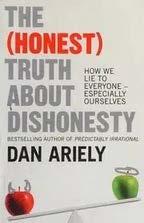
Based on “The (Honest) Truth About Dishonesty”, you would really be an outlier. The author and his colleagues’ studies consistently show people are motivated by two opposing forces: people want to be believe they are honest and wonderful people, while securing the benefits of cheating.
business administration at Duke University. He became interested in studying cheating after the collapse of Enron. I want to give a special shout out to long-time friend and HSCPA member, Robert Kawahara of Maui, who recommended this book to me.
Thanks, Rob!
The book was really fun and interesting to read but also sobering about how people can be dishonest in so many ways and situations. Accountants, dentists, doctors, pharma reps, art raters, financial services, and academia were some of the professions that were highlighted about how people, with the right incentives, are not honest.
The following are some of the interesting insights from the book. The author is a professor of
Famous Cheaters
From Genghis Khan through the present, there are numerous famous people who have cheated. The book mentions Alex Rodriguez, Bernie Madoff, Martha Stewart, steroid takers in baseball, dozens of CEOs in general, people who lied on their academic degrees and achievements to get a high paying and prestigious job, etc. The obvious message is, we are surrounded by people who cheat.
Fudge Factor Theory
The author notes humans have this amazing cognitive flexibility skill where as long as we cheat by only a little bit, we can benefit from cheating and still view ourselves as marvelous human beings. This balancing act and rationalization process is the fudge factor theory. The greater our ability to rationalize our selfish desires, the greater the fudge factor.
Insurance Industry
An insurance company noted most people cheat, but only by a little. They estimate people who undergo a loss of property seem comfortable exaggerating their loss by 10 – 15%. Few people cheat flagrantly.
Golfers
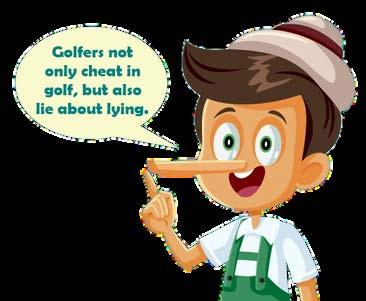
In a study of golfers and if they move their ball, take mulligans or record a wrong score, the conclusion was golfers not only cheat in golf, but also lie about lying.
Beware of aTired Brain
The more we have to exert mental effort and energy on anything, we gradually exhaust our willpower to
do good, such as following our diet. And if you wear down your willpower, you will have more difficulty regulating your desires, and your honesty as well.
Do You Like Counterfeit Things?
In the author’s studies, people who wore counterfeit products were more dishonest than people who wore genuine products. However, wearing genuine products didn’t increase a person’s honesty. The moral of the story? If you date someone who wears counterfeit products, be careful! Another act of dishonesty may be closer than you expect.
“What-the-Hell” Effect
As mentioned previously, people tend to cheat, but only a little bit. However, everyone has an “honesty threshold” where once they pass that threshold, they go for it and cheat every chance they get. The author calls this the “what-the-hell” effect.
Self-Deception
We have the ability to lie – not just to others but also to ourselves. This self-deception strategy helps us believe in the stories we tell even if they are untrue.
Annoyance and Cheating
When people get irritated at something or someone, cheating increases. It becomes easier for people to justify their immoral
behavior, like getting even for the perceived injustice.
Creativity and Moral Flexibility
In many companies, the most creative people—marketers, designers, copywriters—are seen as the idea generators, while accountants are stereotyped as the least creative. The author notes that higher creativity often comes with higher moral flexibility: creative people are more likely to say “go for it” when faced with ethically questionable behavior.
Why? Because creativity helps them craft convincing stories— stories that justify their choices and let them see themselves as wonderfully honest people, even when they’re not.
Immorality Bug
Cheating isn’t just common — it’s contagious. Like catching the flu, people are more likely to cheat when they see others around them doing it. It’s the classic “one bad apple” effect: once one person bends the rules, others in their social circle often follow. The author suspects this dynamic played out at Enron in 2001, on
Wall Street before 2008, and in countless everyday situations. Unfortunately, it’s a slippery slope that spreads easily and happens all around us.
Altruistic Cheating
Most people believe they care about others, which makes them more willing to act dishonestly when it benefits someone else. Like a modern‑day Robin Hood, the “altruistic cheater” feels justified — convinced that helping others means they’re still good, honest people, even when they’re not.
Collaboration Increases Cheating
Most people assume group work produces better results than working alone. But research shows collaboration can actually lower decision quality — and it also increases the likelihood of cheating.
Moral Compass
In summary, this book was really awesome! With all its researchbacked findings, it definitely gave me a different perspective on how people are dishonest and lie to everyone, especially themselves. But all is not lost. As the author reminds us in the final chapter, a strong moral compass can reduce the temptation to lie and cheat. The key is to keep that compass in good working order, making real-time adjustments so it can guide us at full capacity.