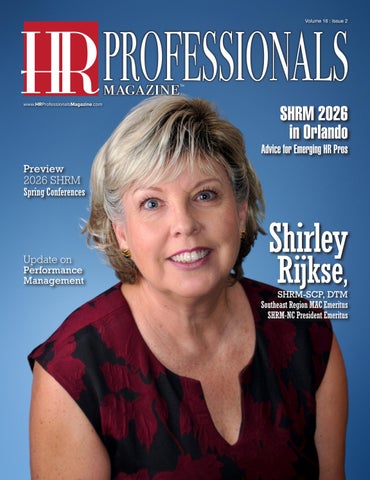
February 2026 Digital Issue of HR Professionals Magazine

Page 1


Is your background screening process missing something?

100% U.S. Based Support Sta

Flexible, Scalable Technology Superior Customer Satisfaction Ratings

Some background screening providers o er impressive automated platforms…but little else. When you’re missing the human element, accuracy and accountability can get lost. At Data Facts, you get advanced technology AND experienced human oversight. Real professionals monitor results and understand screening nuances. When questions come up, you can reach a knowledgeable, U.S.-based team member. With Data Facts, you never have to choose between innovation and personal support. Because when compliance matters, human insight makes all the di erence.

54% of blue-collar workers feel more fairly compensated than white-collar workers.

Editor

Cynthia Y. Thompson, MBA, SHRM-SCP, SPHR

Publisher

The Thompson HR Firm, LLC

Art Direction Park Avenue Design

Marketing and Social Media Specialist

Julie Nagem

Project Specialist

Liz Rogers

Photographer

Charles B. Thompson

Webmaster

Leo Dimilo

Contributing Writers

Jeanne Achilles

William Brown Brittney Conway Amy Schabacker Dufrane

Trish Holliday

Satish Kumar

Steve Spurlock

Contact HR Professionals Magazine:

To submit a letter to the editor, suggest an idea for an article, notify us of a special event, promotion, announcement, new product or service, or obtain information on becoming a contributor, visit our website at www.hrprofessionalsmagazine.com. We do not accept unsolicited manuscripts or articles. All manuscripts and photos must be submitted by email to Cynthia@hrprosmagazine.com. Editorial content does not necessarily reflect the opinions of the publisher, nor can the publisher be held responsible for errors.

HR Professionals Magazine is published every month, 12 times a year by the Thompson HR Firm, LLC. Reproduction of any photographs, articles, artwork or copy prepared by the magazine or the contributors is strictly prohibited without prior written permission of the Publisher. All information is deemed to be reliable, but not guaranteed to be accurate, and subject to change without notice. HR Professionals Magazine, its contributors or advertisers within are not responsible for misinformation, misprints, omissions or typographical errors.

©2026 The Thompson HR Firm, LLC This publication is pledged to the spirit and letter of Equal Opportunity Law. The following is general educational information only. It is not legal advice. You need to consult with legal counsel regarding all employment law matters. This information is subject to change without notice. www.HRProfessionalsMagazine.com

in Orlando, FL, June 16-19 7

-Atlanta SOAHR Conference April 22-23 17 SHRM Talent 2026 in Dallas, TX, April 19-22 23

Alabama Conference in Fairhope, August 10-12

Louisiana Conference in Lafayette, LA, April 22-23

in Knoxville, TN,

13-16

a note from the editor

Hello HR Professionals!

As I flip through the pages of our February issue, I want to take a moment to review the topics that shape our current workforce. Our February issue is filled with insightful articles and thoughtprovoking issues that highlight some of the challenges we expect in the ever-changing world of Human Resource Management.

Our sponsors have worked diligently to bring you a diverse range of voices and ideas. From in-depth analysis on the hot topics of the day that resonate with all human resource professionals to the important topics that help us to understand the daily changes we face in our organizations.

I encourage you to engage with the content, share your thoughts, and continue the conversation in your respective workplaces. Your feedback is invaluable as we strive to improve and evolve our publication for all HR professionals. We are entering a time of great change to the status quo that comes with the changes of each new administration.

It is more important than ever to be a certified HR professional! We are offering our Online HRCI | PHR | SPHR Certification on February 18. Our next SHRM | CP | SCP Online Certification Class will begin April 15. I am proud of our pass rate of 90%. It is a pleasure to personally help you earn your certification.

If you are already certified, you can pick up valuable recertification credits with our complimentary monthly webinars that are pre-approved for SHRM and HRCI Business credits. You can earn up to four credits monthly. Watch your email for your personal invitation or check our website at www. hrprofessionalsmagazine.com.

I extend my gratitude to our sponsors and our dedicated staff who made this issue happen. Together, we hope to inform, inspire, and challenge you.

cynthia@hrprosmagazine.com

Connect with me on LinkedIn:https://www.linkedin.com/ in/cynthia-thompson-mba-shrm-scp-sphr-325b8715/ Like us on Facebook.com/HRProfessionalsMagazine

Shirley RIJKSE, SHRM-SCP

In the evolving landscape of leadership, workforce development, and organizational effectiveness, few professionals have demonstrated the breadth of impact and consistency of service that define the career of Shirley Rijkse. As the founder of Resources by Rijkse, she brings decades of experience across human resources, coaching, training, and business operations to organizations seeking to strengthen their leaders and elevate their teams. Her work is grounded in a clear mission: helping individuals at every level discover their “why,” clarify their path forward, and build the skills necessary to thrive in their chosen careers.

Rijkse’s professional journey reflects a rare blend of academic expertise, practical experience, and deep volunteer leadership. She continues to serve as an instructor for business courses at Central Carolina Community College, where she previously held the role of Lead for Human Resources and Business Technologies. In that capacity, she shaped curriculum, mentored emerging professionals, and championed the development of future leaders across the state. Her commitment to education remains a defining thread in her work, whether she is facilitating a workshop, coaching an executive, or guiding a student toward a new opportunity.

A significant portion of Rijkse’s recent work has centered on student success and workforce readiness. Over the past decade, she has dedicated herself to helping students transition from education to employment through workbased learning experiences, apprenticeships, mentoring, and strategic connections with employers. She has collaborated with businesses, community partners, and educational institutions to ensure students gain the practical skills, professional exposure, and confidence needed to enter a rapidly changing workforce. With North Carolina emerging as a strategic hub for industries seeking a prepared and adaptable talent pipeline, her efforts have played a critical role in aligning student preparation with evolving business needs.

Her consulting practice, Resources by Rijkse, extends this commitment beyond the classroom. Through customized leadership development programs, experiential training, and oneonone coaching, she equips managers, supervisors, and aspiring leaders with the tools they need to succeed. Her approach is rooted in a proven process that blends behavioral insights, practical skillbuilding, and strategic clarity. Whether working with a seasoned executive or a firsttime supervisor, she focuses on unlocking potential, strengthening communication, and aligning individual growth with organizational goals.

Rijkse’s expertise spans a wide range of disciplines, giving her a uniquely comprehensive perspective on leadership and organizational development. Her background includes human resources, coaching, project management, DiSC behavioral assessments, office administration, retirement and assisted living administration, team building, vocational rehabilitation, sales and marketing, training, retention, and

business ownership. This breadth allows her to understand the complexities of modern workplaces and design solutions that are both strategic and deeply human.

Her professional credibility is further strengthened by an extensive list of certifications and credentials. Rijkse holds the SHRMSCP, SHRM Inclusive Workplaces, Choose to Win Coach, Maxwell Leadership Coach, and DiSC Facilitator certifications. She has also completed specialized development in supporting people with criminal records, older workers, people with disabilities, opportunity youth, the military community at work, and financial wellness. These qualifications reflect her commitment to inclusive workforce practices and her belief that strong organizations are built when all individuals have access to meaningful opportunities.

Rijkse’s long-standing commitment to volunteer leadership has been equally influential. For many years, she has been a driving force within North Carolina’s human resources community. She has served in multiple leadership roles across local chapters, contributed to the planning and execution of state conferences, and provided guidance and mentorship to countless HR professionals. Her service culminated in her role as North Carolina State Director in 2022 and 2023, a position in which she helped shape statewide initiatives, strengthen chapter leadership, and elevate the visibility of the HR profession.

Her contributions have been recognized through numerous awards, including induction into the Human Resources NC Hall of Fame, Faculty of the Month, Volunteer Appreciation, and other honors that reflect her sustained excellence and service.

In recent years, Rijkse’s influence has expanded to the national stage through her service on the Southeast Region Membership Advisory Council (MAC) for 2024 and 2025. The MAC serves as a critical link between SHRM’s volunteer leaders and the SHRM Board of Directors, ensuring that the voices of members across the region are heard and represented. As one of the elected representatives, Rijkse provides strategic input, facilitates communication between regional councils and the national board, and helps shape initiatives designed to strengthen the volunteer leadership experience.

Across every chapter of her career, Rijkse has remained committed to building relationships, fostering collaboration, and adding value to those seeking to create their own roadmap to success. Her work—whether in the classroom, the boardroom, or the volunteer arena—reflects a belief that strong leaders create strong organizations, and strong organizations build strong communities. Through Resources by Rijkse, she continues to expand her impact, partnering with businesses and institutions that recognize the importance of investing in their people. ■

In Remembrance of Judy W. Bell, PHR

September 21, 1957 – December 27, 2025

Judy Woodard Bell, beloved mother, grandmother, sister, and friend, entered heaven peacefully and gracefully on December 27, 2025, surrounded by family and love.

Judy dedicated her professional life to leadership in banking and human resources, serving as a trusted executive and consultant. Recognized for her integrity, wisdom, and commitment to people, she later founded Judy Bell Consulting, through which she helped countless organizations strengthen their human resource practices, played a key role in the historic merger of Memphis City Schools and Shelby County Schools into a unified system, and was appointed by Governor Bill Haslam as Human Resources Administrator for the Tennessee Department of Labor and Workforce Development in Nashville.

Throughout her career, Judy’s leadership and service were widely recognized. She received the Lifetime Achievement Award from the Society for Human Resource Management–Memphis, the Human Resources Management Professional Excellence Award by SHRM Tennessee, and was named Woman of the Year by the Leukemia and Lymphoma Society for her fundraising efforts. She was also honored with the “Smart Award” by Girls Inc. of Memphis and was selected by Memphis Woman Magazine as one of 50 Women Who Make a Difference. These distinctions reflected both her professional excellence and her heart for service.

Judy was preceded in death by her parents, William Paul Woodard and Velma Fox Woodard. She leaves behind her two children, Brad Bell (Leah) and Whitney Butts (Daniel); five grandchildren, Haley, Ryleigh, Brayden, Wesley, and Avery, who were the light of her life; and her siblings, Susan West (Mike), Bill Woodard (Laura), and Ann Roach (Ken). She is also survived by her beloved cats, Gabbie and Isaac, whom she cherished deeply, and her grand-pups Odie and Hattie, who brought her great joy.

Sailing

Leaving from Port Canaveral, FL

Visiting...

Cozumel, Mexico

Puerto Costa Maya, Mexico

Sailing

Leaving from Port Canaveral, FL

Visiting...

Nassau, Bahamas

Perfect Day at Coco Cay

The Silent Benefit Crisis:

How Prescription Drug Costs Are Reshaping HR Strategy in 2026

For years, HR leaders have expected healthcare costs to rise. What few anticipated is how quickly prescription drug costs would emerge as one of the most disruptive pressures inside employer benefit strategies. In 2026, this silent crisis is no longer quiet. It is reshaping benefits strategy, employee communications, and even talent retention.

According to the Kaiser Family Foundation, nearly three in ten adults report not taking medications as prescribed due to cost, including skipping doses, delaying refills, or not filling a prescription at all. For HR leaders, this statistic signals more than a healthcare issue. It points to a workforce risk that can gradually impact attendance, productivity, and overall employee wellbeing long before it appears in claims data.

“According

to the Kaiser Family Foundation, nearly three in ten adults report not taking medications as prescribed due to cost, including skipping doses, delaying refills, or not filling a prescription at all.”

Prescription spending is now one of the most volatile components of total healthcare cost. Specialty medications, chronic condition treatments, and weight management drugs have introduced a level of unpredictability that traditional plan design was never built to manage. For HR teams tasked with balancing affordability, access, and employee trust, this challenge can no longer be addressed through annual renewals alone.

Why Prescription Costs Are an HR Issue

Not Just a Finance One

Historically, pharmacy cost discussions lived with brokers, carriers, and finance teams. Today, HR leaders are often the ones navigating these decisions. Employees feel prescription cost increases immediately at the pharmacy counter, often before they notice changes in deductibles or premiums.

When employees skip doses, delay refills, or abandon medications due to cost, the downstream effects are real. Chronic conditions may go unmanaged. Employees may experience more fatigue, stress, or preventable complications. Over time, this can influence attendance patterns, performance, and overall engagement. HR leaders are increasingly recognizing that prescription affordability is directly tied to workforce health and retention, not just benefit spend.

A Scenario HR Leaders Know All Too Well

Consider a mid sized employer with a competitive benefits package and a stable medical plan. Open enrollment passes smoothly. No major changes are made. Everything looks solid on paper.

Then, a few months into the year, the emails begin.

An employee managing diabetes shares that their medication now costs twice as much. A manager asks whether there is an alternative to a prescription that has suddenly become unaffordable. The benefits inbox fills with screenshots from pharmacy counters accompanied by one simple question. Is this normal?

Nothing changed in the plan. But the employee experience changed dramatically.

This is the silent crisis at work. Prescription prices fluctuate in real time, often without warning, leaving HR teams to manage confusion and frustration without clear visibility or practical tools.

The New Drivers Behind the Cost Surge

Multiple forces are influencing this shift. Specialty medications are increasingly common for cancer, autoimmune disorders, and rare conditions. Chronic disease prevalence continues to rise, particularly diabetes and cardiovascular conditions. Weight management medications are being prescribed at unprecedented levels with inconsistent coverage rules. At the same time, pharmacy pricing remains difficult to understand, with the same drug costing vastly different amounts depending on where and how it is filled.

For HR professionals, the challenge is not only rising costs, but unpredictability. Two employees on the same medication, enrolled in the same plan, can pay dramatically different prices depending on pharmacy choice, distribution channel, or timing.

HRs Expanding Role From Benefits Manager to

Care Navigator

Modern HR teams are evolving into benefits educators and navigators. Employees no longer expect HR to simply offer coverage. They expect guidance and support when costs feel confusing or overwhelming.

Many employees assume the price they are quoted at the pharmacy is final. Few realize that discount programs, alternative pharmacies, or cash pay options may be less expensive than insurance, especially for maintenance medications.

This is where solutions like CompareMedsRx play an increasingly important role. By allowing employees to compare real time prescription prices across multiple discount programs and pharmacies, HR teams can provide practical support at no additional cost to their organization, and without changing their medical plan or renegotiating carrier contracts.

Cost Control Without Cost Shifting

As prescription costs rise, many employers respond by increasing deductibles, coinsurance, or tightening formularies. While sometimes unavoidable, these strategies shift financial burden to employees and can erode trust.

Forward thinking HR leaders are instead focusing on cost avoidance strategies. These include educating employees on price comparison tools, encouraging cash pay options when

they are less expensive, offering voluntary prescription savings resources, and normalizing conversations about affordability without stigma.

CompareMedsRx supports this approach by partnering with employers to work alongside existing benefits rather than replacing them. It provides employees with another path to affordability when traditional coverage does not deliver the lowest cost option.

Looking Ahead A New Pillar of HR Strategy

The silent crisis of prescription costs will only grow louder. HR leaders who act now by embracing transparency, expanding education, and equipping employees with tools to navigate costs will be better positioned to protect both their budgets and their people.

In 2026, prescription strategy is no longer a side conversation in benefits planning. It plays a direct role in employee wellbeing, trust, and engagement, making it a core focus for HR leaders. Organizations that recognize this shift early and respond proactively will set a new standard for competitive, people-first benefits.

2026 SHRM Membership Advisory Council (MAC)

The Membership Advisory Council (MAC) serves as an interface between SHRM's Volunteer Leaders and the SHRM Board of Directors. The MAC is composed of one elected representative from each of the Regional Councils. The MAC provides input from the membership through the Regional Councils to the Board and feedback from the Board to the membership; and provides strategic input to SHRM to ensure optimum service/support to and from the volunteer leadership.

2026 MAC Representatives

NORTHEAST REGION

CT, DE, MA, MD, ME, NH, NJ, NY, PA, RI, VT

Susan Greene, SHRM-CP Chief Clerk Administrator (Chief Operating Officer-COO) Union County, Pennsylvania Lewisburg, PA

SOUTHEAST REGION

AL, GA, FL, MS, BM, BS, PR, USVI, DC, KY, NC, SC, TN, VA, WV

Katrina Gooch, SHRM-SCP Director of Human Resources HealthTeam Advantage Oak Ridge, NC

NORTH CENTRAL REGION

IA, MN, WI, ND, SD, NE, IL, IN, MI, OH

Jason Glass, SHRM-SCP

Assistant Professor of Practice in Management

Glass People Solutions LLC Iowa City, IA

SOUTHWEST CENTRAL REGION

AR, AZ, CO, KS, LA, MO, NM, OK, TX, UT

Rose Ann Garza, SHRM-SCP Chief Human Resources Officer Kerbey Lane All Day Cafe Austin, TX

PACIFIC WEST REGION

AK, CA, Guam, HI, ID, MT, NV, Northern Mariana Islands, OR, WA, WY

Christine Rodman, SHRM-CP Founder and CEO

Lynx Employer Resources, LLC Santa Rosa, CA

Hiring for skills means seeing potential beyond resumes and degrees, creating a fairer and faster pathway for growth.

What it means to hire skills-first: Build career paths that are fair, clear, and growth-focused. See potential where others see only inexperience. Keep your best people by investing in what they can do. When you lead with skills, you lead with

own career forward.

CONGRATULATIONS

Chanda Douglas-Ward, MBA, SPHR, SHRM-CP!

Chanda Douglas-Ward is the Vice President of Human Resources for the V Foundation for Cancer Research located in Cary, North Carolina, where she has been employed for 4.5 years. Prior to joining the V Foundation, she worked for a variety of non-profit organizations and higher education institutions.

Chanda serves in both executive management and consultative roles in industries to include healthcare and education. She is experienced in consulting, working with boards of directors, coaching, employee development, employee relations, employee engagement, benefits administration, compensation review and analysis, and talent acquisition.

Chanda has a B.A.in Public Policy Analysis from the University of North Carolina at Chapel Hill and an MBA from Elon University. She is a member of the University of North Carolina General Alumni Association, Board Member of the Light on the Hill Scholarship Fund, a member and four-time past President of the local Triangle Society for Human Resource Management (TSHRM), and a member of the Society of Human Resources Management (SHRM).

HR Professionals Magazine is recognized by SHRM to offer Professional Development Credits (PDCs) for SHRM-CP® or SHRM-SCP® recertification activities.

Affordable Online SHRM-CP® | SHRM-SCP® Certification Exam Prep Class

Online classes begin April 20, 2026 and will meet twice per week for 12 weeks on Monday and Wednesday evenings from 6:00 PM to 7:00 PM.

SHRM Learning System® Participant Materials

The total cost of the SHRM-CP® | SHRM-SCP® Online Certification Exam Prep Class is $1025 (plus $25.00 shipping)

You may pay by PayPal, credit card or check. 2026 Spring Exam Window May 1, 2026 – July 15, 2026

For more information visit shrmcertification.org

Guarantee

If you do not pass, you can retake the class at no additional charge if you meet these two requirements: – Attend 80% of the scheduled online classes – Score 80% on all practice quizzes

Deadline to register is April 15, 2026

Contact cynthia@hrprosmagazine.com OR visit our website at www.hrprofessionalsmagazine.com

About the instructor:

Cynthia Y. Thompson is Principal and Founder of The Thompson HR Firm, a human resources consulting company in Memphis. She is a senior human resources executive with more than twenty years of human resources experience concentrated in publicly traded companies. She is the Editor | Publisher of HR Professionals Magazine, an HR publication distributed to HR Professionals and SHRM members in the contentinental U.S.

Cynthia has an MBA and is certified as a Senior Professional in Human Resources (SPHR) by the Human Resource Certification Institute and is also certified as a Senior Certified Professional by the Society for Human Resource Management. She is a faculty member of Christian Brothers University. Cynthia was appointed to serve on the Tennessee DOHR Board of Appeals by Gov. Bill Haslam in 2014.

5 Ways to Close the Gaps in Hiring Compliance Risk

Hiring compliance is one of those things most organizations know is serious business. Employment laws are complex, enforcement is real, and the consequences of getting it wrong can be costly.

And yet, even organizations with the best intentions can still have compliance gaps hiding just under the surface.

These gaps don’t usually come from neglect or bad actors. Unfortunately, simple mistakes can still end up damaging the company financially and reputationally. The challenge is making sure nothing slips through the cracks.

Let’s take a closer look at those gaps commonly and best practices for proactively closing them.

Potential Compliance Blind Spots

Compliance risk doesn’t announce itself with a flashing warning sign. It tends to grow quietly when processes don’t evolve as fast as they should.

The most common areas where organizations unknowingly miss important details are:

• Not staying current on changing laws and regulations. Hiring laws move frequently. From Fair Credit Reporting Act (FCRA) requirements to “ban-thebox” laws, salary history restrictions, adverse action timing, and data privacy rules, compliance expectations change frequently. A policy that worked last year (or even last quarter) may no longer align with current regulations. Inconsistent updates and monitoring can cause organizations to unknowingly operate out of compliance.

• Inconsistently training hiring stakeholders. Recruiters, HR professionals, hiring managers, operations leaders, and even executives may all play roles in the hiring process. Risk increases when training is inconsistent or limited to “learning on the job”. New team members may not fully understand what they can and can’t ask candidates, how background screening should be handled, or what steps to follow before making a final hiring decision. Even seasoned staff can develop habits that unintentionally drift outside compliance boundaries over time.

• Relying on informal or outdated processes. Many organizations grow faster than their hiring processes evolve.

What started as a simple, informal workflow can quickly become a patchwork of emails, spreadsheets, verbal approvals, and undocumented exceptions. When processes aren’t standardized or documented, it’s difficult to ensure every candidate is treated the same way. That inconsistency can cause compliance concerns with adverse action, recordkeeping, and being ready for audits.

• Assuming technology automatically ensures compliance. Technology is a powerful tool, but it isn’t a compliance strategy by itself. Organizations sometimes assume that because a system (applicant tracking systems, HR platforms, screening tools) is in place, compliance is “handled.” In everyday situations incorrect settings, skipped steps, or misunderstood workflows can still create risk.

• Limited visibility into the hiring lifecycle Compliance spans everything from job postings and candidate communications to screening, decision-making, documentation, and data retention. When teams focus on individual steps without looking at the full lifecycle, gaps can form between handoffs. What happens before a background check is initiated? Who confirms disclosures were handled correctly? How long are records retained, and where? A lack of end-to-end visibility makes it harder to identify weak spots before they become issues.

Bridging Gaps to Build a More Compliant Hiring Process

Compliance gaps can be dangerous, damaging, and costly. The good news is they are fixable (and often preventable) with the right approach. Creating a secure, resilient hiring compliance process needs intention, structure, and ongoing attention.

5 ways organizations can close the gaps and reduce risk are:

• Treat compliance as an ongoing practice. Compliance should be reviewed regularly, not just when something goes wrong. Scheduling periodic audits of hiring policies, workflows, and screening practices helps ensure processes keep pace with legal and regulatory changes. Specifically review consent forms, disclosures, adverse action procedures, and documentation requirements across all jurisdictions where candidates are hired.

• Standardize and document hiring processes. Clear, documented processes create consistency and accountability. When everyone (OGs, new hires, temporary help) follows the same steps, it’s easier to identify deviations and address them quickly. Well-defined workflows allow teams to move efficiently and align with compliance expectations.

• Invest in ongoing training and education. As roles evolve and laws change, education should, too. Providing regular refreshers for anyone involved in hiring helps reinforce best practices and reduces the likelihood of unintentional missteps. This is especially important for hiring managers who may not work in HR but still make decisions that carry compliance implications.

• Use technology thoughtfully and intentionally. Technology works best when it’s configured with compliance in mind. Organizations should regularly review system settings, workflows, and permissions to ensure tools are being used correctly and consistently. Automation can help reduce manual errors and maintain accuracy, but it should be paired with human oversight, so you don’t miss anything critical.

• Create end-to-end visibility and accountability. Compliance improves when responsibility is clear. Mapping each stage and assigning ownership to the specific steps in the hiring lifecycle is a smart way to pave over the cracks. A holistic view of the hiring process (from first contact to final decision and record retention) makes it easier to identify risks early and respond proactively.

Eliminating Compliance Gaps in Your Organization’s Hiring Process

Know that gaps can occur in the hiring process is the first step for “plugging them” effectively. When organizations understand where compliance blind spots tend to form, they can take intentional steps to close those gaps before they turn into costly problems.

These 5 steps help compliance be less reactive and more strategic. The result? Reduced risk and a more transparent, fair, and effective hiring process.

Data Facts | www.datafacts.com

At SHRM Talent 2026, you’ll learn how to align your talent strategies with the evolving demands of a skillsdriven workforce and hear about forward-thinking approaches to adapt and thrive in an ever-changing professional landscape.

MAIN STAGE:

Scott Pulsipher

President, Western Governors University

Heather McGowan

Top-Ranked Futurist, 2x Best Selling Author

Owning Your Career Early: Advice for Emerging HR Professionals

Early in their careers, many HR professionals focus on learning the mechanics of the role. They work to master policies, procedures, systems, and compliance requirements. They want to do things the right way, avoid mistakes, and prove themselves capable. These instincts are understandable and necessary. However, what often receives far less attention is the responsibility HR professionals have to actively own their development, performance, and professional identity from the very beginning of their careers.

HR is a profession built on trust, credibility, and influence. Those qualities are not granted by title or tenure alone. They are developed intentionally over time, beginning with the way individuals approach their own growth. One of the most important lessons young HR professionals can learn is that their career trajectory is not something that simply happens to them. It is something they shape through daily choices, habits, and mindset.

Why Ownership Matters More in HR

All professionals benefit from taking ownership of their performance, but for HR practitioners, this responsibility is especially critical. HR professionals are often asked to coach others on development, facilitate difficult conversations, support leaders through change, and reinforce accountability across the organization. When HR professionals do not actively model ownership of their own growth, their influence is potentially diminished.

Owning your performance means recognizing your strengths and acknowledging your limitations with honesty. It requires a willingness to reflect on how your behavior shows up in real workplace situations, especially under pressure. It also demands commitment to doing something constructive with that self-awareness rather than avoiding it.

In HR, credibility is built quietly and consistently. Colleagues notice whether you seek to improve, whether you learn from feedback, and whether you hold yourself to the same standards you expect of others. Over time, those patterns shape how others experience you and how much confidence they place in your judgment.

Self-Awareness as a Leadership Skill

One of the most underestimated leadership skills for early career HR professionals is self-awareness. Understanding how you respond to conflict, how you communicate under stress, and how your decisions impact others is essential to long term effectiveness.

Self-awareness is not about self-criticism. It is about curiosity. It involves asking thoughtful questions of yourself after challenging situations. What went well? What could have gone better? How did others likely experience that interaction? What assumptions did I bring into the conversation?

HR professionals regularly operate in emotionally charged environments. Employee relations issues, organizational change, performance

concerns, and leadership transitions all require emotional intelligence and reflection. The more you understand your own reactions and tendencies, the better equipped you are to respond with professionalism and clarity rather than reactivity and defensiveness.

This level of reflection also increases openness to new challenges. When you know yourself well, you are more likely to stretch beyond your comfort zone because you understand where growth is needed and why it matters.

Managing Your Professional Narrative

Another important practice for young HR professionals is learning how to manage their professional narrative. Many individuals work hard, take on additional responsibilities, and contribute meaningfully to their organizations, yet struggle to articulate their impact. They assume that good work will automatically be noticed. While quality work is essential, it is not always sufficient.

Owning your performance includes tracking your achievements, learning from your experiences, and growth opportunities. This does not mean self-promotion. It means being prepared to speak clearly and confidently about your contributions when appropriate.

One practical approach is to maintain a running document or journal that captures projects completed, skills developed, challenges navigated, and feedback received. Over time, this record becomes a valuable resource. It helps you recognize patterns in your growth, prepare for performance conversations, and identify areas for continued development.

More importantly, it helps you connect your daily work to organizational outcomes. HR professionals add value in many ways that are not always easily quantified. Being able to translate your efforts into meaningful impact strengthens your confidence and your credibility.

Five Leadership Practices for Early Career HR Professionals

Based on years of experience working with HR professionals across industries, there are several practices that consistently distinguish those who grow into trusted leaders.

1. Create a personal development plan with intention.

Rather than viewing development planning as a compliance exercise, approach it as an opportunity to clarify your goals. Consider what skills you want to strengthen, what experiences will stretch you, and how those efforts align with where you hope your career will go. Revisit this plan regularly and adjust it as you grow.

2. Build a feedback network, not just a mentor.

Mentorship is valuable, but growth accelerates when feedback comes from multiple sources. Seek input from supervisors, peers, and trusted colleagues. Invite honest conversations about what you are doing well and where improvement is needed. Demonstrating openness to feedback builds trust and self-awareness.

3. Practice courageous communication early.

Effective HR professionals communicate clearly, respectfully, and directly, even when conversations are uncomfortable. Developing this skill early will serve you throughout your career. Approach communication as a two-way process that prioritizes understanding, collaboration, and problem solving rather than avoidance.

4. Advocate for your impact professionally. During performance conversations, be prepared to share your accom plishments and growth. Frame your contributions in terms of how they support the team, department, and organization. Clarify expec tations with your supervisor and seek alignment on what success looks like. This transparency benefits everyone involved.

5. Seek continuous feedback rather than waiting for evaluations. Performance should never be a surprise. Check in regularly with your supervisor to understand how you are doing and where adjustments may be needed. Continuous feedback allows you to course correct early and demonstrates commitment to excellence.

Becoming the HR Leader You Aspire to Be

Early career HR professionals often underestimate how much influence they already have. Every interaction, every decision, and every response contributes to the professional reputation they are building. Owning your career does not mean having all the answers. It means committing to learning, reflecting, and growing with intention.

The habits you establish early will shape the leader you become. By taking responsibility for your development, seeking feedback, and aligning your efforts with organizational goals, you position yourself as a trusted partner and credible leader. In a profession centered on developing others, perhaps the most important place to begin is with yourself.

Serves in both executive management and consultative roles in industries to include healthcare and education. Experience in consulting, working with boards of directors, coaching, employee development, employee relations, employee engagement, benefits administration, compensation review and analysis, and talent acquisition.

B.A.degree in Public Policy Analysis from the University of North Carolina at Chapel Hill and MBA degree from Elon University. Member of the University of North Carolina General Alumni Association, Board member and Governance Committee Chair with Bridge2Sports, Board Member of the Light on the Hill Scholarship Fund, a member and four-time past President of the local Triangle Society For Human Resource Management (TSHRM), and member of the National Society of Human Resources Management (SHRM). Active and hold leadership roles in a variety of local groups and organizations.

Skills and experience include: Executive HR leadership, boards of directors, coaching, employee relations, strategic planning, recruitment, management assessment, organizational development/workforce planning, management consulting, employee engagement, climate/ culture management, HR needs assessment, benefits administration, compensation and salary administration, HRIS oversight and employee health and wellness. Excellent facilitation, consulting, presentation and coaching skills.

Why Performance Management Has to Work Harder Than Ever

For decades, performance management has been one of HR’s most visible responsibilities, and one of its most misunderstood. What began as a mechanism for evaluating employees has gradually become a symbolic ritual in many organizations: scheduled, documented, and often disconnected from what actually helps people perform better.

The irony is that performance management now matters more than ever. As roles change faster, skills age quicker, and employees expect clarity and fairness, performance conversations should be the central mechanism through which organizations align expectations, guide development, and make credible decisions about growth and rewards. Instead, many systems have been fragmented by years of well-intentioned but disconnected technology adoption.

HR technology evolved rapidly over the past decade. Enterprise platforms scaled compliance and payroll, while simplified suites promised to make HR more accessible for smaller organizations. As expectations around feedback and development increased, companies added specialized performance tools, learning platforms, and goaltracking systems. Each solved a problem in isolation. Together, they often diluted the role of performance management rather than strengthening it.

Today, performance management is often just one tool among many rather than the connective tissue of the employee experience.

This disconnection has consequences. Gallup reports that only 19% of employees strongly agree their performance is managed in a way that motivates them to do outstanding work. Feedback may be delivered, but too often it leads nowhere. Employees hear what they’re doing well or where they need to improve, yet leave the conversation without a clear path forward. Managers move on to the next priority. The system resets until the next cycle.

When performance management isn’t linked to learning, development becomes generic. Employees are encouraged to “grow,” but the skills they’re asked to build aren’t anchored in observed performance gaps or future expectations. Training becomes something people attend rather than something that changes how they work. Despite heavy investment in learning and development, HR struggles to demonstrate impact because performance outcomes remain unchanged.

Compensation further exposes these cracks. In many organizations, pay decisions still rely on subjective judgment rather than structured performance data. When employees don’t understand how their performance

connects to advancement or rewards, trust erodes. High performers feel overlooked. Managers feel unequipped to explain decisions. HR becomes the mediator of frustration instead of the driver of progress.

Gallup estimates that employee disengagement costs the global economy $8.8 trillion annually. While disengagement has many causes, ineffective performance management is a recurring contributor. Unclear expectations, inconsistent feedback, and misaligned rewards all signal to employees that effort and improvement may not matter.

Yet some HR teams are quietly redefining what performance management looks like. Instead of treating it as an event or a compliance requirement, they design it as a system that connects feedback, development, and decision-making into a continuous loop.

In these organizations, performance conversations are not endpoints. They initiate action. Feedback informs specific, measurable development plans. Managers reinforce skill-building because it directly relates to expectations. Compensation and promotion decisions are based on documented performance patterns rather than on memory. Over time, the system gains credibility because employees see consistency between what they’re told, what they’re asked to work on, and how they’re rewarded.

This approach gained traction in fast-paced industries like technology, where companies could not afford stagnant talent systems. Frameworks such as OKRs were successful not because they replaced performance reviews, but because they embedded performance management into everyday work and longer-term growth decisions. The real advantage wasn’t the framework. It was the alignment.

Better forms or more frequent check-ins will not define the future of performance management. It will be defined by connection. When performance management sits at the center of the HR system, shaping learning priorities and informing compensation, it becomes a source of momentum rather than fatigue.

For HR leaders, the challenge is no longer whether performance management needs to change. It’s whether it will finally be designed to do what it was always meant to do: help people perform better, grow faster, and trust the system that evaluates them.

SHRM Unveils Landmark Global Workplace Culture Framework

New Research Illuminates Eight Distinct Culture Types Shaping the Future Workplace

SHRM, the trusted authority on work, workers, and workplaces, recently announced the release of its 2026 Global Workplace Culture Report, a comprehensive study that sought to understand the core components of organizational culture from workers across 25 countries spanning six continents. This pioneering research provides an in-depth analysis emphasizing that organizational culture is dynamic and multifaceted.

Based on insights from 27,159 workers spanning six continents, including the United States, United Kingdom, Argentina, Australia, Brazil, Canada, China, Colombia, Egypt, France, Germany, India, Indonesia, Italy, Japan, Mexico, Nigeria, Saudi Arabia, Singapore, South Africa, South Korea, Spain, Thailand, Turkey, and the United Arab Emirates, the research introduces the SHRM Workplace Culture Navigator, a model that categorizes organizational culture across three core dimensions: Strategic Orientation, Work Processes and Systems, and Interactions and Relationships Each dimension contains six subdimensions with neutral but opposing orientations—such as long-term growth vs. short-term stability mindset, and flat, decentralized vs. hierarchical, centralized structures. Developed through a rigorous review and a validated 46-item assessment, the Workplace Navigator identifies eight distinct culture types and provides a practical framework for understanding culture types and their associated performance outcomes. The findings show that organizational culture is shaped by strategy and values, not geography or sector. All eight types are present across industries, organization sizes, and regions, underscoring the diversity of approaches organizations take to structuring work, decisionmaking, and relationships.

The culture types demonstrate varying strengths across cultural dimensions. Differing scores on outcome variables highlight the distinct differences among culture types. Some cultures focus on expanding the business, while others emphasize structured decisionmaking for dependable results.

These culture types include:

Growth Collaborator, Strategic Architect, Resolute Maverick, Ambitious Maverick, Steady Collaborator, Tactical Architect, Efficient Achiever and Disciplined Achiever.

• Growth Collaborator was the most prevalent culture type, representing 37.2% of organizations, followed by Strategic Architect at 16.8%.

• The least common types were Resolute Maverick (3.3%) and Ambitious Maverick (4.5%)

There is no universal “right” culture; instead, organizations must align cultural practices with strategic goals, operational needs, and workforce dynamics to thrive. Leaders are encouraged to adopt a data-driven approach to understand and leverage their unique cultural identity, fostering inclusivity, adaptability, and alignment between leadership and cultural objectives.

“Organizational culture is no longer a matter of tradition or geography—it’s a strategic asset shaped by conscious choices, said Dr. Alex Alonso, Ph.D., SHRM-SCP, Chief Knowledge Officer. The findings in our 2026 Global Workplace Culture Report challenge leaders to move beyond assumptions and use evidence to understand what truly drives their teams. With the SHRM Workplace Culture Navigator, organizations gain a practical lens to identify their cultural strengths and gaps, enabling them to build environments where both people and performance thrive. The future belongs to leaders who treat culture as a dynamic lever for growth, resilience, and innovation.”

Discover the 2026 Global Workplace Culture Report

Access the 2026 Global Workplace Culture Report now to unlock critical insight into global organizational culture. Delve into:

• A comprehensive model conceptualizing and measuring a global organizational culture model.

• Clear definitions of various organizational culture types based on the model’s dimensions and subdimensions.

• In-depth analysis of characteristics and variations across organizational culture types.

• Detailed highlights of characteristics, culture subdimensions, and outcomes for each culture type.

To access the full report, reach out to Eddie Burke at Edward.burke@shrm.org and Anne Sparaco at anne.sparaco@shrm.org.

Meet the Alabama SHRM Leadership Team

Andrea Lewis Director
Joshua Bracken Business Manager
Chanell Daniel Secretary
Mallory Watkins Director-Elect

Challenges and Opportunities: The State of HR

I’m excited to share an important update. For more than five decades, HRCI has served the HR profession by listening closely to the people who do the work every day. Through research, credentialing, and engagement with practitioners across industries and geographies, one principle has remained constant: the most valuable insights about HR come directly from HR professionals themselves.

That belief is at the heart of HRCI’s first-ever State of HR report: our newest flagship publication and the most ambitious research initiative in our organization’s history. Drawing on perspectives from thousands of HR leaders and practitioners around the world, the report captures how our profession is evolving, what challenges are shaping daily work, and where opportunities for growth and impact lie ahead.

The State of HR report was designed to support planning, reflection, and conversation across human resources. At a time marked by political uncertainty, economic pressures, and rapid technological change, HR professionals are navigating increasingly complex environments. The report explores how these forces are influencing not only organizational priorities, but also how HR professionals feel about their roles, their career paths, and the future of the field.

The HRCI community paints a nuanced picture of a profession balancing pressure with purpose. HR work has expanded in scope and visibility, with practitioners frequently called upon to address challenges that extend far beyond traditional administrative functions. From managing evolving workforce expectations to guiding organizations through disruption and transformation, HR professionals are carrying broader responsibilities than ever before.

At the same time, the report makes clear that optimism remains a defining characteristic of the profession. Many HR professionals continue to find meaning in their work and confidence in HR’s long-term relevance. That sense of optimism cuts across experience levels and roles, underscoring a shared belief that HR plays a critical role in shaping healthier, more resilient organizations.

The report also examines the health of HR departments themselves, including how teams are resourced and how prepared they feel to meet growing demands. While organizations face uncertainty on multiple fronts, HR departments are adapting in different ways. These variations

influence how HR professionals experience their work and how effectively they can respond to organizational needs.

Beyond organizational structures, the report delves into the human experience of working in HR today. It addresses workload expansion, stress, and the emotional labor inherent in supporting employees through difficult situations. It also explores why HR professionals stay in their roles, what motivates them, and what factors contribute most to job satisfaction.

State of HR also examines some of the most pressing trends shaping today’s workplaces. These include managing polarized environments, addressing safety and well-being, navigating changing approaches to hiring and education requirements, and responding to evolving expectations around flexibility.

Complementing the research are original essays from respected subjectmatter experts, offering thoughtful perspectives on the future of the profession, technology adoption, mental health, remote work, and leading through transformation. These essays add depth and context, helping readers connect the data to broader conversations shaping the world of work.

Ultimately, the State of HR report is both a mirror and a roadmap. It reflects the realities of HR work today—its challenges, contradictions, and complexities—while also pointing toward opportunities for growth and influence. Most importantly, it centers the voices of HR professionals themselves.

This report is the beginning of HRCI’s ongoing commitment to track how HR evolves over time, informed by those who know it best. We invite HR professionals everywhere to engage with the findings at hrci.org, reflect on what resonates, and join us as we continue this research year after year.

Amy Schabacker Dufrane, Ed.D., SPHR, CAE, is CEO of HRCI® — where she is responsible for driving and disrupting the conversations about building high-performing, strategic HR teams. An engaging thought leader at the intersection of talent strategy and continuous learning, Dr. Dufrane is an awardwinning leader and celebrated keynote speaker on the human side of successful business strategy in the 21st century.

MAKE 2026 YOUR MOST IMPACTFUL YEAR YET.

New year, new challenges—and new opportunities to lead. Join a diverse lineup of experts for timely, practical webinar sessions that help you navigate evolving work models, culture expectations, and talent pressures across today’s most important HR topics— remote work, AI + HR, talent development, employee retention, workplace culture, and workplace inclusion.

In every webinar session, you’ll get:

→ Timely Topics

→ Diverse Expert Perspectives

→ Practical Strategies

→ Interactive Discussions

FACILITATORS

Maintain your certification while you learn:

Each Alchemizing HR session offers valuable recertification credits applicable to any of HRCI’s eight credentials. Explore

hrci.org/webinars

Scan to Register

Building the Case for Security: Convincing Leadership to Invest in Protection

In today’s complex risk environment, human resources professionals are increasingly finding themselves on the front lines of organizational safety. From workplace violence and insider threats to harassment, misconduct, and escalating employee stress, the warning signs often surface first in HR. Yet when it comes time to request funding for security programs such as behavioral threat assessment, investigations, or training, HR leaders are frequently met with skepticism from senior leadership. The question is rarely, “Is safety important?” but rather, “Is this investment truly necessary, and what is the return?”

Building a compelling business case for security requires reframing the conversation.

Security should not be positioned as a discretionary expense or a reaction to fear, but as a strategic investment in resilience, risk management, and organizational health. When articulated effectively, security programs align directly with HR’s core mission of protecting people, culture, and continuity.

Reframing Security as Risk Management, Not Fear Management

One of the biggest barriers to securing executive buy-in is the perception that security spending is driven by worst-case scenarios that may never occur. HR leaders can overcome this by shifting the discussion away from rare, catastrophic events and toward everyday risk exposure.

Workplace violence, for example, is often imagined as an active shooter incident. In reality, most incidents manifest as threats, intimidation, domestic violence spillover, stalking, or escalating behavioral concerns that disrupt teams long before a crisis occurs. These issues carry tangible costs including absenteeism, turnover, decreased productivity, workers’ compensation claims, legal fees, and reputational damage.

Effective security programs are not about predicting the future. They are about managing known and observable risk. Behavioral Threat Assessment and Management, internal investigations, and training programs provide structured and defensible processes to identify concerns early, intervene appropriately, and document decision-making. For leadership, this reframing positions security as an extension of enterprise risk management rather than an emotional response to headlines.

Quantifying the Cost of Inaction

Executives often ask for hard numbers, and while not every security outcome can be reduced to a spreadsheet, HR can still quantify the cost of doing nothing. Consider the financial and operational impact of a single serious incident.

Legal defense costs and settlements can escalate quickly. Regulatory scrutiny and compliance penalties may follow. Employee turnover and recruitment expenses rise as trust erodes. Productivity is lost during investigations or operational disruptions. Insurance premiums may increase, and brand damage can affect both customer confidence and talent acquisition.

Even lower-level incidents, such as repeated threats or unresolved misconduct, create cumulative strain. Managers spend time addressing issues they are not trained to handle. HR teams absorb emotional labor and stress. Employees lose confidence in leadership’s ability to protect them.

By contrast, prevention programs are predictable, controllable, and scalable. Leadership does not need to believe that a major incident is inevitable. They only need to recognize that unmanaged risk carries measurable costs, while proactive programs cap exposure and provide consistency.

Prevention Programs as Organizational Infrastructure

Security initiatives are most effective when positioned as foundational infrastructure rather than standalone projects. Behavioral Threat Assessment and Management programs, for example, establish a multidisciplinary framework that brings HR, legal, security, and leadership together around clearly defined roles and decision pathways. These programs deliver several high-value benefits. They enable early identification of risk by creating structured reporting and assessment processes that address concerning behavior before it escalates. They promote consistency and fairness by grounding decisions in observable behavior and documented criteria, which reduces claims of bias or arbitrary action. They enhance legal defensibility through clear processes, proportional responses, and thorough documentation. They also reduce the burden on HR by distributing responsibility across a trained, cross-functional team rather than isolating risk management within a single function.

Professional investigations and training programs serve as force multipliers. Investigations ensure that allegations are handled objectively, thoroughly, and in a manner that protects both employees and the organization. Training equips managers and employees to recognize warning signs, report concerns appropriately, and respond under stress, reducing reliance on improvised decision-making during critical moments.

Linking Security to Organizational Resilience

Senior leaders are increasingly focused on resilience, defined as the organization’s ability to absorb disruption and continue operating. Security programs directly support this goal, even when no incident occurs.

Organizations with mature prevention programs respond more quickly and calmly to crises. Decision-makers are not scrambling to determine authority, process, or messaging because those elements are already established. This reduces operational downtime, internal conflict, and leadership fatigue.

From an HR perspective, resilience also includes psychological safety. Employees who believe their organization takes threats seriously are more likely to report concerns early, remain engaged, and trust leadership during periods of change such as layoffs, restructurings, or mergers. This trust is an intangible asset, but its absence becomes immediately visible when morale declines after a poorly handled incident.

Addressing the Return on Investment Question

Security return on investment is often misunderstood because its primary value lies in loss avoidance rather than revenue generation. HR leaders can help leadership reframe ROI by focusing on three dimensions.

First is risk reduction, reflected in fewer incidents, lower severity, and bettermanaged outcomes. Second is cost control, achieved through predictable program expenses instead of uncontrolled crisis spending. Third is capacity building, which reduces burnout and decision fatigue among HR professionals, managers, and executives.

Executives routinely invest in insurance, compliance programs, and cybersecurity without expecting direct financial returns. Physical security and threat management deserve the same treatment. The return is realized when the organization avoids disruption, litigation, and reputational harm, and when leaders have confidence that systems are in place.

HR’s Unique Role as the Business Case Champion

HR is uniquely positioned to champion security investment because it sits at the intersection of people, policy, and culture. HR professionals understand employee behavior patterns, workplace stressors, and the downstream impact of poorly managed risk. They also speak the language of leadership, including liability, retention, performance, and governance.

The most effective business cases connect security initiatives to existing organizational priorities such as duty of care, employee well-being, diversity and inclusion commitments, compliance obligations, and leadership accountability. When security is framed as enabling these priorities rather than competing with them, resistance diminishes.

From Cost Center to Strategic Asset

Convincing leadership to invest in security is not about fear, headlines, or worstcase scenarios. It is about professionalism, preparedness, and responsibility. Prevention programs such as Behavioral Threat Assessment and Management, investigations, and training transform security from a reactive expense into a strategic asset that strengthens the organization from within.

For HR professionals, making this case is both a challenge and an opportunity. By grounding the conversation in risk management, resilience, and organizational health, HR can help leadership see security not as an optional add-on, but as a core component of responsible leadership in a complex world.

Steve Spurlock Security Consultant

SafeHaven Security Group

SECURITY EXPERTISE built for today’s WORKPLACE RISKS

Human resource leaders are often the first to recognize emerging workplace risks—but turning concern into action requires expert support. SafeHaven Security Group partners with organizations to prevent escalation, reduce liability, and protect employees through proactive security planning, training, and consulting. Our experienced professionals help HR teams lead with confidence in today’s complex risk environment.

• Active Shooter Training

• Uniformed Security Officers

• Executive Protection

• Threat Assessment & Consulting

• Workplace Violence Prevention

The HR Conference CruiseSM to Alaska is designed to deliver accredited learning, strategic insights, and meaningful HR connections.

Take the opportunity to deepen your expertise, earn recertification credits, and engage with peers—all aboard Royal Caribbean’s Voyager of the Seas

• Recertification credits • Unmatched networking at sea • 7 days of exploration

Juneau, Alaska

Discover fresh perspectives amid majestic mountains and glacial waters.

Skagway, Alaska

Take your leadership to new heights where gold rush history meets frontier spirit.

Endicott Arm & Dawes Glacier, Alaska

Reflect and recharge while witnessing nature's most powerful forces in action.

Victoria, British Columbia

Wrap up your voyage surrounded by timeless charm and forward-thinking dialogue.

Juneau, Alaska
Skagway, Alaska
Endicott Arm & Dawes Glacier, Alaska
Victoria, British Columbia

STRATEGIC GROWTH STARTS AT

Earn your SHRM-SCP® certification and lead with credibility, foresight, and influence.

The SHRM-SCP is the benchmark for HR leadership. It validates your ability to align workforce strategy with business goals, guide executive-level decision-making, and influence culture at scale.

NEED HELP PREPARING?

Study smarter, not harder — the SHRM Learning System is the most comprehensive online preparation tool for the SHRM certification exam. Master the material and gain confidence before your exam!

Meet the SHRM Louisiana State Council

EXECUTIVE LEADERSHIP TEAM

State Director

Timothy A. Kelly, SHRM-SCP, SPHR

Assistant State Director

Tessa Brown

Treasurer Tony Murray, SHRM-SCP, SPHR

District I Director

SHRM Central | NELA SHRM | NWLA SHRM

Traci O'Brien, SHRM-CP, PHR

Immediate Past State Director

Karen Breaux

Secretary Harmoney Campbell

DISTRICT DIRECTORS

District II Director

Acadiana SHRM | GBR SHRM | ICSHRM

Gena Champagne, SHRM-SCP, SPHR

District III Director

Bayou SHRM | Northshore SHRM | NOLA SHRM

April Carpenter, SHRM-CP, PHR, GBA

gie B B usiness

DOWN TO FINDING THE HR RHYTHM

April 22 & 23, 2026

Lafayette Cajun Dome & Convention Center

RE GISTRATION

Chapter/SHRM

Member

FULL 2-day $440 | Early bird $405

Early-bird available through 2/15/2026

C ONFERENCE T

Talent Acquisition & Talent M

Stayin’ Alive with Ta

Keeping the groove strong by attracting the right people to keep your organ

Total Rewards & HR Tec

Disco Inferno: Rewards & T

Leadership & Strategy

Groovin’ with Leadership: Choreographing vision, culture, and strategy

Please join us on April 11-12, 2024, at Doubletree Hotel and Robinson Center for the Arkansas SHRM Employment Legislative Affairs Conference!

Your ELLA 2024 committee is hard at work preparing a great conference!

Please visit ella.arshrm.com for updates on speakers and topics.

Want to position your organization hundreds of Arkansas employers professionals? Being a sponsor Conference is the perfect opportunity! Contact us at ellasponsors@arshrm.com

T HE S TREN G T H OF EXPER I E N C E

As the issues facing employers and HR professionals become more frequent, challenging, and complex each year, you need a law firm that provides advice for your specific organization.

For over 50 years, Rainey Kizer Reviere & Bell has advised businesses, non-profit organizations, and governmental agencies in all aspects of employment law.

To learn how we can assist your organization, please contact us.

Meet the SHRM Missouri Board of Directors

Executive

Committee

District Directors

Kristie Lyons- Holman Director, College Relations & Emerging Professionals

Core Leaders

Core Leaders

At-Large Directors

Lori Maher McCombs Executive Director
Johanna Wear Director, Membership
Thomas “Tom” Bachmann Vice Director
Secily Devese Director, Diversity
John Marino Director-Elect
James “Jim” Paul Immediate Past Director
Ross Weimer Director, Governmental Affairs
Sara Hanson District Director - At Large
Stormy Anderson District Director - At Large
Stacie Engelmann Director
Samantha Tyler District Director – East
Elizabeth “Izzy” Leatherman District Director – Southwest
Tiffany Stevens
Kelly Bosak District Director – West/Central
Danielle Spieckerman Director, Workforce Readiness
Julie Rinehart SHRM Foundation
Angela James SHRM Certification

What

are the Top

5 Workplace

Policy Issues for HR Professionals in 2026?

The top 5 workplace policy issues for 2026 center on managing AI’s impact, navigating complex compliance in a shifting legal landscape, addressing evolving flexibility/remote work dynamics, updating benefits and compensation amidst economic pressures, and prioritizing holistic employee well-being and caregiving support. Key areas include AI ethics and bias, multi-state remote work compliance, pay transparency mandates, and adapting DEI initiatives, with significant legal and regulatory changes shaping all these domains.

Here are the top issues:

1. Artificial Intelligence (AI) Regulation & Ethics: Policy must address AI use in hiring, performance, and management, ensuring compliance with new laws (like Illinois’ AI ban) and preventing algorithmic bias, requiring transparency and audits.

2. Evolving Compliance & Legal Landscape: A mix of federal, state, and local laws creates complex rules for DEI, anti-discrimination, and pay transparency, requiring constant policy updates and risk assessment.

3. Flexible & Remote Work Policies: Managing hybrid/remote work remains a challenge, balancing employee expectations for flexibility with business needs, including ADA accommodations for remote work and preventing multi-state compliance gaps.

4. Benefits & Compensation Complexity: Rising costs, new state mandates (like paid leave), and economic pressures mean HR must redesign benefits and compensation to stay competitive and compliant, including pay transparency laws.

5. Workforce Well-being & Caregiving: Addressing burnout, mental health, and the significant demands of caregiving through robust well-being programs and supportive policies is crucial for retention and productivity.

Other Key Concerns:

• Data Security & Privacy: Protecting sensitive employee data used by new HR technologies.

• Talent Gaps & Skills-Based Hiring: Adapting to new skill demands and shortages.

• DEI Program Adaptation: Reassessing programs in light of evolving legal guidance.

Turn static files into dynamic content formats.

Create a flipbook
Issuu converts static files into: digital portfolios, online yearbooks, online catalogs, digital photo albums and more. Sign up and create your flipbook.