





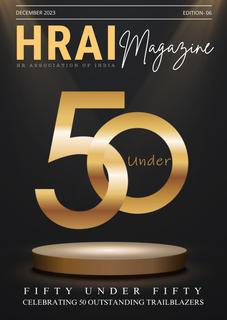
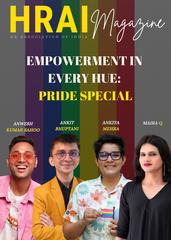
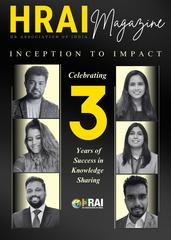


HRAI firmly believes in the power of teamwork and the value it brings. When diverse talents and perspectives come together, something extraordinary happens. The collective synergy we create goes beyond what any individual can achieve alone and together we see the potential to make a lasting impact on the world.
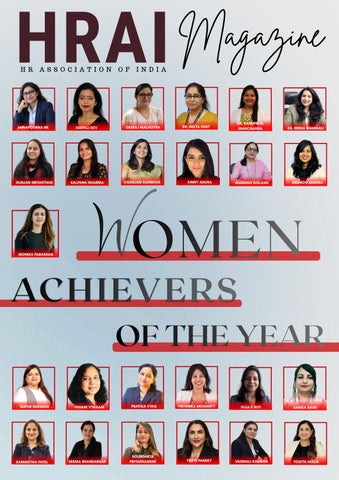
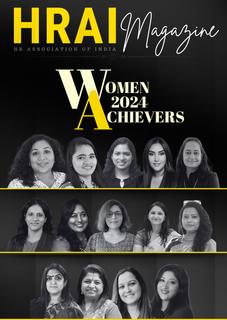
Leadership is often shaped by resilience, vision, and the determination to rise, lead, and create meaningful impact. Women Achievers of the Year celebrates exceptional women who are redefining leadership across industries.
This edition brings together accomplished senior professionals who are driving organizational success while fostering inclusive cultures and inspiring future generations. Their journeys reflect strength, adaptability, and a commitment to excellence
Through their stories, this edition highlights leaders who are navigating complexity with confidence, breaking barriers, and setting new benchmarks for impactful leadership Each journey is unique, yet united by purpose and perseverance
We extend our sincere appreciation to all the inspiring women featured in this edition. We hope their stories encourage more women to step forward, lead boldly, and shape the future with confidence.
DEERAJ MALHOTRA

ARORA
72
74


82
PAVANI VYASAM
SENIOR DIRECTOR
PEOPLE AND CULTURE, INNOVAPPTIVE INC
PRATIXA VYAS
VP -HUMAN CAPITAL MANAGEMENT & ADMINISTRATION, BRITISH
JEWEL CORPORATE TRAINER AND WOMEN
EMPOWERMENT COACH
PRIYANKA MOHANTY
VICE PRESIDENT-HR & GLOBAL HEAD TALENT MANAGEMENT, STARTEK
PUJA K ROY
GENERAL MANAGER –PROCUREMENT, CRYSTAL CROP PROTECTION LIMITED
SARIKA SAINI
SENIOR DIRECTOR HR & DEI LEADER, BIRLASOFT
SARMISTHA PATEL
DEPUTY GENERAL MANAGER
– HUMAN RESOURCE & ADMINISTRATION, ADITYA
BIRLA FASHION & RETAIL LIMITED
SEEMA BHANDARKAR HEAD PROGRAM MANAGEMENT AND ALLIANCE MANAGEMENT, AURIGENE PHARMACEUTICAL
SOUNDARYA
PRIYADHARSINI
HEAD SCM – MIDDLE EAST 1, AFRICA, ASEAN & CAS COUNTRIES, POWER TRANSMISSION & DISTRIBUTION IC, LARSEN & TOUBRO LIMITED
86
TRIPTI PANDEY
GENERAL MANAGERTALENT TRANSFORMATION, HALDIRAM FOODS INTERNATIONAL LIMITED
VAISHALI KAUSHIK
MANAGING PARTNER, SPECTRAL CONSULTANTS
YOGITA MALIK
SENIOR MANAGER CORPORATE COMMUNICATIONS, INDIAFIRST LIFE
90
94
98
102

e HR Association of India (HRAI), founded in 2020 is an esteemed non-profit organization that has been playing a pivotal role in shaping the HR landscape in India. Their primary focus is on exploring, discussing, and promoting the latest business scenarios, market trends, change management, and leadership in the HR industry. HRAI is dedicated to creating a community of professionals, learners, and mentors who share their insights and learn from each other to elevate the standard of HR practices in the country.
HRAI's success is attributed to its commitment to excellence and tireless efforts in facilitating interactions between HR professionals and subject matter experts. Through its initiatives such as panel discussions,

In addition to their educational initiatives, HRAI also recognizes organizations' best practices and individual contributions through awards and conferences These events celebrate the achievements of exceptional professionals and organizations that have made significant contributions to the HR industry in India. Over the years, HRAI has featured more than 1,000 experts and leading minds in the fields of HR, IT, Marketing, Finance, and more, making it a hub for learning and networking.
For HR professionals in India, HRAI offers unparalleled opportunities to connect with like-minded peers, learn from experts, and gain recognition for their hard work and achievements. By joining HRAI, HR professionals can stay updated on the latest trends, best practices, and strategies that can help them take their careers to the next level
HIGHLIGHTS:
HRAI, founded by Dr. Ankita Singh, drives industry initiatives and organizes prestigious awards for organizations, emerging leaders, and trailblazing women leaders. Notable participants include Blue Star Limited, Reliance Retail, Landmark Group, Oracle, Birlasoft, Vedanta and more.
Our commitment to excellence is reinforced through partnerships with the Great Managers Institute and top 100 great managers, who have taken masterclasses and featured in Forbes Magazine.
Elite leaders like Dr. TV Rao, Harjeet Khanduja, and Prasenjit Bhattacharya have graced our one-on-one talk shows, enhancing our members' knowledge base.
Our article initiative showcases thought-provoking articles by eminent leaders from organizations like BCCL, Bajaj Energy, TimesPro, Jio, Welspun Group, Great place to work and Accolite Digital.
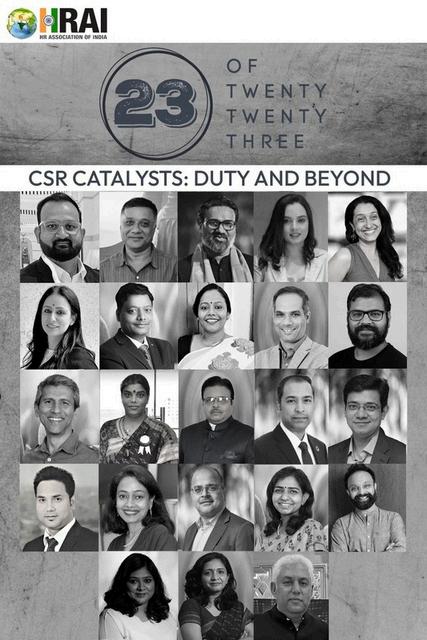
The 23 Of 2023 Initiative recognizes exceptional leaders and entrepreneurs based on a predetermined theme. Featured leaders include those from Adani, Reliance, IBM, Infosys, KPMG, as well as notable celebrities.




Q. Reflecting on your career, can you share an accomplishment that stands out as particularly impactful, and how did it shape the trajectory of your professional journey?
I began my HR journey as a Management Trainee, fortunate to work directly under the guidance of an Seniors- APAC HR Director. While I was responsible for general HR operations, what truly shaped me were the small projects he entrusted me with during his business trips. Each assignment became a learning laboratory I would dive deep into research, experiment with solutions, and eagerly await his feedback. Those moments of reflection taught me not just what to do, but why it mattered, and they ignited my curiosity to continuously learn and improve.
This early exposure helped me discover my inner abilities and gave me the confidence to showcase them to a larger audience. More importantly, it instilled in me a mindset of resilience: I never feared making mistakes, because each one was an opportunity to grow. Over time, I transformed those learnings into practical strategies, embedding them into HR practices that drove real impact
From those beginnings, my journey evolved steadily from Management Trainee to Regional Manager HR powered by self-learning, adaptability, and a genuine commitment to people-centric leadership. Today, I see my career not just as a progression in roles, but as a testament to the value of curiosity, courage, and the willingness to turn feedback into transformation
Q. In your experience, what principles or strategies in leadership have proven most effective in steering teams and organizations toward success?

When I think about leadership, I always come back to emotional intelligence For me, it’s not just a leadership trait it’s a foundation that everyone should practice in their daily interactions. It starts with awareness: being mindful of my own emotions and how they affect the people around me. Then comes empathy: truly listening, acknowledging contributions, and understanding what our team is going through. And finally, relationship management: building trust, creating safe spaces for honest dialogue, and encouraging collaboration.
Emotional intelligence was the backbone it helped transform the workplace into a culture where people felt heard, valued, and connected.
Q. How do mentorship and collaboration factor into your career, and have there been mentors or collaborators whose influence has left a lasting imprint on your professional path?
Mentorship and collaboration have been integral to my journey. I have been fortunate to work with leaders who not only guided me professionally but also instilled confidence and encouraged me to take on challenging opportunities
A simple moment like my HR Director trusting me to lead a major global initiative had a profound impact on me. That trust became a catalyst for growth. It taught me the importance of empowering others and paying forward the same mentorship
Collaboration, on the other hand, has always been at the heart of my work. Whether it’s working with cross-functional teams or supporting employees through transitions, I see 9
collective effort as the key to achieving meaningful outcomes.
Q. In navigating an industry that continually evolves, what, in your view, is the key skill or mindset crucial for staying innovative and pertinent?
In today’s rapidly evolving environment, the most crucial mindset is continuous learning combined with openness to change
Technology and digital transformation are reshaping industries, and as HR professionals, we must embrace these shifts rather than resist them Being curious, staying updated, and being willing to unlearn and relearn are essential traits
Equally important is maintaining a people-first perspective Innovation is not just about technology it’s about how effectively we enable people to adapt, grow, and thrive within that change.
Q. For aspiring professionals seeking recognition like yours, what advice would you offer as the most valuable lessons you ' ve learned in your field?
Believe & respect in yourself & efforts–growth begins where comfort ends & Value your time.
Take ownership – challenges often hide opportunities
Seek support & Guidance
Value teamwork – every achievement is collective.
Trust the process – Rome wasn’t built in a day; patience and consistency are the game changers.

My career is not just a progression in roles, but a testament to curiosity, courage, and the willingness to turn feedback into transformation.
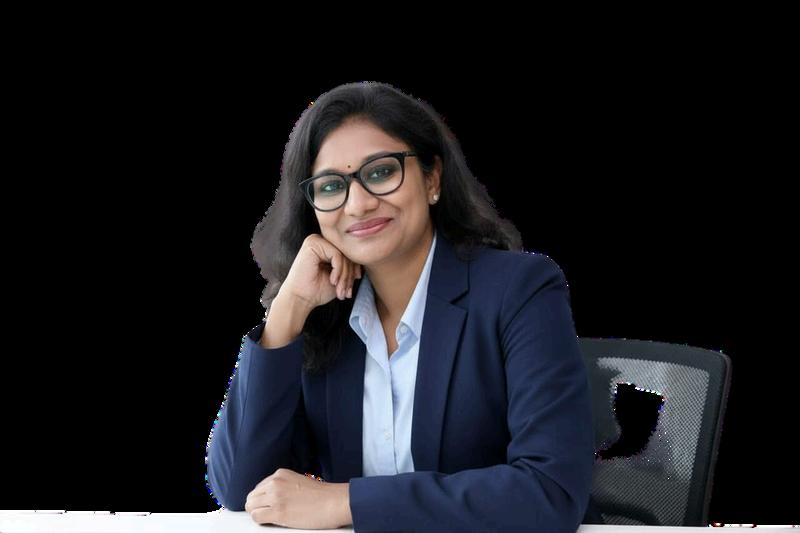
Annapoorna N.K. is the Regional Manager –Human Resources (South) at Hellmann Worldwide Logistics India, based in Chennai, where she leads HR for the South region. With over a decade of experience as an HR Business Partner, she specializes in aligning people strategies with business goals.
An MBA in Human Resources, she has previously worked with MSC Mediterranean Shipping Company and Agility Logistics, building expertise in HR operations, employee engagement, and organizational development.
At Hellmann, she drives the HR agenda as a strategic partner focusing on talent development, and the facilitation and implementation of digital, while fostering an inclusive, high-performance culture. She believes HR plays a critical role as a trusted advisor and change agent in enabling business success
—


CHIEF OPERATING OFFICER, ECOS MOBILITY
Q. Reflecting on your career, can you share an accomplishment that stands out as particularly impactful, and how did it shape the trajectory of your professional journey?
One accomplishment that stands out for me is helping build a culture where people feel trusted, respected, and accountable for outcomes My career started early, and much of what I learned came through experience rather than formal pathways Later stepping in Organisation Development and eventually moving into a business leadership role allowed me to understand organisations from the inside out.
At Eco Mobility, my focus has been on strengthening processes, encouraging collaboration across teams, and ensuring that people feel a sense of ownership in what they do When employees and chauffeurs feel respected and heard, service quality and operational reliability improve naturally
A defining moment in my life came in 2023 when I survived a life-threatening brain haemorrhage Returning to work after that experience changed my perspective in many ways It reinforced my belief in staying committed to one ’ s work and continuing to move forward with sincerity. It also deepened my empathy as a leader and strengthened my resolve to build organisations that are resilient and people-driven
Q. In your experience, what principles or strategies in leadership have proven most effective in steering teams and organizations toward success?
In my experience, leadership works best when it is simple & consistent.
The first principle is listening. Many answers already exist within teams if leaders create the space to hear them.
The second is discipline in execution.
Organisations grow when people respect timelines, honour commitments, and take responsibility for their work Culture is built through these everyday habits.
The third is trust. When people feel trusted, they are more willing to take ownership and think beyond their defined roles
As a leader, my responsibility is to create clarity around priorities, remove obstacles, and ensure teams feel supported in doing their work well. When teams are aligned and disciplined, results usually follow
Q. How do mentorship and collaboration factor into your career, and have there been mentors or collaborators whose influence has left a lasting imprint on your professional path?
Mentorship has played an important role in my journey I have been fortunate to work with few Folks who took the time to listen carefully and guide without imposing their views. They balanced performance expectations with genuine concern for people, and that approach stayed with me
Today, I try to follow the same principle with my own teams Mentorship does not always need to be formal. Sometimes it is simply about encouraging someone to recognise their own potential and giving them the confidence to step forward.
Collaboration is equally important. Organisations rarely succeed because of one individual; they succeed when teams work together with clarity and respect I always encourage cross-functional thinking and open dialogue because better ideas often emerge when different perspectives come together

Q. In navigating an industry that continually evolves, what, in your view, is the key skill or mindset crucial for staying innovative and pertinent?
The most important mindset of Curiosity
Industries evolve quickly, and customer expectations continue to change Leaders must stay curious and open to new ideas rather than becoming rigid in their thinking
I encourage teams to observe closely: what customers need, how technology can improve processes, and where efficiencies can be created Innovation often comes from small improvements that consistently make systems better
Another important quality is resilience Change can create uncertainty, but leaders must stay steady so teams feel confident navigating transitions. Staying relevant simply means continuing to learn, adapt, and remain focused on delivering value.
Q. For aspiring professionals seeking recognition like yours, what advice would you offer as the most valuable lessons you ' ve learned in your field?
My advice would be to focus on the work rather than recognition.
The early years of a career are about learning understanding the organisation, observing how decisions are made, and developing discipline in how you approach your responsibilities
Consistency matters more than occasional success. Showing up every day, delivering on commitments, & respecting people around you builds credibility over time It is also important to remain self-motivated.
Careers are long journeys, and individuals must continue to push themselves to learn and grow Finally, stay grounded. Titles and awards are encouraging, but what truly matters is the trust you build with people and the impact you leave behind through your work
Leadership is built on trust, strengthened by resilience, and defined by the impact we create on people.
Deepali Dev is a dynamic and visionary leader with over 25 years of experience in driving strategic growth and building high-performing, people-centric organizations. As Chief Operating Officer of Eco Mobility, she leads market expansion, operational excellence, and technology-driven innovation in the sustainable mobility sector She is known for her ability to blend strategic vision with execution, with expertise in scaling businesses, fostering inclusive cultures, and leading transformation. Her strengths include operational excellence, people-centric leadership, technology integration, and building high-performance teams Deepali is passionate about empowering individuals and creating workplaces where people thrive. Her commitment to continuous learning is reflected in her education from the University of Delhi, GNIIT from NIIT, and certifications from FranklinCovey, Dale Carnegie, and Idea Limited.
SUCCESS IS HER MINDSET, NOT JUST HER MILESTONE.
VICE PRESIDENT - HR, BIRLASOFT
Q. . Reflecting on your career, can you share an accomplishment that stands out as particularly impactful, and how did it shape the trajectory of your professional journey?
One accomplishment that stands out in my journey is building and scaling a people strategy that was deeply embedded in the business - not adjacent to it Rather than launching isolated HR programs, we aligned talent, culture, inclusion, and leadership with the organization’s growth and transformation agenda, turning people strategy into a measurable driver of business outcomes
This experience reinforced a core belief that has shaped my leadership journey: sustainable transformation happens when People strategy is Business strategy It required clarity of purpose, close collaboration with business leaders, and listening deeply to employee voices to create structured pathways for diverse talent to thrive
Personally, it strengthened my ability to balance empathy with execution and purpose with performance, affirming that intentional investment in people unlocks resilience, innovation, and long‑term success - for both the business and its leaders. And, as an outcome once Organizations do well, People feel engaged, stay longer, grow careers!
Q. In your experience, what principles or strategies in leadership have proven most effective in steering teams and organizations toward success?
For me, effective leadership begins with absolute clarity of purpose Over the years, I’ve seen that when a leader’s vision is unclear, outcomes remain uncertain - and failure often follows Clarity doesn’t mean the path will
always be linear; in fact, ambiguity is inevitable That’s where strong change leadership becomes critical - helping organizations navigate uncertainty while keeping the end goal firmly in sight.
Having a clear picture of the outcome shapes everything that follows. It defines the values an organization must stand for, informs the strategy required to deliver on the vision, and enables leaders to place the right people in the right roles. When those elements align, momentum builds naturally - and success becomes an outcome waiting to happen!
With clarity of direction, biases begin to fall away, inclusivity becomes instinctive, and integrity turns into part of the organization’s DNA Over time, consistent execution builds trust and credibility - both within the organization and in the marketplace In my experience, that combination of purpose, people, and principled leadership is what truly steers teams and organizations toward sustained success.
Q. How do mentorship and collaboration factor into your career, and have there been mentors or collaborators whose influence has left a lasting imprint on your professional path?
Great managers and mentors are not a myththey have profoundly shaped who I am today. No matter how talented or driven you may be, everyone needs a navigator at different stages of their journey. For me, mentors provided perspective, challenged my thinking, and helped me see possibilities beyond the immediate horizon
Many defining moments in my career have come through strong collaboration with

business leaders and cross functional teams. These partnerships were critical in translating people strategies into real, enterprise wide impact - turning intent into outcomes
As my career has evolved, my view of mentorship has deepened. I now see it not only as guidance I received, but as a responsibility I carry - to invest in the next generation of leaders. Through mentorship, leadership development, and thoughtful succession planning, I strongly believe in building pathways that prepare organizations for both today and the future
I’ve been fortunate to work alongside leaders whose integrity, inclusiveness, and commitment to developing others have left a lasting imprint on my professional journey Their influence reinforced a belief I hold deeply: leadership is not about individual success, but about enabling collective growth and helping others navigate careers with confidence and clarity
Q. In navigating an industry that continually evolves, what, in your view, is the key skill or mindset crucial for staying innovative and pertinent?
If there’s one mindset that has helped me stay relevant in a constantly evolving industry, it’s this: remain an Independent Contributor at heart No matter how senior you become, there’s no substitute for rolling up your sleeves and doing high impact work yourself! of course alongside your Team. That’s where you truly see what’s changing, what’s emerging, and what’s becoming obsolete Staying close to the work keeps you honest - and informed.
Innovation, in my experience, comes from embracing change with confidence and curiosity An agile leadership mindset - being comfortable with ambiguity - allows leaders to
navigate rapid shifts in technology, ways of working, and workforce expectations Data driven insights, analytics, and technology enabled HR are no longer optional; they are critical enablers for making smarter talent and organizational decisions and for building future ready strategies.
Equally important is staying curious beyond your immediate role or even your industry. Some of the most powerful ideas come from connecting dots across disciplines and markets. And while technology accelerates innovation, human centricity sustains it The most effective leaders balance intelligence with empathy - creating inclusive environments rooted in trust, well‑being, and belonging. When innovation is guided by both insight and intent, organizations are far better positioned to adapt, engage their people, and remain relevant over the long term
Q. For aspiring professionals seeking recognition like yours, what advice would you offer as the most valuable lessons you ' ve learned in your field?
My advice to aspiring professionals is simple but hard‑earned: don’t chase recognitionchase impact. When you focus on creating meaningful, measurable outcomes that genuinely move the organization forward, recognition has a way of finding you on its own. Over the years, I’ve learned that the real differentiator is the ability to bridge strategy and execution - to take a bold vision and translate it into practical frameworks, disciplined actions, and results that last
Equally important is how you lead Lead with intention. Create environments grounded in respect, empathy, purpose, and clarity of direction Sustainable success is built on trust, strong relationships, and people centric
leadership - but it becomes truly powerful only when the customer remains at the heart of everything we do When people, purpose, and customer impact come together, both individual growth and organizational excellence follow naturally
Deeraj Malhotra is a global People & Culture leader with over 22+ years of experience partnering with CXOs to help organizations scale, transform, and future-proof through people-centric strategies. Currently Vice President –Human Resources at Birlasoft, she has led enterprise-wide culture transformation, leadership development, and talent architecture across complex global environments. With deep expertise in organization design, large-scale change, leadership succession, and employee experience, she has successfully guided organizations through mergers, restructures, and capability shifts across geographies. Known for her strategic clarity and trusted advisor mindset, Deeraj brings a pragmatic yet deeply human approach to building agile, high-performing organizations where culture and business outcomes reinforce each other Over the course of her career, she has consistently redefined the role of HRfrom enabling function to a strategic enterprise growth engine. Under her leadership at Birlasoft, HR has evolved beyond policy governance to deliver measurable business impact enhancing succession depth, strengthening leadership capability, and building a client-centric talent model that contributes meaningfully to revenue growth and organizational resilience.

EDUCATED BY LEGACY, ELEVATED BY GRIT, EMPOWERED BY PURPOSE

Q. . Reflecting on your career, can you share an accomplishment that stands out as particularly impactful, and how did it shape the trajectory of your professional journey?
One of the most defining chapters of my professional journey began after what many would consider a pause a decade-long break that I dedicated to raising my children Returning to the workforce after that phase required not just professional reintegration but personal reinvention.
Rather than viewing the gap as a limitation, I chose to treat it as a period of preparation. I immersed myself in learning, pursuing advanced education across multiple disciplines including Clinical Psychology, Human Resources, Marketing, and Counseling Each field enriched my understanding of human behaviour, communication, and leadership
When I re-entered the professional world, this multidisciplinary perspective became my greatest strength. It allowed me to look beyond traditional HR practices and approach people management with deeper empathy and insight. Today, as Chief Human Resources Officer at GD Goenka Group, one of my most meaningful accomplishments has been helping shape people-centric systems that foster dignity, growth, and accountability. From implementing structured HR frameworks to strengthening workplace safety and professional development initiatives, the goal has always been to build environments where individuals can realise their full potential.
That journey reinforced a belief I hold deeply : careers may pause, but purpose never does With resilience, learning, and clarity of intent, every challenge can become an opportunity for transformation
Q. In your experience, what principles or strategies in leadership have proven most effective in steering teams and organizations toward success?
Over the years, I have come to believe that effective leadership is not about authority it is about alignment. The most successful leaders create clarity of purpose and ensure that every individual understands how their work contributes to the larger vision
Three principles have consistently guided my leadership approach First, purpose-driven leadershipOrganizations thrive when people feel connected to a meaningful mission. In the education sector particularly, aligning educators, administrators, and support staff around the shared goal of shaping young minds creates powerful engagement
Second, empathy with accountabilityLeadership requires balancing compassion with performance expectations. Understanding people's motivations, aspirations, and challenges allows leaders to build trust. At the same time, clear expectations and measurable goals ensure that teams remain focused and productive.
Third, continuous development. A leader's responsibility is not only to manage people but to develop them. Investing in training, mentorship, and professional growth strengthens both individuals and institutions. I have always believed that when people grow, organizations grow
Finally, transparency in communication plays a critical role. When leaders communicate openly about goals, challenges, and decisions, it builds a culture of trust and ownership Teams

perform best when they feel informed, respected, and valued
At its core, leadership is about empowering people to believe that their contribution truly matters
Q. How do mentorship and collaboration factor into your career, and have there been mentors or collaborators whose influence has left a lasting imprint on your professional path?
Mentorship has been deeply woven into my journey from the very beginning. Coming from a family of educators, the value of learning and guidance was always part of my upbringing. My father played a particularly significant role in shaping my outlook Despite belonging to a traditional & conservative background, he believed strongly in giving me the freedom to pursue education and professional aspirations.
My husband, Dhiraj, has also been a constant pillar of support throughout my career. Leadership responsibilities often come with demanding decisions and pressures, and having someone who offers encouragement along with honest perspective is invaluable.
Capt. Rohit Sen Bajaj, my ex-boss has been a guiding light in my life whose unwavering belief in my capabilities and constant encouragement to challenge my own limits have inspired me to pursue goals that once seemed beyond reach. In the workplace, I have always believed in creating collaborative environments where knowledge flows across hierarchies Some of my most meaningful professional growth has come from working alongside colleagues from diverse disciplines educators, psychologists, administrators, and HR professionals. These collaborations with diverse perspectives have enriched my understanding of organizational
dynamics and led me to find most innovative solutions
Today, mentoring young professionals particularly women navigating career transitions has become an important part of my leadership philosophy. Empowering others to grow and succeed is one of the most rewarding aspects of professional life
Q. In navigating an industry that continually evolves, what, in your view, is the key skill or mindset crucial for staying innovative and pertinent?
The most important mindset for staying relevant in today’s world is lifelong learning combined with adaptability. The pace of change across industries is unprecedented, and professionals must remain curious and open to evolving ideas
My own academic journey across diverse disciplines reflects this belief. Each field whether psychology, literature, or management has added new layers to my understanding of people and organizations.
Equally critical is emotional intelligence. As workplaces become more dynamic and diverse, leaders must be able to navigate human complexities with sensitivity and clarity. Understanding people’s motivations and creating inclusive environments where ideas can flourish is essential for sustained innovation.
Innovation also comes from being willing to challenge conventional thinking. Leaders must ask questions such as: How can we do this better? How can we create environments where people feel empowered to contribute ideas? Encouraging experimentation and valuing diverse perspectives often leads to
meaningful innovation.Ultimately, staying relevant is less about chasing trends and more about maintaining intellectual curiosity and a willingness to evolve
Q. For aspiring professionals seeking recognition like yours, what advice would you offer as the most valuable lessons you ' ve learned in your field?
If there is one lesson my journey has taught me, it is that resilience is the foundation of success, perseverance matters more than perfection. Careers rarely follow a perfectly straight path There will be challenges, pauses, detours and moments of uncertainty What matters most is the determination to continue learning and evolving.
Secondly, invest consistently in education and skill development Knowledge expands perspective, builds confidence, and equips professionals to navigate complex environments.
Another important principle is to cultivate authentic relationships Professional success is rarely achieved in isolation. Collaboration, trust, and mutual respect are essential in building strong teams and sustainable careers.
Another important aspect is embracing humility while striving for excellence. Recognition and awards are gratifying, but they should be viewed as milestones rather than destinations. The real measure of success lies in the positive impact we create on people, organizations, and communities. Finally, I would encourage young professionals to lead with purpose & integrity. When your work aligns with values and contributes to something meaningful, success becomes a natural outcome rather than a pursuit.
In my experience, the most fulfilling careers are those where professional achievements are
balanced with personal growth and a commitment to making a difference in the lives of others.
“ Success is not a straight path; it is built on resilience, continuous learning, and the courage to evolve.”
Dr Neeta Pant is a highly accomplished Strategic Human Resource Leader, Clinical Psychologist, and Executive Coach with over 23+ years of progressive experience in diverse and dynamic business environments She currently serves as the Group Chief Human Resource Officer at GD Goenka Group, where she aligns people strategy with organizational growth through innovative and results-oriented leadership
Her distinctive strength lies in integrating psychological insight with HR expertise to build emotionally intelligent, inclusive workplaces A certified POSH and POCSO Trainer, Soft Skills Master Trainer, and Handwriting Analyst, she brings a multidimensional approach to human capital development, focusing on compliance, culture, capability building, and behavioral transformation. With a Ph.D. in Clinical Psychology, Honorary doctorate in Social Work, dual MBAs in HR and Marketing, and Master’s degrees in Psychology and English Literature, she champions continuous learning and transformational leadership
A confident communicator, empathetic leader, and creative thinker, Dr Pant continues to drive strategic HR initiatives while fostering safe, productive, and human-centered work environments
A TRUE LEADER DOESN’T SHINE ALONE—SHE MAKES OTHERS SHINE.

SENIOR VICE PRESIDENTPEOPLE, INFOBEANS
Q. Reflecting on your career, can you share an accomplishment that stands out as particularly impactful, and how did it shape the trajectory of your professional journey?
Early in my career, someone once told me, “Organizations grow through strategy, but they thrive through people.” That line stayed with me If I look back today, the accomplishment that feels most meaningful is not a single initiative or milestone, but the opportunity to contribute to building environments where people feel they truly belong.
I have always believed that workplaces should not feel transactional. People spend a significant part of their lives at work, and the culture around them should give them confidence, dignity, and the freedom to grow Over the years, I have had the privilege of being part of conversations and initiatives that strengthened that belief creating spaces where people can speak openly, leadership is approachable, and individuals feel encouraged to bring their authentic selves to work.
What stays with me most are the quieter moments. A team member sharing that they felt heard in a difficult moment Someone stepping into leadership for the first time and discovering their voice Watching individuals grow with the organization over many years. Those moments shape the trajectory of my journey more than any formal recognition They constantly remind me that leadership is not defined by the position we hold, but by the impact we leave on people along the way.
Q. In your experience, what principles or strategies in leadership have proven most effective in steering teams and organizations toward success?
Over time, I have realized that leadership is less about authority and more about authenticity.
One lesson that shaped my thinking came from observing a leader early in my career. In a challenging situation, instead of immediately giving instructions, he simply asked the team, “What do you think we should do?” That moment changed the energy in the room. People leaned in, ideas flowed, and the solution that emerged was far stronger than anything one person could have decided alone. That experience reinforced a principle I carry with me even today - people support what they help create
For me, effective leadership rests on three simple ideas: listening deeply, communicating with clarity, and leading with consistency. When leaders truly listen, they build trust When they provide clarity, people find direction. And when they stay consistent in their values, credibility follows
Leadership, in my view, is not about being the smartest person in the room. It is about creating a room where everyone feels confident enough to contribute their best thinking.
Q. How do mentorship and collaboration factor into your career, and have there been mentors or collaborators whose influence has left a lasting imprint on your professional path?
If I am honest, every stage of my journey carries the imprint of someone who believed in me a little more than I believed in myself at that time Mentors do not always appear in formal roles.
Sometimes they are leaders who offer guidance when you are unsure, colleagues who challenge your perspective, or even team members whose feedback helps you grow.
One of the most valuable lessons I received from a mentor was simple: “Your job as a leader is not to shine alone, but to make the room brighter for others.” That idea changed the way I approached leadership.
Collaboration has also been a powerful teacher When people from different perspectives come together, conversations become richer and decisions become more thoughtful. Some of the best solutions I’ve seen have emerged from teams that were willing to listen to each other with openness and respect Today, I try to carry that forward by mentoring others and creating opportunities for people to step forward. Because growth multiplies when encouragement is shared.
Q. In navigating an industry that continually evolves, what, in your view, is the key skill or mindset crucial for staying innovative and pertinent?
If I had to choose one mindset that has helped me stay relevant, it would be curiosity
The world around us is changing rapidlytechnology, ways of working, and expectations from leaders are all evolving. In such a dynamic environment, the moment we believe we have all the answers is the moment we stop growing. Curiosity keeps us open It encourages us to ask questions, explore new ideas, and learn from people around us. It also reminds us to stay humble, because there is always something new to understand. But curiosity alone is not enough It must be balanced with
empathy As industries evolve, it becomes even more important to stay connected to the human experience behind the change
Innovation should not distance people from purpose - it should bring them closer to it When curiosity and empathy work together, they create leadership that is both progressive and grounded.
Q. For aspiring professionals seeking recognition like yours, what advice would you offer as the most valuable lessons you ' ve learned in your field?
One lesson I’ve learned over the years is that recognition is rarely something you chase directly It is something that arrives quietly after years of meaningful work.
If I were to share advice with aspiring professionals, the first would be to focus on impact rather than visibility Do work that genuinely improves something - whether it’s a process, a team, or someone ’ s growth
Second, trust your voice. Many talented individuals hold themselves back because they feel they need more experience before speaking up In reality, fresh perspectives often bring the most valuable insights. Third, remain a lifelong learner Every role, every challenge, and every conversation has something to teach us if we stay open.
And finally, never underestimate the power of kindness in leadership Professional success is important, but the way we treat people along the journey is what truly defines our legacy. Years later, people may not remember every decision we made - but they will always remember how we made them feel
Leadership is not defined by the position we hold, but by the impact we leave on people along the way.
Dr. Kanupriya Manchanda, Senior Vice President – People at InfoBeans Technologies, is a spiritually driven HR influencer with 18+ years of experience across Talent Management, Employee Engagement, Employer Branding, Culture & Change Management. She began her career with Coles Group (Australia) and has spent 16+ years at InfoBeans, playing a pivotal role in scaling the company from 80 to 1500+ team members. She became the youngest VP under 40, shaping people strategy for InfoBeans and its subsidiaries Philosophie (USA) and Eternus Solutions (Pune). A custodian of workplace culture, she believes organizations grow when their people grow. She has been instrumental in InfoBeans winning multiple recognitions, including Great Place to Work, Dream Companies to Work For, Asia’s Best Employer Brand, and Top 100 Best Companies for Women in India. Kanupriya is a recognized HR thought leader, speaker, and panelist at SHRM, People Matters, NHRD, NASSCOM, TEDx and global HR forums. Her accolades include Top Voices for HR Excellence 2025, Indore’s Top 10 HR Pioneers 2025, Top 40 Under 40 HR Leaders, Top 35 Young HR Leaders, Top 100 HR Minds India, People First Leader Award, and Women Achievers honors She holds a Doctorate in Employee Engagement, an MBA in Learning & Development from Swinburne University (Melbourne), and actively mentors HR professionals while leading HR innovation, DEI, and industry–academia initiatives in MP. Known for her authenticity and people-first philosophy, she continues to inspire HR leaders globally. A proud Indori, she loves her daily Poha-Jalebi ritual.
ACHIEVEMENT IS DRIVEN BY PURPOSE, RESILIENCE, AND IMPACT
COUNSELING PSYCHOLOGIST & VPHUMAN RESOURCES, SMILEJUNCTION & MATELLIO
Q. Reflecting on your career, can you share an accomplishment that stands out as particularly impactful, and how did it shape the trajectory of your professional journey?
One accomplishment that remains closest to my heart is founding Smile Junction in 2008 -a counseling and human development center born from a simple but powerful belief: emotional pain deserves compassionate space and professional support.
At that time, conversations around mental health were often silenced, especially in smaller cities. Seeking counseling was misunderstood, and emotional struggles were hidden behind social expectations Establishing an independent psychological counseling center in such an environment required courage, patience, and deep faith in the value of healing.
Over the years, Smile Junction has supported more than 15,000 individuals navigating marital distress, youth crises, addictions, infertility trauma, grief, depression, and emotional breakdowns. What began as a professional initiative slowly evolved into a sanctuary of trust a place where people felt heard without judgment and supported without labels.
This journey shaped my professional path profoundly. It taught me that true leadership is not about authority but about creating safe ecosystems where people can rediscover their strength It also inspired my transition into strategic human resources leadership, where I continue working toward building emotionally intelligent workplaces that value both performance and people.
Q. In your experience, what principles or strategies in leadership have proven most effective in steering teams and
organizations toward success?
For me, leadership begins with understanding people before directing them The most effective leadership rests on empathy, clarity, and trust.
Empathy allows leaders to connect with people beyond their roles When individuals feel emotionally safe, they become more creative, responsible, and collaborative. My background in psychology has helped me listen deeply, understand unspoken concerns, and support teams in ways that go beyond traditional management practices. Clarity gives teams direction and purpose When people understand how their contributions matter, they feel valued and motivated. I have always believed that meaningful work is one of the strongest drivers of engagement.
Trust forms the foundation of all successful teams. A leader who trusts their people empowers them to take ownership and innovate without fear.
In my role as Vice President -Human Resources, these principles helped me build peoplecentric systems, strengthen engagement, and nurture cultures where performance and wellbeing grow together To me, leadership is not about controlling outcomes; it is about inspiring collective growth
Q. How do mentorship and collaboration factor into your career, and have there been mentors or collaborators whose influence has left a lasting imprint on your professional path?
Mentorship has been one of the most fulfilling aspects of my journey. I have always believed that knowledge finds its true meaning when shared.

Over the years, I have mentored more than 100 international interns pursuing psychology and human development Guiding them through real-life case discussions, cultural contexts, and ethical dilemmas has been a deeply enriching experience Watching young professionals grow in confidence, empathy, and competence reminds me that mentorship creates ripples that extend far beyond one ’ s immediate work.
Collaboration has also played a transformative role in my career. Working alongside medical professionals as an infertility counselor taught me how emotional care and medical treatment must complement each other Serving with the Indian Air Force and Indian Army further reinforced the power of teamwork, especially in high-pressure environments where emotional resilience is critical.
While I have learned from many senior professionals, my greatest teachers have been the individuals and families I have counseled Their lived experiences, courage, and vulnerability have deepened my empathy and shaped my approach to leadership and service.
Q. In navigating an industry that continually evolves, what, in your view, is the key skill or mindset crucial for staying innovative and pertinent?
I believe the most essential mindset for staying relevant is a willingness to learn, unlearn, and adapt while keeping human sensitivity at the center.
Industries evolve, technologies change, and professional roles transform. But human emotions, aspirations, and struggles remain constant. Professionals who understand people deeply can adapt their skills to any environment.
When I transitioned from psychological practice to strategic HR leadership, I embraced continuous learning exploring analytics, business strategy, and organizational development. This helped me integrate behavioral science with corporate systems effectively. Staying innovative also requires curiosity and openness New perspectives often emerge when we step beyond our comfort zones and explore interdisciplinary approaches
Above all, remaining compassionate while evolving professionally ensures that progress never loses its human touch
True success lies not in recognition, but in the lives you uplift and the hope you restore.
Q. For aspiring professionals seeking recognition like yours, what advice would you offer as the most valuable lessons you ' ve learned in your field?
My first advice would be to focus on purpose rather than recognition. Awards and appreciation are meaningful, but they are outcomes of consistent, sincere work. When professionals dedicate themselves to improving lives and creating value, recognition follows naturally.
Second, resilience is vital Meaningful journeys often begin with resistance, doubt, and slow progress. Patience and belief in one ’ s mission help transform obstacles into stepping stones
Third, never stop learning. Every experience, success, and setback carries lessons that strengthen professional wisdom
Fourth, lead with empathy Understanding people’s struggles, respecting their individuality, and supporting their growth builds trust that no authority can command.
Finally, define success not only by milestones achieved but by lives positively influenced When your work restores someone ’ s hope, confidence, or direction, you create a legacy far greater than any award
True success lies in uplifting others as you rise.
Dr. Reena Bhansali is a Counselling Psychologist by choice and a Strategic HR Leader by profession, recognized for integrating behavioral science with organizational strategy. With over 18 years of professional experience, she has played a pivotal role in building high-performance cultures and aligning people practices with business growth. She has been working in Strategic Human Resources for the past eight years and joined a US-based software company in 2015 as Vice President – Human Resources. In her leadership role, she collaborates closely with top management to shape organizational vision, develop long-term HR strategies, design people-centric policies, and re-engineer processes for operational excellence. Her expertise spans talent management, leadership development, HR analytics, employee engagement, performance systems, and workforce planning. In 2008, she founded Smile Junction in Jodhpur, the city’s first independent center offering psychological counselling alongside HR consulting. The center has served over 15,000 clients across national and international geographies
Dr. Reena holds a Doctorate in Human Development and certifications in Human Capital Analytics & Metrics. Her work has earned her several prestigious honors, including Bhaskar Women of the Year, Women Pride Award by ICSI Jodhpur, Women of Honor Award by SBI & PR Nexus, and Nari Shakti Samman

MANAGER PEOPLE CARE, ZEBPAY

Q. Reflecting on your career, can you share an accomplishment that stands out as particularly impactful, and how did it shape the trajectory of your professional journey?
If I look back at my journey in HR, one accomplishment that stands out is the opportunity to contribute to building strong people practices in fast-growing, dynamic environments.
Working in a space like crypto and fintech means the pace of change is constant. In such environments, HR cannot remain limited to processes or policies- it has to actively shape culture, attract the right talent, and ensure people feel connected to the larger purpose of the organization.
At ZebPay, I have had the opportunity to work closely on strengthening talent acquisition, enhancing employee experience, and creating people-first processes that support both business growth and individual development Being part of initiatives that bring the right talent together and create an environment where people feel empowered to contribute has been incredibly fulfilling.
What has made this journey meaningful is seeing how the right culture and people practices can directly influence engagement, collaboration, and performance. It reinforced a belief I’ve carried throughout my career - that HR is not just about managing people, but about enabling people to do their best work and grow with the organization.
Q. In your experience, what principles or strategies in leadership have proven most effective in steering teams and organizations toward success?
In my experience, leadership that truly creates impact is built on three principles: Trust, Clarity, and Empathy.
Trust is the starting point for any highperforming team. When leaders empower people with ownership and trust their judgment, it encourages initiative, accountability, and innovation
Clarity is equally important. People perform better when they understand the larger purpose behind their work and how their efforts contribute to the organization’s goals
Transparent communication and clearly defined expectations help teams stay aligned, especially during periods of growth or change.
Empathy is the third pillar Leaders who take the time to listen, understand different perspectives, and create psychologically safe environments build stronger teams and deeper engagement. When these elements come together, teams don’t just work together- they grow together.
Q. How do mentorship and collaboration factor into your career, and have there been mentors or collaborators whose influence has left a lasting imprint on your professional path?
Mentorship and collaboration have played a very important role in shaping my career. Over the years, I’ve had the opportunity to work with leaders and colleagues who believed in empowering people, sharing knowledge, and creating space for others to grow Their guidance helped me navigate challenges, broaden my perspective, and build confidence in my own leadership approach What I value most about mentorship is not just the advice,

but the encouragement to take ownership and step outside your comfort zone. Collaboration has been equally important Many of the initiatives that truly make a difference- whether it is building culture, improving employee experience, or strengthening talent practices- are never individual efforts They happen when teams come together with a shared vision.
Today, I try to carry that forward by supporting young professionals and fostering environments where people learn from each other and grow collectively.
Q. In navigating an industry that continually evolves, what, in your view, is the key skill or mindset crucial for staying innovative and pertinent?
The most important mindset for staying relevant in an evolving industry is continuous learning and adaptability. Industries like technology and fintech evolve rapidly, and professionals must be willing to constantly learn, unlearn, and adapt. Curiosity and openness to new ideas are what help individuals remain innovative and forwardthinking.
Another important aspect is becoming more data-aware and insight-driven. HR today plays a strategic role, and using data to understand trends, engagement, and talent dynamics helps organizations make better decisions.
At the same time, it’s important not to lose sight of the human element. While technology and industries evolve, people remain at the heart of every organization. Leaders who balance innovation with empathy will always stay relevant.
HR is not just about managing people, but about enabling people to do their best work and grow with the organization.
Q. For aspiring professionals seeking like yours, what advice would you offer as the most valuable lessons you ' ve learned in your field?
One of the biggest lessons I’ve learned is to focus on impact rather than recognition. When your work genuinely contributes to people and organizational growth, recognition often follows naturally.
Another important lesson is to build your career on credibility and consistency. Trust takes time to build, but it becomes one of the most valuable assets in any profession.
I also believe strongly in the power of relationships. Collaboration, learning from others, and building strong professional networks can open doors to opportunities and growth
And finally, stay curious The workplace continues to evolve, and those who keep learning and adapting will always find ways to grow and lead For me, the most rewarding part of working in HR has always been the opportunity to positively influence people’s journeys and contribute to building workplaces where individuals can truly thrive.
When your work genuinely contributes to people and organizational growth, recognition often follows naturally.
Gunjan Srivastava is a seasoned HR leader with over 14 years of diverse experience across the full spectrum of Human Resources, spanning dynamic industries such as fintech, internet, and recruitment consulting Her career has given her valuable exposure to global markets including India, Dubai, Singapore, Australia, and the United States. Known for her thoughtful and strategic approach, Gunjan has led key HR functions including Talent Acquisition, Employer Branding, HR Analytics, and Employee Engagement. She is passionate about building people-first cultures and designing initiatives that attract top talent while enabling individuals and organizations to grow together Currently, she leads Talent Acquisition, Campus Initiatives, Employer Branding, Analytics, and Employee Engagement at ZebPay, India’s leading cryptocurrency exchange, and has previously contributed to the growth of innovative startups like ShopClues and WedmeGood
SHE BUILDS WHAT OUTLIVES HER ROLE.

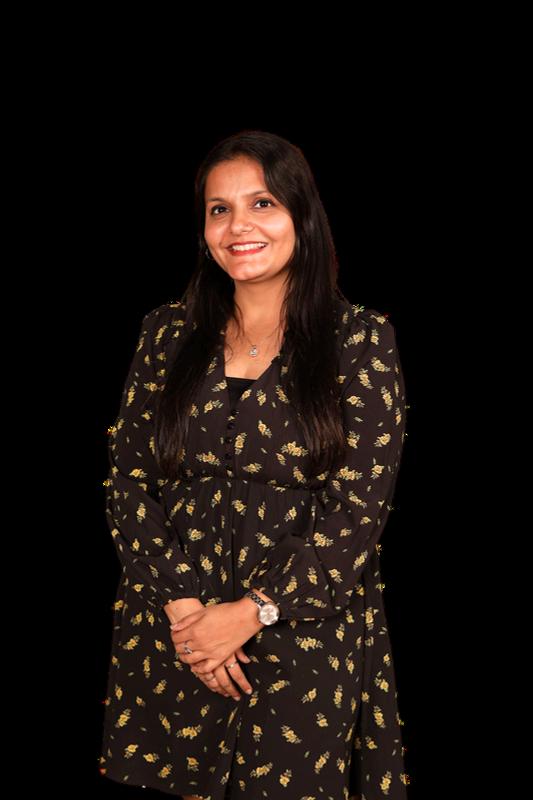
HAPPINESS OFFICER, THE SCALERS
Q. Reflecting on your career, can you share an accomplishment that stands out as particularly impactful, and how did it shape the trajectory of your professional journey?
They say growth happens outside your comfort zone, but I found mine in the deep end of a pool I didn't know I was swimming in. Early in my journey, a sudden exodus of leadership left me running the entire HR show solo. One day I was a team member; the next, I was the strategist, the recruiter, and the emotional anchor for the whole company.
It was a masterclass in 'accidental leadership.' I had to trade my hesitation for high-stakes decision-making and learn-very quickly-that staying calm in the eye of a storm is a superpower That experience rewrote my professional DNA. It taught me that we are rarely 'ready' for the moments that define us, but we are always capable of rising to meet them. I carry that mindset into everything I do: every challenge is simply an opportunity to meet a version of myself I haven't been introduced to yet
Q. In your experience, what principles or strategies in leadership have proven most effective in steering teams and organizations toward success?
I’ve always believed that you cannot inspire a team if they don’t first feel safe In my world, Psychological Safety isn't just a buzzword; it’s the oxygen of a healthy culture When people know they can share a 'wild' idea or disagree respectfully without judgment, the whole organization breathes easier It’s in that space of trust that we find our most bulletproof innovations
However, kindness without direction is just wellintended confusion. That’s why I pair safety with
Radical Clarity. Ambiguity is the quietest thief of productivity; I’ve found that people shine brightest when they aren't guessing what success looks like For me, the 'why' must be transparent so the 'how' can be creative.
Ultimately, my philosophy is Empathy anchored by Accountability. Being a 'Chief Heart Officer' doesn’t mean lowering the bar - it means understanding the human being behind the role so deeply that you can guide them toward a horizon they didn't think they could reach When you lead with both a heart and a roadmap, people don't just work for you-they grow with you
Q. How do mentorship and collaboration factor into your career, and have there been mentors or collaborators whose influence has left a lasting imprint on your professional path?
Mentorship has been the quiet architect of my career I’ve found that the most valuable guidance doesn’t always come from a formal program; it comes from the seniors and colleagues who were generous enough to share their ' scars ' and their successes. I’ve always tried to be a ‘professional sponge ’soaking up wisdom in the most natural way. Some of my most eye-opening moments came from simple coffee catch-ups where I’d observe an engineer’s logic or a colleague’s perspective. Those interactions helped me see challenges through a much broader lens and taught me to approach problems with a more holistic view.
Because I know the power of that support, I try to live that same generosity every day. It’s in the moments where I’m helping someone find their confidence for a big interview, or guiding a young professional through their first major hurdle. But it’s also in the tougher moments -

like sitting with an exiting employee to help them find clarity and closure as they move on to their next chapter I see these as the most meaningful parts of my day. I truly believe that mentorship creates a ripple effect: when you help one person grow, you aren't just helping them-you’re helping everyone they will eventually touch For me, success isn't a solo journey-it’s a collaborative one where we all grow together
Q. In navigating an industry that continually evolves, what, in your view, is the key skill or mindset crucial for staying innovative and pertinent?
In an industry that never stands still, I’ve found that curiosity is the only currency that doesn't depreciate. We are living through a fascinating era where technology, work cultures, and what people expect from their careers are evolving almost daily. To me, staying innovative isn’t about chasing every new buzzword; it’s about maintaining a mindset of continuous, intentional learning
My approach to staying relevant is twofold. On one hand, I’m a student of the craft-I’m regularly in HR communities, attending webinars, and pursuing certifications that challenge my understanding of where the world is headed But on the other hand, I believe the most profound learning happens away from a screen. It’s found in the art of listening to employees, observing the quiet shifts in workplace behavior, and staying connected to the real, raw human experiences at the heart of our work.
Innovation in HR isn't just about the tools we use; it’s about finding new ways to make the workplace feel more human in an increasingly digital world. I stay pertinent by being as curious about people as I am about the
progress of our industry When you remain a student of the human experience, you ’ re never truly 'behind' the curve
We are rarely ready for the moments that define us, but we are always capable of rising to meet them.
Q. For aspiring professionals seeking recognition like yours, what advice would you offer as the most valuable lessons you ' ve learned in your field?
If I could offer one piece of advice to those seeking their own path, it would be this: Focus on the impact, and let the recognition be the byproduct. I’ve found that recognition is a bit like a shadow - it follows you naturally when you are moving toward something meaningful Being named a 'Women Achiever' is a profound honor, but this moment didn't come from seeking the spotlight; it came from the years spent in the trenches, solving problems thoughtfully and advocating for the people around me.
Another lesson I hold close is the power of authenticity. You don't have to shave off your edges or adopt a 'predefined' leadership style to be successful. Your individuality, your empathy, and your unique perspective aren't just personality traits they are your greatest professional strengths Never shy away from
asking for help. In fact, asking for support isn't a sign of weaknessit's a sign of a leader who values the collective wisdom over their own ego.
Finally, please be patient with your journey. Careers are rarely a straight line; they are a series of peaks, valleys, and necessary detours There will be moments of self-doubt, but every experience is preparing you for the next version of yourself. Success, in my view, isn’t measured by how high you climb or the titles you collect; it’s measured by how many people found their footing because you stood beside them. If you focus on leaving people better than you found them, the success you ’ re looking for will always find its way to you
Kalpana Sharma believes that, at the end of the day, a workplace is simply a group of people trying to do their best
With over eight years in HR, she has built her career on a simple but firm foundation: people don’t need more rigid systems; they need more space to be human.
Currently serving as Chief Happiness Officer, Kalpana’s path hasn’t always been a straight line. Her "trial-by-fire" startwhere she had to lead a department alone early on - taught her that leadership isn’t about being perfect; it’s about being present This experience turned her into a "professional sponge. " She is the kind of leader who loves to sit down with a colleague or an engineer over coffee just to listen and learn a different way of thinking
While her work has earned her recognition as an HR 30 Under 30 honoree and a recipient of the Women in HR Excellence award, but if you ask her colleagues, they’ll tell you she’s just someone who leads with quiet strength, a good sense of humor, and a lot of heart. She’s the first to admit that mistakes are part of the process and that asking for help is a strength, not a weakness. For Kalpana, building a great culture isn't a one-off project; it’s a daily commitment to staying curious and staying human.
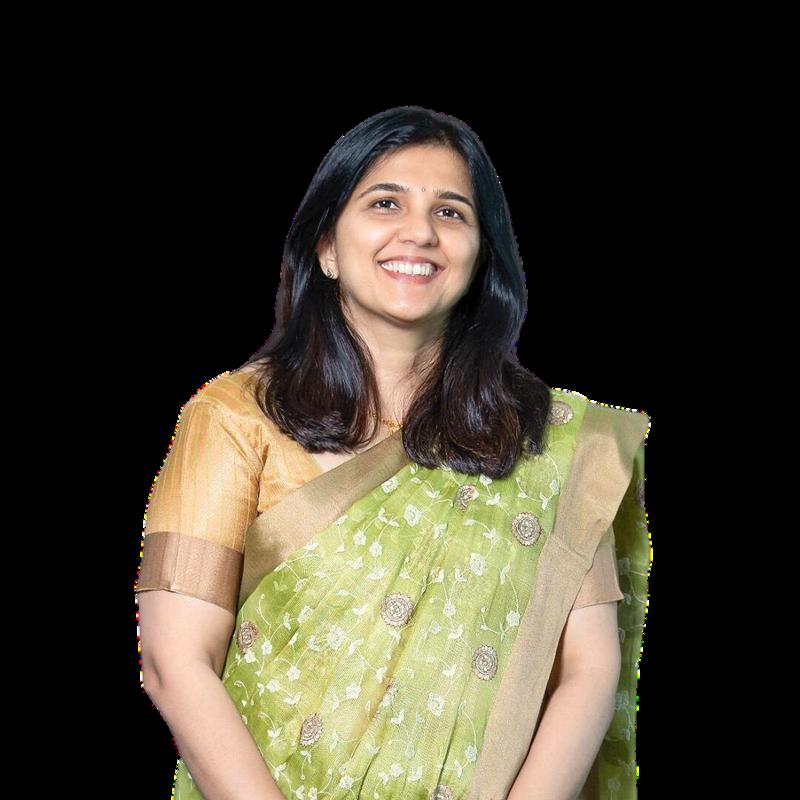
DIRECTOR, PROJECT DELIVERY AND GOVERNANCE, WORLEY INDIA
Q. Reflecting on your career, can you share an accomplishment that stands out as particularly impactful, and how did it shape the trajectory of your professional journey?
One accomplishment that stands out as particularly impactful in my career was leading the execution of the largest multi‑office Cellulose Acetate production project undertaken by my earlier organization. This project required close coordination across India, the United States, Italy and China, and was especially challenging because there were no reference designs available every element of the engineering documentation had to be developed from the ground up.
What made this experience defining was not only the technical complexity, but the scale of collaboration and governance it demanded. Leading a globally distributed, multidisciplinary team through tight schedules, regulatory requirements and evolving scope strengthened my ability to align diverse stakeholders, integrate perspectives across cultures and maintain rigor under demanding constraints It reinforced the importance of clarity, structured delivery models and trust based leadership in complex EPC environments This accomplishment fundamentally shaped the trajectory of my professional journey It moved my focus beyond delivering individual projects successfully to building repeatable delivery capability systems, governance and processes that improve quality and predictability across projects Since then, my work has increasingly centered on strengthening organizational capability, standardizing work processes and embedding knowledge capture mechanisms that outlast individual projects.
That experience also influenced my later work in sustainability and energy transition projects,
where translating emerging technologies into safe, scalable, and reliable infrastructure is critical. It affirmed my belief that meaningful impact in engineering leadership comes not just from what is delivered, but from how organizations are better equipped to deliver again consistently, responsibly, and with purpose.
Q. In your experience, what principles or strategies in leadership have proven most effective in steering teams and organizations toward success?
The most effective leadership principle I’ve practiced is clarity with accountability, balanced by empathy. Teams perform at their best when expectations are unambiguous, decision rights are clear, and governance supports not constrains execution.
Equally important is creating an environment of trust, where people feel safe to raise risks early, challenge assumptions and take ownership. I’ve learned that leadership is less about control and more about enabling people to do their best work, especially in high pressure, high complexity project environments Consistency, integrity and follow through are what ultimately earn credibility and drive results
Q. How do mentorship and collaboration factor into your career, and have there been mentors or collaborators whose influence has left a lasting imprint on your professional path?
Mentorship and collaboration have been central to my journey. I’ve benefited from leaders and colleagues who challenged me to think beyond my immediate role encouraging me to look at delivery through a broader

business and organizational lens. Their influence helped me develop confidence in making decisions that balance technical rigor with commercial and people considerations. Over time, this has shaped my own commitment to mentoring others, particularly in helping professionals navigate complexity, build judgment and grow into leadership roles. I see mentorship not as a formal activity, but as a continuous responsibility one that strengthens both individuals and the organization as a whole.
Q. In navigating an industry that continually evolves, what, in your view, is the key skill or mindset crucial for staying innovative and pertinent?
The most critical mindset is adaptive thinking grounded in fundamentals Technologies, tools and markets evolve rapidly, but principles of sound engineering, risk management and disciplined execution remain constant
Staying relevant requires curiosity the willingness to learn, unlearn and re‑frame problems while staying anchored to core values like safety, quality and ethical delivery I’ve found that innovation is most effective when it is practical and scalable, not experimental for its own sake The ability to translate change into reliable execution is what sustains long term relevance.
Q. For aspiring professionals seeking recognition like yours, what advice would you offer as the most valuable lessons you ' ve learned in your field?
My advice would be to focus on impact over visibility Recognition tends to follow those who consistently deliver, build trust and elevate others along the way Invest deeply in your skills, but also develop the ability to see the bigger
picture how your work connects to clients, teams and business outcomes
Equally important is resilience. Complex projects and leadership roles will test you, but integrity, preparation and a willingness to learn from setbacks make all the difference Finally, remember that careers are marathons, not sprints. Sustainable success comes from patience, purpose and a genuine commitment to creating value beyond yourself.
Khanjari Kumbhar is a seasoned engineering and project delivery leader with over 27 years of global experience across the energy, chemicals and industrial sectors. As Director – Project Delivery and Governance, she leads strategic initiatives that strengthen operational excellence, sustainability and integrated delivery across complex, multi disciplinary projects. Known for combining technical rigor with empathetic leadership, Khanjari has successfully delivered large scale, multi office and global engineering projects, managing scale, complexity, and diverse stakeholder environments Her international experience across India, the United States, the United Kingdom, Europe, and Asia has shaped her inclusive and collaborative leadership style. Beyond project execution, she is a passionate advocate for women in STEM, actively mentoring and supporting engineers through professional networks and industry forums. Her contributions to engineering excellence, leadership and inclusion have been recognized through multiple prestigious awards, reflecting her enduring commitment to creating impact for both business and society.

DIRECTOR

Q. Reflecting on your career, can you share an accomplishment that stands out as particularly impactful, and how did it shape the trajectory of your professional journey?
One accomplishment that stands out as particularly impactful in my career has been building and scaling inclusion‑led programs that translated intent into real outcomes. A defining moment was when I helped shape and institutionalize initiatives around belonging, well being, and equitable talent practices especially during a phase when I was also navigating major life transitions personally
Becoming a mother altered the trajectory I had imagined for myself I was placed in a role that didn’t fully leverage my strengths, which initially felt like a setback However, that experience became a turning point. I approached my career with a clearer sense of purpose and a “nothing to lose” mindset I consciously chose roles aligned with my passion for inclusion, capability building, and systemic change
One outcome I’m particularly proud of is contributing to programs and policies such as inclusive onboarding, leadership assessments, and maternity and well being frameworks that continue to impact employees beyond individual moments Leading and supporting employee resource groups at scale further reinforced my belief that meaningful change happens when strategy, empathy, and execution come together.
This reshaped my professional journey by anchoring my career in purpose. It shifted how I define success from personal progression alone to creating environments where others can thrive Since then, I’ve consistently sought roles where I can influence culture, enable belonging, and build systems that outlast
individual contributions.
Q. In your experience, what principles or strategies in leadership have proven most effective in steering teams and organizations toward success?
In my experience, the most effective leadership is grounded in a balance of clarity, trust, and accountability.
First, clarity of purpose is essential Teams perform at their best when they understand not just what they are doing, but why it matters I’ve seen that when leaders consistently connect work to a broader mission, it creates alignment, motivation, and better decision making at every level.
Second, leading with trust and psychological safety has been a powerful driver of success Creating environments where people feel safe to speak up, challenge ideas, and bring their full selves to work leads to stronger collaboration and innovation. This requires leaders to listen actively, model vulnerability, and be open to feedback.
Third, empowerment with accountability is key I believe in giving autonomy while being clear about outcomes and expectations When people are trusted to own their work and are supported rather than micromanaged they rise to the occasion. Accountability then becomes a shared commitment rather than a top down control mechanism
Finally, adaptive leadership has proven critical, especially in times of change. The ability to course correct, learn quickly, and respond with empathy while still driving results helps organizations remain resilient. Leaders who stay curious, inclusive, and data informed are

better equipped to navigate complexity. Together, these principles help steer toward sustainable success where performance, well being, and belonging reinforce one another rather than compete
Q. How do mentorship and collaboration factor into your career, and have there been mentors or collaborators whose influence has left a lasting imprint on your professional path?
Mentorship and collaboration have been foundational to my career not just as accelerators of growth, but as anchors during moments of transition and self doubt.
Mentorship, for me, has taken many forms. I’ve benefited immensely from leaders who didn’t simply offer guidance on roles or skills, but who helped me see possibilities for myself when circumstances or systems made that difficult At pivotal moments especially during phases when my career trajectory shifted due to life events mentors played a critical role in helping me reframe setbacks as redirections Their influence taught me the value of perspective, self advocacy, and making intentional career choices aligned with purpose rather than convention.
Equally important has been collaboration. Some of my most meaningful professional growth has come from working alongside peers and partners who brought diverse viewpoints, challenged my assumptions, and complemented my strengths. Whether building inclusion programs, scaling employee resource groups, or co creating solutions across functions, collaboration reinforced my belief that sustainable impact is rarely the result of individual effort it is collective by design.
There are collaborators whose influence has
left a lasting imprint on my professional path not because they had formal authority, but because they modelled integrity, courage, and generosity in how they worked. They showed me that leadership is as much about creating space for others as it is about driving outcomes
Together, these experiences shaped how I show up today as someone who actively mentors others, values co creation over hierarchy, and believes deeply in paying forward the support I once received.
Q. In navigating an industry that continually evolves, what, in your view, is the key skill or mindset crucial for staying innovative and pertinent?
In an industry that is constantly evolving, I believe the most crucial mindset for staying innovative and relevant is continuous learning combined with adaptability
What has mattered most in my experience is not just keeping up with change, but staying curious about it being willing to unlearn, relearn, and challenge established ways of thinking. Industries evolve faster than job descriptions, and leaders who remain effective are those who don’t anchor their identity too tightly to a single skill, role, or way of working.
Equally important is systems thinking the ability to connect trends, technology, people, and business outcomes. Innovation doesn’t happen in isolation; it emerges when leaders understand the broader ecosystem and anticipate how shifts in one area impact others This perspective has helped me stay relevant while working across domains like capability building, well being, inclusion, and emerging technologies.
Finally, humility and openness to feedback play a critical role Staying pertinent requires acknowledging that you won’t always have the answers and being comfortable learning from diverse voices, including those earlier in their careers. That openness fuels innovation and prevents stagnation
Together, this mindset curiosity, adaptability, and openness has enabled me to navigate change not as a disruption, but as an opportunity to evolve with intent
Q. For aspiring professionals seeking recognition like yours, what advice would you offer as the most valuable lessons you ' ve learned in your field?
For aspiring professionals seeking recognition, the most valuable lesson I’ve learned is to focus less on visibility as an outcome and more on impact as a practice
One of the most important things is to anchor your work in purpose. When your choices are guided by what genuinely matters to you whether it’s building capability, driving inclusion, solving problems, or enabling others recognition tends to follow organically Chasing titles or awards rarely sustains motivation; meaningful work does
Another key lesson is to embrace your own career rhythm Progress is not always linear, and life events or detours do not diminish potential Some of my most defining growth moments came from phases that initially felt like setbacks. Learning to trust those phases, reflect, and pivot intentionally makes a significant difference over time.
I’ve also learned the importance of building credibility through consistency Showing up
reliably, doing the work with integrity, and delivering outcomes even when no one is watching creates a reputation that eventually speaks for itself.
Finally, I would emphasize the value of community and sponsorship. Seek mentors, collaborators, and allies and equally importantly, be one for others. Recognition is rarely a solo journey; it’s shaped by the relationships you build and the impact you create together.
If I were to summarize it simply: stay curious, stay grounded, and stay true to your values. Recognition is meaningful when it reflects not just what you ’ ve achieved, but how you ’ ve chosen to show up along the way.
Kinny Arora leads Inclusion and Well-Being at Kyndryl India, bringing over two decades of experience across HR, learning, and transformation. She has pioneered initiatives such as India’s first Under-18 internship program, a second-career platform for women, and a strategy consulting capability centre A certified coach and yoga advocate, Kinny blends mindfulness with leadership to foster resilience, inclusion, and holistic well-being. She has also shaped inclusive digital transformation by refining AI and NLP models to reflect India’s linguistic and cultural diversity. Her work continues to redefine the future of work at the intersection of inclusion, innovation, and human experience Recognized for her purpose-driven leadership, she has strengthened employee engagement, retention, and productivity through wellnessfocused strategies. With her vision, Kinny continues to inspire organizations to align business growth with human potential.
HER JOURNEY REFLECTS STRENGTH, PURPOSE, AND MEANINGFUL PROGRESS.

CHIEF PEOPLE OFFICER, LOHIA CORP LIMITED
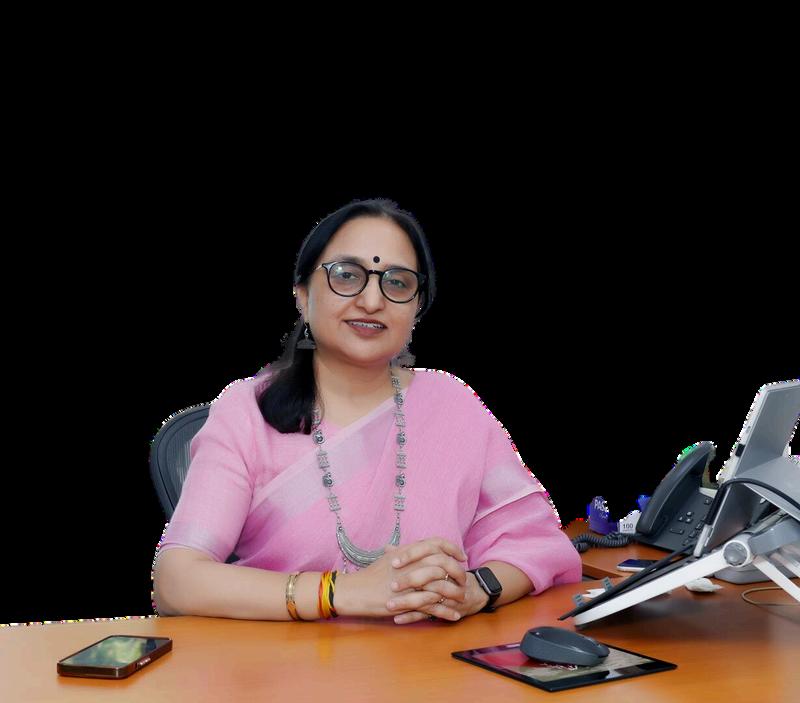
Q. Reflecting on your career, can you share an accomplishment that stands out as particularly impactful, and how did it shape the trajectory of your professional journey?
In my experience, the success of a leader is deeply connected to the team they build and nurture. No two individuals are the same. In every team, there are people with different capabilities, temperaments, motivations, and working styles. Some are highly skilled while others are still learning Some prefer to work independently, while others look for guidance and frequent interaction Some are naturally resilient, while others may need a supportive hand when they falter.
Recognising and respecting this diversity is essential Leadership therefore cannot be rigid What works for one individual may not work for another. I consciously keep my leadership style flexible and situational adapting it to the individual, the context, and what will enable that person to perform at their best
However, there are a few principles that remain fundamental to how I lead. I believe people perform their best when they feel psychologically safe and emotionally respected. When individuals feel that they are valued as human beings not just as roles or designations they bring far more of themselves to the workplace.
I make a deliberate effort to create that environment of trust Team members should feel comfortable sharing ideas, expressing concerns, and even acknowledging mistakes. I do not see mistakes as failures if the intent is right and there is a willingness to learn and improve Excessive pressure often makes people withdraw or fumble; respect and trust, on the other hand, build confidence and
ownership.
For me, leadership is also about credibility. Credibility is built when people experience fairness, consistency, and genuine respect in everyday interactions. When team members feel heard, supported, and trusted, they naturally become more committed and accountable
Over time, I have seen that when empathy, psychological safety, and respect form the foundation of leadership, teams begin to function like a cohesive unit despite their differences. People support each other, step up when needed, and collectively deliver outcomes.
At its heart, my leadership philosophy is simple: when leaders connect with people as human beings with their aspirations, emotions, and constraints and lead with empathy, respect, and credibility, teams do not just perform well; they grow, they collaborate, and they flourish together.
I also consciously focus on the strengths of people rather than only on their areas of improvement Every individual brings some unique capability or perspective. When leaders recognise and nurture those strengths, individuals gain confidence and begin to evolve naturally My role, as I see it, is to guide them to continuously develop, learn, and become better versions of themselves.
Q. How do mentorship and collaboration factor into your career, and have there been mentors or collaborators whose influence has left a lasting imprint on your professional path?
Mentorship and collaboration have played a
defining role in my journey. I strongly believe that no meaningful career is built in isolation there is always learning that comes from others, whether through formal mentorship or through everyday interactions and shared experiences I have been fortunate to work with strong organisations and learn from leaders and colleagues who were not always formally designated as mentors, but whose thinking, discipline, and way of engaging with people left a lasting imprint on me. What stayed with me was not just what they said, but how they conducted themselves their clarity in decisionmaking, composure in challenging situations, and their ability to balance performance with genuine people sensitivity.
To me, mentorship is not about dependence; it is about gaining perspective The right mentors help you step back, see beyond the immediate, question your assumptions, and think more holistically At different stages of my career, I have drawn on different individuals sometimes for strategic direction, sometimes for navigating people dynamics, and at times simply for reassurance during uncertain phases Equally, collaboration has been integral to how I work and lead. Partnering with crossfunctional teams and leaders reinforces that outcomes are always stronger when diverse perspectives come together It creates alignment, builds ownership, and leads to more thoughtful and sustainable decisions. It also instills humility you recognise that no single person has all the answers.
These experiences have significantly shaped my leadership approach. I consciously invest in mentoring my team members not just to address immediate challenges, but to help them think independently, grow in confidence, and evolve over time. I also strive to create an environment where collaboration happens
naturally where people feel respected, heard, and open to learning from one another
Q. In navigating an industry that continually evolves, what, in your view, is the key skill or mindset crucial for staying innovative and pertinent?
In an industry that is constantly evolving, I believe the key differentiator is a mindset of continuous learning and adaptability. Staying relevant requires openness to change, the ability to unlearn, and the curiosity to keep improving
What has worked for me is staying anchored in fundamentals while remaining flexible in approach. While tools and practices evolve, clarity of thought, understanding of people, and sound judgment remain constant.
Equally important is the willingness to challenge one ’ s own assumptions and stay receptive to diverse perspectives Innovation, in my view, is not always about big disruptions, but about consistently improving and doing things better than before.
At the center of it all is the human connect Staying close to people, understanding their needs, and listening actively make innovation more meaningful and practical.
The balance between strong fundamentals, evolving ways of working, and a deep people connection is what enables innovation that is both relevant and sustainable.
Q. For aspiring professionals seeking recognition like yours, what advice would you offer as the most valuable lessons you ' ve learned in your field?
In my experience, recognition is never the starting point it is the outcome of consistent, meaningful work over time. For aspiring professionals, a few lessons have stood out as truly valuable
First, focus on substance over visibility Build depth in what you do. When your work consistently creates value, recognition follows naturally.
Second, invest in credibility, especially if you are a people manager. This is built through reliability, integrity, and the ability to deliver, especially in difficult situations and being honest. People may notice talent, but they trust consistency
Third, be willing to learn and unlearn continuously. The environment around us is evolving rapidly, and those who stay relevant are the ones who remain curious, open, and adaptable. Growth is not just about adding skills, but also about letting go of outdated mindsets.
Fourth, understand people, not just processes. In any leadership or organisational role, your effectiveness is defined by how well you connect with people, influence outcomes, and build trust Empathy is not a soft skill it is a critical leadership capability.
And finally, stay grounded Recognition should strengthen your sense of responsibility, not your ego The moment you shift focus from contribution to validation, growth begins to slow down.
In essence, if you stay authentic, keep learning, deliver consistently, and treat people with respect, recognition becomes a natural byproduct not the goal
“ When leaders create trust, respect, and psychological safety, teams don’t just perform—they flourish.”
With over three decades of experience in Human Resources, the author is a seasoned HR professional dedicated to placing “humans first” at the core of every organizational initiative She brings extensive experience in leading HR functions within manufacturing organisations and has been instrumental in driving successful cultural transformations. Her career reflects a deep commitment to nurturing people-centric workplaces while aligning HR practices with evolving business needs
In an era defined by rapid digital transformation, the author continuously invests in personal learning to stay relevant and effective. By embracing change and innovation, she brings a forward-thinking approach to HR, ensuring that systems and processes are not only efficient but also adaptable.
Driven by a strong belief that organizations thrive when their people are engaged with a purpose aligned with business values and aspirations, the author focuses on designing and implementing HR systems that are tailored to the unique needs of each organization balancing structure with empathy, and strategy with human connection.
The author has been honoured as a top 100 Great People Managers ‘2024 by the Great Manager Institute and proudly a mentor and jury member for ‘Jombay 1000 women leaders’ along with ‘ET HR’s Emerging Leaders League’.
EMPOWERED
WOMEN DON’T JUST LEAD—THEY CREATE LEADERS.


Q. Reflecting on your career, can you share an accomplishment that stands out as particularly impactful, and how did it shape the trajectory of your professional journey?
One of the most defining accomplishments in my professional journey has been my return to the corporate world after an eight-year sabbatical, which I had taken to focus on caring for my son who is on the autism spectrum. Restarting my career after such a long break required rebuilding confidence, adapting to a rapidly evolving industry and proving my capabilities again in a competitive environment.
Within one year of returning to the corporate world, I was honoured with a Transformational Award, recognising my ability to rebuild my professional journey and create meaningful impact within a short span of time That recognition was deeply significant for me, as it reflected not just professional contribution but also resilience and determination.
Soon after, I was also honoured with the “Women Achiever of the Year” award, acknowledging my work in driving marketing initiatives and engagement-led campaigns across distribution channels These recognitions reinforced my belief that perseverance, creativity and commitment can help overcome even the most challenging career pauses
Another milestone in my journey was being invited to share my story at Josh Talks, where I spoke about resilience, balancing motherhood and career aspirations, and rebuilding one ’ s professional identity after a long break Sharing my story with a wider audience reminded me that professional journeys are rarely linear and that personal
challenges can often become the foundation for deeper strength and perspective
These experiences have shaped the way I approach my work today They have taught me that true impact lies not only in delivering results but also in staying resilient, embracing change and inspiring others through one ’ s journey.
Q. In your experience, what principles or strategies in leadership have proven most effective in steering teams and organizations toward success?
In my experience, effective leadership is rooted in clarity, collaboration and recognition When teams clearly understand the purpose behind an initiative and how their contribution connects to a larger vision, they become more motivated and aligned toward achieving the goal
One principle I strongly believe in is leading through engagement rather than instruction. In large distribution-driven industries like financial services, success often depends on the energy and motivation of the field force. Designing initiatives that celebrate achievements, encourage healthy competition and highlight individual contributions can significantly strengthen team morale and performance.
Another important strategy is building trust through collaboration. Marketing initiatives often require close coordination with multiple stakeholders business teams, leadership, partner organizations and creative partners
Encouraging open dialogue, valuing diverse perspectives and maintaining transparency helps create stronger alignment and smoother execution.

Finally, I believe that effective leadership also involves adaptability and continuous learning. Industries evolve quickly, and leaders who remain open to new ideas, technologies and approaches are better positioned to guide their teams through change.
Ultimately, leadership is about creating an environment where people feel empowered, valued and inspired to perform at their best, while collectively working toward shared organizational success
Q. How do mentorship and collaboration factor into your career, and have there been mentors or collaborators whose influence has left a lasting imprint on your professional path?
Mentorship and collaboration have been deeply influential in shaping my professional journey. Throughout my career, I have had the opportunity to work with leaders who not only guided me professionally but also encouraged me to think strategically and approach challenges with confidence.
Their mentorship helped me understand that impactful marketing is not just about execution, but about aligning communication with larger business goals and creating meaningful engagement within teams and partners Learning from experienced leaders has strengthened my ability to think beyond immediate tasks and focus on long-term impact and innovation
Collaboration has been equally important in my journey Working closely with cross-functional teams business leaders, distribution partners, product teams and creative collaborators has taught me that successful initiatives are rarely the result of individual effort. They are built through
shared ideas, diverse perspectives and collective ownership.
These experiences have reinforced a key belief for me: growth is accelerated when we remain open to learning from others. Mentors provide direction, while collaboration brings ideas to life Together, they create an environment where individuals and organizations can grow, innovate and achieve meaningful success.
Q. In navigating an industry that continually evolves, what, in your view, is the key skill or mindset crucial for staying innovative and pertinent?
In an industry that evolves as rapidly as marketing and financial services, the most important mindset is adaptability combined with continuous curiosity. The landscape is constantly changing with new technologies, digital platforms and shifting customer expectations, and professionals who remain open to learning are better equipped to stay relevant
One key aspect of staying innovative is the willingness to experiment with new tools and ideas. For instance, exploring AI-enabled platforms for campaign ideation, communication drafts and creative storytelling has helped accelerate innovation and improve turnaround time in marketing initiatives.
Equally important is maintaining a strong connection with ground realities. Understanding the challenges and motivations of distribution teams and customers ensures that marketing communication remains practical, relatable and impactful
Innovation is not always about radical change; often it comes from reimagining existing ideas in more engaging and meaningful ways By

combining curiosity, technology and real-world insights, professionals can continue to create solutions that remain relevant in a dynamic and evolving industry.
Q. For aspiring professionals seeking recognition like yours, what advice would you offer as the most valuable lessons you ' ve learned in your field?
One of the most valuable lessons I have learned in my career is the importance of taking ownership and going beyond defined roles Opportunities to create impact often arise when individuals take initiative, propose new ideas and actively look for ways to improve processes or outcomes.
Another key lesson is the value of consistency and commitment to quality. Recognition is rarely the result of a single achievement; it is built through sustained effort, reliability and the ability to deliver meaningful work over time.
I also believe that professionals should remain curious and open to innovation The willingness to explore new technologies, creative approaches and evolving industry trends helps individuals stay relevant and continue adding value to their organizations.
Equally important is the role of collaboration and humility. Strong professional relationships, mutual respect and the ability to learn from others often lead to stronger outcomes and more fulfilling career journeys
Ultimately, recognition follows when professionals focus on creating genuine impact, staying resilient through challenges and continuously striving to learn and grow.

True success is not defined by uninterrupted growth, but by the courage to restart, rebuild, and rise stronger.
IndiaFirst Life empowers its marketing initiatives through strategic campaign management and comprehensive market research led by the marketing team. With over a year of experience in the role, the team has driven impactful strategies, channel communication, and internal marketing programs to align with organizational goals.
Previously at ICICI Lombard, the marketing team contributed to brand activation and end-to-end marketing operations, enhancing customer engagement and business outcomes. Focused on collaboration and innovation, the team continues to deliver fresh ideas to tackle complex challenges in the competitive insurance space

HEAD - PEOPLE & CULTURE, FAREYE TECHNOLOGIES PVT
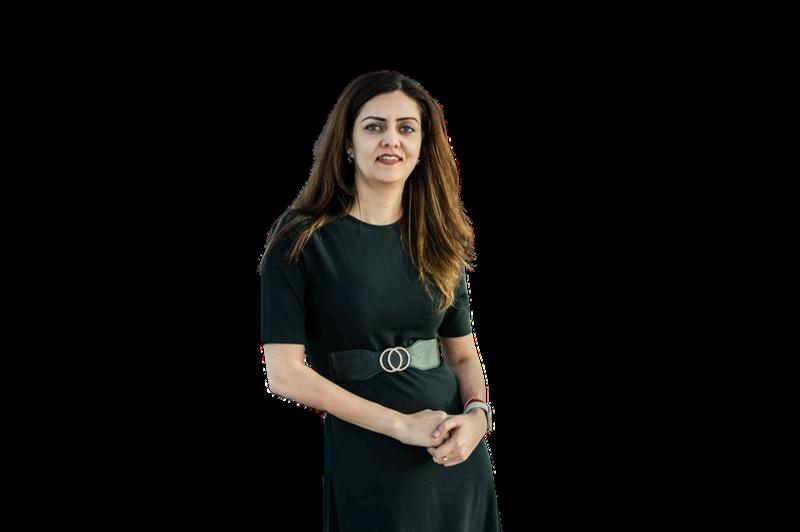
Q. Reflecting on your career, can you share an accomplishment that stands out as particularly impactful, and how did it shape the trajectory of your professional journey?
One of the most impactful milestones in my journey has been building and scaling the people and governance foundation for a global technology organization during its high-growth phase. When I joined, the company was evolving rapidly across markets, and the opportunity was not just to manage HR operations but to design the organizational backbone that would support sustainable growth.
Working closely with founders and leadership teams, I helped build structured role architectures, governance frameworks, performance systems, and leadership pipelines that could support expansion across multiple regions What made this journey particularly meaningful was seeing how strong people systems directly enable business resilience, cultural alignment, and long-term organizational maturity
This experience shaped my professional philosophy I began to see HR not simply as a support function, but as an institution-building discipline The true impact of people leadership lies in creating systems that allow organizations to scale while preserving clarity, trust, and purpose
Q. In your experience, what principles or strategies in leadership have proven most effective in steering teams and organizations toward success?
Leadership, in my experience, rests on three foundational principles. The first is clarity of vision People perform at
their best when they understand the larger purpose behind their work. Leaders must continuously communicate direction and help teams connect individual effort with collective outcomes
The second principle is empowerment with accountability High-performing organizations thrive when individuals feel trusted to take ownership When leaders create an environment where people can take decisions, experiment, and learn, innovation becomes a natural outcome
The third principle is deep listening Leadership is not only about guiding people; it is about understanding them. Listening to employees, customers, and teams allows leaders to respond with empathy and insight. When clarity, empowerment, and listening come together, organizations build cultures where performance and trust grow side by side.
Q. How do mentorship and collaboration factor into your career, and have there been mentors or collaborators whose influence has left a lasting imprint on your professional path?
Mentorship and collaboration have been central to my professional growth Early in my career, I had the opportunity to work alongside founders and senior leaders who entrusted me with responsibilities that pushed me beyond my comfort zone. That exposure gave me a deeper understanding of business strategy, decisionmaking, and leadership accountability.
Equally important have been the teams and collaborators I have worked with across functions Organizational transformation cannot happen in isolation, it requires , what, in

alignment between leadership, teams, and partners across the ecosystem.
Today, mentorship has become an important part of my own leadership journey Through academic associations, leadership forums, and industry engagements, I actively mentor young professionals and emerging leaders. These interactions are always a two-way exchange, while sharing experience, I also gain fresh perspectives from the next generation of professionals
Q. In navigating an industry that continually evolves, what, in your view, is the key skill or mindset crucial for staying innovative and pertinent?
The most critical mindset for staying relevant in a rapidly evolving industry is curiosity combined with adaptability.
Technology, business models, and workforce expectations are changing faster than ever Leaders who remain curious who continuously learn, unlearn, and adapt, are better equipped to navigate these shifts
Another important aspect is connecting innovation with real purpose. Innovation should not exist for its own sake; it must solve meaningful problems, create value for customers, and empower teams to perform better.
For people leaders especially, the future lies at the intersection of human insight and data-driven thinking. When empathy, technology, and strategy come together, organizations are able to innovate while remaining deeply human at their core
Q. For aspiring professionals seeking recognition like yours, what advice would you offer as the most valuable lessons you ’ ve
learned in your field?
One of the most important lessons I have learned is that recognition is rarely the starting goal, it is usually the outcome of meaningful work and sustained impact.
My advice to aspiring professionals is to focus on three things. First, build a strong understanding of the business you are part of. When professionals align their work with business outcomes, their contributions become more strategic and visible.
Second, develop credibility through consistent execution. Ideas are valuable, but it is execution that builds trust and long-term influence.
Finally, invest in people and relationships. Leadership is ultimately about enabling others to succeed When you support teams, collaborate authentically, and create value for the ecosystem around you, recognition often follows naturally.
True leadership is not measured by titles or awards, but by the positive and lasting impact we create for people, organizations, and communities.
The true impact of people leadership lies in creating systems that allow organizations to scale while preserving clarity, trust, and purpose.

A strategic People & Culture leader, she specializes in building institutions that scale sustainably With experience in scaling two startups, she has partnered closely with founders and CXOs to transform early-stage organizations into structured, growth-ready ecosystems.
Currently leading People & Culture at a global SaaS logistics company, she has played a key role in expanding the organization from a single entity to seven global entities, establishing HR architecture aligned with organizational growth. Her work spans governance frameworks, global role structures, compensation design, and leadership development.
Beyond HR, she drives cross-functional innovation, leading initiatives like “MileZero,” an AI-driven program that delivered multiple product prototypes and strengthened the organization’s innovation culture
She is also the force behind a global logistics community platform connecting leaders across APAC, Africa, the Americas, and Europe, and actively contributes to mentorship, academia, and women leadership initiatives.
Recognized by leading institutions and industry bodies, she continues to shape the future of people leadership through innovation, execution, and impact.
WHEN SHE CHOOSES TO EMPOWER.

DIRECTOR - HR BUSINESS PARTNER, SAAS INDUSTRY
Q. Reflecting on your career, can you share an accomplishment that stands out as particularly impactful, and how did it shape the trajectory of your professional journey?
One of the most defining chapters of my career was building and stabilizing organisation’s operations during its formative stage. It was not just about establishing a new entity but about creating the people architecture that would enable the organization to grow sustainably.
In high-growth environments, the real challenge is rarely strategy it is ensuring that culture, governance, and talent capability evolve at the same pace as business expansion. I had the opportunity to design systems that balanced speed with stability: clear talent frameworks, strong onboarding processes, leadership accessibility, and a culture rooted in psychological safety and collaboration.
Watching a new organization move from uncertainty to confidence within a short span was incredibly rewarding. It reaffirmed a belief that has guided my career ever since: when trust and clarity are intentionally embedded into an organization, performance follows naturally
Leadership Philosophy:
True success is not defined by uninterrupted growth, but by the courage to restart, rebuild, and rise stronger.
Q. In your experience, what principles or strategies in leadership have proven most effective in steering teams and organizations toward success?
For me, leadership has always been about creating environments where people can do their best work while feeling respected and valued. Over the years, three principles have consistently guided my leadership approach: clarity, consistency, and compassion.
Clarity ensures that teams understand not just what they are doing but why their work matters Consistency builds credibility people trust leaders whose actions align with their words. Compassion reminds us that behind every metric or deliverable is a human story
In periods of growth or uncertainty, organizations often focus heavily on processes and outcomes While those are important, sustainable success comes from building cultures where individuals feel ownership and psychological safety When people feel heard and trusted, they contribute far beyond their defined roles
Ultimately, leadership is less about directing teams and more about enabling them to succeed.
Q. How do mentorship and collaboration factor into your career, and have there been mentors or collaborators whose influence has left a lasting imprint on your professional path?
Mentorship has played a significant role in shaping my leadership journey. Early in my career, I was fortunate to work with leaders

who trusted me with responsibilities that stretched my capabilities. Their belief in my potential helped me develop confidence and a broader perspective on leadership.
Those experiences shaped how I lead today. I believe mentorship is not only about guidance it is about creating opportunities, building confidence, and helping individuals discover their potential.
Over the years, I have actively mentored emerging HR professionals and women leaders, and it has been incredibly fulfilling to see many of them grow into leadership roles. When people feel supported and encouraged, they often unlock capabilities they did not realize they possessed.
Collaboration has been equally important. Some of the most impactful initiatives I have led from organizational scaling to culture transformation were successful because diverse teams came together with a shared purpose
Q. In navigating an industry that continually evolves, what, in your view, is the key skill or mindset crucial for staying innovative and pertinent?
The pace of change in today’s workplace is extraordinary. Technologies such as AI, advanced analytics, and skills-based workforce models are transforming how organizations think about talent and performance.
In such an environment, the most important mindset is continuous learning Leaders who remain curious and adaptable are better positioned to navigate change and identify opportunities
For HR leaders especially, the role is evolving from operational support to strategic partnership. We
must understand business strategy, workforce data, and human behavior simultaneously This requires a balance of analytical thinking and emotional intelligence.
While technology will reshape the workplace, the essence of leadership will remain human Innovation in HR is not just about adopting new tools it is about designing workplaces where people feel empowered to contribute, learn, and grow.
Q. For aspiring professionals seeking recognition like yours, what advice would you offer as the most valuable lessons you ' ve learned in your field?
Recognition is meaningful, but it is rarely the starting point of a professional journey More often, it is the outcome of consistent effort, curiosity, and the willingness to embrace challenges
One important lesson I have learned is to focus on creating impact rather than seeking visibility When your work genuinely improves people’s experiences or strengthens organizations, recognition tends to follow naturally
Another lesson is to embrace complexity Some of the most valuable growth happens when we step into unfamiliar situations and learn to navigate them with resilience
Finally, authenticity matters Each leader brings a unique perspective shaped by their experiences and values. When you lead with authenticity and integrity, you build trust and trust remains the most powerful foundation for leadership

Leadership is not about climbing the ladder alone; it is about widening the staircase so others can rise with confidence.
Nupur Shravan is an award-winning HR leader and culture architect with over 15 years of experience shaping people strategies across global SaaS, analytics, and technology organizations. Known for building high-trust, high-performance workplaces, she has led large-scale organizational transformations and successfully built and scaled India operations from the ground up
Her leadership blends strategic foresight with empathy-driven people practices, enabling organizations to grow with both agility and stability Throughout her career, Nupur has championed inclusive cultures, leadership development, and employee experiences that translate into measurable business impact.
A recipient of the Women Trailblazer Award 2025 and the Women Achievers Award 2026, she is passionate about mentoring emerging leaders and strengthening pathways for women in leadership. Nupur believes that when organizations intentionally design cultures of trust, belonging, and opportunity, people thrive and so does performance
TRUE LEADERSHIP IS MEASURED BY THE DIFFERENCE YOU MAKE.

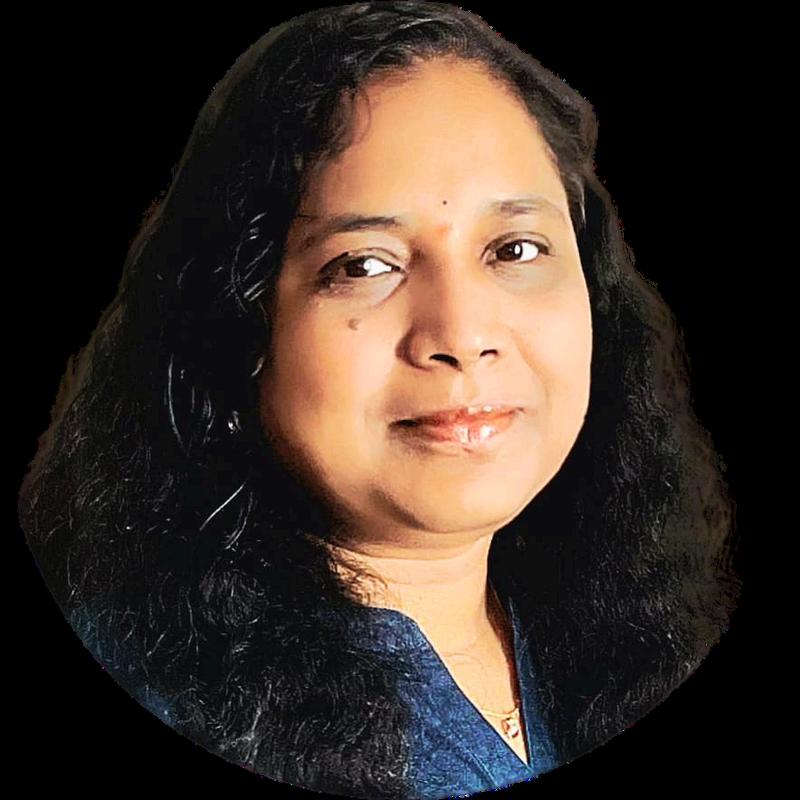
Q. Reflecting on your career, can you share an accomplishment that stands out as particularly impactful, and how did it shape the trajectory of your professional journey?
One of the most impactful aspects of my journey has been contributing to building and scaling people strategies in organizations undergoing rapid growth and transformation. In such environments, the challenge is not just expansion, but ensuring that culture, leadership capability, and employee experience evolve in alignment with business priorities.
I have had the opportunity to work closely with leadership teams to design and implement people frameworks that strengthen leadership pipelines, enhance performance culture, and improve organizational effectiveness These initiatives have enabled teams to operate with greater clarity, accountability, and alignment during critical growth phases
What made this particularly meaningful was seeing how well-aligned people strategies can directly influence business outcomes improving engagement, strengthening leadership capability, and enabling sustainable growth. This experience shaped my journey toward a more strategic role, where I focus on building high-performing, resilient organizations through people-centric transformation.
Q. In your experience, what principles or strategies in leadership have proven most effective in steering teams and organizations toward success?
In my experience, effective leadership is anchored in three key principles: clarity of purpose, trust-based relationships, and adaptability.
Clarity of purpose ensures that teams understand how their work contributes to the larger vision, driving alignment and ownership. Trust is equally critical leaders who foster transparency, empathy, and open communication create environments where people feel empowered to contribute and innovate
Adaptability has become increasingly important in today’s evolving business landscape. Leaders must continuously learn, unlearn, and respond to change while maintaining stability and direction for their teams.
At its core, leadership is about enabling others to succeed. When leaders focus on empowering people, building strong relationships, and aligning teams around shared goals, organizations are better positioned to achieve long-term success.
Q. How do mentorship and collaboration factor into your career, and have there been mentors or collaborators whose influence has left a lasting imprint on your professional Path?
Mentorship and collaboration have played a significant role in shaping my career I have been fortunate to learn from leaders who provided guidance, perspective, and encouragement during key moments in my journey.
“Great organizations are built when people strategies and business goals move in perfect alignment.”

Equally, collaboration has been central to my work. Many of the most meaningful outcomes I have been part of have been driven by cross-functional collaboration, where diverse perspectives come together to solve complex challenges and drive transformation.
These experiences have reinforced my belief in paying mentorship forward I am deeply committed to supporting emerging professionals, particularly women aspiring to leadership roles, by creating opportunities for them to grow with confidence and clarity.
Leadership journeys are rarely individual they are shaped by the collective influence of mentors, peers, and teams who contribute along the way
Q. In navigating an industry that continually evolves, what, in your view, is the key skill or mindset crucial for staying innovative and pertinent?
In a constantly evolving professional landscape, the most important mindset is continuous learning combined with adaptability
The future of work is being shaped by rapid technological advancements and changing workforce expectations. Staying relevant requires a willingness to remain curious, embrace new ideas, and continuously evolve.
Equally important is the ability to view change as an opportunity rather than a disruption. Innovation often comes from rethinking traditional approaches and exploring more effective ways of working
For HR leaders, this also means balancing business priorities with human-centric thinking ensuring that organizations remain competitive while
fostering cultures where people feel valued and engaged
Q. For aspiring professionals seeking recognition like yours, what advice would you offer as the most valuable lessons you ' ve learned in your field?
One of the most important lessons I have learned is to focus on creating meaningful impact rather than pursuing recognition. When your work genuinely contributes to people and organizations, recognition follows naturally.
Authenticity is equally important. Leading with clarity of values and staying true to your approach helps build trust and long-term credibility I would also emphasize the importance of building strong relationships and learning continuously Growth often comes from collaboration, feedback, and the ability to adapt to new challenges.
Finally, resilience plays a key role in any professional journey The ability to navigate uncertainty, learn from experiences, and move forward with confidence is what ultimately shapes leadership growth.
Being recognized as a Women Achiever by the HR Association of India is both humbling and motivating, and it reinforces my commitment to creating meaningful impact through people and leadership.
“ Leadership is not about control—it’s about enabling others to succeed with clarity, trust, and purpose. ”

Driving culture-led business transformation by empowering people, enabling leaders, and aligning purpose
A seasoned global HR leader with over two decades of experience driving people strategy and analytics through data-driven insights and people science. She has a strong track record of working across product and product services organizations, managing global stakeholders, and building high-impact HR frameworks aligned with business goals
Her expertise spans employee engagement, culture, talent development, workforce planning, and compensation strategy, with a focus on creating scalable, highperforming organizations She is known for leveraging analytics, storytelling, and strategic thinking to drive sustainable growth and operational excellence
Skilled in organizational design, change management, and leadership development, she excels at building collaborative cultures, nurturing talent, and leading teams through transformation in dynamic environments.

VP
-HUMAN CAPITAL MANAGEMENT & ADMINISTRATION, BRITISH JEWEL, CORPORATE TRAINER AND WOMEN EMPOWERMENT COACH

Q. Reflecting on your career, can you share an accomplishment that stands out as particularly impactful, and how did it shape the trajectory of your professional journey?
One of the most transformative accomplishments of my career was leading a comprehensive organizational restructuring initiative during a period of significant business disruption. When the organization faced rising attrition, disengagement, and operational inefficiencies, I championed a holistic people strategy that redefined how we approached talent, culture, and performance
I designed and implemented a competencybased talent framework that aligned individual roles to organizational goals, introduced structured career pathing for over 1,200 employees, and embedded a performance enablement model that shifted the narrative from annual appraisals to continuous growth conversations. Within 18 months, attrition dropped by 28%, employee engagement scores rose by 34 points, and we were recognized as a preferred employer in our sector
This experience shaped my conviction that HR is not a support function it is a strategic force multiplier. It reinforced my belief in data-driven decision-making, empathetic leadership, and the power of aligning people practices with business purpose. It set me firmly on the path of being a transformational HR leader rather than a transactional one.
Q. In your experience, what principles or strategies in leadership have proven most effective in steering teams and organizations toward success?
Throughout my journey, three leadership
reshaping work, hybrid models are redefining workplaces, and employee expectations are evolving faster than ever, the single most crucial mindset for an HR professional is what I call adaptive curiosity the relentless desire to learn, unlearn, and relearn without losing sight of what is fundamentally human about our work
Technology fluency is no longer optional. HR leaders must understand how people analytics, automation, and AI-driven tools change the nature of talent acquisition, learning, and engagement. But fluency without empathy is incomplete As algorithms become more prevalent in HR decisions, the human judgment we bring around fairness, ethics, inclusion, and dignity becomes more critical, not less
I also believe deeply in the power of an outsidein perspective. The most innovative HR leaders I admire draw inspiration from outside their own organizations and even outside HR from behavioural economics, design thinking, neuroscience, and social entrepreneurship Cross-pollination of ideas is where true innovation lives
Finally, staying pertinent means staying connected to employees on the ground, to industry conversations, and to the larger societal shifts shaping how people relate to work and purpose. Relevance is not maintained through titles or tenure; it is earned through continuous engagement with the world around us
Q. How do mentorship and collaboration factor into your career, and have there been mentors or collaborators whose influence has left a lasting imprint on your professional path?
Mentorship has been one of the most defining

forces in my career both as a recipient and as a giver Early in my journey, I was fortunate to have a senior leader who believed in my potential before I fully believed in it myself. She taught me to speak with conviction in boardrooms, to bring data to every conversation, and to never diminish my perspective simply because I was the youngest voice in the room. That lesson in quiet confidence has stayed with me for over two decades.
Another pivotal collaborator was a business leader I partnered with on a large-scale digital transformation. Working closely with someone outside HR showed me how powerful it is when business and people strategy are co-created rather than delivered in silos. It fundamentally changed how I engage with stakeholders and co-design solutions.
Today, mentorship is one of the causes closest to my heart. I actively mentor young women professionals and first-generation HR practitioners, because I know that access to a trusted voice can change the trajectory of an entire career. I also champion peer mentoring circles within organizations I work with, because growth should not depend on hierarchy alone.
Collaboration, in my view, is not just a working style it is a leadership philosophy. The best HR outcomes I have achieved were built in partnership: with business leaders, employees, unions, and communities No meaningful change is ever a solo effort.
Q.In navigating an industry that continually evolves, what, in your view, is the key skill or mindset crucial for staying innovative and pertinent?
In a world where artificial intelligence is reshaping work, hybrid models are redefining workplaces, and employee expectations are evolving faster than ever, the single most crucial mindset for an HR professional is what I call adaptive curiosity the relentless desire to learn, unlearn, and relearn without losing sight of what is fundamentally human about our work.
Technology fluency is no longer optional. HR leaders must understand how people analytics, automation, and AI-driven tools change the nature of talent acquisition, learning, and engagement But fluency without empathy is incomplete. As algorithms become more prevalent in HR decisions, the human judgment we bring around fairness, ethics, inclusion, and dignity becomes more critical, not less.
I also believe deeply in the power of an outside-in perspective The most innovative HR leaders I admire draw inspiration from outside their own organizations and even outside HR from behavioural economics, design thinking, neuroscience, and social entrepreneurship. Crosspollination of ideas is where true innovation lives
Finally, staying pertinent means staying connected to employees on the ground, to industry conversations, and to the larger societal shifts shaping how people relate to work and purpose. Relevance is not maintained through titles or tenure; it is earned through continuous engagement with the world around us.
“HR is not a support function — it is a strategic force multiplier”

Q. For aspiring professionals seeking recognition like yours, what advice would you offer as the most valuable lessons you have learned in your field?
To every aspiring HR professional and emerging leader, I would offer these lessons with both honesty and deep affection for this profession.
Own your seat at the table and earn it every day Recognition is not given; it is built through consistent credibility, through delivering on commitments, and through having the courage to bring uncomfortable truths to leadership conversations. Do not wait to be invited. Walk in prepared
Invest in your business literacy as much as your HR expertise The most respected HR leaders are those who understand P&L, market dynamics, customer insights, and operational realities. When you speak the language of the business, you are heard differently
Build your resilience muscle. Leadership, especially as a woman, comes with unique challenges being talked over, having ideas attributed to others, navigating bias in rooms you were not historically meant to occupy. Do not let these moments define you. Let them refine you Every setback carries a lesson; your job is to extract it and move forward with even greater clarity
Champion others as you rise. The measure of great leadership is not how high you climb alone, but how many others you bring with you. Sponsor someone Advocate loudly for deserving colleagues. Create platforms for voices that go unheard This is not just kindness it is how we build the organizations of the future.
And finally never stop believing in the profound impact of what we do. Behind every policy, every process, every conversation in HR is a human being whose livelihood, dignity, and potential are at stake That is extraordinary work. Carry it with pride.
The measure of great leadership is not how high you climb alone, but how many others you bring with you.
Driving Human Capital & Administration success through strategic team leadership and impactful employee engagement initiatives. I design and implement innovative retention programs, streamline HR operations, and ensure robust compliance, all contributing to enhanced productivity and organizational value Thriving in agile, collaborative settings, I am committed to delivering measurable results and fostering a culture of continuous improvement.
VICE PRESIDENT-HR & GLOBAL HEAD TALENT MANAGEMENT, STARTEK
Q. Reflecting on your career, can you share an accomplishment that stands out as particularly impactful, and how did it shape the trajectory of your professional journey?
One accomplishment that stands out as particularly meaningful in my career is positioning Diversity, Equity and Inclusion (DEI) as a strategic business priority rather than a compliance mandate or a CSR strategy. Early in my journey, I realized that inclusion often remains an aspiration unless organizations create structured systems to support it. This led to a more intentional and scalable approach to diversity. As part of this effort, we addressed various dimensions of inclusion which included persons with disabilities, gender inclusivity, socio-economically disadvantaged groups, culturally and linguistically diverse talent, mature workforce and indigenous communities. This enabled us to design targeted interventions that were sensitive to geographic and cultural contexts while ensuring consistent global standards One of the most significant outcomes of this initiative has been the employment and empowerment of persons with disabilities within the organization. Beyond recruitment, the focus has been on creating an ecosystem where individuals feel supported, valued and able to build long-term careers.
What makes this accomplishment particularly impactful is the cultural shift it created. Inclusion moved from being perceived as a social responsibility initiative to being recognized as a driver of innovation and business growth. The initiative also contributed to improving workforce diversity, strengthening our employer brand and fostering a more equitable workplace culture. This experience shaped my professional journey in a profound way. It reinforced my belief that when organizations build equitable systems at scale,
they unlock both human potential and sustainable business performance It also strengthened my commitment to advocating for inclusive leadership and creating workplaces where opportunity is truly accessible to all.
Q. In your experience, what principles or strategies in leadership have proven most effective in steering teams and organizations toward success?
I firmly believe in three principles – clarity of purpose, execution excellence with accountability, and empathetic leadership.
First, clarity of purpose ensures that people understand how their work contributes to the larger organizational vision In a global organization operating across diverse markets and cultures, alignment around a shared purpose becomes critical. In my experience, whether it was enabling hybrid workforce transformation or embedding diversity as a strategic growth lever, when employees see the connection between their work and organizational impact, ownership and engagement naturally increase. Second, execution excellence with accountability is essential in today’s evolving workplace. Organizations are navigating constant change, from digital transformation to distributed work models and strong execution discipline ensures that strategic ideas translate into tangible outcomes that are scalable, measurable and sustainable Finally, empathetic leadership plays a critical role in building trust and sustaining performance Balancing business priorities with employee aspirations requires leaders to listen, communicate transparently and remain sensitive to the diverse experiences of their workforce.

Q. How do mentorship and collaboration factor into your career, and have there been mentors or collaborators whose influence has left a lasting imprint on your professional path?
Mentorship and collaboration have played a defining role in shaping my leadership journey. Throughout my career, I have been fortunate to work with leaders who encouraged strategic thinking, resilience and a people-first approach to business Their guidance helped me understand early on that HR leadership extends far beyond policies and processes, it is about shaping culture, enabling leaders and driving meaningful business transformation through people These mentors encouraged me to take on complex challenges, think beyond conventional frameworks and build credibility through impact. Their influence instilled in me the importance of balancing strategic vision with execution discipline, a perspective that continues to guide my work today. Equally important has been collaboration which has been instrumental in designing people strategies that are globally aligned while remaining locally relevant. As my career progressed, I strongly believed that mentorship creates a multiplier effect When leaders intentionally invest in developing others, they strengthen not only individual careers but also the broader organizational ecosystem by building a sustainable pipeline of capable and confident leaders
Q. In navigating an industry that continually evolves, what, in your view, is the key skill or mindset crucial for staying innovative and pertinent?
In a rapidly evolving business environment, the most critical mindset is continuous adaptability, and I firmly believe that sustainable innovation
does not come from isolated initiatives; it comes from reimagining systems, processes and leadership approaches to respond to changing workforce realities
For example, during the transition to hybrid and distributed work models, the challenge was not simply enabling remote work. It required redesigning the entire employee lifecycle, from hiring and virtual onboarding to performance management, learning ecosystems and engagement frameworks while ensuring productivity, employee well-being and client expectations remained balanced This experience reinforced the importance of thinking holistically when navigating transformation. To remain relevant, I believe it is critical to cultivate learning agility to design people strategies that are both responsive and future-ready. Ultimately, it is important to challenge established paradigms and remain deeply connected to both people and purpose while driving organizational change.
Q. For aspiring professionals seeking recognition like yours, what advice would you offer as the most valuable lessons you ' ve learned in your field?
One of the most important lessons I have learned is that recognition should be a byproduct of meaningful impact, not the primary objective When professionals focus on solving real business and people challenges and consistently create value for organizations and communities, recognition naturally follows Second, early in one ’ s career, it is important to develop strong fundamentals, understand the business context deeply and build credibility through consistent execution. Third, embrace opportunities that stretch your capabilities Some of the most defining moments in my career came from taking on complex
assignments and these experiences not only strengthen capability but also broaden perspective Fourth, cultivate resilience and patience because the journey is rarely linear. There will be periods of uncertainty and rapid changes but the ability to stay grounded, learn from challenges and keep moving forward with clarity and conviction is essential for long-term growth. Finally, build others along the way. For aspiring professionals, my advice would be simple: stay curious, remain authentic and focus on creating meaningful impact through your work.
True leadership creates systems where inclusion drives impact and opportunity is accessible to all.
Priyanka Mohanty is Vice President–HR and Global Head of Talent Management & DEI at Startek, a global customer experience company operating across 13 countries with a 35,000+ workforce. With nearly two decades of experience, her leadership journey has been guided by a simple belief that people are the true differentiators of business success. She leads global initiatives spanning HR policy architecture, diversity, equity and inclusion, employee engagement, employer branding, employee value proposition, leadership development and cultural integration She has been instrumental in strengthening Startek’s employer brand, earning recognitions from Great Place to Work, Stevie, Comparably, SHRM, Economic Times, CII and government awards.
A recognized thought leader, she frequently speaks at industry forums and has been named among Asia’s 100 Power Leaders in HR and India’s 50 Most Influential HR Leaders. Beyond the corporate arena, she has scaled and completed expeditions by foot to Everest Base Camp, Mount Kilimanjaro and Mount Elbrus

GENERAL MANAGER – PROCUREMENT, CRYSTAL CROP PROTECTION LIMITED
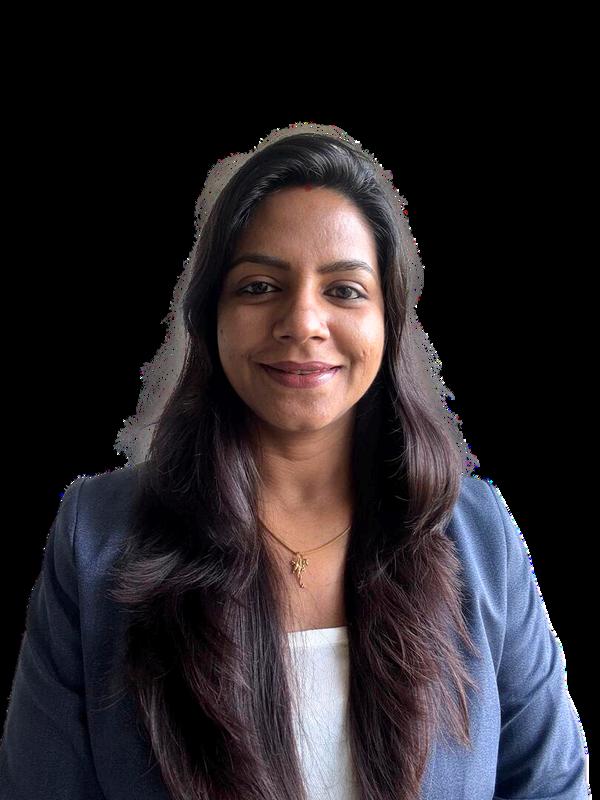
Q. Reflecting on your career, can you share an accomplishment that stands out as particularly impactful, and how did it shape the trajectory of your professional journey?
One of the most defining accomplishments in my career has been leading procurement and supply chain strategy for large-scale CAPEX and international projects where timelines, cost discipline, and compliance were critical. These projects required close alignment with engineering teams, project leaders, and global suppliers while navigating complex technical and commercial requirements
By implementing structured sourcing strategies, strengthening supplier partnerships, and introducing proactive procurement planning from PR to PO, we ensured the timely availability of long-lead materials, minimized project risks, and delivered significant cost optimization
This experience fundamentally shaped my perspective on procurement. I came to view it not as a transactional activity but as a strategic business enabler that drives operational continuity, strengthens supply chain resilience, and creates long-term value for the organization.
Q. In your experience, what principles or strategies in leadership have proven most effective in steering teams and organizations toward success?
In my experience, effective leadership is built on clarity, collaboration, and accountability. Procurement sits at the intersection of multiple functions, so aligning diverse teams around a shared objective is essential I focus on establishing clear goals and maintaining transparent communication so that
every team member understands how their work contributes to broader organizational success. Empowering individuals to take ownership of their responsibilities encourages initiative, innovation, and stronger engagement.
Equally important is accountability. Recognizing achievements while learning constructively from challenges helps create a culture of continuous improvement. When teams operate with trust, shared responsibility, and a clear sense of purpose, they are capable of delivering consistent results and creating meaningful impact for the organization
Q. How do mentorship and collaboration factor into your career, and have there been mentors or collaborators whose influence has left a lasting imprint on your professional path?
Mentorship and collaboration have been instrumental in shaping my professional journey Early in my career, mentors encouraged me to think beyond transactional procurement and understand the broader strategic impact of supply chain decisions on project delivery and business performance.
Their guidance reinforced the importance of ethical leadership, strategic thinking, and longterm supplier partnerships.
Equally important has been collaboration with cross-functional teams including engineering, operations, finance, and supplier partners Complex challenges are rarely solved in isolation, and diverse perspectives often lead to the most effective solutions
Today, I actively support mentoring young

professionals and encouraging knowledge sharing within teams Investing in people and fostering collaboration strengthens not only individual growth but also the collective capability and resilience of the organization
Q. In navigating an industry that continually evolves, what, in your view, is the key skill or mindset crucial for staying innovative and pertinent?
The most critical mindset for remaining relevant in today’s rapidly evolving industry is adaptability supported by continuous learning Supply chains are increasingly shaped by digital transformation, global market dynamics, and sustainability expectations
Professionals must be open to adopting digital procurement platforms, leveraging data analytics, and integrating technology into decision-making processes to improve efficiency and transparency.
At the same time, strategic thinking and risk anticipation are essential in building resilient supply chains that can respond to disruptions. Innovation often emerges from challenging traditional processes, collaborating closely with suppliers, and exploring new approaches to sourcing and supply management Professionals who remain curious, forward-thinking, and open to change are best positioned to lead transformation and drive long-term value
Q. For aspiring professionals seeking recognition like yours, what advice would you offer as the most valuable lessons you ' ve learned in your field?
My advice to aspiring professionals is to focus on building credibility through expertise, integrity, and consistent performance. Procurement and supply chain roles require a strong balance of technical knowledge, commercial acumen, and relationship management.
Developing negotiation and analytical skills is essential, but equally important is the ability to build trust with stakeholders and supplier partners
Take ownership of challenges, remain solutionoriented, and always focus on creating measurable value for the organization.
Most importantly, commit to continuous learning. Industries evolve rapidly, and professionals who remain curious, adaptable, and committed to improving their capabilities will continue to grow and make meaningful contributions throughout their careers
A results-driven professional with 14 years of experience in procurement, cost estimation, and contract management Proven expertise in cost optimization, vendor development, and driving operational efficiency through strong stakeholder relationships A strategic thinker and collaborative leader with strong analytical, negotiation, and problem-solving skills.



Q. Reflecting on your career, can you share an accomplishment that stands out as particularly impactful, and how did it shape the trajectory of your professional journey?
One of the most impactful accomplishments in my career has been building and institutionalizing a structured inclusion and mentorship ecosystem that supports the advancement of women leaders and diverse talent across the organization. What began as a focused initiative evolved into a sustainable platform embedded within our people practices, creating access to mentorship, leadership development, and safe spaces for dialogue and growth.
This experience fundamentally shaped my professional journey It reinforced the belief that inclusion drives stronger outcomes when it is intentional, measurable, and closely aligned with business priorities Seeing individuals grow in confidence, take on leadership roles, and contribute more meaningfully re-affirmed the power of inclusive leadership. It also deepened my commitment to creating systems that enable collective progress, where organizations grow by empowering people to bring their authentic selves and best capabilities to work
Q. In your experience, what principles or strategies in leadership have proven most effective in steering teams and organizations toward success?
In my experience, the most effective leadership is grounded in aligning people strategies with business priorities while intentionally building cultures rooted in inclusion, trust, and collaboration. When diversity, equity, and inclusion are embedded into everyday talent practices and decision making, not treated as standalone initiatives - teams feel valued,
heard, and empowered to contribute meaningfully. Equally critical is sustained investment in development through mentorship, sensitization, and leadership programs These efforts build resilient, future‑ready teams and enable organizations to grow sustainably while navigating constant change
Q. How do mentorship and collaboration factor into your career, and have there been mentors or collaborators whose influence has left a lasting imprint on your professional path?
Mentorship and collaboration have been foundational to my professional journey. I have been deeply involved in building structured mentoring ecosystems that support the growth of women leaders and diverse talent, creating safe and enabling spaces for learning, confidence building, and career progression. Through mentorship programs, leadership dialogues, and inclusive development platforms, I’ve seen how intentional knowledge sharing and peer collaboration can accelerate both individual growth and organizational capability. I’ve also been fortunate to learn from mentors and collaborators who modelled inclusive leadership, generosity in sharing insights, and a commitment to lifting others as they grow Their influence reinforced my belief that mentorship is ultimately about collective progress, helping individuals realize their potential while strengthening organizations through shared learning and collaboration.
“True leadership is measured by how many others you empower to rise.”

Q. In navigating an industry that continually evolves, what, in your view, is the key skill or mindset crucial for staying innovative and pertinent?
In an industry that is constantly evolving, the most critical mindset is a commitment to continuous learning paired with openness to diverse perspectives This combination fuels innovation, strengthens adaptability, and leads to better, more balanced decision making. For leaders, it is equally important to create inclusive environments where different voices and lived experiences are genuinely valued, as diversity of thought enhances creativity and problem solving At the same time, people and DEI initiatives must remain closely aligned with business priorities, ensuring they drive measurable impact and help organizations stay relevant, resilient, and future ready.
Q. For aspiring professionals seeking recognition like yours, what advice would you offer as the most valuable lessons you ' ve learned in your field?
For aspiring professionals, the most valuable lesson I’ve learned is the importance of continuous learning while leading with empathy and inclusivity. True growth comes from staying curious, being open to diverse perspectives, and consciously creating environments where people feel valued, heard, and empowered to succeed. Equally important is lifting others along the way, through mentorship, advocacy, and enabling opportunities for diverse talent Building collaborative ecosystems not only helps individuals realize their potential but also strengthens organizations through shared growth and collective success.
Inclusive leadership creates ecosystems where people grow, and organizations thrive together.
Sarika Saini, Global Head – Diversity, Equity and Inclusion at Birlasoft, a part of the CKA Birla Group, has played a pivotal role in shaping and institutionalizing the organization’s DEI vision over the past eight years In a company that values enduring relationships and a family-like culture rooted in care for stakeholders, Sarika has translated intent into structured action. She led the creation of Birlasoft’s DEI Charter, establishing clear goals, governance frameworks, and measurable outcomes across the employee lifecycle - from the first interaction with prospective talent to meaningful exit conversations Her work has embedded inclusion into everyday business processes, ensuring DEI is not a parallel initiative but an integrated organizational priority. In the recent years, Birlasoft has witnessed a notable acceleration in the scale and depth of its DEI efforts under Sarika’s leadership Her strategy is anchored in three foundational pillars of the DEI Charter : Affirmative Hiring, Sensitization, and Development of Diverse Talent - interconnected levers designed to influence representation, experience, progression, and retention in a sustained and measurable manner.
people to follow you the ends of the earth, y are a great leader.”

DEPUTY GENERAL MANAGER – HUMAN RESOURCE & ADMINISTRATION, ADITYA
BIRLA FASHION & RETAIL LIMITED
Q. Reflecting on your career, can you share an accomplishment that stands out as particularly impactful, and how did it shape the trajectory of your professional journey?
One accomplishment that stands out in my career is leading the HR integration during the merger of TCNS with Aditya Birla Fashion & Retail Ltd. This was not merely an operational exercise; it was a significant organizational transition involving harmonization of policies, performance frameworks, governance practices, and cultural alignment across teams.
What made this experience particularly impactful was the opportunity to lead change while preserving engagement and continuity We ensured zero disruption in payroll cycles, compliance processes, and engagement initiatives during the transition. The focus was not only on aligning systems but also on helping people navigate uncertainty with clarity and confidence.
This experience reinforced my belief that HR plays a strategic role in enabling business transformation. It strengthened my ability to operate at the intersection of governance, culture, and business outcomes, and shaped my trajectory toward enterprise-level HR leadership where people strategy directly contributes to organizational resilience and growth.
Q. In your experience, what principles or strategies in leadership have proven most effective in steering teams and organizations toward success?
Over the years, three leadership principles have consistently proven effective for me: clarity of purpose, governance with empathy, and developing people.
First, clarity of purpose ensures that teams understand not just what they need to do, but why it matters. When goals are clearly aligned with organizational priorities, people feel a stronger sense of ownership and direction.
Second, governance with empathy is particularly important in HR leadership. While strong systems, policies, and processes are essential for organizational discipline, leadership also requires understanding the human dimension behind every decision Balancing structure with empathy helps build trust and credibility across the organization
Finally, investing in people development creates sustainable success. Building leadership capability through structured development plans, mentoring, and continuous learning enables teams to grow with the organization When leaders focus on enabling others to succeed, the organization benefits from stronger collaboration, innovation, and long-term stability
These principles have helped me build highperforming teams while maintaining a culture of accountability and trust.
Q. How do mentorship and collaboration factor into your career, and have there been mentors or collaborators whose influence has left a lasting imprint on your professional path?
Mentorship and collaboration have played an important role in shaping my career. Throughout my professional journey, I have benefited from leaders and colleagues who challenged my thinking, encouraged strategic perspective, and reinforced the importance of integrity in leadership.

Working closely with senior leaders and crossfunctional teams has given me valuable insights into how people strategy intersects with business priorities. These experiences have influenced my approach to HR as a true business partner rather than a support function.
Equally important has been the opportunity to mentor others. Recently, I had the privilege of mentoring five female MBA students from my alma mater, through a structured six-month engagement Guiding them through career choices, leadership readiness, and workplace dynamics was a deeply fulfilling experience
Mentorship is not only about sharing knowledge; it is about building confidence and helping individuals see possibilities in their own potential I believe that leadership becomes more meaningful when it contributes to the growth of others.
Q. In navigating an industry that continually evolves, what, in your view, is the key skill or mindset crucial for staying innovative and pertinent?
In an environment where industries and workplaces evolve rapidly, the most critical mindset is adaptability anchored in continuous learning
Organizations today are experiencing rapid shifts driven by technology, evolving workforce expectations, and changing business models. For leaders, staying relevant requires openness to new ideas, the willingness to challenge established approaches, and the ability to learn continuously
Equally important is maintaining a strategic perspective. Innovation is not only about introducing new tools or processes; it is about
understanding how these changes create value for both the organization and its people.
For HR leaders specifically, this means building systems that combine governance discipline with agility Whether it is digital learning platforms, data-driven decision-making, or new engagement frameworks, the goal should always be to create environments where people can adapt, grow, and contribute meaningfully Ultimately, the ability to remain curious and open to learning ensures that leaders stay both innovative and relevant
Q. For aspiring professionals seeking recognition like yours, what advice would you offer as the most valuable lessons you ' ve learned in your field?
For aspiring professionals, my first piece of advice would be to focus on impact rather than recognition When your work consistently creates value for the organization and the people you work with, recognition naturally follows
Second, build depth in your domain while also understanding the broader business context. Professionals who connect their work to business outcomes are better positioned to contribute strategically.
Third, cultivate resilience. Every career includes moments of uncertainty, change, and challenge. These experiences often become the most valuable learning opportunities and help build leadership maturity
Finally, never underestimate the importance of integrity and relationships. Trust, collaboration, and authenticity are foundational to long-term professional success
True leadership lies in driving transformation while building trust, clarity, and continuity for people.
Sarmistha Patel is a seasoned HR leader with over two decades of experience across the retail and manufacturing sectors. She began her career with Titan Company Ltd , followed by Escorts Ltd., and has since built a long and impactful leadership journey at Aditya Birla Fashion & Retail Ltd. (TCNS Division), where she currently serves as Deputy General Manager – HR & Administration
Over the years, she has partnered closely with business leaders to drive people strategy, strengthen governance frameworks, and build high-engagement workplace cultures. Her work has supported key organizational milestones including merger integration and IPO readiness. Sarmistha is passionate about developing future leaders and shaping workplace cultures that support growth, collaboration, and performance
HEAD PROGRAM MANAGEMENT AND ALLIANCE MANAGEMENT, AURIGENE PHARMACEUTICAL

Q. Reflecting on your career, can you share an accomplishment that stands out as particularly impactful, and how did it shape the trajectory of your professional journey?
-I have been wearing multiple hats throughout my career journey , we women not only wear multiple hats at personal front but at work pace too. My journey of learning, failure ,learning from failure relearning,unlearning makes me feel proud of what I am and who I am .
Q. In your experience, what principles or strategies in leadership have proven most effective in steering teams and organizations toward success?
I always believe and follow servant leadership Be honest to yourself, there is no shortcut to hardwork and if we commit we should have determination to deliver at best . I stay true to my commitment , discipline and routine I walk the talk that makes me successful.
Q. How do mentorship and collaboration factor into your career, and have there been mentors or collaborators whose influence has left a lasting imprint on your professional path?
Of course without a true mentor u do not achieve your success , though success is continuous journey one need to always have a great mentor who uplifts your mood when u go low and tells you comoon you can do it ,one step at a time I am lucky to have such mentors around me.
Q. In navigating an industry that continually evolves, what, in your view, is the key skill or mindset crucial for staying innovative and pertinent?
key skill , updating yourself a per time and having a differentiating story of leadership makes you stand apart.
Q. For aspiring professionals seeking recognition like yours, what advice would you offer as the most valuable lessons you ' ve learned in your field?
Keep focused on what u do, stay determined ,diversify and u become what u want to be .stay true to yourself during your journey
There is no shortcut to hard work—commit, stay disciplined, and deliver your best.
With over 22 years of experience in Science,operations, program,Bussiness and project management, I currently serve as Head of Program and Alliance Management at Aurigene Pharmaceutical Services Limited, where I focus on managing complex programs across chemistry, biology, and IDD. My role leverages my certified expertise in stakeholder management, project coordination, and leading project teams to align cross-functional efforts and deliver results
Previous roles in biosimilars and CRO operations have enriched my skills in program and operations management, allowing me to contribute to the seamless execution of strategic initiatives. My professional approach is driven by certifications in PMP and data analytics, and I am dedicated to fostering collaboration and operational excellence in the pharmaceutical and biosimilars sectors.


HEAD SCM – MIDDLE EAST 1, AFRICA, ASEAN & CAS COUNTRIES, POWER TRANSMISSION & DISTRIBUTION IC, LARSEN & TOUBRO LIMITED
Q. Reflecting on your career, can you share an accomplishment that stands out as particularly impactful, and how did it shape the trajectory of your professional journey?
I began my professional journey as a Graduate Engineer Trainee, and over the past 17 years I have had the opportunity to work across multiple functions including design, tendering, project execution, and supply chain management. One of the earliest defining milestones was securing and executing the first and largest instrumentation package for my organizationthe Kakrapar nuclear power plant for Nuclear Power Corporation of India in 2012. Being involved in a project of such national importance early in my career was both a responsibility and a privilege. When the plant was eventually dedicated to the nation in 2024, it was a powerful reminder that the work we contribute to as engineers ultimately serves a larger national purpose
Another significant phase was during my tenure as a Bid Engineer, when I had the opportunity to secure our organization’s first Smart City projects in Jaipur and Visakhapatnam. These projects helped open a completely new segment for the organization and paved the way for several subsequent smart city and data center initiatives
I also had the privilege of leading the supply chain for India’s first Battery Energy Storage System project for NLC in the Andaman Islands. Being part of a pioneering energy project reinforced how strategic supply chain decisions can directly enable technological innovation and sustainable infrastructure
However, one decision that truly shaped the trajectory of my career was stepping out of my comfort zone to take on an international
assignment. At a time when my professional and personal ecosystem in India was well established, I chose to relocate and take up work assignment in the Middle East Moving to a new geography meant adapting to unfamiliar markets, regulatory environments, and cultural dynamics while operating in the highly demanding EPC and construction ecosystem.
For me, that transition was not just about changing location; it was about expanding my own boundaries It required resilience, adaptability, and the confidence to lead in environments where representation of women in large-scale infrastructure and supply chain roles is still evolving Today, I lead supply chain operations for international projects across regions including the Middle East, Africa, ASEAN, and CAS countries, managing procurement portfolios exceeding USD 1 billion. If my journey reflects anything, it is that growth often lies just beyond the edges of our comfort zone. And when we step beyond it, we not only grow individually but also help expand the possibilities for many others who may follow similar paths.
Q. In your experience, what principles or strategies in leadership have proven most effective in steering teams and organizations toward success?
One principle I strongly believe in is that women should consciously leverage the natural strengths we often possess empathy, collaboration, resilience, and relationship-building while continuously learning to exercise leadership with confidence and influence. Social rules and marketplace rules are very different for women, be aware of it.
Another strategy that has helped me is seeking both mentors and sponsors. Mentors guide you,
share experience, and help you navigate complex situations. Sponsors, on the other hand, advocate for you in rooms where you may not be present and play an important role in opening doors to larger opportunities Knock, Seek, Grow.
Networking is another critical leadership strength. Women often naturally excel at building relationships and maintaining meaningful connections in social circles. When leveraged well in professional front, this becomes a powerful asset that helps create collaboration across teams, partners, and stakeholders Equally important is the ability to build alliances with stakeholders and become a trusted representative of the organization.
I also strongly believe that leadership is fundamentally about investing in people When you support the growth of your team, empower them, and create opportunities for them to succeed, you grow bigger with the team.
Another principle that has helped me is to focus energy on long-term goals and always add value to the system
Ultimately, effective leadership is about combining competence with empathy, strategy with collaboration, and ambition with purpose. When those elements come together, teams feel inspired, organizations grow stronger, and leaders create lasting impact
Q. How do mentorship and collaboration factor into your career, and have there been mentors or collaborators whose influence has left a lasting imprint on your professional path?
Mentorship and collaboration have shaped my journey profoundly. I’ve always sought to learn from leaders around me and have been
fortunate to have several mentors who taught me to be decisive, focus on long-term goals, stay empathetic and perform under pressure One mentor who left a lasting imprint is Mr. Joji Sebastian, IC head of PTD, L&T He is someone who actively promotes and supports the inclusion, well-being, and advancement of women at workplace During a phase around my maternity, when my focus shifted to family and I felt professionally behind my peers, I needed to regain professional momentum. He entrusted me with a challenging opportunity leading digital transformation initiatives It wasn’t routine work; it pushed me out of familiar territory and required navigating complex change management across teams. That challenge, at a moment when I needed it most, became a turning point and reignited my drive. He is a tough taskmaster whose rigor and clarity shaped the way I lead today Sometimes I catch myself mimicking his storytelling techniques, his decisive approach, sometimes funnily even his body language and I think that’s the most candid acknowledgment of a mentor’s influence. That experience reinforced for me that the right guidance at the right time doesn’t just open opportunities it transforms your perspective and leadership So seek sponsorship and mentorship actively.
Growth begins where comfort ends—every bold step forward expands possibilities for yourself and others.
Q. In navigating an industry that continually evolves, what, in your view, is the key skill or mindset crucial for staying innovative and pertinent?
Research shows that when risk is measured thoughtfully, women are equally or sometimes more willing than men to take calculated risks, particularly in areas that require deliberate decision-making rather than impulsive action. Challenge assumptions, take calculated risks. I also believe that curiosity is an underrated leadership trait. Continuously learning from colleagues, partners, junior team members, and even from challenges turns every interaction into an opportunity to gain perspective, adapt, and improve Staying innovative and relevant, therefore, is a mindset of curiosity, courage, and deliberate experimentation
Q. For aspiring professionals seeking recognition like yours, what advice would you offer as the most valuable lessons you ' ve learned in your field?
If there is one thing I would share from my own journey, it is that some of the most defining opportunities come disguised as difficult decisions Whether it is taking on a challenging project, moving across roles, or even relocating to a new geography, those moments can feel uncomfortable at first but becomes the turning points that shape our careers. So my message would simply be: Do not hesitate to take that one step beyond what feels comfortable Trust me, everything eventually falls into place, both on the professional and personal front. All one must do is take that first right step. And when more women take those steps forward with confidence, we not only build our own paths but also make it easier for many others to follow.
“ True leadership is the balance of competence and empathy, ambition and purpose. ”
Soundarya Priyadharsini is a dynamic leader with over 17 years of experience spanning design, tendering, project execution and supply chain management handling mega EPC projects. She currently leads International SCM operations across the Middle East, Africa, ASEAN, and CAS countries, managing portfolios exceeding USD 1 billion
Her career is defined by a commitment to stepping beyond comfort zones, leveraging power and influence responsibly, and driving meaningful organizational transformation She is passionate about fostering inclusive leadership and empowering teams to excel, believing that leadership is as much about enabling others as achieving results.
Soundarya champions the values of curiosity, resilience, and strategic thinking, and advocates for women to embrace opportunities boldly, challenge stereotypes, and lead with confidence. Through her work, she strives to create environments where innovation, collaboration, and empowerment intersect, inspiring the next generation of women professionals to transform industries and redefine leadership standards.
TURN VISION INTO MEANINGFUL CHANGE.

GENERAL MANAGER - TALENT TRANSFORMATION,HALDIRAM FOODS INTERNATIONAL
Q. Reflecting on your career, can you share an accomplishment that stands out as particularly impactful, and how did it shape the trajectory of your professional journey?
One accomplishment that stands out in my career is leading a large-scale talent transformation agenda that impacted thousands of frontline and leadership employees across a multi-unit food service organization. When I stepped into the role, the business was experiencing high attrition, rising manpower costs, and inconsistent capability levels across locations Rather than addressing these challenges with isolated interventions, I focused on building systemic, scalable solutions that aligned people capability with business performance.
We introduced structured learning ecosystems, career architecture, and cross-functional capability development Two flagship initiatives were Shiksha Setu, a digital learning platform that democratized access to training for frontline teams, and the Guru–Shishya mentorship model, which institutionalized knowledge transfer and multi-skilling within the workforce.
The results were significant: attrition was reduced by 72%, manpower costs improved by 41%, and food cost efficiency improved by 20% through stronger operational capability and SOP adherence
More importantly, this transformation shifted the perception of HR from a support function to a strategic growth enabler. It reinforced my belief that sustainable business success is deeply tied to intentional people development. This milestone shaped my professional trajectory by strengthening my commitment to building enterprise-wide talent systems that create long-
term organizational value.
Q. . In your experience, what principles or strategies in leadership have proven most effective in steering teams and organizations toward success?
Throughout my leadership journey, I have found that three principles consistently drive meaningful and sustainable outcomes.
First, aligning people strategy with business strategy. HR initiatives create the most value when they directly support operational and financial goals. Whether improving productivity, building leadership pipelines, or reducing attrition, the starting point must always be the business problem.
Second, building systems rather than one-time programs Sustainable transformation comes from scalable frameworks such as structured learning ecosystems, leadership assessment models, and clear career pathways Systems create continuity and ensure that capability building continues even as organizations grow and evolve.
Third, balancing data-driven decision-making with human empathy. Analytics and performance metrics provide clarity and accountability, but effective leadership also requires understanding the human context behind those numbers Employees perform best when they feel supported, heard, and empowered.
By combining these principles strategic alignment, scalable systems, and people-centric leadership organizations can create environments where teams are not only productive but also engaged and resilient

Q. . How do mentorship and collaboration factor into your career, and have there been mentors or collaborators whose influence has left a lasting imprint on your professional path?
Mentorship and collaboration have been central to my professional journey In fastpaced operational industries, no leader succeeds in isolation Progress is often the result of shared learning, collaborative problem solving, and collective leadership.
Early in my career, I had the privilege of working with leaders who emphasized the importance of understanding operations deeply before designing people strategies. Their guidance helped me develop an approach where HR is not separate from the business it is embedded within it
This philosophy later shaped initiatives such as the Guru–Shishya mentorship framework, where experienced employees mentor emerging talent to accelerate skill development and leadership readiness. The program created a culture where knowledge sharing became institutionalized rather than informal.
Equally important have been cross-functional collaborators operations leaders, finance partners, and business heads who helped translate talent initiatives into measurable business outcomes These partnerships reinforced the importance of co-creating solutions rather than implementing them in silos.
Today, mentorship remains a key priority for me. I actively mentor emerging HR professionals and women transitioning into strategic leadership roles, helping them build clarity in their career architecture and confidence in decisionmaking.
HR creates real impact when it is embedded within the business, not operating alongside it.
Q. In navigating an industry that continually evolves, what, in your view, is the key skill or mindset crucial for staying innovative and pertinent?
The most important mindset for staying innovative in a rapidly evolving industry is continuous adaptability grounded in learning
Industries such as hospitality, retail, and aviation F&B operate in dynamic environments where customer expectations, workforce models, and technology continuously evolve Leaders must therefore adopt a mindset that treats change not as disruption but as an opportunity for reinvention.
In practical terms, this means embracing digital transformation, data-backed decision-making, and agile workforce models. For example, digital learning platforms enable organizations to scale training across geographically dispersed teams, while analytics helps identify leadership potential and capability gaps more effectively
Equally important is cultivating a culture of experimentation. Organizations that encourage teams to test new ideas, learn quickly from outcomes, and iterate rapidly are far more likely to stay ahead of industry shifts.
Ultimately, innovation is not just about technology or new processes it is about fostering an environment where curiosity, learning, and adaptability become part of the organizational DNA.
Q. For aspiring professionals seeking recognition like yours, what advice would you offer as the most valuable lessons you ’ ve learned in your field?
For aspiring professionals, especially those working in people leadership and organizational development, I would share three key lessons from my journey.
First, develop a deep understanding of the business HR or leadership roles are most impactful when professionals understand the operational realities of the organization. When you connect people initiatives directly to business outcomes, your work becomes both credible and transformative
Second, focus on building scalable solutions. Short-term programs may generate temporary improvements, but long-term impact comes from designing frameworks and systems that can sustain growth across time and scale.
Third, invest in people development not only for others but also for yourself. Continuous learning, mentorship, and exposure to diverse industries help build the perspective required for strategic leadership
Finally, recognition should not be the primary goal; impact should be When professionals focus on creating meaningful value for organizations and people, recognition becomes a natural outcome of the work they do.
Sustainable success is built when people strategy becomes the engine of business transformation.
Led the development and implementation of departmental SOPs across all functions through structured training methods. Designed and launched the “Ambassador Sanskriti Program” for new joiners and contributed to defining the organization’s mission and vision Drive employee training initiatives by promoting programs, ensuring continuous learning, and fostering a culture of service excellence. Regularly assess training effectiveness through feedback, guest satisfaction data, and performance evaluations, while partnering with operational leaders to strengthen technical and leadership capabilities Actively monitor training participation, provide coaching and feedback, and ensure the application of adult learning principles to enhance overall employee performance and guest experience
TRUE EMPOWERMENT IS WHEN WOMEN LEAD WITH CONFIDENCE AND PURPOSE.

MANAGING PARTNER, SPECTRAL CONSULTANTS
Q. Reflecting on your career, can you share an accomplishment that stands out as particularly impactful, and how did it shape the trajectory of your professional journey?
My career transition from IT Professional to Human Resources happened by a flash of thought; Yr.2002.
While interacting with colleagues in office during a community event, I realized that interfacing with people, creating cohorts, offering solutioning makes me feel self-expressed & happy.
Q. In your experience, what principles or strategies in leadership have proven most effective in steering teams and organizations toward success?
Leadership imparts strategies that generate structured communications, shared commitments, and bring forth possibilities & opportunities.
In my experience sharing, creating purpose while contributing to people’s life has been most effective towards creating oneness & generating performances.
I demonstrate context & integrity in all my conversations and actions while playing all the games along with my teammates
Q. How do mentorship and collaboration factor into your career, and have there been mentors or collaborators whose influence has left a lasting imprint on your professional path?
Mentorship is key essence of growth & shaping a strong character. I dedicate all my achievements to scores of my mentors; all through the professional journey
Q. In navigating an industry that continually evolves, what, in your view, is the key skill or mindset crucial for staying innovative and pertinent?
Being a Talent Acquisition Partner for Global Corporates > 22 Yrs. Witnessed evolution in all dimensions (skills, roles, workability & functionality). Believe that every innovation or transformation is “Million Dollar Mindset”. Mindset of being affirmative & generating possibilities & opportunities in every visualization.
Q. For aspiring professionals seeking recognition like yours, what advice would you offer as the most valuable lessons you ' ve learned in your field?
Dedicated my professional life in inventing an organization which has structured a design with endurance of “Purposeful Solutioning” to enhance client business transformation while enriching “Gainful Employment” Always given back to people, communities and societies with a commitment for contributing towards nation building.
True leadership is about creating purpose, enabling people, and turning possibilities into performance.
Vaishali Kaushik is the founder & Managing Partner of Spectral Consultants- a marketleading executive search and talent acquisition firm specializing in Global Capability Centers, shared services, and digital transformation organizations
Blessed to be a first-generation woman entrepreneur, she has built a profitable, ethically grounded business over 22+ years. Making available Jobs & Careers “Choices & Opportunities” with Global Organizations around the Geographies for prospects
Supporting Building Organizations capacity to deliver to “Global Standards”; by enveloping “Human Capabilities” to achieve & outshine
Strengthening, Exhilarating & Encouraging “People Power” to generate & deliver Businesses.
Creating differences in people’s lives by making available futures, opportunities, choices & options to enhance experiences.
She leads a women-majority team, actively mentors young professionals, and is widely recognized as a thought leader in recruitment innovation, talent strategy, and inclusive workplace culture.
— Ayn Rand
SHE LEADS NOT FOR RECOGNITION, BUT TO CREATE LASTING
VALUE.

SENIOR MANAGER CORPORATE COMMUNICATIONS, INDIAFIRST LIFE
Q. Reflecting on your career, can you share an accomplishment that stands out as particularly impactful, and how did it shape the trajectory of your professional journey?
One accomplishment that stands out is helping reposition communication from a largely operational function into a strategic capability within the organizations I have worked with.
Traditionally, communication has focused on campaigns or announcements I have consistently tried to move the conversation toward building structured frameworks that strengthen leadership visibility, institutional credibility, and authentic stakeholder engagement I like to call this the pull versus the push approach, where stakeholders realize the value your role brings to the table and proactively reach out to you for their communication needs rather than you pushing requests and marketing propositions to them hoping for their buy-ins to come through.
To get here, I have had to think beyond shortterm outputs and focus on long-term influence - aligning communication strategy with broader business goals and measurable outcomes
That shift in perspective shaped my professional journey significantly. It reinforced my belief that communication, when approached strategically, can shape perception, strengthen trust, and contribute meaningfully to organizational growth It also pushed me to take on roles where I could build systems and frameworks that create sustained impact rather than temporary visibility
Q. In your experience, what principles or strategies in leadership have proven most
effective in steering teams and organizations toward success?
Three principles that have consistently guided my leadership style are - clarity, accountability, and trust.
Clarity ensures that teams understand not just their tasks, but the broader purpose behind them When people see how their work contributes to a larger objective, it brings focus and motivation.
Accountability builds ownership. I strongly believe in empowering individuals with responsibility and trusting them to deliver. When people feel accountable for outcomes rather than just activities, their approach becomes far more strategic.
And finally, trust. The most effective teams are those where people feel comfortable sharing ideas, challenging perspectives, and experimenting with new approaches.
Leadership today is less about control and more about creating an environment where people can contribute their best thinking.
Q. How do mentorship and collaboration factor into your career, and have there been mentors or collaborators whose influence has left a lasting imprint on your professional path?
Mentorship and collaboration have played an important role throughout my journey
My academic experiences from the Mudra Institute of Communications Ahmedabad to Georgetown University in Washington D.C, exposed me to mentors who emphasized critical thinking, global perspective, and intellectual

curiosity.
Equally valuable have been the colleagues and leaders I have collaborated with across different professional environments in India and the United States. Most meaningful ideas emerge through collective thinking rather than individual effort.
Today, mentorship is something I actively try to pay forward. Supporting young professionals particularly women navigating competitive corporate environments is something I consider an important part of leadership
Good leaders create results. Great leaders help others grow
Q. In navigating an industry that continually evolves, what, in your view, is the key skill or mindset crucial for staying innovative and pertinent?
I believe that the most important mindset is a commitment to continuous learning.
Communications is undergoing a fundamental shift, driven largely by artificial intelligence. AI is transforming how marketers understand audiences, create and distribute content, personalize experiences, and make data-driven decisions. In many ways, it is reshaping the marketing paradigm itself.
For professionals in our field, staying ahead of this shift is essential For marketers today, AI literacy is quickly becoming an indispensable capability I have been actively taking courses in AI to better understand how these technologies will influence the future of marketing and communications
At the same time, I strongly believe in continuously expanding one ’ s perspective beyond immediate professional needs. For instance, I pursued learning a new language - French alongside my career Experiences like these build intellectual curiosity and cultural agility, which are equally important in a globalized industry.
Technology will continue to evolve, but the leaders who stay relevant will be those who remain curious, proactive about learning, and open to adapting with the times.
Q. For aspiring professionals seeking recognition like yours, what advice would you offer as the most valuable lessons you ' ve learned in your field?
My advice would be to focus on building credibility before seeking recognition.
Recognition is meaningful, but it should ideally reflect sustained contribution rather than shortterm achievements. Consistency in delivering value ultimately builds a stronger professional reputation.
Second, invest in learning Exposure to diverse academic and professional environments across India and the United States in my case has been one of the most valuable influences on my thinking and approach to leadership.
Third, collaborate generously. Many of the most impactful outcomes in any career come from working with teams that challenge and inspire you
And finally, stay resilient. Careers rarely follow a straight path, but persistence and adaptability
often open the most interesting opportunities. In the long run, recognition tends to follow those who focus on creating meaningful impact.
Recognition should be the outcome of sustained impact, not the pursuit of short-term visibility.
Communications professional with experience in designing and executing innovative strategies across corporate communications, public relations, and market strategy. Having worked across six industries and two continents, she brings a global perspective and adaptability to fast-paced, diverse environments.
Passionate about storytelling and building meaningful connections, she thrives on bridging the gap between organizations and their people A strong advocate of continuous learning and change, she is driven to leverage communication for impactful international development and social change initiatives.
Her key strengths include Positivity, Responsibility, Futuristic thinking, Learner mindset, and a competitive spirit, with expertise spanning internal and external communications, social media, and integrated marketing.