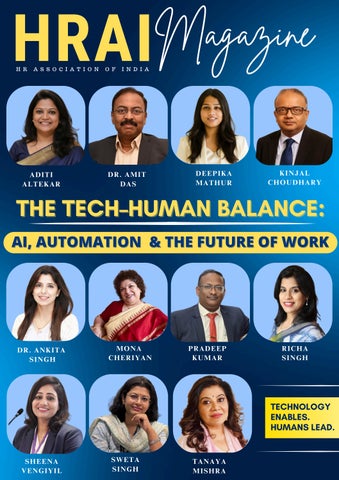

MagazineHRAI







AI, AUTOMATION & THE FUTURE OF WORK AI, AUTOMATION & THE FUTURE OF WORK


TECHNOLOGY ENABLES. HUMANS LEAD.


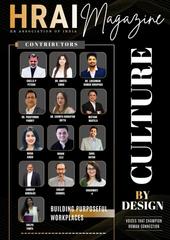


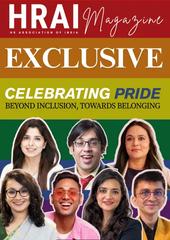
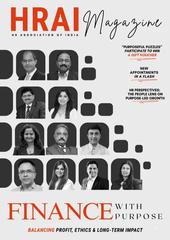



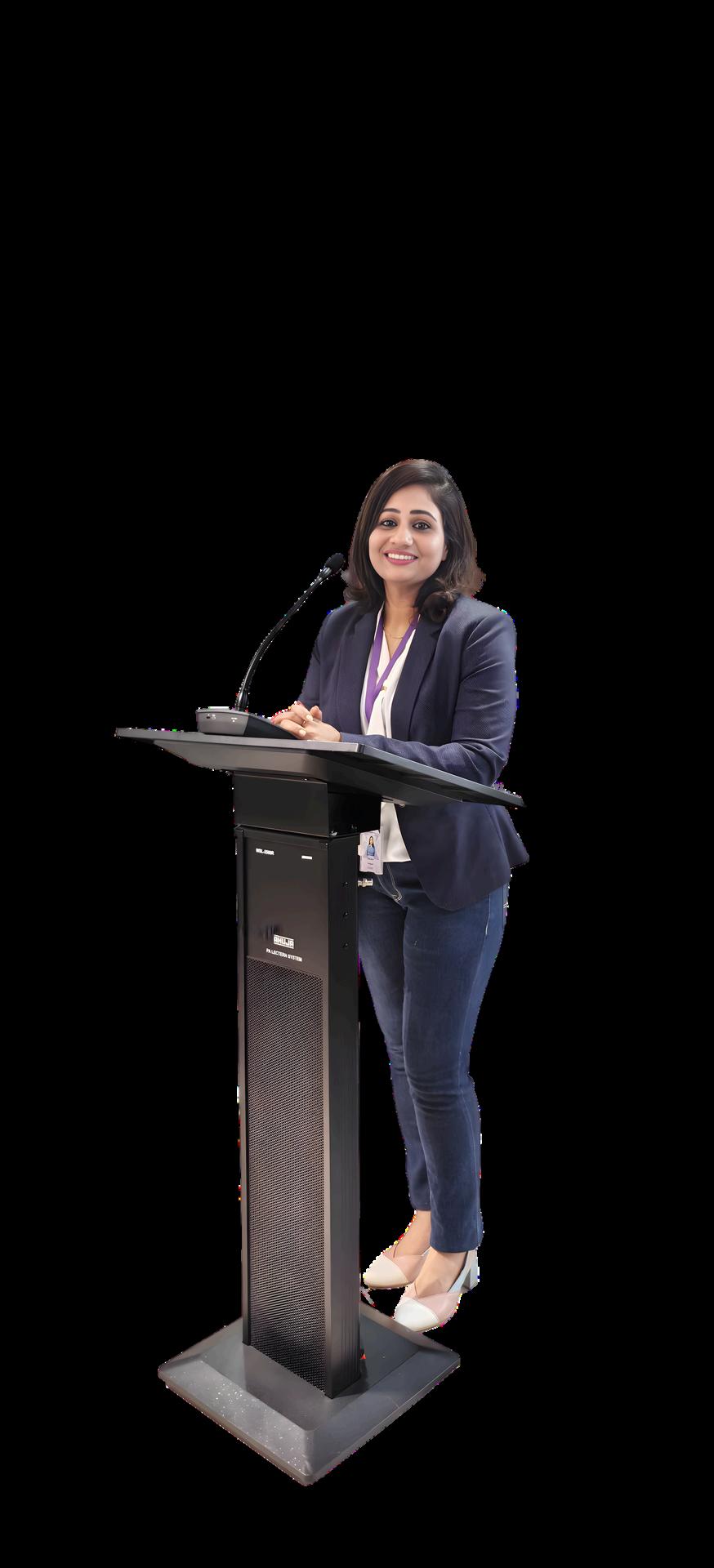
HRAI firmly believes in the power of teamwork and the value it brings. When diverse talents and perspectives come together, something extraordinary happens. The collective synergy we create goes beyond what any individual can achieve alone and together we see the potential to make a lasting impact on the world.
The workplace is being reshaped by AI, automation, and rapid technological change. While machines take on routine tasks, human skills creativity, empathy, critical thinking, and collaboration are becoming more essential than ever.
The challenge and opportunity lie in striking the right balance: leveraging technology to increase efficiency while preserving the human qualities that make work meaningful. Organizations are exploring flexible ways of working, blending AI-driven insights with human judgment to enhance productivity, innovation, and employee experience.
This evolving landscape emphasizes not just doing more, but doing better. It’s about designing systems where humans and machines complement each other, empowering people to focus on what machines cannot replicate: problem-solving, intuition, and connection
The future of work will belong to those who embrace this tech–human balance where automation supports human potential rather than replaces it. By integrating AI thoughtfully and fostering human-centered practices, organizations can create workplaces that are efficient, innovative, and deeply human.
83,000+ FOLLOWERS ON LINKEDIN

A GROWING COMMUNITY OF PROFESSIONALS ENGAGING WITH HRAI’S INSIGHTS, INITIATIVES, AND INDUSTRY CONVERSATIONS.

About HRAI
Founded by Dr. Ankita Singh, the HR Association of India (HRAI) drives industry-led initiatives and curates prestigious recognitions for organizations, emerging professionals, and trailblazing women across the business ecosystem. HRAI serves as a platform for learning, collaboration, and recognition, bringing together professionals and subject-matter experts from across industries.
What We Do
Industry initiatives and professional forums
Awards, recognitions, and curated listings
Knowledge-sharing through talk shows, panels, and articles
Community-building for HR and business professionals
Organizations We’ve Engaged With Lenovo, Hindustan Unilever, Biocon Biologics, IHG Hotels, L&T, CBRE, Sutherland, Capgemini, EY, and more.
KNOWLEDGE & THOUGHT LEADERSHIP
Elite voices such as Dr. TV Rao, Harjeet Khanduja, and Prasenjit Bhattacharya have been featured in HRAI’s one-on-one talk shows, contributing practical insights and real-world perspectives for professionals.
HRAI MAGAZINE INITIATIVE
HRAI publishes thought-provoking articles authored by senior professionals from organizations such as Reliance Jio, Times of India, KPMG, Eveready, Volvo, and more.
HRAI LIST FEATURES
HRAI curates an annual list of features recognizing exceptional professionals and changemakers aligned with a central theme each year. 23 of 2023 | 24 of 2024 | 25 of 2025 . Notable organizations featured include: Adani, Amazon, Flipkart, Samsung, Myntra, Uber, Raymond, and more.
EXCLUSIVELY FEATURED SHARK TANK JURY IN THE VISIONARY CEOS LIST:
For HR professionals in India, HRAI offers unparalleled opportunities to connect with like-minded peers, learn from experts, and gain recognition for their hard work and achievements. By joining HRAI, HR professionals can stay updated on the latest trends, best practices, and strategies that can help them take their careers to the next level.
ADITI ALTEKAR
HR TECHNOLOGY LEAD, GODREJ INDUSTRIES
GROUP
DR. AMIT DAS
DIRECTOR-HR & CHRO
THE TIMES OF INDIA
GROUP
DEEPIKA MATHUR
GLOBAL HR PARTNER –DIGITAL WORKPLACE
SOLUTIONS, LENOVO
DR. ANKITA SINGH FOUNDER OF HR ASSOCIATION OF INDIA 22 22 36 36 26 26
KINJAL CHOUDHARY
GLOBAL PRESIDENTHUMAN RESOURCES, CADILA
PHARMACEUTICALS
LMT.

MONA CHERIYAN
PRADEEP KUMAR MANAGER – HR, TEKWISSEN SOFTWARE
RICHA SINGH FOUNDER OF AXON ARBOR
SHEENA VENGIYIL SENIOR MANAGER L&OD MAXIMUS INDIA
SWETA SINGH DIRECTOR – TALENT ACQUISITION , APAC, MATERIAL+
TANAYA MISHRA GLOBAL CHRO, IN SOLUTIONS GLOBAL
HARJEET
SVP- HR, JIO SUMIT AGARWAL SDG AMBASSADOR FOR DEI, ICON OF THE ELECTION COMMISSION OF INDIA AND MOC NITI AAYOG


ADITI ALTEKAR
HR TECHNOLOGY LEAD, GODREJ INDUSTRIES GROUP
HR TECHNOLOGY LEAD, GODREJ INDUSTRIES GROUP








Machines vs. Minds: Igniting the Human Work Revolution
The AI surge isn't coming it's here, reshaping work at warp speed. But here's my firm stand: machines won't eclipse humanity; they'll elevate it - if leaders commit to bold augmentation over blind automation.
As an HR technology strategist who's driven transformations at Godrej and beyond, implementing SuccessFactors for thousands of users, I've seen the proof The tech-human balance thrives not in fear, but in strategic fusion AI handles the predictable; humans pioneer the profound. It's time to lead this shift decisively.
Debunking the Job Apocalypse Myth
Alarmist forecasts claim AI could displace 300 million jobs by 2030 (Goldman Sachs, 2023). Yet, real-world deployments tell a different story - one of liberation.
In my Power BI-enabled data warehouse projects, AI reduced manual analytics time from 40 hours to 4 hours per report, a 90% efficiency gain, redirecting teams to high-value tasks like predictive succession planning.
Quantifiable wins abound: Gartner reports AIaugmented HR boosts retention by 22%. In one SuccessFactors rollout I led, AI flagged attrition risks at 92% accuracy, enabling targeted DEI interventions that cut voluntary turnover by 15% and lifted female leadership representation from 28% to 42% in 18 months. The lesson? AI excels in patterns; humans shine in empathy and adaptation. Balance means leveraging both for resilient organizations
Building the Augmented Workforce Imperative
My perspective cuts through: organizations must pursue "human-first augmentation" with measurable rigor During a cross-functional digital capability build, AI automated 65% of routine compliance tasks in our HR stack, freeing 120 professionals for strategic innovation - yielding a 35% rise in employee engagement scores via personalized learning paths.
Forward-thinking CDOs - like those I'm studying in my DBA in Digital Leadership at Golden Gate University - deploy AI as a force multiplier. Deloitte's 2025 survey shows hybrid models deliver 27% higher productivity. Key actions include:
-Reskill strategically: Achieve 80% AI literacy across workforces by 2028, correlating to 18% innovation uplift (McKinsey).
-Redesign roles dynamically: Transition 45% of positions to human-AI hybrids, emphasizing DEI for 24% better decision-making (Boston Consulting Group).
-Track holistically: Adopt "augmentation indices" blending productivity (up 30% per Forrester) with inclusion metrics.
These aren't aspirations - they're imperatives backed by data.
Seizing the Renaissance Opportunity
The tech-human balance unlocks unprecedented potential: PwC predicts AI could add $15.7 trillion to global GDP by 2030 through human amplification.
Drawing from my HRAI 50 Under 50 recognition and Women Trailblazers platform, I've witnessed inclusive teams outperform by 21% in change management, using AI ethically.

HARJEET KHANDUJA HARJEET KHANDUJA
SVP-HR,JIO SVP-HR,JIO
One afternoon a neighbour met me at the entrance of the building carrying her twelve month old child in her lap. The little one had bright curious eyes and a grin that could melt even the most serious boardroom face. She said playfully to her child, “Say hello to uncle”
The child lifted his tiny hand, placed it on his ear, and said hello in the sweetest voice Everyone around laughed. But the mother quickly corrected him Not phone wala hello, she said Handshake wala hello. She gently guided his hand forward to mimic a handshake.
In that small moment a quiet truth revealed itself. This child had already learned that saying hello meant holding a phone to the ear. That was his default understanding of greeting someone. A device had quietly become his first teacher of social behavior.
Technology fascinates humans. Give a phone to a child and suddenly toys lose their magic. Give an app to an adult and suddenly thinking feels optional. I have watched parents struggle to take phones away from their children The reason is not control. The reason is development. They know that if a screen becomes the primary source of stimulation, curiosity narrows and imagination becomes outsourced.
Now shift this scene to the workplace. Replace the child with an employee. Replace the phone with AI. The parallel becomes impossible to ignore When organizations adopt AI, the real focus must remain on the overall development of their people Employees must not become so dependent on AI that they lose their edge. A recent research study revealed that when people start relying heavily on AI, they reduce the use of their natural intelligence.


Recently a leading consulting firm faced a massive penalty running into hundreds of millions of dollars because AI generated fake references to support a claim The consultants who were supposed to validate those references did not check They assumed correctness because a powerful tool had spoken.
I see this pattern daily Quick emails drafted in seconds. Beautiful presentations created in minutes Policies produced overnight Speed is impressive. But speed without intent is noise. A message is valuable only if it says what you truly mean A presentation matters only if it conveys the insight it is meant to convey. A policy works only if it solves the problem it was designed to address.produced overnight. Speed is impressive. But speed without intent is noise. A message is valuable only if it says what you truly mean. A presentation matters only if it conveys the insight it is meant to convey A policy works

HUMAN VS MACHINE: THE FUTURE WORKPLACE

Rapid growth of Artificial Intelligence and automation is transforming workplaces.
Machines are increasingly performing repetitive, manual, and datadriven tasks.
Automation improves productivity, speed, and operational efficiency.
AI reduces human error and enhances accuracy in complex processes.
Many traditional jobs are changing or becoming automated.
New job roles are emerging that require advanced technical and digital skills.
DR. AMIT DAS
DIRECTOR-HR & CHRO THE
DIRECTOR-HR & CHRO
GROUP
GROUP



Every major shift in the world of work is first misunderstood
The Industrial Revolution was initially feared as the end of craftsmanship. Computers were once dismissed as glorified calculators. Even the internet was seen, for a time, as peripheral to “real work.” Artificial Intelligence now sits at a similar crossroads celebrated, feared, misunderstood, and often poorly integrated.
Yet, beneath the hype and headlines, a quieter and more consequential truth is emerging:
AI is not fundamentally changing work because of what it can do. It is changing work because of what it exposes about how poorly work itself has been designed.
Adoption Is High. Maturity Is Not.
Across Indian organizations, AI usage is no longer experimental. Employees are using it daily for writing, analysis, presentations, research, and decision support. Industry assessments by Ernst & Young and KPMG consistently show widespread experimentation but limited enterprise-scale impact.
This paradox high usage, low maturity exists because AI has entered organizations without forcing them to confront deeper questions about work.
Most roles today are still designed around:
Manual effort rather than outcomes
Linear workflows rather than dynamic problem-solving
Capacity assumptions rooted in pre-AI constraints
AI arrives into these structures like a powerful
engine dropped into an old chassis It runs, but it cannot go very far.
Why AI Productivity Feels Invisible
One of the most striking patterns in AI adoption is this: time savings rarely show up where leaders expect them to.
Employees finish work faster, but do not necessarily work less.
Quality improves, but performance metrics remain unchanged.
Capacity is released, but headcount models stay frozen
This happens because organizations have not made an explicit decision about what should happen to the time AI gives back.
In the absence of clarity, time simply gets absorbed by more meetings, more coordination, more expectations. AI becomes an accelerant, not a liberator
This is why AI adoption that focuses only on tools leads to exhaustion rather than transformation.
The Shift from Tasks to Judgment
The real promise of AI is not speed. It is judgment amplification.
When AI drafts the first version, humans can focus on meaning
When AI summarizes information, humans can focus on interpretation
When AI generates options, humans can focus on choice and consequence.
At The Times of India Group, this principle became central to AI integration In a newsroom and indeed across a media
ecosystem credibility, context, and accountability are non-negotiable AI was therefore positioned not as an author or arbiter, but as an assistant that expands human bandwidth without replacing human responsibility.
This distinction is critical. The organizations that will win with AI are those that are clear about where judgment must remain human; and why.
The Hidden Leadership Challenge
AI adoption often stalls not because people resist technology, but because leaders hesitate to redraw boundaries. Redesigning work means asking uncomfortable questions:
Which activities no longer add value?
Which roles exist because of legacy processes, not current needs?
Which decisions should be escalated and which should be automated?
These are not IT questions They are governance, capability, and leadership questions
This is where HR’s role becomes pivotal. Not as a training provider, but as the architect of work evolution.
Placing AI Where It Belongs
Insights published in Harvard Business Review, including work by Bharat N. Anand and Andy Wu, offer a useful way to think about AI deployment: through the lenses of risk and knowledge.
Work that is data-heavy and low-risk can be
fully automated
Work that benefits from pattern recognition but carries consequence needs human oversight.
Work that relies on tacit knowledge, ethics, or context must remain human led
This framing is powerful because it moves the conversation away from fear and toward design discipline. AI is no longer an abstract threat, it is a tool placed deliberately, with intention.
Roles Will Not Disappear. They Will Be Rewritten.
The most visible effect of AI will not be mass unemployment It will be role compression and role evolution.
Tasks will disappear faster than roles But roles that do not evolve will hollow out.
Journalists will spend less time transcribing and more time synthesizing. Managers will spend less time tracking and more time coaching.
HR professionals will spend less time administering and more time shaping workforce strategy.
This evolution, however, requires organizations to actively redefine what “good performance” looks like. Without that reset, Employees are asked to use AI but are evaluated on old metrics.
That misalignment is where anxiety grows
Capability Is a System, Not an Event
AI capability cannot be built through one-time
interventions. It requires practice, reflection, and reinforcement The organizations seeing traction are those that treat AI fluency as a journey where employees experiment safely, learn socially, and apply tools to real work. Internal champions, shared use cases, and visible leadership participation matter more than certifications.
When AI becomes normal, fear recedes. When learning is collective, momentum builds.
The New Psychological Contract
AI is quietly reshaping the employer–employee relationship
Employees are asking:
Will AI make my work more meaningful or just faster?
Will productivity gains benefit the organization alone or me as well?
Will I be supported to evolve or replaced for not keeping up?
These are not irrational fears. They are signals.
Organizations that treat AI adoption as efficiency extraction will face disengagement. Those that treat it as shared progress will earn trust.
HR’s Defining Moment
For HR leaders, this is a defining moment.
AI forces a shift from managing roles to managing capability flows. From measuring activity to measuring value creation.
From protecting structures to redesigning them with care.
The future of work will not be shaped by algorithms alone It will be shaped by the quality of decisions leaders make about work, people, and accountability.
AI will continue to improve. That is inevitable.
What remains a choice is whether organizations use it to deepen human contribution or dilute it
For institutions like The Times of India Group, whose credibility is built on trust, judgment, and public responsibility, the tech–human balance is not optional It is foundational
AI may change how work is done
But leadership will determine what work means
AI has entered organizations without forcing them to confront how poorly work itself has been designed. AI has entered organizations without forcing them to confront how poorly work itself has been designed.

HARMONIZING TECHNOLOGY AND HUMAN SKILLS IN MODERN WORK ENVIRONMENTS
AI and automation are changing how work is performed across industries.
Machines handle repetitive tasks, increasing efficiency and accuracy.
Human skills like creativity, empathy, and decision-making remain vital.
Automation creates new job roles but reduces some traditional ones.
Continuous learning and reskilling are essential for the future workforce.
A balanced approach ensures ethical and human-centered use of technology.
SUMIT AGARW SUMIT AGARW
SDG AMBASSADOR FOR DEI, ICON OF THE ELECTION COMMISSION OF INDIA AND MOC NITI AAYOG
SDG AMBASSADOR FOR DEI, ICON OF THE ELECTION COMMISSION OF INDIA AND MOC NITI AAYOG
The Tech–Human Balance: AI, Automation, and the Future of Work
The conversation about the future of work is growing louder, but not deeper. Optimism around AI driven productivity sits alongside anxiety about job loss. Both are grounded in reality, yet neither fully reflects what is unfolding inside organisations. The future of work is shaped not only by technology, but by leadership choices about how it is introduced, who benefits, and how people are supported through change.
What the Data Really Says About Automation
Research does not suggest a jobless future The World Economic Forum estimates automation will displace around eighty five million jobs globally while creating nearly ninety seven million new roles, resulting in a net transition rather than loss
McKinsey’s research shows that fewer than five percent of occupations can be fully automated, while nearly forty percent of tasks within most jobs can be. Automation is changing what people do, not whether they are needed. However, when tasks disappear faster than skills are rebuilt, uncertainty grows.
Efficiency Without Transition Creates Fear
A global banking and financial services firm introduced AI based automation for compliance and transaction monitoring. Processing time fell

by over fifty percent and errors declined. Despite this success, an internal culture audit eighteen months later revealed increased stress and declining engagement among mid level employees
Roles had become narrower, employees felt they were supervising systems rather than exercising judgment, and career paths were unclear Only after roles were redesigned and advanced analytics and decision making training introduced did confidence return. Efficiency gains alone did not ensure organisational health.
Automation
Substitution
as Human Support, Not
In contrast, an automotive components manufacturer introduced collaborative robots to reduce physical strain rather than headcount. Employees were trained to operate and supervise the systems and transitioned into quality inspection and continuous improvement roles Injury rates dropped by over thirty percent,
absenteeism declined, and productivity increased steadily. Employees reported feeling safer and more valued. Automation extended human capacity instead of replacing it.
The Overlooked Human Cost of Poor Design
Work is closely tied to identity, dignity, and self worth. When automation reshapes work without addressing these dimensions, disengagement often follows. Gallup data consistently shows that lack of role clarity and perceived future relevance strongly predict disengagement, slowing innovation, eroding trust, and weakening retention Organisations that treat automation as a purely technical upgrade often face later cultural and talent challenges
Inclusion and the Risk of Digital Exclusion AI systems can unintentionally reinforce bias when trained on non representative data. Research from MIT and Harvard shows that hiring tools, performance analytics, and productivity tracking can disadvantage women, older workers, and persons with disabilities if inclusion is not built into design.
At the same time, technology can expand access to work. Remote and hybrid models have increased participation for people with mobility limitations. AI powered assistive tools support neurodivergent employees, and adaptive learning platforms enable upskilling without traditional credentials. Whether technology excludes or enables depends on intent
Leadership in the Age of Intelligent Systems
The most resilient organisations focus less on cost removal and more on amplifying human capability They invest in long term employability rather than
short term efficiency. Companies that embed reskilling into business strategy outperform those that treat it as a side initiative. Amazon’s investment in large scale upskilling demonstrates that when people can see themselves in the future, resistance to automation decreases and internal mobility strengthens
The Real Future of Work
The future of work will not be shaped by algorithms alone, but by values, leadership courage, and design choices AI will continue to transform how work is done, but it cannot define meaning, ethics, or belonging Organisations that thrive will balance technology and humanity, measuring success not only by speed and scale, but by trust, dignity, and inclusion.
The future of work is not about replacing people. It is about deciding how much we value them as we build what comes next.
About the Author:
Sumit Agarwal is a celebrated SDG DEI Ambassador, motivational speaker, and LinkedIn Top Voice recognized for reshaping the DEI narrative in India and beyond As the founder of The Link Tribe, he has built a thriving ecosystem for professionals to connect, learn, and grow anchored in empathy and equity With 350+ keynotes and a mission to help 1 million persons with disabilities thrive, Sumit is a powerful voice for inclusive transformation
DEEPIKA MATHUR
GLOBAL HR PARTNER – DIGITAL
GLOBAL HR PARTNER – DIGITAL
WORKPLACE SOLUTIONS, LENOVO
WORKPLACE SOLUTIONS, LENOVO


As AI adoption accelerates across industries, HR professionals stand at a defining inflection point. What began as experimental pilots has rapidly evolved into enterprise wide systems that support, recommend, and increasingly act within daily workflows influencing not only what work gets done but how work flows Large language models, agentic tools, and automated decision engines now sit at the heart of talent processes, customer operations, and strategic execution. Although these technologies remain narrow ,predictive, statistical, and devoid of intent ,their organizational impact is profound
The shift is clear: AI now occupies cognitive space once held exclusively by humans, and the implications for workforce design, accountability, and culture cannot be ignored
Most enterprises have focused heavily on technical deployment vendor selection, API integration, data readiness, and model monitoring Far less effort has gone into recalibrating the human experience of work in environments where machines increasingly contribute to cognitive tasks once tied to expertise and intuition. Because organizational structures, role definitions, performance models, and governance frameworks were built for a pre AI world, a profound gap has emerged between technological capability and human readiness.
This gap is not driven by an inability to adapt but by the fact that the systems around people have not evolved as fast as the technology within them. AI has accelerated execution and expanded possibilities, but it has also blurred long‑standing boundaries around authority, responsibility, and ownership.
Augmentation Anxiety: The Real Disruption
Public discourse often focuses on job displacement, yet that is not the most pervasive sentiment emerging in workplaces today Many employees are experiencing a subtler, more complex emotion: augmentation anxiety. This is the discomfort that arises when individuals must collaborate with systems that can outperform them in bounded tasks yet offer no transparency into their reasoning or context.
LLMs and predictive engines do not simply support work; they recommend, prioritize, and increasingly take action Research from MIT Sloan and Harvard shows that humans struggle to calibrate trust in algorithmic systems From a technology lens, this tension is predictable. Models are optimized for patterns, not purpose They excel at prediction, not judgment. But organizations rarely design workflows that make this distinction explicit
AI generated outputs often arrive with what feels like mathematical authority. A candidate shortlist created by an algorithm appears objective A risk assessment flagged by a model appears precise. A performance summary drafted by an LLM can appear uncannily competent. For employees, this raises difficult questions:
Should I override the system?
Do I fully understand the basis of this recommendation?
If something goes wrong, who will be held accountable me or the model?
For many, agreeing blindly feels irresponsible, yet disagreeing feels risky. This cognitive tension manifests most strongly in the middle layers of organizations roles historically built around synthesis, evaluation, and incremental
decision making. These roles are now being reshaped by AI systems that handle analysis and execution with unprecedented speed. As machines move quickly, humans hesitate more Productivity may rise, but confidence and clarity often fall.
This is the paradox no one talks about: The more we automate cognition, the more intentional we must be about preserving human agency. Without that intention, AI doesn’t eliminate work it subtly relocates accountability while leaving humans emotionally exposed
As HR professionals, we recognize these signals They mirror the early days of digital transformation when new systems outpaced workforce adaptation But AI introduces a more fundamental challenge it reshapes the nature of human contribution, not just the tools used to perform it AI moves fast Humans hesitate Productivity rises, but ownership blurs.
Why Upskilling alone misses the point
Across industries, the default response to AI disruption has been upskilling: data literacy programs, AI fluency sessions, and prompt‑engineering workshops. While these investments matter, they do not address the deeper organizational challenge: role clarity and accountability in AI‑enabled work.
AI excels at execution drafting job descriptions, analyzing sentiment, predicting attrition risk, scheduling workflows What it cannot do is assume responsibility, absorb ethical ambiguity, or evaluate the human implications of decisions. Yet many performance systems, job descriptions, and governance models continue to measure contribution as though human execution is still the primary driver of value.
This mismatch is increasingly visible. When employees receive AI drafted content to sign off on, many hesitate. When algorithms surface performance trends, managers feel unsure if they should challenge or accept them. When predictive tools identify “high risk” employees, HR teams worry about transparency and fairness.
The issue is not that employees lack skill. It is that the rules of ownership have not been rewritten for a human‑machine partnership.
Without clear accountability structures, even well trained employees feel exposed. They may trust the technology but not the implicit burden it places on them. HR’s role is not to turn every employee into a technologist but to redesign the organizational scaffolding that enables confident, responsible human oversight
Reclaiming Human Authority in AI‑Mediated Systems
Addressing augmentation anxiety requires more than slowing adoption or offering more training It requires intentional redesign of human authority.
Execution is increasingly automated Human value shifts to framing problems, interpreting outputs, governing risks, and making ethical decisions. However, most performance systems still reward execution as the primary unit of value
McKinsey’s research reflects this gap: although AI investment is rising, organizations do not consider themselves mature in adoption. Leadership uncertainty, particularly around decision rights is a key barrier.
HR is central to this transition. AI enabled hiring, performance analytics, workforce planning, and employee experience systems influence perceptions of fairness and trust When authority is ambiguous, trust erodes ,even when outcomes improve.
Global policy frameworks, from OECD AI principles to emerging regulatory standards, converge on a shared insight: transparency, contestability, and human oversight are operational imperatives, not ethical niceties Organizations that explicitly define where AI advises, where it acts, and where humans retain final say will outperform those that treat AI as merely another productivity tool.
AI doesn’t reduce the need for leadership; it raises the standard for it As AI becomes more proficient at execution, a deeper question confronts every organization: What do we want humans to be responsible for?
If execution is automated faster than we strengthen the human capacity to govern it, we risk building systems where productivity rises but authority dissolves When no one feels fully accountable for decisions made with machine assistance, organizations become brittle and trust becomes fragile.
Augmentation anxiety is not a temporary stage It is a signal that technology has outpaced our frameworks for work, value, and human contribution.
Conclusion
The future of work will be shaped by how boldly we redesign the space where human judgment and machine intelligence meet. When we pair AI’s scale with humanity’s wisdom, we don’t just improve work , we elevate it Because the real
future isn’t AI replacing us, but humans rising to meet a bigger purpose.
“Productivity may rise, but when authority blurs, trust becomes fragile.” “Productivity may rise, but when authority blurs, trust becomes fragile.”
About the Author:
Deepika Mathur is a strategic HR leader with 10+ years of experience partnering with technology-driven organizations to build future-ready teams. She is the Global HR Partner for Digital Workplace Solutions at Lenovo, leading the people and talent agenda for a fast-evolving services business. With a background in IT, engineering, and analytics, Deepika brings a strong data-driven, software-led perspective to HR. She specializes in organizational design, leadership development, talent strategy, DEI, and HR analytics, enabling business transformation through digitization and insight-led decision-making She holds an MBA in HR and a B.Tech in IT, and was recognized as an Economic Times Young Leader (2019)
KINJAL CHOUDHARY
GLOBAL PRESIDENT - HUMAN RESOURCES,
GLOBAL PRESIDENT - HUMAN RESOURCES,
CADILA PHARMACEUTICALS LMT.
CADILA PHARMACEUTICALS LMT.



Introduction: Why This Conversation Matters for Cadila
The pharmaceutical and healthcare sector is experiencing an era of unprecedented transformation Rapid innovation cycles, intensifying regulatory oversight, escalating global competition for specialized talent, and persistent cost pressures have collectively redefined how organizations must operate to remain viable and competitive Within this environment, Cadila an organization anchored in scientific excellence, regulatory rigor, and people-driven performance finds itself at a pivotal inflection point.
Human resources is no longer capped at sequential governance or transactional bureaucracy. Rather, it has become a strategic catalyst that shapes worker capability, fosters innovation, protects compliance, and maintains organizational resilience AI and automation are fundamental enablers that enable HR to function at scale, with accuracy, agility, and foresight; they are not optional technological advancements in this context.
In this environment, AI and automation are not efficiency tools they are capability multipliers. They allow HR to operate with speed, accuracy, predictability, and foresight, without compromising the ethical and human dimensions of people management
1. Understanding the Imperative for HR Transformation in Today’s Market
External Market Forces Reshaping HR Priorities
Multiple external forces are converging to make HR transformation unavoidable: Critical talent scarcity: Highly specialized roles in R&D, regulatory affairs, pharmacovigilance, and quality are in short supply globally, intensifying competition for skilled professionals
Regulatory intensity: Increasing compliance requirements demand precise documentation, traceability, and audit readiness at every stage of the employee lifecycle.
Globalization of talent: Organizations now compete across borders, making speed, experience, and employer brand decisive differentiators.
Rising employee expectations: Employees increasingly expect seamless, intuitive, and consumer-grade digital interactions with HR
Hybrid workforce models: Distributed workforces require consistent HR service delivery irrespective of geography
Traditional HR models dominated by manual processes and fragmented systems are illsuited to operate under these pressures. They introduce delays, errors, compliance risks, and operational fragility.
Internal Business Expectations Speed Without Compromise
Business leaders expect HR to hire faster while maintaining scientific rigor and cultural alignment an impossible balance without AIdriven screening and prioritization.
Compliance Without Bureaucracy
Compliance must be embedded into processes, not enforced through manual checks that slow the organization.
Real-Time Workforce Intelligence
Leadership requires live dashboards, predictive insights, and scenario planning not static reports generated after decisions are already made.
Employee Experience as a Strategic Lever
Retention, engagement, and productivity are now strategic priorities, not soft metrics
Data-Backed Leadership Decisions
Intuition alone is no longer sufficient. HR must provide evidence-based recommendations.
FROM PAPER-BASED TO PAPERLESS HR: A STRUCTURAL RE-ARCHITECTURE
2.1 The Legacy State: Paper-Based HR and Its Structural Limitations
The traditional paper-based HR model evolved in an era where organizations were smaller, regulatory expectations were simpler, and workforce mobility was limited. In such an environment, physical documentation and manual coordination were sufficient. However, as Cadila expanded in scale, complexity, and regulatory exposure, the limitations of this model became increasingly evident
Paper-driven HR systems are inherently fragmented Employee information is distributed across physical files, spreadsheets, emails, and personal folders. This fragmentation leads to inconsistent data, duplication of records, and a lack of a single source of truth Decision-making in such an environment becomes slow and reactive, as HR teams spend disproportionate time validating information rather than analyzing it Additionally, paper-based systems create high dependency on individuals Knowledge resides with specific HR personnel rather than within institutional systems. When individuals exit or or change roles, continuity is disrupted, increasing operational risk.
From a compliance standpoint, paper-based HR is structurally fragile. Retrieving documents for audits is time-consuming, version control is poor, and audit trails are often incomplete or manually reconstructed. In a pharmaceutical
organization where compliance failures carry severe regulatory and reputational consequences, this fragility is unacceptable. In essence, paper-based HR limits scalability, weakens governance, increases error rates, and prevents HR from functioning as a strategic partner.
2.2 Transition to Paperless HR: More Than Digitization
The shift from paper-based to paperless HR at Cadila was not a cosmetic digitization exercise. It represented a fundamental redesign of HR operating logic how work flows, how decisions are recorded, and how accountability is enforced
Digital Employee Records
Digitized employee records establish a single, authoritative source of truth. Every data point personal details, employment history, compensation, compliance certifications, performance records is captured in structured formats with controlled access This eliminates ambiguity, improves data accuracy, and ensures confidentiality through role-based permissions.
More importantly, digital records enable analytics and intelligence Data that was once static becomes dynamic capable of supporting trend analysis, forecasting, and predictive insights.
Online Recruitment and Onboarding Workflows
Paperless recruitment and onboarding replace fragmented, email-driven coordination with end-to-end workflow orchestration. Each step from offer issuance to document submission to approvals is system-driven, timestamped, and traceable.
This ensures:
Faster turnaround times
Consistent application of policies
Clear accountability at each stage
Improved candidate confidence and experience
In regulated roles, this structure ensures that no compliance requirement is bypassed, intentionally or accidentally
Automated Approval Mechanisms
Manual approvals often depend on follow-ups, reminders, and individual discipline. Automated approval workflows remove this uncertainty by embedding approval logic directly into systems. Approvals are:
Routed based on predefined authority matrices
Escalated automatically when delayed
Logged for audit and governance
This transforms approvals from informal human actions into institutional controls.
Centralized HR Data Repositories
Centralization enables HR to move from transactional processing to enterprise-level workforce intelligence. Data consistency across locations and functions allows leadership to access real-time insights on headcount, attrition, skills, and compliance
This is foundational for advanced analytics and AI adoption.
Electronic Audit Trails
Every action data entry, approval, modification is automatically recorded. This creates non-negotiable traceability, which is critical in audits, investigations, and regulatory reviews
Outcome of Paperless HR:
HR becomes faster, standardized, auditable, scalable, and strategically reliable.
3. AI, RPA, AND AUTOMATION IN CORE HR FUNCTIONS
3.1 Recruitment and Talent Acquisition
Recruitment in pharmaceutical organizations is both high-stakes and high-volume AI fundamentally reshapes how talent is identified, evaluated, and engaged
AI-Based Resume Parsing and Matching
AI systems analyze resumes not merely for keywords, but for contextual relevance skills, experience depth, role alignment, and career trajectories. This allows HR to process thousands of applications without compromising evaluation quality
This reduces:
Screening time
Human bias
Inconsistency in shortlisting
Candidate Rediscovery Through Talent Pools
Traditional recruitment ignores historical applicant data. AI enables intelligent rediscovery surfacing previously evaluated candidates whose skills now match current roles.
This:
Reduces sourcing costs
Improves hiring speed
Enhances ROI on recruitment efforts
Automated Interview Scheduling
Scheduling interviews manually introduces deays and candidate drop-offs. Automation aligns calendars, sends confirmations, and manages rescheduling without human intervention improving candidate experience and recruiter efficiency
Chat bots-Driven Candidate Engagement
Candidates expect transparency and responsiveness AI chat bots provide real-time updates, answer queries, and guide candidates reducing uncertainty and enhancing employer brand perception.
Data-Driven Requisition Prioritization
AI analyzes business criticality, attrition risk, and operational dependencies to prioritize hiring requests. This ensures that recruitment resources are aligned with business impact, not just urgency
Net Impact: Recruiters evolve from transactional processors into strategic talent advisors.
3.3 Onboarding and Background Verification (BGV): From Administration to Risk Governance
In the pharmaceutical and healthcare sector, onboarding is not a ceremonial entry point it is a critical risk-control mechanism. Unlike less regulated industries, the cost of onboarding failure at Cadila can extend beyond operational disruption to regulatory noncompliance, data security breaches, safety incidents, and reputational damage. As a result, onboarding must be engineered for
The system enforces hard stops employees cannot proceed to the next stage, gain system access, or be deployed to sensitive roles unless all mandatory controls are satisfied This eliminates reliance on manual checklists and individual discretion, ensuring compliance is embedded into the workflow itself
Integration with Background Verification Vendors
Automation enables seamless integration with external background verification agencies Candidate data flows directly from onboarding platforms to BGV partners, eliminating duplicate data entry, manual coordination, and communication delays.
This integration ensures:
Faster verification turnaround times
Reduced administrative overhead
Improved data accuracy
Real-time visibility into verification status
In regulated roles particularly manufacturing, quality, and R&D this integration ensures that no employee enters controlled environments without verified credentials. precision, traceability, and control, not merely speed.
Mandatory Documentation and Compliance Controls
AI-enabled onboarding systems ensure that every statutory, regulatory, and organizational requirement is completed in the correct sequence and without exception. Identity proofs, educational credentials, employment history, certifications, medical clearances, and compliance acknowledgements are digitally captured, validated, and archived
Automated Alerts, Reminders, and Escalations
One of the most common onboarding failures in manual systems is delay documents submitted late, verifications pending, approvals overlooked. Automation eliminates this risk through intelligent alerts and escalation mechanisms.
Stakeholders are notified automatically when actions are pending. If timelines are breached, the system escalates the issue to higher authorities. This creates accountability without confrontation and ensures onboarding timelines are respected without constant follow-ups.
Joining Readiness Dashboards
AI-enabled dashboards provide HR and business leaders with real-time visibility into onboarding readiness. Leaders can see, at a glance:
Which employees are fully compliant
Where bottlenecks exist
Which roles are at risk of delayed deployment
This shifts onboarding from a reactive HR activity to a proactively managed business process.
Strategic Outcome:
Onboarding evolves from paperwork execution to compliance assurance, operational readiness, and risk mitigation
4. Chat bots and Virtual HR Assistants: Redefining Access and Responsiveness
As organizations scale, HR demand increases exponentially but HR headcount does not. Chat bots address this imbalance by becoming the
Consistency, Speed, and Trust
Unlike human responses that may vary, chat bots deliver standardized and policy-aligned answers every time This consistency reduces misinformation, improves employee confidence, and strengthens trust in HR processes. Their 24/7 availability ensures employees are not constrained by office hours, time zones, or HR bandwidth an essential capability in hybrid and global workforce models.
Strategic Outcome:
HR becomes accessible, responsive, and scalable without increasing cost or complexity
5. The Digital HR Mindset: The Most Critical Transformation Layer
Technology adoption without mindset transformation results in superficial change. A first line of engagement between employees, candidates, and HR
Role of Chat bots in the HR Ecosystem
Chat bots function as intelligent, alwaysavailable HR interfaces capable of handling high-volume, repetitive interactions They address:
Candidate queries during recruitment
Onboarding guidance and document support
Employee questions on policies, leave, attendance, and payroll
HR service desk triaging
Rather than replacing HR, chat bots absorb transactional load, allowing HR professionals to focus on complex, judgement-driven, and emotionally sensitive matters.
truly digital HR function requires a fundamental cognitive shift in how HR professionals think, decide, and operate.
5.1 What a Digital HR Mindset Truly Means
A digital mindset represents a move away from execution-centric HR to intelligence-driven HR.
This shift includes:
From task completion to process orchestration
From anecdotal judgment to data-backed decisions
From control and gatekeeping to enablement and experience design
From static policies to adaptive frameworks
HR professionals must develop:
Data literacy to interpret insights
Comfort with automation and AI outputs
Willingness to experiment and iterate
Commitment to continuous learning
Without this mindset, digital tools become expensive filing cabinets rather than strategic enablers.
5.2 Leadership’s Role in Reinforcing the Digital Mindset
Leadership behavior determines whether digital HR succeeds or stagnates.
Digital leadership requires:
Trusting dashboards over manual trackers
Asking data-driven questions in reviews
Enforcing system usage over informal workarounds
Actively role-modeling digital behaviors
When leaders bypass systems, adoption
collapses. When leaders demand insights from systems, adoption accelerates organically
Strategic Outcome:
Digital HR becomes embedded in organizational behavior, not confined to HR teams.
6. Smarter HR Decisions: AI, Analytics, and Inclusivity
6.1 Predictive and Prescriptive HR Analytics
AI allows HR to move beyond descriptive reporting into predictive intelligence.
Key applications include:
Attrition risk prediction using behavioral and engagement signals
Workforce demand forecasting aligned to business growth
Skills gap analysis for future capability planning
Diversity, equity, and inclusion analytics
AI allows HR to move beyond descriptive reporting into predictive intelligence.
Key applications include:
Attrition risk prediction using behavioral and engagement signals
Workforce demand forecasting aligned to business growth
Skills gap analysis for future capability planning
Diversity, equity, and inclusion analytics
These insights enable HR to anticipate risks, design interventions, and influence strategy, rather than reacting after issues materialize
6.2 Bias Reduction and Ethical AI Governance
AI can either amplify bias or reduce it depending entirely on governance
Responsible AI requires:
Diverse and representative training datasets
Regular bias audits and validation checks
Human-in-the-loop decision oversight
Transparent criteria for AI-driven recommendations
When governed correctly, AI strengthens fairness, reduces unconscious bias, and reinforces trust in HR decisions
Strategic Outcome:
AI becomes a tool for equity and integrity, not exclusion.
7. Current State of AI in HR and Workforce Implications
AI becomes a tool for equity and integrity, not exclusion.
7.1 Where AI Truly Stands Today
Despite its sophistication, AI in HR remains assistive, not autonomous. It excels at pattern recognition, forecasting, and recommendations but lacks contextual judgement, ethical reasoning, and emotional intelligence
Human oversight remains non-negotiable
7.2 Impact on HR Roles and the Workforce
AI reshapes HR roles toward:
Strategic workforce planning
Employee experience architecture
Change management leadership
Data interpretation and storytelling
Ethical AI stewardship
For employees, AI-enabled HR delivers:
Faster service delivery
Personalized learning and career pathways
Transparent processes
Greater clarity and predictability
Strategic Outcome:
HR evolves into a high-value strategic function, not an administrative cost centre.
8. Transformation vs. Implementation: The Difference Between Success and Failure
Why Technology Implementations Fail
Organizations fail when:
Legacy processes remain unchanged
Data quality is poor
Users are inadequately trained
Change management is ignored
Success metrics are unclear
Technology without transformation creates frustration, not value
Drivers of Successful Digital HR Transformation
Sustainable success requires:
A clear transformation vision
Strong governance and ownership
Phased and iterative implementation
Robust change management
Leadership sponsorship at every level
Ethical frameworks for AI usage
KPIs tied to business outcomes
Strategic Outcome:
Transformation becomes continuous, scalable, and resilient.
Future Outlook: HR as a Strategic Intelligence Engine (Next 5–10 Years)
Over the next decade, the Human Resources function at Cadila is poised to undergo a profound transformation from a primarily operational and compliance-driven role to a strategic intelligence engine that actively shapes business outcomes This evolution will position HR not merely as a support function, but as a core architect of organizational capability, resilience, and ethical leadership.
1. HR as a Predictive Workforce Intelligence Hub
HR will increasingly operate as a datadriven nerve center, leveraging advanced analytics and artificial intelligence to anticipate workforce trends rather than reacting to them. Predictive models will enable HR to forecast talent shortages, attrition risks, leadership gaps, and productivity patterns well in advance By integrating data across performance, learning, engagement, and external labor markets, HR will provide leadership with forward-looking insights that inform
strategic decisions such as market expansion, restructuring, automation, and succession planning In this role, HR becomes a source of strategic foresight, not just historical reporting.
2. HR as a Curator of Skills and Career Ecosystems
Traditional job-based models will give way to skills-based ecosystems. HR will curate dynamic skill taxonomies aligned with Cadila’s evolving business priorities, scientific advancements, and regulatory environments. Rather than static career ladders, employees will navigate career lattices enabled by internal talent marketplaces that match projects, roles, and development opportunities to individual skills, aspirations, and potential. HR will orchestrate continuous reskilling and upskilling, ensuring workforce agility while empowering employees with meaningful, future-ready career pathways.
3. HR as a Guardian of Ethical AI and Responsible Work Practices
As AI becomes deeply embedded in hiring, performance management, learning, and compliance monitoring, HR will assume a critical governance role This includes ensuring fairness, transparency, explainability, and data privacy in all peoplerelated AI systems.
HR will establish ethical frameworks that prevent
ensuring fairness, transparency, explainability, and data privacy in all people-related AI systems
HR will establish ethical frameworks that prevent algorithmic bias, protect employee trust, and align AI usage with organizational values and regulatory expectations In doing so, HR safeguards not only legal compliance but also Cadila’s
reputation, culture, and moral authority as an employer.
4. HR as a Strategic Co-Pilot to Business Leadership
HR leaders will increasingly act as strategic co-pilots, partnering with business leadership to translate corporate strategy into human capability Whether entering new therapeutic areas, scaling global operations, or managing transformation, HR will provide insight into workforce readiness, leadership capacity, and cultural alignment.
This elevated role requires HR to speak the language of business, science, and risk balancing commercial objectives with human sustainability.
The Role of AI in Enabling the HR Transformation
Artificial intelligence will serve as a powerful enabler across multiple dimensions:
Internal Talent Marketplaces: AI-driven platforms will match employees to roles, projects, and gigs based on skills, performance data, and career interests · unlocking internal mobility and reducing external hiring dependency.
The Skills-Based Workforce Planning: A will shift planning from headcount-based models to skill-centric strategies, enabling faster response to innovation cycles and regulatory changes
Predictive Compliance Management: Continuous monitoring systems will identify emerging compliance risks across labor laws,
health and safety, and regulatory obligations before they escalate
Hyper-Personalized Employee Journeys
: From onboarding to leadership development, AI will tailor learning, rewards, wellness, and career experiences to individual needs, enhancing engagement and retention at scale
Preserving the Human Essence of HR
Despite technological advancements, the human essence of HR remains irreplaceable Judgment, empathy, ethical reasoning, and trust cannot be automated. AI can inform decisions, but it cannot understand context, emotional nuance, or moral complexity in the way humans can
HR professionals will therefore spend less time on transactional work and more time on:
Coaching leaders
Managing sensitive employee situations
Shaping culture and values
Building trust during periods of change
Final Reflection
AI and automation do not diminish HR’s humanity they elevate it. By removing operational friction, reducing risk, and enhancing insight, technology liberates HR professionals to focus on what truly matters: people, purpose, and progress.
In the coming decade, the most successful HR functions will not be those that adopt the most technology, but those that integrate technology with wisdom using intelligence to serve humanity, and strategy to strengthen trust. At Cadila, this transformation positions HR as a defining force in sustainable growth and responsible leadership.
AI and automation do not replace HR’s humanity— they strengthen it with speed, insight, and scale. AI and automation do not replace HR’s humanity— they strengthen it with speed, insight, and scale.
About the Author:
Kinjal Choudhary has nearly three decades of experience across all facets of Human Capital, working with leading MNCs and Indian organizations in FMCG, ITES, ecommerce, automobile, fintech, and pharmaceuticals He has held senior HR leadership roles at companies including ITC, Unilever, PepsiCo, Amazon, Volvo-Eicher, Paytm, and is currently the Global President –HR at Cadila Pharmaceuticals Ltd.Kinjal has advised large conglomerates and startups such as Aditya Birla Group, Kama Ayurveda, Coloplast, and DFPL Group on aligning HR strategy with business outcomes. His expertise spans talent management, leadership development, succession planning, performance management, compensation, culture building, and HR digitization. He has also assessed and coached over 200 senior leaders using Hogan Assessments and DISC profiling He holds a Graduate degree in Economics (Hons ) from St Stephen’s College, a Postgraduate degree in Economics from JNU, and a Masters in Management from XLRI, Jamshedpur
DR. ANKITA SINGH
FOUNDER, HR ASSOCIATION OF INDIA FOUNDER, HR ASSOCIATION OF INDIA

The Tech–Human Balance: AI, Automation & the Future of Work
Discussions about the future of work now focus on speed, scale, and disruption. Algorithms are replacing manual tasks, automation is transforming roles across industries, and artificial intelligence enables decisions faster than any human team
Amid rapid technological change, one essential question remains: what is the role of humans in this future?
Work is more than productivity or output; it is rooted in meaning, dignity, connection, and contribution. Technology can change how work is done, but not why people work. Leaders and organizations remain responsible for this purpose. As systems become more intelligent, the challenge is to enable technology and people to coexist, strengthen, and elevate each other.
Technology Was Never the Destination
Artificial intelligence and automation are intended to extend human capability, not replace it.
When implemented thoughtfully, intelligent systems reduce friction by handling repetitive tasks, minimizing cognitive overload, and supporting faster, informed decisions. This enables people to focus on creativity, problemsolving, and strategy. Poor implementation, however, can lead to distance, mistrust, and a sense of disposability among employees
The difference depends on intent, design, and leadership judgment, not the technology itself.
“Technology scales efficiency. Humanity
sustains relevance.”
Organizations that treat AI purely as a costsaving or productivity lever may see immediate gains, but those gains often come at the cost of trust, engagement, and longterm sustainability. In contrast, organizations that view AI as a partner to human intelligence create workplaces that are not only faster, but also fairer, more adaptive, and more resilient in the face of change
From Automation to Augmentation
The future of work will not be The future of work will be defined by intelligent augmentation, not full automation.nd speed, consistency, and pattern recognition areas where AI excels. At the same time, there are decisions that require context, ethical reasoning, empathy, and moral judgment areas where humans must remain central. The most effective organizations will be those that clearly understand this distinction. In hiring, performance reviews, promotions, learning, and workforce planning, data and algorithms will play a growing supporting role However, these decisions should not be left entirely to machines. Human oversight, accountability, and context must remain essential
Before deploying AI in decision-making, responsible organizations will pause to consider whether automation is appropriate, who remains accountable for outcomes, and how decisions will be explained transparently If an AI-driven decision cannot be communicated clearly and compassionately, it should not be fully automated
“Just because a decision can be automated does not mean it should be ”
Mature and responsible AI adoption will focus on augmentation, not replacement.
Inclusion in a Data-Driven World
AI systems learn from historical data. And AI systems learn from historical data, which is often not neutral be embedded in data and amplified at scale if left unchecked. This makes ethical oversight and inclusive design not optional, but essential. Inclusion in the future of work will depend as much on how systems are built as on the policies organizations put in place
Organizations committed to inclusion will audit AI models for bias and exclusion, involve diverse perspectives in design, testing, and governance, and continuously monitor outcomes rather than relying on good intentions.
In the future of work, inclusion will exist not only in conversations or policies, but also in datasets, algorithms, and decision logic
Inclusion is now both a people and data responsibility.
Empathy as the Leadership Counterweight
As systems advance, leadership must become more human
Employees working in AI-driven environEmployees in AI-driven environments will face uncertainty about their roles, relevance, and growth. Leaders who rely only on metrics risk missing the emotional factors that shape engagement, trust, and morale ft or secondary skill It is a strategic
necessity. It is the ability to notice anxiety beneath silence, resistance beneath compliance, and fear beneath apparent stability Change, no matter how logical or well-intentioned, is always emotional.
“AI can predict behavior, but only empathy can understand it.”
Leaders who balancLeaders who balance data with dialogue, analytics with intuition, and automation with reassurance will be better prepared to build trust and sustain performance as the workplace evolves.Making as a Core Capability
In an AI-infused oIn organizations using AI, ethics cannot be outsourced to systems, vendors, or compliance teams. around data privacy, consent, transparency, accountability, and human override will become foundational. Employees will expect to know how decisions are made, what data is being used, and where human judgment still applies.
Ethics will become a core leadership capability, not just a legal safeguard Leaders must intervene when systems recommend actions that are efficient but misaligned with organizational values The courage to pause, question, and redirect will distinguish responsible leadership
Organizations that consistently choose integrity over convenience, even if it slows decision-making, will earn long-term credibility and trust
The Work Model Ahead: HumanCentered by Design
The future of work will not be defined by perfect automation or flawless AI implementation It will be defined by intentional balance.
High-performing organizations will use AI to enhance productivity, not to drive exhaustion. They will use data to inform decisions, not replace human judgment. Automation will create space for creativity, collaboration, reflection, and care.
Performance and results will remain critical, but how they are achieved will be equally important. Respect, fairness, and transparency will be essential for sustainable success.
Human potential expands when technology is designed with humanity at its core.
Looking Forward
The future of work will belong to organizations that avoid extremes
Not those that rejectIt will not favor those who reject technology or adopt automation blindly Tomorrow’s leaders will remain thoughtfully human.ace of work Automation will redefine processes. But empathy, ethics, and trust will continue to define culture and culture will determine whether people stay, grow, and give their best.
“The future of work will not be won by the smartest systems, but by the wisest leaders those who know when to rely on machines and when to stand firmly human.”
As organizations move forward, the key question is not how intelligent their systems become, but how human their workplaces remain as everything else accelerates.
Artificial intelligence is most powerful when it extends human capability rather than replaces human judgment. Artificial intelligence is most powerful when it extends human capability rather than replaces human judgment.
About the Author:
Dr Ankita Singh is the CPO & Board Director, CIGNEX & Relevance Lab. With 22+ years in HR, primarily in the ITES sector, Ankita has driven transformation through performancedriven practices and inclusive culture. At CIGNEX, her leadership helped the company earn multiple “Great Place to Work” certifications (2017–2021) She has been recognized as “Woman Leader of the Year” by The Times of India Group and featured in Forbes India’s “Top 100 Managers ” Ankita holds an MBA in HR+IT, an Executive MBA from SCMHRD, and a Ph D in Management A respected voice in the industry, Ankita blends strategic insight with a passion for people development and culture building
MONA CHERIYAN
PRESIDENT
& GROUP HEAD
– HUMAN RESOURCES, THOMAS COOK INDIA LTD.
PRESIDENT & GROUP HEAD – HUMAN RESOURCES, THOMAS COOK INDIA LTD.


Travel and hospitality have always operated at the intersection of precision and emotion. Behind every seamless journey sits an intricate web of systems, schedules, and coordination. Yet what guests remember and what builds long-term loyalty is still the human element: reassurance when plans change, intuition when expectations are unspoken, and accountability when things do not go as intended.
As artificial intelligence and automation become more embedded across the industry, the question is no longer whether technology has a role, but how far it should go and what must remain human
Automation as Foundational Infrastructure
AI adoption in travel and hospitality has accelerated sharply in recent years In 2022, only 4% of leading travel companies mentioned AI in annual reports; by 2024, that figure was 35%, reflecting a strategic shift toward intelligent systems designed to support core operations Venture capital trends reinforce this: travel related AI startups attracted about 45% of travel tech funding by the first half of 2025, underscoring investor confidence in AI’s potential to reshape the sector.
In an executive survey for the same report, travel leaders attributed measurable benefits to AI adoption:
59% reported increased employee productivity
33% observed improved customer personalisation
30% noted faster decision making
26% saw operational cost reductions
36% cited higher quality outputs
These figures underscore that AI today is not a standalone product but a stabilising layer absorbing repetitive work and enabling teams to focus where human insight matters most. At Thomas Cook India and SOTC Travel, this stabilising layer is now embedded across our omni-channel experience: Our GenAI chatbots Tacy (Thomas Cook) and Ezy (SOTC) use advanced natural language and generative models to craft end-to-end itineraries in minutes
Customer Behaviour Signals Changing Expectations
Consumers are increasingly adopting AI too According to the 2025 Adyen Hospitality and Travel Report, 34% of global travellers surveyed across 27 countries reported using AI to discover destinations and nearly 44% of hospitality providers identified AI search tools as reshaping industry engagement in 2025.
Complementing this, wider industry statistics show that 60% of travellers are willing to use AIpowered chatbots or recommendation systems, with 70% expressing interest in personalised travel propositions derived from AI insights These shifts point to hybrid service pathways where machine facilitation enhances, rather than diminishes, key moments of choice [1]
Empowering People, Enhancing Trust
AI is transforming operations across travel and hospitality, not by replacing people rather, by amplifying their capabilities. Chatbots can easily handle up to 80% of routine customer questions , freeing employees from repetitive tasks and allowing them to focus on nuanced service, and curating experiences in ways machines cannot replicate. [1]
Implementing such systems also requires significant attention to data quality, crossfunctional collaboration, and change management ensuring teams are equipped to interpret AI outputs, make informed decisions, and maintain ethical standards. Our contact centres use a Quality Check AI tool and Agent Assist system that listen to calls and provide real-time prompts, providing actionable insights, and coaching through ongoing quality audits so teams can focus on empathy, judgment, and accountability.
Even as automation accelerates processes such as check-in, bookings, or payments, trust remains central. The integration of technology and human insight demonstrates how AI can act as a force multiplier, improving operational performance while preserving the human connections that define exceptional travel experiences. For example, in Foreign Exchange, our AI-enabled WhatsApp chatbot offers endto-end transactions with live rates and 24x7 access bringing convenience to customers while preserving human escalation paths for complex needs.
Agentic AI, Hybrid Teams, and the New Shape of Work
As organisations deepen their adoption of AI, the conversation is shifting from task automation to systems capable of acting autonomously and purposefully. In McKinsey’s McKinsey’s State of AI in 2025 survey, 62% of organisations say they are at least experimenting with AI agents, and 23% are scaling these agentic systems within at least one function of the business.
This progression helps explain why the idea of “hybrid teams” where people work alongside
digital co-pilots, feels more real today than ever before. Rather than replacing human judgment, these systems are being woven into daily work to handle structured activities while humans retain responsibility for nuance
This progression helps explain why the idea of “hybrid teams” where people work alongside digital co-pilots, feels more real today than ever before Rather than replacing human judgment, these systems are being woven into daily work to handle structured activities while humans retain responsibility for nuance, context and relationships. In other words, automation absorbs the routine work so people can focus on decisions that require empathy, vision and accountability.
At the same time, this shift has implications for how roles are defined and how careers evolve As AI takes on ever-richer tasks, traditional job boundaries are becoming less useful: work is being unbundled into smaller components that can be partnered with machine colleagues, with new emphasis on interpretive skills, ethical judgment and cross-functional fluency. All of this points to an important truth: the organisation of the near future is going to be defined by how human artificial intelligence can complement human intelligence, not replace it And as work evolves, so too must the skills we prioritise. Instead of resisting change, leaders are increasingly recognising that continuous learning and hybrid fluency, the ability to guide, interpret and collaborate with intelligent systems are becoming essential for staying relevant. Our corporate platform TravelOne, powered by Dhruv(ai), exemplifies this: a voice-enabled, multilingual AI advisor managing bookings and modifications through natural interfaces, while humans lead with context and care.human intelligence, not replace it. And as work evolves,
so too must the skills we prioritise. Instead of resisting change, leaders are increasingly recognising that continuous learning and hybrid fluency, the ability to guide, interpret and collaborate with intelligent systems are becoming essential for staying relevant. Our corporate platform TravelOne, powered by Dhruv(ai), exemplifies this: a voice-enabled, multilingual AI advisor managing bookings and modifications through natural interfaces, while humans lead with context and care.
Looking Ahead: Intentional Integration
The global AI in tourism market is projected to reach USD 13,868.8 million by 2030, with continued growth in consumer adoption and enterprise deployment. Organizations are increasingly investing in voice and conversational platforms, advanced selfservice tools, and robust data analytics frameworks that support dynamic pricing and demand forecasting. Thoughtful integration of AI as a scalable, intelligent layer ensures that efficiency gains do not come at the cost of trust or service quality. Organisations that successfully balance automation with human insight are best positioned to deliver seamless, personalised experiences and sustain competitive advantage in the evolving travel and hospitality landscape.
While all the customer data that is fed into an AI system generates data-based responses, what an AI system lacks is the “vibe”. We need humans to feel the customer’s vibe, empathize with their choices and deliver holidays which delight them.
Automation absorbs the routine so humans can deliver what matters: empathy, judgment, and trust. Automation absorbs the routine so humans can deliver what matters: empathy, judgment, and trust.
About the Author:
Mona Cheriyan, President and Group Head of Human Resources at Thomas Cook India Ltd , brings nearly 40 years of HR expertise across diverse industries She is responsible for developing and executing human resource strategies that align with the organization's business objectives Mona actively mentors women in corporate India and lectures at institutions like TISS and SP Jain She has held leadership roles in NHRD and BMA, driving initiatives in diversity and inclusion. Her accolades include the "Most Influential HR Leader" award and the "Indira Women Achievers Award 2024 " Under her leadership, Thomas Cook's Centre of Learning has achieved significant growth in skill development and employment generation for the travel and tourism sector.
PRADEEP KUMAR
MANAGER – HR, TEKWISSEN
SOFTWARE MANAGER – HR, TEKWISSEN SOFTWARE


AI is no longer “coming soon. ” It is already inside daily work writing drafts, summarising meetings, analysing data, answering customer questions, and helping managers make decisions Many organisations are moving from small pilots to full adoption, because AI tools are getting easier to use and are being built directly into common work apps At the same time, leaders are asking a bigger question: How do we use AI to grow productivity without losing trust, fairness, and the human touch?
This is the real balance: Technology that speeds up work, and people practices that keep work meaningful.
1) What’s changing right now (and why it feels fast)
Three trends are shaping the next phase of work:
AI as a “co-worker” (copilots and agents).
Many employees now use AI like an assistant: to draft emails, create reports, prepare presentations, and generate ideas The latest shift is toward AI “agents” that can do multistep tasks like planning a process, finding information, and completing routine actions across tools. Microsoft’s Work Trend Index describes the rise of this “Frontier Firm” model, where AI becomes a new layer of digital labour and employees learn to manage it
Automation of routine work (not only in factories).
Automation is moving deeper into office work operations, back-office tasks, reporting, compliance checks, scheduling, and basic analysis This does not mean every job
disappears, but many jobs will be redesigned For example, a recent forecast in European banking suggests significant impact on backand middle-office roles as AI adoption grows.
Skills are changing faster than job titles
Instead of thinking “this role will disappear,” a better question is: “Which tasks in this role will change?” LinkedIn’s research notes that a large share of skills used in jobs are expected to change by 2030, with AI acting as a major catalyst
2) The new job reality: Tasks will shift, not just headcount
A practical way to understand the future of work is to break a job into three parts:
A) Tasks AI can do well:
First drafts (emails, job descriptions, policies, proposals)
Summaries (meetings, documents, interviews)
Pattern finding in data (basic trends, anomalies)
Standard answers (FAQs, basic support)
B) Tasks AI can support (but not fully replace):
Hiring decisions (AI can shortlist, but humans must validate)
Performance feedback (AI can structure, humans must coach)
Business decisions (AI can simulate options, humans choose)
C) Tasks that stay strongly human:
Trust-building conversations
Negotiation and conflict resolution
Leading through uncertainty
Ethics, judgement, accountability
Creativity that needs context and taste
The World Economic Forum highlights that employers expect AI and information processing, along with robotics and automation, to be among the most transformative forces through 2030.
3) The “Human Skills” that become more valuable in an AI workplace
When technology becomes common, human advantage becomes clearer. In many workplaces, the most valuable skills will be:
Critical thinking: checking quality, logic, and risk
Communication: making ideas simple and actionable
Collaboration: working across teams, including with AI tools
Customer empathy: understanding what people actually need
Ethical judgement: knowing what should not be automated
Learning agility: updating skills continuously
This is why many organisations are moving toward skills-based talent practices hiring and growth based on capability, not only qualifications or past titles. Mercer lists AI acceleration and the shift to skills-powered approaches as key HR trends.
4) What responsible AI looks like at work (simple rules)
The biggest risk is not that AI is used it’s that AI is used carelessly. Responsible AI in the workplace usually comes down to a few clear
standards:
1 Human accountability: AI can assist, but a human owns the decision.
2.Privacy and data protection: don’t feed sensitive data into tools without approval
3.Bias checks: review AI outputs for unfair patterns (hiring, appraisal, pay)
4.Transparency: employees should know when AI is used and how.
5 Quality control: require review steps for high-impact work (legal, finance, HR).
Strong governance does not slow innovation it prevents damage that destroys trust.
5) The best strategy: “Augment people” before “replace roles”
Organisations that succeed with AI often follow this sequence:
Step 1: Fix processes first.
If a process is confusing, AI will only automate the confusion faster
Step 2: Start with high-volume pain points.
Examples: ticket triage, repetitive reporting, policy Q&A, onboarding workflows
Step 3: Train people in “AI fluency.”
Not everyone needs to code. But most employees should learn: how to prompt well, how to verify outputs, and how to use AI safely. LinkedIn’s Workplace Learning Report 2025 focuses strongly on AI upskilling as a practical advantage for organisations.
Step 4: Redesign jobs and career paths.
When tasks change, career growth must change too new ladders, new projects, new skills
6) The future of work is not “tech vs humans” it’s “tech + humans”
The best workplaces will not be the ones with the most AI tools. They will be the ones that combine:
Smart automation (to remove repetitive work)
Human leadership (to keep meaning, fairness, and trust)
Continuous learning (to keep skills relevant)
Clear governance (to keep AI safe and accountable)
AI will raise the baseline of what “good work” looks like. The differentiator will be how well organisations protect the human side: clarity, dignity, and growth. When companies get this balance right, AI becomes not a threat but a powerful partner in building better work
AI works best when it handles speed and scale, while humans provide judgement, trust, and meaning. AI works best when it handles speed and scale, while humans provide judgement, trust, and meaning.
About the Author:
With over 18 years of experience across healthcare, logistics, and IT & ITES sectors, I have witnessed multiple shifts in the world of work from manual processes to digital systems, and now to AI-driven workplaces Currently serving as Manager
– HR at TekWissen Software Pvt Ltd , my work focuses on helping organisations adopt change while keeping people at the center
My expertise spans HR operations, talent acquisition, employee relations, and workplace administration. I hold a Master’s degree in Human Resource Management from Andhra University and a PG Diploma in Human Resource Management from NMIMS. Over the years, I have seen that technology alone does not transform organisations people do.
As AI and automation redefine how work is done, I strongly believe the future belongs to organisations that balance innovation with empathy My approach blends business insight with emotional intelligence to build agile, compliant, and human-centric workplaces where technology supports people, not replaces them
SINGH RICHA
FOUNDER OF AXON ARBOR FOUNDER OF AXON ARBOR
“EMPATHY CANNOT BE OUTSOURCED IF IT WAS NEVER PRACTICED.” “EMPATHY CANNOT BE OUTSOURCED IF IT WAS NEVER PRACTICED.”


The Tech–Human Balance: What Building a Startup Taught Me About AI, Automation, and the Future of Work
For years, the future of work was discussed in conference rooms, panel discussions, and glossy reports always five years away, always slightly abstract Then I became a firstgeneration founder, and the future showed up on my laptop at 2 a m
In a matter of months, I found myself building a website without a web agency, creating videos without a production team, designing brand creatives without a designer, and experimenting with AI tools, bots, and agents that would once have required an entire function What struck me was not just the speed or efficiency, but the quiet realization that the rules of work had already changed
This wasn’t a preview of what was coming. This was work, as it exists now.
After more than 20 years in Learning & Development and DEI, I had spent my career helping organizations prepare people for disruption. Ironically, building something from scratch taught me more about the tech–human balance than any leadership framework or whitepaper ever could
When Technology Removes Friction but Exposes Gaps
AI is remarkably good at removing friction
Tasks such as drafting content, structuring ideas, translating languages, and building first versions work that once consumed time, coordination, and cost are now faster, cheaper, and infinitely scalable
But when friction disappears, capability gaps become impossible to ignore AI can write a
leadership framework, but it cannot decide which leadership behaviors actually matter in a specific culture. It can generate inclusive language, but it cannot sense the discomfort in a room where inclusion is performative. It can build learning content in minutes, but it cannot judge whether that learning will change behavior on a factory floor or in a Tier-3 sales office
This is where many organizations misstep Speed is mistaken for maturity, and automation is confused with effectiveness.
Automation Is Not the Enemy Detachment Is
The future of work is not about humans versus machines It is about humans staying meaningfully involved. As a founder, I learned quickly that delegating to AI without judgment leads to noise, while delegating with intent creates leverage. The same principle applies inside organizations
Roles are not disappearing because of automation; they are disappearing because they were poorly designed to begin with. AI is simply exposing work that was transactional, redundant, or disconnected from value. The roles that endure are those grounded in sensemaking, decision-making, relationship-building, ethical judgment, and contextual leadership capabilities that L&D and DEI professionals have been advocating for years.
The Myth of “Human Touch” Without Human Work
Many organizations speak passionately about preserving the “human touch” while automating everything else. But empathy cannot be outsourced if it was never practiced
In my consulting work, I see this contradiction repeatedly Organizations adopt AI coaches, chatbots, and learning agents, yet struggle with foundational managerial capability listening, feedback, accountability Technology becomes a sophisticated layer placed on top of unresolved human issues The future of work will reward organizations that stop asking, “What can AI do?” and start asking, “What must humans do better now that AI exists?”
That question defines the real tech–human balance.
Learning in the Age of Short Attention and High Expectation
As a founder building with limited resources, microlearning is not a trend it is survival. Attention is fragmented, expectations are high, and tolerance for generic programs is low.
AI has made learning more on-demand, contextual, multilingual, and embedded into daily work But learning still requires intentional design.The most effective learning experiences today are not content-heavy; they are insightrich. They create moments of self-discovery rather than information overload. They rely on humans to curate, question, and contextualize not simply generate.
In the future of work, learning professionals will not be content creators. They will be experience architects and ethical gatekeepers
DEI in an Automated World: When Bias Scales Faster Than Intent
One of the least discussed risks of automation is how quickly bias can scale. AI reflects the data, language, and assumptions it is trained on. Without human
oversight, it doesn’t just replicate bias it accelerates it From a DEI perspective, this is where leadership responsibility becomes nonnegotiable. Inclusion in the future of work will not be achieved by tools alone It will require human review loops, cultural intelligence, and the courage to challenge outcomes that are efficient but unfair. Technology can support inclusion, but values must lead it.
The Founder’s Lens: What AI Gave Me and What It Didn’t
AI gave me speed, clarity, and the confidence to experiment It did not give me conviction, judgment, or purpose.
Those came from experience from years of seeing what works, what fails, and what genuinely changes people and organizations The future of work will belong to leaders who can hold technological fluency and human depth at the same time.
The tech–human balance is not about choosing sides. It is about designing work where technology amplifies human capability instead of replacing human responsibility. As organizations move forward, the ones that succeed will not be the most automated They will be the most intentional clear about what they automate, what they protect, and what they expect humans to grow into. Perhaps that is the real future of work: not fewer humans, but better ones
“SKILLS EXPIRE. LEARNING DOESN’T.” “SKILLS EXPIRE. LEARNING DOESN’T.”
SHEENA VENGIYIL
SENIOR MANAGER L&OD
SENIOR MANAGER L&OD
MAXIMUS INDIA
MAXIMUS INDIA

Automation Won’t Replace People. But It Will Replace the Unprepared.
Automation is no longer coming, it’s already here
AI, intelligent workflows, and automation tools are quietly reshaping how work gets done. Tasks are disappearing, roles are evolving, and skill requirements are shifting faster than most organizations can keep up with.
Yet the real disruption isn’t technological. It’s human readiness.
The future of work will not be decided by how advanced our machines are, but by how quickly our people can adapt, relearn, and reinvent themselves. And this is where learning becomes the real differentiator.
In an automated world, job security is replaced by skill security.
Expertise has an expiry date. Adaptability does not.
Automation is pushing humans away from repetitive, rule-based work and toward areas that machines can’t replicate easily judgment, creativity, empathy, problem-solving, and strategic thinking This shift demands a fundamental rethink of learning, not as an event, but as a continuous capability
As learning architects, we must design for this reality
One way I frame this shift is through A.U.T.O.M.A.T.E. a learning lens for the future of work:
A – Anticipate skill shifts before gaps become crises
U – Upskill continuously, not episodically
T – Transition roles, not talent
O – Orchestrate human–machine collaboration
M – Measure impact, not activity
A – Activate learning in the flow of work
T – Trust adaptability over static expertise
E – Embed learning into culture
This is not about teaching people to “compete with AI ”
It’s about enabling them to work with it confidently and ethically.
The organizations that will thrive are not those with the most sophisticated automation, but those that invest deeply in learning agility, curiosity, and capability reinvention.
Where learning is visible. Expected. Rewarded
In the future of work, learning is no longer a support function.
It is a strategic survival skill.
Automation will keep accelerating. Learning must accelerate faster.
And for those of us shaping learning ecosystems, this is our moment to design not just programs, but future-ready humans.
AI, AUTOMATION, AND THEIR IMPACT ON THE FUTURE
OF EMPLOYMENT
AI and automation increase efficiency by handling repetitive and technical tasks.
Human skills like creativity, empathy, and critical thinking remain essential.
Automation changes job roles but also creates new employment opportunities.
Workers need continuous upskilling to adapt to technological changes.
A balanced approach ensures ethical, productive, and humancentered workplaces.
SWETA SINGH
DIRECTOR – TALENT
DIRECTOR – TALENT
ACQUISITION, APAC,

MATERIAL+
ACQUISITION, APAC, MATERIAL+
“THE FUTURE OF WORK IS NOT A RACE. IT IS A RELATIONSHIP.” “THE FUTURE OF WORK IS NOT A RACE. IT IS A RELATIONSHIP.”

The conversation around AI and automation has largely been framed as a race between humans and machines, speed and relevance, efficiency and empathy. But perhaps the future of work is not a race at all. Perhaps it is a relationship.
And like every meaningful relationship, it demands clarity of roles, mutual respect, and conscious boundaries.
As HR leaders, we stand at a rare inflection point in history. For the first time, technology does not just support work it decides, predicts, recommends, and increasingly, acts. The question before us is no longer whether AI will transform work It already has The deeper question is: what kind of workplace will we choose to build with it?
From Productivity to Purpose: A Subtle but Radical Shift
For decades, organisations optimised for productivity Faster processes Leaner teams Tighter metrics. AI and automation appear to be the ultimate fulfilment of that dream error-free, tireless, endlessly scalable.
But here is the quiet truth many leaders are beginning to confront: productivity without purpose leads to disengagement, not excellence.
AI can optimise workflows, but it cannot answer why someone should care. Automation can eliminate inefficiencies, but it cannot create meaning. When work becomes too transactional, humans disengage not because they are incapable, but because they are unneeded emotionally.
The future of work will not be won by -
organisations that automate the most. It will belong to those that re-humanise what automation makes possible time, focus, creativity, and connection.
AI Should Replace Tasks, Not Identity
One of the most underestimated risks of AI is not job loss it is identity erosion
For many professionals, work is deeply tied to self-worth. When algorithms begin to outperform humans at tasks once considered “expert work,” the threat is not just economic, it is psychological. Employees do not merely ask, “Will I have a job?” They ask, “Will I still matter?” This is where HR’s role becomes profoundly strategic.
The responsibility is not to protect every task, but to protect human relevance. That means redesigning roles around judgment, ethics, creativity, emotional intelligence, and decision ownership capabilities that machines can inform, but not replace
The future organisation will not be one where humans compete with AI It will be one where humans do what only humans can do while machines do what they should
The New Leadership Skill: Human Sense-Making
In an AI-powered workplace, information will be abundant. Insight will not.
Leaders will be flooded with dashboards, predictions, and probabilistic outcomes. The differentiator will not be access to data, but the ability to interpret it with wisdom. This is where human leadership reclaims its primacy.
AI can tell us what is likely to happen Humans must decide what should happen. Ethics, fairness, cultural nuance, and long-term impact cannot be outsourced to algorithms. The future of leadership is not technical mastery it is moral and emotional discernment, guided by data but anchored in values.
HR must therefore stop positioning itself as a “people function” alone and step fully into its role as the custodian of organisational conscience.
Psychological Safety Will Become the Real Competitive Advantage
As automation accelerates change, uncertainty becomes the new normal. Roles evolve faster than job descriptions Skills expire faster than careers once did.
In such an environment, learning cannot thrive without safety.
Employees will only reskill if they believe mistakes will not cost them dignity. They will only experiment if failure is treated as feedback, not inadequacy. They will only collaborate with AI if they trust that transparency will not be punished. This makes psychological safety not perks or policies the most critical infrastructure of the future workplace
HR’s role here is not programmatic. It is cultural. It lies in how leaders speak about AI, how change is communicated, how performance is measured, and how humanity is preserved during transformation.
Designing Work That Feels Human Again
Ironically, AI gives us an opportunity we have long claimed to want but rarely acted on: to make work more human.
When routine tasks are automated, we gain space for:
Deeper conversations instead of constant busyness
Mentorship instead of micromanagement
Creativity instead of compliance
Reflection instead of reaction
But this does not happen automatically. If organisations simply fill saved time with more output expectations, the promise of AI collapses into exhaustion
HR must actively redesign work not just digitise it
This means questioning outdated productivity norms, redefining performance beyond hours and activity, and creating space for thinking, learning, and emotional processing things humans require, but systems often ignore.
About the Author:
Sweta Singh is a seasoned Talent Acquisition leader shaping high-performing hiring ecosystems across India and the APAC region Known for building agile, high-impact talent organizations, she currently leads Talent Acquisition for Material Plus in APAC, where she drives strategic workforce planning, talent intelligence, and scalable hiring architecture for a rapidly growing business.
With a deep belief that great companies are built through great people, Sweta specializes in transforming TA functions through datadriven decision-making, process excellence, AI- enabled talent practices, and humancentered leadership. She has led and mentored teams of talent acquisition professionals and positioned TA as a true business partner in complex, fast-moving environments
Beyond her corporate leadership, Sweta is a writer and thought leader authoring a leadership blog series on Substack and currently working on multiple novels that blend emotion, intensity, suspense, and human psychology. Her work explores themes of resilience, identity, and the evolving relationship between people and technology.
Widely recognized for her strategic clarity, empathetic approach, and ability to lead through ambiguity, Sweta brings together the rare combination of operational depth, storytelling, and visionary thinking She is passionate about building workplaces where talent thrives, leaders grow, and organizational purpose truly comes alive
TANAYA MISHRA
(CO - AUTHOR) (CO - AUTHOR)
GLOBAL CHRO, IN

SOLUTIONS
GLOBAL
GLOBAL CHRO, IN SOLUTIONS GLOBAL

Tech Human Balance: What CHROs
Must Redesign in the Age of AI & Automation
AI and automation are no longer future concepts: they are already reshaping how work gets done. From productivity tools to intelligent decision systems, technology is accelerating output at an unprecedented pace For CHROs and People Leaders, the challenge is no longer adoption of AI, but preserving the human experience of work alongside it.
As efficiency increases, so does cognitive load, change fatigue, and emotional strain. The organisations that will win in this next phase are not those with the most advanced technology but those that deliberately design human-centred workplaces to balance it
Why wellbeing must evolve for the AI era
Automation is eliminating repetitive tasks, but it is simultaneously intensifying the demand for uniquely human skills creativity, judgment, collaboration, adaptability, and emotional intelligence.
These skills do not thrive under chronic stress. Research consistently shows that participation in hobbies and creative leisure activities reduces stress, improves mental health, and enhances cognitive flexibility Employees who regularly engage in interests outside work report higher resilience, better focus, and improved emotional regulation all of which translate into stronger on-the-job performance. For People Leaders, this reframes wellbeing from a “support function” to a future-skills strategy.
COVID exposed a deeper gap in employee experience
The pandemic proved that technology can keep businesses operational but it also revealed what it cannot replace.
During COVID, many employees rediscovered hobbies and creative outlets as coping mechanisms. As work-life boundaries dissolved, people realised how much of their identity had been sacrificed to productivity That awareness has persisted
Today’s workforce is not asking for fewer tools or slower innovation They are asking for workplaces that acknowledge their full humanity, not just their output
Why traditional wellbeing programs are losing relevance
Across conversations with hundreds of employees, a clear pattern emerges: the traditional wellness playbook is no longer working.
Generic, one-size-fits-all initiatives typically centred around fitness or scheduled activities are seeing declining engagement. Yoga, Zumba, and step challenges may appeal to some, but they exclude many others, particularly creative, introverted, or cognitively
TANAYA MISHRA
JOSHUA SALINS
(CO - AUTHOR) (CO - AUTHOR)
FOUNDER & CEO,
HOBBY TRIBE
FOUNDER & CEO, HOBBY TRIBE


driven employees.
In a world shaped by personalised digital experiences, employees expect the same level of choice at work.
Wellbeing, like work itself, must now be modular, personalised, and opt-in.
Gen Z & Millennials are redefining engagement
With Gen Z and Millennials forming the majority of the workforce, expectations are shifting rapidly.
These cohorts value:
Personalisation over prescription
Purpose over performative perks
Growth, identity, and community over transactional benefits
They do not want to be told how to “disconnect ”
They want environments that help them reconnect with what energises them whether that is music, photography, learning a new skill, gaming, fitness, or creative expression
For CHROs, this is not a generational trend it is the new baseline.
Interest-based connection builds stronger organisations AI can optimise workflows, but it cannot create trust.
One of the most powerful levers for engagement is interest-based community building When employees connect over shared interests rather than org charts, relationships form organically across levels and functions Hobby-led communities book clubs, music circles, running groups, creative workshops consistently create stronger
bonding than forced team-building exercises. They foster psychological safety, crossfunctional collaboration, and a deeper sense of belonging.
In high-change, AI-enabled environments, these social anchors are critical for retention and resilience
Technology’s role: enable choice, not control
The irony of the future of work is that as systems become more intelligent, employee experience must become more intentional Employees now expect tech-enabled wellbeing solutions that:
Help them discover relevant interests
Reduce friction in participation
Integrate seamlessly with existing work tools
Provide HR with clear engagement and impact insights
Technology should remove barriers to human connection not standardise or dictate it.
What
CHROs should prioritise now
1.Shift from programs to platforms
Move beyond isolated initiatives toward ecosystems that support multiple interests and communities.
2. Design for diversity of interests
Creative, cognitive, social, and physical hobbies should all have a place
JOSHUA SALINS
3.Empower employees to lead
Peer-led communities scale engagement and authenticity far better than top-down initiatives.
4.Measure outcomes, not attendance
Track engagement depth, cross-team interaction, stress indicators, and retention correlations.
5.Build for hybrid reality
Ensure participation is equally accessible to remote, hybrid, and in-office employees
The strategic takeaway AI will continue to redefine productivity. Culture will define sustainability In the coming years, the competitive advantage will not be whose technology is most advanced but whose people are most engaged, resilient,and connected.
For CHROs and People Leaders, the mandate is clear:
design workplaces where technology amplifies human potential instead of eroding it.
The future of work is not tech versus human. It is tech intentionally designed in service of being human.
About Dr. Tanaya Mishra:
A seasoned HR leader, I currently serve at InSolutions Global Ltd, where strategic human capital leadership sits at the core of my mandate My focus is on building future-ready, agile organizations by aligning people strategy with business transformation.
With senior leadership experience spanning roles such as Managing Director – APAC at Accenture, Global CHRO at Strides, and VP & Head of HR at Endo, I have consistently led large-scale cultural transformations and designed progressive talent and leadership development frameworks My work reflects a strong commitment to innovation in human resources, particularly in embedding capabilitydriven career architectures and sustainable leadership pipelines.
I bring a data-driven and human-centric approach to HR, integrating psychometric assessments, leadership development, and structured career ladders to enable highperforming, resilient teams Beyond the organization, I actively engage with industry forums, contributing thought leadership and helping shape the evolving talent and leadership landscape within India’s dynamic business ecosystem
About Joshua Salins:
Joshua Salins, Founder & CEO at Hobby Tribes
He is a young dynamic tech entrepreneur ,just 26 yrs old He brings in next level tech and employee engagement together by combining AI in Hobbies and Employee Engagement all together across locations,verticals and geographies.
JOSHUA SALINS