HRAI



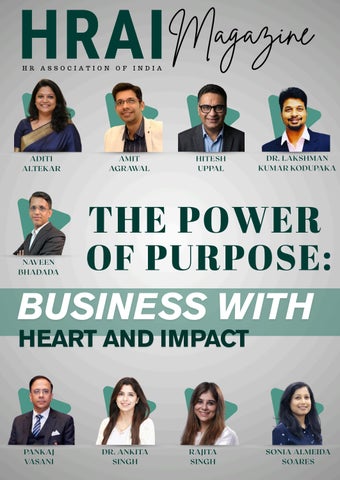







THE POWER OF PURPOSE – BUSINESS WITH THE POWER OF PURPOSE – BUSINESS WITH
HEART AND IMPACT HEART AND




HRAI firmly believes in the power of teamwork and the value it brings. When diverse talents and perspectives come together, something extraordinary happens. The collective synergy we create goes beyond what any individual can achieve alone and together we see the potential to make a lasting impact on the world.
In today’s evolving business landscape, success is no longer defined by performance alone. It is shaped by purpose by organizations that operate with clarity, responsibility, and a commitment to creating impact beyond profits. Businesses that lead with heart are the ones that inspire trust, foster innovation, and build resilient cultures.
This edition brings forward voices that are quietly yet powerfully influencing change by embedding purpose into strategy, building sustainable systems, and driving impact that extends beyond business outcomes. Their leadership reflects a balance of performance and purpose, where growth is aligned with long-term value creation
As you turn these pages, we hope these insights encourage reflection, spark meaningful dialogue, and reinforce a simple truth: organizations that lead with purpose don’t just succeed they create impact that lasts
96,000+ FOLLOWERS ON LINKEDIN

A GROWING COMMUNITY OF PROFESSIONALS ENGAGING WITH HRAI’S INSIGHTS, INITIATIVES, AND INDUSTRY CONVERSATIONS.
Founded by Dr. Ankita Singh, the HR Association of India (HRAI) drives industry-led initiatives and curates prestigious recognitions for organizations, emerging professionals, and trailblazing women across the business ecosystem. HRAI serves as a platform for learning, collaboration, and recognition, bringing together professionals and subject-matter experts from across industries.
What We Do
Industry initiatives and professional forums
Awards, recognitions, and curated listings
Knowledge-sharing through talk shows, panels, and articles
Community-building for HR and business professionals
Organizations We’ve Engaged With Lenovo, Hindustan Unilever, Biocon Biologics, IHG Hotels, L&T, CBRE, Sutherland, Capgemini, EY, and more.
Elite voices such as Dr. TV Rao, Harjeet Khanduja, and Prasenjit Bhattacharya have been featured in HRAI’s one-on-one talk shows, contributing practical insights and real-world perspectives for professionals.
HRAI publishes thought-provoking articles authored by senior professionals from organizations such as Reliance Jio, Times of India, KPMG, Eveready, Volvo, and more.
HRAI curates an annual list of features recognizing exceptional professionals and changemakers aligned with a central theme each year. 23 of 2023 | 24 of 2024 | 25 of 2025 . Notable organizations featured include: Adani, Amazon, Flipkart, Samsung, Myntra, Uber, Raymond, and more.
For HR professionals in India, HRAI offers unparalleled opportunities to connect with like-minded peers, learn from experts, and gain recognition for their hard work and achievements. By joining HRAI, HR professionals can stay updated on the latest trends, best practices, and strategies that can help them take their careers to the next level.


PANKAJ VASANI
GROUP CFO , CUBE HIGHWAYS TRUST
DR. ANKITA SINGH FOUNDER, HR ASSOCIATION OF INDIA
RAJITA SINGH
CPO – INDIA & GLOBAL DELIVERY HR LEADER, KYNDRYL 42
SONIA ALMEIDA SOARES DIRECTOR – PEOPLE & CULTURE, VOLVO GROUP 46

The Soul in the Machine: Why Purpose is the Only KPI That Matters
Let’s be honest: in the high-octane corridors of corporate leadership, we have become experts at the "What" and the "How."
We track digital adoption, attrition percentages, and HCM ROI with surgical precision. But as we navigate 2026, a profound shift is occurring The most resilient organizations aren't just those with the most advanced tech stacks; they are the ones with a detectable heartbeat.
"The Power of Purpose" isn’t a soft-culture buzzword. It is the foundational architecture of a high-impact Employee Experience (EX) and, ultimately, the greatest hedge against talent volatility.
The Lighthouse vs. The Spotlight
It is easy to operate in "Spotlight Mode"focusing on the immediate wave: the next hiring surge, the quarterly review, or the latest compliance update This is functional, but it can also be exhausting for a workforce.
Purpose is the Lighthouse. It provides a fixed point on the horizon that justifies the grind.
When a business operates with "Heart," work stops being a series of transactions and becomes a contribution to a collective objective. It addresses the "existential fatigue" of the modern workplace, giving every latenight system migration or complex problemsolving session a reason to exist beyond the paycheck.
Culture is Built in "Micro-Moments"
Culture isn't a grand design rolled out in annual town halls In reality, it lives in the "micromoments" of daily interaction - the spaces
where we have the most influence.
I recall two organizations undergoing identical digital transformations.
Company A was technically flawless but felt clinical; efficiency was high, but psychological safety was zero
Company B prioritized the human element
During a grueling system migration, the leadership didn't send a sterile "all-hands" memo Instead, they hosted a "Failure & Fries" session, sharing their own early-career blunders.
By making it safe to be human in a high-stakes environment, they unlocked discretionary effort - that elusive gold standard of engagement that no software can manufacture. They weren't just fixing bugs; they were stewarding a community of professionals committed to a shared goal.
The "Kintsugi" of Professional Resilience
There is a Japanese art form called Kintsugi, where broken pottery is repaired with gold lacquer. The cracks aren't hidden; they are highlighted, making the piece stronger and more beautiful because of its history.
In the employee lifecycle, integrity is the gold. When a team hits a crisis - be it restructuring or market shifts - a purpose-driven organization doesn’t just "patch" the problem with a cold policy It uses core values to mend the cracks through radical transparency and professional respect. This creates an experience where people feel valued not despite the challenges, but because of the character shown while navigating them
From Process Owners to Experience Architects
As we dive deeper into AI integration and digital literacy, the priority remains clear: Technology is the skeleton, but purpose is the soul.
Data tells us what is happening in the talent pipeline.
Purpose tells the professional behind the screen why their contribution matters.
Designing the employee experience with heart means recognizing that a genuine professional check-in or a culture of mentorship is just as vital to the ecosystem as a high-speed server. We aren't just managing "human resources " ; we are stewarding human potential.
In an era of rapid automation, "Business with Heart" is no longer a soft skill - it is a survival skill. We are entering a future where the best talent won't just trade their time for a salary; they will invest it where they find a sense of mission.
If an organization has a pulse but no purpose, it is merely a machine. But when you lead with heart, you create a high-impact movement As architects of the professional experience, our role is to ensure the "Machine" never outpaces the "Man "
Let’s stop building corporations that just process, and start cultivating communities that truly perform
Technology is the skeleton of Technology is the skeleton of the modern workplace, but the modern workplace, but purpose is its soul. purpose is its soul. Data tells Data tells us what is happening; heart us what is happening; heart tells us why it matters. tells us why it matters.
Aditi Altekar is a senior HR Technology Leader with 18 years of experience driving digital transformation across Indian conglomerates. A doctoral candidate in Digital Leadership, she focuses on the intersection of technology and human potential, advocating for organizational resilience through purpose-driven leadership.

Which is the highest-grossing Indian movie of all time?
The answer is Dangal The film crossed ₹2000 crore globally, an extraordinary milestone that no other Indian movie has come close to matching in the past decade. But the more important question is not what it earned, but why it achieved such scale. At first glance, one might attribute its success to Aamir Khan’s star power or its wide release across thousands of screens However, that explanation does not hold when compared with other big-budget films. Bharat, starring Salman Khan, also released on over 4000 screens, yet it earned less than 20% of what Dangal did. Clearly, something deeper was at play
There are many ways movies have attempted to reach that number Bahubali did that by creating curiosity “Katappa ne bahubali ko kyun mara?” However, the differentiator for Dangal was the strong storytelling and the idea behind the story.
The core idea, “Mhari choriyan choron se kam hain ke?” resonated far beyond entertainment. It represented belief, aspiration and social change Audiences did not just watch the film. They connected with its purpose.
Movies may be seen as entertainment, but they are also a business and the audience that buys movie tickets is the same audience that buys products and services. These consumers do not merely purchase the products They buy the stories and meaning behind the products.
Consider a simple product like shampoo. The functional benefit is straightforward. Cleaning hair. The formulation is easily replicable Yet, consumers do not choose brands purely based on ingredients. They choose the story associated with the brand


Mamaearth, for instance, positioned itself around safe, toxin-free and natural products, while also emphasizing environmental responsibility through initiatives like tree plantation. Customers do not just buy shampoo, they buy into a purpose that aligns with their values.
This is the essence of purpose-driven leadership. Expanding the organization’s mission beyond products to something more meaningful and impactful. When leaders clearly articulate and consistently act on a larger purpose, they create deeper emotional connections with customers and stronger alignment within their teams.
The impact of such leadership is not just anecdotal It is backed by data A Deloitte study found that organizations with a clear sense of purpose experience 30% higher levels of innovation and 40% higher employee retention compared to those without one. Purpose acts as a unifying force, aligning decisions, energizing teams and sustaining long-term performance.
Several global organizations exemplify this approach. Patagonia’s mission, “We’re in business to save our home planet” guides their
every strategic choice from using recycled materials to contributing a portion of sales to environmental causes.
Similarly, Unilever under former CEO Paul Polman embedded sustainability into its business strategy through the Sustainable Living Plan, demonstrating that purpose and profitability can reinforce each other rather than compete.
Purpose-driven leadership also plays a critical role in attracting and retaining talent. Today’s workforce, particularly younger generations, seeks meaning in their work Organizations that offer a compelling purpose see higher engagement, stronger loyalty and a greater sense of pride among employees
However, the purpose must be authentic. It cannot be reduced to a marketing narrative Leaders must ensure that their organization’s actions consistently align with its stated values. When there is a gap between words and actions, companies risk being perceived as engaging in “purpose-washing” which can quickly erode trust.
Ultimately, the lesson is clear. Products can be replicated and strategies can be imitated, but a genuine purpose creates belief. And it is this belief that transforms outcomes, turning a film into Dangal and an organization into something far more enduring than a business, a movement
Harjeet Khanduja is an international speaker, author, poet, influencer, inventor and an HR leader. He is also known as RK Laxman of Business He is currently working as the Senior Vice President HR at Reliance Jio. He has 4 published patents and authored 9 bestseller books. Harjeet has been a LinkedIn Power Profile, TEDx speaker, Guest Faculty at IIM Ahmedabad and XLRI, Board Member of Federation of World Academics, Global Thought Leader, Global Digital Ambassador Harjeet features in Top 200 Global Leadership Voices and ET Top 20 HR Influencers.
“The purpose of life is not to be happy. It is to be useful, to be honorable, to be compassionate, to have it make some difference that you have lived and lived well.”
— Ralph Waldo Emerson


Do businesses need to “balance” profit with purpose? I never believed that For decades, the boardroom conversations treated profitability and societal responsibility as opposing objectives, as though one inevitably diluted the other. In reality, both are complementary forces The modern business landscape has moved far beyond the stage where sustainability was discussed only in CSR reports or corporate philanthropy initiatives. Today, governance, transparency, and sustainability are appearing prominently in balance sheets, investor presentations, and capital market strategies
Responsible business practices are no longer just matters of heart; they are becoming fundamental to business growth, competitive advantage, and long-term profitability I often use a simple analogy. Asking why companies invest in sustainability instead of maximizing short-term profits is like asking a farmer why they plant seeds rather than eating or selling them. Heis preparing for the harvest season.
A few years ago, while delivering a keynote on ESG, I spoke about how sustainability initiatives were already influencing business outcomes in subtle but powerful ways At that time, the conversation was largely framed around regulatory compliance and reporting obligations. However, the discussion gradually evolved into something deeper, a strategic lens through which organizations would need to view their future.
Studies suggest over 3/4 of consumers prefer th
brands that demonstrate strong environmental or social commitments. Investor sentiment mirrors this shift, with a large majority of institutional investors now integrating ESG factors into their investment decisions. The message from markets and consumers alike is becoming increasingly clear: purpose is no longer peripheral to business strategy, it is rapidly becoming a source of competitive advantage.
In many ways, ESG initiatives now function like an insurance premium for the future business model They help companies prepare for risks that traditional metrics may not fully capture like climate disruptions, resource scarcity, regulatory shifts, and changing consumer expectations. Ignoring societal impact can prove costlier. Consider the consequences of a major supply chain disruption caused by a climate event. A factory forced to shut down due to water scarcity is far more expensive than a factory investing in water treatment.
Purpose in Action: Lessons from Corporates Across India’s corporate landscape, several organizations are demonstrating how purposedriven strategies can translate into measurable business outcomes Tata Steel has implemented efficiency initiatives under its Industrial Byproducts Management Division (IBMD) focusing on 100% solid waste utilization generating substantial savings. UltraTech Cement’s platform GREENVANTAGE focuses on decarbonization, water stewardship, and biodiversity management to reduce carbon footprint and conserve natural resources, that turned one of the most powerful cost-saving engines in the cement sector ITC’s waste-towealth initiatives, specifically the Well-being Out-of Waste (WOW) programme has transformed waste management into a
profitable circular economy model.
Financial markets are also reinforcing this shift. Green bonds are helping Renewable energy companies to raise capital in global markets, attracting investors seeking sustainable investment opportunities These initiatives not only provide access to diversified sources of capital but also strengthen investor confidence while often lowering the cost of funding Governance and sustainability have become business imperatives, and can create tangible economic value when embedded into core business models.
Another driver of this transformation is the changing expectations of young consumers and employees I recall delivering session at a leading B-School and posing a simple question: given a choice, would they prefer to buy from a Company that cares about environment, from a company whose products are simply popular, or from company that offers the lowest price? Almost the entire cohort chose the first option.
That moment reinforced one reality: new gen professionals do not wish to be associated with organizations that fail to demonstrate genuine care. For them, purpose is not about marketing, it’s a decision criterion Increasingly, millennials and Gen Z prefer working for organizations aligned with social responsibility, even at lower compensation For competing businesses, purpose therefore becomes not only a reputational advantage but also a talent strategy, and strengthening long-term brand loyalty.
Leadership, Integrity, and the Ecosystem of Trust
Over the years serving as CFO, I have often found that more than strategy and capital, organizations require a sense of direction anchored in purpose. Numbers may guide operational decisions, but purpose provides the moral and strategic compass that remains standing quietly when the noise of quarterly targets fades away.
True excellence in business lies in choosing responsible practices even when shortcuts are available Regulations may mandate processes, but intent comes from leadership and culture. In my experience, most poor corporate practices do not originate from bad intent. They often begin with good people operating within flawed ecosystems that reward short-term gains over long-term responsibility. Strengthening governance, improving transparency, and enhancing disclosure frameworks are therefore essential to building trust with stakeholders
A common argument against sustainability initiatives is that their benefits are difficult to measure. Yet organizations routinely measure the cost of office utilities, supply chain logistics, or even the coffee served in corporate cafeterias. If those metrics can be measured, so can the cost of carbon emissions, water consumption, and waste generation More importantly, organizations can measure the cost of not managing them, like lost productivity, supply chain disruptions, regulatory penalties, or reputational damage
Leadership in the coming decade will be defined not only by strategic vision or financial discipline, but also by clarity of purpose. Businesses that integrate societal value into
their core strategies will be better positioned to navigate economic volatility, regulatory shifts, and evolving stakeholder expectations.
Profit and purpose, when aligned thoughtfully, create a powerful virtuous cycle. Customers trust responsible brands, employees feel inspired by meaningful work, investors reward long-term resilience, and communities develop confidence in corporate institutions Purposedriven leadership is therefore not just about idealism, it is about foresight Organizations anchored in purpose will continue to thrive because they understand something fundamental: profit may drive quarterly success, but purpose-driven leadership and responsible business practices sustain success for generations.
Amit Agrawal, a seasoned BFSI leader, with over 2 decades of experience, havinghave played key roles of CFO and COO etc (at MD & President levels), at MNCs and Listed Groups Organizations. He's now serving at Board of Directors, Advisory Board, and as a Mentor Recognized for Governance,Strategy, M&As, and AI's unique adaptation into the Industry, Amit possesses an exceptional blend of academics being a Chartered Accountant, Management Graduate from IIM- Bangalore, a CFA (USA), and a Company Secretary.
business Responsible business
practices are no longer practices are no longer just matters of heart; just matters of heart; they are becoming they are becoming fundamental to fundamental to business growth, business growth, competitive
competitive advantage, and long- advantage, and longterm profitability term profitability
Bestowed with awards such as “Global Inspirational Leader,” “Financial Express Influencer of the Year”, "CFO of the Year" for multiple years, “Distinguished Board & AI Visionary” "Most Influential CXOs of India" and “Lifetime Achievement Award in BFSI” his accolades reflect a profound impact in the industry Beyond boardrooms, he continues to inspire with his passion for Financial Services, ESG,Tech, Community Services, Entrepreneurship and a holistic leadership with ethical governance
SDG AMBASSADOR FOR DEI, ICON OF THE SDG AMBASSADOR FOR DEI, ICON OF THE ELECTION COMMISSION OF INDIA AND MO ELECTION COMMISSION OF INDIA AND MO NITI NITI AAYOG AAYOG
“Is your company helping the world or just legally extracting money from it?”
This uncomfortable question defines modern business.
For decades, success was measured by profit, growth, and shareholder returns. But today, work has become more than a livelihood it is a source of identity and meaning. Employees now ask a deeper question: What larger good does my work serve? As a result, companies are no longer just competing for customers they are competing for belief
The Hidden Cost of a Profit-Only Mindset
Many organizations don’t fail because of strategy, but because of disengagement. Employees complete tasks but lack initiative, creativity, and ownership. The root cause is not capability it is lack of meaning.
People don’t just want to earn; they want to matter When work connects to a larger impact, effort transforms into commitment. Without that connection, employees operate in “compliance mode,” leading to lower productivity, weak innovation, and higher attrition.
Work has evolved from a transaction to a source of purpose. Today’s professionals ask not only “What do I get?” but also “Who do I become?”
Purpose does not change job roles it changes how people experience them. Even routine tasks

gain significance when linked to a broader mission, increasing engagement and ownership across teams.
Purpose is often mistaken for CSR or philanthropy In reality, it is a strategic foundation. It answers a critical question: What positive change does our organization create?
When purpose is embedded into decision-making, it shapes hiring, culture, leadership behavior, and customer experience. It builds trust, strengthens loyalty, and improves retention. Increasingly, purpose is not separate from profit it is a pathway to it
While compensation matters, employees often leave due to lack of meaning, growth, and recognition
Purpose provides psychological fuel It builds resilience and intrinsic motivation. Without it, even small challenges feel overwhelming. With it, employees remain committed even during difficult periods.
Leadership in the Age of Meaning
Leadership today is no longer about control it is about interpretation Leaders must help people understand why their work matters.
A purpose-driven leader connects everyday tasks to real human outcomes. This shifts teams from supervision to self-motivation When people see impact, they take ownership, collaborate better, and perform beyond expectations
Customers Are Changing Too
Modern customers care about values, ethics, and transparency. They don’t just buy products they support brands they trust
Purpose strengthens credibility. While marketing creates awareness, authentic behavior builds loyalty. Inconsistent or unethical actions can quickly damage reputation in a highly connected world.
Internal Culture Advantage
Purpose-driven organizations create aligned, hightrust cultures Employees make decisions based on shared values rather than strict supervision.
This improves collaboration, speeds up decisionmaking, and fosters innovation. Purpose acts as an internal compass, guiding behavior even in uncertain situations.
Profit as an Outcome, Not the Only Objective
Purpose-driven businesses do not reject profit they redefine it Profit becomes the outcome of creating value for people.
Organizations focused only on short-term gains often face long-term costs such as high attrition and low trust In contrast, purpose encourages sustainable growth by strengthening relationships, reputation, and resilience.
A company with purpose operates with consistency treating employees with dignity, customers with honesty, and society with responsibility.
This builds resilience When people believe in an organization, they support it through change, contribute more, and stay committed beyond contractual obligations.
Purpose fulfills a fundamental human need to know that our work makes a difference Without purpose, organizations get compliance. With purpose, they get commitment
The future of business will be shaped not just by technology or capital, but by trust. And trust is built through purpose.
A company with purpose doesn’t just create revenue it creates relevance.
Sumit Agarwal is a celebrated SDG DEI Ambassador, motivational speaker, and LinkedIn Top Voice recognized for reshaping the DEI narrative in India and beyond. As an Icon of the Election Commission of India and a Mentor of Change for NITI Aayog, he has built a thriving ecosystem for professionals to connect, learn, and grow anchored in empathy and equity. With 350+ keynotes and a mission to help 1 million persons with disabilities thrive, Sumit is a powerful voice for inclusive transformation
Over a hundred years ago, Jamsetji Tata built steel plants and hydroelectric projects in India not because the returns were guaranteed, but because a young nation needed them. That simple idea that a business should serve something larger than its own balance sheet has been part of Indian business thinking for a very long time. What is new is the growing proof that this approach also works financially. Companies that operate with a clear sense of purpose consistently outperform those that chase short-term profits alone
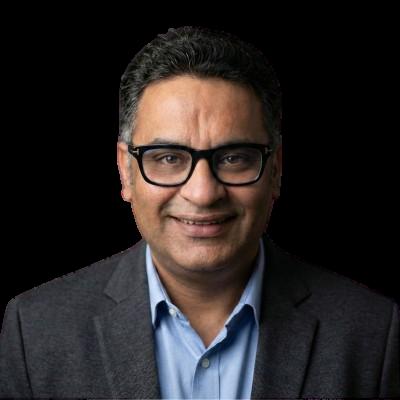
Look around India today and you will find this playing out in very real ways. Tata Trusts hold a majority stake in Tata Sons, which means a large share of the group ’ s earnings flow back into education, healthcare, and community development Mahindra Group built its entire corporate identity around the idea of “Rise” encouraging people and communities to grow. Godrej runs a “Good & Green” programme focused on waste reduction and environmental sustainability These are not token gestures or annual report footnotes. These are choices woven into how these companies spend money, hire people, and make decisions every single day India actually led the world on this front. Back in 2014, we became the first country to make corporate social responsibility spending a legal requirement. Since then, the momentum has only grown SEBI now requires the largest listed companies to report on sustainability in a structured, transparent way What was once considered a “nice to have” has become a boardroom priority.
But here is the part that matters most to anyone in HR, and it is surprisingly simple: people want to work for companies that stand for something. More than half of India’s population is under 35. This generation does not just look at salary and
designation when choosing an employer. They ask levels have been falling, not rising In a country with such a young and ambitious workforce, that should concern every business leader
Purpose is the most underused tool in solving this problem. When people feel connected to the mission of their organisation, they stay longer, work harder, and bring more energy to what they do. It is not complicated. A teacher who believes in the school stays A doctor who trusts the hospital stays. And an employee who sees meaning in the company ’ s work stays too. As a CFO, I have seen this shift from close quarters. Finance was once about managing costs and reporting numbers Today, it is also about asking are we investing in things that create lasting value, not just quarterly results? At Magicbricks, we operate in real estate, a sector where purpose has very tangible meaning Nearly a third of new premium housing projects in India now include features like rainwater harvesting, green materials, and energy-efficient design India leads the world in LEED Zero-certified buildings. With most of our 2030 urban infrastructure still to be built, we have a rare chance to build it right sustainably, transparently, and with the homebuyer’s long-term interest at heart
Purpose does not mean sacrificing profit It means building a business where profit and positive impact go hand in hand. The best-run Indian companies have already figured this out The ones that will lead in the next decade are those that put purpose at the centre of every decision they make from the boardroom to the shop floor.
That is not idealism. That is good business.
profitable circular economy model. Financial markets are also reinforcing this shift Green bonds are helping Renewable energy companies to raise capital in global markets, attracting investors seeking sustainable investment opportunities. These initiatives not only provide access to diversified sources of capital but also strengthen investor confidence while often lowering the cost of funding. Governance and sustainability have become business imperatives, and can create tangible economic value when embedded into core business models.
Another driver of this transformation is the changing expectations of young consumers and employees. I recall delivering session at a leading B-School and posing a simple question: given a choice, would they prefer to buy from a Company that cares about environment, from a company whose products are simply popular, or from company that offers the lowest price? Almost the entire cohort chose the first option
That moment reinforced one reality: new gen professionals do not wish to be associated with organizations that fail to demonstrate genuine care. For them, purpose is not about marketing, it’s a decision criterion Increasingly, millennials and Gen Z prefer working for organizations aligned with social responsibility, even at lower compensation. For competing businesses, purpose therefore becomes not only a reputational advantage but also a talent strategy, and strengthening long-term brand loyalty
Over the years serving as CFO, I have often found that more than strategy and capital,
organizations require a sense of direction anchored in purpose Numbers may guide operational decisions, but purpose provides the moral and strategic compass that remains standing quietly when the noise of quarterly targets fades away.
True excellence in business lies in choosing responsible practices even when shortcuts are available Regulations may mandate processes, but intent comes from leadership and culture In my experience, most poor corporate practices do not originate from bad intent. They often begin with good people operating within flawed ecosystems that reward short-term gains over long-term responsibility Strengthening governance, improving transparency, and enhancing disclosure frameworks are therefore essential to building trust with stakeholders
A common argument against sustainability initiatives is that their benefits are difficult to measure. Yet organizations routinely measure the cost of office utilities, supply chain logistics, or even the coffee served in corporate cafeterias If those metrics can be measured, so can the cost of carbon emissions, water consumption, and waste generation More importantly, organizations can measure the cost of not managing them, like lost productivity, supply chain disruptions, regulatory penalties, or reputational damage.
Leadership in the coming decade will be defined not only by strategic vision or financial discipline, but also by clarity of purpose. Businesses that integrate societal value into their core strategies will be better positioned to navigate economic volatility, regulatory
Purpose does not Purpose does not mean sacrificing mean sacrificing profit. It means profit. It means building a business building a business where profit and where profit and positive impact go positive impact go hand in hand. hand in hand.
Hitesh Uppal is the Chief Financial Officer of Magicbricks Realty Services Limited, India’s largest property portal, with over 23 years of experience in corporate finance, capital markets, and business transformation.
A Chartered Accountant, he has been instrumental in driving strategic initiatives including mergers, acquisitions, fundraising, and pre-IPO readiness. Known for his strong focus on finance-tech integration, governance, and risk management, he has played a key role in strengthening Magicbricks’ financial performance and market position.
A recipient of multiple industry accolades, Hitesh is recognized for combining strategic vision with execution to drive sustainable growth.

"The
purpose of business is to create and keep a customer."
Peter Drucker
For decades, business success was measured primarily through financial indicators such as profitability, market share, and shareholder returns While these metrics remain important, the expectations placed on modern organizations have evolved significantly. In today’s environment shaped by rapid technological change, artificial intelligence, climate challenges, and rising stakeholder expectations companies are increasingly evaluated not only by how much profit they generate, but by the purpose they serve and the impact they create.
Purpose-driven organizations operate with a clear understanding of why they exist beyond financial gain. Purpose defines how a company contributes meaningfully to employees, customers, communities, and society It acts as both a strategic compass and a moral framework guiding leadership decisions, organizational culture, and long-term business priorities.
From the perspective of a Human Resources leader, purpose cannot remain a statement displayed on corporate websites or annual reports Its real value emerges only when it is embedded in everyday employee experience, leadership behavior, and organizational culture HR leaders therefore play a pivotal role in connecting business strategy with human values, ensuring that purpose becomes a lived reality across the organization.
One of the most significant shifts in the modern workplace is the transformation of employee expectations Today’s workforce seeks more than financial rewards; professionals increasingly look for meaning, growth, and societal contribution through their work This trend is particularly visible among younger generations entering the
workforce, who prioritize alignment between personal values and organizational missions
Organizations that successfully embed purpose into their culture often experience higher levels of engagement, innovation, and retention. Employees who believe their work contributes to a larger mission demonstrate stronger commitment, creativity, and ownership. In contrast, workplaces driven purely by transactional employment relationships frequently face disengagement and high attrition.
The importance of purpose has become even more pronounced in the age of artificial intelligence and digital transformation AI technologies are rapidly reshaping industries by automating routine tasks, enhancing decisionmaking capabilities, and redefining job roles While this transformation unlocks significant productivity gains, it also raises important questions about the future of work, workforce displacement, and ethical use of technology.
Technology leaders increasingly recognize that innovation must be guided by responsible leadership. Satya Nadella, CEO of Microsoft, has often emphasized the importance of empathy and culture in driving digital transformation. Under his leadership, Microsoft reshaped its philosophy from a “know-it-all” culture to a “learn-it-all” mindset, illustrating how purpose-driven leadership can influence both technology strategy and organizational culture.
Purpose therefore becomes a guiding principle for responsible innovation. Organizations must ask critical questions: Are we deploying technology ethically? Are we preparing our workforce with future-ready skills? Are we
DR. LAKSHMAN KUMAR
ensuring that technological progress benefits society rather than widening inequality?
Many organizations are responding by investing in continuous learning and workforce capability development. Instead of viewing automation purely as a cost-reduction strategy, purposedriven companies focus on empowering employees with new capabilities that enable them to thrive in a digital economy
Across industries, organizations are establishing reskilling and upskilling initiatives that help employees transition into emerging roles in areas such as data analytics, artificial intelligence, cybersecurity, and digital engineering These efforts reflect a broader shift in corporate thinking technological advancement should enhance human capability rather than replace it
Human Resources leaders play a critical role in building these future-ready learning ecosystems. By designing continuous learning platforms, internal mobility frameworks, and skill development programs, HR ensures that employees remain adaptable in an evolving technological landscape.
Another key dimension of purpose lies in its influence on organizational culture and leadership behavior Culture is not defined by corporate slogans but by the everyday decisions leaders make. When leaders consistently demonstrate integrity, transparency, and accountability, they reinforce the credibility of the organization’s purpose.
Embedding purpose into organizational culture requires deliberate action. Recruitment strategies must focus not only on technical
competence but also on alignment with organizational values Leadership development programs must cultivate leaders who combine strategic thinking with empathy and ethical judgment Performance management systems should reward collaboration, innovation, and long-term impact rather than only short-term results.
Purpose-driven organizations also tend to demonstrate stronger commitment to Environmental, Social, and Governance (ESG) principles. Investors, regulators, and customers increasingly expect companies to operate responsibly in areas such as environmental sustainability, social equity, and ethical governance
Larry Fink, CEO of BlackRock, highlighted this shift when he noted that “ purpose is the animating force for achieving profits.” His perspective reflects a growing consensus among global investors that sustainable business success depends on balancing economic performance with societal responsibility.
Human Resources plays a vital role in advancing ESG priorities within organizations. By fostering inclusive workplaces, promoting ethical leadership, and implementing equitable talent practices, HR contributes directly to the social dimension of corporate responsibility. Initiatives related to diversity, inclusion, employee well-being, and responsible workforce management are increasingly central to organizational credibility and long-term value creation.
From my experience in talent leadership within the global technology and digital engineering ecosystem, purpose becomes particularly
visible during periods of organizational transformation Rapid technological change often creates uncertainty among employees regarding skill relevance and career stability. Organizations that respond with transparent communication, reskilling opportunities, and internal mobility pathways build stronger trust with their workforce.
For example, companies that establish learning academies, mentorship programs, and internal career mobility platforms during digital transformation initiatives send a powerful message that employees remain central to the organization’s long-term vision These initiatives reinforce the belief that technology should augment human potential rather than replace it.
Purpose also extends beyond the internal boundaries of organizations. Businesses increasingly operate within interconnected ecosystems involving educational institutions, startups, communities, and governments. Purpose-driven organizations actively engage in initiatives that promote digital literacy, sustainability, and community development
Such engagement strengthens both societal impact and corporate reputation Companies that contribute meaningfully to society build stronger stakeholder trust and long-term brand credibility. However, purpose must remain authentic and actionable. Stakeholders today can easily identify when purpose statements are disconnected from real organizational practices
Authentic purpose requires alignment between strategy, leadership behavior, and operational decisions.
balance between technological advancement and human values will become increasingly important. Machines will continue to enhance analytical capabilities and productivity, but uniquely human qualities such as empathy, creativity, ethical reasoning, and collaboration will remain indispensable
Purpose therefore becomes the bridge that connects technological innovation with human-centered leadership.
Organizations that embed purpose deeply into their strategy will enjoy several long-term advantages, including stronger talent attraction, higher employee engagement, resilient cultures, and sustained stakeholder trust
Ultimately, the power of purpose lies in its ability to transform business from a purely economic activity into a platform for meaningful societal progress Businesses that lead with purpose recognize that profitability and impact are not opposing goals; rather, sustainable profitability often emerges from creating genuine value for people and communities
For HR leaders, this evolving landscape presents a profound responsibility Beyond managing traditional talent processes, HR now plays a central role in shaping culture, enabling responsible leadership, and guiding workforce transformation in the AI era.
Organizations that successfully combine technology with humanity, innovation with responsibility, and strategy with purpose will define the future of leadership in the decades ahead In the final analysis, the most successful businesses will not be those that
merely adopt advanced technologies, but those that use technology to amplify human potential and create lasting positive impact
Purpose becomes Purpose becomes the bridge that the bridge that connects connects ttechnological echnological innovation with innovation with human-centered human-centered lleadership. eadership.
Dr. Lakshman Kumar Kodupaka is a strategic and results-driven global talent acquisition leader with over two decades of experience in shaping endto-end hiring strategies, workforce planning, and talent transformation for digital engineering and technology services organizations across India, the USA, and APAC. He currently leads Talent Acquisition for Digital Engineering Services at Sutherland, where he focuses on building scalable, future-ready talent ecosystems and delivering data-driven, compliance-first hiring solutions aligned with business-critical objectives.
DR. LAKSHMAN KUMAR KODUPAKA
“Business has to give people enriching, rewarding lives… or it’s simply not worth doing.”
— Richard Branson
In an era where profit margins dominate headlines, a quiet revolution is reshaping corporate landscapes: businesses led by purpose In the past, the success of a business was measured almost entirely by numbers - revenue growth, market share, and profit margins While these metrics still matter, the definition of success in business is evolving Today, companies are increasingly judged not only by how much money they make, but also by the difference they make. This shift has given rise to a powerful idea: purpose-driven business enterprises that operate with both financial goals and a meaningful mission
Purpose in business goes beyond a catchy tagline or a corporate social responsibility report It represents a deeper commitment to creating value for society while building a sustainable and profitable organization. When businesses operate with heart and impact, they don’t just sell products or services; they solve problems, uplift communities, and inspire trust.
At its core, purpose answers a simple but powerful question: Why does this business exist beyond making money? A purpose-driven company seeks to create a positive impact on people, communities, and the planet.
This does not mean abandoning profit On the contrary, purpose and profit often strengthen each other When a business aligns its operations with a meaningful mission, it tends to build stronger relationships with customers, employees, and stakeholders These relationships translate into long-term growth and resilience.
Consider companies that focus on environmental sustainability, social equity, or community empowerment Their purpose becomes the guiding force behind their decisions from product design and supply chains to marketing and partnerships
As a result, their work resonates with people who share the same values
Modern consumers are more informed and conscious than ever before. They care about how products are made, where materials come from, and whether companies treat workers fairly. Transparency and authenticity are no longer optional, they are expected
Purpose-driven businesses respond to this shift by embedding values into their operations. Customers are more likely to support brands that align with their beliefs, and employees increasingly want to work for organizations that stand for something meaningful
Research consistently shows that companies with strong missions attract more loyal customers and more motivated employees. When people believe in the purpose behind their work or purchase, they feel connected to something larger than a simple transaction.
In other words, purpose transforms business from a purely commercial activity into a shared journey toward positive change.
One of the most powerful aspects of purposedriven organizations is their focus on people Traditional business models often prioritized efficiency and profit above all else. While efficiency remains important, modern organizations are recognizing that long-term success depends on human well-being
Companies with heart invest in their employees, foster inclusive cultures, and encourage creativity and collaboration. When people feel valued and respected, they bring more energy and passion to their work. This leads to higher
productivity, stronger innovation, and better customer experiences
Purpose also shapes leadership. Leaders who prioritize impact over short-term gain tend to make decisions that benefit both the organization and society They view business not just as a mechanism for profit but as a platform for meaningful change.
Interestingly, purpose often drives innovation When businesses commit to solving real-world challenges such as environmental sustainability, education access, or healthcare affordability they are pushed to think creatively.
For example, companies focused on reducing environmental harm often develop new materials, cleaner technologies, and more efficient production processes. Similarly, businesses dedicated to improving community welfare may create products and services that address previously overlooked needs.
genuinely cares about its mission, they respond with loyalty and support
This trust creates long-term value. Unlike shortterm strategies that chase quick profits, purpose-driven approaches build enduring relationships that sustain businesses over time
While the benefits are clear, integrating purpose into business is not always easy. It requires commitment, clarity, and sometimes difficult choices.
Companies must ensure that their purpose is authentic and reflected in real actions. If a company claims to support social causes but fails to demonstrate meaningful change, it risks being perceived as insincere or opportunistic
Naveen Bhadada
Purpose encourages organizations to look beyond conventional strategies and explore new possibilities. By doing so, they not only contribute to solving societal problems but also unlock new markets and opportunities
Trust is one of the most valuable assets any business can have. In an era where misinformation and skepticism are common, trust must be earned through consistent action.
Purpose-driven companies build trust by demonstrating integrity. They are transparent about their practices, accountable for their impact, and sincere in their commitments. When customers and communities see that a company
Aligning purpose with daily operations also demands strategic thinking. Businesses must find ways to balance financial sustainability with social impact, ensuring that both objectives reinforce each other rather than compete
However, organizations that successfully navigate these challenges often emerge stronger, more resilient, and more respected.
The idea of business with heart and impact is not a passing trend it is shaping the future of commerce. As global challenges such as climate change, inequality, and resource scarcity grow more urgent, businesses will play an increasingly important role in addressing them
Entrepreneurs and leaders of the next
generation are already embracing this mindset. They are building companies that aim not only to generate wealth but also to create meaningful change.
The businesses that thrive in the coming decades will likely be those that understand this balance combining innovation, profitability, and purpose into a unified vision.
Conclusion
Purpose gives business its soul It transforms organizations from profit-generating machines into forces for positive impact. When companies operate with heart, they inspire loyalty, foster innovation, and contribute to a better world
The power of purpose lies in its ability to connect economic success with human progress. In doing so, it reminds us that business, at its best, is not just about transactions it is about transformation.
As more organizations embrace this philosophy, the future of business will not simply be defined by what companies earn, but by what they give back to society. And that, ultimately, is the true measure of success.
“Purpose gives business “Purpose gives business its soul—it transforms its soul—it transforms organizations from organizations from profit-generating profit-generating machines into forces for machines into forces for positive impact.” positive impact.”
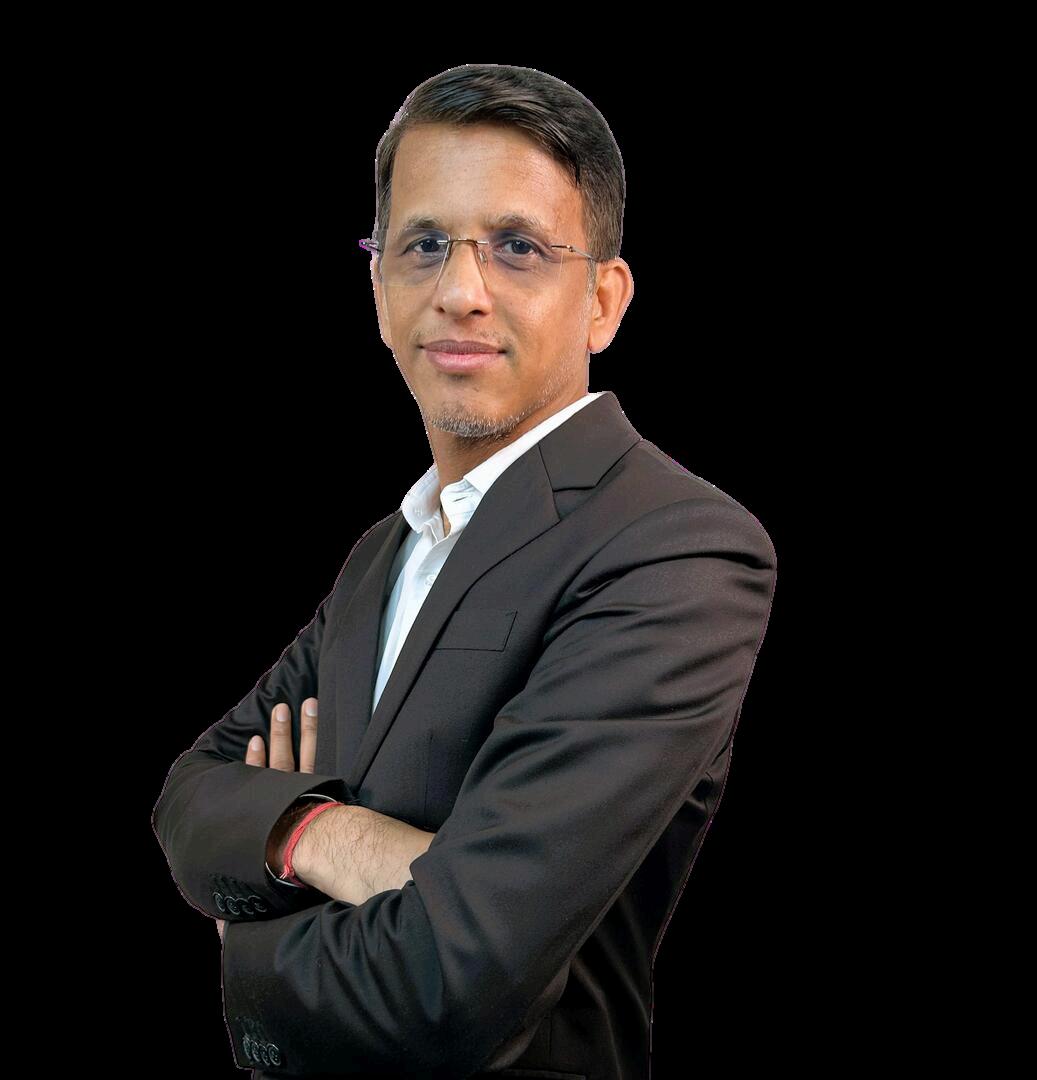
Naveen Bhadada is a finance leader who believes the true role of finance lies beyond numbers. With more than 2 decades of experience and currently serving as CFO at SUGAR Cosmetics, he has helped build financially resilient, growth-oriented organizations in fast-moving consumer environments. His work focuses on aligning strategy with disciplined execution, strengthening decision-making, and building future-ready finance teams. Known for his clarity of thought and people-centric leadership, Naveen is also a mentor and speaker, passionate about shaping the next generation of finance leaders
NAVEEN BHADADA
Purpose answers a fundamental question: why does a business exist beyond profit? When articulated with clarity and authenticity, purpose becomes a powerful force for innovation, trust, and growth.
Boardroom strategy often revolves around metrics such as revenue, margins, IRR, yield, return on equity, and market capitalisation. These indicators matter because they impose discipline and accountability Yet in an interconnected, complex world, numbers alone do not tell the full story of sustainable success
Purpose lies at the core of modern business leadership It guides strategic choices, shapes culture, and drives lasting value for organisations.
Businesses do not operate in isolation. They function within a wider ecosystem: employees, customers, communities, regulators, investors, and the environment Long-term success means recognising responsibilities to all these stakeholders.
Purpose-driven organisations remain profitableoften more so - because purpose strengthens resilience, builds trust, and encourages long-term thinking in capital allocation.
In sectors such as infrastructure, this perspective becomes particularly relevant Infrastructure is not merely an asset class measured through traffic volumes or toll revenues. It is an economic enabler that connects people to opportunity, facilitates trade, improves mobility, and drives regional development
When a highway reduces travel time between two cities, it does more than move vehicles efficiently It improves logistics, supports corridor businesses, and enables communities to access jobs,
healthcare, and education. Numbers may show toll collections and margins, but the true impact lies in creating economic lifelines.
This broader understanding of value helps businesses align financial returns with societal progress When both reinforce each other, the outcome is sustainable growth.
Purpose also influences how organisations respond during challenging times. Companies that understand their role within society tend to act with greater responsibility during crises, whether by supporting employees, maintaining essential services, or engaging constructively with communities. Such responses strengthen institutional credibility
Embedding purpose in business builds longterm value, trust, and resilience
In a fast-changing environment, leaders face trade-offs. There are regulatory changes, shifting stakeholder expectations, and investment decisions under uncertainty. Here, purpose acts as a strategic compass Purpose brings clarity to decisions that might otherwise appear purely transactional.
Sustainability and governance initiatives may sometimes be seen as compliance requirements Yet organisations guided by purpose treat them as parts of long-term value creation, not just obligations. This mindset encourages businesses to look beyond quarterly results and focus on enduring stewardship of assets and resources
Purpose also strengthens an organisation's internal fabric. Today’s workforce wants meaning in their work People want their contributions to matter, both to financial performance and to society When people believe in the organisation's
mission, they demonstrate greater ownership, creativity, and resilience Culture, in this context, becomes a strategic asset rather than a soft concept.
Companies with a strong sense of purpose often find that their teams collaborate more effectively and remain motivated even during periods of uncertainty or transformation.
Sustainable leadership is about serving society through purposeful action This secures lasting success for all stakeholders.
Finance with a Human Lens
For finance leaders, embracing purpose requires expanding the traditional definition of value Finance has focused on efficiency, compliance, and financial discipline. These responsibilities remain critical Yet modern finance leadership must consider how capital decisions affect society
This perspective does not weaken financial rigour; rather, it strengthens it
Investments in sustainability, safety, or community engagement do not always maximise short-term profit. Yet often they enhance longterm asset value, reduce risk, and strengthen trust.
Finance leaders translate purpose into measurable outcomes. Integrating environmental, social, and governance factors into financial frameworks makes purpose real in decision-making
Purpose, therefore, becomes an essential element in capital allocation, risk management, and performance evaluation, helping shape responsible growth
Building Trust in an Era of Scrutiny Trust has become one of the most valuable currencies in modern business.
Stakeholders today are more informed and engaged than ever. Investors assess not only performance, but also governance and sustainability. Communities expect businesses to aid local development. Regulators also now emphasise transparency and accountability
In such an environment, purpose-driven leadership builds credibility.
When organisations consistently demonstrate that they are guided by principles rather than convenience, trust naturally follows Over time, this trust becomes a powerful competitive advantage.
Companies that cultivate trust find it easier to attract long-term capital, retain talented employees, and establish enduring partnerships with governments and communities
The Leadership Imperative Embedding purpose into business ultimately requires leadership commitment. Leaders must make purpose the base for decisions and direction. This means aligning incentives with long-term value They should encourage ethical behaviour even when it is hard and maintain transparency with stakeholders Purpose is not demonstrated through grand declarations; it is expressed through consistent actions.
Leaders must see that purpose evolves with the organisation As businesses grow and industries change, a company ’ s purpose may be refined What remains constant is a
commitment to value beyond immediate financial gain
The Road Ahead
Organisations that balance purpose and performance gain trust, foster innovation, and deliver sustainable growth Successful companies ensure that profits and positive societal impact reinforce each other.
Global challenges such as climate change, urbanisation, and technological disruption require solutions that balance innovation and responsibility. Companies that embrace both will remain relevant and help build a more sustainable economy.
Purpose does not replace profit; it sharpens it. Businesses with heart and impact recognise that profitability often follows trust, innovation, and long-term thinking. In that sense, purpose becomes not merely an ethical aspiration but a strategic advantage.
Lasting organisations recognise that serving society not only benefits communities but also strengthens their own foundations, fostering a virtuous cycle of growth and trust.
Purpose does Purpose does not replace not replace profit; it profit; it sharpens it. sharpens it.
Senior finance and business leader with over two decades of experience in executive roles and as a board and audit committee member. Currently serving as Group Chief Financial Officer at Cube Highways Trust
He brings extensive expertise across finance, operations, legal, tax, treasury, and business strategy, with leadership experience spanning diverse sectors including infrastructure, telecom, FMCG, automotive, media, and technology, having worked with organizations such as Publicis Groupe, Vodafone, CocaCola, and Subros.
A multi-award-winning professional, he has been honored with accolades such as CFO of the Year (ICAI, 2023 & 2018) and the Professional Achiever Award He also holds an honorary doctorate for Excellence in Management.
His academic credentials include CA (India & England & Wales), CPA (Australia), executive education from IIM Bangalore, a law degree (Gold Medalist) from Delhi University, and international tax studies from Leiden University.

A few years ago, work had an address You knew where you were supposed to be on a Monday morning, what your role was, who you reported to, and if you stayed long enough roughly what came next. Careers moved upward, jobs had clear edges, and talent strategies were built around certainty. That version of work hasn’t vanished overnight, but it no longer sets the rules.
Today, work is far less about a building, a pin code, or even a fixed role It is about movement of skills, expectations, ambition, and choice. People are no longer waiting patiently for organisations to redesign work for them; they are redesigning it themselves. And they are already moving not just across cities or countries, but across roles, identities, and mindsets.
Hybrid work, global collaboration, and the rise of gig ecosystems haven’t simply changed where work happens They have changed why people work the way they do. It is telling that more than 70% of employees globally now expect flexibility to be the norm rather than a privilege That statistic is not about comfort or convenience it is about trust. This shift is not a temporary adjustment; it is a reset. And organisations still planning for a static workforce are feeling that tension every day.
For a long time, talent strategies relied on stability Job descriptions were clear, locations were fixed, and career paths were linear and reassuring. But reality had other plans The World Economic Forum estimates that nearly half of today’s core job skills will change within the next five years This is not a distant warning it is already unfolding, as technology, automation, and changing business priorities quietly redefine what competence looks like.
As a result, talent is no longer judged only by output It is judged by adaptability how quickly someone can learn, how comfortably they can operate in ambiguity, and how effectively they can apply what they know in unfamiliar situations. Agility has quietly become the most valuable skill in the room
People are stepping into evolving roles, covering gaps, working across teams, and learning while doing. Careers are beginning to resemble portfolios of experience rather than neat ladders marked by titles at every rung. Organisations that recognise this shift and move away from rigid role-based planning toward capability-based thinking are coping better with disruption not because they predict change more accurately, but because they respond faster. As one leader once put it bluntly, “Stop trying to fit people into roles Let the roles stretch around the people.”
There was a time when hybrid work felt experimental That debate is largely over Today, flexibility is a baseline expectation. Global surveys show that more than 60% of employees would seriously reconsider staying with an employer if flexibility were taken away. This reaction is not driven by convenience alone it is about dignity, autonomy, and mutual respect
Hybrid work has also forced organisations to rethink productivity Being visible is no longer the same as being effective, and time spent has given way to outcomes delivered Yet this is where many organisations stumble. When hybrid work is treated as a policy update rather than a cultural shift, cracks begin to appear Communication weakens, collaboration becomes uneven, and some voices quietly fade
into the background.
The real leadership challenge is not deciding where people work, but deciding how belonging is created when teams no longer sit together
The organisations getting this right are intentional They set clear expectations, design inclusive meetings, and use in-person time for trust-building rather than attendance checks.
Talent markets have expanded faster than most organisations anticipated. Hiring is no longer limited by geography Cross-border teams, remote global roles, and short-term international assignments have become normal ways of accessing skills. Today, more than one-third of organisations hire globally without relocation not as an exception, but as a deliberate strategy.
At the same time, employees are seeking global exposure in new ways. Not everyone wants to move countries, but many want meaningful global work projects, clients, and collaboration without uprooting their lives This shift brings opportunity, but it also brings complexity. Tax structures, labour laws, compliance requirements, time zones, and cultural nuance are no longer side conversations; they sit at the centre of talent strategy
Global mobility has moved from being a specialist HR process to a business-critical capability. As one team summed it up during a discussion, “Mobility isn’t about moving people anymore. It’s about letting work travel.”
The Gig Economy Is Not on the Fringe Project-based work is no longer peripheral to how organisations operate Freelancers,
consultants, and independent professionals now contribute deeply to organisational outcomes. Estimates suggest that over 40% of the global workforce engages in some form of gig or independent work, either full-time or alongside traditional employment.
For individuals, this offers autonomy and control. For organisations, it provides speed and access to specialised expertise But while access is easy, integration is hard. When gig talent is treated as purely transactional, outcomes remain transactional. When gig workers are given context, respect, and inclusion, the value they bring multiplies The future workforce will not be defined by who is “permanent” or “contractual,” but by how effectively different talent models work together.
Flexibility matters, and opportunity matters but talent does not move only for logistical reasons. People are quietly reassessing their relationship with work Across conversations and surveys, the pattern is clear: career growth, meaningful work, and trust in leadership consistently matter more than compensation alone.
People want relevance and honesty. They want work that fits into their lives rather than competes with it. Many are asking questions they once kept to themselves: Will I still matter here in a few years? Do they trust me, or simply monitor me? Is this work helping me grow, or just keeping me busy?
This is why agility in talent strategy is not only operational it is emotional Retention today is less about control and far more about credibility
Leading in a borderless, hybrid, multi-model world demands a fundamental shift in mindset. Control-based leadership struggles when teams are spread across locations, time zones, and contracts. What works instead is clarity, trust, and consistency
Leaders now need to prioritise outcomes over observation, communication over proximity, and care over authority. Expectations must be clear, feedback timely, and presence felt even when it is not physical. High-trust teams consistently outperform others, particularly in distributed environments Leadership today has less to do with being seen and more to do with being reliable As one insight captures it well, “Leadership isn’t about watching people work. It’s about knowing they will.”
Organisations that thrive today design talent strategies assuming movement rather than permanence. They invest in continuous learning, internal mobility, and reskilling, and they build systems that allow people to grow across roles and geographies without feeling they must leave the organisation to evolve.
At the same time, they rethink policies with fairness and realism, recognising that agility without structure creates confusion, while structure without flexibility creates exits. Agility is not chaos it is intentional design.
The future of work is not still, neat, or one-sizefits-all. Talent will continue to move across roles, borders, and work models. Organisations that try to slow this movement through rigid frameworks will struggle to remain relevant. Those that design for movement embracing
agility, enabling mobility, and respecting choice will attract people who do not just work for them, but grow with them.
In a truly borderless workforce, success will not be defined by where people sit It will be defined by how trusted, enabled, and connected they feel. And perhaps the simplest truth of all is this: work will keep changing, people will keep moving, and only organisations willing to move with them will last
Mobility isn’t about Mobility isn’t about moving people anymore. moving people anymore. It’s about letting work It’s about letting work ttravel. ravel.
Dr Ankita Singh is the CPO & Board Director, CIGNEX & Relevance Lab. With 22+ years in HR, primarily in the ITES sector, Ankita has driven transformation through performance-driven practices and inclusive culture. At CIGNEX, her leadership helped the company earn multiple “Great Place to Work” certifications (2017–2021). She has been recognized as “Woman Leader of the Year” by The Times of India Group and featured in Forbes India’s “Top 100 Managers.” Ankita holds an MBA in HR+IT, an Executive MBA from SCMHRD, and a Ph.D. in Management. A respected voice in the industry, Ankita blends strategic insight with a passion for people development and culture building.

For a long time, business conversations have revolved around targets, margins, and growth curves Those still matter, of course but something quieter is beginning to take center stage. Not loudly announced, not always documented, but deeply felt A shift from asking how much to asking why at all.
Purpose, in this context, isn’t a slogan or a polished paragraph on a website. It is the thread that quietly connects decisions, behaviors, and outcomes. When it is real, you can sense it not in presentations, but in how people show up every day.
There’s a noticeable difference between work that is performed and work that is believed in The former gets done; the latter carries energy.
A young employee once shared how she stayed late to fix an issue that technically wasn’t even her responsibility When asked why, her answer was simple “Because it matters to someone on the other side.” That shift from task to impact is where purpose begins to breathe.
It’s not about doing more; it’s about caring differently.
Care changes the quality of effort.
Many organizations have statements that speak of vision and values. But purpose reveals itself not in what is written, but in what is repeated.
It shows up in the choices no one announces:
The vendor selected even when cheaper options exist
The way feedback is handled when things go wrong
The patience extended when results take time
Purpose lives in patterns, not posters.
Values live in actions, not walls.
There is a subtle confidence in leaders who are guided by something deeper than immediate outcomes. They don’t rush decisions just to appear decisive They don’t react to every fluctuation with panic. Instead, they return to a core question Does this align with who we are trying to be?
That kind of leadership creates stability, even in uncertain conditions. People may not always agree with every decision, but they understand it
Clarity reduces the noise of doubt.
Purpose is not always dramatic. In fact, its strength often lies in repetition Doing the right thing once is admirable. Doing it repeatedly, even when it is inconvenient that’s where credibility is built
A small service business made it a rule to respond to every customer concern within a day, even if the solution took longer. Over time, customers stopped worrying about delays because they trusted the response. That trust didn’t come from a campaign It came from consistency.
Consistency builds what promises cannot.
People don’t always articulate it, but they can feel when something is genuine. A product may meet expectations, but the experience surrounding it can either feel transactional or thoughtful.
There’s a difference between being served and being considered
A store owner who remembers a returning customer’s preference doesn’t just make a sale; they create familiarity. That familiarity turns into comfort, and comfort into loyalty
People return where they feel seen.
Purpose as a Source of Resilience
Every organization faces moments that test its direction unexpected challenges, shifting markets, internal setbacks In such times, purpose acts less like a slogan and more like an anchor
It doesn’t remove difficulty, but it provides a reason to navigate through it
Teams that understand why they are doing something tend to endure more than those who are only told what to do.
Why sustains when energy fades.
The Subtle Link Between Impact and Growth
There’s often an assumption that focusing on impact slows down growth. But in many cases, it quietly strengthens it
When a business chooses to be mindful of resources, of people, of consequences it begins to notice opportunities that might otherwise be overlooked. Waste reduces. Relationships deepen Ideas emerge from places that efficiency alone would never reach Growth, then, doesn’t feel forced. It feels earned
Depth often precedes expansion.
Everyday Decisions That Shape Direction
Purpose is rarely decided in a single moment. It is shaped through a series of everyday choices, many of which seem too small to matter at the time.
Taking an extra minute to explain instead of rushing through Listening fully instead of preparing a quick reply
Choosing fairness over convenience
Individually, these choices may appear insignificant. Collectively, they define the character of an organization.
Small choices quietly shape identity.
When Work Feels Personal
There is a point where work stops feeling like an obligation and starts feeling like a contribution It doesn’t require grand gestures just a sense that what is being done matters to someone, somewhere.
An employee packing a product with care, a manager taking time to mentor, a team
ensuring quality even under pressure these are not separate acts They are expressions of the same underlying intent.
Purpose makes work personal without making it heavy.
Connection makes effort feel worthwhile.
Of course, staying aligned with purpose is not always easy. There will be moments when shortcuts seem tempting, when pressures push for quicker outcomes, when doing the right thing feels slower.
But these are precisely the moments that define credibility. Not when it is easy to choose well, but when it is difficult
Integrity shows most under pressure.
As business environments continue to evolve, one pattern is becoming increasingly clear people are paying attention, not just to what organizations deliver, but to how they operate.
The expectation is not perfection, but sincerity. Not grand declarations, but visible intent
Organizations that understand this don’t necessarily stand out because they are louder They stand out because they feel different.
Quiet sincerity outlasts loud claims.
Closing Thought
At its core, purpose is not something that needs
to be added to business. It is something that needs to be uncovered and practiced
It exists in the way people treat each other, in the standards they hold themselves to, and in the care they extend beyond obligation.
When that happens, business stops being just an exchange of value. It becomes a space where effort carries meaning, where growth carries responsibility, and where success feels shared
Purpose turns work into contribution.
RAJITA SINGH
Purpose is not what a Purpose is not what a business says—it’s business says—it’s what it quietly chooses, what it quietly chooses, again and again, when again and again, when no one is watching. no one is watching.
Rajita Singh is the Chief People Officer at Kyndryl India, overseeing HR operations Formerly leading HR at Broadridge Financial Solutions India, she played a pivotal role in enhancing the company ' s brand as an employer of choice Rajita is the youngest Convenor of the CII HR-IR Panel for the State and is actively engaged in NASSCOM Beyond work, she enjoys car racing, Bharatnatyam dancing, counseling, meditation, doodling, and reading

DIRECTOR – PEOPLE & CULTURE, VOLVO GROUP
Tina and Rahul collaborated on a strategic initiative and developed a well-thought-out proposal together. When it came time to present it to their leader, Rahul chose to do so alone. In the meeting, he positioned the idea largely as his own, briefly acknowledging that Tina had “contributed a few inputs ”
When Tina later asked why she hadn’t been included in the presentation, Rahul reassured her that a follow-up email would suffice and that he would copy her on it Over time, however, Tina began to realize that this wasn’t an isolated oversight but a pattern one where credit subtly shifted upward and accountability flowed downward.
Her trust in Rahul eroded. She confided in a colleague, and the story quietly circulated. What was telling was not the surprise but the lack of it Several team members had experienced similar behavior, yet no one had directly confronted Rahul He remained unaware, or perhaps unconcerned, about the growing perception around him.
The leader, focused on outcomes, chose not to intervene Rahul was considered a strong performer and had a long tenure in the organization. Results spoke louder than relational fractures
But something else was speaking too, quietly
Over the following months, team members began to exit Not dramatically Not confrontationally Just steadily. The leader found himself repeatedly hiring replacements, addressing symptoms rather than the underlying issue.
Performance had been protected Integrity had not.
And without integrity, trust, the invisible
infrastructure of any high-performing team had begun to collapse When integrity is strong, it goes unnoticed, enabling high performance and alignment. However, when it is weak, the absence is impossible to ignore Over time, cracks develop, showing up as risk, disengagement, attrition or weakened performance.
Warren Buffet has once quoted, “In looking for people to hire, you look for three qualities: integrity, intelligence, and energy And if they don’t have the first, the other two will kill you. ”
Integrity in leadership; what can u do as a leader?
A leader grounded in integrity naturally earns respect. People look up to them not because of their title, but because of who they are and how they show up A peer-reviewed study published in Frontiers in Psychology (available via PubMed Central), found that the leader behavioral integrity - the alignment between a leader’s words and actions, is positively associated with employee performance
The research suggests that this effect operates through increased trust and stronger relational support within teams.
Trust is the invisible Trust is the invisible infrastructure of any infrastructure of any high-performing high-performing tteam. eam.
As a leader, you have a choice. You can rely on positional power and authority to compel compliance, or you can cultivate such credibility and integrity that people choose to follow you Power may secure obedience. Integrity earns commitment.
The real shift is when we stop merely managing through control and start leading through character. Titles create managers whilst integrity creates leaders.
What this looks like in practice is often far simpler - and far more visible - than we think:
Integrity is built when what a leader says consistently matches what they do, because over time people place their trust not in intent, but in observed behaviour
It is strengthened when confidentiality is treated as sacred, recognising that once trust is broken, it rarely returns in its original form
It shows up most clearly when leaders remain anchored to their values, especially in moments where pressure or convenience makes it easier to drift away from them
It becomes visible in how fairly decisions are made, as people closely observe not just outcomes, but whether respect and impartiality are applied consistently
It is reflected in the ability to understand organisational dynamics without using them for personal gain, choosing contribution over manoeuvring
It is embedded, when we not only focus on outcomes but also on how are they achieved
and at what cost.
It is reinforced in how leaders speak about others in their absence, because respect that disappears when someone leaves the room rarely existed to begin with.
Ultimately, integrity is not self-proclaimed. The people around you decide whether you possess it. It is a reputation earned through repeated, observable behavior, and it can only be sustained through consistency
When selecting leaders, performance and competence are non-negotiable. But integrity must stand alongside them as an equally critical criterion. Without it, teams often operate with invisible undercurrents subtle tensions, mistrust, and unspoken reservations that are difficult to diagnose but deeply damaging.
Leaders high on integrity create psychological safety and clarity. They reduce politics, eliminate ambiguity around intent, and build cultures where trust is the default, not the exception.
When integrity consistently shows up at the top, it cascades It becomes embedded in norms, decision-making, and everyday behavior. Over time, doing the right thing stops being a heroic act and becomes the natural choice.
And that changes everything. Ask yourself this: do your people show up on Monday ready to contribute - or ready to survive? The answer tells you everything about the integrity of your culture
Integrity is not self- Integrity is not selfproclaimed—it is proclaimed—it is earned through earned through consistent, consistent, observable behavior. observable behavior.
Sonia Almeida Soares is a dreamer, a mother, and currently serves as Director –People & Culture at Group India With experience across multinationals like Honeywell, Praxair (Linde Group), and Group India, she has led strategic HR initiatives across diverse industry sectors. Her journey includes deep experience as an HR Business Partner, driving people strategies that align talent with business outcomes Sonia’s core areas of expertise include Diversity & Inclusion, Leadership Development, Culture Transformation, Talent Management, and Employer Branding. Passionate about creating inclusive and purpose-led workplaces, she believes meaningful impact starts with listening, collaboration, and continuous learning