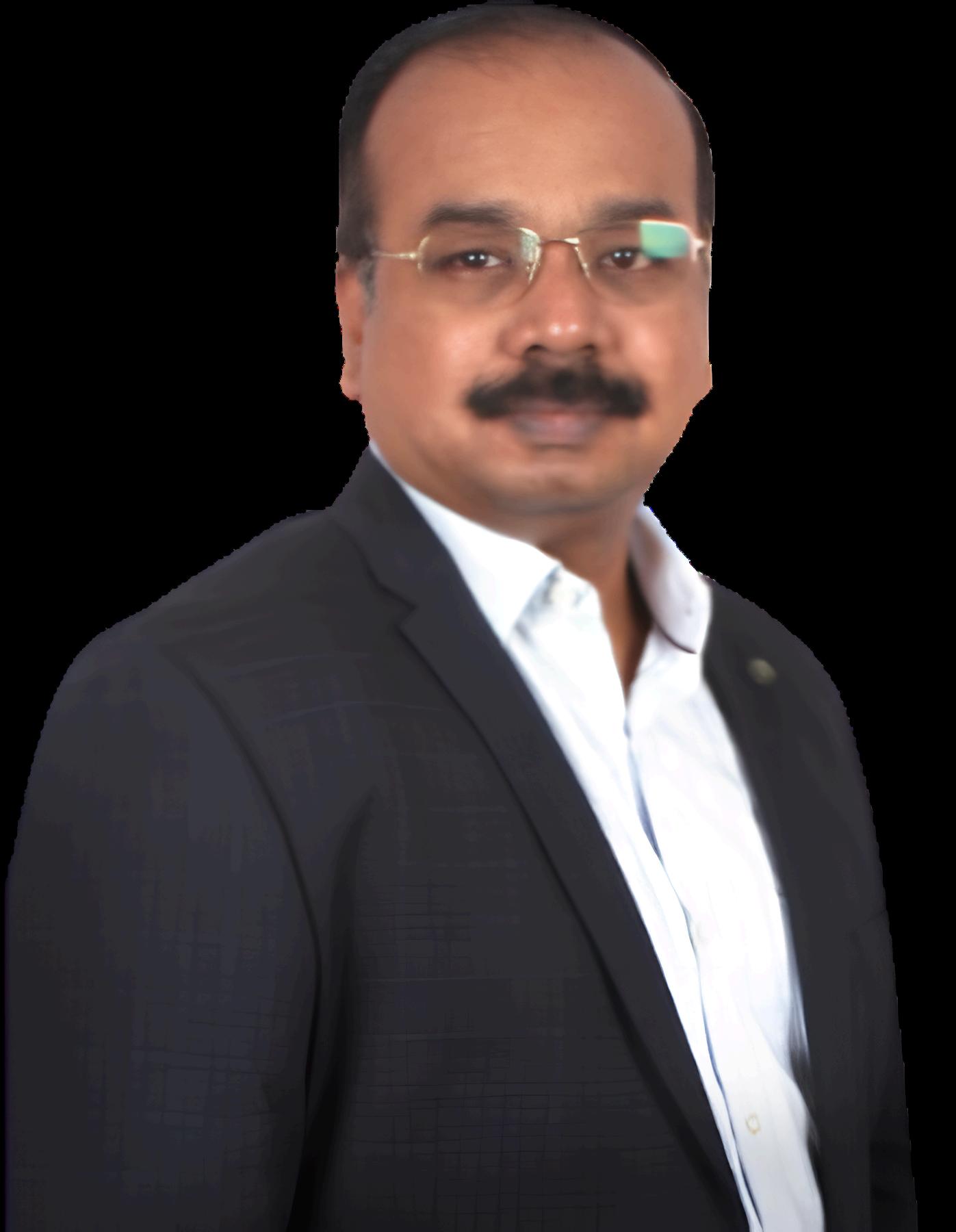
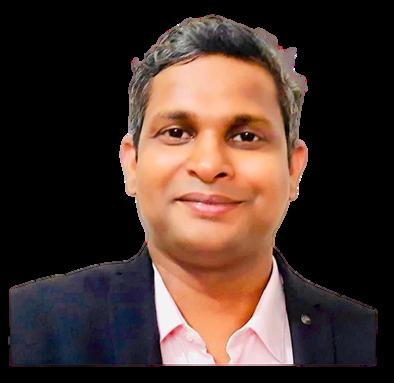
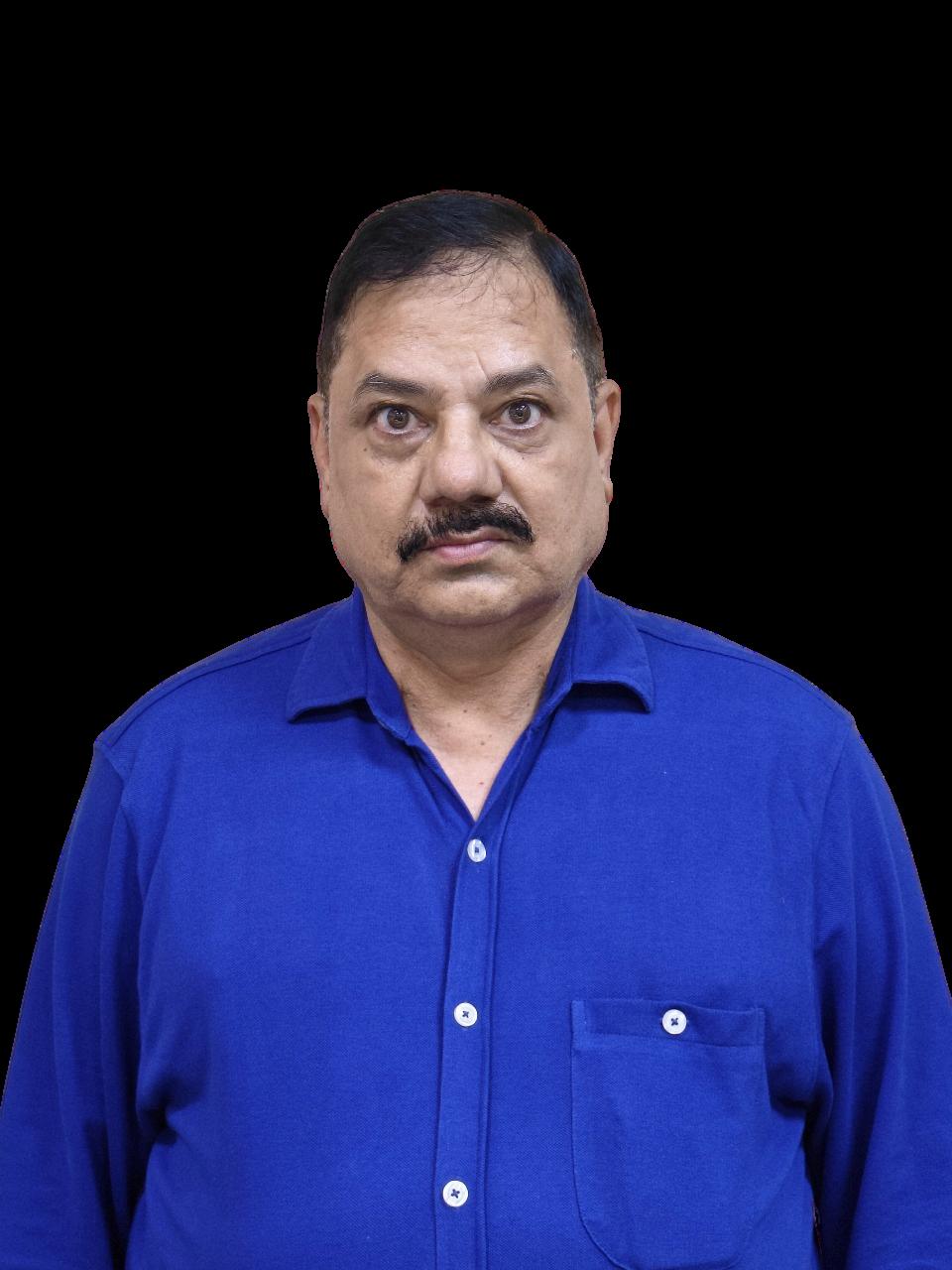
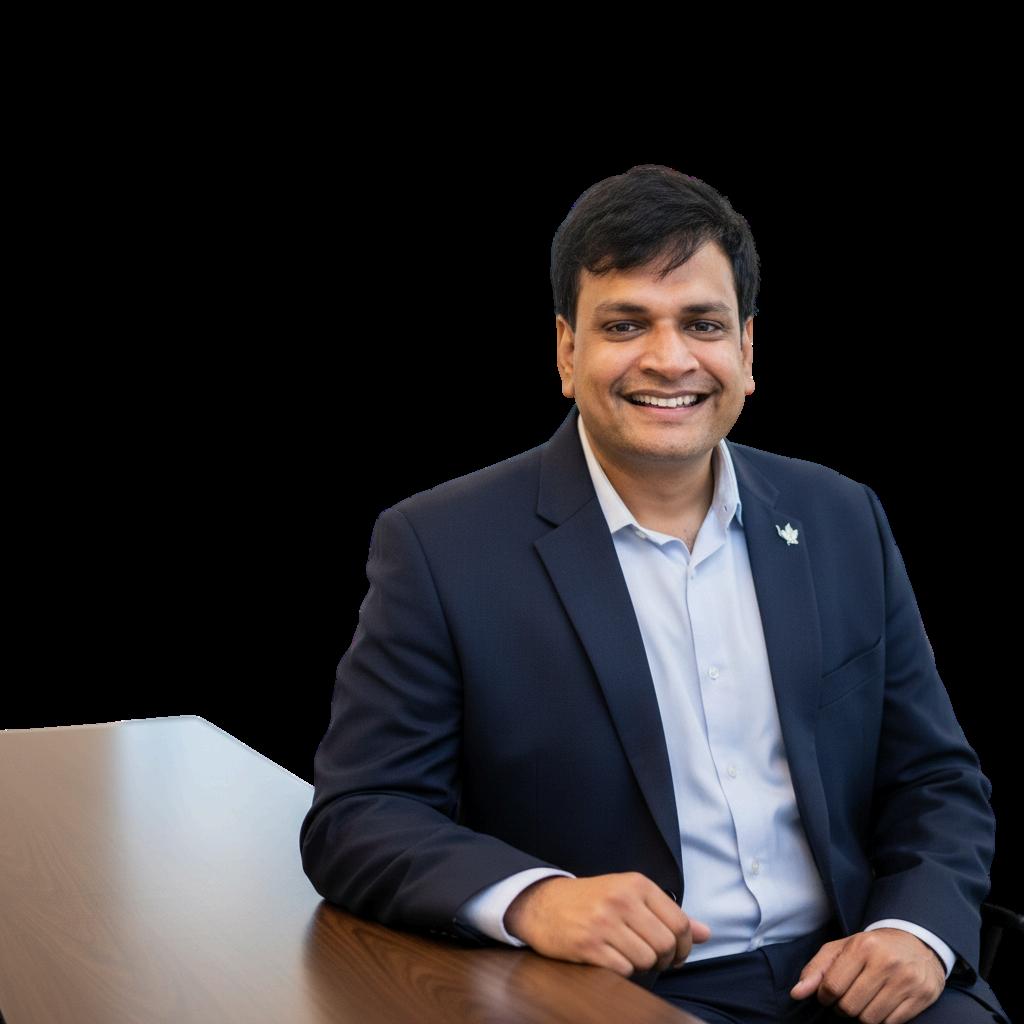
HRAI firmly believes in the transformative power of collaboration and the extraordinary impact that emerges when diverse minds, talents, and perspectives unite with a shared purpose. True progress is never achieved in isolation it is built through collective vision, innovation, and the courage to inspire meaningful change.
Welcome to the 2026 edition of our Global Awards for Leadership & Excellence Magazine a celebration of visionary leaders, influential changemakers, and forward-thinking organizations that continue to redefine excellence in an everevolving global landscape
This special edition honors the remarkable achievers of this year individuals and organizations who have gone beyond conventional success to create lasting value for people, businesses, and communities Their journeys exemplify that leadership is not only measured by milestones and achievements, but by the ability to inspire trust, shape cultures, empower people, and drive sustainable impact
In a world shaped by rapid transformation, innovation, and new possibilities, these leaders stand as symbols of resilience, integrity, adaptability, and purpose-driven leadership From championing groundbreaking ideas and fostering inclusive workplaces to advancing sustainability and organizational excellence, their stories reflect the true spirit of modern leadership.
We extend our heartfelt congratulations and appreciation to every awardee for sharing their inspiring journeys with us. Their commitment reminds us that leadership is far more than a title or accomplishment it is a responsibility to create positive influence, uplift others, and leave behind a legacy that inspires future generations. As you explore these pages, we hope you discover meaningful insights, powerful stories, and fresh inspiration that reinforce the limitless potential of leadership to shape a brighter, bolder, and more inclusive future.
Thank you for being a part of this celebration of excellence, innovation, and leadership
ARYAMAN DHAWAN
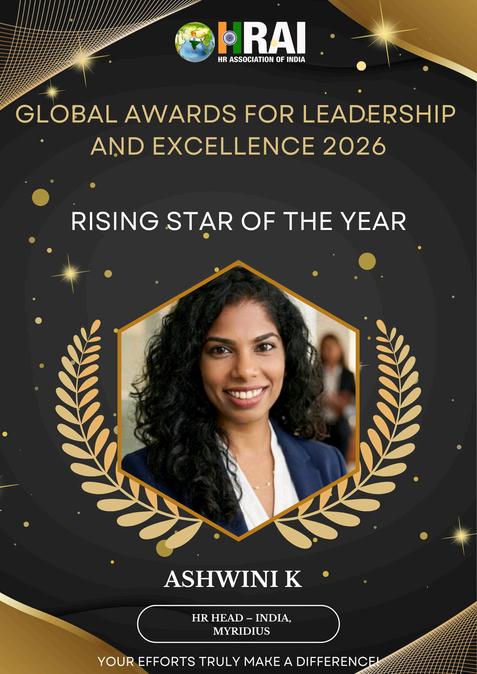
CHIEF HUMAN RESOURCE OFFICER, ACRIL ASHWINI K
HR HEAD – INDIA, MYRIDIUS
BINA BELANI
CHIEF PEOPLE OFFICER, ASCEND TELECOM INFRASTRUCTURE
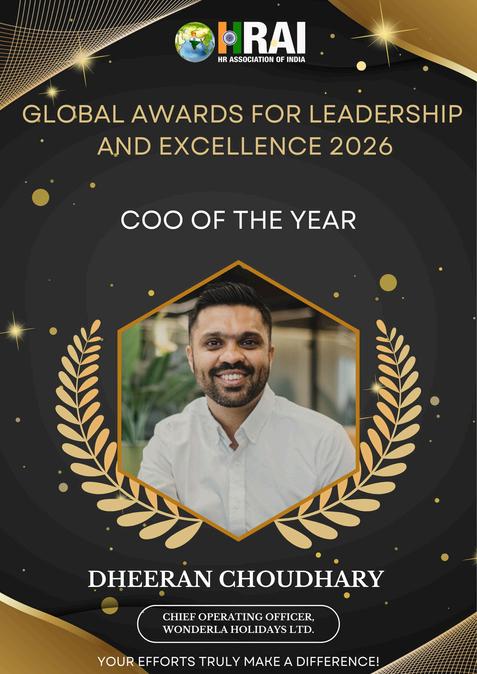
DHEERAN CHOUDHARY
CHIEF OPERATING OFFICER WONDERLA HOLIDAYS LIMITED
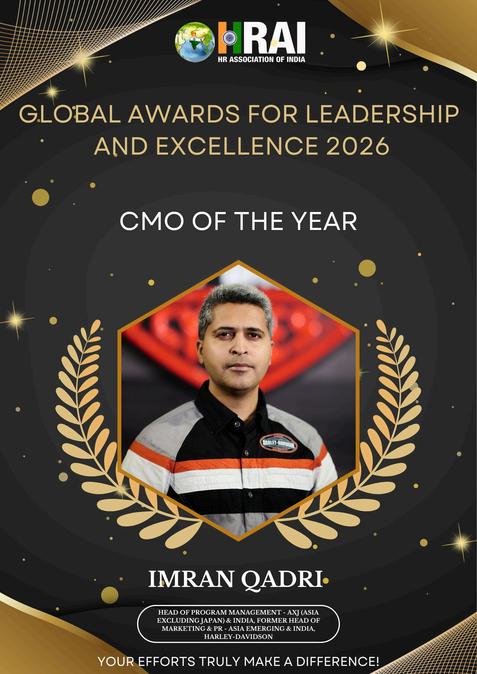
IMRAN QADRI HEAD OF PROGRAM MANAGEMENT AXJ (ASIA EXCLUDING JAPAN) & INDIA, HARLEY-DAVIDSON
PAWAN YADAV HEAD HR (STRATEGIC HR & PEOPLE DEVELOPMENT), SUBROS LIMITED
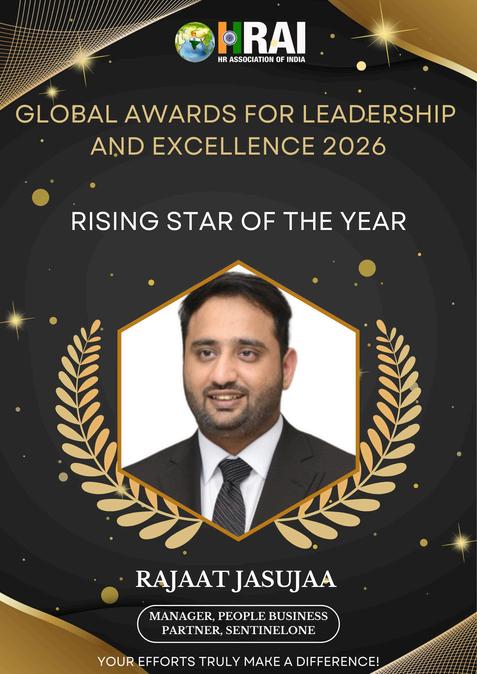
RAJAAT JASUJAA MANAGER-PEOPLE BUSINESS PARTNER, SENTINELONE
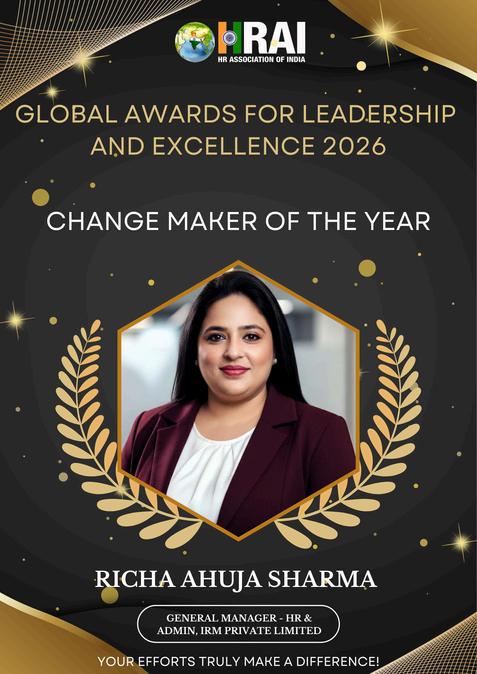
RICHA AHUJA SHARMA HEAD HR &ADMINISTRATION, IRM GROUP-NON PHARMA BUSINESS OF CADILA
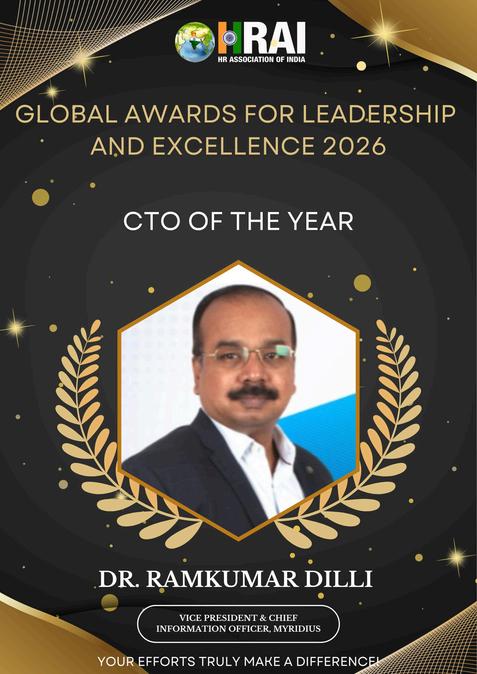
DR. RAMKUMAR DILLI
VICE PRESIDENT & CIO, MYRIDIUS
SURESH KAMATH MANAGING DIRECTOR, AVNET INDIA PVT LTD
94
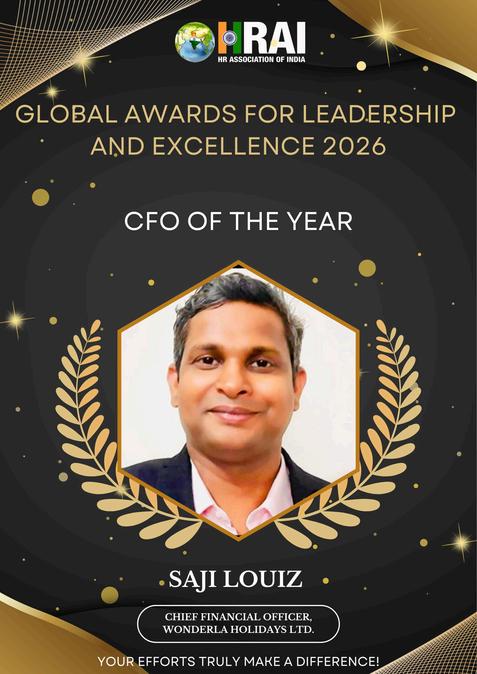
SAJI K LOUIZ CHIEF FINANCIAL OFFICER, WONDERLA HOLIDAYS LTD
DIVYA RAJITH HEAD OF HR,INDIA AVNET
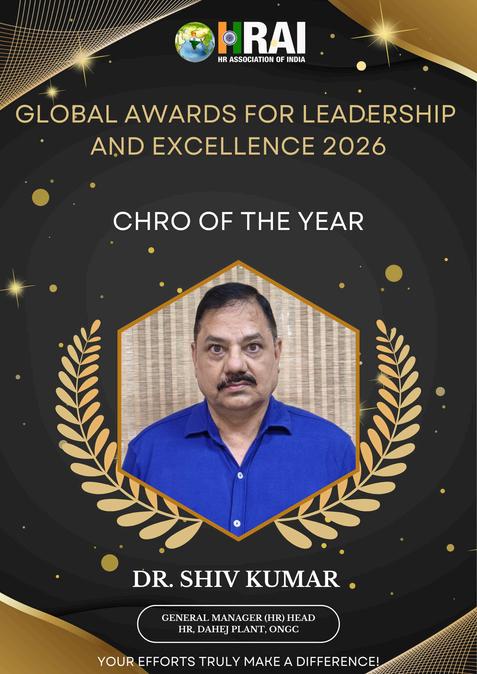
DR.SHIV KUMAR
GENERAL MANAGER-(HR), HEAD HR-ER,ONGCDAHEJ PLANT
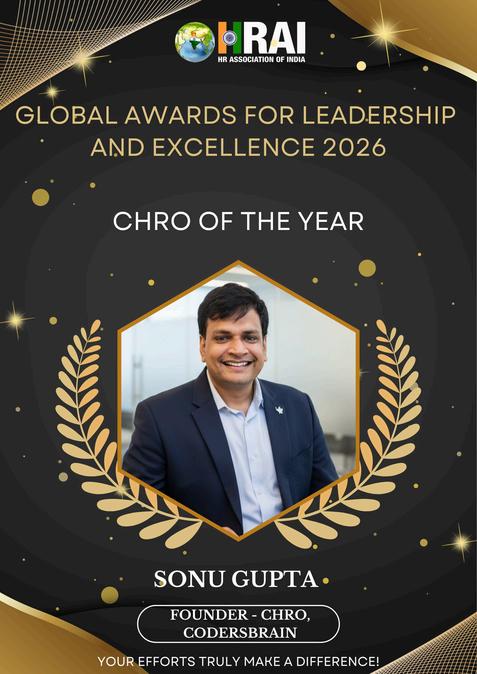
SONU GUPTA FOUNDER & CHRO, CODERSBRAIN
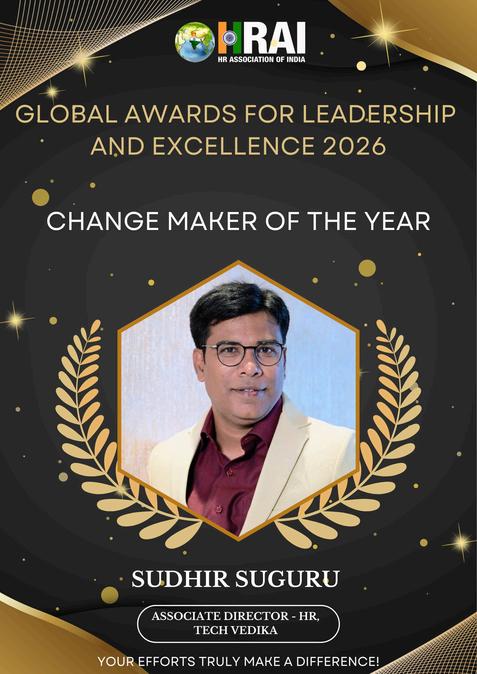
SUDHIR SUGURU ASSOCIATE DIRECTOR-HR TECH VEDIKA
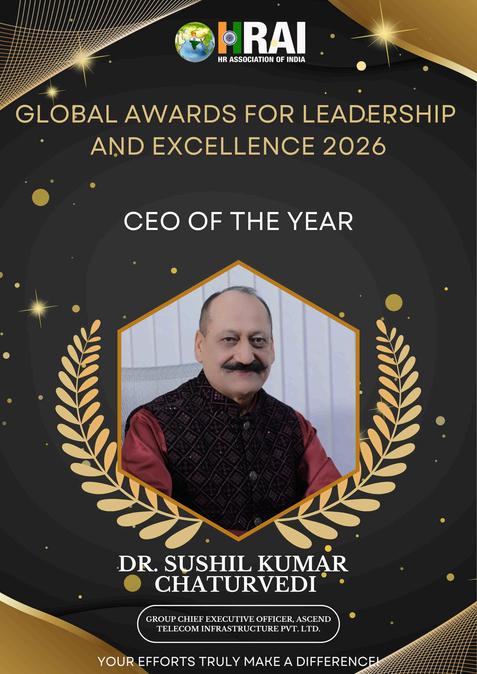
DR. SUSHIL KUMAR CHATURVEDI GROUP CEO, ASCEND TELECOM INFRASTRUCTURE
SUSMITA MALIK VICE PRESIIDENT & GLOBAL HEAD OF HR GOVERNANCE, [24]7.ai INDIA
98
106
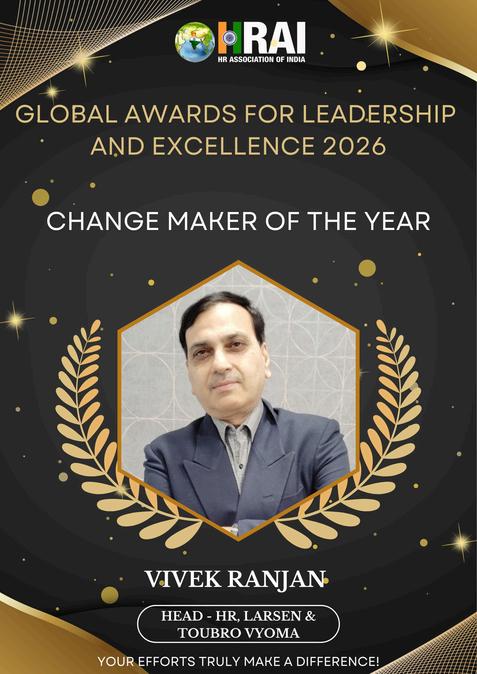
VIVEK RANJAN HEAD HR, LARSON & TOUBRO VYOMA 110
105K+ FOLLOWERS ON LINKEDIN
A GROWING COMMUNITY OF PROFESSIONALS ENGAGING WITH HRAI’S INSIGHTS, INITIATIVES, AND INDUSTRY CONVERSATIONS.
About HRAI
Founded by Dr. Ankita Singh, the HR Association of India (HRAI) drives industry-led initiatives and curates prestigious recognitions for organizations, emerging professionals, and trailblazing women across the business ecosystem. HRAI serves as a platform for learning, collaboration, and recognition, bringing together professionals and subject-matter experts from across industries.
What We Do
Industry initiatives and professional forums
Awards, recognitions, and curated listings
Knowledge-sharing through talk shows, panels, and articles
Community-building for HR and business professionals
Organizations We’ve Engaged With Lenovo, Hindustan Unilever, Biocon Biologics, IHG Hotels, L&T, CBRE, Sutherland, Capgemini, EY, and more.
KNOWLEDGE & THOUGHT LEADERSHIP
Elite voices such as Dr. TV Rao, Harjeet Khanduja, and Prasenjit Bhattacharya have been featured in HRAI’s one-on-one talk shows, contributing practical insights and real-world perspectives for professionals.
HRAI MAGAZINE INITIATIVE
HRAI publishes thought-provoking articles authored by senior professionals from organizations such as Reliance Jio, Times of India, KPMG, Eveready, Volvo, and more.
HRAI LIST FEATURES
HRAI curates an annual list of features recognizing exceptional professionals and changemakers aligned with a central theme each year. 23 of 2023 | 24 of 2024 | 25 of 2025 . Notable organizations featured include: Adani, Amazon, Flipkart, Samsung, Myntra, Uber, Raymond, and more.
EXCLUSIVELY FEATURED SHARK TANK JURY IN THE VISIONARY CEOS LIST:
For HR professionals in India, HRAI offers unparalleled opportunities to connect with like-minded peers, learn from experts, and gain recognition for their hard work and achievements. By joining HRAI, HR professionals can stay updated on the latest trends, best practices, and strategies that can help them take their careers to the next level.
WINNING ORGANIZATIONS
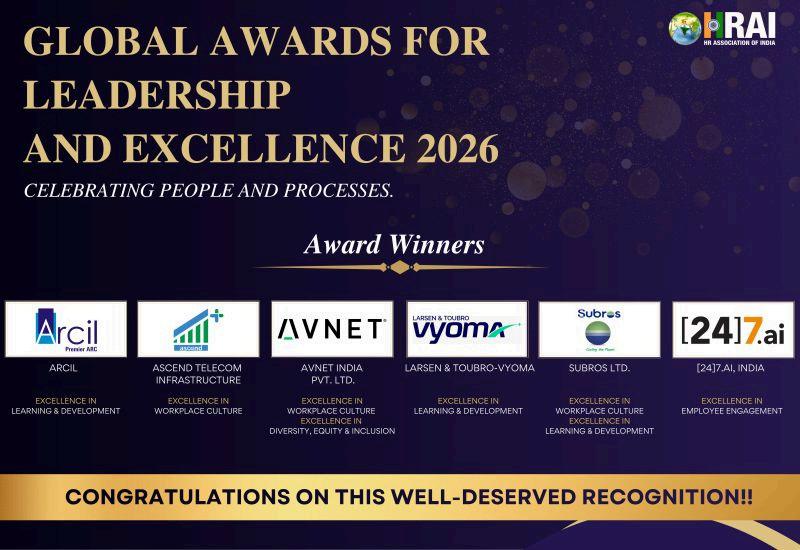
The Global Awards for Leadership and Excellence 2026 celebrate visionary individuals and organizations that are redefining leadership through purpose, innovation, and impact. These awards honor leaders who not only achieve outstanding business results but also inspire change with integrity, resilience, and empathy. Recognizing excellence across industries, the platform applauds those who champion inclusive growth, empower communities, and create meaningful transformation that shapes a stronger and more sustainable future for society.
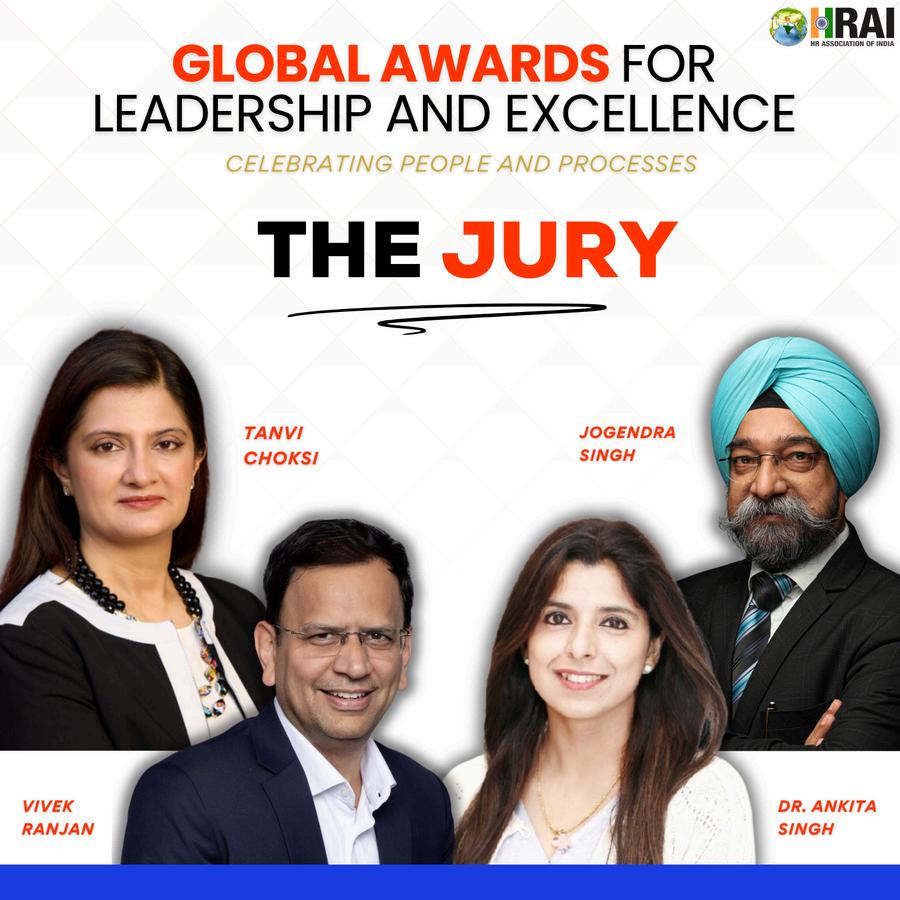
he heart of the Global Awards for Leadership and Excellence 2026 lies the wisdom and integrity of our esteemed jury. Comprising visionary leaders, industry pioneers, and subject-matter experts, the jury reflects the very principles of purpose, impact, and excellence these awards stand for.
With discerning perspectives and an unwavering commitment to fairness, they reviewed each nomination with rigor ensuring that every recognition is not just earned, but truly meaningful. Their collective insights upheld the highest standards of leadership while amplifying the stories of individuals and organizations shaping progress with integrity and vision.
Q: What change did you feel most passionate about bringing in, and what sparked it?
I am driven by the transition of HR from a support function to a Digital Powerhouse. The spark was witnessing the "Fragmentation Trap" - organizations drowning in expensive, siloed tools that created friction rather than flow
I became obsessed with dismantling these silos to build a Systematic Architecture
My mission is to ensure technology doesn’t just automate the past but orchestrates a future where digital dexterity is a core competency, turning complex HR ecosystems into engines of measurable business ROI.
Q: Every changemaker has that one defining moment. What was yours during this journey?
My defining moment was realizing that the most sophisticated code fails without Psychological Safety
During a massive global integration, I saw a technically perfect rollout stumble because of human distrust It was a revelation: transformation is 20% technology and 80% mindset I shifted my entire strategy from "Project Management" to "Trust-Based Enablement," choosing to architect ecosystems where authority and empowerment are the primary drivers of adoption.
Q: Change isn’t always easy. What kept you going when things got tough?
The conviction that the "Status Quo" is a silent killer of innovation. In high-friction moments, I lean into a "Trust-First" philosophy.
When resistance rises, I don’t push harder on the tech; I double down on enablement.
Knowing that my work paves the path for thousands of employees to find more meaning in their roles provides a relentless sense of purpose that makes any obstacle feel like a temporary detour
Q: Who or what played a big role in shaping your approach to making change happen?
I operate at the intersection of Academic Rigor and Corporate Reality Pursuing a DBA in Digital Leadership transformed my approach from intuitive to evidentiary.
This "Scholar-Practitioner" lens, forged over 18 years in the corporate trenches, allows me to bridge the gap between high-level digital strategy and boots-on-the-ground execution
My approach is shaped by the belief that the best leaders are perpetual students of human behavior and emerging tech
Q: For someone who wants to drive change but doesn’t know where to start what would you tell them?
Stop seeking permission and start seeking friction. You don’t need a C-suite title to be a disruptor; you need the courage to ask "Why?" and the empathy to listen
INTERVIEW
Identify the one bottleneck paralyzing your peers and solve it with curiosity.
Focus on Enablement over Control. When you empower others to succeed through your vision, the change becomes an unstoppable movement rather than a top-down mandate
ABOUT THE WINNERS
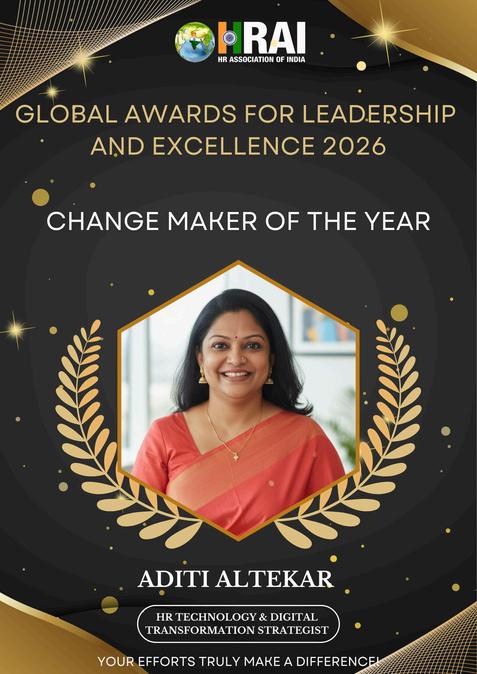
Aditi Altekar is a visionary Digital Transformation Strategist with nearly two decades of experience architecting elite human capital ecosystems A specialist in AI orchestration and digital dexterity, she transforms fragmented HR tools into highROI digital powerhouses Currently a DBA candidate in Digital Leadership at Golden Gate University, Aditi embodies the "ScholarPractitioner," merging advanced research with aggressive corporate strategy
A fierce advocate for "trust-first" leadership, she dismantles micromanagement to build high-authority, enabled teams. Aditi is a prominent industry speaker and thought leader, relentlessly shaping the future of work through inclusive, high-impact innovation
“True transformation begins the moment we stop accepting the status quo and start asking how things can be better. Technology may accelerate progress, but it is trust, courage, collaboration, and human connection that truly drive change. Great leaders do not create followers they create environments where people feel empowered to think boldly, learn continuously, and innovate fearlessly.
The future belongs to those who choose enablement over control, purpose over process, and growth over comfort. Every challenge is an opportunity to reimagine, every obstacle is a lesson in resilience, and every small step toward improvement creates the foundation for lasting impact.
Change does not require a title or permission — it requires vision, empathy, and the courage to begin. Because the most meaningful legacy we leave behind is not the systems we build, but the people we inspire to believe that transformation is always possible.”
— Inspired by the leadership philosophy of Aditi Altekar
AI-Driven Leadership
78% of global organizations now expect leaders to integrate AIdriven decision-making while maintaining human-centered leadership and ethical governance.
Employee Wellbeing Priority
Companies prioritizing employee wellbeing and flexible work cultures report significantly higher productivity, retention, and workforce engagement across industries.
Future Skills Acceleration
Organizations are rapidly investing in upskilling initiatives focused on AI, cybersecurity, data analytics, emotional intelligence, and digital transformation capabilities.
Inclusive Leadership Impact
Businesses with inclusive leadership teams continue to outperform peers in innovation, collaboration, employee trust, and long-term organizational sustainability.
Hybrid Workforce Evolution
Leaders skilled in managing hybrid and remote teams are seeing stronger employee satisfaction, improved collaboration, and increased business agility.
ARCILHASWON EXCELLENCEIN LEARNINGANDDEVELOPMENT
Q: What inspired ARCIL to prioritise learning and development as a strategic focus area?
At ARCIL, we view this as Learning and Growth, reflecting our belief that continuous development is fundamental to both individual and organisational success
Operating in a highly specialised and evolving financial ecosystem, depth of expertise and the ability to respond to complexity are critical to our business outcomes. The external environment is dynamic, with increasing regulatory expectations and diverse, stressed asset portfolios, making it imperative to build strong internal capability.
In the Asset Reconstruction space, this need is further amplified by the complexity of various processes, which require strong financial, legal, and operational understanding, along with the ability to take timely, risk-informed decisions It also demands sector-specific insights, rigorous due diligence, and disciplined execution.
These factors have reinforced our focus on strengthening internal capability through continuous learning, ensuring our teams are well-equipped to navigate complexity, drive effective outcomes, and create sustainable value.
This has meant repositioning learning from a support function to a strategic lever for performance and long-term growth.
We recognise that sustained success depends on strengthening domain expertise, enhancing capabilities, and preparing our workforce for future challenges. This approach has enabled us to build a culture where development is continuous, relevant, and closely aligned with organisational priorities, supporting ARCIL’s journey as a future-ready and highperforming institution
Q: Which L&D initiative has created the most visible impact across the organisation?
One of the most impactful initiatives at ARCIL has been our role-based capabilitybuilding framework, complemented by focused leadership development interventions. These programs are designed with a clear understanding of the competencies required across levels and functions, ensuring that learning is practical, contextual, and directly aligned to business needs
A key differentiator has been our engagement with external subject matter experts who bring deep, hands-on experience in areas such as SARFAESI, IBC, and other critical aspects of the Asset Reconstruction ecosystem. Their practical insights and real-world case discussions have significantly strengthened domain capability, enabling employees to better understand complexities and apply learning effectively in their roles
In parallel, our leadership interventions are focused on building strategic competencies across levels enhancing decision-making, business acumen, stakeholder management, and the ability to navigate ambiguity in a dynamic environment. These programs are aimed at preparing leaders not just for current roles, but for future organisational needs
The impact has been clearly visible improved quality of analysis, sharper decision-making, increased confidence in handling complex cases, and stronger collaboration across teams. The true success of these initiatives lies in driving tangible behavioural shifts, where learning translates into enhanced performance and meaningful business outcomes.
Q: How do you encourage employees to take ownership of their learning journey?
Encouraging ownership of learning has been a deliberate cultural shift at ARCIL We have moved away from a traditional, top-down approach to a more empowered and selfdriven model where employees are active participants in their development, they have access to learning initiatives aligned to roles, career aspirations, and emerging skill requirements.
We also offer learning through multiple modes self-paced digital modules, classroom sessions, expert-led workshops, and experiential learning interventions designed to suit different learning styles and preferences This ensures that each employee can engage with learning in a way that is most effective and relevant for them
Equally important is the integration of learning into performance conversations, where managers play a key role in helping employees identify their strengths, gaps, and growth opportunities We also emphasise building aspirational skills, enabling employees to prepare for future roles and broader responsibilities beyond their current scope
Ownership is not enforced it is enabled through the right ecosystem, leadership support, and a culture that values curiosity and continuous improvement.
Q: How has leadership contributed to building a culture of continuous learning?
Leadership commitment has been a cornerstone in embedding a culture of continuous learning at ARCIL. Our leaders do not just endorse learning initiatives they actively participate in them, share their expertise, and reinforce the importance of capability building through consistent engagement with their teams
This visible involvement sends a strong message that learning is integral to success
Leaders also play a critical role in co-creating and finalising domain-specific learning interventions, ensuring that programs are closely aligned to real business needs. Their involvement in designing these initiatives brings strong contextual relevance and makes learning more practical and impactful. In addition, they actively support Learning and Growth from a business perspective by sharing real case studies and sector-specific insights, particularly in areas relevant to our industry
By encouraging open dialogue, mentoring team members, and recognising efforts towards skill enhancement, leaders help create an environment where learning is both supported and expected. Culture is shaped by what leaders consistently do and reinforce Their role-modelling of learning behaviours has been instrumental in institutionalising a mindset where employees continuously upgrade their skills, adapt to change, and contribute meaningfully to organisational growth.
Q: What advice would you give to organisations looking to strengthen their L&D ecosystem?
Organisations need to fundamentally shift to ensure that learning is embedded as a core business capability. This starts with clearly identifying the capabilities that drive performance today while also anticipating future skill requirements. L&D should not operate in isolation; it must be closely integrated with other organisational frameworks.
Programs need to be contextual and application-driven, leveraging real business scenarios, internal expertise, and crossfunctional learning.
Building domain depth is as critical as developing leadership and behavioural capabilities, particularly in specialised industries Organisations should also adopt a blended learning approach, offering multiple formats digital, classroom, and experiential to cater to diverse learning styles and drive higher engagement.
Leadership involvement is a key differentiator. When leaders actively rolemodel continuous development, it drives stronger adoption and cultural alignment Equally important is fostering a culture of learning where employees are encouraged to build capabilities beyond their current roles and prepare for future opportunities
Finally, organisations must focus on closing the loop through continuous feedback, outcome tracking, and agility in redesigning interventions to ensure learning remains relevant and effective The true strength of an L&D ecosystem lies in how seamlessly it is woven into everyday work, driving performance, enhancing decision-making, and building long-term organisational resilience
“The true strength of an organisation lies in its people and their willingness to continuously learn, adapt, and grow. When learning becomes part of the culture, employees do not just build skills they build confidence, resilience, and the ability to create lasting impact. Great leaders inspire this journey by empowering people to think beyond today and prepare for the future.”
Inspired by the learning philosophy of Aryaman Dhawan
HR HEAD – INDIA
INTERVIEW
Q: What has been the most defining milestone in your journey so far, and why?
A defining milestone in my journey has been leading an integrated people transformation that brought together career architecture, learning, performance, total rewards, and technology into one cohesive system.
It marked a shift from managing individual HR levers to designing a framework that drives capability and performance at scale
We introduced structured career pathways anchored in skills, aligned them with learning journeys, and reinforced them through a transparent and equitable rewards philosophy.
Technology played a key role in enabling visibility, internal mobility, and data-driven decisions
The real impact was in how it reshaped behaviour and leaders began to have more meaningful development conversations, employees gained clarity on growth, and rewards were more closely linked to contribution and capability
This milestone reinforced my belief that HR creates the most value when it builds interconnected systems.
When structure, rewards, culture, and technology align, organizations move beyond managing talent to truly enabling it.
Q: As a rising star, what do you believe has helped you stand out early in your career?
What helped me stand out early was the ability to think in systems rather than silos.
I was curious about how learning drives capability, how rewards influence behaviour, and how organizational design enables scale. This allowed me to contribute beyond execution and engage in more strategic work early on.
I actively sought exposure across areas like L&D, OD, performance, and rewards, which helped me build a well-rounded perspective
Consistency also played a key role in delivering reliably, bringing structure to ambiguity, and maintaining a solutionoriented approach helped build trust.
Another differentiator was my interest in the intersection of people and technology As HR platforms evolved, I leaned into understanding how they could enhance employee experience and enable better decision-making.
What truly made a difference was a bias toward improving systems, not just operating them. Whether refining a process or contributing to transformation initiatives, I focused on adding value beyond defined role boundaries.
Q: What challenges have shaped your growth the most, and what did they teach you?
One of the most defining challenges has been managing people strategy across geographies while balancing global consistency with local relevance
This becomes particularly complex in areas like rewards, performance, and career growth, where market dynamics and cultural expectations differ significantly.
Designing frameworks that are principled yet adaptable taught me to anchor on clarity, fairness, transparency, and performance orientation while allowing flexibility in execution.
Another challenge has been driving adoption of integrated people systems. The difficulty is rarely in design, but in ensuring leaders and employees engage meaningfully with them.
This required strong stakeholder alignment, communication, and sustained reinforcement
These experiences reinforced that scale comes from alignment, not uniformity
The ability to think globally, act contextually, and connect multiple people levers - culture, capability, and rewards has been critical in driving sustainable impact.
Q: Who has influenced your professional journey, and in what way?
My journey has been shaped by exposure to diverse leadership styles and organizational contexts rather than a single individual.
I’ve worked with founder-led teams that prioritize speed and agility, as well as global environments that emphasize structure, governance, and scalability
This contrast helped me develop the ability to operate across both, bringing agility without losing discipline, and structure without slowing momentum
It also shaped my perspective on how different levers like culture, rewards, and organizational design need to evolve with business context.
I’ve also learned from observing gaps where lack of clarity in growth paths or inconsistent people practices impacted engagement and performance.
These experiences reinforced the importance of intentional design.
Overall, these influences shaped a core belief: effective leadership is about reading context, adapting thoughtfully, and aligning people strategy with business needs while staying anchored in strong principles
Q: What advice would you give to young professionals who aspire to create impact early in their careers?
To create impact early, focus on understanding how different elements of HR like learning, culture, organizational design, rewards, and technology connect to drive outcomes
The ability to see these interdependencies will set you apart
Build both depth and range. Develop expertise in one area, but seek exposure across others, especially high-impact areas like career architecture, total rewards, and digital transformation
Be intentional about gaining context. Working across teams, business units, or geographies helps build judgment and adaptability, which are critical for long-term success.Develop comfort with ambiguity Early in your career, clarity may be limited, but impact comes from navigating complexity and making thoughtful decisions.
INTERVIEW
Finally, invest in continuous learning and consistency. Impact in HR is cumulative, if you stay curious, build strong fundamentals, and remain adaptable, your influence will grow steadily over time.
ABOUT THE WINNERS
Ashwini K is a strategic People & Culture leader who partners with business leaders to navigate complexity and drive transformation Her expertise spans the full spectrum of HR from designing nextgeneration talent and reward strategies to leading large-scale technology transformation that reshapes how organizations operate
Recognized for her ability to translate emerging trends into actionable frameworks, she focuses on building adaptive people systems that anticipate change rather than react to it As a trusted advisor to leadership teams, she brings clarity to ambiguity, enabling organizations to make confident workforce decisions in dynamic environments Ashwini's vision centers on creating workplaces where intelligent design, human connection, and continuous evolution converge to unlock sustainable growth
“Real impact begins when people stop thinking in silos and start working with a bigger purpose. Great organizations are built when learning, technology, culture, and people come together to create growth and meaningful change. Success is not just about managing processes it is about building systems that help people learn, perform, and grow with confidence.
Every challenge teaches resilience, every change creates opportunity, and every experience helps shape stronger leaders. The most successful professionals are those who stay curious, adapt to change, and continue learning beyond their defined roles.
The future belongs to people who are willing to evolve, connect ideas, and create workplaces where individuals feel empowered to contribute, grow, and succeed together.”
Inspired by the leadership philosophy of Ashwini K
Q: What does workplace culture mean to your organization, and how has it evolved over time?
For us, culture is not a statement - it’s how decisions get made and how people experience the organization every day.
Over time, we’ve consciously moved from defining culture as values on paper to embedding it into behaviours, leadership expectations and performance outcomes
As the organization scaled, the focus shifted to creating a culture that is consistent yet adaptable - one that drives performance while remaining deeply human.
Today, culture acts as our operating system, especially during periods of change.
Q: Can you share one initiative or practice that has significantly strengthened your workplace culture?
One of the most impactful initiatives has been our 6E Culture Framework. What made it effective was not the framework itself, but how we embedded it into performance management, rewards & recognition and everyday leadership conversations.
It gave leaders and teams a shared language and made culture actionable. Over time, it moved from being an initiative to becoming a way of working
Q: How do you measure the impact of culture on employee experience and business success?
We look at culture through both leading and lagging indicators. On one side, engagement scores, attrition trends, internal mobility and leadership effectiveness give us clear signals on employee experience.
On the other, we correlate these with business outcomes - productivity, execution speed and quality of delivery The real measure of culture is when you see consistency in behavior and decision-making across the organization, regardless of the situation.
Q: In a rapidly changing work environment, how do you ensure culture remains strong and relevant?
Culture needs to be anchored but not rigid. We ensure relevance by continuously listening -through formal surveys, informal feedback loopsand leadership interactions.
At the same time, we reinforce a few nonnegotiables like clarity, fairness and accountability.
The key is to translate culture into everyday actions, so even as the environment changes, the way people respond remains aligned
Q:What advice would you give to organizations aspiring to build a truly people-centric workplace culture?
Start by being honest - culture cannot be built through communication alone It has to be designed into systems, reinforced by every people manager and experienced by employees consistently
Focus on a few core behaviors, make them visible and hold leaders accountable for them
Most importantly, remember that a peoplecentric culture is not about being soft - it’s about creating an environment where people can perform, grow and trust the system.
ABOUT THE LEADER REPRESENTING THE AWARD WINNING ORGANIZATION
With over two decades of experience across industries, Bina Belani has built a reputation as a transformative and people-first HR leader.
Currently the Chief People Officer at Ascend Telecom Infrastructure, she plays a pivotal role in shaping the future of work at one of India’s finest technology ecosystems
Her leadership philosophy blends strategic foresight with empathy, driving people and business transformation in equal measure Bina’s work is rooted in the belief that HR is not only a function, it is an ecosystem that powers innovation, inclusion and intent
She has been instrumental in architecting frameworks that make talent the true differentiator in all the organisations she has worked at.
Beyond the boardroom, Bina is a thought leader, keynote speaker and published author of two books - Lighthouse Chronicles - a collection of poems reflecting resilience, love, hope and purpose, which mirrors her leadership journey, and Self Help Power 100a collection of 100 easy to follow self-help tips in an e-book format
“A strong workplace culture is not created through words written on walls, but through the everyday actions, values, and behaviours that people experience consistently. True leadership is about building environments where people feel trusted, valued, empowered, and inspired to grow. When organizations place people at the center of every decision, culture transforms from being an initiative into a powerful force that drives performance, innovation, and lasting impact.
In a world that is constantly evolving, the strongest organizations are those that remain deeply human while embracing change with courage and clarity. Real success comes when leaders create workplaces where accountability and empathy coexist, where growth is encouraged, and where every individual feels connected to a larger purpose.
Culture is not built overnight it is shaped every day through trust, fairness, consistency, and meaningful leadership. And when people believe in the culture they are part of, they do not just work for an organization they grow with it, contribute to it, and help shape its future.”
Inspired by the leadership philosophy of Bina Belani
AI-Powered Decision Making
Organizations are integrating artificial intelligence into operations to improve forecasting, efficiency, and strategic planning.
Sustainable Business Leadership
Environmental responsibility and ESG-driven leadership are becoming key priorities for long-term organizational sustainability.
Leadership Through Change
Successful leaders are focusing on adaptability, resilience, and transparent communication during periods of transformation.
Building High-Performance Teams
Organizations are emphasizing collaboration, accountability, and trust to create stronger and more productive teams.
Workforce Well-Being
Employee mental health, wellness programs, and burnout prevention strategies are receiving increased leadership attention globally.
Q: What key operational priorities have defined your leadership journey in recent years?
A central priority has been consistently strengthening customer experience by innovating and introducing value-added offerings that enhance the guest journey across every touchpoint, including F&B, retail, and pricing This sustained focus has translated into a sharp improvement in NPS over the last two years.
In parallel, we have invested significantly in transforming the pre-park experience by revamping our website to enable better discovery and access to information, while also driving higher ticketing sales through our mobile platform.
This not only helps build demand in advance but also enables more effective operational planning and capacity management
These initiatives are part of a larger digital transformation agenda, where we are reimagining how customers engage with our brand even before they enter the park, creating a more seamless and informed journey end-to-end
Q: What has been one defining initiative that created strong business or customer impact?
One of the most defining initiatives has been the reinvention of our resort business. By renovating, rebranding, and premiumising the offering, we have repositioned the product to better align with evolving customer expectations and spending behaviour
This has strengthened both occupancy and overall guest experience, while also enhancing the brand’s positioning as an integrated destination.
Importantly, this transformation has created a scalable model that gives us the confidence to replicate and expand this approach across parks, unlocking a new avenue of growth for the business.
Q: How do you balance efficiency, innovation, and growth in a dynamic business environment?
The approach begins with aligning clear goals and objectives across functions, ensuring that every team is working towards common outcomes with clarity and accountability
When this alignment is strong, efficiency, innovation, and growth tend to reinforce each other rather than compete. Equally important is building from a deep understanding of customer expectations- designing experiences from a customer-first perspective naturally drives innovation while ensuring operational efficiency
In a high-touch business like ours, where customers spend extended time within the park, every interaction matters, and this lens helps us continuously refine processes, introduce relevant innovations, and scale sustainably
Q: How has leadership collaboration influenced your approach as a COO?
Leadership collaboration plays a critical role in driving execution at scale Empowering teams with ownership, while aligning them to a larger organisational vision, creates a strong foundation for performance
Providing teams with the space to make decisions, learn, and grow ensures agility and accountability across functions
At the same time, a culture of honest and candid feedback among functional leaders is essential it allows us to leverage deep expertise, challenge assumptions, and make more robust strategic and operational decisions This combination of ownership and openness strengthens alignment at the leadership level and cascades across the organisation, building a high-performance culture.
Q: What advice would you share with aspiring operations leaders aiming for senior leadership roles?
The most important principle is to keep the customer at the centre of every decision. Understanding their expectations, anticipating their needs, and mapping their journey in detail allows leaders to design systems and processes that consistently deliver value When you focus on solving for the customer and removing friction from their experience, operational excellence and business outcomes tend to follow
ABOUT THE WINNERS
Dheeran Choudhary is a transformationdriven business leader with over 18 years of experience across the FMCG, retail, and entertainment industries As the COO of Wonderla Holidays Limited, he has played a pivotal role in driving digital transformation, revenue growth, operational excellence, and customer experience innovation.
Under his leadership, Wonderla has witnessed significant growth across online ticketing, corporate sales, non-ticket revenue, and brand engagement, while also strengthening profitability and organizational capability. Known for combining strategic vision with execution excellence, Dheeran believes in building agile, customer-centric, and highperformance organizations where people, technology, and business goals align to create sustainable impact.
“Great organizations are not built by operations alone they are built by experiences, innovation, and the courage to constantly evolve. True leadership lies in seeing every challenge as an opportunity to create something better for customers, teams, and the future of the business.
When people, technology, and purpose move in the same direction, growth becomes more than a result it becomes a journey of transformation. The strongest leaders are those who stay customer-focused, empower their teams with trust, and continue to push boundaries to create meaningful impact at every touchpoint.”
Inspired by the learning philosophy of Dheeran Choudhary
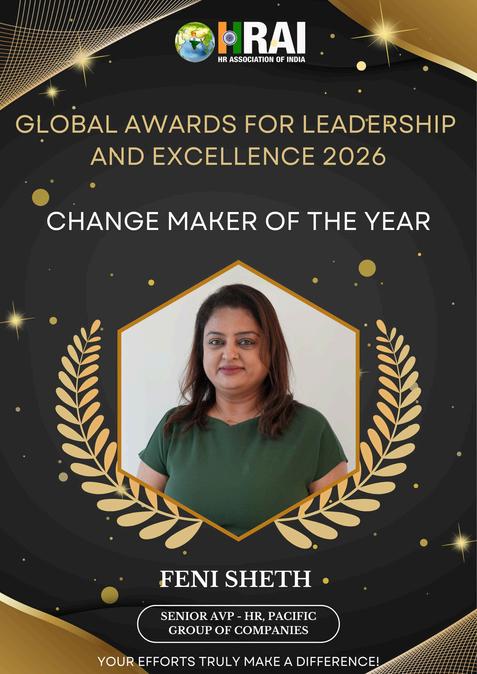
SENIOR AVP- HR, PACIFIC GROUP OF COMPANIES
Q: What change did you feel most passionate about bringing in, and what sparked it?
The change I felt most deeply called to make was shifting HR from a reactive support function to a genuine strategic partner. What sparked it was a simple but painful observation: talented people were leaving not because of pay, but because they felt invisible, had no clear career path, no sense of belonging, no belief that the organization was invested in them.
That realization hit hard I saw us spending enormous resources on lateral hiring while our own people felt undervalued That contradiction became the seed of everything the "Being PABs" EVP framework, the Pacific Learning Academy, and the 180-Day Early Life Program
I was most passionate about building an organization where people didn't just work, they flourished Where a fresher could join, see a defined path ahead of them, and feel proud to grow here rather than elsewhere
The "Paid, Train & Deploy" pipeline wasn't just a cost strategy - it was a statement that we believed in people before they were polished.
That belief, that investment in human potential before it was proven, is what I was most fired up about and what continues to drive every decision I make
Q: Every changemaker has that one defining moment. What was yours during this journey?
My defining moment came during a Pulse Survey review early in the transformation journey. The numbers were telling one story attrition stabilizing, applications rising but the open-ended responses told another.
One employee wrote that for the first time, they felt like their manager knew their name. That sentence stopped me completely It crystallized everything we were trying to build. It wasn't about HRMS dashboards or recruitment metrics. It was about whether a person felt seen That response became our north star.
It reminded me that all the frameworks, automation, and EVP campaigns are only meaningful if they translate to a human feeling dignity and belonging in their daily work With my previous employer when we successfully scaled from 1,000 to 3,000 people without sacrificing culture, I knew the systems had held
But it was that one employee's words not the 400% growth statistic that I carry with me as the truest measure of success. Defining moments rarely announce themselves loudly. They arrive quietly, in the honest words of someone who finally feels like they matter
Q: Change isn't always easy. What kept you going when things got tough?
There were moments particularly during the hyper-growth phase where everything felt like it was moving faster than our systems could handle.
Talent pipelines were stretched, hiring managers were under pressure, and the gap between our vision and our reality felt enormous What kept me going was holding two things simultaneously, the people already in the room, and the people we were building this for Every time I felt the weight of it, I would return to the Trust Circles we had built those candid conversations with employees who trusted us enough to be honest
Their voices anchored me I also leaned heavily on the belief that sustainable change is never linear.
The setbacks of a delayed HRMS rollout, and a spike in attrition in one business unit weren't signs that we were failing They were data points telling us where to strengthen the foundation. And honestly, the crossfunctional team around me was a constant source of fuel
When Marketing and Operations started coowning cultural initiatives alongside HR, I realized we had created something larger than one person or one department. Collective momentum is the greatest antidote to personal doubt
Q: Who or what played a big role in shaping your approach to making change happen?
Two forces shaped me most. The first was the CXOs who trusted HR with a seat at the strategy table. That trust was not taken for granted. It forced me to think about business outcomes revenue, scalability, risk not just people metrics Being a strategic advisor rather than a policy administrator changed how I saw my role entirely
It taught me that influence is earned through relevance, not authority The second was the employees themselves, particularly the campus hires coming through our "Paid, Train & Deploy" model. Their hunger, their adaptability, their willingness to grow without the armor of years of experience, reminded me that potential is the most underrated organizational asset
I also drew deeply from the philosophy of servant leadership the idea that the leader's job is to remove obstacles, not add them
Every framework we built, from the 180-Day Onboarding journey to the POSH governance embedding, was designed around the question:
"What does this person need to succeed?" That question simple and human shaped every decision Change happens when leaders stop asking "What can people do for us?" and start asking "What can we build for them?"
Q: For someone who wants to drive change but doesn't know where to start what would you tell them?
Start with one honest conversation Not a survey, not a strategy deck a real, unscripted conversation with someone who is living the problem you want to solve That conversation will give you more clarity than any framework ever could. From there, find the smallest version of the change you believe in and make it visible
Big transformation is just a series of small, deliberate proofs Every Trust Circle, every campus hire placed successfully, every gamified HRMS module none of it started as a grand rollout It started as a small bet on a big belief Beyond that, build allies before you build systems.
The most technically perfect HR intervention will fail without organizational trust. Spend time understanding what the business needs, not just what HR wants to give Speak the language of the people you need to convince.And when you face resistance and you will don't mistake it for rejection Resistance is often just fear of the unfamiliar.Stay curious about it rather than being threatened by it
INTERVIEW
Finally, be patient with the timeline but impatient with the intent. Change takes time. Your conviction cannot
ABOUT THE WINNERS
Feni Sheth is a Senior HR Leader with over 23 years of experience transforming people functions across BPO, KPO, RPO, and global service organizations Known for turning HR into a strategic business driver, she has built a career around scaling workforces, architecting sustainable talent pipelines, and embedding cultures where people genuinely flourish. A recipient of the Inspirational Leader of the Year, Employee of the Year, Star Performer, AVP of the Quarter, and Best Team awards, she has consistently earned the trust of CXOs as a people strategy advisor Currently pursuing XLRI's Digital HR Leadership & People Analytics programme, Feni leads with equal measures of data fluency and deep humanity
“True transformation begins when organizations stop seeing people as resources and start seeing them as potential waiting to be believed in. The most meaningful workplaces are not built only through systems, policies, or technology they are built through trust, belonging, and the courage to invest in people before success is visible.
Great leadership is not about controlling growth; it is about creating environments where individuals feel seen, valued, and empowered to thrive. Every honest conversation, every opportunity given, and every small step toward building trust has the power to change lives and shape stronger organizations.
Real change does not happen overnight. It is built through patience, resilience, and a deep belief that people flourish when they are supported with purpose and humanity. The strongest leaders are those who remove barriers, create opportunities, and inspire others to believe in their own potential. Because when people grow with confidence, organizations grow with impact.”
Inspired by the leadership philosophy of Feni Sheth
Q: What has been the most defining marketing shift you have led in your organization, and what inspired it?.
One of the most defining shifts I led was transforming Harley-Davidson’s marketing in Asia from a product-led approach to a community and lifestyle-led ecosystem. We focused on building rider experiences, digital communities, and cultural storytelling through initiatives like Asia Harley Days and Freedom Stories Asia The inspiration came from changing consumer behavior, where people increasingly seek experiences and emotional connection beyond just products
Q: In a rapidly evolving landscape, how do you ensure your marketing strategy stays both relevant and differentiated?
I believe relevance comes from continuously listening to consumers, while differentiation comes from staying authentic to the brand’s core identity. We combine consumer insights, digital intelligence, and localized strategies with strong storytelling and premium brand experiences to remain culturally relevant while preserving Harley-Davidson’s unique spirit
Q: What has been one bold decision that significantly impacted your brand’s growth or positioning?
One bold decision was supporting the launch of the Harley-Davidson X440 in partnership with Hero MotoCorp It helped us connect with a younger audience and expand the brand’s accessibility in India while maintaining Harley-Davidson’s aspirational value. The strong market response validated the strategy and opened a new growth chapter for the brand
Q: How do you balance data-driven decisionmaking with creative intuition in your role?
Data helps identify trends, consumer behavior, and opportunities, while creativity builds emotional connection and brand recall I use analytics to guide decisions, but creative intuition plays a key role in storytelling, experiences, and innovation The best marketing outcomes happen when both work together.
Q: What advice would you give to aspiring marketing leaders looking to create lasting impact?
Stay curious, adaptable, and consumerfocused. Understand business beyond marketing, embrace continuous learning, and focus on building authentic emotional connections with people. Great marketing is not just about visibility it’s about creating meaningful experiences that leave a lasting impact.
The 3 key drivers to succeed are: Purpose, Passion and Perseverance. And there is no substitute to Hard-work and Team work
INTERVIEW
ABOUT THE WINNERS
Imran Qadri is a dynamic marketing and business leader with over 18 years of experience in the automobile industry, specializing in brand strategy, marketing communications, product launches, digital transformation, PR, and business growth across Asia Pacific and India Currently serving as Head of Program Management –AXJ (Asia Excluding Japan) & India at Harley-Davidson, he plays a pivotal role in driving business profitability, market expansion, and strategic leadership across key Asian markets. He was previously Head of Marketing & PR for Harley-Davidson Asia Emerging Markets & India.
Over the years, Imran has led impactful roles at globally renowned brands including Nissan Motor Corporation and Hero MotoCorp, delivering award-winning campaigns, launching iconic products, and spearheading innovative brand transformations. Recognized among Asia’s top marketing leaders, he has received several prestigious accolades for his contributions to marketing, communications, and brand excellence. With expertise spanning luxury marketing, community building, experiential campaigns, and business strategy, Imran is widely respected for his visionary leadership, storytelling flair, and ability to build globally admired brands.
“Great brands are not built only through products or campaigns they are built through emotions, experiences, and the stories people carry with them. True marketing goes beyond visibility; it creates connection, inspires communities, and turns customers into believers.
In a world that constantly evolves, the strongest leaders are those who stay curious, embrace change, and continue to innovate while staying true to the soul of the brand. Data may guide decisions, but creativity gives brands their voice, their identity, and their lasting impact.
Real success comes when vision, authenticity, and human connection move together. Because the most memorable brands are not the ones people simply buy from they are the ones people feel proud to belong to.”
Inspired by the leadership philosophy of Imran
Qadri
Leadership Beyond Authority
Modern leadership is shifting from command-driven management to influence built on trust, collaboration, and shared purpose.
The Rise of Conscious Organizations
Businesses are integrating social impact, ethical governance, and employee well-being into long-term corporate strategies.
Courage in Leadership
Organizations value leaders who can make bold decisions during uncertainty while maintaining transparency and accountability.
Reinventing Organizational Thinking
Companies are redesigning traditional structures to create faster, smarter, and more adaptive business ecosystems.
Leadership Through Human Connection
Strong interpersonal relationships and authentic communication are becoming central to successful leadership cultures.
SUBROSLIMITEDHASWON EXCELLENCEINLEARNINGAND
DEVELOPMENT
Q: What inspired Subros to prioritise learning and development as a strategic focus area?
At Subros Limited, the focus on Learning & Development is inspired by the organization’s vision of continuous improvement, innovation, and sustainable growth Subros strongly believes that learning is not only essential for achieving organizational excellence and operational competitiveness, but also for the personal growth and longterm development of employees.
Driven by the philosophy of Kaizen and the commitment toward building a future-ready workforce, Subros has embedded learning into its everyday culture through initiatives such as DOJO Centers, capability-building programs, Industry–Academia collaborations, leadership development initiatives, and onthe-job training. The organization recognizes that in a rapidly evolving manufacturing environment, continuous upskilling and knowledge enhancement are critical to maintaining quality, productivity, customer satisfaction, and innovation
Subros also believes that when employees grow personally and professionally, they contribute more confidently and effectively toward organizational goals. Therefore, the company actively encourages employees at all levels to learn, mentor others, explore new capabilities, and take ownership of their development journey.
This vision-driven approach has helped Subros create a strong culture of continuous learning where development is viewed not merely as a training activity, but as a strategic investment in people and organizational excellence.
Q: Which L&D initiative has created the most visible impact across the organisation?
One of the most impactful Learning & Development initiatives at Subros Limited has been the establishment of a structured, inclusive, and technology-driven learning ecosystem that combines capability development, leadership grooming, continuous skill enhancement, and career progression opportunities across all employee levels.
Subros follows a systematic Training & Development cycle, beginning with Training Need Identification (TNI) through competency mapping, followed by annual and monthly training calendars, training execution, feedback collection, and effectiveness measurement through the Kirkpatrick Model to evaluate learning outcomes and behavioral improvement. This structured approach ensures that learning initiatives are aligned with both organizational objectives and individual development needs
A major impact has been created through the company’s grade-wise employee development framework, where employees are provided clear learning pathways from entry level to leadership positions.
Programs such as DOJO training for entrylevel employees, skill enhancement initiatives for DAT/DET employees, and structured technical and behavioral training for Deputy Engineers and Line Leaders have significantly strengthened operational and leadership capabilities
For managerial and leadership levels, initiatives such as SDP (Supervisory Development Program) batches, LEAD programs, succession planning initiatives, Six Sigma learning, and outbound learning interventions have played a key role in developing future-ready leaders and enhancing managerial effectiveness across the organization
One of the most impactful initiatives has been the implementation of the CTS/DTS model (Craftsman Training Scheme/Diploma Training Scheme), which provides employees with an “Earn While Learn” opportunity
Under this initiative, Subros sponsors diploma education programs for employees while also providing stipends during the learning period.
This has created a significant positive impact by enabling employees to continue their education, improve technical competencies, and build long-term career growth opportunities without financial burden
Subros has also focused strongly on the digitalization of learning by introducing hybrid and flexible learning models to ensure accessibility for employees working across A, B, and C shifts Digital learning tools, online modules, virtual sessions, and hybrid classroom training have enabled continuous learning without affecting operational productivity.
Together, these initiatives have significantly enhanced employee capability, engagement, retention, internal growth opportunities, and organizational readiness, while fostering a strong culture of continuous learning and development throughout the company.
Q: How do you encourage employees to take ownership of their learning journey?
At Subros Limited, employees are encouraged to take ownership of their learning journey by closely integrating Learning & Development with individual performance, career growth, and day-to-day operational improvement.
The organization aligns employee KRAs (Key Result Areas) with Learning & Development objectives, ensuring that employees understand the direct connection between skill enhancement and their professional growth.
Training effectiveness is further reinforced through measurable outcomes such as competency skill-gap reduction, KPI improvement, and practical implementation of learning at the workplace
To encourage application-based learning, employees are required to submit QC (Quality Circle) and SGA case studies after training programs, helping them apply concepts to real operational challenges and continuous improvement initiatives
Subros also conducts quiz competitions and engagement activities related to training topics to reinforce learning in an interactive and motivating manner.
The company strongly promotes a culture of appreciation through instant recognition initiatives, where employees demonstrating learning application, improvement, and innovation are acknowledged and encouraged. Employees also recognize that participation in learning initiatives positively contributes to their career progression During promotion assessments, especially for entry-level employees, consideration is given to the trainings attended, learning participation, and demonstrated skill development.
Subros further identifies Hi-Potential (HiPo) employees and provides them with focused capability-building initiatives, leadership grooming, and LEAD development programs to prepare them for future leadership roles within the organization
To ensure consistent learning participation and discipline, the organization also actively tracks training attendance and absenteeism, reinforcing the importance of continuous development across all employee levels.
Through this structured and growth-oriented approach, Subros has created a culture where employees actively participate in their own learning journey and view development as a shared responsibility for both personal and organizational success
Q: How has leadership contributed to building a culture of continuous learning?
Leadership at Subros Limited has played a crucial role in building and sustaining a strong culture of continuous learning across the organization
Under the visionary leadership of CMD Shradha Suri Marwah, Subros has consistently emphasized that employee development and capability enhancement are key drivers of organizational growth, innovation, and long-term sustainability.
Her vision focuses on creating a future-ready workforce by promoting continuous improvement, knowledge sharing, and equal learning opportunities for employees across all levels. This commitment is reflected through structured learning frameworks, leadership development initiatives, Industry–Academia collaborations, DOJO Centers, and digital learning transformation across the organization
Leadership actively supports employee learning by aligning Learning & Development initiatives with organizational goals as well as employee KRAs and career progression pathways Programs such as SDP batches, LEAD development initiatives, succession planning, technical capability-building, and Hi-Potential employee identification are driven with strong leadership involvement to ensure long-term talent development.
Senior leaders and managers also contribute directly by mentoring employees, conducting on-the-job training, sharing practical knowledge, and encouraging participation in improvement initiatives such as QC projects, Kaizen activities, and case-study-based learning. Employees are motivated to apply their learning practically through KPI improvement, competency enhancement, and continuous performance development.
The leadership team has further strengthened the learning culture through open communication platforms such as Samwad meetings, management interaction sessions, and cross-level communication forums, where employees are encouraged to share ideas, feedback, and learning experiences openly
Subros leadership has also ensured that learning remains accessible and inclusive for all employees through hybrid learning models, digital platforms, and flexible training arrangements for employees working across different shifts Initiatives such as the CTS/DTS “Earn While Learn” model further reflect leadership’s commitment toward empowering employees through education and long-term career growth.
Through this people-centric and developmentfocused leadership approach, Subros has successfully created a culture where continuous learning is viewed not as a one-time activity, but as an integral part of everyday work life and organizational success
Q: What advice would you give to organisations looking to strengthen their L&D ecosystem?
Organizations looking to strengthen their Learning & Development ecosystem should focus on creating a learning culture that is continuous, measurable, technology-enabled, and closely connected with business as well as employee growth.
One important recommendation is to adopt digitalized and hybrid learning models to ensure training accessibility for employees working across different shifts and locations
Flexible learning platforms, virtual sessions, and hybrid training approaches help organizations maintain continuous capability development without affecting operational productivity.
Organizations should also implement structured learning measurement systems such as the Kirkpatrick Model to evaluate training effectiveness through learning application, behavioral improvement, and business impact. Measuring outcomes helps ensure that learning initiatives deliver practical value rather than becoming only compliance-driven activities
Another key approach is to encourage projectbased and application-oriented learning through initiatives such as Quality Circle projects, Kaizen activities, case studies, simulations, and real workplace problemsolving. Employees learn more effectively when they are able to apply training concepts directly to operational challenges and continuous improvement initiatives.
Equally important is creating a strong culture of instant rewards and recognition to motivate employees toward active participation in learning initiatives Recognizing employees for skill enhancement, innovation, improvement ideas, and learning application creates higher engagement and encourages ownership of development
Organizations should also invest in leadership development, mentoring, competency mapping, and identifying Hi-Potential employees early to build a future-ready talent pipeline.
Most importantly, Learning & Development should not be viewed only as a training function, but as a strategic driver of employee engagement, innovation, productivity, and long-term organizational growth.
SUBROSLIMITEDHASWON EXCELLENCEINWORKPLACE
CULTURE
Q: What key values define the culture at Subros, and how are they reflected in everyday work life?
The culture at Subros Limited is defined by the values of Respect, Integrity, Continuous Learning, Inclusion, and Shared Purpose, guided by the larger vision of “Cooling the Planet” through innovation and sustainable growth
These values are deeply embedded in everyday work life and reflected across all levels of the organization
With manufacturing plants across Noida, Manesar, Pune, Karsanpura, and Chennai, Subros has built a strong pan-India multicultural workforce that promotes collaboration, mutual respect, and cultural harmony
The organization actively fosters employee engagement through celebrations of festivals, Women’s Day activities, sports events like the Subros Premier League (SPL), and various team-building initiatives that strengthen interpersonal connections and workplace belongingness.
Subros also promotes a strong culture of continuous learning and improvement through initiatives such as DOJO Centers, Kaizen practices, technical capability development programs, and Industry–Academia collaborations.
Employees are encouraged to share knowledge, mentor others, and contribute to organizational growth beyond their functional roles.
The company is equally committed to diversity, equity, and inclusion, with focused efforts toward increasing women participation across functions and leadership roles, while also creating meaningful employment opportunities for Persons with Disabilities (PwD) and socially marginalized groups
This inclusive and people-centric approach has helped Subros build a workplace culture where employees feel valued, empowered, and connected to a shared organizational purpose.
Q: What has been one defining initiative that significantly strengthened workplace culture?
One defining initiative that significantly strengthened workplace culture at Subros Limited is the company’s strong focus on creating a learning-driven and collaborative work environment through its DOJO Centers and Industry–Academia partnerships.
Subros has established dedicated DOJO Centers across plant locations as well as in Government Polytechnic Colleges to promote hands-on technical learning, Kaizen practices, and continuous skill development.
These centers have helped create a culture where employees actively share knowledge, mentor others, and continuously improve work practices
To further strengthen this culture, Subros has signed MoUs with Government Polytechnic Colleges and regularly conducts Industry–Academia Meets, technical workshops, internships, and plant visits
These initiatives bridge the gap between education and industry while encouraging employees to contribute as mentors and role models for future talent
This approach has fostered a workplace culture built on collaboration, continuous learning, ownership, and social responsibility, making employees feel connected to a larger purpose beyond day-to-day operations
Q: How do you ensure employee engagement and belonging across teams?
At Subros Limited, employee engagement and belonging are nurtured through a peoplecentric culture that combines learning, recognition, inclusivity, and community bonding across all levels of the organization.
Subros regularly organizes initiatives such as theme month celebrations, Samwad meeting, potluck lunches, lucky draws, Fun-do Saturdays, Subros Olympics, and the Subros Premier League (SPL) to encourage collaboration, team spirit, and joyful participation across departments
The company also promotes open communication and leadership accessibility through initiatives like Coffee Meetings with Management, where employees can directly interact with senior leadership and share ideas openly
Employee well-being is equally prioritized through programs such as Om Shanti sessions for peace of mind and mental wellness, helping employees maintain a healthy and positive work environment
Recognition programs including Operator of the Day, Star Performer of the Month, Kaizen Awards, and Safety Recognition activities ensure that employees at every level feel valued and appreciated for their contributions.
Subros strongly believes in inclusive participation, and these initiatives are extended not only to permanent employees but also to contractual employees and their families through activities such as family visits and engagement programs
The organization also encourages continuous learning through on-the-job training, where senior employees and leaders mentor junior team members and share practical knowledge.
With women represented in senior leadership roles and equal participation opportunities across activities and development programs, Subros has built a workplace culture based on collaboration, respect, inclusion, continuous learning, and a strong sense of belonging truly reflecting the spirit of one Subros family.
Q: What role has leadership played in shaping and sustaining this culture?
Leadership at Subros Limited has played a defining role in shaping and sustaining a culture of inclusivity, collaboration, continuous learning, and employee wellbeing.
Under the visionary leadership of CMD Shradha Suri Marwah, the organization has consistently focused on building a peoplecentric culture aligned with the larger vision of growth, innovation, and sustainable development.
INTERVIEW
Her strong emphasis on employee development, diversity & inclusion, and creating equal opportunities across all levels has significantly influenced the organizational culture.
Subros actively promotes women participation across functions and leadership roles, while also ensuring opportunities for Persons with Disabilities (PwD) and socially diverse groups, reinforcing the company’s commitment toward an inclusive workplace.
Leadership at Subros maintains strong employee connect through initiatives such as Samwad meetings with line leaders, communication meetings across all employee levels, and Coffee Meetings with Management, where employees from entry level to senior management openly interact, share ideas, discuss concerns, and contribute suggestions.
These initiatives have strengthened transparency, trust, and collaboration across teams while ensuring every employee feels heard and valued
The leadership team also actively supports continuous learning through DOJO Centers, IndustryAcademia collaborations, mentoring, and on-the-job training, where senior employees guide and develop junior team members.
Structured role maps and leadership development frameworks further ensure clarity, accountability, and career growth opportunities for employees at every stage
In addition, leaders actively encourage participation in cultural and engagement initiatives such as theme month celebrations,
Subros Olympics, SPL, wellness programs, recognition ceremonies, and family engagement activities, creating a workplace environment where employees feel valued not only professionally but personally as well.
Through this people-first leadership approach, Subros has successfully cultivated a culture where employees feel respected, empowered, connected, and motivated to contribute toward a shared organizational purpose.
Q: What advice would you share with organisations aspiring to build a strong workplace culture?
Organizations aspiring to build a strong workplace culture should focus on creating an environment centered around continuous learning, inclusivity, collaboration, and employee well-being rather than limiting culture to policies alone
One key recommendation is to strengthen Industry–Academia collaboration by conducting regular industry interaction meets, technical workshops, internships, and partnerships with educational institutions Establishing practical learning centers such as DOJO Centers in colleges can help bridge the gap between theoretical education and industrial requirements while building a future-ready talent pipeline.
Organizations should also actively invest in diversity and inclusion by creating equal opportunities for women, Persons with Disabilities (PwD), and individuals from diverse backgrounds Encouraging women in leadership positions and ensuring representation across functions helps build a more balanced, innovative, and inclusive workplace culture.
INTERVIEW
Another important aspect is leadership involvement in employee development through mentoring, open communication, and recognition programs Employees feel more engaged when organizations celebrate achievements, encourage teamwork, support mental well-being, and create platforms where every individual feels heard and valued. A strong workplace culture is ultimately built when employees experience a sense of belonging, purpose, growth, and respect in their everyday work life.
Pawan Yadav is a seasoned HR and Skill Development leader with over 23 years of experience in the automobile manufacturing industry, including leading OEM organizations. Currently serving as DGM –HR & Skill Development at Subros Ltd , he specializes in strategic HR, talent management, employee engagement, learning & development, vocational training, ESG, and diversity & inclusion initiatives across multiple plant locations.
Over the course of his career, he has worked with renowned organizations such as Ashok Leyland and LS Cable & System, driving impactful HR and skill development initiatives. Widely recognized for his contributions to India’s skill ecosystem, Pawan has established multiple Dojo Skill Centres and Centres of Excellence, while also serving on several academic and industry boards A National Brand Ambassador for Apprenticeship Training under MSDE, he is respected for his leadership in workforce development, technical education, and futureready learning strategies
“A strong organization is built when learning becomes a way of life and every employee feels connected to a larger purpose. True growth happens when people are encouraged to continuously learn, share knowledge, innovate, and support one another beyond their daily responsibilities.
Great workplace cultures are not created only through systems or policies they are shaped through respect, inclusion, collaboration, and leadership that genuinely invests in people. When employees feel valued, empowered, and inspired to grow, they do not just contribute to organizational success they become the driving force behind innovation, excellence, and sustainable progress.
The future belongs to organizations that create opportunities for every individual to learn, lead, and thrive together as one team with one shared vision.”
Inspired by the learning philosophy of Pawan Yadav
50
Redefining Success Metrics
Businesses are measuring success not only through revenue but also through culture, sustainability, and societal impact.
The Future Belongs to Adaptive Leaders
Organizations are prioritizing leaders who embrace change, continuous learning, and innovative thinking.
Workplace Relationships Matter
Healthy professional relationships are driving stronger engagement, collaboration, and organizational resilience.
Empowerment Creates Ownership
Employees perform more effectively when leaders encourage autonomy, trust, and decision-making responsibility.
Leadership in a Digital-First World
Technology is reshaping communication, collaboration, and operational leadership across industries.
Purpose Inspires Performance
Employees are more committed to organizations that align business objectives with meaningful values and vision. 51
Q: What people philosophy has guided your leadership journey, and how has it influenced your organization?
My leadership journey has been shaped by a strong people-first approach, something I learnt early in my career and continued to practice as I moved into leadership roles. For me, it has never been about just engagement initiatives, but about being accessible, building trust, and creating clarity for people to perform at their best.
I strongly believe that a people-first culture is not built overnight it requires continuous effort, leadership alignment, and consistency to make it meaningful and sustainable
Over time, I have seen that when people feel heard, supported, and clear about expectations, they take ownership and deliver stronger outcomes. That has been a key influence in how I lead and build teams
Q:What has been one defining HR transformation or milestone in your career so far?
While my career has been shaped by diverse experiences, one defining milestone has been my decision to step out of my comfort zone and build myself for a leadership journey.
At every stage, I was encouraged by leaders to align closely with business goals and think beyond silos However, transitioning into leadership required a mindset shift taking ownership, making difficult decisions, and being accountable at a larger scale.
This journey was not easy. It involved taking risks, making sacrifices, and maintaining a strong “never give up” attitude Those moments of uncertainty became the most
transformative phases of my career They helped me evolve into a more resilient, business-focused, and people-centric leader Looking back, it is this willingness to grow and embrace challenges that has defined my journey.
Q: In times of change and uncertainty, how do you keep people engagement and culture strong?
In times of change and uncertainty, I believe communication becomes the most crucial instrument with honesty and transparency, this is the most critical factor in sustaining engagement and culture
People may not always be comfortable with change, but they value clarity. I focus on communicating the why behind decisions, what it means for the organization, and how it impacts individuals. This helps reduce ambiguity and builds trust
Culture is not built only in stable times it is truly tested during challenging phases When leaders remain transparent and accessible, engagement sustains and culture becomes a source of strength.
Q: What workplace trends do you believe will shape the future of HR in the coming years?
The coming years will be a defining phase, with multiple generations working together alongside rapid advancements in technology, especially AI This shift will significantly influence how organizations operate.
While technology will change how work is done, the real differentiator will be leadership. Leaders will need to manage diverse expectations, enable collaboration, and create clarity in a fast-changing environment.
The future of HR will move beyond processes to focus on building leadership capability and future-ready organizations Organizations that succeed will be those where leaders inspire, communicate clearly, and build trust. As the workplace evolves, strong and conscious leadership will define the most impactful trends.
ABOUT THE WINNERS
Q: What advice would you give to aspiring HR professionals who wish to create lasting impact?
My advice to aspiring HR professionals is to focus on building strong conceptual knowledge. When your fundamentals are clear, your experience naturally becomes your strength over time.
It is also important to have clarity in your career path Many professionals move forward without a clear direction. Setting goals is like having a roadmap it helps you stay focused and make the right choices
I often compare it to using a map when you know your destination, your journey becomes more structured. Having a mentor can also make a significant difference by providing guidance and perspective
“The
future of work will not be defined only by technology, but by leaders who can build trust, inspire collaboration, and create environments where people feel motivated to learn, evolve, and succeed together.”
— Inspired by the leadership philosophy of Pooja Amravanshi
Leadership in the Experience Economy
Organizations are focusing on delivering meaningful experiences for employees, customers, and business partners.
Transformational Thinking at the Top
Executives are prioritizing innovation, adaptability, and continuous evolution to remain globally competitive.
Employee Expectations Are Evolving
Modern professionals seek purpose, flexibility, inclusion, and career growth from workplace environments.
Organizational Trust & Transparency
Clear communication and ethical leadership are becoming essential pillars of sustainable business success.
The Shift Toward Learning Cultures
Companies encouraging continuous learning and curiosity are building future-ready organizations.
Sustainable Leadership Practices
Businesses are integrating sustainability into leadership priorities to support long-term economic and social impact. 55
Q: What change were you most passionate about, and what sparked it?
The change I've been most passionate about is shaping narratives not just telling stories, but architecting how a brand is perceived, recognised, and trusted. I genuinely believe that great ideas fail without the right narrative Brilliant products that never found their audience. Meaningful causes that never gained traction. Not because the idea was wrong, but because the story wasn't told right
That realisation didn't come from a boardroom It came from a classroom My MA English teacher, Deepali, saw something in me before I saw it in myself a flair for language, and an instinct for how words move people
She made me understand that communication isn't just a skill, it's a lever If you pull it right, you can align, inspire, and mobilise people around something that matters. What I've learned over 16 years is that you don't wait for the right opportunity or title You are defined not by your designation but by the ownership you take Start from where you are, with what you have, and build from there. The cause changes. The principle doesn't.
Q: Every changemaker has a defining moment. What was yours?
Mine came when I was handed something that had never been done before at Ecozen introducing the company into the B2C segment after years of establishing itself in B2B and smart climate technology.
The Solar AC launch and PMSGY weren't just new campaigns; they were a different game entirely. A different audience, a different language, a different level of scrutiny
What I'm most proud of isn't the 45 media coverages or the 64 lakh readership the Solar AC launch generated though those numbers matter. It's that we stepped beyond the traditional launch playbook We didn't just announce a product; we are shaping how the market thought about sustainable cooling.
We are making Solar AC a category, not just a product. And with PM-SGY, we translated a complex government scheme into something ordinary households in tier 2 cities could understand and act on
That shift from functional communicator to strategic influence on how a market perceives an idea that was my defining moment. And it taught me that change doesn't always arrive loudly Sometimes it shows up quietly, in the form of a simple brief.
Q: Change isn't always easy. What kept you going when things got tough?
I won't pretend the tough moments have been rare they've been frequent, and from every direction. In communications, you sit at the intersection of multiple stakeholders leadership, sales, product team, media, government bodies each with their own priorities and definitions of success. Getting all of them aligned, especially in ambiguous situations with no clear playbook, is genuinely hard. The flak that comes when things don't align lands on the communications team first and it lands often
What kept me going was a stubborn belief that clarity always wins eventually Hold your ground, stay close to the truth, keep building bridges even when they get knocked down things move
But what really kept me going was my family. My parents, my husband and my siblings
57
they have been my constant On the days when professional pressure felt heaviest, they reminded me of who I am beyond work. That kind of grounding is not a small thing. It is everything No career is built alone, and mine certainly wasn't.
Q: Who or what played a big role in shaping your approach?
Several people, across very different chapters
My teacher Deepali, during my MA in English, made me see that language was something I could use to genuinely change how people think
She gave me a career direction before I knew I was looking for one Vishwajeet shaped how I think about strategy, leadership, and operating with integrity.
Some lessons you read in books Others you learn by watching someone navigate complexity with clarity and conviction.
My manager Jason has expanded how I think about communications entirely pushing me to think holistically, beyond PR and coverage, to see every narrative from the perspective of the person consuming it. He has made me a true brand evangelist
.
Q: For someone who wants to drive change but doesn't know where to start what would you tell them?
Don't wait for the right opportunity or title You are defined not by your designation but by the ownership you take. Start from where you are, with what you have, and build from there The changemakers I've admired most didn't wait for a perfect brief they looked at what wasn't there and started building it
PR is not about coverage. Coverage is an output. The real work is narrative a point of view so clear and consistent that the media, the market, and your own organisation start to believe it. And relationships are not a soft skill They are the skill
Finally be true to yourself. In a field where you constantly shape other people's stories, it's easy to lose your own voice Don't Your instincts, your values, your distinct way of seeing things that is your greatest asset. The world doesn't need communicators who sound like everyone else. It needs people who know who they are and build from that.
ABOUT THE WINNERS
Rachitta Bahal is a strategic communications leader with 15 years of experience across some of India's most respected organisations, Edelman India, Ketchum Sampark, Communicate India, and Nihilent. Currently Corporate Communications Manager at Ecozen Solutions, she is working towards building the company's B2C communications and helping make a shift in brand perception. A former Branch Head and team leader across geographies, she is also pursuing a PhD on the role of PR in restoring consumer trust in hyper-automated marketing environments, placing her at the frontier of where her field is heading.
Empowered Teams Drive Performance
Organizations empowering employees with autonomy and accountability are witnessing stronger results.
The Evolution of Corporate Culture
Positive workplace culture is becoming a defining factor in talent attraction and retention.
Leadership Rooted in Authenticity
Employees increasingly value leaders who demonstrate honesty, empathy, and consistent values.
Data & Intelligence in Decision-Making
Leaders are using analytics and insights to support strategic business growth and workforce planning.
Collaboration as a Growth Engine
Cross-functional teamwork is enabling organizations to innovate faster and solve challenges effectively.
Future-Focused Enterprises
Organizations are building resilient business models designed for long-term adaptability and growth.
Q: What has been the most defining milestone in your journey so far, and why?
The most defining milestone in my professional journey has been the exponential growth I've achieved within the company, which has been coupled with consistent, formal recognition for my diverse contributions
This rapid trajectory of success is not merely a result of circumstance but is fundamentally rooted in a deep-seated sense of perseverance and a resilient work ethic instilled by my personal background
This internal drive has consistently pushed me to move forward, allowing me to transform significant milestones into springboards for further development and more substantial impact within the organization.
Q: As a rising star, what do you believe has helped you stand out early in your career?
My rapid career progression is a direct result of the trust, support, and opportunities extended by leadership.
I stand out due to my eagerness to embrace new knowledge and my unwavering commitment to driving complex projects to successful completion.
This commitment is further evidenced by my ability to navigate significant challenges, such as mastering new technologies and instituting effective processes, which has taught me to approach obstacles with a positive, goaloriented focus.
By proactively utilizing every situation to sharpen my skills, I have been able to accelerate my development and create a more substantial impact within the organization
Q: What challenges have shaped your growth the most, and what did they teach you?
My growth has been profoundly shaped by navigating a series of complex challenges, ranging from the technical demands of mastering emerging technologies to the operational intricacies of instituting more effective, streamlined processes These experiences have been instrumental in teaching me how to approach formidable obstacles with a consistently positive and goal-oriented focus
By proactively utilizing every situation even those that initially appear as setbacks as a strategic opportunity to sharpen my technical skills and refine my leadership capabilities, I have been able to significantly accelerate my professional development.
This mindset of continuous adaptation and proactive learning has not only expanded my technical expertise but has also deepened my understanding of how to drive organizational impact through structured innovation and resilient problem-solving.
Q: Who has influenced your professional journey, and in what way?
My professional journey is continually influenced by a diverse and expansive network that spans various stages of my development, including academic mentors, former colleagues, and current organizational leaders.
These individuals have not only provided technical guidance but have also modeled a profound dedication to a disciplined work ethic and a relentless, proactive commitment to continuous learning, which serves as a daily source of inspiration and a blueprint for my own career
By observing their ability to navigate complex organizational landscapes and their unwavering focus on excellence, I have learned to integrate these values into my own professional identity, ensuring that my growth remains aligned with the high standards they represent
Q: What advice would you give to young professionals who aspire to create impact early in their careers?
The most vital advice is to proactively seek mentorship and welcome challenging assignments.
Mentorship provides a unique opportunity to gain insights from seasoned professionals who have already navigated the complexities of the industry, offering a roadmap for avoiding common pitfalls and identifying strategic opportunities for advancement
Simultaneously, welcoming challenging assignments serves as a powerful catalyst for growth, as these high-stakes projects push individuals beyond their comfort zones, necessitating the rapid acquisition of new skills and the refinement of problem-solving abilities
These experiences are crucial for accelerated professional growth, as they allow young professionals to build a robust and versatile skill set while establishing impactful connections with key stakeholders across the organization.
Furthermore, it is essential to maintain open communication about industry trends, ensuring that your knowledge remains current and relevant in a rapidly evolving market
Finally, fostering a genuinely collaborative environment is key; by prioritizing teamwork and mutual support, you create a culture of collective success where diverse perspectives are valued, ultimately driving more innovative and sustainable organizational impact
Rising is about a relentless commitment to learning and growth—where every challenge is a chapter and every achievement a catalyst for the next breakthrough.
ABOUT THE WINNERS
Rajaat is an accomplished HR professional with over 10 years of experience in People Business Partnering, employee engagement, and change management. Currently serving as Manager – People Business Partner at SentinelOne, he oversees the APAC region, driving people strategies aligned with business goals while enhancing employee experience and organizational effectiveness
An MBA in HR & Marketing and a CIPDcertified professional, Rajaat has been recognized with accolades including the ET Human Capital Award 2026, HRAI 40 Under 40 (2025), and ETHR World Emerging Leader League 2025 His expertise includes HRBP strategy, organizational change, employee lifecycle management, and building high-performance cultures He is also actively involved in mentoring young professionals, guest lecturing, and contributing as a Strategic Advisor with HR Association India
Culture as Business Strategy
Organizations with strong workplace culture often outperform competitors in engagement and long-term sustainability.
Psychological Safety at Work
Employees contribute more openly when workplaces encourage respect, inclusion, and constructive dialogue.
Recognition & Employee Motivation
Consistent appreciation and acknowledgment are becoming essential for maintaining workforce morale and retention.
Communication Shapes Culture
Transparent and authentic communication continues to strengthen organizational alignment and trust.
Belonging in the Workplace
Inclusive environments are helping organizations create stronger emotional connection and employee loyalty.
The Shift Toward Meaningful Work
Employees increasingly seek workplaces where purpose, values, and impact align with their personal aspirations.
HEAD HR &ADMINISTRATION, IRM GROUP-NON PHARMA BUSINESS OF CADILA PHARMACEUTICALS
Q: What change did you feel most passionate about bringing in, and what sparked it?
I have been deeply driven by one belief organizations don’t transform through processes; they transform through people who believe in them.
The change I set out to drive was a shift from process-heavy HR to purpose-driven, performance-led culture. I wanted to move the organization from compliance to ownership, from hierarchy to accountability, and from fragmented efforts to aligned execution. What sparked this was a clear gap I observed strong systems existed, but clarity of purpose, leadership alignment, and employee ownership were inconsistent. That disconnect directly impacted business outcomes
Therefore, the focus was not on introducing more policies it was about changing mindsets, building leadership accountability, and embedding culture into everyday decisions. For me, real change begins when people stop “following processes” and start owning outcomes. That has been the core of every transformation I have led.
Q: Every change maker has that one defining moment. What was yours during this journey?
My defining moment came when a transformation initiative I was leading was met with strong resistance at multiple levels from leadership hesitation to employee pushback. At that point, it would have been easy to dilute the approach. Instead, I chose to hold the line on the vision while evolving the approach.
I spent time engaging deeply with stakeholders, challenging perspectives, and building alignment not just agreement.
The turning point came when the same leaders who initially resisted began to champion the change themselves That shift from resistance to advocacy was the real milestone. It reinforced a powerful lesson: change is not about pushing harder; it’s about building belief stronger. That moment defined my leadership approach firm on direction, flexible in execution, and relentless in driving alignment
Q: Change isn’t always easy. What kept you going when things got tough?
Clarity of impact kept me going. When you are driving change at scale, resistance is inevitable sometimes visible, sometimes subtle. But I have always approached change with a long-term lens If the outcome creates value, the effort is worth sustaining
What helped was staying anchored to two things the larger business impact and the people who would ultimately benefit from it. Even small shifts improved ownership, better alignment, stronger engagement were signals that we were moving in the right direction.
I also believe resilience is built through discipline, not motivation. There will be phases where progress feels slow, but consistency compounds For me, it was never about quick wins it was about building something that sustains beyond individuals and timelines
Q: Who or what played a big role in shaping your approach to making change happen?
My approach has been shaped less by theory and more by real organizational realities. Working across different environments taught me that no transformation succeeds without leadership alignment and ground-level buy-in simultaneously
65
You cannot drive change top-down alone, nor bottom-up in isolation. It has to be intentionally integrated
Mentors and leaders I’ve worked with reinforced the importance of clarity, conviction, and consistency But equally, my biggest learning has come from observing people understanding what drives them, what holds them back, and what truly engages them
Over time, I realized that culture is not what you announce; it’s what you tolerate and reinforce daily.
That understanding shaped my approach to focus less on intent and more on execution discipline and behavioural consistency.
Q: For someone who wants to drive change but doesn’t know where to start what would you tell them?
Start with ownership, not authority You don’t need a title to drive change you need clarity, conviction, and consistency. Identify one problem that genuinely impacts outcomes and take responsibility for solving it.
Don’t try to change everything at once Focus on creating visible impact in one area, build credibility, and let that momentum expand Also, understand this resistance is part of the process, not a barrier to it. If everyone agrees instantly, you’re probably not driving real change
Most importantly, stay committed. Change is not about dramatic actions; it’s about consistent, disciplined execution over time
Real changemakers are not defined by ideas they are defined by the impact they sustain
ABOUT THE WINNERS
Richa Ahuja Sharma is a transformational HR leader with 17+ years of experience driving people, culture, and organizational transformation across industries. An alumna of IIM Calcutta’s Executive Program in Leadership Management, she has held leadership roles at Junomoneta Finsol, Sintex BAPL, Piramal Pharma, Lotte India (Havmor), Arvind, and Cadila Pharmaceuticals Currently with IRM Group, she leads future-ready and inclusive people practices across multiple business verticals
Her vision focuses on building resilient and agile workforces, empowering talent development, advancing women in Manufacturing & Services, and driving innovative organizational transformations. Beyond her professional achievements, Richa is an avid traveler and a passionate sportsperson who has represented at State and National level tournaments in Netball and Table Tennis
Rising Representation in Leadership Roles
Organizations worldwide are witnessing increased participation of women in executive and board-level positions.
Inclusive Leadership Drives Growth
Businesses embracing gender diversity are seeing stronger innovation, decision-making, and organizational performance.
Breaking Traditional Barriers
Women leaders continue to challenge stereotypes and redefine leadership across industries.
Mentorship & Career Advancement
Leadership development programs are helping accelerate opportunities for emerging women professionals.
The Impact of Diverse Perspectives
Diverse leadership teams are contributing to more balanced and future-focused business strategies.
Building Equitable Workplaces
Organizations are strengthening policies that support equal opportunities, inclusion, and workplace fairness.
ET Edge Best Organisation to Work 2026: Celebrating India’s Most Inspiring Workplaces
Something fundamental is shifting in how India’s most successful organisations think about their people For decades, the conversation around workplace excellence was framed around compensation, tenure, and benefits. The transactional elements of employment that kept attrition manageable and productivity steady That conversation has not disappeared, but it has been overtaken by something far more consequential.
A generation entering the workforce with different expectations is reshaping what organisations must offer to attract, retain, and grow their best people Digital transformation is redefining what roles look like and what skills they demand. And the data is becoming impossible to ignore organisations that invest in people-first cultures do not just create better workplaces; they consistently outperform those that don’t.
ET Edge Best Organisation to Work 2026 arrives as the platform built entirely around this shift –celebrating the organisations that have understood it, acted on it, and built workplaces where talent thrives, growth is real, and the impact extends beyond the organisation itself
The Human Advantage: Where the Next Era of Organisational Excellence Begins
At the heart of the 2026 edition is a conviction that is fast becoming the defining truth of modern business: the organisations that will lead the next decade are not necessarily the ones with the most capital or the most advanced technology. They are the ones that have mastered Human Advantage.
The Human Advantage is the competitive edge that comes from building cultures of care, clarity, and commitment – where leadership earns trust rather than demands it, where employees grow with purpose rather than simply accumulate years of service, and where the workplace becomes a genuine launchpad for both individual careers and broader community impact.
The platform’s core theme – Talent | Growth | Impact – reflects this philosophy across three dimensions. It tracks how organisations identify and nurture diverse talent in a skills-first economy How they create conditions for continuous, meaningful growth at every level. And how they translate that internal strength into a measurable impact on their industry and on society. This is not a recognition programme for organisations that talk about people-first culture. It is for the ones that have built it.
The Themes Shaping the Future of Work in 2026
The platform is built around the ideas and shifts that are actively redefining how India’s best organisations think about their people. The key themes for 2026 reflect the specific challenges and opportunities at the frontier of workplace transformation.
The Skill-First Revolution – how organisations are moving away from traditional tenurebased models toward a dynamic ecosystem that values verified skills and continuous learning over years of service
The Gig & Freelance Integration – how modern organisations are successfully incorporating project-based and flexible talent into their core workforce strategy rather than treating it as peripheral Digital Natives & Personalised Journeys – how organisations are designing high-impact work environments that genuinely meet the expectations of Gen Z and Millennials for flexibility, autonomy, and purpose
The AI-Augmented Workforce – how technology and artificial intelligence are reshaping job roles, creating new categories of work, and enhancing rather than replacing the human element of organisational life
Purpose-Driven Productivity – how aligning organisational values with individual impact is driving deeper engagement, stronger innovation, and more sustainable performance across industries
The Industries at the Centre of This Conversation
The 2026 edition places a focused spotlight on five industries that are navigating particularly significant workplace transformations – each bringing its own set of talent challenges, cultural imperatives, and opportunities for leadership.
Hospitality & Services – an industry built entirely on human interaction, where workforce culture directly determines the quality of every customer experience and where the pressure to retain skilled, motivated people has never been higher.
Education & EdTech – a sector undergoing simultaneous digital transformation and cultural reinvention, where the organisations shaping India’s learners must themselves become models of continuous growth and purpose
Energy, Infrastructure & Utilities – industries where large, geographically distributed workforces demand sophisticated people's strategies, and where the shift toward clean energy is creating entirely new talent pipelines and cultural expectations.
Media, Entertainment & Sports – sectors defined by creative talent and driven by the ability to build environments where innovation, expression, and performance can coexist at pace
Real Estate & Construction – an industry historically associated with traditional workforce models, now navigating a significant transition toward professionalization, safety culture, and the integration of technology-driven roles.
The Recognition: Identifying India’s Best Organisations to Work
The selection process behind ET Edge Best Organisation to Work is designed to identify organisations that have genuinely built something exceptional – not just organisations that present well on paper. The evaluation considers workplace culture, business ethics, CSR, degree of innovation, industry reputation, and notable awards or professional association memberships.
The programme recognises three categories of organisation, each assessed against its own financial benchmark:
Large Enterprises – organisations with an annual turnover exceeding ₹100 crores and a minimum of five years of operating presence in India
70
Medium Enterprises – organisations with an annual turnover exceeding ₹50 crores
Startups – organisations with an annual turnover exceeding ₹25 crores and a minimum of three years of operating presence
All nominated organisations must have a registered office and an active client or employee base across at least two regions of India. The recognition is open to organisations operating across all sectors, with a particular focus on the five industries spotlighted in the 2026 edition.
Organisations that have invested meaningfully in their people, their culture, and the journeys of the professionals within them are encouraged to put their work forward for recognition.
The Future of Work Is Already Being Built
India’s best organisations have already understood something that the rest are still catching up to that the competitive advantage of the next decade will not come from technology alone, or capital alone, or market position alone It will come from the quality of the people inside the organisation – and the culture that keeps them there, grows them, and drives them toward something larger than their individual role
ET Edge Best Organisation to Work 2026 is the platform that puts those organisations on record That benchmarks what people-first leadership looks like in practice. And that brings the organisations defining it into the same room to shape what the future of work in India looks like next.
Q: What key technology vision has guided your leadership journey, and how has it shaped business outcomes?
My core technology vision has always been “Secure, Scalable, and BusinessAligned Digital Transformation ” Technology should not operate in isolation, it must directly enable business growth, resilience, and customer trust.
In practice, this meant driving initiatives where infrastructure modernization, cloud adoption, and cybersecurity strategy were integrated rather than treated as separate tracks. By aligning IT investments with business priorities, we were able to improve operational efficiency, reduce risk exposure, and support global delivery models seamlessly
A key outcome has been the transition from reactive IT support to a proactive, value-driven technology function, where decisions are data-backed, risk-aware, and outcome-focused This approach has strengthened stakeholder confidence and positioned IT as a strategic enabler rather than a cost center.
Q: Every technology leader faces defining moments of transformation. What was one such moment for you?
One defining moment was leading a transition from a traditional, locationdependent IT model to a secure, distributed operating model during a period of operational uncertainty.
This required not just enabling remote work, but ensuring enterprise-grade security, compliance, and performance without compromising user experience.
We had to rapidly scale infrastructure, implement secure access frameworks, and establish governance controls across geographies The transformation was not purely technical, it involved change management, stakeholder alignment, and building trust in new ways of working.
This experience reinforced that true leadership lies in balancing speed with security, and innovation with control, especially during high-pressure situations.
Q: Innovation often comes with challenges. How do you navigate uncertainty while driving progress?
Innovation inherently involves ambiguity, and the key is to structure uncertainty rather than avoid it. I approach this through a phased and risk-based model starting with controlled pilots, validating outcomes, and scaling progressively
Equally important is creating an environment where teams can experiment while operating within defined guardrails for security and compliance. Communication also plays a critical role By maintaining transparency with stakeholders and setting realistic expectations, we ensure alignment even when outcomes are evolving.
Ultimately, navigating uncertainty is about making informed decisions with incomplete data, while ensuring that risks are understood, mitigated, and continuously monitored.
Q: What trends or advancements do you believe will most influence the future of business and technology?
Several trends will shape the future, but three stand out:
•Agentic AI and Autonomous Systems –Moving beyond automation to decisionmaking systems that can operate independently within defined boundaries.
•Zero Trust Security Models – As distributed work environments become permanent, identity-centric security will replace traditional perimeter-based models.
•Cloud-Native and Platform Engineering –Organizations will increasingly adopt platform-driven approaches to improve scalability, developer productivity, and resilience
Additionally, the concept of a “Digital Shadow”, the data footprint individuals and organizations leave behind will drive new conversations around privacy, governance, and ethical AI usage
The intersection of these trends will redefine how businesses operate, compete, and build trust
Q: What advice would you give to aspiring technology professionals who hope to become future CIOs & CTOs?
Focus on building depth in fundamentals and breadth in perspective. Technical expertise is essential, but equally important is understanding business, risk, and people dynamics. Develop the ability to translate technology into business value this is what differentiates a technologist from a technology leader
Stay curious and continuously upskill, especially in areas like cybersecurity, cloud, and AI, but also invest in communication and decision-making skills.
Most importantly, cultivate integrity and accountability.
Leadership is not about knowing everything, it is about making responsible decisions, owning outcomes, and enabling teams to succeed
The journey to becoming a CIO & CTO is not just about technology, it is about trust, vision, and impact.
“The journey
to
becoming
a
CIO
or CTO
is not just about mastering technology, but about building trust, creating vision, and driving meaningful impact.”
ABOUT THE WINNERS
With over 26 years of experience, Ramkumar Dilli is a results-driven technology leader currently serving as Vice President & Chief Information Officer (CIO) at Myridius. He leads global IT, cybersecurity, and digital transformation initiatives across India, the Philippines, and the U.S., enabling secure, scalable, and business-aligned technology ecosystems for regulated industries including banking, insurance, and travel
Transforming Global IT & Driving Business Impact
When Ramkumar took on his current role, the organization faced challenges in fragmented infrastructure, inconsistent access controls, and evolving compliance demands. He led a strategic transformation to unify global operations through a hybrid infrastructure model with centralized identity and governance, enabling seamless collaboration across regions This initiative significantly improved operational efficiency and established a scalable foundation for growth.
Cybersecurity Excellence & Compliance Leadership
Ramkumar implemented a security-first, zerotrust approach across the organization. This included real-time data protection controls, multi-layered access security, endpoint hardening, and continuous monitoring through vulnerability assessments and insider threat analysis The organization achieved alignment with ISO 27001, SOC 2 Type II, PCI-DSS, GDPR, and India’s DPDP Act, strengthening cyber resilience and audit readiness
Operational Efficiency & Cost Optimization
Ramkumar drove a 30–35% reduction in operational costs through strategic vendor consolidation, procurement optimization, and process automation He also introduced structured CIO/CTO Dashboard, Global Budget planning and performance monitoring frameworks
Enterprise Integration & Automation
He led integration of key systems including HR, CRM, project management, finance, and collaboration platforms through automation and centralized access This improved onboarding speed, reduced manual effort, and enhanced decision-making.
Leadership & Industry Contribution
Ramkumar leads global teams fostering innovation and continuous learning As an Honorary Technical Member of the National Cyber Security Standards (NCSS), he contributes to national cybersecurity frameworks
“Innovation creates real impact when it is guided by purpose, strengthened by trust, and designed to shape a better future. The most powerful ideas are not those that simply change technology, but those that transform lives, inspire progress, and create lasting value for generations to come.”
CHIEF FINANCIAL OFFICER, WONDERLA HOLIDAYS LTD
Q: What key financial priorities have shaped your leadership journey in recent years?
Over the years, my key financial priorities have centred around driving capital efficiency and enabling sustainable growth for the organisations I have worked with.
The role of financial leadership has also evolved significantly from being focused primarily on bookkeeping and controls to shaping and delivering a strategic financial roadmap for the business
Q: What has been one defining financial decision or strategy that created strong business impact?
At Wonderla Holidays Limited, the decision to adopt an equity-first approach has significantly strengthened the organisation’s financial position by enabling us to retain substantial liquidity
At the same time, it has helped the company remain debt-free, with minimal dilution of promoter equity, while also providing the flexibility to invest when the right opportunities arise
This discipline is especially critical in our industry, where park development requires substantial upfront capital investment and involves longer payback cycles.
Q: How do you balance growth ambitions with financial discipline and risk management?
For any organisation, sustainable growth must be built on a strong foundation of financial discipline. In practice, this means developing robust financial models that are resilient across multiple scenarios before committing capital.
Such an approach helps establish clear return expectations on investments while ensuring prudent risk management and long-term value creation
Q: How have leadership and collaboration influenced your approach as a CFO?
In my view, no meaningful outcome can be achieved in isolation Financial leadership is fundamentally a collaborative effort
A CFO delivers the best outcomes when working alongside visionary CEOs, COOs, and Board members who challenge perspectives, encourage strategic thinking, and help shape the broader business journey
Across all my interactions, trust has remained the most important foundation in building strong and effective leadership partnerships
Q: What advice would you share with aspiring finance professionals aiming for leadership roles?
In today’s business environment, CFOs are expected to move beyond core financial expertise and develop a deep understanding of the business itself. This requires actively engaging with leaders across functions and gaining exposure beyond finance
I would also encourage aspiring professionals to embrace discomfort, especially when transitioning across industries While such moves may challenge you, they ultimately accelerate learning and shape your leadership journey
Most importantly, stay curious about the world around you, maintain an open mindset, and always be willing to listen, learn, and evolve
ABOUT THE WINNERS
Saji K Louiz is a seasoned finance leader with nearly two decades of experience in driving financial strategy, governance excellence, and long-term value creation across industries
As the Chief Financial Officer of Wonderla Holidays Limited, he has played a pivotal role in strengthening the organization’s financial resilience through disciplined capital allocation, data-driven decision-making, and strategic growth initiatives
Known for his sharp business acumen and execution-focused leadership, Saji has been instrumental in driving digital transformation, enhancing operational efficiency, and building a culture of financial discipline and accountability.
His leadership continues to position Wonderla as a financially robust, futureready, and industry-leading organization
“Great financial leadership is not measured only by numbers on a balance sheet, but by the vision to build stability in uncertainty, create opportunities through challenges, and shape a future that stands strong with time. True leaders understand that every decision carries the power to influence growth, trust, and the confidence of an entire organization.
Success is never created overnight it is built through discipline, resilience, strategic thinking, and the courage to make choices that protect the future while driving progress today. In a world driven by constant change, the strongest organizations are those guided by leaders who remain calm under pressure, adaptable in complexity, and committed to long-term value over short-term gain.
Financial leadership is ultimately about more than capital and strategy it is about empowering businesses to dream bigger, grow stronger, and move forward with confidence. Because when vision is backed by trust, collaboration, and purposeful leadership, organizations do not just survive challenges they transform them into foundations for lasting success.”
Inspired by the leadership philosophy of SAJI K Louiz
Talent Mobility Worldwide
Professionals are increasingly exploring international career opportunities and remote work possibilities.
The Demand for Future Skills
Digital literacy, adaptability, and critical thinking are becoming highly valued workplace capabilities.
Organizations Investing in Learning
Continuous learning programs are helping businesses build stronger and future-ready workforces.
Leadership Development for Tomorrow
Companies are nurturing internal talent pipelines to prepare future organizational leaders.
Inclusive and multicultural teams are helping organizations improve innovation and collaboration.
Q: People Philosophy Guiding Leadership
My leadership has always been anchored in the belief that people are the true assets of any organization. I have embraced a philosophy of trust, transparency, and empowerment, ensuring that employees feel valued and respected. This approach has fostered a culture of collaboration and accountability at ONGC Dahej Plant, where individuals are encouraged to take ownership of their roles By prioritizing empathy and fairness, I have seen stronger engagement, reduced attrition, and a workforce that aligns its personal growth with organizational success.
Q: Defining HR Transformation
One of the most defining milestones in my career was leading the digital transformation of HR processes at ONGC Dahej Plant. Transitioning from manual systems to integrated digital platforms streamlined recruitment, performance management, and employee engagement. This transformation not only improved efficiency but also enhanced transparency and accessibility for employees. It marked a shift from transactional HR to strategic HR, positioning the function as a driver of organizational growth rather than just a support system.
Q: Engagement during Change
In times of uncertainty, I focus on consistent communication and visible leadership presence Employees must feel informed and connected, so I prioritize open forums, town halls, and feedback channels. Recognizing achievements, even small ones, helps sustain morale. I also emphasize resilience-building initiatives, ensuring that employees see change as an opportunity rather than a threat By nurturing trust and reinforcing shared values, the culture remains strong and adaptive despite external challenges
Q: Future Workplace Trends
The future of HR will be shaped by trends such as:
AI-driven HR analytics for predictive workforce planning.
Hybrid work models balancing flexibility with productivity.
Employee well-being and mental health becoming central to HR strategy
Continuous learning ecosystems driven by digital platforms.
These trends will redefine HR from being policycentric to becoming experience-centric, where personalization and agility are key.
Q: Advice for Aspiring HR Professionals
My advice is to balance empathy with strategy. HR is not just about policies; it’s about shaping lives and careers. Aspiring professionals should develop strong business acumen alongside people skills, as HR must align human potential with organizational goals Stay curious, embrace technology, and never lose sight of the human element Most importantly, lead with integrity lasting impact comes from building trust and creating workplaces where people thrive.
ABOUT THE WINNERS
Dr Shiv Kumar is General Manager (HR), Head HR-ER at ONGC’s Dahej Plant, where he leads strategic human resource initiatives with a focus on employee relations, engagement, and organizational culture. With a career spanning significant HR transformations, he has been instrumental in driving digitalization of HR processes and fostering a people-centric workplace. Known for his philosophy of trust, transparency, and empowerment, Dr Kumar has built resilient teams and strengthened ONGC’s reputation as an employer of choice. His leadership continues to inspire HR professionals to balance empathy with strategic impact
Q: What people philosophy has guided your leadership journey, and how has it influenced your organization?
My leadership philosophy has always been people-first, business-aligned, and growthdriven I believe that when employees feel valued, supported, and empowered, they contribute to stronger business outcomes.
This approach focuses on transparent communication, inclusive decision-making, and continuous learning opportunities.
By prioritizing employee experience, I have worked towards building a culture of trust, accountability, and collaboration This philosophy has helped improve engagement, strengthen leadership at multiple levels, and align HR practices with business goals
It has also created an environment where employees are encouraged to innovate, take ownership, and contribute meaningfully to organizational success.
Q: What has been one defining HR transformation or milestone in your career so far?
One defining milestone in my career has been implementing a structured, scalable talent and workforce engagement model that aligned hiring, employee development, and performance outcomes.
This transformation focused on improving hiring efficiency, strengthening onboarding, and introducing continuous learning and engagement initiatives By integrating digital tools, structured communication, and leadership involvement, we improved collaboration and created consistency across HR processes
The initiative enhanced employee experience, improved retention, and strengthened employer branding.
It also helped position HR as a strategic business partner contributing directly to organizational growth
Q: In times of change and uncertainty, how do you keep people engagement and culture strong?
During times of change, I focus on clarity, communication, and connection Transparent and regular communication helps reduce uncertainty and builds trust. I encourage leadership visibility, open forums, and feedback channels so employees feel heard and supported.
Recognizing contributions helps maintain motivation, while flexibility and wellbeing initiatives address evolving employee needs.
By reinforcing organizational values and encouraging collaboration, we maintain a strong culture even during transitions Consistent engagement activities ensure employees remain connected to the organization’s purpose
Q: What workplace trends do you believe will shape the future of HR in the coming years?
The future of HR will be shaped by flexible workforce models, skills-based hiring, and technology-driven decision-making
Organizations will adopt hybrid and projectbased workforce strategies, requiring agile HR practices Data-driven insights will guide hiring and engagement decisions.
INTERVIEW
Continuous upskilling and reskilling will become essential as roles evolve Employee wellbeing, inclusion, and personalized career development will also be key priorities HR will play a strategic role in building adaptable and resilient organizations
Great
HR Leaders create impact through empathy,trust, adaptability and meaningful action
Q: What advice would you give to aspiring HR professionals who wish to create lasting impact?
Aspiring HR professionals should understand the business while championing people Building strong relationships, listening actively, and staying adaptable are critical. Embrace technology, use data to support decisions, and continuously upgrade skills
HR leaders who create impact focus on employee experience and measurable outcomes Be proactive, communicate clearly, and drive initiatives that add value. Most importantly, maintain empathy and integrity, as trust is the foundation of effective HR leadership
ABOUT THE WINNERS
Sonu Gupta is an experienced HR leader with a strong focus on people strategy, talent development, and workforce engagement. With expertise in scaling organizations, strengthening culture, and driving HR transformation, he has led initiatives that align business growth with employee experience. He is known for implementing structured hiring practices, engagement models, and learning programs that improve efficiency and retention Sonu believes in a people-first, data-driven approach and promotes inclusive, collaborative workplaces. His leadership emphasizes innovation, continuous improvement, and building sustainable HR practices that create longterm organizational impact
AI Reshaping Industries
Artificial intelligence is transforming operations, customer experiences, and strategic business planning.
Automation & Operational Growth
Businesses are leveraging automation to improve efficiency and accelerate productivity.
Cybersecurity as a Business Priority
Organizations are strengthening digital security frameworks to protect data and maintain trust.
Smart Workplaces of the Future
Technology-enabled workplaces are improving communication, collaboration, and employee productivity.
Data as Strategic Intelligence
Businesses are using analytics and real-time insights to support informed decision-making.
The Evolution of Digital Leadership
Modern leaders are embracing technology to drive transformation and long-term innovation.
Q: What change did you feel most passionate about bringing in, and what sparked it?
The change I felt most passionate about was building a workplace where growth, technology, and empathy could coexist.
At Tech Vedika, while driving AI upskilling, HR digitization, and scalable people practices, I realized transformation succeeds only when people feel included in the journey
Launching wellness initiatives, employee-led engagement groups, and learning platforms came from a simple belief employees should feel valued not just for what they deliver, but for who they are
Seeing people evolve from uncertainty to confidence during AI transformationtruly sparked and strengthened this mission
Q: Every changemaker has that one defining moment. What was yours during this journey?
One defining moment was seeing employees who were initially worried about AI and changing skill expectations gradually become part of teams building AI agents and futureready solutions
Watching the organization move from almost no AI adoption to strong participation and business impact was fulfilling but what stayed with me more were the conversations behind it.
Employees began believing that change was not happening to them, but for them. That shift in mindset was deeply meaningful
Q: Change isn’t always easy. What kept you going when things got tough?
What kept me going was the belief that people genuinely want to do good work when they feel trusted and supported.
During transformations, whether implementing a new HRMS, redesigning performance management, or driving AI learning, there were moments of resistance and fatigue.But seeing employees participate wholeheartedly
in wellness programs, ideathons, and learning initiatives reminded me that when leadership shows genuine intent, people respond with trust and commitment.
Q:Who or what played a big role in shaping your approach to making change happen?
Employees themselves shaped my approach the most Listening to their experiences, aspirations, and concerns helped me understand that meaningful change is not built only through strategy decks or policies
Whether it was launching focused employee groups, improving learning access, or introducing women-centric health initiatives, the best ideas often came from understanding what people genuinely needed Those moments reinforced my belief in practicing “being human in HR.”
INTERVIEW
Q: For someone who wants to drive change but doesn’t know where to start what would you tell them?
Start by solving one real problem that impacts people every day Change does not always begin with large transformation programs, often begin with listening.
At Tech Vedika, some of our most meaningful initiatives started from simple observations: employees needing better learning opportunities, more well-being support, or a stronger sense of belonging.
When intent is genuine and people feel heard, even small changes can create lasting impact.
ABOUT THE WINNERS
Sudhir is a people-first HR leader with over 20 years of experience in building and scaling high-performing organizations. At Tech Vedika, he leads transformation initiatives across AI readiness, culture, digital HR, and employee experience.
Known for balancing structure with empathy, Sudhir strongly believes in “being human in HR” and creating workplaces where people feel valued, heard, and empowered to grow
His approach combines business alignment with genuine care for employees, helping build agile, future-ready teams while fostering a culture of trust, learning, and belonging.
“The future of leadership belongs to those who understand that transformation is not powered by technology alone, but by people who feel seen, trusted, and inspired to grow. Real change begins when organizations move beyond processes and create cultures where learning, empathy, and innovation exist together.
The most powerful workplaces are built not through fear of change, but through the courage to embrace it with purpose and humanity. When leaders choose to listen deeply, support genuinely, and create opportunities for people to evolve, ordinary teams transform into extraordinary communities driven by trust, belonging, and shared vision.
Every great transformation starts with one belief — that people are capable of more when they are empowered to learn, contribute, and become part of something meaningful. Because lasting impact is never created by systems alone; it is created by leaders who inspire people to believe in themselves, in the journey, and in the future they are building together.”
Inspired by the leadership philosophy of Sudhir Suguru
GLOBAL LEADERSHIP
REGIONAL HIGHLIGHTS
Q:What change did you feel most passionate about bringing in, and what sparked it?
What I felt most passionate about was making HR feel more human again. Over the years, I saw employees getting frustrated because even simple things payroll queries, leave approvals, medical benefits, or basic HR support became stressful experiences
People felt like their concerns disappeared into a system with no visibility or response
What really stayed with me was seeing hardworking employees and managers spending unnecessary time chasing HR processes instead of focusing on their actual work or personal well-being.
I remember thinking, “HR should reduce stress, not create it.” That became the driving force behind many of the transformations I led
For me, technology was never the end goal Whether it was building GCCs, implementing Workday, or introducing AI-driven support, the real purpose was to create transparency, trust, and a better employee experience
I wanted people to feel heard, supported, and empowered not stuck in broken processes
Q: Every changemaker has that one defining moment. What was yours during this journey?
One moment I’ll never forget was during a large HR transformation program when we had just started transitioning support into a centralized GCC model. There was a lot of resistance initially people were unsure, managers were skeptical, and employees worried they would lose the “human touch.”
A few months into the pilot, one plant manager told me, “For the first time in years, my team knows exactly where their requests stand, and I don’t spend half my day chasing HR issues anymore.”
It may sound like a small comment, but for me, it was huge. It validated that the work we were doing was genuinely improving people’s daily experience at work.
That moment reminded me that transformation is not about systems or dashboards it’s about removing friction from people’s lives and giving them confidence that the organization works for them, not against them.
Q: Change isn’t always easy. What kept you going when things got tough?
Honestly, what kept me going was the belief that the change we were driving would make a real difference for people.
Large transformations are never smooth There are setbacks, resistance, tough conversations, and moments where progress feels slow
But throughout my career whether working with manufacturing plants, global organizations, or fast-growing businesses I’ve learned that meaningful change takes patience and persistence
I always tried to stay grounded by focusing on the bigger picture rather than temporary challenges The people around me also played a huge role.Seeing teams slowly adapt, watching managers gain confidence in new systems, or hearing employees say things had become easier for them that gave me energy
to keep moving forward
I’ve always believed leadership during change is less about having all the answers and more about staying calm, listening, and showing consistency even during uncertainty.
Q: Who or what played a big role in shaping your approach to making change happen?
A lot of my approach comes from the variety of experiences I’ve had over the last 27+ years.
I’ve worked across industries, with factory workers, leadership teams, global stakeholders, startups, and multinational organizations Every environment taught me something different about people and change.
My early years working closely with industrial relations and shop-floor teams had a particularly strong impact on me.
Those experiences taught me that people support change only when they feel respected, informed, and included You can have the best strategy in the world, but if people don’t trust the process, the transformation won’t sustain itself
I was also fortunate to work with leaders who believed in long-term thinking, transparency, and empowering teams
That shaped my belief that successful change leadership is not about forcing people to adapt it’s about creating clarity, building trust, and helping people see how the change benefits them as well as the business
Q: For someone who wants to drive change but doesn’t know where to start what would you tell them?
I would say: start small, but start with intention You don’t need a big title or a massive transformation program to create meaningful change.
Most impactful ideas begin by simply noticing a problem that people have accepted as “normal” and deciding to improve it
Spend time listening to people. Understand what frustrates them, where processes break down, and what could genuinely make their lives easier. Often, the best solutions come from empathy and observation, not from complicated frameworks
I’d also say don’t be discouraged if change feels slow Real transformation takes time because it involves people, habits, and emotions not just systems. Stay consistent, communicate openly, and focus on building trust along the way
Most importantly, remember that change leadership is not about being the loudest person in the room. It’s about helping others move forward with confidence.
ABOUT THE WINNERS
Suhas Athma is a seasoned HR leader with over 26 years of experience across Manufacturing, IT, Telecom, Consulting, Logistics, and EdTech industries He has led strategic HR transformations for Indian corporates, startups, and global MNCs across the US, Europe, and APAC regions, bringing deep expertise in HR Transformation, Digital HR, Shared Services, Industrial Relations, and Organizational Development
Throughout his career, he has successfully managed large-scale workforce operations, Greenfield projects, GCC expansions, and business transformation initiatives across multiple industry verticals Suhas has also driven innovative HR initiatives involving AI-powered HR services, talent analytics, automation, digital leadership frameworks, and modern performance management systems, helping organizations build inclusive, agile, and high-performance cultures
With strong expertise in HR operations, business change management, enterprise HR systems, and quality frameworks, he is recognized for combining strategic vision with execution excellence to enable sustainable business growth and organizational transformation.
“True change begins when leaders choose to make work more human, meaningful, and empowering for the people behind every process. The strongest transformations are not built only through technology or systems, but through empathy, trust, and the courage to solve problems that people silently struggle with every day.
Great leaders understand that real progress happens when employees feel heard, supported, and valued not just for the work they deliver, but for who they are. Every challenge becomes an opportunity to build stronger cultures, better experiences, and workplaces where people can grow with confidence and clarity.
Transformation is never about forcing people to adapt; it is about inspiring them to believe in a better future together. Because when leadership is driven by purpose, transparency, and genuine care for people, even the smallest change can create a lasting impact.”
Inspired by the leadership philosophy of Suhas Athma
AVNETHASWONEXCELLENCE INWORKPLACECULTURE
AWARD
Q: What key values define the culture at Avnet, and how are they reflected in everyday work life?
The values that matter most to us are integrity, inclusiveness, and teamwork
At Avnet India, we hold people accountable to them If someone delivers great numbers but leaves a trail of disengaged people behind, that's a problem we address.
Inclusiveness shows up in small ways where we encourage employees to speak in a meeting, whose ideas get credit, or encourage employees to speak up in open forums freely
We track how a new joiner feels in their first 90 days through a buddy program
While we have been recognized as a Great Place to Work multiple times, what I find even more rewarding is when someone who's been with us for five years says they still feel like they're growing and would continue their professional journey here. That's the real test.
Q: What has been one defining initiative that significantly strengthened workplace culture?
If I had to pick one thing, it's the listening and accountability DNA we built skip-level conversations, and most importantly, the discipline to act on what we hear and communicate back what we did.
We made a rule: if we ask the question, we owe people an answer That shift from "we collect feedback" to "we respond to feedback" changed the relationship between leadership and the rest of the organization
I personally address the entire India team once a month where we collectively celebrate birthdays and work anniversaries.
In this communication, I also give a business update where both good and bad news is transparently shared and all questions and doubts are addressed in the forum
Q: How do you ensure employee engagement and belonging across teams?
You can't train or coach people on belonging people see through it immediately. What you can do is remove the things that block it At Avnet India, that meant looking hard at whether our managers were equipped to lead diverse teams, not just technically competent
We invest significantly in manager capability because belonging is built or destroyed at the team level We also make sure that recognition isn't reserved for the loudest voices in the room.
Some of our best contributors are quiet, methodical people who rarely self-promote, and building systems that surface their work has been really important to us
“Inclusive workplaces are built through actions, not slogans.”
Q: What role has leadership played in shaping and sustaining this culture?
Everything, frankly I've seen great culture initiatives die because the senior leadership team didn't model the behavior they were asking for.
At Avnet India, I try to be visible about the things that matter accessible to people across levels, honest when we get things wrong, and consistent in how I treat people regardless of hierarchy. I also hold my leadership team accountable for people outcomes, not just P&L
Attrition on your team, engagement scores, salary parity,and whether women are being promoted at the same rate as men these are leadership KPIs for us, not just HR metrics.
That accountability changes behavior faster than any training program.
Q: What advice would you share with organizations aspiring to build a strong workplace culture?
Stop treating it as a one-off project. I've watched companies invest heavily in culture initiatives while their managers are doing the exact opposite on the ground and the initiative always loses.
My honest advice: be ruthless about acting on what you find, and don't protect your worst cultural offenders just because they hit their numbers The message that sends is irreversible.
And hire for values early it's ten times harder to fix a culture problem than to prevent one.
AVNETHASWON EXCELLENCEINDE&I
Q: What inspired Avnet to prioritise diversity, equity, and inclusion as a strategic focus area?
Part of it is values inclusiveness has been a core part of Avnet's identity for a long time, it's not something we adapted to recently The business case is real
When we have diverse teams different backgrounds, different ways of thinking about a problem the quality of decisions is genuinely better In India especially, where our customers, suppliers, and talent pool are so varied, a homogeneous organisation would struggle to understand the market it's operating in
Doing the right thing in a smart way has been the mantra of Avnet India
Q: Which DE&I initiative has created the most visible impact across the organisation?
Our gender inclusion work has been the most tangible. Being recognized as one of India's Best Workplaces for Women in 2024 was significant to us not because of the award itself, but because of what it measured.
The eligibility criteria required that at least 70% of our women employees responded positively in an anonymous survey You can't coach your way to that number It reflects real day-to-day experience.
Getting there required changes to how we hire, how we support women returning from career breaks, and making sure flexible work policies weren't quietly penalizing people who used them This effort was a major achievement for our HR team!
Q: How do you ensure inclusivity is embedded in everyday processes and decision-making?
It’s not just a poster slogan for us The honest answer is you must embed it in our organizational DNA. We look at who's on interview panels and how performance ratings are distributed
Because bias doesn't usually show up as someone consciously excluding people it shows up in small decisions or chats that each seem reasonable in isolation. We audit those patterns It's uncomfortable sometimes because the data occasionally tells you something you don't want to hear.
The organizations that skip this step end up with great values statements and unchanged outcomes.
Q: What role has leadership played in championing DE&I at Avnet?
It lives or dies with leadership I've made it a point to personally sponsor initiatives, show up at the forums, and make sure DE&I goals are part of our business planning not a separate workstream that runs alongside the "real" agenda. I also try to be honest when we're not where we want to be I am glad my team champions these initiatives and we collectively create a different kind of accountability than a policy handbook ever would
Q: What advice would you give to organisations looking to strengthen their DE&I efforts?
Start with your data, and be willing to not like what you see. Start with a maximum of 2 or 3 initiatives in a full year. These things take time to fructify All organizations already have enough information to know where their gaps are they just avoid looking too hard.
Once you know, fix the process before you try to fix the people. Biased hiring processes will undo these initiatives every single time. And finally don't let it live only in HR The day your CFO and your sales head start asking DE&I questions in their own team reviews, you'll know it's real Until then, it's a program The goal is to make it just how you run the business.
ABOUTTHELEADER REPRESENTINGTHEAWARD
WINNINGORGANIZATION
Suresh Kamath is a seasoned technology distribution leader with over 30 years of experience in the electronics and semiconductor industry. He currently serves as the Managing Director of Avnet India In this capacity, he drives strategic growth, operational excellence, organizational strengthening, and customer value for one of the world’s most respected technology solution providers. His journey reflects progressive leadership across multiple business critical functions, contributing significantly to Avnet’s expansion and market leadership in India and the broader region. Under his leadership, Avnet India continues to strengthen its market position, enhance customer partnerships, and drive cutting-edge technological solutions.
Q: What key values define the culture at Avnet, and how are they reflected in everyday work life?
Our culture is defined by integrity, collaboration, accountability, and customer focus, reflected in everyday work through transparent communication, teamwork, ownership of results, and a strong commitment to delivering value to all customers, suppliers.
Q: What has been one defining initiative that significantly strengthened workplace culture?
In fact two of those, first one being Thrive, the global initiative which is driven well across regions/countries.
Thrive focuses on employee engagement programs in segments, our recognition initiatives, reinforcing collaboration, inclusion, and high performance Secondly, the constant strategy of developing homegrown talent carves the culture to next gen
Q: How do you ensure employee engagement and belonging across teams?
We ensure employee engagement and belonging by fostering open communication, inclusive practices, recognition programs and meaningful collaboration across teams in India and region
Open door policies and a friendly approach to resolving problems strengthens cross functional collaboration Thrive as a program, with the segments covered, brings in generations at work together, connect across teams in the country
Q: What role has leadership played in shaping and sustaining this culture?
Across two decades plus in India, our Leadership teams have played a critical role by modeling core values, driving transparency, and consistently empowering teams to collaborate, perform, and grow with us
Our home-grown talent who grows to leader roles carries the legacy of culture forward
Q:What advice would you share with organisations aspiring to build a strong workplace culture?
A strong workplace culture is not only for the HR to build
All People Managers to focus on building a culture rooted in clear values, consistent leadership behavior, employee recognition,andopen,inclusivecommunication.
And this is not a one-time event with either, it’s a journey to remain.
“Recognition, inclusion, and collaboration are the foundation of lasting workplace success.”
Q: What inspired Avnet to prioritise diversity, equity, and inclusion as a strategic focus area?
We have been in this niche market of distribution of electronics and Semiconductors in India, for over two and half plus decades, majorly employed men until sometime ago With more women coming into technical workforce for the last few years, the opportunities of an inclusive workplace that reflects its global workforce opened up Today we drive stronger business outcomes with a decent population balancing frontline and customer supporting functions.
Q: Which DE&I initiative has created the most visible impact across the organisation?
The implementation of inclusive hiring practices and employee resource groups (ERGs), ERG being a global one, has created the most visible impact across the organisation.
Q: How do you ensure inclusivity is embedded in everyday processes and decision-making?
We ensure inclusivity is embedded by integrating equitable practices into policies, decision-making, hiring, and daily team interactions, supported by continuous awareness and leadership commitment
Q: What role has leadership played in championing DE&I at Avnet?
Leadership has played a key role by actively championing DE&I through visible commitment for career growth, inclusive decision-making, and fostering an environment where diverse voices are valued, heard, and considered for action
Q:What advice would you give to organisations looking to strengthen their DE&I efforts?
Focus on setting clear goals of what to achieve in terms of DE&I, measuring progress timely, holding leadership accountable, and continuously listening to employee voices can upshot the impact of DE&I
ABOUT THE LEADER REPRESENTING THE AWARD-WINNING ORGANIZATION
Divya Rajith heads Human Resources at Avnet India for business & people, known for her people-first philosophy, inclusive workplace practices, and award-winning employee engagement strategies.
With over 20 years of experience, and over a decade with Avnet, her philosophy is not just theoretical it has tangible results with high employee trust scores and recognitions for engagement and well-being programs
“Great workplaces are built when trust, inclusion, and growth become part of everyday culture.”
AI-Augmented Leadership
Global leaders are increasingly leveraging AI-powered insights to improve decision-making, operational efficiency, workforce planning, and business innovation strategies.
Human-Centric Leadership
Organizations are prioritizing empathetic, people-focused leadership styles that strengthen employee wellbeing, engagement, trust, and workplace collaboration.
Agile & Adaptive Leadership
Leaders capable of navigating uncertainty, rapid market shifts, and technological disruption are becoming critical drivers of organizational resilience and growth.
Purpose-Led Organizational Growth
Modern leadership is increasingly measured by the ability to create meaningful business impact while contributing positively to society and communities.
Data-Driven Decision Making
Executives are increasingly relying on analytics, predictive insights, and digital intelligence to support faster and more strategic business decisions.
Q: What guiding principles have shaped your leadership journey as a CEO?
My leadership journey has been shaped by a few enduring principles - integrity, long-term thinking, and nation-building through infrastructure.
Having worked across public sector, global enterprises and emerging markets, I have learned that leadership is not about shortterm wins but about building institutions that outlast individuals
I have always believed in leading with purpose, taking decisive action and remaining accountable - to the organization, to people and to the larger ecosystem we serve.
Q: In today’s evolving business environment, what do you believe defines successful leadership?
In today’s environment, successful leadership is defined by clarity in uncertainty and consistency in values The pace of change is unprecedented, but what anchors organizations is leadership that can balance speed with stability
A leader must be globally aware yet locally relevant, technologically forward-looking yet deeply human. Ultimately, success comes from the ability to anticipate change, build resilient systems and inspire trust at every level of the organization
Q: Can you share one decision or moment that had a significant impact on your organization’s growth journey?
One defining moment was the decision to consistently invest in scalable telecom infrastructure while maintaining strong governance discipline, even during periods of market volatility
It required conviction to stay focused on longterm capacity building rather than short-term gains That decision enabled us to create a resilient platform for growth, positioning the organization to respond effectively to increasing digital demand and industry transformation
Q: How do you balance business performance with people, culture, and long-term vision?
I see no conflict between performance and people - they are deeply interconnected Sustainable performance is only possible when people are aligned, culture is strong and the vision is clear
My approach has been to build systems where governance, culture and execution reinforce each other When employees understand the purpose, trust the leadership and operate within a strong ethical framework, performance becomes a natural outcome rather than a forced objective Our 6E values act as our guiding light.
Q: What advice would you offer to aspiring business leaders who hope to create meaningful impact?
My advice would be simple - build depth before scale and values before valuation. Focus on understanding your domain thoroughly, take ownership of outcomes and do not compromise on integrity.
Leadership is not about authority; it is about responsibility and the ability to influence outcomes positively over time. If you remain committed to learning, stay grounded in purpose and lead with discipline, impact will follow.
ABOUT THE WINNERS
Dr Sushil Kumar Chaturvedi (VS S M) is the Group Chief Executive Officer of Ascend Telecom, leading the organization since 2012. A distinguished telecom industry veteran, he brings decades of leadership experience across national and international telecom organizations.
Prior to Ascend Telecom, he served as Group CEO of ORG Informatics Ltd., overseeing telecom and satellite communication businesses across India, Belgium, and Southeast Asia.
He also held the role of Vice President at GDSS Inc., USA, where he pioneered Triple Play service deployments across Africa and Southeast Asia
An Indian Telecom Services (ITS) officer, Dr. Chaturvedi served as Director at BSNL and was awarded the prestigious President’s Medal (V.S.S.M) for distinguished telecom services. He also worked as Telecom Advisor with the International Telecommunication Union (ITU), driving telecom development initiatives across Southern African Development Countries (SADC)
A Gold Medalist in Electronics & Telecommunications from NIT Kurukshetra, he further earned an MBA from New York Institute of Technology and a PhD in Management from Ecole Supérieure Robert de Sorbon University, France.
Dr Chaturvedi has authored several industry publications and is associated with leading professional bodies including IEEE, NASSCOM, CII, and TAIPA
Over the years, he has received numerous prestigious recognitions, including CEO of the Year awards, Stellar Leadership honors, and the “Bharat Ratna Dr. A.P.J. Abdul Kalam” Samman Puraskar for his exceptional contribution to the telecom industry
Legacy Beyond Leadership
Great leaders are remembered not only for achievements, but for the values, vision, and inspiration they leave behind for future generations.
The Power of Influence
Leadership creates lasting impact through every decision, conversation, and action that shapes people, organizations, and communities.
Vision with Responsibility
True leadership combines ambition with accountability guiding teams with integrity, empathy, and a commitment to sustainable growth.
Empowering Future Generations
Awards and honors are not just milestones they are reminders of the responsibility to continue leading with integrity and vision.
The Call of Tomorrow
Exceptional leaders build environments where individuals are encouraged to grow, innovate, collaborate, and realize their full potential.
Closing Thought
The true power of leadership lies not in recognition, but in the positive impact left on people, culture, and the future.
VICE PRESIIDENT & GLOBAL HEAD OF HR GOVERNANCE, [24]7.ai INDIA
[24]7.aiHASWONEXCELLENCE INEMPLOYEEENGAGEMENT
Q: What does employee engagement mean to [24]7.ai, and how has your approach evolved over time?
At [24]7 ai, employee engagement means building a culture where employees feel heard, valued, and connected to purpose It goes beyond activities to creating meaningful experiences, continuous dialogue, and visible action on feedback.
Our approach has evolved into a dynamic, employee-driven model. EngageHub, our flagship engagement engine, operates as a decentralized, co-created platform powered by EngageHub Buddies across functions ensuring engagement is relevant, inclusive, and owned by employees Multi-channel touchpoints, including real-time interactions and QR-enabled pulse checks via our Employee Connect app, enable us to act with speed and agility.
The journey begins at onboarding with Amantran, our immersive, family-inclusive welcome into our [24]7.ai family that builds early trust and sense of belonging
This is continuously reinforced by our ongoing engagement touchpoints: weekly FITO (Fun in the Office) to ensure a stress free, fun-filled workplace, Celebrating You literally celebrating work/personal/life achievements, Stay Interviews to reflect what employees perceive to be [24]7.ai’s unique differentiators, our Supervision Governance Framework for multi-level connects and conversations across the organization
From being a listening organization to building a structured Listening Framework, we are reinforcing our commitment to continuous engagement, deeper connection, and actionable employee insights
We further amplify engagement through CSR initiatives that provide meaningful avenues to give back supporting children of orphanages, improving sanitation in girls’ schools, enabling livelihoods, nurturing prodigies, and mentoring women. Together, these efforts make engagement more purposeful, inclusive, meaningful to our multi-generational workforce and therefore deeply impactful
Q: Can you share one initiative that significantly strengthened employee morale, connection, or participation?
EngageHub - a platform designed to create meaningful, high-energy experiences that bring employees with common passion and interest areas together and foster a strong sense of community, is such an initiative It has transformed the face of employee engagement at [24]7.ai.
Under this umbrella, we have our Passion Clubs, which serve as a magnet for people with similar interests to flock together and have fun pursuing their passions – a high-impact culture lever to drive sustained engagement, belonging, and a sense of teamwork.
We redesigned the model into five focused tribes Shutter Tribe (Photography), Aura Tribe (Arts, Dance & Music), Rev Tribe (Motor), Arena Tribe (Sports), and Care Tribe (Volunteering) simplifying access, strengthening identity, and enabling scalable participation. EngageHub Buddies across functions, design and drive experiences that are relevant, inclusive, and aligned to employee interests
This has helped shift engagement from one-off activities to a more vibrant culture of participation that is always-on. This is further amplified through our “Celebrating You” recognition platform and YOU Matter EVP experiences, making appreciation visible and personal. Together, these efforts have driven stronger people connections, and a culture that feels energetic, inclusive, and truly employee-centric
Q: How do you measure engagement success, and what insights have shaped your people strategy?
We capture Employee feedback through multiple avenues that provide insightful data that translates to meaningful action and outcomes
At the heart of our listening architecture is JUST16, our quarterly enterprise-wide eSAT survey covering culture, experience, engagement, satisfaction, and advocacy
We are fortunate that our focus on Employee Engagement has been so well received by our people, who have consistently given us ESAT scores of 93% and above year-on-year, most recently scaling up to a historic 95% engagement score and 94% culture score, reflecting continuous improvement and sustained trust and connection.
We have conducted 1,025 stay interviews, enabling proactive and targeted experience enhancements. Our Pulse Surveys give us straight-from-the-gut-feedback.
To drive accountability, our “You Said – We Did” framework ensures structured action planning and report back to our people, while Early Warning Systems enable timely resolution of concerns through focused oneon-one conversations
A key insight has been the importance of strong first impressions. Our reimagined induction experience has onboarded 4,746 hires with a 4 8/5 satisfaction score, while Amantran, our family inclusion initiative, reinforces belonging with 4.7+/5 feedback.
“Celebrating You” has further scaled recognition, engaging 9,000+ employees across 32 events and achieving a 4 5 “Happy Heart” score Our true strength lies in sustained progress because engagement is embedded, measured, and lived every day.
We are honoured to have received multiple recognitions from Great Place to Work, SHRM, ETHR, HRAI, UN WEPs, and DivHersity awards, which validate our efforts and consistently inspire us to do better
Q: In a fast-changing work environment, how do you ensure employees continue to feel valued and heard?
In the current age of rapid change, we ensure employees continue to feel valued and heard by combining responsive systems with hightouch human connection.
iCare, our employee well-being and grievance platform, integrated with our Employee Connect mobile app is designed for ease, confidentiality, and responsiveness. It allows employees to raise concerns anytime, with features like ticket reopening, structured escalation, and real-time updates
Most cases are resolved within 24–72 hours, reinforcing trust and psychological safety.
The Stay Interviews that we have spoken of earlier, enable us to proactively understand concerns, strengthen engagement, and mitigate attrition risks early.
Our Training Experience Framework ensures a strong start to the employee life cycle through 17 structured interventions, supported by Trainee Experience Surveys across the first 0–90 days
This creates an ongoing feedback loop from day one, helping us act quickly and enhance the new-hire experience
Inspire, our innovation platform invites ideas from employees across levels on process improvement, engagement, and cost optimization These ideas are reviewed by senior management and the best among them are selected for implementation with Reward and Recognition for the employees. This fosters ownership and a feeling of inclusion in the organization’s strategy
We also drive continuous connection through HR Happy Hours, Focus Group Discussions, 1:1 connects, and Care Conversations, alongside leadership forums like Coffee with Leaders, skip-level connects, and Town Halls –multiple platforms for open dialogue and access to leaders all of which create a culture where every voice truly matters.
Q:What advice would you give to organizations aiming to build a more engaged and highperforming workforce?
Building an engaged workforce requires moving beyond intent to discipline and consistency Organizations must create a unified listening strategy that is structured, measurable, and action-oriented. Listening without accountability can erode trust, so it’s critical to define clear ownership and timelines for action
First, unify your listening approach. Fragmented feedback creates noise; structured listening creates insight More importantly, ensure every piece of feedback is received with clear ownership, closure of actions and report back.
Second, embed engagement into leadership behaviours. Systems can enable listening, but leaders build trust When leaders consistently listen, act, and communicate transparently, engagement becomes self-sustaining
Third, design for your workforce. With current-day, multigenerational workforces, speed, authenticity, and visibility of action are critical Traditional models need to evolve to meet these expectations. Finally, connect engagement to outcomes. Whether it’s retention, internal mobility, or performance, measuring impact ensures sustainability At its core, engagement is about trust When employees consistently see their feedback driving change, feel recognized for their contributions, and have opportunities to grow, organizations naturally build a highperforming, committed workforce
ABOUTTHELEADER
REPRESENTINGTHEAWARD WINNINGORGANIZATION
Susmita is the Vice President and Global Head of HR Governance at [24]7 ai, with over 30 years of experience across Sales, Operations, and HR in the IT Education and IT/ITES sectors. She has led diverse HR functions including talent acquisition, learning & development, HR transformation, DEI, CSR, policy design, and stakeholder management across industry, academia, and government ecosystems.
Known for her people-centric leadership and focus on AI-led transformation, she currently drives global people, culture, and CSR initiatives across India, the US, LATAM, and South Africa. An XLRI alumna, Susmita is also a recognized HR thought leader, speaker, and mentor, actively associated with industry forums such as SHRM, NHRD, UN Women, and Great Managers Institute.
HEAD HR, LARSON & TOUBRO VYOMA
Q: . What change did you feel most passionate about bringing in, and what sparked it?
One of the changes I felt most passionate about was creating stronger alignment between people, purpose, and organizational vision.
In rapidly evolving industries like cloud, AI, and digital infrastructure, organizations often focus heavily on technology transformation, but sustainable success ultimately depends on how effectively people connect with that transformation.
What sparked this passion was the realization that employees perform at their best when they clearly understand not only what the organization aims to achieve, but also how their individual contributions create impact.
This belief became a key driver, where we adopted a collaborative approach to defining the organization’s vision and mission
Instead of a top-down process, we brought leaders together to co-create a shared direction for the organization The intent was to ensure that the vision was meaningful, actionable, and owned collectively.
For me, change is most powerful when it creates clarity, trust, and shared ownership.
Building an environment where people feel connected to a larger purpose has always been central to my leadership philosophy, and that continues to inspire me every day
Q: Every changemaker has that one defining moment. What was yours during this journey?
One defining moment during this journey was seeing people from diverse backgrounds and teams come together with a shared sense of purpose and ownership
What began as an initiative gradually evolved into a collective movement where individuals were openly contributing ideas, collaborating effectively, and aligning themselves towards a common goal
What stood out most was the shift in mindset. Instead of focusing only on individual responsibilities or functional priorities, people began thinking more collaboratively and with a broader organizational perspective. That transition reinforced my belief that real transformation happens when individuals feel included, valued, and connected to the larger purpose behind the change
Another memorable aspect was witnessing how continuous communication and engagement created stronger alignment across teams.
As people started understanding the “why” behind the initiative, participation became more meaningful and proactive
That experience taught me an important lesson: lasting change is not driven by authority or process alone it is driven by trust, collaboration, and shared belief.
Seeing people embrace change collectively and contribute with genuine commitment was one of the most rewarding and defining moments of this journey.
Q: Change isn’t always easy. What kept you going when things got tough?
What kept me going during challenging phases was the belief that meaningful change takes time, patience, and consistent effort. Organizational transformation is rarely linear
There are moments of resistance, uncertainty, and differing perspectives, especially when initiatives involve cultural or mindset shifts During such times, I focused on the larger purpose behind the change rather than shortterm obstacles
I have always believed that open communication and collaboration are critical in overcoming challenges. Instead of viewing resistance negatively, I saw it as an opportunity to listen, understand concerns, and build stronger alignment
Engaging stakeholders, encouraging dialogue, and creating transparency helped maintain momentum even during difficult phases.
Equally important was the support and commitment of the teams involved. Seeing people gradually embrace new ideas, contribute actively, and take ownership of outcomes reinforced my confidence that the effort was worthwhile.
I also draw motivation from the understanding that leadership is not only about achieving results but about enabling people to grow through the journey Every challenge became an opportunity to learn, adapt, and strengthen resilience both individually and collectively
Q: Who or what played a big role in shaping your approach to making change happen?
My approach to driving change has been shaped by a combination of professional experiences, people interactions, and the evolving business environments I have worked in over the years
Early in my career, working in peopleintensive industries taught me the importance of empathy, fairness, and consistency in leadership. I learned that sustainable change cannot be imposed it must be understood, accepted, and supported by people at every level.
I have also been influenced by leaders who valued collaboration over hierarchy and encouraged open dialogue Observing how effective leaders create trust, empower teams, and align people around a common purpose significantly shaped my own leadership philosophy
At the same time, the rapidly changing nature of technology-driven industries reinforced the importance of adaptability and continuous learning.
Organizations today need leaders who can balance business priorities with humancentered thinking, and that perspective has strongly influenced my approach
Most importantly, employees themselves have played a major role in shaping my thinking Interacting with teams across levels has consistently reminded me that people respond positively when they feel heard, valued, and connected to a meaningful purpose
Q: For someone who wants to drive change but doesn’t know where to start what would you tell them?
I would say that change does not always begin with large initiatives or major transformations it often starts with a simple willingness to improve something meaningfully.
The first step is to identify a problem, opportunity, or gap that genuinely matters to people and the organization When change is rooted in purpose and relevance, it naturally gains momentum.
I would also encourage them to start by listening. Understanding people’s perspectives, challenges, and expectations helps build trust and creates stronger acceptance for change initiatives.
Many times, successful change is less about having all the answers and more about bringing people together around a shared objective
Another important aspect is patience. Change takes time, and there will always be resistance or setbacks along the way
What matters is consistency, adaptability, and the ability to stay focused on the larger goal
Finally, lead through action rather than position People are inspired by authenticity, commitment, and collaboration
Even small improvements, when approached with sincerity and persistence, can create significant long-term impact. Change-makers are not defined by titles they are defined by their ability to positively influence people and outcomes.
ABOUT THE WINNERS
Vivek Ranjan is an accomplished HR leader with over more than 25 years of experience in driving people strategy, organizational transformation, and workforce development across diverse industries.
As Head – Human Resources at Larsen & Toubro-Vyoma, he plays a key role in aligning business objectives with people-centric initiatives to build agile and future-ready organizations. Known for his collaborative leadership style, he strongly advocates continuous learning, employee engagement, and culture transformation
His expertise spans strategic HR, leadership development, talent management, and organizational alignment, enabling businesses to navigate change while fostering growth, innovation, and operational excellence
“True transformation begins when people feel connected to a shared purpose, inspired to innovate, and empowered to contribute beyond expectations.”
LARSEN&TOUBROVYOMAHAS
WONEXCELLENCEINLEARNING ANDDEVELOPMENT
Q: What inspired Larsen & Toubro – Vyoma to prioritise learning and development as a strategic focus area?
At Larsen & Toubro – Vyoma, learning and development has always been viewed as a strategic business enabler rather than only an employee support function. Operating in rapidly evolving sectors such as AI, cloud computing, data centers, cybersecurity, and digital infrastructure requires the organization to continuously strengthen workforce capability and future readiness The pace of technological advancement today makes continuous learning essential for sustaining innovation, operational excellence, and longterm business growth.
Another important factor has been the changing expectations of the modern workforce. Employees increasingly seek opportunities for skill enhancement, career growth, and continuous professional development. Recognizing this shift, the organization has focused on building a strong learning ecosystem that supports both organizational transformation and individual aspirations.
L&T Vyoma’s approach is built around competency mapping, structured learning pathways, leadership development, technical certifications, and digital learning platforms The organization strongly believes that investing in people capability directly contributes to stronger business outcomes, improved adaptability, and enhanced employee engagement.
By embedding learning into the organizational culture, L&T Vyoma ensures that employees remain agile, future ready, and aligned with evolving industry and business requirements.
Q: Which L&D initiative has created the most visible impact across the organisation?
One of the most impactful initiatives at Larsen & Toubro – Vyoma has been the organization’s integrated capability building framework that combines technical certifications, digital learning platforms, leadership development, and structured training governance This approach has significantly strengthened employee readiness in emerging technology domains while creating a strong culture of continuous learning
The organization has actively encouraged employees to pursue globally recognized certifications. These initiatives have enhanced both individual technical expertise and the organization’s overall capability in areas such as AI, cloud, and digital infrastructure.
Employees are able to continuously upgrade their skills based on role requirements and career aspirations.
Leadership development programs and structured onboarding initiatives such as “Parichay” have also created strong organizational impact by improving collaboration, engagement, and business understanding across teams.
Overall, the visible outcome has been stronger learning participation, improved adaptability, enhanced technical competence, and better alignment between employee development and business priorities.
Q: How do you encourage employees to take ownership of their learning journey?
At Larsen & Toubro – Vyoma, encouraging employees to take ownership of their learning journey begins with creating a supportive and accessible learning ecosystem.
The organization strongly promotes the idea that learning is a continuous process and an important investment in long term professional growth
Employees are provided access to multiple learning platforms, technical certification opportunities, leadership development programs, and role specific training interventions This flexibility encourages selfdriven learning and allows employees to learn at their own pace.
The organization also follows a competency mapping approach that helps employees understand skill expectations for their current and future roles Managers and leaders actively support development discussions and encourage employees to identify relevant learning pathways based on individual goals and organizational priorities.
Beyond formal training, employees are encouraged to learn through projects, cross functional collaboration, internal knowledge sharing sessions, and practical exposure This creates a culture where learning becomes part of day-to-day work rather than a separate activity
By combining organizational support with individual accountability, L&T Vyoma successfully fosters a culture of ownership, curiosity, and continuous development.
Q: How has leadership contributed to building a culture of continuous learning?
Leadership has played a very important role in building and sustaining a culture of continuous learning at Larsen & Toubro –Vyoma
A strong learning culture can only thrive when leaders actively encourage development, demonstrate learning agility, and create opportunities for employees to grow.
At L&T Vyoma, leaders consistently support technical learning initiatives, leadership development programs, certifications, and cross functional exposure opportunities They encourage teams to remain curious, adaptable, and open to new ideas in an evolving technological environment. Leadership involvement also ensures that learning initiatives remain closely aligned with business priorities and future capability requirements
The organization’s leaders actively participate in onboarding programs where employees gain a broader understanding of various functions and business operations. Such interactions strengthen employee engagement and create an environment of collaboration and knowledge sharing.
Importantly, leaders lead by example by embracing change, continuous learning, and innovation in their own professional journeys. This significantly influences employee mindset and reinforces the importance of capability building across all levels of the organization. Through consistent encouragement, strategic support, and active participation, leadership at L&T Vyoma has successfully embedded learning into the organizational culture and positioned it as a key driver of long-term growth and transformation.
Q:What advice would you give to organisations looking to strengthen their L&D ecosystem?
Organizations looking to strengthen their learning and development ecosystem should first view L&D as a strategic investment directly linked to business growth, workforce transformation, and future readiness
Learning initiatives become truly impactful when they are aligned with organizational goals, emerging industry trends, and evolving skill requirements. sincerity and persistence, can create significant long-term impact Change-makers are not defined by titles they are defined by their ability to positively influence people and outcomes
A strong L&D framework should begin with clear competency mapping and training needs assessment to ensure that learning interventions remain relevant and measurable. Organizations should also create structured learning pathways that combine technical capability building, behavioral development, leadership training, and compliance awareness.
Equally important is creating a culture where learning is continuous, accessible, and encouraged at every level Digital learning platforms, self-paced learning opportunities, knowledge sharing initiatives, and cross functional exposure can significantly improve employee participation and engagement
Leadership involvement is another critical factor When leaders actively support learning initiatives and demonstrate commitment toward continuous development, employees are naturally encouraged to follow the same approach
Finally, organizations should focus not only on current skill requirements but also on preparing employees for future challenges. In today’s rapidly changing business environment, adaptability, continuous learning, and learning agility will remain among the most important drivers of long term organizational success
Conclusion: In today’s rapidly evolving business environment, continuous learning has become a critical driver of organizational growth, innovation, and long term sustainability Organizations that prioritize capability building and create a culture of continuous development are better positioned to adapt to technological transformation, changing workforce expectations, and emerging business challenges.
A strong Learning & Development ecosystem goes beyond training programs. It involves creating structured learning pathways, encouraging self driven development, investing in leadership capability, and enabling employees to continuously enhance their technical and professional skills Equally important is fostering an environment where learning is accessible, collaborative, and embedded into everyday work culture
As industries continue to evolve, organizations that consistently invest in people development and learning agility will be able to build resilient, future ready workforces capable of driving sustained business success Continuous learning is no longer optional it is an essential foundation for organizational excellence and long term competitiveness
Purpose-Driven Leadership
Nearly 74% of global organizations are aligning business growth with purpose-driven strategies focused on ethics, sustainability, and social responsibility.
Innovation Through Collaboration
Companies encouraging cross-functional collaboration report up to 32% faster innovation outcomes and improved business transformation capabilities.
Customer-Centric Excellence
Leading organizations are focusing on personalized experiences, faster service delivery, and digital engagement to strengthen customer trust and loyalty.
Empowering Future Leaders
Businesses are investing in mentorship, leadership development, and continuous learning to build strong and future-ready leadership pipelines.
Operational Agility & Resilience
Modern enterprises are adopting agile practices and adaptive strategies to respond effectively to changing market demands and global challenges.
Excellence Through People & Culture
Organizations with strong workplace culture, employee engagement, and inclusive values continue to achieve sustainable growth and long-term success.