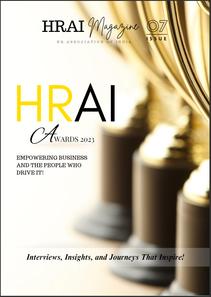
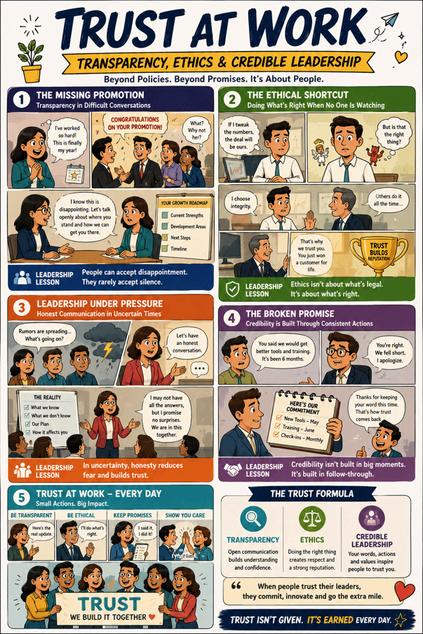
Trust at Work – Transparency, Ethics & Credible Leadership
At HRAI, we believe that trust is the cornerstone of every successful workplace. In an era defined by rapid change, technological advancement, and evolving workforce expectations, organizations that prioritize transparency, ethical decision-making, and credible leadership are better positioned to build resilient cultures and sustainable success.
Trust is no longer just a leadership quality it is a business imperative. Employees seek leaders who communicate openly, act with integrity, make fair decisions, and consistently demonstrate accountability When trust is embedded into organizational culture, it strengthens collaboration, drives engagement, fosters innovation, and creates an environment where people feel safe to contribute, grow, and thrive.
This edition, Trust at Work – Transparency, Ethics & Credible Leadership, explores how organizations can cultivate trust as a strategic advantage Through expert perspectives, leadership insights, and real-world experiences, we examine the role of transparent communication, ethical leadership, responsible decision-making, and authentic relationships in shaping workplaces where credibility and confidence flourish
As you turn these pages, we invite you to reflect on the leaders and cultures that have earned your trust and inspired your best work. By championing transparency, upholding ethical values, and leading with authenticity, we can build organizations where trust is not just expected it is intentionally nurtured, strengthening people, performance, and the future of work.
1,15,000+ FOLLOWERS ON LINKEDIN
A GROWING COMMUNITY OF PROFESSIONALS ENGAGING WITH HRAI’S INSIGHTS, INITIATIVES, AND INDUSTRY CONVERSATIONS.
About HRAI
Founded by Dr. Ankita Singh, the HR Association of India (HRAI) drives industry-led initiatives and curates prestigious recognitions for organizations, emerging professionals, and trailblazing women across the business ecosystem. HRAI serves as a platform for learning, collaboration, and recognition, bringing together professionals and subject-matter experts from across industries.
What We Do
Industry initiatives and professional forums
Awards, recognitions, and curated listings
Knowledge-sharing through talk shows, panels, and articles
Community-building for HR and business professionals
Organizations We’ve Engaged With Lenovo, Hindustan Unilever, Biocon Biologics, IHG Hotels, L&T, CBRE, Sutherland, Capgemini, EY, and more.
KNOWLEDGE & THOUGHT LEADERSHIP
Elite voices such as Dr. TV Rao, Harjeet Khanduja, and Prasenjit Bhattacharya have been featured in HRAI’s one-on-one talk shows, contributing practical insights and real-world perspectives for professionals.
HRAI MAGAZINE INITIATIVE
HRAI publishes thought-provoking articles authored by senior professionals from organizations such as Reliance Jio, Times of India, KPMG, Eveready, Volvo, and more.
HRAI LIST FEATURES
HRAI curates an annual list of features recognizing exceptional professionals and changemakers aligned with a central theme each year. 23 of 2023 |24 of 2024|25 of 2025. Notable organizations featured include: Adani, Amazon, Flipkart, Samsung, Myntra, Uber, Raymond, and more.
EXCLUSIVELY FEATURED SHARK TANK JURY IN THE VISIONARY CEOS LIST:
For HR professionals in India, HRAI offers unparalleled opportunities to connect with like-minded peers, learn from experts, and gain recognition for their hard work and achievements. By joining HRAI, HR professionals can stay updated on the latest trends, best practices, and strategies that can help them take their careers to the next level.
VICE PRESIDENT-HR BUSINESS STRATEGY,GOLD STAR JEWELLERY PVT LTD
SONU GUPTA FOUNDER & CHIEF HUMAN RESOURCE OFFICER, CODERSBRAIN
SUMIT AGARWAL LINKEDIN TOP
VOICES
ANURAG BHAGANIA
CHIEF
Over the last 25 years, I have spent countless hours reviewing budgets, debating investments, improving operational efficiency, and explaining quarterly performance A career in finance teaches you quickly that numbers rarely lie But they do not tell the whole story either
Some of the most important drivers of longterm value never appear on a balance sheet You cannot fully measure them in a spreadsheet, but you can immediately feel their impact when they are missing. One of those drivers is trust.
In the healthcare and pharmaceutical industry, where I currently work, trust has a very different meaning. We are not making standard consumer goods. A glitch in a smartphone is an inconvenience A compromised medicine is a crisis.
Whenever discussions on trust become too theoretical, I bring myself back to one basic question:
If I were the patient receiving this medicine, or if it were meant for someone in my family, would I be comfortable with the decision being made?
That patient lens simplifies many complex debates.
Our job is to make sure the system deserves that trust. Trust is not a soft concept. It is a hard business asset It protects lives, reassures regulators, gives confidence to customers, strengthens credibility with the Board, and gives shareholders confidence that growth is being built on a sustainable foundation.
In my experience, there are three simple tests of trust at work.
Do people feel safe enough to speak the truth early?
This is where culture becomes a risk management tool.
In a healthy organisation, bad news travels fast. A junior finance analyst should feel comfortable questioning a number that does not reconcile A plant operator should be able to raise a process concern A quality manager should be empowered to ask for further investigation. When people fear consequences, they choose to stay silent
Most failures do not begin with a major event They start with smaller issues that are noticed, rationalised, ignored or escalated too late. A culture of trust reduces risk because concerns are raised before problems become permanent. For me, transparency is not about creating noise. It is about ensuring that facts, risks, and assumptions are visible before decisions are made Once a decision is made, organisations must align and execute. But before that point, people must feel safe to challenge, question and disagree.
Do leaders take decisions that can withstand customer and shareholder scrutiny?
Businesses face trade-offs every day.
, Should we accelerate a timeline or ask for one more round of validation?
Should we approve a supplier because they are commercially attractive or pause because their quality systems need strengthening?
Should we recognise revenue today or take a more conservative view because the underlying judgement is not fully settled?
Should we prioritise short-term results or invest in controls that will deliver long-term resilience?
As a CFO, I find the math on many of these decisions quite simple. The cost of a delay, a write-off or an additional control is visible and immediate The cost of losing customer confidence, damaging reputation, or facing regulatory action is far greater and far longer lasting.
Credible leadership requires looking beyond the next quarter and asking a simple question:
Would we be comfortable explaining this decision to customers, regulators, the Board, and shareholders?
That does not mean ignoring financial discipline. Good governance and good business are not competing objectives. In fact, they are often the same thing viewed through different lenses. Investments in quality, compliance, capability, and risk management may not always deliver the highest short-term returns, but they almost always create stronger and more sustainable businesses
Do we treat ethics as non-negotiable, even when opportunities look attractive?
Growth brings complexity As companies expand globally, partner with new suppliers, adopt new technologies or evaluate acquisitions, the number of difficult judgement calls increases. We can negotiate on price. We can adapt operating models We can integrate systems and processes. But ethical standards cannot be negotiated
Ultimately, trust is not a communication strategy or a corporate value statement It is the outcome of thousands of decisions made every day across the organisation
Decisions that determine whether employees speak up, whether customers continue to trust us, whether regulators have confidence in our systems and whether shareholders believe in our long-term vision.
Earning trust is a process, and builds over time. One decision at a time. Preserving that trust is not only good governance or good leadership. It is good business.
And over the long term, there is no stronger foundation for sustainable growth than transparency, ethical conduct, and credible leadership.
Trust is built through consistent everyday Trust is built through consistent everyday decisions that reflect transparency, ethical decisions that reflect transparency, ethical conduct, accountability, and credible conduct, accountability, and credible leadership. It grows when organizations leadership. It grows when organizations communicate openly, act fairly, and follow communicate openly, act fairly, and follow through on their commitments even when it through on their commitments even when it is difficult or inconvenient. This kind of is difficult or inconvenient This kind of reliability encourages employees to speak reliability encourages employees to speak up without fear, reassures customers and up without fear, reassures customers and regulators that the organization operates regulators that the organization operates responsibly, and strengthens overall responsibly, and strengthens overall stakeholder confidence. stakeholder confidence
As trust deepens over time, it improves collaboration, reduces friction in decision- collaboration, reduces friction in decisionmaking, and enhances the organization’s making, and enhances the organization’s reputation in the market. It also creates a reputation in the market. It also creates a more stable environment for innovation and more stable environment for innovation and long-term planning, where people feel long-term planning, where people feel secure enough to take thoughtful risks. secure enough to take thoughtful risks. Ultimately, trust becomes not just a marker Ultimately, trust becomes not just a marker of good governance, but a powerful and of good governance, but a powerful and lasting competitive advantage that supports lasting competitive advantage that supports sustainable business growth and resilience sustainable business growth and resilience in changing conditions. in changing conditions.
As trust deepens over time, it improves
ABOUT THE AUTHOR
Anurag Bhagania is an accomplished finance leader with over 25 years of experience driving business transformation, financial excellence and strategic growth across the manufacturing and pharmaceutical sectors. As the Chief Financial Officer at OneSource Specialty Pharma, he plays a pivotal role in strengthening financial performance, enabling sustainable growth and creating long-term value for stakeholders. A Chartered Accountant with an MBA in Marketing, Anurag has held senior leadership positions with globally recognized organizations, including Kirloskar Oil Engines, SKF, Honeywell and General Electric. His expertise spans financial strategy, business partnering, mergers and acquisitions, planning and analytics, governance, internal audit and operational excellence. Known for his collaborative leadership style and commitment to integrity, he believes that trust, transparency and ethical decisionmaking are the cornerstones of sustainable success. Passionate about developing highperforming teams and fostering innovation, Anurag continues to champion responsible leadership that delivers meaningful outcomes for businesses, employees, customers and society
AKANKSHA SANE
Trust at work: what people learn about an organization when culture is tested
Trust is something every organization preaches, but not all of them consider that employees measure the level of trust in the workplace every moment. A subjective outlook is not determined by value statements, company meetings, or surveys on employee satisfaction There are a lot of moments when one can see trust in practice, such as the way difficult decisions are brought up to the team, how mistakes are dealt with, how the announcement of upward movement is handled, or how a leader handles disagreement in a meeting setting With the quick rate of changes and emergence of AI, it becomes true that there are more and more moments when people are able to see how trust works.
Now, let us figure out how that experience relates to trust building or destruction. In my opinion, three factors lead to either building or breaking down trust: transparency, ethics, and credibility
Transparency means telling people what leaders know and what they do not
Employees can cope with uncertainty What they cannot cope with is the fact that they find out that someone kept information from them.
During changing periods, organizational managers often wait for all the answers before passing that information to people, thinking that it would keep individuals calm, but it usually has the opposite effect In the absence of information, employees start to make guesses, which are normally worse than reality
Transparent leaders communicate background information to employees. They are open about what is still undecided and commit to a time when people will hear more
Ethics is reflected in decisions, not in words
Most employees forget about the code of ethics, but pay a lot of attention to the process of decision-making.
They do notice whether promotions follow the stated criteria or personal preferences. They pay attention to the way junior and senior employees are treated if they make a mistake.
They also notice whether feedback shared in confidence stays confidential.
Accountability becomes real at this stage. Fair systems are developed through consistent behavior, not policy alone.
Credibility is consistency over time
When it comes to trust, the rules are rather simple. Every kept promise adds a little. Every broken one, especially a visible one, takes away a lot
Credible leaders know that trust is built by small acts.
A follow-up that actually happens, a feedback loop that actually closes, a promise of flexibility that is honored None of these moments looks important on its own, but together they answer the only question employees are really asking:
Can I rely on what this person tells me?
People have psychological safety around them thanks to such consistency They feel like they can talk, warn in advance, admit mistakes, and ask for help due to these experiences
No workshop can create that kind of safety. Only a track record can
What organizations do
There is a pattern here among good businesses They practice decision transparency and explain the why behind decisions, not only the outcome They have skip-level talks and other listening mechanisms and deeply understand that actions are key to the listening process They help to remove the taboo on admitting mistakes and invest in managers
None of these practices is expensive. All of them are demanding, because they require consistency long after the novelty fades.
The quiet advantage
Those organizations that have high levels of trust develop faster.
Information reaches leaders earlier, problems come to the surface sooner, and people give the organization the benefit of the doubt during difficult phases because they received the same during stable ones Trust is built in small drops and lost in buckets. The drops are daily choices: informing people early, deciding fairly, and keeping the small promise. Leaders who make these choices every day rarely need to talk about trust Their people already know
ABOUT THE AUTHOR
Akanksha Sane is Chief People Officer at SG Analytics, where she leads the People & Culture function. With over 25 years of HR experience across organizations, including PTC Software, Flex Technologies, Tech Mahindra Business Services, and WNS, she brings deep expertise in strategic HR management, employee engagement, talent acquisition, learning and development, and organizational development. A postgraduate in Personnel Management from the University of Pune, Akanksha has led initiatives spanning performance management, HR process transformation, shared services consolidation, and DEI. She believes trust is the foundation of every strong workplace and is passionate about building people-centric organizations where transparency, fairness, capability, and business outcomes come together
AKANKSHA SANE
"Trust is the glue of life. It's the foundational principle that holds all relationships."
DIRECTOR & CHRO, BENNETT COLEMAN & CO LTD (THE TIMES OF INDIA)
Every organisation runs two employee handbooks. One is printed, approved, and signed off. The other is unwritten, assembled quietly from what leaders did when the right decision was inconvenient. Employees skim the first handbook once They live by the second
Across nearly four decades in HR, I have come to see trust less as a cultural value and more as an operating discipline. It shapes how quickly an organisation can change, how safely people speak up, and how much discretionary effort they bring to work. Trust is enterprise strength.
The second handbook gets written most visibly in the moments the organisation did not schedule. A newsroom in the middle of a difficult week is one of the most honest environments in an organisation Deadlines are tight, tempers are frayed, and a difficult call must be made about a story, a source, or a colleague. Employees will forget the memo about that week. They will remember what the editor did when the room went quiet
Transparency is context
More emails, town halls, and updates can create the appearance of openness while avoiding the real question employees are asking Employees want to understand what matters: why a decision is being made, what principles are guiding it, what remains unknown, and what will not be compromised Real transparency gives people enough context to trust the process, even when they disagree with the outcome.
In an organisation like BCCL, a single decision at the centre lands in very different ways across the newsroom floor, the sales team in a
branch office, the printing plant on a night shift, and the digital product teams. The message that leaves the leadership table is rarely the message that reaches the front line Transparency has to travel through managers and HR partners; in a language each team recognises as real.
Ethics becomes visible when there is something to lose
Ethics is measured through the consistency of consequence. Will a senior leader be held to the same standard as everyone else? Will a high performer’s behaviour be challenged when the numbers are strong?
Employees watch these moments closely If performance excuses behaviour, trust reduces. If hierarchy changes the standard, trust reduces If difficult truths are managed instead of addressed, trust reduces. The organisations that hold the line in the harder cases build a reserve of trust that pays back in every subsequent decision
AI will test whether judgement still has permission
The next test of trust at work will come from AI’s successes as much as its failures. AI’s deeper risk to trust is that it gets things right often enough for people to stop checking
In a media environment, this matters more, not less. When AI helps generate a headline, sharpen an audience segment, or draft a first cut of a piece, the temptation is to move faster The judgement that a senior editor or a business head brings, the pause before a story goes out,
the willingness to push back on a shortlist that excludes an unconventional candidate: these are the moments where the system needs human protection That challenge can look like friction on a dashboard. It is the judgement the process is designed to preserve
Employees must know where AI can assist, where human review is required, and where human judgement carries the deciding vote. A person who says, “This does not look right,” should be treated as good governance. In many workflows, that instinct is the safeguard.
The CHRO’s mandate is to make trust operational
The CHRO’s role is moving from managing people processes to building the conditions in which people trust the organisation enough to contribute fully
That requires courage before communication. In my experience, the harder questions have to come first
Can employees raise concerns without paying a career price?
Are managers equipped to explain difficult decisions honestly?
Are we using AI in ways that make people sharper?
These are business questions because trust affects speed, retention, performance, and credibility. Organisations that understand this treat transparency, ethics, and credible leadership as disciplines that shape enterprise value
Employees do not trust an organisation because of what is printed in the first handbook. They trust it because of what gets written, one decision at a time, into the second The second handbook is being written every day. What lands in it is what people trust.
DR.AMIT DAS
ABOUT THE AUTHOR
Dr Amit Das is a global thought leader and HR visionary with over 37 years of experience in shaping future-ready organisations across diverse industries. His work spans leadership transformation, cultural coherence, agile workforce capability and technology-enabled people architecture
Over the course of his career, he has held senior leadership roles with marquee organisations including Tata Motors, CESC Ltd, Britannia Industries, Vodafone, RPG Group and Reliance Group He brings deep expertise in building scalable people systems, strengthening organisational capability and creating resilient, high-performance cultures.
He currently serves as Director–HR and CHRO at Bennett Coleman & Co. Ltd. (The Times of India), India’s largest media conglomerate, with leading print and publishing brands including The Times of India, The Economic Times, Navbharat Times and Maharashtra Times He is also a Director and Board Member of Metropolitan Media Company Ltd. (MMCL), the media house behind Vijay Karnataka and Bangalore Mirror.
A trusted strategic partner and credible adviser to shareholders, promoters and business leaders, Dr Das is known for enabling human-capital-led enterprise value creation and leading organisation-wide transformation during pivotal phases of innovation-led growth and transition
He is an engineering and management graduate, an alumnus of the Kellogg School of Management, and holds a PhD from the KIIT School of Management
"Trust is earned in the smallest moments. It is earned not through grand gestures, but through paying attention, listening, and showing up consistently."
-BRENE BROWN
"Trust is not built when everything is going well. It is built in the ordinary moments that determine how people experience leadership every single day."
The town hall lasted less than thirty minutes The business rationale was clear, the presentation was polished, and every anticipated question had an answer Yet, by the end of the day, conversations across the organisation had already taken a different direction. Employees were speculating about hidden agendas, managers were fielding questions they could not answer, and unofficial versions of the announcement were spreading faster than the official communication
The presentation wasn't the problem. What was missing had probably been built, or perhaps lost, long before that meeting took place.
It was trust
Every organisation eventually discovers that communication alone does not create belief. A well-crafted presentation can explain a decision, but it cannot create confidence in the people delivering it. Employees interpret every announcement through their previous experiences with leadership. They remember whether commitments were honoured, whether difficult decisions were explained honestly, whether feedback was genuinely welcomed, and whether the organisation's values remained visible when circumstances became uncomfortable.
This explains why two organisations can make similar business decisions and receive completely different responses.
One may experience disappointment but continued commitment, while the other faces resistance, anxiety and disengagement. The difference is rarely the decision itself It is the level of trust leadership has earned before the decision had to be made
Trust has quietly become one of the most valuable organisational assets, even though it never appears on a balance sheet. It influences collaboration, innovation, customer confidence, productivity and employee retention. Organisations often describe people as their greatest asset, but people contribute their best only when they trust the organisation they work for and the leaders they work with
The evidence is compelling. Paul J. Zak's research, published in the Harvard Business Review, found that employees working in hightrust organisations experience 74% less stress, 76% higher engagement, 50% higher productivity and 40% less burnout than those in low-trust workplaces The Edelman Trust Barometer continues to identify employers as one of the world's most trusted institutions, placing an enormous responsibility on organisations to protect and strengthen that trust every day Adding to this, Gallup estimates that managers account for nearly 70% of the variance in employee engagement, reminding us that trust is not built through policies or posters but through the everyday behaviour of leaders These are not simply culture statistics; they are business statistics. So, what creates trust?
Leadership can simplify the answer by remembering one simple word TRUST.
T – Transparency. Trust begins when leaders communicate openly and honestly Transparency is not about sharing every confidential detail;
it is about ensuring that people understand the "why" behind important decisions. Employees are far more willing to accept difficult news when they believe they are receiving the complete picture. In contrast, uncertainty and silence almost always invite speculation, and speculation rarely builds confidence.
R – Reliability. Credibility grows through consistency. Leaders earn trust when they honour commitments, communicate predictably and apply principles fairly irrespective of hierarchy or circumstance. Employees rarely expect perfection, but they do expect leaders to do what they say they will do. Reliability transforms promises into confidence and confidence into credibility.
U – Understanding. Listening remains one of the most underestimated leadership capabilities Organisations conduct surveys, town halls and feedback sessions, yet employees often continue to feel unheard because they never see how their perspectives influence decisions. Trusted leaders seek context before conclusions, ask questions before making assumptions and create environments where people feel respected even when opinions differ
S – Systems of Fairness. Trust cannot depend solely on personalities; it must be embedded within organisational systems. Promotions, performance reviews, recognition, rewards and accountability should be guided by transparent principles rather than personal preferences Employees can accept outcomes that may not always favour them when they believe the process itself has been fair Fair systems create predictable cultures, and predictable cultures create trust
T – Truth in Action. Values become meaningful only when leaders demonstrate them consistently, particularly during difficult moments Employees pay far more attention to behaviour than speeches. They notice whether accountability applies equally, whether leaders admit mistakes and whether ethics remain intact under business pressure. Integrity is ultimately demonstrated through repeated actions rather than carefully chosen words.
This matters because trust changes how organisations perform. High-trust workplaces collaborate faster, resolve conflicts earlier and innovate more freely because people spend less time protecting themselves and more time solving problems. In contrast, low-trust organisations unknowingly pay what Stephen M. R. Covey described as the "tax of distrust." Decision-making slows, approvals multiply, communication becomes defensive and collaboration gradually gives way to caution. The cost of low trust rarely appears as a line item in financial statements, yet it quietly influences every business outcome.
The importance of trust becomes even greater as organisations embrace artificial intelligence and digital transformation Technology can automate workflows, analyse performance and generate recommendations, but employees will continue asking fundamentally human questions. Was this decision fair? Was I heard? Can I trust the people leading this organisation? Artificial intelligence may transform how organisations work, but trust will determine whether people embrace that transformation with confidence. As technology becomes smarter, leadership must become more human
This is perhaps the defining leadership challenge of our time. DR.ANKITA SINGH
Organisations can invest millions in technology, strategy and innovation, but none of these investments will reach their full potential if employees lack confidence in the people leading them. Technology accelerates execution; trust accelerates commitment One improves efficiency, while the other inspires belief, and belief has always been the more powerful force
Long after strategies evolve, organisational structures change and new technologies emerge, employees remember how leaders made them feel They remember whether they were treated fairly, whether their voices mattered and whether difficult decisions were handled with honesty and respect. Those experiences shape culture far more powerfully than vision statements or leadership presentations ever can.
Trust is therefore not an initiative for HR to launch or a value to display on the reception wall It is reflected in every conversation, every difficult decision, every promise that is honoured and every action that demonstrates integrity. It is earned patiently, strengthened consistently and protected deliberately. Organisations that understand this do not view trust as a soft skill; they recognise it as one of the strongest drivers of sustainable business performance.
In an era where technology can replicate skills, automate decisions and transform business models, trust remains the one competitive advantage that cannot be outsourced, automated or artificially generated. It can only be earned.
Because people do not give their best to
Because people do not give their best to organisations that simply employ them. organisations that simply employ them. They give their best to organisations They give their best to organisations they genuinely trust. they genuinely trust.
"Strategies create momentum. "Strategies create momentum. Technology creates speed. Trust Technology creates speed. Trust creates legacy. Every other dividend creates legacy. Every other dividend can be counted; the Trust Dividend is can be counted; the Trust Dividend is rremembered." emembered."
ABOUT THE AUTHOR
Dr. Ankita Singh is the CPO & Board Director, CIGNEX & Relevance Lab With 22+ years in HR, primarily in the ITES sector, Ankita has driven transformation through performance-driven practices and inclusive culture. At CIGNEX, her leadership helped the company earn multiple “Great Place to Work” certifications (2017–2021). She has been recognized as “Woman Leader of the Year” by The Times of India Group and featured in Forbes India’s “Top 100 Managers.” Ankita holds an MBA in HR+IT, an Executive MBA from SCMHRD, and a Ph.D. in Management. A respected voice in the industry, Ankita blends strategic insight with a passion for people development and culture building.
DR.
BRILLIAN SK
EXECUTIVE VICE PRESIDENT & CHIEF PEOPLE OFFICER,TIMESPRO
“Tarikh par tarikh, tarikh par tarikh!”
when employees look for actual proof during times of crisis or performance reviews, all they experience is this classic dialogue from the courtroom drama Damini In my view, building and sustaining trust in a modern organisation is remarkably similar to the iconic courtroom drama in Damini. We often hear grand corporate declarations about culture, transparency, and psychological safety Yet
True trust cannot survive on delayed promises, superficial town halls, or vague assurances of future fairness. It demands immediate, visible integrity As organisations navigate rapid structural shifts, market volatility, and technological changes, trust is no longer a soft HR initiative It is the absolute foundation of strong workplace cultures, meaningful employee relationships, and long term business resilience For decades, traditional management operated on a simple premise: authority flowed from the top down, decisions were guarded behind closed doors, and compliance was driven by fear or hierarchy. This creates an illusion of command and control
“Rishte mein toh hum tumhare baap lagte hain, naam hai Shahenshah.”
Amitabh’s famous dialogue and swagger worked brilliantly on the silver screen, bringing this exact attitude into the boardroom is a surefire way to dismantle psychological safety and destroy credibility. When leaders rely solely on their designation to command respect, they create an environment of anxiety rather than alignment. Modern professionals do not look for an almighty dictator in the corner office. They look for credible leaders who communicate with clarity, admit when they do not have all the answers,
and demonstrate fair play across all levels of the organisation Fostering real trust requires moving beyond rhetoric and embedding fairness into the daily operational mechanics of the workplace In my experience across corporate leadership and human resources, three core principles or the three pillars of credible leadership make or break an organisation’s credibility:
1. Transparency over controlled messaging: Uncertainty breeds rumour and disengagement When an organisation faces headwinds, attempts to sanitize reality or delay difficult conversations only erode faith in leadership Transparent communication means sharing the why behind strategic decisions, even when those decisions involve tough trade-offs. Employees respect leaders who treat them like mature partners rather than passive recipients of corporate PR.
2. Fair systems and accountability: Ethics cannot be a poster on the cafeteria wall while performance metrics, promotions, and grievance mechanisms operate on favouritism or opacity A fair system ensures that rules apply equally to everyone, regardless of their title, revenue contribution, or proximity to power When high performers who violate cultural values are held accountable, trust in the system skyrockets
3.Action over words: Credibility is not established in a single emotional townhall address; it is accumulated through hundreds of small, consistent daily actions If leadership preaches work-life balance but rewards presenteeism, or if they champion innovation but penalise honest failure, the culture fractures.
Alignment between what is promised and what is practiced is the ultimate currency of leadership
To navigate the tides from power to service, we need to build an ecosystem grounded in trust requires a fundamental shift in how leaders view their role. Power gained through position is only temporary, but influence earned through integrity stands the test of time In any corporate journey, we will inevitably encounter situations where our commitment to fairness is tested, or where the immediate path of least resistance seems tempting. It is during these moments that selfless service and unwavering ethics become our truest anchor.
“Hum jahan khade hote hain, line wahin se shuru hoti hai.”
Kaalia (Amitabh) in Kaalia got thunderous applause when this dialogue was rolled out on screen In a modern, connected ecosystem, true leadership is not about standing at the start of a queue to claim privileges It is about building the solid ground upon which your entire team can stand, connect, and move forward with confidence When you establish transparent communication, uphold rigorous ethical standards, and build fair systems, you create a culture where people do not work out of obligation, but out of shared purpose. That is how sustainable impact is created, and that is how great institutions stand the test of time.
Let us therefore look within our own boardrooms and corridors today. The era of the isolated, infallible boss who commands from behind a closed door is permanently over. True leadership requires us to dismantle the old structures of silence and replace them with ecosystems of absolute clarity, non-discriminatory accountability, and visible fair play We must choose the harder path of open truth over the convenient security of controlled messaging.
Let us commit to becoming the anchors our teams need during times of turbulence and change. Begin by reviewing existing systems, opening up all formal and informal communication channels, and holding every layer of management to the exact same ethical baseline
Take that first step today, because sustainable corporate excellence is not inherited, it is built through the daily actions we choose to take.
ABOUT THE AUTHOR ABOUT THE AUTHOR
Dr Brillian S K Executive Vice President & Chief People Officer | C-Suite People Strategy Leader | Culture Architect | Leadership Advisor | Human-Centered Experience Curator
A transformational HR leader With over 27 years of experience, Dr. Brillian S. K. is a transformational HR leader known for shaping high-performing, people-centric organisations. His unique transition from engineering to human resources has enabled him to drive impactful people strategies across IT, BFSI, Education, and Logistics, with leadership roles at TimesPro, Aptech, BNP Paribas, CRISIL, and SP Jain Global.
A respected thought leader, author, speaker, and Gallup-Certified Strengths Coach, he is passionate about leadership, workplace culture, employee well-being, and futureready organisations. His contributions have earned him prestigious recognitions, including Maharashtra's Top HR Visionary Leader 2025, the Top 10 Global CXO Excellence Award 2024, and the REX Karamveer Gold Fellowship 2024
Beyond the corporate world, Dr. Brillian actively mentors emerging HR professionals and is a strong advocate for diversity, inclusion, and leadership development. Through initiatives such as the #LeaderSlip podcast and #BrillianTips, he continues to inspire leaders to build workplaces where people and organisations thrive together
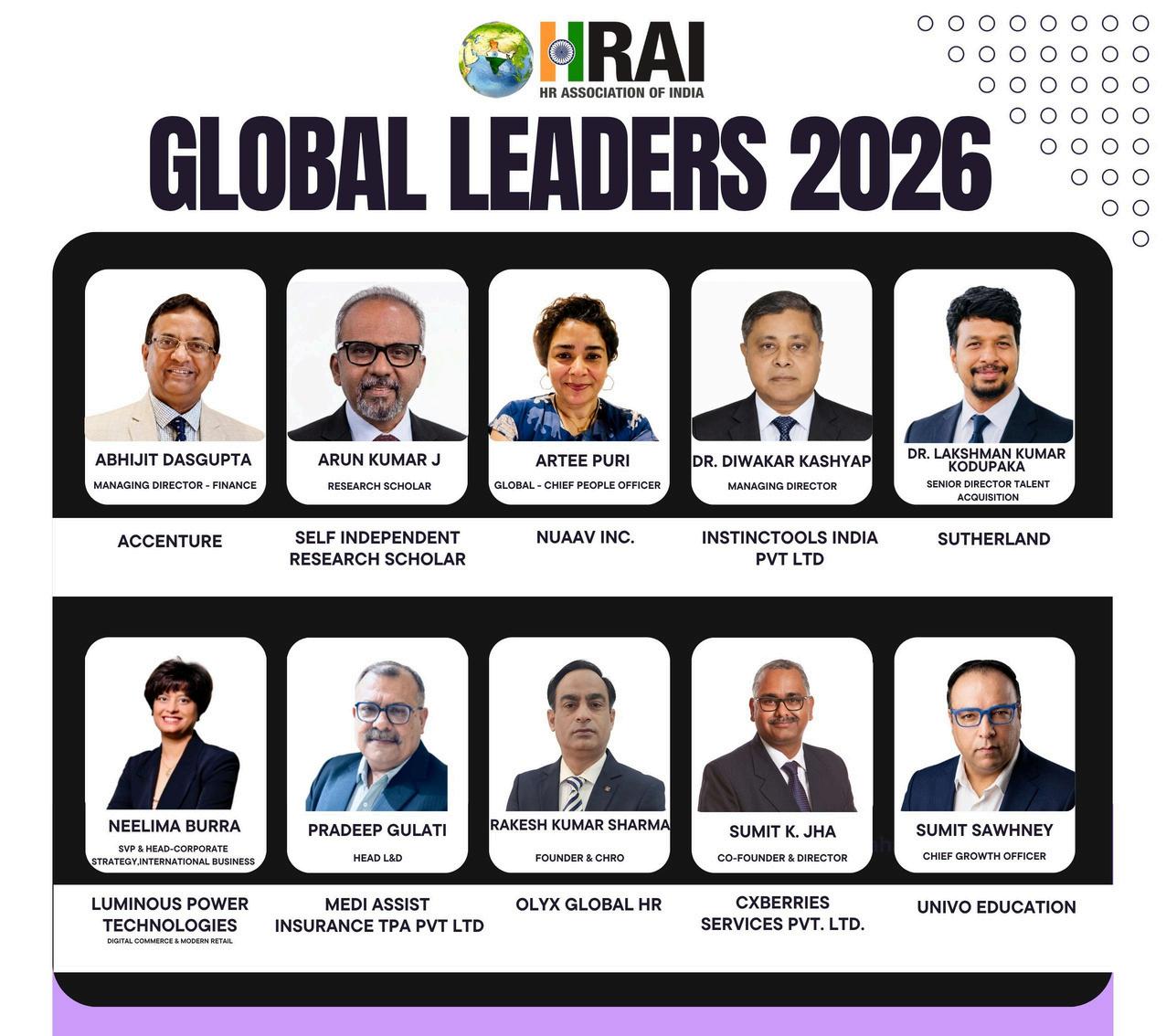
GLOBAL LEADER’S 2026 POWER LIST
Celebrating the leaders shaping the future of work through vision, trust, and impact.
The HRAI Global Leaders Powerlist 2026 celebrates an exceptional group of visionary leaders whose commitment, innovation, and purpose-driven leadership continue to shape the future of workplaces across industries. These distinguished professionals have demonstrated excellence by fostering highperforming teams, driving business transformation, embracing innovation, and creating cultures built on trust, ethics, and inclusivity.
Their remarkable journeys stand as a testament to resilience, strategic thinking, and an unwavering commitment to empowering people while delivering sustainable organizational success. As changemakers and role models, they inspire the next generation of leaders to lead with integrity, courage, and compassion.
HR Association of India (HRAI) proudly recognizes these outstanding professionals for their invaluable contributions to business, people, and society through the Global Leaders Powerlist 2026.
SINGH PRESIDENT & GROUP CFO, HERO CORPORATE SERVICE P LTD
JOGENDRA
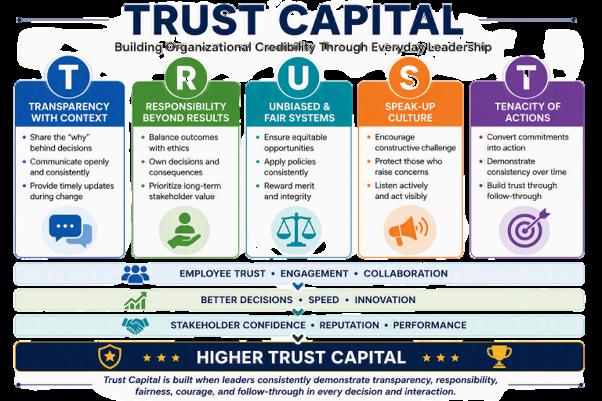
Building ‘Trust Capital’ The Invisible Asset That Creates Visible Value
"The balance sheet records what an organization owns. ‘Trust Capital’ determines what an organization can achieve "
There was a time when organizations competed primarily through financial strength, manufacturing capability or market reach. Today, those advantages remain important, but they are no longer sufficient. In an increasingly transparent and interconnected world, the defining differentiator is something far less tangible, yet infinitely more powerful Trust Capital.
Every organization speaks about creating shareholder value The most enduring organizations, however, create something even more valuable: confidence among employees, customers, investors, partners and society that they will consistently do the right thing even when no one is watching
Trust is therefore not simply a cultural virtue. It is an economic asset.
It reduces friction, accelerates execution, encourages innovation and strengthens resilience during periods of uncertainty
Why Trust Has Become a Boardroom Agenda
The world of ‘work’ has fundamentally changed Artificial Intelligence is reshaping jobs. Hybrid work has redefined relationships. Stakeholders expect greater transparency than ever before. Social media ensures that organizational behaviour is publicly visible within minutes
In such an environment, leadership credibility is no longer optional. It is strategic infrastructure. Research increasingly supports this reality.
McKinsey's work on Organizational Health demonstrates that organizations characterised by trusted leadership, clear communication and strong cultures consistently outperform peers over the long term Perhaps the strongest indicator comes from the Edelman Trust Barometer, which continues to show that employers remain among the most trusted institutions globally, placing an enormous responsibility upon corporate leadership
Trust has therefore moved beyond HR It has entered the boardroom.
The New Currency of Leadership
In finance we often discuss Return on Capital Employed. Perhaps modern organizations should begin discussing Return on Trust Created.
AS STEPHEN M. R. COVEY SUCCINCTLY OBSERVED, "WHEN TRUST GOES UP, SPEED GOES UP AND COST COMES DOWN."
Few statements capture the economics of leadership more accurately.
Every strategic initiative ultimately depends upon trust Transformation requires employees to believe leadership. Innovation requires people to challenge existing ideas. Governance requires confidence that decisions are fair
Customers purchase products Investors purchase confidence. Employees purchase purpose. Trust becomes the common currency behind every one of these relationships Without it, every decision becomes slower. Every approval requires another meeting Every process demands another control. Every initiative faces hidden resistance. And this means slow-down and addition of avoidable cost. Distrust is perhaps the most expensive cost that never appears in the financial statements.
The TRUST Framework
Over the years, I have come to believe that sustainable ‘Trust Capital’ rests upon five leadership disciplines.
Rather than treating trust as an abstract idea, leaders should deliberately build it through what I call the ‘TRUST Framework.’
T – Transparency with Context
Transparency is often misunderstood as sharing everything It is not
Good leaders may not always disclose every detail, but they always explain the principles behind important decisions. People can accept uncertainty They struggle to accept silence During restructuring, digital transformation or business downturns, employees rarely expect perfection. They expect honesty. Transparent communication replaces rumours with understanding
R – Responsibility Beyond Results
Performance matters. How performance is achieved matters even more Ethical organizations celebrate both outcomes and behaviour
The Bhagavad Gita reminds us:
(Bhagavad Gita 3.21)
"Whatever a leader does, others naturally follow."
Employees rarely follow vision statements. They follow visible behaviour Leaders therefore become the organization's most powerful culture-building mechanism
U – Unbiased and Fair Systems
Trust cannot survive where fairness is absent. Performance management, Promotions, Recognition, Compensation, Opportunity.
These systems communicate organizational values far more loudly than posters displayed in reception areas Employees ask one silent question every day:
"Will this organization treat me fairly?"
The answer determines discretionary effort far more than annual engagement or 360-degree surveys.
S – Speak Up Culture
Google's landmark Project Aristotle concluded that psychological safety is the strongest predictor of high-performing teams Innovation begins where fear ends. People must be able to question, Disagree, Admit mistakes, Challenge assumptions and Raise ethical concerns.
Organizations that punish honest mistakes inevitably encourage hidden mistakes
Leaders who welcome respectful dissent build stronger decisions and healthier cultures. Not allowing mistakes means putting a lid of Innovative Thinking
T – Tenacity of Actions
Trust is never built through speeches. It is built through consistency, a promise honoured, a difficult conversation not avoided, recognition given fairly, bad news communicated honestly and mistakes acknowledged openly. Employees continuously compare what leaders say with what leaders repeatedly do
Consistency converts credibility into trust Trust eventually becomes reputation.
Trust Capital in Practice
The world's most respected organizations illustrate that trust is not accidental.
The Hero Family has built generations of goodwill by consistently placing ethics and stakeholder responsibility alongside profitability The book by Mr. Sunil Kant Munjal- ‘The Making of Hero’ gives multiple examples of trust in employees, vendor and Customer family thereby converting crisis into opportunity.
Trust is accumulated long before it is tested.
The Hidden Economics of Trust
Finance professionals instinctively measure tangible assets. Trust demands that we recognise intangible economics.
High-trust organizations typically experience:
Lower voluntary attrition
Faster decision-making.
Better cross-functional collaboration.
Stronger innovation
Higher customer advocacy.
Lower governance failures
Greater resilience during crises.
Conversely, low-trust organizations pay invisible taxes every day- More approvals, More supervision, More compliance, More politics, More meetings, More attrition and More missed opportunities.
The costs remain hidden. The impact is enormous
Trust may not appear on the balance sheet but its absence certainly appears in enterprise value.
Trust Is Lived Before It Is Measured
The Guru Granth Sahib offers one of the most profound leadership principles:
Truth is higher than everything; higher still is truthful living.
Leadership is therefore not measured by the elegance of values written on walls. It is measured by the consistency with which those values are lived. The distinction is timeless. Anyone can speak about integrity Only character demonstrates it.
The Leadership Question That Matters Most
Every leader eventually leaves behind buildings, systems, strategies and financial results.
The enduring legacy, however, is far simpler-
Did people trust us?
Peter Drucker once remarked,
"Management is doing things right; leadership is doing the right things."
I would respectfully add one final thought.
LEADERSHIP IS DOING THE RIGHT THINGS CONSISTENTLY ENOUGH THAT PEOPLE NO LONGER NEED TO QUESTION YOUR INTENTIONS.
That is Trust Capital.
As organizations invest billions in Artificial Intelligence, digital platforms and new technologies, they must remember that no technology can replace credibility, Algorithms can automate decisions Policies can enforce compliance. Systems can monitor behaviour.
Only leadership can inspire trust.
And in the economy of the future, Trust Capital will become the rarest and perhaps the most valuable asset any organization possesses.
Leadership leaves its greatest legacy not
Leadership leaves its greatest legacy not through strategies or financial results, but through strategies or financial results, but through the trust it inspires. Consistent through the trust it inspires. Consistent actions, ethical behaviour, and truthful living actions, ethical behaviour, and truthful living create lasting credibility, making trust the create lasting credibility, making trust the most valuable asset an organization can most asset an organization can possess in an evolving business landscape. possess in an evolving business landscape
ABOUT THE AUTHOR
Jogendra Singh is President & Group CFO and Board member of Hero Corporate Service P Ltd’ which includes companies engaged in Steel Manufacturing, Real Estate, Insurance Broking operations, Not for Profit Foundations and Investment Office. He was the 1st employee for Daimler India for setting up Bharat Benz Truck & Bus plant in India He is Honorary Doctorate and Guest Faculty to ISB, IIM Lucknow, Indore, Sambalpur, IIT Dharwad, IMT, Pokhra University, and speaker at CXO conferences. He was featured as of the Most Influential Punjabis of the World by IPCC and also by Punjabi TV Channel PTC. He has been awarded multiple CFO awards including ‘CFO of the Year’ and ‘Great Asian Leaders Award’
Trust at Work: The Trilogy of Transparency, Ethics, and Credible Leadership
In the modern corporate ecosystem, structural disruptions are no longer occasional events; they are continuous Organizations are navigating an era defined by rapid technological shifts, hybrid work frameworks, and changing workforce demographics. Amid these swirling variables, leaders often search for a definitive anchor a strategy or tool to stabilize their teams and drive performance.
The ultimate competitive advantage is not a piece of technology or a novel management framework It is organizational trust
Trust is the invisible currency of a highperforming workplace. When trust is high, communication is effortless, collaboration is spontaneous, and innovation thrives When it is absent, the organization is weighed down by bureaucratic friction, hyper-surveillance, and emotional exhaustion. For the modern human resources professional, building and sustaining this currency is a core strategic imperative
Trust is not an abstract emotional state It is a measurable, actionable framework built upon three pillars: Transparent Communication, Ethical Governance, and Credible Leadership
For decades, traditional corporate communication operated on a restrictive "needto-know" basis. Information was hoarded at the top and trickled down in carefully sanitized, tightly controlled updates. Today, that model is a liability. KINJAL CHOUDHARY
In an information-rich world, a lack of transparency does not create control; it creates a vacuum And in a vacuum, rumor, anxiety, and cynicism flourish.
Transparent communication requires a structural shift from information control to radical clarity
Context Over Conclusions
When organizations face pivotal moments such as strategic pivots, restructuring, or macroeconomic challenges leaders often communicate only the final decision. True transparency means sharing the why behind the what. When employees understand the variables, constraints, and data points that shaped a decision, they are far more likely to commit to the outcome, even if the news is difficult
Embracing Strategic Vulnerability
Credibility is not built by pretending to have all the answers; it is built by acknowledging limits Leaders who can openly say, "We don’t have full visibility on this market variable yet, but here is our mitigation plan," foster far deeper trust than those who offer hollow reassurances. Vulnerability is a bridge to psychological safety
Ethical
Governance: Fair Systems and Equity in Action
Ethics in the workplace is frequently reduced to compliance checklists, mandatory annual training modules, and code-of-conduct PDFs tucked away on an intranet. However, true ethical governance is dynamic. It is reflected in how an organization handles its most mundane and its most critical systemic processes.
Employees assess an organization’s ethical health not by its mission statement, but by its systems This ethical health manifests across three core dimensions:
Consequence Consistency: Trust is instantly broken when performance excuses poor behavior If a high-revenue generator or a brilliant technical specialist violates workplace culture policies without facing consequences, the organization signals that its values are conditional. Ethical governance requires that accountability applies equally to all levels
Transparent Advancement: Performance management and promotion systems must be remarkably clear. When growth paths, compensation bands, and evaluation criteria are objective and visible, it removes suspicions of favoritism. Employees need to see a direct, predictable link between their contributions and their career progression.
Algorithmic and Data Fairness: As HR teams increasingly lean on AI-driven analytics for hiring, productivity tracking, and sentiment analysis, ethical governance extends to data privacy. Organizations must be explicit about what is being measured, why it is being measured, and how that data influences talent decisions.
Credible Leadership: Closing the "Say-Do" Gap
At its core, leadership credibility is a function of a simple equation: a leader's Say-Do Ratio
When a leader maintains a high trust ratio, their promises perfectly match their actions. They consistently model the accountability they expect from others, which naturally fosters deep psychological safety across the team.
Conversely, a low trust ratio occurs when expectations are set, but the goals or rules shift without explanation When leaders say one thing and do another, it fractures credibility and fosters widespread anxiety and cynicism.
Leaders are under constant observation. Employees watch where leaders invest their time, how they respond to failures, and whether their actions match their stated priorities. A leader who advocates for work-life balance but sends urgent emails at midnight creates a culture of anxiety A leader who champions diversity but preserves an insular decisionmaking circle undermines their own message.
Credible leaders understand that trust is a compound asset built through small, consistent, daily behaviors. They don't just set expectations; they actively model them. When a mistake occurs, a credible leader takes immediate accountability rather than deflecting blame to external market conditions or internal teams. This sets a standard where accountability is viewed as a path to improvement rather than a trigger for punishment.
Strategic Action Items for HR Leaders
Transforming trust from a theoretical concept into an operational reality requires deliberate structural changes HR leaders can champion several concrete strategies:
Re-engineer the Feedback Loop
Move away from annual engagement surveys that offer retrospective data months too late. Implement continuous, pulse-feedback mechanisms and clear, multi-directional channels where employees can raise concerns without fear of retaliation
KINJAL CHOUDHARY
Crucially, the feedback loop must be closed: if a team highlights an issue, management must communicate what is being done to address it, or explain why certain constraints prevent immediate action.
Operationalize Psychological Safety
Psychological safety the shared belief that one can speak up, ask questions, or admit mistakes without humiliation is the bedrock of an innovative culture HR can institutionalize this by designing "Project Post-Mortems" or "Blameless Reviews " In these sessions, the focus shifts entirely from who made an error to what systemic gap allowed the error to happen. When failure is treated as data rather than a behavioral flaw, transparency becomes the default.
Upskill Managers in "Trust Competency"
People do not leave organizations; they leave immediate managers While senior executives set the organizational tone, middle managers are the daily stewards of the employee experience HR must train managers in empathetic leadership, transparent expectation-setting, and managing hybrid teams based on output rather than physical presence.
The Business Case for Trust Research across organizational psychology consistently shows that when compared to lowtrust environments, employees in high-trust organizations experience 74% less stress and burnout, 50% higher productivity metrics, 106% more energy and engagement at work, and 40% lower turnover rates (Source: Harvard Business Review / Center for Neuroeconomics Studies)
Conclusion: The Path Forward
Trust is not a static milestone that an organization reaches and checks off a list. It is a continuous, dynamic practice. It is built in drops and lost in buckets Every email sent, every performance review conducted, every strategic shift managed, and every crisis handled is an opportunity to either deposit into or withdraw from the organizational trust fund.
For the HR Association of India and the broader community of people professionals, our role is clear. We are not merely administrators of policies or guardians of compliance; we are the architects of the workplace ecosystem By embedding transparency into our communication, ensuring absolute ethics in our governance systems, and coaching our leaders toward uncompromising credibility, we build resilient organizations
In a world defined by constant change, a culture rooted in trust remains an organization's most durable foundation for sustained business success
“WHEN TRANSPARENCY BECOMES A HABIT, ETHICS A STANDARD, AND CREDIBILITY A WAY OF LEADING, TRUST TRANSFORMS INTO AN ORGANIZATION'S GREATEST STRENGTH.”
ABOUT THE AUTHOR
Kinjal Choudhary is a senior Human Capital leader with over 30 years of experience in shaping workforce strategy, organizational transformation, and leadership development across global enterprises. Currently serving as Global President – Human Resources at Cadila Pharmaceuticals, he leads the company ' s global people strategy, focusing on leadership capability, organizational agility, culture transformation, and HR modernization.
An alumnus of St. Stephen's College, JNU, and XLRI Jamshedpur, Kinjal has held senior leadership positions at ITC Limited, Hindustan Unilever, PepsiCo, Amazon, Volvo Eicher Commercial Vehicles, and Paytm. Throughout his career, he has partnered closely with CEOs and Boards to align human capital strategy with business growth, while driving leadership succession, workforce productivity, industrial relations, and HR digital transformation.
Widely respected for building highperforming, people-centric organizations, Kinjal continues to guide enterprises in strengthening leadership capability, governance, and sustainable organizational excellence.
"Integrity is doing the right thing, even when no one is watching."
DR.LAKSHMAN KUMAR
KODUPAKA SENIOR DIRECTOR-TALENT
A Global Talent Acquisition Leader's Perspective
Throughout my career in Global Talent Acquisition, I have interviewed thousands of professionals, partnered with business leaders across continents, and witnessed organizations transform through growth, disruption, mergers, and technological evolution. Amid all these changes, one lesson has remained remarkably consistent: people choose organizations because of opportunity, but they stay because of trust.
Trust is often spoken about as a cultural value or leadership quality, but I believe it is much more than that It is a strategic business asset that influences every aspect of an organization from attracting exceptional talent and retaining high performers to driving innovation, customer loyalty, and sustainable business growth. In today's workplace, where change is constant and expectations are evolving faster than ever, trust is no longer optional; it is the foundation upon which successful organizations are built.
The modern workforce is significantly different from what it was even five years ago. Professionals today are not simply looking for competitive salaries or attractive job titles. They are evaluating an organization's integrity, leadership credibility, commitment to diversity, transparency in decisionmaking, and ability to create an environment where employees feel respected and valued In many ways, employer branding has evolved beyond marketing campaigns it is now defined by the daily experiences employees and candidates have with an organization.
Research consistently reinforces the business value of trust.
According to the Edelman Trust Barometer, employers continue to rank among the most trusted institutions globally, placing enormous responsibility on organizations to lead with integrity and transparency Gallup's workplace studies have repeatedly shown that organizations with highly engaged employees experience stronger productivity, improved customer satisfaction, lower absenteeism, and significantly reduced employee turnover Similarly, Great Place to Work has found that organizations with high-trust cultures consistently outperform their peers in innovation, financial performance, and employee retention These findings send a clear message: trust is not merely a cultural aspiration; it is a measurable competitive advantage.
From a Talent Acquisition perspective, trust begins much earlier than an employee's first day at work It starts with the very first interaction between a candidate and the organization. Every communication, every interview, every commitment made during the hiring process contributes to building or eroding that trust
Candidates observe much more than we often realize They notice whether recruiters communicate promptly, whether interview panels respect scheduled timings, whether job descriptions accurately reflect the role, and whether compensation discussions are honest and transparent They also remember how they were treated throughout the process, regardless of the final hiring decision In my experience, candidates are surprisingly forgiving of rejection when it is handled professionally, respectfully, and transparently What they rarely forgive is poor communication, misleading information, or unfulfilled commitments.
For Talent Acquisition leaders, this reinforces an important principle: every recruitment interaction shapes the organization's reputation A positive candidate experience creates ambassadors, while a poor experience creates critics. Trust, therefore, becomes one of the most valuable outcomes of an effective hiring process.
While recruitment initiates trust, leadership sustains it. One of the defining characteristics of credible leaders is transparent communication Employees understand that leaders cannot predict every challenge or eliminate every uncertainty However, they expect honesty. Whether organizations are navigating market fluctuations, restructuring, technological transformation, or economic pressures, transparent communication creates confidence while silence often creates speculation and anxiety.
Transparency does not require leaders to possess all the answers. Instead, it requires the courage to communicate openly about challenges, explain the rationale behind difficult decisions, and acknowledge uncertainty where it exists. Employees are far more likely to support difficult decisions when they understand why those decisions are necessary In contrast, a lack of communication often gives rise to rumours, disengagement, and declining morale.
Equally important is ethical leadership. Organizational values cannot remain statements displayed on office walls or corporate websites. They become meaningful only when leaders demonstrate them consistently through their actions. Employees closely observe how promotions are awarded, how performance evaluations are conducted, how workplace concerns are addressed, and whether accountability applies equally across all levels of the organization
Trust begins to weaken whenever employees perceive inconsistency between what leaders say and what they do. Ethical leadership therefore requires fairness, accountability, and consistency even when making unpopular decisions. In my experience, employees are generally willing to accept difficult outcomes if they believe the process leading to those outcomes has been fair, transparent, and respectful
Another dimension of trust that deserves greater attention is psychological safety. Professor Amy Edmondson's pioneering research has shown that high-performing teams are those where employees feel safe to express ideas, admit mistakes, ask questions, and challenge assumptions without fear of embarrassment or retaliation. In today's knowledge-driven economy, innovation depends less on hierarchy and more on open collaboration Organizations cannot expect breakthrough ideas if employees hesitate to speak honestly.
Creating psychological safety does not imply lowering performance expectations Instead, it means fostering an environment where learning, experimentation, and constructive dialogue are encouraged Leaders who actively listen, invite diverse perspectives, and acknowledge their own mistakes create cultures where innovation flourishes naturally. In my own leadership journey, I have found that the strongest teams are rarely those with the smartest individuals; they are the teams where people trust one another enough to contribute their best thinking.
The rapid adoption of Artificial Intelligence adds another important dimension to workplace trust
AI is transforming recruitment, workforce planning, employee engagement, learning, and performance management at an unprecedented pace While these technologies improve efficiency and support better decision-making, they also raise important questions around fairness, transparency, bias, privacy, and accountability.
As Talent Acquisition leaders, we must ensure that technology strengthens trust rather than weakens it Candidates and employees deserve to understand how AI is being used, what safeguards exist to reduce bias, how their information is protected, and where human judgment continues to play an essential role. Responsible AI governance is no longer simply a technology discussion it is a leadership responsibility.
Ultimately, trust cannot be delegated to Human Resources alone. Every manager, every recruiter, every business leader contributes to building or diminishing organizational trust through daily actions Small behaviours often create the greatest impact: honouring commitments, providing timely feedback, recognising contributions, admitting mistakes, listening with empathy, and treating every individual with fairness and dignity.
As I reflect on the future of work, I am convinced that organizations will increasingly compete not only on products, services, or technology, but on credibility. Skills can be developed. Technology can be acquired Strategies can be replicated Trust, however, must be earned over time through consistent actions and authentic leadership.
For me, trust is not an abstract leadership principle; it is the invisible thread connecting people, purpose, and performance. Every candidate interaction, every hiring decision, every leadership conversation, and every organisational commitment either strengthens or weakens that thread
The organizations that will lead the future are not necessarily those with the biggest budgets or the most advanced technologies. They will be the ones where employees believe what leaders say, where actions consistently reflect values, and where transparency, ethics, and accountability are practised every day In an increasingly uncertain world, trust has become the one advantage that competitors cannot easily imitate and perhaps the most valuable investment any organization can make.
ABOUT THE AUTHOR
A friend of mine was planning a vacation
He shortlisted two hotels at almost the same price.
One was a local hotel, the other belonged to a wellknown global hotel chain.
He chose the branded hotel
Curious, I asked why.
He smiled and said,
"With a branded hotel, I know what to expect The room will be clean The bedsheets and towels will be fresh. The toilets will be hygienic. The staff will be courteous. There won't be hidden charges."
In one sentence, he explained the real product that branded hotels sell.
Trust.
What is Trust?
Trust is the belief that another person will do what is expected and is built through repeated consistency. This is the dictionary definition of trust
Branded hotel chains earn that trust by delivering the same experience, every single time
They define standards, train people to follow them and relentlessly monitor compliance. They may spend more to maintain those standards, but they rarely cut corners. That is why the experience you see on the website is usually the experience you receive.
Interestingly, these hotels are often managed by the same local people, employing the same local workforce.
So what makes the difference?
It is not better people It is a better system
How Great Brands Build Trust
Building trust is simpler than most people imagine. It follows a three-step DTC process
1. Define the
Standards
Clearly articulate what customers can expect every single time.
2 Train Everyone
Ensure every employee understands the standards and knows how to deliver them consistently
3. Conduct Regular Audits
Measure performance, provide feedback and continuously improve.
The process becomes even stronger when people understand the consequences of not meeting those standards. Accountability reinforces consistency.
Bringing the Same Thinking to the Workplace
Many leaders say, "Treat employees the way you want customers to be treated "
That philosophy works only when organizations build employee trust with the same discipline that they build customer trust.
Start by clearly defining your Employee Value Proposition (EVP). Make it explicit what employees can genuinely expect from the organization
Next, training leaders, people managers and HR teams to consistently deliver that promise.
Finally, measure whether the experience matches the promise. This can be done through conducting internal audits or external benchmarks such as Great Place To Work, Gallup, or Great Manager Awards.
Most importantly, create accountability Standards without consequences soon become slogans. Trust is never built through speeches or posters. It is built when people experience the same promise, every day, from every leader
That is how great brands earn loyal customers. And that is how great organizations earn committed employees.
ABOUT THE AUTHOR
Harjeet Khanduja is an international speaker, author, poet, influencer, inventor and an HR leader He is also known as RK Laxman of Business. He is currently working as the Senior Vice President HR at Reliance Jio He has 4 published patents and authored 9 bestseller books. Harjeet has been a LinkedIn Power Profile, TEDx speaker, Guest Faculty at IIM Ahmedabad and XLRI, Board Member of Federation of World Academics, Global Thought Leader, Global Digital Ambassador. Harjeet features in Top 200 Global Leadership Voices and ET Top 20 HR Influencers.
"Leadership is about making others better as a result of your presence and making sure that impact lasts in your absence."
-SHERYL SANDBERG
NAVEEN BHADADA
CHIEF FINANCE OFFICER, VELLVETTE
Trust is Built in the Moments Nobody Measures
There is an old belief in business that performance builds trust. Over the years, I have realised the opposite is often true Trust builds performance. After spending more than two decades in corporate leadership, I have seen organizations celebrate ambitious strategies, digital transformation, operational excellence and financial success Yet the strongest organizations are rarely defined only by what they achieve They are remembered for how they make people feel while achieving those outcomes. That feeling is trust. Financial results may demonstrate capability, but they do not automatically create confidence. As I often say, performance may earn applause. Trust earns commitment. The organizations that consistently outperform over the long term are not merely those with the best strategies, but those where people believe in the intentions of their leaders and the fairness of the systems they work within
Trust is not created through annual leadership messages or carefully crafted values displayed on office walls. It is built quietly through everyday decisions that rarely make headlines It grows when leaders communicate honestly during uncertainty, honour commitments, acknowledge mistakes and ensure that their actions consistently reflect their words. Employees do not expect leaders to have every answer What they expect is authenticity. People are remarkably resilient when they understand the reality before them What weakens confidence is uncertainty created by inconsistent communication or selective disclosure
One lesson that has stayed with me throughout my leadership journey is this:
Transparency is not about revealing everything. It is about never hiding what people deserve to know.
Leaders often hesitate to communicate because they believe they must first have complete clarity. In reality, saying, "I do not have every answer today, but I will keep you informed as we move forward," inspires far greater confidence than maintaining silence in the hope of appearing certain
“TRUST IS BUILT THROUGH CONSISTENT ACTIONS, HONEST COMMUNICATION, AND TRANSPARENCY. EMPLOYEES VALUE AUTHENTIC LEADERS WHO KEEP THEIR COMMITMENTS, ADMIT MISTAKES, AND COMMUNICATE OPENLY EVEN DURING UNCERTAINTY.”
Trust, however, does not survive on good intentions alone It flourishes when organizations consciously design systems that reinforce credibility, psychological safety and accountability Increasingly, forward looking organizations are replacing one way communication with genuine dialogue through town halls, skip level interactions and regular listening forums where employees can ask difficult questions without fear
Leaders are becoming more transparent by explaining not only the decisions they make but also the reasoning behind them. Many organizations are also redefining leadership success by evaluating managers not only on business outcomes but equally on how those outcomes are achieved. Psychological safety is no longer viewed as a soft concept. Managers are being encouraged to invite diverse viewpoints,
openly acknowledge mistakes and treat differing opinions as opportunities for better decisions rather than challenges to authority. Equally important, accountability begins at the top When leaders hold themselves to the same standards they expect from others, trust becomes visible These may seem like simple practices, but together they create an environment where credibility is experienced every day rather than spoken about once a year.
Leadership is rarely tested when everything is going well. During periods of growth, almost every leadership style appears effective It is during crises, restructuring, market disruptions or business setbacks that the true character of leadership becomes visible. These are the moments when employees pay less attention to presentations and more attention to behaviour They observe whether leaders remain accessible, whether decisions are guided by values rather than convenience and whether promises continue to matter despite mounting pressure A leader's credibility is built one promise at a time and lost one broken promise at a time. Trust is accumulated slowly through consistency, yet it can disappear surprisingly quickly when actions fail to align with words
Ethics is another word that is frequently discussed but often misunderstood. Many people associate ethics only with compliance frameworks or governance processes I believe ethics is much broader. It is about making the right decision even when it is uncomfortable, unpopular or invisible to everyone else. Ethical leadership is reflected in the courage to choose long term credibility over short term gains.
More importantly, ethical organizations create environments where people feel safe enough to raise concerns, respectfully challenge ideas and admit mistakes without fear of retribution. This is where psychological safety becomes a genuine business advantage. Teams that know they will be heard contribute more openly, innovate more confidently and solve problems before they become crises. The strongest organizations are not those where people never disagree. They are the ones where people never fear speaking the truth.
As finance leaders, we naturally measure revenue, profitability, productivity and shareholder value because these are visible indicators of success Yet there is another asset that rarely appears on any financial statement despite determining the sustainability of every other metric Balance sheets measure the financial health of an organization. Trust measures its leadership health. High trust reduces friction, accelerates decision making, strengthens collaboration and enables organizations to adapt more quickly during uncertainty. Low trust does exactly the opposite It increases bureaucracy, slows execution and quietly erodes performance from within. In many ways, trust is not simply a cultural advantage It is a competitive advantage.
Today, organizations are navigating an era defined by artificial intelligence, automation and rapid technological transformation While technology continues to reshape the workplace, one truth remains unchanged People still choose to follow leaders they trust. Algorithms can improve efficiency and data can improve decisions, but neither can replace integrity.
Technology can transform processes, but credibility will always remain deeply human As leaders, perhaps the most important question we should ask ourselves is not whether our people understand our strategy, but whether they trust us enough to speak openly, challenge respectfully and believe that we will do the right thing even when it is difficult.
Leadership is ultimately not remembered only for the results it delivers. It is remembered for the confidence it inspires Trust is not built through grand gestures or occasional acts of goodwill. It is strengthened through transparent conversations, fair decisions, leaders who listen before they speak and systems that reward integrity as much as performance It is built through countless small moments of honesty, consistency and accountability that, over time, define both the character of a leader and the culture of an organization. In a world racing to become more intelligent, organizations must ensure they do not become less trustworthy. Because in the end, strategies can be replicated, technologies can be acquired and products can be copied, but trust remains the one competitive advantage that must be earned every single day. The organizations that will lead tomorrow will not necessarily be the ones with the smartest technology or the biggest balance sheets. They will be the ones whose people choose trust over fear, ownership over compliance and purpose over position.
ABOUT THE AUTHOR
Naveen Bhadada is a finance leader who believes the true role of finance lies beyond numbers. With more than 2 decades of experience and currently serving as CFO at SUGAR Cosmetics, he has helped build financially resilient, growth-oriented organizations in fastmoving consumer environments. His work focuses on aligning strategy with disciplined execution, strengthening decision-making, and building future-ready finance teams. Known for his clarity of thought and people-centric leadership, Naveen is also a mentor and speaker, passionate about shaping the next generation of finance leaders.
Authenticity is the foundation of Authenticity is the foundation of trust, and trust is the foundation of trust, and trust is the foundation of exceptional leadership. exceptional leadership.
PRIYANSHU SHARMA
"Trust is earned in drops and lost in buckets."
Kevin Plank
In an age where organizations are investing heavily in Artificial Intelligence, digital transformation, and future-ready skills, there is one asset that remains timeless yet often underestimated: trust
Trust cannot be purchased, automated, or mandated It is built through transparency, consistency, ethical behaviour, and credible leadership More importantly, it is the invisible force that determines whether employees choose to stay, candidates choose to join, and teams choose to perform at their best
As someone who works closely with business leaders, HR professionals, hiring managers, and candidates, I have observed that while organizations compete fiercely for talent, the true differentiator is rarely compensation alone. It is trust
Conversation That Changed My Perspective
A few months ago, I was engaging with a senior technology leader for a strategic leadership role The opportunity was attractive on every front compensation, role scope, and organizational growth prospects During one of our discussions, I asked him what would ultimately influence his decision
His response was simple yet profound: "I am not evaluating the role I am evaluating whether I can trust the people I will be working with "
He went on to share how, in a previous organization, priorities shifted frequently, communication lacked transparency, and
commitments made during the hiring process were not always honoured after joining. While the company offered excellent compensation, the gradual erosion of trust led to disengagement and eventually his decision to move on Interestingly, he accepted another opportunity that offered slightly lower compensation but demonstrated greater transparency, consistency, and authenticity throughout the hiring journey.
That conversation reinforced a lesson I have witnessed repeatedly in talent acquisition: people may join organizations for opportunities, but they stay because of trust.
Why Trust Matters More Than Ever
The workplace has undergone a fundamental transformation over the past few years Hybrid work models, distributed teams, rapid technological disruption, and evolving employee expectations have reshaped the traditional employer-employee relationship. In such an environment, trust has become far more than a cultural aspiration it is now a strategic imperative
Research consistently validates its importance. A study by McKinsey & Company found that employees who experience high levels of trust are significantly more engaged, collaborative, and committed to organizational goals. Similarly, the Edelman Trust Barometer highlights that employees increasingly expect organizations and leaders to act transparently, ethically, and consistently, especially during periods of uncertainty.
Trust influences almost every aspect of organizational performance.
It impacts engagement, retention, collaboration, innovation, leadership credibility, and employer brand When trust exists, employees feel psychologically safe to share ideas, challenge assumptions, admit mistakes, and take ownership. When it is absent, even the most capable teams become cautious, disengaged, and resistant to change
The Leadership Imperative
One of the biggest misconceptions is that trust is primarily an HR responsibility In reality, trust begins with leadership.
Employees pay close attention not only to what leaders say but also to what they do. They observe whether leaders communicate openly during difficult times, apply decisions fairly, honor commitments, and genuinely live the values they advocate They also notice whether leaders remain accessible and accountable when challenges arise
A global PwC study identified trust in leadership as one of the strongest predictors of employee engagement and organizational commitment. Yet trust is not built through town halls, vision statements, or corporate messaging alone. It is built through everyday actions and consistent behaviour
Employees do not expect leaders to have all the answers. What they value is authenticity. Leaders who acknowledge uncertainty, seek input, and communicate honestly often earn greater trust than those who project certainty while withholding information In today's workplace, credibility is no longer derived solely from authority it is earned through transparency and consistency
Trust Begins Before Day One
From a talent acquisition perspective, trust starts long before an employee joins an organization.
Candidates today have access to more information than ever before Through professional networks, employer review platforms, and social media, they can quickly validate organizational claims and experiences While recruiters and hiring managers assess candidates, candidates are equally evaluating the organization.
Trust is shaped through every interaction how accurately a role is presented, how transparent the organization is about compensation and career growth, how respectfully candidates' time is treated, and how effectively communication is maintained throughout the process.
According to LinkedIn Talent Solutions, candidate experience plays a significant role in shaping employer brand perception and future application intent. Even candidates who are not selected often become advocates when they experience professionalism, transparency, and respect throughout the process. In this sense, trust becomes one of the most powerful employer branding tools available.
The Cost of Broken Trust
Trust takes years to build but can be lost in moments.
When trust begins to erode, the effects ripple across the organization. Attrition rises, engagement declines, discretionary effort decreases, and resistance to change becomes more common Decision-making slows down, collaboration weakens, and employer reputation suffers.
Many organizations invest heavily in retention strategies while overlooking a fundamental reality: people often leave when there is a gap between what was promised and what they actually experience. Employees can navigate ambitious goals, demanding workloads, and organizational change. What they find difficult to accept is inconsistency between words and actions.
Trust as a Competitive Advantage
As organizations prepare for a future shaped by AI, automation, and rapidly evolving workforce expectations, trust will become an even more important differentiator
The organizations that attract and retain the best talent will not necessarily be those with the largest budgets. They will be those that consistently demonstrate ethical leadership, transparent communication, fairness, accountability, and alignment between promises and actions.
Trust strengthens culture, improves collaboration, enhances hiring outcomes, and creates resilience during uncertainty Most importantly, it creates workplaces where people choose to contribute not because they have to, but because they genuinely want to
The Bottom Line
In business, we often measure success through revenue, profitability, productivity, and market share. Yet beneath each of these metrics lies a less visible indicator of organizational health: trust.
Trust may never appear on a balance sheet, but its presence or absence influences every business outcome As leaders, HR professionals, and talent advisors, perhaps the most important question we should ask ourselves is not simply whether our organizations are growing, but whether they are becoming more trustworthy.
Because in the future of work, trust is not merely a cultural value it is the most valuable currency an organization can possess
ABOUT THE AUTHOR
Priyanshu Sharma is a seasoned Business Development and Talent Solutions leader with over 12+ years of experience spanning recruitment consulting, client acquisition and strategic account management As Director – Recruiting Sales & Strategic Partnerships at Yitro Global, she partners with enterprises, GCCs, startups, and consulting organizations to build future-ready teams while driving business growth through talent-led strategies
Having worked closely with CXOs, founders, HR leaders, and business decision-makers across diverse industries, she brings a unique perspective at the intersection of talent, leadership, and organizational growth An IMT alumna & GTML Certification holder she is passionate about bridging business objectives with talent outcomes and frequently shares insights on leadership, hiring trends, organizational challenges, and the future of careers
RAJITA SINGH
CHIEF PEOPLE OFFICER INDIA, KYNDRYL
Trust Is Not Built at the Top. It Is Built in the Middle.
Watching the 2026 FIFA World Cup, I found myself paying attention to something beyond goals and tactics: the relationship between a coach and the players who were not always on the field.
Every team has stars. But it also has the player waiting on the bench, unsure whether the coach still sees them as part of the plan. The player returning after a mistake. The young talent who needs confidence before competence can fully show up.
A good coach cannot promise that everyone will play every match. What they can do is ensure that every player understands the decisions, knows where they stand and continues to feel that they matter
Managers face much the same challenge.
We often discuss trust as though it belongs to “the organisation” We ask whether the company is transparent, whether leadership is ethical and whether its systems are fair.
Yet most employees do not experience the organisation as an abstract institution They experience it through the person who assigns their work, discusses their future, responds to their mistakes and speaks about them when they are not in the room.
For them, the manager is the organisation.
Senior leaders may set the intention, but managers turn that intention into an everyday experience That is why I believe managers are the real custodians of trust at work.
Every
Team Has an Inner Circle
There is an idea in leadership research called Leader–Member Exchange, or LMX The name sounds technical, but the experience is familiar to anyone who has worked in a team
Every manager has people they instinctively call first These are often the employees with whom they share incomplete information, discuss difficult problems or explore a new opportunity Trust develops through these exchanges, and strong manager–employee relationships can lead to greater confidence, commitment and openness.
The difficulty begins when a healthy relationship becomes a closed circle.
Teams quickly notice who receives context before a decision, whose mistakes are treated as learning, who gets informal coaching and who is considered for an opportunity before it is even announced
Those outside the circle may not confront the manager. Most will simply adjust.
They share fewer unfinished ideas They become careful about taking risks. They stop volunteering for things that require personal exposure. Eventually, they do what has been asked of them, but no more.
This is why a manager can believe they are fair while parts of the team experience something very different.
The answer is not to have identical relationships with every employee. That would be neither natural nor realistic But every employee should have access to the things that matter: dignity, attention, useful feedback, honest information and a fair opportunity to grow
Employees Notice More Than We Think
People observe the gap between what an organisation says and what their manager does.
They notice when honesty is encouraged, but agreement is rewarded.
They notice when a difficult decision is called “business-led”, although nobody is willing to explain the business reasoning.
They notice when a person is celebrated for delivering results despite leaving a trail of exhausted or diminished colleagues behind They also notice when someone who raised an uncomfortable issue slowly stops being invited into important conversations
Trust does not always collapse because of one dramatic event. More often, it is weakened through small moments that appear insignificant to the manager but remain with the employee.
A commitment is forgotten. Feedback comes when it is too late to use. A decision affecting someone ’ s career is explained in two hurried sentences. The manager says, “My door is always open, ” but becomes visibly guarded when an employee enters with a difficult point of view.
Employees do not expect managers to be perfect. They do, however, expect them to be believable
Transparency Is Not About Saying Everything
In times of change, managers are frequently caught between what employees want to know and what they are permitted to share.
Transparency does not require a manager to reveal every detail or pretend to have answers that do not yet exist It requires honesty about the boundaries of what is known.
“I don’t know yet” can be a credible leadership response.
So can: “This is what I know, this is what is still being decided, and this is when I will come back to you. ”
Employees can often handle difficult news better than leaders assume. What they struggle with is the feeling that information is being carefully managed around them.
Uncertainty makes people anxious Half-truths make them suspicious. The second is much harder to repair
Psychological Safety Begins After People Speak
Psychological safety has become one of the most frequently used expressions in the workplace. Sometimes we treat it as though inviting employees to speak is enough
It is not
Employees judge leaders by their actions, not Employees judge leaders by their actions, not their words. Trust grows through honesty, their words. Trust grows through honesty, fairness, and consistency, while small acts of fairness, and consistency, while small acts of inconsistency can gradually erode credibility. inconsistency gradually erode credibility.
The real test begins immediately after someone says what the manager did not expect or did not want to hear.
Does the manager become curious or defensive?
Does the disagreement remain about the issue, or does it quietly become a judgement about the person?
Is the employee thanked in the meeting but gradually excluded afterwards?
I have seen teams where leaders genuinely believed they welcomed candour. The employees, however, understood the unwritten qualification: be honest, but not so honest that the leader becomes uncomfortable
People remember the emotional cost of telling the truth One poor response can silence conversations that the organisation will never know it needed
Strong managers do not have to agree with every challenge They do need to make it possible for disagreement to survive without becoming disloyalty
Sometimes the employee who challenges us is not resisting the organisation They may care enough to stop it from making a mistake.
Trust Lives in Ordinary Moments
We make trust sound like a large cultural ambition. In practice, it is built through ordinary managerial habits
It is built when a manager remembers a commitment without being reminded When they give context instead of simply issuing instructions When they say, “I got that wrong ” When they protect someone ’ s contribution in a room where that person is absent. When honest feedback arrives early enough to be useful And when the same behavioural standards apply to the star performer and the quieter member of the team.
Returning to football, players do not trust a coach merely because the coach gives an inspiring speech before the match. They trust the coach because of everything that happened before that moment: the honest conversation after non-selection, the response to a mistake and the belief that the rules will not change depending on the name on the jersey.
Workplace trust is built in much the same way.
Perhaps the question for managers is not simply, “Does my team trust me?”
A more useful question is: What have I done today that makes trusting me reasonable?
Organisations can define values. Leaders can announce them HR can build systems to support them.
But it is the manager who makes those values believable or exposes them as words.
Trust may begin at the top. But it is built, tested and sustained in the middle, one relationship at a time.
ABOUT THE AUTHOR
Rajita Singh is the Chief People Officer at Kyndryl India, overseeing HR operations Formerly leading HR at Broadridge Financial Solutions India, she played a pivotal role in enhancing the company ' s brand as an employer of choice. Rajita is the youngest Convenor of the CII HR-IR Panel for the State and is actively engaged in NASSCOM Beyond work, she enjoys car racing, Bharatnatyam dancing, counseling, meditation, doodling, and reading
RAGHAV GANATRA
Building the Architecture of Trust: Transparency, Ethics, and Credible Leadership in the Modern Workplace
In today’s hyper-connected, fast-evolving business landscape, organizations face unprecedented volatility. From rapid technological disruption and shifting economic currents to evolving employee expectations around flexibility and purpose, the traditional pillars of corporate stability are constantly tested. Amidst this turbulence, one currency remains absolute: trust.
Trust is not merely a soft HR metric or a feelgood cultural attribute; it is the fundamental operating system of high-performing organizations. Without it, collaboration stutters, innovation stagnates, and retention plummets With it, organizations unlock resilience, psychological safety, and sustainable longterm success.
Building and sustaining trust in the modern workplace requires moving beyond corporate rhetoric It demands a deliberate, systemic commitment to transparency, unyielding ethics, and credible leadership.
1.Transparency: The Antidote to Ambiguity
Transparency is the bedrock upon which trust is built. In times of uncertainty, employees donot expect leaders to have all the answers, but they do expect honesty. When information iswithheld, rumor mills thrive, anxiety spikes, and engagement plummets.
True organizational transparency goes deeper than sharing quarterly financial results. It encompasses:
Open Channels of Communication: Leaders must communicate context, not justdirectives. Explaining the why behind strategic pivots, budgetary shifts, or operational changes empowers employees to feel like active stakeholders rather than passive observers
Vulnerability at the Top: Credible leaders acknowledge missteps and operational challenges openly. When leadership owns a mistake without deflecting blame, it grants permission for the wider team to innovate, take calculated risks, and learn from failure without fear
Accessible Data and Metrics: Democratizing access to relevant business data help steams align their daily efforts with broader organizational goals, fostering a collective sense of ownership and accountability
2 Ethics as a Daily Operational Standard
Ethics in the workplace cannot be confined to a compliance handbook tucked away in anonboarding portal. It must be lived, breathed, and reinforced through daily decisions especially when those decisions carry a high cost.
Organizations with enduring trust cultures treat ethics as a non-negotiable operational standard:
Fair Systems and Equity: Employees watch closely to see how rewards, promotions, and recognitions are distributed Fair, transparent, and objective evaluation systems dismantle favoritism and ensure that merit dictates advancement
Ethical Courage: Leaders must demonstrate a willingness to do the right thing over the easy thing.
Building the Architecture of Trust: Transparency, Ethics, and Credible Leadership in the Modern Workplace
In today’s hyper-connected, fast-evolving business landscape, organizations face unprecedented volatility. From rapid technological disruption and shifting economic currents to evolving employee expectations around flexibility and purpose, the traditional pillars of corporate stability are constantly tested. Amidst this turbulence, one currency remains absolute: trust.
Trust is not merely a soft HR metric or a feelgood cultural attribute; it is the fundamental operating system of high-performing organizations. Without it, collaboration stutters, innovation stagnates, and retention plummets With it, organizations unlock resilience, psychological safety, and sustainable longterm success.
Building and sustaining trust in the modern workplace requires moving beyond corporate rhetoric It demands a deliberate, systemic commitment to transparency, unyielding ethics, and credible leadership.
1.Transparency: The Antidote to Ambiguity
Transparency is the bedrock upon which trust is built. In times of uncertainty, employees donot expect leaders to have all the answers, but they do expect honesty. When information iswithheld, rumor mills thrive, anxiety spikes, and engagement plummets.
True organizational transparency goes deeper than sharing quarterly financial results. It encompasses:
Open Channels of Communication: Leaders must communicate context, not justdirectives. Explaining the why behind strategic pivots, budgetary shifts, or operational changes empowers employees to feel like active stakeholders rather than passive observers
Vulnerability at the Top: Credible leaders acknowledge missteps and operational challenges openly. When leadership owns a mistake without deflecting blame, it grants permission for the wider team to innovate, take calculated risks, and learn from failure without fear
Accessible Data and Metrics: Democratizing access to relevant business data help steams align their daily efforts with broader organizational goals, fostering a collective sense of ownership and accountability
2 Ethics as a Daily Operational Standard
Ethics in the workplace cannot be confined to a compliance handbook tucked away in anonboarding portal. It must be lived, breathed, and reinforced through daily decisions especially when those decisions carry a high cost.
Organizations with enduring trust cultures treat ethics as a non-negotiable operational standard:
Fair Systems and Equity: Employees watch closely to see how rewards, promotions, and recognitions are distributed Fair, transparent, and objective evaluation systems dismantle favoritism and ensure that merit dictates advancement
Ethical Courage: Leaders must demonstrate a willingness to do the right thing over the easy thing.
Whether dealing with vendor relationships, customer data privacy, or internal conduct, ethical consistency establishes an organization's moral compass
Speaking-Up Culture: A truly ethical organization welcomes dissent. When employeesfeel safe reporting unethical behavior or questioning questionable practices withoutfear of retaliation, the organization protects its integrity from the inside out
3.Credible Leadership: Aligning Words with Consistent Actions
The fastest way to erode trust is a gap between rhetoric and reality what is commonlyknown as the "say-do gap. " Leaders can articulate visionary mission statements and publishinspiring cultural values, but if their dayto-day behaviors contradict those ideals, credibilityvanishes instantly.t
Credibility is earned through micro-moments of consistency:
Reliability and Follow-Through: Credible leaders do what they say they will do. If acommitment cannot be met, they communicate the change proactively rather than letting promises quietly fade away
Empathy Coupled with Accountability: Modern leadership requires a deepunderstanding of human needs. Fostering psychological safety means listeningactively, validating employee experiences, and supporting work-life integration.However, empathy does not mean a lack of standards; true credibility balancescompassionate support with clear, fair accountability for results
Empowering Others: Trust is a two-way street Leaders who micromanage signal a fundamental lack of trust in their team's capabilities Conversely, leaders who delegate authority and provide autonomy cultivate confidence and leadership capacity in their people.
The Road Ahead: Trust as a Competitive Advantage
As we look toward the future of work, organizations cannot afford to treat trust as an after thought It cannot be mandated by policy or manufactured through superficial perks.
Trust is built brick by brick through transparent conversations, uncompromising ethical choices, and leadership actions that match the spoken word. Organizations that master this art will not only weather future storms with grace they will attract top-tier talent, inspire profound loyalty, and set the gold standard for what a modern, thriving workplace can achieve
ABOUT THE AUTHOR
Raghav Ganatra is a Learning & Development and Human Resources professional with expertise in talent development, learning technologies, and employee capability building Based in Ahmedabad, he holds an MBA in Human Resource Management and a BBA in General Management from Ahmedabad University. He has successfully managed enterprise Learning Management Systems, including SAP SuccessFactors and Moodle, across renowned organizations such as VFS Global, Walker Chandiok, and the Indian Institute of Management Ahmedabad A Certified PoSH Trainer and Certified Diversity Professional, Raghav is an active contributor to the HR fraternity. He serves as a Managing Committee Member of ISTD Ahmedabad Chapter and is associated with leading professional bodies, including HRAI, NIPM, NHRDN, AIMA, and AIEA, reflecting his commitment to advancing learning, leadership, and people development
SUMIT AGARWAL
Most organizations don't have a trust problem They have a consistency problem that gets diagnosed as a trust problem
Trust isn't built through more communication. It's built when what leadership says, what leadership rewards, and what leadership tolerates are the same thing The moment those three diverge, no town hall, culture deck, or “ open door policy” repairs it. Employees aren't reading statements. They're reading patterns
The mechanism underneath “trust”.
Trust is really a bet employees make about two things: whether power will be used predictably, and whether consequences will be applied symmetrically When a senior leader misses a deadline and it's “context,” but a junior employee misses one and it's “performance,” the organization hasn't lost communication clarity it has revealed its actual accountability structure. People don't trust intentions They trust exposure to consequence. If leadership is structurally shielded from the same consequences it applies downward, no amount of “authentic” messaging will fix the credibility gap, because the gap isn't rhetorical. It's architectural
This is why psychological safety initiatives so often underdeliver Safety is treated as a communication climate to be cultivated, when it is actually a downstream effect of whether dissent has ever been observed to survive contact with power. One visible instance of a person being penalized for raising a hard truth will undo eighteen months of safety programming. Culture doesn't learn from what's said It learns from what's survived
Where this becomes a governance question, not an HR one
This is where trust stops being a “soft” people issue and becomes a board-level exposure. Internal Committees under POSH are a useful test case: an IC that is procedurally compliant but structurally beholden to the same leadership it may need to investigate is not a safety mechanism it's a liability with a certificate ESG frameworks are now asking the same question in different language: is grievance redressal independent, or is it decorative? Regulators and investors are increasingly less interested in whether a policy exists and more interested in whether the person enforcing it has anything to lose by enforcing it
The uncomfortable version of this: most “trust deficits” reported in engagement surveys are not employees misreading a good-faith organization They are employees accurately reading an organization where authority and accountability have quietly decoupled and no framework fixes decoupled authority and accountability except redesigning where the authority sits
What this asks of leadership
Credible leadership, in this sense, is not a communication style It's a willingness to be structurally exposed to the same rules you apply to others visibly, and repeatedly, enough times that it becomes a pattern people can bet on. Boards should be asking not “do we have a trust problem” but “where in our structure is power exempt from the consequences it hands out.” That's a governance audit, not a culture survey
The sharp takeaway
Trust is not a feeling you inspire It's a record you accumulate of power behaving the same way when it's inconvenient as when it's easy Organizations don't need to communicate trust into existence. They need to stop giving people evidence against it
ABOUT THE AUTHOR
Trust is not built by what leaders say—it's built by what they consistently do, especially when accountability is inconvenient.
Sumit Agarwal is The SDG Ambassador for DEI and Icon of the Election Commission of India Born with cerebral palsy, Sumit has built a career guiding organisations from startups to Fortune 500s to become more inclusive, resilient and performancedriven. He’s spoken at 350+ events including TEDx, IITs and IIMs, serves as an Associate at Great Place to Work and was recognised as a LinkedIn Top Voice for Disability Advocacy.
Sumit blends rigorous frameworks with playful, participatory tools to create change that sticks. He draws on Design Thinking, Liberating Structures, Gamestorming, Sketchplanations and the Doodle Revolution, and uses ThinkPaks, LEGO® SERIOUS PLAY®, Moth Cards, Design Thinking Cards and Real Conversation Cards to translate strategy into practice.
His keynotes and workshops fuse storytelling, evidence and actionable frameworks helping leaders design inclusive policies, equitable recruitment pipelines and psychologically safe teams that deliver measurable impact.
"Leadership is not about a title or position. It's about influence, integrity, and inspiring trust."
-ROBIN SHARMA
DR.SAGAR VADAPURKAR
SEASONED HR LEADER,PEOPLE STRATEGY & CULTURE
Every organization speaks about trust, in annual reports, vision statements, town halls and employer branding campaigns. I have sat through many of these sessions myself, and yet trust is rarely built in these moments. It is built quietly, in one-on-one conversations, daily huddles, performance reviews, difficult career conversations, honest feedback, and in the consistency between what leaders say and what they actually do.
These ordinary moments become the defining moments of leadership. Employees may forget a town hall, but they rarely forget how a manager handled a hard conversation, or how fairly a promotion or change was explained
Over the years, and after more difficult conversations than I can count, I have come to believe employees do not first decide whether they trust an organization They decide whether they trust its leaders. Their experience of leadership becomes their experience of the organization Trust, therefore, is not an HR initiative or a cultural aspiration.
It is a leadership responsibility.
Transparency Begins with Honest Conversations
Transparency is often misunderstood as sharing everything with everyone. In reality, it is about sharing what people deserve to know, at the right time, with the right context.
One of the biggest mistakes leaders make is assuming that withholding information protects employees from uncertainty I have rarely seen this hold true. Employees can handle difficult news, what creates anxiety is not the decision itself but the silence around it.
When communication is delayed, assumptions fill the vacuum, rumours travel faster than facts, and trust erodes.
Transparent leaders don't always have all the answers What distinguishes them is the courage to acknowledge uncertainty and communicate honestly, even when the message is uncomfortable
Silence creates assumptions. Assumptions erode trust. Honest communication builds credibility.
Transparency is not about saying more, it is about saying what truly matters
Ethics Is Demonstrated, Not Declared
Every organization publishes a Code of Conduct and a statement of values Employees, however, judge ethics differently. They observe how promotions are decided, whether ratings are fair, who gets recognised, how conflicts are resolved, and most importantly, whether the same standards apply equally to everyone, regardless of position.
That is where culture is truly shaped: not by what organizations write on posters, but by the behaviours leaders consistently reward, tolerate or ignore.
Organizations need to move beyond treating ethics as a compliance requirement and start viewing it as an ongoing governance responsibility. One practice that meaningfully strengthens credibility is an Ethics Review Committee consisting of senior business leaders, the CHRO, Legal and other respected voices, meeting periodically, not only when something goes wrong, but to review people decisions through the lens of fairness:
Were promotions demonstrably fair? Were exceptions justified?
Did rewards follow transparent criteria? These conversations are not meant to challenge business decisions; they are meant to strengthen them.
Trust is not built by good intentions. It is built by Trust is not built by good intentions. It is built by good governance. good governance.
The Role of HR: Building Systems That Deserve Trust
While trust is ultimately earned by leaders, HR plays a unique role in ensuring it does not remain dependent on individuals, it becomes institutionalized. Performance management, rewards, succession planning, grievance redressal and employee communication are often seen as HR processes. In reality, they are trust building mechanisms
Every promotion, every rating, every grievance resolved, every exception approved, silently answers one question for employees:
"Can I trust this organization?"
This is, to me, where the CHRO's role stops being about policy administration and becomes something larger, the custodian of organizational credibility, not just people process. There will always be moments when business pressures or individual preferences influence important people decisions. It is in those moments that the CHRO must have the courage to respectfully challenge decisions
that compromise fairness or transparency, not to oppose the business, but to protect its longterm credibility.
Sometimes that means asking uncomfortable questions, slowing down a decision, or reminding leadership that solving today's problem could quietly weaken tomorrow's culture That is not resistance That is responsible leadership.
One governance practice I have always believed in is discussing significant people decisions through multiple lenses, not only business outcomes, but fairness, consistency and long term impact Forums like an Ethics Review Committee help here: they encourage mature debate, reduce unintended bias, and ensure decisions withstand ethical scrutiny, not just commercial scrutiny.
Equally, trust cannot be the sole responsibility of the CEO. The CEO sets the vision and creates the governance framework, but trust must be owned by every CXO and demonstrated by every manager When every difficult people decision needs escalation to the top, it usually means accountability hasn't been institutionalized
Strong organizations decentralize accountability rather than centralize trust, that is when culture begins to sustain itself. This is where HR creates its greatest value: enabling leaders across the organization to earn trust, consistently
Trust: The Competitive Advantage That Endures
Organizations today invest heavily in technology, digital transformation and innovation, essential for growth and future readiness. Yet one organizational asset cannot be purchased, implemented or automated: trust. It is earned over time through transparent communication, ethical decision making and credible leadership
When employees trust their leaders, they contribute more than their time, their ideas, commitment and willingness to embrace change That is what differentiates organizations that merely perform from those that truly thrive
Ultimately, trust is not built in extraordinary moments It is built in the ordinary ones leaders often underestimate, the conversations they choose to have, the promises they keep, and the values they demonstrate consistently. People may join organizations for their brand or compensation They stay because they trust the people who lead them.
In the end, trust is far more than a cultural value to me. It is the foundation of sustainable leadership, resilient organizations and enduring business success.
ABOUT THE AUTHOR
Dr. Sagar Vadapurkar is a seasoned HR leader with over two decades of experience building people functions that enable business growth scaling organizations from 1,500 to 20,000+ employees across six industries and two listed entities Grounded in eight years of field sales at P&G, Kellogg's , some of the world's leading FMCG brands , before moving into HR, he brings a business-first lens to every people strategy he builds. He has led HR for the India bulls conglomerate, driven a two-time Great Place to Work and orchestrated scaling GCC operations. An expert in cultural transformation, change management and HR technology, Sagar is a recognized speaker, mentor and thought leader , honored with many awards including India's Most Agile HR Leaders, and an Advisory Council Member at the HR Association of India.
DR. SAUMYA BADGAYAN
VICE PRESIDENT - HR BUSINESS STRATEGY
The Day the Glass Walls Turned Blurr
Monday, 9:02 a.m.
Monday, 9:02 a.m. The town hall started with applause, slick slides and confident promises Revenues were up. The customers were happy. Plans for expansion looked ambitious.
But something was missing.
The applause was deafening, but the talk in the corridors was louder.
The employees murmured.
Why is your promotion delayed? Why did policies change overnight?
Why do leaders say one thing but do another?
There was no scandal. But there was no crisis explosion
Trust was just beginning to disappear.
But trust never leaves it with a bang
It goes off, quietly.
When transparency is a competitive edge
Every organization talks strategy The strongest organisations also discuss uncertainty.
Transparent leaders don’t just explain the decisions they make, but also the reasons behind them They share context, recognize constraints and welcome questions. When Transparency Becomes a Competitive Advantage
Every organisation talks about strategy The strongest organisations also talk about uncertainty.
Transparent leaders explain not only the decisions they make but why they make them They admit constraints, share context and invite questions.
Employees rarely expect perfection.
They expect honesty.
Scenario 1 – The Missing Promotion
A supplier quietly offered to accelerate deliveries if procurement controls were bypassed.
The commercial gain looked good. A young procurement executive rejected the offer and reported it.
First the executive was asked about the production delay, but was later identified when an internal audit found a broader compliance risk.
Ethics rarely gets a hand of applause right away. It stops future headlines.
Scenario 2 – The Ethical Shortcut
A supplier quietly offered faster deliveries in exchange for bypassing procurement controls.
The commercial gain looked attractive.
A young procurement executive declined the offer and reported it.
Initially questioned for delaying production, the executive was later recognised after an internal audit uncovered a wider compliance risk
Ethics rarely produces instant applause
It prevents future headlines.
Scenario 3 – Leadership Under Pressure
Budget cuts were required due to economic conditions.
One executive said: “Costs are being optimised ”
Another spoke to employees and said:
“These decisions impact people. We tried alternatives before ”
“This is what we know, what we don’t know and how we will help everyone affected.”
They both spoke about change
The Hidden Toll of Broken Trust
When trust is low:
• Innovation slows when people stop voicing their opinions
• Intentions are questioned and collaboration suffers.
• High performers leave quietly before problems become apparent.
Creating a Culture People Trust
Leaders build trust through:
• Articulating the 'why' behind decisions.
• Owning your mistakes and not blaming others
• Rewarding ethical behaviour even if the results are inconvenient
• Having the hard conversations at the right time, instead of avoiding them.
• Demonstrating alignment between policy and practice.
Building a Culture People Believe In
Leaders strengthen trust by:
• Explaining the 'why' behind decisions Admitting mistakes without shifting blame.
• Rewarding ethical behaviour even when outcomes are inconvenient
• Making difficult conversations timely rather than avoiding them
• Demonstrating consistency between policy and practice.
Last thoughts
Trust isn’t found in a vision statement.
It is built everyday, in meetings, in promotions, in feedback conversations, in procurement decisions, in performance reviews and in times when no one is watching
Employees don’t recall all strategy presentations.
They remember whether leaders were honest when honesty was hard.
Because in any organisation profits may be a magnet for talent.
But it’s trust that keeps them around.
ABOUT THE AUTHOR
Dr. Saumya Badgayan Dutta is a distinguished HR strategist and senior management leader with over two decades of experience driving transformation in the luxury manufacturing sector. As Vice President –HR Business Strategy at Gold Star Jewellery Pvt Ltd , she partners with CEOs and boards to align business vision with people and operational excellence. Holding dual PhDs in E-Commerce and Psychology, Dr. Saumya blends digital acumen with behavioral insight to build future-ready, high-performance cultures A TEDx Speaker, World Record holder, and 10x LinkedIn Top Voice, she is recognized for pioneering data-driven, human-centric HR models that accelerate organizational growth. Her work spans leadership development, inclusion, and large-scale digital transformation, making her a respected voice in shaping the next era of workplace evolution.
DR.SAUMYA BADGAYAN
SONU GUPTA
FOUNDER &
CHIEF HUMAN
RESOURCE
OFFICER, CODERSBRAIN
In today's rapidly evolving workplace, organizations are investing heavily in technology, artificial intelligence, and digital transformation Yet amid all this change, one factor continues to determine whether teams thrive or struggle: trust Trust is often described as an intangible asset, but its impact is remarkably tangible. It influences employee engagement,collaboration,innovation,retention, customer relationships, and ultimately business performance
Why Trust Matters More Than Ever
The modern workplace is characterized by hybrid work models, global teams, rapid decision-making, and continuous disruption. Employees seek authenticity, fairness, transparency, and purpose from their leaders and organizations.
The Three Pillars of Workplace Trust
Transparent Communication: Honest communication creates confidence and alignment Employees value leaders who share both opportunities and challenges openly.
Ethical Leadership: Trust is built when leaders consistently align actions with values Integrity, accountability, and fairness remain the foundation of credibility.
Psychological Safety and Accountability: Employees perform best when they feel safe expressing ideas, asking questions, and learning from mistakes while remaining accountable for results
Trust in the Age of AI
As organizations increasingly adopt AI-driven systems, transparency and human oversight become essential. Technology should enhance human decision-making rather than replace it The Competitive Advantage of Trust Trust enables collaboration, accelerates innovation, strengthens resilience, and creates workplaces where individuals and businesses achieve sustainable success together. In an increasingly complex world, trust remains the most powerful leadership currency Organizations that invest in transparency, ethics, and credible leadership today will be the ones that thrive tomorrow.
In a rapidly evolving workplace shaped In a rapidly evolving workplace shaped by digital transformation and artificial by digital transformation and artificial intelligence, trust remains the most intelligence, trust remains the most valuable asset an organization can build. valuable asset an organization can build. It is the foundation of transparent It is the foundation of transparent communication, ethical leadership, and communication, ethical leadership, and psychological safety empowering psychological safety—empowering employees to collaborate, innovate, and employees to collaborate, innovate, and perform with confidence. While perform with confidence. While technology accelerates change, it is trust technology accelerates change, it is trust that strengthens relationships, drives that strengthens relationships, drives engagement, and creates resilient, high- engagement, and creates resilient, highperforming teams. Organizations that performing teams. Organizations that prioritize transparency, integrity, and prioritize transparency, integrity, and accountability not only earn the accountability not only earn the confidence of their people but also build confidence of their people but also build a lasting competitive advantage. In the a lasting competitive advantage. In the future of work, trust is more than a value future of work, trust is more than a value it is the defining force behind it is the defining force behind sustainable success. sustainable success.
SONU GUPTA
ABOUT THE AUTHOR
Sonu Gupta a visionary HR leader, entrepreneur, and technology strategist, Founder & Chief Human Resources Officer (CHRO), CodersBrain, has over 15 years of experience at the intersection of technology, talent, and business transformation An M.Tech in Computer Science from IIT Guwahati, he combines deep technical expertise with strategic HR leadership to drive innovation in the future of work
In 2015, he founded CodersBrain, an AI-powered talent platform that redefines technology hiring by connecting organizations with skilled software professionals through intelligent, real-time matching Under his leadership, CodersBrain has enabled startups and global enterprises to build highperforming engineering teams while promoting ethical, inclusive, and sustainable talent practices. Before embarking on his entrepreneurial journey, he held senior leadership roles at L&T Technology Services, CAE, Altran, and Honeywell, delivering mission-critical technology solutions across the aerospace, aviation, and engineering sectors.
A passionate advocate for human-centric AI, he is also the founder of HR Adda, a thriving community for HR professionals, and the author of Sustainable Human Resource Management and AI, which explores the responsible integration of artificial intelligence into people practices. Recognized with numerous industry accolades, including Best CHRO of the Year, Leader in HR Transformation, and Best Talent Acquisition Leader, he continues to champion a future where technology empowers people, innovation drives growth, and trust remains at the heart of every workplace
"A lack of transparency results in distrust and a deep sense of insecurity."