In this edition, we tackle some important topics that often don't get the honest conversation they deserve, so we hope you enjoy this slightly ‘spicier’ issue of DQ
We open with a frank discussion about the Belgian Malinois; this breed is certainly creating a social media stir, but it's also a breed that is genuinely unsuitable for most households. If you're considering a Malinois or struggling with one, this article provides the honest assessment often missing amid the hype we see online.
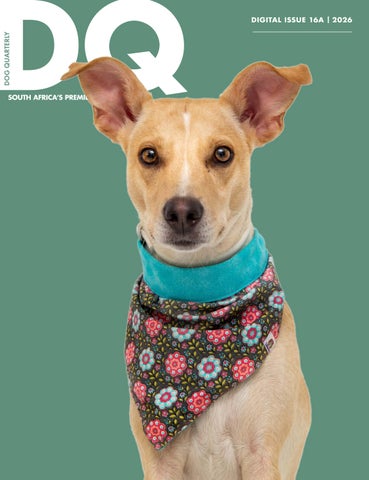
We also shine a light on the 'invisible dogs' - those medium-sized mixed breeds that wait in rescue while everyone scrolls past looking for something more distinctive or ‘cuter’. Our commitment to featuring these dogs on our covers for the next year starts with this issue.
From there, we explore why getting a second dog often backfires despite the best intentions, offer practical guidance on safely building canine fitness, provide comprehensive tick and flea prevention strategies for our South African conditions, and help you distinguish between limping that can wait and limping that requires immediate veterinary attention.
As always, the information we share is meant to support - not replaceprofessional veterinary and behaviourist care. If you're facing challenges with your dog, please reach out to qualified professionals who can assess your individual situation.
Thank you for being part of our community. We look forward to seeing you in the next edition!
and the DQ team
Dr Lizzie Harrison | Editor Lizzie
DIGITAL ISSUE 16A | 2026
CONTENTS
The Belgian Malinois is having a moment
But they are not for everyone
The invisible dogs
Why medium mixed breeds stay in rescue while everyone wants puppies
The second dog mistake
Why getting a companion dog often backfires, and when it actually works
Canine conditioning
Building fitness safely
Tick and flea prevention
Comprehensive parasite prevention strategies
When limping is an emergency
And when it’s not
Products we love
Gut Health for dogs
A premium digestive aid for dogs of all ages, sizes, and breeds.
• Soothes sensitive stomachs & aids recovery after vet treatments
• Promotes healthy skin, coat, and breath
• Improves stool firmness & feed conversion
• Grain & wheat free
Formulated with prebiotics, probiotics, yeast, beta glucans & nucleotides to promote a healthy gut microbiome and total wellbeing.
Belgian
Malinois
IS HAVING A MOMENT
BUT THEY ARE NOT FOR EVERYONE
The Belgian Malinois is having a moment. Scroll through social media and you will see them everywhere – sleek, intense dogs executing flawless protection work, scaling walls, detecting explosives, taking down suspects in police training videos. They look incredible. They look like the ultimate dog. And increasingly, people who have never owned a working breed before are buying Malinois puppies, convinced they are getting a loyal protector and impressive companion.
What many of these new owners discover, often within months, is that they have brought home a canine athlete with the work ethic of an Olympic competitor, the focus of a laser, and energy reserves that make Border Collies look sedate. The Belgian Malinois is an extraordinary breed – but extraordinary does not mean suitable for most households. This is a breed having a popularity surge at exactly the moment when fewer people than ever have the lifestyle, experience, or commitment to own one responsibly.
WHY THIS EXCEPTIONAL WORKING BREED DESERVES RESPECT, NOT
HYPE.
This is not a hit piece on the Malinois. This breed deserves immense respect for what it can do, but respect means understanding what the breed actually needs, not what viral videos suggest it needs. If you are considering a Malinois,
or if you already own one and are struggling, understanding what you are really dealing with is the first step toward either successful ownership or the honest recognition that this might not be the right breed for your situation.
UNDERSTANDING THE BREED
The Belgian Malinois is one of four Belgian herding breeds (alongside the Tervuren, Groenendael, and Laekenois), developed in Belgium in the late 1800s for herding and guarding livestock. Unlike many modern breeds created for companionship or show, Malinois were bred with singular focus: work capacity. Every trait – intelligence, drive, physical capability, responsiveness, intensity – was selected to create a dog that could work all day, think independently when needed, take direction when required, and never, ever quit.
Modern Malinois are medium–sized dogs (20–30kg typically, though working lines can be larger),
short–coated, usually fawn to mahogany with a black mask. They are athletic without being bulky, built for endurance and agility rather than power. Their defining characteristic is not physical, though – it is mental. Malinois have extraordinary work drive, meaning an intense, consuming need to have a job and do it obsessively.
This drive manifests differently from other working breeds. A working Labrador is enthusiastic and eager to please. A Border Collie is intense and focused. A Malinois is relentless. They do not work because it makes them happy in the moment – they work because not working creates stress, anxiety, and frustration that finds outlet in ways owners rarely appreciate.
WHY THEY ARE HAVING A MOMENT
Several factors have converged to make Belgian Malinois suddenly desirable to people who would never have considered them a decade ago.
Media visibility: Films featuring military working dogs (often Malinois), police K9 reality shows, and social media accounts showcasing protection sport and bite work have shown how impressive this breed is. These dogs are show scaling walls, apprehending suspects, and detecting explosives with perfect focus. What this visibility does not show is the hours of training daily,
the structured lifestyle, the expert handling, and the carefully managed environment these working dogs require.
Perceived protection: In an era of increasing security concerns, particularly in South Africa, many people want a protective dog. The Malinois, frequently seen in protection and police work, seems like the obvious choice. What people miss is that protection training requires expert instruction, liability awareness, and daily reinforcement – and that an untrained or poorly trained Malinois could be dangerous, not protective.
The ‘alpha’ dog fantasy: Some owners are drawn to Malinois because they represent toughness, intensity, and dominance. These owners want a dog that makes them look tough or capable. This is possibly the worst reason to acquire any dog, but particularly a breed that requires nuanced, skilled handling rather than dominance displays.
Breed availability: As demand has increased, so has breeding. Not all of this breeding maintains the working temperament and trainability that make Malinois manageable in the right hands. Some breeders are producing Malinois with health issues, or drive so high that even experienced handlers struggle. Other breeders are deliberately breeding ‘toned down’ Malinois for the pet market, creating dogs that lack the breed's characteristic biddability and focus.
WHAT MALINOIS ACTUALLY NEED
Understanding what this breed requires is essential before acquisition, and unfortunately, most new Malinois owners dramatically underestimate the commitment.
MENTAL STIMULATION (NOT JUST PHYSICAL EXERCISE)
The most common mistake with Malinois is thinking that physical exercise solves everything. New owners often report: ‘I run my Malinois 10km daily, but he is still destructive and anxious.’ This misunderstands the breed. Malinois do need physical exercise, certainly, but they need mental work even more critically.
Mental work means structured training, problem–solving activities, scent work, obedience, trick training, or sport training (protection sport, agility, tracking). It means giving the dog's mind something complex and engaging to focus on. A Malinois running 10km on a lead learns nothing and solves nothing; he just becomes a very fit dog with no outlet for his mental energy.
Minimum requirements for most Malinois: one to two hours daily of structured training or working activities. This is not ‘take to the park and throw a ball’ but rather focused training sessions teaching complex skills or working through challenging tasks. This is in addition to physical exercise.
Malinois are extremely intelligent and highly trainable – in the right hands. In inexperienced hands, their intelligence means they learn bad habits as quickly as good ones, their high drive means those habits become entrenched rapidly, and their intensity means correcting problems requires expertise many owners do not have.
This breed needs training that is consistent, fair, clear, and ongoing. There is no ‘train them for six months then you are done’ with Malinois. Training is a lifestyle, not a phase. They need structure, clear appropriately.
Critically, Malinois often do poorly with purely positive training methods in inexperienced hands. This is not because they need harsh corrections – they do not – but because their drive and intensity require someone who can provide clear boundaries, redirect high arousal appropriately, and maintain authority without force. Many first–time Malinois owners find themselves overwhelmed when their purely positive approach creates a dog that makes decisions independently, ignores recall, and becomes increasingly difficult to control.
SOCIALISATION THAT NEVER STOPS
Malinois can be aloof with strangers and dog–selective. This is normal and acceptable in the breed, but what is not acceptable is a Malinois that is reactive, aggressive toward all strangers, or cannot be managed in public. Achieving the former while preventing the latter requires extensive, ongoing socialisation.
Early socialisation (8–16 weeks) is critical but insufficient for the long term. Malinois need continued exposure to varied environments, people, animals, and situations throughout their lives. They need to learn that novelty is not threat, that strangers are neutral, and that arousal does not always equal action. Without this ongoing work, many Malinois become increasingly reactive and difficult to manage as they mature.
AN OWNER WHO CAN HANDLE INTENSITY
Malinois are intense about everything. When excited, they are extremely excited. When focused, they are laser–focused. When aroused, they are highly aroused. When stressed, they are very stressed. This intensity is what makes them exceptional working dogs. It is also what makes them challenging pets.
Living with a Malinois means living with a dog that is ‘on’ most of the time. They are not dogs that relax easily. They are not dogs that sleep peacefully through lazy Sundays. They are dogs that notice everything, react to everything, and want to engage with everything. Managing this intensity requires calm, confident, consistent handling every single day.
WHO SHOULD OWN A BELGIAN MALINOIS
The honest answer is: very few people. This is not elitism – it is recognition of what the breed actually needs for welfare and safety. Suitable Malinois owners typically have most or all of these characteristics:
Experience with high–drive working breeds: Someone who has previously owned and successfully managed German Shepherds, working–line Collies, or other demanding breeds understands what high drive looks like and how to channel it. First–time dog owners or people whose previous dogs were Labradors or Golden Retrievers are usually unprepared for Malinois intensity.
Genuine interest in dog sports or working activities: People who actively participate in protection sport (IPO/Schutzhund, French Ring, Mondio Ring), detection work, agility at competitive levels, or similar activities have both the knowledge and the lifestyle to keep a Malinois fulfilled. Casual interest is insufficient – this breed needs an owner whose hobby or career involves serious dog training.
Time and commitment for daily training: Someone who can dedicate two to three hours daily to structured training and work, plus exercise, grooming, and general care. This is not a ‘fit them into my schedule’ breed – this is a ‘my schedule revolves around my dog’ breed.
Financial resources for professional training: Even experienced owners benefit from professional guidance with Malinois. Training classes, private instruction, and sport club membership are not optional extras for this breed, they are necessities. Budget R3,000–R10,000 monthly for training, activities, and working equipment.
Secure, appropriate living environment: Malinois need secure, high fencing (minimum 1.8m, many can clear 2m), safe containment
when unsupervised, and space to work and exercise. Small apartments or properties with inadequate fencing create management problems.
Realistic expectations about protection: If you want a Malinois specifically for protection, you need professional protection training. Protection training is expensive (often R30,000+ for basic foundation), requires ongoing maintenance, and involves legal and ethical responsibilities most owners are unprepared for.
WHO SHOULD NOT OWN A BELGIAN MALINOIS
Just as important as understanding suitable owners is recognising unsuitable situations. You should not acquire a Malinois if:
You want a protective dog but lack training experience: Protection without control is danger, not safety. An untrained Malinois that ‘protects’ you is actually a dog making independent decisions about when to use aggression – and you cannot control or predict those decisions.
You are attracted to the breed's ‘tough’ image: If you want a Malinois because they look intimidating, make you feel powerful, or impress others, you are acquiring a dog for your ego, not for appropriate reasons. This almost always ends badly.
You work full–time and cannot provide adequate time: A Malinois left alone 8–10 hours daily with minimal training will develop serious behavioural problems. This is not a breed that tolerates benign neglect.
You have young children and no working breed experience: Malinois and young children can coexist successfully, but this requires experienced management. Many Malinois are too high–energy, too mouthy, and too intense for households with small children unless the owner has significant experience managing this combination.
You want a dog that adapts to your lifestyle: Malinois do not adapt – you adapt to them. If you want a dog that fits into your existing lifestyle without major changes, choose a different breed.
Your living situation is unstable: Moving frequently, uncertain housing, financial instability – all create problems for high–maintenance breeds. Malinois need consistency and resources. Unstable situations often end in surrender.
THE REALITY OF MALINOIS RESCUE AND REHOMING
The surge in Malinois popularity has created a corresponding surge in Malinois surrenders. Rescue organisations report that Malinois surrenders are increasing dramatically, often with dogs under two years old. Common surrender reasons include:
‘Too energetic’ – meaning the owner did not understand the breed's exercise and mental stimulation needs. ‘Destructive’ –often meaning under–stimulated dogs finding inappropriate outlets. ‘Aggressive’ – sometimes meaning genuine aggression, more often meaning a dog with insufficient training and socialisation. ‘Too much to handle’ – the most honest reason, acknowledging the owner is overwhelmed.
These surrendered Malinois face difficult prospects. Many have developed behavioural issues from inadequate management. Many have poor training foundation. Some have learned that aggression works to control situations. Rehabilitating and rehoming these dogs requires experienced rescue organisations and even more experienced adopters. Many Malinois stay in rescue for months or years. Some are euthanised because they are too damaged to safely rehome.
This situation is entirely preventable – through responsible breeding that screens buyers carefully, through honest education about the breed's needs, and through potential owners making informed decisions rather than impulsive acquisitions based on how impressive the breed looks on Instagram.
RESPECTING THE BREED MEANS HONEST ASSESSMENT
The Belgian Malinois is an extraordinary breed. In appropriate situations with knowledgeable owners, they are loyal, trainable, capable, and impressive partners. They excel at every task they are bred for and many they are not. Their work ethic and intelligence are unmatched. This is a breed deserving of admiration.
But admiration from a distance is very different from suitable ownership. The vast majority of people attracted to Malinois right now should not own one. This is not judgment – it is recognition that this breed's needs are specific, demanding, and non–negotiable. A Malinois in an inappropriate
home is miserable. The owner is miserable. Often the dog ends up surrendered, creating trauma for the dog and burden for rescue organisations.
If you are considering a Malinois, be brutally honest about your situation. Can you genuinely provide two to three hours of structured work daily? Do you have working breed experience? Are you prepared to make your schedule revolve around your dog? Do you want to participate seriously in dog sports or working activities? Can you afford professional training? Do you have appropriate facilities? If the answer to any of these is no, consider different breeds. There are many wonderful, capable, trainable breeds that do not require the extreme commitment of a Malinois.
If you already own a Malinois and are struggling, seek professional help immediately. A qualified trainer or behaviourist experienced with the breed can assess your situation and provide guidance. Sometimes this guidance is ‘here is how to make this work.’ Sometimes it is ‘this is not working and rehoming is the kindest option.’ Both outcomes are valid. What is not valid is keeping a dog you cannot manage appropriately, creating suffering for the dog (and yourself!) and risk for others.
The Belgian Malinois deserves better than being the latest trend. They deserve owners who chose them for the right reasons, prepared appropriately, and committed fully. They deserve to work, to train, to use their extraordinary capabilities.
BELGIAN MALINOIS AT A GLANCE
Origin: Belgium, developed late 1800s for herding and farm work.
Size: Medium (20–30kg typically)
Coat: Short, fawn to mahogany with black mask.
Lifespan: 10–14 years
Exercise needs: Very high – minimum two hours daily structured work plus exercise.
Trainability: Extremely high with skilled handling.
Common roles: Police K9, military working dogs, detection, protection sport, search and rescue.
Suitable for: Experienced working dog owners, sport competitors, working dog handlers.
Not suitable for: First–time owners, families wanting a pet, people working full–time, those wanting low–maintenance dogs.
They deserve respect – and respect means understanding that for most people, admiring this breed is enough. Ownership is a different question entirely.
THE INVISIBLE DOGS
WHY MEDIUM MIXED BREEDS STAY IN RESCUE WHILE EVERYONE WANTS PUPPIES
Walk through any South African animal shelter and you will see them: medium–sized, mixed–breed, adult dogs. Brown ones, black ones, tan–and–white ones. Short coats, longer coats, wiry coats. Some are slightly stocky, others lean and athletic. All healthy, most friendly, many well–behaved. They blend together into the background – unremarkable, undistinctive, forgettable.
These are the invisible dogs. While tiny puppies get adopted within days, while purebreds and unusual–looking
dogs attract immediate interest, these medium mixed–breed adults wait. Weeks become months. Months become years. Some will spend their entire lives in rescue. Many will be euthanised to make space for the next intake, not because anything is wrong with them, but because nobody looks at them long enough to see them.
This is not an accident. This is the predictable result of what people want versus what dogs need homes, and the gap between the two is full of perfectly good dogs that ‘nobody wants’.
WHAT EVERYONE WANTS
Rescue organisations know exactly what flies off the adoption floor because they see it repeatedly. The perfect adoptable dog, according to public demand, is: a puppy (ideally under six months, under one year acceptable), small to medium–small in size, with an unusual or distinctive appearance (specific breed, interesting colour or markings, unique features), and preferably with a compelling story.
Puppies get adopted immediately, often with multiple applications competing. Small dogs, particularly small purebreds or distinctive small mixes, get adopted quickly. Large
purebreds, especially popular breeds like Labradors or German Shepherds, find homes reasonably fast. Dogs with unusual appearances – one blue eye, interesting coat patterns, rare breeds – attract attention.
The dog that looks like every other dog, weighs 20–25kg, has short brown or black fur, and is three to seven years old? That dog is invisible. Nobody scrolls through rescue listings looking for ‘medium brown dog.’ Everyone scrolls looking for something special, something that stands out, something they can post on social media and have people say, ‘What a beautiful dog!’
WHY MEDIUM MIXES ARE INVISIBLE
These dogs suffer from accumulated disadvantages that make them the least adoptable despite often being the most suitable:
• They are adults. Puppies allow owners to imagine they can ‘shape’ the dog into what they want. Adults come as they are – personality formed, size determined, behaviours established. Many people find this intimidating or less appealing, even though adult dogs are often easier than puppies (house–trained, past the destructive puppy stage, calmer).
• They lack a distinctive appearance. In a world of social media, where dogs are lifestyle accessories and status symbols, an ordinary–looking dog has less appeal. People want dogs that photograph well, that others will comment on, that reflect something about the owner. A
medium brown mixed breed reflects nothing except that you adopted a medium brown mixed breed.
• They blend together. When someone scrolls through pages of rescue dogs, individual medium brown mixes blur together. Without distinctive features to anchor memory, people forget which dog was which. They remember the three–legged dog, the Husky mix, the tiny puppy – not the six different medium brown dogs that all looked similar.
• They are too big for apartments but too small to impress. Small dogs fit in apartments and tiny spaces. Large dogs make impressive companions and guards. Medium dogs are neither compact enough for space–limited homes nor imposing enough to fulfil ‘big dog’ desires. They are the wrong size for most people's practical or psychological needs.
WHAT THESE DOGS ACTUALLY OFFER
The cruel irony is that these invisible dogs are often the best candidates for adoption for most households. They offer exactly what most owners actually need, rather than what they think they want:
• Predictable temperament: Adult dogs have formed personalities. What you see is what you get. A friendly, calm, three–year–old mixed breed in rescue will likely remain friendly and calm in your home. A puppy is a gamble; you have no idea what personality will develop or what the adult size will be.
• Past difficult stages: Puppies are hard work – house–training, destructive chewing, endless energy, constant supervision. Adult medium mixes are usually house–trained, past their peak destructiveness, calmer, and able to be left alone for reasonable periods. They slot into routines far more easily than puppies.
• Suitable size: Medium dogs (20–30kg) are large enough to be robust and enjoy active lifestyles, small enough to fit in cars and homes comfortably, and easy to manage physically for most owners. This size is genuinely practical for most South African households.
• Moderate exercise needs: Most medium mixes have reasonable exercise requirements – a daily walk and some play, not the extreme demands of working breeds or the fragility of tiny breeds. They suit average active households without requiring devotion to dog sports.
• Proven health: Adult dogs in rescue have usually been health–checked, vaccinated, and sterilised. You know what health issues exist, rather than gambling on genetic problems
that may emerge in puppies. Many medium mixes are remarkably healthy – hybrid vigour often makes mixed breeds hardier than purebreds.
• Grateful companions: While any dog can bond deeply, rescue organisations consistently report that adult dogs who have experienced shelter life seem genuinely grateful for homes. These are dogs who settle quickly, bond deeply, and seem to understand they have been given a second chance.
WHY THIS MATTERS
The obsession with puppies, purebreds, and distinctive dogs creates suffering on multiple levels. Invisible adult mixed breeds spend years in rescue or are euthanised despite being perfectly adoptable. Shelters remain full because the dogs people want (puppies) get adopted while the dogs needing homes (adults) wait indefinitely. Resources that could help more dogs go toward long–term care for dogs nobody wants.
Meanwhile, many puppy adopters struggle with the realities of puppy ownership and end up surrendering their dogs to rescue within months. Many purebred seekers buy from backyard breeders or puppy mills, funding animal suffering while shelter dogs wait. The disconnect between what people seek and what is available creates a system that fails dogs consistently.
CHANGING THE NARRATIVE
Some adopters do choose invisible dogs, and their experiences tend to be remarkably positive. Ask owners of adopted medium mixed–breed adults, and you hear consistent themes: ‘best dog I ever had,’ ‘so easy compared to puppies,’ ‘fits perfectly into our family,’ ‘cannot believe nobody wanted this dog.’
What would make these dogs visible? Changed mindset about adoption. Instead of ‘I want a puppy so I can train it myself,’ recognising that adult dogs
are often easier and more predictable. Instead of ‘I want a distinctive–looking dog,’ recognising that great dogs come in ordinary packages. Instead of ‘I need to know the breed,’ recognising that temperament and suitability matter more than pedigree.
If you are seeking a family pet, an exercise companion, or a loyal friend, what you actually want is probably waiting invisible in a shelter right now. They are not exciting. They are not dramatic. They are just good dogs who need homes.
THE BOTTOM LINE
The invisible dogs are invisible because we have collectively decided what dogs should look like, what ages are desirable, and what stories are compelling. These criteria have almost nothing to do with what makes a good companion animal and everything to do with human vanity, social media culture, and misunderstanding of what dog ownership actually involves.
Every time someone adopts a medium mixed–breed adult, they are choosing substance over appearance, suitability over status, and reality over fantasy. They are also quite often getting an
exceptional dog that nobody else noticed. The invisible dogs stay invisible only as long as we refuse to see them. They are there. They are waiting. They have been waiting for us to look past what we think we want and see what they actually offer.
Next time you browse rescue listings, stop scrolling past the ordinary–looking medium brown dogs. Read their descriptions. Consider their suitability for your actual life, not the idealised version of dog ownership. One of those invisible dogs might be exactly what we need – if we just take the time to see them.
OUR COVERS
For the next 12 months, we are committed to featuring medium–sized brown dogs on our covers. All of us, including those of us working in the office, find ourselves drawn in by the unusual–looking dogs, the very big or very small, the different colour patterns or the status of a purebred. We’re going to change that, at least in our small team, by focusing on using as many pictures as possible of medium–sized adult dogs. If you have any pictures you’d like to share, please send them to lizzie@dqmagazine.co.za, and we’ll do our best to feature them in the magazine.
The secondmistakedog
WHY GETTING A COMPANION DOG OFTEN BACKFIRES, AND WHEN IT ACTUALLY WORKS
We worry that our dogs are lonely and think they would love a playmate. We feel that getting a second dog will solve everything –they will entertain each other, tire each other out, and both will be content.
Except it rarely works that way in reality. Thousands of dog owners have discovered, usually within weeks of bringing home dog number two, that they have not solved problems – they have multiplied
them. Two dogs are not twice the work of one dog. Depending on the dogs and circumstances, two dogs can be four times the work, or ten times, or genuinely unmanageable.
This is not an argument against multi–dog households. Many people (including us!) successfully own multiple dogs and find it enormously rewarding. But successful multi–dog ownership requires understanding what you are actually creating, not what you hope you are creating.
WHY THE COMPANION DOG PLAN FAILS
The fantasy goes like this: we bring home a second dog, our first dog is delighted, they become best friends, they play together for hours, wearing each other out, and suddenly our lives are easier. The reality often looks very different.
Firstly, our first dog may not want a companion. Many dogs prefer being only dogs. They tolerate other dogs but do not seek out canine companionship. These dogs often find a second dog in their home stressful, not entertaining. With this situation we risk our previously calm dog becoming anxious, starting to resource–guard, or developing behavioural issues they never had before.
Even dogs who do enjoy other dogs may not enjoy living with another dog full–time. Playing at the park is voluntary and temporary. Sharing a home, resources, and your attention 24/7 is very different. The relationship between housemate dogs can be complex, competitive, or actively antagonistic.
The ‘they will tire each other out’ assumption is particularly unreliable. Some dog pairs do play enough to exhaust each other. More commonly, they ramp each other up. Two high–energy dogs create a feedback loop of excitement and activity that leaves them more wired, not more tired. You end up with two dogs who have learned to wind each other up, creating chaos rather than calm.
Training also becomes exponentially harder once you have two dogs. Training one dog requires focus and consistency. Training two dogs simultaneously is genuinely difficult – their attention splits, they distract each other, and they learn from each other's mistakes as readily as successes. Most professional trainers recommend training multi–dog households separately, which means twice the training time, not
the same training time with both dogs present.
Problem behaviours can transfer. If your first dog has issues – anxiety, reactivity, poor recall – a second dog often learns these behaviors. A calm second dog may help, but an excitable second dog will likely amplify problems. You risk creating two dogs with behavioural issues instead of solving the first dog's problems.
WHEN A SECOND DOG WORKS
Multi–dog households succeed under specific conditions, and understanding these conditions helps determine whether adding a second dog is wise for your situation:
Your first dog is well–trained and well–adjusted. If your first dog has solid basic obedience, good social skills, and no significant behavioural issues, adding a second dog is far more likely to succeed. A stable first
dog provides good modeling for a second dog. An anxious, reactive, or poorly trained first dog creates a difficult foundation to build on.
You have genuinely adequate time and resources. Two dogs require two of everything – training time, exercise time, veterinary budgets, attention, management. If you are already stretched thin with one dog, a second dog could overwhelm you. Successful multi–dog owners have surplus capacity – surplus time, surplus money, surplus patience.
You choose carefully for compatibility. Not all dogs get along. Even friendly, social dogs may clash on personality, energy level, or play style. Successful pairings usually involve thoughtful matching – considering age gaps, size compatibility, energy levels, and temperaments. A careful rescue organisation or breeder helps identify suitable matches rather than impulsive ‘this one is cute’ decisions.
You are prepared to manage two dogs separately when needed. Even compatible dogs need individual attention, separate training sessions, and sometimes physical separation for management. Successful multi–dog owners accept that dogs are individuals requiring individual care, not a collective unit requiring only group management.
THE REALITY CHECK QUESTIONS
Before acquiring a second dog, answer these questions honestly:
Can you afford two dogs? Veterinary care, quality food, training, boarding, insurance – doubled. One emergency vet visit for one dog is expensive. Two dogs with concurrent health issues can be financially crippling.
Do you have time to train a second dog properly while maintaining training with your first? Many of us are guilty of dramatically underestimating the time required for proper training.
Is your first dog actually lonely? Many owners interpret boredom, under–stimulation, or lack of training as loneliness. A bored dog needs more engagement from you, not necessarily another dog.
Are you getting a second dog to solve specific problems with your first dog? Sadly, this rarely works. If your dog is destructive, anxious, reactive, or difficult, it is best to address those issues directly rather than hoping a second dog fixes them.
Does your first dog actually enjoy extended time with other dogs? Enjoying play dates does not
necessarily mean they want a live–in companion. It’s a bit like dating. It’s fun to go out for dinner, but do you want to move in together?
What is your management plan if the dogs do not get along? Some personality clashes cannot be resolved. Are you prepared to manage dogs who must be separated, potentially for years or harder still, rehome one of the dogs?
IF YOU HAVE ALREADY MADE THE MISTAKE
Many readers already have two dogs and are struggling, and don’t worry – plenty of people have been there. The good news is that with appropriate management and training, many difficult multi–dog situations improve over time.
The first step is to conduct separate training sessions. Train each dog individually, away from the other and build skills separately before attempting to work them together.
Then, it is important to remember that individual attention matters. Each dog needs one–on–one time with you – separate walks, separate training, separate play or even just separate snuggle time. This prevents competition for attention and reinforces your bond with each dog.
You can also avoid lots of issues through management, which serves to prevent the rehearsal of problems. Use crates, baby gates, and separation to prevent dogs from practicing unwanted behaviors together. Prevention is MUCH easier than correction.
We highly recommend seeking professional help if you are struggling. A qualified trainer or behaviourist can assess your specific situation and provide targeted solutions. Many multi–dog problems are solvable with expert guidance, and dog trainers really have seen it all!
Finally, it’s important to acknowledge if it is not working. Sometimes, despite best efforts, two dogs genuinely cannot coexist peacefully or one dog is profoundly stressed by the other's presence.
Rehoming one dog, while emotionally difficult, may be the kindest option for both dogs.
THE BOTTOM LINE
A second dog can be wonderful, and we love our multi–dog households, but only get a second dog if you have considered some of the questions above. ‘My dog needs a friend’ is usually not a sufficient reason to get another dog. ‘I want another dog, have the resources and time, and am prepared for the reality of multi–dog ownership’ is a much more solid foundation.
CANINE CONDITIONING
BUILDING FITNESS SAFELY
The eager Labrador returns from a run limping. The couch–potato Bulldog suddenly expected to hike mountains on holiday. The agility dog pushed through weekend competitions despite obvious fatigue. These scenarios share a common thread: dogs whose fitness level does not match the demands being placed on their bodies.
Canine fitness is often misunderstood or ignored entirely. Many of us assume that because dogs are naturally active animals, they do not require structured conditioning. Others believe that any exercise is beneficial regardless of quantity or intensity. Some push athletic dogs too hard in pursuit of performance goals, while others underestimate how unfit their sedentary companions have become.
The consequences of poor fitness management are significant. Acute injuries – muscle strains, ligament sprains, joint damage – occur when unfit dogs are suddenly asked to
perform demanding activities. Chronic problems develop in dogs consistently worked beyond their fitness level: arthritis, tendon degeneration, and muscular imbalances that create pain and dysfunction. Even behaviour can suffer, with either excess energy from insufficient appropriate exercise or behavioural shutdown from chronic overwork.
Building canine fitness correctly requires understanding how dogs' bodies adapt to exercise, recognising individual starting points, progressing systematically through appropriate training phases, and monitoring for signs of overtraining or injury. Whether preparing a young dog for sport, rehabilitating an older dog after injury, or simply improving your pet's general fitness and quality of life, the principles remain consistent: start appropriately, progress gradually, monitor continuously, and prioritise long–term soundness over short–term goals.
UNDERSTANDING CANINE FITNESS
WHAT IS FITNESS IN DOGS?
Fitness is not simply the absence of obesity or the ability to run without immediate collapse. True fitness encompasses multiple interconnected systems working efficiently together. Cardiovascular fitness allows the heart and lungs to deliver oxygen to working muscles effectively. Muscular strength enables dogs to generate force –jumping, pulling, and accelerating. Muscular endurance allows sustained activity without fatigue. Flexibility and joint range of motion prevent injury and allow efficient movement. Balance and proprioception – the body's awareness of position in space – enable coordination and prevent falls or missteps.
A truly fit dog possesses all these qualities in balance appropriate to their lifestyle and activities. The agility dog needs explosive power, quick direction changes, and excellent proprioception. The hiking companion needs cardiovascular endurance and muscular stamina. The family pet needs baseline fitness supporting comfortable daily activities and occasional adventures without injury or excessive fatigue.
Fitness is also highly specific. A dog fit for long, slow walks may not be fit for sudden sprints. A dog with excellent cardiovascular endurance may lack the muscular strength for jumping. Training must match intended activities, progressively building the specific fitness components those activities require.
WHY FITNESS MATTERS
Beyond enabling athletic performance, fitness profoundly affects quality of life and longevity. Fit dogs maintain healthy body weight more easily, reducing stress on joints and organs. They have a lower risk of cardiovascular disease, diabetes, and certain cancers. Their musculoskeletal health remains better into old age, with stronger muscles supporting joints and reducing arthritis progression.
Behaviourally, appropriate fitness work provides mental stimulation, satisfies natural drives, and prevents boredom–related behavioural problems. A Border Collie denied adequate physical and mental challenge becomes destructive or obsessive. A Retriever without opportunities to run and retrieve may develop anxiety or hyperactivity. Meeting fitness needs often resolves behavioural issues that owners attribute to training problems.
For working and sport dogs, fitness directly determines performance capability and injury risk. An unfit agility dog cannot execute courses safely. An unfit search–and–rescue dog cannot work full shifts effectively. Building and maintaining fitness is not optional for these dogs; it is fundamental to their ability to work safely and successfully.
BREED AND INDIVIDUAL CONSIDERATIONS
Breed profoundly influences fitness requirements and capabilities. Breeds developed for endurance work – Huskies pulling sledges, Pointers hunting all day – possess genetic advantages for cardiovascular fitness and can handle high volumes of sustained activity. Breeds developed for explosive power – Bull Terriers, Pit Bulls – excel at short, intense efforts but may struggle with marathon endurance. Brachycephalic breeds – Bulldogs, Pugs – have
compromised respiratory systems, limiting cardiovascular capacity regardless of training.
Body structure also matters. Long–backed breeds like Dachshunds are vulnerable to spinal injuries and need modified exercise programmes. Giant breeds grow slowly and should not be exercised intensely while skeletally immature. Breeds prone to hip or elbow dysplasia require careful fitness work that strengthens supporting muscles without exacerbating joint problems.
Individual variation within breeds is enormous. Two Labradors from the same litter may have dramatically different fitness levels based on activity history, body condition, motivation, and individual physiology. Some dogs are naturally athletic and motivated. Others are less driven or face structural limitations that affect performance. Fitness programmes must be individualised rather than following generic breed recommendations.
Age significantly affects fitness capacity and training approach. Puppies should not engage in repetitive, high–impact activities before skeletal maturity. Young adult dogs build fitness most easily. Middle–aged dogs maintain fitness well but may need longer recovery between hard efforts. Senior dogs can improve their fitness but require carefully modified programmes that respect age–related limitations.
CURRENT FITNESS LEVELS STARTING POINT EVALUATION
Before beginning any conditioning programme, honestly assess your dog's current fitness. This evaluation determines the appropriate starting intensity and helps prevent the common mistake of starting too ambitiously. Many injuries occur in the first weeks of conditioning programmes when owners overestimate their dog's capabilities.
Body condition scoring provides essential baseline information. Using a standard 1–9 scale where 1 is emaciated, and 9 is severely obese, most dogs should score 4–5: ribs easily palpable but not visible,
abdominal tuck. Dogs scoring 6–7 (overweight) or 8–9 (obese) need weight management alongside gradual fitness building. Attempting vigorous exercise with an obese dog creates excessive joint stress and cardiovascular strain.
Muscle condition matters separately from body fat. A lean dog may still have poor muscle development, appearing bony over the hips and spine. Muscle atrophy indicates either inadequate exercise in the past or a recent period of rest due to injury or illness. Dogs with poor muscle condition need extended periods of gentle conditioning before attempting demanding activities.
Observe your dog during typical activities. How do they handle a normal walk? Are they eager and comfortable, or do they tire quickly? After exercise, do they recover within 10–15 minutes with normal breathing, or do they remain panting and exhausted for extended periods? Can they complete activities you regularly do – your usual walking route, play sessions in the yard –without apparent fatigue or soreness the next day?
Watch for movement quality. Does your dog move fluidly and symmetrically, or do they show stiffness, limping, or reluctance to use certain legs? Do they struggle with activities that should be easy – stepping into the car, climbing stairs, getting up from lying down? These signs may indicate either very poor fitness or underlying pain and injury requiring veterinary assessment before beginning conditioning.
WHEN TO SEEK VETERINARY CLEARANCE
Certain dogs should not begin conditioning programmes without a veterinary evaluation. Senior dogs, particularly those who have been sedentary, need screening for cardiovascular and musculoskeletal problems. Dogs with known health conditions – heart disease, respiratory issues, arthritis, previous injuries –require veterinary guidance on safe exercise levels.
Any dog showing signs of pain during or after exercise needs a veterinary examination before continuing or intensifying work. Limping, yelping, reluctance to bear weight, stiffness
that lasts more than a day after exercise, and behavioural changes such as irritability or withdrawal can all indicate injury or pain. Pushing through these signs worsens problems and creates chronic issues.
For dogs intended for serious sport or working roles, pre–conditioning veterinary examination identifies potential problems early. Hip and elbow radiographs can reveal dysplasia before it causes clinical symptoms. Cardiovascular screening catches heart conditions that might cause sudden death during intense exercise. This screening is not paranoia but responsible preparation for demanding physical work.
PRINCIPLES OF PROGRESSIVE CONDITIONING
THE 10 PERCENT RULE
The single most important principle in safe conditioning is gradual progression. The 10 percent rule – never increase volume or intensity by more than 10 percent per week – prevents the majority of overuse injuries. This rule seems conservative, almost painfully slow, particularly when your dog seems capable of much more. Yet rushing progression is the primary cause of conditioning injuries.
Why 10 percent? Bodies adapt to training stress gradually. Bones increase density, tendons strengthen, muscles develop, cardiovascular capacity expands –but these adaptations take time, measured in weeks and months rather than days. Increasing demands faster than the body can
adapt creates cumulative stress that eventually manifests as injury.
Applying the 10 percent rule in practice means tracking your dog's exercise volume and increasing it systematically. If your dog currently walks 20 minutes daily, increase it to 22 minutes next week. The week after, 24 minutes. This feels slow, but over 10 weeks, you have safely doubled your exercise duration. Attempting to double the duration in week two poses a high risk of injury.
The 10 percent rule applies to all aspects of conditioning: duration, distance, intensity, and frequency. If running three days weekly, do not suddenly jump to five days. If walking on flat ground, do not suddenly add steep hills. Each increase must be gradual, systematic, and accompanied by monitoring for signs of excessive stress.
ADAPTATION AND RECOVERY
Exercise creates controlled stress that, given adequate recovery, prompts adaptation, making the body stronger and more capable. Without adequate recovery, stress accumulates, adaptations fail to occur, and breakdown happens. Understanding this stress–adaptation–recovery cycle is fundamental to effective conditioning.
During exercise, muscle fibres sustain microscopic damage, energy stores are depleted, and metabolic waste products accumulate. This is normal and necessary. The body responds to this stress by rebuilding stronger: muscle fibres repair
with increased size and capacity, energy storage improves and waste clearance becomes more efficient. But this repair and adaptation happen during rest, not during exercise itself.
Recovery time requirements vary by intensity and duration of work. After easy exercise – a gentle walk – recovery is nearly immediate. After moderate intensity work – a sustained run or demanding hike – dogs need 24–48 hours for full recovery. After very hard work –intense agility training, long–distance running, repetitive retrieving –recovery may take 48–72 hours or longer.
Young dogs in their physical prime recover faster than older dogs. Fit dogs recover faster than unfit dogs just beginning conditioning. Individual variation is significant: some dogs bounce back quickly, while others need extended recovery. Learning your individual dog's recovery needs through observation prevents overtraining.
Signs of inadequate recovery include persistent fatigue, reluctance to exercise, decreased performance, increased injury occurrence, and behavioural changes like irritability or depression. If your dog shows these signs, they are being worked too hard relative to recovery time. Scaling back intensity or frequency allows adaptation to catch up.
VARIATION AND PERIODISATION
Effective conditioning programmes incorporate variation rather than doing identical work every day. Variation prevents repetitive stress injuries, maintains a dog's motivation, develops different fitness components, and allows for active recovery. A weekly schedule might include one longer, slower endurance session, one or two moderate intensity sessions, one or two easy recovery days, and one or two rest days.
Periodisation – organising training into cycles with different focuses – structures conditioning toward specific goals. Base building phases emphasise volume at lower intensity, developing cardiovascular and muscular endurance. Strength–
building phases incorporate hill work, resistance training, and power exercises. Peak phases focus on sport–specific training at higher intensity. Recovery phases allow adaptation and prevent burnout.
Even dogs not destined for competition benefit from periodised training. Seasonal variation naturally creates periods of higher and lower activity. The summer hiking season might represent a peak period. Winter weather might necessitate reduced activity, serving as a recovery phase. Spring becomes a base–building period, preparing for summer adventures. This natural rhythm respects both the body's need for variation and the practical realities of weather and lifestyle.
BUILDING THE BASE STARTING WITH WALKING
Walking is the foundation of all canine conditioning. It is low impact, accessible regardless of fitness level, easily modified in duration and terrain, and provides cardiovascular benefits while allowing joints and muscles to strengthen gradually. Every conditioning programme, regardless of ultimate goals, should begin with walking.
For very unfit or overweight dogs, start with what they can comfortably handle – perhaps just 10–15 minutes once or twice daily. The distance and speed matter less
than establishing a consistent routine. Walk at a pace where your dog moves purposefully but is not panting excessively or struggling. They should be able to maintain the pace comfortably throughout the walk.
Progress walking duration and frequency before adding intensity. Increase the duration by 10 percent weekly until reaching 30–45 minutes for medium dogs and 45–60 minutes for larger dogs. Smaller dogs may reach their endurance limits at shorter durations – a 30 minute walk for a Chihuahua represents far more relative effort than for a Labrador.
Once the duration is established, vary the terrain to increase the challenge. Walking on soft surfaces like sand or grass requires more effort than pavement. Gentle hills add intensity while building hindquarter strength. Varied terrain – switching between surfaces and gradients – develops proprioception and prevents repetitive stress from always moving identically.
Walking also serves as active recovery between harder efforts once your dog progresses to more intense training. Easy walks on recovery days maintain mobility, promote blood flow to aid recovery, and provide mental stimulation without adding significant physical stress.
INTRODUCING CONTROLLED RUNNING
Running places higher demands on the cardiovascular system, muscles, and joints than walking. It should be introduced only after dogs have established solid walking fitness –typically 8–12 weeks of progressive walking for previously sedentary dogs. The transition from walking to running must be gradual, using interval training to allow adaptation.
Begin with walk–run intervals: Five minutes walking, one minute easy jogging, repeat. The running portions should be relaxed, sustainable
pace – not sprinting. Total session duration matches current walking fitness level. Over several weeks, gradually increase running intervals while decreasing walking intervals: Four minutes walk, two minutes run. Then 3:3. Eventually 2:4, then 1:5.
This progression typically takes 8–12 weeks before dogs can run continuously for their full exercise duration. Rushing this transition causes shin splints, muscle strains, and joint problems. The walking intervals allow partial recovery, preventing excessive fatigue and maintaining good running form.
Running surface matters significantly. Grass or dirt trails provide cushioning, reducing impact on joints. Pavement is very hard and unforgiving. Sand provides excellent strengthening but is very demanding – use sparingly initially. Varying surfaces develop adaptability while preventing repetitive stress injuries.
Monitor your dog closely during and after runs. They should move fluidly, with the head up and the tail neutral or up. Heavy panting, excessive tongue lolling, lagging behind, or an altered gait indicate excessive intensity or duration. After runs, dogs should recover normal breathing within 10–15 minutes and show no stiffness or soreness the next day.
SWIMMING FOR LOW–IMPACT CONDITIONING
Swimming provides excellent cardiovascular and muscular conditioning with minimal impact on the joints. The water's buoyancy removes weight–bearing stress while resistance strengthens muscles throughout the body. For dogs with joint problems, obesity, or a history of injury, swimming often allows for fitness building when land exercise is too stressful.
Not all dogs swim naturally or enjoy water. The introduction must
be gradual and positive. Start in shallow water where the dog can touch bottom. Use treats and encouragement to build confidence. Never force a fearful dog into water – this creates lasting negative associations. Some dogs never enjoy swimming, and that is acceptable. Not every dog needs to swim.
For dogs who do swim, begin with short sessions – just 5–10 minutes. Swimming is deceptively exhausting. Even fit dogs tire quickly when first beginning swim conditioning. Watch for signs of fatigue: head dropping
lower in water, struggling to maintain forward motion, panicked paddle–swimming. End sessions before exhaustion develops.
Gradually increase swim duration over many weeks. A dog fit for 45–minute land walks might build up to 20–30–minute swims. Swimming intensity cannot be easily modified – the dog swims or they do not –so duration and frequency are the primary variables for progression.
Swimming two to three times weekly complements land conditioning effectively.
Safety is paramount. Never swim where currents, deep water, or exit difficulties pose risks. Consider using dog life jackets, particularly during initial conditioning or for dogs with physical limitations. Rinse dogs after swimming to remove chlorine, salt, or contaminants. Dry ears thoroughly to prevent infections.
STRENGTH AND POWER DEVELOPMENT
HILL TRAINING
Hill work simultaneously builds cardiovascular fitness, muscular strength, particularly in the hindquarters, and power. Climbing hills requires dogs to push against gravity, strengthening muscles more effectively than flat work. The cardiovascular demand increases heart and lung capacity. Descending hills builds eccentric muscle strength and proprioceptive awareness as dogs control their descent.
Hill training should begin only after establishing a solid base fitness through weeks of walking or running on flat terrain. Even gentle hills add significant intensity. Start with slight inclines, short duration – perhaps 5–10 minutes of hill work within a longer walk. Watch your dog's breathing and movement quality. They should maintain a steady pace without excessive effort.
Progress hill training gradually by increasing duration, steepness, or frequency – but never all
simultaneously. Add a few minutes weekly to hill portions. Gradually seek steeper inclines as strength develops. Initially, limit hill work to once or twice weekly to allow adequate recovery. Over months, hill work can become a regular part of conditioning.
Uphill work is generally safer than downhill, which places eccentric stress on muscles and joints. Introduce downhill work even more gradually than uphills. Initially, walk dogs downhill slowly on a lead to control pace and prevent excessive impact. As strength and control develop, dogs can handle faster descents, but these always pose a higher risk of injury than climbing.
For sport dogs, hill sprints develop explosive power. After months of foundation hill work, short sprints up steep inclines – 5–10 seconds maximum, full recovery between efforts – build the fast–twitch muscle fibres generating jumping power and acceleration. This very intense training requires careful progression and should constitute only a small portion of overall conditioning.
RESISTANCE AND WEIGHT WORK
Adding resistance through weighted vests, pulling exercises, or working in resistance media such as deep sand or water strengthens muscles beyond what bodyweight exercise can achieve. This training particularly benefits dogs requiring significant strength for their activities – weight pulling dogs, search and rescue dogs navigating difficult terrain, or sport dogs needing explosive power.
Weighted vests distribute additional weight evenly across the dog's body. Start with very light loads – just two to five percent of the dog's body weight. A 30kg dog might begin with 600g–1.5kg
added weight. Walk normally with a weighted vest for short periods initially, gradually increasing duration as adaptation occurs. Never run or jump with weighted vests – the impact force multiplies with added weight, creating injury risk.
Pulling exercises using properly fitted harnesses develop serious strength and power. Start with minimal resistance – perhaps pulling a light tyre on grass. Focus on short pulls with good form rather than maximum effort or distance. Dogs should pull steadily without struggling or showing an altered gait. Rest fully between efforts. Gradually increase resistance only after weeks of conditioning.
Working in challenging mediums provides natural resistance. Deep sand requires significantly more effort than solid ground, strengthening muscles throughout the body and increasing cardiovascular demand. Water walking – wading chest–deep –provides resistance while reducing joint stress. Snow offers similar benefits. These natural resistance training opportunities should still follow progressive principles –start with short duration and build gradually.
Safety requires appropriate equipment and technique. Harnesses must fit properly to distribute force safely. Watch for signs of excessive strain: struggling, altered gait, and reluctance to continue. Never push dogs to maximum effort in resistance training – moderate, sustainable loads build strength safely. Maximum–effort attempts increase injury risk, particularly in conditioned but not elite–level dogs.
CORE AND BALANCE WORK
Core strength – the muscles stabilising the spine and connecting front and rear quarters – is fundamental to injury prevention and efficient movement. Dogs with weak cores develop compensatory movement patterns, increasing joint stress and the risk of injury. Balance training challenges proprioception and neuromuscular coordination, develops body awareness, and prevents falls and missteps.
Simple exercises effectively build core strength. Standing with front paws elevated on a platform (starting low, perhaps 10–15cm) and holding this position engages core muscles, stabilising the body. Begin with 10–15 seconds, gradually increasing to 30–60 seconds over the course of weeks. Similarly, elevating the rear paws while keeping the front paws on the ground engages different muscle groups.
Unstable surfaces challenge both core and balance. Fitness platforms, balance discs, or even a folded blanket create instability
requiring active stabilisation. Start with all four paws on the surface, simply standing. Progress to holding positions longer, placing just front or back paws on an unstable surface, or having the dog shift weight between paws.
Cavaletti work – stepping over raised poles in sequence – develops coordination, proprioception, and core control. Begin with poles on the ground. As coordination develops, raise poles to the appropriate height (roughly mid–lower leg for small dogs, mid–lower leg to hock for larger dogs). Start with three to four poles and build to six to eight. Walk through initially, then progress to trot once dogs can negotiate the poles smoothly at walk.
These exercises require focus and are mentally tiring despite appearing physically easy. Keep sessions short – five to ten minutes maximum. Quality matters far more than quantity. A few repetitions with excellent form and focus build more effectively than many repetitions with deteriorating attention and technique.
SPORT–SPECIFIC CONDITIONING
AGILITY TRAINING PREPARATION
Agility demands explosive power for jumps, quick acceleration and deceleration, tight turns, and sustained effort through courses. Conditioning must address all these components while preventing common agility injuries: shoulder strains, iliopsoas injuries, and spinal stress from repeated jumping and turning.
Foundation fitness for agility includes a strong cardiovascular base through running intervals, hindquarter strength from hill work, and core stability from balance exercises.
Before beginning agility–specific training, dogs should handle 30–45 minutes of varied exercise, including running, maintain good body condition (score 4–5, lean and muscular), and demonstrate body awareness through basic balance work.
Initial agility training uses very low jumps – bar on the ground or just a few centimetres high – emphasising technique and understanding rather than height. Dogs learn to judge takeoff points, clear obstacles without hitting them, and land balanced and ready to continue. Rushing to competition–height jumps creates poor technique and increases injury risk.
Conditioning for tight turns characteristic of agility requires strength and flexibility. Dogs turning tightly put a significant force on the inside legs and spine. Gradual exposure to tighter turns as strength develops prevents injury. Incorporate easy curves before asking for 90–degree or sharper turns. Build duration of turns progressively – a few turns initially, eventually handling
full courses with multiple direction changes.
Agility dogs need regular conditioning maintenance beyond coursework. Course running alone does not build or maintain fitness; it tests existing fitness. Weekly hill work, swimming, or other complementary conditioning prevents breakdown from pure agility training.
WORKING DOG CONDITIONING
Working dogs – search and rescue, detection dogs, herding dogs – need fitness for sustained effort over extended periods, often in challenging conditions. Their conditioning emphasises endurance, strength, and adaptability to varied terrain and weather. Training must prepare them for the unpredictability of real working situations.
Search and rescue dogs need exceptional endurance, the ability to navigate extremely difficult terrain, strength to climb over obstacles, and the stamina to sustain long searches. Conditioning includes long hikes with weighted packs (building up gradually), off–trail work on steep, rough terrain, scrambling over various obstacles, and work in different weather conditions. Sessions might last several hours, mirroring actual search conditions.
Detection dogs need moderate fitness – enough to work several hours without fatigue – combined with mental stamina. Physical conditioning helps maintain a healthy body weight and overall fitness through regular walks and play. Mental conditioning matters more for these dogs: practising searches, working in varied environments, and maintaining focus amid distractions. Overworking detection dogs physically while they are working mentally can impair their effectiveness.
Herding dogs need explosive power for short bursts, agility for quick changes of direction, and sufficient endurance for extended workdays. Conditioning combines sprint work, agility–style directional changes, and endurance through long walks or runs. Actual herding work provides excellent conditioning but must still be progressed gradually, particularly for young dogs just learning their job.
COMPANION DOG FITNESS GOALS
Not every dog needs athletic conditioning. Many dogs simply need fitness to support a comfortable daily life and occasional adventures. Their fitness goals focus on maintaining a healthy weight, supporting joint and cardiovascular health, and enabling participation in family activities without injury or excessive fatigue.
Companion dog conditioning is straightforward: regular daily walks of appropriate duration for size and
age, varied terrain and surfaces, occasional longer adventures as desired, and play activities the dog enjoys. The emphasis is on consistency and enjoyment rather than progressive intensity.
For older companions, gentle conditioning maintains mobility and quality of life. Shorter, more frequent walks prevent stiffness. Swimming or water treadmill work provides joint–friendly exercise. Avoiding high–impact activities protects ageing joints while maintaining muscle mass that supports those joints. The goal is to sustain comfortable movement throughout the senior years.
Young companion dogs benefit from age–appropriate conditioning that builds good habits and a fitness foundation. Before skeletal maturity, puppies need short, frequent exercise sessions and should avoid repetitive activities. Adolescent dogs can begin structured conditioning similar to that of sport dogs, but without the pressure of competition. Adult dogs can work toward fitness goals matching their lifestyle –perhaps building to weekend hiking fitness or maintaining a healthy, active lifestyle.
MONITORING
AND ADJUSTING SIGNS OF APPROPRIATE TRAINING LOAD
Well–conditioned dogs, when handled appropriately, show consistent positive indicators. They are eager for exercise, showing enthusiasm when you prepare for activities. During work, they move fluidly with good energy throughout sessions. They maintain good form and responsiveness rather than deteriorating as they tire. After exercise, they recover quickly –breathing returns to normal within 10–15 minutes, and they appear satisfied but not exhausted.
The day after conditioning sessions, appropriately loaded dogs show no soreness or stiffness. They
move normally, respond eagerly to exercise opportunities, and show no behavioural changes that suggest discomfort. Over weeks and months, you observe steady improvement: they handle longer or more intense sessions with less effort, recover more quickly, and appear more fit with better muscle development and ideal body condition.
Mental indicators are just as important. Dogs enjoying their conditioning are alert and engaged, showing interest in their environment during and after work. They maintain a good appetite, sleep normally, and show a stable, positive temperament. Training becomes something they anticipate positively rather than tolerate or avoid.
WARNING SIGNS OF OVERTRAINING
Overtraining develops when cumulative training stress exceeds recovery capacity. It manifests through physical, behavioural, and performance indicators that, if ignored, progress from mild to serious. Recognising early signs allows adjustment before damage occurs.
Physical signs include persistent soreness or stiffness lasting more than a day after exercise, decreased appetite, changes in sleep patterns, more frequent minor injuries, slow healing of minor injuries, and persistent fatigue rather than
normal energy levels. Dogs may show reluctance to bear weight normally, lick or chew at legs or paws excessively, or display altered gait during supposedly comfortable activities.
Behavioural changes characteristic of overtraining include decreased enthusiasm for exercise, reluctance to work as hard as previously, irritability or unusual aggression, social withdrawal, depression–like symptoms, or anxiety. Dogs who previously loved their activities may suddenly become difficult to motivate or exhibit avoidance behaviours as exercise time approaches.
Performance decline – decreased speed, endurance, power, or accuracy – despite continued training indicates overtraining rather than lack of training. This seems counterintuitive: surely more training improves performance? But without adequate recovery, additional training leads to cumulative fatigue and deterioration rather than improvement.
If signs of overtraining appear, reduce training volume and intensity immediately. Take several full rest days. Resume with much lighter work and slower progression than previously. Some dogs need extended rest periods – weeks, not days – to recover from significant overtraining fully. Prevention is far easier than treatment.
ADJUSTING PROGRAMMES BASED ON RESPONSE
Conditioning programmes must remain flexible, adjusting to individual dogs’ responses. What works excellently for one dog overwhelms another. Even within the same dog, responses vary by season, life circumstances, and age. Rigid adherence to predetermined plans, regardless of the response, creates problems.
If your dog is handling conditioning well – showing positive indicators, progressing steadily, remaining enthusiastic – you can continue as planned or even progress slightly faster than conservative guidelines. If signs suggest training is too much – persistent fatigue, behaviour changes, performance plateau –scale back immediately. Better to progress slowly but steadily than push too hard and create setbacks.
Life circumstances require adjustment. Busy periods that reduce available exercise time may necessitate a temporary reduction in conditioning volume. Illness or injury obviously requires cessation and rehabilitation. Hot weather may require reducing intensity or shifting to early morning sessions. Travel disrupts routines and may require modified programmes. These adjustments are normal and necessary, not failures.
Seasonal variation naturally creates conditioning cycles. Many dogs are more active in moderate weather and less active during temperature extremes. This creates natural periodisation: base–building in spring, peak fitness in summer, maintenance or recovery in extreme heat, and rebuilding in autumn. Rather than fighting these natural patterns, it is best to work with them.
SPECIAL CONSIDERATIONS
CONDITIONING SENIOR DOGS
Older dogs benefit significantly from appropriate conditioning, which helps maintain mobility, muscle mass, and quality of life. However, age–related changes require programme modifications. Senior dogs have reduced cardiovascular capacity, decreased muscle mass, joint changes, including arthritis, slower recovery from exercise, and increased injury risk due to diminished proprioception and reaction time.
Conditioning for seniors emphasises maintaining function rather than building performance. Goals include preserving muscle
mass, supporting ageing joints, maintaining cardiovascular health within age–appropriate limits, sustaining mobility and comfortable movement, and preventing obesity, which exacerbates all age–related problems.
Senior programmes use lower intensity and volume than young adult programmes. Walking remains the cornerstone. Swimming provides excellent joint–friendly conditioning. Gentle hills maintain strength. Avoid high–impact activities like jumping or rapid changes in direction unless the dog has maintained them comfortably throughout adulthood. Introduce new activities very cautiously.
Recovery time increases with age. Where young dogs might need 24–48 hours between hard efforts, seniors may need 48–72 hours or longer. Schedule easier days between demanding sessions. Watch carefully for soreness or stiffness, which may indicate excessive stress. Be prepared to reduce demands more quickly than you would with younger dogs.
Mental engagement remains important. Even if physical capacity has diminished, seniors need mental stimulation through varied walks, gentle training games, and social interaction. Conditioning provides this along with physical benefits, supporting overall quality of life.
CONDITIONING OVERWEIGHT DOGS
Overweight or obese dogs need to improve fitness but face challenges: excess weight stresses their joints and cardiovascular system, making exercise uncomfortable or painful; they overheat more easily; and they are at higher risk of injury. Yet exercise is essential for weight loss and health improvement. Navigating this requires careful programme design prioritising safety while enabling progress.
Weight loss must combine dietary management with exercise. Exercise alone rarely achieves
significant weight loss without calorie reduction. Work with your vet to design an appropriate feeding plan. As weight decreases and fitness improves, exercise capacity increases, creating a positive feedback loop.
Initial conditioning must be very gentle. Short walks – perhaps just five to ten minutes twice daily – on soft surfaces minimise joint stress. Swimming is ideal if available, providing cardiovascular conditioning without weight–bearing stress. Avoid running, jumping, or prolonged exercise until significant weight loss has occurred.
Progress more slowly than typical conditioning guidelines suggest. The 10 percent weekly increase may still be too aggressive for significantly overweight dogs. Five percent weekly increases provide safer progression. Prioritise consistency over intensity –regular gentle exercise builds fitness without injury risk.
Monitor closely for distress. Overweight dogs overheat quickly and may be uncomfortable at levels that seem easy for fit dogs. Heavy panting, reluctance to continue, excessive fatigue, or limping indicate the session has exceeded capacity. End immediately, provide water and cooling, and reduce intensity in the next session.
PUPPY AND
ADOLESCENT CONSIDERATIONS
Young, growing dogs require especially careful conditioning. Growth plates – areas of developing bone near joints – do not close until skeletal maturity, occurring at widely different ages depending on breed. Small breeds mature by eight to twelve months. Medium breeds by twelve to fifteen months. Large breeds by fifteen to eighteen months. Giant breeds not until 18 to 24 months, or even longer.
Before skeletal maturity, avoid repetitive high–impact activities. This means no sustained running on hard surfaces, no repetitive jumping,
and no agility training beyond very low obstacles. These activities risk growth plate injury, potentially causing permanent deformity or arthritis. Free play, where puppies self–regulate their activity, is safe, but forced exercise, where you determine the duration and intensity, poses risks.
Appropriate puppy exercise includes short, frequent walks, swimming, gentle play, and exploration of varied terrain at the puppy's pace. "Five minutes per month of age twice daily" provides a rough guideline: a four–month–old puppy might walk 20 minutes twice daily. This is a maximum, not a daily goal.
Adolescent dogs, after skeletal maturity but before full physical development (roughly two to three years for most breeds), can begin more structured conditioning but still require caution. Introduce running,
hill training, and sports activities gradually. Avoid maximum effort or competition until full maturity. Build foundation slowly, prioritising long–term soundness over early performance.
FINAL THOUGHTS
Building canine fitness correctly requires patience. The 10 percent weekly progression feels painfully slow when your dog seems capable of more. Waiting months before introducing running or sport–specific training feels unnecessary when other dogs are already competing. Taking full rest days can seem lazy when you want to maximise training time.
Yet this patience – this systematic, gradual, responsive progression –creates dogs who remain sound and capable for their entire working lives rather than breaking down early. The conditioning shortcuts that seem to work initially create cumulative damage, manifesting as injury,
chronic pain, and shortened careers. The dog pushed too hard, too soon, may perform brilliantly at three years old, but be arthritic and sore by six. The dog conditioned patiently may develop more slowly but remain sound and enthusiastic at ten, twelve, or fifteen years old.
Starting where your dog is, not where you wish they were, provides a foundation for lasting success. The overweight dog needs gentle conditioning and weight management. The sedentary dog needs weeks of walking before he can run. The young dog needs years of foundation before serious sport training. These starting points may feel frustrating, but they acknowledge biological reality.
Progress measures success better than comparison to other dogs. Your Labrador may build fitness faster than your neighbour's, or slower. This reflects individual differences, not training quality. Judge your programme by your dog's response: Are they improving steadily? Remaining enthusiastic? Staying sound? These indicators matter far more than whether they match someone else's timeline.
Remember that fitness serves the dog, not us. Conditioning should enhance our dog's life by improving health, enabling comfortable movement, and supporting enjoyable activities. If our conditioning programme causes stress, pain, or behavioural problems, it has failed, regardless of fitness achievements. The goal is a dog who can do what they want to, stays sound, and shares many years of active partnership with us.
TLDR SUMMARY:
• The 10 percent rule: Never increase volume or intensity more than 10% weekly.
• Progressive foundation: 8–12 weeks walking before running, months of base before sport–specific work.
• Recovery is training: Adaptation happens during rest, not exercise. Adequate recovery prevents overtraining.
• Individual assessment: Start where your dog is, not where you wish they were.
• Monitor continuously: Watch for signs of appropriate load vs overtraining.
• Adjust responsively: Programmes must flex based on individual response.
• Special populations: Seniors, puppies, and overweight dogs need modified programmes.
• Safety first: No result is worth injuring your dog.
TICK AND FLEA PREVENTION
COMPREHENSIVE PARASITE PREVENTION STRATEGIES
Warmer temperatures and increased humidity create ideal conditions for ticks and fleas to breed, hatch, and thrive. What might be a minor nuisance in winter becomes a full–scale infestation risk during summer months, with serious health implications for both dogs and their human families.
Ticks and fleas are not just irritating – they are vectors for serious diseases. Ticks transmit biliary (babesiosis), ehrlichiosis, and other potentially fatal conditions. Fleas cause allergic dermatitis, transmit tapeworms, and, in severe infestations, can
cause life–threatening anaemia, particularly in puppies and small dogs. The costs of treating tick–borne diseases or managing flea allergy dermatitis far exceed the investment in prevention.
This article covers everything you need to protect your dog from ticks and fleas throughout the South African summer: understanding the parasites and risks they pose, preventive products and how to choose among them, environmental management strategies, what to do if prevention fails, and special considerations for South African conditions.
UNDERSTANDING THE ENEMY
Effective prevention requires us to know what we are fighting against. Ticks and fleas have different life cycles, habitats, and vulnerabilities.
TICKS
Ticks are arachnids (related to spiders), not insects. They have four life stages: egg, larva (six legs), nymph (eight legs), and adult (eight legs). Most ticks require a blood meal at each stage to progress to the next. The entire life cycle can take from months to years, depending on the species and conditions.
In South Africa, the most common and problematic tick species include:
Brown dog tick (Rhipicephalus sanguineus): Can complete its entire life cycle indoors, making it particularly challenging. Found throughout South Africa. Transmits biliary and ehrlichiosis.
Bont tick (Amblyomma hebraeum): Large, aggressive tick found in grasslands and savanna regions. Transmits heartwater (though it primarily affects livestock) and can cause tick–bite fever in humans.
Kennel tick (Rhipicephalus sanguineus group): Similar to the brown dog tick, thrives in kennels and yards with dogs.
Ticks cannot jump or fly. They ‘quest’ – climbing onto vegetation and waiting with front legs extended to grab passing hosts. They detect hosts through carbon dioxide, heat, and vibration. Once attached, they feed for several days, swelling dramatically as they engorge with blood.
Female ticks drop off after feeding to lay thousands of eggs in protected areas – cracks in walls, under debris and in vegetation. These eggs hatch into larvae, which then seek small hosts, and the cycle continues.
FLEA BIOLOGY AND LIFE CYCLE
Fleas are insects with four life stages: egg, larva, pupa, and adult. Only adult fleas live on your dog. The other stages develop in the environment – your home, yard, and dog bedding.
The cat flea (Ctenocephalides felis) is the most common flea affecting dogs despite its name. It thrives in South African conditions.
Adult fleas jump onto dogs to feed. Females begin laying eggs within 24–48 hours, up to 50 eggs per day. These eggs are not sticky; they fall off your dog into the environment. Within two to 12 days (faster in warm, humid conditions), eggs hatch into larvae.
Larvae are tiny, worm–like creatures that avoid light and burrow into carpet fibres, bedding, soil, and other dark and protected areas. They feed on flea dirt (dried blood excreted by adult fleas) and other organic debris. After several moults over one to two weeks, larvae spin cocoons and pupate.
WHY SUMMER IS PEAK SEASON
Both ticks and fleas thrive in warm, humid conditions. Summer provides:
The pupal stage is the problem. Pupae are protected inside sticky cocoons that resist insecticides and desiccation. They can remain dormant for weeks to months, waiting for the right conditions – heat, carbon dioxide, vibration –that signal a host is present. Then they emerge as hungry adult fleas, jump onto your dog, and the cycle continues.
This life cycle means that the fleas you see on your dog represent only about 5 percent of the total flea population. The other 95 percent – eggs, larvae, pupae – are in your environment. This is why treating only your dog is insufficient.
• Optimal temperatures for rapid development – life cycles that take months in winter complete in weeks during summer.
• Increased humidity supports survival.
• More time spent outdoors by dogs increases exposure to parasites.
• Lush vegetation provides habitat for ticks.
• Wildlife activity is bringing ticks and fleas into suburban areas.
By late summer, parasite populations can be enormous. A property that had minimal ticks in October can be heavily infested by February. Similarly, a few fleas in November can become thousands by January.
HEALTH RISKS
Ticks and fleas are not just annoying (and gross!) – they pose genuine health threats to dogs and humans.
TICK–BORNE DISEASES IN SOUTH AFRICA
Babesiosis (Babesiosis): The most common and serious tick–borne disease in South African dogs. Caused by Babesia parasites transmitted primarily by brown dog ticks. Parasites invade and destroy red blood cells, causing severe anaemia, fever, weakness, and, if untreated, death. Symptoms include lethargy, loss of appetite, fever, pale or yellow gums, and dark urine. Requires immediate veterinary treatment. Even with treatment, some dogs develop chronic complications.
Ehrlichiosis: Caused by Ehrlichia bacteria transmitted by brown dog ticks. Affects white blood cells and platelets. The acute phase causes fever, lethargy, loss of appetite, and enlarged lymph nodes. If untreated,
it can progress to chronic disease, causing bleeding disorders, anaemia, and immune system dysfunction. Treatment requires extended antibiotic therapy.
Tick bite fever (African tick bite fever): Primarily affects humans, but dogs can also be affected. Caused by Rickettsia bacteria. In humans, it causes fever, headache, and a characteristic black eschar at the bite site. Important reminder that ticks on your dog can pose human health risks too.
Anaplasmosis: Less common but present in South Africa. Affects white blood cells, causing fever, joint pain, and lethargy.
Multiple tick–borne diseases can occur simultaneously, complicating diagnosis and treatment. Dogs in tick–endemic areas may be repeatedly infected despite treatment, requiring ongoing vigilance.
FLEA–RELATED HEALTH PROBLEMS
Flea allergy dermatitis (FAD): The most common skin condition in dogs. Allergic reaction to proteins in flea saliva. A single flea bite can cause intense itching for weeks in allergic dogs. Affected dogs scratch, bite, and chew themselves raw, leading to hair loss, skin infections, and misery. Areas commonly affected: base of tail, inner thighs, belly, flanks. Management requires strict flea control plus treatment of secondary skin infections.
Anaemia from blood loss: Severe flea infestations, particularly in puppies, small dogs, or debilitated animals, can cause life–threatening anaemia. Fleas consume blood – a lot of it. Heavy infestations literally drain dogs of blood, causing pale gums, weakness, and collapse.
Tapeworm transmission: Fleas serve as intermediate hosts for Dipylidium tapeworms. Dogs become infected by swallowing fleas during grooming. While tapeworms are generally less serious than other parasites, they can cause digestive upset and anal irritation. You may notice rice–like segments in your dog’s faeces or around their anus.
Secondary skin infections: Constant scratching from flea bites breaks the skin, allowing bacteria to enter. These secondary infections can be more problematic than the fleas themselves, requiring antibiotics and intensive management.
Flea–borne diseases: Fleas can transmit other diseases, including Bartonella (cat scratch fever) and, in some regions, plague. While less common in South Africa, the potential exists.
THE COST
Beyond health impacts, tick and flea problems are expensive. Treating biliary can cost thousands of rands in emergency care, hospitalisation, blood transfusions, and medications. Managing flea allergy dermatitis involves repeated vet visits, expensive prescription diets and medications, and sometimes a referral to a veterinary dermatologist.
Environmental treatment for severe infestations requires professional pest control services. Replacing infested bedding, furniture, and carpets soon adds up.
Compare this to the cost of prevention products – typically a few hundred rand monthly. Prevention is dramatically more cost–effective than treatment.
PREVENTIVE PRODUCTS
The market offers numerous tick–and flea–prevention products. Understanding how they work, their strengths and limitations, helps you choose appropriately for your situation.
TOPICAL SPOT–ON TREATMENTS
Applied directly to the skin, typically between the shoulder blades. Active ingredients spread through skin oils to cover the body.
Common active ingredients: fipronil, permethrin (toxic to cats – never use dog products on cats), imidacloprid, selamectin, moxidectin.
Advantages: Effective against both ticks and fleas (depending on
product). Monthly application. No need for oral medication. Water–resistant after drying (typically 24–48 hours).
Disadvantages: Can be messy. Must avoid bathing or swimming for 48 hours after application. Some dogs have skin reactions at the application site. Children should avoid contact with the application area until it is dry. Efficacy can be reduced by frequent bathing or swimming.
Application tips: Part the fur to expose skin. Apply directly to skin, not just on fur. Use the entire tube content. Do not bathe your dog for 48 hours before or after application. Prevent other pets from licking the application site.
ORAL MEDICATIONS (CHEWABLE TABLETS)
Systemic medications are given orally, typically flavoured to encourage acceptance.
Common active ingredients: afoxolaner, fluralaner, sarolaner, spinosad, milbemycin, and combinations of these.
Advantages: No restrictions on bathing or swimming. No messy application. No concern about children contacting residue. Can start working within hours. Some products offer monthly protection, others up to three months.
Disadvantages: Parasites must bite the dog to be killed (they are not repelled). Some dogs refuse tablets. Occasional gastrointestinal upset. More expensive than some topical options.
Considerations: Ensure your dog swallows the entire tablet – some dogs spit out or partially chew tablets. Follow with food to enhance absorption and reduce stomach upset. Keep packaging to confirm product name and strength for veterinary records.
COLLARS
Impregnated with active ingredients that release gradually.
Common active ingredients: deltamethrin, flumethrin, and imidacloprid.
Advantages: Long–lasting protection (typically 8 months). No monthly applications. Water–resistant. Provides some repellent effect –parasites may be repelled before biting.
Disadvantages: Must fit properly –too loose and it comes off, too tight
and it is uncomfortable. It can cause collar contact dermatitis in some dogs. Children should not play with the collar. If a dog is grabbed by the collar by another animal, the collar can break or come off. Not suitable for dogs who swim frequently.
Safety considerations: Ensure collar fits properly – two fingers should fit between collar and neck. Check regularly for skin irritation underneath. Remove the collar before bathing if using harsh shampoos. Store away from children and other pets.
SPRAYS AND SHAMPOOS
Topical treatments are applied more broadly than spot–ons.
Advantages: Can provide immediate knockdown of existing parasites. Useful for applying to specific areas (e.g., legs before hiking in tick areas). Some provide residual protection.
Disadvantages: Labour–intensive application. Most shampoos provide minimal residual protection – they kill parasites present during bathing but offer little ongoing prevention. Sprays can be messy, and some dogs dislike the application. It can be expensive if used as primary prevention. May need frequent reapplication.
Best use: Adjunct to other prevention methods. Treating dogs before entering high–risk areas. Killing parasites during active infestations is part of comprehensive treatment.
NATURAL AND ALTERNATIVE PRODUCTS
Various products claim to provide natural tick and flea prevention: essential oils, garlic, brewer’s yeast, diatomaceous earth, and herbal collars.
The reality: Most natural products have minimal to no proven efficacy against ticks and fleas. Some (like garlic) can be toxic to dogs at the doses required for parasite prevention. Essential oils can cause skin irritation, and some are toxic. Diatomaceous earth can irritate the respiratory tract.
While the appeal of natural products is understandable, relying on them for primary prevention in South African tick– and flea–endemic areas is risky. If you prefer to minimise chemical use, focus on environmental management combined with the safest, most effective preventive products, used at the minimum effective frequency.
CHOOSING THE RIGHT PRODUCT
Consider these factors:
• Your dog’s age, weight, and health status – some products have restrictions.
• Parasite pressure in your area –severe infestations may require more aggressive prevention.
• Your dog’s lifestyle – swimmers need waterproof options, and dogs who refuse tablets need topicals.
• Multi–pet households – ensure products are safe for all species present (e.g., permethrin is toxic to cats).
• Your budget – some products are significantly more expensive.
• Convenience – monthly vs quarterly vs eight–month options.
Consult your veterinarian. They know local parasite challenges and can recommend products proven effective in your specific area. Products that work well in Johannesburg may differ from those needed in KwaZulu–Natal coastal regions.
ENVIRONMENTAL MANAGEMENT
Treating your dog is only half the battle. Parasites in your environment must be addressed, or reinfestation is inevitable.
INDOOR ENVIRONMENT MANAGEMENT
Focus on areas where your dog spends time and where flea life stages develop.
Frequent vacuuming: Vacuum carpets, rugs, upholstered furniture, and along baseboards at least twice weekly, more often during infestations. Vacuuming removes eggs, larvae, and some pupae. It also stimulates pupae to emerge, making them vulnerable to treatment. Immediately dispose of the vacuum bag or empty the canister into a sealed bag and discard it outside. Vacuum cleaners can become breeding grounds for fleas if not emptied promptly.
Wash bedding regularly: Your dog’s bedding and your own bedding if your dog sleeps on your bed. Use hot
water (60°C or hotter) and high–heat drying to kill all life stages. Weekly washing during summer, more frequently during infestations.
Treat carpets and furniture: Flea sprays or powders designed for home use can kill larvae and eggs. Follow product directions carefully. Some products also contain insect growth regulators (IGRs) that prevent immature stages from developing, breaking the cycle. Treat under furniture, along baseboards, anywhere your dog goes.
Limit carpet in favour of hard flooring: Fleas struggle to complete their life cycle on tile, wood, or laminate flooring. If you are renovating or building, consider this. In existing homes, area rugs that can be washed are better than wall–to–wall carpet.
Treat indoor spaces where outdoor and indoor meet: Garages, porches, laundry rooms – anywhere your dog transitions from outside to inside. These areas can harbour significant flea populations.
OUTDOOR MANAGEMENT
Ticks and fleas thrive in specific outdoor microhabitats. Target these areas.
Lawn maintenance: Keep grass short – ticks quest from grass and weeds. Regular mowing reduces tick habitat dramatically. Trim vegetation along fence lines and pathways. Ticks avoid short, sunny grass but thrive in longer, shaded areas.
Create a dry perimeter: Fleas need humidity. A gravel or mulch barrier around your home perimeter dries out quickly and discourages flea populations. Clear leaf litter, grass clippings, and other organic debris that retains moisture.
Manage shaded, moist areas: Under bushes, beneath decks, shaded areas with ground cover – these are flea havens. Treat these areas with outdoor flea control products. Consider removing some dense ground cover to increase sun exposure and air circulation.
Control wild–animal access:
Rodents, stray cats, hedgehogs, and other wildlife can bring ticks and fleas into your yard. Secure garbage, remove food sources, and, where practical, fence to discourage wildlife.
Outdoor treatment products: Yard sprays or granular products can significantly reduce tick and flea populations. Products containing pyrethroids are effective. Focus treatment on high–use areas: where your dog sleeps outside, play areas, along fence lines, and under decks. Reapply according to product directions and after heavy rain.
Consider professional pest control: For severe or persistent infestations, professional pest control services have access to more effective products and the expertise to apply them. This is particularly valuable for large properties or areas with established infestations.
KENNEL AND MULTI–DOG FACILITY MANAGEMENT
Boarding facilities, training centres, and multi–dog households face unique challenges due to higher dog density.
• Require all dogs to be on effective parasite prevention before entry.
• Isolate new arrivals for 24–48 hours to monitor for parasites before integrating with resident dogs.
• Use washable bedding that can be laundered in hot water after each dog.
• Clean and disinfect kennels daily, paying attention to cracks and crevices.
• Implement regular environmental treatment schedules, not just reactive treatment during infestations.
• Train staff to recognise ticks and fleas and conduct daily inspections of all dogs.
YEAR–ROUND VS SEASONAL PREVENTION
Some paw parents discontinue prevention during winter and resume it in spring. This approach has significant drawbacks:
• Allows surviving parasites to breed during warm winter days.
• Creates gaps in protection at season transitions when parasites are active but prevention has not yet resumed.
• In warmer South African regions
(coastal KZN and the Lowveld), ticks and fleas remain active year–round.
• Many modern products also protect against intestinal parasites – year–round use provides comprehensive protection.
Veterinary recommendation: year–round prevention. The incremental cost of year–round vs seasonal protection is small compared to the risk of parasitic disease.
CHECKING YOUR DOG
Even with good prevention, regular checks for ticks and fleas help catch problems early.
HOW TO CHECK FOR TICKS
Ticks attach and feed for days, making them relatively easy to find with thorough examination.
When to check: After walks in grassy or wooded areas, daily during peak tick season, anytime your dog seems itchy or uncomfortable.
How to check:
• Work systematically from head to tail in good lighting.
• Use your fingers to feel through the coat – ticks feel like small bumps.
• Check carefully around ears, head, neck, between toes, armpits, groin – ticks prefer thin–skinned areas with good blood supply.
• Do not forget to check inside the ear flaps and around the anus and genitals.
• Small ticks (larvae and nymphs) can be difficult to see – they look like moving specks.
• Engorged ticks can be quite large (grape–sized) and may be grey or brown.
PROPER REMOVAL
Removing ticks correctly prevents mouthparts from being left embedded in the skin and reduces the risk of disease transmission.
What you need: Tick removal tool (commercially available) or fine–tipped tweezers, gloves and antiseptic.
Removal process:
1. Put on gloves to avoid contact with tick fluids, which can carry disease.
2. Grasp the tick as close to your dog’s skin as possible, right where the mouthparts enter.
3. Pull straight up with steady, even pressure. Do not twist or jerk –this can break off mouthparts.
4. Do not squeeze the tick’s body –this can inject infectious material into your dog.
5. After removal, clean the bite area with an antiseptic.
6. Dispose of a tick by placing it in alcohol, sealing it in a bag, or flushing. Do not crush with fingers.
7. Wash your hands thoroughly.
What NOT to do: Do not use petroleum jelly, nail polish, heat, or other folk remedies meant to make ticks back out. These do not work reliably and may cause the tick to release more infectious saliva. Just remove the tick properly.
If mouthparts remain embedded: Do not panic. Clean the area and leave it alone – the mouthparts will be expelled naturally as skin heals. Watch for infection (redness, swelling, discharge). If these develop, consult your veterinarian.
HOW TO CHECK FOR FLEAS
Adult fleas are small (2–3mm), dark brown, and extremely fast–moving, making them challenging to spot.
Direct observation: Part your dog’s fur and look at the skin, particularly along the back, base of tail, belly, and inner thighs. You may see fast–moving brown specks. However, catching fleas this way is difficult –they jump away quickly.
Flea dirt detection (more reliable):
Flea dirt is flea faeces – essentially dried blood. It looks like black pepper is scattered through your dog’s coat.
How to check for flea dirt:
1. Use a fine–toothed flea comb, combing through your dog’s coat systematically.
2. Tap the comb onto a white paper towel or damp white cloth.
3. If you see tiny black specks, place a drop of water on them.
4. F lea dirt will dissolve and turn the water reddish–brown (because it is dried blood).
5. Regular dirt stays black.
Finding flea dirt confirms flea presence even if you never see an actual flea.
SIGNS YOUR DOG HAS TICKS OR FLEAS
Beyond direct observation, watch for these signs:
Excessive scratching, biting, or licking: Particularly at the base of the tail, flanks, belly, or neck.
Hair loss: From scratching or flea allergy dermatitis.
Red, irritated skin: Small red bumps, scabs, or hot spots.
Restlessness: The dog cannot settle, constantly moving and scratching.
For ticks specifically: Head shaking if the tick is in or near the ear.
For heavy tick infestations –lethargy, pale gums: Signs of anaemia or tick–borne disease requiring immediate veterinary attention.
MANAGING ACTIVE INFESTATIONS
Despite prevention efforts, infestations can occur. Aggressive, coordinated action is required.
CONFIRMING AN INFESTATION
Before implementing intensive treatment, confirm you actually have an infestation:
• For fleas: find flea dirt, see adult fleas, or notice multiple dogs in the household scratching.
• For ticks: find multiple ticks on your dog or in your environment despite prevention.
A single tick find or occasional flea sightings may not constitute a full infestation, but should prompt increased vigilance and compliance with prevention measures.
STEP–BY–STEP FLEA INFESTATION TREATMENTS
Eliminating established flea infestations requires treating all life stages simultaneously – on your dog and in the environment.
Day 1 – The ‘Blitz’:
• Treat all dogs and cats in the household with veterinarian–recommended fast–acting products.
• Bathe all pets with flea shampoo to kill adult fleas currently on them.
• Wash all pet bedding, throws, cushion covers, and your bedding in hot water and dry on high heat.
• Vacuum entire house thoroughly – carpets, upholstery, along baseboards, under furniture.
• Dispose of the vacuum bag/ contents immediately in a sealed bag outside.
• Apply an indoor flea treatment to carpets and furniture according to the product directions.
• Treat outdoor areas – yard, kennels, beneath decks.
Weeks 1–4 – Sustained effort:
• Continue daily vacuuming for at least 2 weeks.
• Wash bedding weekly.
• Maintain all pets on effective flea prevention programmes.
• Reapply environmental treatments as directed (often at two– to three–week intervals).
• Monitor all pets daily for fleas and flea dirt.
Months 2–3 – Vigilance:
• Continue twice–weekly vacuuming.
• Maintain preventive medications on all pets.
• Watch for any signs of reinfestation.
Complete flea elimination takes a minimum of two to three months due to the protected pupal stage. Persistence is essential. Stopping treatment too early allows resurgence.
MANAGING TICK INFESTATIONS
Severe tick infestations, particularly of brown dog ticks that can live indoors, require an intensive approach:
• Treat all dogs with effective tickicides – consider products that kill ticks quickly.
• Conduct daily tick checks and removal from all dogs.
• Identify tick harborage areas: cracks in walls, kennels, beneath debris, and in vegetation.
• Apply acaricides (tick–killing products) to these areas.
• For indoor brown dog tick
infestations, treat baseboards, cracks, and behind furniture.
• Consider professional pest control for severe infestations.
• Maintain aggressive lawn care: keep grass short and remove leaf litter.
• Continue prevention products year–round.
Tick infestations can take several months to resolve. Ticks at various life stages continue to emerge from the environment. Consistent treatment over extended periods is necessary.
WHEN TO SEEK VETERINARY HELP
Consult your vet if:
• Your dog shows signs of tick–borne disease – lethargy, fever, loss of appetite, pale gums, and difficulty breathing.
• You find large numbers of ticks despite using prevention products.
• Your dog develops severe skin irritation from flea bites.
• Young puppies or small dogs often have heavy flea burdens (increasing the risk of anaemia).
• Home treatment efforts fail to control infestation after four to six weeks.
• Your dog shows any signs of illness alongside parasite problems.
Do not wait if you suspect tick–borne disease. Biliary and other tick diseases progress rapidly and require immediate treatment.
SPECIAL CONSIDERATIONS FOR SOUTH AFRICAN CONDITIONS
South Africa–specific factors affect tick and flea control strategies.
REGIONAL VARIATIONS
Parasite pressure varies significantly by region:
Coastal areas (KZN, Eastern Cape coast): High humidity supports year–round flea activity. Bont ticks are common in rural and peri–urban areas. Year–round prevention is essential.
Lowveld (Mpumalanga, Limpopo):
Intense tick pressure, particularly in areas near game reserves. Multiple
tick species present. Brown dog ticks are endemic. Aggressive prevention is required.
Highveld (Gauteng, Free State): Cooler winters reduce but do not eliminate parasite activity. Summer infestations can still be severe. Year–round prevention is recommended, though winter pressure is lower.
Western Cape: Mediterranean climate with dry summers. Flea pressure can be lower than in other regions, but it is still present. Ticks are active in wetter months.
Consult local vets about specific challenges in your area.
PARASITE RESISTANCE
Parasite resistance to certain products has been reported. If your previously effective prevention product seems to be failing (e.g., finding ticks or fleas despite compliance), discuss this with your veterinarian. You may need to switch to a different product class.
MULTI–PET HOUSEHOLDS
Many South African households have both dogs and cats. Critical considerations:
• NEVER use dog flea/tick products containing permethrin on cats – it is highly toxic and can be fatal.
• Prevent cats from grooming dogs that have recently been treated with permethrin–containing products.
• Treat all pets in the household simultaneously; untreated pets will maintain infestations.
• Some products are safe for both species – ask your vet.
FINAL THOUGHTS
Successful tick and flea control in the South African summer requires integration of multiple strategies. No single approach works in isolation.
The foundation is the consistent use of effective preventive products
on all dogs in your household. Build on this foundation with environmental management – both indoors and outdoors. Add regular checking and early detection. If problems arise despite preventive measures, respond quickly with comprehensive treatment.
WHEN LIMPING IS AN EMERGENCY
AND WHEN IT’S NOT
Your dog is limping. The question you face immediately: is this a ‘wait and see’ situation, a ‘call the vet Monday’ problem, or a ‘drop everything and get to emergency now’ crisis? Making this distinction correctly can mean the difference between good outcomes and permanent damage, but many of us struggle to assess lameness severity accurately.
This guide will not replace veterinary judgment. When genuinely uncertain, erring on the side of caution and calling your vet is always appropriate. But understanding what constitutes a true emergency versus what can safely wait helps you make informed decisions and avoid both unnecessary panic and dangerous delays.
TRUE EMERGENCIES: GET TO A VET IMMEDIATELY
Some lameness presentations require immediate veterinary attention, meaning within hours, not days. These situations involve risk of permanent damage, severe pain, or rapid deterioration.
Complete non-weight-bearing on a limb that appeared suddenly: If your dog will not put any weight on a leg and this happened suddenly (within minutes to hours), this is emergency territory. Possible causes include fractures, complete cruciate ligament tears, severe soft tissue injuries, septic joints or joint dislocations. All require prompt assessment and pain management.
Limping accompanied by obvious deformity: If the leg looks wrongbent at an unnatural angle, swollen dramatically, or visibly displaced, this indicates fracture or dislocation. Do not wait.
Limping with extreme pain response: If your dog yelps when the leg is barely touched, shows aggression when you approach the limb (highly unusual for most dogs), or seems unable to settle due to pain, this indicates severe injury requiring immediate pain relief and assessment.
Limping with swelling that develops rapidly: Gradual mild swelling over days is concerning but not an emergency. Rapid swelling developing over hours, particularly if accompanied by heat or extreme pain, may indicate severe sprain, tear, fracture, or even infection. Seek same-day assessment.
Limping in a puppy or young dog (under 18 months): Young dogs should not be lame. Lameness in puppies or adolescents can indicate developmental orthopaedic
problems, growth plate issues, or panosteitis (wandering lameness in large breeds). While not always an immediate emergency, young dog lameness warrants prompt veterinary assessment - same day or next day, not ‘wait a week.’
Limping with systemic signs: If limping is accompanied by lethargy, loss of appetite, fever, or general unwellness, this suggests infection, tick-borne disease, or systemic illness. These require prompt attention.
URGENT BUT NOT IMMEDIATE EMERGENCY
Some lameness should be assessed by a veterinarian within 24-48 hours, but does not require dropping everything for an emergency clinic visit.
Moderate weight-bearing limp that is not improving: If your dog is using the leg but limping noticeably, and this continues beyond 24-48 hours without improvement, veterinary assessment is needed. This timeline allows for mild strains to improve on their own while catching more significant injuries before they worsen.
Intermittent limping that is becoming more frequent: Lameness that comes and goes initially but is occurring more
often or lasting longer suggests a developing problem. This may indicate early arthritis, partial ligament tear, or joint instability. Not an immediate emergency, but do not ignore it.
Front leg limping in large or giant breed dogs: Large dogs are prone to elbow dysplasia, osteochondritis dissecans, and other front-leg issues. Front leg lameness in these dogs warrants veterinary assessment reasonably promptlywithin a day or so.
Hind leg limping in medium to large dogs: Cruciate ligament problems are extremely common in these breeds. A mild hind leg limp today can become a complete rupture tomorrow. Assessment within a day or so is wise.
WATCH AND WAIT SITUATIONS
Some limping genuinely can be monitored at home for 24-48 hours before veterinary consultation, provided certain conditions are met.
Very mild limp with full weightbearing: If your dog is using the leg normally most of the time but occasionally favours it slightly, and you can identify a probable cause (played hard at the park, slipped on tiles, jumped awkwardly), this may resolve with rest alone. Monitor for 24-48 hours. If not improving or worsening, consult a vet.
HOW TO MANAGE WATCH-ANDWAIT LAMENESS AT HOME:
Strict rest: No walks beyond toilet breaks, no stairs, no running, no playing. This is genuine rest - crate rest or small room confinement
for most dogs. The single biggest mistake owners make is ‘taking it easy’ which usually means the dog still does far too much.
Cold therapy: For acute injuries (first 48 hours), apply cold packs wrapped in a towel to the affected area for 10-15 minutes, three to four times daily. This reduces inflammation and provides pain relief.
Monitor for worsening: Check the leg twice daily. Is swelling increasing? Is pain worsening? Is weight-bearing decreasing? If any of these occur, escalate to veterinary assessment.
Time limit: If not noticeably improved after 48 hours of strict rest, consult your vet. Continuing to ‘wait and see’ beyond this risks allowing treatable problems to progress.
WHAT YOUR VET WILL WANT TO KNOW
When you do consult your vet about limping, providing a good history helps the assessment:
• When did it start? Sudden onset suggests acute injury. A gradual onset suggests a developing condition.
• Which leg? Front legs and hind legs have different common problems.
• Is it constant or intermittent? Constant lameness suggests an ongoing problem. Intermittent suggests joint instability or early arthritis.
• Is it worse after rest or after exercise? Arthritis typically worse after rest (‘warming out of it’). Soft tissue injuries often worse after exercise.
• Any witnessed injury or incident? Even seemingly minor events can cause significant injury.
• Is your dog on any medication? Some medications mask pain, making assessment harder.
• Has this leg been problematic before? Previous injury predisposes to re-injury.
COMMON MISTAKES OWNERS MAKE
• Giving human pain medication: Paracetamol and ibuprofen can be extremely dangerous to dogs. Never medicate your dog without veterinary guidance.
• Continuing normal activity: ‘He does not seem that sore’ or ‘He still wants to play’ are not indicators that activity is safe. Dogs often try to use injured limbs
normally despite pain, worsening the injury.
• Waiting too long: ‘I thought it would get better’ delays diagnosis and treatment. Some conditions deteriorate rapidly without intervention.
• Massage or manipulation: Without knowing what is wrong, manipulating an injured limb can cause further damage.
THE BOTTOM LINE
When in doubt about limping severity, consult your vet. Even a phone call can provide professional guidance for your specific situation. Describing symptoms accurately allows vets to triage appropriately – advising an immediate visit, a next-day appointment, or home monitoring as suitable.
Trust your instincts about your dog. If something feels wrong, for example, if your dog seems unusually painful, if the limping is getting worse
rather than better, if your gut says this is not normal, listen to that instinct. You know your dog better than anyone.
Limping is never normal. Even mild, intermittent limping indicates a problem. Some problems resolve spontaneously with rest. Others require intervention. Making the right call about which is which becomes easier with experience, but erring on the side of caution while you build that experience is always the safer choice.
Products we love
Shopping fun
PaleoPet Pure 100% Green Beef Tripe for Dogs
Humans may find tripe to be somewhat of an acquired taste (and smell), but dogs absolutely love it! Our tripe has been thoroughly washed and cleaned for you, while retaining all the nutrition of unbleached tripe. It’s easy to serve and store and has so many health benefits for adult and senior dogs especially.
to no carbohydrate, moderate protein and high fat. Tripe can also entice dogs who may not feel all that well and are reticent to eat.
Our 100% Green Beef Tripe (and nothing else) is made from the best quality local beef with no preservatives, colourants or artificial flavourants.
Tripe is rich in trace minerals, while moderate in protein and fat. It is a great complementary raw food addition to a diet for dogs who may struggle with constipation or need foods that are easier to digest. Tripe doesn’t contain any bone, but still maintains a perfect calcium phosphorus balance, which is rare for animal protein without bone content.
Tripe can be used as a basis for a ketogenic diet for dogs with cancer or epilepsy where one should feed low
The PaleoPet Pure range is FSA Food Safety certified and DALRRD registered. Also available in convenient, pre-frozen 1,5 Kg and 750g tubs or as a box of 12 individually wrapped 100g Patties. The tubs are reusable, recyclable and PBA-free.
Products can be purchased online at www.paleopetpure.com and delivered to your door or bought at selected retailers.
follow us on Instagram @dogquarterlymag and Facebook dqmagazine