Stack your tax credit on top of additional fall discounts of up to $16k in savings on agtech, towers and more.
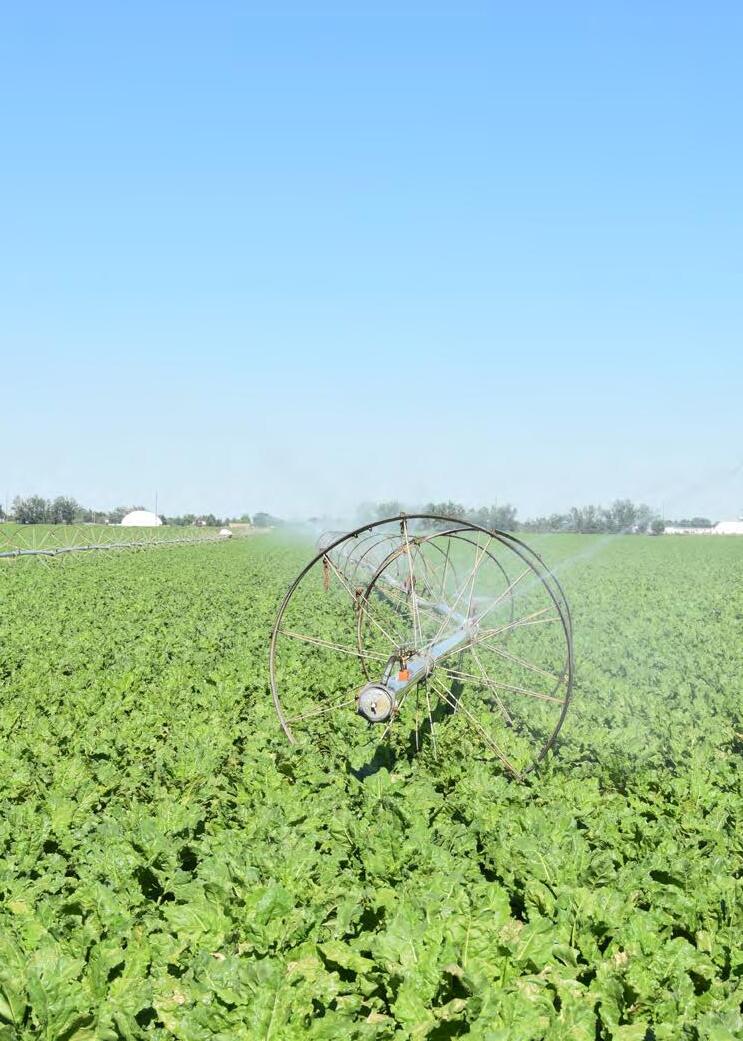
Get a new Zimmatic pivot and qualify for year-end tax savings.
You may qualify for 100% bonus depreciation when you buy a Zimmatic pivot and take delivery in 2025. Now is the perfect time to invest in your operation, enhance productivity, and qualify for tax savings when you take delivery before year-end. Consult your tax advisor to determine eligibility.
DiversityDrivesProfits
See Circle Z AG & Irrigation for more details.
UNIFORMITY CREATES VULNERABILITY
Relying on a narrow gene pool is a risk your operation can't afford — leaving you one pest or one disease away from disaster. Hilleshög delivers the vital genetic contrast required to fortify your elds, protect your tonnage, and maximize your payout.
Build the resilience that keeps your operation Generations Strong.
Field-proven Solutions™!
Amity Technology has the solution for you!
Amity Technology’s line-up is field-proven to deliver high-quality, properly defoliated sugar beets in any field condition.
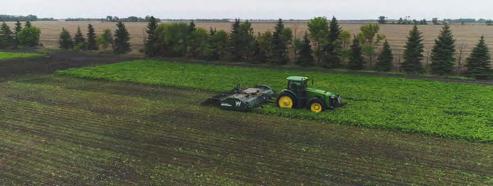
Amity’s 50 Series Defoliators are engineered to properly defoliate sugar beets while matching harvester speed. Our exclusive shrouded front drum lifts and finely sizes leaves, then places them between the rows.
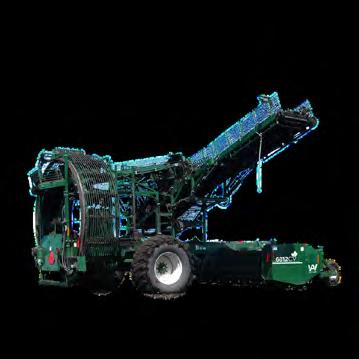
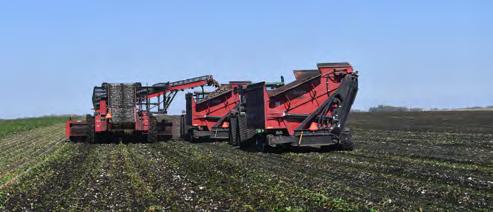
Amity harvesters are the gold standard in the industry. With features like Active Depth Control, High Profile Chain, Dynamic Chain Management, and an ultra-cleaning scrub tower, Amity harvesters can be configured to fit your operation. Plus, with Amity’s field-proven lifter wheels, you will harvest all the tap root and leave extra tare behind.
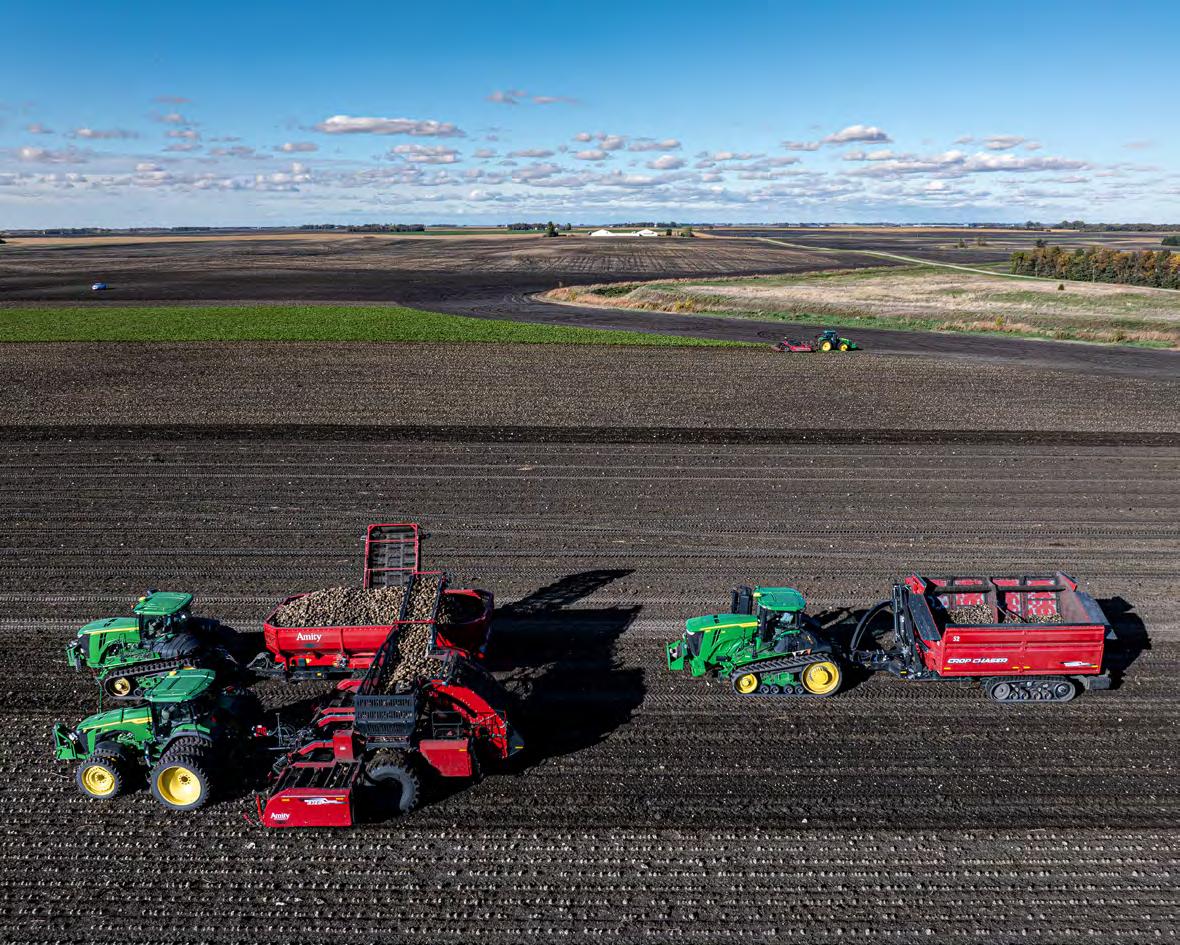
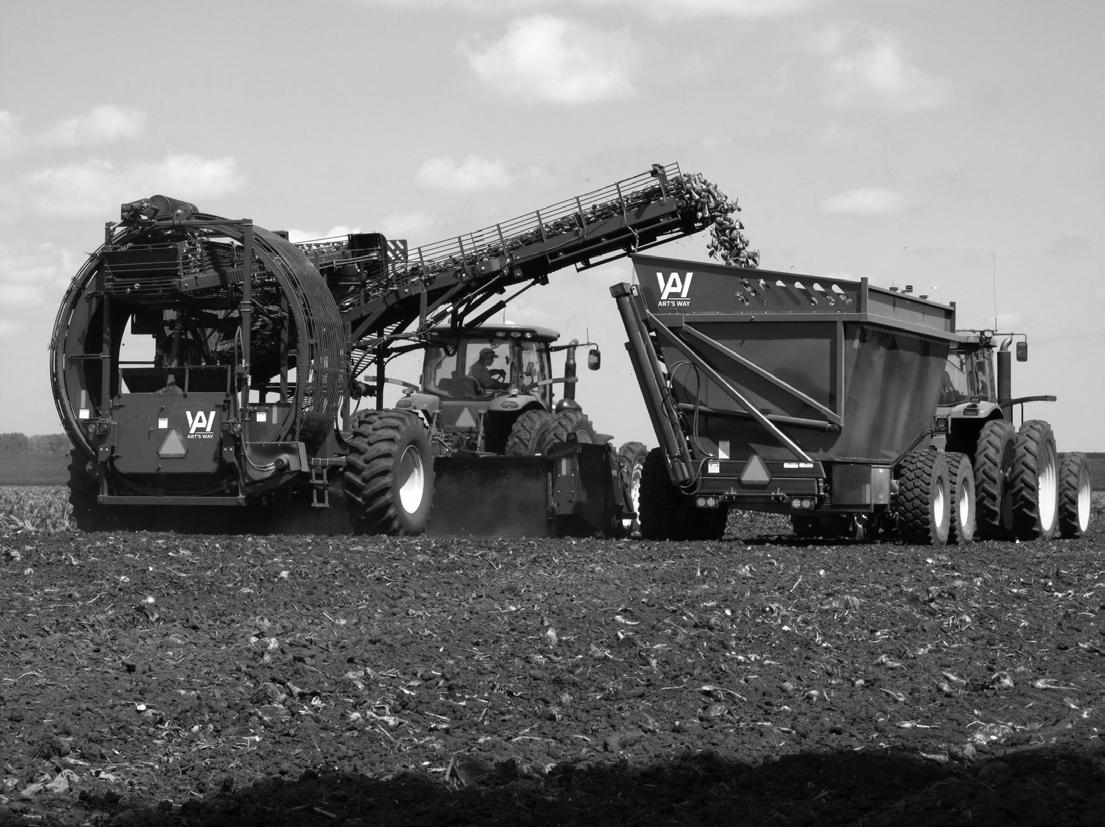
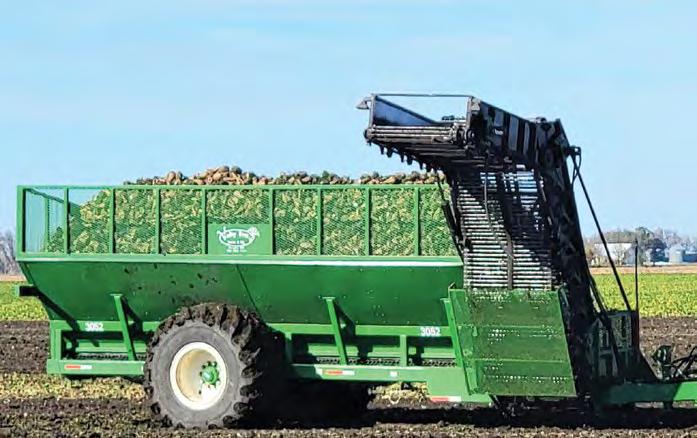
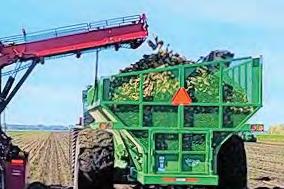
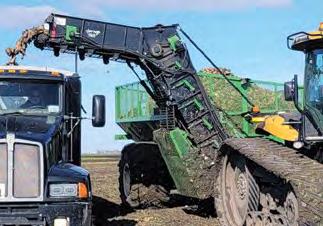
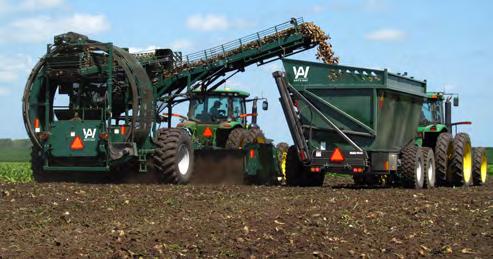
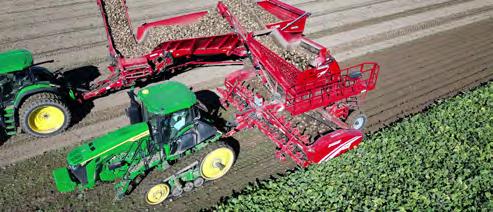
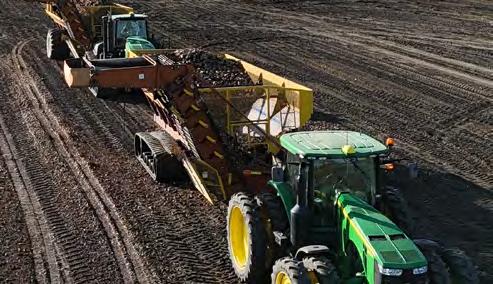
Amity’s Sugar Beet Cart and Crop Chaser™ provide efficient transport in all field conditions. These high-capacity tanks keep harvesters moving in the field.
12 6 8
DO PREEMERGENCE HERBICIDES KILL WEED SEEDS?
University of Idaho weed scientist Dr. Albert Adjesiwor tackles this question, giving growers insight about how to best manage weed issues
DEPARTMENTS
CALENDAR
NEW PRODUCTS
Latest and greatest
10
OFF THE TOP
News, people and updates
16
BUYER’S GUIDE
Harvest Equipment
20 FROM THE ASGA
Disruptions Keep Growing Right At Planting Time
21
FROM THE AMERICAN SUGAR ALLIANCE
A Reflection On WWII Sugar Rationing And The Importance Of A Strong U.S. Sugar Industry
22 FROM THE SUGAR ASSOCIATION
It’s Porch Drink Season: Sugar’s Role In Summer Drinks
CALENDAR
MAY 11-14
FOOD SAFETY CONFERENCE
Donald E. Stephens Convention Center Rosemont, IL www.food-safety.com
JUNE 2 AND 4
13TH ANNUAL AG WORLD GOLF CLASSIC
June 2 – Canyon Lakes Golf Course, Kennewick, WA
June 4 – The Links at Moses Pointe, Moses Lake, WA https://agworldgolf.com
JUNE 16-18
WORLD ASSOCIATION OF BEET AND CANE GROWERS MEETING Helsingborg, Sweden wabcg.org
JULY 20
POTATO GROWER MAGAZINE GOLF TOURNAMENT
Pinecrest Golf Course Idaho Falls, ID www.potatogrower.com/golf
JULY 26-29
SOIL & WATER CONSERVATION
SOCIETY ANNUAL CONFERENCE
Hilton St. Louis at the Ballpark St. Louis, MO www.swcs.org/events
JULY 31-AUGUST 5
INTERNATIONAL SWEETENER SYMPOSIUM
The Hythe Vail Vail, CO https://sugaralliance.org
AUGUST 4-6
MINNESOTA FARMFEST Redwood County, MN farmfest.com
AUGUST 5-6
IDAHO IRRIGATION EQUIPMENT ASSOCIATION SUMMER MEETING Twin Falls, ID Idahoirrigatione quipmentassociation.org
AUGUST 18-20
Dakotafest Mitchell, SD farmfest.com
SEPTEMBER 1-3
Farm Progress Show Boone, IA www.farmprogressshow.com
SEPTEMBER 15-17
Husker Harvest Days Grand Island, NE huskerharvestdays.com
SEPTEMBER 15-17
Big Iron Farm Show Red River Valley Fairgrounds West Fargo, ND www.bigironfarmshow.com
SEPTEMBER 15-17
Canada’s Outdoor Farm Show Woodstock, ON www.outdoorfarmshow.com
DECEMBER 7-10
Irrigation Show and Education Week
Las Vegas, NV irrigation.org
JANUARY 8-13, 2027
American Farm Bureau Federation Convention Charlotte, NC annualconvention.fb.org
JANUARY 26-28, 2027
Colorado Farm Show Island Grove Regional Park Greeley, CO www.coloradofarmshow.com
JANUARY 31-FEBRUARY 2
American Sugarbeet Growers Association Annual Meeting TBA https://americansugarbeet.org/
FEBRUARY 22-25, 2027
44th Biennial ASSBT Meeting Austin, TX assbt.org
PUBLISHER Jason Harris
EDITOR Lane Lindstrom lane@sugarproducer.com
ADVERTISING DIRECTOR Rob Erickson rob.erickson@sugarproducer.com
CIRCULATION DIRECTOR Chuck Harris
Ellie Napoli Laci Thompson
DIRECTOR Chuck Harris CONTROLLER Clayton Ward
Jason Harris
Basic subscription rates are: U.S., 1 year-$20, nine issues; Canada/International 1 year, $90 U.S., nine issues. All subscriptions are U.S. funds only. Limited back issues available for $10 U.S. each. Sugar Producer Magazine is published nine times yearly. 2026, Harris Publishing, Inc. All rights reserved. Reproduction in whole or in part without permission is strictly prohibited. Publisher not responsible for content of submitted materials. Back copies or subscriptions: (208) 524-7000
AMERICAN SUGARBEET GROWERS ASSOCIATION (202) 833-2398 www.americansugarbeet.org
U.S. BEET SUGAR ASSOCIATION (202) 296-4820
AMERICAN SUGAR ALLIANCE (703) 351-5055 | www.sugaralliance.org
BEET SUGAR DEVELOPMENT FOUNDATION (303) 832-4460
SUGAR ASSOCIATION, INC. (202) 785-1122 | www.sugar.org
(208) 524-7000 FOUNDER Darryl W. Harris
NEW PRODUCTS
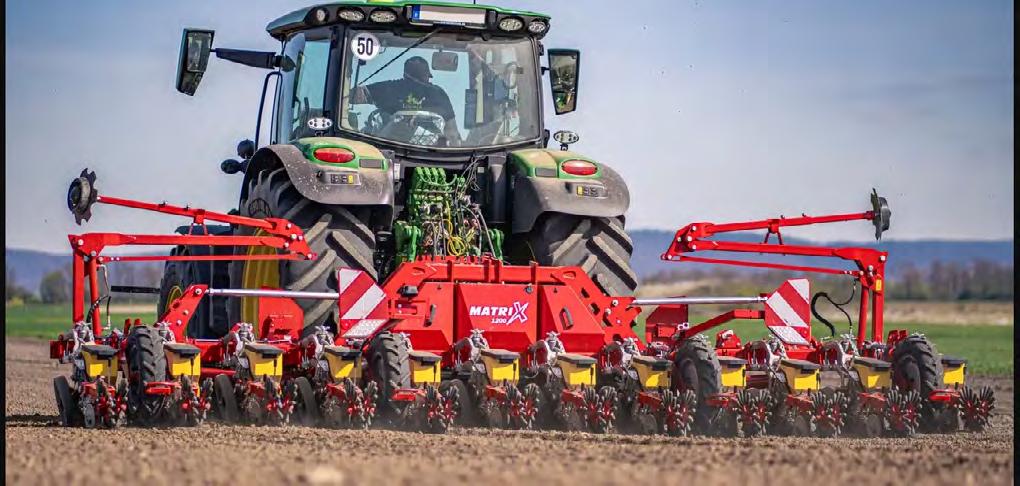
SPUDNIK MATRIX 1200 PLANTER
The MATRIX sugarbeet planter from Spudnik is a modern precision seeder designed specifically for planting sugarbeets, as well as other crops such as canola or chicory. In 2026, Spudnik will test a first 12-row prototype with a row spacing of 22 inches.
A key feature of the MATRIX is its high placement accuracy. Electrically driven metering units precisely control seed spacing, while a low drop height ensures uniform seed placement in the soil. The seeds drop only about 1 inch into the furrow, which ensures very precise placement. In addition, individual row drives allow operators to switch off specific
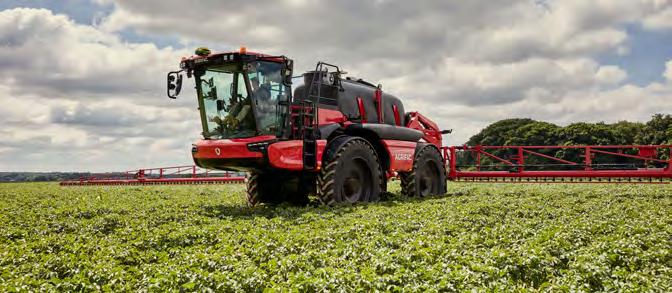
AGRIFAC SPRAYERS
At Agrifac, we are dedicated to delivering innovative crop spraying solutions with highly stable selfpropelled sprayers and cutting-edge technology — ensuring precise application for maximum efficiency. Since 1938, Agrifac has been developing and supporting advanced Dutch-engineered spray technology for producers worldwide. The Condor line of Agrifac sprayers offers tailored solutions for every operation. The Vanguard series features a slope compensation leveling system for superior traction on tough terrain, while the next-generation Endurance 80, with its massive 2,100-gallon tank and up to 160-foot boom, is designed for world-
rows, preventing overlap and reducing seed waste.
The machine is compact, durable and designed for low maintenance. A parallelogram-guided seeding unit maintains a consistent planting depth, which can be adjusted in 0.2-inch increments up to about 2-inch. Flexible seeding parameters make it adaptable to a wide range of soil conditions and operational requirements.
Overall, the MATRIX series stands out for its efficiency, high field performance, and advanced control technology, making it a powerful solution for professional sugarbeet farming. An option for 24-row planting is currently being discussed for 2027.
For more information, visit www.spudnik.com.
record levels of efficiency in large-scale spraying.
All sprayers are available with the ASABE AE50 award winning 3S spot spray system, with dedicated Green on Green sugar beet and specialty crop algorithms. From its North American headquarters in Seward, NE, Agrifac
is committed to providing growers with reliable machinery, intelligent technology, and dedicated service to meet the evolving demands of modern agriculture.
For more information, visit www. agrifac.com/us.
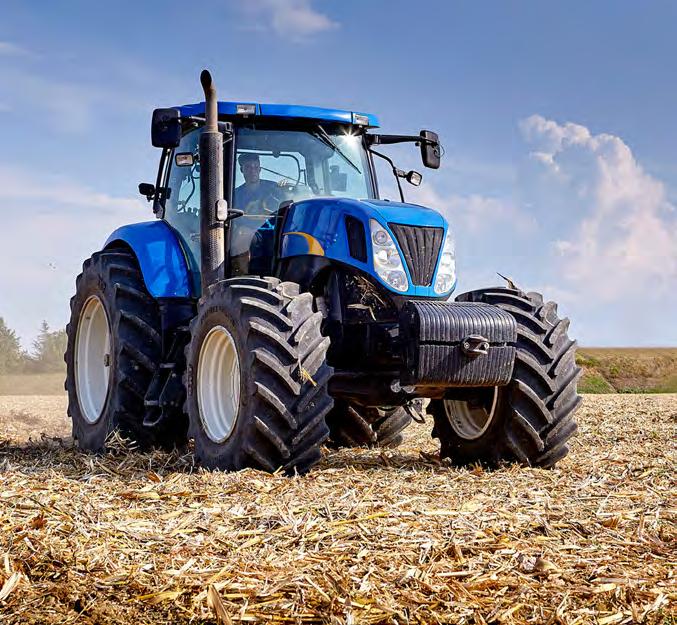
BKT TIRE DESIGNED FOR ROTARY TILLING IN SPRING
Balkrishna Industries Ltd. (BKT) highlights the importance of rotary tilling when preparing the soil for spring planting. This mechanical operation breaks up clods, mixes the soil and creates a uniform, soft and well-draining seedbed — ideal for receiving seeds and seedlings for the upcoming season.
BKT has designed a reliable solution that is highly performing in every field work stage, including rotary tilling. With AGRIMAX V-FLECTO, the company offers a latest-generation VF tire that guarantees maximum traction, soil protection and operational efficiency, thereby addressing the challenges that rotary tilling operations pose to tires — and consequently to the tractors — used in such applications.
Freshly tilled soil becomes soft and unstable, leading to an increased risk of slipping and a potential loss of traction. Moreover, it is important to use equipment that minimizes soil compaction, which would undermine the previously performed soil refinement. Another factor to consider is unpredictability of weather conditions typical of the spring season. All these challenges are addressed by a single tire: AGRIMAX V-FLECTO, the BKT product that marks a major evolution in soil cultivation technology, resulting from
a unique combination of outstanding field performance and the versatility required for road travel.
One of this tire’s distinctive features is the innovative VF technology, which enables the transport of 40 percent heavier loads compared to a standard tire at the same inflation pressure.
Excellent self-cleaning capability is another valuable feature of AGRIMAX V-FLECTO, which helps keep the lugs clean even in muddy conditions. This preserves traction throughout the
CASE IH LAUNCHES NUTRI-TILLER 1000 SERIES TO BOOST LONG-TERM SOIL HEALTH
Case IH is now offering farmers a new strip-till solution built on the proven agronomic performance of Case IH tillage equipment, delivering enhanced soil conservation while maintaining strong yield potential.
The Nutri-Tiller 1000 series strip-till tool offers farmers the best of no-till and conventional tillage benefits with fewer field passes needed, reduced costs and integrated precision technology.
The Nutri-Tiller 1000 series strip-till tool helps farmers promote strong, early emergence and boost yield potential by creating a uniform strip with an ideal berm shape. The uniform soil environment provides earlier soil temperature
entire workday, resulting in greater overall efficiency. Yet there are other tangible and measurable benefits that this tire offers to operators, starting from reduced slippage leading to lower fuel consumption and higher hourly productivity. In addition, the lateral stability provided by the tire’s robust construction improves accuracy in field operations and also enhances operator comfort.
For more information, visit www.bkttires.com/.
warming and more consistent moisture at planting to promote fast, uniform emergence.
Operators can maintain consistent strip quality with full in-cab control of residue managers, row unit down pressure, strip keepers and berm conditioning through the independent down pressure control. This guarantees precise tuning without field stops or manual adjustments, saving time and helping operators stay productive throughout the day. Operators can store guidance lines within Case IH FieldOps™ and seamlessly send them to all connected machines.
The Nutri-Tiller 1000 series utilizes FieldOps to simplify guidance line management and prescription creation, while Active Implement Guidance ensures accurate planting within the striptill passes — all managed through the Pro 1200 display, enabling operators to minimize overlap, optimize input use and achieve more precise placement on every pass.
For more information, visit caseih.com.
UNIVERSITY OF IDAHO “AG TALK TUESDAY” RETURNS FOR SUMMER 2026 OFFERING FRESH INSIGHTS FOR IDAHO AGRICULTURE
University of Idaho Extension is gearing up for another season of “Ag Talk Tuesday,” the popular online series returning May through August 2026.
Sessions will take place on the 1st and 3rd Tuesday of each month at 11 a.m. (MDT). These sessions will offer growers, crop consultants and ag professionals timely updates and expert insights throughout the growing season.
Each session follows a two-part format designed to keep participants informed and engaged.
Crop Status Snapshot
The program opens with an overview of current conditions across Idaho’s major cropping systems. Extension specialists and educators and other experts share real-time observations and management updates for:
• Potatoes
• Wheat and other cereals
CASE IH CELEBRATES AMERICAN FARMERS AT THE WHITE HOUSE
Case IH proudly represented American farmers at the White House, bringing an enduring symbol of the industry’s strength and legacy to the nation’s capital.
Displayed on the South Lawn during a presidential “Celebration of Agriculture” event, the Case IH Heartland Magnum tractor stood as a tribute to the farmers who power American agriculture and to the generations of manufacturing expertise rooted in Racine, Wisconsin.
For almost four decades, the Case IH Magnum tractor has been one of the most iconic machines in modern agriculture, proudly built in the United States and trusted by farmers around the world to deliver productivity and performance season after season.
The Heartland Magnum featured at the White House reflects that legacy. Featuring a patriotic red, white and blue design, the one-of-a-kind tractor underscores agriculture’s connection to America’s identity and Case IH’s fundamental role in forging modern agriculture. The brand traces its roots back to 1842 when the company first began building equipment for U.S. farmers, and over 180 years later, it represents generations of American manufacturing expertise that stand behind farmers in the field today.
“Being part of this celebration of agriculture is a proud moment for our team and for the farmers we serve,” said Scott Harris, president, North America, CNH. “Built in Racine since 1988, the Magnum tractor reflects the strength of American manufacturing and the performance farmers depend on every
• Onions
• Sugarbeets
• Forage crops
• Additional specialty and row crops
These “roundtable” briefings, where everyone can contribute, help attendees stay ahead of emerging issues from pest pressures to weather-driven challenges.
Featured Topics With Special Guests
The second half of each “Ag Talk Tuesday” session features guest experts who take a deeper dive into timely, rotating featured topics. These sessions explore everything from crop protection and soil health to irrigation technology to sustainable practices and region-specific agronomic challenges.
“Ag Talk Tuesday” continues to be a go-to resource for practical, research-based information delivered in a convenient virtual format.
For more information and the link to register (free but required), visit https://www.uidaho.edu/extension/events/agtalk or scan the QR code.
day. We are committed to supporting U.S. agriculture with worldclass equipment.”
Case IH is part of CNH, which maintains a significant manufacturing footprint in the U.S., with some 8,000 employees across 10 manufacturing plants nationwide. CNH continues to invest heavily in American innovation, including a $5 billion commitment through 2030 to advanced research and development, precision technology and investment in U.S. manufacturing.
Following the presidential event, the Heartland Magnum tractor was moved to the USDA People’s Garden, where it will remain on display for visitors to see.
As farmers prepare for the 2026 growing season, Case IH remains focused on serving farmers by delivering the equipment and technology that help them operate efficiently and productively, continuing a legacy carried forward in fields across America.
PERC ANNOUNCES RESEARCH COMPENSATION
OPPORTUNITIES FOR PRODUCERS
The Propane Education & Research Council (PERC) has announced the continuation of its Propane Farm Research Program (PFRP), which provides up to $10,000 to farmers in exchange for sharing real-world data on propane-powered agricultural equipment.
The funds offset upfront equipment costs for producers while also giving an opportunity to experience the benefits of propane technology in agricultural operations.
“Propane-powered equipment helps producers gain independence from a highly strained electrical grid while boosting efficiency and supporting compliance with state-level regulations,” said Michael Newland, director of Agriculture Business Development at PERC. “Cost and infrastructure shouldn’t stand in the way of progress. This compensation program bridges that gap, making it easier than ever for producers to take control of their own power generation while also supporting research that can continue to refine technologies and improve operations.”
Data collected through the PFRP is vital for the industry. By supplying real-world data, participating farmers help improve the future of agriculture operations, making them more efficient, cost-effective and environmentally friendly. For example, previous results from the program have shown that propane-powered irrigation engines:
• Cost 20-40 percent less than diesel
engines for comparable power, and most farmers save 40 percent or more compared with a diesel-fueled engine
• Produce up to 18 percent fewer greenhouse gas emissions than gasoline and diesel alternatives – and because it’s a nontoxic gas, there’s no need for an EPA spill prevention plan
• Provide 10 percent more horsepower per unit when compared to natural gas
Producers can learn more and apply by visiting Propane.com/PFRP.
For more information, visit Propane.com.
VALLEY IRRIGATION ANNOUNCES
WINNERS OF $10,000 TECHNOLOGY
GIVEAWAY
Valley Irrigation announced the recipients of its Valley Connected: AgSense Technology $10,000 Giveaway, awarding two growers the opportunity to enhance their operations with advanced remote irrigation management tools.
The two winners of the giveaway are:
• Perry Galloway, Galloway Cotton Farms, Gregory, Arkansas
• Art Olsen, Olsen Ranch, Harrisburg, Nebraska
The giveaway was designed to help growers take the next step in connected irrigation by equipping their operations with latest AgSense technology, Valley’s industry-leading platform for remote irrigation monitoring, control and decision support. Each winner will receive $10,000 in Valley AgSense technology customized to fit their farm’s specific needs — from remote pivot and pump control, to soil moisture monitoring, weather insights and more.
“Growers today are managing more acres, more equipment and more variables in today’s challenging market,” said Ashley Anderson, assistant general manager, AgSense, Valley Technology. “We created this giveaway to give producers an opportunity to experience the latest connected irrigation technology, simplifying irrigation management, providing real-time visibility into their systems, and ultimately helping them make better decisions in the field.”
Dos Palos CA 93620 • (209) 392-6103 sales@hclmachineworks.com
Using a new and entertaining format to present their research, University of Idaho researchers tackled several topics during one presentation time slot at the 2026 Idaho Potato Conference in January using a “myth busters” setup.
In one “myth busting” presentation at the conference, five U of I researchers and one independent researcher addressed the topic “Busting Myths In Pest Management,” each covering a different subject, from pests to disease to storage to weeds.
In his myth or truth segment, Dr. Albert T. Adjesiwor, an assistant professor & extension weed specialist at the University of Idaho Kimberly Research & Extension Center, took on the myth “Premergence Herbicides Kill Weed Seeds.”
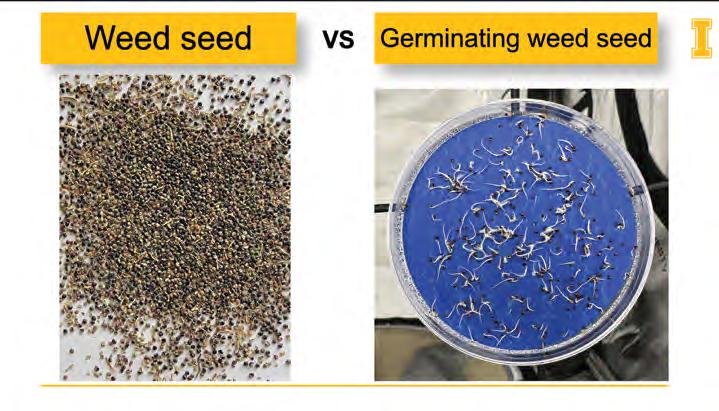
That topic seems fairly straightforward but Adjesiwor said there is an important distinction when talking about weed seeds. “First, let’s define what a weed seed is,” he said. “A weed seed is a dry seed. That means there’s a difference between a weed seed and germinating weed seeds (see Figure 1).
DO PREEMERGENCE HERBICIDES
He then showed a slide of a bare field being sprayed with a preemergent herbicide. He explained, “What preemergent herbicides actually do is they disrupt a couple of different things. They disrupt cell division and root growth or shoot development. Mostly they’re trying to kill the weed seedlings right before they come up.” The important thing to remember, he pointed out, is that the herbicide is going after the weed seedling, not the weed seed.
NOT ALL GERMINATE
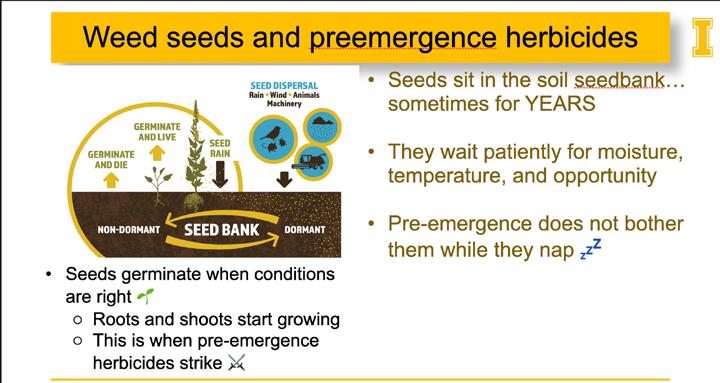
But all weed seeds may not germinate, which means a grower may take out a good swath of the emerging weed seeds but perhaps not all because, Adjesiwor said, there is, in many cases, a weed seed bank, which is kind of a weed’s “savings account.”
He explained, “Because weeds produce a lot of seed, they make more than they can spend, and so they put some in the savings account. That’s what we call the weed seed bank. In that weed seed bank, there is the non-dormant and the dormant. The non-dormant is
Common lambsquarter
PREEMERGENCE HERBICIDES KILL WEED SEEDS?
anything that, when the conditions are right – like they have enough moisture and the right temperature – they’re going to come up.
“With the non-dormant, it doesn’t matter what you do, they will not come up. And that is how they spread over time. What that means is that even if you kill every plant on the surface of the earth, it will not cause a local extinction for years to come.”
Then, he added, “For long-term, for us to be able to manage the weed seed bank, first, you have to prevent them from putting money into the bank account, meaning that they don’t replenish that weed seed bank; that means you prevent every single plant from
Figure
going to seed. And then, you try killing everything else in the soil. I’m going to tell you that we don’t have a lot of options to do that. So, these seeds sit in the soil for years and they don’t come up. They wait patiently until the right temperature or moisture. These pre-emergent herbicides do not bother them. While they are resting in there dormant, we cannot do anything to them because the plants have to take up the herbicide when they are trying to germinate” (see Figure 2).
Zeroing in on the myth of killing weed seeds, Adjesiwor said where some folks get mixed up is they think they are killing the weed seed with the preemergent herbicide, but the preemergent herbicides strike at the point when they are trying to germinate. “So the myth that they kill weed seed is not really true,” he said. “They kill germinated weed seeds.”
MYTH: STERILIZING THE SOIL
Adjesiwor also tried to clear up the myth of “sterilizing the soil” with preemergent herbicides. “If preemergent herbicides actually sterilize the soil and kill weed seeds, that means that you spray once and you can retire and then I don’t have a job,” he said. “But that’s actually not the case. You spray once but you have to do it every year, because the seed bank – that savings account – you haven’t depleted that one yet. It still persists.”
He explained the need to spray a preemergent herbicide every year is because some weed seeds are still viable after 38 years of burial. For example, he said, research has found that 7 percent of lambsquarter weed seeds can survive up to 38 years.
Adjesiwor finished his portion of the myth busters presentation with some suggestions on managing a weed
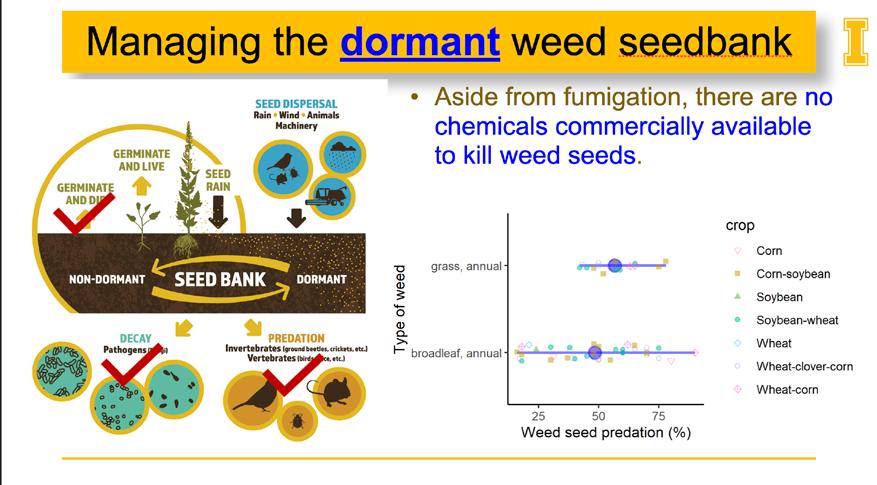
seed bank. He asked, “How do we actually manage that dormant weed seed bank? Fumigate?” (see Figure 3).
“The only chemicals that kill weed seeds are fumigants. Because they are gases, they can go through the seed coat so the weed seeds don’t have to be trying to emerge. But not a lot of people apply a fumigant to actually control weed seeds; they’re doing it for something else.”
When it comes to taking out weed seeds, Adjesiwor said, “Our friends are pathogens that are kind of like seed-causing diseases, diseases that are going to cause decay in the seeds. Also, predators that eat those weed seeds,” such as ground beetles, crickets and birds, etc. “Then some seeds germinate and die.”
As Figure 3 shows, Adjesiwor said aside from fumigation, there are no commercially available chemicals to kill weed seeds.
In a follow-up question after Adjesiwor’s mythbusting presentation, someone asked about the dormancy of weed seeds. The question was, “How does a dormant seed know when to become non-dormant?”
Adjesiwor explained, “There is primary dormancy, which is caused by chemicals in the seed that make them just not want to come up, no matter what you do, and then there is enforced dormancy, which is caused by the environment.
“So if it’s an environment issue, when conditions become good, they come up. A lot of weed seeds use light to tell when to break dormancy. A lot of weed seeds are very small and sunlight doesn’t go very deep into the soil. Plants use red light to photosynthesize, and so weed seeds look for that hue. Once they get a lot of red light, it means that they are close enough to the soil surface [to sprout].”
Figure 3
HARVEST EQUIPMENT
Safe-T-Pull Manufacturing Inc. (701) 284-6100 www.stpmfg.com
CROP SHUTTLE 5600
The new Crop Shuttle 5600 proficiently combines traditional design with modern capabilities. With a substantial 50-ton capacity and rapid unloading over 15 tons per minute, it ensures efficiency during the harvest hustle.
Featuring an 84-inch high-efficiency scrub tower, the Crop Shuttle 5600 is specifically engineered for sugarbeet handling. This scrub tower has adjustable belt speeds between the inner and outer scrub belts, allowing you to tailor the cleaning aggressiveness to suit field conditions, thus minimizing damage and loss, while maximizing tare removal. Its 52-inch wide discharge boom and adjustable 2-speed hopper offer precise
control, while the hydraulic scrub chain tensioner enhances durability.
Loadable from either side and available with optional Bluetooth scales for accurate truck weights, the Crop Shuttle 5600 is the perfect blend of traditional reliability and modern innovation for today’s sugarbeet harvesting needs.
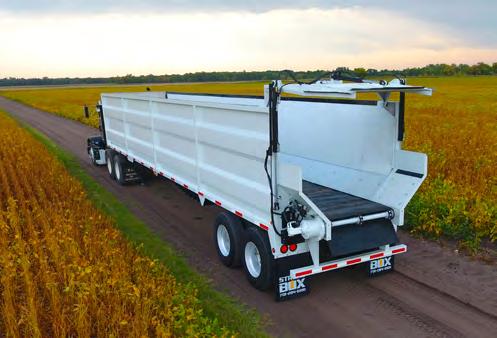
STRONG BOX LIVE-BOTTOM
Strong Box live-bottom belted trailers and bulk beds allow operators to have versatility across many crops by allowing them to unload quickly and gently. Unlike an end-dump, drivers can control unload rate and have greater stability by keeping a low center of gravity, even on sloped ground. Wet materials such as lime and manure that are known to stick to end-dump
walls and cause rollover accidents can easily be hauled.
Strong Box’s powerful, positive chain-drive belted floor ensures no slippage, providing a fast unload rate that is smooth and gentle. Enclosed side walls provide great aerodynamics and a clean look. The trailer also provides flex where you want it and strength where you need it.
Options include 30-, 36- and 50-inch belt widths, multiple axles, gas-powered hydraulic units, multiple rear door options for numerous crops, and various overall lengths and side wall heights.
Parma Company
(208) 722-5116
www.parmacompany.com
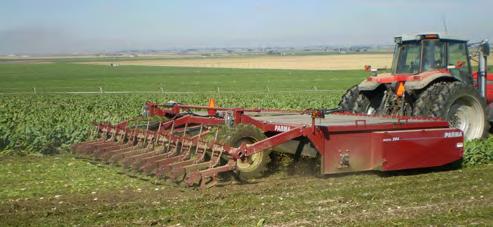
PARMA DEFOLIATORS
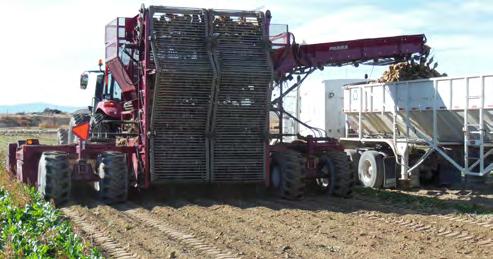
Parma sugarbeet defoliators are simple, economical and provide the cleanest beets ready to harvest. Model sizes vary from 4 to 12 rows. The front drum is designed with a timeproven steel cup flail rotor driven with simple banded belt drives to keep repair costs to a minimum. The updraft action of the cup flail provides the best topping of any system on the market. Large, 24-inch wheels and tires provide easy, smooth rolling through wheel tracks and corrugates.
Three types of scalper options are available: the simple knife, the simple unpowered disc and the hydraulic-driven disc.
PARMA HARVESTERS
Parma sugarbeet harvester models are available for varying harvesting needs. All models are built for high-yield capacity harvesting and cleaning, with simplicity and durability in mind. Harvester sizes range in row spacing configurations from 4 to 12 rows.
Rear elevator harvester models use high-quality belted chain for seasons of reliable lifting. The rear wheel models use a simple center axle-driven wheel to gently carry beets to the hopper. Both systems deliver with capacity, a cleaner, whole beet to the truck.
Parma’s 12-row, double-elevator harvester maintains these same standards while providing economical, high-capacity harvesting. These ever-improving designs come from the experience of more than 60 years of building sugarbeet equipment.
Art’s Way Manufacturing www.artsway.com (712) 208-8467
6812CV BEET HARVESTER
The Art’s Way 6812CV beet harvester offers the same great features of the 6812 but is equipped with an updated ClearView head. Features include:
• Taller opening for increased visibility from the cab
• Less mud buildup
• Easier maintenance access
• Improved tensioning systems
• New head is retrofittable to previous models
1222HS DEFOLIATOR
The Art’s Way 1222HS high-speed defoliator is the perfect complement to our harvester. It eliminates uneven beet tops to make harvest a breeze. It boasts ease of adjustment with balanced rotors for a smooth operation. Heavy-duty axles are available in either fixed or steerable options.
Spudnik Equipment Company (208) 785-0480 www.spudnik.com
3120 12-ROW SUGARBEET HARVESTER
The Spudnik 3120 12-Row Beet Harvester is designed for precision and productivity. This cutting-edge machine streamlines the harvesting process, ensuring maximum yield while minimizing crop damage. This machine will stay on track with two Electric Row Finders, control depth, steering and leveling.
BUYER’S GUIDE
The 3120 operates at a reduced rpm of 40 percent, making contact with beets using 50 percent less force, consequently leading to a notable reduction in crop damage.
Comparing Puller Wheels of 34 inches and 28 inches in diameter, opting for larger wheels enhances lifting capacity and less bruising. The inclusion of an automatic row alignment feature further augments operational efficiency. Removing more beets with tails allows for more weight delivered to the processor than left in the field.
CROP CART
Utilizing the versatility of the Spudnik Crop Cart, growers can increase their harvest efficiencies in the field. With its large 35-ton capacity, you can continue to harvest in between trucks and semis traveling to the dump. Its versatility is second to none as it allows growers to use the crop cart in so many different operations from beets to potatoes and so much more.
Ropa North America (810) 705-0297 www.ropanorthamerica.com
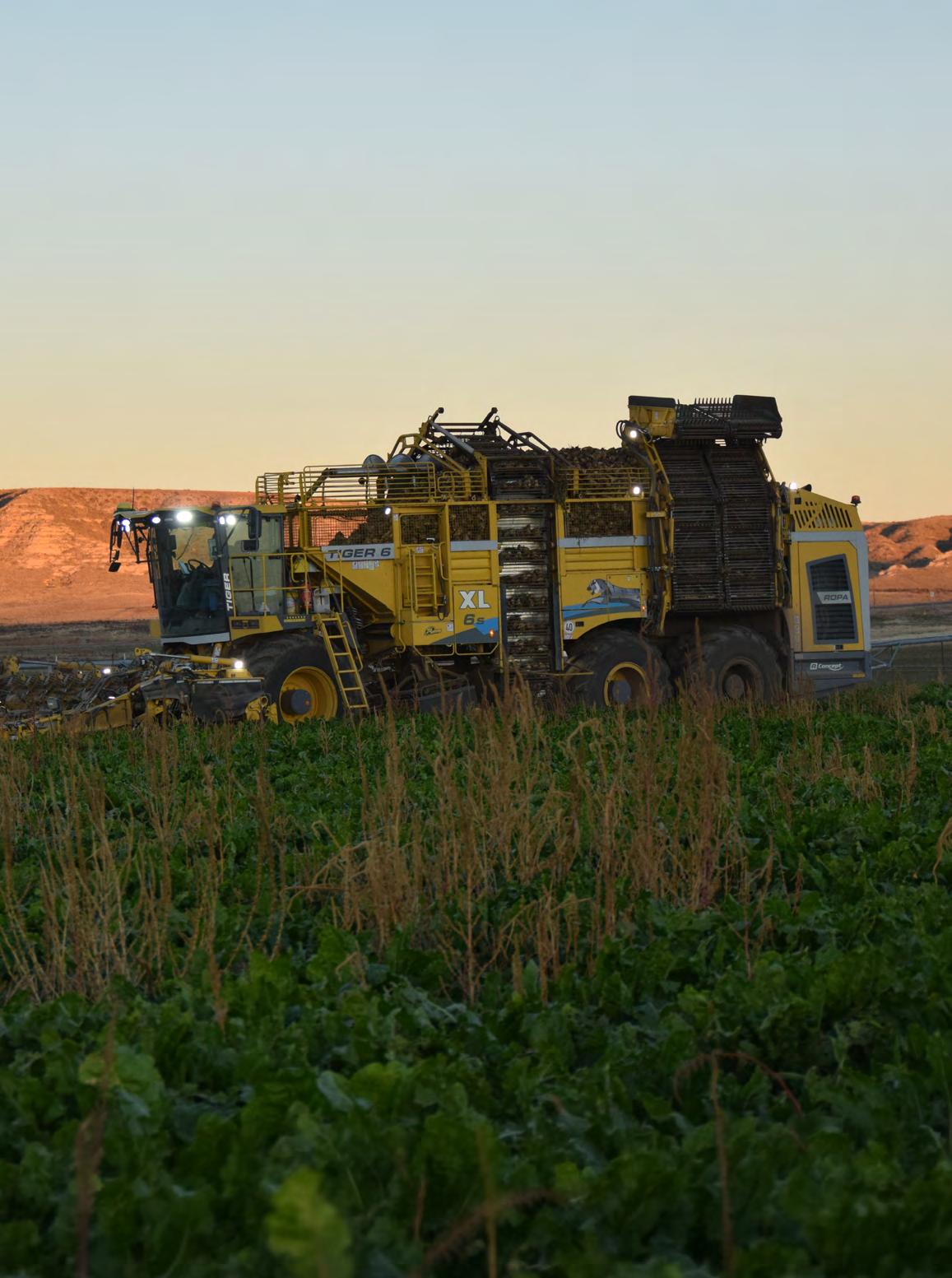
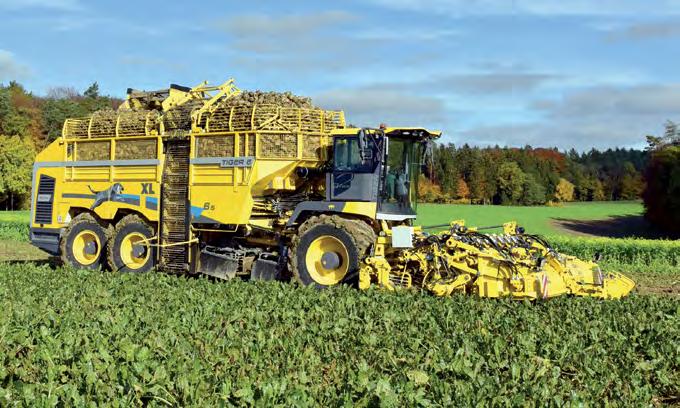
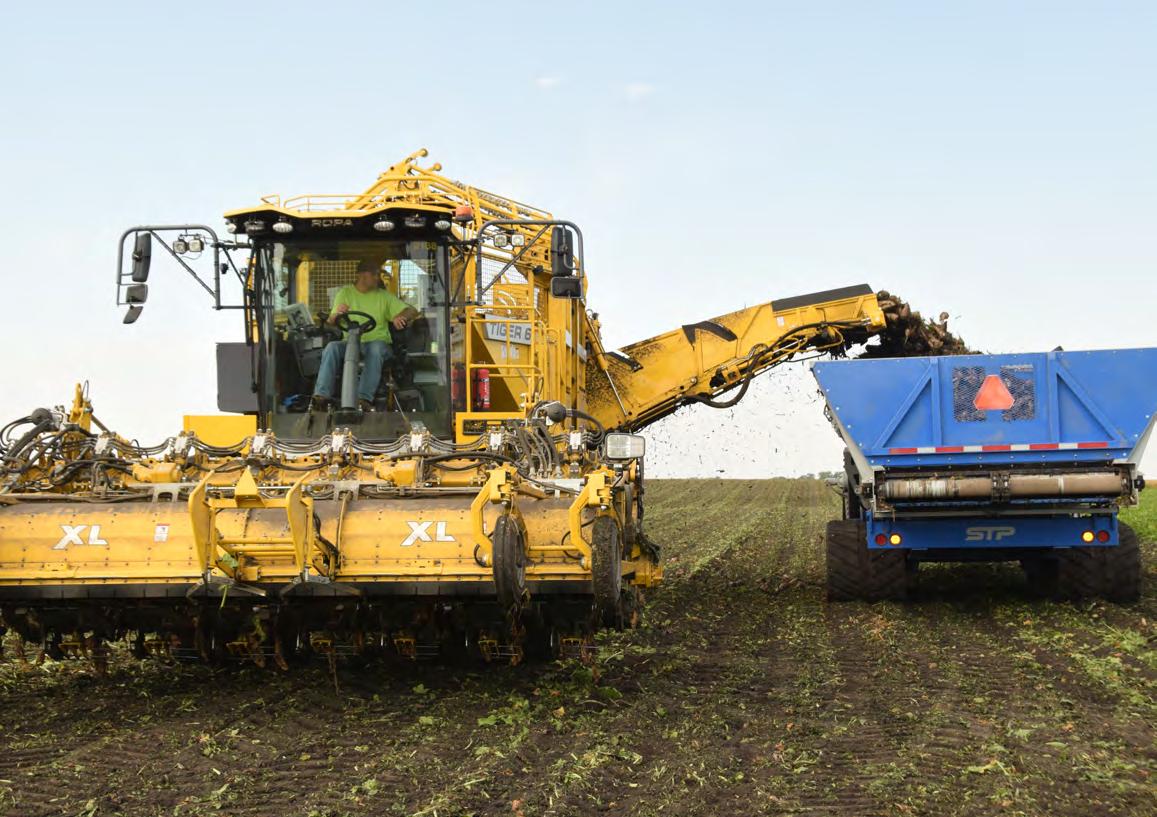
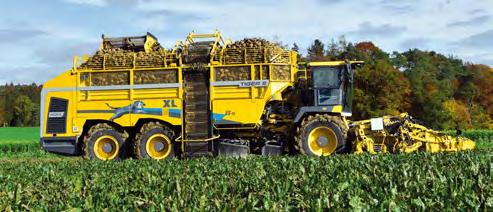
TIGER 6S
and chassis control reduce compaction and provide greater stability even in wet conditions or on steep slopes. Individually adjustable cleaning systems ensure gentle beet handling while removing excess tops and dirt.
The Ropa Tiger 6S is the most powerful, technologically advanced sugarbeet harvester on the market, built to elevate productivity and redefine modern agricultural performance.
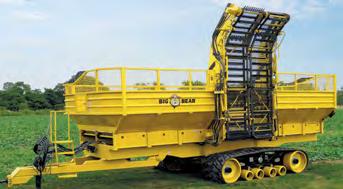
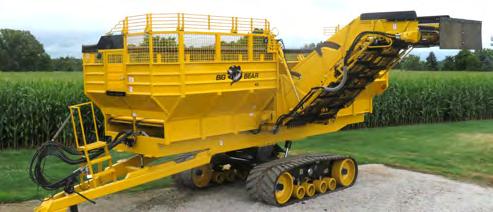
BIG BEAR
Big Bear sugarbeet carts feature large capacities and fast unloading, allowing for efficient transfer of beets from harvester to field pile or truck. Three model options (35-, 40- and 45-ton capacities) allow farms to match the cart to the needs of their operation.
The Big Bear has been hydraulically optimized to feature unloading rates of 30 tons in less than 60 seconds. The wide center unload conveyor allows for beets to be efficiently transferred while the cart remains balanced throughout the whole unloading process. All conveyors are hydraulically driven and independently controlled from the tractor. A scrub roller and chain unload conveyor provide gentle, effective cleaning to remove dirt and greens. An optional hydraulic lift kit raises the cart 24 inches, enabling trucks to be loaded with ease.
The heavy-duty tracked undercarriage provides a wide 36- x 136-inch footprint minimizing soil compaction while maximizing flotation. Even fully loaded, ground pressure never exceeds 20 psi. With fully-welded, high-strength construction, time-proven drive components (shared with the Tiger 6S) and nickel-plated hydraulic tubing, the Big Bear is built for long-term durability and reliability.
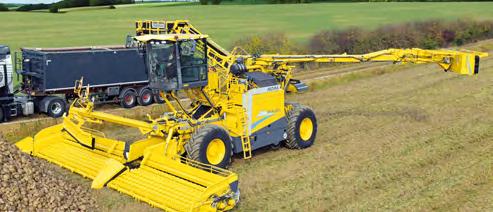
MAUS 6
The Ropa Tiger 6S sugarbeet harvester delivers unmatched power, intelligence and efficiency to your sugarbeet harvesting operation. Powered by a 796 hp Penta Volvo engine featuring 3550 Nm of torque at only 1000 rpm, the Tiger 6S combines advanced cleaning, precise topping and high-capacity harvesting to deliver superior performance across all field conditions.
A new generation of onboard computers forms the technological core of the Tiger 6S, enabling telematics, remote support and semi-autonomous harvesting capabilities, allowing for easier and more precise operation of the machine. The premium panoramic cabin – with dual 12.1-inch high-resolution R-Touch terminals – offers intuitive, tablet-like control and digital camera feeds for superior visibility and comfort. R-trim automatic defoliator height adjustment maintains perfect topping without manual adjustment while R-Contour share depth control automatically adjusts the digging depth of each row individually – maximizing crop recovery while minimizing excess dirt. Large Michelin tires, intelligent hydraulic suspension
The Ropa Maus 6 is engineered to deliver greater efficiency to your sugarbeet harvest logistics all while minimizing crop loss and delivering cleaner beets for higher returns. With the Ropa Maus 6, harvest and transport operations can be effectively decoupled allowing for continuous harvesting in the field and quicker truck turnarounds on the road. With trucks staying out of the field, harvest mess is reduced, operations are simplified and soil compaction is significantly reduced – resulting in a more efficient and profitable operation.
Built from the proven Maus 5 and enhanced with new
innovations, the Ropa Maus 6 features a 33-foot-6-inch pickup system designed for high-capacity gentle beet handling. Its newly designed, panoramic cabin – the largest on the market – offers 35 percent more space than its predecessor and outstanding visibility thanks to its liftable design. All cleaning systems can be individually tuned via the intuitive cabin controls to find the perfect balance of cleaning and throughput. A unique, 30-foot foldable counterweight concept ensures maximum stability even at full 50-foot loading reach. A new generation of high-performance onboard computers powers telematics and online diagnostics through the myRopa portal.
H&S Mfg., Inc.
(218) 478-2229
www.hsmfginc.com
H&S BEET CART
H&S Mfg. offers a lineup of 24-, 30-, 35- and 44-ton beet cart model sizes. H&S carts add efficiency to keep the harvester moving during the short window of fall beet harvest. Growers can continue operating in extreme, muddy conditions with either tracks or large, flotation radial tires. Unloading boom sizes available include 42-, 52- and 64-inch widths. The elevator boom provides for fast unload, all while scrub cleaning the beets for producer tare incentive payments. Unload speed can be optimized with the available tractor to drive the elevator by hydraulics or PTO. Convenient water kits, scale kits and plastic options are available, along with the boom vertical height adjust option for customers piling windrows in the field.
With the experience of nearly 30 years manufacturing sugarbeet carts, H&S has developed a cart with the customer’s needs in mind.
Amity Technology
(701) 232-4199
www.amitytech.com
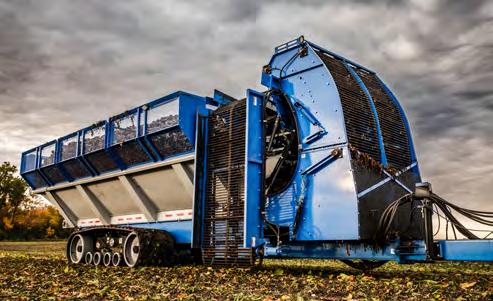
CROP CHASER 1000
The Crop Chaser 1000 Multi-crop Cart adds a new level of efficiency to your farming operation. The patented design of this high-capacity, track-driven dump cart with integrated live chain walls and scales offers unmatched logistical benefits in any field condition. Transitioning between crops is as easy as cleaning
out the tank – easily switching between sugarbeets, silage, corn, beans and small grains.
With an unload time of just 90 seconds and the capacity to fill a semi-trailer, lifting up to 80,000 pounds, the Crop Chaser 1000 keeps trucks on the road and tractors in the field.
The patented live chain walls control the dump and feather the load for an even fill. Sensors in the scale system provide highly accurate weights measurements for each load. Plus, Crop Chaser features industry leading 36-by-136-inch tracks rated at speeds of up to 20 miles per hour. Tracks minimize compaction and are much better suited for use in wet conditions than competitive carts with tires. When fully loaded the CC1000 only exerts 16 psi.
SUGAR BEET CART
The Sugar Beet Cart is a field-proven solution for efficient transport in all field conditions. During the fast pace of sugarbeet harvest, efficiency is a key to success. The highcapacity tank and unloading elevator of the Sugar Beet Cart keep harvesters moving in the field and trucks rolling.
Capable of unloading up to 30 tons per minute, the Sugar Beet Cart quickly turns trucks and gets them back on the road, no matter the field conditions. Tracks on the Sugar Beet Carts are underneath the tank, so the working width and transport width are just 11.5 feet. The narrow design means increased clearance between the harvester and cart.
The Amity Sugar Beet Cart can be ordered with either left- or right-hand dump, plus the seven-foot-wide unloading elevator has the flexibility to build a clamp or fill a truck in just 90 seconds.
Plus, with the best dealer network, Amity Technology parts and service are available when you need them most.
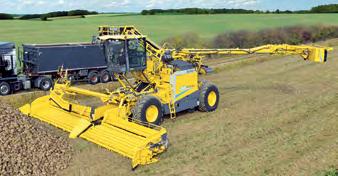
The Terra Felis 3 evo is the most modern beet cleaner loader in the world. It is setting standards in gentle and efficient beet loading, demonstrated most obviously by the pick-up header that has been developed and patented by Holmer.
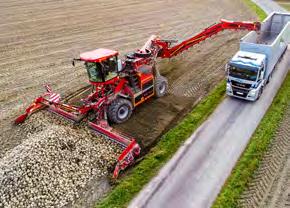
From the liftable cab to the fast automatic folding system, the Terra Felis 3 evo offers the utmost in comfort. The cleaning concept can be individually customized and offers solutions for all use conditions. A 32-foot pick-up header width, 49-foot transfer loading range, and intelligent counterweight synchronize the overall concept.
The Terra Felis 3 evo at a glance:
• 381-horsepower Mercedes Tier V engine
• New hydraulic drive concept
• Patented pick-up header for more flexibility in cleaning
• Four different post-cleaning variations for adaptation to individual local conditions
AMERICAN SUGARBEET GROWERS ASSOCIATION
By Luther Markwart, Executive Vice President
Disruptions Keep Growing Right At Planting Time
Trade issues, water shortages, Iran war top of mind
The war with Iran and the disruption of shipping oil and fertilizer supplies through the Straits of Hormuz has driven higher prices to American farmers when they can least afford it.
While there are promises by the Administration that we may have to suffer short-term economic pain for long-term geopolitical gains and a safer world, a successful strategy to complete and exit the war remains uncertain. These conflicts are very messy and they last longer than expected so we should prepare for that scenario.
These additional costs along with depressed market prices for commodities demand more economic assistance for farmers through government funding. Again, those efforts are slow, but are underway and provide economic stability in the near term.
For fiscal year 2027, the President is asking for a $1.5 trillion defense budget while cutting the agriculture funding by 19 percent. This is raising lots of eyebrows even by Republicans in Congress. Presidential budget proposals by either party are typically discounted and mostly ignored by Congress, but it will play out over the next several months through the appropriations process. All of this needs to be viewed through the lens of the upcoming mid-term elections and who will have control of the House of Representatives in 2027/28.
On top of these challenges, with little snowpack in the mountains this winter, some growers in the Mountain West are facing water shortage issues and looking to preventive planting provisions under their crop insurance policies. How moisture and diseases play out over the next few months will give us a better sense of what a final 2026 crop will look like.
The House is looking at its April schedule to see when the remainder of the Farm Bill can be considered for passage. Dates have a way of slipping, but they need to move the bill to pressure the Senate to follow suit.
USDA has a unique and complicated situation that it is facing in managing the sugar program. As of April, there was about $1 billion of sugar under loan with the CCC. With surplus sugar imports coming into the country over our tariff-rate quota, it is depressing domestic prices, which threatens beet sugar to be forfeited when loans come due in August and September.
By law, the Secretary has to do everything under her
authority to avoid forfeitures and taxpayer cost. Under new Farm Bill language passed last year, the Secretary is also directed to reallocate the roughly 100,000 tons of TRQ shortfalls by the first of March, which it did not do. With a devastating freeze of sugarcane in Florida this past winter, cane refiners are clamoring for more imports to replace the lower production.
The quandary for USDA is if they reallocate the shortfalls to provide throughput for cane refiners and then take forfeitures from the struggling beet sugar industry, it appears
USDA has a unique and complicated situation that it is facing in managing the sugar program.
to be very counterproductive and it occurs right before the November mid-term elections.
Until the Administration addresses the surplus sugar entering the market, they cannot administer the program to meet both congressional mandates. The first and foremost objective for the Secretary is to make sure the market is adequately supplied and at the moment it is oversupplied which helps guide their decision process. We will be watching this closely through the summer months.
There is a flurry of activity around trade negotiations on a number of fronts. The March ministerial meeting of the World Trade Organization reinforced the notion that it has little ability to move a comprehensive trade agenda forward. Over the past three decades, countries have cherry-picked the markets and products on a bilateral or plurilateral basis, leaving a multilateral approach of 166 countries in paralysis.
Negotiations are well underway to update the USMCA agreement. Of course, the Administration is using other authorities to continue its efforts to forge new deals with trading partners. These, along with a host of other traderelated work, demand our focus and work in the months ahead.
On March 27, Zack Clark, our VP of Government Relations, and his wife Heather welcomed the birth of their second son, August Clark, into their family. We celebrate their new family addition and August is blessed to have incredible parents.
AMERICAN SUGAR ALLIANCE
By Rob Johansson, Director of Economics & Policy Analysis
A Reflection On WWII Sugar Rationing And The Importance Of A Strong U.S. Sugar Industry
Stemming the tide of subsidized foreign sugar critical
As the world is embroiled in global conflict and supply chain challenges dominate commodity headlines, it’s important to look back at lessons learned about the importance of maintaining strong domestic production for critical food ingredients.
As an example, America was once largely reliant on foreign nations for sugar, and 84 years ago this month, the first sugar rationing books were issued in support of the U.S. efforts during World War II. Sugar would be the last item to be removed from the rationing list, two years after the war ended.
After sugar use restrictions were lifted, the U.S. government sought to encourage the production of sugar here at home to make sure Americans were never again without this critical food ingredient. That’s because sugar is an essential and functional ingredient in thousands of foods, including bread, yogurt and cereals.
Today, American sugarbeet and sugarcane growers and the workers who process the crop into refined sugar ensure that we have a safe and reliable domestic source of this essential ingredient. The hundreds of millions of dollars that U.S. sugar producers invest each year in the U.S. supply chain ensure sugar gets to the market quickly so food manufacturers never need to idle production lines waiting for sugar and so households never face empty store shelves. (As we’ve pointed out in earlier columns, there was never a shortage of sugar in grocery stores or for food manufacturers during the pandemic and the supply chain bottleneck that followed.)
However, unlike World War II where Americans were encouraged to “make [sugar] stretch” because it was in scarce supply, right now we are dealing with too much sugar in our market. A flood of imported, subsidized foreign sugar is putting American farms and jobs at risk and jeopardizing the secure supply chain for sugar. Unreasonable and unfair trade policies, like
the $17.6 billion in subsidies India bestowed on its sugar producers in 2022, is creating a glut of foreign sugar. Outdated trade policies have allowed highly subsidized sugar to come into the U.S. market above and beyond the quotas established by our trade agreements, undercutting the efficiency of the sugar program as enacted by Congress.
More than 1.5 billion pounds of sugar imports entered the U.S. last year above our trade commitments, with more coming each year, threatening the viability of many farms and sugar producers.
If this issue is not sufficiently fixed – and soon – we could see farms and farmer-owned cooperatives go under. We’ve already lost more than 50 percent of U.S. sugar mills, refineries and sugarbeet factories over the past 30 years.
And if we continue to lose family farms and processing jobs as made-in-America sugar is displaced by heavily subsidized foreign sugar imports, the U.S. may once again become overly dependent on foreign sugar suppliers. That puts a stable supply of this critical food ingredient at risk for food companies and households.
The American Sugar Alliance and the entire U.S. sugar industry has made fixing those issues our top priority.
Winston Churchill once famously paraphrased philosopher George Santayana saying, “Those that fail to learn from history are doomed to repeat it.”
Heavy reliance on foreign countries to supply sugar and other critical ingredients to American food companies and households led to a food supply crisis during World War II. At the time, we did not have strong enough policies in place to support a robust domestic sugar industry, which benefits farmers, food manufacturers and consumers.
The U.S. should not make the same mistake again. Preserving American factory jobs, American family farms and a strong supply of an American-made ingredient is something worth fighting for.
THE SUGAR ASSOCIATION
Courtney Gaine, PhD, RD, President & CEO
It’s Porch Drink Season: Sugar’s Role In Summer Drinks
There’s a lot happening in that glass
It’s your first porch drink of the season. The sun hangs low, the air smells like fresh-cut grass and that cold glass of lemonade, sweet tea or cocktail just hits differently out here.
As Memorial Day weekend kicks off the unofficial start of summer and May 30 rolls in with National Mint Julep Day, the whole month of May is basically one long invitation to take your drink outside.
Sugar is more than just the familiar ingredient in summer favorites from classic lemonade and sweet tea to cocktails. It’s the common thread that connects every sip.
SUGAR TAMES THE TART
In the world of summer drinks, the type of sugar you reach for matters more than you think. All sugar starts the same way – extracted from sugarbeet or sugarcane plants – but small differences in processing are what create the variety of types of sugar behind your favorite drinks. These types play distinct roles in crafting popular drinks, each contributing unique flavors, textures and levels of sweetness.
Granulated sugar, known commonly as table sugar, has medium-sized crystals that resist clumping, making it ideal for directly sweetening beverages (iced tea) or the glasses they are served in (margarita).
Less refined sugar has large golden crystals that retain some natural molasses and add a subtle caramel undertone to cocktails and specialty drinks (a mojito).
And then there is simple syrup. Made by dissolving sugar in hot water in a 1:1 ratio, it is a staple in summer drinks because it blends effortlessly into cold beverages without leaving a grainy residue. While the 1:1 ratio provides
light sweetness, a 2:1 ratio (two parts sugar to one part water) creates a richer syrup when a more concentrated sweetener is needed without diluting. Add herbs, fruits or spices to either, and suddenly you have a versatile base that can take a drink somewhere entirely new.
LEMONADE: A SWEET-TART STORY
1,000
YEARS IN THE MAKING
Summer’s beloved beverages often feature high citrus content from lemons, limes and grapefruit, and sugar counteracts this acidity to turn sour mixes into balanced blends. Sugar creates lemonade’s perfect sweet-tart balance because sucrose molecules stimulate the tongue’s sweet taste receptors, which temper the sharp acidity of lemon juice.
That balance is ancient. In 10th century Cairo, people were already drinking qatarmizat, a mix of lemon juice and sugar; a recipe that hasn’t changed much in a thousand years. We’ve just rebranded it.
Fun Fact: The word “lemonade” first appeared in the English language in the 1600s.
SWEET TEA: TIMING IS EVERYTHING
Sweet tea has been a Southern staple since at least 1878, when one of the oldest known recipes appeared in a community cookbook called Housekeeping in Old Virginia.
The real secret to a perfect pitcher has less to do with the recipe and everything to do with when you add the sugar. Put it in while the tea is hot. Heat energizes water molecules, letting them break down sugar crystals quickly and hold far more sweetness than cold water ever could. Skip this step, and the sugar sinks to the bottom, leaving you with a
sugary layer at the bottom of the pitcher (which is also delicious!).
Fun Fact: The Arnold Palmer, which mixes lemonade and sweet tea, was named not by the famous golfer Arnold Palmer, but by a woman who overheard him ordering one.
SUGAR IS AN ARCHITECT IN YOUR MINT JULEP
Beyond flavor, sugar is doing structural work in your glass. It binds ingredients together, adding body and texture to cocktails that would otherwise feel thin. In a mint julep, granulated sugar pressed against fresh mint leaves pulls out essential oils, unlocking aroma before a drop of bourbon enters the picture. Sugar softens the spirit’s burn, making it sip worthy.
Fun Fact: Did you know that mint juleps have been the official Kentucky Derby drink since 1938?
Each year, Churchill Downs serves almost 120,000 mint juleps over the Kentucky Oaks and Kentucky Derby horse races. A traditional mint julep calls for about 1 teaspoon of simple syrup, but Churchill Downs’ recipe uses a custom sugar ratio that’s been tweaked over decades to hold up in a crowd of 150,000 people on a hot May afternoon.
From the first pitcher of sweet tea on a slow Sunday afternoon to the last cocktail as the fireflies come out, raise a toast to real sugar, the simple ingredient behind every sip.
Just High Quality Sugarbeets. No Stress. No Headaches.
Your sugarbeets face disease pressure all season. Vive’s proven 3-step fungicide program has you covered:
AZTEROID FC 3.3 AT PLANTING solid foundation for better stands
AZTERKNOT MID-SEASON advanced protection delivers healthier plants & more sugar
PHOBOS FC THROUGH HARVEST ultimate defense to finish strong
T he 3-s tep p rogram built fo r maximum tonn age and su gar content. Scan the QR Code to learn more! 1 2 3