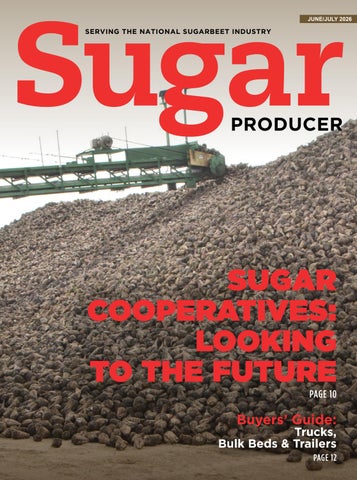
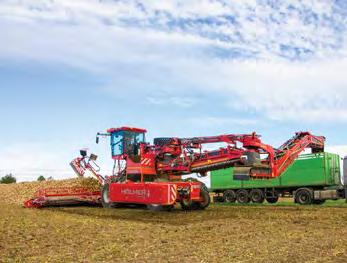
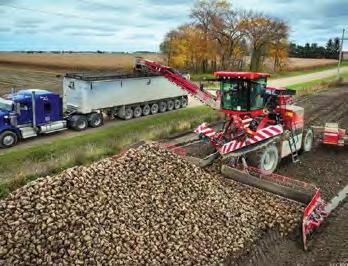
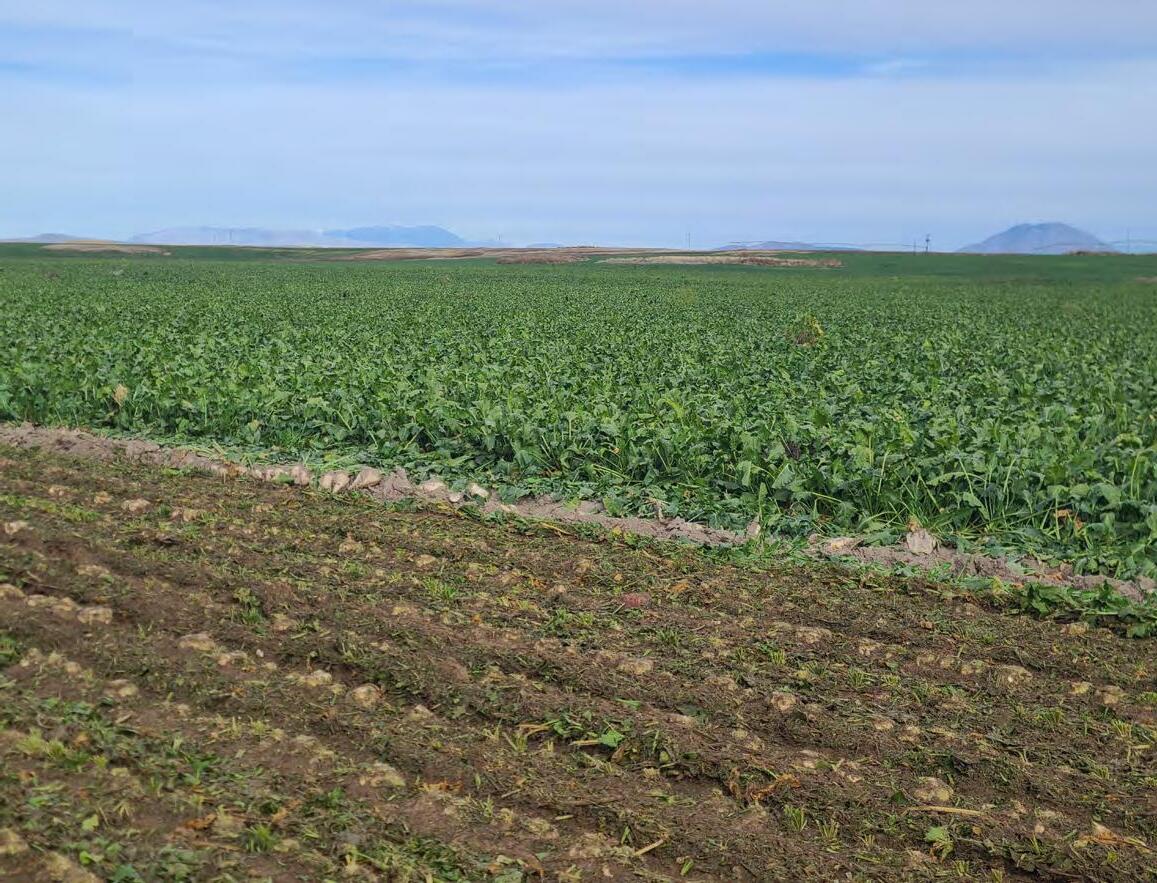
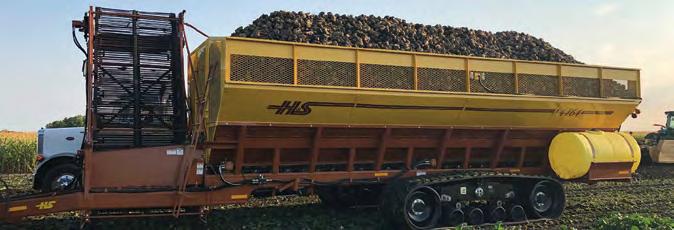
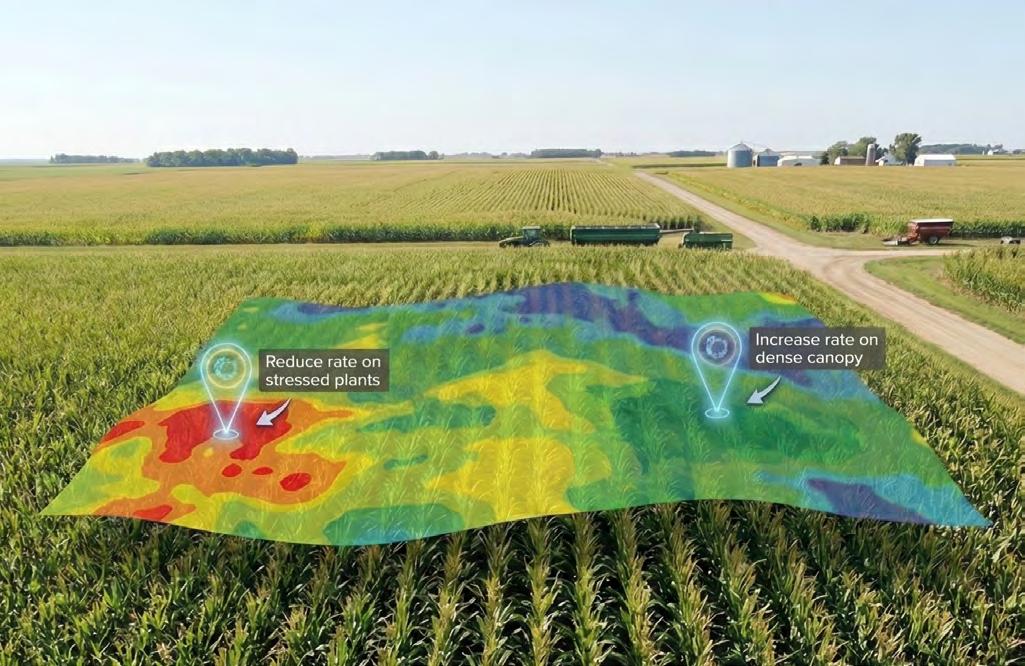
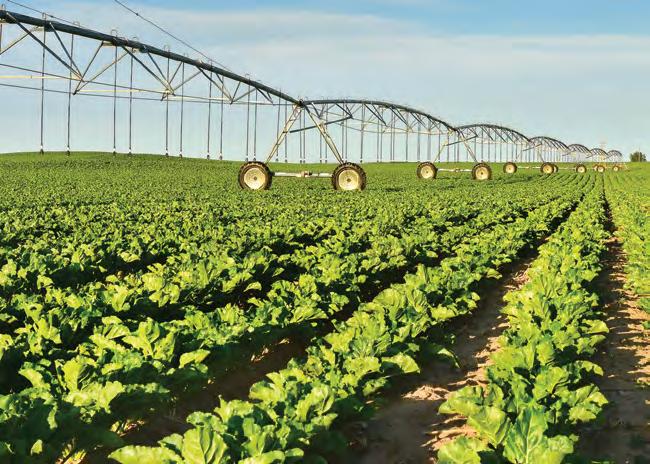
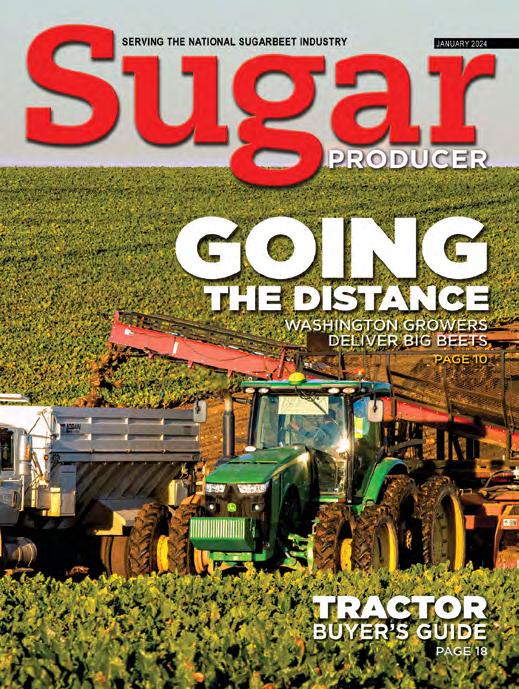
We asked U.S. sugar cooperative CEOs what, despite today’s challenges in the sugar industry, makes them optimistic about the future.
DEPARTMENTS
4 6
8
CALENDAR
NEW PRODUCTS
Latest and greatest
OFF THE TOP News, people and updates
12
BUYERS’ GUIDE
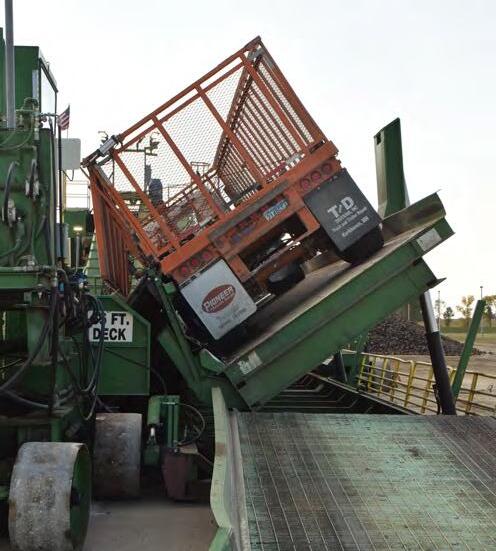
Trucks, Bulk Beds & Trailers
18 FROM THE ASGA
“Clearly, Zack Always Rose To The Top”
20
FROM THE SUGAR ASSOCIATION
Sweet Liberty: Real Sugar At The Heart Of America’s Celebrations
22 FROM THE AMERICAN SUGAR ALLIANCE
Prices To Growers Down; Prices For Sugar-containing Products Up
CALL OUR PARTNERS FOR YOUR BEST DEAL!
> USA & CA - Jake - 989-553-5253
> ND & MN - Jacob - 701-284-6100
> WY - Robert - 307-388-0736
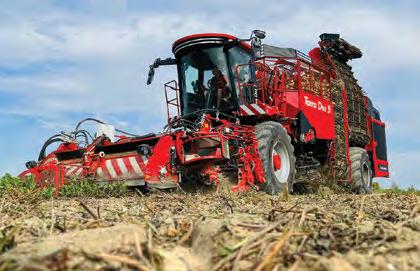
BEET HARVESTING EQUIPMENT FOR ANY SIZE OPERATION
> Now available for the US and Canada: 4-, 6-, 7-, 8-, 9-, 12-row harvesters with row widths of 20, 22, 24, 28 and 30 inches.
> EasyLiftª automatic depth cont rol for each single row. >
LOOKING FOR A CLEANER LOADER? TERRA FELIS 3
> and independent testing (Seligenstadt, Germany). Best output per hour, lowest beet loss, lowest tare.
> Proven performance in MI, MN and ID.
CALENDAR
JUNE 2 AND 4
13TH ANNUAL AG WORLD GOLF CLASSIC
June 2 – Canyon Lakes Golf Course, Kennewick, WA
June 4 – The Links at Moses Pointe, Moses Lake, WA https://agworldgolf.com
JUNE 16-18
WORLD ASSOCIATION OF BEET AND CANE GROWERS MEETING Helsingborg, Sweden wabcg.org
JUNE 24
SNAKE RIVER WEED MANAGEMENT TOUR AND FIELD DAY
U of I Kimberly Research and Extension Center Kimberly, ID Angela Jackson amjackson@uidaho.edu
JULY 20
POTATO GROWER MAGAZINE GOLF TOURNAMENT Pinecrest Golf Course Idaho Falls, ID www.potatogrower.com/golf
JULY 26-29
SOIL & WATER CONSERVATION SOCIETY ANNUAL CONFERENCE
Hilton St. Louis at the Ballpark St. Louis, MO www.swcs.org/events
JULY 31-AUGUST 5
INTERNATIONAL SWEETENER SYMPOSIUM
The Hythe Vail Vail, CO https://sugaralliance.org
AUGUST 4-6
MINNESOTA FARMFEST Redwood County, MN farmfest.com
AUGUST 5-6
IDAHO IRRIGATION EQUIPMENT ASSOCIATION SUMMER MEETING Twin Falls, ID Idahoirrigationequipmentassociation.org
AUGUST 18-20
DAKOTAFEST Mitchell, SD farmfest.com
SEPTEMBER 1-3
FARM PROGRESS SHOW Boone, IA www.farmprogressshow.com
SEPTEMBER 15-17
HUSKER HARVEST DAYS
Grand Island, NE huskerharvestdays.com
SEPTEMBER 15-17
BIG IRON FARM SHOW
Red River Valley Fairgrounds West Fargo, ND www.bigironfarmshow.com
SEPTEMBER 15-17
CANADA’S OUTDOOR FARM SHOW
Woodstock, ON www.outdoorfarmshow.com
SEPTEMBER 23-25
MOVING IRON SUMMIT
Omni Louisville Hotel Louisville, KY https://events.farmjournal.com/movingiron2026/
DECEMBER 7-10
IRRIGATION SHOW AND EDUCATION WEEK
Las Vegas, NV irrigation.org
JANUARY 8-13, 2027
AMERICAN FARM BUREAU FEDERATION CONVENTION Charlotte, NC annualconvention.fb.org
JANUARY 26-27
WESTERN IDAHO AG EXPO
The Center at the Canyon County Fair Caldwell, ID idahoagshows.com
JANUARY 26-28, 2027
COLORADO FARM SHOW
Island Grove Regional Park Greeley, CO www.coloradofarmshow.com
JANUARY 31-FEBRUARY 2, 2027
AMERICAN SUGARBEET GROWERS ASSOCIATION
ANNUAL MEETING
Hyatt Regency Huntington Beach Resort & Spa Huntington Beach, CA https://americansugarbeet.org/
FEBRUARY 22-25, 2027
44TH BIENNIAL ASSBT MEETING Austin, TX assbt.org
PUBLISHER Jason Harris
EDITOR Lane Lindstrom lane@sugarproducer.com
ADVERTISING DIRECTOR Rob Erickson rob.erickson@sugarproducer.com
CIRCULATION DIRECTOR Chuck Harris
DESIGNERS Ellie Napoli Laci Thompson
IT DIRECTOR Chuck Harris
CONTROLLER Clayton Ward
PRESIDENT Jason Harris
VICE PRESIDENT Chuck Harris
TREASURER Clayton Ward
Basic subscription rates are:
U.S., 1 year-$20, nine issues; Canada/International 1 year, $90 U.S., nine issues. All subscriptions are U.S. funds only. Limited back issues available for $10 U.S. each.
Sugar Producer Magazine is published nine times yearly. 2026, Harris Publishing, Inc. All rights reserved. Reproduction in whole or in part without permission is strictly prohibited. Publisher not responsible for content of submitted materials.
Back copies or subscriptions: (208) 524-7000
AMERICAN SUGARBEET GROWERS ASSOCIATION (202) 833-2398 www.americansugarbeet.org
U.S. BEET SUGAR ASSOCIATION (202) 296-4820
AMERICAN SUGAR ALLIANCE (703) 351-5055 | www.sugaralliance.org
BEET SUGAR DEVELOPMENT FOUNDATION (303) 832-4460
SUGAR ASSOCIATION, INC. (202) 785-1122 | www.sugar.org
July 31-August 5, 2026
The Hythe Vail—Vail, Colorado
REGISTER NOW to attend the 41st International Sweetener Symposium, July 31 - August 5, 2026, at The Hythe Vail, nestled in the spectacular Rocky Mountains in Vail, Colorado.
Hosted by the American Sugar Alliance, this year’s International Sweetener Symposium is a must-attend event for all stakeholders – from field and factory to wholesale and retail – to learn about the most pressing issues facing the U.S. sugar industry. This year’s Symposium theme, “Navigating a Turbulent American Sugar Market,” will cover many critical issues confronting the industry. Program topics will include:
⦁ POLITICS: Predictions and analysis of the 2026 congressional midterm elections and what they might mean for American agriculture.
⦁ FARM ECONOMY & LEGISLATION: Rural America is hurting: input prices are up, crop prices are down, and natural disasters have taken their toll. Will Congress pass additional farm economic aid, disaster aid, or a Farm Bill 2.0 this year? Is the general farm economy improving or will margins trend thinner?
⦁ TRADE: With the Supreme Court striking down the Trump Administration’s use of IEEPA and the Administration’s continued implementation of tariffs under different executive powers, what is next for U.S. trade policy? Experts will discuss what threats and opportunities lie ahead for the domestic sugar industry with respect to new elements of trade policy and the dynamics of global sugar markets.
⦁ FOOD POLICY AND THE MAHA MOVEMENT: How is the MAHA movement changing government policy and overall American eating habits – and what does that mean for U.S. sugar consumption?
INC.
190 1ST Street Idaho Falls, ID 83401 (208) 524-7000
FOUNDER Darryl W. Harris
⦁ OUTLOOK FOR SUGAR MARKETS & THE SUGAR PROGRAM: World prices continue to pull down U.S. prices, leaving the door open to more world dumped sugar entering the U.S. market. With gas prices up and shifting dynamics in Brazil's sugar vs. ethanol output, what's next for the U.S. and World sugar markets? Our expert speakers will provide an overview on current market conditions and provide insight into the uncertainties moving forward.
Renowned industry experts, key policymakers and industry leaders from the U.S. and international communities will address these important topics.
Traditionally, around 400 people from all sectors of the sugar, sweetener and food manufacturing industries attend the Symposium to learn about the most significant and timely issues affecting the industry and to network with their sweetener industry colleagues. In addition to the compelling program content, the Symposium schedule allows free time every afternoon to enhance your industry relations in this vibrant setting.
NEW PRODUCTS
AGTECH COMPANY DEVELOPS TECHNOLOGY TO DIAGNOSE AND TREAT ALL COMMON CROP AFFLICTIONS
Advanced Growing Resources (AGR) has developed a solution that diagnoses and prescribes treatments for all common crop afflictions over a week earlier than current methods, enabling the transition from sample-and-wait with labs to scan-and-act in the field.
AGR’s intelligence layer provides agronomists with defensible, efficient prescriptions to protect against the rising cost of treatments and fuel.
Although the entire team has a background in agriculture, AGR interviewed over 100 crop experts to understand the difference between operations that survive and those that thrive. They discovered that size does not matter -- but efficiency does. That insight inspired AGR to guide field scouting using AI-assisted satellite imagery that spots crop afflictions before they are visible to the naked eye or standard vegetative indices.
After pinpointing problems, AGR brings the lab to the field with its Spectre handheld scanners that leverage thousands of trusted agronomy publications into a single database. Combined with proprietary chemical signature data, AGR has achieved 99 percent accuracy in controlled field trials. By
calculating return on investment (ROI) to determine the exact amount of chemical before it is loaded, AGR ensures that nothing is wasted when treating crops.
Farmers to high-quality retail, prominent leaders across the food supply chain have already cemented AGR’s reputation as the crop ℞ company. In fact, AGR was recently ranked in the top 1 percent of American deep technology innovations after securing $2M in contracts and grants led by NASA and the U.S. National Science Foundation.
AGR is in it for the long haul and has its sights set on a sustainable future. According to the UN Food and Agriculture Organization, crop production must increase by 70 percent over the next 30 years to feed a global population of over 10 billion people. As the workforce ages and farmland dwindles, efficiency is the only feasible path. By putting power back into the hands of those who need it most, AGR proves that the most impactful solutions do more than save money -- they preserve the land’s ability to produce with more efficient chemical application.
After developing their solution alongside Cornell CALS, Virginia Tech’s extension and the University of Rochester’s Institute of Optics, AGR is now offering field pilots covering more than 1,000 afflictions across corn, soybeans, wheat, cotton, grapes and oranges with 12 more crops in their pipeline.
For more information, visit www.agrsensors.com.
WILKINS EXPANDS BACKFLOW
PORTFOLIO WITH NEW 975XL3N N-PATTERN VALVE
Zurn Elkay Water Solutions has introduced the new Wilkins 975XL3N n -Pattern reduced pressure backflow preventer, engineered specifically for irrigation replacement applications where tight enclosures, difficult fitment and service inefficiencies can slow crews down.
Engineered for versatility across a wide range of outdoor plumbing installations, its lead-free construction makes it ideal for plumbing or irrigation applications.
“The 975XL3N was developed by listening directly to contractors who spend their days replacing and servicing irrigation backflows in the field,” said John Mankins, director of product management. “They told us where the time is lost: fighting fitment, struggling with service access and returning to jobs when maintenance takes longer than expected. This product is designed to solve those challenges directly, helping them repair faster, swap quicker and spend less.”
Designed with a purpose-built n-pattern configuration, the 975XL3N features an optimized lay length that matches competing n-pattern valves, enabling a clean drop-in replacement between vertical risers with no re-piping, extra fittings or enclosure modifications required.
Built on Wilkins’ proven 900XL3 platform, the valve is designed to streamline installation, simplify service and deliver
reliable long-term performance in above-ground irrigation environments.
Key features include:
• EZSwap modular checks with top access to simplify servicing
• True drop-in configurations reduce install time and unnecessary fittings
• Centerline test ports for improved accessibility during testing
• Durable, lead-free bronze body designed for seasonal outdoor exposure
• ASSE, UPC, NSF and USC approved
By reducing installation complexity and streamlining service, the 975XL3N delivers a more efficient, reliable approach to irrigation backflow replacement.
“From installation through maintenance, every detail is designed to reduce friction in the field,” said Mankins. “The 975XL3N replaces the valves contractors have long battled, with a solution that simply works better.”
For more information, visit Zurn.com/Wilkins.
SYENSQO LAUNCHES GEROPON D2566; NEXT GENERATION DISPERSANT FOR COMPLEX SUSPENSION CONCENTRATE FORMULATIONS
Syensqo announces the launch of Geropon D2566, a nextgeneration dispersant designed for suspension concentrate (SC) crop protection formulations.
Geropon D2566 tackles key challenges in crop protection by delivering outstanding crystal growth inhibition, stability, versatility and cost-efficiency, even in the most demanding formulations. By eliminating the need for co-dispersants, Geropon D2566 streamlines formulation development and reduces the number of required additives.
Crystal growth and instability are persistent challenges in crop protection formulations, which can lead to product recalls, reduced shelf life and increased manufacturing costs. The advanced design of Geropon D2566 enables formulators to work with a wide range of active ingredients, including low-melting or partially water-soluble compounds, and complex formulations such as high-load and multi-active formulations.
For more information, visit www.syensqo.com.
For over 100 years we have seen the cycles, weathered the storms and adapted with the times, steadfast in our commitment to support producers and rural communities alike. Because some things should never change.
AMERICAN SUGARBEET GROWERS ASSOCIATION BOARD OF DIRECTORS SELECTS NEW CEO AND EXECUTIVE VICE PRESIDENT
The American Sugarbeet Growers Association (ASGA) announced that after a competitive search process, Zack Clark has been named incoming CEO and executive vice president, beginning September 8, 2026.
Clark began with the association in 2019 and currently serves as vice president of government affairs. Prior to joining ASGA, he worked in a variety of roles across Washington including the National Farmers Union, the U.S. House and U.S. Senate. He received his bachelor’s degree from the University of Connecticut and his master’s degree from the National Defense University.
“There are tremendous challenges that currently face the sugar industry. Weather, low prices, high input costs, a flood of foreign sugar and outdated trade policy combine to create disastrous economic conditions for our industry. Zack enters
MINN-DAK FARMERS COOPERATIVE ANNOUNCES PRESIDENT AND CEO SUCCESSION PLAN
The board of directors of Minn-Dak Farmers Cooperative has completed its recently announced search for the cooperative’s next president and chief executive officer.
Following a comprehensive review of internal and external candidates and a series of interviews, the board announced a leadership transition plan that ensures continuity, stability and long-term success for the cooperative.
To ensure a seamless leadership transition, Rick Kasper has agreed to continue in his role as president and CEO through August 31, 2027. On September 1, 2027, Mike Metzger will officially assume the position of president and CEO.
Metzger brings more than 25 years of experience within Minn-Dak Farmers Cooperative, having served in a variety of leadership and technical roles throughout his career. Since being appointed executive vice president, he has been responsible for overseeing day-to-day operations in the CEO’s absence, representing the cooperative at industry events and assisting in strategic planning and execution. Prior to that role, he served as vice president of agriculture and research and held positions in agronomy and research, working directly with growers and advancing production excellence across the cooperative.
this role at a very challenging time. Yet he knows our industry well and has worked tirelessly to deliver support to our growers over the past seven years. The board knows and trusts Zack to continue to deliver results for the American sugarbeet grower,” said Clint Hagen, president of ASGA.
“Our industry’s future depends on strong farm programs and fair-trade policies. Given a level playing field, our growers can outcompete anyone in the world. I’ve seen them do it for over 40 years,” said Luther Markwart, CEO of ASGA. “It’s clear Zack greatly respects the American sugarbeet grower and all they provide our nation and their communities. Since coming to ASGA he’s combined his background in public policy with his passion for the American farmer to deliver outcomes for the association’s growers. I am thrilled with the board’s decision, and I know that I leave this association in capable hands when retiring at the end of this year.”
“Working for sugarbeet growers for the last seven years has been a great privilege. It’s difficult to put into words what it means to be selected to lead the grower’s association into the future. This isn’t just about an organization, it’s about their family farms, their coops and their communities,” said Clark. “I’m grateful for the opportunity and their trust. I look forward to continuing my work alongside talented colleagues to drive policy that contributes to a sustainable future that allows American sugarbeet growers to do what they do best: produce homegrown American sugar.”
The board of directors has strong confidence in Metzger’s qualifications, leadership abilities and deep understanding of the cooperative’s mission, operations and grower-owner focus. His extensive background in sugarbeet production, research, operations and cooperative leadership positions him well to lead Minn-Dak Farmers Cooperative into the future.
For more information, visit www.mdf.coop.
Rick Kasper (l) and Mike Metzger.
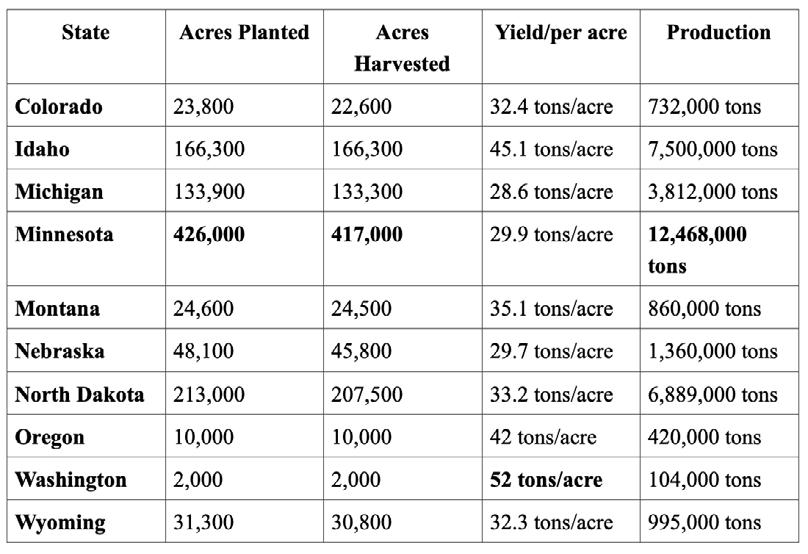
FINAL 2025 SUGARBEET NUMBERS BY BEET-PRODUCING U.S. STATES
The USDA National Agricultural Statistics Service (NASS) has published the final numbers for the sugarbeet industry for 2025.
2026 SNAKE RIVER WEED MANAGEMENT TOUR AND FIELD DAY SCHEDULED IN JUNE
Wednesday, June 24, is this year’s date for the annual University of Idaho Snake River Weed Management Tour and Field Day, held at the UI Kimberly Research and Extension Center, 3806 N 3600 E in Kimberly, Idaho.
Registration is from 8-9 a.m. with the tour starting at 9 a.m. and running until noon. The tour will be followed by a sponsored lunch.
There is no need to pre-register/RSVP. For questions about the tour, contact Albert Adjesiwor at aadjesiwor@uidaho. edu or Angela Jackson at amjackson@ uidaho.edu.
With the closing of the sugarbeet factory in southern California, there are now 10 sugarbeet-producing states, spread out from Washington state in the west to Michigan in the east. Here are NASS figures for 2025. We’ve listed the states in alphabetical order. The bolded entries indicate the leader in each category:
SUGAR COOPERATIVES: LOOKING TO THE
It’s no secret there hasn’t been a lot of good news in the sugar industry for the past few years. Growers are facing as tough a market as they have for a multitude of years.
Perhaps one of the most frustrating aspects of the entire ordeal is that, for the most part, a lot of what is going on is out their hands: trade issues, a flood of sugar coming into the U.S., input prices, fuel prices; take your pick, there’s no shortage to choose from.
But yet they plant on, tend to their crop and continue to hope for the best.
Sugar cooperatives, as you would expect, are also feeling the pain of an industry out of balance.
Sugar Producer Magazine reached out to the CEOs of each of the sugar cooperatives and asked them to peek into their (sugar) crystal balls to see what perhaps they see coming down the road in terms of the sugar industry.
More specifically, we asked the CEOs two questions:
1. What specific things make you optimistic about the future of the sugarbeet industry?
2. More specifically, what makes you optimistic about the future of your cooperative?
Here are the answers from those who responded.
MICHAEL GREEAR President & CEO, Wyoming Sugar, Worland, Wyoming
1. It has been a difficult few years for crop agriculture and sugarbeets are not immune.
However, there is reason for optimism. The sugar program epitomizes this administration’s quest for food (national) security, domestic manufacturing and America first.
The sugar program has not been as effective the last three years due to poor maintenance of the program. Primarily, we have allowed the program to be circumvented, and the Tier II tariffs have become ineffective due to inflation. These factors have made it difficult for the program to operate as intended and consequently stocks have risen and prices have fallen.
The reason for optimism is that these issues are being addressed in earnest by our industry. The tenacity of the American sugarbeet farmer, their grower-owned cooperatives and the industry’s D.C. team is amazing and with an administration that aligns with our values and vision, I am certain we will have a functioning sugar program again.
The sugarbeet industry has been the backbone of many
communities in the country. It is a reliable source of manufacturing jobs, provides value-added agriculture and is a point of pride for many generational family-owned farms.
2. I am particularly optimistic about Wyoming Sugar Company. We now have the fifth generation on several farms, and they have no intention of giving up on being part of the sugarbeet industry.
Most importantly, our growers are sugarbeet growers first and foremost. Indescribable pride and determination permeates our cooperative from the growers to the employees and through our community.
This pride and determination were first demonstrated when the factory was purchased in the early 2000s by growers, employees, local businessmen and ordinary citizens. It was touch and go in the early years, but we are hitting our stride and keep getting better every day. When we say we have “sugar in our blood” that is the absolute truth.
NEIL JUHNKE
President & CEO, Michigan Sugar Company, Bay City, Michigan
1. What makes me optimistic about the future of the sugarbeet industry is the incredible tenacity and ingenuity of the people involved, combined with the farmer-owned
Michael Greear
COOPERATIVES: THE FUTURE
cooperative model that encompasses the entire industry. Growing sugarbeets and processing them into pure, allnatural real sugar is both demanding and deeply rewarding. It requires specialized knowledge, careful management and close attention to detail – and that expertise is rewarded like almost no other crop.
The sugarbeet industry attracts and sustains only the most skilled, resilient and innovative farmers. Seed companies are constantly applying cutting-edge genetic technologies to improve variety performance and disease resistance, and many new agronomic technologies are first tested in sugarbeet growing regions. This combination of risk and reward brings out the very best in people, fueled by a passion that is undefeatable.
2. Our cooperative, Michigan Sugar Company, benefits from every blessing that Mother Nature has to offer: plentiful, highly productive soil, engaged shareholders, a strategic location and a long heritage of agronomic and processing innovation. By building on our multi-generational heritage, we are positioning our cooperative to remain a legacy organization that will continue to positively impact the communities we serve and our shareholders for decades to come.
LUKE RUST
President & CEO, Southern Minnesota Beet Sugar Cooperative, Renville, Minnesota
1. The sugarbeet industry is essential to the U.S. food supply. Sugar produced from beets is a natural, farm-grown ingredient found in roughly two-thirds of food consumed in the United States, and it is a product we should not rely on other countries to provide.
While U.S. farmers cannot compete with heavily subsidized foreign producers, proper management of the U.S. Sugar Program helps ensure a level playing field. If this is stable, our growers can continue supplying customers with a reliable, natural, farm-grown product.
2. The Southern Minnesota Beet Sugar Cooperative was founded by local growers with a commitment to the sugar industry and to providing customers with a natural, U.S. sourced, farm-grown product.
That commitment remains strong today, as our shareholders
continue to grow incredible crops while navigating challenging economic conditions across the industry.
Our shareholders have also consistently reinvested in both their farms and our factory, positioning the cooperative among the most efficient, environmentally-friendly and sustainable sugarbeet producers in the world.
Combined with a dedicated workforce committed to producing the highest-quality white sugar for our customers, this shared commitment gives us great confidence in the future of our cooperative. With a level playing field to market our sugar, we remain optimistic about the future of the U.S. sugar industry.
FRAN MALECHA
President & CEO, Amalgamated Sugar Company, Boise, Idaho
1. While agriculture is facing real challenges, I am optimistic about the future of the sugarbeet industry because of its efficiency, sustainability and longproven ability to adapt.
Sugarbeets remain one of the most productive sources of domestically produced sugar, and the stability provided by the U.S. sugar program is critical to maintaining that strength. We are urging the Trump Administration and Congress to update Tier II tariff rates, which have not been revised since 2000, to help ensure a reliable domestic food supply that uses real, Americangrown sugar, especially as global markets grow increasingly uncertain.
Most importantly, this industry has consistently demonstrated resilience, with growers and processors responding time and again to weather variability, market pressures and regulatory change. That adaptability gives me confidence the sugarbeet industry is well positioned for the future.
2. What gives me the greatest confidence in our cooperative’s future is our growerowned structure and the people behind it. Because our members are personally invested in the cooperative’s longterm success, decisions are made with sustainability and future generations in mind.
We continue to invest in our facilities, technology and research while strengthening safety and operational consistency across our operations. At the same time, our growers, many representing multiple generations of family farms, remain deeply committed to caring for their land and preserving the strength of the cooperative for years to come.
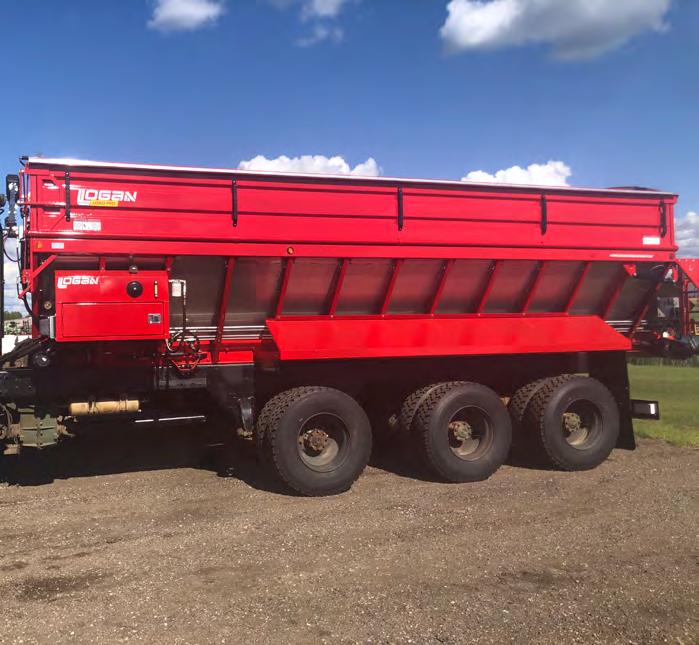
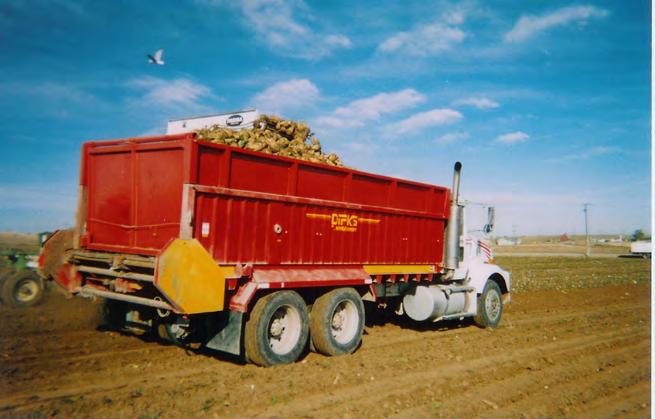
Logan’s Load Pro truck bed is designed and constructed for years of excellent performance. Its 100-inchwide body provides the largest capacity from 20 to 30 feet in length. With construction of standard carbon steel and complete stainless steel, the Load Pro is capable of meeting all your needs.
Main components such as the side door, non-door and main frame rails are one piece, providing strength and longevity. Important structural members are bolted into place, allowing twisting and torsion to happen without cracking.
The beds are feature-rich and have unique advantages such as large 3-inch carry-up rollers, heavy side support ribs spaced close together, upper rear hydraulic doors, turnbuckle ratchet take-ups and more. All Logan equipment is sandblasted, primed and painted with a high-gloss polyurethane paint that is very durable and provides years of attractive quality.
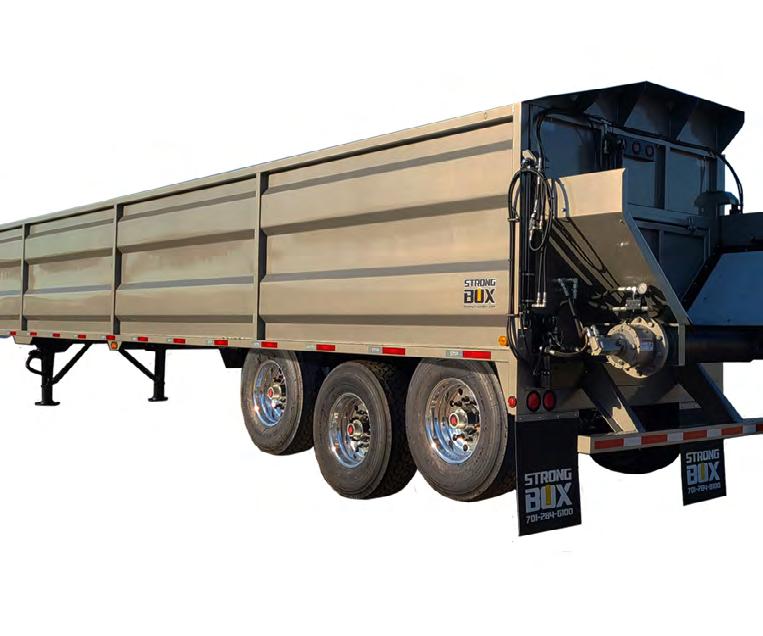
STRONG BOX LIVE BOTTOMS
Strong Box specializes in live-bottom semi-trailers and bulk beds that give growers versatility across many crops or aggregates. The new continuous belt option is still positive drive, providing a more even product flow and reducing skinning with no belt slippage. The proven plastic drag floor eliminates the hassle of replacing rollers or bearings.
Choose from Chain & Flap (available in 30-, 36- or 50-inch widths) or our positive drive continuous belts (30 inches or 36 inches). With various end gate options, sidewall heights, and custom lengths, we can build the perfect bulk box or trailer to fit every grower’s unique needs.
CROP SHUTTLE
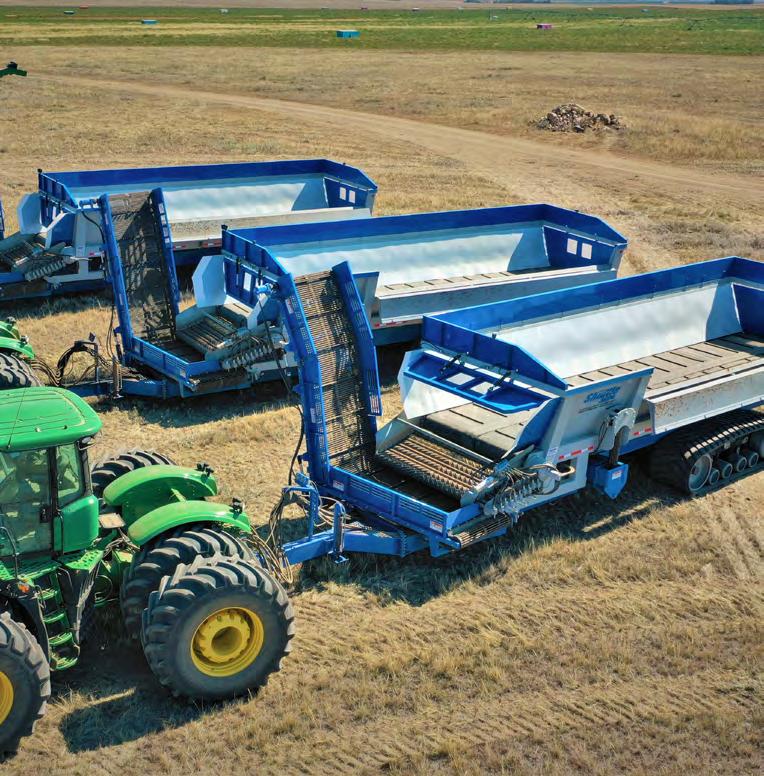
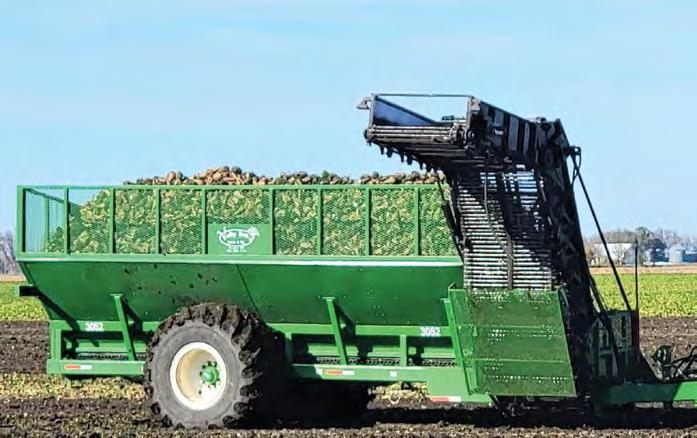
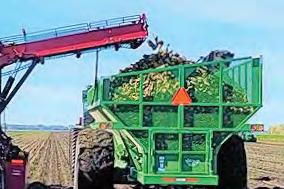
The Crop Shuttle is the largest, fastest and most versatile crop cart on the market. It is fully customizable, providing you up to an 800bag capacity and discharge speeds of up to 400 bags per minute. The Crop Shuttle is extremely versatile, allowing operators to use it in diverse crops such as potatoes, sugarbeets, carrots, onions, red beets, cucumbers and even corn silage.
Safe-T-Pull has designed the Crop Shuttle so there is no PTO needed to power the hydraulics. The Crop Shuttle’s patented design has minimal moving parts and changing angles, meaning less buildup of debris while using less hydraulic power. The hopper rises into the air while unloading, creating the incline needed without a separate conveyor slowing down discharge and damaging the crop.
The Crop Shuttle is fully customizable to meet any grower’s needs, and features multiple cleaning bed options that allow operators to remove tare and leave more dirt in the field.
BUYER’S GUIDE
Trinity Trailer Mfg.
(800) 235-6577
www.trinitytrailer.com
EAGLE BRIDGE BELT TRAILER
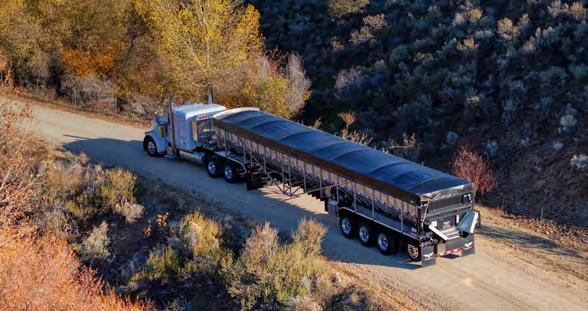
For more than 50 years, Trinity has built the original belt trailer, the Eagle Bridge. Recognized by its iconic bridge side frames, it’s engineered to flex side-to-side over uneven terrain and keep performing season after season. Built primarily from stainless steel, the Eagle Bridge is designed to last, hauling sugarbeets, potatoes and other farm commodities for the long haul.
Amity Technology
(701) 232-4199
www.amitytech.com
AMITY SUGAR BEET CART
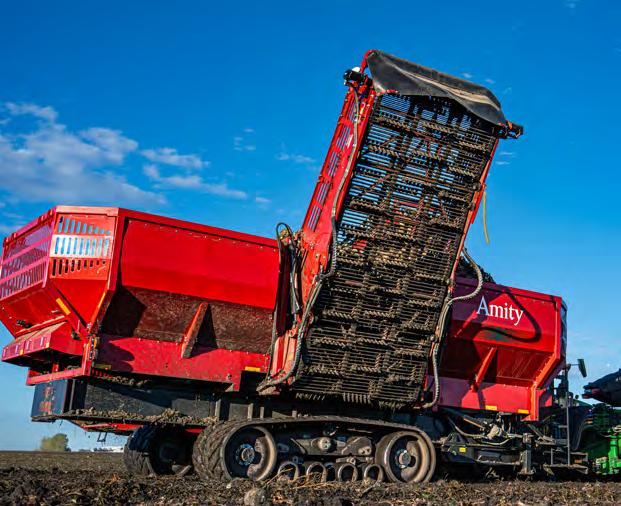
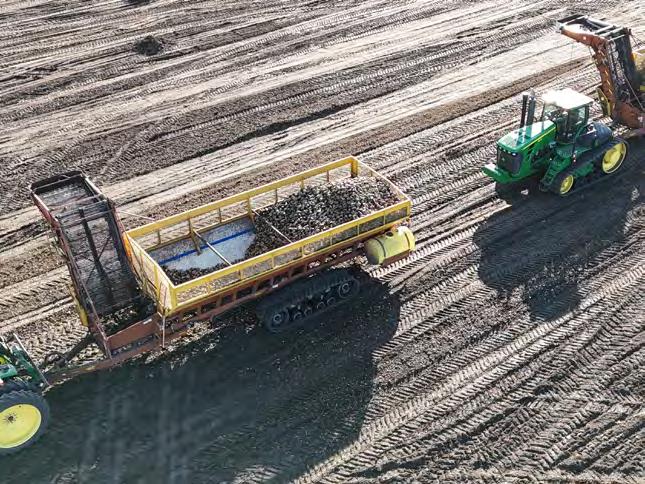
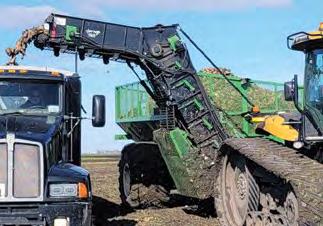
Meet the Amity Technology Sugar Beet Cart — a field-proven solution built to keep your beet harvest charging ahead, no matter what the field throws at you. When the harvest window is tight, its high-capacity tank and unloading elevator help the harvester stay productive and trucks stay rolling. With unloading speeds up to 30 tons per minute, you can turn trucks faster and keep beets moving down the road. Tracks tucked under the box hold working and transport width to a narrow 11.5 feet, improving clearance between the harvester and cart for smoother field traffic. And the 36- by 136-inch tracks reduce ground pressure compared to tires, delivering the flotation you need to perform in wet conditions when other carts — or even trucks — have to slow down or stop. Plus, Amity Technology’s dealer network keeps parts and service within reach when uptime matters most.
CROP CHASER 1000
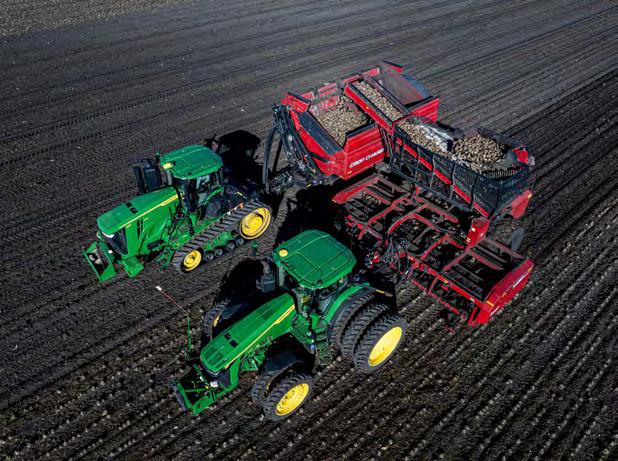
Meet the Crop Chaser 1000 – Amity Technology’s high capacity, track-equipped, multi-crop, controlled-dump cart engineered to keep harvest moving when conditions get tough. Its single-tank design makes crop changeovers fast and hassle-free; after a cleanout, crews can transition from silage to corn, beans, small grains or sugarbeets with minimal downtime. Onboard scales provide accurate in-field weights to cut delays and improve logistics. Patented live unload chains allow controlled unloading by feathering material for even filling and a steady dump rate. With 36- by 136-inch tracks for exceptional flotation and reduced compaction, the Crop Chaser 1000 keeps trucks on the headlands while it does the heavy hauling. The payoff: faster transfers from harvester to truck, fewer weather-related slowdowns, and more productive days in the field.
Western Trailers (208) 344-2539
www.westerntrailer.com
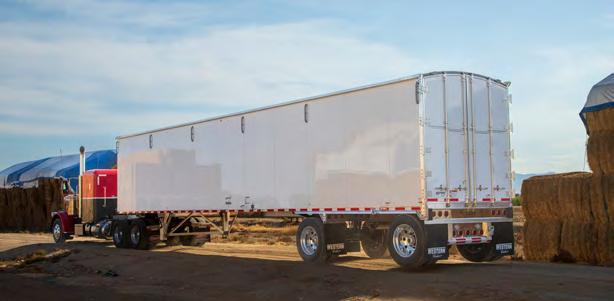
COMMODITY EXPRESS & EXPRESS FLOOR AG
When you invest in the Western Commodity Express and Express Floor AG you are investing in more than 50 years of trailer experience from trailer design to products hauled. The Commodity Express and Express Floor AG are like all Westerns; it is a product of continuous improvement. Let Western show you how lightweight pays.
Art’s Way Manufacturing (712) 208-8467
www.artsway.com
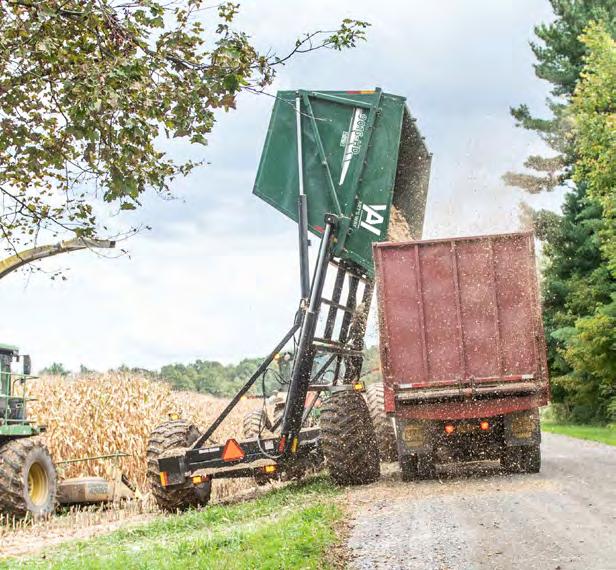
9016-HD HIGH DUMP CART
The Art’s Way 9016-HD High Dump Cart is built to keep your harvest moving — even when the fields say otherwise. This heavy-duty cart has a 40,000-pound lift capacity and a 930 cubic foot struck capacity (expandable to 1,355 with optional extensions).
What sets the 9016-HD apart is its rugged, field-ready design. The massive undercarriage, wide stance and flotation tires provide superior stability and traction in less-than-ideal conditions so you can keep rolling while others are stuck spinning. Our exterior ribcage ensures no profits get stuck in the box, while the reversible hitch allows for left or right-hand dumping (a feature only available on the Art’s Way 9016-HD).
At Art’s Way, we build tough, dependable equipment that delivers real results in the field. Proudly made in the USA and trusted by farmers for generations, our machines are designed to handle whatever the job throws at you.
Spudnik Equipment Co.
(208) 785-0480
www.spudnik.com
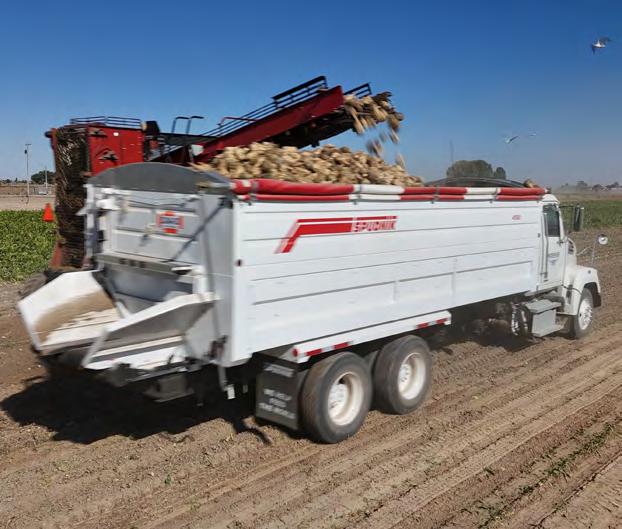
4500 BULK BED
Spudnik Equipment is a leading manufacturer of potato and sugarbeet equipment based in Blackfoot, ID. One of its products is the Bulk Bed. Features of this equipment include:
• Belt Width: 30 inches or 76.20 centimeters
• Belt Length: 44.2 to 56.2 feet or 13.41 to 17.07 meters
• Electric Motor Size: 7.5 hp/5.59 Kw
• Electric Motor Power: 240 volt 1 Phase - 40 Amps; 240 Volt 3 Phase - 18 Amps; 480 Volt 3 Phase - 9 Amps
• Unloading Capacity: 100 cwt/min/4500 Kg/ min
• Length: 23.895 to 29.895 feet or 7.01 to 8.84 meters
• Width: 102 inches or 259.08 centimeters
• Weight: 4800 to 5400 pounds or 2177.27 to 2449.42 kilograms
• Capacity: 320 to 410 short hundredweight or 14.51 to 18.60 metric tons
BUYER’S GUIDE
H&S Mfg., Inc.
(800) ROW-CROP
www.hsmfginc.com
H&S BEET CART
H&S Mfg. was incorporated in 1971 and has been making carts for more than 30 years. The company offers various model sizes including 30-, 35-, 44- and 52-ton. Adding efficiency to harvest is critical, especially with unpredictable weather. Don’t leave your high value crop at risk. H&S’s unload options include 42-, 52- and 64-inch widths. The 64-inch option will rival unload speeds of any transfer cart while still offering cleaning capabilities. Carts can be run hydraulically with ease or a PTO option is available.
Various tire options are available along with tracks. Water kits, scale kits and plastic options are available, along with boom vertical height adjustment options for those piling windrows in the field. H&S is field tested and farmer approved.
Grover’s All Wheels
(208) 745-7077
www.groversallwheels.com
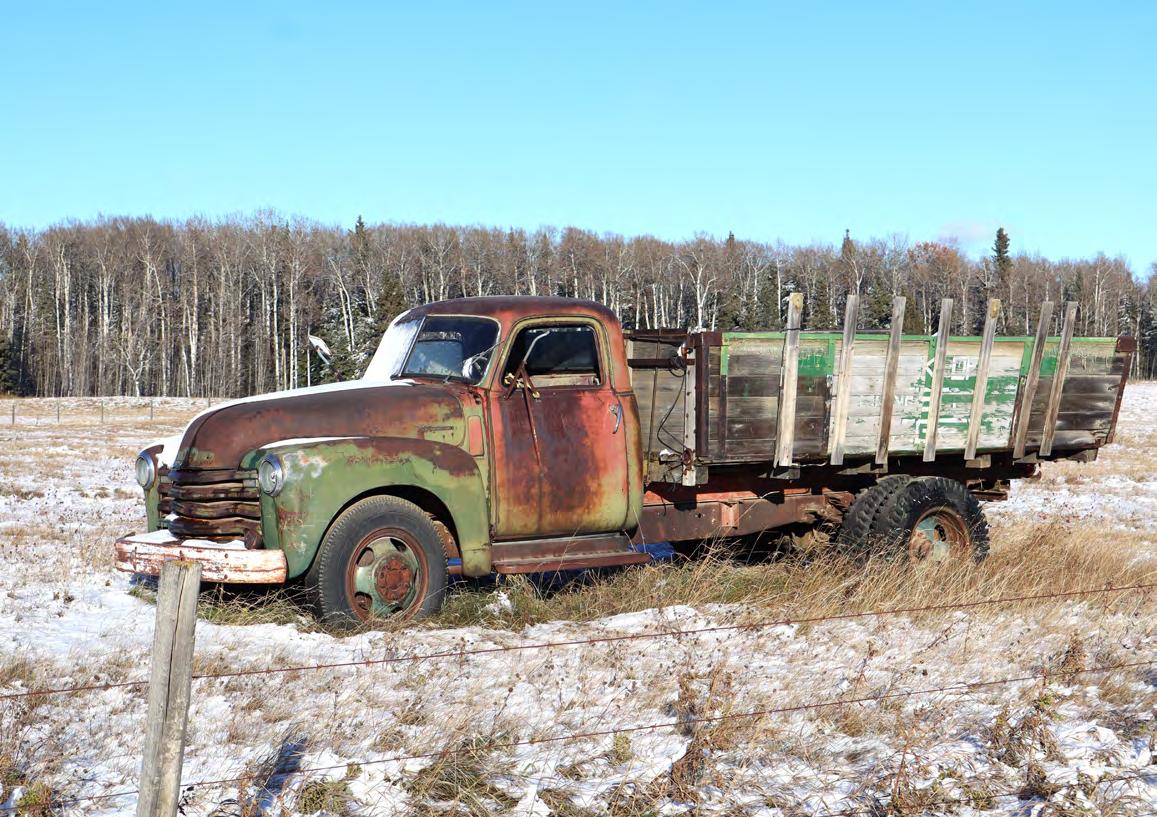
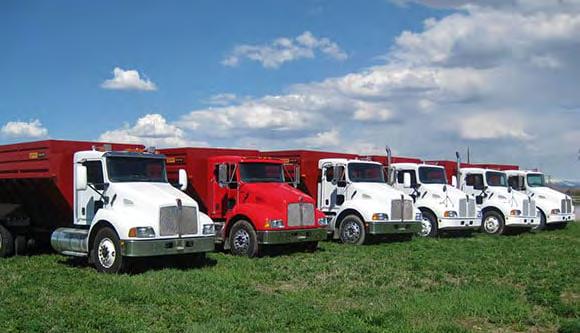
FARM TRUCKS
Grover’s All Wheels has served the heavyduty truck needs of its customers nationwide since 1978. Grover’s specializes in heavy-duty truck sales, service, parts and body/paint shop. The company carries a large selection of trucks and equipment and specializes in automatic trucks set up for farmers’ needs. Rigorous inspection and reconditioning ensure customers the highest standard of quality. Grover’s custom-builds trucks on site to meet growers’ work demands and also offers trucks available for seasonal lease.
Parma Company
(208) 722-5116
www.parmacompany.com
PARMA COMBO BOX
The Parma multi-use combo box is a heavy-duty manure spreader that can be simply converted to forage or bulk box for year-round usage by removing the rear attachment and adding different side extension kits for silage, sugarbeets or other commodities. Three different spreader attachments are available: the horizontal beater, the compost and manure spinner unit or the vertical beater spinner. These boxes are available in truck-mounted pull-type trailer or pull-type semi-trailer configurations ranging from 16 to 30 feet.
Ropa North America
(810) 705-0297
www.ropanorthamerica.com
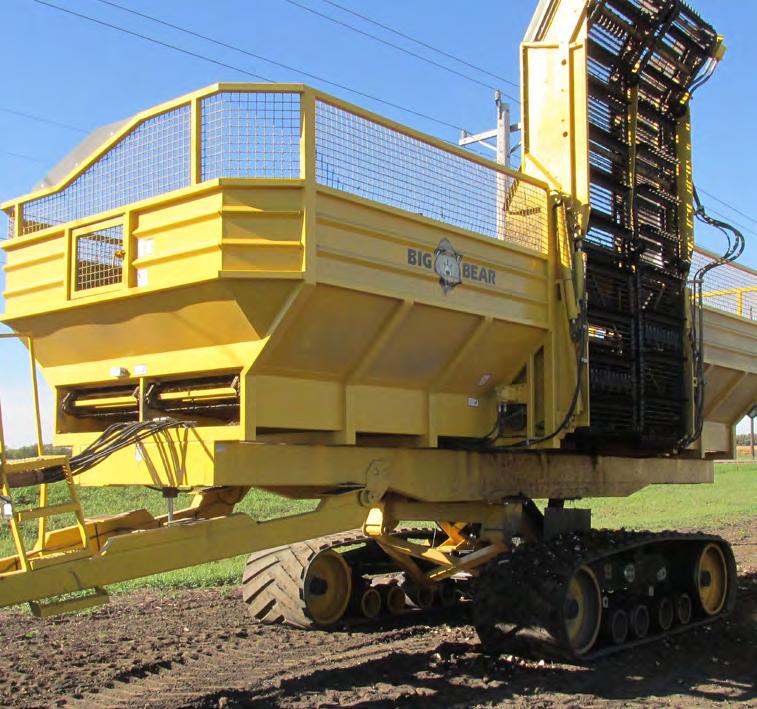
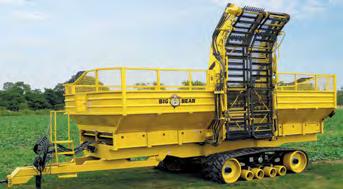
BIG BEAR SUGARBEET CART
The Big Bear sugarbeet cart is a quick way to transport beets from the harvester to the truck or clamp. All three models, 35-, 40- and 45-ton, ensure quick unloading by hydraulically driven conveyors to the center conveyor, keeping a balanced load at all times. Track undercarriage keeps compaction at a minimum and allows harvest of beets even in adverse conditions. A scrub roller provides cleaning action as beets pass from the center floor to the truck conveyor. Operators can select left- or right-hand unload with or without a hydraulic lift.
AMERICAN SUGARBEET GROWERS ASSOCIATION
By Luther Markwart, Executive Vice President
“Clearly, Zack Always Rose To The Top”
New ASGA CEO in a strong position to lead association
On March 24, the ASGA Board of Directors unanimously voted to make Zack Clark the association’s next CEO. Zack currently serves as ASGA’s vice president of government affairs. Zack will begin in this new capacity on September 8, 2026, at which point I will serve in an advisory role until I retire on December 31.
The selection process was a twoyear effort entirely driven and run by the ASGA board of directors. There was a five-member hiring committee that was a subset of the executive committee. Former ASGA President Neil Rockstad chaired the committee. The group was also assisted by attorney Bruce Klevin who is very familiar with the sugarbeet industry through years of work in Minnesota.
Through regular meetings, the hiring committee ensured a robust selection process was in place and that the search went smoothly. To protect the integrity of the process and the identity of the candidates, all work was conducted under strict confidentiality agreements. A wide search was conducted to ensure quality candidates. There were multiple rounds of interviews to ensure they had the best person to lead our association for years to come. While I was not involved in the process, I am told there were many impressive candidates competing for the position.
Clearly, Zack always rose to the
top. It was a great effort, and they made a very wise choice. Zack has been extremely effective in his role over the past seven years and has tremendous passion for our growers, which is a fundamental requirement.
I will assist him over the last four months of the year, so the transition is seamless. You all should feel confident about the future under Zack’s leadership.
Progress on the Farm Bill has finally come. On the last day of April, the House cleared the Farm Bill by a vote of 224 to 200. A handful of Republican dissenters joined with much of the Democratic caucus in opposition. Conversely, 14 Democrats joined most of the Republican caucus in supporting the bill.
It’s now the Senate’s turn to
make progress. We expect the Senate Agriculture Committee to make progress shortly. Hopefully, by the time you are reading this, a bill will have emerged from the committee. Senate floor consideration is a bigger question mark, but we remain hopeful that this is possible. That would only leave the two chambers with the job of reconciling the differences and passing a final bill.
Unfortunately, very aggressive MAHA activists succeeded in removing important pesticide language in the House bill to strengthen federal preemption, preventing states and courts from requiring cancer warnings or other health safety labels that exceed U.S. EPA regulations.
This is a long process as we’ve said before, but please know we are busy here in Washington pressing for updated trade policy that ensures a level domestic playing field.
This is a legislative victory for trial lawyers and a loss for farmers and pesticide manufacturers. Given the political sensitivity to address this legislatively, we now await the Supreme Court ruling on the Monsanto vs. Durnell case that effectively addresses the same issue. We joined other agriculture groups in filing an amicus brief with the court to hear the case and rule against these frivolous lawsuits that will either restrict or take away pesticides from farmers. This will be a landmark ruling that will impact the future of agricultural pesticides. The Supreme Court will issue its opinion by late June.
As you well know, excess imports are driving down the price of domestic sugar and resulting in very negative cash flows on the farm. We continue to press the administration to stop the large volume of foreign sugar entering our market through the high-tier tariff channel. We have been aided in those efforts by members of Congress who represent beet and cane growing states. They too have been pressing the White House on your behalf.
We are grateful to have such champions, who know well the value you and your coops play not only to your local communities, but to the food security of our country. This is a long process as we’ve said before, but please know we are busy here in Washington pressing for updated trade policy that ensures a level domestic playing field.
THE SUGAR ASSOCIATION
Courtney Gaine, PhD, RD, President & CEO
Sweet Liberty: Real Sugar At The Heart Of America’s Celebrations
Sugar has sweetened America’s treats for decades
This summer is made for celebration as our nation marks its 250th birthday. We celebrate the American story and its many chapters.
A character throughout it all is real sugar, a simple ingredient with a rich story of transformation. Over the past 250 years, real sugar has become a common thread in how Americans gather and celebrate. From Revolution-era election cakes to modern birthday cupcakes, real sugar remains a constant at our tables, shaping our nation’s most cherished food traditions.
THE ELECTION CAKE AND THE BIRTH OF CIVIC BAKING
In the decades after independence, Americans built more than a government; they built traditions. Real sugar quickly became a signature of celebratory cooking. In 1796, Amelia Simmons published American Cookery, the first cookbook by an American-born author. Her sugarsweetened puddings, custards and cakes helped define
some of these new traditions.
A standout was the “election cake,” a huge, yeast-risen cake baked in batches and packed with spices, dried fruit and sugar. Shared at town gatherings and polling places, it turned sweetness into civic pride as Americans celebrated the simple act of voting. Unlike delicate European sweets reserved for elites, election cakes were communal. Real sugar became an ingredient of participation. It was the original “I Voted” sticker.
Fun fact: Some election cakes weighed more than 30 pounds.
BOTTLING THE WILDERNESS: THE GREAT AMERICAN “PRESERVING BEE”
As the nation expanded west, real sugar became more than simply a sweetener. It was a key ingredient in survival, helping food last. In the 19th century, it was the primary tool of culinary preservation.
At “preserving bees,” neighbors worked side-by-side, sealing summer fruit into jars for winter. Here, sugar’s natural preservative function in food became a bridge
From election cakes to bake sales, real sugar is a part of the milestones of American life.
between the American wilderness and the domestic kitchen table. It turned tart cranberries, crabapples and Concord grapes into jams and jellies that tasted like July, even in winter. These gatherings were about resilience and community.
THE MELTING POT OF SWEETS
As people began coming to the U.S., real sugar became a delicious way to share culture. German and Dutch traditions brought cookies (“koekjes”) and doughnuts. French and Creole baking enriched the South with pralines and pastries. African culinary knowledge shaped regional sweets through molasses, sweet potatoes and candied preparations.
Nowhere is this sweet synthesis more visible than at American bake sales at schools, churches and community events. Each table boasts confections from countless cultural backgrounds. Cookies, specifically chocolate chip, are consistently listed among the top bake sale performers in America.
Fun fact: The earliest known print reference to a “bake sale” as an American fundraiser appears in 1902 in a Syracuse, New York, newspaper.
EVERYDAY JOY AND SWEET INNOVATION
By the late 1800s, real sugar helped spark penny-candy shops. Kids of all backgrounds could buy their own
small treats, making sweetness an everyday joy and a shared childhood memory.
Then came one of classic American food’s favorite origin stories. At the 1904 St. Louis World’s Fair, a vendor ran out of dishes, and a nearby waffle seller rolled a wafer into a cone, creating the ice cream cone: a portable, practical and instantly iconic reflection of American ingenuity.
Fun fact: It is believed that in 1776, the same year as the Declaration of Independence, the first ice cream parlor in America opened in New York City.
WHITE HOUSE TRADITIONS
Every great American celebration ends with something sweet, including those at the White House. George Washington enjoyed syrup-drenched hoecakes. Thomas Jefferson helped popularize ice cream at the White
House. Abraham Lincoln favored fruit desserts.
Modern presidents keep the tradition going, and sweet treats have become part of everyday presidential life. Ronald Reagan stocked jelly beans on Air Force One and George W. Bush often requested chocolate cake for his birthday. Barack Obama was known for Fran’s Smoked Salt Caramels and President Donald Trump for cherry vanilla ice cream, proof that real sugar has a seat at America’s most famous table.
AN INGREDIENT OF CELEBRATION
From election cakes to bake sales, real sugar is a part of the milestones of American life. It shows up in big moments and small ones. Blowing out candles on a birthday cake or sharing dessert remains one of the truly quintessential American experiences. These are small acts, but they carry a long history.
As we celebrate 250 years, we remember where these sweet moments start: on farms, with sugarbeet and sugarcane growers who steward their crops. Learn more at sugar.org.
AMERICAN SUGAR ALLIANCE
By Rob Johansson, Director of Economics & Policy Analysis
Prices To Growers Down; Prices For SugarContaining Products Up Companies experience record sales while
sugar growers suffer
Sugar prices have fallen by more than a third in the past two growing seasons, driven in large part by a flood of highly subsidized over-quota foreign sugar.
This is the economic reality for America’s sugarbeet and sugarcane farmers.
So, why haven’t food prices fallen, too?
As wholesale sugar prices plummeted over the last two years, the retail price for sugar and sugar-containing products actually increased.
That’s because U.S. sugar prices do not affect how food companies price products.
Peer-reviewed academic research found that “There is no statistically significant relationship between U.S. sugar prices and U.S. [sugar-containing product] prices.”
Our research shows that when it comes to sugar, specifically, companies do not lower the price of sugarsweetened products when the cost of sugar decreases.
While the cost of sugar is a very small share of the price of nearly every sugar-sweetened good, it is typical of food items to be relatively unaffected by the commodity price for their ingredients.
Take cocoa for example. In April, Axios analyzed how major confectioners raised prices by up to 20 percent when cocoa prices rose two years ago. Prior to Easter, cocoa prices had dropped, but the cost of candy was still high. That’s because once “food companies raise prices, they’re slow to bring them back down when ingredient costs fall,” the team at Axios wrote.
The Wall Street Journal agreed, writing in another April article, “Even as the supply squeeze for cocoa eased … retail
prices for candy have not seen the same kind of relief.”
Our research shows that when it comes to sugar, specifically, companies do not lower the price of sugarsweetened products when the cost of sugar decreases.
Real world data backs that up. As a surge of highly subsidized and artificially cheap over-quota foreign sugar has undercut the prices received by American sugarbeet and sugarcane farmers, the prices of goods like candy, ice cream or even retail sugar keep going up.
That same Wall Street Journal article reported that the “average cost for a package of chocolate candy through March 22 was $3.68 a unit … up 10 percent from the same 52-week period last year.”
This is a markup problem, being driven in large part by multi-national corporate candy and food manufacturing interests.
That increase in retail product prices is keeping candy companies in the black. The National Confectioners Association has reported record sales for the past four years running, ending 2025 with more than $55 billion in U.S. confectionary sales. That’s a more than 29 percent increase from the then-record $42.6 billion of sales in 2022. Three of the top five largest food companies in the world are based here in the U.S.: Mondelēz International ($38.5 billion in annual sales, including non-confectionary items), Mars, Inc. ($36 billion in sales, including non-confectionary items) and The Hershey Company ($11.7 billion in sales, including nonconfectionary items).
The American Sugar Alliance is working to modernize over-quota sugar tariffs to reflect the economic realities of today, stop the flood of excess subsidized over-quota sugar and ensure we do not offshore any more of our family farms or American food production.
After all, we’re proud to ensure a reliable, affordable supply of American-made sugar to keep food manufacturing lines running, support American manufacturing jobs, benefit local economies and bolster supply chains for consumers.
The Amity Technology Sugar Beet Cart is a field-proven solution engineered for modern harvest. When the window is tight, its high-capacity tank and unloading elevator keep your harvester productive and your trucks moving.
With unloading speeds up to 30 tons per minute, your trucks will turn fast and keep beets moving down the road. Tracks reduce ground pressure and increase flotation compared to tires. You’ll keep going when others have to slow down or stop. Check it out today at your