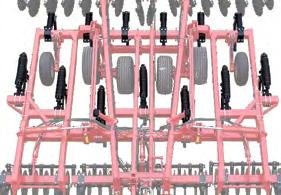
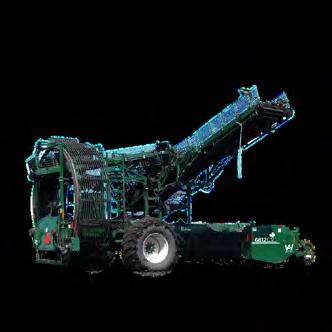
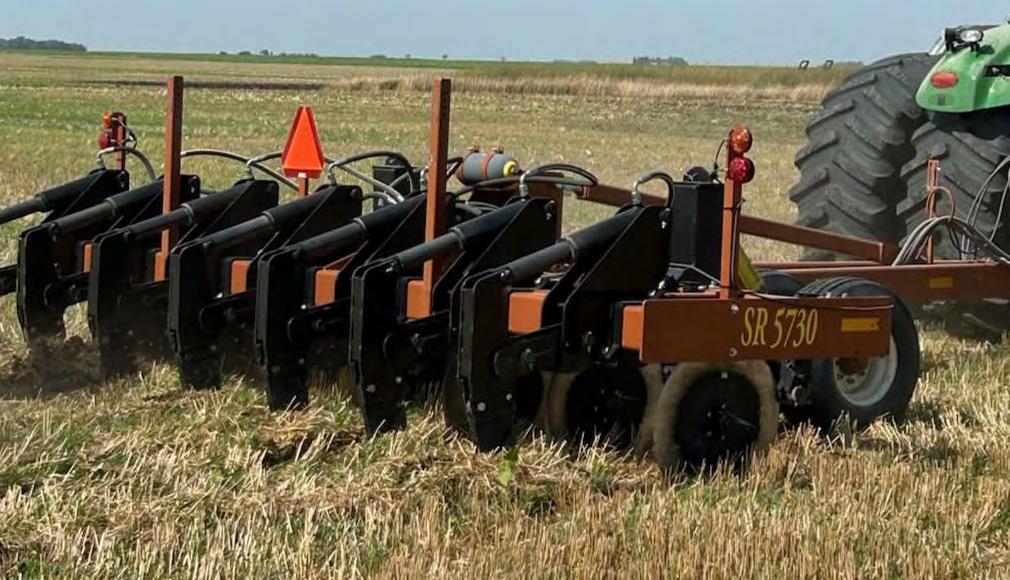
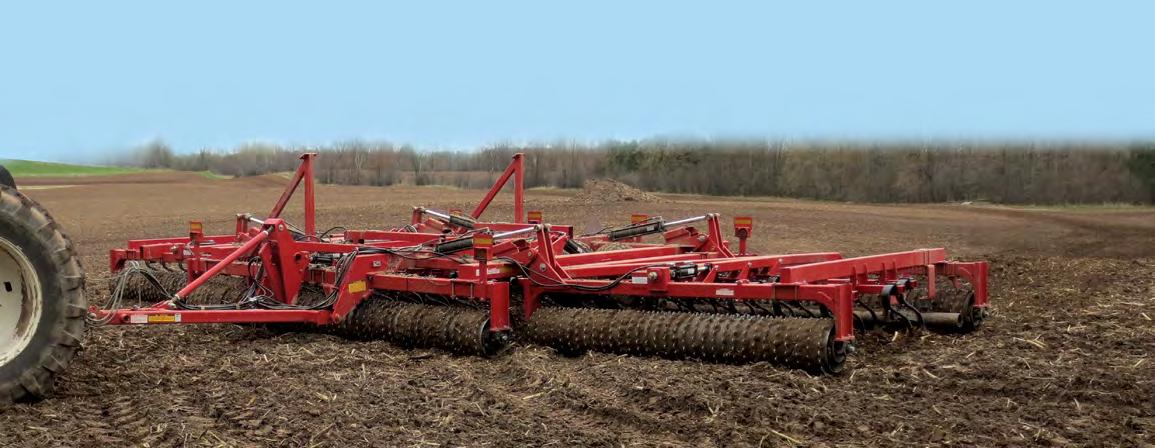
• No daily grease maintenance on coulter gangs, rear disc conditioner, and 24/7® reel
• NEW Smart Soil Technology ® option puts you in complete control from the cab 10'6" - 19'6" working widths
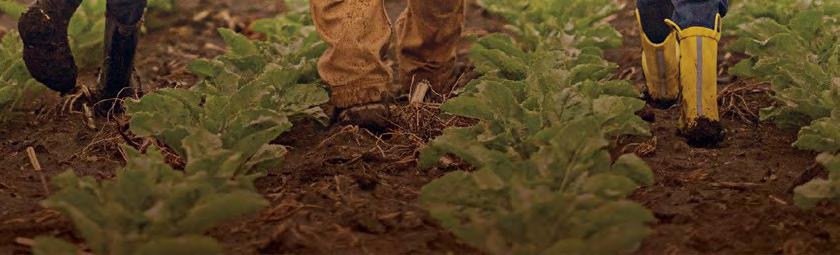
Innovation is transforming sugarbeet farming. At Betaseed, we’re using advances in science to optimize the potential of every seed you plant. Our state-of-the-art breeding and testing process takes up to ten years. It’s the only way to ensure the hybrid your Betaseed rep recommends has the best traits to manage disease and drive yields for this region, and your farm. It’s what we call next-gen breeding for next-gen confidence. Learn more at betaseed.com
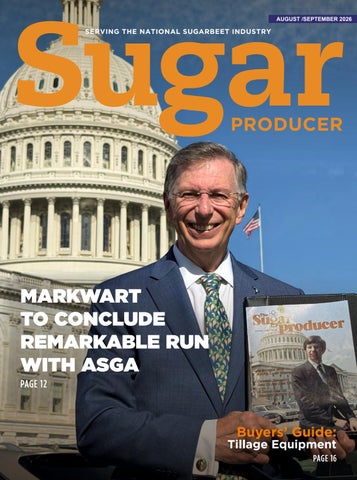
MARKWART TO CONCLUDE REMARKABLE RUN WITH ASGA
Most in the sugar industry have mixed feelings about the retirement of its executive vice president and CEO. The ASGA will miss Luther Markwart and his leadership but know he deserves a happy and long retirement.
20 FROM THE ASGA
“We Live In Interesting Times”
greatest
FROM THE AMERICAN SUGAR ALLIANCE Are Forfeitures In The Future?
22 FROM THE SUGAR ASSOCIATION
Sugar’s Role In Agricultural Fairs
CALENDAR
JULY 31-AUGUST 5
INTERNATIONAL SWEETENER SYMPOSIUM
The Hythe Vail Vail, CO https://sugaralliance.org
AUGUST 4-6
MINNESOTA FARMFEST Redwood County, MN farmfest.com
AUGUST 5-6
IDAHO IRRIGATION EQUIPMENT ASSOCIATION SUMMER MEETING Twin Falls, ID Idahoirrigation equipmentassociation.org
AUGUST 18-20 DAKOTAFEST Mitchell, SD farmfest.com
SEPTEMBER 1-3
FARM PROGRESS SHOW Boone, IA www.farmprogressshow.com
SEPTEMBER 15-17
HUSKER HARVEST DAYS Grand Island, NE huskerharvestdays.com
SEPTEMBER 15-17
BIG IRON FARM SHOW
Red River Valley Fairgrounds West Fargo, ND www.bigironfarmshow.com
SEPTEMBER 15-17
CANADA’S OUTDOOR FARM SHOW Woodstock, ON www.outdoorfarmshow.com
SEPTEMBER 23-25
MOVING IRON SUMMIT
Omni Louisville Hotel Louisville, KY https://events.farmjournal.com/ movingiron2026/
DECEMBER 7-10
IRRIGATION SHOW AND EDUCATION WEEK
Las Vegas, NV irrigation.org
JANUARY 8-13, 2027
AMERICAN FARM BUREAU FEDERATION CONVENTION Charlotte, NC annualconvention.fb.org
JANUARY 26-27
WESTERN IDAHO AG EXPO
The Center at the Canyon County Fair Caldwell, ID idahoagshows.com
JANUARY 26-28, 2027
COLORADO FARM SHOW
Island Grove Regional Park Greeley, CO www.coloradofarmshow.com
JANUARY 31-FEBRUARY 2, 2027
AMERICAN SUGARBEET GROWERS ASSOCIATION ANNUAL MEETING
Hyatt Regency Huntington Beach Resort & Spa Huntington Beach, CA https://americansugarbeet.org/
FEBRUARY 9-11
WORLD AG EXPO International Agri-Center Tulare, CA www.worldagexpo.com
FEBRUARY 22-25, 2027
44TH BIENNIAL ASSBT MEETING Austin, TX assbt.org
FEBRUARY 24-27
INTERNATIONAL SWEETENER COLLOQUIUM La Quinta, CA www.idfa.org/events
PUBLISHER Jason Harris
EDITOR Lane Lindstrom lane@sugarproducer.com
ADVERTISING DIRECTOR Rob Erickson rob.erickson@sugarproducer.com
CIRCULATION DIRECTOR Chuck Harris
DESIGNERS Laci Thompson
IT DIRECTOR Chuck Harris
CONTROLLER Clayton Ward
PRESIDENT Jason Harris VICE PRESIDENT Chuck Harris
TREASURER Clayton Ward
Basic subscription rates are: U.S., 1 year-$20, nine issues; Canada/International 1 year, $90 U.S., nine issues. All subscriptions are U.S. funds only. Limited back issues available for $10 U.S. each.
Sugar Producer Magazine is published nine times yearly. 2026, Harris Publishing, Inc. All rights reserved. Reproduction in whole or in part without permission is strictly prohibited. Publisher not responsible for content of submitted materials.
Back copies or subscriptions: (208) 524-7000
AMERICAN SUGARBEET GROWERS ASSOCIATION (202) 833-2398 www.americansugarbeet.org
U.S. BEET SUGAR ASSOCIATION (202) 296-4820
AMERICAN SUGAR ALLIANCE (703) 351-5055 | www.sugaralliance.org
BEET SUGAR DEVELOPMENT FOUNDATION (303) 832-4460
SUGAR ASSOCIATION, INC. (202) 785-1122 | www.sugar.org
83401 (208) 524-7000 FOUNDER Darryl W. Harris
NEW PRODUCTS
BISH ENTERPRISES IMPLEMENT MOVER FOR CROSS-BRAND HEADER TRANSPORT AND EQUIPMENT HANDLING
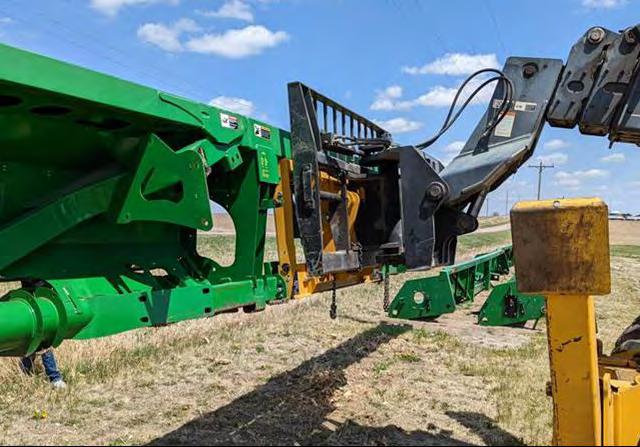
Bish Enterprises has introduced the Bish Implement Mover, a universal equipment handling platform designed to help agricultural equipment dealers, service departments, custom harvesters and producers safely move, transport, service and test headers across multiple equipment brands.
The system addresses a longstanding challenge throughout the agricultural equipment industry: the lack of a commercial solution capable of safely and securely handling multiple header brands while working across a wide range of lifting equipment.
Built around a Universal Inner Frame, the Bish Implement Mover can be configured for John Deere, Case IH, CLAAS, New Holland, Gleaner, Massey and Fendt combine and forage headers while attaching to telehandlers, wheel loaders, forklifts, skid loaders, tractors and combines through a wide range of mounting systems.
One of the newest features is the Combine Mount Assembly, which allows the Implement Mover to attach directly to a combine feederhouse. The system enables dealerships and service departments to lift, maneuver,
service and perform operational run-checks on headers that would normally be incompatible with the combine being used.
The Implement Mover was engineered to replicate the secure latching systems found on modern combines, forage harvesters and 3-point quick-hitches, creating a stable connection between the lifting implement and the header being transported. When properly latched and operated according to safety guidelines, the system provides an OSHA-compliant solution for equipment handling.
In addition to header transport, the platform includes a 3-Point Implement Mover capable of handling an industry-first range of Category
1 through Category 4 implements, providing a single solution for a broad range of agricultural equipment.
The system is designed for heavy-duty applications with lifting capacities up to 18,000 pounds and can be customized through a growing catalog of mounting assemblies developed for telehandlers, wheel loaders, forklifts, tractors and specialty equipment.
According to Bish, the Implement Mover has applications well beyond production agriculture, including equipment dealerships, auction companies, custom harvesting operations, service facilities, equipment manufacturers, and trade show logistics.
For more information, visit https:// bishenterprise.com/implement-mover/.
JOHN DEERE INTRODUCES NEW 5E 3-CYLINDER UTILITY TRACTOR WITH EHYDRO TRANSMISSION, PRIORITIZING OPERATOR SIMPLICITY, VERSATILITY
John Deere announced the newest 5E 3-Cylinder tractor, featuring its first electronically controlled eHydro transmission in a utility tractor. Built with ease of use, versatility and performance in mind, the 5E 3-Cylinder tractor can help operators of all experience levels tackle a wide range of tasks. With the power of the first John Deere electronically
controlled hydrostatic drive in this tractor class, the eHydro transmission contains many features designed to simplify operation and improve efficiency, including:
• TwinTouch pedals for simplified and more comfortable forward and reverse control.
• Automotive cruise control set up similar to a car for consistent speed regardless of terrain.
• SpeedMatch to maintain a desired maximum travel speed.
• LoadMatch to allow the engine and transmission to communicate with each other to prevent the tractor from stalling during heavy load applications.
• MotionMatch to adjust acceleration and deceleration response.
• Speed governance to ensure controlled operation and safety across operators.
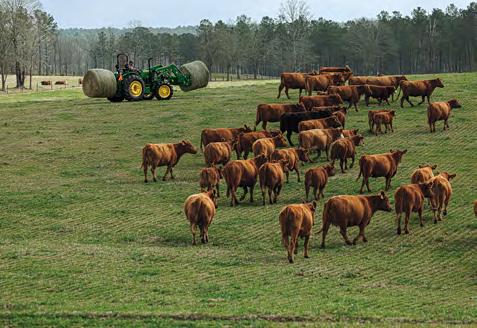
The new 5E 3-Cylinder tractor is built for a wide range of customers, from rural lifestyle property owners and part-time producers to nurseries and specialty crop operations. These operators need machinery that can handle a variety of tasks without adding additional complexity.
With a focus on dependability, the 5E 3-Cylinder tractor helps operators get more done in less time, ensuring consistent performance day after day, no matter the task.
Additional updates include:
• Go-home lighting allows for extended external lighting to get you where you need to go in low-light conditions, safely.
• Updated, smaller steering wheel for improved comfort.
• Improved electrical connections reduce contamination in wiring connections and harnesses.
• Swivel seat (available in select cab models) allows for better visibility and comfort during loader or rearimplement work.
John Deere remains committed to helping farmers increase productivity while reducing costs. The new 5E 3-Cylinder tractor with eHydro transmission delivers easy-to-use, smarter and more reliable machinery to all customers, no matter the type of operation.
For more information, visit JohnDeere.com.
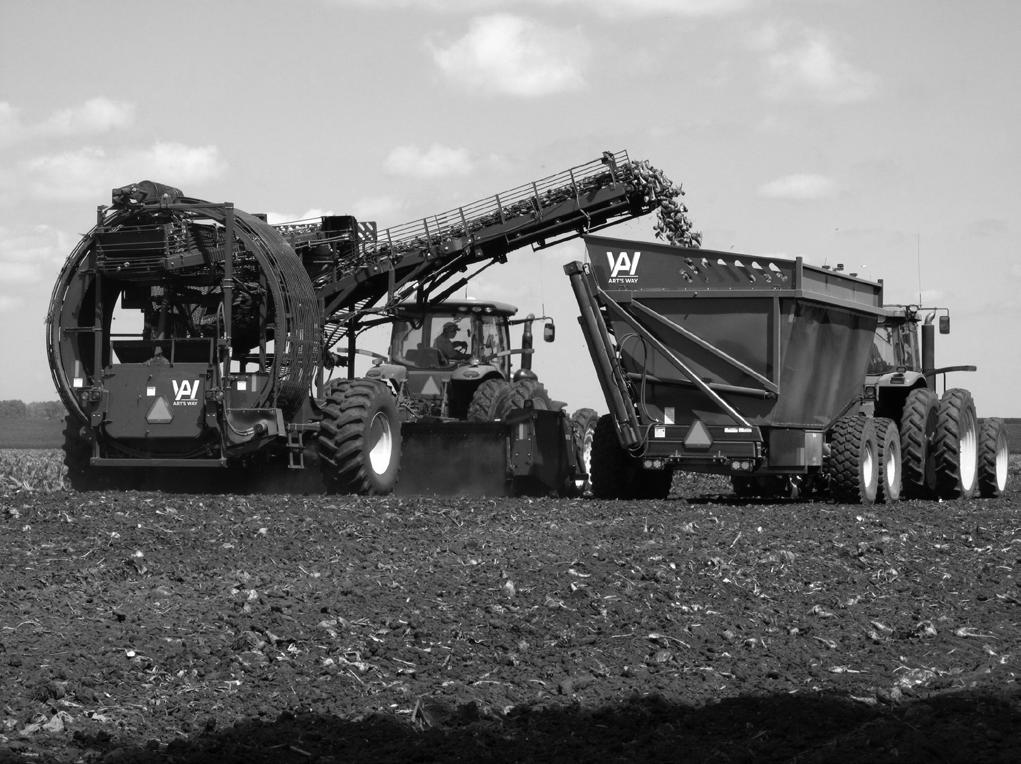
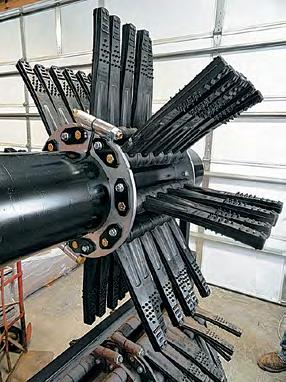
• Increased Ground Speed
• Decreased PTO RPM Speed
• Increase flexibility in difficult defoliatin conditions
• Minimal Damage To Beet
• Available for all defoliator models
• Available in 4, 6 and the new 8 bar unit
• Available in 12” (6 flail), 14” (7 flail), 16” (8 flail) depending on row width
• Balanced unit for minimized vibration
• 50% thicker flail mounting bracket
• Hardened 3/4” diameter flail rod for the best wearability in the industry
• Designed to eliminate side to side flail movement
• Eliminates the need for steel units allowing for increased adjustability of front & middle drum.
• Available in Standard Duty & Heavy Duty high
• Units can be installed 1 drum at a time
• Easily shipped UPS or Freight in US & Canada - Visa
WYOMING SUGAR COMPANY ANNOUNCES LEADERSHIP TRANSITION
Wyoming Sugar Company announced the planned transition of its president and chief executive officer position from Mike Greear to Kurt Wickstrom, marking the beginning of a new chapter for the grower-owned cooperative while honoring a decade of strong leadership and continued growth.
Greear, who has served as president and CEO since 2017 after more than a decade as the company’s legal counsel, has led Wyoming Sugar Company through a period of significant transformation.
During his tenure, the cooperative strengthened its financial position, expanded strategic partnerships, enhanced operational performance and reinforced its commitment to Wyoming’s sugarbeet growers and rural communities.
“Serving Wyoming Sugar Company has been one of the greatest honors of my career,” said Greear. “I am incredibly proud of what our growers, employees, board of directors and business partners have accomplished together. The strength of this cooperative has always been its people, and I am confident Kurt will continue building on that foundation while leading the company into the future.”
The Wyoming Sugar Company Board of Directors has selected Wickstrom as the organization’s next president and CEO. Wickstrom brings decades of leadership experience in agriculture and farmer-owned cooperatives. Most recently, he served as president and chief executive officer of MinnDak Farmers Cooperative, where he led the cooperatives for a period of 12 years. Prior to his leadership at Min-Dak, Wickstrom was president of Betaseed Inc. where he worked closely with sugarbeet growers across North America to advance seed genetics, crop performance and industry innovation.
BAYER GROUP TO CONSOLIDATE U.S. GLYPHOSATE BUSINESS INTO DISTINCT ENTITY OPERATING AS RUVEON
Bayer Group announced the consolidation of the U.S. glyphosate business into Ruveon LLC to optimize and align the business with the specific needs of the U.S. market environment. Ruveon will focus on all aspects of U.S. glyphosate, pricing, go-to-market strategies, production and logistics and will be solely responsible for the U.S. glyphosate business. Ruveon is based in St. Louis, Missouri, and remains a Bayer
His extensive experience spanning cooperative management, agricultural operations, grower relations and the sugarbeet industry positions him well to lead Wyoming Sugar Company into its next chapter while continuing the cooperative’s commitment to its grower-owners, employees, customers and communities.
“I am honored by the opportunity to lead Wyoming Sugar Company,” said Wickstrom. “The cooperative has a proud history built by generations of growers and dedicated employees. I look forward to working alongside our board, our growers, our employees and USPR marketing partners as we continue to strengthen the business, invest in our people and position Wyoming Sugar Company for long-term success.”
Chairman of the Board Tom Clark thanked Greear for his years of dedicated service and welcomed Wickstrom to the leadership role.
“Mike has provided exceptional leadership during an important period in our company’s history,” said Clark. “His vision, integrity, and unwavering commitment to our growers have positioned Wyoming Sugar Company for continued success. We are deeply grateful for his service and look forward to Kurt’s leadership as we continue building a strong future for our cooperative.”
The leadership transition is expected to become effective at the end of the calendar year. This fall Greear will work closely with Wickstrom and the board of directors to ensure a seamless transition and continued operational excellence.
Founded in 1916 and grower-owned since 2018, Wyoming Sugar Company operates its processing facility in Worland and serves sugarbeet growers throughout the Big Horn Basin and Fremont County. The cooperative remains committed to producing high-quality sugar while supporting Wyoming agriculture, local communities, and future generations of growers.
Group business.
The consolidation of the U.S. glyphosate business is an executional step within the Crop Science division’s comprehensive Five-Year Framework, previously announced and established by Bayer Group to drive growth, resilience and profitability and allow an even sharper focus on innovation
and business operations. As part of the Five-Year Framework, Bayer Group continues to work to optimize the crop protection businesses in a very competitive environment.
Ruveon is expected to be a more nimble and well-positioned player within its commodity-based market, which requires a specialized approach to address competitive dynamics. The dedicated product and commercial teams for the U.S. glyphosate business are now part of Ruveon. The company is expected to supply the U.S. agriculture industry with critical glyphosate products and the highest standards of quality and service.
“Today we take an important step
within our Five-Year Framework,” said Brian Naber, Head of Crop Science North America & Australia/New Zealand. “Ruveon’s launch is a sign of our ongoing commitment to excellence in the glyphosate market. Consolidating U.S. glyphosate resources and operations benefits customers, partners and other stakeholders by enabling the Ruveon and Bayer Group teams to fully dedicate the appropriate focus and resources to best meet and anticipate our respective customers’ needs.”
Alfonso Alba Ordóñez joins Ruveon as chief executive officer with over 30 years of executive leadership experience with Bayer Group in the global agricultural industry. His career spans senior leadership positions
across Europe, South America, North America and China, where he has consistently guided organizations through complex commercial and business transformations, helping them implement strategy and deliver sustained growth.
Steve Knodle serves as Executive Vice President, Head of Commercial Business at Ruveon. With over 28 years of agricultural industry experience across domestic and international businesses, Steve will oversee Ruveon’s U.S. glyphosate commercial sales and marketing teams across agricultural and industrial, turf and ornamental businesses. For more information, visit www.bayer.com and www. ruveon.com.
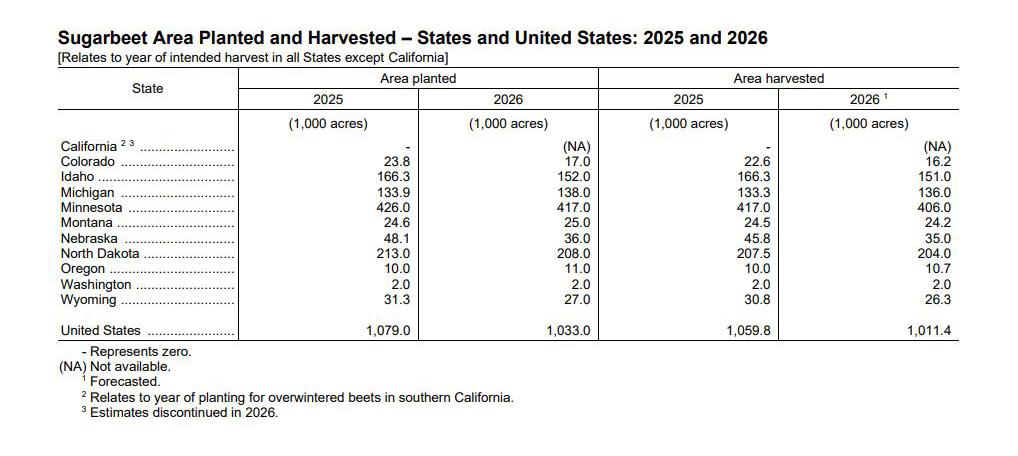
USDA FIGURES REVEAL 46K ACRE DROP IN U.S. SUGARBEET ACREAGE FOR 2026
The USDA has reported a 46,000-acre drop in sugarbeets planted across the U.S. in 2026.
Every sugarbeet producing state except two (Michigan and Oregon) reported a drop in sugarbeet acreage for 2026. That includes the three largest sugarbeet producing states of Minnesota (down 11,000 acres), North Dakota (down 3,500 acres) and Idaho (down 15,300 acres).
605-566-4686
MARKWART TO CONCLUDE REMARKABLE RUN WITH ASGA
LEADER RETIRES AFTER 44 YEARS AT HELM
BY LANE LINDSTROM
Ahandful of years ago we were visiting with Luther Markwart, executive vice president and CEO of the American Sugarbeet Growers Association, and commented about how hard it probably was going to be to replace a person who had recently announced their retirement.
With that “Luther look,” he leaned over and said, “My father used to say, ‘cemeteries are full of irreplaceable people.’”
As the sun sets on Markwarts 44-year illustrious career –he is set to retire from the ASGA at the end of 2026 – it’s very tempting to say the farm boy from Michigan who moved to Washington, DC, and has had a profound effect on not just the sugarbeet industry but agriculture as a whole will be very hard to replace.
Very hard.
But he’d be the first to say the ASGA is in good hands with his replacement Zack Clark, whom Markwart has helped grow into not only the ASGA leadership position but has helped position him to continue to be a force in Washington, DC.
The sun may be setting on Markwart’s full-time career in the sugar industry but he plans to still be involved with helping associations and organizations protect their best interests.
“I will be open for consulting work either in or out of the sugar industry,” he said. And then, giving a nod to his favorite hobby (and about the only time he’s seen not in a business suit), “ I will likely join a golf league to enjoy the sport that I love and have missed for decades.”
Additionally, “I also want to be supportive of my family members in their pursuits.”
HIS ROOTS RUN DEEP
One of the most noticeable among the many traits Markwart possesses is his ability to relate with the growers whom he represents. That comes from living the grower life when he was growing up on his family’s farm in the thumb region of Michigan.
Markwart points out that his father’s parents immigrated from Germany and began farming in 1921. His grandfather raised sugarbeets using horses and a one-row beet lifter.
Markwart’s parents too were sugarbeet growers and also raised dairy cattle. Markwart raised sugarbeets for nine years as a 4-H project.
“The hatred of hoeing beets instilled a passion for getting Roundup Ready sugarbeets because I knew how important it was to every grower,” he said.
As anyone who has been around Markwart for any period of time knows, he’s a natural leader, a trait he learned while growing up and serving as student council president in junior and senior high school, class president two of the four years he was in high school, National Honor Society president, and as a leader in his church and 4-H.
After earning a bachelor’s degree in business from Michigan State University he later worked for the Farmers and Manufacturers Beet Sugar Association, which represented growers in Michigan and Ohio. His stint with the beet association came after working as a sales rep for Noxell selling skin cream and Cover Girl cosmetics, interning at a state facility for the severely physically and mentally disabled, working as a tour guide (32 states, half of Canada and Bermuda), and selling Britannica encyclopedias door-to-door.
During his time working for Michigan and Ohio sugarbeet growers he also worked to be a Dale Carnegie instructor so he could help train others to be more effective leaders.
“All of those experiences were valuable in preparing me to run ASGA,” he said.
BEGINNING OF ASGA CAREER
Then came the opportunity to interview for a position with the ASGA. He talked about that experience. “When I interviewed, I believe there were five other candidates: Hill staffers, lawyers and other association reps. I was 27 years old. I put together a portfolio of all my abilities with third party confirmations of my abilities. There were a dozen sections to the three-ring binder. I also presented what was then a Powerpoint presentation before there was such a thing. It was made on clear plastic sheets on an overhead projector. I still have it as well as my interview book.”
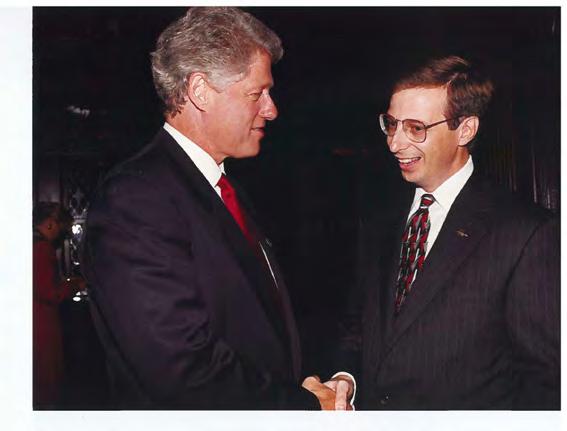
LEFT: Luther Markwart speaks at one of the American Sugarbeet Grower Association’s first annual meetings at the Mayflower Hotel in Washington, DC. Courtesy photo. RIGHT: Luther Markwart visits with U.S. President Bill Clinton. Courtesy photo.
From that interview all those years ago to today, there have been a myriad of changes in Washington, DC, and in the sugarbeet industry.
But some things haven’t changed too much. For example, Markwart said, “The passion of industry leaders to make the industry sustainable and profitable. That has meant working together and being supportive of their ASGA team in Washington. Also, crop pest pressure and always the weather.”
Markwart listed three of what he feels are the biggest changes in the industry since he started 44 years ago.
1. The transition of the industry to all farmer-owned cooperatives.
2. The consolidation of farms and the industry. The loss of factories in California, Ohio, Kansas, Texas and most of Washington state and several factories within existing states. Fewer farmers and bigger farms.
3. Technology. Seed genetics, i.e., Roundup Ready sugarbeets, etc., pesticides, equipment, data for farm management and communications.
FONDEST MEMORIES
Interestingly enough, when asked about some of his fondest memories of his time as executive vice president and CEO of ASGA, he chose some of the hardest and most difficult experiences he has had from the “hundreds of fond memories.”
Those include:
MIDDLE:
BOTTOM:
“1. Going to St. Louis the day after we were informed by Monsanto they were not going to bring Roundup Ready sugarbeet technology to market for fear it would fail. Tom Schwartz and I convinced them they had to do it and it would be broadly accepted. It remains the fastest adoption of any biotech crop in the world and the first in the world – beet or cane – to successfully commercialize it. We battled through four lawsuits to stop us, but we got it done. In addition, passing the law requiring disclosure of biotech ingredients and directly shaping regulations so that we would not have to label beet sugar as a bioengineered ingredient. Putting together and training the biotech spokeswoman to defend the product. It was all a massive amount of work but fundamentally changed the outlook for our growers.
“2. Each of the nine Farm Bills were a lot of work, but we always won.
“3. International trade negotiations are huge and complicated
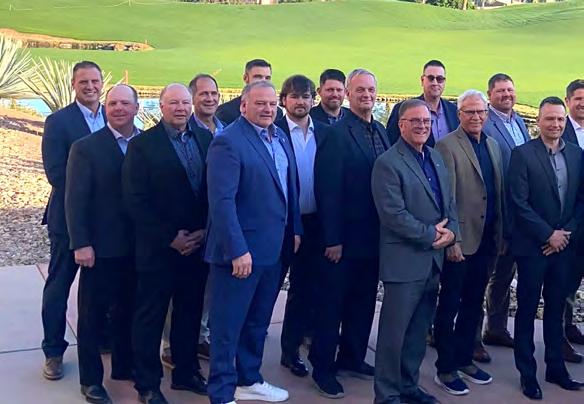
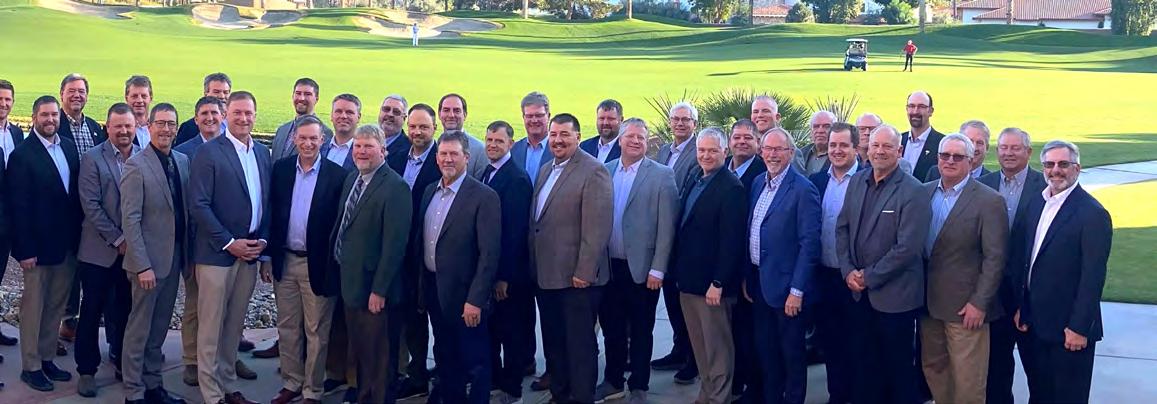
Luther Markwart (front row, center) stands with the 2026 American Sugarbeet
TOP: Luther Markwart (top, far right) poses for a family photo with his parents and siblings. He grew up on the family farm in Michigan where they did raise sugarbeets. Courtesy photo.
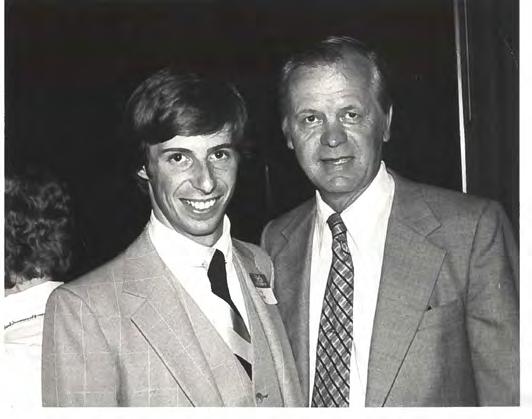
Luther Markwart stands with Bob Bergland, a former U.S. Secretary of Agriculture under President Jimmy Carter. Courtesy photo.
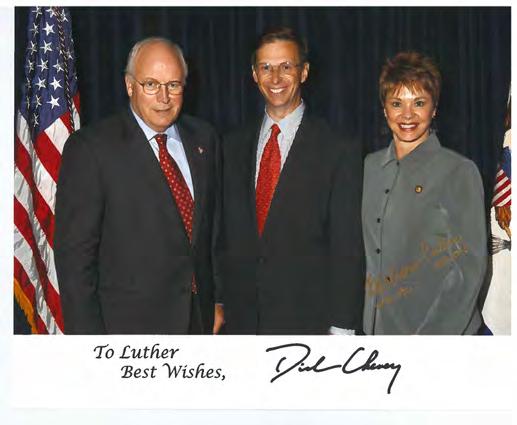
Luther Markwart with former U.S. Vice President Dick Cheney. Courtesy photo.
issues. We are a big agricultural exporting country and that is the major focus by our negotiators for our major crops. Sugar is just the opposite which led to big fights over NAFTA and CAFTA and getting the best we could get in the WTO. The injury suffered by growers when those agreements or tariffs do not work well is a huge problem. We are in that spot now, but optimistic that we will succeed.
“4. The one non-sugar memory was being one of the two greeters for all of the guests for the private funeral of Supreme Court Justice Rehnquist. Such an honor.”
Markwart’s move to Washington, DC, also had another big bonus: that’s where he met his wife, who at the time worked on the U.S. Senate Ag Committee and was in charge of monitoring all the international trade agreements for the committee. “She is absolutely incredible,” he said. They have three grown children: Christian, Lauren and Megan.
While with the ASGA in Washington, Markwart has become a master negotiator, mediator and mentor. He has helped shape sugar policy so that growers are in as good a spot as possible. He’s respected for his honesty, his firmness and his knowledge of the issues. And although he is now far from the farm field, he said there are some distinct similarities between what growers do on a daily basis and ASGA efforts in the nation’s capital. He also knows things in Washington, DC, generally take a long time to play out.
SIMILARITIES
He explained, “Farming and lobbying have a number of things in common. There is a long list of challenges that are beyond our control. We navigate those challenges every day. Here is what you should know about difficult situations. A loud, united and persistent voice and physical presence is needed to explain to policy makers and the administration the depths of your problem and the need for a solution. We have all of that. I can assure you, the people at the highest levels of our government know of your current crisis and there is a tremendous amount of work being done to address it. These are not simple solutions. You have some great industry champions in Congress who are in important positions and can advocate for you and find help for you. Your Washington reps are telling your story every day to get help that you need. It takes more time than you would like and it will usually be
less than you want, but these things are never easy. Remember, government was not designed to be efficient; it was designed to be deliberative – and that takes time. I am always optimistic that we will prevail at the end of the day, but you have to be relentless in your efforts to get the relief you need.”
Not surprisingly, such relentless efforts can be a grind, emotionally, mentally and physically. Through it all, Markwart has been optimistic and upbeat, even in times when it seems like there are few positives.
At the 2025 ASGA annual meeting, at the end of his remarks, he talked a little about facing the challenges this industry, and agriculture as a whole, is facing. He shared that he had taken a walk around Washington, DC, passing the White House, the World War II Memorial, the Reflecting Pool and other well-known places in the capital. He said he was looking and hoping for inspiration on how to tackle the issues the industry faces. As he was standing on the steps of the Lincoln Memorial, he said, “Psalms 46:10 came to mind: ‘Be still and know that I am God.’” He then told the group in attendance, “It’s going to be okay. Just get up and get at it. He’s got our back. We’re going to be fine but we’ve got a lot of work to do. The people in this room and the people in leadership are going to make it happen. And that’s where we get our strength from.”
When asked about how he manages the stress of his position and how he stays positive, Markwart said, “My faith is my rock and foundation. It gives me strength to endure the difficult times and patience when it is most needed. My Dale Carnegie training taught me how to manage stress and worry. Focus on the issue before you, use all available assets to help you and never give up. Most of the time you will succeed.”
Everything Markwart has done in his position as executive vice president and CEO has been for the benefit of sugarbeet growers across the country. Growers have been his focus for four decades.
U.S. Rep. Glenn GT Thompson, chairman of the U.S. House of Representatives ag committee, summed up much of Markwart’s career with this telling quote: “He puts a personal face on the American farmer and does it in a way that promotes professionalism and efficiency.”
So while Markwart may not be irreplaceable, he may come as close as anyone in this industry ever has.
Growers Association board of directors at the 2026 ASGA annual meeting in Palm Springs, California. Courtesy photo.
BUYERS’ GUIDE
TILLAGE
H&S Mfg, Inc.
(218) 478-2229 hsmfginc.com
SUBSOIL RIPPER
The H&S Subsoil Ripper features an innovative shank design that allows the unit to reset hydraulically, as well as a 28-inch coulter prepositioned in front of the shank, for striking the ground. The hydraulic reset allows shanks to maneuver through underground obstructions with ease.
The heavy-duty frame is built to withstand the force of tillage depths more than 18 inches deep. Eliminating compaction in the field is vital in maximizing growth in sugarbeets, allowing the roots to continue downward. H&S offers a variety of models to fit a farm’s specific needs ranging from 5 shank-mounted up to 9 shank pull-type with larger models in development.
KUHN North America (608) 897-2131 www.kuhn-usa.com
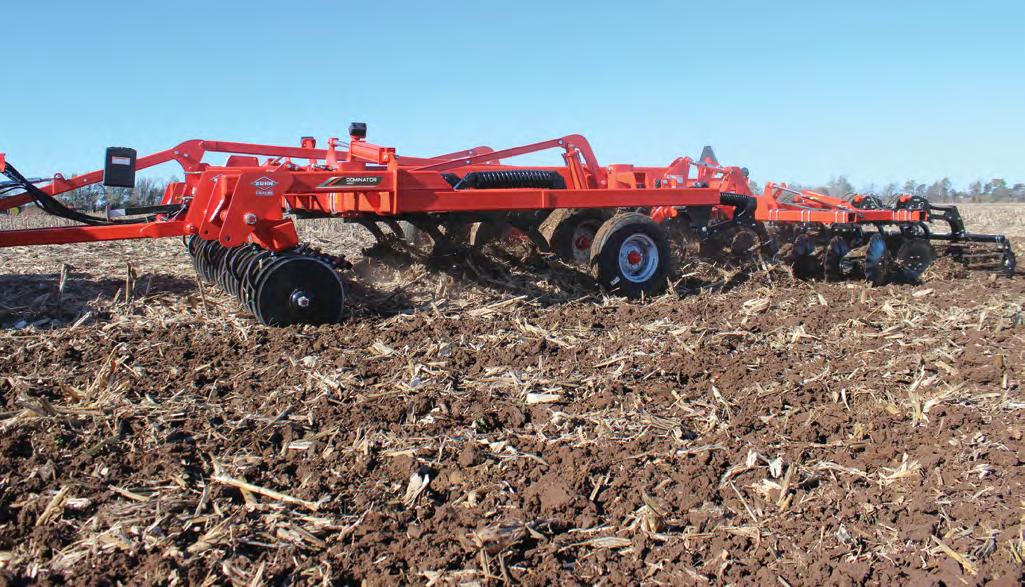
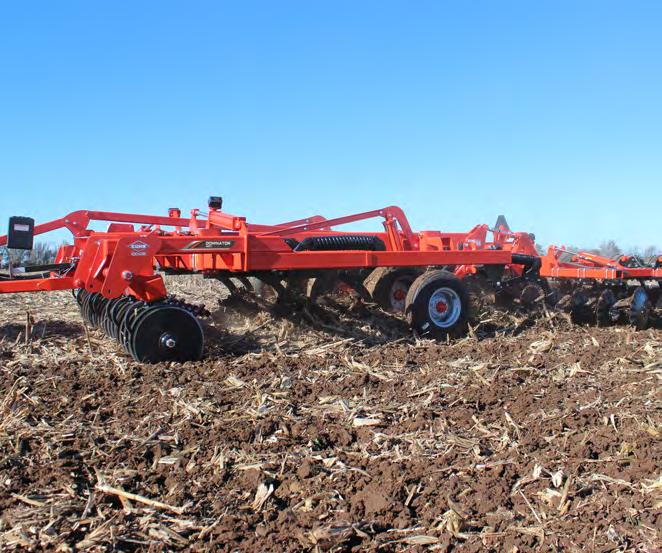
DOMINATOR 4857
The new KUHN Krause Dominator 4857 boasts product features designed to provide optimal compaction removal and residue handling while reducing maintenance time. The double rank subsoil shanks mounted on narrow 18-inch spacing deliver maximum subsoil fracture. The new reverse-tandem rear disc conditioner produces consistent soil leveling and residue incorporation for pass-to-pass uniformity, while the soil conditioning reel provides final clod sizing along with seedbed soil firming. Maintenance-free features are incorporated throughout the Dominator 4857, reducing the required daily lubrication service time, placing you in the field sooner and increasing operator productivity. Working widths range from 10-foot-6 inches to 19-foot-6 inches and models are available with 7, 9, 11 or 13 shanks.
Parma Company
(208) 722-5116
www.parmacompany.com
ROLLAHARROW, PACKERS, LANDPLANES
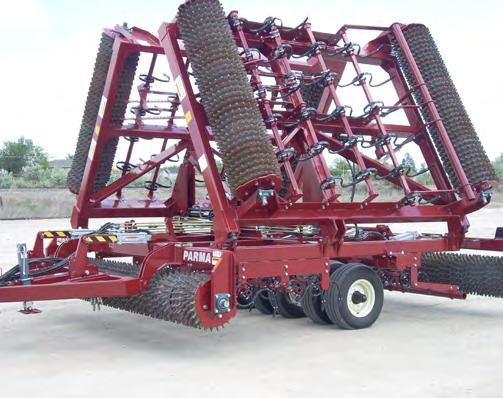
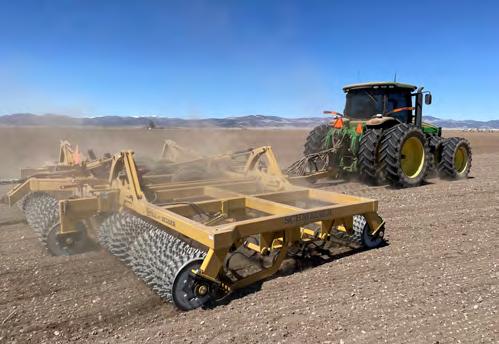
For more than 30 years, Parma Company has been manufacturing heavy-duty rolling harrow, packers and landplanes to help prepare and establish the best quality seed bed. The Parma rollaharrows and packers come in various sizes ranging from 12 to 24 feet in a rigid frame and from 20 to 40 feet folding models. Landplanes are available in up to 30-foot widths.
The 4-Bar Rollaharrow comes standard with four rows of heavy-duty S-tines properly spaced to allow optimum tillage without trash buildup and plugging. Other features include a hydraulically controlled leveling bar to smooth and level the soil behind the S-tines. The “loose fit” style front and rear packer rollers are available in various sizes and ring composites. Also available are crowfoot rollers and solid welded pipe rollers all mounted on large 2 3/16-inch shafts and heavy-duty triple lipped sealed bearings. The well-used grain drill hitch option lets the savings-conscious grower better
Wil-Rich
(800) 688-3300
www.vaderstad.com
2500 CHISEL PLOW
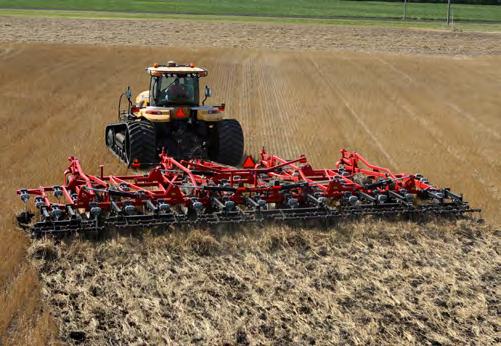
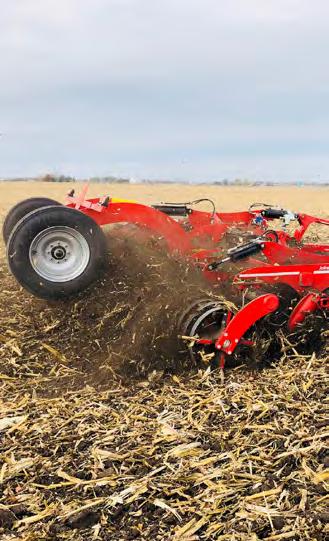
The Wil-Rich 2500 Chisel Plow is an excellent fall tillage tool for mixing soil and breaking up shallow compaction layers. The deep frame utilizes four ranks to improve the flow of heavy residue from today’s higher-yielding crops. It has an extremely heavy-duty design that maintains tillage depth, even in the toughest soil conditions, and is one of the strongest tillage implements on the market.
The 2500 Series is available in 12- or 15-inch shank spacing and with trip pressure options of 650 or 1,000 lbs., providing the flexibility to adapt to different soil conditions. Select sizes are also available with either a level lift or floating hitch to fit the needs of different operations. A reinforced steel frame ensures durability in the toughest environments, while the compact transport design allows for easy maneuvering between fields.
The chisel plow can be equipped with the 3- or 4-bar coil tine
utilize fuel and time with one pass tillage and planting. This, with other options and features, makes the Parma tillage line of seed bed preparation the most productive in your farm operation.
aggressiveness according to ground conditions and the amount of residue on the soil surface.
Unverferth Manufacturing Company (419) 532-3121
www.unverferth.com
RAPTOR STRIP-TILL TOOL
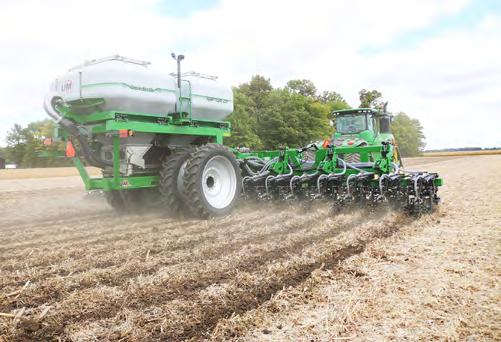
Unverferth Mfg. offers the Raptor strip-tillage tool. The Raptor strip-till tool features TerrainPro row units with independent depth control to optimally follow soil terrain for creating the ideal seedbed in six stages:
1. The leading swivel coulter with 20-inch blade features 1,500 lbs. of down pressure to cut through the heaviest residue.
2. The free-floating row cleaners with curved finger design help clear residue from the strip.
3. The centrally mounted crowfoot-style wheel maintains row unit depth independently from row to row.
4. The tillage shank precisely tills the soil from 4 to 12 inches deep to manage root zone hardpan. Models are available with auto-reset or shear-bolt protected shanks.
5. 18-inch notched concave closing coulters are mounted on each side of the shank to keep the soil in the strip. Closing coulters also feature tool-free adjustable spring down pressure and angle adjustment for fine-tuning the seedbed.
with tool-free down pressure adjustability break up clods and condition the strip. Other conditioning options are available. Raptor strip-till tools are available in pull-type 12- or 16-row models with 30-inch spacings or 3-pt. mounted units in 6- 8- or 12-row models with 30-, 36- or 38-inch row spacings. Liquid or dry fertilizer placement is also available.
harrow to level the soil profile. Five adjustments for tooth angle allow the user to set the harrow’s
BUYERS’ GUIDE
(855) 320-0373
www.brillionfarmeq.com
www.landoll.com
3630 SERIES PULVI-MULCHERS
Landoll Corporation features the Brillion Farm Equipment’s 3630 Series Pulvi-Mulchers. Wider working widths, increased trash clearance and reduced downtime were the design parameters used to develop two new models in the series, available in 30-foot and 36-foot, 6-inch working widths.
The new 36-6 model is 20 percent wider than Brillion’s current 30-foot WL Pulvi-Mulcher and is the widest and heaviest Pulvi-Mulcher ever produced in the company’s history. The new 30-foot model is 80 percent heavier than previous models, providing more clod-crushing power.
A minimum of 24 inches between shank rows and three rows of heavy-duty S-tine shanks featuring 25 inches of under-frame clearance result in improved trash flow. To ensure a smooth finish, a leveling bar is located in front of the rear roller to help level ridges left by the shanks. Large, 8-inch roller axles eliminate the traditional center bearing, improve reliability and reduce downtime.
T. G. Schmeiser Co. (559) 268-8128 www.tgschmeiser.com
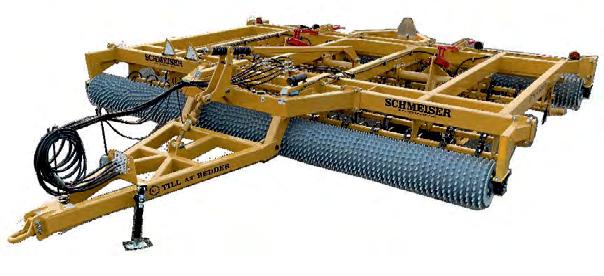
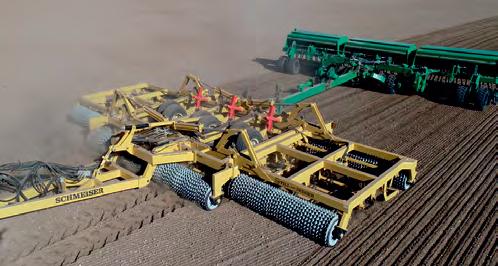
NEXT-GEN TILL AN’ BEDDER
The Next Gen Till an’ Bedder has been completely redesigned based on grower feedback. Starting at the bottom, the company has built in the capability to use 20- or 22-inch ductile Schmeiser rings.
Moving up, the machine now has a double-plated roller head for additional strength with a massive 2-11/16-inch shaft that is held up with TILLXTREME sealed Trunnion Bearings. The frame has been redesigned so that the unit ships more than 80 percent assembled. The front-to-rear leveling system coupled with two rows of S-tines in front and behind the transport tires allows gauging in the toughest conditions without leaving tire tracks. Hydraulic S-tines and leveling bar are included with depth indicators standard. Wing pivots have been upgraded to
2-inch pins. The optional HD Trail Hitch has a built-in manifold for hydraulic remote extensions.
Horsch
(701) 532-1000
www.horsch.com
JOKER RT
Horsch Joker RT high-speed discs include 20-inch notched blades that are mounted at a 17-degree angle for optimum soil engagement and residue/ soil mixing. Rubber torsion arms help protect the blades against damage from foreign objects, and oil-filled bearings provide long life with zero maintenance. Manual or electronic depth control is available for maintaining precise, consistent tillage depth throughout the field. Additionally, an integrated RollFlex finishing system optimizes soil consolidation and field finish to produce excellent planting conditions and promote rapid emergence of seed.
Benefits of the Joker RT include aggressive crop residue management through superior sizing and mixing of the soil and residue, as well as consolidation of the soil profile for accelerated residue decomposition. An ideal seedbed is also created by maintaining precise tillage depth, providing thorough soil tilth, and consolidating the soil. Other applications of the Joker RT include fertilizer/manure incorporation, pre-emergent herbicide incorporation, field conditioning, cover crop management and specialty crop applications. This multi-purpose tillage tool provides excellent performance in both primary and secondary tillage operations. It is a clever alternative to vertical tillage, field cultivators, soil finishers and tandem disc harrows.
By Luther Markwart, Executive Vice President
“We Live In Interesting Times”
Sugar industry tackling issues on multiple fronts
As we head into the fall, there will be a full legislative agenda to tackle.
Over the late spring and summer Congress mostly ground to a halt. Elections of course always inject additional challenges to progress in Congress. The to-do list is long. The two big agriculture priorities are economic and disaster assistance for producers and the Farm Bill.
Both are long overdue. Congress must ease farmers’ economic pain and make plans for the year ahead. The proposed Securing Agriculture’s Workforce Act, limited immigration reform for farm workers, would also be a plus.
When the Supreme Court ruled last year that the president could not issue broad tariffs under IEEPA, the administration pivoted to using other authorities granted by Congress. This includes section 301 of the Trade Act of 1974. He has pursued cases against Brazil, 16 countries for “excess capacity” and selling surpluses on the depressed global market, 60 countries for force labor regulations and compliance and Vietnam. While none of these cases are specific to sugar, additional tariffs on sugar can be placed on imports from those countries if the administration agrees to do so.
Given that Brazil is the largest supplier of over quota sugar into the U.S. market, the beet sugar industry aggressively pressed its case. Last September, then-ASGA President Neil Rockstad testified to the 301 committee about the harm caused by over quota imports. On July 6 ASGA President Clint Hagen testified before the committee, pressing for additional tariffs on Brazilian sugar.
For the last year, our industry has lobbied Congress and the administration, making the case that we are in crisis, and that we must fix over quota imports. Brazil is just one country and the proposed tariffs by themselves are insufficient to fix our problem. But we will be relentless and persistent to get whatever relief we can get to address the problem.
The other significant trade negotiations are with Mexico and Canada under the USMCA.
Sugar trade with Mexico is not governed by the USMCA, but separately under the antidumping and countervailing
suspension agreements. While they are separate, you must always be vigilant about any trade negotiation to avoid getting pulled into them.
In June the Supreme Court ruled on the pesticide labeling case (Monsanto vs. Durnell) to make it clear that federal pesticide labels under FIFRA preempt state labeling regulations.
ASGA along with other ag groups filed two amicus briefs with the Supreme Court. The first was to take the case. The second was to reaffirm federal preemption over the state regulation. This was critically important not only for glyphosate but for any other pesticide that would be threatened by aggressive tort lawyers in the years ahead.
Shortly after the ruling Bayer announced that the glyphosate business would transition to a separate subentity under Monsanto called “Ruveon.” It also announced antidumping and countervailing cases against China, which is the other global producer of glyphosate. We are awaiting the results of the investigation by the International Trade Commission and determinations made by the Department of Commerce.
The summer months were also spent preparing a major submission for fungicide regulations under the Endangered Species Act. Like the herbicide and insecticide strategies, these are major undertakings for the industry. We must make sure growers have workable and cost-effective options to deal with disease and pests.
On elections, control of the House and the Senate are in play. Having thin majorities gives small factions oversized influence. Infighting within the parties makes it difficult to govern. Voter frustration can create significant changes in the makeup of the Congress.
By the end of June, 32 states had held primaries, none were scheduled for July, 15 in August and three in September. Seventy House members thus far are either retiring or running for a higher office. Another 13 either resigned or died in office. On the Senate side, 10 senators are retiring.
It is safe to assume that the new Congress will have roughly 100 new members to educate about sugar. As a result of elections, Senator Bennet (D-CO) will now likely be the most senior Democrat on the Senate Ag Committee, which is a very good thing.
We live in interesting times.
AMERICAN SUGAR ALLIANCE
By Rob Johansson, Director of Economics & Policy Analysis
Are Forfeitures In The Future?
Sugar industry would rather have improved market
The 41st International Sweetener Symposium will begin right as this magazine hits mailboxes in August. The theme for this year’s Symposium is “Navigating a Turbulent American Sugar Market,” and the program will cover many of the incredibly difficult issues facing our producers today.
As I write this column in mid-June, it is difficult to know what exactly lies on the horizon if the outdated overquota sugar tariffs allowing foreign sugar to undercut our producers are not fixed. This is an issue that the American Sugar Alliance and the entire industry have been working diligently on, from my testimony before the U.S. Trade Representative (USTR) on the Section 301 investigation on excess capacity, to the work done to secure a letter to (USTR) signed by 112 members of Congress, as well as the many conversations occurring at the administration level explaining how dire the situation will be for the industry without a solution to the issue of rock-bottom prices and extremely high costs of production.
One issue that has been raised repeatedly, including in questions from growers, is what happens if these unsustainable market conditions are not fixed quickly enough and sugar producers are forced to invoke the rarely used safety net provision which allows the producers to sign over the sugar used as collateral for the loan to USDA – also known as forfeitures.
While U.S. sugar policy is designed to defend U.S. farmers and workers from artificially cheap imported sugar, excess over-quota imports have become uncontrolled and threaten to push the domestic sugar market out of balance.
Congress designed the sugar safety net to preserve American family farms, American factory jobs and the production of a critical American-made food ingredient. It is a rare occurrence for a producer to default on a loan and it is generally due to unfair foreign trade practices. In fact, the sugar safety net has been deployed only once in the last
25 years. So, the easiest answer is to look back more than a decade ago.
The full implementation of NAFTA in 2008 granted Mexico complete duty-free access to the U.S. market. Mexican sugar exports to the U.S. increased until more than 2 million tons were sent in 2013, up from only 60,000 tons prior to 2008.
The U.S. became a dumping ground for heavily subsidized Mexican sugar, driving domestic sugar prices down, harming U.S. sugar producers and costing the domestic sugar industry more than $4 billion. This scenario may sound familiar, as the U.S. market is currently being flooded by heavily subsidized over-quota foreign sugar, costing U.S. sugar producers as much as $3 billion over the past two years.
In 2014, the U.S. International Trade Commission ruled unanimously that imports of dumped and subsidized sugar from Mexico materially injured the U.S. sugar industry.
USDA ended up spending more than $291 million to purchase more than 381,000 tons of sugar, to implement a sugar-to-ethanol program to help alleviate falling prices and to purchase quota certifications to reduce imports.
As a result of the finding by Commerce and the U.S. International Trade Commission (USITC) imposing significant penalties on further sales of subsidized Mexican sugar into the United States, the U.S. and Mexico entered into a new trading agreement governed by antidumping (AD) and countervailing duty (CVD) Suspension Agreements, which limit both quantities and prices of imported sugar from Mexico.
In August 2025, the USITC unanimously voted to maintain the Suspension Agreements on sugar imported from Mexico. Without those Suspension Agreements in place, the USITC found it likely that American farmers and workers would once again experience material injury due to dumped and subsidized Mexican sugar.
While U.S. sugar policy is designed to defend U.S. farmers and workers from artificially cheap imported sugar, excess over-quota imports have become uncontrolled and threaten to push the domestic sugar market out of balance. Recent surges of over-quota sugar imports have undermined the longstanding sugar policy enacted by Congress and have had serious repercussions on our markets – including, potentially, forfeitures. Only time will tell.
Until then, we will continue telling Congress and the administration that we cannot afford to offshore American family farms and American food production.
THE SUGAR ASSOCIATION
Courtney Gaine, PhD, RD, President & CEO
Sugar’s Role In Agricultural Fairs
Sugar has sweetened America’s treats for decades
As fair season is underway across America, real sugar will be popping up everywhere. From baking competitions to agricultural education displays, real sugar is woven into the traditions that define county and state fairs.
In sugar-producing regions, fairs offer visitors a closer look at the connection between beloved fair foods and the agriculture that makes them possible, making farming something people can see, touch and taste.
AN AMERICAN TRADITION
Fairs have celebrated the nation’s agricultural heritage for generations. The nation’s first state fair was held in Syracuse, NY, in 1841, where an estimated 15,000 attendees viewed livestock exhibits, a plowing contest and farm and home goods displays.
Today’s fairs go beyond the traditional agriculture show and include live music, carnival rides and foods and more foods, often reflecting local agriculture. Even the most indulgent “novelty” foods often start with locally sourced ingredients. Fried, skewered or dessert-style creations, fair food is a celebration of local agriculture.
SIMULATORS AND FOOD COMPETITIONS
That tradition of celebration and education is on full display in the Midwest. Visitors to the North Dakota State Fair can learn about the agricultural industries that make their favorite treats possible.
“We have a new event this year called the Pride of Dakota Marketplace, which will feature unique foods and other products made right here in North Dakota,” Craig Rudland, general manager of the North Dakota State
Fair in Minot, said. “This event, along with the North Dakota Ag in the Classroom Exhibition, will take place in a 10,000-square-foot area. People of all ages can view exhibits and participate in activities to learn more about the state’s agriculture industry: a mock farm, tractor and combine simulators and live cooking demonstrations.”
Fun Fact: Fair vendors compete for the title of best and most creative menu item at the North Dakota State Fair’s annual “Food Frenzy” competition. Past entries include deep-fried chocolate-dipped bacon cheesecake and ice cream nachos.
RAISING BEETS, RISING STARS
Beyond interactive learning opportunities, fairs showcase youth programs that teach participants skills through hands-on projects.
In the Idaho 4-H Sugar Beet program, coordinated through University of Idaho Extension, youth grow their own sugarbeets and learn real-world crop management skills, with results displayed at their county fairs.
The Amalgamated Sugar Company also sponsors a youth program for ages 8 to 18 in Idaho, Washington and Oregon. Through the program,
participants grow the crop themselves using two sugarbeet shares — one from the company and one from a contracted grower, each representing an acre of production. Over the growing season, youth keep production records, present a research project to judges and display three sugarbeets at the county fair.
SWEET RIVALRIES
Sugarbeets have a rich history in the Nebraska Panhandle and were the focus of a 2024 4-H Special Agronomy Project led by Laurie Zitterkopf, a Nebraska Extension master gardener and Scotts Bluff County Fair agriculture superintendent.
Participants grew sugarbeets with support from the Western Sugar Cooperative and exhibited them at the Scotts Bluff County Fair, alongside displays about sugar molecules and how sugar goes from farm to table.
“It was a great way to educate both 4-H youth and the general public about sugarbeet production,” said Zitterkopf.
The Western Sugar Cooperative provides sugar to support the bakers at the Scotts Bluff County Fair and
competing for blue ribbons is a beloved tradition for Zitterkopf and her family.
“I baked my grandmother’s recipe for gingersnap cookies when I was in 4-H, and now my granddaughter is making it for the fair,” said Zitterkopf. “I encourage all my grandkids to compete in 4-H baking, where they are judged not only on the quality of their baked goods but also on their explanation of how they made it and what they learned.”
For years, Zitterkopf has entered treats in the open-class competition. This year, though, the challenge hits a little closer to home.
“My grandson Jack will also be entering baked goods in the open class, so we’ll be competing against each other,” she said, laughing. “Whoever does better will have bragging rights for the year.”
Fun Fact: Scotts Bluff County Fair visitors can wash down fried fair food with unique, fair-exclusive beverages like prickly pear cactus and peachy sweetie handcrafted draft sodas.
SUGAR ROYALTY IN THE BAYOU
About 1,300 miles to the south, the annual Louisiana Sugar Cane Festival in New Iberia celebrates the family farmers, industry employees and communities who sustain the state’s sugarcane industry.
The festival honors Louisiana’s sugar-growing heritage through parades, agricultural exhibits and a “Blessing of the Crop” ceremony, which brings together farmers, community members and clergy to pray for a bountiful harvest.
The festival’s highlight, now in its 83rd year, is the coronation of “Queen Sugar” and “King Sucrose.” The woman crowned Queen Sugar serves as an ambassador for Louisiana’s sugarcane sector, traveling to fairs and festivals across the region to highlight the history and community impacts of production.
The sugar royalty also takes the story of real sugar to Washington, D.C., during the Mardi Gras season, to meet elected officials and interact with thousands of revelers.
Fun Fact: Louisiana Sugar Cane Festival visitors can sample raw sugar cane, freshly squeezed cane juice, and Cajun classics.
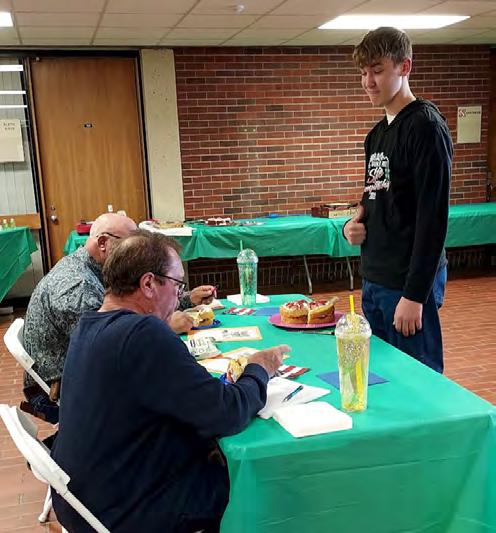
4-H competitor Jack Clossen (grandson of Laurie Zitterkopf) puts his baking knowledge and classic sponge cake to the test with the judges.
PRESERVING OUR HERITAGE
From 4-H projects to fierce baking competitions, fairs remind visitors that behind every food favorite is a dedicated network of farm families. As fair season continues, real sugar remains at the heart of the traditions that keep America’s agricultural heritage alive.
CHOOSE THE SEED PART NER WHO SHARES YOUR PRIORITIES.
Like you, we never settle. As a result, there’s more sugar in every seed we sell. For more than a century, we’ve put innovation to work in t he service o f growers who p lant C rystal B rand Sugarbeet Seed. With unique hybrids and varieties developed for exactly where you grow, you can be confident your success is always ou r top priority, this season and for seasons to come.