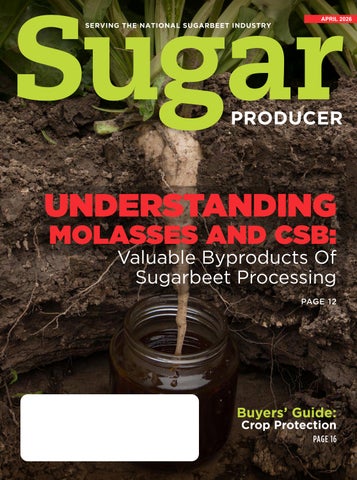
UNDERSTANDING MOLASSES AND CSB: VALUABLE BYPRODUCTS OF SUGARBEET PROCESSING
Molasses and Concentrated Separator Byproduct (CSB) show just how resourceful sugarbeet processing factories are and that nothing is left to waste. By Trent Holcomb and Holly Luna
DEPARTMENTS
4 6
9
CALENDAR
NEW PRODUCTS
Latest and greatest
OFF THE TOP
News, people and updates
16
BUYER’S GUIDE Crop Protection
20 FROM THE ASGA
Growers Receiving Some Relief But More Is Needed
21
FROM THE AMERICAN SUGAR ALLIANCE
Trying To Stem The Tide Of Subsidized Foreign Sugar Imports
22 FROM THE SUGAR ASSOCIATION
Frozen Alchemy: The Science Of Sugar And Your Ice Cream Scoop
CALENDAR
APRIL 15-17
AGRI-MARKETING CONFERENCE
Marriott St. Louis Grand St. Louis, Missouri www.nama.org
MAY 11-14
FOOD SAFETY CONFERENCE
Donald E. Stephens Convention Center Rosemont, IL www.food-safety.com
JUNE 2 AND 4
13TH ANNUAL AG WORLD GOLF CLASSIC
June 2 – Canyon Lakes Golf Course, Kennewick, WA June 4 – The Links at Moses Pointe, Moses Lake, WA https://agworldgolf.com
JUNE 16-18
WORLD ASSOCIATION OF BEET AND CANE GROWERS MEETING Helsingborg, Sweden wabcg.org
JULY 26-29
SOIL & WATER CONSERVATION SOCIETY ANNUAL CONFERENCE
Hilton St. Louis at the Ballpark St. Louis, MO www.swcs.org/events
JULY 31-AUGUST 5
INTERNATIONAL SWEETENER SYMPOSIUM
The Hythe Vail Vail, CO https://sugaralliance.org
AUGUST 4-6
MINNESOTA FARMFEST Redwood County, MN farmfest.com
AUGUST 18-20
DAKOTAFEST Mitchell, SD farmfest.com
SEPTEMBER 1-3
FARM PROGRESS SHOW Boone, IA www.farmprogressshow.com
SEPTEMBER 15-17
HUSKER HARVEST DAYS Grand Island, NE huskerharvestdays.com
SEPTEMBER 15-17
BIG IRON FARM SHOW Red River Valley Fairgrounds West Fargo, North Dakota www.bigironfarmshow.com
SEPTEMBER 15-17
CANADA’S OUTDOOR FARM SHOW Woodstock, Ontario www.outdoorfarmshow.com
DECEMBER 7-10
IRRIGATION SHOW AND EDUCATION WEEK Las Vegas, NV irrigation.org
JANUARY 8-13, 2027
AMERICAN FARM BUREAU FEDERATION CONVENTION Charlotte, North Carolina annualconvention.fb.org
FEBRUARY 22-25, 2027
44TH BIENNIAL ASSBT MEETING Austin, TX assbt.org
PUBLISHER Jason Harris
EDITOR Lane Lindstrom lane@sugarproducer.com
ADVERTISING DIRECTOR Rob Erickson rob.erickson@sugarproducer.com
CIRCULATION DIRECTOR Chuck Harris
DESIGNERS Ellie Napoli Laci Thompson
IT DIRECTOR Chuck Harris
CONTROLLER Clayton Ward
PRESIDENT Jason Harris VICE PRESIDENT Chuck Harris TREASURER Clayton Ward
Basic subscription rates are: U.S., 1 year-$20, nine issues; Canada/International 1 year, $90 U.S., nine issues. All subscriptions are U.S. funds only. Limited back issues available for $10 U.S. each.
Sugar Producer Magazine is published nine times yearly. 2026, Harris Publishing, Inc. All rights reserved. Reproduction in whole or in part without permission is strictly prohibited. Publisher not responsible for content of submitted materials.
Back copies or subscriptions: (208) 524-7000
AMERICAN SUGARBEET GROWERS ASSOCIATION (202) 833-2398 www.americansugarbeet.org
U.S. BEET SUGAR ASSOCIATION (202) 296-4820
AMERICAN SUGAR ALLIANCE (703) 351-5055 | www.sugaralliance.org
BEET SUGAR DEVELOPMENT FOUNDATION (303) 832-4460
SUGAR ASSOCIATION, INC. (202) 785-1122 | www.sugar.org
PUBLISHING, INC. 190 1ST Street Idaho Falls, ID 83401 (208) 524-7000 FOUNDER Darryl W. Harris
NEW PRODUCTS
MASSEY FERGUSON INTRODUCES MF ALWAYS RUNNING
AGCO introduced MF Always Running, a new maintenance program from Massey Ferguson, designed to help farmers achieve better control of ownership costs, reduce uncertainty and stay productive during critical work windows.
Available on all model year 2026 Massey Ferguson S Series tractors, MF Always Running combines a three-year, 3,000hour factory warranty; scheduled maintenance; and a 48-hour loaner commitment into one standard program. It is designed to simplify ownership and help ensure consistent uptime without additional contracts or upcharges.
With constrained operating windows, higher input expenses and limited capacity for unplanned interruptions, farmers continue to face significant operational pressures. MF Always Running is purposefully designed to support farmers by providing a dependable solution they can rely on through straightforward coverage and dealer managed service.
The MF Always Running program includes:
• Predictable costs through a three-year, 3,000-hour factory warranty with scheduled maintenance included
• Guaranteed uptime with a 48-hour loaner commitment if covered repairs require extended service time
• Built-in support with maintenance and service coordinated by the local Massey Ferguson dealer
JOHN DEERE LAUCNHES G5E UNIVERSAL AND COMMAND CENTER DISPLAYS TO EXPAND AG TECHNOLOGY ACCESS
John Deere announced the introduction of the G5e Universal and CommandCenter displays designed to offer a scalable entry point into the John Deere Precision Ag ecosystem, tailored for farmers and ranchers, those newer to precision ag technology, and operations with mixed fleets. The new G5e displays bring customers an easy-to-use and affordable solution, allowing them access to John Deere’s technology portfolio at an approachable entry point. Unlocking wireless connectivity; ISOBUS certification; and compatibility with tractors, implements and utility vehicles,
The program is designed to help operators stay focused on their operation while minimizing disruptions caused by service scheduling or unexpected repair expenses. For more information, visit www.masseyferguson.com.
the G5e provides farmers with an easier opportunity to benefit from documentation, guidance and section control.
Featuring an 8-inch touchscreen, Wireless Data Transfer and Remote Display Access, the G5e boasts a quick install time and supports broad compatibility across machine types. The G5e display integrates seamlessly with core John Deere precision ag tools and the John Deere Operations Center, enhancing connectivity and decisionmaking.
Available in both Universal and CommandCenter formats, G5e
offers scalable and optional licenses, including:
· AutoTrac
· Section Control
The G5e display stands out in a market filled with entry-level displays by combining simplicity with the power of John Deere’s connected ecosystems. The G5e delivers greater long-term value through its integration with the John Deere Operations Center and gives farmers easier access to precision ag capabilities that ultimately increase productivity on the farm.
For more information, visit JohnDeere.com.
NEW PRODUCTS
ALL-NEW T7 XD FROM NEW HOLLAND EXTENDS THE T7 SERIES INTO A NEW POWER CLASS
New Holland is introducing its largest and most powerful T7 Series tractor ever, the T7 XD. Designed and built to meet the power and speed-driven demands of today’s haulage, hay and forage or row crop operations, the T7 XD delivers up to 435 horsepower while maintaining the versatility required for daily fieldwork, transport and implement applications.
T7 XD tractors are available in three models: the T7.360 XD, T7.390 XD and T7.440 XD. Each is engineered with the horsepower, hydraulic capacity and PTO performance needed to handle a wide range of tasks, from high payload haulage and silage work to planting and tillage.
At the heart of the T7 XD is a robust 8.7liter, 6cylinder FPT Cursor 9 engine, delivering 360 to 435 horsepower across the three models in the series. The engine, designed specifically for the T7 XD, delivers maximum power across a broad rpm range, with peak torque arriving at 1,400 rpm. Its power curve maintains consistent output to ensure maximum power is always available.
Matched with an upgraded Auto Command 4x2 CVT transmission, operators experience an engine-transmission combination that delivers smooth, responsive power exactly when and where it’s needed, ensuring efficient performance across every job in the field and on the road. The transmission also electronically manages engine speed to reduce fuel consumption; and at idle, the engine drops to 650 rpm to further enhance fuel efficiency.
A newly engineered rear three-point linkage provides exceptional lifting capability. An integrated front hitch design and a two-speed front PTO add operational flexibility and fuel efficiency. Together, these innovations deliver the strength, precision and performance required for the most demanding applications.
A key differentiator of the T7 XD is how it delivers exceptional power without sacrificing compact dimensions. An extended wheelbase provides added stability while sculptured front axle support offers excellent maneuverability, particularly when operating with dual wheels.
Its impressive turn radius enables operators to manage headlands efficiently, including turning with a 16row planter. At the same time, the tractor provides the hydraulic capacity and power needed to run larger implements — such as a 24row planter — for customers focused on highacre production.
The T7 XD redefines control and performance both in the field and on the road. With a top road speed of 37 mph, operators can reduce cycle times during jobs such as silage harvesting, manure hauling and traveling between fields. A new Terraglide independent front axle suspension, enhanced with anti-roll control, provides superior stability and precise handling for a smooth ride across all terrains.
Oil-cooled inboard front brakes, combined with an
industry-leading engine brake and the New Holland Intelligent Trailer Braking System, provide confident stopping power and improved control when transporting heavy loads at higher speeds.
In-field efficiency is further increased by the introduction of a fully integrated central tire inflation system. Operators can adjust tire pressure directly from the cab, allowing lower pressures when working in the field to improve traction, minimize soil compaction and maximize fuel efficiency. Once fieldwork is complete, fast reinflation improves handling and fuel efficiency while reducing tire wear during road transport.
Functionality and comfort take center stage in the design of the new T7 XD tractors. Sporting the exceptionally quiet, industry-leading Horizon cab, equipped with a new dynamic Comfort Ride cab suspension system, the T7 XD delivers a comfortable working environment. Improved climate control features, excellent all-around visibility and intuitive controls help operators stay focused and productive throughout long workdays.
In addition, the latest user interface, the IntelliView 12 touchscreen display, is featured and provides easy access to the tractor’s settings, implement control and precision farming functions.
Factory-fit precision technology unlocks a new level of connectivity and productivity for the T7 range. The T7 XD models are equipped with New Holland FieldOps farm management application, enabling seamless connectivity, machine monitoring and data sharing, straight from the field to the farm office.
Additionally, the T7 XD offers a 750-hour engine service interval and Top Protect, a complete support package including a three-year factory warranty, a three-year Top Maintain maintenance plan and Top Service uptime assistance, all designed to maximize operating uptime and durability while ensuring the high level of machinery readiness and quality expected from the New Holland brand. For more information, visit https://agriculture.newholland. com/en-us/nar.
NEW PRODUCTS
UNVERFERTH LAUNCHES NEW 60-SERIES SEED RUNNER SEED TENDERS
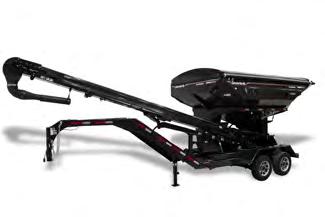
Unverferth Manufacturing Company has introduced a brand-new lineup of its Seed Runner bulk tank seed tender for 2027. The new 4960, 3960, 3760 and 2760 models boast hopper capacities of 500, 400, 375 and 275 seed units and bring operational efficiency to the next level with the innovative CAN bus communication system, electronically carbureted Honda engine and redesigned hydraulic system.
Additional standard features include an auto-tension conveyor, hopper cleanout doors, auto-throttle for the engine, LED work lights, a newly designed five-function wireless remote and a new DG3520 scale package on DXL and XL models (optional on other models).
For users wanting to stand out in the crowd, the all-new limited Midnight Edition Seed Runner tender offers a midnight metallic gray paint scheme, aluminum wheels, specialized decal package and upgraded standard features for fully loaded performance.
The Unverferth Seed Runner seed tender revolutionized the way bulk seed is delivered to planters with its patented self-filling conveyor design,
which has led the industry for nearly 20 years. The exclusive patented rubber conveyor belt features offset cleats with a U-shaped design that maximizes unloading efficiency. The cleats are molded into the rubber belt, eliminating the risk of glued-on cleats coming loose and entering the planter. Conveyor lengths are measured from the top bearing to the bottom bearing for a true measurement of reach — DXL models feature a 24-foot-long conveyor, XL models feature a 21-foot conveyor, and models 3760 and 2760 feature an 18foot conveyor.
Key highlights of the new Unverferth 60-Series Seed Runner tenders include:
• A CAN bus communication system, electronically carbureted engine with a 15 percent increase in fuel efficiency and redesigned hydraulic system that allows operators to run multiple hydraulic functions simultaneously with seamless precision.
• An auto-tension belt conveyor uses a spring-loaded tensioner that automatically keeps the belt in proper tension for reduced maintenance requirements and has a convenient gauge for quick tension reference.
• A new standard five-function wireless remote controls the conveyor on/off, conveyor raise/lower, hopper door open/close, engine start/stop and engine throttle. The remote features a weight readout for units equipped with scales, controls the conveyor speed,
CASE IH LAUNCHES NUTRI-TILLER 1000 SERIES TO BOOST LONG-TERM SOIL HEALTH
Case IH is now offering farmers a new strip-till solution built on the proven agronomic performance of Case IH tillage equipment, delivering enhanced soil conservation while maintaining strong yield potential.
The Nutri-Tiller 1000 series strip-till tool offers farmers the best of no-till and conventional tillage benefits with fewer field passes needed, reduced costs and integrated precision technology.
The Nutri-Tiller 1000 series strip-till tool helps farmers promote strong, early emergence and boost yield potential by creating a uniform strip with an ideal berm shape. The uniform soil environment provides earlier soil temperature
turns the LED work lights on/off, and operates optional accessories such as the talc and graphite applicator, hydraulic jack, hydraulic roll-tarp and tank shaker kit.
• A new DG3520 scale package is standard on DXL and XL models (optional on 3760 and 2760 models) and features a split-screen display, automatic conveyor shutoff for unloading a predetermined weight of seed, field calc function and Bluetooth connectivity so the user can operate limited wireless remote functions from a mobile device if the remote is misplaced.
• Hopper access doors allow the operator to easily reach inside of the hopper for complete cleanout at the end of the season or between seed varieties.
• New limited Midnight Edition Seed Runner tenders are available for DXL and XL models and feature a midnight metallic gray paint scheme, specialized decal package, aluminum wheels and upgraded standard features.
For additional information, visit Unverferth.com.
warming and more consistent moisture at planting to promote fast, uniform emergence.
Operators can maintain consistent strip quality with full in-cab control of residue managers, row unit down pressure, strip keepers and berm conditioning through the independent down pressure control. This guarantees precise tuning without field stops or manual adjustments, saving time and helping operators stay productive throughout the day. Operators can store guidance lines within Case IH FieldOps™ and seamlessly send them to all connected machines.
The Nutri-Tiller 1000 series utilizes FieldOps to simplify guidance line management and prescription creation, while Active Implement Guidance ensures accurate planting within the strip-till passes — all managed through the Pro 1200 display, enabling operators to minimize overlap, optimize input use and achieve more precise placement on every pass.
For more information, visit caseih.com.
OFF THE TOP
TRUMP ADMINISTRATION ANNOUNCES ASSISTANCE FOR SUGAR FARMERS IMPACTED BY UNFAIR MARKET DISRUPTIONS
U.S. Secretary of Agriculture Brooke L. Rollins announced in late February the U.S. Department of Agriculture (USDA) is providing $150 million in assistance to American sugarbeet and sugarcane farmers in response to temporary market disruptions and increased production and processing costs.
These one-time payments build upon the previously announced Farmer Bridge Assistance (FBA) program and Assistance for Specialty Crop Farmers (ASCF) program which are designed to ensure producers have the financial stability needed to continue operations and plan for the upcoming crop year.
USDA will work with sugar processors in the coming months to finalize agreements that will deliver assistance
IDAHO LEGISLATURE PASSES HJM010 URGING FEDERAL ACTION ON ARTIFICIAL SWEETENERS IN SCHOOL MEALS
The Idaho Legislature has officially passed House Joint Memorial 010 (HJM010), a resolution urging Congress and federal agencies to prohibit artificial sweeteners in federally funded school meal programs and to prioritize real sugar in school nutrition standards.
HJM010 passed both the Idaho House and Senate with strong support. The measure was sponsored in the House by Representative Jaron Crane and carried in the Senate by President Pro Tempore Kelly Anthon.
The joint memorial calls on Congress, the United States Department of Agriculture (USDA) and the U.S. Department of Health and Human Services (HHS) to reconsider the inclusion of artificial sweeteners in school meals and to ensure that federal nutrition standards prioritize ingredients with a long history in the human diet. Because school meal
directly to farmer-members.
“President Trump is committed to standing by all of our great American farmers who were unjustly hurt by President Biden’s economic mismanagement that drove up the cost of inputs and dereliction of global trade that impacted commodity markets,” said Secretary Brooke Rollins. The “… announcement serves as a bridge to improvements President Trump and Republicans in Congress have made to the U.S. sugar program including the first meaningful increase to sugar loan rates in 40 years.”
Disaster Assistance Provided To Beet Sugar Cooperatives
USDA is also providing $89.1 million in weatherrelated disaster assistance to sugarbeet producers who suffered losses due to excessive heat in 2024. This funding, provided by Congress via the American Relief Act, 2025, will be administered through eligible beet sugar cooperatives. Producers who are members of these cooperatives should contact their cooperative for more information.
standards are set at the federal level, the resolution serves as a formal request from the State of Idaho for policy review and reform.
Idaho is the nation’s second-largest producer of sugarbeets, and the industry represents approximately a billiondollar economic impact within the state. Sugarbeets are processed in Idaho, supporting thousands of jobs in rural communities.
“House Joint Memorial 010 reflects a common-sense approach to school nutrition,” said Rep. Jaron Crane. “Parents expect transparency in what is being served to their children at school.
This resolution aligns with President Trump’s Make America Healthy Again movement by encouraging federal agencies to prioritize real food ingredients over artificial additives in school meals. Protecting children and ensuring that school nutrition standards reflect the values of American families should be a national priority.”
“HJM010 sends a clear message that Idaho stands behind its agricultural producers,” said Pro Tem Kelly Anthon. “Sugarbeets are a critical part of Idaho’s economy, supporting family farms, processors, and rural communities across our state.
When we advocate for real, Idaho-grown products in federal nutrition policy, we are also supporting one of our most important agricultural industries.”
“Agriculture should have a place at the center of school meals,” said Zach Patterson, board president of the Snake River Sugarbeet Growers Association and a third-generation farmer from Paul, Idaho. “This is a win for Idaho farmers who produce and process real sugar right here at home. Supporting real food
USDA ANNOUNCES
FISCAL YEAR 2026 REASSIGNMENT OF DOMESTIC SUGAR MARKETING ALLOTMENTS
The U.S. Department of Agriculture announced updates to fiscal year (FY) 2026 domestic sugar marketing allotments and company allocations for both cane sugar and beet sugar.
As required under the Agricultural Adjustment Act of 1938, USDA periodically reassigns sugar marketing allotments to ensure available domestic sugar can be efficiently marketed for food use in the United States.
CANE SUGAR REASSIGNMENT
Based on the evaluation of each sugarcane state’s and processor’s ability to market their full allotments, USDA is transferring 315,464 short tons, raw value, of Florida’s FY 2026 cane sugar allotment to Louisiana. This action reallocates marketing authority from Florida sugarcane processors with surplus allocation to Louisiana processors with allocation shortfalls.
BEET SUGAR REASSIGNMENT
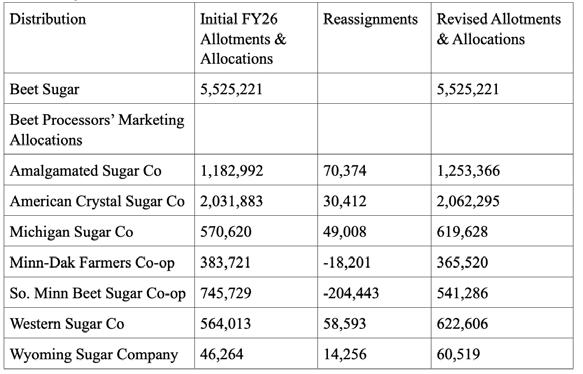
USDA is also revising FY 2026 beet sugar marketing allocations among beet sugar processors. Allocations are being transferred from processors with surplus allocation to those requiring more allocation to market their expected supplies.
These changes apply to all domestic
means supporting the families and communities behind it.”
Joint memorials do not require gubernatorial approval. Upon passage by both chambers, HJM010 will be transmitted to Idaho’s congressional delegation, congressional leadership, the United States Department of Agriculture (USDA), and the U.S. Department of Health and Human Services (HHS) for consideration.
For more information, visit snakeriverbeet.com.
cane and beet sugar marketed for human consumption in the United States from Oct. 1, 2025, through Sept. 30, 2026.
A full table listing the fiscal year 2026 revised beet and cane allotments and allocations can be found in the Federal Register notice.
SUPPLEMENTARY INFORMATION
FY 2026 Beet Reassignment
In addition, after evaluating each
beet sugar processor’s ability to market its full allocation, USDA is transferring allocations from beet sugar processors with surplus allocation to beet sugar processors with deficit allocation, also shown in the table below.
USDA will closely monitor stocks, consumption, imports and all sugar market and program variables on an ongoing basis and may make program adjustments during FY 2026 if needed.
OFF THE TOP
MONSANTO
ANNOUNCES ROUNDUP CLASS SETTLEMENT AGREEMENT TO RESOLVE CURRENT, FUTURE CLAIMS
Monsanto has announced a proposed U.S. nationwide class settlement designed to resolve current and future Roundup claims alleging Non-Hodgkin lymphoma (NHL) injuries through a long-term claims program.
Leading plaintiff law firms representing the class filed a motion seeking preliminary approval of the settlement in the Circuit Court of the City of St. Louis, Missouri.
The proposed class combined with Supreme Court review in the Durnell case are independently necessary and mutually reinforcing steps in the company’s multipronged strategy designed to significantly contain the Roundup litigation.
To fund the class, Monsanto will make declining capped annual payments for up to 21 years totaling up to 7.25 billion U.S. dollars, following court approval. The long-term payment stream will provide the company with both greater certainty and control regarding its litigation costs for current claims and potential future claimants.
Separately, Monsanto also has reached agreements to settle certain other Roundup (glyphosate) cases on confidential terms. Additionally, earlier this year Monsanto settled eight remaining PCB verdicts related to the Sky Valley Education Center (SVEC) in the state of Washington on confidential terms. Monsanto also previously resolved PCB environmental cases with the U.S. states of Illinois and West Virginia.
In total, and subject to a final audit, these resolutions including litigation costs will lead to an increase of the provision and liabilities for litigation from 7.8 billion euros (including 6.5 billion euros for glyphosate) as of September 30, 2025, to 11.8 billion euros (including 9.6 billion euros for glyphosate). Based on a first estimate of all litigation-related payouts of approximately
5 billion euros in 2026, Bayer expects a negative free cash flow for this year. To reflect the settlement agreements in the financial statements, Bayer is shifting its announcement of 2025 year-end financial results and 2026 guidance to March 4.
The immediate financing of these resolutions, as well as certain bond maturities, are secured by a bank loan facility of 8 billion U.S. dollars. Ultimate financing is planned to utilize senior bonds and instruments receiving equity-credit by rating agencies and not an authorized capital increase.
Monsanto is taking the Rounduprelated actions solely to contain the litigation, and the settlement agreements do not contain any admission of liability or wrongdoing. Indeed, leading regulators worldwide, including the U.S. EPA and EU regulatory bodies, continue to conclude based on an extensive body of science, that glyphosate-based herbicides – critical tools that farmers rely on to produce affordable food and feed the world – can be used safely and are not carcinogenic.
In addition to these settlements, the
company will continue to pursue other elements of its multi-pronged strategy including supporting legislation at the state and federal level, regulatory actions and other measures that are intended to help achieve regulatory clarity and contain litigation risk. Regulatory uncertainty jeopardizes the availability of current and future agricultural innovations, with potentially severe consequences for farmers and the American food system.
UNDERSTANDING MOLASSES
Valuable Byproducts
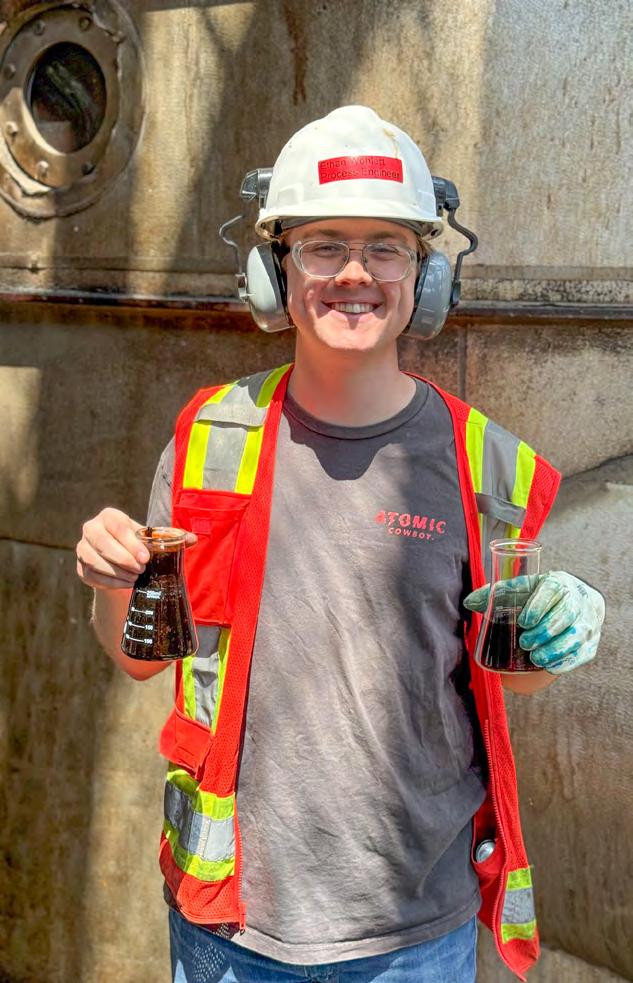
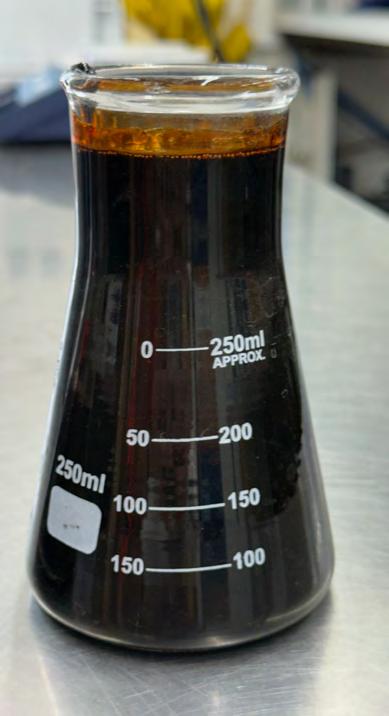
ABOVE LEFT: Ethan Wohlert, a process engineer at Amalgamated Sugar’s Nampa, Idaho, factory, holds Concentrated Separator Byproduct (CSB) and raffinate samples. Molasses and CSB are valuable byproducts of the sugar-making process. Photo courtesy of Amalgamated Sugar Company. ABOVE RIGHT: Sample of CSB: This is a sample of Concentrated Separator Byproduct (CSB). Photo courtesy of Amalgamated Sugar Company.
AND CSB:
Byproducts Of Sugarbeet Processing UNDERSTANDING
BY TRENT HOLCOMB AND HOLLY LUNA
When you think about sugar production, the image of pristine white crystals likely comes to mind. But beyond the familiar sugar, the processing of sugarbeets into sugar also yields other valuable products including molasses and Concentrated Separator Byproduct (CSB). These products are utilized in various industries, showcasing the efficient utilization of every part of the sugarbeet. Let’s explore what these products are, their diverse applications, and some key insights into their composition.
MOLASSES
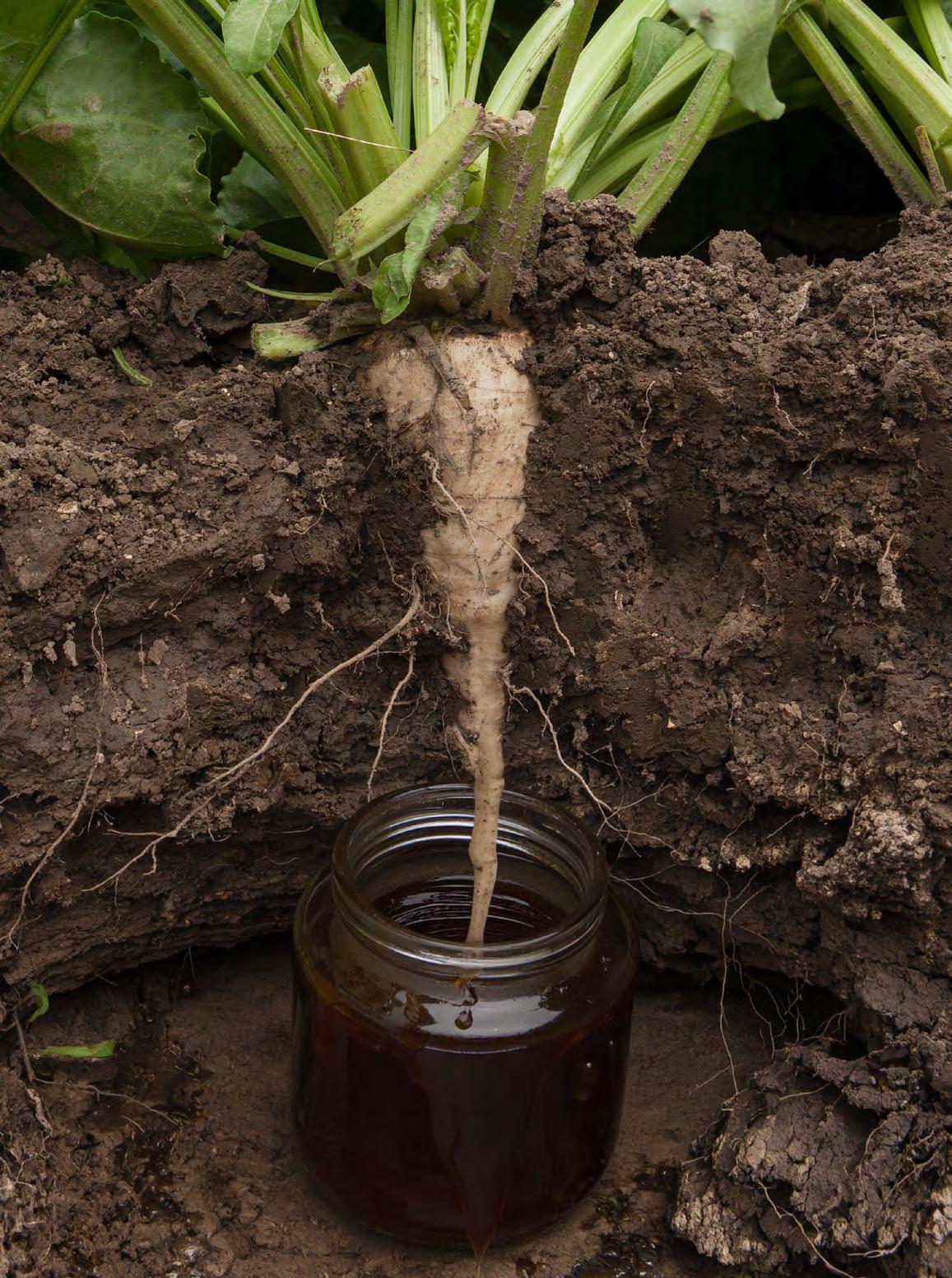
Sugarbeet molasses is the concentrated liquid byproduct that remains after the sugar has been crystallized. To produce sugar crystals, a very high concentration of sugar is required. After multiple boiling and crystallizations of thick juice, the remaining liquid, known as molasses, has a sugar purity too low for further economically viable sugar crystallization. However, this does not mean the molasses is without value.
Even after various rounds of boiling, sugarbeet molasses still contains approximately 40 to 50 percent sugar as well as a notable amount of crude protein (around 8-12 percent on a dry matter basis), a significant portion of which is betaine; and various other amino acids, minerals (like potassium, sodium, and calcium), and vitamins.
This complex composition makes molasses a versatile and sought-after commodity.
WHAT HAPPENS TO MOLASSES?
The journey for molasses often continues beyond the initial sugar extraction.
Molasses frequently undergoes further separation processes, such as chromatographic separation, designed to unlock even more value. In this sophisticated separation process, valuable components within molasses – including some residual sugar and betaine (betaine is a valuable amino acid used in animal, human and plant nutrition supplementation)–are carefully separated and concentrated into different streams.
The additional recovered sugar, now boasting a higher purity, can be reprocessed and crystallized into sugar. The betaine stream is also refined and crystallized into a valuable high-purity product and two additional byproduct streams, betaine molasses and CSB (which we’ll discuss next), that are sold into the animal and plant nutrition markets.
There are many beneficial uses for molasses, including animal feed, yeast production, de-icing mixtures … and sugared molasses cookies. This byproduct of the sugar-making process still contains 40-50 percent sugar which is why it’s so useful in many products.
Beyond this internal processing, molasses itself is sold and has important applications across in several industries:
• Animal Feed: This is a primary use of molasses, where it serves as an affordable and energetic feed ingredient for various livestock, including cattle, pigs and poultry. Its palatability, content from sugars and dust-binding properties make it an essential component in compound feeds.
• Fermentation Industry: Molasses is a crucial raw material for the production of:
o Ethanol/Alcohol: Fermentation of molasses is a common method for producing industrial alcohol and even rum-like spirits in some regions.
o Yeast: It provides the necessary sugars and nutrients for yeast production.
o Pharmaceuticals: It can be used in the production of certain vitamins and other pharmaceutical compounds.
• Agriculture (Soil Amendment): In some cases, molasses can be added to soil to promote microbial activity, contributing to soil health.
• De-icing (Ice Melt): Molasses can be mixed with salt to help it stick to roads, improving the effectiveness of deicing operations.
CSB
CSB, as previously mentioned, stands for Concentrated Separator Byproduct. It is essentially a “secondary molasses” produced during the advanced separation of sugars from regular sugarbeet molasses, often through chromatographic methods.
CSB contains significantly less sugar than standard molasses due to the additional processing. It is highly concentrated with a greater proportion of non-sugar
components, particularly amino acids and minerals.
Research indicates that CSB has higher crude protein, ash and moisture content compared to typical cane molasses, and notably, it contains betaine, which is often absent in cane molasses.
WHAT IS CSB USED FOR?
CSB is primarily utilized as an ingredient in animal nutrition and plant nutrition products. The high amino acid and mineral content and binding properties of CSB make it a valuable component in liquid nutritional formulations.
Beyond animal feed, CSB has also found a niche application in dust control and as a deicer. It’s valued as an organic product that contributes to the efficacy of de-icing solutions by helping the salt adhere better to road surfaces.
THE VALUE CHAIN CONTINUES
The journey of the sugarbeet is a remarkable example of efficiency and resourcefulness.
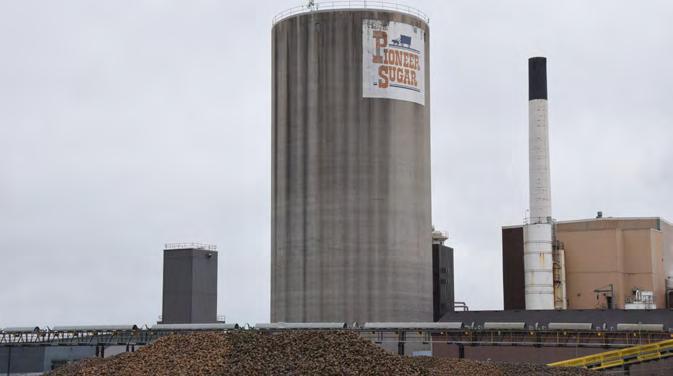
From the fields, through sophisticated processing plants and into a variety of valuable co-products like molasses and CSB, nearly every component is maximized.
This integrated approach not only yields high-quality sugar but also transforms what might once have been considered waste into valuable resources that benefit various industries, from agriculture and animal nutrition to environmentally preferable de-icing solutions.
For more information, visit www.amalgamatedsugar. com/.
(Holcomb is the plant manager at Amalgamated Sugar’s Nampa, Idaho, sugarbeet factory. Luna is the communications manager for Amalgamated Sugar and is based out of the company’s Boise, Idaho, headquarters.)
DiversityDrives Performance
PLANT WITH CONFIDENCE
In a market with limited genetic sources, diversity is your greatest asset. Hilleshög delivers the vital contrast your elds need — hybrids engineered to steady your stands, sharpen disease defenses, and drive higher sugar content.
Secure your legacy and keep your operation Generations Strong.
BUYER’S GUIDE
CROP PROTECTION
Always read and follow label instructions. Some products may not be registered for sale or use in all states or counties. Applicators should check with their respective state agencies responsible for pesticide registration to ensure registration status.
Gowan (800) 883-1844
https://www.gowanco.com/
SUGARBEET PORTFOLIO
Since 1962, beginning as a crop consultancy, Gowan Company has been rooted in agriculture, providing trusted expertise and innovative solutions for growers. This family-owned, American business works to understand growers’ challenges and is committed to delivering products and services that maximize yield and quality. Gowan provides solutions for the unique needs of sugarbeet producers.
Gowan’s dedicated sales representatives and development teams regularly work with sugar
beet growers and researchers to ensure that each product performs optimally in the field.
Summit Agro USA (984) 260-0407 www.summitagro-usa.com
REGEV BIOPOWERED FUNGICIDE
REGEV BioPowered fungicide combines a biologically-derived active ingredient with a synthetic active ingredient, giving sugarbeet growers effective fungal and bacterial disease control without compromising consistency, performance or convenience. Over several years of field trials, REGEV has demonstrated high efficacy against cercospora leaf spot, bacterial leaf spot and powdery mildew, while offering a variety of benefits:
• Nine mechanisms of activity, but subject to only one MRL
• Trifecta protection with preventive, curative and anti-sporulant control
• Limits resistance risk with the biological a.i. having FRAC Code BM01
• Reduces chemical load
• Proven SAR/ISR activity for several crops
• Enhances plant growth with boosts to yield and recoverable sugar
• Easy to use
Tessenderlo Kerley Crop Protection (800) 525-2803
tessenderlokerley.com
SECTAGON
Join a community of successful farmers who elevate their crops with Sectagon (metam). This fumigant combines the power of a fungicide, herbicide and nematicide in two formulations: Sectagon-42 (metam sodium) and Sectagon-K54 (metam potassium). Sectagon leaves no residue in the planted crop and is exempt from EPA tolerances. By choosing Sectagon-K54 or Sectagon-42, you’re suppressing weeds, diseases and nematodes alongside other dedicated growers who trust Sectagon for their fields.
Phobos FC fungicide provides strong, uniform protection against cercospora leaf spot, one of the most yield-limiting foliar diseases in sugarbeets. Containing Prothioconazole (Group 3), Phobos FC can be applied as a foliar treatment to protect crop health during critical growth stages. Field trials demonstrate that sugarbeets treated with Phobos FC showed significantly less cercospora leaf spot under high-pressure conditions, resulting in increased yield and sugar content compared to untreated checks. Its
strong, uniform leaf coverage and decreased rain wash-off contribute to total disease protection for maximum sugar content and harvest performance. For growers focused on preserving plant health and protecting recoverable sugar all the way through harvest, Phobos FC offers dependable performance when it matters most.
AZTEROID FC 3.3 FUNGICIDE
AZteroid FC 3.3 fungicide delivers early-season Rhizoctonia protection in sugarbeets through a proven, best-mixing in-furrow application, helping growers maximize yield potential and farming efficiency from the start. Containing Azoxystrobin (Group 11), AZteroid FC 3.3 targets Rhizoctonia stem canker and crown rot, key diseases that threaten stand establishment and root development. Field trials show that in-furrow applications of AZteroid FC 3.3 often equaled or outperformed banded fungicide programs alone, setting sugarbeets up for success from the start. Easy to mix and apply with liquid fertilizers, micronutrients and other crop inputs, AZteroid FC 3.3 helps sugarbeet growers establish strong, uniform stands to maximize yield potential, improving tonnage and increasing sugar content at the end of the season.
AZTERKNOT FUNGICIDE
AZterknot fungicide is designed to maximize sugar content and yield in a targeted, more efficient application. Powered by Precision Chemistry, AZterknot droplets stick and stay better on the leaf surface, improving droplet retention and maximizing the leaf surface area protected for superior foliar spray coverage. Containing azoxystrobin (Group 11) plus Reynoutria sachalinensis extract (Group P5), AZterknot provides excellent control of major foliar diseases, including Alternaria leaf spot, Pythium root rot, and Rhizoctonia stem canker and crown rot. Applied during the 4–8 leaf stage, treated plots were greener with better plant stands, leading to increased sugar content. When paired with an in-furrow AZteroid FC 3.3 application, AZterknot strengthens season-long disease protection and supports maximum sugar yield at harvest.
BUYER’S GUIDE
AMVAC
www.amvac.com/
COUNTER 20G
COUNTER 20G at-plant granular insecticide is the superior choice for sugarbeet root maggot, springtails and wireworm. The only insecticide rated excellent for control of sugarbeet root maggots and springtails, COUNTER 20G consistently delivers unsurpassed protection for your seed investment. Studies show an at-plant application of COUNTER sets the standard for sugarbeet pest control, recoverable sugar and gross returns.
THIMET 20G
Take the pressure out of postemergence infestations of adult sugarbeet maggot flies with Thimet 20G granular insecticide. Post apply Thimet for proven pest control in fields with a history of moderate to high maggot populations, after replanting and when rainfalls have been heavy or persistent following planting.
BASF Agricultural Solutions
https://agriculture.basf.us
PROVYSOL FUNGICIDE
Stay ahead of this season’s disease development and progression with a timely preventative fungicide application that includes Provysol fungicide. As one of the most effective products on the market for Cercospora leaf spot, Provysol fungicide offers sugarbeet growers flexibility in managing resistant fungal populations.
Rovensa Next www.rovensanext-na.com/en-us/
PREV-AM
PREV-AM is a 3-in-1 insecticide, fungicide and miticide. It is a contact pesticide that can be applied throughout the season without danger of resistance buildup and is perfect for controlling preharvest insect and disease infestations. With a short REI and PHI, PREV-AM is a versatile alternative to conventional pesticides and is ideal for IPM and sustainable farming practices.
The desiccating properties of PREV-AM result in quick knockdown of insects, typically within 2 to 24 hours after application. The water-repellent layer protecting most insects loses its effectiveness when contacted by a PREV-AM application. This allows the active ingredient to penetrate and destroy the soft, living tissues underneath. The insects are then exposed to the loss of body fluids, causing death.
As a fungicide, the PREV-AM spray solution breaks down the protective membranes of the superficial fungal mycelia (hyphae) and spores, allowing the active ingredient to penetrate and destroy the living tissues underneath. This exposes the organism to the drying effect of the atmosphere and causes collapse within 2 to 24 hours. Plant tissue damaged by the fungus may also dry out and prevent further spread of infection, but healthy tissue is not affected at the recommended application rate.
ENCOURAGE NANOCAL
ENCOURAGE NANOCAL is a sub-micronized, soil-applied, readily-available liquid calcium specifically formulated to be applied just prior to or at the early stages of root initiation to ensure maximum calcium uptake during this period of rapid cell division. Calcium is needed at this time to strengthen cell walls, improve root quality, mitigate storage issues and promote overall crop health. It is meant as a supplemental source of calcium available to crops during this critical stage in its
development – it is not meant to remedy a calcium deficiency in soils.
The milling process results in calcium particles that average less than 1 micron in size. This sub-micronized calcium is more readily taken up by the crop than larger particles contained in other calcium products. And, unlike foliar calcium applications that do not readily move in the plant, NANOCAL is taken up by the roots and, with its TransXylem technology, is rapidly translocated to the roots and the entire plant.
Miller Chemical (800) 233-2040
www.millerchemical.com
SUSTAIN ADJUVANT
Sustain is a new, unique class of adjuvant with nonionic properties based on Miller Chemical’s proprietary Pinolene technology. This adjuvant is designed to improve the contact, wetting and adhesion of pesticides and fertilizers on plant and soil surfaces. Sustain forms a soft, microscopic film that polymerizes, protecting spray deposits from rainfall erosion, volatility, and ultraviolet (UV) degradation.
Sustain is effective in limiting the leaching and migration of soil active herbicides. Once applied, it begins to polymerize and form an elastic, microscopic film in the environment. This, in turn, helps to provide longevity of herbicides in the root and shoot zone, thereby maximizing herbicide activity in the target area and reducing leaching.
SAN Agrow (800) 876-2767
www.san-agrow.com
SUPPRESS HERBICIDE EC
SUPPRESS Herbicide EC is a safe and highly effective tool for both organic and conventional weed management programs. It is registered as a broad-spectrum contact herbicide for postemergent, non-selective weed control for use in and around all food and non-food crop areas. The proprietary and patented formulation is a non-volatile, emulsifiable concentrate that is OMRI- and WSDA-approved for use in certified organic food production.
With years of university testing and grower-proven efficacy, SUPPRESS consistently provides fast and effective burndown in a wide variety of weeds. It is
also a great tank-mix partner to enhance conventional herbicide efficacy, and is an excellent IPM tool to rotate with conventional herbicides to minimize resistance. SUPPRESS is low-foaming, easy to use, and has no pre-harvest interval, so it can be applied up to the day of harvest.
AMERICAN SUGARBEET GROWERS ASSOCIATION
By Luther Markwart, Executive Vice President
Growers Receiving Some Relief But More Is Needed
ASGA also active on the glyphosate issue
Global events and domestic policy developments continue to move at rapid speed.
The amount of activities in the first three months of this year is mindboggling. Many of those activities do not impact agriculture, but some of them have profound effects. Let’s look at those that have the greatest impact on our growers.
In March it was announced that sugarbeets will receive roughly $136 million of the $150 million set aside for the domestic sugar industry as part of the Farmer Bridge Assistance (FBA) Program. This is a direct result of beet growers coming to Washington and working 100 congressional and administration offices in December. Your congressional champions worked hard to get the money and we appreciate the administration for its support.
Clearly our losses were significantly higher. Additional requests for economic assistance were part of our February/March fly-in massaging, covering more than 300 offices. Like with FBA, your industry representatives in Washington will be pressing Congress for additional assistance through a supplemental appropriations package.
While economic assistance is critical for our industry, it’s only a short-term fix. The industry’s long-term health depends on stopping the flow of imported surplus sugar that is devastating our market. Grower leaders carried that message to Congress as part of the fly-in. Your industry representatives will continue to press that effort in the months ahead.
We are grateful for Chairman Thompson’s efforts in March to move a Farm Bill in the House of Representatives. The House committee reported a bill out the first week of March. If a bill can clear the House, it puts plenty of pressure on the Senate to complete their work and get the bill done. I can assure you none of this will be easy as there is plenty of political friction in play.
With the Supreme Court striking down the IEEPA reciprocal tariffs imposed early last year by the President, the administration is pivoting to other authorities to impose tariffs. They are the most effective tool to continue to rebalance trade with our global
suppliers and customers. Clearly, we have a serious problem of surplus sugar entering our country because of an insufficient tariff. Foreign exporters are selling their sugar on the world market below their cost of production, making our protective tariff ineffective. Both the administration and Congress must address this problem and return balance in the domestic market. We are working on this issue every day as our number one priority.
ASGA, along with other commodity groups, filed an amicus brief with the Supreme Court in Monsanto vs. Durnell. This case seeks to end states requiring a warning label on glyphosate, or any other pesticide, that is not required by EPA under FIFRA. This is a much bigger issue than glyphosate, even though it’s the particular pesticide in this case. FIFRA must preempt the states over warning labels. The case is expected to be heard by the court on April 27. You may listen to the arguments before the court by visiting its website.
While it upset the MAHA followers, it was critically important to American agriculture.
While on the subject of glyphosate, President Trump issued an executive order using the Defense Production Act to ensure adequate domestic supply of elemental phosphorus and glyphosate-based herbicides. While it upset the MAHA followers, it was critically important to American agriculture.
Finally, we would like to express our deep appreciation for the contributions to the beet sugar industry by Dr. Nick Storer who has been on our staff for the past two years. Nick has been navigating some family health challenges over the past few months and has decided he needs to prioritize time with family and friends. We also appreciate that Nick has offered an extended transition period to accommodate the needs of the organization.
AMERICAN SUGAR ALLIANCE
By Rob Johansson, Director of Economics & Policy Analysis
Trying To Stem Tide Of Subsidized Foreign Sugar Imports
Spreading that message is of essence
Last month, more than 75 sugarbeet and sugarcane producers came to Capitol Hill to talk about the challenges they are facing back home: increased input costs, cratering sugar prices and a freeze in South Florida, among others.
Margins are always tight in agriculture, but the situation is becoming untenable for many farmers.
As Idaho sugarbeet farmer Zach Patterson, president of the Snake River Sugarbeet Growers Association, wrote in a recent op-ed published in the Idaho Statesman:
“Some [sugarbeet farmers] are even tapping into farm equity to try to keep the farm afloat for another year. Sugar is an incredibly important food ingredient, and we need to produce it in America, but farmers can’t do that if they are losing hundreds of dollars an acre multiple years in a row, as foreign sugar overwhelms the U.S. market.”
The personal stories shared by farmers underscored the trends we see in the data. In late February, I joined several sugar industry analysts at the International Sweetener Colloquium. The consensus among these experts was that the U.S. sugar market is experiencing immense pressures from lowered demand and increased subsidized foreign sugar imports – ultimately leading to an oversupply of sugar in the U.S. market.
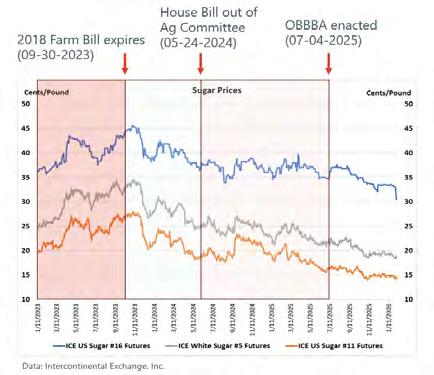
Last summer, we celebrated the passage of the most meaningful changes to U.S. sugar policy in 40 years with
the passage of the One Big Beautiful Bill Act. These changes were much needed and were years in the making. In fact, they were first voted on in 2024 with the House Agriculture Committee’s bipartisan passage of their Farm Bill proposal.
Yet in the two years between that vote and where we stand now, there have been drastic changes in the market. Sugar prices have declined significantly since the formulation of the current Farm Bill provisions. At the same time, costs of production have continued to trend upwards.
The U.S. is also awash in a flood of highly subsidized foreign sugar, which is coming in above and beyond the quotas established by our trade agreements. More than 1.5 billion pounds of out-of-quota sugar imports entered the U.S. last year with more coming this year.
To add to the above challenges, demand is also down 3.4 percent over the past four seasons according to the latest USDA estimates. Our farmers have been experiencing good crops – hitting new records in some regions – but the oversupply of sugar from unlimited foreign imports combined with lower demand is creating a crisis in the heartland. As Minnesota sugarbeet grower Ben Larson noted in his meetings in DC, “Everything has gone up this year – even a good crop doesn’t seem like it’s paying the bills like it should.”
In total, American sugarbeet and sugarcane farmers have lost approximately $2 billion in potential income over the past two years due to highly subsidized foreign sugar.
In February, the U.S. Department of Agriculture (USDA) announced $150 million in needed economic aid for America’s sugar producers. This will be a critical aid infusion for our farmers who are experiencing tight –and in many cases, negative – margins, threatening the economic viability of multi-generational family farms and the sustainability of the entire domestic sugar industry. We know there are growers who are facing dire straits, both economic and due to the recent freeze, and we will continue working with Congress and the administration to greenlight additional assistance where needed.
There is no doubt that we must preserve American family farms and factories. We are very seriously examining all possible solutions to ensure we can maintain a reliable made-in-America supply of this essential food ingredient.
THE SUGAR ASSOCIATION
Courtney Gaine, PhD, RD, President & CEO
Frozen Alchemy: The Science Of Sugar And Your Ice Cream Scoop
Discover the surprising science behind America’s favorite frozen treat
Did you know the average American eats about 20 pounds of ice cream every year?
That’s a lot of scoops. And chances are, many of them are vanilla - the longtime No. 1 ice cream flavor in the United States.
Those scoops are also most likely to appear at a very specific moment: Sunday evening, when Americans reach for ice cream more than any other time of the week. For reasons science has yet to fully explain — but dessert lovers fully understand — the end of the weekend inspires Americans to reach for a bowl, a spoon and a little sweetness.
But that comforting dish of vanilla isn’t just a tasty tradition. It’s also a tiny triumph of food science. Behind every creamy bite is a careful balance of dairy, air, freezing — and one ingredient that quietly makes it all work: sugar.
Real sugar — from sugarbeets and sugarcane — does far more than simply sweeten ice cream. In many ways, it acts as the behind-the-scenes architect of the dessert’s texture, scoopability and stability.
ICE CREAM: A DELICIOUS BALANCING ACT
To understand sugar’s role, it helps to know what ice cream actually is.
From a scientific perspective, ice cream is a frozen foam and an emulsion, which sounds far less delicious than it actually is. It contains ice crystals, air bubbles, fat droplets and a concentrated sugar solution — all suspended in a semi-solid structure. Each component has a job to do, and when the balance is right, the result is the smooth, creamy texture we love.
During freezing, the mixture is churned as it cools. Air is whipped in, and water slowly begins to freeze. The key to creaminess is forming tiny ice crystals — so small they feel silky rather than crunchy.
This is where sugar steps in as a critical player.
Without sugar, the mixture would freeze into something closer to an icy block than a creamy dessert.
Sugar lowers the freezing point of the mixture, meaning not all the water turns into ice right away. Instead, some remains in liquid form, allowing the ice cream to stay soft enough to scoop straight from the freezer. Without sugar, the mixture would freeze into something closer to an icy block than a creamy dessert.
Sugar also helps control crystal size. By slowing down the freezing process, it allows the mixture to churn and stabilize, preventing large crystals from forming. The result is the velvety texture that defines great ice cream.
Fun fact: Ice cream contains 30–50 percent air, depending on the brand. This built in fluff (called overrun) is why a pint of premium ice cream can feel noticeably heavier than a budget brand — they literally whip in less air.
THE SECRET TO SCOOPABLE PERFECTION
Sugar’s job doesn’t stop once the ice cream is frozen. It continues to help control ice crystal growth over time. As the ice cream sits in the freezer — and especially as it’s taken in and out — temperature changes can make crystals grow bigger, a process called recrystallization.
Sugar slows this process, helping ice cream stay smooth and enjoyable even after a few late-night returns to the freezer — strictly for quality control, of course.
Fun fact: The ideal serving temperature for ice cream is about 6–10 degrees F warmer than your freezer at 0 degrees F. Letting it sit for a minute or two helps soften the structure and releases more flavor.
THE SWEET SCIENCE BEHIND EVERY SCOOP
The next time you dig into a bowl of ice cream on a Sunday night (or anytime!) take a moment to appreciate the science in your spoon. That creamy scoop didn’t happen by accident. It’s the result of a carefully crafted blend of ingredients working together to create one of the world’s most beloved treats.
And at the center of it all is sugar — the quiet ingredient that helps transform milk and cream into something magical.
Field-proven Solutions™!
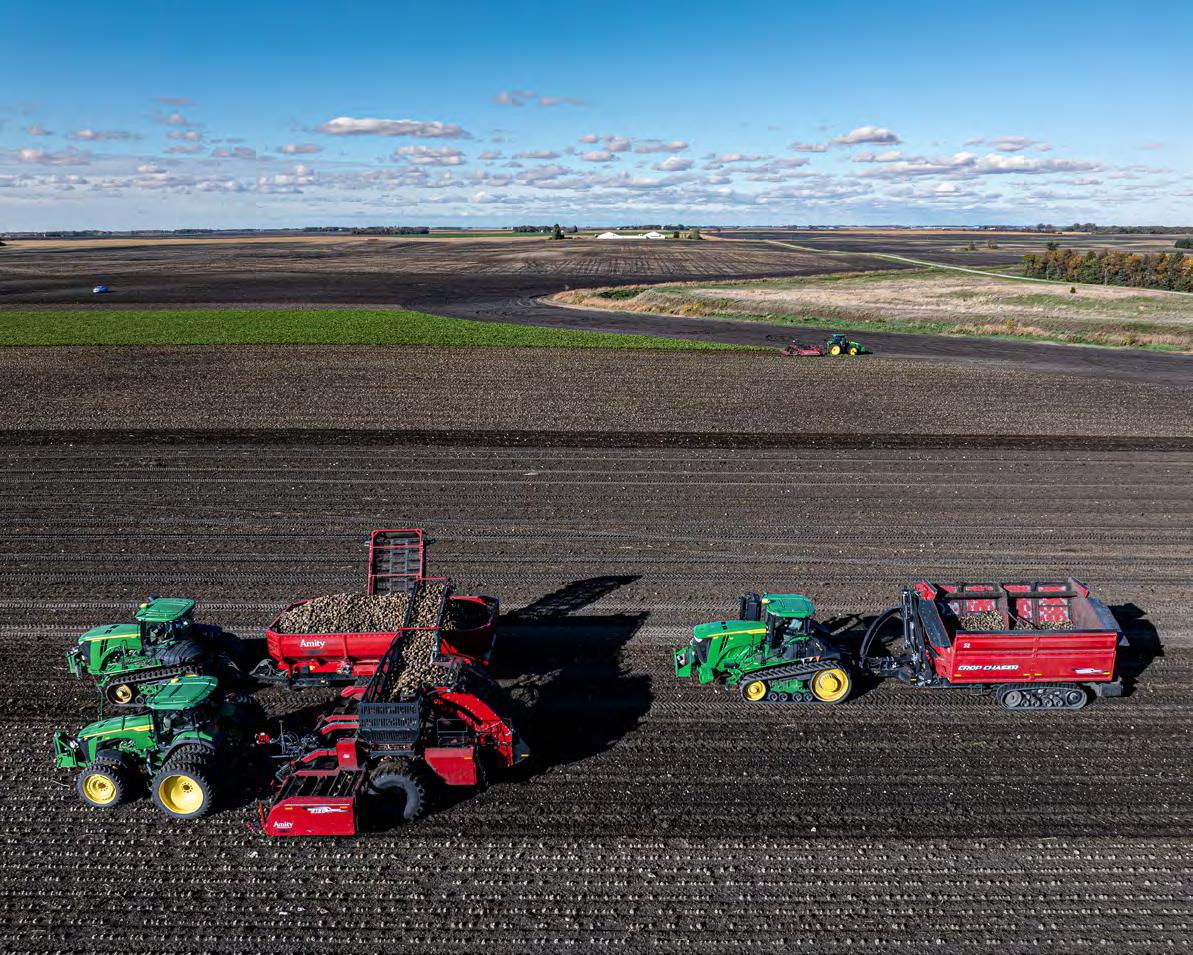
Amity Technology has the solution for you!
Amity Technology’s line-up is field-proven to deliver high-quality, properly defoliated sugar beets in any field condition.
Amity’s 50 Series Defoliators are engineered to properly defoliate sugar beets while matching harvester speed. Our exclusive shrouded front drum lifts and finely sizes leaves, then places them between the rows.
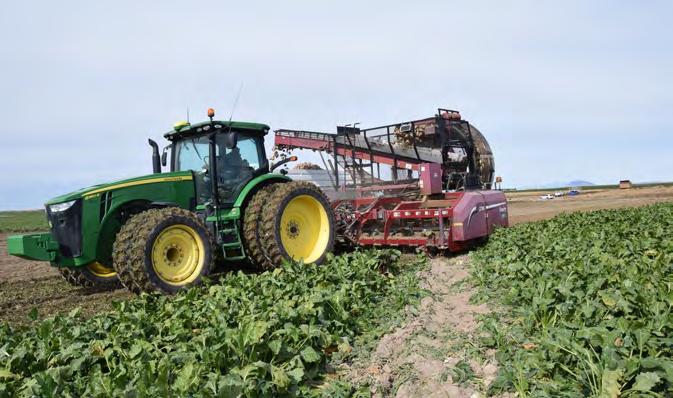
Amity harvesters are the gold standard in the industry. With features like Active Depth Control, High Profile Chain, Dynamic Chain Management, and an ultra-cleaning scrub tower, Amity harvesters can be configured to fit your operation. Plus, with Amity’s field-proven lifter wheels, you will harvest all the tap root and leave extra tare behind.
Amity’s Sugar Beet Cart and Crop Chaser™ provide efficient transport in all field conditions. These high-capacity tanks keep harvesters moving in the field.