The Power Of Partnership:



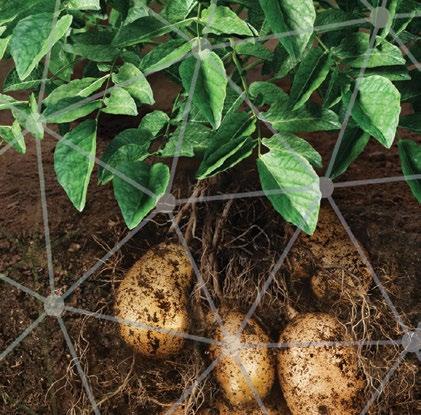
Your crops deserve more than just conventional fertilizer. Dairy Doo® blends will feed the biology that drives nutrient uptake, improves soil structure, and sets your crop up for success from the start.
Our Custom Blends are built for your acres, your soil tests, and your goals—because when you farm the soil first, you grow better potatoes.

✅ Proven on farms across across Michigan and beyond ✅ Available for broadcast or in-furrow application ✅ Backed by agronomists who understand your crop

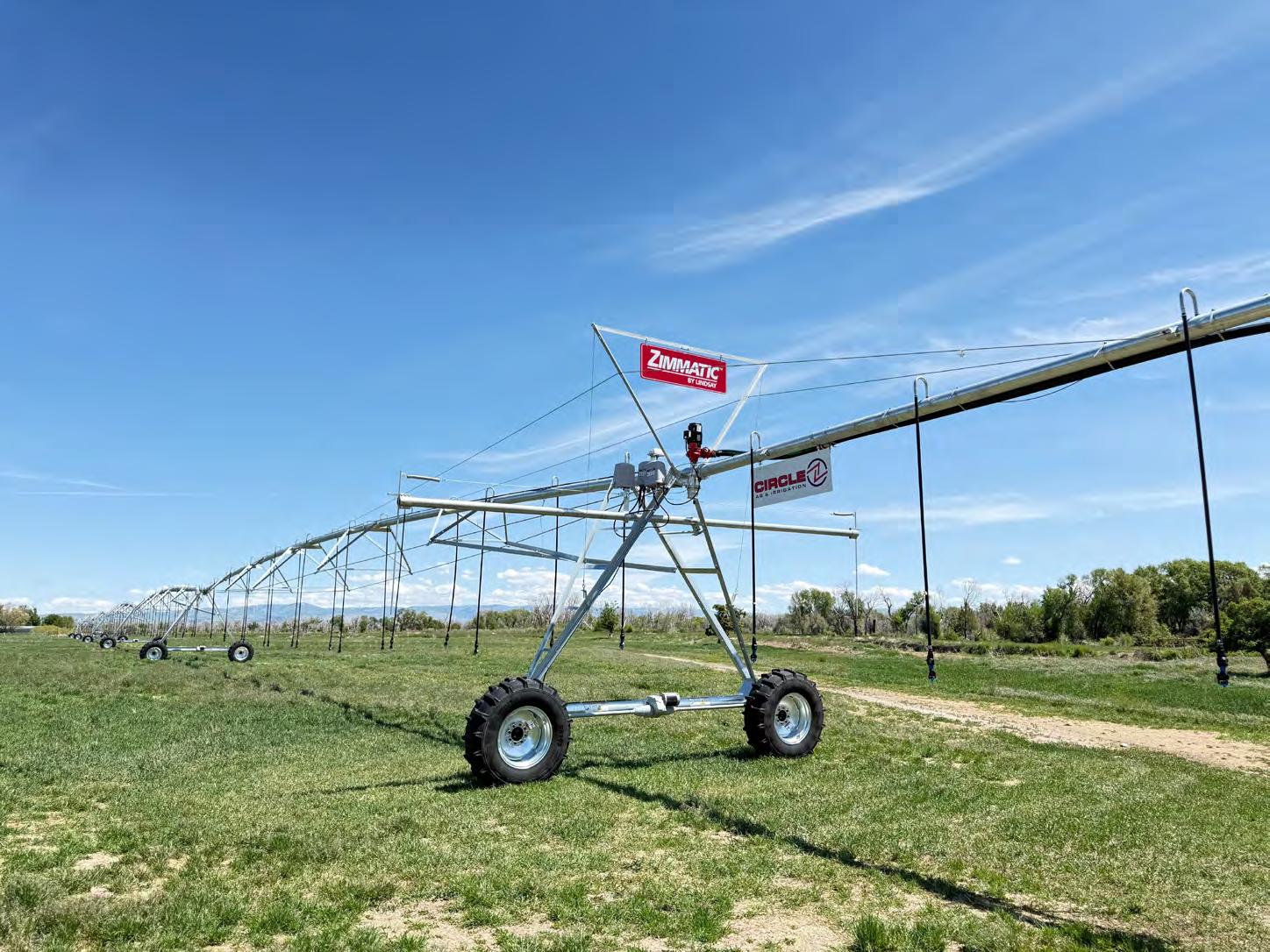
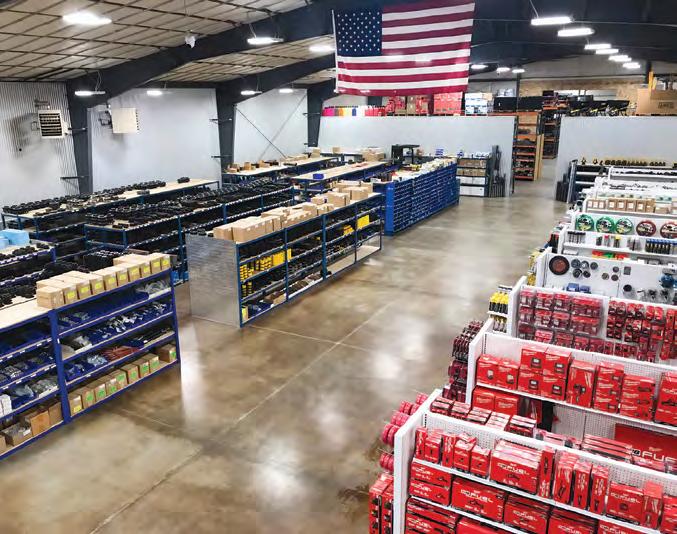
As spring approaches, Circle Z is ready to cater to all your preseason irrigation requirements. Lindsay has introduced exclusive pricing for the Spring Start-Up, simplifying the process of turning on your water!
Visit your nearest Circle Z store located in Rexburg, Hamer, Idaho Falls, and Blackfoot to explore our inventory.
With the added resources and parts support from BTR Global and BTR Double L, Circle Z has everything you need to complete your project.
For inquiries, contact us at 208-881-5160 or info@circlezag.com. www.circlezag.com

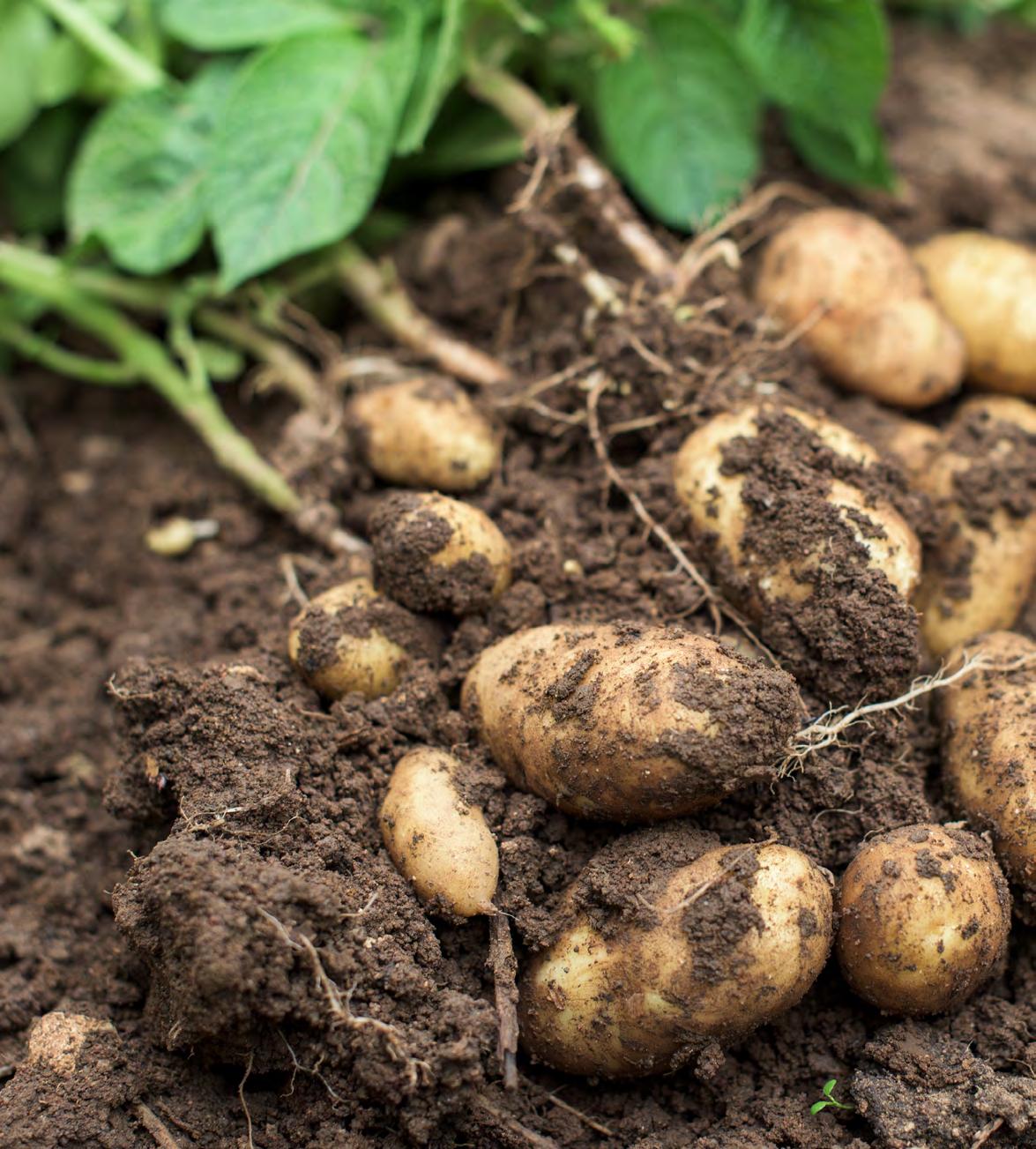

BRANDT Smart Quatro Plus isn’t just a foliar solution – it’s an investment in maximizing crop performance. With a complete package including B, Mn, Mo and Zn, it provides crops with the nutrients they need to thrive. The result? Healthier crops and better yields. Take Control with BRANDT Smart Quatro Plus and watch your profits grow.

May
Published 13 times a year by Harris Publishing Inc.
SUBSCRIPTIONS:
U.S. and Possessions
$24.00 per year, International $120.00 per year. To subscribe call (800) 638-0135
Copyright 2026 Harris Publishing Inc. All rights reserved.
Reproduction in whole or in part without permission is prohibited. Back issues available at $5 per copy. Limited quantities. Publisher not responsible for content of materials submitted.
PRESIDENT
Jason Harris
VICE PRESIDENT
Chuck Harris
TREASURER
Clayton Ward
Canadian Publisher’s reement No. 40606038, Customer No. 7004671.
Mailed under a standard rate mailing permit at Idaho Falls, Idaho, and at additional mailing offices. Also Publishers of SugarProducer
PUBLISHER
Jason Harris
EDITOR
Lane Lindstrom lane@potatogrower.com
ADVERTISING DIRECTOR
Rob Erickson rob.erickson@potatogrower.com
PRODUCTION
Sandon Wixom
GRAPHIC ARTIST
Laci Thompson
CIRCULATION
Chuck Harris
IT DEPARTMENT
Chuck Harris
ACCOUNTING
Clayton Ward
NATIONAL POTATO COUNCIL (202) 682-9456 www.nationalpotatocouncil.org

FOUNDED BY Darryl Harris
CORPORATE OFFICES:
HARRIS PUBLISHING INC. 190 E 1st Street Idaho Falls, ID 83401 208-523-1500 www.potatogrower.com
POTATOES USA (303) 369-7783 www.potatoesusa.com
UNITED POTATO GROWERS OF AMERICA (801) 266-5050 www.unitedpotatousa.com
ALLIANCE FOR POTATO RESEARCH & EDUCATION www.apre.org
POTATO ASSOCIATION OF AMERICA (734) 239-8022 www.potatoassociation.org
APRIL 8-9
Idaho Grower Shippers
Association Spring Swing
South Pointe Hotel Las Vegas, Nevada www.idahoshippers.org
APRIL 15-17
Agri-Marketing Conference
Marriott St. Louis Grand St. Louis, Missouri www.nama.org
MAY 11-14
Food Safety Conference
Donald E. Stephens Convention Center Rosemont, Illinois www.food-safety.com
MAY 15-17
North Carolina Potato Festival
Elizabeth City, North Carolina Ncpotatofestival.com
JUNE 2 AND 4
13th Annual Ag World Golf Classic
June 2 – Canyon Lake Golf Course, Kennewick, Washington
June 4 – The Links at Moses Pointe, Moses Lake, Washington https://agworldgolf.com
JUNE 21-23
Washington Potato & Onion Association Convention
Marcus Whitman Walla Walla, Washington http://wapotatoonion.com
JUNE 24
Oregon State University Potato Field Day
Hermiston Agricultural Research and Extension Center Hermiston, Oregon https://agsci.oregonstate.edu/harec/ hermiston-agricultural-research-andextension-center
JUNE 25
Washington State University
Potato Field Day
WSU Agricultural Research and Extension Center
Othello, Washington https://potatoes.wsu.edu/
JULY 11-19
Maine Potato Blossom Festival
Fort Fairfield, Maine www.mainepotatoblossomfestival.com/
JULY 15-17
Potato Sustainability Alliance Summer Symposium
Plover, Wisconsin https://potatosustainability.org/
JULY 26-30
Potato Association Of America
Annual Meeting
New Orleans Marriott New Orleans, Louisiana potatoassociation.org
JULY 26-29
Soil & Water Conservation Society Annual Conference
Hilton St. Louis at the Ballpark St. Louis, Missouri www.swcs.org/events
AUGUST 4-6
Minnesota Farmfest
Morgan, Minnesota www.farmfest.com
SEPTEMBER 2-4
IGSA 98th Annual Convention
Sun Valley Resort
Sun Valley, Idaho www.idahoshippers.org
SEPTEMBER 15-17
Husker Harvest Days
Grand Island, Nebraska huskerharvestdays.com
in Idaho Falls, ID by Falls Printing rob.erickson@fallsprinting.com
INTERNATIONAL POTATO CENTER www.cipotato.org

Arino™, an innovative insecticide and nematicide powered by RinoTec™ Technology, protects potatoes against grubs, nematodes and wireworms. Its proven performance without harsh chemicals is a small addition that makes a big difference to your long-term success.

AGCO introduced MF Always Running, a new maintenance program from Massey Ferguson, designed to help farmers achieve better control of ownership costs, reduce uncertainty and stay productive during critical work windows.
Available on all model year 2026 Massey Ferguson S Series tractors, MF Always Running combines a three-year, 3,000-hour factory warranty; scheduled maintenance; and a 48-hour loaner commitment into one standard program. It is designed to simplify ownership and help ensure consistent uptime without additional contracts or upcharges. With constrained operating windows, higher input expenses and limited capacity for unplanned interruptions, farmers continue to face significant operational pressures. MF Always Running is
purposefully designed to support farmers by providing a dependable solution they can rely on through straightforward coverage and dealer managed service.
The MF Always Running program includes:
• Predictable costs through a three-year, 3,000hour factory warranty with scheduled maintenance included
• Guaranteed uptime with a 48-hour loaner commitment if covered repairs require extended service time
• Built-in support with maintenance and service coordinated by the local Massey Ferguson dealer The program is designed to help operators stay focused on their operation while minimizing disruptions caused by service scheduling or unexpected repair expenses.
For more information, visit www. masseyferguson.com.

John Deere Launches G5e Universal
John Deere announced the introduction of the G5e Universal and CommandCenter displays designed to offer a scalable entry point into the John Deere Precision Ag ecosystem, tailored for farmers and ranchers, those newer to precision ag technology, and operations with mixed fleets. The new G5e displays bring customers an easy-to-use and affordable solution, allowing them access to John Deere’s technology portfolio at an approachable entry point. Unlocking wireless connectivity; ISOBUS certification; and compatibility with tractors, implements and utility vehicles, the G5e provides farmers with an

easier opportunity to benefit from documentation, guidance and section control.
Featuring an 8-inch touchscreen, Wireless Data Transfer and Remote Display Access, the G5e boasts a quick install time and supports broad compatibility across machine types. The G5e display integrates seamlessly with core John Deere precision ag tools and the John Deere Operations Center, enhancing connectivity and decision-making.
Available in both Universal and CommandCenter formats, G5e offers scalable and optional
New Holland is introducing its largest and most powerful T7 Series tractor ever, the T7 XD. Designed and built to meet the power and speeddriven demands of today’s haulage, hay and forage or row crop operations, the T7 XD delivers up to 435 horsepower while maintaining the versatility required for daily fieldwork, transport and implement applications.
T7 XD tractors are available in three models: the T7.360 XD, T7.390 XD and T7.440 XD. Each is engineered with the horsepower, hydraulic capacity and PTO performance needed to handle a wide range of tasks, from high payload haulage and silage work to planting and tillage.
At the heart of the T7 XD is a robust 8.7liter, 6cylinder FPT Cursor 9 engine, delivering 360 to 435 horsepower across the three models in the series. The engine, designed specifically for the T7 XD, delivers maximum power across a broad rpm range, with peak torque arriving at 1,400 rpm. Its power curve maintains consistent output to ensure maximum power is always available.
Matched with an upgraded Auto Command 4x2
licenses, including:
· AutoTrac
· Section Control
The G5e display stands out in a market filled with entry-level displays by combining simplicity with the power of John Deere’s connected ecosystems. The G5e delivers greater long-term value through its integration with the John Deere Operations Center and gives farmers easier access to precision ag capabilities that ultimately increase productivity on the farm.
For more information, visit JohnDeere.com.

CVT transmission, operators experience an enginetransmission combination that delivers smooth, responsive power exactly when and where it’s needed, ensuring efficient performance across every job in the field and on the road. The transmission also electronically manages engine speed to reduce fuel consumption; and at idle, the engine drops to 650 rpm to further enhance fuel efficiency.
A newly engineered rear three-point linkage provides exceptional lifting capability. An integrated front hitch
design and a two-speed front PTO add operational flexibility and fuel efficiency. Together, these innovations deliver the strength, precision and performance required for the most demanding applications.
A key differentiator of the T7 XD is how it delivers exceptional power without sacrificing compact dimensions. An extended wheelbase provides added stability while sculptured front axle support offers excellent maneuverability, particularly when operating with dual wheels. Its impressive turn radius enables operators to manage headlands efficiently, including turning with a 16row planter. At the same time, the tractor provides the hydraulic capacity and power needed to run larger implements — such as a 24row planter — for customers focused on highacre production.
The T7 XD redefines control and performance both in the field and on the road. With a top road speed of 37 mph, operators can reduce cycle times during jobs such as silage harvesting, manure hauling and traveling between fields. A new Terraglide independent front axle suspension, enhanced with anti-roll control, provides superior stability and precise handling for a smooth ride across all terrains.
Oil-cooled inboard front brakes, combined with an industry-leading engine brake and the New Holland Intelligent Trailer Braking System, provide confident stopping power and improved control when transporting heavy loads at higher speeds.
In-field efficiency is further increased by the introduction of a fully integrated central tire inflation system. Operators can adjust tire pressure directly from the cab, allowing lower pressures when working in the field to improve traction, minimize soil compaction and maximize fuel efficiency. Once fieldwork is complete, fast reinflation improves handling and fuel efficiency while reducing tire wear during road transport.
Functionality and comfort take center stage in the design of the new T7 XD tractors. Sporting the exceptionally quiet, industry-leading Horizon cab, equipped with a new dynamic Comfort Ride cab suspension system, the T7 XD delivers a comfortable working
environment. Improved climate control features, excellent all-around visibility and intuitive controls help operators stay focused and productive throughout long workdays.
In addition, the latest user interface, the IntelliView 12 touchscreen display, is featured and provides easy access to the tractor’s settings, implement control and precision farming functions.
Factory-fit precision technology unlocks a new level of connectivity and productivity for the T7 range. The T7 XD models are equipped
with New Holland FieldOps farm management application, enabling seamless connectivity, machine monitoring and data sharing, straight from the field to the farm office. Additionally, the T7 XD offers a 750-hour engine service interval and Top Protect, a complete support package including a three-year factory warranty, a three-year Top Maintain maintenance plan and Top Service uptime assistance.a
For more information, visit https://agriculture. newholland.com/en-us/nar.

GROUP INSTALLS GROWER LEADERS ELECTED TO
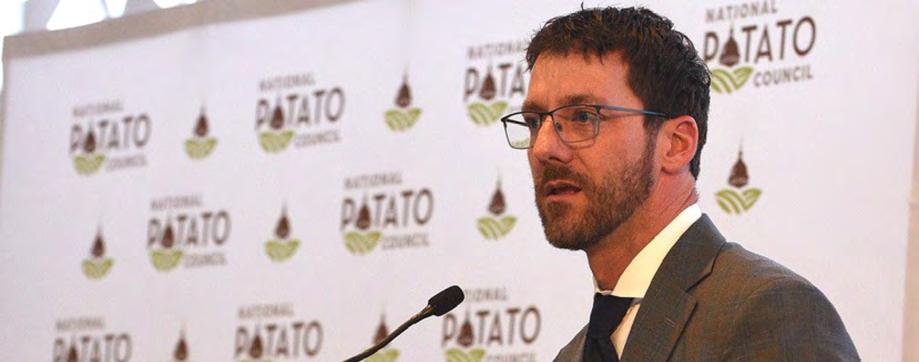
Washington, D.C. – The National Potato Council (NPC) installed its 2026 roster of executive committee leaders at the organization’s annual NPC Washington Summit. During the Annual Meeting of the Voting Delegates on Monday, Feb. 23, Ben Sklarczyk of Johannesburg, Mich., was elected to serve as the Council’s president for the next 12 months.
Sklarczyk is a third-generation grower and owner of Sklarczyk Seed Farm, a hydroponic seed potato operation based in his hometown of Johannesburg. Sklarczyk assumed full ownership of the family business 10 years ago, when he and his wife, Alison, purchased it from his father, Don Sklarczyk, who served as president of NPC in 2007.
Sklarczyk’s path to the family business was not immediate. Although he grew up working on the farm’s row crop side, he initially pursued a degree in mechanical engineering at Western Michigan University. However, a realization during his first semester led him to transfer to Michigan State University, where he graduated in December 2003 with a degree focused on agriculture.
A long-time advocate for the industry, Sklarczyk has been involved with NPC since the early 2000s and joined the NPC Board of Directors in 2010. Before being elected president for 2026, he served nearly a decade on the executive committee, holding various leadership roles, including first vice president, vice president of Grower Outreach and Industry Research, vice president of Environmental Affairs and vice president of Finance.
As president, Sklarczyk is committed to bringing
strength and resilience to the potato industry. “Our 2026 agenda will focus on capitalizing on new federal dietary guidelines to promote potatoes as a staple of good health, ensuring fair trade practices for U.S. potatoes globally, and removing non-tariff trade barriers,” said Sklarczyk. “I also want to emphasize the importance of grower engagement with state and federal representatives to ensure the industry’s voice is heard in policy-making.”
Sklarczyk and his wife, Alison – who serves on the Potatoes USA Board of Directors – reside in Michigan with their two children, Morgan and Dane.
The full NPC Executive Committee roster includes:
• President – Ben Sklarczyk (Johannesburg, Mich.)
• First Vice President and Vice President, Legislative Affairs – Dean Gibson (Paul, Idaho)
• Vice President, Environmental Affairs – Chris Olsen (Othello, Wash.)
• Vice President, Finance – Greg Harris (Boardman, Ore.)
• Vice President, Grower Outreach and Industry Research – TJ Hall (Hoople, N.D.)
• Vice President, Trade Affairs – Brett Jensen (Idaho Falls, Idaho)
• Immediate Past President – Ted Tschirky (Pasco, Wash.)
As a grower-led organization, NPC is managed by an executive committee and board of directors, which oversees its operations and provides guidance on its policy activities. Board members are appointed by the delegates at the annual meeting from recommendations submitted by state potato grower organizations and hold office for one calendar year.
For more information, visit nationalpotatocouncil.org.
In 2026, Team Potato is sponsoring 26 runners for the Pittsburgh Marathon on May 3.
Participating Speedy Spuds can run the Pittsburgh Half Marathon, Full Marathon or Marathon Relay. Why 26 runners? There are 26g of carbohydrates in an average-sized potato.
The goal of the Speedy Spud sponsorship is to educate people about the benefits of potatoes as an affordable, delicious and nutrient-dense source of fuel.
The Speedy Spud race sponsorship celebrates the fantastic benefits of potatoes for athletes of all fitness levels.

Monsanto has announced a proposed U.S. nationwide class settlement designed to resolve current and future Roundup claims alleging Non-Hodgkin lymphoma (NHL) injuries through a long-term claims program.
Leading plaintiff law firms representing the class filed a motion seeking preliminary approval of the settlement in the Circuit Court of the City of St. Louis, Missouri.
The proposed class combined with Supreme Court review in the Durnell case are independently necessary and mutually reinforcing steps in the company’s multi-pronged strategy designed to significantly contain the Roundup litigation.
To fund the class, Monsanto will make declining capped annual payments for up to 21 years totaling up to 7.25 billion U.S. dollars, following court approval. The long-term payment stream will provide the company with both greater certainty and control regarding its litigation costs for current claims and potential future claimants.
Separately, Monsanto also has reached agreements to settle certain other Roundup (glyphosate) cases on confidential terms. Additionally, earlier this year Monsanto settled eight remaining PCB verdicts related to the Sky Valley Education Center (SVEC) in the state of Washington on confidential terms. Monsanto also previously resolved PCB environmental cases with the U.S. states of Illinois and West Virginia.
In total, and subject to a final audit, these resolutions including litigation costs will lead to an increase of the provision and liabilities for litigation from 7.8 billion euros (including 6.5 billion euros for glyphosate) as of
September 30, 2025, to 11.8 billion euros (including 9.6 billion euros for glyphosate). Based on a first estimate of all litigation related payouts of approximately 5 billion euros in 2026, Bayer expects a negative free cash flow for this year. To reflect the settlement agreements in the financial statements, Bayer is shifting its announcement of 2025 year-end financial results and 2026 guidance to March 4.
The immediate financing of these resolutions, as well as certain bond maturities, are secured by a bank loan facility of 8 billion U.S. dollars. Ultimate financing is planned to utilize senior
bonds and instruments receiving equitycredit by rating agencies and not an authorized capital increase.
Monsanto is taking the Rounduprelated actions solely to contain the litigation, and the settlement agreements do not contain any admission of liability or wrongdoing. Indeed, leading regulators worldwide, including the U.S. EPA and EU regulatory bodies, continue to conclude based on an extensive body of science, that glyphosate-based herbicides – critical tools that farmers rely on to produce affordable food and feed the world – can be used safely and are not carcinogenic.






Nearly all fry lovers can agree that ketchup and french fries are the perfect pair. (1) But, fans have long struggled to enjoy their favorite duo while on-the-go – until now.
HEINZ – the global leader in condiments – announces an innovative solution: the HEINZ Dipper, a first-of-its-kind fry box with a built-in ketchup compartment engineered for dipping on-the-go. Born from a universal truth shared by fry and ketchup lovers, the patent-pending HEINZ Dipper marks a bold step in creative innovation.
Starting today, the HEINZ Dipper will debut at participating restaurants and sports stadiums in 11 countries around the globe. Whether balancing sauce packets on car dashboards or squeezing ketchup directly onto individual fries, fans have long struggled to enjoy their favorite pairing away from the table. In fact, 70 percent of ketchup and fry lovers have spilled ketchup when dipping on-the-go and 80 percent say they have considered skipping condiments altogether due to a

lack of dip-friendly packaging options. (2) The HEINZ Dipper directly tackles these pain points with a simple, intuitive and messfree design that makes dipping effortless anywhere, anytime.
Marking the most widespread global activation from the brand to date, the HEINZ Dipper will debut globally across 11 different countries including six cities within the U.S., and 10 other countries including Canada, Mexico, Brazil, Germany, Italy, Portugal, Philippines, Thailand, China and Kuwait. Fans can visit participating locations to receive fries served in the new HEINZ Dipper container, while supplies last.
The HEINZ Dipper serves as a test for expanded distribution and
The Little Potato Company, the No. 1 little potato brand in North America, is kicking off a year-long 30th anniversary celebration with the unveiling of a new anniversary logo. The visual mark reflects the company’s growth over three decades and its ongoing mission to Feed the World, Better.
Since 1996, The Little Potato Company has purposefully grown little potatoes with big flavor and made them easier to prepare and enjoy, so families can spend less time in the kitchen and more time around the table creating little moments of happiness together. What started as a father-and-daughter operation on a one-acre plot of land in Edmonton, has grown into a trusted North American brand, known for innovation, quality, long-standing relationships with family farmers, and a commitment to sustainability.
Throughout 2026, the new 30th anniversary logo will appear across company materials, marketing, and select touchpoints as a visual marker of the milestone year. Additional activations are planned for later in the
long-term growth in the brand’s “Away from Home” channel. With a footprint across 11 markets around the world, the launch marks a milestone in the brand’s growing global footprint – as HEINZ seeks to expand its reach while reinforcing fans’ irrational love for its unmistakably rich sauce.
For more information, visit www.heinz.com/ heinzdipper.
(1) NPD Group’s Consumption Tracking Service, 2025 (2) Talker Research surveyed 1,000 Americans + 1,000 Canadian respondents; the survey was commissioned by HEINZ and administered and conducted online by Talker Research between Dec48, 2025.
year, including social and e-mail campaigns, employee events and celebrations with partners.
Over the past three decades, The Little Potato Company has continued to grow the category through industry-leading processes, innovative new varietals, value-added options, and flavor-forward offerings. Today, the company remains focused on thoughtful growth and innovation while staying true to its family values, agricultural roots and commitment to Feed the World, Better.
For more information, visit www. littlepotatoes.com/our-story/our-journey/.
Lamb Weston Holdings announced two leadership appointments intended to accelerate growth and drive long-term shareholder value.
The Lamb Weston board of directors has appointed Jan Craps executive chair, effective February 6, 2026. Craps brings deep international experience to the newly created role, including more than 20 years with Anheuser-Busch InBev, most recently as the CEO and Co-Chair of Budweiser Brewing Company APAC, and CEO APAC for Anheuser-Busch InBev.
Craps has shaped emerging and complex markets globally, managed strategic integrations and transformations, and has led and grown multibillion dollar consumer businesses across Europe, Canada, Australia and Asia. Craps began his career at McKinsey & Company.
At Lamb Weston, Craps will help unlock the company’s potential and performance, with a particular focus on board leadership, M&A, governance, oversight, international market execution and the company’s long-term strategy alongside Mike Smith, president, CEO, and board member, and the company’s leadership team. With Crap’s appointment, Bradley (Brad) Alford will transition from chairman of the board to lead independent director.
James (Jim) D. Gray will join Lamb Weston as chief financial officer (CFO), effective April 2, 2026, succeeding Bernadette Madarieta, who will serve in an interim advisory capacity to ensure continuity across all financial functions during a transition period.
Gray has spent the last 12 years with Ingredion, a leading global ingredients solutions company, where he served as executive vice president and CFO. He began his career at Bain & Company and held finance leadership roles with PepsiCo for more than a decade.
For more information, visit lambweston.com.
For decades, R.D. Offutt Farms has woven research into everyday farming. Whether it’s working with university partners, collaborating with industry, or testing new practices alongside its customers, learning has always been part of what the company is.
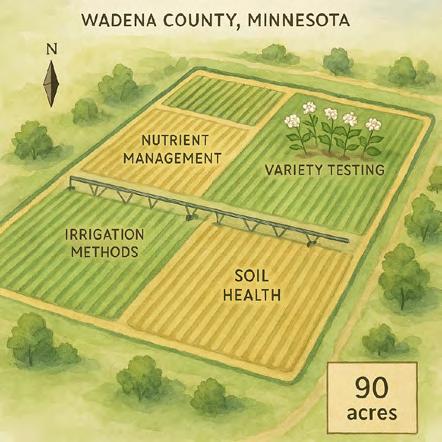
Now, R.D. Offutt Farms is taking that commitment one big step further. It has announced that in 2026, RDO will begin developing a new, 90acre Potato Research Farm in Wadena County, Minn. Ground preparation will be completed in 2026, with the first research trials beginning in 2027.
This farm gives R.D. Offutt something it hasn’t had before: a clean, controlled field designed just for learning, testing and improving. It’s a place where it can explore new ideas, advance sustainable farming practices and share results that will help growers across the region.
But having a dedicated research farm allows R.D. Offutt to take its work to a whole new level.
Instead of working around whatever was planted in a field last year, it gets to start fresh. No lingering inputs. No leftover crop residue. Just a clean slate that lets it measure results clearly and consistently.
The farm is also being designed to reflect real-world farming practices. That means R.D. Offutt will rotate crops and incorporate cover crop trials during non potato years, just like it does in its commercial operations.
What will the research focus on? The goal is to bridge the gap between scientific discovery and real-world farming. While research plans are still coming together, the farm anticipates focusing around:
• Nutrient Management: Understanding nitrogen cycles for different potato varieties to optimize fertilizer use.
• Genetic Research & Gene Editing: Working to develop potato varieties with stronger yields, better water efficiency, improved storage quality, and enhanced disease resistance.
• Irrigation Management: Measuring water use efficiency and testing variable rate irrigation strategies.
• Advanced Product Trials: Measuring how biological products, soil enhancements, and nitrogen stabilizers perform in controlled settings.
• Technology & Innovation: Exploring tools like water sensing technology, imagery, and remote pest/disease detection.
With final details still in development, the farm will be equipped with an efficient irrigation system and custom plots to support a wide range of research needs.
Just as important, R.D. Offutt Farms will make its results accessible. As trials move forward, it will share outcomes with growers, partners and institutions to ensure this research contributes to the broader advancement of sustainable potato production. Continued On Page
By Dr. Hafiz Muhammad Usman Aslam and Dr. Mohamad Chikh-Ali
When you pull a bag of russet potatoes off the grocery store shelf, chances are they came from the San Luis Valley in Colorado. That valley produces roughly 90 percent of the state’s potatoes, and it’s the heart of a quiet but critical battle.
The enemy is a microscopic fungal foe, primarily Fusarium sambucinum and related Fusarium species that cause dry rot in stored potato tubers. When it runs unchecked, losses can climb to as high as 60 percent of a harvest. Decades of reliance on specific fungicide classes (e.g., single-site chemistries such as benzimidazoles) have led to the development of fungicide-resistant populations of the pathogen, highlighting the importance of stewardship and diversified management strategies.
But here’s the good news: scientists, growers, university extension agents and industry partners are joining forces to fight back, translating lab results into field-ready solutions that protect yields, reduce losses and strengthen long-term disease management.

responsible for most dry rot problems. Through advanced mycological diagnostics under the program leadership of Mohamad Chikh-Ali with essential field and laboratory support from Jeremy Daniel, our work has revealed a much more complex reality.

Dr. Hafiz Muhammad Usman Aslam
Think of a tuber planted last spring as a little house. When it gets injured, from harvest, transport or just handling, it opens the door for unwanted guests. In this case, the “guests” are different species of the fungus Fusarium.
For many years, growers in the San Luis Valley believed that a single Fusarium species was
Through this combined effort, we have identified multiple Fusarium species attacking potato tubers in the Valley, including Fusarium clavum, a species never reported in the United States (Aslam et al., 2025).
Why is that important? Because each species behaves differently. Some are sneakier, some spread faster and some resist certain treatments. It’s like discovering your house has more than one kind of termite. You don’t treat them all the same way.
That diversity of pathogens reflects a larger trend in global potato production. According to the article “Emerging potato diseases around the world: A global look at old and new threats to the potato crop” (March 21, 2025), North America’s potato production powerhouse faces relentless assaults from diseases and pests, underscoring the urgency of integrated efforts (Emerging potato diseases around the world, Potato News Today, March 21, 2025).
Think of it like planning a season, not a single spray. You don’t just react to what’s in front of you, you watch the forecasts, track field conditions and plan your moves ahead of time. Managing potato disease works the same way: it’s about preparation, timing and having the right tools ready when they matter most. Here are three practical takeaways from the new research:
1. Use clean seed and sanitize equipment:
Start with certified, disease-free seed and disinfect knives, cutters, pilers and conveyors between lots to stop cross-contamination.
2. Harvest and handling diligence: Every nick or bruise is a welcome mat for dry rot.
3. Storage vigilance: Keep tubers cool, dry and well-ventilated. The fungus thrives in warmth and moisture.
4. Know your enemy: With multiple Fusarium species at work, “one-size-fits-all” treatments often fail. Working directly with researchers helps tailor management to your field. And here’s a ripple effect growers can feel immediately: better management means fewer rejected loads, more consistent quality and improved returns when crops reach the supermarket.
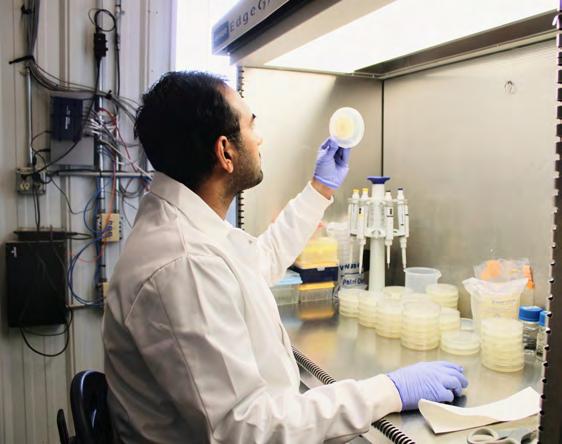
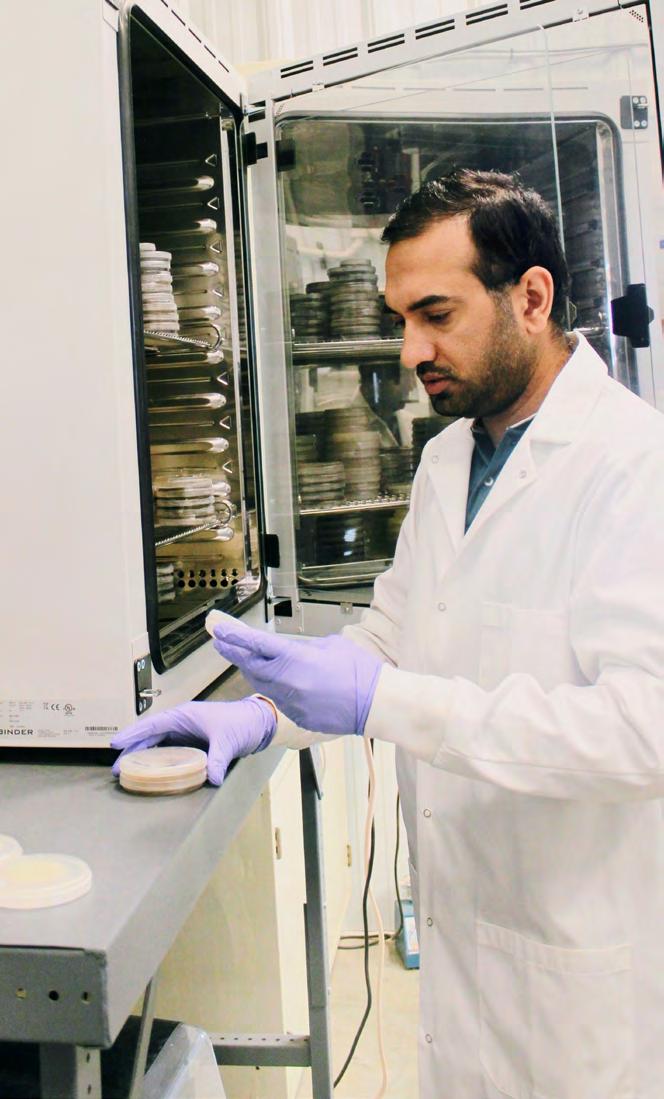
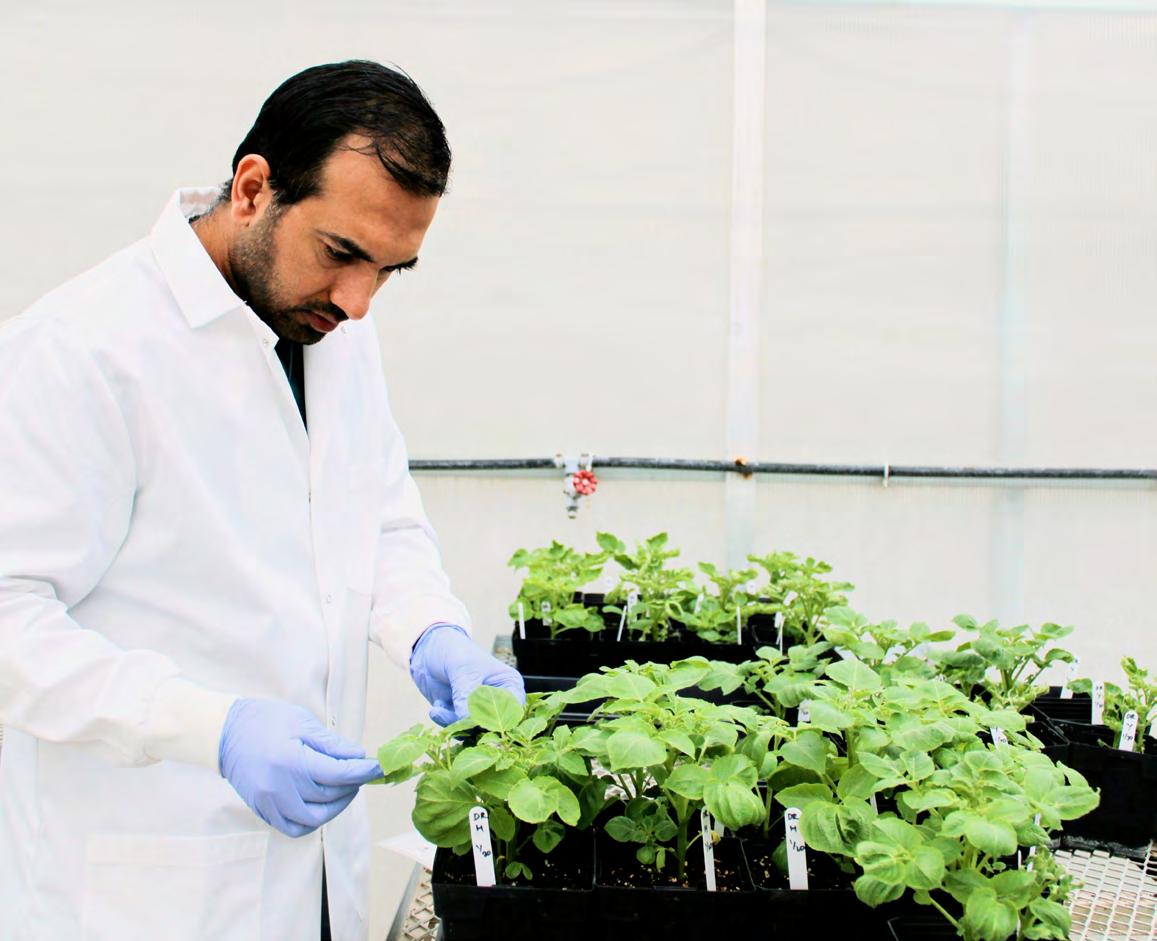
Not surprisingly, lab work is an important part of most all research, including studies on Fusarium, which can be a particularly nasty disease in potatoes. Dr. Hafiz Muhammad Usman Aslam uses the lab to help in that research but says field work is equally important.

What makes this effort remarkable is the collaboration. In Colorado:
• Extension programs bring the science directly into your hands.
• Industry partners support field trials and share essential data.
• You and other growers open farms for sampling, testing and real-world feedback.
This partnership ensures research doesn’t stay locked in academic vaults, it becomes a practical tool you can use in the field. When you can ask, “Which Fusarium species is in my field?” and get a clear answer, that’s science in motion.
You might ask, “So what does this change for me?” Here’s how it matters on the ground:
Less waste: Stronger disease forecasting and management mean fewer culls and more
marketable potatoes.
Better quality: Healthier tubers store longer and ship better, helping you protect contracts and buyer relationships.
More stability: Fewer lost acres reduce market swings and support steadier, more predictable pricing.
Stronger food security: Reliable production supports not only your operation but also the processors, retailers and families who depend on what you grow.
When farms, labs and universities work in sync, the benefits go far beyond a single field or season, they strengthen the entire supply chain you help sustain.
The research team isn’t stopping here. Next steps
include:
• Studying how different Fusarium species interact with each other.
• Expanding survey areas and establishing collaborations in other states to uncover broader pathogen diversity and better understand regional population dynamics.
• Exploring biological controls and resistance breeding to reduce chemical use, while partnering with growers to validate how these tools, and other management strategies, perform under real field and storage conditions.
• Developing predictive disease-risk models that use environmental and diagnostic data to help growers plan interventions with greater precision.
• Evaluating new post-harvest strategies to manage Fusarium, including the use of post-harvest biocontrol treatments to suppress pathogen activity and improve long-term storage outcomes.
Growers who stay engaged will be best positioned. If you’re in Colorado, stay tuned with the San Luis Valley Research Center through Colorado State University.
In short, it really does take a village to raise a crop. In Colorado’s potato country, that village is thriving: a web of farmers, scientists, students and partners all pulling together. The result? Stronger crops, less waste, and a more resilient food supply. The next time you grab a bag of russets, you can know there’s more behind that potato than meets the eye — science and partnership at work.
(Dr. Hafiz Muhammad Usman Aslam is a Postdoctoral Fellow at the San Luis Valley Research Center, Colorado State University, where he specializes in advanced molecular diagnostics of plant pathogens, with a strong emphasis on potatoes and other economically important crops. His expertise includes the identification and comprehensive characterization of major potato pathogens such as Fusarium, Pythium, Phytophthora, Alternaria, Colletotrichum, Verticillium and Pectobacterium species.
He integrates classical diagnostic approaches such as morphological and cultural characterization with state-of-the-art molecular techniques, including PCR, qPCR, RT-PCR, RTqPCR, multigene sequencing and bioinformaticsbased analyses.
In addition to pathogen diagnostics, Dr. Aslam conducts extensive evaluations of synthetic and biological disease-management products through greenhouse and field trials, generating robust and practical solutions to support growers and strengthen crop health. He is also a member of The American Phytopathological Society (APS).
Society (APS).
Dr. Mohamad Chikh-Ali is an Associate Professor and Extension Specialist at the San Luis Valley Research Center at Colorado State University and a member of The American Phytopathological
Dr. Chikh-Ali is the potato pathologist at the San Luis Valley Research Center at Colorado State University. Dr. Chikh-Ali started his career with potato as seed inspector at the General Organization for Seed Multiplication, Syria. The prevalence and economic damage Potato virus Y was causing to potato production inspired him to pursue graduate study in plant pathology focusing on potato viruses. Dr. Chikh-Ali received his master’s and PhD degrees in plant pathology studying potato viruses from Tokyo University of Agriculture, Japan, in 2006 and 2009, respectively. Upon completing his PhD, he was awarded a postdoctoral fellowship by the Japan Society for the Promotion of Science that allowed him to conduct research on plant viruses, mainly potato viruses. Before joining Colorado State University in 2022, Dr. Chikh-Ali worked as a plant virologist at the University of Idaho.
Dr. Chikh-Ali is very excited to work with potato growers and stakeholders to address major diseases impacting potato crops and help develop integrated management programs. His extension role allows him to gain and disseminate knowledge to potato growers and stakeholders on potato diseases and the best management practices.)
This article is part of the APS Outreach Project, an initiative of the American Phytopathological Society (APS). APS is a nonprofit professional organization with over 3,600 scientists dedicated to advancing global plant health. Representing academia, government, industry and private practice, APS members drive innovation in the accuracy and speed of field disease diagnostics and deepen our understanding of plant pathology through fundamental research. APS publishes peer-reviewed, reliable information in its scientific journals and translates research into actionable solutions for growers through the APS Outreach Project and Grow: Plant Health Exchange (planthealthexchange.org), a knowledge base for plant health management professionals. Explore additional practical resources and insights for managing plant health from APS at www.apsnet.org
Sources
• U.S. Potato Production Down in 2024 –SpudSmart, Dec. 17, 2024
• Emerging potato diseases around the world –Potato News Today, Mar 21, 2025
• Potatoes under siege: The growing threat of pests and diseases in North America and Europe – Potato News Today, Jul 10 2025
• Elucidating the Diversity of Fusarium Species Causing Potato Dry Rot in the San Luis Valley, Colorado. Plant Disease. https://doi.org/10.1094/ PDIS-03-25-0628-SR

Using a new and entertaining format to present their research, University of Idaho researchers tackled several topics during one presentation time slot at the 2026 Idaho Potato Conference in January using a “myth busters” setup.
In one “myth busting” presentation at the conference, five U of I researchers and one independent researcher addressed the topic “Busting Myths In Pest Management,” each covering a different subject, from pests to disease to storage to weeds.
In his myth or truth segment, Dr. Albert T. Adjesiwor, an assistant professor & extension weed specialist at the University of Idaho Kimberly Research & Extension Center, took on the myth “Premergence Herbicides Kill Weed Seeds.”
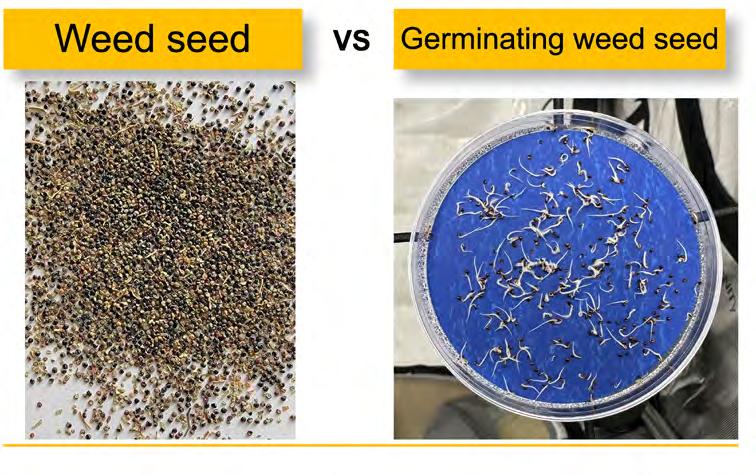
That topic seems fairly straightforward but Adjesiwor said there is an important distinction when talking about weed seeds. “First, let’s define what a weed seed is,” he said. “A weed seed is a dry seed. That means there’s a difference between a weed seed and a germinating weed seed
(see Figure 1).
He then showed a slide of a bare field being sprayed with a preemergent herbicide. He explained, “What preemergent herbicides actually do is they disrupt a couple of different things. They disrupt cell division and root growth or shoot development. Mostly they’re trying to kill the weed seedlings right before they come up.” The important thing to remember, he pointed out, is that the herbicide is going after the weed seedling, not the weed seed.
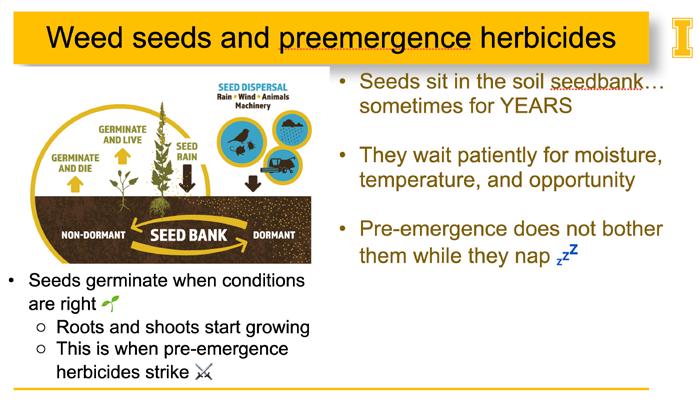
But all weed seeds may not germinate, which means a grower may take out a good swath of the emerging weed seeds but perhaps not all because, Adjesiwor said, there is, in many cases, a weed seed bank, which is kind of a weed’s “savings account.” He explained, “Because weeds produce a lot of seed, they make more than they can spend, and so they put some in the savings account. That’s what we call the weed seed bank. In that weed seed bank, there is the non-

dormant and the dormant. The non-dormant is anything that, when the conditions are right, like they have enough moisture and the right temperature, they’re going to come up.
“With the non-dormant, it doesn’t matter what you do, they will not come up. And that is how they spread over time. What that means is that even if you kill every plant on the surface of the earth, it will not cause a local extinction for years to come.”
Then, he added, “For longterm, for us to be able to manage the weed seed bank, first, you have to prevent them from putting money into the bank account, meaning that
they don’t replenish that weed seed bank; that means you prevent every single plant from going to seed. And then, you try kill everything else in the soil. I’m going to tell you that we don’t have a lot of options to do that. So, these seeds sit in the soil for years and they don’t come up. They wait patiently until the right temperature or moisture. These pre-emergent herbicides do not bother them. While they are resting in there dormant, we cannot do anything to them because the plants have to take up the herbicide when they are trying to germinate” (see Figure 2).
Zeroing in on the myth of killing weed seeds, Adjesiwor said where some folks get mixed up is they think they are killing the weed seed with the preemergent herbicide, but the preemergent herbicides strike at the point when they are trying to germinate. “So the myth that they kill weed seed is not really true,” he said. “They kill germinated weed seeds.”
Adjesiwor also tried to clear up the myth of “sterilizing the soil” with preemergent herbicides. “If preemergent herbicides actually sterilize the soil and kill weed seeds, that means that you spray once and you can retire and then I don’t have a job,” he said. “But that’s actually not the case. You spray once but you have to do it every year, because the seed bank, that savings account, you haven’t depleted that one yet. It still persists.”
He explained the need to spray a preemergent herbicide every year is because some weed seeds are still viable after 38 years of burial. For example, he said, research has found that 7 percent of lambsquarter weed seeds can survive up to 38 years.
Adjesiwor finished his portion of the myth busters presentation with some suggestions on managing a weed seed bank. He asked, “How do we actually manage that dormant weed seed bank? Fumigate?” (see Figure 3). “The only chemicals that kill weed seeds are fumigants.
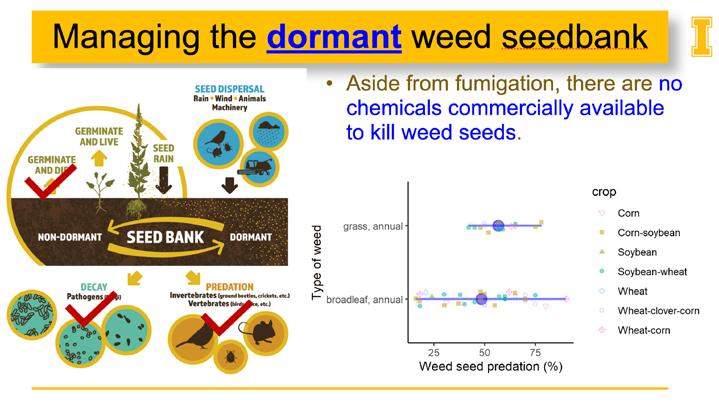
Because they are gases, they can go through the seed coat so the weed seeds don’t have to be trying to emerge. But not a lot of people apply a fumigant to actually control weed seeds; they’re doing it for something else.”
When it comes to taking out weed seeds, Adjesiwor said, “Our friends are pathogens that are kind of like seed-causing diseases, diseases that are going to cause decay in the seeds. Also, predators that eat those weed seeds,” such as ground beetles, crickets and birds, etc. “Then some seeds germinate and die.”
As Figure 3 shows, Adjesiwor said aside from fumigation, there are no commercially available chemicals to kill weed seeds.
In a follow-up question after Adjesiwor’s myth-busting presentation, someone asked
about the dormancy of weed seeds. The question was, “How does a dormant seed know when to become non-dormant?” Adjesiwor explained, “There is primary dormancy, which is caused by chemicals in the seed that make them just not want to come up, no matter what you do, and then there is enforced dormancy, which is caused by the environment.
“So if it’s an environment issue, when conditions become good, they come up. A lot of weed seeds use light to tell when to break dormancy. A lot of weed seeds are very small and sunlight doesn’t go very deep into the soil. Plants use red light to photosynthesize, and so weed seeds look for that hue. Once they get a lot of red light, it means that they are close enough to the soil surface [to sprout].”




Always read and follow label instructions. Some products may not be registered for sale or use in all states or counties. Please check with your state or local extension service to ensure registration status.

Innvictis www.innvictis.com
Galvan XRT is a selective herbicide for the control or suppression of many grass, broadleaf and sedge weeds in potatoes, tomatoes and soybeans. Containing s-metolachlor and metribuzin, Galvin XRT contains two effective modes of action that can be used pre-emergence and/or post-emergence in soybeans, tomatoes and potatoes. The XRT platform delivers performance that rivals equivalent branded products, generally increasing efficacy by 7 to 10 days.
Rovensa Next (559) 442-4996 www.rovensanext-na.com/en-us/agricultural-bionutrition/ nutrition/encourage-nanocal
Way more than just a sub-micronized calcium. NANOCAL is a highly effective micronized calcium carbonate-based supplement designed to enhance crop quality and strength, offering readily available calcium during critical periods of high demand, such as fruit and tuber development. Its unique formulation with micronized particles ensures superior absorption and effectiveness, providing essential nutrients like nitrogen, potassium, and calcium. It can be applied to soil or foliage and is suitable for use through various irrigation systems.




Gowan USA (800) 883-1844 www.gowanco.com
Since 1962, beginning as a crop consultancy, Gowan Company has been rooted in agriculture, providing trusted expertise and innovative solutions for growers. This family-owned, American business works to understand growers’ challenges and is committed to delivering products and services that maximize yield and quality. Gowan provides solutions for the unique needs of potato producers.

Gowan USA’s dedicated sales representatives and development teams regularly work with potato growers and researchers to ensure that each product performs optimally in the field.
Herbicides: Eptam, Sonalan HFP, Trflan HFP, Vida
Fungicides: Badge SC & X2, Gavel, Reason, Zing!
Insecticides: Imidan, Onager OPTEK, Aza-Direct

UltraLock adjuvant, an all-purpose drift and deposition aid exclusively from WinField United, takes on herbicide resistance, enhancing herbicide drift prevention and helping growers achieve better weed control.
UltraLock plays a key role in managing weed outbreaks. It combines an exclusive drift reduction agent (DRA) with InterLock, a drift reduction technology (DRT), to improve spray deposition. The result is 20 percent more leaf coverage than other DRAs, allowing more product to be intercepted by the plant for better weed control.
Compatible across herbicide programs, UltraLock helps enhance canopy depth by ensuring more active ingredient reaches the target for more effective applications, helping fight herbicide resistance. This includes reducing dicamba drift through its patent-pending formulation. There are a lot of components growers need to include in their tank mixes, which can be challenging, especially with supply chain issues. Choosing the right adjuvant can help alleviate some herbicide supply constraints, but it can also mean the difference between 50 percent and 90 percent weed control.
www.upl-ltd.com/

TRIPZIN ZC herbicide (HRAC 3, 5) is a unique combination of two active ingredients in an innovative formulation. Designed for pre-emergent and at-planting applications to provide consistent, long-residual control of a wide weed spectrum, TRIPZIN is the ideal foundation for any resistance management program.

Deal a swift blow to tough broadleaves and grasses with the two-in-one power of MOCCASIN MTZ herbicide (HRAC 15). High loads of S-metolachlor and metribuzin combine to provide outstanding weed control right at the outset, with extended residual control to keep weeds down. And with two effective modes of action, growers get improved resistance management and superior control of small-seeded broadleaf and grass weeds, including pigweed species, waterhemp, ragweed and marestail.
SAN Agrow (800) 876-2767
www.san-agrow.com
SUPPRESS Herbicide EC is a safe and highly effective tool for organic and conventional weed management programs. It is registered as a broad-spectrum contact herbicide for post-emergent, non-selective weed control for use in and around all food and non-food crop areas. SUPPRESS is also approved as a desiccant and harvest aid in potatoes. The proprietary and patented formulation is a non-volatile, emulsifiable concentrate that is OMRI- and WSDA-approved for use in certified organic food production.
With years of university testing and grower-proven
Outlook herbicide for residual weed control in potatoes provides greater activity in the weed germination zone for improved uptake and superior control of the toughest annual grasses and smallseeded broadleaf weeds. Suitable for all tillage systems, Outlook herbicide washes off crop residue more readily, binds more tightly to the soil to minimize leaching, and can be activated with as little as a quarter-inch of rain or overhead irrigation.
Sustain is a new, unique class of adjuvant with nonionic properties based on Miller Chemical’s proprietary Pinolene technology. This adjuvant is designed to improve the contact, wetting and adhesion of pesticides and fertilizers on plant and soil surfaces. Sustain forms a soft, microscopic film that polymerizes, protecting spray deposits from rainfall erosion, volatility, and ultraviolet (UV) degradation. Sustain is effective in limiting the leaching and migration of soil active herbicides. Once applied, it begins to polymerize and form an elastic, microscopic

efficacy, SUPPRESS consistently provides fast and effective burndown in a wide variety of weeds. It is also a great tank-mix partner to enhance conventional herbicide efficacy, and is an excellent IPM tool to rotate with conventional herbicides to minimize resistance. SUPPRESS is low-foaming, easy to use, and has no pre-harvest interval, so it can be applied up to the day of harvest.
FMC ag.fmc.com/us/en
Aim EC herbicide from FMC targets leaves and stems for complete potato desiccation. The herbicide should be applied as a foliar to potatoes in the later stages of senescence for desiccation of foliage and vines. Aim EC herbicide also desiccates late-season susceptible broadleaf weeds (including kochia, lambsquarters, nightshade and more) to aid tuber harvest.

film in the environment. This, in turn, helps to provide longevity of herbicides in the root and shoot zone, thereby maximizing herbicide activity in the target area and reducing leaching.
Hendricks, Alex Karasev
The Potato Virus Initiative is a collective group of researchers and educators who, with support from the industry, obtained funding for a 5-year project from the USDA-NIFA Specialty Crop Research, with the mission to develop sustainable systembased management strategies for potato viruses, specifically potato virus Y (PVY) and potato mop top virus (PMTV).
Over the past five years, the Potato Virus Initiative has populated various outlets to disseminate results, impacts and resources available to the potato industry on progress made towards understanding and managing PVY and PMTV.
We are nearing the end of the funded project, and the impact of the program shows continued momentum in developing strategies to manage the viruses. To maintain the presence of the project and make results accessible to all, the Potato Virus Initiative website and social media have been simple conduits for virus-related information. The website can be found at https:// www.uidaho.edu/idaho-agexperiment-station/potatovirus and links to social media can be found at the website.
Here are just a few highlights from the project and website, but we encourage perusal of the website information to see specific results and information.


• Wanting to plant cover crops, but worried it may impact powdery scab (vector of PMTV) populations? Buckwheat, legumes and barley do not support replication of the pathogen, but some brassica crops may be a host.
• Higher risk of powdery scab infection if peat-based potting mix is used in seed potato production.
• Curious about what PVY looks like in various cultivars? Photos of how infected plants look with the various PVY strains can be found on the website. In addition, educational videos and seed certification inspector guides can be found on the website.
• Want to see how to monitor insects
The Potato Virus Initiative newsletter is packed with summaries and details on multiple research and education programs within the project. Here are just a few highlights to entice review of the newsletter:
• Major emphasis of the grant was to improve efficiency and consistency of direct tuber testing for PVY and PMTV. Read about results and implications.
• Wondering how PVY in your seed may influence yield? Read about the impact of seedborne PVY infection on yield - larger plot results.
• Mineral crop oils for PVY management under overhead irrigation.
• Impact of time during the growing season on PVY in-season transmission.
• What makes soil less likely to have powdery scab? Characterizing the microbiome of soil that suppress powdery scab.
• Cultivar selection for PMTV resistance and symptom expression. Options for fields infected with powdery scab and PMTV.
The Potato Virus Initiative has contributed tremendously to the body of science needed to combat these difficult-to-manage viruses. Results from the basic science are changing how we breed for resistance leading to current and future management solutions. Applied results help to formulate management to integrate direct tuber testing into certification and applying crop oil and insecticides at specific timings for maximum efficacy.
Availability of these results and others can be found at the website: https://www.uidaho.edu/idaho-agexperiment-station/potato-virus.
(Nora Olsen is a professor & extension specialist in potatoes and horticulture at the University of Idaho. She can be reached at norao@uidaho.edu. Rabecka Hendricks is a potato research associate at the University of Idaho. Alex Karasev is a distinguished professor of entomology, plant pathology and nemotology at the University of Idaho. He can be reached atakarasev@uidaho.edu.)
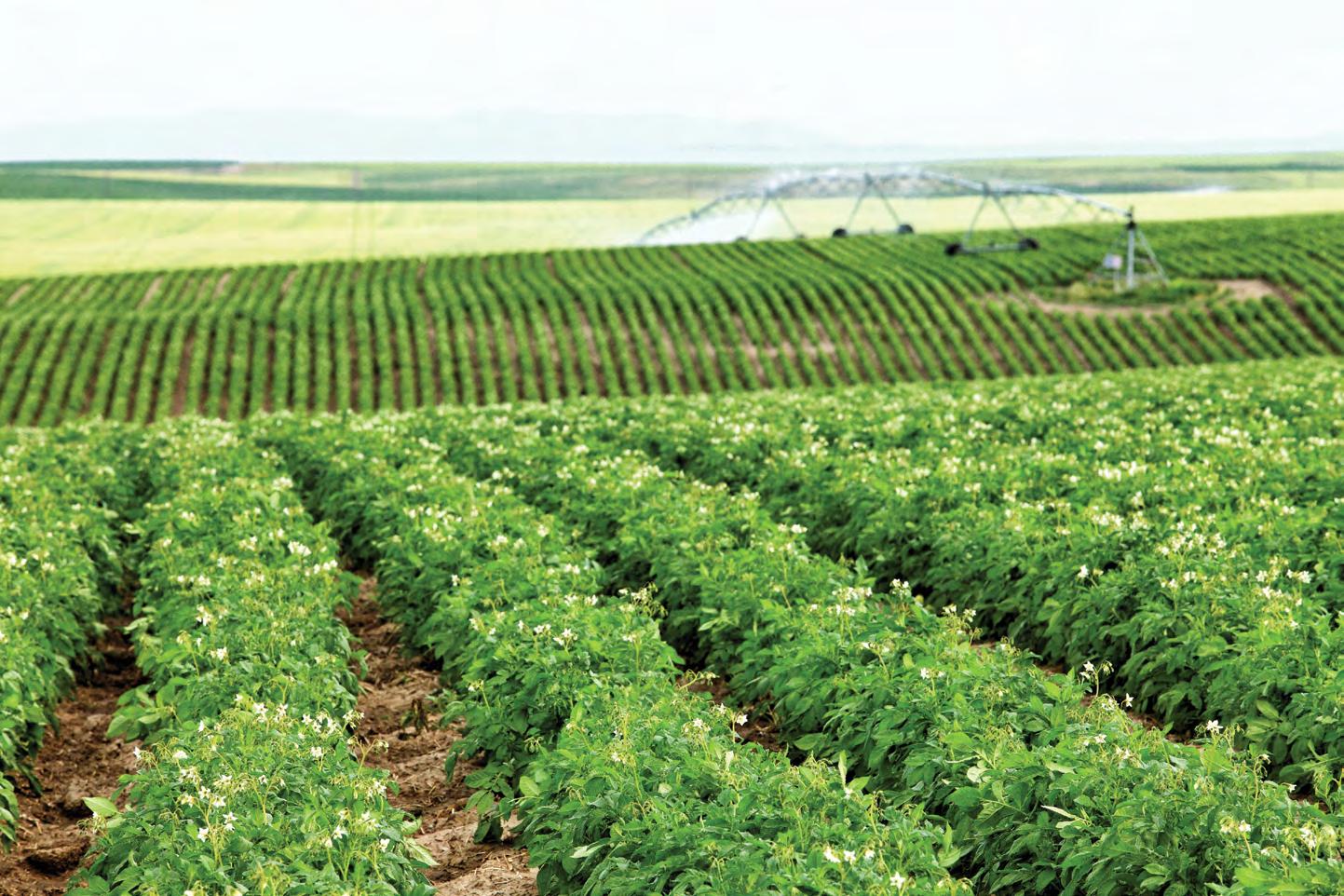
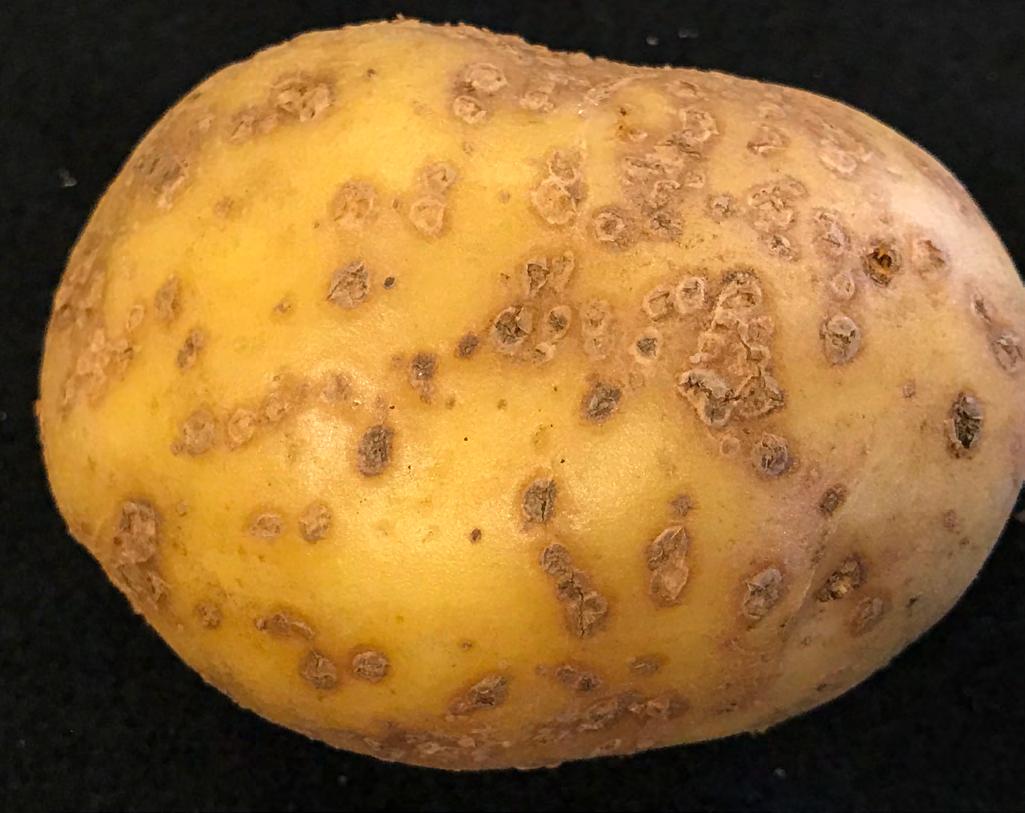
University of Idaho Extension soil sample testing reveals that three-quarters of Idaho potato fields are now infected with some level of the pathogen Spongospora, which can cause the fungal disease powdery scab.
Spongospora is also a host that transmits the potato mop-top virus (PMTV), though not all of the infested soils in Idaho have yet reached a threshold to where the diseases will occur.
The two diseases are increasingly culpable for fresh potato packing facilities and international trade partners rejecting U.S. potatoes, as well as processors docking prices paid to growers.
Phillip Wharton, an associate professor in plant pathology, and James Woodhall, an Extension specialist and associate professor in plant pathology, hope to find answers for potato growers regarding these increasingly problematic diseases through a planned research project to be funded by a two-year, $130,000 Specialty Crop Block Grant (SCBG). The U.S. Department of Agriculture finances the SCBG program, and the Idaho State Department of Agriculture administers it.
Wharton and Woodhall will evaluate cultural and chemical control measures to develop new management strategies for reducing crop infections,
such as irrigation management, variety resistance and testing the efficacy of fungicides and other products that have been reported to be effective against powdery scab in other regions.
“Powdery scab is one of the potato diseases that people really haven’t been able to get any kind of a handle on in terms of control,” Wharton said, adding planting clean, certified seed is among the best options for growers.
If a field has a history of powdery scab, the grower can get the soil tested by Woodhall’s lab to ascertain levels.
The Idaho Potato Commission (IPC) and the Northwest Potato Research Consortium placed helping growers combat powdery scab and PMTV among their top research priorities for 2025. The new U of I research should be especially important for producers of Idaho potatoes shipped to Mexico, which is now the largest market for U.S. potatoes. Mexico had long restricted shipments of fresh U.S. potatoes to within 16 miles of the U.S. border prior to opening access to the entire country in 2022.
The grant application included letters of support from IPC and J.R. Simplot Co.
“When we ship our potatoes to Mexico, powdery scab is one of the things that they look for and sometimes find,” said Travis Blacker, vice president of research and industry relations with the IPC. “We’re looking at ways to control that better, so we don’t have these finds when we ship potatoes to Mexico.”
The researchers suspect milder winters and wetter springs may play a role in the spread of Spongospora in Idaho soils, noting a study from Australia showed a correlation between early spring moisture and infections later in the season.
Recent surveys by Woodhall have shown that the prevalence of Spongospora has hugely increased in the past decade.
“In 2013, we did a large-scale survey of Idaho fields in collaboration with Simplot. At that time, 20 to 30 percent of fields had powdery scab,” Wharton said.
Currently, as much as 75 percent of Idaho potato field soils contain some level of Spongospora, and a third of them harbor PMTV.
“More recently people have been requesting a lot of tests for powdery scab,” Woodhall said. “We’re testing hundreds of samples per year for the presence of this organism.”
Powdery scab symptoms can include discoloration, gall-like growths on roots, ruptured pustules on the tuber surface and internal lesions in tubers. The disease impacts potato marketability rather than yield. PMTV can cause rust-brown arcs to form within tuber flesh, tuber necrosis, reduced yields and raised rings on the tuber surface. Certain potato varieties may be asymptomatic for both diseases.
The researchers will conduct research trials
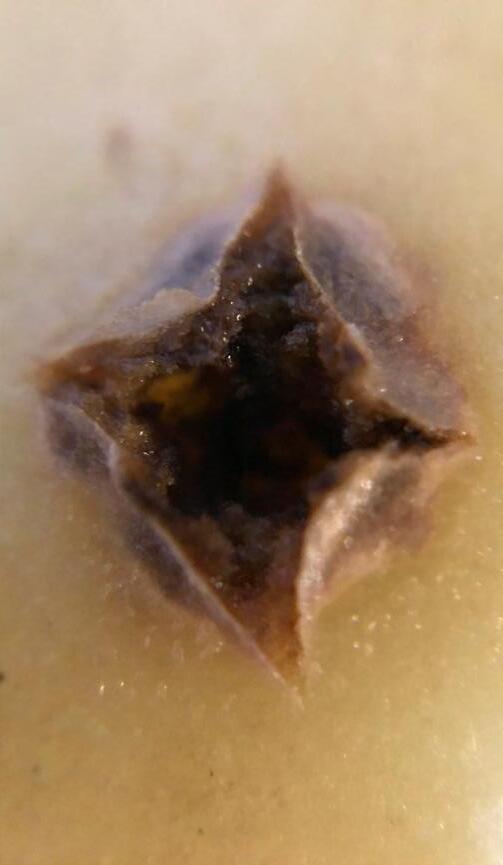
at the U of I Aberdeen Research and Extension Center to assess the efficacy of combining less susceptible potato varieties with various fungicide combinations in enhancing disease control. A review of products demonstrating efficacy against powdery scab in other potato-growing regions is currently underway, and the selected products will be utilized in the field trials in 2026 and 2027.
Additionally, irrigation management trials will be conducted at the U of I Parma Research and Extension Center, where specific fields exhibit high disease pressure. They hope to identify the window of time when managing soil moisture is most critical for disease control.
Past SCBG-funded research from Woodhall’s lab led to the development of new soil tests for Spongospora and PMTV. The researchers will use these tests to assess levels of the diseases in the research trials.
For more information, contact James Woodhall jwoodhall@uidaho.edu.

Ben Sklarczyk, President
I stepped into the role of 2026 president of the National Potato Council during February’s NPC Washington Summit with a deep sense of gratitude. My connection to this organization spans more than a decade, including five years on the executive committee.
Following in the footsteps of my father, Don, who also served as president, is a privilege I do not take lightly.
My term begins at a pivotal moment. We just wrapped up the Washington Summit, an annual event where growers define the trajectory of federal policy. Organized by the NPC and supported by our state associations and industry partners, the Summit
It’s a story that humanizes our industry and acknowledges the history provided by our grandfathers and fathers.
helps us build meaningful relationships with allies in the legislative and executive branches. These interactions advance public policy priorities that will impact our farms for generations.
For the coming year, I am prioritizing three key areas to solidify our gains and set the stage for the future.
In January, the industry received tremendously positive news. The newly released Dietary Guidelines for Americans now feature a fresh whole potato in the center of the updated food pyramid graphic. It validates 15 years of hard work by NPC and the industry, and confirms that potatoes are a vital part of a healthy diet.
We now have a critical opportunity to demonstrate that value to the public. To build long-term value for our growers, NPC will work closely with Potatoes USA and our state potato organizations to leverage this victory. While they work to encourage consumer growth, NPC will continue to defend the place of potatoes in federal nutrition programs.
Our reputation hinges on the quality of the product we deliver. As NPC works to retain and expand export markets – including the hard-won access for fresh table stock in Mexico – we growers have
a responsibility to ensure the integrity of our shipments.
We must champion a high-quality system from seed to commercial product. A robust quality system prevents market closures and ensures the U.S. remains the preferred global exporter. Our goal is not just to open new doors but to expand the ones we already have.
NPC’s ability to fight for growers in Washington, D.C., depends on our organization’s financial health. As a former vice president of NPC’s Finance Committee, I’m well aware of the importance of Potato Expo to the council and the entire industry.
Year after year, Potato Expo serves as a massive financial driver that provides the resources we need to “Stand Up for Potatoes on Capitol Hill.” The record sponsorship and attendance we saw in Dallas continue to prove that Potato Expo is the premier place for networking and growth. We must encourage our fellow growers and industry partners to support this annual event, both for the sake of our public policy efforts and to equip them with the latest tools to support their businesses.
Finally, I’d like to comment on the power of participating in NPC. From my involvement starting around 2014, I’ve seen that NPC’s strength doesn’t just come from the executive committee or the board. It comes from the participation of every single grower.
We all bring different, unique perspectives and strengths to the table. I’ve always been a believer in harnessing those strengths so that we can win as a team. We must continue to encourage and recognize the value that all growers lend to the efforts of this industry.
As we look toward NPC’s Summer Meeting in Detroit, I am reminded of my family’s own history. Detroit is where our seed farm began at the Eastern Market. It was there that my grandfather made the connection that transitioned our small table stock operation into a seed farm.
It’s a story that humanizes our industry and acknowledges the history provided by our grandfathers and fathers. We are all here today because of the foundation they built, and with your help, we will continue to build upon that legacy to ensure a prosperous future for the U.S. potato industry.
CROSSOVERS/WINDROWERS
SCOOPERS

Mark Klompien, President/CEO
United Potato Growers of America is proud to convene the 20th annual Potato Business Summit in conjunction with Potato Expo. This Summit has evolved into one of the must-attend events within the North American potato industry.
Since UPGA focuses on the financial and business side of growing potatoes, this is the emphasis of the superb slate of Summit presenters.
Potatoes USA promotes potato consumption and increasing demand and does an excellent job of it. The National Potato Council oversees legislative advocacy and regulatory matters concerning the potato industry at large and does an excellent job of it. United Potato Growers of America is different in that UPGA deals directly with the business of producing potatoes. UPGA does this by providing key market data to potato producers, enabling them to consistently secure a fair return on their immense investment when they match supply with demand.
In that role UPGA understands that there are more aspects of the potato production business that lead to on-farm profitability than most producers customarily access. That is one of the reasons UPGA annually produces the Potato Business Summit.
UPGA supports the potato production business through a grower-direct feed of potato market
supply data generated by its large and constantly updating database. This market data enables aligned potato producer members to prosper year after year, something previously very difficult to do. In addition to direct market data, UPGA also keeps many indirect aspects of the potato production business in front of potato producers.
To achieve this, UPGA conceived the annual Potato Business Summit as a lead-in to Potato Expo. During a power-packed morning, growers are brought abreast of economic aspects ancillary to potato production but critical to it. In the Potato Business Summit, growers learn about agricultural economic trends along with global commodity updates in wheat, corn and soybeans. They are brought up to speed with fresh potato market trends as well as advancements in frozen process and dehydration markets, both foreign and domestic. Even the latest in field, equipment and storage technology is not overlooked.
For a potato producer to maximize economic viability he must understand that potato production is not just another farming enterprise; rather, he must understand that potato production is a supply function with local, national and global implications. He must understand that succeeding as a link in the potato supply chain is far from simply knowing how to grow potatoes.
Discovering that one’s potato producing operation is a single link in a supply chain of many links is certainly a beginning, but successfully navigating that environment year after year, crop after crop, requires a steady flow of supply data studied and acted upon by a keen business manager with keen business acumen.
Such business acumen applied to solid market data instructs the potato producer how to maximize his potato crop’s value as a business proposition replete with all aspects of supply chain economics and that is where United Potato Growers of America and the Potato Business Summit come in.
UPGA wishes to thank its Summit sponsors (listed in all Summit materials and websites), its grower members, and all the Summit attendees for supporting this great event. Our list of presenters this year included Stephen Nicholson of Rabobank, Cedric Porter of World Potato Markets, Kim Breshears of Potatoes USA, Daniel Metheringham of McCain Foods and Steve Elfering of 1,4 Group, and we offer them all a very big ‘thank you’ for their insightful information.
Finally, a special thanks to the National Potato Council for collaborating with and helping to facilitate UPGA’s Potato Business Summit.
Please visit PotatoBusinessSummit. com for additional information.

Chris Voigt, Executive Director
The Washington State Potato Commission is fortunate to announce that it has secured Congressional funding for a new USDA bioinformatician position focused on potatoes. This position will be located at the WSU/ARS Research Center in Prosser Washington.
This position will be assisting the Tri-State Potato Breeding Program but will benefit all public breeding programs in the USA.
Potato breeding has always been a challenging and timeintensive endeavor. With a complex tetraploid genome, strong environmental influences on traits and the need for multiyear field evaluations, progress can be slow compared to other major crops.
In recent years however, the rise of bioinformatics has begun transforming the landscape of potato improvement. By bringing computational power, genomic insight and datadriven decisionmaking into breeding programs, bioinformaticians are helping breeders develop better varieties faster and with greater precision.
To be honest, I didn’t know what a bioinformatician was until just a few years ago. I think the simplest way to describe this position is that this person is a number cruncher, focused on examining billions of pieces of genetic data to help improve crop breeding programs.
Potatoes possess one of the most genetically intricate crop genomes, with four copies of each chromosome and significant variation among varieties. Traditional breeding methods can struggle to manage this complexity, but bioinformaticians excel in precisely this type of environment. They help breeders by determining which genes in a potato variety are responsible for traits such as disease or pest resistance, nutritional content, starch content or nitrogen use efficiency. Once a breeder knows which genes control which traits, it’s much easier to select the best parents for the perfect potato you are trying to create.
Knowing which gene, or genes, control a trait is often referred to as having a “molecular marker.” Our new
bioinformatician will focus on developing genetic markers. Having a marker makes it much easier to determine if the new potato variety you created has the trait you were trying to put into the new potato. With marker assisted breeding, you can simply take a tissue sample from the new potato clone and run it through a DNA sequencing machine to see if the gene is present.
Let’s say you wanted to know if your new clone has resistance to late blight. Previously, you’d have to grow out the new potato clone in a greenhouse and inoculate it with late blight. If the plant got late blight, you knew this potato didn’t have the gene responsible for late blight resistance. And you’d have to replicate this experiment for confirmation. It would usually take 3-5 years before you could confirm whether your potato clone had late blight resistance. With marker assisted breeding you’ll know in five weeks if your new potato clone has the late blight resistant gene. This is a game changer.
Disease resistance remains one of the highestvalue targets in potato improvement, especially for threats like late blight, PVY, early blight, bacterial wilt and nematodes.
Bioinformaticians help breeders both understand pathogens and help find resistance genes that will provide durable control of these diseases. Bioinformaticians can detect desirable genes from wild potato relatives and use them to enhance resistance in our common potato varieties.
Perhaps the greatest contribution of bioinformaticians is speed. By combining genomics, analytics and automation, they help breeders select better parents, make smarter crosses, and remove poor performers early. All of this helps bring better varieties to growers in a much faster time frame.
And speed will be critical for the U.S. potato industry. We are seeing increased competition from countries like China and India that have a lower cost of production. The only way we can compete with these countries is to have new varieties that require fewer inputs. Varieties that are resistant to pests and diseases like nematodes, verticillium, PVY and late blight. New varieties that have better nitrogen use efficiency so that we can reduce our fertilizer applications. And new varieties that have better taste, texture and storability.
Bioinformaticians will take our potato industry to the next level of success.

Dana Rady, Director of Promotion, Communication and Consumer Education

Milwaukee’s Lakefront Marathon is known for many things — the scenic shoreline, electric crowd energy and the determination of runners pushing toward their personal best. But this year, something extra special powered up the course: Wisconsin potatoes.
Over two days on October 4-5, 2025, Wisconsin’s favorite vegetable didn’t just make an appearance, it became part of the marathon tradition, fueling more than 6,000 runners, lifting spirits and proving once again why potatoes are one of nature’s most perfect performance foods.
As runners arrived on October 4, they were greeted by the unmistakable view of the Wisconsin Spudmobile and a team welcoming them inside. Wisconsin’s mobile education unit was the perfect venue to discuss the numerous benefits potatoes offer, including versatility, delicious flavor, and, of course, nutritional value.
As the visitors entered, they learned about the Wisconsin growers’ commitment to environmental stewardship and regenerative agriculture. They were exposed to new recipes, played games, watched videos, saw where potatoes are produced in the state and became more acquainted with the history of Wisconsin potato production.
Race day on October 5 brought unprecedented hot temperatures. For some, this made for a challenging run. Nonetheless, they persevered and fought through the pain thanks to being “Powered by Wisconsin Potatoes!”

And despite the heat, around 24,000 people came out to support the runners at Urban Park over the two-day event.
Stealing the show (and at least 200 selfies) was Spudly, the Wisconsin potatoes mascot, who danced, high-fived and brought Wisconsin potatoes’ presence at the race to a whole new level.
Spudly was impossible to miss, especially when he attempted to be the event DJ and play special music for the participants and attendees. He made a real “Spud-tacle” of himself!
Kids loved him. Adults loved him. Even the runners cracked up as they flew past.
At the post-race celebration, the Wisconsin Potato & Vegetable Growers Association (WPVGA) handed out bags of potato chips as a snack for the runners, who loved having a salty and crunchy treat after crushing their run.
Beyond the fun and mascot antics,

the WPVGA wanted to support the running community with a simple message: Potatoes are a powerful, wholesome food grown with care by Wisconsin farmers. They’re rich in potassium, naturally gluten-free and provide the kind of clean fuel endurance athletes need.
And what better place to share that message than at one of Wisconsin’s most iconic races?
With rave reviews from runners, volunteers and spectators, don’t be surprised if you see Wisconsin potatoes popping up at more endurance events. After all, when it comes to community, nutrition, and a good time, they’re always ready to go the distance.
Because in Wisconsin, even our vegetables are built for endurance.


New York Fashion Week (NYFW) opened with one of its most unexpected runway moments – a couture collection fashioned entirely from burlap Idaho potato sacks. Models strutted the Haute Potato Collection down a catwalk in NYC’s Grand Central Terminal, dazzling curious commuters while generating awareness for the No Kid Hungry campaign. Known for engaging potato lovers in unique and delicious ways, The Haute Potato Collection is an extension of the Idaho Potato Commission’s (IPC) mission to weave Idaho potatoes into America’s pop culture fabric.
The sculptural, high-fashion collection includes flowing gowns, tailored suit silhouettes, and architectural detailing, elevating the potato sack into wearable art, reframing it as both cultural symbol and creative canvas. Inside Grand Central Terminal, the runway unfolded among fashion editors, media, tastemakers and everyday commuters alike.
In 1951, Marilyn Monroe famously posed in
an Idaho potato sack that later became fashion folklore. Seventy-five years later, that material returned to the NYFW runway, reimagined by Idaho-born designer Cartier Dior Eliasen, who first gained national attention on Project Runway Junior. Her work reflects a journey shaped by Idaho Potato farming roots, formal high-fashion training, and a deep love of Americana storytelling.
The IPC partnered with No Kid Hungry, a national campaign working to end childhood hunger, with select dresses from the collection being auctioned to help feed children across the country.
The event also included a culinary component created in partnership with Grand Brasserie, featuring Idaho potato–inspired hors d’oeuvres that extended the collection’s themes of craft and origin from runway to table.
Video, images and event details are available at HautePotatoCollection.com.
For more information, visit idahopotato. com.















rst