Published 13 times a year by Harris Publishing Inc.
SUBSCRIPTIONS:
U.S. and Possessions
$24.00 per year, International $120.00 per year. To subscribe call (800) 638-0135
Copyright 2026 Harris Publishing Inc. All rights reserved.
Reproduction in whole or in part without permission is prohibited. Back issues available at $5 per copy. Limited quantities. Publisher not responsible for content of materials submitted.
PRESIDENT
Jason Harris
VICE PRESIDENT
Chuck Harris
TREASURER
Clayton Ward
Canadian Publisher’s reement No. 40606038, Customer No. 7004671.
Mailed under a standard rate mailing permit at Idaho Falls, Idaho, and at additional mailing offices. Also Publishers of SugarProducer
PUBLISHER
Jason Harris
EDITOR
Lane Lindstrom lane@potatogrower.com
ADVERTISING DIRECTOR
Rob Erickson rob.erickson@potatogrower.com
PRODUCTION
Sandon Wixom
GRAPHIC ARTIST
Laci Thompson
CIRCULATION
Chuck Harris
IT DEPARTMENT
Chuck Harris
ACCOUNTING
Clayton Ward
CALENDAR
JUNE 2 AND 4
13th Annual Ag World Golf Classic
June 2 – Canyon Lake Golf Course, Kennewick, Washington
June 4 – The Links at Moses Pointe, Moses Lake, Washington
https://agworldgolf.com
JUNE 21-23
Washington Potato & Onion Association Convention
Marcus Whitman
Walla Walla, Washington http://wapotatoonion.com
JUNE 24
Snake River Weed Management Tour
UI Kimberly Research and Extension Center
Kimberly, Idaho amjackson@uidaho.edu
JUNE 24
Oregon State University Potato Field Day
Hermiston Agricultural Research and Extension Center
Hermiston, Oregon
NATIONAL POTATO COUNCIL (202) 682-9456 www.nationalpotatocouncil.org
FOUNDED BY Darryl Harris
CORPORATE OFFICES:
HARRIS PUBLISHING INC. 190 E 1st Street Idaho Falls, ID 83401 208-523-1500 www.potatogrower.com
POTATOES USA (303) 369-7783 www.potatoesusa.com
UNITED POTATO GROWERS OF AMERICA (801) 266-5050 www.unitedpotatousa.com
ALLIANCE FOR POTATO RESEARCH & EDUCATION www.apre.org
POTATO ASSOCIATION OF AMERICA (734) 239-8022 www.potatoassociation.org
in Idaho Falls, ID by Falls Printing rob.erickson@fallsprinting.com
Westin Book Cadillac Detroit, Michigan www.nationalpotatocouncil.org/
JULY 26-30
Potato Association Of America Annual Meeting
New Orleans Marriott
New Orleans, Louisiana potatoassociation.org
JULY 26-29
Soil & Water Conservation Society Annual Conference
Hilton St. Louis at the Ballpark St. Louis, Missouri www.swcs.org/events
AUGUST 4-6
Minnesota Farmfest
Morgan, Minnesota www.farmfest.com
AUGUST 5-6
Idaho Irrigation Equipment Association Summer Meeting
Twin Falls, Idaho idahoirrigationequipmentassociation.org
AUGUST 19
MPIC Variety Advancement & Innovation Committee Box Bin Trail Tour
Montcalm Research Center
Montcalm, Michigan www.canr.msu.edu/montcalm/
SEPTEMBER 2-4
IGSA 98th Annual Convention
Sun Valley Resort
Sun Valley, Idaho www.idahoshippers.org
NEW PRODUCTS
Vive Crop Protection Launches
Averland SM, Expanding In-Season Nematode Control
For Potato Growers
Vive Crop Protection announced the launch of Averland SM, a new in-season nematicide designed to provide growers with a more flexible and effective approach to managing nematodes in potatoes, onions and other high-value crops.
Averland SM is the second product to be released under Vive’s Soil Mobile Technology platform, after Bifender SM. Enabling the active ingredient abamectin to move deeper into the soil profile, Averland SM builds a larger zone of protection where nematodes are actively feeding. This approach helps deliver more consistent control compared to traditional surface-focused applications. Applied through drip, pivot and overhead irrigation systems, Averland SM allows growers to make in-season applications when needed, rather than relying solely on planting-time decisions. Its Soil Mobile Technology reduces interaction with soil particles, allowing the active ingredient to move with water into the root zone before locking in place once the soil dries, helping deliver targeted protection without increased risk of leaching.
Field trials have demonstrated that Averland SM provides strong and consistent nematode control, performing comparably to industry standards while offering a more cost-effective alternative. In potato trials, Averland SM reduced nematode pressure and improved marketable yield when incorporated into existing programs.
Designed for ease of use, Averland SM flows easily through chemigation and irrigation systems without clogging and provides consistent soil coverage across the field. This makes it a practical solution for growers looking to simplify nematode management while optimizing performance and input investment.
The introduction of Averland SM marks another step forward in Vive’s Soil Mobile platform, bringing new capabilities to in-season crop protection and expanding how growers can target pests below the surface.
For more information, visit vivecrop.com.
Reinke Expands RC3 Remote Management Line Of Irrigation Solutions
Reinke Manufacturing, a global leader in irrigation systems and technology, announces additions to the RC3 family of irrigation solutions. The RC3 EOS, RC3 WELL and RC3 DUAL will join the RC3 ULTIMATE as devices specially designed to seamlessly integrate with ReinCloud telemetry.
The RC3 family of hardware products provides solutions for connecting pivots and water management equipment to ReinCloud telemetry, regardless of panel type. With an industry-leading 3-year warranty, RC3 remote management devices put the power of efficiency and productivity directly into growers’ hands to monitor and control their irrigation equipment.
RC3 EOS – Works with most pivot brands, delivering complete monitoring and limited remote control through one easy-to-use interface. It is powered by ReinCloud, so information is easily accessed with the user-friendly interface.
RC3 WELL – Growers can monitor their water usage and link well controls to irrigation with the WELL. It is located at the well station where it can monitor water pressure and connect to other RC3 devices on the farm.
RC3 DUAL – Comprised of an EOS mounted on the last tower of the machine, and an ULTIMATE mounted at the main control panel, DUAL also includes an RC3 expansion module to provide additional sensor inputs.
Built to last, the RC3 EOS, WELL and DUAL components are all tightly sealed inside a weatherproof enclosure and offer growers peace of mind with the industry’s best warranty.
For more information, visit Reinke.com.
liquid starter designed to support early root development and strong crop establishment. Its advanced formulation enhances zinc availability at critical growth stages to help drive uniform emergence and early-season vigor. For more information, visit https://brandt.co/.
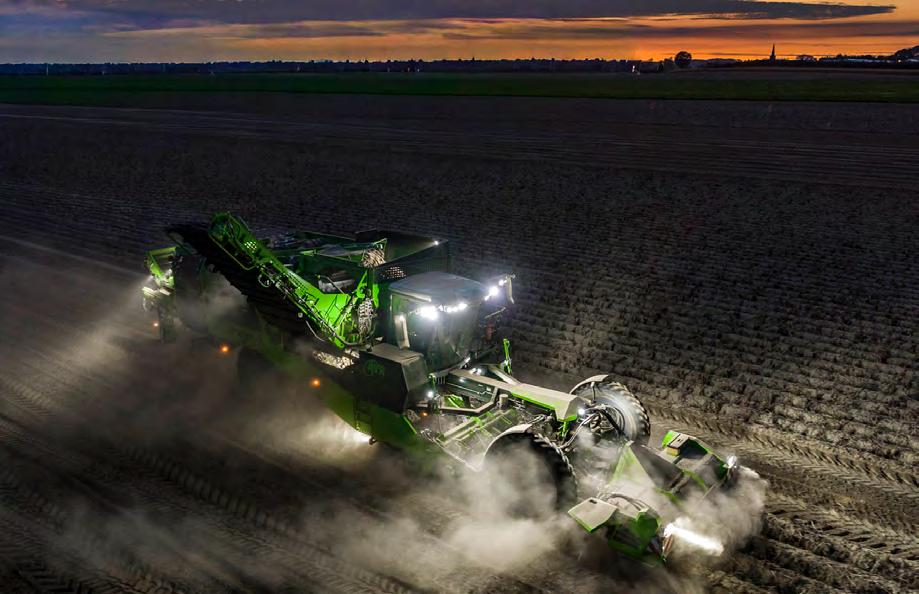
Agrifac Sprayers
NEW PRODUCTS
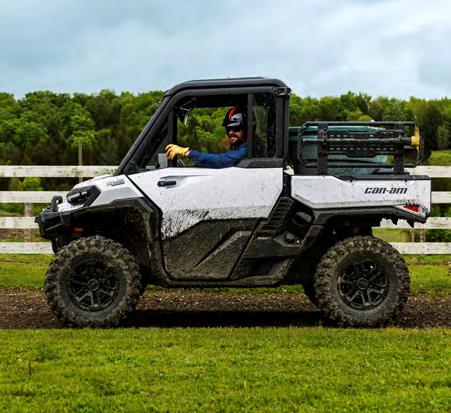
New Generation Of Can-Am Defender
Can-Am is changing the utility and recreational side-by-side landscape with the next generation of its Can-Am Defender model. Trusted by farmers, ranchers and riders across the world, the Defender is renowned for its power and skill to turn work and play into one.
For 2026, this iconic workhorse receives a groundup overhaul, further solidifying its position as one of the most capable, versatile and reliable utilityrecreational side-by-sides on the market.
Powertrain
At the core of the next-generation Can-Am Defender is an all-new HD11 999cc inline threecylinder Rotax ACE engine, boasting 95 hp and 70 lb-ft of torque. The HD11 powerplant is paired with an all-new continuously variable transmission (CVT) and pDrive primary clutch that are designed to put power to the ground with precision and improve low-speed power delivery while enhancing reliability. With three new selectable drive modes – Normal, Work and Sport – the engine optimizes performance for the toughest tasks, from towing heavy loads to conquering some of the most demanding terrains.
A new intake system promotes airflow to bolster engine performance, while an updated cooling system manages engine temperature and enhances HVAC (heating, ventilation, and air conditioning) performance. The 2026 Defender XT packages are equipped with a new Quick-4Lok auto-locking front differential, while the Limited, Lone Star and X mr packages carry the automatic, electronically controlled Smart-Lok front differential to maximize traction in most conditions.
The new Defender continues to lead the way with best-in-class payload, towing and cargo capacity and it now comes equipped with a new, larger 11.9-gallon fuel tank that enables longer days on the job or trail.
Suspension And Chassis
A best-in-class powertrain demands a suspension package and chassis that are up to the task. The 2026 Defender features new suspension geometry with a 65-inch-wide design and 50 percent larger arched double A-arms. The suspension and steering components are more robust and are assembled with double-bonded bushings, an industry first, for reduced maintenance and a quieter ride. The chassis has also been toughened up for the most demanding work and play scenarios, including improved ROPS. These changes not only increase toughness but also deliver sharper, more stable handling and advanced suspension performance even when the vehicle is loaded down with tools and gear. The Defender features 12 inches of front and rear suspension travel with 15 inches of ground clearance, which are best in class. The turning radius has also been reduced,
making tight maneuvers easier than ever.
Workability And Rider Experience
Working harder and smarter than ever before, the 2026 Defender offers comfort when riders want it and next-level capability when they need it. The ergonomics start with the largest cab in its class and 8 percent more leg room than the closest competition. Plus, the adjustable quick tilt steering wheel allows for convenient ingress and egress, while the backrest angle and seat foam have been revised for greater comfort and support.
The new Defender Limited and Lone Star packages are equipped with an updated HVAC system, improving cooling and heating capacity. A simple three-knob system provides convenient climate control adjustment. CAB models also benefit from noise, vibration and harshness reduction for better communication with passengers thanks to a new roof liner, rear wall insulation and floor mats.
Designed to take the rider experience to the next level, the new 10.25-inch Touchscreen Display packs a range of useful features, including a backup camera and built-in GPS to track every ride and locate friends with or without a phone or network connection. This infotainment system also lets riders seamlessly control music, monitor ride statistics, manage accessories and unlock advanced off-road navigation features through the BRP GO! app. With integrated Wi-Fi connectivity, it supports over-theair software updates, so owners can effortlessly access the latest features as they become available. The 10.25-inch Touchscreen Display comes standard on all Limited and Lone Star models, and it’s available as an option on the XT and XT CAB.
To enhance the rider’s line of sight in low-light conditions, the 2026 Defender features new LED headlights that produce 45 percent more output than the previous version. In addition, new LED rear lights include backup lights that turn on while in reverse.
For more information, visit can-am.brp.com.
AROUND THE VINE
Fresh Pack Potato Symposium
In 2024, the United States potato fresh market represented a $1.10 billion industry – 23 percent of the potatoes produced in the U.S. Fresh potatoes are also important for U.S. exports.
In 2022, U.S. potato exports reached a record $2.1 billion in sales. Canada (37.5 percent), Mexico (26.6 percent), Japan (8.7 percent) and Taiwan (5.7 percent) were the top export markets for U.S. fresh potatoes.
This integral industry faces significant challenges both internally and externally. Within the U.S., despite potatoes being the most consumed vegetable in the country, consumption of fresh potatoes has been in decline, falling by about 20 percent during the 1970s, and trending lower again since 2000.
On the other hand, there is a growing consumer interest in processing potatoes, which represents 88.3 percent of potato utilization.
Recognizing the importance of the fresh potato market for the U.S., and especially for Idaho, the University of Idaho is committed to organizing the first “Fresh Pack Potato Symposium” in Twin
Falls to address the most recent challenges of this market segment. The goal of this symposium is to contribute to the advancement of knowledge and technology in this important potato industry in Idaho and the U.S. It will be held Tuesday, Nov. 17, at the Canyon Crest Event Center in Twin Falls.
Valley Irrigation Announces Winners Of $10,000 Technology Giveaway
Valley Irrigation announced the recipients of its Valley Connected: AgSense Technology $10,000 Giveaway, awarding two growers the opportunity to enhance their operations with advanced remote irrigation management tools.
The two winners of the giveaway are:
• Perry Galloway, Galloway Cotton Farms, Gregory, Arkansas
• Art Olsen, Olsen Ranch, Harrisburg, Nebraska
The giveaway was designed to help growers take the next step in connected irrigation by equipping their operations with latest AgSense technology, Valley’s industry-leading platform for remote irrigation monitoring, control and decision support. Each winner will receive $10,000 in Valley AgSense technology customized to fit their farm’s specific needs — from remote pivot and pump control, to soil
Externally, U.S. exports have been affected by phytosanitary problems and protective regulations, which reduce accessibility to markets abroad. In addition to other challenges, such as variety selection, sprout control, mechanical injuries and defects, these diseases add more obstacles to the fresh market.
moisture monitoring, weather insights and more.
“Growers today are managing more acres, more equipment and more variables in today’s challenging market,” said Ashley Anderson, assistant general manager, AgSense, Valley Technology. “We created this giveaway to give producers an opportunity to experience the latest connected irrigation technology, simplifying irrigation management, providing realtime visibility into their systems, and ultimately helping them make better decisions in the field.”
With AgSense technology, growers can monitor pivot performance, receive alerts, implement realtime irrigation scheduling, and track critical field conditions from their phone or computer — allowing them to stay connected to every field from anywhere, at any time.
Growers interested in learning more about AgSense technology and Valley’s connected irrigation solutions can visit valleyirrigation.com/agsense or connect with their local Valley dealer.
USDA Appoints 24 Members To Potatoes
USA’s Board of Directors
The U.S. Department of Agriculture (USDA) announced the appointment of 24 members to Potatoes USA’s Board of Directors, effective immediately. Twenty members will serve three-year terms ending February 28, 2029, and four members will serve two-year terms ending February 28, 2028.
The nomination process for board members is conducted annually. Candidates are proposed by the industry and are appointed by the Secretary of Agriculture after a thorough review. The Board of Directors has 90 member positions, including 79 producers, two importers and one public member.
The Potatoes USA Board of Directors guides the organization’s efforts to promote and support the potato industry. The Board sets strategic objectives for the organization and allocates resources to various marketing, research, and education initiatives. It also monitors the programs’ performance and makes adjustments as necessary to ensure the work is effective and impactful for the potato industry, including growers, processors and other stakeholders.
New Board Members
• M. Keith Barrett, Muleshoe, Texas
• Richard Bernstein, Freeland, Md.
• Chelsea Blachford, Baker City, Ore.
• Tara Cunningham, Mount Vernon, Wash. (two-year term)
• Jacalynn Gumz, Endeavor, Wis.
• Leah Halverson, Grand Forks, N.D. (two-year term)
• Andrew Hyer, Moses Lake, Wash.
• Kenneth V Irving, Caribou, Maine
• Justin Kyllo, Larimore, N.D.
• Brian Meisner, Holyoke, Colo.
• Austin Moss, Rupert, Idaho
• Mike Phillips, Three Rivers, Mich.
• Mia Reed, Pasco, Wash.
• Jay Savage, Walpole, N.H. (two-year term)
• Ryan Tucker, Shelbyville, Mich.
• Laurie Widdowson, Kearney, Neb. (two-year term)
• Mike Wollman, Warden, Wash.
Returning Board Members
• Trever Belnap Lewisville, Idaho
• James Corneillie, Williams, Minn.
• Sander Dagen, Karlstad, Minn.
• Rhonda Kleyn, Quincy, Wash.
• David Masser, Sacramento, Pa.
• David Mundt, Firth, Idaho
• Levi Clayton Underwood, Pasco, Wash.
More information about Potatoes USA’s board can be found at PotatoesUSA.com or USDA Agriculture Marketing Service (AMS) National Potato Promotion Board webpage.
- no hassle customization tailored to customers wants And needs, with attention to detail
AROUND THE VINE
AVR Expands U.S. Presence With LOCKWOOD Manufacturing
AVR Machinery, a leading Belgian manufacturer of innovative potato equipment, has announced a new distribution partnership with LOCKWOOD Manufacturing to strengthen its U.S. market presence.
Under the agreement, LOCKWOOD will serve as AVR’s official distributor in the North Dakota and Minnesota regions, key hubs of potato production in the United States, with planned inventory available directly through LOCKWOOD’s North Valley Equipment dealership in Grafton, ND. This collaboration will bring AVR’s industry-leading
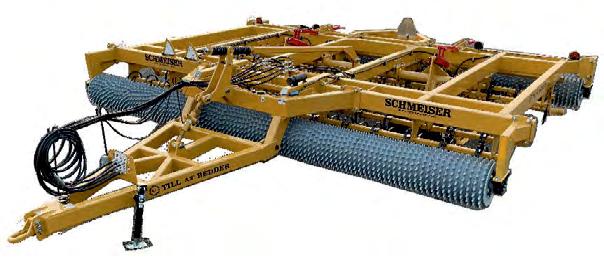
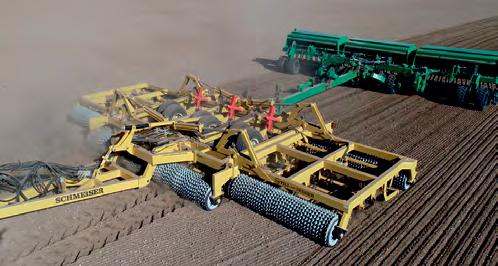
NEXT-GEN
Till an’ Bedder
Dial in the perfect seedbed with the NEXT-GEN Till an’ Bedder by T.G. Schmeiser. 22” Ductile rings and 2-11/16 of updates. Available in 12’-30’ widths. Contact your local dealer for full details. tgschmeiser.com
machinery closer to growers, offering localized support, service and expertise.
“We are excited to be able to offer this collaboration with AVR to our growers in the region,” said Darren Demers, manager and regional salesman for North Valley Equipment. “AVR’s innovation and industry knowledge of potato equipment is a strong addition we’re proud to offer our LOCKWOOD growers.”
“We are thrilled to partner with LOCKWOOD,” said Andrew Starbuck, AVR’s country manager. “Their regional knowledge, strong relationships with growers, and reputation for quality make them the ideal partner for introducing AVR equipment in the Upper Midwest.”
Making Trade Easier: Export Opportunities For Canadian Fresh Potatoes To
Mexico
The Canadian Food Inspection Agency (CFIA) has reached agreement with Mexico’s Servicio Nacional de Sanidad, Inocuidad y Calidad Agroalimentaria (SENASICA) on arrangements that will allow shipments of Canadian potatoes for consumption or processing to Mexico.
This agreement will help expand market opportunities for Canada’s potato sector and support producers in exporting their high-quality products to international markets. The CFIA will work closely with the potato sector in the coming months as next steps are implemented.
In October, the Honourable Heath MacDonald, minister of Agriculture and Agri-Food, concluded a successful trade mission to Mexico where both countries agreed to enhance regulatory and technical cooperation under the CanadaMexico 2025-2028 Action Plan to
facilitate commercial ties. These discussions continued during the most recent trade visit in February, 2026.
Securing access to international markets for Canadian agricultural and agri-food products is a key priority for the government of Canada. Minister MacDonald’s engagements with Mexico underscore Canada’s commitment to strengthen agricultural ties, increase and diversify trade, and promote the Canada brand.
The CFIA supports market
access requirements with trading partners by providing guidance to growers and packing facilities with information on foreign import requirements, and verifies compliance with importing countries’ regulations through inspections. As Canada’s national plant protection agency, the CFIA also works with international partners to prevent the spread of invasive pests and diseases that could threaten crops, forests, the environment, and our economy. For more information, visit inspection.canada.ca
BAG FILLER DUAL BAGGER WITH TAKEAWAY
Tuber Soft Potential And Bruising From Storage To Packaging
Rot
Bruising Packaging
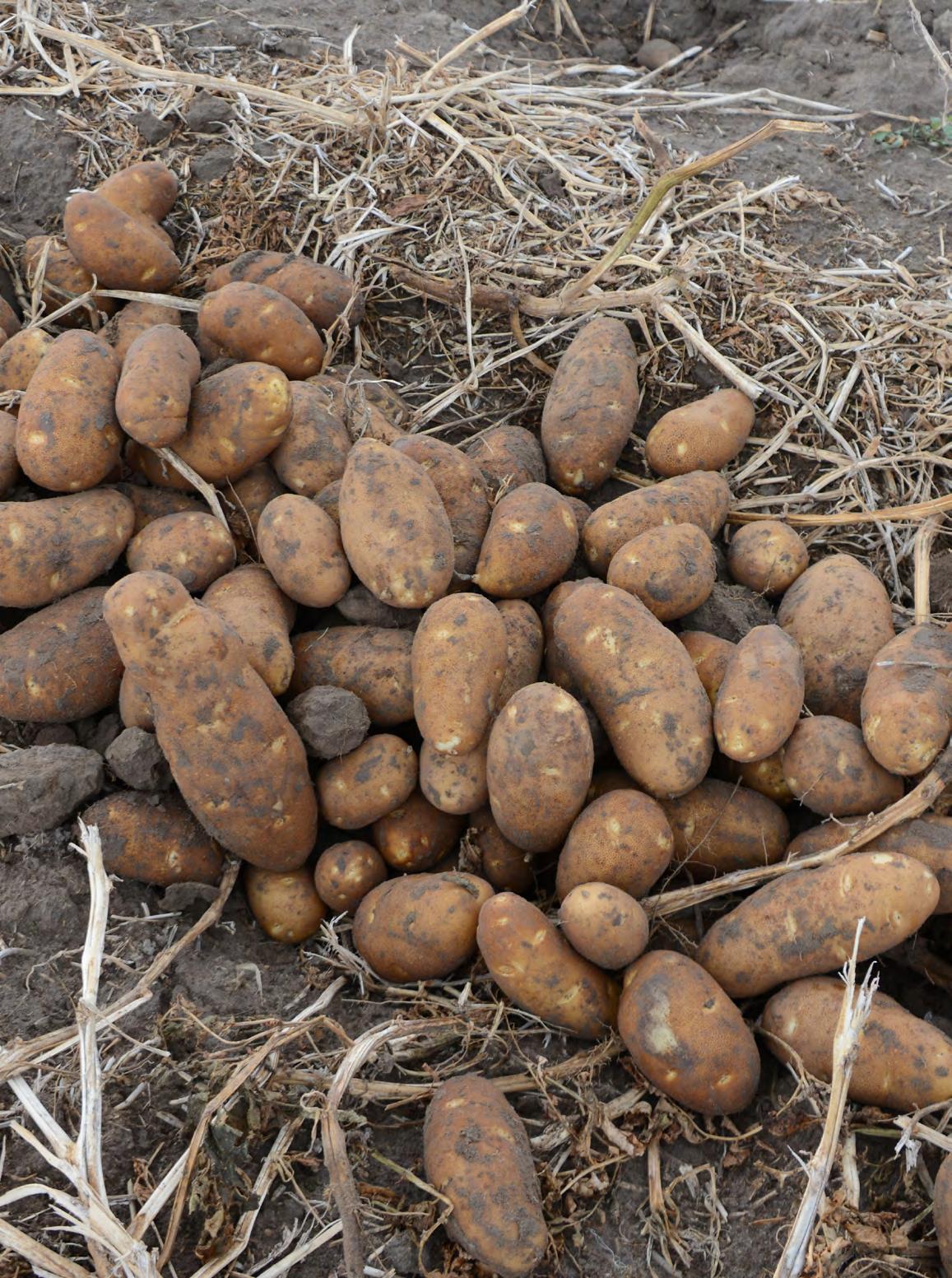
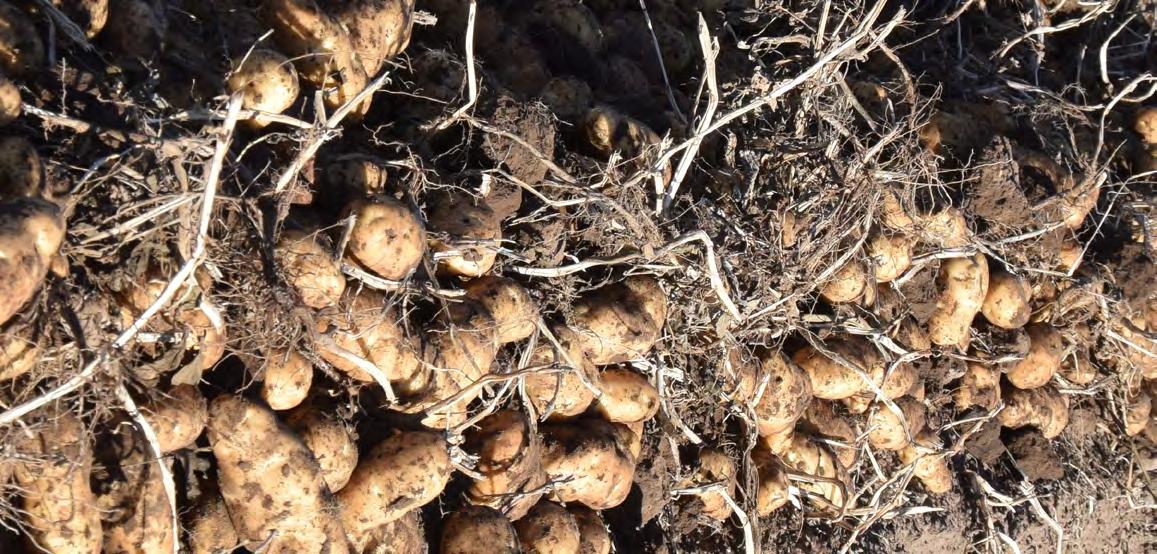
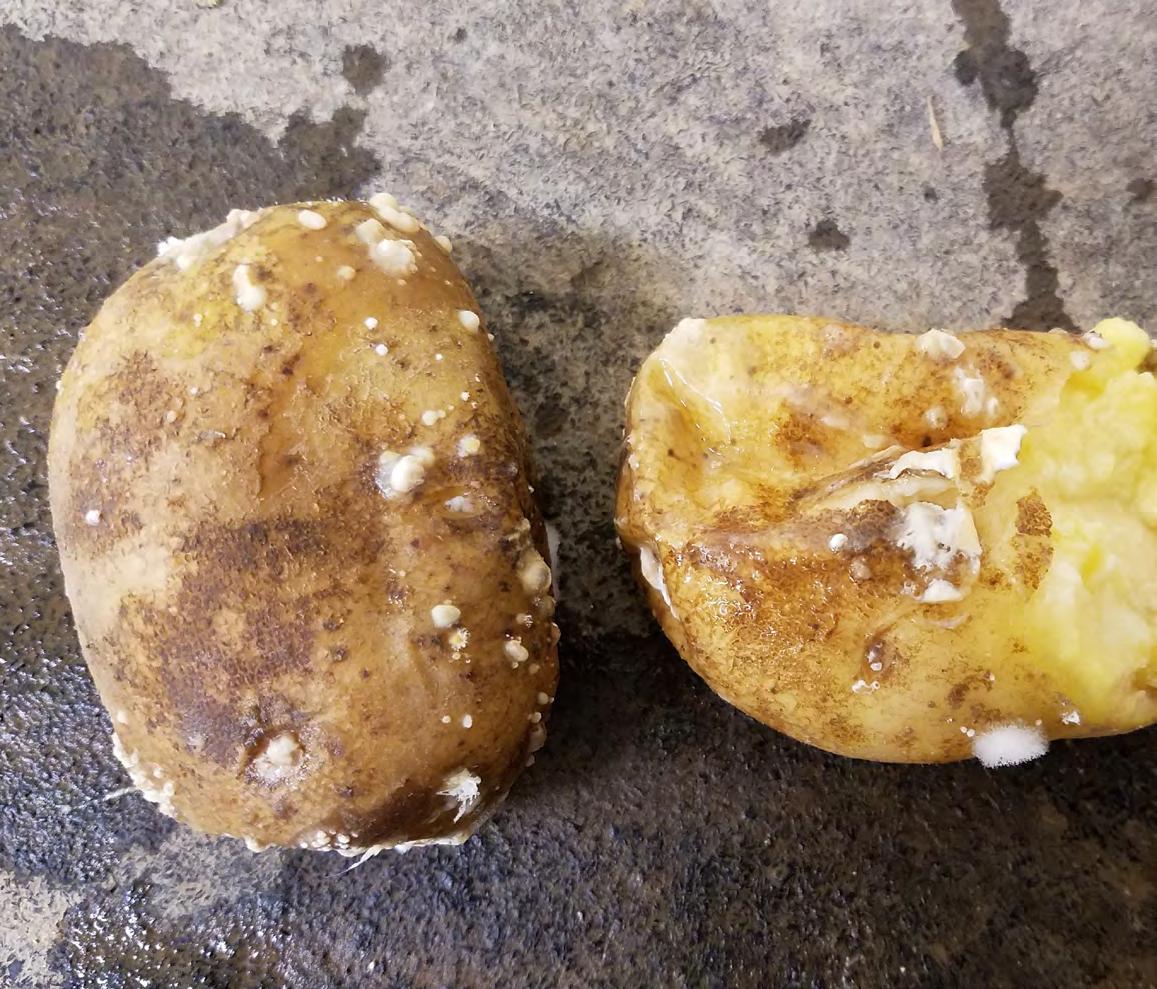
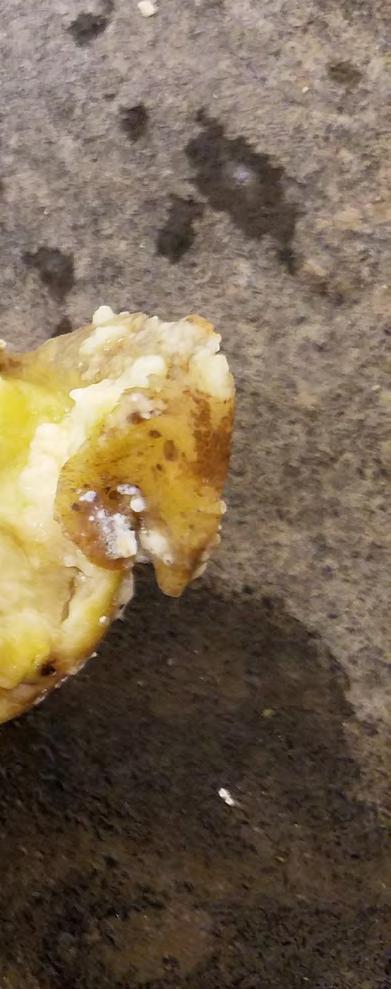
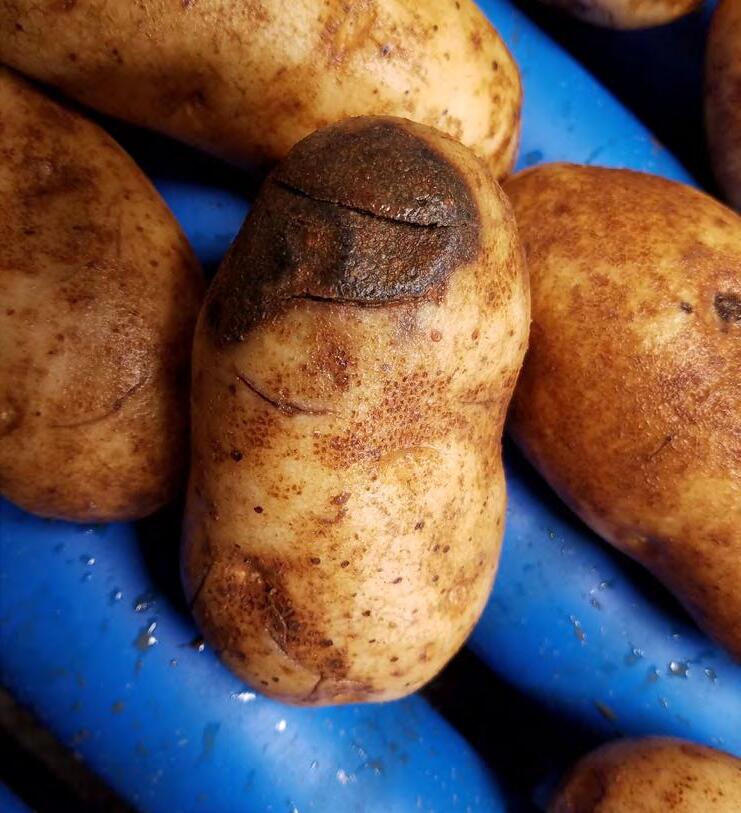
Left: Researchers from Miller Research and the University of Idaho studied how soft rot can get a foothold into potatoes, beginning in storage all the way to the packing shed. Below:Results of a survey revealed retail rejections in Idaho showed 30 percent of all rejections were due to soft rot decay.
Photos by Jeff Miller
Dr. Jeff Miller, Trent Taysom, Dr. Terry Miller, Cheryn Suarez, and Scott Anderson; Miller Research LLC
Dr. Nora Olsen, Dr. Mike Thornton, Rabecka Hendricks, and Tyler Spence; University of Idaho
(ED—Following are the results of a study conducted by researchers at Miller Research [https://millerresearch.com/] and the University of Idaho. It is reprinted here with permission.)
Abstract
This research study, conducted by Miller Research and the University of Idaho, examined how handling and packing affect potato tuber rot potential and bruising.
Soft rot and various types of bruising, such as blackspot and shatter, were measured as tubers moved from storage to packing facilities. Results indicate the act of washing potatoes significantly increased tuber vulnerability to decay compared to their unwashed state.
Thorough or partial drying of tubers after washing was more effective than no drying or the use of disinfectants for preventing rot.
Additionally, the timing of the storage season influenced how much damage occurred during transport, with early-season potatoes showing higher sensitivity to mechanical impact. Overall, moisture management is the most critical factor for avoiding tuber rot during the packing process.
Background
Bacterial decays present serious economic losses. Soft rot infection, caused by Pectobacterium species, can occur in storage as a primary tuber decay or secondary breakdown decay, and in packaged potatoes after running through a packing shed.
A recent 3-year survey of retail rejections in Idaho showed approximately 30 percent of all rejections were due to soft (wet) rot decay. Soft rot decay in the field and in storage is also a significant cause of economic losses to the processing industry.
Wash water in packing sheds is thought to act as a mass inoculation mechanism for soft rot infection. Mass inoculation combined with moist tubers, rapid bacterial multiplication, tuber injuries and warm storage and/or transportation temperatures can magnify soft rotting potential. Assessing conditions in the packing shed can help identify targeted research opportunities and technology-based modifications to limit quality defects due to soft rot development.
The purpose of this research effort was to answer the following questions:
1. Does bruising and soft rot potential increase in transport from storage to wash plant?
2. What is the effect of drying and disinfectants on tuber soft rot potential?
Materials And Methods
To answer these questions, paired tuber samples were taken at various locations in a fresh pack operation including out of storage, during transport to a fresh pack facility and at various locations in the
Figure 1
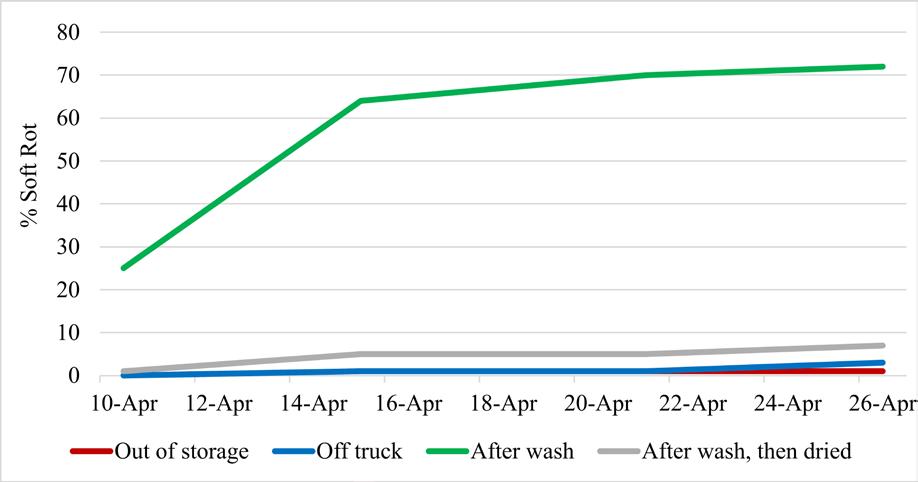
Figure 1. Effect of transport, washing and drying on tuber soft rot potential. Tubers were sampled from a fresh pack plant on April 3.
fresh pack facility. One set of tubers was used to assess soft rot potential. Once collected, these tubers were placed in web-bottomed trays and placed at 55 degrees F in a mist chamber that maintained continuous moisture on the tuber surface.
Tubers were evaluated every 2-3 days for the presence of any soft rot. Once soft rot was observed on a tuber, the tuber was removed from the tray.
The second set of tubers were evaluated for the number and types of bruising (skinning, shatter, pressure and blackspot).
These evaluations were made at multiple fresh pack operations on multiple occasions as described below.
Results And Discussion
During one sampling event, tubers were collected from the storage prior to being loaded on a truck for transport to a fresh pack operation.
Four separate samples were collected to correspond with four different truck loads (Figure 1, “Out of storage,” red line). When the truck arrived at the fresh pack operation, another sample was taken (Figure 1, “Off truck,” blue line). Both samples had little, if any, soft rot even after being held in the mist chamber for three weeks. These results indicate that soft rot potential was low prior to tubers being washed in the fresh pack operation.
A third sample was collected after the tubers came out of the initial wash water at the fresh pack facility (Figure 1, “After wash,” green line). The tubers for this and the previous two samples were immediately placed in plastic bags to maintain the moisture status on the tubers until they could be placed in the mist chamber.
A fourth sample of tubers was taken immediately after tubers were washed and air-dried by placing them in mesh bags and transporting them in the open bed of a pickup as they were transported to the mist chamber. The tubers that were air-dried (Figure 1, “After wash, then dried,” gray line) developed a low percentage
of soft rot, similar to the “Out of storage” and “Off truck” samples.
Tubers that were washed and not dried (Figure 1, “After wash”) developed soft rot symptoms within a week of sampling. Within two weeks of sampling, incidence of soft rot increased to over 60 percent and rose to over 70 percent after three weeks.
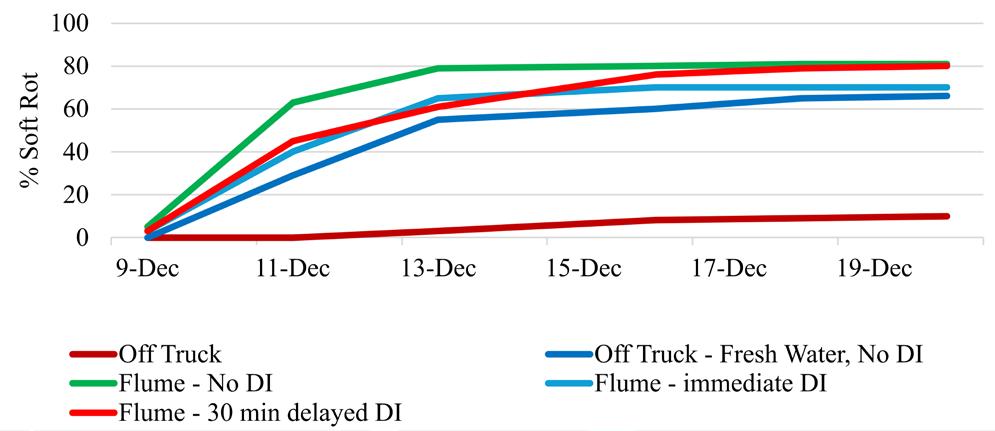
Additional samplings were taken from two different fresh pack operations at different locations within the fresh pack lines. These results are shown in Figure 2. Tubers sampled directly off the truck prior to washing (Figure 2, “Off Truck”) developed just over 10 percent soft rot after two weeks. Washed tubers not receiving any disinfectant (Figure 2, “Washed Tubers – No DI”) showed the highest incidence of soft rot on December 11 and 13. Tubers that were washed in the flume and received disinfectant (Figure 2, “Flume – immediate DI” and “Flume – 30 min delayed DI”) were numerically lower for soft rot incidence on those dates.
The timing of disinfectant application did not affect the development of soft rot. Tubers treated with disinfectant immediately after the flume developed soft rot at a similar rate as tubers treated 30 minutes later. Attempting to treat washed tubers closer to the wash flume does not reduce tuber soft rot potential. The disinfectant used in this case was a peroxyacetic acid/hydrogen peroxide mixture (Sanidate 5.0). Some tubers were taken off the truck and washed in clean well water (Figure 2, “Off Truck – Fresh Water, No DI”). While the incidence of soft rot was numerically lower than other wash treatments, the differences were not significant and soft rot developed at approximately the same rate as with tubers washed in the flume. The effort to use clean water for washing would not necessarily result in a significant reduction in tuber soft rot potential.
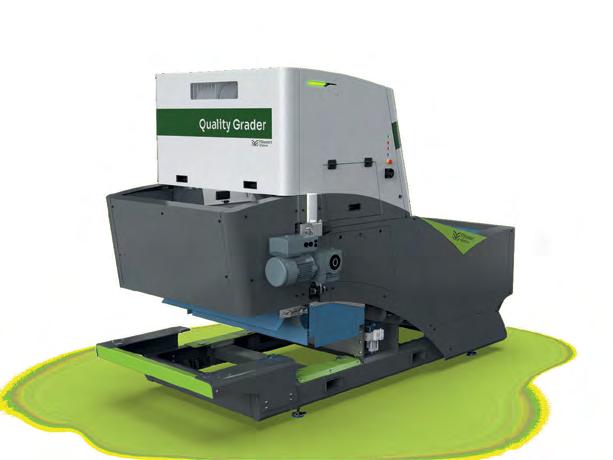
Simultaneous Optical Sorting For Accurate Quality Control.
Phone: 965.682.6176
info@foxbag.com | www.foxbag.com
Sectagon for nutsedge suppression
Sectagon for sodium-sensitive crops
Sectagon for germinating weed seeds
Sectagon for soil preparation
Sectagon for metam potassium
Sectagon for metam sodium
Sectagon for Verticillium suppression
Sectagon for Phytophthora suppression
Sectagon for root-knot nematode suppression
Sectagon for high pH soils
Sectagon for calcium carbonate soils
Sectagon for nematode suppression
Sectagon for weeds
Sectagon for onions
Sectagon for carrots
Sectagon for potatoes
Sectagon for tomatoes
Sectagon for strawberries
For proven protection from the start, ask for Sectagon.
Available in
POTATO GROWER GOLF SCRAMBLE
The Potato Industry's Most "Rewarding" Day!
GROWERS PLAY FREE
All skill levels welcome
One free player per family/farm/operation
Each team must have a combined handicap exceeding 60
The two best players’ combined handicap must be 15 or more
Field is limited to the first 144 paid entries
Sponsored by:
Agribusiness
In theory, disinfectant treatments seem as if they could solve the potential soft rot risk; however, the results of these first trials made us rethink other solutions fresh pack facilities could utilize to minimize soft rot.
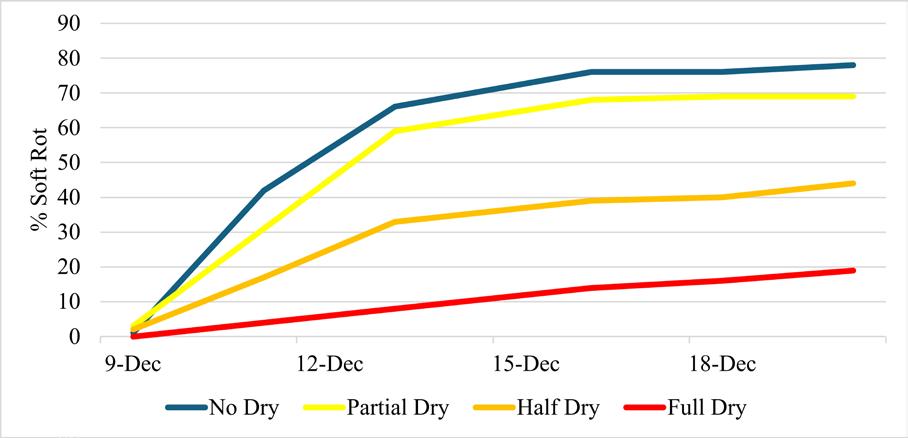
The next step we took was looking further into the effect of drying on reducing tuber soft rot. Tubers were collected after being washed in a flume and then dried with forced air for differing amounts of time: partial (~10 minutes), half (~20 minutes) and full (~40 minutes). The amount of drying was confirmed by weighing tubers and recording when the sample weight stopped decreasing. This indicated that the water adhering to the tubers from the wash water had been removed through the drying process.
The “Partial Dry” treatment showed elevated soft
rot potential and was statistically similar to the “No Dry” treatment (Figure 3). However, increasing levels of dryness resulted in lower tuber soft rot potential. Tubers that were completely dried after washing remained under 20 percent for the soft rot potential for the duration of the evaluation.
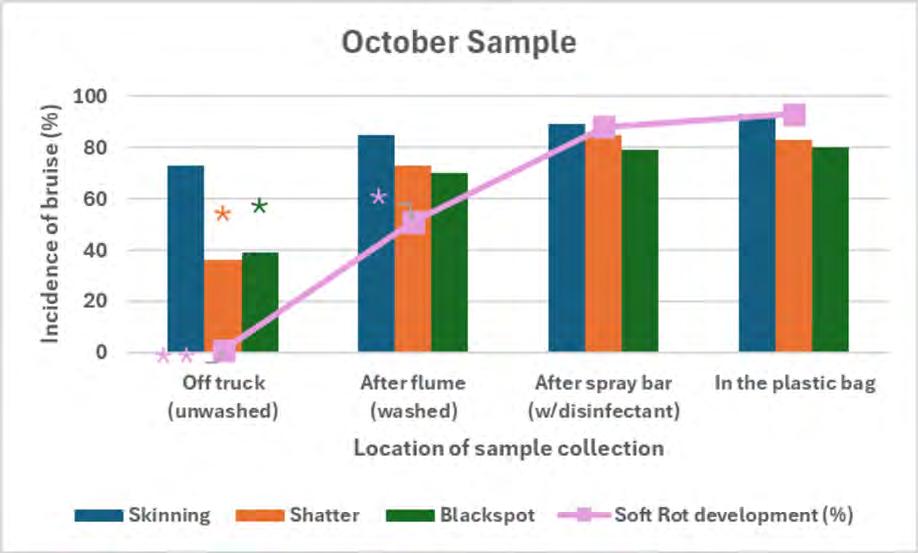
More trials were conducted to evaluate the effect of skinning and bruising on soft rot potential. Samples collected early in the storage season (October) showed an increase in both shatter bruise and blackspot bruise after being washed (Figure 4). Soft rot potential increased as the tubers moved through the fresh pack line. The application of a disinfectant did not decrease soft rot potential.
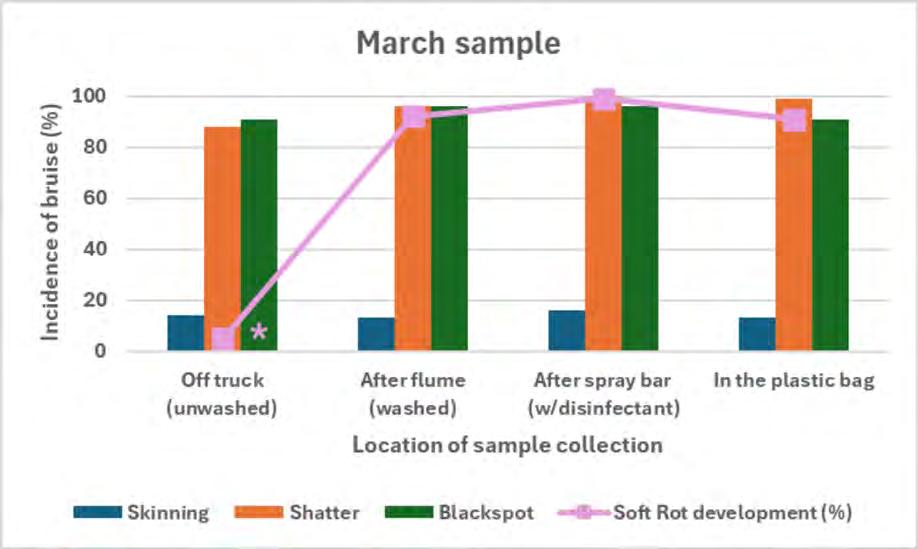
When this trial was repeated after six months in storage, the incidence of skinning was not as high
Figure 2 Effect of washing and disinfectant on tuber soft rot development (DI = disinfectant).
Figure 3 Effect of drying time on tuber soft rot potential.
(Figure 5). Later in the storage season (March), bruising was similar across all sampling locations and didn’t change from unloading to washing. However, soft rot potential followed the pattern observed in all the other trials by increasing significantly after washing. The rot potential remained high throughout the remainder of the fresh pack
Figure 4
Effect of sample location in a fresh pack line on bruising and soft rot potential early in the storage season (October). Color-coded * represents values that are significantly different (α< 0.05) from other locations examined for each variable.
operation. These data support the idea that soft rot potential is related more to washing than to bruising.
Summary
In summary, if soft rot is an issue, increased drying of tubers after the washing process would be the most effective management practice. While the use of a disinfectant or
fresh water during the fresh pack operation may have some benefit, that was not measurable in many of these tests.
Minimizing bruise will help with overall potato quality, but potato bruises alone did not increase soft rot potential. Efforts to dry tubers partially, or ideally completely, prior to packaging would provide the greatest reduction in disease.
Figure 5
Effect of sample location in a fresh pack line on bruising and soft rot potential after six months in storage (March).
Color-coded * represents values that are significantly different (α< 0.05) from other locations examined for each variable.
HARVEST EQUIPMENT
Safe-T-Pull Manufacturing (701) 284-6100
www.cropshuttle.com
Crop Shuttle
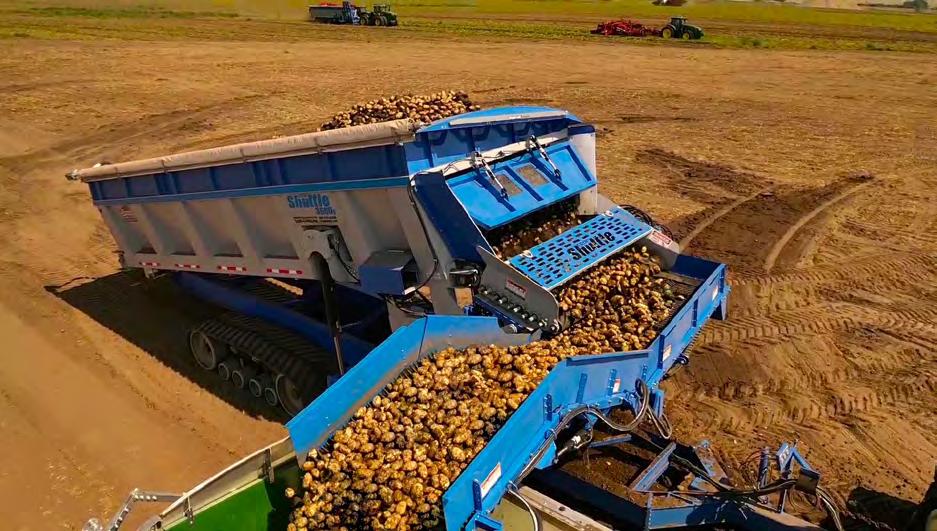
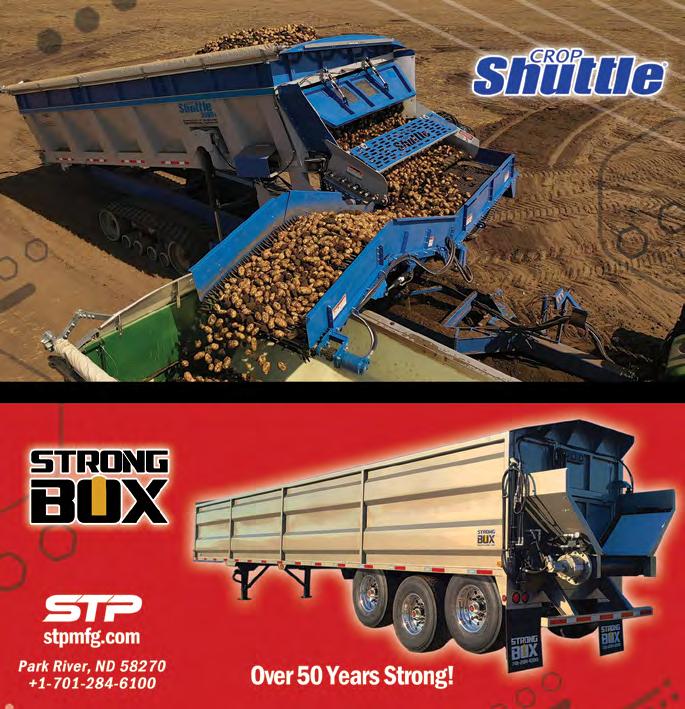
The Crop Shuttle is engineered for high-volume, gentle handling — perfect for the demanding needs of potato harvest. With its large capacity and smooth unloading system, it helps you maximize efficiency while protecting your crop from damage. At the core of the Crop Shuttle is its positive-drive rubber belt floor, designed to prevent slippage and ensure a consistent, gentle flow of potatoes during unloading. This minimizes bruising and skinning, preserving quality from field to storage. The wide 52-inch backfold boom allows fast, even unloading, with adjustable speed controls to suit your conditions. One of the standout features is the optional 19-foot hydraulic side door, making it easy to load potatoes from the side at a low drop height, further reducing impact damage. The self-cleaning design keeps your operation running smoothly, even in tough conditions, with less downtime for maintenance.
Strong Box Live Bottoms
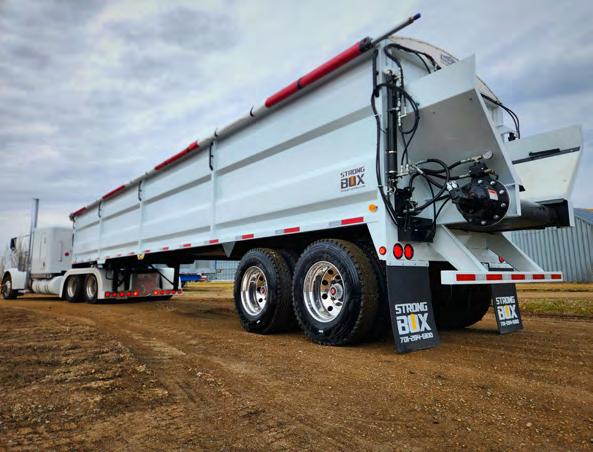
Strong Box specializes in livebottom semi-trailers and bulk beds that give growers versatility across many crops or aggregates. The new continuous belt option is still positive drive, providing a more even product flow and reducing skinning with no belt slippage. The proven plastic drag floor eliminates the hassle of replacing rollers or bearings. The rubber profile belting along with a skirt board seal guarantee Strong Box’s belting is the best on the market. Custom end gate options and various belt widths make it possible to build the perfect bulk box or trailer to fit each grower’s needs.
HARVEST EQUIPMENT
Puma 4.0
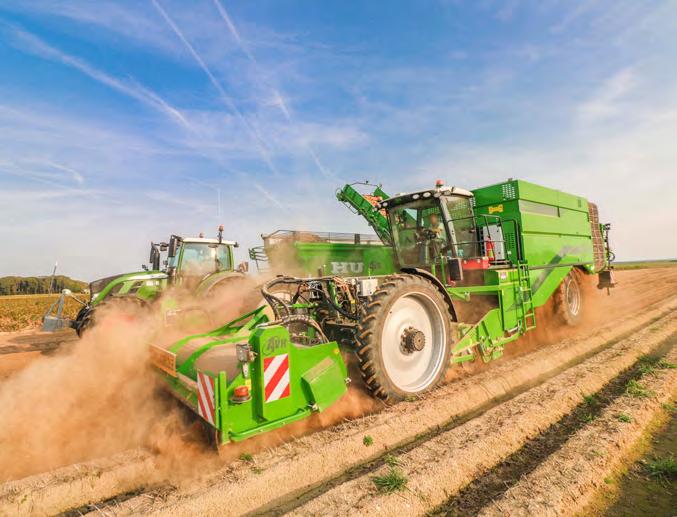
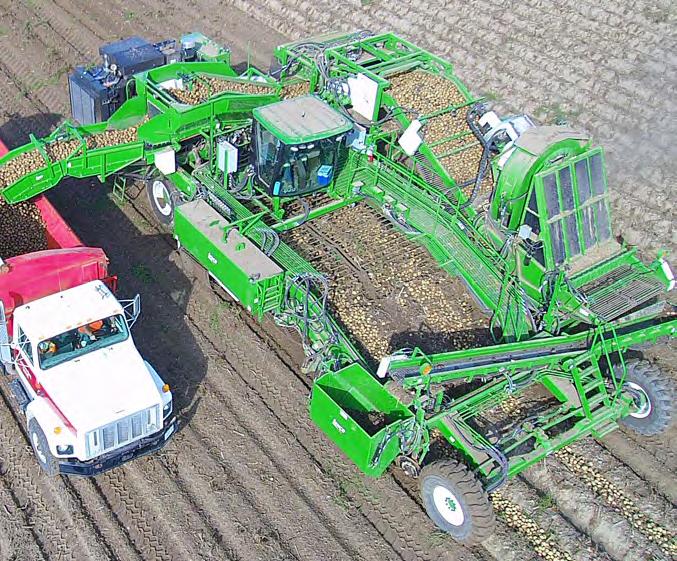
The Puma 4.0 is redefining potato harvesting technology and gaining increasing attention. Built on more than 175 years of agricultural expertise, this self-propelled, four-row harvester combines efficiency, precision and datadriven innovation in one powerful machine. The Puma 4.0 is the lightest, self-propelled harvester on the market. That’s important because soil compaction is a big issue. That lightness translates into strong fuel efficiency, with a diesel consumption of around 30L/h. The Puma 4.0 is significantly lighter than its North American competitors. With an output of 510 hp and a bunker capacity of eight tons, the Puma 4.0 delivers maximum efficiency. What truly sets this machine apart is its advanced technology. The intuitive control system, operated via touchscreen and joystick,
simplifies the operator’s work, while automated functions and cameras ensure optimal control during harvesting. In addition, the machine can be connected to the digital platform AVR Connect, allowing farmers to analyze real-time data
and improve yields.
The Puma 4.0 is also exceptionally potato-friendly: its system minimizes crop damage and ensures reliable harvesting performance, even in wet conditions.
LOCKWOOD Mfg. (800) 247-7335 www.lockwoodmfg.com
774 Harvester
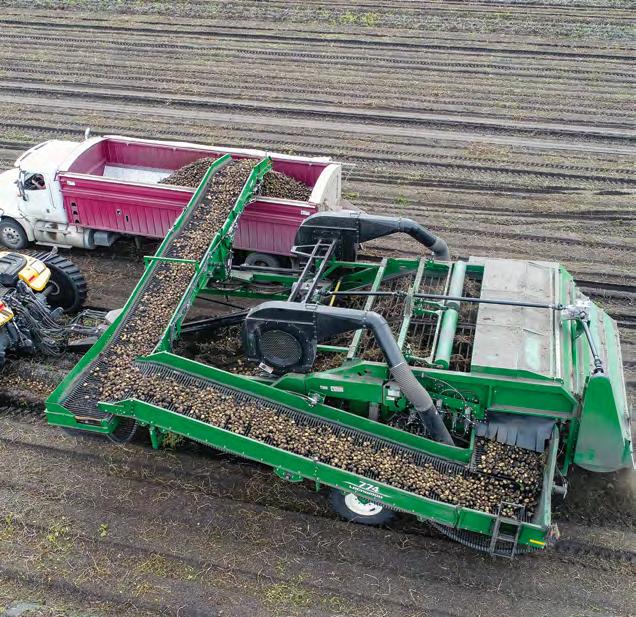
The 774 Harvester is designed and built with potato growers in mind. Maximize speed and efficiency with LOCKWOOD’s 774 Harvester. New enhancements include improved airflow of the vine blower – directing air exactly where it should be to help growers be more productive. We have also added the ability to dial in your over-ride chain for the most efficient vine removal yet. The rear cross on the 774 is fully dynamic, allowing for the shortest drops and the highest capacity. Quick, easy and simple adjustments allow you to fine tune this machine to your operation. Inspecting the rear cross has never been easier with the addition of a door that you can simply open and step right in to inspect your machine - no more crawling.
Mayo Mfg. Co.
(218) 773-1234
www.mayomfg.com
Optical Sorting
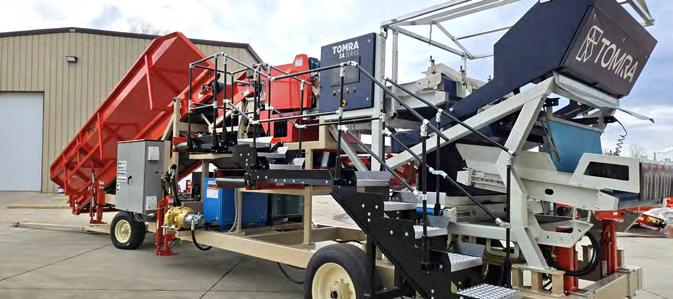
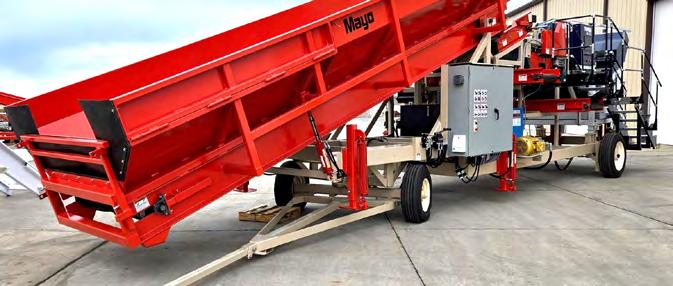
For the best in optical sorting, Mayo teams up with the Tomra 3A and the powerful AI technology. Specifically designed for unwashed potatoes, this unit is a proven success for removing foreign debris, dirt, rot and rocks. With large capacities offered, Mayo will provide the best design for your optical sorting needs. Userfriendly controls and sorting consistency are some of the many features of this next generation technology.
HARVEST EQUIPMENT
Logan Farm Equipment
(800) 279-2689
www.loganpotato.com
Logan Load Pro
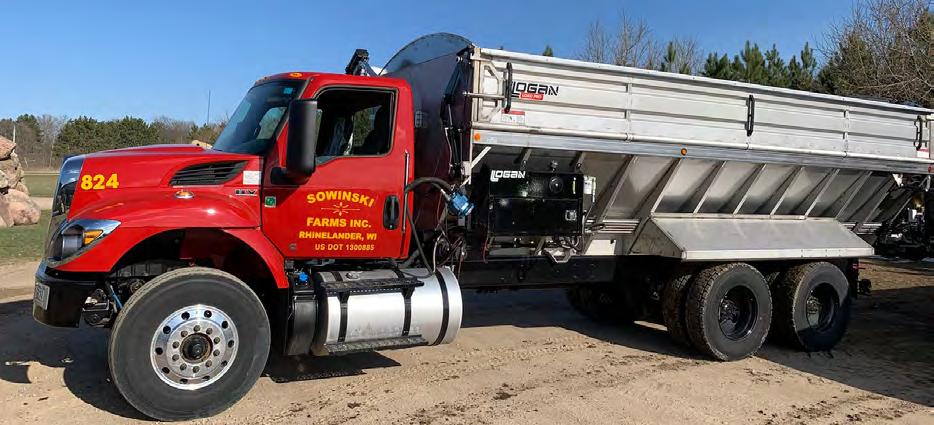
Logan’s Load Pro truck bed is designed and constructed for years of excellent performance. Its 100-inch-wide body provides the largest capacity from 20 to 30 feet in length. With construction of standard carbon steel and complete stainless steel, the Load Pro is capable of meeting all your needs. Main components such as the side door, non-
door and main frame rails are one piece, providing strength and longevity. Important structural members are bolted into place, allowing twisting and torsion to happen without cracking. The beds are feature-rich and have unique advantages such as large 3-inch carry-up rollers, heavy side support ribs spaced close together, upper rear hydraulic doors, turnbuckle ratchet take-ups and more. All Logan equipment is sandblasted, primed and painted with a highgloss polyurethane paint that is very durable and provides years of attractive quality.
HARVEST EQUIPMENT
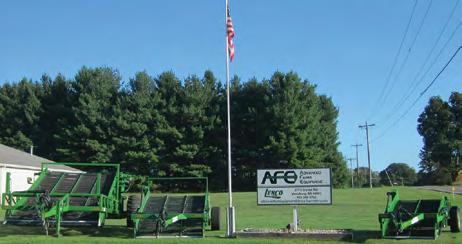
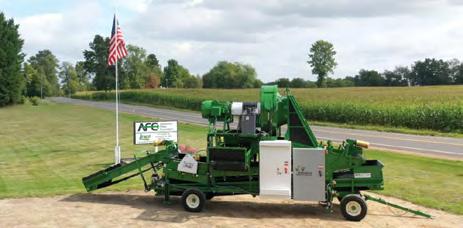
Advanced Farm Equipment, LLC (877) 287-5711
www.lenco-harvesters.com
72-inch Air-head Harvester
AFE’s computer-automated Lenco airhead now separates rocks from potatoes with maximum possible efficiency regardless of field conditions, and with less attention from the harvester operator. On-board sensors gather and relay critical data to the harvester’s central computer, and airhead speed is adjusted constantly to maximize separation and minimize bruise. Your operator can now focus on other critical tasks, like loading potatoes into a moving truck.
U.S. and Canadian potato farmers have reported 20 percent greater capacity with 0 to 2 percent bruise in very rocky conditions from the new 72- and 65-inch automated airhead harvesters. Advanced computer controls, remote programming
updates, and IoT connection installed on the world’s most durable frames mean a high-
capacity Lenco harvester will operate at peak efficiency for decades.
HARVEST EQUIPMENT
Advanced Farm Equipment, LLC (877) 287-5711
www.lenco-harvesters.com
Apollo Tracked Windrower
U.S. and Canadian potato farmers asked AFE to design and build a windrower that can keep up with the company’s high-capacity automated airhead harvester. The Apollo six- and eight-row windrowers with tracks and Soil Savers are the answer to that request.
Lenco Soil Savers are designed to dig 30 percent less soil and rocks than a conventional windrower, allowing for cleaner potatoes at greater ground speeds. Midmounted steerable tracks reduce hitch weight dramatically, and the track system floats better than
tires in any soil condition. Apollo windrowers can discharge potatoes into one or two rows, and to the left or right side with the touch of a button.
Spudnik Equipment Company (208) 785-0480 www.spudnik.com
6631-4 AirSep Harvester
The 6631-4 AirSep Harvester is built for efficiency, precision and productivity in the field. This four-row harvester funnels potatoes into a three-row AirSep system, utilizing advanced airflow technology to separate dirt and trash in the field. A 105-inch separation system — placed before the AirSep chamber — enhances the cleaning process
by ensuring even distribution and maximizing efficiency. This design allows growers to eliminate excess material right in the field, reducing the need for cleaning at the storage facility and streamlining the overall harvest. Equipped with depth control wheels, the 6631-4 maintains optimal digging depth across changing terrain, letting the operator focus on boom operation and truck loading rather than constant depth adjustments. With its intelligent design and field-first cleaning power, the 6631-4 helps you deliver a cleaner product, faster and with less work at storage.
PLANTERS
PILERS
CROSSOVERS/WINDROWERS
PLANTER FILLER DIRT PILER Mayo 24” Telescopic Planter filler Piler
Double L 815, 3ph Spudnik 1115 Planter Filler, 1ph
BULK BEDS/BOXES/
Logan LP20’ PTO/Elec, Recinditioned
Harriston 3240 CH fingers peg belt blower sizing fingers 230 V 3ph 2002 Harriston 240 CH Ellis Table 480 Volt 3ph
2003 Milestone 36” hopper 60” fingers 48 belt picking table
Hang-on
CONVEYORS -TELESCOPIC
2009 Spudnik 1255 36”/42”/85’ 3ph
2001 Spudnik 1255 30’’/36’’/85’ 3ph
1997 Spudnik 1255 30”/36”/85’ 1 ph
1994 Double L 820 30”
SCOOPERS
HARVEST EQUIPMENT
Spudnik Equipment Company (208) 785-0480 www.spudnik.com
4835 Crop Cart
Introduced in 2014 to handle many different crops in various conditions, the Crop Cart has changed the way farms operate. With many different attachments, the Crop Cart is designed to be utilized in every season. The attachments include a compost/fertilizer spreader, seed loader, grain auger, potato boom and sugarbeet boom. The Crop Cart has the capacity to hold up to 700 sacks (35 tons). Using a Crop Cart reduces the need to have trucks in the field to continue planting, harvesting and transporting productively. The Crop Cart is highly adaptable to increase farm efficiency and profitability.
Dewulf +32 51 20 58 71 www.dewulfgroup.com
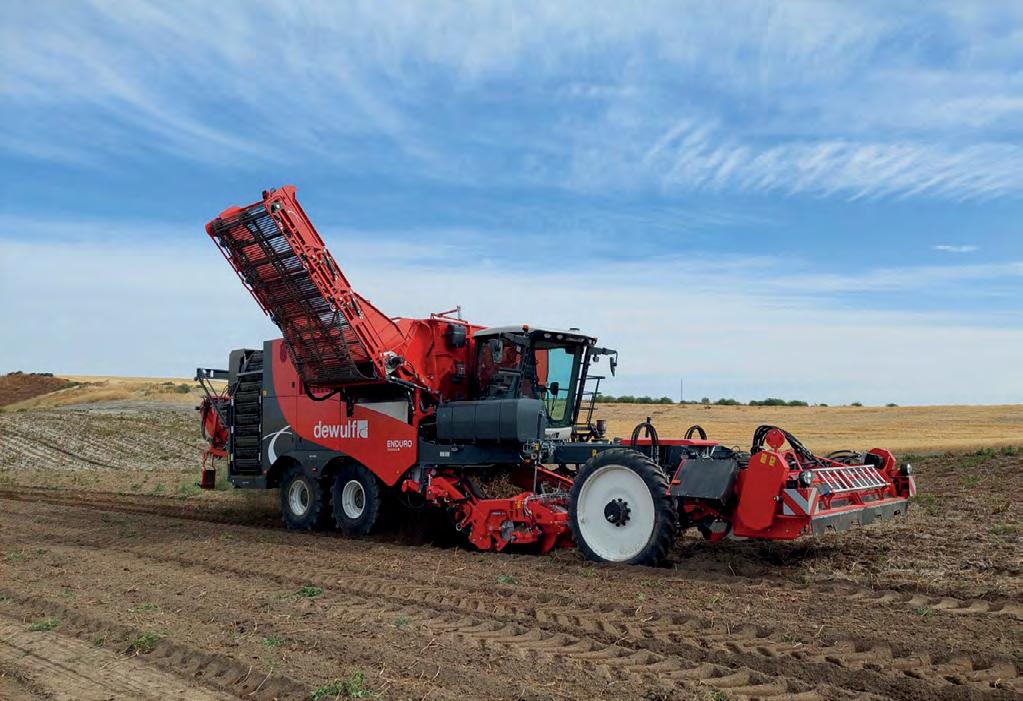
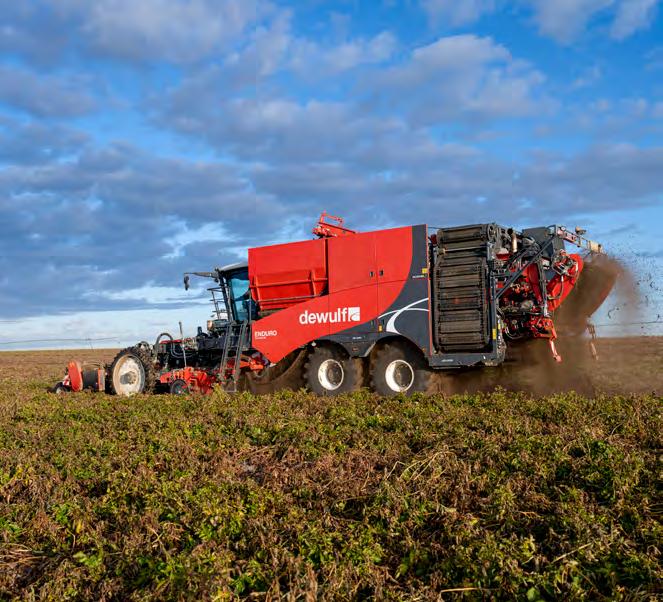
Enduro Generation 2
2024 marks the year the 4-row, self-propelled Enduro harvesting flagship from Dewulf entered its second generation. This model on tires incorporates user feedback and responds to evolving market needs to deliver enhanced performance and new features. The Enduro Generation 2 is available in 4x75 cm and 4x90 cm configurations, meeting increased demand in North America. A key improvement is the redesigned ring elevator, offering 50 percent more processing capacity through a larger bag volume, higher running speed and better product distribution. Additionally, the secondgeneration Enduro comes with two engine options: the well-known 450-hp Scania engine and a more powerful 550-hp version. For cleaning, the axial
module, standard on the Enduro, features 30 speed-adjustable rollers, with stepless inclination adjustment from 0 to 12 degrees, even allowing the module to be bypassed. The Easyclean module, ideal for moderate soil conditions or clod-prone areas, has an adjustable inclination from minus 3 to minus
15 degrees. Both systems ensure superior cleaning, regardless of field conditions. The standout 12.3 m³ capacity, two-part bunker ensures efficient harvesting with minimal downtime. The Enduro continues to lead in minimizing ground pressure, delivering excellent traction even in tough conditions.
HARVEST EQUIPMENT
BUYERS’ GUIDE
ROPA
https://www.ropa-maschinenbau.de/
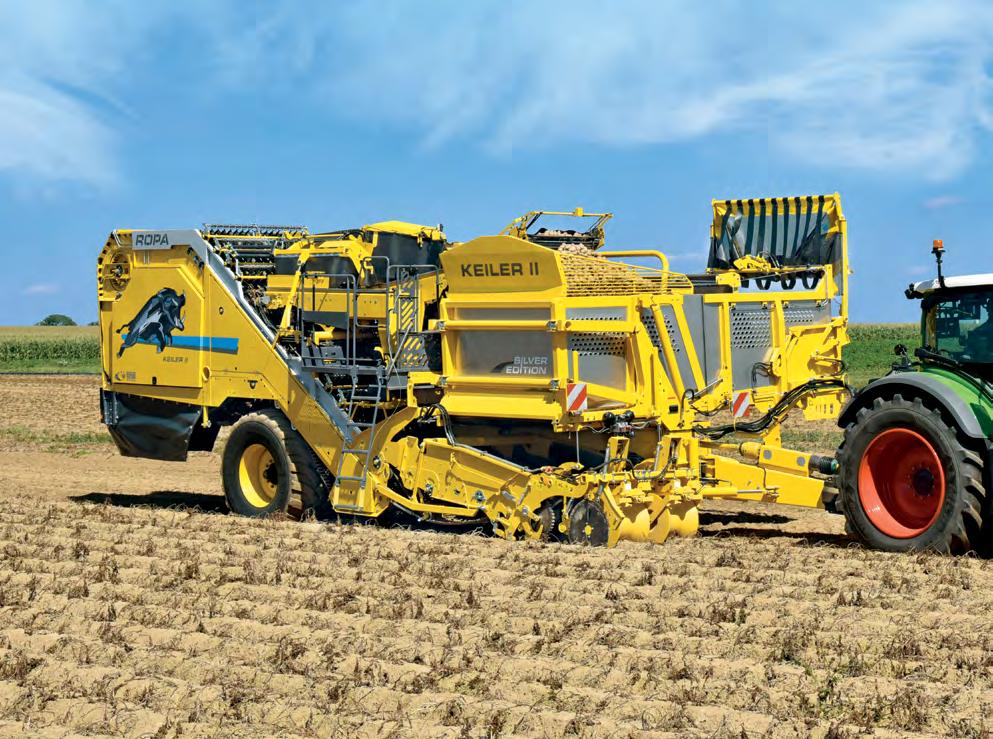
ROPA Keiler 2
The Keiler 2 is a two-row trailed potato harvester designed for maximum efficiency and gentle crop handling. With its fully hydraulic
drive and adjustable sieving, cleaning and picking units, the Keiler 2 offers unmatched flexibility and adaptability to varying field conditions. The large picking platform provides ample space for personnel, ensuring an ergonomic and efficient sorting process. Additionally, the machine is equipped with an automatic axle steering system and large-volume tires for optimized soil
ROPA
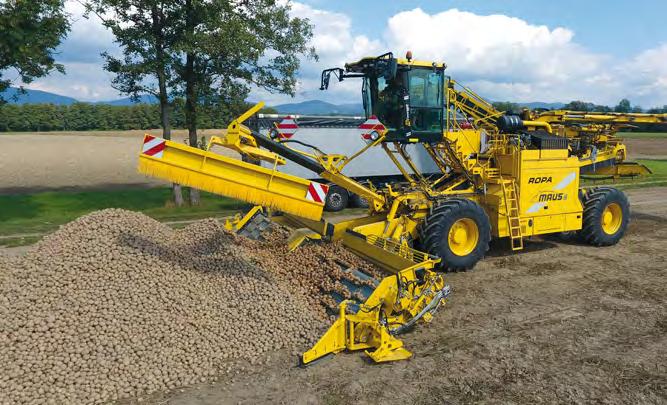
Kartoffelmaus 5
The Kartoffelmaus 5 is a high-performance potato cleaner loader, engineered for maximum throughput and gentle crop handling. Featuring a powerful 354 hp Mercedes-Benz engine and a redesigned, fully hydraulic drive system, the Kartoffelmaus 5 offers exceptional efficiency during
protection and stability. Developed and manufactured in Germany, the ROPA Keiler 2 is known for its outstanding build quality, reliability and minimal maintenance needs, making it the ideal solution for growers aiming to optimize their harvest operations.
potato transfer operations. Its wide pickup system and intelligent cleaning technology ensure effective removal of soil and debris while preserving crop quality. The innovative cabin design with panoramic view, touchscreen operation, and telematics connectivity enhances operator comfort and machine monitoring. The Kartoffelmaus 5 sets new standards in loading performance, operational ease, and gentle product handling, making it an essential machine for professional potato logistics.
Desireè M. Wickwar and Erik J. Wenninger
The Benefits Of Beneficial Insects For Insect Pest Management
Biological control (or biocontrol) is the use of living organisms to manage pests. The type of biocontrol primarily used to manage insect pests in crops is called conservation biocontrol.
Conservation biocontrol “conserves” and promotes populations of natural enemies (also called biocontrol agents) by creating favorable conditions for them to survive and thrive.
Conservation biocontrol can often take time to achieve results and may require changes to cultural practices and insecticide use, but can ultimately provide cost-effective, long-term pest control with relatively little intervention once a program is established.
Natural enemies come in all shapes and sizes, and with a diverse array of traits. Predators directly consume pests, whereas parasitoids live on or within a pest or “host,” using the host’s body and nutrients to grow and develop and eventually killing the host. Entomopathogenic fungi, bacteria, viruses and nematodes infect insects, feeding on and reproducing in their bodies. The terms “beneficials” or “beneficial insects” includes both predators and parasitoids, but may also include pollinators (though this group of insects is less relevant to wind-pollinated potato plants).
Generalists Or Specialists
Natural enemies can be generalists or specialists. Generalists can attack many different species, whereas specialists attack only a single species or closely related group of species. Although different groups of organisms can be used for biological control — including arthropods (insects, spiders and mites), nematodes, bacteria, fungi, viruses and even vertebrates — here we will focus on beneficial arthropods and outline some strategies you may use to harness their services in potatoes.
Many groups of beneficial arthropods are found in potato fields. Some of the most common arthropods found in University of Idaho surveys in southern Idaho include predatory ground beetles, spiders, big-eyed
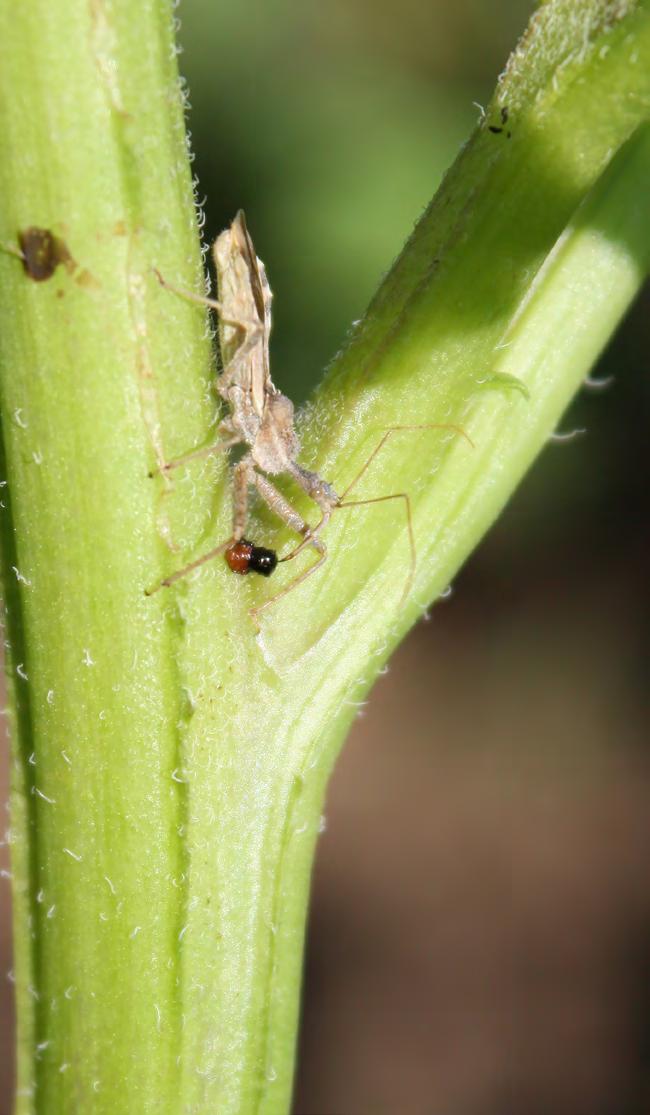
An assassin bug sucks the life out of a Colorado potato beetle larva.
Photo by Erik J. Wenninger
bugs, minute pirate bugs and various parasitoid wasps. Most of these natural enemies (parasitoid wasps being the exception) are generalist predators that may feed on other arthropods in the soil or in potato foliage. You may come across all sorts of other beneficial arthropods as well, including lady beetles, lacewings, assassin bugs and predatory mites.
Quantifying the role of beneficials in reducing pests and increasing yields can be challenging. However, studies across a range of cropping systems find that higher abundance of natural enemies reduces pest populations and increases crop yields. Studies also find that greater diversity of natural enemies greatly increases their efficacy in controlling pest outbreaks. Any reduced reliance on chemical control in favor of biological control has the added benefits of reducing the number of insecticide sprays needed and of slowing development of insecticide resistance. This protects the effectiveness of available chemistries, ensuring that they will continue to work when we need them.
Takes Some Planning
The value of encouraging beneficial insects as an effective, sustainable form of pest management is clear. However, the strategies to do so require some consideration.
A potato field, or any agricultural field for that matter, is often not the most hospitable environment for beneficial arthropods. To protect and promote beneficials, it is important to provide habitat in or near the field. Diverse plant communities adjacent to your fields can offer both shelter and alternative food sources, which is important because many predators and parasitoids also feed on nectar and/or pollen during all or part of their lifecycle.
Promoting beneficials may also include adjusting your tolerance to allow for low levels of pests to remain, which helps sustain beneficial insect populations that would otherwise crash if all their food were to disappear. By creating environments within and next to the crop where predators can thrive throughout the season, growers can effectively support biological control.
Consider Effects Of Insecticides
Another approach to making the potato crop more conducive to natural enemies is to consider the effects of insecticides on these beneficials when making treatment decisions. Our studies in potatoes have shown that broad-spectrum insecticides (e.g., pyrethroids and organophosphates) can drastically reduce predator numbers and flare pest numbers.
Choosing insecticides with more targeted modes of action and applying only when justified by scouting can go a long way toward preserving beneficials. This approach can also avoid secondary pest outbreaks, which occur when a pest that is not normally a problem flares up because an insecticide application removed its natural enemies (and competition from the primary pest).
Sometimes broad-spectrum insecticides must be applied, but adjusting the application approach can reduce negative effects on beneficials. For example, you may consider spraying just the part of the field with the highest pest density. Minimizing insecticide drift to non-target areas will also reduce effects on nearby natural enemies. Beneficial insects that survive in these non-treated refuges can then quickly re-colonize the field as pest numbers start to creep back up.
Biological control is an important tool in any grower’s toolkit and can be an effective, low-cost and low-risk component of your overall management program. By making your potato field a more hospitable place for natural enemies, you can reduce the need for insecticide interventions, lower production costs, and enhance long-term soil and crop health.
Integrating biological control into management of insect pests of potatoes is an important part of sustaining successful crop production as we navigate an ever changing environmental and regulatory world.
(Wickwar is program manager, integrated pest management at the University of Idaho. She can be reached at desireewickwar@uidaho.edu. Wenninger is a professor of entomology, extension specialist, IPM coordinator, University of Idaho. He can be reached at erikw@uidaho.edu.)
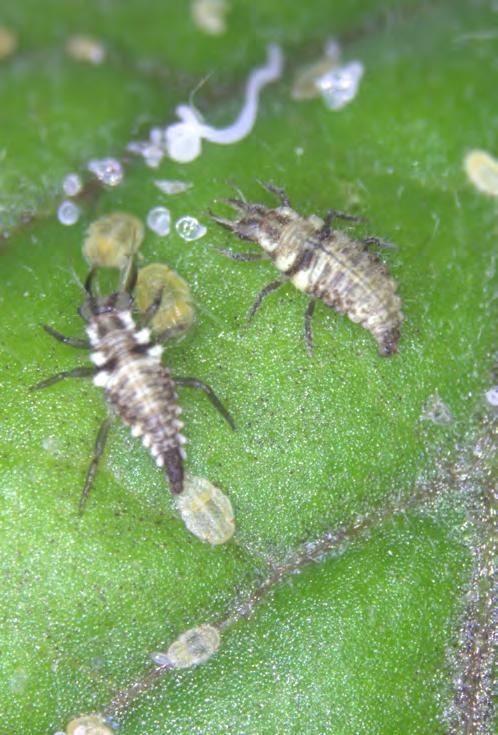
Lacewing is a beneficial arthropod.
Photo by Desireè M. Wickwar
MONTANA
SEED POTATO CERTIFICATION PROGRAM
Dr. Aritra Roy Choudhury, Director
Precision Agriculture Is Advancing In Agricultural Systems
Agriculture has always been a science of observation including reading the land, understanding variability and making informed decisions based on experience. What is changing today is not the principle, but the precision.
Modern agriculture is rapidly transitioning from fieldscale management to plant- and zone-specific decisionmaking, driven by advances in technology, data analytics and automation.
Precision agriculture is no longer a future concept; however, it is actively reshaping how we manage crops, inputs and risk.
At its core, precision agriculture is about doing the right thing, at the right place, at the right time. For potato production systems, where margins can be tight and quality standards high, this shift is especially significant.
From Uniform Management To Targeted Decisions
Traditionally, inputs such as fertilizer, water and pesticides have been applied uniformly across fields. However, variability exists in every potato field, for example, differences in soil texture, moisture retention, nutrient availability and disease pressure.
Precision agriculture tools allow growers to recognize and manage that variability rather than average it out.
Technologies such as GPS-guided equipment, variablerate application systems and yield monitors enable sitespecific management. Instead of applying the same rate of nitrogen across an entire pivot, growers can now tailor applications based on soil zones, historical yield data or real-time crop sensing that improves both efficiency and crop performance.
The Role Of Data: Turning Information Into Action
One of the biggest drivers of precision agriculture is the explosion of data. From satellite imagery and drone surveillance to soil sensors and weather stations, growers now have access to more information than ever before. The real value, however, lies in translating that data into actionable insights.
For example, multispectral imagery can detect subtle changes in plant health before they are visible to the human eye that includes flagging nutrient deficiencies, water stress or early disease symptoms. Soil moisture sensors can refine irrigation scheduling, which is
especially critical in potato systems where water management directly impacts tuber quality and disease risk.
Machine learning tools are also emerging that integrate multiple data streams to predict potential or disease outbreaks that support more proactive decision-making.
Precision At Smaller Scales: From Rows To Individual Plants
While much of the discussion around precision agriculture focuses on large-scale field management, some of the most exciting advances are happening at much smaller scales.
In seed potato systems, where certification depends on disease-free status, precision tools are being explored to improve inspection and sampling efficiency. For instance, robotic platforms equipped with cameras and AI-based image analysis are being developed to identify symptomatic plants in the field. These systems can assist with targeted leaf sampling for virus testing, reducing labor demands while improving detection accuracy and consistency.
Similarly, AI-powered weeding robots are gaining attention as an alternative to both manual labor and blanket herbicide applications. These machines can distinguish between crop plants and weeds in real time and selectively remove or treat weeds with high precision. For potato growers, this could mean reduced herbicide use, lower input costs and improved soil health.
Even tasks such as stand counts, emergence monitoring and canopy development tracking are increasingly being automated using drones or ground-based sensors. These tools provide high-resolution insights that were previously impractical to collect at scale.
Precision In Disease And Pest Management
Targeted disease and pest management is another area where precision agriculture is making a significant impact.
Disease forecasting models, combined with localized weather data, can help predict when conditions are favorable for pathogens such as late blight. This allows growers to optimize fungicide timing rather than relying on fixed schedules.
Emerging detection approaches include sensor-based diagnostics and novel biological detection systems
and are also being explored to identify disease presence early and non-invasively. For seed potato certification programs, these tools could enhance both the speed and reliability of disease detection.
Automation And Smart Machinery
Automation is becoming an integral part of precision agriculture. Equipment is increasingly equipped with sensors, cameras and artificial intelligence that allow machines to respond dynamically to field conditions.
From autonomous tractors to smart sprayers that adjust application rates in real time, these technologies are improving operational efficiency and consistency.
Importantly, automation is not limited to large farms. Scaleddown robotic systems such as small autonomous scouting units or targeted treatment robots are making precision agriculture more accessible and practical for a wider range of operations.
Economic And Environmental Benefits
Precision agriculture delivers both economic and environmental benefits.
By applying inputs only where needed, growers can reduce costs while maintaining or improving yields. At the same time, more efficient use of fertilizers, water and crop protection products reduces environmental impact which is an increasingly important consideration in modern agriculture.
Challenges And Considerations
Despite its promise, adoption of precision agriculture comes with challenges. Initial investments, data management and system integration remain key barriers. Technologies must be reliable, user-friendly and adaptable to real-world conditions. Equally important is ensuring that these tools provide clear, actionable value and not just more data.
Over 30 years
BTU Ventilation has been at the forefront, providing cutting-edge ventilation and refrigeration solutions for the vegetable industry world wide!
NORTH CAROLINA
POTATO ASSOCIATION
Matthew Luks-Jurutka, Executive Director
On The Map And Off The Map: The Here And Now Of The NC Potato Industry
As we roll into this year’s potato season here in North Carolina, the seeds have been cut and sown, literally, and the growers are now in the long game to see how things will turn out.
Short and sweet, that’s how our season is here, but the last two have been straining for most, with yields greatly reduced due to a drought two years ago and an inundation of rain last year. So we wait.
During the time I have been with the NC Potato Association, I quickly learned the USDA stopped reporting on NC Irish potato statistics in 2016 for dropping below reporting thresholds for major crops. This makes marketing a challenge, and in this world, what are we without numbers?
The effect of this is seen on the U.S. Potato Industry Reference Map, which I love looking at. It embodies this fundamental number challenge, yet provides hope and motivation at the same time.
North Carolina sits amongst the other un-notable producer states adorned in green, but along with New York gets an annual nod stating no recent data is available. North Carolina indeed acts as an off-the-record contributor of the U.S. potato industry. I recognize a lot of what farmers do, what national advocacy groups do and what our stakeholders do is just this: an invisible and often unreported effort to keep our industries relevant in a changing world.
The NCPA has begun a transition to merge into the expressway of the digital world where the dialect is social media, likes, followers, reels, stories, reposts. However foreign this language is, it is the way in which we now seek value, definition and source our needs.
Everything changes. I remember hearing those words a lot at different phases of my life. Everything changes and that includes what we do to support the potato industry and what growers do to produce potatoes.
Marketing has changed, input costs have changed, demand has changed and measures of growth have changed. For the NCPA, change has been an ebb and flow: the Eastern NC Potato Cooperative, which dissolved in 2004; the Southeastern Potato Committee (1968–2011), which sought to regulate the Irish potato industry in the Southeast through unifying standards; the retirement of longtime advocates and advisors. Everything changes.
The NCPA has stepped from the shore, peering out at that horizon line at possibility, growth and opportunity.
Adapting to seasons isn’t limited to a changing climate, a changing consumer vision, generational methods for farming or an inner assessment of purpose versus financial stability.
Our potato growers have persevered at adapting to changes, in part due to the stubbornness it takes to be a farmer, but greatly due to the unifying camaraderie of the group. Yes, they are in competition for buyers, yes they hold cards in their pockets and contacts like a black book of Wall Street, and sadly yes, a report just came out stating North Carolina is leading the country in farmland loss.
Yet our growers, like many across the country, set sights not on annual pitfalls, but on a level incline: with one foot in front of the other. We leverage our partnerships with NC State Potato Research and support from the NCDA to assist our efforts. There is no long game in the future of farming; there are only the seasons left to put in the work.
Words stick with me. During a conversation with the current president, Hunter Gibbs, he noted his view of life is not in years, but in how many growing seasons he has left. Put it like that, life shortens and gets an extra giddy-up in its step. Goals have to be lofty; determination and fortitude have to become drive. This is the summation of the state of mind our North Carolina potato growers remain steadfast in.
It was a mantra born here in 1928, one that echoes across this flat land, still turning the heads of those behind the wheels of combines and tractors, loaders and diggers. It’s in the whispers they pass along to their children before bed; to settle in its place as generational learning to be carried forward.
I have learned what different squints mean in a room of potato growers. The squints of hurt and worry reliving the second season in a row of low harvest numbers. The squints of possibility. The squints of trust, delivered around the room at a board meeting. The squints of respect when speaking of those who came before us. The squints of humor in busting on one another’s token piece of old and outdated, but still feisty farm equipment that isn’t worth enough to sell and just won’t give up. And the squints of wheels turning and plans in motion, as one grower asks another for advice on wet land, a research project potential, the amendments needed to mitigate their soil, approaches to packing or handling their potatoes for their intended clients.
Products that Profit
Take
Control of your ROI with BRANDT® Smart Quatro® Plus
BRANDT Smart Quatro Plus isn’t just a foliar solution – it’s an investment in maximizing crop performance. With a complete package including B, Mn, Mo and Zn, it provides crops with the nutrients they need to thrive. The result? Healthier crops and better yields. Take Control with BRANDT Smart Quatro Plus and watch your profits grow.