The Heavy-Weight in Pulvi-Mulchers Gets
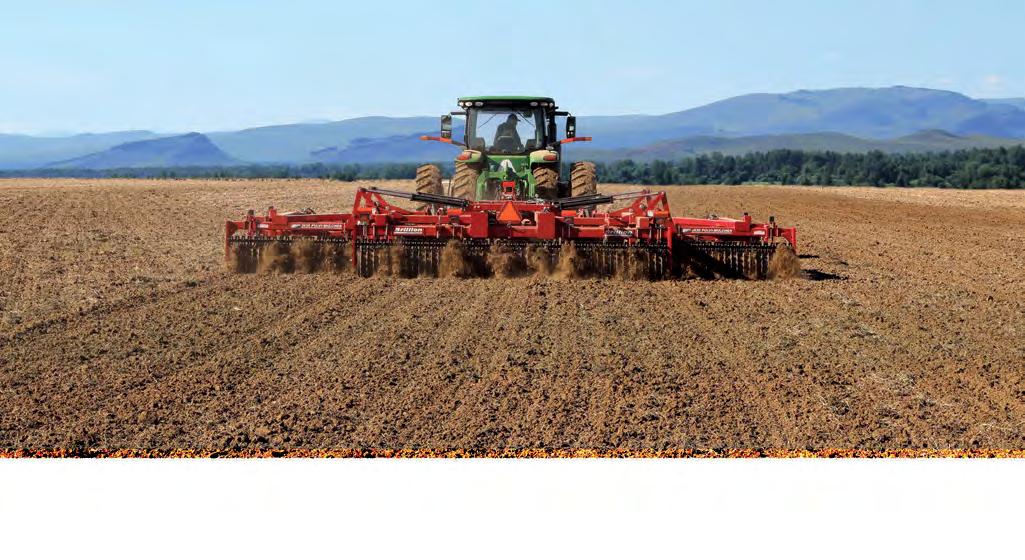
The 3600 Series Pulvi-Mulcher from Brillion features wider working widths, increased trash clearance and reduced downtime in the field. The series is available in 21’, 25’, 30’ and 36’ working widths. The 30’ model weighs 80% more than the popular WL360 for more clod crushing power. The 36’ unit is the widest PulviMulcher offered by Brillion.
All 3600 Series models feature 8” roller axles with heavy-duty bearings that improve reliability and reduce maintenance interruptions in the field. The design includes three rows of two-piece edge bent s-tines on overall 6” spacing. 25” of under frame clearance improves trash flow through the machine. A leveling harrow in front of the rear roller helps level ridges left by the shanks.
PILERS
CROSSOVERS/WINDROWERS
ROCK/CLOD/AIR
ELIMINATORS
COLLECTORS
SIZER
DIRT ELIMINATOR

May
Published 13 times a year by Harris Publishing Inc.
SUBSCRIPTIONS:
U.S. and Possessions
$24.00 per year, International $120.00 per year. To subscribe call (800) 638-0135
Copyright 2026 Harris Publishing Inc. All rights reserved.
Reproduction in whole or in part without permission is prohibited. Back issues available at $5 per copy. Limited quantities. Publisher not responsible for content of materials submitted.
PRESIDENT
Jason Harris
VICE PRESIDENT
Chuck Harris
TREASURER
Clayton Ward
Canadian Publisher’s reement No. 40606038, Customer No. 7004671.
Mailed under a standard rate mailing permit at Idaho Falls, Idaho, and at additional mailing offices. Also Publishers of SugarProducer
PUBLISHER
Jason Harris
EDITOR
Lane Lindstrom lane@potatogrower.com
ADVERTISING DIRECTOR
Rob Erickson rob.erickson@potatogrower.com
PRODUCTION
Sandon Wixom
GRAPHIC ARTISTS
Laci Thompson
CIRCULATION
Chuck Harris
IT DEPARTMENT
Chuck Harris
ACCOUNTING
Clayton Ward
CALENDAR
FEBRUARY 26-MARCH 1
Southern Exposure
Orlando World Center Marriott Orlando, Florida www.seproducecouncil.com
MARCH 9-12
Potatoes USA Spring Meeting Denver, Colorado www.potatoesusa.com
MARCH 19-21
North America Farm & Power Show
Four Seasons Centre Owatonna, Minnesota www.tradexpos.com
MARCH 24-26
64th WPS Farm Show
Experimental Aircraft Association Grounds Oshkosh, Wisconsin Wisconsinpublicservice.com/partners/ agriculture/farm-show/
APRIL 8-9
Idaho Grower Shippers Association Spring Swing

FOUNDED BY Darryl Harris
CORPORATE OFFICES:
HARRIS PUBLISHING INC. 190 E 1st Street Idaho Falls, ID 83401 208-523-1500 www.potatogrower.com
NATIONAL POTATO COUNCIL (202) 682-9456 www.nationalpotatocouncil.org
POTATOES USA (303) 369-7783 www.potatoesusa.com
UNITED POTATO GROWERS OF AMERICA (801) 266-5050 www.unitedpotatousa.com
ALLIANCE FOR POTATO RESEARCH & EDUCATION www.apre.org
POTATO ASSOCIATION OF AMERICA (734) 239-8022 www.potatoassociation.org
in Idaho Falls, ID by Falls Printing rob.erickson@fallsprinting.com
INTERNATIONAL POTATO CENTER www.cipotato.org
South Pointe Hotel Las Vegas, Nevada www.idahoshippers.org
APRIL 15-17
Agri-Marketing Conference
Marriott St. Louis Grand St. Louis, Missouri www.nama.org
MAY 11-14
Food Safety Conference
Donald E. Stephens Convention Center Rosemont, Illinois www.food-safety.com
JUNE 2 AND 4
13th Annual Ag World Golf Classic
June 2 – Canyon Lake Golf Course, Kennewick, Washington
June 4 – The Links at Moses Pointe, Moses Lake, Washington https://agworldgolf.com
JUNE 21-23
Washington Potato & Onion
Association Convention
Marcus Whitman Walla Walla, Washington http://wapotatoonion.com
JULY 15-17
Potato Sustainability Alliance Summer Symposium
Plover, Wisconsin https://potatosustainability.org/
JULY 26-30
Potato Association Of America Annual Meeting
New Orleans Marriott
New Orleans, Louisiana potatoassociation.org
SEPTEMBER 2-4
IGSA 98th Annual Convention
Sun Valley Resort
Sun Valley, Idaho www.idahoshippers.org
SEPTEMBER 15-17
Husker Harvest Days
Grand Island, Nebraska huskerharvestdays.com
JANUARY 5-7, 2027
National Potato Expo
Gaylord Rockies
Denver, Colorado nationalpotatocouncil.org
JANUARY 20-21, 2027
Idaho Potato Conference
Idaho State University Pocatello, Idaho idahopotatoconference.com
JANUARY 25-28, 2027
Washington Oregon Potato Conference
Three Rivers Convention Center
Kennewick, Washington www.potatoes.com/potatoconference

Put earnings back in your pocket with competitive borrowing rates and an annual cash dividend through our Patronage Program.
In 2025, AgWest paid the equivalent of 1.25% of eligible average daily loan balances back to our customer-owners.
THE EYES HAVE IT
Lane Lindstrom, Editor
My Farming Father
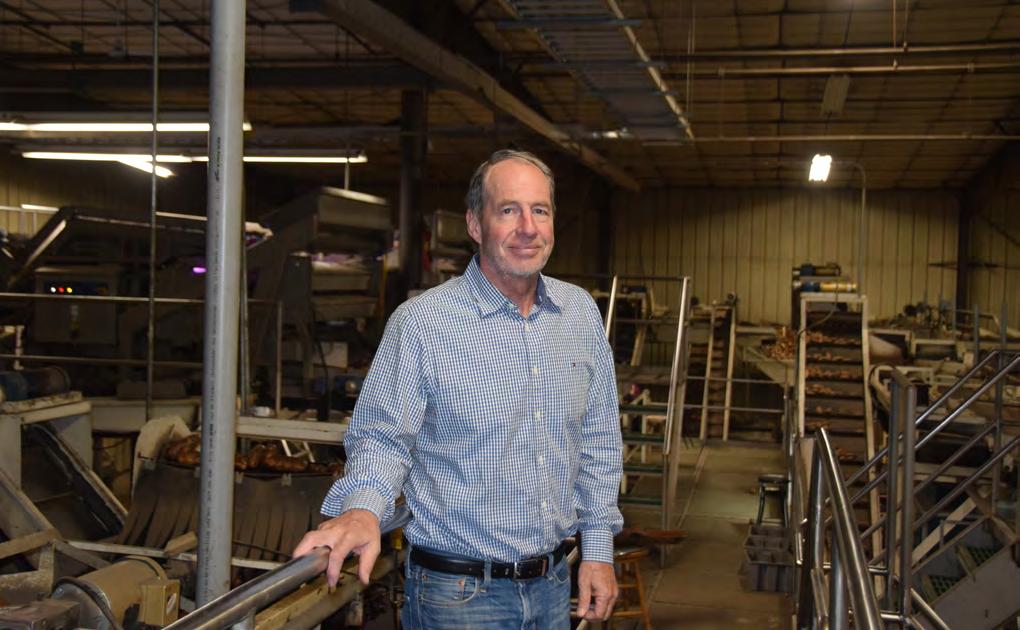
Last fall when I was at Bench Mark Potato in Rexburg buying some potatoes for the holidays (and to share with my family), I was visiting with Kent Sutton, Bench Mark’s general manager and one of my neighbors.
As we were visiting, I noticed a poem that was framed and hanging on the office wall. It is titled, “My Farming Father” and I quickly recognized the poem’s author, Chelsi Sutton, one of Kent’s daughters and a very good writer.
I was impressed with the poem and its sentiment and asked if I could share it. Kent agreed, so here it is.
MY FARMING FATHER
Standing at the edge of sprawling potato blossoms
I watch him walk, carrying the sun on his shoulders, he is the center of the sky. Rising in the watercolor blue, rooted to the furrows at his feet he connects Heaven and Earth. My Father. His skin tanned by summer and cured in heat, I am old enough to see the wrinkles near his eyes. Strong, He breathes with the land he works, plowing it over and under year after year,
burying and rediscovering his life, I am not old enough to see where the ground stops and he begins.
I know that then, when more harvests have passed and he doesn’t walk through the fields I can come here, to lay my head against the quiet earth, tanned by summer and cured in heat, to feel his heart beating against my cheek.
Chelsi Sutton




The Idaho Potato Commission (IPC) and the American Diabetes Association® (ADA) have teamed up to tackle some of the most common misconceptions about one of America’s favorite foods: the potato. Idaho® Potatoes are proud to be recognized by the ADA’s Better Choices for Life program, highlighting how preparation and pairing play an important role in enjoying potatoes as part of a balanced, diabetes-friendly eating plan.
The new Mashing the Myth campaign reframes how we think about potatoes by pairing science-backed facts with crave-worthy recipes that prove healthy can still taste amazing. To learn more, visit idahopotato.com/ada
PROUD SUPPORTER OF THE
NEW PRODUCTS
Ore-Ida Brings Its Iconic Fries
From The Freezer Aisle To The Frozen Slopes With Limited-Edition Fry-Inspired Skis
From first chairlift rides without panic to tackling black diamonds, ski culture has its own “unofficial” rites of passage. Few matter more than the moment skiers graduate from “pizza” to “French fry” – a milestone when skiers advance from learning the basics to moving with confidence. Now, as winter sports capture the spotlight this season and all eyes turn to the slopes, Ore-Ida is bringing its iconic crinkle-cut fries from the freezer aisle to the frozen mountains.
Starting in January, OreIda teamed up with premium ski brand Fischer Sports to launch Ore-Ida French Fry Skis –limited-edition skis inspired by the brand’s legendary crinkle-cut fries.
Designed to bring Ore-Ida’s signature crisp to the slopes, the skis feature bold crinkle-cut ridges, a golden fry-inspired design and a ketchup-red backdrop. Built with Fischer’s slope-ready performance, the
Fendt 900 Vario

skis pair playful Ore-Ida style with serious downhill credibility. With “French fry” already part of language on the slopes –shorthand for parallel skis – OreIda is celebrating this milestone with a playful, limited-edition design inspired by actual French fries.
Founded on the Oregon-Idaho border, where both skiing and potatoes run deep, Ore-Ida’s collaboration with Fischer Sports draws on the brand’s roots and brings French Fry Skis to the
The Fendt 900 Vario represents the pinnacle of tractor innovation, technology and efficiency. Whether for planting, transportation or nutrient application, the 900 Series gives farmers unrivaled fuel efficiency, uptime and agronomic benefits.
Available in five models ranging from 296 to 415 hp, the 900 Vario is great for farmers who need efficient power to tackle tough jobs. It features VarioDrive, Fendt’s legendary continuously variable transmission, which allows for seamless speed control from 65 ft./h to 33 mph and provides maximum tractive force while increasing ground protection.
The Fendt iD low-speed concept coordinates all major components, including the engine, transmission and hydraulics, to achieve high levels of torque at low engine speeds, extending the machine’s service life and lowering fuel consumption.
For farmers who require even more traction, the Fendt 900 Vario MT offers the power and efficiency of the 900 Series in a proven tracked platform. Ideal for medium- to high-speed tillage and
states where Ore-Ida was born. The limited-edition skis became available beginning February 1 for $250 and in limited quantities at select ski retailers in Oregon & Idaho, while supplies last.
Visit https://www.kraftheinz. com/ore-ida/oreidafrenchfryskis to get information on the drop. After all, nothing says winter quite like crisp mountain air, fluffy snow and the crispiest fries on the slopes. For more information, visit www.kraftheinzcompany. com.

demanding implement work, it combines Fendt’s smooth transmission with a durable two-track system that improves traction, reduces compaction and maximizes comfort and productivity.
The Fendt 900 Vario Series comes standard with Fendt’s industry-leading Gold Star Customer Care Program. Gold Star gives farmers a 3-year or 3,000hour full machine warranty, including all scheduled maintenance and a guaranteed machine loaner if repairs take longer than 48 hours. Gold Star now includes three years of PTx FarmENGAGE on model year 2026 and newer machines.
For more information, visit fendt.com/us.

NEW PRODUCTS
Idaho Potato Commission Says “Go Ahead, Top That Tater” With New Potato-Forward Seasoning
The Idaho Potato Commission (IPC) is introducing Top That Tater, a new chef-inspired seasoning created to celebrate everything people love about Idaho potatoes, from mashed and baked to fried and roasted, while exploring new, flavorful ways to keep the crop at the center of the plate.
Officially titled Top That Tater, Seasoning for Potatoes & More, the product was developed as a natural extension of the Idaho potato story. With potatoes prepared in countless ways, IPC set out to create a seasoning that consistently complements potatoes across every preparation while remaining versatile enough to use beyond them.
Top That Tater is made with high-quality ingredients, contains no artificial flavors or preservatives, is Non-GMO, and low sodium. The custom glass bottle features an airtight, built-in grinder designed to naturally lock in freshness without the need for preservatives, delivering bold flavor with every turn includes a 4 oz. refill pouch with seal to easily add more fresh seasoning to your bottle as needed.
While created with potatoes in mind, the
PPM Technologies Introduces Gen 3 FlavorWright All-in-One Seasoning System
PPM Technologies, a member of Duravant’s Food Sorting and Handling Group, introduces the third generation of its FlavorWright All-in-One seasoning system.
This compact, portable solution combines liquid and dry seasoning in a single plug-and-play unit for continuously coating snacks, nuts, confectioneries, cereals, vegetables, fruits and frozen foods and more.
The Gen 3 model features enhanced drum magnets, an optional stainless-steel drum and additional advances that support operator safety, expand application flexibility and increase production capacity.
The FlavorWright All-in-One is ideal for processors with small to medium production requirements, as well as for larger operations that need a flexible R&D or multi-line solution.
This latest model introduces several new design features. A programmable light alarm beacon provides customizable visual alerts for system status, product levels

seasoning was intentionally designed to go further, complementing meats, vegetables, eggs and everyday meals and encouraging creativity in both home and professional kitchens.
AVAILABILITY
Top That Tater will officially launch on January 29, 2026, but is available to preorder now. Orders began shipping January 29. The seasoning will be sold via shop.idahopotato.com, at the Idaho Potato Commission’s local office and promoted and sold across IPC social platforms. Expanded distribution includes Google Merch, Instagram store, Tik Tok shop and eventually Amazon.
In addition to retail availability, Top That Tater will be featured and resold by some local boutiques and restaurants.
For more information, visit idahopotato.com.
and process conditions. Wiring routed through the frame supports safe operation and streamlines washdown. An extended Mini VF infeed conveyor with new side guards helps maintain product flow and reduces spillage. New optional forklift mounts facilitate safe transport around the plant.
PPM also debuted several new features to the drum, including enhanced magnetic drum mounts that support high-capacity applications, especially when handling dense products like nuts. A new angle indicator helps operators quickly and consistently set the drum position. A bolton, stainless-steel drum option provides robust durability and accommodates customizable flight configurations for hightemperature products, frozen foods or operations requiring metaldetectable components in product contact zones.
Built for sanitation, the FlavorWright All-in-One offers IP65-rated washdown capability and food-grade materials throughout. Quick-release components on both the seasoning hopper and plastic drum enable changeover in as little as five minutes, depending on the

application.
The FlavorWright All-in-One is designed as a pre-engineered, standardized system to deliver faster lead times and a more economical price point. Processors can select between volumetric or gravimetric metering, with the gravimetric option incorporating load cells for enhanced accuracy when greater precision is required. This flexibility allows processors to match control complexity to their operational needs and workforce capabilities. The FlavorWright All-in-One seamlessly integrates with upstream and downstream equipment via Ethernet or 24 V signals. When desired, it can be configured to monitor and control connected systems directly through the All-in-One’s HMI. For more information, visit www.ppmtech.com.
Products that Profit
Take Control of your ROI with BRANDT® Smart Quatro® Plus

BRANDT Smart Quatro Plus isn’t just a foliar solution – it’s an investment in maximizing crop performance. With a complete package including B, Mn, Mo and Zn, it provides crops with the nutrients they need to thrive. The result? Healthier crops and better yields. Take Control with BRANDT Smart Quatro Plus and watch your profits grow.
AROUND THE VINE
Potato Sustainability Alliance Announces
New Board Members And Leadership, Recognizes Retiring Directors
The Potato Sustainability Alliance (PSA) has announced updates to its Board of Directors and Executive Committee, including the election of new leadership and the retirement of several long-serving directors.
PSA announced the election of several new, incoming board members to lead heading into 2026.
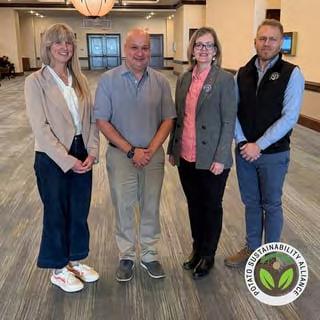
Jane Canales (Basic American Foods), Kartika Charan (Sysco), JP Claassen (Canadian grower, Claassen Farms), Tony Macklin (U.S. grower, Walther Farms), Lincoln Neufeld (Canadian grower, WJ Siemens Farming Co.) and Ariel Wiegard (Pheasants Forever & Quail Forever) will join the PSA Board of Directors, bringing a diverse range of perspectives and experience from across the potato value chain. Their leadership will support PSA’s continued focus on collaboration, data-driven decision-making and continuous improvement in sustainable potato production.
The Alliance also announced the election of its 2026 Executive Committee, which will help guide PSA’s strategic direction and governance in the coming year.
The 2026 Executive Committee is:
• Tracy Shinners-Carnelley, PSA Chair (Vice President of Research, Quality and Sustainability, Peak of the Market)
• Erika Wagner, PSA Vice Chair (Agronomy Solutions Manager, Yara North America)
• Ryan Vroegindewey (Senior Manager of Sustainable Agriculture, Campbell Soup Company)
• Mike Wenkel (Chief Operating Officer, National Potato Council)
The PSA board appointed Dan Duguay (Canadian
Vive Crop Protection Expands Commercial Team With Two Key Hires
Vive Crop Protection has announced two key additions to its commercial team, marking a significant step in its strategic growth journey.
Russ Gibson has joined the commercial sales team as the Great Lakes Territory Sales Manager, and Marie Yeager has joined the product management team as Senior Product Manager. Gibson, based in Indianapolis, brings more than 10 years of industry experience in sales and marketing, including roles at AMVAC, UPL, CHS Agronomy and Valent USA. Prior to starting his career in agriculture, Gibson worked in sales and corporate finance after earning his MBA in finance at Emory University in Atlanta, GA, and his BS in
Produce Marketing Association) to serve in an additional at-large board seat. Duguay’s appointment reflects the Alliance’s commitment to maintaining balanced representation and ensuring the board has the expertise needed to guide PSA’s strategic priorities as its programs, partnerships, and impact continue to grow.
PSA also extends its sincere appreciation to retiring board members Chad Berry (Canadian grower, Under the Hill Farms), Andy Diercks (U.S. grower, Coloma Farms), Greg Nakamura (Canadian grower, Nakamura Farms) and Shane Sampels (Sysco) for their dedicated years of service to sustainability. Each has played an important role in strengthening the Alliance, advancing program development, and supporting PSA’s mission during their tenure.
For board member bios and a complete listing of PSA’s Board of Directors, visit the PSA website: https:// potatosustainability.org/about-the-alliance/board-ofdirectors/
Agricultural Engineering at the University of Florida.
“I’m excited to welcome Russ to the sales team at Vive,” said Greg Esco, U.S. Sales Lead. “His industry expertise and dedication to grower success will play a pivotal role in expanding our pipeline of innovative solutions in the field.”
Yeager, with over 20 years of experience across multiple industries, offers a unique blend of expertise in product management, marketing, sales and supply chain management. Most recently, Yeager managed the diamide and indoxcarb portfolio at FMC, where she successfully grew the business despite intense competitive pressure. Prior to her role at FMC, she was named the Commercial Excellence and Distribution Manager for North America & EMEA at Solvay, where she excelled at portfolio management and channel optimization.

“Marie has built a reputation as a collaborative, results-driven leader with a keen ability to understand the customer,” said Dor Kestecher, North America Portfolio Lead at Vive. “She will be a great addition to the product management team, and I’m excited to see the impact she’ll have.”
For more information, visit www. vivecrop.com.
HGS BioScience Expands
Its Biological Platform With Acquisition Of Pharmgrade
Paine Schwartz Partners–backed HGS BioScience, a leading provider of biological crop solutions, announced the acquisition of Pharmgrade, an Idaho-based innovator specializing in microbial consortium products.
Following the successful combination of HGS BioScience and NutriAg in late 2025, this acquisition represents the next step in HGS’s strategy to build a scaled, science-led biologicals platform serving retailers and growers across North America and beyond.
The addition of Pharmgrade strengthens the platform by adding deep expertise in microbial consortium development, complementing HGS’s current strengths across humates, bionutritionals and plant extracts.
Kelly Tuttle, founder and CEO of Pharmgrade, added, “Joining HGS BioScience allows Pharmgrade to scale our microbial technologies, developed and optimized over 30 years, through a platform with the formulation expertise, manufacturing depth, and market access to reach more growers, faster.”
A PLATFORM BUILT TO SERVE RETAILERS AND GROWERS
With the addition of Pharmgrade, the HGS BioScience platform now offers:
• A complete biological portfolio: solutions spanning humates, bionutritionals, plant extracts and microbials – with the ability to intentionally stack technologies for multiple modes of action and deliver them in any formulation: liquid, powder or granule.
• A differentiated innovation engine: an integrated R&D organization combining agronomic and fieldtrial capabilities, expertise in manufacturing and formulation and Pharmgrade’s specialized microbial biology.
• Scaled, reliable manufacturing: a vertically integrated footprint across North America, enabling consistent quality, cost-competitive supply, and flexible delivery formats, including liquid, powder, and granule.
• Broad market access: strong partnerships with leading retailers, distributors and technical partners across the U.S., Canada, and international markets.
For more information, visit www. hgsbioscience.com.








“Eating Is Not Going Away”
PRESENTERS TRY TO BE UPBEAT DESPITE CURRENT MARKET CONDITIONS
By Lane Lindstrom
The overriding message of multiple Potato Business Summit presenters was that the current market conditions in the potato industry are not a demand problem but a supply problem. And, not surprisingly, that has put downward pressure on grower returns.
But even with that not-so-rosy picture of current market conditions, those making presentations at this year’s Potato Business Summit, held in conjunction with the Potato Expo, each were optimistic that while it may take a little while, the fresh potato market will rebound and growers can look forward to better days. But it might be painful for several more months.
United Potato Growers of America President and CEO Mark Klompien, who annually presents on the fresh market conditions for potatoes, said,
“The good news is we are all, in one way, shape or form, in the food production industry, whether you grow potatoes, whether you process those potatoes, whether you are a supplier that fits in the supply chain of those potatoes. And the good news is that’s not going away anytime soon. Eating is not going to go away anytime soon. So that’s good news.”
Klompien then went into a deep dive of the fresh potato market for the past several months along with what the next handful of months might hold. While the processing side represents a significant chunk of the potato market these days, Klompien’s focus was on the fresh side of the market and, more specifically, three main varieties: yellows, reds and Russets.
As he has done in past Potato Business Summit presentations, Klompien provided insight on 10-year trends/history of each of those varieties, beginning with one of the stars of the potato
United Potato Growers of America President and CEO Mark Klompien
industry: “The
YELLOW POTATOES
Referring to the US Fresh Yellow-Potato Shipments chart (Figure 1), Klompien said, “You can see the trend is decidedly in that upward direction up until about a year or two ago. And then, last year, you remember at this conference we talked about reaching a little bit of a change point. It flattened off right at the top there at 12. 8 million hundredweight of yellow potatoes shipped. And the year we’re in now, our forecast right now is 12.5 million, so that’s down a little bit.”
Turning to the past few months of yellow potato shipments, Klompien pointed to the yellow potato tracker (Figure 2). The solid red line is this year’s shipments while the dotted line is last year’s shipments and the shaded area the three-year average. He said, “We had a pretty big spike, again, at Thanksgiving time, that time that leads up to Thanksgiving. It just kind of makes you wonder: are yellows become a really big dominant player in that Thanksgiving market? It will be interesting to see if that trend continues.”
Other observations in the yellow category include:
• Average 10-year annual growth rate in yellow supplies: 5.6 percent/year.
• Growth rate vs. last year: minus 2 percent (12,556.6 projected vs. 12,811.0 LY).
• Demand is stable, pricing still reasonable, albeit at lower levels than recent years.
- Current Tote A in $15-16 range
• No single geographic region dominates the yellow market.
- Idaho (plus 14 percent) is the top supplier of yellow potatoes with the other top four growing areas being the Red River Valley (plus 9 percent), California’s Kern County (flat), San Luis Valley in Colorado (minus 3 percent) and Florida (minus 19 percent). These five regions produce 57 percent of the total U.S. supply.
- If Canada were a U.S. state it would be No. 1 in terms of yellow potato supply compared to any U.S. growing area and as is, 18 percent of U.S. yellow potato consumption comes from Canada.
• Market supply volumes still strong, but Klompien asks, “Have we reached the top rung of the ladder?”
RED POTATOES
Turning to the red potato market, Klompien

1

2
3
4
said, “You can see that’s a very different kind of graph (Figure 3) than we showed for yellow potatoes.” The red potato market did experience a slight uptick this year after years of decline. “The peak came back in the mid-2010s where we were hitting in the 15-16 million range but since then it has been on a bit of a decline.” (Figure 4) Other insights into the red potato market include: • Average 10-year annual growth rate in red supplies: minus 2.4 percent/year.
FIGURE
FIGURE
FIGURE
FIGURE
• Major 2025-26 crop shifts from last year:
- Increases in almost all red producing regions, including the five largest: Red River Valley; Kern County, CA; Idaho; Wisconsin and Florida.
- If Canada were a U.S. state it would be No. 2 in terms of supply of red potatoes to the U.S. with 15 percent of U.S. consumption.
• Pricing – Red potato prices are down over last year and also down versus the 5-year average.
- Current pricing for tote size A in the $16 range.
As you can see in Figure 5, yellow potatoes now outsell red potatoes in the United States with Klompien pointing out the flip was made in 2022. “Since then, yellows have been more than the red shipments. The trend line would suggest that that could continue.
RUSSET POTATOES
Looking at the chart (Figure 6) it looks impressive that the market will ship nearly 72 million hundredweight of Russet potatoes by the time the market season ends. But that number is not always a good number as Klompien pointed out. “Funny enough,” he said, “it’s a supply and demand situation. So if I put a pricing chart (Figure 7) along with this, you would see that the very good prices and very good returns we got were in the ’21 and ’22 crops. Since then, not so much. The past two years, ’23 and ’24, I would not say they were horrible, but they were certainly not great.”
He also pointed out that the last time the industry shipped 72 million hundredweight was 10 years ago, in 2016.
One of the most telling charts Klompien showed that illustrates the relationship of supply and grower returns, or the Grower Return Index (GRI), is Figure 8. On that chart, along with the supply of potatoes on the x axis is the cost of production (for Idaho growers in this case) on the y axis. Referring to that chart, Klompien said, “This curve is not perfect, but it does certainly suggest where the market can be and is in a lot of cases. The balance line is what I’m showing with those arrows (black arrows on chart). The cost of production is at $12.35 per hundredweight.”

He added, “Don’t get hung up on that absolute number. Every grower is going to be different. Obviously, every region has got some nuances to it and is going to be different in some ways. So use this as a trend indicator, more than anything, not as an absolute number.”
Klompien then zeroed in on a very specific part of the chart; those two black arrow lines, which represent the cost of production and the number of hundredweight of potatoes. “That’s only about 6 million sacks or so that you would say were off,” he explained, “And if we had that 6 million sacks out of the way, could we get back to that line right there? Probably. That’s what our curve would suggest. Back to a break-even point. So for a roughly $8 differential there on the return side of the equation, you can see that’s only 6 million sacks out of
FIGURE 6
FIGURE 7
Layer Ash Blend
Avg NPK 2-2-2 8Ca
Layer Manure~ DAIRY DOO~Sili K *Increase
Layer Ash Blend with Gypsum
Avg NPK 2-2-2
Layer Manure~ DAIRY DOO~ Gypsum~ Sili-K *Powerful tool against nematodes and leaching.
Humic Acid



2026 CROP OUTLOOK
Looking forward, Klompien said the United Potato Growers of America sees a decrease in potato acreage. He said, “The model would suggest that there would be an acreage decline across the entire U.S., as you might expect when you have that weak of a grower return index and some alternative crops are actually a little more balanced. They’re still down somewhat, but more balanced certainly than the potato side of thing.”
With regards to the months to come, Klompien made the following points:
• There will be weaker alternative crop (wheat, barley, alfalfa, corn, soybeans, malt barley) pricing and a much weaker Idaho GRI.
• The cost of potato production flattened but is slightly higher. Factors affecting costs include seed supply, water supply and crop rotations.
• The processing situation will have a bearing on the market going forward. There is demand variability and the global competition (particularly from China and India) landscape putting pressure on the market. He pointed to excess raw material processors are having to deal with. In some cases, the processors paid for some potatoes but never took delivery because they had too many already. Additionally, there are “significant headwinds in the dehy sector.”


• Other external market factors, including international markets. That means keeping the Mexico market open and growing and continuing efforts to open the Japanese market to fresh potatoes.
• The market will value the potato crop consistent with other oversupply years.
With regards to that last point, Klompien referred back to the chart showing the $22 growers received back in 2022, which was a near record for price received. He commented, “It was awesome. Growers made a lot of money that year, But was that healthy for the industry long-term? I’m not sure because that wasn’t in balance either. Obviously we prefer a long-term solution where it was in balance year in and year out to where a grower not only got his cost of production back for all the blood, sweat and tears that a potato grower puts into a crop but because he
GROWER POTATO


FIGURE 8

What Is The aIM acT?
ACT AFFECTS MOST REFRIGERATED POTATO STORAGES
By Victoria Stamper
There are many who are now very familiar with the AIM Act. However, there are still many who have no idea what this refers to and how it might impact them, so we thought we would start with a brief introduction.
The American Innovation and Manufacturing (AIM) Act is a U.S. federal law enacted in December 2020 that requires a major phasedown of hydrofluorocarbon refrigerants (HFCs) — the chemicals widely used in refrigeration and air-conditioning systems, including refrigerated potato storage.
Under the act:
• The production and consumption of HFCs must be reduced by 85 percent by 2036 compared with historical levels. The phasedown is based on a calculation of 2011–2013 average production/consumption plus specific percentages of HCFC/CFC baselines.
HFC Phase Down Schedule (Production & Consumption)
• 2022–2023: 90 percent of baseline.
• 2024–2028: 60 percent of baseline.
• 2029–2033: 30 percent of baseline.
• 2034–2035: 20 percent of baseline.
• 2036 and beyond: 15 percent of baseline.
The U.S. EPA is authorized to implement this phasedown with allowance programs, restrictions on high-impact refrigerants and rules to manage existing supplies.
New rules are being finalized to limit HFC use in new refrigeration and air-conditioning equipment and improve the management, recycling and reclamation of existing refrigerants.
The phasedown aligns with international climate commitments like the Kigali Amendment and will affect practically every industry that relies on cooling systems — including potato storage.
SO WHY DO WE NEED TO THINK ABOUT THE AIM ACT FOR POTATOES?
Not all potato farms have refrigerated storages. That depends on many factors including weather conditions in the storage location and how long potatoes may need to be stored. There are thousands of potato farms across the U.S. that do, and their storages depend on refrigeration systems charged with HFCs to maintain tuber quality through long storage periods.
The AIM Act impacts these systems in several ways:
1. Fewer New HFC Supplies
As the U.S. phasedown progresses, certain refrigerants may become harder to obtain because production and imports are capped and reduced year by year. That means:
• New equipment that requires HFC refrigerant may become more expensive or harder to source.
• Servicing old equipment that relies on high-GWP HFCs could get costly as reclaimed stocks become the primary source.
2. Technology Transition Required
The EPA is already restricting the use of higher-GWP (Global Warming Potential) HFCs in new refrigeration and air-conditioning systems, with compliance dates that are fast approaching (2025–2028) for many applications.
That means facility owners will need to:
• Evaluate new refrigerants and systems that comply with AIM Act rules.
• Plan for retrofits, replacements or conversions of existing equipment.
• Train staff or service partners on new refrigerant technologies.
Delaying these decisions reduces flexibility and compresses the time available to source equipment, especially as demand increases near key deadlines.
3. Existing Equipment Still Needs Planning
While growers and storage operators can continue to use existing equipment until the end of its life, the Act’s phasedown means:
• The availability of virgin HFC refrigerants will shrink.
• Used (reclaimed) refrigerants will be prioritized.
• Servicing and major repairs may require new compliant refrigerants or system changes.
In other words, the clock isn’t just about new equipment
— it’s about the ongoing viability of current systems.
WHY YOU SHOULDN’T WAIT
There’s a real danger in thinking this is “something that can be sorted out later.”
Misconception: Deadlines Are Far Off
Some growers assume the final HFC reduction deadline in 2036 means they can wait — but the phasedown is stepwise, with significant reductions required now and through the next few years.
For example:
• EPA rules begin restricting certain HFCs in new equipment as early as 2025.
• Refrigerant supply will tighten gradually — not suddenly — making late planning riskier and more expensive.
Misconception: This Doesn’t Apply To Agriculture
The AIM Act doesn’t single out potato storages — but it does cover all systems that use HFCs. That means cold storage warehouses and refrigerated processing environments are directly affected.
Cost And Supply Risks
• Replacement parts or refrigerant blends are available for maintaining existing systems but may become scarce over time.
• Growth in demand for compliant systems will grow, which may drive prices higher as time goes on.
• Emergency conversions or late replacements interrupt operations during peak storage periods risks potato quality and storability.
Technical And Safety Uncertainty
Newer refrigerants often have different properties (e.g., flammability or pressure) and require different equipment or training. Planning ahead allows growers to:
• Choose the right compliant technology for their farm.
• Work with service providers to ensure safe installation.
• Avoid rushed decisions that could compromise safety or efficiency.
SO WHAT IS THE BOTTOM LINE?
The AIM Act isn’t a distant regulatory spectre — it’s a transformational change in how refrigeration is supplied, serviced and managed in the U.S. for growers and storage operators who rely on cold storage to protect crop quality.
Delaying action increases cost, risk and operational stress. Acting now gives you choice, clarity, and time to integrate compliant technology on your schedule — not someone else’s.
PRACTICAL ACTIONS TO TAKE NOW
Here’s a checklist to get started today rather than later:
1. Refrigeration System Audit
• List all cold storage units on your farm or operation.
• Note type of refrigerant, system age and service history.
• Identify systems due for replacement or major repair.
2. Talk With Trusted Service Providers
• Engage certified refrigeration technicians familiar with AIM Act solutions.
• Ask about:
o Retrofits to lower-GWP refrigerants
o Compatibility of existing compressors and coils with alternatives
o Safety requirements (e.g., flammability classifications)
3. Understand Refrigerant Options
• Lower-GWP HFC replacements
• HFO blends
• Natural refrigerants (CO2, ammonia) — often with different equipment requirements
• Work with contractors to evaluate total lifecycle cost, not just up-front purchase price.
4. Plan Budgets And Timelines
• Assign projected costs for each system’s transition.
• Align upgrades with normal investment cycles to avoid emergency replacements.
5.
Track Regulatory Updates
EPA often updates rules and technical guidance. Subscribe to EPA updates or industry newsletters so you’re aware of new requirements and compliance dates. For more information, visit www.napso.info.

THE ADDITION THAT MULTIPLIES

Add PhycoTerra to your potato operation to feed soil microbes and deliver up to an

11:1 ROI






BUYERS’ GUIDE
FERTILIZERS & GROWTH PROMOTERS
Pursell Agri-Tech (256) 208-9509 fertilizer.com
PurYield
Powered by Pursell’s innovative coating technology, PurYield sets the new standard in controlled-release fertilizers. Unlike conventional fertilizers or other enhanced efficiency options, PurYield releases nutrients at a precise and reliable rate compatible with nutrient use needs at key potato growth stages. By delivering nutrients to potato plants at the right time and rate, PurYield CRF products prevent leaching loss of vital nutrients like nitrogen and phosphorus and improve nutrient use efficiency. PurYield MOP and SOP products help ensure late-season availability of potassium, which is critical to tuber growth and

bulking of potatoes. The result? Healthier crops, higher yields and more consistently sized potatoes, which all translate to a consistently higher return on your fertilizer investment.
BRANDT (217) 547-5800 https://brandt.co/
Smart Quatro Plus
BRANDT Smart Quatro Plus is an advanced foliar micronutrient solution designed for superior compatibility, efficient nutrient uptake and in-season plant performance.
Innvictis https://innvictis.com/
Revv-uP
Revv-uP is a new spore form microbial product containing PGPR – Plant Growth Promoting Rhizobacteria – that is uniquely derived to improve the uptake and utilization of Phosphorus by your crop. Revv-uP is formulated to be blended with liquid fertilizer or tank mixed with pesticides. Revv-uP can be applied in furrow with starter fertilizer, broadcast with pesticides or applied at sidedress with liquid fertilizers.
Helena Agri-Enterprises (509) 544-0417 helenaagri.com
Nucleus Ortho-Phos
Nucleus fertilizers from Helena are precision-formulated and offer maximum efficiency, low-rate technology and increased nutrient availability to help improve yield potential. Nucleus fertilizers are available in different formulations to fit your unique needs, including 100 percent orthophosphate products that are immediately available to the crop. Nucleus Ortho-Phos is an 8-240 orthophosphate featuring Helena’s exclusive Nutris Formulation Technology. As part of a complete fertility program, Nucleus Ortho-Phos strengthens uptake and enhances root development for faster, more uniform emergence and improved plant vigor. Its 100 percent water-soluble formulation has a neutral pH, and it is non-corrosive and seed safe. With excellent compatibility, Nucleus Ortho-Phos is ideal for mixing with micronutrients to provide the full nutrition crops need to succeed.
Corteva Agriscience www.corteva.us
Utrisha N
Utrisha N is an alternative sustainable nitrogen source that fixes nitrogen from the atmosphere and converts it to ammonium for the plant. The naturally-derived biological – Methylobacterium symbioticum SB23 – can be used alongside conventional fertilizers and can reduce dependency on nitrogen uptake from the soil. Utrisha N will improve plant vitality, facilitate plant growth and optimize yield potential. Applied foliarly, the live bacteria in Utrisha N enter the plant
through stomata, then colonize and ultimately make above-ground plant tissue their habitat. Utrisha N stays within the plant as the plant grows, but it won’t overproduce

nitrogen. Bacteria continuously convert nitrogen gas from the atmosphere into ammonium which plants can use immediately. As the plant grows, so does the bacteria. Nitrogen is supplied throughout the crop cycle in an effective and controlled way.
(602) 889-8300
CropVitality.com
K-Row 23 & CaTs
Crop Vitality’s liquid fertilizers have your potato crop covered from seed to storage. Seed-safe K-Row 23 delivers plant-available sources of potassium and sulfur while CaTs acts as your calcium and sulfur source. By placing K-Row 23 in the seed zone, growing seed pieces can draw on an available source of potassium and sulfur. As the crop develops, it will need other vital nutrients like calcium. Calcium is an important part of cell wall strength in crops, especially tubers like potatoes. Studies have shown that increased cell wall strength reduces the incidence of storage issues like buck skinning, hollow heart, black spot and pink rot. Not only does CaTs provide critical nutrients, but it is also AAPFCO certified as a nitrogen stabilizer, so you can rest assured your N is safe too.
UPL North America
(610) 491-2800
www.upl-ltd.com
Zeba Soil Conditioner
Zeba is an innovation that helps plants produce more by holding water and nutrients in the root zone and releasing them to plants throughout the growing season. Zeba is a natural, starch-based water absorbent. It absorbs up to 400 times its weight in water, forming hydrogels around the roots in the rhizosphere.
Zeba’s activity in the soil reduces irrigation inconsistencies, increases water and nutrient availability, improves overall soil conditioning properties, supports soil microbes, and ultimately results in reduced plant stress.
Koch Agronomic Services (316) 828-5500 www.kochagronomicservices.com
TRAX delivers highly available nutrition through better distribution in the field when compared to traditional granular micronutrients, resulting in more granules per square foot compared to other nutrient sources. Growers can have confidence that their crops are receiving the right amount of micronutrients close to growing roots during the critical growth stages to improve micronutrient use efficiency, address deficiencies and promote crop performance.
Rovensa Next (559) 442-4996 www.rovensanext-na.com
NANOCAL
NANOCAL is a highly effective micronized calcium carbonate-based supplement designed to enhance crop quality and strength, offering readily available calcium during critical periods of high demand, such as fruit and tuber development. Its unique formulation with micronized particles ensures superior absorption and effectiveness, providing essential nutrients like nitrogen, potassium, and calcium. It can be applied to soil or foliage and is suitable for use through various irrigation systems.
ORO-RZ
ORO-RZ is an advanced soil adjuvant designed to improve performance of soil-applied pesticides and nutrients. Utilizing patented OROWET technology, it improves soil wetting and penetration, and uniform distribution.
AgroLiquid (800) 678-9029
www.agroliquid.com

Pro-Germinator
WOLF TRAX
WOLF TRAX DDP micronutrients are specially formulated to simplify nutrient management, boost crop performance and maximize farmers’ fertilizer investment. Uniquely designed to evenly coat every granule in a dry fertilizer blend through the patented EvenCoat Technology, WOLF
Plant-available phosphorus is important for more and larger tubers. Pro-Germinator, through proprietary manufacturing technology, contains both ortho-phosphate and carbon-protected polymer phosphate to provide both readily available and controlled-release phosphorus with minimal danger of tie-up in the soil. This controlled release
BUYERS’ GUIDE
of nutrients provides needed nutrients at planting, hook stage, tuber initiation, and on through flowering and bulking. ProGerminator is used primarily for the application of phosphorus but also includes nitrogen, potassium and micronutrients for maximum performance.
Kalibrate
Potatoes use more potassium than any other nutrient. Potassium is required for nutrient movement in the potato plant. It is essential for
FERTILIZERS

the makeup of over 40 different enzymes and is involved in more than 60 different enzyme systems in plants. Potassium is also important in the formation of sugars and starches in plants. In potatoes, potassium influences tuber size, specific gravity,
FUNGICIDES
Gowan USA (800) 883-1844
www.gowanco.com
Potato Portfolio
Since 1962, when it began as a crop consultancy, Gowan has been rooted in agriculture, providing trusted expertise and innovative solutions for growers. This family-owned, American business works to understand growers’ challenges and is committed to delivering products and services that maximize yield and quality. Gowan provides solutions for the unique needs of potato producers.

Gowan USA’s dedicated sales representatives and development teams regularly work with potato growers and researchers to ensure that each product performs optimally in the field.
Fungicides: Badge SC & X2, Gavel, Reason, Zing!
Herbicides: Eptam, Sonalan HFP, Trflan HFP, Vida
Insecticides: Imidan, Onager OPTEK, Aza-Direct
Summit Agro USA (984) 260-0407
www.summitagro-usa.com
REGEV BioPowered Fungicide
REGEV BioPowered Fungicide combines a biologically-derived active ingredient with a synthetic active, giving potato growers effective broad-spectrum disease control without compromising consistency,
blackspot bruise susceptibility, after-cooking darkening, sugar content, fry color and storage quality. Kalibrate is a highly efficient carbon-chelated liquid potassium that, when applied at planting or side-dress, is taken up from the soil along the length of young, fibrous roots. Potassium is transported in all directions among plant organs in response to metabolic demand. Kalibrate also contains 6 percent sulfur, another essential nutrient for potatoes.
performance or convenience. Over several years of field trials, REGEV has demonstrated high efficacy against key potato diseases, including early blight, brown spot, black dot and white mold, while offering a variety of benefits:
• Controls a broad spectrum of fungal and bacterial diseases.
• Nine mechanisms of activity, but subject to only one MRL.
• Trifecta protection with preventive, curative and anti-sporulant control.
• Limits resistance risk with FRAC Code BM01.
• Reduces chemical load.
• Proven SAR/ISR activity for several crops.
• Enhances plant growth and boosts yield.
• Easy to use.
Vive Crop Protection (888) 760-0187
www.vivecrop.com
Vive Portfolio
Vive Crop Protection offers potato growers a portfolio built to strengthen stands, protect yield potential and simplify in-season applications. Solutions like AZteroid FC 3.3 deliver targeted, long-lasting control of soilborne diseases while supporting early vigor, stronger root systems and more uniform emergence, even under challenging growing conditions. AZterknot adds broad-spectrum disease control while activating natural plant defenses, helping potatoes better tolerate environmental stress and maintain seasonlong performance. For insect and nematode pressure,

Bifender FC, Viloprid 4 and Averland FC provide reliable, efficient protection during critical growth stages, helping reduce early stress and safeguard yield potential. Each product is designed for seamless tank mixing with liquid fertilizers and other crop inputs, improving operational efficiency without the extra steps. Together, Vive’s potato solutions help growers protect their crop from day one through harvest with confidence and consistency.
Nichino (888) 740-7700
www.nichino.net
MONCUT SC
MONCUT SC is a liquid formulation fungicide that provides reliable, effective control of seed and soil-borne potato diseases with extended residual activity. MONCUT SC provides both curative and preventative activity, stopping disease progress and preventing future infections. The systemic activity of MONCUT SC delivers protection to the entire plant and developing root systems. The active ingredient in MONCUT SC, flutolanil, provides protection to the seed-piece and tuber set to allow the seed to reach its yield and quality potential, even under the most severe disease pressure situations. MONCUT SC is an excellent fit in resistance management programs.
MONCOAT MZ
MONCOAT MZ is a potato seed-piece treatment that controls black scurf and stem canker caused by Rhizoctonia
FUNGICIDES
spectrum disease control even under the most severe disease pressure situations. MONCOAT MZ delivers preventative and curative disease control to halt disease progress and prevent future infections.
Syngenta (800) 334-9481
www.syngenta-us.com/
Orondis Gold

Orondis Gold fungicide delivers superior control of Oomycete diseases such as pink rot and Pythium in potato crops. Available for use by soil application at planting, Orondis Gold provides preventative, residual and systemic activity to help protect potato crops from the moment they are in the ground. A combination of the active
Proven Potato
solani. MONCOAT MZ seed piece treatment delivers superior long-lasting control of both seed-borne and soilborne diseases to help deliver bigger yields and higher quality potatoes. MONCOAT MZ is a systemic fungicide, providing protection throughout the plant and tuber set. The active ingredients in MONCOAT MZ, flutolanil and mancozeb, provide excellent broad
Brought

FUNGICIDES
BUYERS’ GUIDE
ingredients oxathiapiprolin and mefenoxam, Orondis Gold also promotes root health for better water and nutrient use efficiency.
Miravis Prime
Miravis Prime fungicide is available to potato growers in the processor and export markets for excellent control against early blight, white mold and other difficult-to-control diseases. A combination of the active ingredient fludioxonil (FRAC group 12) and ADEPIDYN

technology – a broad spectrum SDHI molecule within FRAC group 7 – Miravis Prime sets a new standard versus previous products in its class for spectrum and performance.
Bayer Crop Science (877) 976-8286
www.cropscience.bayer.us
Luna Pro
Luna Pro is a premium premix fungicide that provides both foliar and soilborne disease control in potatoes.
This addition to the Bayer potato portfolio utilizes prothioconazole (FRAC group 3), a DMI foliar fungicide, and fluopyram (FRAC group 7), an SDHI fungicide. DMIs work by hindering the growth of
certain fungi on a cellular level, which helps to improve overall plant health and increase yield potential. Luna Pro is the first DMI-containing foliar fungicide offered by Bayer for potatoes. The combination of two proven active ingredients offers a strong defense against early blight, white mold and other key potato diseases.
Velum Rise
Velum Rise fungicide/nematicide can be used for the suppression of Rhizoctonia, black dot, nematodes and other soilborne diseases. With two active ingredients, penflufen and fluopyram, Velum Rise offers early-season protection to help establish potato crops and enhance yield potential. These two active ingredients in Velum Rise help protect the tubers from damaging effects such as lesions, leaving fresh market growers with cleaner and healthier potatoes. Field trials have demonstrated consistent increases in total and marketable yield with Velum Rise applied in-furrow compared to untreated controls. Additional trial data has determined that Velum Rise can suppress both plant and tuber symptoms of Rhizoctonia and black dot, resulting in effective management of multiple phases of disease.
Provysol

BASF (973) 245-6000 agriculture.basf.us

Provysol fungicide is the first and only isopropanol azole for potatoes that provides effective and longerlasting early blight, brown spot and black dot control
Nitrate-N is the preferred form of nitrogen for all crops — accessible when they need it, not when they don’t.
due to its unique molecular structure and steady translocation, helping growers control diseases now and for years to come. Potato growers can confidently utilize Provysol fungicide as a foundational element of their spray program and as part of a longterm strategy to maintain the yield, quality and marketability of their crops.
AMVAC (805) 205-0359 https://www.amvac.com/potatoes
VAPAM HL and K-PAM HL
VAPAM HL and K-PAM
soil fumigants from AMVAC Chemical Corporation provide a solid foundation
at pre-plant by providing essential control, or suppression, of pests, pathogens and competitive weeds that prevent maximum economic potato yields. The difference between the two is in how they are produced: VAPAM HL is produced with sodium and K-PAM HL is produced with potassium. The use of either VAPAM HL or K-PAM HL soil fumigants reduces populations of plant parasitic nematodes; the amount, incidence and severity of disease pressure; and competition from weeds. This leads to healthier plants, less competition for water and nutrients and generally stronger growth responses from young potatoes. At harvest, growers may see increased yields and improved marketability — two factors that are critical to every potato grower.
VAPAM HL and K-PAM HL soil fumigants are part of a broad, effective AMVAC product line for potatoes that can play an important role in helping growers effectively reduce pest pressures and best manage other costly challenges while setting the stage for a healthier bottom line. From pre-plant to post-harvest, the AMVAC potato portfolio includes a variety of products to help ensure success all season long.
U OF I | Albert Adjesiwor, Laura Rodriguez, Joel Felix, Rui Liu
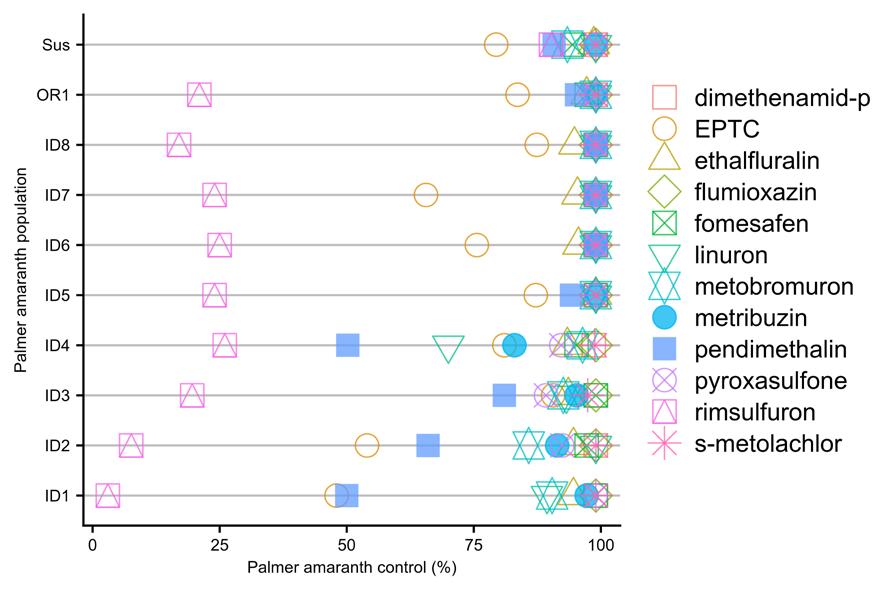
Figure 1A. Efficacy of pre-emergence application of selected potato herbicides on Palmer amaranth collected from Idaho (ID) and Oregon (OR).
Herbicide Options For Managing Palmer Amaranth In Escapes In Potato
Palmer amaranth continues to pose a serious and growing challenge to potato production systems in the Pacific Northwest (PNW).
As of Fall, 2025, there have been more than 160 detections of Palmer amaranth in the PNW, affecting 9,000 acres of cropland in Idaho and nearly 700 acres in Oregon. Its rapid growth rate, prolonged emergence pattern and resistance to multiple herbicides make it one of the most difficult broadleaf weeds to manage effectively. Recent research evaluating herbicide performance on Palmer amaranth populations collected from Idaho and Oregon highlights both the strengths and limitations of currently available control options for potatoes.
Results from pre-emergence trials funded by the Northwest Potato Research Consortium demonstrated that potato growers have several herbicide options capable of providing good early season control of Palmer amaranth (Figure 1A). However, few herbicides provided complete control. In other words, even some of the bestperforming herbicides, such as linuron (Linex 4 L), left Palmer amaranth escapes, which, in field conditions, will
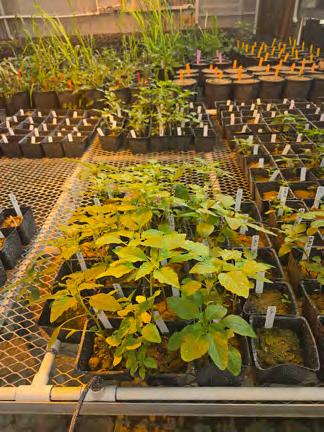
need to be controlled to prevent weed seed production and resistance development (Figure 1B).
WHY MANAGING PALMER AMARANTH ESCAPES IS CRITICAL
The presence of even a small number of Palmer amaranth escapes can have significant consequences for potato crops. Palmer amaranth grows rapidly above the crop canopy and aggressively competes for light, nutrients and water.
Large plants can interfere with harvest operations and contribute substantial amounts of seeds to the soil seed bank. Palmer amaranth can produce up to 500,000 seeds per plant, and the seeds last, on average, for five years in the soil. Thus, one year of Palmer amaranth escape can undermine weed management efforts for many seasons. Consequently, effective post-emergence control of Palmer amaranth escapes is not optional; it is essential for protecting short-term yield and reducing long-term Palmer amaranth populations in the field.
The Northwest Potato Research Consortium funded

another study in Idaho, Oregon and Washington to answer the following questions:
1. Will metribuzin provide good post-emergence control of Palmer amaranth escapes, and what is the appropriate growth stage (height) of Palmer amaranth for effective control?
2. Will adding rimsulfuron to metribuzin improve postemergence control of Palmer amaranth?
The results from the trial indicated that applying metribuzin (Tricor 4F) at 1 pt/A (0.5 lb ai/A) when Palmer amaranth was less than eight inches tall provided the most consistent control (Figure 1C). When metribuzin (Tricor 4F) was applied at 1/2 pt/A (0.25 lb ai/A) followed by another 1/2 pt/A (0.25 lb ai/A) after two weeks, Palmer amaranth control was highly variable. Also, adding rimsulfuron (Matrix) at 1 oz/A (0.0156 lb ai/A) to metribuzin did not improve Palmer amaranth control (Figure 1C).
Taken together, these results emphasize the importance
of layered herbicide programs for Palmer amaranth management in potato crops. Pre-emergence herbicides play a vital role in reducing early season infestations and lowering overall weed pressure.
However, the consistent presence of escapes highlights the need for a planned post-emergence follow-up. Using metribuzin post-emergence, particularly as a one-time application at the labeled rate when Palmer amaranth is eight inches tall or less, provides an effective option for managing Palmer amaranth that emerges after the preemergence herbicide application.
(Albert Adjesiwor is an assistant professor & extension weed specialist at the University of Idaho. He can be reached at aadjesiwor@uidaho.edu. Laura Rodriguez is a graduate student at the University of Idaho. Joel Felix is a professor at Oregon State University. He can be reached at joel.felix@oregonstate.edu. Rui Liu is an assistant professor at Washington State University. She can be reached at rui.liu@wsu.edu.)
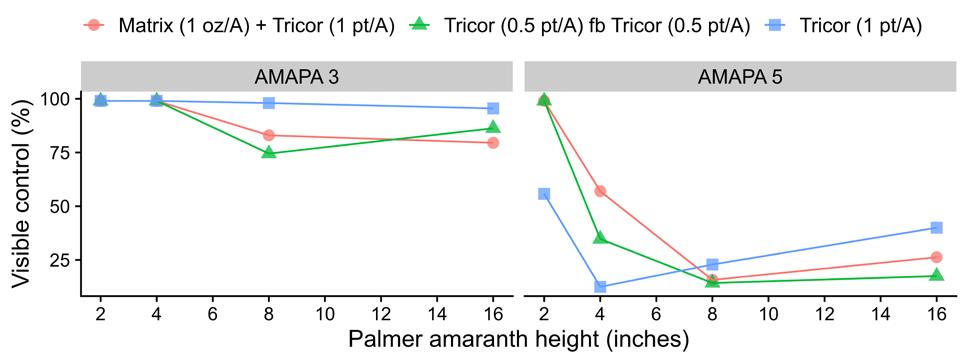
1C: Efficacy of metribuzin (Tricor 4F) at 1 pt/A (0.5 lb ai/A), metribuzin (0.5 lb ai/A) + rimsulfuron (Matrix), and split application of metribuzin at 1/2 pt/A (0.25 lb ai/A) followed by another 1/2 pt/A (0.25 lb ai/A) two weeks later on Palmer amaranth escapes at different growth stages. Two Palmer amaranth populations, AMAPA 3 (from Idaho) and AMAPA 5 (from Oregon), were evaluated.
Figure
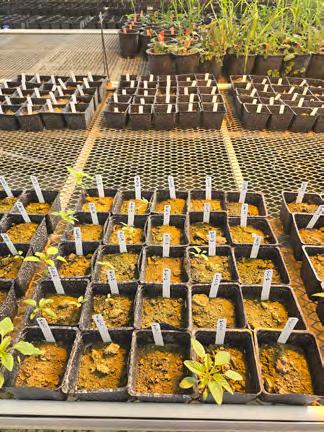
Figure 1B. Matrix (rimsulfuron) (left) failed to control Palmer amaranth collected from Idaho and Oregon, and there were Palmer amaranth escapes from some herbicide treatments including Eptam (EPTC) (center) and Linex 4L (linuron) (right).

COLORADO
POTATO ADMINISTRATIVE COMMITTEE
Tara Artho, Executive Director
Navigating Ag Technology Now And In The Future
When people think of agriculture the immediate stereotype is a hillbilly in overalls. Cue a slow talking, slow thinking, uneducated sort … perhaps with a toothpick in his mouth and a pig in the back of his rickety truck.
For those of us actually living in the ag space, this of course could not be further from the truth. A farmer is not only a steward of the soil (scientist) and manages the burden of stretching finances (accounting) as well as is good with developing a business plan (business), he has true MacGyver skills (mechanics and engineering).
If I got stranded on a desert island and could take one person with me, bringing a farmer would give me the best chance at survival.
With current constraints, market prices, weather challenges etc. we have to utilize technology. We are always asked to do more with less, and we do not have the luxury of passing up an opportunity to make our operation more effective. I recently attended an event that was focused on agriculture technology and there are some really amazing things just around the corner.
We heard from producers, innovators, tech gurus, investment professionals and were able to explore some recent ag tech in action. This was all hosted by Colorado Office of Economic Development and International Trade and The Colorado Department of Agriculture. The two challenges that seemed to pop up repeatedly over the day-long event were an innovator’s ability to secure necessary capital, and the farmer’s risk on testing and investing in new technology.
We had a panel of ag-friendly state legislators who were asked the question: “What is the Colorado legislature doing to help address this gap?” Cue cricket sound effects. If we are going to have to continue to survive in this industry, we must be open to new technologies, but the sad thing is not the unwillingness of the farmer to adopt new tech, but the constraints on new ag ideas coming to market.
Funding strategies for those developing these new
ideas must be a priority. And a safety net for farmers needs to be in place to balance their risk when taking that step to try out a new practice. When you are operating off margins as thin as today’s markets allow, there is no room to try something new without a guarantee that it won’t put your crop in jeopardy.
A new piece of equipment might glitch and plow under half your circle. You travel with your family, hoping the new app that tells you your sprinkler is operating properly IS, in fact, functioning properly and you do not get back to a flooded field. I have heard horror stories about automated tractors that went straight when they were supposed to turn around that ended in disaster.
We do not have the flexibility to try something out, because one small “hiccup” has a price tag that is detrimental to a farm operation. This is a problem. Pick any industry and there must always be innovation. But it seems when talking about ag innovation we have more barriers than most, because our operations are already inherently riskier than most.
This will not come as a shock to anyone reading this article, but many of the producers I know are in rural areas. Rural areas are great for things like fresh air and wide-open spaces. Rural areas are not great for connectivity. We have come a long way in the last decade, but we are far from being able to fully depend on things like a GPS satellite to work as well in Rio Grande County as in Denver County. This is just another challenge which we in the rural space face.
Despite these hurdles, it is so exciting to see some of the advancements on the horizon that some entrepreneurs are working on. Just think about the possibilities of a grower knowing where and when hail will occur because of data that is linked to lightning strikes. Or how fast our technology will improve once our state has access to a quantum computer.
Technology is not just for us to be able to ask AI how best to prepare our breakfast potatoes. Now it can focus on the best way to grow them.

POTATO INDUSTRY COMMISSION
Zeke Jennings, Marketing and Communications Manager
New Michigan Potato Legacy Fund To Safeguard Research Into The Future
The long-term strength of the U.S. potato industry depends on sustained investment in research, infrastructure and people. In Michigan, industry leaders took a significant step toward that future with the creation of the Michigan Potato Legacy Foundation, a grower-led donor-advised fund established to safeguard and advance research critical to the state’s $2.5 billion potato industry.
Launched by Potato Growers of Michigan, Inc. (PGMI), the Michigan Potato Legacy Foundation was designed as a flexible, industry-driven platform to ensure that Michigan potato research remains robust, relevant and responsive to grower needs. The fund focused exclusively on Michigan potato production and processing challenges, supporting everything from applied agronomic research and variety development to infrastructure reinvestment and workforce training.
The idea for the fund emerged during the Rooted in Progress Summit held in June 2024, where Michigan growers, researchers and industry partners identified a shared concern: the long-term sustainability of potato research in the state. As key university researchers approached retirement and research facilities required reinvestment, industry leaders recognized the need for a permanent funding mechanism that could supplement public dollars and provide continuity across generations. PGMI stepped forward to lead the effort, positioning the foundation as a proactive solution created by growers, for growers. Dennis Iott, president of PGMI, emphasized that the fund was built to address real-world challenges facing the industry.
“The Michigan Potato Legacy Fund was created to protect the future of the state’s potato sector and the family farms who call Michigan home,” Iott said. “This grower-led initiative was designed to solve grower-identified research gaps and keep our $2.5 billion industry thriving for generations to come.”
To ensure efficiency and accountability, the fund was administered through the Fremont Area Community Foundation. This structure allowed investment decisions to remain firmly in the hands of Michigan potato growers and industry leaders, while minimizing administrative costs and offering donors a wide range of giving options.
Contributions can be made through cash gifts, securities and planned giving vehicles such as life insurance, real estate and personal property.
The official public launch of the Michigan Potato Legacy Foundation was planned to coincide with the 2026 Michigan Winter Potato Conference, held January 27-29 in Grand Rapids, Michigan. The annual conference brings together growers, processors, equipment and service providers, crop protection specialists and university extension researchers from across Michigan and the broader U.S. potato industry. The foundation’s kickoff event — a Michigan Potato Legacy Fund Comedy Show Fundraiser — helped generate early momentum and visibility.
Central to the foundation’s early success was the establishment of the Founders Club, an inaugural group of donors whose leadership gifts laid the groundwork for long-term impact. The Founders Club included three initial giving levels: Platinum Business Members at $25,000, Gold Business Members at $15,000 and Individual Members at $5,000.
Michigan-based grower Walther Farms also demonstrated strong support, pledging more than $60,000 over the next three years – including more than $20,000 this year – to the fund, reinforcing the foundation’s grower-led mission.
Also among the early supporters was Norika America, which committed $25,000 to the fund in January 2026.
Norika America is a daughter company of Norika GmbH, a Germany-based potato breeding and research company with global reach. Chris Long, managing director of Norika America, described the contribution as an investment in collaboration and innovation.
“Supporting the Michigan Potato Legacy Fund solidified Norika America’s commitment to the Michigan potato industry, Michigan State University, and the global potato industry we support,” Long said. He noted that the partnership aimed to foster improvements in potato genetics, student and staff development, and variety commercialization on an international scale.
To learn more about the Michigan Potato Legacy Fund or to donate, visit mipotatolegacy.com.

NEBRASKA
Jenn Dillinger, Administrative Manager
Interstate Cooperation
USING PARTNERSHIPS TO STRENGTHEN THE WINTER GROW-OUT
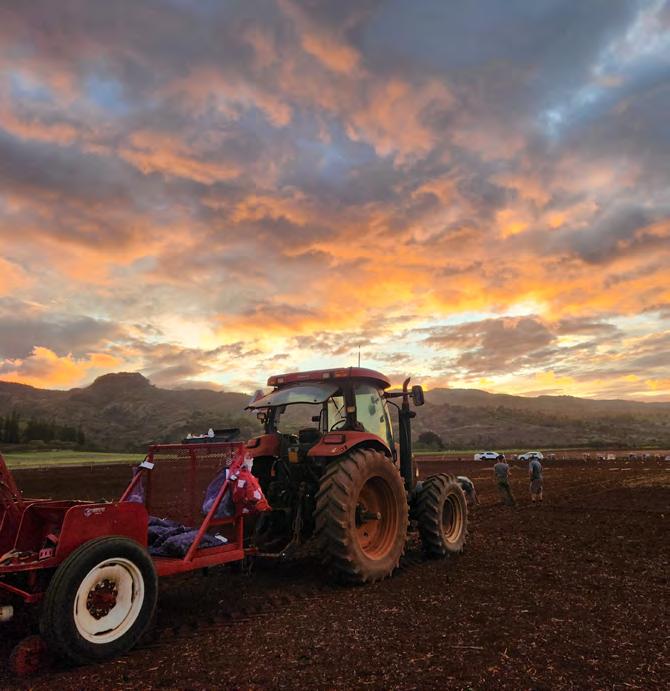
“We’re all in this together.” It’s a phrase that I heard repeated many times as I sat on the back of the North Dakota planter in the bright Hawaii sunshine last November.
Working the carousel next to me, as well as filling the hoppers and driving the tractor, was a rotating cast of characters from three other states, all focused on planting the winter test plots for Nebraska, Wisconsin, North Dakota and Michigan.
While I was probably the only person present who began internally singing the song from High School Musical every time the phrase was uttered (at least I didn’t sing it out loud), the spirit of camaraderie and cooperation exemplified in every good cheesy ear worm was abundantly clear during our time working together.
The winter test is a crucial part of certification for seed growers, and every year certification agencies strive to ensure the best possible product for the growers in our state. The goals are good emergence, easy traceability and fast results so that growers can quickly have the information they need to make decisions.
The question of affordability has also become a huge issue. It’s no secret to anyone reading this that everything to do with agriculture is only increasing in expense and when you add travel and shipping to a location where a plot is possible in December and January, costs climb quickly. The challenge we face is providing the highest quality winter grow out possible at the most affordable price possible for our growers. That is a lofty challenge, and there are a lot of
variables to consider.
What has proven to be a benefit as we plan is that every state is facing the same challenges. In coordination with each other, we can pool our resources to ensure high quality and affordability. This year, as we were planning, it became apparent that it made the most sense for a four-state cooperation between North Dakota, Michigan, Wisconsin and Nebraska to form. We were all planting within the same time frame.
This cooperation enabled each state to send fewer people, and to share responsibilities. We were all able to bring capable tractor drivers, people who could provide manual labor as needed, and someone to track the details for our own plots. We simply took turns working for and with each other. While there were a few hiccups, because there always are, it was a great experience, and we’re planning to continue this partnership.
Staff from Nebraska and North Dakota takes a break from planting to enjoy Hawaii’s North Shore sunset.
“Wisconsin is excited to continue collaborative efforts with this fourstate partnership in the future,” stresses Brooke Babler, associate director of the Wisconsin Seed Potato Certification Program.
Of course, collaboration is nothing new to certification programs, especially when it comes to the winter grow out. We have long worked together, out of necessity and choice. We share equipment, storage space and information.
Nebraska planted with Colorado for many years until we could no longer get our planting dates to sync up. We have often rented Montana’s planter. It is not uncommon to find various state staff sharing stories and insight over a meal on Hawaii’s North Shore after the sun goes down, or loaning some tools, offering a ride to Honolulu, or helping with an inspection.
Certification is a small corner of a large industry, and we not only rely on each other, but we enjoy the few days of the year we get to work side by side. There is a wealth of knowledge and encouragement to be found in this community, and we benefit from it. As do our state associations.
As Damen Kurzer, director of Michigan’s Seed Potato Association puts it, “Moving forward together multiplies our individual efforts to preserve the winter test as a robust tool to protect our growers, while saving them time and money.”
Damen touches on something much more important that cost savings, and something that was a topic of conversation multiple times as we all worked together during planting. The success of the winter test is important, and not just our own results for our own states. For most states, seed potatoes cross borders. We rely on the accuracy and dependability of our counterparts. This is why, when we finished planting our plot, I encouraged my staff to put just as much care and attention into planting for the remaining three. We want quality test plots for every state. It matters for their growers and for ours. It matters for the industry. After all, we’re all in this together.











IDAHO POTATO COMMISION
Jamey Higham, President and CEO
The Haute Potato Collection By Idaho Debuts At New York Fashion Week 2026
Every year, the Idaho Potato Commission challenges itself to find new ways to honor the growers who make our industry possible while keeping Idaho potatoes relevant in a crowded, fast-moving marketplace. This year, that challenge led us onto the runway at New York Fashion Week, bringing the stories of Idaho’s potato farmers into a cultural moment that felt unexpected and personal.
In 1951, Marilyn Monroe famously posed in an Idaho potato burlap sack dress, transforming a humble farm staple into a pop culture moment. Seventy-five years later, that image is reimagined on the runway, serving as inspiration for a modern interpretation that connects agricultural heritage with contemporary culture.
The collection was designed by Idaho fashion designer and Project Runway Junior alum Cartier Dior Elisen. Raised in a family of Idaho potato farmers, Cartier brought both credibility and creativity to the project. The collection featured 10 looks, including nine dresses and one men’s suit. Inspired by Idaho potato sacks, the designs transformed a familiar agricultural material into couture pieces that felt unexpected while remaining respectful of their origins.
Ten runway models brought the collection to life, including Idaho native and fitness influencer Kristin McGee.
After the show, Grand Brasserie served Idaho potato–inspired bites, highlighting the quality and versatility of the crop in a way people could experience firsthand.
Giving back remained a central consideration throughout the planning process. At the show, select designs from the collection were auctioned to support No Kid Hungry, helping ensure kids across the U.S. have access to nutritious meals.

This activation was designed to spark conversation beyond the runway. It generated media opportunities, social storytelling and a fresh visual language that extended across platforms. More importantly, it demonstrated leadership by showing how Idaho potatoes help shape culture in authentic, relevant ways.
This approach reflects how Idaho potatoes continue to lead: by honoring where we came from while stepping forward boldly, by creating programs that match our quality and scale, and by telling our story in ways as distinctive and enduring as the growers and potatoes behind it.