Pull up your electric bill. Somewhere in that number, you are paying for a building you will never enter.
Data centers are going up everywhere. They need enormous amounts of electricity. Somebody must pay to connect them and build the plants and lines they need.
In state after state, that somebody is you.
Not everywhere. Texas requires the largest new power users to pay more of their connection costs and cut demand when the grid is strained. The data centers came anyway.
Ohio now makes large new customers pay for much of the electricity they reserve, whether they use it or not. Projections for new demand then fell sharply. Much of the emergency was companies holding space they might never fill.
Virginia chose differently. It gives data centers a tax break on their equipment. Good Jobs First estimates that subsidy cost Virginia schools $267 million in one year.
Illinois lawmakers let a similar bill die without a vote.
Neither list sorts cleanly by party. Before you file this as a new problem, meet my great-great-grandfather. Edward David Bland was born into slavery in Dinwiddie County, Virginia, in 1848. Thirty-one years later, he was helping write that state’s laws.
He served three terms in the House of Delegates and sat on the Committee on Schools and Colleges. That was not a coincidence. That was the point.
Virginia was fighting over debt borrowed before the Civil War for canals and railroads. With interest, it had passed $45 million.
One side said pay every penny, whatever it took. They were called the Funders.
Here is what it was taking.
COMMENTARY
YOU ARE ALREADY PAYING FOR THE AI BOOM
SOME STATES MADE DATA CENTERS PAY THEIR OWN WAY. OTHERS HANDED THE BILL TO YOU. VIRGINIA SETTLED THIS QUESTION IN 1882.
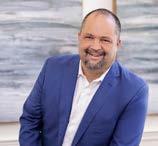
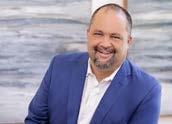
By Ben Jealous, National Political Commentator
Virginia was starving its public schools to pay bondholders. The bondholders lived in New York and London. The children lived in Petersburg and Danville.
The other side said the debt would be paid, but not out of the schoolhouse. They were the Readjusters. Black and white together. Farmers, freedmen and a former Confederate general named William Mahone.
A man born into slavery and a man who wore gray were counting the same votes on one floor. They ran Virginia for four years. In 1882, they cut the state’s share of the debt by roughly a third and refinanced the rest over 50 years.
Then they spent the difference. They put money back into public schools. They funded schools with Black teachers. They repealed the poll tax. They tore down the whipping post.
The Readjusters knew something we forgot. Whoever profits should not get to send the bill to whoever cannot say no.
I am not against data centers. This country cannot afford to fall behind in artificial intelligence, and the reasons are not all about money.
I am against making working families subsidize the world’s richest companies.
It does not always take a governor. A small town in Illinois capped a data center’s water use, with penalties if it went over.
A town council did that. Now let me tell you how the Readjusters lost. That is the part we forget.
They were not beaten on the debt. They won that argument. In October 1883, their opponents warned that Black residents of Danville had gained too much power. On November 3, market day, a street fight became a shooting. Five men died. Four were Black.
For three days, armed white men walked the streets and kept Black Virginians from the polls. The election came that week. Democrats took both houses.
They never took the schools back. The new legislature left the school money alone. It left the whipping post gone. It left the debt settled.
They did not undo the policy. They undid the voters.
In 1902, a new state constitution stripped most Black Virginians of the ballot for more than 60 years. They were
not defeated by a better plan. They were defeated by a campaign that made white farmers fear Black farmers more than the men taking money from both.
It is the cheapest trick in American politics, and it has never once been out of stock. The people paying for these deals live in Loudoun County and Memphis, in white towns in Iowa and Black neighborhoods in Atlanta, in union halls and farmhouses.
They are already paying the same bill. They just have not been asked to fight it together.
Somebody will work hard to make sure they never do.
My great-great-grandfather learned his letters at a night school for freedmen after the war. He was 17. Then he sat on the committee that funded schools so other children would not wait.
He knew exactly what a school was worth. Go find out what your state did. Then find out who let it happen.
Ben Jealous is a professor of practice at the University of Pennsylvania and former president and CEO of the NAACP.
Beneath a punishing July sun, Missouri City opened Freedom Tree Park on Saturday with prayers, flags, proclamations and a promise: This ground will no longer whisper its history. It will teach it.
The Saturday, July 25, 2026, ribbon-cutting transformed a treasured landmark into a fuller public destination for reflection, recreation and community gathering. The nearly five-acre park plan called for open green space, walking paths, a playground, pavilions, interpretive features and public art. Its centerpiece, “Liberation After,” was created by Missouri City artist Anthony Suber to deepen the site’s story through art. The city described the grand opening as a celebration of freedom, resilience and community.
Yet one name in the story deserves thoughtful attention: Bettie Palmer.
In 1865, Bettie was only 14 years old. City history records that her father, Judge Edward Palmer, purchased 640 acres for $6,000 in 1860 and established the Palmer Plantation.
He died in 1862; Bettie’s mother died three years later, leaving the plantation to their teenage daughter. The legal records may have called her an heiress, but the word sounds far grander than the reality: She was an orphaned child inheriting land, adult responsibilities and a brutal social system she did not create.
History should never romanticize plantation life or reduce the enslaved men, women
MISSOURI CITY COUNCIL MEMBERS DEDICATE FREEDOM TREE PARK
A 14-YEAR-OLD HEIRESS, A COMMUNITY’S EMANCIPATION AND A LIVING OAK THAT STILL SPEAKS
By Burt Levine, Political Editor for www.StyleMagazine.com
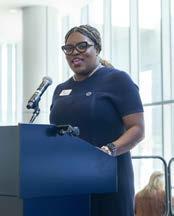
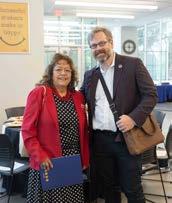
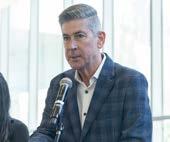
Sharita Thompson, Lynn Clouer, Sonya Brown Marshall
and children who labored there to background scenery. But history should also resist turning a 14-year-old into a convenient symbol of adult evil without evidence of her choices, beliefs or actual authority. The surviving public account identifies Bettie as the legal heir; it does not tell us what she thought when freedom finally reached the plantation.
More than two years after President Abraham Lincoln issued the Emancipation Proclamation, Maj. Gen. Gordon Granger issued General Order No. 3 in Galveston on June 19, 1865, announcing that enslaved Texans were free. At Palmer Plantation, the white overseer and Ed Gibbs—formerly Judge Palmer’s driver and a leader among the enslaved workers—gath-
ered the community beneath the live oak and announced their freedom.
Those who remained were offered a share of the crop. That arrangement marked the beginning of legal freedom, but certainly not the end of economic struggle. Freedom had arrived, yet equality would require generations of courage, land stewardship, education, enterprise and determined citizenship.
Councilmember Sharita Thompson, a U.S. Army veteran, said standing where freedom was announced strengthened her commitment to preservation.
“Freedom comes with sacrifice,” she said, adding that the site should help children “learn from it, reflect and appreciate the blessings
of liberty.”
Mayor Pro Tem Lynn Clouser described the park as both sanctuary and classroom—a place where families of every race and ability can walk, play and encounter American history. She praised Suber’s monument as a reminder that the story is “more than African American history. It’s American history.”
Councilmember Sonya Brown-Marshall offered perhaps the day’s clearest lesson: Freedom is not self-sustaining. Like the oak, it must be protected, nourished and passed forward. Thompson, Clouser and Brown-Marshall currently serve on the Missouri City Council. Freedom Tree Park therefore honors more than a tree. It remembers Ed Gibbs and the people who stood beneath its branches as slavery ended on the land. It acknowledges Bettie Palmer, a 14-year-old orphan caught inside one of America’s darkest institutions. And it challenges today’s children to understand that inheritance is not only what we receive—it is what we decide to do with the truth.
Under Missouri City’s blazing sun, the Freedom Tree offered shade. Its history offered something even more valuable: light.
For more information, go to: Freedom Tree Park
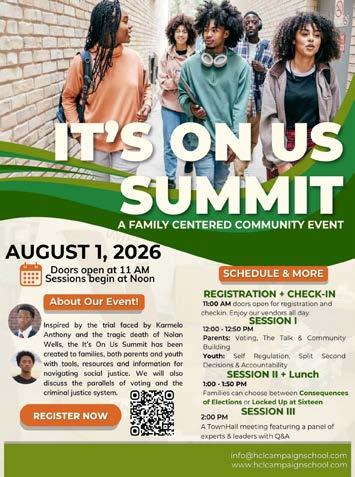
Houston’s historic Fifth Ward, democracy recently sounded less like a political speech and more like neighbors telling the truth around a table.
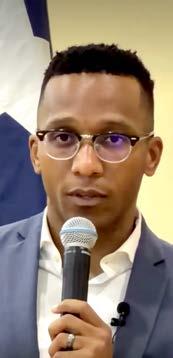
U.S. Rep. Christian Menefee joined Way to Win on Saturday, July 25, for the concluding stop of the organization’s nationwide Affordability Listening Tour, bringing residents together for candid roundtable discussions about the rising costs confronting Houston families. The community-centered gathering followed previous tour stops in Las Vegas and Phoenix.
Participants discussed housing, groceries, healthcare, childcare, transportation, utilities and the stubborn collection of everyday expenses that can stretch a paycheck thinner than Houston freeway patience during rush hour.
But the event was not simply a place to complain about prices. It was designed to transform personal experiences into policy priorities that members of Congress and national political leaders can understand—and, more importantly, act upon.
That distinction matters.
For generations, Houston’s Fifth Ward has been a center of Black entrepreneurship, culture, faith, resilience and civic participation. Hosting the tour there placed today’s affordability conversation within a community that has repeatedly organized for fair representation, environmental justice, economic opportunity and responsive government.
Menefee, who represents Texas’ 18th Congressional District, continued that democratic tradition by listening directly to residents rather than arriving with a polished collection of predetermined answers.
HOUSTON FIFTH WARD FAMILIES PUT AFFORDABILITY ON THE RECORD AS REP. MENEFEE CONCLUDES NATIONAL LISTENING TOUR
By Francis Page Jr. for www.StyleMagazine.com
The former Harris County Attorney was sworn into Congress in February 2026 and now represents a district whose historic leadership includes Barbara Jordan, Mickey Leland, Sheila Jackson Lee and Sylvester Turner.
Each understood that constituent service begins with two open ears.
The Houston session reflected a simple but sometimes forgotten principle: public policy works best when the public participates in creating it. Residents were encouraged to describe what affordability actually means inside their homes—not as an economic talking point, but as a daily calculation.
Can the rent be paid without delaying a prescription? Can groceries be purchased without leaning on a credit card? Can a parent afford childcare and still make working worthwhile? Can a family absorb another increase in electricity, insurance or transportation costs?
Those are not theoretical questions. They shape whether families can save, buy homes, pursue education, start businesses or simply breathe between monthly bills.
Way to Win launched the listening tour in partnership with progressive members of Congress to better understand which costs are placing the greatest pressure on households and what voters believe lawmakers should do about them. Organizers said the discussions would help inform a report containing practical affordability recommendations for elected officials.
The Houston stop therefore marked both an ending and beginning. The three-city listening tour
has concluded, but the more difficult work—turning testimony into legislation, economic strategy and measurable relief—now moves forward.
That follow-through will be the real test. Listening is essential, but listening without action eventually becomes another expensive government subscription nobody remembers ordering.
Still, Saturday’s gathering offered reason for optimism. It demonstrated that residents remain willing to participate when leaders create genuine opportunities for their voices to matter. It also reinforced that affordability crosses neighborhoods, generations and political labels. Nearly everyone understands the unwelcome surprise of watching a familiar grocery basket become noticeably more expensive.
Houston residents did more than attend a meeting. They placed their experiences on the public record and helped shape a national conversation about what working families need from government.
In Fifth Ward, democracy pulled up a chair, opened a notebook and listened.
Now Washington must turn the page—and get to work.
More Information, go to: www.WayToWin. us
Congressman Christian Menefee
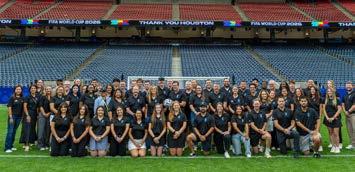
More Than One Million Participants Highlight Houston’s FIFA World Cup 2026™ Success Story
Final tournament data highlights record-setting attendance, safe operations, transportation performance and memorable moments across Houston Stadium and FIFA Fan Festival™ Houston
By Francis Page Jr. for www.StyleMagazine.com
The FIFA World Cup 2026™ Houston Host Committee today released final attendance, transportation, public safety and operational data following the conclusion of Houston’s service as an official FIFA World Cup 2026™ Host City.
The final numbers confirm that more than one million participants attended FIFA World Cup-related matches, celebrations and community activities across the Houston region during the tournament.
Final Tournament Metrics
1,086,499 participants attended FIFA World Cup 2026™ events in Houston.
480,186 fans attended seven FIFA World Cup™ matches at Houston Stadium, averaging 68,598 spectators per match.
81% of ticket buyers traveled from outside the Houston area.
44% of ticket buyers were international visitors, the largest audience segment. Ticket buyers represented all 50 states and more than 200 countries.
most goals of any Host City.
The top five countries represented among ticket buyers were:
of the FIFA World Cup 2026™ Houston Host Committee. “As a Host City, we were operationally sound and perfectly safe while delivering unbelievable moments, unforgettable memories and the best of times. The World Cup elevated and impacted Houston in ways unlike anything else can do.”
Attendance Across Official FIFA World Cup™ Events
Houston welcomed 480,186 fans across seven matches at Houston Stadium.
Match Attendance
Germany vs. Curaçao — 68,021
Portugal vs. Democratic Republic of Congo — 68,777
Approximately 55,000 supporters participated in official Fan Walks.
More than 10,000 media credentials were issued for Houston Stadium and FIFA Fan Festival™ Houston.
4,190 volunteers supported tournament operations.
27 goals were scored during Houston’s seven matches, tying Houston for the
Mexico
Canada
Germany
Brazil
Portugal
“The FIFA World Cup 2026 was the greatest sporting event ever staged, and we are proud to have been part of this historic moment,” said Chris Canetti, President
Netherlands vs. Sweden — 68,777
Portugal vs. Uzbekistan — 68,777
Saudi Arabia vs. Cabo Verde — 68,278
Brazil vs. Japan — 68,777
Morocco vs. Canada — 68,777
551,313 people attended FIFA Fan Festival™ Houston and the Houston Dynamo Soccer Celebration.
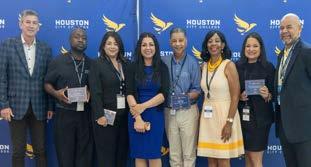
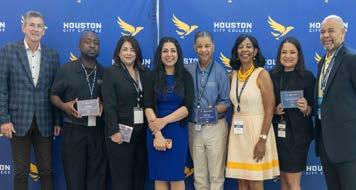
H HCC - 2026 MEDIA APPRECIATION LUNCHEON H
Houston City College Salutes Houston’s Storytellers at Media Appreciation Luncheon
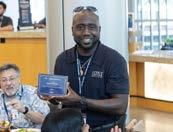
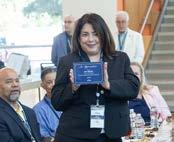
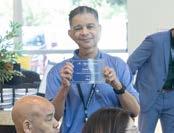
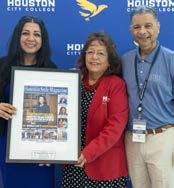
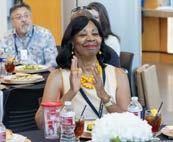
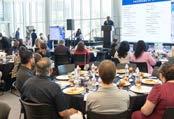
Houston City College rolled out the welcome mat—and a well-earned round of applause—for Houston’s storytellers during its 2026 Media Appreciation Luncheon at the HCC Coleman Campus on Wednesday, July 22, 2026.
Hosted by HCC Strategic Communications & Marketing, the gathering recognized the journalists, editors, producers, photographers, broadcasters and digital influencers who keep Greater Houston informed, connected and inspired. Houston Style Magazine was honored to join fellow media professionals for an afternoon
By Reggie Dominique
centered on gratitude, collaboration and the life-changing power of education.
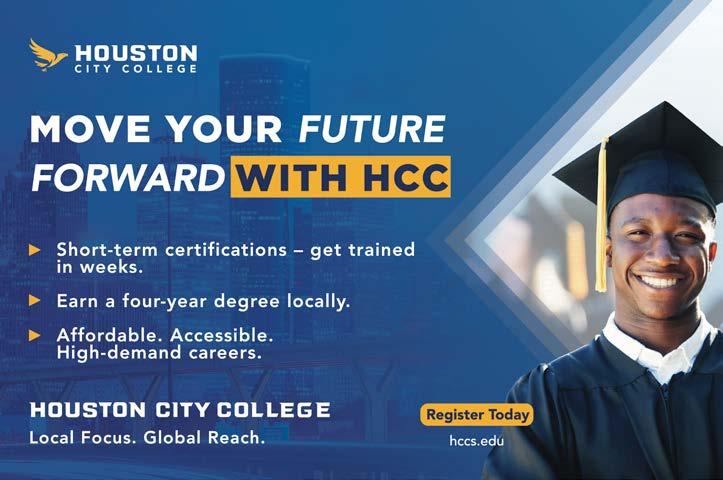
The luncheon also highlighted HCC’s growing role in preparing students for high-demand, future-ready careers. Through innovative instruction, hands-on learning and partnerships with employers, the college continues building pathways from classrooms to rewarding careers. HCC currently offers more than 300 awards across over 85 programs and operates 19 campuses throughout Houston.
At the Coleman College for Health Sciences , located in the Texas
Medical Center, that mission is especially visible. Students train for critical healthcare professions while gaining practical skills designed to meet regional workforce needs. The message was simple but powerful: every student success story strengthens a family, a workforce and Houston itself. HCC thanked the media for helping those stories travel farther—and Houston’s media community gladly returned the appreciation with pride.
Eva L. Loredo - HCC Board Chair
Rima Adil - PIO & Vice Chancellor
Lutricia Harrison - HCC Coleman President
Eva Loredo - Board Chair & Sean Cheben - Vice Chair
Photos By Samantha Nava & Caleb Thornton
Recently, famous Houston musician Robert Glasper posted on his social media account, “STOP WITH THE EYELASHES PLEASE!!!!” His video sparked a fiery debate on lash extensions with nearly 800 people responding.
One commenter said, “Women wear the lashes because THEY like to wear them. No woman wearing lashes or anything else to enhance their beauty is saying, ‘I wonder if men are going to like this?’”
Another commenter in support of Glasper’s sentiment expressed, “I agree. You see them lashes a mile away and eventually they can and will become a problem.”
No matter how humorous and witty the conversation was, the fact of the matter is that lash extensions are here to stay. Because women decide to glamorously wear them, the industry is in demand for lash professionals who can apply them – licensed and legally.
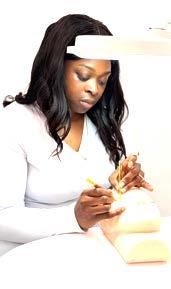
Graduates from Houston City College’s (HCC) Lash Program are ready to enter the booming beauty market, which generates between $60 million and $90 million in annual revenue.
“People can make all the jokes they want, but depending on the lash stylist’s experience and creativity, they can charge from $90 - $250 for a full set per client,” said HCC Cosmetology Instructor Yomie Brumley. “If that client returns every two weeks, a self-employed lash professional can make nearly $50,000 a year.”
Brumley, who teaches at the HCC South
HCC GRADUATES POISED TO PROFIT FROM TEXAS LASH BOOM
By Donald Sparks, HCC Central Communications Director
Campus and has been a professional lash specialist for 17 years, emphasizes the importance of her students creating their own brand and identity.
“There’s so many facets to lashing now,
and we teach students the different techniques so they can add to their repertoire,” Brumley said. “I tell them, ‘You are your brand. You don’t have to just do the industry standard; you want to bloom into your own artistry.’”
Some of the techniques include clusters, tabbing, lash lamination, premium lashing and volume eyelash extensions.
Most importantly, the instructors focus on the sanitation and safety guidelines as mandated by the Texas Department of Licensing and Regulation. Students are prepared to take the exam, earn their specialty license and start their immediate career in lashes.
“Once they leave the classroom, they are confident in knowing they’re not going to damage someone’s eye and that they can perform the work the right way,” Brumley said.
Lakeisha Elder graduated from the HCC Cosmetology program in May with an associate degree after starting her journey at age 49. Two years later, the 51-year-old native Houstonian decided to add lashes as part of her skill set to work at a salon.
After losing her job this summer, she enrolled in a fast-paced 8-week summer lash program and received an HCC Connect 2 Workforce scholarship to pay her full tuition.
“This scholarship saved my life as I didn’t know how I was going to pay for this program,” Elder said. "Now I can continue my goal of using my cosmetology and lash skills to help survivors of domestic abuse by restoring their confidence and beauty.”
Since arriving to Houston from Marvell, Arkansas, a decade ago, Shanese Dotson-Rodgers left her past career as a phlebotomist and certified nurse assistant. In 2017 she launched her own beauty line and made money braiding hair.
Although she applied strip lashes to her clients upon request, many desired for her to get into eyelash extensions.
“I opened up my phone and Instagram was sending me reels advertising about HCC’s Lash program and scholarships were available,” Dotson-Rodgers said. “With the scholarship, I didn’t have to pay any out-of-pocket fees.”
As her clients await her receiving her license, she is even more excited to generate income for her family doing something she loves.
“I have clients already on my wait list to get their lashes done,” she said. “As a beginner, I can charge as little as $60 and up to $160, so the benefits are great.”
For Brumley and her fellow instructors, creating a pathway to entrepreneurship is what inspires them to uplift their students.
“We work together collaboratively to make sure that these ladies are ready for the workforce, and they're excited about it,” she said. “They have their business names and they're very excited about the start of their own careers.”
To enroll in the HCC Lash program, go to Cosmetology | Houston City College
Shanese Dotson Rodgers
Texas Southern University has made a strategic hire with both numbers and people in mind, appointing Dr. Juan M. Alexander Sr. as Vice President for Strategic Enrollment Services. Alexander officially began July 19, stepping into a role that places him at the center of how TSU recruits students, helps families navigate financial aid, strengthens retention and turns acceptance letters into graduation-day success stories.
That is no small assignment at a university with a very large legacy.
Founded in 1927 as Houston Colored Junior College, Texas Southern grew from classes held at Jack Yates High School into one of the nation’s most consequential historically Black universities. Its story includes the struggle for educational access during segregation, the establishment of a state-supported university in 1947 and the student-led push that helped secure the name Texas Southern University in 1951. Nearly a century later, TSU continues to educate more than 8,700 students while carrying Houston’s history—and its future—across the same campus.
For generations of Houston fam-
Texas Southern University Taps'Dr. Juan M. Alexander Sr. to Drive Enrollment and Student Success
Accomplished HBCU enrollment strategist brings nearly two decades of experience to TSU during a pivotal period of institutional growth.
By Reginald Dominique for
www.StyleMagazine.com
ilies, TSU has represented more than a college choice. It has been a gateway into law, pharmacy, business, public service, communications, science and community leadership. That makes enrollment management more than a numbers game. Each application can represent a family’s first encounter with higher education, a career-changing second chance or the con-
tinuation of a proud Tiger tradition. Alexander arrives with nearly two decades of experience in enrollment management, student success and institutional transformation, much of it earned at HBCUs. Most recently, he served as Associate Vice President for Enrollment Management at Florida A&M University, where he helped lead initiatives credited
with record application growth while protecting academic standards. His work also included streamlining processes designed to make the student experience more efficient—because college paperwork should not feel like a second major.
“Texas Southern has a rich history and is on an upward trajectory that I’m excited to now be a part of,” Alexander said. “I look forward to developing the team and the strategies that will build upon the work that’s been done to recruit the outstanding students who call Texas Southern home today.”
His new portfolio is broad and consequential. Alexander will serve as TSU’s chief enrollment strategist, overseeing admissions operations, financial aid, recruitment, strategic enrollment marketing and retention. In practical terms, he will help shape the entire student journey—from the first campus inquiry to the moment a Tiger crosses the commencement stage.
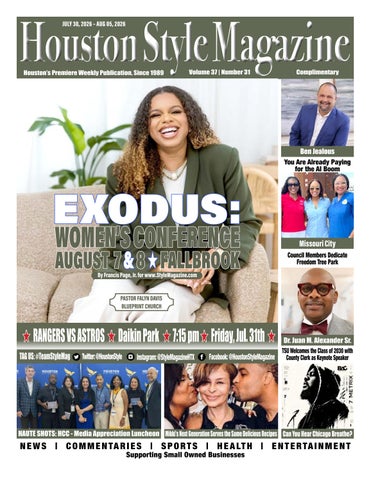
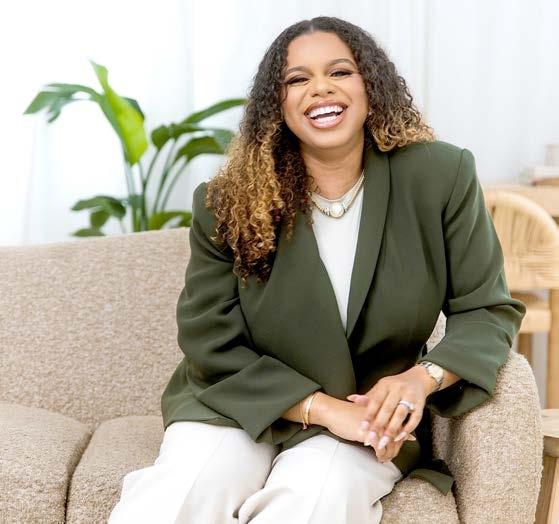
Houston knows a thing or two about surviving heat, but the Exodus Women’s Conference is preparing a different kind of August forecast: deep roots, living water and a strong chance of breakthrough.
After selling out its inaugural gathering in 2025, ‘Exodus’ returns Friday and Saturday, Aug. 7–8, 2026, with room for approximately 1,500 women—more than twice the nearly 700 participants organizers say attended last year. Hosted by Blueprint Church Pastor Falyn Davis at Fallbrook Church, the expanded conference will welcome women from Houston, across Texas and neighboring states for a weekend centered on faith, healing, identity, purpose and authentic community.
This year’s theme, “She Is Planted,” draws from Psalm 1:3 and the image of a tree rooted beside rivers of water—fruitful in season, resilient under pressure and unwilling to wither simply because life gets windy. The conference’s official invitation describes the woman who is planted as “rooted,” “established” and “unshaken,” promising worship encounters, transformational speakers, panels, breakout sessions, prayer and reflection.
“Exodus was created to remind women that they are not forgotten, broken or disqualified,” Davis said. “We believe women flourish when they become planted in God’s truth, community and purpose. This conference exists to create a space where women can heal, be set free, grow and fully step into who God created them to be.”
That message arrives at a timely mo-
ment. Women are often expected to be the family strategist, workplace problem-solver, emotional first responder, prayer warrior and keeper of everybody else’s calendar—sometimes before breakfast. Exodus offers permission to pause, breathe, receive and remember that strength is not the same thing as carrying everything alone.
For generations, women have served as
the steady hands of faith communities, sustaining families, organizing ministries, mentoring younger women and turning prayer into public service. Exodus builds upon that tradition while making room for the conversations modern women are already having about anxiety, burnout, confidence, finances, friendship, motherhood, leadership and emotional health.
Headlining the 2026 Exodus Women’s Conference is nationally recognized trauma therapist, life coach, minister and author Dr. Anita Phillips. Her work focuses on the intersection of mental health, faith and culture, and her message that people were “created to flourish” fits naturally within a conference devoted to becoming spiritually rooted and emotionally whole.
Worship will be led by the Blueprint Worship Team, joined by special guest worship leader Taylor Butler of Change Church.
Expanded breakout sessions will move beyond applause-worthy inspiration toward practical transformation, addressing relationships, identity, mental health, friendships, motherhood, personal finances, discipleship and leadership. The goal is not simply for attendees to leave excited Saturday evening, but equipped to live differently Monday morning.
“Women today are carrying unprecedented levels of pressure, burnout, comparison, anxiety and isolation,” Davis said. “Exodus exists to remind women they don’t have to walk through life alone and that God still has purpose, healing and growth for every season of their lives.”
The growth of Exodus Women’s Conference also carries a welcome Houston ripple effect. Attendees traveling into the city will support area hotels, restaurants, transportation providers and small businesses—proof that a faith gathering can feed the spirit while giving the local economy a little love, too.
General admission is $99. Registration remains open through July 31, 2026, or until capacity is reached. Fallbrook Church is located at 12512 Walters Road in Houston.
For women seeking renewal, clarity and a community that understands both the weight they carry and the purpose they possess, Exodus 2026 offers a compelling invitation: come as you are, release what has kept you uprooted and prepare to grow.
Because when a woman becomes planted in truth, nourished by faith and surrounded by sisterhood, flourishing is no longer a distant hope. It becomes her next season.
Event Details
Exodus Women’s Conference: “She Is Planted” Dates: Friday–Saturday, Aug. 7–8, 2026 • General Admission: $99
Location: Fallbrook Church, 12512 Walters Road, Houston, Texas 77014 Registration deadline: July 31, 2026, or until capacity is reached
Registration: Visit the official Exodus Women’s Conference website
Pastor Falyn Davis
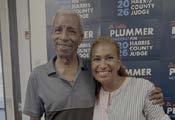
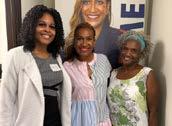
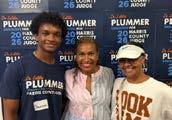
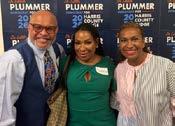
Dr. Letitia Plummer Opens Campaign Headquarters – and the Door To Democracy
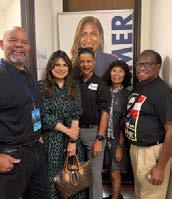
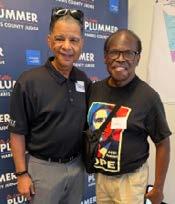
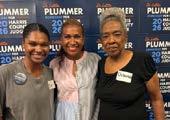
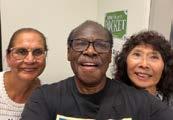
Supporters and volunteers gathered at Dr. Letitia Plummer’s expanded campaign headquarters on Almeda Road, turning an office opening into a lesson in grassroots democracy.
The July 27 open house offered snacks, sign-ups and strategy, but the menu was civic participation. Guests met campaign staff, learned about volunteer opportunities and heard a service-centered vision for Harris County built around disaster preparedness, affordability, healthcare access and public safety.
By Francis Page, Jr.
Plummer, a dentist, small-business owner and former Houston City Council member, enters the fall campaign as the Democratic nominee for Harris County Judge. Her campaign says every neighborhood deserves to be heard, protected and lifted up—a message reflected in proposals for resilience hubs, multilingual emergency education, first-time homebuyer support, preventive healthcare partnerships and workforce-focused criminal justice reforms.
The new headquarters, located at 5445 Almeda Road, Suite 200, signals
a campaign expanding both its staff and neighborhood outreach. After winning a May runoff, Plummer will face Republican nominee Orlando Sanchez in the November 3 general election.
In a county as diverse and dynamic as Harris, the open house delivered a timely reminder: democracy works best when citizens do more than watch—they walk through the door, sign up and help shape their community’s next chapter together.
www.DrLetitiaPlummer.com
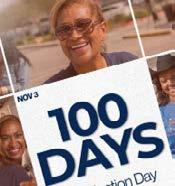
Dr. Letitia Plummer – Harris County Judge - 100 Days
Dr. Letitia Plummer - Campaign Office Kickoff
Mark, Hina, Francis, Linda & Carl
Francis Page, Jr & Carl Davis
Photos By Linda Toyota & Mark McDonald, Jr.
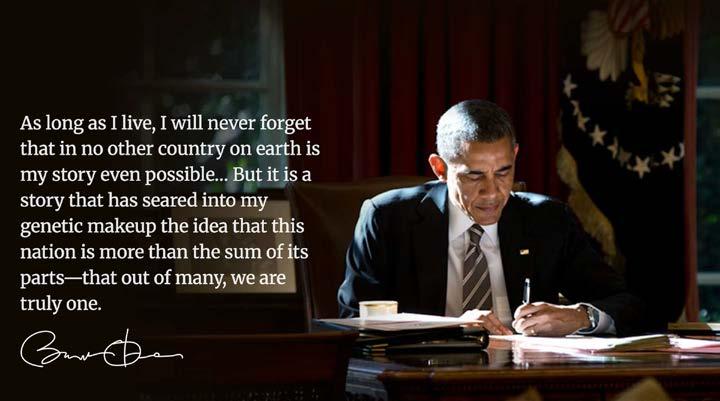
“Ask the Archivist” Opens a New Door to Obama-Era History
Obama Foundation and National Archives partnership gives visitors direct access to the people preserving a digitally born presidency
By Francis Page Jr. for www.StyleMagazine.com
History is usually introduced with a velvet rope, a glass display case and a respectful reminder not to touch anything. At Chicago’s newly opened Obama Presidential Center, however, history is being invited to pull up a chair and answer questions.
The Obama Foundation and the National Archives and Records Administration have launched “Ask the Archivist,” a public-access program that places a National Archives archivist on-site at the Obama Presidential Center Branch of the Chicago Public Library. Every Thursday from July 23 through October 8, 2026, visitors may stop by between 10 a.m. and 6 p.m. Central Time to learn how presidential records are preserved, researched and made available to the public.
That may sound like a niche opportunity reserved for scholars wearing elbow patches. It is not. The program welcomes curious visitors, students, teachers, journalists, family historians and everyday citizens who want to better understand how the decisions of an administration become part of the nation’s permanent record.
“The National Archives have been a tremendous partner to us as we work to illuminate the work of the Obama Administration at the Obama Presidential Center,” said Obama Foundation CEO Valerie Jarrett. She added that “Ask the Archivist” represents another way to make President Barack Obama’s work “accessible and transparent to the public.”
That word—accessible—is especially important. The Barack Obama Presidential Library is the nation’s first fully digital presidential library. An estimated 95 percent of the administration’s records were created digitally, including emails, photographs, videos, documents, social-media posts and other electronic files. NARA also received millions of pages of paper records that must be preserved, reviewed and digitized before broader public release.
Dr. Kenvi Phillips, director of the Barack Obama Presidential Library, said the partnership allows Center visitors to do more than admire artifacts. They can also speak directly with archivists about the digital holdings and learn how to search for materials connected to the Obama years.
That is a meaningful upgrade from simply reading a museum label. Archivists are the patient detectives of democracy. They organize enormous collections, protect fragile materials, review records for public access and help researchers locate the historical needle inside a digital haystack.
The partnership also reflects the unusual structure of the Obama legacy institutions. The Obama Foundation operates the privately funded Presidential Center and Museum, while NARA retains custody of the official presidential records and manages the digital Barack Obama Presidential Library. NARA-owned artifacts and records may be loaned to the Center for public exhibition, connecting the physical museum experience with the federally maintained archive.
For Houston-area educators, students, civic organizations and journalists, the significance reaches well beyond Chica-
go. Released Obama Administration records can be explored online, making the collection a national classroom available from a school library, newsroom or living-room laptop. The archive offers opportunities to study policy, leadership, communications, civil rights, public service and the workings of American democracy.
“Ask the Archivist” reminds us that preserving history is not about locking the past away. It is about giving people the tools to examine it, question it and carry its lessons forward.
Visit Obama.org for information about the Obama Foundation and Presidential Center. Explore released presidential records and digital resources at ObamaLibrary.gov. Branch details, hours and directions are available through the Chicago Public Library. www.StyleMagazine.com
On National Lasagna Day, Houston does not have to choose between an Italian classic and Southern comfort. Mikki’s Soul Food Cafe has already settled that delicious debate with its scratch-made ‘Houston Style’ beef lasagna—a generous, cheese-pulled, sauce-rich favorite served every Tuesday and Thursday. National Lasagna Day arrives Wednesday, July 29, giving Houstonians a timely excuse to loosen a belt notch and celebrate one of America’s most beloved layered dishes. At Mikki’s, however, lasagna is more than a calendar-day craving. It is a family inheritance, a weekly ritual and another flavorful chapter in a Houston business built by the late Jeanette Williams and now carried forward by her children, Jeanelle Williams and Craig Joseph Jr.
About 26 years ago, Jeanette transformed a home-catering venture into Mikki’s Soul Food Restaurant and Catering on West Bellfort. Her cooking, entrepreneurial courage and welcoming spirit helped establish the restaurant as a southwest Houston landmark. Today, the company describes Craig Jr. and Jeanelle as its “new legacy owners”—a fitting title for siblings charged with protecting treasured recipes while preparing the brand for another generation.
That balance is the secret ingredient in Mikki’s continued appeal. The menu does not chase every passing food trend. It knows what it is: soulful, hearty, familiar and proudly Houston.
The restaurant’s lasagna layers seasoned ground beef, rich tomato sauce and melted cheeses into a Southern-style interpretation of the classic. It is listed among Mikki’s Tuesday-and-Thursday specialties and
MIKKI’S NEXT GENERATION SERVES THE SAME DELICIOUS RECIPES—AND LASAGNA, “HOUSTON STYLE”
By Reginald Dominique for www.StyleMagazine.com
is served with a side—because in Houston, even lasagna should not have to dine alone.
Call it Italian architecture with a Texas foundation. The pasta provides the structure, the meat sauce brings the muscle, and the cheese holds the family meeting together.
Yet what makes the dish ‘Houston Style’ is not simply an extra scoop or a heavier hand. It is the cultural confidence to take a familiar recipe and serve it through the lens of a city where culinary traditions
of purchasing power when the food delivers.
The next-generation story is also unfolding geographically. In addition to its longtime southwest Houston restaurant and Pearland location, Mikki’s now serves the historic Third Ward at 2712 Blodgett Street.
The family expanded into that storied soulfood address after This Is It Soul Food ended its run there in 2025, keeping a meaningful Houston dining space connected to Black family enterprise, hospitality and culinary tradition.
Three locations now give diners several ways to join the family table: 10500 W. Bellfort Avenue, Suite 100, in southwest Houston; 2712 Blodgett Street in Third Ward; and 9603 Broadway Street, Suite 108, in Pearland. Current posted hours are 11 a.m. to 8 p.m. Monday through Saturday and 11 a.m. to 7:30 p.m. Sunday, although holiday diners should confirm before visiting.
constantly meet, mingle and make something new.
Mikki’s broader menu follows the same philosophy. Oxtails, smothered chicken, turkey wings, fried catfish, collard greens, candied yams, baked macaroni and cheese, cornbread dressing and the signature Soul Food Bowl keep the serving line looking like Sunday dinner decided to open seven days a week.
Recent coverage of the Third Ward location described lunchtime crowds stretching toward the door—a strong reminder that nostalgia still has plenty
Still, legacy at Mikki’s is measured by more than locations or full dining rooms. According to the family, community care remains part of the business recipe, with Mikki’s supporting families, children and senior citizens in need throughout the year.
That service reflects an old-school understanding of neighborhood leadership: a successful restaurant should not merely feed customers; it should help nourish the community that keeps its doors open.
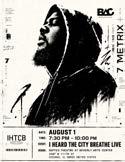
Chicago has never been a city that merely sits still and poses for the skyline. It hums beneath the “L,” testifies through church choirs, debates deepdish loyalties and keeps time with blues, gospel, jazz, house music, hip-hop and poetry. On Saturday, August 1, 2026, those many rhythms will gather under one roof when acclaimed Chicago artist 7 Metrix presents I Heard The City Breathe at the Beverly Arts Center.
The one-night multimedia experience begins at 7:30 p.m. inside the center’s Baffes Theatre, bringing together soulful hip-hop, live music, spoken word, storytelling, visual art and special guest collaborations. Tickets are $25 for nonmembers and $23 for Beverly Arts Center members. The performance is scheduled to continue through 10 p.m., giving the city plenty of time to inhale, exhale and tell the truth.
Yet this is not simply an album with stage lights added. I Heard The City Breathe treats Chicago itself as the evening’s principal character—weathered but unbowed, complicated yet creative, bruised in places and beautiful in many more. Through stories of identity, family, fatherhood, grief, faith, survival, healing and hope, 7 Metrix pushes beyond the stereotypes that too often reduce the South Side to a breaking-news backdrop.
That fuller portrait matters. Chicago’s Black communities have long used art to preserve memory, challenge injustice and imagine futures that public policy and popular media sometimes failed to see. The South Side Community Art Center, established during the Works Progress Administration era and dedicated
CAN YOU HEAR CHICAGO BREATHE?
ONE NIGHT. ONE CITY. ONE UNFORGETTABLE MULTIMEDIA EXPERIENCE CELEBRATING THE HEART AND SOUL OF CHICAGO
By Francis Page, Jr.
in 1941, became a historic home for African American artists. Decades later, the 1967 Wall of Respect honored Black leaders and helped inspire a national mural movement.
During the 1960s and 1970s, artists connected to the Black Arts Movement, AfriCOBRA, radical jazz and community institutions made Chicago’s South Side a laboratory of cultural possibility. They created their own spaces, questioned the political status quo and produced an artistic legacy that continues influencing national conversations about race, protest, identity and belonging.
It is fitting, then, that I Heard The City Breathe will be presented by an institution born in that same transformative period. Founded in 1967, the Beverly Arts Center has spent nearly six decades building
community through dance, music, visual art, theater, film, education and outreach. Its 40,000-square-foot facility includes a 400-seat theater, galleries, studios, classrooms and gathering spaces—a cultural toolbox large enough for a production that refuses to stay in one artistic lane.
The project also looks forward by making room for young creators. Developed with students from ISPro Academy and a network of Chicago musicians, producers, performers and engineers, the larger initiative incorporates music, film and gallery elements. That intergenerational approach turns mentorship from a pleasant talking point into a working creative model. Young participants are not being asked merely to watch history; they are helping record it.
In a recent interview about the project,
7 Metrix described the work as a way of preserving “the breath of the city” and giving Black Chicago a voice through which it can see and speak to itself. The album’s emotional landscape moves through pain without becoming trapped there. Songs address trauma and instability, but they also make space for joy, humor, ambition, family, resilience and generational healing. Chicago gets to be human rather than headline-sized. For Houston audiences, that approach should feel familiar. Houston and Chicago are distinct cities, but both have neighborhoods whose creativity is often overshadowed by outsiders’ assumptions. Both know culture is carried not only by famous institutions, but also by barbershops, sanctuaries, school auditoriums, family kitchens, independent media and artists willing to document what official histories overlook.
I Heard The City Breathe arrives as both celebration and corrective: one city telling its own story in its own voice, with its own rhythm section. Longtime Chicagoans may recognize pieces of home. Visitors may discover a city more layered than the postcards and news alerts suggest. Everyone is invited to listen closely.
The performance takes place Saturday, August 1, from 7:30 to 10 p.m. at the Beverly Arts Center, 2407 W. 111th Street, Chicago, Illinois 60655. Purchase $25 tickets directly through the Beverly Arts Center ticketing portal. This is a one-night-only experience, and Chicago—never known for repeating itself exactly—plans to make every breath count.