Every year, we remember Paul Revere’s ride. As we should.
We should also reckon with Paul Revere’s picture.
His engraving of the Boston Massacre helped light the fire for revolution. It showed British soldiers firing into a crowd. Men fell dead in the street.
Yet the first man killed that night is hidden in plain sight.
His name was Crispus Attucks. He was a sailor of African and Native ancestry. John Adams later described the crowd as sailors, Irishmen, “negroes and mulattoes.” But Revere’s image did not show Attucks as who he was. It turned a multiracial, working-class crowd into a whiter and better-dressed one.
That was bad art. It was a lie with a long life.
It taught generations to picture the Revolution as a fight led and suffered by wealthy white men with portraits, property, and papers.
That was never the truth.
Prince Estabrook was enslaved in Lexington. On April 19, 1775, he stood with his neighbors as British troops arrived. He was shot before Congress declared independence. Before Jefferson wrote that all men are created equal.
Salem Poor bought his freedom and fought at Bunker Hill. Fourteen officers petitioned to honor his courage. Peter Salem fought there too. James Armistead, enslaved in Virginia, spied for Lafayette. His work helped trap Cornwallis at Yorktown.
The First Rhode Island Regiment, filled with Black, Native, and formerly enslaved men, held the line near Newport.
Women were there, too. Elizabeth Freeman, known as Mum Bett, heard the Revolution’s words and used them in court. She sued for her freedom and won. Deborah Sampson was poor
COMMENTARY IT IS TIME TO REDRAW THE REVOLUTION, AGAIN
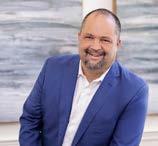
By Ben Jealous, National Political Commentator
and indentured as a child. She dressed as a man and served in the Continental Army. Margaret Corbin took over a cannon after her husband was killed.
That story is personal in my family. My adopted grandmother, Dr. Margaret Barnes, was an osteopath with Revolutionary roots. As a girl in the 1910s and 1920s, her father dressed her as a soldier to march in New England Fourth of July parades.
When people objected, he told them not to worry. In 1776, some fathers knew their daughters had gone off to fight dressed the same way.
He was right. History made room for daughters in uniform. Memory pushed them back out.
I still have the bow she used to teach me archery. In our family, women did not just remember courage. They passed it down.
Poor white men carried the war,
too. Joseph Plumb Martin was a teenage soldier. He froze, starved, marched, and later wrote the Revolution from below. Ebenezer Mackintosh was a Boston shoemaker and street organizer. Before gentlemen took seats in Congress, men like him made resistance impossible to ignore.
The Revolution was not made by one class. It was sailors, servants, farmers, shoemakers, soldiers, spies, mothers, fugitives, and the enslaved.
On my father’s side, nine of my ancestors fought the British in Massachusetts. One was a sixteen-year-old fifer at Lexington. They knew Black patriots were there from the first morning.
On my mother’s side, we descend from Richard Bland, Jefferson’s cousin and mentor. Jefferson wrote that all men are created equal. But the same racist hand that scrubbed Attucks from the picture shrank “all men” to white men.
Frederick Douglass scraped that veneer away. In 1852, he asked what the Fourth meant to the slave. In 1869, he called for a “composite nation” — one people made of all peoples. Douglass was not inventing a new America. He was restoring the Revolution to itself.
Who we picture fighting for freedom shapes who we believe deserves it.
Paint Black patriots, women patriots, and poor white patriots out of 1776, and you shrink the nation’s image of itself.
Today’s whitewashing should alarm us.
In 2025, under Defense Secretary Pete Hegseth, the Pentagon’s anti-DEI purge swept through military websites. Pages on Jackie Robinson, the Tuskegee Airmen, and Native code talkers were removed, then some were restored after public outcry. The system even flagged the Enola Gay bomber because it contained the word “gay.”
That was not strength. It was cowardice with a search function.
My grandfather’s first cousin, Howard Lee Baugh, was a Tuskegee Airman. He flew more than 130 combat missions against the Nazis. There is a word for men like him: hero.
This Fourth of July, let’s remember Revere’s ride. But let’s redraw Revere’s picture.
Put Attucks back in the center. Put Estabrook on Lexington Green. Put Salem Poor at Bunker Hill. Put Mum Bett in the courthouse. Put Joseph Plumb Martin barefoot in the snow. Put my adopted grandmother in the parade, dressed as the soldier memory tried to deny.
Then look again. That is America.
Ben Jealous is a professor of practice at the University of Pennsylvania and former president and CEO of the NAACP.
In fast-growing Fort Bend County, where nearly one million residents now look to local government for roads, drainage, public safety, justice, and steady leadership, the latest courthouse controversy is more than a political dust-up. It is a test of process, public trust, and the simple democratic principle that power must rest on clear legal authority.
Fort Bend County Attorney Bridgette Smith-Lawson has taken the firm position that Daniel Wong’s temporary authority to serve as interim Fort Bend County Judge has ended following the dismissal of the civil removal lawsuit that originally led to his appointment. According to public reporting, Smith-Lawson’s office argues that Wong’s appointment was temporary, tied to the pending litigation, and could not continue after a June 17, 2026, Order of Nonsuit disposed of the case.
“The temporary appointment of former interim Fort Bend County Judge Wong has concluded,” Smith-Lawson said, according to the statement circulated to county officials and reported locally. Her legal guidance maintains that, with the case concluded, Wong cannot continue presiding over Commissioners Court unless he secures and presents a new, active court order.
That position has placed Fort Bend County squarely in uncharted territory. Wong, a former Sugar Land City Council member and the Republican nominee for Fort Bend County Judge in the Tuesday, November 3, 2026, general elec-
FORT BEND COUNTY ATTORNEY SMITH-LAWSON SAYS DANIEL WONG’S INTERIM AUTHORITY HAS ENDED, SPARKING LEGAL SHOWDOWN
By Burt Levine, Political Editor for www.StyleMagazine.com
tion, was appointed in April after then-County Judge KP George was suspended. Visiting Judge Jeth Jones of Galveston made the temporary appointment under Texas Local Government Code provisions that allow a district judge to suspend a county officer pending trial and appoint someone to perform the duties of the office.
But the key phrase is “pending trial.” Smith-Lawson’s legal reading is that once the underlying case was nonsuited, the legal runway for the temporary appointment ended. In plain English: if the case that created the temporary seat is gone, the temporary seat may be gone too. Wong and his attorney disagree. Public reports
say Wong’s legal team argues that the appointment remains valid and that he may continue under a holdover theory until a successor is qualified. Wong has also indicated he will allow the dispute to be resolved through the courts rather than step aside voluntarily.
That means the next decisive word may again come from the courthouse. The most likely judge to clarify whether Wong’s appointment remains valid would-be Visiting Judge Jeth Jones in the 400th District Court, unless a new lawsuit, mandamus action, or appeal places the matter before another court.
Smith-Lawson, now serving her
second term as Fort Bend County Attorney, brings her own history to this moment. Her official county biography notes her prior work as managing attorney for the Texas Department of Family and Protective Services Office of General Counsel, overseeing legal work across Southeast Texas. Her campaign biography also identifies her 2020 election as making her the first Black woman elected county attorney in Texas. Her office’s position is that the four elected commissioners — Vincent Morales, Grady Prestage, Andy Meyers, and Dexter McCoy — remain lawfully seated and can constitute a legal quorum for county business. Commissioner Grady Prestage, first elected in 1990, has been one of Fort Bend’s longest-serving public officials during the county’s transformation from rural-suburban growth corridor to one of America’s most watched suburban power centers.
The stakes are not small. Fort Bend County’s population was estimated at 975,191 as of July 1, 2025, according to the U.S. Census Bureau.
What makes this showdown especially sensitive is the looming election. Fort Bend County’s official elections page confirms the next general election will be held Tuesday, November 3, 2026.
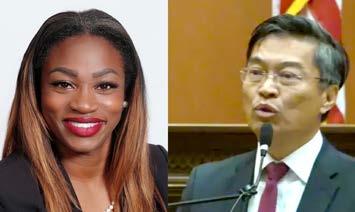
Bridgette Smith-Lawson Daniel Wong
In a spirited, straight-from-the-heart conversation hosted by Houston Community Media, Texas State Representative Jolanda “Jo” Jones of House District 147 delivered a message that was part warning bell, part civics lesson, and part grandmotherly truth serum: technology may be moving fast, but our children still need the old-fashioned power of thinking for themselves.
The Tuesday, June 22, 2026, during a Zoom interview, part of the “Who Cares About Our Youth?” series focused on the impact of artificial intelligence and social media on young people across Houston and Texas. Rep. Jones, a former Houston City Council member, former Houston ISD trustee, attorney, author, athlete, and longtime advocate for underserved communities, did not tiptoe into the subject. She marched in wearing track shoes and carrying receipts. The Texas House identifies Jones as the representative for District 147, with a district office on Almeda Road in Houston. Jones’ concern is simple but serious: students are gaining access to powerful tools before many have mastered the foundational skills those tools can quietly replace. In the transcript, Jones repeatedly emphasized that young people must first learn how to write, reason, problem-solve, spell, punctuate, question, and struggle through hard assignments before turning to AI for help. “There is a benefit to struggle,” she said, warning that AI too often removes the very friction that builds intellectual muscle.
That concern lands in a national moment when schools are trying to decide whether AI is a tutor, a shortcut, a threat, or all three wearing one
WHO CARES ABOUT OUR YOUTH? REP. JOLANDA JONES SOUNDS THE ALARM ON AI, SOCIAL MEDIA, AND THE FUTURE OF TEXAS STUDENTS
By Lisa Valadez, for www.StyleMagazine.com
very polished digital suit. The U.S. Department of Education has warned that AI use in schools must be safe, effective, privacy-protective, nondiscriminatory, explainable, and subject to human recourse when problems arise. For communities of color, Jones raised an additional concern: bias. If AI tools, detection
can read beyond headlines, question misinformation, understand history, and make decisions without outsourcing judgment to an algorithm. In Jones’ view, handwritten assignments, strong teachers, books, grammar, discipline, and parental guidance are not relics. They are civic infrastructure.
On social media, Jones was equally direct. She described a world where filters, green screens, staged lifestyles, and digital applause can distort a young person’s sense of reality. That worry is backed by public health data. The U.S. Surgeon General’s advisory notes that up to 95% of youth ages 13 to 17 report using a social media platform, with about onethird saying they use social media “almost constantly.” The same advisory says the nation does not yet have enough evidence to conclude that social media is sufficiently safe for children and adolescents.
For Houston families, Jones’ message was not anti-technology as much as pro-child. She acknowledged AI may help with simple tasks but insisted that the first draft of a thought should come from the student’s own mind. Her formula was clear: human brain first, machine second.
systems, or school discipline policies are unevenly designed or enforced, Black and Brown students could be unfairly labeled, punished, or academically tracked.
Jones also connected AI to a deeper democratic issue: the ability of young people to become informed citizens. A democracy needs voters who
The most powerful moment came when Jones said she is considering a town hall on the dangers of AI for children and grandchildren. Then came the line every democracy should print on a classroom wall: “The world is run by those who show up.”
Houston Style Magazine agrees. Our youth deserve innovation, yes—but also wisdom, protection, literacy, mental health support, and adults brave enough to show up before the algorithm does.
State Representative Jolanda “Jo” Jones - House District 147
In a city that knows how to build big, dream boldly, and occasionally name a freeway before finishing the exit ramp, Harris County is preparing to create something far more enduring than concrete: a sacred civic landscape of truth, healing, history, art, and hope.
On Saturday, June 20, Commissioner Rodney Ellis, elected officials, faith leaders, scholars, designers, and community partners gathered to reveal the concept design for Harris County’s Remembrance Park — a first-of-its-kind multi-sensory destination along Buffalo Bayou dedicated to understanding the legacy of enslavement, oppression, racial violence, and the freedom movements that continue to shape America.
Stretching across three downtown blocks from the historic 1910 Harris County Courthouse toward Buffalo Bayou, Remembrance Park will transform land once shaped by government power and painful memory into a living greenspace for reflection, education, gathering, public art, and civic renewal. In other words, Houston is not simply planting trees. Houston is planting truth.
“Remembrance Park is about remembering honestly and carrying that memory forward,” said Commissioner Ellis. “This project will transform a place shaped by history into an inclusive greenspace for reflection, learning and gathering. By honoring the lives lost to racial violence and those who fought for freedom and justice, Remembrance Park will help future generations understand the truth of our past and the unfinished work that still shapes our future.”
Among the park’s most significant features
Commissioner Rodney Ellis' Remembrance Park Unveiling – New Legacy Landscape Turns Memory Into Movement
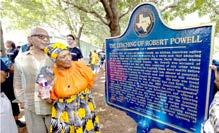
are four historical markers honoring Harris County men who lost their lives to racial violence between 1877 and 1950 : John Walton, Bert Smith, John White and Robert Powell
By Francis Page Jr. for www.StyleMagazine.com
Inspired by the Equal Justice Initiative’s Community Remembrance Project, the markers ensure these lives and stories remain part of Houston’s civic memory and affirm that remembrance and truth-telling are essential to understanding shared history. Norma Bradley, pictured in orange, is the last living descendant of Robert Powell, one of the Harris County men honored through the Remembrance Park historical marker project.
Norma Bradley, pictured in orange, is the last living descendant of Robert Powell, one of the Harris County men honored through the Remembrance Park historical marker project. (Photo By Desi
Ruth J. Simmons, Rice University
President’s Distinguished Fellow and one of America’s most respected higher education leaders; Walter Hood, founder and creative director of Hood Design Studio; Michael P. Murphy, founder of AMMA and co-designer of the National Memorial for Peace and Justice; Commissioner Ellis; and Congressman Al Green
Together, their presence signaled that Remembrance Park is not merely a public works project. It is a public conscience project.
to look back at history, but a landscape that asks us to consider how freedom is continually pursued, challenged and reimagined,” said Walter Hood. That design philosophy aligns with the Downtown Houston Public Realm Action Plan by supporting a more walkable, shaded, connected, culturally vibrant downtown. But its deeper achievement may be emotional infrastructure — the kind that lets a city tell the truth without losing hope.
Michael P. Murphy’s work has long argued that buildings and public spaces influence how people think, heal, connect, and live. His latest book, Our World in Ten Buildings, reinforces that same idea: design is never neutral. In Houston, that belief now takes root along Buffalo Bayou, where water, skyline, memory, and justice meet.
Inspired in part by the Equal Justice Initiative’s Community Remembrance Project, the markers ensure that these names are not footnotes, whispers, or shadows. They are restored to public memory — where truth belongs.
The event’s moral center was strengthened by a powerful circle of voices, including Bishop James Dixon, president of the Houston NAACP and pastor of The Community of Faith Church; Dr.
Designed to blend art, history, ecology, sculpture, shade, native plantings, water, light, and gathering space, the park will connect downtown Houston to the Buffalo Bayou ecosystem while offering what its designers call places for learning, restoration, and justice. Among its most evocative features are “Hush Harbors” — protected spaces inspired by the secret worship and fellowship places where enslaved Africans and African Americans gathered in resistance, faith, prayer, and community.
“Remembrance Park is not simply a place
For Dr. Ruth Simmons, whose life’s work has elevated education, history, and institutional accountability, Remembrance Park reflects the power of honest learning. For Bishop Dixon and the Houston NAACP, it affirms that remembrance is not passive — it is civic responsibility with a moral backbone. Remembrance Park will not ask visitors to choose between grief and beauty. It will hold both. It will give Houston a place to pause, remember, teach, gather, breathe, and continue the unfinished work of freedom.
In a city forever under construction, this may be one of Houston’s most important builds yet — not simply a park, but a promise.
Farias)
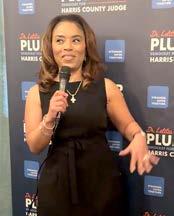
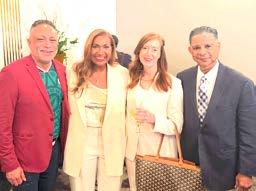
n Tuesday, June 30, 2026, business, political, civic, and community leaders gathered in a spirit of celebration, support, and purpose for Dr. Letitia Plummer’s Birthday Fundraiser—a meaningful evening honoring both her birthday and her campaign for Harris County Judge.
Hosted by Cindy Clifford and Lucky Chopra, the gathering reflected the growing momentum behind Dr. Plummer’s vision of servant leadership, community investment, and people-first progress. The evening was graciously kicked off by Mar-
By Francis Page, Jr.
tye Kendrick, setting a warm and inspiring tone for a room filled with encouragement, conversation, and commitment. It was more than a birthday celebration. It was a reminder that leadership is built through relationships, trust, service, and showing up when it matters. Supporters from across Houston and Harris County came together to celebrate Dr. Plummer not only as a candidate, but as a public servant, businesswoman, mother, and community advocate whose journey continues to inspire.
Houston Style Magazine extends sincere appreciation to the hosts, attendees, artists, supporters, and friends who helped make the evening special.
Happy Birthday, Dr. Letitia Plummer. May this new year bring strength, wisdom, favor, and continued purpose on the road ahead.
www.DrLletitiaPlummer.com
Dr. Leticia Plummer – Future Harris County Judge
Dr. Leticia Plummer & Commissioner Rodney Ellis
Martye Kendrick - President NRG Stadium
Cindy Clifford, Leticia Plummer & Hanna Hall
Photos By Francis Page, Jr.
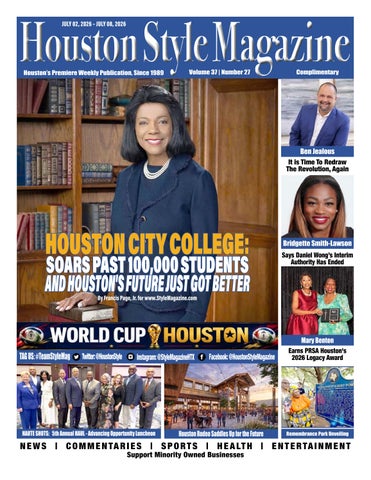
In a city that measures ambition by skyline cranes, championship dreams, and the speed of traffic on the Katy Freeway, Houston City College has delivered a milestone worthy of a standing ovation: HCC has surpassed 100,000 enrolled students — its largest enrollment level since 2019.
That is not just a number. That is a citywide vote of confidence.
From working parents returning to school, to high school students earning dual credit, to first-generation scholars, future nurses, coders, welders, entrepreneurs, educators, and dreamers who refuse to sit still, Houston City College has once again proven why it remains one of the most important engines of opportunity in Greater Houston.
As a proud media partner, Houston Style Magazine joins the celebration with heartfelt congratulations to the HCC Board of Trustees, Chancellor Margaret Ford Fisher, Ed.D., faculty, staff, students, partners, alumni, and community supporters who helped make this historic achievement possible. The milestone reflects more than institutional growth. It reflects the daily, often unseen work of advisors, instructors, enrollment teams, financial aid counselors, administrators, and campus leaders who meet students where they are and help move them toward where they are called to be.
Houston City College, formerly Houston Community College, entered a new era in 2025 with a refreshed name and brand identity designed to reflect the institution’s expanding role in a fast-changing city. Still, the heart of HCC remains beautifully familiar: access, affordability, workforce readiness, academic ex-
Houston City College Soars Past 100,000 Students – and Houston's Future Just Got Better
cellence, and a deep belief that talent is everywhere — even when opportunity has not always been evenly distributed.
And Houston has responded.
With more than 300 degrees, certificates, and credential offerings, HCC continues to serve as a powerful bridge between aspiration and achievement.
By Francis Page Jr. for www.StyleMagazine.com
Whether a student wants to transfer to a university, earn an associate degree, complete a certificate, start a new career, or upgrade skills for the modern economy, HCC has built pathways that are practical, flexible, and deeply connected to real-world opportunity.
The college’s expanding baccalaureate degree offerings further underscore its forward momentum. Programs such as Artificial Intelligence & Robotics are preparing students for high-demand fields that are reshaping industries from cybersecurity and manufacturing to healthcare, data analytics, automation, and intelligent business systems. In plain Houston terms: HCC is not just keeping up with the future — it is help-
ing train the people who will build it.
The timing could not be more important.
Houston’s economy is growing, diversifying, and demanding a workforce ready for the next generation of jobs.
HCC is answering that call with bold partnerships and serious investment.
In June 2026, the college announced Gulf Coast TradeUp Careers, a regional workforce transformation initiative supported by a $17 million investment from Bloomberg Philanthropies. The initiative is designed to expand skilled trades, registered apprenticeships, employer engagement, and student access across Greater Houston and the Gulf Coast.
That investment — the largest ever received by HCC, according to the college — aims to serve more than 1,350 career and technical education students over three years. It also strengthens Houston’s pipeline into high-wage, family-sustaining careers in sectors such as construction, energy, manufacturing, transportation, and infrastructure. In other words, while some institutions talk about workforce development, HCC is putting
hard hats, laptops, lab coats, and opportunity maps into students’ hands.
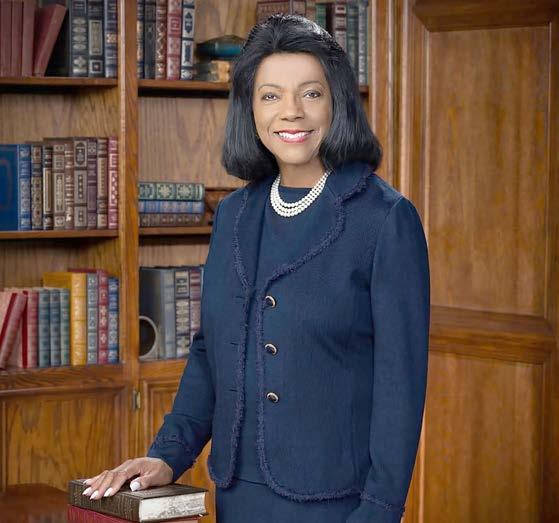
At the center of this momentum is Chancellor Margaret Ford Fisher, whose decades-long HCC journey reflects the power of steady leadership and student-centered vision. Since joining HCC in 1985, she has helped expand access to education across campuses, online platforms, and workforce pathways. Today, as HCC’s ninth chancellor, she leads a seven-college organization serving students across 22 locations in Greater Houston — and now, with enrollment again crossing 100,000, the mission feels even more urgent and inspiring.
This achievement belongs to every student who clicked “apply,” every parent who prayed over tuition, every professor who stayed after class, every staff member who answered one more question, and every trustee and community partner who believed Houston deserves a college system as big-hearted and hardworking as the city itself.
Houston City College has crossed 100,000 students. But the real story is not simply how many students walked through the door. The real story is how many futures are now walking forward.
Congratulations, HCC. Houston sees you. Houston salutes you. And Houston Style Magazine proudly celebrates this milestone with you.
For more information on programs, enrollment, financial aid, campus locations, and degree options, visit the official Houston City College website: www.HCCS.edu
Houston City College Chancellor - Dr. Margaret Ford Fisher
TTX DEMOCRATIC Convention Ends with Focus On – Affordability and Civic Engagement
he 2026 Texas Democratic Convention concluded after three days of speeches, policy discussions, grassroots organizing, and community events that brought together thousands of delegates and supporters from across the state.
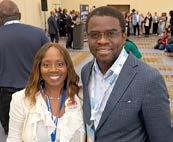
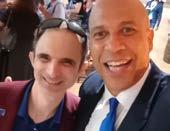
Held June 25–27, the convention featured appearances by Dolores Huerta, Bernie Sanders, Cory Booker, Al Green, Rodney Ellis, and Borris Miles, alongside statewide candidates and local leaders.
Throughout the weekend, speakers addressed issues including the cost of living, healthcare, education, economic opportunity, and civic participation. Workshops,
By Francis Page, Jr.
caucus meetings, and volunteer training sessions complemented the keynote addresses, giving attendees opportunities to discuss policy priorities and campaign organization ahead of the November election.
The convention also highlighted Texas culture with performances by Lucky Joe and Bobby Pulido, while networking receptions, community forums, and leadership events encouraged collaboration among delegates from every region of the state.
As attendees departed Corpus Christi, many emphasized that political conventions serve not only as campaign milestones but also as forums for ex -
changing ideas, strengthening community connections, and encouraging civic participation. Regardless of political affiliation, the gathering reflected the continuing role of state conventions in shaping public dialogue and preparing volunteers, candidates, and organizations for the months ahead.
Additional information about the convention, speakers, and programming is available through the official convention website:
Bernie Sanders – Keynote Speaker
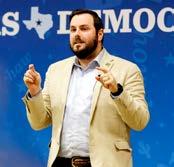
Kendall Scudder - Texas Democratic Party - Chair
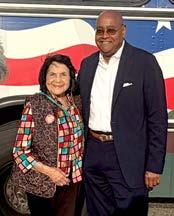
Delores Huerta & Rodney Ellis
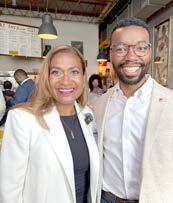
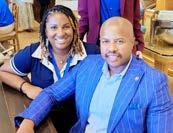
Dr. Leticia Plummer & Dexter McCoy
Photos By Texas Democratic Party
In a city that knows how to tell a story, communicate through crisis, celebrate culture, and keep moving when the cameras are rolling and the deadlines are unforgiving, few voices have carried the steady authority of Mary Benton
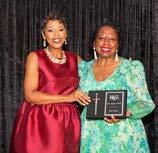
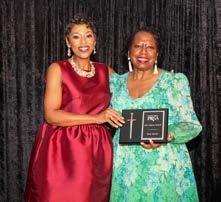
At the 2026 PRSA Houston Excalibur Awards, hosted by the Public Relations Society of America Houston Chapter at the scenic Houston Botanic Garden, Benton was honored with one of the evening’s most meaningful recognitions: the Legacy Award. The honor spotlighted her distinguished career, trusted leadership, and lasting contribution to public service communications, media relations, and civic storytelling in America’s fourth-largest city.
This year’s dinner brought together Houston’s leading public relations professionals, agency innovators, corporate communicators, nonprofit storytellers, public affairs leaders, media partners, and rising stars. The room was filled with people who understand that communication is not just about press releases and perfect soundbites. It is about trust, timing, truth, and knowing exactly when to put the right message in the right hands.
Mary Benton has done that for years.
Currently serving as Chief of Communications and Senior Advisor to the Mayor for the City of Houston, Benton stands at the intersection of public policy, media strategy, civic leadership, and community confidence. That is not a small intersection. In Houston, it is more like a
Mary Benton's Bold Voice Earns PRSA Houston's 2026 Legacy Award at "The Night Of Bold Voices"
five-lane freeway during rush hour, with a news helicopter overhead and everyone expecting answers by 5 p.m.
And Benton handles it with the calm, clarity, and professionalism of someone who has lived the work from every angle.
By Francis Page Jr. for www.StyleMagazine.com
Before stepping into City Hall leadership, Benton spent more than two decades as a television journalist, covering hurricanes, government, politics, public policy, neighborhoods, and the everyday triumphs and challenges of Houston life. That newsroom experience gave her something no title alone can provide: instinct. She knows what reporters need, what the public deserves, and what leaders must communicate when the stakes are high.
That is why PRSA Houston’s Legacy Award feels especially fitting. A legacy is not built in one news cycle. It is earned through years of showing up, getting it right, staying composed, and understanding that words matter most when
people are listening for direction. The 2026 Excalibur Awards celebrated excellence across public relations, marketing communications, digital strategy, media relations, nonprofit communications, public affairs, community engagement, and corporate storytelling.
PRSA Houston President Angel -
ique Myers-Evans, APR, captured the spirit of the evening with a message to honorees: “Your work spoke with purpose, moved audiences, and showed what excellence sounds like when bold voices lead the way.”
For Benton, that phrase lands with special power. Her career has been a masterclass in purposeful communication. Whether helping guide the city’s message during major civic announcements, responding to fast-moving media inquiries, or helping residents better understand city priorities, Benton has helped make public information more accessible, more credible, and
more human.
The evening also featured Jennifer Reyna of KHOU 11, whose presence added familiar Houston sparkle and broadcast charm to a celebration already rich with talent and pride. PRSA Houston also thanked its sponsors and the dedicated Excalibur Awards Committee, including Jourdan B. Scruggs, Ed.D., Event Chair; Kristoffer Smith, Scholarship Commitee Chair; Angelique Myers-Evans, APR PRSA President –; Still, Benton’s Legacy Award gave the night a special sense of history. Her recognition celebrates not only one accomplished professional, but also the essential role of women, journalists, public servants, and communications leaders who help shape how Houston sees itself.
For Houston Style Magazine readers, Mary Benton’s honor is a proud Houston moment. It reminds us that behind every major announcement, every civic milestone, and every carefully delivered message, there are professionals working with discipline, dignity, and purpose.
Mary Benton has been one of those professionals. And now, with PRSA Houston’s 2026 Legacy Award, her bold voice receives the applause it has long earned.
More information on PRSA-Houston: https://prsahouston.org/
Angelique Myers-Evans PRSA President – with Legacy Winner – Mary Benton
Judson Robinson - President
Alex Obregon - Comcast
Jacqueline Bostic McElroy - Prayor
Eric Goodie -
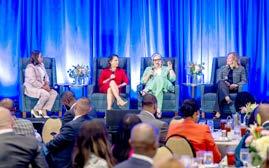
Teneshia Hudspeth – Moderator
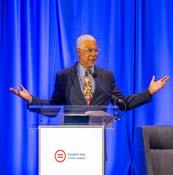
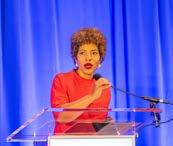
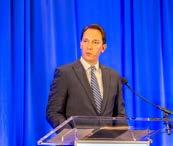
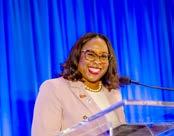
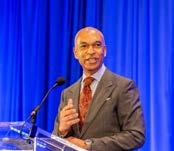
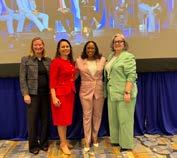
Ruth Lopez Turley, Melissa Hensley & Cathy Easter – Panelist H Teneshia Hudspeth – Moderator H Friday, June 26, 2026 H
Photos By Linda Toyota & Twice Media
Sound the alarm, cue the choir, and tell the culture to put on its Sunday-best sparkle: ESSENCE’s Black Women in Music is officially back. After last taking center stage in 2018, the beloved celebration returns during the 2026 ESSENCE Festival of Culture in New Orleans, bringing with it the kind of star power, sisterhood, and soul-shaking excellence that only ESSENCE can gather under one fabulous roof.
Hosted by Emmy Award-winning actor and producer Anthony Anderson, the private luncheon will honor four women whose fingerprints are not merely on the music industry — they are pressed into the blueprint: Brandy, Kandi Burruss, Missy Elliott, and Mona Scott-Young. Together, they represent the singer, the songwriter, the producer, the mogul, the visionary, and the woman behind the curtain making sure the curtain rises on time.
Launched in 2010, ESSENCE Black Women in Music became part of the brand’s larger celebration of Black women’s brilliance, standing proudly alongside signature platforms such as Black Women in Hollywood, Black Women in Business, and other cultural tributes that remind America of a simple truth: when Black women move, industries follow.
This year’s return to New Orleans feels especially fitting. The Crescent City is not just a destination; it is a drumbeat. It is jazz in the pavement, gospel in the balconies, second-line rhythm in the air, and ancestral memory dressed in festival col-
ESSENCE’S BLACK WOMEN IN MUSIC RETURNS TO NEW ORLEANS, HONORING BRANDY, KANDI BURRUSS, MISSY ELLIOTT & MONA SCOTT-YOUNG
By Francis Page, Jr. for www.StyleMagazine.com
ors. During ESSENCE Festival weekend, New Orleans becomes the cultural capital of Black joy — a place where business cards, church fans, designer heels, brass bands, and family reunions somehow all make sense in the same sentence.
At the heart of the celebration is Brandy, affectionately known as “The Vocal Bible.” For more than three decades, the Grammy Award-winning singer, actress, and producer has delivered harmonies so layered they deserve their own zip code. From her groundbreaking television presence to her unmistakable influence on modern R&B, Brandy’s artistry remains both classic and current. Her recent arena run with Monica on The Boy Is Mine Tour proved what longtime fans already knew: the voice still reigns, and the audience still rises.
Then there is Kandi Burruss, the quiet storm who became a full-fledged empire. As a member of Xscape and the Grammy-winning songwriter behind TLC’s “No Scrubs,” Burruss helped shape the soundtrack of a generation. But she did not stop at the studio door. She expanded into television, Broadway, entrepreneurship, restaurants,
production, and brand-building with the confidence of a woman who understands that ownership is the real encore.
Missy Elliott, already honored by ESSENCE in 2018, returns to the spotlight as one of music’s most fearless architects. Rapper, producer, songwriter, performer, visual futurist — Missy did not simply bend genres; she took them to the beauty shop, gave them a fresh cut, added rhinestones, and sent them back into the world walking differently. Her videos changed what music could look like. Her production changed what rhythm could feel like. Her influence still echoes across generations of artists who learned that weird, bold, brilliant, and Black could also be platinum.
And behind many culture-shifting moments stands Mona Scott-Young, the media mogul and Monami Entertainment powerhouse whose impact stretches across music, television, talent management, and entrepreneurship. From helping guide the careers of Missy Elliott, Busta Rhymes, Tyrese, and others, to building the Love & Hip Hop franchise into a reality television phenomenon,
Scott-Young has long understood the business of visibility. She helped turn backstage strategy into front-page power.
For Houston Style Magazine readers, this celebration lands close to home. Houston knows the power of Black women in music — from gospel sanctuaries and HBCU bands to R&B stages, spoken-word rooms, church choirs, and business boardrooms. ESSENCE’s tribute is not just about celebrity. It is about cultural labor, creative ownership, and the women who keep turning rhythm into revenue, storytelling into legacy, and visibility into victory.
For readers ready to experience the celebration in person, the 2026 ESSENCE Festival of Culture returns to New Orleans July 3–5, 2026, with evening concerts at the Caesars Superdome and daytime experiences at the convention center. Visit the official festival page here: ESSENCE Festival of Culture 2026.
Tickets for the evening concert series and festival experiences are available through official ticketing channels. Purchase tickets here: Buy ESSENCE Festival of Culture Tickets.
While the Black Women in Music luncheon itself may be private, the honorees and ESSENCE energy will be in full celebration mode during festival weekend — giving fans another reason to make New Orleans their July destination for music, culture, community, and Black excellence.
Houston hold on to your hats — the Houston Livestock Show and Rodeo is not just planning for the next show season. It is planning for the next century.
In a landmark announcement that blends Texas tradition with forward-looking vision, the Houston Livestock Show and Rodeo has unveiled plans for a new multimillion-dollar livestock and agricultural complex along Highway 288. The project represents the largest single facilities investment in the Rodeo’s more than 90-year history and one of the most significant private commitments to agriculture, youth education, and Western heritage in Texas.
For generations, the Rodeo has been more than boots, barbecue, buckles, and bigname concerts. At its heart, it has always been a scholarship engine, a classroom without walls, and a launching pad for young Texans who learn responsibility one early-morning feeding, one show ring, and one blue-ribbon dream at a time. This new complex makes that mission bigger, bolder, and better equipped for the future.
“For nearly a century, this organization has existed to support the students, exhibitors, and families who make this event possible,” said Chris Boleman, president and CEO of the Houston Livestock Show and Rodeo. He called the project the largest investment in Rodeo history and a profound commitment to education, agriculture, and the families who bring “their
HOUSTON RODEO SADDLES UP FOR THE FUTURE WITH TRANSFORMATIONAL NEW AGRICULTURAL COMPLEX
By Francis Page, Jr. for www.StyleMagazine.com
animals, their students and their dreams” to Houston.
That is not just a quote — that is a promise wearing cowboy boots.
The Rodeo will remain at Reliant Park, its longtime home for more than 65 years. The new agricultural complex is designed to complement, not replace, existing operations. During the annual Rodeo, the complex is expected to host all horse show competitions, some livestock shows, junior and open breeding shows, archery competitions, agricultural mechanics, commercial auctions, and educational contests, including 4-H and intercollegiate programming. Some livestock activities will continue at Reliant Center, preserving the familiar footprint while easing pressure on aging facilities.
Wesley Sinor, chairman of the board, noted that Reliant Arena has served the organization for more than two decades as a central hub
for horse and livestock operations. But with the facility reaching the end of its useful life, Rodeo leadership recognized the need to act boldly before the future came knocking with spurs on.
Designed with exhibitors and families in mind, the new complex will reduce travel distances and wait times during move-in and move-out, expand gathering spaces, and provide modern, climate-controlled facilities for livestock and equine events year-round. In true Houston fashion, it is practical, ambitious, and built to welcome a crowd.
The project also creates a dedicated year-round space for agricultural education, committee meetings, fundraisers, auctions, galas, youth programming, and partnerships with agricultural education organizations. That means the Rodeo’s mission will not hibernate after the last concert encore or final carnival ride. It will continue serving students, volunteers, families,
and community partners throughout the year.
Pat Mann Phillips, former chairman of the board, credited the Rodeo’s volunteers, sponsors, donors, and community partners for making the vision possible, calling it more than a facility — a legacy.
Mayor John Whitmire praised the project as a boost for Houston’s reputation as a premier destination for agriculture, education, and world-class events, while noting that the investment does not place a burden on taxpayers. Harris County Commissioner Rodney Ellis also celebrated the complex as a bold step that will expand access to life-changing opportunities for young people and families across the county.
With more than 36,000 volunteers and a centennial approaching in 2032, the Houston Livestock Show and Rodeo is doing what Houston does best: building big, dreaming bigger, and investing in people.
Construction is expected to span several years, with the goal of welcoming guests in time for the 2029 Houston Livestock Show and Rodeo. A groundbreaking ceremony is slated for late 2026, with more details expected this fall.
In a city where land tells family stories, Texas Southern University’s Earl Carl Institute for Legal & Social Policy is stepping forward with both legal muscle and hometown heart.
The Earl Carl Institute, housed at TSU’s Thurgood Marshall School of Law, has received a $300,000 grant from the Rockwell Fund to expand heirs’ property and estate planning services in Northeast Houston’s historic Kashmere Gardens community over the next two years. The award builds on a previous $300,000 Rockwell Fund grant received in 2025, creating a powerful two-year investment in housing stability, family legacy, and generational wealth preservation.
For many Houston families, especially Black families and low-to-moderate income homeowners, the home is more than an address. It is memory, sacrifice, Sunday dinner, storm recovery, and the first real rung on the ladder of wealth. But when property is inherited without a will, clear title, probate guidance, or family agreement, that cherished home can become legally vulnerable. Heirs’ property complications can prevent families from qualifying for tax exemptions, disaster assistance, home repair programs, or even the simple peace of knowing the family house will stay in the family.
Sarah Guidry, executive director of the Earl Carl Institute, said the work is urgent and deeply personal for communities that have too of-
TEXAS SOUTHERN’S EARL CARL INSTITUTE RECEIVES $300,000 ROCKWELL FUND GRANT TO PROTECT HOMES, HEIRS’ PROPERTY AND GENERATIONAL WEALTH IN NORTHEAST HOUSTON
By Francis Page, Jr. for www.StyleMagazine.com
ten been targeted, overlooked, or legally underserved.
“Heirs’ property challenges disproportionately affect Black families and low-to-moderate income households, limiting their ability to build and preserve generational wealth while increasing vulnerability to property loss,” Guidry said.
“Through this work, we aim to help families stabilize ownership, protect their homes, and preserve long-term wealth in Kashmere Gardens.”
That mission comes with practical, boots-on-the-ground support. The grant will fund a dedicated attorney who will meet weekly with Kashmere Gardens residents at a central community facility. That consistent legal presence is designed to make help easier to reach, less intimidating to access, and more responsive before small legal questions become family crises. In plain Houston terms: this is legal help coming to the neighborhood, not asking the neighborhood to fight through red tape alone.
The program will assist residents with title clearing probate alternatives, estate planning, foreclosure prevention, property tax exemptions, home repair eligibility, disaster relief access, and
family agreements that help keep inherited property from being lost to confusion, conflict, or predatory investors.
“Through this program, we will help families with inherited properties secure tax exemptions, home repairs, and disaster relief,” Guidry said. “We will also provide services to help prevent foreclosures, confirm family agreements to keep family property in the family, and prevent the loss of the family legacy to predatory investors who intentionally target Black family properties. We are grateful to the Rockwell Fund for its partnership in advancing this important effort.”
That gratitude reflects a larger civic truth: legal access is housing access. Estate
planning is economic development. Clear title is community protection. And in a neighborhood like Kashmere Gardens—rich in culture, resilience, and family roots—this kind of investment can help residents preserve what generations worked hard to build.
The Earl Carl Institute has long served as one of Houston’s most important justice-centered institutions, combining advocacy, research, education, and direct legal services for underserved communities. Its work allows law students, attorneys, and community partners to transform legal knowledge into neighborhood impact. Through initiatives such as heirs’ property support, estate planning workshops, foreclosure prevention, and property preservation services, the Institute continues TSU’s proud legacy of producing leaders who do not merely study justice—they practice it.