BacksightsForesights &
Semiannual newsletter on company projects, news, and events.
Spring/Summer 2026
Semiannual newsletter on company projects, news, and events.
Spring/Summer 2026
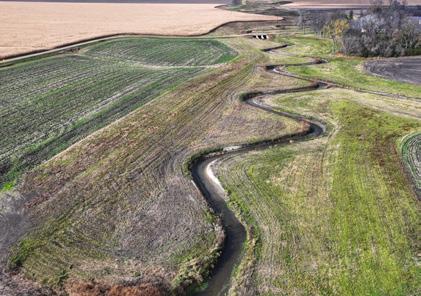
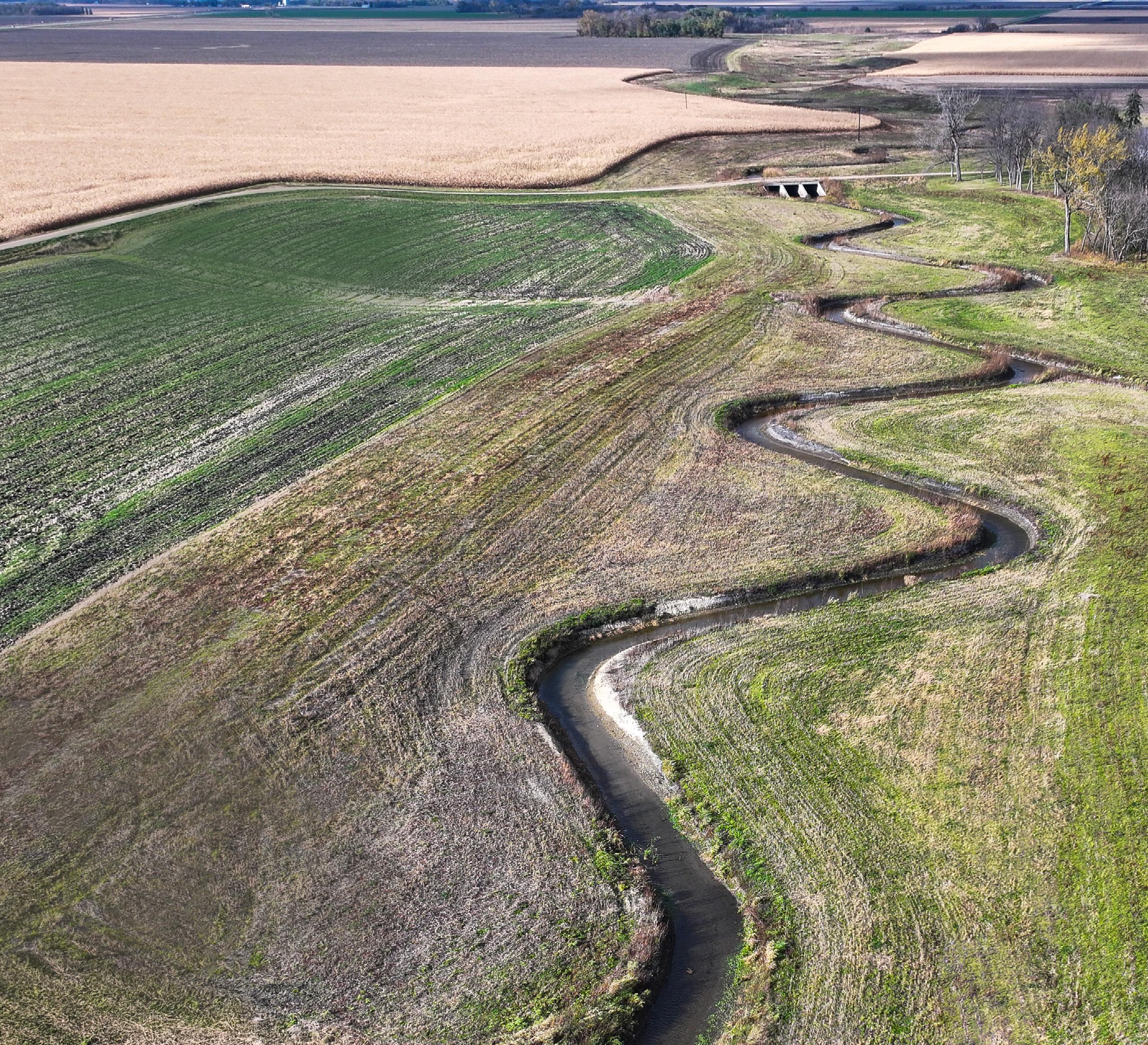
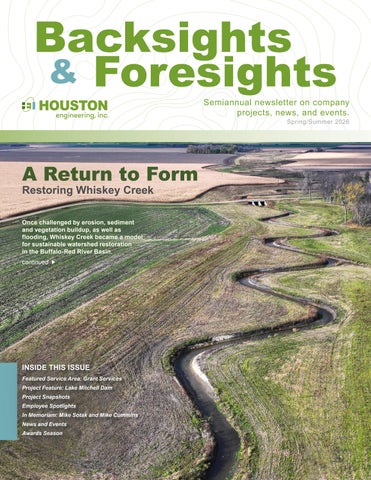
Once challenged by erosion, sediment and vegetation buildup, as well as flooding, Whiskey Creek became a model for sustainable watershed restoration in the Buffalo-Red River Basin.
continued
Featured Service Area: Grant Services
Project Feature: Lake Mitchell Dam
Project Snapshots
Employee Spotlights
In Memoriam: Mike Sotak and Mike Cummins
News and Events
Awards Season
Whiskey Creek may be just one tributary of the Red River, but its challenges reflected a broader story unfolding across the Buffalo-Red River Watershed. Years of agricultural impacts, channel erosion, and sediment buildup had degraded water quality and increased flood risk. Recognizing the need for a sustainable solution, Wilkin County, MN, and the Buffalo-Red River Watershed District (BRRWD) partnered with Houston Engineering, Inc. (HEI) to rethink how Whiskey Creek functioned on the landscape.
From the beginning, the Whiskey Creek project called for a solution that could do more than just fix a channel. It needed to balance agricultural needs, environmental health, and long-term sustainability.
Local landowners were clear about their priorities. Frequent flooding and poor drainage were cutting into productive farmland and causing damage year after year. At the same time, federal, state, and local agencies were focused on protecting fish and wildlife habitat and ensuring that any improvements would last well into the future.
Bringing those interests together wasn’t simple, but it was essential. Using stream restoration principles developed by renowned geomorphologist Dave Rosgen, HEI designed a solution that addressed everyone’s concerns. The resulting approach supports reliable agricultural drainage while also restoring habitat and improving the overall health of Whiskey Creek.
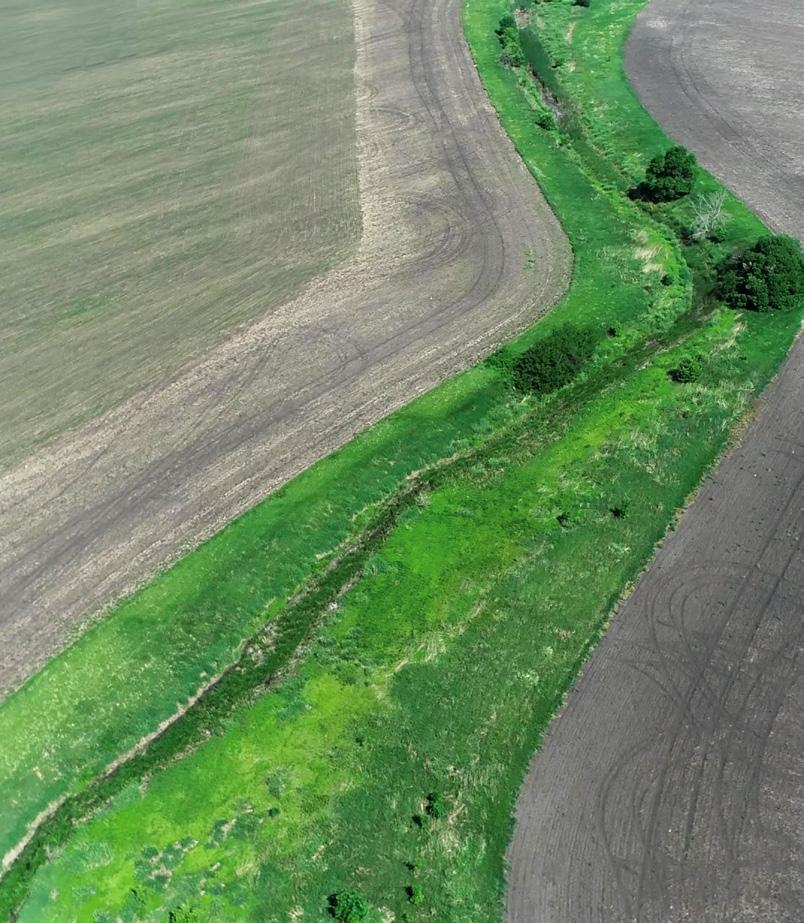
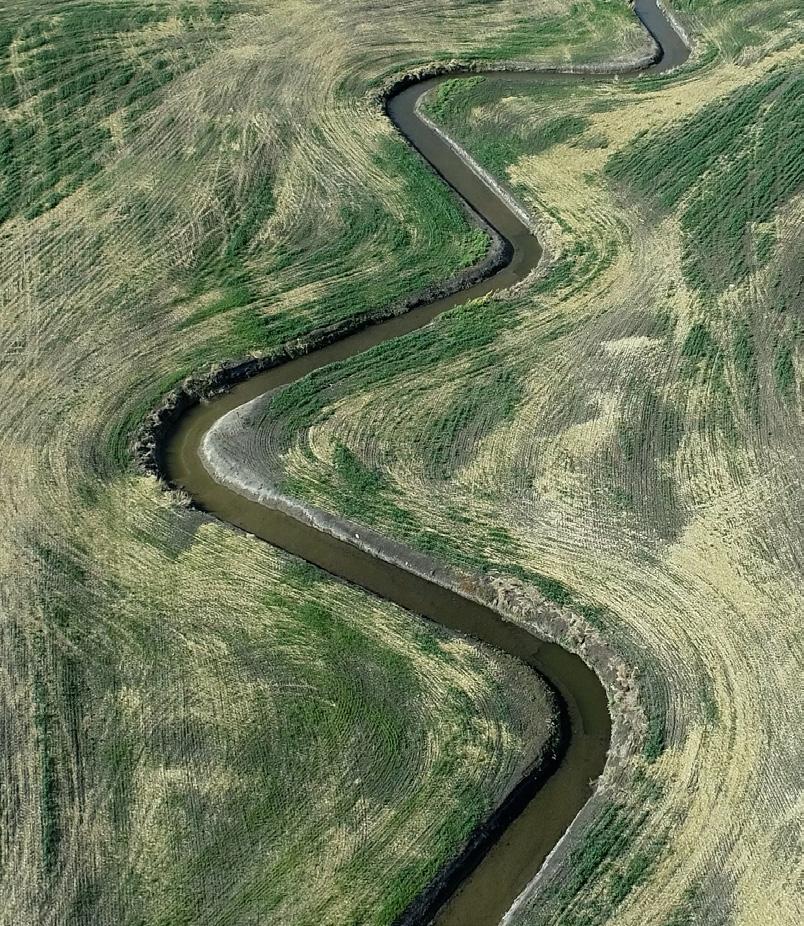
Rather than forcing the creek into a rigid shape, the design focused on rebuilding Whiskey Creek as a natural, stable stream, one that can maintain itself over time. HEI worked closely with the Minnesota Department of Natural Resources to develop a natural channel design that avoids long-term degradation or sediment buildup.
The restored channel allows water to move efficiently during high flows while supporting diverse aquatic habitat during normal conditions. In short, the creek now functions the way it was always meant to.
One of the most important elements of the project was landowner involvement. Long before construction began, HEI and the BRRWD held public informational meetings to share modeling results, listen to concerns, and validate what the data was showing on the ground.
Landowners’ insights helped confirm problem areas and shaped the development of restoration alternatives. Once design options were developed, additional meetings gave landowners the opportunity to offer feedback and help identify the solutions that best addressed their needs. That collaborative approach paid off. Originally planned as a 10-mile project, the restoration grew to 14 miles after adjacent landowners saw the benefits and asked to be included, which was an early sign of strong public support.
The restoration of Whiskey Creek has delivered far-reaching benefits that extend well beyond the streambanks.
More than 335 acres of riparian buffers, vegetated areas that naturally filter water and reduce erosion, were established along the creek corridor. This effort created a continuous stretch of habitat from the headwaters to the Red River of the North. In a landscape dominated by agricultural land, the restored corridor provides critical habitat for fish and wildlife while also stabilizing the channel.
Originally planned as a 10-mile project, the restoration grew to 14 miles after adjacent landowners saw the benefits and asked to be included.
cropland
100- to 200-foot-wide restored prairie stream habitat corridor degraded cattail and sediment-choked stream
14- to 18-foot-wide meandering stream
cropland
Flooding impacts have also been significantly reduced. For the farmers and residents along Whiskey Creek, that means fewer damaged fields, less cleanup after high-water events, and improved safety during storms. Reduced flood risk translates directly into economic stability for landowners and lower costs for local services.
Water quality improvements are another key success. By reducing sediment loading and installing 89 side inlet structures to manage runoff, the project has improved conditions for aquatic life and increased recreational opportunities, such as fishing. The Minnesota Pollution Control Agency’s preliminary monitoring shows measurable improvements, raising the possibility that Whiskey Creek could one day be removed from the impaired waters list for turbidity.
While the results are visible on the landscape, much of the project’s complexity happened behind the scenes.
With an estimated construction cost of $7 million, funding required careful coordination across multiple grant programs. HEI worked with the BRRWD to secure funding from a wide range of sources, including the National Water Quality Initiative, Clean Water Fund, Clean Water Act Section 319, Outdoor Heritage Fund, and the US Fish and Wildlife Service.
Many of these grants required matching funds and strict rules about how those
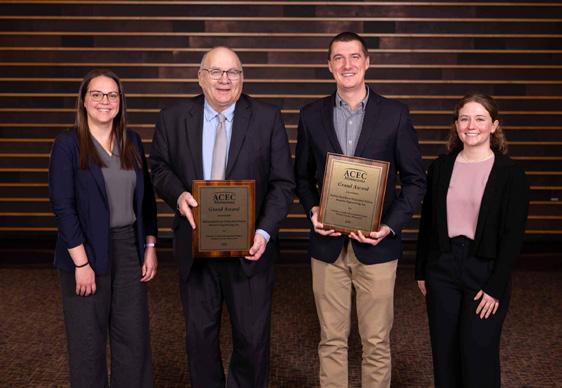
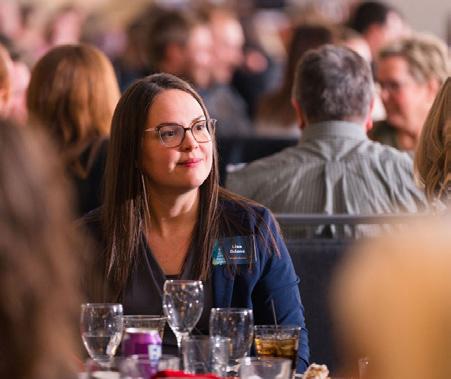
HEI staff were proud to see the Whiskey Creek Enhancement project take home a Grand Award at the Minnesota ACEC Engineering Excellence Awards Gala on February 6, 2026. This honor means the project moved on to the national competition in Washington, D.C., where it also received a National Recognition Award!
at right receiving the award are (from left to right): Lisa Odens, HEI; Peter Fjestad, President of the BRRWD Board of Managers; Bennett Uhler, HEI; and Cait Caswell, HEI.
matches could be applied. Some funds were also released over multiple years, requiring the project to be carefully phased. Through strategic planning, HEI assembled a funding package that maximized outside dollars and significantly reduced the financial burden on local landowners.
The four-phase construction approach, completed between 2021 and October 2025, required permits to be renewed and coordinated for each stage of work. HEI guided the BRRWD through Minnesota Watershed Law requirements and worked closely with local, state, and federal agencies to keep timelines aligned and construction moving forward.
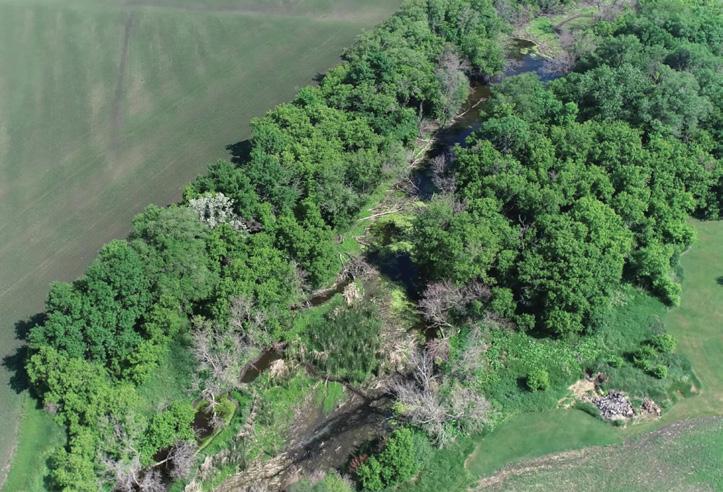
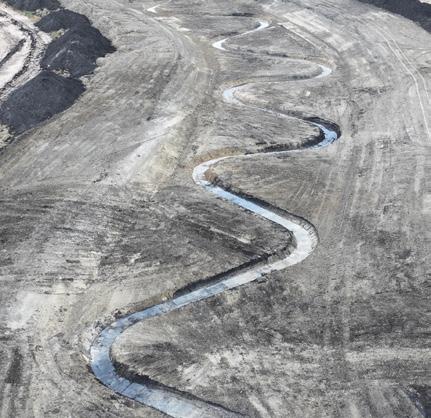
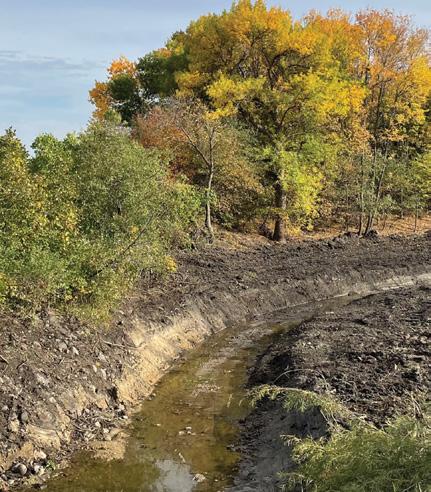
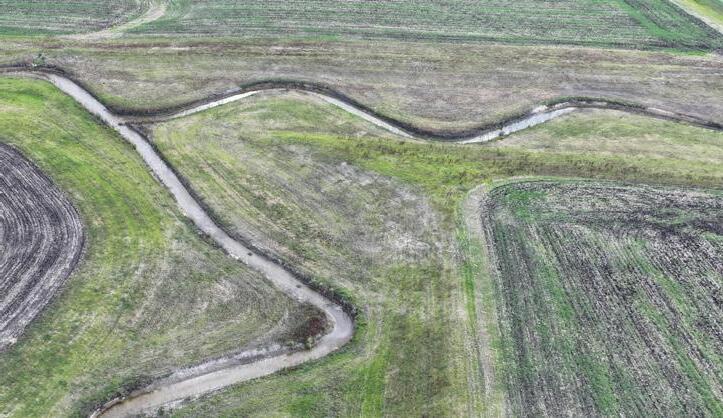
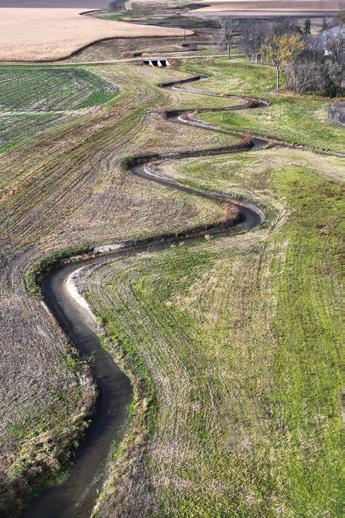
1. Before photo of the creek showing an area with significant sediment buildup and debris deposits. 2. Phase 1 construction in progress between a township road and a farmstead in Connelly Township. 3. Construction in progress with the final grade of clay material, prior to 6-inch topsoil placement. 4. Completed aerial of Whiskey Creek showing the confluence of the Whiskey Creek main channel with the restored Whiskey Creek tributary.
Consistent communication was key to the project’s success. Regular meetings with the BRRWD, regulatory agencies, and landowners made sure that expectations remained aligned throughout design and construction.
Before construction, individual landowner meetings were held to secure easements and review designs on-site. These discussions provided valuable local insight and reinforced trust among project partners and landowners.

Project Team

Bennett Uhler
Even better, the project came in under budget, with a final construction cost of $5.75 million, entirely supported by secured funding sources, and was completed on schedule in October 2025.
Whiskey Creek shows what’s possible when engineering, ecology, and community collaboration come together. What began as a response to flooding and sediment buildup has become a model for large-scale stream restoration in Minnesota and across the Midwest. It’s proof that sustainable, resilient waterways can support agriculture, protect habitat, and benefit communities all at once.

Erik Jones

14 miles of restored, stable stream 335 acres of expanded riparian habitat
89 side inlet structures to reduce sediment and nutrient loading
3,444 tons of sediment reduced annually
2,112 pounds of phosphorus reduced annually
Want more?
Whiskey Creek is also featured on page 6 and the back cover!
Young

Having the right resources in place is often the key to turning ideas into impactful projects. Grants play a vital role in moving projects from concept to reality by providing financial support that may not otherwise be available through local budgets or private financing. They help reduce financial barriers, accelerate project timelines, and enable communities and organizations to pursue infrastructure, planning, and environmental improvements that deliver long-term public value.
$188 million+ in grant funding
At HEI, our grant services support clients at every stage of the funding process, from identifying the right opportunities to managing applications and post-award requirements. With deep experience across federal, state, local, and foundation grant programs, we provide strategic, tailored support that strengthens applications, reduces administrative burden, and improves the likelihood of success. Our proven track record reflects a commitment to helping communities and organizations move projects forward and has helped secure more than $188 million in federal grant funding for our clients just within the last decade.
Below are just two examples of how securing grants made projects possible:
HEI assisted the BRRWD in acquiring grants from several agencies to ensure the Whiskey Creek Enhancement project was fully funded.
The project cost was approximately $5.75 million and utilized a variety of grant funds from local, state, and federal agencies. Many of the grants required match dollars from non-similar sources (for example, state dollars were not eligible as a match for other state dollars).
Learn more about Whiskey Creek in our cover story!
Summary of Funding
$5.75 million total
Federal Funding: $2,435,000
State Funding: $2,890,000
Local Funding: $425,000
HEI supported the City of West Fargo and its project partner, BNSF Railway, in securing a highly competitive Rebuilding American Infrastructure with Sustainability and Equity (RAISE) grant for the 9th Street Northeast Grade Separation. The City was awarded $23.8 million through the RAISE program to advance a critical transportation improvement that will enhance safety, mobility, and access to the West Fargo Industrial Park, supporting long-term economic growth in the region.
Working closely with City staff, HEI provided a variety of services, including the development of a project narrative, preliminary engineering documentation, cost estimates, and assistance with navigating the complex post-award administration process during a time of changing federal administrative policy.
The grade separation project is part of a larger endeavor to reconstruct and urbanize 9th Street Northeast from Main Avenue East to 12th Avenue East, adding a three-lane roadway with a center turn lane, pedestrian facilities, street lighting, and stormwater and other city utility improvements. HEI is proud to work alongside the City to bring this project to life.
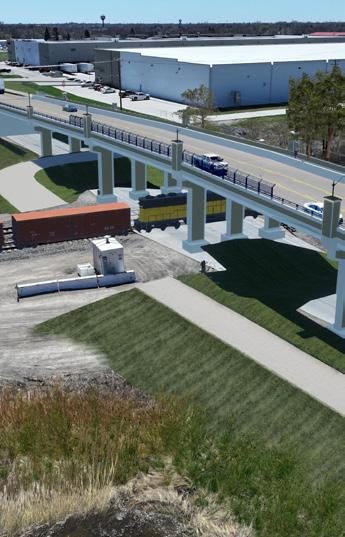
A preliminary rendering depicting the completed 9th Street
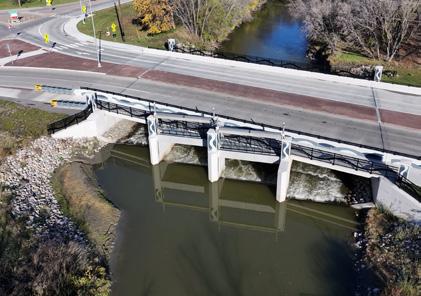
For nearly a decade, Lake Mitchell has faced persistent water-quality challenges that have affected residents, recreational users, and the broader community.
Sediment and nutrient inflow to the lake creates poor conditions with dense, odorous algal blooms. Early efforts to address these issues began around 2016, when FYRA Engineering, now part of HEI, worked with the City of Mitchell to explore water-quality improvements.
Our team performed a feasibility study that developed a phased plan to improve the lake’s water quality. As the plan evolved, the City engaged a consultant to design a dredging project intended to improve lake conditions. However, that approach required modifications to Lake Mitchell Dam, a high-hazard structure that required permitting for the modifications.
To proceed with the dredging project and obtain the required permits, additional analysis focused on the dam was necessary. This need was identified through the permitting process and resulted in several requirements to satisfy regulatory review, including updates to the Emergency Action Plan, completion of new breach inundation mapping, and reevaluation of the dam’s hydrology and hydraulics using modern methods.
At this point, both the State and the City of Mitchell turned to HEI’s Mike Sotak for guidance due to his long-standing expertise in dam safety. He and Connor Kelley worked closely with the City to define a technically-sound path forward. As it happened, our recommended approach aligned closely with the guidance the State already provided the City, an early signal that we were on the right track.
From the outset, we understood that tools available to complete dam hydraulics routings have evolved significantly over the years, and older studies likely didn’t tell the whole story. Using modern modeling tools like stream gage-calibrated 2D rain-on-grid modeling, hydrology with up-to-date precipitation standards, and
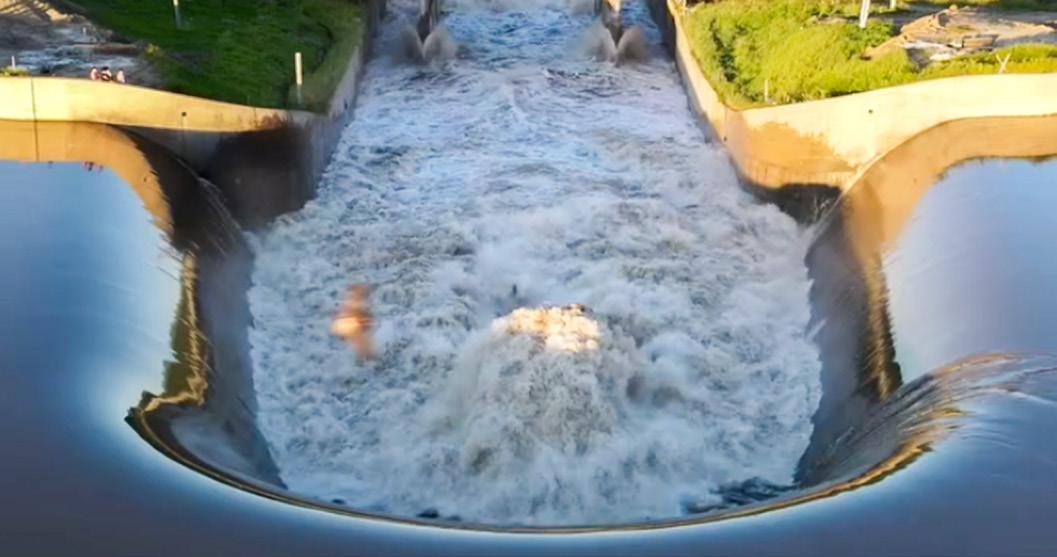
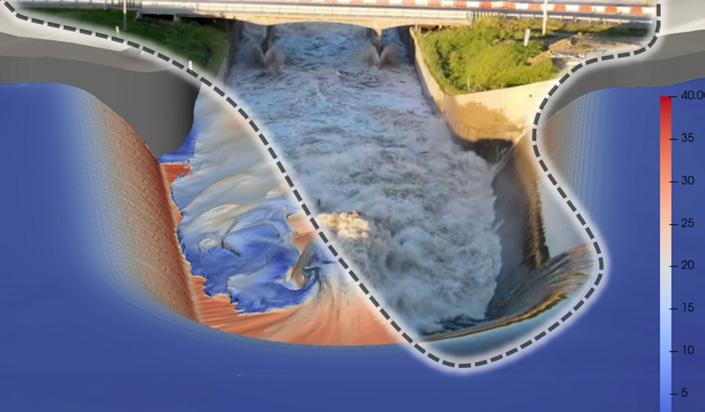
computational fluid dynamics (CFD) modeling, we were able to find where the dam’s design was not meeting present-day design standards. The spillway was only performing at about half the level required by current State standards. Our modeling identified a critical pinch point in the spillway, limiting performance in ways that designers in the 1940s had not detected.
Our incremental consequence analysis supported South Dakota’s first high hazard dam hydrologic variance in more than three decades.
Rather than stopping at identifying deficiencies, we focused on solutions and outcomes. Our analysis showed that extensive and expensive rehabilitation, that would likely cost millions of dollars, would not significantly reduce overall risk. Instead, we completed an incremental consequence analysis that balanced safety, cost, and community priorities, while also providing the technical backing needed to show state regulators that the dam is in compliance with present-day risk-based design standards.
The incremental consequence analysis demonstrated that the dam can safely pass the Risk Based Inflow Design Flood in accordance with the Federal Dam Safety Guidelines, which supported the City’s pursuit of a variance under South Dakota’s dam safety code; this variance was recommended for approval by the South Dakota Department of Agriculture and Natural Resources and subsequently approved by the Water Management Board. It also set them up to have quality risk information for downstream areas. Now, if a large rain event occurs, they’ll be able to use the information to identify at-risk populations and take action to move them out of harm’s way. The City can update this study over time to make sure they’re always apprised of the public’s risk.
Leading

We’d love to showcase all that we do at HEI, but we’d run out of pages! Here’s a quick overview of some projects we’ve been working on or recently completed.
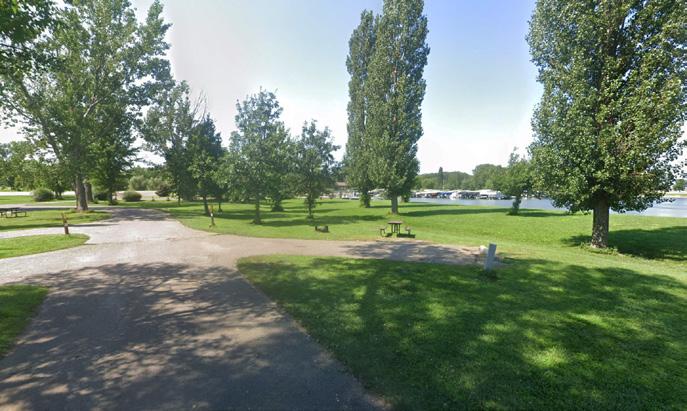
Once complete, this environmentally conscious expansion will provide the community with improved recreational opportunities and boating access.
With Weigand Marina offering more than 100 annual boat slips and 10 daily rentals, the Lewis and Clark State Recreation Area needed improvements to meet public needs. HEI served as a key member of the project team, providing engineering and design services. Improvements included shoreline stabilization to reduce erosion and protect park infrastructure, dredging plans to meet required navigable depths, and the design of containment sites for dredged materials.
HEI also managed regulatory permitting and coordinated with agencies, including the US Fish and Wildlife Service, US Army Corps of Engineers, and Nebraska Department of Environment and Energy. Small portions of the project are complete, with the majority of improvements in progress now.
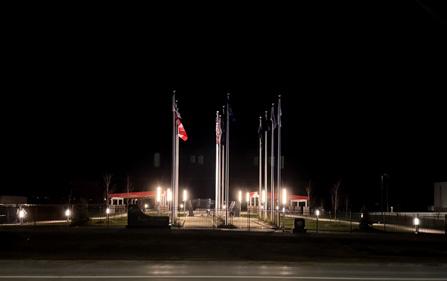
Flag-Raising Ceremony
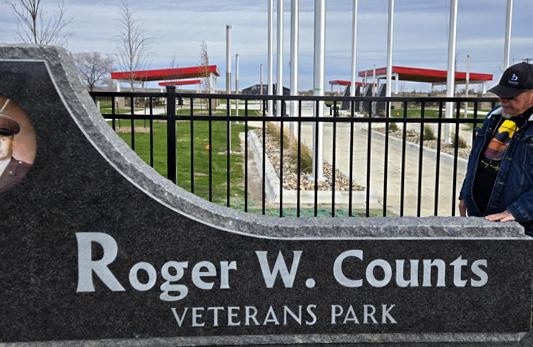
The Turtle Mountain Band of Chippewa Indians (TMBCI) partnered with HEI to plan and design Veterans Memorial Park. The park rests along the Peace Garden Scenic Byway and has become a key feature in TMBCI’s Comprehensive Tourism Plan. The team sought to make this space durable and accessible for ceremonial, recreational, and educational uses. Much of HEI’s focus was directed toward site grading, drainage, and grading plans that created smooth transitions between plaza areas, monuments, picnic structures, and open spaces.
To comply with ADA requirements, the team incorporated accessible sidewalks to provide continuous routes connecting all areas of the park. Additionally, HEI implemented plaza areas to accommodate military exhibits, including a monument displaying the names of service members. Finally, the team provided construction administration services, following the project from planning stages through construction. This new park not only balances functionality and accessibility but also honors its commemorative purpose.
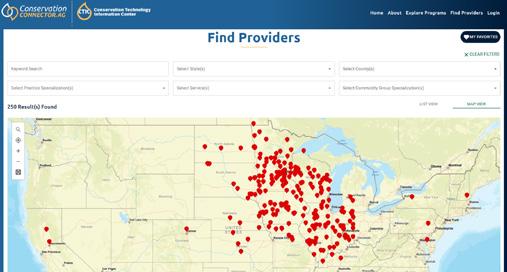
Programs are tagged by geography, practices, commodities, incentives, and eligibility, making it easier to find the right fit.
Nationwide
Because conservation incentive programs, technical service providers, and regional offerings are often spread across many platforms, HEI teamed with the Conservation Technology Information Center, The Nature Conservancy, Wolfe’s Neck Center, OpenTEAM, and other partners. Together, they created the Conservation Connector web application, providing a single source for conservation incentive programs. The team developed a data-driven platform that brings consistency to how programs and service providers are described, allowing users to quickly filter results to their specific needs. The platform supports hundreds of programs today and is designed to scale as participation grows.
We encourage you to explore the Conservation Connector and contribute to this shared resource using the following QR code.
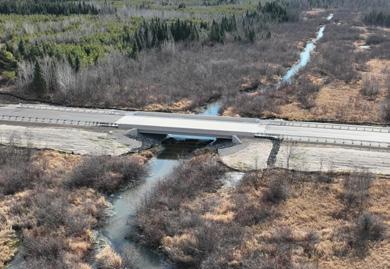
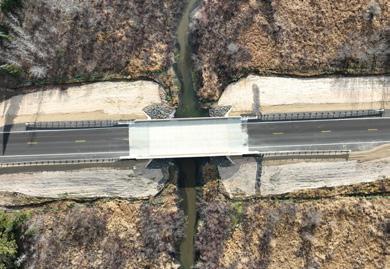
Hubbard County, MN
HEI provided engineering services for the replacement of a structurally deficient bridge on County State-Aid Highway (CSAH) 45 in Hubbard County, MN. The team led hydrologic and hydraulic analyses to determine replacement alternatives, including precast box culverts and applicable bridge options, and modeled 100-year flood events and overtopping conditions. These analyses informed structure sizing, low-member evaluation, and risk assessments.
The final design consisted of a 78-foot-long, simple-span prestressed, pretensioned concrete beam bridge supported by integral abutments. This eliminated in-channel substructure elements and reduced construction duration. The team also designed the bridge with zero skew to match the existing roadway alignment and maintain natural channel geometry. Hubbard County ultimately received a durable, long-lasting, and practical solution that improved safety and reliability for the traveling public.
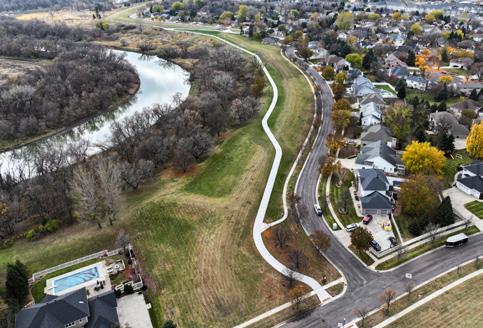
The path meanders to preserve existing trees and natural river features, keeping the trail scenic and sustainable.
Fargo, ND
HEI designed new shared-use paths along the Red River from 40th Avenue South to Harwood Drive South, as well as a key connection crossing at Drain 27 near 25th Street South. To avoid impacts to Fargo’s flood control system, the team used hydraulic modeling and balanced fill with adjacent excavation to preserve flood storage and comply with FEMA requirements.
The Drain 27 crossing required balancing ADA-compliant, scenic trail design with minimal impacts to trees and wetlands. After evaluating multiple alignment options with stakeholders, the team selected a preferred option, using a precast concrete box culvert to pass design flows, avoid upstream flood increases, and maintain safe, accessible grades. Phase 1 of the path was constructed in 2024 and received the North Dakota Ready Mix & Concrete Products Association Gold Star Award in the Recreational Category, with Phase 2 of the path and the Drain 27 crossing completed in 2025.
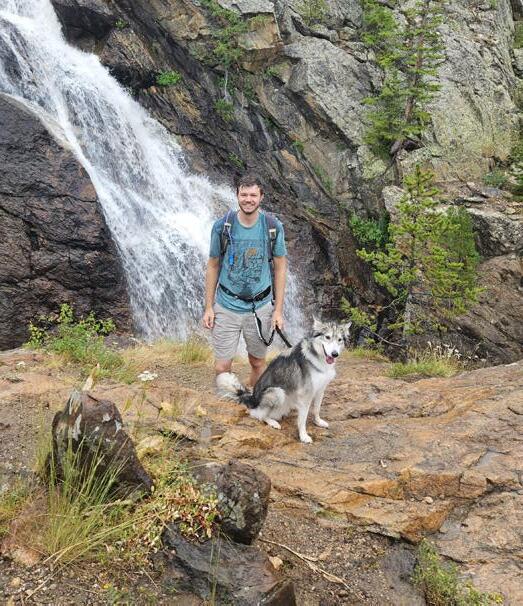
Connor Kelley is a Water Resources Engineer in HEI’s Omaha, NE, office. He joined FYRA, now a part of HEI, as an intern in college after seeing a job post for a position working on hydrology and hydraulic (H&H) modeling of neighborhoods that had recently installed rain gardens. To get the job, he showed up to the office in a full suit and tie to drop off his resume and was interviewed right then and there. A few years later, he took a full-time position after graduating from the University of Nebraska-Lincoln in 2017.
Connor works on projects that help communities across the Midwest by creating sustainable solutions that improve flood resiliency, create recreational opportunities, and enhance water resources. These projects include H&H investigations, bridge scour analysis, hydrometeorological analysis, dam design, and stormwater design.
When he’s not at work, Connor enjoys traveling with his wife, Morgan, and making the most of every trip. They enjoy hiking, skiing, and going on adventures. You’re likely to find Connor on some rugged coastline or mountain peak. Next on the bucket list … Madeira, Portugal!
Describe what you like about being
part of our team.
At HEI, there’s a real sense of responsible autonomy, where people are supported to step up and make things happen for the right reasons. And this goes for anyone in the company.
What is one of your most memorable projects?
The Deadmans Run Flood Reduction Project in Lincoln, NE. It has covered a large breadth of my career after I came on full-time, and I was able to see how that project evolved and how it changed its shape as new ideas got put out there, even when those ideas may have come from someone that wasn’t in a leading role in that project. It was rewarding to be on a team that was able to consider all voices. I’ve contributed ideas to that project for several years, and many of them have delivered great results.
What fuels your passion as an engineer?
As a kid growing up in Lenexa, KS, I would spend a lot of my days down in the stream behind my house. After rain events, I’d race down along the stream to see where the creek would go and how high the water would rise. At the time, I was seeing things that I now have names for: headcuts, erosion, and infrastructure. I was fascinated by how those systems and the fixes were laid out and behaved during storms. I also remember learning about Lenexa’s Rain to Recreation program in elementary school, when City engineers came into class to talk about stormwater management. What stood out to me was the idea that the City wasn’t just trying to move water but was finding ways to make that infrastructure part of public spaces. I feel just as fascinated by the work we do today when I approach a project and get to apply the “street smarts” I learned growing up.
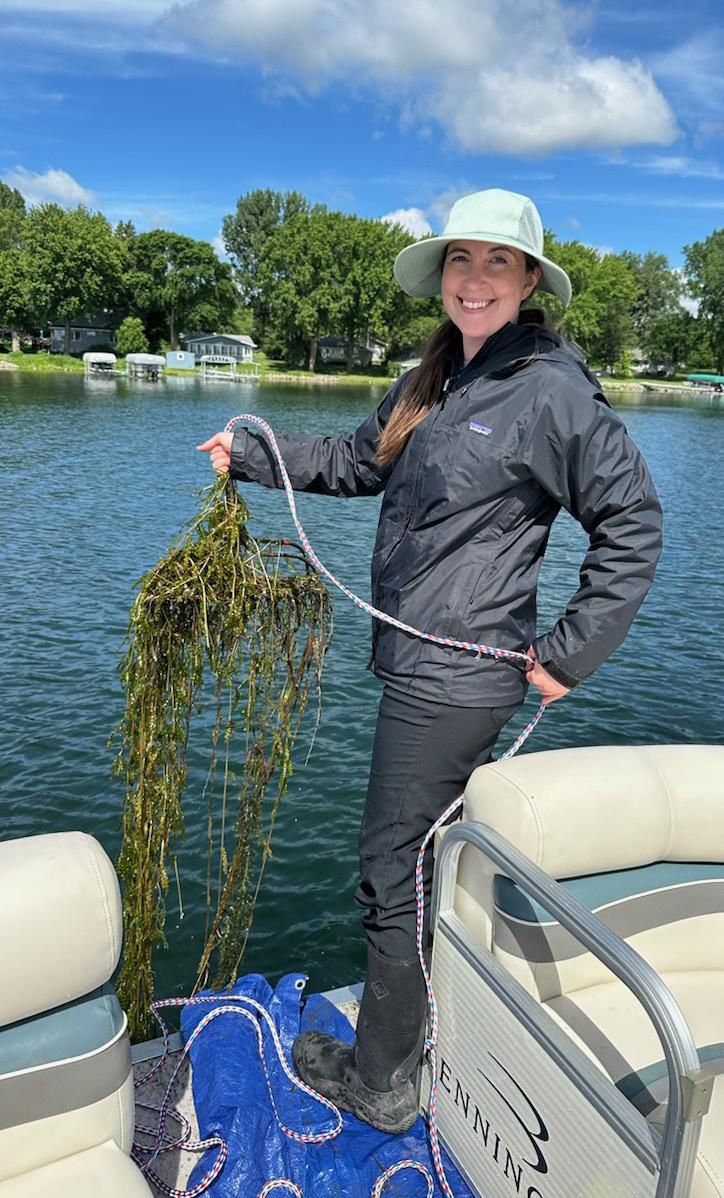
Hannah is an Environmental Scientist based in HEI’s Fargo, ND, office where she provides a variety of environmental services such as aquatic resources delineation, floristic quality assessments, hydrogeomorphic assessments, environmental monitoring, permitting, and wetland banking.
Hannah joined HEI as an intern in 2017 and has become an increasingly vital part of the environmental team throughout the years. She has a bachelor’s degree in fisheries, wildlife, and ecology with a minor in botany, and in 2021 she completed her master’s in environmental and conservation science.
On any given day, you might find Hannah collecting data in the field, completing data analyses for environmental monitoring projects, planning ecological restorations, writing reports, or navigating regulatory processes with local, state, and federal agencies. Currently, she’s working on wetland mitigation site monitoring; Minnesota lake vegetation surveys, shoreline assessments, and restorations; wetland restoration and banking projects; and many wetland delineation projects.
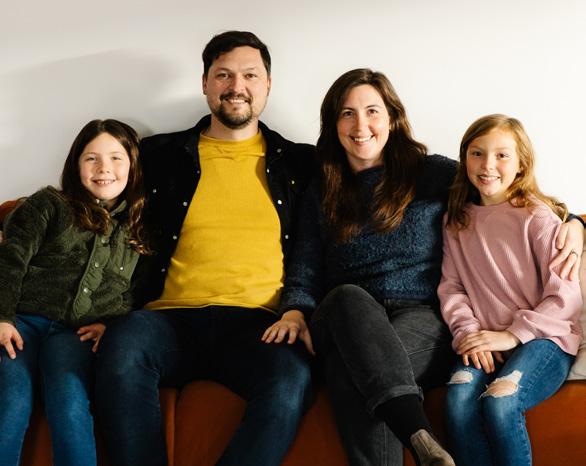
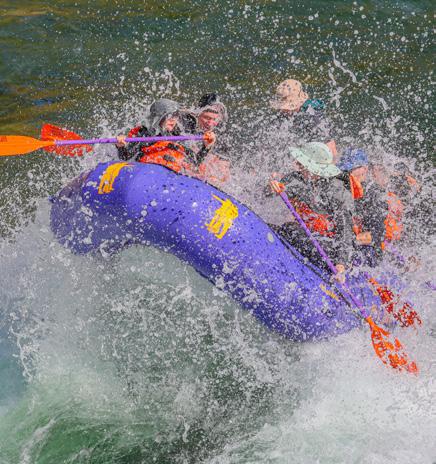
When she’s not at work, you’ll still find Hannah outside and enjoying nature with her family. She loves spending time at her family’s cabin with her partner, Alex, and their two kids, Juniper and Gwyn, along with their dog named “Pear” and cat named “Lil Kitty.” She’s always up for an adventure; Hannah and Juniper recently visited Jackson Hole, WY, and had a blast whitewater rafting with Hannah’s dad. Hannah also started taking Kung Fu classes, don’t get on her bad side!
What professional advice would you like to pass along to others?
Keep an open mind and always be willing to learn or try something new. Stay curious!
Describe what you like about your job and being part of the HEI team. I appreciate the opportunity to work alongside a supportive and collaborative team, and I value working in a career that challenges me to problem-solve and think critically every day. I also enjoy the variety. Some days I am in the field collecting data, while other days I focus on data analysis or report writing in the office.
What has been the most rewarding project you’ve worked on thus far at HEI?
Some of the most rewarding projects have also been the most challenging. I have particularly enjoyed working on projects that involve restoration, enhancement, and protection of natural resources. Every site is different, and I enjoy the challenge of planning for each unique area.
Having spent a lot of time in Minnesota lakes country throughout my life, I also enjoyed working on the Heart of the Lakes Trail project in Otter Tail County. It is rewarding to contribute to a project that is close to home and highlights the beauty of the surrounding environment.
Learn more about the Heart of the Lakes Trail
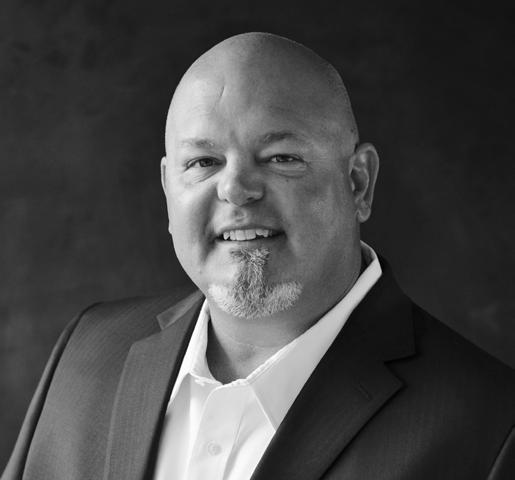
We honor the life and legacy of Mike Sotak, who unexpectedly passed away on January 2, 2026, while scuba diving with his family in the Bahamas. As one of the founders of FYRA Engineering, Mike joined HEI in May of 2022 when FYRA became part of HEI. Mike was a devoted family man, talented engineer, leader, and an overall fun-loving guy. Mike is survived by his wife and three children. He will be deeply missed by many, and his legacy will live on through his projects and the countless relationships forged with those he loved. Those who ever met Mike, even for a few minutes, could never forget his energy, wit, and kindness. As a testament to Mike’s magnetic personality and the impact he had on his community, his celebration of life ceremony at
The Polish Home was standing room only with many people unable to get through the doors.
Mike had a remarkable ability to challenge and inspire. He saw the potential in every person on his team and was never afraid to push them outside of their comfort zones to help them grow. His love for life was only matched by his love for his people, who always knew they could rely on him whether it was for a celebratory cheer in good times or a bear hug in tough times.
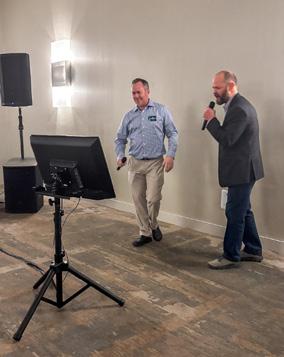
Mike was a natural leader who was able to identify and unite the right combination of people to build a company from the ground up. His grand ideas for projects were turned into realities through trusted client relationships and a team capable of bringing his vision to life. Whether it was Mike’s karaoke voice, his competitive antics during volleyball matches, or the way he laughed so hard he cried while telling a funny story, Mike found a way into your heart.
Mike Sotak continued on next page >
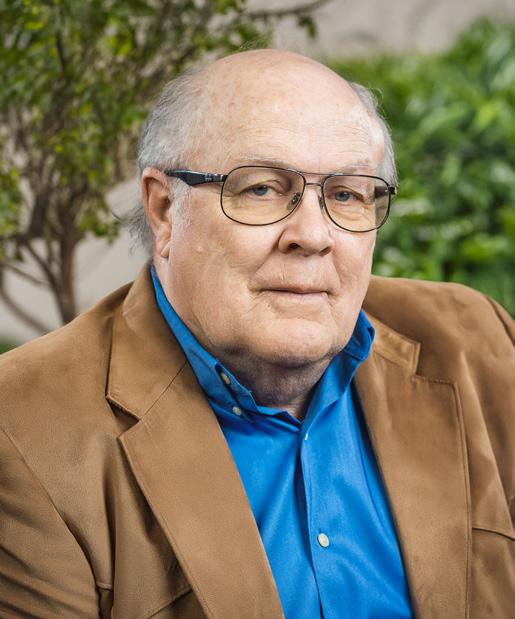
“Mike Sotak was a highly respected and talented engineer with a passion for water resources. He cared deeply for his family, friends, coworkers, and clients and was someone who liked to have fun with whatever he was doing.”
– Gregg Thielman
On December 30, 2025, we lost team member Mike Cummins after a long battle with congestive heart failure. Mike was born in Benson, MN, and raised in Moorhead and Becker County lakes country. After graduating from Audubon High School, he pursued a career in the engineering field.
Mike is survived by his three children, sisters, and grandchildren. He will be deeply missed by all who knew and worked with him.
Mike joined HEI in the Fargo office in 2019 after a long and varied career and served as a Civil Construction Senior Engineering Technician. He was widely respected for his field expertise as a Resident Project Representative and Construction Inspector, someone who took pride in making projects better through oversight and unwavering professionalism.
Mike was willing to do any job, anywhere. He was a great project inspector who was
Mike Cummins continued on next page >
“Mike Cummins was a dedicated field technician who loved the work he did and was very good at it.”
– Gregg Thielman
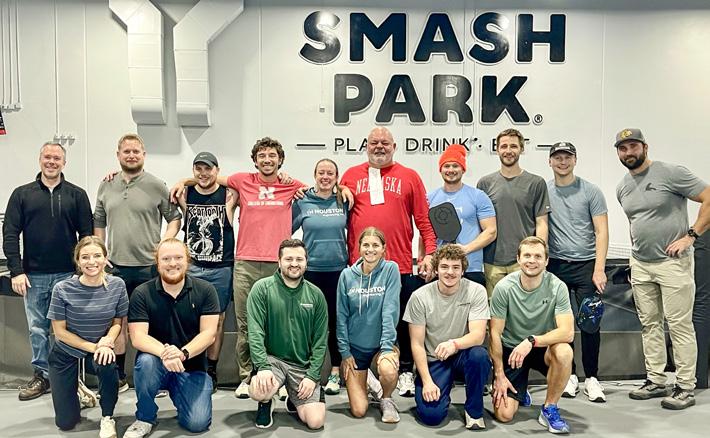
Mike was instrumental in leading dam services companywide. As an unparalleled expert in dam safety, his professional legacy will impact countless people. He was involved in more than 100 dam projects that have improved safety for communities throughout Nebraska, Iowa, and South Dakota. Just as important, Mike generously mentored and developed staff, sharing his knowledge and setting a standard of excellence that will endure. His impact will live on through the professionals he guided, who will carry forward his expertise and commitment to dam safety across the region.
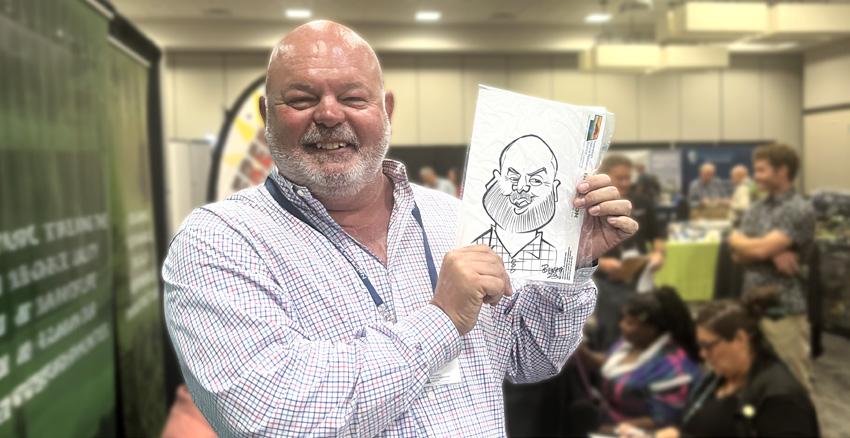
“Mike Sotak was such a unique individual. His intelligence, paired with his ability to create connections with staff and clients, made him an invaluable engineer and leader. He shaped my career in countless ways, offering every opportunity to learn and build meaningful relationships in my own way. There are so many moments now where I want to turn to him for advice or that reassurance only he could provide, but I know he’d be proud in our persistence to continue growing what he started. I am privileged to have had nearly 20 years with him as a boss, mentor, and friend. He lived life large and every one of us is better for having known him; he is deeply missed.”
– Sara Mechtenberg
not afraid of contractors, and he made projects better because of it.
In the office, Mike was valued as a kind, friendly, and compassionate person, who always made a point to check in face-to-face. He would rather come to tell you something in person instead of using the computer; it was a small gesture, but it made the workplace feel more human and personable.
Beyond his kindness and presence, Mike’s career impact spanned community, campus, and flood-protection work across North Dakota and Minnesota.
“Mike was willing to do any project, anywhere. He was a great, detail-oriented project inspector, and he made projects better through his efforts.”
– Adam Walker
Welcome to our team!
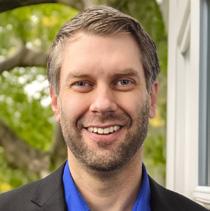


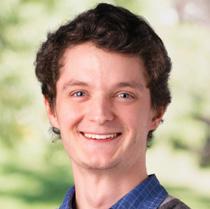


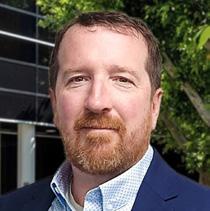
You could be a team member too! Find open positions or sign up for alerts.
Culture Fun
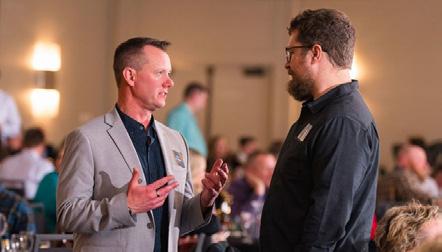
HEI staff and guests gathered in Fargo for an all-company holiday party. 320 people attended to celebrate a great year!
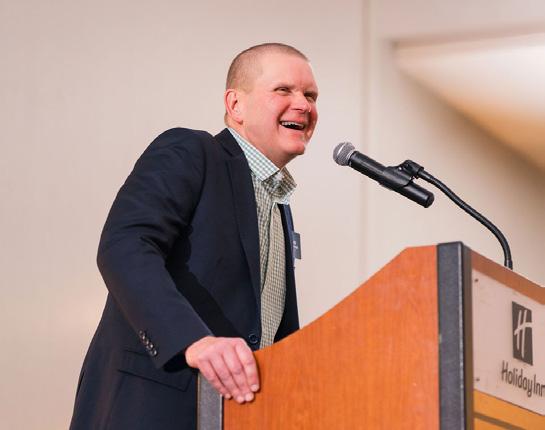
Our employees are the core of our company, and we value their contributions. Congratulations to the following employees with anniversaries between January and June 2026!




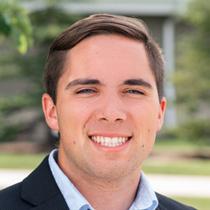
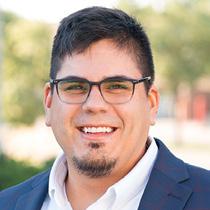

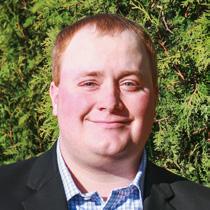






Stan Hanson was named the new Office Manager for HEI’s Sioux Falls office!
PE Licenses
Congrats to Gunnar Cowing and Jacob Garder for earning their Professional Engineer (PE) Licenses!
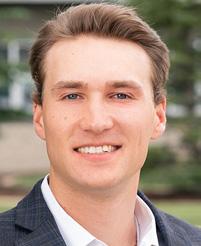
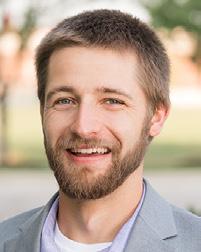
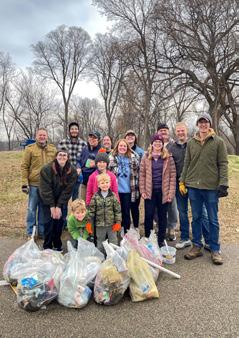
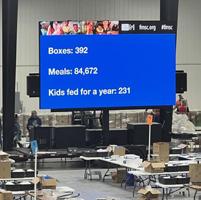
Volunteering Team members volunteered their time for a variety of worthy causes, including meal preparation and community events.

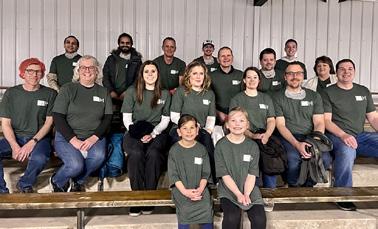
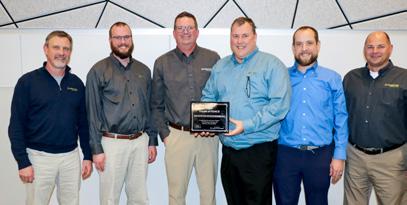
HEI received the 2026 Friends of North Dakota Association of County Engineers Award at the 76th Annual County Roads Conference!
Congrats, New Shareholders!


License
Congrats to Patrick Johanneck for earning his Professional Land Surveyor (PLS) License for North Dakota!

Congrats to Adam Nies on receiving a Top Speaker Award and the “What would MacGyver Do” trophy from the Minnesota Association of Floodplain Managers.

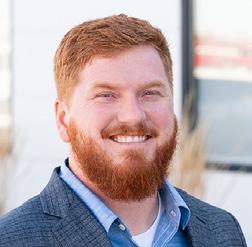
Zach Holweger was named Young Engineer of the Year by Chapter 4 of the North Dakota Society of Professional Engineers!
Stay up to date on our latest news! Scan for more.
Kelby Laxdal was awarded the Prairie Business 40 Under 40 award for 2025.
Honored ... again!
HEI has once again earned a spot on the ENR Top 500 Design Firms list, moving 19 spots to #341!
1401 21st Avenue North • Fargo, ND 58102
houstoneng.com
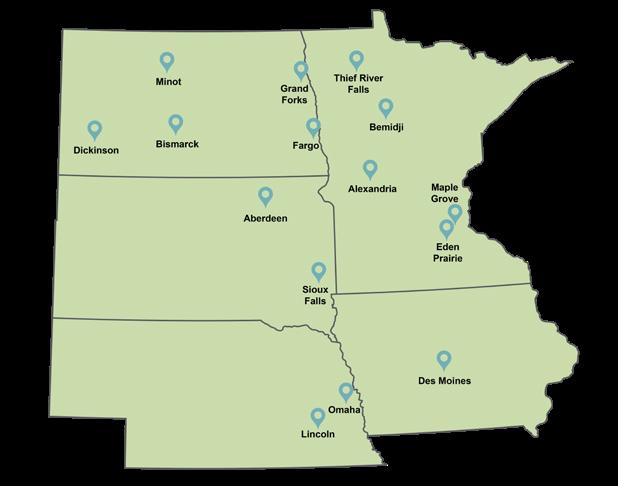
North Dakota Fargo | Bismarck | Dickinson Grand Forks | Minot
South Dakota Sioux Falls Aberdeen
| Bemidji
Grove | Thief River Falls
Prairie
Lincoln Omaha Iowa Des Moines
a Great Award Season!
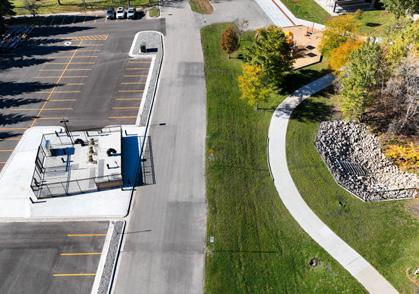
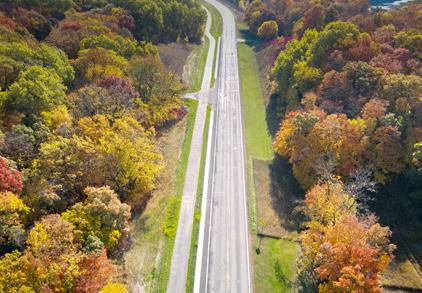
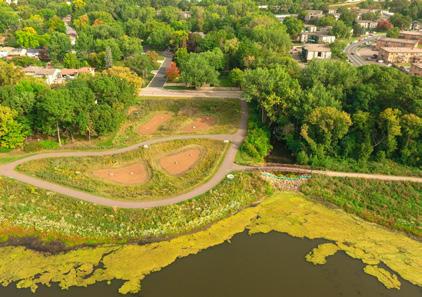
The following projects won awards that highlight the achievements of HEI’s clients and the power of strong partnerships. These honors reflect our clients’ vision and dedication as well as the successful results of our collaborative efforts. HEI is proud to help deliver impactful projects that earn well- deserved recognition.
Learn more at houstoneng.com/awards26 or scan the QR code.
Learn more about these award winning projects! Scan here!