Nicole Corabi, Kristine Di Nardo, Rochelle Dodge, Lori Vorgang, Amy B. Weiss
ACCOUNTING MANAGER
Max Haggerty
DIGITAL MEDIA DIRECTOR
Leigh Stuart
PUBLISHER EMERITUS
Bob Doran
EXECUTIVE PARTNERS
Gerry Haggerty, Edward P. McCartney
HOUSE & HOME
HOUSE & HOME Magazine, LLC, dba HOUSE & HOME (“H&H”). H&H reserves the right to determine the suitability of all materials submitted for publication and to edit all submitted materials for clarity and space. H&H is not responsible for loss, damage or any other injury to unsolicited manuscripts, unsolicited artwork or any other unsolicited materials. Furthermore, H&H will assume that unsolicited photographs, as well as ad photographs, are being submitted for possible publication and should they be published, no fee is due the photographer or model unless otherwise agreed upon in advance in writing.
HOUSE & HOME is a regional home improvement and design magazine focused on remodeling, renovation, design inspiration, and connecting homeowners with local home service professionals. H&H does not knowingly accept false or misleading advertising or editorial content, nor does H&H or its staff, editors or writers assume responsibility should such advertising or editorial content appear in any publications. Readers are encouraged to notify H&H if they suspect false or misleading advertising.
Before attempting any renovation or repair project mentioned in H&H, readers are advised to consult with professional home repair and renovation specialists for assistance, and to take any and all appropriate safety precautions.
HOUSE & HOME has not independently tested any products or services advertised herein and has verified no claims made by its advertisers regarding those services or products. HOUSE & HOME. makes no warranties or representations and assumes no liability for any claims regarding those services or products or claims made by advertisers regarding such products or services. Readers are advised to consult with the advertiser and/or other home repair and renovation professionals regarding any such claims and regarding the suitability of an advertiser’s products. No reproduction of printed materials is permitted without the consent of the publisher of HOUSE & HOME. Copyright 2012 by HOUSE & HOME. Magazine, LLC, all rights reserved. Subscription available for home delivery at our website, www.HouseMagazine.com, at a cost of $19.95 per year.
National Sales Office: HOUSE & HOME Magazine, LLC
700 E. Main St. Norristown, PA 19401
Phone: 610-272-3120 Fax: 610-272-2805
Email: info@housemagazine.com
Visit www.HouseMagazine.com to view digital versions of each of the above editions.
Since its founding in 1939, Trumark Credit Union has worked to ensure its members realize their full financial potential.
“From the beginning, our focus has been on serving members, not shareholders, and building long-term financial relationships rooted in trust and transparency,” Allison Golderer, vice president and consumer loan director, says. “Our mission today reflects that same commitment. We show up, work hard every day to earn trust, and help shape successful futures.”
As a credit union that is member-owned, Trumark has a vested interest in the financial success and well-being of the people it serves. This often translates into competitive rates on loans, better fees, and personalized financial support.
fits into their broader financial picture,” Golderer explains.
Financing Endless Possibilities
With a home equity line of credit, Trumark Credit Union can guide members in thoughtfully borrowing against the equity built in their home to fund projects, expenses and more. by Kristen Dowd
“We’re not focused on selling products, we’re focused on solving problems,” Golderer explains. “For homeowners, that means taking the time to understand their goals, explaining options clearly, and recommending solutions that truly fit their situation. Whether someone is planning a renovation now or just exploring possibilities for the future, our role is to guide them through the decision.”
One of the ways to reach those goals that has been growing in popularity is with a home equity line of credit, or HELOC. With more and more homeowners deciding to update, renovate and expand their homes instead of moving somewhere new, borrowing against the equity they have already built into the home can be a smart financial decision.
What is a HELOC?
“A HELOC lets homeowners borrow against the equity they’ve built in their home, similar to how a credit card works, but typically with lower interest rates,” Golderer says. “You’re approved for a credit limit, and you can draw from it as needed, only paying on what you use.”
The biggest draw of a HELOC, according to Golderer, is its flexibility. Without refinancing their mortgage or taking out a lump-sum loan, a HELOC can give homeowners access to funds to pay for home projects they may otherwise not be able to pursue.
“When used thoughtfully, it can be a
smart, controlled way to invest back into your home,” Golderer says.
Why use a HELOC?
Because of higher home prices and limited inventory, Trumark Credit Union is seeing an increase in the number of members looking to improve their current living situation. This could mean anything from adding a second bathroom to a home to building out a four-seasons room. It could be updating and renovating from top to bottom, or focusing on a newly designed kitchen.
While these projects can enhance comfort and functionality, Golderer points out, they also can increase the home’s long-term value and curb appeal.
“Homeowners see their equity not just as a number, but as a resource they can use to adapt their home as their needs change,” she says.
Trumark Credit Union members are currently using HELOCs to fund practical, highimpact projects in their home. They are also using it to improve efficiency and longevity, including with new roofs, windows and HVAC systems.
How do you get started?
The first step to pursuing a HELOC is to start with a conversation.
“Home equity can be a powerful tool, but it’s not one-size-fits-all. Homeowners should understand how much equity they have, how they plan to use it, and how it
“At Trumark Credit Union, we encourage members to think strategically, borrow what you need, have a clear purpose, and work with a trusted advisor who can explain the options clearly,” she continues. “Confidence comes from understanding.”
It’s also important to remember that the right HELOC isn’t just about its rate—transparency and guidance are just as valuable. According to Golderer, a good lender should be able to clearly explain terms, fees, and repayment options—and also answer questions as they arise.
“Equally important is trust. Working with a local, memberfocused institution like Trumark Credit Union means you’re not just opening a line of credit, you’re building a relationship with a financial partner who’s invested in your success,” Golderer says.
Building relationships
The most rewarding part of helping families achieve their goals, according to Golderer, is seeing confidence replace uncertainty during the process.
“For many homeowners, financial decisions can feel overwhelming. When we help someone understand their options and move forward with a plan they feel good about, that’s incredibly meaningful,” she says.
Trumark Credit Union doesn’t focus on selling a product—the focus is on helping members understand their options and, ultimately, make a decision they will be happy about. If a home improvement project is on the horizon, a HELOC may just be the right decision.
“Homes are where life happens,” Golderer says. “Knowing we played a small role in helping a family create a space that works better for them, that’s what makes our work matter.”
DECKING OUT THE DECK
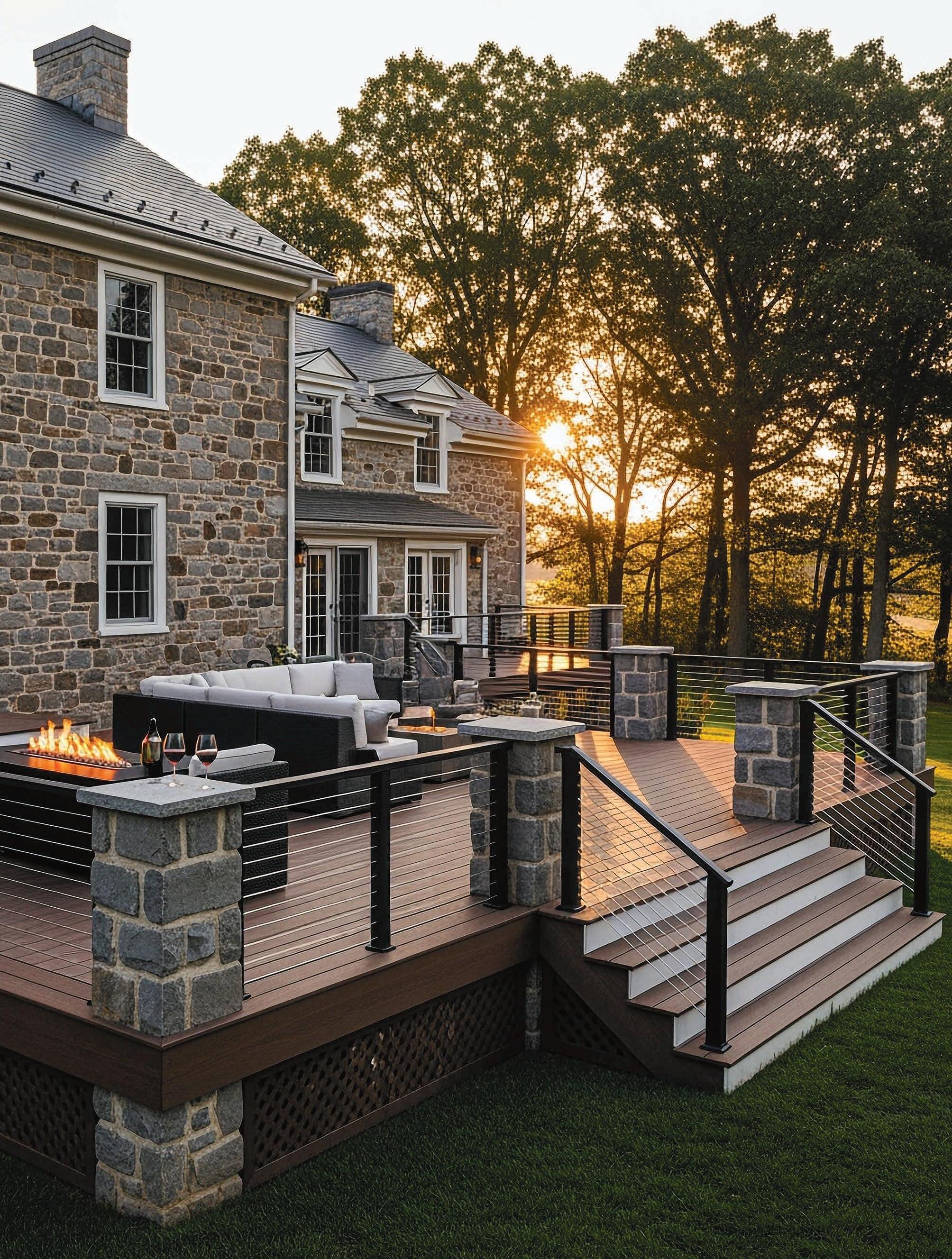
With a newly built deck comes the time to outfit it to your needs and liking, ensuring that it is best equipped for function and recreation.
BY ABIGAIL TWIFORD
HAVING A DECK BUILT ONTO A HOUSE IS A MAJOR DECISION THAT ANY HOMEOWNER HAS TO CAREFULLY CONSIDER BEFORE MOVING FORWARD. ONCE THEY DECIDE TO HAVE ONE ADDED TO THEIR OUTDOOR SPACE, CHOICES ON HOW TO USE THE NEW LIVING AREA STILL HAVE TO BE MADE.
From furniture to lighting, shade features to recreational spaces, all of these need to be decided on and set up before the space can be used for relaxation, the entertainment of family and friends at get-togethers, or as an extension of gardening space.
Before anything else, what the deck space will be used for needs to be considered. This will guide what furnishings and features are most needed and will best add to the comfort, function and livability of the deck.
“I’m always looking to start with what’s their
why, and how are they trying to entertain, how they are trying to utilize it,” says Paul Squierdo, landscape designer for Dutchies Stoneworks & Outdoor Living. “I usually start from there, rather than just what’s the trend. … I get them to try and focus on their family. …
So before I go into asking this thing or the other, I start there. I let the function drive the design.”
Besides analyzing how to best utilize the space, before any major and permanent structures or large furniture, Squierdo also emphasizes that it is vital to
consider how the outdoor arrangement could impact indoor living, such as obstructing the view to the outdoors or blocking out natural light from reaching the interior of the home, as the goal of creating a livable outdoor space also involves not impacting the livability of the rest of the house.
“Thinking of those things in terms of placement is also very key, that not everybody always thinks about at times. I start having that conversation, but if they say, ‘Oh, that’s gonna block the natural light,’ then I’m like, ‘Yeah, maybe this isn’t the best spot,’” Squierdo says about how he approaches the topic with clients.
While ensuring they don’t negatively impact how the indoors are used, lighting and shading are two of the most important features a deck can have, significantly influencing the ability of the homeowners themselves and their guests to use the deck for its intended purposes.
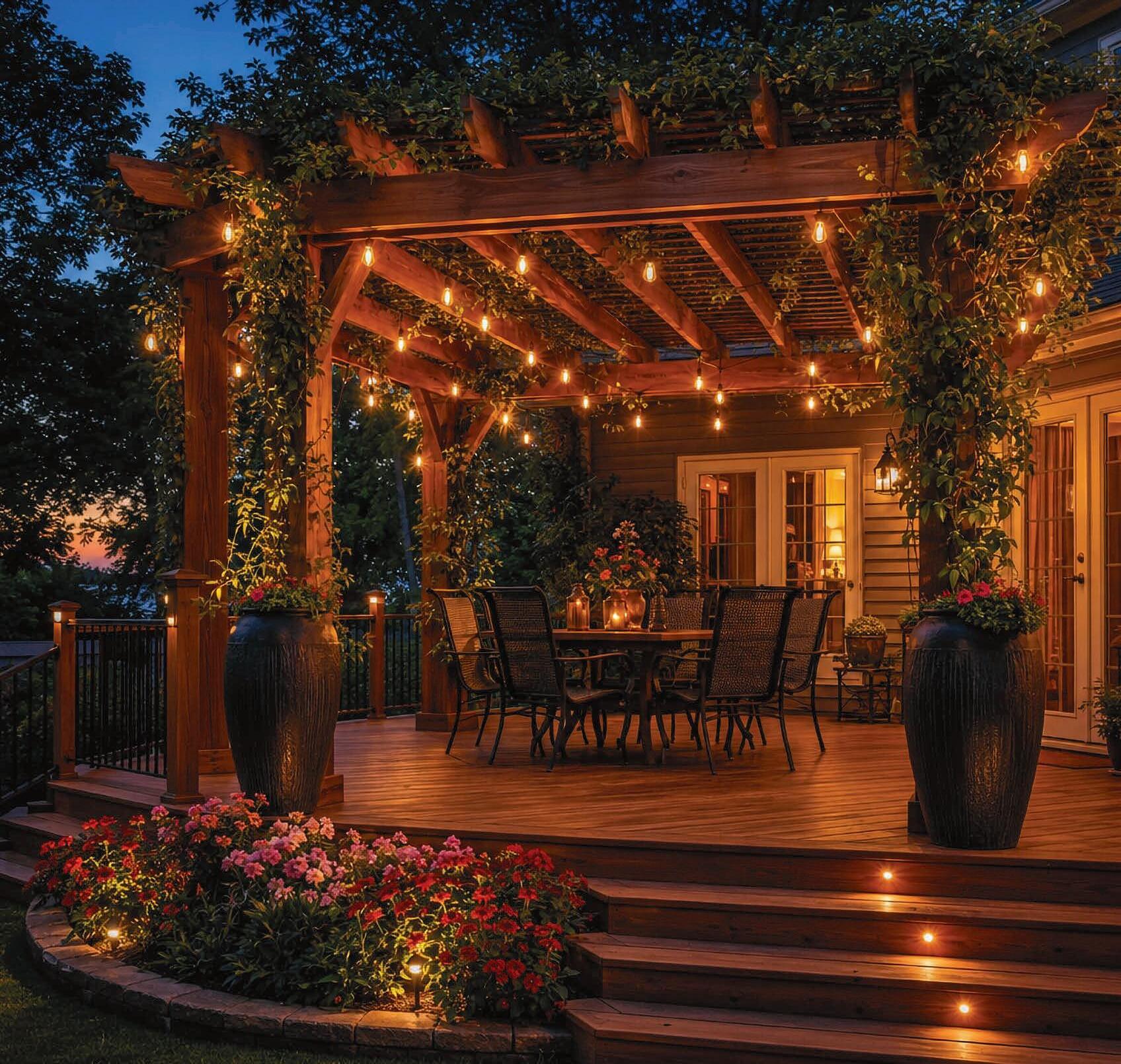
Ambient lighting is usually incorporated into the deck itself. LED lighting systems, which are low voltage, offer a soft glow so as to offer necessary visibility without being overly bright or blinding.
“Warm, white low-voltage lighting is the dominant choice because it feels high-end and inviting,” says Robert Glasner of Deck Craft Plus.
Glasner also emphasizes that lighting projects are one of the highest return on investment upgrades a deck can receive.
The lighting is usually placed throughout the deck, especially on railings and stairs where the ability to see is particularly important for safety. Some of the most common lighting types for the outdoor space are stair rise lights, post cap lights, under-rail LED strips, recessed deck surface lights, overhead string lighting or spotlights accenting the home’s architecture and landscaping.
“I would say 90% of the decks we build come with an LED lighting system. It’s not solar, it’s computerized, and it gives a
nice glow in the evening that’s on the railing, the steps get lit up. Those are very, very important features if you plan on using the deck in the evening hours. It’s something we do a lot,” says Mike Jerminski, owner of Get Decked.
While lighting is crucial for using a deck in the evening, something that offers shade makes all the difference in being able to enjoy the exterior living during the warmest months of the year as the sun beats down.
“Shade increases usability dramatically, especially in Pennsylvania where summers get hot and bright,” says Glasner.
Adding a pergola, whether as a built-in, permanent structure or something removable or retractable that can be retired on days it’s not needed, is a helpful way to be able to continue comfortably utilizing the deck.
“To accent the deck area and your different usable living space, deck lighting is essential. Deck designs tend to be a little bit more utilitarian and usable, not extravagant shapes, but how you decorate, it can make up for all of that. So I would say lighting is essential. And I would say putting a shaded area like … a permanent roof is a must,” says Bill Wilson, owner of Amazing Decks.
Furniture is another core element of the deck that makes it a practical place to entertain and relax, with deep seating
being a popular choice for outdoor sectionals, sofas and love seats.
Outdoor dining tables and seating are also among the most common selections, allowing for shared meals during parties and get-togethers.
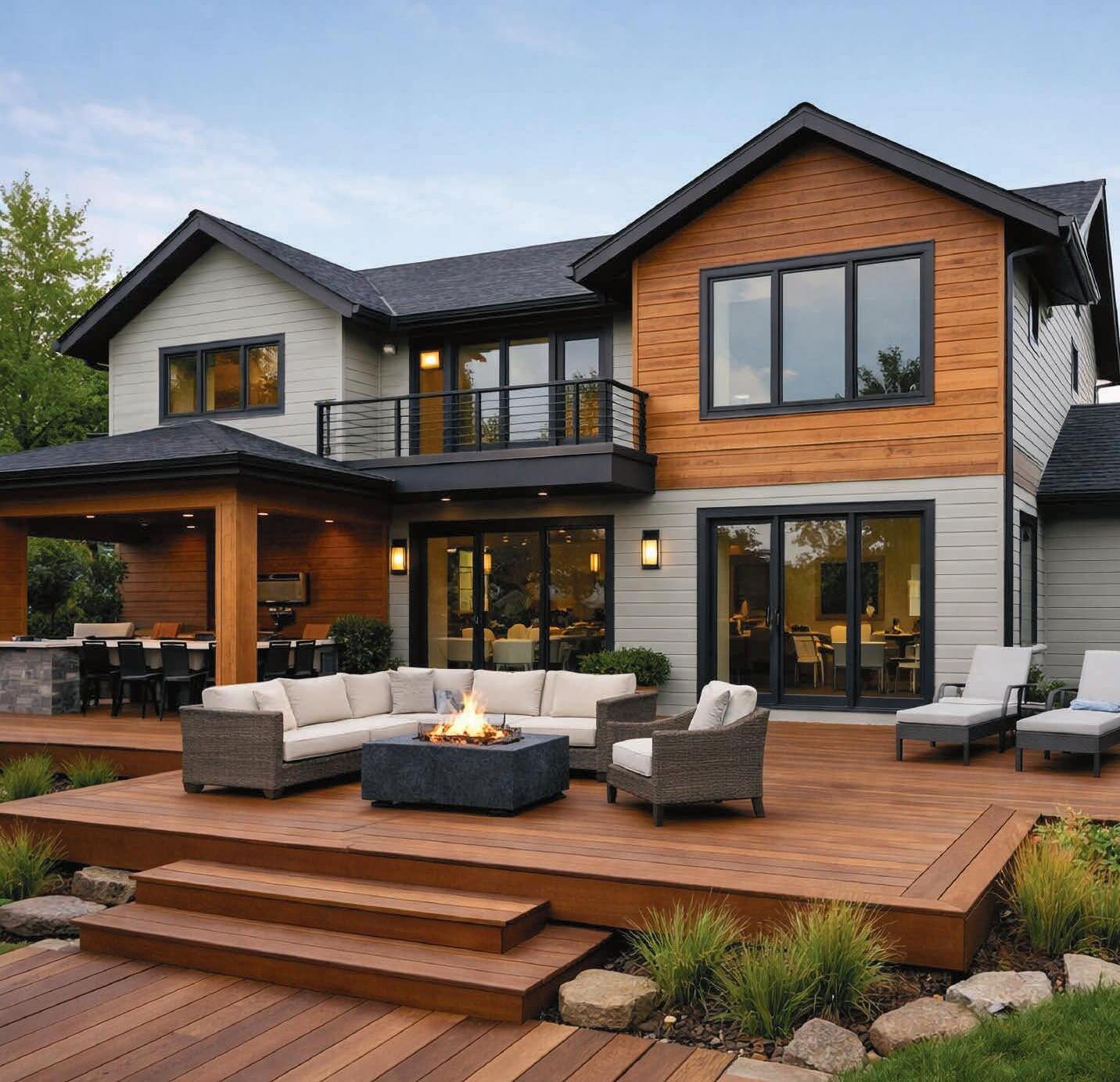
Fire tables or pits and storage benches that can both provide seating and hold anything from gardening supplies to sports equipment are also popular for furnishing decks, providing both comfort and functionality.
“Measure the space to see how they can accommodate the seating for the number of people, and how they need to arrange their seating to most comfortably visit with their friends and enjoy their outdoor space,” advises Carolyn Hetrick, one of the owners of Hetrick Gardens.
Bar and lounge areas are also highly sought after, as they give guests a space to interact, hang out and place drinks down while still being able to talk and spend time with the host.
“If you have 50 people over to your house, where do they all hang out? They all hang out with you in the kitchen, everybody hangs out there. And it doesn’t matter how big or small the house is, everybody hangs out in the kitchen. So you better put a little bar area where people can sit around with their stools, because they’re going to want to hang out with you, even though you have a
DECKING OUT THE DECK
little bit of work to do. You’re really missing out on the space and the usability of the space, if you don’t consider putting a little bar top area with bar stools, a place to eat, place to put an order so people can be with you while you grill,” says Wilson.
Planters, garden features and other greenery add a chance for homeowners to further personalize their decks, as well as expanding available gardening space for those who enjoy the hobby.
Some garden features are more regulated in certain municipalities around the region, with built-in planter boxes not being allowed in some places due to different building codes.
“The codes have gotten pretty strict about those nowadays. Children can actually climb up on a built-in bench or on a planner box.
So if we do a bench, it’s a movable bench. Same thing with a planter where the homeowner can move around, but you can’t build them nowadays,” explains Jerminski.
As built-in planters aren’t always an option, Hetrick Gardens sells plants that can be potted and placed on the deck, as well as plant shelves that can help customize the arrangement of the pots. Vertical gardens and railing planters are another option as well.
Other ways to customize and enhance the comfort of the space include heaters, ceiling fans if roofing is available, a weatherproof TV and speakers, and underdeck drainage systems.
What’s more, homeowners are utilizing the space to promote their overall health and well-being.
“We are seeing more clients request that therapeutic wellness spaces—such as spas, saunas and cold plunges—be included in their outdoor living areas. These
options are designed forrelaxation, stress relief and connection—a place to spend meaningful time with family and friends,” says Marcus Stoltzfus, marketing manager, Keystone Outdoor Living.
As for purely aesthetic enhancements, picture-frame borders, decorative railing infill and accent boards consistently increase satisfaction and long-term value, according to Glasner.
“Keep the design simple and spend your money on your decorating and usability. Usability is how you’re going to get your investment back out of the product,” Wilson says.
RESOURCES
Amazing Decks Ambler, Pa. (215) 654-1886
AnotherAmazingDeck.com
Deck Craft Plus
Honey Brook, Pa. (610) 273-3317
DeckCraftPlus.com
Dutchies Stoneworks & Outdoor Living Gap, Pa. (717) 455-3398
DutchiesStoneworks.com
Get Decked
Chester County, Pa., and New Castle County, Del. (302) 897-0302
GetDeckedInc.com
Hetrick Gardens Pottstown, Pa. (610) 327-9066
HetrickGardens.com
Keystone Outdoor Living East Earl, Pa. (717) 936-9590
KeystoneCustomDecks.com
by Lindsey Getz
It’s safe to say that the pandemic has taught us to appreciate the outdoors even more. While backyard outdoor living areas have been soaring in popularity for years now, for many, the stay-at-home orders and the experience of being stuck indoors for so long have made homeowners absolutely crave these spaces more than ever. They are truly a must-have—a fact that’s been increasingly evident at Sequoia Out Back, where owner John Keller says that he’s seeing even more people come into the showroom than ever before.
Set Up Your for
Space Summer
At Sequoia Out Back, customers can find endless inspiration for their outdoor dreams.
From the moment that homeowners walk through Sequoia Out Back’s front
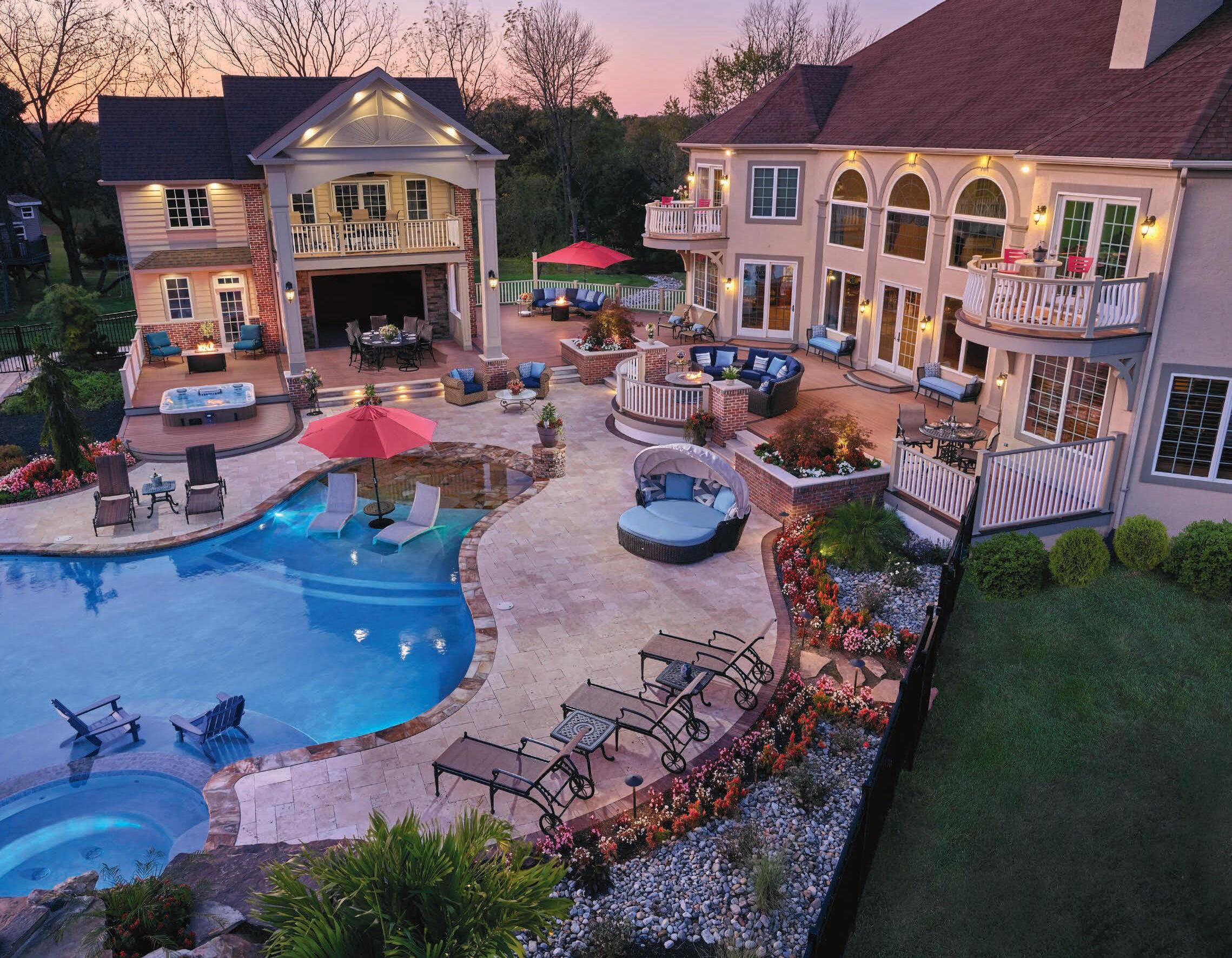
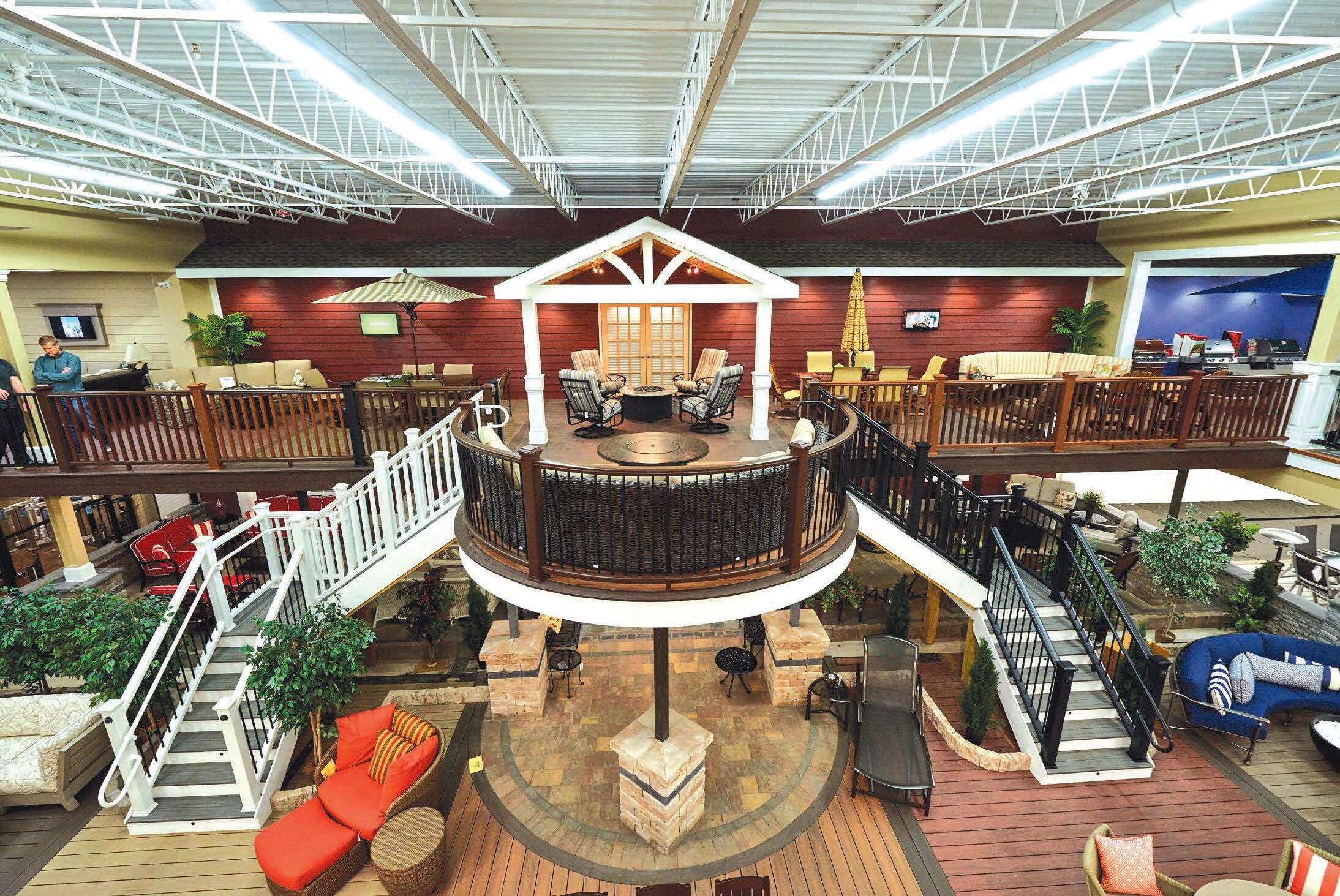
doors, the experience is really unlike any other. The 30,000-square-foot showroom has everything you could want for your personal oasis on display so that you can envision it in your own backyard.
When you walk through a typical
patio store or a big-box store, items aren’t usually set up or paired together the way they would be in your backyard so it can be difficult to visualize your finished space. At Sequoia, you can see an entire outdoor living space the way that you might set it up on your own patio. It inspires so many ideas.
The goal of the showroom has always been to make homeowners feel like they’re stepping into a real-life outdoor space. This helps homeowners to make the best choices when it comes to furniture and decking supplies that will work for their own projects.
Pair these gorgeous displays with the knowledgeable and helpful team members who are ready to assist—and homeowners can really appreciate the showroom visit experience.
Customers always leave Sequoia with a lot of great ideas and information.
In general, inventory has been a major issue since the start of the pandemic. Homeowners who have tried to purchase furniture and deck-
ing may have noticed limited stock. But, Sequoia Out Back has been fortunate to be able to keep a lot of inventory in stock thanks to its relationship with manufacturers and its purchasing power, as well as having a large quantity from the start. With so many people coming through the doors, now is the time to start planning for the spring while inventory is still available.
Before you know it, the weather will be consistently warm, and we’ll all be spending even more time outdoors. Homeowners want to make sure their space is ready now.
“The sooner you can start planning, the better,” urges Keller. “The number of visitors coming to the store right now is higher than ever for this time of year. It’s definitely not too early to start thinking about setting up your outdoor space.”
As you start planning, Sequoia Out Back has all of the amenities that you might want to consider. This includes firepits, patio furniture
and all of the material supplies including decking and railing, and hardscaping. Sequoia works with all of the leading manufacturers including TimberTech, Wolf, Trex, Zuri and Fiberon—all of whom continue to offer innovative products.
Whether you’re a do-it-yourselfer or someone who was sent by their contractor to look for materials, Sequoia’s showroom can accommodate everyone.
It’s all about making the experience as easy and as enjoyable as possible for homeowners. As the true outdoor living experts, Sequoia and its team are ready to help make homeowners’ backyard dreams come true.
“Outdoor living has been a trend for a long time but it’s hotter than ever,” Keller sums up. “I think we’re all ready to start spending more time outside.”
ask the expert
INickett Landscaping
MPROVE YOUR LANDSCAPE DRAINAGE. NICKETT LANDSCAPING PROVIDES EFFECTIVE SOLUTIONS FOR HOMEOWNERS. While spring is certainly a time for homeowners to get excited about digging into their gardens and spending more time relaxing in their backyards, it is also a season that brings a lot of rain to our area.
Rain threatens not only your outdoor picnics and barbecuing habits, but also your lawn and home if not properly drained. House & Home spoke with Scott Nickett, owner of Nickett Landscaping, about the damages of poor drainage in lawns and how best to fix them.
WHAT PROBLEMS CAN POOR DRAINAGE CAUSE FOR THE AVERAGE HOMEOWNER?
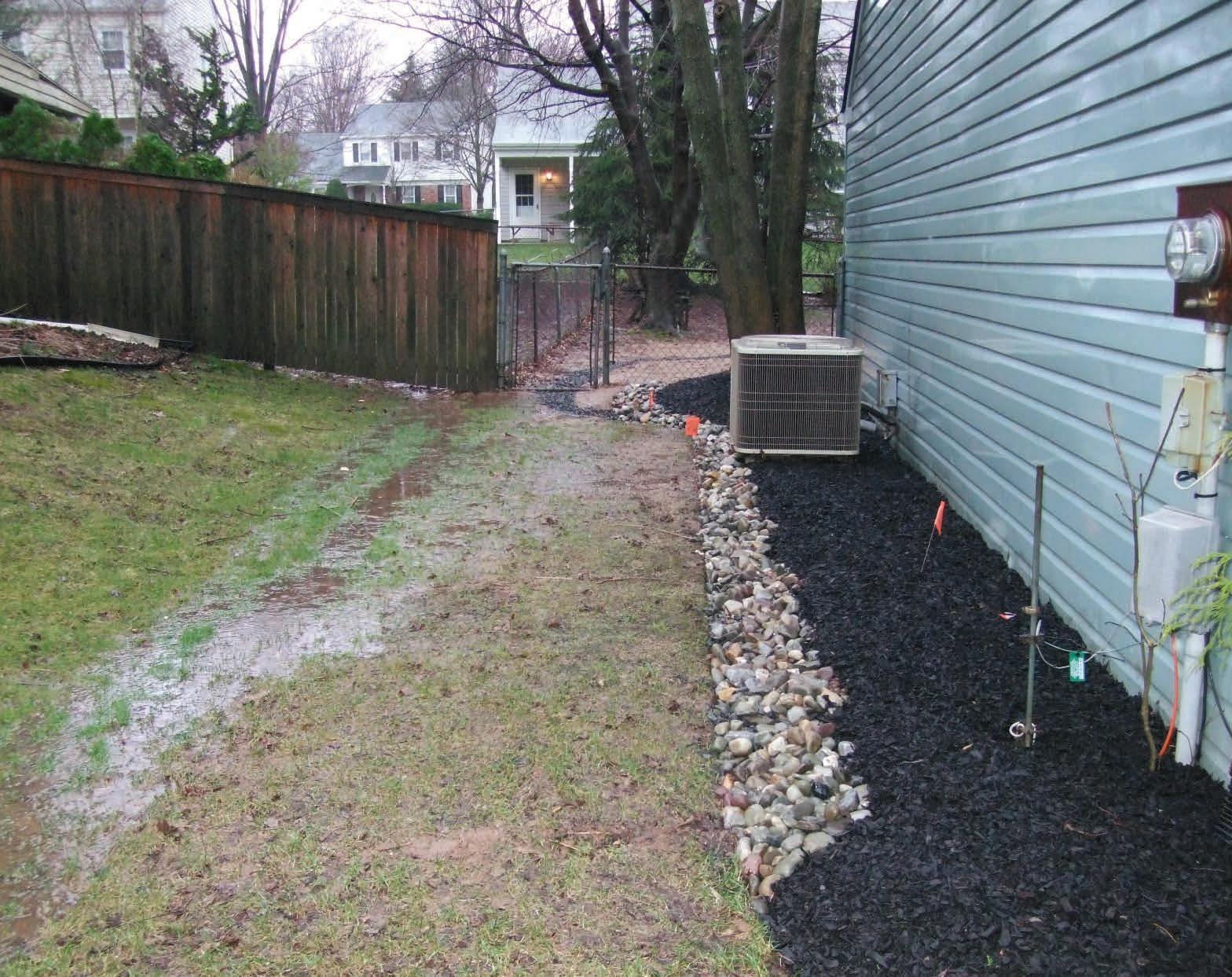
Water from poor drainage can cause all kinds of problems, from property damage/loss due to a flooded basement or living space, a yard you cannot cut for weeks, muddy dog paws and children’s footprints all over the house, and standing and sitting water that can kill your shrubs and trees. After 43 years of creating drainage resolutions for customers, we have seen and heard almost everything related to water issues at home and in the yard. There are a lot of homeowners concerned with standing water as it can be a breeding ground for mosquitoes.
Scott Nickett, Owner
HOW CAN HOMEOWNERS BEST ADDRESS POOR DRAINAGE ISSUES AND STANDING WATER IN THEIR LAWNS???
we will create a solution unique to your specific needs. Our crews will protect the lawn, driveway and other areas with plywood and tarps to keep your property as close to the way it was before we showed up. Most often you will not even notice that we were out to perform the work. Our crews take pride in leaving the property and lawn intact so you can go right back to using your new, drier lawn.
Every house needs a full assessment to see if water can be diverted away from the area of concern or if a drainage collection system is needed. Hydrostatic pressure can build up along the foundation and cause water to drip or pour into the home. These issues usually need a drainage collection system to alleviate that pressure and take the water away from the affected area. Sometimes the addition of stone and soil can solve issues in the driveway and lawn.
HOW CAN NICKETT LANDSCAPING HELP?
We use our 43 years of drainage experience to take away the mental stress of staying up all night worrying about the heavy rain that has been forecasted. We will come out to meet with you and see how your water issues are affecting your family and home. Afterwards,
HOW EXTENSIVE IS INSTALLING A LAWN DRAINAGE SYSTEM? ABOUT HOW LONG DOES IT TAKE?
Each property will have a full evaluation to determine the extent of the needed solution. Most of the time we focus on finding the vast majority of concerns and then we can add into the system in the future if needed. Most of our projects are completed in one day and we can build the right size crew in order to limit the disruption to the home and family life.
WHAT OTHER SERVICES DOES NICKETT LANDSCAPING OFFER?
We offer all outdoor services to be a “onestop shop” for all of your exterior needs. We provide spring clean-ups, bush trimming, lawn mowing, lawn applications, fall cleanups, hardscaping on patios, walkways, steppers and walls, landscape lighting, planting and design, landscape renovation, lawn renovation, monthly hand weeding and gutter clean-outs and more.
Maximize Spaceand Storage
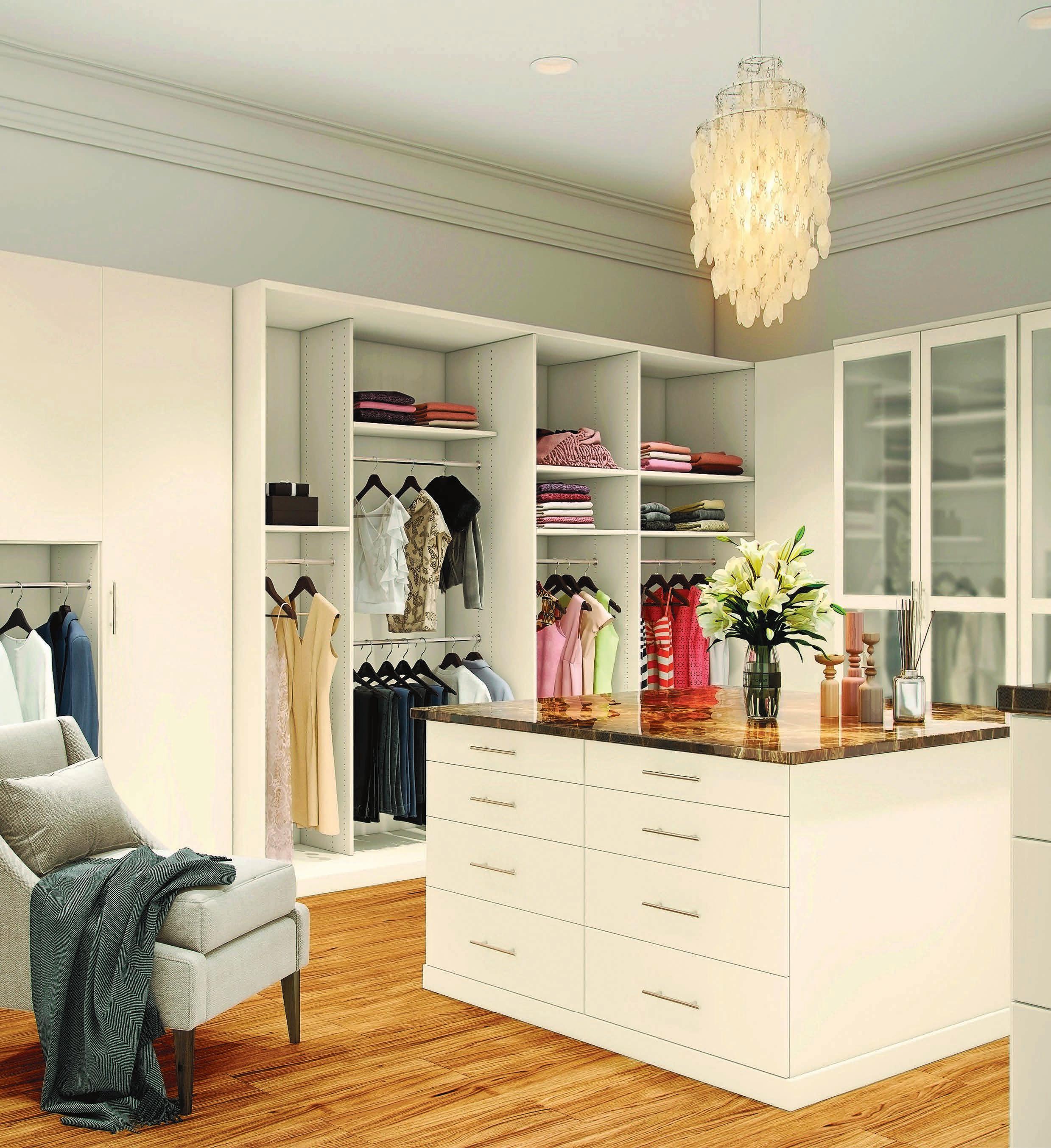
Closets by Design SE Pennsylvania and Delaware creates organized, clutter-free spaces that are tailored to your lifestyle and budget. by
Brittany Morrisey
With housing inventory near record lows and mortgage interest rates climbing, many area families are looking to stay in their current homes.
Charles Waterman, CEO of Closets By Design SE Pennsylvania and Delaware, a leader in home storage and design solutions, says right now homeowners are reinvesting in their homes to maximize their overall space and to better utilize their storage areas.
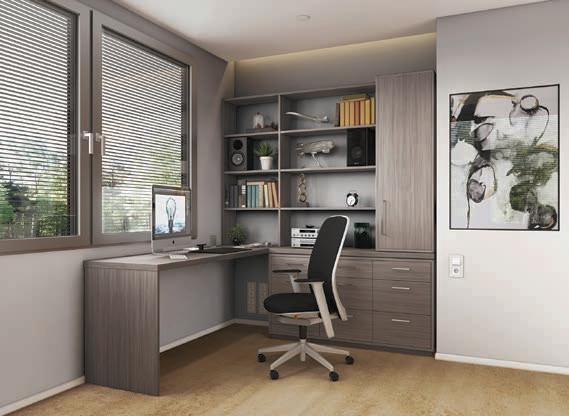
For some families, it’s become more common to work from home during some part of the week, or even full time. Finding extra room for a home office can be tricky.
Closets by Design has a number of clever solutions for this dilemma. For example, if you want a temporary workspace, knowing that you might not need it after a certain amount of time, Closets by Design can construct a free-standing home office for you that can easily be moved or disassembled at a later date. “We can put in pullout trays and sliding shelves,” Waterman says. “We can make provisions for different types of monitors. There’s a lot that we can do.”
Need some privacy for video conference calls? Closets by Design can also create areas of seclusion within your workspace so you can conduct business with minimal interruption.
Whatever your needs, the company can create a space that is tailored to your home and your budget.
Reorganizing the garage is another project many homeowners are undertaking right now, Waterman says. Unlike competitors, Closets by Design’s garage systems takes into account what needs to be accessible and what should be stored and ready when needed.
“Other companies generally offer garage systems where everything is stored openly, and so you get a very overwhelming, cluttered feeling from those designs.” With Closets by Design, a designer will
work with you to understand what items in your garage need to be behind doors and what you’ll want within reach. This approach results in a space that is less cluttered and safer for children because items that are hazardous or have sharp edges can be put out of reach.
Additionally, Closets by Design can install ventilated flooring in your garage, which can cover up imperfections in the concrete, provide anti-fatigue cushioning and make it a safer space for little ones.
As homeowners make the transition from indoors to outdoors this spring, there’s no better time than now to gather the clutter, throw away the old and subtly restructure the living space for a refreshed look. “We love the idea of spring cleaning because it allows for us to show our clients the true potential of their space—whether it’s a wall unit, walk-in closet or mudroom,” says Waterman.
Closets by Design operates from a stateof-the-art fabrication facility in Malvern where it makes all of its custom furniture. This is in contrast to many other storage and design companies that claim to provide custom pieces but actually order their products from a third party. Closets by Design does not employ subcontractors either. All of its employees are background-checked and held to the highest standards.
Waterman says it’s astonishing the impact that an organized home can have on people. In fact, the company often receives thankyou notes from customers who say their newly organized spaces have changed their homes and their lives for the better.
“What we do, it’s not just about beautification,” Waterman says. “It’s about the organization. It’s about the calmness it brings to the home. And in a world right now that’s a little topsy-turvy, that’s something that is needed. And we’re happy to provide it.”
Stylish Spaces
NO LONGER
THE FORGOTTEN PART OF A HOME,
the closet can include personal flair while also prioritizing organization and storage.
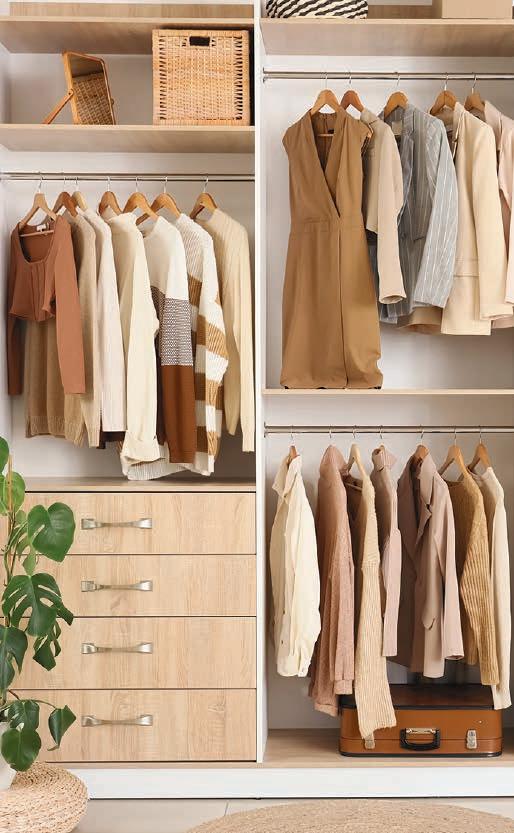
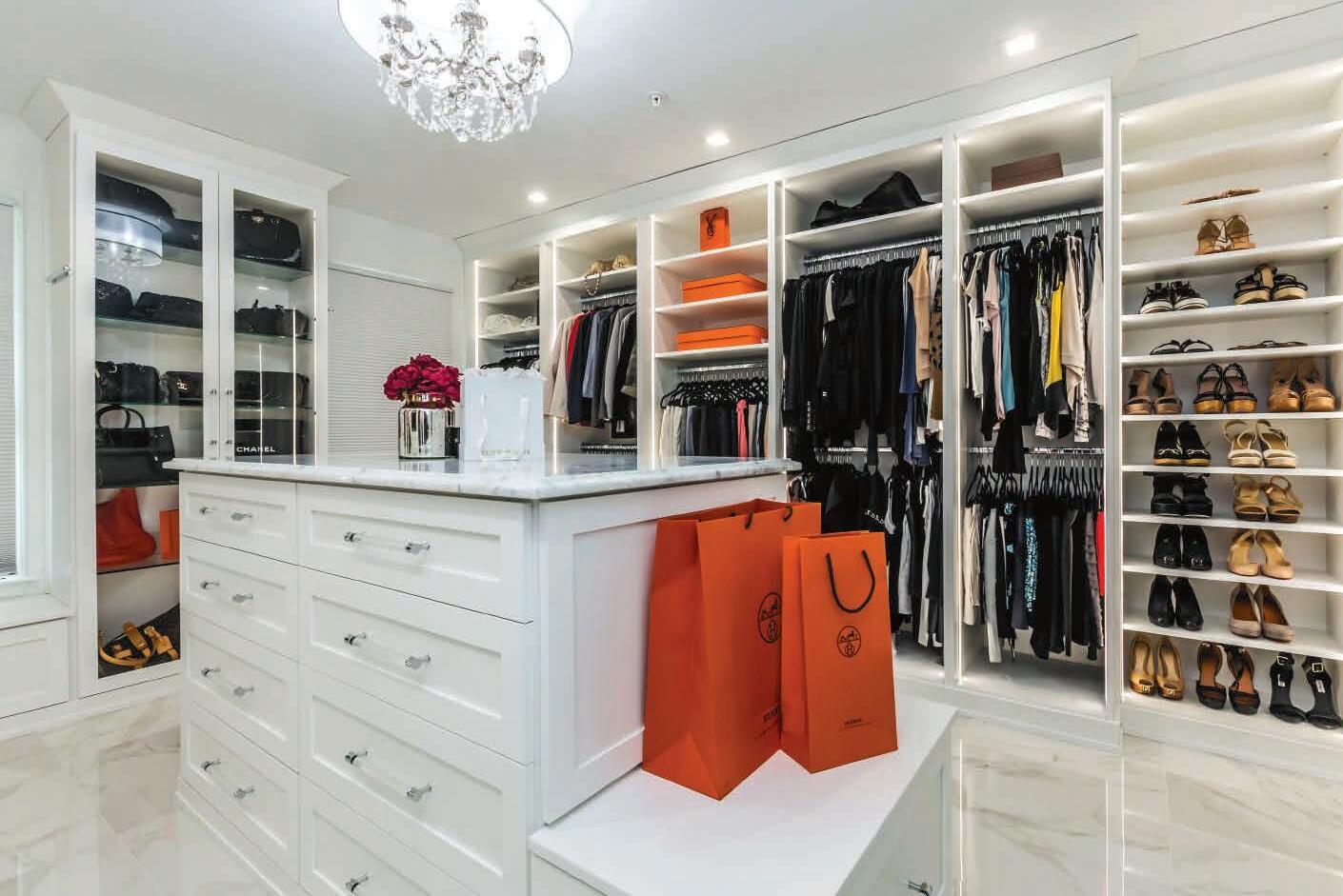
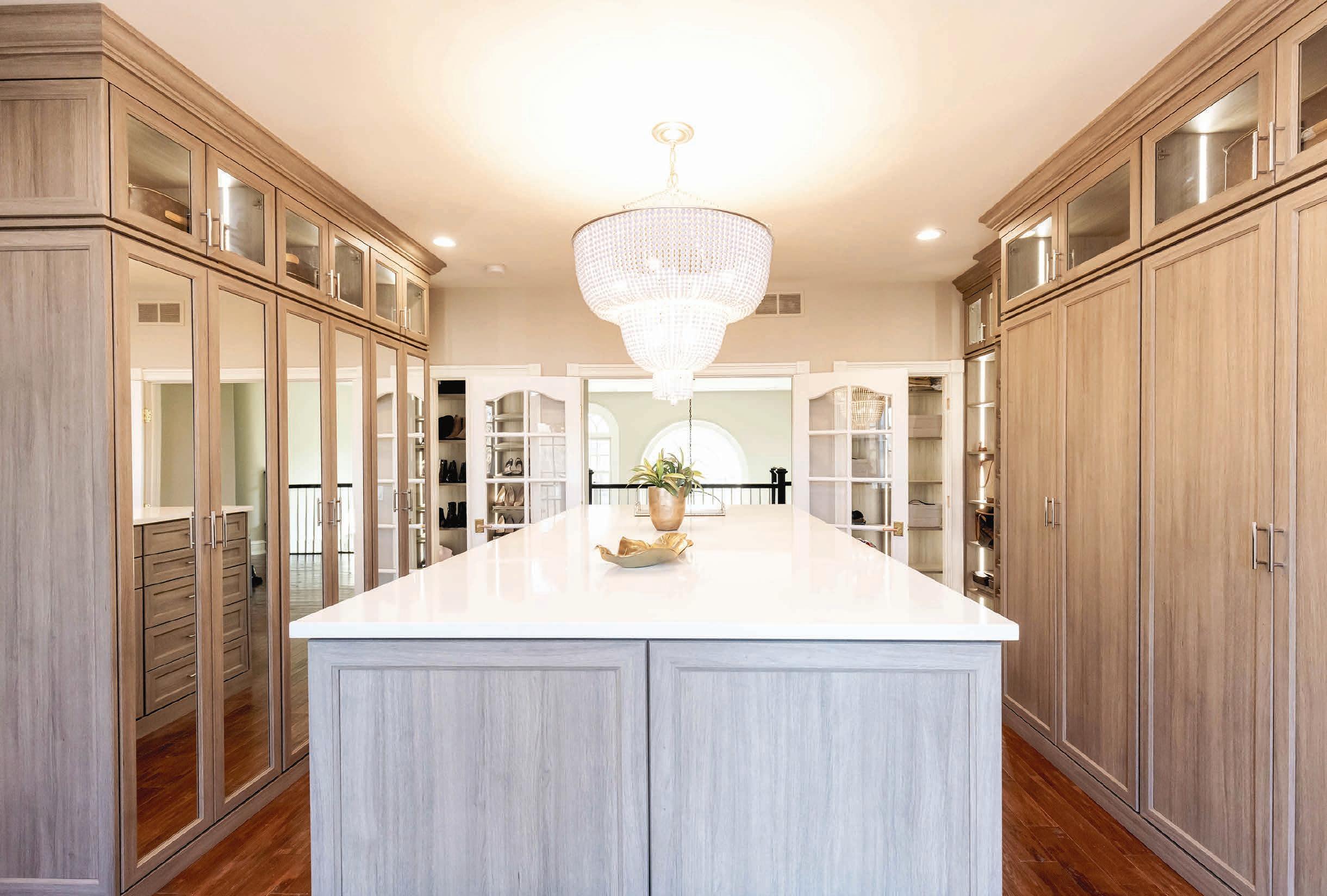
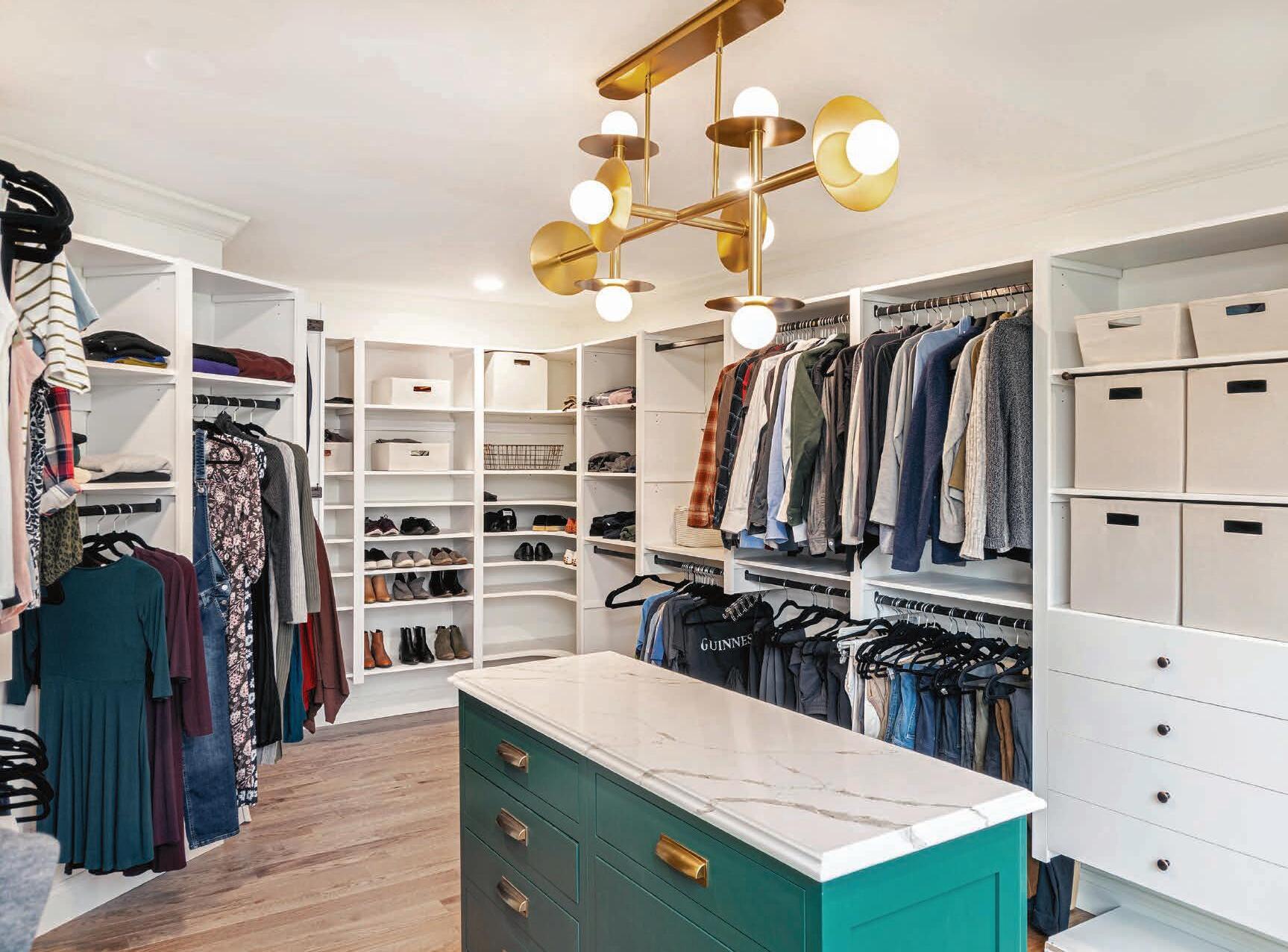
For years, the humble closet was treated as an afterthought—a hidden space reserved for overstuffed shelves, tangled hangers and the occasional avalanche of forgotten sweaters. Today, that mindset is changing. Modern homeowners are reimagining closets as highly personalized extensions of their living spaces, blending smart storage solutions with clean design, sustainability and everyday convenience. From boutique-inspired walk-ins to compact systems that maximize every inch, closet organization has become one of the fastestgrowing trends in home improvement.
The latest trends go far beyond simple decluttering. Adjustable modular systems, integrated lighting, hidden laundry
storage, eco-friendly materials and color-coordinated organization are reshaping how people use their homes. Social media and home design shows have also fueled demand for stylish, functional storage that feels both practical and luxurious. Whether families are trying to simplify busy routines or homeowners are investing in custom upgrades that add resale value, experts say the modern closet is now as much about lifestyle as it is about storage.
To better understand what’s driving the trend locally, we spoke with a few industry experts about what homeowners are asking for most, which mis-
takes they see repeatedly and the overriding benefits of becoming more organized.
What are some of the major benefits that closet organization provides beyond maximizing space?
A well-designed closet does so much more than give you extra storage. It can genuinely change the way your day begins. When everything has a place, mornings feel calmer, getting dressed is easier, and you’re not starting the day digging through clutter or making unnecessary decisions.
A custom closet also helps people enjoy what they already own. Clothing, shoes, handbags,
accessories and seasonal pieces are easier to see, easier to care for, and easier to use when the space is designed around your routine. It becomes less about simply “fitting more in” and more about creating a space that supports your lifestyle.
Custom closets impact our daily lives more than people often realize because they’re one of the few spaces in the home we use every single day. Being organized helps reduce stress and makes everyday tasks easier and more efficient. A well-designed closet is almost like a tool because while it looks beautiful and creates an attractive space, it also has an important function by helping everything stay ac-
cessible and easy to manage. Beyond the daily convenience, custom closets can also add value to your home, making a smart investment for future resale.
—Greg Ahart, owner and founder, Victory Closets
Are homeowners gravitating toward any particular trends these days? Are they prioritizing aesthetics, functionality or storage space more?
I’m seeing a color trend of people steering away from white. They now want beige or light wood colors. Homeowners are also getting more into adding accessories to the closet, like valet poles, belt racks, scarf racks and colored rods.
With pantries, homeowners want pull-out drawers, pull-out wire baskets, plate dividers and wine racks.
—Aaron Lewis, owner, Closets for Less of Bucks County
We’re seeing a growing trend toward adjustability in custom closet design. Homeowners want storage systems that can evolve with their lifestyle instead of fixed layouts that only work for their current needs. Adjustable shelving and hanging sections, being able to add or move drawers, and flexible configurations allow you to reorganize your space over time as your storage needs and routines change. People are looking for long-term functionality and convenience, not just a one-time design solution.
We are also seeing an increased interest in custom kitchen pantries. New customers and past closet customers are wanting to replace their wire shelving with a custom system. Standard wire shelving is just not practical or functional in a pantry space that is used consistently throughout every day. Busy families are looking for smarter ways to reduce clutter and get organized to make these spaces easier to manage. They want features like adjustable
shelving, rounded corners for easy access to every inch of space, and they want flexible layouts that they can change when they need to.
—Greg Ahart
Homeowners today really want all three: aesthetics, functionality and smart storage. The closet has become an extension of the home’s overall design, so people are paying much closer attention to finishes, hardware, lighting and the overall feel of the space.
Functionality is still the foundation. A closet has to work well first. But aesthetics are definitely playing a bigger role than they used to. Homeowners want closets that feel calm, finished and personal, not just a collection of shelves and hanging rods behind closed doors.
We’re also seeing more interest in specialized storage, like shoe walls, handbag displays, drawer banks, built-in hampers, valet rods, jewelry storage and adjustable shelving. The trend is not just more storage for the sake of storage. It’s smarter storage that looks beautiful and makes daily routines easier.
—Laura Bryan
How do elements like different finishes and hardware help a custom closet stand out?
Well, everybody has their own style, their own likes, their own wants, their own needs—they have a style and color schemes in their house, which we want to complement.
Part of what’s been going on in the industry over the last two decades is that it’s been the beneficiary of its own success. The more businesses that have taken off, more money has been invested in research and developing new products, new materials, new textures, new colors—there is a huge array of stuff out there. There’s wood grain that is melamine, but you would never know it’s not real wood. There are materials that look like leather and burlap. It just depends on the
Stylish Spaces
client and what they want it to look like.
—Drew Kirchner, owner, Closet Factory
What are some of the more popular areas of the home outside of the bedroom where people are looking for custom closet solutions?
We offer solutions for just about every room in the house—we do home offices, garages, mudrooms, pantries. … We offer wall beds, which is a convenient way of increasing the amount of people that can sleep in your house without having to see it all the time. It really does span just about every room and I think that in addition to our standard walk-in and reach-in closets, those spaces have become very popular.
—Drew Kirchner
What are some of the bigger closet design mistakes you see that homeowners may not be readily aware of?
Putting hanging sections in the corners. That makes it very difficult to see what’s in the back corner of the closet. It
should always be a shelf unit in my opinion. If you’re putting a hanging section into one corner, there should be a shelf unit on the other side because
the shelf unit has a lot less depth, which makes it a lot easier to see back into the corner of the closet.
—Aaron Lewis
How important is it to design a closet around a client’s lifestyle and what best suits their individual needs rather than taking a cookie-cutter approach?
It’s always better to build a closet toward their lifestyle, not a basic closet design. But homeowners need to understand that because they see something they like, it may not work for them.
A lot of times, a customer sees something on Pinterest or somewhere else, and they think their closet can be the same as what they’re looking at, and it doesn’t always match up. By looking at what they have in their closet and finding out what their basic lifestyle is, we are then able to design something suitable from there.
—Aaron Lewis
It’s extremely important to design the closet around the specific type of storage the customer needs and how they want to use their space. Not taking that into consideration can lead to
a lot of frustration and pain points in the future. You need a designer who really listens. You also want to give customers the flexibility to make adjustments to their layout when their needs change.
—Greg Ahart
Yes, especially in primary closets. Lighting is one of the biggest upgrades we’re seeing because it makes an immediate difference in both the look and function of the space. Integrated LED lighting can highlight favorite pieces, make it easier to see colors and details and give the closet more of a boutique feel.
Smart-home features are also starting to make their way into closet design. Things like motorized closet r ods and thoughtful lighting solutions can help homeowners use the full height of the space and make the closet more convenient overall. We’re also seeing more homeowners think about how their closet lighting connects to
the rest of the home, including integrating it with systems like Lutron. That allows the closet to feel like part of the home’s overall lighting plan, with options for dimming, scenes and automated controls that make the space both beautiful and easy to use.
—Laura Bryan
Part of our process is to inventory all the things they’re looking to store. If they have 100 pair of shoes, you have to make sure that you can get 100 pair of shoes stored in an organized way. It’s also a tenet of our design team and approach that we need to do more listening than anything. Every client is different and they have their own vision of what they’re trying to achieve. It’s our job to capture that into a design that fits within their budget as best we can and make their dream a reality. That’s the business we are in, we are problem solvers.
—Drew Kirchner
RESOURCES
Closets By Design
Serving Del., Pa. and N.J. (866) 278-8881 (Pa. and Del.) (888) 500-9215 (N.J.) ClosetsByDesign.com
Serving Del., Pa. and N.J. (484) 366-1836 VictoryClosets.com
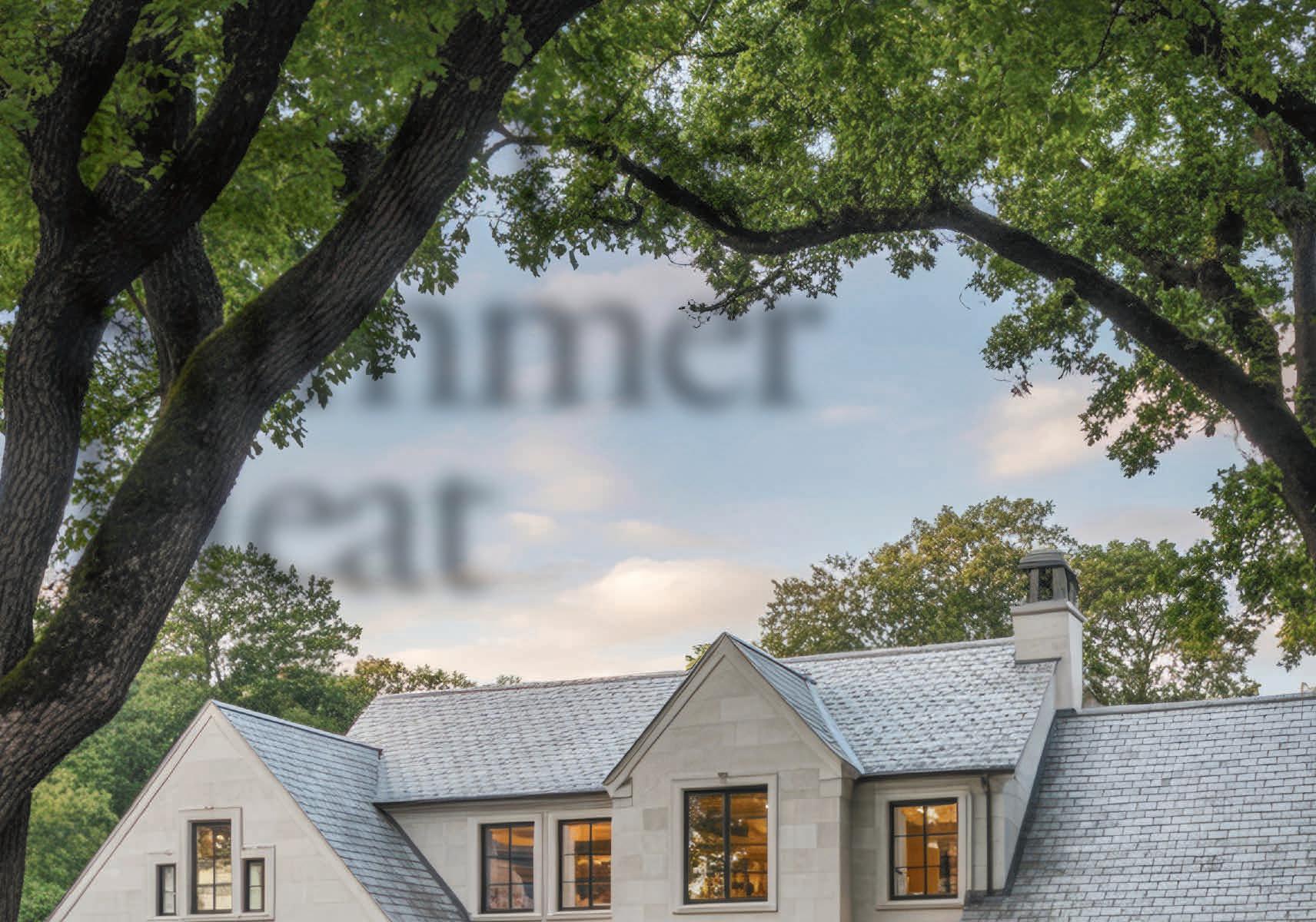
Beat the Summer Heat
By Giana Scafide
CHOOSING SUITABLE FLOWERS AND FOLIAGE
When driving through neighborhoods, one component that can always catch our eye is the beautiful flowers and shrubs homeowners place throughout their landscape. Vibrant marigolds, multicolor petunias, boxwood shrubs, hydrangeas and many other planting options are all popular picks to spruce up the exterior of the home. But where do you start when looking for the perfect ones to choose from?
Richard Cording, owner of CLC Landscape Design, says options like perennials are a great place to start. “Right now, the availability of perennials is just starting to come in,” he says. “Something like catmint, which is one of those iron-clad perennials, blooms for months. Choreopsis is another great one that can grow in sunny locations and bloom for a lengthy period at a time.”
If your area tends to get more direct sunlight, Cording recommends the new variety of Russian sage, which blooms for about two months. If you want something that blooms almost the entire length of the summer, he recommends roses and geraniums.
Chris DeMato, owner of Rock Bottom Landscaping & Fencing, says adding interest to your landscape is a must when it comes to plants. “Add a flowering tree, such as dogwood, redbud, serviceberry or flower and cherry,” he says. “You can even expand with evergreen shrubbery, like boxwood, laurel, gold, cypress or juniper.”
AVOIDING PLANTING PROBLEMS
From watering hacks to pest control and appealing landscapes, here are some tips on how to keep your outdoor space thriving throughout the season.
Summer is swiftly approaching, and with its sweltering heat and aggravating insects, it can be difficult to keep your outdoor living space the same throughout the upcoming months. To provide the best advice on landscaping tips, House and Home had the opportunity to speak with two local experts on how to maintain your landscape this summer season.
When it comes to planting, there are a couple of common mistakes that may occur. Underwatering and overwatering, not having the proper amount of soil to cover the roots and positioning plants in areas with little to no sunlight are among these problems, but are easily avoidable.
When it comes to keeping plants healthy and hydrated, some homeowners may have an
irrigation system such as an irrigation controller, valves, drip tubing or sprinklers, which is usually the top option for plant care.
“If you have an irrigation system, that’s the optimal way to keep plants hydrated,” Cording explains. “Those without an irrigation system can mulch plants, keeping them hydrated as an alternative. With or without an irrigation system, mulching the plants is very beneficial—2 to 3 inches of mulch will help hold in moisture. It protects the roots from the summer heat, and prevents them from not only drying out, but it also keeps them at a more even temperature, ensuring the roots don’t burn.”
DeMato emphasizes how watering properly is very important, considering that most plants require close to 1 inch of water per week to thrive. “Deep watering, opposed to spraying, is better for plants, encouraging stronger root growth. With newer plants, they typically need a little bit more water during their first season,”
DeMato says. “Watering early in the morning is the best to reduce evaporation and fungal risks.”
BATTLING WEEDS AND PESTS
Weeds and insects will inevitably appear in your outdoor spaces, but there are ways to control the amount of both that emerge.
“For controlling insects, the best thing to do is get a professional company to come in to diagnose,” Cording says. “If people don’t want to hire a professional company, then they should go to their local garden center or hardware store, read the labels and get informed on when to apply it.”
DeMato adds, “Avoid overfertilizing. Too much fertilizer can weaken plant roots or grass, making them more susceptible to pests and diseases.”
For weed control, you want to make sure you are removing any unwanted plants to decrease their impact on the surrounding area. “You have to know when to do it at the right time—that’s key,” Cording states. “It’s the
same thing when you switch to garden beds. We do something called a spring cleanup where we prune all shrubs, weed all beds, edge and shape, then put down a granular weed preventative underneath the mulch.”
“Regularly edge planting beds and hand-weed to keep roots healthy as well as maintaining a clean appearance,” DeMato says.
Incorporate Structure and Function into Your Yard
Hardscaping isn’t just about looks—it’s about creating usable spaces and reducing maintenance.
“Adding hardscape to landscaping can provide interest while adding texture and functionality. Consider features like retaining or sitting walls, Belgian block for driveways or bed edging and other elements to introduce variety and structure,” DeMato suggests.
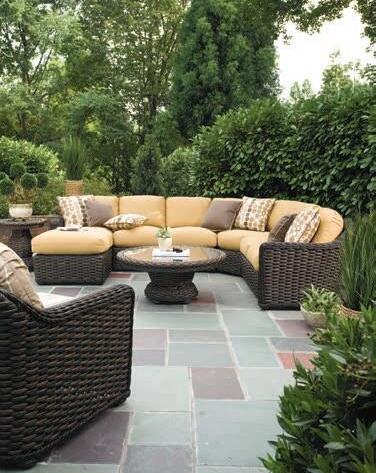
Cording says, “The biggest hardscaping is always patios. Although a patio is the most popular we do, which also includes walls and walks, we feel strongly
that a patio, which is an outdoor living space, should be designed.”
A well-maintained landscape doesn’t have to be all high-maintenance. By watering wisely, choosing the right plants, staying on top of weeds and pests and incorporating smart hardscaping, you can create a yard that’s beautiful, functional and sustainable all summer long.