
AIR Magazine - Jetex Abu Dhabi - March'26

Page 1


SCAN TO KNOW MORE ABOUT SOBHA SANCTUARY

terres d’instinct

FEATURES

Thirty Two Hammer Time

Chris Hemsworth on impostor syndrome and coping with his father’s Alzheimer’s diagnosis.

Thirty Eight Walking on Sunshine

A new book explores the legacy of Roger Vivier and the iconic shoes he designed.

Forty Four Back In The Fold

After a self-imposed hiatus, designer Nicholas Oakwell is back crafting couture – and loving it.

In the heart of the Dubai Desert Conservation Reserve, Al Maha rises quietly from the dunes — a retreat shaped by space, silence and connection to the land. Tented villas, private pools and instinctive service create a sense of ease rather than excess. Days unfold in harmony with nature, from dawn light on the sand to evenings beneath star-filled skies. This is quiet luxury, guided by heritage, where the desert leads and everything else follows.

EXPLORE THE DESTINATION AT AL-MAHA.COM

REGULARS

Sixteen RADAR

Should you feel in need of an escape, this month’s opening of an ultra-luxury eco lodge is just the ticket.

Eighteen

OBJETCS OF DESIRE

The latest luxury items we’re currently coveting.

Twenty

ART & DESIGN

How the pomegranate became Petra Kaltenbach’s vessel for expression.

Twenty Four JEWELLERY

Boucheron’s Creative Director Claire Choisne on channelling Frédéric Boucheron’s innovative vision for her latest high jewellery masterpieces.

Thirty TIMEPIECES

Richard Mille scores again with the innovative RM 41-01 Tourbillon Soccer.

Fifty MOTORING

Singer unveils its latest reimagined classic in its ongoing quest for automotive excellence.

Fifty

Four

GASTRONOMY

Pierre Gagnaire on the vital ingredients that keep him in the kitchen and his restaurants lauded across the globe.

Fifty Eight TRAVEL

Why Al Maha, A Luxury Collection Desert Resort & Spa, is an invitation to slow down in style. While in London, it’s all about the high life at Shangri-La The Shard.

Sixty Four

WHAT I KNOW NOW

Stephen Schwartz, legendary and multi award-winning musical theatre composer and lyricist.

EDITORIAL

Editor-in-Chief & Co-owner

John Thatcher john@hotmedia.me

COMMERCIAL

Managing Director & Co-owner Victoria Thatcher

PRODUCTION

Digital

Start with 50,000 Welcome Points*, $250 Welcome Credit, and $300 Annual Travel Credit.

WELCOME ON BOARD

In an era defined by legacy brands and multigenerational business dynasties, being a firstgeneration entrepreneur, especially in the aviation world, has become a rare and remarkable distinction. When you look closer, modern entrepreneurship is often shaped by the work of several generations: building a company from the ground up stands out not only for resilience but also for audacity.

First-generation founders remain the driving force behind some of the most visionary, disruptive, and culturally impactful projects. This was Jetex’s signature from the beginning: elevating a brief transition of 15 minutes – the time it takes passengers to complete the private airport process (or, as Andy Warhol said, the same amount of time everyone is famous) – into an exceptional moment that redefined the entire luxury travel experience. In 20 years, Jetex has turned from an FBO with impeccable technical services to a global lifestyle company with customisation at its core.

For us, travel is about time, the ultimate luxury. Preserving its quality, extending it, and enriching every moment, as the most coveted journeys are those that feel effortless, authentic, and profoundly human. Isn’t that what life should sound like, every day?

Cover: Chris Hemsworth by Sebastian Kim/AUGUST

AN EYE ON THE WORLD

How Jetex has redefined the luxury travel experience

For two decades, Adel Mardini has engaged in an arena of global competition and complex regulatory landscapes, creating credibility step by step. Agility, an outsider’s perspective, and a hunger that cannot be inherited are at the heart of the impulse. As Jetex’s founder, he has redefined the industry precisely because he doesn’t fit in a mould. His story resonates deeply with Jetex customers – always on the move, on the verge of inventing, reinventing, or redefining their own lives, at their own pace. Adel Mardini has taken this voyage with his clients, as Jetex was built on one conviction: true excellence lies in service.

Twenty years later, across more than 40 countries, from Sao Paulo to Abu Dhabi and Paris to Singapore, Jetex now operates the world’s most luxurious and efficient private terminals, blending hospitality and aviation like no one else. Its understanding of hospitality is what distinguishes the brand, which pioneered a concierge-style approach to aviation, anticipating needs before they arise and designing unforgettable moments. As the brand expands across key global destinations, transcending the boundaries of aviation, Jetex now offers curated lifestyle experiences, exclusive collaborations, and forwardthinking sustainability initiatives that speak to modern travellers.

Seeking more than efficiency, Jetex has always listened to its travellers: They craved environments that match the seamless comfort for a perfect journey. Expectations are extended far beyond traditional notions of comfort, pursuing journeys that reflect values, identities, and evolving lifestyles. Ultra-personalisation was always the key for Jetex. Privacy is elevated to a new standard, with discreet, end-to-end experiences that allow businessmen, friends, and families to travel light and effortlessly.

Sustainability has become a defining pillar too: Transparent environmental responsibility is key, from cleaner aviation solutions to carbon-positive facilities and regenerative partnerships at destinations. To opt for conscious indulgence rather than meaningless excess makes sense, especially today. Isn’t luxury now measured in intentionality? Rather than collecting destinations, modern travellers seek transformative moments – private cultural immersions, rare encounters with nature, wellnessdriven retreats, and access to moments curated exclusively for… you.

Every detail at Jetex is curated, from VIP concierge to culinary experiences, interior design, and exclusive airside transfers in Rolls-Royce vehicles. A dedicated Guest Experience team

manages every formality, including visas, security, fuelling, and luggage, with precision and grace – always. Beyond the tarmac, Jetex offers an expert eye for details, with the concierge services embracing bespoke itineraries, private yacht charters, and exclusive event access. Privatising a paradise island for a celebration, bringing family together in Africa’s most exclusive safari lodge, seeking absolute privacy and safety for a weekend escape, Jetex manages travel aspirations, transforming wishes into reality.

As Jetex expanded through the years, lifestyle became its compass. In Paris Le Bourget, Tokyo, and later Marrakech or Sao Paulo, every new location was conceived as a refined gateway: creating spaces where design, comfort and service blend with effortless sophistication. The opening of the Jetex flagship lounge in Dubai, a 5,000 m² sanctuary, marked a defining moment: Private aviation could offer more than transit – it could offer a world of its own. Rolls-Royce airside shuttles; bespoke partnerships with brands such as La Prairie, Louis Vuitton, Piaget; and curated gastronomy elevated each journey into an experience.

Because more than a trip, travellers are looking for an experience. As the network grew on five continents, Jetex became synonymous with contemporary luxury culture. Shaping the future of hospitalitydriven aviation across more than 3,500 airports worldwide, its story is no longer just about where travellers go but how they feel at every moment along the way. Digital innovation followed naturally, with the launch of the Jetex Mobile App, MYJETEX, and later a pioneering Meta FBO Private terminal, inviting guests into virtual experiences before their trip even began. Jetex’s VIP Terminal in Dubai became a global hub, hosting thousands of travellers during major events such as the FIFA World Cup. For two decades, Jetex has entirely redefined the meaning of flying ‘private’, transforming travel into an art and a lifestyle where luxury, innovation and responsibility meet.

Should you feel in need of an escape, this month’s opening of an ultra-luxury eco lodge deep within the rolling hills of South Africa’s Addo Elephant National Park is perfectly timed. Mantis Hiddn (their intentional typo, not ours) stands alone, each of its fourteen residences – the pick of which houses four bedrooms and an outsized infinity pool – bestowing heart-tugging views across verdant valleys. From here, close encounters with the Big Five await within the lodge’s 800-hectare private reserve, each day bookended by a spectacular sunrise and celestial show. mantiscollection.com

objects of desire

Set the tone as a true tastemaker with these coveted items

CHANEL HAUTE COUTURE SPRING/SUMMER 2026

Matthieu Blazy’s debut haute couture collection saw the house’s entrenched codes establish a new cool, with silk muslin – a favourite of Gabrielle Chanel – prevalent. This sheer fabric conveyed a sense of lightness, the unbridled creativity of couture serving as a fleeting

antidote to the heaviness of the world’s issues, and it wasn’t alone: Blazy opened the show with a nude chiffon version of Chanel’s storied tweed suit and added a delicate touch throughout, echoing, in his own way, Coco’s desire to liberate women from rigidity.

The past remains important in the modern-day world of Delvaux and for good reason: as both the oldest fine leather goods house in the world and the inventor of the modern handbag – it filed a patent for one in 1908 – it has a rich heritage to lean on but does so

only subtly. Le Brilliant bag is a prime example. Created in 1958, it’s since won a legion of admirers for being as instantly recognisable as it is beautifully made, features that this smaller iteration (with a goat-suede lining inside) faithfully maintains.

DELVAUX LE BRILLANT TEMPO S

SCHIAPARELLI HAUTE COUTURE SPRING/SUMMER 2026

You can always count on Daniel Roseberry to come up with something wholly imaginative, coming at couture from an angle that views it not as something designed for daily life but as a fantasy, an escape from the mundane. To find inspiration for his latest collection,

Roseberry looked skywards, finding himself awakened by the scenes depicted on the ceiling of the Sistine Chapel. “This collection is a celebration of the depth of skill and talent of our ateliers, all working at the height of their technical and imaginative powers,” said Roseberry.

Inspired by the majesty of Monte Cristallo in the Italian Dolomites, and conceived as a declaration of ambition, expert craftsmanship and a contemporary take on Italian style, the Grecale Cristallo Special Edition is the latest reveal from Maserati’s prized Fuoriserie programme,

which tailor-makes unique versions of their cars for trailblazing clients. The colour of this one-off Grecale is instantly engaging, a bespoke shade that moves from Maserati blue towards a cooler, lighter tone to which a subtle golden mica is applied. Bellissimo.

MASERATI
GRECALE CRISTALLO SPECIAL EDITION

DIOR

HAUTE COUTURE SPRING/SUMMER 2026

Dior’s creative director Jonathan Anderson has been quick to weave his alternative aesthetic into Dior’s design language, and he used his first ever couture collection to emphasise it – the hourglass silhouette of Christian Dior’s 1947 New Look took the form of a cocktail

dress, while Dior’s fondness for flowers became the inspiration for snowball-sized earmuffs. It was a vision that felt fresh, Anderson clearly revelling in dreaming up designs that could only be crafted by couture artisans and ensuring that accessories received the same attention.

GIORGIO ARMANI PRIVE SPRING/SUMMER 2026

Silvana Armani, the niece of Giorgio, spent decades working for her late uncle in a variety of roles – from model to receptionist and latterly designer, mainly for the brand’s diffusion line, Emporio –but though she is therefore well versed in the house, picking up the reins of

the label’s couture collection was undoubtedly her toughest assignment yet. Beautiful, sparkling gowns and chic, masculine-inspired suiting came straight from her uncle’s playbook, but Silvana’s wish to make couture lighter and more wearable was both evident and welcome.

BYFANG

HAUTE COUTURE SPRING/SUMMER 2026

Fang Yang’s design principles borrow from both Paris and Shanghai, but it’s her fascination with zhezhi – the traditional art of paper folding – that informs her latest couture collection. Origamiinspired shapes and fabric that evolves from flatness to beautifully structured

form – through a deliberate sequence of tensions and releases – bring shape to silhouettes through intention as opposed to layered excess. Similarly, Yang’s chosen colour palette unfolds with clear intention, the light blue of spring giving way to the house’s essential black, white and red.

SWEET LO

WORDS: JOHN THATCHER

How the pomegranate became Petra Kaltenbach’s vessel for expression

When it comes to embracing new technologies, Petra Kaltenbach has never been afraid of diving in. UV printing, video, QR codes, and augmented reality have all been utilised in her expressive works, which span many art forms. But though the digital space affords room for experiment, it is to a more familiar form of art that Petra has turned. “The more digital our world becomes, the stronger the longing for the real grows – for things that can be walked around, touched, and physically experienced. Sculptures today carry a new emotional significance; they ground us. They create moments of stillness and genuine presence – something that cannot be swiped away or scrolled past. For this very reason, I experience analogue forms of art as especially powerful today.”

We’re talking about her sculpture series, Everybody’s Darling, a colourful, playful and, above all, joyful interpretation of the pomegranate fruit. “The starting point for the sculpture series was a painting, Falling in Love, which I created in 2021. In this work I painted a pomegranate as a love-dispensing symbol for the first time – serving as a visual carrier of love, hope, and connection. Initially, my intention was to develop this idea into a series of paintings. But as the artistic process evolved it became increasingly clear that this motif called for greater space and presence. Out of this realisation, the sculpture emerged as a three-dimensional translation of the love-dispensing pomegranate.”

It’s not the first time Petra has explored the potential of the pomegranate as a signifier. “For me, this step was an evolution of a motif that has accompanied me for many years. It is a powerful, timeless

symbol that transcends cultures. It represents love, life, beauty, health, wealth, fertility and the divine.”

Made in three sizes from materials including 3D-printed resin, recycled plastic and fibreglass, the series includes a melting pomegranate, designed to convey “sweetness, vulnerability, and full surrender,” and another housed in an engraved acrylic box. “I hope people feel touched – both in the literal sense and on an emotional level. The sculptures are meant to convey humour, joy, warmth, and lightness, while still carrying depth. They are invitations to reconnect with beauty, love and hope. If someone pauses for a moment, smiles, or opens up inwardly, then the work has fulfilled its purpose.”

How did working with sculpture compare to the other artistic mediums she’s worked with? “Sculpture allows the theme to be experienced in a more immediate way. The work stands freely in space and can be viewed from all sides, enabling a direct, calm and personal encounter.”

There is another sculpture in the series entitled Divine Darling – neon wings affixed to a pomegranate to suggest “movement, freedom, and the soul’s ability to rise beyond limitation" – which serves as a neat metaphor for a theme that deeply resonates with Petra: transformation. It underpins a lot of Petra’s work, mirroring her own life, in which she swapped a high-flying career at an advertising agency in her native Germany for that of an artist in Dubai, arriving at the turn of the century when the city itself was transforming into the modern, bustling metropolis it is today. It was a decision that reaped rewards – literally in the case of Petra scooping the accolade of best UAE-resident artist

at 2018’s World Art Dubai, a body she now works with as an art adviser.

“The world of advertising taught me a great deal, especially about visual language and communication. Yet over time, the desire grew stronger to create not for brands, but from within myself. Art gave me the freedom to ask questions rather than provide answers, to allow depth, and to express myself authentically. It was less a decision against something and more a decision for myself.

“Transformation is a central human theme. My own life – particularly my move to Dubai in 2004 – has been shaped by change. I am fascinated by inner transformation: the human ability to leave behind old patterns and grow into freedom, expansiveness and inner peace. Art has the power to make this process visible and to accompany it.”

After spreading the love with her playful pomegranates, it is the transformation of the UAE that Petra will conceptualise next, by way of an installation.

“Dubai and the UAE as a whole are symbols of constant transformation. I believe it means a lot to open oneself to the world, to embrace so many cultures while simultaneously redefining one’s own identity. In the past, many perceived Dubai as a bubble, something not entirely real. I think it’s precisely about grounding, about materialising one’s own dreams… till it’s not visible and named, it feels unreal.

"The pursuit of prosperity is often expressed today through glitz and glamour, but what about the earthy, simple side of life? Does it still have a place in Dubai? Of course, that is a question each person must answer for themselves. This is exactly what my next work seeks to explore.”

‘ THEY ARE INVITATIONS TO RECONNECT WITH BEAUTY, LOVE AND HOPE’

Boucheron's Creative Director Claire Choisne on channelling

Frédéric Boucheron’s innovative vision for her latest high jewellery masterpieces

BACK TO THE FUTURE

WORDS: JOHN THATCHER

TThe tenures of Frédéric Boucheron and Claire Choisne may well bookend over 170 years of dazzling craft at Boucheron, but the commonalities between the brand’s founding father and its current creative director make the pair inseparable. Frédéric Boucheron, whose avant-garde mindset challenged convention, and Choisne, whose innovative and daring designs ensure Boucheron’s bold brand identity endures.

It’s those shared characteristics that Choisne emphasises in Boucheron’s latest high jewellery collection, four major, jaw-dropping pieces that speak of Frédéric’s pioneering spirit, reinterpreting his archival designs.

“Many elements bind us, like the love for nature as it is – raw, living, and endlessly inspiring,” Choisne tells us. “We also both place the individual at the heart of each creation, thinking beyond the material value of a piece to design jewellery that is genuinely wearable, that lives and moves with the person who wears it. It is also the desire to push the boundaries of high jewellery through constant innovation, not as an end in itself, but as a way to reinvent what is possible. And, above all, for Frédéric Boucheron as for myself, it is about emotion: creating pieces that resonate, that tell a story, and that spark a deep, personal connection.”

The story of this quartet of masterpieces begins where they were revealed during January’s haute couture week in Paris: 26 Place Vendôme. Legend has it that, drawn by the light of the sun, which cast its glow on number 26 throughout the day, Frédéric Boucheron decided that this corner building, in a square that was used as a mere thoroughfare to the pretty Tuileries gardens, was the place to base his eponymous brand so that his creations could sparkle. It was the late nineteenth century, a time when the city’s other leading jewellery and couture houses were homed on

Rue de la Paix. Boucheron led, the others followed, and Place Vendôme became – and remains so today –synonymous with high jewellery houses. Comprising over one thousand hours of handcraft, The Address is a pendant that makes a magnificent feature of Place Vendôme’s octagonal shape, a 10-carat diamond framed by 242 baguette diamonds, each recut and carefully orientated to follow the natural curve of the neck, creating a fluid, architectural line. The idea of jewellery designed to follow the fluid lines of the body, to trace its contours, is enshrined in Boucheron’s design vocabulary. “Comfort is an essential part of our savoir-faire. Innovation should never come at the expense of how a piece feels on the body. We do everything we can to create jewellery that is light, supple and effortless to wear.”

This tenet is rooted in Frédéric Boucheron’s belief that jewellery was an extension of a person’s dress. “One of Frédéric Boucheron’ singularities is that he was the son of a draper. He grew up surrounded by precious silks and laces and had a keen sense of the textures, fluidity and drape of fabrics. He didn’t view jewellery through the same lens as other jewellers; for him, it was an extension of clothing, another element that made up a person’s style,” outlines Choisne. “Very soon, he believed that the future of high jewellery would lie, in part, in creating pieces that are not only beautiful objects but living creations capable of adapting to the different occasions and moments in life, and that movement and transformability will undoubtedly be key elements in the evolution of the industry. He was right, because today’s women are looking for jewellery that evolves with them, that can adapt to their outfits, moods, and surroundings. Just like him, I think high jewellery should no longer be viewed as a static piece but as a true companion in daily life, one that transforms and adjusts. At Boucheron, we are constantly exploring new ways to make our creations evolve, offering transformable jewellery to meet the diverse desires. I like to craft transformable pieces because this modularity speaks to how people wear jewellery today: with freedom, individuality, and a sense of play.”

This desire is nowhere more apparent than in The Silhouette. A technically complex piece, its chains comprise seven metres of some 2,500 bezel-set diamonds that can be worn six ways: as a combined necklace and double shoulder adornment; as two shoulder brooches with symmetrical lines of bezel-set diamonds; as a double-drop sautoir necklace; as two necklaces; as a striking choker, paved with over 100 baguette diamonds; or as a pair of bracelets to adorn the wrists.

It was an archival photograph from 1884 of Frédéric Boucheron’s groundbreaking Question Mark necklace – the world’s first claspless necklace, one whose unique shape birthed its name and showcased Boucheron’s exceptional craftsmanship by making its myriad links imperceptible to the eye – that inspired Choisne to create The Spark. Here, a captivating sequence of eight diamonds descends the décolletage, culminating in a kite diamond of 5.01 carats encircled by a halo of baguette diamonds.

“I love being challenged, especially when it comes to honouring the history of Frédéric Boucheron,” states Choisne.

“The Histoire de Style collections [the first of two high jewellery collections Choisne designs each year] are always an opportunity to push technical boundaries while remaining faithful to the Maison’s heritage.”

The Untamed piece encapsulates this philosophy. “It was originally a historical drawing that was considered impossible to realise from a technical standpoint at the time,” says Choisne.

“Bringing it to life this year became a personal challenge. As Frédéric and I share the same vision of nature, I had long dreamed of reproducing the design of the very first Question Mark necklace, with its ivy motif, and of making its extra-long length a reality.

“Staying true to the original sketch while adapting it to today’s wearing styles, I envisioned a branch of ivy set with round diamonds, clambering freely downwards and following the contours of the body. To overcome the dual challenge of length and equilibrium posed by this design, a complex architecture was built with stems and leaves mounted one by one, their positions calculated to the nearest millimetre. Its construction was guided by Boucheron’s desire to offer maximum freedom in how a piece can be worn. This is why the artisans developed a multiwear system with multiple articulations, allowing the piece to be worn both long and short.” Choisne loves a technical challenge, but emotion remains her motivation.

“I believe emotion must be the driving force behind the creation of a high jewellery piece – otherwise, what purpose does it serve? A jewel is like a work of art: to be appreciated over a lifetime, it must go beyond its materiality. For me, a piece should tell a story when it is created, but it should also leave room for many other stories to emerge once it is worn. We all have our own sensitivity, and the beauty of a jewel lies in its ability to move us, to transcend us, and to resonate differently with each individual. In that sense, a piece has a thousand lives, shaped by the emotions, memories and imagination of those who wear it.”

This year marks Choisne’s fifteenth at Boucheron. A moment to reflect. To celebrate years of boundless creativity. “The approach of my jewellery has always been poetic and

bold. And beyond style, I want it to carry a message, share an emotion and eternalise the ephemeral. Since I joined Boucheron in 2011, CEO Hélène PoulitDuquesne has given me total creative freedom to pursue my dreams. While perpetuating Boucheron’s philosophy by creating emotional jewellery, I continue to explore my deepest thoughts and go further in my creative process and vision. Also, I pay great attention to questioning the notion of preciousness, which has always been in Boucheron’s DNA, ever since Frédéric Boucheron first used rock crystal. It is a notion that has significantly grown in my collections, notably Carte Blanche [the second of Choisne’s annual high jewellery collections], where I am fuelling this questioning. My aim, in the same way as Frédéric Boucheron, is to demonstrate that certain materials, not considered noble at first sight, are actually just as precious as gold and diamonds.” Are there particular designs that mean more to her personally? “Since I was first trained as a jeweller, I developed a deep relationship with technique and craftsmanship, understanding how a piece is built from the inside out. This foundation has shaped the way I think and create. Technique is never a constraint for me but a creative language. It allows me to imagine new forms, new ways of wearing jewellery and to constantly challenge what is technically possible. Therefore, I think the pieces that mean the most to me are related to challenges we have overcome to express our vision: to make flowers eternal and put them on fingers (Nature Triomphante, 2018), to unhook a piece of sky and hang it around the neck (Contemplation, 2020), or to bring back black sand from the beaches of Iceland and compact it into a necklace (Or Bleu, 2024). I love these pieces, which express the freedom to innovate with confidence and a very technical yet poetic approach that continues to define who I am today. As long as there are limits to high jewellery we will keep pushing them to bring our creative vision to life.”

Frédéric Boucheron would doubtless concur.

GAME CHANGERS

Richard Mille scores again with the innovative RM 41-01 Tourbillon Soccer

I

n the year that the finest footballing nations will contest the World Cup, Richard Mille’s latest boundary-pushing timepiece is, as always, perfectly timed. It’s also a feat of technical wizardry to rival Pelé in his pomp.

Across five years of painstaking development, the trailblazing brand’s own team of superstars has created the RM 41-01 Tourbillon Soccer, for which an entirely new tourbillon flyback chronograph calibre has been developed – one that debuts two exclusive complications specific to a football fixture: the match-phase indication and the mechanical goal counter.

The former is found at 9 o’clock and tells you which half of the match is being played. Each time you reset the flyback chronograph, it moves automatically through the periods of play. Starting the chronograph at kick-off shows ‘1st half’ displayed, and resetting it at half- sees it change to state ‘2nd half.’ This also extends to cover any nail-biting periods of extra time.

The latter allows you to keep track of the score in a playful way. Two separate goal counters, one for the home team and another for the visitors, are activated by pushers at 2 and 4 o’clock, each press advancing a hand mechanically along a metal rail via a dedicated gear train.

It means that while every watch measures time, only this one measures context.

It’s not the first time Richard Mille has drawn inspiration from the beautiful game; the RM 11-04 Roberto Mancini introduced an innovative match-time display. But this is on another level.

“We think in concepts rather than linear evolutions. What we learn on one reference can become the starting point

I‘ WE THINK IN CONCEPTS RATHER THAN LINEAR EVOLUTIONS’
Alexandre Mille, Commercial Director, Richard Mille

for the next challenge,” said Alexandre Mille, the brand’s Commercial Director.

The use of the word ‘challenge’ is forever pertinent at Richard Mille. In its ongoing pursuit of innovative excellence, it dares to challenge itself time and again, and the crafting of this latest groundbreaking movement saw technical feasibility pushed to the extreme. To provide room for its 650 components, myriad elements were highly skeletonised and hand-finished, whether that time-consuming, meticulous work was to be subsequently visible or not, an approach that emphasises a firm commitment to absolute perfection. As does the fact that before this timepiece left the factory it was put through 120 of Richard Mille’s famed shock-resistance tests, which see skeletonised pieces such as this withstand forces thousands of times stronger than normal gravity.

The RM 41-0’s resolute case – with Carbon TPT® at its rear – is comprised of 105 components and comes in two 30-piece versions, a Dark Blue Quartz TPT® and a Red Carmin Basalt TPT® , the first time this volcanic rock-derived composite, which was developed by North Thin Ply Technology (NTPT™), has been used by Richard Mille, chosen as much for its exceptional mechanical performance and extreme resistance as for its colour-absorbing properties.

“NTPT™ is an extremely creative company in composites, constantly innovating, both in terms of colour, composite combinations and their finishes,” hails Julien Boillat, Richard Mille’s Technical Director of Casing. “Their TPT® technology is unique and offers enormous possibilities. There are no limits.” If there were, Richard Mille would no doubt find a way to exceed them.

Hammer Time

He shot to fame as the Marvel superhero Thor. But as his new film is released, Chris Hemsworth reveals his impostor syndrome and coping with his father’s Alzheimer’s diagnosis

WORDS: WILL PAVIA
Chris Hemsworth strides towards me, as broad and solid as an offshore drilling platform. He’s wearing a bomber jacket of distressed leather that he shrugs off and drapes over the chair next to me. He is 6ft 3in. How much does he weigh, if he doesn’t mind me asking?
“About 98kg at the moment,” he says. “I go up to, like, 110 for Thor.”

It stands to reason that a living god from the Marvel films, who has a hammer no one else can lift, has to be slightly beefier. But we’re already talking about prime sirloin. Swirling lines are tattooed on his enormous forearms. The tattoo artist must have thought: wow, plenty of room here. It must have been like decorating a cathedral.

Other than that, we’re pretty similar. We are both men of a certain age (he’s 42) with three children. We have both dreamt of living in a tiny flat here in New York; in my case, the dream has come true.

We’re in the Greenwich Hotel, sitting in a frozen courtyard where wedges of snow have piled up. There’s a heat lamp above our table that is slowly roasting us.

“I have this romanticised idea of coming here and doing a play and living in a one-bedroom apartment,” Hemsworth says. “Now I’ve got three kids, I’m married and then I hear about, you know, seven shows a week for six months and I’m like, oh, maybe that’s not as romantic as I’ve envisioned. But there’s still the dream of the kind of idealised version of what an actor was.”

Like Marlon Brando in A Streetcar Named Desire

“Yeah, exactly that. It’s imprinted in my mind – value, importance, success, how will people take me seriously. I’ve gotten better at letting that go, I guess.”

He thinks it wouldn’t be possible, anyway, to keep his children in New York. After a couple of days in a city hotel, “They’re just tearing the walls off,” he says.

Mine have kicked holes in several of our doors. You just have to take them outside regularly and run them like dogs, until they are exhausted. Though I did watch a documentary Hemsworth made in which you saw him at home in Byron Bay, a coastal town in his native Australia, his children riding around on little scrambler bikes, and my main reaction was: I’d better not show this to my kids.

“I feel incredibly lucky we’ve been able to do that,” he says. “To give them the outdoors, expose them to what I call the healthy addictions: surfing and fishing, riding motorbikes and horses.”

Hemsworth has left this idyll for the opening of Crime 101, a film currently screening in which he plays a principled jewel thief, brilliant at his day job, which involves holdups and car chases, but awkward, lonely and shy. He is not at all like a thunder god, this fellow. He is very un-Thor of himself.

Hemsworth texted Mark Ruffalo, his friend and colleague in Earthsaving activities in the Marvel films, in which he plays Hulk. “I said, ‘Hey, I’m going to do this film. Would you do it with me?’”

Ruffalo signed on to play a rumpled, Columbo-like police detective.

Hemsworth’s character, Davis, seems the product of a tough childhood, though it is only hinted at.

“At one point I said, ‘Do we need a scene where he explains his past?’”

Hemsworth says. But anything that articulated the character too clearly was pruned from the film.

It’s like Heathcliff in Wuthering Heights, I say. I don’t know if you’ve read Wuthering Heights?

“Yeah, right,” he says slowly. There’s a fleeting look of reproach in his eyes and I suddenly feel as if I am trying to get one over on him. I just mean you wonder, “What is this guy’s past?”

“Yeah, right,” he says again.

“The mystery, the mystique.”

Prepping for the part, he thought of his father, Craig. “My dad worked in child protection for most of his career and it was a place I was thinking about going into,” he says.

“So I had an empathy [with the character] because of my dad’s work.”

Hemsworth has a booming voice that even now is echoing in the hotel courtyard. “Especially from Thor,” he says. “Bart [Layton, the director of Crime 101] was like, ‘Mmm, just tighten it up.’”

You can’t have the voice of Valhalla thundering out of a shy jewel thief. He also needed to stop walking around as if he owned the galaxy.

“I didn’t realise,” he says. “Bart said, ‘You project this… confidence.’ I said, ‘I don’t feel that confident most of the time.’ I guess I have a lot more doubt, self-criticism, these kinds of insecurities.”

Hemsworth is the second of three sons between Luke and Liam, all of them successful actors. Their father originally raced motorbikes for a living but, “He had a couple of nasty accidents,” Hemsworth says. One of these left him with a punctured lung. “My mum has a photograph of him in the back of the ambulance with a cigarette.”

To save money the family decamped to Bulman, a tiny place in the Northern Territory of Australia.

Hemsworth Sr was employed

catching escaped bulls; friends in the indigenous Australian community called him Chuck Norris after he leapt from a truck to wrestle down a bull. He was a heroic figure to his children both there and after they returned to Melbourne, where he worked in social services. “He represented true strength and maturity and compassion,” Hemsworth says. “I remember in primary school this kid bullying a couple of us and me trying to stand up to him, not doing too well and then crying, but crying because [a voice was saying], ‘Dad wouldn’t be crying. What would Dad have done?’”

Hemsworth’s mother, Leonie, worked as a high-school teacher and later joined her husband at the Australian Childhood Foundation.

Towards the end of high school, Hemsworth took a theatre studies class.

“I was very sporty, so I wasn’t seen as a serious actor,” he says. “I felt that sort of impostor thing.” His drama teacher remained sceptical. “I never got any good parts,” he says. “And then I said, ‘I don’t want to do theatre anyway. I want to make movies. I’m going to Hollywood.’ And she’d roll her eyes, like, ‘Yeah, sure. Good luck, kid.’”

Hemsworth says he wrote something along these lines in the school yearbook as a parting shot to his detractors. And soon he landed a part on the soap opera Home and Away. He continued to talk about becoming a film actor but, after a while, “I realised I sounded like an ungrateful little twerp, you know,” he says. Not that he didn’t worry about his work – the 15 or 20 scenes he shot each day.

“I would beat myself up about it,” he says. “I had so much anxiety.”

A director pulled him aside and told him to think of acting like tennis: “Once you return that serve, or that shot, you’re thinking about the next one. You can’t be thinking about the previous one. That really helped.”

So did a turn on the Australian version of Dancing with the Stars. “I did it to make money to go to Los Angeles but I [also] thought, ‘I’m sick of taking myself so seriously.’” He thought he was making a fool of himself but, “I was like, ‘Good. I don’t care.’” It nearly had terrible consequences once he got to Hollywood. Kevin

Feige, master of the Marvel Cinematic Universe, told Hemsworth that after his audition for the 2011 film Thor, the crew were pretty sure they had found their thunder god. “He said, ‘I went downstairs and I showed all the staff your audition. Everyone’s like, ‘Great!’” Then someone googled him and said, “‘Oh, he did Dancing with the Stars.’ And Kevin said, ‘Hang on, what?’” Hemsworth had never imagined that anyone in Hollywood would see it. What if everyone found out that Thor had once performed a salsa to Sean Paul’s ‘Get Busy’, which none of the judges thought worth more than a five? “It was early days for Marvel. [They were] so nervous,” Hemsworth says. “Feige had a little glitch of hesitation. And then he was like, ‘No, it’s fine.’” It was not always easy being a thunder god. “Earlier in my career, I absolutely did build a persona around what I thought was appealing or what I thought they were looking for,” Hemsworth says. He felt a lot easier playing the insecure jewel thief in Crime 101. “I don’t even mean that I am this depressive, uncomfortable person. I just mean it felt more comfortable than it did to stand as Thor, with that posture and that vocal thing,” he says. In several scenes in Crime 101, his character talks about how much money he needs. “Enough to feel safe,” Hemsworth says. “That could have come right from my mouth.” His parents struggled financially. “I thought, if I earn enough money I can just fix that for them and I can solve that problem. But there came a time when all of a sudden I’d paid off houses and covered those things and… I had to reorientate myself. Every now and then it creeps back in and my wife is constantly going, ‘You’re good. You’re safe.’” His wife is the Spanish actress Elsa Pataky. Their dialect coach set them up. “We went out for dinner one night, then I went and shot a movie for four months. Came back, had dinner again, went away, shot a movie.” After that, however, they got together. “We were married and having kids within eight months.” It is getting really hot under the heat lamp now and Hemsworth shrugs off his jumper. Under it he has a

baggy white T-shirt, draped over his torso like a sheet that doesn’t quite cover a sports car. I stare at his arms again. Yes, he is definitely quite a bit bigger and stronger than me.

“Well, you know,” he replies, “I don’t know [how] we’re measuring strength. You’re probably far more intellectually astute than I am.”

That’s what I get for bringing up Wuthering Heights I ask him how I too might have arms like oak boughs.

“Diet and weightlifting,” he says. “If you were to just straight up say, I want to put on five or ten kilos of muscle, I’d have protein in every meal – chicken breast, steak, brown rice, broccoli – and I’d be lifting weights five days a week.”

Is that what you do?

“I train probably six or seven days a week. But, you know, I surf most days when I’m home and sometimes that’ll take the place of a workout.”

He proceeds to issue some lengthy, precise and very helpful instructions. When bulking up for Thor, he’d use heavier weights at shorter intervals, with fewer reps. When just trying to maintain a godlike appearance, “I won’t lift as heavy, but I’ll do a couple more reps.”

But always blended with “functional training”: exercise routines that mimic his body position on a surfboard or a stunt scene he is working towards. Otherwise, “It’s kind of

‘I HAVE A LOT MORE DOUBT, SELF-CRITICISM, THESE KINDS OF INSECURITIES’

useless. It’s completely aesthetic,” he says. You don’t just want to look like you can wield the hammer. He starts talking about “going to failure,” which I suppose means lifting until you can’t, and then he asks a few questions. He advises me to split up my workouts to target different muscle groups.

“So you go to failure, like torture your biceps and your chest, then you don’t touch the chest and biceps for a week. Now you do back and triceps, then you can do shoulders, then do a leg day. Leg days release the most amount of growth hormone naturally into your body.”

It is quite something, to get personal training advice from Thor. I try to keep all of it in mind for when I’m going to failure at the YMCA.

I wish I had a document or a video,’”

Hemsworth says. “At the premiere, I remember [Dad] holding my hand. He hasn’t held my hand since I was ten years old. It was incredibly emotional, because as soon as the film started – it opens with me getting upset about him having Alzheimer’s – I was like, ‘What have I done? Why am I putting him through this? I’m talking about him as if he’s dead and he’s sitting right next to me.’ I just started sweating and looking round the room, wondering if my friends and family were thinking the same thing. [But] he was just laughing through it. I saw him holding my mum’s hand and then he held my hand, and it was quite beautiful.”

He thinks the film helped his father too. He keeps asking him questions “that I know the answer to, just to make sure he still feels like I’m coming in for advice”.

As Hemsworth was approaching 40, he shot a documentary series with Darren Aronofsky that was all about longevity, partly because he hoped that Aronofsky would cast him in one of his feature films.

“Apparently he’s writing something for me,” he says. “We’ll see.”

For an episode on brain health, he submitted to blood tests that showed he has two copies of a gene that puts him at a higher risk of developing Alzheimer’s.

“I remember telling my dad and him going, ‘Don’t worry, mate. We’ll figure it out.’”

A few years later, his dad was diagnosed with Alzheimer’s. This became part of the impetus for a documentary called A Road Trip to Remember. It took them to Bulman and to their old house in Melbourne, staged to look just as it had in the Nineties. He wanted to trigger old memories, to ask his dad questions, to have a record of some time together.

“A friend said to me, ‘I think that’s the most important film you’ll ever make. I lost my dad four years ago. I wish I had asked him some of those questions.

It is just as his own children, a 13-year-old daughter and twin 11-yearold boys, are ceasing to regard him as someone with all the answers.

“I’m like, ‘I’m one of the cool guys. I’m a superhero, you know. I’m a big action star.’ They’re like, ‘Yeah.’”

How is his father doing now? “The other night we were staying at a hotel. I walked him back to his room, sat him down and said, ‘How are you feeling?’ And he said, ‘Oh, you know, my head. I just keep forgetting. I didn’t know where the room was.’ And he was a bit confused.

“And I said, ‘Don’t worry, we’re going to figure it out.’”

Hemsworth remembered that was what his father had said to him about Alzheimer’s a few years earlier.

“You know, your parents look after you and then at a certain point they need to be looked after, and that’s become my goal – and my brothers’. Just making sure he feels comfortable and safe, the same way we did as kids.”

These pages, clockwise from far left: still from Thor: Love and Thunder (2022); still from Thor: The Dark World (2013); still from Rush (2013)

Walking on Sunshine

A new book explores the legacy of Roger Vivier and the lavish shoes he designed

WORDS: JOHN THATCHER

It’s a testament to the high regard in which Roger Vivier was held by his peers that, of all the people to have designed for Christian Dior when the couturier was in his pomp, it was Vivier’s name – and Vivier’s name alone – that Dior added to his label.

At the time, 1955, Vivier was a name that was already established – only two years earlier he had designed the shoes worn by the Queen of England, Elizabeth II, for her lavish coronation ceremony. But by 1963, when he opened his first boutique in Paris, the name Vivier was feted, long queues swiftly forming to secure his coveted designs.

Vivier’s fascinating career is now the topic of a new book, Roger Vivier: Heritage and Imagination, published by Rizzoli, which details how the Parisborn designer, who was orphaned aged 10, found favour with his innovative eye, merging engineering, artistry and passion. “Roger Vivier didn’t just design shoes – he designed a way of walking,” said Catherine Deneuve.

The shoes Vivier did design were iconic. He is credited with perfecting the stiletto heel, elegant versions of which were favoured by Dior to reflect the paramount importance of precision in his work. “Their approach to creating was the same as that of a builder or an architect. An architect in clothes, an architect in shoes – for both, the most important thing was shape,” says renowned fashion historian Florence Müller in the book. “Dior knew that, by collaborating with Roger Vivier, he would be able to have shoes to match

his creations, shoes that would sustain the grandiosity of the clothes he painstakingly designed. Viver’s shoes, in Dior’s eyes, were on the same level.”

Dior’s passing saw a 21-year-old Yves Saint Laurent appointed as his successor, his brief stint at the helm of the house encouraging Vivier to craft his most visually arresting designs.

heels with satin, embroidery, and jewel embellishment, but also thighhigh boots, a grand statement of female confidence and modernity, and the square-toed buckle shoe, made famous on the feet of Catherine Deneuve in Belle de Jour (1967) and still an icon of the brand.

“The strength of these designs lies in their extreme originality. With Roger Vivier, there’s a pure creative genius at work, one that is immediately identifiable, distinctive, and that could be described as spiritual. His creations, some of which it would not be an exaggeration to elevate to the level of works of art, invariably evoke something mischievous, inspired, poetic… a kind of joie de vivre. They are precise and demanding in terms of their design, but could just as easily illustrate a fairy tale,” says Le Figaro’s Anne-Sophie von Clear in the book. Those creations included sculptural

After branching out alone, the first heel Vivier created for his own line was commonly referred to as the ‘comma heel’ for its sculptural shape. It became one of his signatures and emphasised elegance through line and balance rather than height alone. Believing they were better suited to the modern woman, Vivier was among the first designers to embrace lower heels. “The heel is the most important thing. It’s like a nose on a face, it’s what gives it character,” he said when speaking of his shoes.

By the time of Vivier’s passing in 1998 at the age of 89, his legacy was cemented. In a career that spanned almost the entirety of the twentieth century (at the age of 87 he opened a new boutique in Paris), whether working alone or in collaboration with fashion heavyweights (in addition to the designers at Dior, Vivier made shoes for the likes of E lsa Schiaparelli and Madame Grès) Vivier pioneered, forever one step ahead of his contemporaries.

Opening page: Belle Vivier buckled pump in its modern version ©Ragazzi Nei Paraggi, RNP

Photography/Roger Vivier Historical Archive

Previous page: Roger Vivier at his home in France, 1984 ©Guy Marineau/Fairchild Archive/Getty Images

This page, from left to right: Gherardo Felloni working in his studio ©Simone Yang/Felin Studio/Roger Vivier Historical Archive; Paradis Noir, spring-summer 2026

Atelier Animalier pièce unique collection

Opposite page: Plumassier Eric Charles-Donatien at work during The Secrets of the Swan collection presentation, fall-winter 2022 ©Simone Yang / Feline Studio/Roger Vivier Historical Archive

His influence remains today, his vision embraced by creative director Gherardo Felloni, the Italian designer who has been at the helm of Roger Vivier since 2018. “I’ve always loved Vivier because I’m a fan of the kitten heel, of feminine, colourful shoes – and he worked with that sparkle and playfulness,” he told The Standard. “I love colour, flowers, stones and embellishment. So I started doing what I love, and it worked. I also care about comfort. I don’t like it when women are uncomfortable or when fashion imposes something on them. I ask: what will women love next season?” What women want right now is one of Felloni’s 11 one-of-a-kind bags, unveiled during January’s couture week in Paris. Handmade in the Roger Vivier atelier, the unique designs pull directly from the brand’s archives for an artful fusion of embroidery, feather

work, metal applications, crystals, semi-precious stones and hand-painted surfaces. It took 70 hours to craft the Portrait du Jaguar, for which a leopard motif is hand-painted on a satin base before embroidery is added in stages. The same number of hours were devoted to constructing Paradis Noir – feathers studded with varying sizes of beads and crystals – a bag that pays homage to the shoe of the same name that Vivier designed in 1987. While Roger Vivier will forever be known for his directional shoes, he also dabbled in designing accessories. It’s a baton Gherardo Felloni has picked up and run with to thrilling effect. “For many shoe designers, working for Roger Vivier is the dream – he’s the master,” said Felloni. “There’s a before Roger Vivier and an after. He changed everything.”

Roger Vivier: Heritage and Imagination is out now, published by Rizzoli

Back In The Fold

After a self-imposed hiatus, designer Nicholas Oakwell is back crafting couture – and loving it

WORDS: JOHN THATCHER

DDon’t call it a comeback. Though nine years have passed since Nicholas Oakwell’s previous couture creations sauntered down the runway in Paris, the British couturier – who has also dressed multiple stars for the red carpet – never really left the world of couture. Or, to be precise, the world of couture never really left him. “It’s in my veins. I was very much leaving it to the universe to open the door for me to start again,” he tells us after returning to Paris Couture Week with Goddess, a spring/summer 2026 collection.

Oakwell partly bridged that gap in couture collections by devoting his time to NO Uniform, the hotel attire business he launched in 2002, reportedly after being approached by the general manager of The Great Eastern hotel with a budget too good to turn down. Its clients now include the likes of Raffles, Nobu and Mandarin Oriental. But the lure of couture was irresistible.

“ There are so many aspects of couture I missed – designing for sure – but making is what I adore. You will find me in the workroom alongside the team of seamstresses, drapers, pattern cutters and beaders. I’m very much involved in every dress and how it’s made. I’m not the designer that does a drawing and says, ‘Make it.’ I’m the one involved in how it’s made – the construction, the internal structure, the finishing, all of it. I love it.

“I also love when the client puts on the dress or garment and says, ‘It feels beautiful.’ That’s the goal – how they feel. If I can make someone feel beautiful when putting on a gown, my job is done. It brings me so much joy. It’s how you feel, not how you look. That’s what it’s about. The look is secondary, because if you feel beautiful, that will radiate into how you look.”

It is this notion of glamour, which came to define the so-called golden era of Hollywood, that underpins Goddess

“During this period, Hollywood was fascinated with the ancient worlds of Greece, Rome, and Egypt, which caught my attention. The sets and costumes were incredibly impressive. Look at Cleopatra with Elizabeth Taylor – 63 costumes, and what costumes they were!

“I was drawn to the silhouette of that time: the corseted waist and padded bust. For these films they would build the costumes on these corsets with the toga draping over the top. I actually found it a little comical that they kept to the fashion of the time but used historical references to make them look period! But, at the same time, there were some truly amazing costumes and gowns.”

Across a palette of ivory, white, gold, silver, bronze, soft pink, and desert sands, Oakwell unveils his artistry, adding the likes of taffeta, chiffon, and ornate embroidery to dresses that reference classic films like Julius Caesar (1953) and The Ten Commandments (1956) and actresses including Sophia Loren, Haya Harareet and Joan Collins.

“This collection is about the power of women. The strength they possess, whether a queen or a cleaner. They inspire, they lead, they nurture, they care, and they love. All women are goddesses, one way or another.”

It is, however, the late Elizabeth Taylor who nails Oakwell’s vision. “Not just her beauty, but the authority she had over the screen – such power and strength. There’s a famous interview with Richard Burton on The Dick Cavett Show, during which she took control when she felt Burton was being unfairly portrayed. She mastered that interview; the room fell silent. The command she had was significant.”

Oakwell began his career as a milliner – Harvey Nichols bought up all 16 hats he designed for his degree show – before making the move into clothing. “My mother was a model and loved fashion herself. She would make clothes for herself, my brother and me, so I always had it around me, both the wearing and the making.”

Nonetheless, Oakwell’s early years in the industry were not plain sailing, mainly on account of not fully trusting his own instinct. That’s no longer the case. “I was given so much advice from many people in and around the fashion industry and I felt I needed to take it, as they were the ones in the know. But then I started to realise that when I took advice and it didn’t go as expected, I would get upset and be internally annoyed at that person. Then I understood that if I take advice and use it, then I must own that decision and not blame anyone if it doesn’t turn out well. That said, with my return to couture I have learned to listen to myself, trust myself, follow my gut and have the courage and conviction to do so.”

Couture has actively come back into focus in recent years. In this age of immediacy, does Oakwell see a renewed appreciation for craft, time and permanence? “Absolutely. Clients see value in the art of making beautiful clothes and always have. The world is learning more about artisans, not just in clothes but across many different disciplines. With this education, there are more clients investing in couture pieces.

“It’s got to the stage now where readyto-wear is as expensive as couture, sometimes more, so it makes sense to have something made to fit you perfectly. But you also know that there won’t be another hundred, if not thousands of the same piece produced. Couture is not fashion. Couture is the art of beautiful clothes.” And sometimes such clothes are too beautiful to sell. “In my first collection, Sylvia, there was a day dress made from one piece of fabric. It was pleated, with every pleat stab-stitched by hand and moulded to the body. Visually, it was not a showpiece at first look – it was black, pleated, very clean and simple. But the technique required to manipulate and control the fabric, while still letting the fabric be itself, was extraordinary. I kept this dress in my personal archive. For me it is a piece of art.”

Nicholas Oakwell will present his couture at the Doha Fashion Show on April 1, 2026, at The St. Regis Doha

‘COUTURE IS NOT FASHION. COUTURE IS THE ART OF BEAUTIFUL CLOTHES’
Opening page: Look 18, Kerr
Previous pages, from left to right: Look 23, Anna; Look 28, Bridgette
This page, top to bottom: Look 27, Bancroft; Look 25, Betta; Look 16, Julius
Opposite page: Look 22, Ava

classic in its ongoing quest for automotive excellence

HOT PURSUIT

Singer was founded on the premise of embarking on a relentless pursuit of excellence. That was in 2009, when the California-based company unveiled its first restoration at Monterey Car Week, the Porsche 911 Reimagined by Singer – Classic.

It’s since remained true to its mission statement, enabling owners to restore and personalise their prized sports cars, with the latest opportunity to do so the most exciting to date.

“Porsche offered drivers a wide-bodied, naturally aspirated 911 Carrera Cabriolet in the 1980s,” says Mazen Fawaz, Singer’s Chief Strategy Officer. “It was a rare car that included uprated brakes and suspension along with its dramatic appearance, and you could order it with or without the famous whale tail rear spoiler. We’ve used this as inspiration for our latest services, which bring together a very special naturally aspirated flat-six with the driving dynamics and standards of execution Singer is known for.”

The Porsche 911 Carrera Cabriolet Reimagined by Singer will be limited to just 75 unique commissions, two of which, one blue with a touring focus, the other red with a sports focus, were revealed last month.

The first step of the restoration involves the owner’s car being carefully disassembled, bit by bit. The interior is removed along with the exterior bodywork and all mechanical components, revealing the steel monocoque. The chassis is assessed, cleaned and prepared so that it is in optimal condition for the next stages of restoration, a process that Singer has mastered from fifteen years of extensive simulation and structural analysis of this particular frame. It’s during this phase that chassis strengthening is applied to enhance the rigidity of the original Type 964 monocoque, which

Sremains at the heart of the car.

Likewise, Singer was able to draw on its long experience with the 911 to develop the engine, doing so with industry expert Cosworth, who for over six decades has been at the forefront of vehicle innovation. The result is an engine, the same as that used in the Porsche 911 Carrera Coupe Reimagined by Singer, that delivers several firsts. It is the first engine restored for a Porsche 911 Reimagined by Singer to feature variable valve timing, optimising drivability at low speeds and power at high revs. It is also the first naturally aspirated engine restored by Singer to use water-cooled cylinder heads combined with air-cooled cylinders and an electrically powered fan. These features allow the 4.0L flat-six to develop 420HP.

A newly developed titanium exhaust system affords it the opportunity to roar.

To handle that aggression, new, four-way adjustable dampers with electronic damping control can be adjusted from the driver’s seat and incorporate a nose lift system.

Carbon ceramic brakes developed through the DLS services may be specified, sitting behind 18” centre-lock wheels, providing deep reserves of stopping power. Bosch was brought in to develop the car’s electronic stability control.

“We’ve concentrated on a high-revving, naturally aspirated sports car that’s compelling to drive and beautifully executed,” states Raj Nair, Singer’s Chief Executive Officer. “We only work with the best, so we’ve developed partnerships with companies that have built their reputations at the very highest levels

of motorsport and the automotive world to help us in this mission.”

The exterior of the Porsche 911 Carrera Cabriolet Reimagined by Singer maintains the beautiful lines of the original, but carbon fibre has been employed to further sharpen dynamic responses. Inspired by the Turbo-look variants of the 1980s, wide front and rear bodywork become features. To ensure its striking silhouette remains smooth, a new, simple-to-operate lightweight ‘Z pattern’ folding roof mechanism has been designed.

Of course, this is a car that begs to be enjoyed from the driver's seat, and Singer’s restoration and modification services enable owners to fully customise the interior of their models, choosing from myriad material finishes including, for the first time, the option of having stitched and burnished leather seams throughout the cabin. At the owner’s request, lightweight sports or track seats can be fitted, providing the perfect driving position in combination with

the raised gear shifter mechanism. Back in 2017, Singer Reimagined launched a watch company, specialising in innovative chronographs. Drawing on that knowledge, the driver’s display features hand-built gauges as part of a reimagined instrument layout, with necessary technology a subtle addition.

“By the mid-1980s the personalisation Porsche first offered for the Carrera Coupe had reached the Carrera Cabriolet, which could be ordered with the wider body of the 911 Turbo but powered by the company’s latest, naturally aspirated flat six. Our services reference this car and celebrate another chapter in the evolution of the 911, with the ultimate, open-roof, naturally aspirated G model 911, reimagined for the twenty-first century,” hails Singer’s Founder and Creative Director, Rob Dickinson. “The remarkable flat-six brings together our learnings from the last fifteen years and can now be heard more clearly than ever.” It’s music to the ears.

Pride And Joy

Pierre Gagnaire on the vital ingredients that keep him in the kitchen and his restaurants lauded across the globe

WORDS: JOHN THATCHER

PPierre Gagnaire is a bona fide culinary legend. He has nothing left to prove in a career that has served up everything, from recognition from his peers – in 2015 they voted him the best chef in the world – to acclaim from his country, awarded Chevalier of the Légion d’Honneur, France’s highest civilian order, in 2006. But it’s the three Michelin stars his eponymous fine dining restaurant won in 1993, and maintains over 30 years on, that holds the clue as to why he’s still in the kitchen on the eve of his 76th birthday. “An obsession with quality,” he says, his ice-blue eyes full of sparkle.

We’re sat inside Pierre’s TT, his Dubai-based restaurant, the morning after it was awarded a trio of toques from Gault&Millau. “This need to be consistent day after day; it’s difficult,” he says, joking that carrying the prestige of three Michelin stars but having to maintain them every year is akin to “being in a jail of gold!”

He says he’s not obsessed by the stars, but that the more you do something the more hunger you have for it. And Gagnaire has done enough to make himself ravenous. There’s a bucketload of books, TV shows

aplenty, and restaurants from France to China, England to South Korea and, of course, Dubai. How does he ensure the restaurants that bear his name are consistent? “In Dubai, I’ve had only two chefs in the twenty years it has been open [Reflets par Pierre Gagnaire was the restaurant’s original name], and the current chef has been here for ten of them. The quality of the people who are working for me; that’s what makes the difference.”

When Gagnaire visits his restaurants throughout the globe he typically stays longer than a week, always in the kitchen. “I don’t go outside. I stay at the pass, and I speak with the team. My work is to create the link.”

Born in 1950 in the French Loire region to a chef father who ran a Michelin-starred restaurant, Gagnaire spent a teenage summer working for free in the kitchen of legendary chef Paul Bocuse, going on to gain extensive experience in restaurants in Paris and Lyon (and a stint as chef-admiral in the French navy) before returning home to help his father’s restaurant maintain its star. Before long, it was time to go it alone, a decision vindicated when his debut restaurant in the heart of SaintÉtienne was awarded a Michelin star in 1982 only one year after opening. Four years later it doubled its haul, and would secure all three stars before Gagnaire upped sticks for Paris to repeat the feat. He has spoken previously about cuisine being “alive” and how it is his role as a chef “to give an ingredient even greater presence, more soul. Whether or not it is new, whether it is well known

to me, or I have just discovered it. I transform it, bring out its beauty, while respecting its true nature. These nuances are inexpressible in words; they can only be tasted.”

Ferran Adrià of El Bulli fame is one of many to agree, citing Gagnaire as a key influence on his own avant-garde cuisine and hailing him as “probably the most artistic chef there has been.”

The latest ingredient to enthuse Gagnaire is date vinegar. “I only discovered it yesterday. It’s the first time I taste it. It’s fantastic. It’s a vinegar but it’s very sweet. Like a wine, very tasty.”

The availability of quality products in Dubai is one thing that has changed significantly for the better since Gagnaire debuted in the city. “In France we have produce from all over Europe, and here we have all the world coming now, along with local producers for select fruits and vegetables. Yesterday we had a party with this magnificent veal from Italy. The quality was fantastic, the same as in France. It’s completely different now.” As is Pierre’s

‘ IT’S ALWAYS BEEN MY PHILOSOPHY THAT YOU MUST HAVE REAL QUALITY BUT A RESTAURANT SHOULD ALSO BE JOYFUL’

TT clientele, which Gagnaire now says draws from Dubai’s expanding French population, his fellow countrymen ever keen to dine at the home of the maestro.

Fine dining has also changed since the days when starched tablecloths, stuffy service and a sterile ambience were seemingly prerequisites for Michelin recognition. Yet Gagnaire has always been a little different.

“It’s been my philosophy since the beginning of my career that you must have real quality, but we’re not in a church. It’s a restaurant, it should be joyful. The staff must be elegant, must be relaxed, must be attentive to the guest, and if the guest wants a CocaCola with their meal, no problem.”

Traditional fine dining in France has certainly evolved, Gagnaire making the point that there’s now great variety among its three-star restaurants. “It’s perfect for the people because they have this choice.”

They may have a choice, but wherever Pierre Gagnaire is in the kitchen is typically the only option.

THE GREAT ESCAPE

At the heart of the sprawling Dubai Desert Conservation Reserve, Al Maha, A Luxury Collection Desert Resort & Spa, is an invitation to slow down in style

WORDS: JOHN THATCHER

There are hotels you can visit throughout the world that relax you in an instant. The kind of places that, the very second you arrive, your breathing slows and your muscles loosen, as any pentup tension slips away. An escape.

What these places have in common, their defining feature, is natural beauty, that greatest of luxuries. Al Maha, A Luxury Collection Desert Resort & Spa, is one such place.

Nestled amid sweeping sand dunes that span beyond the horizon, Al Maha has long been the place to retreat to when the pedal-to-the-metal pace – and patience-draining traffic – of Dubai have taken their toll, and it remains a gem.

Those dunes enclose the Dubai Desert Conservation Reserve, an area that maintains a diverse ecosystem. It was here in the late 1990s that the Arabian oryx was reintroduced to the UAE; close to seventy of them returned to land they were declared distinct from two decades previously, a damaging mix of human and environmental pressures forcing their demise. As their numbers have flourished, so too has the reserve expanded to a size of 225-square kilometres, the Arabian oryx now roaming freely alongside gazelles, while migratory and desert birds bring

life to the blank blue sky above them. You don’t have to venture far into the reserve to encounter wildlife – these elegant gazelles are certainly inquisitive, perfectly at ease with visiting your villa or the sun-kissed terrace where lunch can be enjoyed on the fringe of an arresting desert canvas. But for a deep dive into your soul-stirring surrounds, a field guide-led desert drive is a must.

Shahzab was our guide, an engaging character whose unrivalled knowledge of the reserve and all that wanders and grows within it is derived from spending the past twenty years at Al Maha, a hint at what makes the hotel such a success.

Four wheels are not the only way to get around. Doing so by foot ensures wonderful walks, particularly at sunrise, while mounting – and particularly dismounting – a camel never fails to raise a smile, particularly from those watching. This is the favoured way to arrive for sundowners, enjoyed while mingling with other guests and a sprinkling of hotel staff at a makeshift bar housed within a dip in the towering dunes – a fine vantage point for a photo.

You can stay amid the dunes, beneath the cover of stars, for a private dinner – candlelight further encouraging the ambience – or beside an open fire, should you opt for a personal chef to cook up a BBQ. Additionally, a variety

of menus are available should you wish to dine by the torch-lit pool in your villa. But head to the hotel’s restaurant and you can bookend dinner with drinks at the SA-RA Lounge, a circular al fresco spot that keeps the desert chill at bay with a mood-setting firepit.

You’ll sleep exceptionally well here, encouraged by the clean, dry desert air, in large private villas that strike a balance between old-world charm inside and modern luxury outside, where a grand infinity pool is positioned for you to drink in the views.

Rise early for the reward of a serene sunrise and the chance to enjoy it on horseback. Even as a complete novice (barely any more graceful when mounting the horse than I was the camel) this was a charming experience, vast swathes of golden sand ensuring you swiftly surrender to the serenity.

Expert therapists at the Al Maha Spa do likewise in a well-equipped spa that, like the resort’s villas, blends perfectly with its surrounds, both in terms of architecture and the pervading sense of calm.

There are some resorts, islands in the main, that set their own ‘resort time’ to imply an escape from the real world. Al Maha doesn’t require such gimmicks. Here, the sense that your day is moving at a slower pace is genuine. A blissful escape guaranteed.

‘RISE EARLY FOR THE REWARD OF A SERENE SUNRISE AND THE CHANCE TO ENJOY IT ON HORSEBACK’

There’s much to enjoy at Shangri-La The Shard, not least jaw-dropping views of London

When Renzo Piano’s sculpturelike Shard, a splinter of glass that pierces London’s often drab, heavy sky, was erected in 2012, it became the city’s most significant building since the Houses of Parliament – Big Ben and all – were erected in the middle of the nineteenth century. Its rise to dominate the city’s skyline came in tandem with that of the camera phone and Instagram, ensuring that it swiftly became the most photographed building in the UK. Eyes are drawn to it. So when Shangri-La The Shard opened in 2014, occupying levels 34–52 of the building to become the highest hotel in Western Europe, expectations were equally high. Sky-high.

That they remain so more than a decade on – the hotel is a magnet for people celebrating special occasions, seeking memorable moments – places a unique pressure on Shangri-La The Shard, but it’s pressure under which the hotel seems to thrive. Service never wavers from excellent. Naturally, you’d expect the hotel to make the most of its unique vantage point and it does so the moment you step out of the elevator onto a lightstrewn lobby, wraparound windows bestowing a bird’s-eye view of London’s many landmarks; those centuries old – Christopher Wren’s magnificent domed St. Paul’s Cathedral and the imposing Tower of London – to those modern additions best known by what they look like: the Gherkin,

Cheesegrater, and Walkie Talkie. It really is a spectacular vista, one that’s yours to soak in throughout your stay and a real feature of the suites, to which you’re introduced with the words ‘welcome to the clouds’, written temporarily on the wall of glass that runs the length of each room. To put yourself on cloud nine, book the Shangri-La Suite, a showstopper of an apartment that encompasses almost the entirety of the 39th floor. Custom-made furniture –including the bed – steals your attention from the views (if only for a short while), but this vast space, ripe for entertaining, is all about enjoying the high life. That’s certainly the case at GŎNG, famed for being London’s highest hotel bar (all the way up where the tips of the Shard spike the clouds) but known by insiders for its excellent, ever-changing cocktail menu. On the same floor is the hotel’s stunning infinity pool – you guessed it, the highest in London but also Western Europe –which affords you an opportunity to see London from a whole new perspective. Not to be outshone by its lofty siblings, Ting Asian Eatery on the 34th floor has its own wow factor in the form of a brilliant braised short ribs dish, shot through with cinnamon, ginger and crispy garlic. This is also the spot for the hotel’s perennially popular afternoon tea. With those spectacular views, Shangri-La The Shard knows it offers something unique. Where it excels is in ensuring its other offerings are of a similarly high standard.

‘THE SHANGRI-LA SUITE IS A SHOWSTOPPER THAT ENCOMPASSES ALMOST THE ENTIRETY OF THE 39TH FLOOR’

WHAT I KNOW NOW

STEPHEN SCHWARTZ

MULTI AWARD-WINNING MUSICAL THEATRE COMPOSER AND LYRICIST

The best piece of advice I’ve received was from my dad. He preached the importance of maintaining perspective, that what is happening right now – whether it’s a great success or a terrible failure, something very frustrating or incredibly exciting – is not going to be forever, particularly in my industry, which has a lot of ups and downs. This advice has been very helpful, because it’s easy to get really depressed when things go wrong and easy to lose sight of reality when things go right.

My greatest achievement is being able to help individuals or make a positive social change through the things I have written. Back in the 70s, when South Africa was segregated by apartheid, Godspell was very popular and South Africa wanted to stage it. John-Michael Tebelak, my collaborator on the show, and I would not allow it unless it was performed with an integrated cast before an integrated audience. They said they couldn’t do that for a long time, but they did. That’s one rare example of an actual social effect. Usually, it will involve an individual. I receive a lot of messages from people

inspired by the song ‘Defying Gravity’ from Wicked, saying how it has given them the courage to leave an abusive relationship or stand up for themselves in an environment where they are oppressed. I don’t really feel that art changes society very often, because if it did, we would live in a much better world. But I have a lot of experience helping individuals and it’s maybe the thing from which I take the most pride.

A lesson I learnt the hard way is that I’m not always right. I was quite a young man when I started to learn that lesson, and I’ve gotten much better about collaborating over the years. But it took time and it wasn’t always easy.

If I could have another talent, it would be the ability to sing. I sing okay, but then I hear how the likes of Cynthia Erivo and Ariana Grande use their voices as instruments in the movie Wicked and I realise my voice is so inflexible. It’s instantly annoying!

I don’t think there’s such a thing as perfect happiness. I’m not sure if happiness is

actually a very good goal to have. I prefer the idea of serenity. Happiness is very fleeting, but being at peace with oneself and what one is doing in the world is something that’s achievable and can be aimed for.

If I could offer some advice to my younger self, I’d say don’t be quite so sure of yourself. Don’t be so arrogant. But, on the other hand, don’t be afraid. One of the things I’ve always been relatively good at – but would tell my younger self to be better at – is perseverance. A friend once told me that my perseverance was the thing she most admired about me. I think it’s the best compliment I’ve ever received. I admire people who get back up and dust themselves off when they get knocked down, because it’s not easy.

My greatest extravagance is to travel and eat very well. I don’t wear very expensive clothes, my car is all beat up, and I don’t have things like watches. I’m not extravagant about things, but I am about experiences.

The tap that does it all

Turn static files into dynamic content formats.
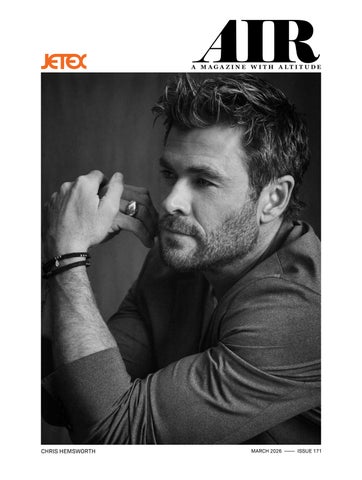
Create a flipbook