Why hospitality is tuning into the business of sound
38
Q&A WITH RAMSEY SAARANY
As Ras Al Khaimah continues to strengthen its position as one of the region’s most compelling luxury leisure destinations, Anantara Mina Ras Al Khaimah Resort is playing an increasingly important role in shaping the emirate’s hospitality story
56 FIRST SIP, BY DESIGN
The guest’s first sip of wine in Dubai’s finest restaurants is never an accident
64 RETHINKING HOSPITALITY FOR LONG-TERM PERFORMANCE
As hospitality investors and operators look beyond short-term recovery, the conversation is shifting towards models that can deliver greater flexibility, stronger returns and long-term asset performance
68 THE CHEF'S ROLE BEYOND THE KITCHEN
The hospitality industry is undergoing a quiet but profound transformation
26 WHY GUEST DATA ISN’T THE SAME AS GUEST UNDERSTANDING
Hospitality businesses have never known more about their guests - yet many seem to understand them less than ever.
44 RESILIENCE IS NOT A SLOGAN
To be clear, I don’t think you can lump the UAE F&B sector into one neat, optimistic narrative about “resilience.”
48 INSIDE SO/ UPTOWN DUBAI’S STAY Dining and Lifestyle Offering
52 THE BUSINESS OF BOUNCING BACK
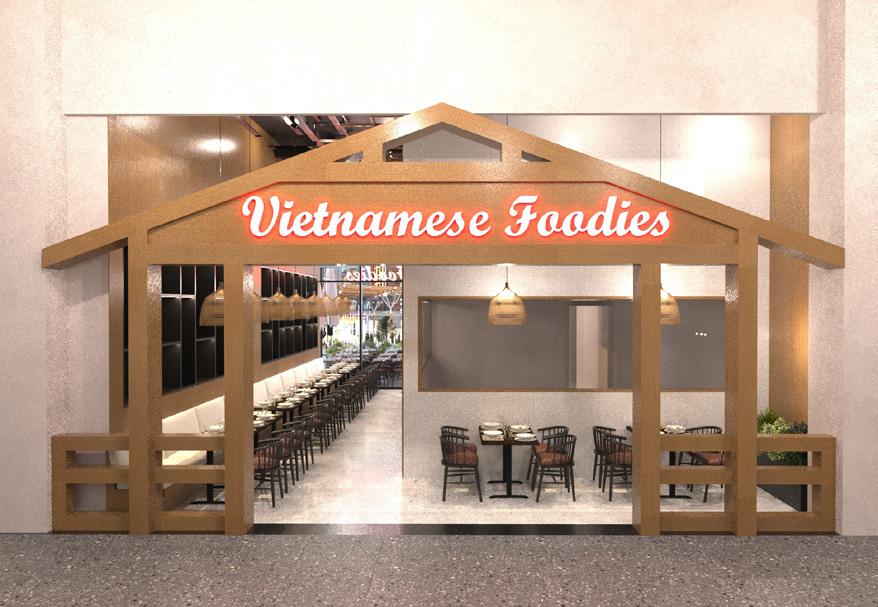
Lily Hoa Nguyen on Resilience, Recovery and Building Vietnamese Foodies in Dubai
HOW NOSTALGIA IS DRIVING THE MIDDLE EAST’S DINING COMEBACK CULTURE
From the revival of retro desserts and childhood snacks to the return of long-discontinued menu favourites, nostalgia-led dining has become one of the region’s most powerful consumer trends
CHEF'S table
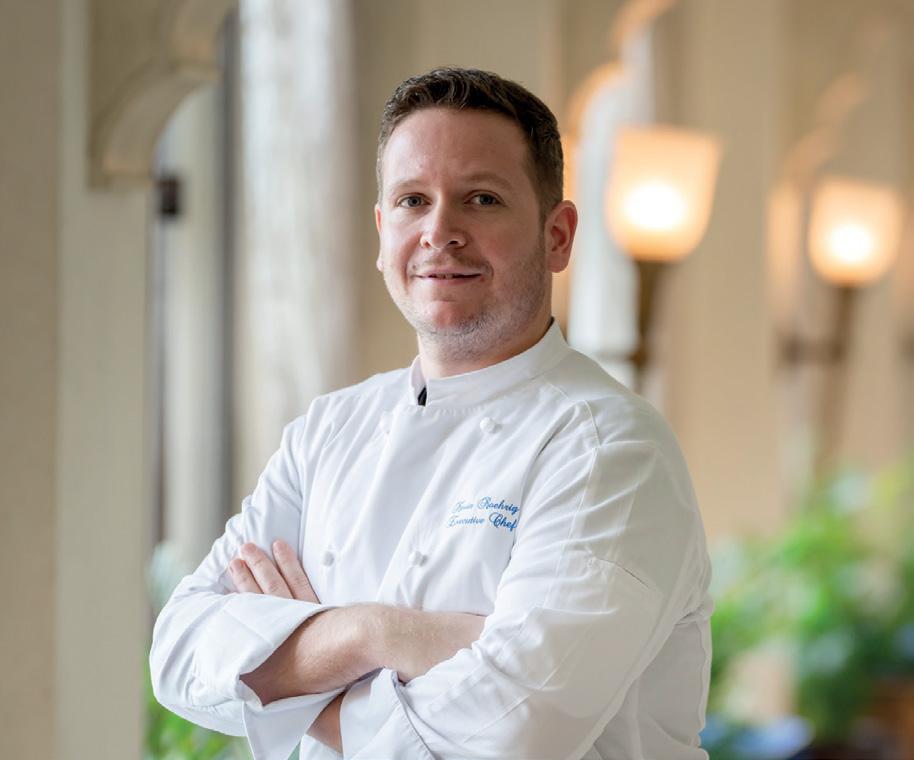
Discover Chef Kevin Roehrig’s culinary inspirations and unique sense of creativity. Explore why European cream, particularly French dairy cream, is a cornerstone of his cooking.
Throughout your journey in the culinary space - where have you found your sense of creativity and inspiration?
Firstly, it’s ingredients that inspire me! Then art, street art, photography, colours and design. I’m fortunate to be able to work closely with our carpenter at the hotel. I like to work with artisans to deliver an experience for diners. It’s never only about the food itself but always presentation and how one will see the dishes – it’s a whole production.
You said ingredients are your main inspiration. Are you able to source high-quality dairy products from France?
Fortunately, so many ingredients are imported into the UAE, that I’m able to work with French cream, butter, and cheese – always. If you want to have good flavour, you need the right high fat content in dairy products – and French products guarantee this. The flavour of these creams for example, comes from the specific breeds of cows, what they
eat and how the knowledgeable farmers raise the animals – it’s a whole process.
How do you like to use dairy cream in pastry?
I love to infuse cream with vanilla beans and tonka beans for example. I like making straightforward desserts like a panna cotta – so I can enjoy the texture of cream and the flavour in the ingredient I’m using for infusion. A light mousse is also great! I also love to make ice creams. And good quality cream is a game changer –
Funded by the European Union. Views and opinions expressed are however those of the author(s) only and do not necessarily reflect those of the European Union or FranceAgrimer. Neither the European Union nor the granting authority can be held responsible for them.
bringing the right texture to ice cream. You will not have a good ice cream with bad quality cream.
What’s one thing people need to know about dairy cream?
Cream will enhance the flavour you want to give to a dish. And it does this because of its high fat content. You want to work with creams with 34-35% fat ideally.
Change your thinking when it comes to cream – low fat is not the way to go in this case.
Executive Chef, Jumeirah Mina Al Salam hotel Dubai
CHEF KEVIN ROEHRIG
CEO
Wissam Younane wissam@bncpublishing.net
MANAGING DIRECTOR
Rabih Najm rabih@bncpublishing.net
COUNTRY MANAGER
Amjad Fakhouri amjad@bncpublishing.net
EDITOR-IN-CHIEF
Seymone L Moodley seymone@bncpublishing.net
MARKETING & COMMUNICATION LEAD
Aaron Joshua Sinamban aj@bncpublishing.net
DIGITAL EDITORIAL SUPPORT
Karan Moodley karan@bncpublishing.net
PHOTOGRAPHY
Joel Amparo
MULTIMEDIA
Eduardo Buenagua
CREATIVE LEAD
Christian Harb chriss@bncpublishing.net
Images used in Hotel & Catering are credited when necessary. Attributed use of copyrighted images with permission.
SUBSCRIBE
Contact subscriptions@bncpublishing.net to receive Hotel & Catering every issue
PO Box 502511 Dubai, United Arab Emirates P +971 4 4200 506 | F +971 4 4200 196
For all commercial enquiries related to Hotel & Catering News ME, contact sales@bncpublishing.net
All rights reserved 2026. Opinions expressed are solely those of the contributors. Hotel & Catering is officially licensed exclusively to BNC Publishing in the MENA region. No part of this magazine may be reproduced or transmitted in any form or by any means without written permission of the publisher.
Printed by United Printing and Publishing | upp.ae
In addition to our print edition, we’re bringing you all sorts of industry news on our web mediums. We’re looking forward to interacting with our readers on all of our social media and web platforms. See you on the web!
Hotel and Catering News ME
HotelCateringME
Hotel & Catering News Middle East
hotelcateringme
Contributors
Hospitality Voices This Month
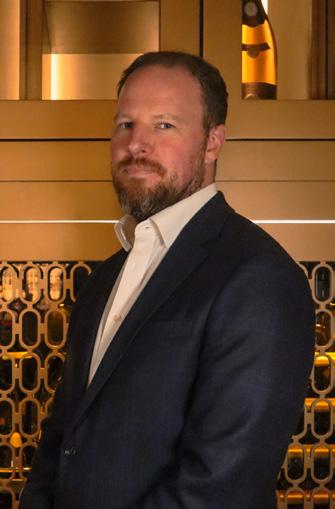
OLIVER WEIR General Manager of Cellar Concept
“The sommelier is not thinking about logistics or access; they are focused entirely on the guest experience.”
MANISH AHLUWALIA, Chief Operating Officer, The Heart of Europe
“An ingredient can tell the story of a journey from source to table, a fishing technique unchanged for centuries, a spice that travelled continents before arriving on your plate.”
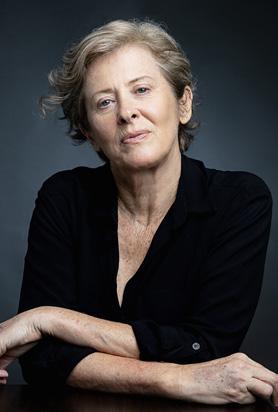
KIM THOMPSON, Owner & Director of Culture & Brand at RAW Coffee Company
“We are operating in the shadow of a regional crisis that is not abstract. It’s not theoretical. It’s close and very human. It’s devastating.”
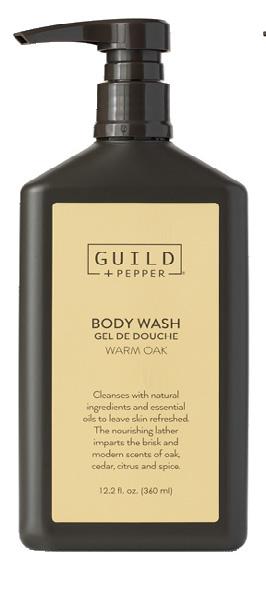
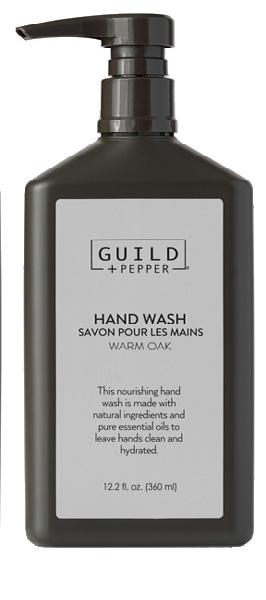
The GUILD+PEPPER Collection marries the strength and unity of a guild with the nature and uniqueness of spice. Strength with flavour, history with boldness. Allow your guests to experience an authentic reflection of the past with a distinctly modern twist.
This page goes through many rewrites before it reaches you. Not because there is nothing to say, but because there is always the question of how to say it. A writer these days just wants to know if there is still an appetite out there for an honest point of view.
I was inspired by an article I came across recently on social media titled something along the lines of, “I quit my job for my dog, now I’m a successful entrepreneur.” My first thought was that I should really get a dog. My second was who exactly was this content meant to inspire?
I don’t mean that as a jab. I’m genuinely intrigued.
I saw another video, also on social media, where a popular podcaster explained in great detail how a single glass of wine ruined three days of his life. My first thought was that he should have had two to make it worth the trouble. My second was how exhausting it has become to keep up with all the “do this” and “don’t do that” advice on how to be a successful human being.
Sometimes I struggle with the idea that attention is the ultimate measure of success. Not because I don’t think people deserve it. You create your own luck in this world, so hats off to anyone who has managed to build something from nothing. The conflict, for me, is that originality starts to suffer when so many of us feel pressured to follow what is already working.
THE SAME WELL-LIT CONVEYOR BELT
And I don’t exclude myself from this. We all have to adapt or die in every era. But I do have to admit that, in the same way aesthetics has started to make us all look the same, trends have started to make us sound the same too.
And to be fair, media is not exempt from this either. We do it too. Maybe we have become afraid to be unique, maybe we don’t know who we are so replicating what works is safer, or maybe we have simply said all we can in a hundred different creative ways and are now trying to maintain whatever audience we have left. We are all competing in the same market, for the same attention, with the same pressure to perform, so I understand why it happens.
And maybe that is the uncomfortable truth. Sameness is not always failure. Sometimes it works. Sometimes it fills rooms, sells tables, attracts attention and makes money, which is exactly why we keep doing it.
Which brings me to hospitality.
Hospitality has always been built on taste, instinct, character and feeling. It is the chef who refuses to dilute a dish because it means something. The hotelier who understands that luxury is not always louder. The restaurateur who knows that a full room is not the same thing as a loyal one. The bartender who remembers what you drink before the algorithm does.
And yet, we tend to see the same patterns. The same chase for relevance, visibility and virality.
Of course, trends matter. Technology matters. Social media matters. AI matters. Nobody is pretending otherwise. But should these things replace point of view? Should they flatten personality? Should we all be picking up from the same well-lit conveyor belt? Would we really lose if we chose not to? I have no answers. These are questions I am asking myself out loud. And maybe there are a few people pondering the same.
SEYMONE L MOODLEY EDITOR-IN-CHIEF seymone@bncpublishing.net
Seymone Leigh Moodley seymonemoodley
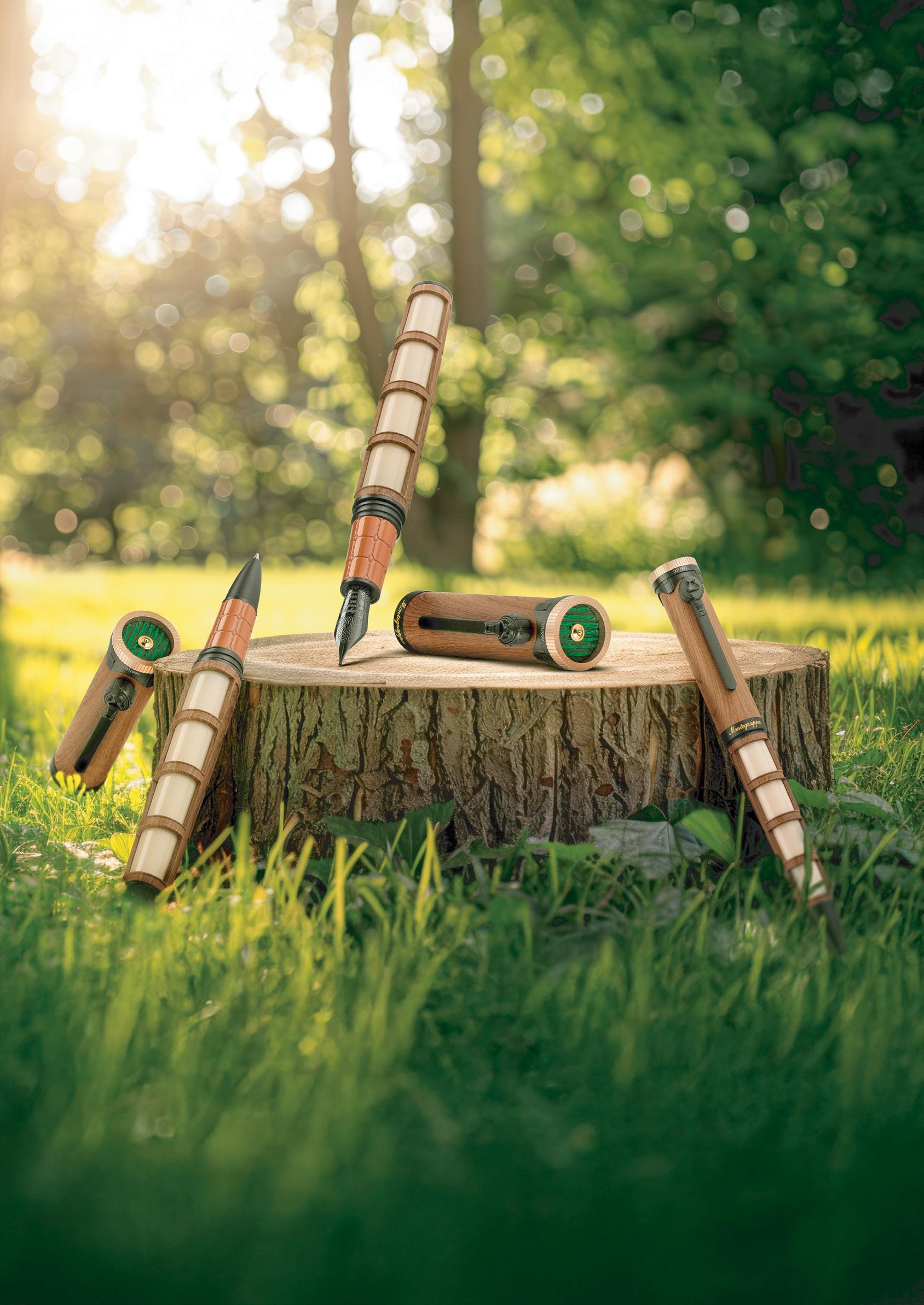
ODE TO BAG END
Limited Edition
Make ever y epic writing journey a cosy one. Hobbiton handcraft from the makers of the world’s most magical pens.
PICKL EXPANDS INTO OMAN WITH FIRST LOCATION NOW OPEN IN MUSCAT
Pickl, the UAE’s cult-favourite homegrown burger brand, has officially opened its first location in Oman, bringing its bold, no-compromise approach of fresh fast food to Muscat. Located in Souq Al Madina, the new opening marks Pickl’s debut in the Sultanate and another milestone in its rapid expansion across the region.
Pickl’s entry into Oman is in partnership with MENA Foods & Investments, whose local expertise has played a key role in introducing the brand to the market. The group previously brought sister brand BonBird to Oman in early 2025, laying the groundwork for Yolk Brands’ expansion in the Sultanate.
This continued collaboration reflects a shared ambition to establish Pickl as a go-to destination for fast-casual dining in the country.
MINOR HOTELS OPENS THE FIRST COLBERT COLLECTION HOTEL WITH PORTA ROSSA IN FLORENCE
Minor Hotels, a leading global hotel owner and operator, announces the launch of Porta Rossa Hotel Firenze, Colbert Collection, marking the first hotel to open under the new Colbert Collection brand worldwide. Located on Via Porta Rossa, in the heart of Florence’s historic centre, following a comprehensive renovation to transform it into a flagship of the brand.
Housed within a landmark of exceptional historical significance — first mentioned in 1386 — Porta Rossa Hotel Firenze, Colbert Collection is probably the oldest hotel in Italy. Once a haven for silk merchants, the building has transitioned from Renaissance elegance to richly decorated 19th century interiors, today emerging, after a sensitive renovation, as a boutique gem where history is present in every detail. From the iconic red door to the evocative motto “Per non dormire” preserved in a stained-glass window, the hotel carries forward a legacy shaped by generations, reflecting Florence’s character.
RAFFLES
HOTELS & RESORTS UNVEILS A NEW LANDMARK OF LUXURY ON THE RED SEA CORNICHE
Raffles Hotels & Resorts is excited to announce the debut of Raffles Jeddah, a glamorous new landmark standing gracefully along the city’s historic Corniche. With sweeping views across the Red Sea, the hotel blends elegant design, curated experiences, and the brand’s renowned butler service to create a refined retreat in one of Saudi Arabia’s most historic destinations.
“Our opening in Jeddah, a dynamic coastal city on the Red Sea that has been shaped by centuries of cultural exchange, is exciting and marks an important milestone for the Raffles brand while also strengthening Accor’s presence in Saudi
Arabia,” said Omer Acar, CEO, Raffles Hotels & Resorts. “With this debut, we are proud to contribute to the Kingdom’s Vision 2030 ambitions and its emergence as a leading global luxury destination.”
MIRAVAL ARRIVES AT THE RED SEA, INVITING GUESTS TO SLOW DOWN
Miraval Resorts & Spas announces the opening of Miraval The Red Sea on Shura Island, marking the brand’s first destination outside the United States and a defining milestone in its global evolution.
Set between desert and water on Saudi Arabia’s west coast, surrounded by mangrove forests that extend to the sea, the adults-only retreat introduces the Miraval signature blend of mindfulness and intentional wellness to Saudi Arabia. Rooted in the brand’s 30-year philosophy of mindful living, Miraval’s guiding principle of empowering guests to ‘live a life in balance’ is thoughtfully expressed through elements of Saudi heritage, creating an experience that feels both distinctly Miraval and authentically connected to place.
UHM APPOINTS SHADI REFAI AS CLUSTER GENERAL MANAGER IN KUWAIT
United Hospitality Management is pleased to announce the appointment of Shadi Refai as Cluster General Manager for the Arabella Beach Hotel Kuwait, Vignette Collection by IHG and a soon to be opened second hotel in Kuwait City marking a key milestone as the company continues to strengthen its regional footprint and accelerate its expansion across the Middle East.
Refai brings over two decades of international hospitality experience, with a career spanning leading luxury and upscale brands including Hilton, ShangriLa, Sofitel, Four Seasons, Wyndham and Centara. His experience covers key global markets across the Middle East, Asia and the United States, with a strong track record in hotel openings, operational leadership and driving commercial performance.
MAXIME LEJUEZ APPOINTED CHIEF OPERATING OFFICER OF SALVAJE GROUP DUBAI
Salvaje Group Dubai is pleased to announce the promotion of Maxime Lejuez to Chief Operating Officer (COO), marking a natural evolution in his leadership journey within the group.
Having played a pivotal role in shaping the identity, operations, and expansion of Salvaje Group’s portfolio, including Salvaje, Arrogante, and Amor, Maxime’s elevation to COO reflects both his consistent performance and the trust he has earned across the organization.
His appointment comes ahead of schedule, a testament to the impact of his leadership during a period of rapid growth and operational complexity.
JANNAH HOTELS & RESORTS ANNOUNCES THE PROMOTION OF ROGER NADER AS CLUSTER GENERAL MANAGER FOR JANNAH RAS AL KHAIMAH
Jannah Hotels & Resorts announces the promotion of Roger Nader to the position of Cluster General Manager for Jannah Ras Al Khaimah, reflecting the group’s continued focus on strengthening leadership across its growing hospitality portfolio in the UAE.
Bringing more than two decades of regional hospitality experience, Roger has built a strong reputation for operational excellence, commercial growth, and team leadership across several internationally recognized hospitality brands and destinations in the region.
His career spans leadership roles with renowned hospitality groups including Rotana, Mövenpick, Jumeirah Group, Habtoor, and Seven Leisure.
ACCOR PLUS DEBUTS ALL ACCOR+ EXPLORER IN THE UNITED ARAB EMIRATES
Accor Plus, Accor’s leading subscription business, has launched ALL Accor+ Explorer in the United Arab Emirates, its first market outside Asia Pacific. With more than 60 participating hotels and resorts confirmed, the phased national rollout will initially focus on local stays, dining and hospitality experiences to support regional recovery.
The launch of ALL Accor+ Explorer offers residents premium dining and staycation experiences across the UAE, alongside exceptional value, savings and exclusive member benefits across the network. Participating brands include Sofitel, MGallery, Mövenpick, Pullman and Novotel. With more than 1,500 staff already trained, participating hotels are fully prepared to support and bring the benefits of ALL Accor+ Explorer to life for local members.
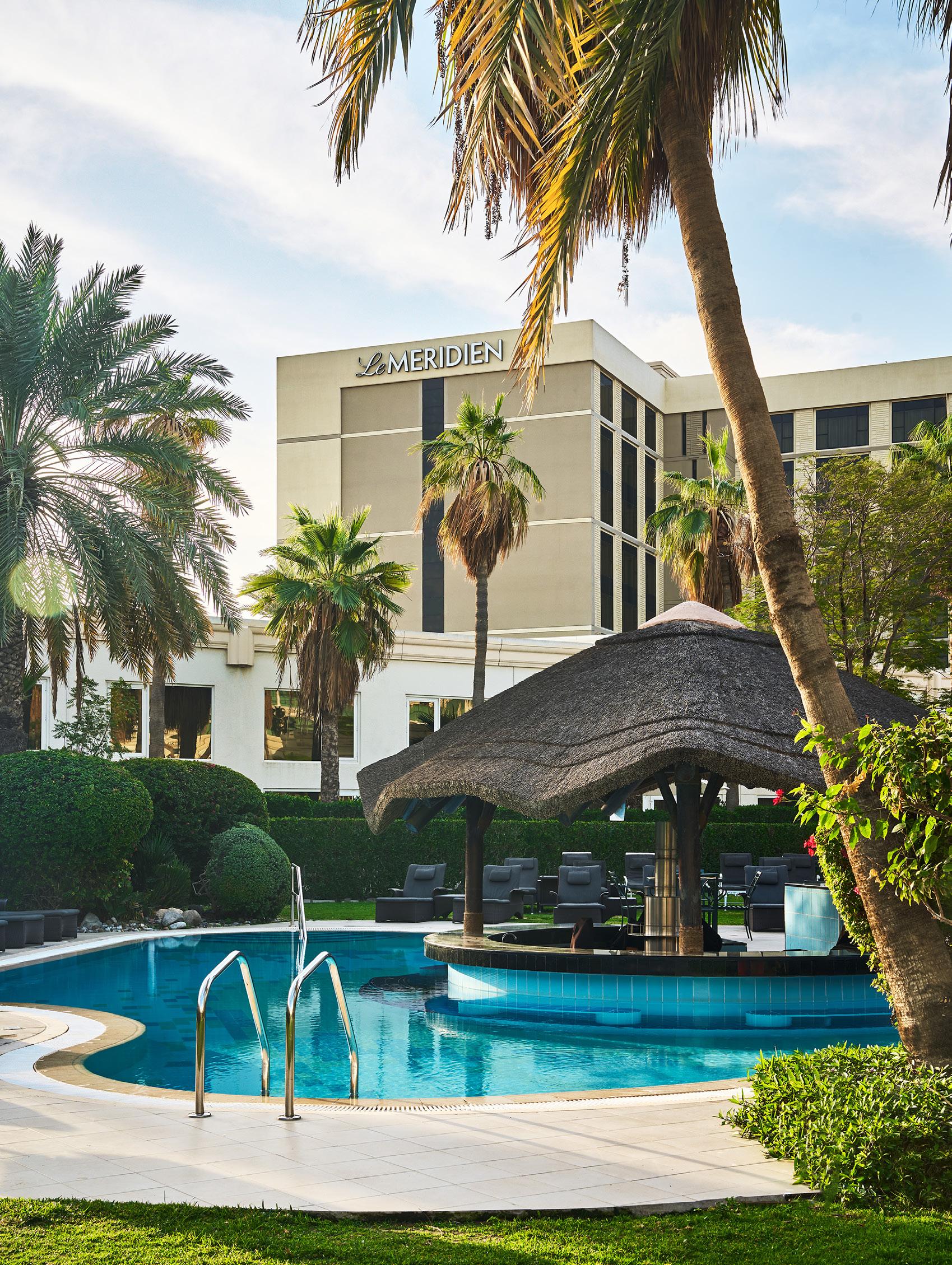
Rediscover Inspiration at Le Méridien Dubai Hotel & Conference Centre
A serene sanctuary at the heart of the city’s dynamic landscape, Le Méridien Dubai Hotel & Conference Centre redefines the art of urban hospitality. Set across 15 acres of immaculately landscaped gardens, the hotel o ers an elegant retreat just moments from Dubai International Airport, placing guests within e ortless reach of the city’s most iconic districts, from Dubai Mall and Burj Khalifa to the storied charm of the Gold Souk and Dubai Creek.
With 580 beautifully appointed rooms and suites, the property invites travellers into a world where contemporary design meets the timeless sophistication of the Le Méridien brand. The distinguished 196 rooms in the Le Royal Club wing elevate the experience with spacious, light-filled rooms, and refined club privileges, while select ground-floor accommodations in the main building open directly onto lush gardens and tranquil pools, o ering a resort-like ambience rarely found in the city.
Well-being is woven into the hotel’s DNA. Guests may indulge in five swimming pools, unwind in serene outdoor enclaves, or train at one of Dubai’s most expansive and advanced fitness facilities, sta ed by expert coaches and equipped with cutting-edge technology to nourish mind, body, and spirit.
At the heart of the property lies an extraordinary culinary journey. Housing 18 acclaimed restaurants and bars, Le Méridien Dubai is home to some of the city’s most storied dining institutions. From the ever-legendary Seafood Market, celebrated for its market-style freshness, to Casa Mia, Dubai’s pioneering Italian restaurant, each venue reflects a passion for authenticity, craftsmanship, and memorable dining artistry.
A beacon for global meetings and events, the hotel features more than 44,000 sq. ft. of versatile event spaces, comprising 24 impeccably designed venues outfitted with modern audiovisual capabilities. Whether orchestrating a grand celebration for 1,750 guests, hosting an international exhibition, or curating an intimate executive gathering, the hotel’s specialist events team and award-winning culinary experts bring each vision to life with impeccable precision and creative flair.
From inspired dining to world-class event facilities, and from resort-style relaxation to unmatched convenience, Le Méridien Dubai Hotel & Conference Centre stands as a destination where cosmopolitan energy and cultivated luxury converge, inviting every guest to unlock a stay that is truly memorable.
WHY GUEST DATA
ISN’T THE SAME AS GUEST UNDERSTANDING
BY MARTIN KUBLER, CHIEF SLOTH AT THE
Hospitality businesses have never known more about their guests - yet many seem to understand them less than ever.
Across the hospitality industry, data collection has become both sophisticated and relentless. Hotels track booking behaviour, loyalty activity, guest preferences, dwell time, spending patterns, sentiment scores, click-through rates, and review performance. Restaurants analyse reservation habits, delivery trends, repeat visits, and social engagement. Tourism businesses monitor digital journeys in extraordinary detail.
In theory, this should lead to more personalised, more memorable, and more emotionally intelligent guest experiences. Why is it then that many hospitality experiences today still feel strangely generic?
Guests move through highly optimised systems, but often leave without feeling genuinely seen, understood, or emotionally connected to the business they interacted with. The industry has become exceptionally good at measuring behaviour, but measurement alone is not the same as understanding.
This distinction, measurement vs. understanding, matters more than ever.
Data can reveal patterns. It can show what guests do, when they book, what they buy, how long they stay, and whether they return. Rarely, though, does it explain meaning on its own. It cannot fully capture mood, motivation, emotional context, cultural nuance, exhaustion, celebration, loneliness, or human expectation.
A guest ordering room service late every evening may appear in a report as a profitable behavioural pattern. In reality, that same guest may be travelling under stress, overwhelmed from meetings, or simply seeking a moment of comfort in an unfamiliar city. A family spending less time in hotel outlets may not reflect dissatisfaction at all, but changing routines or external priorities. A perfectly acceptable satisfaction score may hide the fact that nothing about the experience felt memorable.
Metrics explain actions, but hey do not automatically explain emotions, which is where many hospitality businesses begin to struggle.
The industry increasingly operates through optimisation. Efficiency matters. Standardisation matters. Consistency matters. In the process, many organisations unintentionally reduce hospitality into a sequence of controlled transactions rather than a practice of observation, attentiveness, and human understanding.
GLUTTONOUS SLOTH, HORECA CONSULTING WITH ATTITUDE
Service becomes scripted. Interactions become operationalised. Staff are trained to execute procedures flawlessly, but often have less freedom to respond naturally to what is actually happening in front of them.
Ironically, the people who often understand guests best are frontline employees.
A receptionist noticing tension during check-in. A waiter sensing discomfort at a table. A housekeeper observing small behavioural details that reveal guest priorities. These forms of insight rarely appear in dashboards, yet they often provide a far more accurate picture of guest experience than numerical reporting alone.
The problem is not that hospitality businesses use data. The problem is that too many businesses now treat data as a substitute for listening rather than a tool that supports it. This distinction becomes especially important as hospitality brands search for differentiation in increasingly crowded markets. Many guest experiences are beginning to feel interchangeable because businesses rely on the same optimisation models, the same performance metrics, and the same operational assumptions.
The result is technically competent hospitality that lacks emotional depth. Guests struggle to articulate why one experience felt forgettable and another felt meaningful. Often, the difference comes down to whether people felt processed or genuinely understood.
The businesses that stand out are rarely the ones with the most data points. They are usually the ones that combine operational intelligence with human attentiveness. They create cultures where observation still matters. They empower teams to communicate nuance upward rather than reducing every guest interaction into a score or predefined category.
What this requires, is a different type of leadership attention. Leaders must spend time observing environments directly instead of relying entirely on reports. They need to create space for qualitative feedback from frontline teams. They need to recognise that not every important signal fits neatly into a spreadsheet.
Some of the most valuable insights in hospitality emerge long before they appear in formal reporting. A shift in guest mood. A subtle decline in energy. A growing sense of emotional detachment from a brand. These
things are often noticed first by people paying close attention rather than systems collecting information.
None of this means the industry should reject technology or analytics. On the contrary, data remains enormously valuable. The best hospitality organisations will continue using sophisticated systems to improve operations, personalise experiences, and identify opportunities. However, only the strongest operators will understand the limits of measurement.
Hospitality was never built purely on efficiency. It was built on making people feel welcome, comfortable, understood, and cared for - often in ways that cannot be fully quantified.
As competition intensifies across the region and guest expectations continue evolving, listening itself may become a competitive advantage again. I’m certain that, in an industry built around people, the businesses that truly understand guests will almost always outperform the ones that merely measure them.
“Guests move through highly optimised systems, but often leave without feeling genuinely seen, understood, or emotionally connected to the business they interacted with. The industry has become exceptionally good at measuring behaviour, but measurement alone is not the same as understanding.
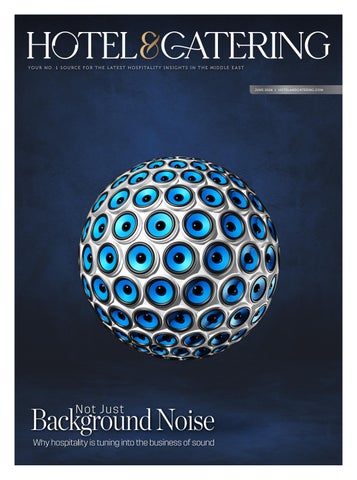
Background Noise
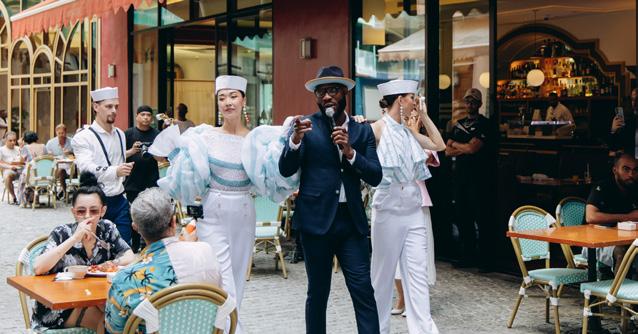
WHY HOSPITALITY IS TUNING INTO THE BUSINESS OF SOUND Not
By Seymone L. Moodley
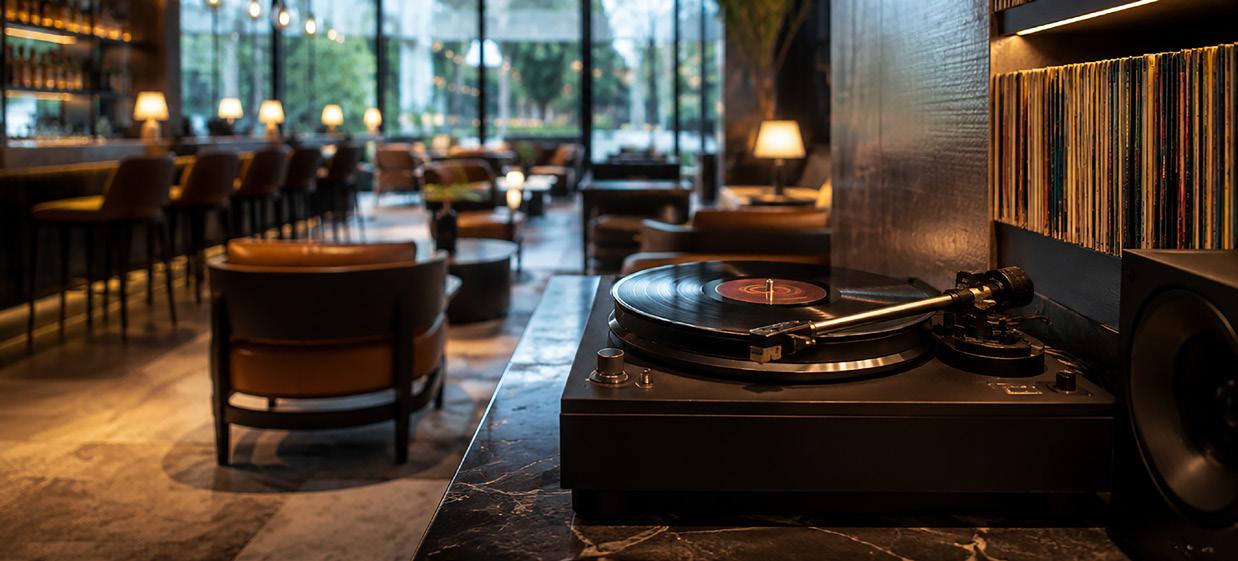
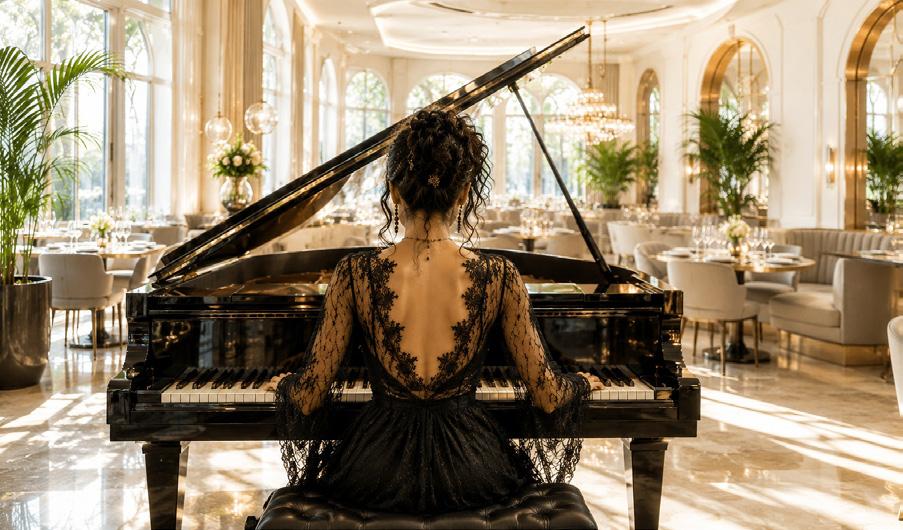
In luxury hospitality, identity is no longer built by design alone. A hotel is remembered through a combination of sensory details: the feel of a lobby, the scent of a corridor, the way a restaurant moves from breakfast calm to evening energy, and increasingly, the sound that carries guests through each moment.
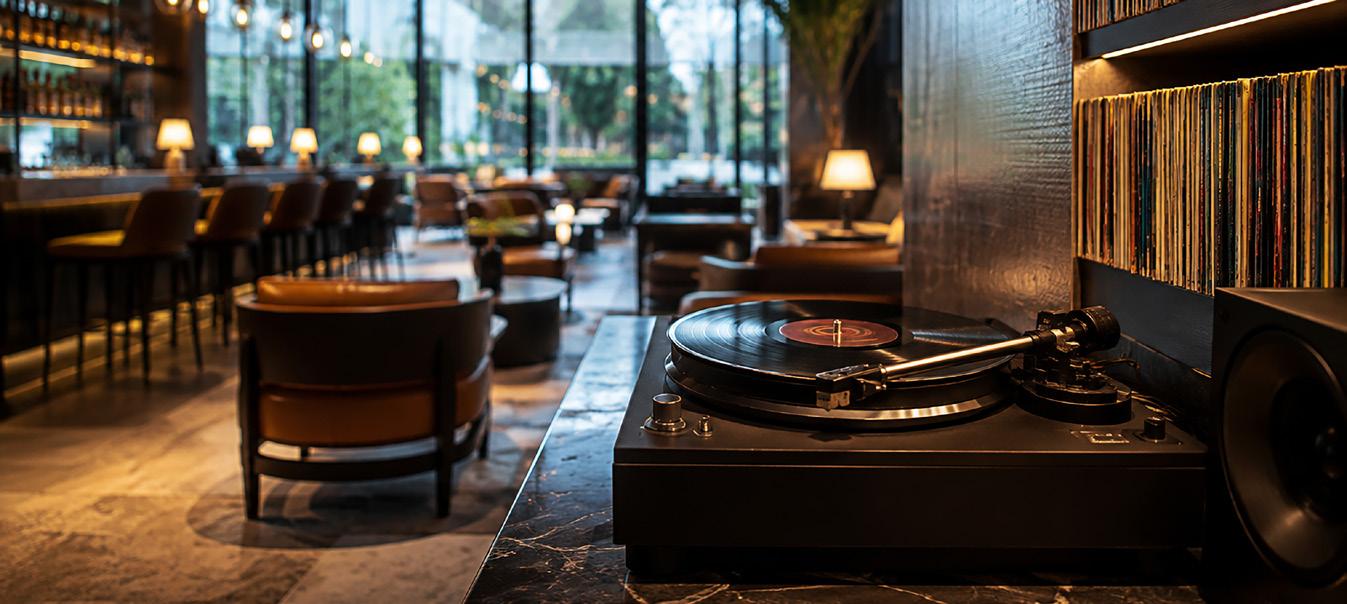
Music has become one of the most powerful tools in shaping atmosphere, emotion and memory. It can define the mood of a hotel before a guest has even reached the reception desk. It can make a bar feel alive, a spa feel restorative, an afternoon tea feel elegant, or a dining room feel more intimate. When done well, music becomes almost invisible, not because it does not matter, but because it fits so naturally into the experience that the guest simply feels it.
For hotel groups, this is where the business of music becomes more strategic. Sound is not just background noise. It is part of brand positioning, guest satisfaction, destination storytelling, F&B performance and emotional connection. The right music can extend dwell time, enhance perception, support local culture, and give each property a stronger sense of place. The wrong music, however, can disrupt the entire experience.
Why music should become part of the hospitality business model
In luxury hospitality especially, every sensory detail matters. Design may be the first thing a guest notices, but sound often determines how long they settle in, how comfortable they feel, and how strongly they remember the experience afterwards. A room can look beautiful, but if the music feels wrong, too loud, too flat, too generic or completely disconnected from the setting, the entire atmosphere suffers.
This is why music strategy has become increasingly important to hotel brands. The right soundtrack can support the pace and purpose of each space.
There is also a commercial layer to this. Music can influence mood, comfort, spending behaviour and loyalty. Guests who feel good in a space are more likely to stay longer, order more, return again and associate the hotel
with a specific feeling. In that sense, music becomes part of the revenue conversation, not just the creative one.
It also plays a role in brand recognition. Just as hotels invest in interiors, lighting, scent and service rituals, sound can help define what a brand feels like. A carefully curated music identity gives a hotel consistency without making every property feel the same. The challenge is to create a sound that reflects the brand while still allowing each destination to express its own culture, rhythm and personality.
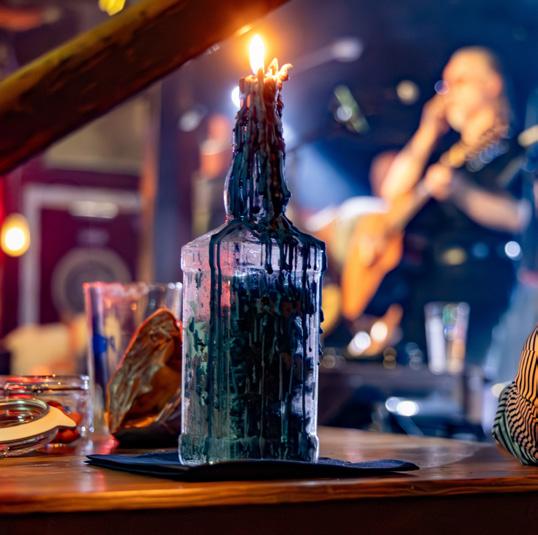
This is especially relevant in F&B, where music can completely change the energy of a venue. The same restaurant can feel relaxed at lunch, polished in the early evening and vibrant later at night, depending on how the sound is programmed. For operators, this makes music a practical tool as much as an emotional one. It helps manage pace, atmosphere and guest expectation throughout the day.
Staff are part of the equation too. A well-considered music environment can affect team energy, morale and rhythm, particularly in outlets where service is fast-moving and guest interaction is constant. When the sound supports the space, it supports the people working within it as well.
As hospitality becomes more experience-led, music is becoming harder to ignore. It sits quietly in the background, but its impact is anything but small. For hotels looking to create stronger emotional connections, clearer brand identity and more memorable guest experiences, sound is now part of the strategy.
Why the sound system matters as much as the soundtrack
Choosing the right music is only half the story. In hospitality, how that music is delivered can be just as important as what is being played.
A beautifully curated playlist can lose its impact if the sound quality is poor, the volume is uneven, or the system does not suit the space. A lobby, restaurant, spa, ballroom, terrace and bar all have different acoustic needs. What works in one area may feel completely wrong in another. This is why sound design has become a practical part of the guest experience, not just a technical afterthought.
In a hotel, guests move through several environments in one visit. They may arrive through a busy entrance, step into a calm lobby, move through a corridor, sit down for lunch, attend an event, visit the spa, and end the evening in a bar. Each of these spaces has its own rhythm, but the experience still needs to feel connected. If the sound changes too sharply from one area to another, the sense of flow can be broken.
Volume is one of the biggest details. Music should support the atmosphere without competing with conversation, service or the natural energy of the room. In a restaurant,
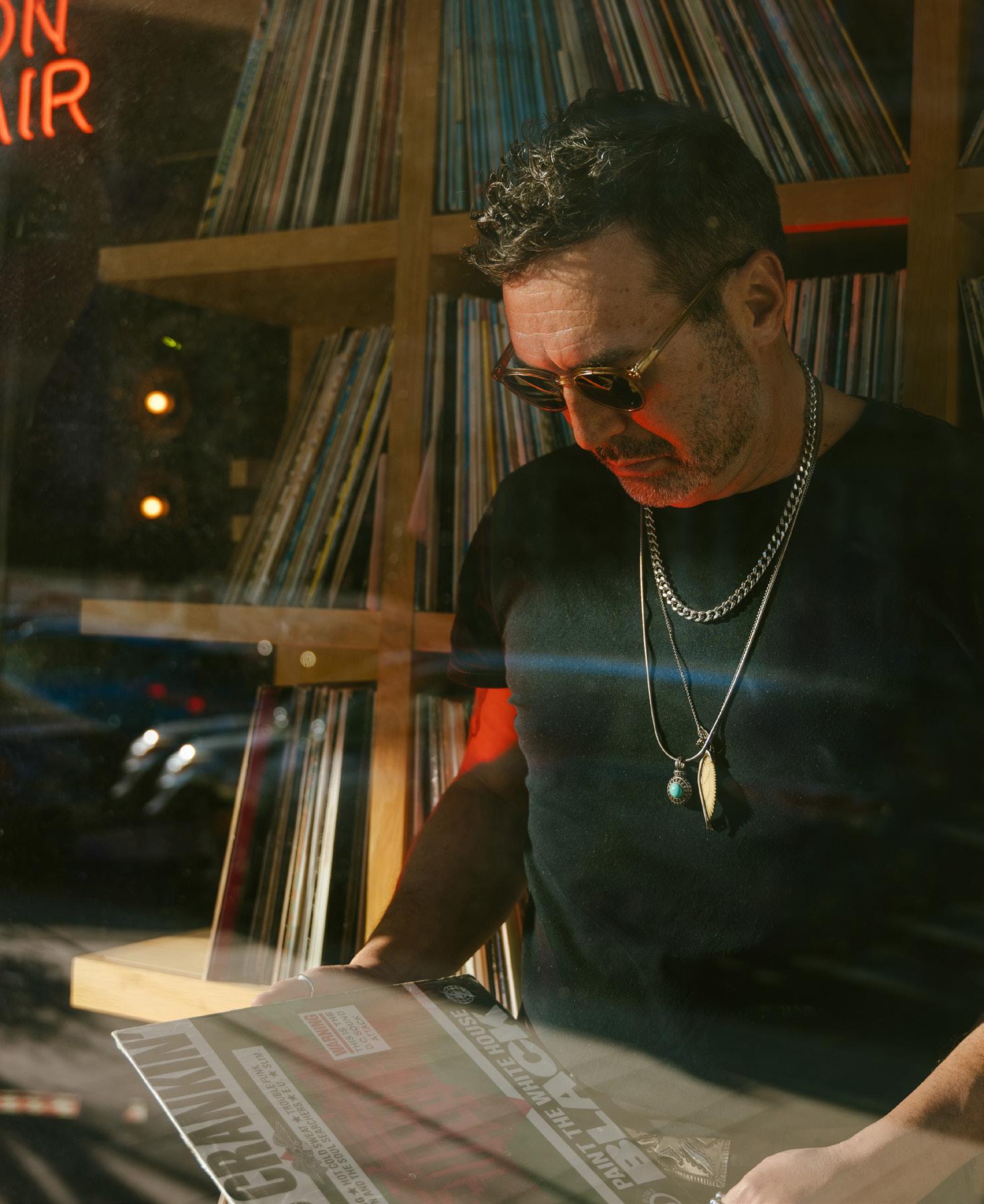
ANDREW GRANT, Head of Music Strategy and Entertainment, Langham Hospitality Group
sound can help create warmth and privacy, but if it is too loud, guests become uncomfortable. If it is too low, the room can feel empty or flat. In a bar or nightlife setting, the same system may need to bring more power, movement and energy without losing clarity.
The quality of the system also affects how guests perceive the venue. Thin, harsh or poorly balanced sound can make a space feel less polished, even if the design and service are strong. Clear, well-distributed sound, on the other hand, can make a room feel more complete. Guests may not always notice a good sound system directly, but they usually feel the difference.
For hotel operators, this makes audio planning a business decision. A strong system allows teams to manage different zones, adjust the mood throughout the day, and support everything from background music to live
entertainment, private events and branded experiences. It also gives staff more control, helping them adapt the atmosphere without needing to fight the room.
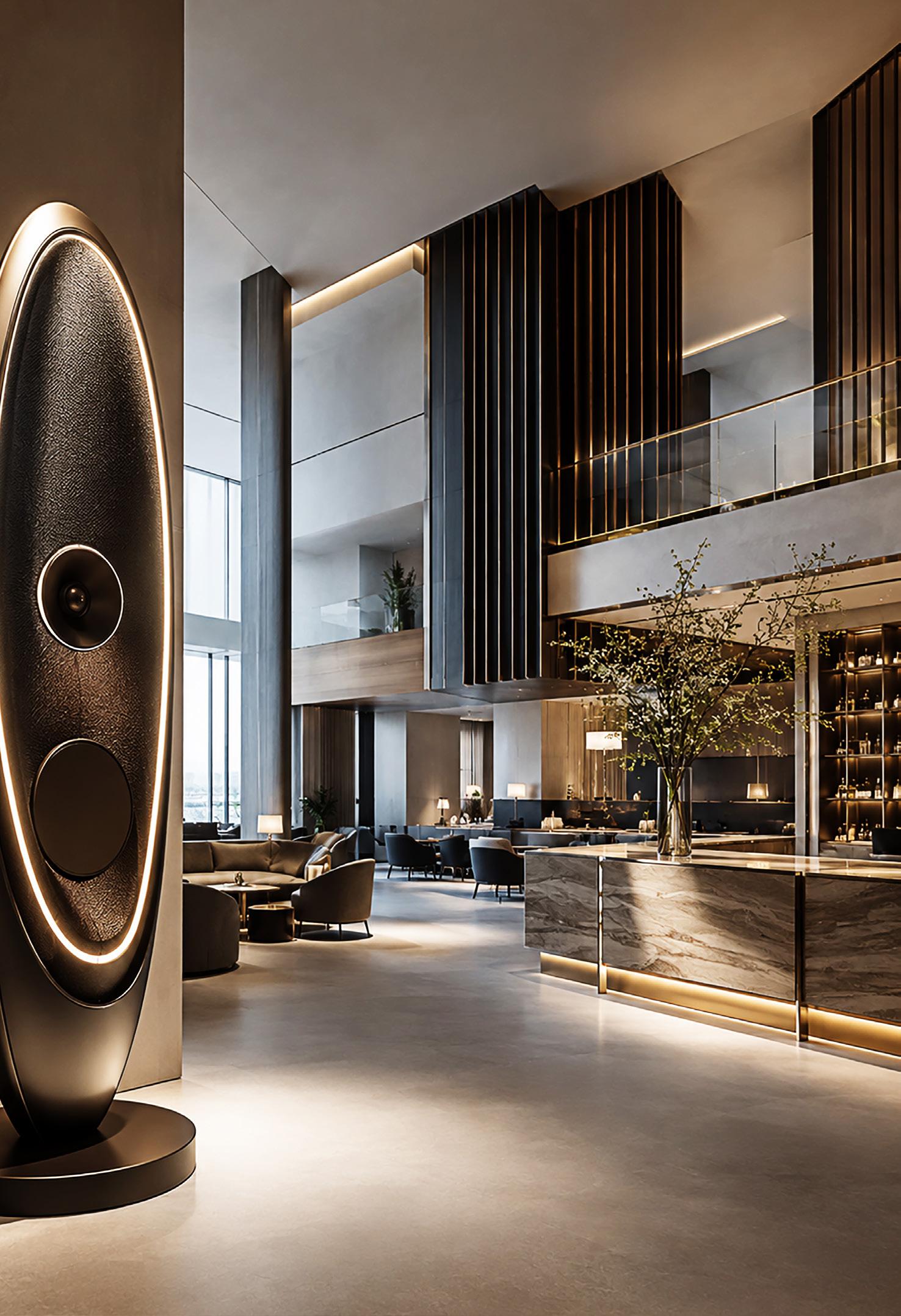
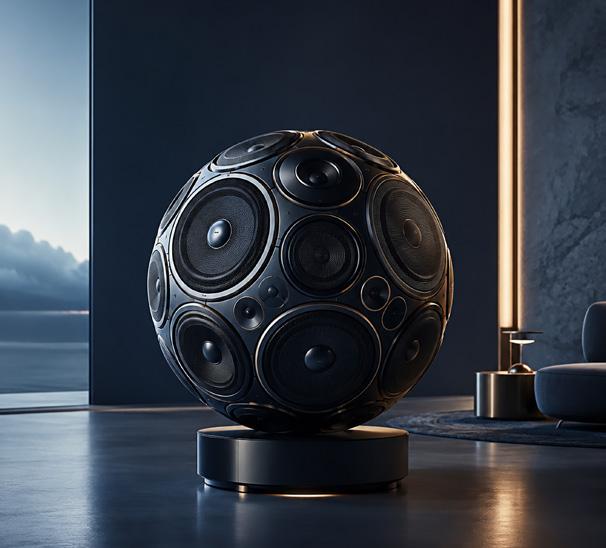
There is also a design consideration. In luxury spaces, speakers and audio equipment should not interrupt the visual language of the property. The best systems are often the ones guests barely see, but clearly feel. They blend into the architecture while giving the space depth, energy and consistency.
“Music should support the atmosphere without competing with conversation.
“As hotels continue to invest in more immersive and experience-led environments, sound can no longer be treated as an accessory. Music may set the mood, but the sound system carries it. When both work together, the result is not just a better playlist. It is a better room.
As hotels continue to invest in more immersive and experience-led environments, sound can no longer be treated as an accessory. Music may set the mood, but the sound system carries it. When both work together, the result is not just a better playlist. It is a better room.
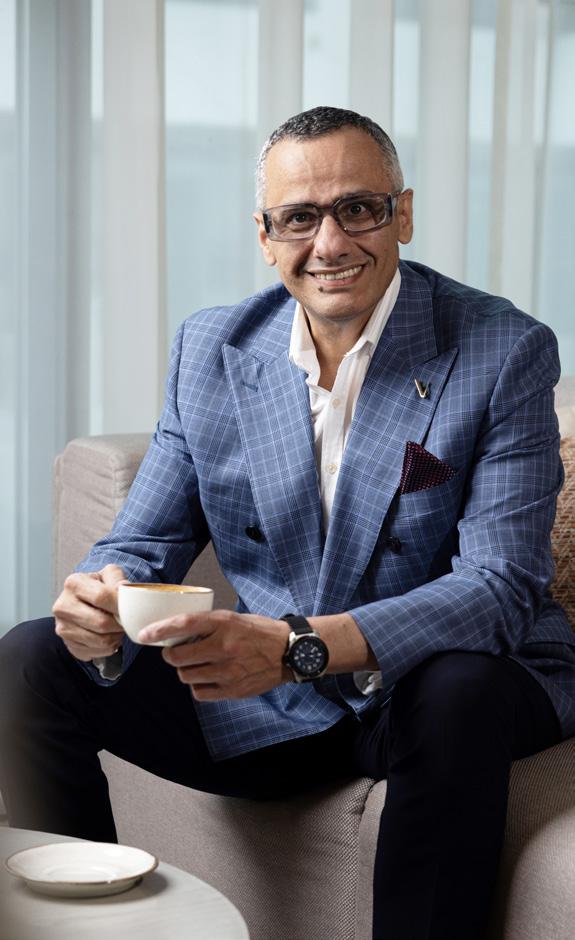
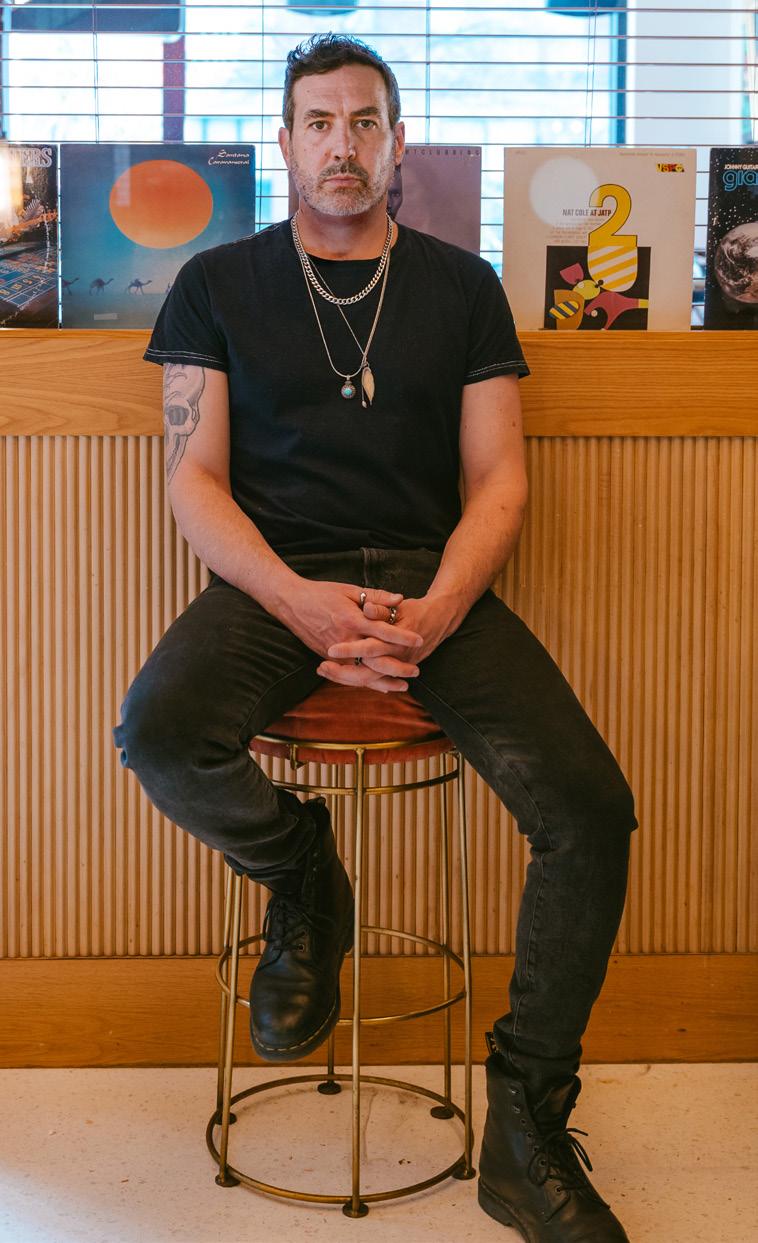
Andrew Grant, Head of Music Strategy and Entertainment at Langham Hospitality Group, oversees the development and execution of music strategy across the company’s portfolio. Drawing on more than 25 years of experience in music, events and hospitality, he works across bespoke music programmes, artist
partnerships, soundscapes and immersive experiences, shaping how sound is used across different stages of the guest journey.
Grant works closely with hotel teams to create music strategies that feel considered, local and emotionally aligned. He also collaborates with artists, DJs and musicians to help each property connect more deeply with its destination.
In this conversation, he discusses why music has become such an important part of modern luxury hospi-
tality, how sound shapes memory, and why human-led curation still matters in an increasingly technologydriven world.
What has driven music to become such an important element of hotel identity, alongside interiors, scent and culinary experiences?
The rise of sonic branding has really pushed this forward. Hotels, and the hospitality industry overall, have seen the case studies that show what happens when all senses and touchpoints are in sync. That is when memorable experiences are created.
The residual value of that goes beyond any dollar amount and can help exceed initial expectations. It can also go the other way if a sound or touchpoint is not crafted properly.
How do you create a unique musical atmosphere for each property that reflects its location, design aesthetic and guest demographic? It begins with a personal audit at the property. Since every site is slightly different, you have to reflect the brand while also tying into local appeal.
If a space already has an existing direction, it is important to analyse that direction and build relationships with the people in those areas. Ideally, I ask a lot of questions. I speak to the staff and managers, and I look at guest reviews to help create the best atmosphere possible.
What goes into curating tailored playlists and soundscapes for the different stages of the guest experience, from spa and wellness settings to dining, afternoon tea and nightlife?
A head-to-toe understanding of the goal of the space is required. Loud dance music, for example, may not work in a wellness space.
Viewing trends and metrics is vital to that curation. Ultimately, after more than 20 years of developing soundscapes and programming, I am also able to lean into what my ears tell me.
How can music influence the emotional connection guests have with a hotel and shape lasting memories of their stay? Sonically, it ties into their senses, and that registers in the psyche as either positive or negative. On one level, it becomes very scientific, while also holding space in simple maths. Either you like the music, or you do not.
How valuable is collaboration with local artists, DJs and musicians in creating a stronger sense of place within a hotel?
While at Eaton, I learned first-hand about the importance of collaborating with the talent you engage. These artists are part of your extended family and should feel comfortable enough to give you feedback.
Why do you believe sound and music are becoming increasingly significant within modern luxury hospitality? Because luxury today is increasingly about how a place makes you feel, and sound is one of the fastest ways to shape emotion, atmosphere and memory.
As AI and technology continue to reshape hospitality experiences, how do you see the future of music evolving, and why is human-led curation still so important?
AI will continue to grow, creating more music and musicenhancing technology. Hospitality, in many ways, will welcome this into the fold.
That said, I believe the human element is always important for interaction. The ability to sense a connection is deeper than zeros and ones.
A SOUNDBITE:
Music makes people stay longer
The right soundtrack can help guests relax, settle in and spend more time in a space.
Sound shapes spending
In restaurants and bars, music can influence mood, pace and how comfortable guests feel ordering another round.
Every space needs its own rhythm
A spa, lobby, breakfast room and late-night bar should not sound the same.
Volume matters
Too loud and guests leave tired. Too quiet and the room can feel flat.
Curation beats playlists
Good hotel music is not random. It should reflect the brand, the location, the guest and the time of day.
Music has rules
Hotels and restaurants need proper commercial music licences. A personal streaming account is not enough.
RAMSEY
SAARANY, CLUSTER GENERAL
MANAGER, MINOR
HOTELS
RAS
AL KHAIMAH, AND GENERAL MANAGER, ANANTARA MINA
RAS AL KHAIMAH
RESORT
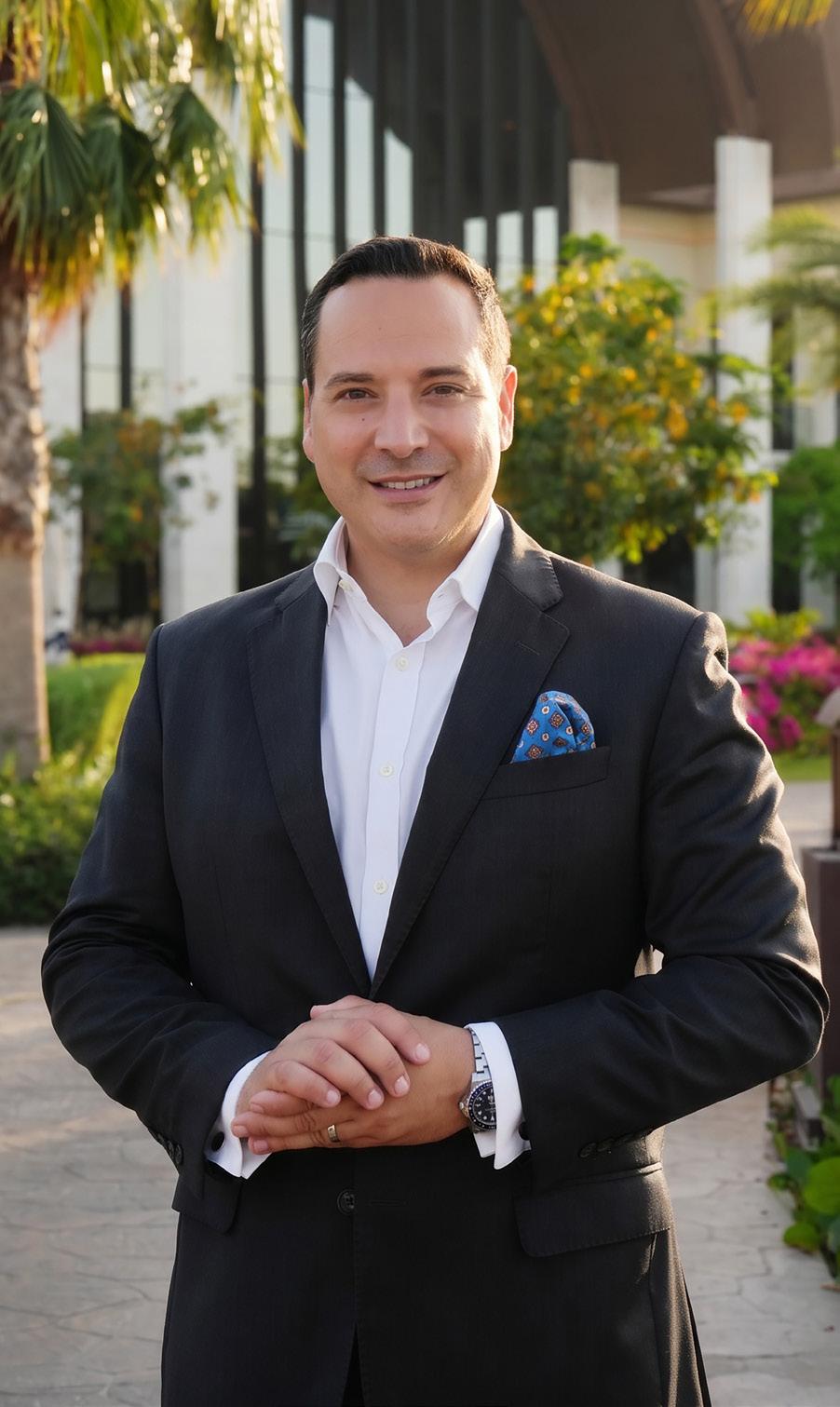
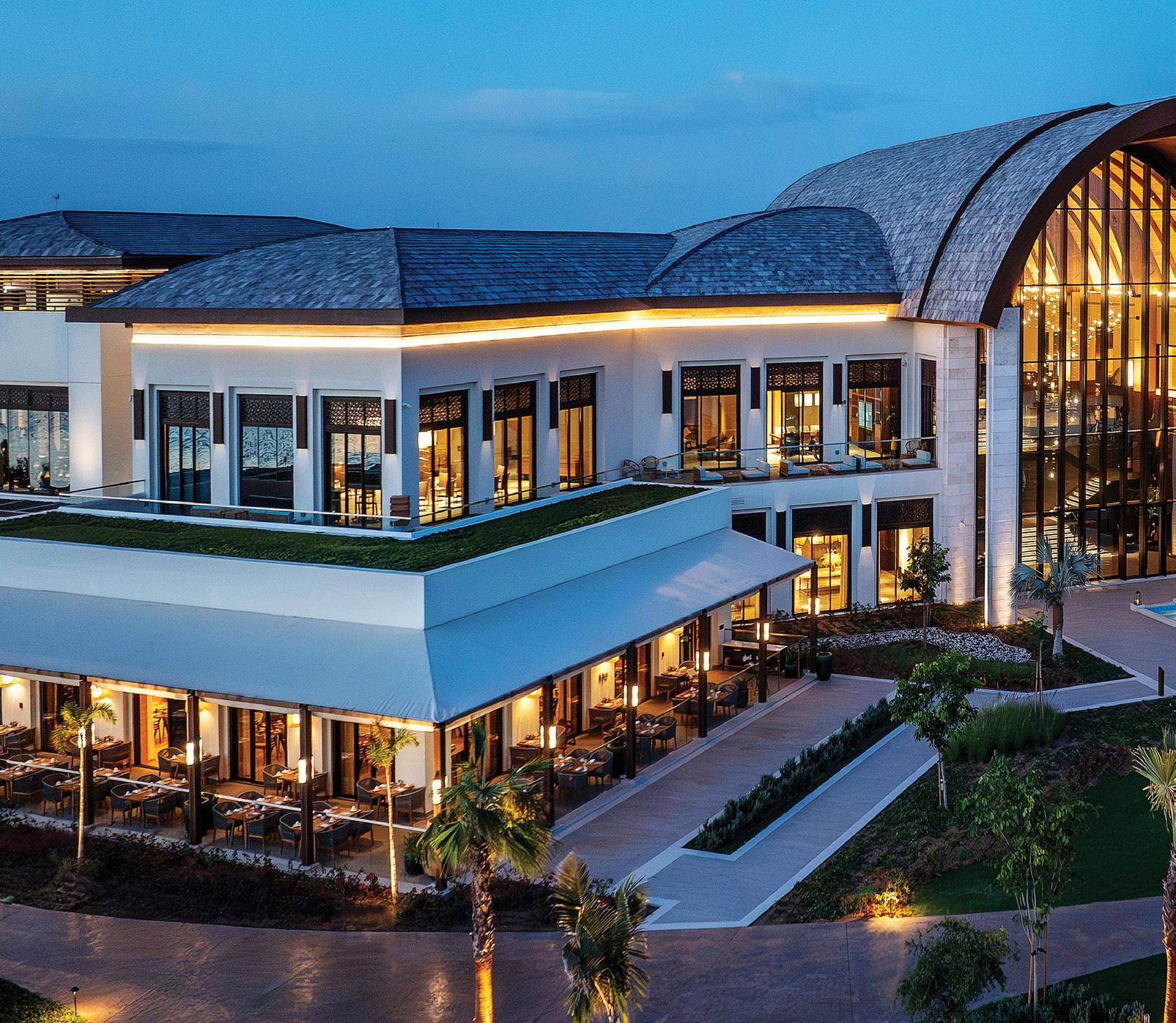
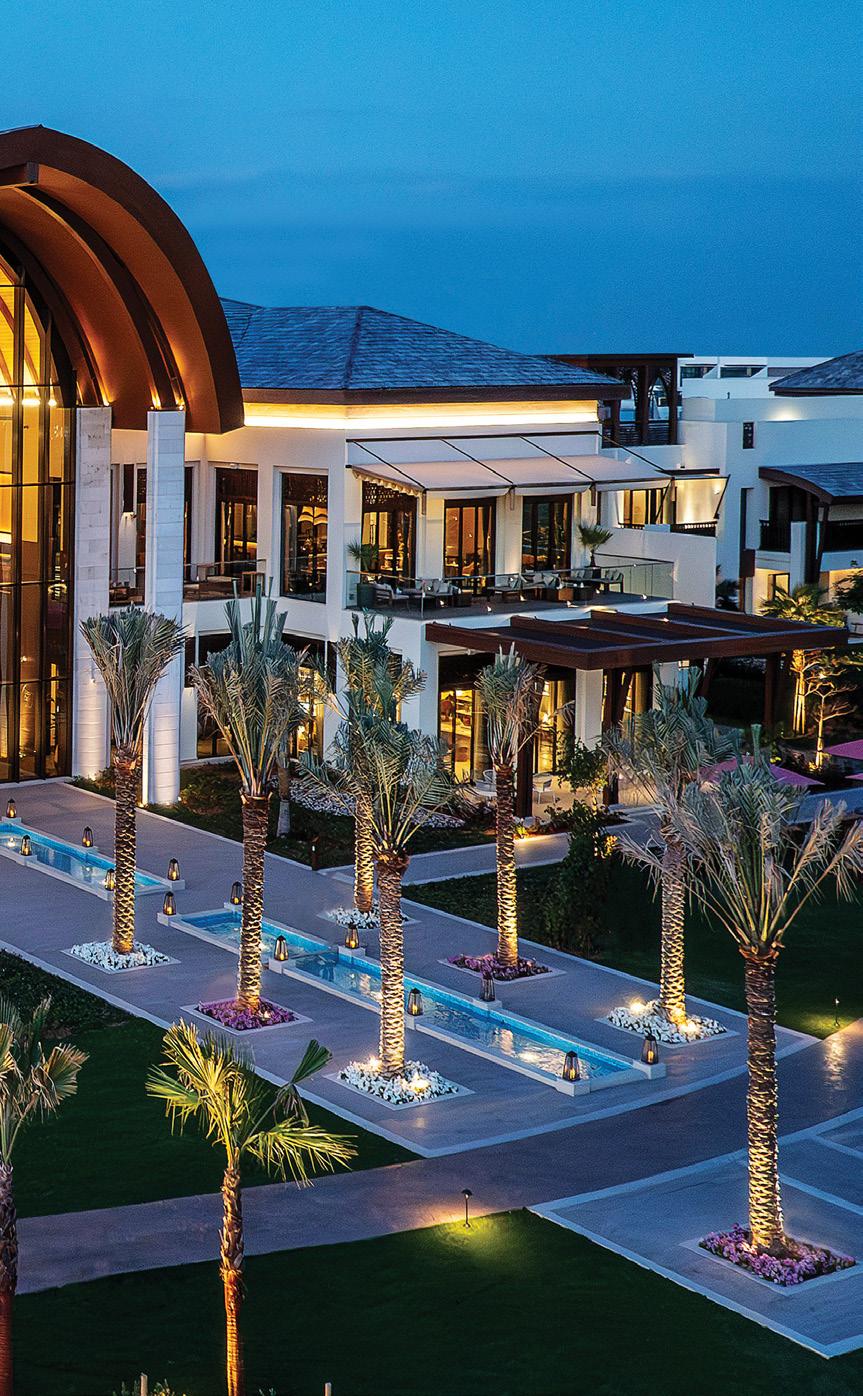
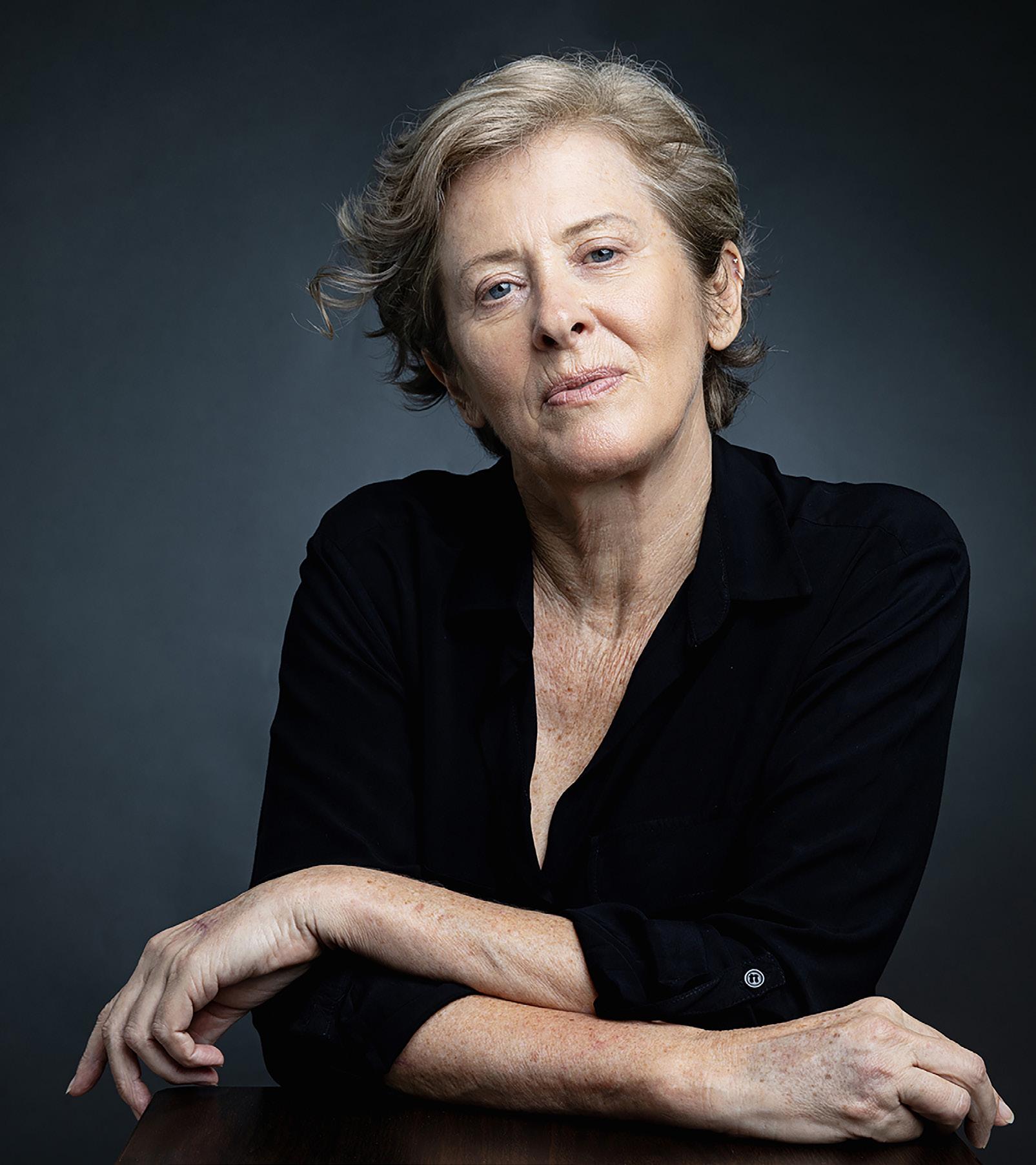
As Ras Al Khaimah continues to strengthen its position as one of the region’s most compelling luxury leisure destinations, Anantara Mina Ras Al Khaimah Resort is playing an increasingly important role in shaping the emirate’s hospitality story. For Ramsey Saarany, Cluster General Manager, Minor Hotels Ras Al Khaimah, and General Manager, Anantara Mina Ras Al Khaimah Resort, 2026 is a year focused on people, experience, nature-led luxury, and deeper destination connection. In this conversation, he discusses the resort’s strategic priorities, evolving guest expectations, culinary direction, cultural partnerships, and the leadership approach behind one of Ras Al Khaimah’s standout luxury properties.
2026 is shaping up to be a defining year for Ras Al Khaimah, but also one marked by regional uncertainty. What role do you believe Anantara Mina Ras Al Khaimah must play in strengthening confidence in the destination? Ras Al Khaimah has positioned itself as one of the region’s most exciting luxury leisure destinations, and the start of 2026 saw exceptional demand and growth across multiple segments and source markets, ultimately reaffirming the industry’s confidence in our destination. We remain very confident that the destination’s unique positioning, diverse offering, and strong international appeal will continue to drive positive momentum and a strong rebound of international tourists.
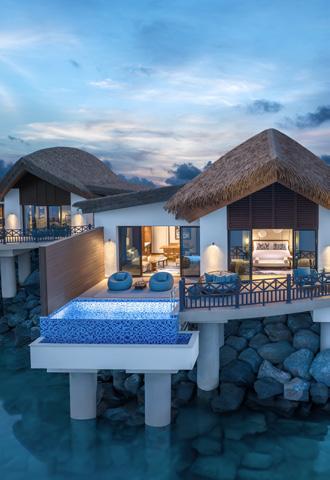
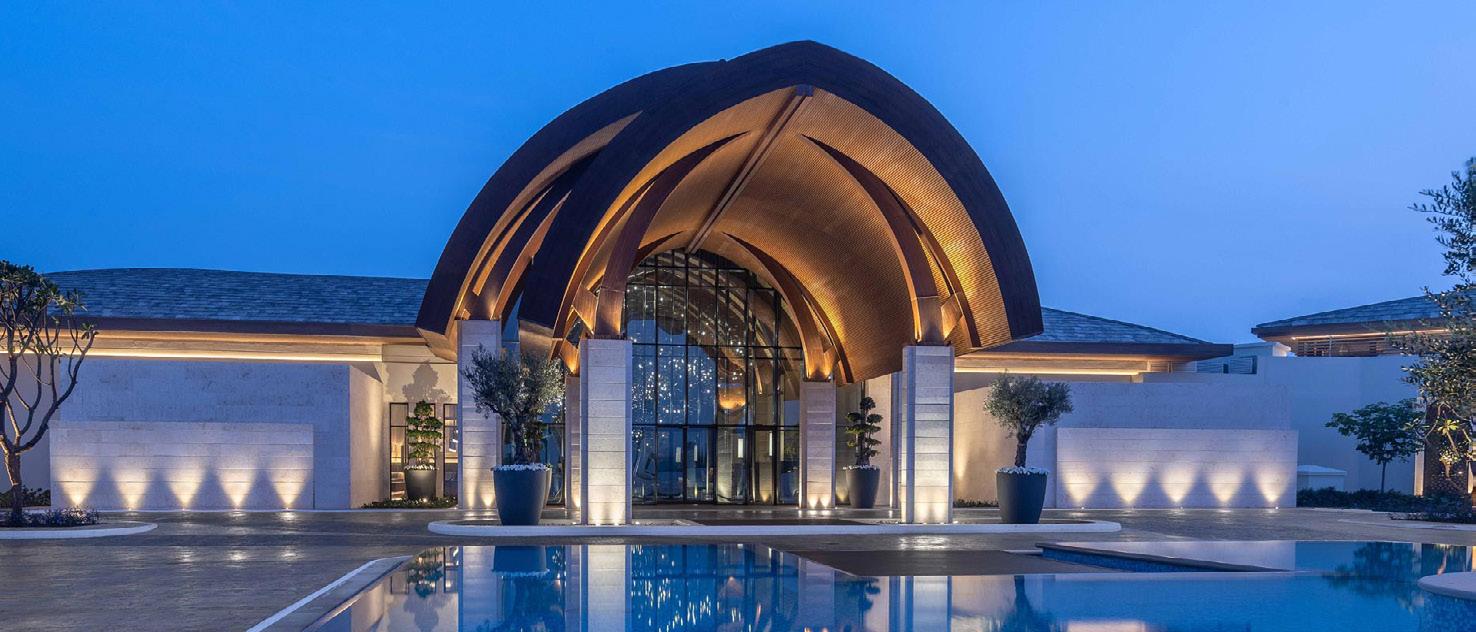
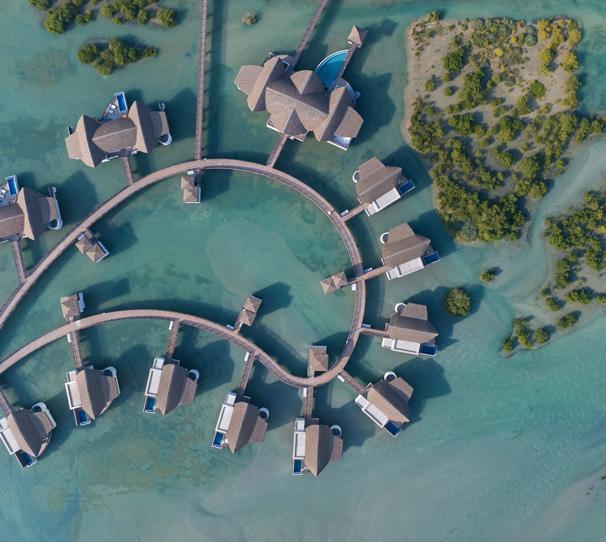
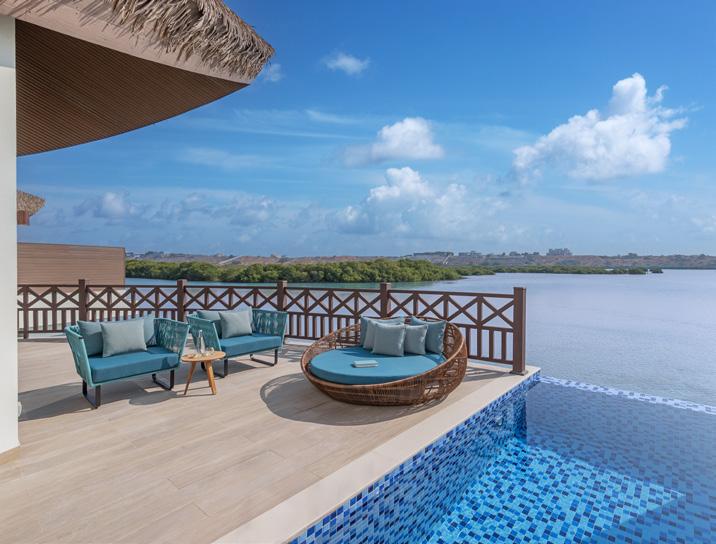
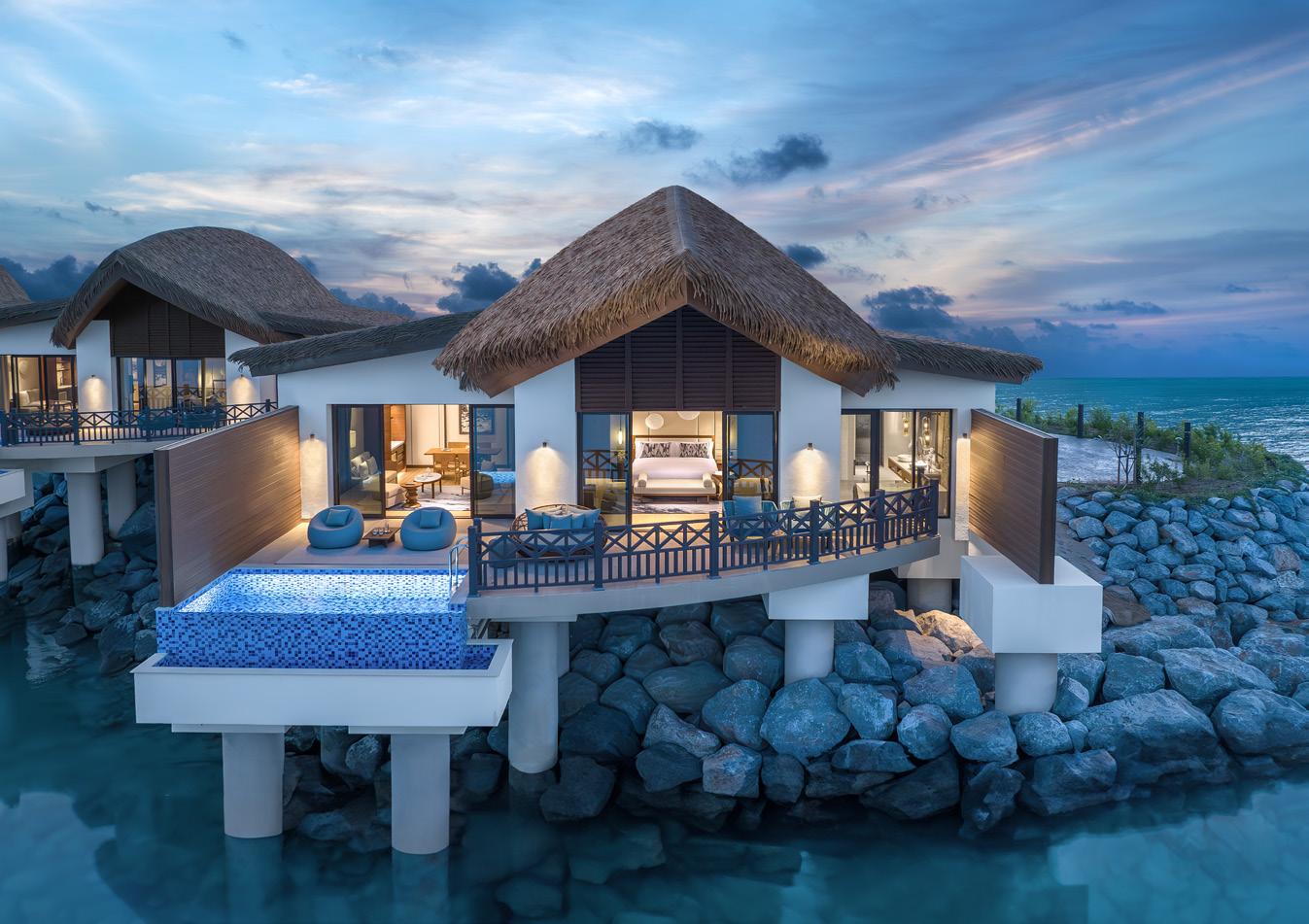
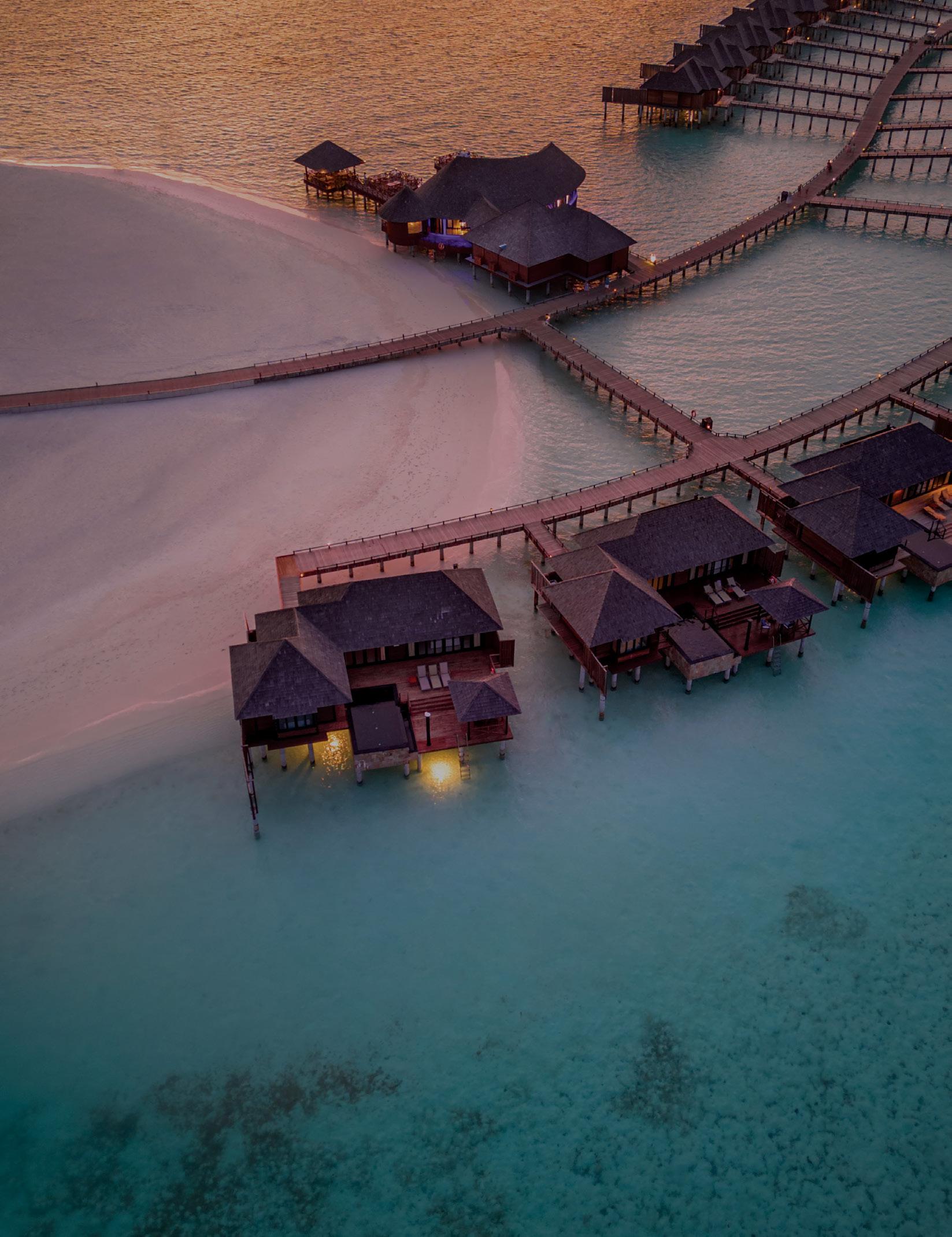
As demand continues to grow for authentic, meaningful, and experience-driven luxury travel, Anantara Mina Ras Al Khaimah Resort is perfectly poised to capture this demand and play a pivotal role within the overarching strategy of the destination. With 174 keys set across a 200,000 sqm beachfront peninsula, a private mangrove sanctuary, Ras Al Khaimah’s first overwater villas surrounded by mangroves, and an array of facilities, the resort offers a distinctive experience deeply connected to its natural surroundings.
Now entering our third year, we continue to see strong growth across key leisure markets and strong MICE demand. At the same time, our business remains highly diversified, both geographically and demographically. We welcome a broad mix of leisure guests, from couples and families to multigenerational travellers and special occasion guests, across domestic, regional, and international markets. Q & A with
RAMSEY SAARANY
“At Anantara Mina Ras Al Khaimah Resort, we have a responsibility to continue strengthening international demand for the destination by consistently delivering high standards, exceptional guest experiences, and innovative product offerings.
At Anantara Mina Ras Al Khaimah Resort, we have a responsibility to continue strengthening international demand for the destination by consistently delivering high standards, exceptional guest experiences, and innovative product offerings.
After everything the industry has had to navigate recently, what is the single strategic priority for the resort in 2026?
Our strategic priority for 2026 remains firmly centred around people and driving an exceptional guest experience.
Guest expectations continue to evolve rapidly, particularly within the luxury segment. Travellers today are placing far greater importance on personalisation, service consistency, and the overall quality of the experience from arrival to departure. Attentiveness, responsiveness, and genuine human connection now play a much greater role in shaping the guest experience.
We believe exceptional hospitality begins with exceptional teams. Continuing to invest in our people, service culture, leadership development, and colleague engagement remains a major focus for us, as empowered and motivated
teams play a critical role in delivering high standards and a stronger guest experience across the resort.
Has the guest mindset changed over the past few months? Are travellers asking different questions or looking for different reassurances than before?
Yes, definitely. Guests today are making far more intentional and value-driven travel decisions across both domestic and international markets, with greater emphasis placed on quality, relevance, and overall value perception.
Booking decisions are increasingly influenced by the overall stay experience, particularly villa products, wellness offerings, and dining concepts, alongside nature-led and family experiences. Guests are also placing greater importance on flexibility, reliability, and overall peace of mind when travelling.
We are also seeing stronger interest in sustainability, destination discovery, and experiences that create a deeper connection to the surrounding environment. Our new Mangrove Discovery Centre further strengthens how guests engage with the natural landscape in a more immersive and meaningful way.
Are you developing any new experiential pillars for the resort in 2026, whether around wellness, culture, sustainability, culinary, nature immersion, or family travel?
The focus for 2026 is to further reinforce the resort as a luxury destination where wellness, nature, culinary, and family travel are fully integrated into the guest journey.
A key milestone is the launch of our Mangrove Discovery Centre, introducing experiences centred around sustainability, local biodiversity, and destination discovery, while further immersing guests in the resort’s natural setting.
We are also continuing to expand lifestyle-led wellness
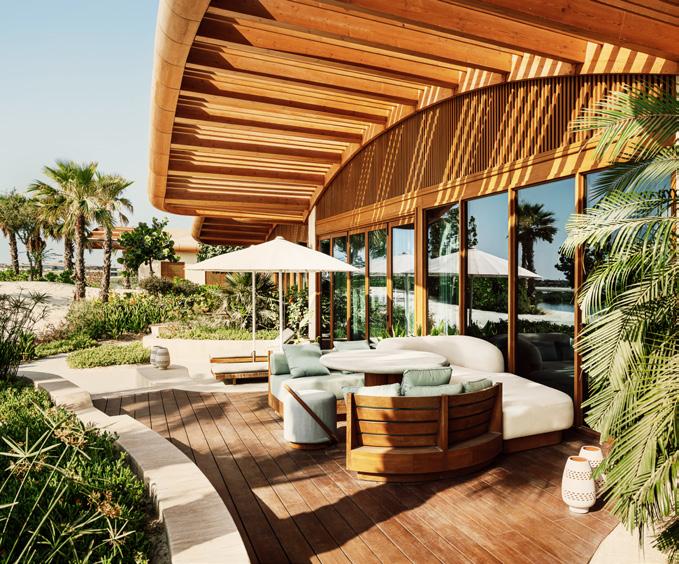
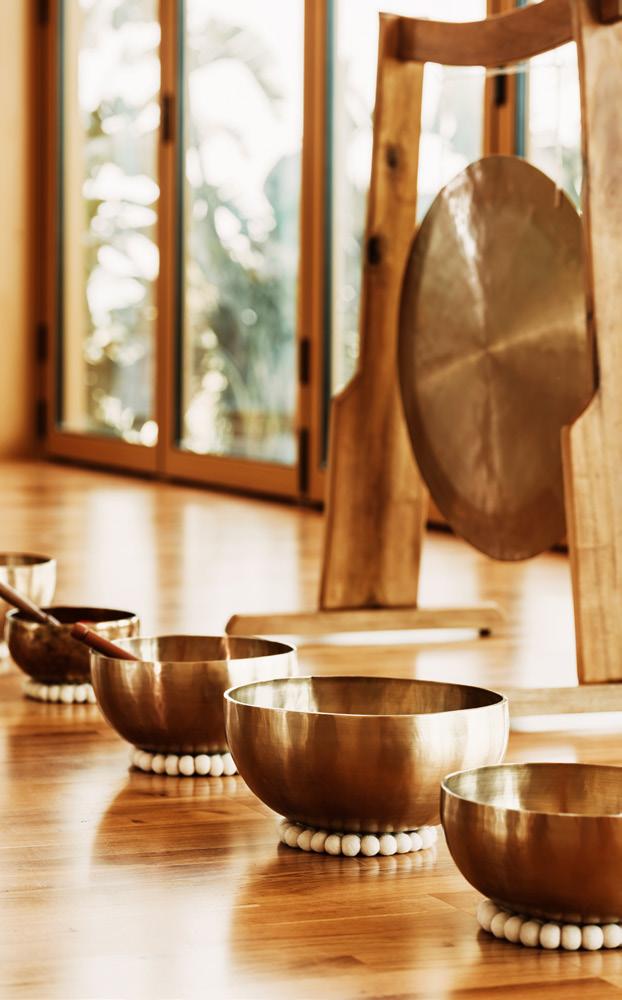
through initiatives such as Reconnect with Nature, combining outdoor movement, mindfulness, sound healing, and wellness therapies. This is complemented by more interactive culinary experiences, including new dining concepts, culinary classes, seasonal activations, and curated guest collaborations.
The launch of the new adults-only pool introduces a more refined and tranquil resort experience for adult guests, while expanded kids’ programming is designed to go beyond traditional kids’ club activities through nature discovery, outdoor exploration, and creative workshops.
The overall direction for 2026 is centred around creating more differentiated and experience-led offerings that continue expanding the resort’s appeal across multiple traveller segments.
F&B increasingly shapes how a resort is perceived, not only by in-house guests but by the local market. Are there plans to evolve the resort’s dining and social spaces in 2026?
Culinary has become one of the most important pillars in shaping how a resort is perceived today, not only by in-house guests but also by the wider local and regional market. Guests are choosing destinations based on dining concepts, atmosphere, and overall lifestyle appeal.
At Anantara Mina Ras Al Khaimah Resort, we continue refining our F&B offering across different concepts and audiences.
Mekong remains one of the resort’s key culinary pillars, recognised for its authentic approach to Asian cuisine, menu innovation, and guest chef collaborations.
Beach House has also built strong momentum as a Mediterranean beachfront venue through its brunch concepts, beachfront atmosphere, and more social dining experiences.
Alongside this, Dining by Design by Anantara allows guests to enjoy fully tailored private dining journeys across the re-
sort, from intimate beachfront dinners to curated celebrations designed around personal milestones and bespoke menus. Experiences such as our beachside Asado-inspired concepts further add to the resort’s more interactive and social dining atmosphere.
To complement the culinary experience, we have also worked with internationally recognised mixology experts to further elevate the beverage programme through refined cocktail concepts, product innovation, and more elevated presentation standards.
What role do partnerships, guest chefs, cultural collaborations, or local suppliers play in keeping the resort relevant beyond traditional luxury hospitality?
Partnerships and cultural initiatives play an increasingly important role in keeping the resort closely aligned with the destination and wider community. Today, luxury hospitality extends far beyond accommodation, with guests looking for experiences that feel current, distinctive, and reflective of the local culture.
We have brought together gastronomy, culture, lifestyle, and community engagement through a series of curated initiatives across the resort.
At Mekong, we hosted guest chef collaborations with Thai chef Thaninthorn “Noom” Chantrawan and Korean chef Chanoh Lee, while Beach House welcomed Michelinstarred chef Arnaud Dunand. These events generated exceptional demand, including sold-out dinners and attendance from dignitaries, local guests, and members of the Ras Al Khaimah Royal Family, further reinforcing the resort’s reputation as a destination for elevated culinary experiences.
Beyond gastronomy, we have also collaborated on cultural initiatives connected to the destination. Collaborations with Al Qasimi Foundation for Emirati Women’s Day, alongside participation in the Ras Al Khaimah Art Festival,
allowed us to engage audiences beyond traditional resort guests while creating stronger local connection and cultural relevance.
As Cluster General Manager, how has your leadership approach evolved since opening, especially through a period that has tested confidence, teams, and operations?
Since opening, the resort has continued operating from strength to strength, and leading the property through its continued growth has further shaped my perspective as a Cluster General Manager. Managing a luxury resort environment requires constant alignment across operations, guest experience, and the overall direction of the business.
My leadership style has always been centred around clarity, consistency, and collaboration across departments. Maintaining strong communication, encouraging ownership, and ensuring teams remain aligned behind shared objectives have been important in sustaining both operational standards and guest experience across the resort.
Periods that place pressure on operations and the wider industry require clear decision-making, operational discipline, and the ability to maintain consistency across the business while continuing to deliver high standards.
The results achieved since opening reflect that collective focus across the resort. The property has received more
than 40 industry awards and recognitions, while continuing to strengthen its reputation and overall guest experience.
In a more competitive and more cautious market, how do you keep your team emotionally invested, not just operationally efficient?
In hospitality, guest experience is ultimately shaped by the people behind it, which is why creating a culture where teams feel valued, supported, and engaged has remained a major priority across the resort.
We place strong focus on communication, recognition, and creating opportunities for people to grow within the business. Initiatives such as Direct Line with the GM were introduced to build transparency, trust, and communication across all levels of the organisation, while regular engagement initiatives and crossdepartment collaboration continue to keep teams connected and motivated.
Continued investment in learning and development has also remained a key focus. During the year, the resort delivered more than 7,040 hours of Forbes-aligned training focused on elevating service precision and operational readiness, contributing to the resort achieving Forbes Travel Guide Four-Star recognition.
We also introduced the Home Away from Home initiative to further enhance colleague accommodation standards and overall wellbeing, reinforcing the importance of creating a supportive environment for teams both professionally and personally.
That culture has translated into strong engagement and retention across the resort, with employee retention improving by 16% year-onyear and employee satisfaction reaching 86%, exceeding the 80% target score. Many of the resort’s recognitions are ultimately a reflection of the passion, consistency, and commitment of the people behind the operation.
“We have brought together gastronomy, culture, lifestyle, and community engagement through a series of curated initiatives across the resort.
“Yes, I love this country. Deeply. It’s given me a life, a business, a purpose. And yes, I believe it will rebound. It always does. But belief doesn’t cancel out reality, and right now, the reality is heavy.
Resilience Is Not a
SLOGAN
By Kim
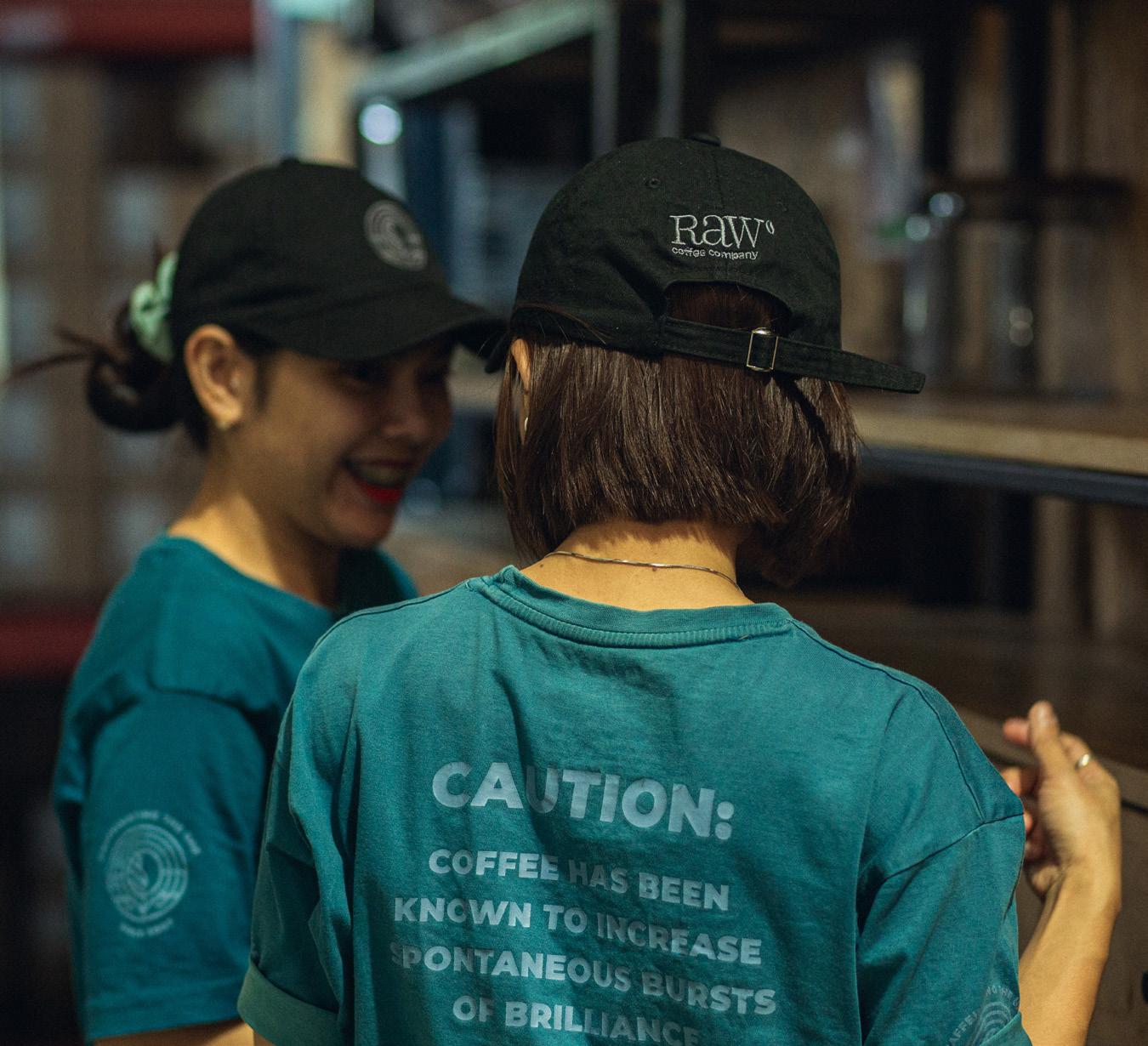
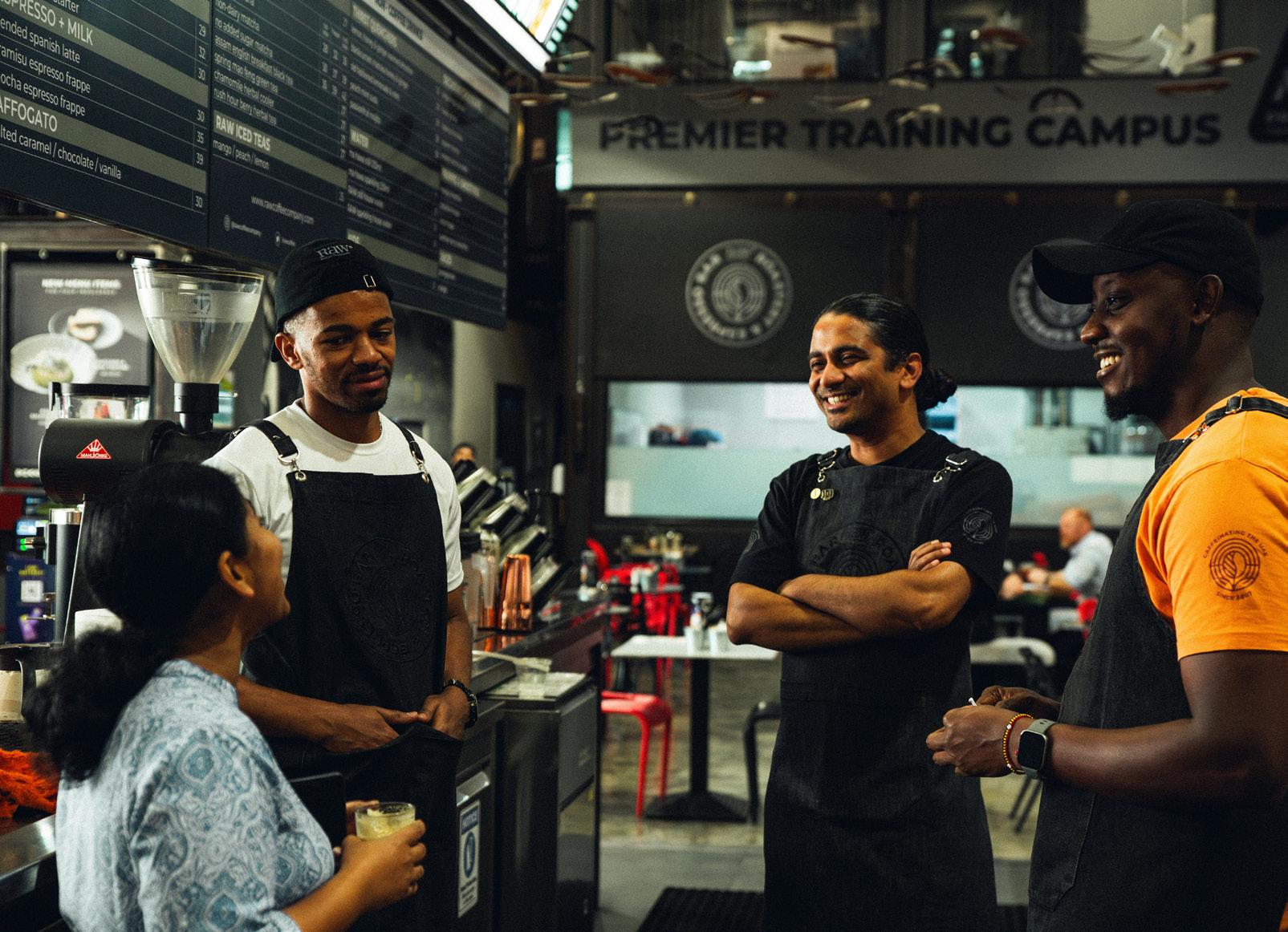
To be clear, I don’t think you can lump the UAE F&B sector into one neat, optimistic narrative about “resilience.” That’s not realistic. After 18-plus years in this industry, I can only speak for myself, from what we have lived.
Yes, I love this country. Deeply. It’s given me a life, a business, a purpose. And yes, I believe it will rebound. It always does. But belief doesn’t cancel out reality, and right now, the reality is heavy.
We are operating in the shadow of a regional crisis that is not abstract. It’s not theoretical. It’s close and very human. It’s devastating.
People keep saying, “We got through COVID. We’ll get through this.” Maybe, but this feels different.
COVID was disruption. This feels like instability at the edges of everything: emotional, economic, human. Some days I’m focused, sharp, ready to fight. Other days, it hits like grief. Because that’s what it is: waves. And in between trying to keep a business alive, there’s the uncomfortable truth: there are people, families, and entire communities not far from us losing everything.
So yes, worrying about supply chains, rent, and revenue can feel trivial. But here’s the other truth: stopping isn’t an option. Today is a fighting day.
We’ve been here nearly two decades, so we feel that alone is proof of survival of the fittest. This is a saturated, brutally competitive market, especially in specialty coffee. Trends come and go, customers evolve, and loyalty is fragile.
We’ve seen it all: big-money concepts launch loudly and die quietly, over-conceptualised brands with no soul, operators chasing hype instead of substance. And still, here we are. Not because we’re the biggest, not because we shout the loudest, but because we stayed true to what actually matters.
Thompson, Owner & Director of Culture & Brand at RAW Coffee Company
Resilience, in our world, looks like this: showing up every single day in our own business, staying selffunded and accountable, not chasing every trend that blows through town, and building real relationships with customers, suppliers, and our team. We don’t buy loyalty with marketing; we earn it with consistency.
Because here’s the uncomfortable truth for this industry: nobody cares about your “USP” if it’s not real. Consumers aren’t stupid. They can feel authenticity, or the lack of it, instantly. The brands that last? They know who they are, they deliver quality without compromise, and they take care of their people. That’s it. That’s the formula, and it works.
Before this crisis hit, we were in growth mode: a second warehouse secured, six senior hires onboarded, new office space under construction, and an expansion strategy locked in. Now? We adapt, and fast.
We are reworking our menu with fresh offers and a sharper identity, repurposing space to be more flexible and community-driven, solving logistics issues around consignments, and protecting what matters most: our people and our product.
Through sheer luck, the majority of our green coffee stock had already landed for this season. It’s sitting in our chilled storage, and right now, it’s gold. So we protect it, we plan around it, and we unapologetically move smart. Because when the doors fully reopen, and they will, we will be ready.
Let’s not sugarcoat this: hospitality and tourism will take a hit. Hard. This sector employs thousands, and not every business has the depth, discipline, or structure to absorb what’s coming. We will see closures. Some of them good businesses. Some of them long-standing. That’s the cycle.
But disruption also exposes weakness and creates opportunity.
We’ve already stepped into that space, taking over underperforming five-star lobby cafés and fixing their quality and consistency. We have also embedded senior baristas into partner operations, helping with their quality and consistency issues while also helping us keep all our staff employed and paid. Because here’s another truth: if your product doesn’t match your price point, the market will correct you.
How homegrown businesses are maintaining stability and supporting their teams
This is where resilience gets real, not in strategy decks or PR statements, but in how you treat your team when things get difficult.
We’ve had team members choose to return home to be with family, and they trust us to hold their jobs. We have team members who want to take time locally to reset, and we support that. And we have others who want to stay and
build, and they’re moving across departments and driving internal projects that will become future revenue streams.
Internally, it’s constant communication, daily check-ins, open channels across Teams and WhatsApp, and total transparency about where we stand. Because in times like this, your team doesn’t just want reassurance; they want leadership and honesty. And let’s be clear, job security only exists if the business survives. So we focus on both relentlessly.
There’s no neat ending here. This is ongoing, uncertain, and heavy. But here’s what I do know: the UAE F&B sector wasn’t built on comfort. It was built on pressure, risk, and constant reinvention. The operators who survive this won’t be the loudest or the most funded. They will be the ones who stay sharp, stay honest, and stay close to their people. Today is a fighting day and, for now, that’s enough.
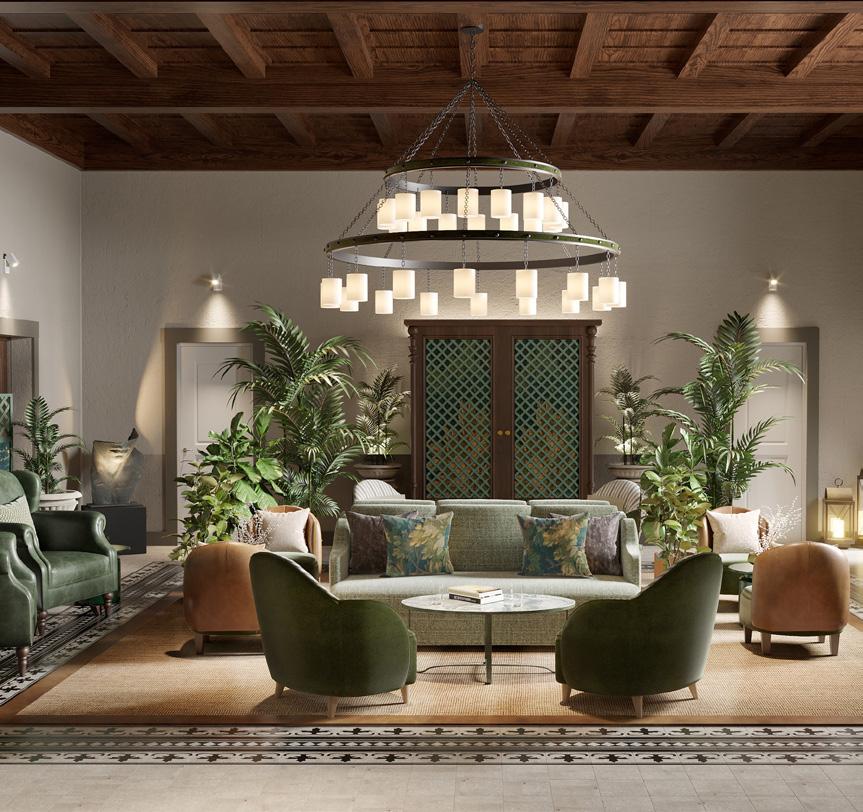
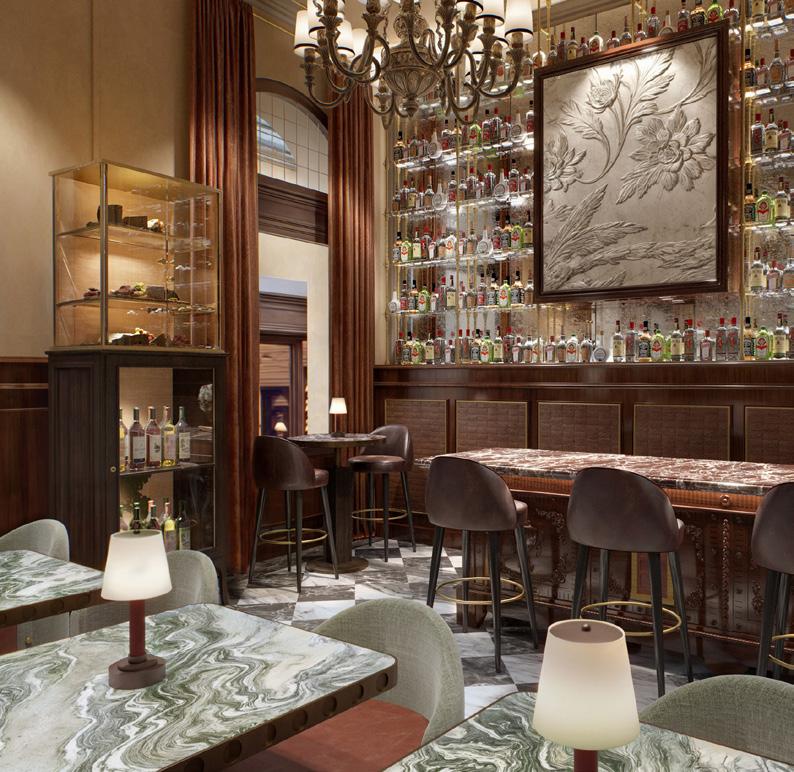
In a city where luxury hotels are constantly raising the bar, standing out takes more than striking design or a prime location. It takes personality. SO/ Uptown Dubai has both, bringing a fashion-forward, experience-led energy to one of the city’s most exciting emerging districts.
Set within the upscale Uptown Dubai enclave, the hotel is close to Bluewaters Island, JBR and Dubai Marina, yet feels deliberately removed from the city’s busier hotspots. It gives guests the best of both worlds: easy access to Dubai’s lifestyle scene, with just enough distance to feel exclusive.
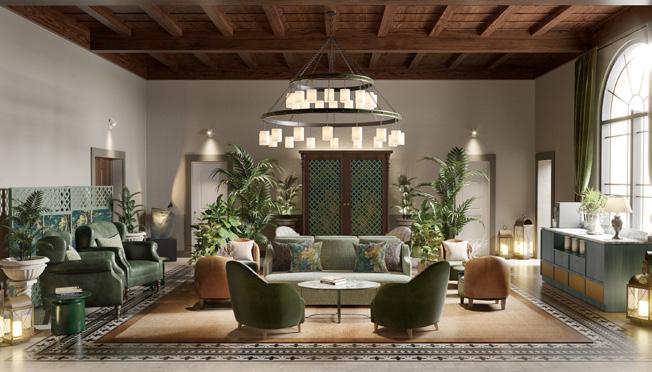
From the moment you arrive, there is a clear sense of mood. Bold interiors, sharp architectural lines, curated music and warm service come together to create a property that feels less like a traditional hotel and more like a social destination with its own rhythm.
Skyline Stays with Style
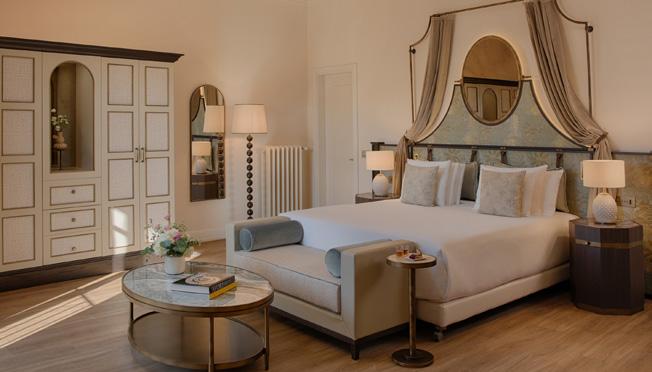
Accommodation at SO/ Uptown Dubai ranges from sleek studio rooms to the expansive Cotourre Suite, a luxurious two-bedroom retreat suited to longer stays, city weekends or indulgent escapes. Each room carries the hotel’s bold contemporary style, balanced by thoughtful comforts and floor-to-ceiling views of Dubai’s skyline.
Whether it is the soft glow of morning light or the city lit up after dark, the views alone make staying in feel tempt-
“In a city where luxury hotels are constantly raising the bar, standing out takes more than striking design or a prime location. It takes personality.”
ing. But what gives the hotel its edge is how naturally the dining experience becomes part of the stay.
Where Dining Takes Centre Stage
At SO/ Uptown Dubai, restaurants are not treated as hotel add-ons. They are destinations in their own right, each offering a different pace, mood and reason to stay a little longer.
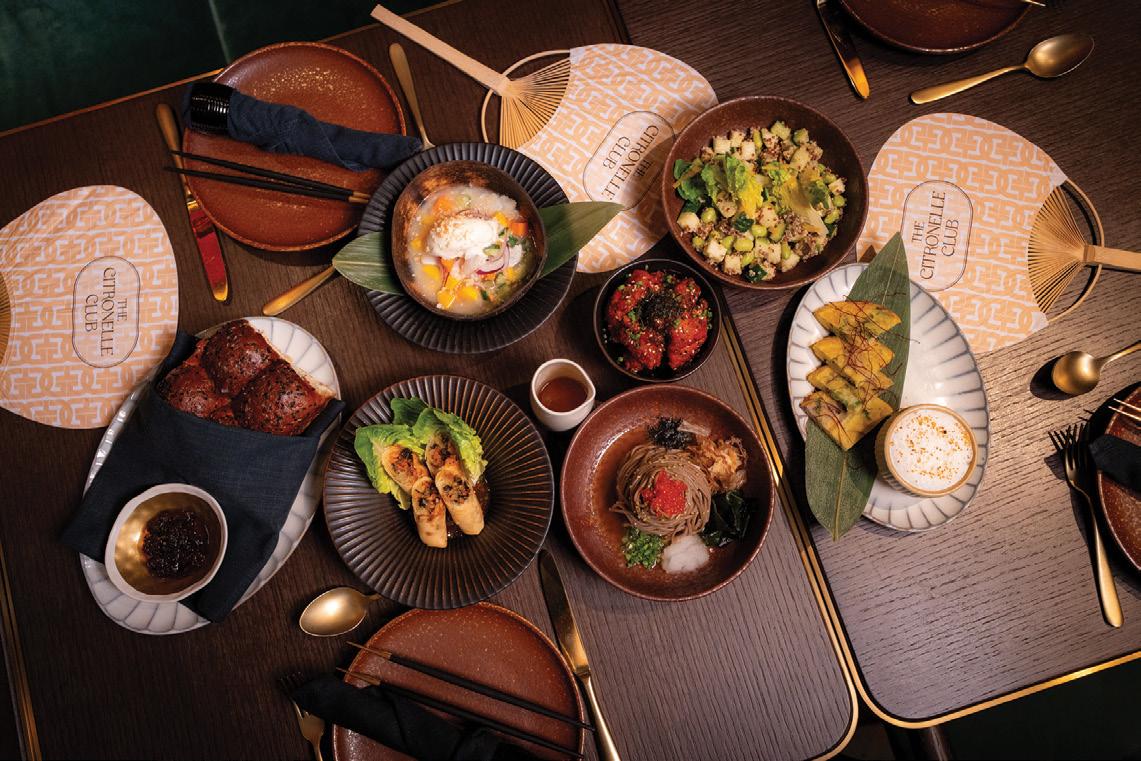
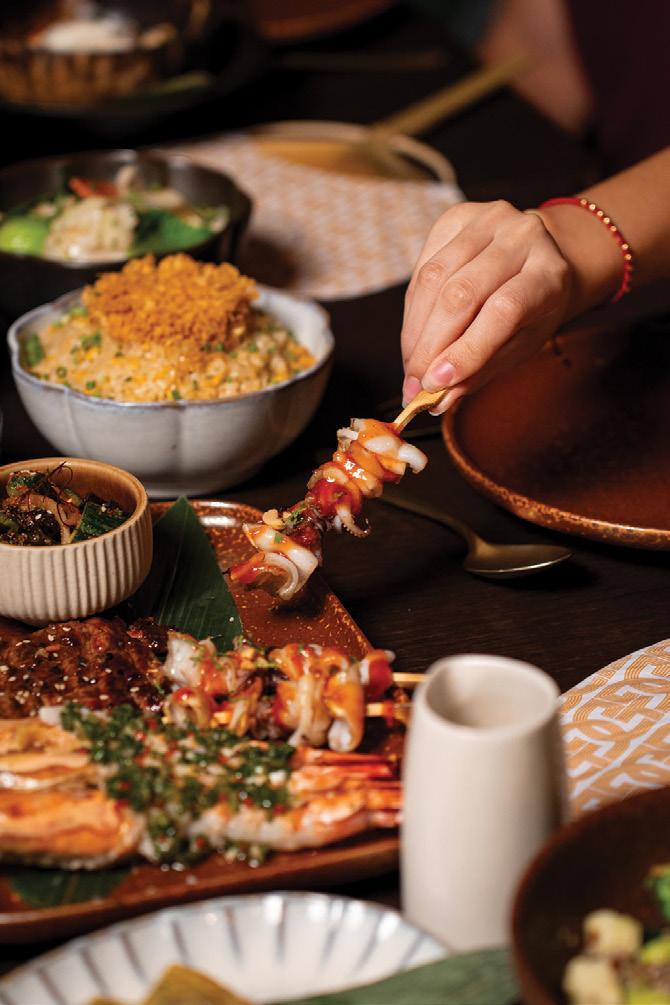
CITRONELLE
Modern Asian Citronelle brings bold Southeast Asian
flavours to a setting built for energy and atmosphere. As evening settles in, the restaurant shifts into a more theatrical mode, especially during its popular Tiger Brunch, hosted every Friday and Saturday evening.
The brunch is lively, social and unmistakably Dubai, combining flavourpacked dishes, free-flowing drinks, live entertainment and a crowd that knows exactly how to make the most of a weekend. The real hook, however, is the hotel’s Brunch & Bed offer, which turns dinner plans into a full overnight escape.
It is a clever, experience-led concept that captures Dubai’s appetite for elevated dining, social weekends and staycations that feel like more than just a room night.
LANA LUSA Mediterranean Comfort
For something more intimate and relaxed, Lana Lusa offers a completely different rhythm. Rooted in Portuguese flavours and inspired by Mediterranean dining traditions, the restaurant is all about sharing plates, easy conversation and comforting coastal cuisine.
Menu highlights include Marinated Shrimp, Garlic Prawns, Roasted Octopus, Bife à Portuguesa and Whole Grilled Seabream, while desserts such as Frozen Lemon and warm Pastel de Nata bring the meal to a satisfying close.
The setting is warm and easy-going, with an open kitchen, cosy corners and a lively bar that give the restaurant a
home-like quality. It works just as well for date nights as it does for after-work drinks or long dinners with friends.
Its business lunch gives Uptown professionals a polished midday dining option, while dinner moves at a slower Mediterranean pace, focused on sharing, connection and comfort.
BRASSERIE UPTOWN
French Mornings and Brasserie Classics
At Brasserie Uptown, breakfast feels less like a routine and more like a ritual. The Endless Sweet & Savoury Breakfast turns mornings into a leisurely European affair, with unlimited à la carte dishes served fresh to the table.
Expect buttery viennoiseries, delicate French pastries, eggs cooked to order, avocado toast, fresh juices and expertly brewed coffee, all enjoyed in a bright dining room filled with natural light and warm hospitality.
For lunch and dinner, the brasserie continues with
timeless comfort dishes and classic execution. One of its standout offers is Steak & Frites Mondays, featuring a choice of premium cuts served with golden fries, signature sauce and freshly baked bread.
It is refined without feeling formal, making it equally suited to business lunches, casual catch-ups and slow weekend breakfasts.
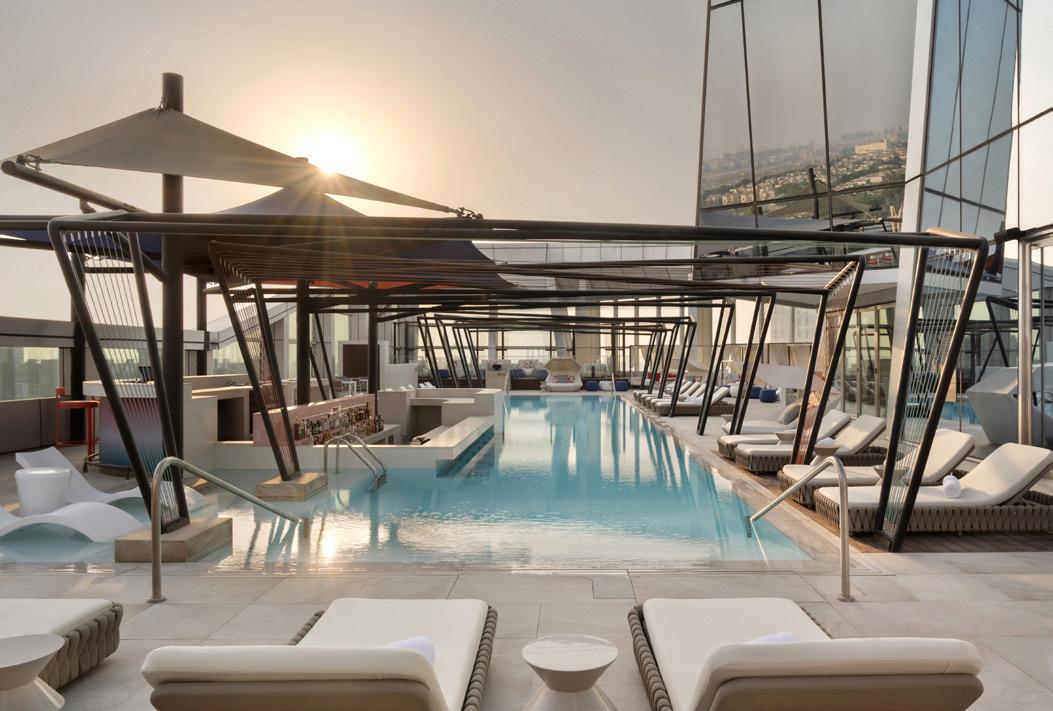
Poolside Escapes at Lazuli
For slower afternoons and sunset lounging, Lazuli delivers the kind of poolside experience Dubai does so well. Relaxed yet polished, the venue brings together refreshing drinks, skyline views and laid-back luxury in a space that moves easily from daytime retreat to evening social spot.
Beyond the Restaurants
A fully equipped gym and spa round out the hotel’s lifestyle offering, allowing guests to balance indulgence with wellness during their stay.
Still, what makes SO/ Uptown Dubai stand out is not
only its facilities or dining concepts. It is the atmosphere. The hotel understands that today’s luxury traveller wants more than a beautiful room. They want experiences, energy and spaces that feel connected to the rhythm of the city.
And that is exactly what SO/ Uptown Dubai delivers.
The Final Word
Stylish without feeling forced, energetic without becoming overwhelming and luxurious without losing warmth, SO/ Uptown Dubai has quickly positioned itself as one of Dubai’s most compelling lifestyle destinations.
Whether it is waking up to skyline views, lingering over French pastries at breakfast, enjoying Portuguese-inspired dinners, lounging poolside at Lazuli or turning brunch into a full staycation experience, the property offers something increasingly valuable in Dubai hospitality: personality.
And in a city built on first impressions, that is exactly what makes it memorable.
THE BUSINESS OF BOUNCING BACK
Lily Hoa Nguyen on Resilience, Recovery and Building Vietnamese Foodies in Dubai
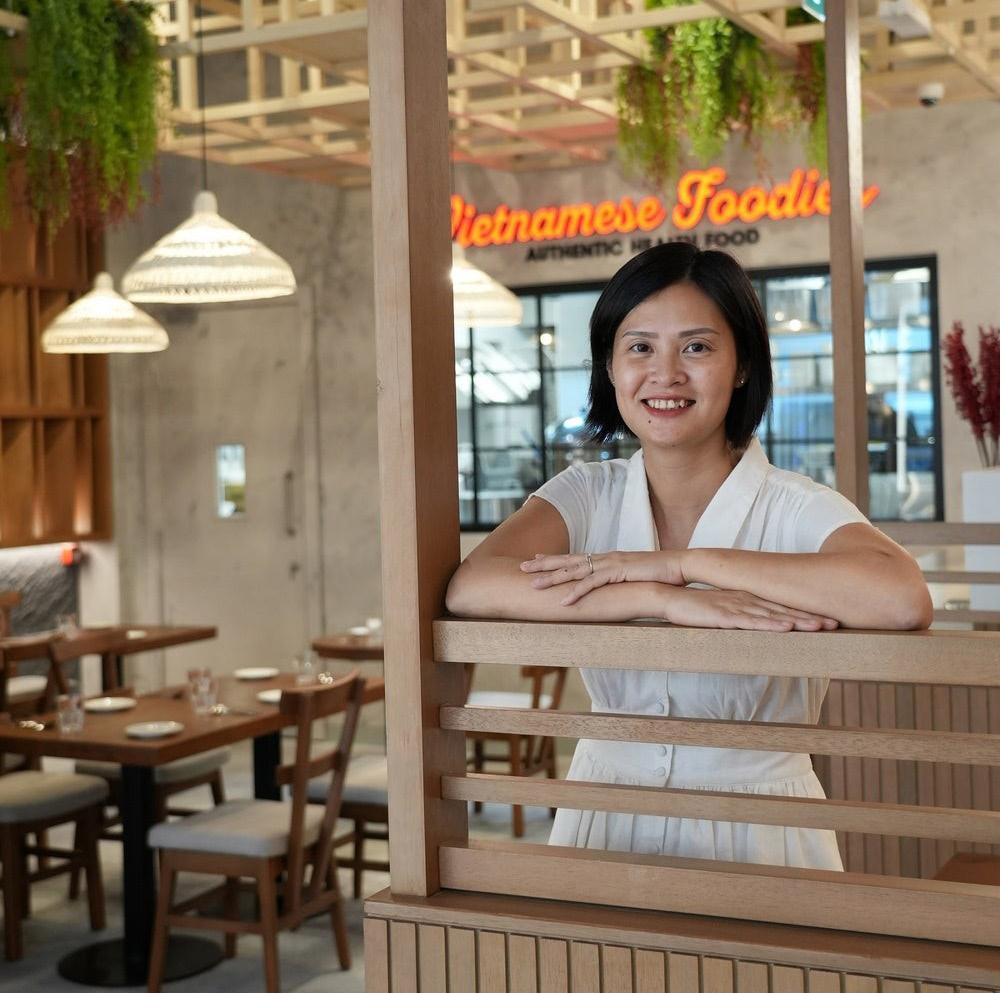
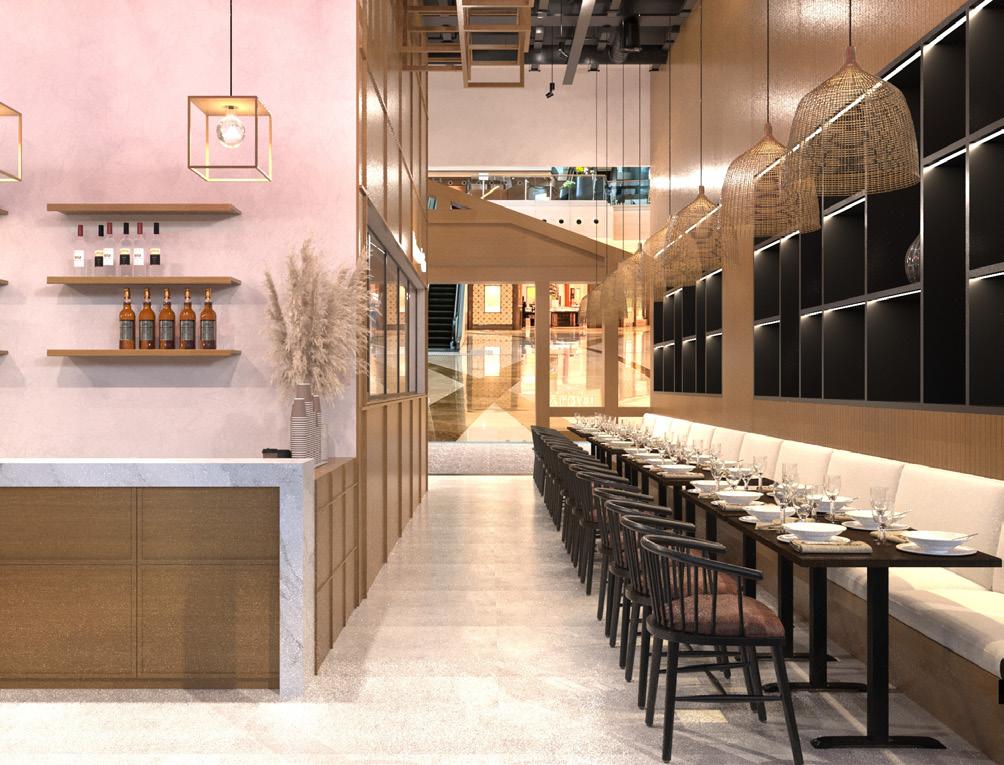
As the founder and CEO of Vietnamese Foodies, Lily Hoa Nguyen has built one of Dubai’s most recognisable homegrown casual dining brands. What began as a passion for traditional Vietnamese cooking has grown into a female-led restaurant group with eight locations across the city, with further expansion planned for 2026 and beyond.
Lily’s approach has always been rooted in consistency: fresh ingredients, accessible recipes, traditional cooking techniques and food that caters to a wide range of dietary preferences. By simplifying the complex-
ity of Vietnamese cuisine without compromising its flavour, she has created a brand that has been able to scale while staying true to its roots. Today, Vietnamese Foodies stands as one of the few Vietnamese restaurant chains of its kind outside Vietnam.
With a background in FMCG, and as both Executive Chef and CEO, Lily brings a practical understanding of operations, brand building and customer demand. Here, she speaks to Hotel & Catering News Middle East about the current pressures facing Dubai’s F&B sector, how Vietnamese Foodies has navigated difficult
periods, and why resilience remains central to the brand’s next phase.
How would you assess the current situation in Dubai’s F&B market from an operator’s perspective?
Dubai’s F&B market has been severely impacted by the current situation from multiple angles. Tourist spending has been absent since the beginning of
March, while resident spending has also reduced, both because some people have travelled home and because those staying in Dubai are being more cautious with their spending.
Some reports have indicated a 30% reduction in total market revenue. However, this reduction is distributed differently across sectors. Fine dining
is likely to be the hardest hit, followed by casual dining, while QSR is expected to see a lighter impact.
People in Dubai are currently looking for value offers and opportunities to receive the same service or product for less, as every saving opportunity can contribute to a personal contingency fund. We expect a slight recovery in May and June, followed by a difficult summer. However, we are predicting that Dubai will bounce back around November and December this year.
There have been reports of a 40% drop in footfall. Is this something Vietnamese Foodies has seen across its own locations?
This is true based on our internal data, but again, it is distributed differently across locations. Stores in regional malls and sightseeing destinations that mainly serve tourists have seen a drop of more than 40%, while stores in community malls have remained mostly intact.
You mentioned that Vietnamese Foodies did not lay off any staff during COVID, or more recently during the conflict. How did you avoid this? We have always operated with a very lean team, and during periods of lower footfall, we use the time to send team members on annual leave and compensatory leave from public holidays.
We also did not renew some contracts in March and April because of the uncertainty of the situation. With the team’s agreement, we adjusted some salaries starting in May so that most employees, many of whom are the main breadwinners for their families back home, could keep their jobs.
How did Vietnamese Foodies bounce back after COVID, and is that experience shaping how you hope to recover again?
Vietnamese Foodies grew by 83% and 56% consecutively in 2022 and 2023 after COVID, because we were able to secure previously unavailable locations after some players left the market.
FIRST SIP,
By
Design
The guest’s first sip of wine in Dubai’s finest restaurants is never an accident. It is engineered by design, long before service even begins. This link between wine cellar architecture and restaurant performance is critical to revenue-generating restaurants in Dubai. When supported by a specialist design partner like Cellar Concept, perfecting wine service in restaurants becomes a deliberate outcome, guaranteeing every pour by the sommelier is delivered exactly as intended.
In a restaurant setting, wines are not being aged. They have already reached their drinking window, the point at which fruit, acidity, and structure are in optimal balance. Even at this stage, however, wines remain highly sensitive to their environment. Exposure to light, vibrations, unstable humidity, or surrounding odours can all impact their integrity and alter the final expression in the glass.
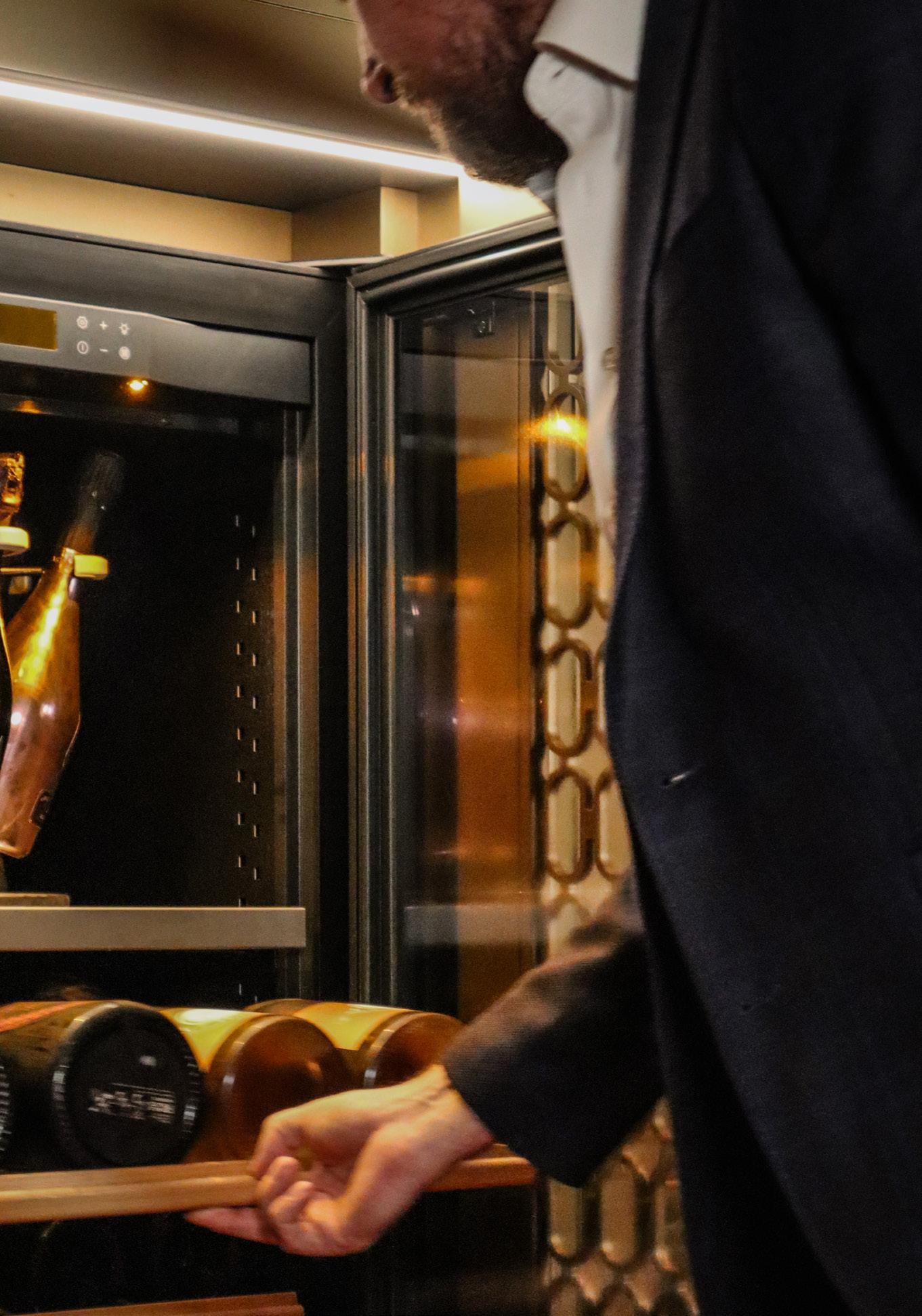
For restaurant operators focused on repeat visits, it is about making sure that every bottle is served at the correct temperature and in optimal condition. This is where the design of the wine cellar environment becomes critical. When designed correctly, it directly shapes how sommeliers operate during service. It influences how quickly bottles can be accessed, how efficiently the space is navigated, and how confidently each pour is delivered to the guest.
“There was a time when wine cellars were designed to disappear, They lived behind closed doors and were engineered for one purpose only: preservation. The wine mattered, but the space did not.
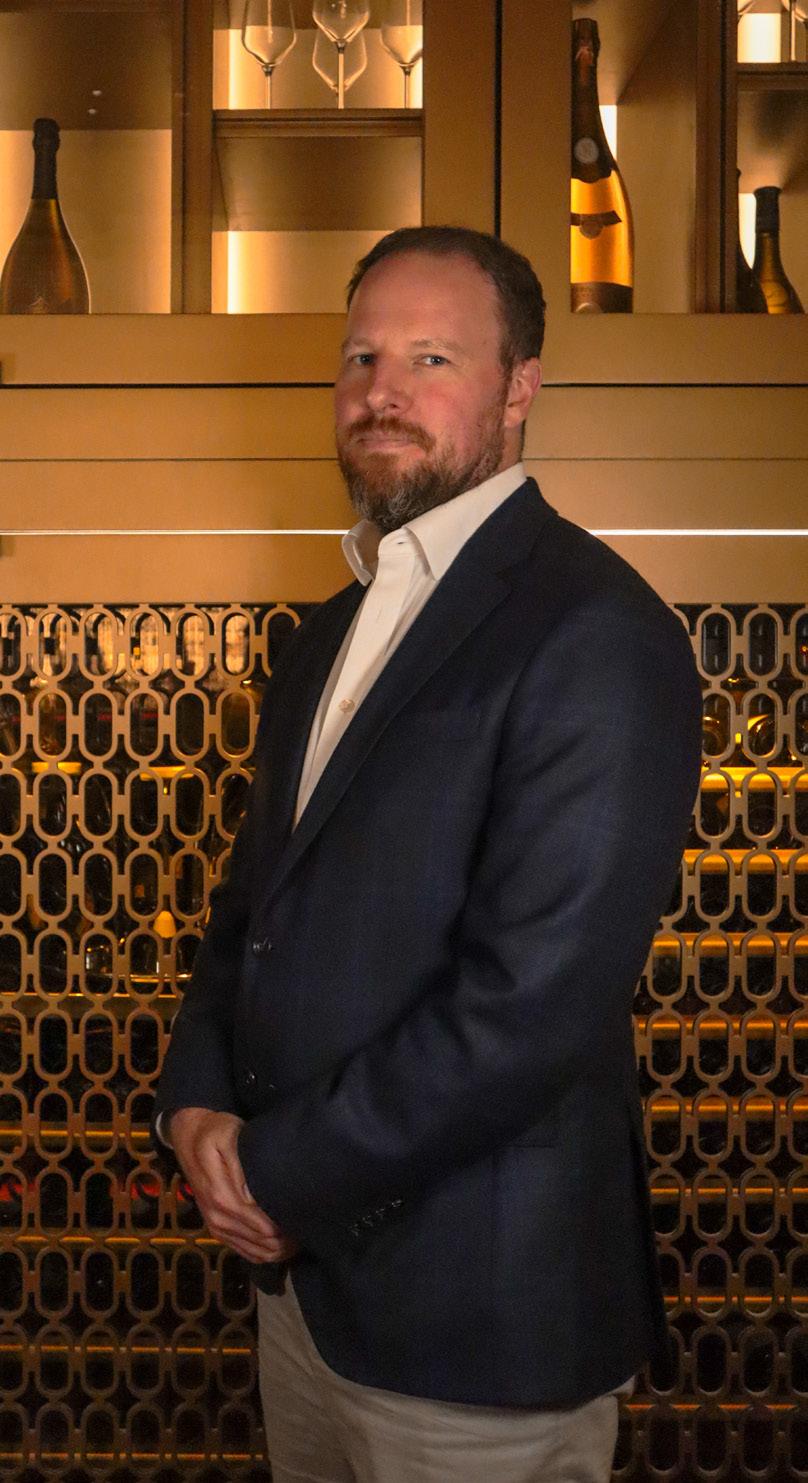
OLIVER WEIR, General Manager, Cellar Concept
As General Manager of Cellar Concept, Oliver Weir, explains: “Once the cellar is designed correctly, everything in service becomes more fluid. The sommelier is not thinking about logistics or access; they are focused entirely on the guest experience. When it is not designed properly, you see it immediately in service, through delays, inefficiencies, and unnecessary handling.”
At its core, the secret to perfecting the first sip of wine is temperature management.
Different wines require specific serving conditions. When served too cold, aromas become muted, tannins feel harsher, and the wine can seem overly acidic. When served too warm, the alcohol becomes overpowering, the flavours lose their definition, and the wine tastes flabby or “soupy”. This makes precise temperature control essential in hospitality environments.
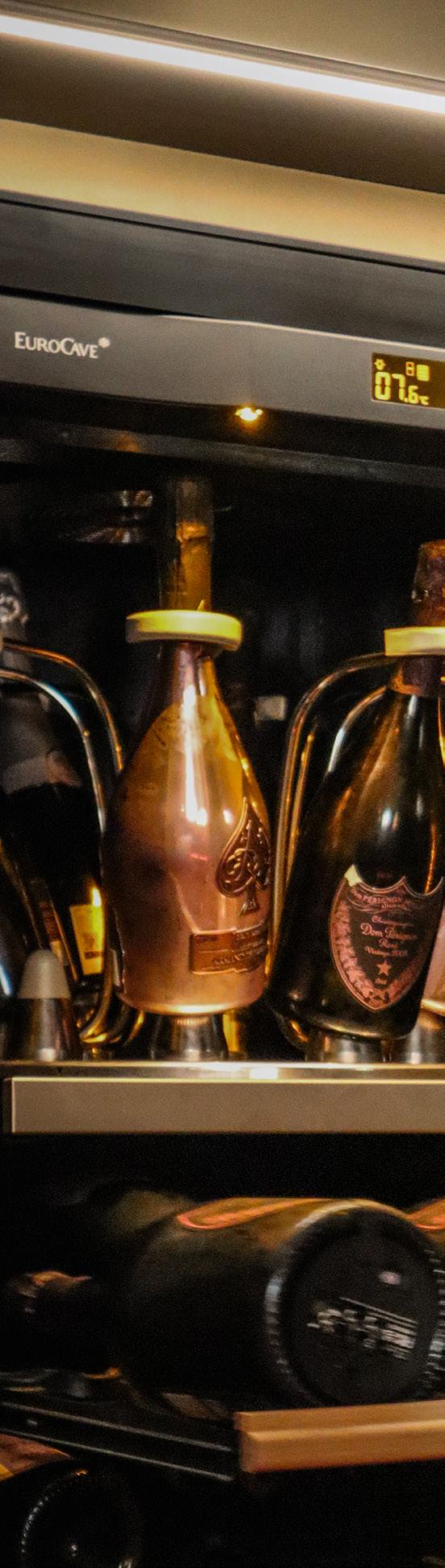
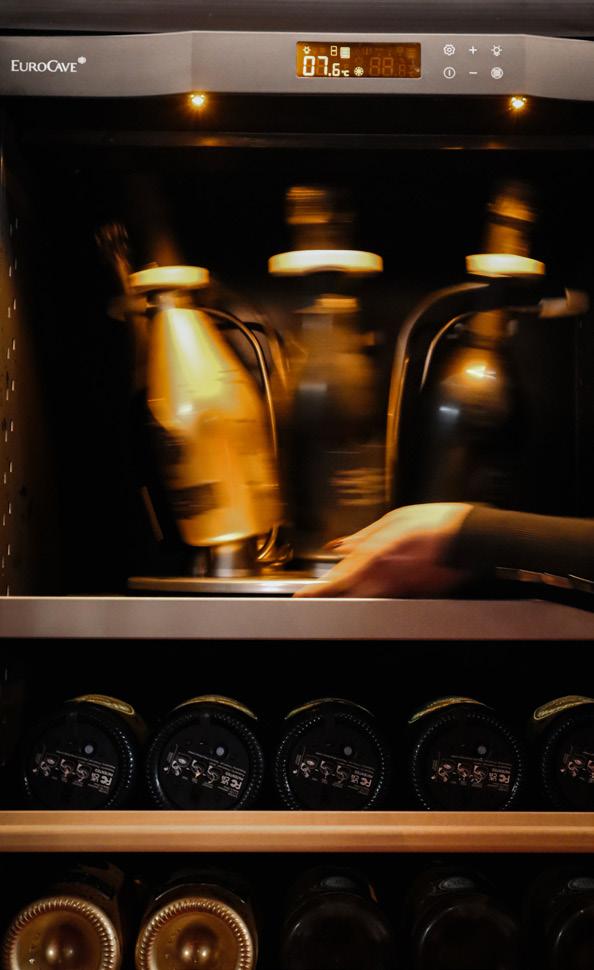
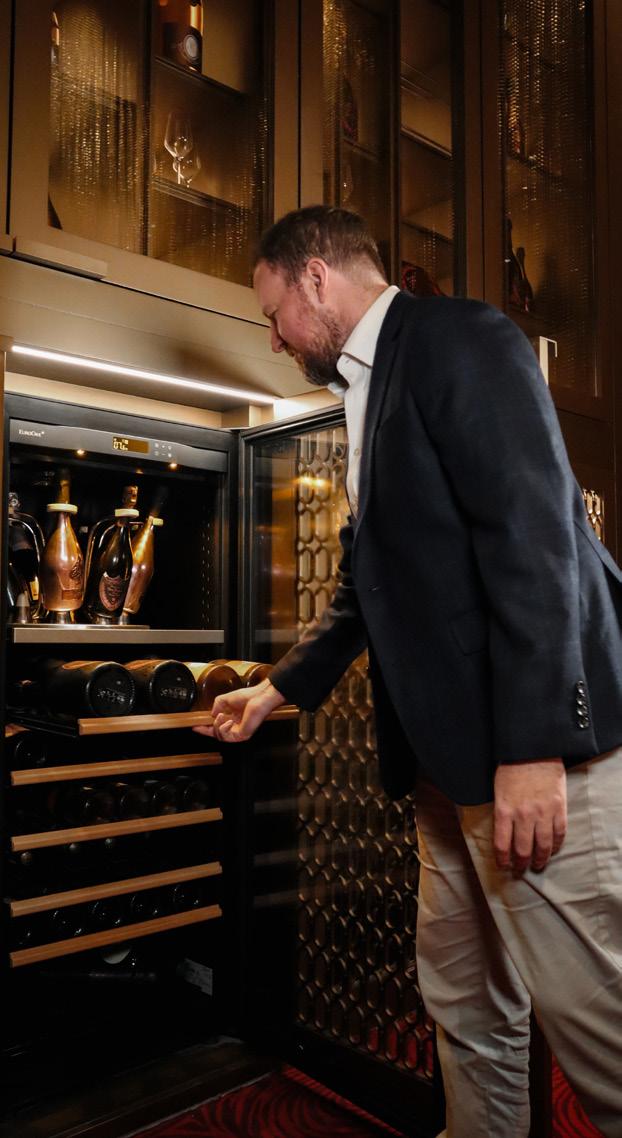
Within restaurants, this is often managed through a combination of bespoke cellar design and professional systems such as EuroCave, which allow multiple temperature zones or compartments to operate within a single integrated space.
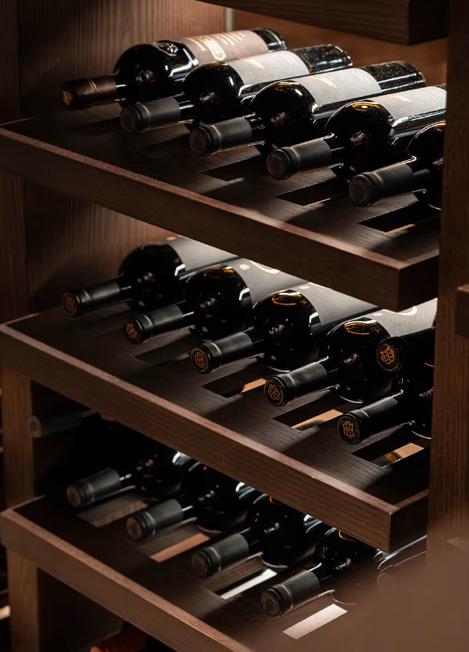
Beyond temperature, bottle organisation, racking systems, access height, and spatial flow all contribute to how effectively sommeliers can work within the cellar. The objective is not only storage efficiency, but operational clarity.
Designing an intimate wine tasting room for
Paris Paradis, Dubai
At Paris Paradis in Dubai’s Taj Hotel Business Bay, the wine cellar is an integral part of the restaurant’s offering from the outset, not a later addition.
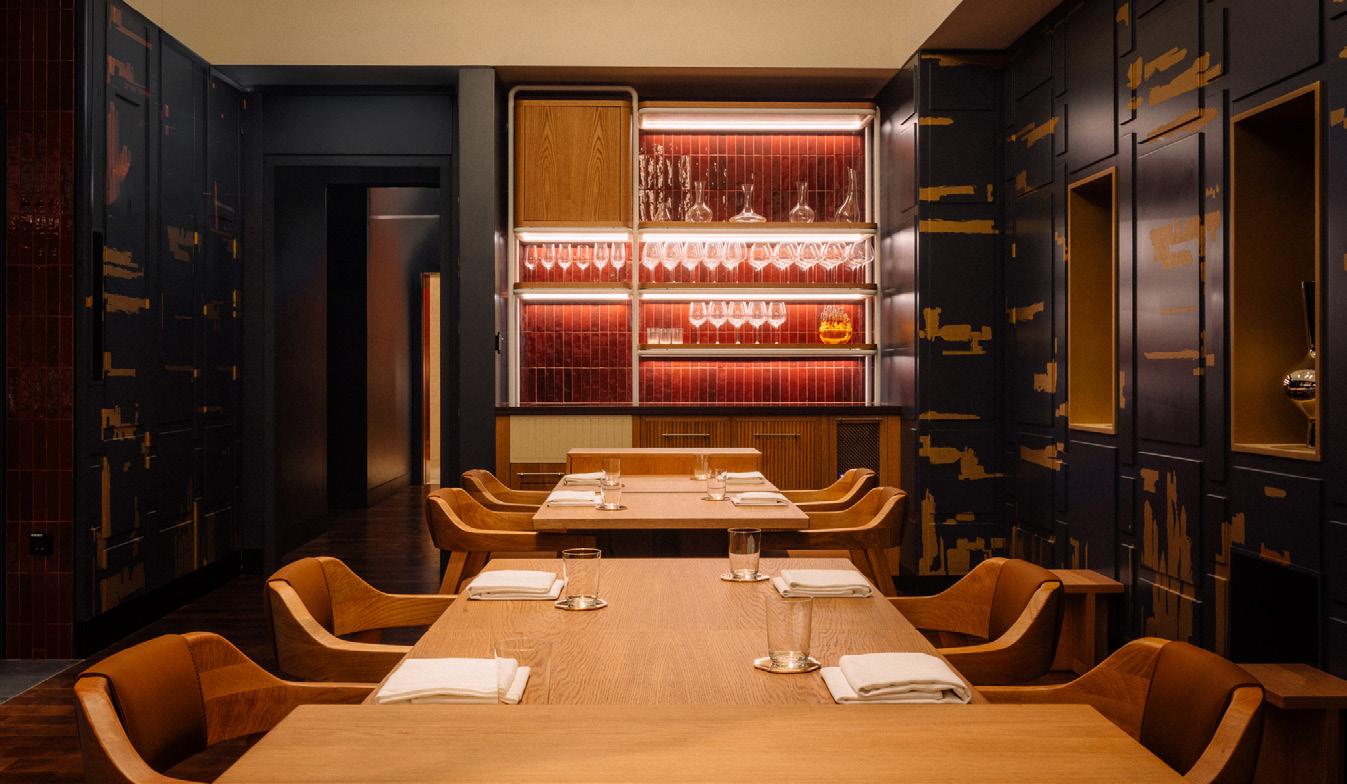
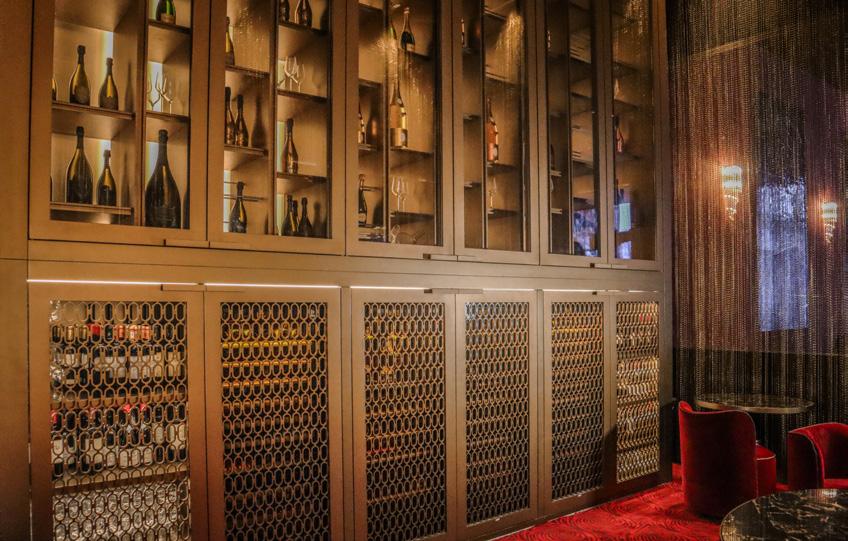
Designed within an intimate tasting room, the installation is fully embedded into the architectural language of the space. Deep red and black suede finishes, gold accents, and marble surfaces create a dramatic backdrop for a floor-to-ceiling cellar that functions as both a technical system and a visual centrepiece.
Custom lattice doors conceal four integrated EuroCave systems, functioning as serving cabinets with temperature ranges adjustable from 5 to 20°C. This allows for precise control to the nearest degree, ensuring each wine is served exactly as intended. Here, wine service is not hidden or secondary, but expressed as part of the architecture, designed for guests to engage with while experiencing the first sip at its best.
Above, illuminated and climate-controlled display niches present bottles and glassware like a curated gallery, balancing shadow and warmth to reinforce the theatrical nature of the space.
From a service perspective, this level of integration directly supports the sommelier’s role. Bottles are stored under controlled conditions, clearly organised, and immediately accessible during service, allowing for a smooth transition between selection, presentation, and pouring without interruption.
The design transforms the cellar into a working environment rather than a static feature.
With Paris Paradis Dubai’s sommelier, Jean Claude Noyi, guiding each pour, the cellar shifts from architectural feature to active service environment, supporting both care and performance during every service moment. For the guest, it becomes more engaging and immersive, as interaction, storytelling, and discovery all take place within the same space.
A wine centrepiece at Seafire, Atlantis The Palm
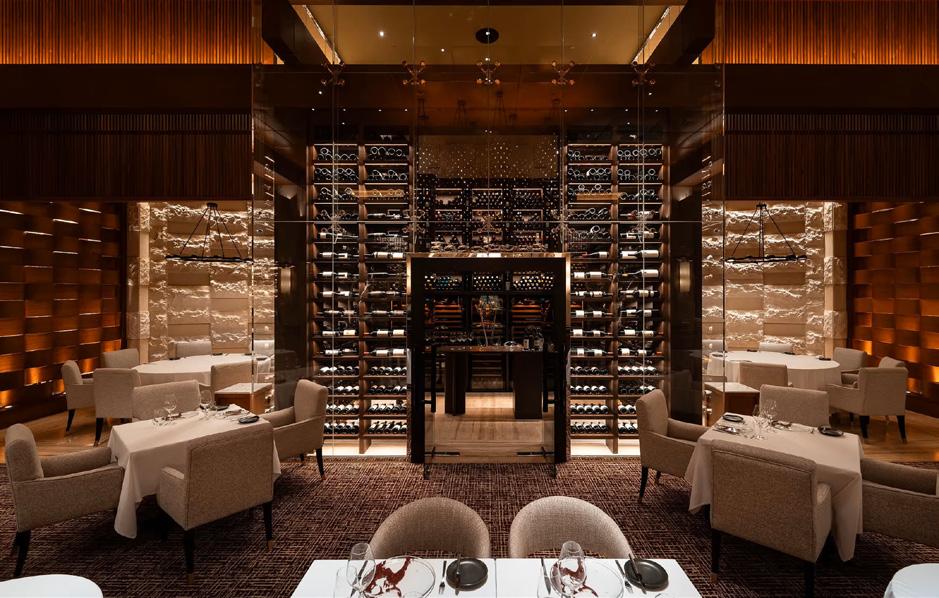
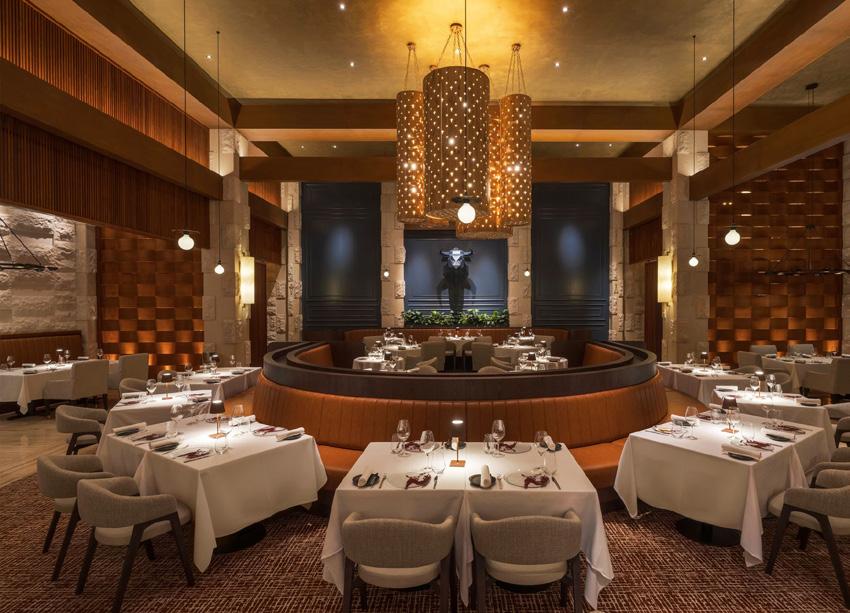
At Seafire Steakhouse in Atlantis, The Palm, Dubai, the wine offering is designed to perform at the same level of precision as the kitchen. Built around a high-intent steak programme, the wine list is curated to complement and elevate each course. To support this, Cellar Concept delivered a bespoke cellar that stands four metres tall, designed as both a functional service environment and a central visual feature within the restaurant.
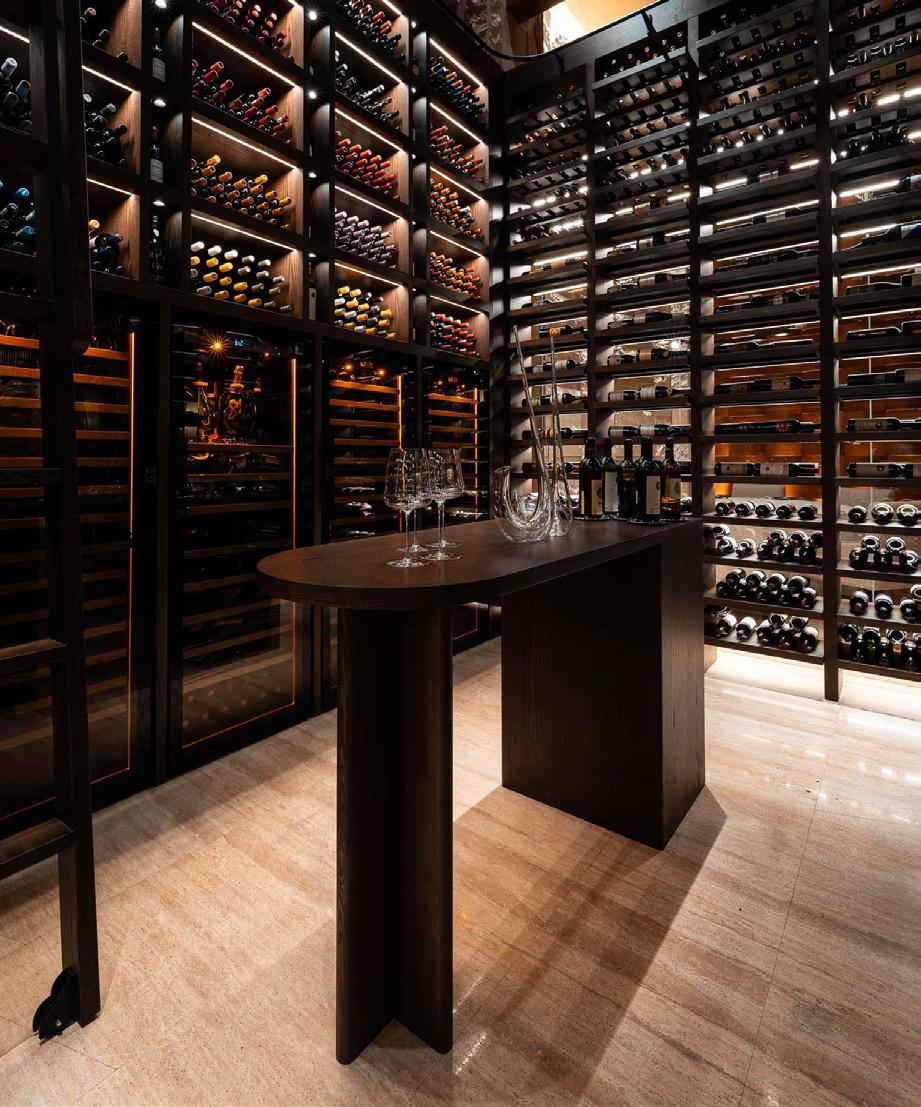
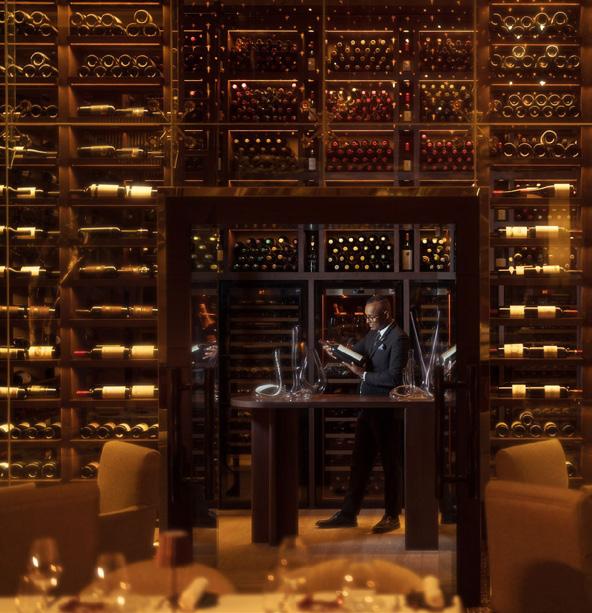
A centrepiece at Seafire, Atlantis Dubai, this bespoke walk-in wine cellar holds more than 2,500 bottles behind full glass walls. Designed with a central tasting bar, it offers an immersive experience where a passion for wine meets precise design.
The result is a vertically engineered installation that maximises capacity without compromising accessibility or control. Exclusively distributed in the GCC by Cellar Concept, custom EuroCave racking systems allow for clear organisation across multiple bottle formats while maintaining stability and protection throughout. Designed for operational efficiency, the racking system ensures bottles are securely stored, protected from unnecessary movement, and arranged in a way that supports fast, intuitive access during service.
From a sommelier’s perspective, the design removes friction during service. Bottle location is immediate and access is efficient. At the same time, the cellar operates as a visible architectural feature within the dining space, reinforcing the restaurant’s commitment to quality at every level of the guest experience.
In this context, it is an active part of the service and experience ecosystem, directly supporting how wine is selected, presented, and delivered at the guest’s table.
The architecture behind exceptional wine service
Ultimately, in Dubai’s most refined dining environments, the difference between good wine service and exceptional wine service comes down to control at the source. Temperature precision, accessibility, and spatial design all determine how a sommelier can deliver consistency in every pour.
“There was a time when wine cellars were designed to disappear,” says Oliver Weir. “They lived behind closed doors and were engineered for one purpose only: preservation. The wine mattered, but the space did not.”
Today, that approach has shifted. “What we’re seeing now is people wanting to actually use the space,” he explains. “Cellars are becoming a destination in their own right, rather than a brief stop on the way to dinner.”
The wine cellar is no longer a hidden utility at Dubai’s highest-performing restaurants, but a central feature of the experience. Not only are wine lists commercially significant, but this alignment between wine cellar design and the sommelier’s service ensures that the guest’s first sip is as intended: exceptional.
“Cellars are becoming a destination in their own right, rather than a brief stop on the way to dinner.
How nostalgia is driving the dining comeback culture MIDDLE EAST’S
By Zeinab Elamrawy, Marketing Director, EMEA Master Franchise, Subway
From the revival of retro desserts and childhood snacks to the return of long-discontinued menu favourites, nostalgia-led dining has become one of the region’s most powerful consumer trends.
We’re seeing diners searching for something familiar that brings back memories of years gone by. When choosing from the menu, comfort and emotional connection are becoming just as important as the food itself.
This is becoming especially visible across the quick service restaurant sector (QSR), where consumers are actively seeking products and flavours they miss. Online, social media has transformed nostalgia into something highly participatory. A single discontinued item can continue building momentum for years through comments, reposts, memes, and customer requests, creating demand long after the item has left the menu.
Importantly, this trend is not simply about revisiting the past for the sake of sentimentality. It reflects a broader change in consumer behaviour. Today’s diners, particularly younger audiences, want experiences that feel authentic, emotionally resonant, and culturally shareable. Familiar products deliver exactly that.
In many ways, nostalgia has become a form of comfort food in itself.
The Middle East is particularly well positioned for this trend because of the region’s uniquely diverse dining culture. Consumers here are highly engaged with international food brands, but they also form strong emotional attachments to products that become part of their routines, family traditions, or student years. A menu item is rarely just a menu item. It becomes tied to memories, milestones, and moments.
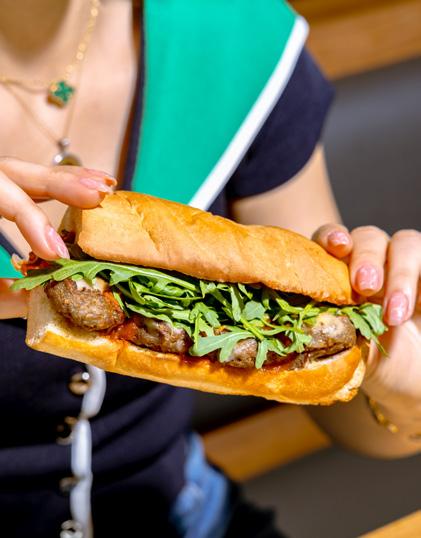
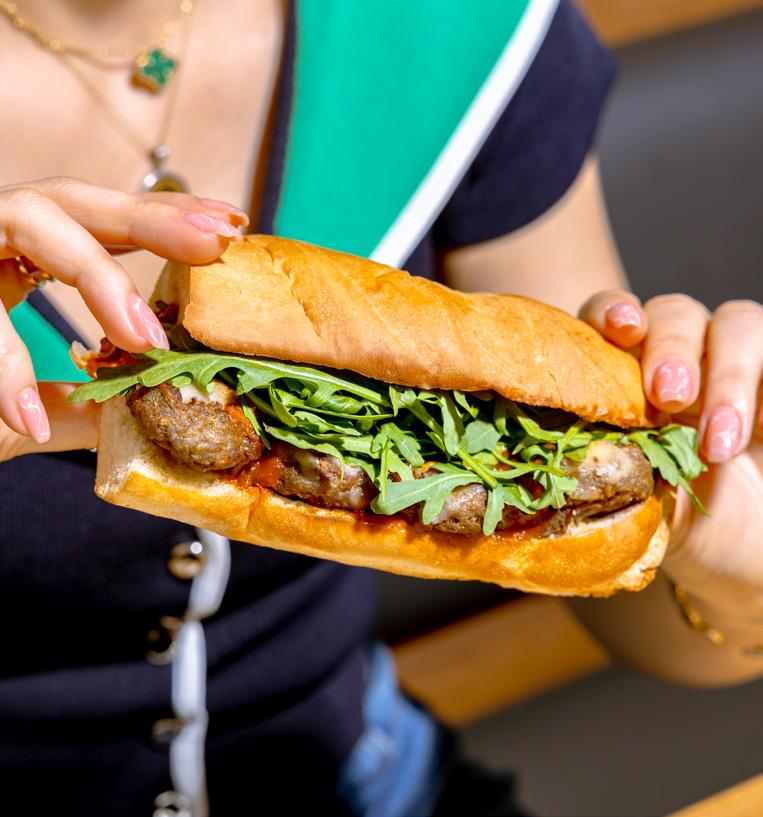
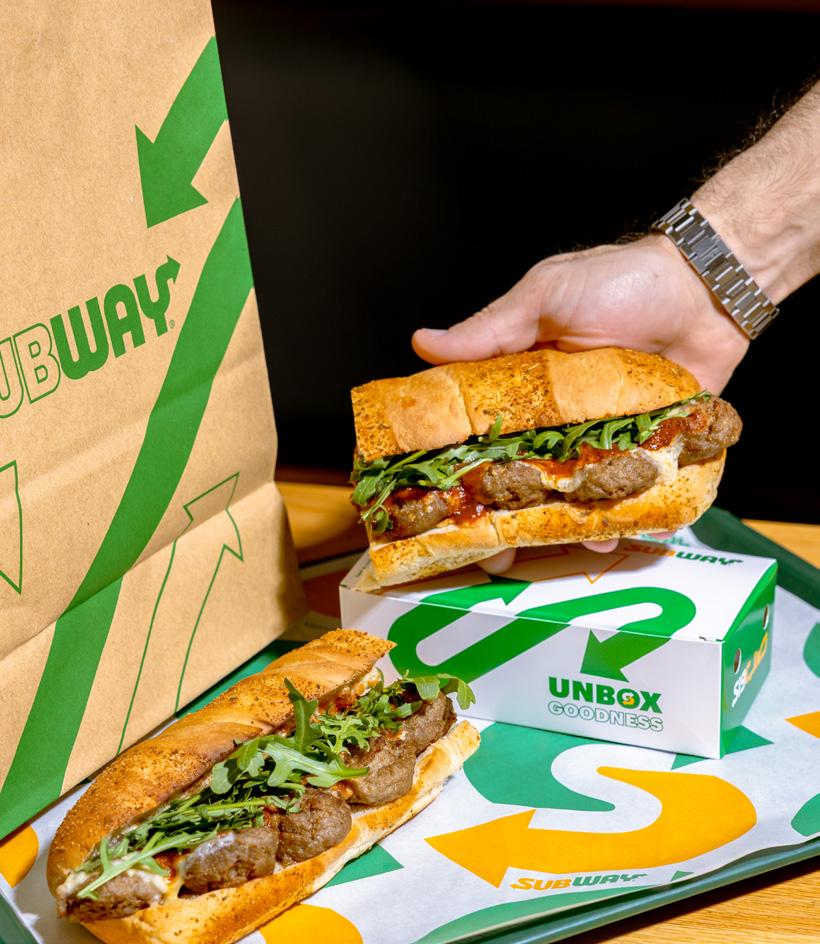
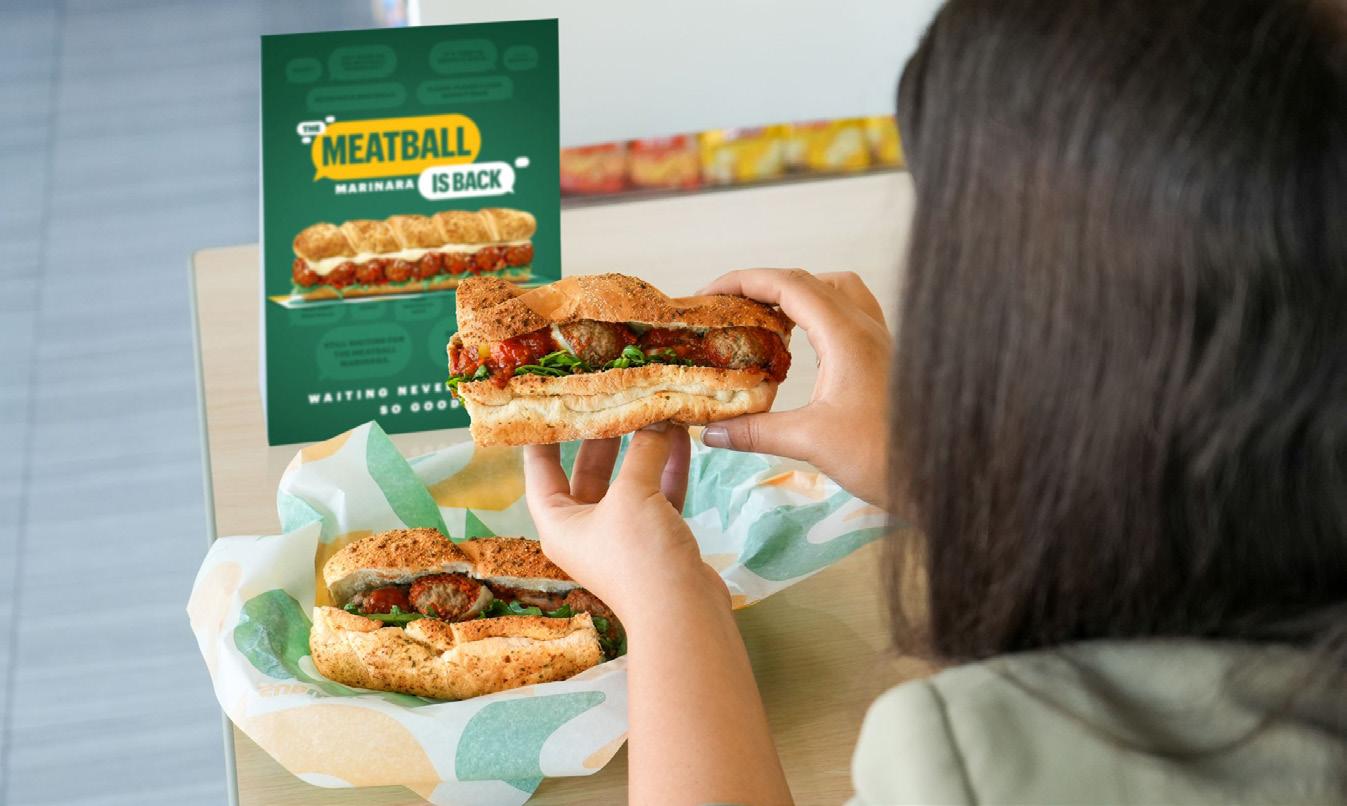
That emotional connection is one reason why the return of Subway’s iconic Meatball Sub Meatball Sub, available again in the UAE, Saudi Arabia, Kuwait, and Bahrain, has generated such an immediate reaction across the region. As one of Subway’s most recognisable menu items globally, its return taps straight into nostalgia, while winning over a whole new wave of fans.
After six years away from menus in the Middle East, the requests for its comeback never truly stopped. Customers continued asking for it online, in restaurants, and across delivery platforms. What became clear over time was that the Meatball Sub represented more than a popular sandwich. For many guests, it represented familiarity, indulgence, and a sense of nostalgia linked to earlier experiences with the brand.
At the same time nostalgia-driven products are proving highly effective at creating intergenerational appeal. While long-time customers reconnect with products they already know and love, younger consumers are often discovering these items for the first time through social media conversations and online hype. The result is a rare crossover between legacy appeal and modern relevance. A good example is in the USA where a well-known cereal brand is putting movie-related toys back in its boxes for the first time in over a decade, attracting the interest from the generations that grew up with that excitement of opening the box to discover which toy they’d got, and a new generation which is experiencing that same feeling for the first time.
For brands operating in the Middle East’s competitive QSR landscape, there is an important lesson in this. Innovation will always matter, but listening to customers matters just as much. Sometimes the strongest opportunities come not from launching something entirely new, but from recognising the lasting emotional value of products that people never forget.
The return of familiar favourites also speaks to a wider industry move towards more community-led brand building. Consumers increasingly expect brands to respond to them directly, whether through digital engagement, product decisions, or menu development. In many cases, successful comebacks are being shaped less by boardroom decisions and more by persistent customer demand.
That dynamic is redefining how brands think about loyalty. Nostalgia is no longer simply a marketing tactic, it is becoming a measurable driver of engagement, advocacy, and repeat visits.
As dining trends across the Middle East continue to evolve, one thing is becoming increasingly clear; consumers still crave discovery, but they also value familiarity. The brands that succeed will be those capable of balancing both, by introducing new experiences while preserving the products and flavours that customers continue to hold onto emotionally. That’s why sometimes the biggest trend is bringing back something people never stopped loving in the first place.
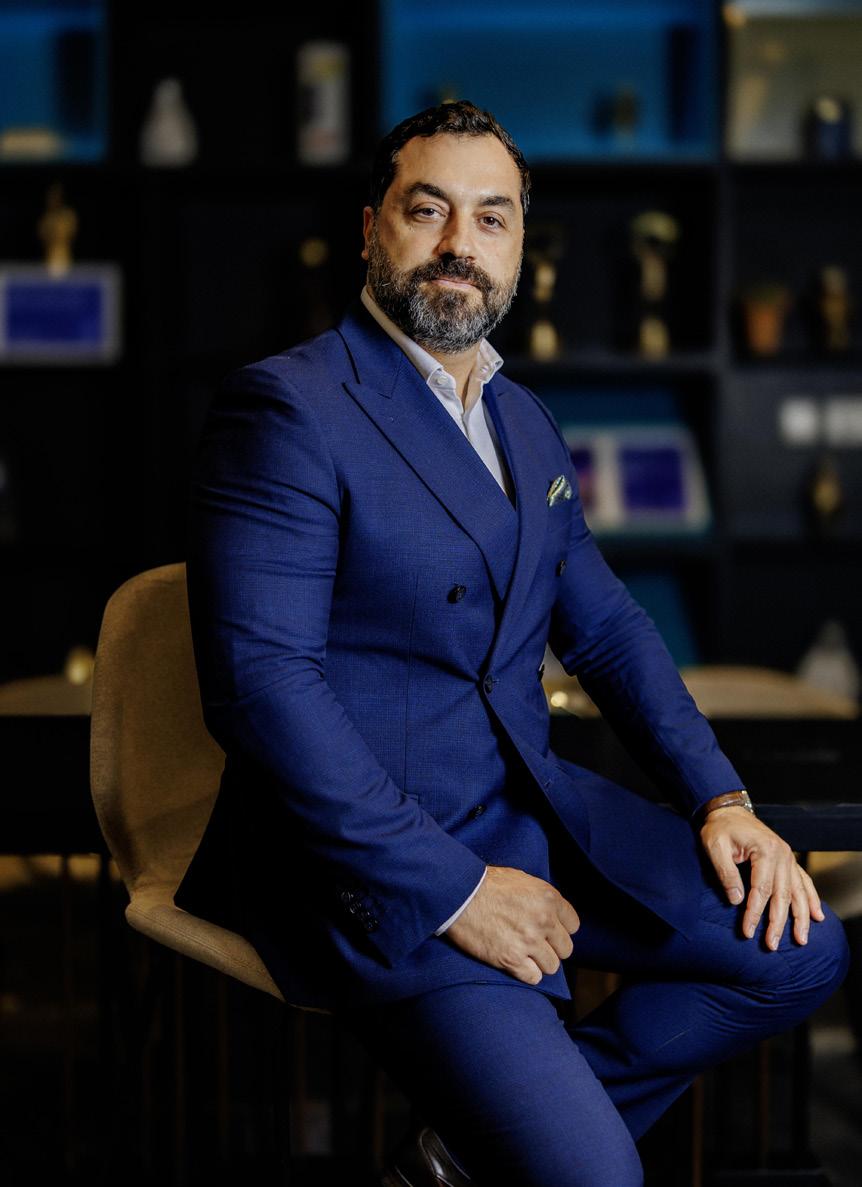
for Long-term Performance HOSPITALITY Rethinking
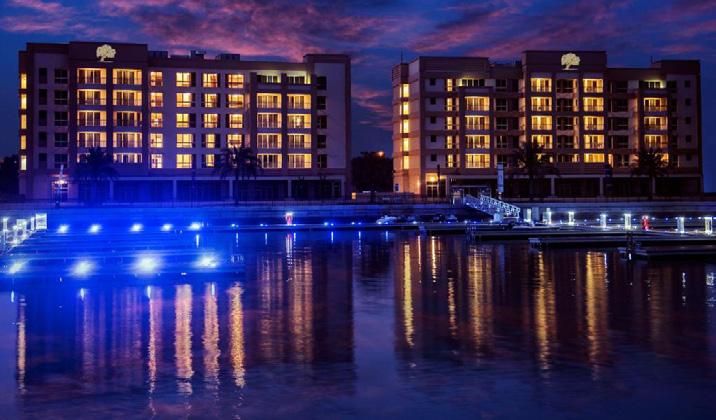
As hospitality investors and operators look beyond short-term recovery, the conversation is shifting towards models that can deliver greater flexibility, stronger returns and long-term asset performance. For Vincent Miccolis, Managing Director of Middle East, Africa and Türkiye at The Ascott Limited, this means understanding how evolving guest expectations, owner priorities and regional growth opportunities are reshaping the future of hospitality.
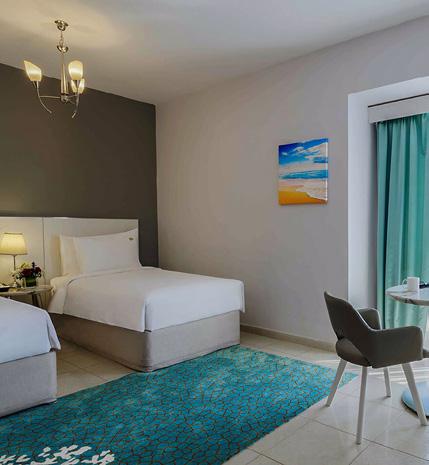
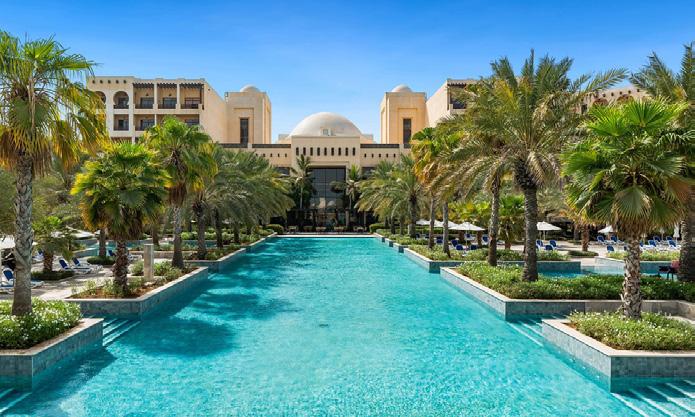
With more than 25 years of industry experience, Vincent oversees Ascott’s business growth and regional expansion across the Middle East, Africa and Türkiye. Since Ascott entered the region in 2014, he has played a central role in building its presence across key markets, with 46 properties and more than 7,300 keys in operation or under development.
In this piece, Vincent shares his perspective on why hospitality models must continue to evolve, and how adaptable, assetconscious approaches can support resilience, performance and sustainable growth across the region.
The hospitality industry is no longer being tested by isolated disruptions; it is operating in a state of continuous change. From the pandemic to ongoing geopolitical and economic uncertainty, the key question for owners is no longer how to recover, but how to build assets that can perform consistently through shifting market conditions.
By Vincent Miccolis, Managing Director, Middle East, Africa and Türkiye, The Ascott Limited
While markets such as Dubai have demonstrated strong headline performance, with occupancy exceeding 85% in early 2026, volatility remains a reality. Short-term disruptions continue to impact demand patterns, often with little warning.
In this environment, the focus is shifting from peak performance to consistent performance and cash flow resilience. Across our portfolio, assets supported by a balanced mix of short- and extended-stay demand have demonstrated greater stability, maintaining occupancy levels of approximately 67–70% despite recent regional uncertainty, while also helping to protect the bottom line and sustain operating cash flow through periods of disruption.
This reflects a broader shift in travel behaviour and demand patterns. Demand is becoming more diversified, driven by a combination of corporate travel, project-based stays, relocation and increasingly domestic and intraregional travel. At the same time, guests are blending work and leisure more fluidly, often extending stays and seeking accommodation that supports both productivity and lifestyle.
For owners, this is fundamentally changing how hospitality assets are evaluated. The emphasis is no longer on brand alone, but on operating models that can adapt to different demand cycles, optimise performance and protect longterm asset value. Assets designed around a single demand segment or peak demand periods are increasingly exposed to volatility.
Owners are now also asking different questions. Beyond performance during peak periods, there is greater focus on the resilience of the demand profile, dependency on a single traveller segment and the ability of an asset to adapt
as market conditions evolve. The conversation is becoming less about short-term highs and more about consistency, downside protection and preserving long-term asset value across different market cycles.
Instead, more flexible hospitality models, those that can cater to both short- and extended-stay demand, are proving more resilient. These models allow operators to respond dynamically to changing market conditions, capturing multiple demand streams while maintaining a stable occupancy base.
Increasingly, this is influencing how hospitality products are designed. Room configurations and layouts are evolving to support work, rest and play within a more complete living concept, reflecting how guests now travel and live. Hospitality is becoming less about standard room formats and more about creating spaces that adapt to different needs and lengths of stay.
This is also where multi-typology platforms are becoming more important. Rather than relying on a one-size-fits-all approach, owners are seeking partners that can align the right brand and operating model with the right asset and market. Whether luxury, lifestyle, extended stay or hybrid hospitality formats, flexibility is increasingly becoming a strategic advantage.
This also changes the role of the operator. Brand alone is no longer enough. Owners are placing greater emphasis on proven performance, operational agility and the ability to sustain demand across different market cycles. Increasingly, operator track record is becoming a stronger indicator of long-term success.
This shift is influencing where and how hospitality assets are being developed. Across markets such as Saudi Arabia, cities beyond the traditional gateway destinations, supported by Vision 2030, domestic tourism and infrastructure investment, are creating demand profiles that differ from more established markets.
In these environments, product-market fit becomes even more important, reinforcing the need for hospitality models that can adapt to local demand patterns and multiple stay types.
Ultimately, resilience in hospitality is no longer a reactive capability; it is a structural requirement. The hospitality models that will succeed are those designed to adapt to changing travel patterns, capture diversified demand and consistently perform across market cycles.
For owners and investors, future success will depend not only on growth potential, but on selecting hospitality models that combine resilience, flexibility and the right product-market fit to sustain performance and protect long-term asset value.
3 Global Brands. 55,000+ Attendees. One Marketplace. Where Leisure, Luxury, Travel Tech and Business Events converge to drive innovation and growth across global travel & tourism.
The Chef's Role BEYOND THE KITCHEN
BY MANISH AHLUWALIA, CHIEF OPERATING OFFICER, THE HEART OF EUROPE
The hospitality industry is undergoing a quiet but profound transformation. A hotel is no longer simply a place to stay, and a restaurant is no longer merely a place to eat. Today, both are active participants in crafting an experience built around the individual guest, their emotions, and the memories they will carry home.
Last year alone, 41 new hotels were announced for Dubai’s already impressive inventory, as travellers increasingly seek what we, industry veterans, call “high-impact, experiential travel”. The standard stay is giving way to something richer: a journey of exploration and discovery.
But what powers that journey? In my two decades working in hospitality across the world, I have come to believe it is story. Throughout millennia, stories have done something no marketing strategy, no loyalty programme, and no amenity checklist ever could: they have bridged cultural, linguistic and generational divides. A well-told story does not just inform; it pulls you in, makes you feel, and leaves a mark. And in hospitality, the most powerful storyteller is often the one you never see, but whose presence is marked with a flourish on your plate.
The appetite for this kind of experience is only growing. The global culinary tourism market was valued at over USD 16 billion in 2025 and is projected to grow at more than 21% annually through 2033. Travellers are no longer simply hungry for food; they are hungry for meaning, for context,
for a sense that what they are eating connects them to something larger than the plate in front of them.
Chefs as modern-day storytellers
Think about what a dish can carry: the cultural roots of a region, the memory of a family gathering, a tradition passed down through generations of home cooks. An ingredient can tell the story of a journey from source to table, a fishing technique unchanged for centuries, a spice that travelled continents before arriving on your plate. In this sense, the chef has become something more than a craftsperson. They are a modern culinary storyteller, and the plate in front of you is never just food; it is an edited, considered narrative about place, people, and time.
When we set about creating The Heart of Europe on the World Islands, just 15 minutes from Dubai, we were clear about one thing from the beginning: this would not be a facsimile of Europe but a sensorial escape. Fifty-one European nations will be represented across our six islands through architecture, over 51 festive celebrations, and above all, food. The journey through taste is not a side attraction here; it is central to the entire experience.
This philosophy was put to the test earlier this year, when we hosted a month-long European Ramadan. The concept emerged from a simple observation: the holy month is traditionally one of quiet reflection, and most families who observe it do not travel far from home.
So we asked ourselves what it would mean to bring these unique, often overlooked food traditions to them instead. We curated a menu of dishes steeped in the Muslim food traditions of Eastern Europe and the Balkans, Iftar recipes that speak of centuries of shared history and faith, and brought them to life on an island, enjoyed under the open sky, by the sea, with traditional entertainment.
One evening, the matriarch of a large Emirati family, with three generations present, sought me out personally to say this was one of the finest Ramadan Iftars she had shared with her family. A break from the familiar, she said, that somehow felt like coming home.
That is what storytelling through food can do: it takes a meal and turns it into a memory that travels with you.
We are now bringing the same intention to Tunaria, the region’s first food festival dedicated entirely to bluefin tuna. The ingredient itself carries a story worth telling: harvested sustainably through Spain’s ancient Almadraba technique, a method of fishing so old it predates the Roman Empire. Our Executive Sous Chef, Vibin Thumbarathi,
has built a menu that honours every cut of this prized fish, finding beauty and flavour in parts that most menus never touch.
Seafood evenings are not a new concept, but the difference between a themed dinner and a genuinely transformative experience lies in narrative. At Tunaria, our ceremonial Ronqueo del Atún tuna cutting before the gala dinner spotlights an ancient Spanish tradition, which treats every cut of the bluefin tuna with near-sacred significance.
What has been particularly encouraging is the overwhelming response Tunaria has received from residents and staycation guests alike. Originally conceived as a limitedtime culinary activation, the festival generated such strong demand and positive guest feedback that we made the decision to extend Tunaria until 30 May. For us, that success reinforces a wider industry truth: travellers today are increasingly choosing destinations not simply for accommodation, but for immersive, story-driven experiences they cannot find elsewhere.
When a guest understands why a dish exists, the sea, the season, the hands that perfected the technique over generations, they are no longer passive observers. They become participants in the story, and participants, in my experience, are far more likely to return.
Every detail is part of a bigger story
For those of us working in hospitality, this represents both a challenge and an invitation. In an industry where competition is fierce and guest expectations have never been higher, storytelling is not a marketing strategy layered on top of the product. It is the product. The décor, the entertainment, and the artists all contribute their part, but it is the chef, working with intention and often in anonymity, who sets the emotional tone of the guest experience.
Every dish on a menu is a decision about culture, provenance, and the kind of story a place wants to tell. When those decisions are made with genuine care, guests do not just leave satisfied; they leave with something to talk about and, often, a reason to come back.
In hospitality, every guest stay is a story waiting to be told. The chef, more than anyone, holds the pen.
Your Palace of Experiences
Beyond expectation, a realm of unparalleled luxury awaits. Immerse yourself in exquisite moments and create cherished memories within our magnificent palace of experiences.
From 31 Aug - 3 Sept 2026 Riyadh Exhibition and Convention Center - Malham, Saudi Arabia