Y O U R N O . 1 S O U R C E F O R T H E L AT E S T H O S P I TA L I T Y I N S I G H T S I N T H E M I D D L E E A S T
JANUARY 2026 | HOTELANDCATERING.COM
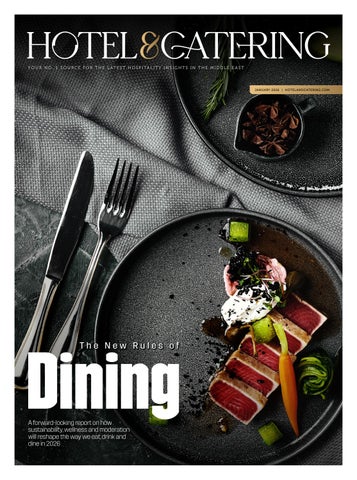
The New Rules of
Dining A forward-looking report on how sustainability, wellness and moderation will reshape the way we eat, drink and dine in 2026
EXTRAO R D I NARY PRIVATE PO O LS | 30+ AMENITIES | PRIME LOCATIONS
Escape to a home where urban sophistication meets resort tranquility.
BU ILT FO R M O M E NTS THAT MAT TE R 800-SAMANA | WWW.SAMANADEVELOPERS.COM
D I S C OVE R R E F I N E D
living
*Ranking as per the H2025 1 sales volume data of property monitor for Dubai
© Agence 17 mars - Ankama Animations / FTV / Tous droits réservés - Cube Creative / Blue Spirit / Télétoon+ / Canal+ - Cyber Group Studios - Peyo / Licensed through I.M.P.S. (Brussels)/ smurf.com
More info:
On Arabsat Badr 26° East
News, cinema, documentaries, sport, cartoons... Every family member’s show “en français” for free Subtitled in Arabic
ALWAYS MORE TO DISCOVER
Contents IN THIS ISSUE
24 THE NEW RULES OF DINING
A forward-looking report on how sustainability, wellness and moderation will reshape the way we eat, drink and dine in 2026
32 48 GULFOOD The World’s Biggest F&B Gathering Returns to Dubai
INSIDE THE RISE OF DAYLIFE
58 BUILDING THE NEXT GENERATION OF EMIRATI CULINARY TALENT As Dubai continues to position culture and creativity at the heart of its global identity, the role of food as a cultural language has never been more pronounced
Guillaume Ferraz on what makes beach clubs endure
60 UAE ONLINE FOOD DELIVERY MARKET TO REACH $3.9B BY 2030 With the MENA food delivery sector projected to reach $35.6 billion by 2030, mobile is rapidly becoming the default channel for ordering 62 WHERE TO EAT AT ONE ZA’ABEEL
52 20 MEET THE CHAMPIONS Festival of Cake Bake-Off Crowns Its First Winners 36 THE ARCHITECTURE OF CELEBRATION How Crystals Events & Catering turns moments into legacies 40 THE RISE OF GROUNDED EXPERIENCES How Hyper-Local Thinking Is Powering the Next Dining Experiences 42 INSIDE FZN BY BJÖRN FRANTZÉN’S CELLAR At FZN by Björn Frantzén, the beverage programme is not designed to sit quietly beside the food
6 JANUARY 2026 | HOTELANDCATERING.COM
THE TRENDS RESHAPING HOW WE STAY, LIVE AND EXPERIENCE HOTELS
As the hospitality industry enters 2026, it does so with a noticeably different energy
PROPERTIES solproperties.ae 800-765-1
Learn More
CREDITS
CEO Wissam Younane wissam@bncpublishing.net MANAGING DIRECTOR Rabih Najm rabih@bncpublishing.net EDITOR-IN-CHIEF Seymone L Moodley seymone@bncpublishing.net COMMERCIAL MANAGER Alex Brown alex@bncpublishing.net MARKETING & COMMUNICATION LEAD Aaron Joshua Sinamban aj@bncpublishing.net DIGITAL EDITORIAL SUPPORT Karan Moodley karan@bncpublishing.net PHOTOGRAPHY Joel Amparo MULTIMEDIA Eduardo Buenagua CREATIVE LEAD Christian Harb chriss@bncpublishing.net
Images used in Hotel & Catering are credited when necessary. Attributed use of copyrighted images with permission.
SUBSCRIBE Contact subscriptions@bncpublishing.net to receive Hotel & Catering every issue
PO Box 502511 Dubai, United Arab Emirates P +971 4 4200 506 | F +971 4 4200 196 For all commercial enquiries related to Hotel & Catering News ME, contact sales@bncpublishing.net All rights reserved 2026. Opinions expressed are solely those of the contributors. Hotel & Catering is officially licensed exclusively to BNC Publishing in the MENA region. No part of this magazine may be reproduced or transmitted in any form or by any means without written permission of the publisher. Printed by United Printing and Publishing | upp.ae
In addition to our print edition, we’re bringing you all sorts of industry news on our web mediums. We’re looking forward to interacting with our readers on all of our social media and web platforms. See you on the web!
Hotel and Catering News ME HotelCateringME Hotel & Catering News Middle East hotelcateringme
8 JANUARY 2026 | HOTELANDCATERING.COM
CONTRIBUTORS
Contributors
Hospitality Voices This Month
01
SHAIMA RASHED AL SUWAIDI,
CEO, Arts, Design & Literature Sector at Dubai Culture “Food is an integral part of our authentic culture. Through it, local talent expresses the richness of Emirati cuisine and showcases our community’s identity, traditions, values, and spirit of generosity.”
02
GUILLAUME FERRAZ,
Vice President of Daylife, Sunset Hospitality Group “The scale, pace, and diversity of this city demand a higher level of planning and execution. It teaches you to move with intention, to listen to the market and to deliver quality at speed.”
03 MARTIN KUBLER,
Chief Sloth at The Gluttonous Sloth HORECA Consulting with Attitude “The modern guest is more informed, more travelled, and more value-aware than ever before.”
HOTELANDCATERING.COM | JANUARY 2026
9
Rediscover Inspiration at Le Méridien Dubai Hotel & Conference Centre A serene sanctuary at the heart of the city’s dynamic landscape, Le Méridien Dubai Hotel & Conference Centre redefines the art of urban hospitality. Set across 15 acres of immaculately landscaped gardens, the hotel offers an elegant retreat just moments from Dubai International Airport, placing guests within effortless reach of the city’s most iconic districts, from Dubai Mall and Burj Khalifa to the storied charm of the Gold Souk and Dubai Creek. With 580 beautifully appointed rooms and suites, the property invites travellers into a world where contemporary design meets the timeless sophistication of the Le Méridien brand. The distinguished 196 rooms in the Le Royal Club wing elevate the experience with spacious, light-filled rooms, and refined club privileges, while select ground-floor accommodations in the main building open directly onto lush gardens and tranquil pools, offering a resort-like ambience rarely found in the city. Well-being is woven into the hotel’s DNA. Guests may indulge in five swimming pools, unwind in serene outdoor enclaves, or train at one of Dubai’s most expansive and advanced fitness facilities, staffed by expert coaches and equipped with cutting-edge technology to nourish mind, body, and spirit. At the heart of the property lies an extraordinary culinary journey. Housing 18 acclaimed restaurants and bars, Le Méridien Dubai is home to some of the city’s most storied dining institutions. From the ever-legendary Seafood Market, celebrated for its market-style freshness, to Casa Mia, Dubai’s pioneering Italian restaurant, each venue reflects a passion for authenticity, craftsmanship, and memorable dining artistry. A beacon for global meetings and events, the hotel features more than 44,000 sq. ft. of versatile event spaces, comprising 24 impeccably designed venues outfitted with modern audiovisual capabilities. Whether orchestrating a grand celebration for 1,750 guests, hosting an international exhibition, or curating an intimate executive gathering, the hotel’s specialist events team and award-winning culinary experts bring each vision to life with impeccable precision and creative flair. From inspired dining to world-class event facilities, and from resort-style relaxation to unmatched convenience, Le Méridien Dubai Hotel & Conference Centre stands as a destination where cosmopolitan energy and cultivated luxury converge, inviting every guest to unlock a stay that is truly memorable.
H&C EDITOR’S NOTE
DO, OR DO NOT. THERE IS NO TRY. insights. Less obsession with trends, and more focus on what actually works. Listening to guests and serving them in ways that feel intuitive, thoughtful, and genuine. Across this issue, you’ll find reflections on more casual experiences, collaboration over competitiveness, less drinking and more thinking. Smaller portions. Deeper experiences. Less performance, more purpose. Hospitality that feels rooted, meaningful, and culturally connected, rather than driven by fleeting cues. And while all of this sounds interesting, the question remains, how much of it will truly stick in a world still obsessed with being the loudest, the flashiest, and the most visibly accomplished? Time will tell.
T
here is no dramatic pause at the end of an old year. The fireworks are only in the sky, and the euphoria you feel at 11:59pm is likely the bubbles talking. What really sits between one year and the next is sleep. We go to bed and wake up in 2026. And in truth, there isn’t a great shift between the last day of December and the first of January. Mentally, and to some degree physically, you can turn it into a reset, but in reality, it is simply a continuation. What does change is the calendar, and the energy we choose to carry forward, or consciously create anew. As we enter a new year, much of the conversation across hospitality points in an interesting direction. Forwardlooking, yes, but also quietly reflective. A return to simpler
12 JANUARY 2026 | HOTELANDCATERING.COM
Personally, I’m stepping into 2026 with less baggage. Letting go of what no longer serves me, internally and externally. People, places, habits, expectations. Creating space for something more intentional, more abundant, and more aligned. My wish for you is the same. So whether you believe in fresh starts or don’t give them much thought at all, whether you quietly set intentions or howl at the moon, it is, undeniably, a new year. And as Yoda wisely put it, Do, or do not. There is no try.
SEYMONE L MOODLEY EDITOR-IN-CHIEF seymone@bncpublishing.net Seymone Leigh Moodley seymonemoodley
H&C OPENINGS & LAUNCHES
Wynn Al Marjan Island, the $5.1 billion integrated resort currently under construction in Ras Al Khaimah, United Arab Emirates, has confirmed the first two of the 22 restaurants and lounges planned for this much-anticipated destination.
WYNN AL MARJAN ISLAND ANNOUNCES ITS FIRST TWO RESTAURANTS
AUTOGRAPH COLLECTION HOTELS CELEBRATES CAPE TOWN’S SEASIDE SPLENDOR WITH THE OPENING OF MOREA HOUSE, AUTOGRAPH COLLECTION Inspired by the raw beauty, vibrant culture, and laid-back spirit of Cape Town, Morea House, Autograph Collection, has opened its doors in Camps Bay. The new 90room hotel joins Autograph Collection Hotels, Marriott Bonvoy’s diverse and dynamic portfolio of independent hotels championing individuality. Set along one of Cape Town’s most iconic stretches of coastline, Camps Bay is framed by the turquoise Atlantic Ocean and the dramatic Twelve Apostles mountains. The neighbourhood’s palm-lined promenade, sun-soaked beaches, and lively cafés, restaurants, and boutique shops offer a captivating mix of coastal serenity and city energy, providing the backdrop for the Morea House experience.
16 JANUARY 2026 | HOTELANDCATERING.COM
Set to debut when Wynn Al Marjan Island opens in Spring 2027 are an elegant steakhouse by Alain Ducasse and a second outpost of Delilah, the phenomenally popular supper club at Wynn Las Vegas.
OPENINGS & LAUNCHES
CROWNE PLAZA ALEXANDRIA MIRAGE HOTEL OPENS IN THE HEART OF ALEXANDRIA, BRINGING SEAMLESS WORK AND REST TO EGYPT’S MEDITERRANEAN CITY IHG Hotels & Resorts proudly announces the opening of Crowne Plaza Alexandria Mirage Hotel, introducing a new standard of contemporary comfort and seamless hospitality to one of Egypt’s most iconic coastal cities. Ideally located in the prestigious Smouha district, the hotel is set to become a key destination for both business and leisure travellers.
Em Sherif Café, one of the region’s most celebrated Lebanese dining concepts, is set to expand its footprint in Dubai with two exciting new openings. Queue Investments, the master franchise owner of Em Sherif Café in the UAE, has partnered with ADIHH and 7 Management to bring the brand’s signature elegance and warmth to two prime locations in the city.
EM SHERIF CAFÉ EXPANDS IN DUBAI – QUEUE INVESTMENTS, ADIHH AND 7 MANAGEMENT JOIN FORCES FOR TWO NEW LOCATIONS
HOTELANDCATERING.COM | JANUARY 2026
17
H&C NEWS & APPOINTMENTS ANANTARA THE PALM DUBAI RESORT & ANANTARA WORLD ISLANDS RESORT ANNOUNCE NEW CLUSTER MARKETING TEAM Anantara The Palm Dubai Resort and Anantara World Islands Resort are pleased to introduce their newly appointed Cluster Marketing team. With a focus on driving brand visibility and strengthening market reach, the team will support the continued growth of both properties across key regional and international audiences.
RAW Coffee Company, the UAE’s leading specialty coffee roaster, has partnered with JAR Premium Foods to launch the RAW x MILKLAB Barista Training Centre, which opened on September 25th, 2025, at RAW’s roastery and café in Al Quoz, Dubai.
RAW COFFEE COMPANY AND MILKLAB LAUNCH FIRST-OFITS-KIND BARISTA TRAINING CENTRE IN DUBAI
18 JANUARY 2026 | HOTELANDCATERING.COM
The centre represents a first-ofits-kind collaboration in the UAE, bringing together RAW’s internationally recognised specialty coffee expertise and MILKLAB’s barista-grade plantbased milk portfolio. Together, the two brands aim to raise barista standards, support cafés in meeting growing demand for plant-based alternatives, and strengthen the local coffee community through accessible, professional education.
NEWS & APPOINTMENTS
LINA MOUBARAK JOINS ROSEWOOD JEDDAH AS COMMUNICATIONS MANAGER TO LEAD STRATEGIC COMMUNICATIONS IN JEDDAH Rosewood Hotels & Resorts is pleased to announce the appointment of Lina Moubarak as Communications Manager for Rosewood Jeddah, marking a strong addition to the hotel’s leadership team. With over 12 years of experience in marketing and communications across the Middle East, Lina has built a reputation for driving strategic brand visibility, digital transformation, and high-impact communication initiatives. She joined Rosewood Jeddah in September 2025 and has already begun enhancing the hotel’s communication strategies, strengthening its positioning as one of the region’s leading luxury destinations.
UNOX GROUP ACQUIRES 100% OF ROBOQBO SRL AND TARGETS €400 MILLION IN REVENUES FOR 2026 UNOX, a global leader in the design, manufacturing and marketing of commercial ovens for the foodservice, retail, pastry and bakery sectors, has acquired 100% of the share capital of Roboqbo Srl, the leading Italian designer and manufacturer of integrated food and cosmetics processing systems. The transaction enables UNOX to further strengthen its product offering by integrating advanced robotic and process-automation technologies into its established portfolio of intelligent multifunctional ovens. As automation continues to grow across the GCC market, these systems expand the scope of what can be automated in a professional kitchen by managing cooking and preparation processes that cannot be performed inside an oven. The deal reinforces the Group’s long-term objective: building a complete ecosystem of technologies for fully automated kitchen operations.
HOTELANDCATERING.COM | JANUARY 2026
19
H&C EVENTS
Meet the
CHAMPIONS Festival of Cake Bake-Off Crowns Its First Winners
20 JANUARY 2026 | HOTELANDCATERING.COM
MEET THE CHAMPIONS
T
he Festival of Cake transformed Al Wasl Plaza into a large-scale celebration of cake and confectionery last month, converting the 110,000 sq ft venue into a dedicated space for live baking, demonstrations and dessert showcases. Held over five days, the event featured more than 100 live shows, 30 dessert brands, 25 chefs and the UAE's first official Cake Picnic. Visitors moved through multiple zones across the plaza, experiencing baking demonstrations, tastings and competitions throughout the programme.
Bake-Off winners announced A central part of the festival programme was the Festival of Cake Bake-Off, powered by Bosch, which brought together bakers of varying skill levels from around the world. The professional competition was judged by an international panel including Anna Olson, Jermaine Cunningham and Claire Clark MBE. Entries were evaluated across three categories: Novelty, Sculptured and Wedding.
HOTELANDCATERING.COM | JANUARY 2026
21
H&C EVENTS
Novelty Category Winner: Charisse Llamis Dubai Cake Odyssey "My masterpiece, Dubai Odyssey, celebrates the city's heritage, vision and endless possibilities. Sharing my passion and winning first place in the Novelty Cakes category in my very first competition is a milestone, a reminder of how far dedication and perseverance can take you."
Sculptured Category Winner: Michael Adrian M. Segundo (Jaysiedel) - The Hearts Unveiled Vision "Baking is more than just creating cakes; it is about crafting edible passion and real-life stories."
22 JANUARY 2026 | HOTELANDCATERING.COM
MEET THE CHAMPIONS
Wedding Category Winner: Chathuri Dona - Love Glows Even in Winter "Being part of the Festival of Cake Bake-Off was an unforgettable experience. I'm grateful for the opportunity to share my creativity and passion for cake artistry."
Chefs, demonstrations and dessert brands The festival programme brought together more than 25 chefs from around the world. In addition to the celebrity judges, participating chefs included Catherine Zhang, Sarah Alsughayer, Markus Bohr, Sahar Parham Al Awadhi and Nicolas Lambert. Demonstrations covered a range of disciplines, including chocolate work, sculpting and modern pâtisserie techniques.
Pavlova Café, Miss Matcha, Cake Social, Dreamy Delights by Sidra and Cakes by Zoya. The programme also included a dedicated Brew Stage, bringing together coffee brands such as Juan Valdez, Lavazza, Miss Matcha, and Back to Roots as part of the wider brand-led activations across the festival. Many visitors followed the Cake Passport experience, which guided them through selected tastings across the venue.
Headline appearances included Rich Myers, founder of UK-based dessert brand Get Baked, who built his 24-layer chocolate cake, Bertha, live on stage each day. Brooke Bellamy of Australia's Brooki Bakehouse also appeared at the festival, sharing insights into her business journey and meeting visitors on site.
Launched by TGP International in partnership with Expo City Dubai, the Festival of Cake welcomed thousands of visitors over its five-day run, with workshops selling out and strong engagement across all programme areas.
Across the festival grounds, guests sampled desserts from a wide range of brands, including Magnolia Bakery, Bake My Day, April's Bakery, Cake Bloom, Tema's Cakes,
The event brought together chefs, brands, and audiences under one roof, placing cake and confectionery at the centre of the experience. The Festival of Cake marked the region’s first event of its kind, setting a new benchmark for large-scale, experience-led celebrations.
H&C COVER
24 JANUARY 2026 | HOTELANDCATERING.COM
THE NEW RULES OF DINING
The New Rules of
Dining
A forward-looking report on how sustainability, wellness and moderation will reshape the way we eat, drink and dine in 2026 This feature is built on insights from The Sustainable Restaurant Association
A
s the industry closes out another year of recalibration, sustainability is no longer an abstract ambition for hospitality; it is increasingly shaping how menus are built, how drinks are served, and how businesses operate day-to-day. According to Outlook insights from The Sustainable Restaurant Association, 2026 will mark a shift from sustainability as a talking point to sustainability as a baseline expectation. Across markets, the signals are clear. Independent chefs continue to test more thoughtful ways of cooking and sourcing, while larger hospitality groups are embedding CSR into their operating models rather than treating it as an add-on. Together, these changes are setting a direction that prioritises resilience, moderation, transparency and collaboration. From what diners eat and drink to how restaurants design menus and source ingredients, the year ahead points to a more considered, less excessive form of hospitality, one that reflects both economic realities and changing consumer values.
HOTELANDCATERING.COM | JANUARY 2026
25
H&C COVER GROWING AWARENESS AROUND DIGESTIVE HEALTH AND A MOVE AWAY FROM ULTRA-PROCESSED FOODS IS RESHAPING HOW DINERS THINK ABOUT WELLNESS.
Fiber replaces protein as the hero ingredient For years, protein-dominated menu language. In 2026, fiber is set to take its place. Growing awareness around digestive health and a move away from ultra-processed foods is reshaping how diners think about wellness. Restaurants are responding with menus built around whole ingredients such as vegetables, grains, legumes and pulses, designed to support gut health without sacrificing flavour or creativity. Rather than eliminating meat entirely, many kitchens are adopting a hybrid approach: smaller portions of animal protein paired with fibre-rich plant ingredients. This model supports both nutritional balance and stronger margins, while further blurring the line between carnivore and vegetarian dining.
26 JANUARY 2026 | HOTELANDCATERING.COM
THE NEW RULES OF DINING
Low-ABV drinking becomes mainstream Moderation is reshaping the bar. Low- and no-ABV (Alcohol by Volume) drinks are no longer niche alternatives; they are becoming standard features of modern drinks lists. Many guests are alternating alcoholic and non-alcoholic orders throughout the evening, seeking balance without compromising on experience. In 2026, drinks menus will increasingly feature sessionable cocktails, wines and beers, with creativity driven by local flavours, fermentation, and zero-waste practices. Ingredients such as kombucha, water kefir and house ferments are being used not only for complexity, but also to reduce waste through the reuse of kitchen by-products. Portion flexibility comes to the fore Changing eating habits is influencing menu design as much as ingredient choice. The increasing uptake of GLP-1 medications globally is driving demand for smaller, nutrient-dense portions that still deliver indulgence and creativity. Rather than removing pleasure from dining, restaurants are adapting by offering flexible portion sizes and refined small-plate options. By 2026, this shift is expected to accelerate, with menus designed to allow guests to enjoy flavour-driven experiences that align more closely with appetite and dietary goals. Casual dining continues its ascent Luxury is being quietly re-evaluated. Even at the higher end of the market, diners are gravitating towards familiar flavours presented with care, quality ingredients and creativity. Formality is giving way to warmth, approachability and bold, flavour-forward concepts. This aligns with broader industry research showing a growing preference for casual dining over traditional tasting menus. In 2026, comfort food, reinterpreted rather than reinvented, is expected to remain a strong driver of guest satisfaction.
CHANGING EATING HABITS IS INFLUENCING MENU DESIGN AS MUCH AS INGREDIENT CHOICE.
H&C COVER
in 2026 are expected to showcase a broader range of species, moving away from overfished staples. Restaurants that clearly communicate sourcing, both on menus and through trained staff, will be better positioned to build trust with increasingly informed guests. Moving beyond global sameness After two decades of menu homogenisation driven by social media trends, a corrective movement is taking shape.
Circularity becomes non-negotiable Single-use plastics are rapidly losing their place in hospitality. Driven by tightening legislation and consumer expectations, what was once considered a sustainability selling point is now becoming a legal requirement in many regions. Restaurants that adopt reusable systems and circular models are not only staying ahead of regulation but also reducing long-term costs. By 2026, single-use plastic is expected to be the exception rather than the norm across responsible hospitality businesses.
More chefs are deliberately stepping away from copypaste dishes in favour of cooking rooted in place, highlighting local landscapes, indigenous ingredients, traditional agricultural methods and heritage recipes. In 2026, terroir-driven dining is expected to extend beyond fine dining into neighbourhood and casual concepts. For diners, this shift offers authenticity and storytelling, elements that are increasingly valued over novelty alone. Collaboration replaces competition Perhaps the most significant shift highlighted is cultural rather than culinary.
Transparency reshapes seafood menus Seafood sourcing is entering a new phase of scrutiny.
Throughout 2025, more hospitality businesses have shown a willingness to collaborate, share knowledge and support one another. As the global hospitality community becomes more connected, good practices, from sourcing to staff welfare, spread faster.
Historically opaque supply chains are being challenged by chefs and diners demanding clearer answers about where seafood comes from, how it is caught, and by whom. Menus
In 2026, collaboration is expected to play a central role in accelerating sustainability progress, reinforcing the idea that collective action benefits the entire sector.
28 JANUARY 2026 | HOTELANDCATERING.COM
THE NEW RULES OF DINING
H&C COVER
THE NEW RULES OF DINING
Global hospitality is already responding to shifting consumer values and operational expectations. Forecasts show that moderation-focused drinking and wellness-led menus are shaping beverage and food offerings worldwide, not least as travellers and locals alike prioritise health and balance in dining choices. In the Middle East, rising demand for nutrient-rich, natural foods reflects wider health trends in the GCC, while forums such as the Future Food Forum in Dubai are fostering collaboration between government, industry and innovators to build more resilient and sustainable food systems. Across the UAE, policy initiatives aimed at reducing food waste and climate-conscious catering signal that sustainability in hospitality is moving from a niche ideal to a structural reality.
As wellness, moderation and transparency increasingly influence how guests choose to dine, the most successful operators will be those who adapt quietly but decisively. The new rules of dining are not about doing more but about doing better and building experiences that feel relevant, responsible and genuinely satisfying in the long term.
THE MOST SUCCESSFUL OPERATORS WILL BE THOSE WHO ADAPT QUIETLY BUT DECISIVELY. THE NEW RULES OF DINING ARE NOT ABOUT DOING MORE BUT ABOUT DOING BETTER.
Taken together, the signals shaping 2026 point to a hospitality industry that is becoming more intentional, more restrained and ultimately more resilient. Sustainability is no longer defined by grand gestures, but by everyday decisions, how menus are structured, how ingredients are sourced, how drinks are poured, and how businesses collaborate rather than compete.
The New Rules of Dining: What Changes in 2026 Area
What’s Changing
What It Means for Hospitality
Wellness
Fiber overtakes protein as a menu focus
Menus prioritise whole ingredients, gut health and balanced plates
Drinking culture
Low-ABV and no-ABV options go mainstream
Drinks lists expand with sessionable, flavour-led alternatives
Portion size
Smaller, flexible servings gain ground
Guests enjoy indulgence with greater control and less waste
Dining style
Casual dining outpaces formal luxury
Comfort-driven concepts replace rigid tasting menus
Packaging
Single-use plastics phased out
Circular and reusable systems become standard
Seafood sourcing
Demand for traceability increases
Greater menu diversity and transparency around origin
Menu identity
Terroir-driven cooking resurfaces
Local ingredients and heritage recipes shape menus
Industry mindset
Collaboration replaces competition
Knowledge-sharing accelerates sustainable progress
HOTELANDCATERING.COM | JANUARY 2026
31
H&C ONE-ON-ONE
INSIDE THE RISE OF
DAYLIFE Guillaume Ferraz on what makes beach clubs endure
What does “Daylife” mean to you? Daylife is about creating moments that unfold across the day, bringing together dining, music, connection and environment in a way that feels smooth. Created in Dubai and now making waves worldwide, Sunset Hospitality’s Daylife has become a global reference, where guests look for standout experiences from late morning to early evening, whether they’re poolside, on the beachfront, or in the sky. How do you create a beach club experience people want to keep coming back to? It starts with understanding how guests live, not just how they dine. A beach club needs to offer more than just a sunbed or a DJ; it has to feel intuitive, with service that flows effortlessly and touches that create a sense of belonging. Familiarity is also important; guests appreciate being remembered, but they also want freshness. This could be a new menu item, a seasonal activation or a subtle shift in the music direction. The most memorable venues feel alive; they change just enough to stay relevant, while still offering comfort and continuity. You’ve worked in Saint Barth, Marbella, and Dubai. Which destination taught you the most? Dubai. The scale, pace, and diversity of this city demand a higher level of planning and execution. It teaches you to move with intention, to listen to the market and to deliver quality at speed. You also learn to navigate cultural nuance, which becomes a strength when managing international teams and guests.
32 JANUARY 2026 | HOTELANDCATERING.COM
INSIDE THE RISE OF DAYLIFE
H&C ONE-ON-ONE
INSIDE THE RISE OF DAYLIFE
What’s the secret to making each SHG venue feel unique but still part of one family? Each concept is built with its own story. We protect that individuality while aligning on certain fundamentals such as guest experience, consistency and attention to detail. The result is a portfolio where each venue has a clear identity but shares the same level of care and hospitality. What was the biggest challenge of bringing Baôli to Dubai? Bringing Baôli to a new audience meant rethinking how the brand lives in a different context. We had to respect the essence of the concept while adapting the experience to suit local expectations, timing and behaviour. The challenge was to stay true to the original while designing something that felt native to Dubai. When considering the next great destination for SHG, what key factors do you look for? We look at momentum. Places with strong infrastructure, clear hospitality demand and a sense of growth. The guest profile, climate, and competitive landscape also play a role. Most of all, we look for destinations where we can add value by creating something original and aligned with the energy of the place. Guests today are more demanding than ever. How do you keep surprising them? By observing how they behave, not just what they say. Guest expectations change quickly, especially in the UAE. We respond with new layers such as seasonal menus, music shifts, unexpected collaborations or enhanced service
touchpoints. Surprise comes from relevance, not from gimmicks. What kind of team culture do you try to build at your venues? We build teams that are confident, informed and proud of where they work. That starts with clarity, consistent training and giving people room to grow. When a team understands the purpose behind the venue, they represent it with more authenticity and energy. How important are sustainability and wellness in your plans for the future? Both are central to how we think about the next generation of hospitality. Wellness reflects how the guest wants to feel; from the food they choose to the spaces they spend time in. Sustainability informs our materials and long-term planning. We continue to embed both into our venues in ways that feel practical and genuine. Describe the future of beach and poolside hospitality in a few words. Uplifted, responsive, experience-led.
“We protect that individuality while aligning on certain fundamentals such as guest experience, consistency and attention to detail.
HOTELANDCATERING.COM | JANUARY 2026
35
H&C THE BUSINESS OF EVENTS SARA QUINN, Regional Marketing Manager AMEA for PATRÓN
THE ARCHITECTURE OF CELEBRATION
The Architecture
OF CELEBRATION How Crystals Events & Catering turns moments into legacies BY CRYSTALS EVENTS & CATERING
T
here is a distinct, almost electric moment that occurs in every truly successful event. It usually arrives about an hour in. The initial formalities have melted away, the ambient noise has shifted from polite chatter to genuine laughter, and the room no longer feels like a collection of individuals but a shared, collective experience. For guests, this moment feels effortless, even magical. For the host, it is a relief. But for the team working behind the scenes, it is never accidental. It is the outcome of deliberate design, culinary precision, and a deep understanding of human behaviour. In a world increasingly deprived of genuine connection, the art of gathering has become more important than ever. This is the space in which Crystals Events & Catering operates, quietly reshaping expectations by asking a deceptively simple question: what does it truly mean to serve? For Crystals, the answer goes far beyond the buffet line. It is about building an ecosystem in which memories can take shape, linger and endure. The New Era of Hosting For decades, catering followed a largely functional model. Success was measured by full plates and punctual service. If the food was hot and the drinks were cold, the job was considered complete. Today, that benchmark no longer holds. We now live firmly within an experience economy. Guests arrive with heightened
expectations. They eat with their eyes, document moments in real time, and possess a finely tuned radar for anything that feels generic or formulaic. A “standard package” is immediately recognisable and increasingly unacceptable. According to Crystals, the industry has shifted from serving meals to curating narratives. Events are no longer standalone occasions; they are extensions of personal identity, brand values, and social currency. Hosts are not simply organising gatherings; they are making statements. This evolution is precisely where Crystals has found its stride. Positioned between the operational muscle of large-scale contractors and the intimacy of bespoke culinary studios, the company occupies a rare middle ground: high-volume capability paired with personalised execution. A Culinary Philosophy: The Plate as a Canvas At the core of Crystals Events & Catering is a rigorous culinary philosophy rooted in one belief: flavour anchors memory. Long after the décor fades and the playlist is forgotten, guests remember how the food made them feel. A dry main course or cold canapé can undermine months of planning. Conversely, a meal that surprises, one that feels thoughtful and alive becomes inseparable from the memory of the event itself. Menus at Crystals are curated with a globally inspired yet locally grounded approach. Food is treated not as sustenance, but as a means of conversation.
HOTELANDCATERING.COM | JANUARY 2026
37
H&C THE BUSINESS OF EVENTS Textures are intentional, from the crispness of a perfectly roasted vegetable to the softness of a handfinished mousse. Aromatics are layered with care, allowing herbs and spices to subtly shape the atmosphere before a single bite is taken. Visually, plating draws from fine-dining sensibilities, employing height, contrast, and negative space with restaurantlevel finesse. Whether designing a reimagined classic for a contemporary product launch or a generous, familystyle spread for an intimate anniversary, the food is designed to do more than impress. It is meant to connect. “We don’t just feed people,” says Managing Partner Bilal Bazi. “We nourish the conversation. When the food is exceptional, the barriers between strangers fall away. Suddenly, everyone has something in common.” The “Invisible” Service Standard If food captures attention, service determines the rhythm of the room.
Poor service announces itself loudly, clattering plates, confused staff, queues that fracture momentum. Exceptional service, by contrast, is almost imperceptible. A glass refilled without interruption. A napkin replaced before it becomes a distraction. A need anticipated before it is expressed. Crystals refers to this approach as its “Invisible Service” standard. Staff training prioritises emotional intelligence alongside technical proficiency. Teams are taught not just how to serve, but how to read a room, when to engage warmly and when to retreat discreetly. The result is a rare luxury for hosts: the ability to fully inhabit their own event. There is a long-held belief that hosting requires constant vigilance, managing timelines, monitoring suppliers and troubleshooting in real-time. Crystals dismantles this assumption by stepping into the role of surrogate host, absorbing the logistical pressure so clients can focus on presence rather than performance. The Corporate Edge: ROI Through Hospitality For corporate clients, events carry a different weight. A gala, conference, or client dinner is not simply a gathering, it is a strategic tool and a public reflection of brand values.
BILAL BAZZI, Managing Partne, Crystals Events and Catering
A disconnect between message and execution is immediately felt. Innovation rings hollow when paired with lukewarm coffee and uninspired catering. Crystals approaches corporate hospitality through the lens of return on investment. Floor plans are designed to encourage flow and interaction, avoiding bottlenecks that stifle networking. Dietary inclusivity is treated as standard practice, not an afterthought, ensuring every guest feels considered. Timing is handled with precision, recognising that in business environments, minutes matter. Every element is calibrated to support the larger objective: meaningful engagement. The Wedding & Social Spectrum Social events demand a different sensibility altogether. Weddings, anniversaries, and milestone celebrations are deeply personal, often shaped by months, if not years of emotional investment. Here, Crystals steps beyond catering into full event architecture. Rather than pushing pre-set packages, the team begins with a conversation. What is the mood? The energy? The intention? Whether the vision leans towards understated elegance, contemporary minimalism, or something more expressive, each element, from menu composition to tableware and service style is aligned to create cohesion. The goal is authenticity, not replication.
THE ARCHITECTURE OF CELEBRATION
For clients navigating emotionally charged occasions, this approach offers reassurance as much as execution.
that when the evening draws to a close, guests leave with only two things: the lingering memory of an exceptional meal and the quiet satisfaction of a night done right.
Sustainability and Responsibility In today’s hospitality landscape, luxury is inseparable from responsibility. Crystals recognises the environmental impact of large-scale events and has taken active steps to reduce its footprint.
Don’t simply plan an event. Design an experience.
Local sourcing, smart-prep methodologies, and waste-minimisation practices are embedded into operations, reflecting a belief that sustainability is not a trend but a baseline expectation. We gather to mark moments that cannot be replayed. To celebrate love, recognise achievement, strengthen relationships and create shared memories. Choosing a catering and events partner is ultimately an act of trust, one that places the emotional weight of an occasion into someone else’s hands. Crystals Events & Catering approaches that responsibility with discipline, care, and an understanding that the smallest details often carry the greatest significance. Blending old-world hospitality with modern operational precision, they ensure
“We nourish the conversation. When the food is exceptional, the barriers between strangers fall away.
HOTELANDCATERING.COM | JANUARY 2026
39
H&C POINT OF VIEW Less about creating moments to be captured and more about creating environments that feel grounded, coherent and emotionally credible. At the heart of this evolution lies hyper-local and hyper-seasonal thinking, not as a sustainability slogan, but as a strategic foundation for experience design. The modern guest is more informed, more travelled and more value-aware than ever before. In a region like the Middle East, where global culinary concepts coexist with deep-rooted food traditions and an increasingly sophisticated consumer base, this evolution is particularly pronounced. Guests still expect excellence and innovation, but they are increasingly sceptical of concepts that feel interchangeable across cities and countries. A visually impressive restaurant that could exist anywhere now struggles to justify its existence. Hyper-local thinking addresses this directly. It anchors the dining experience in place, climate, culture and season. When done well, it creates a sense of relevance that cannot be replicated by importing a successful concept wholesale. The experience becomes inseparable from its location, and that is precisely what makes it defensible in a crowded market.
THE RISE OF GROUNDED EXPERIENCES
Importantly, hyper-local does not mean small-scale, rustic, or nostalgic. In the Middle East, it often intersects with advanced HOW HYPER-LOCAL THINKING IS POWERING THE NEXT DINING EXPERIENCES agritech, urban farming, desert-adapted produce, and sophisticated supply ecosysBY MARTIN KUBLER, CHIEF SLOTH AT THE GLUTTONOUS SLOTH, HORECA CONSULTING WITH ATTITUDE tems designed to reduce dependency on imports. What is changing is not the ambition of concepts, but the narrative behind them. or much of the past decade, restaurant experiIngredients are no longer anonymous inputs; they become ences, especially in many of the Gulf countries, were part of the story the guest is invited into. Seasonality is no designed to be noticed before they were understood. longer an operational inconvenience; it becomes a creative Visual drama, bold interiors, and instantly recognisconstraint that drives menu evolution and repeat visits. able plating dominated decision-making, driven by a social media economy that rewarded novelty and speed. That This is where experience design and sourcing strategy begin phase is not disappearing in 2026, but it is no longer enough. to merge. The most compelling dining experiences in 2026 are not built around static menus or fixed identities. They Today’s diners, particularly in mature hospitality markets, are designed as living systems that evolve with the seasons, are asking different questions. Where does this food come respond to local conditions, and invite guests to return from? Why does this concept exist here, in this place, at this not for familiarity alone, but for discovery within a trusted moment? What does this experience stand for beyond the framework. The experience feels curated rather than manumeal itself? In answering those questions, the industry is factured, intentional rather than excessive. quietly entering the next phase of the experience economy, one powered not by spectacle, but by meaning, context, and Crucially, this evolution also reshapes the role of the reslocality. taurant team. Service staff are no longer simply executing transactions; they become interpreters of place and process. This shift marks the rise of what could be called Experience When provenance and seasonality are genuinely embedded Economy 2.0. It is less performative and more intentional.
F
40 JANUARY 2026 | HOTELANDCATERING.COM
THE RISE OF GROUNDED EXPERIENCES
in operations, storytelling becomes natural rather than scripted. Guests sense this immediately. Authenticity, in this context, is not a marketing claim; it is an operational reality that expresses itself through confident, understated communication. From a commercial perspective, this shift is far from sentimental. Hyper-local, experience-driven concepts consistently demonstrate stronger pricing power and deeper loyalty. When guests understand why something costs what it does, and when that reasoning is rooted in values they recognise, supporting regional producers, respecting seasonality, or showcasing local innovation, price sensitivity decreases. Experience, in this sense, becomes a margin strategy rather than a cost centre. The Middle East is uniquely positioned to lead this next phase. Government investment in food security, sustainability, and local production has accelerated the development of regional supply chains that were barely imaginable a decade ago. At the same time, a diverse, international population brings high expectations and broad reference points. The opportunity lies in connecting these two realities: global standards of excellence delivered through unmistakably local lenses.
For international brands entering or expanding in the region, hyper-local experience design is fast becoming a credibility requirement rather than a differentiator. Concepts that adapt menus, sourcing, and storytelling to local contexts outperform those that rely solely on brand recognition. For regional operators, the opportunity is even greater: to build brands that feel contemporary and globally relevant without losing cultural specificity. Looking ahead to 2026, the restaurants that will stand out are unlikely to be the loudest or most theatrical. They will be the ones that feel considered, coherent, and confidently rooted in their environments. They will offer experiences that unfold gradually rather than demand immediate attention. They will reward curiosity rather than chase validation. Beyond the plate, dining is becoming a dialogue between place, producer, operator, and guest. Hyper-local thinking gives that dialogue substance. Experience Economy 2.0 gives it structure. Together, they point towards a future where dining is not just consumed but understood and where the most powerful experiences are those that could not exist anywhere else.
HOTELANDCATERING.COM | JANUARY 2026
41
H&C IN THE MIX
A
t FZN by Björn Frantzén, the beverage programme is not designed to sit quietly beside the food; it is built as an integral part of the experience. From one of the most extensive wine collections in the city to a meticulously developed nonalcoholic pairing, every element is considered through the lens of guest comfort, storytelling and progression. This conversation took place during Kyle Barton’s tenure as Head Sommelier at FZN by Björn Frantzén, to discuss what defines a Frantzén-style pairing, how guest appeal shapes curation, and why non-alcoholic pairings demand just as much creativity, discipline and intent as wine. From Bordeaux’s quiet evolution to micro-experimental producers in Australia and Spain, Barton shares how pairing at this level is less about rules and more about trust, restraint and experience. Beverage philosophy at FZN by Björn Frantzén The philosophy at its core revolves around the guest experience and ensuring excellence at every stage. We want to ensure that every guest who walks through our doors feels accommodated, whether they enjoy wine, champagne, cocktails, or non-alcoholic beverages. A fundamental part of the restaurant’s DNA is making every guest feel comfortable and at home, and we achieve this by delivering a curated alcoholic and non-alcoholic beverage programme executed to the highest standard. As the guest experience is our sole purpose, we put immense effort into sourcing the best quality, the most interesting flavours, and beverages with depth, character and storytelling. There are countless restaurants people can choose from when they simply want a meal, but that’s not why they come to FZN. They come for a night out and an experience. It’s not purely about the food, but the feeling they take home with them. From a sommelier’s perspective, our challenge is to keep guests engaged and excited about the beverages they enjoy alongside the food. I think it’s really important to tell a story, not just pour a pairing that works from a technical perspective.
INSIDE FZN
BY BJÖRN FRANTZÉN’S CELLAR
42 JANUARY 2026 | HOTELANDCATERING.COM
What makes a Frantzén-style pairing Quality is always at the forefront when it comes to a restaurant of this calibre, while also ensuring it remains commercially viable. We are constantly seeking interesting wines that balance the classics from top producers, from the Americas to the New World, to those with
INSIDE FZN BY BJÖRN FRANTZÉN’S CELLAR
“From one of the most extensive wine collections in the city to a meticulously developed non-alcoholic pairing, every element is considered through the lens of guest comfort, storytelling and progression. age and heritage, all while keeping in mind what our guests expect. I try to source wines with a fascinating story or from a place of genuine intrigue, but the challenge is always availability and volume, as these wines are often limited. A great pairing must tell a story, similar to the food. For guests who enjoy tasting menus regularly, it’s about creating experiential moments. There are many places where you can simply sustain yourself, but here it’s different. The goal is to serve wines that are comfortable yet unfamiliar, something you enjoy instantly but may have never experienced before. Terroir, story, or guest appeal? At FZN, we’re fortunate to have an enormous amount of wine storage, which allows us to curate an extensive list, one of the largest wine lists and offerings in Dubai. Ultimately, guest appeal matters most, but it’s important not to fill the list with just anything. You need to consider multiple factors to achieve that appeal, from rarity and quality to value, producer reputation, and storytelling, to name a few. That said, curating a list doesn’t mean everything on it must be to my personal taste. There are certainly wines on our list that I wouldn’t necessarily order for myself, but that’s
purely subjective. When you're in charge of the curation process, you cannot build a list based on personal preferences. You have to appeal to guests’ hearts, minds, and, in some cases, their wallets. The role is to build something for everyone. Tools like terroir, history, and narrative help enrich the offering, but they shouldn’t dictate the entire list; they’re there to support the experience, not to limit it. There is also a marketing aspect to having historical bottles or a list of impressive scale. A large, well-curated selection carries a certain prestige, soft bragging rights, if you will, and it strengthens credibility. Winning awards and having the list recognised by peers is meaningful, and yes, there is a healthy dose of competitiveness within that. But from a day-to-day perspective, what matters is that a guest can walk in and feel comfortable spending AED 500 or AED 50,000. The list should make both possible, with enjoyment. I also aim to curate a list that spans as many regions as possible, because every palate is different. This includes selecting specific vintages, especially when a guest is celebrating an anniversary or birthday, we try to pick a specific year. Ultimately, it’s about creating a list that offers exceptional choice.
HOTELANDCATERING.COM | JANUARY 2026
43
H&C IN THE MIX Wine Regions and Producers to Watch Right Now I’ve just returned from Bordeaux, and despite always thinking of it as an old-school, traditional region that doesn’t innovate in comparison to others, my first trip completely changed that perception. I was genuinely amazed by the level of innovation happening across many châteaux. They’re experimenting with winemaking practices you would expect from more progressive regions. In the vineyards, there’s even more happening; advanced canopy management and innovative net systems designed to protect vines from heat and UV. These are not things I ever expected to see in a region I assumed was so ‘set in its ways’. I’ve always loved drinking Bordeaux, but this trip made me far more excited about studying it. I also really miss the wines of Australia, which will always hold a soft spot for me. What excites me there is the experimentation with varieties that haven’t historically been
Chef Björn Frantzén
popular in the country. You see producers making just one or two barrels of something unusual, sometimes from only a couple of rows of vines they have taken over. It’s similar to what’s happening in parts of the US as well. These smallbatch, almost micro-experimental wines are incredibly interesting, especially when they come from otherwise well-established producers. Spain is another region that fascinates me right now. Areas like Rioja and Priorat are undergoing huge shifts. Spain as a whole feels like it’s stepping into the global spotlight, offering old-world quality at reasonable prices. All three regions, Bordeaux, Australia, and Spain, are doing incredibly exciting things for very different reasons, and I think they each represent where the future of thoughtful, expressive winemaking is heading. The secret to crafting a good non-alcoholic pairing The key is genuine attention and dedication. FZN is the first restaurant I’ve worked in where we have a dedicated chef focused solely on creating the non-alcoholic pairings, and that makes an extraordinary difference. We collaborate closely, the head chef and I and our non-alcoholic pairing chef, discussing ideas and flavour profiles for each new dish. From there, they develop a base, whether it’s a juice, an infusion, a tea, or something entirely unexpected. We then taste it together, refine it, and ensure it fits within the flow of the menu. It’s a process that requires intention. Non-alcoholic pairings should never feel like an afterthought. Especially when guests are paying a premium, our pairing is AED 750, which is a significant amount; they deserve something truly curated, considered and executed to the same high standard as the wine pairing. A practical tip: avoid too much sugar. Naturally, a bit is needed for balance, but if a guest reaches the end of a tasting menu having had six or seven glasses of sugary drinks alongside a rich meal, it becomes overwhelming. The best non-alcoholic pairings are kept fresh, layered with savoury elements, and balanced with restraint. That’s how you create a pairing that feels just as refined and memorable as its alcoholic counterpart. Building depth without alcohol Building depth in non-alcoholic pairings comes down to creating multiple layers of flavour and texture, much like how people describe wine. When you listen to someone talk about wine, they reference complexity, structure and dimension. We try to achieve that same multi-dimensionality in our non-alcoholic pairings, so the beverages feel just as engaging and expressive. We work with a wide range of tools to build that complexity, including different acids, vinegars, verjus, teas, infusions and carefully balanced juices. Texture is equally important.
44 JANUARY 2026 | HOTELANDCATERING.COM
INSIDE FZN BY BJÖRN FRANTZÉN’S CELLAR
Techniques like fat-washing can add body and richness. For example, in our set mushroom and raisin ‘Madeira’, we wash the base with brown butter before clarifying it, which gives it a beautiful, luscious texture and a deep, savoury backbone. There are many techniques you’d typically see in high-end cocktail bars, clarification, infusion layering, controlled oxidation, that translate incredibly well into a gastronomic setting. My background as a bartender gives me some foundation in this, but having highly trained chefs around me elevates it even further. Their level of skill and understanding of flavour development goes far beyond what most bartenders can do, including myself. Combining that culinary precision with beverage technique is what allows us to create non-alcoholic pairings that are genuinely complex, structured and exciting.
Non-alcohol pairing Yes, absolutely, just as much as wine pairing, if not more. With wine, there are centuries of guidelines, traditions, and shared knowledge about what works. Many people have experience designing wine lists and pairings, and while chefs may evolve their techniques, the fundamental principles behind pairing wine with food have been understood for a very long time.
“It’s a process that requires intention. Non-alcoholic pairings should never feel like an afterthought.
HOTELANDCATERING.COM | JANUARY 2026
45
H&C IN THE MIX Non-alcoholic pairing, however, is still relatively new territory. Most guests have far less experience with it, which makes it a creative challenge to find flavour combinations and textures they genuinely enjoy. You also have to strike a balance between familiarity and discovery; most people still want something they like to drink, not just something experimental for the sake of it. Structurally, a non-alcoholic pairing needs the same level of thought as a wine pairing. It should build in intensity over the course of the meal, starting with lighter, more delicate flavours and gradually moving towards richer, fuller, more expressive beverages. It’s the same logic behind menu construction; you begin with a crudo or ceviche rather than a richly marbled Wagyu. There’s an intentional progression. When crafting non-alcoholic pairings, we follow that same journey. Each drink must work perfectly with its dish, but it also must not linger so long that it interferes with the next course. That’s where the creativity really lies, shaping a coherent, evolving experience from start to finish using a completely different palette of ingredients and techniques. It's an exciting challenge, and one that pushes you to think about flavour in entirely new ways. Exploring beyond comfort zones For me, it starts with confidence in the product. I’m not a fan of giving things away for the sake of it, but I fully stand behind what we serve. If a guest is hesitant about the nonalcoholic pairing, I’ll simply offer them the first drink to try, no pressure, no commitment. If they enjoy it, wonderful; if not, we’ll find something else they’re comfortable with. Almost every guest who has tried that first pairing ends up taking the full experience. When you truly believe in what you’re serving, you don’t need to ‘sell’ it. We also make it easy to mix and match. All our non-alcoholic pairings are available by the glass, so if a guest prefers certain flavour profiles, we can tailor things around their tastes. The goal is always to make people feel comfortable, never pushed. When it comes to wine, it’s the same principle. I stand behind every wine on the list. During that first conversation at the table, I try to understand what guests normally enjoy, whether they have favourite regions, grape varieties, or wines they’ve loved in the past. From there, I guide them towards bottles that feel familiar enough to be comforting, but interesting enough to open the door to something new. Experience plays a huge role here. I’ve been doing this for over a decade, and the more wines you taste and the more people you speak to, from all kinds of social and economic backgrounds, the better you become at reading what someone will genuinely enjoy. You learn how to recommend a Sauvignon Blanc from New Zealand or South Africa that might be dismissed by some sommeliers but is exactly
46 JANUARY 2026 | HOTELANDCATERING.COM
right for that guest. Equally, for Burgundy or Champagne fanatics who know the top producers and vintages inside out, you can still find something exciting or unexpected for them to explore. The key is this: I never force or pressure anyone into trying something they don’t want. It’s all about comfort, trust, and making them feel at home. When guests feel relaxed and open-minded, that’s when the exploration becomes fun for both of us. Biggest red flag about wine “rules” For me, wine has always been rooted in sharing and experience. It’s an important part of Western and European culture, almost sacramental in the way it brings people together. So, I don’t necessarily have ‘red flags’ about the traditional rules themselves, but I do take issue with the way some of them have been exaggerated over time. What matters most is respect, respect for the winemakers who pour their blood, sweat, and tears into their craft. As sommeliers, we have a responsibility to carry their stories forward in the way we curate, store, open and present their wines. That respect should always be at the core of what we do. What I don’t believe in is over-inflated admiration that sometimes surrounds the world’s most sought-after wines. A lot of that has been amplified by scarcity, speculation, or market hype rather than by the intrinsic value of the wine itself. At the end of the day, its grape juice, beautiful, expressive grape juice, yes, but humility goes a long way in this industry. Wine should be enjoyable. There are certainly moments to be serious and technical, but it should never lose its sense of fun. Whether you’re in a fine-dining restaurant, sitting on a balcony with friends, or sipping something on the beach, wine is meant to be shared, enjoyed, and experienced, not placed on an unreachable pedestal. The bottle that changed the way you think about your craft It wasn’t so much a bottle that changed the way I think about my craft; people have had far more influence on that, but there was a bottle that completely changed the course of my career. At the time, I was working as a bartender, not a sommelier. One night, the head sommelier came over towards the end of service and placed a glass in front of me. It was a Pinot
INSIDE FZN BY BJÖRN FRANTZÉN’S CELLAR
Noir from Australia, a 2013 By Farr, Farrside from Geelong in Victoria, a family-owned winery known for producing truly distinctive, expressive wines, and this one was no exception. I remember smelling it and thinking, wow, what am I smelling? It was unlike anything I had ever encountered. The structure, the aromatics, the complexity, it made me pause with amazement. We talked about it for ten minutes, and by the end of that conversation, I knew I wanted to pursue wine seriously. I went home that night and did a 180; I decided I was going to study wine properly. So, while it didn’t change the way I think about my craft today, that bottle is the one that set me on the path towards becoming a sommelier. If you could open one bottle right now, who would you share it with and why? Back home in Australia, I have a few special bottles tucked away, but there’s one in particular I would open, a 2010
Lorenzo Accomasso Barolo Riserva. Accomasso Barolo was a legendary winemaker, incredibly respected, and known for tending every part of his vineyard himself well into his later life. Following his recent passing, his wines feel even more precious now. In 2023, my wife and I drove to Piedmont, hoping to meet him. He was in the hospital at the time, so we never had the chance, but we stood outside his home and looked across the vines he had worked for decades. We bought a couple more bottles that day, knowing they were part of his legacy. If I were to open that bottle now, I would share it with my wife and my best friend back in Australia, who is also a sommelier. It feels like the kind of wine that deserves to be opened with people who understand the story, the craft and the person behind it. *Kyle Barton served as Head Sommelier at FZN May 2024 to December 2025.
HOTELANDCATERING.COM | JANUARY 2026
47
H&C EVENTS
Gulfood THE WORLD’S BIGGEST F&B GATHERING RETURNS TO DUBAI
F
or five days at the start of the year, Dubai transforms into the global capital of food and beverage trade as Gulfood 2026 returns bigger and more ambitious than ever before. As longstanding media partners of the world’s largest annual F&B event, we break down what industry professionals, buyers, innovators and trend-seekers can expect from this record-setting edition.
A Record-Breaking Scale Gulfood 2026 marks a significant milestone with more exhibitors, more countries, more sectors and more opportunities than any edition in history. Organisers are reporting: > 8,500+ exhibitors representing 195+ countries, a truly global mix spanning established brands and emerging innovators. > Over 1.5 million products and solutions on display across diverse food and beverage categories. > A major expansion into a dual-venue format, with showcases running at both the Dubai World Trade Centre (DWTC) and the Dubai Exhibition Centre (DEC) at Expo City Dubai. This expansion reflects Gulfood’s ambition to reshape the global food landscape, turning Dubai into the most important hub for sourcing, innovation and strategic industry connection at the start of the new year.
48 JANUARY 2026 | HOTELANDCATERING.COM
H&C EVENTS
GULFOOD
What’s New in 2026 This edition isn’t just larger, it’s smarter, more connected and more future-focused: > Dual access hubs across two mega-venues with seamless connectivity between them. > Expanded sector coverage, including traditional F&B verticals alongside new categories such as Gulfood Startups, Gulfood Logistics, Gulfood Fresh and Gulfood Grocery Trade. > Future-oriented programming, including innovation forums and insight sessions from global industry leaders. > Introduction of the Gulfood World Economy Summit, designed as a global command centre for discussions on food security, trade diplomacy and economic resilience. These additions reinforce Gulfood’s evolution from a trade show into a strategic platform for business intelligence, trend forecasting and cross-border collaboration. Who Will Be There (And Why It Matters) Gulfood has become the first must-attend event on the F&B calendar for manufacturers, distributors, retailers, food-tech innovators, policymakers and global buyers. Expect to see: > Major multinational brands and national pavilions showcase the latest products. > Live tastings, cultural showcases and chef-led experiences that bring the world’s cuisines to life. > Thousands of business meetings, sourcing deals and strategic partnerships take place on the show floor. Whether you’re hunting for the next big export opportunity, scouting innovations that could disrupt your category, or simply deepening your professional network, Gulfood 2026 delivers unmatched access and this year more than ever.
Dates: 26–30 January 2026 Venues: Dubai World Trade Centre and Dubai Exhibition Centre (Expo City Dubai) Audience: Trade professionals across the global food ecosystem How to Plan Your Gulfood Visit Block the right days With the show now spread across two venues, planning is essential. If your focus is sourcing and supplier meetings, allocate at least two full days. Buyers, distributors and senior decision-makers should plan three to five days to fully cover priority sectors and attend key sessions. Know your venue Gulfood runs across the Dubai World Trade Centre (DWTC) and Dubai Exhibition Centre (DEC) at Expo City Dubai. Review the floor plans in advance and group meetings by venue to avoid unnecessary travel time between locations. Pre-book meetings early The most productive Gulfood visits are scheduled well ahead of time. Reach out to suppliers, national pavilions and partners before arrival to lock in meetings as calendars fill quickly once the show opens. Prioritise sectors, not halls Rather than trying to see everything, focus on the sectors most relevant to your business, whether grocery, fresh produce, beverages, logistics or foodtech. A targeted approach delivers better conversations and stronger outcomes. Leave room for discovery While planning is key, some of Gulfood’s best finds happen unexpectedly. Allow time to explore new brands, emerging markets and innovation showcases that may not yet be on your radar. Dress and move smartly This is a high-volume trade show. Comfortable footwear, lightweight layers and a mobile charging solution will go a long way. Expect long days on your feet and back-to-back meetings. Think beyond the show floor Gulfood week is also a major networking moment across the city. Private dinners, brand activations and industry gatherings take place throughout Dubai, often where meaningful connections are made.
HOTELANDCATERING.COM | JANUARY 2026
51
H&C TRENDS
TRENDS reshaping how we stay, live
The
and experience hotels THIS FEATURE IS BUILT ON INSIGHTS FROM KHAMAS HOSPITALITY
A
s the hospitality industry enters 2026, it does so with a noticeably different energy. The race for novelty has slowed. The obsession with spectacle has softened. In its place is a more measured, introspective approach to growth; one that prioritises intention over excess, trust over scale and experience over performance. Across global markets and particularly within the Middle East, hotels are responding to a more discerning guest. Today’s traveller is not asking for more, they are asking for better. Better use of technology. Better integration of wellness. Better privacy. Better alignment between how hotels operate and how people actually live. Industry research points to four forces shaping this next chapter: artificial intelligence as infrastructure, cybersecurity as trust currency, wellness as lifestyle integration, and the rise of branded residences as an extension of hospitality beyond short stays. Together, these shifts suggest that 2026 will be defined not by disruption, but by refinement. Insights shared by Khamas Hospitality reflect this broader industry mindset; one focused on thoughtful innovation that strengthens operational efficiency while preserving hospitality’s essential human core.
52 JANUARY 2026 | HOTELANDCATERING.COM
THE TRENDS RESHAPING HOW WE STAY, LIVE AND EXPERIENCE HOTELS
“The race for novelty has slowed. The obsession with spectacle has softened.
HOTELANDCATERING.COM | JANUARY 2026
53
H&C TRENDS
54 JANUARY 2026 | HOTELANDCATERING.COM
THE TRENDS RESHAPING HOW WE STAY, LIVE AND EXPERIENCE HOTELS
The Rise of Intentional Hospitality Luxury hospitality in 2026 is no longer defined by abundance or visibility. Instead, it is being shaped by intentionality, how deliberately a hotel designs its spaces, programmes and guest journeys. Research into luxury travel behaviour shows that high-value guests are increasingly prioritising privacy, pace and personal relevance. This has given rise to what many in the industry describe as quiet luxury: environments that feel considered rather than conspicuous, refined rather than theatrical. This shift is visible across multiple touchpoints:
“Gone are the days when opulence was measured purely by marble lobbies or gold-toned décor.
> Fewer mass experiences, more curated moments. > Design that favours longevity over trend cycles. > Service that anticipates needs without overt intervention. Guests are seeking hotels that understand why they are travelling, whether for restoration, focus, connection or long-term living and can shape experiences around those motivations. In this context, luxury becomes less about what is seen and more about how a stay feels. Artificial Intelligence Becomes the Backbone, Not the Showpiece Artificial intelligence has firmly moved into the background of hospitality operations and that is precisely where it works best. In 2026, AI is no longer positioned as a guest-facing novelty. Instead, it functions as critical infrastructure, supporting hotels in areas such as demand forecasting, staffing optimisation, energy management and predictive maintenance. On the guest journey side, AI-enabled systems are streamlining arrivals through digital identity verification, mobile checkins and biometric access, reducing friction while maintaining optional human touchpoints. In markets like the UAE, where volume and expectations are both high, these efficiencies are becoming essential. What distinguishes this phase of adoption is restraint. The most effective hotels are using AI to remove complexity, not to replace human interaction. By reducing administrative load, teams are freed to focus on what matters most: emotional intelligence, problem resolution and personal connection. The result is a quieter, more seamless experience, one where technology supports hospitality without defining it.
HOTELANDCATERING.COM | JANUARY 2026
55
H&C TRENDS Cybersecurity as a Measure of Trust As hospitality becomes more digitally interconnected, cybersecurity has emerged as one of the most critical and least visible priorities shaping guest confidence. Hotels now manage vast amounts of sensitive data across reservations, payments, loyalty programmes, mobile platforms and in-room technologies. With this increased reliance on digital ecosystems comes heightened responsibility. Industry research shows that guests are becoming more aware of how their data is handled, particularly those staying for extended periods or residing within branded residential developments. In response, hospitality groups are investing heavily in data governance, staff training and preventative security frameworks. In 2026, cybersecurity is no longer viewed solely as a technical safeguard. It is a trust mechanism, one that underpins brand credibility, operational continuity and guest peace of mind. For luxury and long-stay travellers in particular, digital security has become part of the unspoken promise of quality. Wellness Evolves Into a Daily Lifestyle Expectation Wellness has moved far beyond the spa. In 2026, hotels are being reimagined as environments that actively support physical movement, mental clarity and social wellbeing, not just occasional indulgence. Guests increasingly expect wellness to be integrated into daily routines rather than offered as a scheduled activity.
This evolution is driven by broader lifestyle shifts: hybrid work, increased mental health awareness and a growing desire for balance in everyday living. Hotels are responding by embedding wellness across design, programming and community engagement. We are seeing: > Movement-focused public spaces > Mindfulness and recovery zones are integrated into the property > Wellness events that extend beyond hotel guests to the local community A clear example is Mama Shelter Dubai, which will host Form Fest Dubai in February 2026, the city’s first dedicated Pilates festival. Designed to bring together practitioners, professionals and enthusiasts, the event reflects how hotels are increasingly positioning themselves as wellbeing hubs, not just accommodation providers. In this new model, wellness is no longer a department. It is a mindset.
56 JANUARY 2026 | HOTELANDCATERING.COM
THE TRENDS RESHAPING HOW WE STAY, LIVE AND EXPERIENCE HOTELS
“Wellness is becoming foundational rather than optional. Living models are extending hospitality beyond the stay.
Experience Over Excess Perhaps the most telling shift across hospitality in 2026 is the move away from excess toward experiential authenticity. Research into luxury travel patterns shows that guests are increasingly drawn to experiences that feel rooted, meaningful and culturally connected. Rather than generic luxury cues, they are seeking narratives, places that tell a story through design, service and sense of place. This manifests in: > Deeper local integration > Narrative-driven design and programming > Experiences that prioritise enrichment over entertainment In this environment, luxury is no longer about scale or spectacle. It is about relevance.
Branded Residences and the LongTerm Hospitality Relationship One of the most structural changes shaping hospitality in 2026 is the continued rise of branded residences and hotel-led living.
amenities and service culture. For residents, the appeal lies in consistency, security and lifestyle convenience. For operators, it represents a shift from transactional stays to long-term relationships.
As personal and professional lives become more fluid, guests are seeking environments that combine the service standards of a hospitality brand with the comfort, privacy and permanence of a home. This demand is particularly strong among longstay travellers, investors and remote professionals.
Developments such as The Ritz-Carlton Residences Business Bay, alongside mixed-use models like the Courtyard by Marriott Jumeirah Village Circle and Marriott Residences Jumeirah Village Circle, reflect how hospitality and residential living are increasingly intertwined.
Branded residences offer a seamless hybrid: professionally managed living supported by hospitality expertise,
This model signals a broader industry realisation: the future guest is not just passing through; they may be staying for years.
A More Considered Future for Hospitality Taken together, the trends shaping 2026 reveal an industry entering a more confident, mature phase. Technology is being used with purpose. Wellness is becoming foundational rather than optional. Living models are extending hospitality beyond the stay. And above all, the human element remains central, supported, not replaced by innovation. Insights from Khamas Hospitality reflect this broader direction: a focus on strong digital foundations, peopleled experiences and long-term value creation. As hotels recalibrate for the years ahead, success will belong to those who understand that progress is not about doing more, but about doing what truly matters, better.
HOTELANDCATERING.COM | JANUARY 2026
57
H&C PEOPLE OPS
Building the Next Generation of Emirati
Culinary Talent
A
s Dubai continues to position culture and creativity at the heart of its global identity, the role of food as a cultural language has never been more pronounced. This ambition took a tangible step forward with the conclusion of the inaugural Emirati Chefs Grant Programme, led by Dubai Culture and Arts Authority in collaboration with the International Centre for Culinary Arts (ICCA Dubai). Designed to spotlight ambitious Emirati culinary talent, the three-month programme focused on skills develop-
ment, technical training, and cultural grounding, aiming to support chefs at an early but pivotal stage of their professional journeys. The initiative forms part of Dubai Culture’s broader mandate to preserve and promote authentic local culture, while ensuring Emirati cuisine continues to evolve with confidence on the global stage. A Programme Rooted in Skill and Identity The first edition of the Emirati Chefs Grant Programme delivered a comprehensive curriculum covering both foundational and advanced culinary disciplines. Six Emirati chefs, Noora Al Awadhi, Alia Al Ali, Asayel Al Marzouqi, Rashid Al Nuaimi, Huda Al Ghafli, and Mitha Al Ghafli, were awarded Diplomas in Culinary Arts after successfully completing a series of intensive workshops led by ICCA Dubai’s expert instructors. Participants gained hands-on experience across a wide spectrum of culinary practice, from appetisers and main courses to baked goods and desserts, working with professional, state-of-theart kitchen equipment. Beyond cooking techniques, the programme addressed menu development, food presentation, hospitality etiquette, food safety, public health standards, cost calculation, and the operational realities of running a professional kitchen, ensuring graduates left with both creative and practical readiness. Food as Cultural Expression Speaking on the significance of the initiative, Shaima Rashed Al Suwaidi, CEO of the Arts, Design & Literature Sector at Dubai Culture, emphasised the programme’s role in expanding creative horizons for Emirati chefs.
58 JANUARY 2026 | HOTELANDCATERING.COM
BUILDING THE NEXT GENERATION OF EMIRATI CULINARY TALENT
“Through this grant, the Authority seeks to provide a unique platform that supports creative Emirati chefs, opens new horizons before them, and encourages them to unleash their ideas and pursue innovative projects,” she said. “It enables them to explore new concepts that enrich their knowledge and motivate them to advance in their professional journeys in the fields of culinary arts and food culture.” She added that food remains a powerful reflection of Emirati identity. “Food is an integral part of our authentic culture. Through it, local talent expresses the richness of Emirati cuisine and showcases our community’s identity, traditions, values, and spirit of generosity.” A Second Edition Building on the momentum of the inaugural programme, Dubai Culture also announced the launch of the second edition in November 2025. This phase welcomes ten Emirati women chefs, Ayesha Khoory, Auhood Waleed Alzarooni, Hamda Adil Abdulhamid Abdulla Alkhoori, Hind Mohammad Almulla, Khawla Omar Alghefli, Meera Jasem Ghanem Obaid Alzaabi, Naima Al Mulla, Salwa Salim Eisa SUNJEH RAJA, Director and CEO of ICCA Dubai
AlJallaf Al Ali, Aisha Alkhoori, and Shadha Alhosani, who will work towards earning their own Diplomas in Culinary Arts. The continued focus on female participation reflects a broader commitment to inclusivity and representation within the UAE’s evolving culinary landscape. Training for the World, Grounded at Home For ICCA Dubai, the partnership reinforces its long-standing commitment to culinary education rooted in heritage. “Being homegrown in the UAE for the world means carrying a unique responsibility,” said Sunjeh Raja, Director and CEO of ICCA Dubai. “At ICCA, we take great pride in training a new generation of Emirati chefs and refining their skills, while keeping them rooted in their cultural identity and culinary heritage.” As the Emirati Chefs Grant Programme enters its next chapter, it stands as a clear example of how structured education, cultural preservation, and creative ambition can converge, strengthening both individual careers and the wider culinary narrative of the UAE. SHAIMA RASHED AL SUWAIDI, CEO of the Arts, Design & Literature Sector at Dubai Culture
HOTELANDCATERING.COM | JANUARY 2026
59
H&C TECH & INNOVATION
UAE ONLINE FOOD DELIVERY MARKET
TO REACH $3.9B BY 2030
W Middle East.
ith the MENA food delivery sector projected to reach $35.6 billion by 2030, mobile is rapidly becoming the default channel for ordering, as per new data from Syrve MENA, a leading restaurant software provider in the
Mobile ordering now accounts for 70% of delivery transactions in the MENA region, representing a 30% year-overyear surge in mobile-first dining, according to Syrve MENA data. That shift mirrors the UAE's online food delivery market, valued at $2.5 billion in 2024 and projected to reach $3.9 billion by 2030, growing at a 7-10% CAGR. The market is driven by convenience, tech adoption, and busy lifestyles, with platform-to-consumer (P2C) as the largest segment. Dubai alone hosts over 13,000 restaurants and cafés, accounting for approximately 60% of the UAE's total food
60 JANUARY 2026 | HOTELANDCATERING.COM
By Syrve MENA
outlets, and much of that ecosystem now runs through aggregator apps such as Talabat. Syrve’s internal data suggests aggregators handle around three quarters of delivery orders, with restaurant owned channels accounting for the rest. That competitive pressure is pushing operators to upgrade their tech stacks. Syrve reports that restaurants are investing more heavily in integrated point-of-sale platforms, loyalty apps, call centre tools and self-service kiosks. Kiosks, in particular, once the preserve of large quick-service chains, are now appearing in smaller venues as well, where consistent on-screen upselling can increase the average check size by 15–30%. “Mobile-based delivery will remain central to foodservice strategy in both markets as operators look to grow order volumes at more than 10 per cent year on year while main-
UAE ONLINE FOOD DELIVERY MARKET
taining margins in a highly competitive ecosystem,” said Alexander Ponomarev, CEO at Syrve MENA.
ing segments as consumers seek variety, from quick daily meals to premium dining experiences.
Digital dining goes mainstream in 2025 The digital pivot is being reinforced by shifts in how people discover and evaluate restaurants. Syrve’s data indicates that social platforms, such as TikTok, Instagram and Snapchat, are now central to restaurant discovery, with viral dishes and limited-time trends regularly reshaping demand.
Serve’s data also shows that Ramadan consistently drives the year's largest operational surge, with 41% of UAE residents increasing food spending, primarily on dine-in and delivery. Restaurants typically adjust shifts to handle intense evening demand.
At the same time, regulators are nudging consumers toward more informed choices: in Saudi Arabia, for example, the food authority now requires calorie counts on menus, encouraging operators to refresh both in-store and digital menu experiences. Sustainability and health are also moving from niche to mainstream. Industry estimates indicate an 8.6% CAGR in the UAE for plant-based products through 2025, driven by demand for healthier, more environmentally conscious options. That is influencing menu design, sourcing and marketing, especially in urban centres. Cuisine preferences and seasonal shifts Middle Eastern cuisine dominates the UAE’s full-service restaurant landscape, followed by Asian concepts, according to Syrve MENA internal data. Meanwhile, fast-casual and quick-service restaurants (QSRs) are the fastest-grow-
Similarly, summer heat reshapes dining habits, pushing more orders to online platforms and later hours, often supported by promotional campaigns. Technological trends for 2026 The industry continues to embrace AI and smart automation, particularly in back-of-house functions like inventory forecasting, stock ordering, and dynamic pricing optimisation. Independent restaurants account for 62.34% of the full-service market share, while chain outlets are projected to grow at a 19.22% CAGR through 2030, driven by operational scale and brand consistency. “Looking ahead to 2026, I expect three forces to shape the next phase of growth: deeper social media integration in restaurant marketing, broader rollout of AI-driven tools in inventory and pricing, and continued pressure on operators to prove both nutritional transparency and environmental responsibility,” said Alexander Ponomarev, CEO at Syrve MENA.
HOTELANDCATERING.COM | JANUARY 2026
61
H&C TRENDS
WHERE TO EAT AT
ONE ZA’ABEEL
Poké & Co — The Concourse (Ground Level) Poké & Co adds a contemporary, healthdriven dining choice, focusing on fresh poké bowls, smoothies, and consciously sourced ingredients, providing a lighter option within One Za’abeel’s diverse culinary mix. The Dish — Culinara Developed exclusively by Chef Sperxos for Culinara, The Dish presents a contemporary take on Greek-Mediterranean cuisine. Traditional flavours are reinterpreted with a modern edge, spotlighting colourful, seasonal produce delivered with finesse and sophistication.
Crudo by Roberto Segura — Culinara Inspired by Mediterranean and Peruvian cuisines, Crudo by chef Roberto Segura centres on ultra-fresh seafood sourced straight from the ocean. The menu features citrus-marinated ceviches, refined crudo, sushi, and poké, all prepared with precision and restraint.
Kona by Rief — Culinara Named after the Japanese word for “flour,” Kona by Rief blends Italian pizza foundations with Asian influences. The menu spans classic styles alongside more adventurous combinations, including toppings such as gochujang, available exclusively at Culinara.
The Coffee Lab — Culinara Originally from Dubai’s Port Rashid district, The Coffee Lab brings its coffee expertise to Culinara. Expect specialty coffee, houseroasted beans, and pastries served daily from 7am until late, reinforcing the food hall’s all-day appeal.
Home Bakery Kitchen — The Concourse (Ground Level) A much-loved local favourite, Home Bakery Kitchen brings comfort bakes and dependable all-day classics to One Za’abeel. Designed for relaxed meet-ups and casual lunch breaks, it offers an easygoing, familiar dining option.
62 JANUARY 2026 | HOTELANDCATERING.COM
With
2026
Gulfood
THE FOOD UNIVERSE Has Become Limitless
26-30
JANUARY 2026 ORGANISED BY
DUBAI WORLD TRADE CENTRE
REGISTER NOW
DUBAI EXHIBITION CENTRE
GULFOOD.COM