

















































































































































We are deeply grateful for the relationships we have formed and the experiences we have shared.






Thank you for being part of our story, for inspiring us to keep improving, and for continuing this journey with us. The best chapters are still ahead...



















Managing director
Joumana Dammous-Salamé
Publication manager
Randa Dammous-Pharaon
Editorial manager
Rita Ghantous
Sub-editor Miriam Dunn
Account managers
Maha El-Khoury, Josette Hikri, Nour Pharaon advertise@hospitalitynewsmag.com
Subscription executives
Houayda Haddad-Roumman, Mirna Maroun subscribe@hospitalitynewsmag.com
Circulation coordinator
Rita Nohra-Kejijian
Graphic designer Ibrahim Kastoun
To advertise advertise@hospitalitynewsmag.com
Published by Hospitality Services
LEBANON
Dekwaneh Tel: +961 1 480081
UAE HSME Tel: +971 585848018
info@hospitalitynewsmag.com www.hospitalitynewsmag.com
All the information disclosed in the magazine was provided by the parties concerned by each publication and checked to the highest possible extent by the editors. However, the magazine cannot ensure accuracy at all times of all information published and therefore could in no case be held responsible should any information reveal to be false or insufficient.
We welcome views on any subject relevant to the hospitality industry, but request that letters be short and to the point. The editor reserves the right to select and edit letters.
Hospitality News ME is distributed to trade professionals in the catering and lodging industry in the Middle East.

Growing investor confidence and economic diversification are prompting hospitality brands to rethink how they approach regional expansion. Hala Matar Choufany, president of HVS Middle East and Africa, spotlights the evolving partnership models and considers what they signal for the sector’s future. Franchising has become a defining force in the evolution of the hospitality industry across the Middle East and North Africa. Regional economies are diversifying and governments are investing heavily in tourism infrastructure. As a result, franchising offers a proven pathway for international brands to enter MENA’s dynamic markets.
Global brands meet local expertise
Importantly, franchising empowers local investors to participate in the sector’s growth. Combining global brand equity with local market knowledge, the model holds significant appeal for both partners. International hotel and restaurant chains benefit from accelerated expansion and access to capital. In turn, franchisees, gain operational support, training and established distribution systems. This synergy has been particularly evident in markets such as the UAE and Saudi Arabia. Notably, ambitious national tourism strategies have created fertile ground for franchised hospitality ventures.
Navigating complexity and innovation
However, franchising is not without its complexities. Operators must navigate regulatory frameworks, cultural nuances and shifting consumer preferences. Crucially, success depends on selecting the right partners. Ensuring alignment of vision and maintaining rigorous standards of service delivery are also key. Increasingly, investors are looking beyond traditional hotel brands. For example, some are exploring lifestyle concepts, mid-scale offerings and innovative F&B experiences. Notably, these options resonate with younger demographics and reflect evolving travel trends.
The shift to franchise structures
Drawing on more than two decades of professional experience advising owners, investors and operators across the region, I have observed a clear shift in contractual preferences. Tellingly, many recently renewed agreements and new developments are opting for franchise structures. These are replacing traditional hotel management agreements. Increasingly, they reflect growing confidence among regional investors in their ability to operate assets independently while leveraging global brands’ strengths. Significantly, this shift underscores the importance of aligning contractual frameworks with evolving market dynamics and ownership expectations.
Looking ahead, franchising will continue to play a strategic role in shaping the MENA hospitality landscape, providing scalability and resilience. Importantly, it will remain a facilitator of growth, enabling stakeholders to adapt to market cycles while safeguarding brand consistency.
Hala Matar Choufany, president of HVS Middle East and Africa
Successful business leaders have always relied on some form of data to help them make more decisions. Basing business decisions on data can be the difference between success and failure.
EDUCATING THE HOSPITALITY PROFESSIONALS OF TOMORROW
Nouhad Dammous (May 2019) Late editor-in-chief Docteur Honoris Causa
Scan to read his book


FEB - APR 2026
8 Record-breaking success for HORECA Riyadh
10 Sweet success for Salon du Chocolat et de la Pâtisserie Riyadh
12 HORECA Kuwait showcases growth and opportunity
14 HORECA Lebanon’s landmark 30th edition on the horizon
SEEN AND HEARD
16 Dubai World Cuisine by Gulfood 2026 spotlights emirate as a culinary hub WHERE TO BE SEEN
18 ATM 2026 to drive new frontier in travel and technology
18 Calendar: 2026 trade shows around the world
INTERVIEW
20 Mahmood Khaleel Alhashmi on why Ajman offers a unique UAE stay OPINION
22 3 management models steering hospitality’s future INFLUENCERS
26 14 hospitality leaders on building brands with staying power TOURISM
48 Strengthening regional tourism through strategic investment and innovation COUNTRY REPORT
50 Qatar: Transforming through tourism and tech EYE ON FRANCE
52 French cuisine’s perpetual renaissance F&B
54 The growing appetite for plant-based cuisine ARCHITECTURE
56 The return of maximalist restaurants TRENDS
58 Immersive and interactive: 5 ways tech is shaking up hospitality TECHNOLOGY
60 How online payments can drive hospitality insights



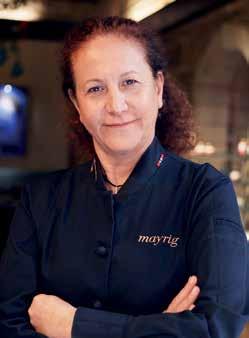
Growing up, our home was always full. My father loved gathering people around the table, and my mother would prepare generous Armenian meals from recipes rooted in heritage. Before he passed away, he carried one simple but powerful dream: to open a place that would introduce Armenian culinary heritage to as many people as possible. That dream stayed with me. In 2003, I turned it into reality. Mayrig was born not just as a restaurant, but as a tribute to family, memory and culture. And while it has grown into an international brand across multiple countries, it has always stayed true to its roots.
Armenian cuisine’s appeal
Mayrig has resonated with people because it is honest. Armenian cuisine is deeply generous, comforting and story-driven. What we did was present it with clarity and respect—familiar enough to feel comforting, yet distinctive and new. Every dish has a reason to exist, every recipe carries a memory and every space feels like a home rather than a concept. That allows people from Beirut and Riyadh to Yerevan and Geneva to emotionally connect, even if it is their first encounter with Armenian food. At its core, Mayrig isn’t about nationality. It’s about belonging. And that’s a language that travels very well.
Export growth without compromise
The biggest challenge wasn’t taking Armenian cuisine abroad; it was protecting it from dilution. There’s constant pressure internationally to simplify flavors or localize too much. For us, authenticity was
From a family table in Beirut to international acclaim, Aline Kamakian, founder and CEO of Fig Holding, has built Mayrig into a global ambassador for Armenian cuisine. A chef whose work extends from disciplined expansion to humanitarian service, she reflects here on preservation, purpose and an upcoming surprise for Lebanon.
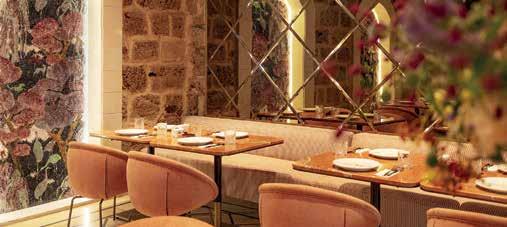
never negotiable. Core recipes, techniques and flavors don’t change, though service flow and certain operational elements can adapt. Heritage only survives when it’s respected daily. Scale was the other challenge. Armenian cuisine is precise and labor-intensive, so growing responsibly meant choosing partners carefully, expanding slowly and accepting that not every opportunity was the right one. Platforms like Ataya, an exhibition we attended in January, reinforce that conviction. Here, culture, sustainability and responsible growth intersect, which is exactly the kind of space Mayrig stands for. Meaningful brands don’t grow in isolation; they grow by standing in spaces that reflect their values.
The recognition from Gault & Millau in Geneva meant a lot, but not because of the restaurant guide’s rating itself. For me, it was confirmation that Armenian gastronomy could stand confidently alongside long-established culinary traditions, without compromise, without reinterpretation and without needing validation through fusion. A cuisine once cooked quietly at home, passed from mother to daughter, evaluated on its own merit in one of the world’s most demanding food cities. Armenian cuisine isn’t niche, nostalgic or limited to diaspora spaces. It belongs in the contemporary culinary conversation, refined, relevant and respected.
At its core, Mayrig isn’t about nationality. It’s about belonging. And that's a language that travels very well.
Working with World Central Kitchen felt instinctive, not like stepping beyond hospitality, but returning to its core. Food has always been about care and dignity, long before it was about restaurants or recognition. When crisis hits, those values don’t disappear; they become urgent. Receiving the Sheikh Zayed Award on behalf of World Central Kitchen was deeply humbling. It represented the meeting point of two worlds—hospitality as service and craft as responsibility. It was also a reminder that food, when used with intention, has the power to restore humanity where it’s most fragile.
Our focus has always been on meaningful and strategic growth rather than rapid expansion. New Mayrig openings will continue in markets that already understand and appreciate our philosophy. Each new location is approached with the same discipline. As for Lebanon, it remains home— always. We are working on something special. This project is meaningful, timely and very close to my heart. I can’t reveal much yet. However, I can say that it’s a surprise rooted in gratitude, continuity and our belief in Lebanon.
alinekamakian.com figholding.com
alinekamakian
66 To franchise or build your own brand?
68 Multi-unit franchise models: The full perspective
70 Middle Eastern franchising: a new import export dynamic
72 4 steps to building a resilient franchise
74 Why creative concepts deserve fresh thinking
76 Franchising frameworks for a new era of investment
78 How homegrown franchises are scaling new heights
80 Collaborative marketing as franchising advantager
82 6 Saudi restaurants well placed for global growth
84 10 European restaurant concepts ripe for regional franchise growth
86 Lebanese hospitality brands scaling across borders
94 More concepts to watch
MANAGEMENT
96 Building sustainable tourism through meaningful connections HUMAN RESOURCES
97 The case for kindness in retaining hospitality professionals MARKETING
98 How virtual reality is transforming pre-visit marketing GREEN
100 How tech can unlock sustainable hospitality
FOOD
102 3 experts on meat and poultry’s protein-packed potential EQUIPMENT
104 AI voice ordering to transform drive-thrus BEVERAGE
106 Why we’re raising a glass to alcohol-free beverages ON THE MARKET
108 New products CHOCOMANIA
109 Classic chocolate brownies
MAY - JUL 2026
• Special report Coffee and coffee shops
• Influencers Executive chefs
• Technology Coffee machines
• Food Processing’s critical role in delivering healthier food
• Beverage The rise of tea-infused alcoholic beverages
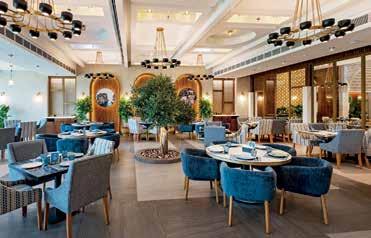





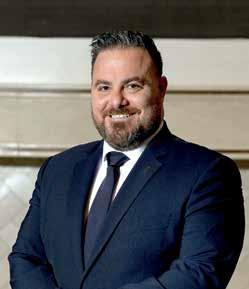
How will you leverage your expertise to further strengthen Fairmont Amman’s positioning and performance?
My vision for Fairmont Amman is rooted in delivering unparalleled luxury experiences that reflect the brand’s heritage of elegance and innovation. Leveraging global expertise and local insights, I will elevate our culinary offerings toward Michelin recognition. Additionally, I will enhance personalized guest journeys through technology and cultural immersion.
Crucially, by empowering our team with world-class training and fostering a culture of excellence, we will keep making special things happen. This approach will strengthen brand loyalty. Furthermore, strategic partnerships and sustainability initiatives will differentiate the 5-star property in other exciting ways.
How do you envision the future of the hotel within Jordan’s evolving luxury hospitality landscape?
Clearly, Jordan’s luxury hospitality sector is entering an exciting era, driven by cultural tourism and experiential travel. We will be at the forefront of this transformation by blending our timeless elegance with modern innovation. Specifically, our focus will be on creating immersive experiences that celebrate Jordanian heritage while meeting global luxury standards. As travelers seek authenticity and personalization, Fairmont Amman will remain a preferred destination for
As its newly appointed general manager, Nikolaos Kaloudis is committed to elevating Fairmont Amman through innovation, cultural authenticity and exceptional service. Here, the visionary hospitality leader tells us how creating memorable journeys synonymous with modern luxury is at the heart of his plans for guests.
discerning guests. Consequently, we will drive new standards of service, sustainability and design while reinforcing Jordan’s position as a world-class luxury destination.
How is the hotel adapting its service approach to meet and exceed the expectations of today’s traveler?
Evidently, today’s luxury traveler values personalization, authenticity and seamless technology. Therefore, we combine digital innovation with genuine human connection to create effortless yet meaningful experiences. In tandem, our culinary concepts embrace global trends while showcasing Jordanian flavors, appealing to sophisticated palates.
Importantly, wellness and sustainability are also integral to our approach, with eco-conscious practices and healthfocused offerings. Additionally, we curate cultural experiences that immerse guests in Jordan’s rich heritage, ensuring every stay is unique and memorable. By empowering our team to anticipate needs and deliver intuitive service, Fairmont Amman consistently exceeds expectations. For us, this approach embodies the essence of modern luxury hospitality.
Jordan’s luxury hospitality sector is entering an exciting era, driven by cultural tourism and experiential travel.

What opportunities do you see for Fairmont Amman?
Notably, opportunities include elevating Salt Restaurant toward Michelin recognition and positioning Caprice among the world’s top bars. We will also create bespoke cultural and wellness experiences. Furthermore, strategic collaborations with local artisans and global luxury brands will enrich our offerings. Meanwhile, digital engagement and loyalty programs will strengthen guest relationships.
Significantly, with Jordan’s tourism sector expanding, Fairmont Amman can set new standards for luxury. Consequently, we will attract high-net-worth travelers and become a preferred venue for premium events. Ultimately, our vision is to transform the property into a destination synonymous with elegance, innovation and authenticity.
Looking ahead, what excites you most about the next phase of the hotel’s journey?
The next chapter for us is about redefining luxury in Jordan. I am particularly excited to introduce top-level dining here and elevate our mixology program. Additionally, we will pioneer sustainability initiatives that resonate with global travelers. Moreover, creating immersive cultural experiences and wellness programs will position Fairmont Amman as a destination, not just a hotel.
Crucially, empowering our team to embrace creativity and excellence ensures agility in a dynamic market. Personally, what excites me most is shaping Fairmont Amman into a global benchmark for luxury hospitality. We will deliver unforgettable experiences that honor Fairmont’s legacy while embracing the future of travel. fairmont.com/amman
kaloudisn, fairmontamman
LANDMARK
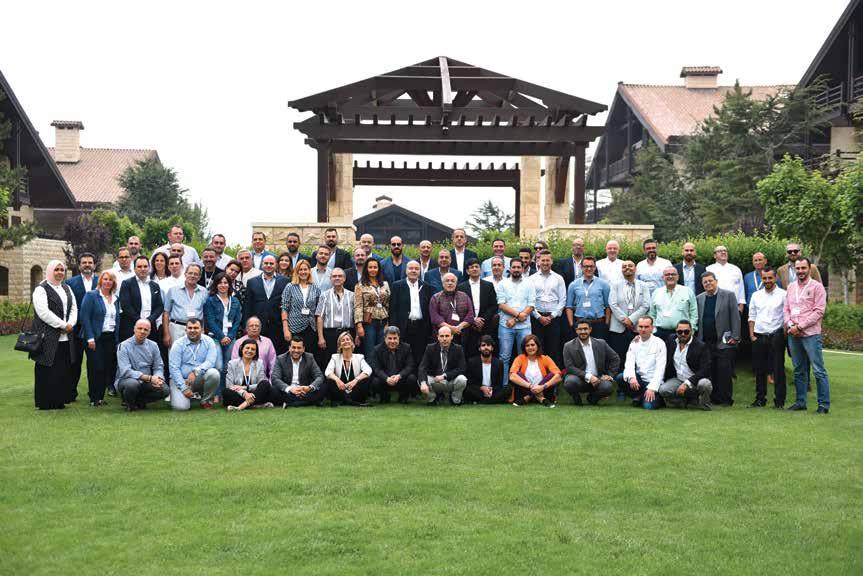
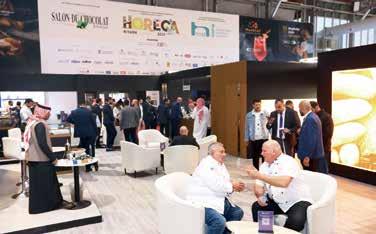
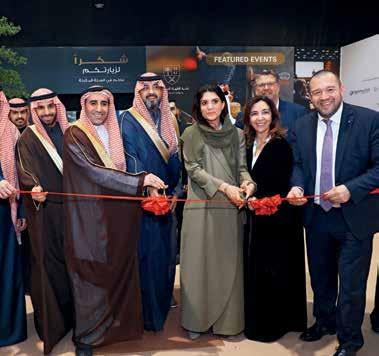
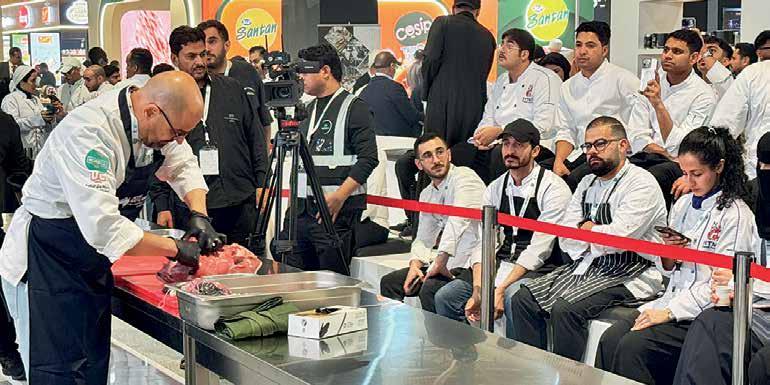
The 14th edition of HORECA Riyadh concluded on December 17, 2025, following a historic week that firmly positioned Riyadh as a leading global hub for hospitality and foodservice.
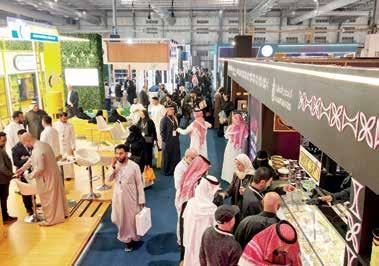
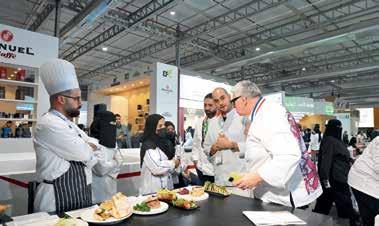
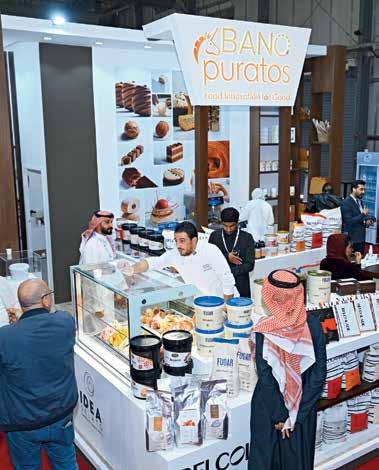
Held under the strategic partnership of the Culinary Arts Commission (CAC), HORECA Riyadh transformed Riyadh Front Exhibition & Conference Center into the largest hospitality and foodservice gathering ever staged in the kingdom. Spanning 42,000 sqm, the event was held concurrently with Host Arabia, Saudi Elite Chefs and Salon du Chocolat et de la Pâtisserie Riyadh.
This year’s edition welcomed over 500 exhibitors, representing more than 4,200 brands. In addition, it attracted 51,000 professional visitors from the Middle East, Asia, Europe and beyond. Visitors were able to explore the latest innovations shaping the hospitality sector while engaging with industry leaders and rising talent.
Jad Taktak, CEO of Semark Group, the organizer, commented: “We marked a new chapter for Saudi Arabia’s hospitality scene. The success of HORECA Riyadh reflects the strength of our industry and the kingdom’s growing position as a global hub for hospitality excellence.”
A rich and varied program
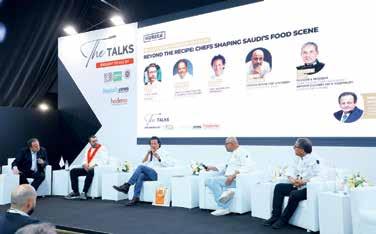
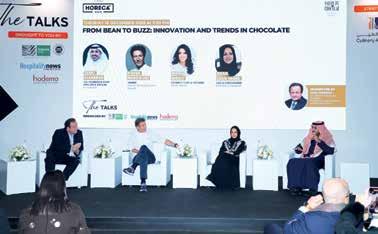
HORECA Riyadh once again reaffirmed its role as the definitive platform for innovation, learning and networking, paving the way for a new era of growth in Saudi Arabia’s hospitality and foodservice sectors. The rich program featured key competitions and experiences, including the Hospitality Salon Culinaire, Barista and Mocktail Competitions. Meanwhile, The Talks, a series of panel debates organized in collaboration with Hospitality News Middle East and Hodema Consulting Services, were another highlight.
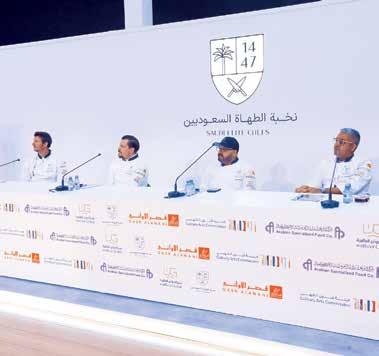
Adding further momentum to the week, the second edition of Saudi Elite Chefs, organized by the Culinary Arts Commission, brought together some of the kingdom’s most talented chefs, celebrating the creativity, precision and innovation that define Saudi culinary excellence.
Joumana Dammous-Salamé, managing director of Hospitality Services, the company behind the HORECA brand, said: “HORECA Riyadh continues to be a driving force for regional growth—a true platform that connects people, ideas and opportunities.”
The next edition of HORECA Riyadh will be held from December 7-9, 2026.
saudihoreca.com
Global expertise and local talent showcased at three-day celebration of chocolate craftsmanship.
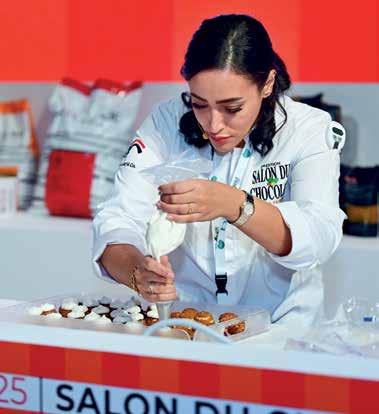
The third edition of Salon du Chocolat et de la Pâtisserie Riyadh concluded successfully on December 17, 2025, celebrating craftsmanship, creativity and passion at the heart of the confectionery and pastry world.
The three-day event took place alongside HORECA Riyadh at Riyadh Front Exhibition & Conference Center. Held under the strategic partnership of the Culinary Arts Commission (CAC), it attracted strong local and international participation, further cementing Riyadh’s growing influence on the global gastronomy stage.
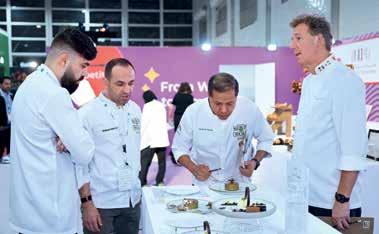
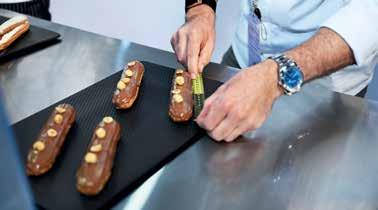
Salon du Chocolat et de la Pâtisserie Riyadh created a vibrant buzz throughout the week, hosting 40 masterclasses and live demonstrations. Other highlights included pastry competitions, led by 30 international and regional pastry chefs. The program highlighted both global expertise and local talent, offering visitors a unique insight into the evolving world of chocolate and pastry.
Honorary awards
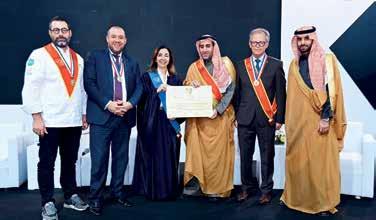
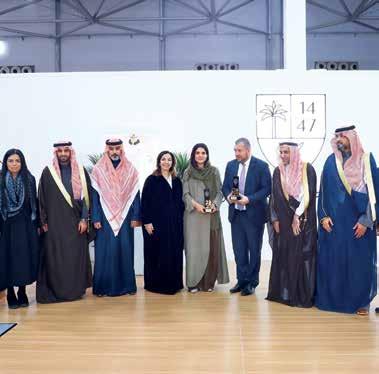
This year also featured the presentation of three special honorary awards recognizing outstanding contributions to the global and Saudi hospitality landscape.
The Gastronomy Diplomacy Award was presented to Guillaume Gomez, president of Groupe Gastronomie and former French ambassador for gastronomy, for strengthening France’s culinary ties worldwide.
The Visionary Award honored Pierre Marcolini, world-renowned Belgian chocolatier, for his exceptional contribution to global chocolate craftsmanship.
Additionally, the Leadership Award was bestowed upon Mayada Badr, CEO of the Culinary Arts Commission, for her pivotal role in advancing Saudi culinary arts and nurturing the nation’s next generation of chefs.
Joumana Dammous-Salamé, managing director of Hospitality Services and co-organizer of Salon du Chocolat et de la Pâtisserie Riyadh, commented: “Salon du Chocolat et de la Pâtisserie Riyadh once again honored craftsmanship, quality and passion, attracting major international brands while also showcasing the richness of local confectionery.”
The fourth edition of the highly anticipated chocolate event will be held from December 7-9, 2026. salonduchocolat-ksa.com

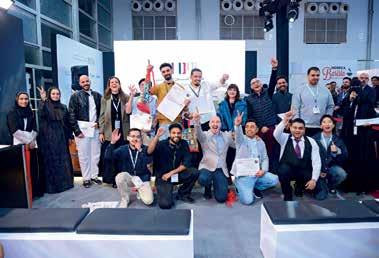
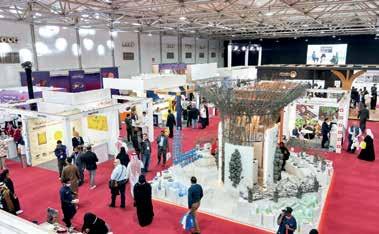
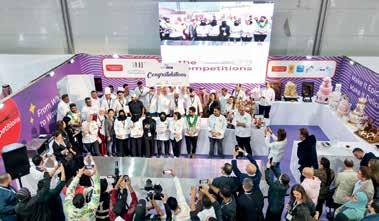
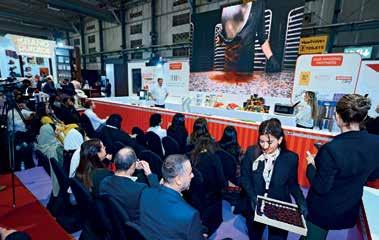

The 2026 edition of the country’s leading hospitality event exceeds expectations.
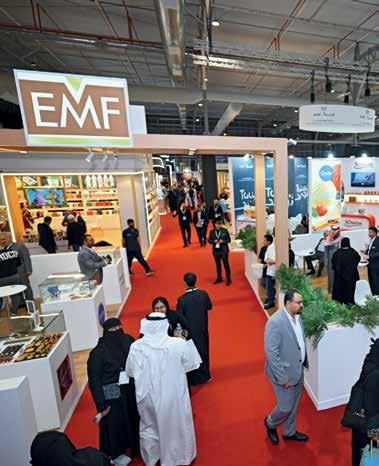
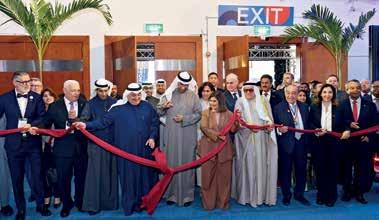
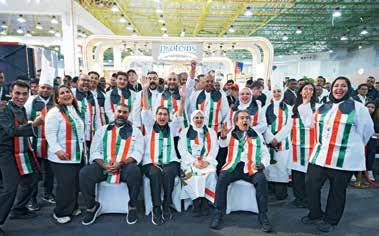
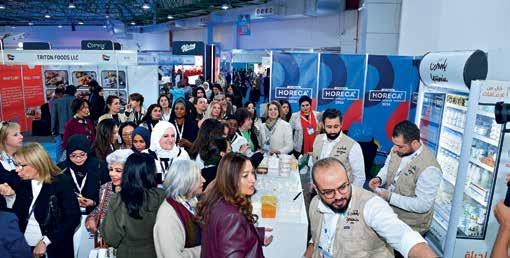
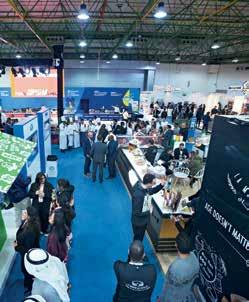
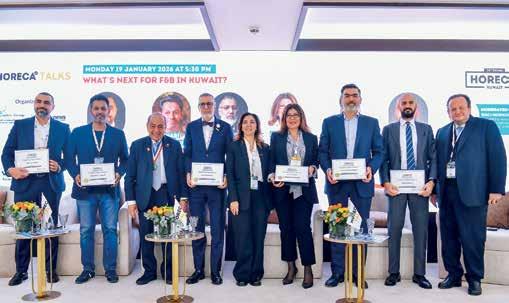
HORECA Kuwait concluded its 14th edition on January 19, 2026, after three action-packed days at Kuwait International Fair – Hall 8.
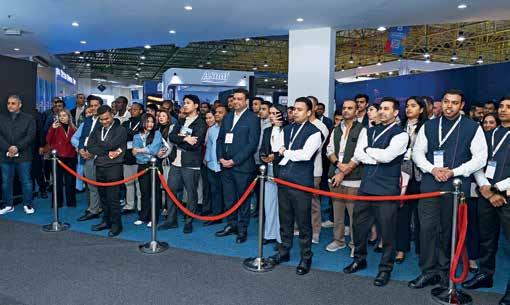
Reaffirming its position as the country’s premier business platform for the hospitality and foodservice industries, the exhibition welcomed more than 8,000 trade professionals from Kuwait and the region. Visitors gathered to discover the products and services of over 100 exhibitors and brands.
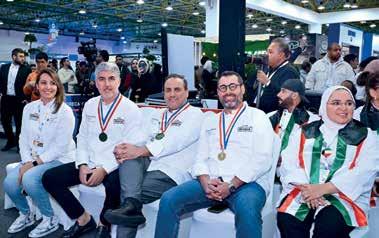
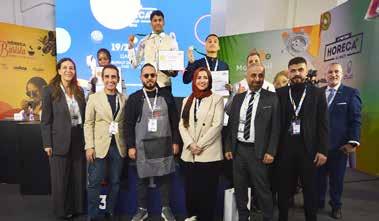
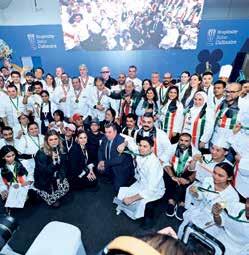
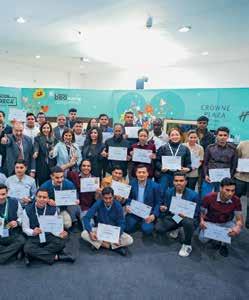
Competitions remained a key highlight of the program. The Hospitality Salon Culinaire showcased the skills of more than 200 chefs.
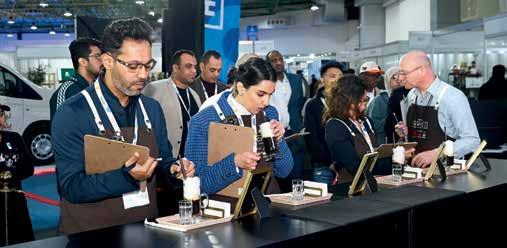
Meanwhile, the Barista Competition crowned top talents among over 30 participants. The second edition of the Mocktail Competition highlighted inventive non-alcoholic concepts, reflecting evolving consumer preferences. Additionally, the Bed Making Competition emphasized the precision and discipline behind service excellence.
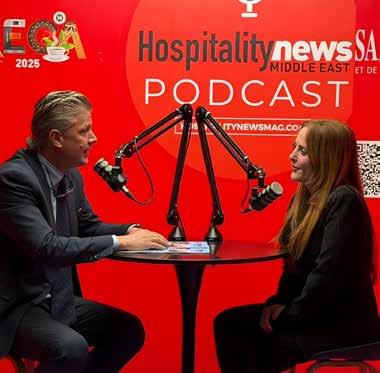
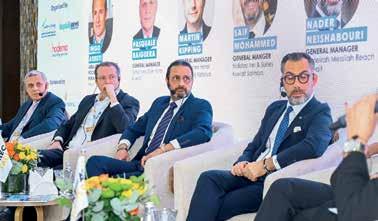
Across the exhibition floor, exhibitors introduced new products and engaged with buyers. They explored growth opportunities within Kuwait’s hospitality sector. Furthermore, the program was enriched by HORECA Talks and the Podcast Corner, which encouraged dialogue and knowledge-sharing across the industry.
A platform for progress
Nabila Al Anjari, general manager of Leaders Group, event co-organizer, said: “Importantly, this edition demonstrated the maturity and ambition of Kuwait’s hospitality market. Additionally, it confirmed HORECA Kuwait’s role as a strategic platform for future growth.”
Mohamad Najia, executive director of Leaders Group, added: “The strong engagement from exhibitors and visitors alike translated into tangible business outcomes. Consequently, this reinforced HORECA Kuwait’s value as a meeting point for decision-makers and a driver of industry collaboration.”
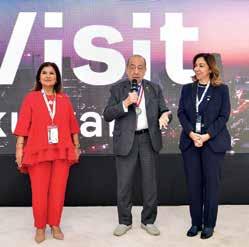
Closing the edition, Joumana Dammous-Salamé, managing director of Hospitality Services, the company behind the HORECA brand and coorganizer of HORECA Kuwait, said: “This edition exceeded expectations in terms of participation, energy and outcomes. It continues to serve as a catalyst for progress across the hospitality sector.” horecakuwait.com
The region’s premier hospitality and foodservice trade show prepares to celebrate three decades of industry innovation and growth.
HORECA Lebanon returns to Seaside Arena, Beirut from April 21 to 24, 2026 to mark a defining milestone. This year’s anniversary edition celebrates 30 years as the region’s premier meeting place for the hospitality and foodservice industries. The event will honor three decades of resilience, innovation and growth that have shaped the sector in Lebanon and across the region.
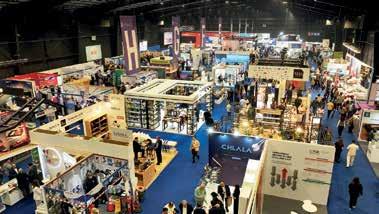
Organized by Hospitality Services, HORECA Lebanon 2026 will once again unite the entire hospitality ecosystem under one roof. The exhibition is expected to welcome more than 24,000 professional buyers and host over 400 exhibitors across 13,000 square meters. Significantly, this year’s anniversary edition will include an additional third exhibition hall. The increased scale of the event reaffirms its position as Lebanon’s largest B2B platform dedicated to hospitality and foodservice.
A defining milestone
“Reaching our 30th edition is not only a celebration of longevity but of continuity,” said Joumana Dammous-Salamé, managing director of Hospitality Services, the event organizer. “HORECA Lebanon has evolved alongside the industry itself, reflecting the resilience, creativity and ambition of professionals who continue to build, adapt and move forward in spite of challenges.”
The exhibition will feature a comprehensive showcase of suppliers spanning food and beverage, hotel and kitchen equipment, technology, design and hospitality-related services. Visitors will benefit from a 360-degree overview of the latest products, solutions and trends. As a result, HORECA Lebanon will once again serve as a key destination for sourcing, networking and business development.
A platform for knowledge and innovation
Beyond the exhibition floor, HORECA Lebanon hosts a rich four-day program designed to inspire, educate and spotlight talent. HORECA Innovations returns with more than 30 cuttingedge products made in Lebanon, selected by a panel of experts. Covering food, beverage, equipment and services, the curated space highlights local creativity, entrepreneurship and innovation.
Importantly, knowledge sharing remains central to the event through HORECA Talks. These popular panel debates will gather over 100 speakers to discuss the trends, challenges and opportunities shaping hospitality and foodservice today. Organized by Hospitality News Middle East, the sessions aim to foster dialogue and insight among industry leaders and professionals. Where talent meets opportunity
Additionally, a dynamic lineup of competitions will further energize the event, offering rising talents a platform to demonstrate their skills. The Hospitality Salon Culinaire and Junior Chef Competition will spotlight culinary excellence at the HORECA Stage. Meanwhile, HORECA Theatre will host the Barista Competition, Lebanese Bartenders Competition and Mocktail Competition. The Art of Service Competition will also return, testing the precision, speed and professionalism of service
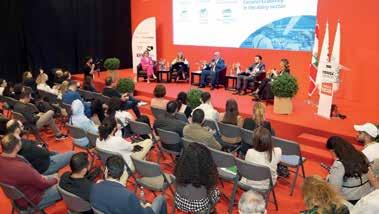

and housekeeping teams. Complementing the competitions are masterclasses led by industry experts, including live culinary demonstrations at Al Matbakh and beverage workshops at HORECA Theatre.
Strengthening its role as a business hub, HORECA Lebanon will welcome influential regional buyers through its Hosted Buyers’ Program. As a result, exhibitors gain direct access to key decision-makers, reinforcing Lebanon’s position in regional and international hospitality markets. The Job Meeting Point will also return, connecting employers with hospitality professionals and creating tangible career opportunities.
“Our ambition remains clear,” said Randa Dammous-Pharaon, project director of HORECA Lebanon. “To create a space where professionals meet with purpose–to do business, exchange knowledge, discover talent and explore what’s next for the industry.”
horecalebanon.com
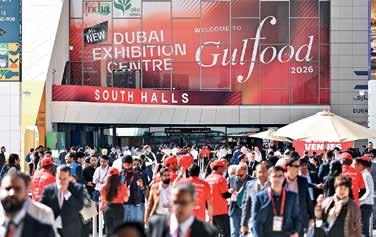
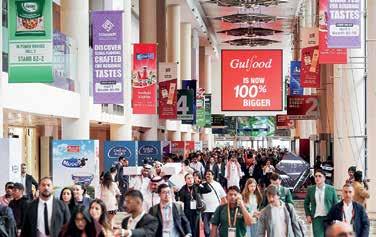
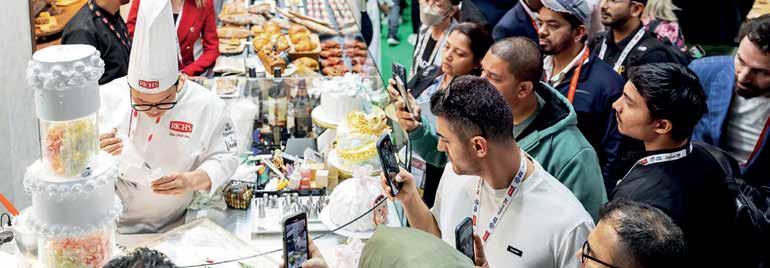
Homegrown and globally acclaimed chefs take center stage at world-leading culinary event.
Bringing together Michelin-starred chefs and homegrown culinary creatives at Dubai World Trade Centre from January 26-30, Dubai World Cuisine 2026 cemented the emirate’s standing as a world-leading culinary destination. Seventy chefs of more than 30 nationalities gathered for the prestigious event to showcase their talents and delight visitors.
Under the spotlight, they created their signature dishes live, engaged directly with industry audiences and held new commercial conversations. The 2026 edition of the gastronomic showcase was a celebration of Dubai’s evolution from dining capital to flavor influencer. Indeed, it affirmed that the emirate has evolved into a destination where excellence and homegrown talent set the benchmark.
Homegrown talent, global execellence
Significantly, homegrown chefs including Salam Dakkak and Hattem Mattar, and collectives like Ojina Jeju, appeared alongside international culinary
celebrities. Nina Métayer, World’s Best Pastry Chef, and Antonio Bachour, renowned pastry chef, were among the big names thrilling visitors.
Additionally, chefs who built their careers in Dubai demonstrated how technique and local context are combining to create something new. Culinary innovators included Brando Moros of 11 Woodfire (1 Michelin Star) and Daniel Birk of Row on 45 (2 Michelin Stars, 4 Toques). Solemann Haddad of Moonrise (1 Michelin Star, 3 Toques) was another industry personality showcasing his expertise.
Chris Malone of Dinner by Heston Blumenthal (1 Michelin Star) was a standout name at the 2026 star-studded event. Others included Jesús Lobato of Smoked Room (1 Michelin Star) and Saverio Sbaragli of Al Muntaha (1 Michelin Star, 4 Toques). Moreover, Tristin Farmer of Maison Dali (former 3 Michelin Stars) was on hand to demonstrate his culinary mastery. Influential voices also shaped the program, from Grégoire Berger and Kyung Soo Moon to social-first culinary figures such as Chef Shaheen. Tellingly, his reach reflects the evolving ways chefs
now connect with audiences. Additionally, Dmitriy Vinokurov of Krasota Dubai, known for merging haute cuisine and visual art, was a key event highlight.
Masterclasses, panels and demonstrations
Elsewhere, the 2026 event featured a rich and varied program of 80 masterclasses, workshops and demonstrations. It also included 10 curated panels and debates, with sessions spanning diverse cuisines and culinary expressions. Offerings ranged from ultra-fine dining, modern pastry and neighborhood restaurants to coffee culture, mixology, zero-alcohol innovation and cross-cultural cuisine.
Dubai World Cuisine is the flagship culinary platform for Gulfood and once again took place inside the worldrenowned F&B sourcing and innovation event. Marking its 31st edition, Gulfood 2026 welcomed 8,500 exhibitors from 195 countries across 240,000 sqm at Dubai World Trade Centre and Dubai Exhibition Centre. Consequently, it reinforced Dubai’s position as a hub for food trade and food intelligence.
gulfood.com




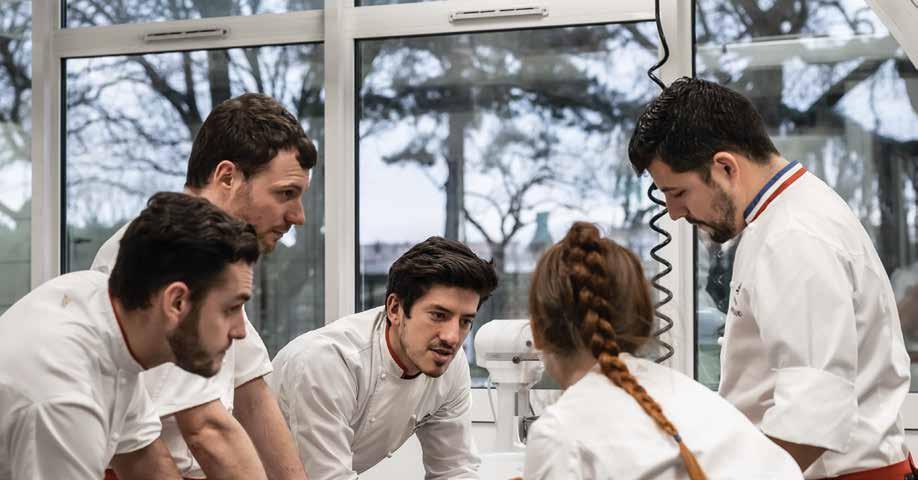




"WHERE CHOCOLATE EXCELLENCE MEETS GLOBAL INSPIRATION"

L’École Valrhona Dubai

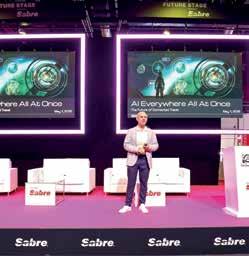
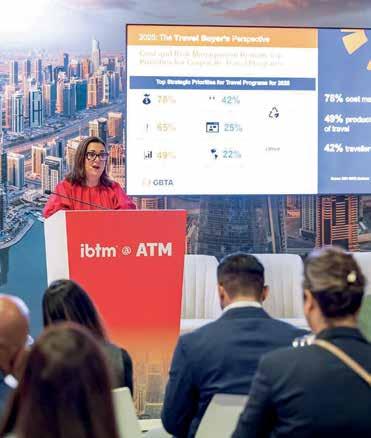
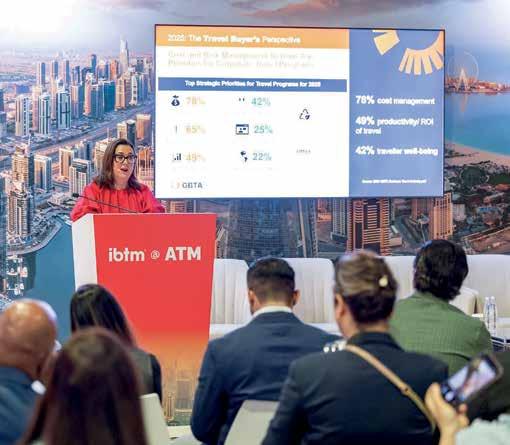
Now in its 33rd year, Arabian Travel Market (ATM) returns to Dubai World Trade Centre from May 4-7, 2026 with its most ambitious program to date.
The 2026 edition takes place under the theme “Travel 2040: Driving New Frontiers Through Innovation and Technology.” Consequently, over 55,000 travel professionals from 166 countries are set to attend and explore how technology and innovation are revolutionizing global tourism.
The Global Stage will serve as ATM’s primary strategic forum, putting topical industry issues under the spotlight. Notably, sustainability, accessibility, luxury travel and destination marketing will feature prominently in research-led panels. The program will close with the Women in Travel Forum. Running in partnership with Women
in Travel CIC, the high-profile forum will examine critical subjects covering inclusion, equity and diverse leadership.
The 2026 event will also include the full launch of ATM Travel Tech as a co-located show. As part of this, the Future Stage will host the Tech and Innovation Hub, where attendees can explore the latest industry breakthroughs, from AI, AR/VR and fintech to robotics and immersive commerce. It will also host the popular Start-up Pitch Battle.
Alongside returning attractions, ATM 2026 is set to introduce a number of first-time initiatives, including Lunch ‘n Learn sessions, roundtables and real-time translation via Vox Technologies. Additionally, the newly rebranded Experience Stage will spotlight the Middle East’s rise as a global meetings hub.
Significantly, ATM 2026 marks the latest chapter in a long-running success story. Growing 16 percent year-over-year, the event continues to reaffirm its position as a go-to platform for the global travel industry.
Commenting, Danielle Curtis, exhibition director ME, said: “At ATM, we want to raise the bar in how we guide the global travel and tourism industry. Our 2026 conference programme has been carefully curated to provide strategic direction through informed, industry-led insight, ensuring that decisionmakers leave with the knowledge they need to act with confidence.”
wtm.com/atm/en-gb.html
MARCH 2026
3-5 Mar. GERMANY ITB BERLIN Messe Berlin GmbH itb-berlin.de
13-17 Mar. GERMANY INTERNORGA Hamburg Messe + Congress internorga.com
15-17 Mar. GERMANY PROWEIN Messe Dusseldorf prowein.com
APRIL 2026
20-22 Apr. KSA FHS RIYADH Bench futurehospitalitysummit.com
21-24 Apr. SINGAPORE FHA FOOD & BEVERAGE Informa Markets foodnhotelasia.com
21-24 Apr. LEBANON HORECA LEBANON Hospitality Services horecashow.com
MAY 2026
4-7 May DUBAI ARABIAN TRAVEL MARKET Reed exhibitions arabiantravelmarket.com
16-19 May USA NATIONAL RESTAURANT ASSOCIATION SHOW Winsight nationalrestaurantshow.com
JUNE 2026
2-4 Jun. DUBAI THE HOTEL SHOW Dmg: Events Middle East thehotelshow.com
8-10 Jun. KSA SAUDIFOOD MANUFACTURING Kaoun Arabia and DMG Events saudifoodmanufacturing.com
15-17 Jun. KSA THE SAUDI FOOD SHOW DWTC thesaudifoodshow.com
Celebrating Latin spirit in the heart of the Middle East, Esco-Bar Coctel Y Cocina has established itself as one of the region's most recognized dining and lifestyle concepts. Bold flavors, electric atmosphere and an immersive Latin experience have earned the brand a loyal following—and now, a prestigious industry award to match.

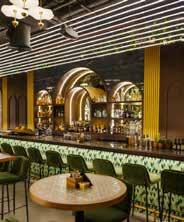
From Beirut to Dubai, Esco-Bar Coctel Y Cocina has evolved into more than a barrestaurant; it is a vibrant lifestyle destination where Latin spirit, bold flavors and electric atmosphere come together. Founded by Marc Chehade, CEO of MEC Hospitality, the brand continues to expand its regional presence while elevating its positioning in the GCC hospitality scene.
Award-winning recognition
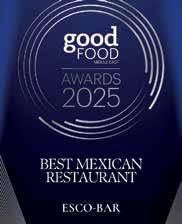
And in 2025, Esco-Bar Coctel Y Cocina reached a defining milestone. Esco-Bar Dubai was honored at the Good Food Middle East Awards 2025, winning the title of Best Mexican Restaurant in Dubai—one of the most respected recognitions in the region’s culinary industry. The award reflects not only culinary excellence, but consistency, atmosphere, service and brand identity in one of the world’s most competitive dining landscapes.
A landmark year of growth
The past year marked a pivotal chapter for the brand. In Lebanon, the opening of Esco-Bar Pasteur injected fresh energy into Beirut’s nightlife and dining scene, quickly becoming
a sought-after hotspot blending elevated design, Latin rhythm and strong operational performance. In Dubai, the launch of EscoBar One Central at 25 Jump Street—the city’s first licensed street—positioned the brand at the heart of one of the UAE’s most dynamic entertainment districts. Together with Palm West Beach, the Dubai portfolio now reflects a powerful, award-winning presence.
The experience that won the award Esco-Bar Coctel Y Cocina’s success lies in its immersive Latin escape:
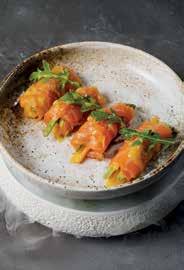
• Signature fajitas, quesadillas, tacos
• Vibrant starters like guacamole and calamar a la Parilla
• Creative Latin-inspired cocktails and Margaritas
• High-energy ambiance transitioning seamlessly from dinner to nightlife
The Good Food Middle East Awards recognition validates what guests have already embraced—Esco-Bar Coctel Y Cocina delivers not just food, but a full sensory experience.
The Good Food Middle East Awards recognition validates what guests have already embraced—Esco-Bar Coctel Y Cocina delivers not just food, but a full sensory experience.
The vision ahead
With multiple outlets across Lebanon and the UAE, a prestigious industry award in Dubai and continued expansion in strategic lifestyle destinations, Esco-Bar Coctel Y Cocina is steadily building a regional legacy. As Marc Chehade looks toward expanding Esco-Bar Coctel Y Cocina across additional GCC countries and the wider MENA region, the brand’s ambition is clear: to export its award-winning Latin concept into key regional capitals and lifestyle hubs, partnering with strategic franchisees who share the same vision for quality, energy and authentic hospitality.
escobar-lb.com, info@mec-concepts.com
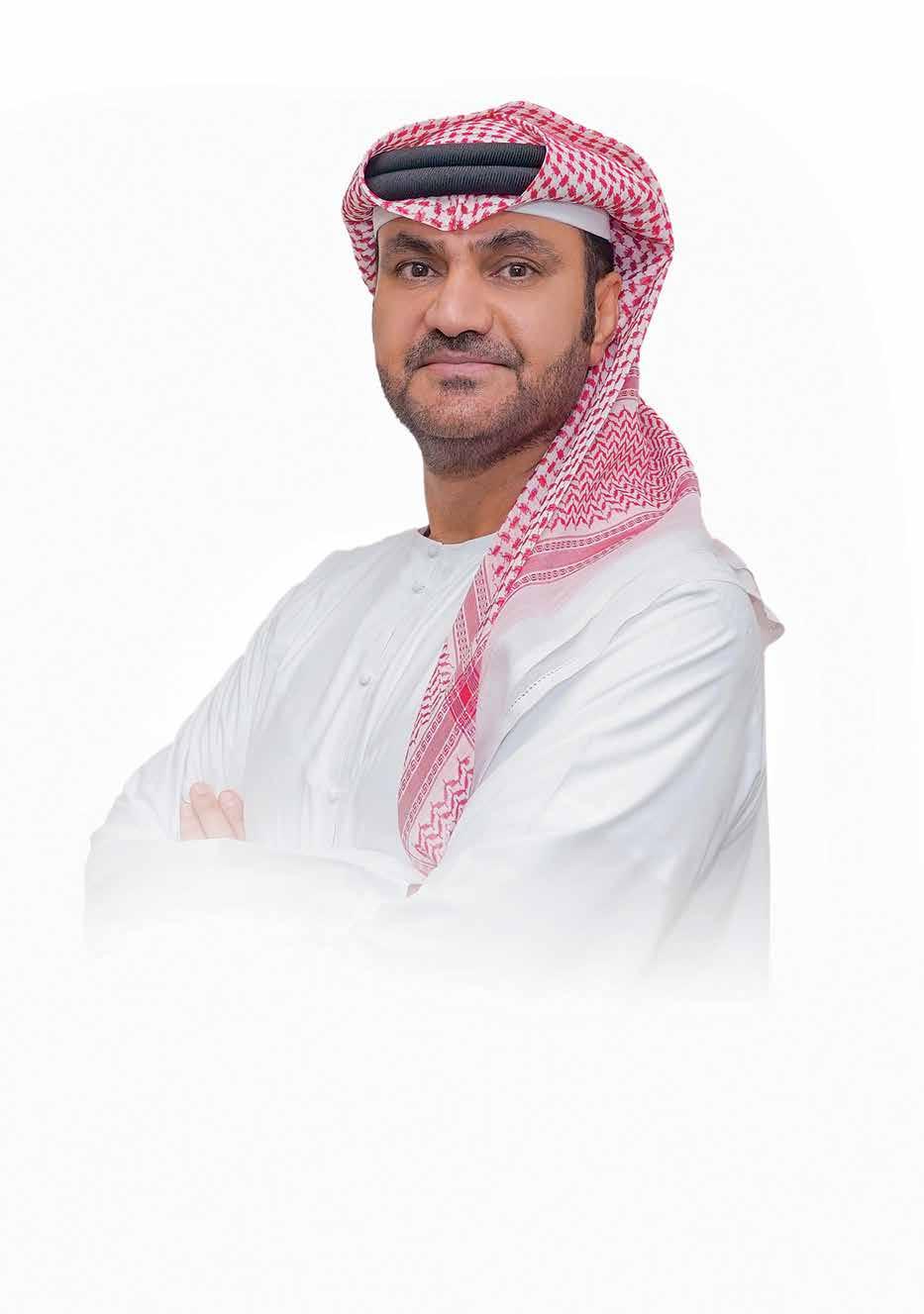
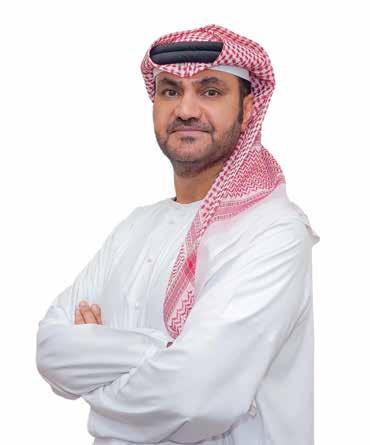
Ajman is carving a niche as a charming UAE destination with a distinct identity, combining warm Emirati hospitality, cultural attractions and coastal beauty. Mahmood Khaleel Alhashmi, director general of Ajman Department of Tourism, Culture and Media, explains why the emirate is an ideal choice for travelers seeking genuine connections and leisurely paced, meaningful experiences.

How would you describe Ajman’s tourism vision?
At Ajman Department of Tourism, Culture and Media, we are led by a vision to position the emirate as an accessible, authentic and culturally rich destination. We want to offer memorable experiences for families, leisure travelers and cultural enthusiasts. Our growth strategy focuses on enhancing visitor experience and improving hospitality standards, with a renewed focus on tailoring unique experiences that reflect the emirate’s true identity.
Currently, our key priority is raising awareness through targeted marketing campaigns. Additionally, we are strengthening relationships with international travel partners and expanding air connectivity. We are also enhancing tourism infrastructure and investing in distinctive cultural events.
How does Ajman differentiate itself within the UAE tourism landscape?
Ajman stands out due to its warm hospitality and commitment to showcasing authentic Emirati culture. While the UAE offers larger-than-life experiences, Ajman serves as a more intimate and accessible destination. As a result, it is ideal for travelers seeking genuine connection.
Tourists can explore our pristine coastline and diverse natural landscapes. In addition, they will discover cultural roots reflected in the emirate’s craftsmanship and traditional industries. World-class hotels and family-friendly attractions also add to the destination’s appeal. Ultimately, Ajman’s human-centric approach positions it as a destination where visitors can slow down, disconnect and discover real Emirati charm.
How are European partnerships extending Ajman’s reach?
Strategic alliances across Europe are enhancing Ajman’s visibility in priority outbound markets. We are focused on engaging more effectively with tour operators, travel agencies and digital platforms. Moreover, we showcase Ajman’s unique offerings through comarketing campaigns, personalized packages and participation in key exhibitions.
Ajman caters to diverse European travelers, including experience-seekers, families and culture enthusiasts who value authenticity. Our mangroves and coastal ecosystems attract nature lovers. Meanwhile, history enthusiasts can visit museums, old souqs and archaeological sites. Many European visitors prefer Ajman’s warm, community-oriented atmosphere and slower-paced lifestyle.
How is the emirate encouraging private-sector investment in tourism?
Ajman’s supportive regulatory ecosystem drives private-sector investment through streamlined licensing and investor-friendly policies. Currently, there are several development opportunities along its coastline and cultural zones, supported by government-led infrastructure enhancements. Our primary focus is fostering long-term partnerships that enable the private sector to innovate and contribute to Ajman’s evolving tourism ecosystem. How is digital transformation supporting tourism growth?
Digital transformation is integral to Ajman's tourism strategy. We leverage data analytics, smart platforms and digital marketing to enhance decisionmaking and promote key attractions. We have upgraded visitor-facing channels to facilitate seamless trip planning. Meanwhile, we are encouraging hotels and operators to adopt smart technologies. Furthermore, we are enhancing online content and digital storytelling to strengthen Ajman’s global presence. The aim is to ensure Ajman remains competitive in an increasingly digital landscape.
Ajman’s human-centric approach positions it as a destination where visitors can slow down, disconnect and discover real Emirati charm.
How are you integrating heritage and local traditions into tourism?
Ajman is deeply committed to preserving and celebrating its cultural identity. We ensure that traditional crafts, poetry and folklore are integrated into the tourism experience. We work closely with cultural institutions, artisans and local communities. Visitors can explore heritage villages, traditional markets and historic landmarks. Additionally, they can enjoy cultural festivals, art programs and guided experiences highlighting Emirati customs. Currently, we are developing cultural landmarks such as the Al Manama Museum, housed in a historic fort.
How are major events contributing to Ajman’s appeal?
Mega events enhance Ajman’s appeal by attracting new visitors and spotlighting the emirate’s unique attractions. Sports events such as the World Bodybuilding Championship and international races garner significant attention from athletes and media.
Cultural events also help consolidate Ajman’s tourist identity. Book fairs promote
cultural exchange. Meanwhile, the Liwa Ajman Dates & Honey Festival celebrates local heritage. Similarly, the Al Murabaa Art Festival highlights contemporary art, attracting culture enthusiasts and empowering local artists.
What new experiences are generating interest among visitors?
We have been introducing several new themed initiatives to enrich visitor experiences. Al Zorah Natural Reserve embodies eco-tourism, with its rich biodiversity and mangroves.
Zoya Wellness Spa provides holistic wellness, medical retreats and luxury rejuvenation experiences. In addition, culinary tourism is flourishing, with training programs for chefs and culinary competitions. The Ajman Food Festival, organized with the Department of Economic Development, celebrates regional culinary excellence.
How is Ajman championing sustainable development?
Ajman has obtained multiple international ISO certifications, underscoring our commitment to environmental protection. We organize year-round workshops for tourism partners, focusing on sustainability practices and quality standards. This paves the way for long-term growth supported by environmental preservation.
Local communities and SMEs are key links within Ajman’s tourism development model. Our capacity-building programs support entrepreneurial growth. We also provide incentives to drive SME participation in events. Moreover, we facilitate collaborations between small businesses, hotels and tour operators. By nurturing local talents and expanding opportunities, we ensure economic benefits are distributed equitably. As a result, we are strengthening social cohesion and creating a resilient tourism ecosystem.
How is Ajman expanding its international visibility?
We are implementing a comprehensive global marketing strategy and aim to focus on established and high-growth regions. In priority markets like the UK and Eastern Europe, we hope to strengthen existing partnerships. India and China are key focus markets for leisure, wellness and family travel. Additionally, we are targeting Scandinavian countries, where there is growing demand for winter sun.
The outlook for Ajman’s tourism sector is extremely positive, with visitor inflow expected to grow rapidly. By balancing authenticity with innovation and sustainability with growth, Ajman is emerging as a distinctive destination offering meaningful experiences.
ajmantourism.ae
ajman.tourism




The hospitality industry is currently navigating a period of profound structural transformation. As guest expectations shift toward hyper-personalized, techdriven and locally authentic experiences, the classic asset is being reimagined. For owners and investors, the challenge is no longer just about maintaining a building but about choosing the right operational vehicle to drive value. Consequently, the future of hospitality management is being defined by a move away from rigid, one-size-fits-all approaches toward three distinct models: traditional management; franchising; and the increasingly popular white label management.
1
The traditional management model:
Legacy approach, less involvement Historically, the traditional management model was the industry standard. In this arrangement, a global brand manages the hotel on behalf of the owner, providing everything from the name on the door to the staff on the floor. While this offers the security of a powerhouse brand and deep operational expertise, some brands come with high management fees that require justification and limited flexibility for the owner. For classic assets such as historic buildings or established citycenter hotels, this model provides stability but can sometimes struggle to pivot
As traditional hotel operations come under mounting pressure to modernize, owners face critical decisions about which operational model best serves their assets. Bastien Blanc, co-founder and board member at TroKadero Hospitality Global, unpacks the three distinct approaches redefining how hotels are managed today.
quickly to localized market trends due to strict corporate brand standards. Hence, it remains a focus for high competition, vanilla assets that require additional visibility or groups like Adani in India wanting to focus on asset optimization rather than operations.
More commitment required
As markets mature, many owners have acquired expertise and started to shift toward franchising. This model allows an owner to license a world-class brand name and access global distribution systems while maintaining control over daily operations. Furthermore, franchising is particularly effective for owners who have their own robust management teams but want the seal of approval that a major brand provides in relation to standards and brand name. However, the burden of maintaining consistency and meeting the franchisor’s strict operational audits rests entirely on the owner, hence requiring a more hands-on approach. Therefore, it is a high-reward, high-responsibility model that requires the owner to become a sophisticated operator in their own right.
The future of hospitality management lies in the ability to turn classic hardware into modern software.
3
White label management:
The modern disruptor
The most significant shift in the modern landscape is the rise of white label management. In this scenario, a thirdparty management company operates the hotel, but the owner can choose to either remain independent or plug into a franchise brand. This best-of-both-worlds approach allows for maximum agility. Moreover, white label operators are often leaner and more specialized than global brands, focusing intensely on bottom-line profitability and local market nuances. For an owner of a classic asset looking to modernize, a white label partner can implement cutting-edge technology and “everyday respect” workplace cultures more rapidly than a massive global chain.
Matching model to vision
The future of hospitality management lies in the ability to turn classic hardware into modern software. Selecting the management model that best aligns with their risk appetite, strategic vision and asset profile enables owners to successfully breathe new life into classic properties. By doing so, they are positioning themselves to remain profitable, sustainable and relevant in today’s rapidly evolving landscape.
tkh.global

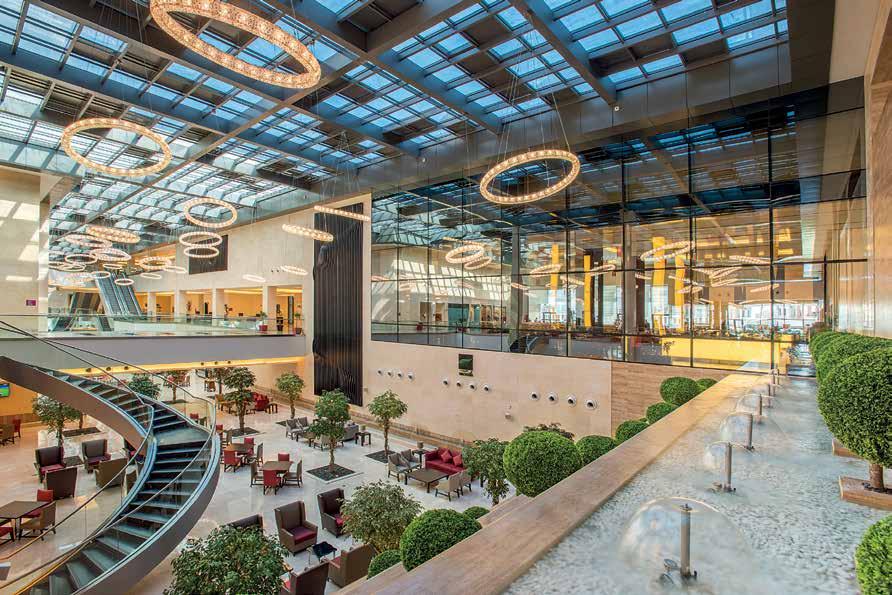
In the heart of Riyadh’s prime business district, Crowne Plaza Riyadh RDC o ers today’s travelers a stay built around connection and purpose.
Enjoy services designed specifically for business travelers, and elevate your workday with an experience that sets a new standard for Riyadh’s business hospitality.
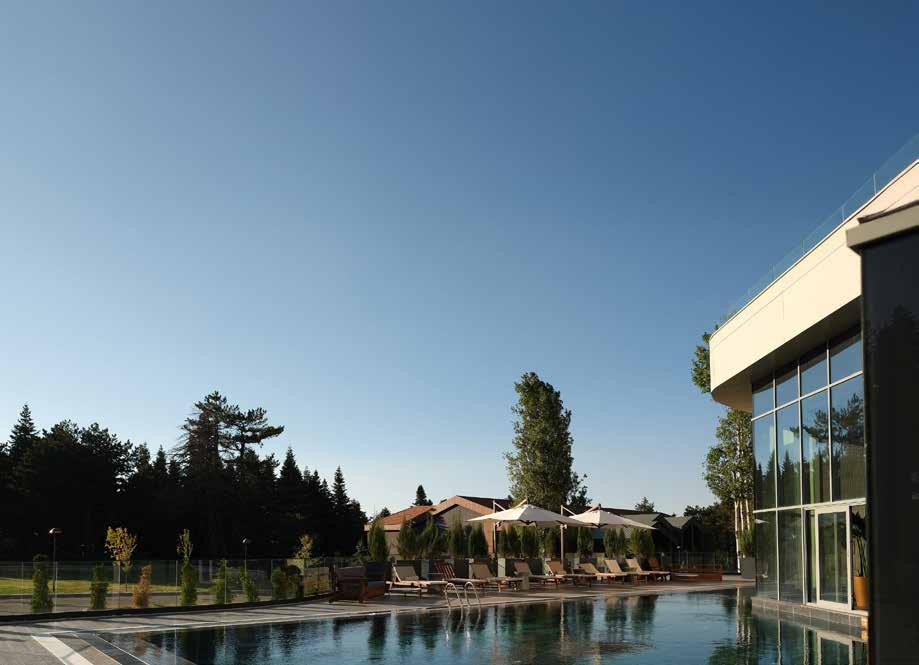
Blending Swiss precision with authentic Turkish hospitality, Swissôtel in Türkiye offers travelers two distinctive destinations designed around experience, wellbeing and cultural immersion. From the green sanctuary of Swissôtel The Bosphorus Istanbul, set in the heart of Istanbul overlooking the iconic Bosphorus, to the alpine retreat high above the clouds of Uludağ with Swissôtel Uludağ Bursa, these properties invite guests to slow down and rediscover the joy of travel.
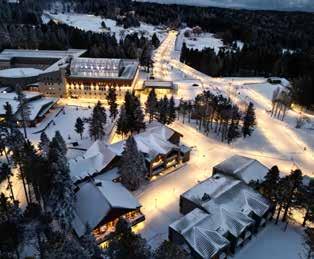
High in the pine-scented heights of Uludağ National Park, Swissôtel Uludağ Bursa unfolds as a refined mountain sanctuary, offering a wellness-focused escape surrounded by forests, fresh mountain air and panoramic alpine views.
For Middle Eastern travelers seeking cooler climates and restorative escapes, the destination is ideal for winter retreats, weekend getaways and nature-driven travel.
A mountain wellness retreat
Located just minutes from Uludağ’s ski slopes and close to Bursa’s historic center, the hotel blends contemporary Swiss design
with Turkish warmth. Its 173 rooms and suites reflect contemporary Swiss design, softened by calming alpine aesthetics, while Pürovel Spa and Sport anchors the experience with hammams, indoor and outdoor pools, alpineinspired treatments and Vita Parcour trails that support holistic wellbeing.
Heritage-led wellbeing for the modern traveler
Once a 1940s sanatorium, the property has been reimagined as a destination devoted to professional wellbeing, where heritage architecture meets holistic renewal. At its heart, Pürovel Spa draws on alpine traditions, complemented by hammams, nature trails

and personalized wellness programs designed for longer, slower stays. Fresh mountain air, personalized service and a nature-rooted approach form its core strengths, aligning with evolving traveler priorities for outdoor experiences, wellness-focused stays and ecoconscious destinations.
“Our ambition is to shape Uludağ into one of the region’s most sought-after wellness destinations. Through ongoing investment in holistic programs, natureled experiences and elevated service, we ensure every stay delivers genuine restoration and lasting renewal,” commented Reha Efe, general manager.
Set along the iconic Bosphorus and surrounded by expansive historic gardens, Swissôtel The Bosphorus Istanbul offers a rare combination of central city access and resort-style tranquility. Located moments from Istanbul’s most celebrated landmarks, the hotel provides a peaceful retreat within one of the world’s most vibrant cities.
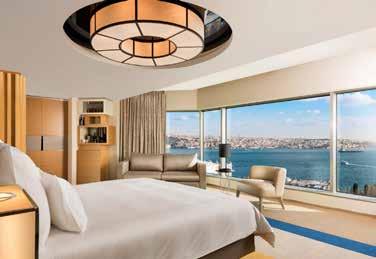
Spread across 65,000 square meters of land once part of the Dolmabahçe Palace grounds, the property is home to more than 1,000 preserved historical trees. Guests can choose from 567 spacious rooms, suites and residences designed for comfort, extended stays and a strong sense of place.
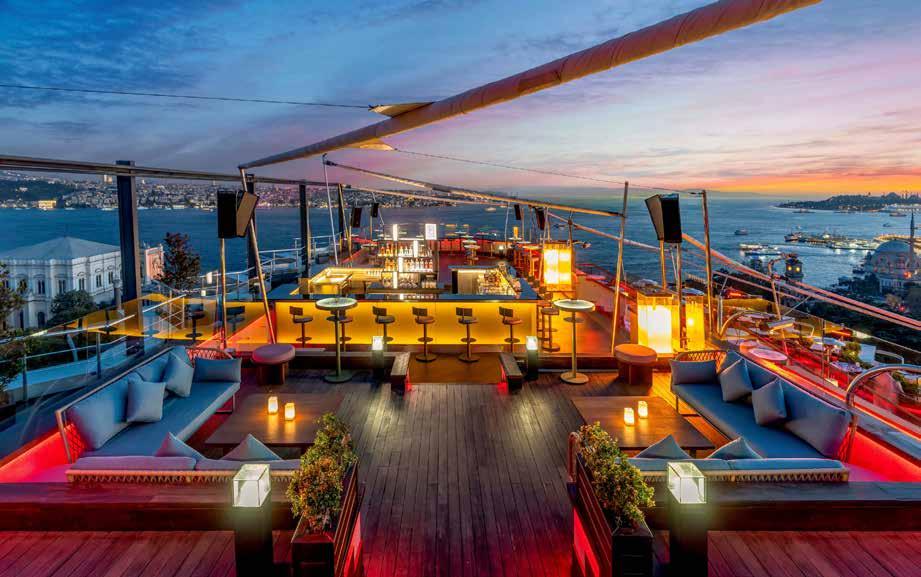
Culinary experiences are a defining feature, from Sabrosa’s much-loved brunch to elevated dining and panoramic views at 16 Roof, overlooking the Bosphorus and city skyline.

Wellness is seamlessly woven into the guest journey. Pürovel Spa and Sport spans more than 4,000 square meters, offering traditional hammams, indoor and outdoor pools, advanced fitness studios, jogging paths through the gardens and tennis courts. Sustainability also plays a central role, with initiatives focused on reducing water and energy consumption, maintaining a plastic-free environment, supporting local suppliers and promoting women in leadership.
A flagship destination in Istanbul
Swissôtel The Bosphorus Istanbul stands as one of the brand’s global flagships, delivering a rare city resort experience within a vast green landscape. Blending leisure, business, wellness and major events in one central location, the hotel responds to today’s experiencedriven travelers who value authenticity, cultural depth and standout culinary moments. Swiss precision and service excellence are seamlessly paired with Turkish warmth and generosity, creating
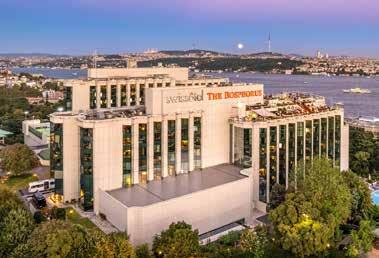
a refined yet genuinely human guest journey, where preserved historic gardens frame the city’s heritage against its dynamic modern energy.
Shaping the future of hospitality
Sustainability, wellness and thoughtful development guide the hotel’s future direction. Ongoing investments focus on localization, environmental responsibility, community engagement and expanding wellness offerings that support balanced lifestyles and longer stays. Continuous upgrades to rooms, dining venues and public spaces ensure the experience evolves with emerging travel expectations
“Whether welcoming leisure travelers, hosting international congresses or accommodating governmental delegations, we combine scale with discretion delivering seamless, highly personalized experiences that define hospitality excellence in Istanbul,” noted Utkan Gülaçtı, general manager.

From family legacies to bold startups, the Middle East’s hospitality landscape is being shaped by entrepreneurs with a razor-sharp vision for how they want to grow their business. Careful expansion, investing in team development and creating guest experiences that resonate rather than embracing every trend are among their strategies. Here, 14 regional business leaders share their journeys, from lessons learned to future plans.










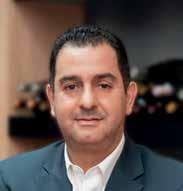



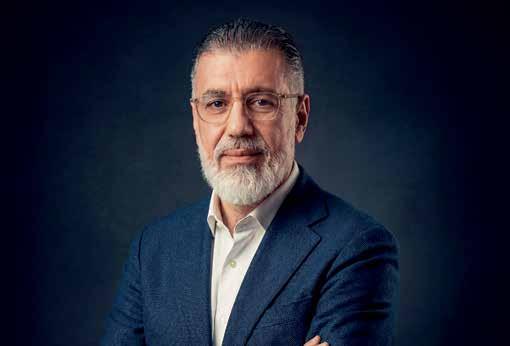
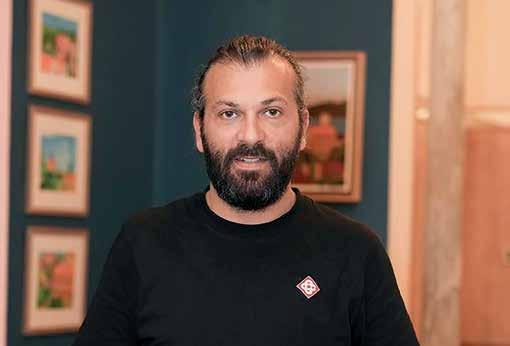
CHAWKI EDMOND BARAKAT Managing director Barakat Foods Company bfc.com.kw Chawki
Discipline drives success
To me, the taste of success is discipline. It is staying focused on a clear vision while protecting your identity as the business grows. Our roots go back to 1953 and our brands span restaurants, takeaway, delivery and catering. Therefore, success has never been about shortcuts for us. Instead, it is about making deliberate decisions every day, choosing consistency over speed and patience over noise. True success comes from aligning growth with values, evolving responsibly and honoring what made people trust you initially. Then, there is scope to expand confidently into new formats and markets across regions, teams, cultures and generations.
Focused on fundamentals
Despite economic challenges, particularly in Kuwait, our future plans remain anchored in what has always defined us. In summary, this is quality food, exceptional service and
strong perceived value. By focusing on these fundamentals, we believe sustainable growth will naturally follow. Our priorities include strengthening our market presence, refining operational efficiency and supporting our teams. We aim to deepen guest trust through consistency, reliability and excellence at every touchpoint. Rather than chasing rapid expansion, we will grow responsibly, adapting to changing conditions while staying resilient and disciplined. At the same time, we remain committed to delivering experiences that feel dependable, familiar and rewarding for our guests.
Adapting thoughtfully
Food trends are evaluated collectively by us as a team, not impulsively. We ask whether a trend aligns naturally with our food, our story and the expectations of our guests. If it feels forced or disconnected from our identity, we choose to ignore it. Authenticity matters more than novelty. Instead of
True success comes from aligning growth with values, evolving responsibly and honoring what made people trust you in the first place.

reacting quickly, we adapt thoughtfully, ensuring any new idea supports long-term value. Trends we adopt must enhance the guest experience, respect our heritage and strengthen the brand. It is imperative that they meet these aims rather than distract from what we do best.
Passing down with purpose
The business accomplishment I cherish most is seeing the third generation of our family actively involved in the company. Alongside this, they are clearly committed to its future. Watching the brand continue to expand across Kuwait while remaining family led is deeply meaningful. It confirms that what we built was designed to last. Seeing shared values passed down, translated into leadership and reflected in real growth reinforces our purpose. It motivates us to protect our legacy, nurture our people and ensure the business remains strong, relevant and respected for generations ahead.
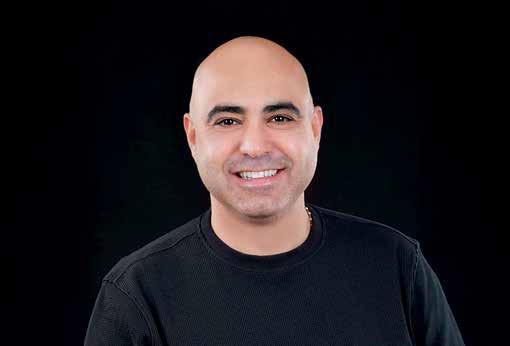
ELIE BASSIL
COO and founder
B&K Holding habibbeirut.com eliebas, habibbeirutuae
Consistency is key
Success is built on two foundations: consistency and trust. It’s about delivering the same quality, experience and values every single day, not just on opening night. Success is when guests return by choice and the team truly believes in the vision. As a result, the business can grow across locations without ever losing its identity.
Ambassadors of Lebanese cuisine
At the outset of our journey, we were ambitious, but realistic. International success was a goal, not an assumption. Our priority was to build a strong, scalable concept with consistent operations and a brand that could travel. The international growth followed naturally, driven by discipline, adaptability and a deep understanding of each market, not by chance. Wherever we operate, we see ourselves as ambassadors of Lebanese cuisine.
Controlled expansion ahead
Our future plans center on controlled, strategic expansion across key regional and international markets. Therefore, we will continue strengthening our presence in existing locations while selectively exploring new markets. Our focus will be on markets where demand for authentic Lebanese cuisine is growing. Alongside expansion, we remain focused on operational excellence, staff development and elevating the guest experience. Menu innovation, enhanced delivery capabilities and deeper digital engagement will also play an important role. Ultimately, our objective is to grow responsibly without compromising the quality, authenticity and brand values that define Habib Beirut.
Enhancing the guest journey
For us, innovation is about enhancing the guest experience. We continuously refine the entire guest journey, from valet parking to every touchpoint inside our restaurants across all outlets. This includes introducing new flavors, interactive presentations and a
We evaluate food trends through the lens of authenticity, sustainability and long-term relevance.
seamless service, while always staying true to authentic Lebanese hospitality. Every innovation is designed to create a memorable moment for our guests. To support this, we have invested heavily in developing our Knowledge Center. Importantly, we have made it accessible to over 700 team members across our outlets. The aim is to ensure that innovation and excellence are embedded in everything we do.
Authenticity over novelty
We evaluate food trends through the lens of authenticity, sustainability and long-term relevance. Trends that naturally align with Lebanese cuisine, our guests’ preferences and our brand values are explored carefully and intentionally. However, we approach short-lived or gimmicky trends with caution. We prioritize quality, flavor and consistency over novelty. Customer feedback, market insight and operational feasibility all play a role in our decisionmaking. By being selective, we ensure that any trend we adopt enhances the Habib Beirut experience.


GIOVANNI BOLANDRINI
Founder and executive chairman Pier88 Group pier88group.com
Giovannibolandrini
From friendship to foundation Pier88 did not begin with a formal business plan or an ambition to build a group. It began with friendship, instinct and a shared way of living. My business partners Naguib Sawiris, Bisho Taraboulsi and I spent much of our time in El Gouna, sharing meals. We often joked that there was never quite enough space for us and our friends to gather properly. Interestingly, we felt something was always missing, whether in atmosphere, quality or spirit. We wanted a place that felt natural, genuinely welcoming and reflected how we lived rather than how hospitality was traditionally presented. Out of that conversation came the decision to buy a restaurant. That restaurant became Pier88.
Building an ecosystem
From the beginning, Pier88 was designed around people rather than tables. It became a meeting point, a rhythm and a way of life. It quietly reshaped how people experienced food, nightlife and hospitality in Egypt. Importantly, it brought together cuisine, music and atmosphere in a way that felt
intentional and cohesive. What followed was not aggressive expansion, but organic evolution. Growth was never the objective. Excellence was. Growth arrived naturally as a consequence of doing things properly and with care.
Mutual respect, shared ambition Hospitality is not measured solely in numbers. It is measured in memory, loyalty and trust. Khufu’s restaurant stands as the most meaningful expression of this journey. We opened Khufu’s in 2022. At the time, I never imagined I would play my part in putting Egyptian cuisine on the global culinary map. It was never an intention to chase awards. Rather, the intention was to honor Egypt’s culinary heritage. To see Khufu’s recognized internationally has been profoundly humbling. It was named the best restaurant in Egypt on MENA’s 50 Best Restaurants list for two consecutive years and received additional recognition. This included Best Restaurant in Africa. Working closely with Chef Mostafa Seif, we have grown together through mutual respect and shared ambition.
Hospitality is not measured solely in numbers. It is measured in memory, loyalty and trust.
Running from the crowd I have never believed in chasing trends for their own sake. When too many people move in the same direction, originality disappears. In many cases, running away from what the crowd is chasing is exactly what defines the next meaningful movement. A trend has to align with our philosophy and enhance the guest experience to deserve consideration. We would also want to know it can be executed consistently without compromising quality or discipline. If it exists purely because it is fashionable or short lived, it has no place in our kitchens. Evolve without losing identity
Innovation, in my view, should never be loud. It should be purposeful. I focus on innovation in structure, execution, sourcing, service flow and design rather than unnecessary complexity on the plate. True innovation improves how a restaurant functions, how a guest feels and how a team operates behind the scenes. The guiding principle is simple. Evolve without losing identity. If innovation does not deepen the experience or strengthen the foundations of the business, then it is not innovation. It is noise.
CHRISTIAN BOU CHAAYA
Co-founder and CEO
Al Khawajat Group alkhawajatgroup.com
christianbouchaaya
Born from crisis
The idea for Jnaynit Al Khawaja was born in 2020 during one of Lebanon’s most challenging periods. We were experiencing the financial crisis compounded by the Covid-19 pandemic. We launched Jnaynit Al Khawaja as a summer pop-up with Elie Mhanna, who brings extensive hospitality experience, in Faqra. It was meant to be a brief escape, where people could relax and feel a sense of normalcy again. To our surprise, people connected deeply with the experience. Even in the aftermath of the Beirut Port explosion and airport closures, guests continued to come. What began as a temporary project naturally grew into a full-fledged destination, laying the foundations for the Al Khawajat Group. In the darkest days of Lebanon, Jnaynit al Khawaja survived. What initially felt like an insurmountable challenge turned into an unexpected opportunity. Ultimately, it revealed the resilience of both our team and our guests.
Careful growth and culinary heritage
Today, our future plans focus on careful growth while honoring the traditions of Lebanese cuisine. We are expanding our portfolio and will soon open a complementary concept in Zaitouna Bay. By doing so, we will have the opportunity to bring our hospitality to a new audience. At the same time, many international partners are approaching us, recognizing our dedication to quality and authenticity. We aim to share the richness of Lebanese culinary heritage more widely, creating memorable experiences and trusted partnerships.
Mastering tradition
Our approach to innovation focuses on training, operations and marketing. The idea is to constantly refine how we serve guests and run our business. When it comes to our brands and the dishes we offer, we don’t try to reinvent tradition. Instead, we master it. Complex classics like
We aim to share the richness of Lebanese culinary heritage more widely, creating memorable experiences and trusted partnerships.
fawarigh, makadem, nkhaat and lsenet are prepared with care, skill and respect for Lebanese culinary heritage. We innovate in how we operate and connect with guests, enhancing service, presentation and the overall experience. However, we are always careful to preserve the techniques and flavors that define our cuisine. We balance structured systems and SOPs with personal and emotional connections, ensuring every guest feels seen and valued.
Building exceptional talent
Over the past five years, one of our proudest achievements has been building a team of exceptional talent. In fact, we have even attracted skilled professionals who had left the country. We’ve created a work environment where people feel valued and supported, resulting in low turnover and high commitment. Being able to identify, nurture and retain such talent has been incredibly rewarding. Moreover, it has played a major role in the growth and success of our company.
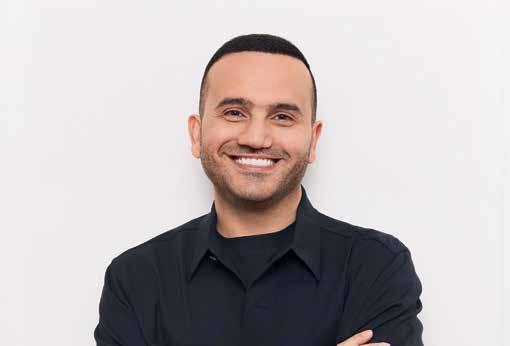
RABIH FAKHREDDINE
Founder and group CEO
7 Management Hospitality Group
7management.me sevenmanagement
Creating places people remember
It started with a feeling that hospitality could be more than service. Growing up in Beirut, I was surrounded by energy, culture and a love for food. After studying and working in marketing, I felt a strong pull to create something of my own. That idea became Seven Sisters Beirut in 2015. From day one, our mission was clear: create places people remember. Places that feel alive. We were a small team with big dreams, and over time, those dreams turned into brands, destinations and a growing family that keeps pushing limits.
The grind and the growth
The reality is that success is about structure, people and stamina. What the guest experiences in two hours took months of planning, training, budgeting and troubleshooting. Success isn’t champagne and confetti. It’s that quiet, proud moment when you watch your team shine. It’s the late-night debriefs, the relaunches, the problem-solving, the breakthroughs. It’s also the guest who messages saying, “I’ll never forget that night.” It doesn’t come from the spotlight, it comes from the grind and the growth. Success isn’t about
growing fast. It’s about growing well, with consistency, culture and with your people feeling empowered.
Scaling with soul
I always believed we had something worth sharing globally but I didn’t expect it to happen this fast. Each time we cross a border, we bring our soul with us. Beirut, Dubai, Athens, Doha—these are cities that love culture and storytelling, and that’s where we thrive. The vision is simple: keep growing, but never dilute the experience. As Lucia’s begins its international journey, we’re building concepts that can live in any city where the energy feels right. We’re also expanding on the operational front, having just started the Uptown Plaza project with DMCC this month, alongside bringing the Scalini franchise to Beirut, opening this April.
Empathy in action
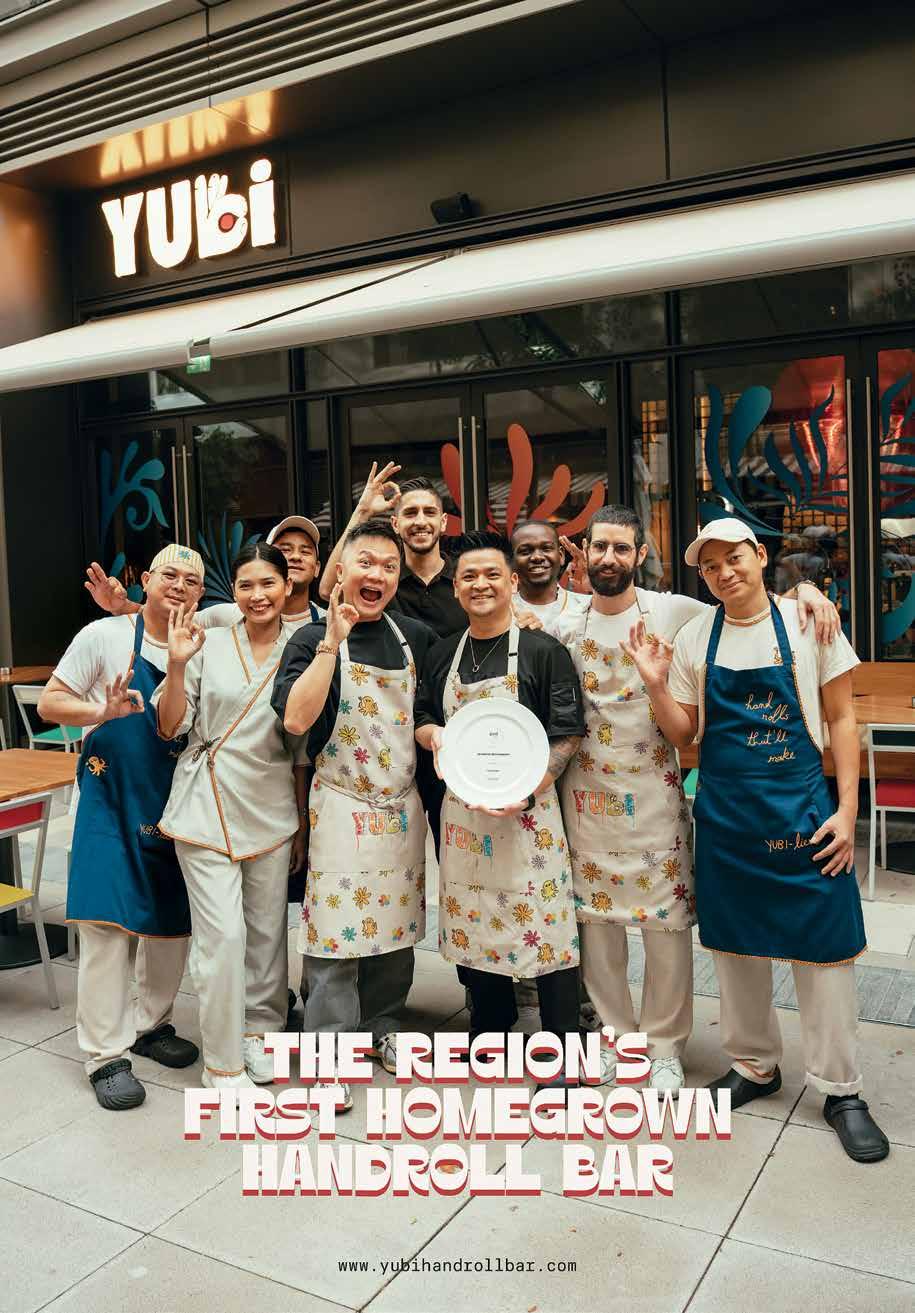
Innovation doesn’t always mean high-tech or headline-grabbing. For me, it starts with a question: “What would surprise people right now?” From there, we build something that didn’t exist before, to fill the gap in the market, like Yubi, the region’s first handroll bar, or 25 Jump Street, a new nightlife dining experience and Lady Bird,
Success isn’t about growing fast. It’s about growing well, with consistency, culture and with your people feeling empowered.
the newest neighborhood bar designed around comfort, familiarity and genuine connection. We’re constantly observing shifts in behavior, desires and emotions, not just trends. Innovation is just empathy in action. Our job is to understand why something is trending and then decide if we want to respond, ignore or create something completely new.
Risky ideas/right energy
Starting 7 Management during Lebanon’s instability was a massive risk. Opening award-winning Sayf in Dubai Festival City was another bold move. The location wasn’t your typical nightlife destination and many questioned the decision. But that journey taught me something important: sometimes the riskiest ideas simply need the right energy behind them.
Building brands that travel
What I value most is that we’ve consistently been able to take a concept from idea to launch and then thoughtfully grow it beyond our borders. We focus on building brands that travel while still feeling authentic wherever they land. That’s something I’m truly proud of. It shows that when you build with heart, people everywhere can connect with it.
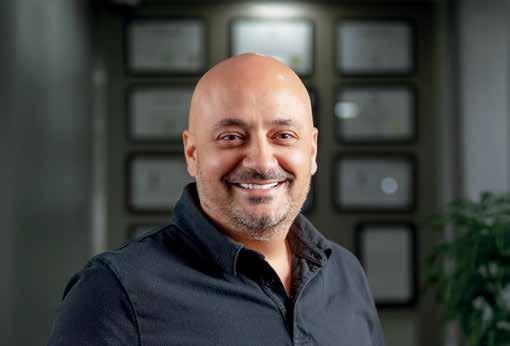
HENRY FARAH Founder and CEO
Kamp Hospitality Investments Holding henryfarah
Elevating the dining experience
It started with a simple idea: creating spaces where people feel something, from comfort and excitement to belonging. I opened my first concept in 2011 with the belief that hospitality is not just food, but emotion, discipline and consistency. Over the last 16 years, I built each brand in our group with the same intention: elevate the experience while keeping it authentic. I never had a perfect roadmap, but I had clarity about quality, service and culture. Every restaurant was a lesson, every challenge shaped me. What began as one outlet has grown into a diverse group defined by passion, resilience and constant improvement.
Concepts strong enough to travel
My goal was never “international expansion” for its own sake, but instead, to create concepts strong enough to travel. As our brands matured, demand naturally came from abroad. Did I expect it? I believed it
was possible. However, I focused more on building operational systems, talent and consistency rather than chasing scale. When opportunities from the GCC emerged, we were ready. International success is not luck. Instead, it’s the result of years of refining standards, understanding markets and investing in people. Today, expanding globally feels like a natural next chapter rather than a surprise.
Meeting evolving expectations
The future is centered on three pillars: expansion, innovation and people. We are gearing up for international growth through franchising and strategic partnerships, especially in the GCC. At the same time, we’re developing new concepts that reflect evolving guest expectations. These include, for example, lighter menus, multicultural influences and more experiential dining. Internally, my priority is building a stronger leadership structure around operations,
A restaurant group is not built on one good chef or one great location. Instead, it’s built on hundreds of small decisions repeated every day.
finance and culinary development to sustain long-term scale. Ultimately, my vision is to transform our group into a regional hospitality powerhouse. The aim is for it to be known for great restaurants, but also for the systems, standards and talent behind them.
Discipline at the core
Many people think success in hospitality comes from creativity alone. In reality, the backbone is discipline, systems, training, financial control, operational consistency and people development. A restaurant group is not built on one good chef or one great location. Instead, it’s built on hundreds of small decisions repeated every day. Another misconception is that growth makes things easier. It doesn’t, but instead magnifies every weakness unless your structure is strong. What guests see is the glamour; what we live is the precision.
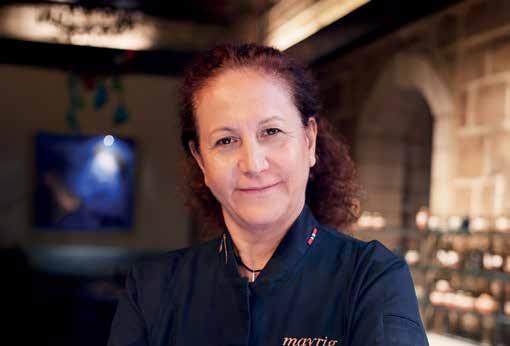
ALINE KAMAKIAN Founder and CEO
Fig Holding figholding.com alinekamakian
Respect for heritage
I don’t chase trends for the sake of novelty. Innovation starts with respect for heritage. That allows inspiration to surface and be given light at each moment, and in every context and encounter. This is the time to ask how it can live today. I innovate by listening: to my teams, to guests and to markets. Sometimes innovation is creating something new; other times it’s simplifying, refining or approaching tradition with greater clarity and intention. If it doesn’t serve the product, the people or the story, it’s not innovation, it’s noise.
Choosing the right partners
The riskiest decision was choosing partners to share a dream. Vision is fragile. Unless partners are aligned with your values, work ethic and long-term mindset, the dream becomes diluted. I learned that being
“almost aligned” isn’t enough. Would I do it again? Yes, but only with people who think, care and commit as deeply as I do. Anything less costs time, energy and clarity.
Full-time commitment
People think success means vacations and easy money. The reality is the opposite. Hospitality is constant responsibility. There are no real days off; only different kinds of work. You’re always solving problems, protecting standards and supporting teams. Success is built on discipline, sacrifice and showing up even when no one sees it. If you want comfort, this isn’t the industry.
A living culinary identity
I hope my work to preserve and elevate Armenian cuisine with respect and integrity will be a legacy. I want to be known for turning a deeply rooted cuisine into
I want to be known for turning a deeply rooted cuisine into something globally respected, without compromising its soul.
something globally respected, without compromising its soul. Not as nostalgia, but as a living, evolving culinary identity that stands confidently alongside the world’s great cuisines.
Spotlighting Armenian cuisine
I’m especially proud of what I’ve achieved in putting Armenian cuisine on the culinary map. Showcasing the food of my people with dignity, through restaurants, products and education is very special. The same is true for seeing it embraced across cultures. Knowing that younger generations can now be proud, curious and inspired by their culinary heritage is hugely satisfying. I can honestly say that as an accomplishment, it’s more meaningful to me than any expansion or number.
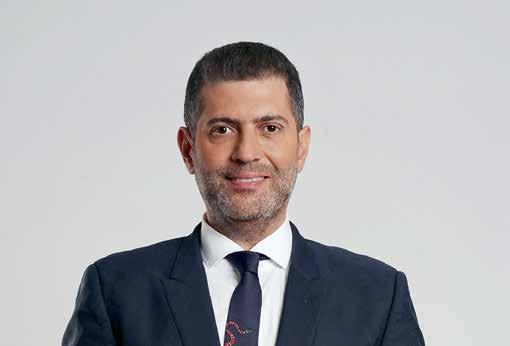
ZIAD KASSABIEH Chief executive officer
Connecting through food
It started with a simple passion for creating meaningful dining experiences and belief that food has the power to connect people. From the beginning, I was driven by curiosity and a desire to bring something new to the market. More specifically, concepts that reflected both authenticity and innovation. What began as a single idea grew through hard work, persistence and a commitment to quality. Every step along the way, from early experiments to opening the first concepts, reinforced my vision. The journey wasn’t easy. However, it was fueled by purpose, and that foundation is what continues to shape everything I do today.
Built on responsibility
For me, success has a very distinct taste; one built on responsibility. It isn’t something you buy or stumble upon. Instead, it’s something you earn through
effort, sacrifice and long nights that often go unnoticed at the time. With success comes a deeper duty to study every new project carefully. You have to remain detail-oriented and to make decisions with intention. Success is powerful and, in a way, addictive, because it pushes you to hold yourself to a higher standard. Failure is part of every journey, but those failures ultimately shape success and make its sweetness worth the wait.
A leap into the unknown
One of the boldest decisions I made was opening an Indian cuisine concept more than 15 years ago. At the time, the regional market, especially Saudi Arabia, was not yet familiar with or enthusiastic about this category. It was a leap into the unknown, culturally and commercially. But I learned that entering a challenging market during uncertain times can be the best path toward
The true measure of leadership, in my view, is the ability to remain grounded, connected and respectful. This stands, no matter how large a group becomes or how successfully a brand grows.
long-term return. That risk taught me to trust my vision even when the environment isn’t fully ready for it. And yes, I would absolutely make that decision again.
Staying humble and human
If I could be known for one thing professionally, it would be for staying humble and human. The true measure of leadership, in my view, is the ability to remain grounded, connected and respectful. This stands, no matter how large a group becomes or how successfully a brand grows. Success carries a responsibility toward the business but also to the people behind it, including teams, partners and guests. Maintaining humility keeps decisions clear, relationships strong and values intact. Ultimately, being human is what allows you to build businesses that genuinely touch people’s lives.
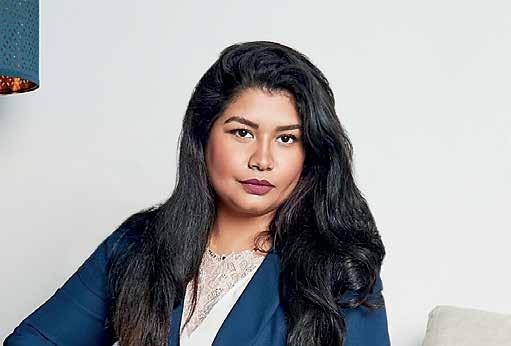
PANCHALI MAHENDRA
Chief executive officer
Atelier House Hospitality
atelierhousehospitality.co panchalimahendra
Food, conversation and hospitality I grew up in India in a family where food, conversation and hospitality were inseparable. As a result, this industry always felt instinctive. Having trained at IHM Aurangabad and the Oberoi Centre of Learning & Development, I spent several years with international hotel groups. There came a point when the time felt right to partner with Ahmass Fakahany. Together, we built Atelier House Hospitality as a boutique platform that could marry global standards with regional soul. What began as a small Dubai office is now a multi-country portfolio guided by that same founding belief.
A consequence, not the goal I always aspired to operate on an international stage, but I never took it for granted. Our focus has been very simple: build restaurants that guests fall in love with. Crucially, this outlook included letting the awards and expansion be a
consequence, not the goal. When 11 Woodfire received a Michelin star and INJA entered global lists, it felt less like “we’ve arrived” and more like a responsibility. That responsibility was to keep raising the bar for the region’s culinary narrative.
Context and courage Innovation, for me, sits at the intersection of context and courage. We start with deep research into a city’s culture, habits and aspirations. Next, we ask: what is missing from this landscape and why? Afterwards, the collaboration begins. We work closely with chefs, designers and local creatives to build concepts that feel fresh and emotionally familiar. I encourage my teams to constantly prototype with menus, experiences and even operating models. However, they know to protect the non-negotiables, which are the integrity of ingredients, respect for culture and financial discipline.
Awards are gratifying, but the legacy I care about is whether we have opened doors for talent, for diverse cuisines and for the broader perception of what dining from our region can be.
Creating platforms, not just restaurants I would like to be known for building platforms rather than just restaurants. In other words, platforms where chefs, creatives and operators can do the best work of their lives. By extension, these platforms enable local culinary stories to be taken seriously on the world stage. Awards are gratifying, but the legacy I care about is whether Atelier House Hospitality has opened doors for talent, for diverse cuisines and for the broader perception of what dining from our region can be.
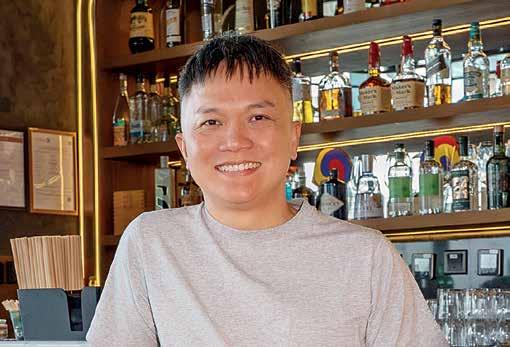
REIF OTHMAN
Chef and restaurant owner
Valuable early lessons
I started in a kitchen when I was 16. It was part-time work in a small restaurant whenever school was out. My “station” was potatoes and rice, honestly, mostly potatoes. We served shepherd’s pie that was so popular, I was peeling around 100 a day. I kept getting told off because my cuts were not consistent and I wasted too much flesh. It was painful at the time. But it taught me the first real lesson of cooking, which is discipline, repetition and respecting ingredients. This applies even to something as simple as a potato. That’s where the obsession started, and I've carried that mindset ever since.
Challenging expectations
Opening Hoe Lee Kow was a real gamble. At the time, “Korean” in the market was perceived as KBBQ. I came in saying, “Let’s do premium-casual Korean, but unconventional.” I wanted to show Korean
food beyond the obvious. The ideas included dishes inspired by travel, for example, using different techniques and unexpected ingredients that still felt true in flavor. It was risky because it challenged expectations, but that was the point. Would I do it again? Yes, because if you only follow what’s already popular, you'll never build something that feels new.
Developing the next generation
For me, success is watching my team grow, especially when people are proud of what they do. When they’re learning every day and thriving in a kitchen that pushes them, that’s success beyond the dirhams. It is also being able to create stability for the people who believe in the vision. When our brands become part of the city and beyond, that’s amazing. But the real win is knowing the team can take care of their families. Also, that I’m building the next generation with them. If the story ends with me, it’s not a real story.
I’m always chasing that balance of comfort and surprise, something familiar, but with a twist that makes you curious.
Comfort vs. curiosity
My plan is simple: to keep building. I aim to grow REIF Japanese Kushiyaki beyond Dubai and also keep growing the other brands. Additionally, the aim is to create new brands under Hotaru Holdings. I’m always chasing that balance of comfort and surprise, something familiar, but with a twist that makes you curious. We’ve already expanded to Egypt, and 2026 is going to be another big step with more venues planned there. On another note, in Dubai, I’m also focused on concepts that are personal to me, like SIO and KONA. These are rooted in craftsmanship, bold flavors and pushing boundaries while staying true to what we do. There’s more coming, but let’s just say: stay tuned.
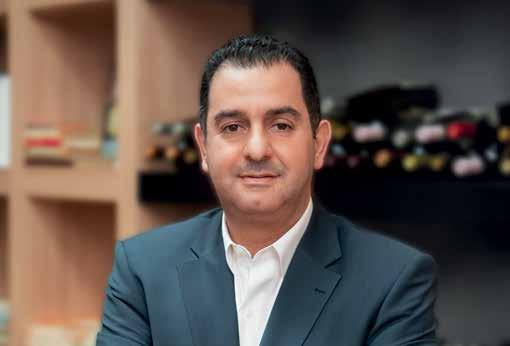
TONY RAMY President
Creating unity in a sector facing constant challenges, and sustaining that unity over time, is an achievement I value deeply.
Syndicate of Owners of Restaurants, Cafés, Night-Clubs and Pastries in Lebanon
Owner
Ramy Holding/Mood Village tonyramy.com tonyramyofficial
Safeguarding a legacy
It all began with a legacy that was already established long before my time. Al Sultan Brahim was founded in 1961. My role was to safeguard its heritage, protect its identity and carry forward the values that shaped its reputation. Importantly, this legacy is part of my own DNA. I grew up with it, learned from it and built upon it with responsibility and pride. Today, my mission is not only to preserve what was entrusted to us, but also to pass it on to the next generation of our family. By doing so, I aim to ensure its continuity, excellence and long-term sustainability.
Protecting values, supporting people
To me, success is defined by humility. It comes from years of discipline in protecting our values, our taste and our service standards. Aligned with this is the
importance of delivering consistency no matter the circumstances. Success is also reflected in our people. For example, employees who joined us young, grew within the organization and earned their promotions through dedication and merit. Their progress is one of the clearest expressions of success.
An act of commitment
The riskiest decision I ever made was choosing to continue investing in Lebanon. We stayed when many were leaving, despite blocked deposits, the absence of electricity and the full weight of the national crisis. We operated with no guarantees, no compensations and no safety nets. Remaining here was an act of commitment to our people, our teams and an industry that has always been a pillar of Lebanon’s identity.
All for one, and one for all
My most cherished accomplishment is the work undertaken with the Syndicate of Owners of Restaurants, Cafés, Night-Clubs and Pastries in Lebanon. Step by step, we built a culture grounded in an “all for one, and one for all” approach. For 14 years now, we’ve earned the trust, respect and genuine appreciation of colleagues across the hospitality industry. Creating unity in a sector facing constant challenges, and sustaining it over time, is an achievement I value deeply.
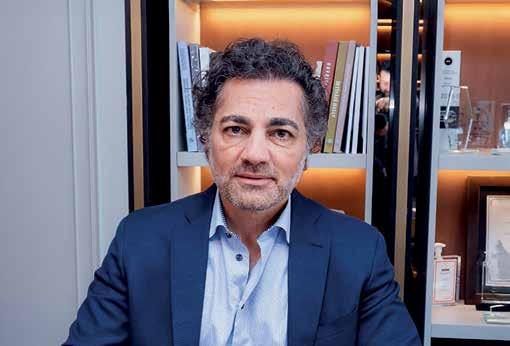
DORY RIZK CEO Afkar Holding and Babel babelrestaurant.com
Elevating Lebanese cuisine with soul
It started with a simple yet powerful belief: that Lebanese cuisine could be elevated without losing its soul. Babel was born from a deep respect for heritage, paired with a desire to reinterpret tradition in a modern, refined way. The early days were about attention to detail and consistency. Importantly, it was about creating Babel as an experience, not just a restaurant. From day one, the focus was on quality, storytelling and emotional connection with guests.
The result of doing things right locally International success was never the initial goal, it was the result of doing things right locally. The priority was always to build a strong, authentic brand that people could trust and connect with. Expansion
happened organically, driven by demand and belief in the concept rather than ambition alone. Each new market came with humility, learning and adaptation, while staying true to the core identity of Babel. In other words, mature Lebanese cuisine.
Calculated risk guided by values The riskiest decision was choosing to scale while refusing to compromise on quality or brand integrity. Growing a restaurant group internationally like Babel is challenging, especially when standards are non-negotiable. It requires significant investment, strong teams and constant presence. Would I do it again? Yes, because calculated risk, when guided by values and discipline, is often the gateway to meaningful success.
International success was never the initial goal, it was the result of doing things right locally.
Brands with soul
I would like to be known for building brands with soul—brands that respect their roots while evolving with time. Beyond numbers and expansion, success for me is creating concepts that people remember. It’s also about teams that grow with the brand and experiences that feel genuine. Longevity, consistency and emotional impact matter more than trends.


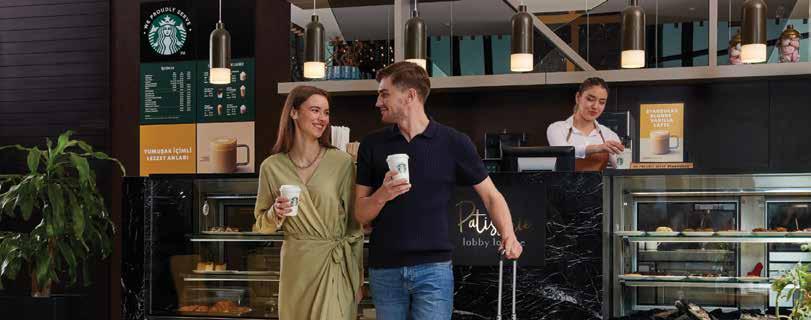
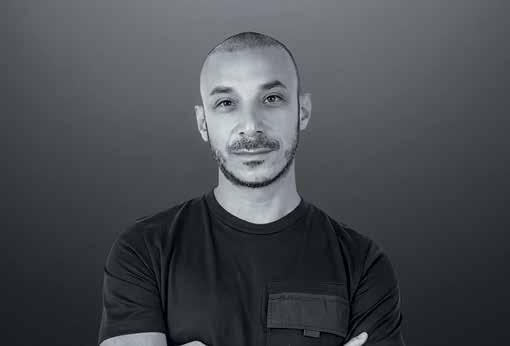
CLAUDE SABA Partner and CEO
Addmind Hospitality addmind.com claudesaba, addmindhospitality
A passion for nightlife
It all started with a love for nightlife and hospitality. In the early 2000s, I got my first taste of the scene in Beirut. At this time, I was working hands-on and learning every detail of running a venue. Back then, it wasn’t about titles or offices, it was about feeling the energy of the crowd, the rhythm of a night and what makes people come back. Meeting Tony Habre was a turning point. His vision of building something bigger inspired me to join him. Together, we grew Addmind from a single concept into a group of restaurants, clubs and experiences that truly connect with people.
Adventures in hospitality
For me, the future is about responsible growth, leadership and proving that Lebanese hospitality can inspire everywhere. Growth, as I see it, is about much more than expanding venues. It’s about creating new adventures, nurturing
talent, innovating experiences and setting benchmarks that inspire others in Lebanon and beyond. Hence our signature “Adventures in Hospitality.” My vision is for Addmind to remain a pillar of the hospitality industry and let the world know what we do here. We want to show that our experiences, our service and our innovation can shine globally.
Behind the scenes
There is a misconception that running a successful restaurant or hospitality group is glamorous or just about the concept. People see the venues and the buzz, but they don’t see the countless details and efforts behind the scenes. These include the operations, team management, logistics and constant problem-solving, for example. True success comes from discipline, maintaining consistency in every offering and always challenging yourself to innovate and evolve. It’s about creating experiences
Growth for me is about creating new adventures, nurturing talent, innovating experiences and setting benchmarks that inspire others in Lebanon and beyond.
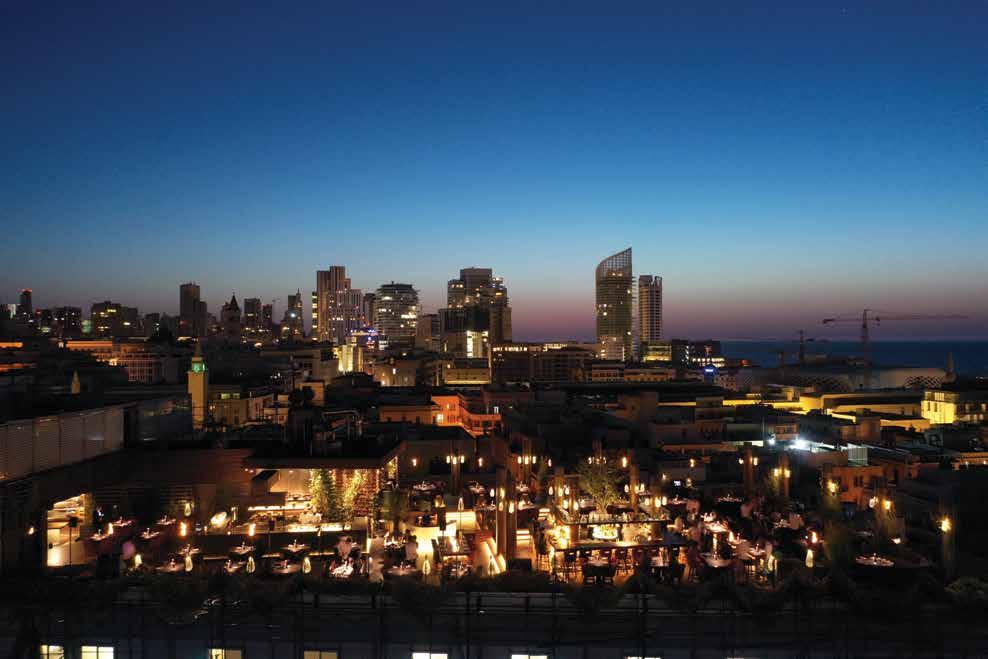
that feel effortless to the guest. Yet, behind the scenes, you’re constantly refining, reinventing and ensuring every detail meets the highest standards.
Collective impact
My most cherished business accomplishment isn’t a single venue or award. Instead, it’s seeing Addmind grow from one concept into a group shaping Lebanon’s hospitality scene and now spreading internationally. There are key achievements that make me especially proud. These include building a team and a culture capable of delivering consistently exceptional experiences. Others range from nurturing talent to creating spaces that leave a lasting impression. Then there’s the satisfaction of every successful launch, every night where guests feel inspired and engaged and every time our work sets new benchmarks. Above all, that collective impact at home and abroad is what I value most.
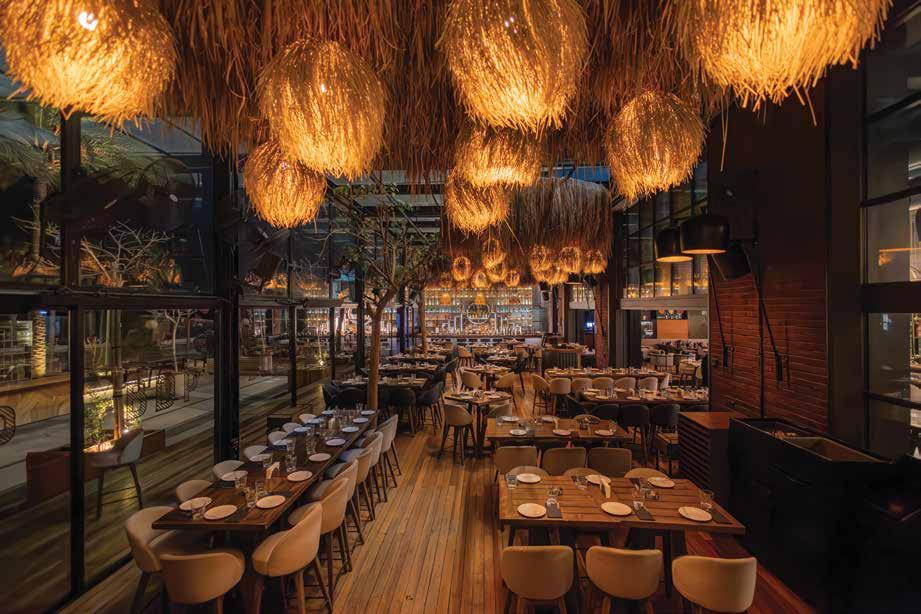
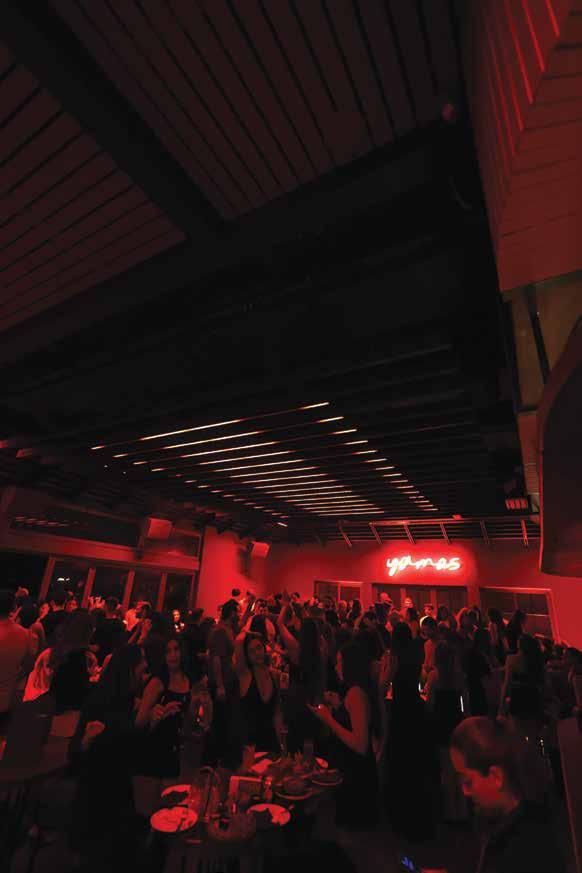
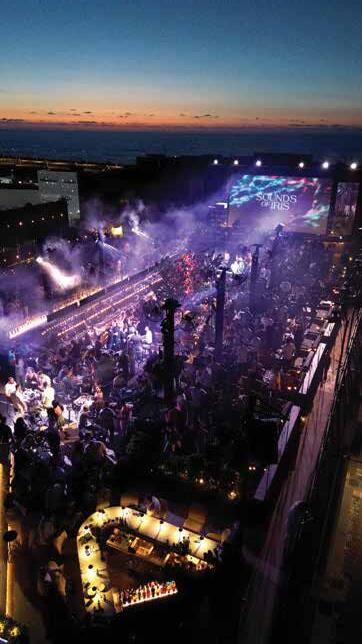
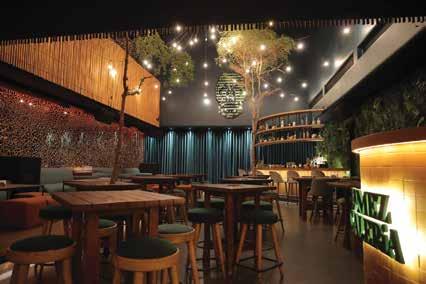
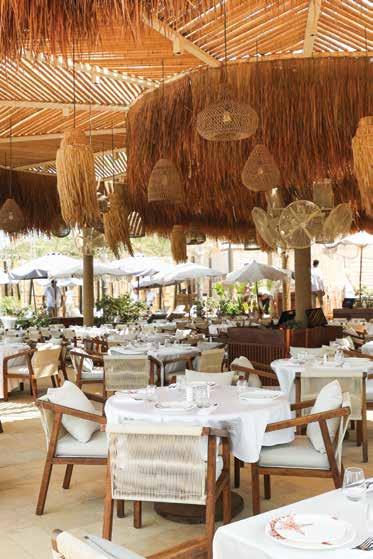
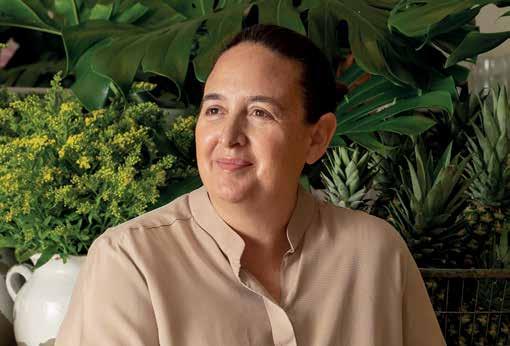
NATASHA SIDERIS CEO and founder Tashas Group tashasgroup.com
A world of opportunity I opened the first tashas 20 years ago. I could never have dreamed we’d be where we are today with 14 brands and 42 locations across five countries. Back then, my focus was simply to create something beautiful and meaningful. Opening our first international location in Dubai was one of the best decisions I’ve ever made. It was a turning point that opened up a world of opportunity, both professionally and personally. I’m incredibly grateful for the journey, and I’m honored to call Dubai my home. After all, it’s where so much of our growth has been made possible.
Sheer determination
The riskiest decision I ever made was taking a loan from a loan shark to open the very first tashas. I had no proof of concept and no bank would back me. But I had a clear vision and sheer determination. He gave me less money than I needed and
more debt than I was ready for. On top of this, there were no guarantees that it was going to work. Thankfully, tashas was a success from day one. Would I do it again? By nature, I'm a risk taker so I would do it again without hesitation. Thankfully, it paid off and laid the foundation of where we are today as a group.
A never-ending commitment
People see full restaurants, beautiful plates, sense the buzz and assume it all just falls into place. But the truth is very different. It takes a huge amount of hard work. Running a restaurant group means long hours, constant pressure and solving problems daily. It’s not just about serving great food. It’s about leading teams and maintaining high standards. Additionally, it’s about ensuring every single detail, from the music to the menu to the mood, is exactly right. More broadly, it’s a neverending commitment.
There’s no greater joy than knowing the work we do feeds thousands of mouths and supports hundreds of homes.
A builder of careers
Looking after my people has always been a priority for me. I’d like to be known as someone who leads with integrity and is a builder of careers. At the heart of what I do is a deep desire to make a difference in people’s lives. For example, this spans the team members who grow within the business and the families they support. There’s no greater joy than knowing the work we do feeds thousands of mouths and supports hundreds of homes. I don’t do this for recognition. Rather, I do it for others. That’s what truly matters.

Coffee remains one of the most frequently enjoyed items across hotel outlets. As a result, guests increasingly seek brands they recognize and associate with quality. The We Proudly Serve Starbucks® Coffee Programme offers hotels a solution that combines brand familiarity, operational simplicity and premium quality.

Coffee market growth in MENA
In the MENA region, the F&B segment is projected to reach USD 487 billion by 2032 (Fortune Business Insights, 2025), highlighting its growing role in shaping the guest journey. Consequently, coffee continues to play a central role, as guests expect a high standard every time they order.
Streamlined operations across outlets
Managing service across different hotel outlets can be complex, especially in an industry affected by staff turnover and fluctuating demand. Fortunately, the We Proudly Serve Starbucks® Coffee Programme removes this complexity and enables hotels to focus on service quality.
Backed by Nestlé Professional, it provides professional equipment, calibrated recipes, hands-on barista training and regular brand audits. Additionally, a team of 10 on-
ground specialists is dedicated to hotels across the region, ensuring that every cup served meets the Starbucks® standard.
Consistent premium coffee
Guests expect more than taste; they expect consistency and premium quality. With the We Proudly Serve Starbucks® Coffee Programme, hotels can deliver the familiar taste that guests love in every outlet every time, whether it’s their favorite Cappuccino or the seasonal excitement of a Toffee Nut Latte.
Ethical sourcing
Today’s travelers value brands that reflect responsibility and purpose. The We Proudly Serve Starbucks® Coffee Programme uses 100-percent Arabica beans ethically sourced through the Starbucks® C.A.F.E. Practices Verification Programme.
Boosting brand recognition and loyalty
Offering Starbucks® coffee is more than a menu addition. It is a partnership that strengthens brand recognition, simplifies operations and enhances the overall guest experience. Guests immediately associate the offering with premium quality, consistency and ethical sourcing.
A smart coffee investment
The We Proudly Serve Starbucks® Coffee Programme is not just about serving coffee. It is a strategic investment in operational efficiency, quality assurance and guest satisfaction. nestleprofessionalmena.com nestleprofessionalfoodmena


New funding models, technological advancements and sustainability frameworks are reshaping tourism development across the Middle East. Ahead of Future Hospitality Summit (FHS) Saudi Arabia, Jonathan Worsley , chairman of The Bench, organizer of the summit, gathered insights from three industry leaders on the sector’s evolving priorities and opportunities.

ARADHANA KHOWALA CEO and founder Aptamind Partners, UK
Capital discipline reshapes investment priorities
The Middle East is quietly breaking up with “biggest-ever, mega and giga.” Not because ambition is gone, but because capital has developed standards. Diversification money is still very much in the room. However, higher interest rates and tougher scrutiny
mean vision alone will not get the check. Cashflow, proof and repeat demand does.
Money is going toward the unglamorous winners: airlift that actually connects, midscale beds that fill, culture you can program every week (not just for opening night.) The biggest shift? Tourism is now priced like infrastructure, run with tech discipline, and won by destinations built for return visits—not one-off spectacle.
Pre-sold demand drives financing models
In MENA, the smartest innovation is simple: sell demand before you pour concrete. Destinations are locking in cashflow upfront. These include airlift guarantees, pre-sold MICE calendars, multi-year event rights, resident and visitor passes. That contracted demand becomes the credit story. Banks lend earlier. Risk prices lower. Developers build what will actually fill. Consequently, it flips tourism from a speculative real estate gamble into something predictable, financeable and repeatable.
Technology is transforming this further. AI and data are becoming the destination’s operating system. Instead of planning by
intuition, you plan like a platform: forecast demand, price in real time and personalize journeys. The next leap is removing friction end to end. This includes smart visas, biometrics and one super-app layer linking entry, check-in, transport, tickets and payments into a single flow.
Hard-wiring community benefits and capacity limits
Sustainability in MENA needs to move from brochures to legal permits. Growth should be conditional. Approvals for new hotel keys, cruise slots and mega-events should be tied to audited capacity. These include water, energy, waste and mobility, with real thresholds and real enforcement. If a destination can’t carry the load, the answer isn’t “mitigate later.” It’s cap now.
Tourism only earns the right to grow if locals feel the upside. The smart move is to hardwire community benefit into every deal. This includes local hiring and apprenticeships, SME procurement quotas and revenuesharing that funds schools, public space and heritage—measured, audited, enforced. Culture isn’t decor. It’s a living system. Protect it with heritage-impact sign-off and community stewards on boards with real veto power.


DAVID THOMSON
Vice president development
The First Group Hospitality
Franchise models and integrated destinations
Tourism development in the Middle East continues to be shaped by sustained government investment and ambitious national tourism strategies. This is particularly evident in the GCC. Saudi Arabia and the UAE are leading large-scale destination development, attracting both regional and international capital.
A key structural trend is the move from traditional hotel management agreements (HMAs) to franchise models by major global
SULTAN BADER AL-OTAIBI
Chief executive officer
TAIBA
Economic diversification and partnership models
Current macroeconomic trends in the Middle East include steady regional economic growth, strong government spending and ongoing efforts to diversify away from oil. Crucially, these trends are driving rapid tourism growth across the region. Governments are investing heavily in aviation, major infrastructure and largescale tourism projects. This is shifting investor interest toward long-term, highvalue opportunities.
brands. Notably, this reflects a maturing market and greater confidence among owners and developers in specialized operators. Third-party hospitality management companies are increasingly central to this evolution. They bring brand expertise and operational efficiency while enabling owners to align with global brands through flexible franchise structures.
At the same time, global travel patterns are shifting toward blended business and leisure. As a result, this is driving investment toward integrated, experience-led assets. Ciel Dubai Marina—the tallest hotel in the world and one of our newest openings—embodies this shift. It is designed to meet the needs of business travelers, leisure guests and lifestyle-driven visitors in a single, vertically integrated destination.
Sustainability in practice
Sustainable tourism requires coordinated policy frameworks that align economic growth with cultural stewardship and environmental responsibility. For example, in Dubai, entities such as the Department of Economy and Tourism and Dubai Municipality have set strong foundations through destination-wide sustainability agendas and the Green Building initiative. Crucially, operators must complement these frameworks with meaningful action. At The
Investment models are increasingly oriented toward partnerships between owners of large-scale real estate projects and specialized developers such as hospitality operators. One of TAIBA’s most prominent partnership models is the Makarem Burj Al Madinah in Madinah. The project was developed through a partnership between Awqaf Investment Company (51 percent stake) and TAIBA (49 percent stake). The hotel has recently been completed and entered its soft-opening phase. It offers a luxury 5-star hospitality experience adjacent to Al-Masjid an-Nabawi.
Agentic AI and digital transformation
Inevitably, technology is reshaping the regional tourism landscape through seamless, data-driven guest experiences and smarter destination planning. Digital platforms are driving a surge in online travel reservations. As a result, accessibility is expanding and market competitiveness is increasing.
Among the technological advancements poised to reshape tourism is the emergence of agentic AI technologies. Unlike traditional artificial intelligence (AI), agentic AI operates as autonomous agents capable of making decisions and executing complex tasks independently. This enables smarter solutions in destination management,
First Group Hospitality, all our properties are Green Key Certified. This demonstrates our commitment to energy efficiency and responsible waste management. Furthermore, we invest in community-rooted experiences. Farmers Commons, our farmto-table restaurant at Hotel Local in JVT, celebrates local agriculture and sustainable dining. The menu features hydroponic herbs and honey produced in-house. Additionally, externally sourced ingredients come from local farmers who nurture the land with care and respect.
AI and digital transformation
Technology—especially artificial intelligence— is becoming inseparable from hospitality performance in the Middle East. Dubai is pioneering citywide innovation. Indeed, it has plans to become the first destination in the world to offer seamless online check-ins for all visitors. The First Group Hospitality is investing in proprietary software and platform development. Notably, this integrates AI, automation and predictive analytics into every stage of the guest and operational journey.
Ultimately, the technologies with the greatest influence will be those that deliver frictionless, personalized digital journeys. These will also support predictive revenue management, integrate loyalty ecosystems and optimize operational efficiency through smart systems.
real-time personalization and enhanced operational efficiency through continuous learning and dynamic interaction with evolving guest needs.
Cultural preservation and future priorities
The region can safeguard its heritage by embedding cultural narratives into destination design. These range from architecture and gastronomy to crafts and storytelling. Additionally, strategic collaborations with cultural ministries, UNESCO-linked entities and heritage preservation bodies ensure authenticity remains central. By blending modern hospitality with deeply rooted traditions, destinations can offer unique, identity-driven experiences that resonate globally.
The next phase will be defined by integrated mega-destinations, sustainability-led planning and the rise of experiential and spiritual tourism. Stakeholders should prioritize digital transformation, sustainable infrastructure and human-capital development. This should include particular focus on youth and women empowerment. Investing in heritage conservation, green mobility and lifestyle-oriented tourism segments will be essential. Ultimately, by aligning innovation with cultural authenticity, the region can achieve sustainable, inclusive tourism growth over the coming decade.

In line with the rest of the GCC, Qatar has been working to reduce its economic reliance on hydrocarbons. The country is investing heavily in non-oil sectors through its Qatar National Vision 2030 plan. However, according to the World Bank, “the hydrocarbon activity still exerts a dominant influence on economic conditions and national development strategies of the small nation.” The GCC member state also remains one of the top exporters of liquefied natural gas (LNG).
Following a record-breaking year for visitor numbers and a major information and communication technology drive, Qatar’s economic diversification is gathering pace. Nada Alameddine, managing partner at Hodema Consulting Services, tracks the country’s progress to date and tells us what’s in the pipeline for 2026.
In November, the country raised USD 4 billion from debt markets, subsequently attracting high demand from international investors. The LNG sector will also benefit from the planned expansion of the North Field. The World Bank forecasts real GDP growth of 2.8 percent for 2025, with telecommunications leading the non-oil sectors. The successful deployment of data centers and 5G internet is supporting innovation and investment. Diversification

and technological transformation, such as the adoption of AI in numerous companies and some areas of the public sector, are set to drive stability and sustained growth, according to World Bank experts. The budget balance is positive. Inflation should remain below the GCC average of 2 percent in the foreseeable future. The IMF is even more optimistic, projecting 6 percent GDP growth for 2026. However, most experts agree on a projection of 4 percent.
Authorities are positioning the country as a yearround multifaceted destination, highlighting the diversity of its offerings.
Connecting the region
On the infrastructure front, a recent partnership with Saudi Arabia has been the talk of the town. An ambitious train project agreement was reached in December. The project will connect Riyadh and Doha, passing through the Saudi cities of Dammam and Al-Hofuf. Furthermore, the airports of the two capital cities will also be linked by rail. The 785-kilometer line is expected to be completed within six years and accommodate 10 million passengers. Authorities of both countries have announced that the project will create around 30,000 jobs.
A multifaceted destination
The tourism industry plays a major role in the national strategy to diversify the economy. Last May, the Qatar Tourism Authority announced that the sector accounted for 8 percent of the 2024 economic output. Saad bin Ali Al-Kharji, chairman of Qatar Tourism, said the figure marks a 14-percent increase compared with 2023.
The overall performance has been steady. However, authorities have yet to reach their Tourism Strategy 2030 goals of 12 percent of GDP and 6 million visitors per year. Their efforts are focused on positioning the country as a year-round multifaceted destination, highlighting the diversity of its offerings. These range from heritage to food, culture, natural sites, sports and leisure. The objective is to create an interconnected events ecosystem to meet the diverse preferences of both local and international visitors.
Record-breaking performance
In 2024, Qatar recorded over 5 million international tourists and 10 million room nights sold. These impressive numbers represented a record-breaking year for the small territory which has just over 3 million inhabitants.
Though 2025 figures are not yet available, officials recorded a 2.2-percent increase in September compared to the same period in 2024. In the first six months, the country hosted a string of high-profile events. These included the Toy Festival, the Doha Jewelry and Watches Exhibition 2025, Ras Abrouq, Sealine Season, Shop Qatar and Qatar International Food Festival, which attracted thousands of revelers. The 2025/2026 cruise season, which opened in November, gave visitor numbers a boost in the second half of the year, as did several major sporting attractions. These included the inaugural T100 Triathlon World Championship finals, the FIFA Arab Cup Qatar 2025 and FIFA Intercontinental Cup, and the F1 Qatar Airways Qatar Grand Prix 2025. Other high-profile events included the third Qatar Tourism Awards and the unveiling of the Michelin Guide Doha 2026.
The sector’s promotional arm, Visit Qatar, has been working behind the scenes to reach potential visitors across the globe. Media campaigns such as “Moments Made for You” in the summer and a film featuring David Beckham targeted GCC tourists. They also reached British, American, South African and Australian markets.
High-profile events
Top-level international events are already planned for 2026 and the coming years. The country is cementing its reputation as a football destination after the success of the 2022 FIFA World Cup. Fans are booking tickets for the yearly FIFA U-17
In collaboration with



World Cup from 2025 to 2029. Sports lovers are also expected to attend the FIBA Basketball World Cup in 2027 and the 2030 Asian Games. For nature and heritage aficionados, the upcoming Sealine Season will offer an immersive desert experience, alongside food tastings and other attractions. Other highlights include the first edition of Art Basel Qatar, an extension of the famed Swiss event. Scheduled for February, it should attract high-profile collectors and dealers, while promoting the country as a cultural hub. In total, more than 550 events have already been announced for 2026.
potential
In addition to this series of fairs and competitions, authorities are developing plans to build specific tourism offerings. They have already announced upcoming projects in health tourism, promoting their advanced healthcare facilities and various international collaborations. According to consulting firm KPMG, the leisure and staycation segments also hold untapped potential. A report published in October states that professionals should offer tailored staycation packages that combine lodging and experiences.
Infrastructure and sustainability When it comes to infrastructure, prospects are strong. In June, the number of hotel rooms stood at 41,240, with an average occupancy of 71 percent during the first six months of 2025. The RevPAR also achieved double-digit growth. Regional consulting firm ValuStrat estimates that an additional 845 rooms will be added by the end of 2025, driven by soaring demand.
As building sites are multiplying, authorities are prioritizing projects combining luxury and sustainability. Combining high-end standards with eco-conscious features, Ras Abu Aboud Resort, the Qatar National Convention Center and Msheireb Downtown Doha feature among the highest-profile examples.
hodema.net


















Long a culinary heavyweight, French cuisine continues to hold its own on the global gastronomic scene, despite growing competition. Guillaume Gomez is president of the Gastronomy Group and France’s ambassador for gastronomy. Drawing on a distinguished career that includes serving as executive chef at the Élysée Palace, he traces the journey of this diverse gastronomic powerhouse and explores its future.



French cuisine stands apart from other global culinary traditions because it is deeply rooted in the expression of its unique terroir and regional identity. Notably, every aspect of French cooking reflects a strong connection to land, geography and local culture.
Regional roots and cultural identity
From north to south, east to west, and including the overseas territories, the diversity of landscapes and climates creates an extraordinary variety of ingredients, culinary customs and techniques. Consequently, this regional richness naturally produces a cuisine that cannot be reduced to a single style or flavor profile.
For example, a dish from Alsace, such as choucroute, shares no resemblance to a Mediterranean specialty like bouillabaisse. Both differ greatly from a comforting Parisian classic like veal blanquette. Importantly, French cuisine celebrates this complexity, honoring the traditions, ingredients and people who shape each region’s distinct character. This mix of diversity, heritage and respect for local products forms the foundation of what makes French cuisine truly exceptional. Indeed, it is not just a method of cooking but a cultural expression that varies widely while remaining connected by shared values of technique, taste and authenticity. Centuries of evolution and refinement French cuisine has undergone a remarkable evolution over the centuries, shaped by social changes, new knowledge and expanding global influences. Historically, medieval French cooking relied heavily on grains, meats and preserved foods. Fruits and vegetables played a relatively minor role. Over time, however, the cuisine became richer, more refined and more varied as France encountered new cultures and ingredients through trade, travel and exploration.
In the modern era, French cooking has gradually lightened. The focus shifted from heaviness to clarity of flavor and technical precision. In practice, techniques have become increasingly sophisticated, allowing chefs to highlight the natural qualities of each product while maintaining aesthetic elegance. Notably, one of the most defining elements that continues to evolve is the sauce, a pillar of French gastronomy. Sauces have shifted from dense, overly reduced preparations to more balanced, expressive forms that enhance rather than overpower a dish. Today, French cuisine continues to progress by integrating
global inspirations, new technologies and contemporary expectations for freshness and harmony. This dynamic evolution ensures that the tradition stays alive, relevant and continuously renewed. Global influences and cultural exchange
French cuisine has been shaped over time by a combination of technological progress, cultural exchange and changing production methods. Clearly, innovation has played a major role. Advancements in kitchen equipment, preservation techniques and agricultural practices have contributed to better quality ingredients and more refined preparation methods. Furthermore, improvements in fishing, farming and food transformation have expanded the range of flavors available to French cooks.
The evolution of French gastronomy has not been driven only by technology. Encounters with other cultures—through travel, trade, diplomacy and migration— have introduced new spices, products and ideas. Chefs have incorporated them with great creativity. Culinary gatherings, professional events and international food exhibitions continue to facilitate these exchanges. Bringing chefs from around the world together, these events enable experts to share techniques and perspectives. More broadly, these interactions help inspire new forms of expression while maintaining the integrity of French culinary foundations. Ultimately, all of these influences combined create a living cuisine that continually adapts while preserving its cultural essence.

French gastronomy is expected to evolve toward dishes that require fewer gestures, less complex execution and more straightforward flavor expression.
One of the most prominent trends in contemporary French cuisine is a growing commitment to responsible and sustainable gastronomy. This shift reflects a broader awareness of environmental impact, animal welfare and ethical production methods. Significantly, French chefs are increasingly prioritizing local sourcing, seasonal
ingredients and ecological practices that reduce waste and support healthier ecosystems. Importantly, this movement aligns with the philosophy of “One Health,” which emphasizes the interconnected wellbeing of people, animals and the planet.
Modern French gastronomy is becoming more conscious, intentional and respectful of resources. The goal is to create food that is better for oneself, better for others and better for the earth. Beyond sustainability, French cuisine is also seeing more plant-forward dishes, creative vegetable techniques and minimalistic presentations that highlight purity of flavor. Likewise, innovation continues through fermentation, low-temperature cooking and refined aging methods. The trend is not about abandoning tradition. Rather, it focuses on renewing it with purpose and responsibility.
Excellence in global competition
The future of French gastronomy remains strong, even as it continues to face intense global competition. Evidently, being among the world’s most admired cuisines requires constant adaptation. And French chefs are rising to the challenge. The recent release of the “La Liste 1000” ranking once again highlighted the excellence of French restaurants. Significantly, celebrated names such as Guy Savoy, Éric Ripert and the Joël Robuchon establishment in Macao earned high recognition.
Internationally, the demand for French chefs and French-inspired restaurants remains high. This reflects enduring confidence in the country’s culinary expertise.
French cuisine’s path to accessibility
The future will require a cuisine that stays anchored in core values while embracing simplicity, seasonality and efficiency. Consequently, French gastronomy is expected to evolve toward dishes that require fewer gestures, less complex execution and more straightforward flavor expression. In particular, this approach mirrors how Italian and Asian cuisines successfully simplified themselves for global expansion without losing their identity. By maintaining high standards while becoming more accessible, French cuisine will continue to thrive and spread worldwide. Essentially, we can expect it to offer a blend of tradition, innovation and universal appeal.

Once regarded as niche or limiting, plant-based dishes are now appearing on mainstream menus thanks to broader wellness trends and changing eating habits. Abdul Kader Saadi, founder and managing director at Eighty6, examines how hospitality professionals are rethinking their approach to this increasingly in-demand, maturing segment.

Plant-based cuisine has reached a defining moment within global hospitality and the Middle East is very much part of that conversation. Significantly, what began as a niche, ethically driven movement has evolved into a broader lifestyle proposition. As such, it is now shaped by health awareness, sustainability goals and changing consumer expectations. Yet, while maturing, this segment is also encountering its first real tests. Notably, public market volatility and the need for stronger culinary and operational discipline are high on the list of challenges.
For hospitality professionals, these are not signs of decline. Rather, it is a signal that plant-based dining is transitioning from initial hype into early adoption. At this juncture, execution matters more than messaging. Moreover, it is also when longterm winners begin to emerge.
The flexitarian shift
The initial wave of plant-based dining was largely fueled by vegan and vegetarian consumers. Yet, growth today is being driven by a much wider audience. Flexitarian diners, guests who still consume meat but
actively seek to reduce it, now represent the most influential segment. Importantly, for these consumers, plant-based dishes are their preferred menu choices, rather than compromises, offering balance, wellness and variety.
This shift has fundamentally changed expectations. Consequently, guests no longer accept plant-based options as secondary or symbolic. Instead, they expect the same depth of flavor, presentation and value as any other menu item. As a result, restaurants and hotels have had to rethink their approach. Plant-based food can no longer be treated as a dietary accommodation. Rather, it must be a core part of menu strategy.
Chef-led elevation
The elevation of plant-based cuisine would not have been possible without chef leadership. Across the region, chefs are increasingly approaching vegetables, grains and legumes with the same technical rigor traditionally applied to premium proteins. Notably, fermentation, smoking, aging, open-fire cooking and complex layering of flavors have become central to modern plant-forward menus.
A prominent pioneer in the field, Matthew Kenney raised the profile of plant-based cuisine in Dubai. In his approach, Kenney showed that when vegetables are treated with the same respect, technique and intent as meat or seafood, the results resonate. His focus on creativity rather than restriction was especially evident at Folia at Four Seasons Resort Dubai at Jumeirah Beach. While Folia is no longer in operation, its influence endures. Crucially, it helped to dismantle the perception of plant-based food as niche or limiting.
Sustainability as business imperative
Across the industry, sustainability has become a business imperative rather than a marketing add-on. Accordingly, developers, investors and regulators are paying closer attention to carbon footprint, food waste and supply chain resilience.
Compared to animal protein, plant-forward menus typically require fewer resources. Additionally, they offer greater sourcing flexibility. Seasonal vegetables and plant proteins can often be procured locally, for example. Consequently, this reduces
exposure to global supply volatility. From an operational standpoint, plant-based menus also support better cross-utilization and waste reduction. When managed correctly, this improves margins.
In line with increased interest in plantbased dishes, pricing dynamics are now shifting. In premium, casual and lifestyleled concepts, well-executed dishes in this segment now command price parity with traditional mains. Evidently, guests are willing to pay for flavor, storytelling and experience. Indeed, this holds regardless of whether a dish contains meat.
Market reality and public scrutiny
However, while adoption within hospitality continues, the broader plant-based sector has entered a more complex phase. Public market performance has introduced a note of caution. Beyond Meat, one of the category’s earliest and most recognizable pioneers, has seen its share price fall sharply from earlier highs. Several factors have affected investor confidence. These include profitability challenges, pricing pressure and slower-than-anticipated mass-market uptake.
Understandably, this volatility has led some observers to question whether plant-based food has peaked. In reality, though, this interpretation is oversimplified. Instead, what Beyond Meat’s stock performance reflects is not declining consumer interest. Rather, it indicates the difficulty of scaling early-stage food categories under public market scrutiny.
The most successful concepts are plant-forward rather than plant-exclusive. As a result, they appeal to mixed groups and drive repeat visits.
Measured scaling is key Against this backdrop, newer and more disciplined growth stories are emerging. For example, UAE-based Switch Foods recently expanded into the United States, entering one of the world’s most competitive plantbased markets.
Interestingly, this move is significant both for the company and also the wider regional ecosystem. Switch Foods’ US launch demonstrates that Middle Eastern foodtech brands can compete internationally. Indeed, the decision to focus on product quality, clean-label positioning and foodservice practicality has brought success. Rather than chasing rapid valuation growth, the company’s expansion reflects a measured approach to scaling. Crucially, it is one aligned with how hospitality operators actually use plantbased products in real kitchens.
Likewise, the plant-based sector today closely resembles other categories that hospitality has seen mature over time. These include specialty coffee, craft beverages and wellness dining. Certainly, early enthusiasm created visibility. However, sustained success requires operational excellence.
A disciplined approach required Plant-based cuisine is still in its early adoption phase, particularly in foodservice. Inevitably, the novelty has somewhat faded. Nevertheless, the opportunity remains substantial for operators who approach it thoughtfully. Requirements include investing in chef capability, training teams properly and sourcing intelligently. In addition, designing menus that integrate plant-based dishes naturally rather than isolating them is also key.


For restaurant operators, hotel groups and developers, the implication is clear. Plant-based cuisine should be treated as a strategic component of menu development. It is not a binary decision about being “vegan” or not. The most successful concepts are plant-forward rather than plant-exclusive. As a result, they appeal to mixed groups and drive repeat visits. However, the risks lie in poor execution. These include bland flavors, overly processed substitutes or superficial sustainability claims. Conversely, the rewards lie in credibility, differentiation and alignment with how modern guests want to eat.
That said, plant-based cuisine is not a silver bullet, nor is it a fading trend. Rather, it is a maturing category. It demands the same seriousness as any other core offering in hospitality. The region, with its diverse dining audience and growing foodtech ecosystem, is well positioned. It can play a meaningful role in the next phase of its evolution.
For hospitality professionals, the question is no longer whether plant-based food belongs on the menu. Instead, it is whether the industry is ready to move beyond experimentation. The industry must treat it with the discipline, creativity and commercial focus it now requires. Undoubtedly, those who do will be best placed to benefit from changing demands. This shift is reshaping dining habits quietly, steadily and for the long term.
eighty6.tech

For over a decade, minimalism dominated hospitality design. From polished concrete floors and neutral palettes to quiet, disciplined restraint, the mantra “less is more” shaped not just interiors but entire experiences. Additionally, it promised sophistication, control and universality. Yet, like all cultural paradigms, minimalism eventually reached its limits. The world was craving intensity. Consequently, hospitality has responded, embracing maximalism not as a nostalgic homage but as an intentional, theatrical and emotionally charged counterpoint to years of restraint.
Deliberate design language
Neon flamingos, velvet banquettes, gold accents, marble lions and fringed chandeliers are not mere decor. Rather, they are a deliberate design language. Moreover, they signal audacity and invite guests to inhabit a space that is unapologetically expressive. In a landscape flattened by algorithm-driven uniformity, maximalist interiors inject personality, drama and memorability. Intriguingly, they are also a tangible antidote to a decade of digital sameness, reminding us that spaces can evoke emotion, tell stories and create experiences worth remembering. Hospitality, in this sense, is no longer just functional. Instead, it is performative.
Minimalism may have reigned for a decade, but in 2026, kitsch is firmly back wearing the crown. Navigating neon palm trees and marble lions, among other showstoppers, Norman Cescut, founder and CEO of Desita, talks us through this cultural swing back to excess.
Maximalism’s return reflects a broader cultural shift. Significantly, the public has grown weary of subtlety that borders on sterility. Consumers, influenced by social media, global travel and a relentless visual diet, now seek environments that stimulate the senses and surprise the mind. In short, they want restaurants that do not whisper but perform. This movement is a cultural correction, a declaration that emotional intensity has regained its place at the heart of hospitality design.
The psychology of abundance Crucially, maximalism resonates because it taps into deep psychological patterns. In periods of uncertainty, be it economic turbulence, social instability or global crises, visual abundance communicates reassurance. Bright colors, eclectic objects and layered textures suggest generosity, optimism and security. This phenomenon mirrors the well-known “lipstick effect.” Even when people tighten budgets, they are willing to spend on small indulgences that make them feel richer, happier and more alive.
In hospitality, this translates into a hunger for environments that envelop rather than simply accommodate. Guests no longer seek quiet neutrality. Instead, they seek immersion. Maximalist spaces are designed
to transport the senses, allowing visitors to momentarily escape the external pressures of everyday life. Humor, scale and dramatic contrasts all contribute to this emotional cocoon. In this context, the value of design is not only aesthetic. In addition, it is psychological, creating an experience that is simultaneously indulgent, comforting and memorable. Importantly, maximalism is not frivolous; it is profoundly human, answering a latent desire for pleasure, surprise and delight.
Restaurants as theater
Maximalist restaurants increasingly function as stages, with every element contributing to a larger narrative. Lighting, fabrics, soundscapes, furniture, staff uniforms and service choreography collectively form a theatrical mise-enscène. Venues like Sexy Fish in London, Bacchanalia in Mayfair, Sukaru Ba in Italy or The Nice Guy in Los Angeles exemplify this paradigm. Here, dining is not merely consumption but performance, and the space itself is a protagonist.
This shift has clear business implications. Spectacular design extends dwell time, elevates perceived value and fosters repeat visits. Guests arrive earlier, linger longer and spend more. In a world of tightening margins, memorable environments
convert directly into revenue. Minimalism sold discretion; maximalism sells memory. The interior becomes a strategic asset, a storytelling tool that generates social proof, press coverage and digital visibility. When executed with care, excess becomes coherent, intentional and economically productive. Without narrative depth, even the most opulent space risks being perceived as chaotic rather than compelling. Maximalism, therefore, is both art and strategy. It requires investment, but it yields returns in the form of emotional engagement, brand recognition and market differentiation. It is a model in which design and commerce are inseparable, a lesson for hospitality operators navigating an increasingly competitive global market.
The attention economy
In the era of social media, visual distinction is not optional. Rather, it is a survival mechanism. Restaurants must compete for attention in crowded digital feeds as much as for foot traffic. Maximalist design inherently generates “shareable moments”: high-contrast interiors, playful juxtapositions and immersive vignettes that photograph effortlessly. Gen Z, in particular, increasingly selects venues based on their visual appeal online. Research from Datassential (2024)
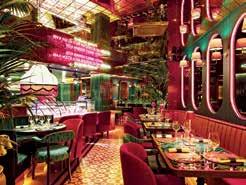
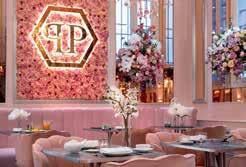
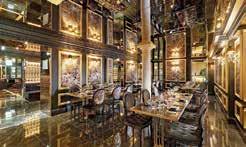
indicates that over 70 percent of young diners consider imagery and ambiance as decisive factors in their choices.
Spectacle meets substance
This attention-driven logic has fueled what can be termed “experience inflation”: each new venue feels compelled to outdo the last in visual drama. Yet, maximalism works best when it is authentic, intentional and narratively coherent. Environments designed merely for Instagram may succeed in generating likes, but they rarely produce enduring emotional impact. The most successful examples strike a delicate balance between spectacle and substance, using visual boldness to amplify rather than replace storytelling.
In this sense, maximalism is not only a design philosophy but a marketing strategy embedded within operational reality. It transforms the restaurant from a service environment into a cultural and digital asset, capable of delivering value both in person and through mediated experiences.
Excess is not noise. Instead, it is currency, provided it is purposeful, curated and deeply human.
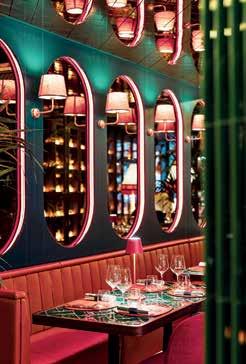
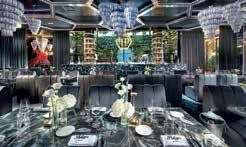
In collaboration with

Sincere excess and authenticity
Perhaps the most defining aspect of contemporary maximalism is its sincerity. After years of highly curated feeds, digital perfection and performative minimalism, consumers increasingly seek environments that feel alive, imperfect and emotionally truthful. The current wave draws on the visual languages of the 1980s and 1990s, decades marked by unapologetic self-expression and exuberance. This combination of nostalgia and honesty resonates because it mirrors a broader cultural desire for authenticity.
Designers merge pop-culture references with classical grandeur—Miami Vice pastels alongside Roman-inspired opulence—to create spaces that are simultaneously playful and majestic. Kitsch, once dismissed as bad taste, has been reframed as honest emotion. A neon palm tree or a marble lion is not trying to appear sophisticated; it celebrates its own excess. This transparency, paradoxically, feels more authentic than the sterile perfection of minimalism. Maximalism today succeeds not because it is loud but because it is layered, curated and emotionally resonant. It is dramatic without losing its humanity.
The future of experiential dining
From a strategic standpoint, maximalism is not a fleeting trend. Rather, it is a recalibration of how hospitality creates value. The industry is moving from functional spaces to narrative ecosystems, where architecture, service and storytelling converge to produce emotional capital. The operators who will thrive are those capable of transforming audacious design into coherent brand narratives. Excess is not noise. Instead, it is currency, provided it is purposeful, curated and deeply human.
Memorability, in the modern hospitality landscape, is the most valuable asset. Maximalism, when executed with intention, creates not only visual impact but long-term engagement, repeat visitation and emotional loyalty. It is a design language that bridges pleasure, commerce and culture. In my view, the future of experiential dining belongs to those who understand that authenticity can be exuberant, that boldness can be coherent and that a little well-crafted madness is precisely what makes a restaurant unforgettable. desita.it
From gamified loyalty programs to VR previews and AI personalization, digital innovation is transforming traditional guest stays into engaging, personalized experiences. Dr. Jassim Haji is president of the International Group of Artificial Intelligence and executive advisor for AI and Data Science at H.H. Sheikh Nasser AI Research and Development Centre. Here, he spotlights the technologies powering winning strategies across hospitality.

The global hospitality sector is moving from a service-based model to an experiencedriven economy, where the boundaries between physical stays and digital engagement are increasingly blurred.
Interactive entertainment, from highfidelity gaming to immersive augmented reality (AR), has emerged as a critical engine for this transformation. Notably, latest available data from 2024 shows the global gaming tourism market expanded to over USD 635 billion, with properties offering AI-enhanced entertainment options seeing consumer spending increase by 5-10 percent.
No longer a secondary amenity, these technologies are reshaping destination strategies, particularly in the Middle East, where giga-projects are being architected with digital immersion at their core. However, the real game-changer is the artificial intelligence (AI) that powers these experiences. Indeed, by turning passive entertainment into active, personalized engagement, AI enables a new standard of customized hospitality that drives innovation and growth.
1
Beyond points: the AI-driven gamification of loyalty
The traditional earn-and-burn loyalty model is losing effectiveness with modern travelers who seek emotional connections rather than simple rewards. As a result, the industry is shifting toward gamified loyalty, turning guest journeys into rewarding missions. However, success relies heavily on AI analytics.
Static gamifications, such as granting a generic badge for checking in, often feel impersonal and disconnected from guest interests. In contrast, AI-enhanced systems analyze guests’ historical data, dining preferences and other behaviors to generate truly personalized challenges that resonate with individual motivations. For example, an AI algorithm might recognize a guest as a wellness enthusiast and dynamically offer a “Health Quest,” where booking a wellness activity will unlock a complementary amenity pass.
Indeed, practical applications are already emerging across the region, with major international hotel groups piloting AI-powered platforms that gamify
sustainability initiatives. These reward guests for reducing water consumption, opting out of daily housekeeping or making eco-friendly dining choices. Ultimately, this approach utilizes psychology to drive revenue while aligning guests with corporate responsibility goals.
2
Enhancing reality: AR that enriches the destination
For hospitality operators, the true value of AR lies in its ability to overlay a digital concierge onto physical property. Significantly, moving beyond novelty applications, this technology is becoming a core operational tool, with the Middle East’s luxury sector leading a shift toward computer vision-enabled amenities. For instance, instead of static paper menus, guests can point smartphones at QR codes to see 3D holographic representations of dishes.
Moreover, this same AR intelligence extends to solving navigation challenges in the expansive properties typical of the Middle East. AI-powered AR apps act as real-time guides, projecting virtual arrows onto guest screens to lead them seamlessly from
suites to meeting rooms. Additionally, this intelligent layer can unlock each hotel’s unique narrative. Guests might scan lobby art to view artist videos or point phones at architecture to learn design inspiration, deepening their connection to the property without requiring staff intervention.
3
The try-before-you-buy revolution: immersive VR previews
Virtual Reality (VR) has graduated from consumer novelty to a high-stakes sales instrument, particularly within the Middle East’s booming real estate sectors. For industry operators, VR is no longer about entertainment. Instead, it serves as a conversion engine. Crucially, in a region defined by ambitious giga-projects like NEOM and the Red Sea Global, where destinations are often sold before construction completion, digital twins have become essential.
These high-fidelity VR environments allow prospective wedding planners in London or conference organizers in Shanghai to walk through Riyadh ballrooms, inspecting sightlines and arrangements with precision without boarding flights. Importantly, this capability drastically shortens sales cycles for high-value assets. Moreover, forwardthinking operators are now integrating AI analytics into their virtual tours to capture detailed user behavior data. In turn, this tracking enables sales teams to create targeted proposals that significantly increase booking confidence.
4 The new frontier: AI-powered personalization tech
If VR and AR are the visible face of interactive entertainment, artificial intelligence is the invisible brain that makes them commercially viable. The next frontier of hospitality is moving from reactive service to predictive personalization. Notably, in the luxury tier, guests no longer
accept generic automated messages but expect environments that adapt to their unspoken preferences.
Leading hotel groups in the region are deploying algorithms that analyze guests’ historical data spanning dining choices, room temperature settings and entertainment consumption to curate hyper-personalized stays. In practice, upon check-in, AI-driven, in-room entertainment systems dynamically reorder content based on guest profiles, adjust room temperature and recommend specific resort activities. Ultimately, this shift from static amenities to intelligent, adaptive environments elevates guest satisfaction while driving ancillary revenue by presenting the right offer at the precise moment guests are most likely to accept.
Perhaps the most significant leap forward is the emergence of agentic AI, autonomous agents capable of reasoning and acting rather than just responding.
5 Agentic AI: the proactive digital concierge
Perhaps the most significant leap forward is the emergence of agentic AI, autonomous agents capable of reasoning and acting rather than just responding. While traditional chatbots wait for guests to ask questions, agentic AI is designed to proactively manage guest experiences.
For the Middle East hospitality market, this represents a shift from service on demand to anticipatory care. In practice, AI agents

integrated into hotel property management systems monitor real-time variables and act independently to resolve friction points like missing transfer arrangements or weatherrelated activity suggestions. Ultimately, this seamless, invisible coordination defines the future of luxury service, allowing human staff to focus on emotional connection rather than logistical administration.
A vision for the region: pioneering interactive luxury
The Middle East stands uniquely positioned to lead this global transformation. Unlike established markets constrained by legacy infrastructure, the region is building its tourism ecosystem from the ground up with a digital-first approach. From Qiddiya’s gamified master plans to Red Sea Global’s regenerative tourism models, interactive entertainment is being woven into destination DNA rather than added as an afterthought.
Consequently, this presents hospitality professionals with competitive advantages. Properties embracing gamified loyalty, augmented reality, immersive VR and agentic AI can deliver levels of personalization and seamless experience that traditional destinations struggle to match. Crucially, the objective is not replacing the region’s celebrated hospitality culture but amplifying it through intelligent technology that ensures every guest feels genuinely understood and valued. In this emerging landscape, success belongs to those who recognize that exceptional hospitality now requires both human warmth and digital intelligence working in perfect harmony.
dr_jassim_haji

Payments are no longer a “moment” in the customer journey—they’re becoming invisible. From one-tap checkouts and auto-deducted subscriptions to seamless in-app tipping, invisible payments and digital tipping are reshaping how consumers spend and how businesses earn. They’re also transforming how loyalty is built—all without friction, queues or conscious effort.
As consumers increasingly expect speed, convenience and personalization, traditional payment flows are giving way to new experiences. Transactions now happen effortlessly in the background. Additionally, digital tipping is emerging as a new revenue and engagement layer. It empowers customers to reward service instantly while creating incremental income streams for platforms, drivers, creators and service professionals.
Let’s explore how invisible payments and digital tipping are redefining the future of commerce. Most importantly, we’ll examine how businesses and consumers can strategically benefit from this shift.
The electronic payments industry is undergoing a quiet but powerful transformation as frictionless transactions and digital tipping reshape customer experiences. Lovetto Nazareth, managing director at Prism Digital, explores how hospitality operators can strategically benefit from this evolution.

1
The friction moment—and why it matters now
A familiar hospitality scenario: the meal is finished and the guest is ready to leave, but the check hasn’t arrived. The server is busy and the card terminal is elsewhere. What should be a positive final touchpoint turns into impatience. Multiply this moment across hundreds of tables or multiple hotel outlets, and the cost becomes clear. It’s not just guest satisfaction at stake but lost revenue, slower table turns and weaker tips.
QR-based invisible payments remove this friction. Guests scan, pay and leave on their own terms. However, the bigger shift is not convenience—it’s data. Significantly, each scan, payment and tip creates structured signals about guest behavior, service timing and spend patterns. As POS ecosystems like Toast and Square embed features like QR pay-at-table and mobile order-and-pay into their core platforms, payments are evolving into a real-time analytics engine. Hospitality operators who treat payments as data—not just settlement—gain a measurable edge.
What invisible payments look like in reality
Invisible payments as a term refers to payment procedures where the transaction is seamless and guest-directed. No check presentation, no card transfer and no disturbance to the experience.
The most common models include:
• Scan-to-pay from table or receipt: Guests scan a QR code, review the bill, add a tip and pay via their own device
• Mobile order and pay at table: Guests scan, browse the menu, order, reorder and pay—all from their mobile
• Property-wide contactless payments: Resorts install QR payments across the property—restaurants, bars, poolside service or events.
What becomes invisible:
• Physical check drop
• Card-machine handoff
• Waiting for staff availability
• Manual reconciliation at shift end
Conversely, data gets uncovered. This includes timestamps, location, order status and guest choices.
3
Digital tipping: beyond cashless tips
Digital tipping fundamentally changes the gratuity system and its management. Notably, through tipping with QR codes or links, customers receive clear tip suggestions with percentage options. Moreover, tipping can be paired with optional feedback or staff recognition. Gratuities can be attributed to roles, shifts and locations instead of remaining anonymous cash.
Several platforms are dedicated to this function. Hifive emphasizes frictionless QR tipping for higher tip conversion. TipHaus highlights QR tipping combined with performance tracking and guest feedback options. Similarly, Tipmee positions digital tipping as a data platform supporting recognition and management insights. Meanwhile, Paynt focuses on deviceagnostic QR tipping through cards and digital wallets.
For operators, this transforms tipping into a scalable service quality signal.
4 Where the payments analytics gets interesting
This is where invisible payments become next-generation, guest-spend analytics.
Rather than relying on sales aggregates, operators can examine guest behavior minutiae throughout the journey.
Key metrics revealed by QR payments and digital tipping:
Metric and what it tells you
Scan rate
Guest adoption and table engagement
Payment time-to-complete
Friction at checkout and staffing impact
Order funnel drop-off
Menu clarity and pricing resistance
Average check and item mix
Upsell effectiveness and menu performance
Tip conversion rate
Service perception and prompt effectiveness
Tip percent by shift/role
Staff performance and scheduling insights
Repeat guest patterns
Loyalty and habit formation
Service recovery triggers
Early warning signals (low tip, long wait, feedback)
Mini-scenario (restaurant): A casual dining group observes QR scan rates rising on weekends. Meanwhile, tip percentages decline during late-night shifts. By analyzing payment completion times with staffing levels, they cover fewer servers after 9 p.m. This leads to quicker checkouts and higher average tips within two weeks.
Mini-scenario (hotel): A resort tracks QR payments in the pool area, lobby bar and room service. Data reveals poolside guests reduce tips during the hottest hours. However, they reorder most frequently. Management activates shaded service areas and faster mobile-reorder prompts. Both satisfaction and tips increase as a result.
Hospitality operators who treat payments as data, and not just settlement, gain a measurable edge.
5
Platform landscape: QR payments and analytics
The market comprises overlapping categories:
POS-led ecosystems (payments and reporting):
• Toast: QR order and payment within a larger reporting stack with payment source filtering
• Square: QR ordering and scan-to-pay flows minimizing friction and accelerating operations.
In collaboration with


Hospitality commerce ecosystems (property-wide):
• Shift4: Integrates contactless QR experiences across multiple hotel touchpoints with unified payment flows
Digital tipping specialists:
• TipHaus, Hifive, Tipmee, Paynt: Each emphasizes different aspects of tipping simplicity, recognition and insights
Hospitality QR platforms with analytics positioning:
• QorePay TAB: Markets QR payment solutions coupled with analytics capabilities.
6 Security and trust: the QR risk nobody wants
Introducing QR adoption brings trust considerations. Best practices include tamper-proof displays, rotating or dynamic QR codes and HTTPS-only destinations with verified domains. Clear trust cues for guests are essential. Crucially, staff training plays a vital role—guests must understand official code locations and how to distinguish them. Security is not merely technology; it’s an operational matter.
7 From transactions to guest intelligence
Payment methods are becoming data layers supporting personalization, loyalty and targeted offers. Notably, tips and feedback are recognized as employee experience analytics. These influence training and retention strategies. For many locations like poolside areas, events and quick-service outlets, invisible payment will soon become the standard. The operational conclusion is straightforward: QR payments and digital tipping eliminate friction and raise tips. If handled strategically, they turn every transaction into a measurable signal of guest experience. Hospitality managers investing in this layer now are not just modernizing payments. They are building an intelligence engine for the service future.
prism-me.com
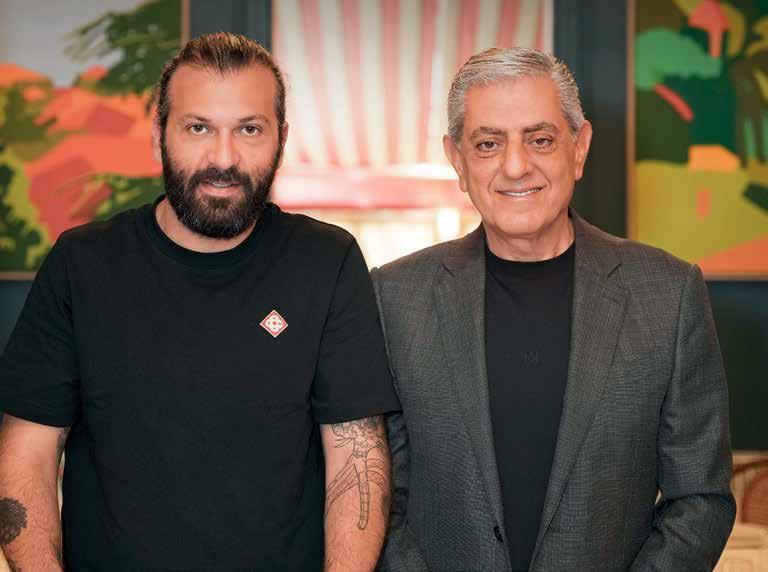
From mountain hospitality to urban dining and coastal seafood, the Al Khawajat Group’s concepts reflect Lebanon’s diverse landscape and rich culinary heritage. Co-founders Elie Mhanna and CEO Christian Bou Chaaya outline their plans for growth, which encompass international expansion and a new concept launching locally this spring.
Can you give us a brief overview of your concepts?
The Al Khawajat Group offers three distinct dining experiences, each deeply connected to its location and surroundings. Jnaynit Al Khawaja in Faqra is a mountain escape that transforms with the seasons. It welcomes skiers in winter with warmth and comfort. Then, it opens up in summer to include a lively terrace with grills, saj and sweeping valley views.
In the city, Al Khawaja in Abdel Wahab El Inglisi caters to business lunches and everyday dining. It offers a refined take on Lebanese cuisine within a historic 1960s building, known for its daily specials and polished atmosphere.
Completing the journey, Samkit Al Khawaja in Batroun celebrates the Mediterranean coast. Visitors can enjoy daily-caught seafood in an authentic harbor setting, from classic Lebanese preparations to contemporary seafood signatures.
Are your concepts currently available for franchising or are you considering franchising them?
We’ve brainstormed extensively on the topic of franchising. This has involved carefully identifying the key attributes that make us a great partner, as well as the qualities we seek in an ideal franchise partner. Over time, potential parties have approached us, citing several key strengths. Christian: These are led by our trusted industry legacy, anchored by Elie Mhanna, a fifth-generation restaurateur from the highly regarded Mhanna family. His roots date back to 1888. Elie: Then, there is our strong culinary expertise and, additionally, the recognition and reputation of the Al Khawajat brands.
We are open to franchising. However, we remain selective. We want to ensure that any partnership preserves the quality and integrity of our concepts. With welldeveloped operations and thorough documentation in place, we are ready to pursue the right franchising opportunity when it arises.
How are you developing and evolving your existing offerings?
We’re constantly evolving our restaurants to keep the experience fresh and engaging. Recently, we’ve introduced set menus, brunch and buffet options to better serve our diverse clientele. Increasingly, we’re being approached to host large private and corporate events. So, we’re actively developing our capabilities to serve these clients with excellence.
Our daily specials at the Ashrafieh location reflect the city’s business-driven rhythm. Meanwhile, in Faqra, we feature live cooking stations to give mountain visitors a full, authentic grill experience outdoors. At the concept level, we expanded last year with Samkit Al Khawaja, a seafood destination showcasing the best of Lebanese coastal cuisine.
Additionally, we’re excited to share that a new concept is in the works, with plans to launch this spring.
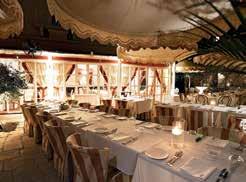
Are you exploring further expansion in other markets?
We are always exploring opportunities for further expansion and growth. While we keep an open mind globally, we have identified priority countries across different continents. Our priority is to explore the markets where we believe our concepts will resonate strongly.
For example, in the Americas, we are focusing on the USA, Canada and Brazil and, in Africa, Ghana and Nigeria. Meanwhile, in the GCC, we are prioritizing Saudi Arabia, the UAE, Kuwait and Qatar. In Europe, we are exploring opportunities in Paris and London, and in Asia, we’re emphasizing India and Japan. Our goal is to find the right markets and partners to ensure successful and sustainable development.
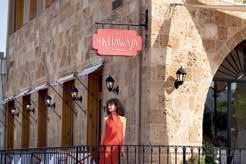
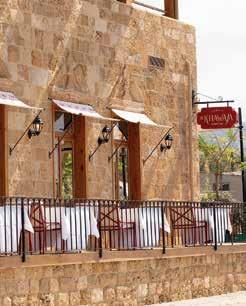
With well-developed operations and thorough documentation in place, we are ready to pursue the right franchising opportunity when it arises.
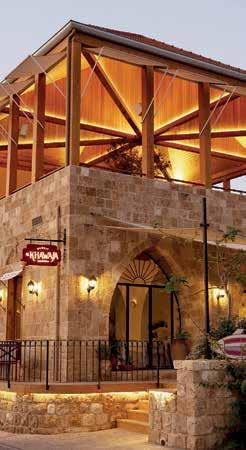

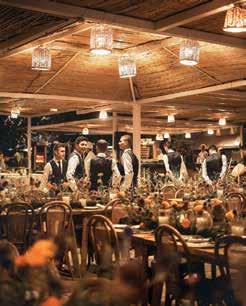


Can you share any upcoming plans or exclusive updates?
We are excited to share that the Al Khawajat Group is growing. And importantly, we’re finding that our brand resonates strongly with a wide range of audiences. This spring, we will be opening Qahwat Al Khawaja in Zaitunay Bay. The concept will offer a fresh and accessible dining experience with a lower ticket price. We are looking forward to introducing new offerings that will expand and complement our portfolio.
alkhawajatgroup.com christianbouchaaya alkhawajatgroup jnaynit_alkhawaja
The Middle East is now solidly established as a franchising powerhouse, and momentum continues to build across the region. Emerging destinations are expanding at pace while mature markets evolve to meet rising demand for diverse offerings. For franchisors and franchisees, the opportunities are rich and varied, ranging from homegrown concepts ready to scale to global brands seeking fruitful collaborations. Our Special Report features insights and in-depth analysis from leading industry experts on everything from selecting the right model and concept to navigating legal frameworks and implementing resilient systems. Here’s to building sustainable partnerships and scaling with purpose.
P.66 TO FRANCHISE OR BUILD YOUR OWN BRAND?
P.68 MULTI-UNIT FRANCHISE MODELS: THE FULL PERSPECTIVE
P.70 MIDDLE EASTERN FRANCHISING: A NEW IMPORT EXPORT DYNAMIC
P.72 4 STEPS TO BUILDING A RESILIENT FRANCHISE
P.74 WHY CREATIVE CONCEPTS DESERVE FRESH THINKING
P.76 FRANCHISING FRAMEWORKS FOR A NEW ERA OF INVESTMENT
P.78 HOW HOMEGROWN FRANCHISES ARE SCALING NEW HEIGHTS
P.80 COLLABORATIVE MARKETING AS FRANCHISING ADVANTAGE
P.82 6 SAUDI RESTAURANTS WELL PLACED FOR GLOBAL GROWTH
P.84 10 EUROPEAN RESTAURANT CONCEPTS RIPE FOR REGIONAL FRANCHISE GROWTH
P.86 LEBANESE HOSPITALITY BRANDS SCALING ACROSS BORDERS
P.94 MORE CONCEPTS TO WATCH



The Middle East has transformed into a franchising powerhouse, offering major opportunities for international businesses keen to expand. However, choosing the right model can be key to future success. Roy Hintze, partner at PwC Middle East, weighs the options and factors to consider, from concept type to growth plans and market dynamics.

The Middle East and North Africa region has emerged as one of the world’s most dynamic franchising destinations. Indeed, the MENA franchising market was valued at USD 33 billion in 2024, dominated by highgrowth hospitality sectors such as food and beverage, hotels and entertainment.
Region-wide potential
Growth across the region is led by Saudi Arabia, the UAE, Qatar and Kuwait. This expansion is supported by strong consumer spending, large-scale developments and rising demand for differentiated hospitality experiences. As a result, international brands are increasingly expanding into the Middle East through two primary paths: franchising through a local operator or building and scaling their brand independently.
In this context, selecting the most suitable expansion model is critical. Each approach presents distinct advantages and considerations. These depend primarily on the nature of the concept and the ambition of the brand, but also on the operational complexities of the target market.
Scaling fast through franchising
Global brands that enter Middle East markets through franchise typically do so through large regional operators. These are often diversified family groups, which manage leading international brands, including Starbucks and McDonald’s. This model allows brands to reduce operational and financial risk while leveraging the operator’s local knowledge and expertise to enable rapid, large-scale expansion.
Franchising is a capital-light option that transfers investment, development, staffing and operational risk to the franchisee. Additionally, the franchisee manages dayto-day operations, absorbing operational complexity. This model also enables favorable sourcing and pricing, as scaledriven procurement improves margins. Franchisees typically operate large, sectorfocused portfolios, which supports this advantage. Furthermore, scalability becomes more accessible through repeatable formats. Operators provide supply chain, delivery and workforce infrastructure that accelerates rollout speed.
However, franchising also involves practical considerations. Delivery is typically led by franchise partners, which can require clear frameworks and ongoing oversight to support consistent quality and service standards. Careful management of brand guidelines and localization is important to ensure alignment with the brand's core positioning across markets.
The independent option
Conversely, some brands prefer to build and operate their own presence in the region. This is evident with Coya and Zuma, which prioritize full control over brand, experience and culture due to their reliance on curated ambiance and service. This approach allows brands to capture higher profitability by retaining full return potential. However, it is also financially riskier, as they make the full financial outlay.
Service-led formats, in particular, tend to expand independently. Ambiance and storytelling define value in these concepts. This is also evident with Magic Planet, which expands primarily through joint ventures and owned locations to ensure consistent


quality standards. Additionally, this approach allows businesses to hold onto ownership of digital and CRM strategies. As a result, they retain control over customer data, loyalty programs and content—an increasingly critical factor across hospitality sub-sectors.
Major input required
That said, building and scaling a brand independently is complex and resourceintensive. It requires significant upfront investment and operational load, including local teams, supply chain setup, regulatory compliance, independent IT systems and a full suite of operational capabilities.
This approach can result in slower market entry. Licensing requirements, regulatory hurdles and talent mobilization extend timelines. It also demands substantial internal capability and bandwidth, which can lead to operational strain. As markets mature, expectations around modern design and tech-enabled services continue to rise. As a result, there can be higher levels of experiential and digital requirements, raising the cost of competitiveness. Furthermore, ownership exposes brands to higher market risk. Full responsibility for performance, localization and long-term viability rests entirely with the brand.
The question for brands is no longer whether to expand into the Middle East, but how deliberately they choose to do so.
Concept type and ambition
Choosing the right expansion model is a strategic and highly consequential decision that can significantly impact a brand’s future. Two primary considerations typically guide this decision: the nature of the concept and the ambition and capabilities of the brand.
Concept nature plays a critical role. Highly standardized concepts with
limited personalization are better suited to franchising due to their inherent repeatability and scalability. This is evident in F&B brands with simple menus and robust standard operating procedures, such as McDonald’s, Starbucks and Wingstop. In contrast, experience-led, identity-driven brands that rely on ambiance, personalized service and strong brand culture tend to favor retaining control by expanding independently.
Similarly, identity-centric concepts such as artisanal bakeries and design-led cafes usually perform better when owned and operated directly. This is demonstrated by Bateel and Sikka Café. Entertainment brands often adopt mixed approaches. VOX Cinemas, for example, favors ownership to protect customer experience and loyalty. Meanwhile, FEC concepts such as Bounce expand through franchising in the Middle East via royalty-based agreements supported by clear guidelines, standard operating procedures (SOPs). Additionally, data- and loyalty-led formats such as VR Park Dubai and Dreamscape tend to favor tighter operational control through direct ownership. By doing so, they can retain control over customer data and digital engagement.
Aligning ambition with model
From an ambition and capacity perspective, brands seeking rapid, large-scale expansion often favor franchising. Those prioritizing control and curated experiences tend to build independently, resulting in slower and more selective growth. Brands that franchise to reduce financial burden often sacrifice long-term financial upside. In contrast, those targeting long-term valuation and financial independence may find direct ownership more optimal if they can absorb the higher upfront investment.
Full assessment is key
In the Middle East, market entry is often less about choosing between franchising and full ownership. Rather, it is more a spectrum of options. Both models offer distinct advantages and trade-offs, depending on
the nature of the concept and the brand’s growth ambitions. As a result, brands are increasingly required to assess a set of key factors before selecting an expansion path. These include the degree to which the menu and operating model are standardized. They also consider the concept’s ability to withstand execution variance, whether speed to market outweighs the pursuit of perfection and the importance of capital efficiency. Finally, brands must evaluate the extent to which structured SOPs can realistically replace brand culture and experiential nuance.
Recent trends show that some brands are adopting hybrid strategies. They operate directly in key flagship markets while franchising in others where speed, partner access and capital efficiency are more advantageous. Others are developing new mechanisms to franchise personalized and premium F&B concepts while maintaining a high degree of control over quality and service.
Em Sherif, for example, differentiates itself by applying a stricter and more detailed franchising framework than the norm. Granular SOPs govern food preparation, service flow, ambiance and brand presentation. In some cases, brands also franchise to operators while retaining a minority equity stake to preserve influence and oversight.
As competition intensifies and consumer expectations continue to evolve, the question for brands is no longer whether to expand into the Middle East, but how deliberately they choose to do so. The optimal mix continues to evolve. Brands must carefully assess how to balance control, capability and growth ambitions as new opportunities emerge across this rapidly expanding market.
pwc.com/m1/en.html linkedin.com/in/roy-hintze-148b5/

Multi-unit franchising is an established and effective way for brands to scale across multiple locations but also requires careful consideration. Babette Marzheuser-Wood is a founding partner at Global Franchise Group Dentons and managing director at Dentons Franchise Advisory. Here, she talks us through the benefits and potential challenges of these models, and shares her top negotiation tips.

When franchising is correctly understood, it is a highly sophisticated business tool. Franchising is not confined to quick-serve restaurants and budget hotels. In the last 25 years, franchising has become the structure of choice for international expansion for many global brands. One strategy that has gained particular traction is multiunit franchising, which leverages a single partner to develop multiple locations.
Unpacking the multi-unit franchising model
The benefits
Under the multi-unit franchising model, the franchisee has the right and obligation to open a number of franchise units in their territory. This model facilitates rapid market penetration by encouraging the franchisee to develop several outlets during an agreed time frame. Often this is five years. For the franchisor, this model creates efficiencies by leveraging the investment and expertise of a single partner. For the franchisee, benefits include exclusive rights to the development territory during the period and a preferential fee structure.
The risks
For the franchisor, these include backing the wrong partner. The success of multi-unit franchising depends on the performance of a single partner. If the franchisee fails to meet expansion targets, the franchisor’s expansion plans may be delayed, resulting in financial losses. Risks for the franchisee include committing to overly ambitious targets. Consequently, they may face financial penalties for failing to open the agreed number of outlets on time. Therefore, it is essential that both parties align on a realistic market assessment.
Negotiation strategy
The desire to align on the growth plan should drive negotiation strategy. From the perspective of the multi-unit franchisee, it is essential to ensure that contractual targets are realistic. Importantly, this should allow margin for error. Achieving the best-case business plan should not be a legal obligation of the franchisee. Understandably, the franchisor will expect a minimum growth commitment. However, this should be lower than the expected best
case. According to a study by Cornell University, 80 percent of all franchise expansion plans are overly ambitious. The parties need to factor in economic recession and changes in legislation, for example, the new U.K. sugar tax. Additionally, both should allow for other factors beyond their control that can delay expansion. Overall, the parties should consider minimum targets that must be met and stretch targets. The franchisee may feel that reaching a stretch target should be incentivized via reduced fees.
Key points to consider
1. Prepayment: The franchisor may look for 50 percent of the unit fee for each outlet to be prepaid. This payment is generally non-refundable. The franchisee may feel that loss of deposit should be the only financial penalty for failing to open the outlet.
2. Royalty ramp-up: The franchisee may look for support during the ramp-up period, particularly when bringing a new brand to the market. This could take the form of a royalty discount.
3. Marketing: Most large franchisors operate a global marketing fund. Others may look to the franchisee to manage marketing. A famous brand will typically expect a significant marketing contribution from its franchisee.
4. Supply chain: The parties need to consider if the franchisor’s existing supply chain is appropriate for the territory. A large multi-unit franchisee may be better placed to source products locally than a foreign franchisor. The parties should ensure core products can be imported into the territory and consider the impact of taxation on price.
5. Termination: The franchisor will look for termination rights if targets are not met. Consider if extra time should be agreed to open missing units or whether a shortfall payment can be made to prevent termination. Franchisors will look for a payment to compensate for loss of revenue on early termination. It is best to agree on an amount or a formula.
From a legal perspective, the multi-unit franchise model has the attraction of simplicity.
6. Exclusivity: The franchisor may wish to withdraw territorial protection if agreed targets are not met. The franchisee may wish to protect against losing exclusivity early in the relationship by asking for a lock-in period.
7. Renewal: Some franchisors do not offer renewal rights. In these cases, the relationship may end or become nonexclusive at the end of the development period. The parties will need to agree on the fate of the individual outlets at that juncture. The franchisee will want to ensure that successful units remain open. A compromise should protect the franchisee’s investment while respecting the franchisor’s interest in further growth with a new partner.
8. Fee model: A well-structured franchise creates a win-win business model, offering benefits for all concerned. The franchisor will look for unit-opening fees to cover costs of supporting the franchisee. For example, these could include site selection, training and fit-out, as well as a recurring royalty fee. These fees should allow both parties to make a fair profit. Beware of overly rich deals, as they may hinder growth and burden the franchisee profit and loss (P&L). Punitive late-opening fees should equally be avoided, as they may deplete the franchisee’s capital and hinder further expansion.


Market research and fee benchmarking
It is important to benchmark the franchise fee model against industry competitors, taking into account standards in the market. A deal that is too rich or too poor can result in disappointment. Dentons Franchise Advisory offers a benchmarking service that helps the parties develop a successful financial model.
structure
From a legal perspective, the multi-unit franchise model has the attraction of simplicity. A single contract, the multiunit franchise agreement (MUFA), can be used to regulate the relationship. A MUFA requires strategic negotiation initially. However, it offers administrative efficiencies in the future by eliminating the execution of multiple individual franchise agreements for each outlet. Multi-unit franchisees should seek support from specialist franchise lawyers to negotiate the MUFA.
To summarize, multi-unit franchising is a tried-and-tested business model used by many major global brands. These include Burger King, Starbucks and KFC. Provided the parties are aligned on risk sharing, it can be a rewarding business model.
dentons.com

The MENA region has long been a gateway for international franchises, welcoming global brands eager to expand. Now, as the market matures and competition intensifies, regional entrepreneurs are increasingly taking their own concepts abroad with success. Nagi Morkos, founder and managing partner at Hodema Consulting Services, looks at how shifting market trends are redefining the region’s franchising story.

Since the franchising business began to flourish globally, the Middle East has served as a real-world testing lab for many international brands. The first entrants were well-known fast-food names such as McDonald’s and KFC, selling the American dream to local diners.
Their moves proved to be a one-way ticket to success. As a result, these brands, joined by many others, are now a familiar presence in Arab cities. Most operate in malls and busy food courts, offering the same lucrative concepts that proved so effective in the United States.
Regional franchisors are no longer limiting themselves to traditional or oriental cuisine. Several are competing head on with global players.
The fast-food takeover
McDonald’s currently operates around 1,950 outlets in the Middle East and GCC—far fewer than its global network of nearly 42,000 branches. Yet it dominated the regional franchise import scene for years. Starbucks has since caught up, expanding rapidly to reach roughly 2,000 stores across the region.
Fast-food outlets of all kinds, from burger joints to pizza parlors and coffee shops, have now become part of everyday eating patterns. Consumers were already familiar with quick meals and takeaway culture, thanks to local favorites such as shawarma, falafel, manakish and saj. Buying coffee to go has long been a local tradition as well, which helped Western coffee chains blend easily into the market.
the concepts
Franchises can generally be divided into three categories: fast food, casual dining (including pizza and coffee shops) and single item offerings. The first category counts major players such as Subway, KFC, Hardee’s and Burger King— all firmly rooted across the Gulf, where a multicultural population has embraced Western style takeaways. Pizzas represent one of the mainstays of the casual segment, with brands such as Pizza Hut, Domino’s, Little Caesars Pizza, Pizza Express and Papa John’s competing for customers. Pizza Hut and Domino’s continue to lead the category.
Global casual concepts like P.F. Chang’s, Chipotle and Chili’s have also become household names. Meanwhile, coffee shop franchises, such as Costa Coffee, Tim Horton’s, Starbucks, Cinnabon and Joe & The Juice, thrive alongside the region’s coffee shop culture. French bakery "Paul" turned into a restaurant and found equal success as a casual dining option. Likewise, single item dessert chains such as Baskin Robbins, Cold Stone and Krispy Kreme have become local fixtures.
Big business if done right
As international brands thrived thanks to Middle Eastern customers, local investors and entrepreneurs who took the franchising leap also reaped major rewards. A handful of large operators now dominate the regional scene across F&B, hospitality, fashion, health, beauty and leisure.
Kuwait-based Alshaya Group manages nearly 60 international brands, including Starbucks. Its food portfolio also features P.F. Chang’s, Pinkberry, Pizza Express, Chipotle and Shake Shack. Americana, another Kuwaiti powerhouse, operates major fast food concepts such as Hardee’s, KFC, TGI Fridays, Wimpy and Pizza Hut. In Lebanon, Azadea grew from a small family run clothing store in 1978 into a group managing brands like Paul and Eataly.
Saudi Arabia’s BAAN Holding Group, formerly Al Hokair, has carved out a niche in hospitality, running franchises for hotel giants such as IHG, Radisson, Accor, Hilton and Golden Tulip. Altogether, it manages 22 hotels with more than 2,700 keys.
expansion
After years of thriving on imported concepts, regional developers—many of them Lebanese—began turning the tables. They restructured their homegrown businesses to be franchise ready, creating opportunities for new franchisees across Arab and international markets.
To stand out, these entrepreneurs leaned into authenticity. Lebanese brand Em Sherif is one of the best-known success stories, with 37 outlets spanning restaurants, cafes, seaside venues and delis in the Middle East, Monaco, Ivory Coast, Madrid, Paris and London. Additionally, they will soon enter China and Hong Kong. Other Lebanese names such as Abd El Wahab, Al Falamanki, Bebabel and chicken specialists Ahmad Al Abdalla and Al Abdalla have expanded across the Gulf and Europe.
Similarly, Patchi, the Beirut born chocolatier, evolved into a 230 store international group with locations from Brunei to the UK. Its cafe concept, Patchi Café, also found franchise partners in Saudi Arabia and Bahrain.
In collaboration with



Regional franchisors are no longer limiting themselves to traditional or oriental cuisine. Several are competing head on with global players. Saudi-born Herfy, for instance, has become a national fast food champion, with almost 370 outlets across the kingdom, Kuwait, Bahrain and the UAE. Kudu follows closely, with more than 300 outlets, though both remain smaller than the American heavyweights.
In the casual dining segment, chains such as Zaatar W Zeit and Casper & Gambini’s have successfully expanded through local franchisees across the Middle East and Africa.
For decades, the region embraced international franchises with open arms, eager to experience the latest trends. Yet today, as the market matures and competition intensifies, local brands are emerging as strong contenders, ready not just to import but also to export the next wave of global franchise concepts.
hodema.net

Franchising is often misunderstood as a quick route to expansion. Many assume income begins the moment an agreement is signed. While fast execution may deliver short-term gains for concept creators, investors or operators, it can also restrict a brand’s ability to build a resilient franchise system and secure long-term growth.
True franchise success depends on how well a brand performs when conditions change. It also depends on how consistently it can grow without dilution. Therefore, resilience must be engineered well before the first franchise agreement is executed. It relies on internal drivers, such as a solid concept with proven operational performance. External ones are also key, including partner selection, brand protection and legal structuring. Collectively, these are designed to anticipate risk rather than react to it.
Following are four key principles that underpin resilient franchise growth and can put business leaders on the path to brand success.
As global markets become more complex and competitive, resilience has become the defining factor that sets robust franchise systems apart. Anthony Aucar, head of projects at Glee Hospitality Solutions, shares four core principles for businesses looking to implement a sustainable, scalable franchise model.

1
Design a franchise concept that can scale
Everything begins with the concept. If a brand is not designed from day one to stand out, scalability becomes difficult. In markets that attract global operators and strong local curators, concepts without clear positioning struggle to scale with consistency.
A strong concept requires intentional differentiation. It must clearly separate the brand from direct competitors and from indirect substitutes competing for the same consumer spend. Most importantly, this differentiation must be visible, intentional and embedded into the guest experience rather than relying on marketing alone.
Franchising’s real value lies in expanding footprint, extending guest reach and increasing brand equity over time. However, this requires building a unit that is genuinely franchisable from the seed stage. Replicable design, clear brand DNA and a differentiating factor that can travel across markets are essential.
When these elements are not in place, stakeholders face growth dilution. As a result, resilience weakens and long-term scalability is compromised.
2
Prove market demand before expansion
Market proof is the next critical gate and it cannot be skipped. A brand that wants to franchise must earn a track record with real consumers. This includes consistent demand, strong review scores, repeat visitation and clear evidence that guests understand and value the brand’s unique selling point (USP).
Just as important is the ability to communicate that USP effectively. It must be able to travel across multiple markets without losing meaning or relevance. Without this clarity, franchise partners struggle to replicate success.
The strongest franchises also protect their advantage by making their USP difficult to duplicate. This can be achieved through proprietary processes, operational knowhow, supply chain structures or brand storytelling. Together, these elements help preserve consistency while supporting expansion across different geographies.
Partner selection can make or break expansion. The best partner is not automatically the one with the most industry experience. Rather, alignment, governance, financial capacity and commitment to execute the brand correctly matter most.
In food and beverage, for example, lack of direct experience can sometimes be offset. This may be achieved through smart structuring, such as a management agreement model or a joint venture with a reputable operator that has a proven track record in the target market. However, weak discipline, misaligned expectations, poor financial capacity or a hands-off attitude toward standards cannot be offset.
While partner conversations are happening, brand protection must run in parallel. A thorough intellectual property (IP) and trademark search is essential before committing to any territory. The objective is to confirm that the trademark is not already registered. As a result, expansion can take place without the need to modify the brand name, tagline or identity.
IP conflicts are not just legal headaches. They can trigger expensive rebranding, dilute recognition and weaken credibility before the first unit even opens. In turn, they risk undermining the foundations required for scalable growth.
A strong concept requires intentional differentiation. It must clearly separate the brand from direct competitors and from indirect substitutes competing for the same consumer spend.
With the concept proven and the territory cleared, the legal framework becomes the backbone of the relationship. Close collaboration with specialized attorneys is therefore non-negotiable.
Key documents must comply with local laws in both the operating territory and the territory being granted. These typically comprise early-stage documents such as letters of intent (LOIs) or memorandums of understanding (MOUs). Others include formal disclosure documentation where applicable and ultimately, the franchise agreement. Together, they define control, obligations, protections, remedies and longterm viability.
Finally, true resilience also requires protecting the economics, particularly in cross-border deals. One of the most underestimated risks in international franchising is currency exposure. Exchange rate volatility, inflation and sudden capital controls can quickly erode the real value of franchise fees over time.



To mitigate this risk, franchisors should, where commercially and legally feasible, request that key payments are made in stable, widely accepted currencies such as the US dollar or, in some cases, the euro. Alternatively, exchange rates may be locked for defined periods. This approach is especially relevant for upfront franchise fees, ongoing royalties, marketing contributions and management or technical service fees tied to ongoing support.
In summary, a successful and durable franchise is not built on ambition alone. It is built on foundations that hold up under pressure while enabling continuous scalability. Franchise-ready units proven in the real market, carefully chosen partners, protected brand assets, locally precise legal frameworks and durable financial mechanics are what allow franchise systems to grow with confidence.
gleehospitality.com

At the heart of franchising lies a fundamental dichotomy.
Franchisees are, by nature, risk averse. They seek concepts that are proven, widely recognized, operationally predictable and capable of delivering a sound return on investment with the lowest possible exposure. The appeal of franchising has always been precisely this: reduced uncertainty through replication.
The problem is that replication rarely leaves room for originality.
Overcoming similarity
Across most franchise categories, product offers have become largely interchangeable. A burger concept is, at its core, a burger concept. Beyond branding, tone of voice or marginal menu variations, the offer is often strikingly similar within its class. The same applies to pizza, fried chicken, coffee, casual dining and fastcasual bowls. Competitive products are sold at competitive prices, following almost identical operational logic. Innovation, where it exists, tends to be incremental rather than transformative.
This is where the tension begins to surface.
In a world of changing market dynamics and business models, perhaps the time has come to look differently at traditional franchisor–franchisee roles. Daniel G. During, principal and managing director at Thomas Klein International, asks whether teamwork and togetherness, rather than a transactional approach, could provide a winning formula for emerging ventures.
Innovation vs. risk
Innovation is, by definition, high risk. A creative concept may never have been executed before. Or it may exist at just a handful of locations in a single city or country. Either way, it raises legitimate concerns. Can it scale? Can it adapt to different markets, cultures and consumer expectations? Can its soul survive repetition? And, crucially, can it generate returns comparable to established formats built on decades of optimization?
These questions are not theoretical. They sit at the center of every conversation between an emerging franchisor and a prospective franchisee.
Facilitating creativity
The challenge is compounded by structural realities. Smaller, younger franchisors are often less equipped to support expansion. They may lack the infrastructure to train new teams at scale or the systems to monitor performance across territories. Additionally, they may not have the financial resources to sustain long-term, high-volume marketing efforts.
Launching a start-up concept in a new market requires far more than enthusiasm and a brand book. It also requires clear processes and strong training systems. On top of these, it demands operational discipline, patience and capital. And yet, paradoxically, it is precisely these unproven, creative concepts that often carry the greatest upside.
History shows that truly disruptive brands rarely emerge fully “franchise-ready.” They start as singular ideas, driven by a point of view rather than a spreadsheet. When they work, they redefine categories instead of competing within them. The potential rewards—financial, cultural and strategic—can far exceed those of yet another well-executed but fundamentally predictable format.
So where does that leave us?
The power of togetherness
My answer is simple, and it governs how I approach every partnership I enter. I say to my business partners: tell me to jump and I will ask you how high. But we jump together. Hand in hand.

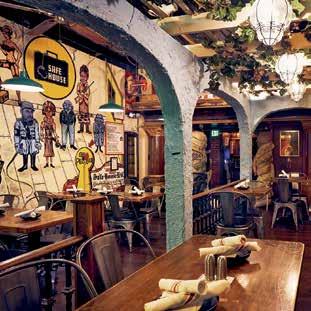
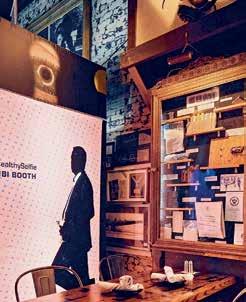
This, to me, is where the solution lies: in togetherness.
Franchising a creative concept cannot be treated as a transactional relationship between a seller of rights and a buyer of territory. It requires a shift in mindset. Both parties must abandon the traditional roles of “franchisor” and “franchisee” and start thinking as true partners. The success of one is inseparable from the success of the other. Likewise, failure is shared. They win together and they lose together, both in the short term and over the long arc of the brand’s life.
Creative concepts demand creative thinking, not just in design or menu development, but in structure, governance and economics.
Adopting a new approach
This may mean rethinking franchise fees altogether. For example, it may involve waiving them below certain revenue thresholds to reduce early-stage pressure. Alternatively, it could involve deferring them until the concept has found its footing in a new market. It may involve performance-based models. Rapid,
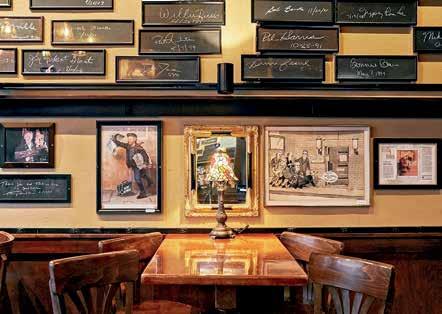
I say to my business partners: tell me to jump and I will ask you how high. But we jump together. Hand in hand.
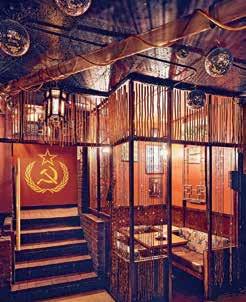
successful expansion could be rewarded with equity participation in the parent company. Here, incentives are aligned beyond simple royalty extraction.
Failure as shared knowledge It may also require acknowledging uncomfortable truths. Not every location will succeed. Failure at outlet level should not automatically be treated as a breach or a personal shortcoming. Instead, it should be viewed as part of the learning curve inherent in pioneering models. The question is not whether failure occurs. Rather, it’s about how it is absorbed, analyzed and transformed into shared knowledge that strengthens the system as a whole.
Importantly, this approach extends beyond financial arrangements. It touches on how expansion strategies are defined and how economies of scale are leveraged. It also encompasses how marketing narratives are shaped. For example, social media should be used not merely to sell products but to build belief in the brand’s purpose. Creative concepts live and die by coherence. Every new opening is not just a point of sale, but a public statement about what the brand stands for.
Flexibility over rigidity
I am not attempting to outline a franchise agreement here, nor to enumerate every clause such an agreement should contain. My intention is different. It is to raise awareness of the many directions a franchising relationship can take. To suggest that flexibility is not weakness and that rigidity, in the context of creativity, can be fatal. This is especially true when dealing with concepts that do not yet benefit from long-track records or institutional comfort.
Ultimately, franchising a creative concept is less about cloning a formula and more about sharing stewardship. It is about accepting that both parties are, in a sense, co-parents of the brand. They share custody. They share responsibility. They nurture it, protect it, discipline it and allow it to grow—sometimes in unexpected directions.
Because in the end, the equation is simple. I win only if you win.
thomaskleingroup.com

Across the MENA region, franchising is a highly effective way to accelerate hotel development and elevate service standards. Yet, unlike mature franchising markets, MENA presents structural, regulatory and operational realities that make franchising more nuanced. At the same time, investor interest continues to rise, with the region becoming increasingly central to global hospitality growth. Consequently, the need for franchising frameworks built specifically for MENA is ever more pressing.
A new playbook for MENA
While international brands continue to expand, the MENA market is also seeing growth of local and regional hospitality brands. Importantly, many are looking to scale through franchising or hybrid franchising-management structures. At the same time, hotel owners are separating asset ownership from brand development and hotel operations. As a result, a more layered ecosystem of stakeholders is emerging.
This shift reflects a broader trend: the growing sophistication of hotel investors and asset owners in MENA. The model is moving beyond simple brand licensing toward a more mature separation of roles. Here, owners are focused on return on investment (ROI) and asset value. Meanwhile, franchisors are focused on
Franchising remains a powerful growth engine for hospitality across MENA. However, rising levels of investor sophistication have revealed the limits of one-size-fits-all models.
Jad Shamseddin, COO at Aleph Hospitality, analyzes the evolving frameworks now shaping the region’s next phase of hospitality brand growth.

brand integrity and expansion, while operators are focused on operational efficiency and performance. Almost half of branded hotels worldwide are managed by third-party operators, according to research by STR and Jones Lang LaSalle.
Why franchising is complex in MENA
As the MENA market becomes more sophisticated, franchising must evolve to keep pace. However, there are complications and hurdles for stakeholders to navigate.
1. Regulatory and legal diversity: One of the most persistent complexities in MENA is regulatory fragmentation. From ownership laws and franchising regulations to licensing and labor rules, the disparity between markets is significant. For example, a franchise agreement drafted for a GCC market rarely translates seamlessly into a North African one. Cross-border operators often face lengthy approval processes, fluctuating taxation frameworks and varying rules for foreign investment. For franchisors, this creates difficulty in maintaining standard terms. At the same time, for franchisees, it introduces uncertainty around compliance obligations and financial planning. The result is a higher legal and administrative burden on all parties compared to more harmonized regions.
2. Infrastructure and operational constraints: In many North African and some emerging Middle Eastern markets, infrastructure still lags behind global hospitality standards. This affects not only the guest experience but also the feasibility of executing brand-mandated specifications. Moreover, operational talent remains another constraint. Several MENA countries have world-class hospitality schools and strong local workforces. However, others face chronic skills shortages or high turnover. Delivering the consistency that international brands require can be challenging when the available talent pool is uneven across markets.
3. Financing and investment risk: Despite strong long-term fundamentals, several MENA countries face capital market limitations. For example, financing newbuild projects or conversions can be costly, slow or highly dependent on private capital. Currency volatility adds another layer of risk. This is particularly true in markets where exchange-rate exposure can materially affect costs and franchise fee structures. These financial realities often push owners toward flexible or hybrid arrangements rather than standard franchising models.
4. Cultural and market diversity: Perhaps the most defining feature of MENA is its diversity. In other words, what works for a lifestyle brand in Dubai doesn’t resonate in North Africa. Business-hotel demand patterns differ widely across the region. Crucially, consumer expectations, travelers’ behavior and even perceptions of international brands vary significantly. This diversity challenges the “one-size-fits-all” approach that franchising relies on. As a result, franchisors must determine which standards are nonnegotiable and where adaptation is not only possible but necessary.
A new wave of opportunities
The challenges to franchising in the region are significant. However, they are matched by opportunities that are increasingly shaping the future of hospitality brand growth in MENA.
1. The rise of decoupled structures:
One of the most promising shifts is the decoupling of brand ownership and hotel operations. By separating the roles of brand development, asset ownership and day-to-day management, stakeholders can reduce conflicts and improve performance. This model creates a healthier operating environment without any conflict of interest. It allows brands to focus on their strengths, while owners benefit from professional management tailored to their market. At the same time, operators can ensure that standards are met or exceeded through locally adapted, operationally realistic frameworks.
By separating the roles of brand development, asset ownership and day-to-day management, stakeholders can reduce conflicts and improve performance.
2. Regional operations hubs and cluster management: To address regional diversity and geographical spread, operators are opening regional offices and creating cluster management roles. Teams on the ground improve oversight, speed up problem-solving and enable more consistent brand delivery. Importantly, clustered operational models often lower costs, streamline procurement and create shared talent pools. For franchisors, this makes their brand standards more reliably executable. Meanwhile owners benefit from a more stable performance.
3. Growth of local and regional brands: MENA’s own hospitality brands are maturing, gaining identity and scale. Tellingly, many of them integrate local culture, design and guest expectations more authentically than imported concepts. As these brands formalize their systems, franchising becomes a natural pathway for future growth. This expansion of homegrown brands adds healthy competition, widens investor choice and strengthens the region’s hospitality identity.
4. Sustainability as a competitive advantage: Guest expectations around environmental and social responsibility are beginning to influence franchise agreements. In particular, models that embed sustainability standards are likely to see strong traction with both investors and travelers. In markets where local communities contribute to hotel success, integrating social impact into operations can differentiate a franchise offering. Additionally, it can build long-term loyalty.

5. Technology as a force multiplier: Digital tools are essential for franchising success in geographically dispersed regions. Remote property management systems, digital learning platforms and data-driven performance dashboards all have a key role to play. Collectively, they allow franchisors and operators to maintain consistency without a constant physical presence. In MENA, where travel distances and infrastructure gaps can complicate on-site oversight, technology helps bridge operational divides. Moreover, it can be critical for maintaining brand integrity.
Franchising in MENA is entering a pivotal new stage defined by adaptability, local insight and stronger collaboration among stakeholders. As the region continues to evolve, specific strategies will be fundamental to long-term success. These comprise adopting flexible partnership structures, developing regional support systems, nurturing local brands, embedding ESG principles and leveraging technology. Although challenges persist, they are prompting the development of models that better reflect how MENA markets actually function. By working with these realities rather than around them, franchising can grow in a way that’s practical and resilient.
alephhospitality.com

The Middle East has entered a defining era in the evolution of its hospitality and foodservice landscape. Once dominated by Western imports, the market has witnessed the rapid ascent of homegrown franchises. Today, these stand proudly beside established international giants. These regional brands have proven that concepts built in the Middle East and born from its flavors, culture and entrepreneurial spirit can achieve industryleading standards. Moreover, they can even aspire to global expansion.
What brings these concepts success is not one singular element. Rather, it is a winning blend consisting of several factors. Those elements are cultural insight, operational excellence, disciplined franchising, brand clarity, product innovation and passionate founders who understand their audience. Together, they have reshaped the region’s franchise ecosystem and set new benchmarks for what Middle Eastern brands can accomplish.
Strong identity and clear DNA
A franchise cannot scale without a defined identity that is distinctive, repeatable and emotionally resonant. One regional brand that exemplifies this excellently is Zaatar w Zeit. This Lebanese-born concept successfully transformed a traditional
In the Middle East, local concepts are emerging from the shadows of international brands to reshape the regional hospitality landscape. Christian Salloum, managing director at BrandPortunity F&B Consulting, tracks their achievements and readiness for global success.
manousheh bakery into a modern, urban lifestyle brand.
Its growth became possible not only because of the food, but because of the clarity of its DNA:
• A contemporary interpretation of Lebanese flavors
• A youthful, energetic brand voice
• Clean, instantly recognizable visual identity
• A positioning built around convenience, freshness and modern Lebanese comfort food
This clear brand architecture allowed Zaatar w Zeit to expand across the Middle East with consistency in product, service and guest expectations. Crucially, when consumers thought about wanting a manousheh, the brand was already top of mind. Their identity is simple yet powerful, making it easy for franchisees, architects and operating teams to replicate the experience.
Operational discipline and warmth
Middle Eastern hospitality is known for its generosity, warmth and theatrical dining culture. But translating this into a franchisable model requires precision, structure and uncompromising standards.
Em Sherif, one of the region’s most acclaimed Lebanese fine-dining exports, exemplifies this balance. The brand offers an ambience reminiscent of luxurious Levantine homes with ornate decor, emotional service and exceptional, rich flavors. However, its behind-the-scenes operations run with strict discipline.
Key pillars include:
• Rigorous recipe standardization - despite the complexity of Levantine cuisine
• Intensive training systems - that preserve the emotional hospitality of the brand
• Quality-control processes - ensuring nearidentical food and service in every location
• Elevated service scripts - that maintain the theatricality expected from the concept
This combination of emotional hospitality supported by structured execution has enabled Em Sherif to scale internationally without losing authenticity.
A strong franchise model
For homegrown franchises to succeed abroad, they must evolve from great restaurants into fully engineered business systems. A successful franchise model is built on structure, clarity and continuous support.
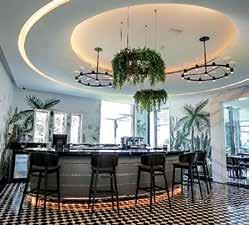
This includes:
• A proven, profitable store format
• Clear standard operating procedures (SOPs) and efficient kitchen workflows
• Architecture and design guidelines adaptable across markets
• Central procurement and a secure supply chain
• Pre-opening training and ongoing operational support
• A dedicated franchise team for performance tracking
• Regional and local marketing strategies
• Technology systems that enable visibility and consistency
Most importantly, a strong franchising model requires a detailed franchise manual. This manual becomes the backbone of the relationship. It outlines operational expectations, brand standards, recipes, HR protocols, service steps, training guidelines, maintenance procedures, financial frameworks and compliance rules. Without it, consistency becomes impossible and franchisees lack the direction needed to uphold the brand.
A modern GCC-born quick-service restaurant (QSR) concept has adopted this approach by building a highly structured franchise engine. In turn, thorough manuals and multi-format expansion systems support the model. This readiness in a business transforms franchising from a sales process into a long-term operational partnership.
Entrepreneurial agility and passion
Behind many successful regional concepts lies a founder or founding team driven by passion and vision. Saddle Café in Dubai, for example, embodies this founder-led agility. Its evolution from luxury mobile coffee bar to sought-after lifestyle cafe brand is down to several factors. Combined, these include a deep understanding of aspirational consumer behavior, product excellence and aesthetic detail.
The brands that succeed abroad will be those that deliver not just a meal, but a multi-sensory cultural experience.
Its growth is propelled by:
• Strong visual identity
• Commitment to quality
• Fast decision-making
• Unique experiential positioning
• Hands-on leadership
This entrepreneurial dynamism enables Saddle to evolve quickly, enter new neighborhoods and maintain relevance in a competitive market.
The future: from homegrown brands to international success
As homegrown franchises mature, many are preparing for international expansion, moving from regional recognition to global relevance. However, for this next chapter to succeed, several elements become critical:
1. A proper global launch strategy
Middle Eastern brands can thrive abroad when they present themselves with clarity. This requires:
• A refined brand story shaped for global audiences
• A well-defined customer experience
• A menu adapted intelligently without diluting the brand’s heritage
• A polished positioning strategy, not just a geographic expansion
The global journey must begin with a brand that understands who it is and how it should be perceived internationally.
2. A signature experience beyond food
Global consumers seek authenticity with a modern twist. Middle Eastern concepts have a unique advantage. This is a combination of:
• Emotional hospitality
• Warmth and generosity
• Rich cultural narratives
• Immersive design and ambience
• Elevated attention to detail
The brands that succeed abroad will be those that deliver not just a meal, but a multi-sensory cultural experience.


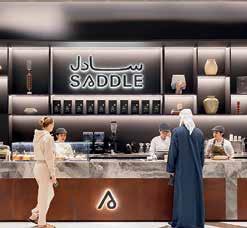
3. Discipline in daily operations
To scale globally, consistency becomes nonnegotiable. This requires international-ready operational systems, strong management or experiential advisors, reliable supply chains and standardized training.
Here again, the franchise manual becomes essential. It acts as the anchor that ensures global outlets deliver the same quality, experience and brand integrity, irrespective of location.
4. A global growth mindset
A new generation of Middle Eastern founders is no longer thinking regionally. Instead, they are thinking globally. They recognize a growing appetite on the international stage for what they can offer. Together, these comprise Middle Eastern flavors, the aesthetic power of regional cafe culture and the strength of Levantine and Gulf storytelling.
The next decade will likely witness Middle Eastern hospitality brands becoming global icons. They have opportunities to export culture, flavor and experience with the same confidence global brands bring to the region.
Reshaping the global dining landscape
The rise of homegrown Middle Eastern franchises reflects an ecosystem ready for global success. Collectively, this is a rich mix of visionary founders, structured systems, disciplined franchising and a deep cultural connection with guests. These brands have a key message to share. They are ready to prove that while Middle Eastern hospitality has long been admired, it is now also technically refined. As a result, these businesses are poised to reshape the global dining landscape.
The region’s next great exports will not be oil or malls. Rather, they will be brands, experiences and hospitality concepts born in the Middle East and embraced worldwide.
brandportunity.com

In today’s regional hospitality landscape, the traditional oneway franchisor-franchisee relationship is not always enough to deliver a competitive edge. Ashleigh Donald, co-founder of Halo Business Consulting, explores how treating marketing as a dynamic partnership can elevate both brand strength and local relevance.

Franchising has long been a powerful route to scale in hospitality. Global brands gain footprint and recognition, while owners tap into proven systems, distribution and standards. Yet in many franchised hotels, marketing is often still viewed primarily as a one-way support function. Central teams distribute toolkits and campaigns, local teams focus on implementation and there can be an expectation that the brand name above the door will, on its own, be enough to drive visibility and demand.
The shift to strategic partnership In Middle East markets shaped by ambitious tourism strategies, major events and increasingly discerning guests, this approach is no longer sufficient. Consequently, strategic synergy between franchisors and franchisees is now essential. By acting as collaborative partners in marketing, not just in compliance, franchised hotels can own their narrative while making the most of the strength that comes with an affiliated brand.
Collaborative marketing creates opportunity and responsibility for franchisors and franchisees. Done well, it can bridge global brand standards with regional cultural expectations around family, welcome and generosity. Additionally, it can align with national or regional tourism campaigns and city branding initiatives. Moreover, it helps emerging local ownership groups elevate their profile and attract investment through association with established international brands.
There is also a clear shift toward sustainability, wellness and more meaningful travel experiences. Partnerships that rely on brand campaigns alone risk missing the opportunity to align fully with evolving guest expectations. However, those that collaborate to tell richer stories about community connection, environmental initiatives or distinctive culinary experiences are far more likely to capture tomorrow’s guest.
Strategic storytelling as a cornerstone
In any branded hotel, the badge gives recognition, but it does not replace the need for a clear story at property level. Guests do not experience head office. They experience your lobby, your team and your neighborhood. Therefore, strategic storytelling is about taking the strength of the franchise and translating it into a distinctive narrative for your hotel that feels relevant to the market you are in.
Done well, storytelling turns a list of features into a clear position in the competitive set. It shapes how the hotel appears across press, website, OTAs, social channels, sales conversations and reviews, so guests encounter the same message wherever they look. The brand provides the platform, but the work of visibility, reputation and demand has to be shared by brand and owner together.


The ABC framework
This is where a simple shared structure helps. At Halo, we use what we call the ABC framework with owners and franchisees.
Audience means being clear on which guests you want to see in your lobby and what is driving their trip. Is your priority Gulf family staycationers, international corporate travelers linked to major events, long-stay guests or weekend leisure guests who come for the restaurants and nightlife? When you try to be everything to everyone, you dilute the impact of your story.
Brand is about how you leverage the equity of the flag and define the role your property plays within the wider franchise. Are you the art-led hotel, the sustainability champion, the family favorite or the serious meetings hub? A clear definition helps you stand out in cities where several hotels from the same group may sit within close proximity and compete for similar demand.
Strategic synergy in franchising is not about rigid control, but about finding the right balance between global consistency and local relevance.
Communication covers how you express that story before, during and after the stay. In the Middle East this might mean bilingual content as standard, local PR that aligns with city tourism campaigns and guest journeys that feel connected whether someone discovers you via a regional OTA, a global corporate contract or a local influencer.
Once the ABCs are clear, franchisor and franchisee have a common language. Decisions about campaigns, partnerships, pricing and investment can be weighed against a shared understanding of who the hotel is for and what it should be known for, rather than simply reacting to shortterm pressures.
From playbook to partnership
A well-defined story only works if it is delivered consistently on property. Effective franchising partnerships coordinate training and service design before major campaigns go live, so the guest journey delivers what the marketing has promised. Furthermore, they treat guest feedback as insight rather than simply a score, using it to refine both operations and messaging.
This is where collaboration between marketing, revenue and operations becomes critical. When cross-functional teams sit round the same table, agree with the story and then align their plans, you see a different type of momentum. Sales teams know which accounts to prioritize, revenue teams know how to price and package, marketing teams know what to push and where, and operations teams focus on delivering the experience consistently on property, so the promise made in the market is delivered.
Shared advantage in practice
To move from transactional support to true strategic synergy, franchisors and franchisees in the Middle East can focus on three shifts. First, treat marketing as the work of shaping reputation and demand every day, not simply running periodic campaigns. Second, see the brand as a set of tools that need local hands and voices to be brought to life. Third, recognize that collaborative marketing is not a “nice to have,” but a commercial advantage in markets where choice for guests and owners is only increasing.
The franchise provides a powerful name above the door. However, the collaborative narrative between brand and owner is what gives that name substance. Strategic synergy in franchising is not about rigid control, but about finding the right balance between global consistency and local relevance, and between long-term brand building and short-term commercial needs. For hospitality brands and operators across the Middle East, the message is clear. Franchising is no longer just a model for physical expansion. Handled strategically, it is a platform for shared creativity, smarter investment and a stronger voice in a crowded marketplace. Those who lean into collaborative marketing will fill more rooms and restaurants today. However, they will also build brands that guests actively seek out, recommend and return to in the years ahead.
gohalo.co.uk

A guest stepping into Kayzo in Riyadh— formerly known as Le Billionaire—is first struck not by the menu. Instead, it is the setting that commands attention. High ceilings, polished marble and a central bar designed for spectacle still evoke the architectural language of imported luxury. It could be Paris, Dubai or London. Only gradually does it become clear that the logic has changed.
Where Le Billionaire once embodied a globally recognizable nightlife formula, Kayzo signals a different ambition. Intriguingly, the room now hosts a Japanese-inspired, family-friendly concept built around sharing plates, casual pacing and operational flow. Dishes arrive as they are ready and are placed at the center of the table. Significantly, the emphasis is no longer on exclusivity, but on repetition.
Competing across the board
This transition is emblematic of a wider shift across Saudi Arabia’s restaurant industry. Previously, the kingdom may have been content to host international brands alone. These include Parisian institutions, for example, such as Benoit, and global chefled concepts like Café Boulud by Daniel Boulud. Today, however, it is increasingly producing its own restaurant brands. And
As Saudi Arabia’s restaurant market matures, a new generation of homegrown concepts is coming into its own. Shaped by competition from international brands, several are now ready to build on domestic success and scale internationally. Jörg Zipprick, author and cofounder of La Liste, unpacks the kingdom’s evolving dining scene and highlights six names to watch.
tellingly, these are designed from the outset to compete with these imports on quality, consistency and conceptual clarity.
This evolution reflects a broader transformation within Saudi Arabia’s food and beverage sector. The market is no longer defined solely by imported brands or celebrity-chef flagships. Instead, local restaurant concepts are emerging with the structural discipline required to compete on quality, efficiency and brand clarity. And crucially, they are poised to do so not just at home, but potentially abroad.
From statement restaurants to operational systems
What distinguishes this new generation of Saudi restaurants is their conception as systems rather than one-off expressions. Tellingly, these businesses are designed with repeatability in mind. For example, they comprise controlled menus, adaptable layouts and defined brand identities that can be reproduced without diluting quality.
Importantly for hospitality operators and investors, this marks a critical shift. Restaurants are no longer evaluated purely on creativity or prestige. Rather, they are assessed on their ability to function reliably across locations, teams and customer segments.
Premium-casual as a scalable sweet spot
A dominant format emerging from the Saudi market is the premiumcasual dining segment. Positioned between fine dining and mass casual, it balances ambition with accessibility. As a result, it is structurally well suited to expansion. Many of the kingdom’s leading restaurants operate in a space that balances ambition with accessibility. Significantly, they are choosing not to replicate the fine-dining, chef-as-artist model that defined earlier international expansions.
This reflects Saudi Arabia’s complex consumer base and a persistent dilemma faced by restaurant managers. Saudi customers tend to favor generous, meatforward dishes. Meanwhile, expatriates— particularly families—seek lighter options and greater variety. Unsurprisingly, the most successful Saudi concepts address both expectations within a single, coherent menu.
Premium casual formats—often fusiondriven but culturally grounded—offer the flexibility required for repetition, adaptation and scale.
Six spotlights
1. Takya: Contemporary reinterpretation. Based in Riyadh, Takya has become one of the most internationally visible Saudi restaurants. Female-led and premium in positioning, it reinterprets traditional Saudi dishes through contemporary techniques while keeping their origins explicit. Although Takya is not structured as a franchise, it functions as a cultural reference point. Importantly, foreign media seeking to understand Saudi cuisine beyond stereotypes frequently cite it in their content.
2. Maiz: Rooted in authenticity. Also Riyadh-based, Maiz follows a more direct path. Its strength lies in authenticity and clarity: dishes that are unmistakably Saudi, grounded in tradition and designed for consistency. In time, Maiz may expand through tourism-linked flagships rather than franchising. However, it plays a crucial role in codifying Saudi cuisine in a form that can travel.
3. Tilia: Excellence as an ecosystem builder. Tilia represents a high-end expression of Saudi tradition. Its menu, including lamb saleeg, mandi, jarish and shrimp stew, demonstrates depth and technical mastery. Tilia is not conceived as a scalable concept. However, its contribution is structural. It establishes a benchmark that reinforces the credibility of Saudi cuisine at the upper end of the market. Such restaurants strengthen the ecosystem from which scalable concepts emerge. They build cultural capital that more operationally flexible formats can later convert into growth.
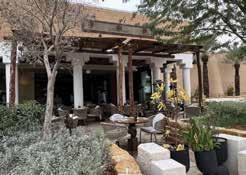
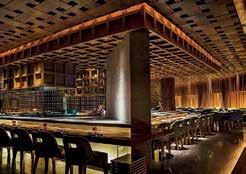
4. Myazu: High-end dining made fun. Founded by Faisal Shaker and operating in Riyadh and Jeddah, Myazu offers contemporary Japanese cuisine with an international twist. High-end ingredients are paired with a relaxed, fun-loving atmosphere. Additionally, the creation of its in-house music label, Utopia, signals a broader brand logic extending beyond the plate.
5. Kayzo: Convivial cuisine. Myazu’s casual spin-off translates this DNA into a relaxed, family-friendly environment focused on sharing, informality and flow. Japaneseinspired comfort dishes arrive as they are ready and are placed in the middle. This approach encourages conviviality while maintaining efficiency. Importantly, Myazu and Kayzo illustrate a particularly relevant growth model among Saudi-born concepts: the transition from flagship to scalable ecosystem. Myazu builds aspiration and credibility, while Kayzo converts that equity into a repeatable, high-throughput concept.
6. Momo: Portability and regional incubation. Operating at an accessible price point, this Riyadh-based dim sum and dumpling concept is built around inherently modular food. Dumplings standardize easily, travel well and suit both dine-in and takeaway models—qualities that align naturally with franchising.
What distinguishes this
new generation of Saudi restaurants is their conception as systems rather than one-off expressions.
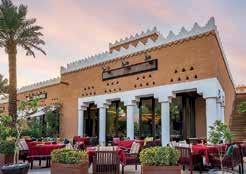
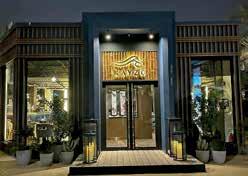

Competing at home before exporting The rise of Saudi-born concepts is particularly significant because it occurs in a market already shaped by experienced international players. With brands like Benoit and Café Boulud operating locally, Saudi restaurants are compelled to compete from the outset in several areas. These range from operational discipline and service standards to brand coherence.
Crucially, this competitive environment leaves little room for improvisation. Only restaurants designed as systems—with clear menus, strong brand language and repeatable processes—can endure. In that sense, Saudi Arabia’s domestic market functions less as a barrier to export than as a training ground.
Challenges remain, however. Ingredient authenticity, cultural translation and the global unfamiliarity of Saudi dishes, such as mantu, must still be addressed. Yet supported by Vision 2030 and growing tourism flows, Saudi restaurants are increasingly learning to translate rather than imitate.
The conclusion is, undoubtedly, becoming difficult to ignore: Saudi’s best restaurants are building brands, not temples. And the advantage of having learned to compete at home, against some of the world’s most established concepts? As a result, they are now better positioned to travel abroad. laliste.com
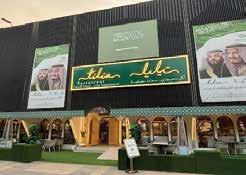
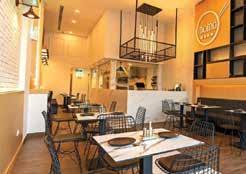

The Middle East continues to position itself as one of the world’s most attractive markets for restaurant investment and franchise expansion. Current momentum is being accelerated by the expansion of lifestyle destinations such as Riyadh and Jeddah, driven forward by Saudi Arabia’s Vision 2030. At the same time, Dubai’s constant pursuit of differentiated dining experiences continues. As a result, the region is redefining what success looks like in hospitality.
For trade readers, the opportunity lies in identifying concepts that balance brand power, operational discipline and cultural adaptability.
European appeal
European restaurant brands remain especially appealing in this context, through their combination of culinary heritage and strong design language. At the same time, many now emphasize sustainability, storytelling and experiencedriven dining. The following 10 concepts illustrate how European brands can translate their DNA into scalable franchise models suited to Middle Eastern markets, while retaining authenticity and commercial relevance.
The Middle East is today one of the most dynamic regions for restaurant franchising, driven by investment, tourism and evolving consumer tastes. European brands, in particular, continue to attract attention for their depth, design and operational credibility. Chef David Faure, co-founder of the innovative duo Un Couple en cuisine, highlights 10 European restaurant concepts with strong potential for franchise success across the region.
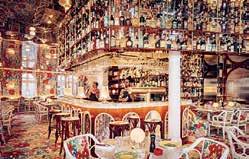
Founded by Tigrane Seydoux and Victor Lugger, Big Mamma has transformed Italian dining into a theatrical, highenergy experience. Each venue delivers a distinct interior narrative while remaining unmistakably part of the same brand universe. For Middle Eastern franchise partners, this combination of strong visual identity, centralized sourcing and proven social media appeal creates a compelling proposition. In particular, the region’s appetite for experiential dining and shareable moments aligns naturally with Big Mamma’s DNA.
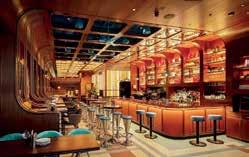
London-born Dishoom pays homage to the historic Irani cafes of Bombay through layered storytelling and refined execution. Indian cuisine is widely represented across the Gulf. However, Dishoom offers a deeper emotional connection through nostalgia, design and brand voice. For investors, the concept’s sophistication, combined with strong cultural links between South Asia and the Middle East, positions it as a premium yet accessible franchise opportunity.

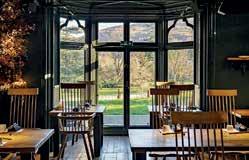
Inspired by the radical philosophy behind Ynyshir, Gareth Ward’s Yin & Yang concept challenges traditional fine dining norms. High-volume music, umami-driven flavors and a fast-paced service rhythm create an immersive, contemporary experience. In markets such as Riyadh and Dubai, younger audiences are increasingly seeking bold alternatives to classic luxury dining. As a result, this edgy model could resonate strongly with both diners and developers.
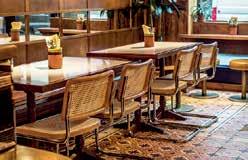
HOPPERS (UNITED KINGDOM)
Specializing in Sri Lankan hoppers and dosas, Hoppers transforms street food into a polished, high-quality dining experience. Vibrant flavors, a strong visual identity and accessible pricing support broad appeal. For franchise partners, the concept is well suited to luxury food halls and urban developments. Moreover, it combines operational efficiency with clear cultural differentiation.
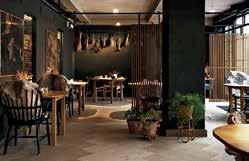
KADEAU (DENMARK)
Celebrating the terroir of Bornholm, Kadeau is a benchmark of New Nordic cuisine. Fermentation, preservation and vibrant acidity define its culinary identity. In a region dominated by French and Italian concepts, Kadeau offers investors a distinctive alternative. At the same time, it aligns with sustainability, wellness and growing global culinary curiosity.
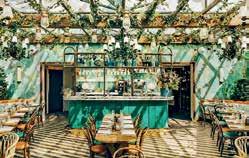
Pink Mamma and Libertino are part of the Big Mamma group. However, they deserve individual attention for their emphasis on sharing, wood-fired cooking and convivial dining. Large tables, generous portions and open kitchens mirror regional dining habits, particularly among families and groups. From a franchising perspective, these formats offer scalability and adaptability. Notably, they work especially well across malls, mixed-use developments and destination projects.
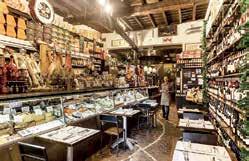
A true Roman institution, Roscioli merges gourmet deli retail with a pasta-focused restaurant experience. Its obsession with sourcing, craftsmanship and product transparency speaks directly to Middle Eastern consumers seeking authentic luxury. As experiential retail continues to grow, Roscioli’s hybrid model offers franchisees multiple revenue streams. Importantly, it reinforces brand credibility and provenance.
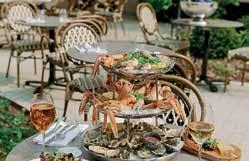
Saint Malo Vilnius delivers classic Frenchinspired cuisine without unnecessary complexity. The concept focuses on seafood, precise sourcing and tableside service, including Crêpe Suzette. Its elegant yet approachable design appeals to couples, business diners and families alike. For Middle Eastern markets, the reassurance of French culinary prestige and flawless execution provide strong foundations for franchise success.
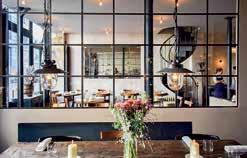
Paris-based Septime represents a new definition of gastronomic luxury built on simplicity, sustainability and a vegetableforward approach. Its philosophy reflects a shift away from excess toward intention and restraint. As Gulf consumers increasingly prioritize wellness and responsible dining, Septime’s values align with evolving expectations. Although franchising such a concept requires careful control, its credibility and global reputation make it attractive for high-profile partnerships.
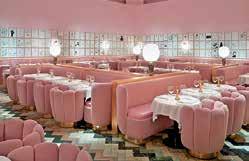
SKETCH (UNITED KINGDOM)
Globally recognized, Sketch blurs the line between restaurant, art gallery and cultural destination. Its interiors have become iconic, positioning the brand as a visual powerhouse. In the Middle East, where instagrammability directly impacts footfall and brand value, Sketch functions as both a dining venue and a marketing asset. Consequently, it offers strong appeal for landlords and franchise partners alike.
Scaling with soul
European brands continue to play a pivotal role in shaping the Middle East’s evolving restaurant landscape. For trade professionals, the real opportunity lies in identifying concepts that can scale without losing their soul. As the region matures, franchises that export culture, narrative and experience, rather than just menus, will define the next chapter of hospitality growth.
sensorielbynoelleetdavidfaure.eatbu.com
From fine dining to fast casual, Lebanese F&B concepts are extending their reach regionally and beyond to great acclaim. Here, we spotlight several success stories that are helping to ensure Lebanon retains its reputation as a culinary innovation hub at home and abroad.
Despite prolonged economic challenges, Lebanon remains one of the Middle East’s most resilient incubators for hospitality brands. Lebanese restaurant concepts have expanded successfully across the GCC, Europe, Africa and beyond. Deep culinary heritage, entrepreneurial agility and a long-standing franchising culture drive this growth.
Consequently, Lebanese restaurants now span multiple segments. From fast casual to fine dining, these concepts demonstrate remarkable diversity. Similarly, bakery retail and specialty cafes showcase proven scalability. Importantly, these brands combine strong brand equity with scalable business
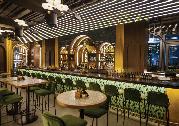
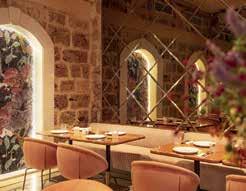
Baron
Mediterranean-influenced restaurant offering reimagined Lebanese and regional classics. eat.drink.baron
Bartartine
The home of fresh artisanal bread and pastries made with innovative recipes and traditional techniques. bar-tartine.com
BBQ Bros
Live open-fire grilling concept catering to events and outdoor dining occasions. bbqbros.me
models. As a result, they are increasingly attracting regional and international investors. Among Lebanon’s hospitality landscape, select homegrown concepts stand out for their clarity of vision, operational maturity and investment readiness.
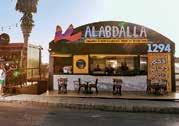
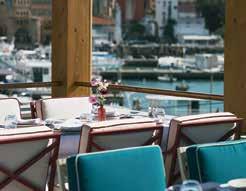
Beihouse
Contemporary Levantine and Mediterranean restaurant by Chef Tarek Alameddine, formerly of Noma. beihouse
Buco
Italian-inspired neighborhood restaurant offering comforting classics. Warm hospitality and approachable everyday dining. buco.lb
Casper and Gambini’s
All-day restaurant-cafe, committed to natural flavors and consistency. Highlights include specialized breakfasts and gourmet dishes. antventures.com
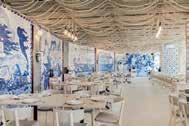
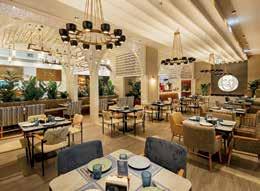
ELSE Beirut
High-end, experiential dining venue operated by the Standalone Group, offering immersive and elevated culinary journeys. standalone-group.com/else-beirut.html
Esco-Bar Coctel Y Cocina
Cocktail bar with exotic creations like Margarita on the Rocks, daiquiris and sizzling fajitas escobar.lb
Malak Al Tawouk
Quick-service restaurant specializing in tawouk and Lebanese sandwiches, alongside burgers and platters. malakaltawouk.com
About the group: Al Abdalla began in 1999 with a simple focus on unforgettable chicken flavor. Starting as a small operation, the brand grew to 25 branches across Lebanon by 2025. Expansion then extended internationally, with locations across the UAE, Iraq, Qatar, Jordan, Oman, Saudi Arabia, Greece, Germany and France. To ensure consistent quality and protect signature flavors, Al Abdalla built and operates its own vertically integrated supply chain, including farm, slaughterhouse, kitchen and production facilities. Today, the brand serves communities across three continents with authentic charcoal-grilled chicken.
Contact: Layal Haidar, franchise director
Email: lhaidar@alabdallahresto.com
Franchise concept(s): Al Abdalla
From the company:
Franchise appeal: Our franchise offers a proven, profitable quick-service model built around charcoal-grilled chicken. The concept combines strong brand recognition across multiple countries with diversified revenue streams through dine-in, takeaway, delivery and cloud kitchens. This ensures resilient cash flow and consistent performance. The model delivers high margins through controlled food and labor costs, simple operations and fast breakeven periods. Flexible formats allow partners to choose from flagship restaurants, food courts, kiosks or cloud kitchens based on market conditions. Franchisees receive
end-to-end support covering site selection, design, training, supply chain management and ongoing performance monitoring. Unit economics: The brand is built for smart scalability. The model delivers approximately 20 percent net profit margins, well above quick-service restaurant averages. Franchisees typically achieve payback within 12 to 18 months. The group generates USD 50 million in annual revenue, reflecting strong market demand and operational efficiency across markets.
Market potential: Lebanon remains our strongest market, anchored by established brand equity and deep customer loyalty. Dubai has emerged as a key growth market, attracting diverse nationalities through high-traffic locations and strong delivery platform performance. Our international footprint now spans three continents and eight countries, demonstrating the concept’s adaptability across different markets and consumer preferences.
Growth drivers: Our charcoal-grilled positioning differentiates us from heavily fried competitors while meeting growing demand for healthier quick-service options. The open charcoal-grilling theater creates an engaging customer experience and emotional connection. Family-value bundles drive higher average orders and repeat visits. Notably, 80 percent of customer traffic comes from brand loyalty and word
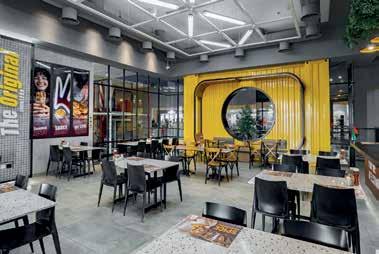
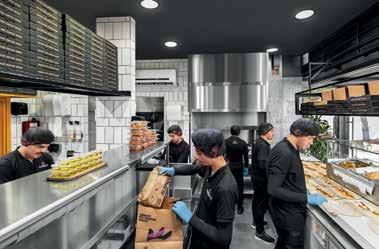
of mouth rather than digital advertising, demonstrating strong organic growth and customer satisfaction.
Operational strength: Our vertically integrated supply chain sets us apart. Operating our own farm, slaughterhouse and production facilities ensures quality control and flavor consistency across all locations. Streamlined recipes and standardized operating procedures reduce food waste and maintain consistency. Central-kitchen compatibility supports efficient scaling while controlling costs. Additionally, we leverage technology through delivery aggregators, performance dashboards and data-driven menu optimization. Real-time monitoring enables franchisees to manage profitability with precision across all formats.
Training and development: Franchisees and key staff complete comprehensive hands-on training before opening. This covers kitchen operations, food safety, customer service, point-of-sale systems and financial controls. Our team provides on-site support during soft opening and launch phases. Ongoing development includes refresher workshops, new menu training, performance reviews and regular operational audits. Franchisees also receive continuous coaching in marketing strategies, cost control and performance management to maximize profitability and operational excellence.
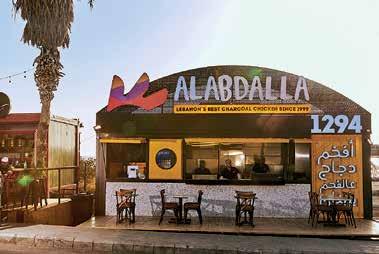
About the group: Al Khawajat Group currently operates in Lebanon and serves more than 150,000 guests annually across its three restaurants. A fourth location is opening soon. Each venue offers an individual, location-driven experience.
Jnaynit Al Khawaja in Faqra is a seasonal mountain retreat with cozy winter warmth and lively summer terraces, featuring grills, saj and valley views. Al Khawaja in Ashrafieh blends refined Lebanese cuisine with daily specials in an elegant 1960s-era city setting. Samkit Al Khawaja in Batroun celebrates the Mediterranean coast with freshly caught seafood. The menu ranges from classic Lebanese dishes to contemporary signatures.
Contact: Christian Bou Chaaya, CEO Email: christian@alkhawajatgroup.com
Franchise concept(s): Jnaynit al Khawaja, Al Khawaja, Samkit al Khawaja and Qahwat al Khawaja
From the company:
Franchise appeal: Our appeal to potential partners stems from several key strengths. These include trusted industry legacy, which is anchored by Elie Mhanna, a fifth-generation restaurateur whose family roots date back to 1888. Then there is our culinary expertise, which ensures consistent quality and reliability. More broadly, the Al Khawaja brand has built strong recognition and reputation through years of memorable, authentic dining experiences.
Operational strength: We maintain consistent service, food quality and brand experience through a central kitchen. Our head chef and dedicated pastry chef supervise operations, ensuring every dish meets our standards. Moreover, we are progressing toward ISO certifications and other quality systems. These initiatives further strengthen operational excellence across all locations.
Training and development: We guide franchise partners at every step. This includes site selection, design, staffing and menu localization. Comprehensive training, corporate manuals and


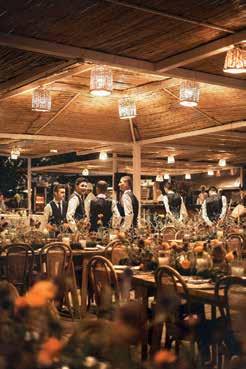
departmental coaching ensure operational excellence. Additionally, ongoing support includes marketing strategies, audits and business reviews. As a result, partners maintain quality, grow confidently and succeed while adapting seamlessly to their local markets.
Expansion strategy: Our expansion strategy focuses on both single-unit and multiunit growth. The approach depends on market potential and partner readiness. Initially, we prioritize establishing strong single-unit operations to ensure quality and operational excellence. Once a territory demonstrates success, we accelerate multi-unit growth. Ultimately, the aim is sustainable scaling with our partner.
Figures: We have experienced non-stop growth since opening. For example, in Faqra, we now serve over 2,000 guests daily. High table rotation, efficient operations and a dedicated team drive this success. Notably, year-on-year growth consistently exceeds 60 percent. This reflects strong customer demand, exceptional service and the widespread popularity of our brand across all locations.
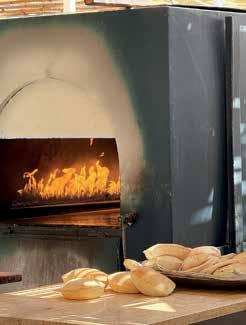

About the group: B&K Holding Group was founded in 2017 to create and provide individual food and beverage experiences. The portfolio spans Lebanese, Italian and Japanese cuisine restaurants, as well as food halls. Currently, the group is expanding across the Middle East and Europe.
B&K Holding has a presence in six countries across 12 brands. The company has a proven track record of delivering high-level dining experiences for guests. These include varied fresh food options.
The B&K Holding portfolio comprises several renowned concepts. These include Habib Beirut, Azzurro, Suburbia, Karam al Bahr and Olivo. Additionally, the group operates Mikel Coffee company, Wok & Roll, Shawarma Box and Chikky Chick. Other concepts include 8 Cuts, Happy Cream, Cheezy Burger, Salsalada and Man2oushe w noss.
Looking ahead, B&K Holding is planning ambitious growth and aims to add more than 50 venues to its portfolio. Consequently, the concept footprint will extend across the GCC and throughout Europe.
Contact: M. Elie Bassil, COO and co-founder
Email: Franchise@habibbeirut.com
Franchise concept(s): Habib Beirut
From the company:
Brand recognition: Habib Beirut enjoys strong local and growing regional brand recognition, particularly in the UAE. We measure brand strength through multiple metrics. These include repeat customer rates, sales performance and social media engagement. Additionally, delivery platform rankings and ongoing customer feedback reflect consistent trust and brand loyalty.
Growth drivers: Growth is driven by strategic high-footfall locations and a consistent, popular Lebanese menu. Furthermore, an efficient service model supports expansion. Our ability to adapt store sizes emphasizes delivery while maintaining competitive pricing. Importantly, we ensure quality throughout. As a result, each franchise unit maximizes reach and revenue potential.
Operational strength: We maintain consistency through standardized recipes and centralized procurement. Staff training programs and regular operational audits further support this. Clear brand guidelines and quality control systems ensure uniformity. Additionally, hands-on franchise support guarantees that food quality, service standards and the overall brand experience remain consistent across all locations.
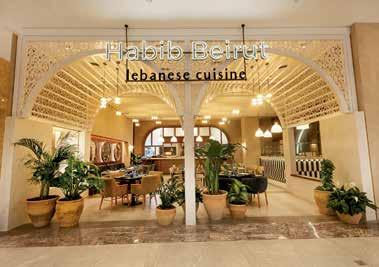
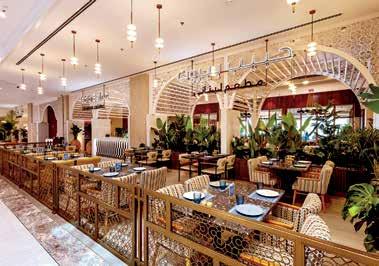
Unit economics: A typical Habib Beirut franchise unit benefits from strong revenue potential and healthy operating margins. Efficient cost control drives profitability. Depending on location and format, franchisees can expect attractive profit margins. They also benefit from a reasonable payback period. High customer turnover and strong brand demand support these returns.
Innovation edge: Our innovation lies in balancing authenticity with modern dining expectations. We continuously update our menu and leverage delivery and ordering technology. Additionally, we enhance customer experience through efficient service and contemporary restaurant design. As a result, Habib Beirut stands out in a competitive casual dining market.
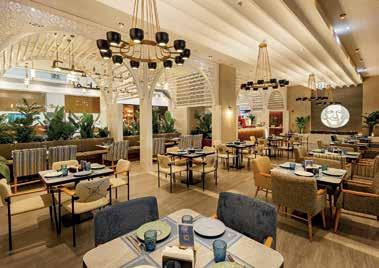
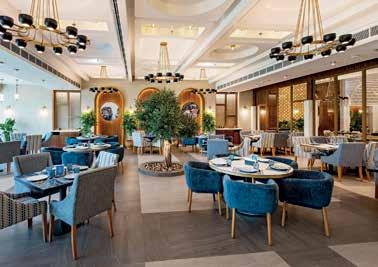
About the group: Em Sherif Group is a Lebanese hospitality brand founded by Mireille Hayek. The group offers finedining, cafe, seafood and ready-to-eat concepts. All concepts focus on authentic Lebanese cuisine and immersive dining experiences across MENA and Europe.
Contact: Mireille Hayek, founder and owner
Email: info@emsherif.com
Franchise concept(s): Em Sherif
Restaurant, Em Sherif Café, Em Sherif Sea Café and Em Sherif Deli
From the company:
Franchise appeal: Em Sherif’s franchise opportunity combines proven track record with strong brand recognition. The diverse portfolio spans fine dining, cafes, seafood and ready-to-eat outlets.
Investors are drawn to the brand’s focus on immersive experiences and authentic Lebanese cuisine. Multi-concept growth, flagship culinary destinations and strategic international expansion demonstrate scalability and long-term profitability.
The brand supports franchisees with comprehensive training, marketing and operational guidance, offering both differentiation and security for partners seeking alignment with a globally respected Lebanese hospitality brand.
Investment and costs: Em Sherif franchises require an initial investment tailored to each concept. Investments range from USD 500,000 for Em Sherif Deli to USD 5 million for flagship restaurants. These cover capital expenditures, franchise fees, brand support, operational guidance and training programs. Costs vary depending on outlet size, location and concept type. Consequently, investors can enter the brand at multiple levels.
Market potential: Em Sherif has demonstrated strong demand in MENA and European markets. Key locations include Lebanon, UAE, Qatar, UK, Paris, Madrid, Monaco, Saudi Arabia and Egypt. This success stems from an increasing appetite for authentic Lebanese cuisine and immersive hospitality experiences.
Lifestyle trends favor experiential dining, premium gastronomy and culturally rich concepts, further enhancing market potential. With growing interest in Lebanese culinary heritage, Em Sherif is well-positioned to scale and strengthen its presence across new territories.
Growth drivers: Em Sherif’s growth is driven by carefully selected locations and multi-concept expansion. High-quality culinary offerings and immersive customer experiences further fuel growth.
Large-scale projects showcase the brand’s ambition. For example, the 3,500-square-meter Dbayeh culinary destination combines multiple concepts, cultural storytelling and interactive dining elements, attracting families, travelers and food enthusiasts.
Consistency in food quality, service excellence and brand identity ensures repeat visits. Strategic innovation across menus, entertainment and lifestyle experiences strengthens differentiation. Additionally, the brand invests in staff training, operational frameworks and marketing support to maintain standards across all outlets.
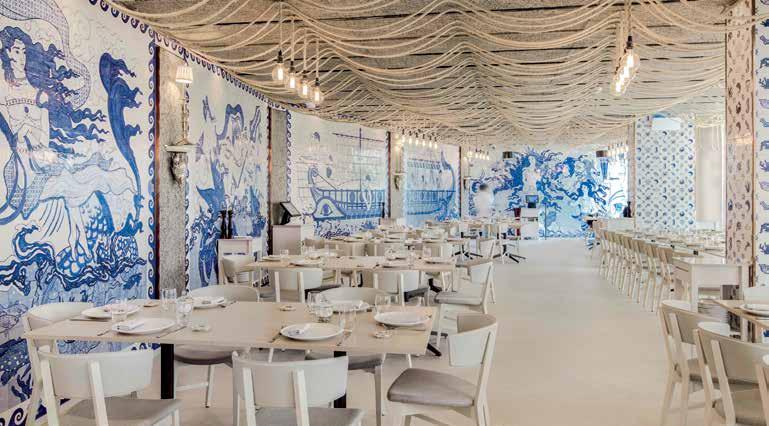
About the group: Fig Holding creates culinary projects around Armenian heritage, from traditional Mediterranean and Anatolian forms to globalized urban inspirations. The group opened the world’s first Armenian restaurant in 2003 and has since achieved international recognition and successful franchise growth.
Contact: Aline Kamakian, founder and CEO
Email: aline@figholding.com
Franchise concept(s): Mayrig and Batchig
From the company: MAYRIG
Market potential: GCC and MENA markets have strong demand for Levantine cuisine. Armenian cuisine offers a differentiated alternative—familiar, premium and storydriven. Europe also presents strong potential, with large Arab and Armenian communities seeking authentic, culturally rooted dining experiences.
Growth drivers: GCC dining is shifting toward experience, storytelling and shareability. Mayrig’s Armenian heritage offers an authentic narrative that feels fresh yet familiar to Levantine palates. Ideal for group dining, it drives higher average checks, repeat visits and strong brand loyalty.
Operational strength: Standardized sacred elements protect identity: core recipes, plating, service flow, ambience, brand language and storytelling. Centralized recipe systems, approved suppliers and imported signature ingredients ensure consistency. Service SOPs, role-based training, audits and mystery shoppers maintain premium experience and cultural integrity across markets.
Training and development: Training is continuous. Management trains one month in existing branches before opening, with assessments. Teams receive pre-opening and on-site training with launch support. Ongoing development includes menu updates, brand refreshes, annual recertification, train-the-trainer programs and leadership workshops.
Risk and resilience: Mayrig enforces strict franchisee selection with mandatory GM and chef certification. KPI-based multi-unit expansion controls growth quality. Sacred versus flexible rules, contracts, audits and approved suppliers protect brand integrity. Dual sourcing, centralized procurement, approved substitutes and safety stock mitigate supply chain risks.
Market potential: The GCC’s growing base of young professionals seeks casual, affordable, trend-driven dining, aligning with Batchig’s positioning. The concept also appeals to families and food enthusiasts through approachable pricing, modern vibe and adaptable menu. Hightraffic urban and mall locations suit the concept well.
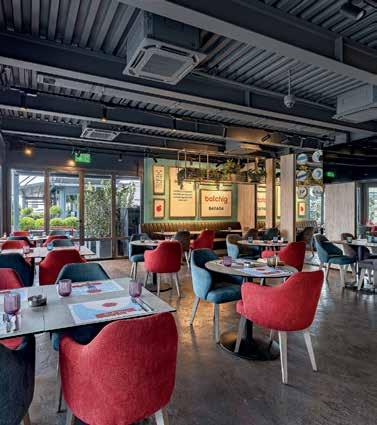
Growth drivers: Batchig focuses on allday casual dining, targeting younger and middle-class audiences seeking quality at affordable prices. Best suited for highfootfall locations like large malls and beachside clusters, it drives volume and accessibility for scalable growth.
Operational strength: Standardization ensures consistency while allowing local flexibility in spice levels, SKUs, portions and beverage mix. Central recipes, approved suppliers and kitchen training guarantee quality and speed. Service SOPs, rolebased training and mystery shoppers support efficient operations. Continuous monitoring of costs, sales mix and guest feedback sustains scalable growth.
Training and development: Batchig follows a scalable training system focused on speed, consistency and casual service. Management completes branch immersion training before opening. Teams receive pre-launch training with on-site support. Continuous development covers menu rollouts, seasonal promotions, annual recertification, train-the-trainer programs and operational workshops.
Risk and resilience: Batchig limits risk through strict operator selection, required leadership certification and performancebased expansion rights. Non-negotiable standards, audits and approved suppliers protect brand consistency. Dual sourcing, centralized purchasing, substitute approvals and safety stock ensure stable quality, pricing and continuity across markets.
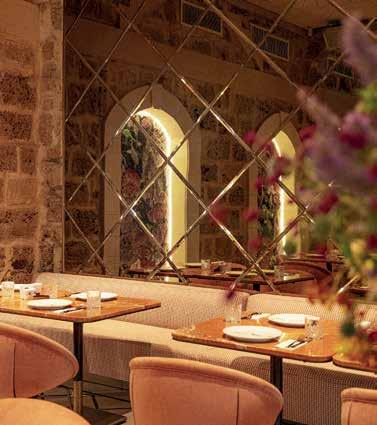
About the group: MEC Hospitality is a food and beverage group founded by Marc Chehade, operating award-winning concepts across Lebanon and the UAE. The group specializes in high-energy lifestyle dining destinations, blending strong culinary identity with vibrant atmosphere and operational excellence. MEC Hospitality develops scalable franchise models for the GCC and MENA region.
Contact: Marc Chehade, founder and CEO
Email: mec@mec-concepts.com
Franchise concept(s): Esco-Bar Coctel Y Cocina
From the company: Franchise appeal: Our franchise model is proven, award-winning and easy to scale. Esco-Bar Coctel Y Cocina won Best Mexican Restaurant in Dubai in 2025, which strengthens investor confidence. We provide clear systems, operational support, strong branding and a concept that performs well in premium lifestyle locations.
Brand recognition: Esco-Bar Coctel Y Cocina has strong recognition in Lebanon and growing awareness in the UAE. Winning Best Mexican Restaurant in Dubai at the 2025 Good Food Middle East Awards strengthened our reputation. We measure brand strength through sales performance, repeat customers, social media engagement and franchise interest.
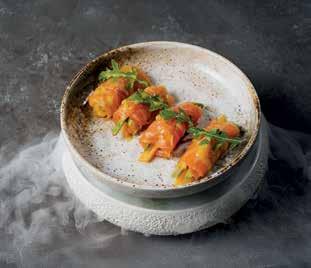
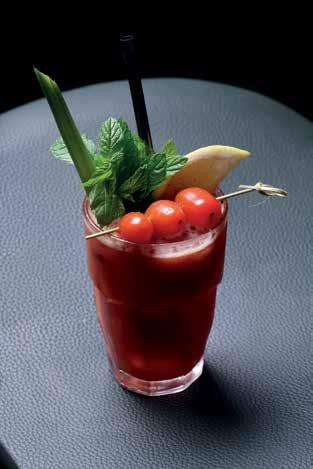

Market potential: Saudi Arabia, Jordan and Oman show strong demand for lifestyle dining concepts like Esco-Bar Coctel Y Cocina. Young populations, growing tourism and demand for highenergy restaurant experiences make these markets attractive. We also see opportunities in North Africa and key GCC cities looking for vibrant Latin-inspired concepts.
Growth drivers: Location is key. We focus on strong lifestyle areas. Our menu is designed for high margins and strong bar sales. The concept shifts from dining to nightlife, increasing revenue per table. Marketing, events and social media drive steady customer traffic.
Expansion strategy: In the next three to five years, we aim to expand across major GCC cities and selected MENA markets. Our goal is to reach up to five operational units and establish Esco-Bar Coctel Y Cocina as a leading Latin lifestyle dining brand in the region.
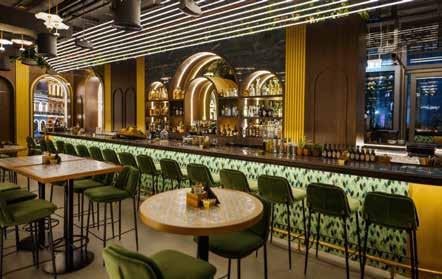
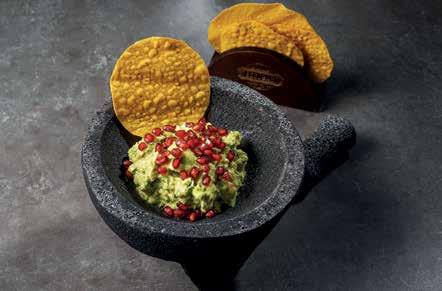
About the group: M&H Holding manages four registered restaurant brands: Tropicana, Hayat Doner Al Turki, Shawarfandem and Comanche Diner. Operations span Lebanon and international markets. Hayat Doner Al Turki stands as the group’s flagship brand. It serves as the primary focus for worldwide expansion through a structured franchising strategy.
M&H Holding aims to grow internationally by scaling Hayat Doner. Additionally, the group continues to develop innovative concepts. These deliver quality food at accessible prices.
Contact: Mohamad Trad
Email: m.trad@hayatdoner.com
Franchise concept(s): Hayat Doner Al Turki
From the company:
Franchise appeal: The franchise offers a complete system. This includes operations manuals, quality management, training and ongoing support. A dedicated R&D team ensures continuous menu innovation. It also provides full adaptation to local market needs. Consequently, franchisees receive the tools, guidance and flexibility to succeed, helping them to remain competitive in any market.
Investment and costs: The total investment required to open a franchise outlet ranges from USD 250,000 to USD 500,000. This depends on the size and location of the outlet. The investment is subject to an ongoing royalty fee of 5 percent of gross sales. Additionally, a 2 percent marketing contribution supports brand development and promotional activities.
Figures: Some outlets have achieved an excellent payback period of as little as two years. This reflects strong operational performance and market demand. On average, restaurants deliver a return on investment within approximately three years. This highlights the financial viability and scalability of the concepts.
Market potential: All MENA markets show strong demand for this concept. Döner is highly attractive and widely consumed across the region. Moreover, the concept combines traditional döner with Lebanese shawarma flavors. This twist strengthens demand, creating a familiar yet differentiated offering that resonates strongly with local tastes and consumer preferences.
Territory rights: Franchisees can receive exclusive territories, which will be defined based on the format. Options range from master franchise agreements to singleunit franchises. Territories are determined according to size and the financial capacity of potential franchisees. This ensures optimal market coverage and business potential.
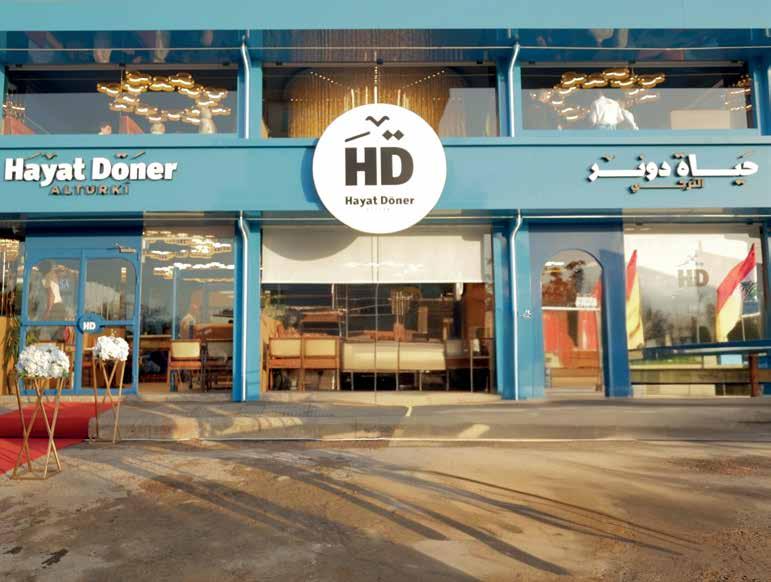
The region’s diverse hospitality landscape is thriving, with options spanning award-winning restaurants, traditional cafes and everything in between. Here are some of the notable names to put on your radar:
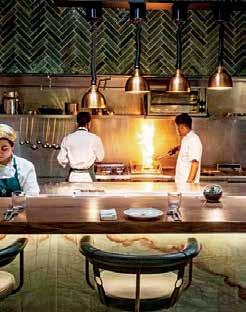
CUT by Wolfgang Puck
Fine dining steakhouse featuring premium Wagyu and USDA Prime cuts. cutbahrain
Lyra
Modern Mediterranean restaurant delivering elegant plates, stylish ambience, cosmopolitan energy and social dining. lyra.bh
Rasoi by Vineet
Indian fine dining by Michelin-starred chef Vineet Bhatia, blending tradition with contemporary technique. rasoi.bh
SUSHISAMBA
A dramatic rooftop venue combining Japanese, Brazilian and Peruvian flavors, bold design and sweeping skyline views. sushisambabahrain
Kazoku
Contemporary Japanese dining by Baky Hospitality Group in central Cairo. kazokuegypt
Khufu’s Giza
Elevated Egyptian cuisine beside the Pyramids with heritage storytelling and refined technique.
khufusrestaurant
Reif Kushiyaki Cairo
Japanese yakitori concept driven by fire technique, bold flavors, chef personality and casual confidence.
reifkushiyakicairo
Sachi Cairo
Contemporary fine dining combining global techniques, premium ingredients, elegant interiors and refined celebratory service. sachirestaurant.com
Zooba Zamalek
Street food-inspired Egyptian classics celebrating nostalgia, bold seasoning, affordability, fast service and everyday flavors. zooba
Alee
Modern Levantine restaurant offering playful textures and engaging flavors in varied dishes. aleebyali
Daimeh
Eatery offering traditional and modern cuisine served with homemade sourdough bread. daimeheatery
Dara Dining by Sara Aqel
Seasonal Mediterranean restaurant in a restored Amman villa with regional wines and local produce. dara.dining
Fakhreldin
Elevated Levantine cuisine served within an elegant traditional Arabian home. fakhreldin.com
Ren Chai
Fine-dining Chinese restaurant offering Cantonese specialties and Szechwan delicacies. renchai.com
Shams El Balad
Farm-driven restaurant celebrating local ingredients, ethical sourcing, modern Jordanian cooking and community spirit. shamselbalad
Burger Boutique
Casual burger restaurant specializing in burgers made with organic, grass-fed beef. burgerboutique.com
Cantina
Contemporary Latin-inspired restaurant offering bold flavors, vibrant atmosphere, social energy and casual sophistication. cantinakw
Dar Hamad
Casual restaurant serving local Kuwaiti gourmet cuisine in a relaxed, unpretentious setting. facebook.com/DarHamadKw
Matbakhi
Modern Kuwaiti restaurant honoring local recipes, contemporary presentation, cultural pride and national identity. matbakhi
San Opera JACC
Classic Italian comfort food in a cozy setting at Avenues Mall, Kuwait. san.ristorante
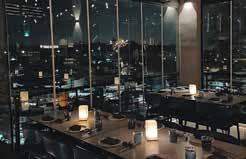
Alee, Jordan
Alba
Italian restaurant celebrating Piedmont flavors and rare truffles within Katara Towers. albabyraffles
GAIA
Greek restaurant blending sunlit Mediterranean simplicity with high-end hospitality in a glamorous atmosphere. gaia__doha
Idam
Michelin-starred dining blending Arabic heritage with French technique in an iconic setting. idambyalainducasse
Jamavar
Indian fine dining featuring heritage recipes and polished presentation in a luxurious setting. jamavardoha
Nobu Doha
Global Japanese Peruvian concept set on a private island with ocean views. nobudoha
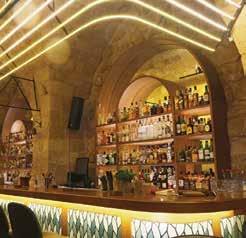
Areesh Al-Nakheel
Traditional Hijazi and Saudi restaurant within an ancient farm in historic Diriyah. diriyahseason.sa
Aseeb
Traditional restaurant serving authentic Saudi dishes from the Najd region. aseeb.najd
Café Boulud
French restaurant by Chef Daniel Boulud offering seasonal classics and modern creations.
cafebouludriy
Hōchō
Japanese-inspired fine dining restaurant with private dining and artisanal beverages. hocho.sa
Kuuru
Peruvian Japanese fusion restaurant combining vibrant flavors with culinary precision. kuuru.sa
Marble
Contemporary grill-focused restaurant offering premium meats with precise execution in a contemporary setting. marblerestaurant
Myazu
Luxury Japanese restaurant showcasing sushi techniques with premium ingredients in an upscale setting. myazusa
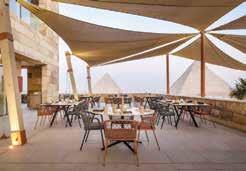
11 Woodfire
Wood-fired contemporary cuisine highlighting smoked premium ingredients and disciplined technique in minimalist interiors. 11woodfire
Girl and the Goose
Social dining restaurant blending food, conversation and culture in Dubai. girl.and.the.goose
LPM [MENA’s 50 Best Restaurants 2026
Refined French Mediterranean dining offering timeless menu favorites in a vibrant setting. lpmrestaurants
Orfali Bros
Family-led restaurant presenting a contemporary expression of Middle Eastern cuisine. orfalibros
Trèsind Studio
Indian tasting menus offered with a spice narrative presentation and fine dining theatrics. tresindstudio
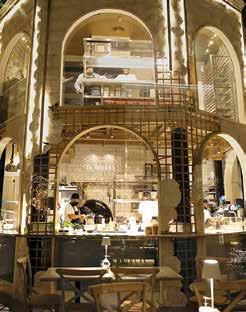




When people ask me about the region’s hospitality markets, it’s usually the same question. How can destinations such as Dubai stay at the top without exhausting their resources, communities or future?
Running a hospitality company in the emirate has taught me that tourism is about much more than attracting guests or delivering luxury experiences. It’s about people, neighborhoods and ecosystems. Moreover, it’s about making sure that when visitors go home, they leave behind something better than what they found.
The key to this is connection. Tourism doesn’t happen in isolation, and neither can sustainable growth.
Government alignment is essential
Destinations such as Dubai have shown that strong government support makes all the difference. Initiatives like the Sustainable Tourism Stamp, Dubai Can and Dubai Reef provide clear guidance for responsible practices. They signal that sustainability is central to success and not an optional extra. When business practices align with government policies, responsible habits become embedded in daily operations. Consequently, this creates a lasting impact.
Incentivizing developers
Developers shape the very infrastructure of tourism. Incentives like expedited approvals, zoning bonuses for eco-friendly projects and recognition programs for responsible design make sustainable development a natural choice. Profitability and environmental stewardship are not mutually exclusive. In contrast, they are complementary. By encouraging developers to prioritize eco-conscious and community-focused designs, destinations can ensure growth is both commercially strong and environmentally responsible.
Balancing rapid growth with responsible development is challenging for regional destinations. Naim Maadad, chief executive and founder of Gates Hospitality, explores how a collaborative approach between governments, businesses and local communities can deliver lasting benefits all round.
Learning from global connections
Regional destinations are ambitious and visionary. However, inspiration often comes from elsewhere. Sri Lanka’s community-based tourism empowers locals while preserving culture. Italy’s IT.A.CÀ sustainable tourism festival sparks dialogue between travelers, communities and policymakers. Tellingly, just across the border into Oman, luxury resorts such as Six Senses Zighy Bay show that high-end hospitality can coexist with preserving the local environment. These initiatives include coral restoration and zero waste policies. Tourism, policy and air travel Tourism does not exist in a vacuum. For example, airlines can promote lowcarbon travel. Meanwhile, policies and economic strategies can ensure benefits reach the wider community. Even small levers, like allocating tourism revenues to environmental initiatives, can have a ripple effect. Significantly, this protects resources and inspires innovation.
Diversifying offerings strengthens communities and delivers the authenticity that today’s travelers increasingly value.
A destination’s appeal goes far beyond its skyline, as we see in Dubai. Nature trails, cultural experiences and community-led stays help encourage visitors to extend their trips and travel farther afield. This reduces pressure on urban hotspots and provides richer experiences. Diversifying offerings strengthens communities and delivers the authenticity that today’s travelers increasingly value.
Education is the glue
Finally, knowledge matters. Hospitality staff, architects and developers need training in “sustainable by design.” Guests benefit from initiatives encouraging responsible choices. Meanwhile, community workshops empower locals to actively participate. As a result, education ensures sustainability becomes a shared responsibility, not just a buzzword.
Key regional destinations have already done so much, and there are signs others are following suit. By focusing on connection–between people, businesses, government and the environment–we can create growth that is responsible, resilient and rewarding. By adopting these strategies, tourism has the power not just to thrive today, but to leave a legacy that generations will be proud of.
gateshospitality.com



We talk of inspiration, yet after over 40 years of working as a manager in the hospitality industry, I have found that so many others just don’t get it. They are hired to run the business but have no skin in the game beyond their salary and title. Consequently, they bully and connive with their staff to squeeze more out of them than they are paying them for. The reason the hospitality business is unattractive is because of the way management treats their teams.
The reality behind closed doors I sit on the boards of two companies, both hospitality, and I work with the owners of many restaurants. Through my work with these clients, I get to see the inner workings of their businesses. Some are fabulous, but those are few. The majority have two-faced managers. The managers are something when they speak with their owner and something completely different when dealing with their team. It is as though they want to please the owner to their face and then use position and power to rule the employees. They are more concerned with looking busy than with doing important things.
Much has been written about the hospitality industry’s retention challenge, but difficulties persist. Mark Dickinson, founder of Done! Hospitality Training Solutions, offers some answers: be tough with your expectations but be nice to your team.
The training test
Ask your managers today how many training sessions they have personally given to their team in the past month. Go on, I dare you. I am not speaking of dictatorial daily briefings. I am referring to a structured learning experience where the manager has prepared a session. This includes key points, an attendance record, a statement of purpose and an activity for practicing what is being taught. Additionally, competence must be verified live by the manager. Finally, a summary of key points with a handout should be provided.
If you can tell me that you have three managers who have done that in the past month, then I will give you my platform for free. Why? Because it just doesn’t happen.
What truly inspires professionals Inspiring team members comes from meaningful work, praise and recognition, and learning and growth.
If you assign learning and growth to one individual, then you are setting yourself and your business up for mediocrity. The culture of growth and kindness must permeate every level of the business. It is not good enough for the owner to have a nice smile and be a generous person, which in my experience most are.
You expect your team to be kind and polite to your customers. However, they can only do that if your inner culture is like that.
In your next management meeting, ask these questions of your managers:
• What is our mission? (word for word)
• What is our vision? (the general idea)
• What are our values? (precisely)
Having good intentions is not enough. Owners must focus on developing their management team to become the living embodiment of the values of the company. Furthermore, they must be responsible and accountable for ensuring that every person in the business knows and lives those values.
Be nice. You see, being nice is at the core of hospitality. You expect your team of professionals to be kind and polite to your customers. However, they can only do that if your inner culture is like that.
The simple formula for retention
So how do you inspire and retain the next generation of hospitality professionals?
Be nice. Create an ambience of learning and growth for every person. Build your business on standards that everyone knows.
People will talk–word of mouth, you know? That same thing that you tell your team about customers. Team members who are happy will attract more of the same.
Be tough with your expectations and kind with your team.
done.fyi


In hospitality, experience has always been the product. However, what has changed is when that experience begins. Today, the guest journey starts long before arrival, often months in advance, during a digital evaluation phase where perception, confidence and expectation determine choice. Clearly, virtual reality (VR) has emerged as one of the most effective tools redefining this pre-visit moment. Importantly, it enables hospitality brands to communicate scale, atmosphere and intent with a level of clarity traditional marketing assets cannot achieve.
In the Middle East, where hospitality developments compete on ambition, design and experiential depth, VR is no longer experimental. Rather, it is increasingly a strategic lever, shaping decision-making and aligning brand promise with guest expectation.
Immersion as a trust mechanism
The strategic value of VR lies in its ability to reduce uncertainty. Notably, research confirms that immersive VR experiences significantly increase perceived transparency and emotional engagement. Moreover, participants exposed to VR hotel tours reported higher booking confidence and stronger trust compared to those relying on static imagery or video.
For hospitality brands, this insight is critical. Importantly, high-value travel decisions are delayed not by lack of interest but by lack of certainty. This is particularly true in the luxury and resort segments. Today, VR is able to address this gap directly by allowing guests to experience spaces rather than interpret them.
360° property tours as decision tools
360° virtual tours have evolved beyond showcasing aesthetics. Instead, they now function as decision-support tools. Research demonstrates that immersive virtual environments significantly improve spatial understanding and memory recall. Therefore, guests better comprehend room layout, scale and flow—factors directly linked to satisfaction.
Beyond showcasing aesthetics, VR is increasingly enabling potential guests to experience spaces rather than simply interpret them.
Monica E. Chikhani, founder and managing director of MEC Workshop, explores how this strategic tool instills confidence and reduces uncertainty, helping to convert interest into bookings.
In the Middle East, where properties often feature expansive footprints and architectural complexity, this capability is particularly valuable. For example, international guests can accurately assess room orientation, proximity to amenities and privacy hierarchy.
For MICE-driven hotels, VR tours of meeting spaces also streamline the sales process. Additionally, they enable planners to evaluate configurations remotely.
For hospitality leaders, the opportunity lies not in adopting VR for its visual appeal but in integrating it strategically across marketing, sales and operations.
Advanced booking previews reduce friction
Booking abandonment remains a persistent challenge. However, VR is increasingly proving its value at this critical conversion stage. Research shows that immersive pre-purchase visualization reduces booking anxiety and increases perceived value. Furthermore, guests who engaged with VR previews were more likely to complete reservations.
For hotels serving a mix of leisure, business and family travelers, VR also allows guests to self-select more accurately. As a result, properties stand to benefit from higher conversion rates, improved satisfaction and fewer mismatched expectations on arrival.
Immersive dining showcases
Dining has become a destination in itself, particularly in the Middle East. Tellingly, VR is increasingly used to communicate what menus alone cannot: ambiance, energy and experience. Research confirms that
immersive restaurant previews significantly influence emotional expectation and willingness to reserve premium seating.
Similarly, for destination restaurants and celebrity-chef concepts, VR supports pre-opening campaigns and premium table reservations. As a result, atmosphere becomes a commercial driver.
Virtual reality as a data source
Increasingly, advanced VR platforms deliver more than immersion—they deliver insight. Research shows immersive experiences can increase engagement time by up to 30 percent. More importantly, VR analytics reveal how users interact with virtual environments.
In practice, this data informs room category positioning, upselling strategies and personalized CRM communication. Crucially, when integrated with artificial intelligence (AI), VR becomes a predictive tool, shaping not just storytelling but revenue optimization.
Why the Middle East is poised to lead
The region is well positioned for VR adoption, thanks to its ambitious hospitality developments and advanced digital infrastructure. Indeed, across the GCC, VR is increasingly being embedded into destination marketing and sales enablement, reflecting a shift from experimentation to strategic integration.
Virtual reality has moved beyond novelty. Ultimately, for hospitality leaders, the opportunity lies in integrating it strategically across marketing, sales and operations. In an industry defined by experience, VR’s true power lies in helping guests feel confident enough to choose, long before they arrive.
mecworkshop.com






























Food loss and waste remain one of the most persistent challenges facing the hospitality sector. Despite increasing awareness, hotels and restaurants continue to discard large volumes of perfectly edible food every day. In most cases, waste is the result of how hospitality systems are designed, from overproduction and rigid procurement to uncertainty around demand. Eliminating food waste requires better systems, not better intentions.
Food waste as a systemic challenge
Globally, it is estimated that up to 20 percent of food prepared in hospitality never gets consumed. In high tourism regions such as the Middle East, this issue is amplified by fluctuating occupancy rates, seasonality and diverse guest profiles. Fortunately, however, technology allows operators to reframe food waste as an operational challenge. This can be addressed through planning, visibility and data, rather than relying solely on staff training or guest behavior.
Predictive demand and data-led kitchens
Advances in predictive analytics are transforming how hospitality kitchens operate. By combining historical consumption data, booking patterns, seasonality and event schedules, operators can forecast demand with far greater accuracy. As a result, data-led kitchens are able to align preparation volumes more closely with actual consumption. This reduces overproduction without
Technology is transforming how hotels and restaurants can build on good intentions and improve outdated systems to tackle food waste. Daniel F. Solomon, founder of HeroGo, talks us through the data-driven tools that are making waste measurable and much more manageable.
compromising service quality. In practice, even small improvements in forecasting can cut kitchen waste by double-digit percentages while improving cost control and operational confidence.
Digital ordering systems and point-ofsale data reveal what dishes are popular, what is consistently left on plates and where portion sizes may be misaligned. These insights allow chefs to redesign menus, adjust portions and rethink buffet formats based on real behavior rather than assumptions. Often, small data-informed changes lead to meaningful reductions in plate waste while maintaining, or even improving, guest satisfaction.
Reclaimed ingredients and menu innovation
One of the most promising shifts in hospitality sustainability is the use of reclaimed or surplus produce as a feature rather than a compromise. In our work with restaurants and hotels, we have seen growing interest in menus that intentionally incorporate wonky vegetables or surplus produce that would otherwise go to waste. Moreover, dishes made with reclaimed ingredients often resonate strongly with guests when presented transparently. “Made with rescued produce” is increasingly seen as a mark of creativity and responsibility, not limitation. When chefs are supported by technology that ensures consistency, safety and availability, reclaimed ingredients become a tool for menu innovation and customer engagement.
Digital dashboards allow hospitality teams to track food waste, water usage and resource efficiency at an operational level.
Digital supply chains and flexible sourcing
Traditional procurement models rely on fixed volumes and long-term commitments. While reliable, they often limit flexibility and contribute to surplus.
However, digital supply platforms enable kitchens to source more dynamically, responding to real demand and availability. Such flexibility supports the use of seasonal, local and reclaimed produce while maintaining quality standards. For hospitality operators, it also improves resilience against price volatility and supply disruptions.
Measuring what matters
Technology plays a critical role in making sustainability actionable. Digital dashboards allow hospitality teams to track food waste, water usage and resource efficiency at an operational level. When waste is visible and measurable, it becomes manageable. Teams are better equipped to identify inefficiencies, take corrective action and track progress over time. As a result, sustainability shifts from a reporting exercise to a practical management tool.
By addressing food waste at a systems level and embracing reclaimed ingredients as part of the solution, the hospitality sector can reduce loss, improve performance and deliver sustainability outcomes that are both credible and commercially sound.
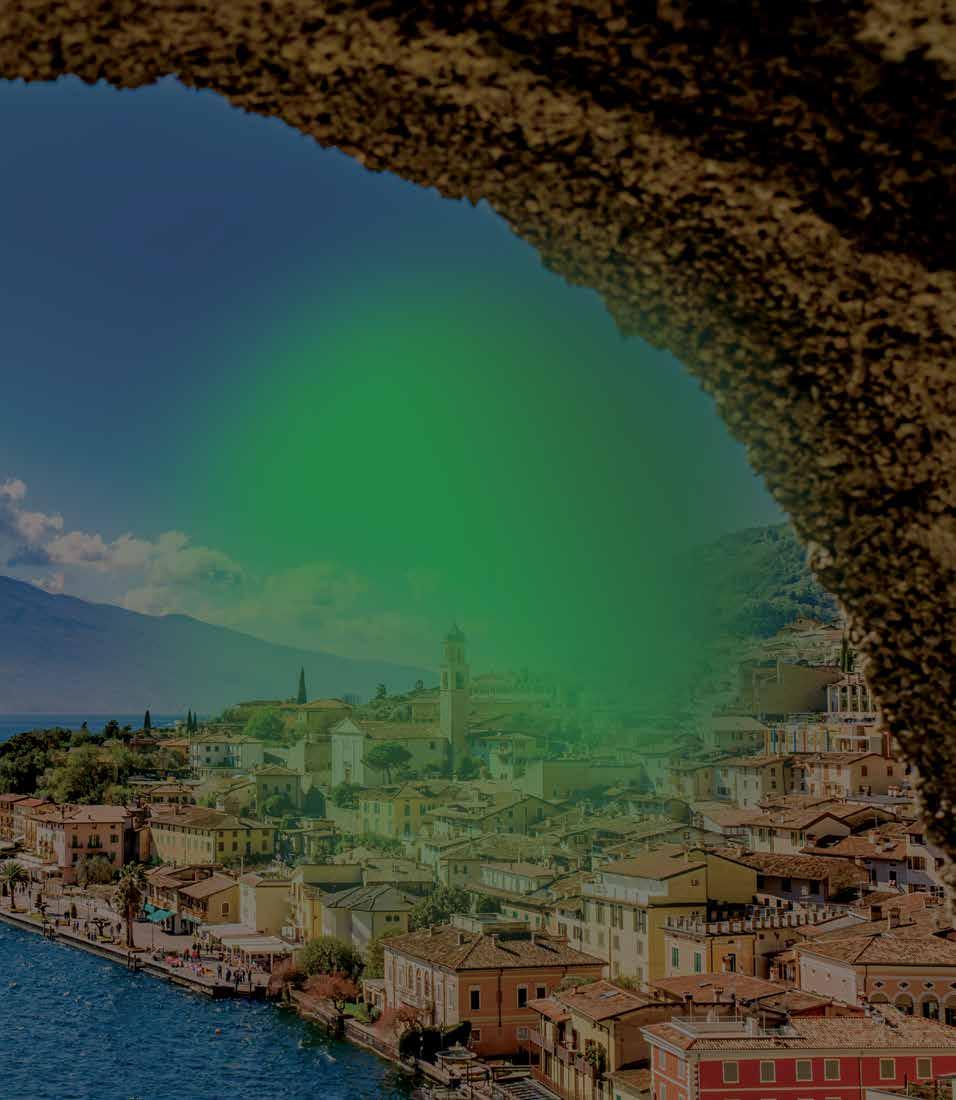

3 Global Brands. 55,000+ Attendees. One Marketplace. Where Leisure, Luxury, Travel Tech and Business Events converge to drive innovation and growth across global travel & tourism.


Buoyed by wellness shifts that champion the benefits of highprotein, low-carb eating, meat and poultry are riding high in supermarkets and restaurants. Three industry professionals explain how producers can meet today’s very different consumer demands, which include not only taste, but also values and aesthetics.

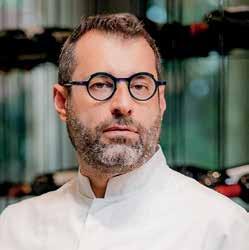
YOUSSEF AKIKI
Chef and owner
brût Restaurant
Kitchen Backstage youssefakiki.com chefyoussefakiki, brut.youssefakiki.com
Prioritizing natural quality
Producers should highlight natural leanness, clean cuts and real flavor, not overprocessing. For example, lean meats like trimmed beef, free-range chicken and turkey fit perfectly into a Mediterranean way of eating. Reduced-sodium products can rely on herbs, spices, citrus and fermentation instead of salt. Importantly, high-protein offerings should stay close to the source: whole-muscle cuts, not heavily marinated or injected meats. When producers respect the product, chefs and consumers can build healthier plates naturally, without sacrificing taste or tradition.
Meeting younger consumer expectations
Gen Z and millennials are driving demand for transparency, simplicity and convenience. They prefer smaller cuts, versatile proteins and ready-to-cook options that feel fresh, not industrial. In the kitchen, they want flexibility: strips, cubes and pre-portioned meats that cook quickly and travel well across cuisines. Also, stories really matter— origin, farming practices and sustainability are a key part of the purchase decision. These generations cook less formally but care deeply about values, flavor and visuals. Consequently, they are pushing producers to rethink packaging, formats and storytelling.
Building trust through transparency
Above everything else, today’s consumers value animal welfare, antibiotic-free production and clear sourcing. Organic certification matters, but only when it’s credible and accessible. Crucially, there is more trust in transparent labeling than in buzzwords. People want to know where their meat comes from, how the animal was raised and who stands behind it. As a result, quality, ethics and honesty now influence flavor perception itself. A respected product cooks better—and eats better—because trust is part of taste.
Innovation through respect
True innovation doesn't mean complexity. Rather, it means respecting raw ingredients. Producers should innovate through cut selection, portioning, better aging, cleaner processing and sustainable packaging. Working closely with chefs helps preserve taste while meeting health and sustainability standards. The approach should be to reduce additives, use natural preservation and design products that adapt to multiple cuisines. The future belongs to producers who treat meat as a living product, not an industrial one. Importantly, this will involve health, sustainability and flavor supporting, rather than competing against each other.
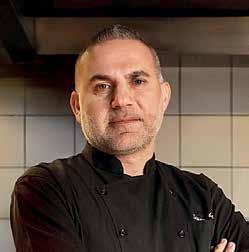
SIMON EL BAYEH
Executive chef
Seagrass Boutique Hospitality Group hunterandbarrel.ae simonelbayeh
Capitalizing on wellness demand
Consumers are looking for lean cuts, high-protein options and reducedsodium products that fit active lifestyles and family meals. Offering ready-to-cook portions, clean-label marinades and clear nutritional information makes healthy eating simple without compromising on taste. Additionally, using local spices and global flavor inspirations keeps dishes exciting and appealing. Collaborating with supermarkets, chefs and influencers to share easy, flavorful recipes encourages trial and builds trust. As a result, consumers are more likely to make healthier choices while enjoying their favorite proteins.
Growth categories through 2026
In the UAE region, several categories are expected to expand significantly. Chicken remains dominant, thanks to affordability, halal-certification compliance and broad consumption. Interestingly, Turkey is increasingly popular among healthconscious consumers preferring lean proteins. Moreover, demand for beef is rising among expatriates and consumers seeking premium protein diversity. Processed and value-added formats, alongside plant-based alternatives, are also popular, fueled by desire for convenience food and healthier lifestyles. Overall, poultry, beef and readyto-cook formats are set to lead growth.
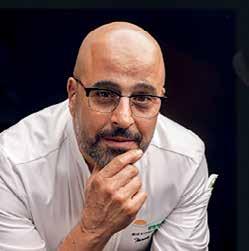
TAREK IBRAHIM
CEO and founder
Umami Restaurants
Certified masterchef, World Association ambassador, Meat and Livestock Australia cheftarekibrahim, umami.eg, aussiebeeflambme
Repositioning protein in modern diets
Nutrition perceptions have changed significantly over the past decade.
Current trends, including keto and lowcarb diets, highlight that reducing sugar and carbohydrates is far more effective than cutting fat. Today, meat and poultry producers have an opportunity to explain to consumers that traditional eating patterns were more balanced. Importantly, protein is essential for muscle development, overall strength and proper intake of vitamins and minerals such as B12, iron and zinc. By consuming quality beef, poultry and lamb, therefore, people can significantly improve their health. To capitalize on this shift, producers must invest in education and clear communication. By doing so, they can reposition meat as a vital component of a healthy lifestyle.
Evidence-based communication Brands must rely on facts, solid scientific evidence and real-life examples. Crucially, showing customers proof and credible data increases trust. Brands should demonstrate that high-protein, moderate-fat diets combined with reduced carbohydrate intake can support healthier bodies. This is especially true
Aligning innovation with values
Producers can innovate by developing lean, high-protein cuts, reduced-sodium marinades and clean-label recipes. Investing in sustainable sourcing, eco-friendly packaging and local production aligns with national sustainability goals. Crucially, flavor innovation such as global fusion marinades, air-fryer-friendly products and chef-inspired rubs ensures taste remains central. Elsewhere, producers can integrate plant-forward blends to meet wellness and sustainability demands without compromising flavor. Clear labeling on nutrition, origin and animal welfare boosts trust, while partnerships help educate consumers and drive adoption.
Simplifying quality messaging
Brands can communicate quality, nutrition and sourcing clearly by focusing on halal certification, lean cuts and responsibly sourced ingredients using easy-to-read labels or short phrases. For example, stories like “fresh from local farms” build trust. Moreover, visuals, social media and local influencers make benefits easy to understand. Keeping messages consistent across packaging online and in-store, helps shoppers quickly see what makes products healthy, safe and high-quality.

when paired with regular physical activity. It is also important to highlight sourcing from reputable and traceable producers, showing transparency across the supply chain. Education, undoubtedly, is key to breaking cycles of restrictive dieting and weight regain. Ideally, effective communication should happen through multiple channels, including traditional media, social media, seminars, workshops and experiential events.
Meat vs. influencers
Social media and influencers play a powerful role, both positively and negatively. Unfortunately, many influencers lack accurate knowledge about meat and nutrition. Despite this, influencers have a major impact on purchasing decisions, creating challenges for producers as misinformation can easily spread. Ideally, the industry needs knowledgeable voices on social media who truly understand meat, sourcing and nutrition. A unified platform where producers collaborate to share accurate information could balance influence. This would help to ensure that expertise, not just aesthetics, drives consumer decisions. In summary, influencer marketing is powerful, but without proper education and credibility, it risks damaging trust.

Ready to take your order, voice-activated artificial intelligence systems are poised to revolutionize drive-thru operations across the region’s rapidly expanding quick-service restaurant market. Duncan Fraser-Smith, CEO of Craft Hospitality Group, spotlights the huge opportunities and possible challenges that this transformational technology presents.

The aroma of freshly cooked food, the whir of blenders and the familiar query, “Can I take your order?” have long defined the quick-service restaurant (QSR) and drive-thru experience. However, a silent revolution is rapidly unfolding, driven by artificial intelligence (AI). Today, voice-activated ordering systems are no longer a futuristic concept. They are becoming a tangible reality, poised to fundamentally transform QSR operations worldwide. Undoubtedly, this technology promises a new era of efficiency, accuracy and customer satisfaction. Yet its implementation, particularly in diverse markets like the MENA region, presents both compelling opportunities and unique challenges.
How the tech transforms operations
At its core, AI-powered voice ordering streamlines the order-taking process. Instead of human staff, a voice assistant listens, comprehends and processes customer requests. This immediately translates into several operational transformations. Firstly, speed and efficiency are dramatically boosted. AI systems don’t get distracted, fatigued or require breaks. As a result, they ensure consistent, rapid order-taking even during peak hours. This significantly reduces drive-thru wait times, a critical metric for QSR success. Secondly, accuracy sees a marked improvement. By leveraging advanced natural language processing (NLP), AI minimizes human error in order entry. This ensures customers receive exactly what they requested. In turn, it reduces waste and customer dissatisfaction.
Optimizing labor, gathering insights
Beyond the immediate transaction, AI voice systems offer profound benefits for labor optimization. Crucially, while not necessarily eliminating jobs, they free up human staff from repetitive ordertaking tasks. This allows employees to focus on food preparation, customer service and other value-added activities. Consequently, it can lead to better resource allocation. It also potentially addresses staffing shortages. Furthermore, these systems are a goldmine for data collection. Every interaction provides valuable insights into customer preferences, popular menu items, upsell opportunities and even common order modifications. Therefore, this data can be analyzed to optimize menus, personalize offers and improve overall operational strategies. Ultimately, for the customer, it means a faster, more accurate and potentially more personalized experience.
Strategic opportunities in MENA
The MENA region, with its rapid economic growth, youthful demographic and high digital adoption rates, presents fertile ground for AI voice ordering adoption in QSRs. Notably, the region’s growing appetite for convenience and its burgeoning QSR sector align perfectly with this technology’s value proposition. Opportunities include:
• High tech adoption: MENA populations, particularly the youth, are early adopters of technology. They demonstrate high smartphone penetration and comfort with digital interactions. As a result, this makes them receptive to AI voice interfaces.
• Addressing labor dynamics: In some MENA countries, managing a diverse, often expatriate workforce in QSRs can present communication challenges. In contrast, AI offers a standardized, consistent interface regardless of the staff’s linguistic background.
• Multi-lingual capabilities: Indeed, advanced AI models can be trained to understand and respond in multiple languages. Significantly, this includes various Arabic dialects alongside English and potentially French. Thus, they can cater to the region’s linguistic mosaic.
• Growth of QSR and drive-thrus: The MENA region is experiencing significant expansion in its QSR market, particularly drive-thrus. Evidently, implementing AI early can therefore provide a competitive edge in a crowded market.
• Smart city initiatives: Inevitably, several MENA nations are investing heavily in “smart city” initiatives that prioritize technological innovation and efficiency. Notably, AI in QSRs fits seamlessly into this broader vision.
• Enhanced customer service: With a strong emphasis on hospitality, AI can ensure a consistent, polite and efficient interaction. In turn, this enhances brand perception even during peak periods.
For the MENA region, this technology holds immense potential, aligning with the region’s forward-thinking vision and consumer demands.
Navigating implementation challenges However, the path to widespread adoption in MENA is not without unique challenges. Indeed, the nuances of the region demand a carefully considered approach:
• Linguistic complexity: While AI can handle multiple languages, the vast array of Arabic dialects (for example, Gulf, Egyptian, Levantine) poses significant hurdles. Additionally, the presence of mixed-language orders (English item names spoken with an Arabic accent, for instance) creates difficulties for accurate voice recognition and natural language understanding. Granted, a general AI model may struggle to adapt to these subtle differences without extensive local training data.
• Accents and pronunciation: Not only customer accents but also the accents of staff can impact system performance. This applies particularly if AI is integrated with a human order expediter.
• Cultural nuances of interaction: In many MENA cultures, face-to-face interaction and personalized service are highly valued. Consequently, a purely automated system might initially be perceived as impersonal. This requires careful branding and integration to ensure it complements, rather than detracts from, the customer experience.



• Data privacy and trust: As AI systems collect vast amounts of data, concerns about data privacy and how this information is stored and used will be paramount. Evidently, building trust with customers regarding the security of their data is crucial.
• Initial investment and infrastructure: The upfront cost of developing, integrating and maintaining sophisticated AI voice systems can be substantial. Additionally, reliable high-speed internet and consistent power supply are non-negotiable for optimal performance. This can be an infrastructure hurdle in some areas.
• Job displacement concerns: While AI aims to reallocate human labor, initial fears of job displacement could lead to resistance from employees and impact public perception. Because of this, proactive communication and reskilling programs may be required.
• Maintenance and support: Ensuring continuous operation and swift technical support for complex AI systems requires specialized expertise. This might not be readily available locally. As a result, there may be a need for robust remote support structures. The paradigm shift ahead These systems are not merely a technological novelty. Rather, they represent a fundamental paradigm shift for QSRs. Clearly, the promise of unparalleled efficiency, accuracy and enhanced customer experiences is undeniable. For the MENA region, this technology holds immense potential, aligning with the region's forwardthinking vision and consumer demands while positioning the market to set a global benchmark for innovation.
crafthospitality.group

If you thought zero-proof drinks were all mimics and simple mocktails, then it’s time to think again. Today’s alcohol-free beverages more than match the complexity, artistry and occasion of traditional cocktails. Here, two F&B experts tell us why these offerings are here to stay.
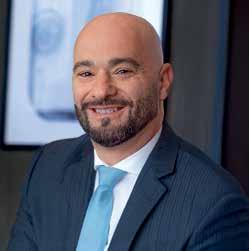
LUCA BARBA Director of food and beverage
The Mangroves Abu Dhabi
LXR Hotels & Resorts hilton.com
lxrhotels
Creating alcohol-free celebrations
Alcohol-free cocktails take the spotlight when crafted with the same precision as classic or signature drinks. An Instagramworthy appearance, beautiful glassware, crystal clear ice, storytelling and even ceremonial service give guests that celebratory moment. Additionally, they provide an emotional sense of occasion. Furthermore, the ritualistic aspects of
preparation and presentation matter just as much as the ingredients themselves. The experience can match the spirit of a cocktail only when non-drinkers feel included rather than accommodated.
Techniques that elevate complexity
Techniques that bring complexity and rich flavors into the drink include various ferments, such as kombucha, vinegars and shrubs. Distillates, like hydrosols, smoked cordials and enriched syrups also play their part. Additionally, spice extracts, acid blends, fat-washed liquids, high-quality tea leaves and specialty coffee brews elevate flavor structures. Overall, they are key in enabling producers to create complex, balanced, alcohol-free premium drinks. Moreover, layering these techniques creates depth that keeps guests engaged throughout the drinking experience. Equally important, the balance between sweet, bitter and acidic notes creates a memorable finish.
Showcasing zero-proof options
It’s imperative to offer and position alcohol-free beverages with pride on the main menu, rather than as an add-on. Similarly, producers should give them an appealing name, tell the story, highlight hero ingredients and present them beautifully. Training for team members is another requirement. Crucially, this will enable them to upsell and present alcohol-free drinks with enthusiasm and pride.
Importantly, many Michelin-starred and high-end restaurants create alcohol-free pairings for their food menus. The idea is to offer non-drinkers similar dining experiences to customers opting for classic wine or cocktail pairings. In this way, non-alcoholic options feel both premium and luxurious, and guests are keen to order them. Because of this, staff confidence becomes essential in positioning these beverages as desirable choices. Consistent quality across service then builds guest trust and encourages repeat orders.
Beyond mimicry
Interestingly, there is a misconception that alcohol-free options have to mirror or mimic the alcoholic version of a beverage to justify their value. People sometimes forget that the main purpose of zero-proof spirits or wines is to highlight the complexity and identity of their flavors and ingredients. They will never taste exactly like gin, rum or whisky. Granted, most producers today avoid labeling their alcohol-free spirits as alcohol alternatives. Instead, they prefer to offer unique flavor profiles that deserve appreciation on their own merits. After all, zero-proof spirit is not an alcohol substitute, but its own craft.
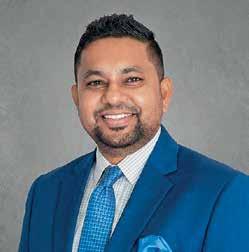
MANJULA FERNANDO
Director of F&B, master alchemist
Accor PME Hotels KSA movenpick.accor.com movenpickriyadh
Ritual, presentation and complexity
Alcohol-free beverages can recreate the sense of occasion by embracing the same elements that make classic cocktails special: for example, ritual, presentation and complexity. Served in elegant glassware with premium garnishes and layered flavors like bitterness, acidity and aromatics, these drinks feel equally celebratory. The key is to give them creative names, pair them with food and present them as signature experiences rather than “mocktails.” In this way, zero-proof options can elevate social moments and allow everyone to enjoy cocktail culture without alcohol.
Mocktails become premium creations when crafted with advanced techniques and quality ingredients. For example, infusions, shrubs and oleo saccharum add layered flavors, while clarification and controlled carbonation refine texture and mouthfeel. Smoke or barrel-aging introduces depth, and botanicals, floral waters and exotic syrups bring aromatic sophistication. Simultaneously, bitters, tannins and balanced acids mimic classic cocktail complexity. Presentation is essential. Elegant glassware, clear ice, smoke bubbles and molecular mixology all have a part to play. Additionally, garnish artistry like skeleton leaves or dehydrated fruits add a special touch. Collectively, these elements help to ensure drinks match the ritual and allure of traditional cocktails.
Ushering in sophistication strategically Bars and restaurants can introduce sophisticated alcohol-free drinks by treating them with the same artistry as classic cocktails. Strategies include creating dedicated zero-proof menus with creative names and using premium glassware and garnishes for visual appeal. Additionally, training staff to recommend these options with confidence is key. Highlighting wellness benefits and pairing drinks with food enhances perceived value. Meanwhile, storytelling about ingredients builds intrigue. Hosting tasting events featuring zero-proof specials during happy hours and leveraging social media to showcase presentation can attract mindful drinkers. Importantly,

positioning these beverages as signature experiences ensures they feel celebratory, inclusive and worth choosing over traditional cocktails.
One of the biggest misconceptions about alcohol-free spirits is that they are merely flavored water or juice. In reality, premium alcohol-free spirits are crafted through intricate processes similar to traditional distillation. These include botanical extraction, where herbs, spices and fruits are distilled or infused to create complex, layered flavors. Other processes include mouthfeel engineering, using ingredients like glycerin or natural extracts to replicate the texture and warmth of alcohol. Additionally, artisanal craftsmanship is a priority for producers, ensuring the sophistication and depth associated with traditional spirits.
The shift toward alcohol-free drinking is a clear sign of changing values. Significantly, younger generations are driving this movement, prioritizing wellness, mental clarity and mindful socializing over traditional drinking habits. Globally, noalcohol categories are growing faster than their alcoholic counterparts, supported by sustained investment from major beverage brands. Long-term projections point to continued growth. In summary, alcoholfree drinking is a permanent evolution within beverage culture, backed by solid demographic shifts, economic investment and global momentum.

Hobart has expanded its cooking technology portfolio with a new 20-rack Chef’s Combi. This latest all-in-one cooking appliance is designed to handle high-volume demands, while delivering greater capacity and flexibility for professionals.
HOBART GMBH hobart-export.com



Available from Distillatori Russo 1899, IGP Limoncello is made solely from lemons found along the Amalfi Coast. Ideal as an after-dinner liqueur or cocktail, it is free from preservatives and colorings. Available in 50cl and 70cl bottle sizes.
DISTILLATORI RUSSO 1899 russo1899.it

Beyond Meat has launched its reformulated, plant-based chicken-style tenders for 2026. The updated product features a chunkier breaded coating, increased fiber and a focus on high-protein, plant-based ingredients.
BEYOND MEAT beyondmeat.com
A round-up of what’s new and causing a buzz on the region’s hospitality scene.

REPA has introduced “Fix & Go: Essential Van Stock Parts for Professional Kitchens.” This selection of essential spare parts is designed to meet technicians’ everyday repair needs and quickly fix equipment such as ovens and refrigerators.
REPA
lfspareparts724.com/en/Fix_and_Go_ catalogue

Wildwonder has launched its newest flavor, Pink Pomelo limeade. This variety combines zesty pink pomelo with lime and chrysanthemum florals. It is also USDA organic, vegan, gluten free, non-GMO and caffeine free.
WILDWONDER
drinkwildwonder.com

THE ORIGINAL PULLED OXTAIL MEAT™
Ready to eat, this pulled oxtail meat comes fully cooked, hand pulled and vacuum sealed for maximum flavor and freshness. Serving three, the pack also includes reheat instructions.
THE ORIGINAL PULLED OXTAIL MEAT pulledoxtailmeat.com

Groupe GM has partnered with the skincare brand myBlend to create a new amenity collection. The collection is almost entirely of natural origin (98 percent). Other benefits include a signature fragrance and sustainable packaging.
GROUPE GM AND MYBLEND int.my-blend.com

Citrus Freeze is a new zero-sugar lemongrapefruit flavor energy drink from Accelerator Active Energy. A limited-time offering, it contains 200 mg of natural tea/ coffee-sourced caffeine. Citrus Freeze has been NSF-certified for sport and supports enhanced focus and metabolism.
ACCELERATOR ACTIVE ENERGY drinkaccelerator.com

JUICY MARBLES’ UMAMI BURGER
Juicy Marbles has launched its new Umami Burger, made with koji barley, quinoa, flax, miso and seitan. Each patty contains 22 g of protein. According to Juicy Marbles, the recipe bridges the gap between whole meat cuts and whole ingredients.
JUICY MARBLES uicymarbles.com


Winter is an ideal time to elevate pastry menus with comforting, indulgent favorites that deliver on both taste and presentation.
Developed by the experts at Callebaut Chocolate Academy, these classic chocolate brownies are sure to strike a sweet note with dessert lovers, whatever the weather or time of day.
For the base brownie mix
Ingredients
208 g butter 82% fat
208 g Callebaut Dark 811 - Chocolate Block - 5 kg
162 g sugar
162 g dark brown sugar
51 g cocoa powder
115 g All-purpose flour
62 g potato starch
2 g sea salt
231 g whole eggs, at 18- 20°C (64-68°F)
Preparation
Melt together the butter and chocolate in the microwave in 30-second bursts. Mix well using a spatula until all the chocolate is melted.
Add the dry ingredients and whisk well between each addition. Then add the eggs at the end.
Place the batter into a piping bag.
Pipe into the molds and bake at 160°C (320°F) for 12 minutes.
Once baked, place the brownies in the freezer until completely cold, for about 30 minutes.
Once cooled, unmold the brownies and place them on a metal tray lined with parchment paper.
Place in the refrigerator and reserve for assembly.
For the chocolate decoration
Ingredients
200 g Callebaut Dark 811 - Chocolate Block - 5 kg
Preparation
Pour some pre-crystallized chocolate on a guitar sheet and, using an offset spatula, spread it out evenly to obtain a thin layer.
Allow to set for a few minutes until the chocolate no longer sticks to the fingers.
Remove from the guitar sheet and place the chocolate layer on a guitar cutter.
Using a metal scraper, press down the plastic on the guitar cutter to make lines of 2 cm (0.8 inches).
Place the chocolate sheet on the marble table and, using the guitar cutter’s wires as guidelines and a knife, cut into rectangles of about 12 cm (4.7 inches) long.
Place a guitar sheet on top of the chocolate decorations and place between two metal trays.
Allow to crystallize in the refrigerator for about 1 hour at 16°C (61°F).
For the chocolate shavings decorations
Ingredients
200 g Callebaut Dark 811 b - Chocolate Block - 5 kg
Preparation
Pour some pre-crystallized chocolate on the marble table. Using a spatula, spread it out evenly to form a thin layer. Allow to crystallize for a few minutes until the chocolate is almost solid.
Using a spatula, delicately scrape the chocolate layer and spread the decorations out onto a metal tray lined with a Silpat.
Place in the refrigerator for at least one hour at 16°C (61°F).
Assembly
Ingredients
50 g Callebaut Dark 811 - Chocolate Block - 5 kg
Preparation
Remove the guitar sheet from the top of the chocolate decorations. Using a paper cone, add a small dot of chocolate on top of the brownie and place a rectangle decoration on top, gently pressing so that it sticks to the brownie.
Place a second dot of chocolate in the middle of the chocolate bar and add a shaving decoration on top.