Findings
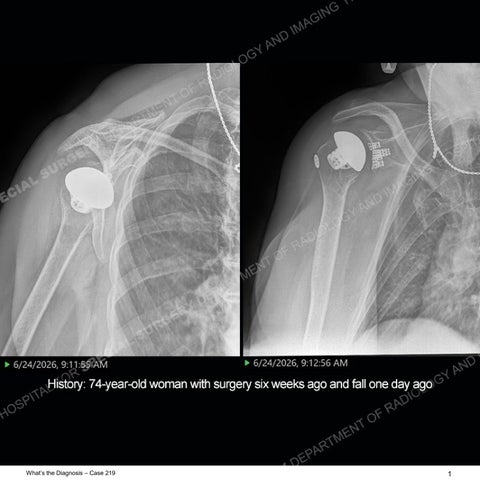
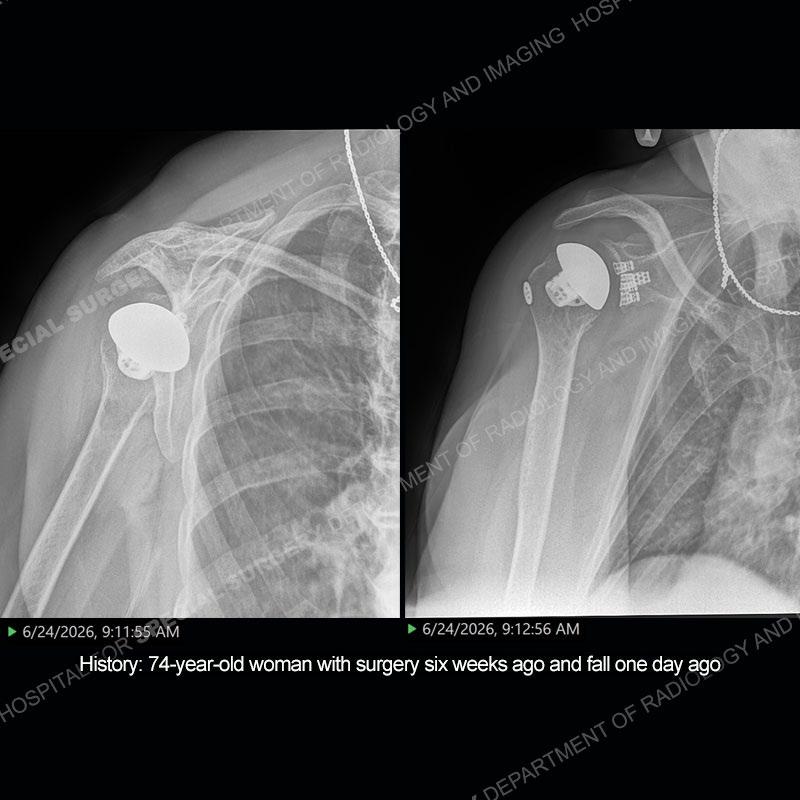
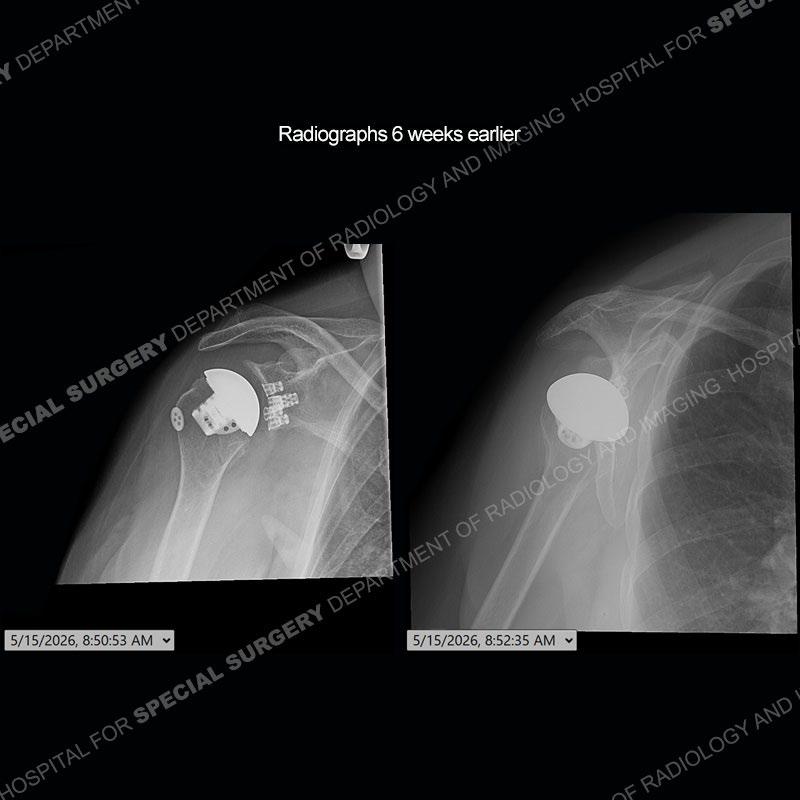
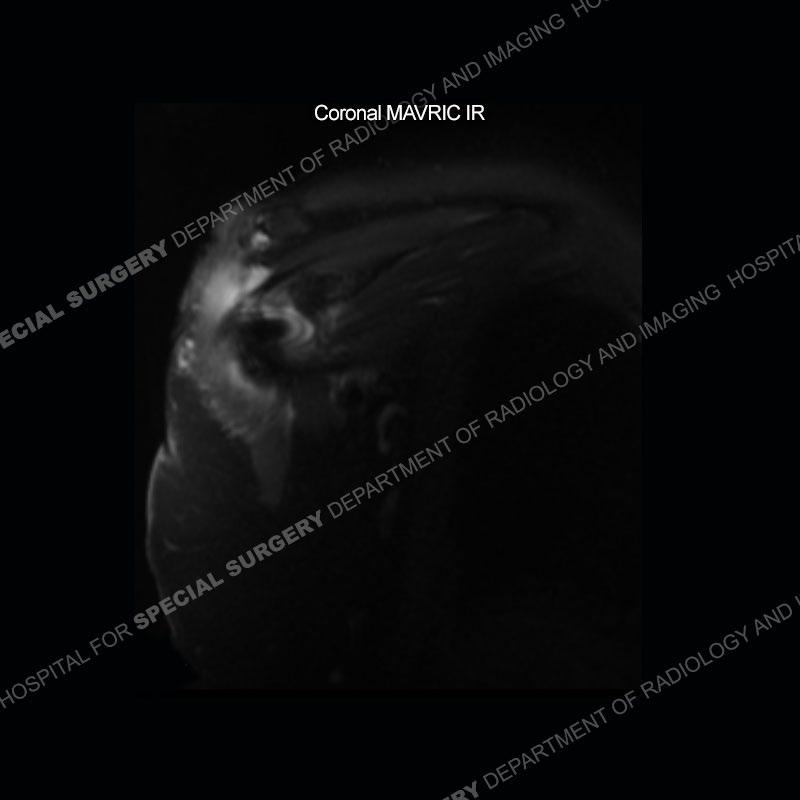
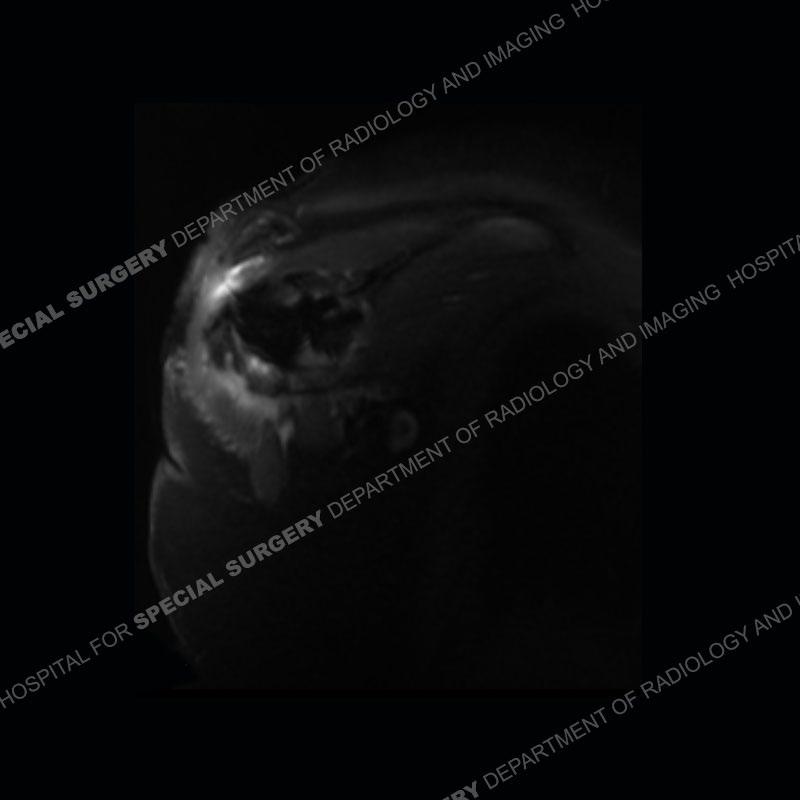
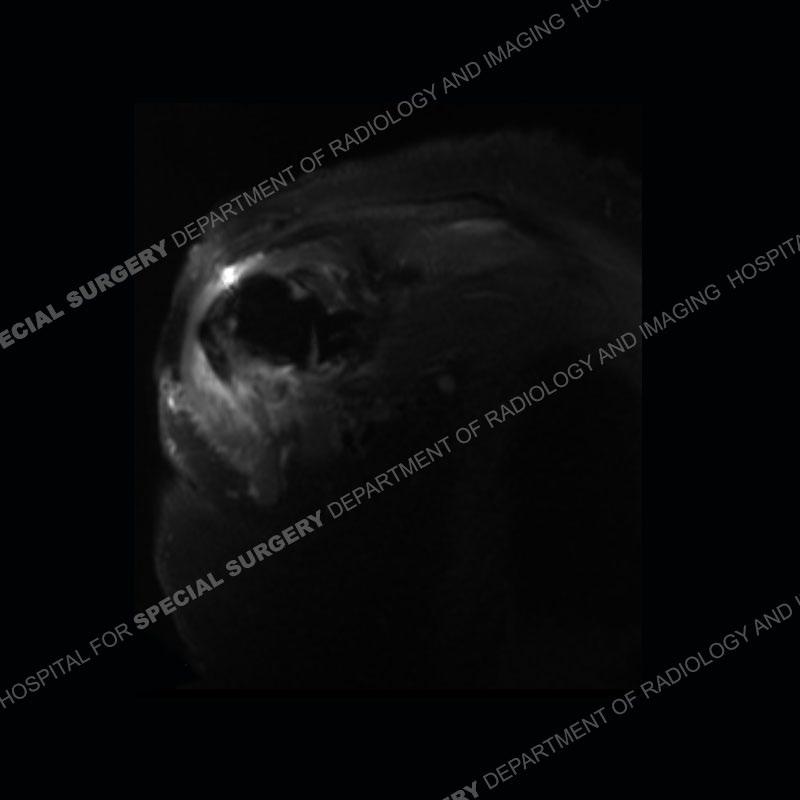
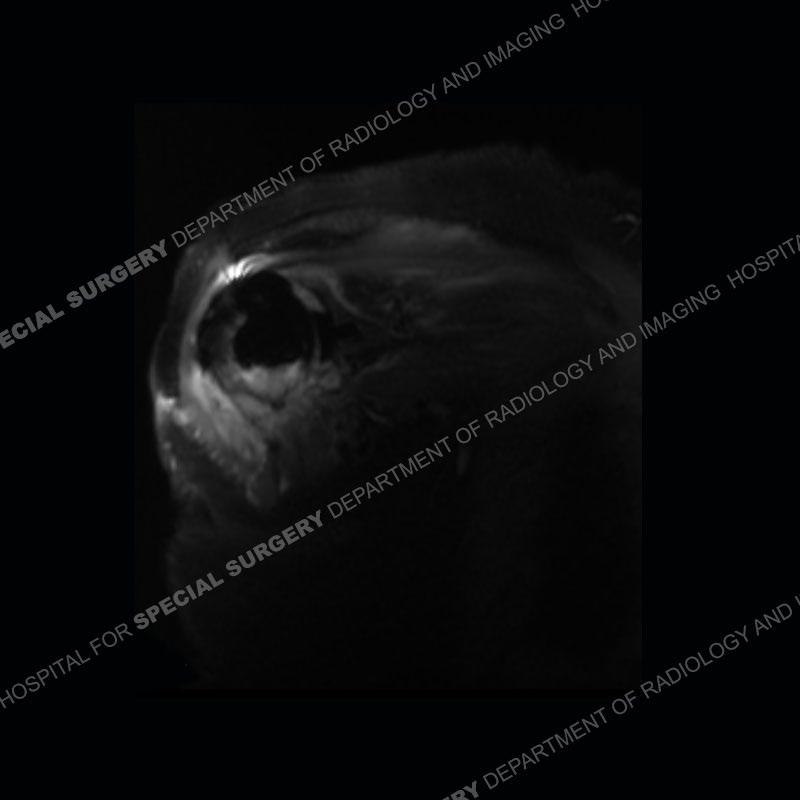
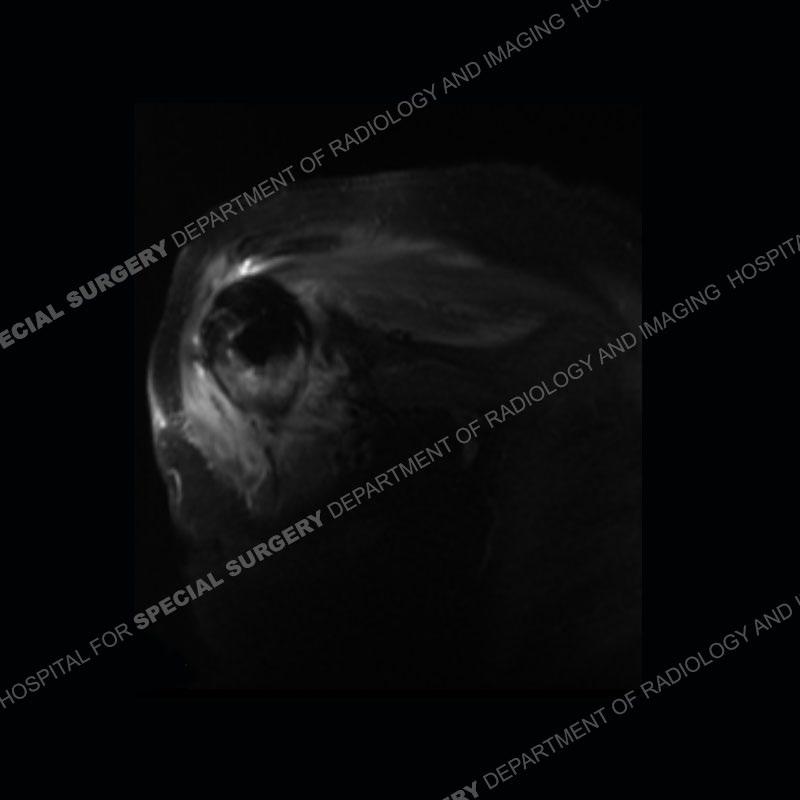
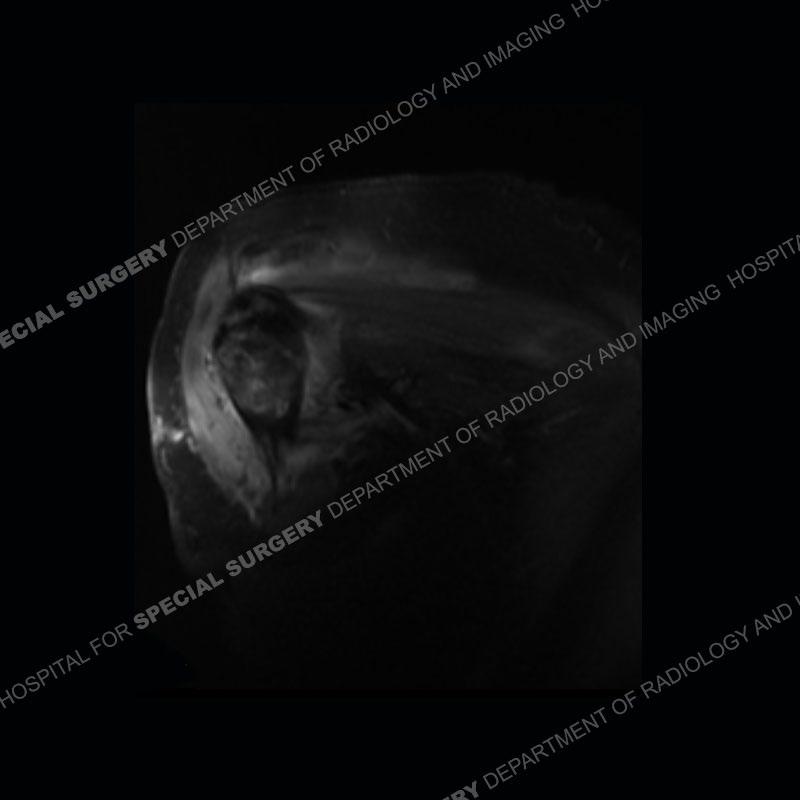
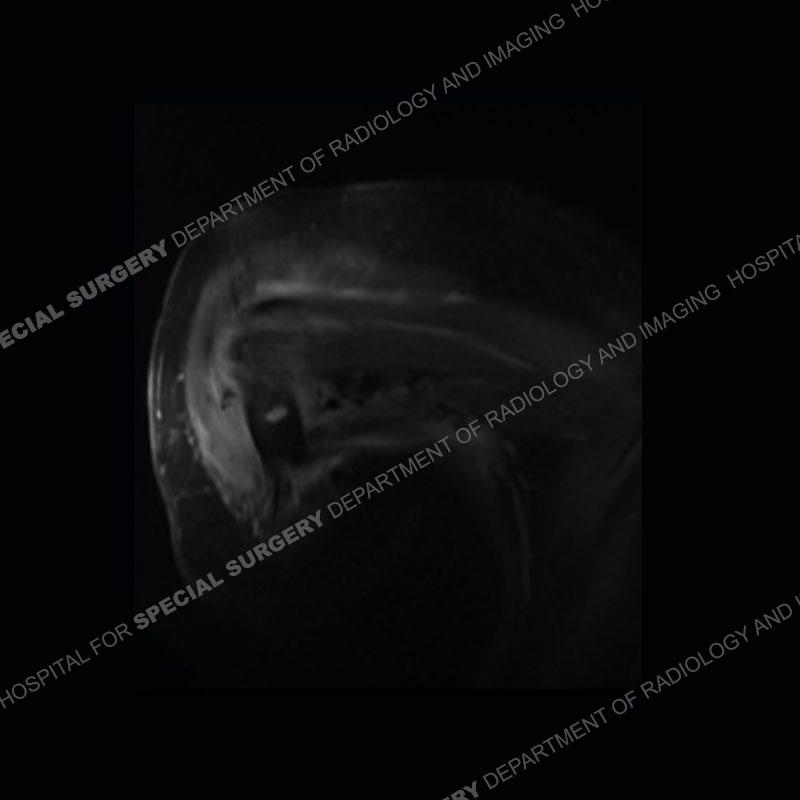
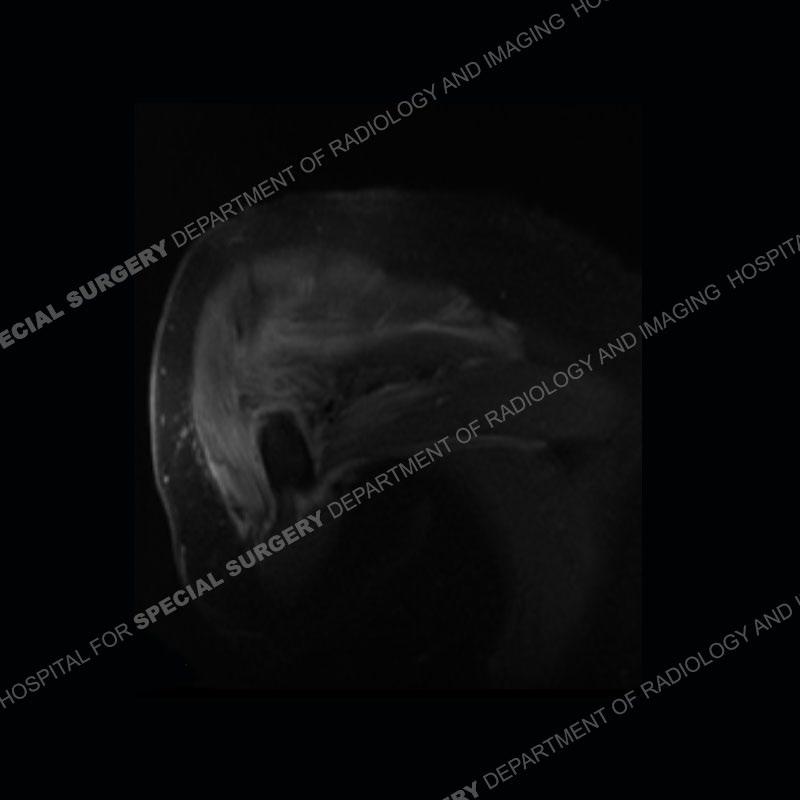
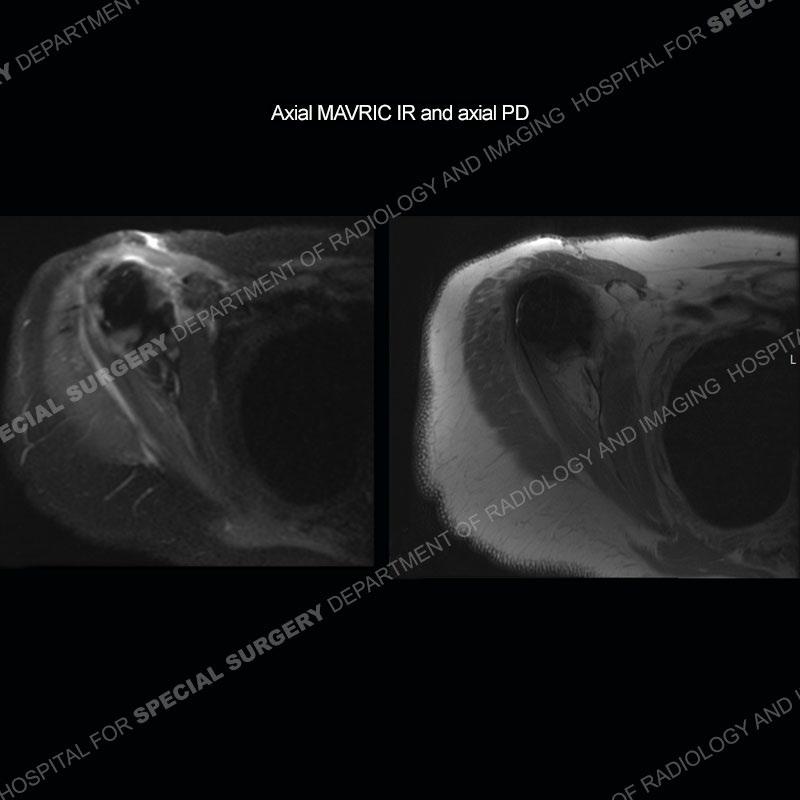
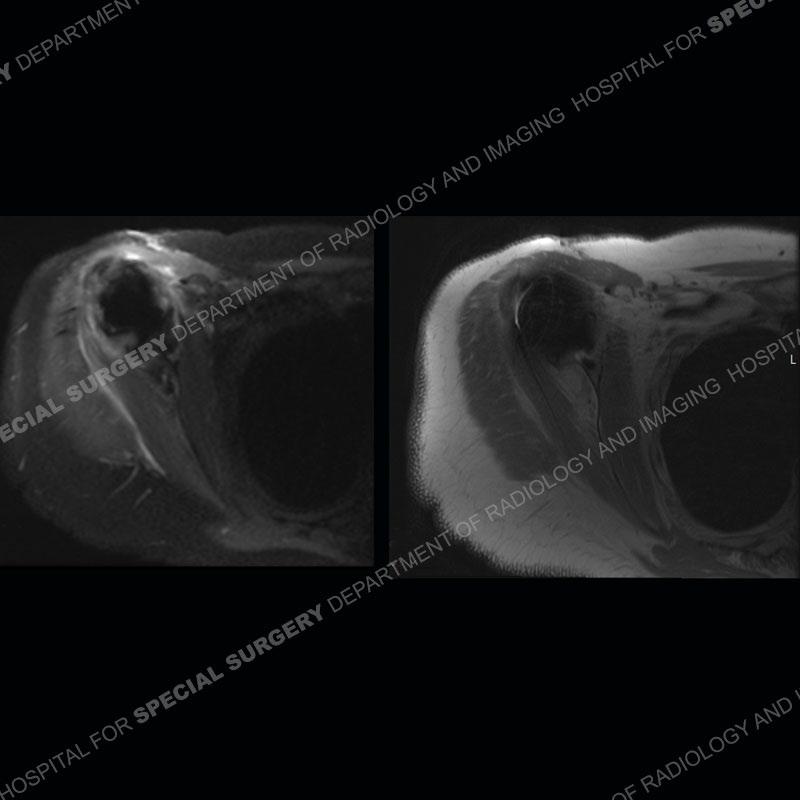
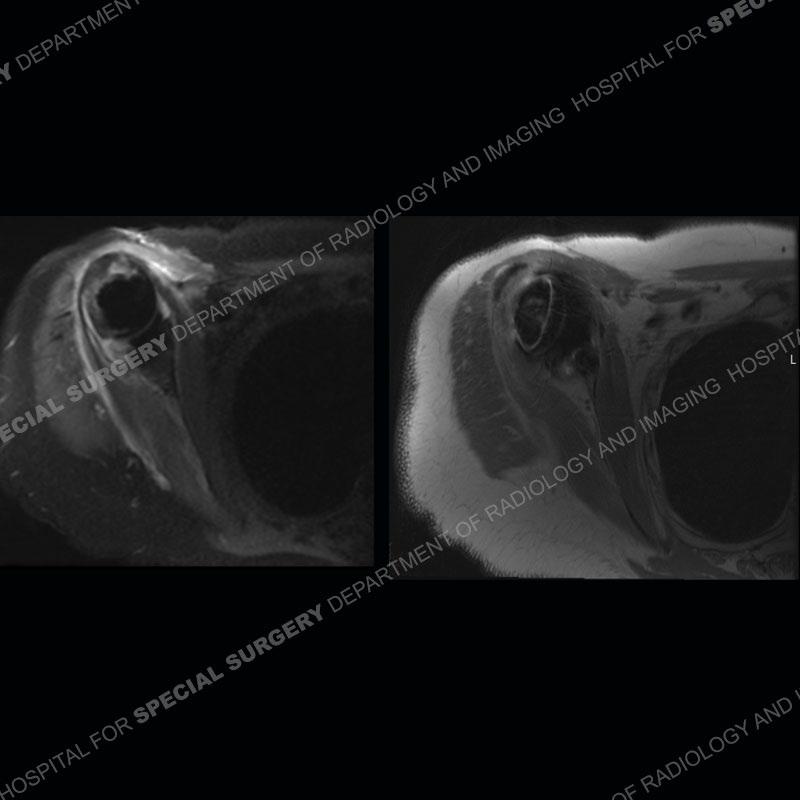
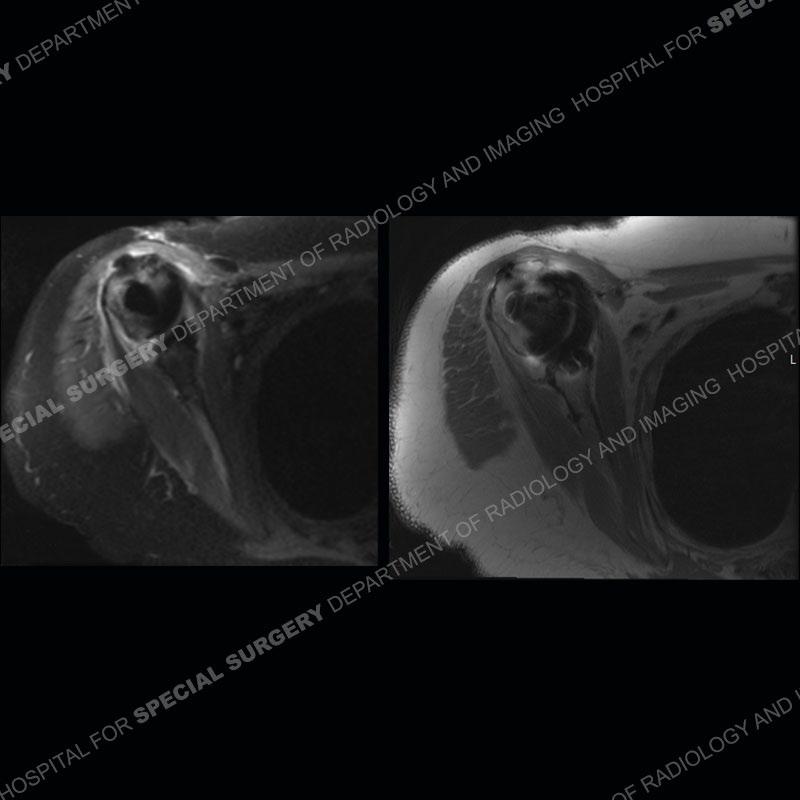
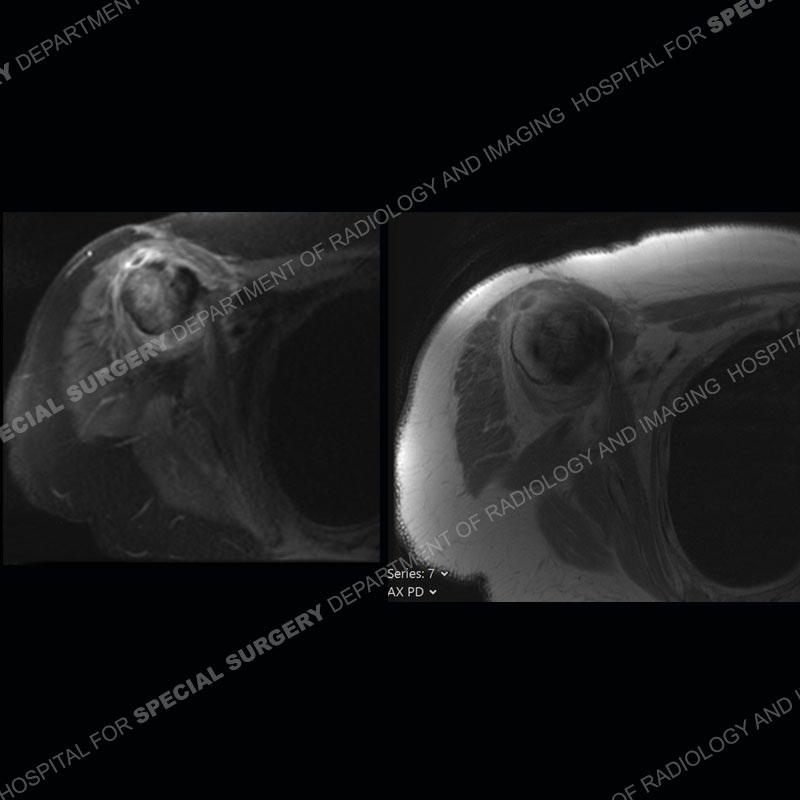
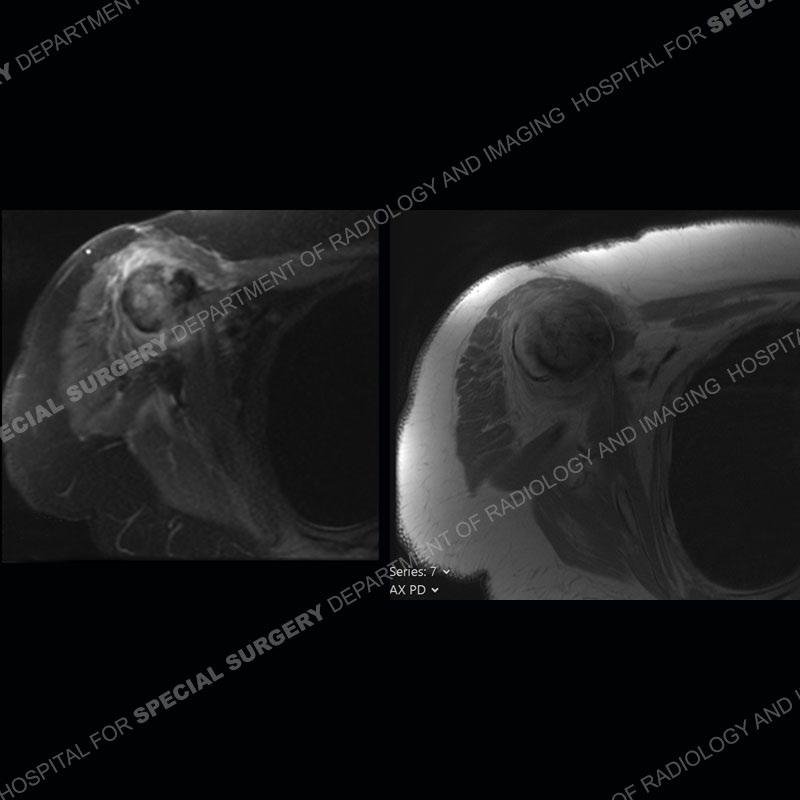
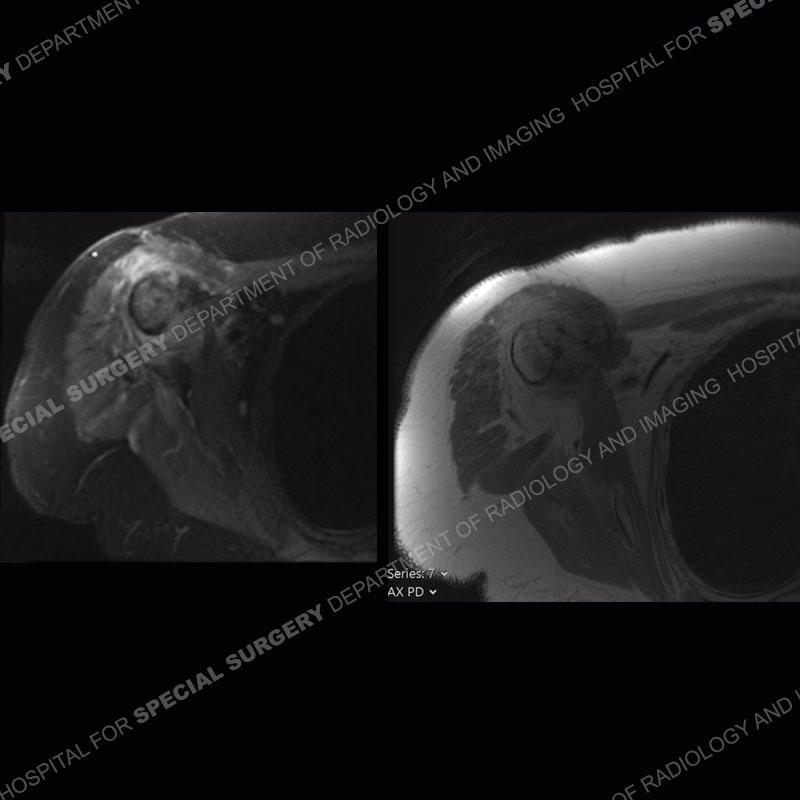
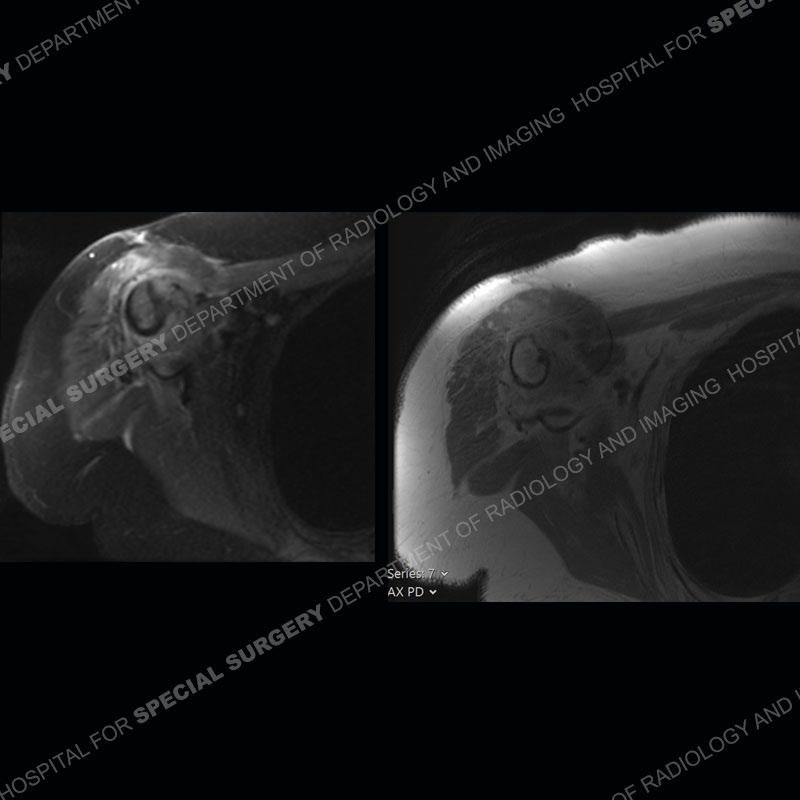
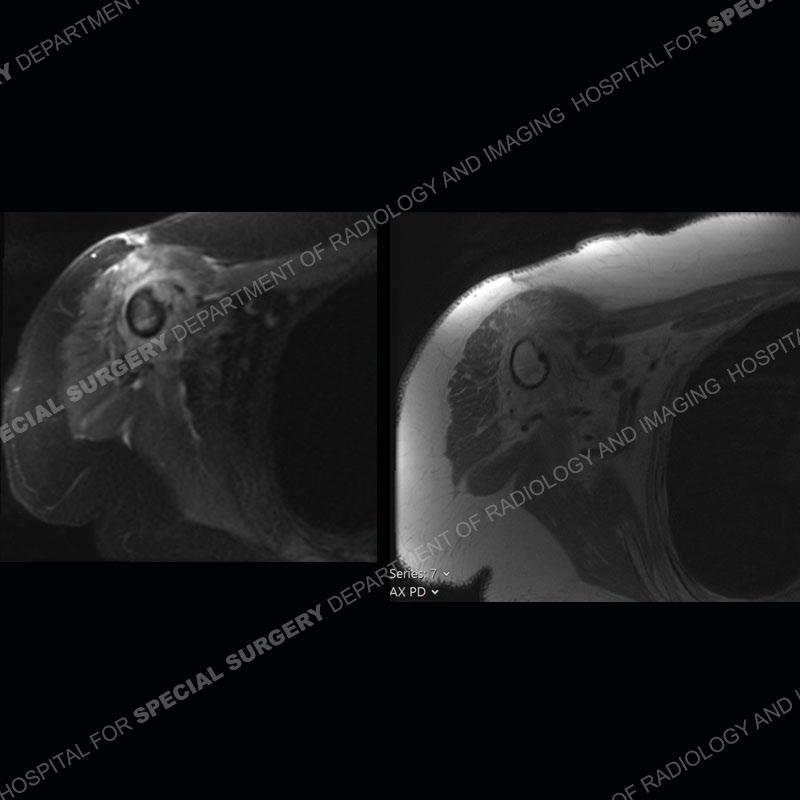
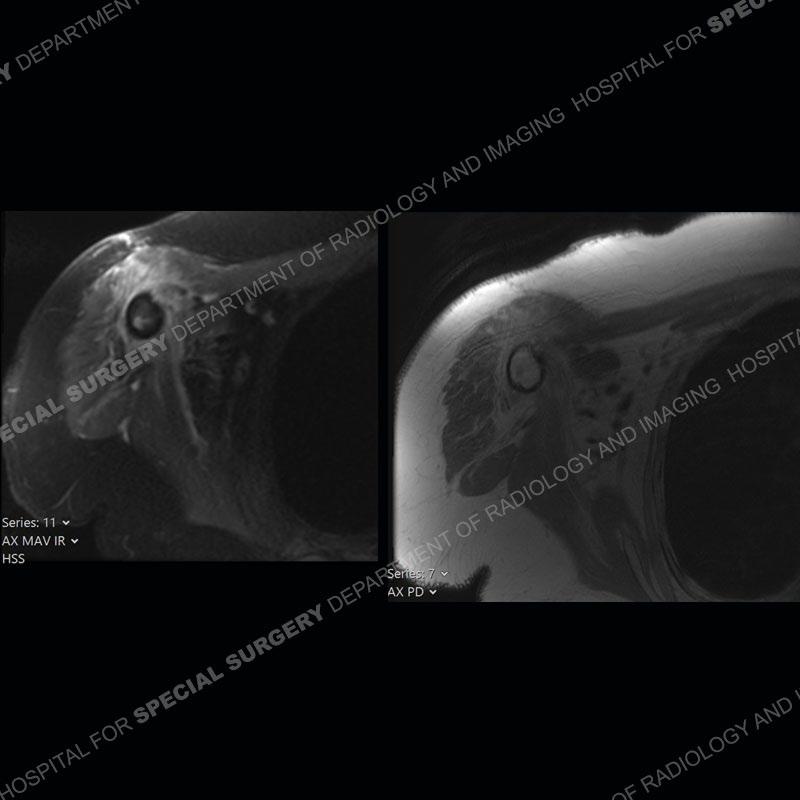
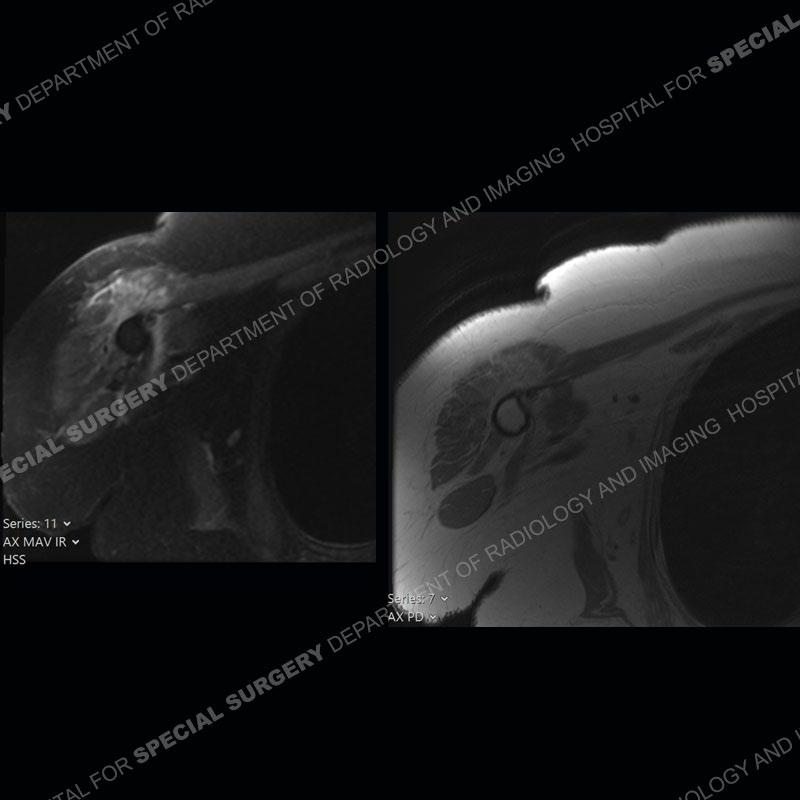
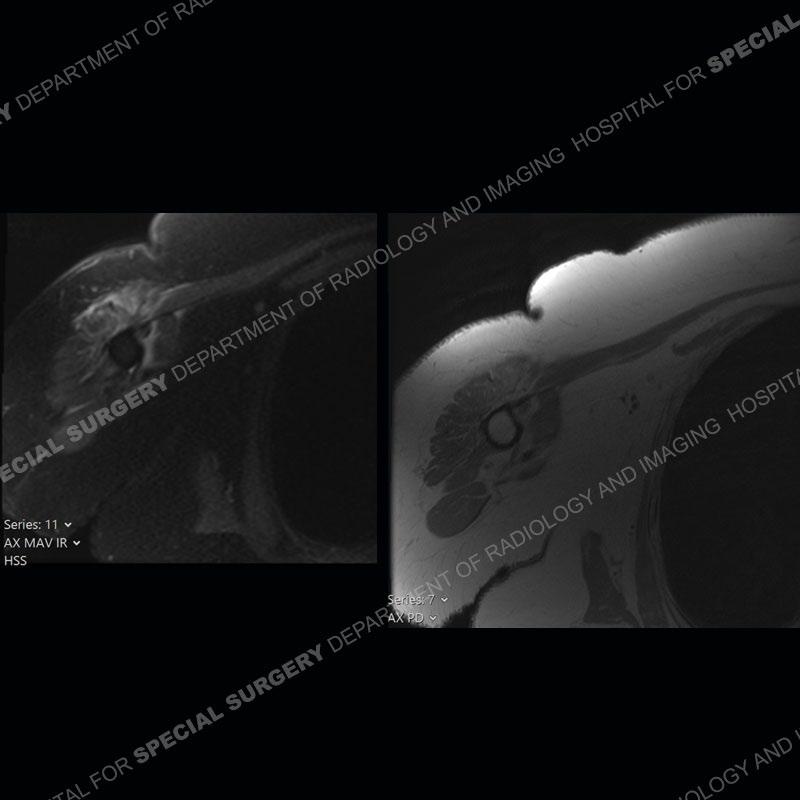
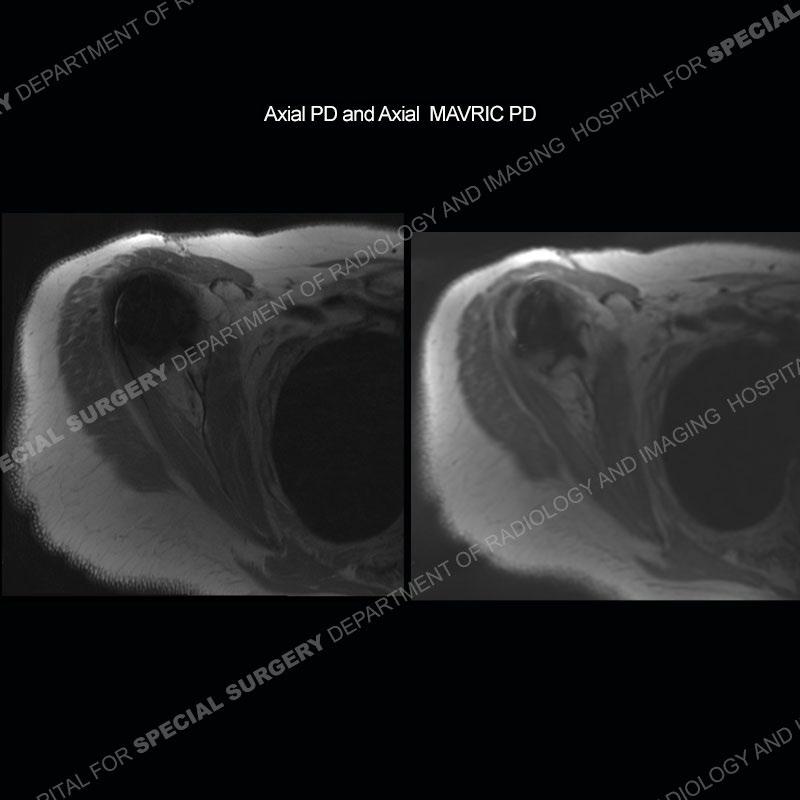
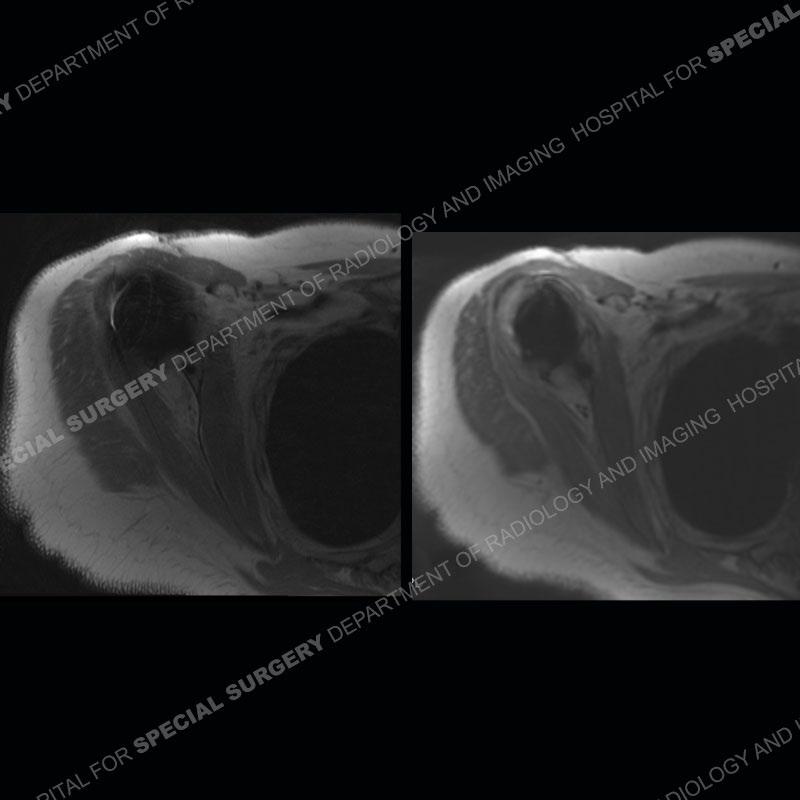
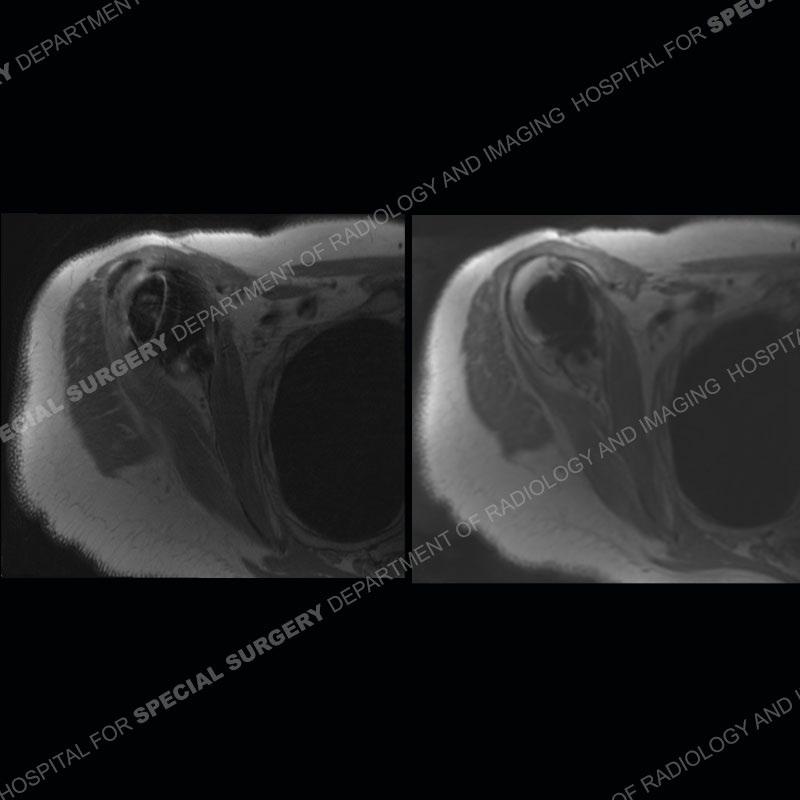
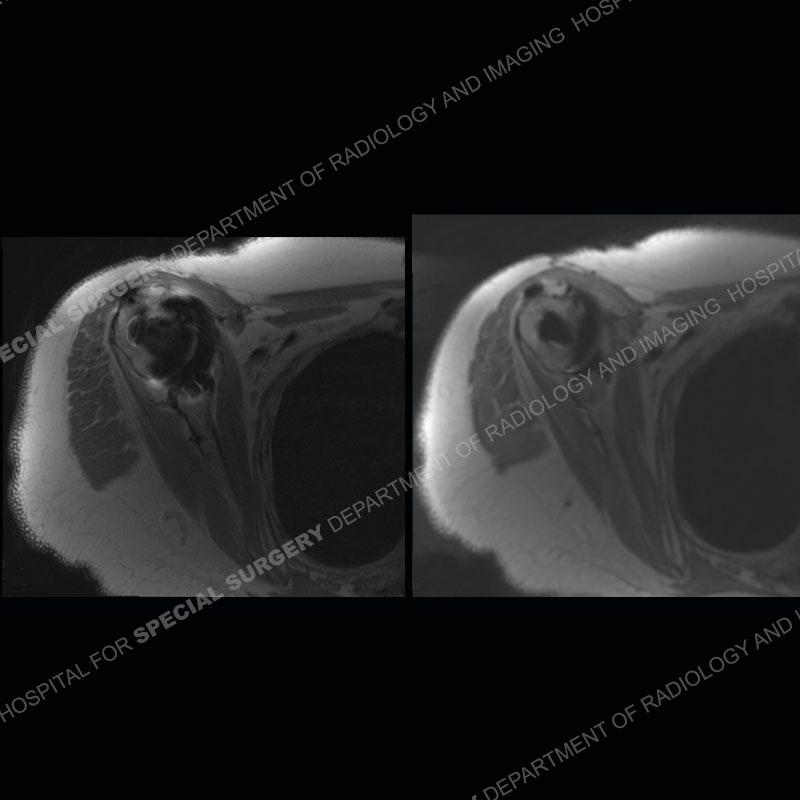
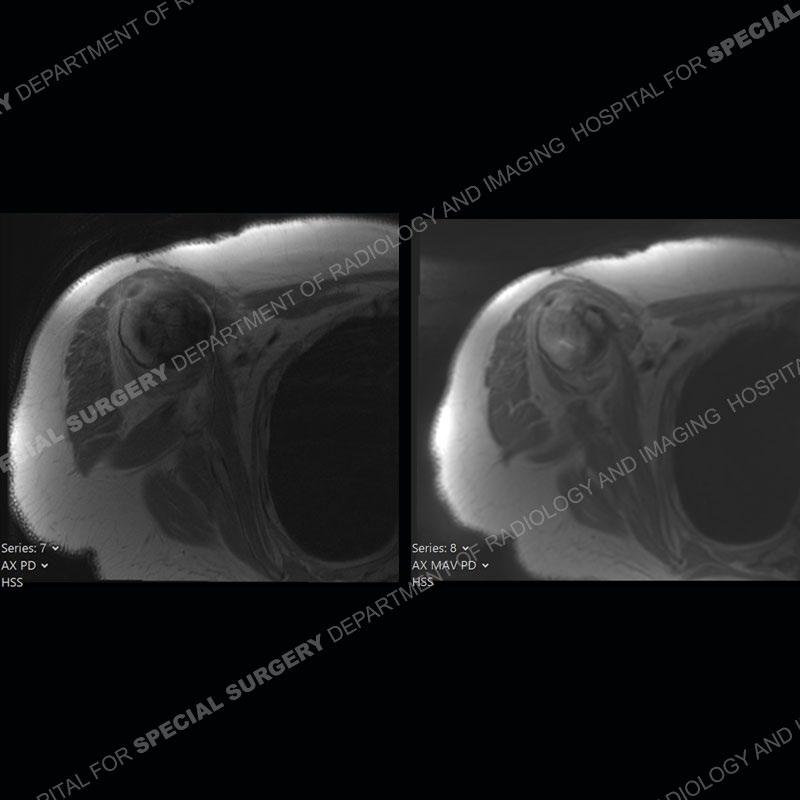
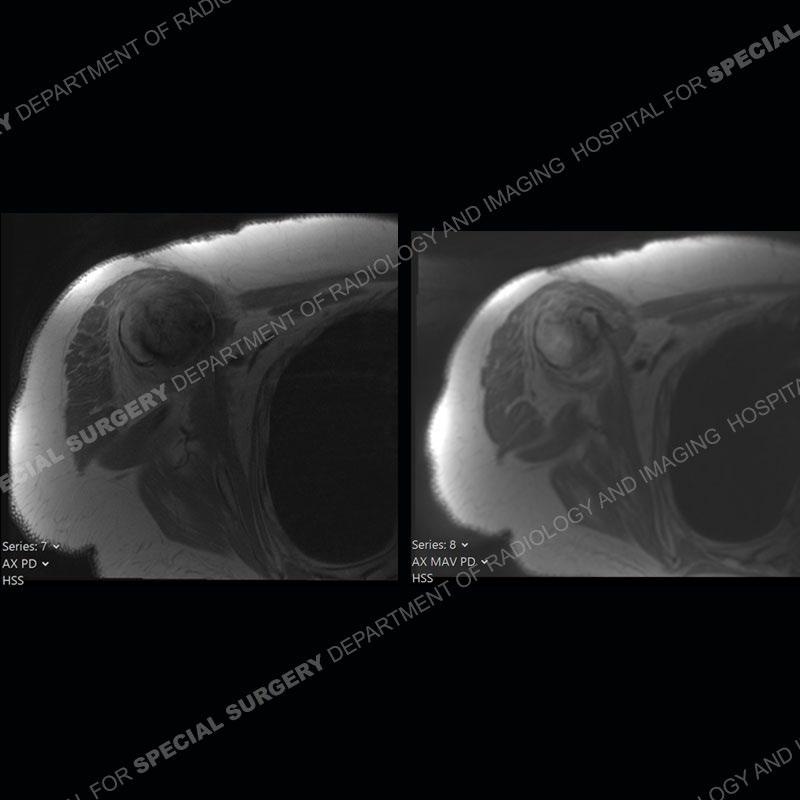
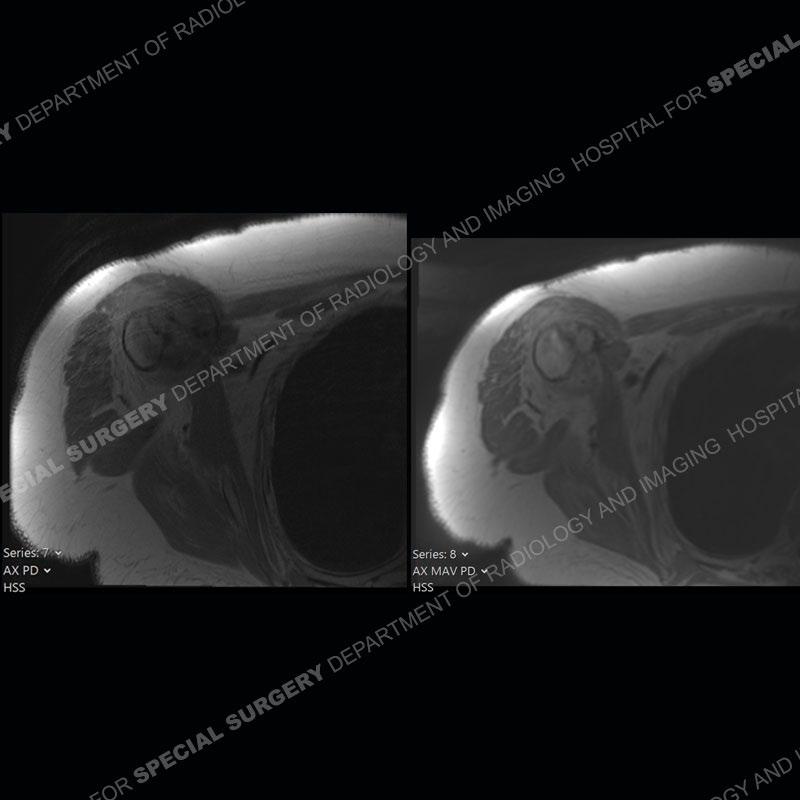
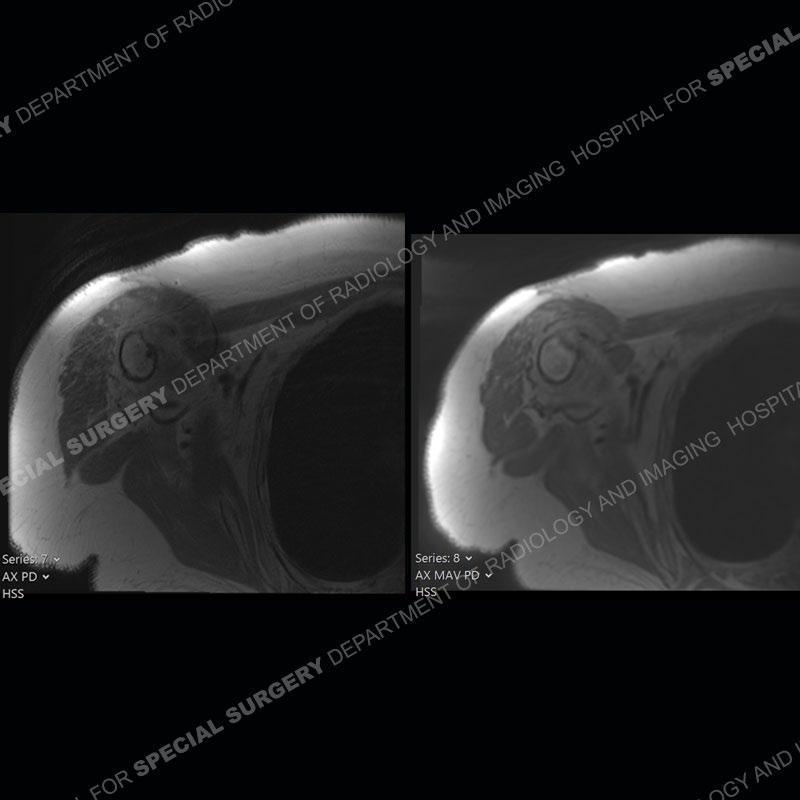
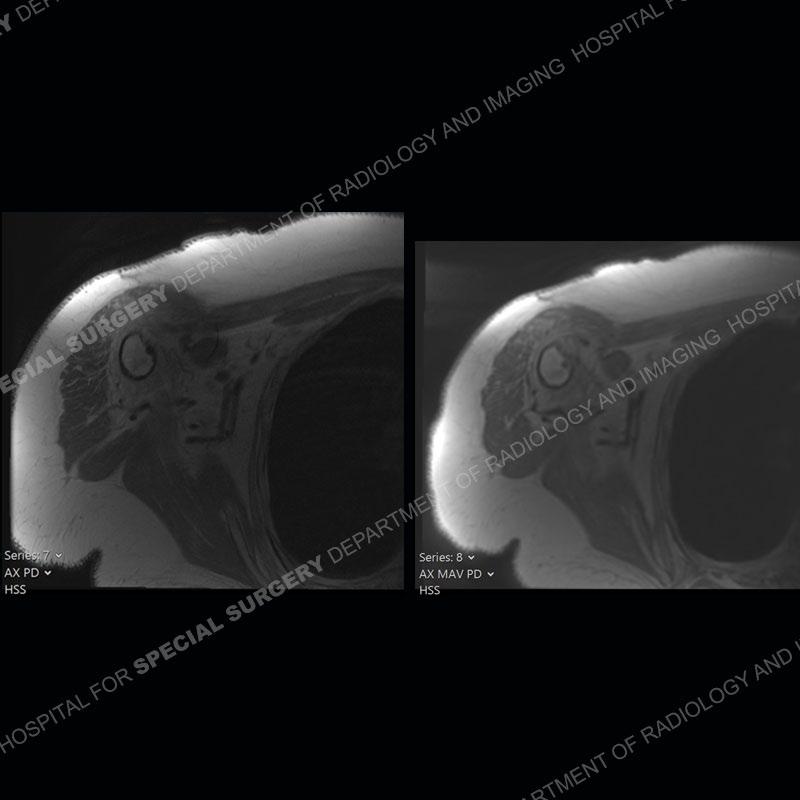
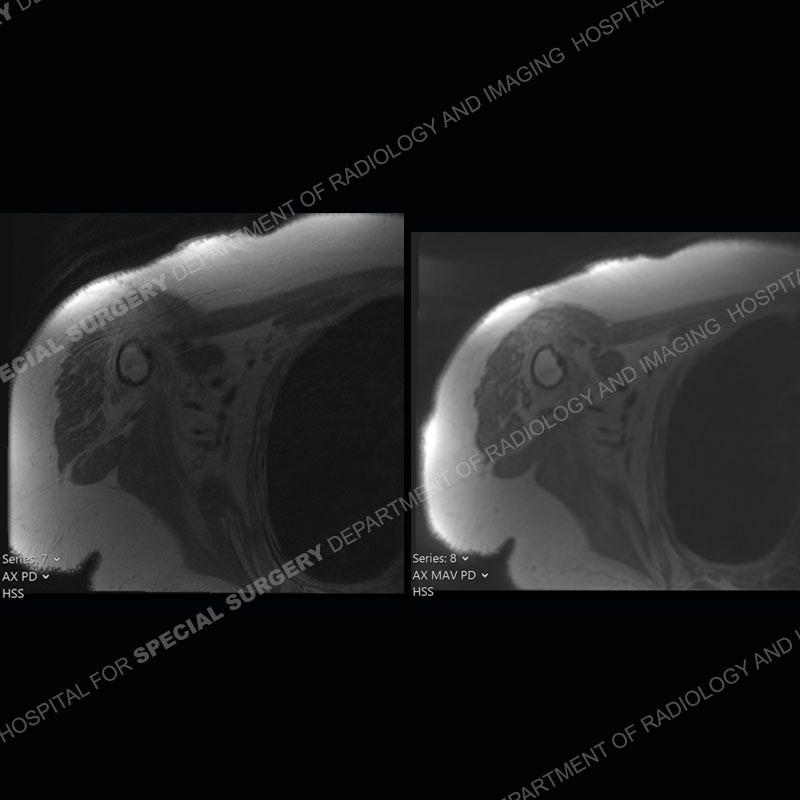
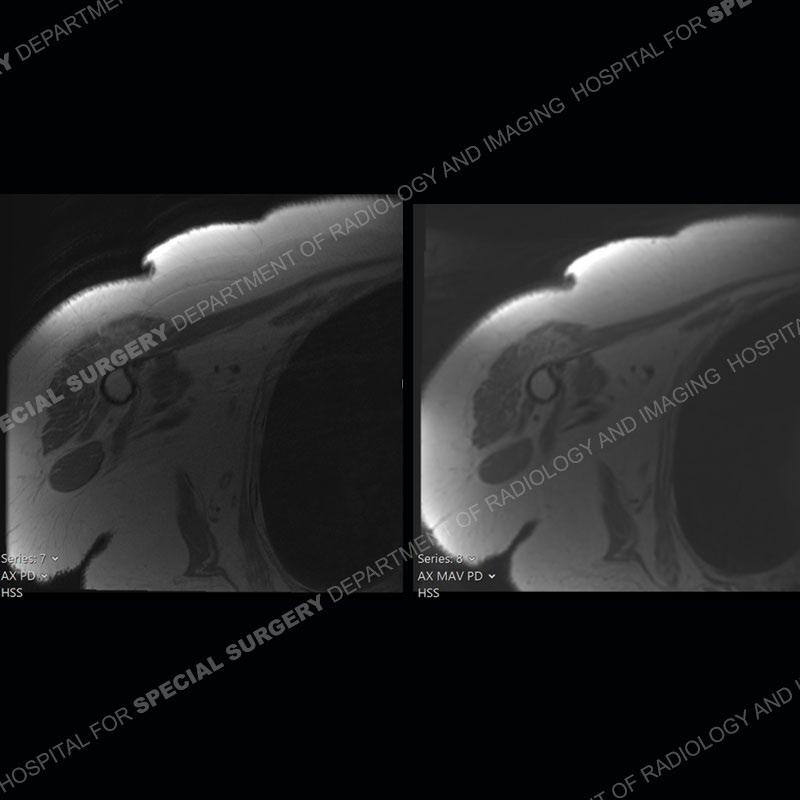
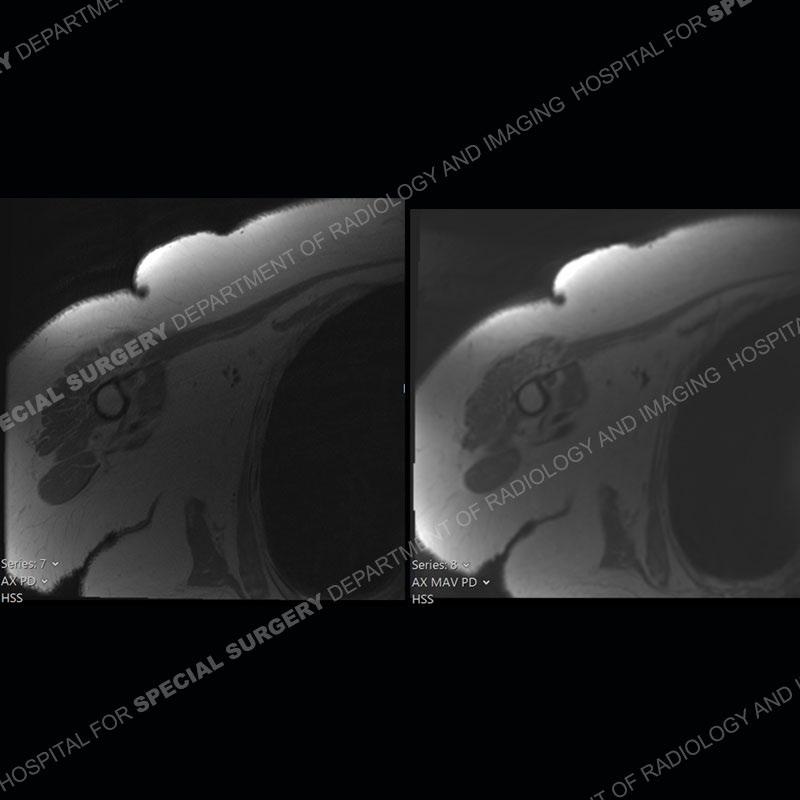
The radiographs demonstrate a stemless total shoulder arthroplasty. Between the two sets of radiographs, no change is seen and no fracture is identified. A button plate is present of the proximal humerus. On the IR pulse sequences, there is a moderate amount of edema in the bone and soft tissue which for the most part would be in keeping with a relatively recent shoulder arthroplasty. There is however a slightly greater amount of edema about the anterior portion of the proximal humerus and adjacent soft tissue. There is an irregular architecture of the lesser tuberosity with low signal bands adjacent to the tuberosity. The findings about the lesser tuberosity are seen much more readily on the MAVRIC pulse sequence as compared to the optimized PD sequence in the setting of arthroplasty.

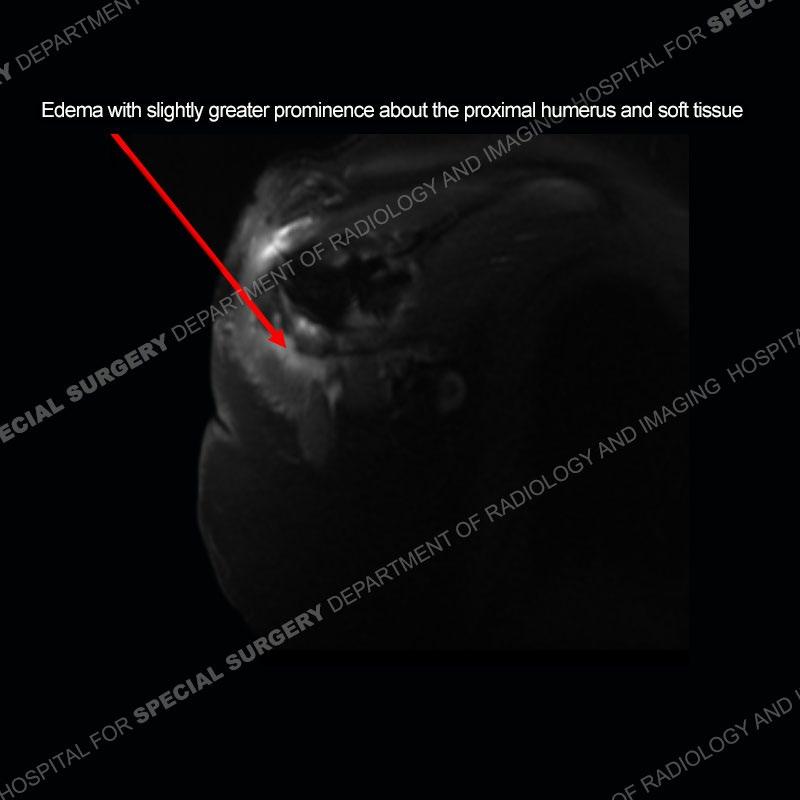
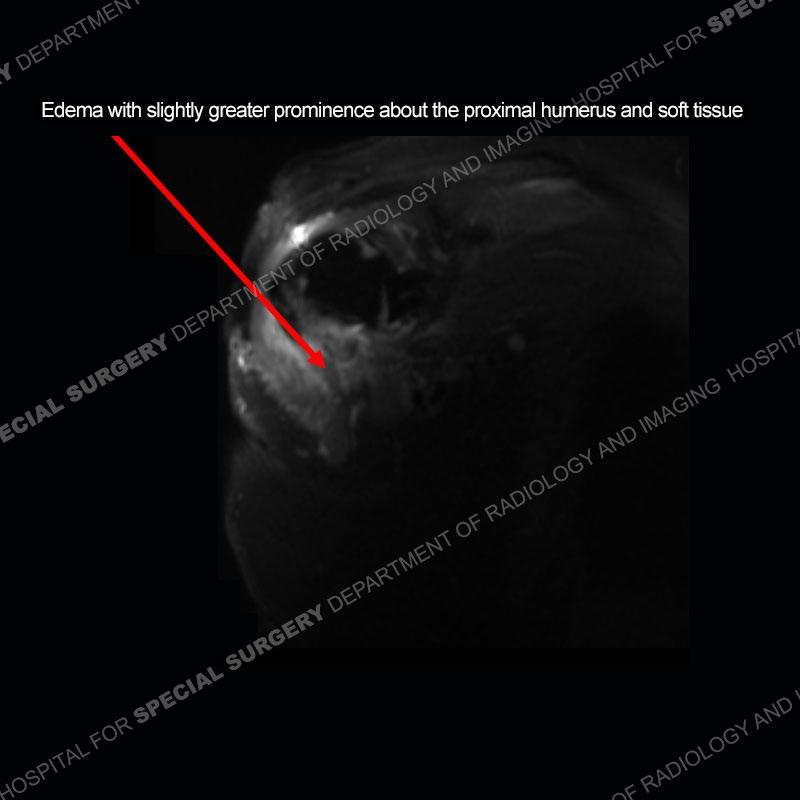
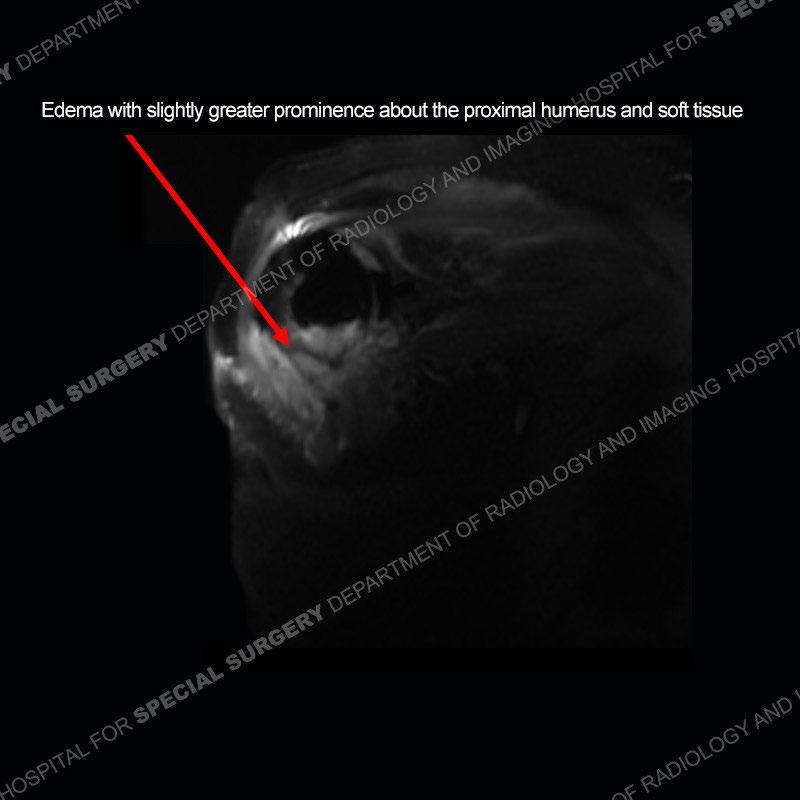
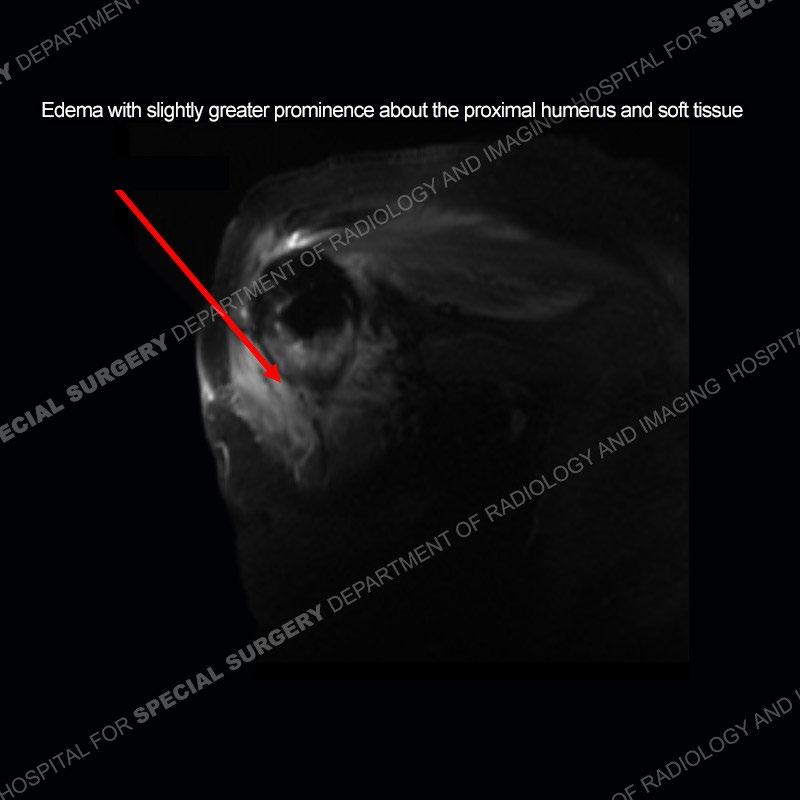
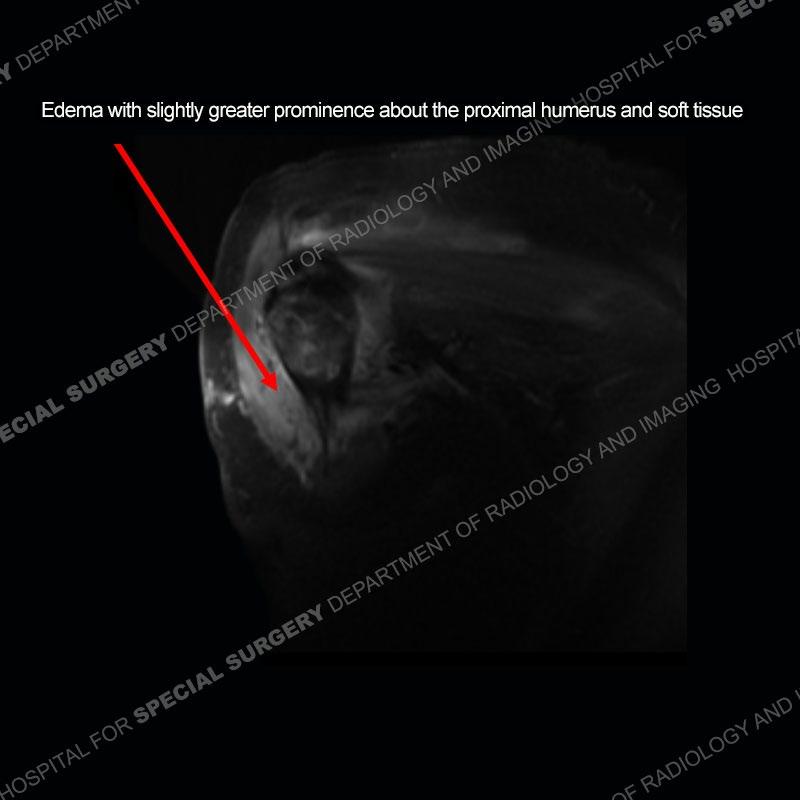
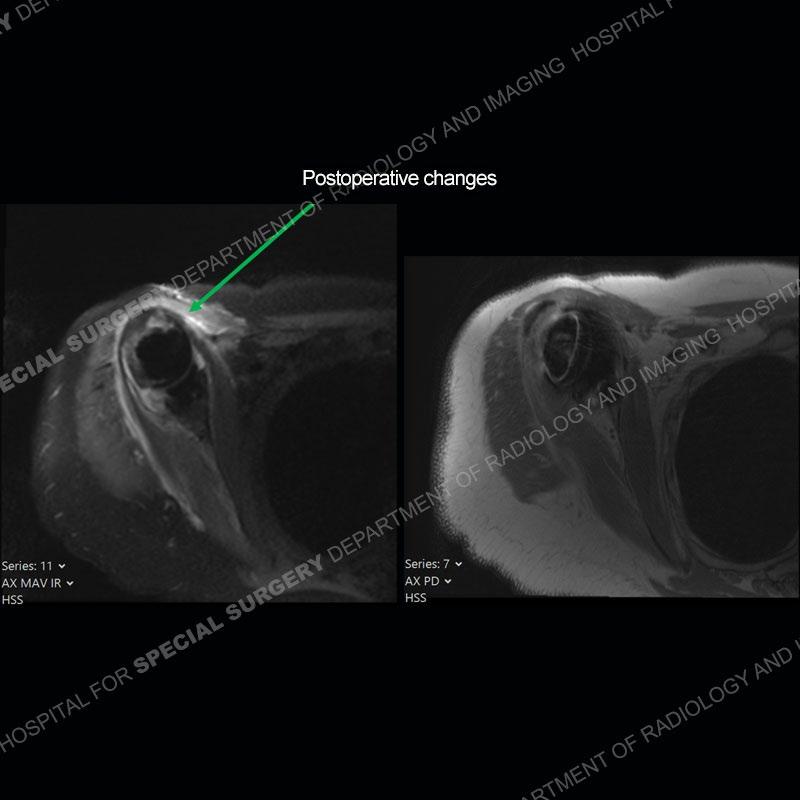
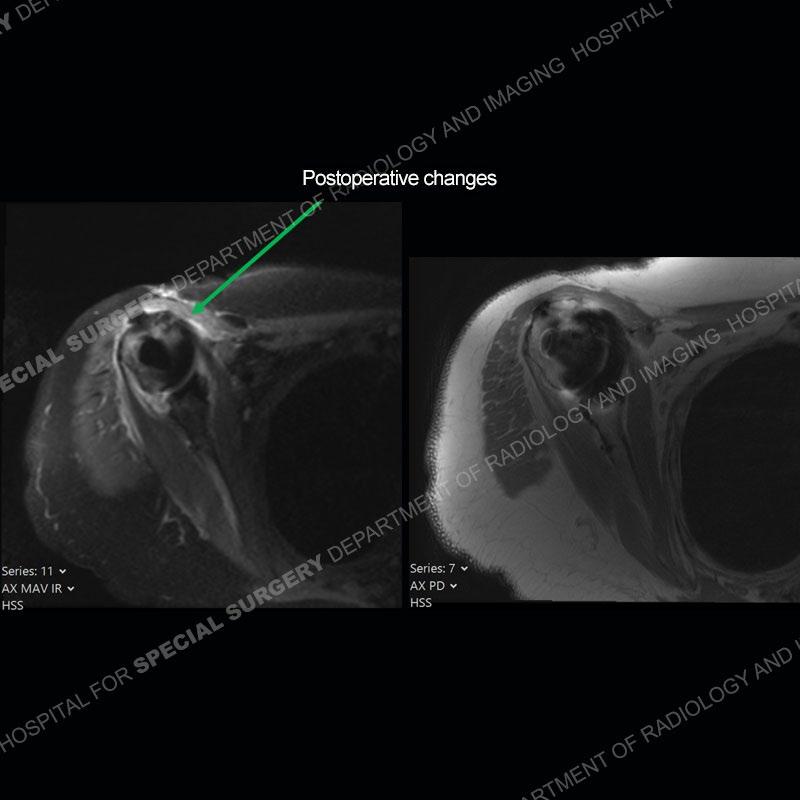
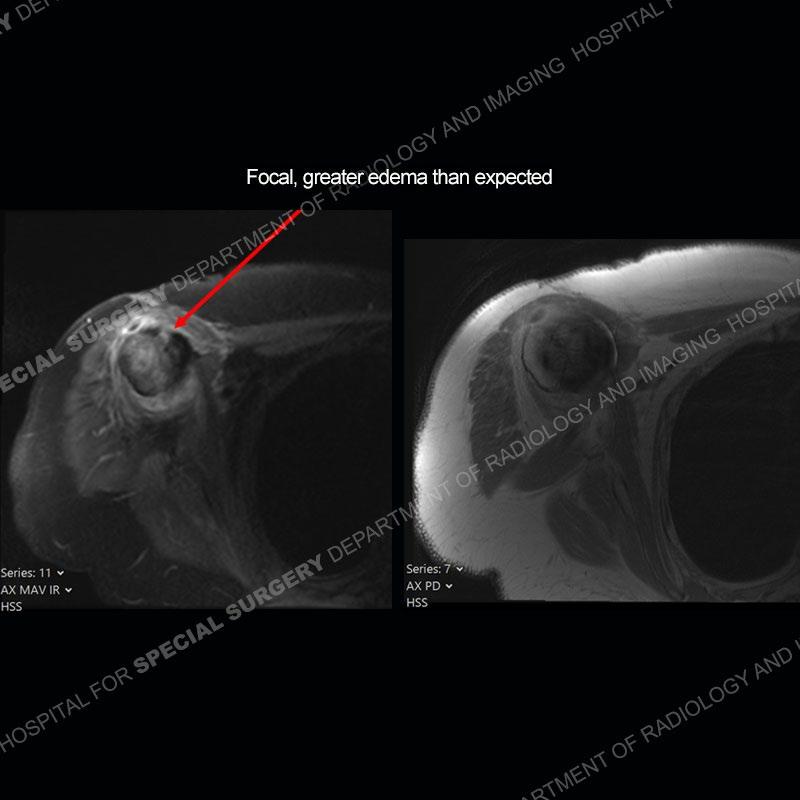
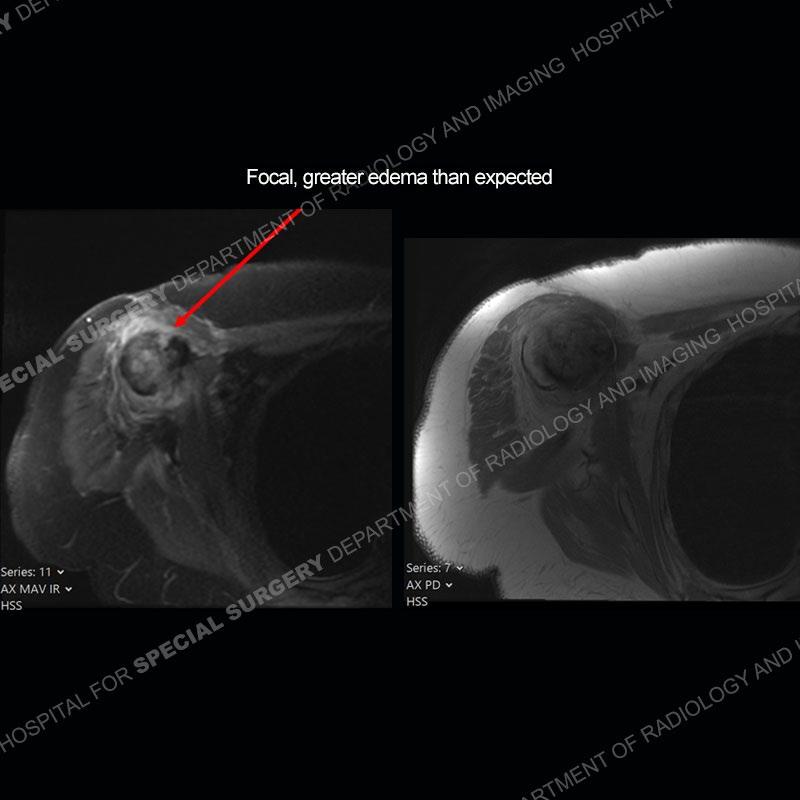
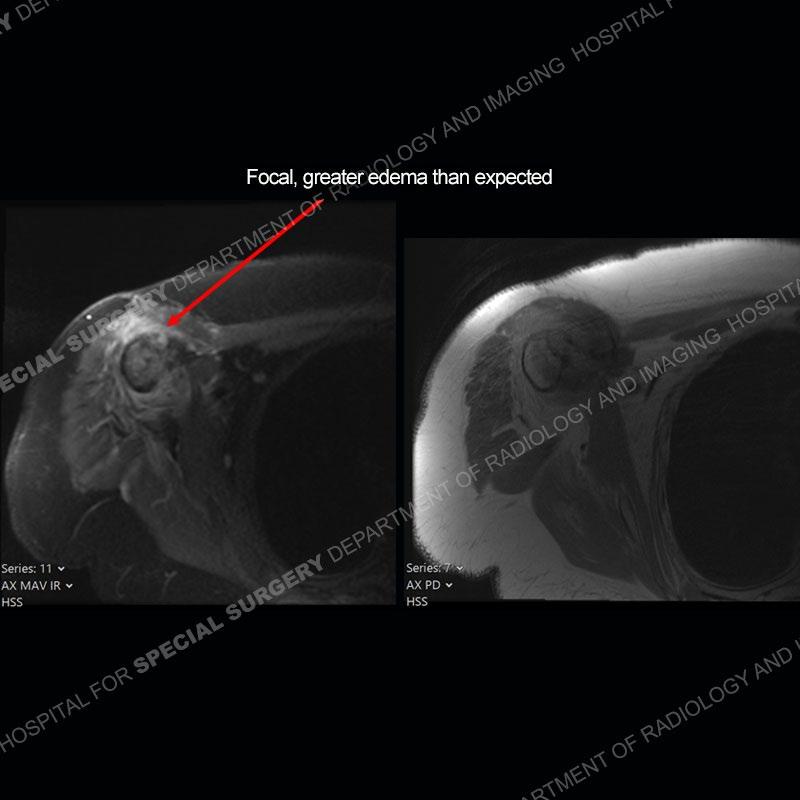
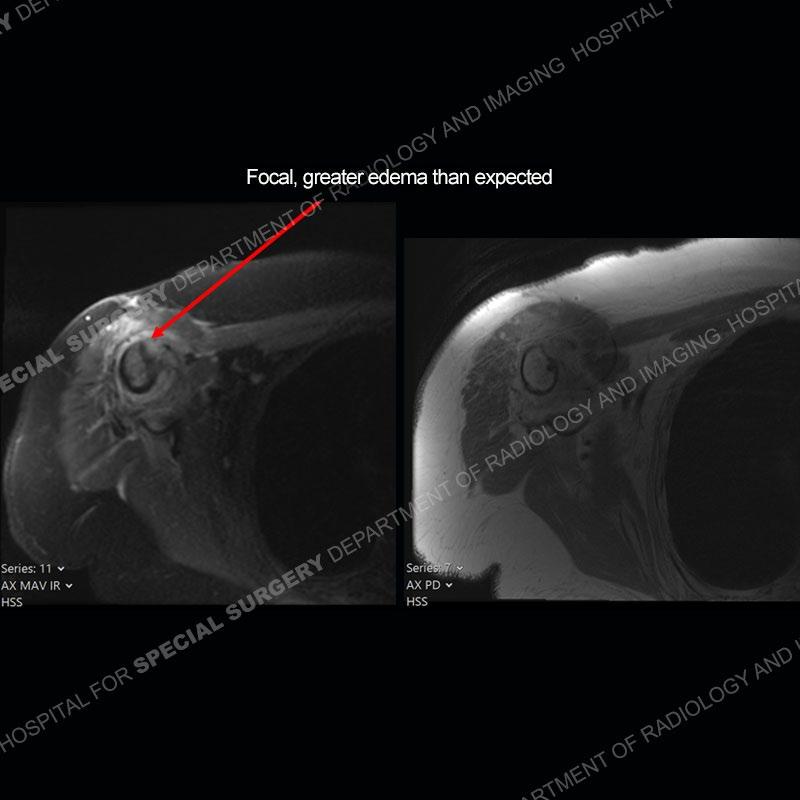
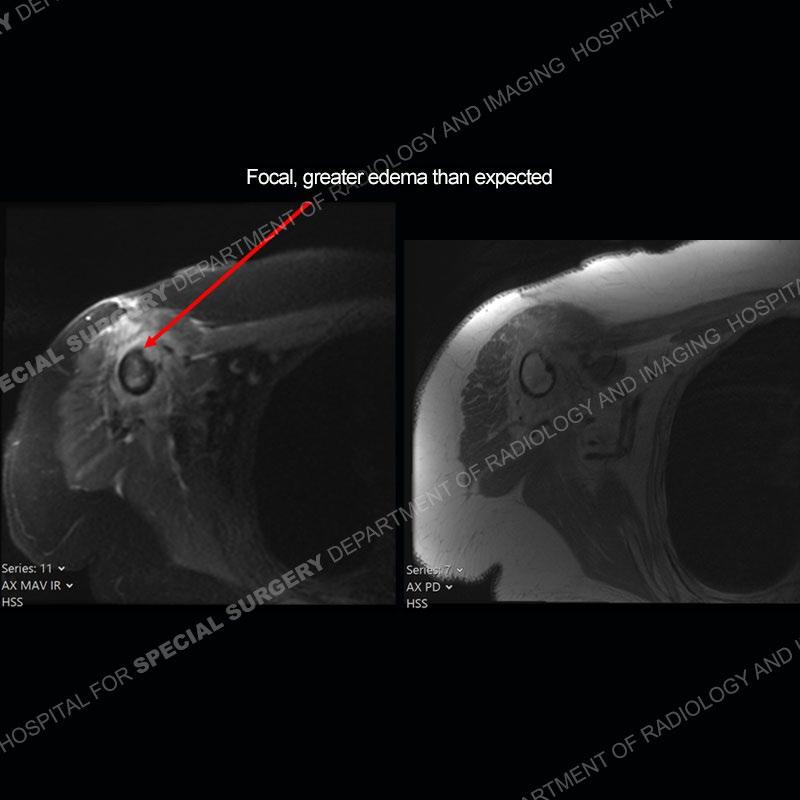
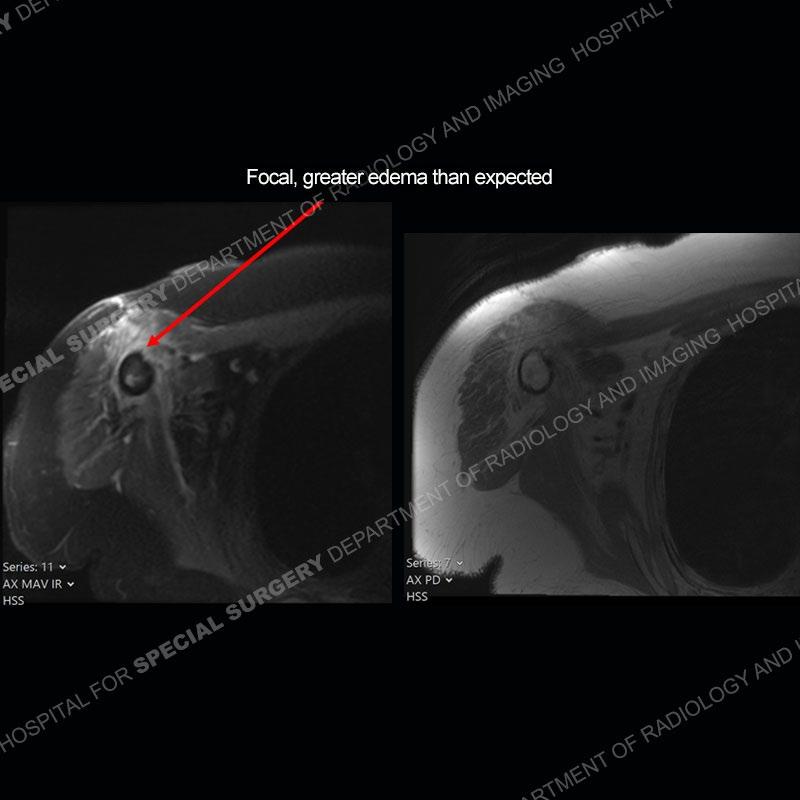
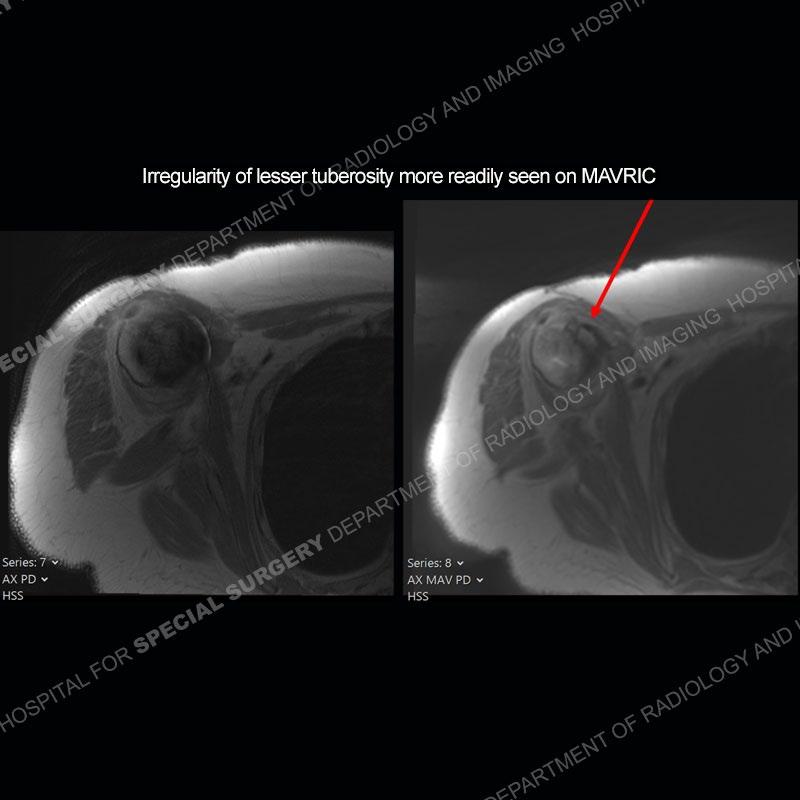
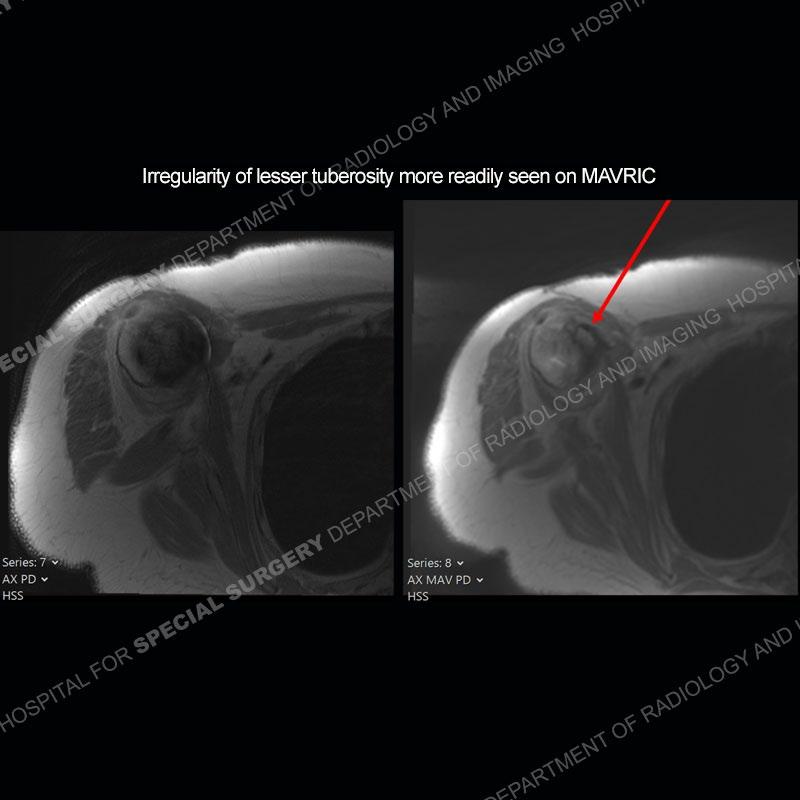
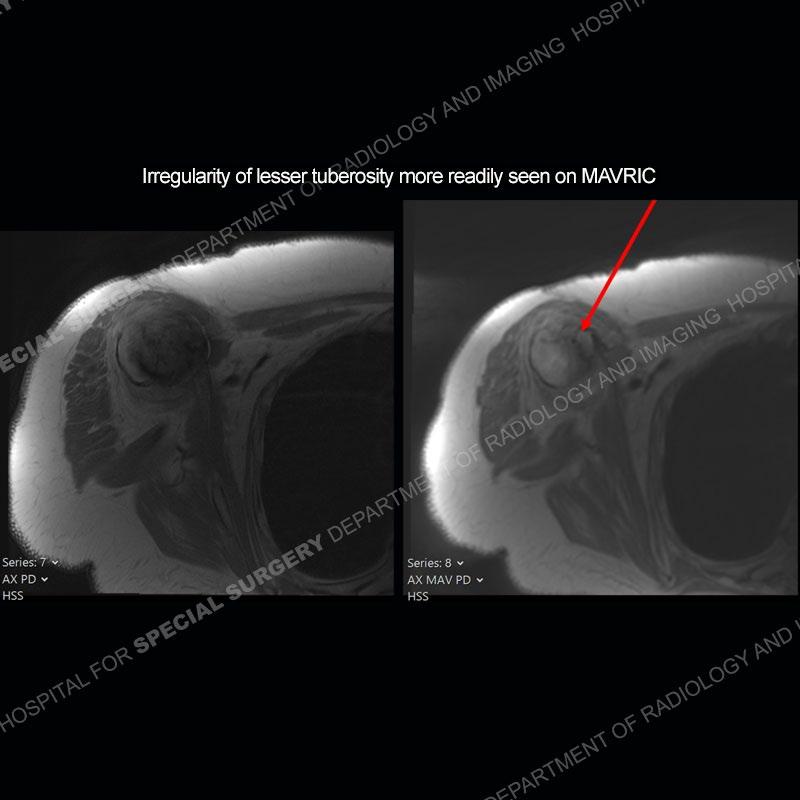
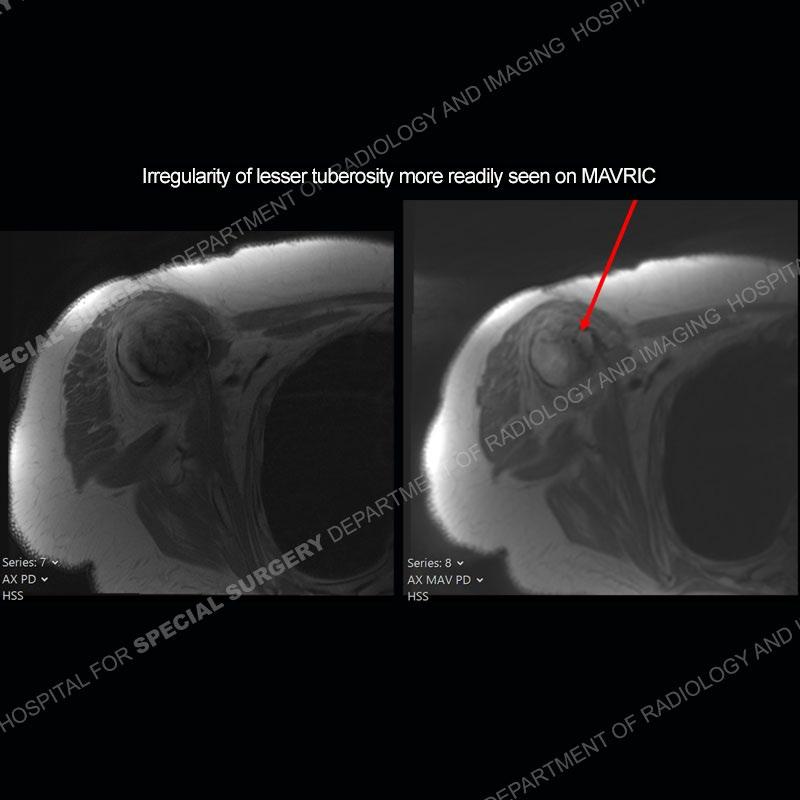
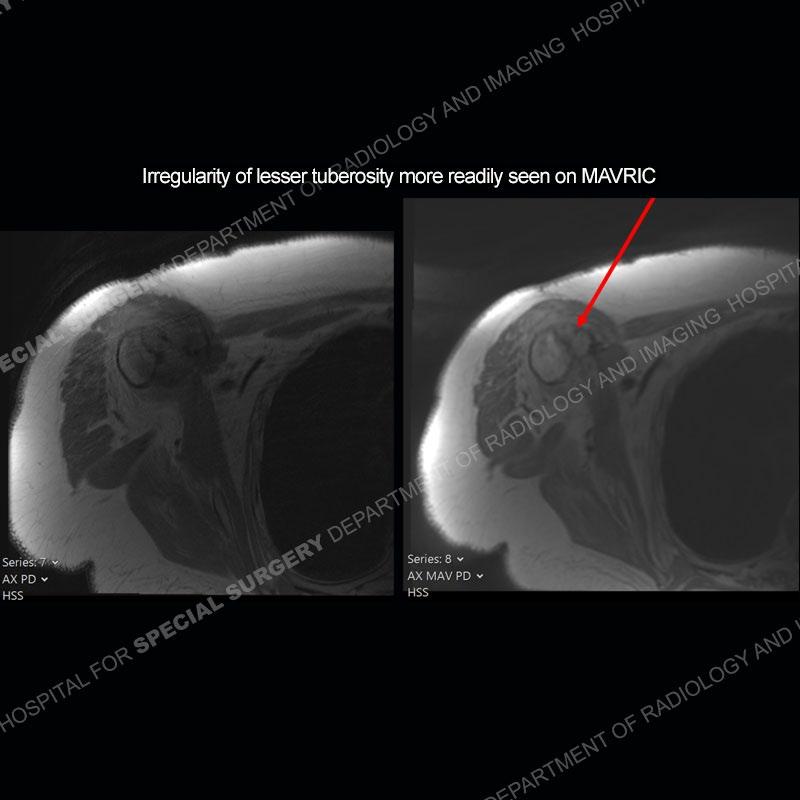
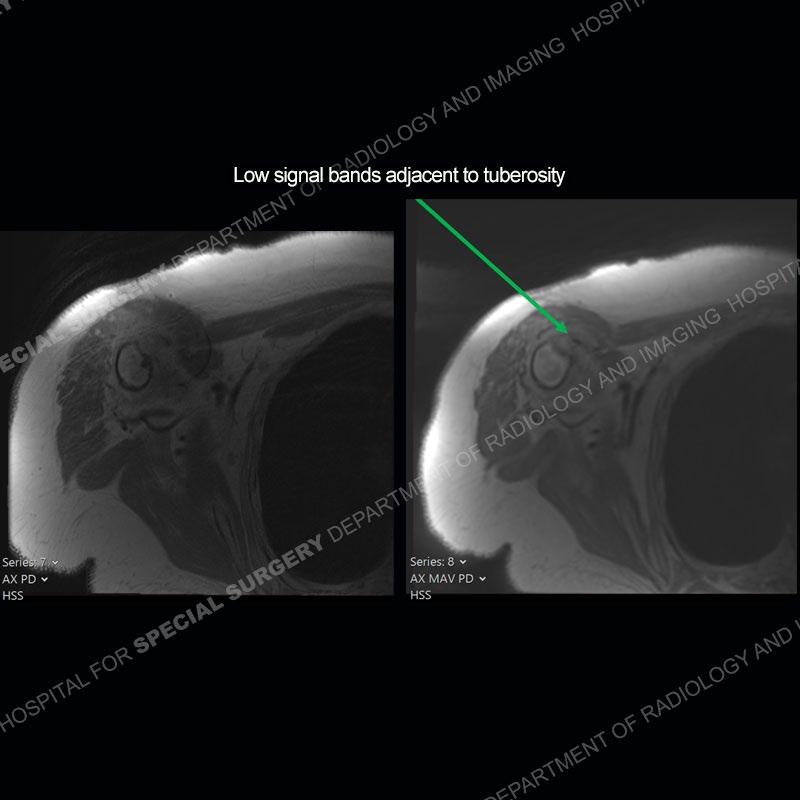
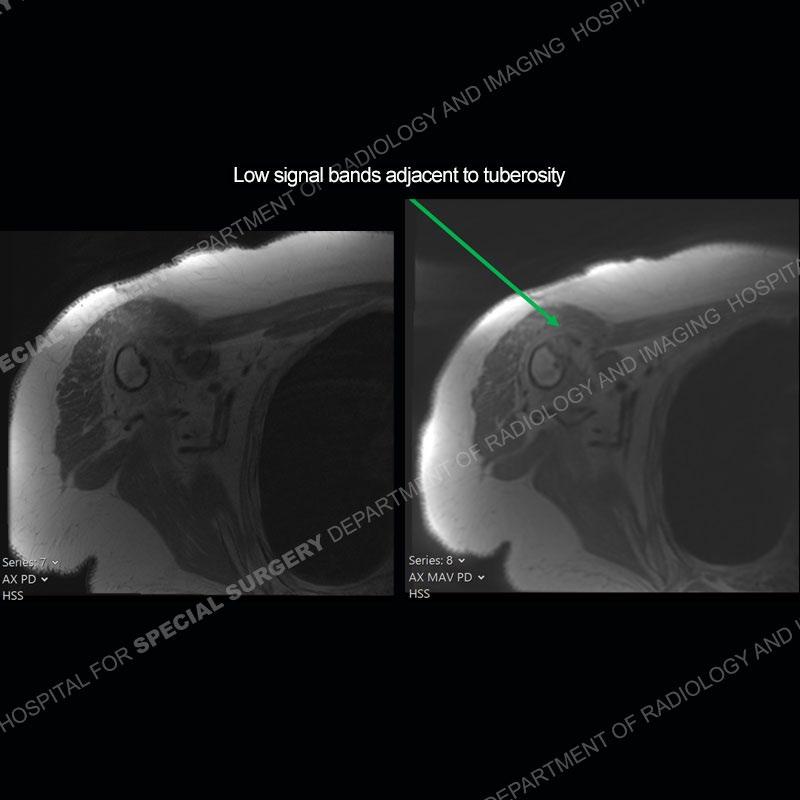
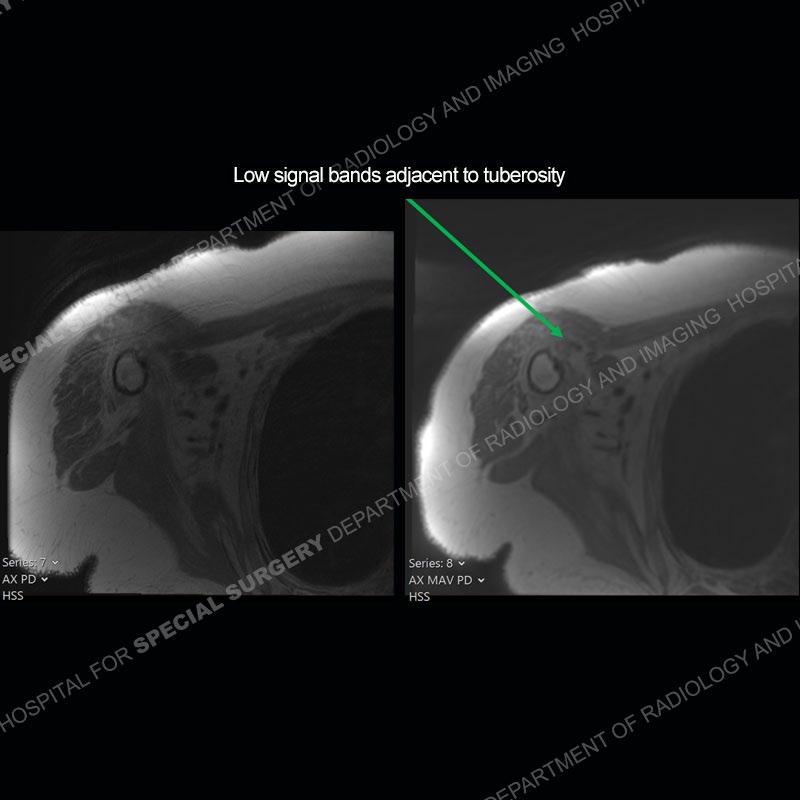
Diagnosis: Lesser Tuberosity Osteotomy Avulsion
During a shoulder arthroplasty, to gain access to the joint the subscapularis has to be addressed and then fixed. This can either be performed by a soft tissue procedure with fixation of the tendon or by a lesser tuberosity (LTO) with subsequent fixation of the bone to engender bony healing. In this case, an LTO was performed and unfortunately during the patient’s fall there was an avulsion through the site of the LTO. The LTO in this case was fixed with Fiber Wire (ultra high strength sutures) and fixed at the button plate at the lateral aspect of the proximal humerus. The small bands of low signal adjacent to the lesser tuberosity are areas of pulled out/disrupted Fiber Wire.
The findings of the LTO avulsion and disrupted suture is really only able to be identified on the MAVRIC pulse sequences. This case highlights how imaging technique is crucial and needs to be optimized in the post surgical setting in order for a diagnosis to be made. This case also highlights how having access to the electronic medical record can be crucial in making a diagnosis. As there are many ways to address the subscapularis, knowing that an LTO was performed allows the radiologist to know what to be on the look out for as relates to potential pathology. Without these various factors being accounted for, a diagnosis would be extremely difficult if not impossible to be rendered.