A regular advertorial section of new products and services. This publication does not endorse the products or services featured here.
21 Mildura’s minter magic grows from embracing tech
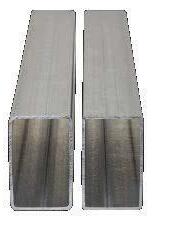
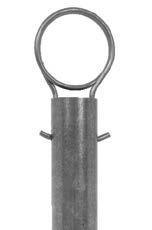
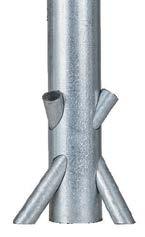
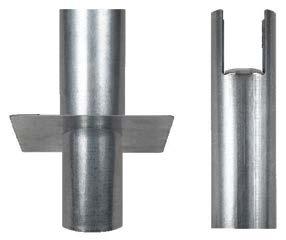
31 Industrial Tube – celebrating 40 years of New Zealand manufacturing
On the
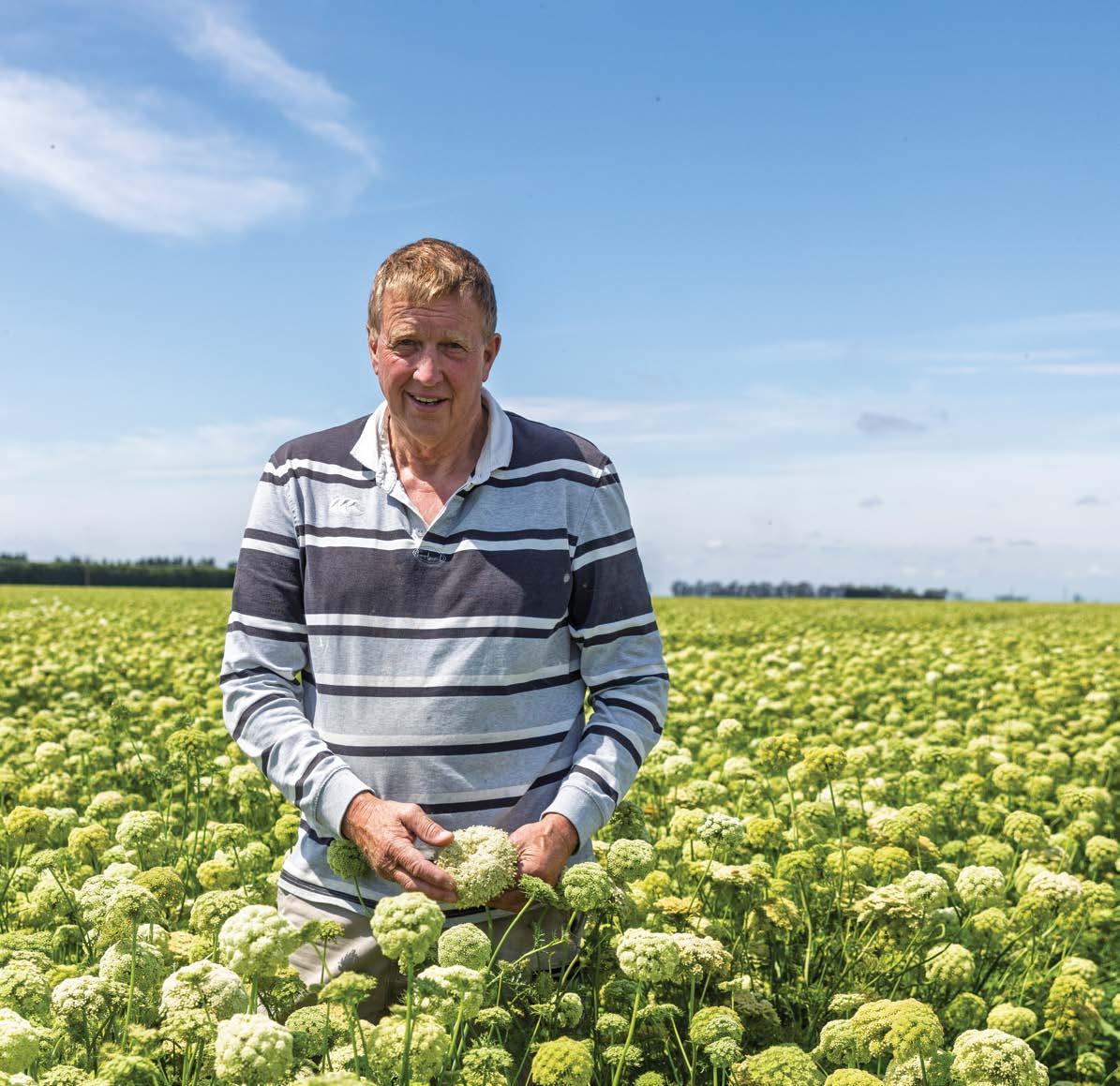
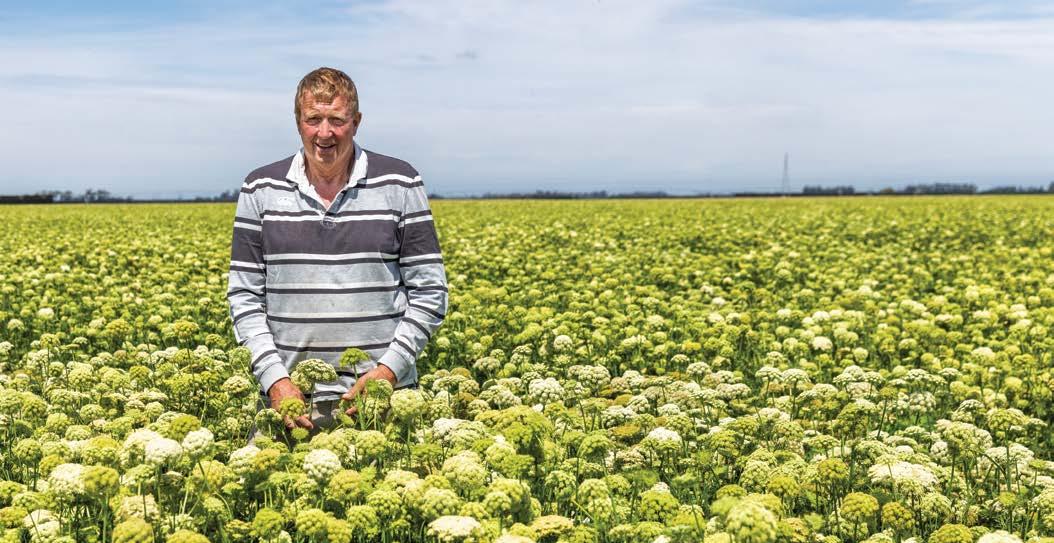
Canterbury grower Ross Hewson among hybrid carrot seed in full flower. See page 10. Photo by Tony Benny
58
Tony Benny
Tony is freelance writer, photographer and videographer based in rural North Canterbury. He has worked for newspapers and magazines, radio and television, including more than 20 years as a reporter/director with Country Calendar. He heads down to Hewson Farms on page 10.
Dan Bloomer
CONTENTS
CONTRIBUTORS
Dan is the LandWISE manager and works independently as a consultant in water, irrigation, soil and land management, and agritechnology. He has held board positions with Irrigation NZ, Precision Agriculture NZ and Agritech NZ. Dan leads the Carbon Positive regenerative intensive cropping project and co-authors an update on page 40.
Scott Champion
Scott is chief executive at the Foundation for Arable Research, the industry good organisation for arable research and extension. He discusses the strategic cooperation between industry bodies on page 51.
Carly Gibbs
Carly has a background in community and national newspaper journalism – writing for leading New Zealand lifestyle magazines as well as horticulture publications. Carly lives in Te Puke, with her husband and two sons, on a kiwifruit orchard. For this issue she talks to a wind sleuth and shelter experts to tackle wind damage on page 26.
David Tanner
David specialises in refrigerated storage and transport of horticultural crops. He co-founded Start Afresh Ltd and is active in international refrigeration science, technology and governance. David shares results from Humbleto-Hero programme research on shipping best practice for onions on page 43.
Olivia Webster
Olivia joined LandWISE as a full-time research assistant in 2025 after two stints as the LandWISE Callaghan Innovation summer intern. She now plays a key role in the Carbon Positive regenerative intensive cropping project. She co-authors a report on butternut pumpkins for Heinz-Wattie’s on page 40.
Aimee Wilson
Aimee is based in Alexandra and covers horticulture in Central Otago where she grew up. She still can’t believe how many different varieties of fruit there are, compared to back in the 1980s – when it was mostly just Dawson and Moorpark. For this issue she talks with online cherry sellers on page 48.
INDUSTRY LEADERSHIP REGULARS
4 Bernadine Guilleux, HortNZ chair
6 Kate Scott, HortNZ chief executive
52 Danielle Adsett, NZ Apples and Pears acting general manager
56 Dinah Cohen, TomatoesNZ general manager
58 Kate Trufitt, Potatoes New Zealand chief executive
FROM MOMENTUM TO MUSCLE: MAKING AHAP COUNT WHERE IT MATTERS
There is no doubt horticulture has wind in its sails.
Bernadine Guilleux : HortNZ chair
The latest Situation and Outlook for Primary Industries report released in December points to another year of export growth. Kiwifruit and apples continue to perform strongly offshore. Demand for high-quality New Zealand produce remains resilient in our key markets.
But growers know something that headlines don’t always capture – strong export numbers do not automatically equal strong margins at the farmgate.
Between climate volatility (we’ve seen the effects of the severe weather recently), biosecurity threats like the fruit fly, water uncertainty and rising input costs, profitability can still feel precarious.
Or the Regional Infrastructure Fund backing Māori horticulture development in regions such as Northland and Waikato.
Optimism is welcome, but growers know that it is not a strategy.
That is why the Aotearoa Horticulture Action Plan (AHAP) matters.
AHAP is not a glossy aspiration sitting on a shelf. It is a deliberate attempt to align industry, government, Māori and science behind a single outcome: doubling farmgate value by 2035 while improving prosperity for our people and protecting the environment.
This year, the conversation has shifted from ambition to delivery.
The Phase One Implementation Roadmap (2025–2027) is now in motion.
What that means in practical terms is work on the issues growers tell us are critical: water security, workforce settings, crop protection tools, infrastructure and market access.
Take water. Greater recognition of storage and managed aquifer recharge as legitimate tools for productive land use reduces uncertainty and gives growers more confidence to invest. Water security is climate resilience. It is also business resilience.
Bringing under-utilised whenua into production supports local employment, strengthens regional economies and broadens participation in our sector. That is AHAP in action.
Market access is another piece of the puzzle. Trade progress, including the recently concluded New ZealandIndia Free Trade Agreement, is a real opportunity. But opportunity only translates into success when growers have the tools, policy settings and certainty to respond.
AHAP recognises a key characteristic of our sector. Horticulture is diverse. Large and small operations. Established crops and emerging ones. Corporate structures and whānau-owned whenua. A single solution will never fit all.
What unites all growers is the need for practical settings that allow growers to plan with confidence, manage risk and invest for the long term.
The real test of AHAP will not be in its language, but in its impact – in orchards replanted with confidence, land leased or purchased, young people choosing horticulture careers, water available when crops need it, and in businesses that are profitable and resilient.
FIND OUT MORE
RMA REFORM IS A ONCE-IN-AGENERATION OPPORTUNITY
We all agree that replacing the Resource Management Act (RMA) is long overdue.
Kate Scott : HortNZ chief executive
Growers have lived with a system that is too slow, too costly and too uncertain for far too long.
So, HortNZ supports the Government’s decision to reform it through the Natural Environment Bill and the Planning Bill.
But reform only works if it genuinely makes things simpler, faster and less expensive – while still delivering strong environmental outcomes.
As the Bills are currently drafted, there is a risk the new system could actually make it harder, not easier, to grow the fruit and vegetables New Zealanders rely on every day.
The horticulture sector is hugely important to New Zealand.
Over 4300 commercial growers produce close to 100 different crops, supporting more than 40,000 jobs and generating significant export earnings for New Zealand. We produce healthy food for Kiwis and our global markets, and the sector underpins regional economies up and down the country.
An auction system risks favouring capital over capability. A levy also adds cost at a time when compliance, labour and input expenses are already rising. Neither approach supports affordable, locally grown food.
We are also concerned about the approach to overallocated catchments, especially where overallocation is based on aspirational water quality targets that go well beyond national bottom lines. Growers support clear limits and ongoing environmental improvement approaches.
The proposed legislation as drafted would prevent permitted activities in these catchments, potentially forcing consent for activities that are currently low impact and existing permitted activities. In some respects, that is more restrictive than the RMA.
The legislation replacing the RMA must recognise that food production is essential infrastructure for the country.
One of our biggest concerns is the proposal in the Natural Environment Bill to introduce market-based allocation tools or levies for natural resources such as water. While the Government has indicated that this is not their intention, our focus is on ensuring that such approaches are excluded from the legislation to avoid significant unintended consequences.
In practice, this could mean auctioning access to water or nutrient discharge to the highest bidder. Alternatively, it could mean imposing levies that operate like a tax on food production.
We support the intent to make more activities permitted, but only if this approach does not shift the burden of cost from consenting to compliance at the front end. Current drafting suggests that the degree of compliance that would be required to demonstrate permitted activity status would be akin to a consenting process.
We need a pathway that allows environmental gains without shutting down food production in the meantime.
At the same time, reform must recognise existing good practice. Many growers operate under audited assurance programmes such as NZGAP and have freshwater farm plans in place.
If a grower is meeting certified, industry-backed environmental standards, that should be recognised. Reform should remove duplication and reward compliance, not layer new compliance obligations on top of it. We are seeking clarity around how farm plans will interact with the planning and consenting framework to ensure there is no duplication.
4300+ COMMERCIAL GROWERS PRODUCE CLOSE TO 100 DIFFERENT CROPS, SUPPORTING 40,000+
JOBS AND GENERATING SIGNIFICANT EXPORT EARNINGS FOR NEW ZEALAND
National Direction for Commercial Vegetable Production also remains a critical ask for inclusion, as part of the secondary legislation still to come.
In some regions, growers face planning frameworks so restrictive that securing consent is uncertain.
New Zealand cannot import the vegetables required to feed our own population at scale.
Domestic supply is a public health and food security issue. A clear national framework would provide consistency: meet the environmental standards and have certainty you can continue to grow.
The Planning Bill must also deal properly with reverse sensitivity. When urban development pushes into rural areas and new residents object to normal farming activities – frost protection, spraying, harvest operations – longestablished growers should not be the ones forced to retreat. Rural environments must remain fit for purpose. Finally, spatial planning, environmental limits and resource allocation must be aligned. There is little point zoning land as highly productive if growers cannot access the water needed to use it. Limits and allocation decisions must sit alongside spatial plans, not come later as an afterthought.
We agree with the Government that RMA reform is a once-in-a-generation opportunity.
We believe it can deliver environmental improvement and enable growth at the same time. But only if the final legislation is grounded in the practical realities of producing food.
Our budding season is under way and the window to get your orders in is closing soon! If you need top-quality trees for the 2027 planting season, now’s the time to secure them.
With expert techniques and premium rootstock, we ensure strong, healthy trees ready to thrive. Don’t miss out! Place your order today.
We still have a limited number of trees available for 2026 delivery –get in touch today to secure yours!
&
NZGrower & Orchardist is produced by Horticulture New Zealand and is free for all levy payers. The magazine is partially funded by a grant from the NZ Fruitgrowers’ Charitable Trust to ensure all fruit growers in New Zealand receive a copy each month. The magazine is also supported by Vegetables NZ, Process Vegetables NZ, TomatoesNZ, Potatoes NZ and Onions NZ.
The individual comments and views in this magazine do not necessarily represent the view of Horticulture New Zealand.
SHOWCASING THE SECTOR’S RISING TALENT
The 2026 Young Grower of the Year competition is underway, once again setting out to find the finest young fruit and vegetable grower in the country.
Registrations for regional competitions are now open via the Young Grower of the Year website www.younggrower.co.nz
This publication uses vegetable-based inks and environmentally responsible paper produced from Forest Stewardship Council® (FSC®) certified, Mixed Source pulp from Responsible Sources.
Paper produced using Elemental Chlorine Free (ECF) and manufactured under the strict ISO14001 Environmental Management System.
The wrapper we use is 100 percent recyclable, it is LDPE 4 (Low Density Polyethylene) Soft Plastic and meets the required standards. For further information refer to: www.recycling.kiwi.nz/our-story
Held annually, the competition brings together talented young growers from across the sector. Competitors first test themselves in one of seven regional events – Pukekohe, Bay of Plenty, Gisborne, Hawke’s Bay, Nelson, Central Otago and Canterbury – before regional winners advance to the National Final.
Each regional competition is run independently.
The series begins in Pukekohe on 15 May, followed by Central Otago on 22 May, Gisborne on 11 June, Hawke’s Bay’s Young Fruit Grower of the Year on 18-19 June, Bay of Plenty on 19 June, Nelson on 19 June and Canterbury on 25 June.
Open to commercial fruit and/or vegetable growers in their respective regions, competitors face a mix of theoretical and practical modules designed to test their horticultural knowledge, technical capability and problem-solving skills.
The day’s challenges culminate in a gala dinner or networking event, where regional winners are announced.
The National Final will be held in Cromwell on 27–28 August, where the seven regional winners will compete for the New Zealand Young Grower of the Year title.
The national winner will then have the opportunity to represent the sector in the Young Horticulturist of the Year competition, run by the Royal New Zealand Institute of Horticulture Education Trust, showcasing the leadership and expertise of the next generation of horticulture professionals.
For more information, please visit www.younggrower.co.nz
“John Deere is a very important part of our business”
Darren Minter, Owner, Minter Magic
For Minter Magic, precision isn’t about chasing technology, it’s about removing uncertainty from orchard operations.
With AutoTrac™ guidance and StarFire™ RTK, planting, spraying and harvesting are carried out with repeatable accuracy, keeping every tree exactly where it should be and reducing the need for costly rework.
Smart Apply® Intelligent Spray Control System™ builds on that precision by using LiDAR to read canopy growth in real time, applying product only where it’s needed to reduce waste and control chemical costs. It’s technology that supports smarter decisions, season after season. Speak with your local John Deere dealer to learn more.
GEARING UP FOR GREATER GAINS
WE DIDN’T ACTUALLY HAVE A STRATEGY TO GROW BUT WE ENDED UP BUYING MORE FARMS... WE JUST SEEMED TO GROW ON THE BACK OF THAT.
BUSINESS SAVVY NEVER NEEDED MORE
Large-scale Canterbury family business Hewson Farms grows potatoes, onions, vegetable seed and arable crops as well as finishing nearly 15,000 lambs a year. But as the next generation moves into management, owner Ross Hewson says rising costs are far outstripping returns and farming profitably is becoming ever more challenging.
“Everyone’s in the same boat with a lot of people actually paying us less to improve their margin. The arable industry is pretty tough. But I think the vege industry – mostly because of its much higher costs, along with disruptive weather patterns that contribute to supply imbalance – is really struggling,” Ross says. He and wife Rochelle moved to Chertsey, north of Ashburton, from Esk Valley in South Canterbury in July 2000, wanting to diversify from the livestock and arable operation he and his brother had taken over from their late father. His brother preferred sheep, beef and traditional arable crops, not the crops that Ross wanted to grow.
Tony Benny
“We were in a partnership but I had a growing interest in the vege side of cropping, especially potatoes, onions and vegetable seed crops,” Ross explains. “These weren’t really suited to the terrain down there either, as it was rolling, had clay soils and lacked irrigation.”
With the family partnership dissolved, their timing for the move north was good. Irrigation was beginning to expand across the plains but the dairy boom had yet to radically change farming in options in Canterbury and drive land prices to previously undreamt of heights.
Ross Hewson among his hybrid carrot seed production for Bejo in Holland. New Zealand is a global leader, producing approximately half of the world’s carrot seed
“When we purchased our first farm in Mid Canterbury, dairy was in a slight lull. There was considerable interest but we managed to buy our first farm and lucky we did because within a couple of years, dairy conversions just took off,” Ross recalls.
By September that year, he and Rochelle had transformed the 370ha farm, ripping out fences and trees to make way for centre pivot irrigators. They grew potatoes under contract to McCain Foods (which has a processing plant in Timaru), onions for export and mostly wheat to assist with merging multiple fields under areas now covered by irrigation.
“Pretty much that’s what we did for the next decade after that, buying all these farms and developing them.”
Today that margin line is so fine, you cross it without even realising
Ross says the expansion was driven by economics, with rapidly increasing land values and the annual challenge of finding land to grow potatoes, which require an 8-year rotation for long-term sustainability.
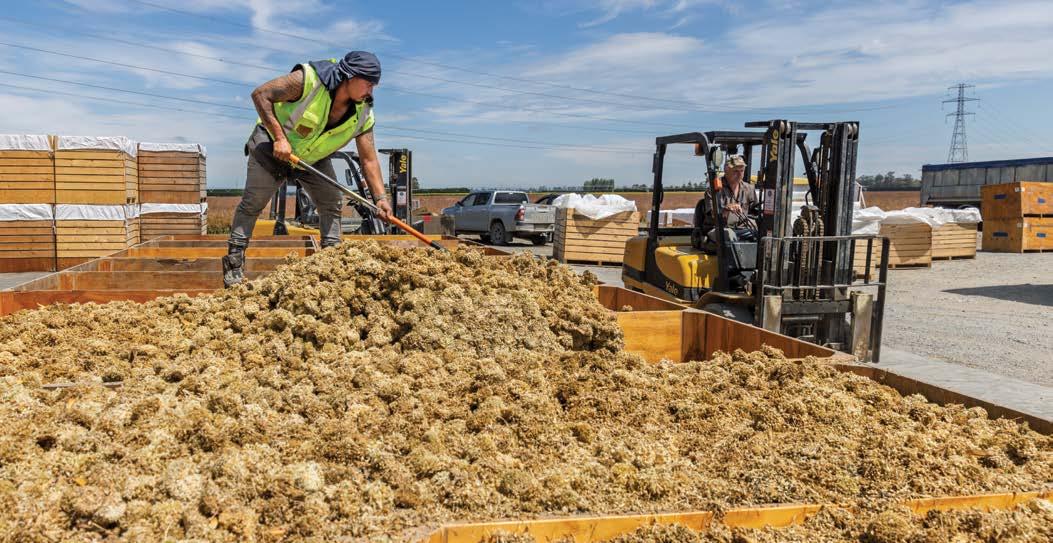
Lele Laupu’e spreading onion seed in bins for drying at Hewson Farms
22,000T
OF POTATOES
EACH YEAR HEWSON FARMS GROWS:
UP TO 8000T OF ONIONS 500HA OF WHEAT 540HA OF RYEGRASS, CARROT AND OTHER SEED
“We leased quite a bit of ground to make growing potatoes for McCains work. But next thing the owner says they’re selling so you’d either have to find more lease ground – but that was becoming increasingly difficult – or buy the farm.
“We didn’t actually have a strategy to grow but we ended up buying more farms over the next decade and we just seemed to grow on the back of that.”
Today Ross farms 2200ha, 2100ha of which Hewson Farms owns, spread over nine blocks all farmed as one, with the farthest block 15km from the home farm.
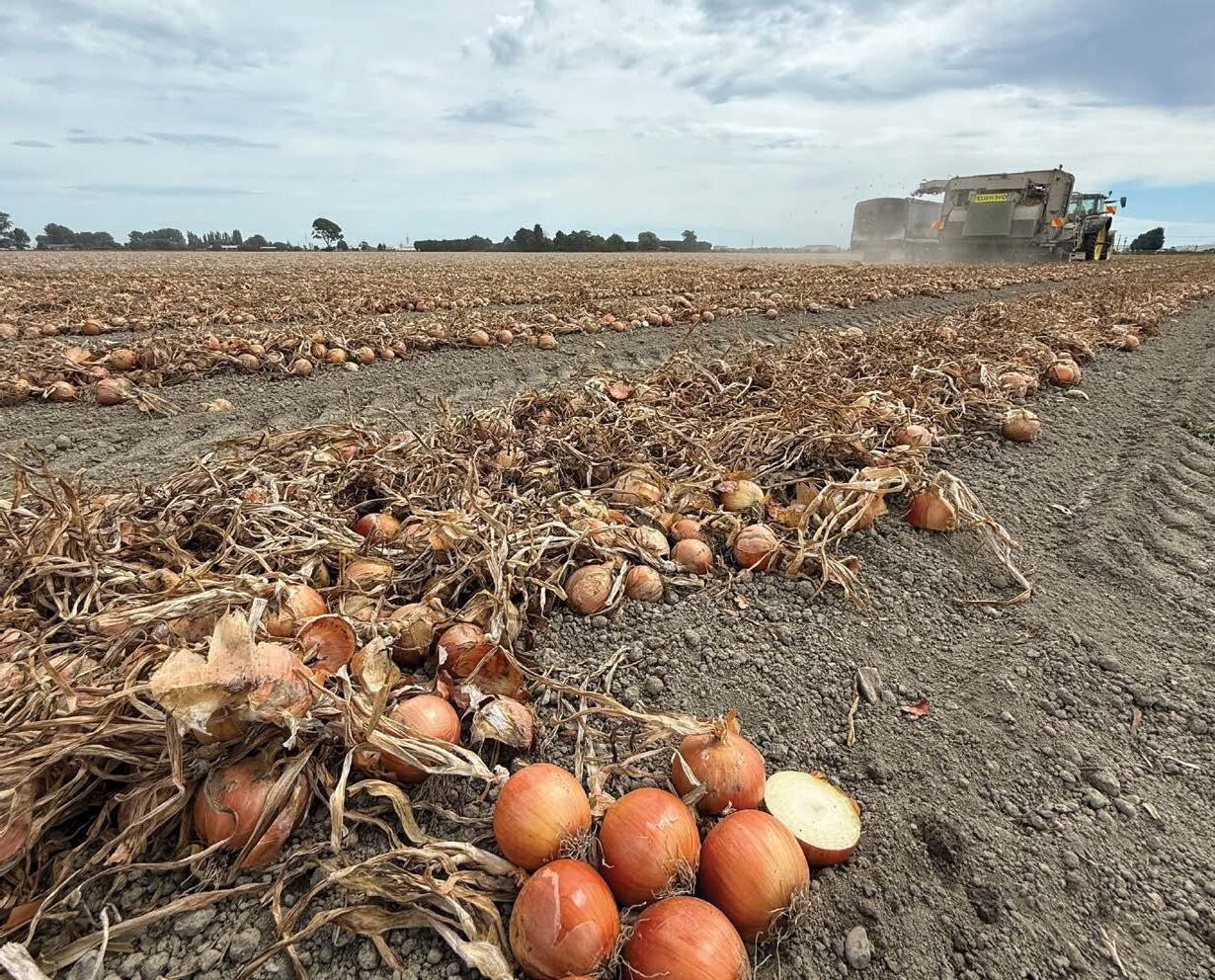
They grow about 22,000 tonnes of potatoes each year, along with up to 8000 tonnes of onions as well as 500ha of wheat, 540ha of ryegrass, hybrid carrot and beetroot seed, hybrid brassicas, spinach, peas, barley and white clover.
“We’ve always probably thought we had a reasonable spread, between our vegetables, arable crops, high-value vegetable seeds and other businesses we’re involved with. But at the moment, with such a broad brush of rising costs, plus the growing basket of compliance costs that are not being reflected in the values of anything that we produce, the margins have evaporated.”
The arable crops are a vital part of the rotation needed to grow potatoes and onions successfully, but the returns on them lag well behind the cost of growing them, Ross says. Plus he notes, as recently highlighted to Australian accountants auditing potato production in New Zealand for McCain Foods, it’s true of other crops as well.
representatives
As long as yields are good and contract conditions are met, potatoes still provide a “reasonable” return
Over winter they finish up to 15,000 lambs and they graze 600 ewe lambs for a large livestock operation at Staveley – mostly on oat cover crops to protect rotation and improve soil health.
“They were looking at the cost of producing potatoes in New Zealand and what could they do to become more efficient. One of the facts they were very surprised by was that in the 8 years between potato crops, a number of the crops lacked any viability – some didn’t even cover their own costs,” he says.
As long as yields are good and contract conditions are met, potatoes still provide a “reasonable” return, he says, as do some vegetable seed options, if yields are sufficient.
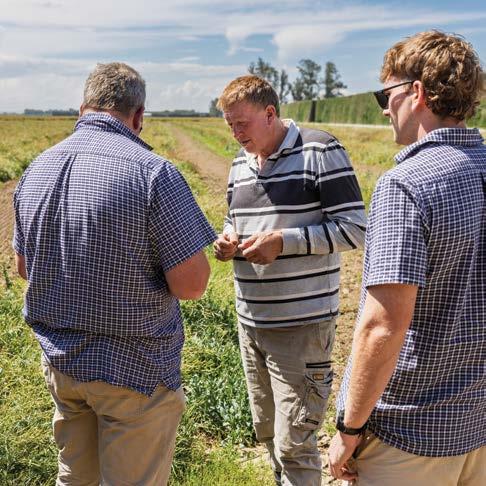
Ross Hewson discusses the hybrid cabbage seed crop with arable
“But for most of the arable options, particularly commodities such as wheat, barley and a lot of ryegrass options, the costs have all just increased, particularly in the last 3 or 4 years, and they’ve gone unrecognised so we’re having to absorb that. But we can’t survive on $500 a tonne for wheat. It’s just not enough.”
We’ve always probably thought we had a reasonable spread, between our vegetables, arable crops, high-value vegetable seeds and other businesses we’re involved with
While all input costs have seen significant rises – notably fertiliser, Ross says service industries, transport and farm machinery have seen 100 percent increases. The essential tools of trade are now difficult to replace, and otherwise must be kept for longer or have productivity gains to justify their purchase.
Ross is particularly concerned for onion growers who have been affected by serious disruption in key markets. The onion industry is continuing efforts to address non-tariff barriers and challenges with import quotas, which should see more business certainty emerging.
Simply the best
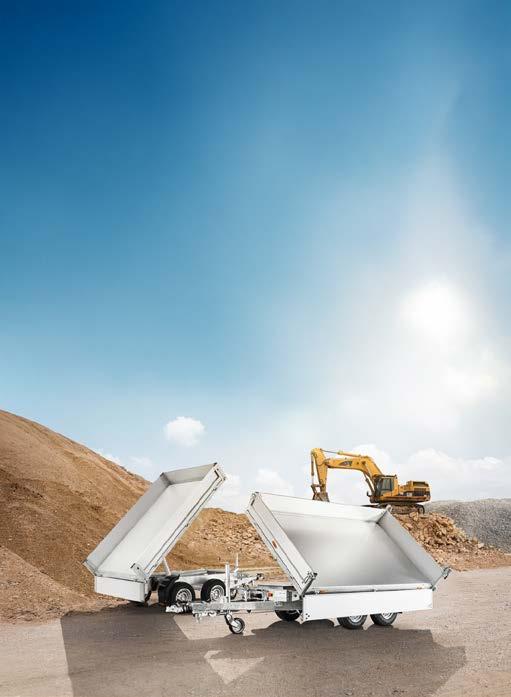
Boeckmann 3-way tipper
• Made in Germany
• Model shown: DK-AL 3218/35
• Unsurpassed quality and specification
• Electro-hydraulic, 6,000kg rated ram
• Side and rear tipping
• 3,500kg GVM (2,500kg payload)
• 3.25m x 1.8m deck
• Removeable 350mm aluminium sidewalls
• Other trailer types and sizes available to order
• Germany’s #1 trailer brand
• Exclusive NZ distributor for 15+ years
• Based in the Bay of Plenty
robert@boeckmann.co.nz
021 02255648
www.boeckmann.co.nz
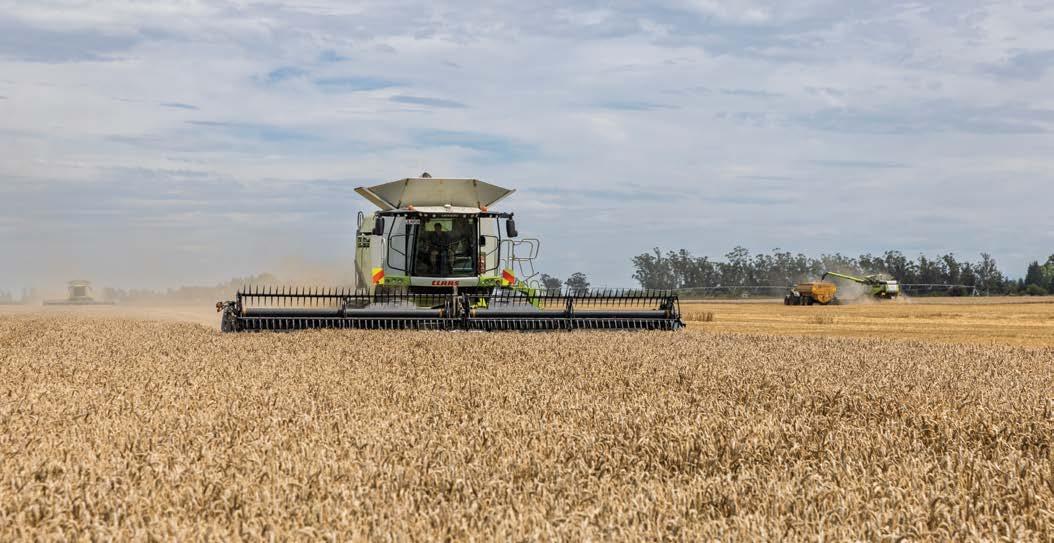
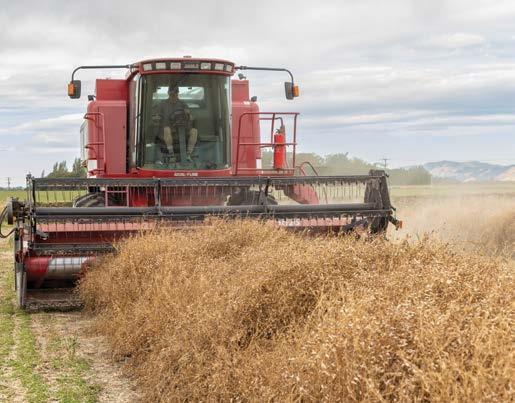
Three Hewson Farms combine harvesters working in wheat fields near Chertsey, Mid Canterbury
Ross is happy with the team around him: “Hopefully I can just sort of slip into the background and help out where I can”
“These vegetable markets are fragile. There might be 20 different countries but if just one of them somehow steps aside for a breather, suddenly there are too many onions for the rest and it just demolishes the price.”
At Hewson Farms, the next generation is now taking the reins. Son Joel is operations manager, responsible for all staff and machinery. Son-in-law Will Wright, who has a background in irrigation and environmental compliance, has recently joined the business, too.
Manager Andrew Scott has been with Hewson Farms since he left school. “He was at Timaru Boys’ High and answered our ad for summer help,” Ross says. “He came up here for a job on his way to university but he never got to university. He’s been here for 25 years, and now he and his partner Liz have four children.
“From where I sit, it’s good having these three guys involved as they all bring something different to the table that’s crucial. Hopefully I can just sort of slip into the background and help out where I can. You simply can’t beat a bit of youth and enthusiasm.”
Ross is also pleased that daughter Sarah, when family commitments allow, helps Rochelle in the office, along with one full-time and one part-time employee.
Since they moved to Mid Canterbury just over 25 years ago Ross and Rochelle have overcome all manner of challenges and it seems the next generation will face just as many.
While all input costs have seen significant rises – notably fertiliser, Ross says service industries, transport and farm machinery have seen 100 percent increases
“I can remember a very good farmer of my father’s generation saying one day, ‘You know, we used to always earn more than we spend’. He also mentioned that he once had such a good yield of cocksfoot in one field, the proceeds could have purchased any farm in the district.
“Today that margin line is so fine, you cross it without even realising. Farmers have got to be much savvier understanding the dynamics of their business and all the costs. While it is not always easy to change these, you must know them and you’ve got to at least try to be on the ball about what you do and how you do it.”
CATCHING RAYS AND DODGING RAIN
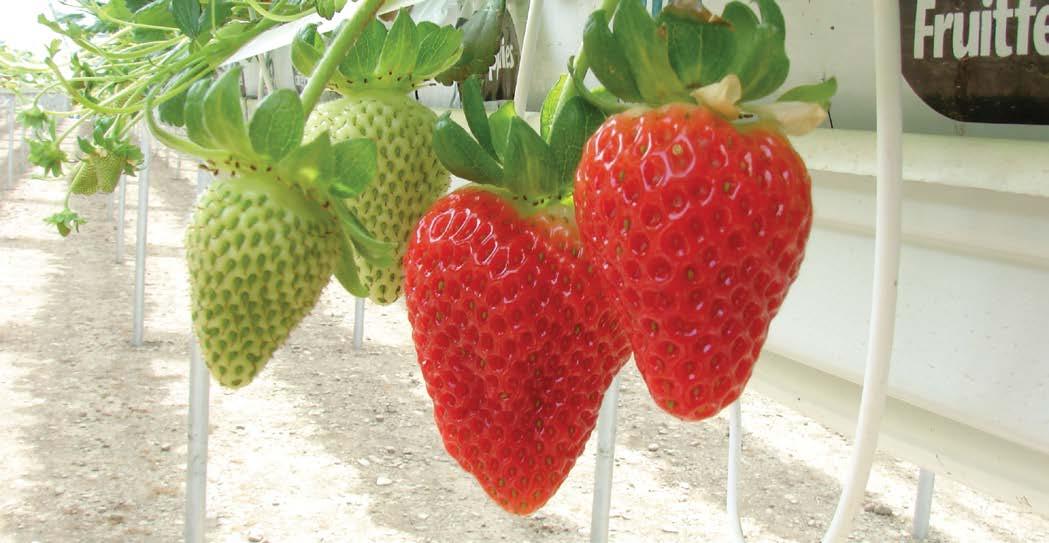
The goal of providing customers with sweet, sun-ripened strawberries for up to seven months of the year is coming to fruition for the Conning family in Tasman, thanks to a retractable roof on the greenhouse.
A wide range of produce is grown by the Connings on the Waimea Plains, supplying the Connings fresh produce stores in Appleby and Nelson. Strawberries have traditionally been grown outdoors at their Berry Lands site, which also grows boysenberries, karaka berries and raspberries. Fruit quality and supply depended heavily on the weather and the stores were topped up with bought-in strawberries.
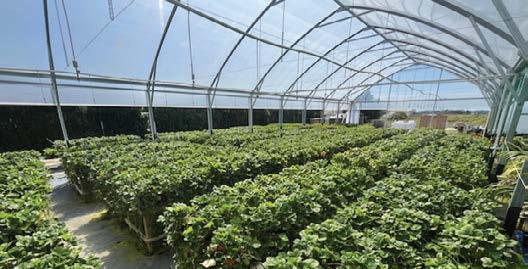
That changed late last year with the construction of an 8000m2 Cravo house – the first of its kind used for strawberry production in New Zealand. The greenhouse is expected to produce about 68 tonnes
Anne Hardie
of fruit a year, with harvest running from October through to the end of April.
Ben Conning says the retractableroof design is essentially an outdoor environment for the berries, with the roof automatically opening and closing in response to temperature and weather.
“We’re kind of unique because we’re wanting to create those outdoor conditions as much as possible to get the sweeter taste.”
Since Christmas, the business has been able to supply both of its stores with strawberries from the greenhouse, with surplus fruit sold into the market. Ben says strawberry sales within the stores are up,
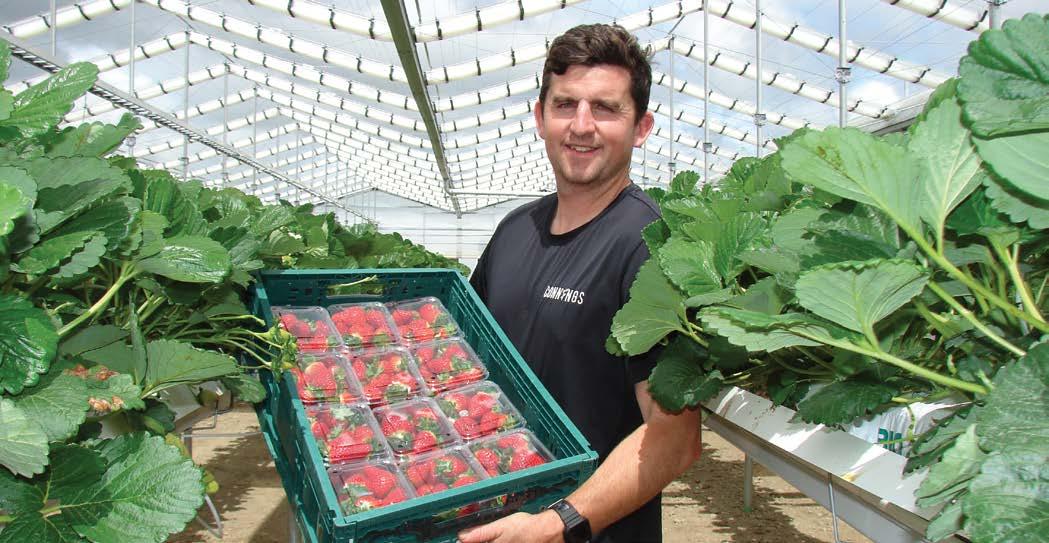
Ben Conning in the Cravo house – believed to be the first used for strawberry production in New Zealand
which he attributes to the consistently sweet fruit that is protected from adverse weather, but grown under the sun. By extending the season and improving quality, he hopes customers will add a punnet of the fruit to their shopping baskets every week throughout the 7-month harvest.
Bird control and pest management
Like any new growing operation, the retractable-roofed greenhouse has had its challenges, and the system continues to be refined, especially around bird control and pest management.
We’ve had a lot of challenges and a lot to learn, but the house is doing everything it should
During summer, the roof has remained open most of the time. When the temperatures climb too high for the berries, the roof closes to about 80 percent – or as much is needed – to reduce heat and act as a shade curtain. Side walls can also open to enable airflow through the crop.
An open greenhouse with lush red strawberries is an invitation to birds though.
“We hadn’t seen any birds and then the strawberries started changing colour and we started seeing seeds on the white tape. The birds were destroying them. Then we put lasers up.”
Laser beams initially deterred the birds, using shifting light patterns to keep them away. Bird cannons also proved effective when staff were not working in the greenhouse. Now, Ben says the birds are returning and new solutions are being explored.
Managing insect pests is also a work in progress for a crop that sits somewhere between indoor and outdoor growing. Ben is confident they will get that right. Next season there will be preventative measures in place from the beginning of the season. The next step is introducing predatory insects to target problem pests, with the long-term goal of producing spray-free strawberries for customers. Realistically, he says they are a very long way from achieving that – but it’s a good goal. In the meantime, they are still learning how best to manage the crop in the new system.
“We’ve had a lot of challenges and a lot to learn, but the house is doing everything it should.”
Technology for efficient irrigation management
Galileo CLOUD
The most advanced Cloud-based controller for viticultural irrigation & fertigation
Arkal Spin Klin
Nova Plus
Exceptional Performance.
Modularity at its Best.
GSI Pro Fertijet Injector
Web-based control of irrigation, filter flushing and multichannel fertigation
D5000 AS CX Dripline
A long-term, safe and non-leaching solution to reduce root intrusion
To find your local dealer contact Water Supply Products: Auckland: 09-916 0094 Christchurch: 03-348 1293 wsp@watersupply.co.nz www.watersupply.co.nz
NEW ZEALAND HAS LAGGED BEHIND MARKETS SUCH AS THE UNITED KINGDOM, WHERE BERRIES ACCOUNT FOR 29% OF FRESH FRUIT SALES
Vote of confidence in strawberries
Ben says New Zealand has lagged behind markets such as the United Kingdom, where berries account for 29 percent of fresh fruit sales. He attributes the lag to inconsistent quality and shorter growing seasons. He says New Zealand is now in catch-up mode, with strawberry production expanding rapidly in the South Island. From less than a couple of hectares grown under cover 4 years ago, around 20ha is expected to come into production over the next 3 years.
While that may create a “bubble of strawberries”, Ben says it ultimately means Kiwis will be able to enjoy more locally grown strawberries for longer each year.
Strawberry Growers NZ executive manager Sally King describes the Connings’ investment as a vote of confidence in strawberries and it is warranted.
“When we talk about being able to supply and meet consumer demand, you need to be able to do it at scale, so I get it.
“There is a whole story in there about the change that is going on in this sector – much higher investment, much more sophisticated systems and fertigation, covered crops, a lot more capital investment in the infrastructure, more agronomists and so much more attention to pests and IPM [Integrated Pest Management]. It’s fast changing.”
There are more new export markets that we’re hoping to open up, so we need greater volume
Until now, she says about a third of the New Zealand strawberry crop has been grown under cover and as that increases, greater volumes will come onstream, which is needed.
“There are more new export markets that we’re hoping to open up, so we need greater volume.”
For growers, it will come down to supply and demand as it always does in horticulture, she says.
Strawberries after the morning pick growing in an environment that is essentially outdoors, without the adverse weather
GROWER CO-OP LOOKS TO DEVELOP MARKETS
Just as the NZ Blackcurrant Co-operative was gearing up for high growth, a summer of challenging weather in Canterbury has tempered expectations.
This season (2025–2026) was the first harvest for NZ Blackcurrant Co-operative’s new chair Mike Brown and new chief executive Kevin Parish.
Growers for the co-operative began harvesting in mid-December. The whole harvest was done and dusted by 21 January, compared to normal harvest that starts around Christmas and typically runs into the last week of January.
However, that timeframe doesn’t capture the extra squeeze on growers this year. Many varieties were only ready to harvest in early January, just as waves of wild weather – wind, rain and hail – rolled over the region.
John Gauldie
“The weather put a lot of pressure on growers to maximise weather windows and complete the harvest in what was already a short time period,” says Kevin.
The early harvest meant that fruit had to be held until processing at the grower-owned co-operative started in Timaru on 6 January.
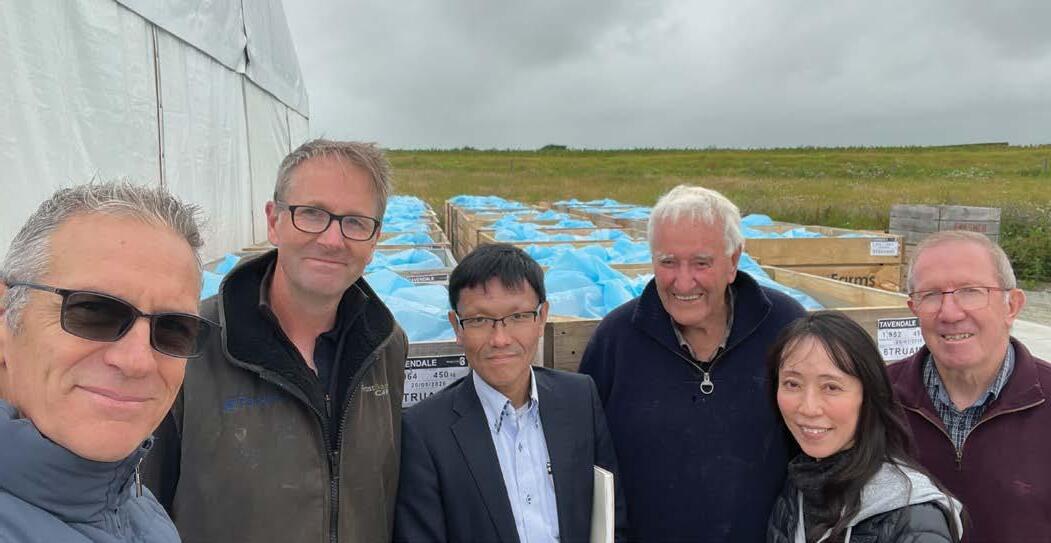
From left: Kevin Parish (new NZ Blackcurrant Co-operative chief executive), James Tavendale (grower), a customer from Japan, John Tavendale (retiring NZBC chair), Rina Sakai (from NZBC’s office in Japan) and NZBC’s Alan Dobson
“So we had to deal with the challenges of handling large volumes and holding that inventory in good condition.”
NZGrower & Orchardist caught up with Kevin and outgoing general manager Mike Callagher in early February as processing continued. Mike, who has led the co-operative for the last 6 years, had been keen to take a step back and spend more time overseas. He will now focus on managing strategic projects.
Harvest volumes look to be in line with last year, but will fall below the 10–15 percent growth that the industry had been forecasting.
“We are having a big year for juice, and hoped to continue the push into new markets,” Mike says. Some of those plans will have to wait, but the underlying proposition remains highly marketable.
Mike says his attention will now turn to projects including new product development and a pivot on market development in Japan. New Zealand blackcurrant extract is well known in Japan for eye health, but huge potential remains in developing consumer interest in New Zealand blackcurrant’s anthocyanin benefits for immune and energy pathways and active healthy lifestyles.
Kevin says the wellness aspect of blackcurrants appealed to him in accepting the role.
“New Zealand blackcurrants are the envy of the world. It’s a fantastic example of a primary product with science
backing that’s supporting high performance and healthy lifestyles for consumers around the world. New Zealand’s primary sector needs more of these companies.”
The weather put a lot of pressure on growers to maximise weather windows and complete the harvest in what was already a short time period
His background includes a stint as NZ Trade & Enterprise trade commissioner to Hong Kong and Macau, establishing Primary Collaboration NZ in Shanghai and chairing the NZ Business Roundtable in China. He was previously general manager of the Walnuts NZ Co-operative.
In October, Mike Brown, chief executive Marlborough Grape Growers Co-operative and chair of Co-operative Business NZ, became the new chair of NZ Blackcurrant Co-operative. His appointment follows the retirement of John Tavendale, who has chaired the NZ Blackcurrant Co-operative since 2011.
Under John’s leadership, the co-operative pivoted from being a source of a staple drink and jam ingredient to a world-renowned wellness product. John still lives among the blocks of blackcurrants at Mātāmua Farms, now managed by his son James.
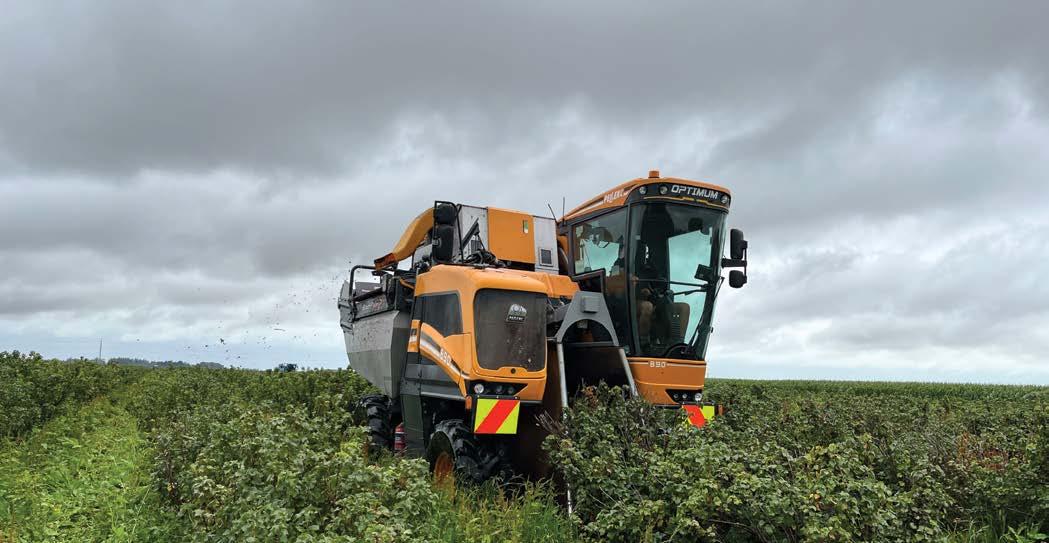
A Pellenc harvester working this season at Lovett Family Farms just out of Ashburton
MILDURA’S MINTER MAGIC GROWS FROM EMBRACING TECH
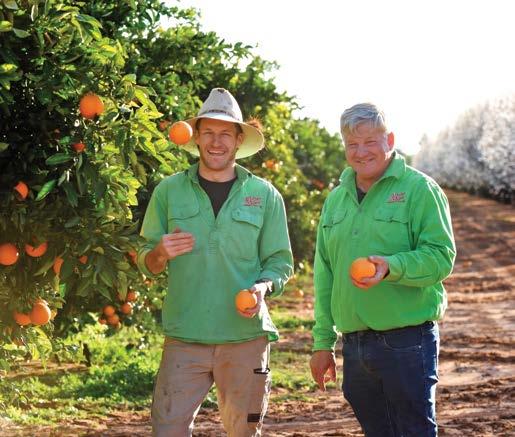
The Minter Magic brand started in 1912, when Darren Minter’s great-grandfather settled at Iraak, 35km southeast of Mildura on the Murray River. Together with his son Garry, the Minters now grow citrus and almonds on their 400ha farm for export to more than 30 countries.
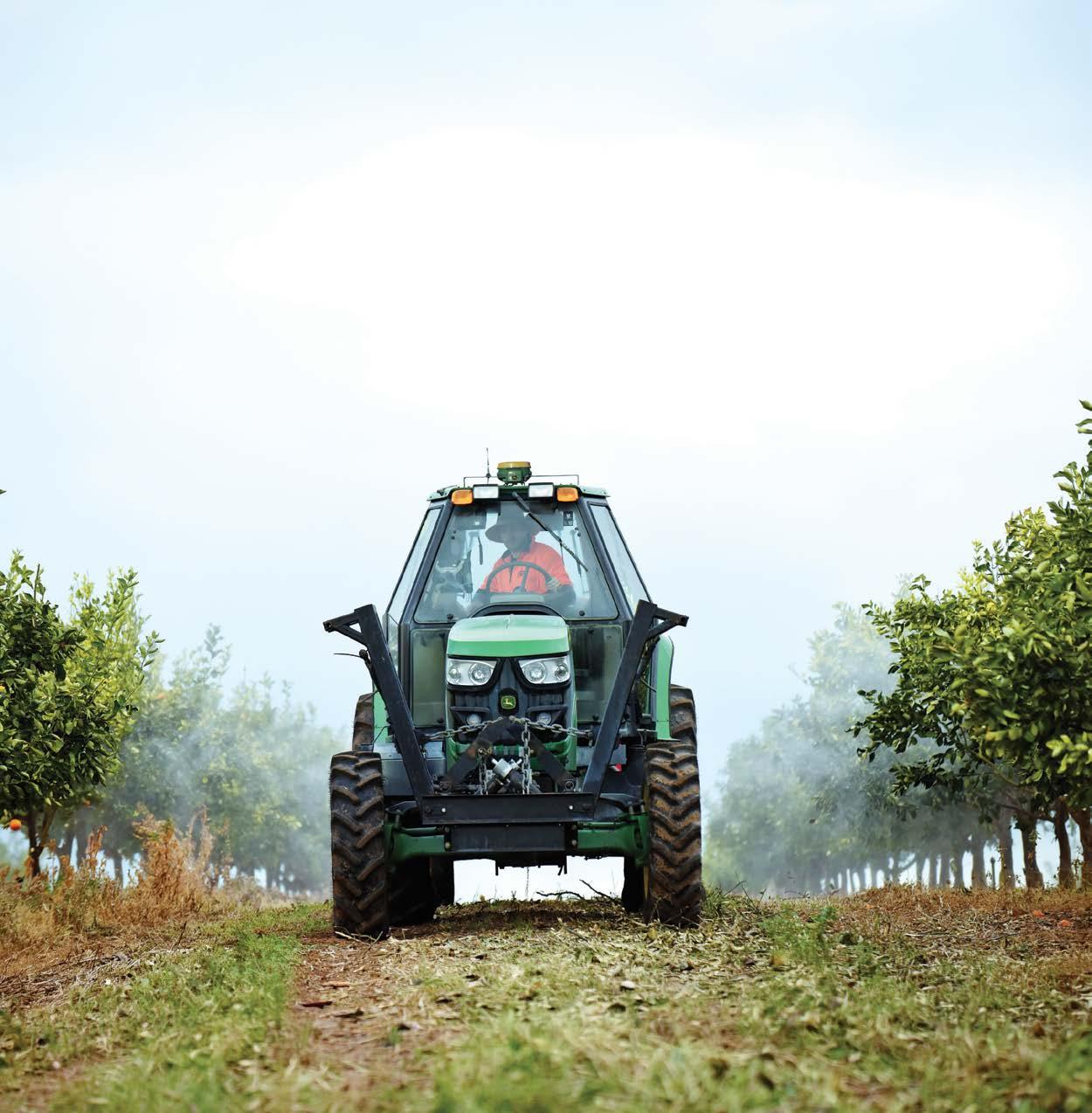
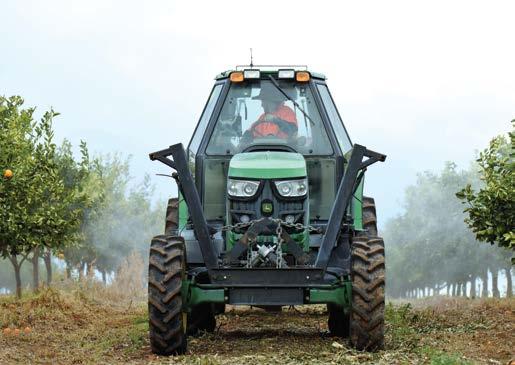
A fleet of John Deere equipment, including 5 and 6 Series tractors, is pivotal to their business, however Garry says John Deere’s GPS technology and AutoTrac™ has been a game changer for operations.
“We saw how easy the original GPS systems was and what a difference it made, so we decided to take on RTK and StarFireTM,” Garry says.
That
doesn’t just save us chemicals, it saves time driving back and forth filling up
“Now we have two 6 Series tractors fitted with AutoTrac and the StarFire system that we alternate depending on the job. They give us a 2.5cm accuracy for operations like planting and harvesting.
“We’ve also used GPS for our latest orchard, to mark the spot where each almond tree should be planted in a uniform grid that will also help with ease of spraying later. It’s much less expensive than getting surveyors in to individually map out a new orchard.”
The adoption of John Deere’s Smart Apply® Intelligent Spray Control System™ on 200ha of new almond trees three years ago has made a big difference to productivity and operational costs.
The remote sensing LiDAR technology pulsates laser light as the sprayer moves through the rows of trees, creating a digital blueprint of the canopy that is transmitted to spray nozzles, enabling chemical to only be applied where necessary.
“Initially, we planted our young almond trees with our standard Air-O-Fan band sprayer and we used about 5.5 to six vats of chemical, compared to one vat when we had the Smart Apply attached to the sprayer,” Garry says.
The Minters adopted John Deere’s Smart Apply® Intelligent Spray Control System™ on 200ha of new almond trees three years ago, making significant savings to productivity and operational costs
“That doesn’t just save us chemicals, it saves time driving back and forth filling up.”
Darren estimates Smart Apply Technology is saving 20 percent on their larger trees, and up to 80 percent on the smaller trees, depending on their density.
“We have found it extremely viable in our spray plants. It really adds up to quite a lot and we are extremely happy with it,” Darren says.
The Minters consistently adopt new technology to maintain a foothold in overseas markets, and Darren said the one advancement he is most excited about is automation.
“The next technology we need is these self-drive tractors. That’s what I’m waiting for,” he says.
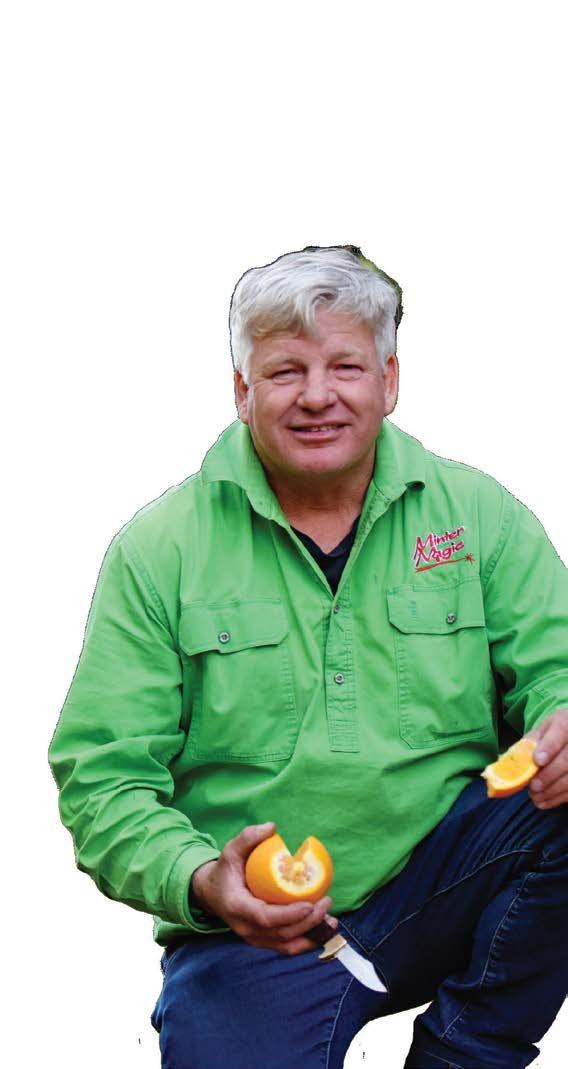
Garry and Darren Minter are working together to grow the Minter Magic brand that started in 1912
SWITCHING ON ROOF–TOP SOLAR
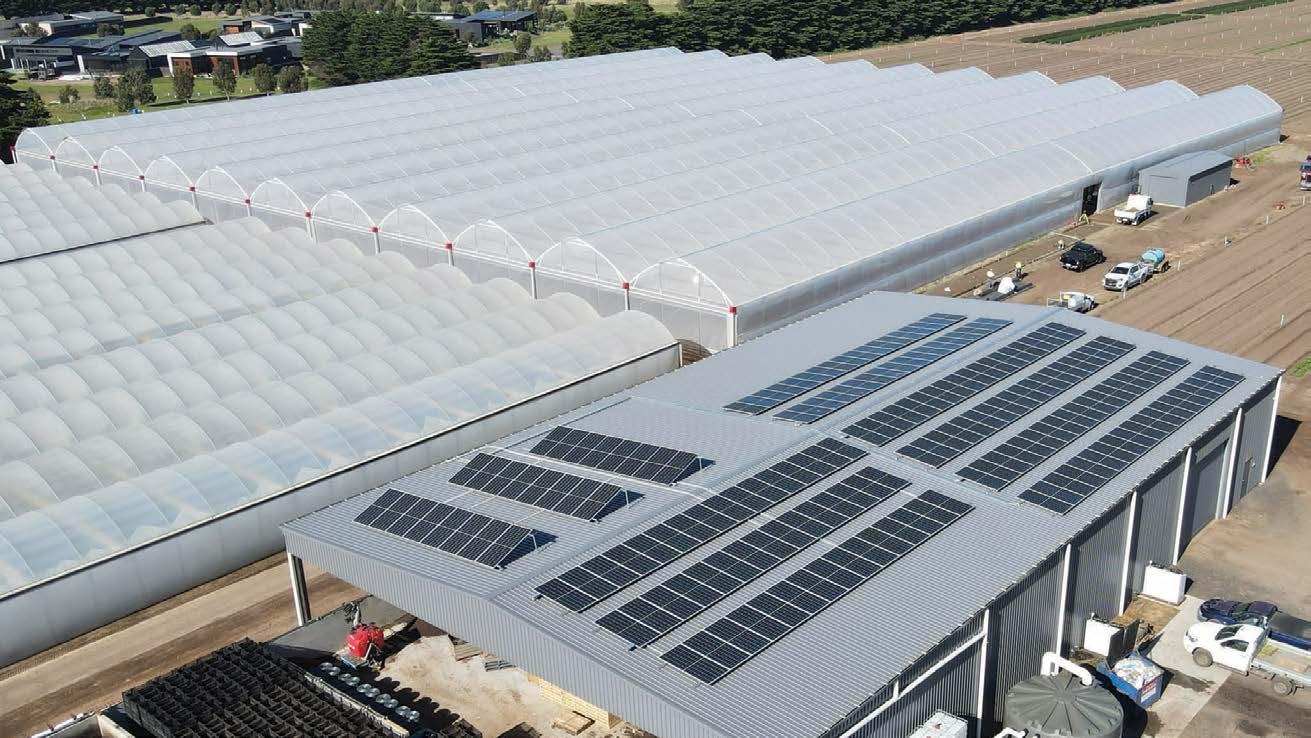
Installing just shy of 1000 solar panels on top of your coolstore turns out to be a project with a lot more moving parts than you’d expect. What can others in horticulture learn from the experience of Tairāwhiti Gisborne grower, packer and distributor Kaiaponi?
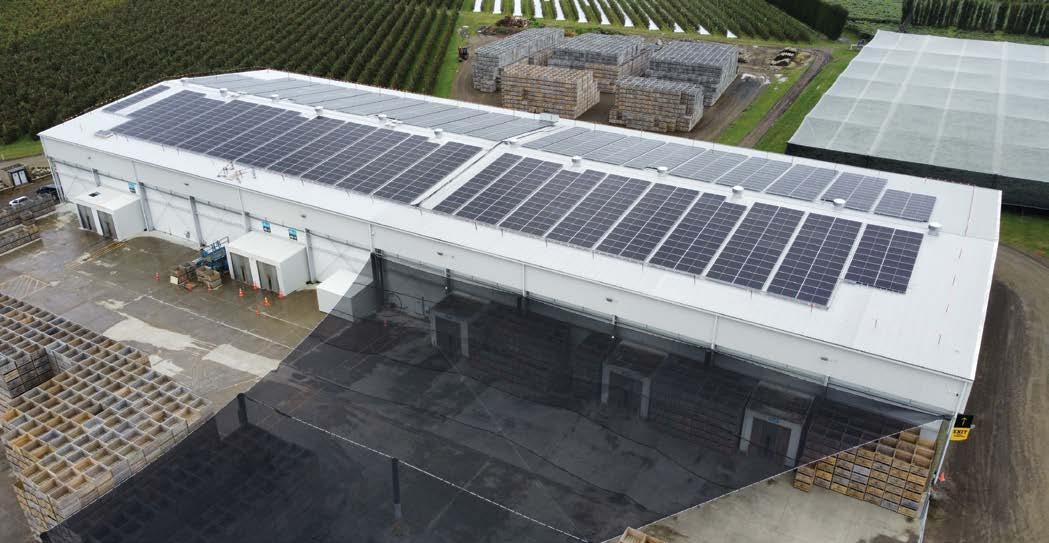
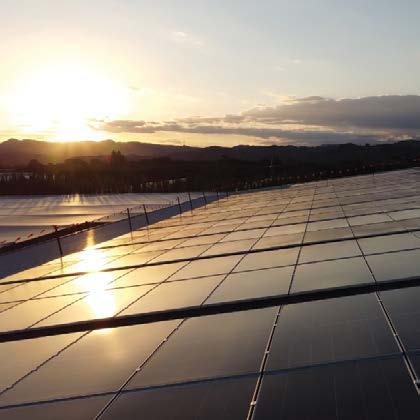
Commissioning of Kaiaponi’s 550kW solar system is expected as this issue goes to print, making it likely the largest on-roof solar installation in the Tairāwhiti Gisborne region. Similar projects around the country, including Fairfield Orchards’ 600kW system installed last year in Tasman (a mix of on-roof and groundmounted), are proving solar energy’s increasingly attractive business case.
The solar installation is a significant capital expense but will ensure certainty of price for approximately 35 percent of Kaiaponi’s annual energy needs.
“This sort of thing doesn’t pay itself off in 12 months,” says Kaiaponi general manager Barton Witters. “It’s a long-term investment.”
John Gauldie
While reducing the company’s input costs are a priority, cost certainty is equally valuable for a resilient operation that supports suppliers and the growth of further throughput at the packhouse and coolstore facilities.
The project is the result of three years of analysis, planning and construction – driven by the falling cost of solar technology and significant lifts in energy pricing over the last 10 years.
“We’d just come off a favourable price fix a couple of years ago. Price lifts were no longer forecasts in spreadsheets, they had become real bills; this really focussed our decision making.”
The solar panel system at Kaiaponi is likely the largest on-roof solar installation in Tairāwhiti Gisborne
Energy pricing volatility is a key part of the formula, but prices are impossible to predict more than a couple of years out. Kaiaponi intends to sell excess energy back into the grid at lower use periods during November to January. However, modelling for these different scenarios in the business case is definitely not straightforward, Barton warns.
“I initially thought I would just build the model to calculate the RoI [return on investment] in my weekend spare time, the further we got into it, it was clear I was dreaming.”
Kaiaponi hired an independent consultant to do the research, model scenarios, identify unforeseen costs and make sure that prices quoted and solar panel performance were realistic. Barton says having an experienced advisor was a big help to navigate dealings with energy providers.
“I think a lot of the providers are still finding their feet around how are they going to deal with clients like us; those who wish to invest in energy production.”
Meanwhile, solar projects have been ramping up in New Zealand – both large-scale solar farms as well as off-grid production – with uncertain consequences for the supply balance.
“We have modelled the scenario that energy prices, especially daytime power, may in fact come back a little relative to inflation. Again, nothing is certain, however even considering that scenario we remain confident it will continue to stack up for us.”
Banking on Tairāwhiti’s relatively high sunshine hours compared to other parts of New Zealand is part of the equation, but solar’s capacity variability inevitably makes output less predictable.
Kaiaponi has a key advantage over many packers thanks to its 52-week operation with diversified citrus, feijoa and apple packing.
“Lots of crops grow well in Tairāwhiti so we have an opportunity to provide an all-year-round service. We can utilise this solar investment for a longer period than others would. We’re not an apple packhouse that goes from three skeleton crew to 200 staff. We’re a year-round operation that employs around 50 staff most of the year and goes to 100 staff at peak; this gives us a good chance of making this work.”
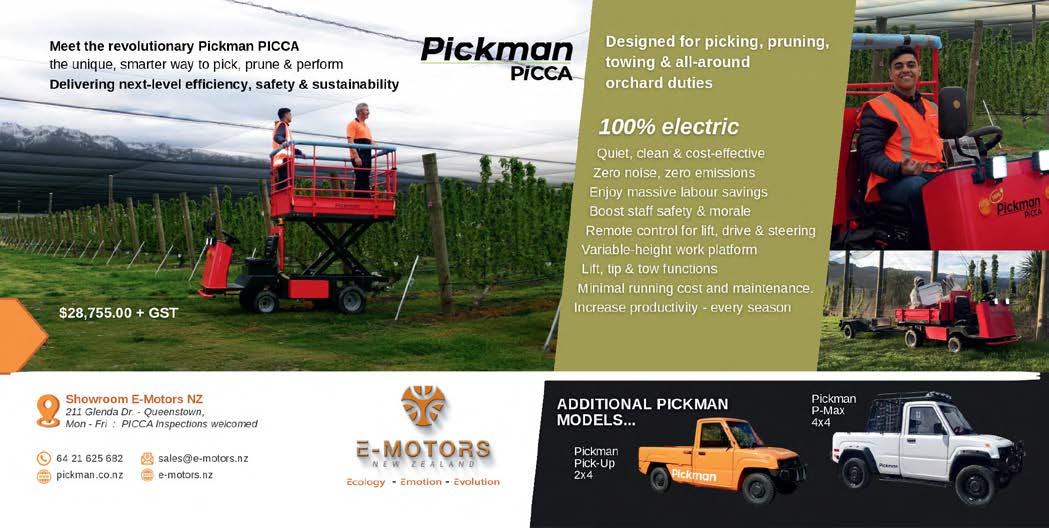
+ GST
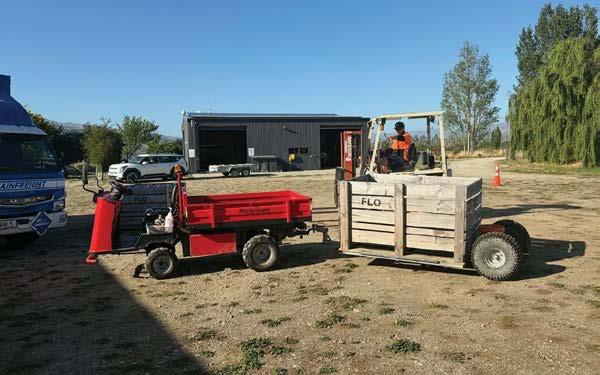
Secure your Pickman PICCA today. Next shipment arrival ; Mid May 2026
The panels should generate 35 percent of Kaiaponi’s energy needs
$28,755.00
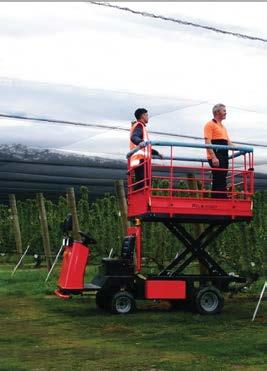
Meet the revolutionary Pickman PICCA the unique, smarter way to pick, prune & perform Delivering next-level efficiency, safety & sustainability
IS ON-FARM SOLAR AND BATTERY STORAGE VIABLE FOR YOUR OPERATION?
Many factors influence system size, savings and payback. The Energy Efficiency and Conservation Authority (EECA) suggests starting with irrigation – it’s the easiest and most impactful load to electrify using solar directly. Summer irrigation pumps typically operate hardest during daylight hours, coinciding with peak solar output. Other options include charging equipment, and heating and cooling systems. EECA offers a dedicated solar helpline for growers, providing practical guidance on planning, consenting, installation and connection issues. Call 0800 300 643, or email solar@eeca.govt.nz
Kaiaponi services a significant proportion of new pipfruit orchards in the region – and has invested in new build structures to cater for the market. Being in this phase of recent growth, with relatively new assets, makes the timing right for Kaiaponi’s solar investment.
It’s clear that energy resilience and sustainability have become part of the company’s values
“Even though we’ve got some relatively new buildings, we did have to invest in minor strengthening. While the individual panels are relatively light, by the time you have almost a 1000 up top, it’s a number of tonnes that needs to be accommodated. We certainly wouldn’t have been able to put this install on top of the older part of our business.”
Kaiaponi investigated funding, such as the Energy Efficiency and Conservation Authority (EECA)’s demonstration funding for solar and battery systems on farms.
In the end, Kaiaponi decided not to include battery storage as part of their initial investment as the size and scale of the project exceeded the thresholds of the funding opportunities.
“I’ve always been quite impressed with some of the funds available to support energy efficiency, but unfortunately for us, it didn’t align with what we had planned. I hope those funds can help others to get on with it.
“Batteries will likely form part of our operation, in some shape or form, however not right now. We expect batteries will be one of the things on the list for us to consider in the coming years.”
Barton is also confident that their next coolstore build will include panels from the outset. It’s clear that energy resilience and sustainability have become part of the company’s values.
“We’re excited to be on this journey; it’s not just about the dollars and cents. We’re chasing our next opportunity in relation to sustainability. We want to be involved in this, it’s important to us, and it’s the right time for us to move.
“It’s worked for lots of reasons, but it’s too early for us to say it’s a success. We’ve still got a lot to learn and it would be worth catching up again in a year when we can share our learnings.”
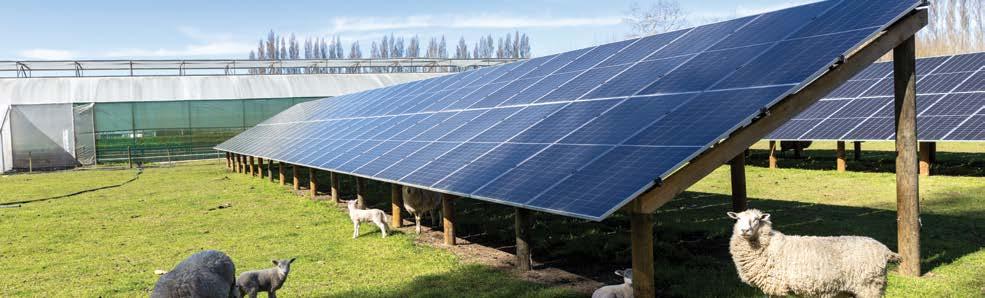
Panels installed next to grower Robert Cole’s greenhouse in Christchurch. Photo by Tony Benny
Natascha
Natascha is an early season, yellow flesh variety with very high yield potential. Excellent skin finish, ideal for wash/ pre-pack & brushing markets. Exceptional flavour, with a smooth creamy texture. Extremely uniform. Versatile alluse variety with fast increasing popularity in the market. Contact us to secure seed for 2026 planting season.
Campina
Versatile fresh-market salad potato with strong yields and uniform tuber shape, well suited to low-carb markets due to low dry matter. Easy growing with reliable performance. Contact us to secure seed for 2026 planting season.
Edison
Very high-yielding processing variety which is all used for fresh market. Excellent fry colour, solids and long storage ability. Low-input variety, with naturally high plant vigour and tuber numbers. Seed coming soon…
GENETICS THAT DEFINE THE SEASON
Performance driven Onions & Potatoes for New Zealand growers
Mustang F1 Vigorous intermediate day hybrid, for the early to main season window. Strong plant and large bulb size, giving high yields with excellent colour retention.
Merlot F1 Unrivalled deep purple-red external and internal colour, for the main intermediate day red segment. Uniform size and shape, with extremely firm bulbs and quality skins. Adaptable to various growing regions of NZ.
ONN24308 F1 Exciting first-early hybrid with strong bolt-tolerance, for overwintering segment. Highly uniform bulbs, with superior skins, colour and firmness. Contact us now to trial this season. segment. Highly uniform bulbs, with superior
Fairbanks ELK Exclusive strain of Early Pukekohe Long-keeper, with deep colour and uniform shape. Trusted long-keeper delivering firmness, storability and dependable main-crop returns.
Bronco Refined early variety for later half of ELK slot, with strong vigour and high yield potential, excellent bulb uniformity and thick skins.
Outlaw Robust, versatile variety of PLK timing, offering consistent size/yield advantages, with deep colour and exceptionally thick, highquality skins for added storability.
Mendoza F1 (ONN21269) Long day red hybrid offering earlier maturity and superior bolting tolerance. Consistently high yields with vibrant internal rings and multiple layers of deep red, premium-grade skins.
Amarok F1 Intermediate hybrid with strong field vigour and attractive, firm, uniform globe shaped bulbs. High yielding with exceptional skins for extended storage.
Wrangler F1 High yielding, main season intermediate hybrid with strong tops, deep copper-brown colour, dependable bulb shape and premium skin finish.
Luxor F1 Later maturing, intermediate day hybrid with 3-4 layers of thick high-quality skins, giving excellent storage potential.
(09) 2390893
Seed may be limited - Contact your local Fairbanks rep to secure seed for this coming
MITIGATE HIGHER WIND RUN
Spring 2025 saw some record wind speeds, with severe gale-force events causing fallen fruit and tree damage across the country. Looking ahead to spring 2026 and beyond, are spring winds getting stronger? And if so, what’s the best way to mitigate their impact?
Jared Ogilvy is something of a wind sleuth who prefers to keep mum on tips for outsmarting his nemesis – easterly gales.
“It’s like IP [Intellectual Property rights],” he says with a grin. “And we guard our IP pretty hard.”
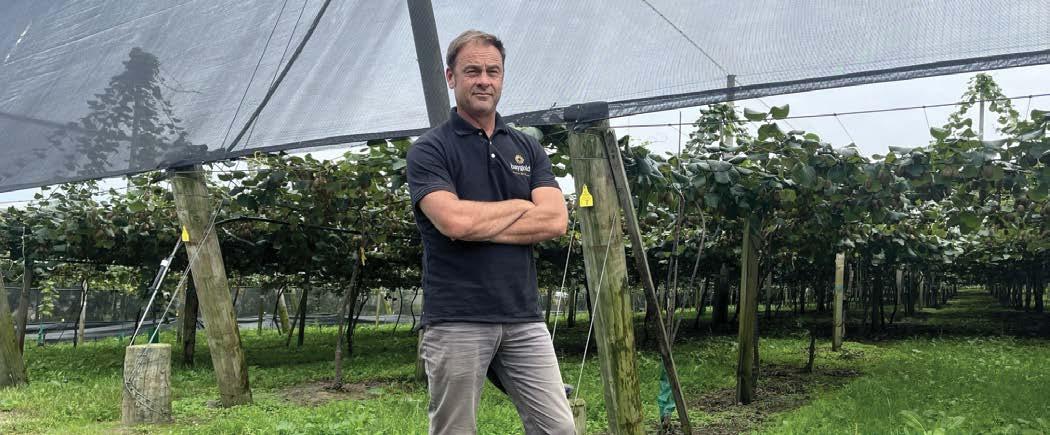
Jared is proud to have helped develop a stateof-the-art artificial shelter building method that gives his employer, Baygold, a kiwifruit grower and developer, an advantage in mitigating the effects of easterly-prone winds on its crops.
As Baygold’s construction manager, he says the days of utilising a hiab and a couple of tractors to erect an artificial shelter are gone for them.
Carly Gibbs
“Every time we have a weather event, our shelter stays up because we’ve put the engineering into it.”
He says that design methodologies for site-specific climates are critical to constructing large-scale shelters that require only routine maintenance, rather than failing and requiring repairs.
While Jared believes severe weather events like spring 2025 are still cyclical, Liam Kane from Bay of Plenty-based Max Coverage Orchard Services points to signs that wind damage has worsened over the last two years. Max Coverage designs and builds artificial orchard protection structures and windbreaks.
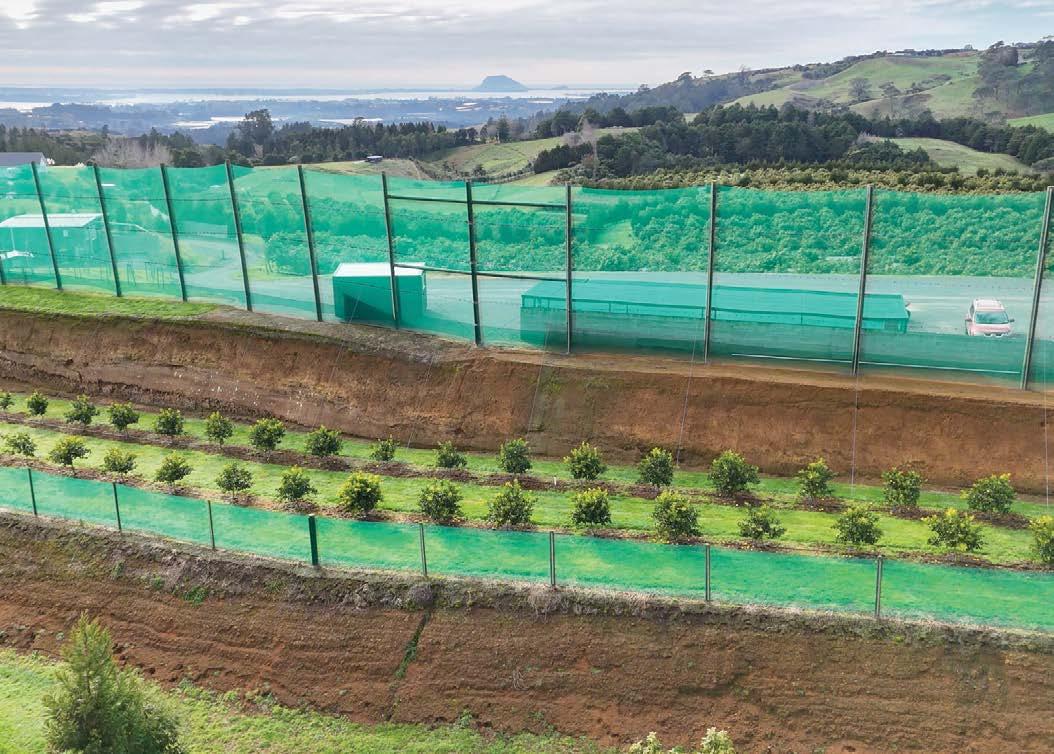
Wind shelters are built for specific, not universal, climates, says Jared Ogilvy of Baygold. Photo courtesy of Carly Gibbs
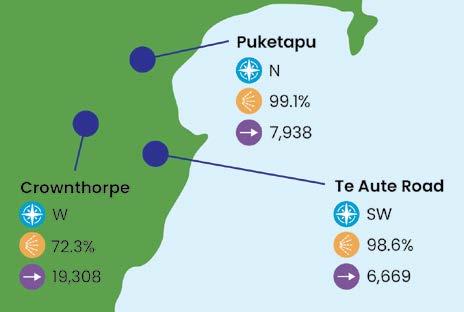
Table 1: Regional wind run
“It might just be a phase,” Liam muses, “But some of the growers I’ve talked to say it’s the worst in 20 years. One grower had a shed completely ripped out.”
Seasonal signals
Research meteorologist Dr Richard Turner at Earth Sciences New Zealand says that, to date, scientists haven’t observed much impact on wind from climate change (they have for rainfall and temperatures).
Scientists expect to observe these impacts in the latter half of the century, but there is uncertainty about what those impacts might be. However, some “robust seasonal signals seem consistent in many projections,” he says.
For example, it seems likely that we can expect windier springtimes and early summers in the lower half of the South Island, and a calmer climate in the northeast of the North Island.
“The signal around trends in ex-tropical cyclones is not yet clear, but we have seen the country affected more in the last 10 years than in the 10 years before that.”
Volatile season
Spring 2025 was best described as volatile. It was New Zealand’s warmest spring since 1909, and La Niña was declared in October. La Niña events are typically associated with more frequent northeasterly winds in New Zealand. Last spring, strong westerlies persisted across the country.
In addition to high winds in the Western Bay of Plenty in September, October saw gale events affecting the east and south of the South Island and parts of the lower and eastern North Island. That month, growers dealt with the highest wind gust speeds since records began in Te Puke and Lincoln, according to Earth Sciences New Zealand.
Weather station analysis of spring 2025 data by HortPlus in Auckland, Hawke’s Bay and Marlborough noted the extremes in wind speed. The data in Table 1 shows the variation in different locations.
Over the entire spring season, wind run (the total distance air travels past a fixed point over a specific period) was higher than most years over the past decade in Marlborough and Hawke’s Bay, but remained comparable to previous seasons in Auckland.
Avos bear the brunt
More tellingly for growers, HortPlus’s station data points to variable site-specific conditions.
For example, westerlies in the Western Bay of Plenty resulted in some avocado growers losing 80 percent of their crops in September.
Phillip West, research manager at NZ Avocado, says Kauri Point was particularly affected, with orchards experiencing varying loss, despite being “very close” to one another. Several growers are now being contacted to determine
which shelter or canopy setup resulted in severe impacts or what contributed to resilience.
While large orchards are using artificial shelter – as well as living shelter planted at the same time as the avocado trees – the shelterbelt trees take a while to get going.
...shelter is somewhat of an insurance policy against strong wind events, and so the price of resilience has to be factored in to some extent
“There have been examples where the artificial shelter installed was likely sufficient when trees were very young, but it has not been enough to protect fruit from significant wind damage when strong winds come through,” Phillip says.
HortPlus data illustrates differences within a region with highly variable site-specific conditions
Hawke’s Bay
He feels growers are aware of ‘best-practice’ design but often compromise on cost at establishment, weighing perceived risk against cost, and expecting the living shelter to eventually grow large enough to protect trees and fruit. “Sometimes orchards get caught out before the living shelter gets big enough.”
A better way
Many orchardists like to keep trees small, which also limits wind damage and means shelter doesn’t have to be too large to protect trees. Phillip says some avocado growers have shelter that would be better suited to a ‘kiwifruit block,’ but also have avocado trees that are much taller and therefore aren’t as well protected by the shelter. These growers may benefit from reducing avocado tree height to improve shelter effectiveness. NZ Avocado is assessing whether this height reduction significantly affects yield and whether the resulting yield loss would be offset by improved quality.
“This can be tricky as the shelter is somewhat of an insurance policy against strong wind events, and so the price of resilience has to be factored in to some extent,” he says.
No more
Spray & Pray!
There is no one size fits all in windbreak design. Photo courtesy of Liam Kane, Max Coverage
the use of a qualified engineer and the ability to offer investment timing informed by crop variety and age. When properly designed and site-specific to climate, windbreaks do work, they say.
Site-specific
Jared says this is the case for them. To the naked eye, Baygold’s large-scale, undercover Bay of Plenty blocks in Pongakawa, Pukehina and Matatā appear atypical in design. Jared, however, says they’re far from it.
“Without giving too many details away, we put a lot of effort into the ground in terms of what holds the friction for the anchors (being pulled) and rakers (sinking). There are several steps we take to determine the right approach, as well as for the structure of the ‘giant marquee’ protecting the block.”
Several years ago, some growers removed internal shelter belts to increase tree numbers and yield, but Phillip thinks this attitude has changed. “I haven’t heard of anyone removing trees to install additional shelter though, which would be nice to see.”
Current returns mean there is little money in low-quality fruit, and it may cost more to harvest and grade than it can be sold for, meaning mitigating damage has never been more important. Damage may be wind rub, pest damage or small fruit size.
Richard at Earth Sciences New Zealand isn’t aware of cost analysis conducted for wind and orchards, but says colleagues have conducted similar work on flooding, examining stopbank versus no-stopbank impacts and assessing exposure and expected annualised losses using a software tool called RiskScape. He says that, in theory, RiskScape could be applied to orchards and shelters, but requires detailed info on local wind patterns and the development of functions that relate orchard damage and losses to wind speed.
Buyer beware
If growers decide to invest in artificial shelter, experts caution ‘buyer beware’. The structure design industry isn’t regulated, so there are no engineering or building codes. Kiwifruit capital Te Puke is home to the bulk of the country’s original man-made windbreaks, some of the netting of which is nearing the end of its 20-year lifespan from UV degradation. Contractors that NZGrower & Orchardist spoke with were starting to field requests from kiwifruit growers with oldschool flat-top systems who want to convert to a wind shelter (vertical shelter).
Their advice for any grower seeking to replace or construct artificial structure is to look out for the following: no disconnect between your designer and installer; a sitespecific assessment of your soil conditions to determine which ground anchor is appropriate (there are several); an analysis of how your soil changes over the course of a year; specialised equipment, which may include 3D mapping;
Natural shelters tend to part and re-form, bend in the wind
This includes, among other things, simulating topography and load cell testing. Because Baygold’s own orchards are coastal, easterlies and cyclonic easterlies are their concern, and their shelters are built to suit that specifically. “There’s no universal climate on it,” he says of design.
Trees still effective
To mitigate wind effects, Liam has been adjusting his covers and vertical shelters to use larger pole diameters and closer pole spacing to better withstand wind.
“We won’t hang any of our cover nets over 18m width anymore – 15–16m is the ideal width if budget allows,” he says.
The alternative to artificial shelter – shelterbelt trees – offers protection and privacy but can compete for moisture and nutrients, create more shade and require more maintenance.
Coromandel Peninsula kiwifruit grower Andrew Hill of Hill Family Trust Partnership has experience with both artificial and natural shelter. He finds a mature living shelter performs well. If you’re starting from a greenfield, he sees an advantage in artificial, but he’s still a tree-loving guy.
“Natural shelters tend to part and re-form, bend in the wind,” he says.
Andrew grows 22ha of gold and 10ha of red over five properties at Whenuakite and Coroglen. He says red is more wind-sensitive but, once established, is protected by its own canopy through overhead stringing techniques. “We haven’t had a significant loss due to wind.”
Liam sums it up when he says, “There’s no one size fits all.”
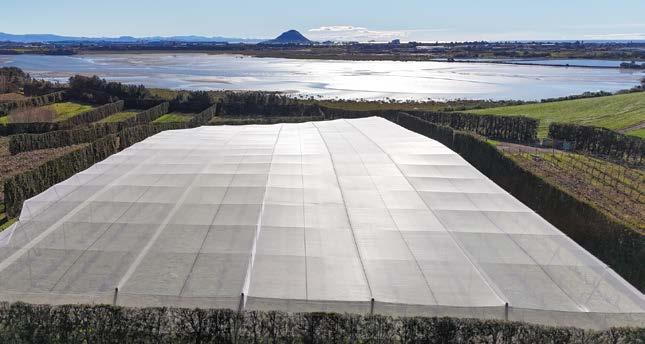
Cover nets at a Bay of Plenty orchard. Photo courtesy of Liam Kane, Max Coverage
FOUR DECADES OF AGSTEEL EXCELLENCE
Against the tide of imported products, AgSteel has stood the test of time. AgSteel – the horticulture brand of Hamilton-based Industrial Tube Manufacturing – recently celebrated 40 years of New Zealand-made manufacturing. Over four decades, the company has grown from producing a single product into a full range of horticultural solutions built around its flagship AgBeam, which has become a trusted cornerstone for kiwifruit orchards nationwide. Industrial Tube is now one of only two remaining precision steel tube manufacturers in New Zealand, employing 55 staff at its Hamilton site and supplying engineered components across horticulture, food, beverage and dairy sectors.
Chief executive Grant Waring attributes the company’s longevity to reliability and a local focus. “Our customers value consistency and being able to pick up the phone and speak with someone here in New Zealand. That connection is what makes the difference,” he says.
From its galvanised beams, posts and end assemblies to a complete range of orchard infrastructure, AgSteel products are engineered to last. Steel coils are sourced from BlueScope New Zealand, meaning the products are 100 percent Kiwi-made. The company’s commitment to responsible and sustainable practices has also been recognised with Gold Certification from the New Zealand Sustainable Steel Council.
Our customers value consistency and being able to pick up the phone and speak with someone here in New Zealand
General manager Werner Petrick notes that the horticulture sector increasingly demands certainty and quality. “Imports may exist, but our customers trust AgSteel. With New Zealand’s ever-changing climate, growers need infrastructure that’s strong, reliable and built to last. That’s why quality matters – and it’s where AgSteel leads.”
Over the years, AgSteel has evolved alongside the horticulture industry, investing in advanced cutting, laser and finishing technology to deliver components ready for integration into modern orchard infrastructure. Looking ahead, Industrial Tube sees growth opportunities in new horticultural methods, increased efficiency and exportdriven demand with interest from markets in Australia, Asia and Europe.
As a proud family business, AgSteel thanks its customers, growers and partners for their support over the past 40 years. “Your trust has allowed us to innovate locally and evolve our product range” says Grant. “We’re proud to continue helping New Zealand orchards thrive and look forward to supporting horticulture for decades to come.”
Celebrating four decades of Kiwi-made excellence, AgSteel remains a local partner growers can rely on –quality products, built for New Zealand conditions, by New Zealanders.
Local connection makes the difference
TRAINING INITIATIVES GROW CAREERS
Hawke’s Bay employers including Kiwi Crunch and T&G Global are finding new recruits to the horticulture sector through Ministry of Social Development programmes, while helping get more Kiwis into work.
A Hastings fruit packhouse boss is ensuring his newest permanent recruit has plenty of opportunities to put his mechanical skillset to use on the job.
After completing his mechanical engineering certificate, 20-year-old Logan O’Connor gained his first-ever job at Kiwi Crunch last year through a Ministry of Social Development (MSD)funded programme supporting 18 to 24-year-olds into work.
“Logan spent a lot of the summer with the mechanic team helping people pull stuff apart, and he will get training in carton erecting soon as we have got new machinery,” says Ross Howard, general manager post harvest and people at Kiwi Crunch.
“With him being part of the permanent team we want to amp him up with knowledge and training,” Ross says.
Logan is one of 17 job seekers who successfully completed MSD’s Rangatahi Seed (Sustainable Employer-Employee Development) programme from January to July 2025. Each week was split between work at Kiwi Crunch and training with MSD provider Eastern Bridge Education (EBE).
Logan was referred to the programme by MSD after his job search for a mechanics role post-studies was unsuccessful.
EBE director of domestic education Tim Bloor says through the programme, Logan secured his forklift and restricted driver’s licences, and developed confidence through group activities such as 6am fitness training.
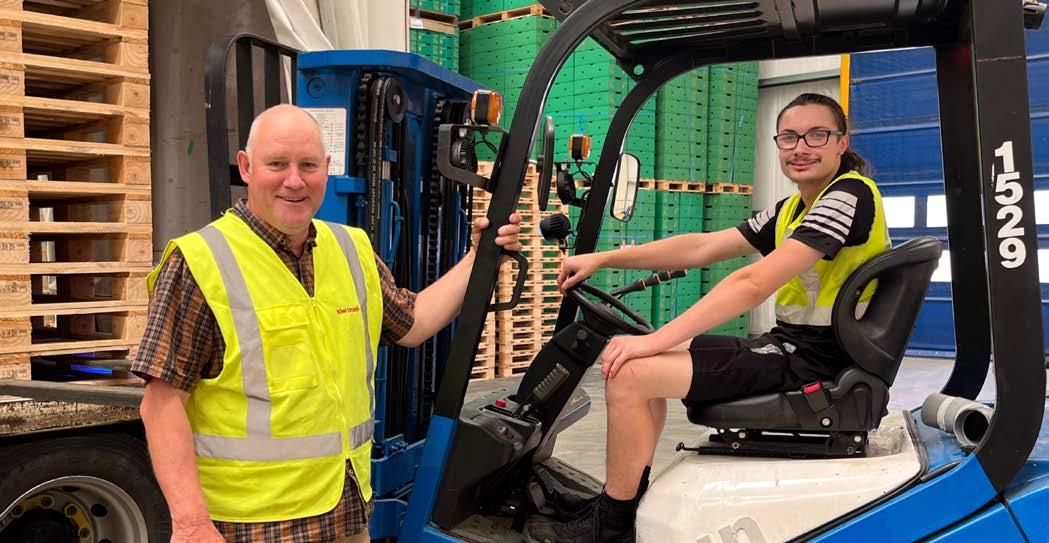
Kiwi Crunch’s Ross Howard, general manager post harvest and people, and packhouse worker Logan O’Connor
Early morning Te Mata Peak runs and help securing driver’s and forklift licences are among the support that Eastern Bridge Education provides through Rangatahi Seed
“THE HORTICULTURE INDUSTRY LIKES PEOPLE WHO HAVE GOT THAT DRIVE... THIS INDUSTRY IS SO OVERLOOKED.”
Kole McGarvey, T&G workplace development and planning manager, says the permanent contracts offered through the Core Talent programme enable participants to develop diverse skills
“A key strength of the programme is its focus on removing practical barriers that commonly prevent sustained engagement in employment,” Tim says.
Ross Howard says Rangatahi Seed provides a win-win both for the youth and for Kiwi Crunch.
“It helps us get through the packing season, and gives them a good reference and a good stepping stone to go forward, and if they are the right candidate for the things we need we will definitely employ them permanently,” Ross says.
Logan’s current experience will set him up for life, he says.
“Logan is going exceptionally well for a young guy that was new to the industry, he has just clicked.”
Contrary to public perception, horticulture offers various career pathways across accounting, marketing and exports, as well as orchard and post-harvest roles, Ross says.
“A lot of people look at horticulture as a dead-end job just picking and packing apples,” he says.
“Horticulture is a big part of the New Zealand economy and Hawke’s Bay is the fruit bowl so there’s definitely scope there for the right person to get a permanent position.”
The Core Talent programme across T&G Global’s Hawke’s Bay sites, funded by MSD to support people into work, is an example of a programme that has had success through offering permanent contracts.
T&G workplace development and planning manager Kole McGarvey says the permanent contracts enable participants to move between roles, develop diverse skills and stay employed between seasons.
“They could start in packhouse or forklift driving roles, then move onto an orchard, doing flower picking, development, tree training or thinning,” Kole says.
“They also complete tractor, forklift and hydroladder driving qualifications, and a NZ Certificate in Primary Industry Skills.”
In 2024, six people successfully completed the T&G programme and remained in work six months later.
A further nine who were employed by T&G in November 2025 through the programme are doing really well.
Having completed Core Talent himself seven years ago, following a redundancy in a tough job market, Kole is an advocate of the programme. In fact, he now runs it.
“I’ve seen real change, and it all comes down to simply having the right mindset, support and opportunities,” he says.
Prior to the programme, Kole’s background spanned chefing, IT and call centre management. He attributes his tenure at T&G to the value his employer places on rewarding strong work ethic.
“The horticulture industry likes people who have got that drive.
“This industry is so overlooked.”
Into-work programmes such as these are among many MSD initiatives supporting both employers and job seekers in the region.
MSD holds contracts with more than 30 providers and relationships with many employers in Hawke’s Bay, across all industries, to support people into work, says Steve SmitsMurray, East Coast regional commissioner at MSD.
Additionally, practical training via forklift simulators and virtual reality learning modules are among many initiatives offered across the region, Steve says.
“For example, a forklift simulator enables job candidates to practise common driving scenarios such as lifting, stacking and reversing to gain experience and confidence,” Steve says.
“The simulator monitors performance, attributes a cost value to errors, and provides a report that candidates can submit with their CV.”
“Experience is the number one thing employers tell us they look for in forklift drivers, so we funded forklift training for 30 job candidates in January 2025, and then connected them with several employers who hired them.”
As a professional recruitment service, MSD has access to the largest pool of job seekers in the country, Steve says.
“Despite high unemployment, we had 4063 people in Hawke’s Bay move off benefit and into work between 1 December 2024 and 30 November 2025.
“In addition to our into-work initiatives, this is thanks to our fantastic team of work brokers who work directly with employers and take the time to understand their business, goals and workplace culture. This helps us match employers with people who not only have the right skills but also the potential to grow with the team.”
Tim Bloor says MSD’s robust recruitment screening plays a key role in ensuring the right candidates are selected for Kiwi Crunch.
“MSD’s approach to pre-screening has been refined to a very high standard, ensuring that candidates referred
Thermo
into the programme are well matched to both the expectations of the programme and the needs of the employer,” Tim says.
Horticulture is a big part of the New Zealand economy and Hawke’s Bay is the fruit bowl so there’s definitely scope there for the right person to get a permanent position
“This has resulted in a strong level of confidence from Kiwi Crunch to the extent that they are able to accept the full group of participants without the need to conduct individual interviews.”
MSD’s support continues after candidates are hired, Tim adds.
“Communication is clear, issues are addressed early and there is a shared focus on positive outcomes for the rangatahi.”
While Logan’s ultimate career goal is still in mechanics, he his grateful to have secured a role at Kiwi Crunch that enables him to pay off loans and contribute towards living costs at his parents’ home.
“It pays pretty good, and the people are cool,” Logan says. “I would stay here for a while if they would have me.”
Support for employers
Thanks to MSD for contributing this article. Whether you’re looking to recruit, train or upskill, you can call MSD’s Employer Services team on 0800 778 008, or go to workandincome.govt.nz/employers for more information.
• Provides internal warming more compact flowering
• For use on fruit tree crops
• The “spray on” that adds to all other methods
• Good results have been achieved when applied through irrigation lines
UPDATE ON EPA REASSESSMENTS
The New Zealand Environmental Protection Authority (EPA) continues to reassess active substances in agrichemicals. Below are active substances relevant to the horticulture sector that are completed, under reassessment or planned for reassessment.
Banned products
Active ingredient
Chlorthal-dimethyl / DCPA Usage immediately banned on 18 December 2025
Chlorpyrifos Banned on 10 July 2025 with usage and disposal to be phased out over 18 months
By 18 June 2026, growers must safely dispose* of the following products:
· Dacthal
· Deramot Xtra
Chlor-Back™ 75WG
Read more on the EPA website or in HortNZ’s submission Proposed Ban of Chlorthal-dimethyl on www.hortnz.co.nz
By 8 July 2026, growers must safely dispose* of the following products, and their use is prohibited:
Rainifos
Donaghys INSEC480
Hortcare Chlorpyrifos 50 EC
Chlorpyrifos 500EC
· CropSure Sureban 500EC
· Synergy Chlor-P
Pyrinex 500EC
enfarm Chlorpyrifos 500 Insecticide
Kensban 500 Insecticide
TOPPEL 500
Genfarm Chlorfos 500 EC Insecticide
· Chlor-P 480EC
Cardinal, Outperform 500
Pyrinex Insecticide
Read more on the EPA website.
Products under reassessment
Active
Oxadiazon Under reassessment. Decision expected in 2026.
Bifenthrin Under reassessment. Decision date TBC.
HortNZ previously submitted (see Call for Information on Oxadiazon on www.hortnz.co.nz) that it is an effective weed control product for the horticultural sector, specifically blackcurrants and onions.
HortNZ’s 2024 submission Preliminary Consultation for the reassessment of selected Synthetic Pyrethroids (SPs) outlines that there has been a reduction in overall SP use and highlights bifenthrin’s critical use in biosecurity responses (e.g. Brown Marmorated Stink Bug).
* SAFE DISPOSAL OPTIONS FOR BANNED PRODUCTS
Agrecovery offers a free or subsidised service where you can register your unwanted agrichemicals for collection. These products will be collected at the next round of agrichemical recovery events.
Reach out to your local council to enquire about disposal options specific to your area.
For further information, visit www.epa.govt.nz or contact Natalie Wong, HortNZ senior risk policy advisor: natalie.wong@hortnz.co.nz
Planned for reassessment
Active ingredient Status Comments
Carbendazim Planned reassessment for second half of 2026
GREEN LIGHT FOR RURAL RECYCLING SCHEME
The Government has agreed to make it compulsory for producers and importers of in-scope plastics to be part of the Rural Recycling Scheme for agrichemicals, their containers and farm plastics. Regulations are now being drafted, and the scheme is expected to come into force in late 2026/early 2027.
For growers, nothing would change in your day to day. You can keep using Agrecovery and Plasback services as you do today. Over time, the intention is that farm plastics recycling will become easier and more accessible for growers.
environment.govt.nz agrecovery.co.nz
Carbendazim-containing products are:
GOLDAZIM 500SC
X-Spore
Chief Fungicide
Firmus 500SC
· LIQUID Mycotak
· Prolific PROTEK
Cracken 500 SC Fungicide Carbenz, Guardian
Alachlor and acetochlor Planned reassessment for first half of 2027
Consultation closed at the end of February on the use of alachlor and acetochlor in New Zealand. HortNZ has coordinated a submission that outlines how and who uses these herbicides, risk management measures taken and potential impacts if withdrawn.
PURPLE TOMATO REACHES AUSTRALIA
John Gauldie
In January, the genetically engineered Purple Tomato™ received approval from Australia’s two key regulatory bodies. How far is the new cultivar from New Zealand grocery bags?
Marketed in the United States by Norfolk Healthy Produce, the tomatoes should be available for consumer purchase in Australia later this year. All Aussie Farmers, the exclusive commercial partner in Australia, will sell the tomatoes under the Purple Bliss™ brand.
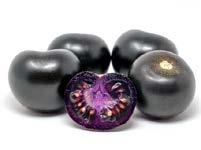
The Purple Tomato is enriched with anthocyanins, well-known for their antioxidant properties, using genes from the snapdragon plant, which is widely cultivated for use as edible garnish. According to Food Standards Australia New Zealand (FSANZ), the anthocyanins in the Purple Tomato are identical to those found in many other foods including the skin of some purple-skinned ‘heirloom’ tomatoes.
Indigo Rose is a non-genetically engineered cultivar developed at Oregon State University for high anthocyanins and widely available in New Zealand, however the anthocyanins are mainly restricted to the skin and outer flesh. There are also ‘black’ cultivars available in New Zealand such as Black Krim and Cherokee Purple, however these are quite different chemically and in appearance.
In its safety assessment of the Purple Tomato, FSANZ found “no biologically meaningful differences in the levels of key constituents” (other than the intended anthocyanins) from conventional tomatoes already in the Australian and New Zealand food supply.
In both Australia and New Zealand, FSANZ’s approval requires that the Purple Tomato and products containing it as an ingredient must be labelled as genetically modified, unless an exemption applies (e.g. restaurants).
The US Food and Drug Administration authorised the Purple Tomato as food in 2023. In 2024, commercially produced fruit began to be sold in US grocery stores.
Nathan Pumplin, chief executive of Norfolk Healthy Produce says the company has sold more than 200,000 packages of tomatoes, 25,000 seed packets and 100,000 seedlings.
In January this year Australia’s Gene Technology Regulator issued a licence for intentional release of the Purple Tomato into the environment without requiring specific approvals for each planting.
Despite approval from FSANZ, fresh tomato imports from Australia would require approval from New Zealand’s Environmental Protection Authority and would need to meet New Zealand’s biosecurity requirements. Enactment of the Government’s proposed Gene Technology Bill would streamline the EPA approval process. However, in theory, commercially processed juice from the tomatoes could be imported for sale in New Zealand, provided the processing makes the tomato seeds non-viable.
In the event of hybridisation with sexually compatible plants, the regulator did not expect the introduced genetic modifications to increase the ability of hybrids to spread and persist.
Also, standard weed management practices for tomato volunteers in agricultural settings would control the hybrids.
TomatoesNZ general manager Dinah Cohen says it is unlikely that growing the Purple Tomato would be
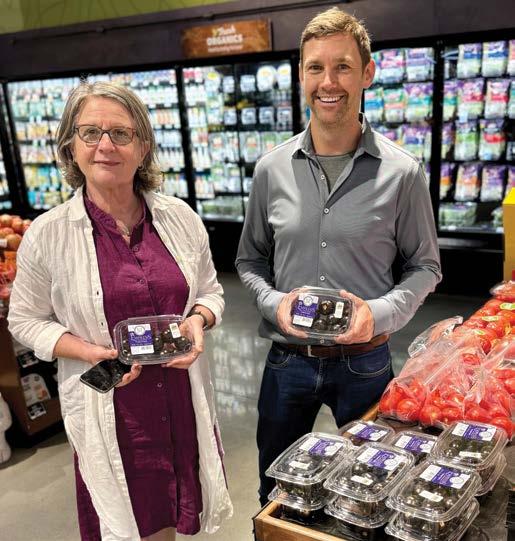
The Purple Tomato marketer Norfolk Healthy Produce’s chief operating officer Gerty Ward and chief executive Nathan Pumplin at a Food City supermarket in Virginia
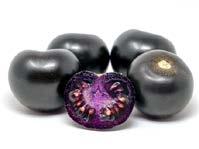
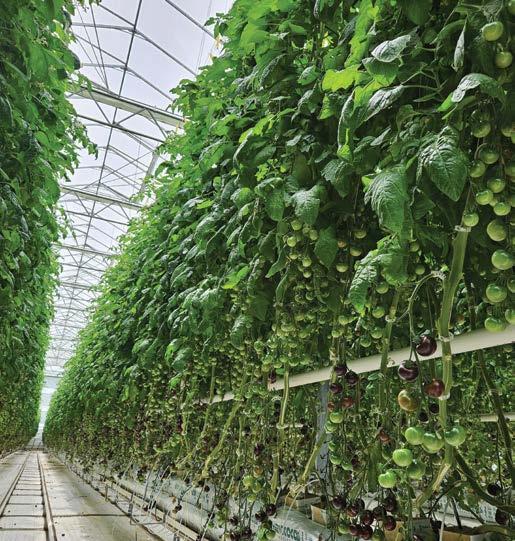
The Purple Tomato plant produces anthocyanins as the fruit ripens, resulting in both purple skin and flesh
permitted in New Zealand under existing legislation. Without a clear timeline on the Government’s proposed gene technology regulations, she is not aware of any growers who want to grow them in New Zealand.
The Purple Tomato is enriched with anthocyanins, well-known for their antioxidant properties
“Even though our border is currently closed to fresh tomato imports from Australia [due to the presence of tomato brown rugose fruit virus in Australia], we are keeping a close eye on developments across the Tasman and will engage with our growers if needed.”
Nathan says Norfolk Healthy Produce is open to applying for approval to cultivate the Purple Tomato in New Zealand, depending on the new regulatory regime.
“We will proceed on this once the legislation becomes clear,” he says. “Commercial growers tend to entertain only opportunities that are concrete, which requires a stable regulatory path.”
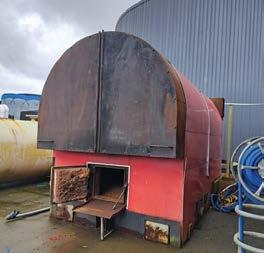
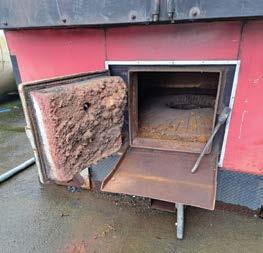
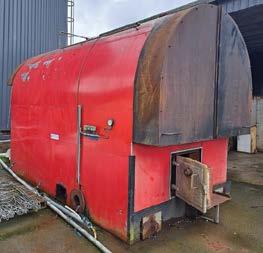
Boiler unit for sale
We have a Morrow Engineering (Christchurch based boiler maker) boiler unit for sale.
• It is a coal fired boiler that can also burn wood pellets (Nature’s Flame) or wood chips (biofuel).
• Approx 4.5MW. Suitable to heat approx. 4ha to 5ha of glasshouses.
• Complete unit plus flue (approx. 12m), grit arrester, and auger.
• In excellent condition. We had it surveyed by Morrows prior to purchasing in 2021 and have had in covered storage since.
• Electrics disassembled and recorded by Wharfe Bros.
• Located at Bombay (South Auckland). Inspection by appointment only.
• $99,000 plus GST or near offer.
Contact Simon Watson 021 745 978 | swatson@nzhothouse.co.nz | www.nzhothouse.co.nz
Commercial production of the Purple Tomato in the United States
ABOUT LANDWISE FORMED IN 1999, LANDWISE IS A CHARITABLE ORGANISATION PROVIDING LEADERSHIP AND SUPPORT FOR THE DEVELOPMENT AND PROMOTION OF SUSTAINABLE PRODUCTION.
CARBON POSITIVE BUTTERNUTS
The Carbon Positive trial is a 6-year study based at the LandWISE MicroFarm in Hawke’s Bay, comparing three growing systems: Conventional, Hybrid and Regenerative. The trial aims to answer the scientific question: ‘Can soil health and quality be improved by adopting methods used to sequester carbon through sustainable and regenerative practices, while maintaining crop quality and profitability?’
Olivia Webster and Dan Bloomer : LandWISE
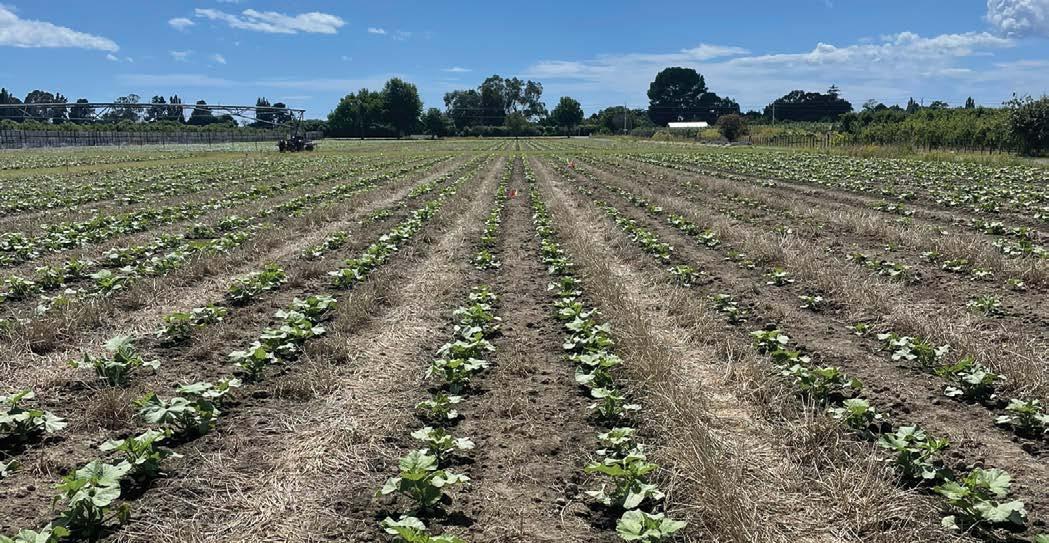
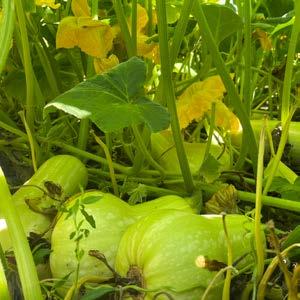
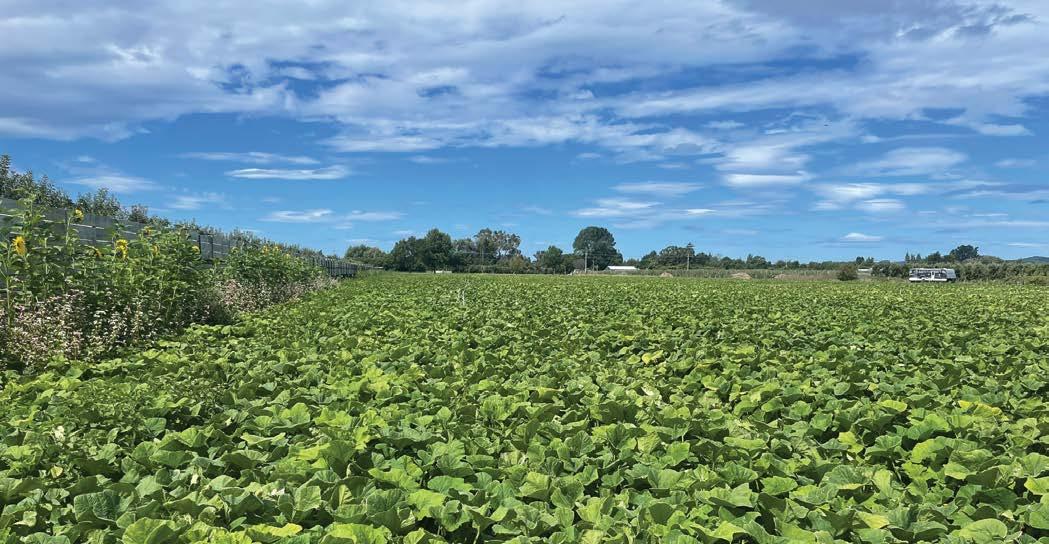
Now in its fourth year, the trial is currently growing butternut pumpkins for HeinzWattie’s. So, what are we doing for our Carbon Positive butternuts?
Soil preparation
The soil preparation differed across the three treatments. The Conventional treatment was sprayed out with glyphosate and Sharpen 4 weeks prior to planting, followed by discing, aeration and hoeing.
In the Regenerative and Hybrid treatments, 30cm strips were sprayed out 8 weeks pre-planting, allowing the cover crop roots and residue to decompose before strip-tillage. Two weeks before planting, the strips only were shallow ripped to break up sheep compaction, irrigated due to dry soil conditions, and once optimal soil moisture was achieved, strip-tilled twice to break down soil clods. A final pass was done with a Cambridge roller.
Strip-tilled butternuts growing in the regenerative treatment at the Carbon Positive trial in mid-December
Before planting, the Hybrid treatment was broadcast sprayed with glyphosate and Sharpen to terminate the remaining living strips. The Regenerative treatment received glyphosate only, with the intention of retaining vetch and clover from the cover crop as companion species.
Butternut seeds were planted at the same rate (16,500/ha) on 15 November in twin rows on 2m beds. Treated seed was used in the Conventional and Hybrid treatments, while the Regenerative treatment used untreated seed. The Regenerative and Hybrid seeds were coated with Trichoderma.
Nutrition
Fertiliser strategies varied between treatments. Conventional and Hybrid treatments received 300kg/ha of YaraMila Complex at planting, while the Regenerative treatment received 150kg/ha. In addition, the Hybrid and Regenerative treatments received biological inputs via liquid injection, including TrichoStart, Biostart N and Mycorrcin.
Red Saturn
Early red to complement our range. Red Saturn matures 7 days later than Red Planet. Sow late April to mid May only. Excellent colour and shape with good internal colour.
Midori Plus
Versatile for sowing December to May. Mediumdeep drumhead shape. Excellent internal quality and field holding. Harvest early winter to spring, dependent on location. Also available Fuyu Midori.
At side dressing, the Conventional treatment received the ‘standard’ rate of Calcium Ammonium Nitrate (CAN) at 150kg/ha. For the Hybrid treatment, the goal was to apply a half rate of CAN (75kg/ha), but the lowest setting the side dressing machine could be calibrated to was 113kg/ha, so that is the rate we used. The Hybrid treatment also received a foliar application of seaweed.
The Regenerative treatment only received a foliar application of seaweed, Megafol and Fulvic acid, as the soil nitrate results showed there was a sufficient level of Nitrate-N in the soil.
the
Nitrogen dynamics
Soil nitrate was monitored fortnightly at 0–15cm and 15–30cm. Before planting, Regenerative plots had slightly higher nitrate levels than the other two treatments. Fertiliser inputs at planting increased nitrate significantly across all systems, with Conventional reaching the highest levels by early December.
Dev
Excellent early brown. Deeper in shape and early maturing. Possibly the best midlate April sown brown in the market. A proven variety over the past three years. Good storage for an early onion.
Robusta
Dense fresh market/process cabbage with a short core and good weight. Good disease tolerance and a nice deep green colour. Harvest all year round. Excellent holding ability sizing up to 5kg.
Red Mars
New red to further extend our range. 7 days earlier maturing than market standard Red Planet. Sow from mid April to mid May. Good skins. Excellent shape and colour.
Nisu
Suitable for year round production, perfectly sized to fit in the new crate sizes. Approx. 2–2.5kg in winter and up to 3kg in summer. Early maturing, small-medium drumhead, glossy leaves, great eating. Holds well, bolt tolerant.
Getting under
canopy – butternuts developing well, pointing to a good yield for Heinz-Wattie’s
At the end of January, all treatments were looking similar. Note the A Lighter Touch programme inspired ‘biostrip’ of sunflowers and buckwheat underplanted with Alyssum growing along the fenceline
Despite lower total nitrogen inputs – only 18kg N/ha for Regenerative compared with 76 and 66kg N/ha for Conventional and Hybrid – nitrate levels converged across all treatments by early January.
Tissue testing confirmed that nitrogen levels were sufficient across all treatments, sitting within or above recommended medium ranges. However, calcium and manganese deficiencies were detected across all treatments.
Canopy development
Canopy cover is assessed weekly using the Canopeo app. Early on, the Conventional treatment showed slightly faster canopy development. By mid-season, however, all three treatments had reached similar canopy cover and were approaching full canopy closure. This suggests that despite differing cultivation methods and nutrient inputs, crop growth trajectories ultimately converged.
Soil carbon
We reached mid-point in the project in October/ November 2025. Soil carbon sampling to a depth of 900mm was conducted prior to planting. Average total carbon stocks were 115.24t/ha in the Conventional treatment, 117.93t/ha in the Hybrid treatment, and 113.36t/ha in the Regenerative treatment.
Total carbon remained stable across all three treatments from baseline (2022) to mid-point sampling (2025). The only statistically significant change was observed in the Regenerative treatment
at 0–150mm, where total carbon declined. This decrease was attributed to a fallow period in late spring/early summer, when the Regenerative treatment remained in a cover crop to protect the soil from compaction, while the other two treatments were planted in early peas.
These results reinforce the importance of maintaining continuous living roots to sustain soil carbon accumulation
However, radish in the cover crop began to set seed so the crop was terminated to avoid a future ‘weed problem’. This resulted in a 3-month fallow period and, by the time the bean crop emerged, a total of 106 days with less than 10 percent canopy cover. This greatly reduced photosynthetic carbon inputs during that time. These results reinforce the importance of maintaining continuous living roots to sustain soil carbon accumulation.
Carbon Positive is a joint project with LandWISE, Hawke’s Bay Future Farming Trust, Heinz-Wattie’s and McCain Foods. We are grateful to our Operation Advisory Group members for their attendance and inputs at regular paddock meetings. We also thank Gareth Holder for planting and side-dressing the butternut crop.
IMPROVING EXPORT OUTCOMES FOR ONIONS
David Tanner : Start Afresh Ltd managing director
New Zealand has a lot at stake in the quality of produce delivered to distant export markets. Research on refrigerated high-value crops such as kiwifruit has paved the way, however how can we minimise rot development, water loss and crop breakdown for the more than 100,000 tonnes of onions shipped annually? New research confirms that New Zealand onion-specific best practice is quite different from other crops.
Introduction
Over the last two decades, the volume and diversity of perishable cargoes have continued to grow. At the same time, customer expectations around production quality are increasing. Many of New Zealand’s perishable horticultural products rely on containerised shipping of their goods to distant markets, and this trade is paramount for our country’s prosperity.
Through the Humble to Hero programme, established between the Ministry for Primary Industries and Onions NZ, research was conducted to develop improved best practices that would enhance the quality of delivered onions to export markets, and thereby enhance the reputation of New Zealand onions on the global market.
• May-June delivery
• Shelterbelt: Cryptomeria japonica and Casuarina cunninghamiana in root trainers, height 30-50cm
• Strawberry seedlings in trays, first-generation tissue culture plants
Please contact Harry Saini: 021 278 2785 | hello@potsofjoy.co.nz www.potsofjoy.co.nz
Effective airflow to regulate temperature requires even loading patterns that avoid product being loaded against the walls of the container
Containers suffer from a large surface-area-to-volume ratio and can be prone to significant temperature variability within the cargo. This project aimed to provide understanding and ultimately opportunities to improve the out-turn performance of onions exported in refrigerated shipping containers. The project has built on research undertaken in other New Zealand horticultural sectors over two decades.
Building on kiwifruit and avocado
The New Zealand kiwifruit industry, working in collaboration with Massey University, and Food Science Australia (a then collaboration between the Australian Commonwealth Scientific and Industrial Research Organisation and the Victorian Department of Primary Industries), began understanding the impacts of temperature variability on kiwifruit quality in
SKILLED HORTICULTURE STAFF AVAILABLE
Domestic and international students with:
• NZ Certificate level 4 and
• NZ Diploma level 5
• Industry oriented hands-on training and core growing skills in horticulture production
refrigerated shipping systems back in the 2000s. Primarily led by Dr Nevin Amos and Dr David Tanner, this work sought to reduce variability in these systems, so as to reduce the variability in quality outcomes when shipping kiwifruit around the world. Over the last two decades, learnings from this work have been adapted to other horticultural sectors (including avocado and berry fruits) and have resulted in the generation of best practice guidelines and operating practices within shipping systems (both containers and refrigerated ships). Some of these learnings are generic, while others are product, packaging and supply chain specific. Therefore, the early investments by some of New Zealand’s larger sectors have had flow-on benefits for smaller sectors.
Approach taken with onions
Prior to commencing the project with Onions NZ, Start Afresh interviewed industry participants regarding their practices and which shipping options they used. Of particular interest in these interviews was the variation in shipping environmental settings for refrigerated containers, and the overwhelming desire to know if ‘there was a better answer.’ All participants offered to assist in characterising shipments to understand in-container variability, and for Start Afresh to explore alternative environmental settings to improved shipping outcomes.
temperature and humidity with a cheap, and download, datalogger that is placed on the inside the door and removed and downloaded arrival.
Lower the base shipping temperature to approximately 2°C and 65–75 percent RH for brown onions.
Dynamic temperature control could provide some significant opportunity for improved shipping and out-turn performance.
Maintain even loading patterns and avoid (where possible) product being loaded against the walls of the container.
This initiative will reduce the quality deterioration that occurs due to regulating the respiration rate of the product and will also result in lower levels of water loss (leading to higher in-market saleable weight). Container ventilation is recommended at the lowest possible setting (or to a maximum of 15m3/hr) and RH control must be switched on. Airflow within the containers monitored seems adequate to minimise minimum to maximum variability at these conditions.
Excessive humidity during shipping will promote rotting while higher temperatures will result in sprouting and also promote rot development.
Dynamic temperature control is applied for other crops, particularly kiwifruit in the early part of the season. For onions, the use of dynamic temperature control would allow lower temperatures to be used, as outlined above, with all the benefits that have been described, particularly reduced weight loss and therefore greater saleable weight, and slower product senescence.
The component of ‘dynamic’ control that provides value is the ‘warming’ of the product just prior to devanning, which would reduce the likelihood of condensation forming on the cold surface of onions as they are unloaded. This would be expected to reduce the chance of post-shipping rot development on the onion surface. The stepwise warming of the container allows the container to adjust the internal RH in increments, ensuring that the level does not drop significantly with rewarming and enhance water loss.
· Do not leave gaps in the stow unless they are between the last pallets of product and the door. Creating gaps between pallets of product down the length of the container encourages air to short-circuit and results in warming of pallets near the door.
Loading of warm product (significantly warmer than other product being loaded for whatever reason) near the door will result in slow cooling of this product and warming of product nearby. If warm pallets must be loaded, they are best placed near the refrigeration unit end of the container.
· Product should be loaded with a gap between the product and the side wall of the container. This gap only needs to be small but must allow air to flow between the product and the wall to capture heat that is entering through the wall and take it to the refrigeration unit.
Over three seasons, the project characterised the current container export settings used by the New Zealand onion industry, including the difference between door-off and refrigerated containers, the influence of environmental conditions on weight loss and product quality, and any operational difficulties that are encountered with these differences in settings.
This work intended to confirm that using lower temperatures of ~2°C and 65–75 percent relative humidity (RH) for most of the journey would maintain better bulb quality compared to the most common current commercial settings of ~6–10°C and 65–75 percent RH.
Many of New Zealand’s perishable horticultural products rely on containerised shipping of their goods to distant markets, and this trade is paramount for our country’s prosperity
The learnings gained from the first year of trials led us to design a monitoring programme for 2023 and 2024 that would focus on changes in temperature settings (lower temperatures) and introduce the concept of ‘dynamic’ temperature setting, to investigate the rates of change within the stow, and the positive impacts that these types of changes may have on product quality. The research was supported by onshore ‘library’ testing to characterise impacts of changes in environmental conditions.
This work highlighted that when using dynamic temperature control, there is a need to monitor the actual conditions closely. Particularly given the additional cost of dynamic temperature control, exporters will want to know that the requested conditions are the same as the actual operating conditions delivered, so they can have confidence that they will deliver the desired benefits for customers.
Door-off shipping is becoming rare among New Zealand exporters, both because of the inconsistent environmental conditions that prevail, and shipping providers making refrigerated containers more cost-competitive.
This project has determined a range of best practice recommendations for export that can be readily implemented by the New Zealand onion industry (see table 1).
Resources
A range of resources have been developed for the Onions NZ community as one of the outcomes of this programme. Best practice guides (A3 posters) that can be utilised by packers, exporters and in-market receivers have been developed to distil the complex into bite-sized pieces of information that can easily be implemented.
For more information, contact info@onionsnz.com
Applications are now open from trainees working in the horticulture industry and studying towards a certificate or diploma in 2026.
Twenty-five scholarships worth $600 each are available; they are applied for now and awarded at the end of the year for keeping up with work and study throughout the year.
Applicants must be active in the horticulture industry and undertaking training or education with a vocational provider.
Applications close 29 March.
ONLINE FRUIT SALES ON THE UP
Central Otago fruit growers are increasingly adding online sales to their sales mix –volumes of cherry package deliveries are up 25 percent. But marketing and shipping perishable fruit direct to consumer comes with its own challenges.
Aimee Wilson
Online sales of domestic cherries over the Christmas/New Year period is a success story for NZ Post. This season the company delivered more than 120 tonnes of cherries out of Central Otago alone, using its domestic overnight service.
“That’s a more than 25 percent increase on total volumes last year,” says NZ Post regional business manager Terry Frisby. “At least 40 tonnes of that was delivered pre-Christmas over just a few shipping days.”
Cheeki Cherries in Cromwell has been involved in online sales alongside its successful Pick Your Own (PYO) operation on Ripponvale Road for about 6 years.
Co-owner Martin Milne says they picked cherries from two other orchards this season as a back-up for their
own fruit, to ensure they could fulfil all of their domestic orders.
This year the family orchard operation had a 10 percent increase in fruit being delivered across the country to customers, mostly in Auckland.
Cheeki Cherries originally exported all of its fruit but now concentrates on the domestic market only.
“We saw the writing on the wall 6 years ago when costs related to export kept rising.”
The Ripponvale Road orchard has 24 varieties of cherries for the PYO market.
With the weather determining how much fruit will be available and pre-sales already locked in before the season
Online orders ready for expediting at Cheeki Cherries in Cromwell
even starts, Martin says, “We’re always a bit wary of quantities available to fulfil those orders.”
Kordia is a popular cherry – easily distinguished by its long stalk and heart shape. White cherries are also very much in demand. “We have an ongoing planting programme to cater for this demand.”
The orchard is low spray, which is what a lot of people are looking for now. They have clients in the health industry, with one company ordering 100kg of cherries for their customers every year.
Occasionally the cherries don’t end up where they are supposed to. Once Martin had a phone call from the Chatham Islands asking who the box of cherries was for; it was actually for a customer in Tauranga.
Keeping everyone happy is a big challenge and the Cheeki Cherries team strive to achieve this.
Cromwell grower Kevin Jackson has been in the online sales game for about 8 years. Staff take orders for Christmas cherries from the Cromwell orchard as early as October, but the requests come in a lot sooner than that.
The orchard supplies 100 different varieties of stone and pipfruit to the domestic market year-round. They now employ two full-time staff just for the online sales.
With direct sales making up about 20 percent of its overall operation, Kevin says NZ Post’s 24-hour overnight service has improved dramatically this season.
He says in the past there had been a few issues with claims – some fruit might arrive either damaged or the customer couldn’t be located. Heading into the Christmas period it was often tricky to find everyone as businesses started to close and people went away on holiday.
“At one stage we actually made a decision about whether we’d carry on.”
With extra costs involved in freight for a 24-hour delivery cycle, the business had to weigh up whether it was worthwhile – allowing for a margin of 15 to 20 percent for damaged fruit.
“Delivering around Central Otago was fine but once it leaves the district it can have a pretty rough journey because it’s mixed with other products.”
But this season they have had few complaints and he says he couldn’t speak more highly of NZ Post.
“We’re still in business and have no intention of stopping now.”
Online sales had been increasing slowly by 5 percent year-on-year but this season Jackson Orchards noticed a bigger increase of 25 percent.
Terry said NZ Post understands the importance of having cherries on the dinner table for Christmas Day, and has made huge investments in its infrastructure since COVID-19 to make it happen.
New Goldoni Q Series
“We have special processes in place for all of our perishable customers that means these items are proactively monitored within our network, so we are able to identify early on any potential issues even before the senders or receivers would be normally be aware.”
Five years ago Jackson Orchards was exporting its apricots, but they don’t need to anymore, because of their strong relationships within the New Zealand market.
...it’s about not putting all of your eggs in one basket. Or cherries for that matter
Greengages have been selling for $24/kg in the supermarket, but Kevin said people are still buying them.
In addition to loyal online customers, they are selling direct into supermarkets. For the past few years Foodstuffs has been buying their fruit to sell under the Pams label. Heritage fruit such as greengages and Granny Smith apples have also been making a comeback in recent years. Jackson Orchards has a large client base of older customers all over New Zealand who appreciate the traditional varieties of fruit.
Kevin still loves a Moorpark apricot and said it will always be his favourite. Despite the heritage variety’s appearance, he believes it still has the best flavour.
“The season is quite short and people are always waiting on them.”
He says the increase in price of summerfruit across the board this season could be due to it being slower to ripen.
“The fruit is coming in steady but there is not an oversupply. The price is determined by supply and demand and we are seeing a real increase in sales.”
Cheeki Cherries also has its own fruit stall on Ripponvale Road, another mobile stall in Arrowtown, and a real fruit ice cream stall under the Queenstown Gondola to catch the tourist market.
Martin has learned in the cherry industry, “it’s about not putting all of your eggs in one basket. Or cherries for that matter.”
The future of online fruit sales looks strong. As Kevin explains, many people in New Zealand are too busy to shop for groceries and fruit. Having them delivered is the obvious solution.
The future of online fruit sales looks strong
In addition to its roadside shop, Jackson Orchards employs two full-time staff for online sales with cherry orders coming in from October
CLOSER TIES IN MIXED CROPPING EXTENSION
Increasing the strategic cooperation between industry bodies could further benefit cropping operations with a mix of arable and vegetable production, says Foundation for Arable Research (FAR) chief executive Scott Champion.
FAR is the industry good organisation for arable research and extension. FAR crops include cereals (wheat, barley, oats), oil seed (rape and sunflower), maize grain and maize silage and seed crops. Seed crops are the main export crop – vegetable seeds as well as pasture and forage seeds.
“I’m very supportive of further enhancing the way we work together and share ideas, for example asking ourselves, how do we do extension really well,” says Scott, who has been in his role since July last year.
“All the plant-based sectors are looking at how to better support productivity gains and cost reduction. Profitability is the big focus for arable growers at the moment and there are a number of areas of shared interest across the sector groups. These include managing existing and potential pests, integrating new technology such as remote weather tools, innovative machinery and equipment, and new lower impact chemistry.”
Fortunately, Scott says, there is less duplication at a technical level than people might perceive.
by FAR, LandWISE and Vegetable Research & Innovation. Researchers shared and compared findings from studies of Cyclone Gabrielle and the recovery from the cyclone.
“It’s important to collectively capture everything that was learned and make use of that. The value sometimes isn’t realised until the next time it happens, but it will.”
But that doesn’t mean that there’s no room for improvement. In addition to research programmes and extension delivery, the opportunity for better cooperation lies in sharing ideas on the how, as well as the what, says Scott.
Cropping operations are diverse and complex – a balancing act including integration of livestock, crop rotations and all the impacts on water, soil and nutrient management. The daily demands on growers are significant.
“When you drill down into these programmes, looking at the technical components, there isn’t really a lot of duplication. Collaboration between our technical specialists is already pretty good, but we probably don’t communicate that enough.”
FAR is investing in the A Lighter Touch (ALT) programme alongside horticulture groups and the government.
“ALT is a great vehicle for shared interests, where we can leverage that co-investment and work towards those future outcomes for growers.”
Another example of industry body collaboration was the recent Cyclone Gabrielle Research Symposium, co-hosted
Scott supports looking from a grower perspective at reducing complexity and duplication of processes, including areas such as industry and organisational data collection.
“Survey fatigue is a great example – all well intended but you can understand the reaction from growers –not another survey to fill in!”
Understanding how different industry bodies are engaging with the same growers can increase efficiency from a grower perspective, but also highlight better ways to achieve shared goals.
“I know from other sectors I’ve worked in, the ability to learn from different practices is very powerful.”
Seed crops are the main export crop covered by FAR. Photo by Tony Benny
FAR chief executive Scott Champion
PRODUCTIVITY UPLIFT DRIVES OPTIMISM
It’s looking like another good year for New Zealand’s apple and pear growers with the harvest now well underway. While New Zealand Apples and Pears says it is too early to share predictions, productivity figures are certainly bringing optimism to the sector.
Last year’s excellent apple harvest saw Tray Carton Equivalents (TCEs) rise from 2024’s 19.2 million to 21.5 million units. Export revenue (FOB) soared through the billion barrier to $1.3 billion.
The 2026 season is also tracking in the right direction, NZ Apples and Pears (NZAPI) acting general manager Danielle Adsett says, but it is the improving productivity numbers that are the real gamechanger for growers.
Productivity is still below 2019’s record-breaking season, but “we are getting back there,” Danielle says.
It is a welcome return to form for the industry after several challenging years, which included COVID-19 disruptions and extreme weather events.
“It’s incredibly heartening to see,” she says. “Growers are reporting excellent quality, early pack-outs are tracking really well and there’s a real sense of optimism across the industry.”
Trees maturing
Productivity is measured as the volume of export cartons produced per planted hectare. In simple terms, if more export cartons are produced from the same planted area, productivity has increased.
However, Danielle says the uplift in productivity can largely be attributed to the maturation of new plantings of IP (Intellectual Property) varieties, with yields naturally increasing as trees move into their higher producing years.
Growers are reporting excellent quality, early pack-outs are tracking really well and there’s a real sense of optimism across the industry
The warm, dry spring with good growing degree days and high levels of solar radiation has lifted both total volumes and fruit quality, resulting in a higher proportion of the crop meeting export specifications.
IP varieties now account for 52 percent of all planted varieties. “We have seen a steady increase in planted hectares of IP varieties for a number of years now. Although some traditional varieties such as Royal Gala remain an excellent, well-supported variety as well.
“Some of these orchards are still relatively young,” she continues. “They need time in the ground before they reach full production, which suggests further growth and improved productivity is in the pipeline.”
Regionally, this is showing up in different ways. The Gisborne crop is maturing and increasing volumes there, while new IP variety plantings in Hawke’s Bay and Nelson are coming into production and contributing additional export volume.
The 2026 harvest is underway. Photo courtesy of Mr Apple
Highly productive growing systems
Productivity gains are also attributed to growers investing in more intensive, modern canopy systems, particularly for new IP variety plantings. The underlying goal is to lift cumulative yield, enabling more apples to be produced from the same number of hectares.
Most new plantings focus on narrower canopy structures, which improve light interception. Better light distribution supports both higher yields and improved fruit quality on a per hectare basis, and this is contributing positively to productivity gains, Danielle says.
“That said, a significant proportion of existing orchards remain in older canopy styles, which limits how quickly productivity can lift at an industry-wide level. Productivity improvements will therefore continue incrementally as orchards are replanted.”
PRODUCTIVITY IMPROVEMENTS ARE HELPING TO REBUILD PROFITABILITY, BUT THEY ARE OCCURRING ALONGSIDE A STRUCTURALLY HIGHER COST BASE , WHICH REMAINS A KEY CHALLENGE
Profitability still constrained
Higher productivity translates into higher profitability by giving growers more fruit to sell and allowing production costs to be spread over a greater number of export cartons. This creates opportunities to improve orchard level efficiency and unit returns.
However, production costs have increased significantly since 2020, and this has been compounded by several seasons of challenging growing conditions and difficult market outcomes. These factors have constrained profitability despite productivity gains, Danielle says.
“Productivity improvements are helping to rebuild profitability, but they are occurring alongside a structurally higher cost base, which remains a key challenge.”
NZ Apples and Pears (NZAPI) acting general manager Danielle Adsett
KIWIFRUIT FORECASTS ANOTHER RECORD HARVEST
The New Zealand kiwifruit harvest has officially begun, with grower Pav Singh Gakhal leading the season with the first pick of kiwifruit.
The first kiwifruit harvest of the 2026 season was a true family affair, with three generations of South Auckland orchardist Pav Singh Gakhal’s relatives helping to pick 5ha of the Red variety of kiwifruit over the weekend. It’s the 26-year-old’s first proper crop on the new development, which he runs with brother Deep, wife Jas, parents Major and Jaswinder, and lots of support from siblings, cousins and nieces and nephews.
“We struggled last year and learned some really good lessons and put in a lot of hard work,” he said, during a break in harvest. “We’re pretty happy with the size we’ve managed to achieve this year and we’re really excited to see our kiwifruit get out to customers around the world.”
Despite periods of rough weather across New Zealand’s kiwifruit regions, overall crops have been given a reasonable opportunity to grow and, at this time are forecast to reach a new record production of just over 221 million trays of kiwifruit. This volume is slightly more than last season’s record-breaking crop of almost 217 million trays. On average, each tray has around 30 pieces of kiwifruit.
Growers as well as the local communities across New Zealand will breathe a collective sigh of relief when the fruit comes off the
vines
Growers from Northland to the top of the South Island experienced issues with wind, rain and hail throughout the season and will be relieved to get their fruit off the vines. The recent severe weather across the North Island has been
devastating for all those impacted. Against this backdrop, there have also been impacts on a handful of growers from the kiwifruit industry which are still unfolding.
While New Zealand Kiwifruit Growers Inc. (NZKGI), the wider industry and its partners are supporting growers who were affected by surface flooding and slips, the total number affected is relatively small and will not have a significant impact on this year’s production.
We struggled last year and learned some really good lessons and put in a lot of hard work
Growers as well as the local communities across New Zealand which profit from the success of New Zealand’s kiwifruit industry will breathe a collective sigh of relief when the fruit comes off the vines.
Kiwifruit is New Zealand’s largest horticultural export and in 2024/25 contributed some $3 billion to the regions where it is grown. Strong demand means that the New Zealand kiwifruit industry is experiencing rapid growth with sales expected to jump from $4.9 billion (211.6 million trays) in 2026 to $6.2 billion (239.7 million trays) in 2030.
Pukekohe kiwifruit grower Pav Singh Gakhal looks over his first crop of Red19. Photo by Jamie Troughton/Dscribe Media
LOOKING AHEAD TO THE 2026 NEW ZEALAND HORTICULTURE CONFERENCE
Tickets are now on sale for the 2026 New Zealand Horticulture Conference in Wellington on 28–29 July.
HortNZ chief executive Kate Scott says the event will once again deliver high-quality content with strong commercial relevance for growers and the wider horticulture sector.
“The conference promises to be as stimulating and informative as ever, featuring horticulture-focused speakers and sessions with real industry and business value.
“This year we’re bringing together the Horticulture Conference and the Recognised Seasonal Employer (RSE) Conference as one integrated two-day event, hosted at the Tākina Wellington Convention and Exhibition Centre.
“I know from the feedback we received following the conference last year that this unified format will prove very popular, and Tākina is a fantastic venue for bringing the sector together.”
For more information, including the 2026 exhibition and sponsorship prospectus, please visit www.hortnz.co.nz
The conference will feature three dedicated streams –strategic, RSE and technical – designed to appeal to a wide range of growers, employers, service providers and industry stakeholders.
A dedicated forum for Recognised Seasonal Employers only will be held the day prior to the conference, offering the opportunity for targeted engagement.
The event will also celebrate the best of the sector through the Horticulture Industry Awards.
“As an industry, we love recognising our people,” Kate says. “I’m looking forward to celebrating alongside the HortNZ Board the individuals and teams who have made outstanding contributions to horticulture.”
The conference is organised by HortNZ, with a strong focus on delivering meaningful learning, networking and practical takeaways.
The HortNZ and Vegetables NZ Annual General Meetings will also be held during the conference.
NEW TOMATOESNZ CHAIR AND WORKPLAN
The TomatoesNZ Board met in February to discuss the new financial year starting 1 April and what work TomatoesNZ should be focusing on. Before these discussions got underway though, the board had to make an important decision.
Dinah Cohen : TomatoesNZ general manager
Barry O’Neil confirmed his intention to stand down as independent chair at the TomatoesNZ Annual General Meeting (AGM) last August. Barry has led the board for nearly 8 years, through the COVID-19 period when shipping was disrupted and growers were wondering if they would be able to continue growing. He was also at the helm for several biosecurity incursions including Pepino Mosaic Virus (PepMV) and Potato spindle tuber viroid.
Barry has served the tomato industry well with his knowledge as a grower himself (albeit kiwifruit) and with his previous work at the Ministry of Agriculture and Forestry, now the Ministry for Primary Industries. We will be acknowledging Barry at our AGM, so please save the date to ensure that you come along 12 August in Pukekohe. More details to follow.
The board wants to ensure a smooth handover in August. They considered the option of having an independent chair or a grower chair. After a robust discussion, they unanimously voted Simon Watson as the new TomatoesNZ chair from August. Simon is a long standing TomatoesNZ Board director and has been the vice chair since 2018. He also has a huge amount of business knowledge from his involvement with NZ Hothouse growing tomatoes and cucumbers for more than 30 years.
The board also discussed a work programme for the new financial year. They place importance on the concerns that directly affect tomato growers, such as PepMV and tomato brown rugose fruit virus (ToBRFV). So included in the work plan is continuing to pursue the registration of a PepMV vaccine and also how ToBRFV will be managed once it is detected in New Zealand.
However, they also see value in working with other greenhouse crops where similar issues exist. For that reason, an invitation was extended to some board members from Vegetables NZ to discuss projects that we can do together. Working collaboratively will allow greater leverage of grower levy money with positive outcomes for more growers. Areas identified for these projects were thrips, whitefly and energy costs.
Events that are coming up include:
5 March
14 May
As part of the Vegetables Big Day out in Pukekohe: Geoheat for greenhouse growers – the launch of the mapping tool of low temperature geoheat across the top of the North Island. This will be followed by a panel discussion: What your neighbours are doing about energy. This session will share real world examples of how growers are improving efficiency and cutting energy costs. Email me to register for this event.
Join us in an Energy Efficiency & Conservation Authority organised bus trip to visit local growing operations around South Auckland that have implemented energy saving devices and to talk about switching energy types. This will end at the Energy Suppliers Event –back by popular demand! It’s a chance for growers to have direct conversations with energy suppliers about their own needs and requirements. Travel costs for South Island growers covered to $200.
For more information about both events email dinah.cohen@tomatoesnz.co.nz
I look forward to working for you and to hopefully meeting more of you as the year progresses.
If you have any questions about anything fresh tomato related, please don’t hesitate to contact me: dinah.cohen@tomatoesnz.co.nz
• Fully automated roof and side ventilation
• Insect-screening of vents optional
• Energy efficient twin or singleskin cladding
• Super heavy duty Duratough cladding
• Building permits and consent work included
• Ultra-strong RHS frame all bolted assembly
• Your growing under-cover solution for 40 years
Simon Watson will become the new TomatoesNZ chair from August. Photo by Trefor Ward
PLAY TO OUR STRENGTHS IN GLOBAL TRADE
Potatoes are New Zealand’s fifth largest export crop, making a strong contribution to the Government’s ambitions to increase export earnings. Potatoes New Zealand is working closely with exporters and authorities in New Zealand and our key markets to capture new opportunities – despite an intensely competitive global market currently battling oversupply.
Kate Trufitt : Potatoes New Zealand chief executive
We’re coming off the back of a solid year for potato export volumes – not up to the highs of a decade ago, but continuing the steady increase since 2022. The latest Ministry for Primary Industries (MPI) Situation and Outlook for Primary Industries report suggests we can expect continued modest volume growth driven by processed potatoes.
Developing export markets has been a big focus for this Government and potatoes are no exception. MPI have had several meetings with industry and growers. They are keen to assist industry in developing identified areas of growth.
Last year our industry shipped a total of 55,500 tonnes ($102 million FOB) of processed potatoes. More than a third of that headed across the Tasman (see Table 1), buoyed by Australia’s potato shortage and interstate movement restrictions following the discovery of potato mop-top virus in Tasmania. Crisp exports to Australia have also grown significantly since 2024, although a low tonnage product.
We don’t have access to Australia for fresh potato exports. The fresh export market is dominated by the Pacific – almost 28,000 tonnes ($27 million FOB) shipped in 2025, mostly to Fiji (22,800 tonnes last year), followed by French Polynesia and Samoa among others.
Despite the volumes shifted, growers are certainly feeling that pricing has not been favourable. Global trade is suffering from some complex disruptions and uncertainty. It’s worth reminding ourselves that the world is producing more potatoes than ever.
China and India are rapidly advancing in both hectares under production and improving yields. In addition to their domestic markets, they are making headway into export markets traditionally dominated by North America and Europe.
India is investing capital into high-value processing, which is transforming its industry in what World Potato Markets describes as India’s ‘Potato Renaissance’.
Meanwhile, last season’s excellent growing conditions in North America and Europe have put further pressure on global commodity prices and trade. Germany’s largest potato harvest in 25 years has created a Kartoffel-Flut (potato flood) and seen free ‘rescue potatoes’ making global headlines.
Consumer research is key to ensure our investments create value
So there are a lot of potatoes on the market – particularly processing potatoes.
Nevertheless, the bigger picture does suggest long-term opportunities for New Zealand growers. Global production – even as it has likely surpassed 400 million tonnes for the first time – has not kept pace with global population growth.
Potatoes remain a popular food in Europe and North America. It’s encouraging to see the United States’ new dietary guidelines include potatoes in the middle of an inverse pyramid of foods. This has meat, dairy and vegetables at its top with potatoes alongside avocados and apples, not with bread and rice at its base.
Consumer research is key to ensure our investments create value. Potato demand in many of our target markets in ASEAN countries is growing as the burgeoning middle class develops a taste for Western foods. We are working closely with exporters looking to parts of Asia, such as Thailand and the Philippines, where our export sales have risen by more than a third over the last year.
Propham® Potato Dust | Prevents sprouts on fresh potatoes
It is a key part of good storage or shipping practice to apply Propham® Potato Dust to prevent sprouting and to keep potatoes fresh, preserve natural flavour, flesh quality and texture. Easily applied during loading of potatoes
Just one treatment is normally sufficient to keep tubers in condition for 8 months at 6–8oC
NEW ZEALAND’S PRODUCTIVITY IS UP THERE WITH THE VERY BEST IN THE WORLD – OUR YIELDS TOP THE RANKS
OUR PRODUCE IS COMPETITIVELY PRICED
WE ARE VERY GOOD AT TECHNOLOGY AND INCREASING EFFICIENCY
AND
WE ARE EASY TO DO BUSINESS WITH
Potatoes New Zealand and MPI are finalising fresh potato export requirements for Taiwan – already a significant market for processed potatoes. We are completing an audit in March with Taiwan’s Animal and Plant Health Inspection Agency (APHIA). MPI has been facilitating a lot of this work to ensure market access.
Our industry certainly has some strengths we can be proud of. New Zealand’s productivity is up there with the very best in the world – our yields top the ranks. Our produce is competitively priced. We are very good at technology and increasing efficiency. And we are easy to do business with.
Last year Potatoes New Zealand completed development of a unique export management system to join the dots through compliance, quarantine requirements, and market access for fresh, processing and seed potatoes. When officials visit us, we can show them exactly how we manage our supply system to meet their country’s importation standards. It’s quite unique in the world – covering pre-planting soil testing and seed potato certification, through to MPI Approved Organisation phytosanitary certificates verified throughout the year by Independent verification agencies such as AsureQuality and SGS New Zealand.
It’s all part of being a great trading partner.
Potatoes New Zealand is proud to build on our industry’s strong relationships with our Pacific neighbours – we are part of the Pacific food security story.
Last year I had the chance to join officials from the Biosecurity Authority of Fiji and observe several of their grower audits in the Pukekohe region. I gave a presentation showcasing the strengths of our industry and our commitment to the Pacific.
However, margins on our exports to the Pacific are very tight. We would like to see improvements in freight and shipping efficiency in New Zealand, including improving the availability of 20ft containers, our main mode to the Pacific.
So in summary, our trading foundations are strong. Export markets hold promise when we collaborate well throughout the complex potatoes value chain. Potatoes New Zealand is working closely with exporters and MPI to open new markets like Taiwan and serve existing markets like Fiji more productively.
But let’s not stop there. Let’s play to our strengths with innovation and agility so we can react quickly as opportunities arise in the changing global market.
If you have any questions, please contact Potatoes New Zealand.
Phone: 0800 399 674
Email: info@potatoesnz.co.nz
Website: www.potatoesnz.co.nz
Weekly Newsletter
INDUSTRY TRAINING SCHOLARSHIPS
Each year HortNZ offers scholarships to New Zealand students who have a special interest in the commercial fruit and vegetable production sector and are undergoing significant industry training or education with a vocational provider. This year 25 Industry Training Scholarships are available to the value of $600 for trainees active in the horticulture industry and studying towards a certificate or diploma. Scholarships are applied for now and awarded pre-Christmas for keeping up with work and study throughout the year. Applications close 29 March. Apply at www.hortnz.co.nz
FLOOD INCIDENT FOOD SAFETY GUIDANCE
With recent flooding across horticultural regions, HortNZ reminds growers and packhouses that the Australia New Zealand Fresh Produce Safety Centre (FPSC) has recently released a concise two-page guide to help growers and packhouses assess risk and take practical steps to protect consumers and their businesses following flood events. Download at fpsc-anz.com
NEW ROLES RECOGNISED UNDER AEWV
From 9 March, 47 new roles will be recognised at skill level 1 to 3 roles for Accredited Employer Work Visa (AEWV) applications. These changes are part of reflecting the National Occupation List (NOL), New Zealand’s new job classification standard that is replacing the Australia and New Zealand Standard Classification of Occupations (ANZSCO). Of note, Advanced Agricultural and Horticultural Mobile Plant Operator has been added and classified as level three. Information on the Advanced Mobile role will be available in NOL from 9 March. Visit immigration.govt.nz for details.
COMMERCE COMMISSION – SUPPLIER SURVEY
The Commerce Commission is asking for feedback from grocery suppliers through an anonymous online survey. A link to the survey has been emailed to suppliers and the survey is open for responses until 17 March. HortNZ strongly encourages all suppliers to take part. This is a rare and important opportunity to provide direct, confidential feedback to the Commission on how the Grocery Supply Code is operating in practice. Anonymous input is critical to ensuring the Commission has an accurate picture of supplier experiences and the issues affecting the sector. Contact us if you haven’t received the link to the survey.
SIGN UP
Get the latest horticulture policy and risk updates, industry programmes and events in your inbox and have your say with HortNZ’s Weekly Newsletter. Follow the QR code or visit hortnz.co.nz to sign up.