VOLUME XXXVIII / NUMBER 2 • THE OFFICIAL PUBLICATION OF THE VIRGINIA STEEPLECHASE ASSOCIATION • SUMMER 2026
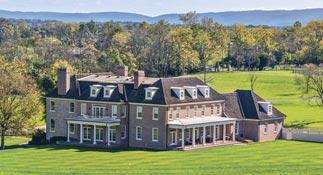
765 Summit Ridge Pointe, Charlottesville, Va
Perched atop the Southwest Mountains, this 6bedroom home offers panoramic views and a Karen Turner-designed kitchen. Located just minutes from Charlottesville. $2,750,000 –Peter Wiley 434.422.2090
268 Springdale Dr, Keswick, Va
Step into a 35-acre estate in Keswick. This 6,200 sq ft colonial-style home features hardwood floors, a guest cottage, pool, and tennis court. Minutes from Keswick Hall. $3,750,000 – Peter Wiley 434.422.2090 Justin Wiley 434.981.5528
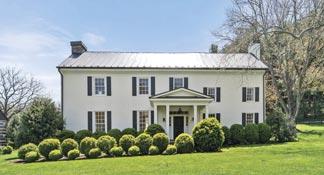
1826 Wayside Place, Charlottesville, Va
Experience the perfect blend of privacy and character in this c.1910 home on Wayside Place. Offering four bedrooms and a renovated kitchen. Nestled on a quiet, tree-lined street, it's just a short walk to UVA Grounds and JPJ Arena. $1,995,000 – Peter Wiley 434.422.2090
1614 Carriage Dr, Manakin Sabot, Va
Set on 40 secluded acres, this beautifully renovated contemporary farmhouse offers sweeping pastures and thoughtfully designed spaces for gathering. Only minutes from Short Pump. $3,300,000 – Justin Wiley 434.981.5528
218 Water St W #601, Charlottesville, Va
A rare sixth-floor, professionally decorated, fully furnished residence offering ample space, privacy, and stunning long-range views over downtown to Carters Mountain. $2,100,000 –Peter Wiley 434.422.2090
1400 Bundoran Dr, North Garden, Va
Embrace tranquility in this 2022 custom home at Bundoran Farm, offering serene mountain views. Features include 1st floor living, a pool, courtyard, and potential expansion on the terrace level. Enjoy 14+ miles of incredible trails. $1,995,000 –Peter Wiley 434.422.2090
1859 Rivanna Farm, Charlottesville, Va
Set upon 42 acres of Rivanna River sanctuary, this remarkable estate offers views of the Blue Ridge Mountains, a landscape of rolling pastures and serene water frontage. $8,450,000 – Peter Wiley 434.422.2090 Justin Wiley 434.981.5528
8386 Hare Forest Rd, Orange, Va
Privately set in one of Central Virginia’s most protected landscapes, Hare Forest is a historic estate, featuring a late 18th-century Federal-style manor on 173 acres under conservation easement. $2,795,000 – Justin Wiley 434.981.5528
Stunning Classical Revival estate on 312 acres along the Rapidan River. Built in 1854, this meticulously restored home features original details, guest cottage, pool, stables, and more. Additional 403 acres available. $4,500,000 –Justin Wiley 434.981.5528 Peter Wiley 434.422.2090 23501 Greenville Rd, Culpeper, Va
RIVANNA
FOXHUNTING 100 Years of Fort Leavenworth Hunt: Legacy and Homecoming
By Kristy Lathrop and Diana Sadler • Allison Howell Photos
Fort Leavenworth Hunt is unique among the 128 recognized hunt clubs in the US and Canada. It’s the last remaining military foxhunt in North America, and that heritage continues to define the club and the people who call it home.
In the broader hunt world, many clubs are fortunate to have a stable base of local subscribers, including those whose membership spans several decades. Some club rosters include family names that cover multiple generations.
of Fort Leavenworth and the history of foxhunting’s connection to the Army. Bruce, a Vietnam War veteran and recipient of four Bronze Stars for Valor, was aided by George Pettigrew, a Navy veteran and fellow member of the Kansas City Area Buffalo Soldiers.
In contrast, the rhythms of Fort Leavenworth Hunt mirror those of military life. Military families do not always choose where they go. They are assigned to a duty station and asked to build a life there, sometimes for only a few months before moving on. Because of that, they learn quickly how much community matters. The opportunity to participate in a unique sport like foxhunting adds an extra dimension and increased depth to that sense of community. And that shared bond continues no matter where future assignments take them.
FLH was established in 1926 and recognized by the MFHA in 1929 To commemorate the founding date, a Centennial Weekend was held from March 5-7 featuring a reception, trail ride, wreath laying at the Buffalo Soldiers memorial, Closing Hunt, and Hunt Ball.
At the reception, held at the Frontier Army Museum, the audience was entertained by stories of the beginnings of Fort Leavenworth, founded in 1827, the oldest active U.S. Army post west of the Mississippi. Originally built to protect settlers and trade routes along the Santa Fe Trail, it’s now known as the “Intellectual Center of the Army.”
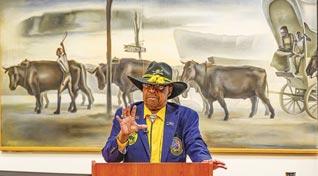
A significant piece of the fort’s history is its role as the initial post for the 10th Cavalry, established by Congress in 1866 as one of four regiments consisting of African Americans, who came to be known as the Buffalo Soldiers. Their memory lives on today through local commemorative groups. Trooper John “JR” Bruce, President and Regimental Sergeant of the Kansas City Area unit, provided stories of the Buffalo Soldiers along with the beginnings
The following morning saw a significant downpour that threatened the plans for a trail ride. Happily, the rain broke in time for riders to mount up and enjoy a ride through the historic areas of the fort. At the midpoint, the group paused for a wreath-laying ceremony honoring the legacy of the 10th Cavalry Regiment. The Buffalo Soldiers were integral to the earliest days of the Fort Leavenworth Hunt, caring for the hounds and riding on staff.
Closing Hunt was held the following day. While hounds are still kenneled on the post, there is no longer sufficient open space within the fort’s boundaries for hunting. Fortunately, gracious landowners have made enough country available outside the fort for sport to be enjoyed there. Recently transitioned to drag hunting, hounds were keen from the start, followed the drag scent eagerly, and even chased two live coyotes during the day.
The festivities were wrapped up with the annual Hunt Ball, held at the Frontier Conference Center on the post.
The weekend also welcomed friends from neighboring clubs, including Arapahoe Hunt in Colorado, North Hills Hunt in Iowa, Mission Valley Hunt in Kansas, and Belle Meade Hunt in Georgia.
For many attendees, this weekend was a special homecoming. Former members came back, stories were retold, horses were tacked up in familiar places, and friendships, old and new, were renewed in the field and around the table. From the museum reception to the trail ride, wreath-laying, Closing Hunt, and Hunt Ball, the heart of FLH was easy to recognize. It lives, not only in the hunt’s long history, but in the people who have continued to carry its spirit in their hearts and among the community that still calls it home.
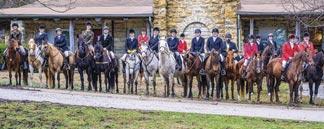
During the Saturday trail ride, the group paused for a shot in front of The Lodge on the Fort Leavenworth post.
At the opening reception, the audience was entertained by stories of Fort Leavenworth’s beginnings and the role of the Buffalo Soldiers by Trooper John “JR” Bruce, President of the Alexander/Madison Chapter of the Kansas City Buffalo Soldiers, 9th and 10th (Horse) Cavalry Association.
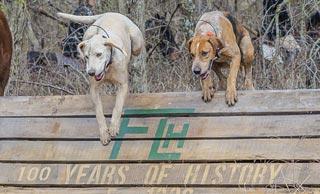
Hounds showed their enthusiasm for the 100th anniversary of Fort Leavenworth Hunt during Sunday morning’s sport.
SPORTING LIFE HIGHLIGHTS
Irish Horse Division is Back at the Upperville Colt & Horse Show
June 5, 2026 on the Polo Field-Hunter Side
By Brandy Greenwell – Bridon Irish Draughts
The Upperville Colt & Horse Show has brought back the Irish Draught breeding classes. A dedicated group of breeders and enthusiasts now proudly parade their progeny—in hand and under saddle. Spectators are treated to Irish-style hunter classes, handy hunter courses, and impeccably turned-out youngstock and stallions.
This division is critically important to the world of foxhunting for one very simple reason: if the Irish Draught Horse fades from purebred breeding programs, the hunters so sought-after worldwide will fade with it. In 2026, the Irish Draught Horse is still classified as a rare and endangered breed, largely due to decades of crossbreeding to Thoroughbreds and other sport horse lines. While those crosses have produced the hunters and eventers we admire, they all trace back to one essential source: the purebred Irish Draught.
If the purebreds disappear, the crossbreds disappear with them.
Please support the Irish Draught division—whether by bringing a horse or simply by showing up to cheer them on! The division will be judged by Jane Hall from Warwickshire, England, and is sponsored by Virginia Equine Imaging in The Plains, Virginia. For more information and to enter a horse, email Michelle Robbins at Kilronan1@yahoo.com. Eligibility papers must be submitted no later than May 18, 2026.
6,
COVER PHOTOGRAPHER:
Douglas Lees
PHOTOGRAPHERS:
Coady Media
Erin Gilmore
Allison Howell
Hillsboro Ridley ’25 Takes the Southern Hound Show
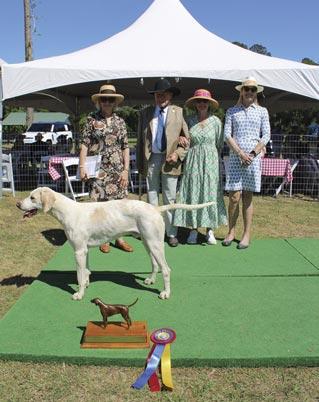
Seven packs (counting the two hunts from Illinois—Fox River Valley and Massbach Hounds—separately) competed at the Southern Hound Show hosted by Live Oak Hounds (FL) at the home of joint masters Marty and Daphne Wood, April 11, 2025. In addition to the host hunt, the other packs were Bear Creek (GA), Goodwin (NC), Hillsboro (TN), and Midland (GA). Shown here with the Grand Champion Hillsboro Ridley ’25 are (l-r) Judge Mrs. Betsy Harris, MFH Andrews Bridge Foxhounds; Lt. Col Dennis Foster; Judge Mrs. Tessa Jackson, ex-MFH, Cattistock Hunt; Apprentice Judge Mrs. Jaqueline Thorne, MFH, Millbrook Hunt. Callie Thatcher photo
VSA Awards
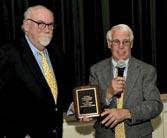
Mike Hughes was honored at the Virginia Steeplechase Association dinner on February 27, 2026, as a Hall of Fame Inductee. Douglas Lees photo
allisonhowellimages.smugmug.com
Dillon Keen dillonkeenphotography.com
Douglas Lees douglaslees@comcast.net
Joanne Maisano joannemaisano.com
Lindsey McCall
Middleburg Photo middleburgphoto.com
Callie Thatcher
Charles Toler
is published 4 times a year.
Editorial and Advertising Address: 60 Alexandria Pike, Warrenton, VA 20186
For information and advertising rates, please call (540) 347-3141, fax (540) 347-7141
Space Deadline for Fall is Aug. 3, 2026. Payment in full due with copy.
Publisher: Marion Maggiolo Managing Editor: J. Harris Anderson
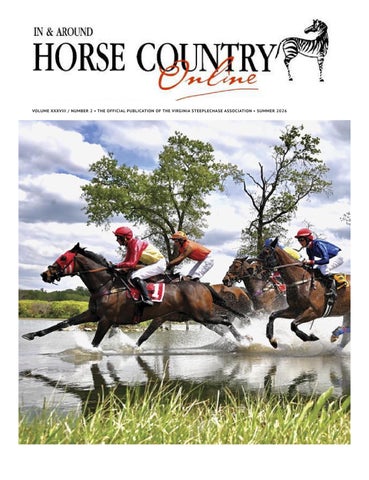
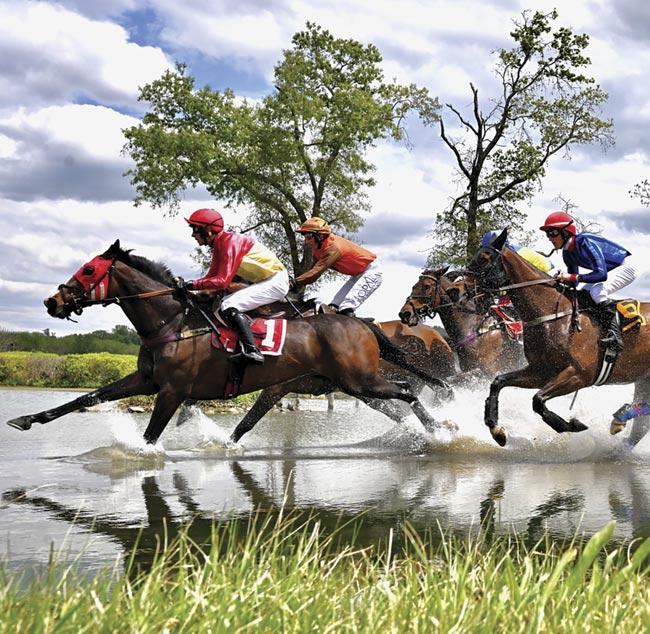
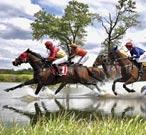
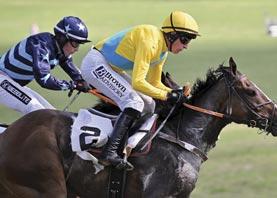
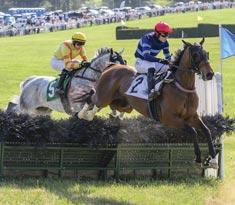
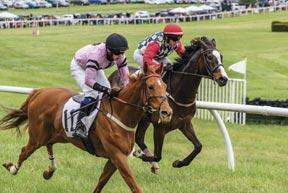
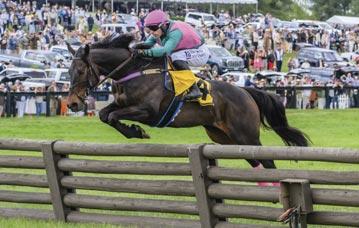
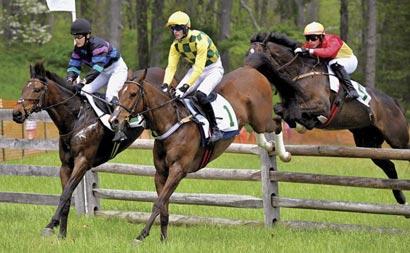
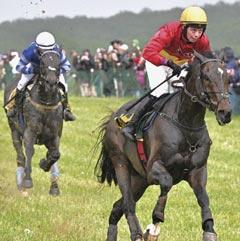
Virginia Gold Cup Arthur W. Arundel Memorial Steeplethon. Through the water hazard, #1 Imperial Assassin (Freddie Procter, up) – 2nd; on the inside is the winner, Anzio (Stephen Mulqueen, up); #6 The Kid Rocks (Brett Owings, up) – 3rd
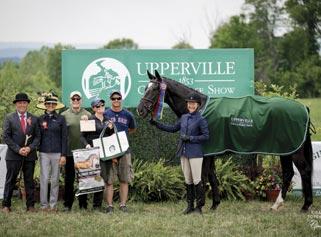
TGS Alls Well Mister Perry was crowned Champion at the Upperville Colt & Horse Show in the Part-Bred Irish Draught Division on June
2025, for owner Greer Kelly and rider Cindy Anderson-Blank. The division was sponsored by Virginia Equine Imaging. Erin Gilmore Photography
FOXHUNTING
Staff Changes – Part One
Spring is the time for hunt staff changes and there are several ahead for the coming season. Some have been finalized while others are still in the works as of the deadline for this issue. We present here those that were ready for formal announcement at press time. Look for Part Two in the next issue.
Stepping up—literally. Julie Johnston will step into the irons in her new role as huntsman for Tennessee Valley Hunt (TN). “I am so excited to be a part of the great history and tradition of TVH,” she says. “Tennessee Valley Hunt introduced me to foxhunting 34 years ago and it is an honor to carry the horn.” Julie served for four seasons as huntsman for the Upper Bay Bassets (TN), where she was also a joint master, and scored multiple awards at the National Basset Trials. Three UBB members who are former professional huntsmen provided her with “no shortage of advice and wisdom.” Lindsey McCall photo
A welcome from the Masters. Jeff LeHew, MFH (left) and Brian Ferrell (right), who returns to Blue Ridge as MFH, welcomed their new Huntsman, Padhraic Moynihan at the Blue Ridge Races. Padhraic has come to the Blue Ridge directly from the Kildare Hunt in Ireland where he hunted hounds for four seasons. His experience in England and Ireland provides him with a good background to hunt the Blue Ridge Hounds. Former Huntsman Graham Buston and his wife Sheri have returned to Graham’s home in Ireland were he’ll now hunt the Muskerry Hounds. Joanne Maisano photo
The protégé takes the horn. As Kelly Burdge opts for a well-deserved retirement, his former understudy, Emily Lanigan, will now serve as huntsman for Howard County – Iron Bridge Hounds (MD). Emily served as a professional whipper-in to Kelly, sharpened her skills through the MFHA Professional Development Program, and went on to serve as huntsman at New Market – Middletown Valley Hounds (MD). She now returns to hunt the HC-IB pack herself. Charles Toler photo
After 69 years, a first for Longreen Foxhounds—a professional huntsman. Since its founding in 1957, the Mississippi-based hunt has been served by a succession of honorary huntsmen. The most recent, Susan Walker, has served Longreen in honorary roles since 1968: whipper-in, assistant huntsman, MFH, and, since 2003, official huntsman. She now turns the horn over to Kalie Wallace, Longreen’s first professional huntsman.
Kalie started hunting in 2009 and served as an honorary whipper-in for Shawnee Hounds (IL) from 2012 to 2019 and then as honorary kennel-huntsman 2019-2022. A 2020 graduate of the MFHA Professional Development Program, Kalie will carry the title of professional huntsman for Longreen. Susan Walker, who now owns the pack of PMDs, will stay on as MFH and will be in charge of breeding and hound care. She’ll also be available to provide Kalie with the benefits of her treasure chest of hunting knowledge.
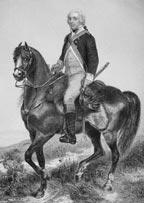
The Colonial quick-strike militia units, such as those led by Henry “Light-Horse Harry” Lee, typically rode smaller, quick, agile horses wellsuited to such action. (This image of Lee is likely a derivative work based on an earlier Gilbert Stuart portrait that did not show Lee in military uniform or mounted on a horse. The specific artist is not firmly documented.)
HISTORY
Horses in the American Revolution
By J. Harris Anderson, Managing Editor
As we observe the 250th anniversary of the United States’ Declaration of Independence from Great Britain, we thought it would be an appropriate moment to consider the role horses played in the resultant conflict. Horses have, of course, been used in warfare for millennia, serving in vital roles that often determined the difference between defeat or victory. In the case of the American Revolutionary War, what began as an advantage for the British cavalry, with their supply of wellbred and well-trained mounts, switched to favor the upstart Americans, whose horses were better suited to rough terrain and guerilla-style warfare, as the conflict progressed.
While the concept of a “Thoroughbred” had not yet gelled into a specific bloodline by the time the war ended in 1783, horses of that general type, known for their speed and stamina, were already in ample supply in the UK. They commonly served as officers’ mounts and were the archetype for the British Light Dragoon units. The publication of James Weatherby’s General Stud Book in 1791 set the official standard for a Thoroughbred around the time that the offspring of Eclipse, the most famous racehorse of that era, were beginning to breed. It would be several years later that officially recognized Thoroughbreds began to make their mark in the United States. Prior to that, the term “Thoroughbred” in the US simply meant a well-bred horse.
For that matter, the overall concept of “breed” was not well-defined in the Colonies. Horses were bred more for specific attributes, mostly functional. Official registries did not exist. That said, there was at least some general recognition of “breed types,” a factor that played a role in the selection of horses best-suited for the unique conditions and terrain over which the war was fought.
What was then considered the most famous breed of the time, the Narragansett Pacer, was known for a smooth, fast, “pacing” gait ideal for long-distance travel. It was a popular mount for officers and messengers during the war. But its popularity ultimately proved to be its undoing as an identifiable breed. Large numbers were exported, particularly to Jamaica and other Caribbean islands, where they were used for plantation work and cross-bred with other strains. Meanwhile, as road conditions around New England improved and alternative forms of transportation developed, the popularity of “pacing” horses declined. While the Narragansett Pacer is officially extinct, some of its genetics live on in existing breeds such as the American Saddlebred, Tennessee Walker, the Standardbred.
Other breeds now common in today’s horse world, albeit not “registered” in the late 1700s, existed in early types that saw service in the war.
• Morgan: The foundation stock existed at the time of the Revolution. Compact, strong, and versatile, it was used for both riding and pulling light loads.
• Canadian: Brought down to the Colonies from French Canada, the breed was known to be hardy, tough, and well-suited to rough terrain and harsh weather. It was used by both American and British forces, especially in northern campaigns.
• Quarter Horse: Not yet a formal breed, but similar horses existed. Known for quick bursts of speed (such as in quarter-mile races), they were useful for short-distance riding and found more commonly among militia than formal cavalry. Virginia and the Carolinas were hotspots for early breeding. The progeny of these horses accompanied settlers on the move west where they were developed into the formal breed known today.
• Draft Horse: An essential component of agrarian life, the draft horse served to move artillery and haul wagons and
supplies—not glamorous roles but essential to the war effort. If you were seeking a mount to serve with a Continental cavalry unit or, more specifically, a militia unit charged with conducting quick strikes to harass the Brits, the key traits you’d have looked for were:
• Endurance to hold up on long rides, often over poor roads (or no roads).
• Sure-footedness to deal with rough terrain.
• The ability to survive on limited feed.
• A calm temperament under fire.
The Brits began with an ample supply of fresh, welltrained horses. But they soon found that the style of mounted warfare practiced for centuries across open fields in Europe could not be easily replicated in the Colonies. Wide open fields suitable for organized cavalry charges were uncommon. Moreover, the terrain varied widely from tight, rocky farmland in the north to gentler terrain in the mid-Atlantic to swamps in the south. Horses native to those regions were better able to deal with such conditions, thus giving the Colonial forces an advantage. This was especially applicable for the quick-strike militia units such as those led by Virginia’s Henry “Light-Horse Harry” Lee, father of Robert E. Lee.
“A horse! A horse! My kingdom…” Well, maybe not an actual kingdom. But, yeah, if you needed a horse, or a whole string of horses, what were your options? War inevitably creates opportunities for new business ventures. With two armies in need of horses, enterprising (opportunistic?) middlemen sought to aid in sourcing horses for cavalry units and artillery teams. In addition to private agents, both armies oversaw their own quartermaster supply chain which included horse procurement. Legitimate functions involved negotiating purchases, inspecting horses for soundness and suitability, and arranging delivery (no easy task given the limited transportation options of the time, further complicated by an ongoing armed conflict). Under the “desperate times call for desperate measures” dictum, horses might be seized by one side or the other when supply ran short.
From the Colonials’ position, acquiring mounts, whether through negotiation or force, had to be balanced against the needs of the largely agrarian-based population. The Brits may have been less likely to employ such tactics early on when there were more horses available and an effort to win public support among loyalist Colonials had not been abandoned. But as the war dragged on and the supply of remounts shrank, that “desperate times” attitude likely became more prevalent. (Estimates vary, and positions shifted over time, but while a plurality of Colonials supported independence, many remained loyal to the British Crown and a significant portion of the populace tried to avoid taking sides.)
Some You Win, Some You Lose
(And sometimes Hollywood makes you infamous)
Although large scale cavalry battles were not a major factor in the war’s outcome, there were instances where mounted troops played a decisive role in how specific engagements ended—some favoring the Americans, some the Brits.
At the 1781 Battle of Cowpens, South Carolina, the cavalry unit was led by William Washington (George’s cousin). Riding small, mostly mixed breed horses known for speed and agility, the cavalry stayed hidden as the battle between the infantry units began. When the British lines faltered, Washington led his men on a perfectly timed attack against the Brits’ flanks and rear. What had initially been planned as a defensive action by the infantry turned into a decisive victory for the Americans thanks to the cavalry.
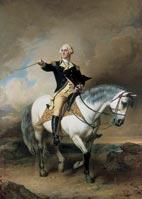
The painting “Washington Taking the Salute at Trenton” was created by the Scottish artist John Faed in 1856.
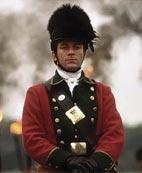
Shown here in the uniform of a British 16th Light Dragoons officer is actor Jason Isaacs who played the fictional character Col. William Tavington, loosely based on the real-life Banastre Tarleton who earned a reputation (likely somewhat exaggerated) for his brutality.
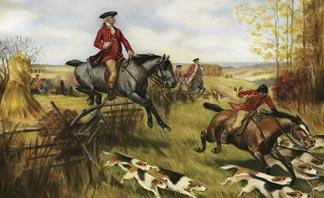
John Ward Dunsmore’s depiction of George Washington foxhunting on Blueskin, following hounds and huntsman Billy Lee. The war interrupted Washington’s avid focus on foxhunting and, afterward, the affairs of state, ultimately leading to the presidency, prevented him from returning to his cherished sport. Blueskin and Nelson, however, spent their post-war years in peace and comfort at Mount Vernon.
The opposite occurred a year earlier at the Battle of Camden, South Carolina, in 1780. Lord Cornwallis himself commanded the British forces with the cavalry led by Banastre Tarleton. The British dragoons were well-mounted, many of their horses having been imported, faster and better trained than most American cavalry at that point. In this case, it was the American militia that broke and fled under a devasting pursuit by Tarleton’s cavalry.
As a sidenote, the ruthless villain in the film The Patriot, Col. William Tavington, was loosely based on the real-life Banastre Tarleton. Tarleton was accused of employing excessively harsh actions, such as showing no mercy to troops attempting to surrender. Some degree of his reputation for cruelty may have been fueled by propaganda designed to further inflame fellow patriots against the Brits. (Exaggerated rhetoric and “misinformation” have been employed throughout much of history. The resources to crosscheck inflammatory accusations were scant in the 1780s compared to today’s technology. The one constant is the lack of effort on the part of many to use those resources.)
The fictional Tavington is shown committing heinous acts far worse than Tarleton was accused of, whether exaggerated or not. And, unlike his big screen counterpart, Banastre did not meet his fate in a duel to the death with the character inspired by Francis Marion, “The Swamp Fox.” He survived the war and returned to England where he became a politician (which some might consider a worse fate).
“The Best Horseman of His Age” Thomas Jefferson described George Washington as “the best horseman of his age, and the most graceful figure that could be seen on horseback.” Washington was an avid foxhunter and owned dozens of horses Two in particular became especially well-known.
Blueskin, a striking gray (almost white) horse, was a half-Arabian blue roan sired by a stallion descended from the Darley Arabian line. With a roan’s darker skin and lighter colored hair, when he shed out in the summer the result was a bluish appearance. When his winter coat came in, he looked white. Washington rode him in some battles during the war but the horse did not handle the sights and sounds as well as Washington would have liked. (Washington was probably better able to deal with a frazzled mount in the midst of battle than many other riders would have been.)
What Blueskin lacked in battlefield skills was offset by his portrait-friendly appearance. Consequently, many paintings of Washington on horseback show the General on the elegant Blueskin, including John Ward Dunsmore’s foxhunting depiction of GW elegantly sailing over a snake fence, hard on the heels of running hounds as his long-serving Huntsman Billy Lee led the pack. Blueskin was also Washington’s mount of choice for most ceremonial functions.
While not the eye-candy of the flashy but high-strung Blueskin, GW’s preferred battle partner was Nelson, a chestnut with a blaze and socks. He was likely a Virginia-bred with some Thoroughbred-type influence. If not sought after for portraits, he was known for being calm under fire, able to stand steady amid the noise and chaos of battle.
Both horses survived the war and lived out their remaining years at Mount Vernon in relative comfort. Tradition holds that Nelson is buried there but the exact location remains unknown.
Washington had other horses in the rotation, but none achieved the recognition of Blueskin and Nelson. Names like “Magnolia” and “Ajax” appear in some records, but little is known about them. (Washington’s good friend Lafayette rode a horse named Ajax, which further muddies the historical record.) It’s uncertain which of Washington’s horses was part of the legendary 1776 Christmas night crossing of the Delaware River to pull off the surprise attack on the Hessian troops at Trenton. The most widely cited option is Blueskin. As this action was not intended to be a head-on confrontation, Blueskin’s battle jitters would have been of less concern. Moreover, his appearance, with Washington in the saddle, would have impressed the Hessians, thus serving to dispel the belief that the rebels—at this point barely six months from the Declaration of Independence—were a ragtag group of ill-equipped and poorly trained militia.
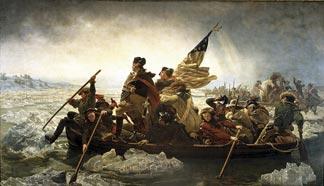
Emanuel Leutze’s 1851 painting of “Washington Crossing the Delaware” includes a plethora of historical inaccuracies: wrong boat, wrong crew, wrong flag, wrong weather and ice conditions, wrong time of day, etc. But the painting does show an often overlooked aspect of this daring feat that arguably turned the tide in the favor of the struggling rebellion. Along the right side, a line of makeshift ferries trails off into the distance. Horses can be seen on the first of these vessels. Equipped with ramps for loading and unloading, one ferry could transport several horses, a wagon, and its passengers. According to firsthand accounts, six ferries were used to move all the artillery, guns, horses, men, and carts across the river and it took a total of 23 ferry trips to so. Of course, this would not have been carried out in the neatly organized fashion shown in the painting. Moreover, it’s likely Washington would have crossed on one of the ferries with his horse, not standing up in a small, crowded boat navigating through windy, icy water putting it at risk of capsizing.
Which of those trips included Washington and his horse is unknown. The width of the river where the crossing took place is roughly 800 to 1000 feet, much less than a quarter mile (about the same now as it was then). However, the conditions on that late December night were not conducive to a smooth crossing. The river was clogged with ice flows (if not the frozen boulders Leutze depicts), the temperature was around freezing with a steady wind, and the ferry pilots had to navigate in the dark of night. Yet somehow this daring move proved successful and the following morning, to the surprise of the hungover Hessians, an impressively mounted General Washington rode in to the surrendered camp.
A Horse Named “Warren”
Dr. Joseph Warren, a prominent Boston physician, played an important role in organizing resistance to British rule. On the night of April 18, 1775, Warren famously sent Paul Revere and William Dawes to warn Colonial militias of advancing British troops, leading to the battles of Lexington and Concord. Warren was killed in action not long after, during the Battle of Bunker Hill, June 17, 1775.
Prior to his death, he loaned a horse to his friend (and then still a patriot) Benedict Arnold, who named the horse “Warren” after the fallen hero. Arnold rode the horse into enemy fire at the Battle of Bemis Heights near Saratoga on October 7, 1777. Arnold was shot in the thigh and Warren was struck down by British gunfire. But the heroic action of horse and rider proved pivotal to the Colonials’ victory and served to secure an alliance with France, ultimately a critical factor in the war’s outcome.
The town of Warrenton, Virginia, (home to Horse Country Saddlery and In & Around Horse Country) was named in honor of Dr. Joseph Warren (and, we’d like to think, with perhaps a nod to the gallant horse named in his honor).
Emanuel Leutze’s 1851 painting of “Washington Crossing the Delaware” includes a plethora of historical inaccuracies.
Should Longfellow’s Poetic License Have Been Revoked?
Speaking of the midnight ride of Paul Revere and the mostly forgotten William Dawes (and the even more forgotten Samuel Prescott), without horses there would have been no ride and thus no warning. But thanks to Longfellow’s somewhat inaccurate poetic homage, only Revere’s name is known to the general public.
Revere did not have a horse and so he borrowed one from a fellow patriot (possibly John Larkin, a wealthy Boston merchant). Little is known about the horse, its name or breed. The only cited requirement was that it be “fast and strong.” William Dawes was assigned a different route and, at some point, Samuel Prescott joined in the effort to rouse the resistance.
Given the presence of British troops throughout the area, it’s unlikely Revere and others were shouting, “The British are coming!” as popularly believed (albeit not cited in Longfellow’s poem). This would have drawn attention and they’d have been arrested in short order. It’s more likely they stopped at key locations to quietly warn others that troops were marching to Concord to seize the munitions stored there. And, with more than a year to go before the Declaration of Independence was issued, the residents of the Boston area would still have considered themselves to be British. Thus the phrase, “The British are coming” would have made no sense to them.
The outcome of the “Midnight Ride” was not as glorious as the poet portrayed. Revere was captured by British patrols and his borrowed horse was confiscated. The horse’s fate is unknown, but it’s possible that, if it was as fine a steed as history suggests, it was mustered into a unit of the British Light Dragoons (possibly as an officer’s mount). Dawes did not fare much better. He was thrown from his horse, gave up, and turned back. Only the little known Prescott, and his even lesser known horse, made it all the way to Concord. They were the true heroes of the “Midnight Ride.”
Swords and Seconds-in-Command
Now jump ahead eight years from the day the British forces were turned back at Concord to the resultant war’s conclusion with the surrender at Yorktown.
Did horses play a decisive role in America’s ultimate victory? Perhaps not decisive, but certainly significant. To a large extent, it was more the result of the types of horses native to the Colonies that helped turned the conflict in America’s favor rather than significant cavalry victories on the battlefield. Horses better adapted to the terrain and weather conditions, able to survive on limited feed,
and with more speed and agility for quick guerilla raids proved more effective than the better trained but larger and heavier horses of the British Legion. As the conflict progressed, American cavalry units developed their tactics to take better advantage of the native horses’ attributes while the Brits faced increasing challenges with the limitations of their mounts.
By the time the main British forces under Cornwallis were trapped at Yorktown, where the French had established a naval blockade and the Americans were dug in on the surrounding ground, mounted conflict in any organized fashion had ended.
The ultimate surrender had its own drama. Lord Cornwallis, claiming illness, sent his second-in-command, Charles O’Hara, to present the general’s sword to Washington. Washington refused to accept it from an underling and, in turn, had O’Hara pass the sword to Benjamin Lincoln, Washington’s second-incommand.
No reliable record exists about the horses the participants were riding. But, if allowed a moment of imagination, we’d like to think General Washington rewarded the steady, reliable Nelson with this moment of honor. Let pretty-boy Blueskin play the role of artist’s model. When it came to besting the Brits on the battlefield, Nelson was the real thing.
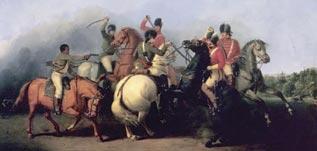
This 1845 painting by William Ranney shows George Washington’s cousin Col. William Washington (on the white horse) engaged in a brief dual with Banastre Tarleton (center) at the end of the Battle of Cowpens. According to an eye-witness, Washington was saved
EDITORIAL
The Ties That Bind: Why Belonging Matters
On Community, Membership, and What It Means to be Part of Something
By Linda Taliaferro, CAE, Executive Director, Masters of Foxhounds Association
There is something deeply human about the impulse to gather—around a fire, a cause, a shared passion. Whether it is the centuries-old tradition of riding to hounds in the early morning, the gathering together at a hound show to celebrate the hounds we love, or an annual meeting with people who share our interests and passions, whether personal or professional, the act of belonging to something larger than ourselves shapes who we are, how we live, and how well we do both.
This is not sentiment. It is science.
What Research Tells Us
Study after study confirms that belonging is among the most powerful determinants of human health and happiness. Research published in Social Science & Medicine (Michalski et al., 2020), drawing on over a decade of national health survey data, found that a strong sense of community belonging is one of the most reliable predictors of both general health and mental well-being—across every stage of adult life. Adults with the weakest sense of belonging were nearly five times more likely to report poor mental health than those with the strongest. Those are not trivial numbers.
Psychologist Abraham Maslow placed belonging just above physical safety in his famous hierarchy of human needs—before esteem, before self-actualization. Baumeister and Leary (1995) went further, calling it a “fundamental human motivation” without which individuals struggle to function fully. Stanford University’s Belonging Project has since described it as an “invisible factor” and cornerstone of emotional resilience, one that allows people to flourish even in the face of adversity and trauma.
A 2023 cross-sectional study from the University of Wisconsin found that individuals reporting a strong sense of community had significantly lower rates of depression, anxiety, and stress—independent of income, age, or other social factors. The researchers defined that sense of community across four dimensions: the feeling that one’s needs are met by the group, a feeling of belonging and interpersonal connection, a sense that one matters and can make a difference, and an emotional bond rooted in shared experience. Those four elements describe, with remarkable precision, what the best clubs, organizations, and associations actually deliver.
The National Alliance on Mental Illness frames it simply: community provides belonging—not conformity, but the ability to be embraced and appreciated as your authentic self. That distinction matters enormously. The organizations that endure are those where members feel genuinely seen and heard, not simply counted.
The Decision to Join—and Stay
The American Society of Association Executives (ASAE), which represents more than 50,000 association professionals and has studied membership behavior for over a century, has found that people join organizations for information and resources—but they stay for community. Their Foundation’s landmark Decision to Join study, which surveyed nearly 17,000 individuals, confirmed that the perceived value of belonging is consistently among the top rea-
sons people affiliate with an organization and renew year after year.
ASAE’s Centennial Research Initiative uncovered a telling paradox: while 92 percent of members trust their associations as reliable sources of information, many do not feel emotionally connected to them. ASAE researchers warn that this gap—between informational value and genuine belonging—is the fault line along which memberships erode. Organizations that close that gap, that build real community rather than simply providing programming, see measurably better outcomes. Members who feel connected are two to three times more likely to renew.
ASAE describes the best associations not as transaction platforms, but as communities where, in their own words, “like-minded people work together to achieve common goals” through shared time, expertise, passion, and purpose. America’s first such communities trace to colonial guilds—formed by settlers who understood that survival and prosperity depended on one another. The impulse has not changed. We are stronger together, we achieve more together, we thrive together.
What Hunting Organizations Offer
Few communities embody these principles more vividly than a hunt. At its best, a hunt is not merely a gathering of riders and hounds. It is a community organized around shared stewardship of the land, the welfare of animals, and traditions carried across generations. As one long-time foxhunter put it: “The hunts include people of all ages and backgrounds. When you are on the back of a horse, you are all eye to eye.”
Eye to eye. That phrase captures something essential about belonging at its most powerful: it flattens hierarchies. It creates the conditions for genuine connection across differences of age, background, and experience. Young members learn from seasoned ones. Experienced riders mentor beginners. Landowners and members become partners in conservation. The shared mission—the chase, the hounds, the land—creates the conditions for genuine connection across differences in age, background, and experience.
The Masters of Foxhounds Association of North America (MFHA) exists, in part, to protect, promote, and strengthen that community. By setting standards, registering hunts, and connecting individual hunts to a broader network of 128 recognized hunts across North America, the MFHA ensures that the belonging a member finds in their local hunt is part of something larger—a living tradition rooted in this country’s earliest history and sustained by the commitment of people who understand what it means to belong and to work together to protect the things we love.
Why It Matters Now
In an era of digital fragmentation and social isolation—what the former U.S. Surgeon General Vivek Murthy has described as a loneliness epidemic—the argument for belonging is not nostalgic. It is a public health imperative. Social disconnection, research now shows, carries health risks comparable to smoking. The belonging that hunts and associations foster is not incidental to their mission. It is what makes the mission possible.
The sound of a horn while moving off at first light, the fellowship at a tailgate after an exciting run, the shared investment in land and hounds and horses, the annual gathering where old friendships resume and new ones begin—these are not luxuries. They are, the research would suggest, among the things that make a life whole.
Belong to something. It matters more than you may know.
Sources
Michalski, C.A., et al. (2020). Relationship between sense of community belonging and self-rated health across life stages. Social Science & Medicine, 261. https://doi.org/10.1016/j.socscimed.2020.1 13245
Baumeister, R.F., & Leary, M.R. (1995). The need to belong: Desire for interpersonal attachments as a fundamental human motivation. Psychological Bulletin, 117(3), 497–529.
Lusk, S.M., et al. (2023). Sense of community and mental health: a cross-sectional analysis from a household survey in Wisconsin. BMJ Open Community Health. PMC10314672.
Stanford Medicine Belonging Project. (2025). https://med.stanford.edu/psychiatry/special-initiatives/belonging.html
NAMI. (2024). The Importance of Community and Mental Health. https://www.nami.org
ASAE Foundation. The Decision to Join: How Individuals Determine Value and Why They Choose to Belong. https://foundation.asaecenter.org/research/membership
ASAE. (2025). The Community Imperative: Why Associations Must Act Now. https://www.asaecenter.org
Masters of Foxhounds Association of North America. https://mfha.com
Linda Taliaferro, CAE
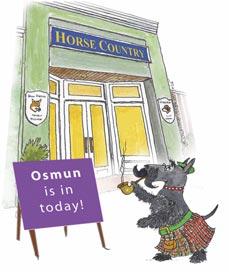
Hound Show? I’ll Be at the Door.
Summer, I have observed, is when my responsibilities increase.
This is not something formally discussed. There are no board meetings. No memoranda. But the evidence is clear. The door opens more frequently. People arrive in numbers. And, left to their own devices, they would wander about without proper orientation. Naturally, I step in.
In winter, I allow a more supervisory approach. One cannot be everywhere at once, and frankly, the fast pace does not justify it.
Summer is different. I take up my position near the entrance. Not obstructing traffic. I am not a fool. But placed precisely where I may be admired immediately upon arrival.
This is important. There is always a moment. The door opens, a step inside, and then the realization: “Oh… hello there.” Yes. You’ve found me.
From this point forward, the visit improves. People like to think they came in for a scarf, or a bridle, a scarlet coat, horn or hunt crop, or one of those excellent trays. And, in time, they may very well purchase such things. But first, they require a proper welcome. I provide that.
Now, there is also the matter of the Virginia Foxhound Show. A great many people attend: Masters, huntsmen, members, families, spectators, and a surprising number who seem to have come primarily for the social component. It is, I gather from Marion, a significant occasion.
They pass through Horse Country. Sometimes before. Often after. Occasionally both, which I consider good judgment.
I do not attend the Hound Show myself. This is a deliberate decision. One
must maintain standards and, more importantly, someone must remain to hold the fort…as we say in Montana. And so I receive them. Sun slightly in their eyes. Stories already forming. Shoes a bit dusty. Lots of scent. Spirits high. They arrive, and there I am. Ready.
I make rounds. I accept compliments with composure. I allow brief audiences. If invited to the zebra chair, I will join, though I am careful not to overextend myself. Familiarity must be managed. There is, after all, a standard to maintain.
Increasingly, people ask for me by name. “Is Osmun here today?” It is gratifying, though not surprising. Marion must stop saying, “He’s sleeping in the office.”
What interests me most is the effect I have on the proceedings. People slow down. They laugh more easily. They compare notes about the day. They stay longer than they intended, which, from a commercial standpoint, I consider a meaningful contribution. No one rushes past a Scottish Terrier who is clearly in charge.
And let us be honest. Marion has filled the shop with beautiful things. From hats to handbags, pillows to antiques. Well-made things, properly chosen, worthy of consideration. But the experience of the place, the feeling of it, does not arrange itself.
At the store, particularly on a Hound Show weekend, it requires someone with presence. It requires someone with judgment. It requires, occasionally, someone to remain behind, hold the line, and receive the world as it comes through the front door.
I am happy to provide that service.
Claudia Coleman illustration
HORSE COUNTRY
A Sporting Life, Well Lived
For over 50 years, Horse Country has offered a carefully chosen mix of goods for the country life—meant to be worn, used, and given with purpose.
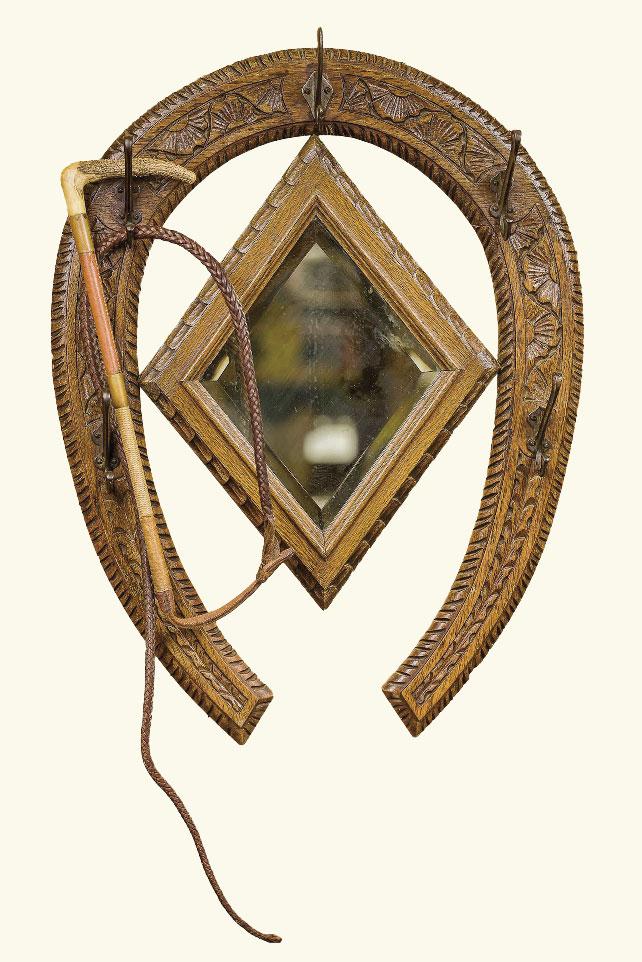
CARVED HORSESHOE MIRROR
From Scotland. Five hooks. 29"L x 22"W. #999-1114-001 (HC1A)
FOX MASK DEMITASSE SET
Hand painted cups & saucers. Signed Reinbold. Set of 12. #5100-1212-05 (HC1B)
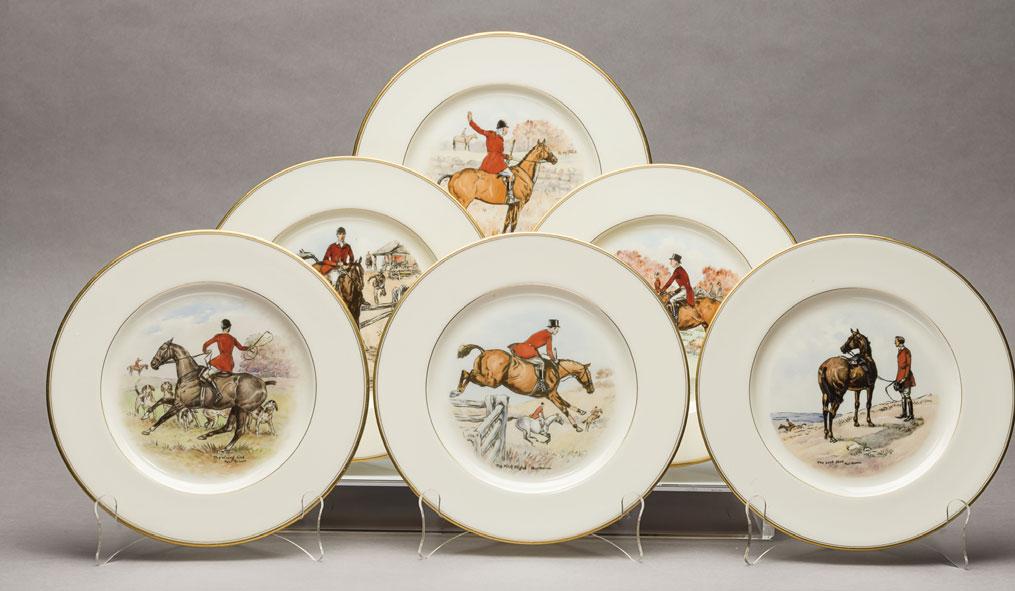
PAUL BROWN 10.5" PLATE SET
By Lenox. Back markings "1830/G390." 2 sets of 12. #2353-050 #18670212 (HC1C)
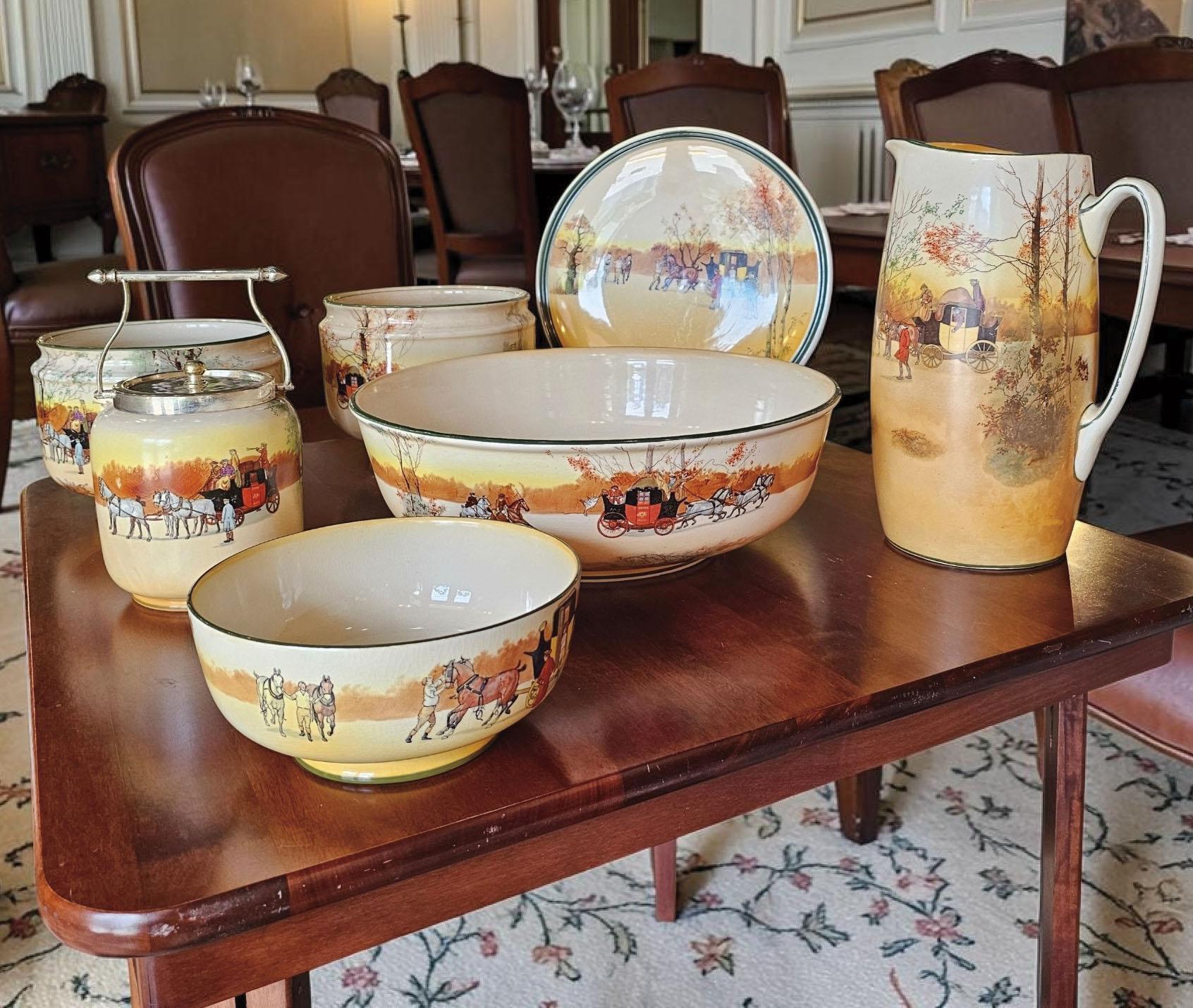
R oyal D o ulton “Coaching Days” Royal Doulton — The Gr and Sc ale The Grand Scale
For those who appreciate the drama of a well-appointed room, we are offering a rare group of large-scale pieces from the celebrated Royal Doulton Coaching Days collection.
IMPRESSIVE ROUND SHAPE
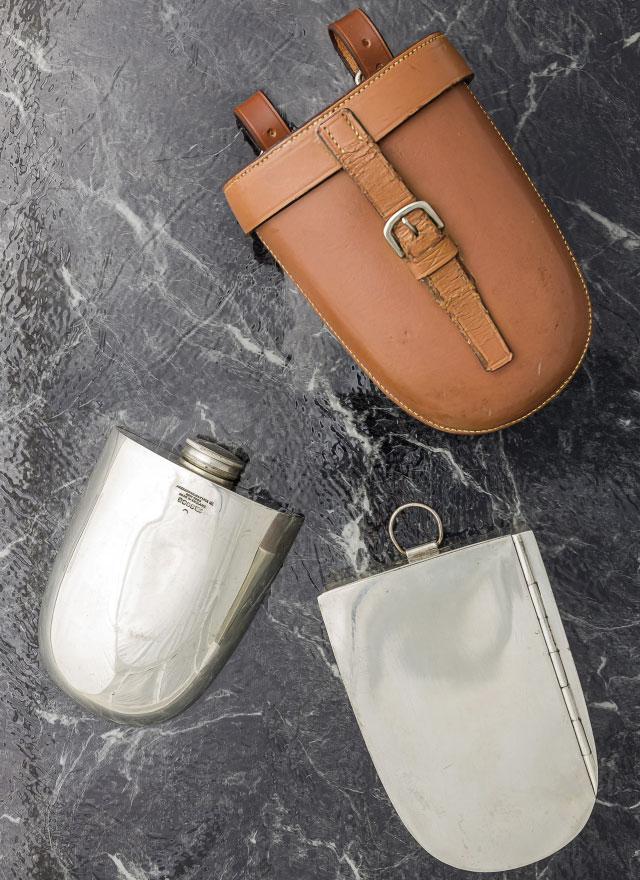
SANDWICH CASE
Made in England. Abercrombie & Fitch. 4.5" x 3.5" x 6.25" #9382-002 (HC1E)
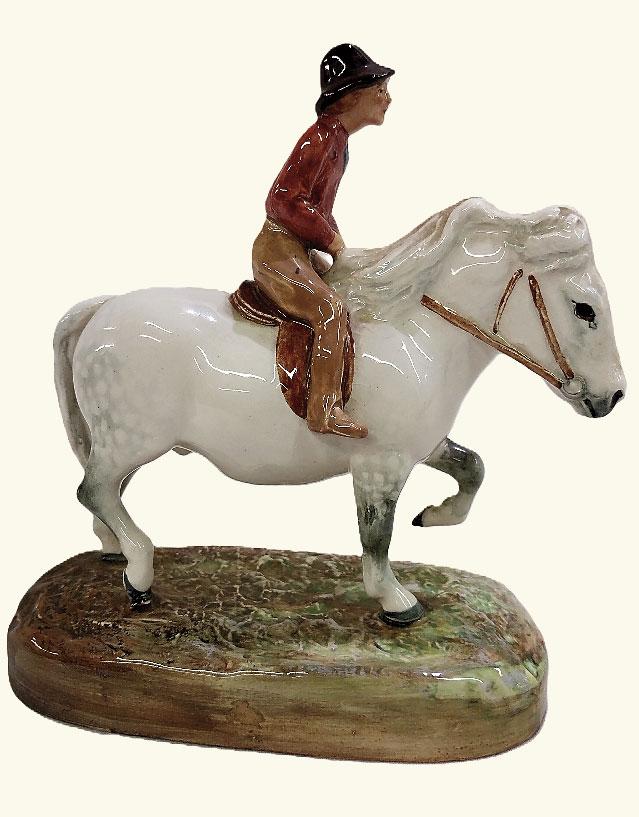
DOULTON DAPPLE GREY PONY FIGURE
1938-1960, W.M. Chance. Orgin: England. 6.5" x 3" x 7.25"H. #9165-007 (HC1D)
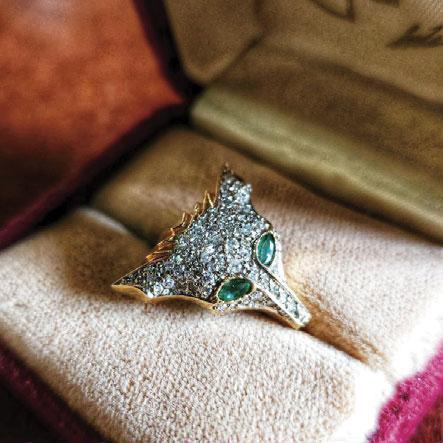
DIAMOND PAVÉ FOX RING Emerald Eyes. 14k yellow gold. #5100-1025-01 (HC1F)
These are not the small cabinet pieces often seen, but commanding forms: a 15" statement bowl, a 6.5" t biscuit barrel with hallmarked sterling silver mounts, a towering 13" pitcher, an impressive 13.5" charger with deep green edge, two beautifully proportioned footed cachepots, 8" x 6.5" and 8.5" x 7" and an 8" bowl.
Each piece carries the rich hunting and coaching scenes that made Coaching Days so beloved—full of movement, color, and English country tradition. Substantial, decorative, and increasingly hard to find in these sizes.
Ideal for a sideboard, coffee table, or as a memorable wedding gift for a couple with a discerning eye.
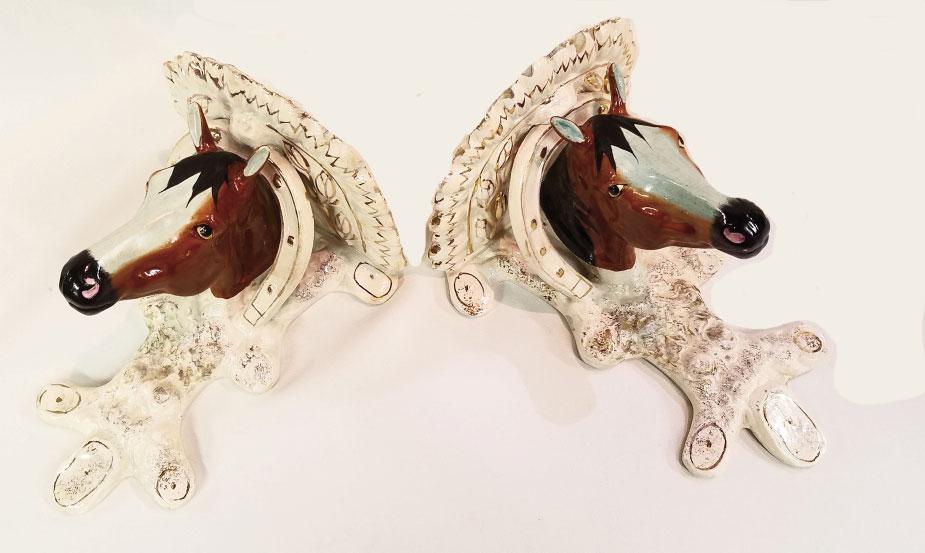
STAFFORSHIRE HORSEHEAD WALL SHELVES
Late 19th century. Sold as a pair. #4701-0118-001 (HC1G)
Horse Country
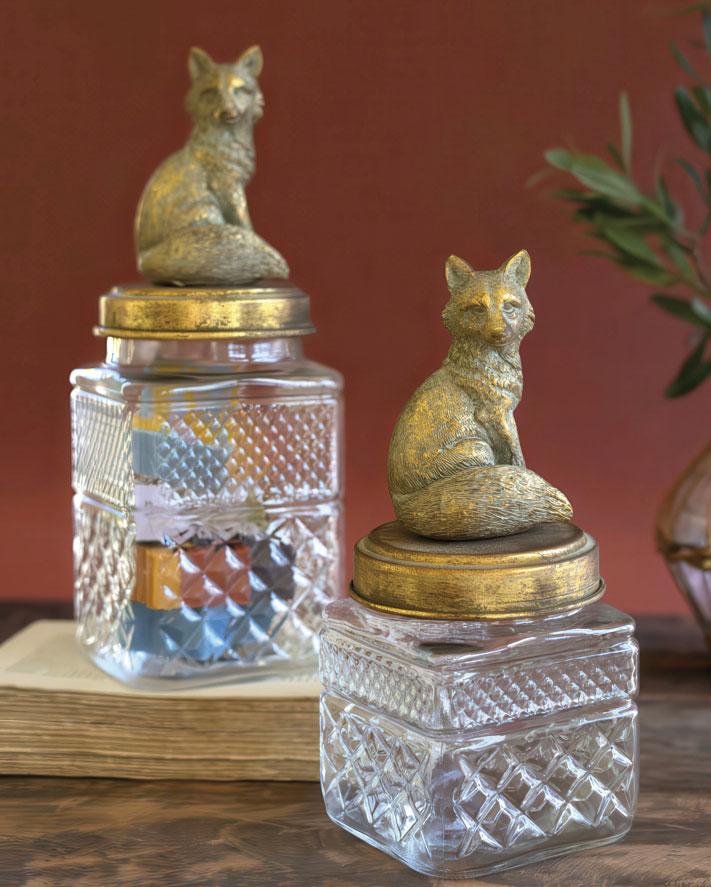
SITTING FOX GLASS CANISTERS
Large #1899-CAN001 (HC2A) $69.00
Small #1899-CAN002 (HC2B) $45.00
Gifts & Home Gift giving, done properly.
From hostess gifts to weddings, we offer home décor, tableware, and distinctive pieces for everyday living and special occasions. Lamps, pillows, throws, glassware, and serving pieces—all with a relaxed country sensibility.
Our online gift registry makes it easy to choose well, whether in-store or from afar.
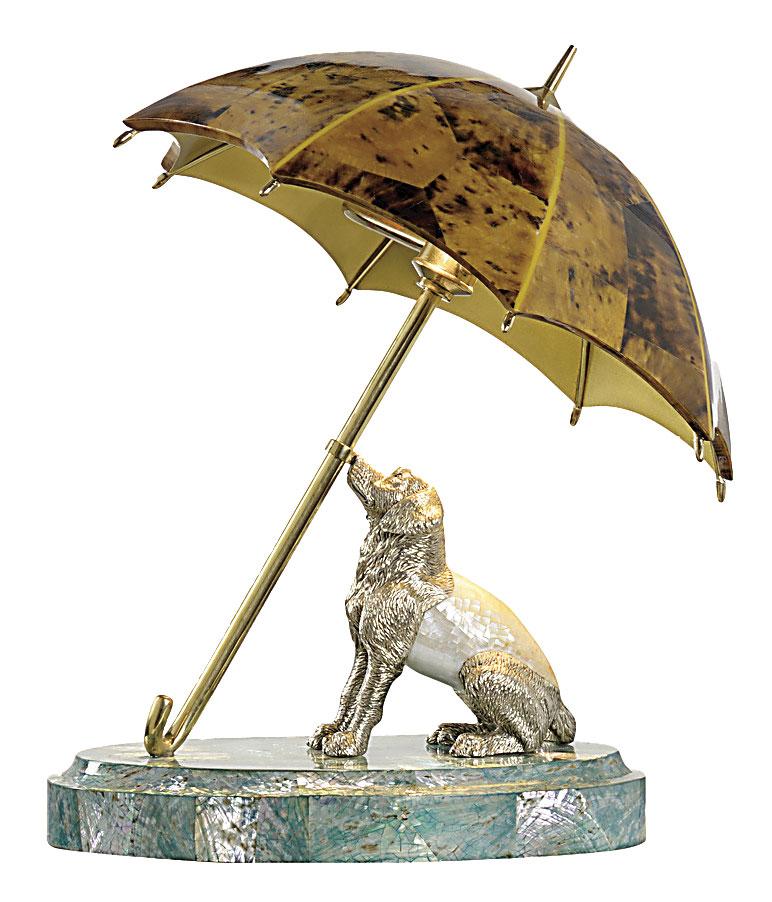
HANDCRAFTED LAB UMBRELLA LAMP
A silver plated dog with cracked kabibi shell body. #323-LAMP02 (HC2C)$1650.00
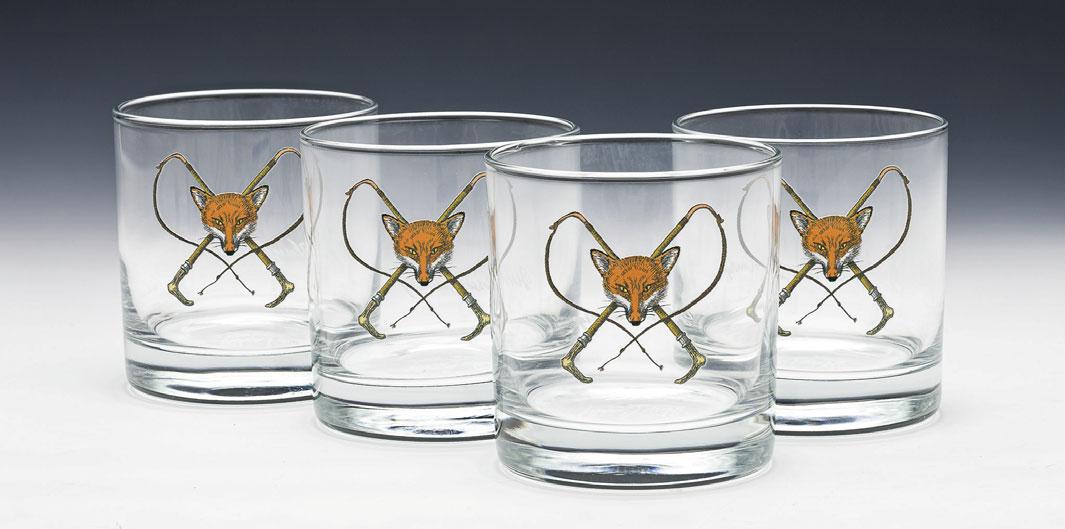
WEST WALES GLASSWARE SETS
10.5 oz. Set of 4. (HC2D) $75.95ea
Fox Double Old Fashioned Hound Double Old Fashioned Wine and Stemless Wine also available.
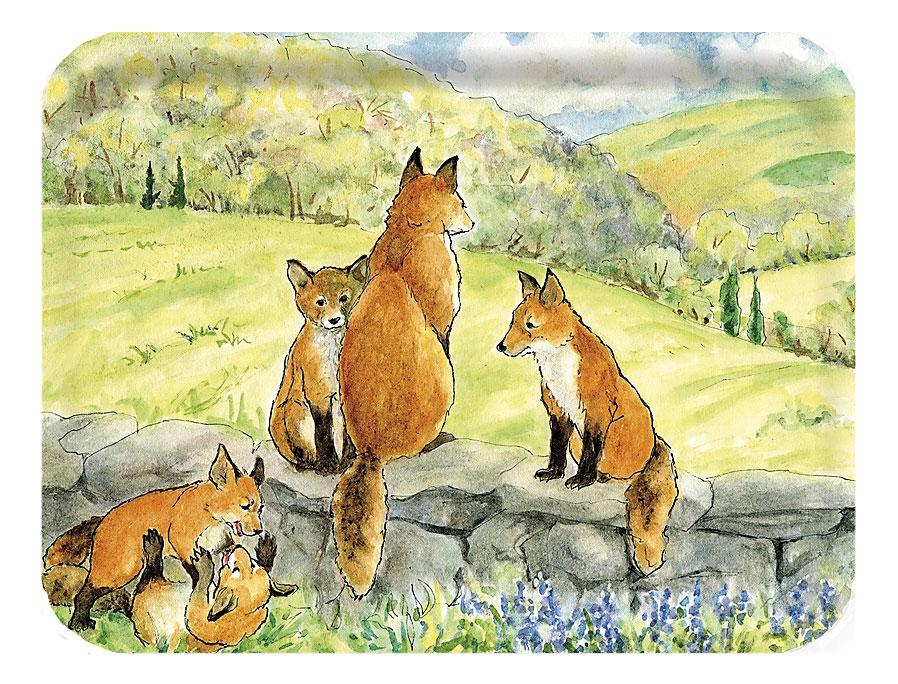
BIRCH VENEER FOXES TRAY
16.5" X 12.5". #1612-40615 (HC2G) $48.00
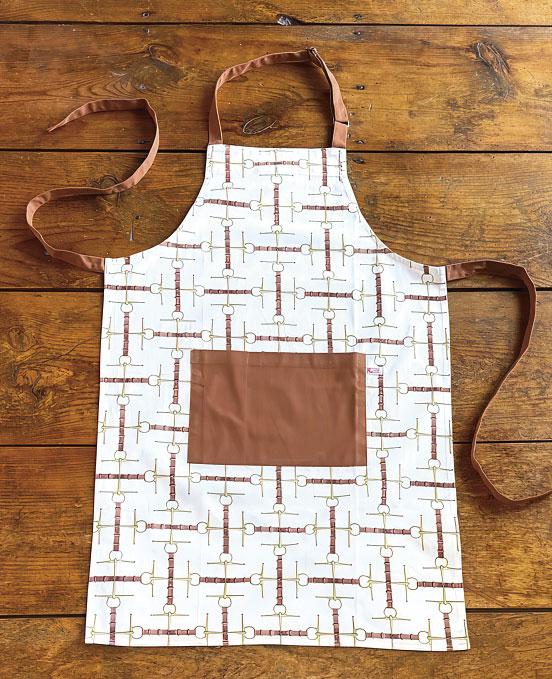
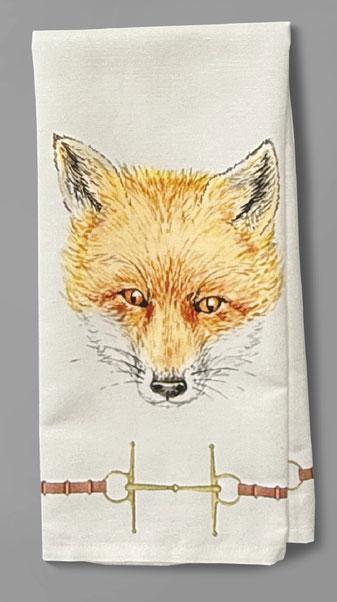
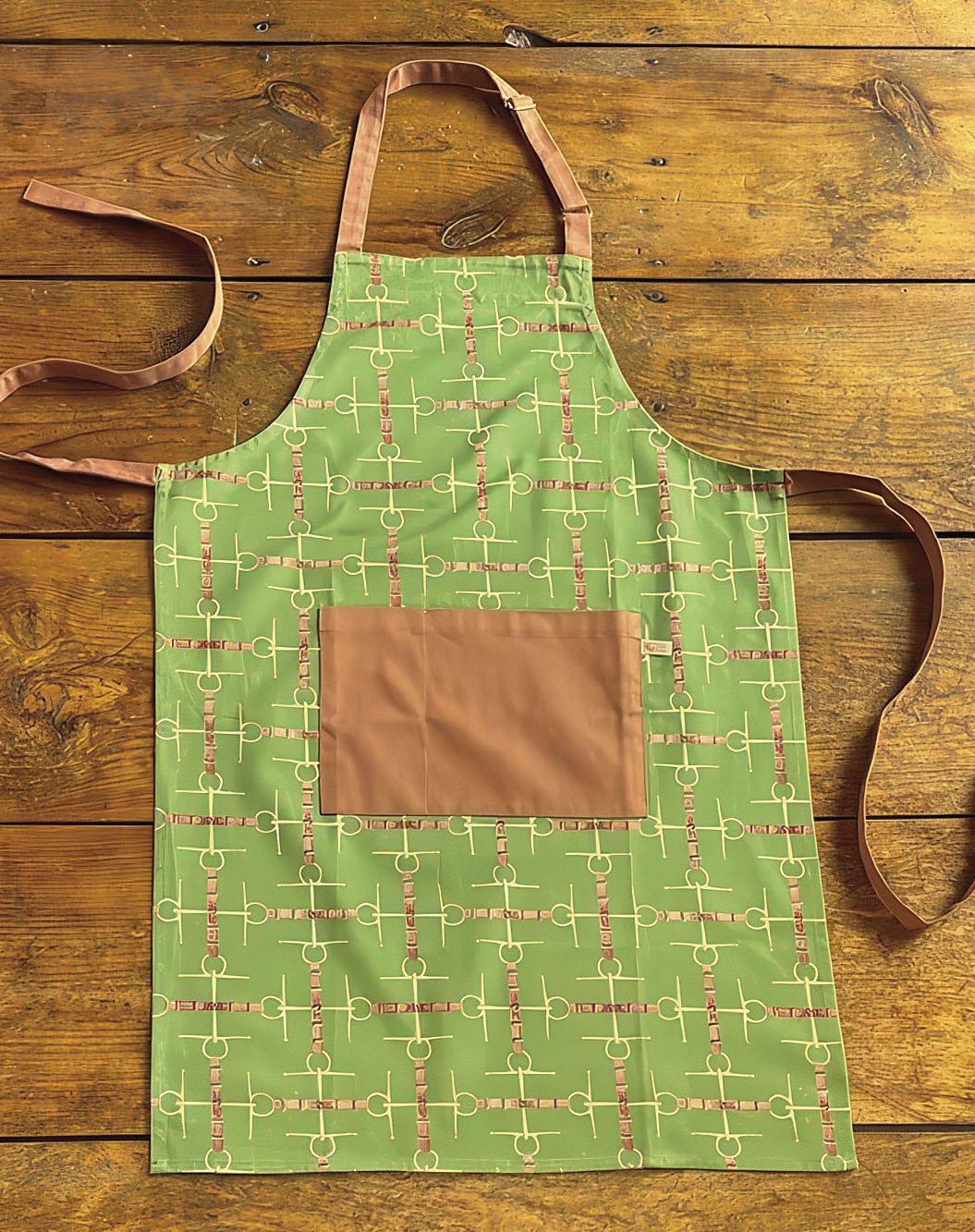
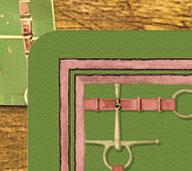
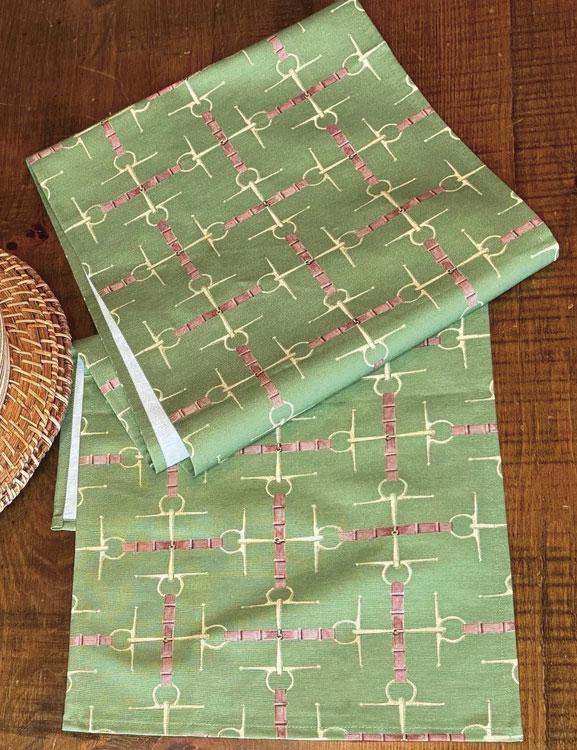
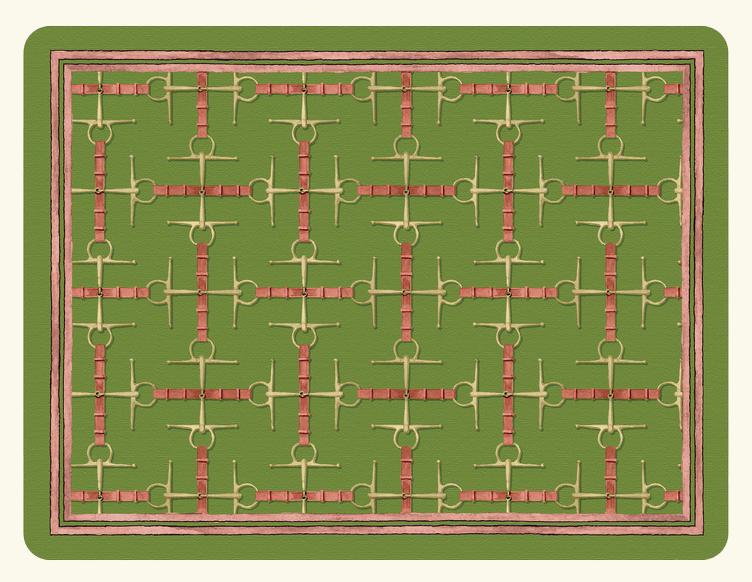
BITS & STRAPS COLLECTION
Aprons
100% cotton twill. (HC2J) $60.00ea
Choose Green or White. Green #5566-AP-HVOL White #5566-AP-HCWH
Fox Tea Towel
18” x 28".
55% Linen/45% Cotton. #5566-TT-HCWH (HC2K) $20.00
Rigid Placemat Set
15" x 11". Set of 4 cork back. #5566-PM-HCOL (HC2L) $55.00
From $55.00-$162.00 (HC2E) See at horsecountrycarrot.com.
LAUREL KNIFE REST
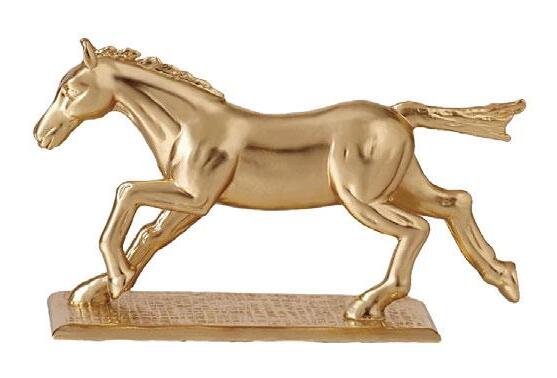
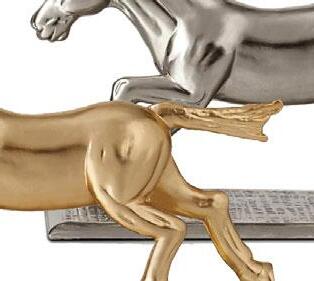
24K gold or platinum plated. Approx. 2.5" x 1.5". Set of 6. (HC2F) $250.00 Gold #3085-KR3701
Platinum #3085-KR3700
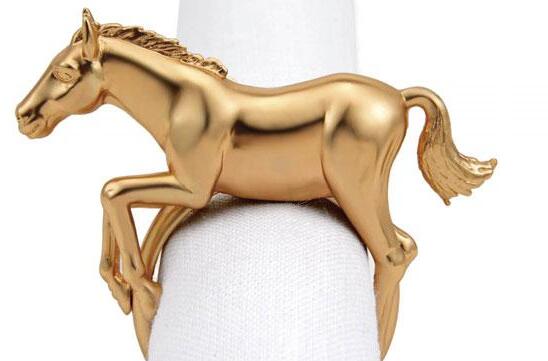
LAUREL NAPKIN RING SET
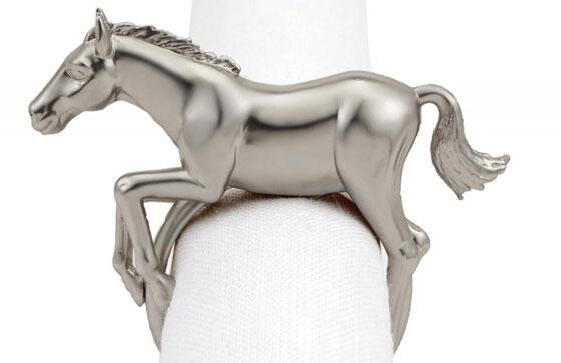
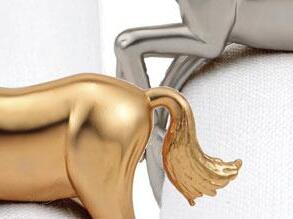
24K gold plated or platinum plated. Set of 4 (HC2H) $195.00 Gold #3085-NR3701 Platinum #3085-NR3700
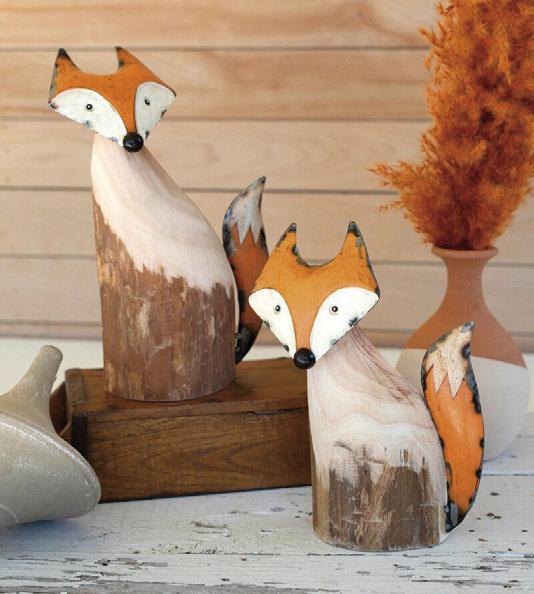
RECYCLED IRON & WOOD FOX
FIGURES 8" x 12" #1899-FIG004 12" (HC2N) $58.00 8" x 10.5" #1899-FIG005 10" (HC2P) $28.95
Country Clothing
Clothing for town, field, and travel.
For men and women, pieces are chosen for quality, fit, and longevity. Tweeds, shirts, knitwear, and outerwear—rooted in British country tradition, designed to work together with ease. her with ease
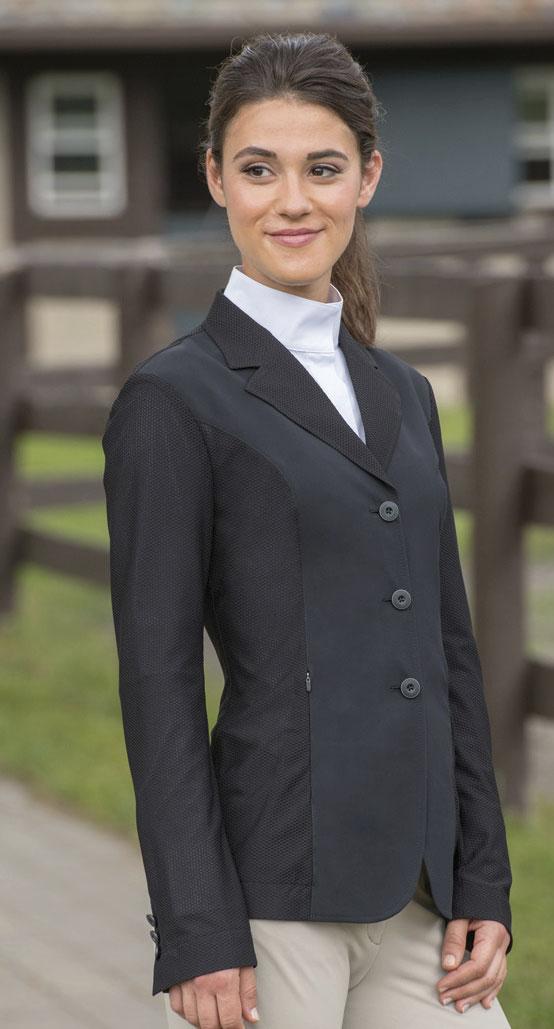
HARMONY NAVY MESH SHOW JACKET
Extremely lightweight mesh fabric. Italian jersey front panels. Hidden interior zipper. Available in sizes 4-16. #1149-H2012 (HC3A) $309.00 Also available in girls
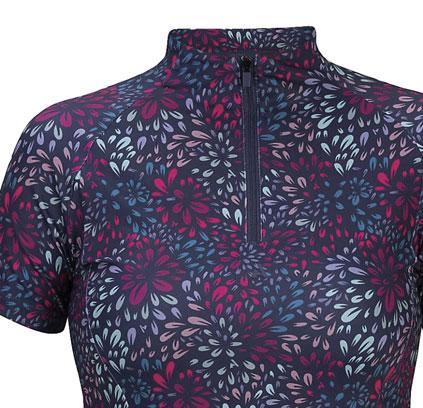
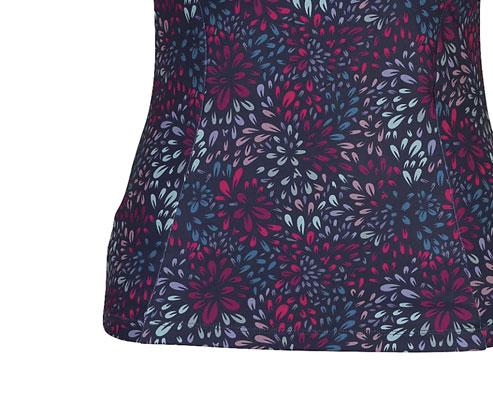
REACT PETAL SHORT SLEEVE SHIRT
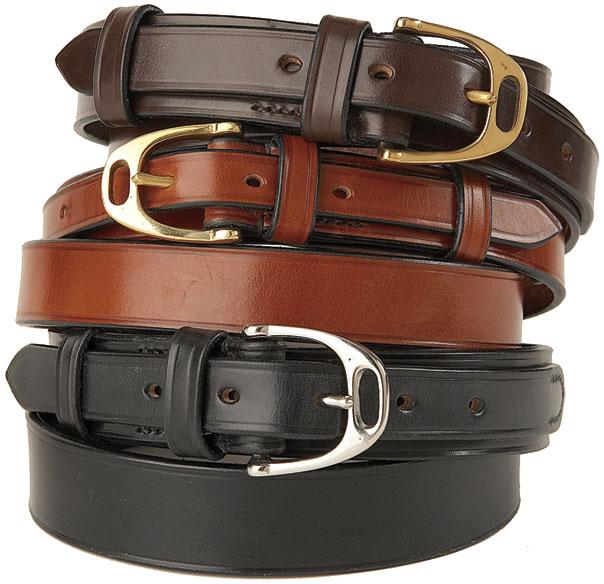
BLENHEIM ALFORD 1" BELTS
Made in England. Handstitched best bridle leather. Chestnut, Newmarket or Black with Silver. #3289-BLEN-08 (HC3C) $195.00
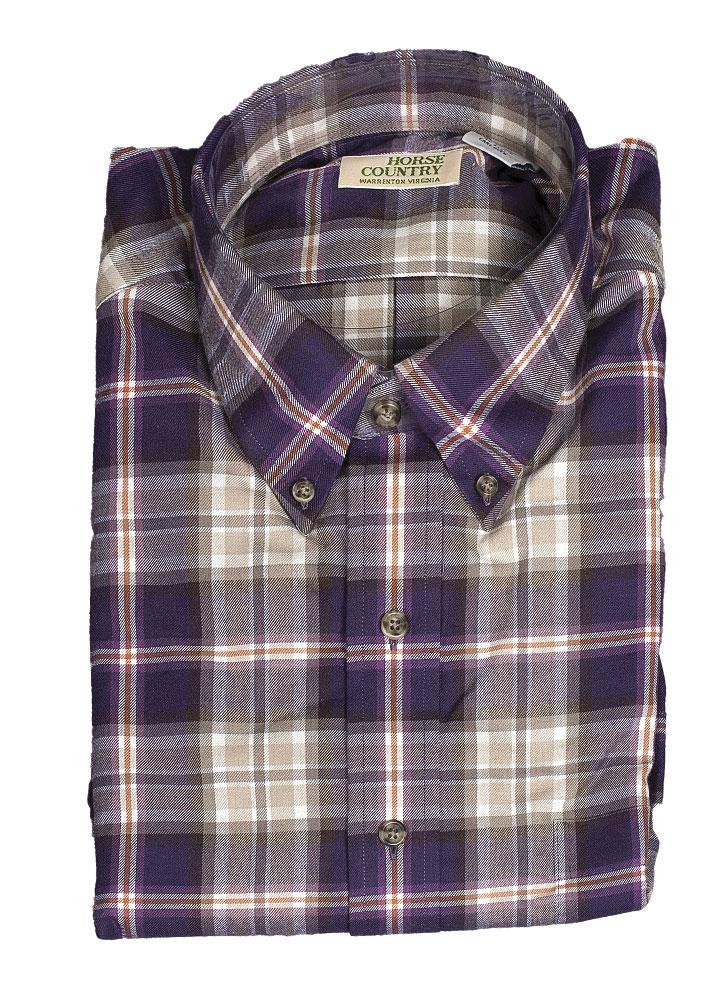
HORSE COUNTRY® VIYELLA V26
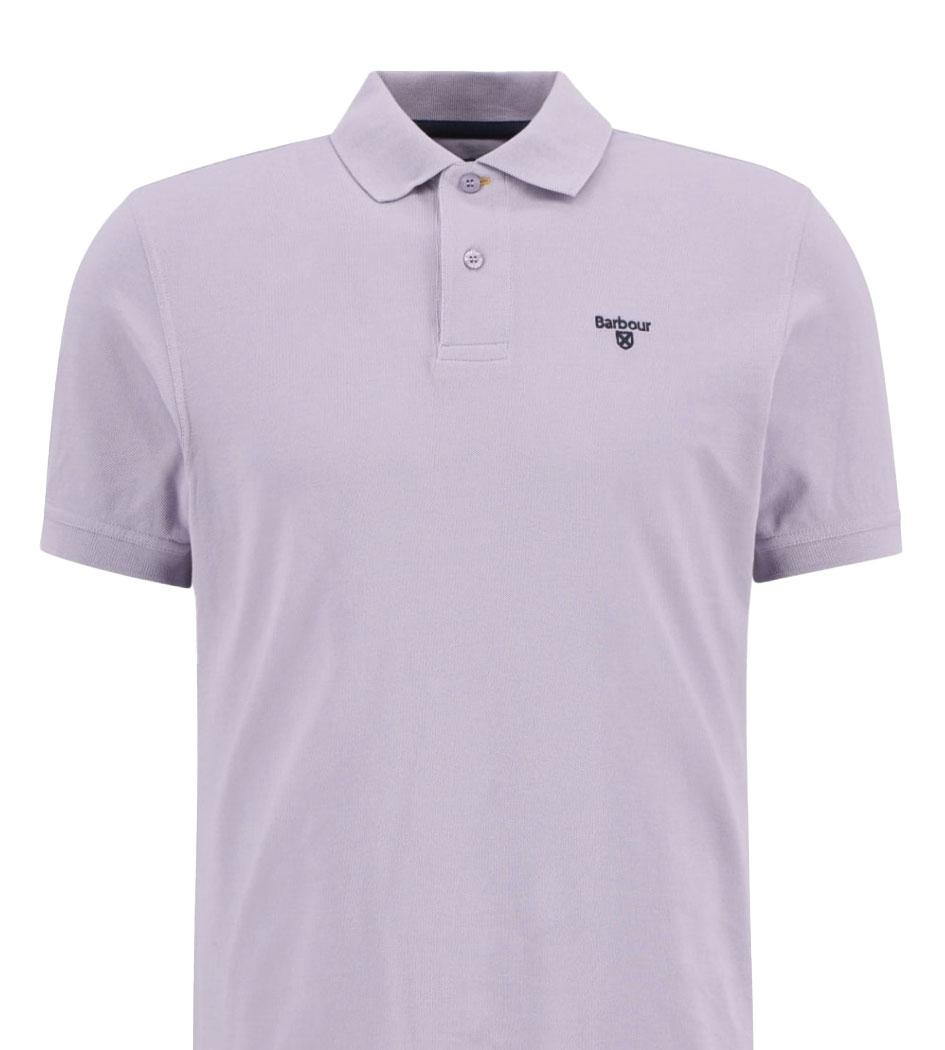
MEN'S BARBOUR® POLO SHIRT LILAC
100% Cotton. Trim 98% cotton, 2% Elastane. #4-MM1367PU (HC3E) $85.00
80/20 cotton/wool blend. Plum and Taupe Plaid. New summer weights in stock. #3022-1345 (HC3D) $139.00
SILK PANTING FOX BOWTIE
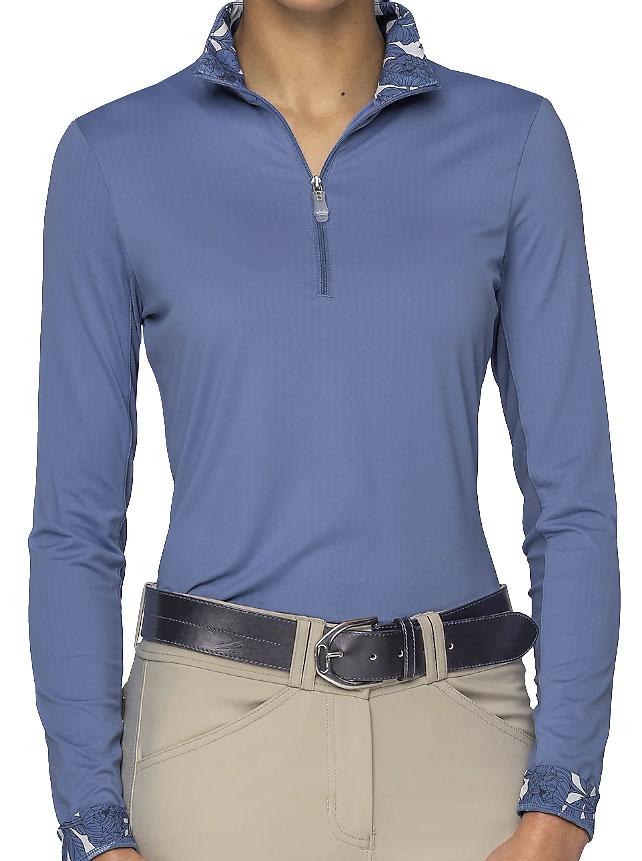
KASTEL WILD ROSE SHIRT
92% polyester/ 8% spandex. UPF 30+ ultra-violet protection. Available in size XS-LG. #1774-LP826B (HC3G) $99.00
90% Polyester, 10% Elastane. UPF50+ main fabric. Available in XS-XL. #299-11005A (HC3B) $64.99
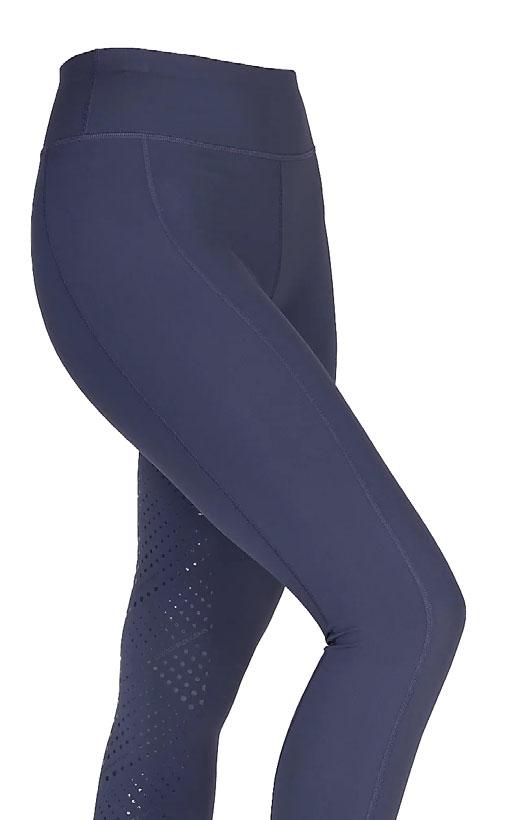
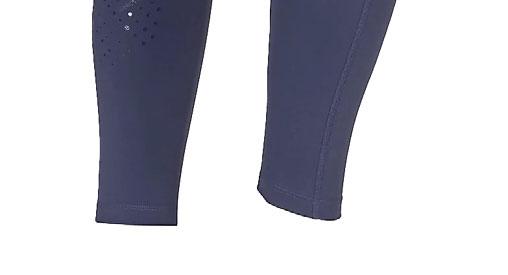
REACT MIDNIGHT TIGHT
Second-skin feel. Multi-way stretch. Available in XSXXL. #299-11010A (HC3H) $99.99
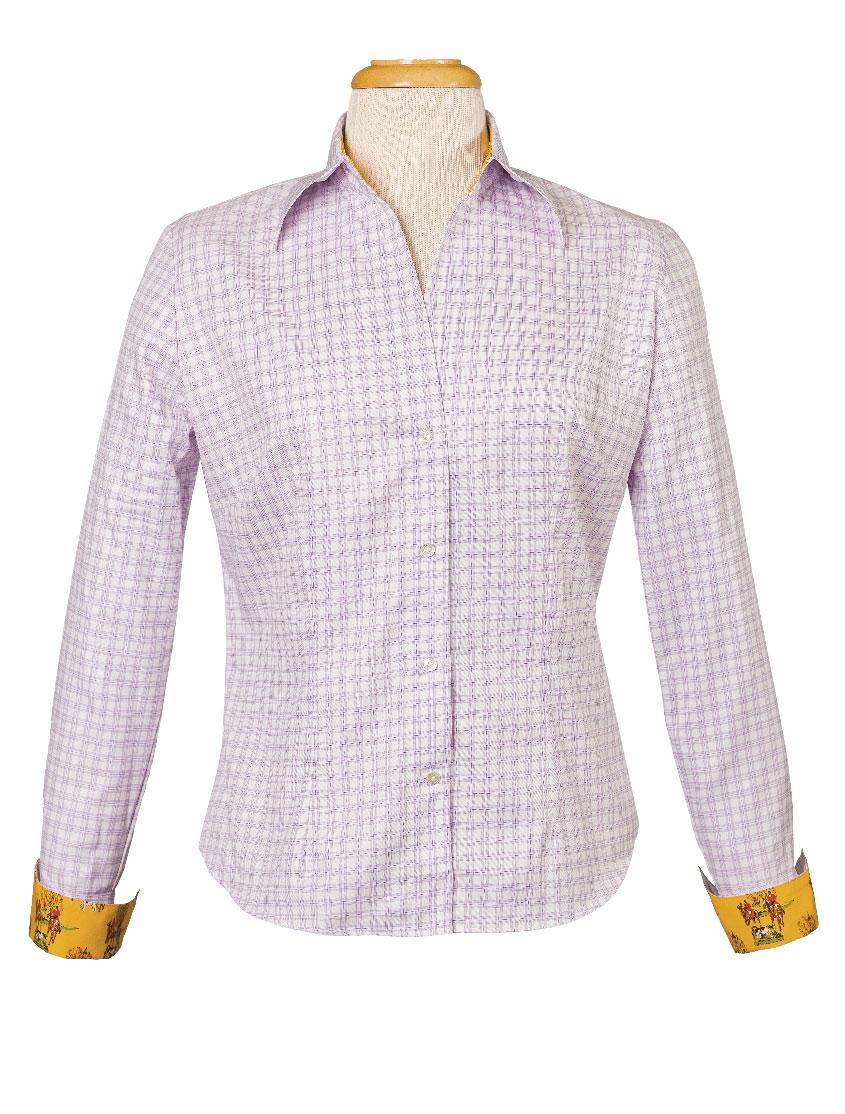
LAVENDER CHECK
BUTTON-UP SHIRT
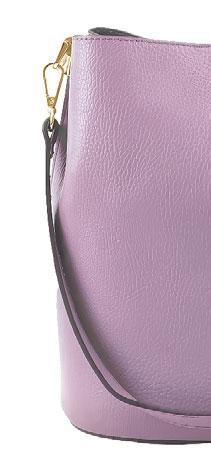
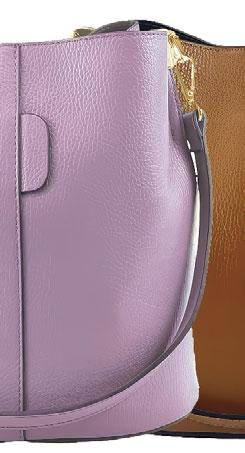
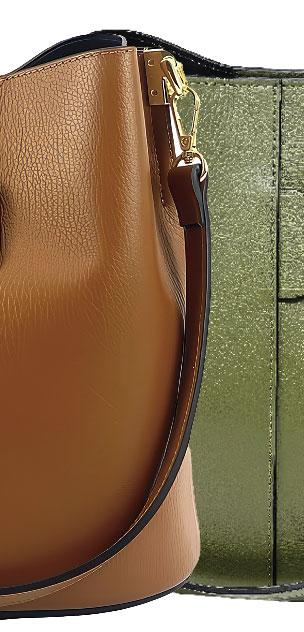
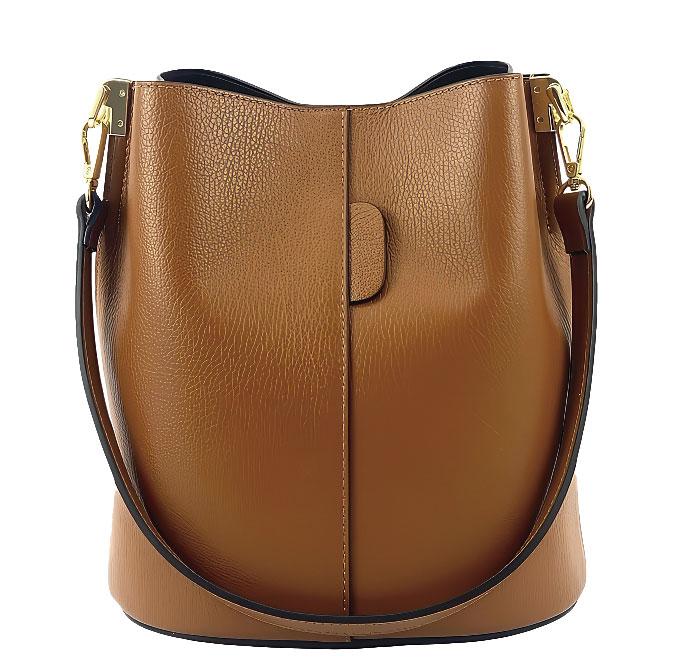
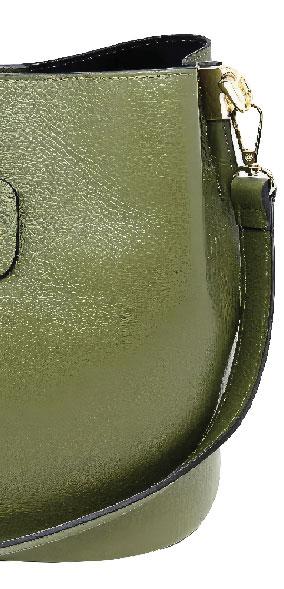
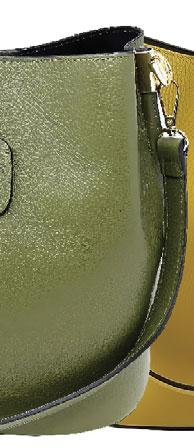
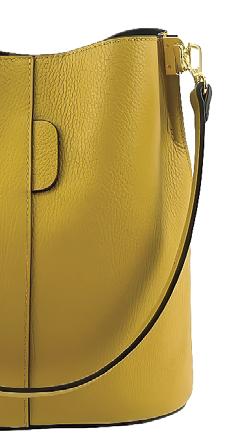
LEATHER BARLEY HANDBAGS
11" X 9" x 6.5" (HC3M) $195.00
Horse Country® exclusive! 100% Cotton. Hunt scene trim to sleeves & collar. Available in sizes SM-LG. #1450-LSVN002 (HC3J) $225.00
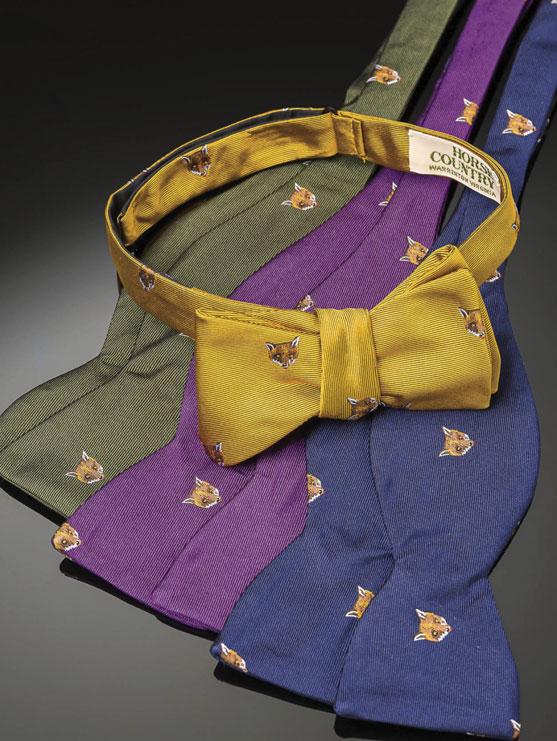
Made in England. 100% Woven Silk. Available in Green, Navy, Gold & Violet. #1450-BT01(F,H,I,J) (HC3F) $78.00
Available in many colors. See online at horsecountrycarrot.com.
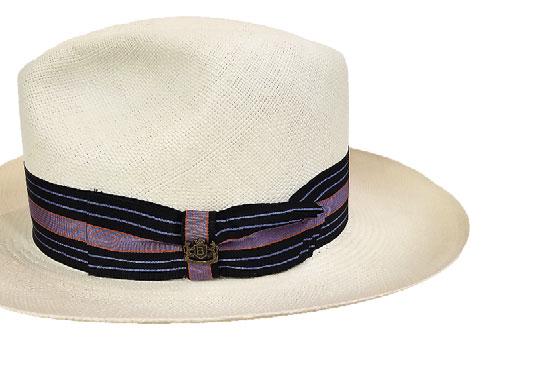
From statement portrait hats to polished looks for weddings, garden parties, and church, our collection carries you beautifully through every occasion. Practical meets polished with sporting hats designed for outdoor events, offering both sun and rain protection without sacrificing style.
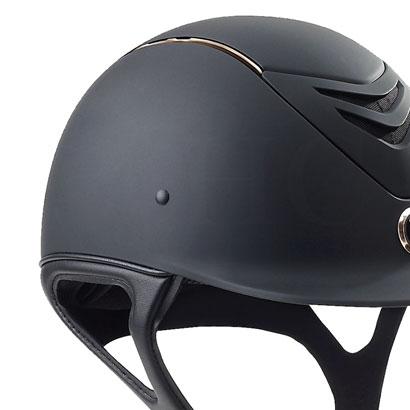
ONE K CCS MIPS
Black Matte with Rose Gold trim. Available in sizes XS - XL. #2039-471046 (HC3L) $384.95
See other colors & styles at horsecountrycarrot.com.
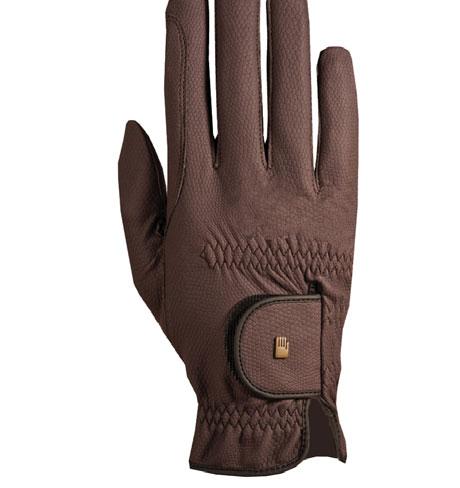
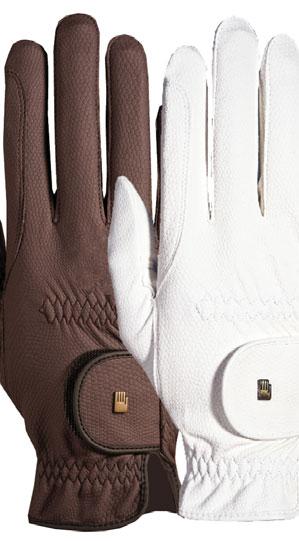
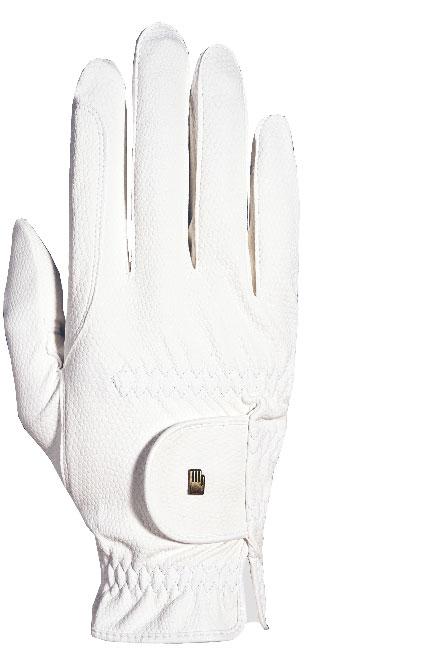
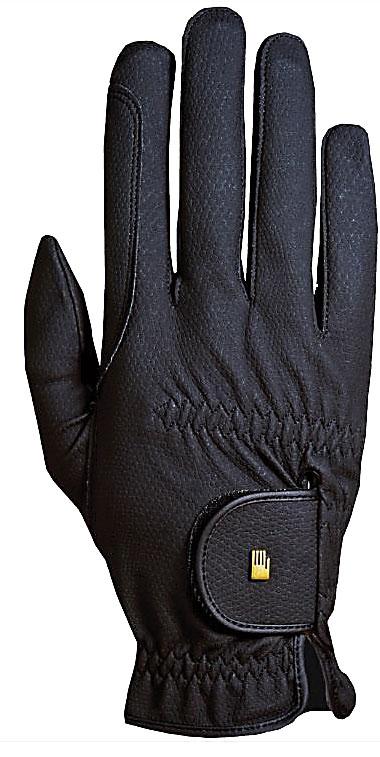
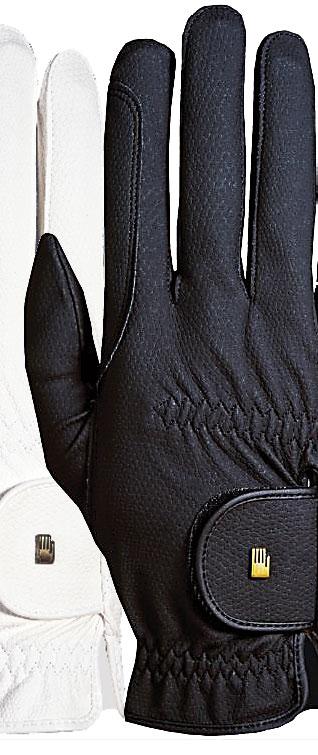
CHESTER GLOVES BY ROECKL® Very fine synthetic leather. Available in Brown, White, & Black. Sizes 6.5 - 10. (HC3N) $64.95
TUSCANY PONY BRIDLE BY KL SELECT
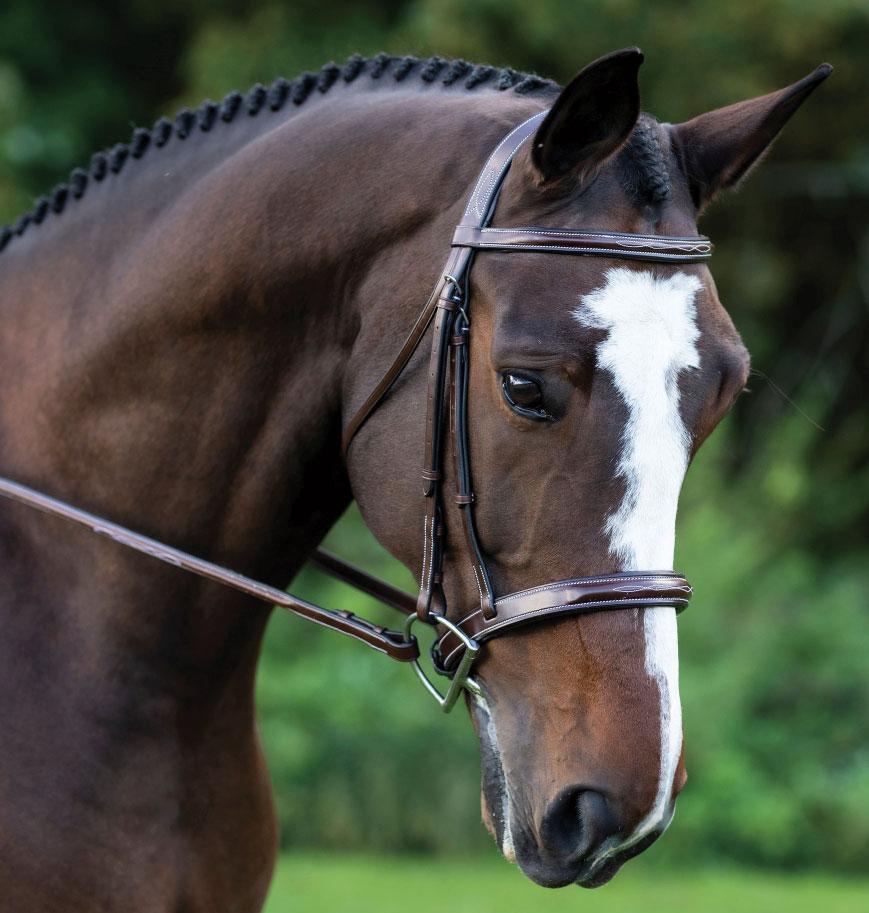
Italian leather, 1 1/4" soft padded, fancy stitched noseband. Matching browband, both with shortened round raising. Ergonomic uni-crown headstall. Complete with 5/8” fancy stitched round raised Laced Reins. All hardware is stainless steel with hook stud ends. Roller-buckle on the noseband. Nut Brown. Pony size ONLY. #327-KLTB (HC4A) $410.00
Show
Knowledgeable
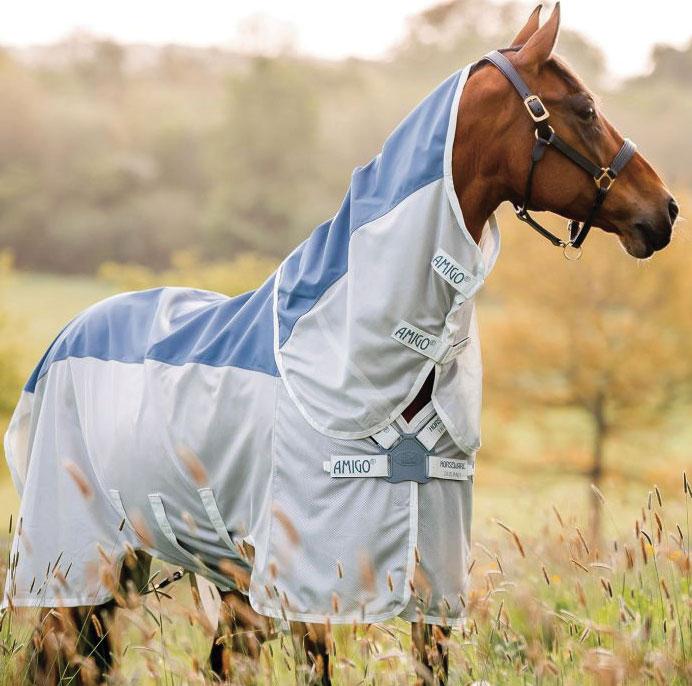
AMIGO ECO FLYSHEET COMBO GREY/TEAL
100% UV protection on top, waterresistant & breathable. Technical fabric made from recycled plastic bottles. Available in sizes 69-84. #AFRPLE (HC4D) $263.99
THE
™
MBO waternical lastic 84. SHOW BLAC
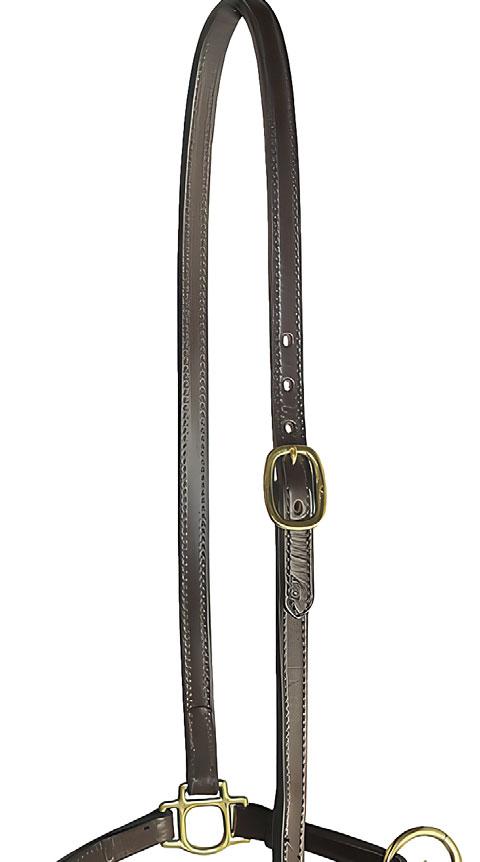
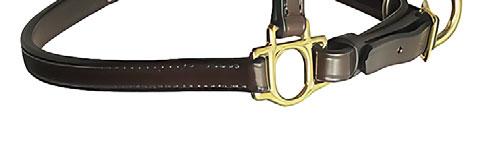
LEATHER GROOMING HALTER Made in USA with USA leather. Makes clipping and grooming easier. Adjustable chin. Horse size. Havana. #876-193H (HC4E) $87.50
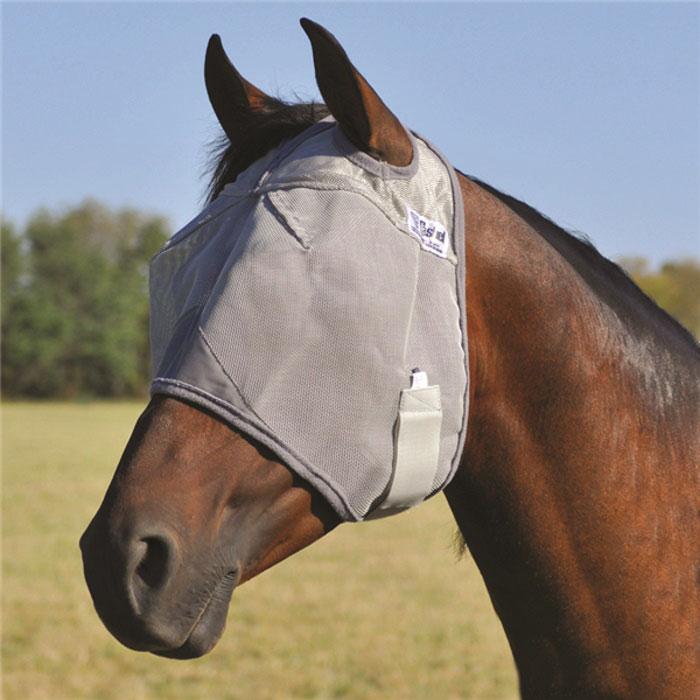
Comes in a variety of styles: Standard No Ears; Standard With Ears. Long No Ears; Long With Ears Prices range from $29.99 - $39.99 (HC4G)
CRUSADER LEG GUARDS
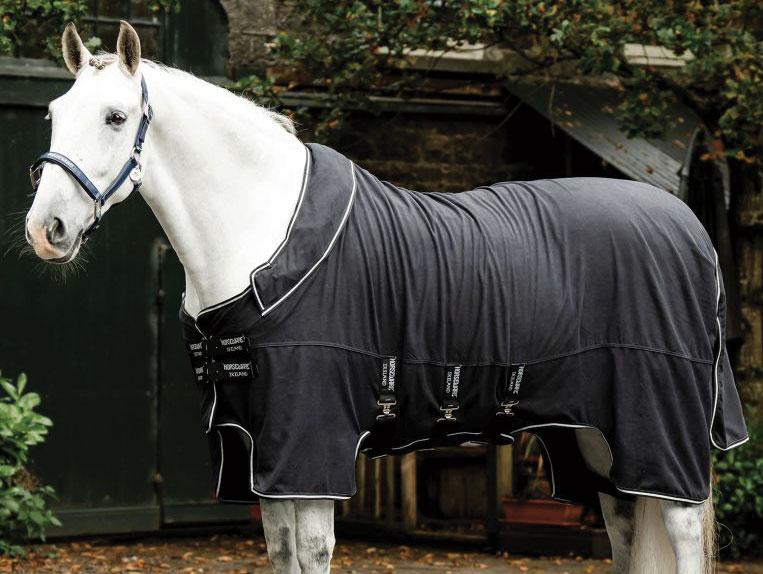
SHOW READY SHEET BY HORSEWARE BLACK/SILVER
Ensur Luxur
Ensures your hard grooming work lasts overnight. Luxurious, waterproof, and breathable outer. Includes fold-away neck. Available in sizes 72-84. #ABHJMN (HC4F) $219.99
Includ #ABH ALTER ather. ming orse size.
Horse Country
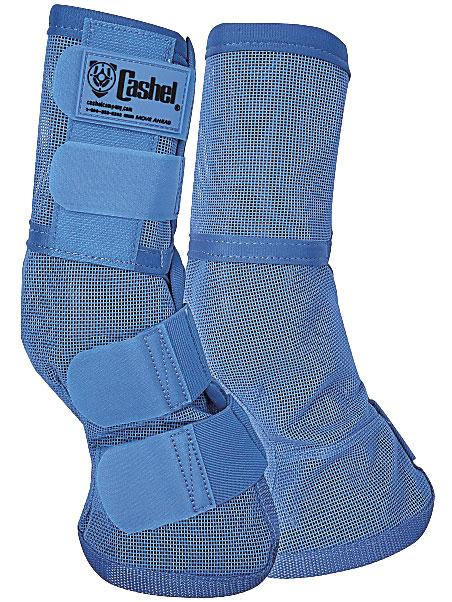
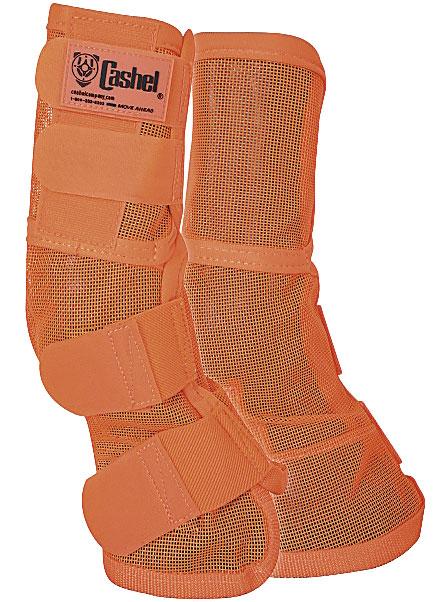
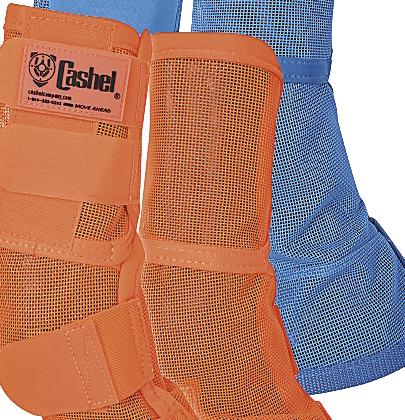
Prevent flies from biting the horse’s lower legs. Helps reduce stomping and insectinduced stress. Set of two, Available in blue or orange. Sizes cob - oversize. Maker donates 5% of sales to military charities.
Blue #707-LEG3CMS (HC4H) $33.99
Orange #707-LEG3CAR (HC4J) $33.99
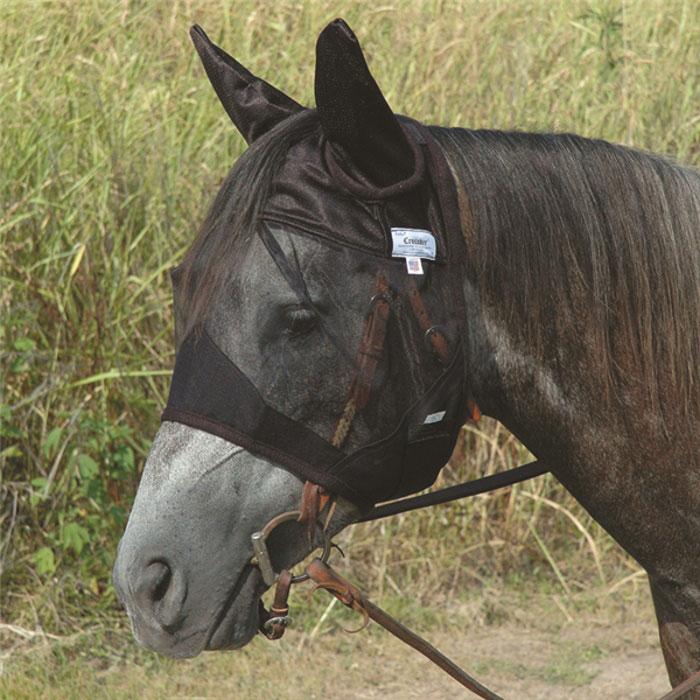
QUIET RIDE FLY MASK
CRUSADER
FLY MASK
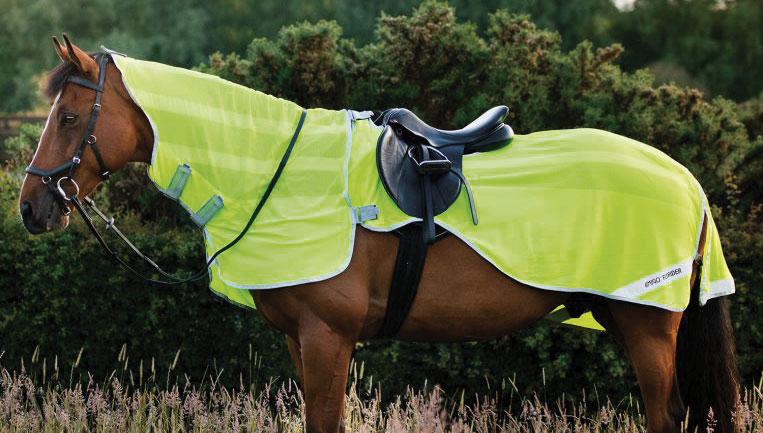
AMIGO FLYRIDER FLYSHEET
JENNY’S PICKS
We’ll start out with Rita Mae’s latest Sneaky Pie mystery, which just arrived for its official opening day.
Brown, Rita Mae. Clawed and Dangerous. This spring’s “Mrs. Murphy” mystery actually takes place in the fall, with “Harry” Haristeen and friends preparing for a community Halloween event to raise funds for the Seeing Eye Rescue. As Rita Mae often does, she introduces a real life friend into the action: Carolyn Maki, whom Harry and her husband Fair are visiting when the first victim is found, a local handyman, paintbrush still in hand, behind a shed on the property. With no initial signs of a struggle, the first thought is that the man had had a stroke or heart attack. But when the accumulated canines belonging to both Harry and Carolyn start smelling the grass, Harry points out what appears to be faint drag lines. Looks like a murder, and the victim must have known – and not feared – his murderer. But how was he killed?
Soon after that, a young Latina woman is found dead in her car by the library. No ID is found on her, but there was a little cosmetics bag in the back seat. Forensic investigations of both victims indicate that chlorine was the murder weapon. That’s not the last murder, either.
As the Halloween “fright house” develops, set in one of the more disheveled houses that a local doctor has been rehabbing for resale, the event planners are excited about what they have planned, with costumed personnel upstairs (ghosts), outside and inside ghouls of varying kinds, and an 1890’sthemed ball with masked characters from a local dance school who might take the paying public into the action for fun. And Harry has a special part to close the event: the Headless Horseman! Hardcover, 272pp. $30.00.
The Glovebox Guide to Transporting Horses For additional information on both the mechanics and the towing of horse trailers—and vans as well— Horse Country has two copies of The Glovebox Guide to Transporting Horses, by John Henderson. It is British, so some information will not be applicable to American trailers or regulations, but there is still much that can be learned, such as warning of tricks that unsavory sellers use to disguise defects or identity what would reveal a stolen vehicle. Granted, the book is twenty years old, so much will have changed in that time. However, there is plenty of valuable material still valid, with tips on driving the rig, loading/unloading and readying the horses with
HORSE COUNTRY BOOKSELLERS
Specialists in New, Old & Rare Books on Horses, Foxhunting, Eventing, Polo, Racing, Steeplechasing & Sporting Art
60 Alexandria Pike, Warrenton, VA 20186 800-882-HUNT • 540-347-3141
appropriate protective clothing. Because of the age of the book, we are discounting our two copies, formerly $39.95, now $30.00.
Since I have no other brand new books to report, let’s go back a few decades to some of our large supply of used/rare books. Since good equestrian art never goes out of style, here are some of ours by different equestrian artists. I’ll start with the wellknown and -loved Paul Brown, who illustrated many of the 20th-century children’s books I used to read. Two of the three in the trilogy below are signed and remarqued, which means the artist has drawn a little something extra for the previous book owner. Paul’s books are hard to come by now and tend to bring higher prices. All three of the below are of the same format: page after page of drawings with a short sentence or two describing the event pictured. Most are of racing, steeplechasing, hunting or polo, with a few oddballs like a bucking horse thrown in, and wonderfully drawn.
Brown, Paul. Good Luck and Bad. Charles Scribner’s Sons, New York, 1940. Limited ed, #318 of 780, signed and remarqued. Good condition, no dj, some soiling of cover and bumped corners. Light foxing on borders of pages. Pages in good shape with beautiful line drawings. Hardcover, unpaginated. #5486. $850.00
Brown, Paul. Spills and Thrills. Charles Scribner’s Sons, New York, 1933. Limited ed, #474 of 780, signed. Similar condition to previous book, but top inside front cover paper has separated and allowed a split in the top two inches of the cover. Hardcover, unpaginated. #6439 $595.00
Brown, Paul. Ups and Downs. Charles Scribner’s Sons, New York, 1936. Limited ed, #348 of 825. Signed and remarqued. Again, no dj, similar condition, circular water stain in middle of front cover. Minor foxing edges of pages. Front cover starting to separate but not as much as the previous book. Hardcover, unpaginated. #5485 $750.00
Shop Dogs: The Heart of Our Saddlery
By Osmun
I keep watch at the door, which, as you might imagine, is a position of some importance. From here, one sees everything. Who arrives, who hesitates, who needs encouragement, and who already knows exactly why they’ve come. I allow entry with a glance. Occasionally, I rise. Not always.
There were others, of course. We are not a one-dog establishment, no matter what I may suggest. Pandore understood presence. Aga had a mind for the field. Bunsen was immovable in both body and opinion. And then there was Kaylee.
Her domain was the saddlery, alongside Sue. A quieter post than mine, but no less important. While I observed the world coming in, Kaylee attended to what mattered once you were here. She came to work the very first day Sue started, in 2013, and from that day forward, she never missed one. That sort of record is not easily matched.
People stopped just to see her, not to shop or browse, but simply to spend
Brown, Cecil, M.A. The Horse in Art and Nature. Chapman and Hall, Covent Garden, n.d. Fair condition, no dj, bumped corners. Cover has a few bumps and other wear in the cloth and is loosening at the spine, and there is a tear on one of the blank back endpapers. Pages are otherwise can with a little foxing on endpapers. There is a pressed stamp from a library that is apparent on the first three blank endpages. The illustrations are all in black and white, some ink, some either gouache or watercolor. The text is directed toward students, noting various points that must be considered when drawing horses. For instance, one illustration shows a rearing horse from the back, with a lengthy description of the actions that go into a rear. On the facing page is a horse shying, with equal instruction on what is happening. The first part of the book illustrates and elaborates on skeletal and muscular details. Very instructive for an artist, but the work isn’t quite up to expectations today. Hardcover, 219 pp. #5466 $150.00
Charles Johnson Payne, aka “Snaffles.” A Half Century of Memories. Collins, London, 1950 reprint of 1949 issue. Good condition, no dj, light soiling or discoloring to canvas cover and inside endpapers. Solid interior, no damage. 5 color plates plus black and white sketches on nearly every page. Snaffles illustrated a number of equestrian- and huntingthemed books I have perused, and he is a good artist, his works not as stylized as Paul Brown’s easilyidentified illustrations. This collection, with his memories of the “old days,” is not limited to horses; among the sections included are military adventures, pigsticking, early airplanes, ships, and farming, in addition to foxhunting and steeplechasing. Included when we got this book is a copy of a page from The Field, a British sporting magazine, dated October 4, 1973, reviewing an exhibition of Snaffles’ work; this will be included with the book for your amusement. Hardcover, 95pp. #3467 $250.00
Munnings, A.J., R.A. Pictures of Horses and English Life. Eyre and Spottiswoode, London, 1927. Fair cond., cloth cover soiled, first endpaper completely detached but has nothing except the used book information (number, price) on it. Corners bumped, foxing mostly on endpapers with small spots on pages facing artwork. 27 pages text covering Munnings’ life, 28pp set-in color plates, some with tissue protectors, numerous b&w plates. Munnings remains a popular artist whose works still draw crowds when exhibited. His loose style of painting still maintains detail yet without the paintevery-tree-leaf hardness of earlier decades, his horses more natural and not stylized. Hardcover, 199pp. #5997 $275.00
a few minutes in her company. She received them all the same way, calmly and kindly, as if she had been expecting them all along. She was an unusual Border Collie and Catahoula cross, with vivid blue eyes that seemed to take everything in and judge nothing. Customers trusted her immediately. Horses would have, too.
I would pass through from time to time, just to be sure all was in order. It always was. Kaylee did not seek attention. She did not need it. Her work was in the atmosphere she created, a sense that things were as they should be. Leather properly cared for, saddles in their place, Sue nearby, a quiet and steady rhythm.
She has left us now, and the saddlery feels it. There is still work to be done, of course. Customers arrive, questions are asked, purchases are made. I remain at the door. Sue continues on, as she does. But something has shifted, just slightly, and we notice.
On fine days, I take a longer look down the aisle toward the saddlery. It seems only proper. We all have our posts. Mine is the door. Kaylee’s was the heart of the saddlery, and she kept it very well.
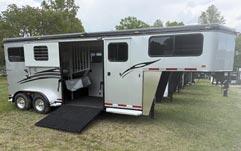
With proper care and attention, your trailer can serve you well— and safely—for many years. Make the most of your investment and provide your horses with reliable, comfortable transportation.
Expert Tips on Trailer Safety and Maintenance
By J. Harris Anderson, Managing Editor
A life committed to horse sports, whatever the specific discipline, immediately imposes obligations not relevant to most other sporting pursuits. Heading out for some golf, tennis, skiing, shooting, cycling, fishing, or one of many other recreational options? Just toss your gear in the car trunk, strap it to the roof, or hoist it into a bumper-mounted rack and off you go. But in the horse world to get the necessary “equipment” (that would be the horse) to the site of the sporting venue, a car trunk or roof rack won’t cut it. You need a trailer.
And that opens up a whole world of considerations in terms of both selection and maintenance to assure you can safely transport one, two, or several large animals safely from Point A to Point B, whether those points are a few miles apart or several states distant from each other.
We assume that the majority of our readers, certainly those still active in one or more equestrian disciplines, already have a trailer. (And a suitable towing vehicle to pull it, but that’s a topic for later consideration.) What we’re focusing on here is the trailer maintenance aspect: How to assure your trailer is roadworthy, reduce the risks of a breakdown, and what steps to take to extend the trailer’s useful life.
For that, we turned to Donna Martin, co-owner with her husband Rob, of Blue Ridge Trailers based in Ruckersville, Virginia. With 27 years of experience in this field, Donna was eager to share her extensive knowledge of trailer safety with our readers.
“This is my favorite topic!” Donna said. “There’s so much misinformation out there. I can tell you what most people don’t seem to know, sometimes even people with significant trailer experience.”
So much to cover. Where to begin?
Where the Rubber Meets the Road — Literally
Let’s start from the ground up. A lesson taught early in the horse world is always check your horse’s feet first before grooming or tacking up. A lost shoe, brewing abscess, or any one of myriad other possible impediments, and your ride’s not going to happen. No hoof, no horse.
For a trailer, the place to start is the tires (the trailer’s “hooves,” so to speak; no tire, no trailering).
“The biggest road hazard problem we see is underinflated tires,” Donna warns. “This leads to blow-outs and significantly reduced tire life. The tires must be inflated to the PSI listed on the sidewall when the tires are cold (before use).” Just like checking your horse’s feet every time you ride, she adds, “Check the tire pressure every time you pull the trailer.” It’s also important to assure your trailer is “shod” with the correct tires. “Trailer tires are very different in construction and proper/safe use from truck and personal car tires and need to be maintained very differently.”
One of the many helpful handouts Donna and her staff provide their customers is “Trailer Tires: Tips and Best Practices,” produced by Carlisle Transportation Products. Here’s a bulleted summary of the main points:
• Trailer tires are marked “ST” (Special Trailer). The stiffer heavy-duty sidewalls are designed to control and reduce sway problems.
• Bias-ply trailer tires are recommended for tough, rugged performance and sidewall puncture resistance.
• Radial tires are recommended when smooth ride, tread wear, heat, and extended life are important considerations.
• Excessive heat is a significant cause of tire failure. The problem increases in sunbelt areas where roadway surface temperatures are well above normal conditions.
• All tires must be identical in size for the tires to properly manage the weight of the trailer.
• The combined capacity of all of the tires should exceed the loaded trailer weight by 20%.
As already noted, underinflation is the number one cause of trailer tire failure. But an over-inflated tire can also cause problems as it’s more likely to suffer a cut or puncture or fail by sudden impact than would a properly inflated tire.
You will, of course, need two things to assure the trailer tires are properly inflated, especially if you observe the counsel to always check the inflation level of each tire before pulling out: a tire gauge and a compressor.
Gauges range from the old-fashioned sliding stick version (for about five bucks) to more sophisticated and precise models (most reasonably priced around $15-$30). If you get a low pressure reading, the options to correct that before hitting the road become more variable. If you already have a compressor handy, used for a variety of functions around the farm, you’re in good shape. (Although just how good that shape is may vary depending on where the trailer is parked versus where the compressor is stored and the logistics required to bring the two together. Yes, some personal experience here.)
If you don’t have convenient access to a compressor, there are myriad options available, ranging from small portable devices that plug into your truck’s power outlet to larger, more powerful (albeit not portable) units. Prices vary widely depending on power level, attachments included, etc. A small portable unit may do the job, but is likely to require a good bit of time to reach the targeted PSI level.
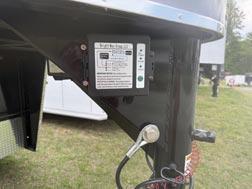
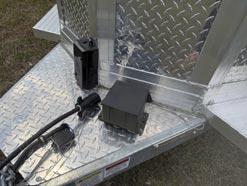
Whether bumper pull or gooseneck, the breakaway battery should be replaced every two years.
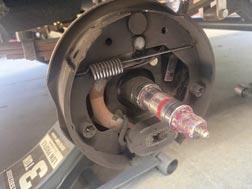
Wheel bearings function to absorb heat created by friction, which is offset by axle grease. It’s like joint supplement to keep those working parts moving smoothly. Routine maintenance should include assuring the working parts are properly greased.
Axle Grease is Your Friend
Closely related to the tires, in both function and proximity, are the axle bearings. Each wheel has two bearings, one inner and one outer. These bearings function to absorb heat created by friction, which is offset by axle grease injected into them. (Furthering our horse-analogies, think of the axle grease as a joint supplement to keep those working parts moving smoothly.) Over time and with repeated use, along with a build-up of road dirt, the ability of the grease to offset heat will deteriorate. (Wheel bearings that are not properly greased have been known to catch fire.)
Donna suggests that, “Axle grease should be professionally examined at least once a year if use is recreational and sporadic. If use is regular, say every week, a professional should examine the grease and axle bearings every six months.”
Inspection Roulette
So if I take my trailer in for its annual inspection as required by state law, will that meet the once-a-year requirement for checking the axle grease?
Unfortunately, no. And for multiple reasons.
Only a few states, Virginia being one of them, require an annual inspection for horse trailers. (The others are MA, VT, NY, and PA. Most states either don’t require annual inspections for horse trailers or only require them under certain conditions such as weight, sale, or commercial use.)
As Donna explains, “The great Commonwealth of Virginia, thankfully, requires that any trailer with a brake undergo a state certified inspection once every 12 months. This requirement does tend to keep those dangerous rigs being held together by baling twine off the highway. We can rest a little easier because our fellow horsemen are, by in large, obeying this requirement. The bad news is that state inspection requirements are relatively basic and do not encompass all of those things that should be inspected, at least once every year, regardless of how often your trailer is being used.”
Donna provided us with a breakdown of what’s required for a trailer to pass Virginia state inspection and, perhaps more importantly, what’s not covered.
The basic requirements for a $20 Virginia state inspection are limited to:
• One wheel per brake axle must be pulled open (most horse trailers have brakes on both axles, so two of the four wheels will be pulled). The inspector will look at only those two wheels and will inspect them to determine the condition of the brakes, magnets, bearings, grease, and the springs.
• All four tires (but not the spare) and stems will be inspected for condition and dry rot.
• All exterior marker lights and the license plate light will be inspected to ensure that they are working properly.
• The trailer frame, suspension, and wiring will be inspected for safety.
• The coupler will be inspected to ensure that it is safe and working correctly.
• The breakaway system, battery, and switch are tested.
What a VA state inspection will NOT cover:
• The other two wheels on your trailer will not be inspected. Therefore, even if the two that are opened are found to be passable, this will not ensure that the other two have sufficient and clean grease in the bearings and that the brake components are adequate, properly adjusted, and working correctly. The wheels operate independently and one or two being passable says nothing about the condition of the other two. This is a major flaw in the state requirements.
• The spare tire is not inspected. The condition of the spare is as critical as the condition of the tires on the road, should you have a blow out and need it. That is not the time to find that your spare has inadequate air or is flat or has dangerous dry rot.
• The interior lights are not inspected.
• The floor, wall supports, and roof supports are not inspected. This is the structural integrity of your trailer. If you have floor deterioration issues or stress fractures affecting the walls and/or roof of your trailer, it would not be detected.
• The door hinges, windows and screens are not inspected. Most importantly, the condition of the rear ramp is never inspected.
• The trailer jack is not inspected.
• The roof sealant is not inspected. All aluminum roofs are sealed with a marine grade caulk that will dry up and shrink with sun exposure, weather, and age. If the caulk is not replaced every four to five years, you risk leakage into the trailer, often in undetected areas that will exacerbate the problem over time.
• The roof vents are not inspected for damage or leakage.
So even if you live in Virginia or one of the other four states that require an annual inspection of horse trailers, it’s still worth considering a full inspection done annually by a competent trailer service shop. And if you live in one the many states where inspections are not required…well, how’s that supply of baling twine holding up?
“Let’s keep it clean, people!”
To both extend the life of your trailer’s floor and to keep the interior comfortable for your horses, Donna recommends a regular cleaning routine. “After every trip, when you arrive home remove all wet bedding and manure in the horse area. Redistribute the bedding and, if necessary, add some fresh bedding to keep the depth about three inches. After every six or seven trips, remove all bedding and floormats, extend the coupler of the trailer so the rear will drain out, then clean the floor with a hose or pressure washer. Allow everything to dry before replacing the floormats.”
Also, where you park your trailer can affect its long term structural integrity and the functional life of its tires. Donna’s counsel is that, “If you’re unable to park your trailer under cover, always park it on asphalt, concrete or gravel. If you must park it on grass, park the tires on two pieces of plywood to avoid tire exposure to grass and dew.”
Be Assured You’re Properly Insured
Over her 27 year career in trailer sales and service, Donna has observed many instances of trailer owners not confirming the correct insurance coverage. “When your trailer is attached to an insured tow vehicle,” she explains, “the trailer is covered by the liability portion of the auto insurance. You’ll need to contact your insurance company and specifically add a rider for collision and comprehensive coverage.” Liability covers damage or injuries to other vehicles, the driver and passengers in those vehicles, and any damage done to someone else’s property. Collision covers damage to your vehicle, including the trailer, and comprehensive covers non-collision events (e.g., fire, theft, vandalism, falling objects, etc.).
Taller Trucks, Older Goosenecks
If you’ve been following the good counsel on trailer care outlined here, your older gooseneck is likely to still be rolling along in fine form. So fine, in fact, that maybe it should be rewarded with a new partner—trade in the old truck for something new. Depending on the specific age difference, this May-December romance could prove problematic.
The Martins have some personal insights into this. “Beginning approximately 2011 to 2013 depending on the manufacturer,” Donna reports, “new trucks have been coming out of the factory with bed/tailgate height increasingly taller off the ground, in some cases by as much as six inches. This additional height reduces the clearance from the tallest point of the sides and tailgate to the bottom of the gooseneck frame rail on an older trailer. Trailer manufacturers began to rectify this problem around the same time by building the gooseneck frame rails farther off the ground, but not universally.
“If a trailer is leveled correctly, with the front of the empty trailer two inches higher off the ground than the rear of the trailer, there needs to be a minimum of six inches clearance when the trailer is hooked to and carrying the tongue weight of the trailer from the highest point to the bed sides and tailgate to the lowest point of the gooseneck frame rail.”
It’s possible to offset this by modifying the position of the trailer’s axles. But that can be a costly fix and the additional trailer height will make a step-up higher for loading and unloading or result in a steeper angle for a ramp. (This problem is not relevant to flatbed trucks. But switching from a conventional pickup to a flatbed raises other considerations beyond the scope of this article.)
Risk Averse vs. Risk Tolerant: Finding the Balance
Every bit of advice offered here, if followed faithfully, will help increase the level of safety when hauling horses while also working toward a longer useful life for your trailer. Realistically, human nature being what it is, some people will eagerly adhere to this counsel while others will take a more flexible approach. Some of that may depend on the specific sport, the frequency of trailering, distance traveled, and other factors. Or it may just come down to those who are risk averse versus risk tolerant.
Wherever you fall on that scale, we hope you’ve found something helpful here.
Many thanks to Donna Martin of Blue Ridge Trailers for taking the time to share her valuable knowledge on this important subject.
The Stars Were Out In Virginia This Spring
Champions Zabeel, Keys Discount Make Season Bows
By Betsy Burke Donley
The spring, 2026 Virginia Steeplechase Foundation and National Steeplechase Association circuit produced records at every turn in terms of attendance, purses and racing. With a full calendar of action March through May, both series – on their own and combined, attracted the sport’s best for point-to-point and sanctioned racing.
Warrenton Hunt Point-to-Point, March 14
With the traditional season kickoff at Rappahannock postponed due to snow, the March 14 Warrenton races kicked off Virginia’s spring ‘chase action.
As usual, the Airlie meet made headlines, but not the ones you’d expect.
Trainer Todd McKenna said winning the card’s feature, Warrenton Hunt Cup open timber, was a “surprise,” an unexpected bonus prize since he’d only decided early race week to try former hurdler Pavoni over timber.
“We planned this as more of a schooling race [for the 6-year-old son of Medaglia d’Oro],” McKenna said, fumbling over his words as he laughed in the winner’s circle. “I think the horse jumped his first timber [fences] on Wednesday.”
But as McKenna watched the miles tick away in the 3-mile headliner, he witnessed, along with jockey Gerard Galligan, as the horse “learned by doing,” jumping fluidly, running easily, and almost floating up the long homestretch at the historic Warrenton racecourse to win easily under a hand-ride.
McKenna said he personally loves the Virginia meet. “They always have good footing, and that’s a nice course, good for an early-season spin. The date works with the calendar, too. It’s a good place to go in March.”
McKenna had claimed Pavoni in late 2024 when Hall of Fame trainer Jack Fisher slipped the horse in for a tag on the turf at remote Tampa Bay Downs.
Pavoni posted modest form over hurdles for Fisher, but after the Warrenton timber romp, the $16,000 purchase looks like a bargain.
“The horse had shown promise when Jack had him,” McKenna said. “I saw him in the seller at Tampa and thought I’d take a chance.” McKenna has a trained eye for identifying future timber prospects—he’d selected Mystic Strike out of a 2014 race on the dirt at Charles Town before he went on to a multiple stakes-winning career over timber, including the 2023 Virginia Gold Cup and 2024 International Gold Cup.
McKenna doubled at Airlie, also saddling Beau Ciel (Conor Tierney up) to win a division of the maiden hurdle.
In the day’s other racing, local favorite Curlee Fox, Sam Cockburn up, produced a relentless stretch drive for a popular win in the foxhunters’ timber for Marshall-based owners John Dale and Maryalice Thomas and Upperville-based trainer Julie Gomena.
Piedmont Foxhounds Point-to-Point, March 21
Trained just across Goose Creek from the racecourse, Will Russell’s Animal Kingston (Eric Poretz up) was a big local winner at Piedmont, making a sustained drive from the last fence through the long uphill homestretch to take the featured Rokeby Bowl open timber.
Neil Morris trains the 11-year-old son of Kentucky Derby winner Animal Kingdom. He finished four lengths to the better of runner-up The Butler Yates (Gerard Galligan), with Eternal Story (Dan Nevin) close up in third.
Morris and Poretz also teamed to win a division of the maiden timber with Runnymoore Racing’s Step Out. They partnered to win the amateur timber with Vincent Bonanni’s
The Pot, who gutted out a narrow victory from Paddy’s Crown (Chloe Hannum).
got her own score with her family’s Our Legend, easy winners in the ladies’ timber.
Piedmont Fox Hounds Point-to-Point Rose Marie Bogley Memorial Amateur & Novice Rider Timber 2nd Division (l-r) Bet The Pot (Eric Poretz, up) – 1st; #2 Paddy’s Crown (Chloe Hannum, up) – 2nd; #1 Royal Ruse (James Wyatt, up) – 3rd Douglas Lees photo
Piedmont Fox Hounds Pointto-Point George Robert Slater Memorial Maiden Timber 2nd Division (l-r) #7 Vadavvero (Ben Mulligan, up) – 1st; #9 Jeremy Pass (Teddy Davies, up) – 3rd Douglas Lees photo
Rappahannock Hunt Point to Point, March 28
Rappahannock Point-to-Point co-chair, and owner-developer of the unique hillside racecourse at his farm, The Hill, north of Culpeper, Larry Levy says the community fanfavorite event didn’t disappoint this year, even though the sheen of being “first” on the 2026 American ‘chase circuit was lost to lingering ice and snow from a January storm.
Still, national and local circuit trainers flocked to the Rappahannock meet, with Maryland-based Sean McDermott saddling South Branch Equine homebred Who’s Counting to win the featured open hurdle with the trainer aboard.
McDermott partnered another winner he also trains, Icandothat, for owner-breeder Vivian Rall. Harry Beswick steered Holey Moley for Molly and Paul Willis to win the other timber division for trainer Barry Foley.
John Dale and Maryalice Thomas’ Curlee Fox, Sam Cockburn up, notched his second win of the year, easy winner in the foxhunters’ timber. Trainer Julie Gomena also won a division of the maiden hurdle with her own Consolation Prize, Eric Poretz aboard.
Old
Dominion Hounds Races, April 5
Old Dominion offered Virginia’s NSA spring leadoff, with the popular hybrid meet featuring NSA sanctioned races alongside a full program of point-to-point series events.
Vincent Bonanni’s Bet The Pot ran off with the day’s featured Old Dominion Hunt Cup over timber. The Neil Morris trainee won convincingly by 10-plus lengths after the testing 3 miles. Maryland-based amateur rider Ben Sullivan had the winning ride atop the 11-yearold Lookin at Lucky gelding, bred in Pennsylvania by late Hall of Fame trainer Jonathan Sheppard.
Sullivan, 26, counted the Old Dominion score as his first lifetime victory. The University of Kentucky ag-econ grad sells farm insurance for what he calls his “real job,” but he gallops for Hall of Fame trainer Jack Fisher in the mornings before work to stay fit for his amateur jockey career. He was thrilled, he said “to get off the mark with a winner after my third season. “This is a great course. It rode well, and the horse jumped well.”
NSA sanctioned winners included maiden hurdle graduates Morning March for trainer Kathy Neilson under a hand-ride by Freddie Procter and Doctor Love for trainer Tom Garner and rider Stephen Mulqueen.
Elizabeth Scully partnered with Upland Flats Racing’s Hidden Path to win the apprentice hurdle for trainer Ricky Hendriks.
“Carding these amateur-apprentice races [as NSA sanctioned races for purse money] is an important part of the Virginia Equine Alliance support of the Virginia ‘chase circuit,” explained Virginia Steeplechase Association president Don Yovanovich. “What VEA is doing to promote jump racing is something everybody in steeplechasing should know about. It’s a great program.”
A percentage of every dollar bet on pari-mutuel races from Colonial Downs near Richmond and from bets made at Colonial’s associated off-track betting establishments pays into a VEA fund that pays horsemen’s purses at the track. VEA also distributes money to Virginia steeplechase meets to promote and support racing in the Commonwealth.
Blue Ridge Hunt Races, April 12
Another NSA-Virginia point-topoint combo program, the Blue Ridge races offered their third hybrid card with four NSA races—a $15,000 maiden over timber at 3 miles; $30,000 maiden hurdle at 2 miles; and a pair of $20,000 maiden starter hurdles at 2 miles for horses who previously started for a claiming tag of $16,000 or less or entered for a $16,000 tag.
Noble Stables’ Total Joy won the Van Clief hurdle stake at Foxfield two years ago, returning over timber this season to break his maiden at Blue Ridge for trainer Neil Morris. He gutted out a solid victory, winning from another hurdle stakes-winning convert, Evie’s Prince. Former amateur, now professional, Freddie Procter had the mount for Leslie Young.
The 7-year-old Irish-bred rated midpack early, rallying past Shannon Hill Farm’s Evie’s Prince (Graham Watters) at the last. He extended his lead to 2¾ lengths at the wire.
Maiden hurdle winner That’s Not Funny might be the only Minnesota-bred hurdle winner. Following a lengthy career on the flat at Remington and Canterbury Park, the 7year-old son of Distorted Humor was claimed out of a $20,000 seller at Canterbury last June. He ran three times over hurdles last fall before making his timber debut at Woodley.
Jamie Bargary was up for Neil Morris.
Rappahannock Hunt
Point-to-Point
Joan and Oliver Brown, MFH and Chairman of the Races, presented Gerard Galligan with the Leading Rider Award at the end of the day. Douglas Lees
Old Dominion Hounds Point-to-Point Piedmont Equine NSA Maiden Hurdle (l-r) #2 Belle Wish (Evan Dwan, up) – 2nd; #1 Doctor Love (Stephen Mulqueen, up) – 1st Douglas Lees photo
Blue Ridge Point-to-Point
NSA Maiden Starter/Maiden Claiming Hurdle Hard Par (Bernie Dalton, up) – 1st Joanne Maisano photo
Old Dominion Hounds Point-to-Point Meeting House Mountain Open Hurdle
In a tight stretch run battle, Blue Nile (Graham Watters, up) bested second place finisher Moonshine Time (Harrison Beswick, up). Douglas Lees photo
Rappahannock Hunt Point-to-Point
Maiden Timber Icandothat (Sean McDermott, up) – 1st
Douglas Lees photo
photo
Leamington Racing’s Grahamzilla rallied from fourth to first to get up in the final strides to defeat Joseph Fowler’s Coal Boss (Bernie Dalton) in the other maiden hurdle. Defending rider titlist Graham Watters had the mount for trainer Ricky Hendriks.
Grahamzilla, a Pennsylvania-bred 4-year-old son of Triple Crown winner American Pharoah, made just two starts at 3 on the flat before turning to hurdles last fall. He was a sharp second in his debut at Aiken Fall in November.
First-timer Hard Par won at first asking, taking the maiden/starter division for ownertrainer Kate Dalton and husband-rider Bernie Dalton. The 5-year-old New York-bred son of Hard Spun broke alertly and went wire-to-wire, 2¼ lengths up on Sawbuck Racing’s late-closing El Bello (Freddie Procter).
Owner-rider Joel Merle Smith won the day’s most popular race, the inaugural Pete Dunning memorial foxhunters’ flat race, 1¼ miles for a $1,000 winner-take-all purse.
Middleburg Spring Races, April 18
Middleburg Spring’s grade 2 Temple Gwathmey has produced the last two Eclipse ‘chase titlists, and this year’s 2½-mile handicap hurdle could offer a glimpse at the 2026 yearend championship.
Michael Smith’s Foxy Walk opened an early lead with Luke Carberry, holding sway until Ziggle Pops (Jamie Bargary) hooked him at the last. The duo battled through the long downhill run to the elbow leading into the short homestretch.
It looked like a two-horse tussle halfway to the line, but Riverdee Stable’s Zabeel Champion was catching fire, emerging from midpack and flying up the outer rail to get up in the final strides for his first win in 30 months. The two-time stakes winner in 2023 has made just four starts in the past two seasons, but he gunned under the wire a length ahead of Hidden Path (Stephen Mulqueen) who grabbed the place.
Trainer Jack Fisher greeted his eighth Gwathmey winner in the past 11 years with a wide grin as Riverdee’s managing partner Sean Clancy pumped hands with winning rider Freddie Procter.
“Honestly, we were out for the run,” Clancy said, still blinking at the blinding turn of foot his 9-year-old Galileo grandson displayed. “He’s a 3 mile horse. We’re actually aimed at the [3-mile, weight for age] Iroquois.
“This was a step to get there.” Zabeel Champion’s last start was 11 months ago in the Iroquois where he took a hard fall that resulted in almost a year away from the races.
The victory gave Hall of Fame trainer Jack Fisher two stakes wins on the Middleburg card; the other was the season debut of defending timber titlist Keys Discount in the Middleburg Hunt Cup.
Dolly Fisher’s champion finished an eye-popping 34½ lengths ahead of runner-up Track and Trace (Evan Dwan.)
“He’s a machine,” said rider Graham Watters, U.S. rider champ four of the last five years, adding that Keys Discount was pretty much a steer job in the 3¼-mile Middleburg Hunt Cup.
In the day’s other action, Tom Garner saddled Alfred Hunt cross-country ‘chase winner Quick Master for owner Bruton Street. Jamie Bargary handled the 7-year-old son of Hard Spun.
Blue Ridge Point-to-Point Maiden Starter/Maiden Claiming Hurdle (l-r) #7 Grahamzilla (Graham Watters, up) – 1st; #4 Coal Boss (Bernie Dalton, up) – 2nd Joanne Maisano photo
Middleburg Spring Races, The Alfred M. Hunt Steeplethon Quick Master (Jamie Bargary, up) – 1st Middleburg Photo LLC
Blue Ridge Point-to-Point NSA Maiden Timber (l-r) Evie’s Prince (Graham Watters, up) – 2nd; Total Joy (Freddie Proctor, up) – 1st Joanne Maisano photo
Middleburg Spring Races, Temple Gwathmey Sport of Kings Hurdle Stakes In the paddock, Freddie Proctor and Zabeel Champion both showed their determination to prevail in the $100,000 Temple Gwathmey. It was a tight finish, but they scored the win by a length over Hidden Path and Stephen Mulqueen. Middleburg Photo LLC
Middleburg Spring Races, The James L. Wiley. Maiden Starter/ Maiden Claiming Hurdle.
A huge crowd was on hand at historic Morven Park, April 19, for the third of three Virginia point-to-point/National Steeplechase Association hybrid meets, with NSA trainers flocking to the renovated course as the spring ’chase season drew to a close.
Rare is the maiden hurdler that makes headlines, but Irv Naylor’s Ranger Thunderbolt led by as many as 40 lengths in the Leesburg card opener, jumping well and looking fresh in his first time out off a two-year layoff. Army Times (Graham Watters) closed the margin in the long Morven homestretch, but Beswick let out a notch and the Irish-bred 6-year-old won in a romp —30 lengths.
Trainer Cyril Murphy purchased Ranger Thunderbolt for $54,000 out of the Tattersalls fall sale as a 3-year-old after the horse won two on the turf from 10 starts. He ran once for Naylor and Murphy over hurdles, had one start in late spring 2024, but he’d been on the shelf until the huge win at Loudoun.
Elizabeth Scully partnered Naylor’s veteran Belfast Banter to score the apprentice hurdle for Murphy’s second win on the card.
In the ratings hurdle, Keri Brion saddled The Insider (Stephen Mulqueen) to edge Paul and Molly Willis’ Love Shaq (Kevin Sexton) with a late run from the last to the wire to collar the frontrunner at the line.
In point-to-point action on the deep program, Runnymoore Racing’s Give It A Whirl (Watters) held on by a nose to take a division of the maiden for trainer Mark Beecher, with Hill Parker’s homebred Red Tone (Virginia Korrell) collecting the other for trainer Lilith Boucher.
The ever-expanding pony racing division opened the day, with Rosey Crane and Pauly Aguilera splitting the series with two wins each.
Foxfield Spring Races, April 25
Charlottesville’s annual rite of spring attracted the expected huge crowd on a showery spring Saturday for the 47th annual Foxfield Spring Races. Strong management of the newly protected conservation property by Foxfield Racing LLC yielded record purses of $240,000.
Last year’s champion owner, the Riverdee syndicate, and champion trainer, Jack Fisher, teamed with two winners on the day, including Cyber Ninja who edged to a half-length score in the $75,000 Van Clief memorial hurdle stake. A 6-year-old son of Arrogate, Cyber Ninja was making just his fourth start over jumps. Jamie Bargary had the ride. Second best was Rocket One, also from the powerful Riverdee-Fisher pairing. Bernie Dalton was aboard.
Maranto Manor’s Lydford (Cian Quirke) ran down Coutach (Jake Coen) to annex the $50,000 Good Night Shirt hurdle stake for trainer Tom Garner.
Ann Jackson’s Kiyomori (Freddie Procter) closed late to edge Evie’s Prince (Graham Watters) at the line in the maiden timber. It was Kiyomori’s first win since taking a hurdle stake at Aiken in 2023.
Commonwealth Racing’s British Royalty (Freddie Procter) broke his hurdle maiden in the Foxfield closer, flashing the speed that made him a multiple graded stakes performer on the flat with career earnings more than $450,000.
Middleburg Hunt Point-to-Point, April 26
In a second-straight week of racing at Middleburg’s historic Glenwood Park, the Middleburg Hunt hosted their annual point-to-point races with a full program over timber, over hurdles, and on the turf.
The Celtic Venture syndicate scored a big win in the featured Middleburg Bowl open timber when their Made To Be Lucky (Gerard Galligan) powered up the long Glenwood homestretch to claim the lead from Our Legend (Chloe Hannum) near the wire for a length and a half victory. Larry Smith trains the winner.
Pennsylvania conditioner Leslie Young saddled two winners on the card, Broken Vow (Luke Carberry) in the maiden hurdle and Grey Pharoah (Carberry) on the turf.
Virginia Gold Cup, May 2
Posting a seventh straight timber stakes victory over the past two seasons, Dolly Fisher’s Keys Discount added a second Virginia Gold Cup score to his tally on May 2, powering home almost 17 lengths in front to capture the 101st running of the timber classic.
The $75,000 Gold Cup highlighted the pari-mutuel meet and topped a busy program that included the first grade 1 hurdle stakes on the calendar.
Front-runner Bogey’s Image (Teddy Davies up) took the early lead in the 4-mile marathon, with Jamie Bargary rating Keys Discount off the pace. Bargary inherited the lead when Bogey’s Image cut a beacon on the north rail turn on the first circuit, and from that point home, it was all Keys Discount. Track and Trace (Dan Nevin) and Marcel Magic (Freddie Procter) did their best to keep up, but Keys Discount was simply too much.
The 7-year-old Maryland-bred posted an official margin of 16 ¾ lengths after the 4 miles. The morning-line favorite was sent off at 3-5 odds by the near sellout Great Meadow crowd. Track and Trace was second, Marcel Magic third.
The 2025 National Steeplechase Association timber titlist, Keys Discount won both the Virginia Gold Cup and International Gold Cup last year. He’d captured his first 2026 start, the Middleburg Hunt Cup April 18 by 34 lengths.
Trainer Jack Fisher said Keys Discount gets a summer break with plans to return in the fall to try for a second International Gold Cup. It was the 13th Virginia Gold Cup winner trained by the Hall of Fame conditioner, fourth for owner Dolly Fisher, Jack’s mother.
For rider Jamie Bargary, it was two firsts—his first Gold Cup victory, and his first time aboard Keys Discount. Bargary replaced Keys Discount’s former rider Graham Watters. The Irish-born Bargary delighted in the opportunity. “It was a privilege to be asked to ride Keys (Discount),” he said. “It certainly lived up to expectation.”
The first grade 1 hurdle stake of the season, the $150,000 Commonwealth Cup, lived up to its billing, producing another back-to-back Great Meadow winner. Del Rio Racing’s Little Trilby (Conor Tierney) posted a devastating late move that put him up by almost 7 over Welshman (Bargary.)
Trainer Kate Dalton saddled two winners on the day, maiden Ten Bucks A Glass ridden by her husband, Bernie, and 4-year-old stake winner Pudding Lane. Freddie Procter had the mount on Pudding Lane; Procter also won the allowance aboard I’m A Rocket Man for trainer Arch Kingsley.
Gold Cup co-chair Al Griffin was thrilled with the day. “There’s a brand new synergy with Great Meadow and Gold Cup,” Griffin said, adding that the course was in excellent shape even after a lengthy drought thanks to a new irrigation system and hard work by course manager Bobby Hilton.
“And the crowd was the best we’ve seen since pre-Covid,” Griffin added. “To top it off, Keys Discount is a generational talent, and to get to see him win here, again, made all the hard work worthwhile.”
REMEMBRANCE
Malcolm Matheson, MFH
August 15, 1937 – February 7, 2026
Described as “the consummate country gentleman,” Malcolm Matheson passed away quietly at his home in The Plains, Virginia, surrounded by family and loved ones. A member of Orange County Hounds since the 1960s (then known as Orange County Hunt), his passion for equestrian sports began in the 1950s. He served as OCH Steward from 1991 to 2004 and as a Joint Master of Foxhounds from 2004 until his death.
Malcolm was born in Washington, DC, and raised near Mt. Vernon, Virginia. He studied economics at Princeton University and, upon graduation in 1959, married Gail Beverly Crisp from Chevy Chase, Maryland. Following his father’s and grandfather’s footsteps into the building business, in 1960 Malcolm founded and was president of Wellington Construction Co., Inc. In the 1970s he served as the licensed broker for Thomas & Talbot, the local Middleburg real estate agency. After 1985, he closed the active building business, started Matheson Properties, Inc., and concentrated his efforts on commercial leasing and farm sales in the Leesburg and Middleburg areas of Virginia.
A parishioner of Grace Episcopal Church in The Plains, Virginia, Malcolm served as Vestry Member, Jr. Warden, Treasurer, and Trustee. He also served on the Chairman’s Advisory Council of the Land Trust of Virginia for 17 years until his passing.
Malcolm is survived by his four children, 12 grandchildren, and five greatgrandchildren. Joanne Maisano Photo
E. Sue Bopp Agent Equine Division
Virginia Gold Cup The Commonwealth Cup (Grade 1) (l-r) Little Trilby (Conor Tierney, up) – 1st; Jimmy P (Stephen Mulqueen, up).
Joanne Maisano photo
The Virginia Gold Cup Timber Stakes Keys Discount has been wowing the crowds for the past two seasons and wrapped up this spring’s schedule in thrilling style. With Jamie Bargary in the irons, the pair crossed the finish line 16¾ lengths ahead of the nearest competitor. Middleburg Photo LLC
Horses and People to Watch
Virginia Equine Alliance
Virginia Standardbred Owners Ainspan & McDonald Score Thoroughbred Wins at Colonial Downs Virginia-based harness horse owners Adam Ainspan and Anne McDonald have had their pictures taken in the Colonial Downs winner’s circle in past decades—courtesy of Standardbred champions that captured Virginia Breeder’s titles. Ainspan’s Graham Grace Stables scored with Great George Two in 2004 while McDonald’s Always Quick Star snagged trophies in 2013 and 2014 and her Celtic Girl took similar honors in 2010 and 2011.
In a unique twist, Ainspan and McDonald each returned to the winner’s circle at Colonial Downs—with Thoroughbred horses—during this spring’s Virginia Derby meet that took place from March 12-14.
Ainspan, principal owner of 2025 Harness Horse of the Year Beau Jangles—who was 12-for-12 last year—collected his second Thoroughbred stakes win ever in the $100,000 Royal New Kent Stakes with Tour Player in front of 9,700 fans. McDonald scored in a $50,000 maiden claiming race with Virginia-bred C C Commander— her first Thoroughbred win in two and a half years.
$935,000 over four dates including a newly created “Triple Tiara” stakes series.
The first leg, the $100,000 Theodora A. Randolph filly & mare stakes, will take place during a special seven-race jumponly card Monday, June 29. The series continues on Thursday, July 23 with the $100,000 Life’s Illusion and concludes September 3 with the $100,000 Marion DuPont Scott, which will be run for the first time at Colonial.
All three of the filly and mare stakes have been given Grade 2 status for the upcoming season. Steeplechase racing will also take place at the New Kent track on August 13.
Steeplechase horse Timetoshine won the 2025 Life’s Illusion Stakes. The stakes will be part of the Triple Tiara series in 2026.
Eagle Point Farm’s Donna Dennehy to Release Her First Book Titled “Legacy of Grit and Grace”
Both owners are unique in a sense they own and campaign horses of both breeds.
“Getting to the winner’s circle at Colonial with Tour Player, over twenty years after Great George Two, was very special,” said Ainspan. “Colonial means a lot to me. The fans were so engaged reminding me a lot of the energy from the Canadian crowds when Beau Jangles wins. I’m very grateful. The Colonial team put on a great show.”
Tour Player is a 5-year-old son of American Pharoah who was bred by Bob Baffert. He is 5-for-11 with earnings of $381,173.
“C C Commander’s win was very exciting,” said McDonald. “It was a big win in just her third start. We bred her and raised her but had to delay her racing debut by a year because she jumped over a five foot fence and cut herself pretty badly.”
Colonial Downs Prepares for 45-Day Summer Meet
A 45-day summer meet at Colonial Downs will kick off June 25 and continue through Labor Day Monday, September 7, with racing every Thursday thru Sunday afternoon at 12:30 PM. When combined with early spring’s three-day Virginia Derby meet, the 48-day total marks the longest season ever held at Colonial. From beginning to end, two stakes will be contested nearly every Saturday throughout the meet.
The impressive stakes schedule is highlighted by the Festival of Racing, featuring the Grade 1 Arlington Million and the Grade 3 Old Dominion Derby, on closing day. Festival Day, slated for August 1, features eight open stakes, including a pair of Grade 2’s—the $500,000 Secretariat and $500,000 Beverly D. The Old Dominion Derby card features that $500,000 turf stakes complemented by the $250,000 Virginia Oaks. Four additional stakes are on the closing day menu.
Virginia-bred & sired horses will take the stakes spotlight on two different occasions. On opening Saturday, June 27, the Edward P. Evans and Brookmeade Stakes will be contested on grass at 1-1/16 miles. On July 11, a pair of 5-1/2 furlong turf sprints will go to post: the Punch Line for males and the Glen Petty for fillies and mares.
Colonial to Host 16 Summer Steeplechase Races Including a New Triple Tiara Series
Colonial Downs will host 16 steeplechase races this summer worth a combined
Eagle Point Farm in Ashland, Virginia, is an iconic equine property in Central Virginia and has been in Donna Dennehy’s family for 79 years. Racing enthusiasts will soon get a chance to learn more about Eagle Point’s rich history via a 200page hardcopy book titled “Donna Dennehy, Eagle Point Farm, Legacy of Grit and Grace” that will be released May 9. Writing and preparing the book for publishing has been a 14-year project.
“It’s been on my to-do list for a long time,” said Dennehy. “I’d start it, put it aside and get busy with other things in my life then go back to it. It’s a conglomeration of stories from over the years. I got a little emotional looking back and thinking about my parents, but we’re getting it done.”
“Right now, I’m exhausted from completing this project and helping out at the farm. It’s something I wanted to do. There’s a lot of pride here. My father ran it, then my husband Steve did, then I went back to running it, and now it’s my daughter, Karen. It’s been a rollercoaster ride. Are we going to make it or are we not going to make it? This is our livelihood. Karen has done a marvelous job. It’s kind of unbelievable what we’ve done here.”
Incredibolt Dominant in $500,000 Virginia Derby
On a perfect spring day for racing, a sellout crowd at Colonial Downs watched Riley Mott’s Incredibolt win the $500,000 Virginia Derby by four lengths on March 14 in a time of 1:47.76 for the 1-1/8 miles race.
“It was very impressive,” Mott said of the win. “He sat right in the pocket be hind a hot pace and was surrounded by horses most of the way. He found a hole on the rail turning for home and then just blasted off.”
This was the fifth Derby win in New Kent for the Mott family. Riley’s father, Bill, trained Virginia Derby winners Go Between, Silver Tree, and Orchard Park when it was contested as a turf stakes. Riley’s World Beater won the inaugural Old Dominion Derby last September.
Anne McDonald’s C C Commander captured a tight win at the Colonial Downs spring meet. Coady Media
Graham Grace Stables’ Adam Ainspan. VEA photo Eagle Point Farm’s Donna Dennehy. Eagle Point photo
Incredibolt won the 2026 Virginia Derby. Coady Media
Coady Media
RACING Maryland NSA Races
Douglas Lees Photos
April
Grand National Steeplechase
April 18, 2026, Butler, MD
(l-r) Huyana (Chloe Hannum, up); Master Seville (Dan Nevin, up) – 3rd; Mr. Fine Threads (Teddy Davies, up) – 1st
Jockeys for the 129th Maryland Hunt Cup (l-r): James Wyatt, Teddy Davies, Paddy Barlow, Charlie Marshall, Eric Poretz, Dan Nevin, Elizabeth Scully, Virginia Korrell, Chelsea Secor.
The 13th fence at the Maryland Hunt Cup often lives up to its numerical reputation. Somehow Virginia Korrell managed to stay on #9, The Butler Yates, and finished 6th. Monbeg Stream and Paddy Barlow cleared the 13th without mishap and went on the finish in 7th place.
#1 Shootist and Elizabeth Scully would go on to find a burst of speed after the final fence, giving the winner, Mr. Fine Threads and Charlie Marshall, a tight race to the finish.
My Lady’s Manor Timber Stakes
April 11, 2026, Monkton, MD
Uco Valley (Darren Andrews, up), shown here at the 13th fence, won the 115th My Lady’s Manor Timber Stakes.
Mr. Fine Threads (Charlie Marshall, up) fended off a final challenge from Shootist and Elizabeth Scully to cross the finish line first in the 129th Maryland Hunt Cup.