Ben & Karli Johnson 11am -1pm: Lunch 1pm: In-person purchase starts 2pm: Phone sale opens 3pm: Heifer bids close
Choteau, MT
Hello Friends & Neighbors,
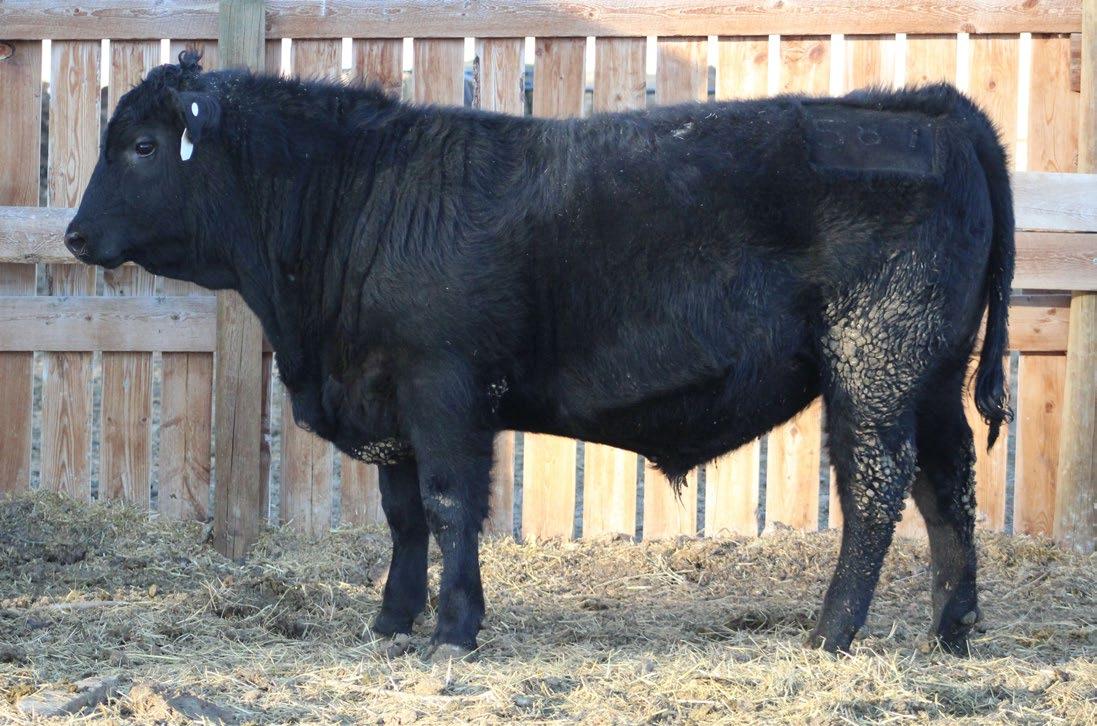
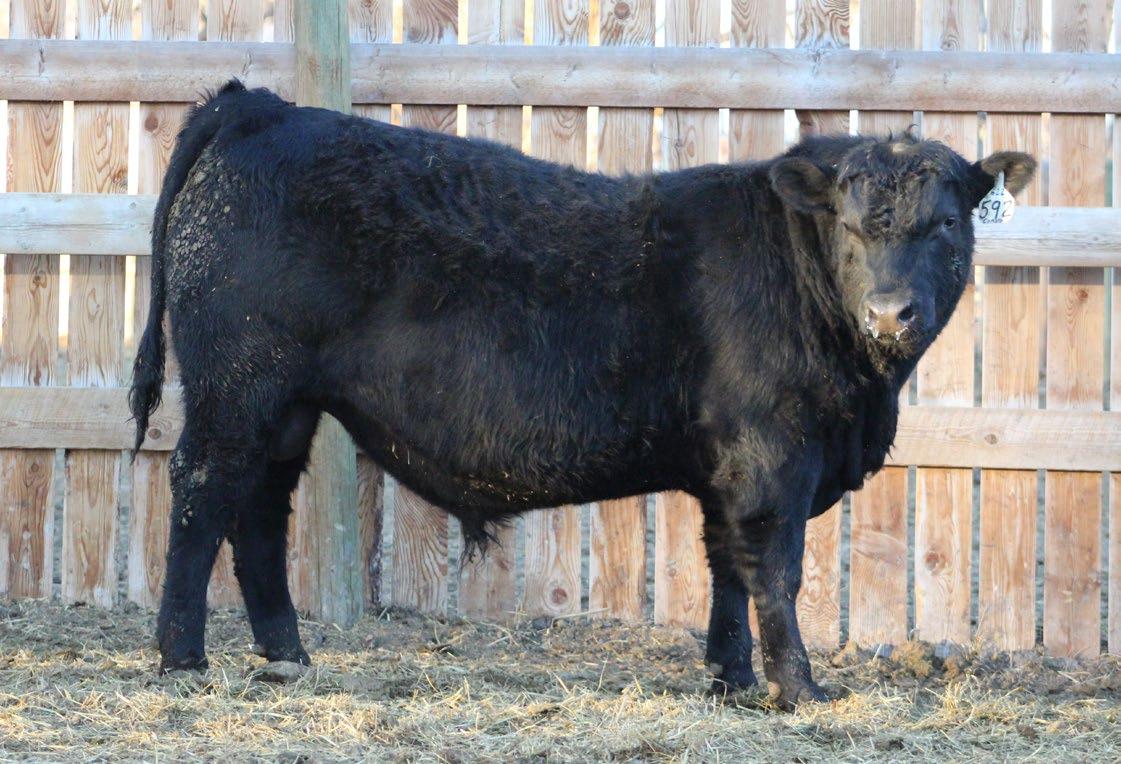
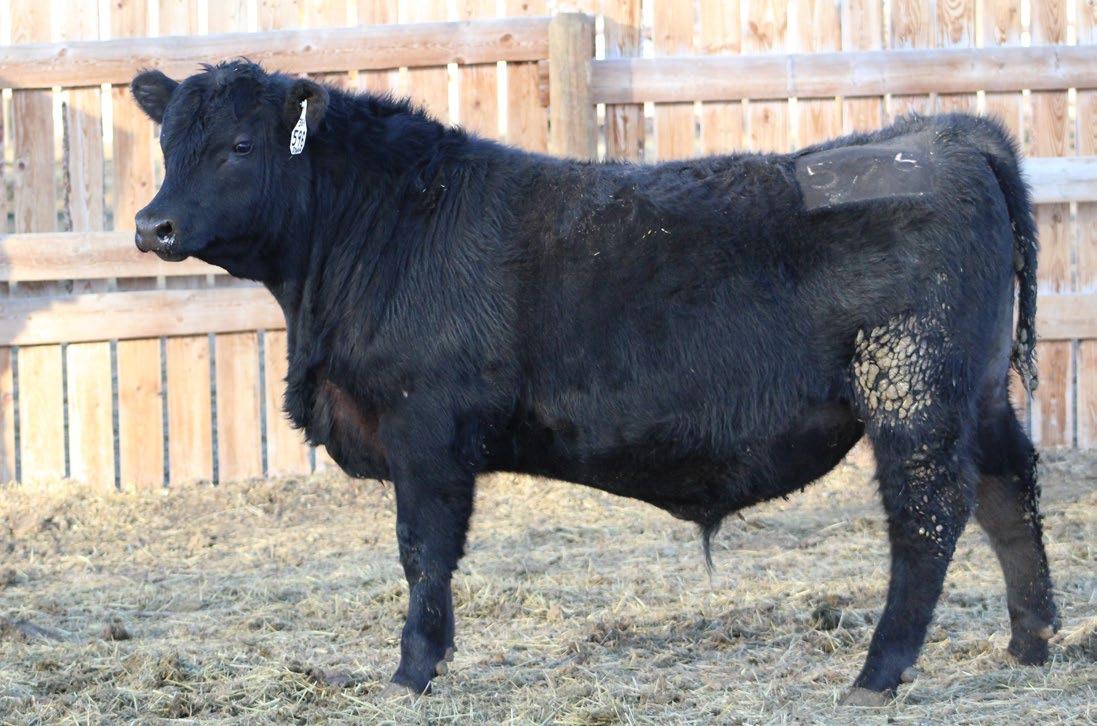
We hope calving season treats everyone well and that we all get the moisture we need for good green grass this spring. Like many of you, we faced a tough summer with extremely low forage production and the added challenge of hauling stock water. Unfortunately, the bull calves’ weaning weights reflect that, averaging about 50 pounds lighter than their brothers on a typical year. They have really bloomed in the lot and are more comparable to previous years’ offerings.
This year showcases what these genetics can do in really challenging conditions. Their genetics haven’t changed. Their offspring should perform just as well as previous years’ calves. We’re grateful to have made it through and are hopeful for better moisture ahead.
A big thank you to everyone who supported us at our bred cow and heifer sale in December. We really appreciate you. New this year, we are offering 12 replacement heifers for sale on the same day. They will sell through a closed bidding process. Simply place your bid with Ben or Karli anytime before 3pm on March 15th.
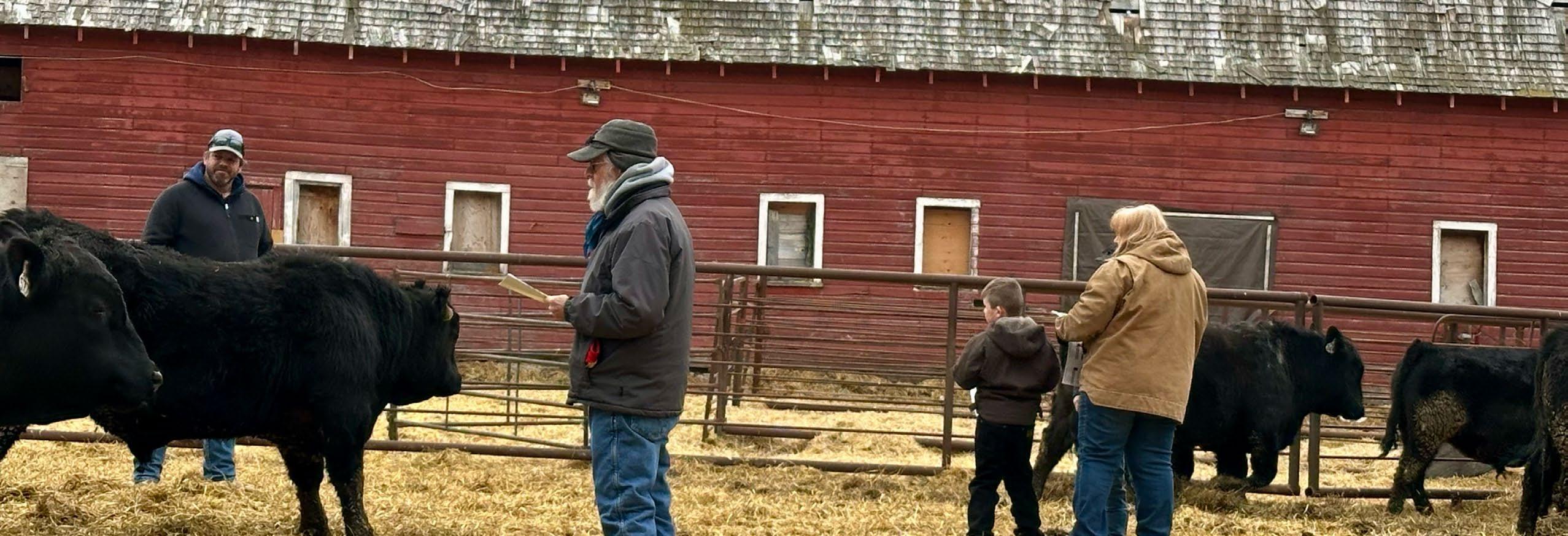
We’re excited to host our third annual Bull Day on Sunday, March 15th at 1 p.m. at our barn. There will be soup and bread for lunch from 11am-1pm so come early and take a look before the bulls go on sale at 1:00. The ranch is at 51 Sherman Lane, Choteau, MT. We’re a half mile west of the elementary school, past the high school tennis courts, the only place on the right side of the road once your out of town.
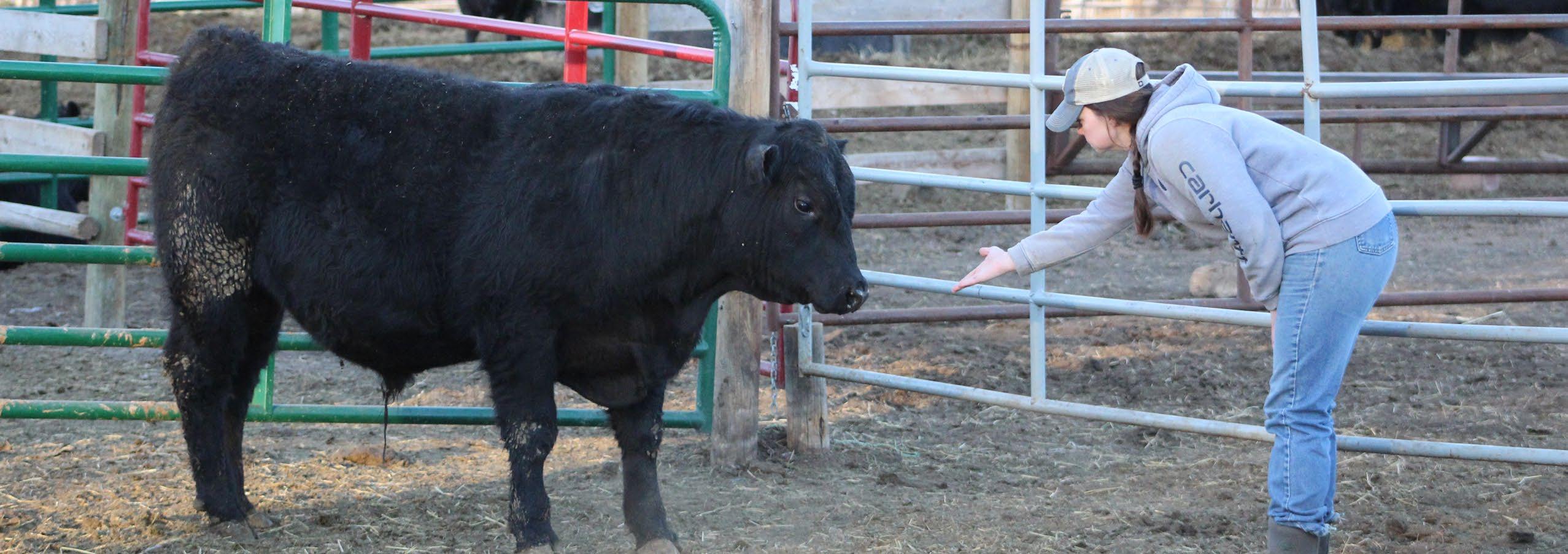
If you can’t make it in person, we’re happy to video call from the bull lot or send pictures and videos anytime.
Thanks for taking the time to look at our bulls. We feel blessed to have the opportunity to share these genetics with you.
As always, we’re more than happy to answer questions and show you both the cow herd and the bulls.
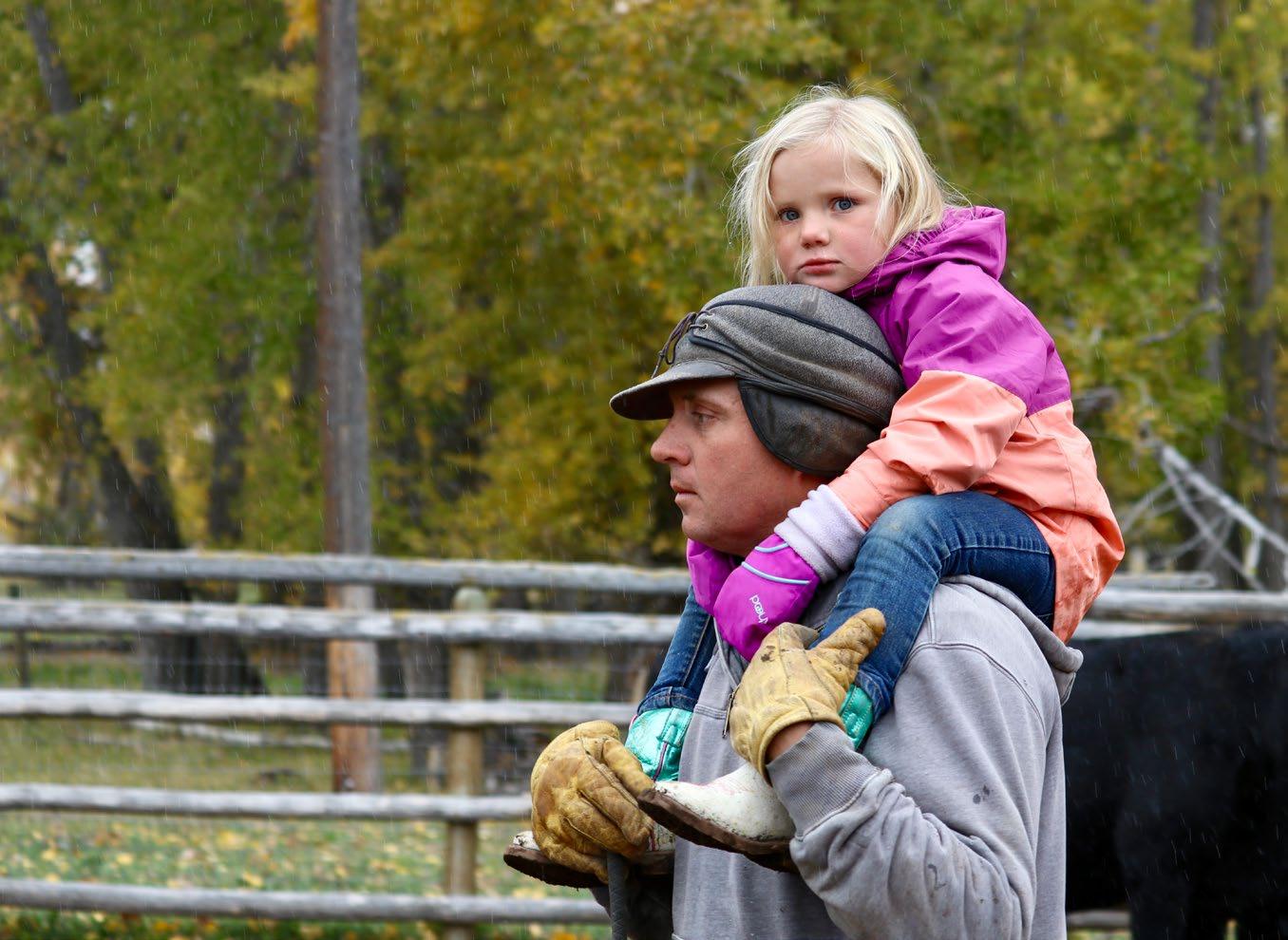
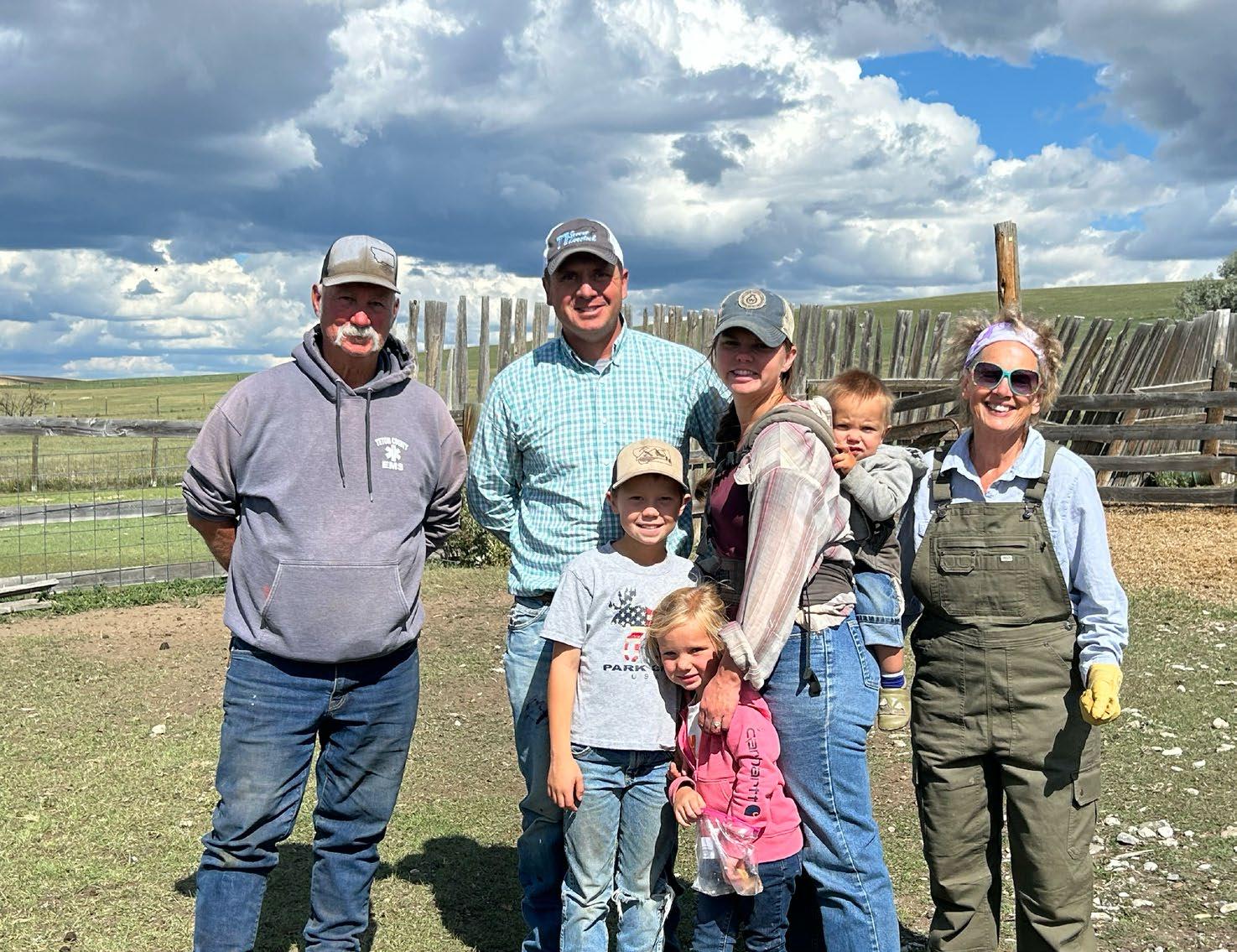
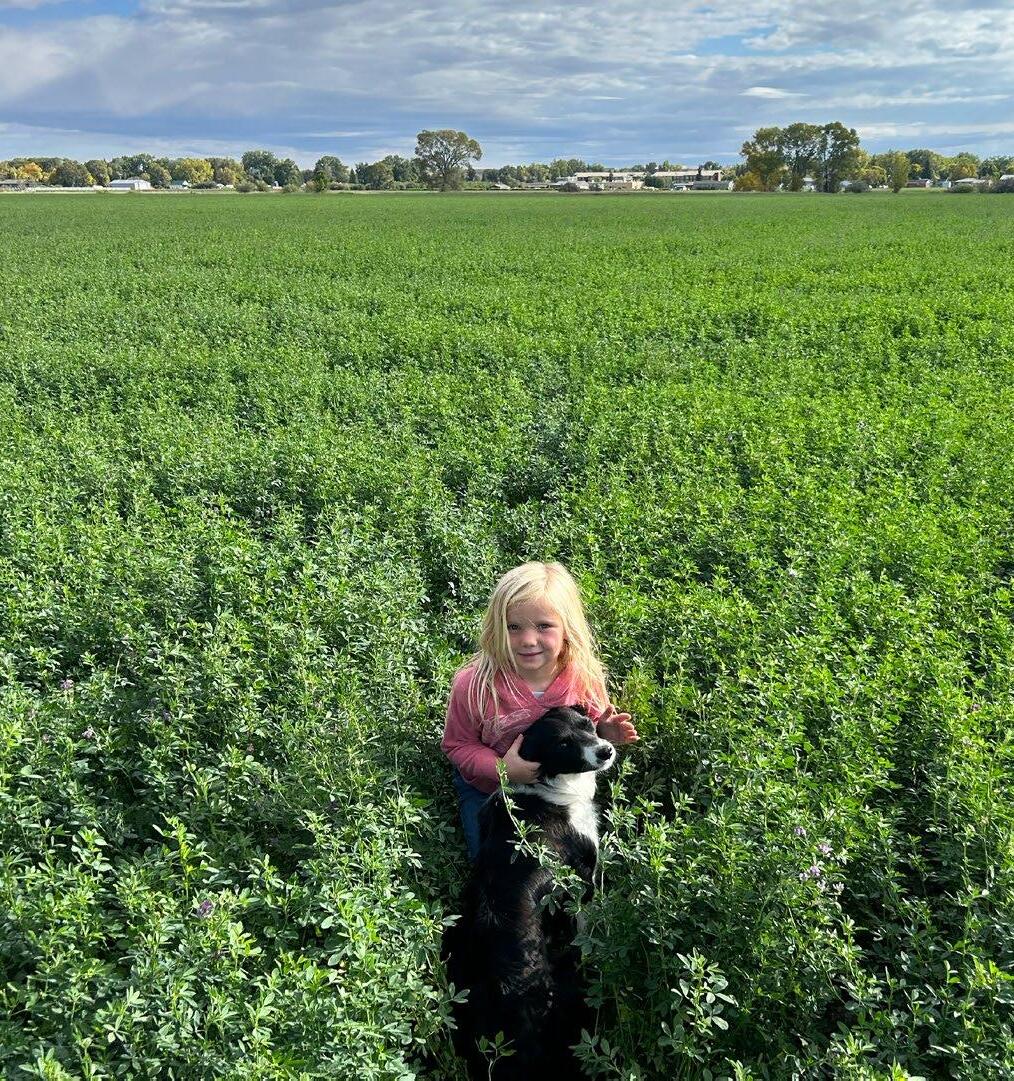
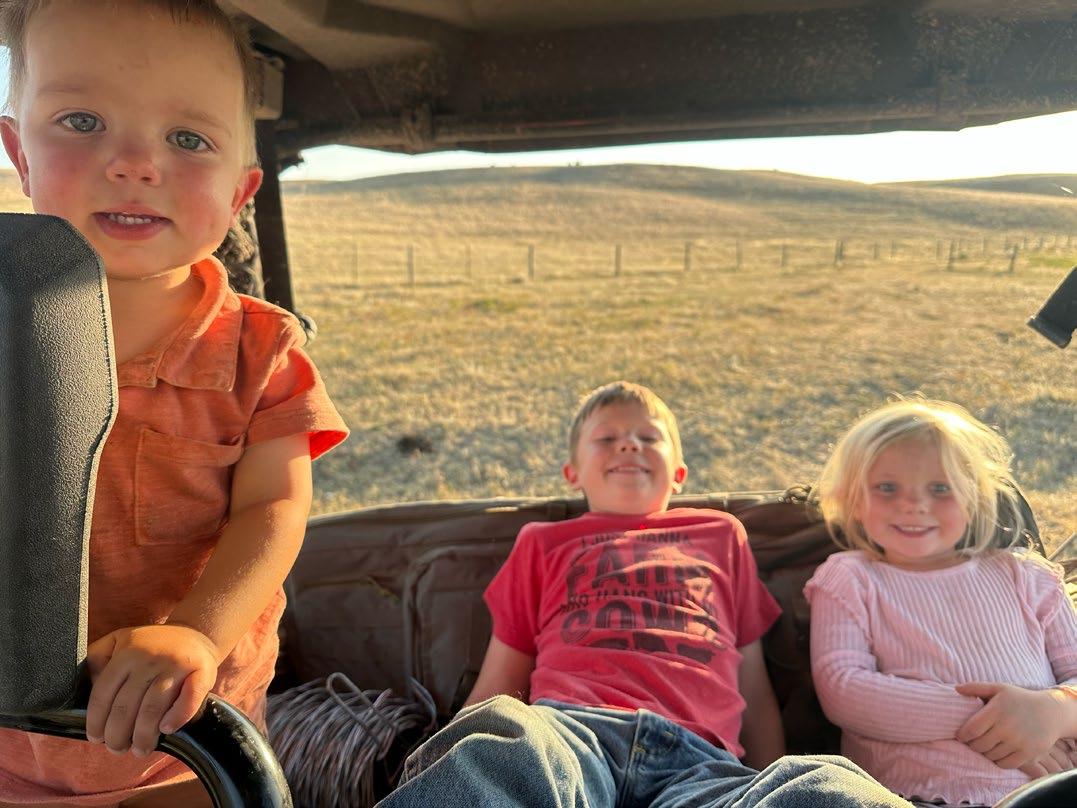
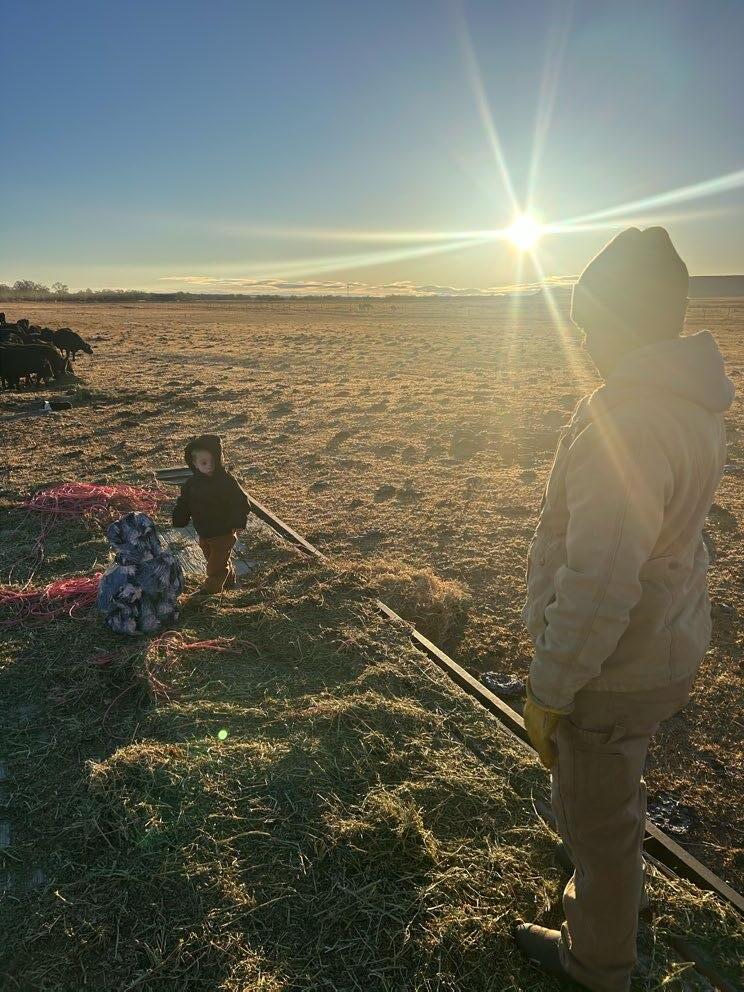
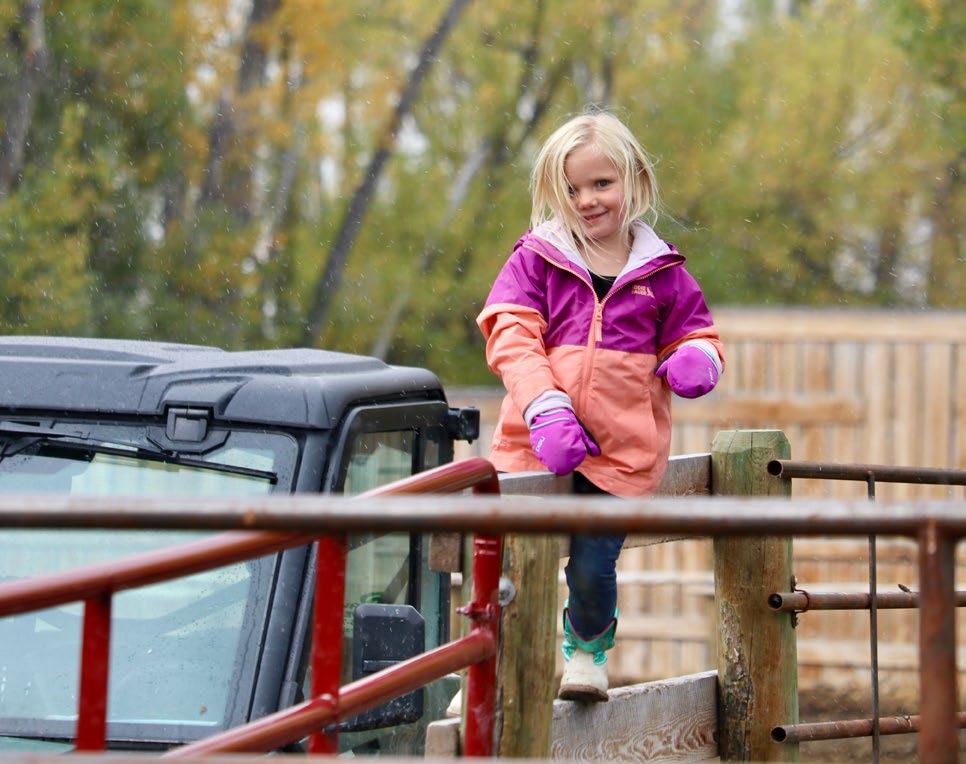
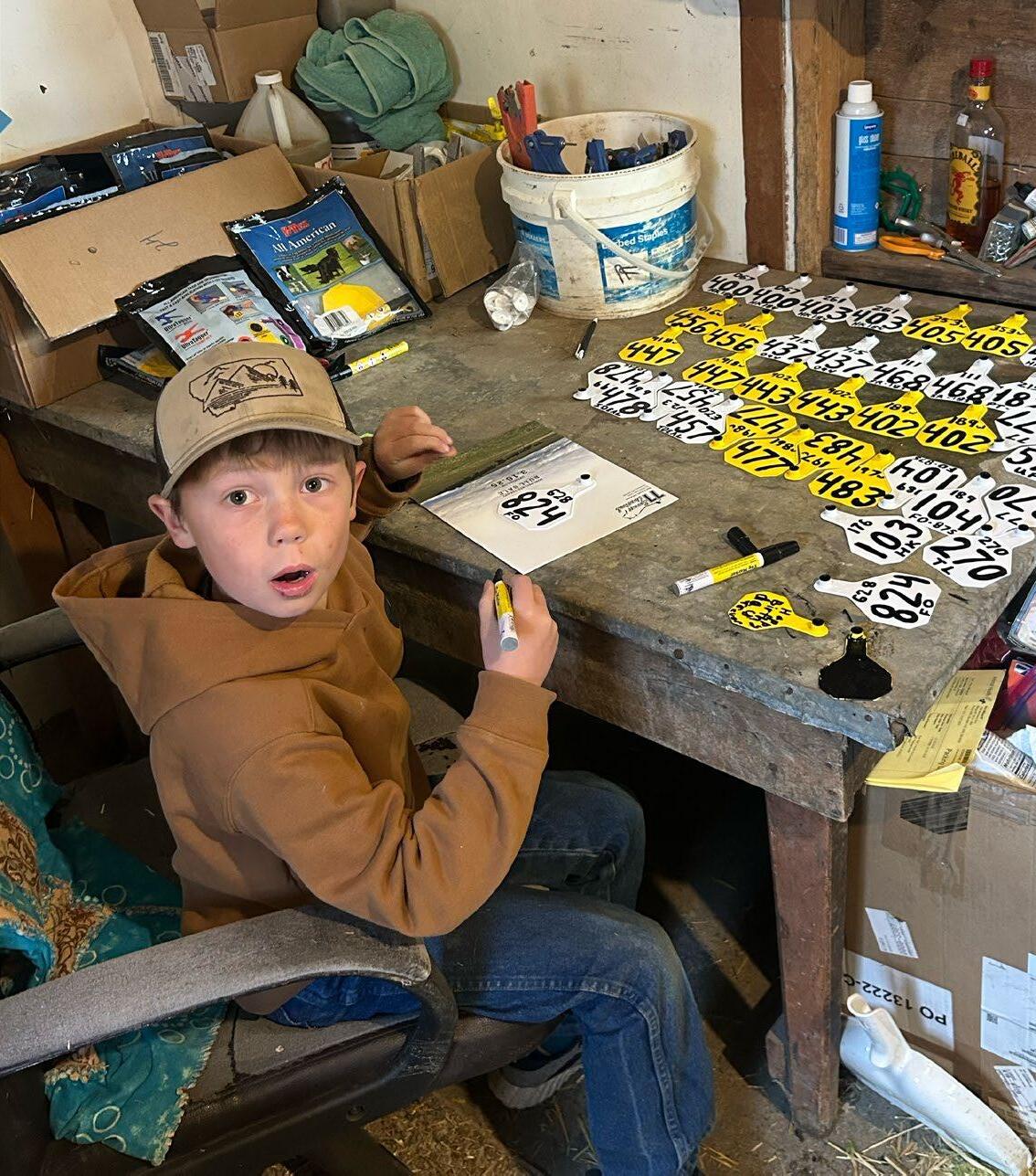
Ben, Karli, Brooks (7), Alidy (4) & Boyce (1.5) Johnson
Contact
51 Sherman Lane Choteau, MT 59422
Ben: 406-480-2953
Karli: 406-868-1233
sevenslivestock@gmail.com
About Us
Let us introduce ourselves to people who we haven’t met yet. Sevens Livestock Co. is owned and operated by Ben and Karli Johnson. We run a commercial and registered cow–calf operation just outside of Choteau, MT.
Our name comes from our brand, the 77 on the left thigh. It’s a bit of an unusual spot for a brand, but when it’s been in the family since before Montana was even a state and made its way into Ronald Reagan’s movie Cattle Queen of Montana, it gets to stay right where it is.
We’re both 5th or 6th generation Montana ranchers, but life didn’t land us on a generational place. We met at MSU while getting our ag degrees, then moved to Ben’s hometown of Sidney to take over his grandpa’s feed business and ranch alongside his family. Ben worked in nutrition, developing supplements and rations for both feedlots and cow–calf operations. We owned and operated that business until 2020 when it was sold.
After our oldest, Brooks, was born, we felt the pull to move closer to Karli’s family, who were in Helena by that time, and drought in Sidney helped push the decision. We brought our commercial cow herd with us to Choteau for the winter while we hunted for summer grass. We began leasing J.D. and Linda’s place and bought the registered herd they had built since the early ’90s. We sold our commercial cows and focused on the registered portion of the business. Today, we run 150 registered females and continue to share these genetics through our private treaty bull sale.
More than anything, we value building relationships with our customers. We offer nutritional consulting, Hustler feeding equipment, and always love to help folks solve problems bringing Ben back to a part of the feed business he missed after the original business sold in 2020.
Private Treaty SaleInformation
Bulls will start selling in person at our place on Sunday, March 15th at 1 p.m.
We’ll begin taking phone orders at 2 p.m. after the open corral on March 15th. Phone orders will be at the sale day price, with bulls priced from $5,000–$8,000. Heifers will be sold through a closed bidding process. Simply place your bid with Ben or Karli by 3pm.
We’re also continuing our “buy now” option. You can purchase any bull ahead of time for $9,000. All bulls come with a first breeding season guarantee. Sevens Livestock reserves the right to ½ semen interest.
Buyers can pay when they make their selection or at delivery. We plan to deliver bulls shortly after the sale as calving allows, and we’re happy to work with you on timing, just let us know what works best.
Yearling Bull Management
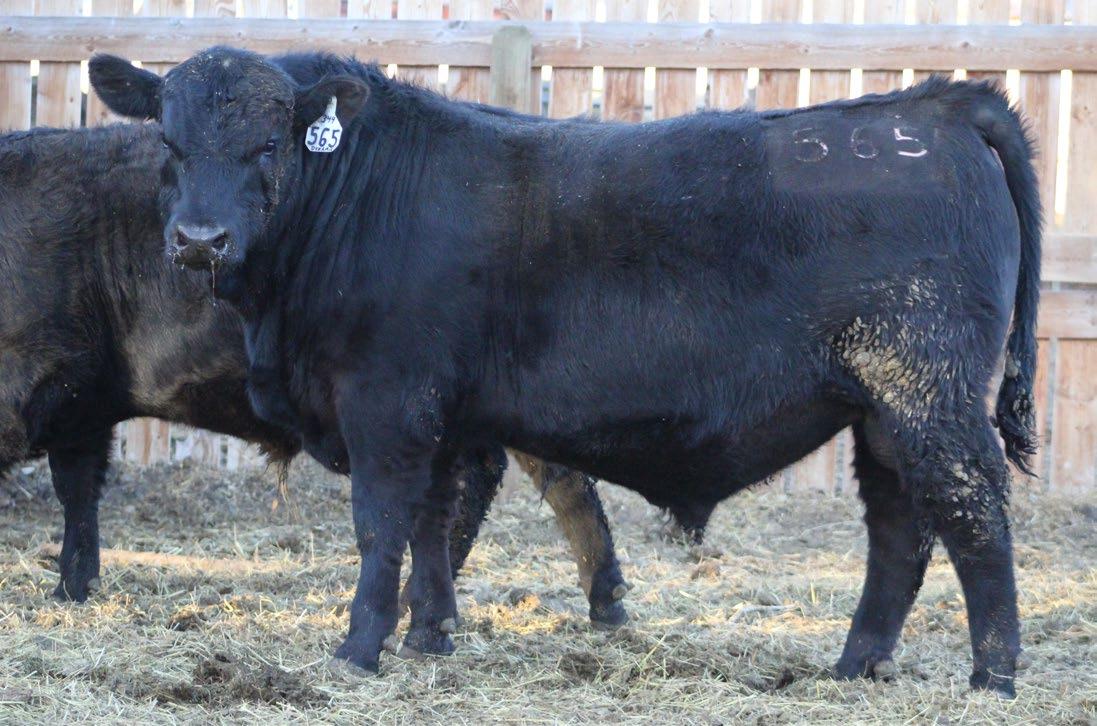
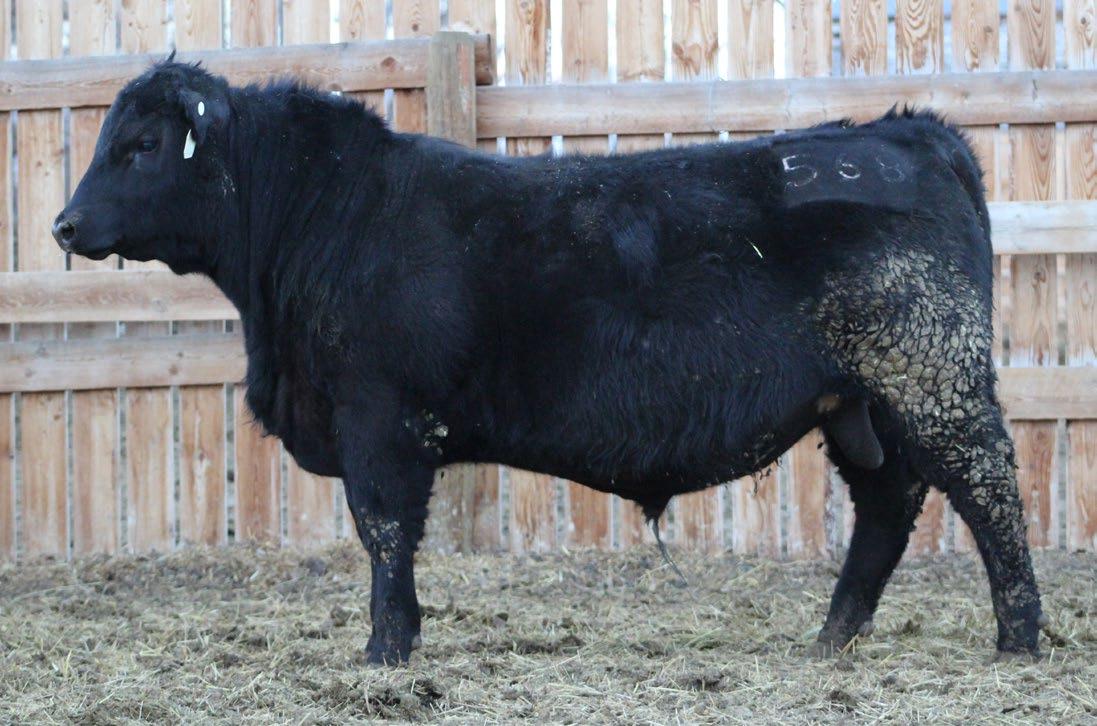
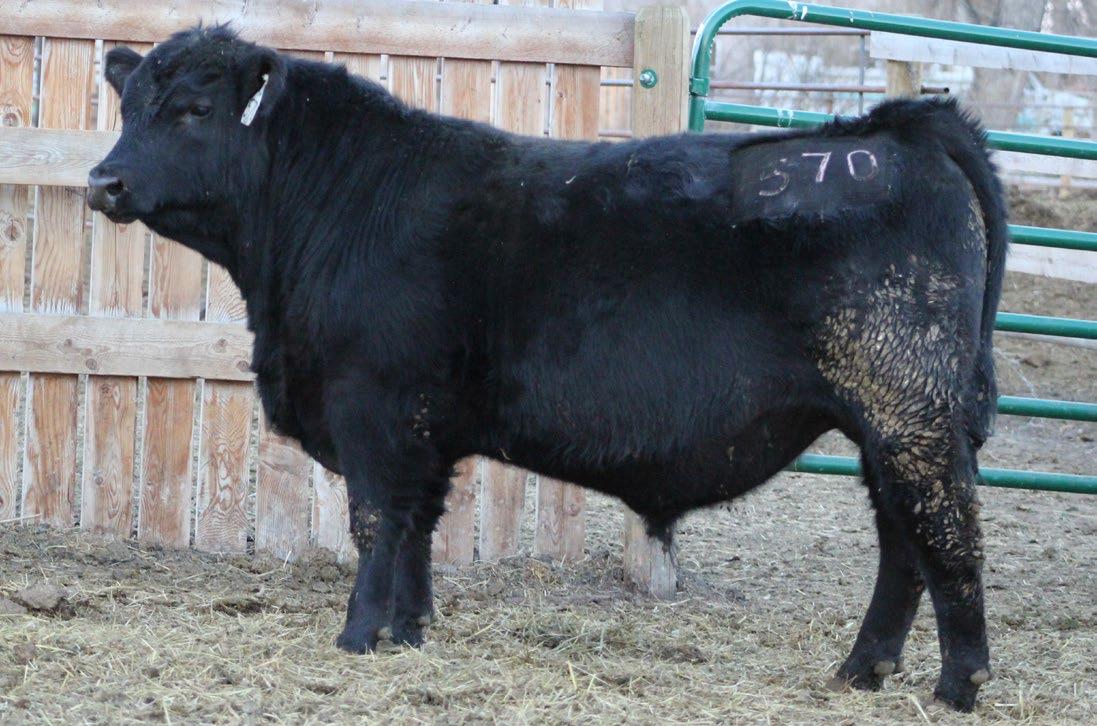
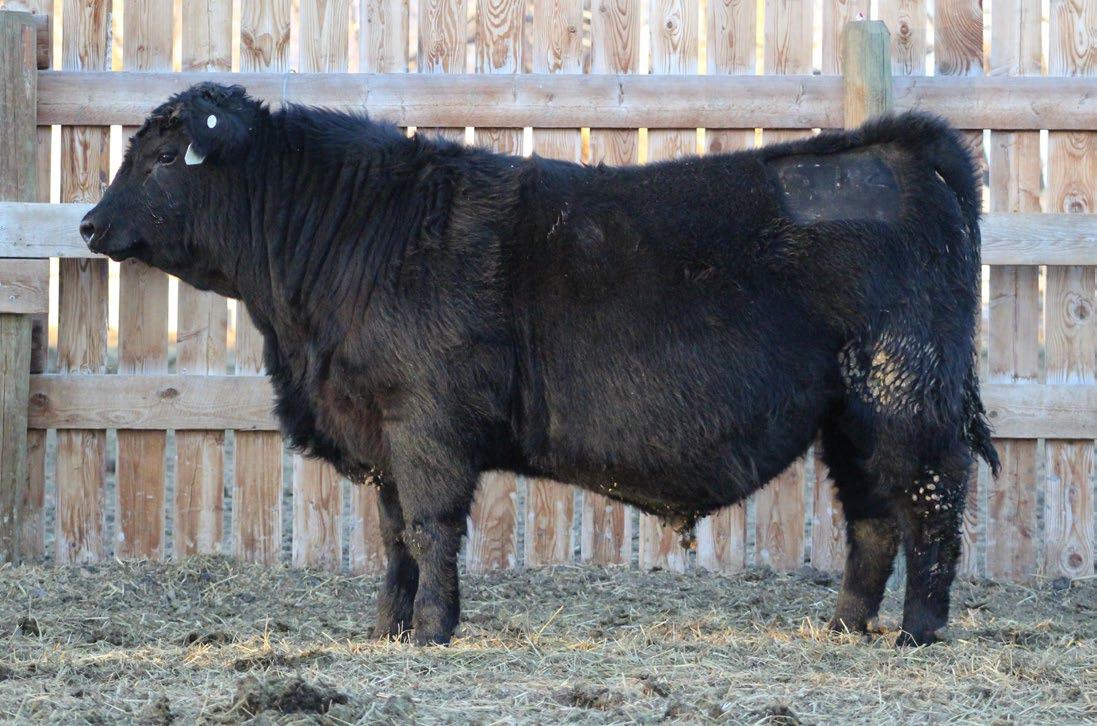
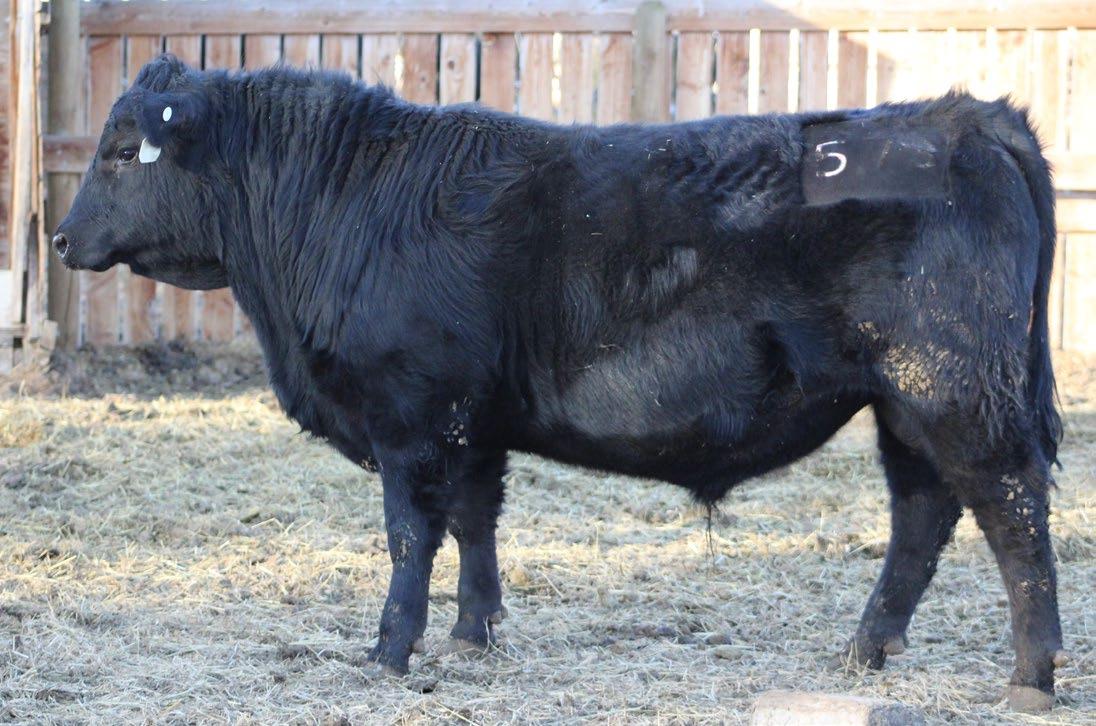
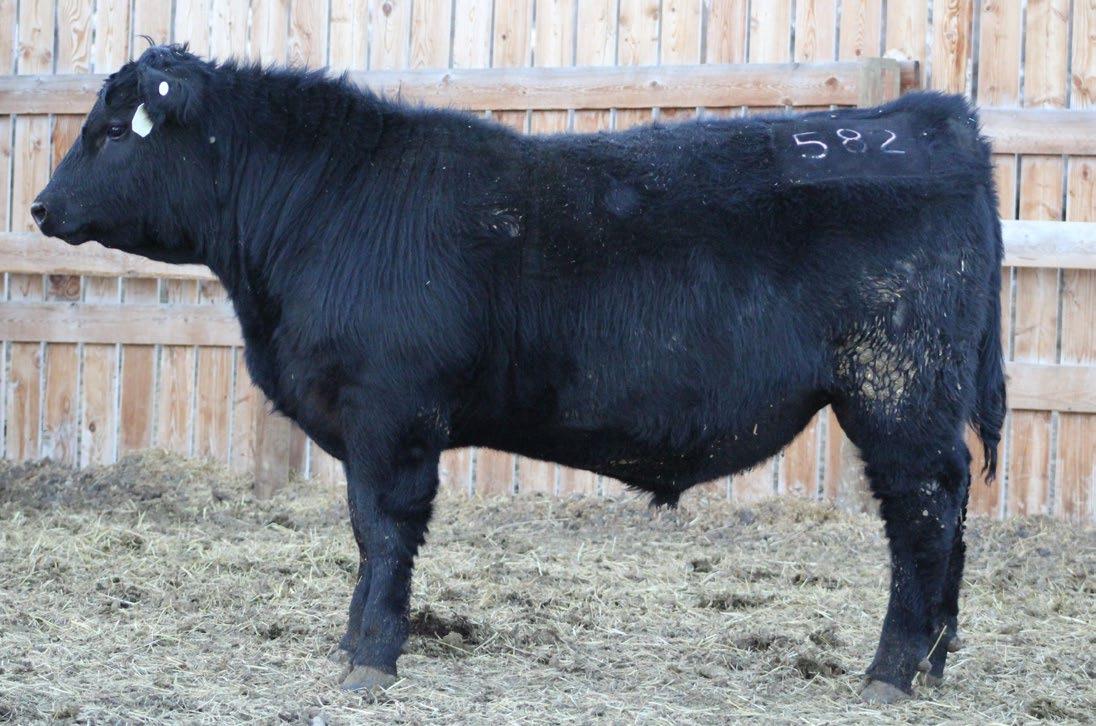
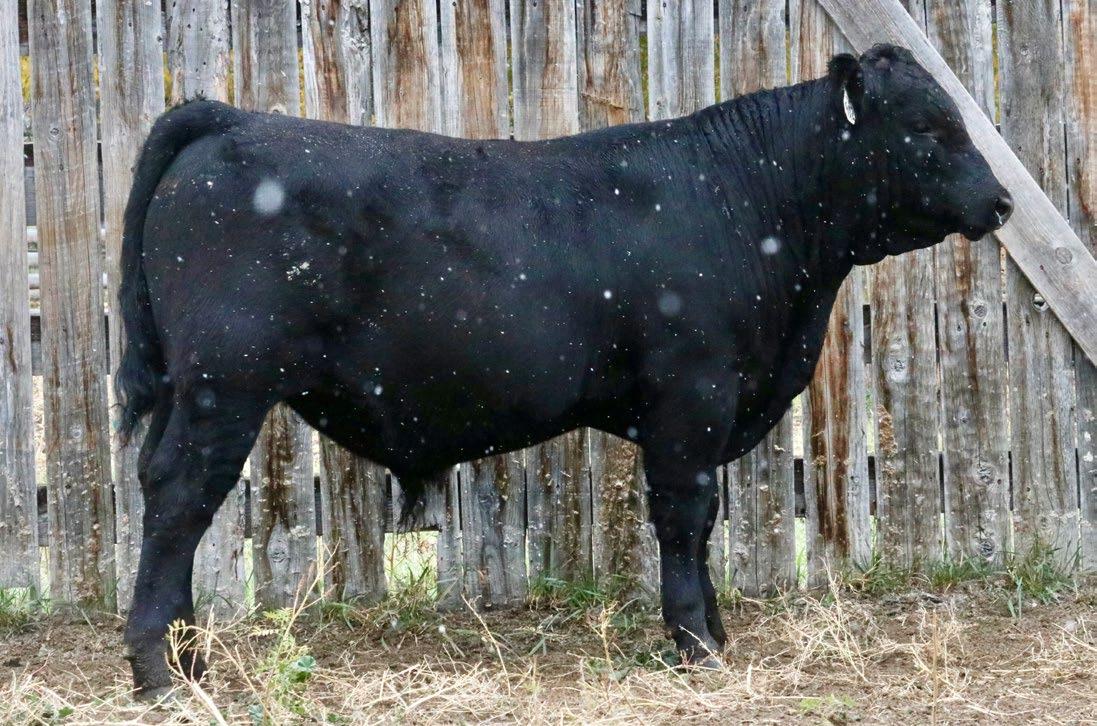
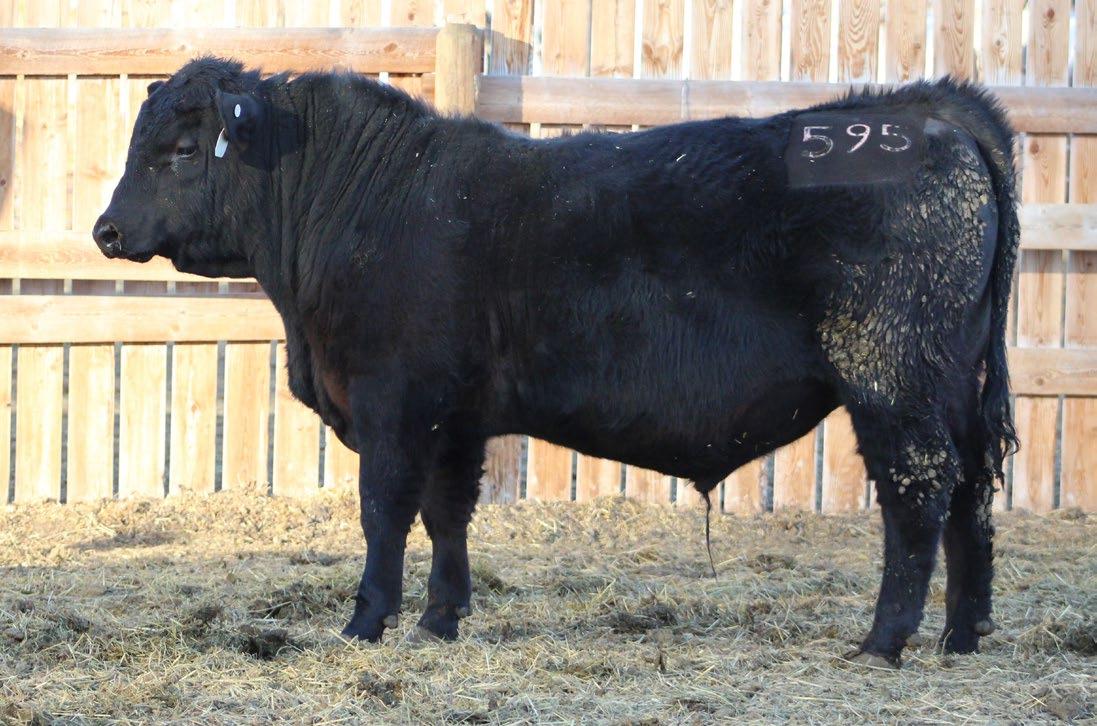
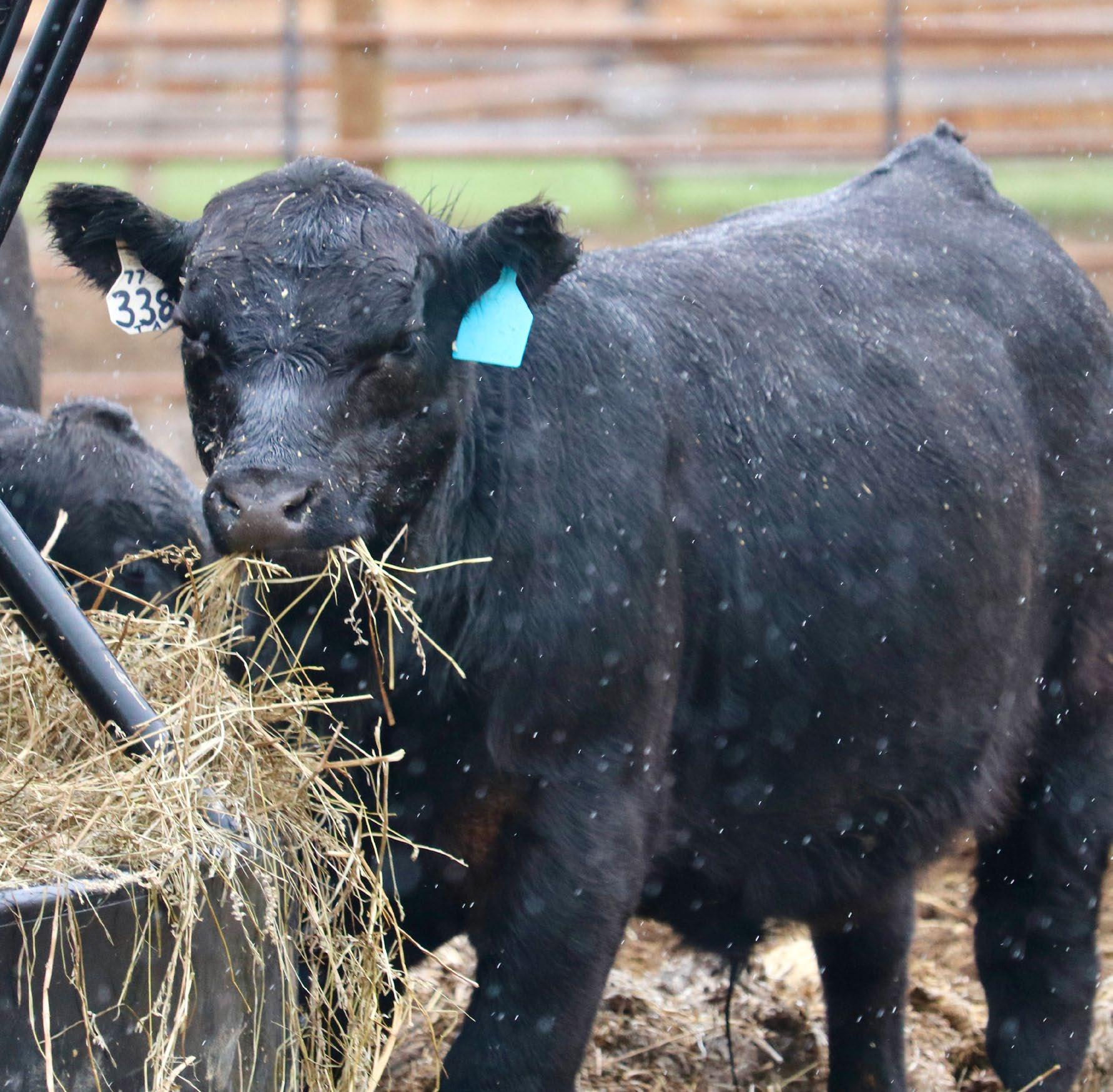
The bulls are not creep fed before weaning. After weaning, they go into our lot and are developed on a ration of sainfoin hay and barley hay. They also receive the Hubbard Amino Grow pellet. Thanks to the mild fall and winter, we fed the pellet lighter than usual this year (4-6 pounds per head) and the bulls still gained very well. We’ve used this pellet for the past years and have been consistently happy with how the bulls develop on it. The pellet is formulated to promote muscle growth over fat, which fits the type of bull we aim to raise.
The bulls are on Hubbard’s Blueprint chelated mineral program, both while on the cow and in the lot. All bulls will be fertility tested by Dr. Kurt Johnson ahead of sale day. They’ve been on a standard vaccination program, were wormed with a Safeguard drench, and were poured with Clean-Up this winter. They were also freeze number branded.
Each bull has been genetically tested to improve the accuracy of their EPDs and to confirm parentage.
Replacement Heifers
These heifers are out of the same genetics as the bulls offered in this sale, and they represent the same maternal strength, structural soundness, and functionality we expect from our cow herd. They come from a long line of cows that have proven themselves year after year. There are 12 available.
Our Cow Herd
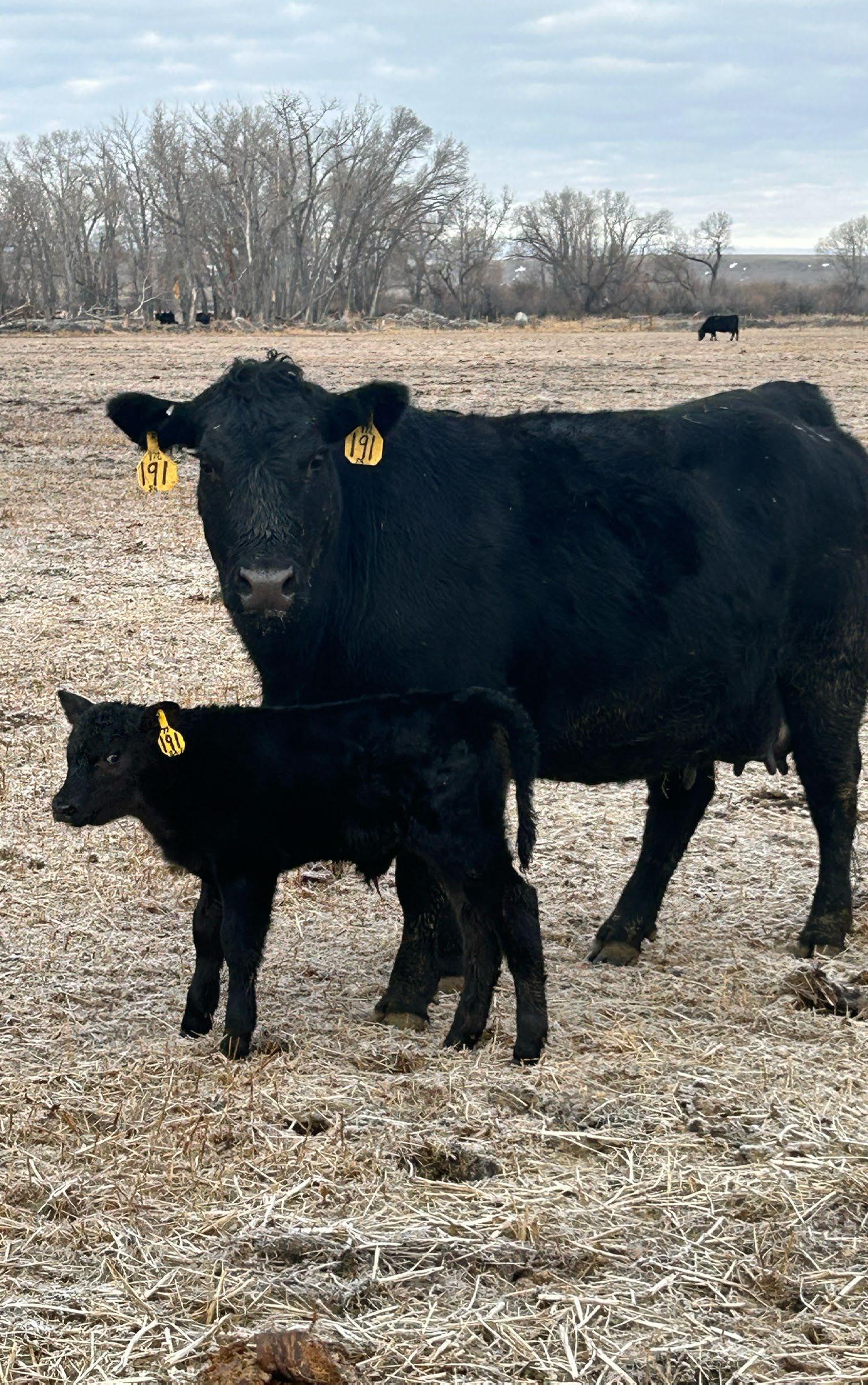
J and Linda did a great job over the years balancing productivity and practicality in their cow herd. J focused on selecting powerful bulls with strong maternal backing, and we’re proud to continue that tradition. Our goal is to raise stout, hardworking bulls that produce the kind of maternal females you want to keep and the kind of steer calves you’re proud to sell.
We use A.I. sires with proven EPDs and try not to get caught up chasing whatever sire happens to be the latest trend in the catalog. Our focus is on functional cows that raise marketable steer calves and solid replacements.
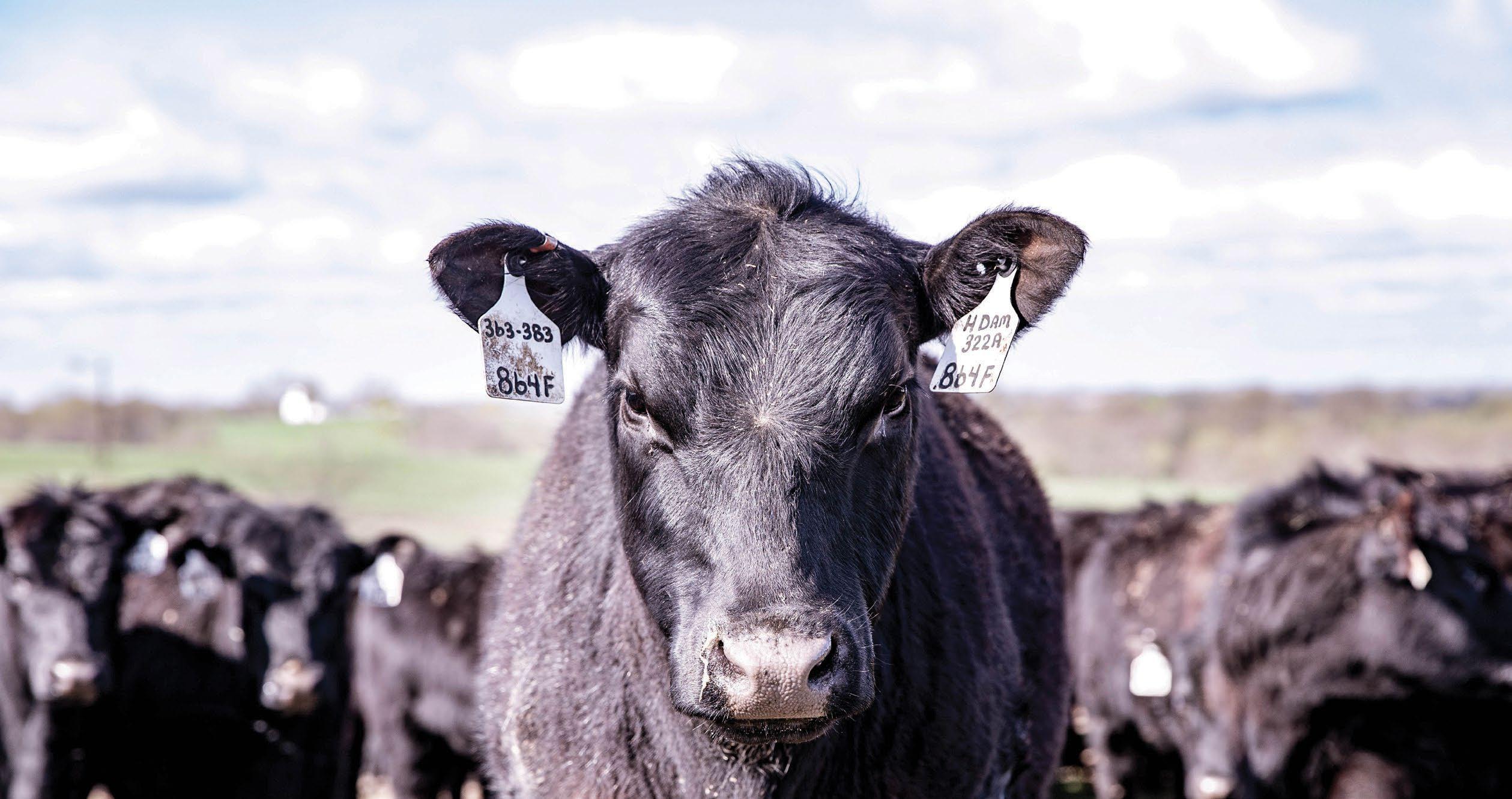
To us, “functional” means a cow that is structurally sound, calves on her own, raises and cares for that calf every year, has a good udder, and has a disposition calm enough that we feel safe working around her. Of course, like on any place, things sometimes come up that don’t fit our definition of functional. Our promise to you is that we won’t keep a replacement bull or heifer out of anything that doesn’t meet our standards. We know we have a responsibility to help make your herds more functional, and we take that responsibility seriously.
We’re always happy to show you the cow herd anytime.
Thank you for your support & business!
About the AI Sires
Accomplishment (AC)
Accomplish is a new sire we tried from the Sitz program. He is moderate in frame, and we had hoped he would be a strong outcross option for some of our larger-framed cows. The calves he sired have landed in the middle of the pack for us. Since we used him, his milk EPD has dropped below a level we prefer. However, if you’re looking for a bull that sires moderate-framed, lower-milking progeny, Accomplish could be a good fit.
Dynamic (DY)
Dynamic is a low birthweight, high calving ease sire with plenty of growth, being a Deer Valley Growth Fund son. The replacement heifers out of Dynamic have the look and build to become nice cows. We are calving Dynamic daughters for the first time this year.
Comstock (CS)
Comstock offers low birthweight, strong calving ease, a moderate frame, and stout muscling. His calves were born light with lots of vigor and have a nice look. We’re calving our first set of Comstock daughters, and so far they’re doing great, calving on their own and taking excellent care of their babies.
Constitution (CT)
We’ve been using Constitution for a few years now. He’s a Basin Payweight 1682 son and offers a well balanced mix of growth and maternal traits. He consistently sires stout calves that grow well. We’ve calved heifers out of him for the past two years and have no complaints—they’ve been easy calving, good mothering females that fit well into our program.
Growth Fund (GF)
Growth Fund has been widely used for years, and for good reason. His combination of calving ease and strong growth is hard to beat. Our experience with him has been exactly what you’d expect from such a proven sire, consistent, reliable calves that perform well.
Surpass (SP)
Surpass is a maternal focused sire that still brings calving ease and growth. On paper, he’s about as balanced as you’ll find today: calving ease, weaning weight, docility, mature height, and carcass traits all line up. Because of that, we used him on some of our top cows. We expect his daughters to make very nice females.
Summation (SM)
Summation is a heifer bull that still brings impressive weaning weights out of the same program as South Side. His calves are eye appealing and have consistently met expectations. Backed by a strong, proven pedigree, he’s set up to be a long standing sire in our program.
Tahoe (TA)
Tahoe is a well rounded, proven sire known for calving ease, growth, and producing highly desirable females. We have several six year old Tahoe daughters that we like a lot. We used him extensively on last year’s heifers and were very pleased with how they calved and how well the calves handled the mid February cold snap.
GDAR Traveler 3173 (TR) & GDAR Rainmaker 340 (RA)
We purchased semen from these older GDAR bulls because they are foundational sires behind many of the pedigrees we use today. We wanted to see how their calves stack up against modern genetics, and we were not disappointed in both appearance and performance. Both bulls were born in 1983 and established influential lines within GDAR and many other programs. While they don’t have the extreme growth of today’s sires, they remain as functional and practical as ever.
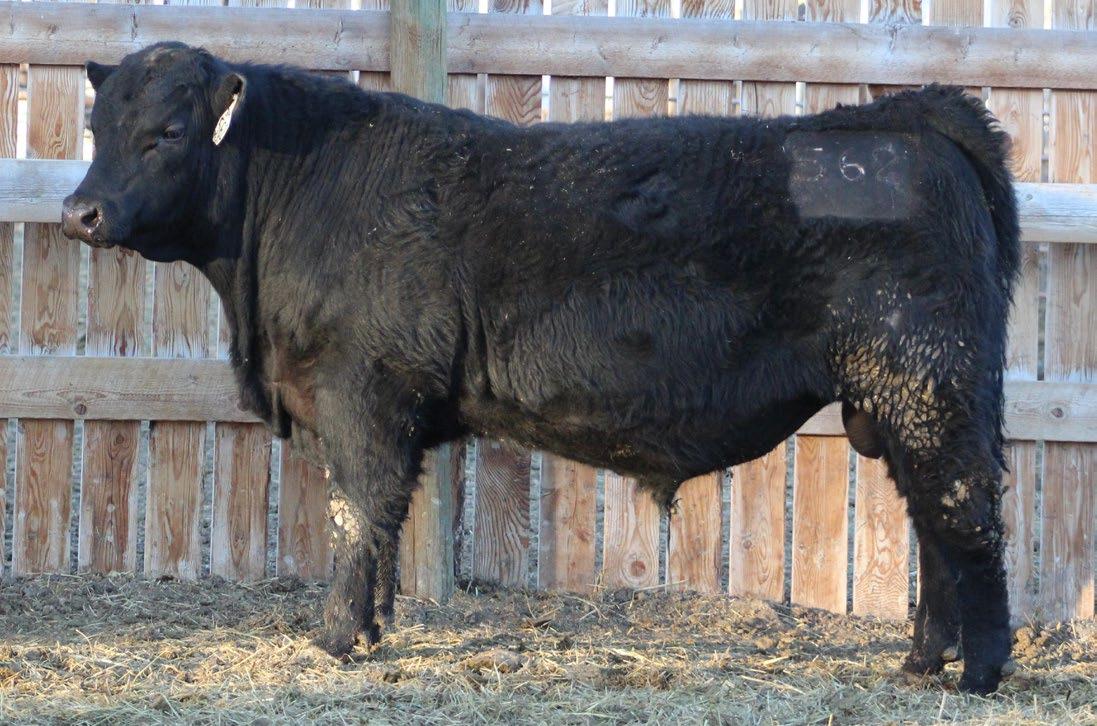
Sevens Tahoe 562
Tehama Upward Y238
Tehama Tahoe B767
Tehama Mary Blackbird Y684
Tehama
Sevens Dynamic 563
Sevens Comstock 567
Sevens Dynamic 565
Sevens Summation 568
Sevens Comstock 569
Sevens Dynamic 571
Sevens Growth Fund 572
Accomplish 573
Sevens Hickok 578
Prod: 3@100 Deer Valley Growth Fund
Lass
Payweight 1682
Valley Rita 36113
Blue Lilly of Conanga 16
Connealy Consensus Mill Bar Lady DI 3400 S
Tehama Upward Y238
Tehama Mary Blackbird Y684
Rice 10X 403
Rice Chloe 068
Sevens Growth Fund 579
Payweight 006S
21AR O Lass 7017
Valley Rita 9457 Plattemere Weigh Up K360
SITZ Pride 200B
Bar Hickok 7242
Mohnen Substantial 272 Rice Lass 720
Sevens Constitution 580
Sevens Dynamic 582
Sevens Dynamic 590
Sevens Surpass 587
Sevens Constitution 588
Spring
Sevens Comstock 592
Connealy Comrade 1385
Rice
Connealy
Sevens Dynamic 597
DOB:
Deer Valley Growth Fund
B A R Blackcap 7235-B0048
Coleman Regis 904
Rice Miss Burgess 263
Rice Miss Burgess 665
Basin Payweight 1682
Deer Valley Rita 36113
Three Trees Xceptional B0048
B A R Blackcap 3683-745
S
Coleman Donna 714
Rice
Sevens Summation 598
K
Traveler 599
AMERICAN ANGUS ASSOCIATION SELECTION TOOLS
Expected Progeny Difference (EPD), is the prediction of how future progeny of each animal are expected to perform relative to the progeny of other animals listed in the database. EPDs are expressed in units of measure for the trait, plus or minus. Interim EPDs may appear on young animals when their performance has yet to be incorporated into the American Angus Association National Cattle Evaluation (NCE) procedures. This EPD will be preceded by an “I”, and may or may not include the animal’s own performance record for a particular trait, depending on its availability, appropriate contemporary grouping, or data edits needed for NCE.
Accuracy (ACC), is the reliability that can be placed on the EPD. An accuracy of close to 1.0 indicates higher reliability. Accuracy is impacted by the number of progeny and ancestral records included in the analysis.
PRODUCTION
Calving Ease Direct (CED), expressed as a difference in percentage of unassisted births, with a higher value indicating greater calving ease in first-calf heifers. It predicts the average difference in ease with which a sire’s calves will be born when he is bred to first-calf heifers.
Birth Weight (BW), expressed in pounds, is a predictor of a sire’s ability to transmit birth weight to his progeny compared to that of other sires.
Weaning Weight (WW), expressed in pounds, is a predictor of a sire’s ability to transmit weaning growth to his progeny compared to that of other sires.
Yearling Weight (YW), expressed in pounds, is a predictor of a sire’s ability to transmit yearling growth to his progeny compared to that of other sires.
Residual Average Daily Gain (RADG), feed efficiency expressed in pounds per day, is a predictor of a sire’s genetic ability for post-weaning gain in future progeny compared to that of other sires, given a constant amount of feed consumed.
Dry Matter Intake (DMI), expressed in pounds per day, is a predictor of difference in transmitting ability for feed intake during the post-weaning phase, compared to that of other sires.
Yearling Height (YH), expressed in inches, is a predictor of a sire’s ability to transmit yearling height compared to that of other sires.
Scrotal Circumference (SC), expressed in centimeters, is a predictor of the difference in transmitting scrotal size compared to that of other sires.
MANAGEMENT
Claw Set (Claw), expressed in units of claw-set score, a lower EPD is more favorable, indicating a sire will produce progeny with more symmetrical, even and appropriately spaced toes compared to another sire.
Foot Angle (Angle), expressed in units of foot-angle score, a lower EPD is more favorable, indicating a sire will produce progeny with an angle closer to 45 degrees at the pastern and appropriate toe length and heel depth compared to another sire.
Docility (DOC), expressed as a difference in yearling cattle temperament, with a higher value indicating more favorable docility in a sire’s offspring compared to another sire.
Pulmonary Arterial Pressure (PAP), expressed in millimeters of Mercury (mmHg), with a lower EPD being more favorable indicating a sire should produce progeny with a lower PAP score to decrease the risk of progeny contracting high altitude disease most commonly experienced at 5,500 ft or greater in elevation.
Hair Shed (HS), expressed in units of hair shed score, with a lower EPD being more favorable. This indicates a sire should produce progeny who shed their winter coat earlier in the spring and has improved environmental adaptability in heat stressed areas and grazing endophyte-infected (hot) fescue.
MATERNAL
Heifer Pregnancy (HP), is a selection tool to increase the probability or chance of a sire’s daughters becoming pregnant as first–calf heifers during a normal breeding season. A higher EPD is the more favorable direction, and the EPD is reported in percentage units.
Calving Ease Maternal (CEM), expressed as a difference in percentage of unassisted births, with a higher value indicating greater calving ease in first-calf daughters. It predicts the average ease with which a sire’s daughters will calve as first-calf heifers when compared to daughters of other sires.
Maternal Milk (Milk), expressed in pounds of calf weaned, is a predictor of a sire’s genetic merit for milk and mothering ability in his daughters. In other words, it is the part of the calf’s weaning weight attributes to milk and mothering ability.
Teat Size (Teat), expressed in units of teat size score, with a higher EPD indicating a sire will produce daughters with smaller teat size compared to that of other sires’ daughters.
Udder Suspension (UDDR), expressed in units of udder suspension score, with a higher EPD indicating a sire will produce daughters with tighter udder suspension compared to that of other sires’ daughters.
Functional Longevity (FL), expressed in number of calves, is a predictor of the number of calves a sire’s daughters are predicted to produce by 6 years of age compared to that of other sires’ daughters. A higher EPD is the more favorable direction indicating more calves produced on average.
Mature Weight (MW), expressed in pounds, is a predictor of the difference in mature weight of daughters of a sire compared to the daughters of other sires.
Mature Height (MH), expressed in inches, is a predictor of the difference in mature height of a sire’s daughters compared to daughters of other sires.
CARCASS
Carcass Weight (CW), expressed in pounds, is a predictor of the differences in hot carcass weight of a sire’s progeny compared to progeny of other sires.
Marbling (Marb), expressed as a fraction of the difference in USDA marbling score of a sire’s progeny compared to progeny of other sires.
Ribeye Area (RE), expressed in square inches, is a predictor of the difference in ribeye area of a sire’s progeny compared to progeny of other sires.
Fat Thickness (Fat), expressed in inches, is a predictor of the differences in external fat thickness at the 12th rib (as measured between the 12th and 13th ribs) of a sire’s progeny compared to progeny of other sires.
$VALUE INDEXES
$Value Indexes, expressed in dollars per head, are multi-trait selection indexes where a higher value suggests more profit. The $Value is an estimate of how future progeny of each sire are expected to perform, on average, compared to progeny of other sires if sires were randomly mated to cows and if calves were exposed to the same environment.
Maternal Weaned Calf Value ($M), expressed in dollars per head, predicts profitability differences in progeny due to genetics from conception to weaning by decreasing mature cow size and improving docility, foot structure and fertility while maintaining weaning weights consistent with today’s production.
Weaned Calf Value ($W), expressed in dollars per head, provides the expected difference in future progeny pre-weaning performance from birth to weaning.
Energy Value ($EN), expressed in dollar savings per cow per year with a larger value being more favorable. It assesses differences in cow energy requirements, due to maternal milk and mature cow size.
Feedlot Value ($F), expressed in dollars per head, is the expected average difference in future progeny performance for post-weaning feedlot merit (growth and feed efficiency) compared to progeny of other sires assuming producers retain ownership of cattle through the feedlot phase and sell on a carcass-weight basis.
Grid Value ($G), expressed in dollars per carcass, is the expected average difference in future progeny performance for carcass grid merit, including quality and yield grade attributes, compared to progeny of other sires.
Beef Value ($B), expressed in dollars per carcass, represents the expected average differences in the progeny post-weaning performance and carcass value compared to progeny of other sires. This index assumes commercial producers wean all male and female progeny, retain ownership of these animals through the feedlot and sell on a carcass merit grid.
Combined Value ($C), expressed in dollars per head, which includes all traits that make up both Maternal Weaned Calf Value ($M) and Beef Value ($B) with the objective that commercial producers will replace 20% of their breeding females per year with replacement heifers retained within their own herd. The remaining cull heifer and steer progeny are then assumed to be sent to the feedlot where the producers retain ownership of those cattle and sell them on a quality-based carcass merit grid.
American Angus Association $Value Indexes
Dollar value indexes, or $Values, are a tool used to select for several traits at once based on a specific breeding objective. An economic index approach takes into account genetic and economic values as well as the relationships between traits to select for profit.
Maternal Weaned Calf Value ($M), an index expressed in dollars per head, predicts profitability differences in progeny due to genetics from conception to weaning. $M is built off of a self-replacing herd model where commercial cattlemen replace 25% of their breeding females in the first generation and 20% in subsequent generations. Remaining cull females and all male progeny are sold as feeder calves. Increased selection pressure on $M aims to decrease overall mature cow size and improve foot structure and fertility while maintaining weaning weights consistent with today’s production.
Weaned Calf Value ($W), an index expressed in dollars per head, provides the expected difference in future progeny preweaning performance from birth to weaning. $W assumes that producers retain 20% of their female progeny for replacements and sell the rest of their cull female and male progeny as feeder calves. Over time, increased selection pressure on $W will increase weaning and maternal milk traits while also continuing to increase mature cow size.
Feedlot Value ($F), an index expressed in dollars per head, is the expected average difference in future progeny performance for post-weaning merit compared to progeny of other sires. The underlying objective assumes commercial producers will retain ownership of cattle through the feedlot phase and sell fed cattle on a carcass weight basis with no considerations of premiums or discounts for quality and yield grade.
Grid Value ($G), an index expressed in dollars per carcass, is the expected average difference in future progeny performance for carcass grid merit, including quality and yield grade attributes, compared to progeny of other sires.
Beef Value ($B), an index expressed in dollars per carcass, facilitates simultaneous multi-trait genetic selection for feedlot and carcass merit. $B represents the expected average differences in the progeny postweaning performance and carcass value compared to progeny of other sires. This index assumes commercial producers wean all male and female progeny, retain ownership of these animals through the feedlot phase and market these animals on a quality-based carcass grid.
Combined Value ($C), an index expressed in dollars per head, includes all traits that make up both $M and $B with the objective that commercial producers will replace 20% of their breeding females per year with replacement heifers retained within their own herd. The remaining cull heifer and steer progeny are then assumed to be sent to the feedlot where the producers retain ownership of those cattle and eventually sell them on a quality-based carcass merit grid.