• Smooth and quiet rotation • High torque and power [ Fr i ct
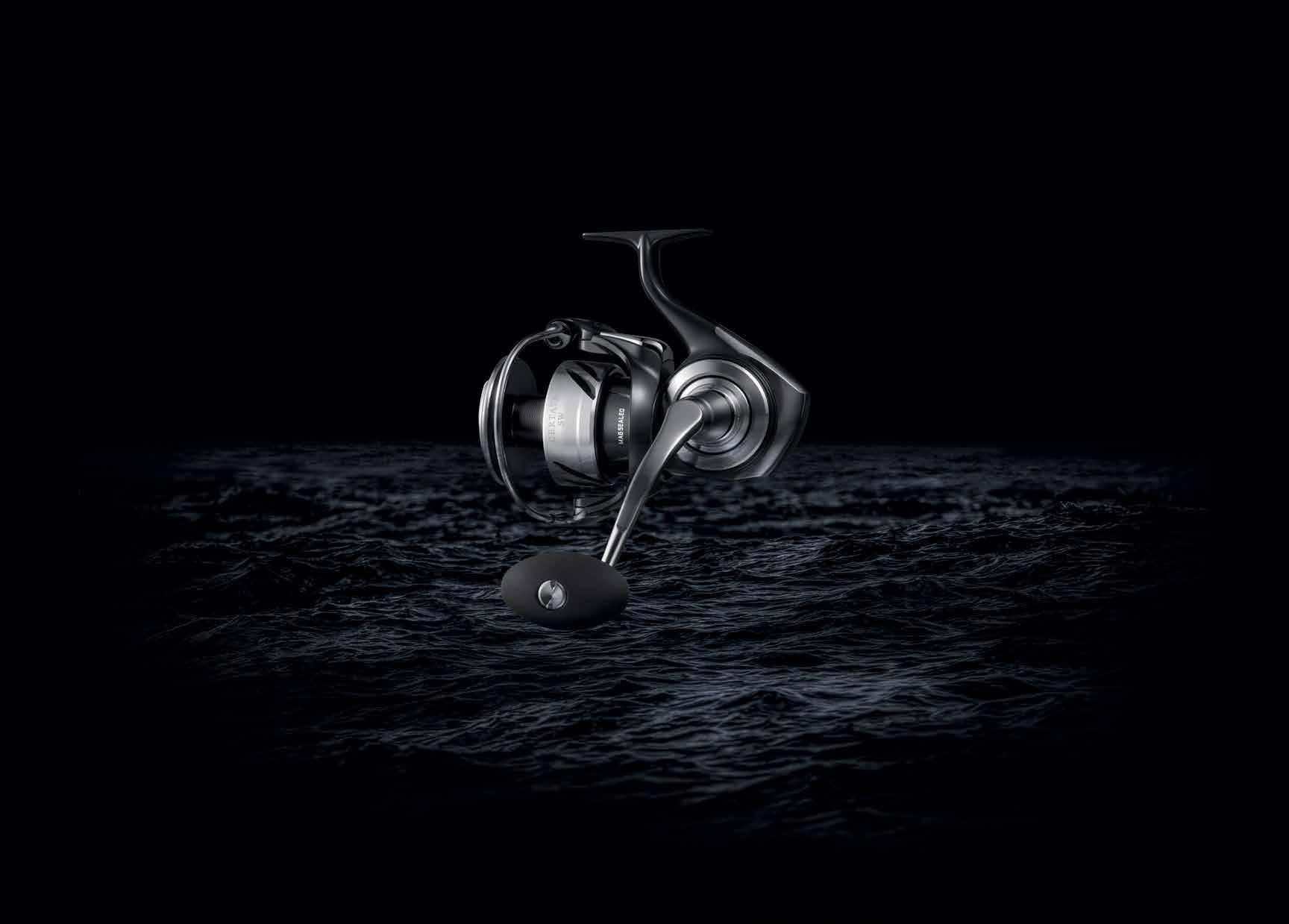
SMOOTH SALTWATER PERFORMANCE AND POWER WITHOUT LIMITS
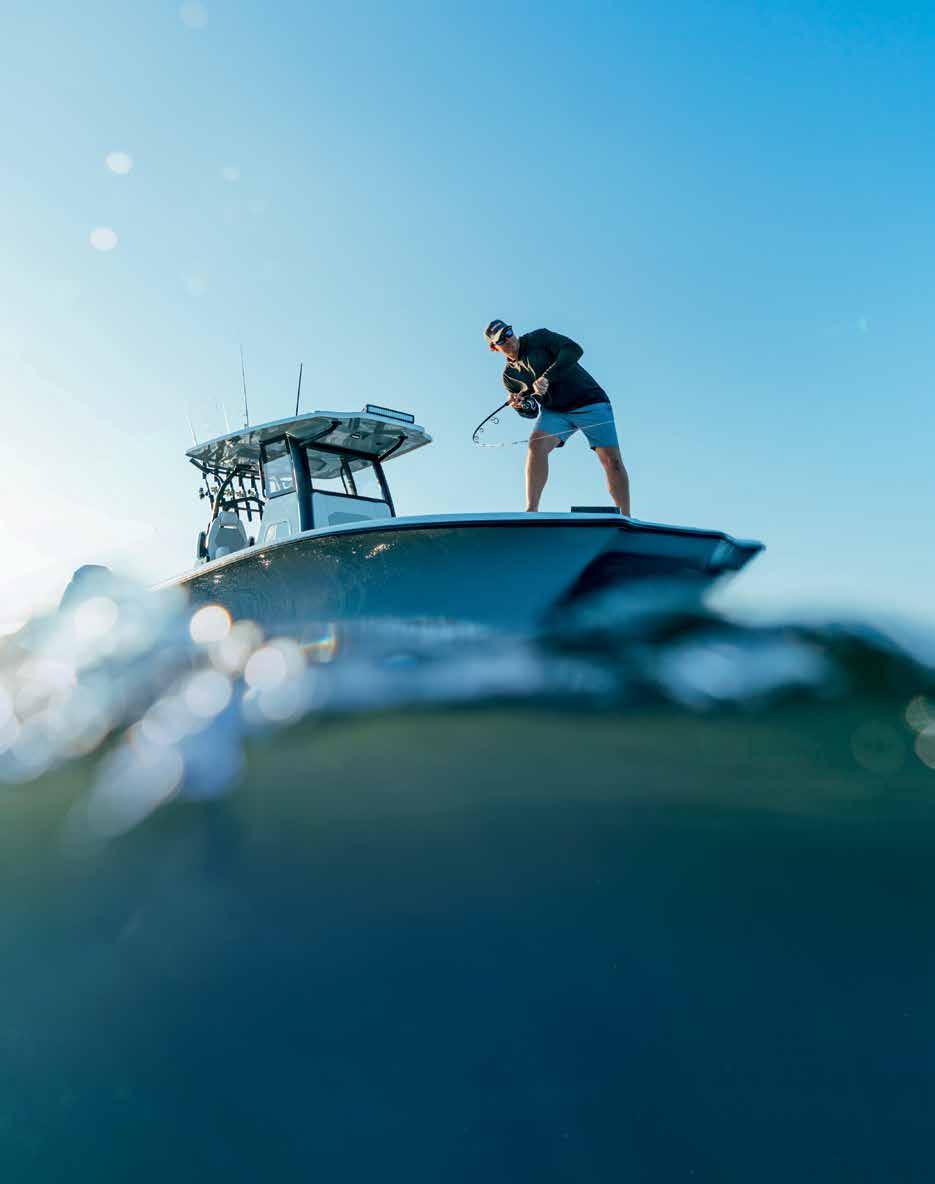
Built to perform in the harshest saltwater environments, the 26 Certate SW embodies the philosophy of Be Strong. No Limit, delivering enhanced rigidity, power, and control for anglers who push their gear to the limit.
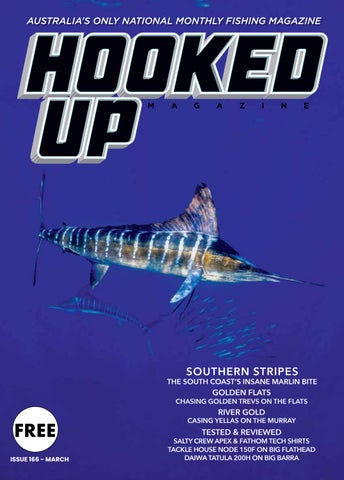
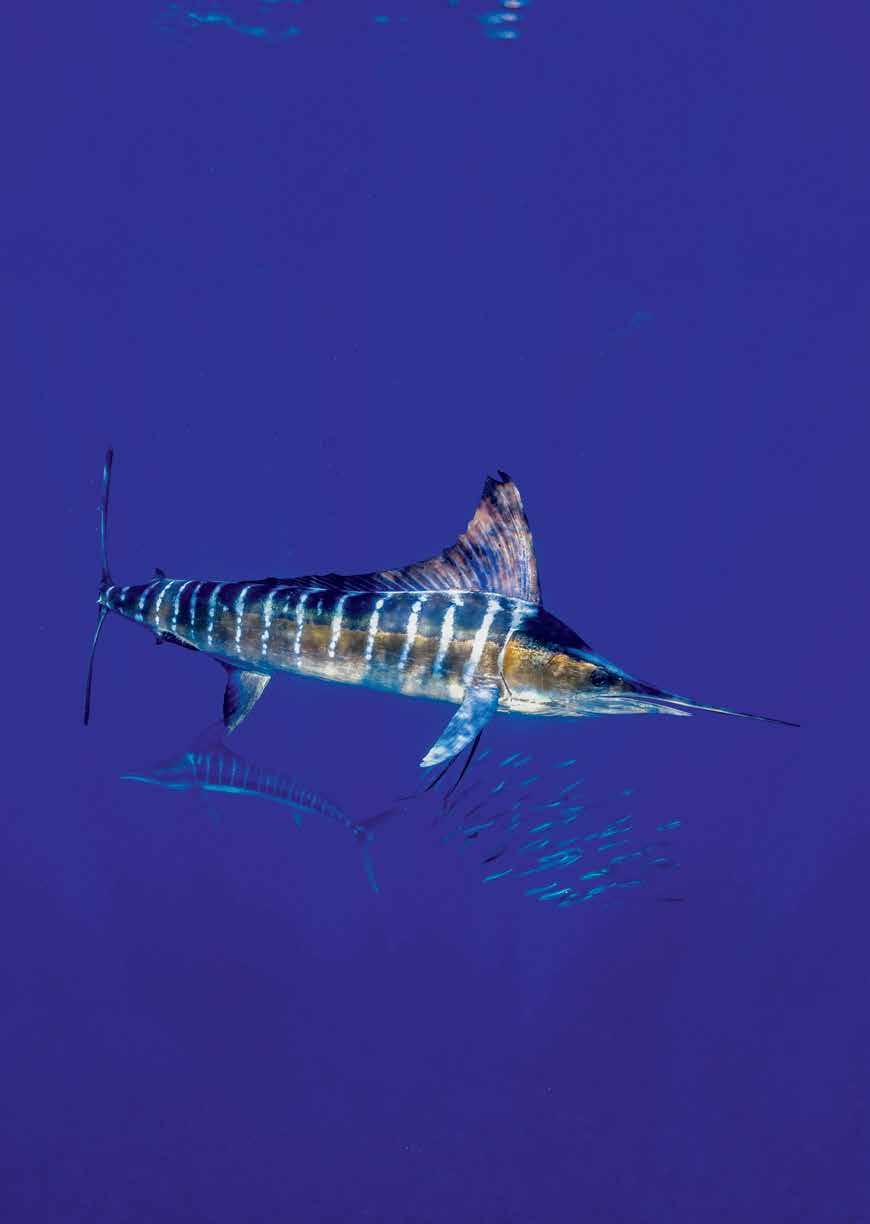
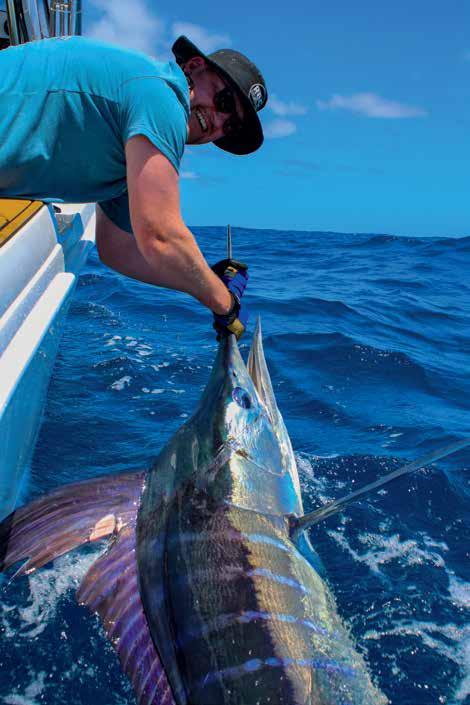
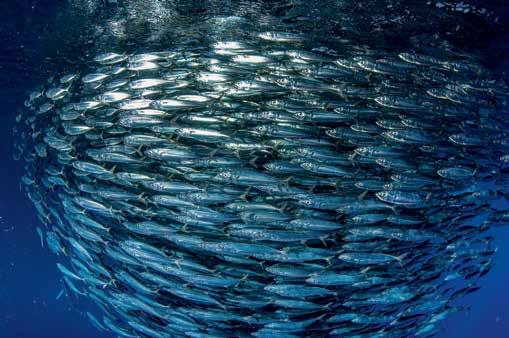
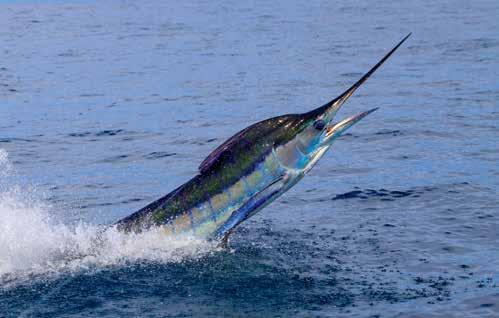
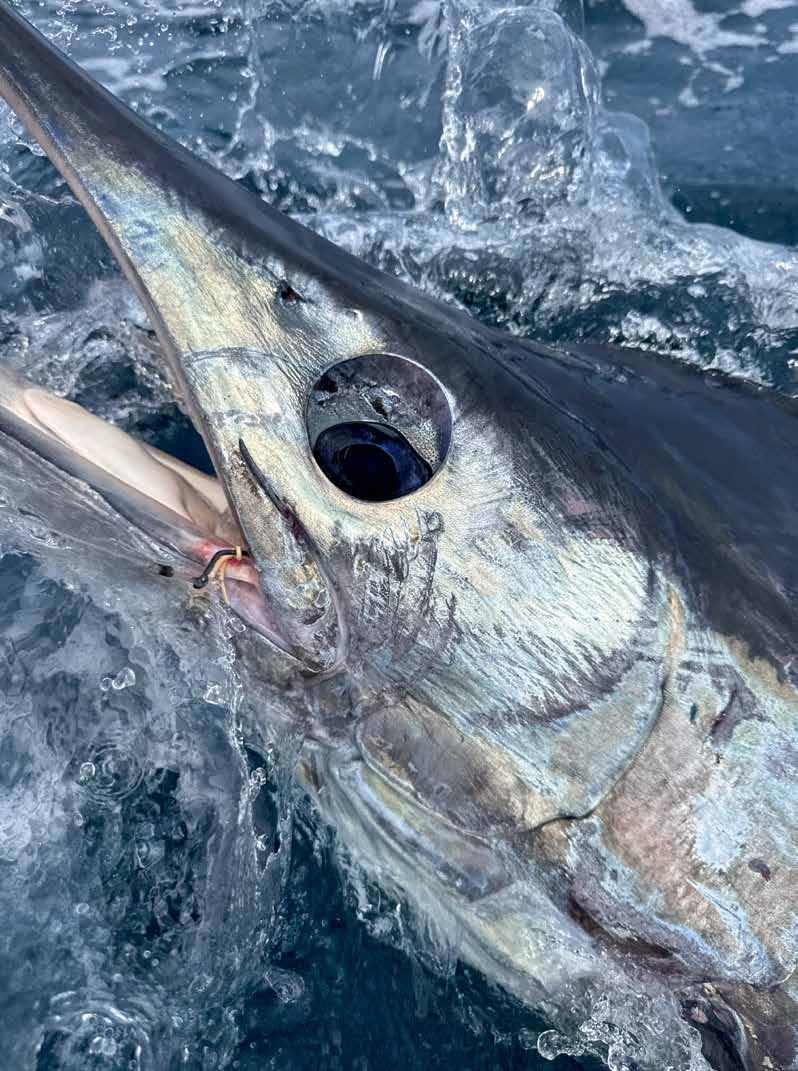
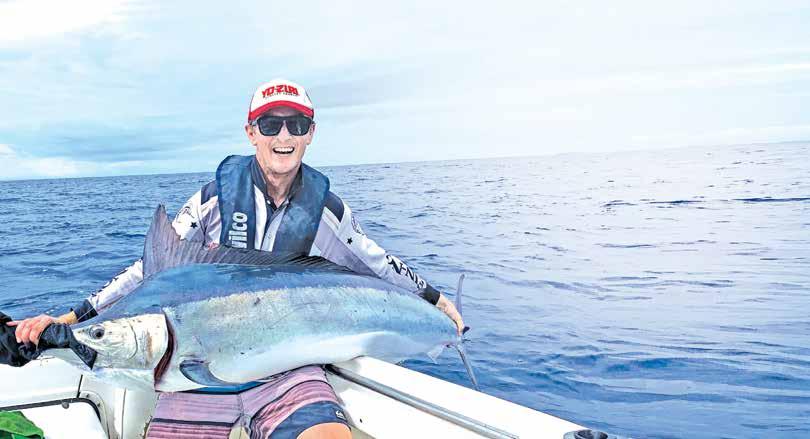
ON THE COVER: Astriped marlin doing what it does best, working a ball sof slimies.
On Wednesday, 28th January 2026, the leisure industry lost one of its own when Frogleys Offshore territory manager Gerry Morsman sadly passed away, leaving a gaping hole in our hearts. Gerry was more than a friend to so many of us — he was the kind of person who showed up, who listened, who laughed loudly and loved deeply.
A passionate fisherman and an avid reader of Hooked Up, Gerry loved fishing our local systems, chasing everything from whiting and squid through to kingfish and tuna offshore. His role within the tackle industry allowed him to travel all over the state, often with rods packed and ready to chase whatever was biting at the time.
As a friend, he had a rare ability to make people feel welcome, valued and at ease, whether you’d known him for five minutes or a lifetime. Gerry gave his heart freely and without condition. He will be remembered for his generosity, humour, loyalty and the quiet strength he brought to every room. He leaves behind an immeasurable absence, but also a legacy of kindness and connection that will live on through all of us who were lucky enough to call him ours.
If Gerry’s passing can teach us one thing, it’s never be afraid to speak to your mates — make sure you check in on each other and never be afraid to speak up and seek help. Remember, ‘It ain’t weak to speak’.
A GoFundMe has been set up by those close to Gerry to support his wife, Amy, and daughter, Billie. The page can be found at gofund.me/a7e9cc43a
If this story brings up anything for you, please know support is available.
It Ain’t Weak To Speak - livin.org
Lifeline – 13 11 14 - lifeline.org.au
Beyond Blue – 1300 22 4636 - beyondblue.org.au
MensLine Australia – 1300 78 99 78 - mensline.org.au
In an emergency, call 000.
CONTRIBUTORS
Jamie Crawford, Daniel Riosa, Mark Gerkovich, Dean Linardos, Ben Donogan, Rhys Withers, Remi Hagge ADVERTISING info@hookedup.com.au
RESPOND WITH POWER
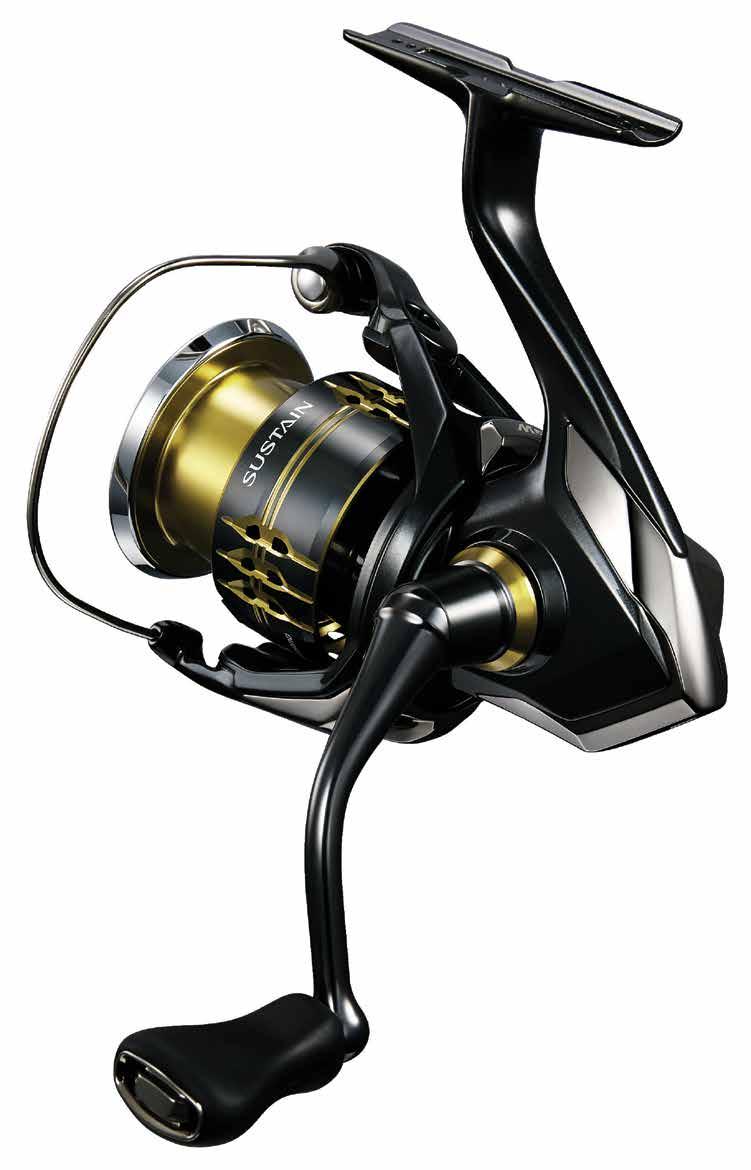
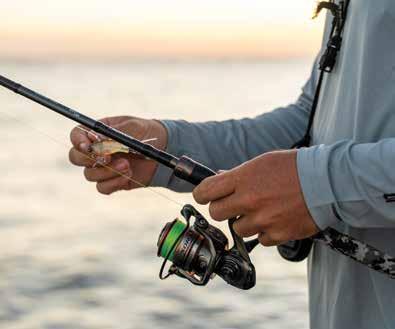
SHIMANO’S LEGENDARY SUSTAIN SPINNING REELS JUST GOT EVEN BETTER.
The new Sustain FK series — featuring four precision-engineered models brings flagship Stella-level technology to serious anglers at a more accessible price. With InfinityDrive, InfinityCross, InfinityLoop, and the revolutionary Anti-Twist Fin, these reels deliver unmatched smoothness, power, and durability across all light to medium tackle applications. Whether you’re chasing trout in the streams or tuna offshore, the Sustain FK is the ultimate companion season after season, cast after cast.
DAIWA EMERALDAS
LASER SHINE
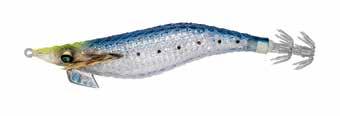
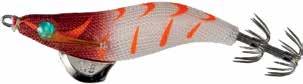
Daiwa Australia has expanded its Emeraldas squid jig range with the new Emeraldas Laser Shine LC Laser Impact. The new model introduces Daiwa’s Laser Impact technology, incorporating a Mirror-Cle 360° structure designed to enhance flash and reflectivity while maintaining balance and stability in the water. Daiwa states the design improves casting distance and overall jig performance, with the centre of gravity tuned for consistent flight and action. Available in sizes 2.5, 3.0 and 3.5 across six colours, the Emeraldas Laser Shine LC Laser Impact is positioned as the latest evolution in the brand’s squid jig lineup.
daiwafishing.com.au
EAGLE CLAW TROKAR MAGNUM SWIMBAIT
MOLIX PIN TAIL
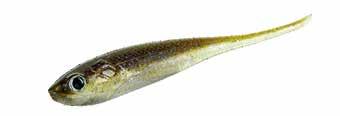
This soft plastic flickbait bait features a tapered tail designed to produce subtle, natural vibrations, making it particularly effective in high-pressure environments where predators are less active. The body shape is tuned to generate a pronounced rolling action when worked with hover strolling and mid strolling techniques. Well suited to use with forward-facing sonar, it allows anglers to monitor lure response in real time. Detailed back features also support offset rigging for weedless presentations around structure or vegetation. Measuring 3.9in and 6.4in with each pack containing five pieces.
ejtodd.com.au
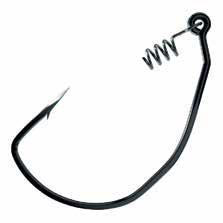
Designed for maximum penetration, the Trokar TK160 features triple-sided Cutting Point technology, delivering extreme sharpness for effortless hooksets. Built with a heavy-gauge wire and a wide gap, it’s ideal for rigging swimbaits and frog baits. The attack position, slightly above the hook eye, enhances bite-tohookup ratios, while the weedless design allows anglers to fish confidently around structure. Made in the USA and available in 3/0, 5/0, 7/0 and 9/0 sizes, with a weighted version (TK170) also on offer. tacspo.com.au
SAMAKI
LIVE SHRIMP 165
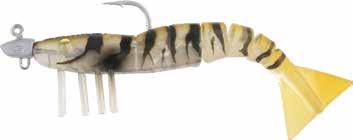
Samaki has expanded its Live Shrimp range with the new 165 size, designed to deliver realistic prawn imitation straight out of the pack . A segmented tail responds to subtle rod movement while finely tuned legs vibrate on the retrieve, replicating natural prawn action. Built-in rattle and glowing eyes add both sound and visual appeal, particularly in low light or dirty water. Constructed from tough TPE material and reinforced with Kevlar, the Live Shrimp 165 is built for durability and repeated strikes. It is available in three pre-rigged configurations to suit weedless, shallow and deeper water presentations. samaki.com.au
BUCCA BRAND TRICK SHAD
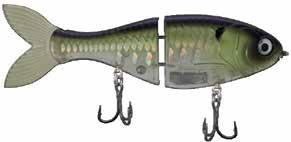
The Bucca Brand Trick Shad glide bait range offers 4in, 6in and 8in slow-sink models designed to deliver a wide, natural swimming action. Built from durable ABS construction, the larger 6in and 8in versions allow for detailed colour finishes not possible in resin glides. The 6in model, designed by Mike Bucca, features Mustad Triple Grip hooks, a replaceable tail and swivel hook hangers, while the 8in adds rotating hook hangers for improved hook alignment. Weights range from 1/2oz (4in) to 3oz (8in), with multiple colour options across the lineup.
ejtodd.com.au
YAMASHITA EGI SUTTE
Yamashita’s new Egi Sutte is an overseas limited model that inherits the balance and performance of the EGI SUTTE R, designed for squid fishing from both shore and boat . Available in sizes 1.5 (45mm, 3.7gm, 7 sec/m), 1.8 (55mm, 5.7gm, 7 sec/m) and 2.3 (65mm, 8gm, 5 sec/m), the range offers a simple, water-matching colour lineup with Half Skeleton Glow bodies suited to day and night. Tricot fabric improves tear resistance, while Warm Jacket material absorbs light to retain heat. Size 2.3 features reinforced hooks for added strength..
ejtodd.com.au
SALTY CREW DRAG POLAR ZIP SC
TECKEL KNICKNOCKER MICRO
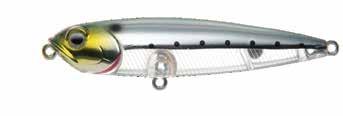
The Teckel Kicknocker Micro brings a true downsized option to the popular topwater range, offering Australian anglers a compact surface lure suited to jacks, bass, flathead, barra and trevally. Built on the same design as the original Kicknocker, the Micro features a tungsten knocker in the rear and glass beads in the head to deliver the distinctive knocking sound the series is known for. At 78mm and weighing 9gm, it provides a lighter, finesse-style surface presentation while maintaining the signature action and noise profile.
gladiatortackle.com.au
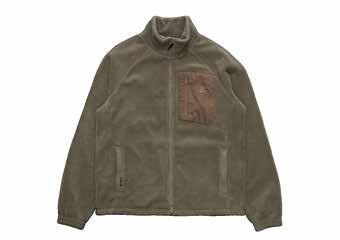
The Salty Crew Drag Polar Zip SC is a midweight zip-through fleece designed to provide warmth and comfort in cooler conditions on and off the water. Made from 100% polyester polar tech fleece, it features a clean, functional design with a contrast zip chest pocket and zippered hand pockets for secure storage. Stretch binding at the cuffs and bottom hem helps seal in warmth while allowing natural movement. Ideal as a standalone layer or worn under a jacket, the Drag Polar Zip SC is available in sizes S through to XXL salty-crew.com.au
SHIMANO TWIN POWER C2000SFE
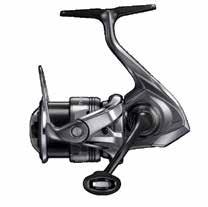
Shimano has expanded its Twin Power FE lineup with the new C2000SFE, a shallow-spooled model designed specifically for finesse fishing . Weighing just 175gm, it is lighter than the 2500FE and features an aluminium body, magnesium rotor and titanium wire bail arm. A 5.1:1 gear ratio, 9+1 bearings and 3kg of drag make it suited to lighttackle applications in both fresh and saltwater. The reel also incorporates flagship Shimano technologies including Anti-Twist Fin, Infinity Loop, InfinityXross, InfinityDrive and DuraCross.
shimanofish.com.au
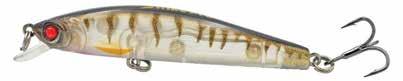
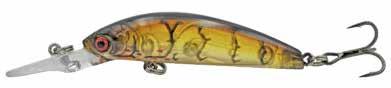
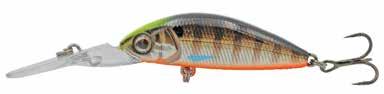
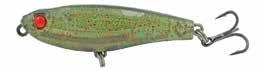
YO-ZURI MAG SLIM F
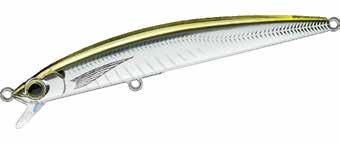
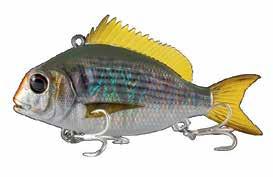
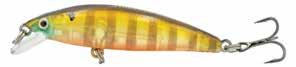
The Yo-Zuri MAG Slim F builds on the legacy of the well-known Pin’s Minnow, incorporating modern design updates to suit current fishing techniques. A key feature is the Magnetic Weight Transfer System, which locks internal weights forward during retrieve for balance and shifts them to the tail on the cast to improve distance. This design makes it well suited to covering water from shore or boat. Available in 110mm and 130mm sizes across a broad colour range, the MAG Slim F is aimed at species including flathead, mulloway, barra, jacks and trout.
tacspo.com.au
STRIKE PRO JOINTED
SPRAT
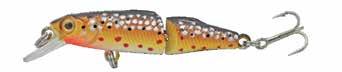
The Strike Pro Jointed Sprat is a compact jointed minnow designed for trout and light estuary fishing. Measuring 4cm and weighing 4gm, the slow-sinking profile delivers an enticing swimming action suited to small streams, rivers and estuaries. The jointed body produces natural movement on retrieve, while the balanced weight design allows for impressive casting distance and controlled, delicate presentations. Suitable for both freshwater and saltwater applications, the Jointed Sprat offers versatility across a range of light-tackle scenarios. Available in six colour patterns.
jurofishing.com
SHIMANO STAATEN
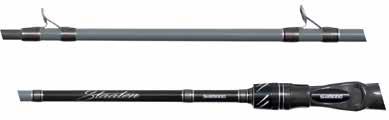
Named after the remote Staaten River in Queensland’s Gulf country, the Shimano Staaten rod range is built for anglers chasing serious native predators. The lineup includes 10 models, six baitcast and four spin, all rated from medium heavy to extra heavy with suggested line classes from 4–12kg and casting weights up to 130gm. Built on pure carbon Super X blanks and fitted with genuine Fuji guides and custom carbon reel seats, the range also features Custom EVA and AAA cork inlay grips. Designed for barra, Murray cod, mulloway, big flathead and snapper.
shimanofish.com.au
SAMAKI ARCHER RODS
Samaki has refreshed its Archer rod series, building on the original 2018 release with updated materials and design refinements. The new Archer range is built on premium Toray carbon fibre blanks with a 4-axis weave to improve strength and recovery, delivering crisp casting performance and solid hooksets. Fuji Alconite guides, AA cork and ultra-hard EVA grips, along with a deluxe ergonomic reel seat featuring custom locking rings, round out the build. Finished in a red and black colourway with gold anodised trim, the Archer lineup covers a range of techniques from bass to barra. RRP $169.95–$199.95.
samaki.com.au
VIPER CHAIN SOCK
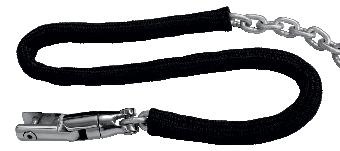
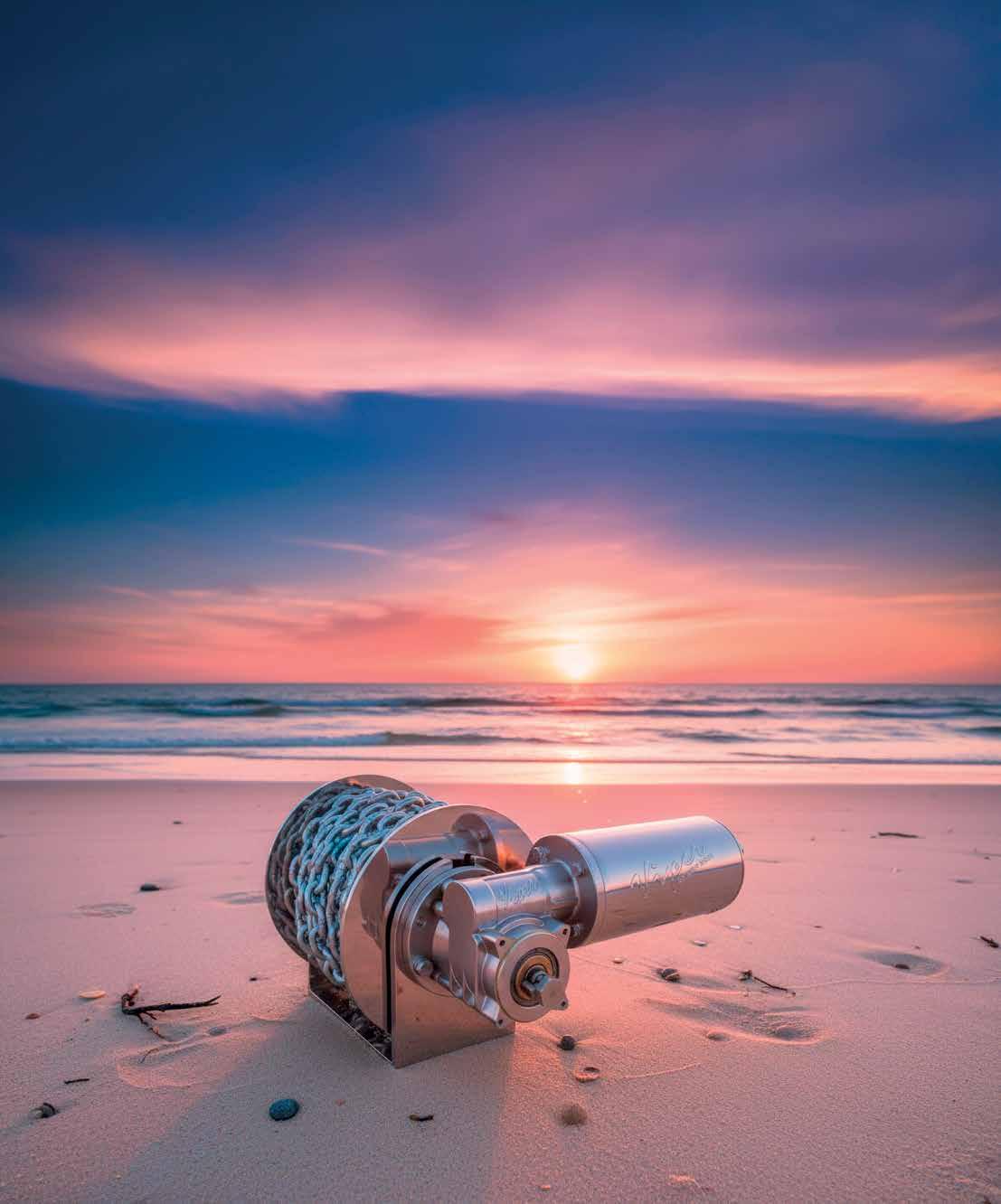
The Viper Chain Sock is an Australian-made solution designed to reduce anchor chain noise and protect hardware during deployment. On the water, the most noticeable benefit is noise reduction, limiting the clang and vibration that can spook fish in shallow areas. It also helps protect bow rollers and hawse pipes from wear, while reducing chain rattle through aluminium hulls. Once fitted, the sleeve shrinks tight to the chain, preventing movement under load. Available to suit 6mm and 8mm short link chain in various lengths.
bellmarine.com.au
SALTY CREW FLYER OPS TRUCKER
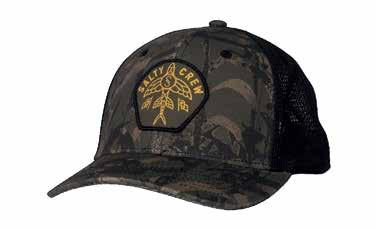
The Salty Crew Flyer Ops Trucker in camo is a clean, functional cap designed for everyday wear on and off the water. Built from mid-weight cotton canvas, it features a structured six-panel design with a low-crown profile for a comfortable, close fit. A screen-printed canvas patch adds subtle branding to the front, while the plastic snapback allows for easy adjustment. Durable materials and a classic trucker style make it a practical option for long days fishing, travelling or casual use. Available in a one-size-fits-most fit.. salty-crew.com.au
samaki.com.au
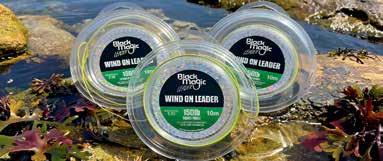
BLACK MAGIC WIND ONS
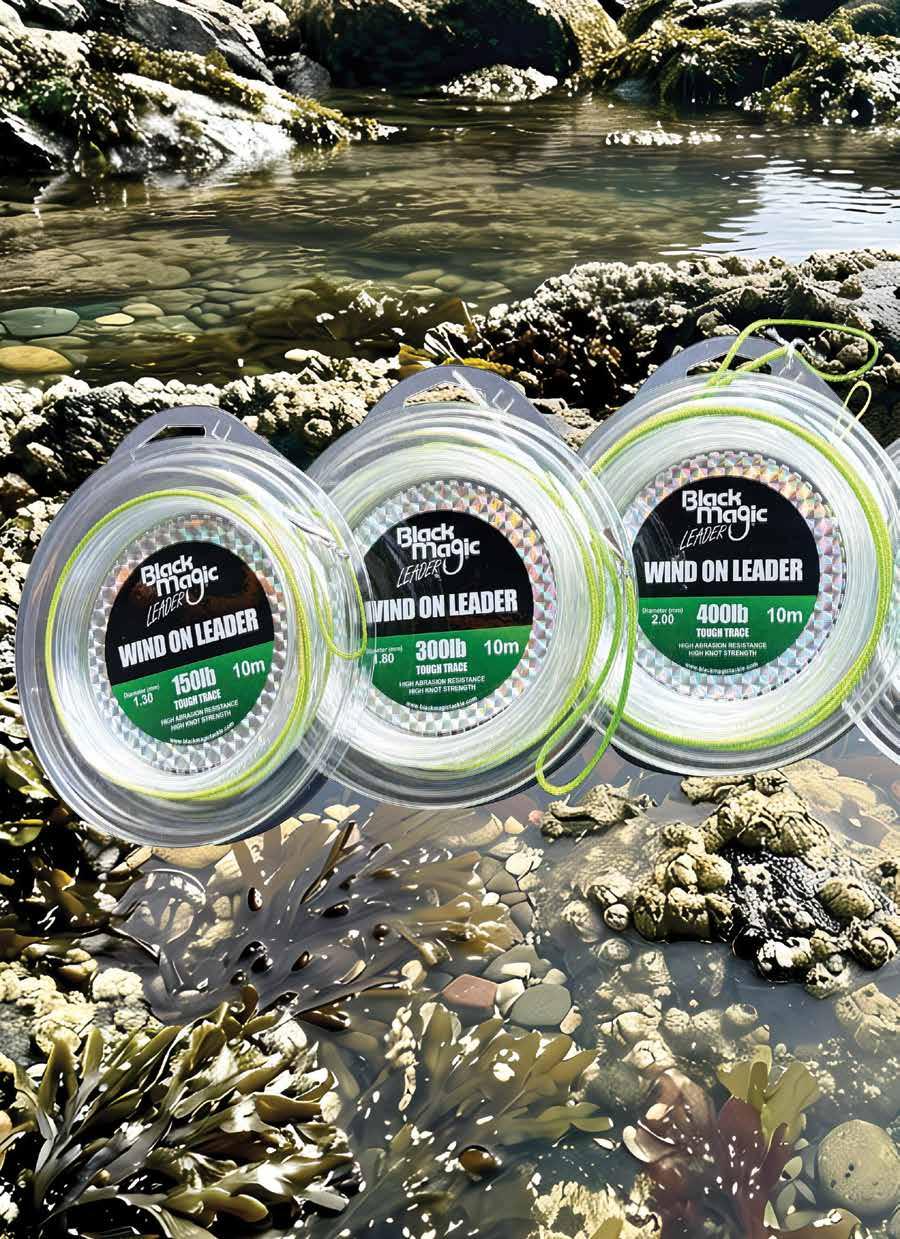
Black Magic has released its Wind On Leader, built on the brand’s Tough Trace monofilament and developed for anglers targeting hard-fighting species. Designed to deliver high abrasion resistance, the leader pairs Tough Trace with a hollow core braid that is expertly spliced to create a strong, streamlined connection. The wind-on design allows the leader to pass smoothly through the guides and onto the reel, improving control at the boat and reducing clutter around the cockpit. Suitable for species ranging from billfish and tuna to Spanish mackerel and wahoo.
blackmagictackle.com
SALTY CREW CREW BOATSHORT
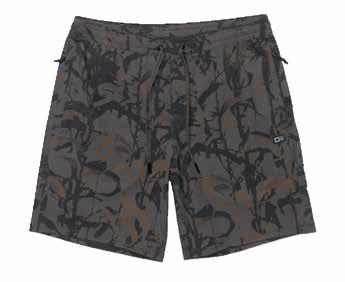
The Salty Crew Crew Boatshort Ewaist in camo is designed for anglers chasing comfort and durability on the water. Built from a nylon and elastane ripstop fabric, it combines performance fibres with four-way stretch and quick-dry properties to suit long days fishing or boating. Practical storage includes zippered hand pockets and a rear zip pocket, while a reinforced plier pocket on the right leg features a magnetic closure for easy access. The elastic waist design adds comfort and flexibility, with sizing available from S through to XXL.
salty-crew.com.au
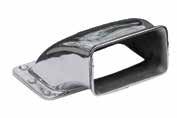
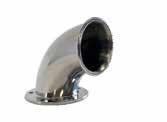
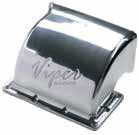
VIPER HAWSE PIPES
The Viper Stainless Steel Hawse Pipes are designed for boats where traditional anchor wells aren’t practical, including cuddy cabs, centre consoles, walk-arounds and bowriders. Built for through-deck winch installations, they provide a clean and structurally sound solution for feeding rope and chain forward to the bow roller. Manufactured from 316 marine-grade cast stainless steel, each unit features a hand-polished mirror finish designed to resist corrosion in harsh marine conditions. Compatible with electric anchor winches and engineered to match Viper bow rollers, they offer a tidy and durable anchoring solution.
bellmarine.com.au
SAMAKI ZEPHYR
Zephyr Jig rods are purpose-built for slow pitch jigging, designed to deliver precision and feel through every lift, fall and pause . Built on X-Core blank technology, the range balances strength, sensitivity and recovery, allowing anglers to work jigs accurately while retaining the power to set hooks and control hard-fighting fish. A split grip handle design helps the rod sit securely in a rod holder during travel, reducing blank contact. Finished with Fuji reel seats and Fuji K Alconite guides, Zephyr Jig rods are available in spin and overhead models from PE3 to PE5. RRP $399.95.
samaki.com.au
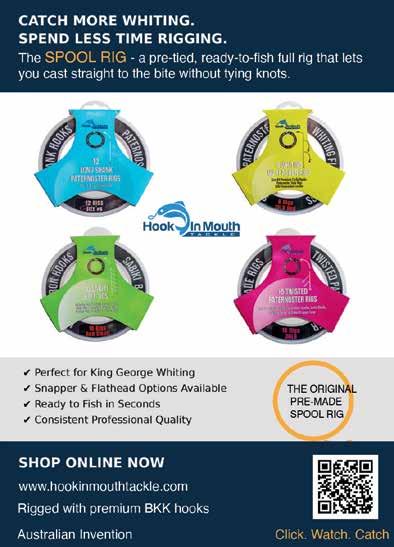
HOOK IN MOUTH LONG SHANK SPOOL RIGS
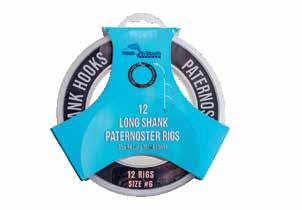
Designed to simplify whiting fishing, Long Shank Spool Rigs offer 12 pre-tied paternoster rigs ready straight off the spool. Simply tie one knot to your mainline and you’re fishing. Built with 15lb fluorocarbon and razor-sharp long shank hooks made from Japanese steel, each rig also features UV lumo attractors and easy-change sinker clips. Developed for Australian whiting conditions, the system is aimed at reducing tangles and cutting prep time while keeping you in the strike zone longer. hookinmouthtackle.com
BRIGHT FUTURE FOR KING GEORGE WHITING
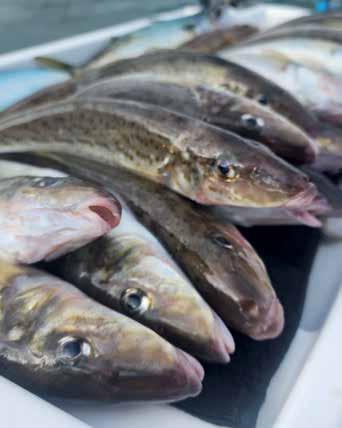
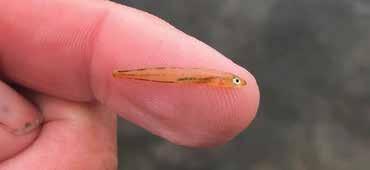
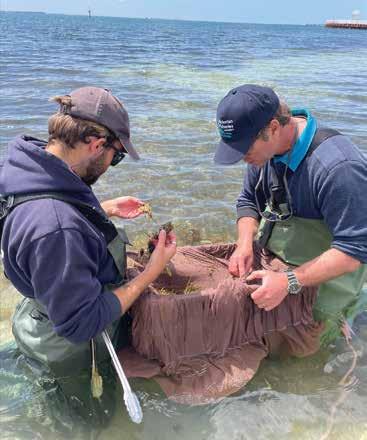
Fishing for king George whiting in Port Phillip and other Victorian bays looks promising, with juvenile numbers recorded as the strongest since 2021. Field surveys conducted by Victorian Fisheries Authority scientists late last year found improved numbers in Port Phillip compared with 2022, 2023 and 2024. According to VFA Senior Manager Recreational Fisheries, Taylor Hunt, the results are encouraging given the species’ popularity as a table fish that can be targeted from both boats and shore using relatively simple tackle. Annual surveys of juvenile whiting in shallow seagrass habitats have been conducted at multiple sites around Port Phillip for more than 25 years. These surveys are regarded as a reliable indicator of future catch rates. Similar positive trends are also being observed in Western Port and Corner Inlet. King George whiting spawn in coastal waters during winter, likely off far western Victoria and eastern South Australia. Larvae drift east for around three months before entering bays and estuaries in spring, when they settle in seagrass beds. With favourable westerly winds assisting this movement, the young fish typically take about two years to reach the 27cm minimum legal size. Most leave the bays by four years of age, meaning seasonal abundance naturally reflects larval recruitment from several years prior.
vfa.vic.gov.au
VIPER DELUXE SS BOW ROLLER
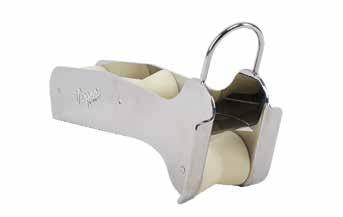
The Viper Deluxe Stainless Steel Bow Roller is built for boaters wanting strength and clean presentation at the bow. Its self-launch design allows anchors to deploy smoothly without manual assistance, offering a practical safety advantage. Constructed from 5mm plate 316 marinegrade stainless steel and fully welded for added rigidity, the unit feels solid under load. Three neoprene rollers provide smooth operation while reducing wear, and an integrated anchor stop and rope hoop secure the setup when underway. Available in two sizes, with stainless mounting bolts included.
bellmarine.com.au
LITTLE JACK CHARIKOM 25MM
The popular ultra-realistic bream imitation vibe has been released in a new ultra-mini 25mm size, offering a compact option for light tackle fishing. Despite its small 25mm profile, the lure maintains the detailed, lifelike finish the series is known for. From bream and flathead to mulloway, EPs and bass, it offers versatility across fresh and saltwater environments.
gladiatortackle.com.au
MCLURES MOGUL 9IN
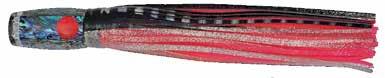
Designed in Australia, the McLures Mogul 9in is a deep-running, heavy cup-faced skirted lure built for serious blue-water trolling. The cup-faced head features four jet holes to create a strong bubble trail, helping the lure stand out in a range of sea conditions and trolling positions. Resin heads are finished with Red Crystal 3D eyes and matched to skirt combinations that include UV over-skirts and McLures’ exclusive Luminite underskirts that glow in the dark. Measuring 11.5in overall with a 9in skirt and weighing 165gm, the Mogul 9in is available in 12 colours for marlin and tuna..
jurofishing.com
SOUTHERN STRIPES
An armada of offshore weaponry. A shared obsession. The striped marlin are the excuse — the real reason runs deeper.
WORDS: BEN DONEGAN IMAGES: A FULL CREW
It was that time of year again – when a convoy of boats, big American trucks and sunburnt optimism begins descending on a small town on the south coast of New South Wales. For the past few years, Narooma has been our base camp. Cabins booked, deposits paid, new toys purchased and a whole lot of banter in the lead-up.
The Mates Day Invitational was on, for the 10th year running. I think this is the fifth time I’ve written up a story about this trip in Hooked Up, but if this is your first time reading this, the Australia Day Mates Day trip is an annual getaway where a bunch of us head off to target striped marlin. While we might pick somewhere as a base to sleep, we follow the fish wherever they may be. If we think the bite is in Eden and we start there, nothing stops this armada from rising early (even after a late night) and driving to wherever the fish are.
My friend Craig and I rolled out of Lakes Entrance early that morning, cruising through Orbost, Cann River and Eden before pulling into a small country pub near the Bermagui turnoff – about 40 minutes shy of Narooma. The rest of the convoy – eight boats and close to 30 blokes – was somewhere east of Melbourne, hauling what could only be described as a very expensive fibreglass conga line.
Millions of dollars’ worth of offshore weaponry was on the move. Big Mercury outboards, RAMs, LandCruisers and Chevs. Each of the eight boats had a decent crew on board. Jules Coyne in his Clayton Gallant, Cam McNaughton with his new Bass Strait 24, Eddie Fisher in his new Edencraft Formula 255, Dean Linardos with his Cam Strachan Formula, Daniel Riosa with his Caribbean 2400, Tony Porto with his Haines Hunter 675, Troy Utan with his Edencraft 233 and myself with my Coota Craft Gunshot that I had recently fitted with a new Mercury 200. Each boat is fitted with a multitude of NASAspec electronics proudly displayed on big dashboards.
The crew had stopped to kick tyres and spin propellers at a servo outside Melbourne – not that they needed fuel, it was just a great excuse to stop, catch up and discuss trucks and boats. While there’s a lot of fun had on these trips, it’s also a big learning process for everyone. Some of these boats represent years of hard work and late
nights. The Invitational isn’t just fishing – it’s show-and-tell, peer review and a little healthy scrutiny from some very sharp fishermen.
Craig and I arrived first and sorted cabin allocation and night-one activities.
Over beers, we mapped out our wish list and plan for the weekend. Craig wanted a double hook-up this year – something that had eluded us for a long time. Two fish hooked simultaneously. Mayhem on deck but lots of memories created. We wanted every boat to catch at least one – no doughnuts this year. We wanted the best-ever gyros cook-up. We wanted minimal hangovers, cold beers and flat seas.
“Let’s finish these beers, Benny, and get organised,” Craig said.
“Yep, agree. Let’s get unpacked at the caravan park and apologise in advance to our temporary neighbours about the early departures and late arrivals.”
As tradition dictates, the first night is always the biggest. Twelve months is a long time between beers. Leader lengths were compared. Drag settings debated. Techniques exaggerated.
Fluorocarbon costs compared. Gear was shared out thanks to Kosta, Hooked Up editor, who always sends across hooks, leader and any other gear that needs testing or he thinks could be of benefit. Banter flowed heavily that afternoon and the crew drifted off to cabins in preparation for day one.
DAY ONE
We woke to fair winds only to find
Narooma Bar looking very ugly in a heavy easterly swell. Risky. Plenty of bigboat bravado, a few “If you go, I’ll follow” comments – but eventually common sense prevailed and the group decided to head north to Ulladulla.
After a short drive, boats were unceremoniously dumped in, outboards roared to life and it wasn’t long until throttles were nailed and boats departed for the continental shelf.
The last few seasons have all been about live baiting, and finding quality slimy mackerel has become its own strategy. Full strings of bait were easy to find, but generally they were all too small for the marlin we were targeting. The bigger slimy mackerel were sitting deeper, often over 100 metres down. And in marlin fishing, bigger bait usually means a better bite.
There’s been plenty of discussion about the noticeable shift in slimy stocks along the east coast over the past few years. Whether it’s environmental cycles or pressure from commercial supertrawlers working the shelf, no one knows for sure. But we are seeing changes – and it’s concerning. These fisheries underpin tourism in coastal towns, and fishermen inject millions of dollars into the area every summer. If bait stocks suffer, everything downstream feels it. Then there are the seals.
Once upon a time, they worked bait balls alongside marlin. Now many seem to follow trawlers – and when they find our spread of live baits, they peel off and help themselves. This year we spent nearly a
Catching slimies is half the battle.
full day pulling baits in and relocating just to escape persistent seals. They’re clever. They’re learning. They’re hungry and it’s not their fault.
But while the bait was scarce, the fishing was hot. Dean Linardos finished the day with eight fish, Jules Coyne did four, Daniel Riosa did three.
For us? A grind – until we stumbled across a random bait ball and secured our first fish of the tournament. The radio chatter was electric.
‘Tournament Base’ – aka Daniel Riosa – was in fine form, reminding crews to check microphones for water ingress, confirm legal leader lengths, ensure tickets had been purchased in advance for the dinner and, most importantly, stay safe and hydrated.
The two-hour scheduled radio updates became progressively funnier as hydration levels rose. Giveaways had crews in tears. The most coveted prize? A trailer launch and retrieve tuition donated by Lee Rayner – particularly as the winning boat a few seasons back had previously taken out a bollard at the local ramp.
All in all, a great start to the weekend with many fish caught and lost.
DAY TWO
Every year it happens.
Early risers commit to one port and the late risers head elsewhere. It’s a roll of the dice with much talk about currents, sea surface temperature (SST), upwellings and plankton levels.
This year, a few others and I headed
north to Batemans Bay. Dean and Jules headed south to Tathra and Daniel went to Bermagui.
As a group, we use Narooma as a base due to its central location on the south coast. With the fickle nature of marlin, it can pay dividends to tow a few hours north or south depending on conditions. For the crew that made the call to head to Tathra, it paid off with epic action and huge numbers of fish seen, with Dean and Jules both tagging five fish. Daniel did well at Bermagui with three fish. Bait seemed to be the challenging factor once again, but if you found slimies to present, the marlin were only too willing to eat them.
The radio reports were brutal. It was
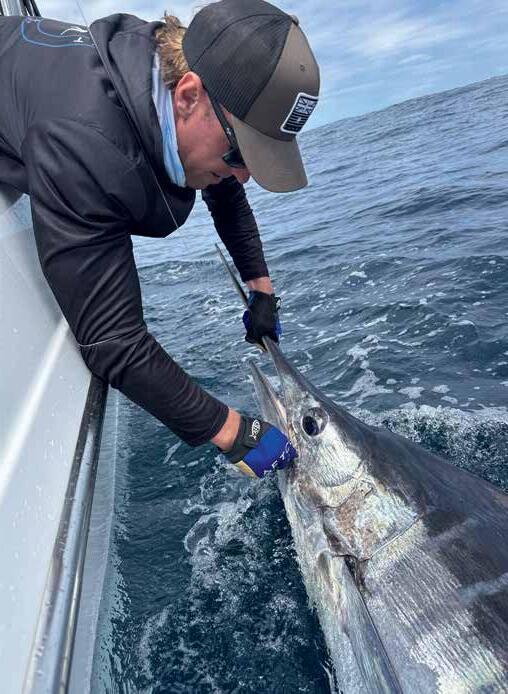
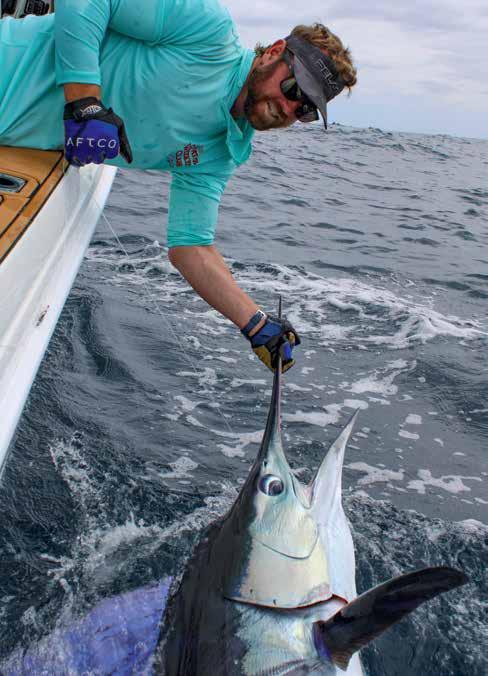
Luke Patrick removing the Eagle Claw circle hook with ease.
Australia’s Suzuki repower specialists.
clear we’d backed the wrong horse going to Batemans Bay, where we were met with green water. But that’s fishing – and dividing forces is part of the strategy.
DAY THREE
After the two leading teams found success at Tathra, that was where everyone headed. We knew it was going to be a tough one and, in hindsight, we probably should have left the Coota Craft at the park and jumped on one of the bigger boats.
But we decided to brave the forecast of 20 to 30-knot winds in the hope it would die down and we could snag a couple of marlin.
It was one of the slowest runs to the shelf I’ve experienced. Jigging bait in rolling seas kept everyone alert as waves crumbled and broke around us. To say we were on alert was an understatement, and it meant the driver could not leave the wheel. We caught baits and proceeded to tick our way out to the shelf.
It wasn’t long before we had a dorsal fin and tell-tale blue boomerangs appear behind a teaser.
“On the left, boys!” I screamed, as the marlin did a pirouette and circled back towards the teaser. Nick and Craig stood transfixed, watching the big fish stalk the hookless lure before Nick dropped a pitch bait into the wake and spooled it back.
Unfortunately, the fish disappeared as quickly as it had popped up, leaving the three of us stunned.
And just as often happens – the hot bite cooled. Add in determined seals with a mission to eat every live bait they encountered, higher amounts of boat traffic and difficulties locating bait, and the day wore on.
Daniel finished with six fish and Cam finished with three, delivering strong results that kept the scoreboard ticking over with consistent captures.
The radio banter drifted into nostalgia, the discussion turning to people who’d come and gone over the years. It was great to see some of the boys come back to the group after kids, footy and life duties calmed down. Because when it boils down to it, that’s why this whole thing started.
Careers grow. Families start. People move interstate – even overseas. By locking this weekend into the calendar each year, we force ourselves to show up. To prioritise mateship over meetings. To choose memory-making over convenience.
Matt Patrick with one of the larger fish taken over the weekend.
They’re aerial and light up like Las Vegas. There’s a lot to love about striped marlin.
Back up your big game talk with Black Magic’s tough trace wind-on leaders!
This legendary leader is now available in a quality wind-on that can handle the toughest fish. Proven on the water to get big predators landed. Available from 60 to 400lb, in all great tackle stores!
And now, we’re watching blokes we grew up with bring their own sons along for the ride, too – a really cool thing to be part of.
That’s Australian fishing at its best.
REST DAY – GOLF AND GYROS
Day Four was blown out.
Golf at Narooma it was.
ChatGPT handled team allocations and names for the Ambrose event – a controversial but necessary part of the weekend.
Meanwhile, the non-golfing crew broke away for something different this year with a land-based session on the beach for those of us who cannot bear golf. Surf rods. Metal slugs. Bare feet in the sand chasing a few salmon and tailor. It took us all back to where it started. Simple fishing.
It was now time for the annual gyros spit and trophy ceremony. Big Tony Porto took charge of the spit. This was his domain. Lamb. Chicken. Charcoal and a fair bit of perspiration. The aroma drew crowds from across the park. By 6pm, knives were flashing and one of the best feeds we’ve ever produced was served to a sunburnt, slightly dusty golfing contingent.
Trophies were handed out amid ruthless banter and a great night was had by all. This year had been a huge success thanks to everyone involved.
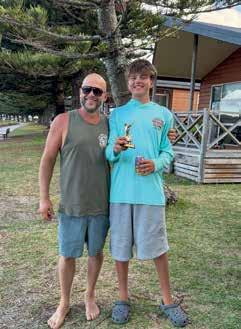
The inaugural Highest Scoring Boat went to Dean Linardos of Team Villain in his Cam Strachan Formula with 15 fish. Notably, Dean and his 14-year-old son Ethan fished two-up for a couple of days and still managed to win. Daniel Riosa and crew on WhiteWash 2 followed with an impressive 12 marlin tagged and released across three days, despite his crew failing to deliver in the catering stakes. Daniel allegedly delivered a stirring motivational speech on the way to the shelf on the last day that must have worked. They were followed closely by Team Samaria, captained by Julian Coyne in the Clayton Gallant with Lee Rayner and Joel Ryan as crew, who were just pipped at the post with 11.
THE REAL WIN
And just like that, it was over.
Last beers drained. Early alarms set. Boats pointed home and all of us back to work. Craig and I ticked off most of our wishlist – the seas were pretty good except for day three, unfortunately there was one doughnut in the group, hangovers were minimal and it was certainly the best gyros
cook-up we’ve ever had.
Already the group message is firing –improvements for 2027, new ideas, early trash talk.
As we head towards our 11th get-together in 2027, it’s becoming clear that the fishing is only part of it. The planning. The anticipation. The banter in the months leading up. That’s the light at the end of the tunnel that gets many of us through the tough days.
Life moves quickly now. Careers, kids, responsibilities – they stack up fast and before you know it another year has gone. So, draw a line in the sand.
Lock in a date.
Call your mates.
Winners: Team Villain.
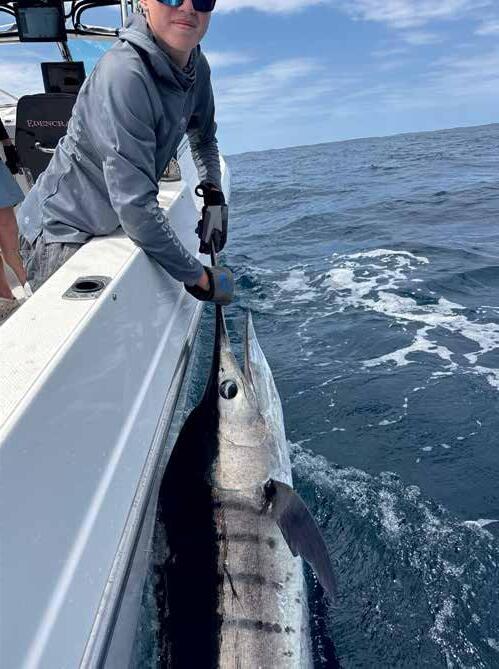
Ethan Linardos with one of many stripes taken over the weekend.
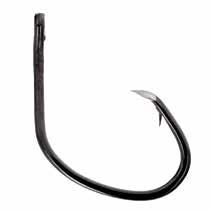
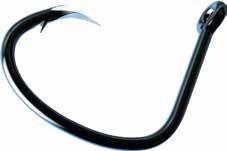
The Eagle Claw Trokar Lancet circle hook when rigged correctly has an almost 100% hook up rate when slow trolling live baits.
TECHNICAL BREAKDOWN THE WINNING SET-UP
The winning team ran Daiwa Tournament 15–24kg rods matched with Shimano Talica 25IIA reels, spooled with braid backing to 100 metres of 24kg mono topshot. That was connected to a 150lb wind-on, snapped onto a 130lb fluorocarbon bite leader, crimped to an Eagle Claw Trokar Lancet 8/0 circle hook.
After experimenting with different hooks over the years, the champion angler settled on this model because it delivers extremely consistent jaw hook-ups – close to 100 per cent.
The Trokar Lancet features a flatter bottom and a larger gape rather than a continual round circle, which allows it to sit better in a live bait, generally slimy mackerel, while keeping the hook point exposed and ready.
Hooked Up, thanks to the Eagle Claw distributor Tacspo provided a heap of Lancets to the teams in the comp,
those that accepted saw the results and those that didn’t will probably convert.
When rigging slimies, the angler only uses rubber bands – no wax thread or dacron loops. Using size 16 rubber bands (readily available from the post office or Officeworks) allows the hook to be positioned tight to the bait’s head, reducing the chance of it rolling over or fouling in the bait.
Minimum slimy size is around 30cm, and they won’t settle for cowanyung. If quality slimies aren’t available, they simply keep searching until they find them.
Outriggers are considered essential, running two baits at a time at 3-4 knots.
Careful attention is paid to speed to ensure the baits are not skipping on the surface or being dragged unnaturally in the current.
The Eagle Claw Trokar Lancet circle hook. It’s sharp, strong and shaped perfectly for rigging livies and getting solid hook upsc.
GOLDEN FLATS
Queensland heat. Gin-clear water. A flash of gold appears in less than a metre of depth — and your heart rate doubles.
WORDS
& IMAGES : MARK GERKOVICH
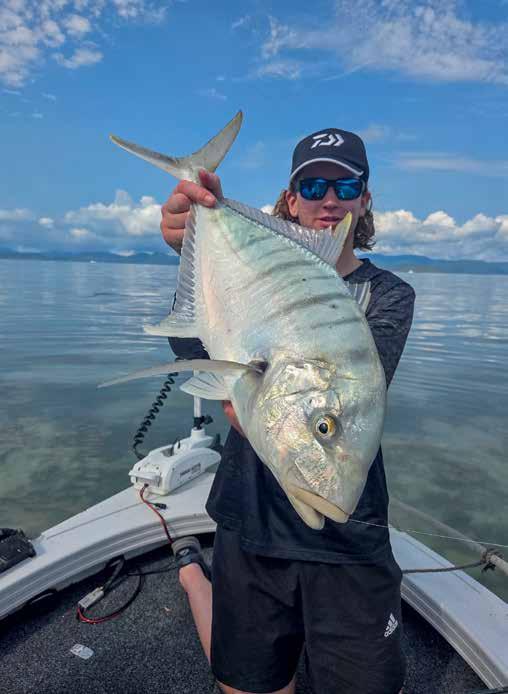
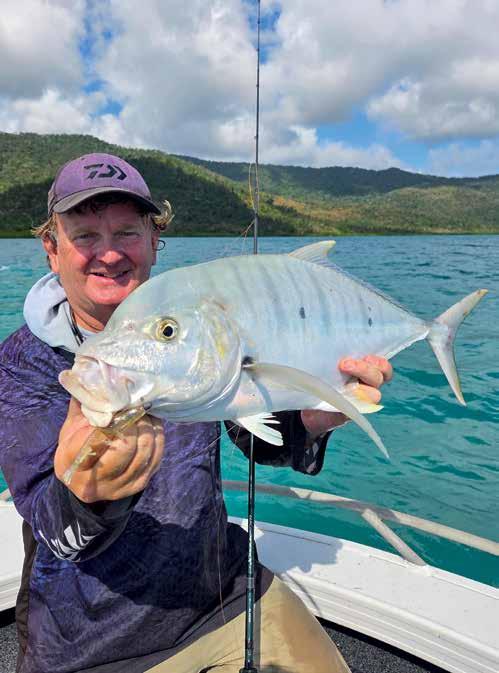
Golden trevally are up there as one of my favourite species to target whenever I head north. Now, you may think there are more prestigious targets available in these areas. For example, if you love a deep-water pursuit of all things red and tasty (as many Queenslanders are), I can understand the frustration of big, hard-pulling, jig-eating goldens getting in the way and taking up your valuable bite time. However, when confronted with the amazing variety of angling species and technique options in North Queensland, I am somewhat taken by the golden trevally, particularly targeting them on the flats. Let’s have a look at why I enjoy them so much and provide a few tips on sharing the love on this exciting sportfish in shallower water.
The golden trevally is easily distinguished from its some of its relatives by its fleshy, rubbery lips and unique colouration, which ranges from bright yellow with black bars as a juvenile to a golden-silvery colour as an adult. They use their rubbery, protractile jaws to suck out prey from the sand or reef, and consume a variety of fish, crustaceans and molluscs. The golden trevally is widely distributed throughout the tropical and subtropical waters of Australia. The species predominantly occupies inshore waters, where it inhabits both reef and sandy substrates. This brings them into contact with a wide variety of anglers whether fishing estuaries, flats and beaches or inshore reefs.
If you’re fortunate enough to come
across decent-sized, tailing flats goldens, the level of anticipation is through the roof. It is here that the true glory of targeting golden trevally lies – on the shallow flats. Being able to stalk, seduce a strike, then hopefully land such a potentially large and good-looking fish is what it’s all about. They may not taste as good as a coral trout but targeting, catching and releasing them is a lot of fun.
THE FLATS
It is amazing how shallow these fish can be found at times. I’ve found that on the incoming tide they will push right in as close as they can to feed on the newly covered ground. Here you can spot them, maybe cruising, by seeing bow waves cutting through the glassy water, or even better, if you see their tails sticking up out of the water. The tails stick out as they jam their head into the sand and use that protruding mouth to filter prey out of the sand. The incoming tide gives both them and you the security that if you get in too shallow you’re not going to get stuck, as you might on an outgoing tide. At times we had to get out of the boat and wander across the flat to target sighted fish that were in super-shallow water.
THE FLOOD
Prime time for this style of fishing doesn’t last long. The increasing depth of the incoming tide will soon make it more difficult to spot the fish, as the bow waves and tails will no longer give them away as easily as when the water is shallow. Coming from fishing areas back home where tides are minimal
in movement, the contrast with fastmoving northern tides is stark. You really have to make the most of the prime times to get as many shots at the fish as possible before the quickly changing water levels affect the bite window. Areas that fish well one day may not a few days later. The lesser or greater volume of tidal water can change how the fish behave compared with the productive day you had previously. Multiple rods rigged with a wide variety of offerings and jig head sizes are important because you don’t want to waste time rigging up when the bite is on.
WHAT A RUN
Once hooked these fish have only one way to go, and that is long… and they’ll do it hard and fast. This is perhaps another reason for my love of flats goldens. You can lean back and enjoy the line peeling off the reel, feel the tail beats thumping through the rod, and take some time to enjoy where you are and what you’re doing.
So many other North Queensland fishing scenarios are fast, brutal affairs. “Get him in before the sharks,” “Lock that drag and get his head up fast before he buries you in the reef,” or “Don’t let him turn back into the mangroves,” are more symptomatic of what usually goes on up north.
It’s not all easy and relaxed, though, as a few times I thought I was in control of a big golden on a shallow, sandy section of a flat, only for it to hit the jets and find a distant unseen edge or bommie and cut me off.
STALKING THE FLATS
Like cagey trout or bream back home, flats golden trevally often respond differently day to day, location to location, requiring observation, stealth and a bit of angling intelligence to be successful. But it is challenges such as this that make it so appealing. Tailing fish can be easier, but sometimes they are too focused on their feeding and not interested in your offering. However, most of the time tailing fish were feeding fish. They were quite conducive to eating a lure landing nearby. Likewise, if you came across a cloud of sand in otherwise clear water, casting a lure into it would often reveal a fish feeding inside the stirred-up sediment. Fish could also be found following rays and feeding on critters stirred up by their movements. Spotting the rays was an easier way to locate fish once the tide had risen a bit and the tailing and bowwave cues were not as visible. Cruising fish were usually spookier than the tailers and often needed to be led with the cast.
If the lure plops down too close they’ll disappear in a flash. Too far away and they just won’t notice it. The plan is to get the lure in the water in the direction the fish are heading and let it sit on the bottom, then give it a hop or two as the fish get closer. If this sounds a little tricky, you’re right, but the sense of satisfaction when it works means the missed opportunities are quickly forgotten.
GETTING THE BITE
In some scenarios it seems goldens eat everything: jigs, big plastics and all sorts of baits. However, in clear water flats environments they can be far more selective. Natural looking prawn and crab imitations produced the goods for us. The goldens, and everything else it would seem, were happy to smash the Daiwa Bait Junkie prawn in bloodworm colour. Everything eats prawns and this lure just looked the perfect ‘match the hatch’ option. They look super life-like in the water and I was particularly excited with how the newer model in the 3in prawn now has the same orange eyes as the 5in always had.
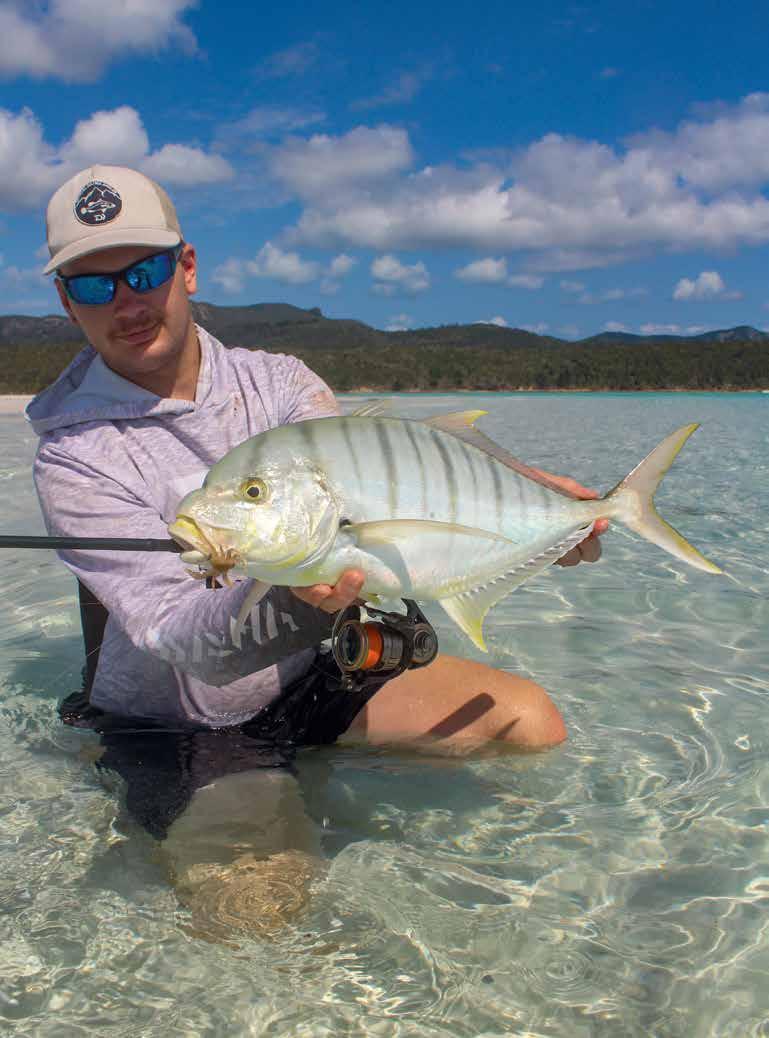
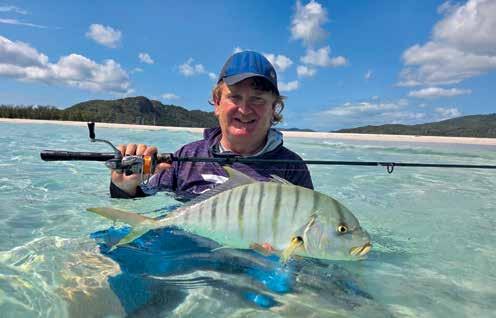
A beautifully marked golden that was taken in less than knee deep water.
MADE IN JAPAN
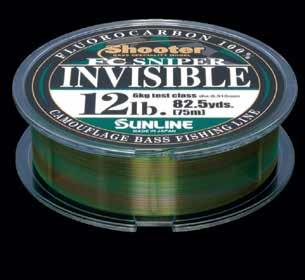
FC SNIPER INVISIBLE
High grade fluorocarbon built for pressured fish.
75m | 2lb -20lb
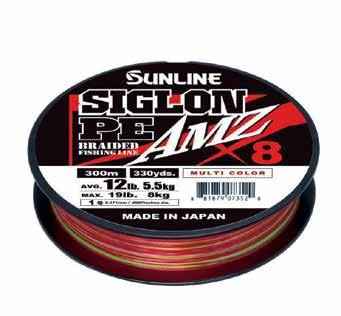
SIGLON AMZ
Tighter woven braid for distance, sensitivity and durability.
300m PE0.8 -PE8 | 150m PE0.5 -PE3
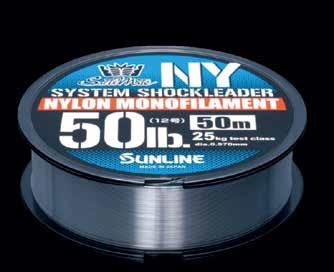
SYSTEM SHOCK LEADER
Purpose built shock leader for power and protection.
50m | 4lb - 150lb
For most flats work I preferred the 3in model, matched to a 1/6th Bait Junkie jig head in 2/0. Having the option of the finesse hooks for flats work was great as I like a fine-wire hook when using lighter leaders, as was often the case in the clear water. They penetrate easily to get a secure hookhold without undue force.
THE TACKLE
Leader choice is a difficult compromise between fishing light enough to be subtle in crystal-clear water, but strong enough to stop rampaging goldens that can be over 80cm. I’ve always been a bit of a ‘go light to get the bite’ kind of guy, and I’ll worry about landing consequences later. I think this is another appeal of flats fishing for goldens; I like being able to enjoy a fight rather than a white-knuckle battle to see who wins, you or the reef, or the shark. 15-30lb leaders seemed to do the trick, and having a few outfits ready to go was important as things happen fast. I’d usually start with 30lb on a heaver outfit, usually a Daiwa 20 Wilderness 765HFS/4000 Certate combo, then swap to a 15lb leader on a lighter 3000 TD Sol 23 paired with a TD Hyper 701MLXS, if the situation called for more subtlety or the fish were smaller.
Jig head selection is also another tricky tackle choice compromise. Sometimes you feel you need a light jig head that will splash down subtly and not spook the fish. At other times, though, a heavier head that allows for longer casts is one you will be looking for. You don’t want to get too close and spook the feeding or cruising fish, and a heavy jig head can help with longer casts. Once again, these decisions are all based on the situation presented to the angler at the time, and having multiple options rigged ready
to go at a whim is important. Always let the wind be you friend, not your enemy. Position your boat accordingly and allow the wind to assist with drifting across a flat. This way you will be making minimal noise, as well as helping with casting distance, which can be crucial factors in being successful. Even the sound of the electric motor, or it banging into shallow ground, can cause fish to spook. I can now really see how ‘proper’ flats boats with a poling set-up at the back can be deadly in the shallow water these fish can get into.
So next time you find yourself up north, try and drag yourself away from the barra, coral trout, Spanish mackerel and the like. Exploring some pristine tropical flats is good for the soul, and coming across a few big goldens is just the icing on the cake.
Crystal clear warm water, blue skies, clean sand and golden trevally.
In clear water, it’s a balancing act — light enough to get the bite, strong enough to hold on.
RIVER GOLDENS
Targeting wild yellowbelly is a uniquely Australian way to fish – and a lot of fun
WORDS & IMAGES : JAMIE CRAWFORD
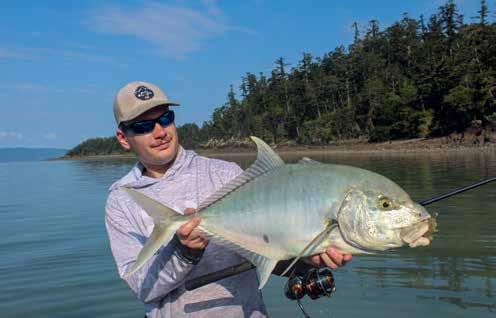
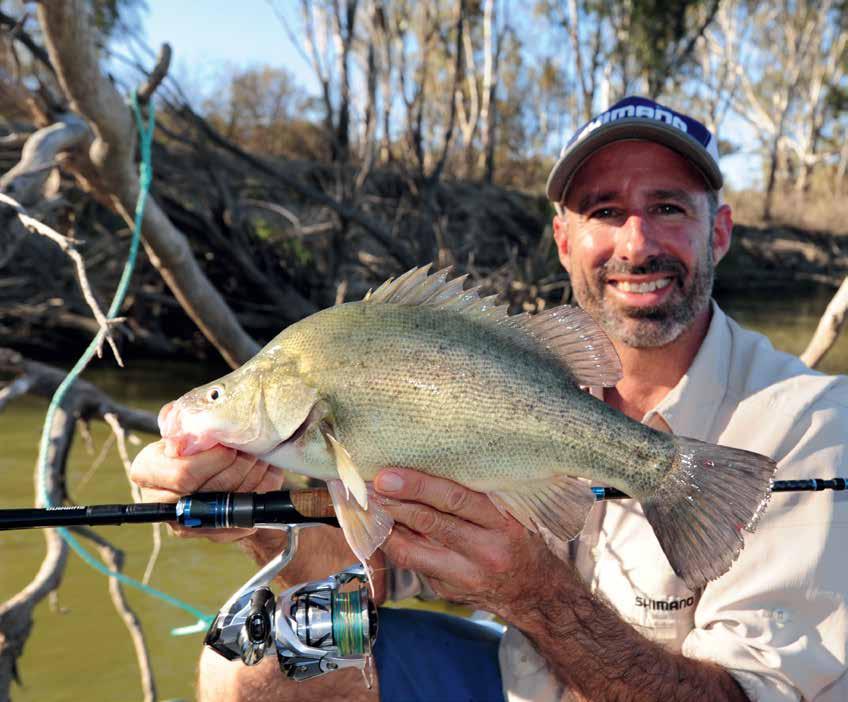
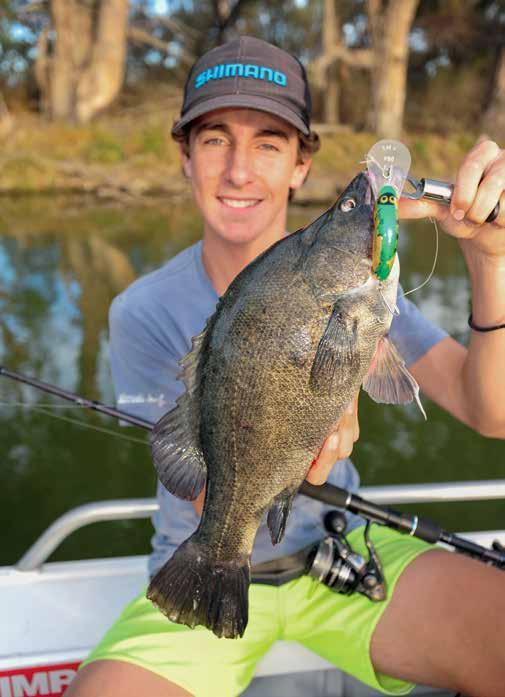
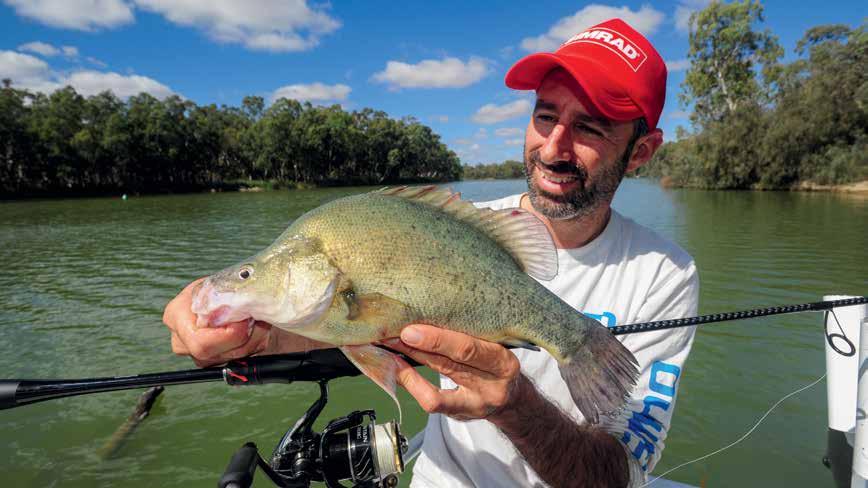
The author with a golden perch caught on a lipless crankbait from amongst some timber in the Murray.
Throughout inland south-eastern Australia, the humble golden perch is the primary target for many freshwater anglers. Widely found throughout the river systems of the Murray-Darling basin, their natural distribution extends from the rivers and creeks in Victoria, South Australia, New South Wales and into southern Queensland.
Also referred to as yellowbelly or callop depending on where you’re from, this species has been successfully bred in captivity and re-distributed into landlocked waterways. But in this feature we’ll just be focusing on the wild goldens found in our larger inland river systems. These wild river fish may not grow to the same proportions as their impoundment cousins, but pulling a nice golden from one of our iconic inland rivers is a whole lot of fun.
Golden perch are a unique species; distinctive with their deep body form, and their yellow to golden coloration, which extends to a bronzed and black coloration at times. They’re not a powerhouse of strength – their laterally compressed body shape would indicate that – but they are a beautiful native found in a unique setting.
I had a golden perch in a home aquarium for quite a few years when I was younger, and seeing the fish’s feeding response and general behavior was fascinating. They are known as implosive feeders, and when you watch one in captivity you’ll see why. They’ll hover above their prey before a rapid inhale, which sees the food sucked up in one quick motion.
WHERE TO FIND GOLDENS
In our river systems, golden perch are structure-oriented and are often found sitting among timber, around rock bars and along cliff edges. They prefer to seek out areas of lower flow where they can preserve energy. This cover also offers them capacity for ambush feeding, as small fish and crustaceans are flushed past these zones. But golden perch can also be found roaming along tapering bankside edges as well, as they traverse between bankside structure.
When looking for goldens in our rivers, I prefer water from 2 to 5 metres deep. The shallower areas are generally found along the straight sections of river or on the inside of sweeping bends, and you’ll notice the river slowly gaining depth as it narrows, or as you approach the outside of a bend. But this narrowing of
the river often means increased flow, so you’ll need to find that happy medium of suitable depth, but not in the highest flow of current.
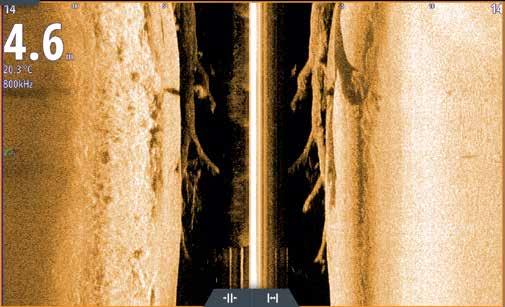
Productive areas to focus on include the sections of river just before and just after a sweeping bend, especially where fallen timber is evident, and along the base of sandstone cliffs which tower above the Murray here in South Australia. It pays to use sidescan on your sounder while motoring along the river, as you’ll often pick up submerged logs and rock bars not visible above the waterline. These areas are always worth investigating.
When I’m approaching some visible timber in the river, I’ll slowly drive past while keeping an eye on sidescan to determine the size and scale of the fallen tree. Older timber often has just the main trunk and main branches left, while a newer snag may have numerous branches with a warren of fine timber hidden underwater. Both snags will hold goldens, but how you approach and fish these two snags will be different. It’s a good idea to paint a picture of the scale of the snag underwater before determining whether you’ll cast spinnerbaits or hardbody lures, vertically drop vibes, or soak some baits.
LURE FISHING
We like to mix it up while fishing on the river, and we spend roughly half our time lure fishing, and the other half fishing with bait. Both are effective forms of fishing when targeting golden perch, but whether you fish with lures is often dictated by water clarity and whether you want an active form of fishing, or
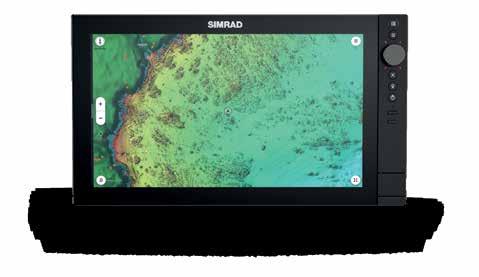
A Simrad screenshot showing a laydown that produced some good goldens.
whether you’re content to sit back and relax with a bait.
Lure fishing in our river systems can take many forms, but the two most widely accepted methods are trolling with hard-body lures, and casting at bankside structure. While trolling with hard-body lures can be done under the power of a small outboard, it is certainly a lot more effective under the power of an electric motor.
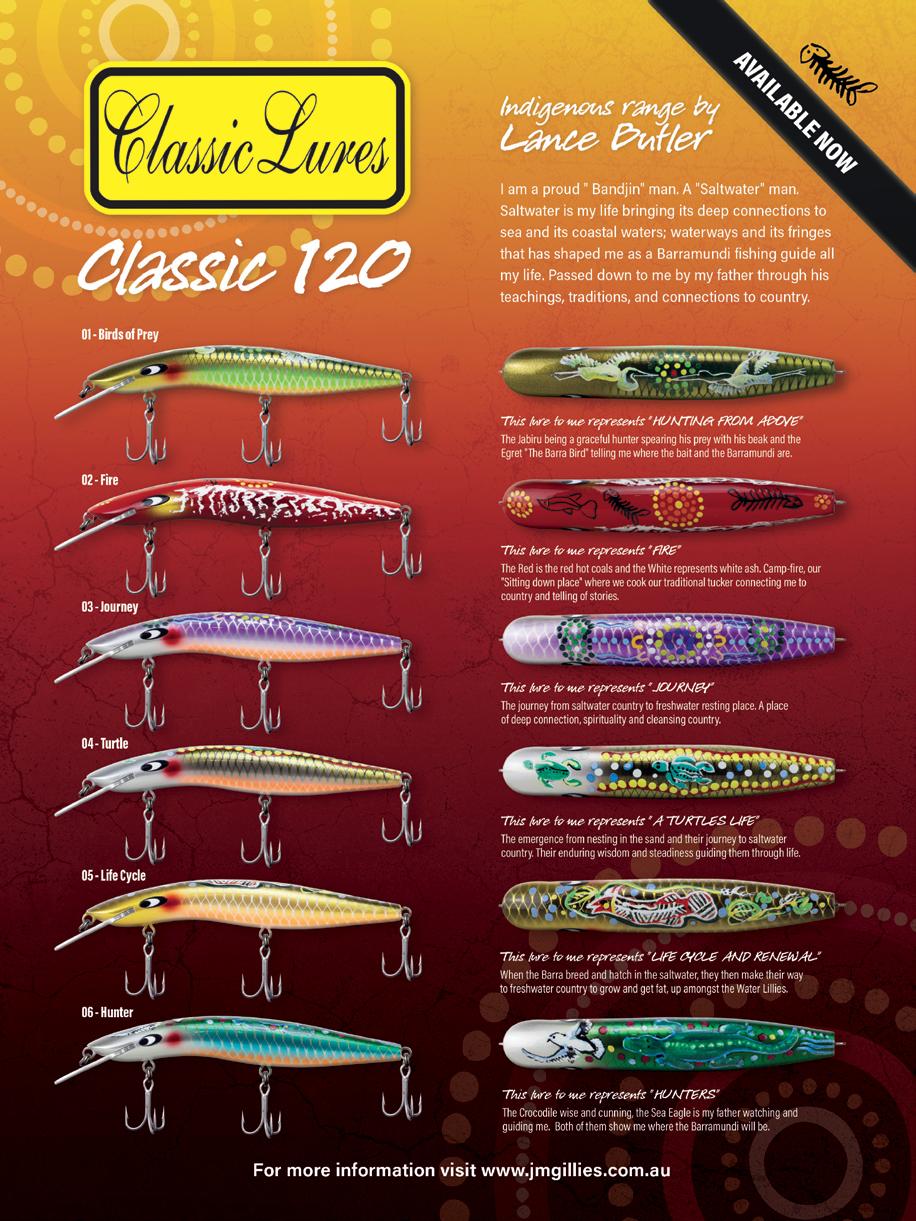
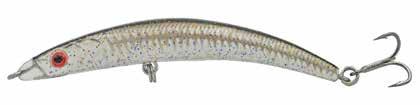
Diving hard-body lures in the 60 to 90mm size are ideal for goldens, with JJ’s StumpJumper 75mm, Halco Poltergeist 80mm, Classic Lures 90mm Dr Evil, and Daiwa Steez RMP cranks all proven hard-bodies. While the physical size of the lure is important, it’s the diving depth that is critical. Having a hard-body that can dive down to 3 to 4m on the troll is important, if that’s the depth you’re fishing in. Choose your lure to suit the environment.
If you notice a lay-down stump on the sounder, plan to drag your lures as close to this structure as possible, and similarly with rock bars, tree-root systems, steep river edges and cliff faces – anything that looks likely to afford cover for goldens is worthwhile dragging your lures past. This will mean that you’ll quite often be trolling quite close to the bankside. Expect to hook the occasional snag (or sometimes frequent snag depending on how heavy the terrain is), but if you’re not getting your lures down deep and next to the structure, you’ll be missing bites.
Trolling with soft hands helps to avoid getting hooked up in some snags;
when you feel your lure hitting timber, point your rod tip towards your lure as this offers some slack line for your lure to rise before coming tight again. Sometimes getting snagged is unavoidable, though, and this is where a lure retriever comes in handy.
The same lure selection can be used for casting towards the bank and nearby structure, and manually working the lure past the snag or down the tapering riverbank. For deeper snags, such as those laying away from the bank and sitting in 3m-plus of water, I prefer casting spinnerbaits to get the required depth.
Spinnerbaits are a great lure in the river, and ideal for casting tight into a snag
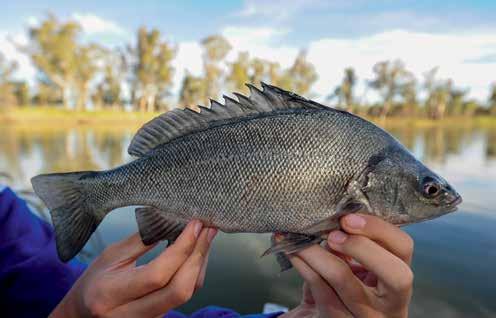
Finn Crawford with a dark coloured golden caught on a Halco Poltergeist 80.
Bright future for whiting
Fishing for King George whiting has a bright future with juvenile numbers the best they have been since 2021.
Our field surveys in late 2025 recorded better numbers of the popular species than in 2022, 2023 and 2024.
These survey results are great news given the popularity of King George whiting as a table fish which can be caught from a boat or the shore, and with simple gear.
The quality of fishing overall in Port Phillip has been outstanding since the removal of commercial net fishing in the bay in 2022, leaving more fish like whiting for recreational anglers.
Our annual surveys of baby whiting in shallow seagrass have been undertaken at several sites around the bay for over 25 years and have proved a reliable predictor of future catches.
These most recent results in Port Phillip are indicative of juvenile whiting numbers in other waters such as Western Port and Corner Inlet.
Once King George whiting begin maturing, they leave our bays for coastal waters where they spawn in winter, most likely off western Victoria and South Australia.
Whiting larvae then drift eastward for three months before entering Port Phillip and other bays in spring, when we conduct the surveys in seagrass beds. Westerly winds help drive currents that bring the larvae into our bays, where they take about two years to reach 27cm.
King George whiting only stay in our bays for a few years of their life so these fisheries naturally fluctuate depending on the number of larvae that entered several years prior. At about four years of age, most whiting have left our bays to complete their life in coastal waters.
and for working those deeper zones where a bibbed lure might struggle to reach the depth. There are some great spinnerbaits available on the market, and we’ve used TT, Bassman, and Tsunami with good results. I prefer Coloradobladed spinnerbaits in 1/2oz to 5/8oz for golden perch in our rivers. Remember to start the retrieve with a quick flick to get the blades spinning then slow the retrieve down to a slow roll – ensuring that the blades are still rotating.
Another style of lure fishing in our larger rivers which is super-effective is to use lipless crankbaits and metal vibes and fish them vertically among the timber. Use your electric motor to hold position next to a snag or carefully nose up to some timber with your outboard and drop these lures vertically into the snag. These lures are easy to fish with and can be worked vertically back to the boat with a lift and drop retrieve – recovering a little bit of line on each drop. You’ll feel the crankbait or vibe working when it transmits fine vibrations back through the rod tip, and in shallow water you’ll also hear the rattles inside a crankbait. Goldens will often inhale these lures on the drop.
BAIT FISHING
Fishing for goldens with bait – whether from the bank of a river or from a small boat – is very popular along most of our major inland rivers. Bait fishing in these
rivers is not overly complex and is one of the most relaxing forms of fishing available. Sitting under the shade of a river redgum while soaking a bait is uniquely Australian.
When fishing from a boat, I like to look for a snag or similar structure lying next to the bank, and again looking for 2 to 5m depth of water. When we locate some nice timber, I’ll approach the snag from the up-current side and will quietly tether the boat to a branch, which will allow us to drop baits next to this structure. I try to avoid positioning on the outside of a snag, as this edge collects the most current and is often less productive.
Instead, we’ll position the boat so that we are dropping baits on the up-current side of the snag, with the intention that the natural flow of water will direct our baits back towards the main trunk or centre of the snag. This is great for delivering a bait back to where goldens will be sitting, but you will inevitably lose a bit of tackle in the more complex snags.
Some good baits include freshwater shrimp, tiger worms, earth worms and yabbies. For the smaller baits of worms and shrimps, I prefer using a paternoster rig with two droppers using a size 1 or 2 baitholder hook on each dropper, and a 1oz or 1.5oz sinker, depending on the water flow.
For larger baits such as a yabby, I prefer using a ball sinker running down to a
single size 2/0 octopus or circle hook, and slowly lowering the yabby down through the snag and letting it sit just off the riverbed. If you let a live yabby crawl on the bottom, they tend to hide from predators.
When fishing from the riverbank, it’s a lot harder to place a cast (and more importantly to retrieve a cast) from among heavy timber. When fishing landbased, we’ll fan some casts from the bank until we start getting bites in a particular area, and then we’ll focus our attention there. You’ll soon learn if there are any unseen snags under the water, and you’ll eventually learn where to place casts. Set up some rod holders and fish with a couple of rods each to cover more area. A good bait fishing outfit in the river is a 4-8kg rod of around 6ft 5in and a 4000-sized spin reel.
There is a lot more sitting back and waiting for action when fishing landbased, and you will generally see more carp in the catch. When fishing landbased, we use shrimps and worms, but prefer using live shrimp caught from the river. Shrimp pots are a great asset and will provide plenty of fresh baits when shrimp are crawling and active.
That’s a quick overview of some of the tips and techniques we use in our inland rivers for golden perch.
I really enjoy the backdrop and relaxed style of fishing that our inland rivers offer.
The author with a golden perch caught on a live yabby.
Flatz Minnow
The Salty Crew Apex Perforated hoodie is extremley comfortable and breathable. It’s shape, fit and durability are also outstanding.
SALTY CREW
FATHOM TECH SHIRT & APEX PERFORATED SUN HOODIE
Words: Kosta Linardos Images: A Full Crew | Distributed by: Globe Australia | Web: salty-crew.com.au
The idea that fishing or boating clothes should be old, worn-out or purely sacrificial is outdated. Those days are well and truly over. We now have access to clothing that looks good, performs properly, and is designed specifically for the conditions we fish in.
SALTY CREW
One brand that continues to push that idea forward is Salty Crew. Last year I reviewed the Long Range bib and jacket, and I still wear that combination every time I’m out in the wet or cold. It’s affordable, comfortable, keeps me warm, clean and dry, and it removes the need to wear old, uncomfortable gear just because it might get dirty. That same philosophy carries straight through into Salty Crew’s fishing clothing. The word ‘technical’ gets thrown around a lot when it comes to fishing clothing. I don’t really see it as technical but fit for purpose. I’ve spent the past four months testing the new Fathom shirts and Apex Perforated sun hoodie, and I passed around some of Salty Crew’s other UV protection to contributors to wear. I don’t need four months to test clothing; however, a big part of the test when it comes to clothing is how it handles the wash, so the items we’ve reviewed have almost literally ‘been through the wringer’ (that saying comes from an old method of washing).
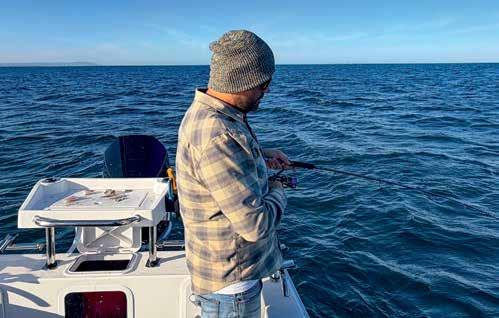
I’ve always been a fan of flannel shirts. Ever since I was a kid, flannies have been a staple for cooler weather fishing and general day-to-day wear. They’re warm, comfortable and easy to throw on. The problem is traditional
flannelette has some serious drawbacks. It absorbs water like a sponge, loses its shape and texture through washing, and eventually tears. Anyone who’s had the end of their sleeve get wet early in the day knows how uncomfortable that becomes for the rest of the session.
I was therefore keen to test out Salty Crew’s answer to the humble flannel, called the Fathom Long Sleeve Tech Shirt. It looks like a flannel, but it absolutely does not behave like one, and that’s a very good thing.
ON-WATER PERFORMANCE
The Fathom shirts are made from a mid-weight 190 GSM twill fabric with a DWR coating (durable water repellent, a treatment that causes water to bead and roll off rather than soak into the fabric)
rather than traditional flannelette. In real-world use, water actually does bead on the surface instead of soaking in. Spray, light rain or a wet gunwale doesn’t immediately turn the shirt heavy and cold, which is a huge improvement over a standard flannel.
Despite that performance focus, the fabric remains soft and comfortable. It doesn’t feel stiff or synthetic and wears more like a casual shirt than technical outerwear. The ripstop construction is another smart inclusion. Hooks are far less likely to grab and bury themselves in the material, which is something you only truly appreciate after years of dealing with traditional flannel.
FIT AND COMFORT
Fit is an area where Salty Crew has done an excellent job. The Fathom shirts are
The Fathom Tech shirt isn’t a flannie, water beads off it and it’s made from rip stop material.
properly shaped, so you don’t end up looking like you’re wearing an oversized, square-cut flanny from a discount store. They sit well through the shoulders and arms without being restrictive, and they look just as good off the boat as they do on it.
They’re genuinely comfortable enough to wear all day, whether you’re fishing, travelling or heading in for a meal after a session. I’ve had a few mates comment on fishing trips, with a healthy dose of sarcasm, “Oh, you’re dressed nice for today”, which is funny when you think about it, and it shows that in Australia we’re still in the infancy of fit-forpurpose or performance clothing for fishing. In the US, Japan and Europe, it’s par for the course and makes up a huge amount of turnover for tackle stores.
One of my favourite features on the Fathom shirt is the use of press-stud buttons rather than traditional buttons. The main shirt closure and chest pockets all use press studs (which are plastic and rust-proof), making the shirt quick and easy to take on and off, even with cold or wet hands. It’s a small detail, but one that makes a real difference in practical use.
There are two chest pockets, but it’s what sits behind the left pocket that really sets the shirt apart. Salty Crew has added a concealed, zippered inner pocket with a paracord pull on the zip. The pocket is lined with a soft felt or microfibre inner so it won’t scratch your phone, sunglasses or other valuables. I use this pocket constantly for my sunnies, keys or wallet.
It’s particularly useful when launching and retrieving the boat. Leaning over the boat at ramps is exactly how people lose keys or phones, and having a secure, zippered pocket that’s easy to access provides peace of mind – I know whatever is in there is secure.
From a seasonal perspective, the Fathom shirts are extremely versatile. I’ve worn them throughout spring, and they’re also ideal in the early mornings and evenings during summer. They layer well over a T-shirt, work as a stand-alone top in cooler conditions and are a far better option than a hoodie when it’s cool but not cold.
They provide warmth without bulk and remain practical around water,
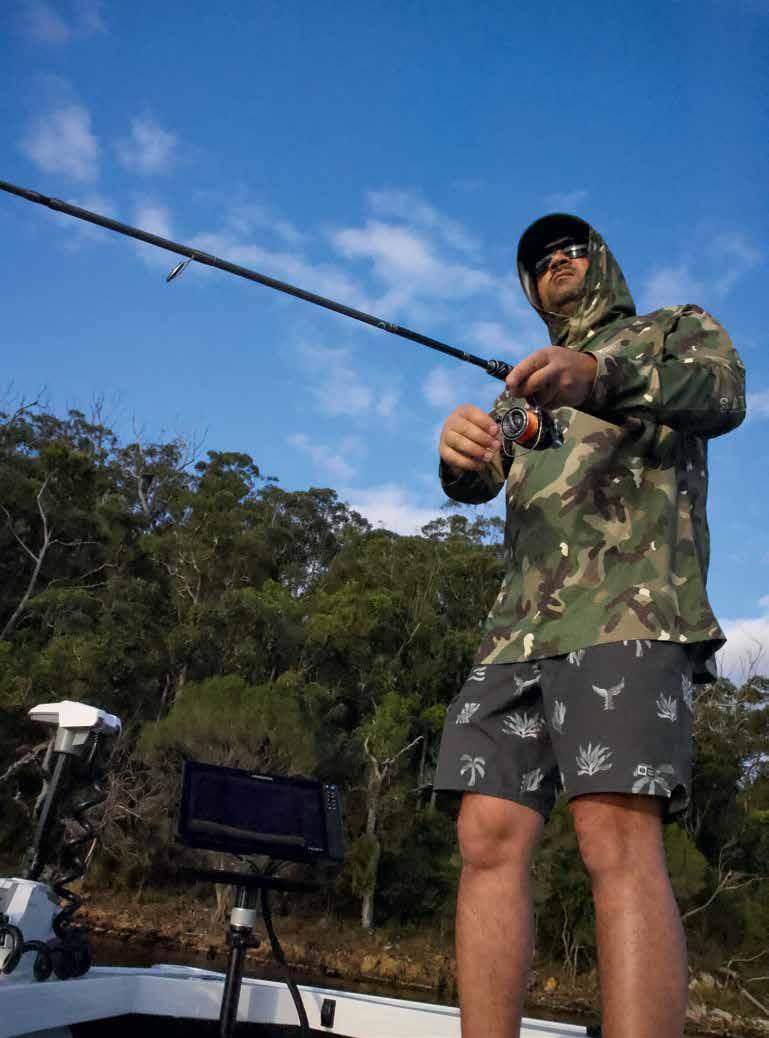
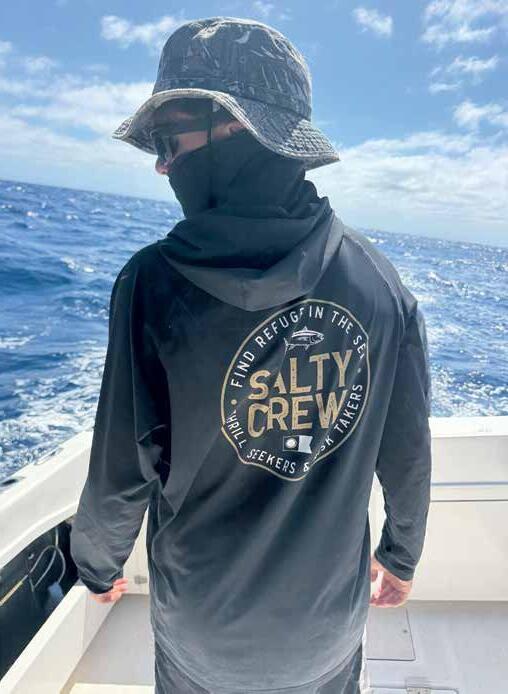
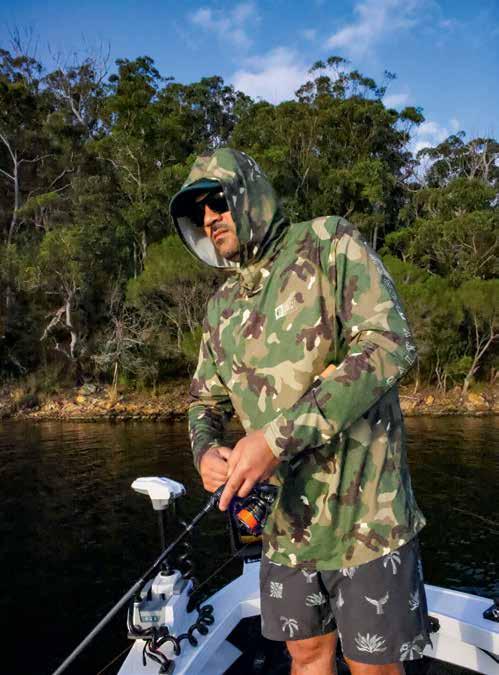
The UPF50+ hooded sunshirt with built in face mask is perfect for those who want full protection.
The Fathom Tech shirt is great for cool mornings and evenings and is a fishing friendly fit.
shown with optional heavy duty mount
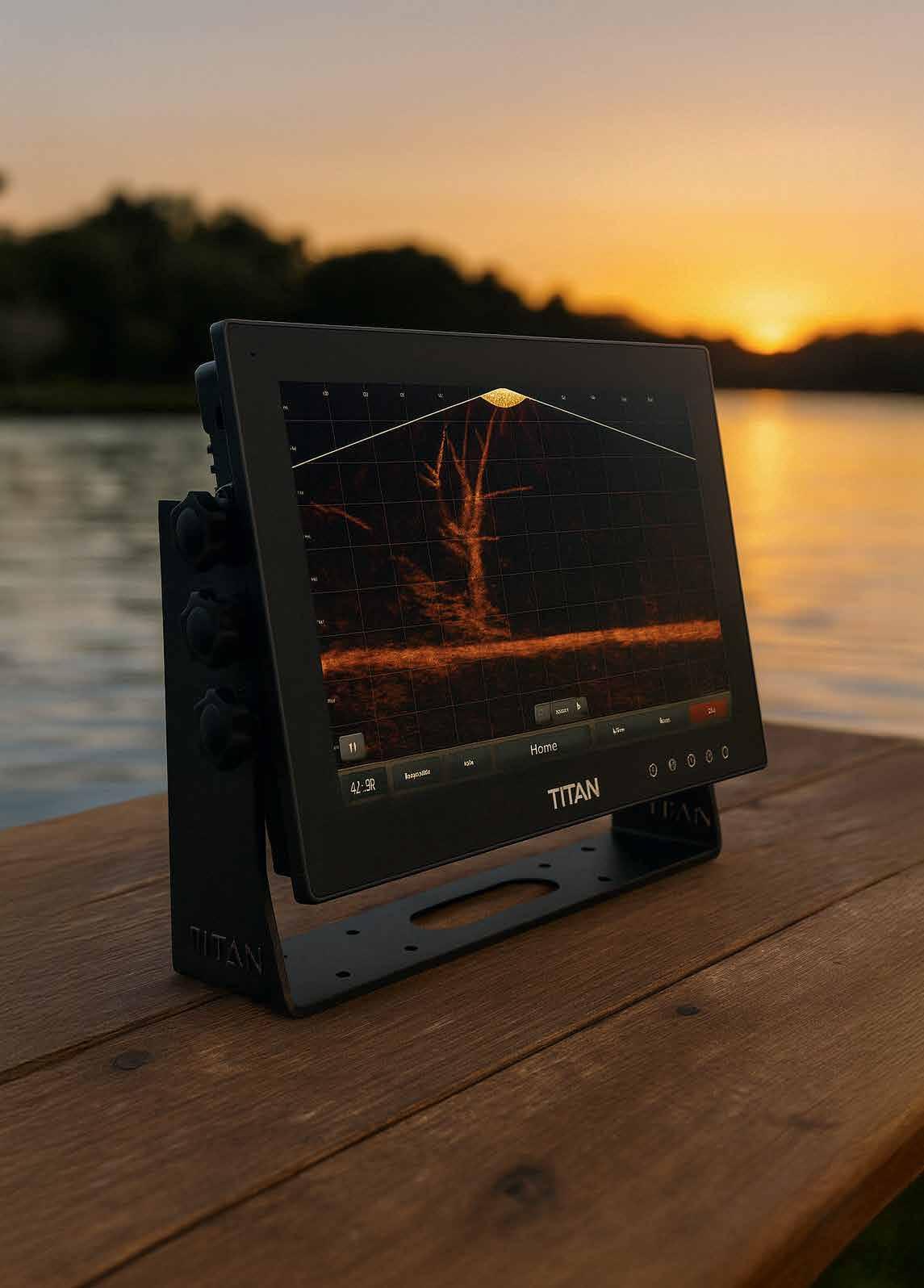
TITAN MARINE MONITOR – THE AFFORDABLE WAY TO BIGGER VISION
The next evolution in marine electronics designed to provide fisherman with an affordable solution to enhance their live sonar experience.
The Titan features a durable CNC-machined aluminum body and an IP67 waterproof rating.
With a stunning 1920x1080 FHD display, 1300 nits of brightness, and polarized IPS glass, the Titan ensures superior visibility in all lighting conditions. Its 10-point touchscreen interface provides smooth, responsive operation, making it easy to control and monitor your marine systems while out on the water.
which is exactly what you want from fishing clothing.
Durability has been excellent. I was given two shirts to review and have worn them a lot and washed both shirts at least 20 times, and they’ve held their shape, texture and colour perfectly. The fabric hasn’t fluffed up, softened excessively or lost its structure, and they still look the same as new. That longevity matters when you’re investing in clothing designed to be worn regularly on the water. If you’re looking for a versatile, all-season shirt that actually works for fishing without looking like workwear or cheap flannel, there isn’t much else like this on the market.
APEX PERFORATED SUNSHIRT
The Apex is a pretty special sun hoodie and not your average UV protective hooded shirt. It’s perforated, which you can’t really see in an image, but you feel it when you’re wearing it. It feels soft, and the breathability of the micro-perforations makes a real difference. Any good angler who fishes in an open boat will know how much the sun takes it out of you on a long day on the water. UV shirts help, but lesser-quality models aren’t always breathable and you can feel sticky in them. The Apex is without doubt the best hooded sunshirt I’ve worn. Little things such as two snap buttons at the neck are a nice touch and the hood provides a lot of coverage, helping to block light coming in through the sides of your sunnies. The perforation in the hood is also notable – it doesn’t get hot or itchy as it provides air flow. I truly love the Apex and have gone on to buy more, as it’s hard to go back to other styles now.
GEAR MATTERS
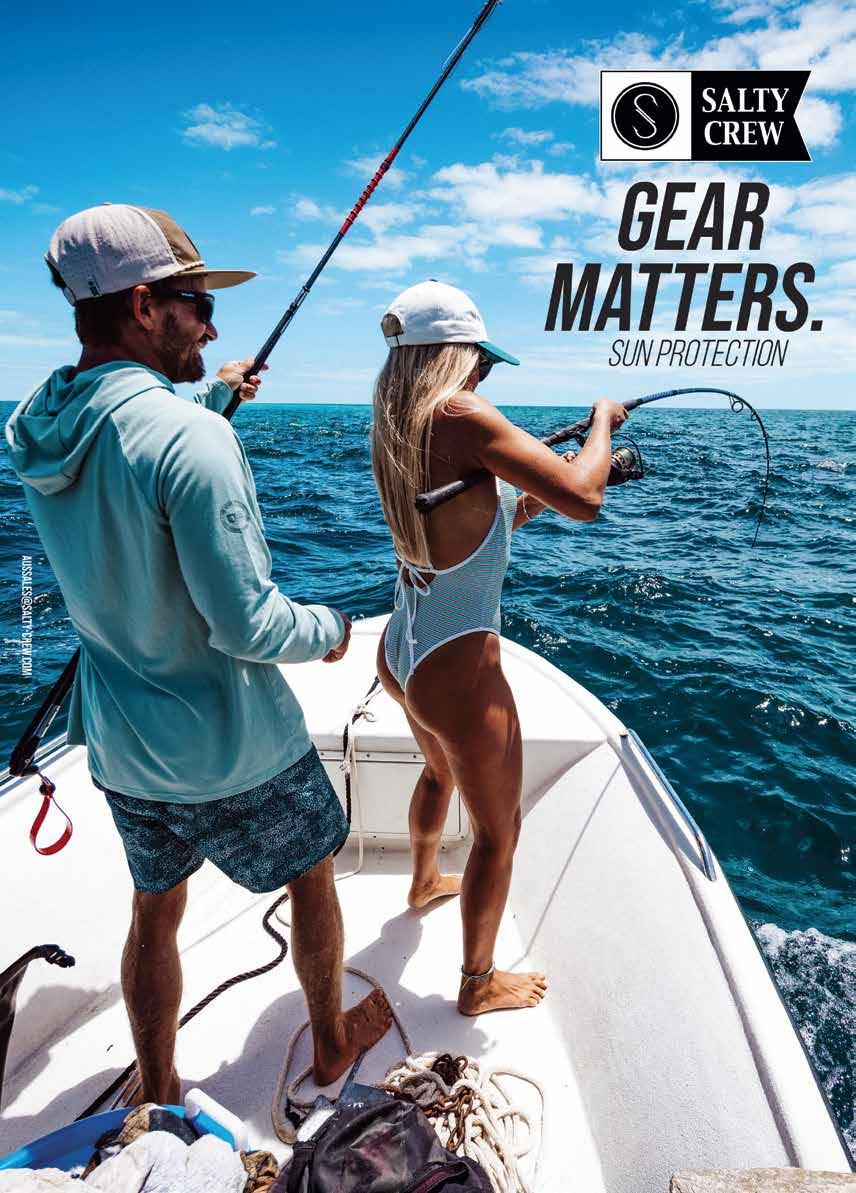
It’s easy to say you don’t want to spend money on fishing clothes, but when clothing is designed with both form and function in mind, the value becomes obvious. If it allows me to fish for longer and remain comfortable while also providing great durability, it’s a no-brainer. Yes, you’re going to spend a little extra on proper fishing clothes, but after you buy the boat, the car and all the gear, it’s a small price to pay to keep you on the water longer and waking up the next day fresher. Salty Crew’s current tagline is ‘Gear Matters’, and we couldn’t agree more. The shirts don’t feel like a compromise. They look good, perform on the water and are comfortable enough to wear all day.
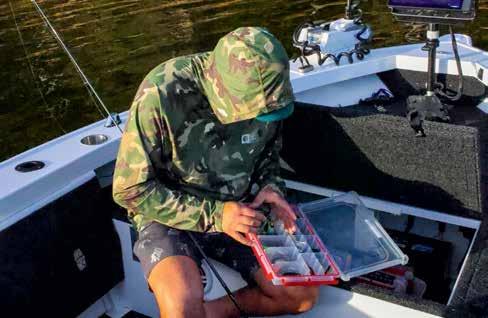
The arm length, hem length and fit allow for easy fishing all day in an open boat.
The hood provides full protection and doesn’t constantly slip over your shoulder when it’s off.
DAIWA TATULA 200H
Words & Images: Remi Hagge | Distributed by: Daiwa Australia | Web: daiwafishing.com.au
Targeting Murray cod and barramundi requires different presentation depending on the water you’re fishing, the bait they’re feeding on and a number of environmental factors. But both species often require big baits such as wakebaits, glidebaits and swimbaits to motivate them to strike. This tactic is nothing new but remains a staple and effective technique for a range of inshore species. When I say big baits, I’m talking swimbaits pushing nine inches and beyond, often tipping the scales north of 170 grams. Launching that kind of weight with accuracy and control has traditionally meant resorting to rods that feel more like broomsticks than precision fishing tools. Power, absolutely. Feel, not so much. As these techniques grew in popularity here in Australia, our local manufacturers and designers refined the gear and Daiwa has provided some great examples of that. One example I recently tested is the 23 Daiwa Tatula swimbait series.
This range represents a new generation of heavy baitcasting rods, purposebuilt for oversized lures but without sacrificing sensitivity or balance. Rated
extra-heavy, the Tatula 762XHFB-SB delivers enormous stopping power, yet retains a surprisingly responsive action. The tip section stays sensitive and alive, allowing you to work big baits effectively, while the lower third of the blank loads progressively yet locks up with serious authority when it’s time to set the hooks on a metre-plus fish. It’s rare to find a rod capable of launching 6-9in swimbaits comfortably while maintaining genuine feel through the blank but this does exactly that.
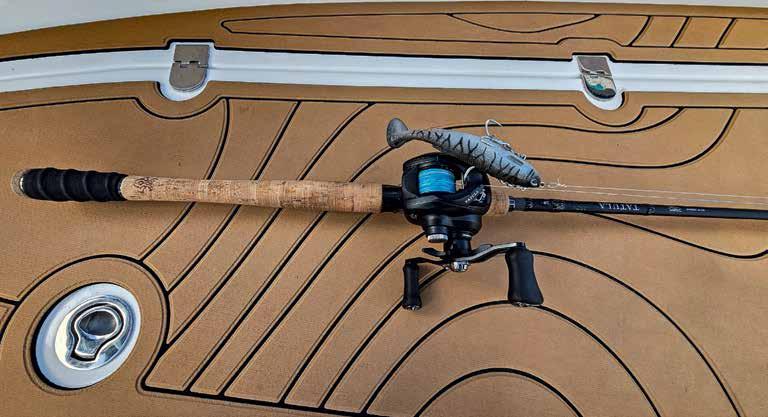
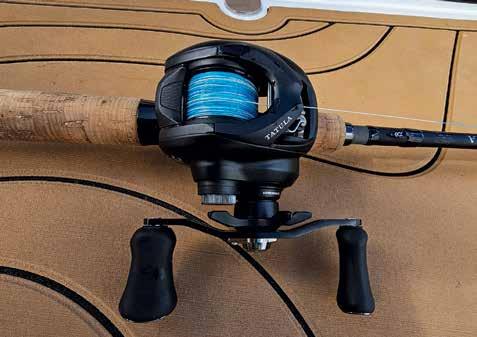
25 TATULA 200H
I opted to pair the rod with the all-new 25 Daiwa Tatula 200H, a reel designed with a clear focus on fluidity, strength and durability, and – importantly –engineered with Australian conditions front of mind. Let’s be honest, our Murray cod and barramundi are brutal on gear due to the heavy loads and drag pressure used when fishing big baits. Add relentless humidity, red dust and extreme heat in the north of the country and freezing cold temperatures in the south, and durability becomes an important aspect in this style of reel.
The 25 Tatula 200H builds on Daiwa’s proven platform but with significant advancements. Most importantly and instantly noticeable on the water is how the reel incorporates Hyperdrive Digigear, T-Wing System (TWS) and Magforce braking, but with notable upgrades where it counts. Drag output has been beefed up to 6kg, providing serious stopping power for hard-fighting barra and stubborn cod buried in timber. A larger 38mm spool offers increased line capacity up to 140m of PE4 –ideal for throwing heavy braid and maintaining control around structure.
One welcome touch is the upgraded handle assembly straight out of the box. Larger grips and extended handles provide excellent leverage and comfort under load. There’s no need for aftermarket upgrades here, it’s built (as Daiwa says) ‘ready for battle’. After months of testing, I can confidently say Daiwa’s claim holds weight. This reel feels tighter, more refined and noticeably more rugged than previous iterations.
ON THE WATER
Over the past few months, I’ve had the chance to put the 23 Tatula 762XHFBSB and 25 Tatula 200H through their paces chasing barra in the north, and to say I’ve been impressed would be an understatement.
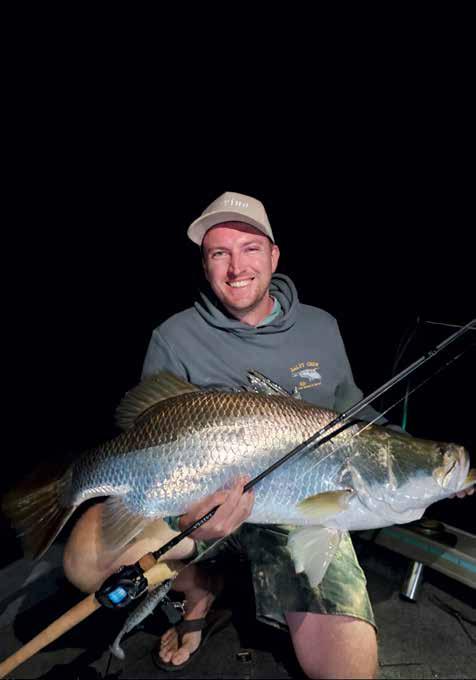
This pairing is beautifully balanced. From flicking smaller 5in prawn imitations tight to heavy structure, to launching 6-9in swimbaits across open water in the lake, the combo handled everything we could throw at it without breaking a sweat. In true barra fashion, we saw plenty of fish but convincing them to commit was another story. When the bite window finally opened late one evening, the session turned electric. Several quality fish hit the deck, with my best stretching the tape to a magical 110cm.
Throwing the big paddle tails was effortless with this set-up. Once the hooks found their mark, the fight was controlled and composed. The upgraded tournament drag delivered silky smooth pressure throughout, with no stuttering and no jerkiness, even with the drag pushed close to locked. The rod’s parabolic action absorbed violent head shakes both in and out of the water, while still offering more than enough authority to steer the fish clear of trouble.
What stands out most is how light and responsive the rod feels in hand, despite its ability to cast serious weight. Long sessions casting oversized lures become far less taxing, and the added sensitivity means you stay connected to your bait at all times.
TATULA
The 23 Tatula swimbait rod and 25 Tatula 200H aren’t just incremental upgrades; they represent a genuine step forward in heavy baitcasting gear.
For anglers chasing arguably Australia’s hardest-pulling inshore predators, this combo delivers effortless casting of larger baits, true sensitivity in an extraheavy platform, smooth, powerful drag performance and durability suited to harsh Australian environments.
Big baits demand serious gear but that no longer means sacrificing feel or finesse. Daiwa’s latest Tatula pairing proves you really can have both.
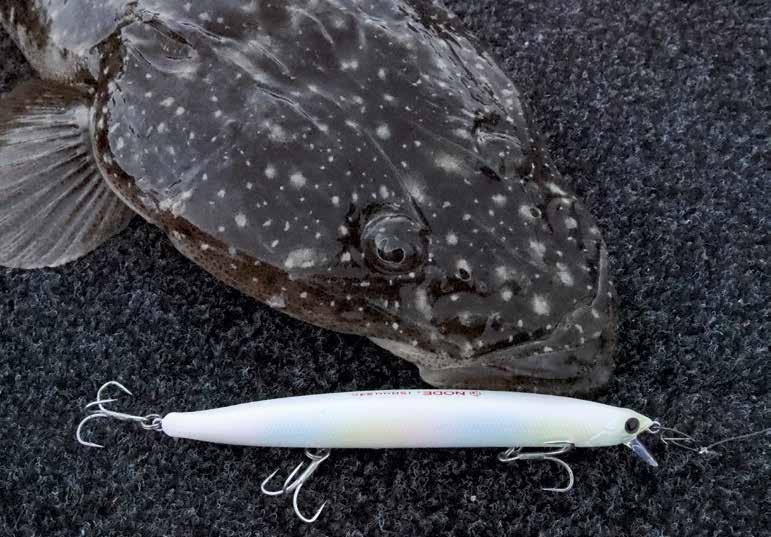
The Tackle House Node first gained serious traction on the Gold Coast flathead scene. It was originally designed as a 130mm jerkbait for Japanese sea bass. Anyone serious about big dusky flathead quickly realises how effective sea bass lures are for flathead. Anglers are finally understanding that no jerkbait is too big. Alongside the Node, other modern long-profile minnows are changing how many big duskies can be caught in a session, with far better hook-up rates.
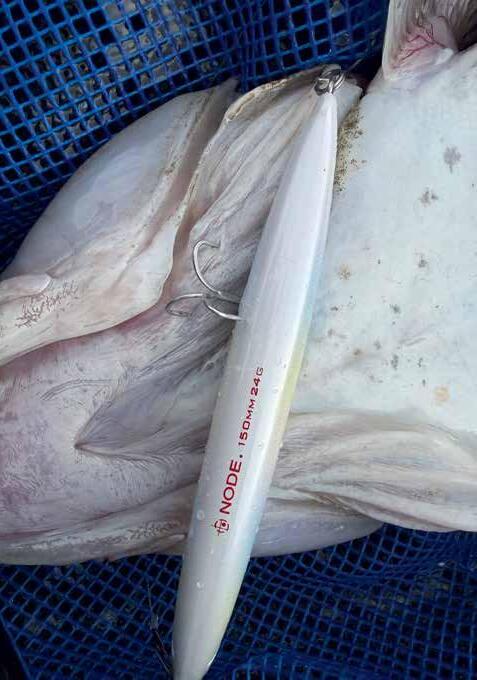
I was therefore excited when I was sent the new Node 150F to review. I’m a huge fan of jerkbaits for almost any species, especially flathead. There are plenty of bad jerkbaits on the market and, while many look similar, it’s the small details that separate the great ones from the average. The Node 150F has all the right ingredients in a jerkbait for luring, hooking and landing big duskies.
It comes in a strong range of colours well suited to flathead, with patterns that imitate their natural prey such as mullet, whiting and tailor. It’s fitted three high quality treble hooks and split rings and is ready to go staright out of the pack. What we learned through the review process is that a 150mm lure doesn’t exclude smaller fish – a common argument when discussing flathead. That belief can turn anglers off who want numbers. Over the past few years I’ve completely changed how I target flathead. I’ve caught enough that I never need to catch one under 65cm again. Through specific targeting and bycatch I’ve had my fill. I’m now purely chasing big fish – anything over 80cm – and, most importantly, unicorns over 95cm. This shift has led me to bigger lures, heavier line and leader, ignoring smaller fish and being prepared to go days without a bite. It’s trophy hunting. While I’m casting bigger lures, I’m also
placing serious focus on hooks, hook placement, casting distance and, of course, action. The longer the cast across a flat, the more water I cover and the less chance I have of spooking bigger fish. The Node covers all the traits I want in a lure for targeting big dusky flathead.
The Node is a slim-profile jerkbait, almost cigar-like in shape, and features an outstanding tungsten cast weight transfer system known as the K-Ten system. It’s an internal magnet-assisted weight transfer and centre-of-gravity system built into the lure body. The magnets and weights shift during the cast and retrieve to improve distance, balance and action, making the lure fly further and straighter. It rockets into the wind like it has gunpowder behind it. It’s extremely responsive to rod work. Worked aggressively, it tracks perfectly and darts hard from side to side. With
subtler rod input it produces a tight wiggle with excellent vibration. You can twitch it or drag it across the sand on a flat, where it will float back up thanks to its high buoyancy, keeping those three trebles clear of weed.
ON THE WATER
I prefer a more aggressive approach with long pauses, and this is where most hits come from. At 24g it’s not a lure for bream outfits. It needs a PE2 setup with 16–20lb leader at a minimum, or you’ll eventually suffer bust-offs during the cast. Years of testing have shown me flathead aren’t leader-shy, so rig for the lure just as much as the fish. More big flathead have been lost to light leaders and poor hooks that haven’t been upgraded than almost any other reason. They shake violently and, in shallow water, will breach and thrash like a barra. That head shake dislodges hooks.
The three-treble system on the Node provides a very solid hook-up. In most situations the lure turns on its side and runs across the front of the fish’s mouth, with at least two hooks firmly pinned. This greatly reduces the fish’s ability to throw the lure, keeps the leader clear of teeth and gill rakers, and slows its breathing, reducing its ability to fight hard. The Node not only gets bites, but it’s also an ultra-safe presentation for targeting big fish that are easy to lose boat side. I’m generally fishing in under 60cm of water, so there’s a lot that can go wrong.
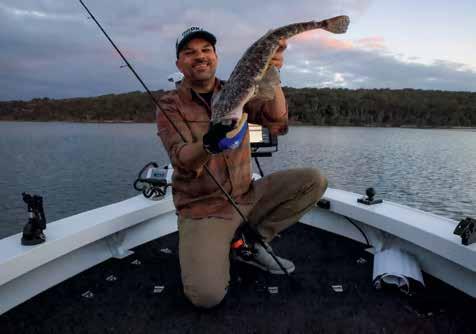
During testing I caught many fish in the 40s, 50s and 60s, and finished with a 70. I
didn’t get the fish I truly wanted, but the Node 150F now holds a permanent place in my tackle box for targeting big flathead. I don’t think it will be long before I land a proper trophy on it. It’s a joy to use and highly effective.
The Node will also make for an excellent lure for casting for mulloway in rivers or the surf, and I wont be surprised if I catch one on it while targeting flathead. It may not be the cheapest jerkbait on the market sitting at around $45, but you certainly get a lot of bang for your buck when you buy any Tackle House product. I rate this as one of the best jerkbaits that’s ever come through the Hooked Up office.
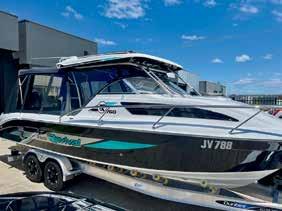
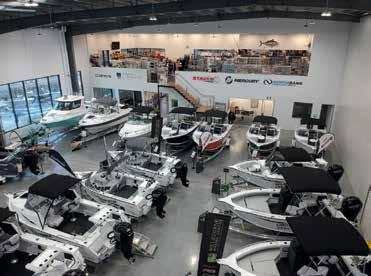
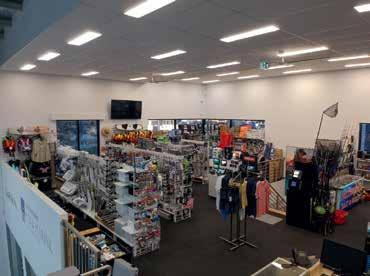
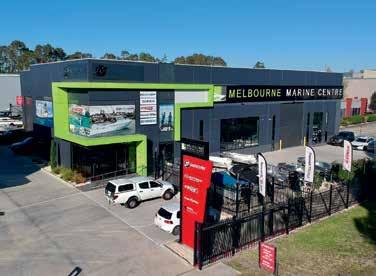
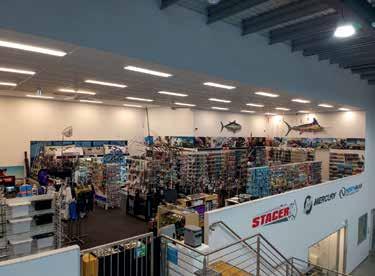
Melbourne Marine Centre is a true one-stop destination for boaters who want quality gear, expert advice and professional service under one roof. As authorised dealers for Stacer and Northbank boats and Mercury outboards, the team can match you with the right package whether you’re upgrading or starting fresh. Inside the full showroom you’ll find leading marine electronics from Garmin, Simrad & Lowrance along with an extensive range of boating parts and accessories to suit every setup. There’s also a well-stocked fishing tackle store, plus a six-bay workshop offering servicing on all makes and models and everything from fitting new electronics through to complete custom boat fit-outs