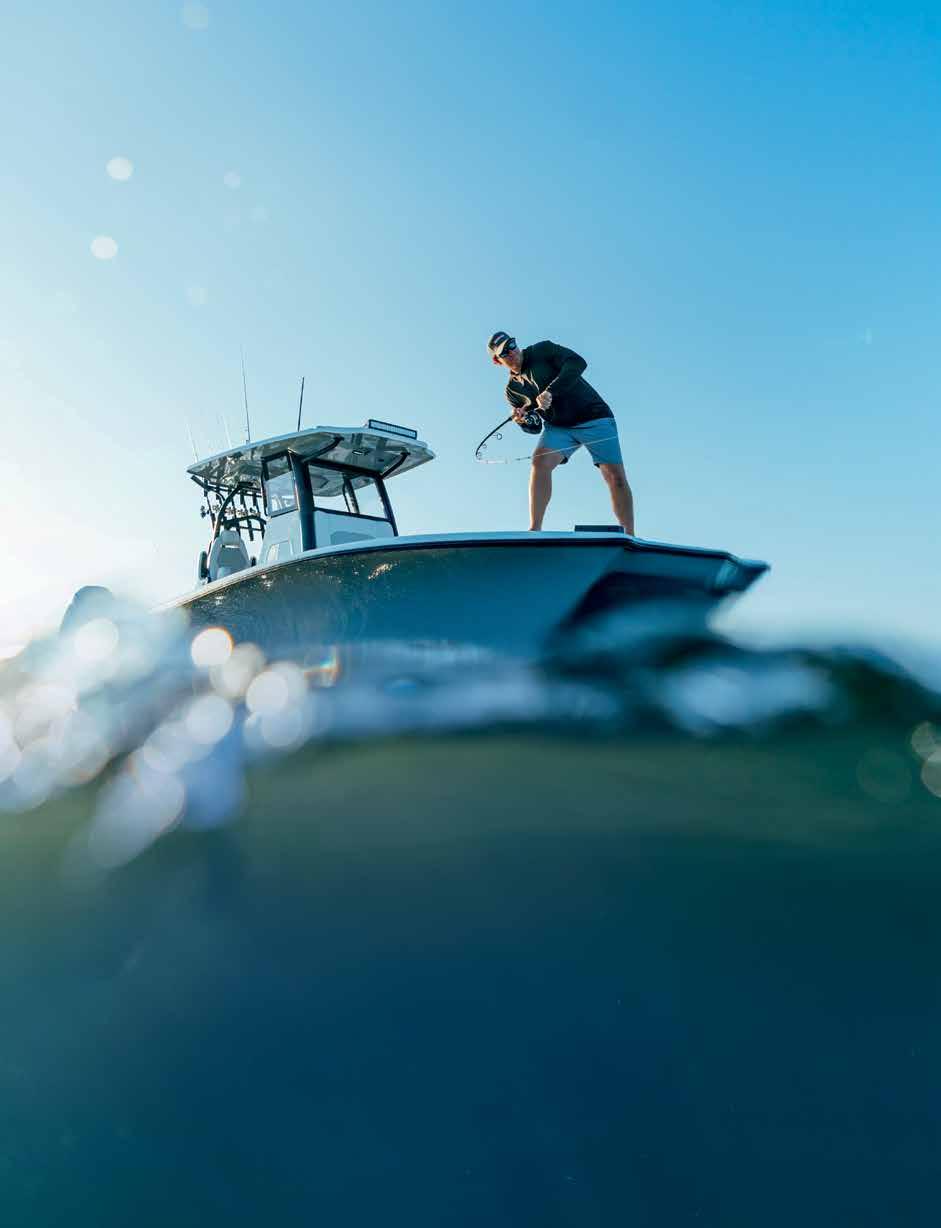
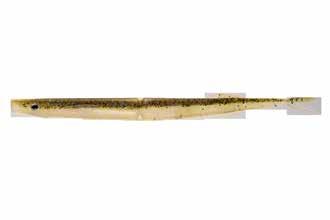
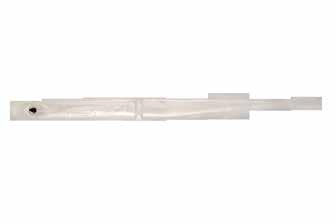
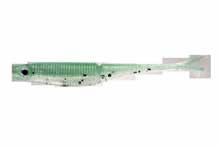
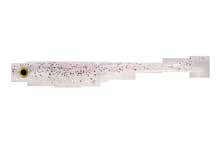
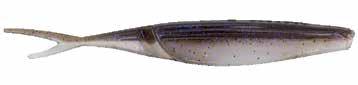
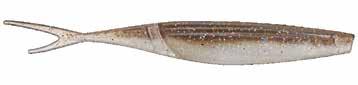
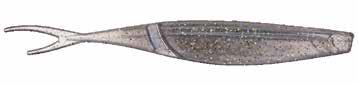
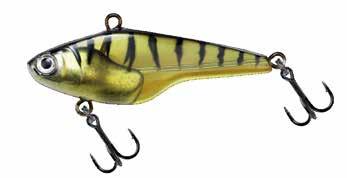
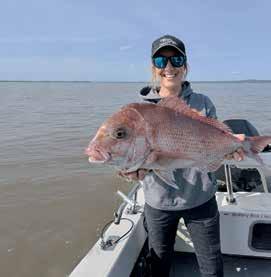
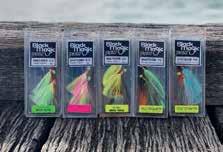
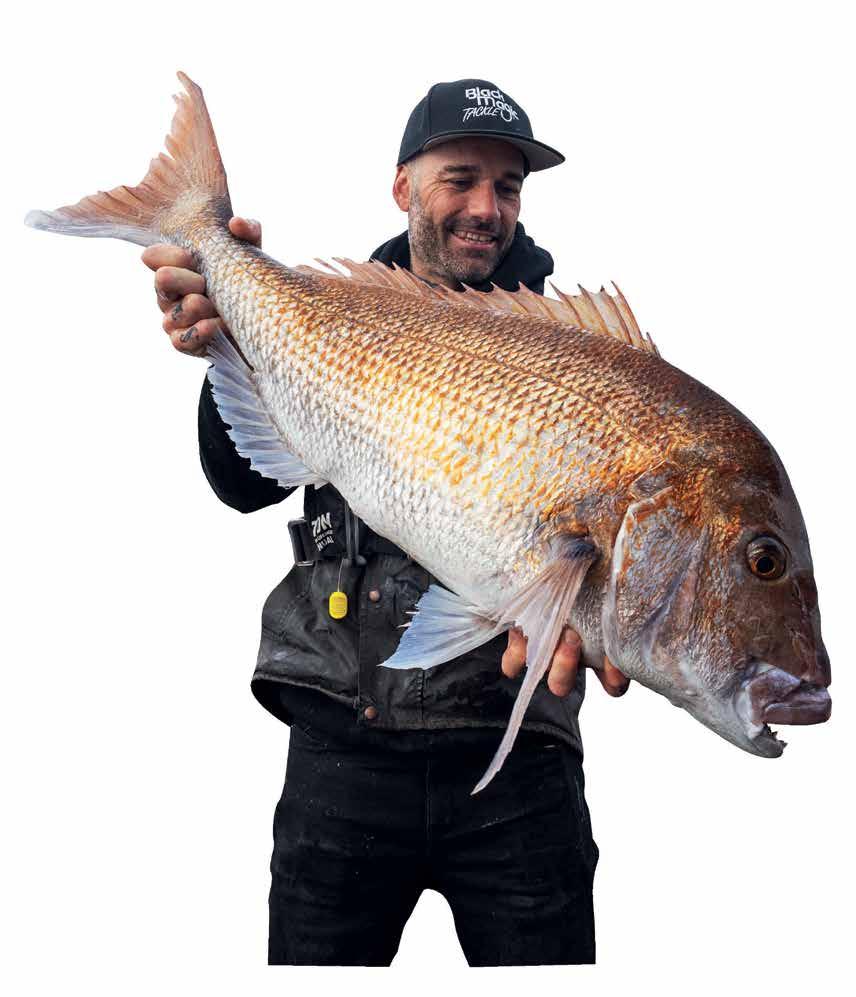
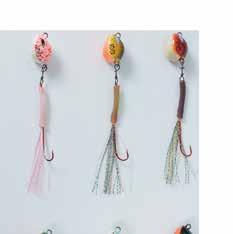
Your favourite range of soft plastics and jig heads just got better with new shapes, colours and sizes added to the range.
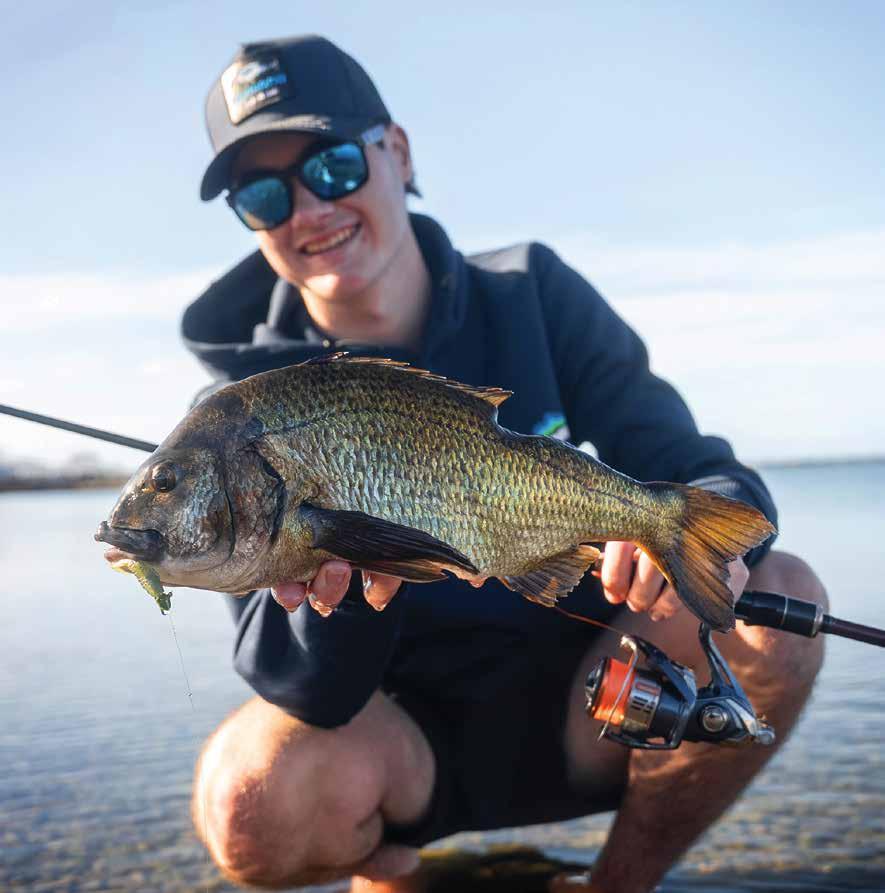
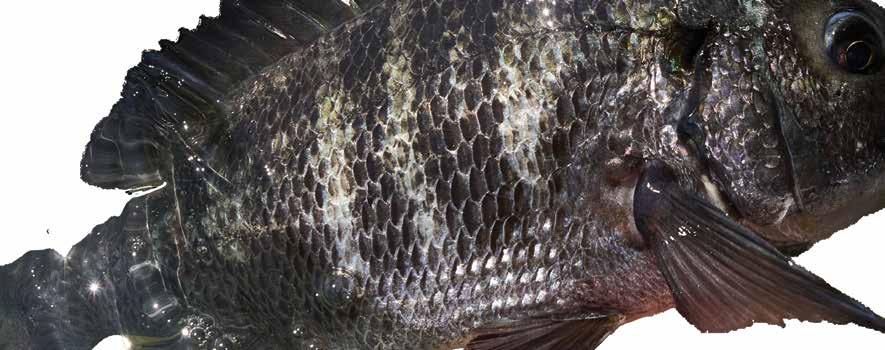
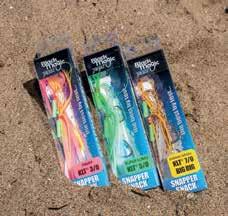
Designed in Australia by the team at Daiwa Australia, the Bait Junkie range of soft plastics and jig heads are perfectly suited to your local species and conditions. All lures are tested locally to ensure the perfect action and posture on the drop/at rest is achieved. From Bream to Bass, Barra to Snapper and Jacks to Cod there is a lure in the range that will draw the fish out of structure and entice a bite when many others won’t.
Check out the range at your local Daiwa Dealer and tag @baitjunkieo cial to be featured.
NEW BAIT JUNKIE SHAPES HAVE ARRIVED!!
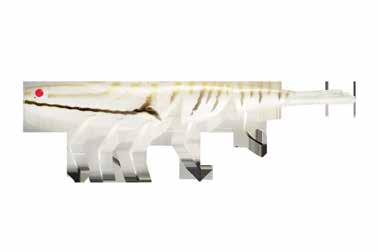
7” PRAWN
395 FLICK
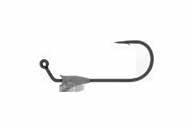
COVERT JIGHEAD
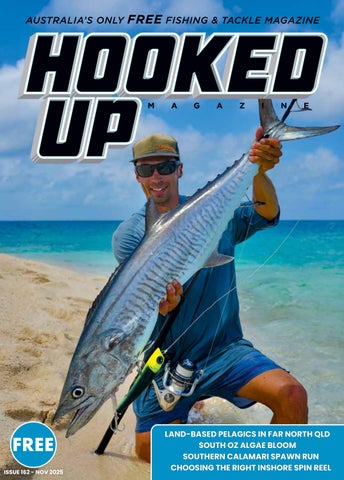
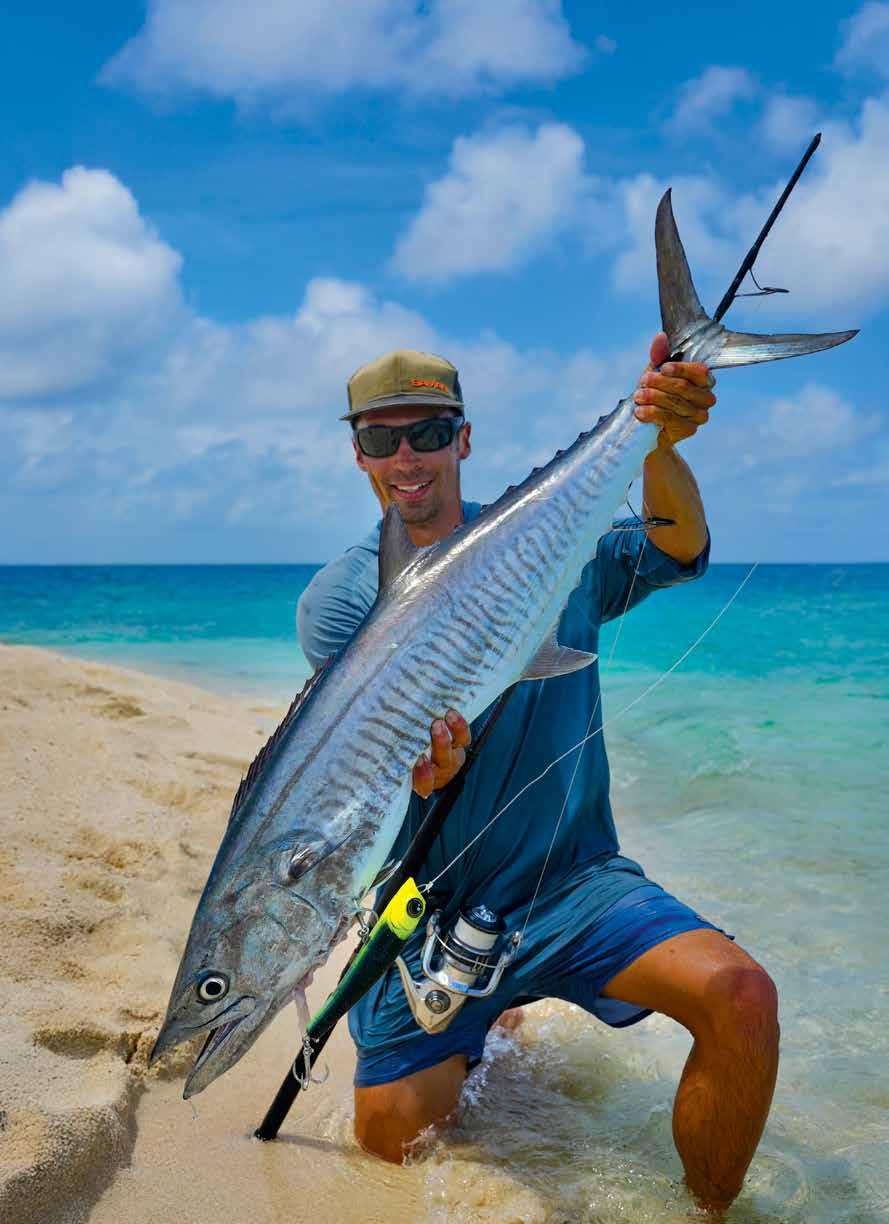
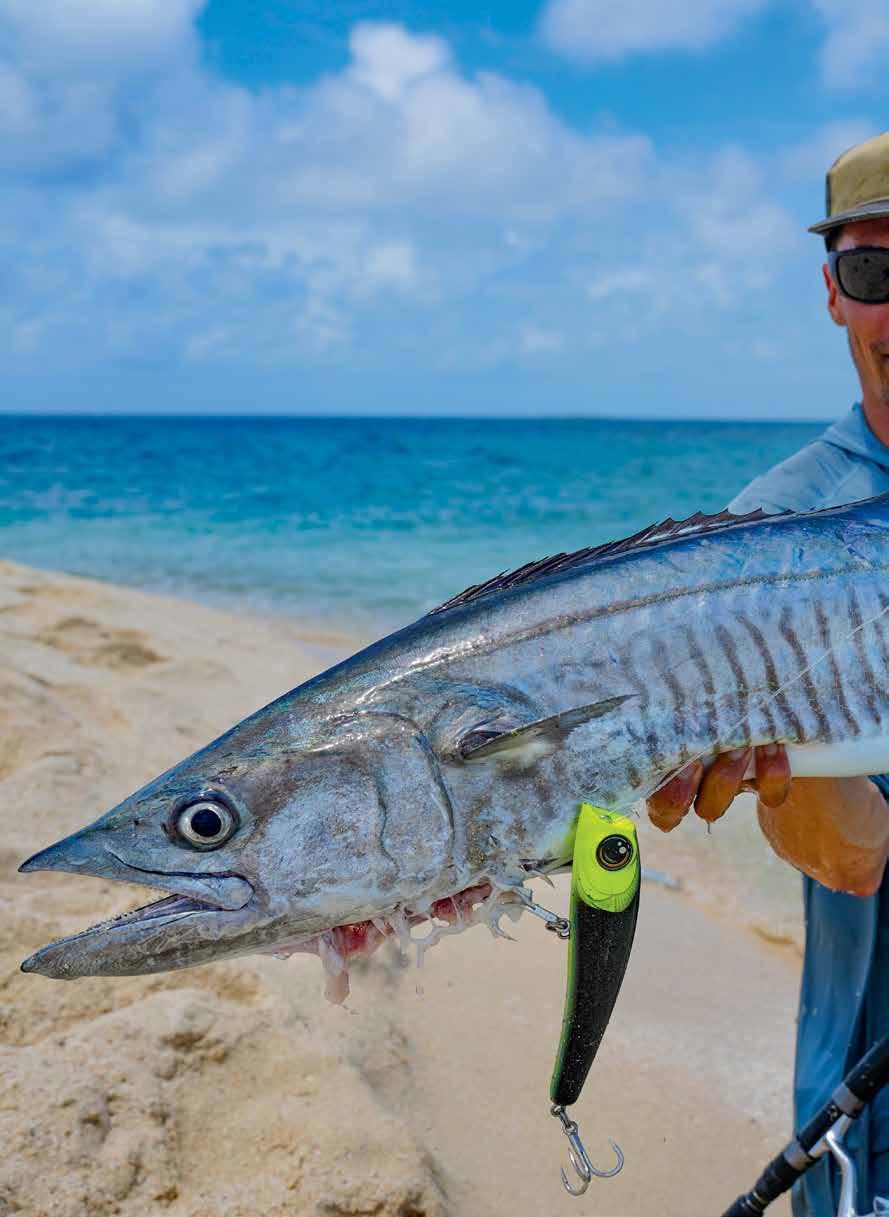
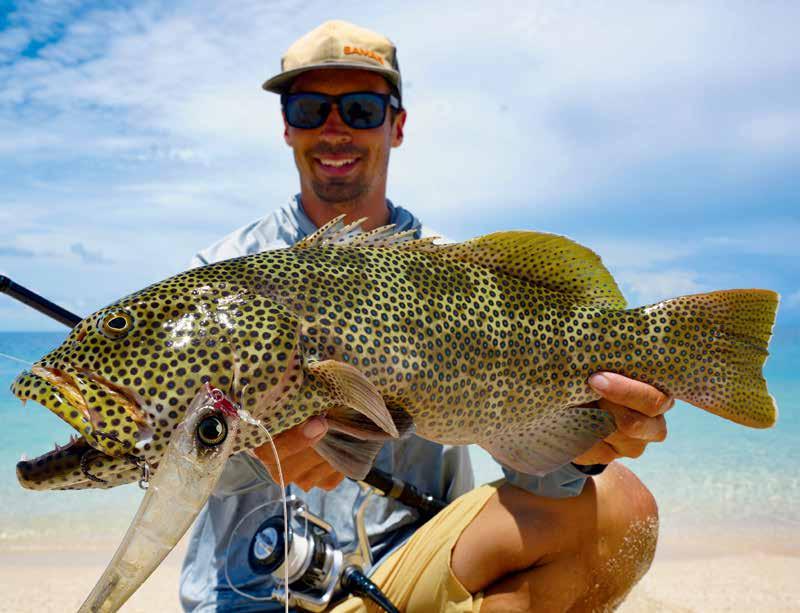
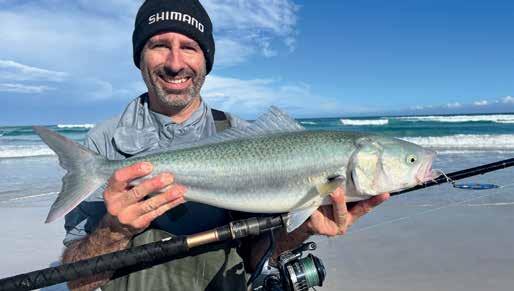
ON THE COVER: Colby Lesko with a big Spanish mackerel taken off the beach on a popper.
IT’S HEATING UP
In this issue we’ve got a heap of news with some awesome new products dropping. After last month’s story on hover strolling, the industry has clearly taken notice, with new strolling plastics now hitting our shores and even more terminal tackle expected by next month’s issue. Many of the reels and rods launched at the AFTA Trade Show are also arriving in stores this month, so it’s a great time to visit your local tackle shop and see all the new gear we’ve been writing about in the flesh.
In this edition, South Australian angler and marine aquaculture expert Jamie Crawford has put together an insightful piece on the ongoing algae bloom affecting SA’s coastal waters.
Colby Lesko delivers some top-notch advice on chasing big pelagics from the shore in northern Australia. I’ve also written a how-to on targeting the big southern calamari during their peak spawning run – which is firing right now in late spring here in Victoria – and I break down how to choose the right inshore Shimano reel for your fishing style.
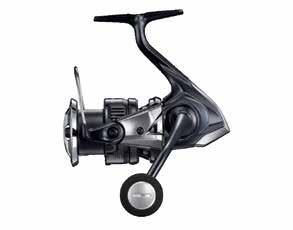
We also take a close look at the new 500-size Shimano Vanford FA – a completely new size in the world of spin reels and one that’s sure to get plenty of attention.
Enjoy this issue, and here’s to calm seas, plenty of fish, a cracking end to spring and an amazing start to summer.
Be excellent to each other.
Kosta Linardos. Editor-in-Chief
CONTRIBUTORS
Jamie Crawford, Colby Lesko, Rob Gee, Remi Hagge, Adam Hewson ADVERTISING info@hookedup.com.au
CUTTING-EDGE FEATURES FOR SMOOTH, POWERFUL REELING.
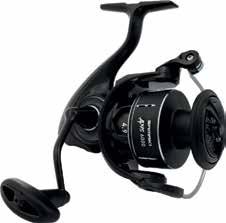
The Shimano Nasci FD delivers high-end performance in a versatile, user-friendly reel. With features like INFINITYDRIVE, ONE-PIECE BAIL, and ANTI-TWIST FIN, it offers smooth power and reduced line trouble across both fresh and saltwater. The Nasci FD suits everything from bass and trout to seabass and light shore jigging.
M c LURES MOGUL 9
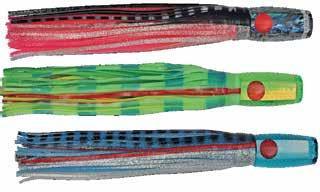
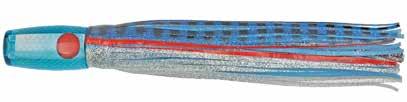
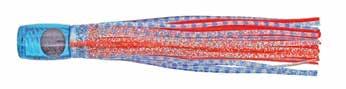
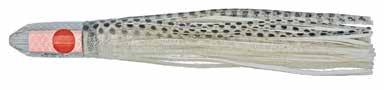
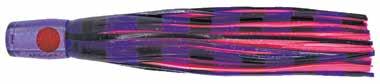
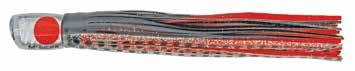
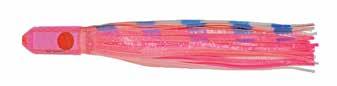
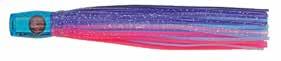
Designed and built in Australia to the highest standards, the McLures Mogul 9” is a deep-running, heavy cup-faced skirted lure that’s all class. Its head features four jet holes that create an impressive bubble trail, ensuring maximum attraction in any trolling position or sea condition. Each lure is crafted with near-indestructible resin heads, Red Crystal 3D eyes, and premium skirts combining a UV over-skirt with McLures’ exclusive “Luminite” under-skirt, which glows in the dark. Available in 12 stunning colour combinations, including glow, tinted, and Kauri Shell heads, the Mogul measures 11.5” overall, weighs 165 gm, and is built to tempt marlin, yellowfin, and southern bluefin tuna.
HINGE MINNOW
YO-ZURI
HYDRO MINNOW LC
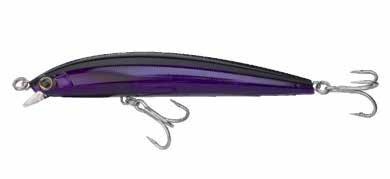
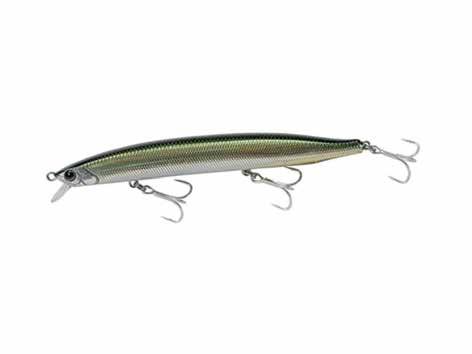
The Yo-Zuri Hydro Minnow Long Cast Floating is built for anglers chasing fast-moving pelagics from the beach, rocks or boat. Designed to cast long and true, even into a stiff headwind, it features Yo-Zuri’s advanced Weight Transfer System and a tough ABS resin body to handle punishing strikes. Equipped with 3X trebles and HD split rings, this lure can take on tuna, mackerel, GTs, mulloway and more. It swims with a tight wiggling action at 0.6–0.9m and is available in 150mm (34gm) and 170mm (48gm) sizes with seven proven colour options, including the returning favourite, Black/Purple.
tacspo.com.au
Perfect for blind casting or presenting to fish visible on forwardfacing sonar, the Yamamoto Hinge Minnow is built to deliver the ultimate rolling minnow action. Featuring a hinged tail and individually weighted top and bottom sections, it achieves an ideal rate of roll even on a straight retrieve. Shoulder-length flanges slow its movement to keep it in the strike zone longer, while the carefully tuned weighting gives it a natural fall and subtle shimmy. Offered in a selection of proven colours, the Hinge Minnow is an easy-to-master and highly productive soft-plastic strolling minnow that excels across a range of techniques.
ejtodd.com.au
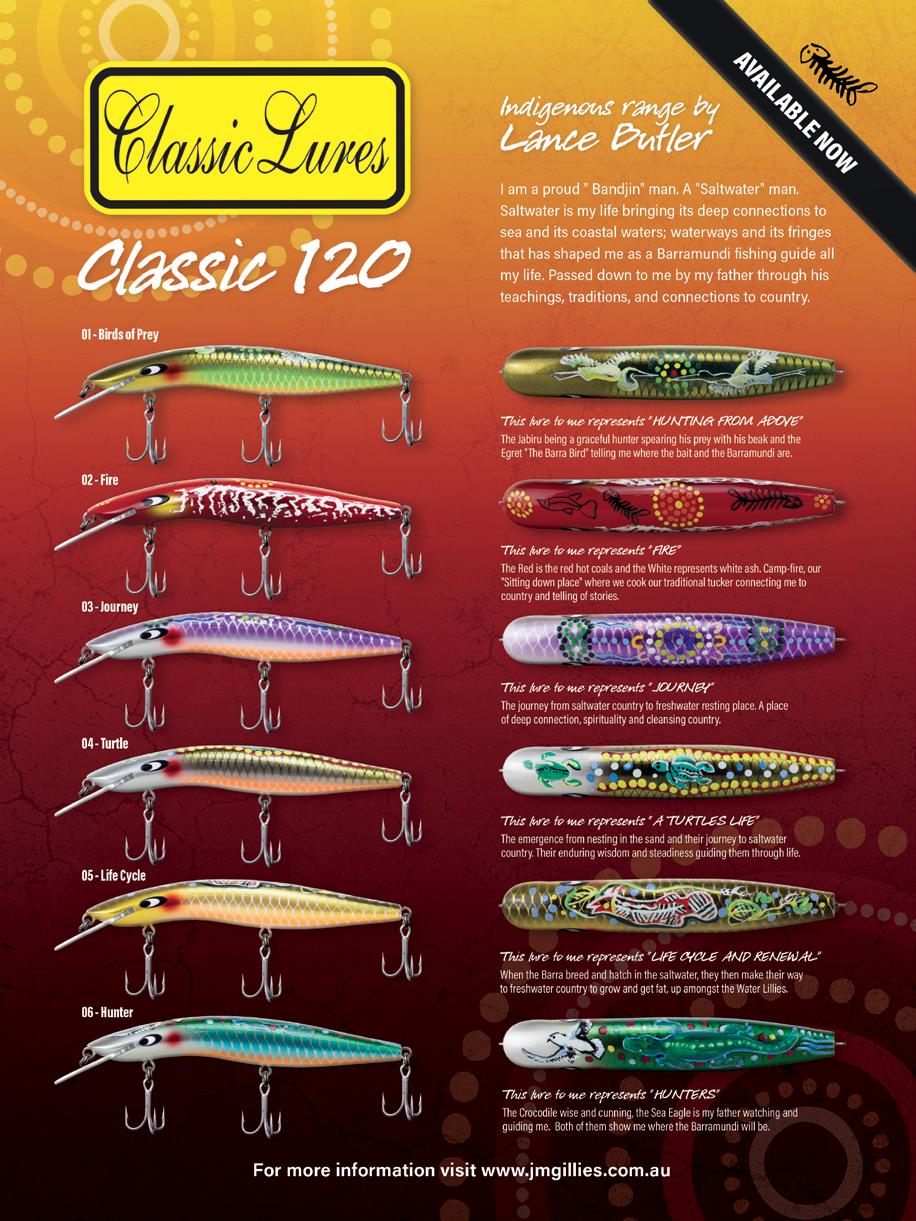
SEPHIA CLINCH PRAWN
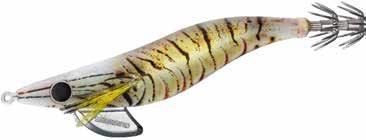
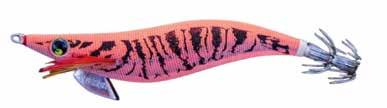
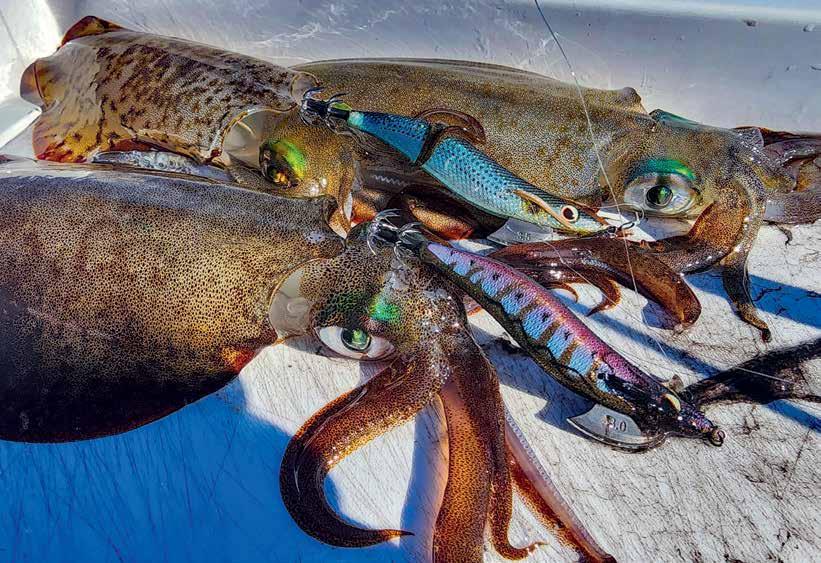
The Shimano Sephia Clinch Prawn Flash Boost is a premium squid jig designed to imitate a prawn, one of squid’s favourite prey. Featuring Shimano’s Flash Boost technology, the lure emits continuous flashes by harnessing light and UV rays, even when stationary, attracting squid from a distance. The translucent body and textured surface replicate a prawn’s shell, adding to its realism. Ideal for both day and night fishing, the Sephia Clinch Prawn is available in sizes 2.5, 3.0, and 3.5, with a variety of colours. This jig is perfect for targeting squid in both shallow and deep waters. Available now.
shimanofish.com.au
TACKLE HOUSE CONTACT NODE 150F
The Tackle House Contact Node 150F is a 150 mm, 24 gm, floating sub-surface jerkbait designed for anglers chasing fish across shallow flats or low-tide zones. Its short bib allows it to reach depths of 60–90 cm, keeping it perfectly in the strike zone. The round body profile delivers a signature rolling action
MOLIX SCULPO XD RATTLIN’
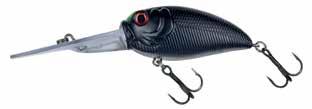
The Molix Sculpo XD Rattlin’ is a high-performance crankbait designed for deep fishing, featuring a low profile and a distinctive wobble. Through extensive testing and weight distribution studies (B.E.S.), the SCULPO XD delivers a unique swimming motion and snagless performance, allowing it to navigate rocks and stumps with ease. Its deep range of 10 to 15 feet makes it ideal for targeting fish in deeper water. Floating with a length of 6.5cm and weighing 27g, the SCULPO XD offers exceptional action and innovation for anglers looking to fish in challenging environments.
KILLALURE TROPIC VIBE
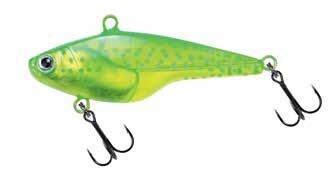
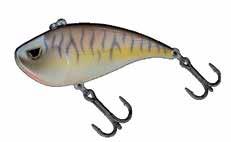
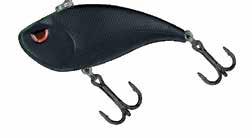
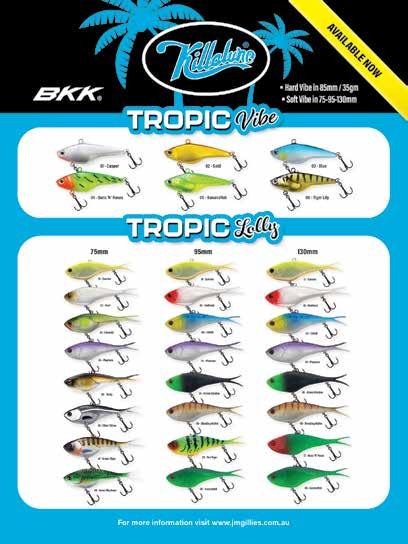
The new Killalure Tropic Vibe is fitted with advanced BKK hooks for superior durability and hook-up rates. Known for their distinct vibrating action, these lures are highly effective, especially in deeper water and murky conditions. The vibration attracts fish from afar, making them ideal for targeting a variety of species in both saltwater and freshwater. With their proven performance, the Tropic Vibe lures are a must-have for anglers looking to up their game in challenging fishing environments. Built with highquality hardware and hooks, these lures offer reliability and effectiveness across multiple fishing scenarios. jmgillies.com.au
ejtodd.com.au
DAIWA 26 SENSOR WAVE
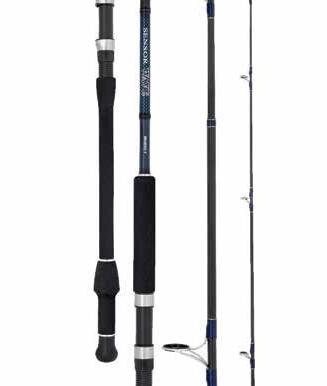
The 26 Sensor Wave builds on one of Daiwa’s most popular surf and beach rod series, taking performance and design to the next level. Constructed from Daiwa’s high-strength, reduced-weight HSD graphite, the blanks are light yet powerful, delivering long, accurate casts with ease. Braiding X technology reduces blank twist for improved strength and casting distance, while EVA grips are shaped to suit Australian fishing styles. Fuji stainless steel Fazlite guides ensure smooth, tangle-free performance session after session. Available in nine models from the light 1062L to the heavy 1503H, the 26 Sensor Wave range is purpose-built for Aussie anglers fishing beaches, rocks, and headlands. daiwafishing.com.au
STRIKE PRO FUNKY-S
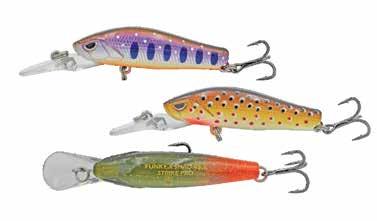
Strike Pro has released a small profile sinking minnow that is going to be a fantastic little lure for freshwater and estuary anglers. The Funky-S features a tight ‘rolling’ action and it is a silent lure that is ideal in finesse situations. It can be cast long distances due to its weight, which is ideal when conditions are glassed out or when fish are flighty. The Funky-S is 4.5cm long and weighs 4.3grams. This little lure is available in 8 beautiful colours suitable for both fresh and saltwater situations and it is ideal for Trout, Bass, Bream, Estuary Perch and Jungle Perch. jurofishing.com
DAIWA STEEZ WIRE BAITS
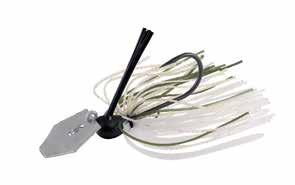
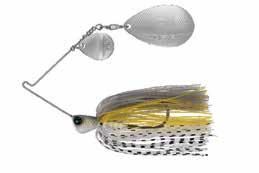
The Daiwa Steez Wire Baits range expands for spring 2025 with precision-engineered lures tailored for Australia’s native species. The Steez Spinnerbait features a compact profile for pinpoint casts into tight cover, with a tapered wire frame delivering strong vibration. It’s available in 1/4 oz, 3/8 oz, and 1/2 oz sizes across eight colours. The Steez ASROC Spinnerbait ups the pulse with a heavier thump and stronger presence in dirty or low-light conditions, offered in 3/8 oz and 1/2 oz sizes. The Steez Cover Chatter runs a thin high-frequency blade and fibre weed guard for snag resistance, with hand-tied skirts and sizes of 1/4 oz and 3/8 oz. Perfect for bass, yellowbelly, and sooty grunter nationwide.
daiwafishing.com.au
MOLIX LIPLESS CRANK 70
The Molix Lipless Crank 70mm (3/4oz) is a sinking crankbait designed for covering large areas quickly with excellent performance. Its balanced system of internal tungsten weights (20g or 3/4oz) and aerodynamic body shape make it easy to use, even in strong winds and currents. The high-frequency sound produced by tungsten balls, combined with the ABS Special Grade body, enhances its attractiveness to fish. Perfect for targeting large freshwater and saltwater predators like barra, cod, and bass, this lure excels in challenging conditions. Available in 6 colours, it’s the ideal tool for anglers chasing big fish. Available Novemb ejtodd.com.au
SALTY CREW X TADY LURE
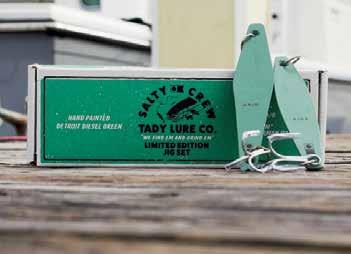
These limited-edition irons were hand painted in Detroit Diesel Green by Joel Shimizu, third-generation owner and operator of Tady Lures and grandson of the original Tadaso “Tady” Shimizu. The story goes that in the 1980s, a few Southern California sportboat captains would repaint their most beat-up irons using whatever paint they had on hand—engine enamel spray cans in Detroit Diesel Green. As fate would have it, local kingfish found that dull version of the classic mint green irresistible, and a legend was born. salty-crew.com.au
LET’S FISH, SOUTH AUSTRALIA
The Australian Fishing Trade Association (AFTA) has proudly announced the launch of its new campaign, ‘Let’s Fish, South Australia’, following the receipt of a grant from the South Australian Government to support the recovery of the state’s fishing industry.
The initiative aims to restore public confidence in recreational fishing across South Australia, following the recent algal bloom which has temporarily impacted sections of the coastline. With over 70% of South Australia’s coastlines unaffected and all freshwater fishing areas remaining open and safe, the campaign encourages anglers to return to the water, enjoy the outdoors, and support their local communities.
‘Let’s Fish, South Australia’ promotes both intrastate and interstate participation, highlighting that fishing remains a cornerstone of the South Australian lifestyle, tourism, and wellbeing. Through engaging digital content, community events, ambassador partnerships, and retailer collaborations, the campaign will highlight safe and accessible fishing opportunities while providing much-needed support to local tackle stores and regional businesses, many of which have experienced a significant drop in foot traffic and sales due to public uncertainty following the algal bloom. This campaign is designed to help restore consumer confidence and reconnect anglers with trusted local retailers..
To encourage participation, a series of retail promotions and competitions will offer anglers the chance to win exciting prizes, including fishing gear and vouchers provided in partnership with local and national brands. These initiatives are designed to help drive foot traffic back into stores while reinforcing the message that South Australian fishing is open, safe, and ready for everyone to enjoy.
AFTA president Greg Seeto said: “As we continue to advocate for fair, transparent and sustainable fisheries management, AFTA remains focused on delivering tangible support to our members and the broader Recreational Fishing Sector. The Let’s Fish SA marketing campaign, supported by a grant from the Government of South Australia, will remind anglers that South Australian waters are open and ready to enjoy, while providing vital support for local tackle retailers. By promoting safe, accessible fishing and encouraging people to shop local, we’re helping sustain the businesses, communities, and culture that make recreational fishing such an important part of South Australian life.”
afta.net.au/lets-fish-australia
YO-ZURI EGI AURIE-Q CLOTH SLOW
The Aurie-Q Cloth Slow offers all the existing qualities of the Aurie-Q range with a slight twist and strong focus on what it is designed for. With a slow sinking speed of 5.5 seconds a meter these jigs are designed for slow tides, tough bites, and where a longer hang time is required. It is this slow sink rate that will entice even the most finicky squid, especially when they are holding deep or tight to cover. As with the Aurie-Q range YoZuri’s attention to detail and focus on quality reflects in its use of high-quality material with intricate foil work and exceptional paint finishes.
tacspo.com.au
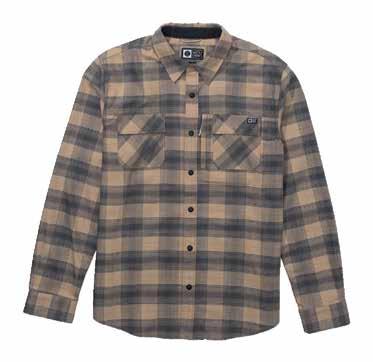
SALTY CREW FATHOM
The Fathom Tech Flannel blends rugged style with technical function, featuring a mid-weight 190 gsm twill made from 50% cotton, 47% polyester and 3% spandex for stretch and comfort. The fabric dries quickly when wet, and a DWR coating adds protection in mild wet conditions by repelling water and speeding up drying time. Designed for life on and off the water, it includes a yarn-dyed plaid with a contrast ripstop collar, dual chest pockets with a zippered welt pocket, and snap buttons on the front placket and pockets. Available in sizes S to XXXL.
salty-crew.com.au
DAIWA 25 REVELRY
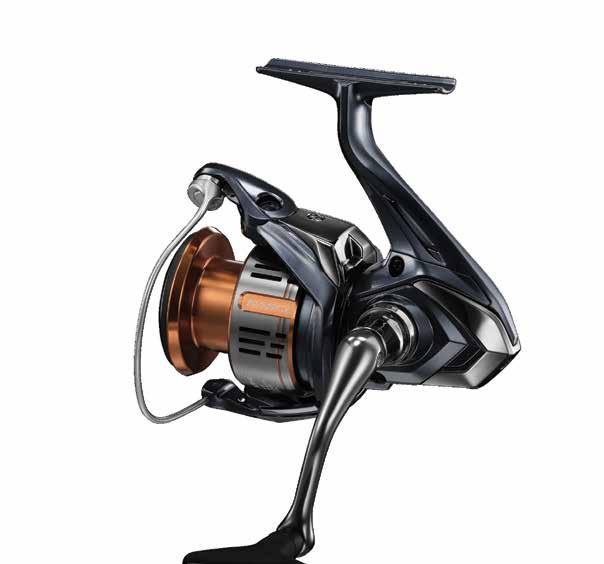
The new Daiwa 25 Revelry range takes performance and refinement to the next level for 2025, offering two purpose-built models – the Finesse Custom (FC) and Heavy Duty (HD). The FC is crafted from a single-piece Zaion Monocoque body, making it one of Daiwa’s lightest spinning reels, ideal for finesse applications. Airdrive Design and forged Tough Digigear ensure smooth, precise operation, while Magseal protection and Air Rotor deliver sensitivity and durability. The HD model features an aluminium Monocoque body for maximum strength and torque, with the same Airdrive precision, Tough Digigear power, and bold black, gold, and red finish. Whether chasing bream or battling big pelagics, the 25 Revelry range covers it all. daiwafishing.com.au
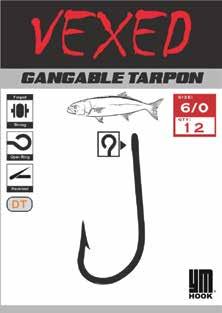
VEXED GANGABLE TARPON
The Vexed Gangable Tarpon by YM Hooks is the ultimate pilchard ganging hook, combining the strength of a Tarpon hook with the hook-setting efficiency of a Kirby hook. With open eyes straight out of the pack, anglers can create their own gangs to suit the size of their bait. These hooks are super sharp and available in sizes 1/0 through to 6/0. They come in packs of 12 or 24, offering versatility and reliability for any fishing scenario. The Vexed Gangable Tarpon hooks are designed to ensure a solid hook-up with every cast. vexedfishing.com.au
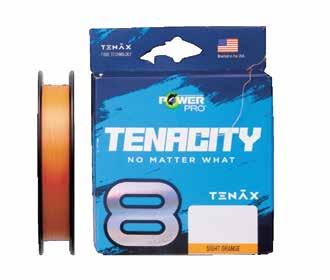
POWER PRO TENACITY
Power Pro Tenacity Braid is crafted using a space-age fibre called “Tenax,” offering superior abrasion resistance and tensile strength compared to previous Power Pro braids. The individual Tenax microfibres in the eight tightly woven strands are thicker and more robust than those found in older three, four, and five-strand variants. This results in a smoother, slicker, and finer braid with enhanced strength. Rated breaking strains on the spools are now much closer to the actual line strength, and lengths are listed in metres. Available in Electric Blue and Sight Orange, Power Pro Tenacity comes in spools of 150, 300, and 500 metres, with rated strengths from 6 to 80 pounds.
shimanofish.com.au
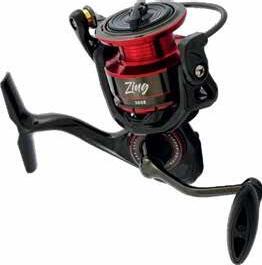
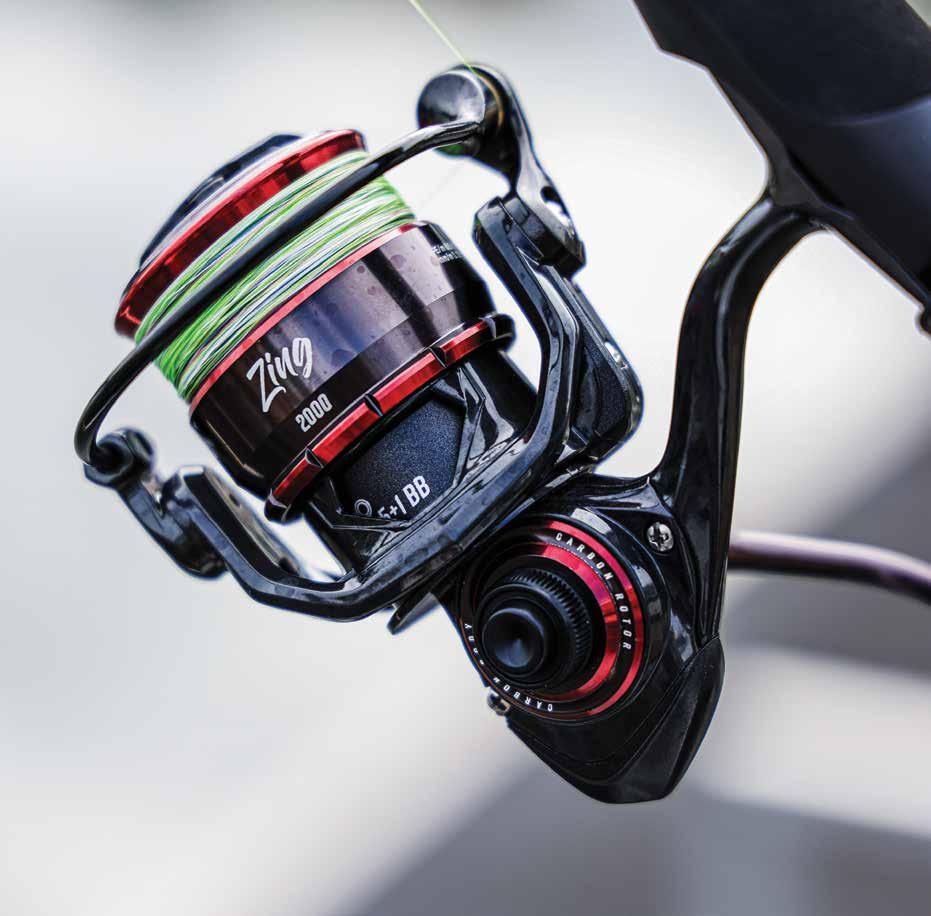
SAMAKI ZING SPIN
Lightweight, tough and smooth, the Zing Spin punches well above its weight. Built around a CarbonCore body and rotor, it stays light in the hand yet rigid under load, maintaining perfect gear alignment and balance. Its sealed carbon drag delivers consistent stopping power, while the CNC-machined FusionGear+ stainless drivetrain ensures precision and durability. The seamless MonoBail, direct-drive handle and oversized PowerGrip EVA knob provide effortless control, and the 5 + 1 sealed stainless bearing system keeps things silky smooth. Designed for anglers who demand strength without weight, the Zing Spin sets a new benchmark in performance and value. RRP $169.95 samaki.com.au
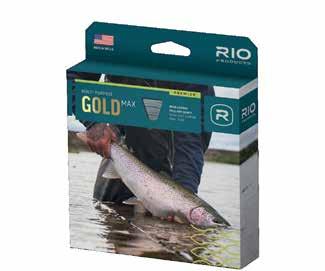
RIO PREMIER GOLD MAX
The Premier Gold Max features a short head and rear-loaded design, offering full-size heavy power for handling bulky rigs and large dry flies. With a strong rear taper, this line efficiently turns over heavy payloads, making it ideal for casting large indicators or streamers. The short front taper ensures powerful turnover, while the design allows for easy roll-casting and mending. Perfect for anglers targeting big fish in fisheries where long leaders aren’t required, the Gold Max offers exceptional control and powerful performance. Choose Premier Gold Max for a versatile, effortless solution to big-rig fishing. jmgillies.com.au
SHIMANO MAIKURO
SAMAKI AXIS SPIN
The all-round workhorse with style to match, the Samaki Axis Spin delivers dependable performance from the estuary to offshore waters. Built from Samaki’s NC-1 reinforced polymer, it’s lightweight, corrosion-resistant and tough enough to handle the knocks. A smooth Sensa Drag system ensures responsive control under load, while 5 + 1 sealed stainless bearings keep retrieves silky in any condition. The direct-drive screw-in handle provides solid cranking power with zero play, complemented by a cushioned ComfortGrip knob. Finished with a double-anodised CNC spool and sleek black-silver styling, the Axis is reliable, versatile and ready to fish hard. RRP $79.95 – $89.95
samaki.com.au
Consisting of an extensive line-up of 23 models, the latest iteration of Shimano’s ever-popular Maikuro rods are all built on strong, highlyresponsive 30 ton graphite blanks and are fitted with top quality Fuji O-Ring guides throughout. Newly-designed ergonomic grips and crisply upgraded cosmetics offer the perfect combination of form and function, with a rod to suit the needs of any Aussie angler in every conceivable light to medium tackle application. Whether you hike high country trout streams, leave fresh footprints in the sand of sweeping surf beaches, or head offshore in pursuit of pelagic thrills, there’s a new Shimano Maikuro rod to satisfy your needs and desires with just the right balance of aesthetics and slick, trouble-free performance.
shimanofish.com.au
SALTY CREW APEX
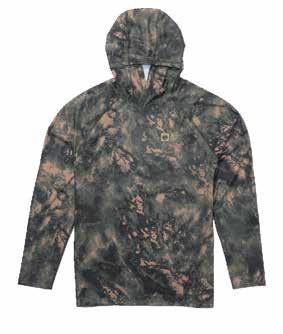
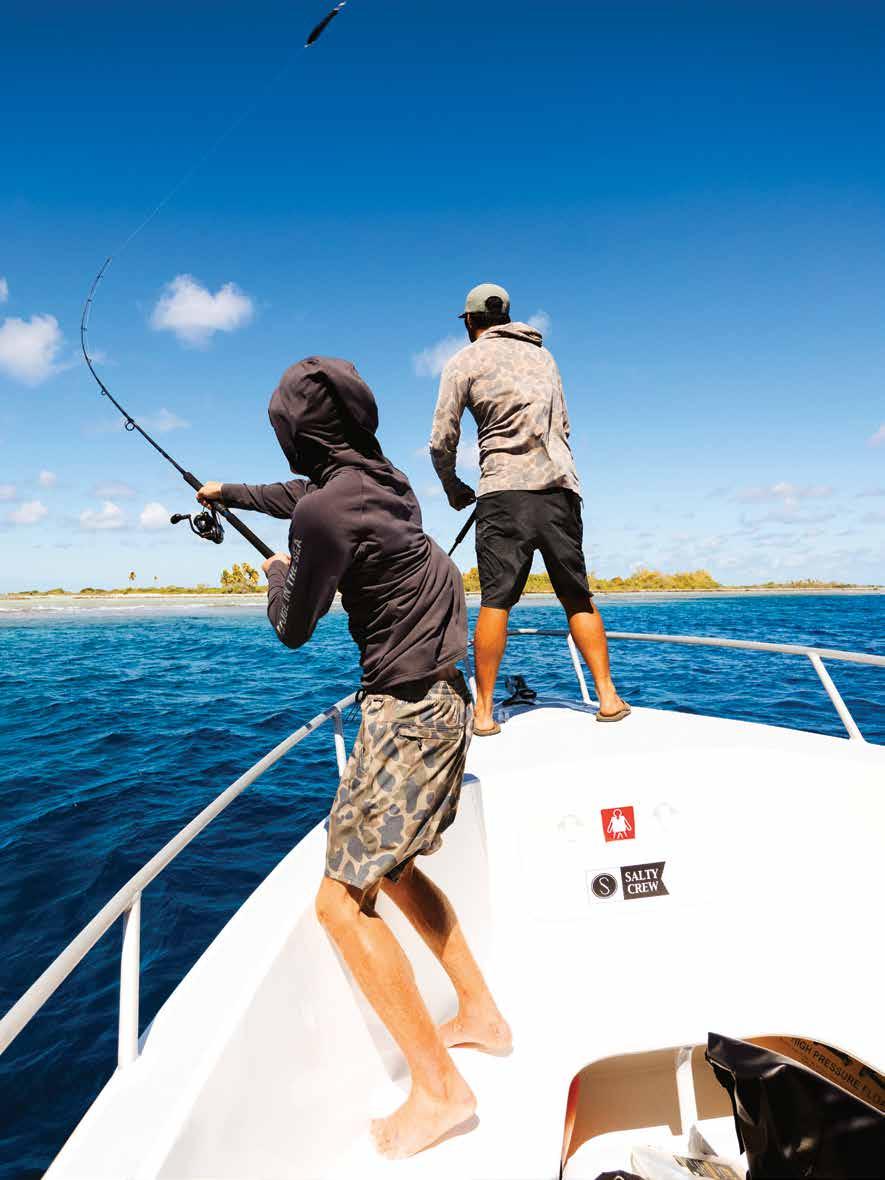
Designed for anglers who spend long days under the sun, the Apex Perforated Sunshirt offers UPF 50+ protection with maximum breathability. Made from 82% recycled polyester, 12% elastane and 6% polyester, it features a perforated knit for superior airflow, 4-way stretch for unrestricted movement and flat lock seams for all-day comfort. The moisture-wicking, quick-drying fabric keeps you cool and dry, while the plastic snap hood closure provides extra coverage when needed. Available in sizes S to XXL. salty-crew.com.au
LUNA SEA CUSH-IT
Luna Sea’s Cush-It Rod Cushions provide ultimate comfort and protection for anglers, with three models designed for various fishing needs. The Elite Bass rod cushion excels when using big swimbaits, offering quick and easy installation, and preventing rod bruising. The All Species model is versatile for smaller gamefish like school tuna, Spanish mackerel and kingfish, while still serving larger saltwater species. For big game fishing, the Big Game model provides excellent protection and comfort, making it an ideal alternative to fighting belts. All models are UV-resistant, float rods, and won’t slip during battle, ensuring reliability and durability. jmgillies.com.au
SAMAKI ONYX SPIN
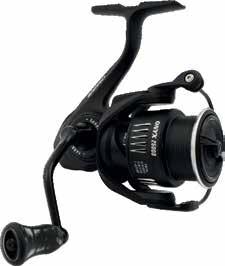
Feather-light, stealthy and packed with punch, the Samaki Onyx Spin is purposebuilt for finesse fishing. Its CarbonCore body and rotor deliver lightweight strength and perfect balance, while the FusionGear system ensures smooth, efficient cranking every cast. A sealed carbon drag within the shallow spool provides consistent, reliable stopping power, giving light-line anglers total control under pressure. The one-piece direct-drive handle transfers power instantly and features a custom transparent knob for sleek, modern styling. Backed by a 6 + 1 sealed stainless bearing system, the Onyx runs smooth and stays protected in all conditions. Lightweight, smooth and precision-built – finesse done right. RRP $149.95 samaki.com.au
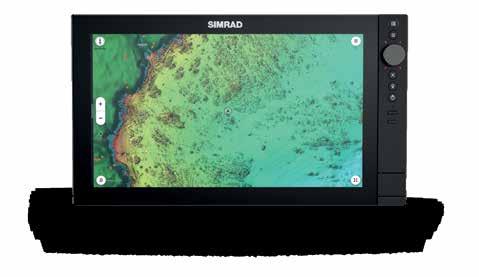
SIMRAD AUTOCAPTAIN
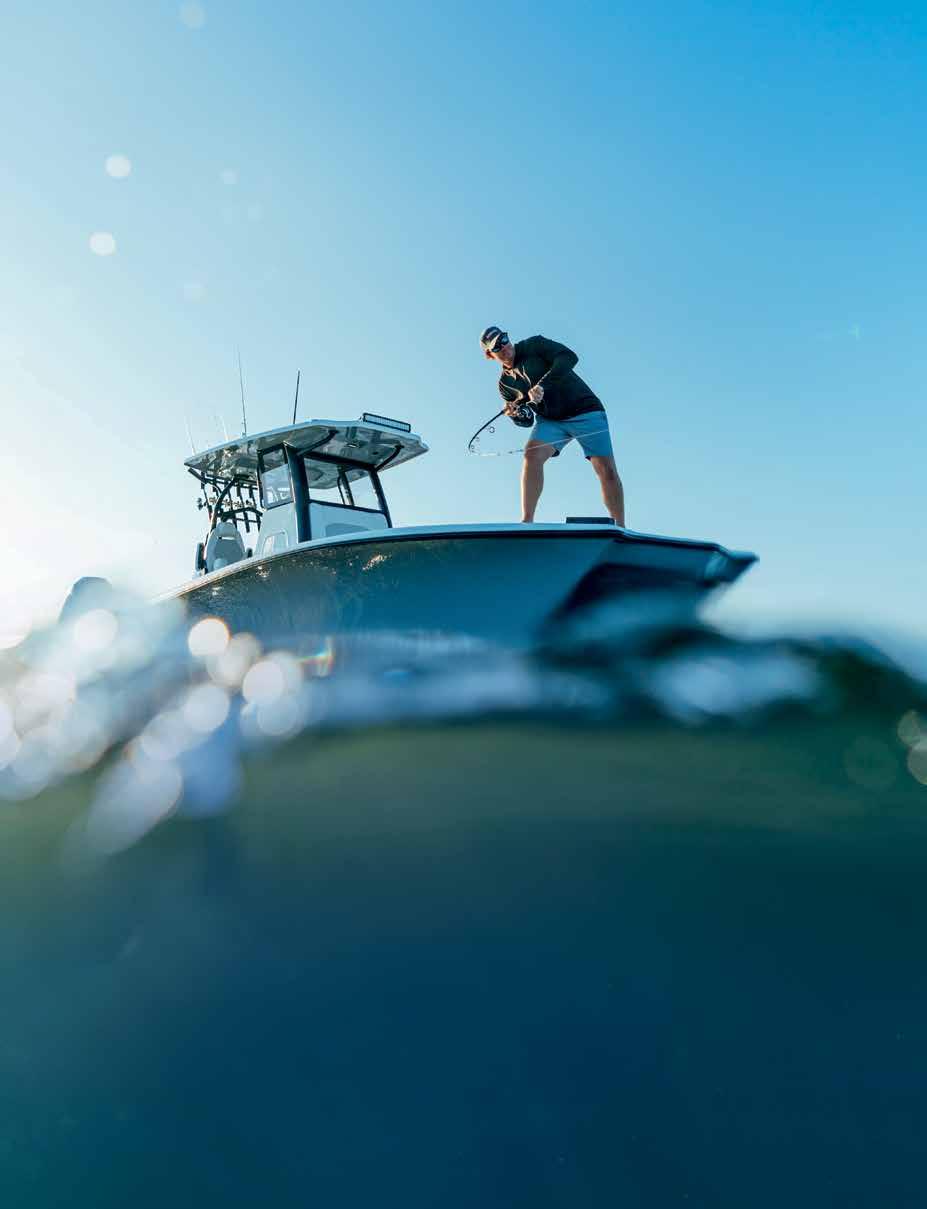
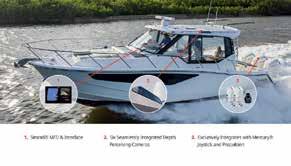
Simrad Marine Electronics has unveiled the revolutionary AutoCaptain Autonomous Boating System, a major leap forward in autonomous marine technology. Featuring full auto-docking, undocking, and short-distance manoeuvring, AutoCaptain offers true hands-free vessel control rather than mere assistance. Developed in partnership with Mercury Marine, the system integrates seamlessly with Mercury propulsion and Simrad displays, combining camera-based situational awareness, real-time adjustments for wind and current, and intelligent obstacle detection. AutoCaptain adapts dynamically to any marina without requiring pre-mapped locations and can even hold position against the dock for safe tie-up. Designed as a scalable platform, AutoCaptain will evolve with future software updates, setting a new standard in safety, control, and ease of boating. simrad-yachting.com
BABY SNAPPER BOOM
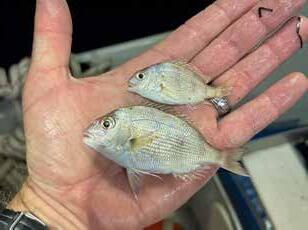
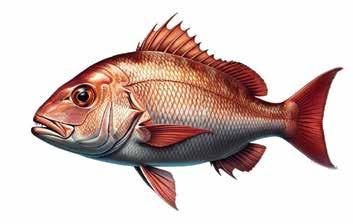
Victoria’s snapper season is off to another strong start, with fisheries modelling predicting a repeat of last year’s exceptional run across Port Phillip and Western Port. VFA CEO Travis Dowling said recent data indicates the boom is set to continue through spring and summer, supported by record spawning years in 2017 and 2022. “Last year was one of the best snapper seasons in many years,” he said. “With commercial nets removed, free boat ramp access, and great spawning conditions, anglers can expect plenty more action.” The 2022 surveys showed the third-highest abundance of baby snapper since monitoring began, ensuring continued healthy fishing in the years ahead. vfa.vic.gov.au
Big fish from the shore can be a challenge – but it’s well worth the effort.
WORDS & IMAGES : COLBY LESKO
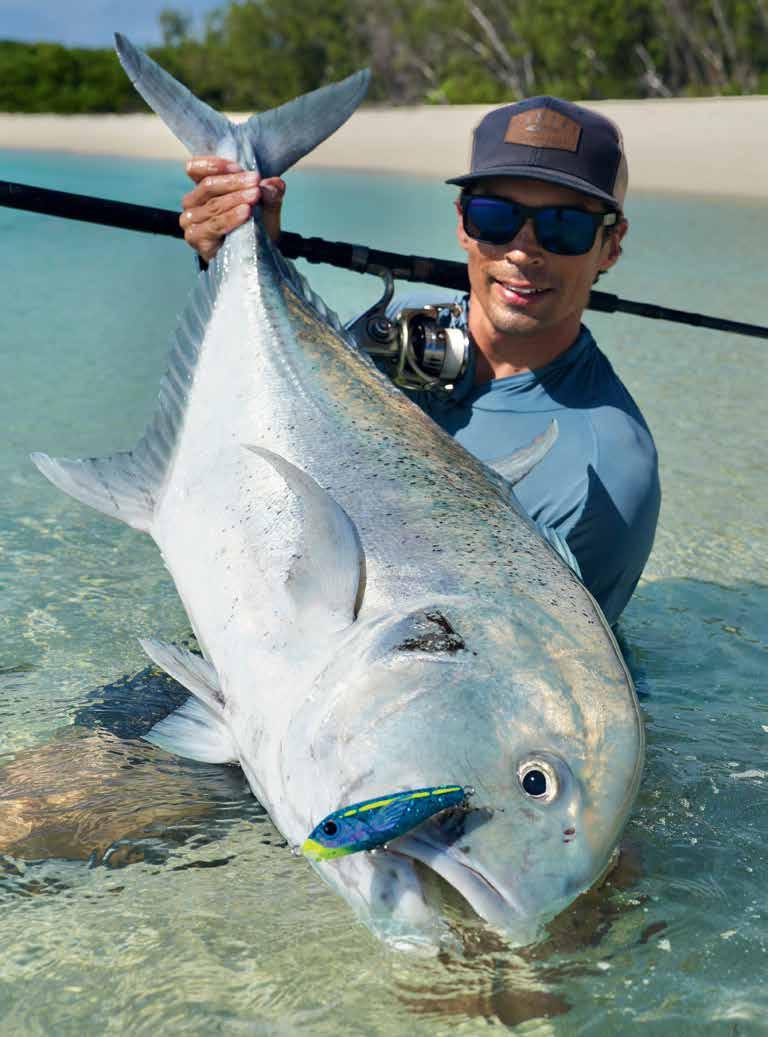
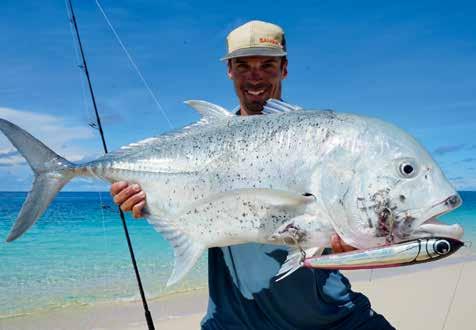
GTs don’t come along everyday, but when they do it makes all the casting worth it.
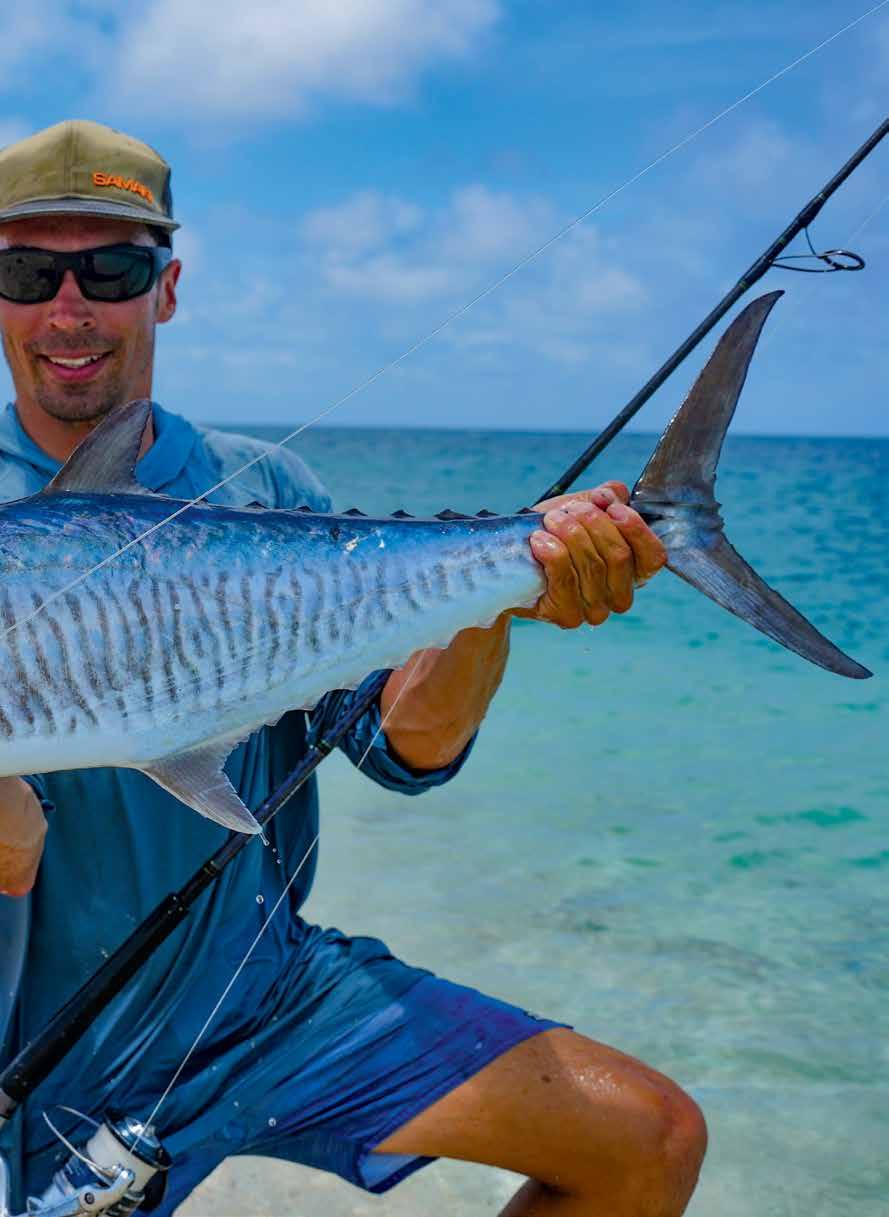
Catching giant trevally or Spanish mackerel on topwater is some of the most exciting fishing you can do. Achieving this from land makes it even more special – and with a solid plan and a lot of persistence it is possible. These are my tips and tricks to help you land some awesome sportfish land-based across northern Australia.
SOLID GROUND
There’s something special about landing a trophy fish from the land or shore. I don’t know if it’s the reward for effort after doing the hard yards land-based or if it’s the lessons you learn on the tough sessions. Pursuing sportfish off the rocks or sand really makes you think about the situation and what you can do to get your lure in front of a fish. This in turn makes you a better angler. Sure, you can still get lucky and land a fish, but to consistently reap the rewards when fishing land-based, you really must understand your target species. I’ve been a boat angler all my life, but I’ve started to head off on more and more landbased missions. I like the challenge of figuring out where the fish are going to be but also the physical aspect. It’s also refreshing as it’s so simple – no hightech sounders or boats, just you, your rod and the fish.
FIND YOUR WATER
The mainland shores and islands of northern Australia are teeming with fish and places to explore. Any of the headlands that run out into deeper/ clearer water are great spots to be casting lures. Beach and river mouths on high tide also offer some great sight fishing opportunities. Areas of strong current or bait fish populations also attract pelagic fish so there’s plenty to look out for. Unlike the east coast or southern coastline of Australia, the northern coastline is extremely remote and untouched. Many spots may never see an angler fishing land-based, and I’ve had my best results where you never see another angler.
TARGETS
My main target when casting off the beaches or headlands is giant trevally (GT) but the bycatch of Spanish mackerel, queenfish, barracuda and
coral trout is also welcome. GTs are an extremely pelagic fish and will swim wherever the baitfish are. Deep dropoffs and headlands are great spots to cast as you wait for a GT to come past. Look for drop-offs or points that have some current flowing against or past them as this will usually mean bait fish such as fusiliers or mullet will also sit here feeding, facing into the current. I focus my effort in these areas during the lower periods of the tide. Sometimes you can cast in the same spot for hours, waiting for the fish to come past, then all of a sudden they appear. The fish will come out of nowhere and you will have a pack of angry GTs fighting over your lure. Landing a big GT off a drop-off or headland can be tricky as they run past the rocks and bommies, so try to cast from a location where you have the best chance of landing the fish. When the tide is high, I prefer to walk the
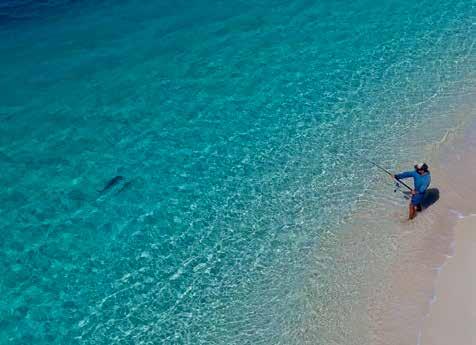
beach or river mouth and look for sight fishing opportunities. I like to do this on a clearwater, sunny day when you can walk the beach looking into the water. With polarised glasses you will be able to spot ‘moving clouds’ – schools of baitfish or the blue shapes of pelagic predators. It’s amazing how far away you can spot a GT swimming on shallow sand, as they really stand out. While they can be in singles most of the time, I find them in small groups of three or four. They are almost always hunting close to a school of baitfish, so if you do find the baitfish on a beach and there are no pelagics chopping into them it’s worth waiting 30 minutes to see if anything turns up. Other species you will spot chasing these bait fish on the flats are queenfish and barracuda; Spanish mackerel prefer to stay in deeper water and coral trout will venture onto the flat only if there is reef or rock for them to hide in.
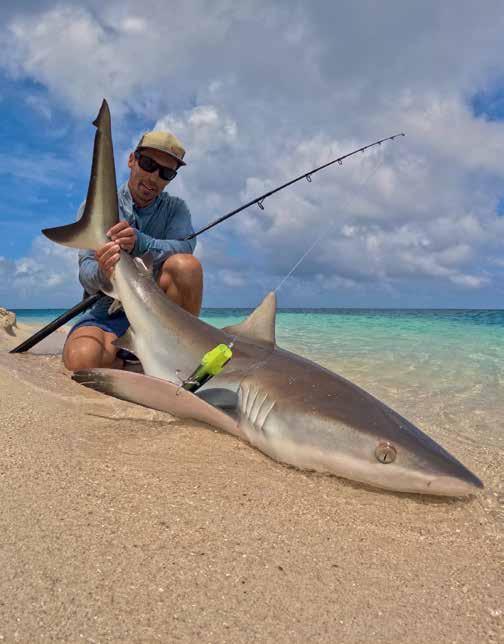
In the tropical north sharks will always be part of the by-catch.
GTs move extremely fast when swimming on a sand flat and can quickly cover large distances so if you didn’t see anything on your walk up the beach, be sure to keep looking on your way back down. A drone is also handy if you are exploring a new area and not sure where the bait fish and prey are going to show up. I’ll look at an area on Google Earth before fishing it as this will generally give me a few key areas I want to target.
The first area I will look for is a sand spit or headland that runs out into deep water, and this is where I will stand and cast on the low tide periods. The second key area I look for is a large beach or sand flat that has some broken reef and a couple metres of water over it at high tide. This is where I will go for a walk on the high tide and try to sight cast some fish.
Time of year doesn’t matter much in northern Australia and the fishing for GTs and other pelagics remains good year-round. However, the winter trade winds can be a pain and the summer wet season rains can also make sight fishing and travel into the spots impossible so I would say the best periods are autumn and spring. It’s hot up here and a long day of standing in the sun on the rocks can take it out of you so make sure you’re prepared with some sun protection and plenty of water. Be croc-wise, too, even on the headlands off the coast as I have had crocs swim past. Jellyfish, sharks and snakes are also a real threat, so be mindful.
LAND BASED TACKLE
As far as tackle goes, I like to carry two heavy spin combos for lure casting. The first is a heavy GT popping or stick baiting rod, usually 8ft long and in the PE6 to 8 range. I match this with a 18,000 spin reel spooled with 100lb braid and 200lb leader. I’ll have this set-up rigged with a 200mmplus floating stick bait or popper and use this when casting deep drops, headlands or when sight casting GTs. This combo is going to give me a good chance of landing any large GTs that may swim by.
The second combo I like to carry is a lighter stick baiting combo in the PE3-5 range with a 5000 spin reel spooled with 50lb braid. This combo is for periods when you want a break from the heavy tackle casting to just have some fun and catch a fish or two.
Trout love hitting a stickbait.
GTs in crystal clear water off the beach is pretty darn cool!
Make sure your gear is up to the task!
Mackerel, queenfish and coral trout are all great fun on this combo and by changing lures to a smaller sinking stick bait around 100mm long, you can usually find some action when things are tough on the heavy tackle. Target areas of reef or dirty water lines or bait schools for the best chance at a mix of species. I’m also starting to take my 10-weight fly combo with me on these missions and I think a GT on fly is on the cards soon. Vary up your retrieves and lures until you find what’s working on the day. As a rule, if the water’s clear I’ll work the lures fast but if it’s dirty I’ll slow things down. A sweeping retrieve with small pauses generally works best with topwater lures.
Look at a few areas on Google Maps and make a few plans on where to fish before a trip. Cycle through these areas until you find one that produces and focus
IT’S A GOOD DAY IF YOU LAND A SINGLE NICE GT AND ON A GREAT DAY YOU MAY GET A COUPLE. IT’S JUST AS MUCH ABOUT THE HUNT AND EXPLORING SOMEWHERE NEW AS IT IS ABOUT THE FISH
your time on this. I’ve found the fish are creatures of habit and if they are here at one stage of the tide one day, chances are they will be in exactly the same spot at the same stage of the tide the next day.
Land-based fishing isn’t about numbers of fish, it’s more about the hunt for that one fish.
While it’s fairly common to head out on the boat and catch a dozen or more GTs for the day, you are not going to do this off the shore. It’s a good day if you land a single nice GT and on a great day you may get a couple. It’s just as much about the hunt and exploring somewhere new as it is about the fish. Be prepared for some tough days and the odd doughnut but when it does all come together you won’t regret it.
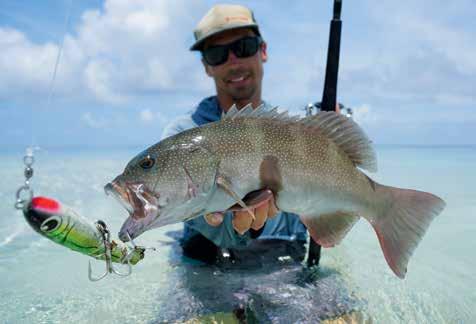
A passionfruit trout taken on the Amegari Urpekari popper.
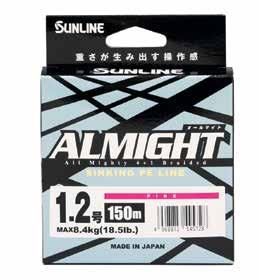
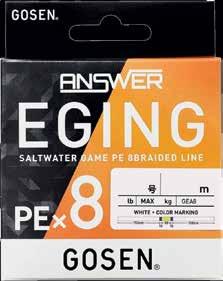
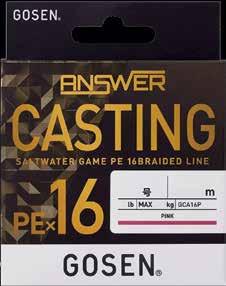
ALMIGHT is a hybrid sinking PE line with a specific gravity of 1.48, combining four ULT PE materials and a high density core for straightness, sensitivity, and precise lure control in strong winds or fast tides. Available in pink for high visibility, it offers all-around performance comparable to 100% PE lines, enhancing control over light lures sinking action and enhanced feel of your presentation.
Made in Japan
Available in:
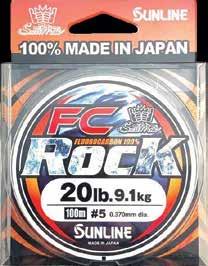
FC ROCK is a 100% fluorocarbon leader offering exceptional stability, clarity, abrasion resistance, and tensile strength for tough conditions. Supple and easy to handle, it provides excellent knot performance, natural lure presentation, and moderate elongation to absorb strikes and hook sets while maintaining sensitivity. Engineered in Japan for reliability and confidence on every cast.
Made in Japan
Available in:
100m in 2lb to 20lb
70m in 25m & 30lb
50m in 40 & 50lb- 25m in 60lb
20m in 70 & 80lb
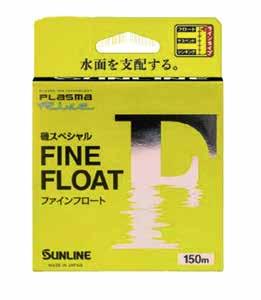
ity yellow floating monofilament, perfect for float fishing blackfish or drummer. Its buoyancy keeps the line off rocks, while Plasma Rise processing enhances water repellency and reduces deterioration. UV-R manufacturing protects against UV damage, extending line life. Supplied in 150 m spools, it offers reliable performance and easy tracking for confident float fishing.
Made in Japan
Available in: 150m 6lb to 25lb
SPAWN SEASON
Spring means a hot bite for big southern calamari in Victoria’s bays.
WORDS & IMAGES : KOSTA LINARDOS
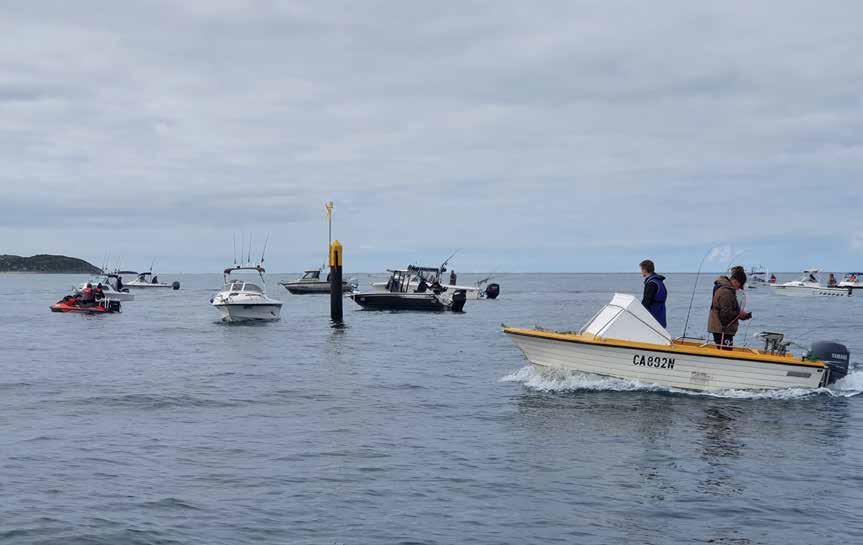
When it’s on around Queensliffe and word gets out, it can get very busy. We suggest moving away from the crowds, there’s plenty of squid ground in other areas.
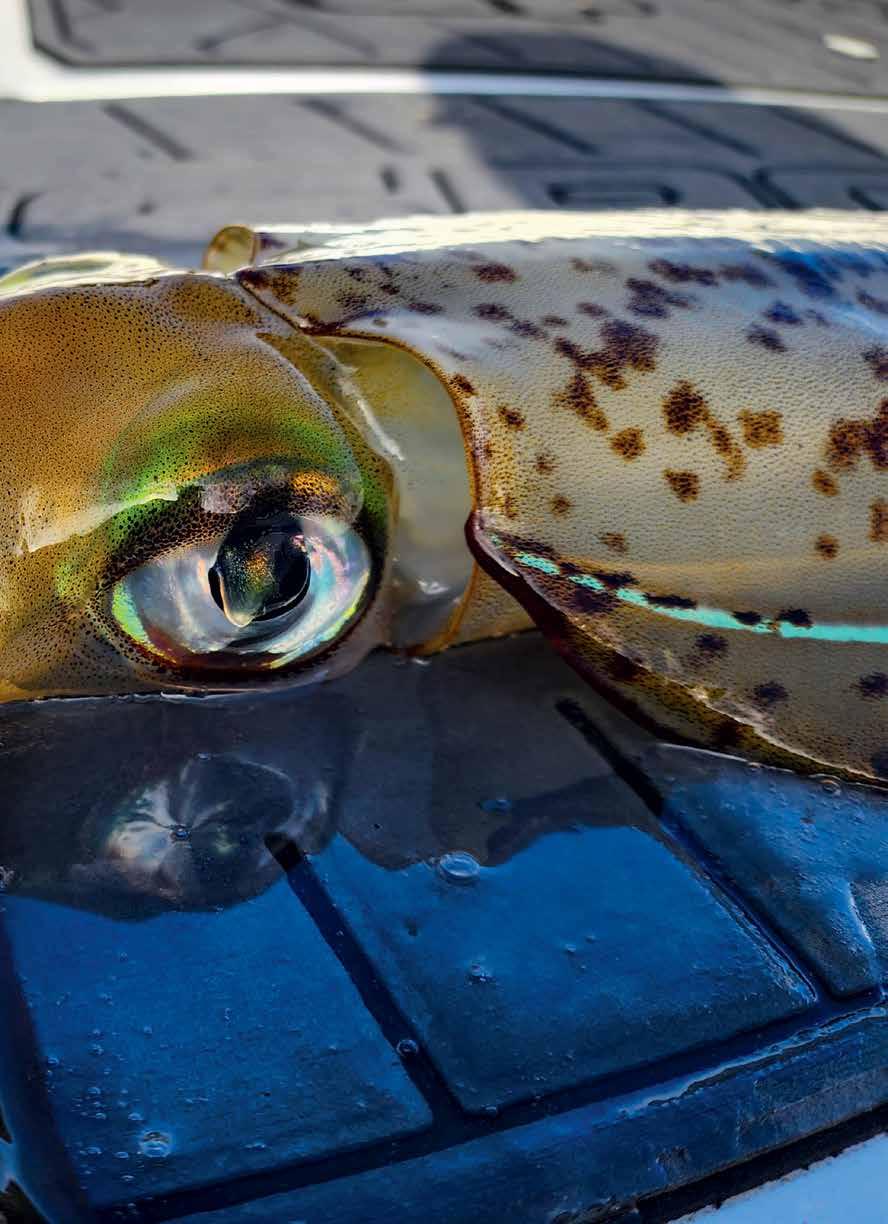
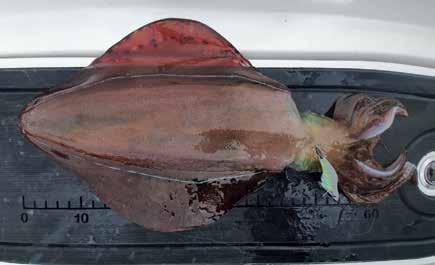
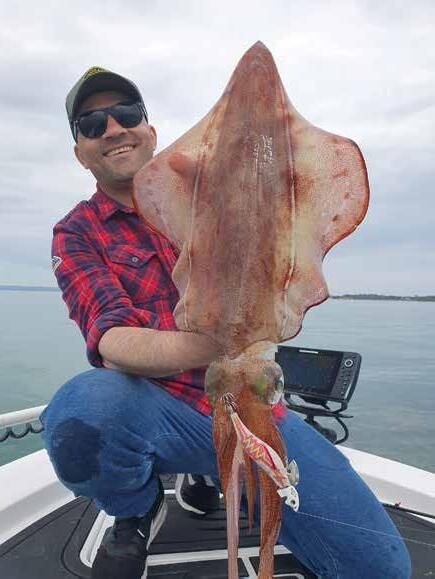
For anglers across Victoria, few targets get the blood pumping like big southern calamari. Targeting any cephalopod is fun, but when the big models come into spawn it can be an awesome day on the water for both land-based and boat anglers. These big spawning squid run hard and peel off line as they pulse away for cover. The sounds of screaming drags and screaming skippers as ink splatters their white gelcoat and clean upholstery is a sure sign it’s spring and the southern calamari are spawning.
Port Phillip and Western Port both offer awesome fishing opportunities where the bigger models move closer to shore, giving everyone – from weekend enthusiasts to diehards – a real shot at tangling with them. Let’s take a look at when, where, and how to get stuck into the bigger southern calamari this season.
WEATHER WOES
This spring hasn’t been kind to anglers. It’s been one of the windiest starts to the season I can remember, making it tough to get out on the water for any decent stretch. On the bright side, unlike last year, we haven’t had much rain, so
once the weather finally settles, the bays should be crystal-clear and the squid ready to go.
The big females come into the bays during spring as the water temp rises to lay their eggs in the abundant sea grass and end their year-long life cycle. So don’t feel this is a species where you shouldn’t be targeting breeding fish, they’re at the end of their life cycle and it’s a great time to target them for the fun of it, to stock up on baits for snapper, gummy sharks and kingfish, and as food.
There is a fallacy that the big squid don’t eat well. This isn’t exactly true, you just need to process them differently. Rather than cutting the traditional squid rings or strips, use a filleting knife to halve the thickness of the flesh, and then cut these thinner parts into thin strips, about the same width as a Macca’s french fry. Then you can quickly fry them, and they will taste amazing. Another great tip is to vacuum-seal your squid and freeze before cooking, which greatly improves the tenderness and flavour.
The large heads are best kept for baits as they will likely produce some of your best captures and, of course, keep some hoods as strip baits.
TIMING THE BITE
Big southern calamari can be finicky. It’s not that they’re overly cautious – in fact they are extremely aggressive at this time of year – but they will choose when to feed. The focus should be on timing and location. During the spawning season, males put on wild displays to impress females, while the girls hang around guarding their egg clusters. If you want to tangle with the big ones, you’ll need the right timing, good technique and an eye on the tides.
Early mornings, late evenings and overcast days tend to be prime time, as squid are far more active in low light. They prefer nutrient-rich water, which is why you’ll often find the larger ones in the southern ends of both bays. Down there, the currents are stronger and the water deeper, so you will need to tweak your approach. When the current’s ripping, normal jigs won’t cut it.
Your fishing licence fees at work
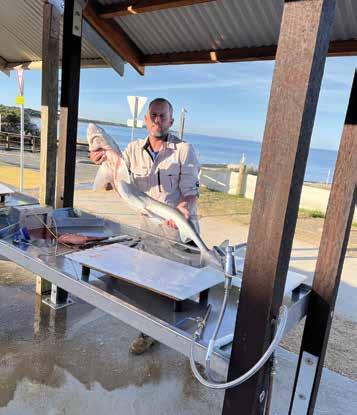
Extra cleaning table at Torquay
Thanks to your fishing licence fees, the Torquay Angling Club has installed a second fish cleaning table next to the boat ramp, which means four people, not two, can clean their catch at the same time.
They also added Teflon cutting boards, mounted on iron bark with rubber feet, all secured by hand-safe wire. The original table has been improved too by replacing the faulty tap and adding two cutting boards.
With more space to park your trailer thanks to Better Boating Victoria, plus new fish cleaning facilities, it’s never been easier to launch, fish and fillet at Torquay!
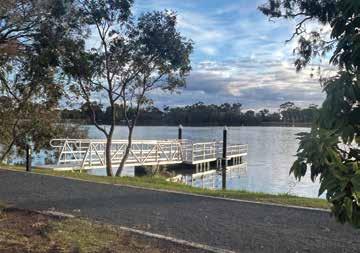
Fishing platform at Lake Marma
There’s a new fishing platform at Lake Marma.
The Lake Marma Committee of Management installed the platform, which features safety rails, seats, rod holders and a bait board.
There’s now more room for everyone to wet a line and catch a stocked trout or golden perch.
You’ll get the best results by fishing two hours either side of the high tide, and you can keep fishing through the slack period without any issues. This gives you a solid window to target them. I’ve found that the incoming tide brings in cleaner oceanic water, which seems to trigger them to feed as the water level rises. While there are days when they’ll bite at any time, timing your session around the tide is usually your best bet.
HOTSPOTS WORTH THE EFFORT
Southern Port Phillip Bay is a calamari haven, especially around Sorrento, Portsea, Queenscliff and Point Lonsdale. These areas mix shallow and deep water, with plenty of kelp and seagrass where squid love to hunt and spawn. Over in Western Port, look around Cowes, San Remo, Tyabb Bank, Quail Bank and Corinella. The murkier water and big tidal flow often mean you can find bigger squid well up the bay compared with Port Phillip.
TECHNIQUE
The go-to method for most anglers is jigging. High-quality jigs are worth the money – they sink evenly, hold position better and last longer. Squid are drawn to a jig that hovers naturally, so a stable
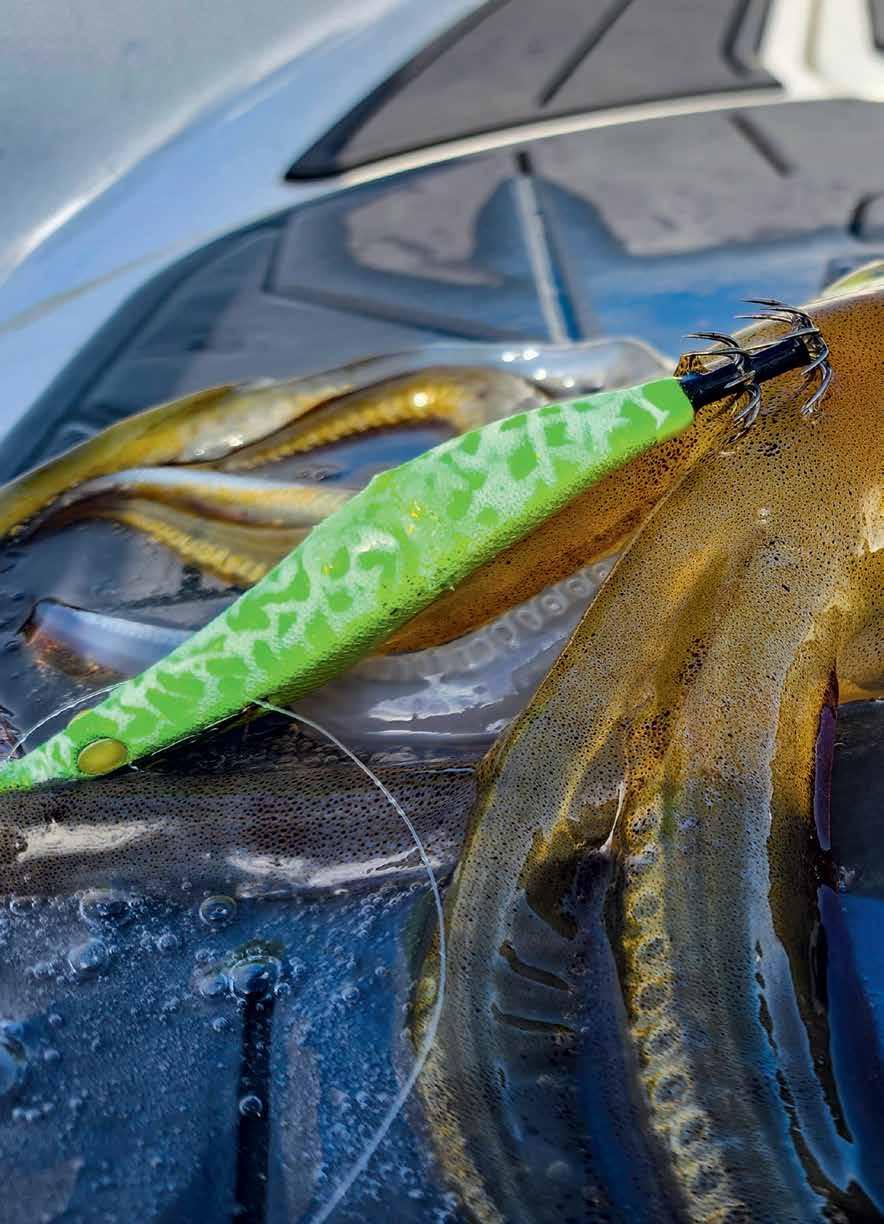
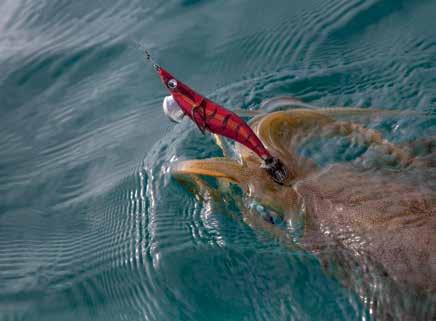
The author used a fast sink jig with a TR sinker to battle the strong current to catch this squid.
sink rate makes all the difference. Bright colours, UV and reflective foil are all proven triggers. Cast out, let the jig drop, and then work it back with sharp, short jerks to mimic an injured baitfish.
WHEN THE CONDITIONS ALLOW, KEEP YOUR JIG NEAR THE BOTTOM FOR LONGER –BIGGER SQUID TEND TO SIT LOW, GUARDING EGGS. IF THE CURRENT’S TOO STRONG, GO FOR HEAVIER 3.5 TO 4.0 SIZE JIGS.
When the conditions allow, keep your jig near the bottom for longer – bigger squid tend to sit low, guarding eggs. If the current’s too strong, go for heavier 3.5 to 4.0 size jigs or add a Yamashita TR sinker, which slips neatly over the head of your jig to give it extra weight. As calamari reach the end of their life cycle, they’re less fussy and will happily pounce on a lure that looks half-real and I find the bigger the better. Some of my favourite jigs to use at this time of year are Gan Craft Egi-Jya in 4.0, Yo-Zuri Egi Q 4.0, Yamashita K Series 4.0 and fast-sink models from various companies in 3.5. On the flip side, if you find big calamari guarding eggs in the shallows, you need to use large sizes in slow sinking weights and all the major Japanese brands offer this.
Baited jigs under floats can also work a treat, especially with silver whiting or a strip of fresh bait. Some jigs from brands such as Yo-Zuri and Yamashita are even designed to hold bait, adding extra scent and attraction.
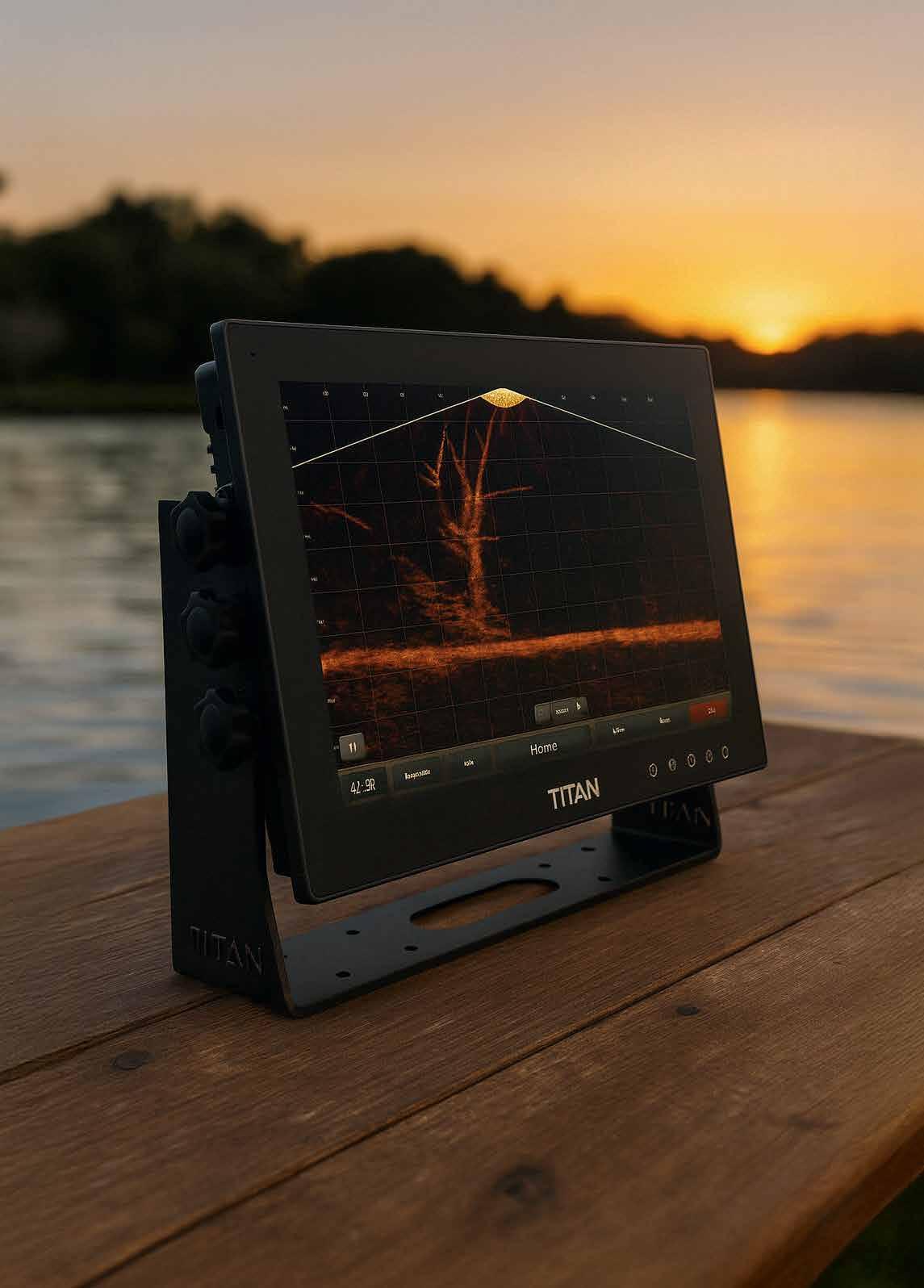
The next evolution in marine electronics designed to provide fisherman with an affordable solution to enhance their live sonar experience. The Titan features a durable CNC-machined aluminum body and an IP67 waterproof rating. With a stunning 1920x1080 FHD display, 1300 nits of brightness, and polarized IPS glass, the Titan ensures superior visibility in all lighting conditions. Its 10-point touchscreen interface provides smooth, responsive operation, making it easy to control and monitor your marine systems while out on the water.
A good egi rod is a must and you want something on the heavier side to work the bigger jigs and land the bigger squid. You need a parabolic action to absorb those big pulses and stop the barbs tearing out of soft squid flesh. Pair it with a reel with a quality drag and a high gear ratio for quick line pickup. We ran an egi special in the July issue covering the best rods, reels, lines and jigs out there – definitely worth a look if you’re serious about squid.
I run 12–16lb braid with a 12–14lb fluorocarbon or mono leader for stealth and sensitivity. Keep a range of jig colours and sizes in your kit and don’t forget a net or squid gaff to land them cleanly.
50cm hoods like this one here are not uncommon at this time of year.
A GOOD EGI ROD IS A MUST AND YOU WANT SOMETHING ON THE HEAVIER SIDE TO WORK THE BIGGER JIGS AND LAND THE BIGGER SQUID
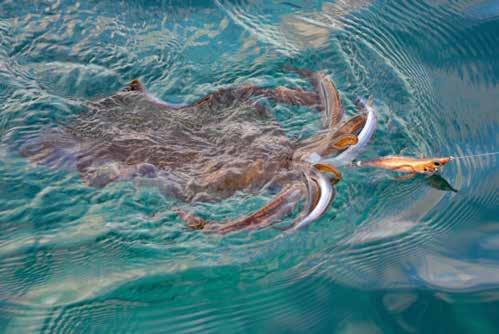
When they create a wake on the way in you know they’re big.
SQUID TIME
Targeting big southern calamari in Port Phillip and Western Port is one of the best parts of spring fishing. With the right timing, technique and gear, you can have some epic sessions and bring home a few tasty meals –or prime snapper bait.
So, get your squid jigs ready, watch the weather windows, and hit the bays, because when the big squid are on, it’s as good as egi fishing gets.
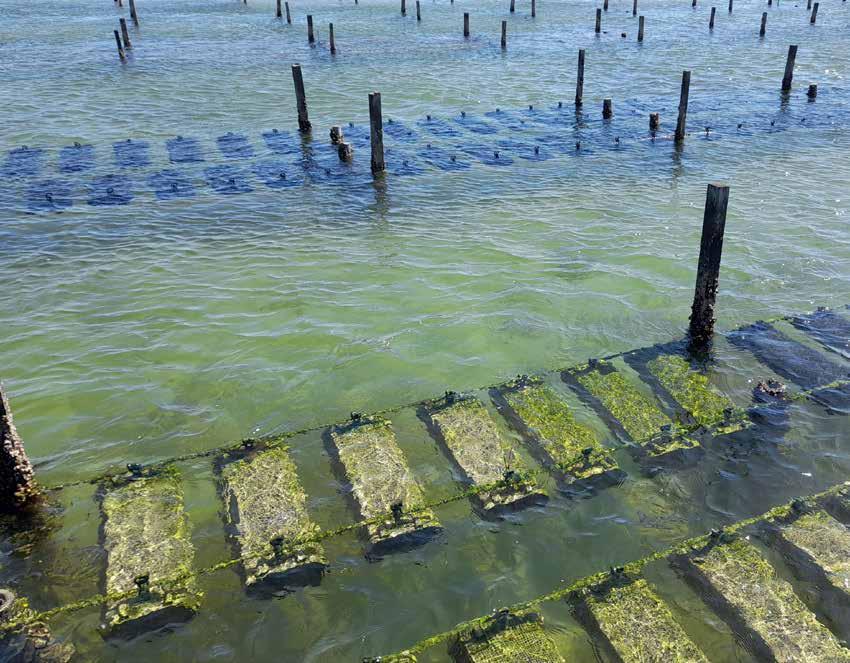
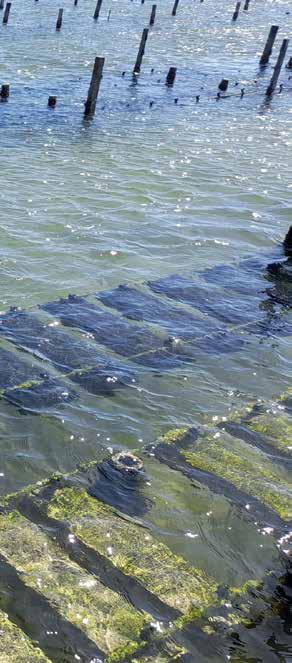
SA’s oyster industry is at risk of Brevetoxin as a result of the bloom.
THE SOUTH OZ ALGAE BLOOM
Fishing and related businesses have been hit by this phenomenon – but we need to rally round to support.
WORDS & IMAGES : JAMIE CRAWFORD
Algae is a natural part of our marine ecosystem and fundamental to sustaining life in the aquatic environment. Microscopic algal cells, or phytoplankton, form the basis of the primary food chain, with zooplankton consuming algae, which in turn provide food for many of our larval finfish species. These algal cells are also the food source for filter-feeding shellfish, along with many of our crustacean and aquatic invertebrate species. My background is marine aquaculture, and I’ve spent a fair percentage of my working career culturing algae and zooplankton for use in commercial larval production. In a hatchery environment, algae is used during larval rearing and for culturing live feed (zooplankton such as Rotifers sp.) and is crucial for oyster spat survival in a shellfish hatchery. A lot of time and energy is invested in either culturing
live algae or sourcing commercially concentrated algae cells in liquid form. In the natural environment, algae is present in low concentrations to form an ecological balance. This phytoplankton is essential for larval survival and can form one of the spawning cues for marine species of fish, along with other cues including water temperature, photoperiod and / or salinity. The presence of phytoplankton often confirms the likelihood of the primary food chain and hence can trigger this spawning event.
But occasionally the presence of algae, or a particular species of algae, will be unbalanced due to specific environmental conditions, resulting in an algal bloom, such as the occurrence we’re seeing in South Australia.
The ignition ground for the current algae bloom in SA was identified as Waitpinga Beach, near Victor Harbour on the Southern Fleurieu Peninsula in March 2025. Since that time the bloom has spread up Gulf St Vincent, including Adelaide’s metro beaches, and into the Port River, West Lakes, the Coorong, and along Kangaroo Island’s north coast. The presence and effects of the algae soon spread around the southern Yorke Peninsula and along the western side of Spencer Gulf.
While this is the most severe algae bloom recorded in South Australian waters,
it’s certainly not the first. Back in 2014 a similar species of algae was recorded in Coffin Bay, but the bloom was thankfully short-lived. Algal blooms similar to what we are experiencing in SA have been recorded in other parts of the world including New Zealand, North America (along Florida’s Gulf Coast) and in Europe, including Norway, Poland, Germany and the Netherlands. These events have lasted anywhere from a few days to a few years, with a recent bloom in New Zealand lasting for around two years. Key elements for an algae bloom include nutrients, photoperiod and water temperature, and recent extraordinary environmental events in SA have created the perfect storm for this bloom to proliferate. We saw a massive nutrient load flush into the ocean from the Murray River floods in early 2023, which was the largest flood event since 1956. This nutrient load was sitting dormant along our southern coastline since the flood. We then had a cold water upwelling in the summer and autumn of 2024, which was the largest cool water upwelling in more than 25 years, raising this nutrient load to the upper column. Then from September 2024 and throughout summer 2025 we experienced warm, calm conditions with plenty of sunlight, which raised the surface water temperature to around 2.5oC above the average. Effectively we had a massive nutrient
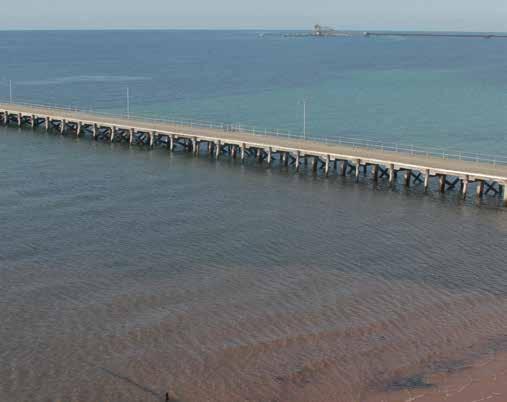
Jetties within Gulf St Vincent have been unusually quiet since the algae bloom began.
load raised to the water surface, and when combined with the warm and calm conditions of early 2025, we had all the elements for an algal bloom. Did human intervention cause this algae bloom? Not directly, but you could argue that the floodwaters of 2023 were higher in nutrient load from land agriculture run-off than it historically would have been, and the higher water temperatures during the 2025 summer might be linked to global warming. But the extraordinary conditions would still have likely triggered a bloom. Could or should the government have predicted a bloom of this degree? I highly doubt it, as this is unprecedented.
The first visual signs of the algae bloom was foaming water, especially along the higher energy coastline from Cape Jervis through to the Murray Mouth at Goolwa. Piles of discoloured and sometimes foul-smelling foam started to build up along these surf beaches, with swimmers and surfers complaining of skin and eye irritation. Some people who weren’t even in the water reported coughing and a shortness of breath resulting from the aerosols carried on the wind or from seaspray.
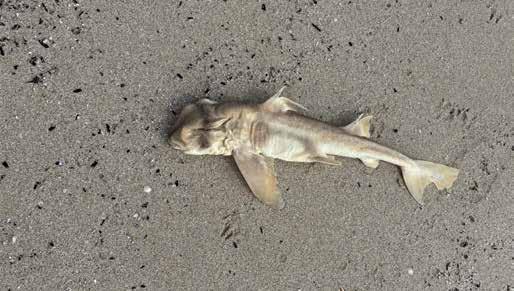
The second sign was the occurrence of dead and dying marine life, which soon swept along the north coast of Kangaroo Island and up Gulf St Vincent. The water in this region also started to turn an olive green at this time. The most affected species were stingrays, benthic sharks and finfish, along with marine invertebrates – it appeared that species living on or near the ocean floor were most effected. Also among the dead sea life were species from the Syngnathidae family, which includes seahorses, seadragons and pipefish.
Reports started filtering in daily of dead marine life washing up on beaches within the affected zone, which was distressing and confronting for the general public. Among the dead and affected marine life were some juvenile white pointer sharks, which certainly lifted the media attention on the bloom. The algal bloom can affect marine life in several ways. Firstly, the algal cells –when concentrated enough - can irritate the gill filaments of fish, sharks and rays, which results in mucus build-up and inhibits oxygen transfer, ultimately leading to asphyxiation. These algal cells can also release a toxin that can be transferred through the gill filaments
of fish and rays, which can be lethal to some species. Also, when the algae cells die and decompose, they draw oxygen from the surrounding water and lower the dissolved oxygen concentration, especially in that benthic layer.
The algae is a Karenia sp, which is a dinoflagellate (marine plankton), with some Karenia sp known to cause brevetoxin in shellfish. Shellfish, such as oysters, scallops, mussels and cockles, are non-specific filter feeders, inadvertently consume these cells as food. Some species of shellfish – such as razorfish and cockles – do not fare well once they have ingested this species of algae. But other shellfish can grow OK on Karenia sp. but over time they can accumulate a build-up of toxin, and if consumed by humans it can pose a health risk, with vomiting, stomach cramps, headaches, muscle pain and fatigue among the symptoms. Algal blooms are typically made up of many different species of algae, and this bloom is no different. At the moment we have 20 scientists from three countries all working together to identify the specific Karenia sp. that might be posing the brevetoxin health risk to South Australia’s shellfish industry. Once the
The salmon fishing from our states surf beaches seems to have been unaffected with consistent fishing recorded.
individual species can be identified, the cells can be cultured in a lab environment and eventually upscaled to test for mitigation strategies.
But in the meantime, the South Australian Shellfish Quality Assurance Program (SASQAP) is monitoring these levels of brevetoxin from shellfish samples. Some commercial shellfish growing and harvesting regions have been temporarily closed and will reopen once the toxin concentration decreases below a prescribed threshold.
For the time being, avoid collecting and eating your own bivalve mollusc such as oysters, scallops, mussels and cockles from the natural environment, as they have not been tested for brevetoxin. It is still safe to buy and consume shellfish from a fresh seafood shop or restaurant, as most product is harvested away from the affected bay zones, and rest assured that samples are being tested regularly to ensure they meet strict health standards. Fresh fish fillets are fine to eat – whether you catch your own or buy from a fishmonger. We’ve continued to catch and eat seafood since the detection of the algae bloom without any problems. If you catch your own fish, calamari, crabs or rock lobster, ensure you clean your
catch properly before cooking, and don’t eat any dead or dying seafood that you’ve found on a beach. Unfortunately, with the media attention the bloom has generated, the public appear frightened to buy and eat seafood, but this shouldn’t be the case. Seafood bought locally in SA is safe to eat.
It’s hard to know how long the algae bloom will be present for in South Australia, but everyone is hoping it dissipates sooner rather than later. The effects of the bloom might be longlasting, with the southern reef system and associated weed beds expected to take significant time to recover, and the lasting effects on the marine ecosystem are still unknown.
Because algae blooms are naturally occurring, there is no remedy to intervene and kill the bloom. Naturally decreasing water temperatures and lowering nutrient levels over time should lower the cell count, and similarly storm activity will help to break the bloom through mechanical wind and wave action. It has been good to see improvement in some areas, but with ocean circulation the bloom has been dispersed from some areas, only to be moved to another.
Some of the fishing within the affected areas has been negatively impacted. Catch rates are down for a lot of species, and this has had an adverse effect on many businesses around South Australia. Recreational fishing is down across the board, with tackle shops and regional caravan and tourist parks doing it really tough since the occurrence of the bloom. People just aren’t fishing, and they certainly aren’t travelling to their favourite seaside towns to do so.
This has even had a flow-on effect to regions outside the algae zone, which is interesting, as the fishing remains unaffected. The SA Government has released 20,000 vouchers for accommodation and coastal experiences under the ‘Coast is Calling’ program to encourage visitors back into our regional coastal districts, and hopefully this will bolster the economy through these struggling regions.
Our commercial fishing sector, especially in Gulf St Vincent and southern Fleurieu, have also been doing it tough, and some aquaculture growing regions have been hit with harvest bans and a halt on translocation of stock. Even local fishmongers around Adelaide are feeling the strain, with less product filtering through, and general consumption down.
Some of the images of dead marine life washing up on our states beaches has been confronting .
The government is working on support packages to help these businesses, but unfortunately some industries are finding the downturn in trade crippling, and it won’t be a surprise if some of these family-run businesses are forced to close their doors. These government packages are going to include financial support, counselling and a waiving of annual fees for some industries.
What can the general public do? We can get behind these businesses that are doing it tough – support your local tackle shop to help them through this challenging period. Book a weekend away at one of our beautiful seaside towns to keep revenue flowing through these communities and order some local seafood from a fish shop or when eating out at your favourite restaurant.
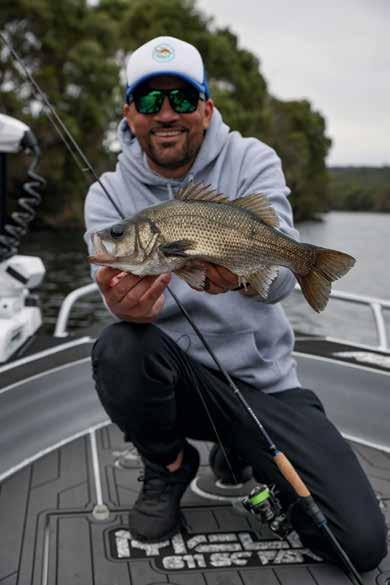
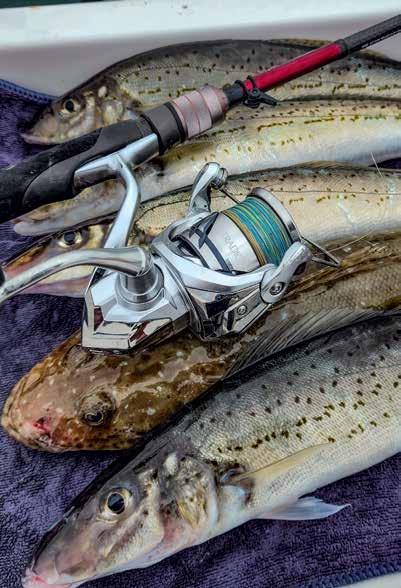
Yes, the fishing has been challenging in some locations for several months, but there are still some great fishing opportunities available, even within the affected areas. King George whiting are being caught in reasonable numbers by boat fishers in Gulf St Vincent, along with plenty of salmon to around a kilo from southern metro beaches. Bream fishing has been improving in coastal creeks and rivers, as it generally does at this time of the year.
For anglers who are prepared to travel outside the affected algae zone, the fishing has been as good as ever. The south-east of SA has been largely unaffected, and so too the west coast from Port Lincoln westwards to the WA border – which represents a fair chunk of our state’s coastline.
WHAT CAN THE GENERAL PUBLIC DO? WE CAN GET BEHIND THESE BUSINESSES THAT ARE DOING IT TOUGH – SUPPORT YOUR LOCAL TACKLE SHOP TO HELP THEM THROUGH THIS
All the regular species, from inshore King George, garfish and flathead, to big salmon off the beaches, have been available over the past few months, and with the change of seasons we’re still expecting to see southern bluefin and yellowtail kingfish visit our offshore waters as usual. And, of course, for the freshwater angler there are still back country creeks for trout and redfin, along with local reservoirs and the Murray River for natives, all of which have been fishing exceptionally well this year.
So don’t despair, this current algae bloom is just a passing season. Yes, it is challenging, and when faced with the effects of the bloom it can be confronting, but it will pass, and the fishing will improve. In the meantime, don’t stop fishing! Be prepared to travel outside of your local grounds to sample what our state has to offer, and support local businesses along the way. We’ll get through this bloom together .
The King George fishing seems to have improved in Gulf St Vincent with some decent catches being reported.
bloom.
Salmon in the surf are still going strong.
The Coorong has recorded concentrations of Karenia mikimotoi.
CHOOSING A REEL FOR YOUR TECHNIQUE
We’re profiling the two Japanese reel giants, and which spec suits your fishing. This month: Shimano. Next issue: Daiwa
Fishing reels are developing at a rapid pace. It’s not just the technological advancements within the reels themselves, but also the sheer number of models now available. The evolution is happening so quickly that many anglers, and even tackle stores, struggle to keep up with what each model offers. This is less of an issue with heavy offshore reels and far more prominent among the lighter inshore models (500–5000 size).
When it comes to the two big reel companies – Daiwa and Shimano –there’s a lot on offer, and you can be forgiven for not knowing the differences between them all, or which one best suits your fishing style or technique.
For too long, anglers have placed too much emphasis on weight (or lack thereof) and bearing count, but in 2025 and beyond, there’s much more to consider. Both companies have established systems in place, and
techniques.
there’s more thought put into each reel’s intended purpose than most people realise. Much of this gets lost in translation from Japan to Australian shores, but we’ve got the lowdown for you.
This article was originally intended to cover both brands, but we decided to split it into two parts – the first focusing on Shimano, followed next month by Daiwa. Why just these two brands, you ask? We strongly believe other brands simply can’t compete. Of course, you can form your own opinion, but we seriously doubt anyone reading this has tested and owned more reels over the past 13 years than we have at Hooked Up.
Over this time, it’s become abundantly clear that these two Japanese brands are far superior to anything else on the market once you step beyond the $200 price range. In the sub-$200 category,
MAGNUMLITE
other brands may be comparable, but we’re yet to find anything that holds a candle to either of the big two in terms of performance and durability. We’re happy to be proven wrong – but it hasn’t happened yet.
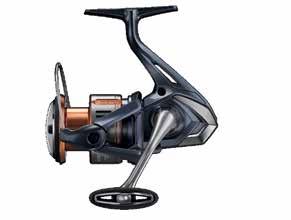
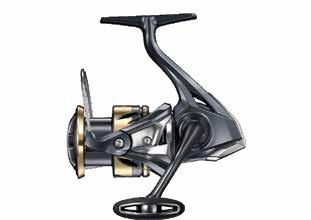
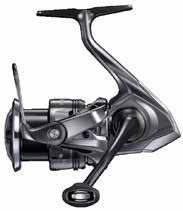
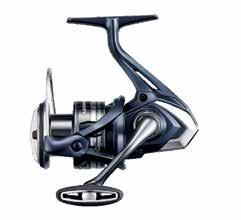
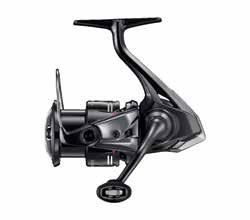
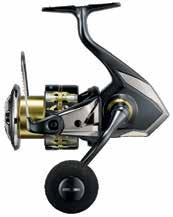
Shimano’s inshore or light-tackle spin reels can be split into two main categories: Magnumlite and Coresolid. From least to most expensive in the Magnumlite range are the Miravel, Vanford, Sustain and TwinPower XD. The body and rotor of these reels are largely made from Shimano’s CI4+ material – a lightweight resin reinforced with carbon. This makes the reel light, highly resistant to corrosion and impressively strong.
Anglers often focus heavily on how light the reel feels overall, and while that’s
WORDS & IMAGES : KOSTA LINARDOS
The Magnumlite range is best for more technical luring
The Coresolid range is best for less technical lure work and general bait fishing.
THE MAGNUMLITE RANGE
While the Stella is offically in the Coresolid range, it is somewhat set apart due to it’s magnesium body (in the smaller sizes) and it’s ultra refined build that merges the qualities of both ranges.
advantageous in some respects, most reels these days are already very light. The more important factor is the inertia of the rotor. Because it’s so light, it doesn’t take much effort when winding the handle to get it moving – and, due to its low mass, it stops quickly too.
This gives lure anglers far greater control over their lure when performing various techniques. So, if you’re jerkbaiting, working soft plastics with short, sharp hops, or using topwater lures such as pencils or bent minnows, a reel from the Magnumlite range is the better choice.
CORESOLID
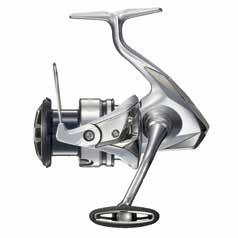
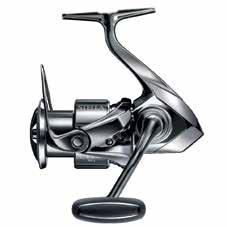
The Coresolid range, on the other hand, is made from alloy. From least to most expensive, you have the Nasci, Ultegra, Stradic, and TwinPower FE. These reels are slightly heavier, more rigid and more durable, and they’re designed for
different techniques. If you were going to buy one for bait fishing, this is the range to look at. When it comes to lure fishing – if you’re spinning slugs, crankbaiting, trolling, light jigging, or slow or fastrolling any kind of lure – a Coresolid reel will suit you better. The heavier alloy rotor provides stronger, continuous momentum, much like a wheel rolling downhill. For techniques involving constant winding with minimal rod movement, the Coresolid range is the superior option.
You might be wondering, what if you want to work lures with a fair bit of rod action but you’re targeting big fish and want the rigidity of a Coresolid reel? Fair question – and that’s where you move into the higher end of the Magnumlite range, with something like the TwinPower XD. Originally designed
in Japan for anglers targeting large seabass off the rocks, it blends both CI4+ and alloy, using a CI4+ rotor to deliver the best of both worlds.
You can also move into the top of the line with the Stella. While it’s part of the Coresolid range, it features a magnesium body with a protective coating to prevent corrosion. It strikes an ideal balance between the lightweight, technical responsiveness of CI4+ and the rigidity of Coresolid construction. Its high bearing count also ensures exceptionally smooth operation.
In simple terms: if you want a reel for working lures that involve a lot of rod action, go for a Magnumlite. If you’re after a reel for less technical lure work or general bait fishing, a Coresolid is the way to go.
NASCI
SUSTAIN
STRADIC TWIN POWER FE
MIRAVEL
VANFORD
SUSTAIN
TWIN POWER XD
STELLA
This review isn’t so much about the Vanford FA itself – we reviewed that back in the April edition, which you can read online at hookedup.com.au. This piece is more about a new size in the world of fishing reels – the 500. The 500 is noticeably smaller than a 1000 and has been met with great enthusiasm among anglers.
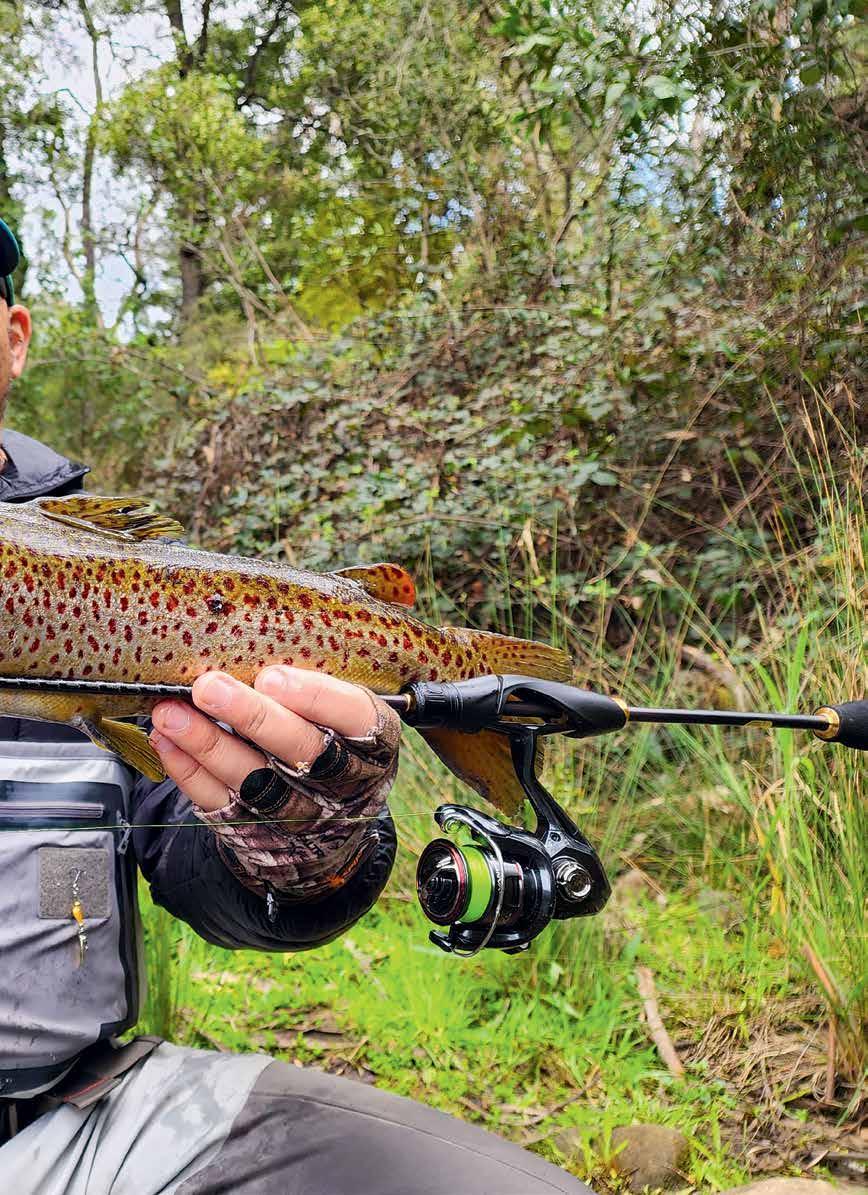
My first thought when I saw one was, “This will be awesome for trout in small streams,” and that’s exactly what I used it for during the test period.
Now, if you’re not a trout angler but like the idea of an ultra-small, lightweight reel, the 500 would also be ideal for garfish and ajing – the Japanese art of targeting slimies and yakkas with soft plastics (yes, that’s a thing). I probably wouldn’t use it for bream, as it’s a bit too small to suit most of my rods, but it pairs beautifully with several of my shorter trout rods.
At the same time I received the 500, I was also sent a range of ajing gear to review for a future issue this coming summer, which led me to start looking at ajing rods. I found a Shimano Soare S58UL-S 1–3lb at my local store, Compleat Angler Dandenong, and instantly fell in love with it. It’s super light and compact, yet extremely refined with a solid graphite tip. It’s not part of Shimano’s core Australian range – it’s a JDM product (the Soare range is specifically designed for ajing) – but Shimano did release a limited number of JDM products to select stores last year. While it’s technically an ajing rod, I could instantly see how well it would perform as a trout rod for the small streams I fish.
TESTED & REVIEWED
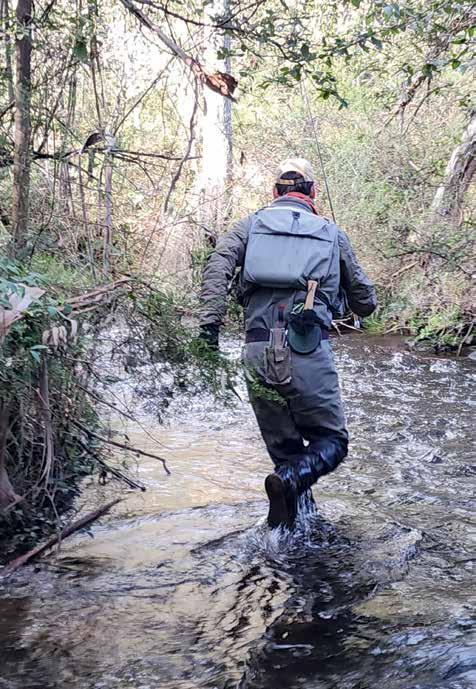
The larger river I mainly fish this time of year is the Goulburn, but recent heavy environmental outflows from Lake Eildon have rendered it almost unfishable since the season opened. So, my first trip for the new season was up some smaller backwaters. These rivers can get very skinny yet still hold big fish, and they’re surrounded by thick bush, meaning you’re wading through the water most of the time. You often find yourself climbing over large fallen trees or even commandocrawling under them. A short rod with a small, lightweight reel like the 500 is a huge advantage when trekking these rivers and casting among overhanging trees and dense scrub.
When I first started winding the 500 out of the box, it wasn’t what I expected. I
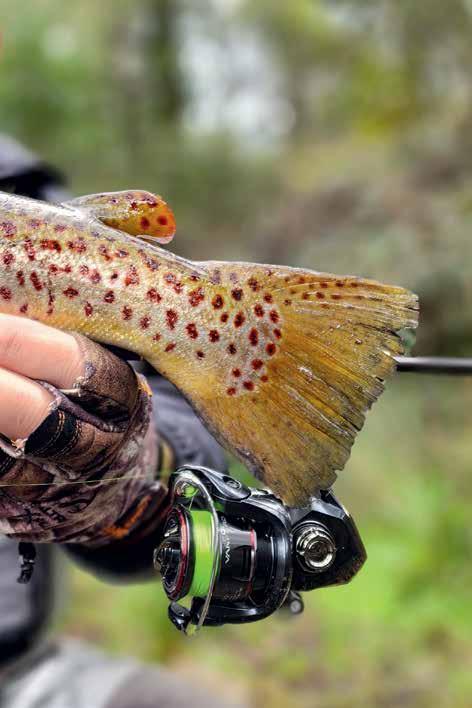
Smaller than a trout’s tail.
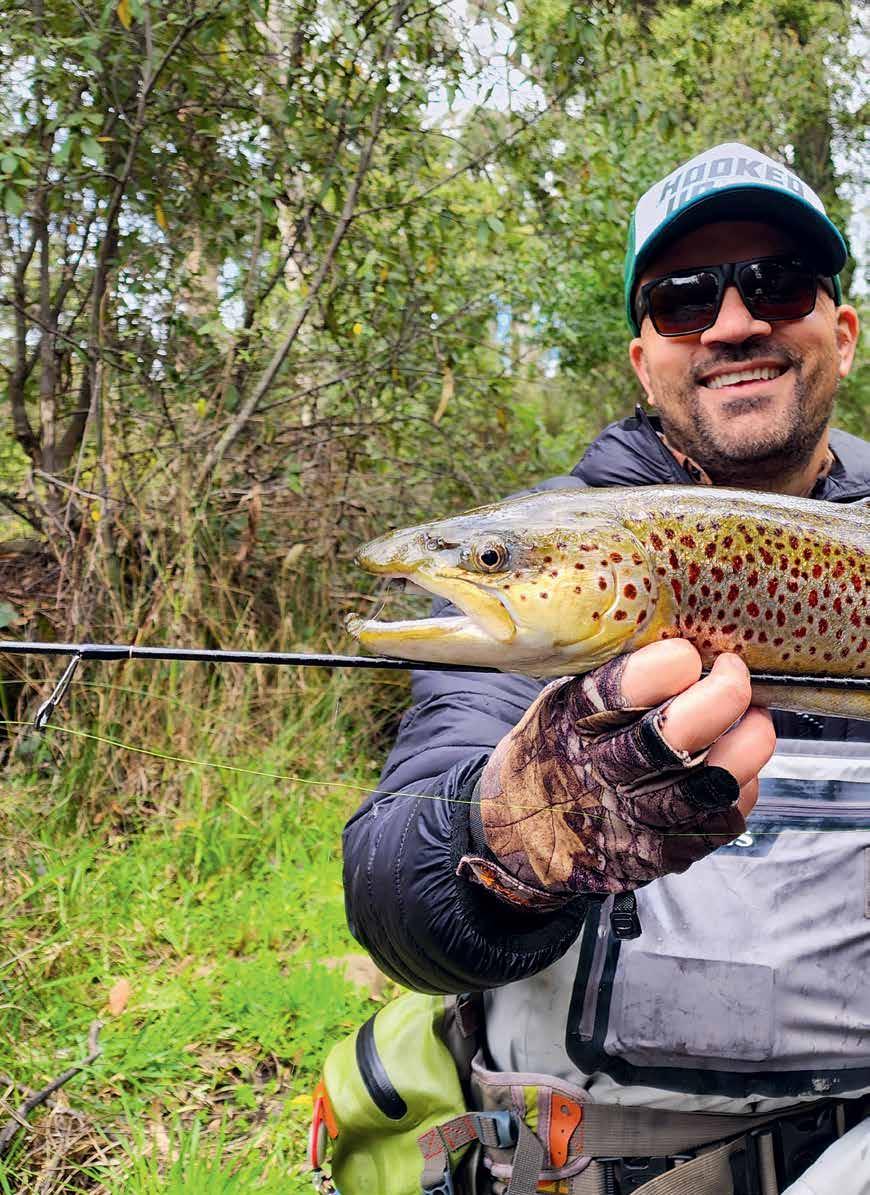
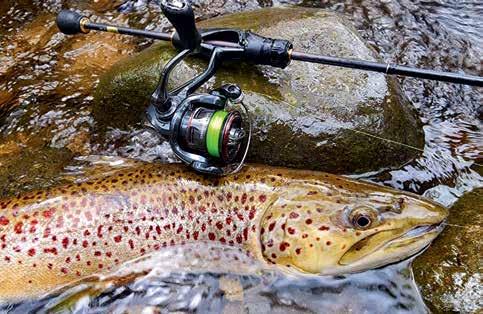
own Vanford FAs in 1000, 2000, and 3000 sizes, and they’re all buttery smooth – the 500 isn’t. Due to its extremely compact size and the amount of engineering packed into such a small space, it feels noticeably stiffer than a 1000. I spooled it with 6lb Kairiki 8+ braid and set off for the river, half-expecting I might end up heading back to the car halfway through the day to put the 500 away and tell Shimano I just didn’t like it. By my third cast of the morning, though, I’d stopped noticing the stiffer feel and started loving how short, light and compact the outfit felt. Navigating what’s essentially a boot-camp commando course to reach the upper river, the set-up was a dream to carry and fish with. Once under load, even with very light lures, the feel of the reel changed completely. I cast spinners and plastics all day, caught a heap of small browns and rainbows, and finished the session with a cracking 3lb brown at the base of the falls.
The 500’s CI4+ material makes it incredibly light and ultra-sensitive, transferring every vibration through the blank and into your hand, giving you excellent control of your presentation. I could feel when I was entering snaggy subsurface territory, detect the slightest bites, and set the hooks instantly. I could also easily jam the butt of the rod into my wading belt when changing lures, and the reel’s light weight made it almost unnoticeable to carry up and back down the river – a long trek over slippery rocks, fallen trees, and overgrown deer trails.
Its drag performance was excellent, but keep in mind it has a very wide drag curve – it takes a few cranks to fine-tune. Due to the small spool and washers, this is a setand-forget drag system, not one you want to
be adjusting mid-fight.
It’s a reel suited to a limited range of techniques – small-stream trout, ajing, and perhaps jungle perch would be its key strengths; basically any situation where short casting distances are required. While it can easily handle larger fish like the brown I caught, in bigger streams where you need to cast further, it could pose the risk of being spooled, as it holds only 185m of 0.6 line. The limited drag curve could also be a minor drawback. However, for stream trout and ajing, it’s perfect and offers significant advantages over a 1000. It’s also an excellent reel for hunters and hikers who want a small, lightweight outfit in their pack for a bit of stream fishing along the way.
A size comparison between the 500 Vanford and 1000 Vanford.
In skinny rivers and thick scrub the small size of the 500 is highly advantageous.
FRONT MESH
WITH ADVANCED LIGHTWEIGHT DESIGN AND BIG DISPLACEMENT FOR MORE TORQUE, SPEED AND ACCELERATION