PERGOLA
EDITOR-IN-CHIEF
Maui Smith
POETRY EDITOR
Elizabeth Ambos
FICTION EDITOR

EDITOR-IN-CHIEF
Maui Smith
POETRY EDITOR
Elizabeth Ambos
FICTION EDITOR
NONFICTION EDITOR
Emily Holland Johnathan Prentice Alexander
VISUAL ARTS EDITOR
Nicole Abuhamada
STAFF READERS
Alina Proschan, Charity Ben, and Shaylynn Marks
Millicent Borges Accardi
Donna Hemans
Valentine’s Day is a deceptively versatile holiday. The heartbroken find comfort in steeply discounted grocery candy. First dates and established couples alike fret over dinner plans and gifts. Beyond the mass-produced chocolates and cards is a holiday that provides something for everyone at every age, from sticky elementary school parties to seasoned couples celebrating for the 25 time. th
As I pulled the issue together, motifs around family, identity, and relationships came up repeatedly. Love quickly became the central theme– a mother’s love for her son, a couple’s love of their former home, a widow mourning its absence. What is grief, after all, but the weight that love must leave behind, the byproduct that confirms it existed?
There couldn’t be a more appropriate day to host the dynamic range of work present in this inaugural issue of Pergola than Valentine’s Day. Thank you to my genre editors and our contributors for bringing this magazine to life. To our readers, I encourage you to consider the many, sometimes unrecognizable forms, that love can take throughout your lifetime as you read.
EDITOR-IN-CHIEF
Marcel Fabel Price
I always thought it would be me the wreckage, the ash, the burnt-out wick. There were nights I whispered for her death, a terrible prayer to stop the shattering.
The wreckage, the ash, the burnt-out wick I never believed I’d beg the clock to stall. A terrible prayer to stop the shattering, to hold the hourglass steady in trembling hands.
I never believed I’d beg the clock to stall now there’s nothing I wouldn’t trade. To hold the hourglass steady in trembling hands, to feel her pulse in the same room as mine.
Now there’s nothing I wouldn’t trade not even the worst day with her laughter cracked. To feel her pulse in the same room as mine, the weight of her absence carves new ruins. Not even the worst day with her laughter cracked there were nights I whispered for her death. The weight of her absence carves new ruins. I always thought it would be me.
Gabrielle Mopkins
Jen saw the red light at the end of the hall from under Rick’s door Last night, she snuck in and unplugged it, worried about her son’s teen brain in that pool of red Not ready for a fight, she poured coffee and hugged the warm cup in her hands as she veered back to her bedroom The cottage felt cold, holes in the soffits where wind and insects entered; she tried not to think about that either the quick move in spring, out of the city to this half-finished place on a patch of land Now, late fall, month nine of the virus, Brian’s intentions to get the house fixed turned into him gone all day. He nursed the sick through evening, decontaminated in the basement when he got home, showered in boiling water, collapsed, then out again before dawn Jen snuggled under her covers, opened her computer, took along swallow of her sweet, milky drink, and signed on at work. All the social channels for the land trust and the forms on the back end of the website showed donations down by twenty percent, numbers falling by the day They depended on donations People, fatigued from giving, clung to their dollars in uncertain times What compelling story could she craft to bring them back? Could she connect the trust to the pandemic but what did anyone care about land preservation when they were trying to save their own lives?
When her alarm rang to wake Rick for school, she tensed She put her coffee and computer aside, stuck her feet into slippers, wrapped her fuzzy pink bathrobe around her with her phone in the pocket, and steeled herself as she headed back down the hall
No answer to her knock; she pushed the door open. Rick’s chaos, the walls covered with “It” and “Joker” posters that spoke of a deep disturbance, the soft angles of his face lit sharp by the blue of his laptop game, fingers tracking movement in a constant strive to win How long had he been up? “Morning, bud,” Jen said “Time to get ready for school.”
That look in his eyes, as if he hadn’t blinked for hours, his straight cinnamon hair shaped by his pillow He grunted; the sound dropped gravel into her belly She resisted the urge to leave, picked up a shirt, some socks, threw them in his overfull basket, the red making her dizzy, the posters, the painted faces and pointed teeth and evil smiles chilling. “Okay, kiddo. You’ve got to get out of bed and shower for school, even if you don’t have to go in ” Jen couldn’t remember the last time Rick showered; he only got up to eat She had to leave
“Who says?” the boy asked She stopped fussing, fully turned to his bed He didn’t raise his eyes to where his mother stood at the footboard She gripped the bedpost “What?” Flickering light reflected the screen in Rick’s glasses, somebody running from something, predator and prey with intent to destroy.
His lids stayed down. “What does it matter?” He was still angry from two weeks ago, when she hid his computer and grabbed his phone from his hand and he bellowed that dark animal cry, crumpling to the floor with a sob that shook his too-thin body and frightened her with its familiarity Lizard fear snaked into her marrow She’d had to give in
“You’ve got to keep yourself clean, fed, cared for,” she said.
“Who cares?”
She could hardly bear his shift over the past nine months to an unwashed and furious person who wore bruising makeup, chatting to people only through a screen that sucked him in like one of his scary movies The shift a chasm between Rick and the real world
The chasm grown between them
Like throwing a rope across, she switched to forced enthusiasm “I care! You should care too!” Pushing good cheer as a solution “You only have one life You should care!”
“There’s nothing to live for,” Rick snapped.
Jen held together the crack in her heart. To him, life looked like one of his dystopian movies, not the safe country teen years she’d imagined for him Her mind cast about for optimism “Oh, honey,” she said in his dim room lit by a string of red Christmas lights, his frail mustache just visible on his 15-year-old face The sun had not yet come up, they were all sad “Life is long ” Felt like dragging a boulder, trying to keep her own self intact for her job while also being Rick’s teacher, his wrangler, his at-home therapist. “This will pass, I promise. Things will get better. They always do.” Inside, she didn’t want this to be their lives; she wanted her son to be normal, whatever that meant
Rick curved himself from the screen, blocking off his mother, and threw the covers over his head with his blanket, letting out a chuff of sour body odor that smelled of decay Jen backed away from the bed, her feet tripping on clothes and empty soda bottles and dirty dishes Rick’s movement and stink, just like her daddy’s. She took three steps forward.
8
“Baby?” Her voice pitched too high. She nudged her son’s foot “Hey, you hear me? Come on now, let’s get up and into the shower.” Watching Rick cling to the pit of his bed, that cold, irrational terror that her son may have inherited the “gene” whipped through her She didn’t want a daddy child those nights she and her sisters pushed off their father’s piss pants and rolled him into bed, when they gathered his empties dotted with fruit flies and buried them deep in the trash so the neighbors wouldn’t see She moved closer and felt for what she thought was Rick’s arm, trying to rouse him, to differentiate him from the blankets, her son’s pungency setting her to tremble.
Jen hadn’t been able to fix her dad
Roughly, Rick pushed his mother away, scratching her with his blue nails “Leave me alone ”
Seared, Jen shook, unsure what to do for her child who didn’t want to be helped. She left the room, wrestling her desire to crawl away from the pain, into work, into her own pleasures.
She panted in the hallway
Video games; they were not games, they were secret agents set to ruin lives She wanted to vomit, to punish Brian for getting him started
A whisper brushed past her ear. Turn more fully toward Rick, it said, don’t ignore him or give up, don’t put your own fears first and willfully not see that you’re losing your son
She stood straight, looked around, listened hard That whisper giving her guidance clear words that filtered in when she was a wreck she thought of it as her mom’s voice from under the sea that drowned her. What happened to Daddy after, the way his own mother took over their lives, distant and critical, until he himself quietly drowned in a bottle A little thought popped: What if, when he was a teen like Rick, her daddy had someone like Jen as a mother, instead of his own mother? Or someone better than Jen, someone who unconditionally adored him and would give him the full power of their attention always, even when things got ugly?
The burden of that She had done that for Daddy as a kid, girl parenting him. The whisper said her son needed attention Could she give him what he needed? He pushed off her fake attention; he could sniff it out, the lie of her good cheer
She thought of a visit with her father in rehab, before she was married, before Rick That bitter call from her grandma telling her that her father had surfaced again They punished him, her and her sisters and Grandma and Grandma’s boyfriend Lee, always, after any bender The hallway felt shadowy despite the sunshine streaming in where she sat alone in the dayroom waiting for him Annoyed, distracted, her father entered, but when he saw Jen, his face broke into a smile.
He was alive, just hanging on; her joy lifted her from the chair still and always relieved to have him, still and always in a rage he had disappeared. She took in the sterile smell of her dad as they hugged, took comfort in the heft of his body They sat; he picked at his hands, dug shame out of his cuticles Sharp rocks in her soul, to be so angry with him But this time, she kept her tongue quiet, pressed into the roof of her mouth
Jen reached over and enclosed her dad’s hands with her own, feeling his life was the only thing that mattered, and also wishing he were dead. His hands were stiff with cold, knuckles damp, fresh from withdrawal, her hands warm above, covering him, covering for him His hazel eyes downcast, his sandy hair shot with gray, the scars on his forehead faded with time
“Look at me, Daddy,” she said.
Her father raised his eyes slowly, cautiously.
They sat looking at each other Jen could tell no one had asked him for his attention that way in a long time, and no one gave it to him Her daddy’s eyes changed, became less clouded and noisy as he settled “I love you,” Jen told him He held her look like he was not sure it was true, if he deserved it. “What are they feeding you in here?”
He shrugged. “Mushy peas and mashed potatoes. Like I have no teeth ”
She snorted, let go of his hands, leaned back “I’ll make you spaghetti and meatballs when you get home, enough for a week, we’ll freeze some ” His hand passed quickly over his forehead as he chuckled.
“What shows you watching?”
“Reruns of MASH ”
“Radar!” The girls always joked how he reminded them of the little nerd Radar, an efficient clerk like Daddy the lonely librarian, swallowed by life, by his own sensitivity
It went this way for an hour. She saw it then: They were both so hungry for attention, like nothing could fill their decades-old Mom-void, that love felt like a limited resource that didn’t belong to lonely addicts and their faltering kids
But, she saw now, for that hour, she and Daddy were together and they had each other and it was enough
Jen returned to Rick’s room, where he was pounding at his laptop. Jen didn’t ask him to put it aside. She sat next to him on the bed and waited for his attention and when it didn’t come, she asked him if he was winning
Rick flicked his eyes at his mother, suspicious Morning sun ignited the room, glinted off his glasses “Don’t you have work to do or something to write or a phone call to make?”
He nabbed her; yes, she was always too busy She felt the phone in her pocket, vibrating every few minutes Jen looked out the window at the peach sky as it dawned on her that her son’s hand had stopped moving Feeling his eyes on her, she met them “I’m right here ”
Rick didn’t look away
Her alarm on her wrist beeped, Rick’s mouth fell, he swiped the track pad She covered his hand with her own to still it
He flinched but didn’t take his away She stopped the alarm with her chin, Rick tensed, like waiting for his mom to tell him to shower, get on with his day “Hey, I’m right here, Ricky,” she said.
His wide brown eyes looked everywhere but at her “Don’t you have to work? And I have school.”
“Yep,” she said, “we’ll get to all that It’s early Want some pancakes?”
He stared down as if their hands were someone else’s A shudder passed through him
“We can break out the special fancy maple syrup ”
“Um, I guess ”
Jen stood and watched him unwrap himself limb by limb like some long folded creature They went down the hall with asynchronous caution, bumping into one another. She wanted to make sure he was still with her; she felt his phone come out; she wanted to take it away, that competition, and fought with her relief, good, she could look at her own phone, check her numbers had anyone donated, would anyone care to give the land trust money today, money would solve everything, money, gimme, money
But she didn’t take it from her bathrobe.
“Hey, tall guy, could you get me down that pan?” He reached up for it, a balletic feat of looking down at his phone in one hand while unhooking the hanging pan with the other She got out the mixing bowl, the flour, baking soda, sugar, dire commands pushing at her lips for him to put down the phone She wished she could open the box of him and let out the pain, to hear all that was inside, to bear it, to take it from him and cage it inside her The corners of that cage would dig into her guts forever, like Daddy’s cage He finally escaped it, released her through dying Rick’s not your daddy. That whisper again.
“Milk and eggs?” Her son got them from the fridge He measured and poured while she whisked, his focus there for a moment then slipping away, then back again In middle school, Rick cared about books and board games and they spent nights talking about geotracking and Pokémon Could she please have that boy back? His feelings seemed trapped in a bubble under ice
“Hey, bud, if you wanted to learn anything, what would it be? I mean, like really learn, like a language or something.”
He glanced from his phone to her “What do you mean? I learn stuff every day.”
She poured ladlesful of pancake mix into the buttery pan with satisfying sizzles “I’m not talking school work ”
They watched the pancakes rise He put out the fancy syrup and the forks and knives and napkins “To play guitar Like really play ” His answer raised her antennae he started guitar lessons in middle school, before the fight with Trent
“Yeah?” She flipped the pancakes, peering into his inscrutable face “What songs would you play?”
They sat with their plates; he soaked his pancakes with a generous pour of golden liquid, cut off a bite, chewed She ate a bit of her own, a ribbon of pleasure rippling into her, her boy’s face in full light, only vestiges of pear-colored makeup by his hairline, and orange above one eye He said, “Remember those lyrics you wrote for me to go with the strum at cabaret night?”
Surprised, she said, “A silly song ” Not silly, for what happened after, the way it got all turned around He dropped his fork, took out his phone, started scrolling He never wanted to talk about this before “What are you looking for?”
His thumb hit and opened the photo; there on the small glittery stage stood Rick in full makeup and high-laced boots, a school guitar slung over his snazzy vintage suit jacket, a picture she sent him during the show, before his best friend Trent climbed the stairs behind the curtain and walked onstage in his purple velvet jacket and boots and mimicked Rick behind him as he sang The kids screamed with laughter, honking, braying Confused, Rick’s strumming hand fell slack, he backed up, bumped into Trent, turned to face him Trent leaned down and sang her stupid lyrics back to a stunned Rick in his deep baritone He must’ve learned the song during the run-through Jen stood in the audience, hot blood rushing to her head; teachers and everyone thought it was planned, part of the show Rick couldn’t get out of there fast enough, and never wanted to go back Two days later, Trent and Rick’s girlfriend Sarah started going out Then, the virus came to New York, and Jen and Brian decided a move was in order
The beautiful makeup and sharp suits stopped and the sick clown makeup crept in as the pandemic took hold hard, shutting schools down Posters he ordered of the serial killer John Wayne Gacy and “It” and “Joker” replaced David Bowie and Prince and Harry Styles
Rick stared down into the phone
“You looked gorgeous that night,” she said
He pushed up his glasses with one finger “Mom?”
“Yeah?”
“Remember when you were addicted to pills?”
She stopped breathing, held perfectly still, didn’t dare meet his eyes How he saw her, like Daddy, in a stinking puddle of herself The broken foot, then the body pains, the doctor trying to be kind, a kindness that lasted over a year, her hooked on a pill mill.
“Remember how you got off them?
She tried hard to look up. “Yeah, that was tough times, bud.” Her voice as if through a straw. The urge to open her phone overwhelmed her; she squeezed it in her pocket. After the cabaret, half her pills went missing and she knew it was Rick. She threw the rest away and lay curled in a heaving ball on her bed for ten days, and for three weeks, bearing work all day, smiling into her colleagues’ faces and holding in the cravings like a bucking beast, then sweating it out all night, the world not the same place when she returned. She could not be with her son then.
“There was something, like, you had to learn,” he said “Something hard ”
She met his eyes, so soft and curious “Yeah ” He saw her as someone who kicked a habit, kicked it and never went back Not like Daddy
He sniffed and pushed his glasses up, and with two fingers, he zoomed in on the face of his younger self. “I really liked playing guitar.”
“Yeah?”
“And I really liked your song ”
She blew out a laugh “I’m not sure I believe you,” she said
He looked up from his phone “It’s true, Ma ”
He will not always be at the mercy of his dark feelings
“Hey, want to see if we can find a guitar online? We could get the band back together ”
He shrugged, eyes falling on the photo. Trent and that school were gone. Maybe the pandemic would end sometime soon; maybe there was a new way forward.
Laura Shovan
Sometimes I forget there was an empty space where my son’s body is now, a time before his hair fell like a curve of coastline.
When he was fourteen, I knitted socks, the shape of his feet pushed into being row by row. The socks were real before I cast the first stitch,
real as the grown man folded inside my son and the son who lived in the gyri and sulci of my brain before his cells multiplied into emptiness.
It’s the origami of inside. A microscope’s lens reveals yarn’s complex fibers of twisted strands.
I closed the toe, snipped the yarn, wove in ends and could not stop my son’s threads unraveling as he pulled himself apart and together, as he grew into the space where an invisible man lived beside me unseen for years.
Corey Frey
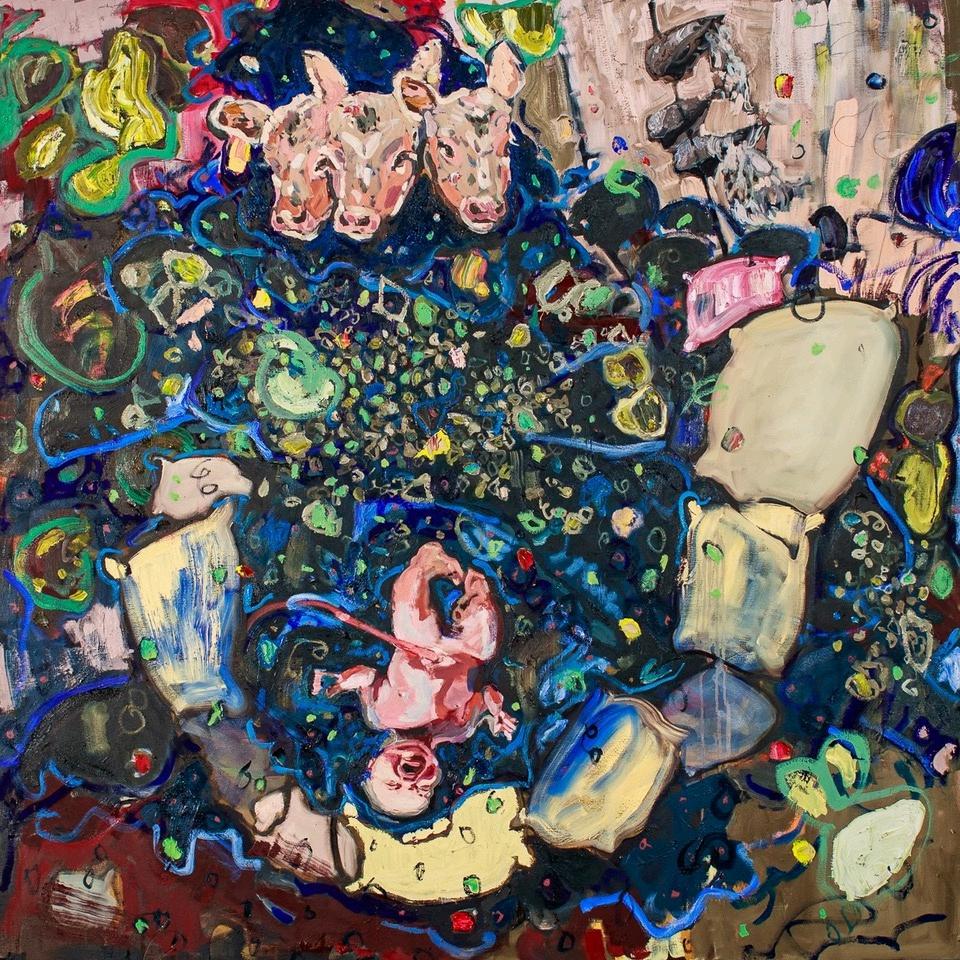
I lean over each barbed thistle, grab hold, pull straight up. I keep thinking that this time, the weeds won’t grow back. Surely, If I uproot them over and over from the same spot, they’ll stop trying.
But they never do. Their tenacity is inspiring. They never “learn their lesson.” They never “mind their place.”
My borders and rules mean nothing to a life bent on living.
My husband groans about the tedium in the garden. But what about making a life isn’t tedious? And what of our tedium isn’t miraculous?
Flowers bloom, food grows from green stalks. We cook, wash the dishes, make the beds, brush our teeth. we stay fed and (mostly) healthy, free to love and be loved. And over each noxious weed, an angel whispers, “Grow!”
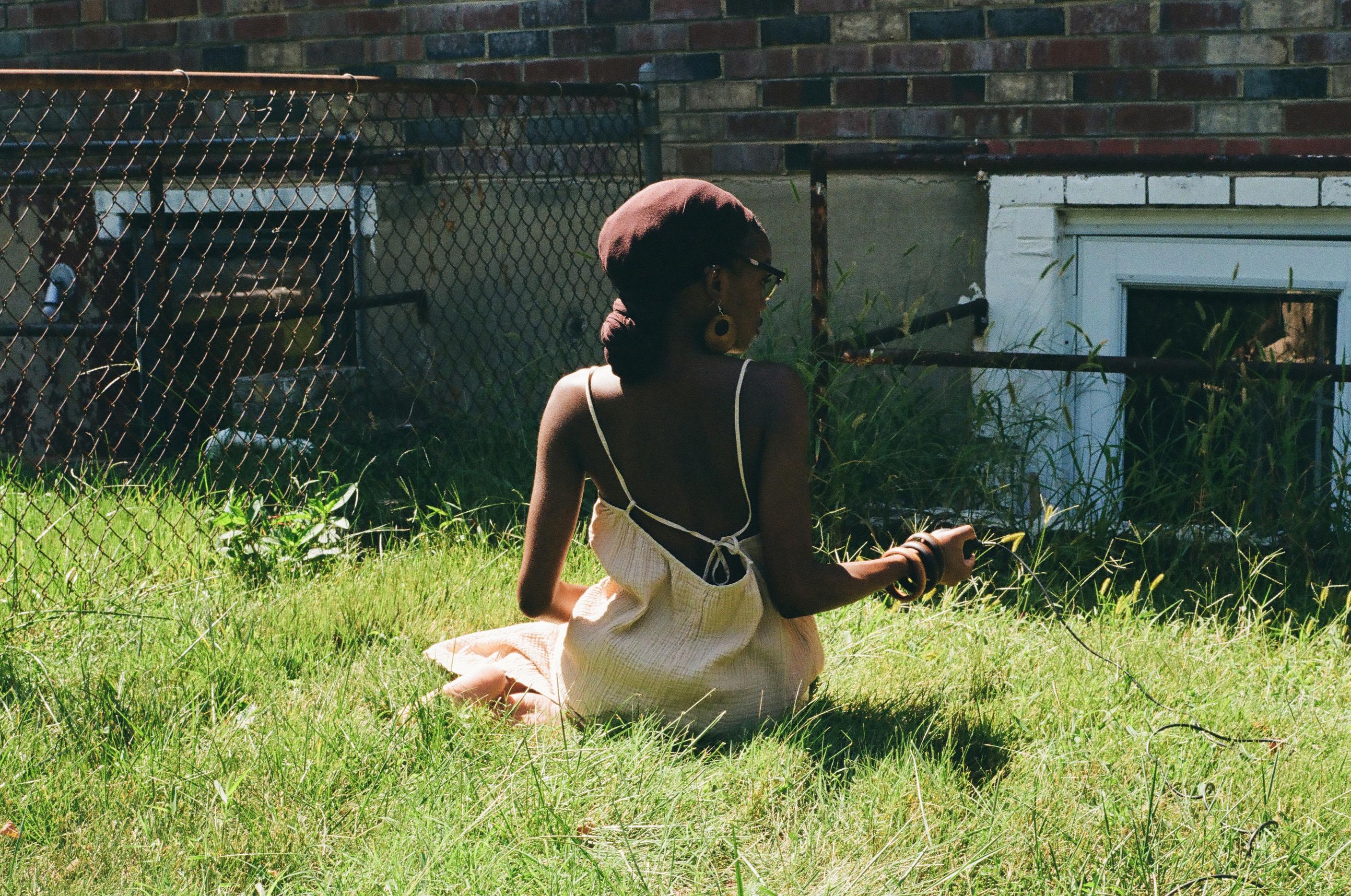
janet jai
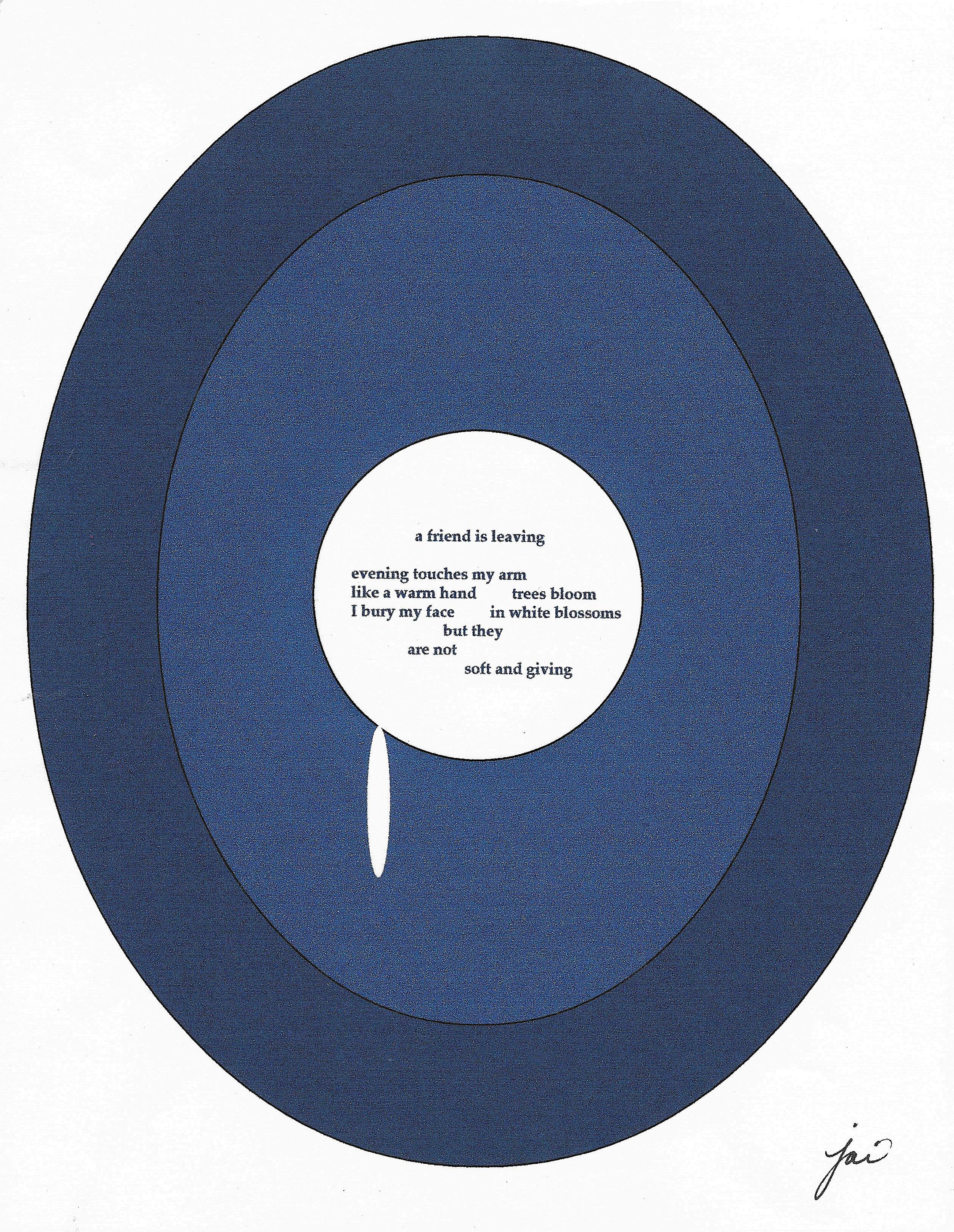
But let’s call her that. Hers was a double-barreled Southern name like that. I lament to say that I was not terribly welcoming when she arrived. To be fair, it was a little bit her fault. But she had arrived on my turf, and good manners dictate that it was my job to be nice
Bobbi Sue had married a Northerner and was exiled to New Jersey as a condition of her marriage She was very clear about that She made sure all of us in the newsroom knew that she knew that she didn’t belong. How could someone like her – a nice girl from Richmond, as she used to refer to herself – fit in in New Jersey, she’d ask She had turned up at the start of summer, just when the air in the Garden State starts steaming, aiming for its muggy crescendo later in the season She wore wool skirt suits, jacket and all, over pantyhose. On her face, full makeup. Her hair, heat curled just right. Every morning, she came in put together just so, keeping to herself, quietly typing away in her cubicle until she had to go out on a story or unless she was conferring with an editor
It would be unfair to portray her as shy or mousy She was neither She just thought she was better than the rest of us She kept her distance
By mid-June, just looking at her made me wilt from the heat I decided I needed to help her fit in
“Bobbi Sue,” I said to her one day when we chanced to be in the ladies’ room at the same time. She was holding wet paper towels to her nape to cool down. She had taken her jacket off and the cream-colored shell underneath was sleeveless and sweaty, stuck to her back. “In New Jersey, in the summer, especially if you’re a reporter running in and out of the office all day, it’s perfectly acceptable not to wear hose, or a jacket.”
This was the early ‘90s I was wearing a fitted striped cotton shift, not tight, but cut lower than a t-shirt and pinched in at the waist It rested slightly above the knee It flattered me, but that’s not why I wore it at least once a week: on my reporter’s salary, I didn’t have that many clothes I definitely did not own a skirt suit
I don’t think Bobbi Sue approved of my style. She smiled, looked me up and down, focusing on my tanned bare legs and said in her impeccable Southern drawl: “DeeAnna, nice girls from Richmond always wear hose ”
Chusma It’s a great Spanish word that means rabble, common. Chusma can be a look, or an attitude. It can be bad manners, or inappropriate clothing. My family, lacking in all manner of finances, flung the word around accusatorily and with abandon We were not chusma Perhaps we were snobs I definitely did not take nicely to that sort of face-scrunchy critical assessment of my outfit that Bobbi Sue had done, which called into question my classiness with a wrinkled nose. I said nothing out loud, just smiled and nodded, confrontation not being my thing I have class In my mind I lobbed some silent expletives at her and decided that I would just let her melt
As the summer wore on, Bobbi Sue got plumb assignments She could write. Sometimes we’d talk shop and I’d ignore her smiling digs at my articles. Sometimes her critiques were not wrong That she was a nice girl from Richmond who could write better than I could didn’t ingratiate her with me I kept as much distance as our shared cubicle wall would allow But by September, I decided I was being childish, provincial, petty The air had cooled so looking at her stopped bringing me discomfort. It behooved me, I decided to try to understand her culture better so that I could appreciate her I was overdue to show hospitality One slow news day, I rolled my chair over to her desk, inviting a couple of my colleagues over with a wave of the arm
“Bobbi Sue,” I said impulsively, my chums leaning on our desks, listening in, hoping for some entertainment. Slow news days were like that “I’ve never been south of Washington, DC Tell me about the South Tell me about Richmond ”
Her eyes lit up She indulged me We talked about the look of the city, the steamy summers, Southern culture, debutante balls, Lost Cause veneration. I was interested, sometimes fascinated It was a whole different country She spoke of her world so lovingly
I wanted to know more I moved over to my favorite travel subject: food. I asked about different dishes, about fried green tomatoes, fried turkeys at Thanksgiving, biscuits. And then I brought up squirrel
Pause I love food Mine is an adventurous palate There’s not much out there that I won’t try -- pig’s ears floating in black beans, tripe, blood sausage, tongue and rabbit It’s all fair game (pun intended)
So, squirrel My then boyfriend/now husband had once regaled me with the story of a college dormmate who, homesick for his Pennsyltucky town (to those of us born and raised in the Northeast, that would constitute The South already) would camo up some nights and arm himself with a BB gun to go out hunting for squirrel It was his heritage, I supposed I didn’t blanch Squirrel is to Southerners what rabbit is to Portuguese, which then boyfriend/now husband had introduced me to Noted
I wouldn’t be opposed to eating squirrel if I could ever get over them being rodents I researched them for this essay and read that their meat tastes like a sweet and nutty cross between rabbit and chicken and that the most recent stats (from way back in 2014-16) show that their flavor is not unpopular: more than 16 million squirrels were harvested between the U S and Canada during that time Of that huge number, Virginians harvested some 800,000 squirrels New Jerseyans, not even 50,000 Seeing as squirrel is a veritable rarity on Northern plates, my ignorance, one could argue, was not willful The defense rests
“So, Bobbi Sue,” I said, fist under chin, almost breathless with anticipation, “tell me: have you ever eaten squirrel?” There was a collective sharp intake of air amongst those listening, like I had hit a wrong note Bobbi Sue’s face froze for a split second Then she recovered her smile and in her sweetest drawl she responded: “Why no, DeeAnna Have you ever stolen a hubcap?”
The conversation ended right there Abruptly Bobbi Sue in her wool skirt and jacket and pantyhose got up and took off to the ladies’ room. I imagined her patting her nape with wet paper towels, smug and satisfied. I rolled back to my cubicle in a huff to call my then boyfriend/now husband
“The bitch!” I whisper-screamed into the phone “Fucking Southern prejudiced bitch! I was trying to be friendly Can you believe she said that?”
“I can,” he said, way less sympathetic than I would have expected. An anthropology major, he explained culinary squirrel habits demographically to me, then added: “You just called her chusma. ”
Oops My bad There’s now a common phrase for what I did to her: micro-aggression It was not a concept I knew about in the ‘90s Was it my fault that I didn’t know eating squirrel was considered chusma? I had never even met a Southerner before Bobbi Sue might have gently corrected me, I argued Instead, boy was she quick with that comeback! And bravissima – it was a doozy! Bobbi Sue had something I completely lacked: a natural selfdefense instinct. She was locked and loaded before we even sat to chat She was ready to stand up for herself
I want to imagine that Bobbi Sue hadn’t known she hit me where it hurt the most: my Latinidad I am sensitive At the end of high school, when I announced to the lunch table that I had been offered a fat scholarship to a fine private university, my so-called best friend retorted: “It’s only because you’re Hispanic.” No mention of my excellent grades or test scores, or extracurriculars, or shoe size. No one at the table contradicted her. Not even me It could very well be that, at the time, I accepted that being Hispanic might not make me equal to her, also a child of immigrants (albeit white Europeans) That throwaway comment, borne of teenage jealousy, crushed my moxie with one fell swoop and left me forever uncertain: am I good enough? Even as I smiled and changed the subject at the lunch table, I met my mental nemesis that day I’ll call him Chip, a little bugger with the outline of self-doubt and a solid, intractable core. He mocks me. “You think you’re hot shit, don’t you?” Chip giggles, maliciously, every now and then when I dare to feel pride “Wrong! Read the room: everyone still sees you as just Hispanic Token Chusma ” Chip expects some of us will never live up to the expectation of who we’re supposed to be
In middle school I lived in Costa Rica There I was called a gringa I didn’t mind that That name fit me well: it’s what I saw in the mirror. The year before Chip came to live on my shoulder, I pretended to be Italian when I won a small social club pageant and was crowned Miss Roma 1986 One of the judges congratulated me on being a pure bred, immediately segueing into a look of disgust when describing the previous year’s winner: she had been Italian/Colombian Hispanic He pantomimed spitting when he said that I found it grossly humorous, congratulated myself for taking a swipe at stereotype just by having mastered a foreign language. (We had been conversing in Italian). I didn’t give myself away. The shame of that omission came on belatedly, at the lunch table, where I smiled and was unable to speak in my defense
Bobbi Sue’s comeback, like the lunchroom DEI comment, reminded me that others weren’t looking in my mirror They saw me differently Different In the stunned silence that reverberated after her hubcap comment, I could hear Chip laughing noisily: “She told you,” he kept repeating. Bobbi Sue and I never became friends.
A lifetime later, living with one foot in the South in Washington, DC, where I had moved in 1996, I was a middle-aged woman obsessively restoring wooden kitchen cabinets and tarnished cast iron fireplace screens in my new vintage Victorian house, which we were rehabbing to move into The truth was that the work I was doing was a labor of misplaced frustration over the contractors’ slow and inadequate progress on the many jobs that needed to get done I’d daily update the project manager – let’s call her Debby– on my progress to underscore my complaint that I was working faster than her hired guys were, that most days I was the only one working on site. I suggested that maybe they weren’t understanding her, that maybe I should speak to them directly, in Spanish – the language they spoke amongst each other -- so they would know what I expected Debby, who didn’t speak Spanish, demurred
Debby was from my old tony neighborhood, from the same group of school parents I mixed with for years She was popular She was good at her job
Debby had been project manager for many glamorous house renovations in the old ‘hood Her work was exalted over cocktails at housewarming parties to celebrate recent remodelings, because that’s how it’s done: you show off the work, the upgrade I hired her for two main reasons: I wanted to support another woman, and I wanted the right look Not gonna lie -- I, too, was planning a housewarming She was supposed to be the shit, the One to Hire She cost, but the results were supposed to be worth it
Debby disappointed me.
One day during that ordeal, she and I were standing outside staring at dirty siding that needed cleaning I was annoyed Impatient I wasn’t hiding it Her workers had yet to install the new backyard spigot I requested, and so were unable to power wash the siding, which I ordered. Her workers, as usual, had not shown up to my job site that day – they were off at an Eastern Shore renovation of hers that I would later learn was written up glowingly in some trade magazine That day, Debby had come at my insistence, and she brought with her, she said, a great idea
“I don’t think we necessarily need to power wash all the siding It’s just that spot that needs attention,” she said, pointing to a chunk of siding two stories up “We can do it by hand ”
That was the great idea I assumed she was speaking the Queen’s we
“If your guys want to climb up a ladder 30 feet high to scrub a piece of siding, instead of installing a spigot that I’m going to need anyway at some point, they can be my guest,” I huffed, adding, imperiously “I just want it done Yesterday ”
When I looked down from the spot on the house, I saw that she had blushed deeply, from her collar to her forehead. She stammered.
“Oh,” she said, “I thought that you might want to do it Since, you know, you like to clean so much ”
She was guileless as she suggested this to me Latinas like to clean. Presumption? Supposition? Postulation? Or just plain insult? When she saw me, was I only ever the stereotype? Had I unwittingly reinforced it by cleaning cabinets and cast iron so well? Effortlessly, she flattened me with one statement -- just like Bobbi Sue had done when she asked me in my 20s if I had ever stolen hubcaps, and just like my teenage best friend did when she suggested I was a token admission. Or the bigoted Italian pageant judge And so many other indignant paper cuts endured but not worth mentioning, the sort things that Chip would chuckle at, nudging me, wink wink: “D’ya hear that?” The sort of things I’d always try to ignore, telling myself not to over-react
After Debby suggested I clean the siding, Chip howled with laughter “Hoo boy!” was all it could say in between cackles “Hoo boy!” Through the noise, I remembered insulting Bobbi Sue about her squirrel eating habits My defense was ignorance Her parry was stereotype Maybe I was too sensitive Maybe I needed to be better armed with comebacks like Bobbi Sue. Maybe I needed lessons in Confrontation to learn to tell people off. Maybe God was punishing me for my liberal use of the word chusma to judge the worth of my fellow beings Maybe it wasn’t that I was Latina; maybe I was just a little déclassé, no matter if I had the kind of money to hire a Debby or not Maybe I wasn’t actually as smart as I thought I was. Maybe the college did select my application because I ticked a box or two Maybe I never fooled anyone about who I was Maybe only foreigners could recognize me as a gringa, but gringos would never see me as their social equal because to them I would always be Latina, Other Lesser I had no comeback I never did when snubs were hurled at me. I only ever learned how to shrink back and seek cover for my shame at feeling the need to explain who I thought I was For once again having made the mistake in thinking that I belonged
By the time I started college, I had changed my name from Diana, like the princess, to Diana, with a diphthong and two syllables like my family called me. Both suited me. Both were me. A rose by any other name is still a rose, after all.
Or maybe it isn’t
Here is all I managed to say to Debby: “I can’t go up there I’m afraid of heights.”
I did not explain to her how and why she had insulted me gravely I didn’t tell her that I was born in the USA, just like her I didn’t insist that she was a bigot That I was her equal I didn’t give her a chance to plead ignorance, to explain that she didn’t mean to offend I just mentioned my acrophobia as if that would be the only reason I would not clean the siding. Then I shut up, smiled and took my leave. I went to the powder room and stood at the sink with cool, wet paper towels pressed upon my nape to keep from bursting into tears, my brain scolding the guffawing Chip to just please, please, shut up
The next day, I fired Debby. I did my own project management I hired my own workers I spoke to them only in Spanish They called me Doña They thought I had higher social standing than them I didn’t tell them I, too, was just like them: Hispanic Other
It has been six years. The dirty spot on the siding has never been cleaned. Sometimes, as an exercise, I still try to find a good comeback for the Debby’s and Bobbi Sue’s of the world But realistically, I don’t think I ever will After all this time, I remain defenseless I still don’t know who I am expected to be
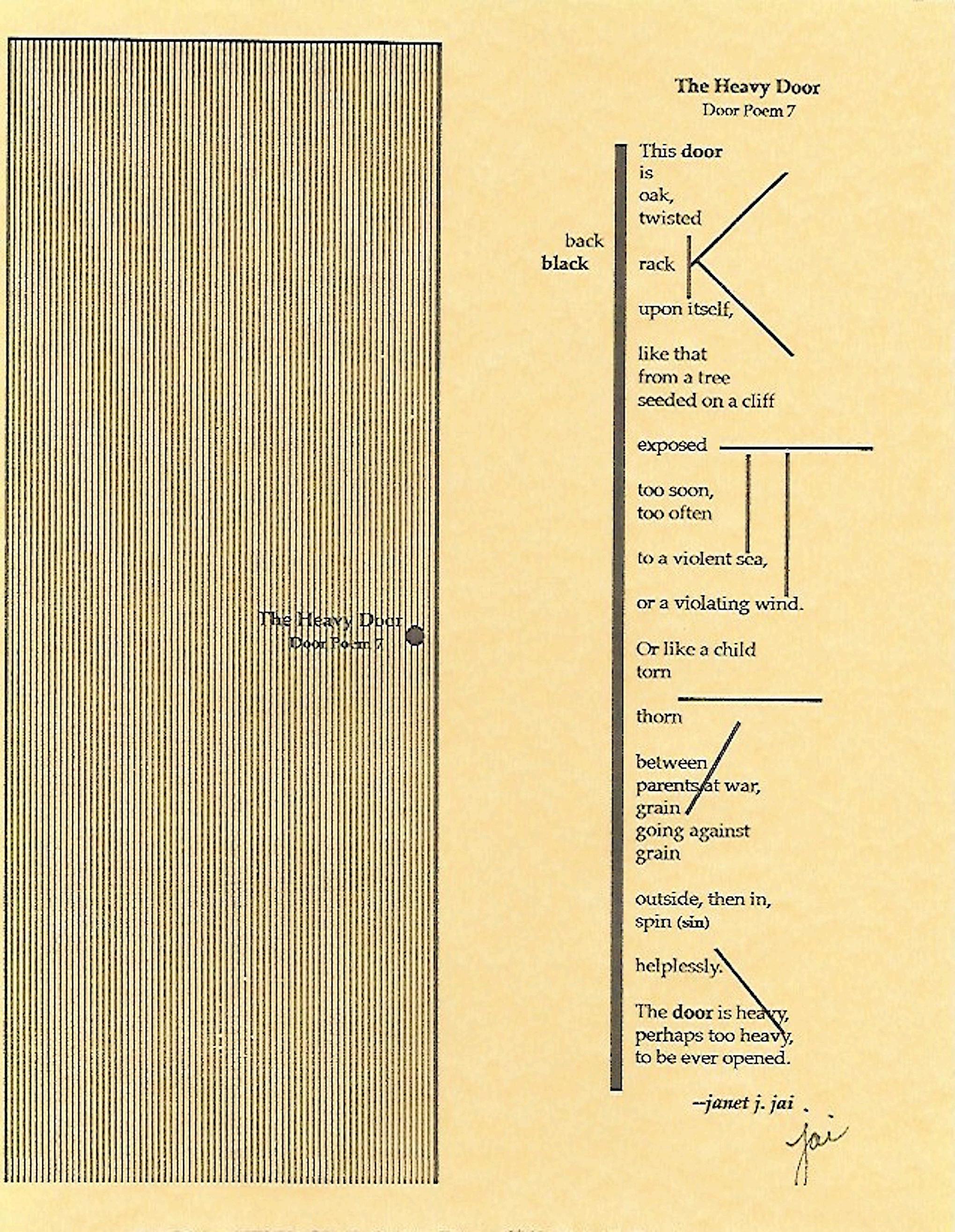
the Heavy door: door poem 7
janet jai
“Meeting with freedom” Mohamed
I met freedom on my deathbed I made my best runs on my last leg
Drinking from the tides, beside The wise men whose wives were wiser They said, Mohamed don’t let em 9 to 5 ya
Youngin If you want to live a life that’s live-er You gotta learn to survive off saliva
Don’t strive for struggle You gotta tussle with your soul I’m talking spiritual muscle!
Going to war with your nafs (soul) Anything less, brings about disrespect
Affirmations for the aforementioned I won’t let em keep my peace pending I’m not a patient man,
I’m a patron of the patient, Mercy is my currency.
Can’t be complacent, with where I place it So, I spread it like wildfires Birthed in the flames.
The smoke spoke our names Phoenix babies, I’m the son of a sun
My mother was 1 of 1 I’m a kingdom that won’t come Under siege, understand, or under seas
The graveyard exists for men who disbelieve I’m a sage for the saved self.
I saved myself, But there won’t be a self to save When freedom has her way.
Wendell Pointdexter
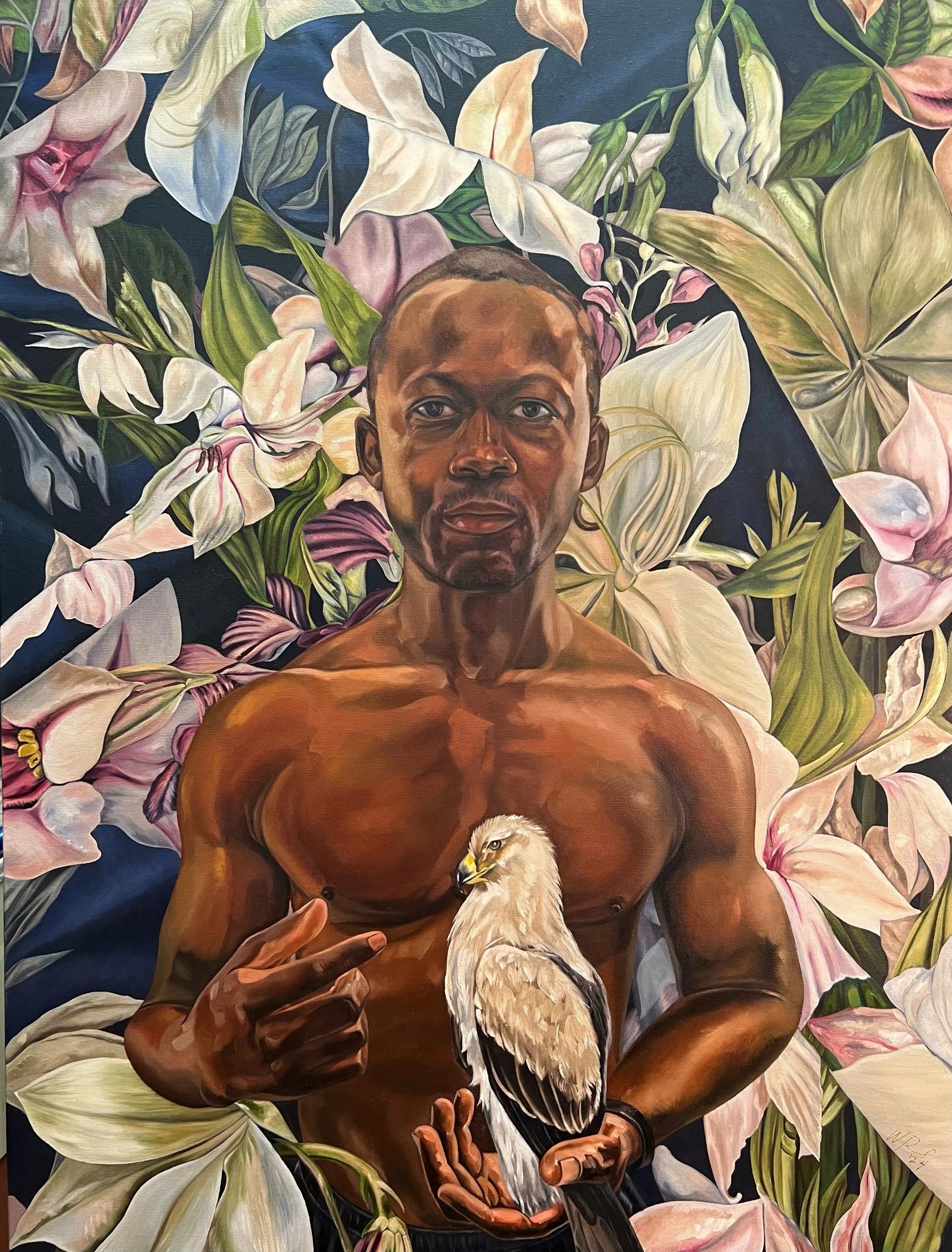
Sheryl Massaro nearly-end-of-winter air brings all the darkness it has passed through, all the mottled trunks and naked limbs that knew its touch, all the dreams of hibernating beasts, all the silence of frozen waters, the sharp blue skies and the heavy grey ones, their pale flakes, the sleds, the snowmen. soft honking of the geese it guides back.
Jennifer Orudjev
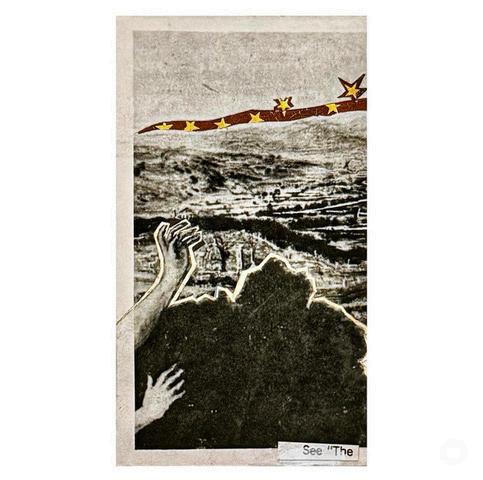
Stephen Leyva
To overestimate my mother’s walker folds like any good omelet. Anyone could place it on the messy plate of attention or loss or Medicare.
But tonight’s ruckus isn’t such, rather a volleyball game for my niece the orange-and-black of faux hornets splashed back-to-back in the stands.
The final game of the season: senior night and my mother still refuses to say “I am old ” It’s hard and I understand how having a body you spoiled
like an only child, won’t do what you want We are miles away from Boley and the rodeos of slow time and small town We are where pride
seeks a cardinal direction: Southwest, opposes the lived reality: North Tulsa, Northeast Oklahoma, the compass deluded beyond
all magnetics. Once a year we manage to gather ourselves here, sliding like an oil slick across Rt. 66 tunning our twelve-bar blues to the radio
dial in our eye: everywhere I see history begging to be left alone to wander like a rail hopper ignoble and without shelter, to sleep
in the straw like a messiah in a manger The oxtails and lamb chops are keeping time on the grill so I sing of smoke
the truest school song: poof and the days are gone.
Jordan Carter
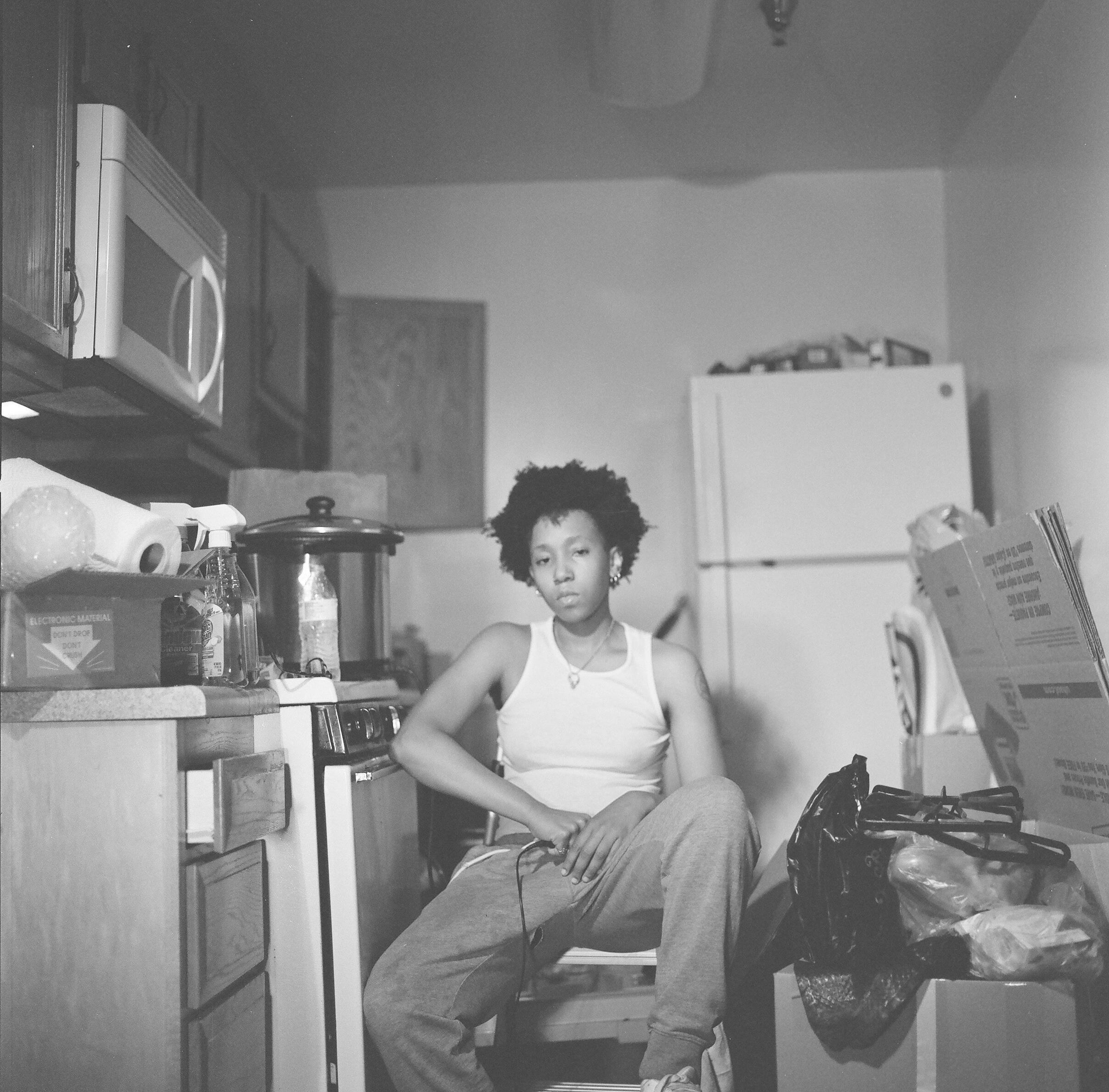
MY MOTHER ONCE SAID SOMETHING INTERESTING ABOUT MY FATHER
: He always used to claim that the Hispanic character in Richard Fariña’s novel Been Down So Long It Looks Like Up to Me was based on him When I was in my late twenties and hearing the story for the first time, the mere possibility that it was true fascinated me
Richard Fariña’s comic novel of growing into adulthood was viewed in certain circles as one of the great American counterculture novels of the 1960s If my father actually inspired a minor character in the book, it would be an earth-shattering connection Only one degree of separation would loom between me and greatness. Huge crowds of aging boomers would sweep in, lift me up, and carry me through the streets of my town, victorious. Finally, I would gain some unblemished clarity about my father and his murky past.
When I was a kid, my father told me a story of spending the night atop Mt. Washington, while working on radio equipment for the Army. A winter storm blew in He and his team struggled to keep a fire going, on a night that turned out to be one of the coldest on record (Probably true ) One evening, after he predicted a key plot turn in The Incredible Hulk TV show, he insisted that he wrote the script (False ) In another recollection, Rene, five years old, joined his mother as she collected his father from a bar where he’d been drinking He was too drunk to drive With him passed out in the cab, and Rene’s mother steering the truck, the boy crouched beneath the dashboard, working the pedals (True?) Then there was a story about a crazy fighter plane in WWII that had two engines, two fuselages, two propellors, one wing, one cockpit…the P-38 Lightning. (True!) My father had spun so many outlandish tales when I was growing up, I never could be sure what to believe.
He may have mentioned Fariña at some point in my adolescence, but I scarcely understood who Fariña was. My father had become ill just when I would have begun asking him questions about his own coming of age, his own youthful rebellion.
I was curious about Richard Fariña, but I couldn’t speak to him directly. He died in a motorcycle accident on April 30, 1966, two days after the book Been Down So Long was published. He was 29 years old.
Fariña’s book, set variously at an upstate New York university, in the American West, and in Cuba, traces Fariña’s experiences of a campus in revolt, interwoven with a growing awareness of the human cost of war in Vietnam, the suggested freedom in jazz music, the progression toward revolution in Cuba, and violence, witnessed in the detonation of an atomic bomb in Nevada The main character, Gnossos Pappadopoulis, grapples with his own mortality as his delusion of being exempt from death gradually fades Pynchon wrote of Been Down So Long that it “comes on like the Hallelujah Chorus done by 200 kazoo players with perfect pitch,” and dedicated his 1973 novel Gravity’s Rainbow to Fariña The book is considered a celebration of the youth counterculture of the 1960s Millions of copies were sold
The Hispanic character in the book is named Juan Carlos Rosenbloom. Yet in my first reading of Been Down So Long, despite my fascination with Fariña, I had to admit that this Rosenbloom bore almost no resemblance to my father:
“My name is Juan Carlos Rosenbloom, ” said the one in a sequined rodeo shirt. “From Maracaibo.” He strained formally over the red plastic tabletop, stretching out a miniscule, hairy hand.
My heart sank “Not more than five feet tall,” Fariña wrote, “Saint Christopher medal tight on his throat, grease mat for a head ” The scene fell apart Juan Carlos Rosenbloom didn’t look anything like my father For starters, my father had curly black hair He stood five foot ten, and wouldn’t wear a rodeo shirt, or anything else associated with cowboys
So why would he claim to be this lousy character?
I’d approached my reading of Fariña with a certain degree of solemnity, hoping I could write something significant and illuminating from what I’d learned But already I could hear Eleanora Foss from the third grade cursing my father as a scumbag, this worst of all possible insults, after I’d mentioned that my father worked as a video arcade attendant at the mall.
Certainly, the resonance of the names Juan Carlos Rosenbloom and Jose Rene Gonzales suggests a relationship. I wanted to see my father in Juan Carlos, especially when he plays the role of the tough, loving friend to Gnossos In the climax of Been Down So Long, the night before Gnossos departs on a boat to Cuba with companions Drew Youngblood and Juan Carlos Rosenbloom, on a mission to participate in revolutionary activities, Gnossos, in despair over love and other existential problems, sitting on the docks above the water, flirts with throwing himself into the sea, and it is Rosenbloom, racing to his aid “like Speedy Gonzales,” as Fariña put it, who wrestled with him, finally restraining him I wanted to possess that character, that strong friend, for myself, for my father
But I never heard my father tell a story of visiting Cuba. Nor did I ever hear him speak of traveling to Mexico, which, I later learned, he indeed did. According to my mother, my father sometimes said Fariña based the novel’s character on him, but at other times he said it was a composite character: one part himself, one part another person. It occurred to me that maybe my father and Rosenbloom had been friends. Perhaps they would turn out to be interesting stand ins, counterparts to each other Maybe I could learn more about what happened on these travels in Latin America if I found the other part of Juan Carlos Rosenbloom
When you’re 28 years old, and you encounter someone in a story who might help you learn about your father, you can do two things: you can run away, or you can make him your friend I decided to make Juan Carlos Rosenbloom my friend If he could save Gnossos from throwing himself into the sea, then surely he could help me save my father
Ever since I was sixteen, a quiet thief had been stealing jewels from my father’s memory. In my late twenties, I began working on a story about my father’s life, one I hoped would become a novel. But if my father truly inspired Been Down So Long, as he claimed, Fariña had already done it. It would be ironic because I had so struggled with the idea of my father as a nobody. I started to develop a quiet hunger, wanting Fariña’s book to provide insights into my father. I began to imagine this cool, 1960s hipster
My childhood memory offered up items from his closet to complete the picture: a mohair shirt, an ascot, bell-bottomed paisley pants.
Thomas Pynchon, who was friends with Fariña in Ithaca and around Cornell University, stood alone as my absolute favorite author “A screaming comes across the sky ” “Everyone’s equal Same chances of getting hit Equal in the eyes of the rocket ” Gravity’s Rainbow, V, and the Crying of Lot 49 I loved all of them I learned of Pynchon’s friendship with Fariña when reading the introduction to Fariña’s book Pynchon, famously, was a reclusive, privacy-craving author never giving interviews to the press at all His work itself was monumental; his novels and essays were his only communication to the outside world If I could somehow prove this connection to Fariña, perhaps I could break through the veil of secrecy and get closer to my favorite author. Lastly, I’ll name an additional, perhaps selfish, point. Such a connection between Fariña and my father would be a fabulous thing to write about.
Wading deeper into the waters of my “novel,” I started to talk about it with writers of a certain generation in my town who had read Fariña when the book first came out. “That’s fascinating!” one said. “Oh my god!” one woman remarked. “I can’t believe it! Tell me more!” A third: “You filthy dog! Found yourself quite the bone!” My spirits buoyed, I returned to my mother, pressing her for more details But she seemed downcast, as though recalling my father’s younger days stirred great emotion
“At one time,” my mother said, “your father attracted people with his magnetic personality You, Chris, never did get to know him the way he truly was: sensitive, brilliant, artistic ” He loved to dress up, go to parties, and had an active social life He enjoyed all that “But,” she said, “he ended up losing all of his friends ”
As my mother and I talked in her kitchen, she leaned back in her chair, subdued. It had been twelve years since the outset of my father’s illness. He was fifty-four years old when he first began showing signs of Alzheimer’s. He’d gone into the nursing home when he was sixty-three. After he’d moved in, my mother explained, the stresses continued, but in a different form: She kept track of his medications, clipped his toenails, went with him on gentle walks for exercise, and took him out for rides in the car
To my mind, she was a tireless caregiver She never seemed to let on about the enormity of our family tragedy
Baxter “Kit” Hathaway recalled my father working in a coffee house on Eddy Street in Ithaca, where Fariña used to play He also said my father worked late nights in the School of Architecture drafting area in Sibley Hall, one of the principal buildings of the College of Engineering at Cornell. According to biographer David Hajdu, Fariña had enrolled there to study in the intensely competitive engineering program before transferring to the creative writing program Kit said, “Actually, it’s quite likely that your father hung out with Fariña ” Kit would sometimes go to the Collegetown parties of the bohemian set and Rene was usually there Pynchon wrote in his introduction to the Penguin classics edition of Been Down So Long, “It happened that in ’58 and ’59 there were a number of students from Latin America in the School of Architecture, and their circle was one of several that Fariña could move in with some intimacy and ease Their weekend parties were regarded as the best around Pynchon and Fariña “hung out some, at parties, at beer outlets on campus like the Ivy Room, or at Johnny’s Big Red Grill (called Guido’s in the book), which was the usual nighttime gathering place ” My mother confirmed that my father knew C Michael Curtis, a contemporary of Fariña and longtime fiction editor of the Atlantic Monthly, and who, according to Kit, my father’s friend Teresa Sutton, and Hajdu, inspired the character G. Alonso Oeuf in Been Down So Long. Certainly enough, my father shared with Fariña some of the same settings and hang-outs around Cornell University, and a few acquaintances
However, after spending some time getting to know Rosenbloom, a few pieces of the puzzle simply don’t fit There’s a scene in Been Down So Long, at a party, and some characters are talking about Rosenbloom’s origins. How did he get the name Rosenbloom? It’s revealed that he was German and Jewish. His parents sent him to Venezuela, afraid the war would spread and had him converted to Catholicism Throughout the book, his devout Catholicism is represented by his clutching a St Christopher medallion around his neck As far as I know, my father, although brought up in the Catholic church, was neither Jewish nor a practicing Catholic, and would never wear a medallion
Furthermore, I had difficulty in locating my father in Ithaca at the time of Fariña’s undergraduate years, which, according to Hajdu, concluded after spring term, 1959 When I spoke to my father’s friend Tom Hanna in 2012, he said he himself arrived at Cornell in 1959, after Dick Farina (as he was then known, without the ñ) had left I had Army records showing my father was transferred to Loring Air Force Base on April 2, 1959 I hadn’t traced him to Ithaca in 1957-1959, Fariña’s undergraduate years, the time I believe inspired much of Fariña’s writing about his college experiences, corresponding to the sections of the novel where Rosenbloom is omnipresent. Yet it was still possible, given that Fariña worked on the novel for five years before publishing it in 1966, returning to Ithaca many times on the folk music circuit
Meanwhile, Pynchon, writing in the 1983 introduction to Been Down So Long, had dismissed that there be any attempt to identify who inspired the characters “There isn’t much point in naming names here,” he wrote “They know who they all are and they walk among us, even today ”
The reclusive Pynchon did not respond to my letter sent in care of his publisher * * *
I stood in the sunlit dining room of our Saratoga apartment, where my wife and I, recently married, had moved, holding an unopened letter from C. Michael Curtis. It was summer, 2001, afternoon. Jen came to my side. Curtis, one of Fariña’s roommates in college, was a man of incredible energy who, according to Hajdu, held numerous influential positions as editor of the school literary magazine, editor of the humor magazine, coeditor of the yearbook, and editorial writer for the Cornell Daily Sun I thought of C Michael Curtis as the longtime fiction editor at the Atlantic who had been sending polite rejection letters to the submissions of my mother over the years n our Saratoga apartment, I held in my hands a response to the letter I had sent With a nervous hand, I opened the letter and carefully removed its contents, small sheets of Atlantic stationary with a message composed on a manual typewriter.
I am sorry to hear of your father’s illness, Curtis wrote. I do remember your father on the Cornell campus and around Ithaca. He had a relationship with a woman named Teresa Sutton. I don’t remember your father in Fariña’s circle, though it may have happened As to the person who inspired the character Juan Carlos Rosenbloom, I have always assumed this character was modeled, at least in part, after Juan Felipe Goldstein, a student who was a contemporary of Fariña and me
I do remember your father as the husband of Coral Crosman, the writer, and they always seemed happy together, although I’m sure Alzheimer’s wasn’t any picnic With kind regards, C Michael Curtis
In the sunlit living room of our Saratoga apartment, Jen did not miss a beat She said, “You’re just going to have to track down Juan Felipe Goldstein ”
I found someone named Juan Felipe Goldstein and called him on the telephone. When a man answered, I thought, here I go with my crazy story, talking to a complete stranger about my father with Alzheimer’s who lived in Ithaca in the 1960s, ran a coffee shop where Richard Fariña used to play My father, immortalized in a classic novel many people believed to be one of the great countercultural novels of the 1960s Gnossos and his attempted suicide Juan Carlos Rosenbloom racing to his rescue like Speedy Gonzales.
All of this came rushing to mind. But when the man answered, I simply asked, “Is this the same Juan Felipe Goldstein who studied at Cornell in the late 1950s?”
No, he said That was his father This was his son, also named Juan Felipe Goldstein I cleared my throat Was it possible to speak with his father? Was he there?
“I’m sorry,” he said “My father died of cancer several years ago ”
His answer hit me like a punch in the chest Yet I was speaking on the phone with the son of the real Juan Carlos Rosenbloom who I imagined was out there somewhere. I had found him. What was his story?
He said his father studied at the School of Engineering and graduated from Cornell in the late 1950s. He never knew his father well. His parents were separated. He was raised by his mother in Colombia and had only recently come to the United States to pursue an MBA at the University of California at Los Angeles His father was rather distant and he would have liked to have known him better
I realized then that I was searching for a person who knew my father, but instead I found another son who had lost his father
Juan Felipe said he felt ashamed because he did not know his father better. It was too bad, he said, because his father had an interesting background.
“Sent to Venezuela as a child during the Second World War?” I asked hopefully, recalling what Fariña had written about Rosenbloom
“No, Colombia,” he said, “But yes, during the Second World War ”
“Juan Felipe,” I said, “I believe your father inspired the Hispanic character in the landmark novel of the 1960s, Been Down So Long It Looks Like Up to Me. ”
“You say he is a character in a famous book?” Juan Felipe’s voice cracked with astonishment “I’ve never heard about it What is the book? What is it about? This is the strangest phone call I’ve ever received ”
Juan Felipe was perceptibly stunned We talked a long time I told him all about Fariña and Been Down So Long. He said he would go out and buy the book right away.
* * *
I know my father admired Fariña I believe he was a casual acquaintance of his in Ithaca, though I have no evidence of this other than my parents’ anecdotes and the surmises of my father’s friends Nevertheless, reading Fariña gave me a glimpse into my father’s world It is a small comfort to imagine my father reading Fariña, laughing with him, turning each page with pleasure. However, I’m not sure that today I can even recommend Been Down So Long to adolescent readers; it seems to require great equanimity Some aspects of the story simply haven’t aged well, particularly concerning sex, drugs, and consent Despite these qualms, I will say without hesitation that I gave the gift of Fariña to Juan Felipe Goldstein’s son Finding this one true son has been one of my life’s proudest accomplishments
But what about the initial question that spurred me on my search? Did my father inspire an important countercultural novel? I hesitate to speak candidly because, as a son, I’m expected to maintain a certain decorum regarding these family myths My two voices the son and the writer are in conflict right now As the son, I’m protecting my father, shielding him from the writer, the one who exposes, who trespasses But it must be said I don’t believe my father inspired Juan Carlos Rosenbloom to any meaningful degree. Apart from the resonance of their names, and the Speedy Gonzales reference, there’s just not a lot there. When I say this, I can hear Eleanora Foss: “Scumbag!” I insist, no, he was a good man He was loved It makes sense to me that Rene was a casual acquaintance of Fariña’s, indeed admired him, but took it to the level of fantasy to say he inspired a character in the novel, if only to convince other people to read the book, pushing them toward the climactic joke of Speedy Gonzales in its pages.
As I worked on my book, gathering stories from real life, not only did I better understand him, but the stories changed my sense of who I am
I collected these vignettes that didn’t seem to fit anywhere else: My father and I walked in my mother’s garden, long after his illness had silenced him It was a cool but sunny day in July My father couldn’t speak, but with a passive face, he raised his hand to the full daylight moon Moments later, he pointed to the flare of a cardinal perched in a locust tree I still kept seeing signs of him, craving any evidence that his spirit was alive.
I eventually realized that I wasn’t writing a novel, but a memoir. I’d been gathering actual memories and true stories, and soon recognized that the memoir genre better served my material I’d like to say that the writing came more easily then, but it didn’t It was harder forcing me to somehow take all the ordinary stuff of my father’s life and our relationship and make it sound like art But with revision and effort, the book began to take shape I pulled together memories other people’s and my own to create my own father character. (Not to spoil the illusion of a good story, but in these pages my father is a character; I’m a character.) In due time, I didn't need Fariña’s fictional character anymore I was no longer striving at some abstract idea of the great American novel I didn’t need a heroic version of my father The story I was creating was my own
I mentioned to Jen that I’d finally reached my conclusion My father wasn’t the Hispanic character in Been Down So Long I would demolish that family myth, bringing about a necessary upheaval for my family in the name of truth
“You can believe what you want,” Jen said, turning to face me. “But I know what I believe. Your dad rescued Fariña from a suicide attempt. It probably happened at an Ithaca gorge. Fariña changed the location. That bit about Rosenbloom racing to his aid ‘like Speedy Gonzales ’ I believe him,” she said “You have to trust your dad ”
In an instant, the muscular, bowed figure of Rene charged forward, pulling Fariña back from the edge This was my father, the rescuer, the one continually making appearances in my mind, throughout my life It is perfect “father” lore, the kind of story I would tell my grandchildren. We won’t be asking ourselves whether it is true. Because everyone knows what it means: someone is going to be there for you.
In college, I majored in psychology, studied the neurological basis of Alzheimer’s I got a job, was married, moved to Mexico City, and returned to upstate New York While I was building a life, my father was fading into the background Then, by chance, I moved to Ithaca, as if my father’s ghost was steering my fate Jen and I had children, twins Throughout this time, I have been, in my opinion, justifiably afraid of Alzheimer’s.
This fear spurred me to live the most generous and meaningful life I can, while I still have my health. My father lost his fascination with books, his love of Fariña, his memories of me He lost his ability to speak even before I left for college He died in 2009, after a seventeen-year struggle with the illness
According to Hajdu, Fariña was a remarkable talent at folk music: a skilled vocalist, dulcimer player, and recording studio producer He formed a duo with Mimi Baez Fariña, releasing two studio albums during his short lifetime; posthumous recordings and a second book followed. A question: Was my father’s whole life something like Fariña on his motorcycle driving way too fast, taking an unnecessary risk and burning out young? No, this comparison isn’t helpful According to Hajdu, Fariña died while riding as the rear passenger on that motorcycle He suggests that Fariña was simply an inexperienced rider, trusting a bit too much in others, perhaps overreacting on the curves, letting his fears get to him; he speculates that Fariña was leaning his weight to the wrong side of the motorcycle. Maybe my father was like that version of Fariña the fragile, gentle one headed for tragedy. The one whose shining life was cut short Or maybe my father was like Fariña’s character Rosenbloom the rescuer, the one “like Speedy Gonzales ” So vibrant, so gallant, and so funny
One last thing: I picture my father with me, an eight-year-old boy in tow, and we’re having lunch at Johnny’s Big Red Grill in Ithaca There’s a smell of disinfectant and warm fry oil. We sit in our places taking up one of those red, vinyl booths and my dad is trying to have a conversation about grill food and Ithaca and his life in the old days Sitting next to us are two coeds in mohair, and just beyond them, a few fraternity types, whispering about last night’s curfew At the next table, two people descend upon plates of fried onion rings and pizza burgers My father’s flipping through a copy of Been Down So Long, trying to help me understand the different characters I am nearly done with my veal scallopini, but I don’t think I can finish it. By then, my father has discussed Kit Hathaway, Tom Hanna, and Teresa Sutton three of his closest friends from Ithaca Late nights at Johnny’s and The Palms the bar where they used to hang out The truth about Juan Carlos Rosenbloom and his connection to Fariña Then we’re adults, having eaten at this place dozens of times, and now old men, still spending time together and talking intimately after all these years
It no longer matters to me whether my father’s Fariña story is true; he’s told it so many times It’s simply part of the lore. I keep hoping for some different twist or new information to come out. But without fail he sticks to the same details.
We pay the check and head out into the glaring day, and I think how funny it is, my old man, and this story that never changes We walk toward the car, engrossed in a conversation I’ve always dreamed of And just like in a dream, he never gets tired of telling the tale, and I never get tired of hearing it
This piece is adapted from the author’s book, Return of the Lost Son, published by LSU Press, 2025. All rights reserved.
Wendell Pointdexter
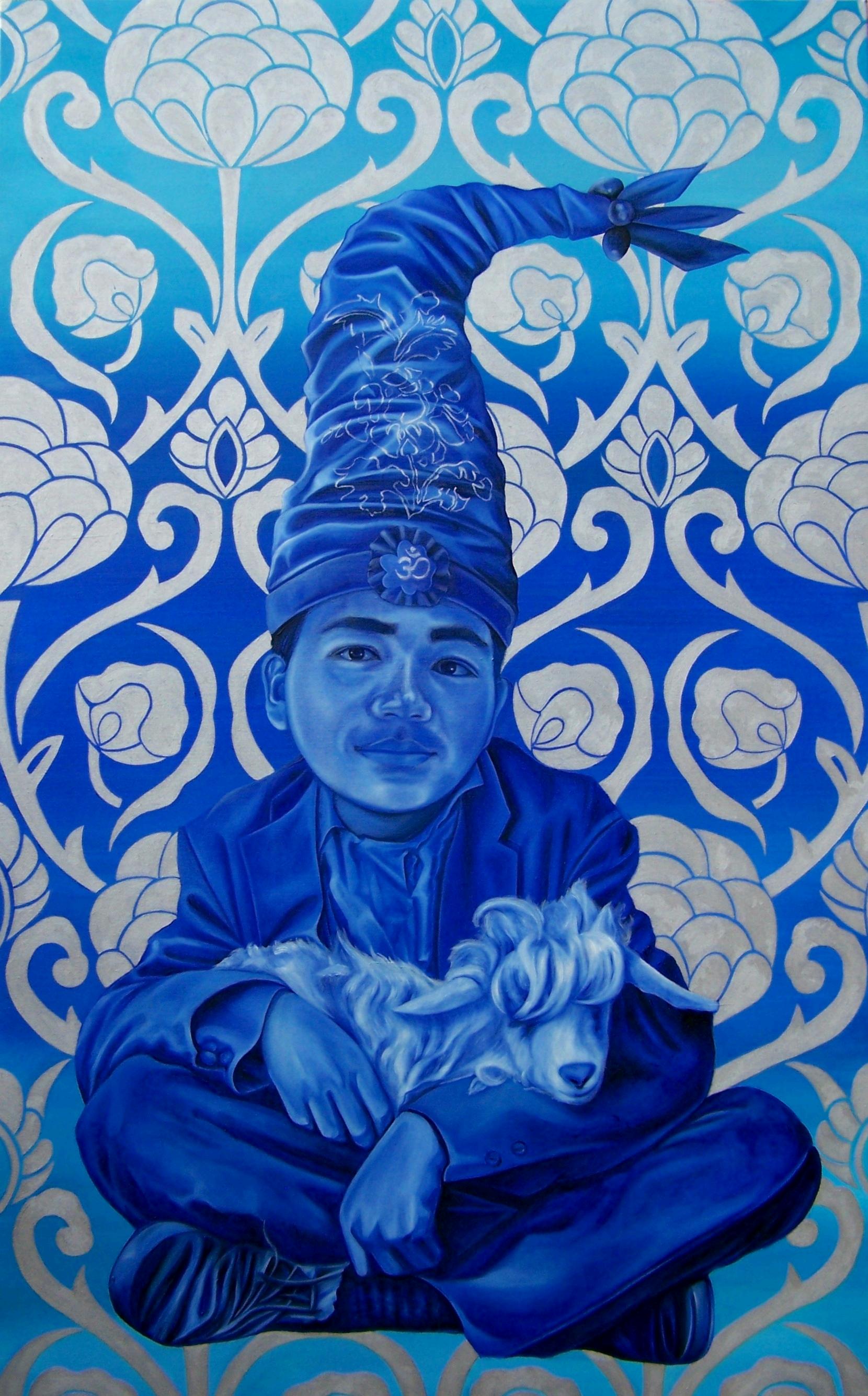
YOU WALKED INTO THE ROOM,
a stranger coming off several hours on the road, and asked if you’d missed dinner You had You inquired about a vending machine I offered you a glass of scotch We sat on a couch and talked for two hours, discovering we lived within blocks of each other back in Washington, D.C. You tolerated my unfettered obsession with monuments and memorials You stood up to adjust your position on the couch and sat back down in a way to place me within arm’s reach
When we walked to your assigned room, I said, “It’s a good thing I didn’t kiss you ” Not sure you thought that was a good thing. You had never struck up a relationship at an artist residency, whereas I had made that mistake before
I’d eventually kiss you anyway
You once bicycled to my studio apartment straight from your shift’s end at the Phillips Collection, which is to say that you biked at 11 P.M. up Wisconsin Avenue NW to Cathedral Heights, which is to say you biked two miles uphill I offered you a glass of scotch Took several more years for you to admit you didn’t particularly like scotch
You proposed, in my bed and without a ring, after a thoughtful pause Not as if you’d rehearsed a speech, but also not as if it was completely spontaneous You asked as if you were confirming your own decision, in real time, just in case you needed to change your mind on the fly. I respected that
I took you to creative writing conference in Minneapolis, and hurriedly handed off two contributor copies to stash in your backpack The hurry had been on account of the editor who had handed me the copies someone I’d once slept with and wasn’t particularly anxious to talk to in that moment or maybe ever again The essay, I’d realized twenty minutes later and with horror, was about an artist I’d met at the exact art colony where we met
Of course, you looked up my name on the Table of Contents. Of course you read the piece, with no way of knowing this piece wasn’t about you, other than in the piece the man wore a knitted, red-and-white striped scarf that you had never worn
You asked the gentlest of questions later: So, that story, is it kinda metaphorical?
I realized you could be my best reader when you needed to be, and my non-reader when you needed to be. I had found someone to whom I could say, “I love you. Go away ” And that you were someone who could say to me, “I love you Go away ” I realized that’s how two artists live together under one roof
This love began with a can of Keo beer on a windowsill in Nicosia, even though we’d already been married for five years by then
I’ve always worried about my ability to travel with someone That’s not the same as my ability to travel to someone, which is formidable I have driven to Mississippi I have flown to Zurich.
But logistics of a shared trip frightens me, and not just because of that one time, when the airport security in Frankfurt grimaced at the smell of your socked feet If we take a trip together, you are taking responsibility for me I’m still learning how to take responsibility for myself, which makes asking you to do the same feels quite unfair.
When we got to Cyprus and checked into the B&B, we bought a couple of the local beers, Keo We rested them on the windowsill as we unpacked I was trying to ease myself into being far outside my comfort zone when it came to my food allergies For good meals in Cyprus, that would mean fish and vegetables roasted in olive oil, and potatoes or beans. For not-great meals, that would mean having a communal platter of the signature grilled halloumi or fetacucumber salad was handed to me, over and over I’d politely pass and try not to touch it
The time came when I let my guard down for an endof-the night shot, gratis from the bartender After days of Keo, Ouzini, and Commandaria, I was unprepared for the milk content of a skim of Baileys Irish Cream. My lips swelled I took a Benadryl My breathing shortened I took another Benadryl I nervously zipped and unzipped the pocket that held my epinephrine pen That’s when we learned that while the U S Embassy has a nurse in Cyprus, she lives ninety minutes from the Old City That’s when I begged the staff to let us stay while they did post-shift cleanup, while I waited to see if I’d be okay, if the allergy medications would work
You did not guilt-trip me when I had to set my alarm clock for the next morning I would go on to meet with two classes of local sixth-graders to talk about persona poetry, my eyelids swollen by edema You did not guilt-trip me when, dosed on histamine, I could not stay awake in hours leading up to our impossibly early morning flight home to the United States You just stayed up the whole night and packed our bags
Maybe when I say, “I love you,” what I mean is, “I trust you ”
Maybe, for me, that’s the harder thing.
This essay first appeared in Grace In Love: DC Women Writers (Grace & Gravity, Volume X), edited by Melissa Scholes Young
Grant Chemidlin
After all those years knowing each other only in pieces lifted shirt, jeans hung just below the cheeks for quick cover-ups here we are side-by-side, painted onto this riverbank like a Greek vase. Backs to warm silt, breeze slipping over our resting cocks. Whole bodies dappled with clear, pearl drops. This isn’t a beginning, though gnats shuttle air between our mouths. We sprawl. We feel ourselves dry what the sky takes back.

PEOPLE MAINLY LEFT THE OLD ARTIST ALONE,
her and the unhinged, unbeautiful wall hangings she forged out of scrap metal and glass It was decades since she’d come to the blue house behind the trees with a man called Oliver, and a shaggy white dog named Juniper
At first Edith and Oliver got on well: Edith cleared out the basement for a workspace and began sewing quilts. She planted two pear trees and painted the kitchen marigold, while Oliver set up a forge in the backyard. He made a windchime of bent forks and spoons, and hung it from a pine tree out back “A prototype for the big one,” he said; he was waiting on a commission for a harbor sculpture in Boston He was still waiting in August, when he left for a four-day welding workshop up in Maine He phoned every night, including once at 2 a m , when some of the artists went to a strip joint They were all shouting into the payphone by the toilets, and the drumbeat nearly drowned them out.
The next week he called to say the workshop had been extended, that he’d be staying another week or so. He added, just before hanging up, that he missed her
“Me, too,” said Edith “Here, talk to Juniper ” Oliver laughed and hung up before she could get the dog to the phone
When he finally came back from the workshop, he stayed only a month before he packed his things and left But the Oliver she loved best had already gone: the earlier, more hopeful one who made Sunday pancakes shaped like wagon wheels and forks. The one left behind blamed her for the stalled art projects, the commissions that did not come Domestic life, he said, doused the creative spark The pendulum of the new had begun its inevitable swing toward the stale: he would make the clean break, spare them both the sad spiraling end “Pendulums don’t spiral,” said Edith, but he was already heading upstairs to make another phone call “I’m leaving you the windchimes,” he called over his shoulder.
Afterwards, it was terrible, the feeling in her gut, so physical she thought she might die of it, but she lived with it until she was able to put it away with the worst grieving part of herself Juniper seemed just as happy without Oliver, and Edith moved furniture around to hide the empty spaces By late December, life had settled down somewhat The rent was cheap enough that Edith could manage on her own
She hadn’t meant to manage for forty-odd years, but the occasional visitors to the blue house never worked out, and she finally understood that her own company more than sufficed She could wander out at two am to look at the moon or switch on her welding torch at midnight, eat nothing but pretzels for three days without anyone’s commentary
She was upwards of seventy-five one wet April night when she walked out to hear the peepers. Mabel, her old dog, refused to get off the couch, so she went alone This year’s frogs were fainter than she remembered; her hearing was bad but also the closest wetlands had been filled in So, grabbing her walking stick and pulling a raincoat over her nightgown, she went down the road, following the sound till it got loud enough to suit her The rain increased steadily, and she had to keep wiping her face to see Most of the woods were gone, all roads and houses, except for the park. There, a circle of streetlights illuminated a playground with shredded tire bits underfoot. No children were out now, it being past midnight, but there was another person, someone huddled on a bench by the little pond That they’d drained all the swamps and then made a fake pond still drove Edith crazy
The other person sniffled loudly, huddled in a voluminous jacket, face hidden beneath a floppy hat Edith walked over to the bench, leaning on her carved stick, and sat. “Well?” she said.
The person hiccupped, turned, and said, “What?” She was quite a young woman. The unforgiving lamplight showed puffy reddened eyes and a streaming nose
“What is it?” Edith said “Huh?”
“The matter What’s the matter with you?”
“Oh,” the girl took a deep breath “Everything, I guess I’m all wrong ” She began weeping loudly now, and Edith reached over and patted her shoulder, hard.
“Stop that. Stop it right now. Let’s hear it.”
“Ouch,” said the girl. “Quit it.”
“I won’t quit till you do Now take a deep breath and curl your toes No, keep holding your breath Uncurl your toes, one at a time ”
The girl’s somewhat grimy feet were shod in flipflops Her toes shifted a little She stared at Edith, eyes widening, until Edith leaned back “All right Now you can let it out ”
“Whooo,” breathed the girl, wetly
It was the usual trouble Edith could tell just by looking at her that she was sobbing over some useless fellow. Sure enough, he had called her selfish, said she didn’t care about him or his work. The girl held up her phone so Edith could see his blurry picture: a big man, smiling beneath a leather hat and a scruffy black beard, gesturing with a wine glass in one hand before an equally blurry painting
“An artist, is he?” Edith asked
The girl nodded “A sculptor That was a group show, our opening ”
“Our? Are you the painter, then?”
The girl shook her head. “I do fabric arts. He was in the show, too. I helped with the opening, the publicity. I designed the announcements. I even made stuffed mushrooms ” She began to cry again “Wine, parmesan I grated the cheese myself ”
“Tell me about the fabric arts What do you do exactly?” Edith asked She looked away from the girl’s rabbity eyes
“Oh, it’s not important,” the girl began Edith raised her hand “I don’t want to hear that again. Show me on that phone; surely you have pictures of your own work.”
The girl wiped her nose and inhaled shakily. Then she scrolled through the pictures on her phone, and suddenly shy, held it up
Edith drew in her breath The screen was suffused with warmth: brilliant yellow and saffron All that heat drew you in, seduced you before the actual image could register There was a gaping mouth with jagged teeth closing in on a cheekbone, a howling black hole surrounded by scarlet all satin and silk.
She recognized every stitch. After all, she was the one who sewed it.
That was a long time ago, back when she worked in fabric instead of shards of tin Back before people carried phones with them She remembered the way Oliver’s eyes would gleam over that beard, the way they bore into hers, and she felt once again---so many years later! the same foolish tug The old mess, she thought, the same old mess How hard she’d worked to pull herself out of that
“If you want my advice,” she started to say. But then she thought of her own hard-won time and her solitude. If she warned this girl away, whatever she was, who would be there for Oliver to seize upon but herself? So instead she asked, “Does he know where you are?”
“Probably,” said the girl, quieter now that she’d looked at her work “We live in that old house ” And she pointed through the trees that had not been there minutes earlier Moonlight shone down on them, not streetlamps; the air was dry and the sky free of clouds They were sitting on old tree stumps, not a park bench
The park itself was gone. Only pines surrounded them, and the lights from the old blue house glimmered through the trees. The girl started. “Oh! There he is looking for me ” She stared at Edith “What should I do? Tell me what to do,” she whispered
Edith shut her eyes She was tired and suddenly cold; she wanted her bed with the old dog warming her feet “You love him?”
The girl nodded “He loves you?”
The nod was less assured, but Edith went on. “You don’t want to throw away that one great love, do you? End up an old woman, alone in the rain?”
Which is where Edith found herself, as the girl, the trees, the moon, faded into the bright hard clean lights of the park She knew what she’d sent the girl back into, and at what cost What she didn’t know was what lay waiting for her She hoped it was just Mabel, and started back down the road to the blue house.
Jennifer Orudjev
Mae Fraser your worth is the pile of your clothes on his floor it’s your naked body on his bed, sweat-slick on your back, not pinned but still unmoving let him spread your legs, the book he’s been dying to read skin against skin his pleasure not yours holy vessel, carry his will allow him to carve out your body to make room for himself disassociate until he whimpers something akin to your name and when he asks you how it was, lie with a smile. turn off the lights. this is the only way to prove that you love him
Cynthia Baush
The Narcissist Told Me This Story About His Favorite Vacation Millicent Borges Accardi
He said she was miserable. In the moment, seeing the soft parts of him, in all his hairy-chested smooth-talking savior-mode glory, in the midst of our hot affair, I paused, What a delusional woman his first wife had been, the houseboat, rugged up with plastic vacationing gear and her stuck in the galley, while they motored around 1,229 feet above sea level, fishing off the dreamy edges of the sun deck and, her laying out tables, cleaning up. Why didn’t she ask for help, quit cooking for everyone and his brother, jump off the promenade into 247 square miles of royal blue water. She had a feminist choice, I insisted. Deep, young and messy, I was adamant. Why didn’t she make her kids pitch in, taking turns washing dishes, flipping pancakes. Having a taco night, I said, or frozen Swanson’s. What a feeble woman she was, relegating herself to something she hated, all without crystal-clear advocation for herself. I think of this story nearly every day, about the lake’s formed bodies, the narrows, a virgin river with its previously submerged white surfaces, andHoover Dam’s thick cement wall, holding back 28.23million acre-feet of water where the river meets the lake and settles in.
ROBERT EVERSZ
while she watched the hordes of tourists stroll down the pedestrian avenue she’d stumbled across earlier that afternoon, jet lagged by her flight from Los Angeles. She was supposed to be in Paris, drinking Bordeaux with her boyfriend now ex-boyfriend amid the chestnut trees on the Champs Élysées. But one week before they were scheduled to fly, she’d gone out to dinner with friends at one of those hot new restaurants near the studios in Culver City, and spotted him dining al fresco with a tawny-haired woman in her twenties, his hand casually splayed across her bare shoulder-blade. The sight had gutted her, and later that night, she’d thrown everything that he’d kept at her apartment toothbrush and a change of clothes out the second floor window. They’d been dating for three months, exclusively, she’d thought. He didn't even bother to drop by to collect his things, which lay for days in a heap on the Italian cypress hedge beneath her window.
She’d chosen Barcelona because it hadn’t seemed the least bit romantic to her. She’d never dreamed of going to Barcelona with her previous boyfriends, and a decade earlier, when she’d done her post-collegiate European tour, she’d never ventured west of France, sticking to the familiar trail of London through Paris to Venice and Rome. When Southern Californians wanted to visit a Spanishspeaking country, they hopped a flight to Mexico. She didn’t even know anyone who’d been to Barcelona, not personally, though of course friends of friends had gone. And now that she was here, she wasn’t that impressed. After dropping her bags at the hotel, she’d wandered through the Gothic neighborhood, the streets cramped and smelling of rotted food, graffiti scrawled everywhere The local cathedral struck her as dingy, not nearly as grand as Notre Dame Instead of window shopping at Tiffany on the Champs Élysées, she’d spent an hour pawing through knick-knacks at the souvenir stands on La Rambla, trying not to cry
She flipped open her guidebook, knowing that she was just being bitter. The media company that employed her as an account executive allowed two weeks of paid vacation, and with her plans to take an extra week at Christmas, this was her summer, like it or not. Barcelona was going to be a perfectly fine city. The local men, as far as she’d been able to ascertain, were certainly dark and handsome, if not as impeccably dressed and groomed as Parisians. She might allow herself a liason. The idea cheered her. A brief but intense romance with someone she need not see again, once her holiday was finished.
Down the avenue, near a flock of exotic birds for sale in stacked cages, a mime pretended to be a statue of an ancient king, crowned and dressed in robes spray painted to resemble bronze. Every now and then one tourist or another would drop a Euro into a cup at the mime’s feet and the statue would creak to life, giving a curt but kingly nod of his head in recognition. She tried not to feel embarrassed for him, and reached back for her purse, slung over the back of her chair, just as a strange hand lifted it free.
For a moment she stared into the space where her purse had been, slow to comprehend, but then she glanced up and spotted it tucked beneath the arm of a stick-thin man sprinting across the single lane of traffic between La Rambla and the Gothic streets she’d walked earlier that afternoon. She bolted to her feet, kicked back the chair, and knifed through the hedge of potted plants that screened the café from the street. Though she spoke a little Spanish nearly everyone in L.A. did the word for thief escaped her so she shouted the word in English.
The thief darted into the collonade across the street, rat-tail hair bobbing atop his head. She dodged a taxi trawling for passengers and dashed after him, shouting. A tourist here and a shopper there glanced his way, but the thief was fast, and his clothes so filthy that even if they thought to intervene, they’d hesitate to touch him.
But she was a runner, two miles a day along the grassy median along San Vicente Boulevard, and she wasn’t going to let him get away. Her passport, thankfully, was at the front desk of the hotel, but her phone was in her purse, not to mention credit cards and California driver’s license. That morning, she’d already fielded a half-dozen calls, yet another crisis at work. She felt lost without her phone. She was not going to be lost.
The collonade opened to a plaza studded by fat palm trees, a fountain spouting in the center. There, at the far end, the thief dashed beneath a stone arch and disappeared. She sped through the arch and burst onto a pedestrian alley so narrow she could have touched both walls with outstretched arms. Footsteps pattered ahead, slowing, the thief tiring, certain he’d escaped. He’d stop soon to rifle the contents of her purse. She lengthened her strides, hoping to catch him at such speed that she’d snatch the purse back before he saw her. The street ahead swerved sharply, the walls converging, and she skidded to a stop, facing an intersection of seemingly blind alleys. She listened, her heart thudding. A patter there, to the left, or was it straight ahead? It occurred to her that she had imagined the sound of his feet, that she had heard nothing more than the echo of her own footfalls against stone She pressed forward at a slow jog, veered toward the sound of voices echoing high off the walls, and spilled from the cramped alley onto a commercial street surging with pedestrians. The crowd swept her forward, voices chattering, someone singing behind her, drums banging somewhere not so far ahead She leapt straight up, trying to see above the heads of the crowd, then vaulted upon the bumper of a car parked on the side of the street There, a couple of dozen meters ahead, she spotted him, the distinctive rat-tail of hair bobbing above the crush
She slipped through the bodies clustered in front of her, saying con permisso, beg your pardon, again and again, until she pushed into a vast square clotted with people blocking her way Even if she knew where the thief had gone and she didn’t she couldn’t reach him, not in the mass of bodies pressing upon her from all sides She had failed to catch him, just as she failed at everything
She hated her job, hated her apartment, hated her city, hated this city, hated every single stupid man she’d ever met, and hated the long and barren future that awaited her as yet another single, mid-thirties professional woman in Los Angeles.
“Signora!” someone called to her and she craned her neck to the outstretched hand of a man reaching out. “Estás bien?” The man was standing on a platform of some kind no, the front steps of a building and leaning over the railing above her. Why was he calling to her?
Perhaps he thought she was going to be trampled by the crowd. She must have screamed out, enraged or terrified, she wasn’t sure which. She gasped for air, her throat swelling.
“Tomas mi mano!” he shouted.
She stared at his hand, then glanced up at his face. He was older than her, his goatee gone grey long ago, and he looked at her as though she might be a wounded bird. She grasped his forearm and allowed him to pull her through the press of bodies to his perch at the top step.
“Estás bien?” he asked again
She nodded She wanted to say something to him, but didn’t know what
“Mira!” he said “Los Castellers!”
She tried to focus on the center of the square She did not understand what she was seeing, not at first, the sight so foreign that her brain couldn’t quite piece it together Amid the swirling press of bodies a pattern emerged, a cluster of red beneath the balcony of a massive stone building hung with flags that slashed red stripes through a yellow field A figure thrust above the crowd, his shirt red, his loose cotton pants white, a black sash dividing the two Then another figure emerged, identically dressed, and another, and another, each a stout man standing on the shoulders of even more massive men The figures locked themselves in place, shoulder to shoulder, the heads of the shorter ones tucked beneath the arms of the tallest Ten, fifteen, twenty in all, a column of men and yes, women too, broad shouldered and sure footed
45
More figures emerged from the crowd, as graceful as bathers stepping from the sea, the women among them lithe but strong, their hair tied with black bands. They clambered up the backs of the men below and locked themselves in place, head to head, their embrace a pillar of flesh.
From the corner of the square sounded a fussilade of drumbeats and the siren call of woodwinds. Two youths, a teenaged boy and girl, skipped barefoot over the crowd and scaled the knot of men and women. Right behind them climbed two more youths, younger still, their slender fingers grasping legs, shoulders, and heads as they made their way to the top.
Sarah did not know how such a thing was possible, and when the two teenagers faltered, their knees seeming to buckle, she heard herself cry out, her voice one with the crowd. The heads of the youths at the top crested level with the balcony, six layers high. A fall from the top could be fatal, a crash of flesh and bone onto the heads of those below. But the youths held firm, arms locked, legs steady. And then, last of all, a girl and a boy, each no more than five years old, scrambled up the sides. The boy climbed the fastest, his footing sure, the girl more methodical, as though uncertain of the way up. She seemed so fragile, dangling ten meters above the heads of the crowd, her tiny hands and feet wedging into the flesh of this human castle, that Sarah’s heart ached This girl could have been her daughter, had she married and borne a child; this girl could have been Sarah herself had she grown up in a culture that allowed such daring
It wasn’t until the boy reached the top and crouched that Sarah understood the strategy of los castellers At the boy’s shout of victory at first she thought the girl accelerated up the legs and backs of the youths, the nimblest climber of them all, and clutching the boy’s shirt, hoisted herself to straddle his back. She flung her hand into the air, her arm a flag unfurled at the pinnacle of the castle keep, and as the crowd burst into applause, the drums banging and pipes blowing, she slung herself over the boy and clambered down.
Somewhere in the city, Sarah’s phone was ringing to voicemail, one call after another, and it didn’t matter, not at all.
Jillian MacMaster
reflecting the sun as the glass of any Manhattan skyscraper would. It isn’t long before the sharp glint fades to a steady dullness more suited to the unadorned zinc sheets and wood boxes, the dirt yard in which they are set Those are the houses of the squatters, but it seems we the ones battling the pounding of the waves, painting year after year to cover over the effects of the salty seaside air, paying higher and higher hurricane insurance premiums are the real squatters here
We’ve forged a mishmash of sturdy concrete cottages sure to withstand any hurricane and charm those who come to sample, if only for a short few days, the warm waters of the Caribbean Sea and to make real the promises of commercials designed to pull tourists here.
“Eco-friendly,” Charles had said back then when we first thought about building here “We don’t want to be tearing down any more hillsides for marl ”
This was my homecoming, my long-awaited return to Jamaica We’ve been together for forty-three years, thirty of them living together in New York, where I folded myself into his life, adopted slangs and descriptors his family and friends could understand, cooked meals better suited to his palate than mine, tried to forget that despite our years together his family always looked upon me as “the other” brown-skinned, a more recent immigrant with accented English, the repository for information on things they called ethnic
When he said eco-friendly, I thought of the rustic wood cabins that charm tourists but which remind the poor persons who live within them how little they have and how much else others have Then I thought of a log cabin suited for the mountains of West Virginia or North Carolina rather than a seaside getaway on Jamaica’s west coast. That was before I saw sturdy and perfect pine cabins at a small resort in Treasure Beach, a fishing village on the south coast Of course, I called them charming We set out to build our very own
“Right here on the water, we need something sturdy ” We were watching the waves lap at a wall of rocks, crabs clawing at the crevices and depending on the water’s rhythm to time their slow movement “Look at the stones Concrete is made to withstand this water ” We named the resort “Crabs and Sand and More.” Perhaps we should have named it “Squatter’s Rest.” It would have been more appropriate for the state we’re in now
The lot beside us lay empty for years, overgrown and unused, save for a shortcut school boys and fishermen use to access the sea We’d heard a British couple owned the lot and wanted to build, but couldn’t finance, an exclusive resort with a day spa, one similar to another they already owned in Barbados. We didn’t mind the forgotten state of the plot for we wanted to keep commercial tourism as far away as possible from our organized shacks The overgrown bushes bordering our property and hiding our barbed wire fence added to the secluded atmosphere of our cabins We didn’t pay attention until the squatters’ wood and zinc shacks sprouted and they cleared the overgrown land parcel by parcel Five shacks in all Later, the children appeared, and they stood sometimes half naked, sometimes dressed in oversized clothes, sometimes clean and ready for school, watching our visitors. The children stayed away from our place, cowered into timidity by their mothers’ voices warning them against approaching the foreigners Washed clothes blew in the afternoon sun, rising it seemed to escape the smoke from the wood fires lit so close to the line
“Just look,” Charles said once We were standing in the yard, separated from our guests by a hibiscus shrub On the other side, the squatters were sitting on the steps of one of the shacks, some under a nearby tree eating from bowls and pots. “I’ll plant a line of bamboo right there,” Charles whispered “Right there They have no right to that land I’m going to find out who owns it ”
Charles came to stand by my side, his hand resting on the back of a lawn chair, his body bent, shapeless under his clothes “It might look selfish, but it isn’t Do you have any idea how difficult it is to get squatters off your property?”
“I know, but it doesn’t have to become your obsession. How’re they bothering you?”
“We shouldn’t wait to find out,” Charles said. I could have told him that I once had a childhood like the children next door, who stood barefoot in the dirt marking squares for hopscotch, cracking open the dried flesh around the almond for the nut inside
Charles wants to protect what we have We don’t have much; the property here has taken all our savings I’m living my parents’ dream of one day returning home, except I haven’t returned to a large house upon a hill and my parents are buried in a cemetery in Brooklyn. This isn’t my parents’ dream house upon the hill, but I am where I want to be
48
Charles follows through on his angry promise and after some effort, he finds out from the local tax office the correct name and full address of the current owners He waits a month, then two, for a reply to his first of about a dozen letters directed to David Peters of a Chicago address He follows up with still photos, so driven is he in his quest to return the property to its unoccupied state.
Since the shacks arrived, Charles and I have closed ourselves in with hardy sea grape trees, rambling bougainvillea and bamboo Charles doesn’t want our guests to see the shacks beside our organized shacks and I’ve gone along with it because I don’t want to be reminded of the bottomless hunger of my childhood But there is something hypocritical about our ways When we first purchased the land, we built slowly, one cottage, then another Our cottages, built for temporary visits, are nearly double or triple the zinc and wood boxes that have sprouted next door. Later, when we’d completed our hodge-podge of cabins, planted rows of coconut and almond trees, drooping bougainvillea plants and lignum vitae, I began to think of our peach and pink cabins settled in a sleepy fishing village in Trelawny as misplaced, simple but extravagant next to our neighbor’s simple shacks
We’ve marketed the cottages as “The Really Real” and on the first page of a tri-fold brochure, we placed a picture of a fisherman with dreadlocks bleached by the sun. He’s standing beside a deep-blue boat untangling nets. Each other page has more of the same, images of local life: two children pushing a gocart; a man returning from a field with a donkey; a market woman smiling, her hands hidden in her apron, and crocus bags of beans and tomatoes between her spread legs; and a woman steering a go-cart, her ultrashort denim skirt more suited for a dance hall than the back of a homemade go-cart We didn’t highlight tanned bodies or women in native costumes performing folk songs. We didn’t hire cooks who would make Americanized meals. When guests ask, we serve a local variety of pancakes made from breadfruit or cassava flour We’ve served callaloo and mackerel rundown; pepper pot soup; jerked fish and pork; boiled cassava with cabbage or callaloo; stewed chicken feet We’ve shown our guests how to cook entire meals over an impromptu coal stove built in an old tire rim The full experience we promised
Once, it seemed that by cooking outdoors, by forcing an appreciation of the island’s natural resources we were blending in with the island Now that we’ve let the sea grapes flourish, enveloped ourselves in the foliage, it seems we’re distinguishing our perfected shacks from the squatters’ imperfect ones
But I don’t call myself a hypocrite, and neither does Charles
David Peters, when he arrives, is escorted by a driver we know Peters and the driver linger outside the property line as conspicuous as ill-fated mobsters They look left and right, from our cabins to the squatters’ shacks. Outside the gate, Charles pumps Peters’ hand as if his arm is a stubborn crank. Peters is surprisingly young, a boisterous fellow whose spirit isn’t dampened by the squatters’ wood and zinc shacks on his property, or the mud sliding through the opening of his sandals He’s confident and at home wherever he is I envy his casual comfort, the ease with which he enters into places, which I think comes from a life of always owning things Charles is hesitant about managing a business, and I am conscious always of the way people respond because of what we own. It’s as if owning this small resort puts us in a different category of human altogether. Unlike Peters, my family has never owned much, and growing up on this little island, long before I migrated north, my father drilled into me the importance of owning land Yet, here we are, Charles more conscious now of the historical and social context of a white American man owning land on this island, and me a returned resident fulfilling my parents’ dream, neither of us wholly comfortable with the property we own.
Peters sits under one of the umbrellas, he and Charles drinking Red Stripe beers. I don’t drink.
“I hear you’re a big developer,” I say
Peters sips his beer before he answers, saying ‘Aaah’ like a child imitating an adult “It’s about the only thing my father and I have in common We buy and develop land ”
Peters it turns out is a third-generation Jamaican His father made money in real estate in Chicago and he followed his father’s footsteps, buying and developing land, reshaping broken communities into more desirable locales. Others would call it gentrification. He calls it development
Charles and Peters face the sea as if the problem they’re contemplating isn’t to their left
“It seems we’ve left this property too long ” Peters removes photos from his pocket, spreads them on the table around the circle of water from his bottle of beer
“Years ago I had a plan for a day spa and salon, far enough away from Kingston but just close enough. A little playground for overworked executives to take a two-day or three-day weekend retreat. Hot stone massages, facials, seaweed scrubs all the services you’d get at any upscale spa Same concept worked for us in Barbados ” 49
Peters takes a sip of his beer Charles in turn palms the photos He is straining, I can tell, to hold back his distaste There is nothing remotely Caribbean about the place, at least not the version of the islands we know The photos show instead a playground for the rich, a piece of America imported and repackaged The furniture is heavy mahogany, varnished a deep brown, and the faucets appear to have gold trimming. In the photo, the sheer curtains appear as if they were caught in mid flutter, floating with a welcome breeze. Charles moves the photos slowly, eyeing the rich wood floors, the gold-trimmed faucets, the dining room that seems like a dark barroom
“Long gone are the days of the nineties bubble ” Peters caresses the beer bottle as if it, too, represents the nineties bubble “The economy turned south My father was hesitant Said the newly rich, the dotcom generation, was no longer interested in this sort of luxury. He forgot that when one door shuts another opens. People will always find a way to make money.”
Peters holds a photo and taps an edge against the picnic table’s rough surface before sipping his beer again “For every dollar lost, there’s another to be gained That’s what I say But he wouldn’t budge It’s his business you know so who am I to go against him?” He taps the photo again, looking directly at Charles as if waiting for him to agree or give him permission to defy his father “Thought about going it alone, but can’t get the old man’s voice out of my head.”
Charles glances at his beer, tips the bottle away from his body to measure the liquid left inside then looks back toward the sea His stance suggests he’s finished with Peters It’s a little funny to look at my husband now, to see him squirming with distaste, knowing that he has to live with either the squatters beside us or a playground for the wealthy
Peters leaves without going onto his property He walks along our property line looking left and right, brushing limbs from his path. He heads to the footpath and peers beyond the gate at the sand, the expanse of blue. From this angle, he would look like a visitor just arrived, relishing the beauty of the sea, the serene quiet of our hideaway
“No water sports?” Peters shouts back
Charles winces He supports eco-friendly water sports, eco-friendly fishing Though a group of young men had offered to operate a water sport station several days a week, Charles refused to consider it. Those powerful motors, he said, were no good for the environment. Nothing commercial, we’d said, and we’ve stuck by that.
“Do you want to walk over, talk to them?” Charles is anxious to get on with it
“No No These are things that can’t be rushed ”
“Rushed? It’s been a year, nearly two ”
“I have two years’ worth of legal papers, two years’ worth of legal bills ” Peters stops this time to touch Charles, to tap his shoulder as if their ages and roles were reversed. “People like us, we have to understand other people. These are things that can’t be rushed.”
I’m not sure either what he means by “us,” whether he means business owners or if he’s referring to the color of their skin Charles is uncomfortable to be part of Peters’ “us ” His distaste rises to his face, but he breaks a branch that had fallen in a recent storm, reins his anger in He walks Peters and the driver back toward the car, once again desperately pumping Peters’ hand
Three and a half weeks pass before Peters returns. He comes, not with the driver we recognize, but with a man whose posture suggests he’d been in the police force or army He stands with legs apart, hands at his side hiding the slight bulge of a gun beneath his bush jacket He carries a portfolio that he doesn’t lay aside, but which remains tucked under his arm for the duration of his time with us They linger with us until late afternoon when they hear men’s voices from the property.
“Show time,” Charles whispers.
I hardly feel that way. Land disputes are common here and I would have preferred Charles and I minded our business and let the squatters alone on the neighboring land Charles doesn’t grasp when I try to explain that for some of us islanders, there will always be an unequal division of property, a struggle to own a small piece of land, a struggle to pass it on to others I remain outside, not really sure what I expect to see, happy that our resort is momentarily free of guests.
“What you mean?” Angry voices filter through the shrubs we’ve let grow in. The argument is as I expected: the rich taking from the poor. Charles and I are not rich, not even nearly so The man hisses his teeth in disgust, and though I can’t see I think he’s the biggest of the three men living in the compound Charles and Peters and the other man remain for some time, their voices rising and falling, their emotions as restless as the nearby sea
Charles returns but says nothing of the encounter. He doesn’t come to bed but remains outside a long time, his hand occasionally slapping at the mosquitoes or bugs that flit nearby.
The breeze picks up and the sunset, always beautiful, peeks from a body of clouds The rooms had already been cleaned and the staff, except for the watchman, had returned home A late model SUV pulls up next door There are loud voices, the sound of shoes retreating quickly across the sandy earth A lone voice rages, loud and angry, promising to get an attack dog
Two days later, a reporter from the Western Bureau of the local paper comes, a sheaf of papers in hand, a tape recorder in the other. He’s a confident sort, shirt neatly tucked in, hair trimmed and brushed, a goatee aging his face He holds the recorder as if it’s his prize possession, or perhaps he wants me to be comforted by the knowledge that he’ll quote me accurately
“Kirk Tomlinson, reporter for the Star ” He extends a hand as he speaks and I can’t help but think I’m not the person he expected to see
I remember his name from past articles. He’s written on a range of topics, the forced relocation of the homeless, mentally ill from Montego Bay’s streets; the closure of factories at the Freeport; the government’s insistence on deferring taxes for large foreign corporations that promise a few hundred jobs, pay unbelievably low wages and close before the tax breaks run out He always writes about the controversial issues Before I can ask, he lays legal papers on the rugged table between us, resting his recorder like a paperweight, deliberately leaving the top portions visible.
Kirk doesn’t look away when I glance at the top sheet, portions of which have been highlighted yellow. He accepts a drink when I offer and sips slowly.
“I have a copy of a lawsuit and a counter suit, a right to stay case filed by your neighbors And I understand your husband wants to run the neighbors off the property ”
“No, no ” I hesitate before I complete my answer “Run off makes it sound so, so like such a horrible thing. Besides, land rights isn’t my area of expertise.”
He reaches for the red record button, glancing up at me, lifting an eyebrow as if to say “May I?” I nod though I’ve never been one to give in so easily. It’s as though a part of me recognizes that the article will be written whether I cooperate or not, and we, Charles and I, will be portrayed as the overbearing rich trying to displace the poor He slides the paper across the uneven surface, giving me a moment to look over the details Less than half has any meaning to me
“Basically,” he says when I look up from the bottom of the first page, “David Peters, who has the deed to the property, has sued to remove the five families now living there. The families have countersued for the right to stay You’re a business woman
You know how these things can become long, drawn out affairs, with motion after motion that has nothing really to do with the case ”
He pauses and I nod in agreement Nothing he’s said is untrue and I’m wondering how the families next door can afford the legal fees
“My sources tell me your husband has been an influence, harassing your neighbors, trying to force them to move.”
“Harassing? No. He went with Peters, once, no, twice That hardly qualifies as harassing ”
Kirk states the facts as I remember them, but in his voice, Charles seems like a co-conspirator to a crime He shifts gears to the personal, leaning forward to rest his pen against paper
“Tell me the story of your resort ”
I tell him the story of the crabs, clawing at the crevices in the rocks and depending on the water’s rhythm to time their slow movement. “The place moved me, pulled me.”
“Just like that? Crabs moved you?”
“It sounds so simple, but it is really We were looking for a place away from Montego Bay, away from Negril, a slow town, but not one so slow that we wouldn’t be able to attract our friends We didn’t want to be in the overdeveloped tourist spots ” I laugh a little, laughter that’s both a sign of my discomfort and my hope to make the situation lighter. “Charles was ecofriendly before the term became popular.”
“Just like that?”
“Yes. We were lucky to find it.”
He hesitates a bit, shifting gears to ask “What made you decide to come back home?”
I tell him my parents’ constant wish to return home, their dream of a house on a hill, the views of a valley below
“What was your reason for coming back home?”
“I’d been away too long,” I say and immediately I regret it for Kirk looks at me as if my time away has made a foreigner of me. It has. Sometimes I think I don’t belong here at all. And neither do I fully belong in Charles’ America
Kirk explains the position of squatters in the context of history, laying out an organizational chart that breaks down the bequeathing of family property or money, asking finally if it’s ever possible for a man to leave his children property he never owned He goes on, saying, yes, some have made it beyond the bounds of the poverty their parents knew, but there is still an unequal division of wealth and laws that favor the wealthy. He is not bitter, not angry, but a man balancing the weight of history with the present
He’s telling me something I already know and he’s forgetting that I’m not one of the wealthy I wish Charles were here to hear this himself But I know that I will not tell him about this encounter, at least not until I have to.
***
By the time Charles returns from his three-week trip, the shell of a stall near our gate has emerged into a gazebo-like structure. Wood, interlaced lattice-like, support thatch that forms a canopy above It is a sturdy structure, stronger than many I’ve seen. The women, whose names I never learned, sit inside, wiping their brows with worn rags. Inside the stall, wooden sculptures, dried starfish, fruits, and straw bags, baskets and hats line the shelves. Coconuts, the tops of which they’ll slice for motorists, are on the ground outside. And there’s a machete ready to be used to slit the hard nut for those who want the jelly
The women, when I approach, look at me warily, one nudging the other I hold out a sheet of paper, copied over and over, the letters blurring now “Little Bay Women’s Cooperative,” it says, the words forming an arc over a straw basket, a calabash and a bowl of fruits grouped together.
“We meet once a week A group of women like you starting out in business. Some of the women make things, sew, weave baskets, plant small gardens and supply others. We’re trying to form a network, give advice and help where we can You might even meet others who make some of the things you sell. If you want to come, we meet Thursday nights at the Methodist Church Hall.”
It surprises me that I had never thought to invite them until now. The work I do with the cooperative is not something I advertise and here, at the resort, I’ve kept my distance from the squatters so as not to anger Charles I can’t tell if the women are intrigued or not, but they each take a sheet of paper, nodding as I step back from beneath the shade formed by the thatch and out into the sun “We make our things,” one says “We make everything you see here.”
“You might still want to come anyway We’re talking this week about bookkeeping.” I step back toward the shade, but am wary of lingering too long, afraid of suggesting we’re not on equal footing, all of us entrepreneurs trying to make a living
Inside the car, I turn the air conditioner off, let the warm breeze encircle my body, and think of Charles crossing the airport tarmac. I think of him reaching out a hand to hold down his straw hat, dark glasses sheltering his eyes from the glare.
He will look like any other tourist coming to the island for a brief spell and not like an entrepreneur returning to the business he left behind
We talk about New York, the affairs he went to settle and not of developments here at the resort When we come upon the lone thatch shed, Charles asks, “What have we here?” He shifts gears, narrowly missing the gate
“The women sell the usual crafts, coconut water, cane.” I don’t wave at the women, so conscious of alerting Charles to my accepting them
“That’s exactly what I was afraid of They’ve settled in on property that’s not even theirs.”
“It’s not our fight, Charles.”
“Yes, it is,” he says wearily “No commercial tourism, remember And this is outside our gate We don’t even have a gift shop.”
“And if Peters builds his spa, what will you do?”
“At least it’s his property ” He gets out of the car, weary, defeated.
“You probably should look at this as a gift People stopping here outside the gate may wander in here too.”
Charles retreats like a crab into its shell Were he not past middle-age, he perhaps would have denounced his marriage and moved back home. Neither action would have undone the turn of events He looks at me and says what he always says, “We’re in this together.” Forty-three years of marriage is an achievement we don’t take lightly
Within days, a lawyer seeking our help in prosecuting Peters’s case visits us. He wants to know how our neighbors have disrupted our business There’s little we can tell him Charles doesn’t like their presence but there’s no harm to which he can refer. Charles likes the lawyer even less than he likes Peters
Peters is more visible now He’s kept his distance from the property next door, and from us. Twice when I visited the bank he was there talking with a manager in the open office in the back He’s standing now outside the market, two men who look like former police or soldiers standing with him, their feet slightly apart, bellies straining against their shirts Peters looks my way and waves.
Peters’s smile spreads “I’ve been meaning to stop by but it’s been a hell of a time these past few weeks. You and Charles must come by this evening to the grand opening reception ” He speaks as if I know what he’s talking about
“Grand opening?”
“Yes The Caves Off the main road, next to the all-inclusive ” He touches one of the guards, asking for help in describing the location
I know exactly where It’s a stone’s throw away from the Methodist Church For a year now, a wall of zinc sheets has blocked the view of the water, and the road outside the construction site has been sinking under the weight of the trucks going back and forth with marl. I’d assumed it was another all-inclusive with walls that would remain permanently in place, shutting out the locals and keeping the tourists within “Charles, I’m sure, would love to come Six, right?”
Later, Charles yells “Grand opening?” as if I’d cursed His face reddens “Did you tell him ‘yes’?” He’s calmer now “I’d really rather not go ”
“You never know who we might meet.”
For years we’ve wanted a larger presence, not commercial tourism, simply an easier way of getting the word out Charles remembers that He puts on a sports coat, linen, a straw hat We leave, looking not at all like fellow business owners, but tourists just arrived on the island
Days later, Peters’s youthful face is beaming from the front page of the daily paper’s weekly feature insert. Charles is standing next to him, serious, unsmiling. They could have been mistaken for father and son. Charles, when he sees the insert, smiles briefly, his face for a moment boyish Below the photo, Charles is identified as “owner of Crabs and Sand and More, an eco-friendly resort outside of Duncans ” He beams because of the recognition Before long his face contorts, his brow knits and he groans
“Ugh ” He drops the paper, the sheets spreading The chair rattles when he moves to stand on the edge of concrete that tapers off on the sandy earth. “Ugh,” he mutters again, his voice pained, almost childish now.
From an angle I see a photo of the front of our property, thin bamboo leaves that would have been waving in a video The article details the lawyers’ actions, the animosity that the reporter says is brewing between rich land owners and squatters I scan for our names, and they are there, the article repeating what I had earlier told the reporter There is a second photo of another undeveloped plot that Peters owns, the sheen of zinc roofs visible through the trees, the owners of the shacks standing defiantly in front. We didn’t know about that third plot.
A congratulatory call comes. For the first in a long time I wave the phone away, asking Mavis, one of our employees, to tell the caller I’ve gone to walk along the beach Charles heads in that direction and I move toward him, my shoes slipping, the sand sliding between the rubber and my feet To the left, the children are bathing, the youngest boy running naked, and an older girl chasing him. Charles walks without talking It is too late now for me to turn around, pretend I’d never been at his side
Charles chooses to head out that evening. Five adult guests join us and we head to a jerk center closer to the middle of town It’s where we go when we want to show off the town to our guests. Here, there’s no apology for the spices or the ruggedness of the place It’s as likely to attract tourists as locals coming for a drink and the music belting, and just as likely to attract those coming in from Kingston for a weekend away from the city
Peters is there when we arrive His two bodyguards are absent. He is talking, his voice loud, animated
He shakes Charles’s hand, reaches out to shake the hands of our guests. “Sorry business this,” he says referring to the fight with the squatters. It seems he’s been talking about it, entertaining the onlookers with details of the fight
He looks like a man who loves a good fight. I step back, away from his bravado, away from his sense of ownership, and our guests follow Charles, from where he stands, orders a bottle of Heineken. We head to the other side, toward a table beneath a bare bulb suspended from the ceiling We order a mixture of everything, fish, pork, chicken, slices of roasted breadfruit, festival and I cajole the five to forgo imported beer in favor of June plum juice or a rich and thick rum punch.
Three tables away, Charles stands watching Peters’s antics Charles must be fuming
Charles steps back Another man steps forward
“We can talk about this like men,” Peters says, engaging the man His voice carries above the beat of the music, the chatter
“Long time I siddown here listening to you.”
The man, whose back is turned to our table, shouts, refusing to be placated by Peters’s calm stance “You here acting like you own the country.”
Peters reaches out a hand, which the man brushes aside roughly
“You can’t disrespect another man’s place,” someone says “You two wan’ fight, then take it outside ”
Peters and the man leave, the man in front, Peters behind Charles turns away and scans the room
“What was that all about?” I ask before he’s even had a chance to sit.
“An angry squatter,” Charles says His voice is flat, but he tries to make light of the situation “An angry squatter arguing in a bar with the man who owns the property he’s illegally living on Imagine ”
Before Charles sits, we hear screams, and see bodies moving quickly as if running away from hailstones raining from above. The only audible words are “Knife. Them pull out knife ” The screams die down, the music again audible No one moves, convinced by the calm that all is well A bartender stands on the bar, looking out above the heads at the table to see what is happening in the yard. He jumps back on the ground, saying “Everything cool. No worries. No worries.”
Charles shuffles pieces of pork around his plate and takes a sip of my juice without asking
We hear another pained scream, followed by shouts for police Charles looks at me long before rising to peek outside
In the morning, the sun barely above the horizon, Charles heads again toward the water, ignoring the morning paper and the article we expect to see denouncing the vicious attack on an entrepreneur We don’t know the details, but I imagine someone got hurt in last night’s fight I can’t forget that eerie scream, my decision to do nothing.
Charles’s allegiance is shifting now. He’s thinking, I imagine, of the position into which he has put us He’s thinking of Peters, and of himself, a business man operating a resort in a country that’s not his home Both businessmen, but they’re not one and the same One is greedy, the other reluctant. One lives without regard for history, the other is weighed by it. He is realizing now a feeling I have always known, that of having to justify one’s place in the world At least that’s what I’m thinking
Charles is deeply pained “Tell me if you want to go back to New York ”
I don’t answer. New York was my parent’s dream, not mine, and even though they are buried there, it was never truly their home nor mine What I don’t say is that I’ve been away so long that even now I feel this isn’t really my home either Instead, I remind Charles of one thing we’ve long wanted to do: host a group of doctors and nurses to provide free healthcare for those who can’t afford it. Scott, our nephew, once expressed an interest, promised he’d find the doctors and nurses if we provide accommodations
“Ten cabins Ten rooms That should be more than enough, don’t you think?”
“Yes ” Charles is not yet enthusiastic, but he makes an effort “Margie would love to come She’s retired now Margie, Scott, Leslie There’s a fellow we met once at a dinner at Scott’s ”
Charles checks the names, his fingers popping up one at a time as he counts. He brushes off a log already worn by the steady beat of the sea, and we sit facing the ocean, the two of us plotting a way to justify our presence here
Jillian MacMaster