

One of spring’s greatest gifts is so powerful- not only does it have the ability to transform literal nature around us, it also transforms our well-being.
The gift I’m talking about is the change in perspective.
We all know winter is beautiful. It’s the silent after it’s time to let go and to just be for awhile. Many of us have had seasons in life when this was a good thing, a welcome time for rest. But when you’re struggling, winter feels like it turns on you and freezes you out from within. Suddenly your warm thoughts and hopes drift away. Dreaming of a warm, sunny day seems far fetched. And then it comes; spring. You see the hope growing from the ground. You open your windows on the first warm day and feel alive. A drive in your car with your hair blowing in the breeze, tunes on full blast is all you can think about. Life just seems... happy. Perspective. That’s it. The alchemy we need to practice every day.
When you’re feeling lost, overwhelmed, lonely and hopeless, I want you to take a note out of the book of spring and apply it to your life. What is growing? What is becoming? Can you (you can) teach yourself to see the wonder before you?
When I am scared about world events or even things in my own community, I always stop and take notice of this before I say or do anything, even to myself. I’ll check in on my breathing- is it shallow or deep? Are my thoughts racing or still? When is the last time I really sat out in the sun or paid my respects to nature? Most of the time, I find I have become disconnected from myself and lost a greater perspective. It’s difficult to have proper discernment instead of fear or response instead of reactivity when you are in survival mode. So pay attention- when is the last time you really centered yourself so you could see things more clearly?
I like to start my day with thanks. I’ll write in my gratitude journal until I feel tears in my eyes. I notice how difficult it is to do this on depressed days- so when I can’t think of epic things to write, I’ll start small with meaningful things, like how amazing Tony is at making our morning coffee, or that my eyes are working perfectly (which is pretty incredible when you think about it)... That I’m grateful I can see my cat’s whiskers. Suddenly my mood will lift and I’ll realize I have more inner peace to face the day. When you look at the world though the news, which is never ending, negative and will become the water in your boat that sinks you, it’s difficult to navigate the day- or believe in any kind of hope. Suddenly, being the change you wish to see in the world seems too farfetched. It doesn’t need to be that way.
No matter how cold it gets, no matter how many layers of snow fell on it, spring bulbs always bloom. That’s how you must live your life. Find a way to take what you have and bless it. I’ve always admired the way my grandma lived during the Depression- having a sunny disposition, gratitude and grit no matter what. Giving others a helping hand because she had a positive perspective- one that gave her the idea that she was blessed and would always find a way. I think of this whenever things get dark- how can I light the way?
If you’re feeling like this, I encourage you to accept Mother Nature’s invitation and get outside and ground yourself- in the good way. No phones. No worries. No distraction. Sit in the sunlight, or the refreshing rain and change your mind on purpose. Refresh your thoughts. Instead of judging someone- can you send love to them? Instead of reacting in fear, can you help someone? And the ultimate test, can you accept people who aren’t like you and have faith that the world is big enough to hold us all? Practice this.
It’s important to me that you know you are not alone. So many people responded to my letter on loneliness I only wish I had written about it before. I want you to know that when life feels like it’s swirling, change your perspective. What’s blooming? What can you love about yourself? How can you see things in a new way? I promise you, the world around you is filled with more magic, whimsy and possibility than you can imagine. When it doesn’t feel this way- remember it is YOU who must go first. You must create what you wish to see in your life. So embrace spring and all of its beautiful gifts and allow it to change your mind. Let the wind blow away your doubt and practice the peace you want to see. Always remember you are never alone- we are all on our own paths, even if it doesn’t feel like it. Don’t let your view of the world bring you down- change your inner perspective and be the light for others. I believe in you!
I’m wishing you a magical spring season, a feeling of renewal and purpose. Thank you so very much for reading this magazine and for always trying your best at a time when it is not always easy to do so. That means more than you know. Keep going.
Love,

Heather Niccoli Editor-In-Chief Home&Harvest Magazine
This issue is dedicated to Ed Dunphy, a man who I have had the pleasure of working with for the past 11 years. Thank you for showing me how to create a page in InDesign a few weeks before my first magazine was created (!!!). Thank you for all the years of technical support, encouragement with covers, and your uplifting voice whenever I needed help with a file. I’m wishing you an incredible retirement and I will truly miss you! May all of the love and care you’ve given to others over the years come back to you tenfold. Thank you, Ed!

D.
What we bring, finally, into the new day, every day, is ourselves. And that’s all we need to start. That’s everything we require to keep going.
–Alberto
Ríos
We’re steadily plodding our way towards my favorite time of the year. As even the most reluctant of folks put away the remaining artifacts of Christmas, as the snow shovels find their places in sheds to rest for the season of warmth, as I look upon my four year old’s snow boots that will no doubt not fit for another season, I am filled with an internal sort of warmth that I hope will soon be mimicked by the air, the sunshine, and the season. I love spring.
No matter how mild the actual weather of winter might be, I always struggle with the darkness. In my constellation of mental health, ahem, challenges, Seasonal Affective Disorder loves to rear its head as soon as the calendar turns to November. It is especially blaring in December during the weeks surrounding the solstice, but my nasty, perennial visitor lingers like an impolite relative or a troublesome respiratory bug, making itself comfortable in my house and my lungs. Winter has always been like this for me.
I’m a pastor, so there are things about the winter, particularly the season of Advent and the celebration of Christmas, that I find meaningful and joyful. The small child in the house brims with delight around Christmastime, and for the light that she is, the light that she brings me, I am grateful. Still, the visitor lurks in the corner. Maybe you’ve felt like that, too. I could go on and on about appropriate ways to cope, to find (de)light and contentness, but for now, what I’ll say is this: one of my favorite things about the season of spring is the way it follows winter. No matter what happens, every single year, the plants poke their way up through the dirt, the sun peeks out earlier and earlier, the winter jackets are exchanged for sweatshirts and, finally, t-shirts. I’m notorious for bringing out my Chacos and Birkenstocks before it is seasonally appropriate, but what I like to say is that I’m an usher for springtime. I’m welcoming it with my open arms and open-toed shoes, willing it into existence, beckoning it towards me (and you).
I’m always finding myself again in the spring. Winter feels like an exercise in slogging through the unpleasant things. I was a competitive long-distance runner in high school and college, so I know a thing or two about the slog. And in some ways, the endurance I build up during the winter months is put to good use as the spring comes around. Every season has its purpose and every season is necessary in its own way. I find myself in all sorts of ways as spring makes its way into our town and into my heart. One of the ways that I do this is, predictably, spending more time outside. The mild winter meant I was able to start doing that earlier than usual, but there’s a definite pleasure in being outside as the plants and buds start to wake up. I love returning to the same tree or bush day after day and watching the buds unfurl. I always wonder if they do their growing at night, since they change so dramatically day to day. I’m no gardener or botanist, so I can’t say with certainty anything about what’s actually happening, but I am a poet, so I can say that I know they are waking up with me and acting as a mirror. I, too, am budding when no one is looking. I, too, am metabolizing the emotional endurance training of the winter and transmuting it into easier joy, simpler happiness, and longer days. I find a reflection of myself in the plants as they reach towards the sun. I think we’re all trying to reach for what gives us energy and sustenance.
“I wish my winter visitor a hearty and sincere farewell, feeling relief as I shut the door after they exit”
Something that gives me sustenance: that first springtime hike with my daughter where we must, absolutely must, stop at each and every patch of flowers. She tends to move at the speed of lightning, so we don’t even stop to smell them (apologies to the old adage), but we stop to give them a good look, and then we are off to the races again, ready to find the next flower patch. I find sustenance in the morning sunlight. I’m an early riser, and one of the things that deeply irks me about winter is how many hours I can be awake and still be in the darkness. But a thing I love about spring is waking just before dawn and sipping my tea as the light spills forth over the house across the street. Our house faces east, so I get to see it, bright and clear. I have a very small art studio in my house (it’s really just a glorified basement bedroom, and a tiny one at that, but we all do what we have to do to make our passions happen, right?) and the window in that room also faces east. I love to sit at my desk or my art table, making something or writing something, and suddenly I am greeted by the springtime light. I guess we’re back to the plant metaphor, but I feel myself blossoming outward when that happens.
It’s easy for me to feel like I’ve lost myself in the course of entertaining my Seasonal Affective Disorder visitor, and sometimes that is how mental health struggles make us feel, isn’t it? They can take us outside of ourselves, make us feel distant from who we want to be, but the good news is that we can always return.
What I have to remind myself of is that I am still myself no matter the season. The beautiful thing about spring for me is that such a thing requires very little effort as the flowers burst into bloom. I have emerged from the proverbial cave and am stretching my limbs, wiggling my toes. The poet Buddy Wakefield writes, “So return to yourself, even if you’re already there.” While I know I am a version of myself, and still one I deeply-love, in the winter, there is without a doubt a version of me I love to meet as the air around me freshens and brightens along with the days and hours. I wish my winter visitor a hearty and sincere farewell, feeling relief as I shut the door after they exit. There are ways to encourage this process along. This isn’t advice, exactly, but it is a non-exhaustive list of suggestions for finding yourself again. The easiest or most obvious one is of course to go outside, but I’d encourage you to not to go outside just when it’s warm and easy. Instead, if you’re an early riser like me, go outside as soon as the sun peeks out and keep it company. I don’t love being cold, so I bundle up when I do this, but there’s something about feeling like you’re keeping the sun company while the world snoozes that feels decidedly spring-like to me. Although, I also deeply encourage you to find a patio or a deck to sit on when the spring weather is warm enough to be comfortable. Read a springtime poem. The book Poetry Is Not a Luxury has an entire section on spring (it’s organized according to season). Or you can search “spring” on the website of the Academy for American Poets. Read it out loud, to yourself or your children or your spouse or your best friend. Smile together. The last thing I‘ll plug is a nature scavenger hunt and/or nature craft. This is not just for kiddos. There’s something magical to me, no matter how old I get, about finding a treasure bestowed upon me by nature and displaying it or making something with it. Once, I had a child at a harvest festival give me a “gnome coin,” a tiny rounded bit of wood. I still have it displayed on a keepsake shelf. These are only places to start, and if they don’t land, don’t worry. I trust you to find yourself again as the spring, like the sun, peeks its way into our lives. Maybe it’s certain kinds of vegetables or swapping your hot tea for iced tea. Find your own little ways to invite the earlier dawn in and the colors returning to the bushes. Whatever it is, meet yourself again, shake the dust of winter off your feet, and walk steadily into the sunny future. I’ll meet you there.

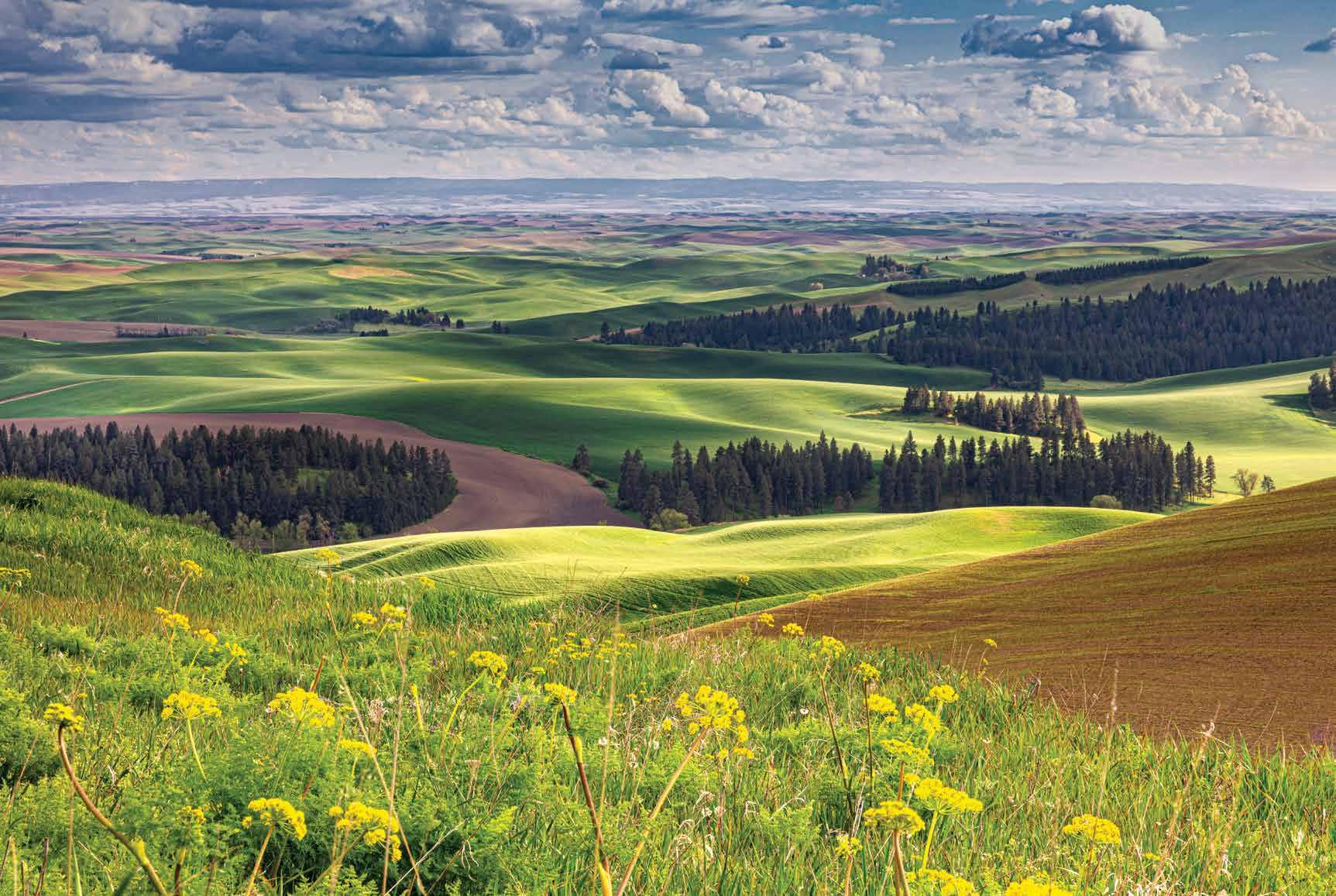
As the sun rises over the mountains of North Central Idaho, morning light spills west over a gentle land, illuminating first the tops of wooded buttes standing like islands above those voluptuous, curving lines of the Palouse Hills, resembling ocean waves standing still. The raking light accentuates the scene casting shadows in low places while burnishing the hilltops with green or gold, rippling, dune-like relief rendered in arcs of color. From the roadside, the terrain mounts gracefully upwards in syncopated rhythm to the sweeping line of the hillcrest, sharply defined against the sky. The Palouse Hills are best appreciated from an elevated vantage point from which the scenery that spreads to the horizon gradually changes as the sun and seasons roll by. It is a landscape like a warm blanket, inviting rest and repose upon the coming day. The hills are a shifting mosaic of color indicative of season with shades of verdure, harvest gold, raw umber and, in late winter, strikingly, as the snow melts, residual drifts stipple the hills with white streaks and arcs in sharp contrast to the dark brown soil like the spotted coat of an Appaloosa mare. I find a subtle beauty in the Palouse Country that continues to grow on me year after year.
I enjoy looking at maps and when I study a topographic map of my neighborhood, I see that I live in a place named Paradise Valley. This was one of the original names for the town during the pioneer episode. My home is just blocks from Paradise creek, one of several drainages from the south slope of the Palouse Range, known locally as Moscow Mountain. To the south of us are Paradise Ridge, Tomer’s Butte and Bald Butte. Just to the west are Kamiak Butte and Steptoe Butte. These semi-forested uplands variously rise upon granitic or quartzite rock, raised above the draped soils of the Palouse Hills. The Palouse region is a unique landscape characterized by deep soils. Bounded by the forested uplands on the east, and river canyons to the south, the hills fade out to the west in the flood scoured scablands of central Washington. The soils of the Palouse country are technically called loess. The very sound of the word when spoken aloud invokes the winds that brought the silt, clay, sand, and volcanic ash from the west and heaped them against the foothills of North Idaho and Eastern Washington. Palouse soils are known to be over 200 feet deep in places favorable to Aeolian deposition. This mantle of rich, fertile topsoil is as well suited to wildflowers as it is to agriculture. The Palouse region has historically received the right amounts of rain to support a variety of vegetation, ranging from the dry savannah/steppe ecosystem in the west to the meadow/steppe and lush forests of the foothills to the east. Some of the most productive dry land farming in the world is within the Palouse Country. The hills in spring are green with waves of wheat and barley, fields of lentils, garbanzo beans, and peas. From road edge to road edge, from planting time to golden harvest, all of that land is busy helping to feed the world. But not too long ago, a different, more varied plant community covered our Palouse paradise. Prairie bunchgrasses and dozens of varieties of wildflowers including Blanket Flower, Prairie Smoke, Jessica’s Aster, Arrowleaf Balsamroot, Blue Penstemon, Silky Lupine and Little Sunflower grew upon the hillsides. Rocky Mountain Iris, Camas, and Ballhead Waterleaf, rich grasses and sedges carpeted the moist bottomlands. Up in the draws, sheltered from the wind and sun, grew shrubbery lush with berries, Black Hawthorn, Nootka Rose, and Snowberry, groves of Aspen, Ponderosa Pine and Douglas fir. This was the native, Palouse Prairie ecosystem prior to the arrival of organized agriculture in the 1870’s and today only a few small remnants survive.




The Palouse region was historically occupied by the Palus, Nimiipuu (Nez Perce) and Schitsu’umsh (Coeur d’Alene) and Spokane tribes who seasonally harvested the camas bulb and hunted game in the wooded uplands. Early Euro-American explorers documented the potential of the Palouse Prairie for livestock and other agriculture. The name, Palouse, is thought to be derived from the French word, Pelouse meaning “area of short grass” or “lawn”. It was subsequently settled in the late nineteenth century by immigrant farmers and merchants with Scandinavian and German accents who discovered a beautiful prairie, lush with grasses and wildflowers, soil well suited for the plow, a relatively mild climate, and plenty of forage for livestock. These settlers built homes and planted crops, rapidly transforming the land from the original meadow/steppe ecosystem to the rich agricultural paradise that exists today. They commenced to establish the small towns from Genesee to Moscow and Uniontown to Tekoa. Some called it Paradise and the name is still attached to certain topographic features including my neighborhood of Paradise Valley. The native grasses and wildflowers have mostly been pushed aside by progress but as I have recently learned, small pockets of Palouse Prairie natives still survive. The Palouse Prairie native plant ecosystem is uniquely adapted to the soils and climate of the eastern Columbia Plateau. There is a gradient of annual precipitation across the Palouse region from west to east as the land rises in elevation and retreats from the rain shadow of the Cascade Range. The drier parts of the prairie were dominated by bunch grasses like Prairie Junegrass, Idaho Fescue, and Bluebunch Wheatgrass. Wildflower meadows, shrubs, and forest vegetation were more common across the eastern reaches on slope aspects where rain and snowfall provided sufficient moisture. With less than one percent of its original range intact, it is one of the most endangered ecosystems in the world. There are remnants of native vegetation on Kamiak Butte, Moscow Mountain, Steptoe Butte, and other areas protected from the plow. The breaks of the Snake River and its tributaries along the borders of Idaho and Oregon and the area south of Lake Roosevelt in eastern Washington are said to contain the most extensive remnants of an undisturbed Palouse Prairie ecosystem. Most of the parts that are not currently cultivated have been overrun with invasive weeds and grasses which, unfortunately, outcompete the native grasses and wildflowers. With deliberate effort, conservationists, native plant enthusiasts and other volunteers are developing restoration projects on certain public lands and also on their own private properties within and without the city limits in an effort to preserve the Palouse Prairie biome.
Conservation is the attempt to maintain a balance between us and the natural world. There exists a continuum of attitudes toward conservation distributed along multiple alignments of economic, scientific, and esthetic values. I love seeing a wildflower meadow as it invokes the beauty and harmony of nature and inspires my instinct to preserve and protect. But my friend, who is a farmer, would view the same undeveloped land as potential pasture or acreage to be plowed and planted as a matter of accomplishing his goal of supporting his family through agriculture. Likewise, when I wander through a diverse forest ecosystem I find my aesthetic senses satisfied in the variety and interconnectedness of the plant community. But a professional woodlot manager that I know practices selective harvest while-
-encouraging the growth of the harvestable tree species while removing others as his method of conservation. He does a great job managing his land, it resembles a park, but the natural diversity has clearly been reduced. These divergent views need not be mutually exclusive. The wheat farmer may also find time to preserve native plants along the boundaries of his farmland and my enthusiasm for the forest notwithstanding, I personally enjoy living in a wood frame house filled with beautiful wooden furnishings. As we are all members of the same community, I believe the two sides can work together and I hope that the extremes remain small and willing to compromise. Native plant ecosystems are worthy of preservation and landscaping with native plants makes sense not only for conservation or sentimental reasons but because a native plant landscape once established requires little maintenance and supports native pollinator insect and bird populations as well. For these reasons, as well as the aesthetics, I am incorporating native plants in beds and borders around my home to reduce the area of turf grass and thus the need to water and mow.
“That which is true to itself is inherently beautiful”
I became familiar with the Palouse Prairie native plant community through my involvement in the development of Robert Edwin Lloyd Park on Polk Street just north of the Moscow city limits. Representatives of the Idaho Native Plant Society White Pine Chapter (INPSWPC), the Palouse Conservation District (PCD) and the Palouse Prairie Foundation (PPF) were instrumental in providing me with education, grant funding, seed, and nursery stock. As my knowledge grew I came to understand better why the early settlers called my home town Paradise. The variety of colors and textures of the native vegetation is soothing to the senses in a way that only the natural world can be. Blue Penstemon, violet Asters, and Lupines with leaves like pinwheels, the sunny, yellow flowers of Balsamroot, Oregon Sunshine and St. John’s Wort, tufts of Blubunch Wheatgrass, Idaho Fescue, and Prairie Junegrass have all been planted close to the picnic pavilion and will be used as a source of seed for planting elsewhere around the park. I try to imagine a soft blue-green expanse of Prairie bunchgrass awash with primary colors and punctuated by patches of shrubbery and evergreens in a quiet natural setting, perfect for bird watching and quiet contemplation. R.E. Lloyd County Park is well suited to Palouse Prairie ecosystem restoration as it contains all the elements of the original Palouse Prairie, rolling hills including all slope aspects, trees, and shrubs, a combination of dry soils and moist bottomland. It may take many years but it is my hope that this public area can be transformed into something resembling its original, true character. That which is true to itself is inherently beautiful.
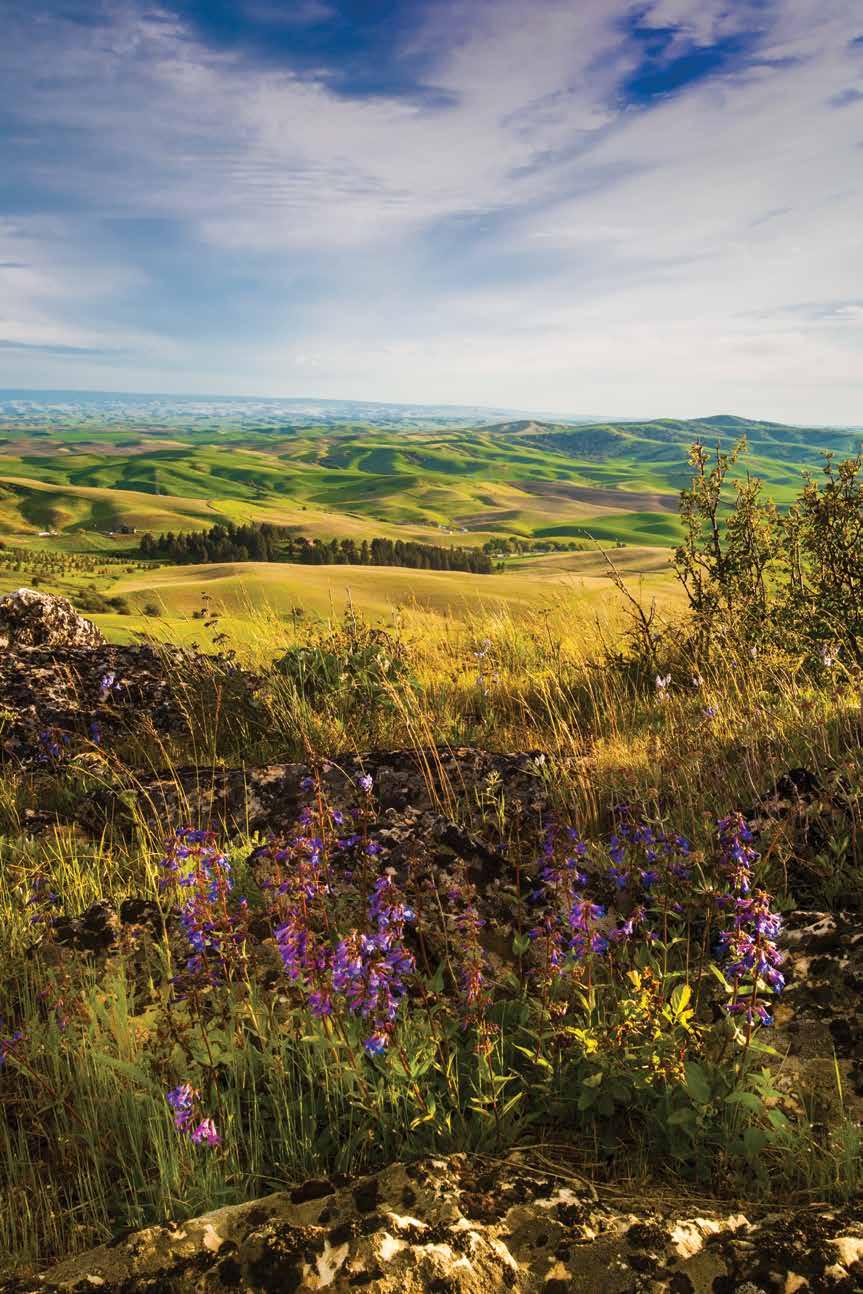
Landscaping with Palouse Prairie natives and other native plants offers distinct advantages to the land owner; such landscapes are attractive and eventually require minimal maintenance and very little irrigation. Many of the more charismatic and easily established native wildflowers, shrubs and grasses are available at local nurseries. Be sure to ask specifically for Palouse Prairie natives. Watch for native plant sales events each spring and early summer. An initial investment in time, patience and perseverance is required to remove non-native grasses and weeds. Watering will be required in the first couple of seasons to help the natives become established. The late Maynard Fosberg, a former UI soil scientist practiced Palouse Prairie ecosystem restoration and established a conservation easement on his property-near my home in Paradise Valley. When asked what advice he would give to others starting a similar project he said “Good site preparation.” He encourages two full growing seasons for site preparation to ensure a clean slate prior to reintroducing the natives. This advice was followed quickly by “First, you need to know the soils you’re working with.” (Prof. Maynard Fosberg’s address upon receiving the 2011 Latah Soil and Water Conservation District Conservation Stewardship Award)
The Latah Soil and Water Conservation Service can help with identifying soil types and recommend which plant species are likely to thrive in a specific location. Soil amendments such as compost may be helpful in urban landscapes especially on sites that have been disturbed by construction activity. Plants can be started from seed, or from nursery stock. A flower garden can be established in phases. If time permits, try a few varieties and see what works best and build on successes. Shrubs like Snowberry, Nootka Rose, Golden Currant, and Syringa (Idaho State Flower) attract birds and make good borders. Creeping Oregon grape and Kinnikinnick make excellent groundcover. Check the PPS and INPSWPC websites for more detailed information and recommendations. A good planting guide can be found at the following web address: https://www.nrcs.usda.gov/plantmaterials/wapmcbr6206.pdf
The months of May and June are high season for Palouse Prairie native wildflowers. There are demonstration gardens at the University of Idaho arboretum on Palouse River Drive in Moscow and in the town of Palouse at the intersection of highways 27 and 227. Active restoration projects include the PCEI Nature Center and Robert Edwin Lloyd Park on North Polk Avenue in Moscow. The John Crock Pollinator Garden along the Latah Trail near Troy road east of town is a project of the volunteers at the PPF. At Idler’s Rest Nature Preserve north of Moscow, Palouse Prairie natives are being reintroduced along the lower trails, and for those who are interested in a longer hike, Penstemon Path offers excellent views across the Palouse Hills to the West and South and features many native wildflowers and shrubs. The hiking trails at Kamiak Butte County Park between Pullman and Palouse are an excellent showcase of native plants and ecosystems. Its heavily wooded North Slope represents the Douglas Fir/Ninebark/Ponderosa Pine/Snowberry plant community while the south aspect is representative of the Palouse Prairie/Bunchgrass ecosystem. The Rose Creek Preserve, just north of Albion, Washington is administered by The Nature Conservancy and has a low gradient path along a riparian area, featuring a well preserved native ecosystem with a variety of mammals and bird life. The Indian Cliffs trail at Heyburn State Park near Plummer, Idaho and the Wenaha River trail from Troy, Oregon are also excellent wildflower walks in the spring. The enjoyment of nature is at once our privilege and our salvation.
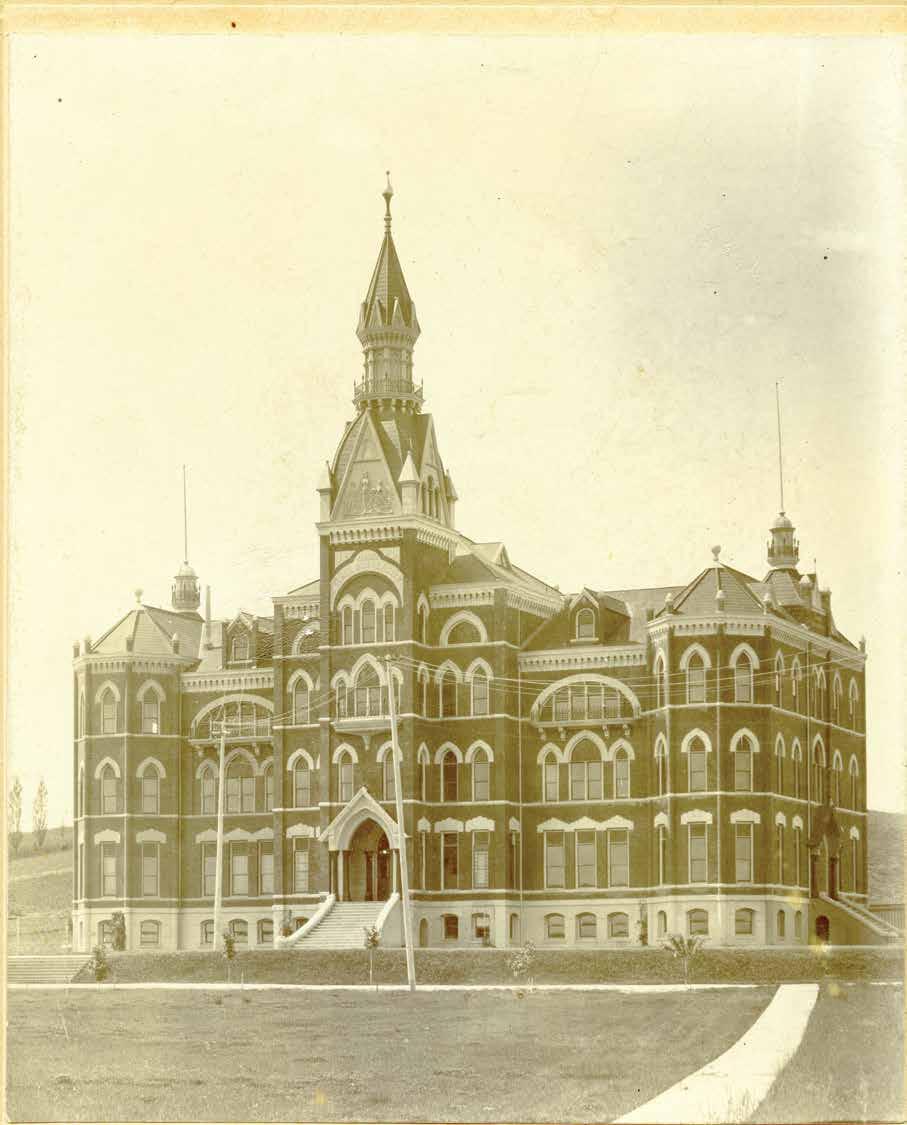
Moscow, Idaho, is located on a picturesque corner of the Palouse, where its rolling hills meet sprawling white pine forests to the east. For thousands of years, the region was a main thoroughfare for Native American tribes, a temperate and fruitful mid-point as they traveled to and from seasonal lands to the north and south, and east and west. Isaac Stevens, then governor of Washington Territory, is credited as making the first written account of the area in 1855. His party, surveying a route for a transcontinental railroad, arrived to the area by following the Greater Nez Perce Trail up from the Clearwater and Snake River canyons. By the 1870s, white settlers were flowing in from all directions and the first foundations of what would eventually become Moscow were being laid. Several early pioneers claimed homesteads in the immediate area and would eventually make names for themselves in the history books, but four settlers in particular are credited with giving Moscow the boost it needed to thrive. These men, James Deakin, Almon Asbury Lieuallen, Henry McGregor, and John Russell, each contributed 30 acres of their farm land to the creation of the fledgling town’s commercial center and initial residential neighborhoods. The corners of these four plots converged at what is now Main and Sixth Streets, still discernible today by the minor jog in Sixth as it crosses Main. Holding the southwest section, James Deakin was an Irish immigrant known among his peers as being an honest and hardworking farmer. In addition to his early gift of land to Moscow, he sold twenty more acres to the Idaho Territory to help create the University of Idaho in 1889. This acreage now contains the original core of the campus with the Administration Building, Ridenbaugh and Morrill Halls at its perimeter, and includes its oldest trees found in the Shattuck Arboretum and Presidential Grove. His name today is given to an avenue that runs through the campus from Sixth Street to Taylor Avenue.
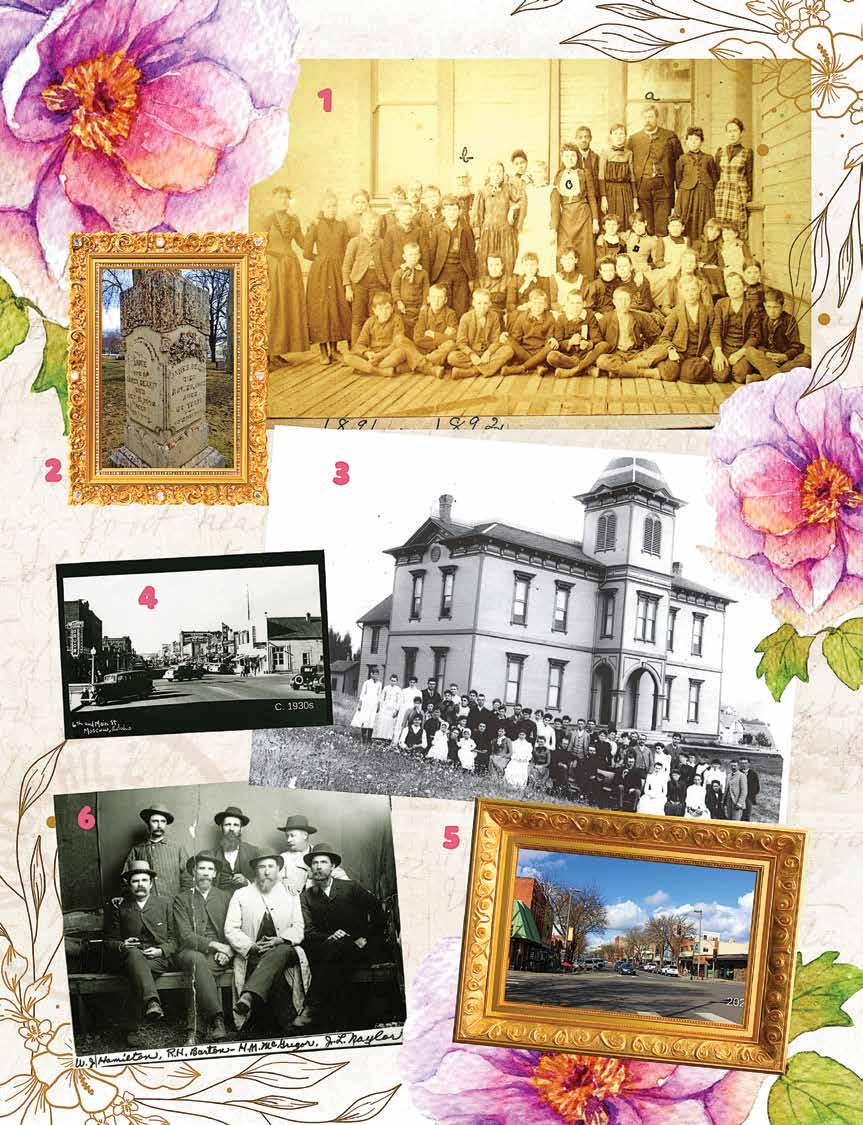
01-05-021: Almon Asbury Lieuallen House located at 101 S Almon Street, 1910.
Elaina Pierson by
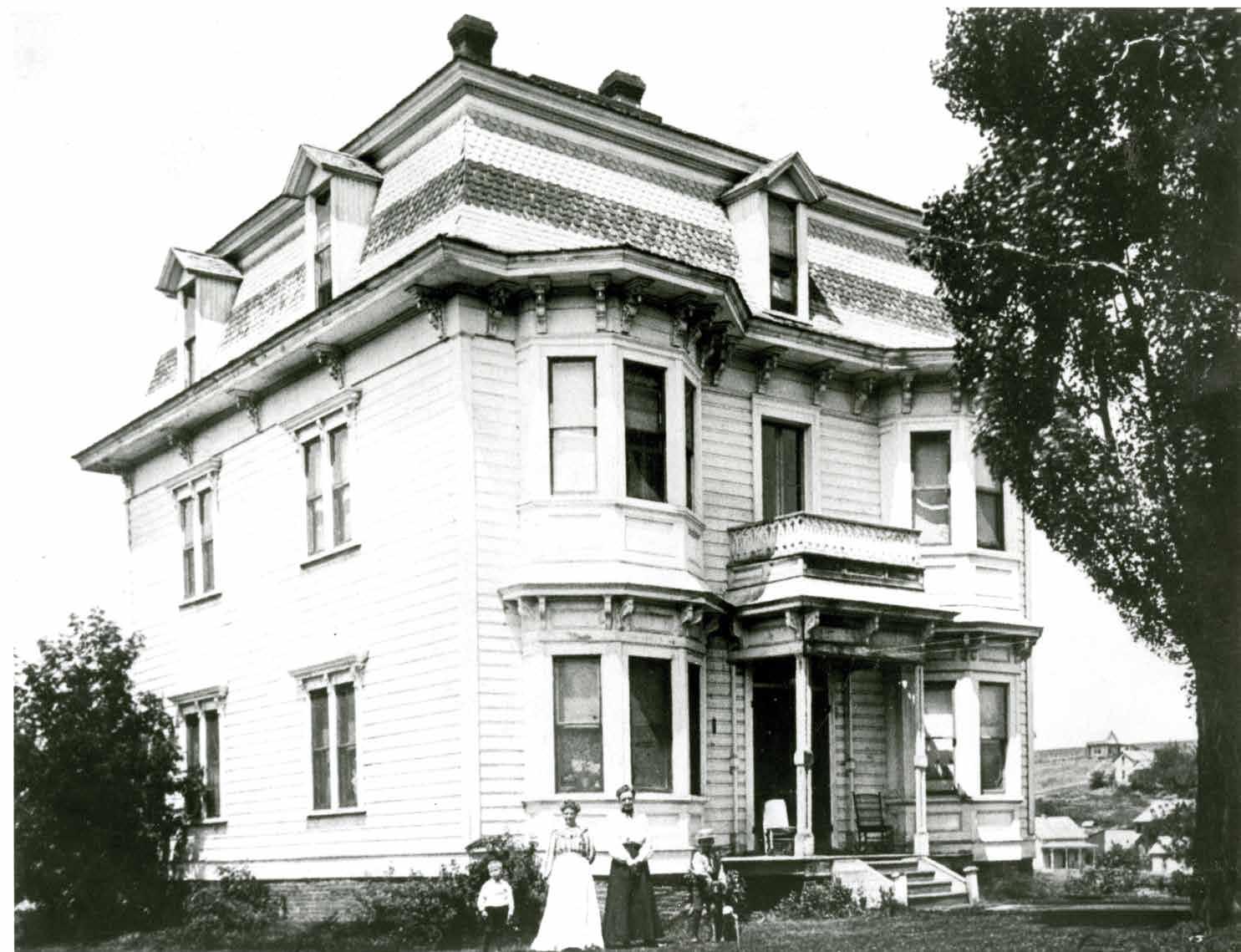


The southeast section was owned by Henry McGregor. He and his wife Thyrza were two of the first school teachers in the area and, in 1885, they built their home on Adams Street between Sixth and Seventh Streets. For nineteen years, it was the only home on the block, holding a commanding view westward over the town toward the budding university. Unfortunately, it was removed in 1905 as the neighborhood expanded.
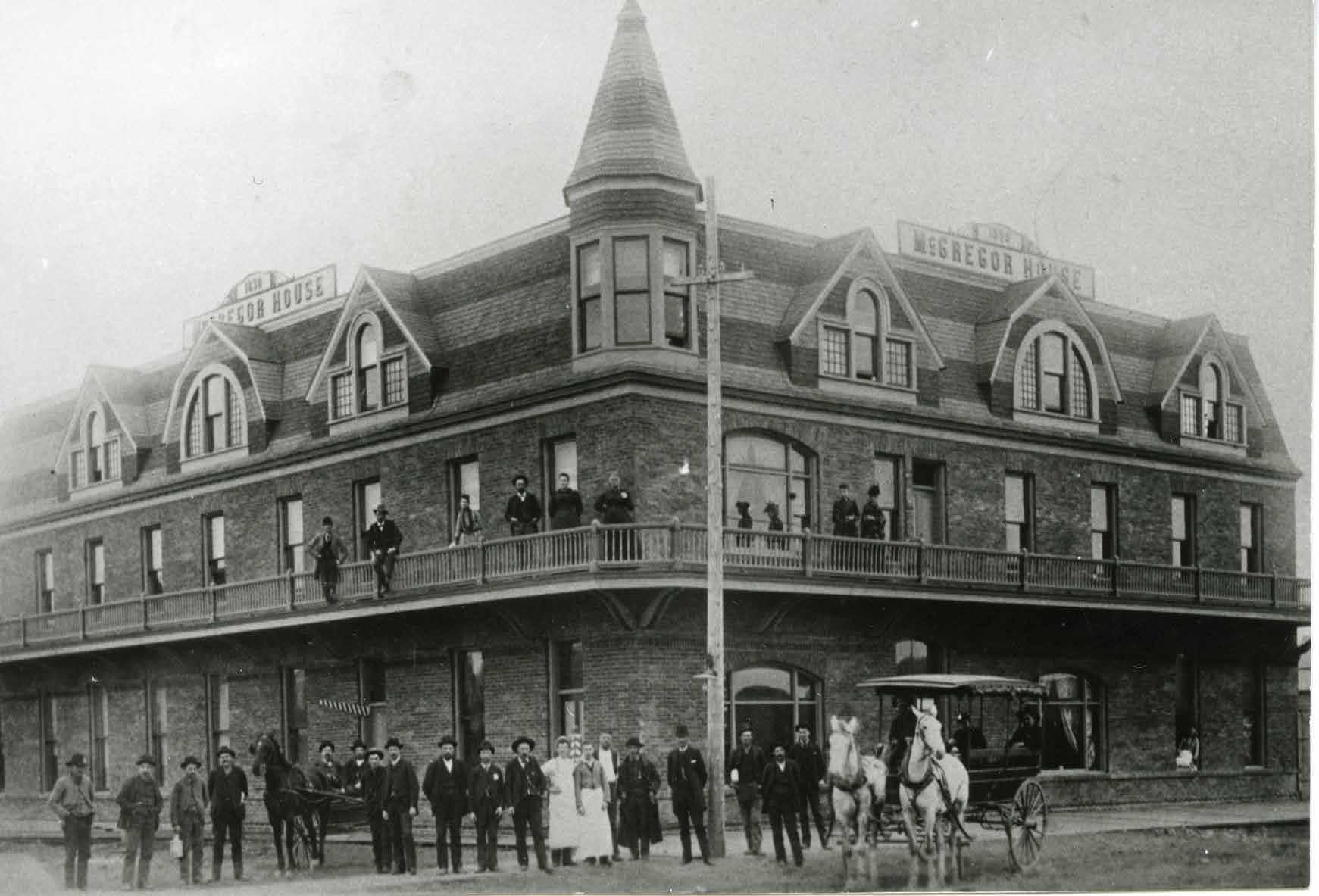
In 1890, Henry and Thyrza built the McGregor House on the corner of Main and Seventh Streets. This stately two-story building was one of the first to be constructed of brick in the downtown area, and was operated as a hotel until Drs. Gritman and Coffey took over and turned it into a hospital.
An 1892 issue of the Moscow Mirror describes McGregor as “the genial proprietor of the McGregor House [who] enjoys an enviable reputation as an energetic and efficient hotel manager,” and notes his status as “one of the most popular gentlemen in the city.”
John Russell owned and farmed the northeast corner for several years. In 1877, during the conflict between the US Army and several bands of the Nez Perce tribe, the temporary Fort Russell was built on his land near present-day Monroe and B Streets. Though residents of early Moscow had friendly relations with the local native population, emotions ran high and several stockades appeared in the area, of which Fort Russell was the largest. Logs for its walls were hauled from the mountains and planted upright in the ground with space between to point a rifle, and guards could stand on a narrow platform around the inside of its walls. Lillie Lieuallen Woodworth, then a young child, recalled in later years that the children had a grand time playing inside the fort, while their parents were in a state of high alert. No hostilities erupted here however, and the fort was primarily used as a precaution and night-time retreat. In following years, it was entirely deconstructed and the building materials repurposed. The name of Fort Russell is now given to the historic residential district surrounding its original site.
In 1884, Russell donated a block of land to the town with the agreement that it would be used for the construction of a school. Prior to this, classes were held in various makeshift locations, including the Baptist and Presbyterian churches, and a log structure known as McDaniel Hall on the corner of Main and Fourth Streets. The first Russell School was built on the lower half of the block between A and First Streets and Jefferson and Adams Streets. Its two rooms were quickly outgrown, requiring an expansion in 1888. In 1901, the Irving School was built behind it on the upper level of the block, then the original Russell burned down in 1912. In 1926, the Irving School was deemed unsafe, and it was replaced with the large brick Russell School that occupies the space today. While John Russell enjoyed great success throughout his life as a farmer, businessman, and civic leader, the tide of fortune shifted, taking his wealth with it. He spent his later years working as a janitor in the school he had helped create. Almon Asbury Lieuallen, holder of the northwest section of town, is perhaps the best known of the four, if only because Moscow today has a park and three streets bearing his name, with a fourth named after daughter Lillie/Lilly. Born in Tennessee of Welsh descent, Almon and his brothers-
“One of the most popular gentlemen in the city”
01-06-285: McGregor House at 7th and Main Streets, March 1891.


-moved west to Oregon and Washington before arriving on the Palouse in 1871. They initially homesteaded east of town with the intention of raising cattle in an area known as Haskins Flat, sonamed after the family of Almon’s new wife, Sarah Ann Haskins. One harsh winter put an unfortunate end to the livestock endeavor and the family moved into the fledgling city, where they quickly became instrumental in the town’s planning and growth. In 1875, Lieuallen opened the first general store at the corner of Main and First Streets, and much of the 200 block of south Main Street on its west side can be credited to the entrepreneurship of Almon and his family. He was also known to give land to potential business and homeowners to encourage their development, including the first church located at Jackson and First Streets, where the United Church of Moscow stands today.
The large and distinctive Lieuallen home at the western head of First Street where it ends with Almon Street, known colloquially today as the “Dollhouse,” was built in 1884, the only home in the middle of what was then wheat fields. It initially had twelve rooms and three floors, the third being unfinished as one large space. The Lieuallen children, along with their friends and neighbors, used this space as a rolling skating rink. In a 1965 reminiscence of her life, daughter Lillie notes that, though her mother was not excited about caring for such a large home, it was built as a kind of advertisement to encourage others to settle in that part of town. She also recalls that her brothers were notorious among the neighbors for playing on the third-story ledge below the home’s mansard roof when their parents weren’t home to stop them. Lillie and her husband Jay Woodworth became owners of the home following the deaths of her parents, and in 1917, they converted it into state-of-the-art apartments that included electricity, steam heat, and running water, the first of its kind in Moscow.
Almon Asbury Lieuallen is also given partial credit, according to some accounts, for the decision to name the town Moscow. While the earliest settlers called it Hog Heaven, due to the fact that their hogs thrived on its abundance of camas roots, others preferred the more dignified term Paradise Valley. Lillie’s account from 1965 claims that, upon further discussion among the residents, the name “Moscow” was chosen because it was an uncommon one in the United States, and the one in Russia “then seemed a far-away glamorous sort of city.”
This scenic corner of the Palouse has been home to generations of humanity, each prospering thanks to its resources and strategic placement in the region. The Moscow of today stands as a testament to the perseverance and fortitude of its first inhabitants, its footprint a clear, physical demonstration of their progressive, civic-minded nature.
1. 01-11-324: Students and staff of the Russell School, 1891-1892. John Russell, then the school’s janitor, is the white-bearded man standing beside the left-hand window.
2. Deakin headstone: The headstone for James and Annie Deakin in the Moscow Cemetery.
3. 01-06-108: People gathered in front of the original Russell School after its 1888 expansion.
4+5. 6th and Main: The intersection of 6th and Main Streets from the book Moscow Past & Present, 1930s vs 2024
6. Sweet.W.01: Early Moscow businessmen with Henry McGregor in white coat in front row.
Winter is beginning to fade, and with it, the long days of darkness and cold give way to the sun’s warm radiance. I feel an unsettling in my spirit- a yearning to get out into the elements and reconnect with mother nature. As cold, crisp and snowy days give way to the sun’s warmth, I am reminded yet again of the cyclical nature of not only our planet, but also my place within an ever evolving yet timeless landscape. Having spent most of the winter indoors, these spring days invite me to leave the safety of my home and seek out the familiarity of the sacred spaces where my soul feels rejuvenated. For me, one of these spaces is the forest. Through this long winter, I have missed it—and if I am honest, I’d like to believe that it has also missed me. With its towering trees, the vast expanse of the forest calms me. To walk amongst the towering giant trees, is to appreciate our very transitory existence in relation to the wild that surrounds us. It also reminds me of the connection we all share. I know that entering the forest after a long hiatus brings peace to my soul that I cannot otherwise emulate. Just as the forest is awakening after a long winter slumber, I too am making way for new beginnings and a fresh start. My spirit feels lighter and I feel reinvigorated. With every birdsong and blooming flower that I observe, I finally feel able to shed the weight of winter.
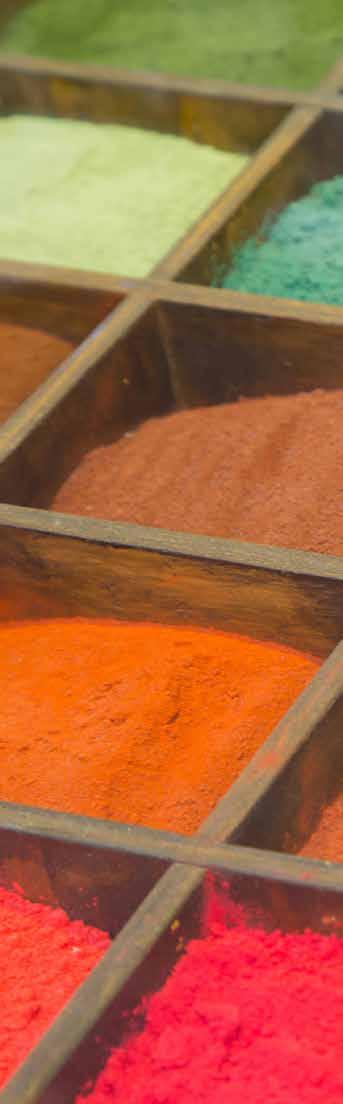
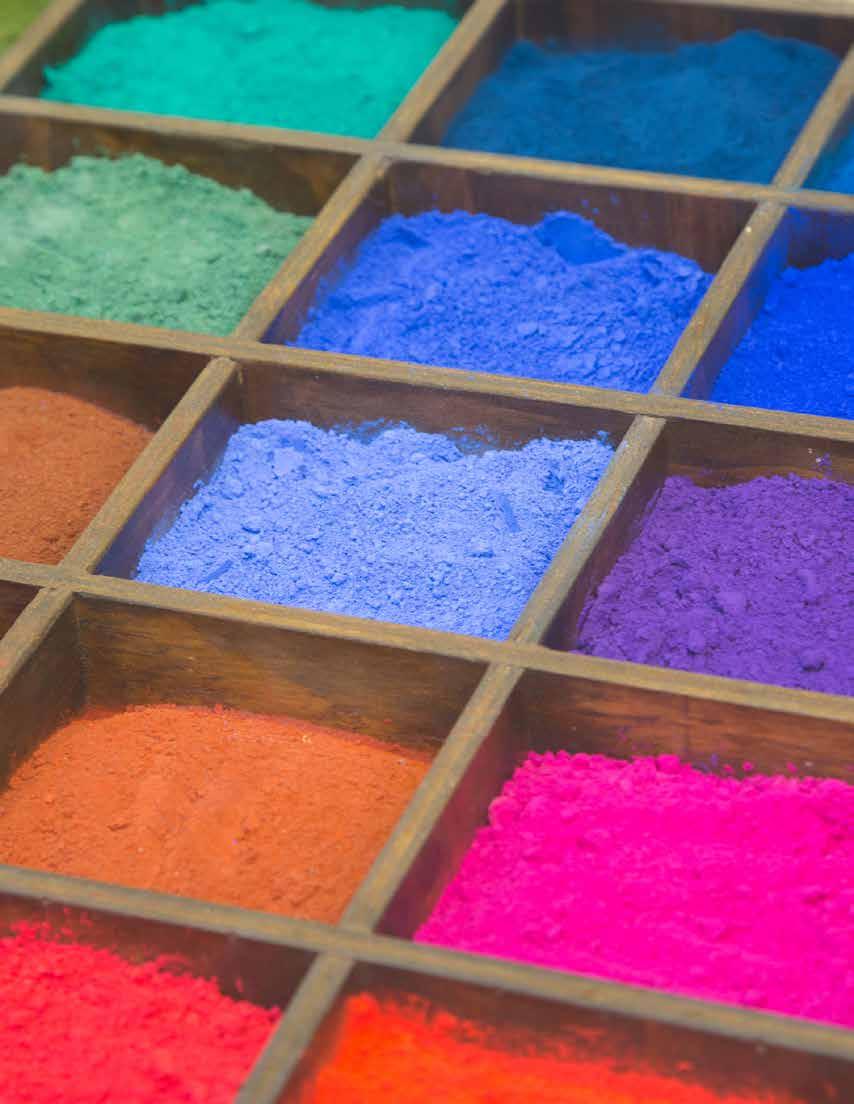
But just as winter’s heaviness fades and I find myself outside again, I am drawn to not only enjoy- but to also create from the forest.
Last year, I really connected with the practice of making paint from things found in nature. I happened to watch a video that showed a woman collecting the bones from a deer that had died and decomposed in her garden over time. She then charred the bones in fire until they were reduced to charcoal, and she was able to ground them down and mix them with binders to make a natural paint. Once she had made “bone black” paint with them, she used it to create the most stunning deer skull artwork I have ever seen. I probably watched that video 10 times, just completely awestruck. Throughout her video she talked about being an anthropologist, as well as an artist (two traits we share), and how this specific practice was a nod not only to the story of human evolution but also the innate drive and desire to create things from the natural elements we find all around us.
Humans have been making paint this way for thousands of years. In fact, the archaeological record shows us that the first pigments were made of soil, animal fat, minerals, charcoal, and chalk about 40,000 years ago, with use spanning both the paleolithic and neolithic periods. Using these materials found in nature, they decorated cave walls with exquisite imagery of animals and people and told stories through artwork that was meaningful- both to them then, and to us today. With a limited color palette of red, yellow, brown, black, and white, they were able to illuminate their surroundings and leave their indelible mark on humanity. It is through this detailed artwork that we can hypothesize and make value statements about the way they lived their everyday lives. As time went on, we saw human advancement eventually include the ability to create new colors from other pigments and technologies. One example of this shows how the Ancient Egyptians are known for being able to turn various materials including silica (sourced from sand), lime (often derived from limestone), copper (azurite, malachite), and alkali (in the form of natron) into the world’s first known synthetic paint, which is known as “Egyptian Blue”. Later, purple was created -by a process that extracted dye from the glands of murex sea snails which secretes mucus that turns into an intense purple color when exposed to sunlight. Additionally, blue azurite and red lake pigments are historically known to be combined tomake primitive purple colors.
Of course I learned about these early techniques throughout my studies in anthropology, but to watch that woman’s video- to see her take something from nature (in this case a deer) and alter it in a way that shows deep reverence for the animal’s life- inspired me to live a more creative life that is connected not only to ancestor, but also to nature as a whole.To explore this idea further, last fall I bought a few books on how to create natural pigments with Earth’s materials. There are many beautiful books on this topic, and they all showcase various ways to create paint that you can use to make art with. Some go over botanical sources like flowers, vegetables, nuts and trees, while others focus on earth minerals like rock, ochre, soil, clay, etc. The forest specifically yields all sorts of materials that can be used for pigments; from blackberries, blueberries, and elderberries that can be turned into bright blues and purples, marigolds and leaves which make gorgeous yellows, and even bark and soils to make browns-
-and blacks, the forest is quite literally an artist’s dream! In this capacity, walks in nature offer an opportunity to reconnect and practice mindfulness by paying close attention to the details and colors of the flora and fauna around us- as well as the beauty (and artistic possibilities) of the changing seasons. Winter storms can scatter barks, nuts, cones, and leaves across the forest floor, while spring means more vibrant colors abound. Of course, as the snow melts and the ice recedes, there is always the possibility of finding elusive animal bones (my personal favorite)!
“I have discovered a new way of seeing that which was already new around me”
Since I have started exploring making homemade pigments from things found in nature, I have discovered a new way of seeing that which was already around me. What I used to view as simple pretty flowers have become new sources of artistic inspiration. The everyday green leaves of various trees and bushes that have always been in my landscape now cause me to pause, wondering what sorts of things I can do with them. Quite simply, becoming excited about this artform has given me a newfound passion and has also allowed me to tap into the very creative energy that has defined human evolution and culture for thousands of years. When I paint from things found in nature, I feel a connection to the land, and to generations of artists who have found influence from the wild. Thus, mixing pigments made from plants and animals is deeply meditative, grounding, and personal for me.
Certainly, winter is special in its own way- it invites us to slow down and turn within while the world outside hibernates. I love winter in the sense that it offers a moment to pause and reflect on the previous year, setting intention for what is to come. However, spring is magical in that it allows us a unique opportunity to realign ourselves with our environment, connect with others, and look for renewal and artistic expression in everyday objects. Thus, the forest becomes both muse and medium, offering endless inspiration and materials for creation. As I walk through and take in the beauty around me, I am continuously reminded that everything truly is temporary (even the long winter!) and that we should always look for ways to honor nature- as well as one another in everything that we do.
I hope that this article motivates you to get out there and enjoy the new season, and I encourage you to continuously look for new sources of adventure, creativity, and even a little magic in your everyday life!











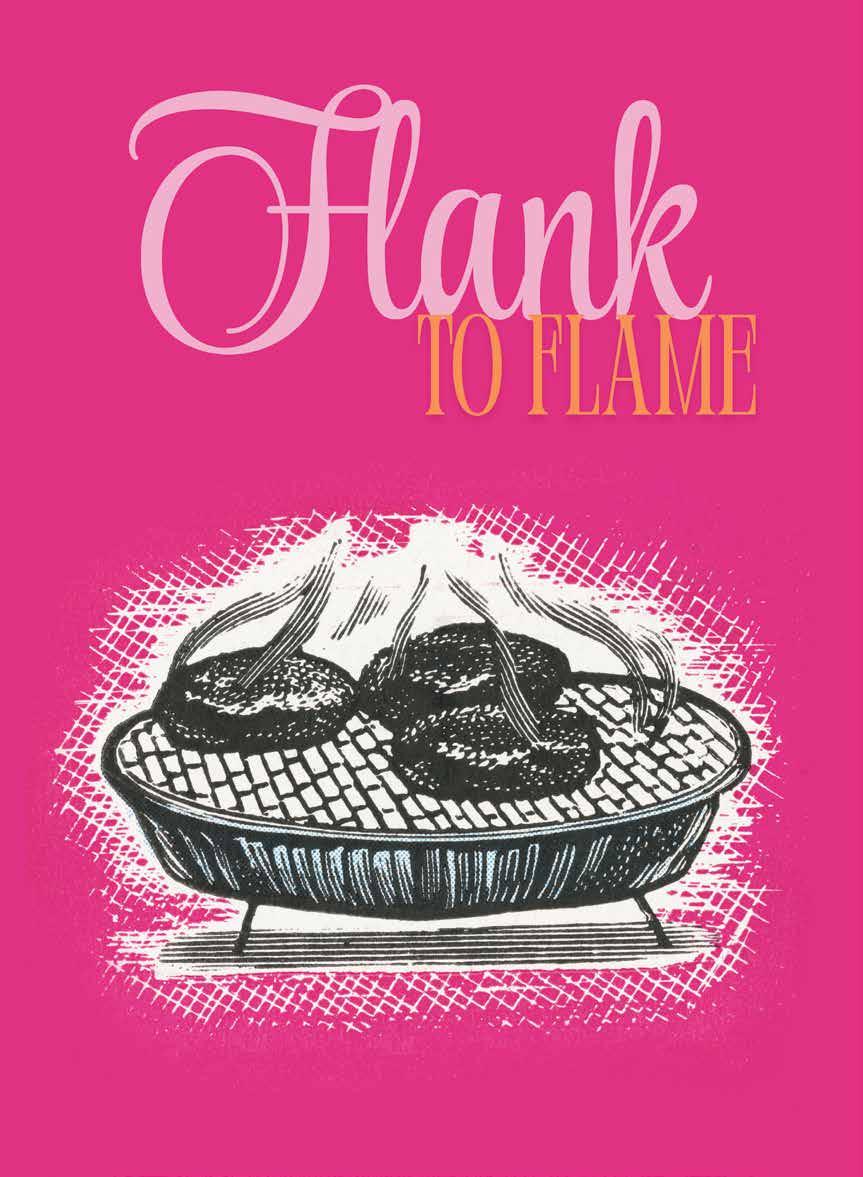

I grill burgers outdoors. Full stop. I’m just not one of those indoor burger fellas. Even in the bitter cold and howling winter wind, there is just something so much more enjoyable to me about tasting that special sear that only comes when you cook directly over an open flame. Perfecting a lite crust to the exterior while holding the middle at medium, and using a great ratio of fat in the patties comes together to create something far greater than the simple sum of the parts that you have in play. But there is one specific “burger-adjacent” item that I’m more than happy to cook indoors. And it just so happens to be one of my all-time dinner favorites.
A few years back, I wrote an article about depression era burgers. Struggling to afford ingredients and focused on value during the height of the dustbowl and depression, road side dinners in Oklahoma turned to an ingeniously thrifty design. Half a burger patty worth of meat was started on a griddle, and then as it was cooking an equal portion of chopped and squeezed onions was added by pressing them firmly into the top of the patty. The key they had found was squeezing the onion in cheese cloth after chopping to remove all the excess water, and then allowing them to cook off a bit before using a spatula to press them deeper into the beef just before the flip. The results are nothing short of amazing. The onions thoroughly caramelize and melt that sweet and savory flavor directly into the patty. The burger is still thick and juicy but you only used half of the expensive product. A little cheese is melted on top, and then they get yellow mustard, two thin pickle chips and a plain white-bread bun. Everything as cheap as possible, but if you try cooking a few this spring just be ready to fall in love with what might be your new summer go-to on the grill. The flavor is explosive! What I have in mind today, and what I just as readily cook indoors as out, is a cousin to those Okey-doke depression burgers. It’s a symphony of melty cheese, caramelized onions, and flavorful beef – where technique separates a ho-hum experience from something so perfectly balanced you may just decide to skip the condiments entirely. Every time we adventure around to visit places unknown, I’m perpetually on the lookout for a classic diner because the flat-top griddles those special places (and the cast iron pan in my kitchen or on my grill) are where my heart and tastebuds travel for one of my most cherished comfort foods. Heather lovingly laughs as I spend less than 30 seconds looking at the menu before folding it with a smile. “Another of your old-man sandwiches?” Indeed. Another patty melt.

The general consensus is that this special burger variant has its origins in mid-century Southern California and was either first created, or at very least first perfected and popularized by William “Tiny” Naylor. In reality, it’s just a play on a burger, but the subtle change in prep and presentation makes all the difference in the world. When you find yourself staring at a menu, knowing somewhere deep in your heart that you really want a burger, but thinking to yourself that you’ve had too many burgers lately, it’s a patty melt’s siren song that beckons you back to the classic era of road-side dinner stops and the classic highway travel feeling that defines this little slice of Americana.
I’ve made them outdoors with cast iron over flame, but the flavor that jumps off the pan is just as easily replicated when cooking in the great-indoors. So here in shoulder season, when spring flirts with snow one last time before breaking out temperate PNW rain, go ahead and have a cookout in your own kitchen and try your hand at a patty melt. It is part of that special category of comfort food that warms both the belly and the soul. And the sassy individualism of a patty that refused to conform to a circular constraint but instead confidently stretches out to match the oblong envelope of toasty rye is a great reminder to be yourself without apology.
If your mouth is already watering go ahead and get that pan on the burner or grill and bring it up to medium heat. Its time to melt yourself a patty. But before we begin, the butter and onions go in. Sure it could all be done separately but the lesson from that older relative out of Oklahoma is that onions can shine just as brightly as the beef, and we want to let the flavor build all the way through out the cook, allowing the spongy bread to soak it up during the finale. So into the pan goes ¼ stick of butter, one finely chopped clove of garlic, and 1/2 of a thinly sliced medium yellow onion for each patty you plan to cook. Take your time, and keep stirring with a wooden spoon as they cook down and fully caramelize. This isn’t a recipe that can brag about how quickly it comes together, comfort food is after all, an act of love. I take around 15-20 minutes and continue to stir deep into the golden-brown phase when some of the onions are starting to char and the garlic is almost fully cooked off into the buttery magic that now coats the bottom of the pan. Dump the onions into a bowl to hold for later, and keep the pan warm for the patties.
Like any burger I make, 80/20 is my favorite blend. I understand why people gravitate to ground beef with lower fat levels, especially if you eat it often. But since burgers and patty melts are such a special treat, go ahead and leave the flavor in – have a salad tomorrow but taste the perfection today. Patties should be thinner than a burger. First, these will be wider so we can still make four out of 1lb of beef, and second it’s very important to keep a perfect ratio of patty-onion-cheese-bread. Make them oblong, and sized to fit the bread perfectly. We expect a little shrinkage during the cook, but having a pan makes this an ideal time to press a little. I know I’ve decried that as the greatest sin in grilling burgers, but it’s the grates on the grill that rob you of all the flavor. Here the pan hangs onto every drop and graciously returns it when the bread enters the picture. Liberally salt and pepper those patties and drop in another pad of butter just before they hit the pan. I like to finish at medium so I expect a quick cook that only gets just slightly into medium rare during this step. Give them a firm press with the spatula to get contact and sear, then flip as soon as they pick up some char – just under 2 minutes usually. Let them run until browned on the other side, about 2 minutes again. Pull them to a plate and either drop the heat on the stove or move the pan off the direct heat on a grill.
Guess what goes into the pan next. Did you say marbled rye? If so, you forgot the butter. Add another pad and stir the bottom of the pan with a wooden scraper or spoon, letting the melting butter release all the remaining onion, garlic, and beef char into the mix. Now drop in the bread slices, moving them around to soak up all the sauce. Our first layer of cheese goes down before the patty. I use the traditional Swiss and grate it to ensure an even melt that won’t overcook my patty. Don’t skimp here, you’ll thank me later. Place the patty on top of that bed of cheese, layer on plenty of the caramelized onions, and top with another layer of cheese before you cap it off with the last piece of rye. Using plenty of cheese doesn’t just balance the flavor, it also insulates the bread from the patty and onions. We want to soak up the flavor in the pan, but it should also end with a toasted and crusty piece of bread on each side. That works best when we control the inner surface, allowing a soft and fluffy contact that is never soggy. It becomes the ultimate test of timing and technique, but getting-
-toast outside and melt deliciousness inside is well worth the effort.
Once that first side is getting toasty and almost ready to flip we make one last nod to the real intentions of this recipe – comfort. Remember that salad you plan to eat tomorrow, and drop in another thick pad of butter. Let it nearly melt in the middle of the pan, then quickly flip the patty melts and move them around in the pool butter to soak into the final side. Keep them moving during this phase, and press regularly with your spatula. It should only take about 2-3 minutes per side to get all the butter absorbed and then bring the surface of the bread to a medium toasted texture. During this extended cook the insulated patty in the middle will be reaching a perfect medium just as the last of the gooey cheese has finished melting. I would drive hundreds of miles for a perfect patty melt. Thankfully, I don’t always have to.
I hope you enjoy these as much as I do, and be ready to head back outside with me for some proper grilling next issue.


4 oz Pancetta, cubed
2 Large Carrots, diced
1 Large Onion, diced
4 Stalks Celery, diced
4 Cloves of Garlic, finely minced
3 oz Tomato Paste
12 oz Ground Beef
12 oz Ground Pork
1 cup Red Wine
1 cup Beef Stock
3 - 28 oz Cans of Crushed Tomatoes
3 Bay Leaves
1 Bunch of Basil
1 tsp Red Pepper Flake
Parmesan Rind
In a large pan on medium heat, cook the cubed pancetta until slightly crispy. Remove the pancetta from pan and drain on paper towel. Reduce heat to medium-low and add the carrots, onion, celery, and garlic. Cook, stirring occasionally for 10 minutes until softened. Increase heat to medium-high and add tomato paste; cook while stirring for 3-4 minutes. Add the ground beef and ground pork and cook while stirring occasionally for 8-10 minutes, or until cooked through. Add the red wine and beef stock and cook for 10-15 minutes while stirring, until the liquid has mostly evaporated. Meanwhile, in a large pot, add the crushed tomatoes, bay leaves, basil, red pepper flake, and parmesan rind–place on low heat. Add the pancetta and the meat mixture to the crushed tomatoes. Simmer for 2-3 hours on low. Remove basil, bay leaves, and parmesan rind. Add salt to taste and serve over al dente pasta.
2 Cups all-purpose flour
2 teaspoons baking powder
1 Cup shredded sharp cheddar
1 small bunch green onions, chopped
Pinch of kosher salt
1/2 teaspoon freshly ground black pepper
1/2 Cup (1 stick) cold unsalted butter, cut into chunks
1 large egg
3/4 Cup milk
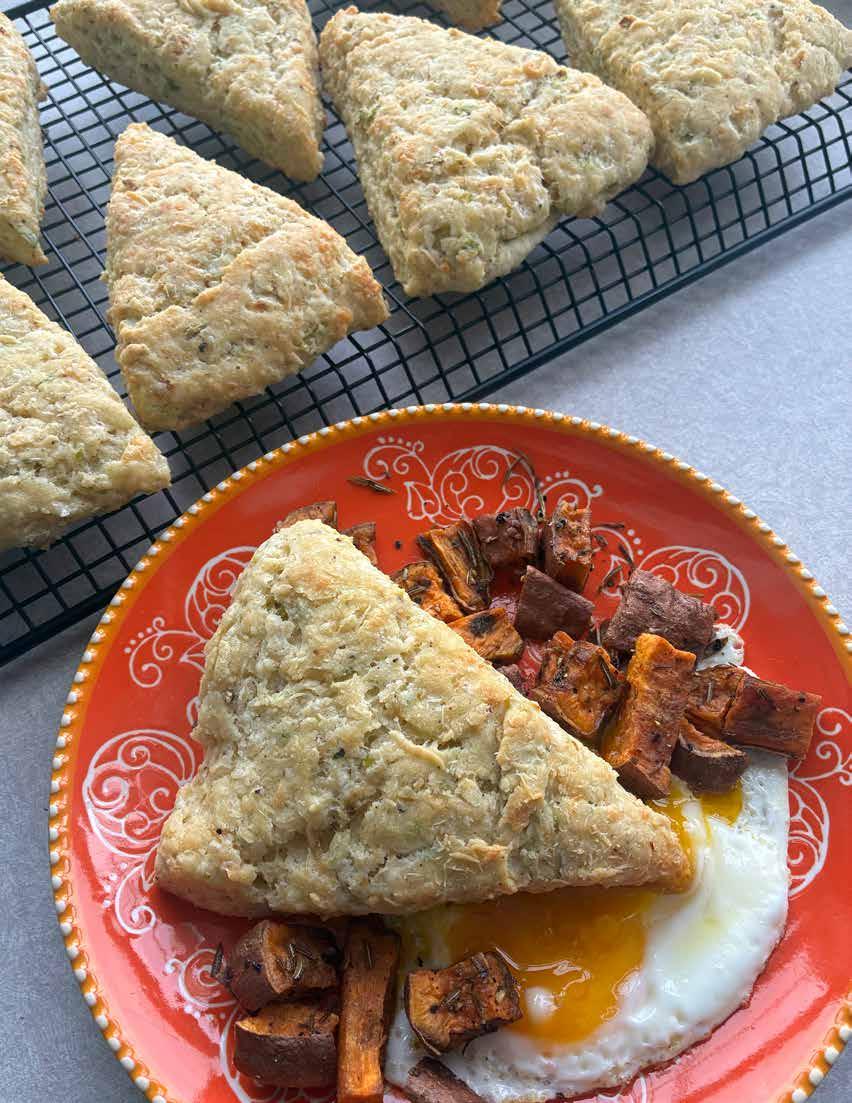
Position oven rack to middle of the oven and preheat to 400 degrees Fahrenheit. Line baking sheet with parchment paper or silicone mat. Add flour, baking powder, cheese, green onions, salt, and pepper. Pulse two to three times to mix. Add cold butter and pulse until mixture looks like coarse meal. In measuring cup, whisk egg and milk before adding to food processor. Pulse until combined. Pour dough onto floured surface and form ball. Keep surface and roller well floured as you roll into circular shape (this does not have to be perfect) until dough is 1/2 thick. With bench scraper or knife, gently cut dough into eight scones and place on lined baking sheet. Bake for 20 minutes or until bottoms are golden brown. Serve warm. Other herb options include parsley or dill. Cooked bacon can be an excellent addition. Fold bacon into dough after poured on floured surface and before forming a ball.
If you do not have a food processor, add all dry ingredients to a large bowl and mix with hand. Add cut butter to dry ingredients coating all pieces with flour. To “cut” butter in mixture, you can either use two knives, a pastry blender, or using your thumb and middle finger pressing chunks into flat pieces. Mix until resembling coarse meal (some large chunks are fine, it is more important not to over mix). Using the “claw” method, slowly add wet ingredients to dry mixing with one hand in dry while the other slowly adds wet until incorporated. This recipe also works with substitute cup-for-cup flour mix and dairy-free butter/cheese alternatives. With butter substitute, it is important to keep butter cold. Recommended to refrigerate for 20 minutes after rolling out and cutting before baking for best results.
1 cup butter
1 cup unsweetened cocoa powder
1 cup boiling water
1/2 cup sour cream
2 tsp vanilla
1 tsp baking soda
1/2 tsp baking powder
1 1/4 cup all-purpose flour
1 1/2 cups brown sugar
1 cup chopped toffee bits or nuts
2 eggs
Candy Easter eggs
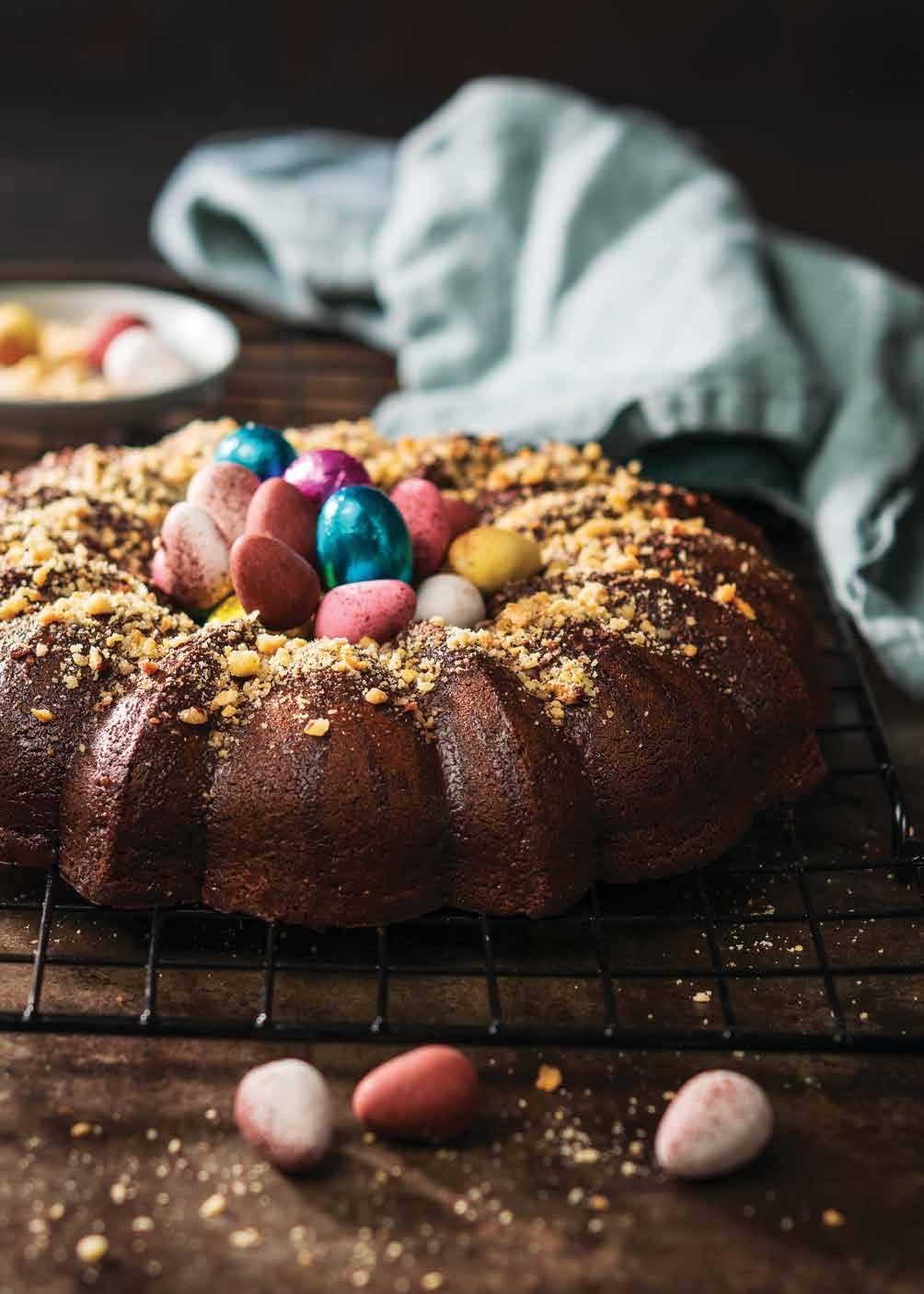
Preheat oven to 350 degrees. Grease and flour bundt pan. In one bowl, slowly whisk together the cocoa and boiling water until smooth. In a separate bowl, combine the sour cream and vanilla. Slowly fold in the cocoa mixture. Set aside to cool. In a new bowl, add together the flour, baking soda and baking powder. In another bowl, cream the butter and brown sugar. Add eggs one at a time, beating well after each. Slowly alternate adding the flour mixture and sour cream mixture until well incorporated. Do not over-mix your batter. Bake for 45 minutes, or until a toothpick comes out clean. After you completely cool your cake, sprinkle your toffee on top of the cake and fill with candy easter eggs! You can also use chopped nuts instead of toffee if you wish.
2 Sticks Unsalted Butter
2 Cups Flour
1¼ Cups Sugar
3 Eggs + 2 Egg Yolks
1 tsp Vanilla Extract
½ tsp Salt
½ Pound Fresh Strawberries
2 Thyme Sprigs
Butter & Flour to Prepare Pan
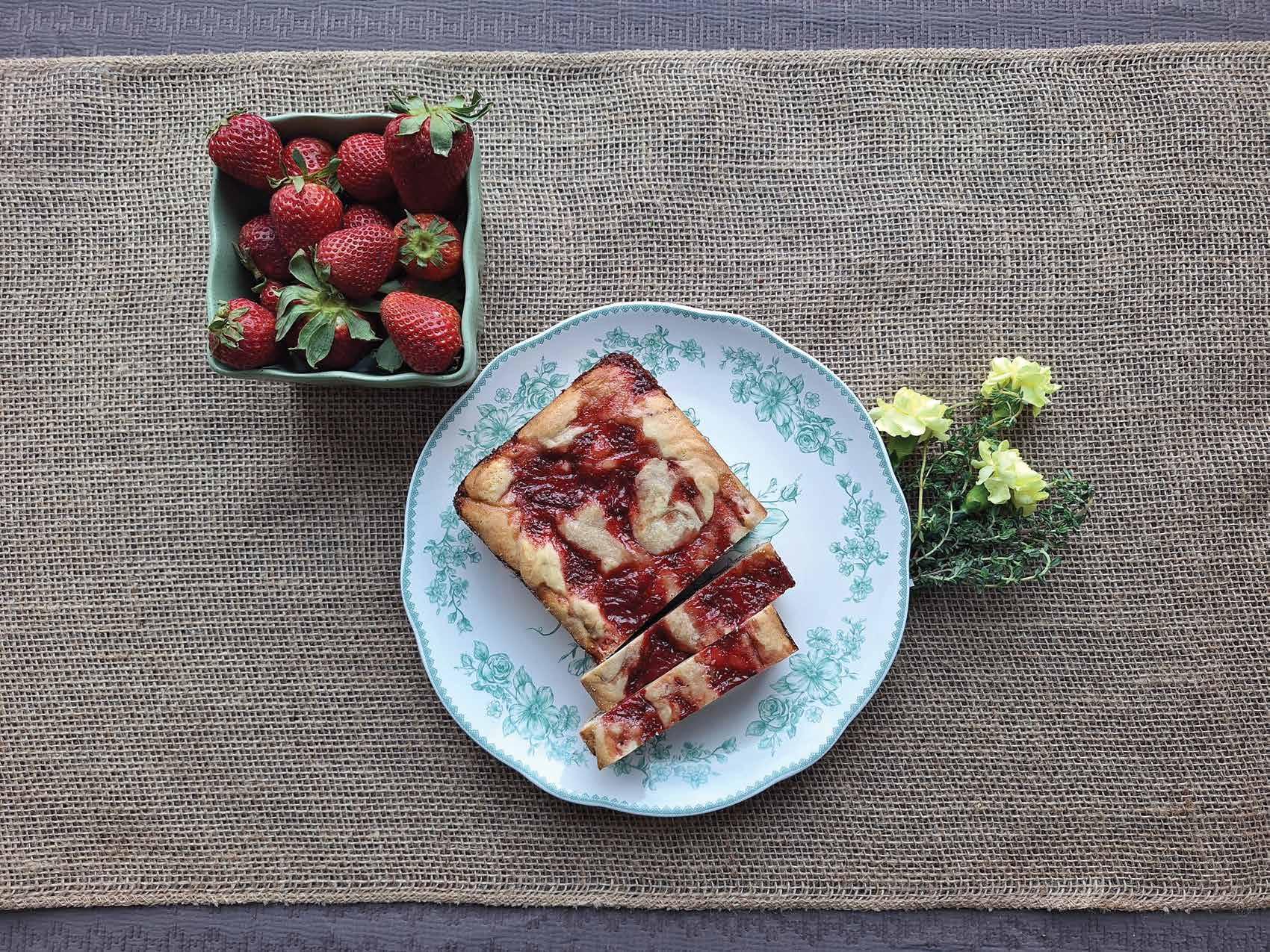
Grease a standard bread pan with butter. Add in a tablespoon or two of flour to coat the butter; discard the extra flour. Set aside. Preheat oven to 350°.
Place 2 sticks of unsalted butter in a medium saucepan over medium-low heat; once melted, continue cooking while stirring until the butter is slightly brown and has a nutty scent. Transfer the browned butter into a bowl and set aside to cool. Place washed and cut strawberries in a blender and blitz for 30-45 seconds. Pour the strawberries into a medium saucepan and add ¼ cup of sugar and the thyme sprigs. Cook on medium-low heat for approximately 10-15 minutes or until a thick consistency is reached. Remove thyme and set aside to cool.
In a large bowl, combine the cooled brown butter and 1 cup of sugar. Whisk until thoroughly combined, then add the vanilla and salt. Whisk in the eggs and egg yolks one at a time. Sift the flour into the butter mixture and use a spatula to fold and mix the batter together until combined–it will be thick. Pour batter into the prepared pan. Spoon the strawberry mixture on top of the batter in dollops. Bake in prepared oven for 1 hour or until a toothpick comes out clean. If the cake is browning too quickly, place aluminum foil over the top. Cool completely and slice.
2 Cups uncooked quinoa, rinsed and drained
4 Cups water
Zest of two lemons added after quinoa has cooled, reserve lemon juice for vinaigrette
Additions:
1 large English cucumber, cut into 1/4 inch thick half moons or quarters
1 small bunch green onions, sliced
1 bunch parsley, chopped
1 can chickpeas, rinsed and drained
1/2 Cup crumbled feta (optional)
1 large ripe avocado, cut into chunks (optional)
Lemon Vinaigrette:
Juice of 2 large lemons, measured
Equal portion of olive oil to lemon juice
1 medium shallot or 1/4 small onion, diced Salt and pepper, to taste
Quinoa:
In medium sauce pan, add water and quinoa and bring to a boil. Once boiling, reduce heat to simmer on low heat for about 20 minutes or until cooked. Open lid when fully cooked and let cool for 5 minutes before fluffing. Set aside.
Lemon Vinaigrette:
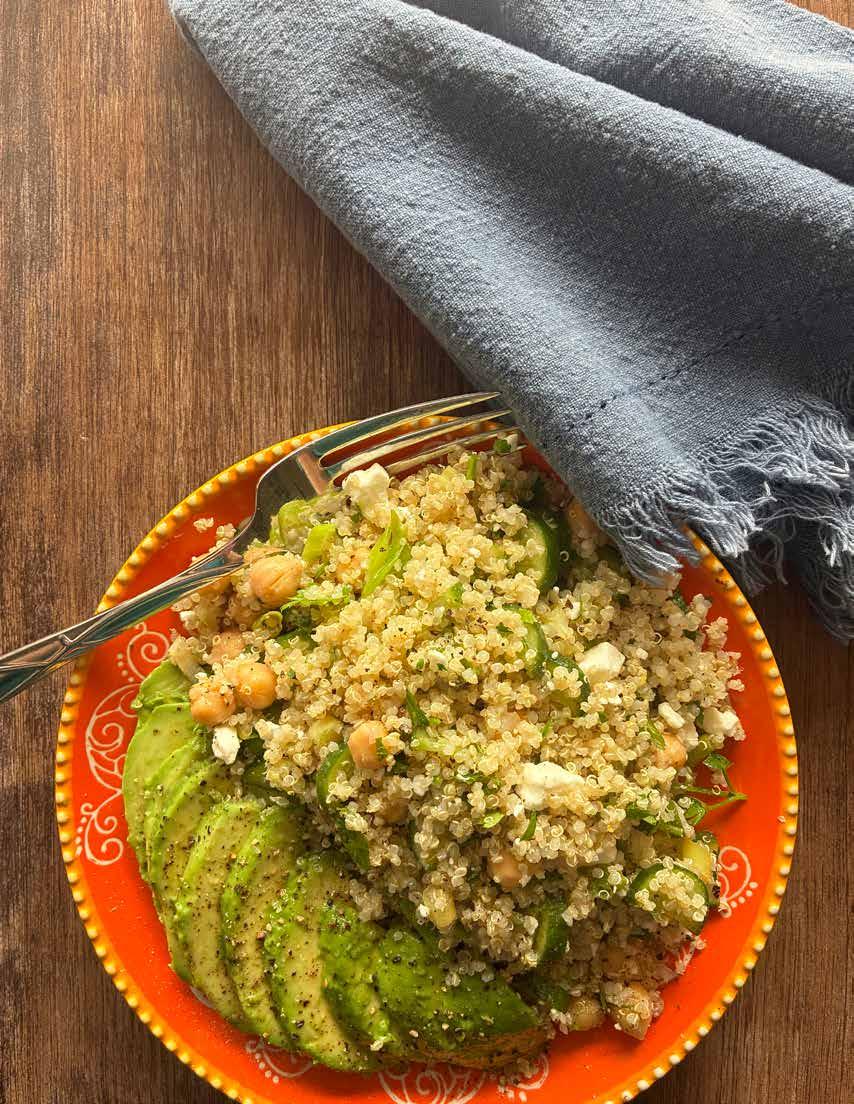
Juice lemons in measuring cup and add equal amount of olive oil. Put liquids in screw top jar, add diced shallot or onion, salt, and pepper. Shake vigorously and add more salt or pepper as needed. Set aside. In large bowl, add cucumber, green onions, parsley, chickpeas, feta, and cooled quinoa. Mix well then add lemon vinaigrette. Once mixed, add avocado to salad and gently mix. Option to squeeze additional lemon juice on top, salt and pepper for serving. Arugula or spinach can be a great substitute for parsley. Add grilled salmon or rotisserie chicken for a complete meal. Enjoy!

If you judge Easter by the seasonal aisle at literally any grocery store, you’d assume the holiday was founded by a powerful group of sugar executives wearing pastel blazers. Or perhaps Willy Wonka. There are chocolate eggs. Chocolate bunnies. Chocolate eggs inside obnoxiously larger chocolate eggs. Marshmallow chicks in colors not found in nature. It’s less “religious observance” and more “strategic diabetes deployment.” But here’s the twist: chocolate is the new kid on the block and its Hangin’ Tough. If you get that joke, we can be friends.
The original Easter icon - the one that built this whole operation from the ground up -is the humble egg. Yes. The same egg currently in your refrigerator. The one you bought for a recipe and then forgot about until this exact moment. It’s okay. I won’t tell anyone. Go make some cookies. So how did an object that costs less than a latte become the defining symbol of one of the most celebrated holidays in the world? Grab a seat. This is going to take awhile. It involves ancient festivals, medieval food rules, and chickens just living their best lives.
Long before Easter became a Christian holiday, humans were already celebrating spring. Full disclosure - Spring deserves it. Winter is long. It is cold and gray. It is fully invested in ruining your mood by 2:34 p.m. every day. Spring shows up like, “Surprise! Here’s sunlight and flowers and a general sense that life might be okay.”
Ancient cultures across Europe and Asia held festivals celebrating renewal, fertility, and the end of freezing weather. And everywhere you looked in spring, there were eggs. Birds lay more eggs as daylight increases. Chickens are all about this. More sunlight? More eggs. And more eggs equal more omelets, pancakes, and quiche. Yes, please. To ancient people, eggs were not just breakfast. They were little sealed miracles. Something alive coming from something that looked like a rock? That’s pretty magical.You didn’t need a whole marketing team to explain the symbolism here. The mighty egg was out here doing its own advertising.
Then Christianity Said, “We’ll Take That”
When Christianity formalized Easter as a celebration of the resurrection of Jesus, the egg slid seamlessly into the lineup. The resurrection is about life emerging from death. An egg is about life blossoming from a shell. The parallels are fantastic. Effective? Absolutely. But symbolism alone doesn’t explain why eggs exploded in popularity. Figuratively speaking only. No scrambled eggs here. For that, we need to talk about Lent.
The Original “No Fun” Challenge
For centuries, Christians observed Lent by giving up a variety of rich foods for 40 days leading up to Easter. Depending on the time and place, that often meant no meat, no dairy, and very unfortunately - no eggs. It was a season of restraint and reflection. But here’s the issue.
Chickens do not participate in Lent. I bet you didn’t know that. They do not fast. They do not set spiritual goals for the year. They simply wake up and lay eggs like the overachievers they are. So medieval households found themselves in a situation. They couldn’t eat eggs. But the eggs kept arriving. Every. Single. Day. Imagine opening your refrigerator and finding so many eggs that they start to fall out into the floor. The solution? Boil them. Hard-cooked eggs last longer. So families preserved eggs throughout Lent, stacking up dozens in anticipation of Easter Sunday. And when Easter arrived? It was a literal egg-palooza. After 40 days of saying no, eggs weren’t just allowed - they were celebrated. They were eaten. Shared. Gifted. All the things. Eggs didn’t become the star of Easter because of a branding campaign. They became the star because they were abundant and ready to party. Let the egg games begin.
At some point, someone looked at a boiled egg and thought, “You know what this needs? A makeover. A bright, gaudy makeover” So then began the tradition of decorating Easter eggs. Natural dyes from onion skins, berries, turmeric, and other pantry experiments turned plain shells into vibrant little pieces of art. Vinegar helped the color stick better, because even in ancient times, chemistry was invited to the celebration. And what a celebration it was. In places like Ukraine, intricate wax-resist (or batik method) designs created stunning patterned eggs called pysanky. Elsewhere, eggs were painted, scratched, polished, and admired like tiny, oval canvases.Why decorate them?
Celebration.
Gift-giving.
Showing off.
The universal human instinct to personalize absolutely everything. If we could dye potatoes and call it tradition, we probably would. Yep. Bright pink mashed potatoes for the win.
Now let’s address the rabbit. At some point in German folklore, a hare began delivering eggs to children. This sounds adorable until you think about it for more than four seconds. Rabbits do not lay eggs. However, rabbits are pretty fantastic. They are the overachievers of the fertility world. So as a spring symbol, they made sense. Over time, the rabbit became the Easter Bunny - a cheerful deliveryman with zero biological qualifications for the job.
I’m not sure if this crazy idea was questioned but the branding worked. And now we have egg hunts hosted by an adorable non-egg laying mammal. Tradition is a wild and glorious thing.
Chocolate didn’t enter the Easter chat until much, much later. Cocoa arrived in Europe in the 1500s, but solid molded chocolate treats didn’t really take off until the 1800s. By this time, chocolate making had vastly improved.Once confectioners figured out how to mold chocolate into hollow egg shapes, it was game over and the rest is literal history. Why settle for a boiled egg when you can have one made of sugar and happiness? I’ll take 2 or 3, please! Chocolate eggs were gorgeous. Sweet. Slightly impractical in warm weather. But absolutely irresistible. But, we can’t forget about the original dairy symbol. The one where this all started. No ancient egg symbolism? No chocolate egg aisle. Chocolate didn’t invent the idea. It just upgraded the flavor and man is it amazing. Gotta respect the original.
Despite chocolate’s dominance, real eggs remain central to Easter traditions. They are perfect for egg hunts because they’re durable enough to survive grass but fragile enough to create mild drama. Egg fight, anyone? They’re perfect for egg rolling because all the hills love them. They’re perfect for competitive egg tapping, where two people gently smash eggs together and pretend this is about skill rather than shell thickness.They’re also food. Which is convenient and we all like food, right? Eggs can be deviled, sliced, pickled, turned into egg salad, or transformed into gorgeous brunch masterpieces. Ham and cheese quiche, anyone? Chocolate is fun. Eggs are functional. I choose both.
Behind every Easter egg is a chicken who has absolutely no idea she is contributing to centuries of cultural tradition. What an amazing job she has, right? Chickens lay more eggs as daylight increases and spring equals more light. More light equals more eggs. It’s biology doing its job without anyone telling it what to do. That’s a beautiful thing.
Eggs became the star of Easter because they were already there and plentiful. They were Seasonal, symbolic, affordable, abundant, easy to decorate and easy to share.
Impossible to ignore when your kitchen was filling up with them. Chocolate eventually stole some of the spotlight, and no one is mad about it. I know I’m not. But chocolate is the flashy guest who arrived late and ate on the way over. Even though they knew you were cooking for them. The egg built the stage that is today. So when you dye eggs at your kitchen table, argue about who hid them too well, or peel one and accidentally remove half the white, remember this:You’re participating in a tradition that stretches back thousands of years.
Long before pastel foil.
Long before marshmallow chicks.
Long before the Easter Bunny negotiated his delivery contract. The egg was here. Quietly. Ovally. Waiting. And somehow, against all odds, it’s still carrying the holiday - one shell at a time.


For this reading, I wanted to tap into inspiration! It’s spring, so let’s see what’s coming up for you. Rather than one card, you’ll be picking a pair today. They’re all from Chris-Anne’s The Muse Tarot deck and each pair has one card from the suit of Inspiration and another card from a different suit. In this deck, Inspiration is the suit of fire, sparks of energy, and motivation. The other cards will give you some insight into what people, energies, tools, or philosophies could help you as you navigate the inspiration that connects with you today. So, take a deep breath or two or three and choose which of the three pairs of cards speak to you, catch your attention, or you’re drawn to. The interpretations are below, including the poetry that is given in the guide book for each card.
These two cards seem beautifully connected for me. The 4 of Inspiration is about a gathering of all four elements - fire, earth, water, and air - in celebration. While the 8 of Emotions is about walking away from something that you have seen for what it is and know you want differently for yourself. Being with the 8 of Emotions is not an easy time. Knowing it is time to leave a situation, stop a practice or habit, or even let go of a relationship is not easy to admit and certainly not comfortable to do. Yet, behind that big black shadow that covers the sun on the card, are the lights that decorate the gathering of elements to celebrate your actions. Perhaps you have four friends who represent the elements or three and you’re one. Perhaps you’re a party all on your own, bringing together foods or symbols that represent the elements. There’s no right or wrong here. But celebrate, indeed. It doesn’t need to be joyous, but certainly can be. It could feel solemn and sad, yet still be right. It could be hesitant and scary, and still you know you can’t remain. It could feel like one thing one moment and something else the next. It’s all part of the change, and it’s a change that is here now for you.
In joy, this shedding of escape and ease not here. On horizons it looms.
She walks away and heads towards her life, a future of bliss and of blooms.
A gathering of epic trust, of faith and love and kin, A gathering of epic must, the rite as we begin. These milestones mark collective thought, Some lay the steps ahead.
When true foundations build your home, Love weaves a golden thread.
Another pair connected in their messaging and the geometry in their visuals. The colors that the woman in the 10 of Voices are wearing are the colors that exist through the window that the woman on the 7 of Inspiration is fighting to hold open, while the dark closes around her. There are also jagged black rocks above and below the woman on the Voices card that connect, in my view, to the blackness on the Inspiration card. So, what does it all mean?
Well, 7 of Inspiration is about standing on business, as my son’s girlfriend likes to say. It’s defending what you believe in, even if doing so upsets others. It’s knowing your path and what lights you up and not being willing to dim your light for others, even when it comes at a cost. And, that cost is what the 10 of Voices is about. Some illusion is broken. Some painful reality has come to light. And it hurts. It stings to lose people or positions or reputations, yet you know that it hurts you more to bite your tongue and silence your voice. You also know that you will come out of this pain, healing into a stronger version of yourself.
Defend. I am. Here I am.
Strong. And I have made it.
Take. You Can’t. And break. I Shan’t.
No closing in will shade it.
For healing comes
And at a cost
A soul sewn stronger still
For healing comes
And all the loss
Gifts strength and love and will.
These two cards are both about making it. It’s time to shine, baby!
The 6 of Inspiration is about stepping into the light of recognition, perhaps for the first time, yet the energy the Queen of Materials brings is one who has been here before and knows she deserves every bit of attention. Where are you in this mix? Maybe both. Carry yourself with confidence, but not cockiness. Celebrate and share your joy in success, but in a way that raises others up too, not that puts them down. Let grace and nurturing love ground you in humility and pour out of you without resistance. You deserve every bit of recognition and gratitude and it’s more than okay to admit that you’ve earned this abundance.
I step up into this light to be celebrated…
Held and seen. For only in acceptance
Of this intrinsic wholeness can I
Truly dance with the divine
And share of a spirit proclaimed.
Self-made and self-believed
She stands abreast her self-achieved
An image of projected self
Of manifested dreams and wealth. A deep investment of her caring And multitudes of joyful sharing, Compassion hers, a special kind
Of earthly wisdom, set-of-mind.
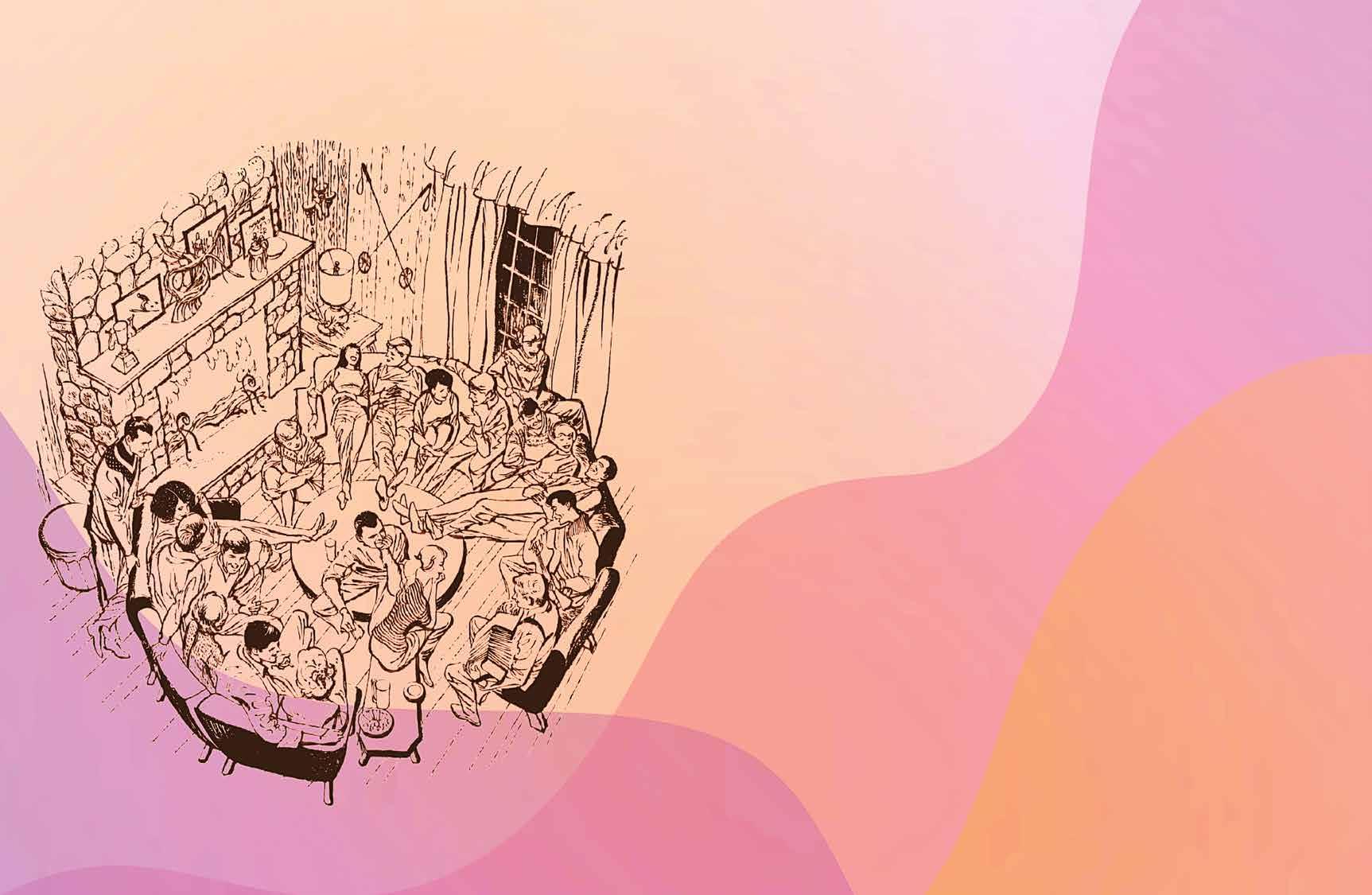
As I was pondering what to write as I was given free reign by our amazing editor, Heather, I had an aha moment that made me pause and think. If you have been reading my articles for the last couple of issues, I’ve been sharing a lot about the Danish concept of happiness and a healthy mental state. And not long ago I read an article about “third spaces”. This idea was new to me and as I delved into the article it just made so much sense. It’s very simple and it basically explains it like this. The first space is your home. A place where our domestic identity lives, it’s our private space for rest, family, basic routines. The second space is our place of work. It’s where our work life lives and where we contribute, produce and create value. And then the third space is a public place where people gather informally and at their own will. Third spaces have been described as cafes, diners, libraries, parks, pubs and market spaces. It is where we are not judged and just being able to show up, be known, feel like you belong as well as to not have to prove anything. A place where you can just be you without contributing. And while we have been gathering at these kinds of places, the understanding of the “what and why” and it’s important to good mental health is key.
And that is when my aha moment happened; I realized as a retiree that my second space had disappeared and it impacted my life. Duh! And it would seem obvious, but it wasn’t at least not to me. Now don’t get me wrong, I absolutely love retirement. However, the sudden lack of routine and people does present new challenges. And while I am quite happy most of the time, this article basically put into words a concept that I was feeling but had no words to articulate. And I think it applies to many of us regarding the vital importance of having that third space regardless of where we are in our lives, as I feel we are still re-establishing routines after COVID.

We are naturally social, some more than others. I describe myself as an “outgoing introvert” where I do enjoy social interactions and have been known to “on a whim create some kind of gathering, usually with a theme”… but I do need vast amounts of solo space to keep my batteries recharged. My sweet man, Rod is just the opposite, he is a people person and will gravitate to social activities like a moth to a flame. I swear that man can make “instant new best friends” in any situation and he will talk to anyone and everyone no matter where we are. (An example, while on a White House tour a few years ago, Rod was chatting up some of the secret servicemen before I had to drag him away.) It’s just part of his charm. Any who… back to the point, us humans benefit when we gather, share a laugh, make eye contact, we see familiar faces, and engage in real life conversations. And third spaces offer up something called “identity flexibility”. It’s where we are not judged by others or even ourselves on how clean our house is or what kind of parent we are or how productive we are at work. Nope it’s about showing up and being seen, being around other humans and creating relationships. Online interactions just don’t cut the mustard. It’s like having a piece of cake in front of you vs a picture of a cake in a magazine. You simply can’t substitute the real thing. When you are out of a second space either through retirement or staying home to raise children or whatever the circumstances are, it will have an impact on the ole heart and soul. And I think it is why both Rod and I enjoy our social forays both with our church as well as having our favorite haunts which is normally a brew pub to enjoy a beverage and something to eat. Usually every 4-6 weeks we head over to Philipsburg, Montana to soak up the Big Sky ambiance and enjoy the social scene at the local pub at least once during our stay. At first, we were just probably thought of as yet another tourist, however we are now becoming familiar faces and known as semi-locals. And we make a point to know the servers by name and visit with some of the colorful crew that almost always seem to be enjoying a cold one. In our many visits Rod and I have remarked that this place really is the heart of the community. They have fund raisers, game nights, free dinners mid-week and many other activities. You will see young and old sitting next to each other chatting as well as the occasional youngster who comes in off the street and is greeted by the staff with a hug as they get a soda or snack. The atmosphere is charming, welcoming and it’s the people who gather that give it life. And through conversations, people’s stories begin to emerge. You see more than the older guy in dirty work bibs with two dogs who accompany him. It is where you now know he grew up extremely poor with a hardworking single mom. And by the time he was 13 he started out-earning his mom as he was paid $5 an hour. And as he weaves the story of his journey on how he came to be an electrician you learn that as a young kid around 8ish that he started hanging out on a construction site doing odd jobs. And an electrician took him under his wing and began teaching him about his trade. As he tells this story among others, you notice how his eyes twinkle when he talks about his adventures on the job sites and how this shaped his career path.
When we aren’t in Montana, Rod, my brother Barry and I-
-will gather every Friday night to enjoy dinner together and then we finish up the outing with an after-dinner beverage at one of the breweries in town. Our very favorite brew pub closed a couple of years ago and we miss the familiarity of knowing all the wait staff and brewers as well as the other regulars. When it reopened a year later under the new owners, it didn’t have the same feeling. And today we still will remark about the void we felt when our fav place closed. Now I get it... there was an emptiness and a loss of connection as we miss the people we knew, the casual conversations and laughter.
One of my favorite memories from living in Genesee was when we would head to the local pub/restaurant to what we called “Friday night in America”. It again was a place where we knew everyone and shared laugher and togetherness. We simply showed up and enjoyed our fellow community members.
And third spaces offer up something called “identity flexibility” It’s where we are not judged by others or even ourselves...
The other important connection with community is our church family. Our church is rebounding after a rough patch due to some circumstances out of our control. However, what this did was bind us together in a way that cements our faith and fellowship, and it’s a powerful invisible connection that we all feel. I particularly love our small group that meets every other week on Sunday evenings. It’s a rich blend of downright interesting people from all walks of life where we gather to enjoy good food, conversations, a bit of ribbing each other and beautiful Christian fellowship.
To sum it up, the Danish culture has already embraced the concept of third spaces, of gathering and embracing social connectiveness. And in our American culture I see a movement where people are gravitating to this concept as we see the importance of a neutral space where you feel and know you belong. Sort of “a come as you are” and where you leave your other identities at the door to embrace the art of social companionship and support of others just like you. And to quote Martha Stewart…”it’s a good thing”.
This is a story. A story of a young girl. A sad, but not-sad story. Let’s call the girl Samantha, to protect the innocent. Nine-year-old Samantha was camping with her family at the state fair. The camper trailer had two sets of bunk beds, one high and one low, and this was the sleeping quarters for the children of the family. Samantha was asleep on one of the upper bunks when, in the early morning hours, she woke abruptly to the sensation of falling and then to shocking pain as her face hit the floor with no opportunity to break her rapid descent. Confusion and numbness reigned briefly before the sight of blood slapped her into clarity. The next discovery pulled a wail of anguish from deep within. Her upper front teeth, only recently arrived, were shattered. Pieces of enamel were scattered on the floor. Samantha gathered them up with shaking hands, but for what? They couldn’t be glued back on. After icing her split lip and bruised face, the family continued their planned activities. Samantha painfully participated, thinking at least her fat lip prevented anyone from seeing her teeth, sheared off at an angle to both outer edges from the center between the two pearly whites. This began decades of not smiling with her teeth showing, thanks to the embarrassment and shame that had taken up residence in her mind.

Samantha had loving parents, one of whom was in the medical field, but for some reason, they waited two months to take her to a dentist, and by then the teeth’s roots had died, turning them dark grey. Some surrounding teeth were also damaged in the impact, and the roots of these would also become problematic in the future. Suffice it to say, Samantha has a strong dislike of and aversion to visiting a dentist or oral surgeon. She has endured countless procedures, extractions, false teeth, more false teeth, infections, more root canals, grinding, cutting, multiple bone grafts, and ten surgeries. Well-acquainted with mortification, she has had appliances, braces (twice), surgical packing, teeth temporarily missing, and horrible-looking teeth until her adult life when she was able to procure a nice bridge; although infections, grafts, and surgeries have continued. This has been an expensive journey for her, both financially and emotionally. Looking back, Samantha feels hurt and upset, especially confused, about why her parents didn’t get her the care she needed. Could all of this, which she is certain isn’t over, be avoided?
Samantha had a choice to make. Forgiveness or bitterness? She chose forgiveness, even though it was never asked of her, the offense never acknowledged. Whenever a new dental issue arises, she has another choice to make because sometimes choosing forgiveness is ongoing, not a one-and-done. What, exactly, is forgiveness? Why does it matter? Why is it often terribly difficult? How does the act of it affect those involved? Do we need to know how to forgive ourselves? Let’s dive in.
The Greek word for “forgive” is aphiēmi, which literally means “to send away,” “let go,” or “release.” Another word, charizomai is used in contexts of showing grace, kindness, or granting favor. When we forgive, what are we releasing, or letting go of? For one thing, humans seem to have an attachment to the idea that we are in the right when we are wronged. Maybe. Maybe not. We release hate and bitterness that will only plant their seeds in the hearts of those who can’t, or won’t, forgive, growing strong until its vines block out the light of our lives. Bitterness’s foliage can choke out space in our souls so we can’t live fully, because the vines are always underfoot, tripping us up. Choosing not to forgive chains a person to one’s past. It clouds the lens through which one sees life. It’s like a person carries around a one-hundred-pound sack of stinky refuse. Of course they’re going to feel it. The burden will affect a person’s ability to function as his or her best self.
Wait a minute! you might say, You have no idea what I’ve been through. How can anyone ask me to forgive that? Maybe you haven’t allowed yourself to go through a healing process.
In an article by Jim Dethmer (a coach, speaker, author, and co-founder of The Conscious Leadership Group), he states, “The first mistake people make in the forgiveness process is not giving themselves time and space to be angry.” It is natural, and even healthy, to feel anger. Anger and hurt. It’s difficult and takes some courage to let yourself feel deep hurt. Feel it and eventually release it. The problems arise when the anger continues, morphing into bitterness. Ask anyone who has forgiven what a freeing sensation they experience. That doesn’t mean they won’t continue to hurt and feel deep sadness or anger, but they have let go of the binding chains of unforgiveness. Sometimes I think forgiveness is primarily for the person gifting it. Maybe the recipient refuses to receive the forgiveness. That’s not something you can control.
Forgiveness allows someone to gain empathy and see things from someone else’s perspective.

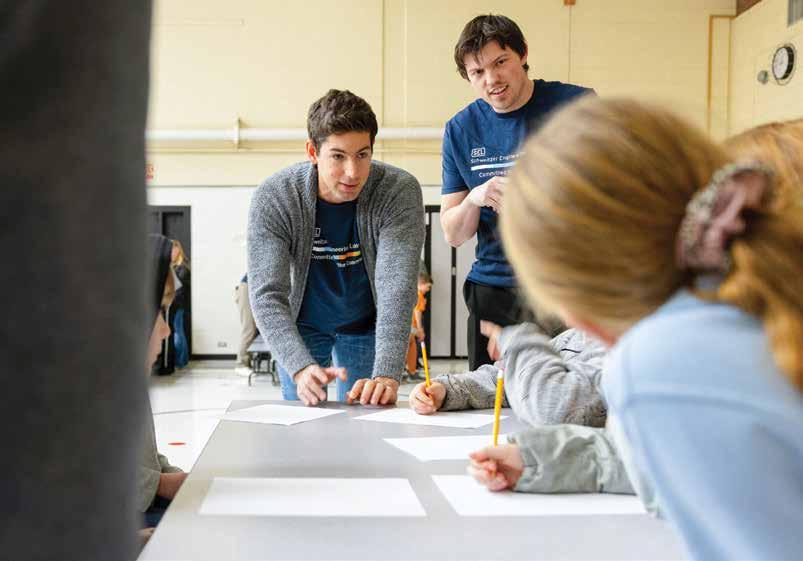
This is a desirable trait to foster, because empathy is a facilitator of conflict resolution. The famous line from To Kill a Mockingbird by Harper Lee is profound. Atticus Finch is telling his children, Jem and Scout, to always consider what others are go ing through before jumping to conclusions. He says, “You never really understand a person until you consider things from his point of view, until you climb inside of his skin and walk around in it.” I have to admit, this is pretty difficult sometimes, but… If one is willing to do the deep work of forgiveness, there are powerful physiological benefits. According to an article by Har vard Health Publishing, “Forgiveness is associated with lower levels of depression, anxiety, and hostility; reduced substance abuse; higher self-esteem; and greater life satisfaction.” Those sound like great benefits! Embracing forgiveness also helps one embrace peace and hope. Forgiveness doesn’t dictate that you forget or erase the offense, or even that you “make up” with the offender. Consciously opening your fists to facilitate that release lowers your blood pressure, increases the strength of your immune system, and improves heart health. When we are able to forgive, we expand our vision. We can see things through an empathetic lens, an other-focused perspective. Again, forgive ness takes away the negative power someone has in your life. Freedom!
Sometimes, the person we need to forgive is ourselves. I wonder how many people are out there, feeling shame and unable to forgive themselves? This negative emotion makes us feel like a failure. Toxic shame devastates mental and physical health and can lead to chronic inflammation. Hating yourself also restricts your body from healing. Will Cole says you “can’t heal a body you hate.” Cortisol, the stress hormone, runs rampant with chronic feelings of shame, with an inability to forgive ourselves, and I think everyone knows that constantly high levels of corti sol are not good for our bodies and minds. So, how does one forgive oneself? Try giving yourself grace, just like you would do for someone else. Recognize that you are human, and thus fallible. Instead of a downward spiral of thoughts about everything that’s wrong, try reminding yourself that you may have messed up, but you’re going to move on and try harder. Positively put strategies in place to assist you when you’re in that situation again. If you Google Cognitive Behav ioral Therapy, it is defined as a structured, goal-oriented type of talk therapy that helps individuals identify and change negative or unhelpful thought patterns and behaviors. In regards to forgiveness, it can help one reframe negative thoughts, replacing them with more rational and compassionate perspectives. To help forgive yourself, it facilitates cultivating self-compassion to overcome shame, guilt, and harsh self-criticism. Are you naturally inclined to forgive, or to hold a grudge? Knowing that about yourself is helpful. Remember, forgiveness isn’t about forgetting or excusing the offense done to you, but it’s about releasing the control the offender and the bitterness can have on you, which is its own kind of prison. A man named Lewis B. Smedes (don’t know who he is, but I like what he said) is quoted as saying, “To forgive is to set a prisoner free and discover that the prisoner was you.”


I discovered I was a prisoner before I learned to forgive and forgive again. I am Samantha. Now I am free. I am cheering for you if you are grappling with the hard work of forgiveness. Surround yourself with people who love you. Infuse positivity into your thoughts and actions. Call upon divine power to help you in your weakness. Learn to forgive and set yourself free.

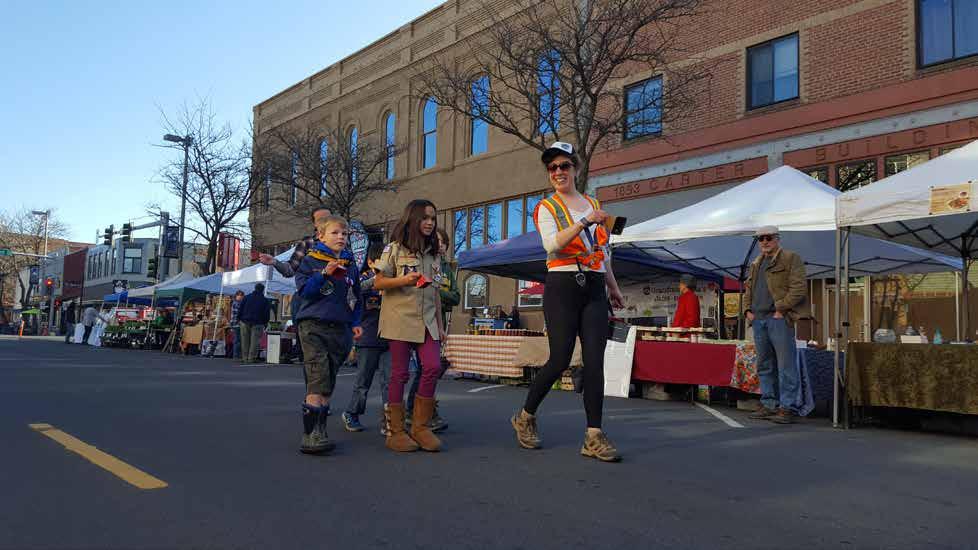

Can you get away with acting like a 15-year-old when you are 55? That’s what I wondered when my sweet Canadian friend, Ella (also in her fifties), told me one afternoon that in certain Eastern philosophies, according to her acupuncturist, ages fifty-five to sixty-five are considered your “Second Spring.”
At the time I was a mere fifty-three and thought I must certainly be in for some fun in a couple of years. I mean, a one-thousand-year-old philosophy surely must be accurate?! How wonderful to have a second spring looming; ideas of adventure, a light heart, and pure fun flitted around in my head. I had already sold my home and belongings to travel full time, so maybe I was a little ahead of the curve on this “Second Spring”? Or maybe the real juiciness was still to come.
Now, at age fifty-eight, I am doing a kind of “Second Spring” life assessment, and I am inviting you along. Two small stories from these past years stand out as possible candidates; one is from literally three weeks ago. It’s a quiet vignette, yet sums up my feelings about life at the moment.
The other has some spice.
One is set in Tangier and one in Paris.
As I write and think and say this to myself, “I have stories in Tangier and Paris,” it seems surreal. Like someone else’s life. The exotic, dreamy idea of these places from books, media, stories, movies versus the reality of my daily life in each. If you’ve been following my stories here, you know I am a very slow traveler, fairly outside the box. I don’t do tourist things. I’ve even stopped going to most museums.
My museum is life; the people, the culture, the animals, the buildings where I am currently staying. I live simply, like the locals, trying to literally feel the life and culture from the inside out. And from this perspective, here are the two small “Second Spring” stories from the previously “exotic” locations that now seem normal to me.
I am sitting in my apartment in Tangier. The evening call to prayer has just finished, this one was pretty and haunting, a male voice echoing both eerie and musical sounds to my ear into the evening. I live outside the tourist area, in a residential neighborhood. I hear a motorcycle pass, some voices below, and moist winter air drifts in through the sliding glass door onto my small deck.
Every apartment has a deck, and most are used to hang laundry. Dryers are not found in homes. Clotheslines stretch across decks and rooftops; racks lean against walls. When you look out the window, you see everyone’s washing moving in the air. I feel a sense of camaraderie, quiet belonging. The washing machines in this so-called “underdeveloped” country are superior to the regular machines in the U.S. The clothes come out nearly dry, efficient European machines.
Living here feels both vibrant and calm. There are constant noises on the streets, people out until 2 a.m., even children are out late. From a Western perspective, it is chaotic. Yet it feels real and human.
Men sit for hours in cafés, talking, reading, playing games I don’t recognize. Children play in the streets. Women walk together or alone, carrying purses or shopping bags, sometimes with children, sometimes with husbands.
People linger in conversation with the shopkeeper or a neighbor. Even I have small conversations daily, in smiles and gestures. Today I bought bulk cinnamon at the grocery store in my neighborhood. All fruits and vegetables must be taken first to the “weighing station,” where a worker weighs them and prints a label for the bag. I had to tell him it was cinnamon. I tried English and French. He looked confused, then suddenly understood. Then we had a small exchange in three broken languages. I learned the word for cinnamon in Arabic and discovered that we were both equally unable to speak each other’s language. We smiled broadly.
This is the daily humanity. It is why I love it here.
Last year I rented an impossibly tiny maid’s apartment in Montmartre for six weeks. I walked up five flights of stairs to a loft bed you could literally fall out of, a hot-plate kitchen, and a stunning view. I watched people below on pedestrian rue Lepic and could see weather roll in over those classic Parisian rooftops. Montmartre is special. It still has the feeling of the village it used to be, and the inhabitants still call themselves Montmartrois. It sits on a hill, with the famous Sacré-Cœur Basilica, white and stunning, rising above it. You can get lost in winding cobblestone streets that still feel medieval. The Moulin Rouge is just down the hill, along with the red-light district. There are lively squares filled with street performers and hordes of tourists passing through at certain hours.
I barely left Montmartre in those six weeks. I wandered its ancient alleys and small gardens, found a local library where I could play the piano, and occasionally left for dance classes or to visit the most relaxing venue I have ever known — a Tunisian hammam.
I was so happy to be in Paris when I arrived that I grinned at every shop owner as I walked back to my little apartment from the metro. On my daily walk I began to notice one shopkeeper in particular whose face seemed to light up when I passed. After about a week he stopped me as I walked by and asked, “Madame, do you live on rue Lepic? I have seen you walking by.” I said yes.
“We are neighbors,” he said, seemingly delighted, and proceeded to offer me tea from the little crêpe shop where he worked. He wrote his name and phone number on a scrap of paper and said to call. I was ecstatic. A French man was interested in dating! And one with a beautiful smile. I walked away a few inches taller, then opened the folded paper.
Amir.
His name was not Pierre or François. It was Amir. Now most of you may think, so what? What difference does a name make? But for me, after years of experience in Paris and Morocco with men from northern African countries pursuing Western women for passports or green cards, my enthusiasm sank. In ten seconds I went from a small high to a drooping head.
I didn’t call. I avoided the crêpe shop.
But over the next few days, that little voice in the back of my mind kept saying: Nancy, you might be wrong. He is your age. You are making assumptions. You should give him a chance. Plus, he is your neighbor!
So I went back to the shop. And thus began one of the most unexpectedly enjoyable few weeks of my time in Paris. As it turned out, Amir had been married to an American woman and had actually turned down the opportunity for a U.S. passport. My tidy narrative collapsed.
He speaks Berber, Arabic, French, and English fluently, and also Spanish and German very well. On our second date he asked if I liked Scrabble. I said sure, imagining playing in a cozy café. Instead, he brought out a small table and two chairs onto his tiny patio, surrounded by ancient walls and potted plants, and we played Scrabble in English.
He won!
Now, I have taught English in the past and am obviously a native speaker, yet he beat me. I never heard the end of the teasing, and I didn’t get my rematch. Plus I regretted the couple of times in the game I went easy on him.
Amir worked long hours, so I usually saw him after work or on his day off. We talked often, and he told me stories about Montmartre over the past thirty years. He had also driven through the United States, especially loved Santa Fe, and plays both guitar and Arabian lute. In essence, Amir is a kind of French-Algerian bohemian.
We spent time in my tiny apartment or his. When Ramadan arrived, although he was not particularly devout, he observed the fast and prepared special foods in the evenings: chicken soup with tomato sauce, yogurt, special bread. We ate together after sunset.
One cool February evening, I was walking up the tiny sidewalk toward his place, his key in my hand, the sky just beginning to darken over Montmartre. I stopped in the middle of the block because I realized something.
I felt like I was in my twenties again.
I had to think for a minute - why do I feel this way? We weren’t planning anything. We weren’t building anything. It was simple and fun. We moved between two modest apartments, sharing food, sharing time, then returning to our separate days.
I felt a little odd and for a moment thought, wow, is this appropriate for a fifty-seven-year-old?
Then I kept walking. The key was light in my hand.



The dishes. College reading. Cleaning the bathroom. Taking out the trash. Pulling my laundry out of the dryer. That sewing project that’s been sitting on the table for a month. Vacuuming a winter’s worth of crumbs out of my car’s cupholders. Writing this very article for a magazine I love and an editor I adore. I just didn’t want to do any of it. You’ve had days like this, right? It’s not just me? So, what does one do? Well, for me, it depends on the day and the situation. There’s rarely a pat answer that fits everything, but there are a few suggestions coming your way that fit most, so tune in and take notes! (You don’t actually have to take notes, but if you want to - who am I to stop you?)
I’ll start with how I got back into writing this piece so that you could read it. I asked for help. I reached out to Heather, Home&Harvest’s editor extraordinaire, and said, “Hey, I’m struggling.” I didn’t know what to write. I was feeling overwhelmed by life. I had so many ideas but none seemed to materialize into anything. I felt heavy and tired. I knew from experience that just the act of typing out loud that I didn’t know what to do might help me figure out what to do, which I told her, but I also asked for suggestions, ideas, and a friendly nudge. She replied promptly and basically said, “Girl! Get to work!” JK. Just kidding. She came up with the idea of writing about what to do when things seem dark or heavy or you’re just stuck. It was the lightbulb I needed and I did, indeed, get to work!

So, reaching out and asking for help is a great way to handle most situations. You may even have different go-to confidants for different responses. There’s the tough love friend: “You know I love you, yet you’re being a tad whiny, aren’t you?” The uber positive sister: “You’re doing the best you can!” The wise witness: “I see you. You’ve got a lot going on.” The helping hand: “Wow, that is tough. Can I take anything off your plate?” Or you may just go to someone, like I did, who makes sense in the scenario (like an editor, supervisor, or someone else in the same boat as you) no matter what sort of reaction she gives. Thankfully, though, Heather’s was just what I needed. And, as I mentioned in that little story about touching base with Heather, getting the stuck piece or pieces out of my system is another thing I do and find helpful in a lot of sticky scenarios. This trick can be accomplished in a lot of different ways. Sometimes I type it or journal it. Other times I say it out loud, whether or not there’s someone else in the room. I find writing things out helpful when there’s just SO much pinballing in my brain that it’s tough to focus. A brain dump is a great journaling practice to release. You can set a timer for two or three minutes and simply write everything that comes out. Don’t worry about proper grammar, sentences, or whether it makes sense. Just let it out. You could also practice gratitude journaling, especially if life seems heavy. This is simply the idea of keeping track of what you are grateful for. You might write one thing that happens in each day or think of five things from life in general. Not only can keeping track of things you’re thankful for be centering, but reading them over can help lift you up when you’re feeling down. Another journaling style is to use technology. I know people who use their cell phones and record verbal notes and others that have a social media page where they record reels that are more like vents - but with no followers so it’s just for their own experience and is very cathartic. A few years ago my then-husband ended up in the hospital for a few weeks and I found myself more overwhelmed than I knew possible along with being exhausted in a way that sleep couldn’t even touch. I used my Facebook page to ground myself each morning, and to let my loved ones know I was doing my best to take care of myself. I simply took a picture and wrote, “self care today looks like this.” So, you see, there are many, MANY ways to keep a log of life. Journal prompts, sketch journals, and on and on and on. Alas, I don’t want this whole thing to be about journaling, so I’m going to step back from that and go back to the ‘other times I say it out loud’ part of getting past feeling stuck. There’s something extra about hearing the problem with your own ears, even if it’s your own voice saying it. I find this auditory trick the most handy when I have a task to do that I know needs to be done but I’m just not feeling it and can give myself direction. “Okay, start the tea pot then go move the laundry to the dryer. A quick load of dishes and hot chocolate as a reward. Deep breath…ready…go.” Another time this works well for me is in dealing with overwhelm and talking it out with someone else. When I’m in my own head it’s easy for me to think I’m not doing enough or that I should be able to handle everything. The lovely subtle (sometimes not so subtle) cue of a friend’s face contorting when I explain what I’ve got going on really helps me hear what I’m saying. It doesn’t matter if life is a lot emotionally or the calendar is packed full of places to be, seeing someone literally reflect ‘um, that’s a LOT’ back to me with their expression allows me to see that overwhelm is probably exactly the right way to be feeling in the moment. That confirmation reminds me that my feelings are valid and that this is just a moment. It will pass.
The ideas I’ve given so far may seem great for when there’s a lot going on and time to process, but we all know that sometimes you just need to pull your big girl panties on and get to it - emotional processing has to wait until later. Some quick fixes that I’ve found in those cases are: lists to help see what needs to be done and prioritize it all, a quick snack and/or beverage to fuel the work to be done, setting up a reward system for myself. If there’s a little more time I love a shower, a walk, a nap, or even half an hour to do something I want to do before I tackle something I have to do. I’m also a big fan of breathing. Three deep, slow breaths can give me just enough focus to get er’ done, or even just a couple audible, moaning exhales or sighs.
In fact, our bodies, which we carry with us everywhere for every task we face, have all sorts of ways to help us get unstuck, release tension, feel lighter emotionally, and increase focus mentally. Laughter. It really is the best medicine. And, one of my favorite facts is that our brains don’t know if we really find something funny or are faking it! So, chuckle and laugh and giggle up a storm. It’s good for you. Crying. It’s a superpower of mine and I’ll stand by it. It doesn’t make me weak to cry. It releases steam and lets me feel what I’m feeling and give it space outside my body rather than cramming it into some nook or cranny and letting it turn into pain. Shaking. Taylor Swift said it best, or at least with the catchiest tune - shake it off. She’s not wrong, though. Physically shaking your hands, arms, legs, etc can get tension up and out of your system. I find this a great way to reset after a particularly difficult patron at work. I don’t need their nay-saying shenanigans stuck to me for the rest of the day - shake it off! Tapping. What do you do if you swallow wrong and there’s something stuck in your throat? You hit yourself on the chest, right? Same thing when energy is stuck somewhere in your body. You don’t even have to know what it is, but if you feel like tapping your chest or neck or legs or whatever - do so. Loosen what’s there. You can follow this with shaking to really get that loosened energy gone, or the next thing: Sweeping or brushing. Use your hands to brush away what the tapping brought up. Or, even without tapping first, you can sweep negative feelings, interactions that you don’t want to dwell on, or whatever intention you set when you move your hands over your skin or just above it. Send what’s unwanted on its way. How lucky are we that we have all these resources at our literal fingertips? In fact, there are so many tools in my coping toolbox, I have to envision it as a pantry now. A walk-in pantry! While it’s clearly true, because that’s how this whole thing started, that I need a gentle reminder every so often to try something different, change my perspective, or just get on with it, I also have a room full of shelves (that doesn’t exist in reality) with all the skills, tricks, tools, practices, and rituals that have helped me get through something in the past. These things can help me get through another something now or in the future. Sometimes in meditation I’ll imagine that I’m there in my pantry, picking through the baskets to see what can help me deal with X. I’ll find things like doing a tarot reading, setting up an appointment with my therapist, remembering that no is a complete sentence. I might feel like watching the sunrise or sitting out under a full moon. The practice could be cooking a family recipe or setting up a lunch date with a friend. The tools at my disposal are numerous. As are yours. Whether or not you’ve been taking notes, maybe it wouldn’t hurt to jot some down now and start your toolbox with what you know works for you. You might find it helpful next time you just don’t wanna.


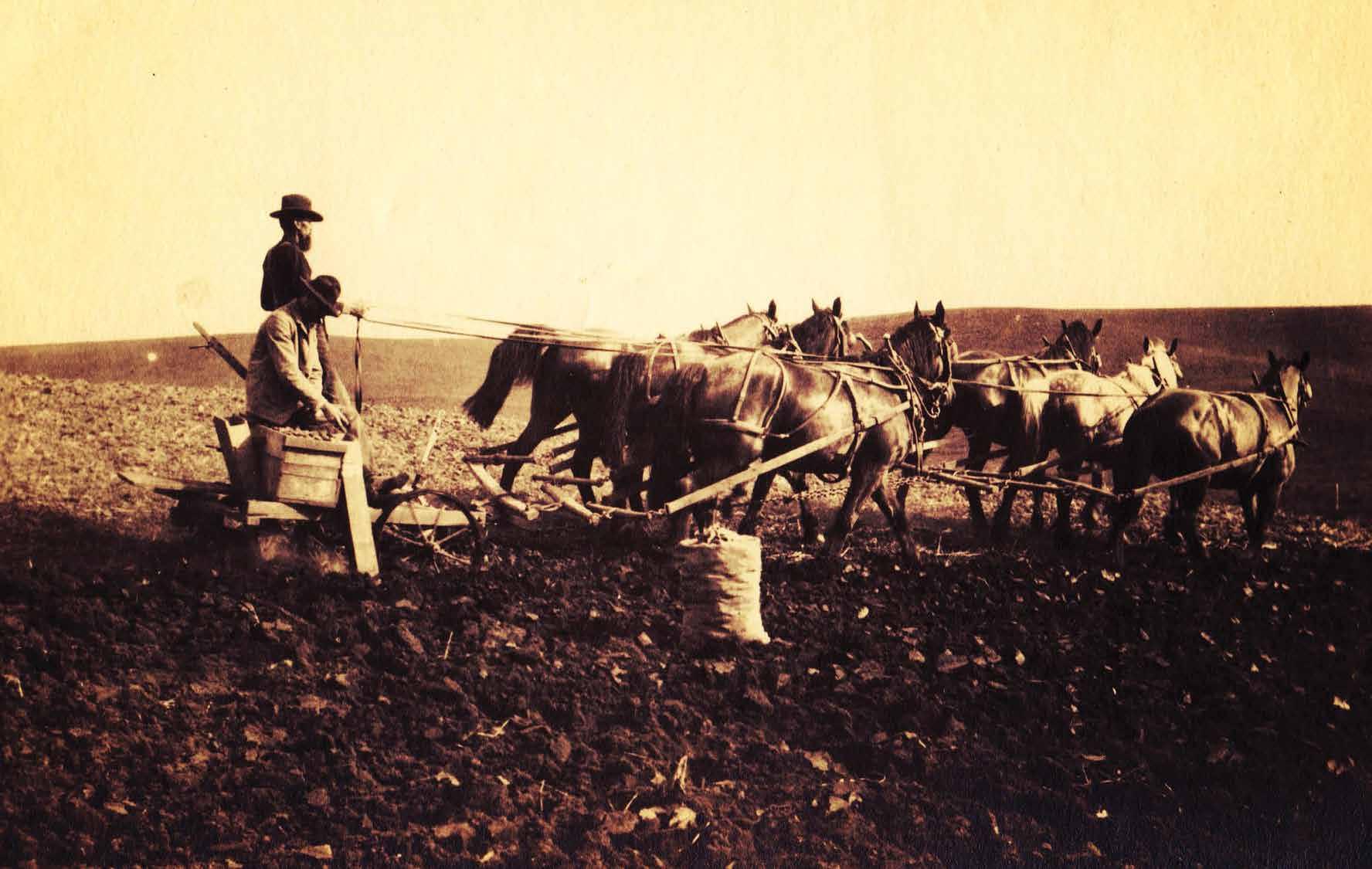
To be captured, surrounded in restrictive cover and hear the breeze of sweet smelling spring. This is all and everything we are about in this farming community. To hibernate and be released. From the seeds to us, we throw off brown and grey shields to drink in the rain, the sun, colors and fresh air. The shops are nourished by it and folks are refreshed by the shops and return to work. Every touch of growing green stalks is what we are living ourselves. Stretching to the sun and pleading for rain, for nourishment and fair treatment. Enough fair growth to stand together in a solid wave and survive for a better time of harvest, in the future, but created now. It is a glimpse into the creation of the world, no less. And we are glad to see it.
Spring tells us again and again, every year, to listen.
Even what is created from these crops is limited to the imagination of the sprout nourisher. Feed, grain, food and drink for neighbors and beyond.
One of the hundreds and hundreds of sprout nourishers who have passed this way, my great grandfather John Lorang, was one of several who had an artistic bend. Which, literally, meant that he bent the saplings into different shapes for chair: arms, backs and legs or letters he needed to make into words. John even attempted grafting a wooden wheel, which he almost finished. When John Lorang’s & Mary Gesellchen Lorang’s first grandchild was born, John went all out for the occasion. Here is a journal of one of the first chairs he made, a highchair for his first grand daughter.
John Lorang’s Chair Journal 1914
“The following is the history of the Chair presented to Ida-Marie Lorang on May 10, 1914 by her Grandpa.
John Lorang
The Chair was made by my self in Feb.1914. It is constructed of four different kinds of wood grown by my self on the farm 2 ½ mile N.W. of Genesee, Idaho. The varieties are as follows, Elm, ash, cherry and apple wood. The seat and back is elm-wood, taken from a tree which I have planted in 1890 in front of our house, and was cut down in 1912 by my self. The legs and armrests are made of ash-wood grown from seeds I obtained from my old home in Wisconsin and planted them in 1890. The spokes are made and also table of apple-wood. The footrest is made of cherry-wood, originated from my old home in Wisconsin. A sprout of a cherry-tree that my Father planted some 50 years ago, was sent to me in 1896 and I planted it here in our orchard, and last winter I have taken a fraction there from for the footrest. The two little pins supporting the footrest ar relics from the first apple-tree that my Father planted in this country. As my Parents came from the old country, and settled in Wisconsin on a farm, they were extremely poor, and while Father was clearing off the timber for a little field on their new timbered homestead, Mother was obliged to go out sewing for other people to earn a living for the Family. And one day she was working for a man by the name Bell who had a little nursery of fruit trees, and Mr. Bell urged Mother to take for her work a few apple-trees to plant on there new homestead, and so she bought four at 10 cents each, where were planted then by Father. And when I was back there to visit the old homestead once more in March 1897, I saw one of those trees, one half of it alife yet, so I cut me a few cuttings there from to graft on one of our apple-trees, which was done by Mr. old man Binkard, and it grew fine for about two years, when the butt of the tree was dying. And so in order to save the relic I again cut off some cuttings and grafted them my self on an-other little sprout that came up from an-other apple-tree in the orchard, of which I now have cut a limb to make these two little pins out of.
The little square blocks of wood inlayed in the back of the Chair are all relics as below mentioned. In facing the chair the block to the left on the corner, is a piece of oak-wood taken from a log off the log-house in Johnsburg, Wisconsin that I was raised in. The next one to the right is a fraction of the house-door of the house that my Mother was born in, 96 years ago. The door is over one hundred years old, and is made of oakwood. The house is located in Dorf-Rievenich Germany. I obtained a fraction of the old door when we were there on August 2nd 1910.


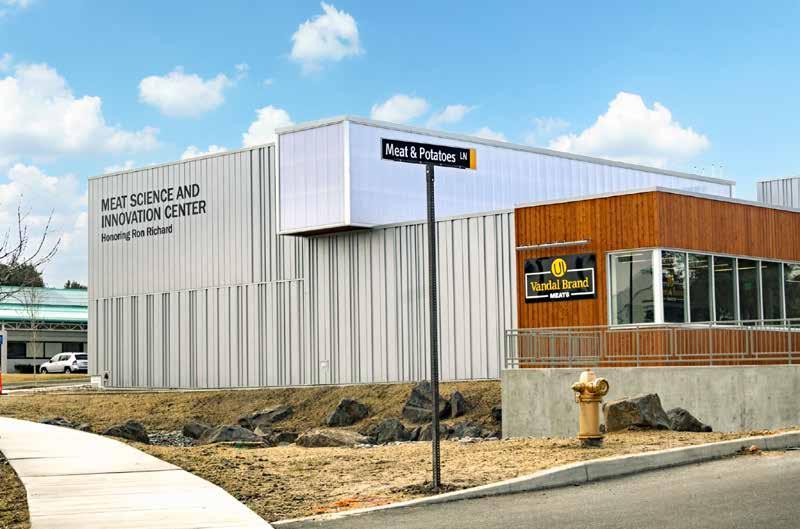


The middle block is a piece of olive-wood from Jerusalem. The next block to the right is oak-wood, taken from the old ruins of the house that Grandma Gesellchen was born in, in 1830. The home is located in Gillenbeuren Germany. We obtained the fraction of that piece of wood on August 5th 1910 when we were there enrout from the orient and on our way home. The fifth and last block to the right is a fraction of the old wagon that I bought second-handed from Gregor Boscheer in March 1884 when we came to this country. The wagon is now 39 years in actual use, and it being the first conveyance I ever owned, and which also had to take the place of a spring-wagon for the first 9 years in this country. The inlayed border around those blocks is red- cedar-wood from Johnsburg, Wis. which I obtained when we stopped off there in September 1910 on our way home from our trip abroad.
Written and signed this day of May 6th, 1914 by Grandpa
John Lorang”
In case we need confirming information, John detailed every item that he created with descriptions. Twice he actually carved part of the story into the bottom of the chair he crafted.
…from a 1914 letter from John to his son Henry Lorang. “This high-chair I made last winther for Ida Marie Lorang. It is constructed of four different kinds of wood, grown by my self, and those little blocks inlayed in the back of the chair, they ar relics. The first one to the left is a peace of oak-wood from the log house that I was raised in. The next is a peace of oakwood from the house-door of the house that my mother was born and raised in, in Germany. The middle one is a block of olive-wood from Jerusalem. The next one is a block of oak-wood from the ruins off the house that grandma Gesellchen was born in, and the last one is a peace of oak wood from the first wagon I ever owned. The border is redceadar wood from Wisconsin.”
A letter also from 1914, from John to son Henry Lorang, who was working in California.
”We got those Ornches you sent I expect. And they were certainly fine. Last winter I made a high-chair for Alberts Babley of four different kinds of wood all grown by my self and in the back of the chair there is 6 different kinds of wood inlayd, they ar all rellics of our old homes in the old country from Wisconsin and Jerusalem. Then I made one arm-chair out of one apple-tree for myself and it just fits me. Ther ar both better that I expected theam to be. I allso fixet up the workshop with 2 more windows.”
And carved into the bottom of the highchair, “This chair is made by my self, for our first grandchild, Ida-Marie Lorang. It was made in Feb. 1914. It is constructed of four different kinds of wood grown by my self. The varieties are as follows. Elm, Ash, Apple and Cherry. Grand-pa John Lorang”
The carving on the bottom of the Apple Tree chair reads: “This chair is made by my self in Feb. 1914. The entire chair is made of one apple tree. Grown by my self, John Lorang”
One hundred and twelve years later, we know what John was thinking of things he created. This is truly a window that shows how alike we all are, with myriad talents. Over geography and over time.
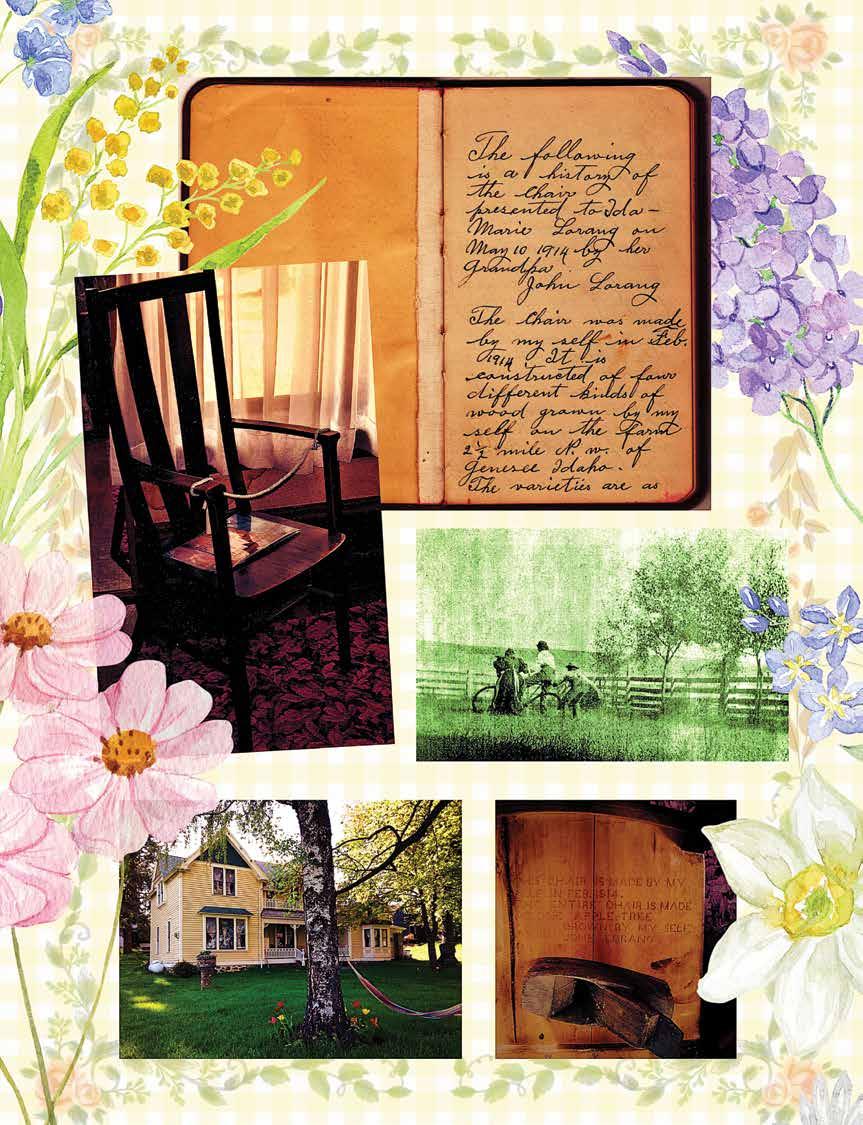
Otis rolled over in bed. He ran the images through is mind like a movie. Skating through the mall, maneuvering around people with his brother, Cletis, hot on his heels. Chuck and his friends racing behind them. The pile up. And seeing Otho with a beautiful girl looking at jewelry. On the weekend before Valentine’s Day. Kissing. That day two months ago had forever set in motion something that left him unsettled.
His inner voice whispered to him. You’re angry because he didn’t tell you about her. You had to see them together to find out. Otho has a life that no longer includes his little O Bro.
That day Otis, Chuck, Cletis, and Otis’s friends had made a pact before leaving the skating rink that they wouldn’t tell anyone what they saw.
“Let’s not even say anything to Mom and Dad,” Chuck had recommended. “Let’s just see how it plays out.”
Otis felt bad for not telling his parents they saw Otho at the mall with a girl. But he figured his brother must have a good reason for not telling anyone about her.
The three Swan brothers had talked a lot over the past two months about seeing Otho and the girl. They’d concluded that it had to be engagement rings they were looking at in the jewelry store window. The conversations usually broadened into how different the Swan family was now that some of the siblings were living on their own.
Otho was in the Air Force. Doris and Deanie were attending college. Doris was several hours away, but Deanie had rented a house, along with three of his friends, in town thirty minutes away. He also worked for Ed and Marvel on the farm, so at least the family saw him once in a while. Gladys was a senior in high school and never home other than to eat and sleep.
That left Chuck, Cletis, and Otis. Because of the sighting that day at the mall, they’d morphed from bickering bros to banded brothers in on a big secret together. Otis knew not to get too comfortable with his brothers being nice, especially Cletis. But Otis surmised that if Otho was going to marry this chick, the three remaining brothers needed to stick together. The loss of one brother—especially to a girl— needed to result in the tightening bond of the other three.
The day after the mall sighting, the Swan family, including grandparents Ed and Helen, waited at Marvel and Mavis’s house to await Otho’s planned afternoon arrival. Chuck, Cletis, and Otis had paced in anticipation, itching for a mean game of basketball with their older brother after the family ate a huge meal. They had planned to ask Otho just what in Sam Hill he’d been doing at the mall that day. Otho had arrived around two o’clock to the overwhelming fan fair of his family. Mavis and Marvel’s house had filled with warmth, laughter, joy, and stories without end. They’d all enjoyed Grandma’s fried chicken and Mavis’ creamy mashed potatoes while wildly chattering to catch up with Otho.
By
Mavis, Gladys, and Helen had cleared the dishes, while the males stayed seated around the table and continued talking. Otis had shot Chuck and Cletis a look, as if to convey his curiosity about whether Otho would bring up the girl. But after about twenty minutes, Otho had stood up, rubbed his full belly, and said, “Brothers, I believe it’s time for a game of hoops.”
They’d all jumped up from the table and scrambled outside, with Ed and Marvel trailing. After Otis, Ed, and Chuck hit 25 points, signaling a win over Marvel, Otho, and Cletis, the two elders had retired into the house. This had opened the door perfectly for the three brothers to pounce on Otho.
“Okay, so it’s Otho and Cletis versus Otis and me,” Chuck had said, bouncing the basketball on the large cement pad located next to the barn. But he didn’t make a move to start a game. He’d stood in place, saying nothing, just dribbling the ball, looking at Otho. Cletis and Otis had also stared at Otho in silence.
Otho had eyed each brother. “Uhhh, what’s up fellas? Why all stares and no ball?”
“Oh, we were just wondering how your flight was today,” Cletis had started.
“It was fine,” Otho replied.
“And the drive from the airport in the rental was uneventful?”
Chuck asked.
“Yeah,” Otho said slowly. “I got here in one piece without incident.”
“So, what did you do yesterday?” Otis asked. Otho shot his Little O Bro a look. “Why do you ask?”
“Just wondering what a studly Air Force dude like you does on the Saturday before Valentine’s Day and before you come visit your family,” Otis said.
“Look, guys, I feel like you’re trying to ask me something or want me to say something specific, so why don’t you cut the crap,” Otho said wearing a mild smile.
“Fine,” Chuck stated. “Who’s the chick?”
“What chick?” Otho replied.
“Oh, you know what chick we’re talking about,” Cletis said.
“No, I don’t,” Otho said.
“Oh, for Pete’s Sake, Otho!” Otis had blurted out. “Who was that girl you were with at the stupid mall yesterday? And don’t lie! We saw you!”
“Pretty sure you didn’t see me with any chick at the mall yesterday,” Otho had said. “I hadn’t gotten into town yet.”
“THAT’S IT!” Otis had shouted. “I will go in the house right now, get Fertis on the phone, and have him tell Mom and Grandma Helen what he saw at the mall yesterday if you don’t fess up right now. I have Butch, Cam, and Clark on stand-by, too, if needed. And everyone’s story will match.”
Otho had rubbed his chin as a smirk crossed his face. “I thought I could get away with it.”
“Get away with what?” Chuck had asked accusingly.
“I thought I could hide that I have a girlfriend,” Otho whispered. Several shouts erupted out of Otis, Cletis, and Chuck. “We knew it!” “Who is she?” “Where is she?”
Otho chuckled. “Fellas, I’m ok with you three—and only you three—knowing a few details. But please don’t tell Mom and Dad or Grandma and Grandpa. Or Doris or Gladys. They’ll go nuts, and I’m not ready for that yet.”
Otho had then proceeded to explain that he and the young woman had been dating for six months. “I waited to say anything until I knew things were progressing,” he explained. “You-
-know how the females in the family will react. It’ll be all this pressure about-marriage and kids. My girl and I aren’t ready for that.”
“Then why were you looking at engagement rings at the mall?” Otis tossed out at his older brother.
“We weren’t looking at rings,” Otho replied. “We were looking at bracelets. I wanted to buy her something special for Valentine’s Day. The one we picked out doesn’t even have any diamonds.”
“Well, where is she? How come she isn’t with you?” Cletis questioned.
“Her family lives about an hour south of here, so we flew in early yesterday, and on our way to her family’s house, we stopped at the mall so I could get her a gift,” Otho explained. “I didn’t even meet her family. I dropped her off, and she told them I was just a friend traveling at the same time and gave her a ride. I didn’t even get out of the car. We just don’t want the family pressure.”
Cletis grabbed the basketball from Chuck and started dribbling. “Good enough for me. I’m going to quit worrying about it.”
“What’s there to worry about?” Otho said.
“Dude, we’re brothers,” Chuck said. “When we lose one of us to a woman, we need to close ranks.”
Otho started laughing. “Guys, I will always be your brother, but she’s become important to me, so I hope you like her. Because if you don’t, tough nickels.”
They all laughed and started playing a game of two-on-two, just like in the old days. But Otis felt a nagging inside. He wasn’t okay with any of this. It was all moving too fast. He felt like he was losing his O Bro to some girl he didn’t even know and really didn’t even want to know.
“Sooo, O Bro. What’s her name?” Otis asked as he took a shot and swooshed it through the net.
Otho grabbed the ball and started dribbling past Otis. “Oh, you of all people are going to love this! She was born in October like us, Little O Bro. Her parents named her after our birthstone! Her name is Opal! She’s an O like us!”
That had been the kick in the gut that day for Otis. Chuck and Cletis had attempted to tease him about getting a new O Sis, which didn’t sit well with him, and he’d told them so. Thankfully, they’d backed off. He heaved a big sigh and resigned himself he had to face the day. Today, he would meet her. Opal. The newest O. She would come with Otho for a weekend visit. She’d stay with Gladys in her room. Otho would bunk with Chuck, who had two twin beds in his room. In other words, the two love birds would be just down the hallway from each other. Everyone had accommodated her to be part of the family, and she was just his girlfriend. It all made Otis … jealous.
Otho and Opal would arrive sometime that afternoon, amid the craziness of the Swans getting ready for Spring Work. Everyone would eventually end up at Ed and Helen’s for dinner to officially meet her. Opal. As of right now, everyone but Otis was gone from the house. Mavis was with Grandma Helen, getting the family meal prepped. Gladys was somewhere for some school thing. Cletis and Chuck were helping Marvel and Ed, who were getting ready to move equipment from Marvel’s shop out to one of the fields beyond Ed’s shop to begin working the next day … as long as it didn’t rain. Moving equipment at the Swan farm was like a well-choreographed dance, with the goal to move everything in one trip. Every year, it was the-
-same thing, similar to a game of chess. Ed and Marvel had to get the right number of drivers in the same place as the equipment at the same time to be able to move down the road caravan-style. In a single trip.
Otis wasn’t a driver, so for now, he was busying himself cleaning out his closet. Spring Break was next week, and Mavis would ask him to do it anyway, so he figured he’d do it now and get it out of the way. He’d been at it for about an hour, music blasting on his boom box, tossing almost everything he owned out into his room so he could waller the vacuum cleaner into the closet and then wipe the ceiling and walls down and vacuum. These were Mavis’s requirements and if she wasn’t satisfied, he’d have to do it over. Better to do it right the first time. He stood deep inside his huge closet, sweaty and a bit dusty, and decided it was time to run downstairs to get the cleaning supplies.
He jumped over the massive pile of clothes, toys, books, and other boy paraphernalia that he’d created, sprinted down the hallway, and then raced downstairs. He jetted to the cleaning closet and grabbed the heavy Hoover, a bucket, a container of Pine-Sol, and rag. He would fill the bucket with cleaner and water from the bathroom upstairs. The vacuum cleaner was heavy, but he managed to lug it and the bucket with supplies up the stairs and into his room, parking the vacuum inside his closet. He then sprinted into the bathroom, put the bucket under the tub spigot, filled it about half way with hot water, splashed in some cleaner, and dropped the rag into it. He whipped around and scooted out of the bathroom and happened to glance into Gladys’ room.
“AAUUUGGHHH!” He jerked in utter surprise, spilling water all over himself and the hall carpet.
“OTIS! What are you doing home?!” Otho came sprinting out of Gladys’s room.
“Cleaning my closet!” Otis shouted back. “What are YOU doing here?!”
“I, uh, …” Otho stammered.
About that time, a female came out of Gladys’s room.
“What the Sam HILL, Otho?!” Otis roared.
Otho and the female looked at each other. Her face blushed, and Otho laughed.
“Otis, this is Opal,” Otho said.
“Hi, Otis,” Opal said quietly. “It’s wonderful to meet you. I’ve heard gobs about you.”
“Hi,” Otis said abruptly, still wound up from getting scared out of his wits.
“We got here about half an hour ago and didn’t realize you were home,” Otho said. “You must have been deep in your closet and not heard us.”
“Are you kidding me! My music is on an 8 out of 10! You didn’t hear that?!” Otis steamed.
“Well, yeah, we just didn’t investigate whether anyone was home,” Otho answered. “We didn’t mean to scare you, Little O Bro.”
“You made me spill water all over,” Otis fumed. He couldn’t believe she was here.
“Opal and I were just talking about our future together.” Otho patted Otis on the shoulder. “It’s actually kind of cool you’re the only one here. We can show you first.” He indicated toward Opal, and she stepped forward, lifting her left hand up.
“We’re engaged,” Otho and Opal said together, beaming. Otis looked at the diamond ring that sparkled on Opal’s hand.
“Uh, well, congratulations?”
“Thank you, Otis,” Opal said. “I’m an only child, so I’m thrilled-

-to have brothers and sisters!”
Brothers and sisters?! Otis stood gobsmacked, completely at a loss for what to do, say, or think.
The phone rang. Relieved to be able to get away from the shock of the moment, Otis sprinted off to answer the extension in the hallway. “Hello?”
“Otis, it’s Grandpa,” Ed’s voice boomed over the receiver.
“Hey, Grandpa. What’s up?”
“Is Otho there yet?”
“Oh, yeah, he’s here,” Otis answered and glared at his brother.
“Terrific! Have him and Gladys bring my pickup and your dad’s wheel tractor over here to the shop.”
“Gladys isn’t here,” Otis answered.
“Oh, well, shoot,” Ed said, dejected. “I guess it’ll take two trips.” Otis sighed. “Opal is here.”
“Perfect! She can drive my pickup, and Otho can drive the wheel tractor. Be sure and tell her the pickup tires seem to be a little out of balance. I need an alignment. But nothing to worry about.
See you in a few!”
Ed hung up before Otis could say anything.
“You need to take Dad’s wheel tractor over to Grandpa’s, and Opal needs to take Grandpa’s pickup over,” Otis explained.
“Welcome to Spring Work at the Swan Farm, Opal,” Otho said with a smile. “Are you ready to meet my family?”
“Yep!” Opal said. “I can’t wait to share our news!”
Otis rolled his eyes.
“Otis, you can hop in with Opal and give her the pointers to driving Grandpa’s pickup,” Otho said.
“But …” Otis started to protest, but it was too late. Otho and Opal were racing down the stairs.
He went into his bedroom to shut off the music and grab a sweatshirt.
“Hurry up, Little O Bro!” Opal yelled from downstairs. Otis cringed as he heard her giggle.
Otis wasn’t happy about the abrupt turn of events of the day, especially the news that Opal was officially joining the family. He grudgingly climbed into the passenger seat of Ed’s pickup and promptly decided to pout.
Opal crawled into the driver’s side and tried to adjust the seat.
“It won’t move,” Otis said flatly.
“Oh, well, okay,” Opal said. “I’ll just scooch forward to reach the pedals.”
With one foot on the brake, she pushed in the clutch and started the old pickup. “So, what do I need to know about driving this thing?”
“Grandpa said the tires are out of balance but not to worry,” Otis said. She wants to be a Swan so bad, then she can figure out the rest.
Otho waved as he drove the wheel tractor past them and down the driveway. He took a right to head down the gravel road to Ed’s shop.
Opal smiled at Otis. “Here we go!”
Otis rolled his eyes when she looked away and did it again as she lurched down the driveway.
“Sorry ‘bout that, Otis. Just gotta get used to her,” she giggled. She turned right and followed Otho, who was already down the hill and out of sight. “Oh, wow, this pickup really is out of-
-balance. It’s wobbly! Where’s Otho?
“He’s at the bottom of the hill,” Otis said. “See? There he is coming back up the hill.”
“Oh, wow, that’s steep,” Opal said as she crested the top of the hill.
“It’s not that big of deal,” Otis said. They started down the hill, and Opal started to brake and ended up mashing them. Otis stuck his hand out to keep from going into the dash.
“Sorry!” she said. She let off the brakes and then mashed them again as the pickup gained speed. “Oh, wow, this thing is really wobbly.”
Exasperated, Otis looked over at Opal and started to tell her that it was no big deal, but suddenly he saw her eyes bulge and the pickup took a noticeable lean to the right.
He whipped his head in the direction of her line of sight and saw what she saw.
A tire.
Not just any tire.
A back tire off Ed’s pickup.
“OHMYGAWD WE LOST A TIRE!” Opal squealed.
“Don’t hit the brakes!” Otis immediately shouted. He didn’t know why, but he knew that would be bad. “Just steer straight, and we’ll slow down going up the hill.”
“OHMYGAWD WE LOST A TIRE!”
The tire raced ahead of them, down the hill, as the pickup jetted forward toward the bottom of the dip. Opal white-knuckled the steering wheel with both hands firmly placed at 10 and 2.
“Otis, I don’t know what to do!”
“Keep your foot off the brake and just go straight!” Otis ordered. The two watched in horror as the runaway tire bounced ahead of them, started up the hill, hit the road at a weird angle, and suddenly ricocheted back toward the pickup.
“OTIS!!” Opal screamed.
“NO BRAKES!” Otis screamed.
The tire barely cleared the cab of the pickup and took a hard bounce in bed of the pickup. Miraculously, the bounce landed flat, and the runaway round finally rested, nestled among the fuel tank and tool boxes also in the back of Ed’s truck.
Otis stared at Opal, incredulous. “No way did that just happen! How did you do that?!?”
“What did I do?! What do I do?!” Opal held fast to the steering wheel as the pickup started losing steam but still had enough momentum to crest the top of the hill.
“Veer to the right into Grandma and Grandpa’s driveway and then GENTLY apply the brakes,” Otis said, refocusing on the matters at hand.
Opal did as Otis instructed, and the pickup stopped just at the end of the driveway. She quickly turned the key to shut off the engine, and the old jalopy shuddered to a quiet stop, leaning slightly to the right due to the empty back right wheel well. She held the steering wheel, shaking, and then slowly looked over at Otis. “Y-y-y-ou okay?”
“Heck yeah!” Otis laughed. “That was AWESOME!” He took a moment to really look at Opal, who sat staring in shock, skin blanched, hands still gripping the steering wheel for all she had.
“Oh, Opal. Are you okay?”
“I-I-I th-th-think s-s-s-so,” she replied.
“Dude! I know you’re freaked out right now, but that was EPIC!” Otis gushed. He started giggling.
Opal stared at Otis, flabbergasted that he thought this was funny. But the deeper his belly laughs got, she started to see the ridiculousness in the whole thing, too. She started giggling with Otis, who was now laughing uncontrollably.
“Good thing…I was…with you!” he roared. “No one woulda believed…you landed that tire … in the back! I’m…your…witness! Bwwwaaahaaahaaaa!!”
Opal started laughing uncontrollably, terror turning itself into hysteria. The two sat hooting and whooping with tears streaming down their cheeks.
Otho and Ed came running down the driveway, arms flailing, hollering. Otho screeched to a halt on the driver’s site and ripped open Opal’s door, while Ed trotted to the passenger side of the pickup and opened up Otis’s door.
“What happened?! Where the Sam Hill is the back tire!? ARE YOU OKAY?!” came the shouts from Ed and Otho.
They were met with the hysterical shrieks and giggles from Otis and Opal.
Finally, Otis caught his breath and blurted out, “Tire. Fell off … bounced.” He pointed forward to finish the sentence without having to use words.
Ed’s and Otho’s eyes bulged in shock.
“Your … girlfriend …I mean … fiancé … landed… tire…back,” Otis sputtered out between laughs, and he thumbed behind him to indicate the tire in the back.
Otho and Ed both took a glance in the back of the pickup. Sure enough, there laid the tire.
Otho grabbed Opal and ripped her out of the cab. “Ohmygosh, are you okay? You’re okay, right?”
Opal, still trying to catch her breath, said, “I’m fine, thanks to Otis!” She looked over at Otis, who had gotten out of the pickup and walked over with Ed to join her and Otho. Otis and Opal looked at each other and started laughing all over again.
“Little O Bro, are you okay?” Otho asked. “Yessssbwaaahaaahaaaahaaaa,” Otis laughed even harder. “Grandpa. Dude! Your … pickup … definitely … alignment!” Ed blanched. “I’m just so sorry, Otis and Opal.” Opal and Otis managed to get ahold of themselves and stop laughing enough to have a coherent conversation.
“Little O Bro, thank you for saving us!” Opal put her hand up. Otis high-fived her and didn’t even cringe when she called him an O Bro. “Anytime, Big O Sis.”
Opal giggled.
“We’ll leave the pickup and tire to fix later,” Ed said. “Let’s get to the house for a drink after all the excitement.”
The quad started sauntering back to the house. “Fiancé, huh?” Ed said.
“Yes,” Opal giggled some more.
“Well, not too bad for your first equipment move,” Ed said. “Welcome to the Swan family.”




Trusted skin care, focused on prevention and peace of mind for adolescents and adults. Opening late Fall.
Your skin tells the story of your health, experiences, and journey. Our dermatology team at TriState Health is committed to keeping that story a healthy one. We believe in not only treating skin conditions but also building lifelong relationships. With a strong focus on cancer prevention and early detection, our dermatology team is here to help you maintain healthy skin for life.
Choosing TriState means you're choosing comprehensive, collaborative, and patient-centered care for you and your family, right here in the Lewis-Cark Valley. Sta ed by Carol Chandler, APRN-BC, a trusted, expert provider with decades of experience caring for our community, so you can focus on living your life with confidence.