Have you ever heard the song Try a Little Tenderness by Otis Redding?
I think this year, it’s time for tenderness and a change of heart- or an opening of heart, if you will. A few years ago I learned something that shifted my entire perspective. It was the idea that if you live from your heart, it creates peace and healing in yourself and around others as well. It’s something that’s incredibly simple, but not easy.
You know when you’re feeling so happy and alive- be it the first lick of really good ice cream, the way the sun feels on your arm on the first sunny day- the cozy feeling you get when it’s snowing and you’re snuggling? Maybe it’s how you feel after a great game, looking into your children’s eyes or after you’ve done something you’re proud of. You’d probably describe the inner effect of feeling alive, beaming with energy and happiness and feeling giddy and childlike. You feel full of energy or that tired but fulfilled feeling that helps you sleep through the night. Another word for it is an open heart coherent with love.
While trying to heal anxiety a few years ago, I came across some teachings that suggested instead of being hard on yourself, try loving yourself and sitting in that feeling. This was crazy talk to me! How do things get done if I’m not working incredibly hard to make it happen, or fighting the good fight? But the lesson was clear- shift your focus to the things you love, practice gratitude for the moment, and avoid judgement, fear and other hurtful behaviors by transcending them into something better. I gave it a try, and here’s how it has been changing my life.
Every day I start with writing out what I’m grateful for. Most days I don’t feel like doing this but I imagine my mental gym is a lot like going to the physical one. Half the time I tell myself I’m too busy to practice it, but the times I’ve gotten really good at doing this, my life is different. I write my list with my heart open, focusing on the feeling of what I’m grateful for until I have tears in my eyes. I don’t know what it is about matching my feelings to my actions but when you shift them into a positive perspective, magic starts to happen. The magic I want to focus on most is loving and accepting others. When you get into this loving heart space, you don’t want to lose it. You don’t see others as an enemy. You start to see everyone as a reflection of yourself. You want to be the best you can be and just shine a light for others. The best way I can describe it is you are living one of those open heart moments I described above but for a very long period of time. You feel more patient, radiant, and accepting. You start to feel like there’s a true reason for this life and you don’t want to waste it. Even in my darkest, toughest moments I’ve held on to that lesson. Sometimes it’s easy to think there is no end to the suffering on earth. If you feel that way, I invite you into the tenderness within.
We may never know our ripple effect on others, but if you are reading this message I can’t help but think you are one of the ripple-effect people this world so desperately needs. Sometimes it is not fun to go first- but someone has to. If you are feeling sad, hopeless or just lost, I cannot express to you enough what living with an open heart will do for you. Just remember what I said, it’s incredibly simple, but it is difficult to do. I know you can do it!
May this be the year that all the good you’ve hoped for comes your way- because YOU decided it so. May you try new things, get messy, make mistakes and above all, really live this year. May you be the one who lives life with love so openly that others around you can’t help but want to be full of love, too. No matter what is going on in the world, I hope you remember that it’s you- it’s always you who must go first. You ARE the change. So BE the change. And when in doubt- never miss a moment to put on some old soul music and try a little tenderness.
Carefully planned and executed, it went off without a hitch. Two families, lifelong friends, each with four children. A warm June sun lit the sky, heating the air to nice and toasty by the time the families got home from church and ate a Happy Father’s Day meal. Excitement zipped between the kids like wavy spurts of static electricity. Stealthy preparations were all in place, including the important roles of the typically no-nonsense mothers, who had helped in the planning and were pulling it off like Grammy award-winning actresses. The dads, Jim and Dave, opened their gifts in unison, per instructions. As they pulled out the light blue T-shirts, both chuckled at the iron-on decals plastered across the back. They read, “Insanity is hereditary. You get it from your kids.” The dads were always up for a joke and some humor, but little did they know what was in store for them. Marilyn and Millie, the moms, had a “sudden” epiphany.
“Let’s get a picture of you two with your matching shirts.”
Jim and Dave donned their new T’s and stood side by side in the living room, cheesy grins on their faces, ready for the photo. Marilyn and Millie insisted this would not do. Perhaps a better place would be to go outside and stand on the lawn below the deck. That would give the moms a good angle. Oh, and turn around so we can see the saying on the back of the shirts. Click. Snap.
“That’s good. One more.”
Meanwhile, eight kids, ranging in age from seven to eighteen, grabbed pre-cached buckets of water and silent-giggle-snuck out onto the deck. One. Two. Three. The experienced fathers must’ve had some Spidey sense of the ambush, or perhaps there was a telltale extra creak of a footstep, but whatever it was, they initiated escape-and-evade maneuvers. Too late! Camera shutters clicked away as clear, cold water cascaded through the air, intent on its target. Splash! Laughing good-naturedly, appreciating the stealth attack, Jim and Dave were unsuspecting of further devilry. The mob of kids ran for their reserve ammunition: more buckets of water, stashes of water balloons, and their squirt guns. The dads realized the game that was afoot and began chasing rug rats, confiscating liquid weapons and dishing out payback. The oldest wielded an old fire extinguisher filled with water, cumbersome to run with, but the output was worth it. There was a race for the garden hose. A kid won, but the dads thwarted it by pinching off the supply, leading to an all-in-fun wrestling match. Dog-pile wrestling, slipping on wet lawn, delighted shrieks, a workout worth of sprints, and much laughter later, it finally wound down. It was the most epic of water fights and is still recalled with hushed tones of reverence amongst both families.
by Laura L. Morgan
All of us were engaged in a practice that I hope is not in short supply in your life, because it is so vital to our well-being, both young and old—PLAY.
Let’s consider the benefits of play for children, then adults, and finally how we can incorporate more of this important practice into our often over-scheduled, busy lives. Developing children need unstructured, active play time to build crucial learning skills, develop creativity, resilience, communication skills, language development, problem solving strategies, emotional regulation, and physical aspects like fine and gross motor skills. Wow! That’s a long list of benefits.
“Play is often talked about as if it were a relief from serious learning. But for children play is serious learning. Play is really the work of childhood” (Fred Rogers, the iconic “Mr. Rogers” of TV show fame). Just this morning, one of my granddaughters said, “Momo, come play with me.” How could I resist, especially since I was writing this article about play. Well, that and the cuteness who was asking. We had a couple of dolls, three horse figures, two live bunnies nearby, and a lot of imagination. Favorite activities give children something to look forward to. One of mine from childhood was wrestling. In my family, there were four kids and we would collectively take on our dad in wrestling matches, sometimes tag teaming, sometimes an all-hands-on-deck assault. We loved it! I still remember the day when we finally were able to “beat” Dad. Trent fondly remembers a game with his dad called the sleeping giant where his father would lie on the ground, “asleep.” Trent and his siblings would run and jump over the giant, hoping to make it safely to the other side, now knowing when the giant might awake and snatch them out of midair for wrestling, tickling, and general fun-mauling. The anticipation sent tingles of happiness up and down their limbs. Neuroscience has proven that children roughhousing with their fathers is crucial for a child’s brain development, cognitive flexibility, emotional regulation, and social intelligence. They are also exposed to unpredictable scenarios in a safe environment which leads to learning resilience. Another great childhood memory was when we were visiting my fun-loving Uncle Joel and he and Dad took us kids to a park that had a maze with walls taller than my height. They gave my sister, cousins, and I a head start, then it was hide and seek, search and capture. Oh, did I mention it was dark? I can still feel the delicious fright as I anticipated Dad was right behind me, not knowing if I was running into a dead end or to freedom. We ran for hours that evening. Play is cheap entertainment. Experts tell us to just be in the moment, not drive the play, but to let the child lead the narrative. Child-driven play is a simple joy, but so important. You’ve probably heard parents or grandparents telling stories of “back in the day” when all they had was a stick and the great outdoors. Turns out, there’s something to that. Contrasted with passive entertainment that is sometimes categorized as play (video games and screen time), active play builds healthy, active bodies and minds. It may seem more convenient to give your kid a device, but the benefits of spending time—fully present, connected, and engaged—result in strong bonds, enduring relationships, and sends a strong message of how much the child is loved. Parents can fall for the trap that’s been heavily marketed that a requirement of being a good parent is structuring most moments of their children’s lives with special activities, traveling for sports and such, but having downtime to just play without stress and structure is essential. The American Academy of Pediatrics writes, “Some of the best (parent-child) interactions occur…being fully-
-immersed in child-centered play.”
What could play look like for you and your children or grandchildren? Make rockets or model airplanes, push them on swings. Do crafts and play games. How about playing dress up or shooting bows and arrows. Get some board games, dolls, or army men and watch imagination fly. Be open to spontaneity and be willing to give up some “adult/me time” (I know, we have a lot of pressure to Do, Do, Do) to play with your children. Have fun! Trent laid in wait one year, snowballs lined up on our concrete wall and bombarded the girls and I as we walked home from school. The game was on! Creating those precious memories is so worth it. Another awesome memory that lives in the “best ever” file of my childhood took place at Winchester Bay, Oregon. My mother’s heart was always drawn to the sea, and we had our favorite campground right on the coast. Close by was a faux fort that someone had built. It had a palisade of vertical logs with a rampart allowing one to walk around and peer over the top to view a scrubby brush-littered area. The replica cannon, complete with cannon balls welded down added a nice touch. The four of us kids would be on one team, our father on the other, or sometimes we’d divide up into equal numbers. The mission: the cowboys guarded the fort while the marauders put on their best sneak through the scant cover and attempted to make it into the enclosure undetected, or at least without being tagged. We spent hours, well into dark sometimes, at this game, tromping back to our tent with twigs in our hair, dirt on our hands and knees, and joy in our hearts. Pure Play.
Do adults also benefit from playing and what would it look like? George Bernard Shaw is quoted as saying, “We don’t stop playing because we grow old; we grow old because we stop playing.” As adults, we may think of play as a frivolous activity that we’ve outgrown, maybe even a waste of time, but in reality, it is an activity done for its own sake—just to enjoy yourself, to make yourself happy. It can take many different forms, depending upon what you enjoy. Getting out in nature for a 4-wheeling trip, camping, hunting, fishing, horseback or dirt bike riding are all forms of play we tend to love here in the Pacific Northwest. Maybe a shopping trip with no specific need, going to a movie or concert, or a painting night with friends are more up your alley. When you think of something that brings you joy, what comes to mind? If I only had time, I’d _______. Fill in the blank, then go play. Some play is epic enough to become a tradition. One of these was Capture the Flag in Trent’s Wenatchee homestead orchard with our kids, all the cousins, he and I, and his brother Rhett. We would divide into teams in various configurations and run for hours, defending our team’s flag or using various strategies to lure the defenders away, grabbing our prize and racing back to safety. Of course, we had to remember to duck for branches, watch out for sprinkler heads and irrigation lines, and keep the dogs from giving away our positions. When it got dark, we’d don black clothes and keep playing.
When I asked Trent to recall a simple joy he had of a play time, what stood out to him was when we lived in Maine and we didn’t have much money to do anything fancy or expensive, but we enjoyed visiting a historic site. There were the remains of an old fort and nearby were rolling berms of grassy knolls. It was probably the kids’ idea, but we all ended up log-rolling down the hills, laughing with glee, then making the trek back up, hand-in-hand, to do it all over again. Why would a memory like that stand out above many others? We were playing, childlike. We were together, and we were living simply and in the moment. I hope I never-
-forget to engage in moments like these. Play is a way to reclaim joy in your life (maybe that is a much-needed New Year’s resolution). Explore, try something new, connect with others, get distracted by joy, rebel against the machine, quit only living to go to work, embrace curiosity, relax and let your mind conjure creativity. Find what lights you up and quit making any excuses. Be “unproductive” without guilt because it is actually highly beneficial to do so periodically. Research tells us that playing as an adult is a great stress reliever. Who doesn’t need that occasionally? Similarly for how play benefits children, play helps adults become more creative, assists in developing problem-solving skills, and keeps us youthful and energized. What’s not to love about that? Play increases empathy, communication skills, and solidifies bonds in relationships. I highly recommend that couples play together. You see a different side of your spouse and get to enjoy each other immensely. Play is essential for keeping relationships fresh, fun, and fantastic. You’ve heard the saying, “All work and no play makes Jack a dull boy.” It applies to Jill, too. Playing together is an injection of vitality for couples. Trent and I have so many shared memories of everything from playing on a grand scale (road, camping, or hiking trips) to play on a smaller one: going for a morning walk in Alaska, stopping to take photos of sun streaking through lingering fog across the bay or sitting in the hot tub in early morning hours scanning starlit skies for meteor shower darts of flame.
find your
“play
personality”
The experts say that through regular play, our relationships build trust and a feeling of safety. In one of our scrapbooks, there’s a picture of Trent and I decked out in camo with paint splatters adding color to our clothes. We both have huge grins on our faces. The caption reads, “Those who play together stay together.” It might be good therapy to shoot each other with paintball guns periodically, who knows? Someone should do a study. It’s even more fun to be on the same side, teaming up against the opposition.
Dr. Stuart Brown has a free online, eight-question quiz to help you find your “play personality.” It’s a fun and fast questionnaire. My play personality is “storyteller.” Go figure. There are eight play personalities listed, and it could be a good starting point to help you discover new ideas for meaningful play. Think back to a time you had so much fun in your play activity. Now remember how you felt during and after: that joy, hope, sense of lightness, the rush of dopamine. Isn’t that worth taking some time out of efficiency and productivity to live and revitalize a little? This new year, I challenge you (and myself!) to set aside time to play, to find time to tease and laugh, to remember the good stuff of your life. I ask you to set a good example for the younger generation. By the way, setting aside time to play helps you be more effective and efficient in your work/adulting life. Don’t be afraid to be spontaneous and silly every so often. Ask your friends what their favorite childhood play memory is. Let them share, reliving those wonderful emotions, and leave with a shared dusting of joy glittering on your face.
anticipation
You may have heard me say that spring is my favorite season, but I don’t know if I’ve shared with you one of my favorite emotions - anticipation. It’s such an exciting feeling. I remember reading Ode on a Grecian Urn in high school and realizing how much I loved this feeling! The John Keats poem tells the story of characters carved on a vase that seem to be lovers yet will never know more than the desire they have to be together, the longing - because they’re not real people, just part of a ceramic vase. But still the longing. The anticipation of want. That’s what stuck with me, and I’ve been out of high school for a few decades.
It’s one of the reasons I love spring, because everything is coming to life and just beginning and I love wondering what’s going to come up on the sprout that pushes through the dirt or watching to see when a tree branch will get its first buds. The more I’ve stepped out of the hustle and bustle, the rush of life and connected with the flow of the seasons I’ve noticed a time in the year that’s filled with even more anticipation! Right now!
By
Yes, spring doing its spring thing is beautiful and exciting, but the real anticipation takes place before the stems even push through the surface. The unknowing of whether it will even happen is something I find even more thrilling than the first colors of spring. Especially after a winter of rest and quiet, when the ground is covered with snow and the world is frozen. Especially then, when it’s like the world is just opening its eyes, just beginning to stretch awake - there’s so much possibility! Now, I know that some people don’t have the same joy and glee over anticipation that I do. I know that for some of you, not knowing what’s going to come up or how long until the sun shines again is hard, anxiety producing, and maybe even emotionally painful. If you’re one of those people, I’m so sorry. I know that can’t be easy. Change is one of life’s constants, whether talking about the seasons or what goes on in our lives, and feeling sad, anxious, or even dreading it must be so exhausting. I see you. I don’t want to dismiss your feelings or rush past them to tell you how my way is better. I see you.
Annie Gebel
I hope that my enjoyment of the unknown isn’t completely obnoxious. I simply love possibility. So, this year, as the snow melts, and the daylight fills more hours, my wish for you (if this is you) is that maybe a little more of whatever the most incredible thing that could happen can settle into life. Maybe a dream can take center focus while the fears fade into the shadows, just for this one pre-springwhat-could-be time!
And if you’re somewhere between dread and joy, that’s reasonable - and probably where most people fall. Let me tell you, though, some of the things I’ve recognized that I love about anticipation and the late-winter time of year and see if I can’t sway you to feel a little tingle of excitement this year too!
Over the years, I’ve come to appreciate how something must end and/or be let go to create space for something else to come in - a cycle that both we, as human beings, and nature go through again and again. This time of year helps to clean out the last of what was and create space for what will be. Snow melting, coming again, and melting again. Rinse and repeat. Winds clearing the land of brown leaves that remained under the snow for months. Any debris that’s left, degrades and seeps into the earth to help nurture new growth. Anything that’s stagnant in our lives can be treated the same way. Let it go on the wind or become fertilizer in the thawing dirt. Maybe you looked at 2025, took inventory, and released what and who you no longer needed in your life in 2025. Or maybe life was hectic and busy and you didn’t have time or you did and still feel like there’s more to go. Now is a perfect time to revisit or visit for the first time what from last year, or even the last several, is done. Maybe it’s run its course. Maybe you’re just done with it. Let it be done. Let it end. Create space for what might be…and what might be just might be fantastic and bold or maybe peaceful and calm. The options are many and the dreaming, wondering, and anticipating can carry you into what is to come.
Maybe, like most plants and animals, you’ve taken the past couple of months to slow down, to rest. Perhaps the only effort you’ve put in is under the surface and behind the scenes. If that’s the case, the best thing about this time of year is that it’s like waking up on a day off with no schedule to keep. There’s no alarm to make you jump out of bed. You can stretch and roll over or spend longer than your mother would find acceptable in your robe with your coffee, just watching the world come awake around you. We all know that winter seems like it might release its hold on the world and then it freezes again. You can do the same - rethink beginning, hold out for another day or a week. And while you and Mother Nature are pondering what the weather should be like, you can also be curious, hopeful, cozy, and quiet. Tell the world to wait, you’ll be ready,
Or maybe you’ve had enough of winter and wintering. Maybe with the longer days, and light coming through your windows, you’ve up and at it! This can be exciting too. When people who are pregnant start nesting, it’s in anticipation of the time to come. That’s what spring cleaning is too, and it can absolutely start in pre-springtime. Dust off the cobwebs that accumulated in shadowy corners of your home and maybe your heart. Prepare plants for planting and your intentions for the work you’ll do to see them through. Let the sun begin to warm you through the glass of the window or open it up on a more mild day for a few hours, letting in what’s fresh and enlivening! Embrace the preparation and anticipation stage. Or mix and match. Truly, there’s no right way to enjoy any time of the year, but if you were on the fence about this time right now…maybe I’ve swayed you a little bit or at least given you something to consider. If the seed is planted, maybe it’ll even blossom later in the year, and I, for one, am giddy with anticipation for what could come for you!
“I simply love possibility”
Flank Flame to
Time does not equate to effort. It’s something to consider as we approach Valentine’s. All too often we can associate time spent with an enhanced meaning, but time itself is not a measure of what we put into a relationship or how greatly we value it. Instead, we should consider effort and intent, as well as outcome.
Oh, you though I was only talking about your relationships? Nope. I’m over here talking about grilling again. Some recipes can take forever but require relatively little effort, others might take moments but deliver amazing results. And if our focus remains only on the time and not the value we can misjudge in both directions. Time without effort or intent in our personal relationships or the relationship we have with cooking isn’t always what it seems.
Some of the best meals I have ever cooked have come from the heart and required hours of prep and attention, others take only a few minutes but still come from a place of love and produce incredible results. A few of Heather’s absolute favorites fall into this category – like a classic grilled steak. So when planning out something special, I try not to discount the items that cook quickly, even absent the time spent there is still plenty of effort to create something special there. But I also have been giving consideration to the opposite side of the spectrum – things I have avoided because they seem to take too much time without really surpassing something else that was done with ease.
I used to avoid making baked potatoes, and it was all about time. They just take so long to cook. And in reality, there isn’t any work involved, mostly just stabbing a spud a few times with a fork before chucking it into an oven. But if you don’t plan ahead a get them cooking well before dinner, you ultimately turn to the dark side of tuber cookery – the dreaded microwave. I went down that route for a while but gave it up because if there is one thing a microwave does, besides burning your popcorn, its disappoint. Truth be told, this is exactly I haven’t had a microwave in almost 15 years now.
When you think of the best baked potato that you have ever had – chances are it starts with the fluffy and dry texture of the inside. Regardless of whether you prefer to eat the skin with every bite, enjoy it separately, or abandon it all together, the consistency of the potato itself is the key to creating something unforgettable. And taking a lesson from the British style of baking jacket potatoes, or just equating it to what you already know from other recipes on the grill, it quickly becomes clear that we need to manage both the heat and the timing to reach the ideal cook.
By - Tony Niccoli
If you want to try these inside, heat the oven to 400 degrees, cut a cross shape on the top of the potato and make sure that the knife penetrates about half an inch into the center on both cuts, and then liberally salt the skin. Normally, a baked potato would be up around 425 or higher and run for 45-60 minutes. But we want to draw that out, by bringing the head down to 400 and pushing the cook time out to 90 minutes or more. This exact same technique will apply on the grill, and during the winter when the temperature is more likely to swing due to cold wind I would recommend taking it out to almost two hours. Don’t worry – you don’t have to sit out there until the last ten minutes or so.
In the distant past, I used to do baked potatoes in foil on the grill and often at the camp fire. Don’t get me wrong, when cooking at a campsite I still find this to be completely permissible, but it’s not something that I would ever consider again at home. Foil might protect the potato but in reality that is exactly what the skin is for. And trapping moisture during the cook just creates a condition more akin to the microwaving process. The interior will always end up just a little moist and the skin will never properly cure into the crispy deliciousness that you now know is possible during a longer cook. If anything, just use a bit of foil under the potato but keep the top and sides completely exposed. This will be just enough to keep the dirt of soot of a campfire’s coal or a public park’s grill grates from destroying the best part, and allows plenty of evaporative cooking to fluff that interior.
I’m going to take a quick swerve into the world of fries, and if you aren’t a fan of these jacketed potatoes this will make a perfect side dish for your long time but low effort culinary masterpiece. It’s still in the potato family and pairs oh so well with that steak we are about to cook - but mostly I want to explain a quick concept that applies to our jacketed potatoes as well. When you want to make a perfect fry at home and have it coming out just as delicious as something you get at your favorite restaurant, one staple technique is to do what may restaurants do themselves – double fry. You start with a lower temperature around 325-350 degrees, and just for a few minutes. You watch them like a hawk and pull them out of the oil just as the very first fry starts to look a little bit golden. It should take several minutes, and is mainly targeted at getting that center up to temperature while only beginning to add the beginning of a texture to the outside.
Let the fries drain on a cooling rack or a plate covered in paper towels. You need to let the temperature drop so that the inside does not continue to cook, while shedding any excess oil from the surface. I give them several minutes, cooking more in small batches, and allowing them to drop to a temperature where you would just start to be disappointed if they were served that cool in a restaurant. During this chilling period, crank up the temperature and get your oil to 350-370 degrees. This is enough to really crisp the outside and the second cook will be very quick, so that inside still stays fluffy and soft. Pull them after just a few minutes, as soon as they are starting to reach the level of golden-brown crispiness that you prefer. Salt as they cool and serve with the same cheese sauce that we are going to be using for our jacket potatoes if you decide to go with the twice cooked fries instead. Did you catch that two-step, and feel like you are ready for this dance with the potatoes? It’s easy, after you get close to the end of the cook, you want to pull them and cut much deeper into the cross shape to expose even more of the interior. This releases the final moisture from deeper in the spud and allows some extra evaporative cooking to fluff the center while adding just a little-
-extra snap to that perfect skin. Inside or on a gas grill, you can turn the temp up and finish around 425 for 10 more minutes. At these temperatures on a clean grill or cooking sheet you should not have any problems with the skin burning, and that extra time – which doesn’t add any additional effort – will really pay off. Its worth planning an entire meal around, and once trying these you will never go back to a quicker cook, or the dreaded microwave potatoes again. And if you want to turn this into an entire meal, I recommend a simple steak for the main, and a great sauce that does double-duty to elevate both elements.
When you go out to the grill to make the deeper cut and run the final 10 minutes for the potatoes, It’s a perfect time to throw on the steaks, and this Boursin cheese sauce can be made ahead of time and left to simmer while you are outside finishing off the cook.
Did you catch that two-step, and feel like you are ready for this dance with the potatoes?
Let’s take 2 Tbsp butter, 1 Tbsp Worcestershire, one small minced shallot, and get it in a sauté pan at medium heat. Keep it all moving until fragrant and starting to brown, and then deglaze with ¼ cup of heavy cream, and lower the heat. Drop in a puck of Garlic and Herb Boursin cheese and allow this all to melt down and begin to bubble. Stir occasionally, pulling it from the heat before it separates. This works as steak sauce, a dip for your fries, and a perfect topping to a jacket potato – harmonizing the starch and protein and creating on simple but delicious and cohesive dish.
If you look at this all pint-half-empty, it sounds like a really long time. That’s about two hours from start to finish and may be enough to scare you away from trying a jacket potato. But the time is not actually reflective of the effort. You spend about one minute getting the spuds prepped, 5-10 minutes stirring the cheese sauce, and 10 minutes doing the final cut on the potato while cooking the steaks. All in, less than 20 minutes of real work, and a meal you will never forget.
Happy Grilling!
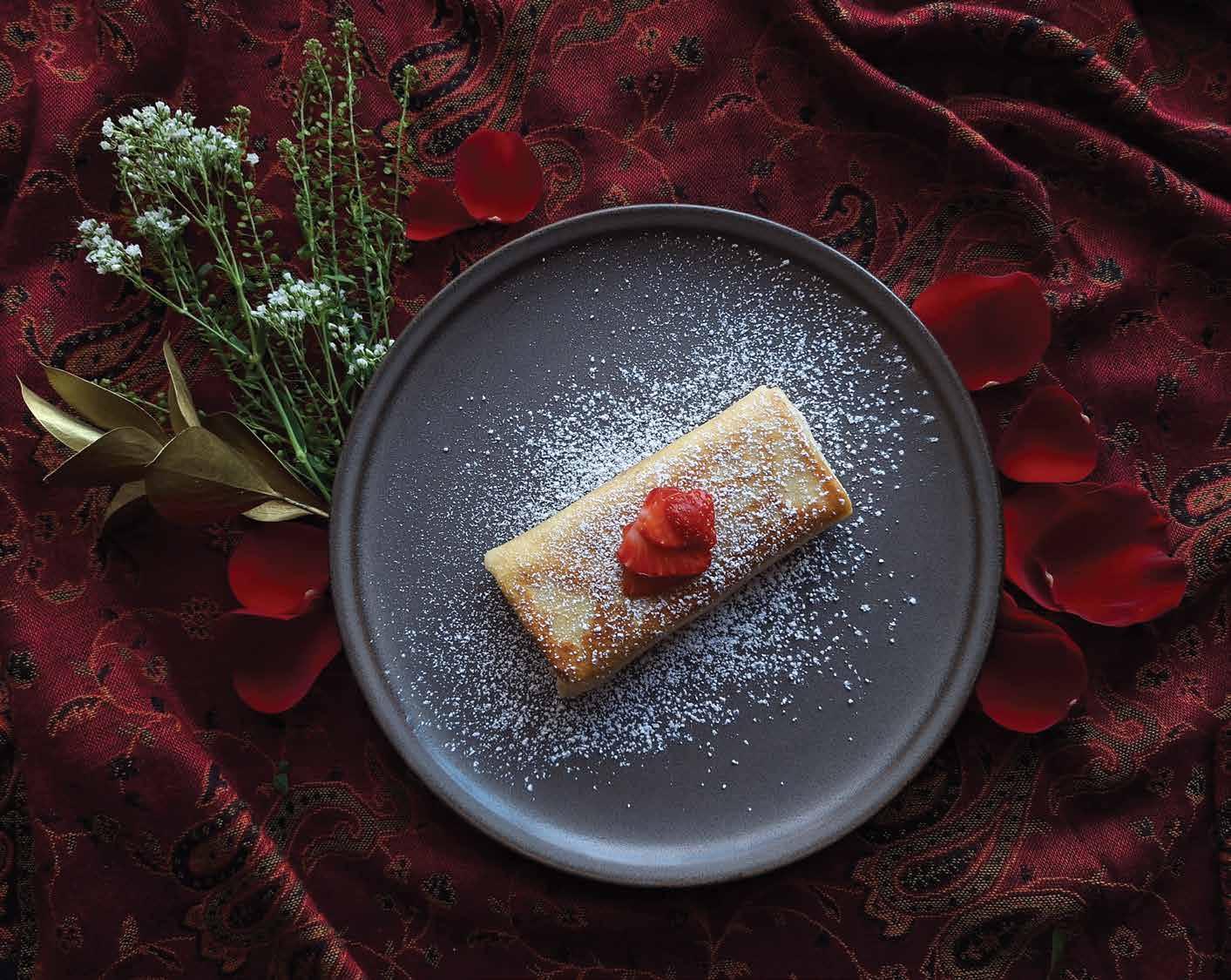
INGREDIENTS || crepes + filling
Crepe Batter:
3 eggs
¾ cup milk
¾ cup water
3 tbl melted butter
Pinch of salt
1½ cups all-purpose flour
Filling:
15 oz ricotta
2 egg yolks
½ cup + 2 tbl sugar
1 tsp vanilla extract
1 pint strawberries
2 tbl butter
Powdered sugar
STEPS
Wash and slice the strawberries; place them in a small bowl and add 2 tablespoons of sugar. Mix and set aside. For the crepe batter combine eggs, milk, water, melted butter, and salt in a large bowl. Sift in the flour and whisk until well combined; batter will be thin. Preheat a large nonstick pan to medium-low heat. Once the pan is preheated, pour in ½ cup of the batter and pick up the pan and swirl it to allow the batter to cover the bottom surface of the pan. Place back on the burner and let cook for 1-2 minutes. Flip the crepe and cook for 1 minute. Repeat until the batter is gone.
In a medium pot, combine ricotta, egg yolks, ½ cup sugar, and vanilla. Place on a cold burner and turn the heat to medium. Stir constantly for 5-10 minutes, or until bubbling and hot. Remove from heat.
In a large pan, melt 2 tablespoons of butter on medium-low heat. To assemble the blintzes, add 3-4 tablespoons of filling, some of the strawberries, and fold like a burrito. Heat the assembled blintzes in the buttered pan until lightly crisp and golden brown. Repeat until finished. Dust with powdered sugar and top with more strawberries.
kitchen: alyssa lyman
Blintzes strawberry ricotta
Rustic
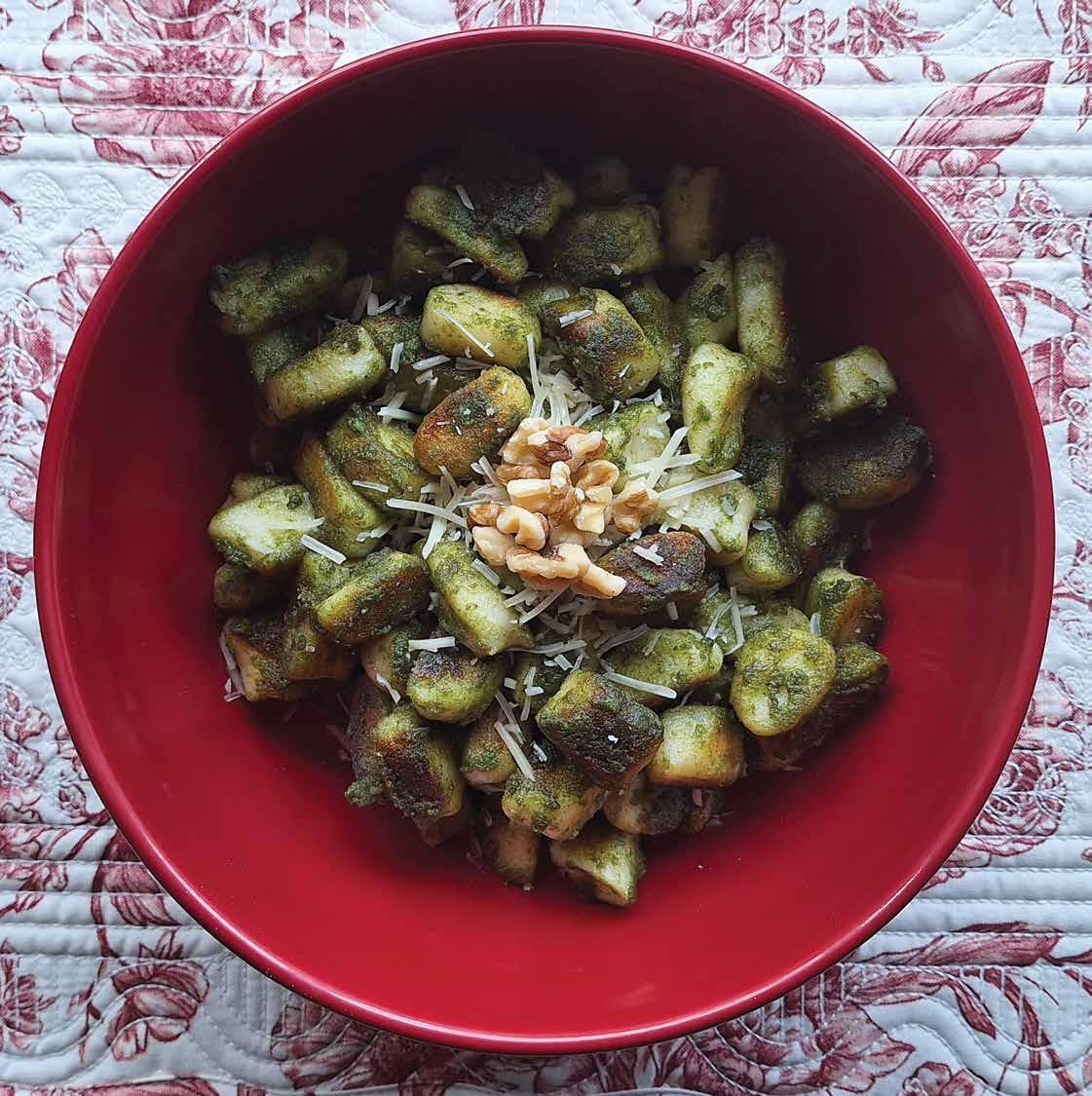
gnocchi + walnut pesto
kitchen: alyssa lyman
INGREDIENTS || gnocchi + pesto
Gnocchi:
4 large russet potatoes
3 egg yolks
1 tsp salt
1 tsp garlic powder
1 tsp onion powder
2 ½ cups flour + more for rolling out dough
Walnut Pesto:
½ cup walnuts
½ cup grated parmesan cheese
2 garlic cloves
Juice of 1 lemon
2 cups basil
1¼ cups olive oil
Salt + pepper to taste
STEPS
Wash and dry the potatoes; wrap in foil and bake them in a 425° oven for 50-60 minutes until fork tender. Once done, cool completely. Fill a large pot halfway with water and put on medium-high heat to boil. Remove potato skins and add the potatoes to a large bowl. Use a potato masher to mash the potatoes. Add the egg yolks, salt, garlic powder, and onion powder and mix until thoroughly combined. Gradually add in the flour until a soft dough is achieved. Dust a work surface with flour; knead the dough for 5 minutes and cut into four pieces. Re-dust the work surface and roll each chunk of dough into long ropes until they are ¾ of an inch wide. Use a knife or bench scraper to cut each rope into ½ inch pieces. Working in batches, place the gnocchi in the boiling water and cook 2-3 minutes or until they float to the surface. Remove with a slotted spoon and place on a tray. Heat 2 teaspoons of olive oil in a large frying pan on medium heat. In batches, fry the gnocchi until golden brown.
Add all of the pesto ingredients to a food processor or blender and blitz until a smooth consistency appears. Heat the gnocchi and pesto in a large skillet until heated through. Serve with walnuts and parmesan cheese.
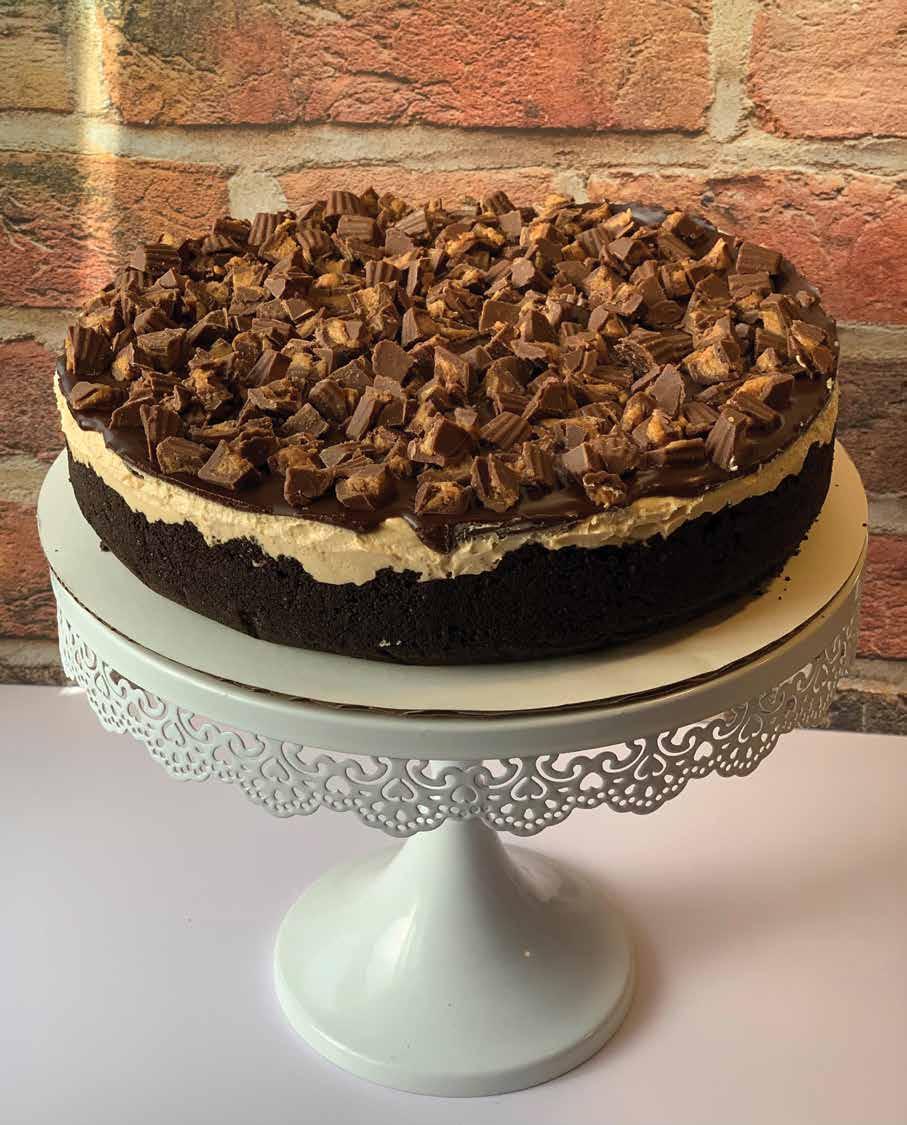
PEANUT BUTTER
pie + chocolate ganache
kitchen: sara latture
INGREDIENTS || crust + ganache + filling
Oreo Crust
22 whole Oreo cookies
5 tbl of melted butter
Ganache
3/4 cup heavy cream
6 ounces semi-sweet chocolate, finely chopped
Peanut Butter Filling
1 cup heavy cream, cold
8 ounces full-fat brick cream cheese, softened to room temperature
11/2 cups creamy peanut butter
3/4 cup confectioners’ sugar
1 tsp pure vanilla extract
STEPS
Bake the crust: In a food processor or blender, pulse 22 Oreos (including the cream filling) into a fine crumb. You should have about 2 cups (packed) crumbs. Pour crumbs into a large bowl. Add the melted butter and stir to combine. The mixture will be thick and quite wet. Press the mixture into an 9-inch springform pan – and press into the bottom of the pan and up the sides. Bake for 10 minutes. Allow to cool as you prepare the filling.
Make the ganache: Place chopped chocolate in a medium heat-proof bowl. Heat the cream in a small saucepan over medium heat, stirring occasionally. Once it comes to a simmer, immediately remove from heat and pour over the chocolate. Let sit for 2–3 minutes to soften the chocolate, then stir gently until the ganache is smooth. Set aside at room temperature and allow to slightly cool.
Make the filling: Using a hand mixer or a stand mixer fitted with a whisk attachment, beat the heavy cream on medium-high speed until stiff peaks form, about 3 minutes. Spoon the whipped cream into a bowl and set aside. Beat the cream cheese on medium-high speed until smooth. Then add the peanut butter, confectioners’ sugar, and vanilla extract, and beat until combined. Mixture will be thick. Gently fold in the whipped cream until smooth. Spread peanut butter filling into the cooled crust. Spread the chocolate ganache on top of the filling. Chill the pie in the refrigerator for at least 6 hours and up to 48 hours. If chilling for longer than a day, loosely cover it. Garnish the pie: with whipped cream, Reeses peanut butter cups chopped, Reeses Pieces or melted peanut butter.
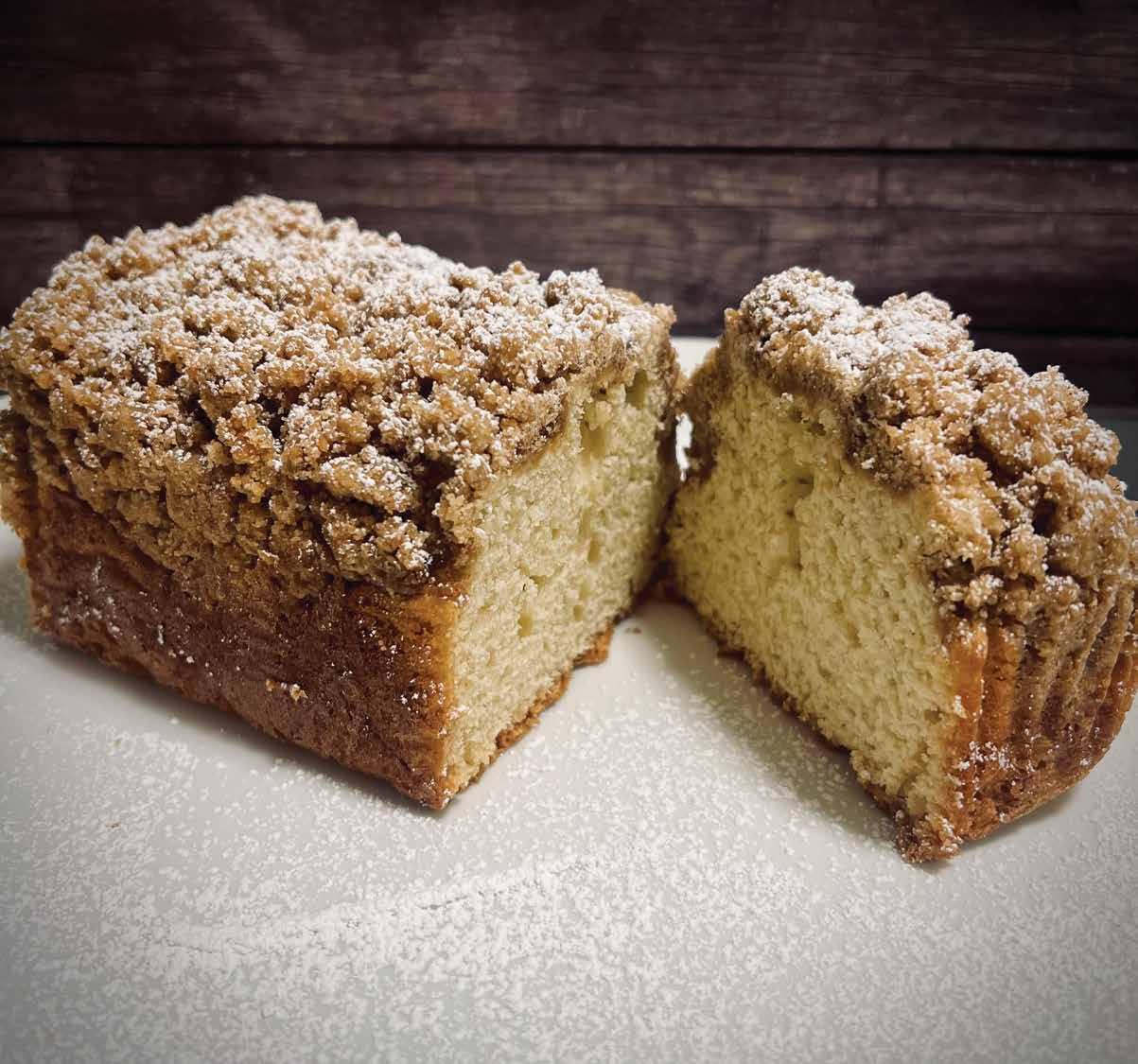
NEW YORK
style crumb cake
kitchen: sara latture
INGREDIENTS || topping + cake
Crumb Topping
⅓ cup granulated sugar
⅓ cup packed brown sugar
¾ tsp ground cinnamon
8 tbl (1 stick) unsalted butter, melted
1½ cups cake flour (+1/4 cup more if needed)
Cake
1¼ cups cake flour
½ cup granulated sugar
¼ teaspoon baking soda
¼ teaspoon table salt
6 tablespoons unsalted butter, softened
1 egg
1 egg yolk
⅓ cup plain yogurt or buttermilk
1 teaspoon vanilla extract
powdered sugar for dusting (optional)
STEPS
Make the crumb topping: combine sugars, cinnamon, melted butter, and cake flour; stir well. If your crumb topping is still too wet add up to ¼ cup more cake flour. You want it to be a consistency you can easily crumble between your fingers. Set aside. Preheat oven to 325. Grease an 8x8 baking dish. Using an electric mixer mix cake flour, sugar, salt, and baking soda together. Add butter and mix. Mixture will become crumbly looking and a little dry. Add egg, egg yolk, yogurt/buttermilk, and vanilla. Beat until light and fluffy. Pour mixture into greased baking pan using a rubber spatula to smooth it out. Add crumb topping by using your fingers to break apart the crumbs and sprinkle them over the batter. (Don’t press them into the batter). Bake for 35-40, until toothpick inserted in center comes out clean.
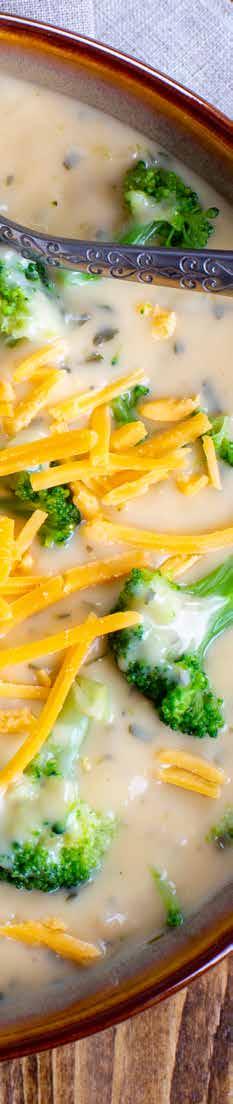
CROCKPOT
kitchen: heather niccoli
INGREDIENTS
4 cups chopped broccoli
4 tbl butter
½ cup diced onion
2 cloves garlic, minced
2 celery stalks, diced
4 cups chicken or vegetable broth
11/2 lbs chicken breast
¼ cup corn starch or flour
1 cup heavy whipping cream
1 cup milk (optional)
4-5 cups shredded cheese
Salt and pepper to taste
STEPS
Cook your chicken in a crockpot on high for 3-4 hours, or until chicken reaches 165 degrees. Gently shred the chicken and add in the broccoli, butter, onion, garlic and celery. In a separate bowl, whisk the corn starch and chicken broth together and then add to the crockpot. Cook on low for 4 hours. If your soup is too thick, add the milk. Cook one more hour on low and then add the heavy cream and shredded cheese. Serve with fresh bread and enjoy!
broccoli chicken soup
Gayle Anderson BY
With our Valentine edition of Home&Harvest, I was thinking about all the different kinds of love we humans experience. However, if the marketing strategists have their way, they will narrow our focus on romantic love. And it’s fitting as Valentine’s Day is deemed the 2nd ranked holiday right after Christmas as it seeks to capitalize on emotional heartstrings and ways to show love with purchases of jewelry, candy, cards, dining and experiences for couples. But what about you? There are so many kinds of love and passion that fill up our cup. And yes, having a loving partner in a world built for two is its own sort of beautiful bliss. And we love our kids, family, hobbies and careers. But have you ever thought about self-love and romanticizing your own life, regardless of whether you are married, single or in a relationship? Let’s face it, it’s so easy to find yourself so busy living in a caffeinated world of responsibilities and to-dos, that you push your own needs aside. And maybe it’s just me, but I think this resonates more with women than men.
So, when the writing assignment came in, I was lucky enough to be asked if I would write about “how to romanticize your life and ways to add whimsy to everyday situations”. And basically, it’s insight on helping you rediscover and embrace the beauty, love and passion that is all around you. It’s sort of like the concept of “Hygge”, the Danish art of creating welcoming, warm cozy spaces where you live, only this is called Hverdagsromantik, translated to: Everyday Romance – Expanded. And the basic definition is it is essentially the art of weaving romance into daily routines — making the ordinary feel extraordinary through love and mindfulness. As I have been seriously studying the Danish art of living well, their culture resonates so much of what I think most of us here are seeking. And it’s not about material things; it’s about connections to people and your surroundings which then naturally morph into your personal life that creates a better life situation with self-care. Think about it, it is impossible to care for others if your own well is sucked dry.
With that being said, when was the last time you took yourself on a date? Seriously. It’s not scary at all and can be purely magical. I take myself on mini-dates quite often. Taking care of the beautiful being that God created is NOT selfish. This isn’t a “I need to do it someday”… nope it’s a daily feeding of your soul. Trust me on this. Just as you need food for your body, you need to take care of your heart and soul every day. It’s a concept I didn’t learn until later on in life, and after years of floundering, I finally came to the realization that being kind to myself is important. Back then, self-care in my world as a mom who worked full-time was so far down the list that it rarely, if ever, surfaced as a legitimate need. I was pretty good at squashing any thoughts of what I needed. And to be honest, when you bury feelings for so long, your body will take its revenge and show up in the form of an ailment. In my case, I struggled with symptoms that mimicked Chronic Fatigue. It lasted for a few years and I was forced to focus on what I needed to heal myself which included physical as well as mental wellbeing.
Let’s face it, besides the internal instinct of “taking care of others” that seems to be ingrained in us ladies, we are inundated with marketing ads that manufacture dissatisfaction with our lives. You know, the ones that keep us running to the next level of trying to find happiness through some purchase or lifestyle. When all we truly need is to reframe our mindset to find all the beauty and grace around us. As I was researching this topic as well as remembering my health journey, I will share what I found helpful, along with some recommendations on books.
“if you want to soar like an eagle, you can’t be flocking with the turkeys”
Romanticizing your own life is a mindset shift and practice of finding beauty, joy, and meaning in everyday moments and routines. Nice words indeed you might think but I just possibly can’t, I have too much to do. That was my story completely so many years ago. And then one day I found my body had shut down and it was ground zero and a whole new set of rules were on the forefront to figure out. Back then, there weren’t the resources of today, and with the onset of the internet, the vast amount of information that is widely available which talks about joy, creating and cultivating beauty in your life is amazing. For me, it helped me put that health crisis journey into perspective and realize that back then that I wasn’t selfish or crazy, that it was necessary and actually beneficial in developing a wholeness of yourself. And honestly, in today’s world of social connectivity, it helps knowing there are other women out there that feel the same way and that there are many groups that may appeal to you. While I feel it’s important to limit online scrolling, go for quality and one of my favorites is on FB called “Sacred Hygge-Cozy Christian Living”. Women from all over the world share what makes them happy in their world of self-care and it’s real and honest, not a perfectly choreographed image.
And a few quick tips from me to you that I seriously try to make happen every day:
Daily rituals: Define what will kick start your day to make it the best. Here is what I do:
I start my day off with good coffee. I read scripture.
I make time to get outside (weather dependent) and take a solo walk. Sometimes it’s a short walk, sometimes a long one. During that time, I take special notice of nature and enjoy the quietness.
Date yourself
Take yourself out on mini dates. Go for coffee, keep your phone off so you can observe the atmosphere. Take yourself out to dinner, a movie or other activities. There is something about doing solo things that just seem to elevate your perspective.
Make every day a little bit special.
Use the good dishes, take the time to set a nice table, basically what you are doing is creating “a positive experience” in everyday life.
Commit to spending time doing your favorite hobby. If not daily, then set aside some time weekly.
Be aware of what you surround yourself with each day. Who do you associate yourself with? What are you reading? Listening to? ALL of these should be uplifting that make your life better and inspire you. If any of these are degrading you in any manner, you have some serious things to consider. Remember the saying, “if you want to soar like an eagle, you can’t be flocking with the turkeys”
~ Warren Buffet
I find if I am focused and mindful of what is happening within myself that my mental and physical health benefit. This simple practice of seeking gratitude in everyday things, and treating yourself with the same care and attention you would a loved one is a way to live life with more intention and wonder.
And as promised, here are two books that I cherish and find immensely helpful: “Journey to the Heart” by Melodie Beattie and “The Scandinavian Guide to Happiness” by Tim Rayborn.
As the New Year rolls in, here’s a toast to self-care, adding whimsy to your life on purpose and romancing you. Cheers!
My Perfect Winter
By Jessica Wall
As I peer out my window, the world asleep in her slumber. Cold, white, and calm. Everything ceases. My fireplace roars and crackles. It spits, hisses, and pops.
Embers floating through both time and space.
Ice strains, winds blow, and white envelopes.
I close my eyes, if only for a moment. My dreams cascade upon each other. I plan ahead brieflyimagining what’s to come when the world reawakens. And then, like an unwanted visitor, logic, reason and forethought disappear as I focus on the crackling before me. And I sit still, appreciating the beauty of perfection.
I wrote this poem last year in the depth of winter; in awe of what was around me and taking in the elegance of it all. As I sat by the fire watching the swirl of the wind around my house, I reflected upon the peace I felt and the joy of the moment. Time seemed to stand still, and I found myself enveloped in the simplicity of my surroundings. Grounded in sacredness and guided by a desire to fully experience the elements. Full of warmth and wisdom. I didn’t always feel this way about winter. In fact, for many years I said that snow was my least favorite four-letter word. Writing this article now actually makes me laugh as I literally never could have imagined feeling any differently. After having lived in multiple snowy climates for years, I had had just about enough of the white stuff! Enough of the ice. Enough of the wind. Enough. For realsend me to the desert. Forever. But then something shifted… and my perspective changed. To be honest, I’m not exactly sure when or why the shift happenedbut it certainly happened. I think it has been gradual, sort of sneaking up on me from afar. My guess is that it has been part of a trickledown effect of living through a life-threatening diagnosis, which forced me to pause and rethink my priorities in this life. All I know is that when I once saw cold, I now see warmth. Where I once saw frustration in travel and disruption in my everyday schedule, I now see the world telling me to slow down and be mindful. Intentional. Where there were once dark mornings and early evenings, I now see rest, relaxation, and rejuvenation. It’s actually quite comical to do some internet research on why people hate the winter- responses range from “too cold”, “hate scraping ice from car windows”, and “runny noses and chapped lips” to “having to shovel”, “snow in socks and shoes”, and finally- “it’s not summer” (my personal favorite)! Of course, there are plenty of reasons why people feel trapped and grumpy during the winter, and desperately wait for warmer climates- and naturally, all of those reasons are completely valid. It is miserable to stand in frigid temperatures, scraping freezing solid ice off of your windows, especially if you are already running late (ahem, usually me), and it’s equally miserable to shovel heavy, wet snow from the sidewalks (I used to live at 7,000 feet above sea-level and had to shovel multiple times a day during the winter months- believe me when I say I know how much it sucks!). And snow in your socks and shoes? Absolutely the worst. There is no doubt that many of the things that come with winter can be miserable, but what if… what if we shift our mindset from loathing to embracing? Or… Dare I say, from loathing to welcoming…?
I know, I know- I hear you. Having spent many years on the Palouse, I can relate to winter woes… but the older I get, the more I see beauty in what I once *strongly* disliked. It’s almost… magical.
After surviving cancer, I have taken a deep dive into my own ancestry in recent years. I wanted to know more about who I am and where my ancestors were from. For me, remission turned into a second chance opportunity to learn as much as I can about my place in the world. It turns out that I came from a long line of Scandinavians (on both sides of my lineage)- hearty folk who not only survived long, dark winters- but thrived during the season. How did they do this? Quite simply, they met winter with a strong sense of resilience, relying on their ancestral knowledge and sense of community to get through the cold and darkness. After a few grueling years of chemotherapy, radiation, and surgery, I understand this sentiment well. It was without a doubt my reliance on community and connection that brought me through my own-
-darkest days.
As I researched more, I have learned so much about these people who came before me. I found myself fascinated by the lengthy preparation and hard work they had to do each winter, in order to make it through. From gathering and preparing food sources and sustenance that would carry them, to making sure they had enough wood to keep the fires going and fortifying their houses for the heavy winter, they clearly had to rely on their skills and strong sense of perseverance. Quite simply, it is evident that their resourcefulness is what propelled them and made them successful. But outside of their preparation and skills, it seems that they relied on something even more special- something remarkable. The Norse people relied heavily on household tasks and activities that strengthened their own communal bonds. They spent the winter hours storytelling, often gathering around fires to tell of far away sagas, myths, and legends. This storytelling encompassed Norse Gods and heroes, tricksters and saints, as well as strong themes of nature and the cycles of the earth. These stories instilled cultural pride and identity, perpetuating oral tradition and connecting generations.
What if we shift our mindset from loathing to embracing?
In addition to storytelling and connection, the winter season was also heavily intwined with the supernatural, often serving as the backdrop for celebrations and ritual traditions which honored the Gods and ancestors. The mid-winter festival of Yule, marked by festive drinking, feasting, and merrymaking, signified the turning of the seasons and the promise of better days ahead. Aligned with the winter solstice (the shortest day of the year), it was a time for solidarity and connection amongst one another- even in the darkest days, the bonds of community and traditions provided warmth and kinship. Living in a town that celebrates Yule on a larger scale has allowed me to connect with my own ancestors and heritage in a tangible and meaningful way. Sitting around the massive bonfire and listening to the winter solstice proclamation, is for me- soul stirring. It feels as if I was always meant to be here- meant to be part of this long story of resilience and ancient practice. Whereas I used to dread winter, now it almost feels life-giving to me. While I still don’t always like to be cold, I have a deep reverence for nature that I have never had until the last few years. I now really love the simplicity of winter- the calmness that it brings.
I find comfort in a warm fire and enjoy passing the time by writing and painting- often taking inspiration from photographs that I have taken throughout the season. I love the quiet contemplative moments of winter where I get to sip on hot cocoa and remember my place in a long line of tradition and history. I am grateful for the reminder that I am part of a lineage full of intrepid people who have thrived because of their kindship with others, ability to see the world through the lens of awe, magic and wonder, and had a deep understanding of their cultural identity.
So, I implore you to find your own magic that carries you through the darkest days of the season. Tap into your surroundings, and your own personal traditions. Immerse yourself in the oral traditions and stories of your heritage. Find new hobbies that take advantage of the season, and approach them with invigorated enthusiasm. I have learned that I enjoy taking long walks through the forest during this season, and that my absolute favorite things to do during the winter are chase the Northern Lights, read books, and make art.
Lean into the Scandinavian concept of Hygge and practice selfcare. Invest in a warm, fluffy blanket and write poetry by the fire. Learn to look for solace with others and seek out new friendships with those around you. Truly, this is your season to find yourself and find what makes you happy. Redefine beautiful and revel in the magic of it all. Just like our ancestors of long ago, adaptation is key. Learning to embrace and find respite in challenging circumstances takes us from survival to thriving. Changing our mindset (regardless of how the change comes about) is integral to our success. I am often grateful for the life experience of living through a terrible diagnosis (although unpleasant in the moment), as it truly changed my life in very specific and tangible ways. I love looking for the silver lining in all situations and finding inspiration through adversity. For me, winter was always represented by frustration and loathing, and now I see it completely differently. My heart feels lighter during this season, and I am more at ease. I hope that you have the opportunity to experience the same.
I love looking for the silver lining in all situations
One of my favorite ways to celebrate the stillness of winter is to walk through the forest. It forces me to be observant and mindful of my surroundings, taking in the beauty that is all around. Here are some journal prompts that you may enjoy using yourself!
What do I see and hear today that I might not normally?
If I could be any animal in the forest, what would I choose and why?
Trees in the winter look like…
e Tangier, a Love Story
Nancy Hampel by
Hello from a North Idaho girl turned nomad, turned potential expat at age 58. I’ve just landed in Tangier and intend to stay here a year to test it as a future home. Why here after six years of nomad travel? Read on, gentle reader. This is actually a love story and one I sure didn’t see coming.
I call it a love story because that’s the truth. But it began with tears and a full-on meltdown almost exactly one year ago. Last November, I was absurdly happy in Paris in one of those tiny maids’ apartments on the 7th floor, no elevator, and a stunning view of the skyline and Parisian architecture. But I had to leave. My visa was ending...nothing humbles happiness quite like immigration law. So I researched warm places close to Europe (Montenegro, Albania, Cyprus), and out of the blue, someone on a Facebook group mentioned Tangier. It struck a chord. Morocco! Exquisite, enchanting, and very foreign. And I would be a single Western woman in a Muslim country.
I almost traveled to Morocco several times in my life. I researched the country and the culture and thought Marrakech would be my place. I pictured gorgeous Arabic riads (traditional Moroccan houses with an interior garden/courtyard), spices piled high, and men in hoods smoking hookahs. Tangier is known to have its own vibe; in my mind Tangier was multicultural, seemed like it had spies, and a faintly bohemian flair. My Montmartre friends affirmed Tangier was wonderful. So I did it!
My first time in a Muslim country, alone and I knew no one. Salaam!
Tangier looked nothing like the version I had imagined, which was probably why, in retrospect, it worked. I had much to learn, and after months of living here, I am still uncovering the complexities of this beautiful place. When I landed at Ibn Battuta Airport, the hostel had sent a driver. It was close to midnight and I was both tired and excited. We drove along a wide, modern city boulevard, quiet except for a small flock of sheep trotting across four lanes of traffic (?!). I remember saying to myself, “Paris out. Sheep in. Welcome to Morocco, Nan.” I would have buckled my seat-belt, but there weren’t any. The next morning, I walked out into a residential neighborhood near the big city beach. No women on the street. Only groups of men talking. No women in the cafes either—just men staring at me over their glasses of mint tea. I was no longer sightseeing; I was the site. The sidewalks were broken, cats were tearing into garbage bags, and then suddenly—there it was—a beautiful, palm-lined boulevard like something from a travel brochure. Tangier in one breath: unsettling and stunning, side by side.
The hostel itself was small and welcoming, and again, I was the only woman most of my time there. I had a small private room and shared two bathrooms with showers shared with the other guests. At one point, the manager—maybe thirty-five—looked me up and down and asked if I wanted to go to a bar at midnight. He didn’t push, I said no, but I was sharing a bathroom with him and the other men, and it tipped the balance to more discomfort than relaxation. So I packed my things and moved to another hostel, a little riad in the old medina—old and vintage, with my own bathroom this time. The manager and the worker greeted me kindly, and I felt myself relax. Mostly. So what is a medina? The medina is the name for the old, walled city center. It is a maze of stone alleys and doorways, with a tourist area and then a deeper, labyrinthine area where locals live, much like they have for centuries, it seems. And in the medina, men followed me daily—“Madam, come here with me… what are you looking for?” or “Madam… you are so pretty, can I please just talk to you?” I learned it isn’t dangerous—in fact, it is very safe in Morocco; the men will not touch you. But shopkeepers can be verbally aggressive, and young men looking for sugar mamas whisper and follow you and don’t give up. They were looking for sugar, but I was caffeinated, unimpressed, and not accepting applications.
One day, one man just pushed me over the edge. My nervous system had had enough. I went back to my room, shut the door, and cried. I slept for two days straight (this is the part they leave out of the brochures). I told myself I could leave—go to Cyprus, somewhere “more Western,” somewhere easier. Allowing myself this ‘out’ is likely what allowed me to reassess and stay. And this made all the difference.
Mahamoud, the young worker at the riad, would knock on my door or text me invitations to tea on the terrace. He called me “beautiful Nancy” and would send heart emojis often with the invites—sweet, outgoing Mahamoud. At first, I thought it was a replay of the other hostel manager. I mean, who sends heart emojis to customers?!? Thankfully, no. Mahamoud is funny, awkward, kind, and silly with everyone. Over the next few days, an odd Swiss guy and a Spanish man my age arrived. We fell into a daily tea meetup on the terrace with Mahamoud, telling stories, laughing, and deconstructing our experiences in Morocco. One afternoon the Swiss guy told the best story ever, involving a donkey, hash, and a Walkman. I laughed so hard I snorted. I was sad when they left.
Around that time, I kept passing a tiny restaurant near the Kasbah. I never went in because it advertised vegan food and I am decidedly not vegan, plus I was always on my way somewhere. One afternoon, I finally stopped. The most gentle woman waited on me; I loved her graciousness and sweet smile, even though we spoke little. The food was excellent. So I went back. And again, many times.
Now, dear reader, we arrive at a point that looks entirely unimportant; a simple lunch and chat. But over falafel something quietly started that I could not easily walk away from months later. This one time at the restaurant, a Syrian man about my age was waiting tables.
He spoke English well, and we started chatting. He called the owner over, the husband of the gracious woman, and we talked for quite a while. They invited me to tea when I finished my falafel. sat on a little stool, scrunched up at the counter with a glass of mint tea.
After about an hour, I realized with surprise that I felt at home on that little stool with the owner pushing past me and customers standing next to me to pay.
When I finally paid (hours later) and tried to tip, the owner bent down so our faces were level and said something in rapid, forceful Arabic. The Syrian man translated: “He says to tell you, you do not tip. You are family.” Then he added quietly, in broken English, “You can see in the face. She is good.”
Before I walked out the door, the Syrian guy asked if I liked fresh fish. I said yes, of course. We made a plan for the next day. He took me to the docks where only locals go, not a tourist in sight, and we ate fresh fish grilled right in front of us. From there, we became friends. He and the restaurant owner invited me to after-hours evenings at the restaurant with the lovely young cook, Salima. We laugh. We sing. They sing in Arabic, and I try to hum along; friends come and go.
During this time, my new Syrian English-speaking friend said, “Nancy, I know your soul. I will take you to the place that is your favorite store.” I agreed, thinking he meant a market stall or a local shop. Instead, he led me to a hidden workshop, humble and dark, with six Moroccan men sitting around a low table. I was nervous, didn’t understand the customs, and don’t speak Arabic. But then a man named Nabil stood up and came over to me.
Nabil is a luthier—a maker and repairer of ouds, Arabic lutes. He carefully pulled out a dusty chair and gave me a spot in the center, along with a tiny cookie and tea. He spoke to me gently in French while the others looked on. He showed me the ouds he was repairing and the ones he was building. We talked about Arabic and Western music, and why certain harmonies actually feel the way they do. At the end, he said, “This is a place for artists and musicians. They meet here and have for decades.” Then he said this again, five times: “Nancy, you are always welcome here.”
I left slightly stunned. My Syrian friend was right. As a budding musician and lover of creative people, this was my favorite store ever. Somewhere along the way, home stopped being a place I owned and became a place that recognized me. I didn’t expect that to happen in Tangier, and I certainly didn’t expect it to happen on a stool in a small restaurant or in a dusty workshop. But it did.
Fast-forward: I left Tangier after three and a half months to return to the U.S. and told these people I would be back. After nine months in the States, I have returned to live here for a year. I may make it my home. Why? In large part due to the people I have just told you about, but there is also an aliveness here in Tangier. You see it and feel it daily. Street cats fed by locals. Children playing late at night. People talking face-to-face, not on phones. My soul was, and is, fed daily by real smiles, real connections with people, and the sense of slow and meaningful living.
Tangier is not always easy. It wasn’t gentle with me at first, and some days it still isn’t. The people who opened their doors and poured me tea, who told me I was family before they even knew my last name, are the reason I stayed.
If this is a love story, it isn’t the fireworks kind. It’s the slow kind. The kind that surprises you, that asks something of you, that hands you a seat in a dusty workshop and says, “You are welcome here.”
Who Decided LOVE Needed Cards & Candy?
by Kristi Sellers
Valentine’s Day has become the Super Bowl of romance (No. This is NOT an article about Taylor Swift), a holiday where love is measured in heart-shaped boxes, overpriced roses, and cheesy cards that somehow manage to say exactly what you’re feeling. But before Cupid started handing out plush bears and diamond necklaces, Valentine’s Day gift-giving had a much stranger, sometimes darker, and occasionally hilarious history.
See. Now, this even has my attention. I’m all about the funny.
Long before candy grams and floral delivery apps, Valentine’s Day was less about chocolate and more about fate, poetry, and the anxiety of possibly drawing the wrong name from a jar.
Before the Chocolates Came the Chaos
The origins of Valentine’s Day stretch back to ancient Rome, where mid-February was marked by a festival called Lupercalia. This was not a hearts-and-flowers kind-of affair. It involved feasting, rituals, and a matchmaking lottery where men and women were paired up—sometimes temporarily, sometimes longer. No greeting cards. No gift receipts. Just stinky people who just met.
As Christianity spread, the holiday was eventually associated with Saint Valentine, though historians aren’t entirely sure which Valentine we’re talking about. Several martyrs shared the name, and at least one legend claims Valentine secretly married couples against the emperor’s wishes. If that’s true, that makes him the patron saint of both romance and rule-breaking. Gotta love a bad boy. Am I right, ladies?
Gift-giving as we know it didn’t really enter the picture until the Middle Ages, when courtly love became The Thing to Do. This was the era of handwritten poems, symbolic tokens, and dramatic declarations. Romance was an art form—and sometimes an entire performance.
Love Letters, But Make Them Dramatic
The earliest Valentine’s “cards” weren’t cards at all, but handwritten letters and poems. In 1415, Charles, Duke of Orléans, wrote love poems to his wife while imprisoned in the Tower of London. These verses are often cited as some of the first known Valentine’s messages. They were poetic, heartfelt, and, most importantly, required actual effort.
By the 1700s, exchanging Valentine’s messages had become popular in England. These early cards were often homemade and filled with flowery language, elaborate illustrations, and references to nature, mythology, or heartbreak. Forget things like “Be My Valentine”, or just, “Be Mine.” These were more like, “My heart trembles like a drop of morning dew upon thy beautiful name.”
Eww.
The Rise of the Mass-Produced Valentine
The real turning point came in the 19th century with the rise of industrial printing. Meet Esther Howland, often called the “Mother of the American Valentine.” In the 1840s, she began producing ornate, lace-trimmed Valentine cards in Massachusetts. They were delicate, decorative, and wildly popular.
Suddenly, romance could be produced on mass levels. Jackpot. Valentine cards could now be bought instead of made, which sparked both enthusiasm and outrage. Critics complained that store-bought cards were impersonal and lazy.
Still, people loved them. Cards became increasingly elaborate, featuring pop-ups, ribbons, glitter, and hidden compartments. Some even had moving parts, because nothing says love like a 3-D piece of paper jabbing your eyeball.
Not All Valentines Were Sweet
While we tend to think of Valentine’s Day as sugary and sentimental, history tells a more mischievous story. Alongside romantic cards, there were also “vinegar valentines.”
These were insulting, sarcastic cards meant to mock the recipient’s looks, habits, or personality. Think: National Lampoon’s but meaner - delivered via the postal service. They were anonymous, cutting, and surprisingly popular in the late 1800s.
In other words, Valentine’s Day has always had a messy side. Actually, I have a short list of “vinegar valentines” I could potentially send this year.
Candy Hearts and Chocolate Boxes
Chocolate didn’t become a Valentine’s staple until the late -19th century, when candy makers realized romance was an excellent marketing strategy. Richard Cadbury introduced heart-shaped chocolate boxes as a way to boost sales—and possibly to-
-help people reuse the box to store love letters afterward. Functional, romantic, and a guarantee to make your cards smell like stale chocolate all year.
Conversation hearts, originally medicinal lozenges, also found their calling as sugary messengers of affection. Over time, their messages evolved from long phrases to the short, emoji-like commands we know today: “LOVE U,” “TEXT ME,” “UR CUTE.”
Nothing says timeless romance like chalky sugar telling you to “call me later!” And don’t forget the messages on the front of Taco Bell sauce packets. Now that’s a proper valentine if I’ve ever witnessed one.
Flowers, and the Pressure to Impress
Flowers have been linked to romance for centuries, thanks to the language of flowers, where each bloom carried symbolic meaning. Roses, of course, came to represent love and passion, making them the unofficial mascot of Valentine’s Day. Unfortunately, they also became the most price-inflated item of the year.
The Modern Valentine’s Day Gift Spiral
Today, Valentine’s Day gifting is a choose-your-own-adventure of expectations. Some people love grand gestures. Others prefer something handmade or heartfelt. Some just want a good meal and no pressure.
Cards remain at the center of it all. Whether funny, sincere, awkward, or wildly inappropriate, Valentine’s cards do what they’ve always done: say the things we struggle to say ourselves. Even the funniest card still carries meaning, if only because someone chose it specifically for you.
And while we might roll our eyes at the commercialization, there’s something charming about the ritual of this touch of romance. It’s a shared moment of intentional affection—however goofy or over-the-top it may be.
Why We Keep Doing It
At its core, Valentine’s Day gift-giving has always been about expressing one’s self. From medieval poems to mass-produced cards to late-night drugstore chocolate runs, the goal is the same: communicate love, admiration, or connection - especially a love for tacos.
It doesn’t have to be perfect. It doesn’t even have to be expensive. Sometimes it’s just a card with the right words, a small gift with a personal meaning, or a reminder that someone thought of you on the 14th day of February.
So whether you’re handing over roses, chocolates, a sarcastic card, or just a heartfelt note, you’re participating in a tradition that’s been evolving for centuries—one awkward love letter, glittery card, and heart-shaped box at a time.
Legend Be Your
It is a relief to rest, with stores of preserves and firewood put up. We may take time to relax a bit and let winter take an icy grip. The wait begins for a thick blanket of snow and a biting edge to crispy-clean air whispering with a shiver, “Let’s play.” The cold exposure, a sharp contrast to my dulled climate-controlled senses, makes me appreciate the clarity of the seasons. Afterward, rosy cheeks and a chill warmed by a snuggle with a grandchild adjacent to a crackling fire. Moments are now slowed and simplified that I may appreciate the smooth lines on a slumbering toddler’s face and hear the ancient creak of my great-grandmother’s old rocker as my daughter rocks it in the same manner it was first intended decades ago. I remember this rocker scraping on the wooden floor of the now long-gone Grandview homestead with my Grandma Bishop rocking my baby brother to a slumber. Those folks survived some adverse winters! Would I be living in this moment had they not ventured into the cold?
As I get older, I think I better understand the term “Old Man Winter;” grey and grumpy! I suppose it is reassuring to know that the sentiment was apparently experienced by aged storytellers in Greek, Norse, and Celtic mythology too. I can imagine in ancient Norse lands, long winters of misery in places so appropriately named as Iceland, old men and women sitting around raging fires telling tales of the Norse god Ullr (pronounced Ooler). I picture the stepson of Thor reveling in winter’s grip with his bow and arrows in hand, gliding over frozen landscapes in pursuit of game, impervious to winter’s might. He was the master of it! I wonder if his surly, cold nature was somehow a manifestation of his station in the Norse hierarchy as a stepson? Where these characters conjured by aged folks reclined by a primitive fire, realizing their days of dangerous adventure have passed but living them again in tales and poetry? To the south and east, the more refined storytellers, Homer or Hesiod, plied poems of Boreas, the Greek god of the north wind; an old man with wings and icy vapor puffs blowing cold breath through a conch shell. I do find it harder to buy into this character as let’s face it, when I think of the Greeks, I think of the Mediterranean Sea, a milder climate and bikini-clad tourists on bleach-white beaches. Let us not leave out the feminine in our mythology! Cailleach is often called the Queen of Winter, a powerful goddess in Gaelic lore who embodies cold, storms, and the harsh realities of winter, shaping landscapes to bring rest before spring’s rebirth. No matter where you are from, winter and the change in seasons it brings, whether bitter cold or damp winds, our perception is relative to what we are used to but always worthy of telling a tale of characters overcoming adversity. You might have had the experience of being deep in a bad weather story, weaving a yarn of desperate cold hardship when that one person from Alaska says something like, “Ah, that is nothing! Where I come from...” OK buddy, watch your affirmative therapy skills why don’t you. We’re having a therapy session here! It is cathartic to express our ability to overcome and best nature’s attempts to snuff out our fragile existence. Come to think of it, I don’t really know any good adventure stories that don’t have survival as a main plot.
By TrenT Morgan
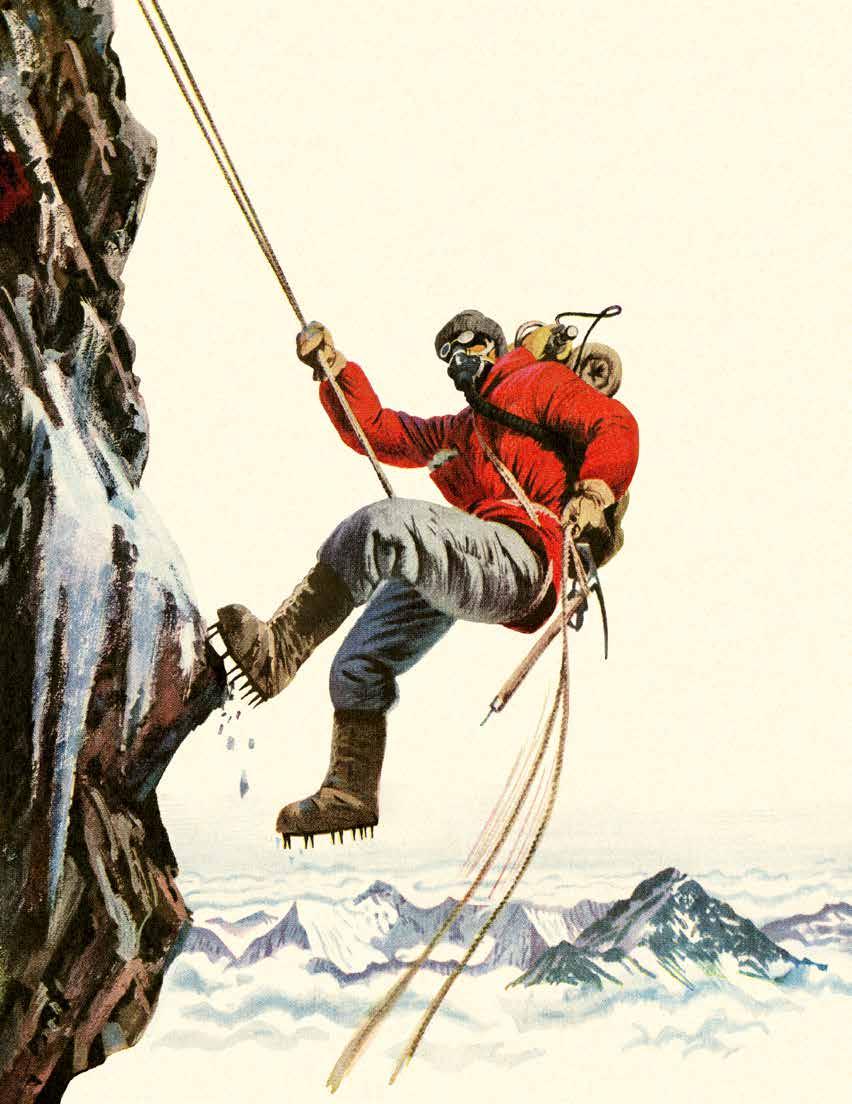
Having to confront adverse physical conditions is something that is part of our human experience, conveniently given opportunity by the extremes of weather we feel with the change of seasons. Adventure on the fringes of the survivable is the point of these stories where human life’s very existence depended on touching the edges of the inhospitable. I feel we have sadly lost some of that these days. Too often young and old alike live these types of adventures on screens rather than making their own. Of this, I am also guilty. These real experiences should not be reserved for a few remaining adventurers looking for a Netflix contract or more motivational speaking gigs. In my younger years, I could not wait to camp or go cross-country skiing during or after a pounding snowstorm, though today with creaky joints the thought gives me bone shivers. I need to change that.
I could start getting motivated with memories of when I was not averse to winter’s icy-frost personality. My favorite snow-cone adventures of yon years were as an exuberant Boy Scout during winter jamborees, campouts, and high-mountain snowshoe treks. Our Scoutmasters would drive us somewhere near Snoqualmie Pass, way off the map and I’m sure far from any search and rescue team and say, “Let’s see what you’ve got, boys.” They were Vietnam War vets and meant to make men of us, knowing survival is not a game to play unprepared. Once in the high-country atop at least a story of snow, we would exhaust ourselves digging snow caves or sawing out big blocks of ivory white chunks of compressed snow, chiseling and forming them into cozy fortresses. All the while, our leaders made sure we peeled off layers of clothes to prevent deadly sweat chills and hypothermia later. Puffing and steaming away with a bunch of my buddies as we fashioned shelters always made me feel euphoric like we were marooned mountaineers on an arctic quest; only we, together as a team, with our wits could survive—cue the distant roar of a polar bear! The adventure and camaraderie made me happy. Later, after a hot meal we had conjured up during some warming time by a blazing campfire, I would wriggle on my dry sleeping clothes and brush the snow and frost off my sleeping bag. Well cocooned into a bed of fresh dry straw, I would wriggle into my bag, my buddies doing the same. We must have looked like Ewoks from Star Wars with tiny, glazed eyes peering under thick wool caps, our sleeping bags pulled up around our chins. With good shelter ventilation our leaders allowed to use candles (gasp!) and by the flickering light, I would watch dense lazy puffs of breath plume from our small breathing holes, linger and rise to fill our homemade castle where ice crystals glittered and danced on the walls as exhaustion pulled us into dreams of tomorrow’s adventures. I am Boreas! It is amazing that those memories lie so readily available in the recesses of my cerebral cortex though forty years have passed since I warmly slept in that sturdy igloo. How that works, but I can’t remember what I went out to the shop to get literally ten seconds ago, I don’t understand. I’m glad one’s short-term memory is the first to go as I want to hang on to the oldies but goodies as long as possible. Could it be that such adventures, the stuff of my own legend, is what gives meaning and a deep gratitude for life itself? Over the years, somehow, they become surreal, almost like a fantastical fairytale that warms me like the warmth I felt cocooned in my down sleeping bag those many years ago. It’s like the legends of ancient cultures but on a small, personal scale. I realize it would be a shame to just rely on the past and not make new tales to tell and embellish; but how?
Tinkering in my shop the other day I took in a conversation of-
-one of my favorite podcasters, Mike Rowe, who was interviewing Cyril Derreamaux; an ordinary guy who has kayaked alone across both the Pacific and Atlantic oceans. The Pacific trip took him ninety-two days… his second attempt to get it done. That type of trip doesn’t even sound possible to me much less desirable. I’ve often wondered what pushes extreme adventurers to take such great risks in the dangerously exposed fringes of what nature has to offer. Perhaps there is insight into what Cyril said when interviewed by Adventure Journal; “Being on your own, brings a whole set of difficulties because you have to be aware of how you are mentally, physically, emotionally, but also deciding you make your own choices.” That is the stuff of legend right there!
I wonder if eons ago as village elders re-lived and wove their tales of survival, there was a first telling of a character who would one day become Ullr or Boreas; there had to of been, along with an enthralled child begging to hear it again and again. And I would bet that the old man or woman telling the tale of defying the odds of nature might have been thinking of themselves in their younger years doing what needed to be done to survive their harsh environment. Maybe they were telling it to inspire the younger ones whose day will come, that they also may face nature’s fury and conquer. So it is that we often like to tell stories of ourselves where we can rejoice and be reminded of our youthful selves when there was clarity in the simple but serious business of surviving the rigors of life.
you are never too old
Thus, winter is an opportunity for all of us to experience the old and the new. You are never too old. Eighty-year-old Yuichiro Miura summited Mount Everest in 2013. He first set the record at seventy and reclaimed it at eighty. I won’t be planning that trip anytime soon, but what can I plan and do? With the dramatic rise in various forms of dementia, we’ll be doing or brains a favor. Emerging studies show that combined with a healthy lifestyle, making new memories through consistent mental and physical challenges builds what is called cognitive reserve, helping you better cope with the natural effects of aging.
So, here is my challenge, legendary reader. Take time to tell your stories. Your experiences have meaning to you, your children, and grandchildren. They can inspire and motivate others to a far greater degree than any digital drama they may engage. Next: As the snow flutters and the wind blows, find a way to again get out there and feel the joy of it. Young or old, you only have so many chances to feel the gentle cool of snowflakes on your tongue or the tingle of toes as they rewarm after a snowy chill. Do it for you. Do it for others. And do it because you have the wonderful gift of life, creation to enjoy and legends to tell.
A LABOR OF LOVE
...and what the farmhouse held diane conroy by
Since 2003, actually since 1965, if I really think about it, since 1926, or really more correctly since 1885, the Farmhouse in Genesee carried hundreds of stories of the lives lived within. Each generation worked diligently to preserve those stories, Each succeeded with this work and passed the stories onto the next. They gathered original 1884 Land Patents, other land documents, everyone kept journals, saved letters, books, photographs and preserved and preserved and preserved again.
I learned about this place when I was 6 years old, living with our story-telling Grandpa. Never in my wildest dreams did I think it all might still exist by the time I was an adult.
But, it does.
Since 2003, we’ve had U of Idaho and WSU students passing through, little children and visitors of all ages, along with historical advisors, artists and grant folks. We’ve had family professionals who just happen to be experienced Custom Home Restorers, Roofers, Bronze artists and Electricians and Photographers. And just when I thought this was a new thing, I read that Genesee students visited on a regular basis over 100 years ago, in 1912.
The 1878 Log cabin was restored, the 1880’s Curio cabin and the c.1873-1904 Farmhouse and 1913 yard fountain as well. We gathered every year and sometimes twice a year to compare notes and help John, Mike, Joyce, Joe, Nate, Dave, Randy, Brad, Jake and so many others match older pieces found stored over the Log cabin. The pieces that the U of Idaho students found when they excavated this area during a 2007 History class semester. The class that I was able to contact because one day I was driving off and Janet Lorang threw me the phone book to call University of Idaho departments.
But what is still undiscovered is the depth of the first-hand documentation found in these buildings. These discoveries are still happening, daily, and are beginning to be added to our Non-profit website. www.WhiteSpringRanch.org.
We have over 9,000 photos on our Facebook page so far.
Each restoration escapade is a story in itself. I still relive them as I walk through the paths to the Log Cabin porch and Curio and Farmhouse. My footsteps carry me through not just historic times, but times of work parties and little children visiting. Thinking of the snow on the ground, the beautiful fall leaves and spring bulbs.
I am in Portland now, to come home to family and to carry myself away from an all consuming project. Now the university students are handling Open Houses and some special events. They are preserving more letters just found and adding their own perspective to the nuances of the non-profit. I am working on the website mostly, to focus my time on creating a resource that can be more easily shared online. The artists in the family still want to gather for restoration and maintenance. The ceilings of the downstairs need to be painted. The 1920’s and 1930’s Depression era Genesee News still need to be put in order by date. It is continuing.
But what the Farmhouse holds is a almost a century long project, or one that will at least last for a very, very long time. I want to share some of those things with you that are appropriate for this Valentine time of year.
“1918, War Activities, (Pvt. Henry Lorang to his fiance’)
Camp McArthur
Base Hospital, Waco, Texas
January 26, 1918
My Dearest Marguerite,
This morning, when we assembled for reveille, it was just six o’clock, our regular time for roll-call, and I was beginning to celebrate my thirtieth birthday, for I was born at six a.m.
I regret very much to have to spend this day away from you and all who are dear to me, but, I hope that, after all, I am spending it to the best advantage for all of us.
Since ten of us out of our squadron were transferred today to the hospital corps. as hospital- attendants, I feel that, maybe, I can do more to comfort the sick and dying, for they were very much in need of help. The aviation section here has about twenty-thousand men and each squadron about two-hundred and they all supplied some men for this temporary relief.
This is the base hospital and in the various wards put together, there are something between fourteen to sixteen hundred patients. These patients, however, are not all from the Aviation section for there are three other Camps here, the infantry, cavalry, and artillery, and these are very large sections themselves. I cannot estimate the number of men, all told.
Now don’t worry about me, sweetheart, for you know I am in perfect health and have always been of a strong constitution so am not in the least afraid myself.
If I get transferred permanently, you and I will be in the same line of work. I have thought that I can stay in the Aviation Signal Corps., for I think it is more invigorating. It is outside work, while this is all inside.
I called for you everywhere by telephone from Fort Wright and wasn’t able to locate you. How I longed to hear your voice just once more before I must leave, but, four P.M. came, and all of us were summoned to leave, at five, for Kelly. So we went and I wasn’t ready. You must have heard of my trying to get you by long-distance, haven’t you?
I have thought often of sending you a telegram but I know I could not hear your voice anyway so I did not do it. You may notice that I have a different color to my ink in the last few lines, well my pen went dry, so I came over here to the Y.M.C.A building to finish my talk to you.
You may think that I am a silly “man”, see I’ve quit saying “boy”, but I am going to tell you anyway. For a while I thought of sending you a telegram to get married by wire, before I was thirty, and you could still stay with your work and I could have all the more to fight for. Then I could know that you, above all, are my wife and I could make my allotment to you. Even now, that I think of it, a thrill of joy goes through me and I wonder why I did not do it. It intoxicates me, dearest, I wish it were true.
This is how it is; every man had to make an allotment of fifteen dollars to someone or the Government would take it by compulsory allotment and keep it for him until after the war and give him four percent of the money so allotted. So, I made my allotment to Bertha (Henry’s sister) and told her to put it in the bank for me and, whenever I want any, to send it to me. I instructed the bank to tend to my account and help Bertha in my deposits.
Now all of the married men made their allotment to their wives, and in doing so, the Government added a like amount to it for the support of the wife. If the man had a wife and a child, then, for every fifteen, the government added twenty five, or at the rate of ten dollars for every living child.
If we were married the Government would send you fifteen and I would have to send you fifteen also, and I could easily spare at least five more each month, so you would get thirty-five and then for spending money- laundry etc – so I would be getting money equivalent to forty-five per month and room, board, and all of my clothes which is equal to, at least, seventy-five dollars.
The law is that every soldier must keep anyway two and a half of his salary and the rest he can send home. I don’t spend much now for all I buy is stamps and a little smoking, for I haven’t been up town since I came here. I don’t care to go out for there is nothing to attract me. The boys always talk of the pretty girls and I always say, pooh! What do I care for all of your girls? They do not attract me there’s only one I care about and she’s not in Texas.
But, I may go up town some time to a show & to see the city and maybe to a K.C. dance. These dances are given just for soldiers’ benefit and are free they tell me.
You, have asked me to say so if there’s anything that you can send me, and I reply by saying that I want your latest photograph either in your uniforms or civilian clothes, for I did not take anything like that along, to my regrets now, for I have often wanted to kiss you in effigy as I was want to do before.
Now send me the sweetest one you can get about a post card size or smaller- not larger. All I want is the head and bust so it will be small enough to carry around.
The Y.M.C.A is clearing now so, goodnight dearest girl, I am your Henry”
This is one of over 250 WWI letters, written between Henry and Marguerite, one of Henry’s letters over his entire life of 80 years, not including his journals of his entire life or the ones of his father John Lorang’s letters and journals. Or his mother Mary Lorang’s letters and journals. Or Henry & Marguerite’s children’s letters or journals. Or even John & Mary’s parents, letters and journals….. or the hundreds of photographs that illustrate it all.
We are the White Spring Ranch Museum/Archive Library of Genesee, Idaho. Www.WhiteSpringRanch.org
By
SEMIQUINCENTENNIAL? What is the HAYLEY NOBLE
It’s 2026! And that means it’s officially the Semiquincentennial, which is just a fancy word for the 250th anniversary of something. In our case, it’s the 250th anniversary of July 4, 1776, on which the Second Continental Congress adopted the Declaration of Independence. The Declaration stated that the Thirteen Colonies were no longer subject to British rule and that all men are created equal with unalienable rights, that among these are life, liberty, and the pursuit of happiness. This July 4th, the United States commemorates the Declaration of Independence. The Semiquincentennial, or America 250, has been in the works since 2016, and includes a national America 250 Commission, White House Task Force, Idaho State Advisory Council and Agency Task Force, and local commemoration efforts like the Moscow America 250 Commission and the Committee for America 250 at the University of Idaho. The Moscow America 250 Commission, led by the Latah County Historical Society, and comprised of key stakeholders and partners, will plan commemorative activities throughout the community through 2027. The launch of these local activities began with the touring Smithsonian Museum on Main Street Voices and Votes: Democracy in America exhibition at the University of Idaho Library and its accompanying public programs. Community activities will continue throughout the year and include several notable anniversaries in addition to the 250th, including the 50th of the Moscow Farmers Market, the 120th of Moscow’s Carnegie Library, and the 140th of the McConnell Mansion Historic House.
For some, this may be news to you or maybe you heard about it from the new PBS series, The American Revolution. This new series is bringing Revolutionary history to the forefront for many audiences and centering the voices of women, Native Americans, free and enslaved Africans, poor Irish immigrants, and German mercenaries, in addition to the Founding Fathers, and demonstrating that the Revolution means different things to different people. As one of the series’ directors, Ken Burns has been promoting the project and reminding viewers that this story is incredibly inspiring but also dark and complex and meant to spark conversations beyond our romanticized depictions. One of the series’ historians, Kathleen DuVal, remarked that “people want to be reminded why having a republic is important and what people did to get it.” Since the Revolution, anniversary commemorations have served as those reminders. The Centennial celebration in 1876 came a decade following the Civil War, as the country was amidst Reconstruction. This era witnessed a nation grappling with the abolition of slavery, economic depression, mass migration, and reuniting the Union. It was decided that in conjunction with the anniversary, Philadelphia would host the Centennial International Exhibition from May to November 1876. It was the first world’s fair hosted in the United States. More than 200 buildings were constructed for the fair including buildings for 26 of the 37 states in existence. The exhibition was designed to show off the nation’s “industrial and innovative prowess.”
One of the impressive items showcased from France was the right arm and torch of the Statue of Liberty. When the government could not finance the fair, wealthy Philadelphians raised funds. In doing so, they excluded lower and working-class Americans from attending or exhibiting at the fair and instead, showcased American upper-class elitism. Despite this, more than nine million people attended the Centennial Exhibition and celebrations in Philadelphia that year.
Additionally, on July 4, 1876, the National Woman Suffrage Association interrupted the celebrations to present the “Declaration of Rights of the Women of the United States” to the Vice President. Before reading and handing the document over, Susan B. Anthony pleaded “We ask justice, we ask equality, we ask that all the civil and political rights that belong to citizens of the United States, be guaranteed to us and our daughters forever.” Anthony and the other members of the Association then distributed the Declaration throughout the Exhibition. It’s worth noting that Idaho granted women’s suffrage in 1896, only 20 years later. The 19th Amendment was ratified in 1920 - 44 years since Anthony presented the document at the fair.
Subsequently, the 150th Anniversary in 1926 hosted the Sesquicentennial International Exposition – another world’s fair in Philadelphia. Organizers relocated the fair to South Philadelphia and drained a swamp to do it. That huge expense, in addition to construction of the Sesquicentennial Stadium and Liberty Bell replica, left the city in crippling debt. Sheets of rain also meant that attendance was far lower than predicted. The Exposition lost money, and on August 25, 1926, Variety newspaper coined it “America’s Greatest Flop.” The Exposition was not the only activity, but it was the most visible next to commemorative coinage and stamps.
For those around from 1971-76, the Bicentennial was almost the complete opposite, with the large, celebratory, patriotic sentiment: the “spirit of ‘76.” The nation was recovering from the Vietnam War, the Watergate scandal and Richard Nixon’s resignation, the economic recession, and people looking for positivity amid widespread pessimism. According to the New York Times, the Bicentennial let people surrender to “unashamed nostalgia” and emotion. Part of this was due to an outpouring of artwork in all forms, parades, reenactments, exhibitions, new museums, and romanticizing “the good ole days.” Among the commemoration activities was a wagon trial pilgrimage from the west coast to Valley Forge, Pennsylvania, a British royal visit, special coins, all kinds of sporting events in Philadelphia, and Operation Sail – a ship parade in New York and Boston. Locally, Latah County hosted parades, picnics, square dancing, ice cream socials, music performances, puppet shows, walking tours, and were visited by the wagon trail pilgrimage.
Despite the wave of patriotism and “new nostalgia,” some questioned Nixon’s increased politicizing of the commemoration and wondered if we should be celebrating the Bicentennial at all. This was particularly relevant among Black Americans, given the country’s history of slavery and continued racial inequalities. Others criticized the mass consumerism from all kinds of American brands who used this opportunity to merchandise a host of products with patriotic imagery and logos. People pushed back against the commercialization of the Bicentennial. In 1973, protesters recreated the Boston Tea Party, throwing oil cans into the harbor and calling for “environmental protection, racial justice, an end to corporate profiteering, and the impeachment of Nixon.”
Regardless of how you feel about the Bicentennial, its lasting legacies are still felt today. Many communities centered local history in their Bicentennial celebrations and created enthusiasm for all kinds of histories and stories. The book and television series, Roots by Alex Haley, ignited interests in genealogy and family history, with unprecedented visits to the National Archives for family information searches. Similarly, oral history interviews gained popularity, and the Smithsonian Institution began its oral history program in 1973. Many of the Latah County Historical Society’s oral history interviews date from the 1970s to document community histories amid the Bicentennial. Another example of this grassroots history is local historic preservation. Although the National Historic Preservation Act has been around since 1966, the Tax Reform Act of 1976 created greater incentives for preserving historic buildings. This new law made historic preservation more appealing to private property owners, thereby increasing the likelihood of adding properties to the National Register of Historic Places. Communities took advantage of these programs, with many of Moscow’s national register nominations dating to the 1970s. Genealogy, oral histories, and historic preservation are all still valuable tools in our local history arsenal.
This also matters for our local economy. Organizations across the country anticipate a surge in tourism in 2026 related to America 250 events. Similarly, the Route 66 Centennial brings additional attention to cross-country travel. Many outlets are already reporting boosts in early bookings for the year and estimating once of the biggest travel years in recent history. This means opportunities for local economies to harness the momentum for the commemoration for their communities.
After all this, you may be wondering why America 250 matters?
In the past, commemorations around anniversaries have been a uniting force, bringing community divides and bringing attention to important history, but also fraught with protests and discussions about who is left out of the conversation. The anniversary of the Declaration offers chances to have nuanced and complex conversations about history and our founding principles that are needed to understand our current context. This anniversary is no different. There will be celebrations, but there will also be protests and those asking why we are celebrating at all.
The Declaration was an aspirational document and remarkable for its time. It influenced numerous other revolutions across the world following 1776, as the first successful declaration of independence in history. The document “enshrined what came to be seen as the most succinct and memorable statement of the ideals on which that nation was founded: the rights to life, liberty, and the pursuit of happiness; the consent of the governed; and resistance to tyranny.” In doing so, the nation began the on-going “American Experiment” in democracy, unsure if it would succeed. We are still taking part in that experiment.
With so much emphasis on tourism and history, museums, historical societies, and other cultural organizations have been thinking and preparing for the Semiquincentennial for years. The Moscow America 250 Commission seeks to understand how our region has changed in fundamental ways over the past 250 years. These changes have in turn helped create change at the state and national levels. We will examine this history with programs that add approachable, educational, and thoughtful discussions to the commemoration. For the most up to date information, check out https://www.latahcountyhistoricalsociety.org/america-250. You can also view some of the Latah County Historical Society’s Bicentennial items at the Latah County Courthouse lobby display case.
the Shenanigans Otis! Oh,
Temple Kinyon By
Episode 33 - Banshee Boys
“Hi, Mrs. Smenk!” Otis exclaimed as he opened the door to her station wagon and flung himself into the back next to Fertis. “Thanks for picking me up.”
“Certainly,” Fertis’s mom said. “Ready to party?”
Fertis’s birthday was coming up, and to celebrate, he’d invited Otis, Clark, Cam, and Butch to go to the roller rink and arcade at the mall. It was the early 1980s on a Saturday in February. Everyone who was anyone would be at the mall.
Mrs. Smenk had eighties tunes on the radio and was elegantly enjoying a cigarette, being careful to have the smoke slither out of the cracked wing window, as she picked up the rest of the boys.
The friends chatted up a storm on the short, twenty-minute drive. When Mrs. Smenk pulled into the crowded parking lot, she maneuvered over to the curb in front of the entrance at the end closest to the rink inside. “Go and wait for me outside the rink while I go find a spot to park,” she said. “Do not run amok. Do not cause trouble. Do not act like banshees.”
The boys replied in unison, “Yes, Mrs. Smenk,” and then bailed out of the car. They pushed their way into the mall and stopped just inside the door, taking it all in. The smells from the nearby burger joint, popcorn shop, and cinnamon roll bakery wafted through the air. The hum of hundreds of mallgoers filled the long corridor, and the dazzle of pink, red, and white showcased all the shop entrances, decked out for Valentine’s Day five days away. The mall had it all.
The boys shuffled to the roller rink entrance to wait for Fertis’s mom.
“So, question of the day,” Butch said. “Just exactly what is a banshee?”
The boys snickered. Their parents had always warned them not to misbehave or act like banshees, yard apes, or hooligans, especially when at the mall.
“Who do ya think will be here today?” Clark asked.
“I know Carla, Laurie, Jodi, Angela, and Lovennia are coming because they made a huge point of telling me yesterday at school,” Fertis said. “I lied and said I’d changed my party to another day, but they weren’t buying it.” He rolled his eyes.
“Guess we have partners when they call the couples skate,” Cam pointed out.
“Or that’s when we go to the arcade,” Otis chimed in. The fiasco with Carla a few months ago during a vicious snowball fight had left Otis wary. He liked Lovennia a lot, but her being friends with Carla left him confused. He felt exhausted around them both, trying to decipher what to say, what not to say, what to do, and what not to do.
“Why do girls have to be so complicated?” Clark asked, as if he were reading Otis’s mind.
“Fellas, let’s make a rule that banshees don’t need any stinking girls to mix up their lives,” Butch said.
“AGREED!” the boys said in unison.
About that time, Mrs. Smenk came rushing up. “Hello, boys! Are ya ready?” She opened the door into the massive cavern of a rink and ushered the crew inside.
Let It Whip by the Dazz Band blasted over the speakers as dozens of skaters jammed out rolling around the large oval-shaped rink. Dim blue, red, and green lights illuminated the darkened skating area, and a mirrored disco ball hung in the center of the ceiling, intermittently casting sparkly dots on the floor and walls. To the far left, the snack counter offered fluorescent overhead light, tables and chairs, and a few comfortable nooks for parents or babysitters to hang out if they didn’t want to skate. To the right just inside the door stood the skate rental area, which is where Mrs. Smenk steered the boys.
The group bellied up to the counter, shouted out their shoe sizes, and received a pair of boot skates, made from tan suede and adored with orange wheels and an orange toe-brake. They ambled over to the nearby benches to change into their skates and hand their sneakers over to Fertis’s mom, who deposited them into a big canvas bag she’d brought from home.
“I’m headed over to the snack counter to get a soda,” she told the boys. “I brought a book, so you guys have fun while I ignore you and read. If you end up bleeding or with something broken, come get me. And remember …”
The boys interrupted, and in unison replied, “Don’t act like banshees.”
She giggled and waltzed off, leaving the boys standing in a huddle. “Shall we venture out into the great unknown?” Cam offered, gesturing to the rink.
The boys skated toward one of two openings in the oval. They stepped out onto the floor and started to skate to Love Plus One by Haircut 100. After about three warm-up rounds and scoping out who else was skating, they started to race each other, being careful not to bug the other skaters, most of who were their friends. The boys had become agile on skates over the years and zipped expertly around the rink in a race with each other that had no beginning or end. Around and around, with no one in the lead or last place.
Eventually, Fertis skated over to the edge, signaling for a regroup. “Wanna go play some games?” he suggested.
The group skated out of the rink and to the little side room that housed the arcade near the snack counter. They waved at Fertis’s mom, who had settled into one of the nooks with a large soda, basket of fries, and fat book in her hand. She smiled and waved back. “We’re bein’ good, Ma!” Fertis shouted to her. “No banshees here!” She smiled and gave the okay sign.
The boys rolled into the arcade, their senses assaulted with the sounds and sights of pinball machines, PacMan, and all the other gaming delights of the day.
“Pole Position is open! Happy birthday to me!” Fertis shouted and roared over to the two connected cabinets that housed the popular racing game. He sat in one, and the others did a quick round of Roshambo to see who would challenge him first. Cam won and jumped into the other cockpit. They each deposited a quarter and the screens flickered to display the same race track. They both took their respective steering wheel and the action began.
After several rounds of each boy playing birthday boy Fertis—even if he lost—they began an informal, single-elimination tournament. Butch ended up as champion. Each friend chipped in to buy him candy and a soda from the snack counter. Otis also bought popcorn to share and two sodas—one for Fertis for his birthday-
-present, and Clark purchased a large soda and added a plate of nachos to share. Cam rounded out the faire with his own large soda and a big, doughy pretzel to divvy up. They skated their feast over to an open table near the edge of the rink and settled in to watch the skaters and chow down.
“There’s your bro, Otis,” Fertis pointed to Chuck, who swung wide with his skate path and headed toward the boys. They stuck their hands out and Chuck high-fived them as he whizzed by on his skates.
“And there’s your other brother,” Cam said, pointing out Cletis, who twirled around to skate backwards and wave to the boys as he rocketed past them.
“I love the skating rink,” Otis smiled. “It’s one of the few places my brothers don’t torment me. I guess going around in circles puts them into a good mood.”
“Oh, great,” Fertis said under his breath. “Here come the girls.” Carla led the charge, with Angela, Laurie, Jodi, and Lovennia following close behind.
“Hi guys,” Carla said with a sparkly smile. “Happy birthday, Fertis.”
“It’s not until Wednesday,” Fertis said, to which Clark kicked him under the table as the signal to be nice. “I mean, thank you, Carla.
Nice of you to remember.”
Otis rolled his eyes.
“How come you’re not skating?” Angela asked.
“I know it’s difficult to tell, but we are eating and there’s no food or drink allowed on the floor,” Cam said, and swept his hand in a grand gesture over the snack spread.
“Ha, ha,” Jodi retorted.
“We just got here and thought we’d come over and say hi,” Lovennia said.
“Hi,” the boys mumbled and then went about the business of eating.
“I guess we’ll see you on the floor,” Angela said, and the group walked off in an exaggerated huff, thinking it would make the males take notice.
They didn’t.
After quickly devouring the feast, the boys went back on the floor to skate. They practiced their backward, crossover, and heel-toe skating moves. The staff had moved several large, inflated hearts to the center of the floor, and Cam attempted a bunny hop over a small one. He stuck the landing, and everyone on the floor cheered. Seventies and ‘80s music thumped, and the lights strobed and flashed. A good hour passed and suddenly, the DJ played YMCA by the Village People, bringing everyone wearing a pair of skates onto the floor. The mass all skated in unison, singing at the top of their lungs. When the chorus blared, they threw their arms up in unison to form the Y, M, C, and A.
The DJ capitalized on the YMCA energy, and as the song faded, he expertly transitioned into September by Earth, Wind, and Fire, and shouted, “Everybody, conga!”
Several left the floor, knowing the conga could get wild. To conga, the skaters would grab onto the waist of the person in front of them and follow behind, with the leader choosing the skate path and speed. At any moment the line could get going so fast, the leader could maneuver just right and whip off the end few skaters and send them careening off the floor or sometimes, into the wall. The boys started to merge into the center of the line, knowing exactly what being at the end involved. Carla and the rest of the girls also merged into the center of the line and in the crowding, ended up positioning themselves among Otis, Fertis, Cameron,-
-Butch, and Clark. The boys eyed each other, perplexed that they had somehow let this happen when they’d made the banshee pact to stay clear of the girls.
September turned into Physical by Oliva Newton John, and the skaters chugged behind Chuck, who had become the leader, weaving in snake-like fashion around the rink. Some detached, shortening the line. Eventually, the conga consisted of Chuck in the lead, then Cletis, then the mish-mash of Otis, Fertis, Cam, Clark, and the girls.
The boys looked at each other with an unspoken, “Do we dare hang on, or do we let go and end it?”
Otis nonchalantly shrugged, signaling he was hanging on. His pals did, too. And so did the girls.
Cletis and Chuck looked at each other with mischief in their eyes and sped up. Faster and faster, Chuck skated in the lead, making the rest of the group speed up to hang on. At the very end of the line, Clark held onto Jodi, who held on to Cam for dear life. Around and around, faster and faster.
Jodi finally had to let go before she lost control, which also detached Clark, who expertly skated through one of the openings, arriving safely near the benches by the rental counter. Jodi crashed into the wall two feet away from the opening.
Cam tightened his grip on Laurie’s waist and shouted, “Hang on!”
But Laurie couldn’t, which sent her and Cam careening into the wall by the snack counter. This left Chuck still in the lead, followed by Cletis, Carla, Otis, Lovennia, Butch, Angela, and Fertis. “Hang on!” Otis yelled to Carla and over his shoulder to the rest. Chuck swung in tight near the inflated hearts, then quickly swung wide and fast, sailing Fertis, Angela, and Butch into the wall, just shy of an opening.
Otis felt a pang of resentment. He’d made the comment that his brothers didn’t torment him at the rink, and here they were, trying make him and his friends look bad in front of everyone. His resolve made him loop his fingers through Carla’s belt loops. “Don’t let go, Carla!”
He felt Lovennia tighten her grip on his waist and wished it was because they were couples skating and not trying to prove to his stupid brothers that they could keep up with them.
Around they went to the beat of Rock the Casbah by The Clash. Chuck pushed forward as fast as he could, but the five stayed connected. Someone chanted, “Otis! Otis!” and sent the crowd into a frenzy. At some point everyone knew the DJ would stop the music, but for now, he ironically faded into Hurts So Good by John Cougar.
Suddenly, Chuck unexpectantly swerved, which sent a ripple effect through Cletis, Carla, Otis, and Lovennia. It hit like a shockwave, and they lost their grip. Arms flailing and wheels skidding, the four sailed through one of the openings. Unable to regain their balance to put the brakes on, they all jetted past the benches by the rental counter. Leading the pack, Cletis instinctively stuck out his arms to avoid a collision with the glass entrance door. It swung open.
Cletis, Otis, Carla, and Lovennia sailed through and out into the mall onto the shiny tile. Cletis skidded to a stop, but the other three smacked into him, taking them all down in a heap.
“Otis, are you okay?” Clark hurriedly skated out of the rink and up to the pile.
Otis scrambled to get untangled, yelling at Cletis, “What were you thinking?!”
“ME?!” Cletis yelled back as he managed to stand up and keep his balance. “YOU coulda let go at any time! But no, you had to-
-prove something to your girlfriends.”
“They’re not my girlfriends!” Otis shouted and slugged his brother in the arm.
The beat of shock that hit Cletis gave Otis a fraction of a second to realize what he’d done, calculate the retaliation sure to come, and use the toe brakes on his skates to take three or four steps for momentum and then skate down the mall, away from a very ticked off Cletis.
“Oh, Otis! Stop!” Chuck yelled, as he skated out of the rink into the mall and watched in horror as his brothers sped away. “You can’t skate in the mall!”
“Well, you’re out here with skates on, Mr. Roller Police,” Fertis exclaimed as he skated out of the rink and next to Chuck. “We better go get them before mall security does!”
“Roller police to the rescue!” Butch yelled, and took off in the direction of Otis and Cletis.
“Craaaaap,” Chuck exclaimed. He pushed off and started chasing his two brothers and Butch, with Fertis, Cam, and Clark hot on his heels.
The girls obediently started to skate back to the rink, and about that time, Mrs. Smenk walked out of the skating rink only to see the boys take off. “What happened?!”
“Otis slugged Cletis, and then took off,” Carla told her.
“For crying out loud,” Mrs. Smenk muttered and started jogging down the mall after the boys.
Meanwhile, Otis expertly zipped by the large department store, the frozen yogurt shop, and the massive music store packed with all the records and cassettes you could imagine, to get away from Cletis.
“She’s holding
his hand,”
Otis whispered
Cletis trailed behind Otis, but only by a short distance, and Chuck, Fertis, Butch, Cam, and Clark slightly behind him.
“Go, Otis!” Fertis yelled. “You’re faster than he is!” Otis stayed true to course but raised his hand in a peace sign to signal he’d heard his friend cheer him on.
Down the mall the boys sailed, with shoppers stopping or taking notice in wonderment at the excitement. Otis looked over his shoulder every few seconds to see if he was keeping his lead. A zigzag in the mall hallway loomed ahead, but Otis expertly maneuvered around people and benches to make the short corner of the zig, then the next corner of the zag. Cletis was still hot on his heels. As Fertis, Cam, Butch, Clark, and Chuck made their way through the zig, then the zag, they watched in horror as the whole thing came undone.
Something made Otis stand straight up in his skates and slam on his right toe brake. Cletis didn’t anticipate the quick deceleration of speed, slammed into Otis, and they both went spinning and flailing, ending up in a heap on the floor.
“Why the Sam Hill did you do that?!” Cletis yelled, trying to untangle himself from Otis.
Otis didn’t fight back. Didn’t say a word. He just pointed. Cletis looked where his brother indicated. The rest of the gang skated to a stop next to the pile-up and looked, too.
“What are we looking at?” Fertis exclaimed quickly.
It took a moment for the gang to see what Otis saw. But when they did, they, too, watched in silence. Across the mall hallway and several stores down, two people stood at the window leading into one of the big jewelry shops. There stood Otis, Chuck, and Cletis’s older brother, Otho. And he wasn’t alone. A beautiful young woman with flowing brunette hair stood next to him. Bright smiles plastered across their faces as they peered at something in the window and pointed.
“She’s holding his hand,” Otis whispered barely loud enough for the rest of the boys to hear.
As if on cue, the couple looked adoringly at each other and kissed, oblivious to their audience.
“Who the Sam Hill is that?” Cletis asked.
“No clue,” Chuck said. “Do you know, Otis?”
“No idea,” Otis said, as he untangled himself from Chuck, but stayed seated on the floor next to his brother. “I thought he wasn’t going to be home on leave until tomorrow. And when did he get a girlfriend?!”
“Should we go over there?” Chuck asked.
In unison, Cletis and Otis firmly said, “No.”
“Is this good news or bad news?” Cletis asked.
Chuck shrugged.
“Could go either way,” Otis said, his eyes glued on the pair.
Cletis nudged Otis, “C’mon.”
Chuck helped his brothers stand up. “Guess we’ll find out what’s going on whenever Otho decides to show up at the house,” he said.
“He’s so gushy over whoever that is, he didn’t even notice us,” Otis said with a hint of annoyance and dash of sadness. “The whole mall noticed us. But not the two kissy kissies over there.” He rolled his eyes and shook his head.
Cletis put his hand on Otis’s shoulder. Antagonists had morphed into comrades, brought on by witnessing something they most likely shouldn’t have.
The crew started slowly skating back toward the other end of the mall, silent and somber.
“Guess this means Otho isn’t a banshee,” Otis blurted out, sending Fertis, Clark, Cam, and Butch into a fit of laughter. Cletis and Chuck just looked at each other and shrugged but joined in the jocularity.
By the time they hit the zigzag, they were laughing so hard they could hardly skate. Then they heard it.
“BOYS!” Mrs. Smenk stomped toward the group. “You better have a good reason for running off like that!”
“Technically, Mom, we didn’t run away, we skated,” Fertis said, and roared with laughter right along with his friends. He skated up to Mrs. Smenk and put his arm over her shoulders, knowing she had a sense of humor.
Mrs. Smenk looked hard at the group, but the boys saw her fighting back a smirk. “Just what in the blazes were you thinking?!”
“We weren’t, Mrs. Smenk,” Otis answered. “But what did you expect from a bunch of banshees?”
Introducing: TRISTATE DERMATOLOGY
Trusted skin care, focused on prevention and peace of mind for adolescents and adults. Opening late Fall.
Your skin tells the story of your health, experiences, and journey. Our dermatology team at TriState Health is committed to keeping that story a healthy one. We believe in not only treating skin conditions but also building lifelong relationships. With a strong focus on cancer prevention and early detection, our dermatology team is here to help you maintain healthy skin for life.
Choosing TriState means you're choosing comprehensive, collaborative, and patient-centered care for you and your family, right here in the Lewis-Cark Valley. Sta ed by Carol Chandler, APRN-BC, a trusted, expert provider with decades of experience caring for our community, so you can focus on living your life with confidence.