The Essential Guide to House Plant Care: Helping Your Indoor
Garden Thrive
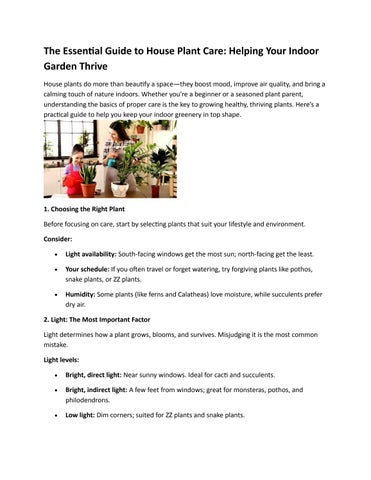
House plants do more than beautify a space—they boost mood, improve air quality, and bring a calming touch of nature indoors. Whether you're a beginner or a seasoned plant parent, understanding the basics of proper care is the key to growing healthy, thriving plants. Here’s a practical guide to help you keep your indoor greenery in top shape.
1. Choosing the Right Plant
Before focusing on care, start by selecting plants that suit your lifestyle and environment.
Consider:
Light availability: South-facing windows get the most sun; north-facing get the least.
Your schedule: If you often travel or forget watering, try forgiving plants like pothos, snake plants, or ZZ plants.
Humidity: Some plants (like ferns and Calatheas) love moisture, while succulents prefer dry air.
2. Light: The Most Important Factor
Light determines how a plant grows, blooms, and survives. Misjudging it is the most common mistake.
Light levels:
Bright, direct light: Near sunny windows. Ideal for cacti and succulents.
Bright, indirect light: A few feet from windows; great for monsteras, pothos, and philodendrons.
Low light: Dim corners; suited for ZZ plants and snake plants.
If a plant starts stretching (getting leggy), turning pale, or leaning toward a window, it likely needs more light.
3. Watering Wisely
Overwatering is the #1 cause of house plant death.
Tips for proper watering:
Check soil moisture first. Stick your finger an inch deep—if it feels dry, it’s time to water.
Use pots with drainage holes to prevent root rot.
Water thoroughly until water drains from the bottom; empty the saucer afterward.
Adjust seasonally: Plants need less water during winter.
Rule of thumb: It’s safer to underwater than overwater.
4. Humidity and Temperature
Most house plants are tropical, so they prefer:
Humidity: 40–60%
Temperature: 65–75°F (18–24°C)
To improve humidity:
Group plants together.
Use a humidifier.
Place plants near (but not on) pebble trays filled with water.
Avoid placing plants near drafts, heaters, or AC vents.
5. Soil and Repotting
Healthy roots = healthy plant.
Use:
Well-draining soil tailored to your plant type
o Succulents: sandy mix
o Tropical plants: peat-based mix with perlite
A slightly larger pot every 1–2 years or when roots circle the pot
Repotting refreshes nutrients and gives roots space to expand.
6. Fertilizing for Growth
During spring and summer, most plants grow actively and benefit from extra nutrients.
Use balanced liquid fertilizer (e.g., 10-10-10) monthly.
Dilute more than the label suggests to avoid burning roots.
Hold off fertilizing in winter when growth slows.
7. Cleaning and Pest Prevention
Dusty leaves block sunlight and hinder photosynthesis.
Care tips:
Wipe leaves gently with a damp cloth.
Inspect weekly for pests like gnats, mealybugs, or spider mites.
If pests appear, isolate the plant and treat with insecticidal soap or neem oil.
8. Understanding Your Plant
Every species communicates through its leaves. Learn its signals:
Yellowing leaves: Overwatering or poor drainage
Crispy edges: Low humidity
Drooping: Thirsty or stressed
Brown tips: Hard water or dry air
The more you observe, the better you’ll understand your plant’s needs.
Final Thoughts
Caring for house plants is a rewarding way to connect with nature indoors. With the right light, watering habits, and a little attention, your plants will flourish—bringing beauty, tranquility, and life to your home. Start simple, stay observant, and enjoy the growth (both yours and your plants’!).