


Academy of the Holy Names
Mission Week Journal Vol. 4 (Prayer Companion Version)




Academy of the Holy Names Mission Week Journal Vol. 4
Created for:
Academy of the Holy Names, Tampa
Mission Trips 2026
Black Mountain, North Carolina
Joppa Mountain, Tennessee
La Victoria, Dominican Republic
Orlando, Florida
Plant City, Florida
San Lucas, Guatemala
San Juan, Texas
Washington, D.C. (March for Life)
Concept Creation, Editing & Layout
Sister Lisa Perkowski, IHM, Academy of the Holy Names, Tampa
Acknowledgments
Images and Artwork:
Digitized portraits and photography are credited to the SNJM Archives, Portland and AHN Archives, Tampa.
Additional artwork by Lisa Perkowski, IHM
Source for Chronicled Anecdotes:
Rose Descôteaux, SNJM, Yvette Baril, SNJM, and Rachel-Eveline Pelletier, SNJM. Called to Cast Fire (Celle Qui a Vu Loin et Grand - She Who Had Great Vision), trans. Frances Allison, SNJM (Unpublished manuscript, Congregation of the Sisters of the Holy Names of Jesus and Mary).
Reviewers:
Sister Daleen Larkin, SNJM, Jennifer Reina Epps A‘84, and Reagan Franklin
“I have come to cast fire upon the earth and how I wish it were already kindled.”

- Blessed Marie Rose Durocher


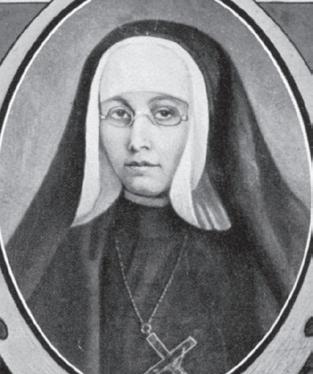

Academy of the Holy Names’ love for mission trips is deeply rooted in the Holy Spirit’s gift of missionary zeal within the charism of the Sisters of the Holy Names of Jesus and Mary. From the earliest years of the congregation, we see this desire to glorify God through the mission of education and faith formation—often in distant places—take shape.
When Mother Marie Rose died on October 6, 1849, only six years after founding the community of forty-four sisters, the loss brought both profound sorrow and uncertainty. Who would guide the congregation as general superior and remain faithful to Mother Marie Rose’s vision? Among the first founding Sisters who had known her best, there were, as one might expect, differing interpretations of how to continue the mission. Each subsequent leader brought her own unique gifts of the Holy Spirit, along with her distinct personality, shaping the congregation’s development in different ways. Yet throughout these changes, the Holy Spirit—source and driver of Christ’s work—brought forth abundant fruit through the Sisters’ fidelity and courage.

e First Five
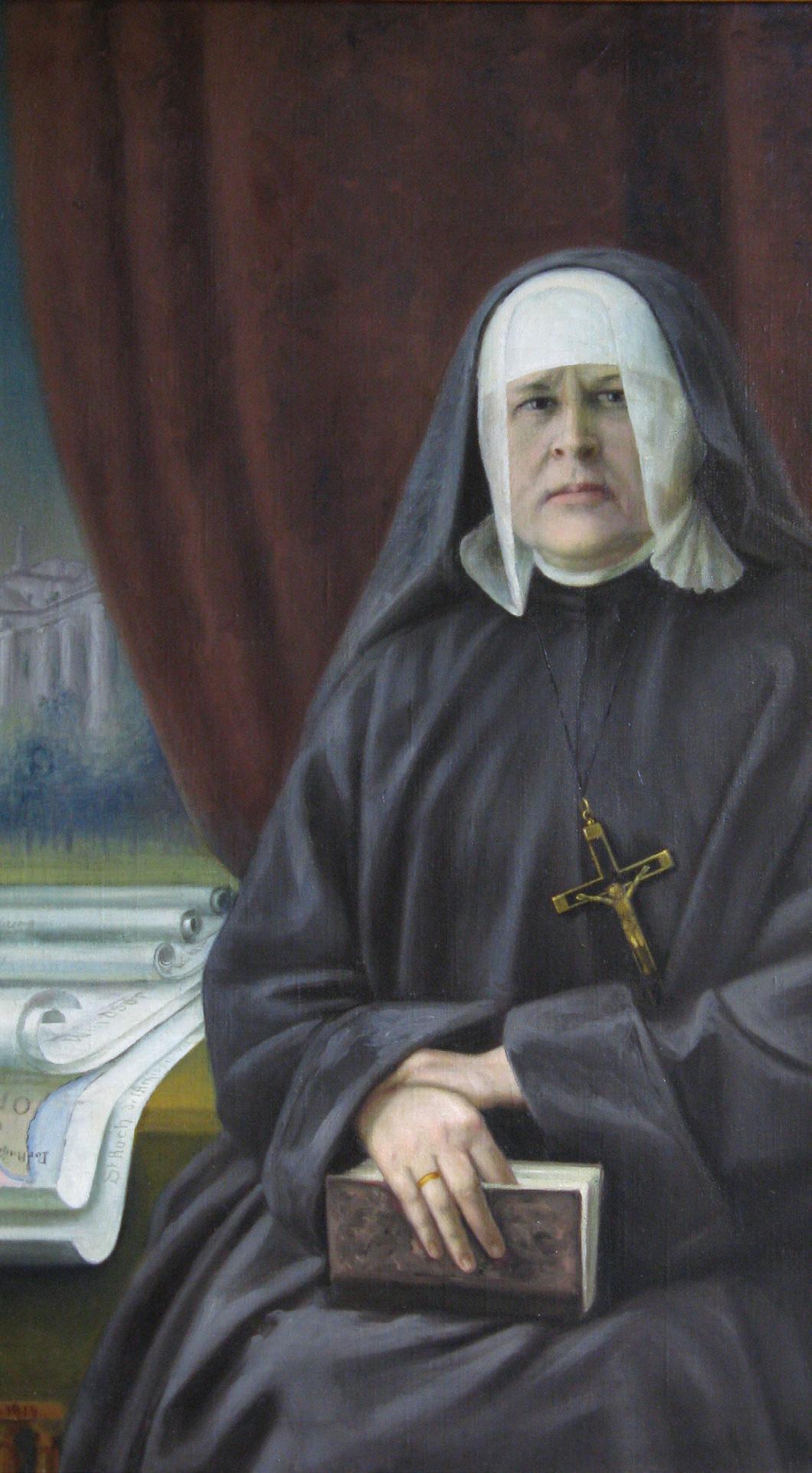
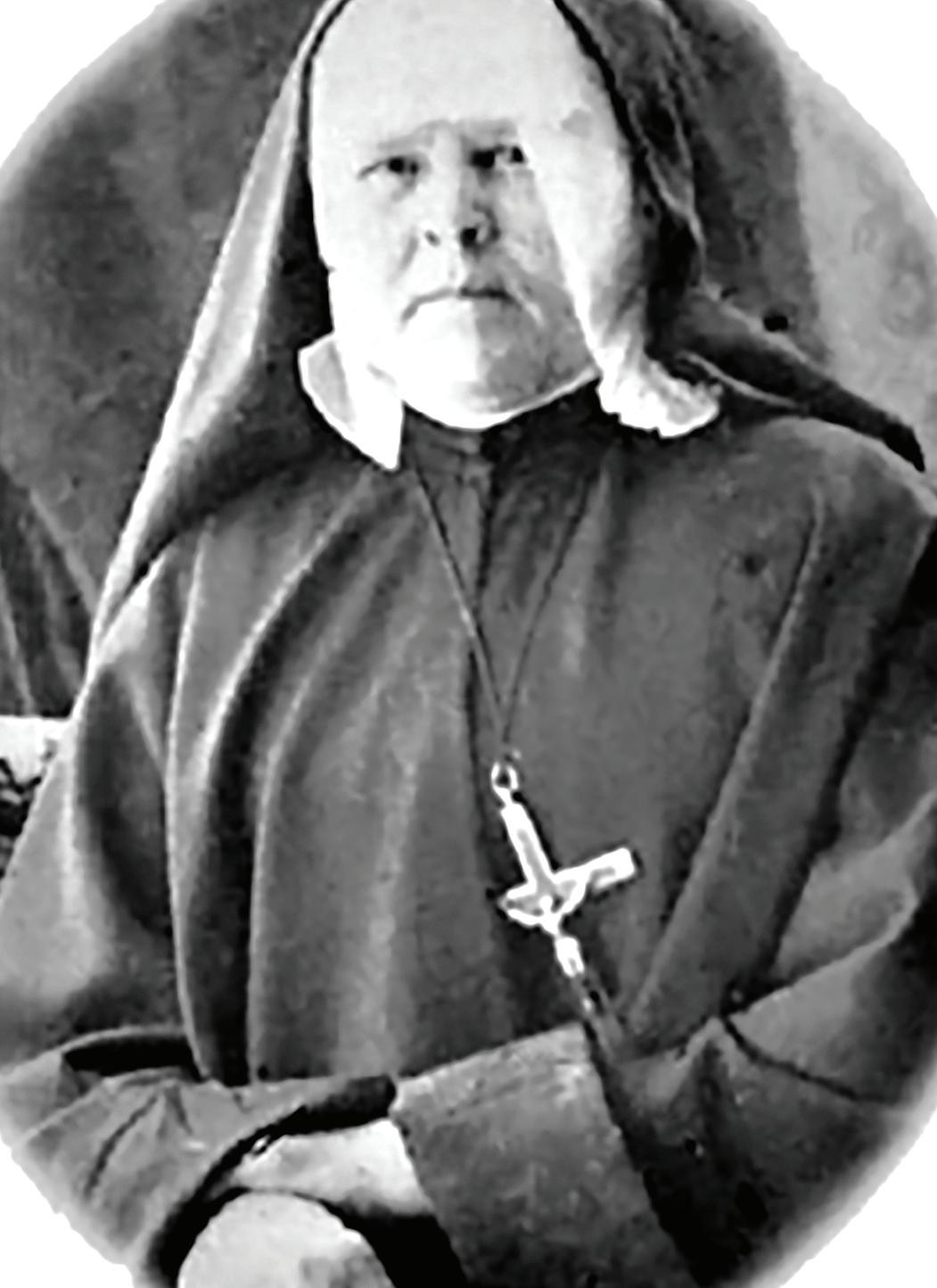
This year’s mission trip journal highlights the life of Sister Theresa of Jesus (née Salomé Martin), the first young woman to join the three foundresses of the Sisters of the Holy Names of Jesus and Mary. Described as “an outstanding educator” and “motivated by a great missionary spirit,” she embodied the congregation’s missionary heart.1 Named the third superior general in
of the Holy Names of Jesus and Mary
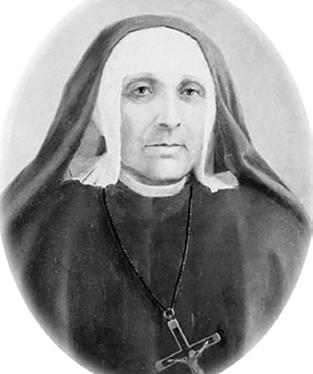
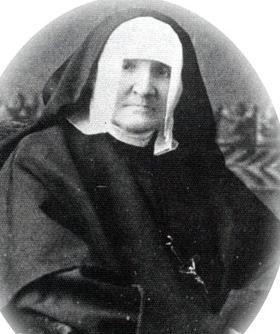
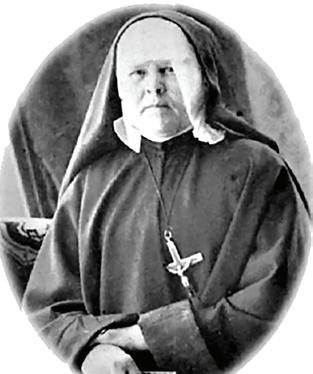



1857-1867, her term of office is renowned for the rapid expansion of the community. She sent 12 Sisters to Oregon in 1859 and was responsible for the foundations in Ontario, New York, California, Florida and Manitoba.
Sister Theresa of Jesus “relied on Providence to move forward and overcome the many difficulties along her path.”2 In this way, she lived the Beatitudes that Jesus proclaimed in his Sermon on the Mount. “Blessed are the poor in spirit” was made visible in her vow of poverty, her complete trust in God’s provision, and her bold willingness to appeal to benefactors so that new schools and ministries might flourish. Even the wealthy were drawn closer to heaven through her invitations to generosity.
As we embark on our mission trips, we seek to deepen our own faith and grow as living witnesses of Christ. This journal invites you to pray with the Beatitudes—Jesus’ standards for the New Covenant. Each daily reflection includes a beatitude, a related passage from Sacred Scripture, an episode from Sister Theresa of Jesus’ service to the missions, and guiding questions to help you integrate these teachings into your own discipleship.

1846
Sister Theresa of Jesus was a dynamic, courageous, and pioneering woman who carried forward the dream of Mother Marie Rose, who once said to her novices: “Pray for our Sisters who, later, will go to distant missions.”3 Her example is a fitting companion for our own mission experiences and a reminder that the same Holy Spirit who inspired the early Sisters continues to inspire us today. e

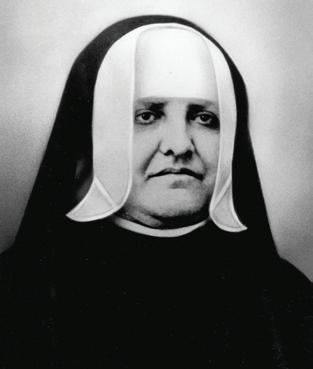

Mother Theresa of Jesus’ leadership (Mother Marie Rose sent Theresa to this first mission outside Longueuil.)
Beloeil, Quebec
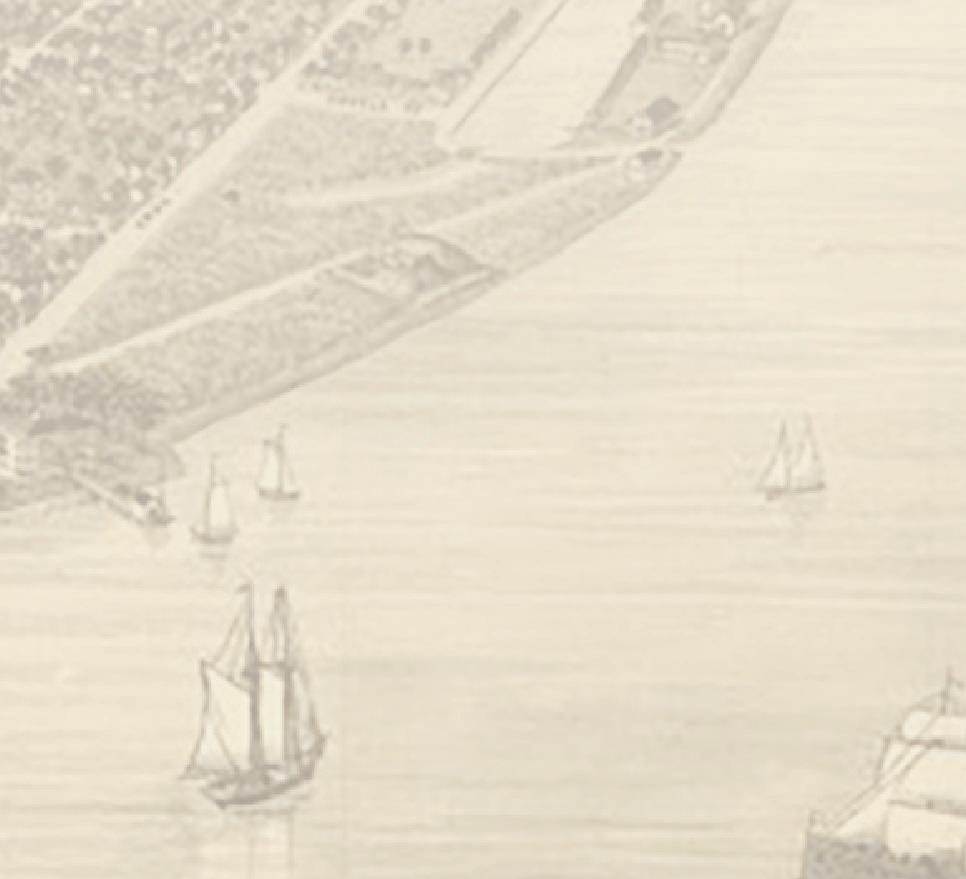
Theresa was instrumental in founding the following missions while superior general.
1857
Portland, oregon
1860 Oregon City, Hochelaga Montreal 1861
St. Paul, Oregon 1863
Salem, Oregon 1864
The Dalles, Oregon, Windsor, Ontario

1866
1865
Schenectady, New York, Jacksonville, Oregon, Rome, New York, Amherstburg, Ontario, Decatur, Illinois
St. Louis de Gonzague, Quebec, Valleyfield, Quebec 1867
Sarnia, Ontario 1868
oakland, California
(Prepared before end of her term)
1868-1876
After her term as superior general, she was superior of Tallahassee, Florida and Key West; she founded St. Joseph school in San Francisco.

M. Veronica of the Crucifix (Hedwidge Davignon)


“If they ask Your Exce ency for religious to be sent to far-o mi ions, we sha fly there.”
- Mother Theresa of Jesus, SNJM
Given the name Sister Theresa of Jesus, after Saint Teresa of Avila, Salomé Martin was the first woman to join the three foundresses, Mother Marie Rose, Mother Marie Agnes, and Mother Marie Madeleine, of the Congregation of the Sisters of the Holy Names of Jesus and Mary.
Salomé Martin was born in Saint-Philippe de La Prairie, Québec, the twelfth of thirteen children in a family marked by both hardship and resilience. Her father, Jean-Baptiste, a farmer and innkeeper involved in the 1837 “Patriote” movement, was reported missing during the conflict, leaving her Scottish-born mother, Adélaïde MacNil, to raise and educate their large family. From this challenging beginning, Salomé’s intellectual curiosity flourished. She developed a broad and solid education, cultivating artistic talent alongside strong administrative and business abilities— gifts that would serve her well when, at age twenty, she began collaborating closely with Mother Marie-Rose, whose faith and missionary spirit she deeply admired.
Sister Theresa of Jesus mastered the art of teaching, of rousing her students’ interest and of instilling in them a taste for culture. She loved the children and the feeling was mutual. Innovative, she ensured the reputation of the institutions for which she was responsible.
From the very beginning of her religious life, she demonstrated skills of leadership which would enable her to assume positions of authority in line with her active temperament, her bold approach. About her first administrative appointment, a sister wrote, “Sister Theresa was such a gifted religious that everyone approved her appointment as principal.”4 Being cheerful by nature, she loved to laugh and had a sense of celebration; she knew how to create a community climate which favored relaxation after hard work. She became the leader of finances from 1848-1853 at the same time as being general directress of studies.
During a brief illness in the summer of 1856, Sister Theresa of Jesus reflected on her years with Mother Marie Rose and the founding spirit of the community. She recalled her foundress’s longing to extend Christ’s love through distant missions, along with the Scripture passage she cherished: “I have come to cast fire upon the earth, and how I long to see it kindled” (Luke 12:49). She also remembered Bishop Bourget’s early charge to the Sisters to “carry afar the glory of the Holy Names of Jesus and Mary.”5
These memories rekindled in her a deep missionary desire and a personal promise to Mother Marie Rose to fulfill her dream. This conviction would guide her for decades as she worked to expand the Congregation’s missions with courage and perseverance.
Because of her missionary heart, Sister Theresa of Jesus wanted to work for the evangelization of the poor and disadvantaged in underprivileged areas. When she became Superior General (1857-1867) of her Community, she sent two groups of Sisters to Oregon. She visited them to support them, to learn about their living conditions and to resolve problems that arose.
Her journey would not be without its challenges. She often had to challenge members of the clergy – chaplains and bishops – who assumed undue powers, interfering with the internal governance or finances of the community.
In the face of criticism and denunciation, she did not falter. She explained her way of seeing things. The difficulties and failures were occasions for her to live the humility which characterized her and rely on God through prayer. Perceptive, often inspired, she had dreams which knew no boundaries and seemed impossible.
In 1876, she had to leave Key West, called back to Canada undoubtedly because of criticism by a priest who did not appreciate her search for autonomy. After a year of seclusion, she returned to American soil to dedicate herself to her mission. In 1887, she faced a similar fate. She was forced into retirement in Longueuil.
In 1889, her health had weakened. She was suffering from an incurable illness which would bring her to the Infirmary in Hochelaga. She accepted her fate with courage and faith: “I cannot fight against the will of God,” she said. She died on August 12, 1890 at age 67. e

“[Prayer] inspires action; action inspires [prayer]. ey are two aspects of a single love.”
- SNJM Constitutions (58)
This journal is meant to accompany your mission experience as a space for communal prayer and reflection. Each daily entry weaves together a Beatitude, Sacred Scripture, and an SNJM story to help you notice how the Gospel is lived—in history, in community, and in your own encounters.
Often considered one of the most misunderstood passages in the Gospels, the Beatitudes are a powerful starting point for reflection as we grow in Christian discipleship— especially during our mission trips. Through these seemingly contradictory statements, Jesus sets the new standards of the New Covenant by identifying who will be “favored” in God’s eyes. His words describe an integral way of living that early disciples embraced, even when it challenged the expectations of their culture. Who Jesus calls “blessed” is not who the world typically celebrates; herein lies the contradiction.
The Beatitudes reflect Christ’s own life and capture His entire message. As we enter into our daily reflections in this journal, we will explore how Theresa of Jesus and the early SNJM Sisters lived out the gospel in real, concrete ways as they courageously began new education missions.
As we encounter and serve people who are poor and marginalized, let us consider how the kingdom is already theirs. Appreciating their trust in and dependence on God and their perseverance through suffering, they reveal a dignity and nearness to God that Jesus himself calls blessed.
As we pray with each Beatitude, may the Holy Spirit open our hearts to see how we, too, can grow in these Christlike attitudes—allowing them to shape our perspective, our compassion, and our actions.
When he saw the crowds, he went up the mountain, and after he had sat down, his disciples came to him. He began to teach them, saying: “Blessed are the poor in spirit, for theirs is the kingdom of heaven. Blessed are they who mourn, for they will be comforted. Blessed are the meek,
for they will inherit the land. Blessed are they who hunger and thirst for righteousness, for they will see God. Blessed are the peacemakers, for they will be called children of God. Blessed are they who are persecuted for the sake of righteousness, for theirs is the kingdom of heaven. Blessed are you when they insult you and persecute you and utter every kind of evil against you [falsely] because of me. Rejoice and be glad, for your reward will be great in heaven. Thus they persecuted the prophets who were before you.”
A designated Prayer Leader paces the group and tends to silence and sharing.
Begin with an Opening Prayer (from the Appendix or one of your choosing).
Proclaim the Beatitude of the day slowly and reverently.
The Sacred Scripture and the SNJM Anecdote together offer spiritual nourishment, showing how the Beatitudes are lived in faith, hope, and love. Pray the Sacred Scripture using Lectio Divina, listening to God’s Word together.
Invite three readers. Begin with a brief moment of silence.
1st Reading — Listening: In silence, listen for a word or phrase that speaks to your heart. Participants may briefly share the word or phrase they heard.
2nd Reading — Reflecting: In silence, reflect on what God may be saying through the word or phrase that touched you. Participants may share its meaning for them.
3rd Reading — Responding: In silence, reflect on how God may be calling you to act.
Next, the Prayer Leader or volunteer reads the SNJM Anecdote.
Then, the Prayer Leader directs the participants to the reflection questions for quiet journaling time before group sharing noting insights, movements of the heart, and connections to the Beatitude of the day.
Participants are invited to share briefly in small groups or as a whole group (depends on size of mission trip). Sharing is always optional and offered in a spirit of respect, listening, and mutual encouragement.
The Prayer Leader closes with inviting petitions from the group, using the Prayer from St. Teresa of Avila, and thanking God for this encounter with the Word and wisdom shared. e




Before the Mission Begins
Choose one from the Appendix or improvise.

“Dear young people, aspire to great things, to holine , wherever you are. Do not se le for le . en you wi s the light of the Gospel grow every day, within you and around you.”
- Pope Leo XIV
You are named and claimed by God as “salt of the earth” and “light of the world.” As you enter this week of mission, remember that the Holy Spirit goes with you, guiding and strengthening you to be a light wherever you serve.
THE SIMILES OF SALT AND LIGHT | MATTHEW 5:13-16
“You are the salt of the earth. But if salt loses its taste, with what can it be seasoned? It is no longer good for anything but to be thrown out and trampled underfoot. You are the light of the world. A city set on a mountain cannot be hidden. Nor do they light a lamp and then put it under a bushel basket; it is set on a lampstand, where it gives light to all in the house. Just so, your light must shine before others, that they may see your good deeds and glorify your heavenly Father.”
In the following passage from her diary, Salomé Martin (future Sister Theresa of Jesus) writes of her first encounter with Eulalie Durocher (future Blessed Marie Rose). She is attracted to Eulalie’s inner light and her desire to choose to be “poor in spirit”–the first beatitude. In a religious community, this meant that no one owned personal possessions; all financial and material resources were shared equally, as gifts.
I was on my way to visit the Congregation of Notre Dame convent when I stopped at Longueuil in answer to the pressing invitation of Rev. Father Telmon, O.M.I. Father wanted me to meet the foundress of this new community about which he had talked to me at length. I was in the Oblate house, so he asked Miss Durocher to come over. Her air of sanctity, the plans she outlined of the new foundation, above all, the great
poverty in which she wanted this community to live–a community which owned nothing–made me prefer this institute to that of the Congregation of Notre Dame where I had previously decided to go. At first, this resolution seemed to be hastily made… I don’t as a rule give my esteem and trust easily. But our dear Mother Marie Rose won both; she even had my veneration. Her very presence inspired me with courage. Her faith lifted my soul to God. My feelings of attraction were stronger than Father Telmon’s eloquence, for he had not really convinced me to go to Longueuil.6
Often it is people who experience a form of poverty, who out of their powerlessness place their trust in God’s providence. Trust in Divine Providence is the belief that God will provide and come to our assistance–be it through spiritual gifts or the gifts received through people and/or events. As religious women, Eulalie and Salomé learned to trust in God that beneficiaries would support their mission and ministry to educate children.
1. To what “light” was Salomé attracted in Eulalie?
2. If you haven’t yet, read Mother of Theresa of Jesus’ biography in the introdction. How did her life reflect Christ’s mission to illumine the world?
3. How do you feel called to “bring light” to our students and/or community–or those you encounter in your daily life?
4. How do you “spread light” to our community?
Lord, grant that I may always allow myself to be guided by You, Always follow Your plans, And perfectly accomplish Your holy will. Amen.




Today’s

“Blessed are the poor in spirit, for theirs is the kingdom of heaven.”
Living Simply & Discovering Faith
Choose one from the Appendix or improvise.
And Mary said: “My soul proclaims the greatness of the Lord; my spirit rejoices in God my savior. For he has looked upon his handmaid’s lowliness; behold, from now on will all ages call me blessed…” (Luke 1:46-48)
“Ble ed Virgin, since you are my Mother and Mistre , help me to do God’s wi , in spite of myself…”
-
Mother Theresa of Jesus,
SNJM
This week, you’re invited to recognize the many forms of poverty. Some who are poor in material things are astonishingly rich in faith. By choosing to live simply, you stand in solidarity with those who have less and discover how deeply God can meet you when you consume less and love more. This simplicity reminds you of your call to share what you have so that others may flourish.
In the fall of 1860, Mother Theresa of Jesus (being General Superior at the time earned her the title “Mother”) and several other SNJM Sisters opened a new school in Hochelaga, across the St. Lawrence River from Longueuil. There she also relocated the novitiate, the time and place when women are spiritually formed for religious life. They welcomed their first 15 students on October 1, 1860. With limited resources, they identified with the poverty of the first sisters in the foundation house–a sense of solidarity that strengthened their spirit. We see not only Theresa’s reliance on God through her prayers, but the interdependence of the sisters to make the best of their circumstances. Like Mary the Mother of God, they could perceive blessedness in their modest means.
As in the days of Mother Marie Rose, the sisters had to sleep in the attic on straw mattresses laid on the floor. There were no sinks, tables, or chairs. A single wash basin, also on the floor, had to suffice for their needs.
A few couches and mattresses they possessed were reserved for the feeblest sisters. Only the novitiate, the chapter room, and its adjoining office were finished. On
the ground floor a refectory was improvised with planks resting on trestles serving as dining tables, and more planks resting on supports acting as chairs. This room was also used for community recreation. It was here that the postulants were allowed to dance, a privilege granted by Sister Francois d’Assise in order to compensate these newcomers for the hardships of pioneering.7
At Hochelaga the number of students continued to grow. Mother Teresa joined sacrifice to her prayer in order to obtain the help of Providence for the prosperity of the house. She recited one thousand Ave’s with arms outstretched; at night, she made the Way of the Cross on bare feet, arms uplifted to Heaven. She was often observed on her knees in the chapel near midnight. It was the Lord himself who was her confidant. On one occasion when the sister sought her everywhere late at night because one of the students was very ill, they found her praying fervently. Quite simply, she said to them, “We have only what we need for breakfast tomorrow, nothing for dinner. But God will provide.” Providence did not fail her thanks to the clever management of Sister Scholastica in whom Mother Teresa placed full confidence. They never starved, although the meals were usually very frugal.8 e
Myself surrendered and given, the exchange is this: my beloved is for me, and I am for my beloved. Amen.
1. What message does the scripture passage reflect about today’s beatitude?
2. How do Theresa of Jesus and the Sisters on mission with her exemplify the beatitude?
3. Reflect on a time that you had to put your trust or confidence in someone. Were you able to see positive results. If not, how have you moved forward?
4. Has there been a time that you had to sacrifice your comfort and daily needs? If so, how did you handle the situation?



Today’s
“Blessed are they who mourn, for they shall be comforted.”
“Christianity emerges triumphant from the bl d of the Savior and its martyrs. us, your works grow only in su ering but always your fatherly vigilance watches over us...”
- Mother Theresa of Jesus, SNJM
Compassion & Shared Humanity
Choose one from the Appendix or improvise.
Jesus went around to all the towns and villages, teaching in their synagogues, proclaiming the gospel of the kingdom, and curing every disease and illness. At the sight of the crowds, his heart was moved with pity for them because they were troubled and abandoned, like sheep without a shepherd. Then he said to his disciples, “The harvest is abundant but the laborers are few; so ask the master of the harvest to send out laborers for his harvest.” (Matthew 9:35-38)
Mission draws you closer to places of suffering and loss. Jesus calls you not to turn away, but to “suffer with” others—to practice true compassion. In choosing to accompany people gently and humbly, we learn that we belong to one human family, and “laborers” become responsible for one another’s burdens and one another’s hope.
When appointments were announced in August 1853, ister Theresa of Jesus was named for a new mission in Beauharnois, as the foundress and superior. Two other SNJM Sisters would accompany her. Before their departure, Bishop Bourget introduced the three sisters to visiting Bishop Bedini, Archbishop of Thebes. When he presented Sister Theresa as the superior to the visiting Bishop, “he alluded to the name she bore, made a prediction that as he blessed her, that ‘like her illustrious patron, she would not lack crosses, she could even expect that flowers of Calvary would spring up under her feet.’”9
Theresa and her companions, which also included Theresa’s twelve year old niece, Philomeme, who came to Canada to attend this new school, arrived in Beauharnois on the evening of September 2 and were welcomed at the rectory. The house designated for their convent school was built on
a hill with a charming view; however, its numerous repairs had not yet been completed. That same night, Theresa’s niece fell very ill. Theresa’s time was divided between tending to her niece and to the opening of school.
The boarders were due to arrive on September 5. This meant that the sisters had only two days to prepare the pupils’ quarters. Little Philomeme needed assiduous care. No matter how hard the sisters worked, the dormitories were not ready to receive the 52 boarders expected on that day. Those who arrived had to go home with their parents, happy enough to prolong their vacation while the day scholars leafed through their brand new books. The boarders returned on the feast of Mary’s Nativity (Sept. 8) Sister Theresa prayed: “May this good Mother watch over our hopes of a rich harvest, may she see that nothing be lost.”10
The next day, Sister Theresa found that her niece Philomeme’s condition had worsened. Conflicted whether to have her travel home to her parents, her illness progressed rapidly with no choice but to care and comfort her. She was anointed by the pastor on September 12 and died ten days later. Theresa was “completely undone” by the loss of her niece who had traveled so far to receive a “good religious education from an aunt, whom at that time she only knew by name.”11 The funeral took place at St. Clement de Beauharnois, and there was a great outpouring of sympathy from the parish. Sister Theresa meditated on the words of Bishop Bidini: “[You can] expect to see flowers from Calvary springing up under your feet.”
Continually burdened by the needs arising from the organization of a new school, Sister Theresa had to put her personal sorrows behind her in order to cope with the demands of the present. On her feast day, October 15, she was comforted; the children put on a little program for her to express their sentiments and memories of their classmate. e
When at last you enter my heart, my God, then at once I fear you’re leaving.
1. What message does the scripture passage reflect about today’s beatitude?
2. How does Theresa of Jesus live into this beatitude?
3. As life continues to get busier, how do you handle the burdens that are presented to you?
4. How do you help our students/colleagues–or others in your life–with their various burdens?
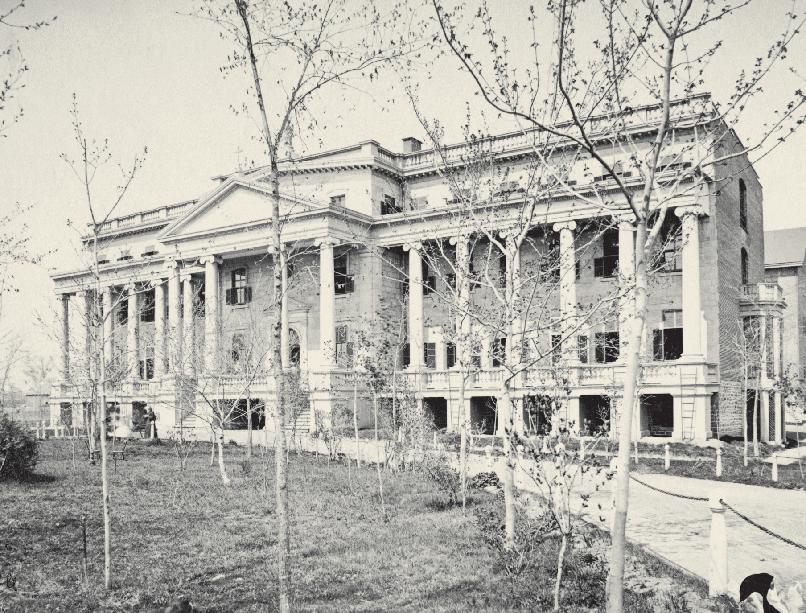
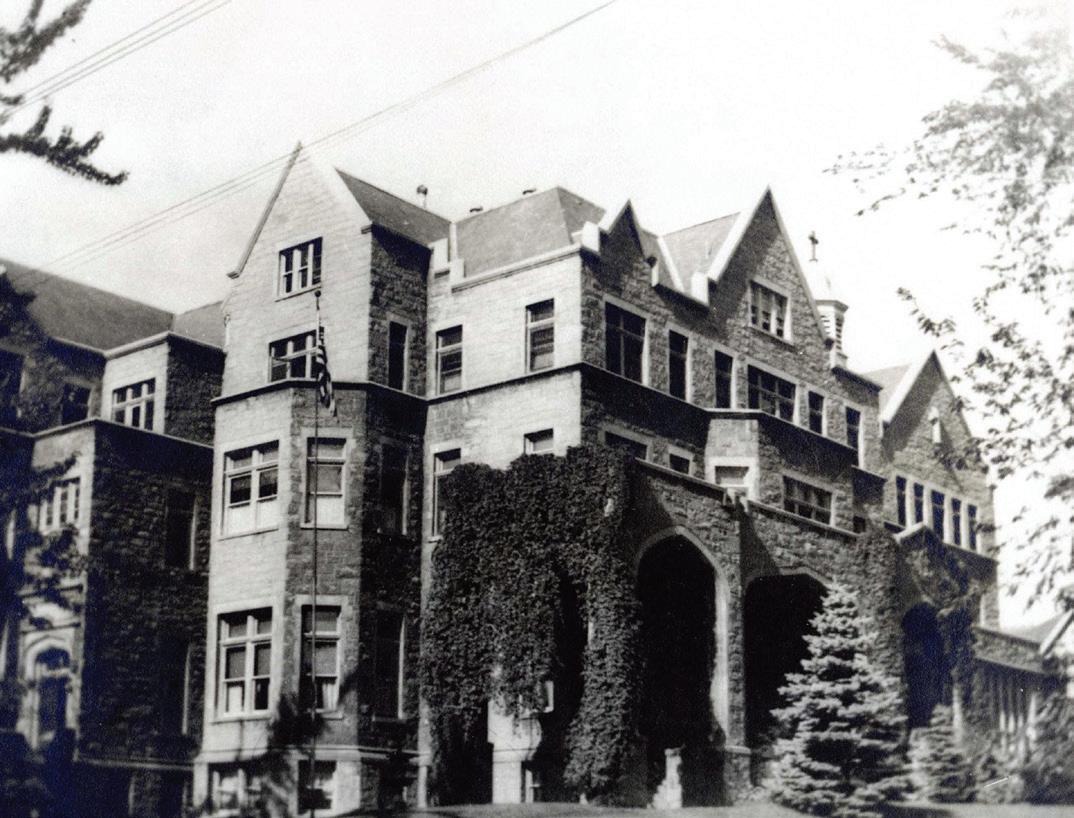
Below: The Convent of Mary Immaculate school in Key West first opened in repurposed army barracks. SNJM Archives
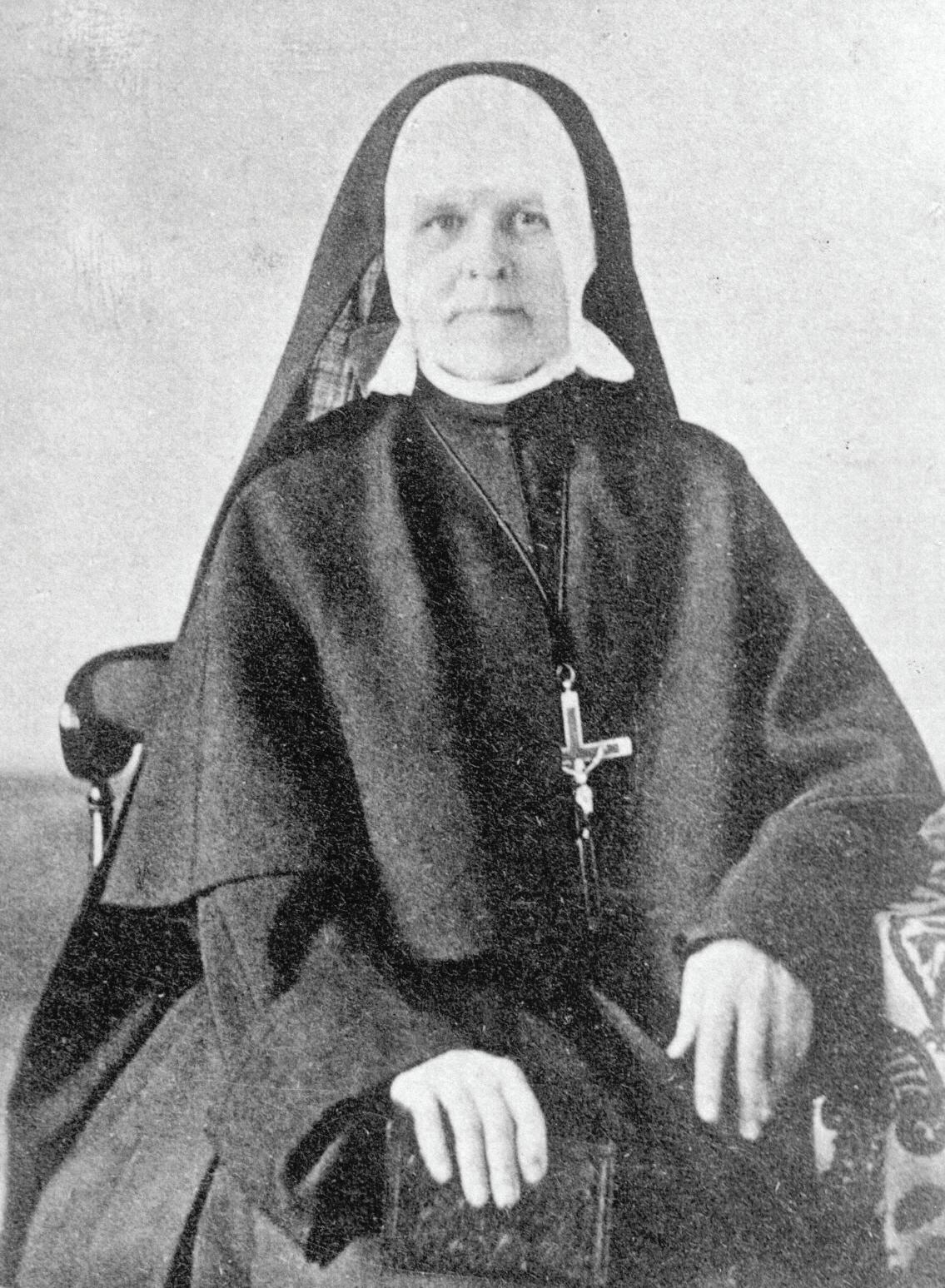
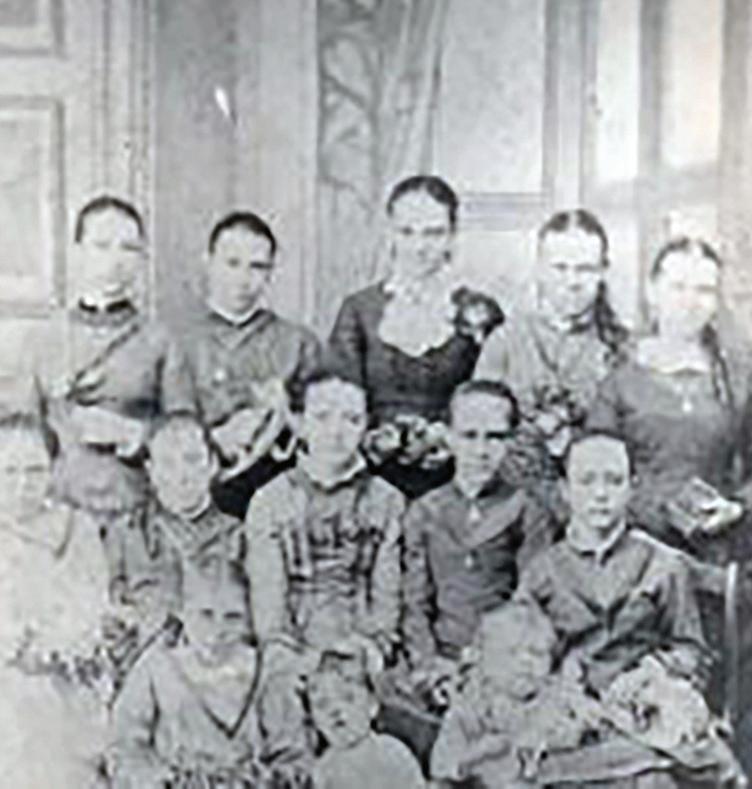
Right: Sister M. Euphrasie, first superior of Key West with students. AHN Archives




Today’s
“Blessed are the meek, for they shall inherit the earth.”
“Maymakefaith us s ChristJesusin the person of the one who visits us. May he inflame our hearts with an ardent desire to profit by a the withgraces which he wishes to mark his pa amongageus.”
-
Mother Theresa of Jesus,
SNJM
humility & the Common Good
Choose one from the Appendix or improvise.
“Come to me, all you who labor and are burdened, and I will give you rest. Take my yoke upon you and learn from me, for I am meek and humble of heart; and you will find rest for yourselves. For my yoke is easy, and my burden light.”
(Matthew 11:28-30)
Meekness doesn’t mean weakness—it is strength guided by gentleness, listening, and patience. Through meekness, you learn to wait on God’s timing and cooperate in restoring what is broken. It is justice without vengeance, reconciliation without pride, and a reminder that healing comes through respect and shared purpose.
Five years after the Key West, FL mission began in 1868, Mother Theresa of Jesus arrived to evaluate the circumstances and with her industriousness, help build connections in the community and obtain the support to build a larger convent school. They were able to sell the old army barracks they had used and through the intercession of St. Joseph, she found a “magnificent, uncultivated property, covered in fruit trees” a mile outside the city.12 Not only was her planning for the school financial, but handson, as she envisioned the grounds. During her time there, she humbly faced new challenges head-on.
Summer vacation gave her time to clear the dense vegetation of the property. Two Sisters and a few workmen were supposed to help her with this task, but the workmen refused to venture into the brush, which, they claimed, was infested with venomous snakes. Mother Theresa, making the Sign of the Cross, advanced and gave the underbrush the first strokes of her sickle. Such courage inspired the workmen to do the same.13
Key West was usually hit by yellow fever every year,
infecting both Sisters and students, but 1875 was an especially brutal year. A young Protestant girl who was gravely ill desired to become Catholic, but her parents strongly opposed. All Mother Theresa could do was reassure her that God loved her very much and prayed silently that “[God] would come to her aid and take the dying child as soon as possible.”14
To spare the Sisters who were still healthy, Mother Teresa decided to move them earlier than first planned to the uncompleted Convent, hoping the shelter would suffice.
The roof of one wing was finished but the doors and windows were still only barricades of raw wood… Vacation time was not over. The sisters who could gave time setting up the rooms as soon as they were ready. They concentrated their first efforts on setting up a temporary Chapel so that the chaplain Father Bernier could celebrate Mass every day. After that they set up the classes. In September, only 36 students turned up for the opening of school. Mother Teresa got the message. In no time, she solved the problem by buying a horse and carriage to transport students to and from their homes to the school.15
Mother Teresa of Jesus had the ability to respond to challenging situations with a humble fortitude that considered the wellbeing of others while not losing sight of the greater mission. e
I am yours and born for you What do you want of me? majestic sovereign, unending wisdom, kindness pleasing to my soul; God sublime, one being good, yours, you made me; yours, you saved me, yours, you endured me; yours, you called me, yours, you awaited me; yours, I did not stray. What do you want of me?
1. What message does the scripture passage reflect about today’s beatitude?
2. How does this anecdote about Theresa of Jesus illustrate this beatitude?
3. How can you practice humility in your interactions today?
4. Reflect on a time when you helped solve a problem for someone. How did you go about helping them find a solution?
5. What word best describes you in times of restoring what is broken? Why?


Today’s
“Blessed
are they who hunger and thirst for righteousness, for they will be satisfied.”
“Christian fulfihope,ed in Jesus and realized in hisnkingdom, ds us and our commitment, n ds our faith expre ed in works of charity, n ds Christians who do not l k the other way.””
- Pope Francis, Mass for the World Day of the Poor in St. Peter’s Basilica
4:
Hungering for Justice
Choose one from the Appendix or improvise.
“There was a judge in a certain town who neither feared God nor respected any human being. And a widow in that town used to come to him and say, ‘Render a just decision for me against my adversary.’
For a long time the judge was unwilling, but eventually he thought, ‘While it is true that I neither fear God nor respect any human being, because this widow keeps bothering me I shall deliver a just decision for her lest she finally come and strike me.’” (Luke 18:2-5)
Time spent with people on the margins awakens a holy desire within you—a longing to imagine a world where every person can live with dignity and unjust systems are corrected to support human flourishing. Mission is not only works of charity, but the shaping of a heart that with persistence, advocates for right-relationship, fairness, and justice rooted in love.
In this account from 1885 of the SNJM Sisters’ outreach in Albany, NY, Sister Agnes’s persistence—supported at every step by Mother Theresa of Jesus—was vital in gathering the Catholic children enrolled in public school for Catechism classes. The parishioners of St. Vincent de Paul Church, unable to afford a Catholic school, recognized the injustice that their children were being deprived of an education in the faith. Deeply concerned, the parents continually urged their pastor, Father Walsh, to take action.16
Despite having previously opposed the Sisters’ new institution, Father Walsh put aside his pride and “begged [Mother Theresa] to do the impossible to bring his straying lambs back to the sheepfold.”17
Seeing Sister Agnes’s gifts, Mother Theresa entrusted her with the challenge. Sister Agnes met with the principal of
Pageville Public School, who agreed to meet but refused to identify which students were Catholic.18
At Sunday Mass, parish families were told that Catechism classes would begin and that all children were expected to attend; if absent, their names would be read aloud from the pulpit. Upset parents confronted Sister Agnes, seeking clarification. With Mother Theresa’s approval, she explained that those who attended would receive food and clothing–“a practice in use in the Protestant church.”19 Friends of Mother Theresa immediately volunteered to cover the costs. The result was remarkable: 150 children attended Catechism the very next Sunday—children who were not only clothed and fed physically, but nourished spiritually. e
Let nothing disturb you, Let nothing frighten you, All things pass away: God never changes. Patience obtains all things. He who has God Finds he lacks nothing; God alone suffices.
1. What message does the scripture passage reflect about today’s beatitude?
2. In today’s anecdote, who hungered for righteousness? Who persisted in advocating for poor uncatechized children?
3. Has there been a time that you felt you were treated unjustly? How did you address that feeling?
4. What is one goal that you hope our students–or others in your life–will learn about being fair and just?




Today’s
“Blessed are the merciful, for they shall obtain mercy.”
Choose one from the Appendix or improvise.
impels“Mercy us to ro up our sl ves and set about restoring dignity to mi ions of theypeople; are our brothers and sisters who, with us, are ca ed to build a which‘city is reliable.’”
- Pope Francis, Misericordia et Misera
“…But a Samaritan traveler who came upon him was moved with compassion at the sight. He approached the victim, poured oil and wine over his wounds and bandaged them. Then he lifted him up on his own animal, took him to an inn and cared for him. The next day he took out two silver coins and gave them to the innkeeper with the instruction, ‘Take care of him. If you spend more than what I have given you, I shall repay you on my way back.’” (Luke 10:33-35)
Mercy is a gift you can never earn and can only receive from God. When you extend mercy to others—a nonjudgmental, generous love—you open the door for deeper understanding and healed relationships. Practicing mercy transforms your mission into a place where grace becomes visible.
In 1859, Mother Theresa of Jesus finally received the opportunity she had dreamed of for years: sending Sisters to serve on far-off missions. A request for help had come from the diocese of Oregon, where many French-Canadian families were struggling. Bishop Bourget described the deep needs of the people there, and Mother Theresa immediately recognized this as God’s call for their community.
For Theresa, serving in distant missions was “one of her most cherished desires.”20 After a retreat and community vote, she remained Superior General and then officially named 12 Sisters to go to Oregon. Some people questioned the decision, thinking it was too risky. When a priest challenged her, Mother Theresa simply said: “You must never count with God; He should have the best. He knows when hearts are generous and He will repay a hundredfold a gift given without counting.”21
On the day of the missionaries’ departure, Bishop Bourget
encouraged them with this scripture passage: “How beautiful are the feet of those who bring good news.” The Sisters gathered, embraced one another, and sang Mother Marie-Rose’s favorite hymn, Je mets ma confiance (Oh Virgin Most Holy, My Trust lies in You).
Four years later, Mother Theresa visited the Oregon mission and saw how hard the Sisters had worked. Their clothes were worn out, and they had taken on many responsibilities in addition to their main ministry of education: cooking, cleaning, and sacristan work during priests’ retreats and for neighboring parishes. They visited the sick, spending entire nights praying by the bedside of the dying. They took care of orphans who had been left abandoned at their door.
During one community prayer period, two Sisters arrived carrying infants in their arms. Mother Theresa was astonished, moved, and even quietly amused. Edified by her sisters’ relentless acts of mercy, she thought: “In Canada, we have no idea of the number and kinds of jobs demanded of our brave missionaries.”22 e
Christ has no body but yours No hands, no feet on earth but yours, Yours are the eyes with which He looks Compassion on this world, Yours are the feet with which He walks to do good, Yours are the hands, with which He blesses all the world. Yours are the hands, yours are the feet, Yours are the eyes, you are His body. Christ has no body now but yours, No hands, no feet on earth but yours, Yours are the eyes with which he looks compassion on this world. Christ has no body now on earth but yours.
1. What message does the scripture passage reflect about today’s beatitude?
2. What parallels do you draw between the Sisters’ works of mercy and the acts of mercy you’ve witnessed?
3. What does the quote “How beautiful are the feet of those who bring good news” mean to you? How are you living this quote at AHN?
4. Reflect on a time at AHN when you demonstrated mercy and took a leap of faith. How did you feel? Would you do it again?
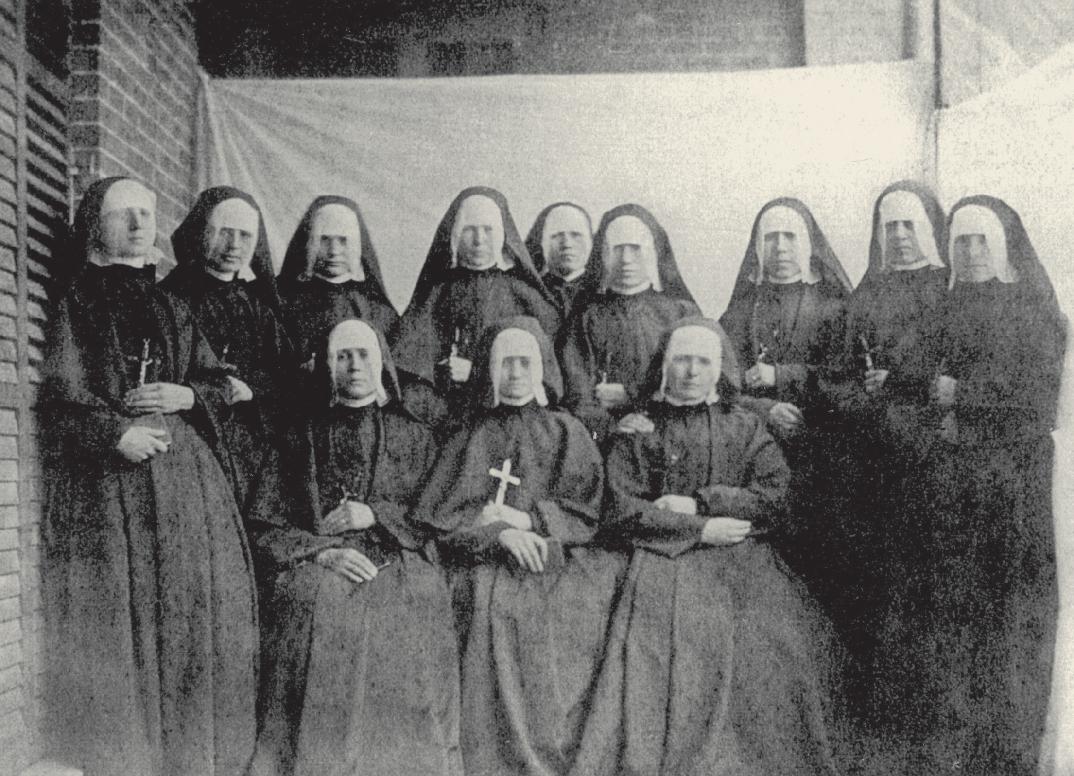

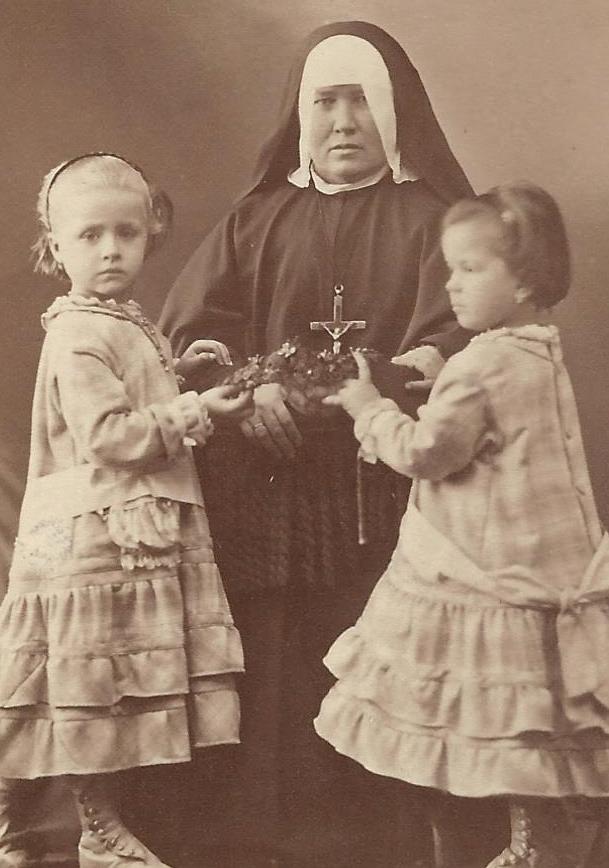
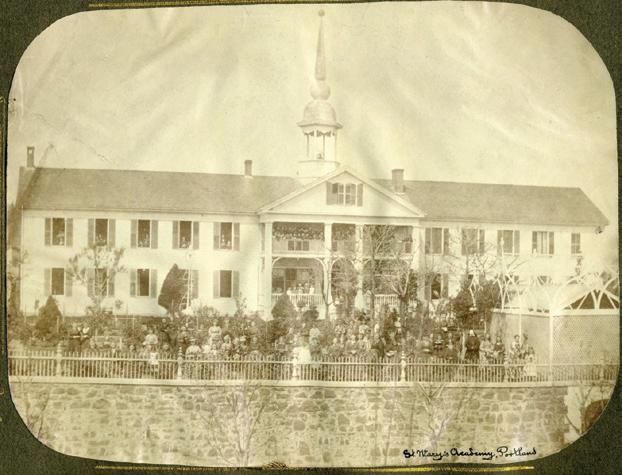
Left: Oregon Mission Founding Sisters, c. 1863. SNJM Archives
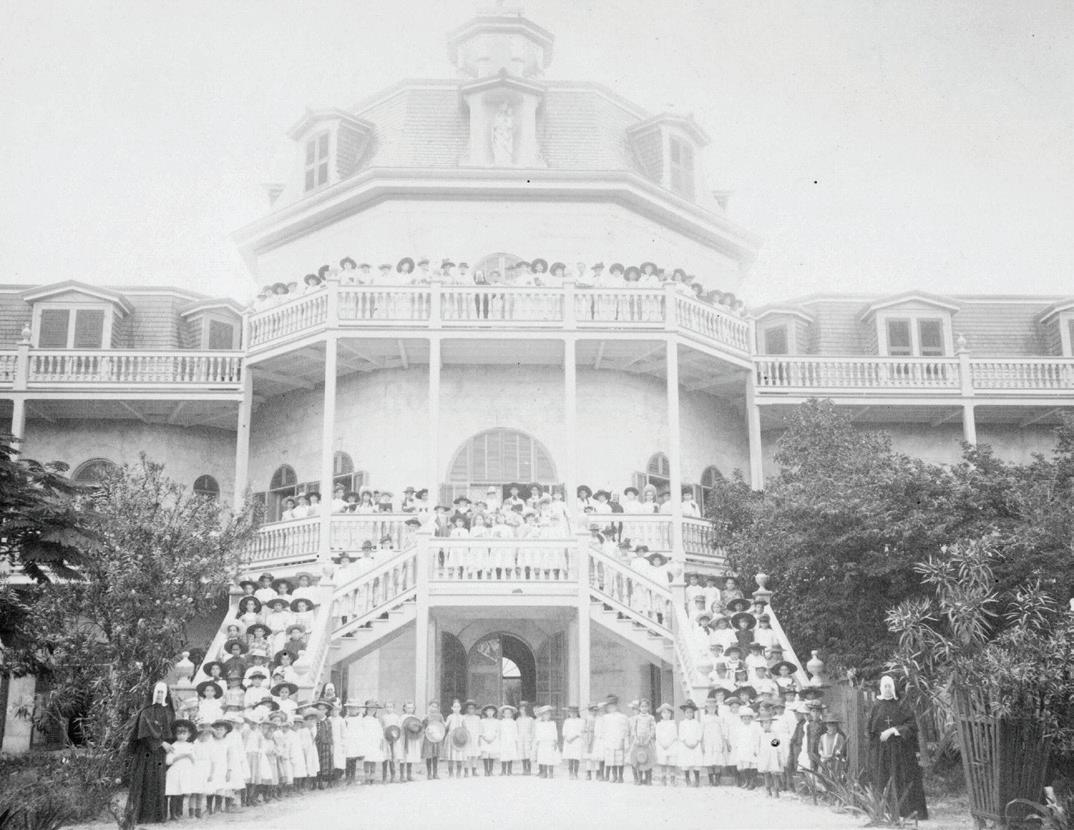
Below: St Mary’s Academy, Portland, c. 1869. SNJM Archives


Today’s
“Blessed are the clean of heart, for they will see God.”
“Purity of heart is what enables us to s .”
- Pope Benedict XVI
Entry 6:
Purity of Heart & Integrity
Choose one from the Appendix or improvise.
“He summoned the crowd and said to them, “Hear and understand. It is not what enters one’s mouth that defiles that person; but what comes out of the mouth is what defiles one.”
Then his disciples approached and said to him, “Do you know that the Pharisees took offense when they heard what you said?”
He said in reply, “Every plant that my heavenly Father has not planted will be uprooted.” (Matthew 15: 10-13)
Purity of heart means living with integrity—staying true to the spirit of the Beatitudes, listening to your conscience, and embracing your mission to “illumine the world in daily life.” Let your actions reflect who you truly are before God. Let our school motto, “Esse Quam Videri”—to be rather than to seem—become your guiding light.
In 1865, the bishop of Illinois asked Mother Theresa about opening a mission in Decatur. A hasty decision by the council accepted the mission after a repeated pressing request from Fr. Vogt. The appointed Holy Names Sisters traveled five days accompanied by Fr. Vogt during which his first impressions were made. On their last night of travel, the sisters “had to resign themselves by spending the night in the depot” and eating a light supper on their knees, while “Fr. Vogt went off to restore his strength in a proper restaurant”. “He justified his conduct by saying that “the Sisters had to give an example of humility and mortification.”23
The Sisters were satisfied with the students’ success by the end of the academic year; however, they had incurred debts and had to pay them off. With a new school year ahead, the Sisters planned two evenings drama acts which
netted them $600. Father Vogt demanded the money be turned over to him. “Sister Superior,” he said, “...I have to pay the artist who has just finished painting my church.” The Superior, dumbfounded, presented her plausible reasons for keeping the money, which infuriated the pastor who questioned their purpose, “What good are all of you doing here? You don’t even pay for my church.”24
The Superior replied, “Did you come to fetch us from Montreal in order to make money for you, or was it to have us help the children of your parish love God more?” The priest persisted in claiming the money.
Mother Theresa could and would not accept this state of affairs, and despite her interventions, she could not resolve the pastor’s inclinations for more income. The question of money sapped the foundation of this mission before it had a chance to get started. On August 13, 1868, the Sisters took final leave of this mission.25 e
All things must come to the soul from its roots, from where it is planted.
1. What message does the scripture passage reflect about today’s beatitude?
2. How do Theresa of Jesus and her Sisters model this beatitude?
3. Has there been a time that you disagreed with a decision being made? How did you feel? What was your reaction to the outcome?
4. If a decision was made that you did not agree with, were you able to “live with it”, or did you have to move on as our Sisters did?
Journaling...


“Blessed are the peacemakers, for they shall be called children of God … Blessed are they who are persecuted for righteousness’ sake, for theirs is the kingdom of heaven.”
Choose one from the Appendix or improvise.
“Pray to the holy Angels of this place asking to do the most g d po ible here, and pray to the Guardian Angels of those with whom you must deal.”
- Mother Theresa of Jesus, SNJM
“…But I say to you, love your enemies, and pray for those who persecute you, that you may be children of your heavenly Father, for he makes his sun rise on the bad and the good, and causes rain to fall on the just and the unjust. For if you love those who love you, what recompense will you have? Do not the tax collectors do the same? And if you greet your [sisters and] brothers only, what is unusual about that?” (Matthew 5: 44-47)
When you choose reconciliation, hope, and faithfulness, you become a true peacemaker. Mission doesn’t end when the trip is over—you are sent back home to be a witness of God’s peace in your friendships, your school, your community. Your daily interactions become seeds of peace planted in the world.
A challenge for the SNJM Sisters in opening a mission in Albany came from certain priests who were proud of the schools run by the Religious Sisters of the Sacred Heart and did not want another school directed by a potentially competing Congregation. Finally, in 1884, the Bishop of Albany invited the Sisters to open an academy for young girls.
Confusing instructions from some clergy made the process difficult and tested Mother Theresa’s patience. The stress and fatigue at times caused her to unintentionally take her feelings out on her Sisters, and she humbly “asked forgiveness of those she hurt.”26
Eventually, the school opened in a deteriorating neighborhood, and the Sisters began training their boarders in music, though enrollment was limited to avoid creating tension with local clergy. Mother Theresa looked for a better location and found a stone house with enough
grounds for a boarding school. Since non-U.S. citizens could not buy property, Mother Theresa ingenuously arranged the SNJM Sisters who were American and two supportive businessmen to form a corporation to make the purchase possible.
The Bishop advised discretion, warning her not to reveal details to reporters who “flocked around the convent to nose out the news.”27 However, her friend and business partner, Mr. J. Farrell, published a story praising the school and congratulating Albany for having a school like the Sisters’ reputable school in Montreal. The Bishop reprimanded Theresa and even threatened to remove the Blessed Sacrament from the convent chapel.
Mother Theresa humbly accepted his words, kneeling in silence without trying to defend herself. She was naturally upset at being falsely accused, but she did not involve her friends. When Mr. Farrell explained the situation to the Bishop, he expressed regret. Mother Theresa took the initiative to reconcile with the Bishop. Knowing his interest in art, she praised the paintings and decorations in his residence during a visit. The ice was broken, and they parted as good friends.e
One all possessing love I ask, my God my soul centered in you, making a delightful nest, a resting place most pleasing.
Journaling...
1. What message does the scripture passage reflect about today’s beatitude?
2. How does Theresa of Jesus live into this beatitude?
3. Describe a peacemaker you’ve encountered among your peers/ colleagues. How did they model peacemaking?
4. What are some ways we can spread “peace” and “joy” in our AHN community?


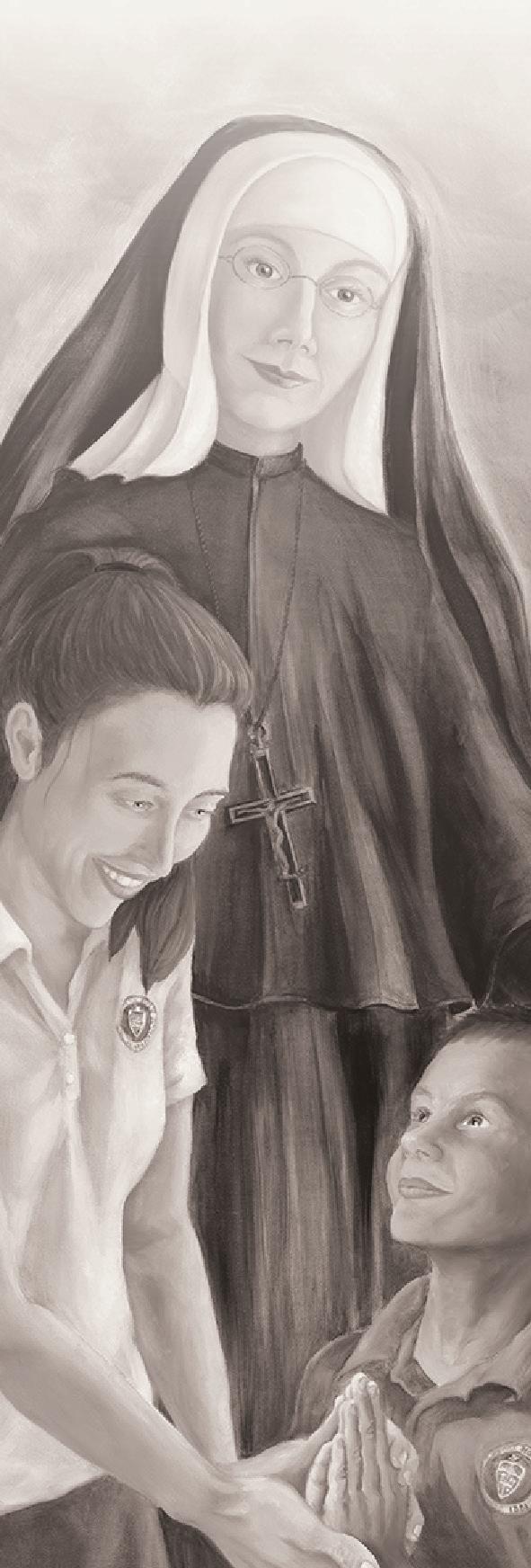
“I count on the help of your prayers, walking on the same path, let us help each other to surmount the di icu ies that arise.”
- Blessed Marie Rose Durocher
Christ has no body but yours, No hands, no feet on earth but yours, Yours are the eyes with which He looks Compassion on this world, Yours are the feet with which He walks to do good, Yours are the hands, with which He blesses all the world.
Yours are the hands, yours are the feet, Yours are the eyes, you are His body.
Christ has no body now but yours, No hands, no feet on earth but yours, Yours are the eyes with which he looks compassion on this world. Christ has no body now on earth but yours.
-St. Teresa of Avila
Come, Holy Spirit, fill the hearts of your faithful. And kindle in them the fire of your love. Send forth your Spirit and they shall be created. And you will renew the face of the earth.
(Lord, by the light of the Holy Spirit you have taught the hearts of your faithful. In the same Spirit help us to relish what is right and always rejoice in your consolation. We ask this through Christ our Lord. Amen.
Lord, make me an instrument of your peace: where there is hatred, let me sow love; where there is injury, pardon; where there is doubt, faith; where there is despair, hope; where there is darkness, light; where there is sadness, joy.
O divine Master, grant that I may not so much seek to be consoled as to console, to be understood as to understand, to be loved as to love.
For it is in giving that we receive, it is in pardoning that we are pardoned, and it is in dying that we are born to eternal life.
Blessed is she whose poverty freed her to risk much before insurmountable obstacles, for now she is proclaimed a Gospel Woman.
Blessed is she whose gentleness was empowered by vision, for she birthed a great community as inheritance.
Blessed is she who mourned the plight of the poor and the injustices of her society, for her followers rejoice in her spirit.
Blessed is she who hungered and thirsted for the liberation of women through education, for she believed in their potential to transform family life.
Blessed is she whose solidarity with the needy was merciful and kind, for mercy was her legacy.
Blessed is she who was pure of heart, for she was able to discern God’s will for her nascent community.
Blessed is she whose sense of peace flowed from her universal love, for she inspired unity in the Congregation.
Blessed is she who suffered persecution from the Church and society, for her reward is great in heaven.
-Maureen Hussey, SNJM, Antoinette Janisse, SNJM
“Lord, grant that I may always a ow myself to be guided by You” Prayer
Lord, grant that I may always allow myself to be guided by You, Always follow Your plans, And perfectly accomplish Your holy will.
Grant that in all things, great and small, Today and all the days of my life, I may do whatever You may require of me. Help me to respond to the slightest prompting of Your grace,
So that I may be your trustworthy instrument, for Your honor.
May your will be done in time and eternity – by me, in me, and through me. Amen.
-St. Teresa of Avila


For what are you most grateful to God out of this experience? When was God most present to you? Make a list of the graces you received from your mission experience. Then, plan to share with a family member, friend, or teacher a moment from the experience for which you are most grateful.
Creator God, every good thing comes from you. Thank you for allowing me to do your work on this earth and share my gifts with those at our mission sites. Help me to always be grateful for all the blessings in my life and to remember my experience with joy. Amen.


1. “Pioneers – SNJM.” Sisters of the Holy Names of Jesus and Mary. Accessed October 15, 2024. https://snjm.org/en/mother-marie-rose/pioneers/.
2. Ibid.
3. Ibid.
4. Rose Descôteaux, SNJM, Yvette Baril, SNJM, and Rachel-Eveline Pelletier, SNJM. Called to Cast Fire (Celle Qui a Vu Loin et Grand - She Who Had Great Vision), trans. Frances Allison, SNJM (Unpublished manuscript, Congregation of the Sisters of the Holy Names of Jesus and Mary), 78.
5. Descôteaux et al., Called to Cast Fire, 76-77.
6. Descôteaux et al., Called to Cast Fire, 4.
7. Descôteaux et al., Called to Cast Fire, 112.
8. Descôteaux et al., Called to Cast Fire, 120.
9. Descôteaux et al., Called to Cast Fire, 68.
10. Descôteaux et al., Called to Cast Fire, 69.
11. Ibid, 69-70.
12. Descôteaux et al., Called to Cast Fire, 268.
13. Ibid, 269.
14. Descôteaux et al., Called to Cast Fire, 273.
15. Ibid, 273.
16. Descôteaux et al., Called to Cast Fire, 310.
17. Ibid, 310.
18. Ibid, 310-311.
19. Ibid, 311.
20. Descôteaux et al., Called to Cast Fire, 99
21. Descôteaux et al., Called to Cast Fire, 102.
22. Descôteaux et al., Called to Cast Fire, 150.
23. Descôteaux et al., Called to Cast Fire, 174.
24. Ibid, 175.
25. Ibid, 175.
26. Descôteaux et al., Called to Cast Fire, 303.
27. Ibid, 306.
28. Ibid, 307.
When everything will be finished, and all resplendent in its cleanliness, others will be named to replace us. We must not find this a bad thing. Each one should say to herself, “My lot is privation and sacrifice. Let others enjoy…” The harvest we have sown will be reaped by others. That is what Providence decrees. Today as yesterday, we must say “Fiat.”
- Mother Theresa
of Jesus,
SNJM, May, 1885

Blessed Marie Rose, Obtain for us today the audacity of faith the simplicity of hope the power of love that we may actualize the words of Jesus; I have come to cast fire upon the earth, and would that it were already kindled. We ask this in the name of Jesus and through the intercession of Mary. Amen.


this b k belongs to: