ALWAYS BECOMING
A legacy of growth, a future in motion.
ALWAYS BECOMING
A legacy of growth, a future in motion.
HOLLINS MAGAZINE
VOL. 76, NO. 1
JANUARY - MARCH 2026
EDITOR
Tammy Moore, interim vice president of marketing and communications
ADVISORY BOARD
Mary Dana Hinton, president
Anita Branch-Brown, vice president of institutional advancement
Lauren Sells ’04, associate vice president for alumnae/i engagement and strategic initiatives
Meredith Cope-Levy ’12, M.F.A. ’18, discovery officer, donor relations and research manager
Emma K. Gee, digital content strategy manager
Shire Feingold, senior director of development
DESIGNERS
Sarah Sprigings, David Hodge, Anstey Hodge Advertising Group, Roanoke, VA
Sharon Meador, director of marketing and brand strategies
CONTRIBUTING WRITERS
Kasey Campbell, M.A.L.S. ’25, development writer, assistant to the vice president of institutional advancement
Rachel Fletcher ’05, stewardship and donor relations coordinator
Sarah Achenbach ’88
Renewing Our Academic Promise by Laura A. McLary, Nora Kizer Bell Provost, and Sarah Achenbach ’88
Hollins Riding: Tradition and Teamwork in Every Ride by Sarah Achenbach ’88
To view the online Hollinsmagazine, visit hollins.edu/magazine or scan the QR code.
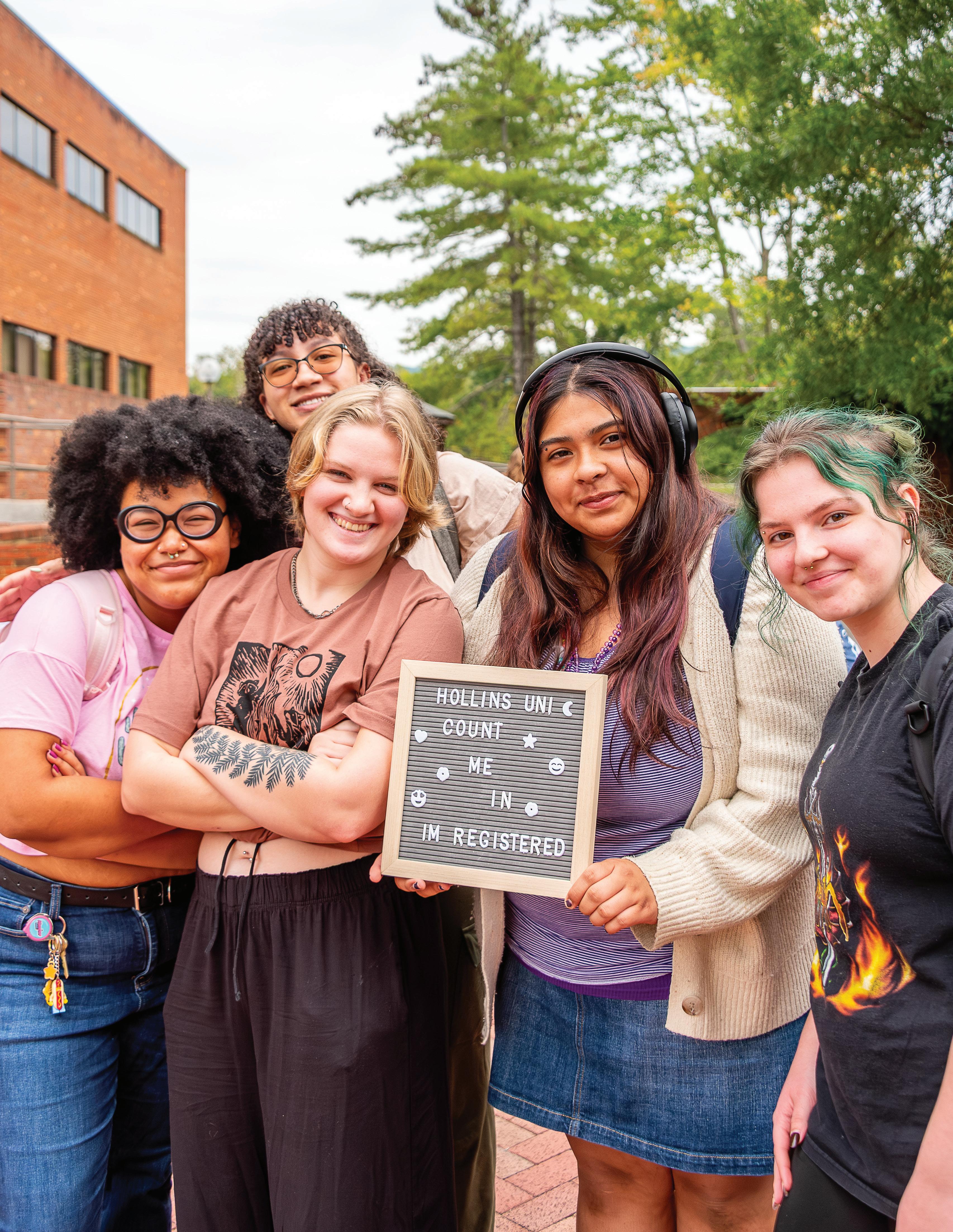
The Promise of HOPE by Sarah Achenbach ’88 On the cover: Hollins students’ strong voter participation has earned the university recognition as a “Most Engaged Campus for College Student Voting.”
1 A Letter from President Mary Dana Hinton
2 The Heart of Hollins 4 In the Loop
Hollins (USPS 247/440) is published quarterly by Hollins University, Roanoke, VA 24020. Entered as Periodicals Postage Paid at Roanoke, VA. POSTMASTER: Send address changes to Hollins, Hollins University, 7916 Williamson Rd., Box 9688, Roanoke, VA 24020 or call (800) TINKER1.
The articles and class letters in Hollins do not necessarily represent the official policies of Hollins University, nor are they always the opinions of the editor. Hollins University does not discriminate in admission because of sexual orientation, race, color, national or ethnic origin, disability, genetic information, veteran status, marital status, age, political beliefs, religion, and/or pregnancy, childbirth, or related medical conditions, and maintains a nondiscriminatory policy throughout its operation. Questions, comments, corrections, or story ideas may be sent to:
Magazine Editor Hollins University 7916 Williamson Rd. Box 9657
Roanoke, VA 24020
magazine@hollins.edu
Dear friends,
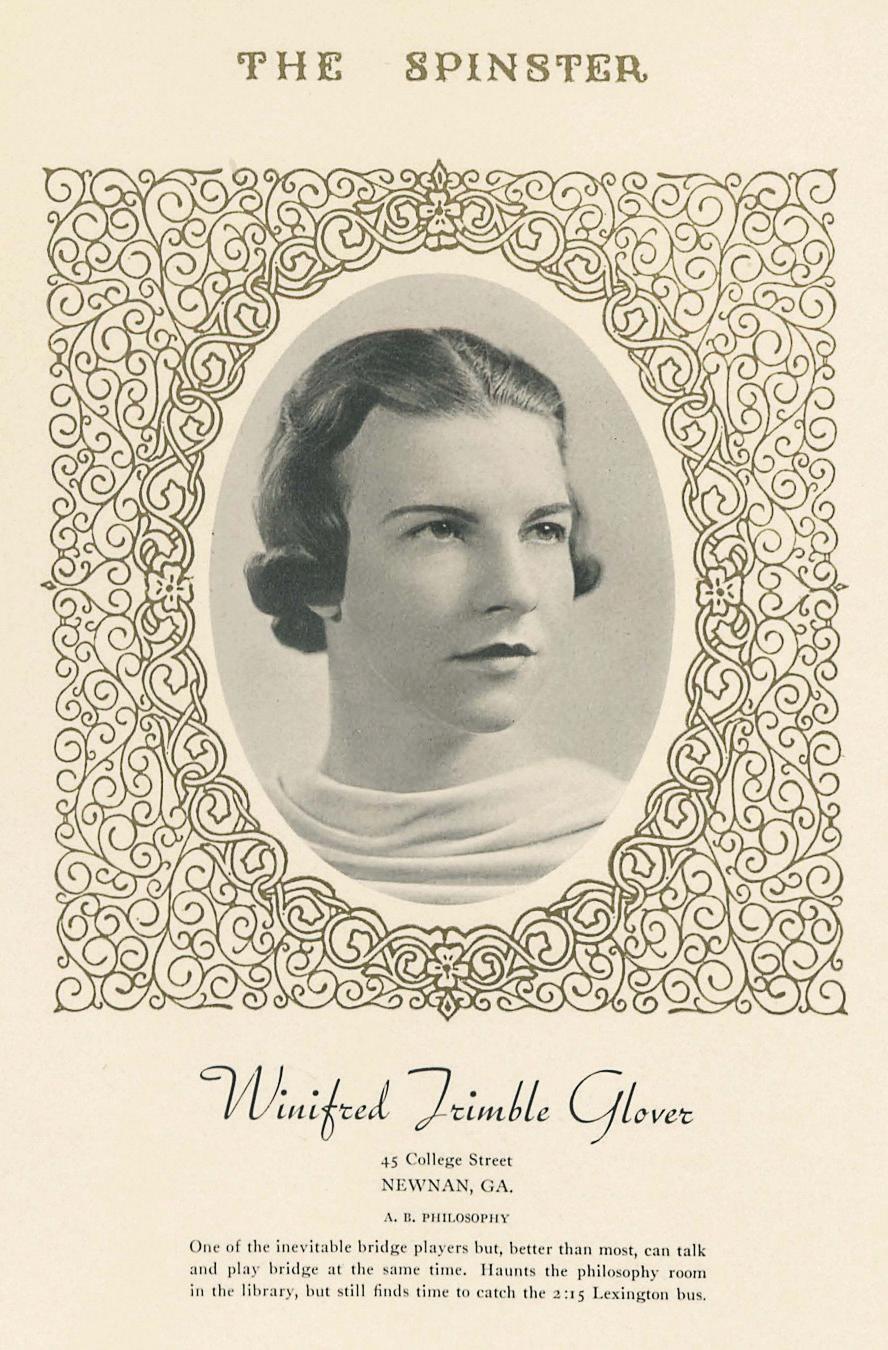
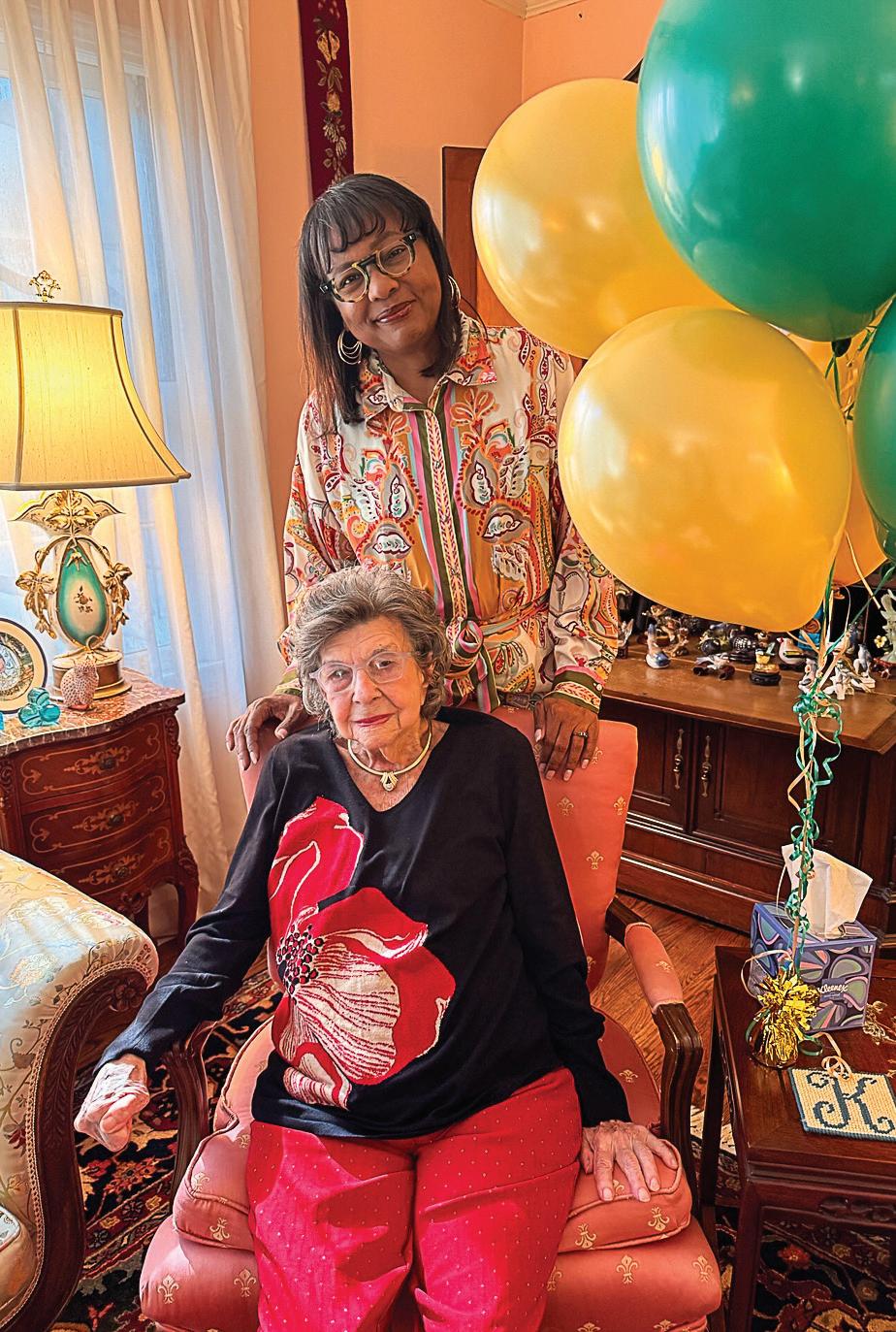
At Hollins, we often speak of transformation as something that unfolds over time. It is not defined by a single moment, but shaped across a lifetime of curiosity, courage, and care. Few lives reflect that truth more beautifully than that of Winifred “Winnie” Glover Boone Klein ’38, who celebrated her 108th birthday in November 2025 and, with characteristic wit, described herself as “pretty damn old!”
Winnie died peacefully on the morning of Jan. 2. While we mourn her loss, we do so with deep gratitude for a life that so fully embodied the values and spirit of Hollins. Her 108 years stand as a living testament to what it means to grow with purpose, to lead with generosity, and to meet the needs of the world with compassion and resolve.
Winnie was Hollins’ oldest living alumna, but age alone was never what made her extraordinary. What set her apart was the way her life reflected a commitment to learning, service, and love. Across more than a century of extraordinary change, she continued to grow, lead, and give back, carrying forward the enduring spirit that defines our community.
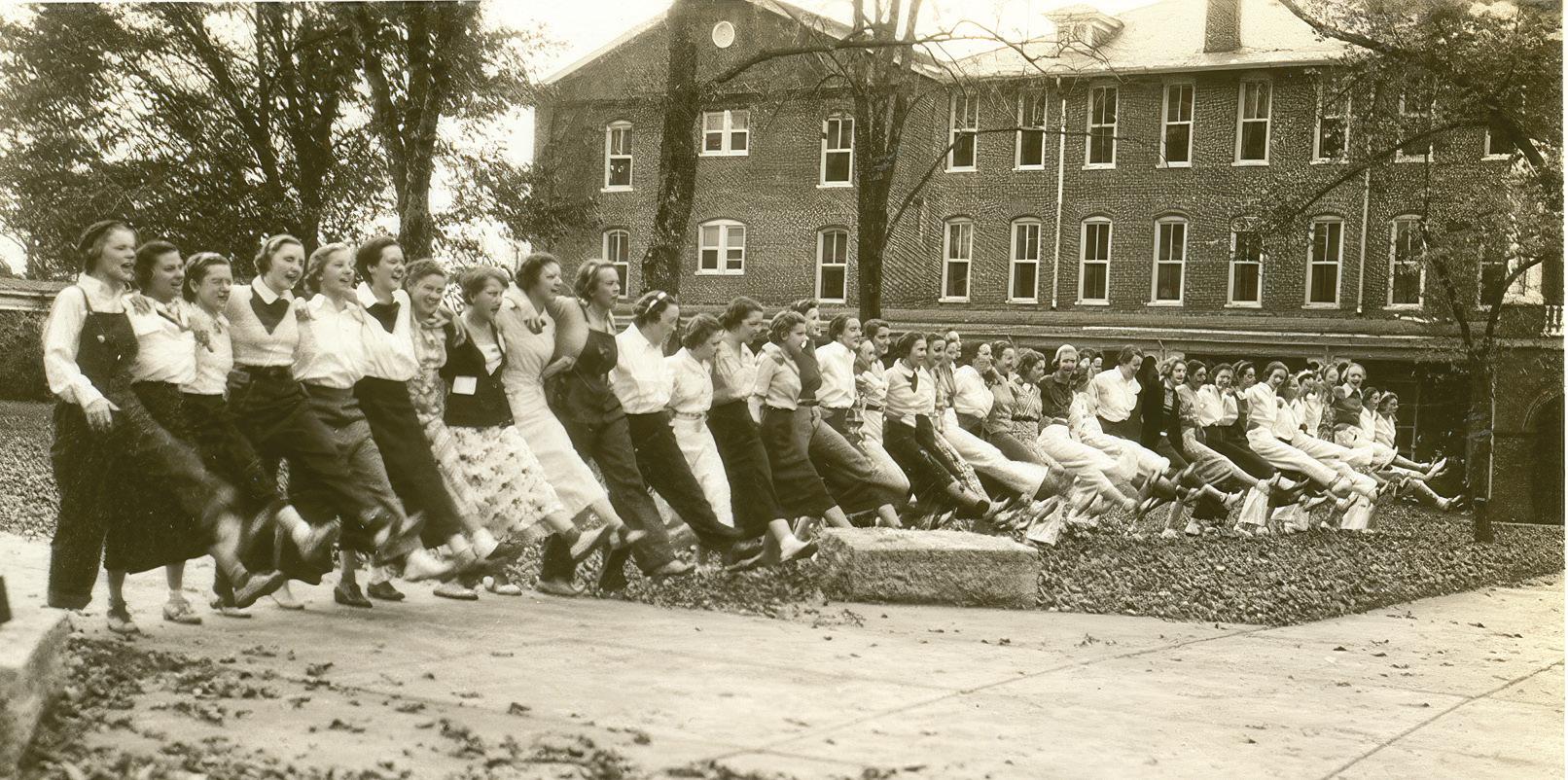
Raised in Newnan, Georgia, Winnie arrived at Hollins with a keen intellect and an open spirit. She graduated in 1938 with a degree in philosophy, a discipline rooted in asking enduring questions and engaging deeply with the world. She embraced the full experience of campus life, participating in the Student Government Association, writing for the Student Life newspaper, and delighting in the joy and surprise of Tinker Day. Those experiences did not remain memories alone; they helped shape the values and sense of purpose she carried throughout her life.
After Hollins, Winnie’s path unfolded in ways both ordinary and remarkable. She worked as a substitute teacher and later as a bookkeeper, raising six children with her first husband before welcoming two more sons as a stepmother. In every chapter, she remained deeply engaged in her communities, leading voters’ guilds, garden clubs, Sunday School classes, and Scouts. In each role, she drew upon her Hollins education, bringing thoughtful leadership, civic responsibility, and a deep commitment to service.
Perhaps the most enduring lesson Winnie offered was one she taught her children. Her daughter Caroline says Winnie taught them to be kind and to give back. Simple words, but ones that hold a lifetime of meaning and echo the values that continue to guide Hollins today.
I had the great honor of visiting Winnie on her birthday, sitting handin-hand as she reflected on a life she described as happy. I was overwhelmed with gratitude for her warmth, her humor, and her abiding love for Hollins. She lit up when she spoke of this community, reminding me that Hollins is not confined to its campus or traditions, but lives through the people it shapes.
This edition’s theme, Always Becoming, honors the deep roots that anchor Hollins while embracing the growth that propels us forward. Winnie leaves us with a powerful reminder that becoming is a lifelong journey. Through her life, legacy, and example, she continues to carry Hollins forward.
Levavi
Oculos,
MARY DANA HINTON President
The
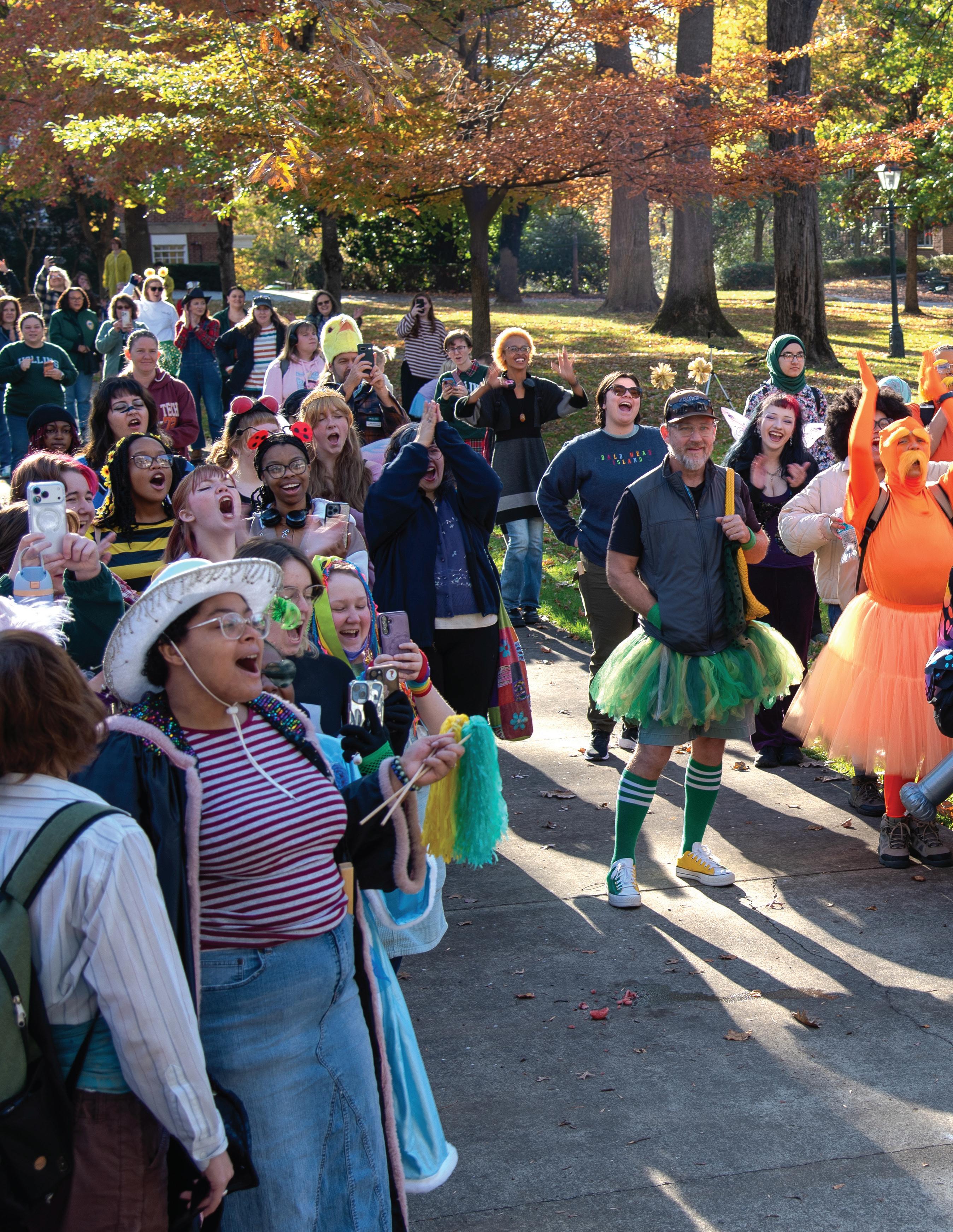
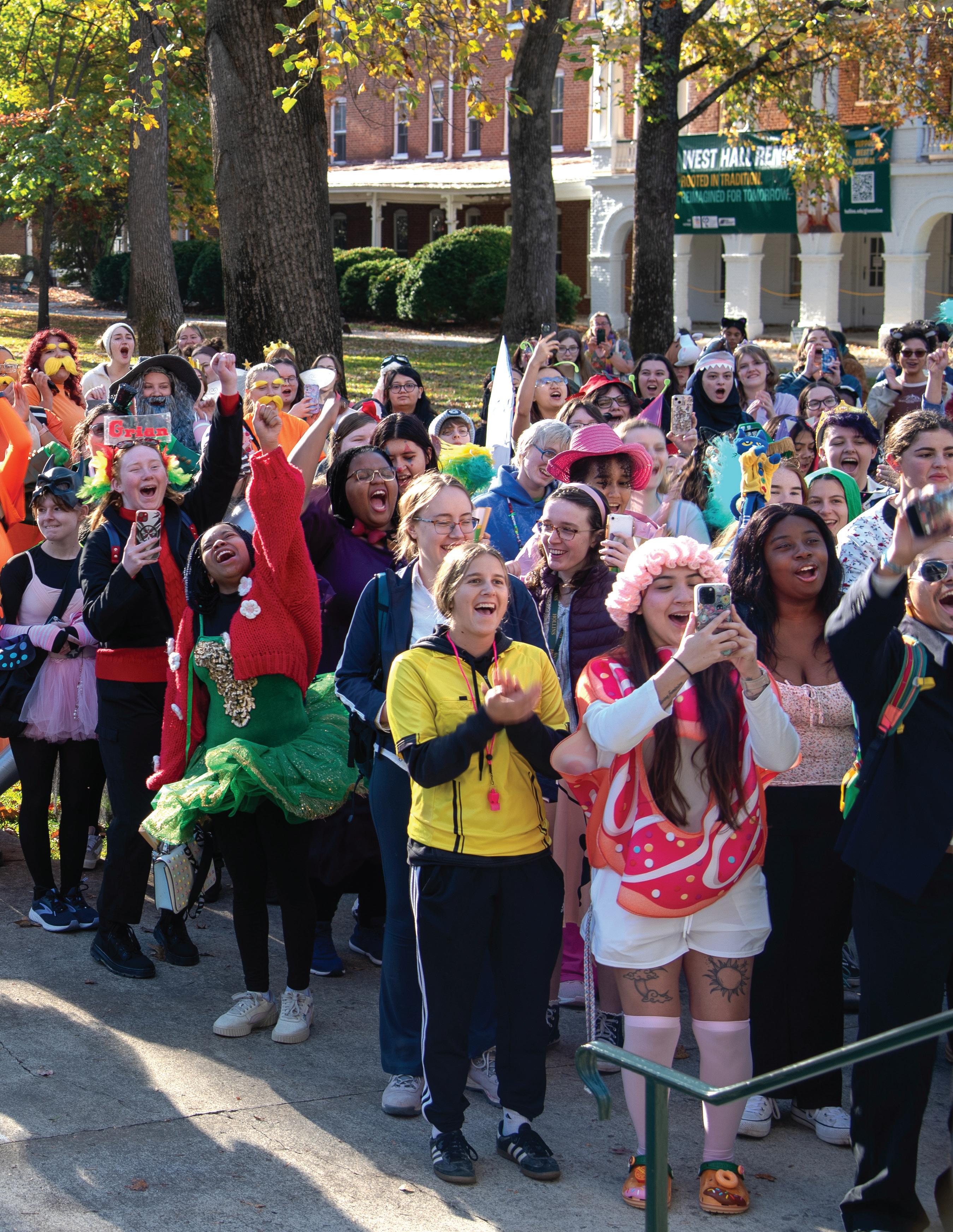
We ♥♥ You, Tinker Day!
Sunshine, laughter, and a full Front Quad. Tinker Day 2025 delivered all the joy we’ve come to expect from this cherished Hollins tradition.
A day that needs no explanation, only participation, Tinker Day reminds us year after year why it’s forever a favorite.
Hollins University hosted the Appalachia Regional Model Arab League (ARMAL) Conference in November, welcoming student delegates from across the region for a weekend of diplomacy and leadership development.
Through hands-on participation, the Model Arab League program allows students to assume the roles of Arab diplomats while developing skills in negotiation and collaboration. Seven delegations participated in the conference, and Hollins’ team, representing Algeria, earned the Outstanding Delegation Award.
Corabeth Pierce ’26 and Bagby Sparks ’26 were recognized as Best Council Chairs, while Sydney Mitchell ’27, Cate Orr ’28, Tamar Chirwa ’29, and Karen Robles Nolasco ’29 received individual awards for their representation of Algeria.
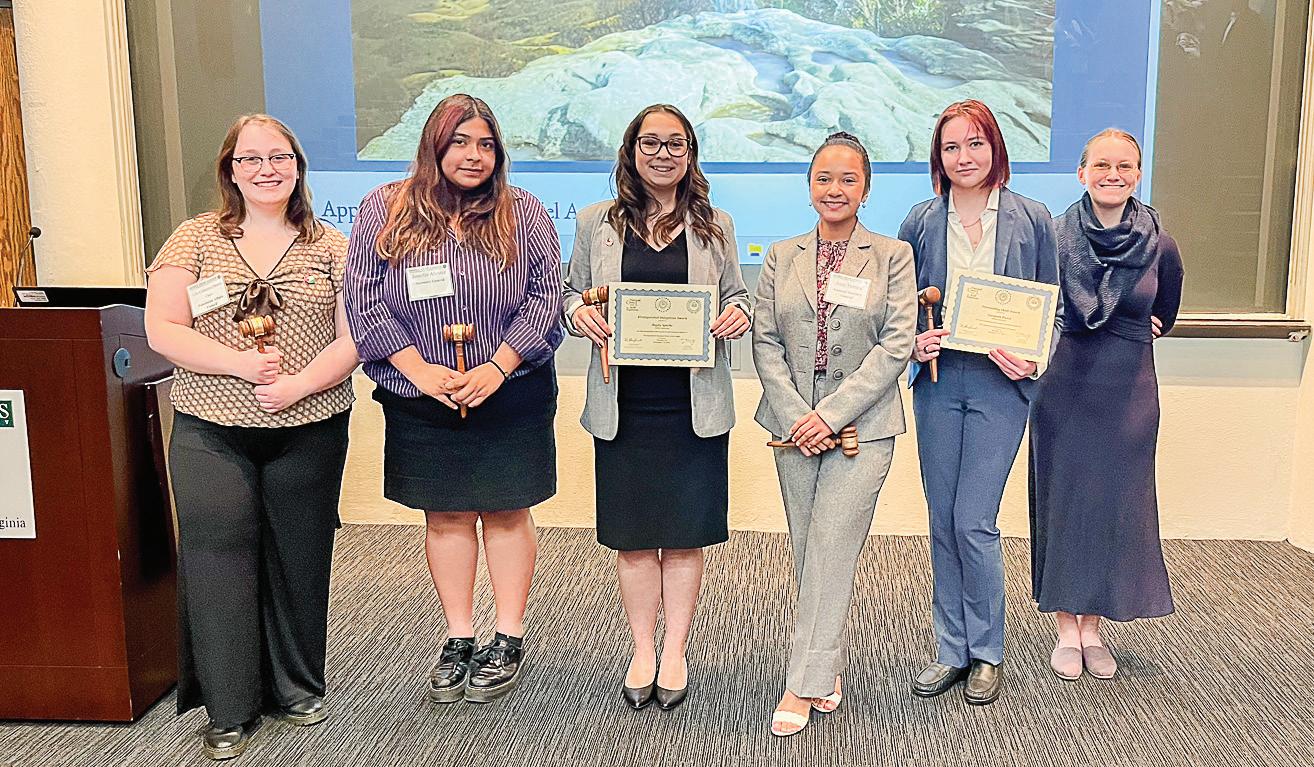
practitioners.
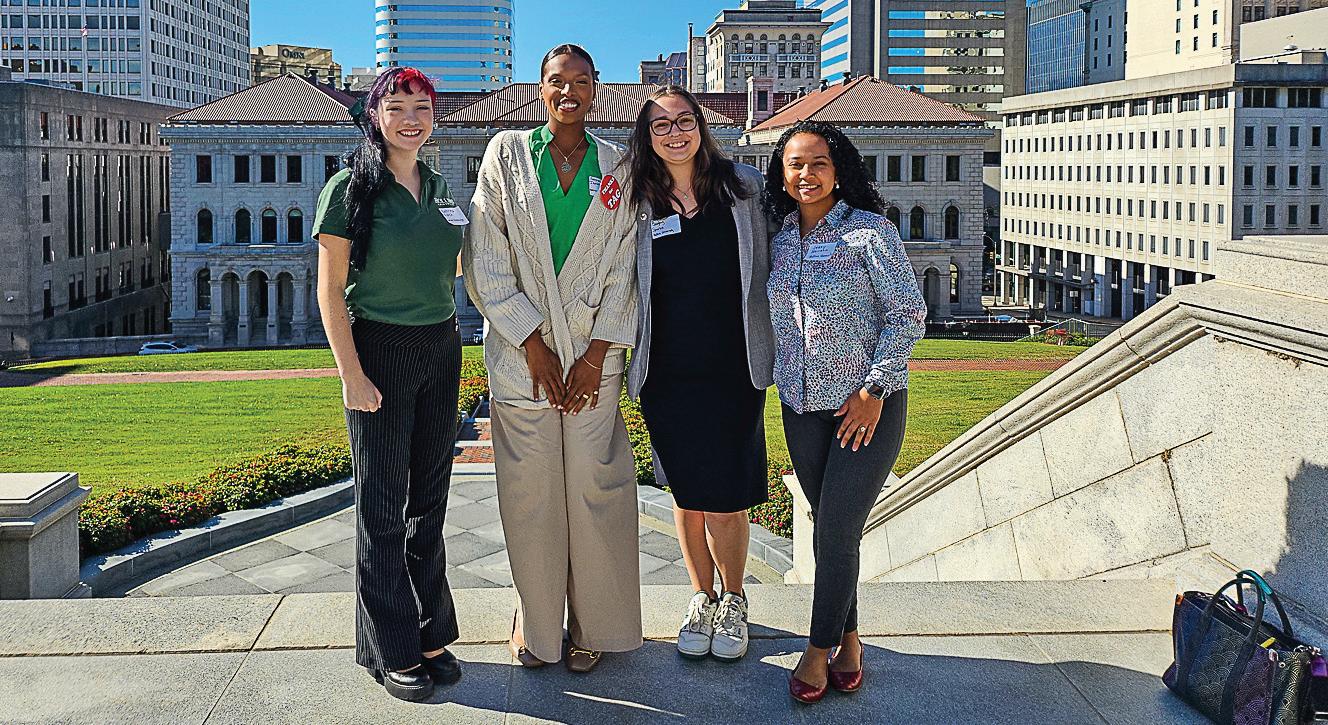
Hollins students visited the Virginia State Capitol for the inaugural CICV Fall Advocacy Day, where they met with state leaders and advocated for support of Virginia students attending private colleges.
This fall, four Hollins students traveled to the Virginia State Capitol to participate in the inaugural Fall Advocacy Day, hosted by the Council of Independent Colleges in Virginia (CICV). The event serves as a lead-in to February’s Virginia Tuition Assistance Grant (VTAG) Day, which supports Virginia residents attending private institutions like Hollins.
During the visit, students attended a press conference unveiling CICV’s new economic impact report, where Katrina Finch ’27 shared how her study abroad experience at Hollins shaped her education. Finch, Fatma Ibrahim ’26, Bagby Sparks ’26, and Jessy Herrera ’28 met with state delegates, including Hollins alumna Delegate Betsy Carr ’68, and observed a House Appropriations Committee meeting during their Capitol visit.
These students exemplify Hollins’ commitment to civic engagement and student leadership through advocacy both on campus and at the state level.
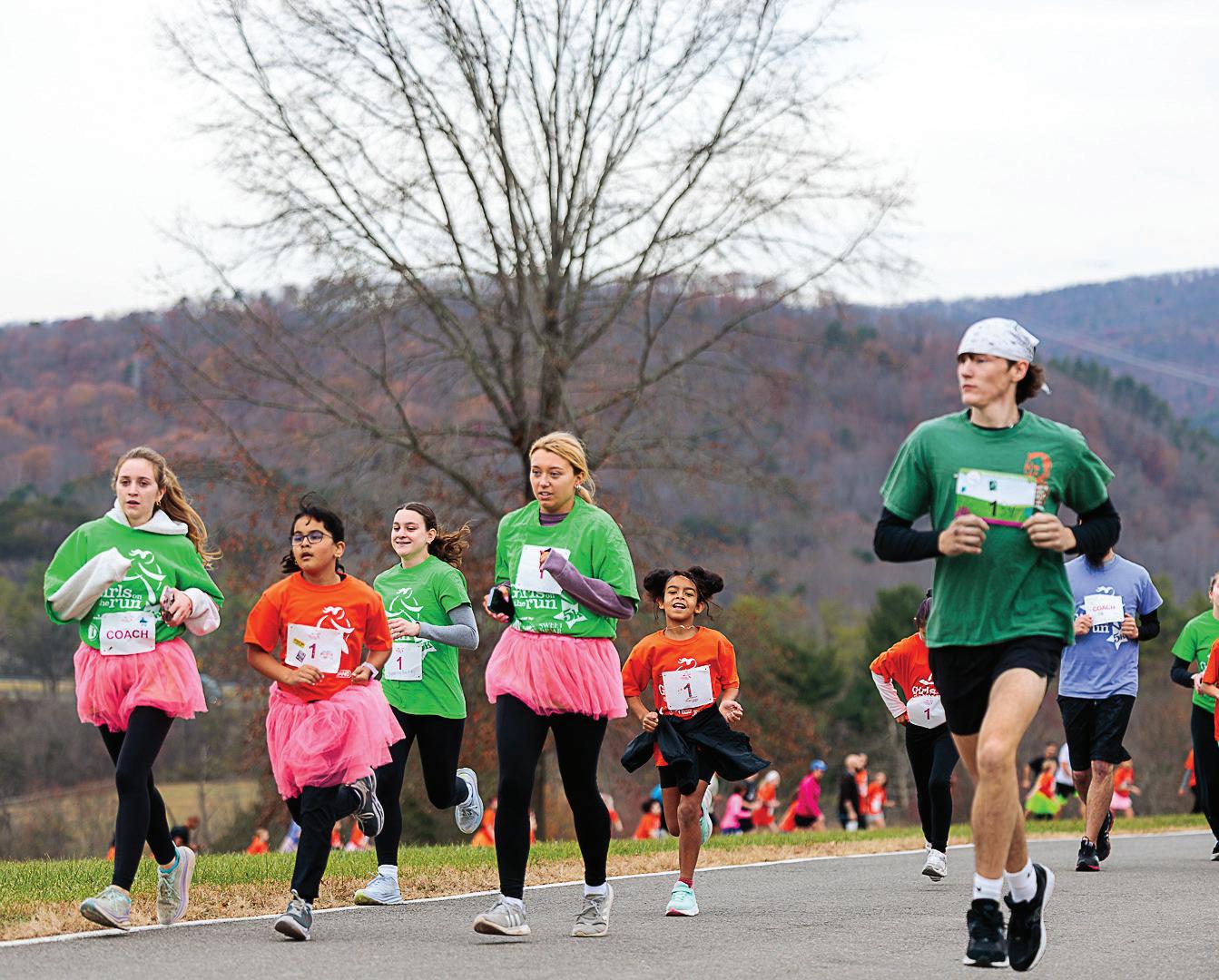
Hollins Athletics partnered with Girls on the Run Central Virginia and Blue Ridge this past fall to host Girls on the Run 5K. The event brought Hollins student-athletes together with local elementary school students for a morning that celebrated movement, creativity, confidence, and connection while fostering mentorship and healthy activity.
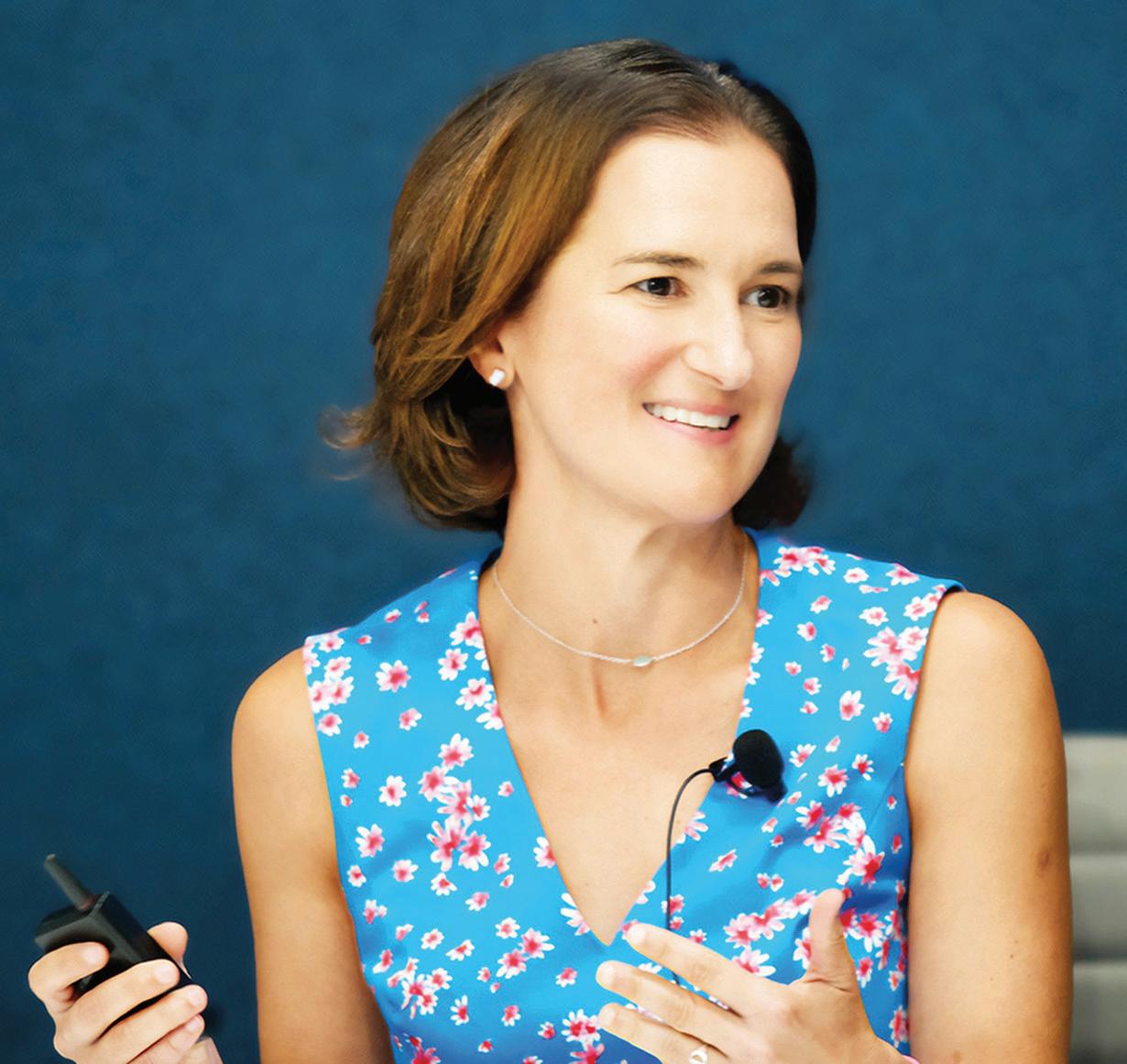
Amy Meli, assistant professor of political science, has received a competitive research grant from the Consortium on American Political Economy (CAPE) to support her work on interest groups and partisanship in the U.S. CAPE is a national network of scholars focused on political institutions, public policy, and political economy.

Meli’s project examines how labor unions navigate shifting party alignments as working-class voters increasingly move from the Democratic Party toward the Republican Party. Drawing on original datasets, including union email communications and state lobbying disclosures, her research explores how unions balance partisan loyalty during elections with more bipartisan relationships on policy issues. The project highlights how labor unions maintain electoral ties to Democrats while expanding partnerships with Republican and bipartisan coalitions in legislative settings.
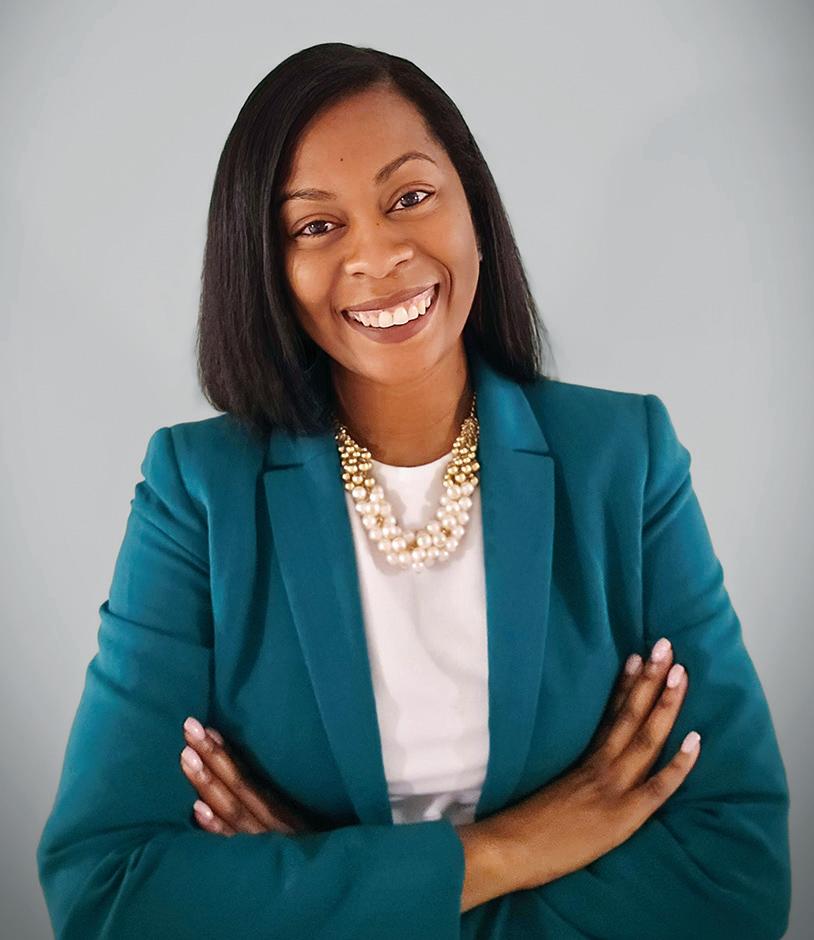
Tiffany R. Hinton, is serving as vice president for Student Success, Well-Being, and Belonging, effective January 2026. Hinton (no relation to President Hinton) has served in the role on an interim basis since July 3, 2025.
“Tiffany is a bold and visionary leader with deep experience in creating structures that advance student well-being,” said Mary Dana Hinton, president of Hollins University. “Her leadership is grounded in care, accountability, and a relentless commitment to our students.”
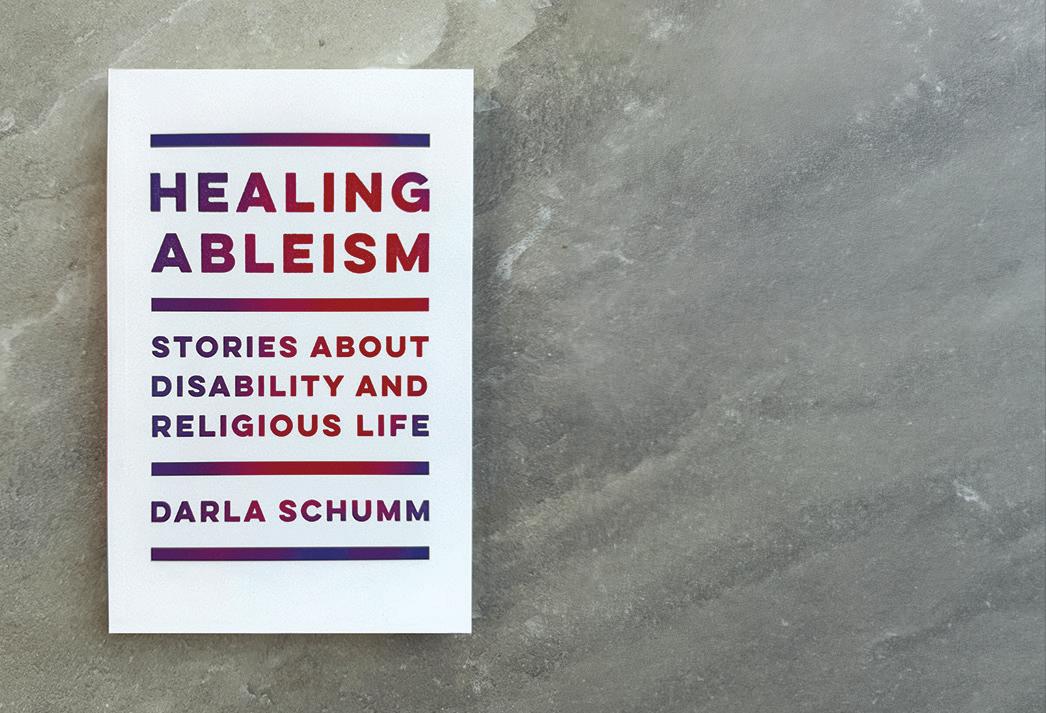
Associate Provost and Religious Studies Professor Darla Schumm, has published a new book, Healing Ableism: Stories About Disability and Religious Life, with Rutgers University Press.
Drawing on firsthand narratives, Healing Ableism centers the lived experiences of people with disabilities and challenges assumptions about disability in religious life. Rather than focusing on disability as something to be “fixed,” Schumm argues that ableism itself requires healing, and calls for more inclusive, justice-
centered communities rooted in what she describes as “accessible love.”
An internationally recognized scholar in disability and religion, Schumm blends storytelling, cultural analysis, and theory to invite readers to rethink faith, belonging, and care. Healing Ableism is available through Rutgers University Press and major book retailers.
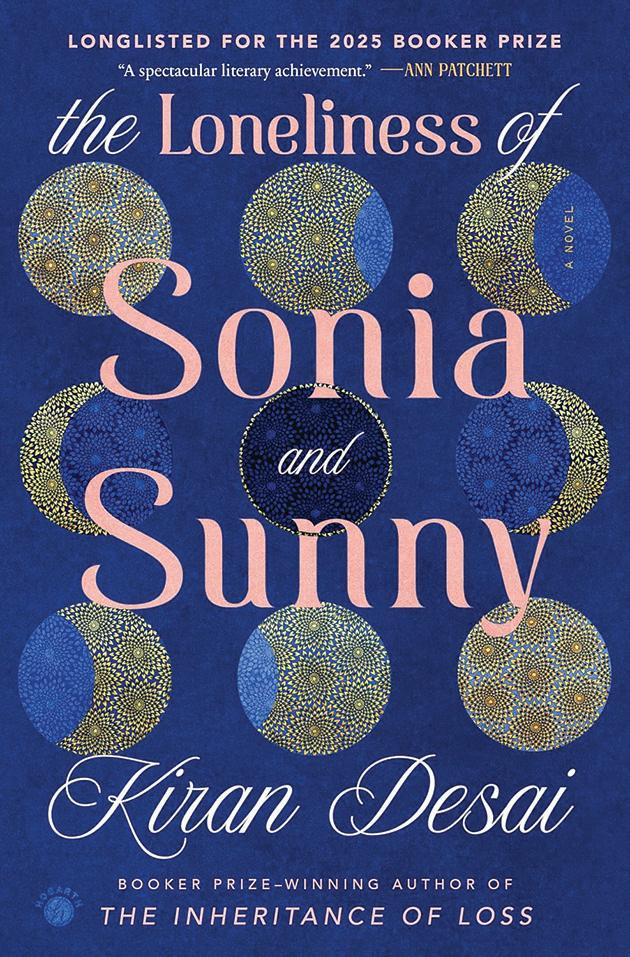
Novels by Kiran Desai, M.A. ’94, and Adam Ross, M.A. ’92, have been named to The New York Times Book Review’s list of the 100 Notable Books of 2025, recognizing outstanding fiction published this year.
Desai’s novel, The Loneliness of Sonia and Sunny, explores the lives of a young couple pushed toward marriage by their Indian families. The book was also selected for The New York Times Book Review’s 10 Best Books of 2025 and shortlisted for the 2025 Booker Prize.
Ross’s Playworld follows a former child actor navigating fame, identity, and a complicated relationship with a married woman. Ross is also the author of Mr. Peanut, which was named a New York Times Book Review Notable Book in 2010.
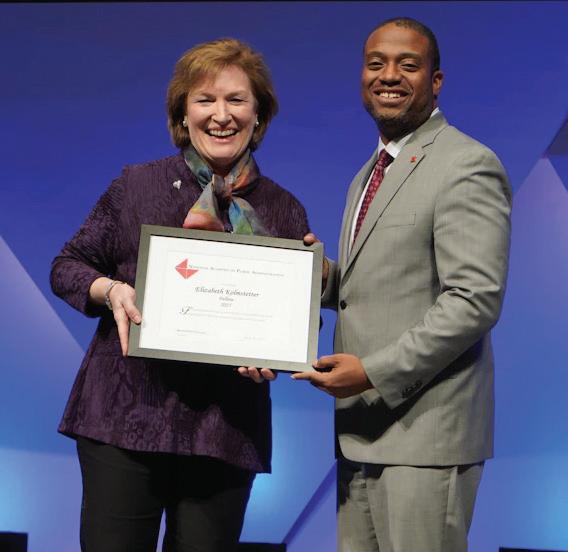

Trustee Elizabeth Kolmstetter ’85 Inducted into National Academy of Public Administration
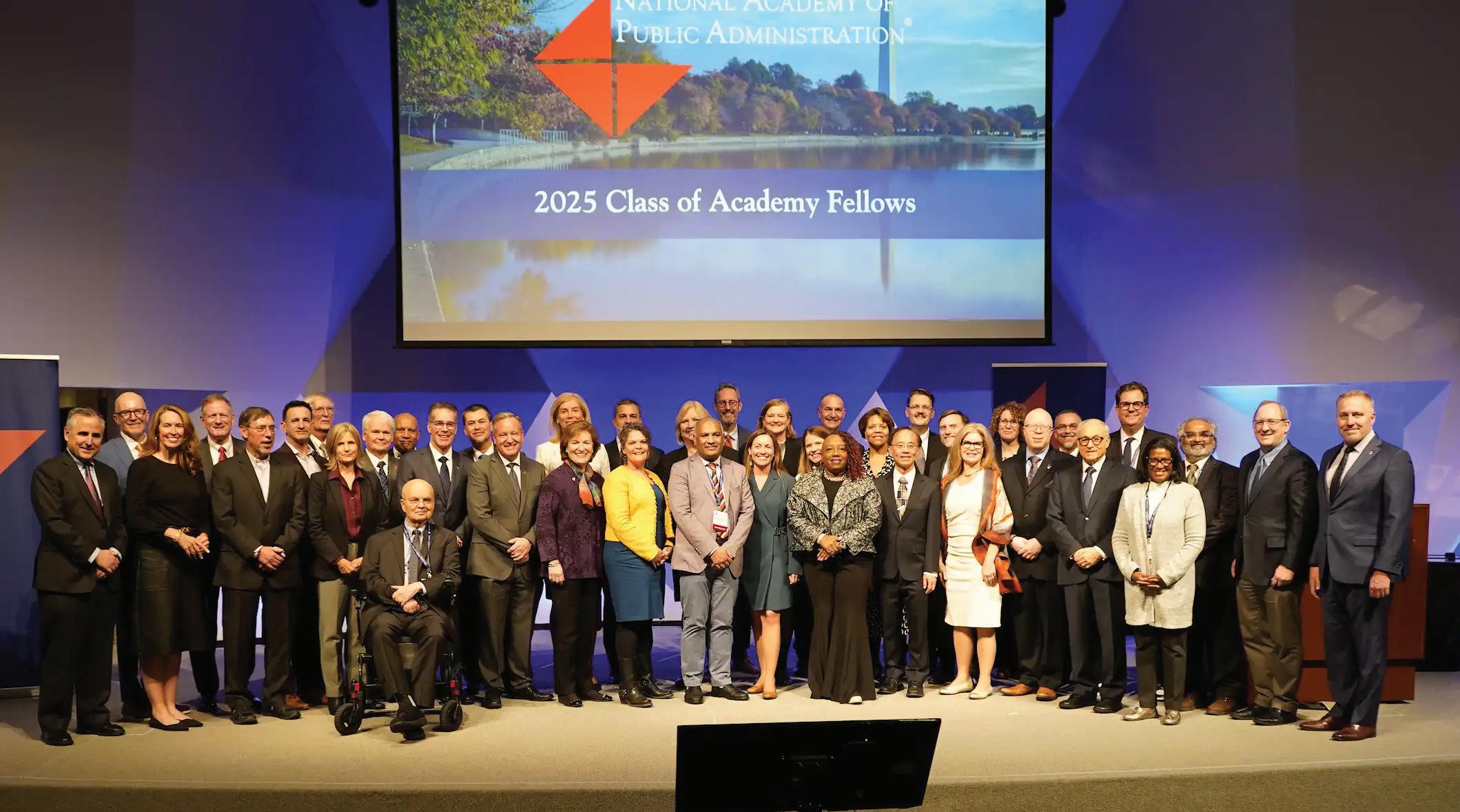
Elizabeth Brownlee Kolmstetter ’85 was inducted Nov. 3 into the National Academy of Public Administration’s 2025 Class of Academy Fellows, a distinction that recognizes leaders who have made significant contributions to public administration and public policy.
Chartered by Congress, the National Academy of Public Administration is an independent, nonpartisan organization that provides expert guidance to government leaders on improving effectiveness, accountability, and transparency. Election as an Academy Fellow follows a rigorous review of professional impact and leadership in the field.
Kolmstetter’s career is marked by national recognition, including the 2022 Presidential Rank Award, the NASA Outstanding Leadership Medal, the National Intelligence Superior Service Medal, and the Hollins University Distinguished Alumnae Award. Reflecting on her induction, Kolmstetter said, “I am looking forward to contributing to this national effort to continue to make a difference and improve public service. This news confirms what we all know: Women who are going places start at Hollins!”
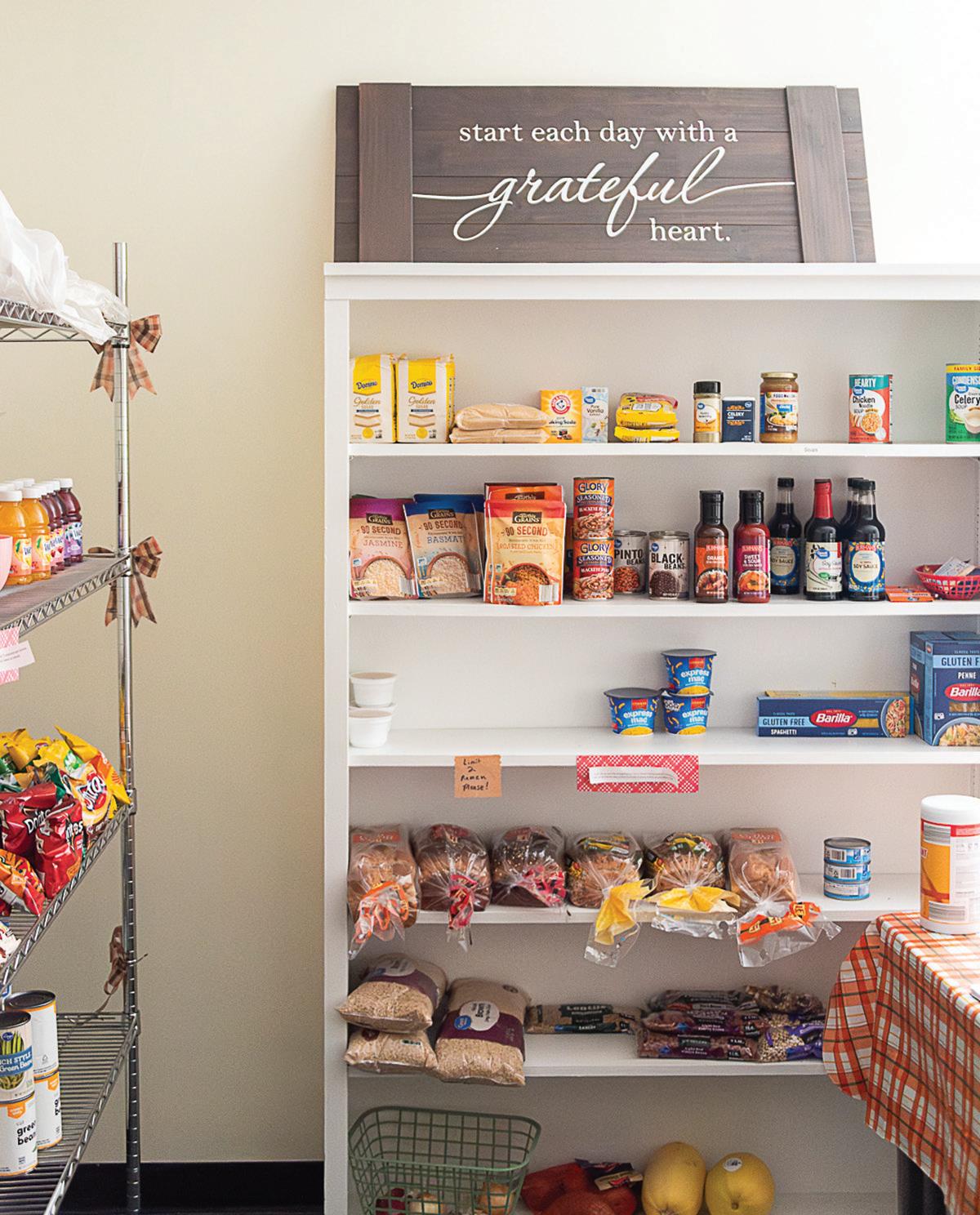
The Center of Care offers a range of resources to support students’ well-being—from perishable and nonperishable food to cookbooks that inspire healthy, home-cooked meals.
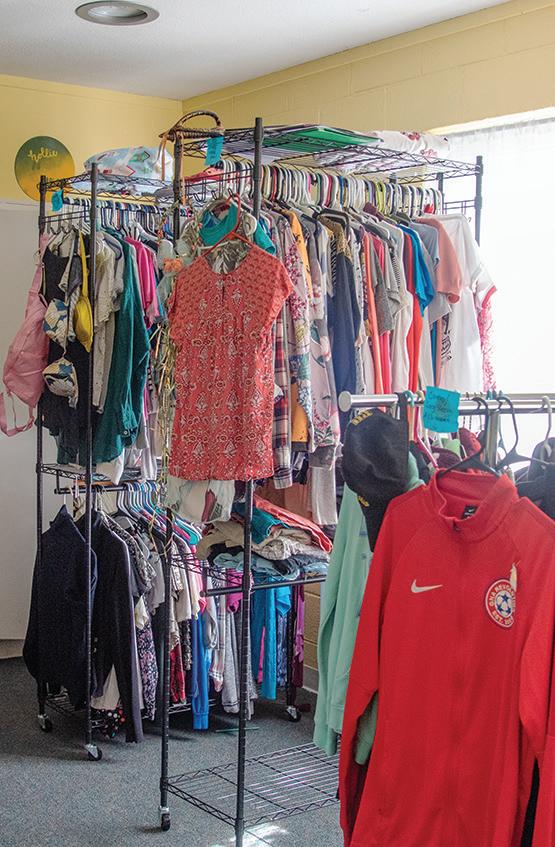
Hollins students, faculty, and staff gathered in October to celebrate the opening of the Center of Care, a reimagined set of spaces in the duPont Chapel Complex designed to support student wellbeing and holistic care.
The center brings together essential resources in one accessible location, including a lactation room, food pantry, and the free store, which now offers business attire. Additional features include a meditation room, community kitchen, and access to the university chaplain. The center is open during regular business hours to members of the Hollins campus community.
“We want to ensure that students have access to essential items at no cost in one spot,” said Tiffany Hinton, vice president for Student Success, Well-Being, and Belonging. “This center represents our commitment to care and holistic well-being.”
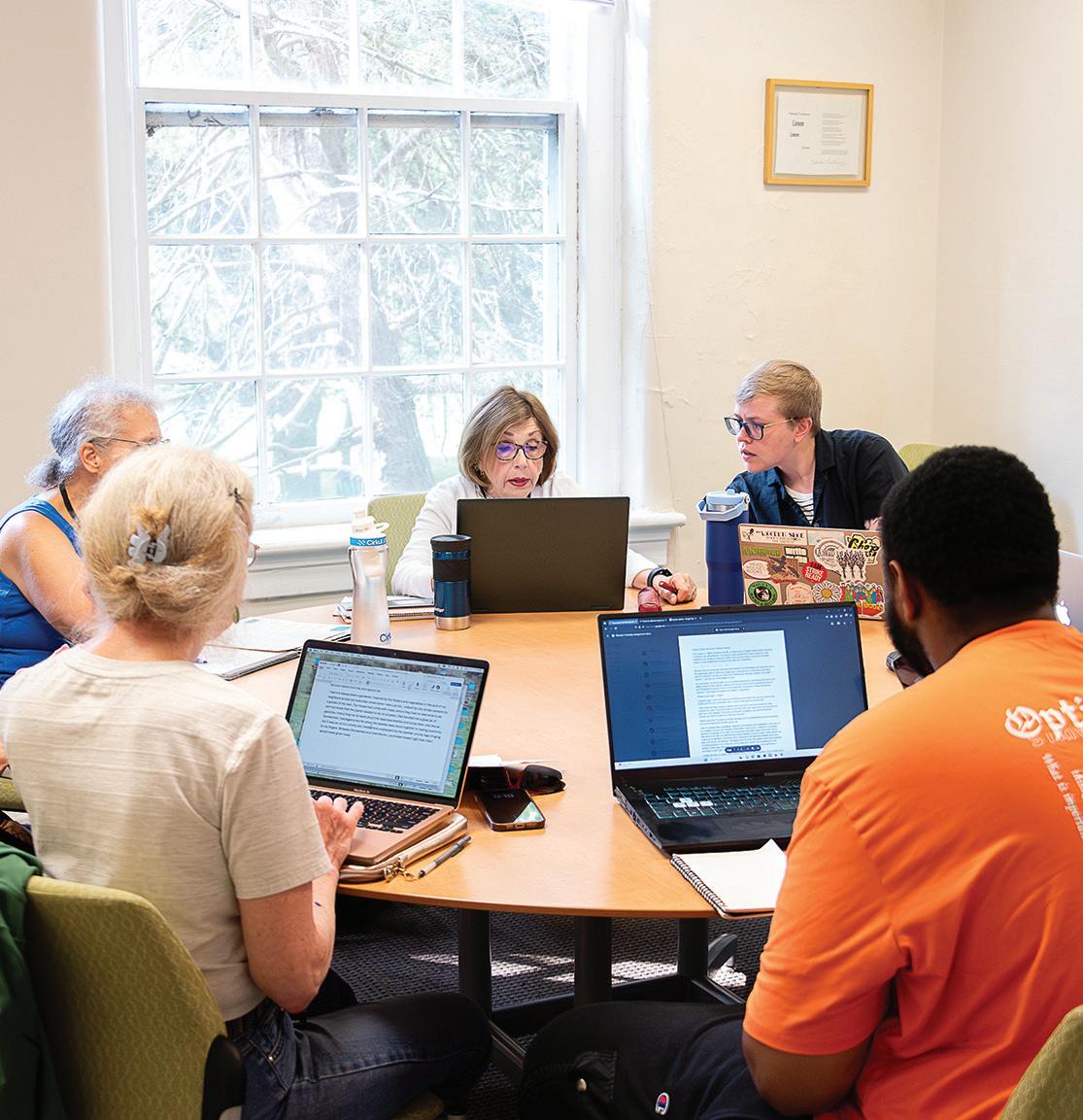
Writers of all levels are invited to join the annual Tinker Mountain Writers Workshops (TMWW) for a transformative week of creativity and community from June 14–19, on Hollins’ scenic campus at the base of the Blue Ridge Mountains.
Participants can choose from manuscript workshops, write-now workshops, or one-on-one tutorials in poetry, fiction, nonfiction, and multigenre writing. All participants enjoy craft talks, readings, and opportunities to connect with fellow writers and faculty mentors. More information: hollins.edu/tmww
Women Working with Clay Symposium (WWWC) invites adult artists and craft lovers to a dynamic symposium celebrating creativity, connection, and craft on campus June 15–18. This hands-on event offers presentations, demonstrations, open studios, and immersive clay experiences led by skilled ceramists and guest artists of diverse styles and perspectives. More information: hollins.edu/wwwc
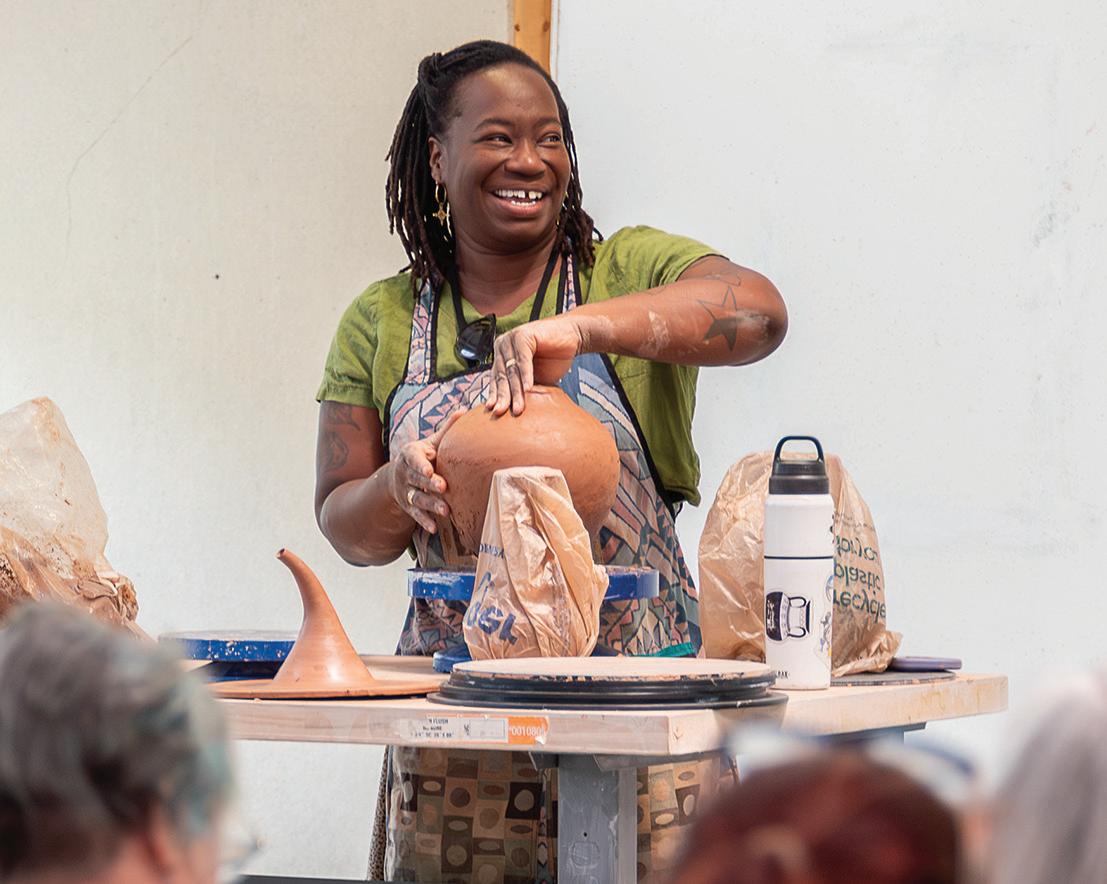
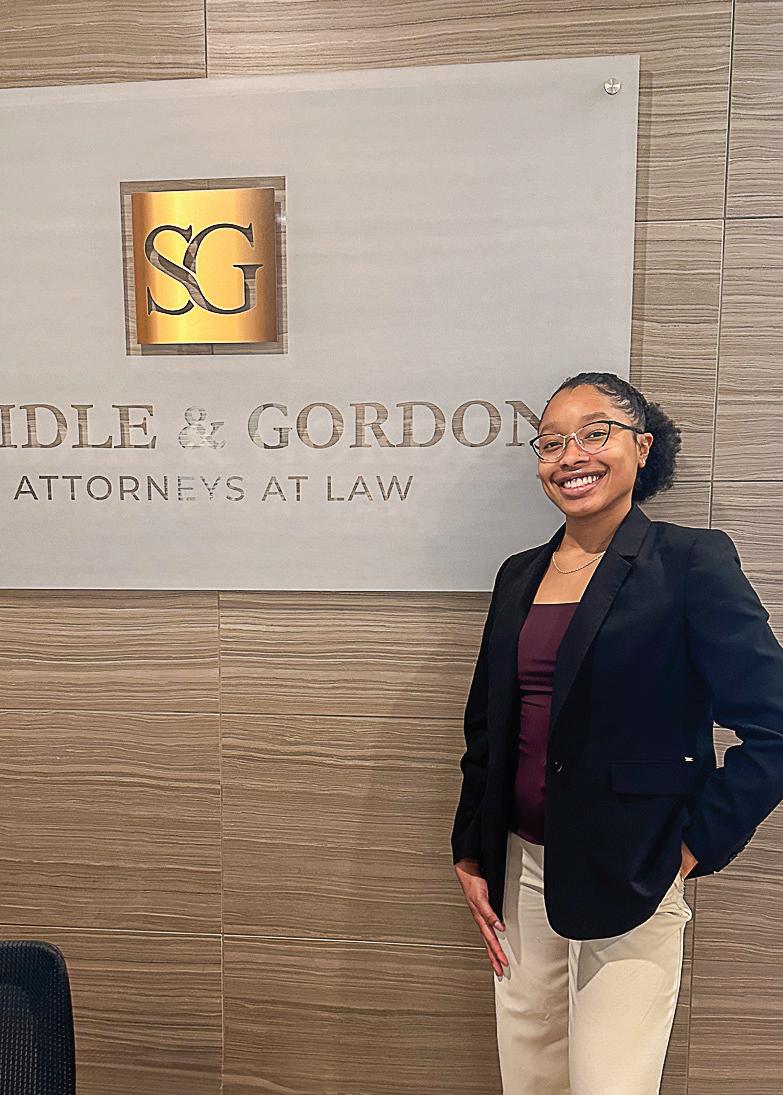
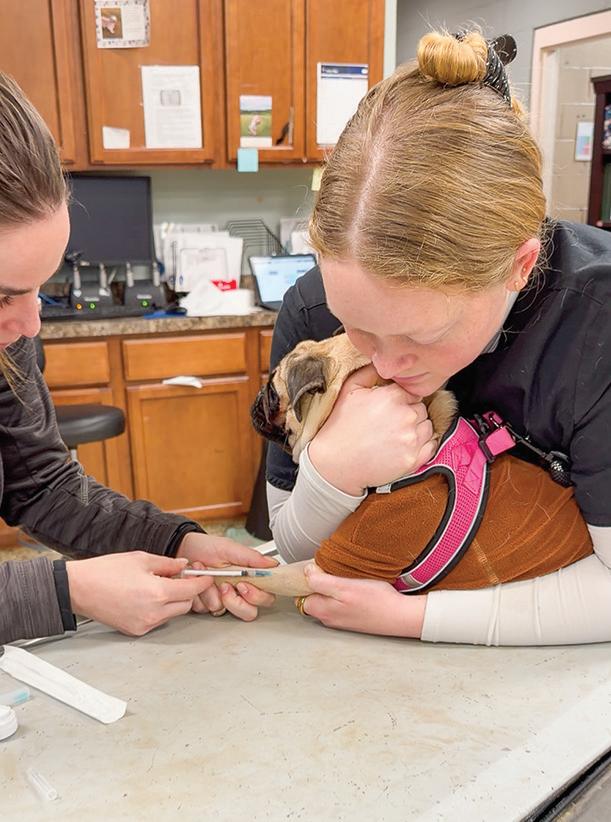
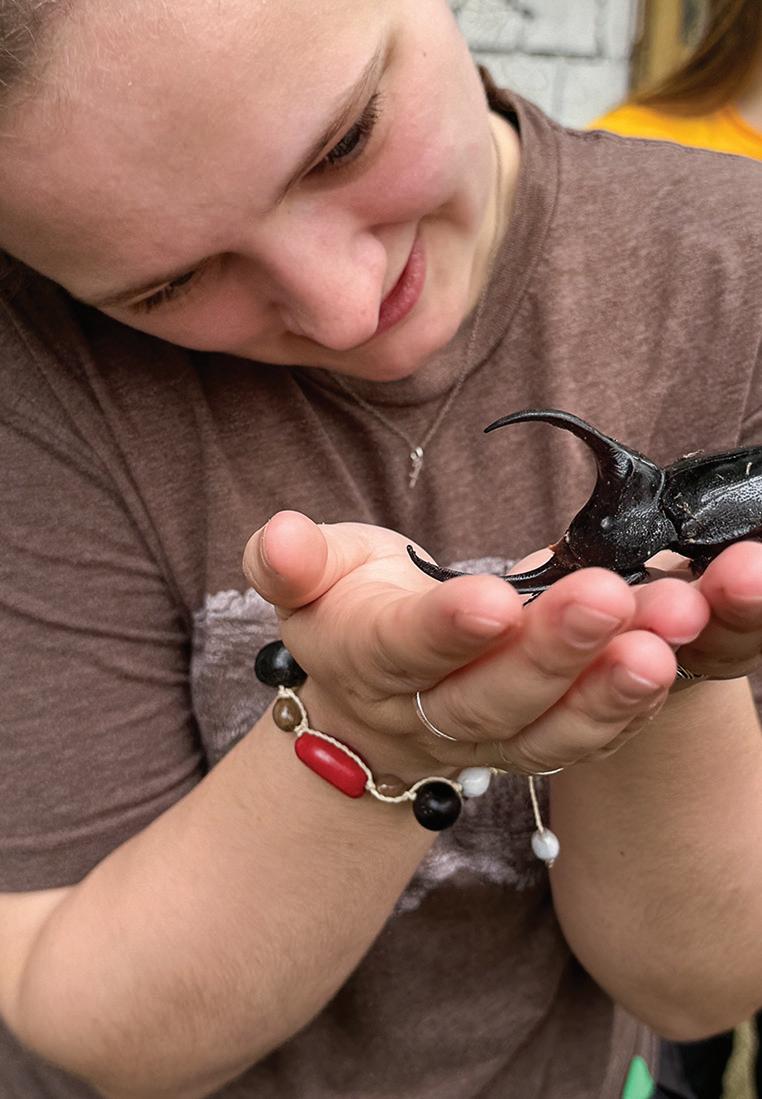
January Term is one of the most intentionally designed opportunities in Hollins’ academic calendar for student transformation.
The one-month term between fall and spring semesters offers students opportunities to stay on campus or venture away; to take up independent research or participate in a faculty-led seminar; to pick up a briefcase and go to work or pack a suitcase and fly to worlds unknown.
This past January was no exception.
Longstanding seminars such as Roanoke Circuit Court Judge David Carson’s “Trial and Error” course challenge students across majors, from psychology to elementary education, through hands-on engagement with the legal system.
In “Survival in the Modern World,” taught by Mountain Shepherd Adventure School owner Dina Imbriani and Hollins Outdoor Program Director Jon Guy Owens, students pushed through a series of firsts — from rock-climbing to shelter-building.
At the heart of this year’s on-campus J-Term experience was “Conflict & Collaboration,” a newer seminar introduced as part of Hollins’ redesigned core curriculum. The course, which is for first-year students, focuses on developing skills that shape both academic success and life beyond college.
“Our previous curriculum had a strong emphasis on developing effective communication skills,” says Rachel Nuñez, associate professor and chair, history; Batten Chair in Leadership; director of core curriculum and first-year foundations.
“We wanted to build on that while also helping students strengthen their collaboration and leadership skills, which we know are highly sought after by employers.”

Nuñez, who also directs the “First-Year Foundations” program, sees “Conflict & Collaboration” as a natural progression for new students. While “First-Year Foundations” centers on “telling your story,” this course shifts the focus outward.
“Conflict is something we all experience in our lives, and it can feel scary and overwhelming,” she said. “This course tries to reorient our attitude to conflict.”
This year, the course featured “special topics” sessions that allowed students to explore specific themes and faculty to introduce their areas of expertise and interests. From a game of “capture the flag” to demonstrate teamwork skills, to roleplaying games to practice debate tactics, students explored the foundations of leadership.
Other students ventured off campus into Hollins’ surrounding jurisdictions. According to Associate Director of Career and Life Design Amber Becke, of the 80 students who interned in the Roanoke Valley, about half participated in programming through Hollins’ Career and Life Design (CLD). The rest secured internships on their own.
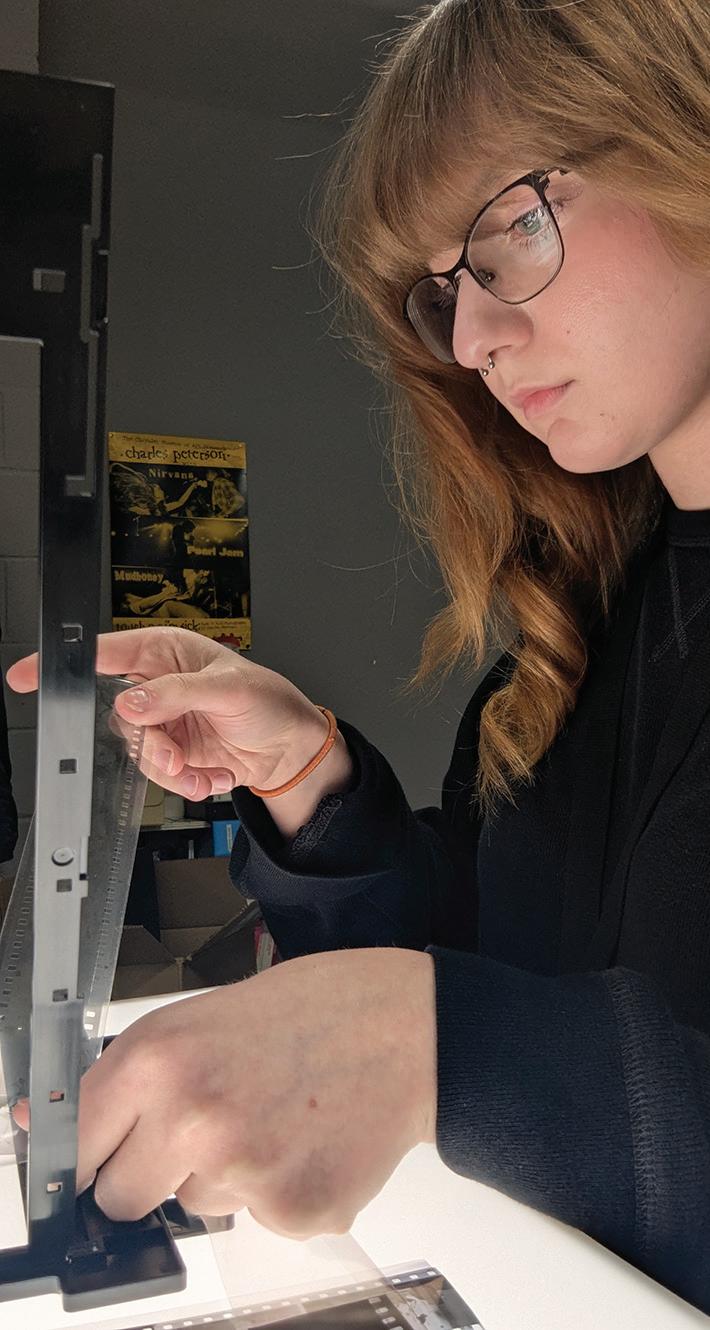
For Taryn Shover ’26, a creative writing major with film and business minors, that initiative led to an internship with Boyd-Pearman Photography, a photo and video production company based in Roanoke.

“I applied to so many other internships that I didn’t get, but you always end up where you’re supposed to be,” she said. “Don’t close the doors just because you think they won’t open.”
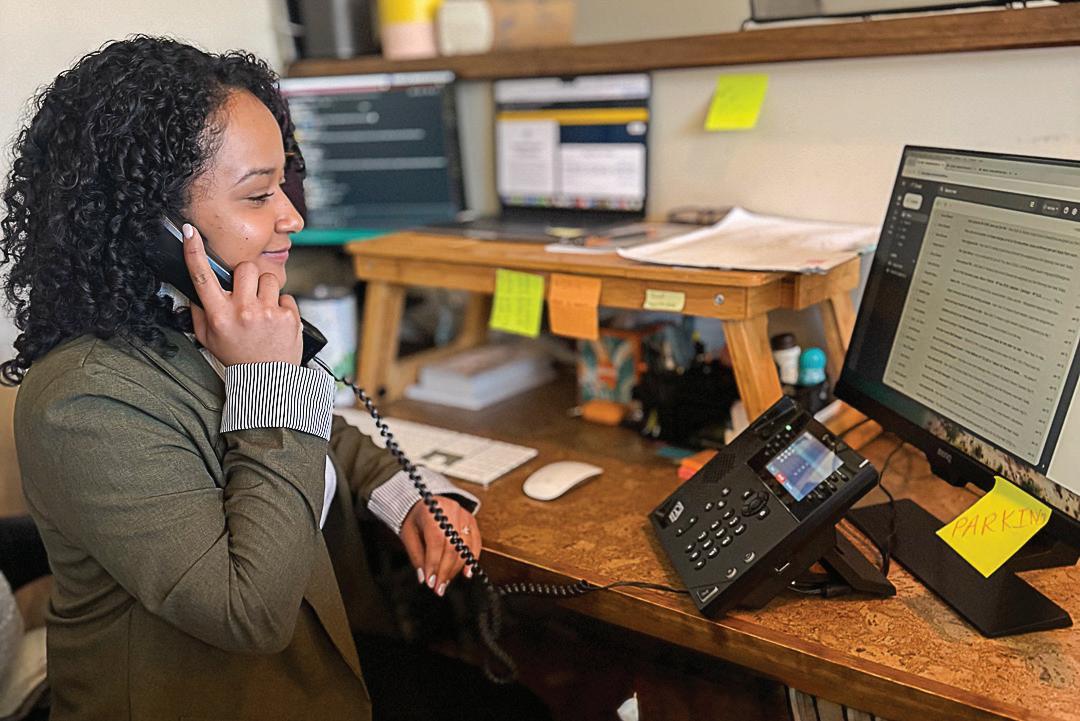
Kenidee Rabenstein ’26 interned with CLD under Becke and CLD Director Blair Celli. The experience opened the psychology major’s eyes to other potential post-grad paths.
“There’s a lot of pressure to go into high-stakes psychology fields, like therapy or psychiatry. I never really felt like I fit into one of those things,” Rabenstein said. “But this internship has shown me that I can go into something like career counseling and still help people without it being a life-or-death scenario.”
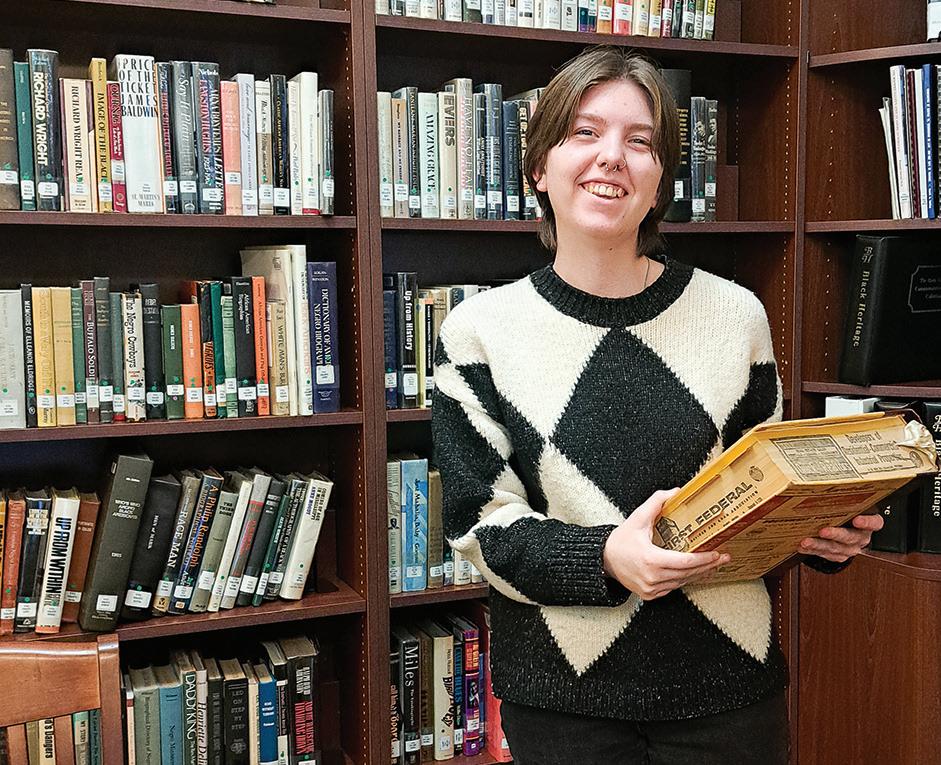
Anna Woods ’26 interned with Roanoke Public Libraries, digitizing and indexing a collection of about 700 artistic works by Dave Ramsey that documented Roanoke’s historic Gainsboro neighborhood before urban renewal.
“This was my first time working with libraries,” the art history major said. “I’ve done past internships in museums, and as much as I love them, I’ve decided to consider other career paths, broaden my horizons, and see if I can work with libraries or archives.”
J-Term experiences encourage discovery. Students studying abroad, through global partner programs or faculty-led trips, reported increased self-confidence and pride in newfound knowledge.
Holly Hylton ’26, an environmental science major, traveled with Director and Professor of Environmental Studies Renee Godard to Ecuador to explore the biodiversity of the Andes and the Amazon.
“We constantly found new species previous Hollins J-terms didn’t find,” she said. “This study abroad experience has made me more confident in conducting research and collecting data, and overall, more comfortable with independent travel.”
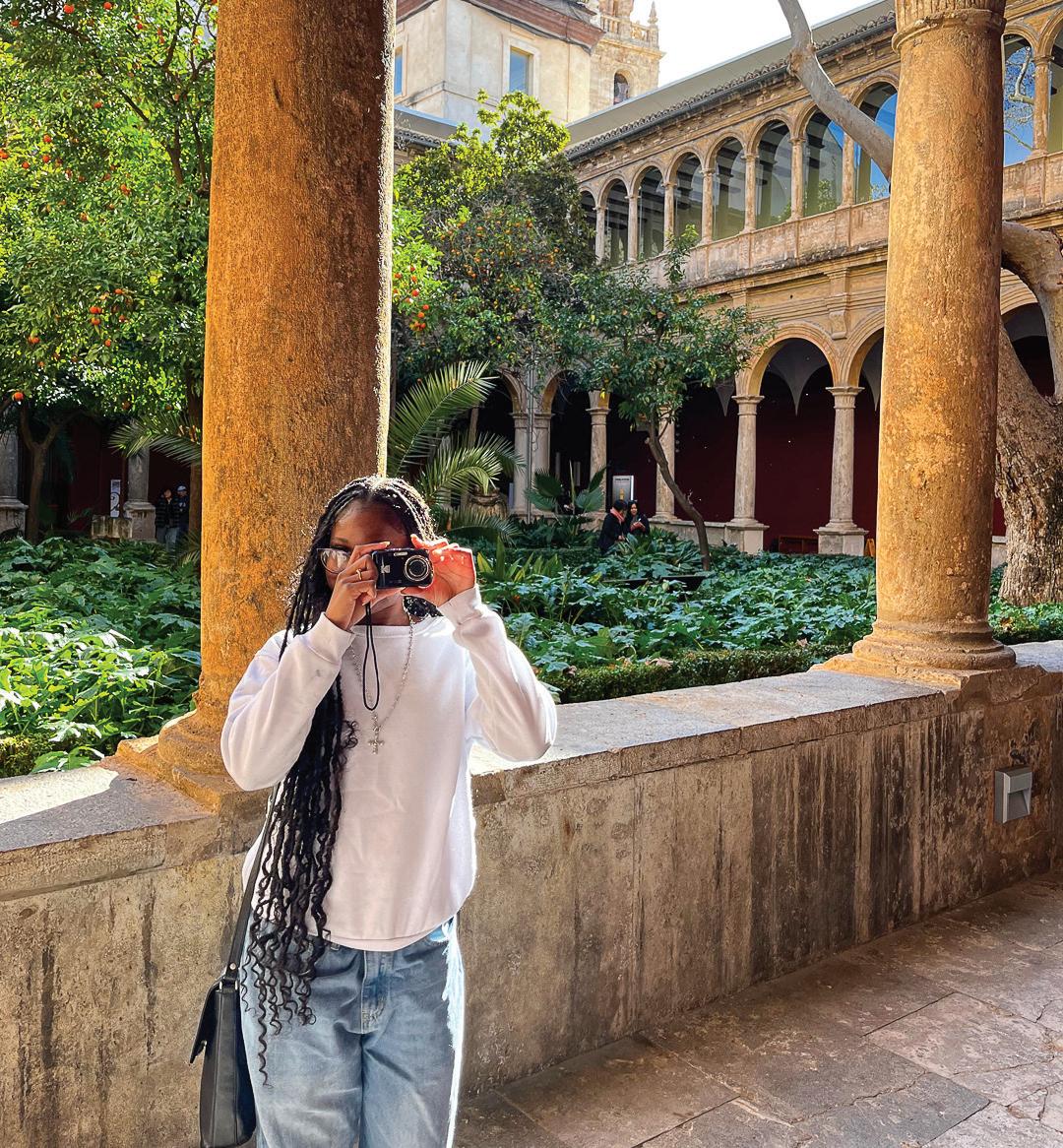
Natalia Chapel ’28 studied French language and culture in Tours, France through l’Institut de Touraine. The English and vocal performance
major said she had studied the language for about seven years, and her time in Tours was just the challenge she needed to improve.
“I had always undermined my own French skills out of self-consciousness, but I actively navigated French cities and had conversations in French on my own,” she said.
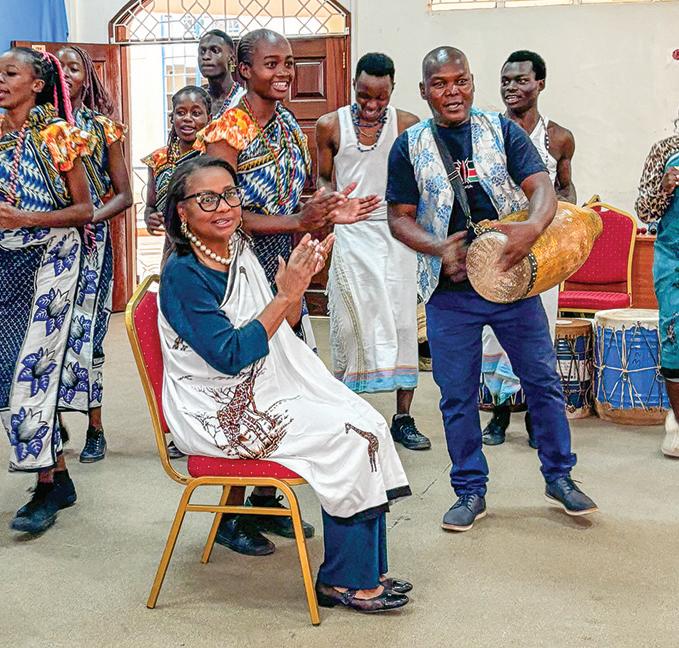
In Nairobi, Kenya, Chair and Assistant Professor of Public Health Abubakarr Jalloh and Professor and Chair of Gender & Women’s Studies Lindsey Breitwieser led students through discussions about healthcare needs, access, and medical practice as they explored social, scientific, and juridical influences on sexual and reproductive life.
On the third day of their trip, President Mary Dana Hinton surprised students on their way to the market. She accompanied them for three days, joining them in the classroom and visiting with administrators of Kenyatta University, Hollins’ partner institution in Nairobi.
“To be a part of the class was to be a part of a family,” Hinton shared in a blog post. To the students, she said, “In our brief time together, I observed your growth, your deep humanity and care, and your leadership. ... For 72 hours, we laughed together, danced together, and gasped together. You were the midwives to my rebirth and African naming, Nalika. But most of all, we allowed ourselves to love one another.”
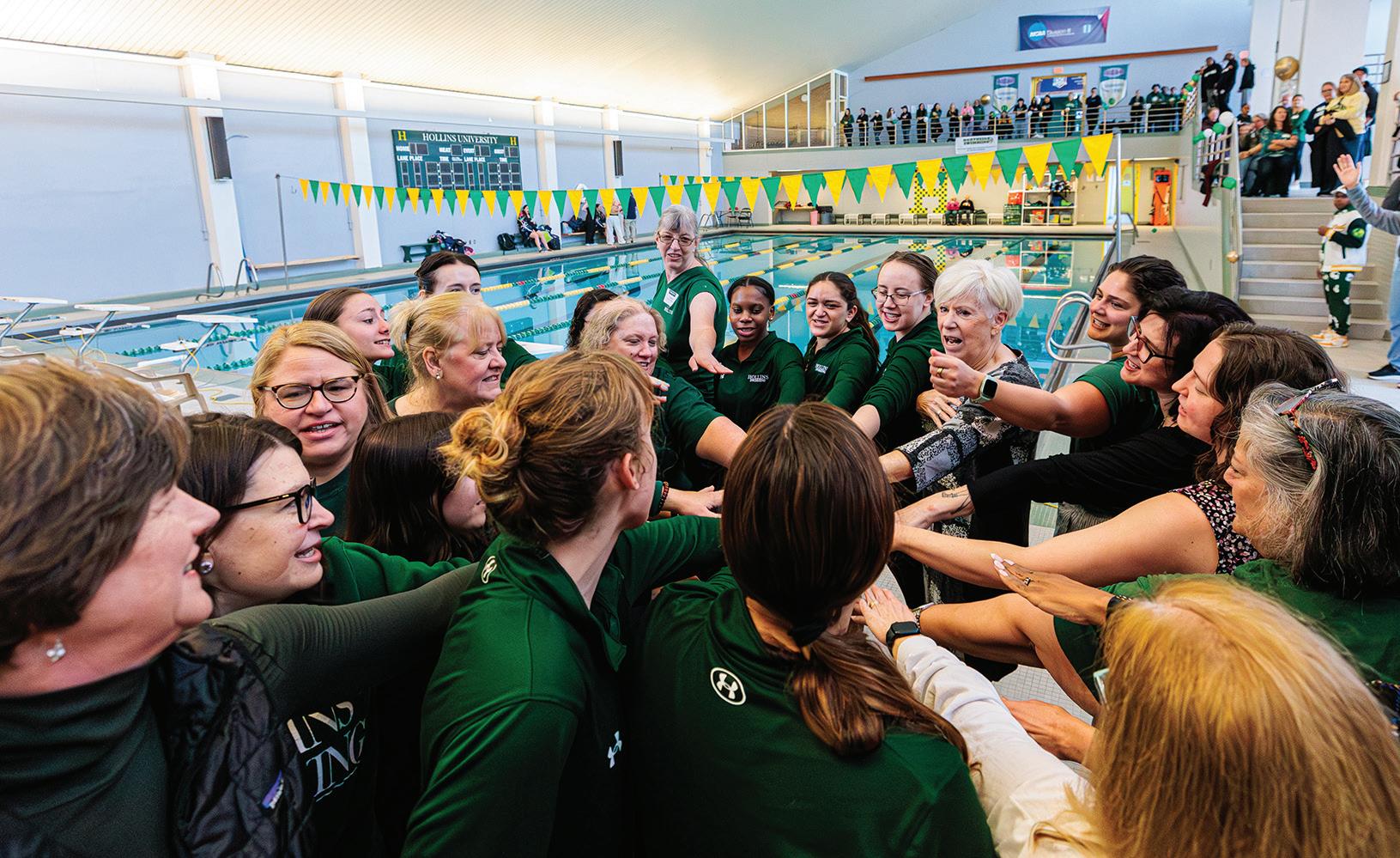
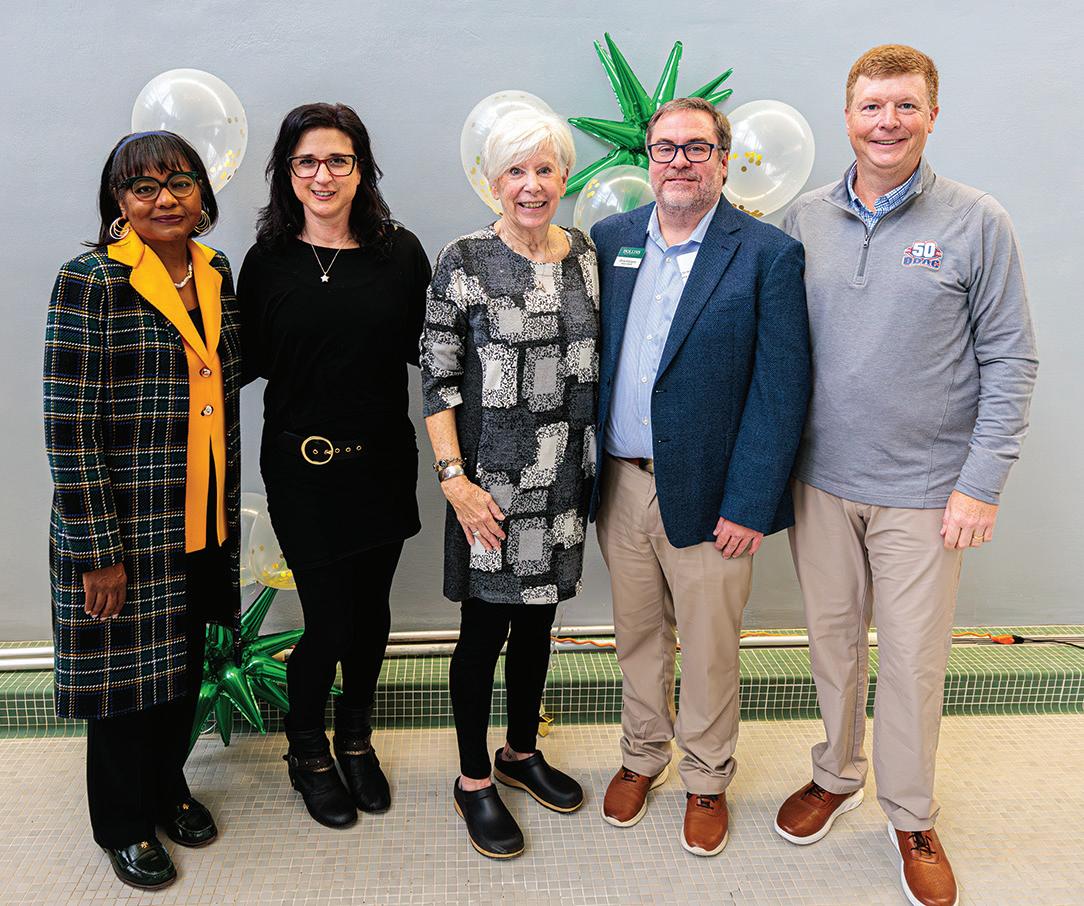
On Dec. 6, Hollins hosted longtime rival Sweet Briar for a swim meet that delivered both a decisive victory and a historic celebration. Before Hollins defeated the Vixens 118–48, a standingroom-only crowd gathered to honor the inaugural class of the Old Dominion Athletic Conference (ODAC) Hall of Fame.
The induction coincided with the ODAC’s 50th anniversary. Created by the conference’s Board of Directors, the Hall of Fame recognizes individuals who helped shape the league’s first five decades. The inaugural class includes 50 former studentathletes, coaches, administrators, and contributors representing the conference’s member institutions.
Members of the Hollins community have played a lasting role in the ODAC’s history. Two of Hollins’ four inductees — Kat Horton ’97 and Lynda Calkins — were recognized during the December celebration.
Kat Horton was a standout swimmer from 1994 to 1996. She earned ODAC Swimmer of the Year honors in 1996, was a two-time All-ODAC selection, and achieved national acclaim as a four-time NCAA All-American. Horton captured NCAA national titles in the 100 and 200 butterfly in 1995 and still holds Hollins records in the 100 and 200 butterfly as well as the 200 and 400 individual medleys. She was inducted into the Hollins Athletic Hall of Fame in 2002.
“Being named to the inaugural Hall of Fame class of the Old Dominion Athletic Conference was a deeply humbling honor, made even more meaningful by being inducted alongside my coach Lynda Calkins,” Horton said. “Sharing the weekend with friends and family, connecting with swimming alumnae/i, and spending time with current studentathletes and staff reminded me how powerful this community truly is. The experience reignited my love for the sport, and after nearly 30 years away,
I’ve found myself back on the pool deck — and back in the water — with renewed joy and gratitude.”
Calkins served as director of athletics from 1985 to 2008 and coached swimming for more than two decades. Under her leadership, Hollins won ODAC Swimming Championships in 1992 and 1993 and finished runner-up four additional times. She was named ODAC Coach of the Year four times and mentored 14 All-ODAC swimmers, including one ODAC Swimmer of the Year. Calkins also played a vital leadership role within the conference, serving on the ODAC Executive Committee and as ODAC President from 1995 to 1997. Nationally, she contributed to the advancement of women’s athletics through service on multiple NCAA committees, including the Council on Women’s Athletics and the NCAA Management Council. She was inducted into the Hollins Athletics Hall of Fame earlier this year.
“The 1980s, 1990s, and early 2000s were an exciting time for women’s sports, the ODAC, and the growth of NCAA Division III,” Calkins said. “Being part of the first class of ODAC Hall of Fame is truly an honor. Hosting the ceremony at Hollins made it especially meaningful, as former and current student-athletes came together to celebrate and reflect.”
“These athletes, coaches, and administrators built a standard,” Kilcoyne said. “Their dedication, character, and pursuit of excellence created the foundation on which today’s student-athletes stand.”
Horton and Calkins are two of the four ODAC Hall of Fame inductees with ties to Hollins. Elizabeth Cheng ’14, the ODAC’s first Women’s Golfer of the Year and a two-time All-American, and a women’s athletics trailblazer, the late Marjorie Berkley, will be honored during separate on-campus ceremonies later this spring.
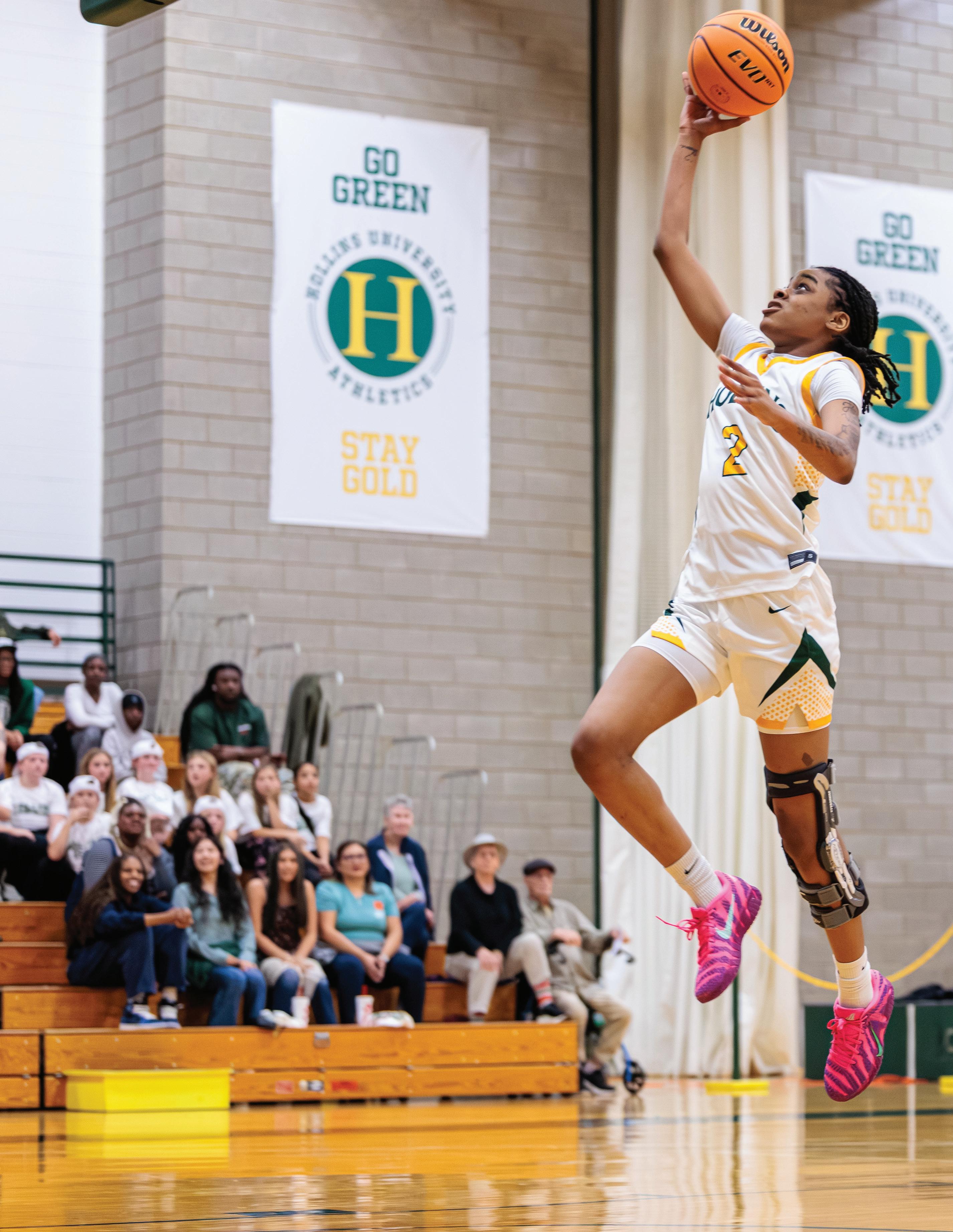
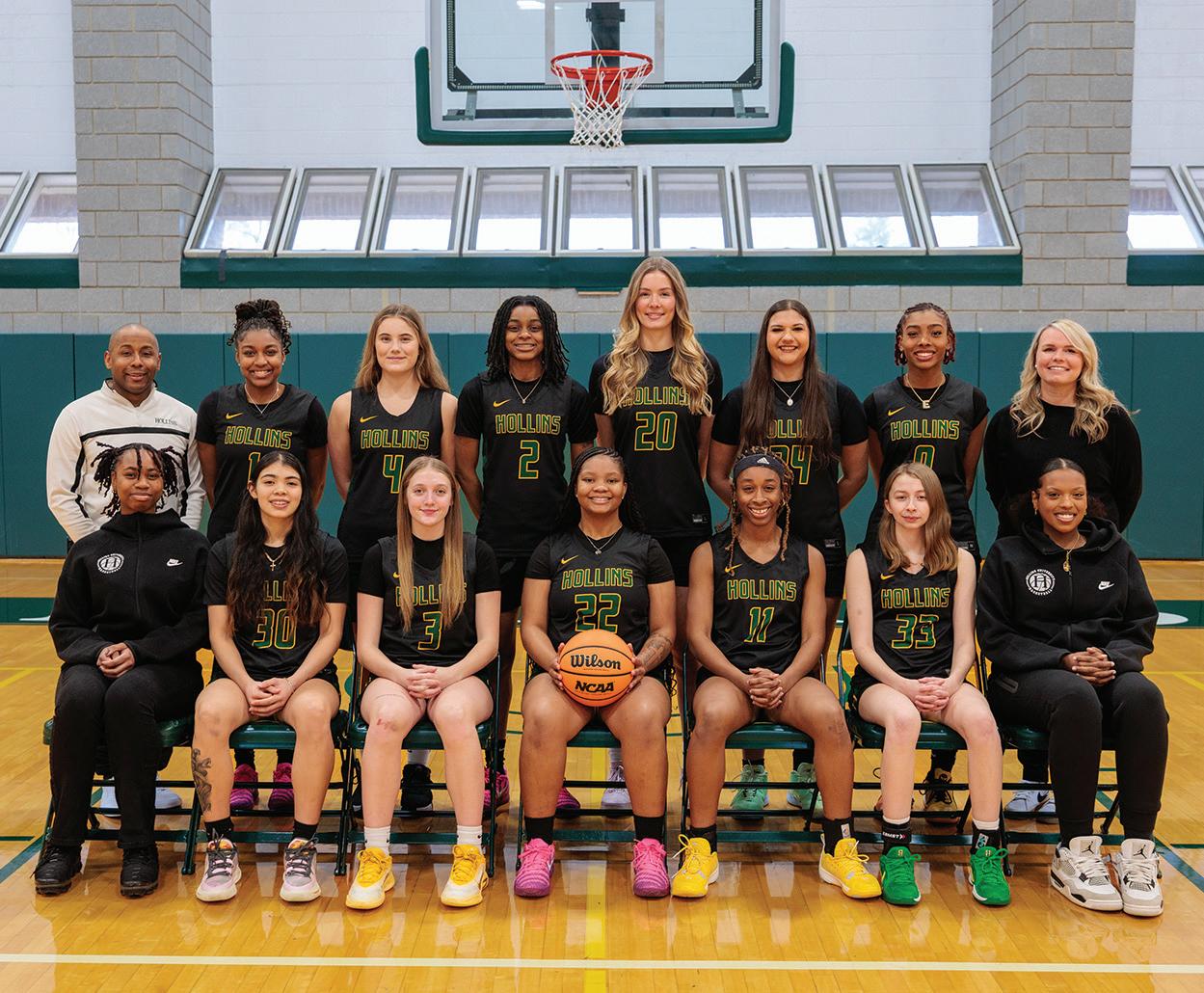
The 2025–26 season marked a milestone year for Hollins women’s basketball. The team finished with 16 wins—the most in the NCAA/ODAC era—and its first winning season since joining NCAA Division III.
Hollins also tied a program record with eight ODAC wins, earned the No. 6 seed in the conference tournament—the program’s highest finish in more than 40 years—and advanced to the ODAC quarterfinals for the first time since 2003.
Zaria Holden ’27 and Jacorra Russell ’29 were named All-ODAC selections, the first time since 1988 that Hollins placed two players on the list. Russell was also named ODAC Rookie of the Year, becoming just the second player in program history to earn the honor.

BY SARAH ACHENBACH ’88
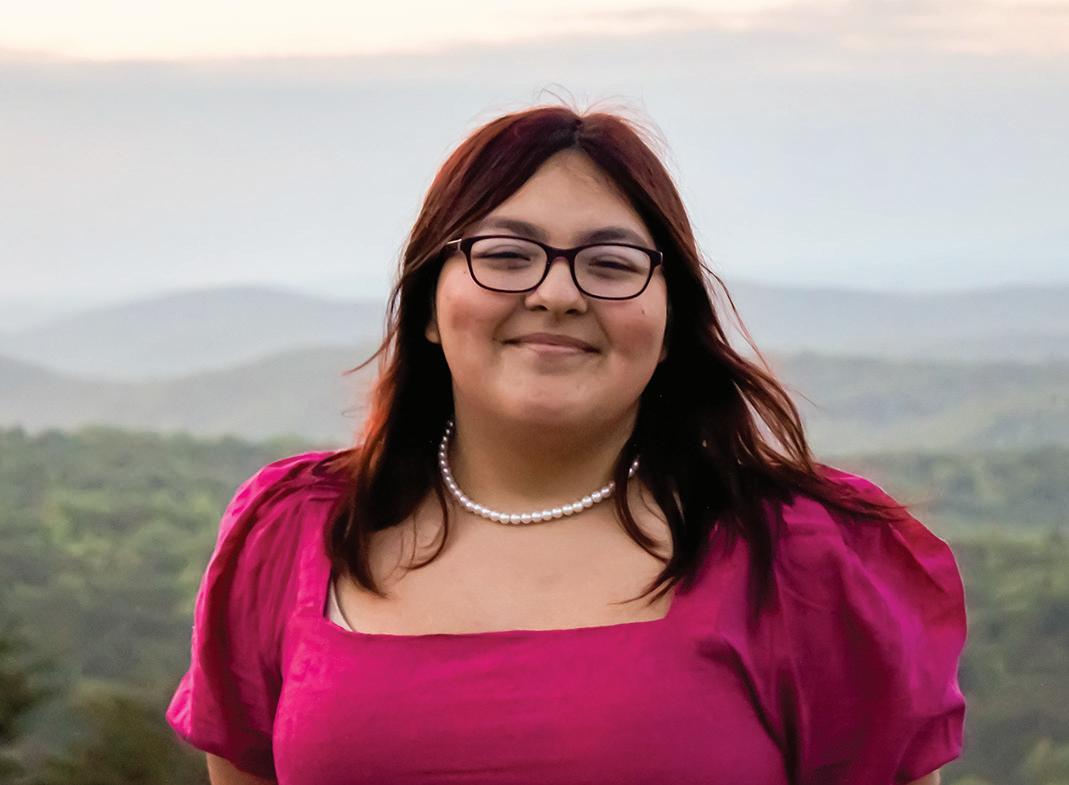
An internal earthquake. That’s how Berna Hamill-Guzman ’29 describes her first year at Hollins University.
“Everything I knew about myself and what I wanted and believed in crumbled when I came to Hollins,” she says. “I realized there is so much more for me. Hollins has given me opportunities to grow and change.”
Hamill-Guzman is one of 125 national Hollins Opportunity for Promise through Education (HOPE) scholars in the class of 2029. Just weeks before her first semester, she was living in Easley, South Carolina, working two jobs to close a $3,000 gap between her scholarship
and the cost of attending another college. As the first in her family to graduate high school and attend college, that balance might as well have been $3 million.
Her challenge wasn’t talent or ambition. With a teaching internship already completed and dreams of becoming a history teacher, HamillGuzman was ready for college. What threatened to derail her plans was the cost.

When she couldn’t close the gap, she assumed her college dreams were over. Then she remembered several emails about Hollins’ national HOPE program. The national program, launched in 2025,

covers tuition, on-campus food and housing, and required fees for four years, completely loan-free, to academically talented students from limited-income backgrounds.
Hamill-Guzman applied after the deadline. A coveted spot opened. By the end of August, she was unpacking her future at Hollins.
“With HOPE, I realized college was possible,” she says. Now majoring in history with a minor in secondary education — and considering additional minors — she adds, “It’s the best thing ever, not having to worry about debt.”
For President Mary Dana Hinton, stories like Hamill-Guzman’s are both deeply personal and powerfully familiar.
Hinton, too, was a bright student with enormous potential but no clear path to pay for college. The family that employed her mother as a housekeeper in rural North Carolina offered to fund Hinton’s education. “I had no idea what the world had to offer until I had the opportunity to receive an excellent education,” she says. “Many people
never discover their full potential because their world and their view of themselves have been narrowed by circumstances often beyond their control. The only difference between HOPE scholars and other Hollins students is an economic one.”
At a time when doors are closing for many young women of talent and ambition, Hollins has chosen to open them wider.
Inspired by its founding mission to educate women to lead lives of purpose and emboldened by its Board of Trustees, Hollins launched HOPE in 2021 with a regional scholarship serving students from the Roanoke Valley with household incomes of $50,000 or less. The program filled the last-dollar gap after federal, state, and institutional aid, guaranteeing a tuition-free Hollins education. While it did not yet cover additional expenses like room and board, the impact was immediate. Enrollment and retention exceeded expectations, with cohorts of more than 30 students enrolling and persisting at above-average rates. Today, nearly 100 regional HOPE scholars are on campus, with the first cohort graduating this May.
“I’m happy that we were able to be the pilot group for what is now a truly amazing scholarship,” says Dorian Meekins ’26. “While the HOPE scholarship
Quiet and hesitant as a first-year student, Alsmadi, a business and psychology double major with a minor in economics, has emerged as a campus leader. A resident assistant, interfaith leader for Muslim students, and research coordinator for the psychology department’s Memory and Cognition Lab, her Hollins experience includes a coveted Amazon area manager internship and a January Term (J-Term) in Kenya studying women’s reproductive health.
“Before coming to Hollins, many people told me that although I wouldn’t be paying as much, I would be at a disadvantage due to Hollins’ size and lack of reputation compared to schools like Virginia Tech,” Alsmadi explains. “There are many mechanisms in place here, like J-term and signature internships, which help students connect to various opportunities.
“When I got here, I had many ideas and goals but lacked the confidence to try or trust myself,” Alsmadi says. “Hollins gave me the support and encouragement to trust my voice, share
“MANY PEOPLE NEVER DISCOVER THEIR FULL POTENTIAL BECAUSE THEIR WORLD AND THEIR VIEW OF THEMSELVES HAVE BEEN NARROWED BY CIRCUMSTANCES OFTEN BEYOND THEIR CONTROL. THE ONLY DIFFERENCE BETWEEN HOPE SCHOLARS AND OTHER HOLLINS STUDENTS IS AN ECONOMIC ONE.”
now is not the scholarship I received, it is something much better that will give much-needed opportunities.”
President Hinton witnessed the transformation firsthand.
“The regional HOPE scholarship enriches our classrooms with new perspectives and leadership and helps us build deeper relationships with the Roanoke Valley community,” Hinton explains. “HOPE shows what’s possible when we focus on student success and build durable connections across academic affairs, enrollment, and student support.”
That promise came into focus through students like Ameena Alsmadi ’26.
my perspectives, and step into leadership roles that once felt out of reach.”
Alsmadi’s transformation fills Hinton with pride. “Now Ameena walks around campus like she owns it — in all the very best ways,” she says. “HOPE has given young women who may not have had a chance an incredible opportunity to thrive on campus and beyond. That’s truly priceless to me.”
“The best surprise [about HOPE],” Alsmadi reflects, “is how many doors have opened for me.” This spring, she begins her career in industrial organizational psychology as a full-time Amazon area manager in Maryland.
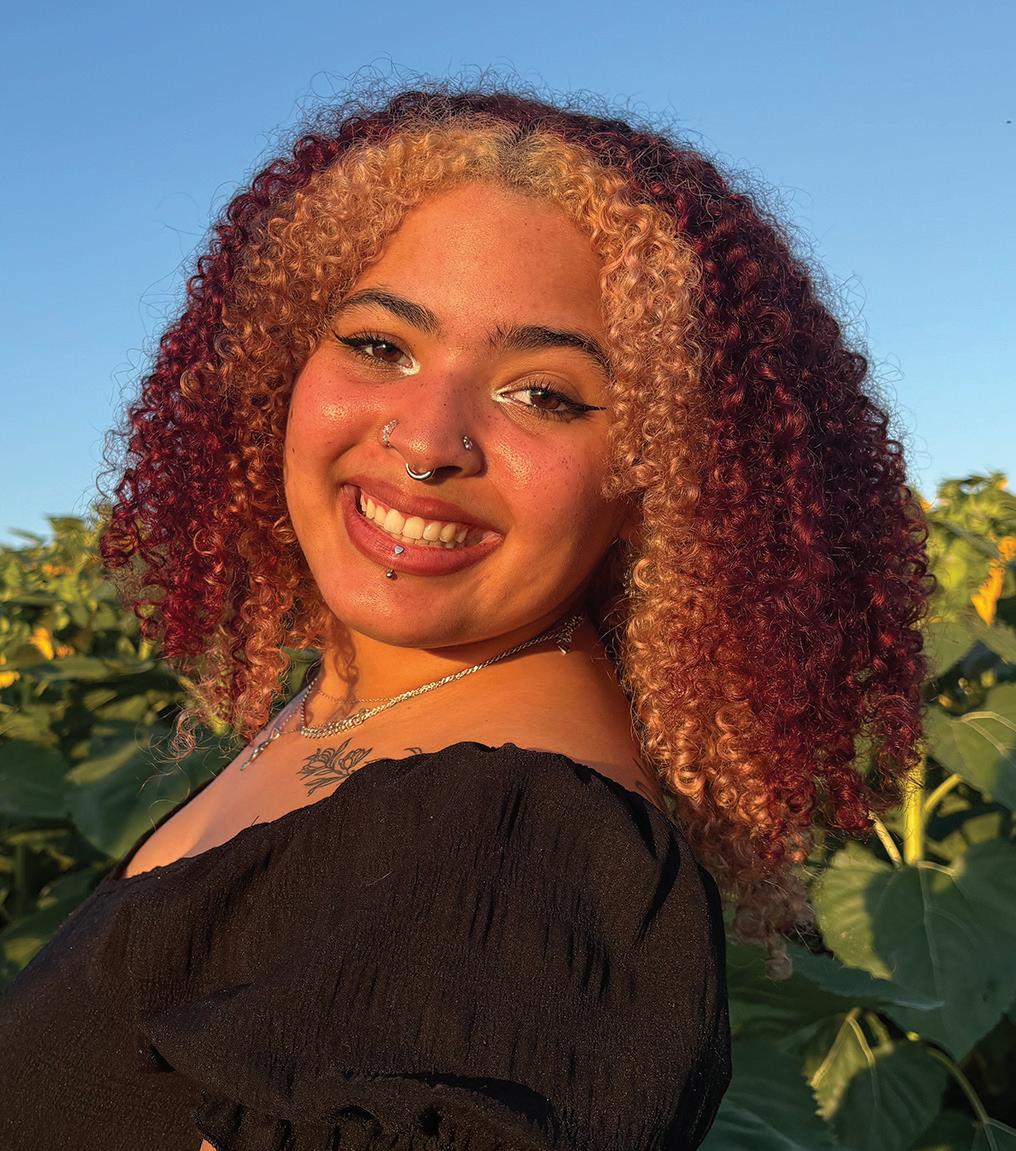
Higher education is facing intense pressure. In 2026, a steep, long-anticipated demographic decline in the number of high school graduates begins, intensifying competition across states, even where projections are more favorable, explains Ashley Browning, M.A.L.S. ’13, vice president for enrollment management.
At the same time, applications have surged at large public universities since the pandemic, with decreasing enrollment at small liberal arts colleges. “Those are the places where applications are through the roof,” Browning says, “and it’s made things challenging for small private institutions.”
125 NATIONAL HOPE SCHOLARS CLASS OF 2029
NEARLY 100 REGIONAL HOPE SCHOLARS CLASSES OF 2026, 2027, AND 2028
3.8
AVERAGE GPA OF ALL NATIONAL HOPE SCHOLARS
$22M
IN ANNUAL MERIT- AND NEED-BASED AID TO ALL HOLLINS STUDENTS
REPRESENTED BY NATIONAL HOPE SCHOLARS
Another shift affects every college and university in the U.S.: limited-income, first-generation students and students of color now make up a growing share of the college-going population. At Hollins, the class of 2029 reflects that change, with 44% first-generation students and 67% Pell-eligible students (those meeting federal qualifications for need-based support based on limited family income).
National research underscores the stakes. In 2024, the Brookings Institute concluded that encouraging more academically talented, lower-income students to enroll at selective colleges could significantly increase equity and economic mobility. Yet because of the “excellence gap,” students from lowincome backgrounds are eight times less likely to obtain a bachelor’s degree than higher-income peers.
Many institutions have responded by expanding access, often through loan-based aid. Few, however, match the scope of Hollins’ national HOPE program introduced in 2024 (the first cohort started in fall 2025), which covers tuition, on-campus food and housing, and required fees entirely loan-free.
For 2025-26, the standard direct cost to attend Hollins is $60,910. Even with aid, many students must juggle loans and jobs, borrowing that impacts everything from career paths to long-term financial security. The typical student debt load for graduates of private institutions hovers around $40,000 (Education Data Initiative), with much highertotals when private loans are involved.
Deja Ross ’27, a Roanoke native and regional HOPE scholar, is proudly
loan-free. “Having my tuition covered gave me a big advantage,” she says, allowing her to study abroad in Ireland while pursuing a demanding double major in elementary education and psychology.
“Students cannot choose education over food, housing, or caring for their families,” Ross adds. “HOPE allows them to pursue their education and still take care of their responsibilities.”
Affordability, Browning notes, has long been the top concern for students across income levels. “For years, Hollins was financially out of reach for many excellent students,” she says. “HOPE changed that.”
Today, Hollins awards every new student at least $25,000 in merit scholarship support — a strong statement of our continued investment in all students.
Among women’s colleges, Hollins enrolls a notably high percentage of low-income students, an intentional, mission-driven, and future-focused choice. “There’s tremendous opportunity
“FOR YEARS, HOLLINS WAS FINANCIALLY OUT OF REACH FOR MANY EXCELLENT STUDENTS. HOPE CHANGED THAT. “
to better serve those who are coming to college,” Browning explains, “while advancing access, equity, and institutional sustainability.”
As a cornerstone of the university’s Transforming Learning, Transforming Lives: The Levavi Oculos Strategic Plan, HOPE represents a critical component of Hollins’ innovative answer to access and sustainability challenges, and its bold aspiration to lead nationally in social, economic, and civic mobility for women.
Hollins’ strength lies in creating an intentional environment that connects HOPE scholars to mentorship, belonging, and opportunity from the start.
Jessi Kingery, HOPE Scholars Transition Coach, begins working with students in February of their high school senior year and continues with individualized advising once they arrive to campus, helping them shape schedules, connect to opportunities, and build confidence early.
“Jessi really fosters and inspires us,” says Jahaziah Griffin ’29. Griffin also appreciates how seamlessly HOPE scholars are integrated into campus life. “No one asks if you are a HOPE scholar,” she explains. “I didn’t realize that five of my closest friends were also HOPE scholars until weeks into our relationship.”
HOPE scholars also benefit from what has defined Hollins for 184 years: close relationships with faculty. When Griffin arrived with her cello (a beloved gift from her grandmother), private lessons were not financially feasible. But Associate Professor of Music and Music Department Chair Shelbie Wahl-Fouts didn’t hesitate to invite her to take lessons, covered by financial support. Griffin and two classmates later founded Coda Noir, a chamber ensemble that now performs on campus.
Before HOPE, Griffin worried student debt would force her away from her dream of becoming an elementary school teacher. “HOPE allowed me to
breathe by removing the financial stress,” she says. “It really changed the trajectory of all my plans.
“It’s a different mindset when I came here, because I can pursue what I want to pursue. Now, I set the limit on how far I want to go.” Next year, those opportu nities include being a writing tutor, continuing to perform with Coda Noir, and getting involved with the fencing club, pickleball, and theater.
HOPE has strengthened Hollins’ competitiveness. “We’re incredibly com petitive among the most academically talented students,” Hinton says. “A Hollins degree is even more valuable because of how the institution is thriving.”
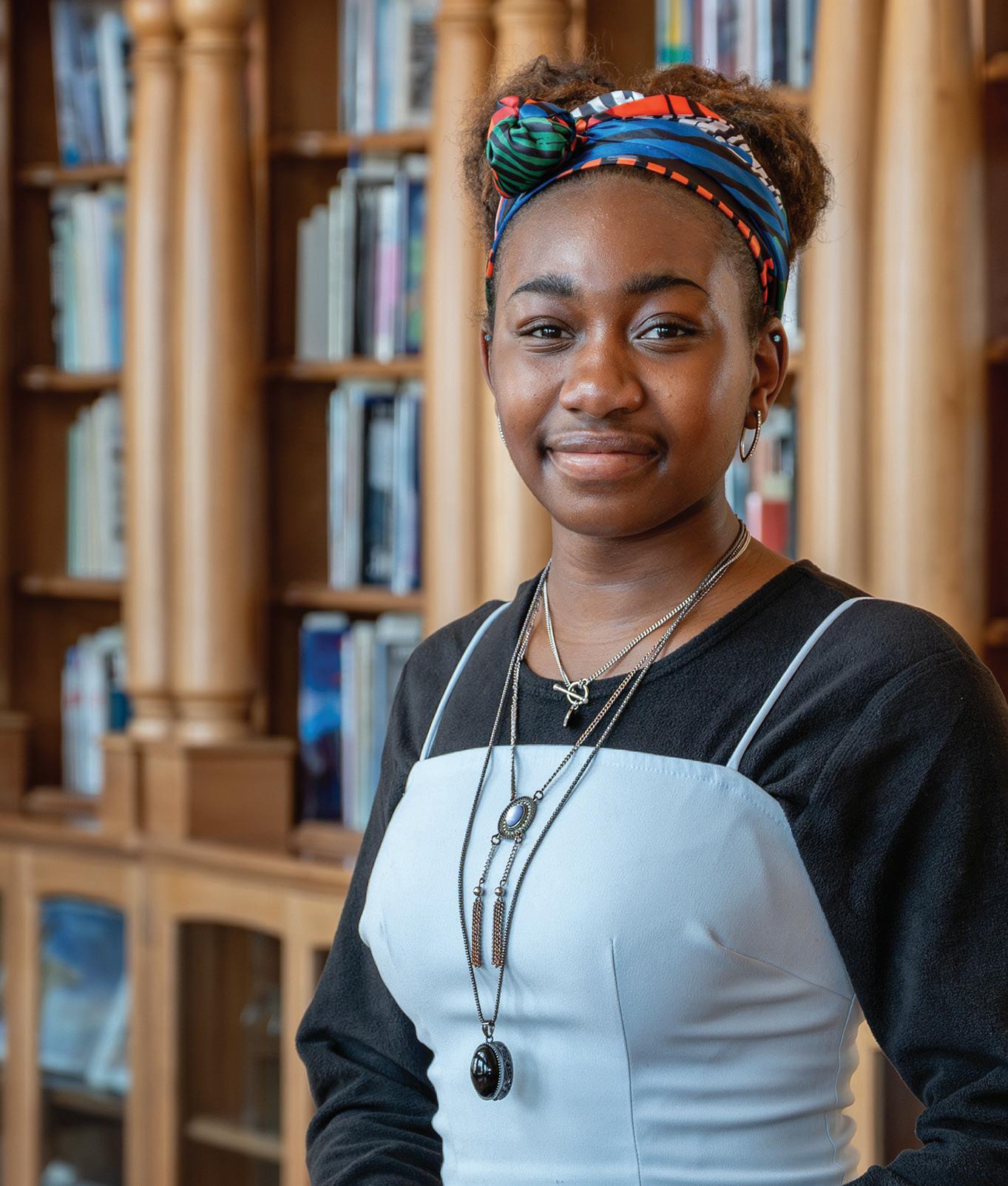
Enrollment strategy, Browning emphasizes, is about balance. HOPE complements Hollins’ continued investment in robust merit scholarships while ensuring the university remains responsive to students and families across a wide range of income bands, including those with the capacity to pay. “If you’re an incredible student and feel called to our mission, we want you here, regardless of family resources,” she says.
National HOPE scholar Julia Cooper ’29, who plans to double major in biology and Spanish, chose Hollins for similar reasons. “Other scholarships didn’t include housing or meals,” she says. “Without HOPE, my family would be taking on loans we couldn’t manage.”
Opportunities to ride and study abroad sealed the decision. Cooper’s love of horses began on a church mission
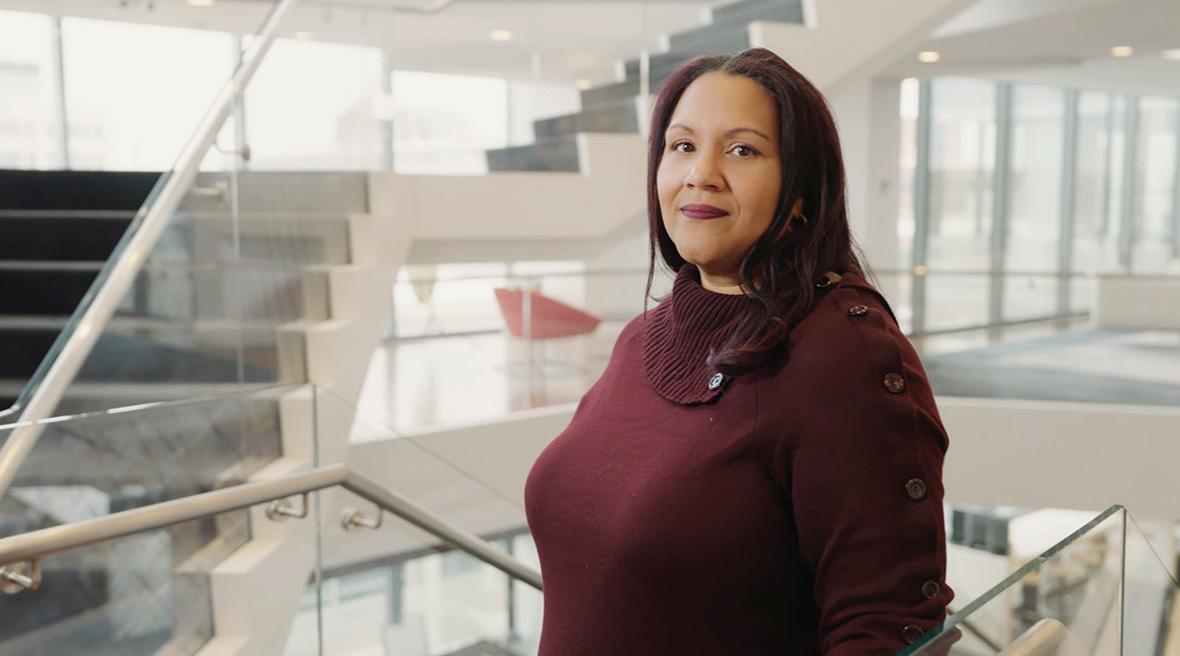
“WE’RE INCREDIBLY COMPETITIVE AMONG THE MOST ACADEMICALLY TALENTED STUDENTS. A HOLLINS DEGREE IS EVEN MORE VALUABLE BECAUSE OF HOW THE INSTITUTION IS THRIVING.”
trip at a barn in upstate New York. After her second riding lesson, Sherri West, director of Hollins’ equestrian program and riding coach, asked if she’d like to join the team. “It felt like I was jumping right into a very loving and caring family,” Cooper recalls. “I came with no equipment, and teammates
BEFORE HOPE HAD A NAME
S can the QR code to watch “Love, Sabrina,” a video love letter from Hollins Trustee Sabrina Rose-Smith ’00 to her younger self. Raised in the projects of Birmingham, Alabama, Sabrina was a promising young woman with the intellect, ambition, and determination to succeed, but she believed college was out of reach. A chance encounter at a college fair changed everything, opening the door to possibility, education, and a future she once thought unattainable.
Like HOPE scholars, Sabrina’s story is a powerful reminder of what happens when an unstoppable young woman is given the opportunity to pursue her dreams.
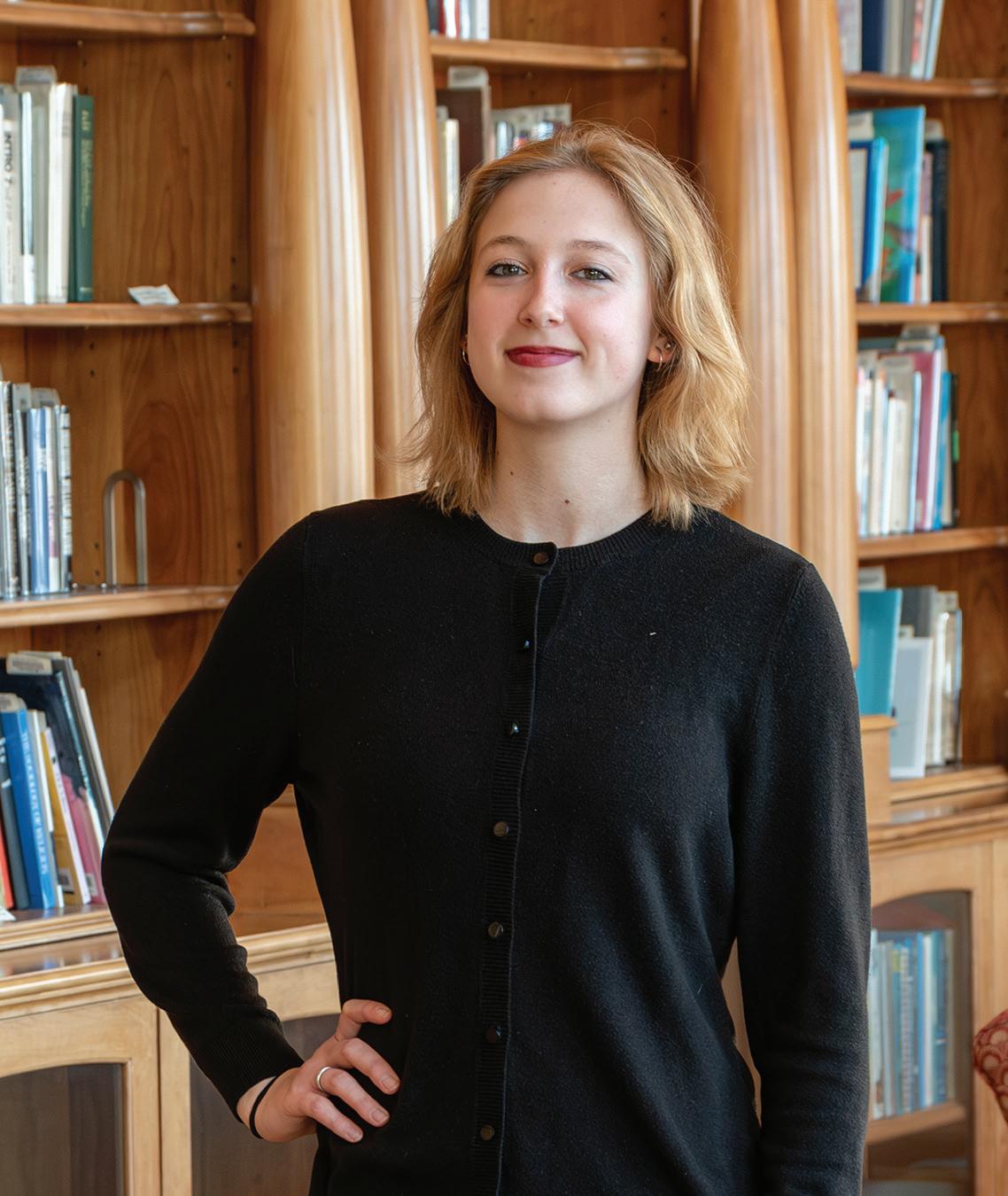
donated what I needed.” She took four lessons a week last fall, partially paid for by her job at the barn.
“Hollins is a small school, but the huge benefit is that I can really connect with my professors,” adds Cooper, who plans to attend medical school. “Classes are more discussion-based, and since HOPE assists study abroad, I can do research in Ireland or Spain without worrying about the cost. When you are always worrying about your next bill, your mind tends to be closed off. HOPE gives me possibilities.”
Making the impossible possible is what Hollins has always done, Hinton reflects. “Every person I know is seeking hope right now,” she says. “And we actually have it living and breathing on our campus. No other institution is doing what Hollins is doing through HOPE.”
Hollins’ vision honors its leadership tradition as a women’s college while transforming the future of every person on campus and beyond. “HOPE is making a tangible difference in the lives of each student, their families, their communities, and every life they will touch,” she reflects.
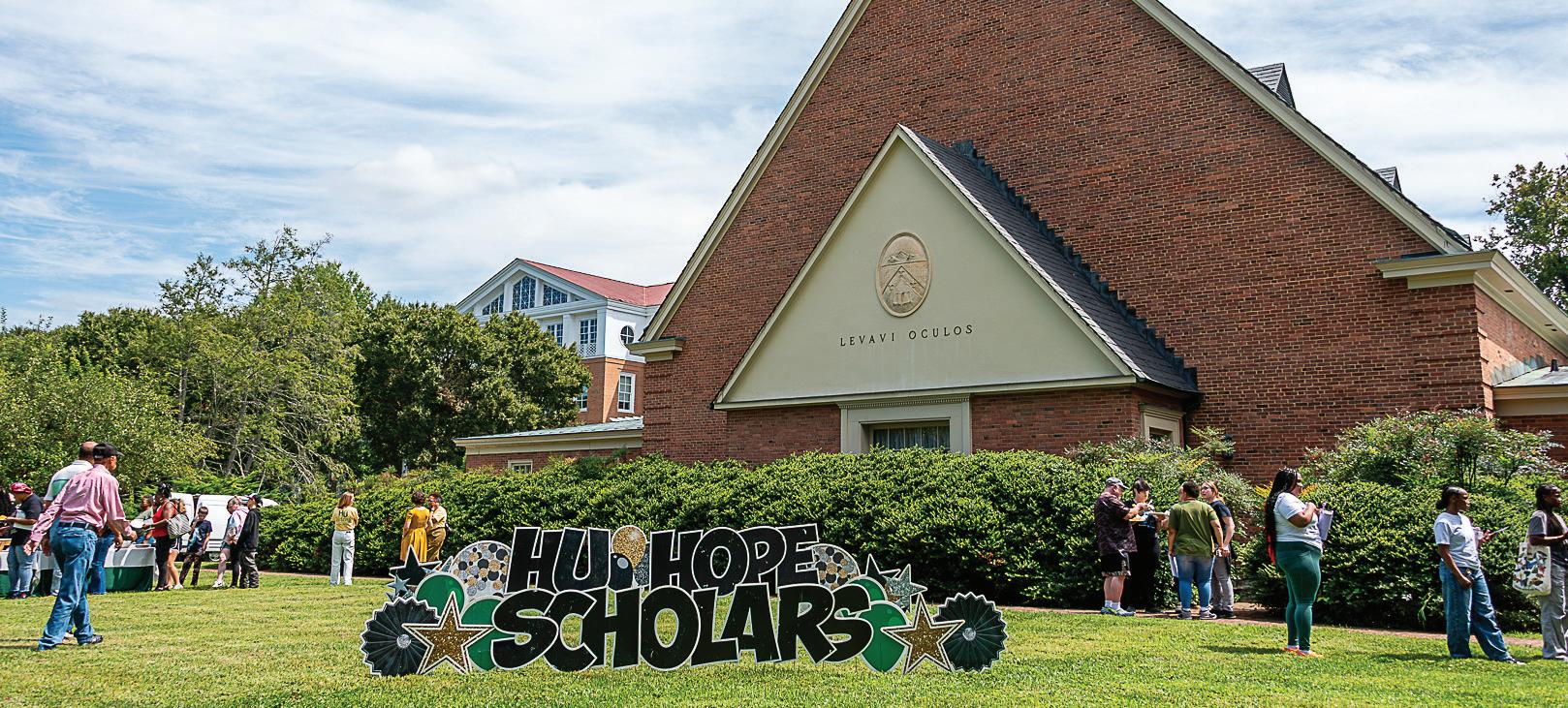
HOPE is an ambitious promise, and Hollins is committed to sustaining it for generations.
To ensure that limited-income women will always have access to a Hollins education, the university is building a $125 million HOPE endowment. To launch the national program, Hollins raised $10 million to fully fund the first two HOPE classes for four years. The university is now raising an additional $10 million to support the incoming classes of 2027 and 2028.
As the demographic of college-bound students shifts, so too does the philanthropic landscape. Anita Branch-Brown, vice president of institutional advancement, points to a coming “philanthropic cliff” as long-standing donors age.
“That generation is slowly leaving us,” she explains. “Another generation paid full freight and may still be carrying student loan debt. Now, we’re welcoming a generation of women whose education at Hollins comes at no cost.”
With that gift comes an expectation: pay it forward.
HOPE scholar Jahaziah Griffin ’29 embraces that responsibility. “I’m even more dedicated to my education because I’ve been given this opportunity,” she says. “My friends who are HOPE scholars want to pour back into the community and the people who made this possible.”
Thanks to a generous $2 million challenge match from Anonymous Trust, gifts to the HOPE Scholarship have the potential to be doubled, dollar for dollar. This is an all-or-nothing matching challenge: the full $2 million must be raised by June 30, 2026, or none of the matching funds will be released.
The match applies to gifts made to either the HOPE endowment or the HOPE currentuse initiative, which supports the next classes of HOPE Scholars. Through June 30, 2026, qualifying gifts will be matched dollar for dollar once the full $2 million challenge goal is met. Eligible gifts include:
• Gifts from new donors to HOPE,
• Gifts from lapsed donors who have not given to HOPE in the past 18 months, and
• Increased gifts from current HOPE donors.
For more information about the challenge match, contact Anita Branch-Brown at branchbrownar@hollins.edu.

BY LAURA A. MCLARY, NORA KIZER BELL PROVOST
In 2023, as a part of Hollins’ strategic plan, we began our academic renewal process grounded in a simple but urgent premise: our students are learning and growing in a rapidly changing world.
Our multi-year investment in academic renewal strengthens our academic programs, ensuring they remain rigorous, distinctive, and responsive to today’s students and the world they will enter after graduation. This work expands experiential learning, creates leadership opportunities for all students, introduces new interdisciplinary majors and programs, and empowers students to thrive in their careers as the world continues to change.
More than a curricular or program update, academic renewal is a transformation. It reimagines how students learn, engage, and lead in their communities and the world. Rather than departing from our traditions, academic renewal reaffirms our liberal arts foundation
as a framework for building a just future amid technological, economic, social, and environmental disruption.
Charting this direction required months of collaborative work led by a dedicated team of faculty and staff who invested countless hours listening to faculty, staff, and students and researching both national trends in higher education and Hollins’ own institutional strengths and needs. These conversations were deep and invigorating, both challenging and inspiring. Drawing on our liberal arts tradition, we asked fundamental questions: What does it mean to teach and learn in a post-pandemic world? How do we define leadership, and what role does it play in creating a just world? How can the liberal arts help students cultivate belonging and agency while confronting the world’s most wicked problems?
As we begin implementing academic renewal, there are many stories
worth telling. One powerful example is public health, Hollins’ newest and fastest-growing major.
A few years ago, faculty recognized a pent-up demand for programs that reflect the values-forward ethos of a liberal arts education while offering students meaningful, hands-on learning experiences. From that insight, the public health major was born, connecting theory with practice and preparing students for work that makes a tangible

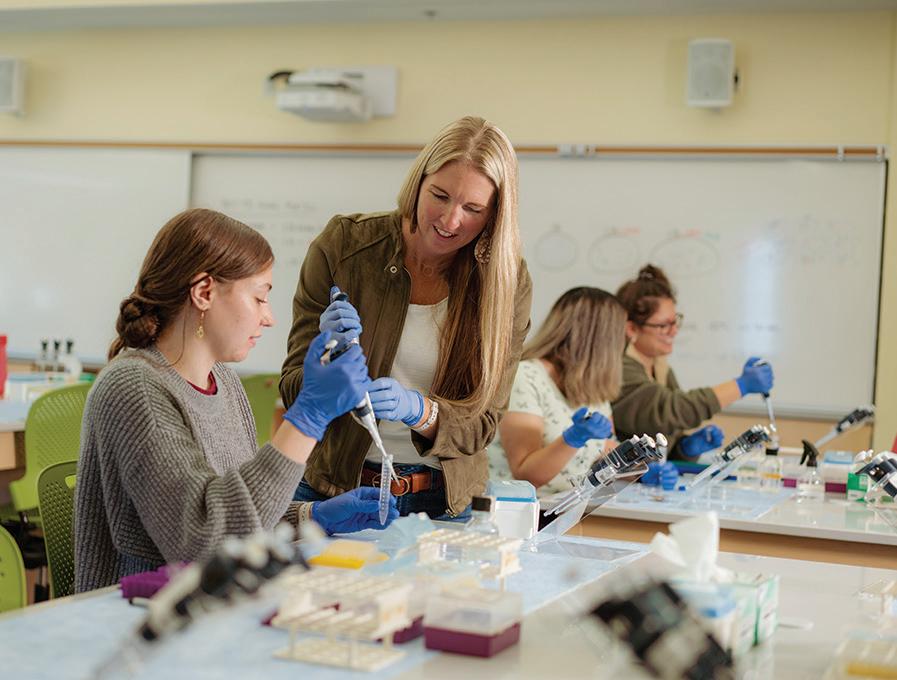
difference. Thanks to the visionary leadership of Jalloh Abubakarr, joined in 2024 by Susan Eagle, Hollins has not only met growing student interest but has already seen remarkable outcomes.
Alumnae, including Savannah Scott ’22, Jasmine Carmichael ’23, and Assi Abe ’24, are pursuing impactful careers in their communities. From study abroad in Kenya to conference presentations and the creation of initiatives like Hollins Access to Public Health Initiatives (HAPPI), students are discovering their capacity to effect lasting change.
Research tells us that all students — and especially first-generation students, a growing segment of our population — benefit deeply from experiential learning. Applying classroom and theoretical learning in real-world settings, supported by close faculty mentorship, strengthens learning and fosters confidence and purpose. Hollins has long offered internships and study abroad experiences, yet these opportunities have not always been accessible to students facing financial barriers or other obligations, even as evidence confirms their critical role in student success during college and beyond.
Academic renewal addresses this challenge directly. Building on our core curriculum, experiential learning is now embedded in every major, placing hands-on, applied learning at the center of every student’s experience. Majors like public health lead the way, requiring students to complete internships in their field. Public health major Jasmine Carmichael ’23, for example, interned with local Roanoke organizations supporting unhoused individuals. By leveraging existing resources and the generosity of new donors, Hollins can
now guarantee funding for every student with demonstrated financial need, ensuring access to these transformative experiences.
Another cornerstone of the public health program is leadership development. Through experiential and communityengaged learning, students discover that leadership begins with identifying a problem and applying passion and knowledge to improve lives.
As President Mary Dana Hinton reminds us, leaders do not emerge fully formed; they arise everywhere, often from the margins. This perspective challenges the misconception that leadership is about accumulating and wielding power.
When students design and implement hands-on learning and community projects and see firsthand how their work transforms lives and environments, they recognize that leadership lies at the intersection of disciplinary knowledge and the human-centered values of the liberal arts. Leadership emerges when vision, mission, and action align.
As a result of academic renewal, every Hollins student will graduate with a leadership badge, supported by the generous resources of the Batten Leadership Institute.
Career preparation is equally important. It’s never too early for students to reflect on how their experiences at Hollins connect to future careers and life goals. Career and Life Design (CLD) has adopted the Liberal Arts Advantage framework, which centers on the skills, competencies, and dispositions research shows are essential for lifelong success. CLD staff partner with faculty to integrate this framework into courses and curricula, helping students actively reflect on how learning in the classroom, the field, the workplace, and the community prepares them for fulfilling careers and lives.
Through academic renewal, all majors will adopt the Liberal Arts Advantage tools, enabling every Hollins student to take ownership of their career preparedness while complementing and enriching CLD services. This approach equips students with both the language and self-awareness necessary to navigate a competitive job market.
Academic renewal also invites us to explore new interdisciplinary majors that respond to emerging societal needs. As with public health, new majors and programs will draw on the past, present, and future. Our liberal arts core provides the values-based framework for imagining and building a more just future. Renewal expands interdisciplinary learning, creating new pathways across disciplines and strengthening partnerships that reflect the collaborative reality of today’s workplaces.
One exciting outcome of this process is the creation of a new Center for Just Futures. The Center will serve as a hub for interdisciplinary, real-world projects rooted in liberal arts values, supporting collaboration among students, faculty, and staff. Questions such as how generative AI will reshape work and learning, or what ethical responsibilities we hold in protecting our shared humanity, will guide this work. A recent Mellon grant provides funding for faculty to develop courses and curricular pathways that connect the arts and humanities with community organizations to address local needs.
National surveys consistently show that Hollins students demonstrate a stronger interest in social justice than their peers at other small liberal arts colleges. We are educating students who want to tackle big problems and equipping them to turn ideals into action.
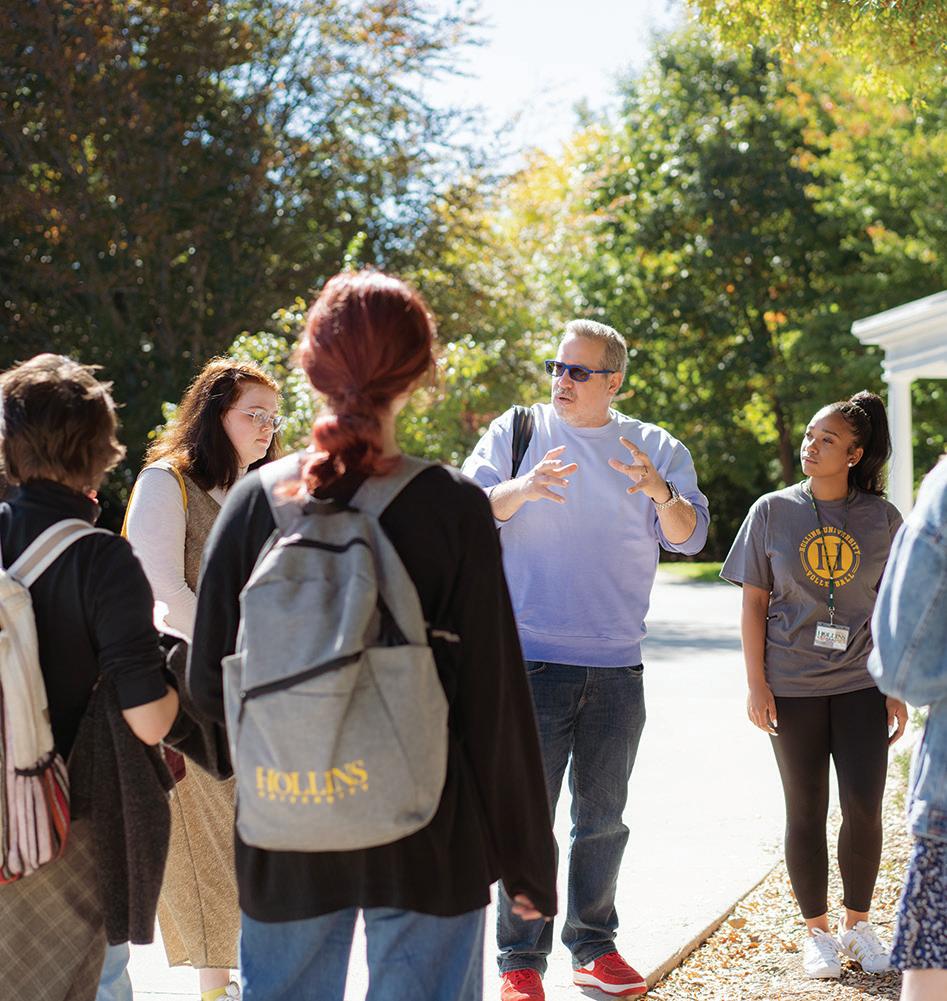
HOLLINS’ STUDENT GOVERNMENT
BY SARAH ACHENBACH ’88
he first Hollins Student Government Association (SGA) leaders were elected in 1914, and a century later, SGA remains a central leadership incubator.
In 2025, The Princeton Review ranked Hollins sixth in the nation for student government involvement — a reflection of how deeply students are engaged in shaping their community. Through Senate, Honor Board, campus traditions, clubs, forums, and celebrations, elected and appointed SGA leaders help guide both the everyday experience and the long-term direction of the university.
SGA’s leadership “lab” teaches students to practice deep listening, advocate for others, collaborate across differences, and navigate change with care and courage. In keeping with Hollins’ long tradition of elevating student voices, we spoke with four SGA leaders about how their roles have shaped the campus — and how the experience continues to shape them.
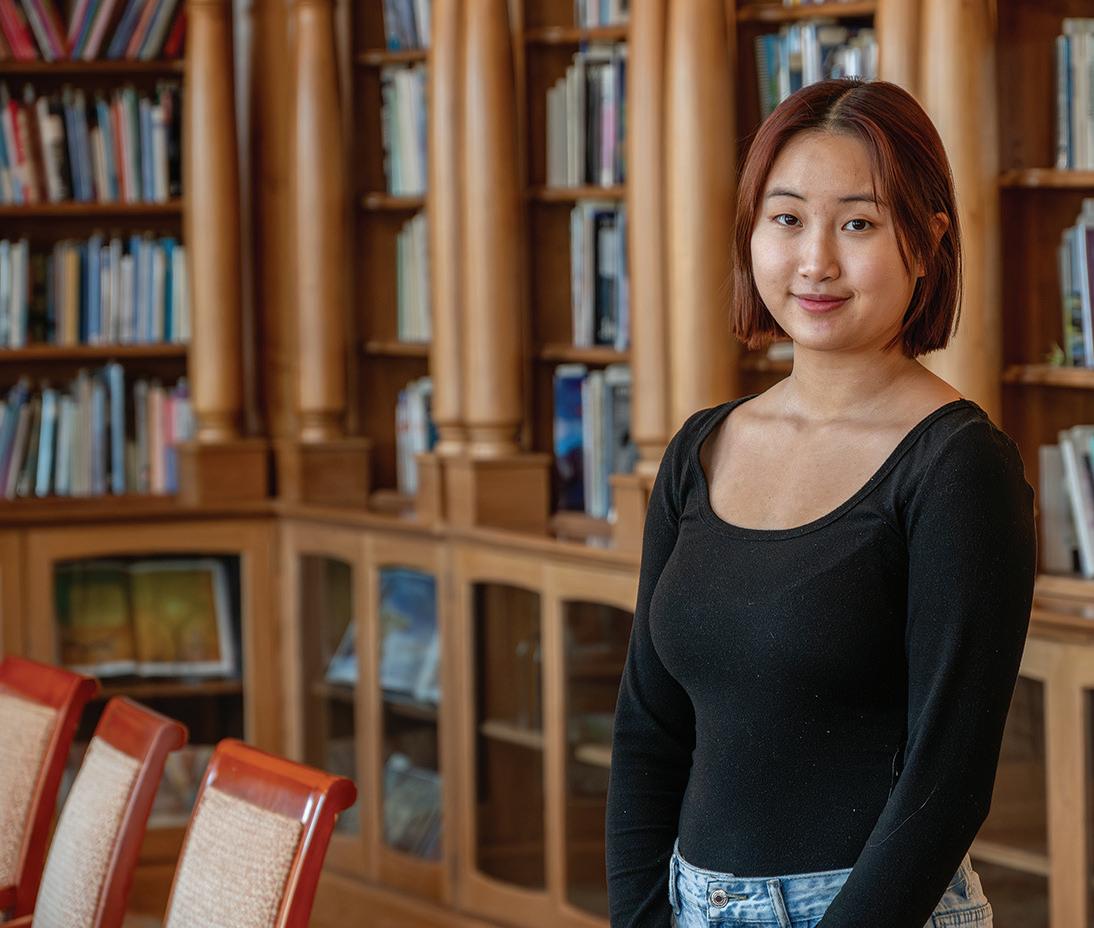
SGA PRESIDENT, 2025-26
HOMETOWN: Hong Kong
English and Creative Writing and International Studies double major
During my sophomore year, I was the International Student Chair, following in the footsteps of my friend Phuong-Ahn “Fishi” Ha ’26, who was the first International Student Chair. When Fishi was elected SGA President for 2025-26 and then tragically killed in a pedestrian accident, I stepped into the presidency from my role as SGA Vice President. Fishi was a kind person who led with so much love. As President, I try to think as she would.
I love the advocacy work of SGA. As International Student Chair, I organized a panel of fellow international students at Hollins’ Leading Equity, Diversity, and Justice Conference. I like presenting both issues and solutions. That’s what drove me to run for vice president.
I wasn’t involved in high school and came to Hollins determined to change that. Hollins is so encouraging and safe that I felt I could step up and explore my capabilities. I was the first-year International Student Association advocate. At another school, I probably wouldn’t have run for a leadership position.
I run our 19-member SGA Roundtable and guide them, but don’t micromanage. I also communicate with campus partners and present at Hollins Board of Trustees meetings. I am confident in my own skin, know my own work, and know that I belong in these spaces. This is one of the most helpful lessons I’ve learned from SGA. At the end of the day, this role is about service and helping the people you care about.
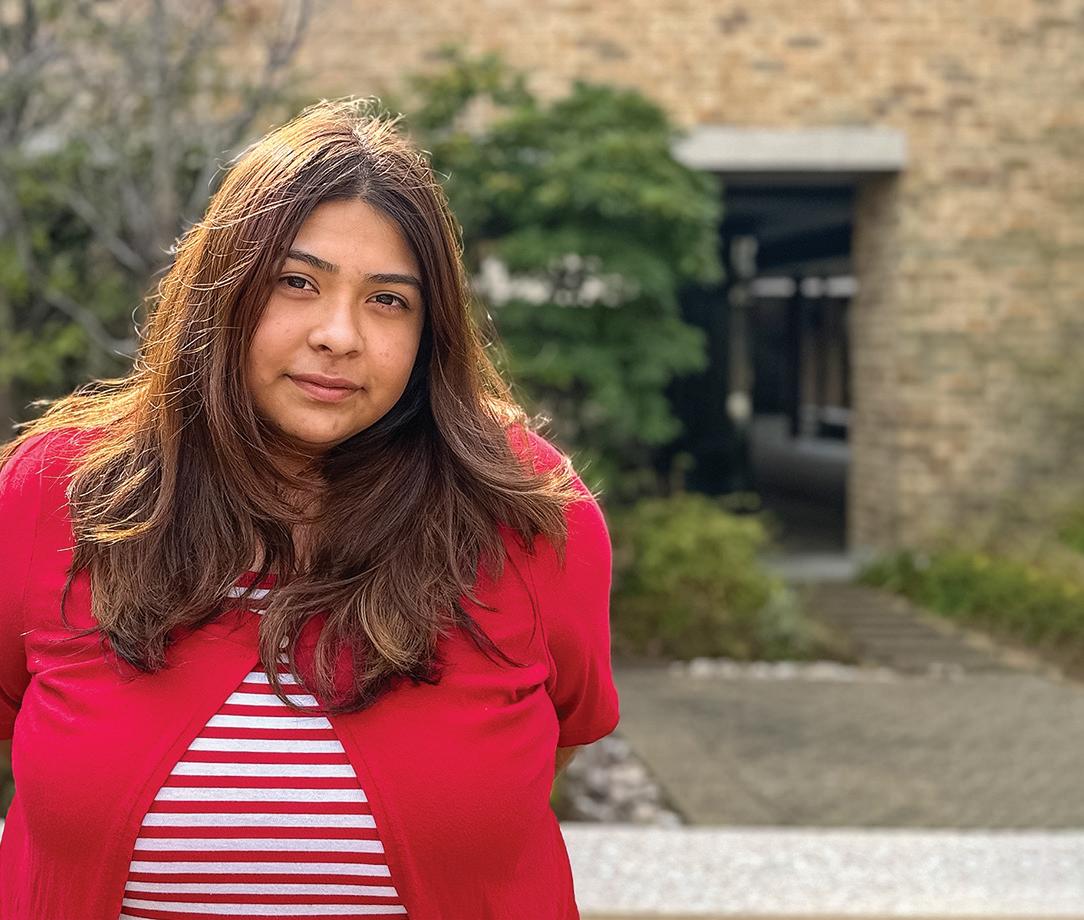
SGA VICE PRESIDENT
HOMETOWN: Nashville, TN
International Studies & Gender & Women’s Students double major, Social Justice minor
I was SGA’s BIPOC (Black, Indigenous, and People of Color) chair, now called Advocacy Chair, in 2024-25. I liked amplifying the voices of our BIPOC students. My favorite part was collaborating with our cultural clubs to host events on campus.
I served as SGA vice president this fall, since I am studying abroad in Japan in spring 2026. I brought different resources, events, and voices to our weekly Senate, which is open to anyone. I presented campus news and updates from our deans and other SGA members. I also shared student concerns with faculty and staff to help ensure our campus is supportive and responsive. I also update our Alumnae Board about what’s happening on campus, which is always lovely.
This position is a great way to spread information and make sure we take care of each other. SGA loves bringing our community together, from fun events during finals to simply letting students know that we are here to help. Many people in SGA are leaders across campus, which extends our reach even further.
SGA has boosted my confidence when addressing big crowds and increased my adaptability. Events and challenges arise in SGA, making it crucial to think ahead. It is invigorating to know I can move through stressful moments and help bring everyone’s hopes and visions to fruition.
SGA CLUB COORDINATOR (2026-2027
SGA PRESIDENT)
HOMETOWN: Franklin, TN
International Studies major
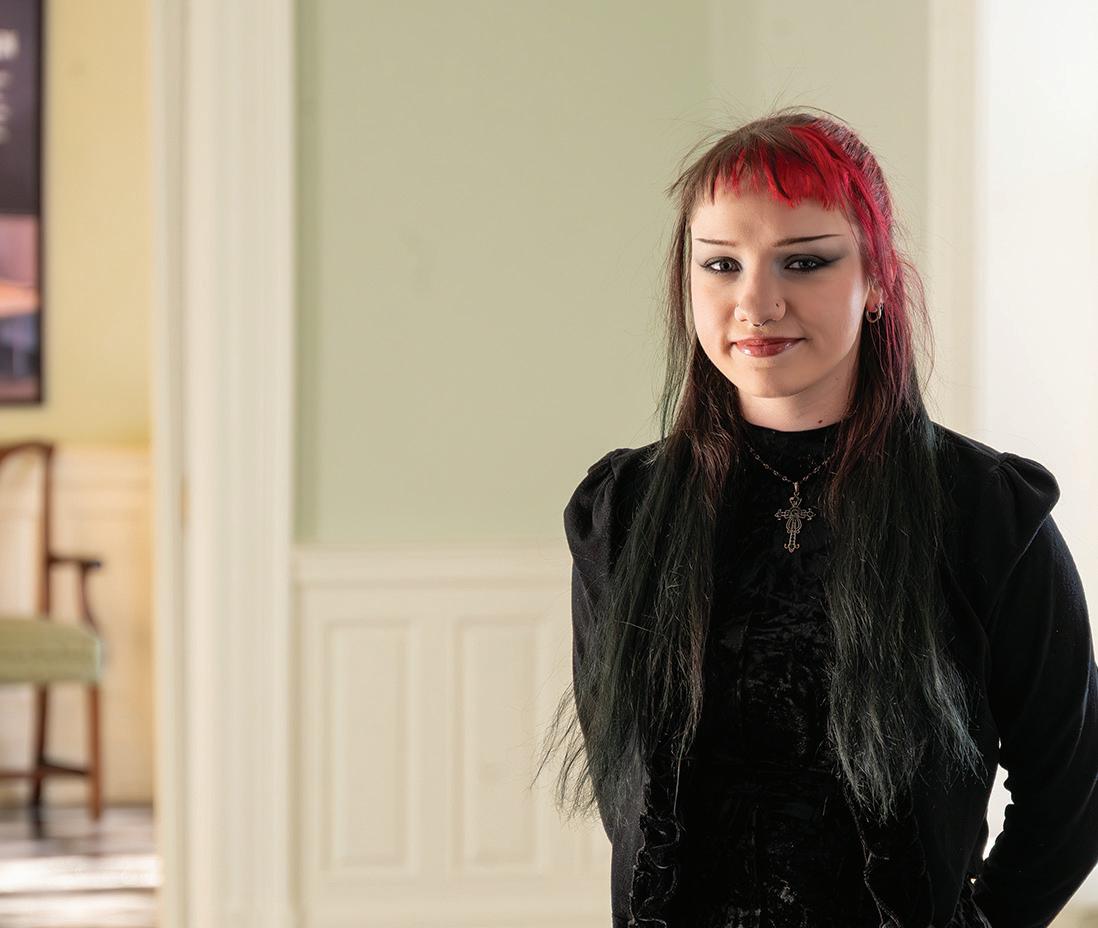
I was a drum major of my high school marching band and handled the conducting and leadership. I decided to run for first-year class president at Hollins and won. I really loved the people and working together to effect real change on campus.
I’ve learned that I am surprisingly self-aware and capable of a lot. I like to take on a lot and forget to delegate. Being Club Coordinator has been an interesting lesson in knowing when to ask for help. I’ve learned how to manage my time and how to put energy into what matters most to me.
SGA’s Executive Board is the elected positions of President, Vice President, Secretary, and Treasurer. The rest are appointed by a student appointment board comprising the SGA Secretary and all previously appointed positions that year. Mine is one of the few positions without a subcommittee.
The title of Club Coordinator is deceptively small sounding, but I do quite a lot. I am responsible for the creation and deactivation of all clubs. We have about 40 clubs, and each club turns in semester reports to me and submits monthly ledgers to the Treasurer. I manage required club attendance at Senate, interpret SGA bylaws for clubs, and give presentations to clubs on how to function and partner with other clubs. Hollins is up for accreditation this year, so I am working with the dean of students to keep track of every student-led campus event.
I want to go into music management. My strengths tend to lie in doing a lot of legwork and leadership. I will need to talk to various artists, labels, and venue staff. SGA has prepared me well for that because I know how to talk with people, work well within a deadline, and manage complex spreadsheets.
I find a lot of women at Hollins have a really strong sense of discipline, especially the ones who take on leadership positions. I put a lot of passion into my craft, which really ties with discipline — and being well prepared. When I come into conversations with an open mind, a notebook, and a pen, I can do pretty much anything.

HOLLINS ACTIVITIES BOARD (HAB) CHAIR
HOMETOWN: Prince Frederick, MD
Biology major
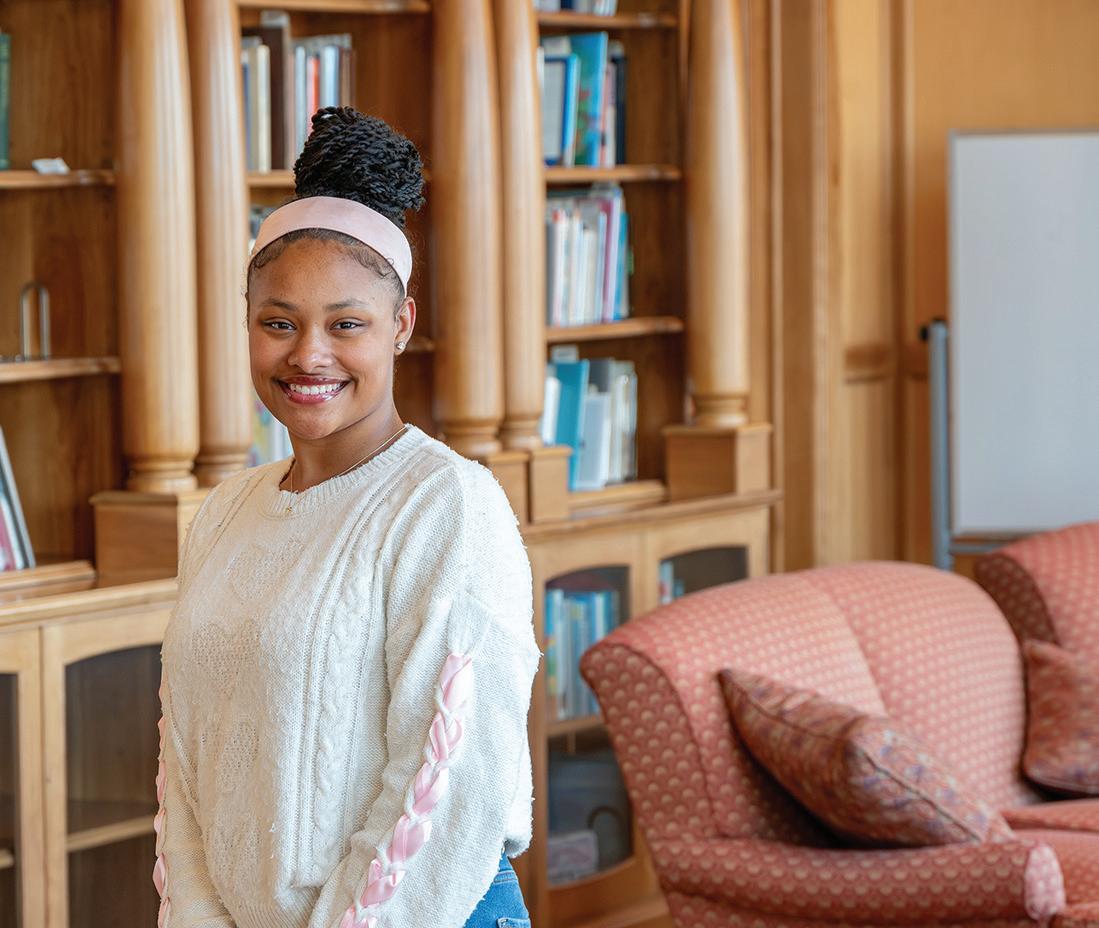
I was on HAB’s formals committee as a freshman. There are four different HAB committees: formals, performance arts, traditions, and novelty, which oversees weekly Bingo and other communitybuilding events. I love putting on events. During junior year, I chaired the formals committee. To get on a committee, you interview and are selected by the HAB Chair and committee chairs.
When I got to Hollins, I was very shy. Joining HAB helped me make a lot of friends and really feel like I belonged here.
I plan to attend medical school and become an OB/GYN. I will have to work with a team my whole life. SGA is helping me learn how to listen to someone else’s idea and be compassionate. I will need to listen to a coworker’s, patient’s, or a family member’s concerns, make sure they feel heard, and work together on a solution.
SGA is all about student voice. When students have a concern or want to make a change — within reason, of course — they come to SGA. We’re here to make sure they feel supported. Catherine [SGA President] makes sure people’s concerns are heard within and outside of SGA Roundtable. Because she leads like that, the rest of us follow her example.
Four times a year, SGA Roundtable meets with President Mary Dana Hinton and the President’s Cabinet. Last August, Dean of Students Monica Carson Sheriff partnered with student wellness staff to provide training on framing challenges, communicating across differences, and offering solution-focused perspectives. “Having our student leaders meet regularly with our university’s top leaders is one of the most unique pieces of SGA,” she says. “Since the training, they share a stronger sense of accountability and a broader understanding of Hollins’ structure.”
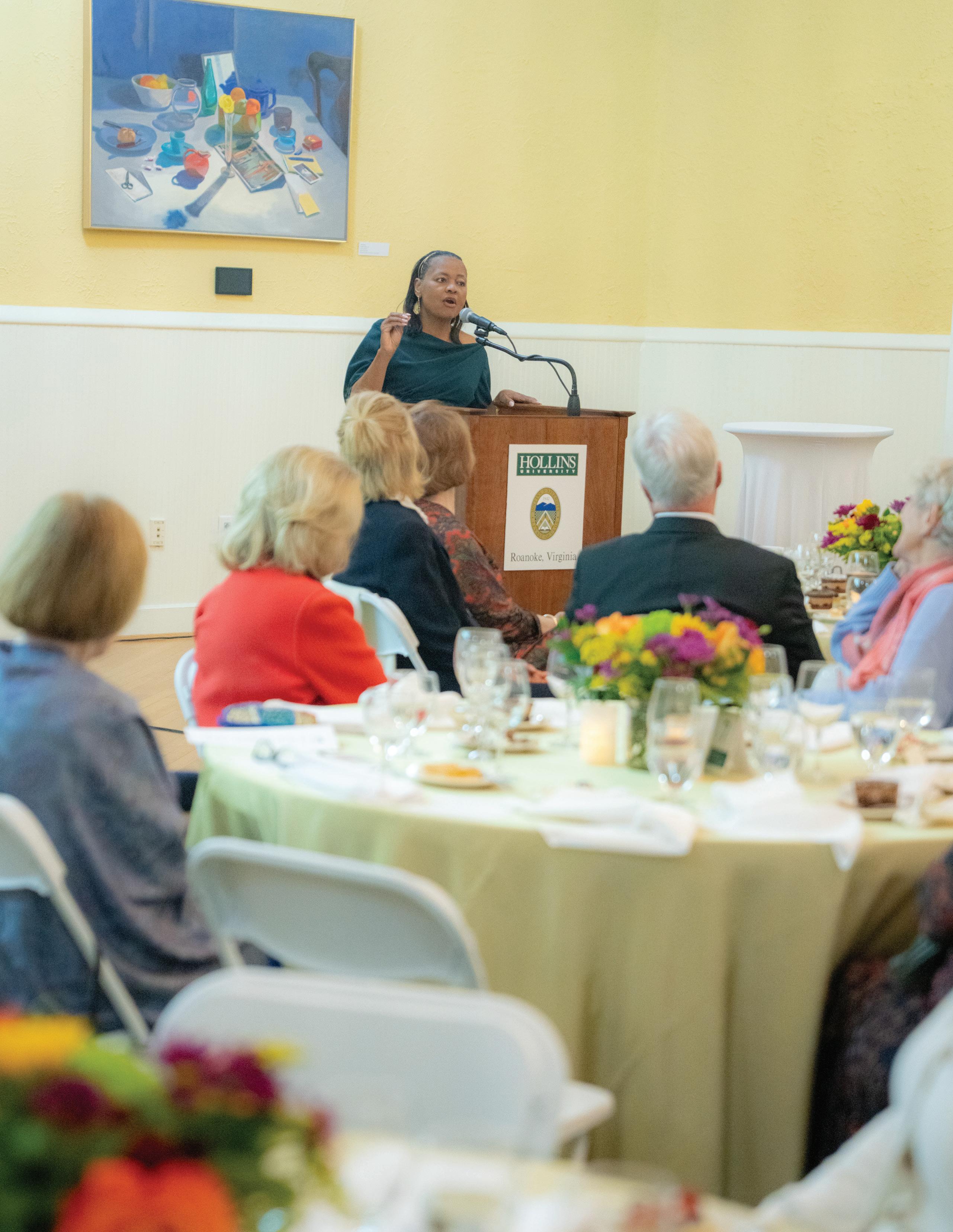
Thanks to your generosity and engagement, this annual report reflects a year of meaningful momentum. Across these pages, you will see how philanthropic support sustains every aspect of the Hollins experience. Alumnae/i, parents, and friends showed up in powerful ways through volunteering, reconnecting at events, and giving with purpose.
As we look at our accomplishments over the last fiscal year, Hollins is well-positioned for continued growth. With strong financial footing, thoughtful leadership, and bold initiatives focused on access and affordability, Hollins’ future holds promise and possibility.
Together, we are committed to ensuring Hollins’ legacy of educating women to lead lives of consequence, meaning, and impact.

Dear Hollins Community,
Over the past year, President Hinton and the Institutional Advancement team spent time connecting with alumnae/i, parents, and friends. By listening to and engaging with you, I was inspired by the many alumnae/i who credit the Hollins experience with helping them find their voices. Whether on campus or across the country, these conversations have affirmed that Hollins is supported by a community that believes in the lasting impact of women’s education.
The progress reflected in this annual report is a direct result of that collective investment. Support for the Hollins Fund and key initiatives of the Transforming Learning, Transforming Lives: The Levavi Oculos Strategic Plan have strengthened the university’s financial position and expanded opportunities for current and future students. In FY25, we raised 50% more than in FY24 and increased our number of donors by 4.6%. These increases made it possible to begin the second phase of renovation on West Hall and to launch the HOPE Scholarship nationally.
Just as crucial as financial support are the countless hours of volunteer service, advocacy, and leadership that enriched the Hollins community. My team and all of us at Hollins are so grateful for the energy and enthusiasm you have provided for Hollins to continue advancing priorities that ensure access and academic excellence.
I want to truly thank you for your continued dedication. For three years, I have had the honor to serve Hollins, and I look forward to the progress we will achieve together.
Sincerely,
ANITA BRANCH-BROWN Vice President for Institutional Advancement
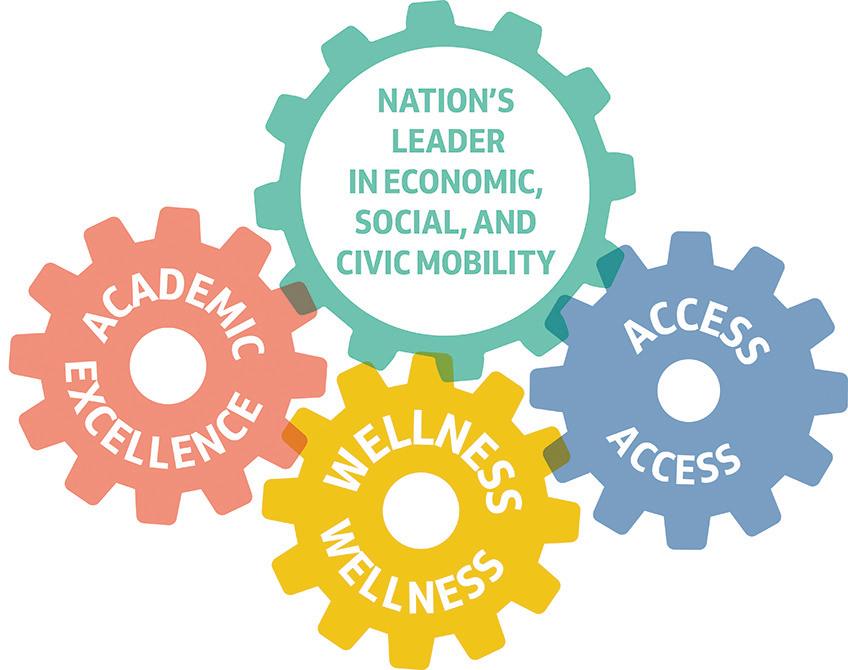
Transforming Learning, Transforming Lives: The Levavi Oculos Strategic Plan reflects our enduring commitment to educating women for lives of leadership and purpose. Through intentional investments in academic excellence, access, and wellness, these initiatives lay the foundation for a thriving future for our students, our campus, and generations of alumnae/i to come.
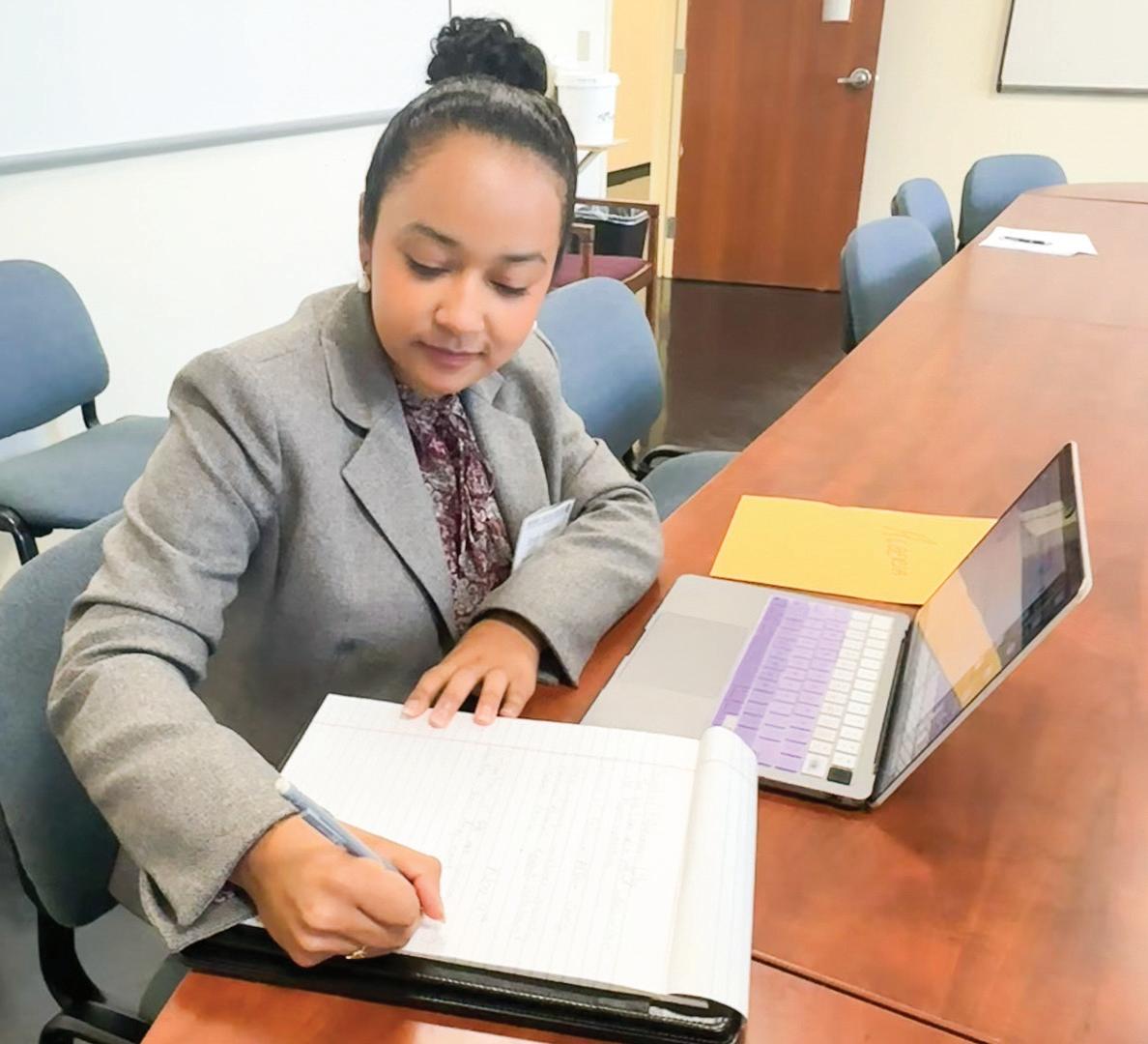
• Launched in 2023, Academic Renewal is a multi-year effort to strengthen academic programs, ensuring they remain rigorous, distinctive, and responsive to a changing world while reaffirming the liberal arts foundation.
• Experiential learning is now embedded in every major, expanding access to internships and applied learning. With new donor support, Hollins can guarantee funding for students with demonstrated financial need.
• New interdisciplinary programs are already taking shape, including public health, Hollins’ fastest-growing major, which integrates hands-on learning, leadership development, and community engagement.
• Leadership and career readiness are core outcomes of Academic Renewal, with every student earning a leadership badge and integrating career reflection and skill-building into their academic experience.
See pages 17-18 to learn more about Academic Renewal.
• HOPE has grown from a regional promise launched in 2021 into a national model in 2024. The program provides a fully loan-free Hollins education, covering tuition, on-campus food and housing, and required fees, for academically talented students from limited-income backgrounds.
• Hollins looks ahead to the May 2026 graduation of its first regional HOPE scholars, a milestone that reflects the growth and promise of the HOPE program.
• HOPE’s impact is already clear. Regional HOPE scholars have demonstrated strong persistence, leadership, and academic success, enriching classrooms and campus life while opening pathways to study abroad, internships, and post-graduate opportunities.
• As a cornerstone of Hollins’ strategic plan, HOPE advances access while strengthening enrollment, deepening community partnerships, and positioning Hollins as a national leader in social and economic mobility for women.
See pages 12-16 to learn more about the HOPE Scholarship.
• The modernization of West Hall is underway. During Reunion, members of the Board of Trustees and alumnae/i enjoyed an update on renovation progress during guided tours, underscoring broad community interest and support for this transformative project.
• Planning is underway for the Cynthia L. Hale ’75 Holistic Wellness Center, a future campus resource designed to support student well-being in all its dimensions — physical, emotional, cultural, environmental, financial, intellectual, occupational, social, and spiritual.
• Campus renovation projects support the holistic education Hollins is known for — ensuring that residential, wellness, and academic spaces prepare students to thrive intellectually, socially, and personally in a complex world.
Every gift to the Hollins Fund — no matter the size — has a direct and meaningful impact on academic programs, student life, and the overall vitality of the Hollins community. Donors to the Hollins Fund share a belief in the transformative power of a Hollins education, and their generosity ensures that the university remains strong, responsive, and prepared for the opportunities ahead. In Fiscal Year 2025, the Hollins community raised over $3.5M for the Hollins Fund. This unrestricted support empowered us to adapt, innovate, and invest where support mattered most.
For more information on the Hollins Fund, please contact Noelle N. Cook, Hollins Fund director, at cooknn@hollins.edu or (540) 362-6411.
Hollins continues to operate within the board-approved budget and with no external debt. Much of this financial stability is due to our alumnae/i and friends who, devoted to Hollins’ long-term financial health, added just over $3.6 million to the endowment last fiscal year. As of June 30, 2025, the Hollins endowment boasted a market value of $327.1 million.
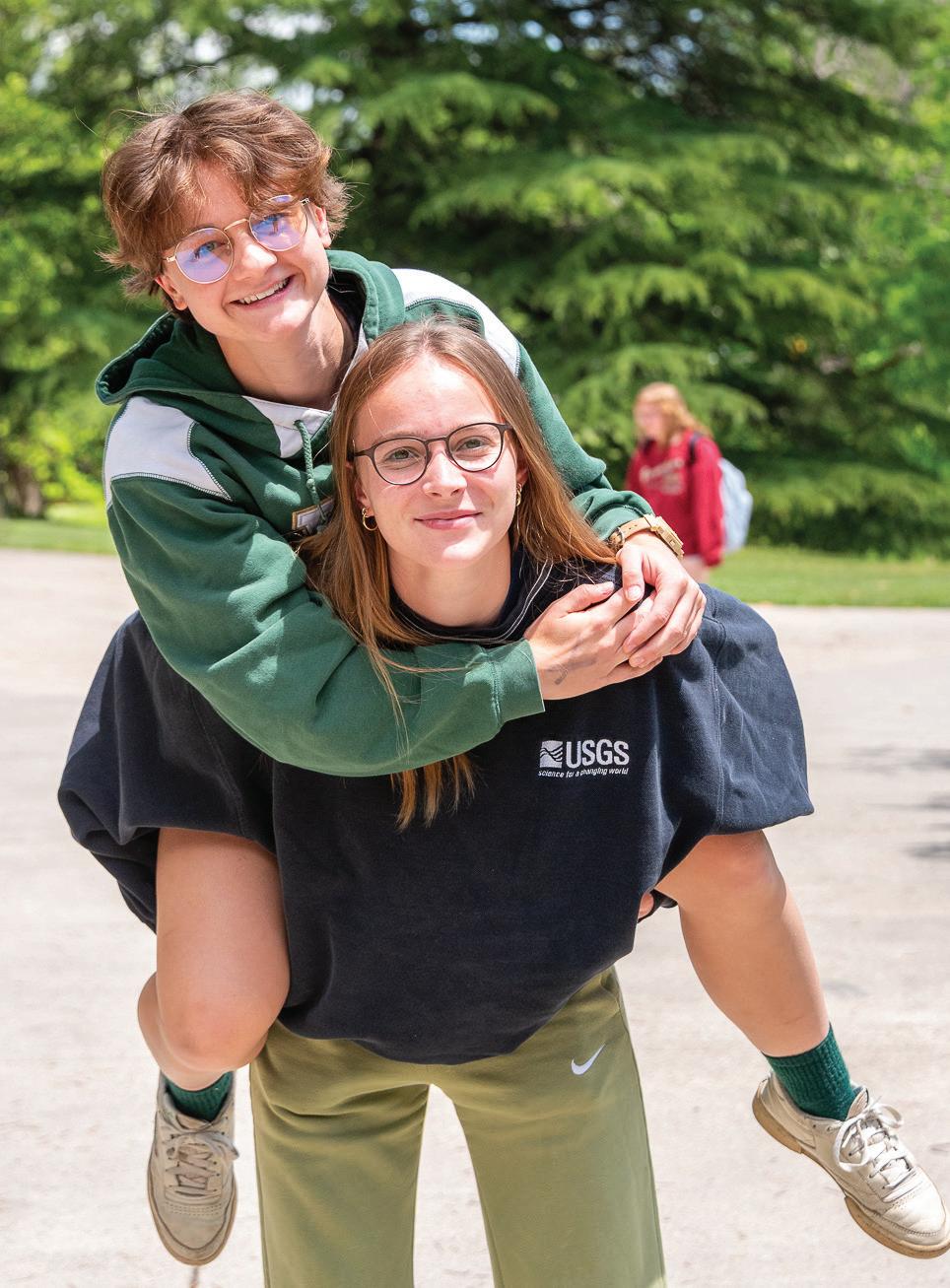
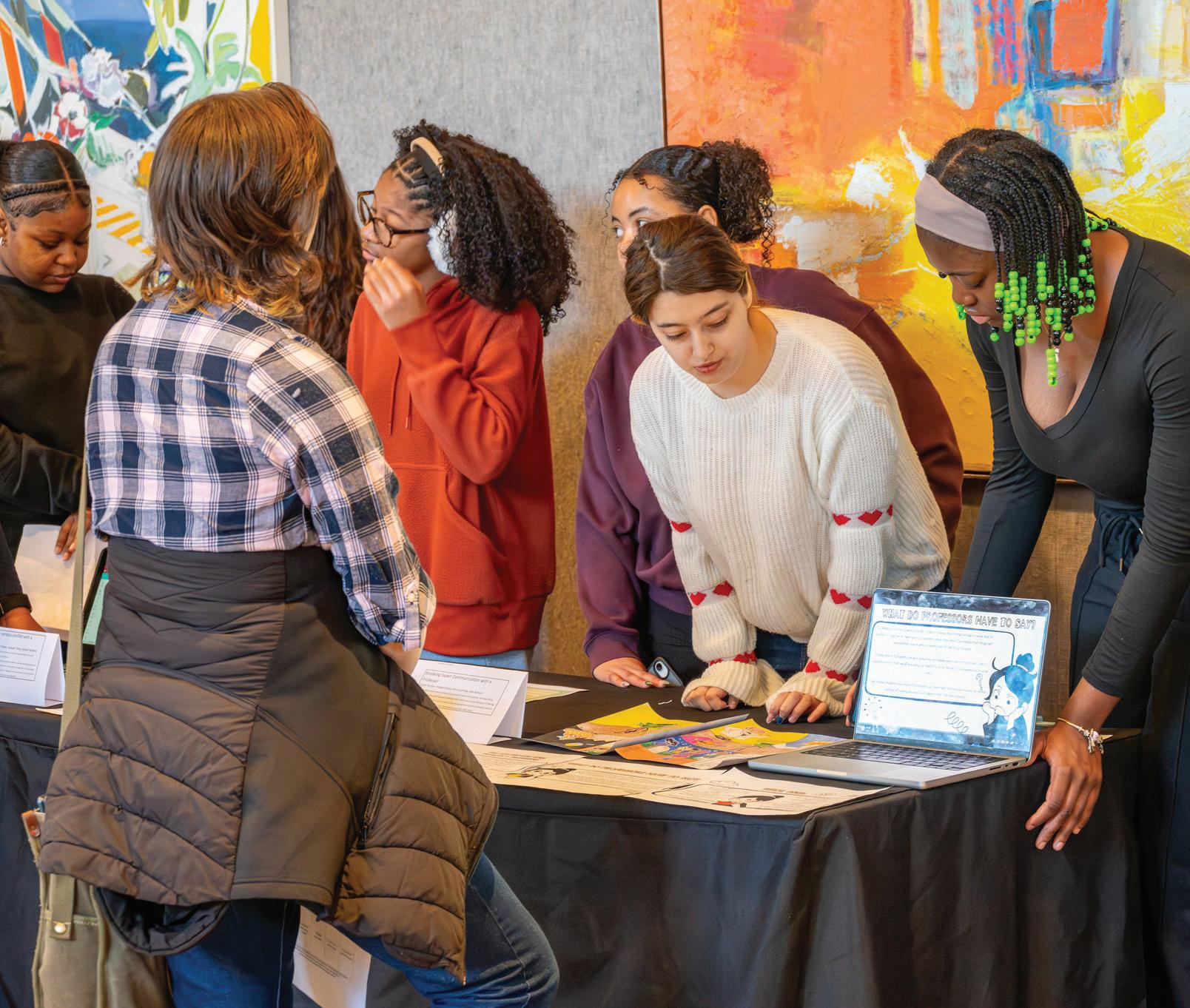
Donors made Hollins a lasting part of their legacy.
During the last fiscal year, Hollins received estate gifts over $6.9 million. Alumnae/i, parents, and friends who have indicated that they have made a bequest provision or planned gift commitment for Hollins in their estate plans are members of the Heritage Society. Today the Heritage Society has 488 members.
229
alumnae/i volunteered for Hollins in one or more roles
732
alumnae/i engaged in at least one of the 31 in-person and virtual events
I1,751
alumnae/i donors gave to the Hollins Fund (17.1% alumnae/i participation rate)
n fiscal year 2025 (July 1, 2024 – June 30, 2025), Hollins set a goal of 24% alumnae/i participation across our four major modes of engagement: volunteerism, events, communications, and philanthropy! While we were pleased to have continued engaging a critical mass, we fell short of our goal by 1.5%.
We are deeply grateful for our volunteers, who are the lifeblood of the alumnae/i association and help all of us to lift our eyes toward Hollins’ bright future. If you wish to volunteer for Hollins, be that in your local area, with your class, or supporting virtual programming — we want to hear from you!
We also extend our gratitude to each alumna/us who attended an event, in person or virtual, or took the time to write, email, or call us — it is a privilege to see the alumnae/i network in action. Stay up to date on all upcoming events through our alumnae/i newsletter, which hits your inboxes every month. And, if you haven’t gotten a call or an email from us in a while, let us know — we may have obsolete contact information.
Lastly, we sincerely appreciate all those who made a gift last year. Alumnae/i gifts not only directly impact today’s students but stand as a testament to the value of your degree, and provide confidence to foundations, corporations, and major gift philanthropists investing in Hollins.
Everyone who has attended Hollins has benefited from someone else’s generosity of time, talent, or treasure. The tradition of giving back truly makes Hollins a better place for everyone. We look forward to engaging with even more alumnae/i in fiscal year 2026!
Whether you volunteer, refer a student, share a story from the Hollins magazine, or wear a Hollins sweatshirt around town (or out of town!) — you carry the Hollins mission into the world. Likewise, when you give to the Hollins Fund, you take action to ensure the perpetuity of that mission.
Our Hollins Fund participation rate was only 17.1% in 2025 — a drop of two percent from the year before. We understand that many alumnae/i carry student debt, and it is natural to feel conflicted about giving back. But your experience is exactly why scholarship support matters. When you give to the Hollins Fund, you help current and future students access the education you worked hard to afford — creating opportunities for them to graduate with less debt and greater freedom. So, if you haven’t made a gift to the Hollins Fund in a while, maybe open that next letter or email Hollins sends your way. You may find yourself surprised to hear what Hollins means today to our students, and how alumnae/i gifts don’t just fund an education — they transform a student’s future.

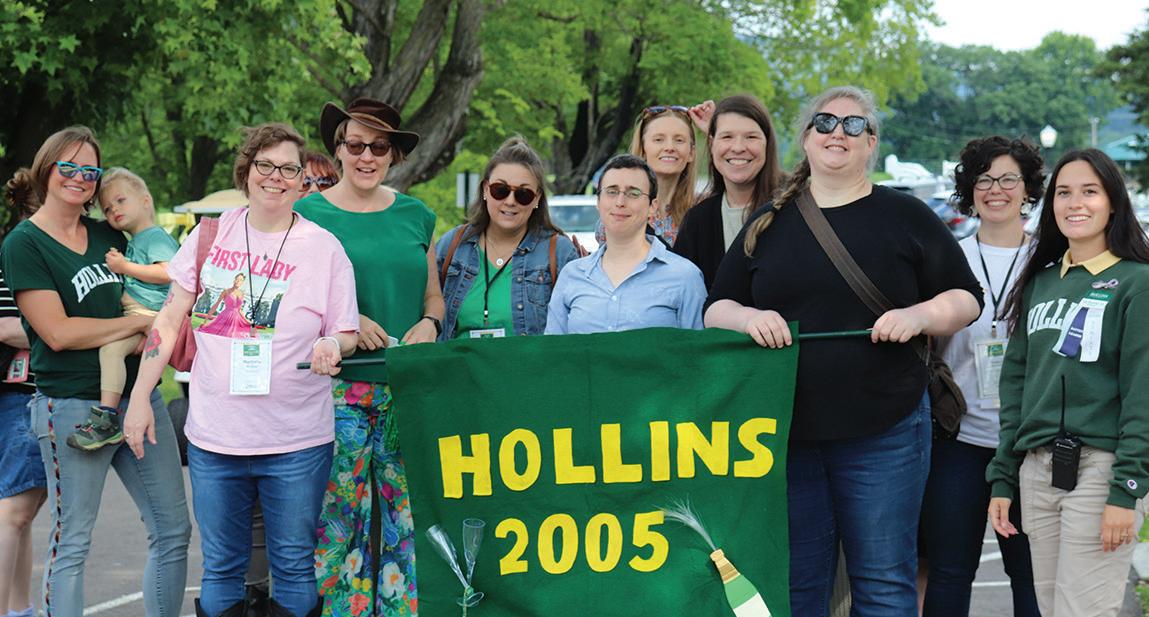
To show the impact of our volunteers, our reunion volunteer teams for the classes ending in 5s and 0s and the class of 2023 made a huge impact for Reunion 2025!
PRESIDENT NANCY OLIVER GRAY AWARD
Highest Total Giving for All Purposes
CLASS OF 1970
(with $3,056,486 as of June 30, 2025)
TINKER MOUNTAIN AWARD
Class with the largest total gift to the Hollins Fund CLASS OF 1970
(with $775,176 as of June 30, 2025)
CATHERINE ORGILL WEST ’51 AWARD
Class with the highest Hollins Fund participation in giving to Hollins
(with 46% as of June 30, 2025)
HONOR GUARD:
(with 36.4% as of June 30, 2025)
HOLLINS ROCK AWARD
Class with the highest Hollins Fund participation in 2nd, 5th, and 10th year classes
CLASS OF 2015
(with 9.5% as of June 30, 2025)
ALUMNAE BOARD
• Anne Chisman Abraham ’77
• Abi Whiffin Arney ’00
• Emily Daniels Ashton ’06
• Allison McHenry Bough ’93 (secretary)
• Shaneka Bynum ’07
• Blair Neill Celli ’03*
• Anna Cork ’96*
• Susan Schnider Duke ’76
• Diane M. Hall ’88*
• Kristin Jeffries Henshaw ’94, P’28 (president)
• LaNita Lykes Jefferson ’07
• Linda Bertorelli Jennings ’85, P’12
• Christine LeFever Kmieczak ’92 (president-elect)
• Rebekah Lee ’09
• Puja Sharma ’11*
• Beatrice Shaw ’91
• Pam Winton ’68
BOARD OF TRUSTEES
• Patricia Thrower Barmeyer ’68
• C. LaRoy Brantley F’15
• Clifford Fleet III F’44, F’67, F’01
• Sandra Frazier ’94
• Ellen Goldsmith-Vein ’84
• Callie V. S. (Ginny) Granade ’72
• Rev. Dr. Cynthia L. Hale ’75
• Lucy Davis Haynes ’84
• Kristin Jeffries Henshaw ’94 P’28*
• Antoinette Hillian ’00
• Paul Hollingsworth P’22
• Cynda Ann Johnson
• Terri Kallsen
• Kay Kendall ’66
• Elizabeth Brownlee Kolmstetter ’85
• Anne Lindblad ’79
• Tamina McMillan, M.D., ’95 P’23
• Debra Cartwright Meade F’76 (Board Chair)
• Emily Morgan ’79
• Janet C. Nicholson ’69
• Mary Flynn Niemitz F’75
• John W. Poulton P’06
• Karen Rabenau ’89
• Sabrina Rose-Smith ’00
• Natasha Trethewey M.A. ’91*
* Last year of service, 2025 P = Parent of alumna/us F = Family member of alumna/us
Weare grateful to our steadfast donors who give each year, make leadership gifts, and include Hollins in their estate planning. Thank you for giving Hollins a bright future. Our donors are recognized in the following giving societies:
To see all Giving Societies, visit hollins.edu/resources-for/ alumnae/giving/giving-societies
The Levavi Oculos Society is a lifetime giving society for donors whose cumulative giving to Hollins surpasses $1 million. The university motto Levavi Oculos (from the 121st Psalm: “I will lift up mine eyes unto the hills”) emphasizes leadership and service in accord with Hollins values and traditions.
The 1842 Society is composed of some of the most passionate and dedicated donors and friends of Hollins. It honors the year that Hollins was founded and is the brainchild of Pat Thomas Bain ’49, who helped establish the society in 1968. Members of the 1842 Society give at least $1,842 during the year to any designation at Hollins, though the majority of donors choose to make their gifts directly to the Hollins Fund. All donations totaling at least $1,842 annually, restricted or unrestricted, qualify the donor for membership. Gifts from family foundations and corporate matching gifts count toward membership.
Alumnae/i, parents, and friends who have indicated that they have made a bequest provision or planned gift commitment for Hollins in their estate plans are members of the Heritage Society. Today the Heritage Society has 488 members.
Miss Matty’s Circle (MMC) honors Martha Louisa Cocke, class of 1874. “Miss Matty” was the second president of Hollins from 1901 to 1933 and the first woman to lead a college in Virginia. Current students can join Miss Matty’s Circle with a gift of any amount by June 30 of that year. Alumnae/i who have graduated in the last ten (10) years can join Miss Matty’s Circle with a gift of any amount as well.
The Marian Wolff Young Society is named in honor of Marian Wolff Young, class of 1929, who made a gift to Hollins every year from her graduation until her death in 2008 — nearly 80 years. The Marian Wolff Young Society recognizes those donors who give every year since graduation.
BY MEREDITH COPE-LEVY ’12, M.F.A. ’18, DISCOVERY OFFICER, DONOR RELATIONS AND RESEARCH MANAGER
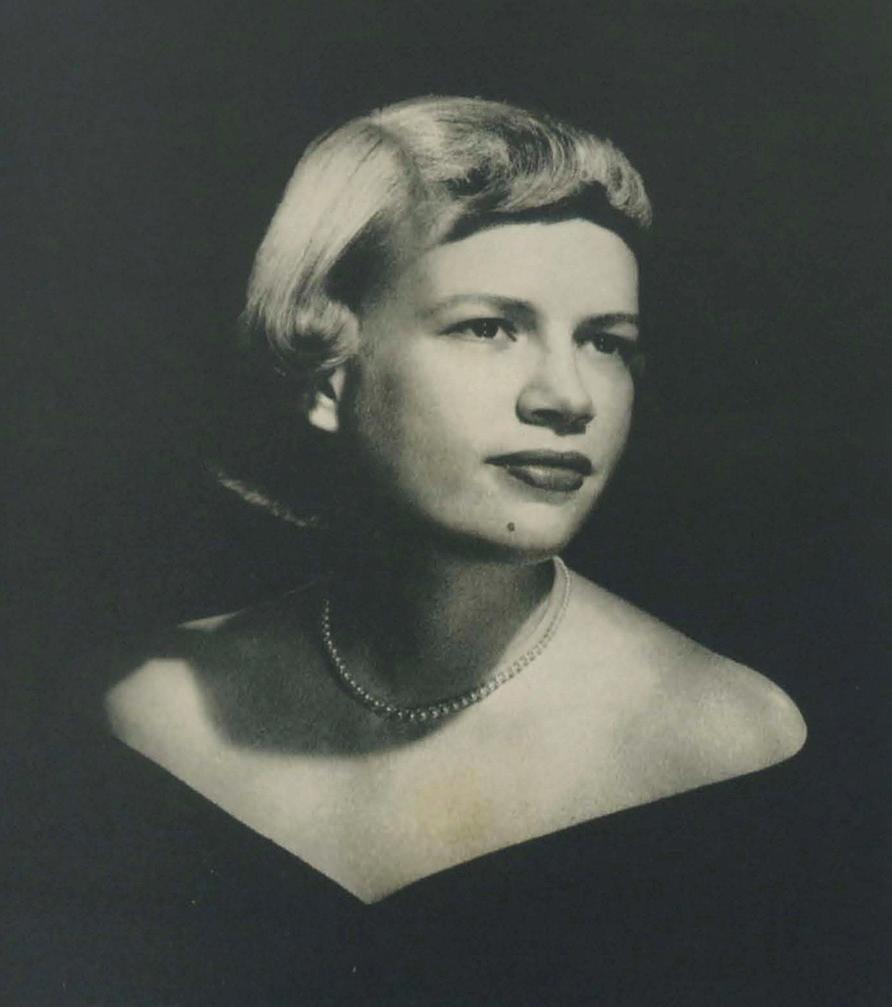
Hollins is grateful for the thoughtful leadership and generosity that philanthropist and community volunteer Trustee Emerita Martha “Kay” Massey Weatherspoon ’54, shared with her alma mater during her lifetime.
Together with her late husband Van Weatherspoon, Kay lived a life full of extraordinary generosity, touching nearly every aspect of life at Hollins. Her gifts included endowed scholarships, building projects and renovations, special collections, ongoing operational support, and even ice cream parties for staff. Reflecting her deep care for the Hollins community, Kay established the Distinguished Service Award for staff and faculty.
It was humbling to receive her $2,000,000 estate gift. The gift reflects Kay’s lifelong commitment to Hollins and her care for every aspect of campus life.
Kay Massey Weatherspoon, born July 27, 1933 in Durham, died March 30, 2025, in Charlotte, NC. She attended The Calvert School (Durham Academy) through grade eight, skipped ninth grade, and graduated from Durham High School in 1950. Kay graduated from Hollins in 1954 with a B.A. in Spanish. She thrived academically and developed lifelong friendships. As a student, she was a member of the Honor Court and Freya. Kay served on the Board of Trustees from 1996-2007, was named the first Hollins trustee emerita in 2008, and received the Hollins Medal in 2007. Kay and her high school sweetheart Van settled in Charlotte in 1955 and enjoyed 67 years of marriage until his death in 2022. In addition to raising a family and serving on numerous boards, Kay volunteered in the community and public schools. Believing that reading
Hollins University Institutional Advancement Box 9629 Roanoke, VA 24020
(540) 362-6498 800-TINKER1 (800-846-5371) gifts@hollins.edu
• All gifts to Hollins are tax deductible.
• Hollins’ fiscal year runs July 1 through June 30
• Hollins’ Federal ID number is 54-0506314
Credit Card Online | Make your gift online at hollins.edu/giveonline.
Automatic Recurring Gifts with Credit or Debit Card | Establish monthly, quarterly, or even annual gifts with your credit or debit card.
Checks | Mail a check or set up an automatic bill pay with your financial institution.
Wire/ACH Transfer | Hollins will share account information for the transfer upon request.
was key to every child’s future success, she tutored and shared her love of reading for more than 25 years at Cotswold Elementary, Eastover Elementary, and Randolph Middle School.
What mattered most to Kay was the future of Hollins, the well-being of its faculty and staff, and ensuring young women have the same opportunities she did when she arrived in the fall of 1950.
Securities: Stocks and Bonds | Have your broker call or send an email to the Roanoke office of Morgan Stanley: jodie.wertz-sutphin@morganstanley.com or call them at (540) 983-4907 or (540) 983-4913.
Give Through Your IRA | If you are 73, a charitable gift up to $100,000 transferred from your IRA directly to Hollins will not be taxed and can also satisfy your required minimum distribution (RMD), maximizing the benefits to both you and Hollins.
Real Estate or Personal Property | Hollins may accept gifts of real estate or personal property for related use.
Payroll Deductions | Faculty and staff of Hollins University are eligible to sign up to make their gift to Hollins through payroll deduction.
hollins.edu/resources-for/ alumnae/giving/ how-to-make-a-gift
Scan the QR code to give.

BY SARAH ACHENBACH ’88
Apair of stirrups nearly derailed Hannah Mae Schmidt’s ’28 debut.
The Hollins sophomore had expected to compete early in the day for her first Intercollegiate Horse Show Association (IHSA) competition on Nov. 8 at Virginia Tech. Instead, a last-minute stirrup adjustment (her irons were too long) pushed her to the end of the Novice Flat class. Around her, teammates moved in without being asked, rolling leathers and checking tack while Head Riding Coach Sherri West offered calm reassurance. Schmidt faced another reality to manage, too: she had drawn her horse at random, as all IHSA riders do.
Then she entered the ring. Last in her class, but ready.
“I was strangely calm during the whole ride and super confident in my abilities,” Schmidt recalls. Months of preparation took over. When she finished and dismounted, West pulled her into a hug as teammates erupted in cheers. Moments later, the results were announced: second in Novice Flat, an incredible finish for her first competition.
“Riding is my favorite thing in the world,” she says. “Competing is just a bonus.”
Schmidt has ridden non-competitively since age seven, but her path to the competition roster wasn’t immediate. After trying out her first year at Hollins, Schmidt was placed on the Practice Squad.
“I wasn’t ready physically or mentally,” she admits. But she stayed. She practiced. She volunteered. She learned. “Hollins has lots of opportunities, and I take every single one.”
She earned the A team spot she wanted the following year. Last fall, she built a schedule that would intimidate most seasoned athletes: practice at 5:30 a.m. two days a week, lessons on two other days, team practice on Fridays, and most weekends spent helping with IHSA events or the Interscholastic Equestrian Association shows Hollins hosts for middle and high school students. She did it while maintaining a 3.9 GPA.
What Schmidt accomplished is the goal for every Hollins rider — from the elite competitor to the student who first discovers riding for the first time: to face challenge, adapt in real time, and come out stronger.

“Our mission is to help riders realize their potential,” says West. “And that looks different for every rider.”
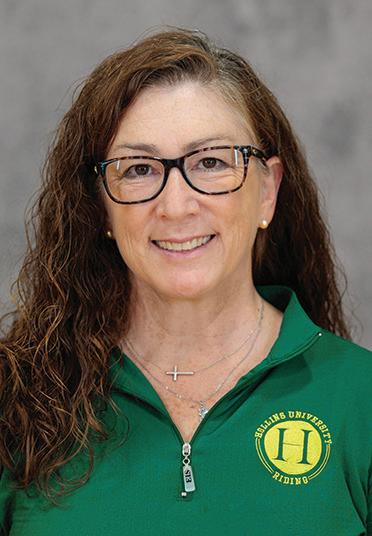
West grew up riding in Roanoke, knowing that “Hollins was the gold standard.” She took the reins of the program in 2018.
With West at the helm, and with Maggie Siciliano, assistant riding coach and recruiting coordinator; Liz Courter, associate head coach (recently retired after 40-plus years coaching at Hollins); and Elise Roschen, now in her fourth decade as Riding Center manager, Hollins has continued to deliver results at the highest levels. The team has earned numerous regional and national IHSA titles, including a sixth-place team finish at the 2024 IHSA National Championship. Individual riders have placed consistently at regional and national shows, carried by a culture that treats excellence as something shared.
“Hannah Mae is the poster child for what is possible if you put forth the hard work and effort and take advantage of the resources around you,” West says.
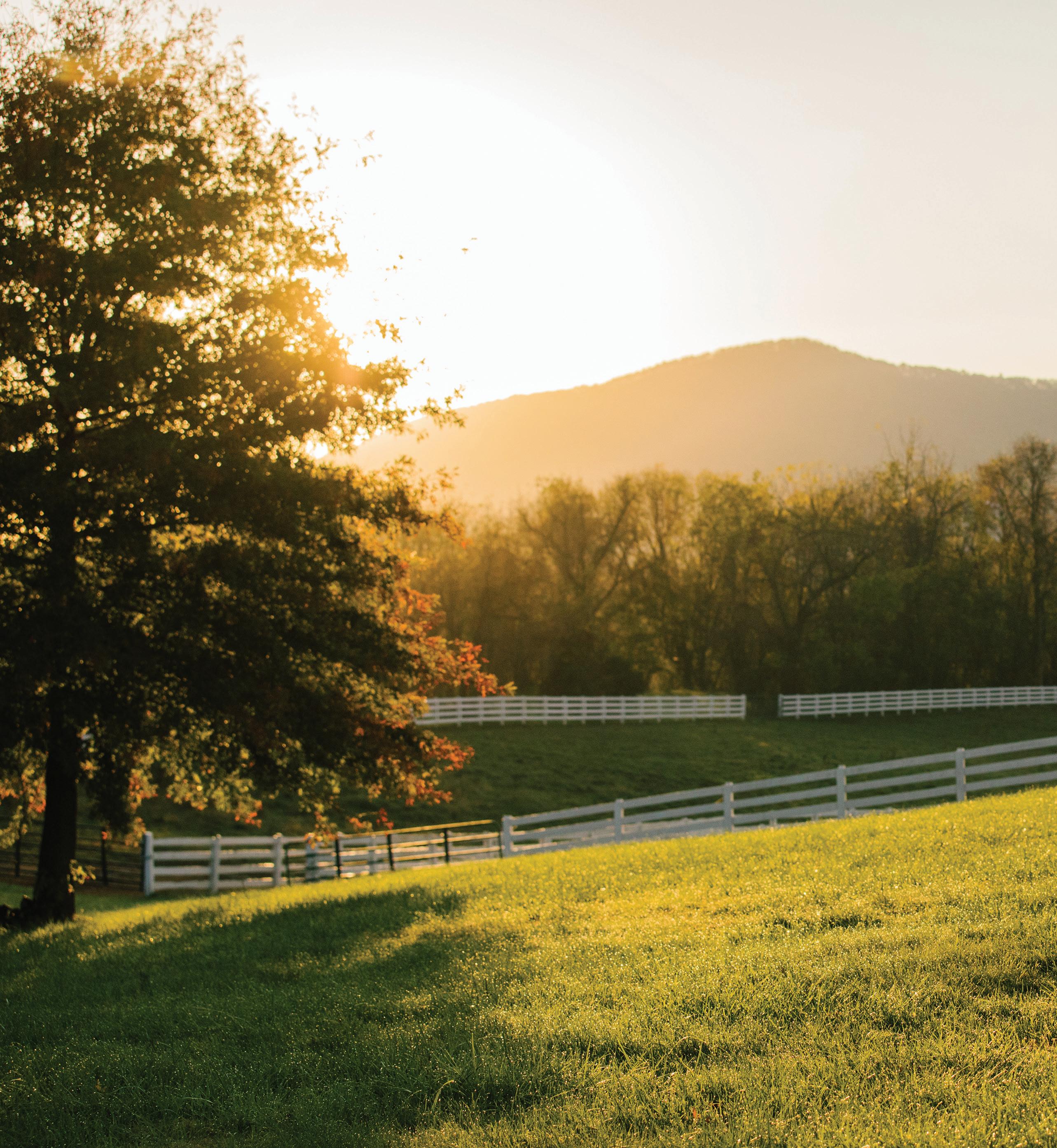
Those resources are remarkable. Long known as one of the top collegiate riding programs in the country, Hollins supports riders with a premier 43-stall Riding Center that includes a 220-by-110foot indoor arena featuring new, state-of-the-art GGT footing, an updated outdoor ring, seven pastures, and a six-horse Equicizer, an equine walker with a central lunging space. The entire facility sits at the heart of campus life. The barn isn’t an off-site destination; it’s part of the daily rhythm of the Hollins community.
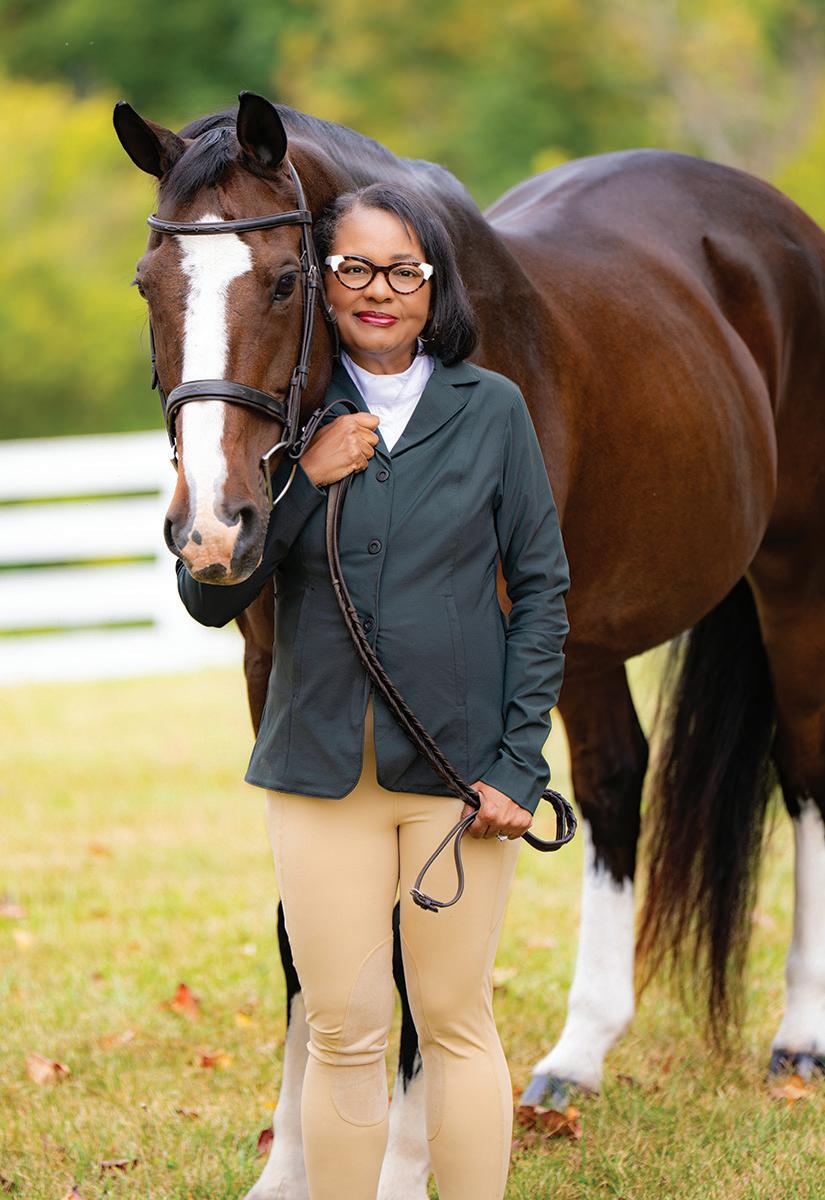
The long-standing Hollins riding tradition is expanding again.
In fall 2026, Hollins elite riders will compete as a single-discipline Jumping Seat team in the National Collegiate Equestrian Association (NCEA), becoming the 10th program of its kind in the NCEA and the sixth NCAA Division III institution to adopt the format. Competition includes Berry, Bridgewater, Centenary, Dartmouth, Lynchburg, Sacred Heart, Sewanee, and Sweet Briar.
Hollins will continue competing in IHSA, where it has been a fixture since 1974. The two formats support two important truths about Hollins riding: the program can compete at the highest level, and it can make riding accessible across experience levels. Unlike the NCEA, which is designed for elite collegiate competition, IHSA riders from programs of all sizes compete in the same framework. Riders draw horses at random. Adaptability and horsemanship matter as much as polish.
“We’re adding NCEA to provide students more opportunities and to address the recruiting landscape that’s changed over the last 20 years,” West explains, referencing the growth of NCAA and women’s equestrian programs.
Dudley Wood Macfarlane ’77, now a champion amateur owner hunter who competes nationally, remembers the program before IHSA.
“We did fox hunting or went to local shows on Hollins horses,” she recalls. “The NCEA is a great move for Hollins.”

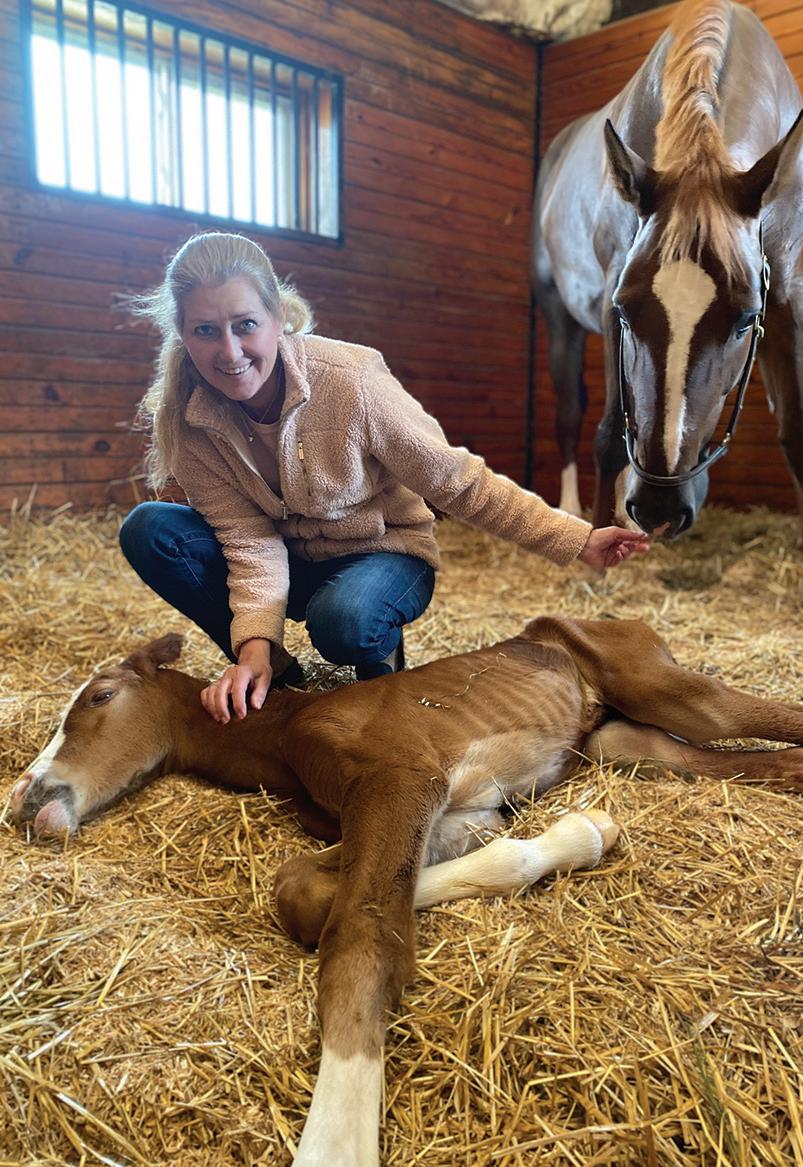
The program’s growth over time has supported riders like Heide Bossow-Casciaro ’88, one of the most decorated riders in program history. She’s a two-time Cacchione Cup winner, IHSA’s highest individual honor (formerly named the Fitch Trophy and often likened to the Heisman Trophy). Bossow-Casciaro chose Hollins because it allowed her to compete at the top level while receiving the education she wanted.
“The smaller community and small studentto-professor ratio were right for me,” she says. “You couldn’t put your baseball cap on and sit in an auditorium of 500 people and not be called on. Hollins’ liberal arts education diversifies you — it opens doors.”
Today, Bossow-Casciaro is the founder and owner of Tievoli Farm in Woodstock, Illinois, where she trains riders from Short Stirrup to Grand Prix. At just 10 years old, she won the Illinois Hunter Jumper Association (IHJA) Medal Finals. She has served as IHJA past president and current board member and will be one of the judges for the 2026 IHSA National Championship in Tryon, North Carolina, in May 2026.
“Riding teaches you how to manage risk and uncertainty,” she says. “That stays with you.”
For Bossow-Casciaro, who was inducted into the Hollins Athletic Hall of Fame in 1995, the joy of competing was doing so as a team and as an individual. As Hollins adds NCEA, having two distinct levels of competition won’t change what riders describe as the program’s defining strength: a place for everyone, supported at every level.
“Hollins is special because IHSA is still treated as a varsity sport,” says Gigi Goshtigian ’26, a four-year team member and All-ODAC honoree. “Some schools are dropping both IHSA and NCEA teams. Hollins isn’t.”
“You’ve got the person who just started riding three months ago and elite riders,” West adds, and “being part of the same program is the glue that holds them together.”
At some IHSA schools, riders may not spend much time together outside the varsity roster. Not at Hollins. All riders share one facility, which develops friendships and peer mentoring. They volunteer at Hollins Student Athletic Association events and enjoy riding team activities.
When Margaret Wise Brown ’32, a passionate horsewoman, arrived at Hollins in fall 1927, she was dismayed at the school’s run-down stables, according to In the Great Green Room: The Brilliant and Bold Life of Margaret Wise Brown by Amy Gary. Brown lobbied to start a riding club, and her mother, Maude Johnson Brown ’02, and father helped financially support improvements to the barn, then near the old dairy farm (by the campus silo). Hollins launched the riding program in earnest in 1930, quickly growing to 18 students in
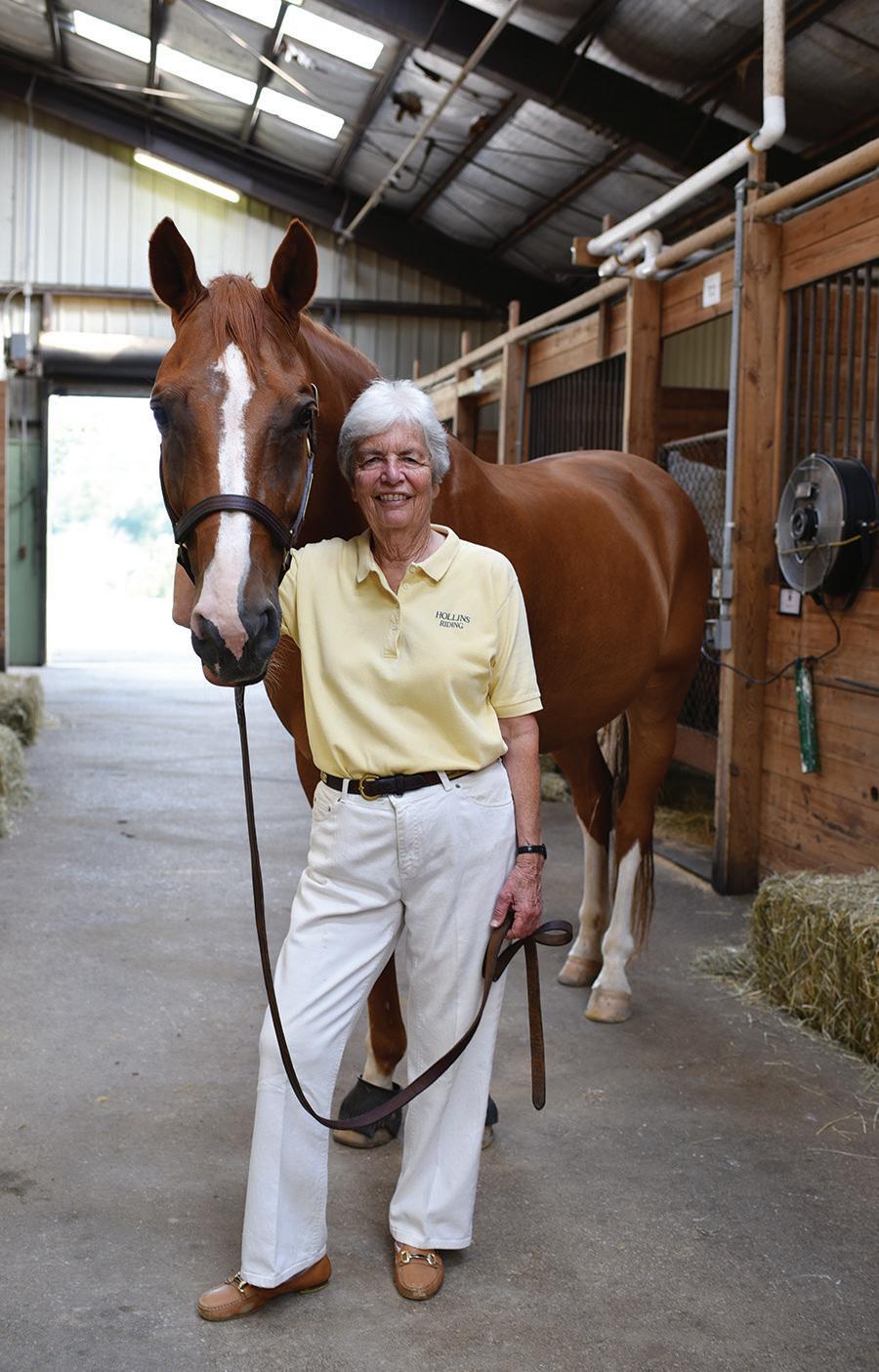
its first year. (Unlimited riding for the school year cost $75 in 1933.)
The lower barn near Siberia (the outer parking lot by the courts) and a nearby outdoor ring served as Hollins’ riding facility until 1955-56, when a 28-stall barn with outdoor and schooling rings was constructed on a hill overlooking campus. In 1959, the gentle Guy “Red” Burkholder, “Mr. B.” to students, became director of riding. Each summer, he and the Hollins horses, along with then-assistant director Nancy Peterson and several Hollins riders, decamped to Maine for Burkholder’s riding camp.
In the summer of 1980, with the barn vacant, a fire destroyed a large portion of the Hollins facility. Hollins refused to pause the riding program. Riders rallied with the old, six-stall barn down the hill and a rented barn and small ring in Botetourt County for boarding and lessons.
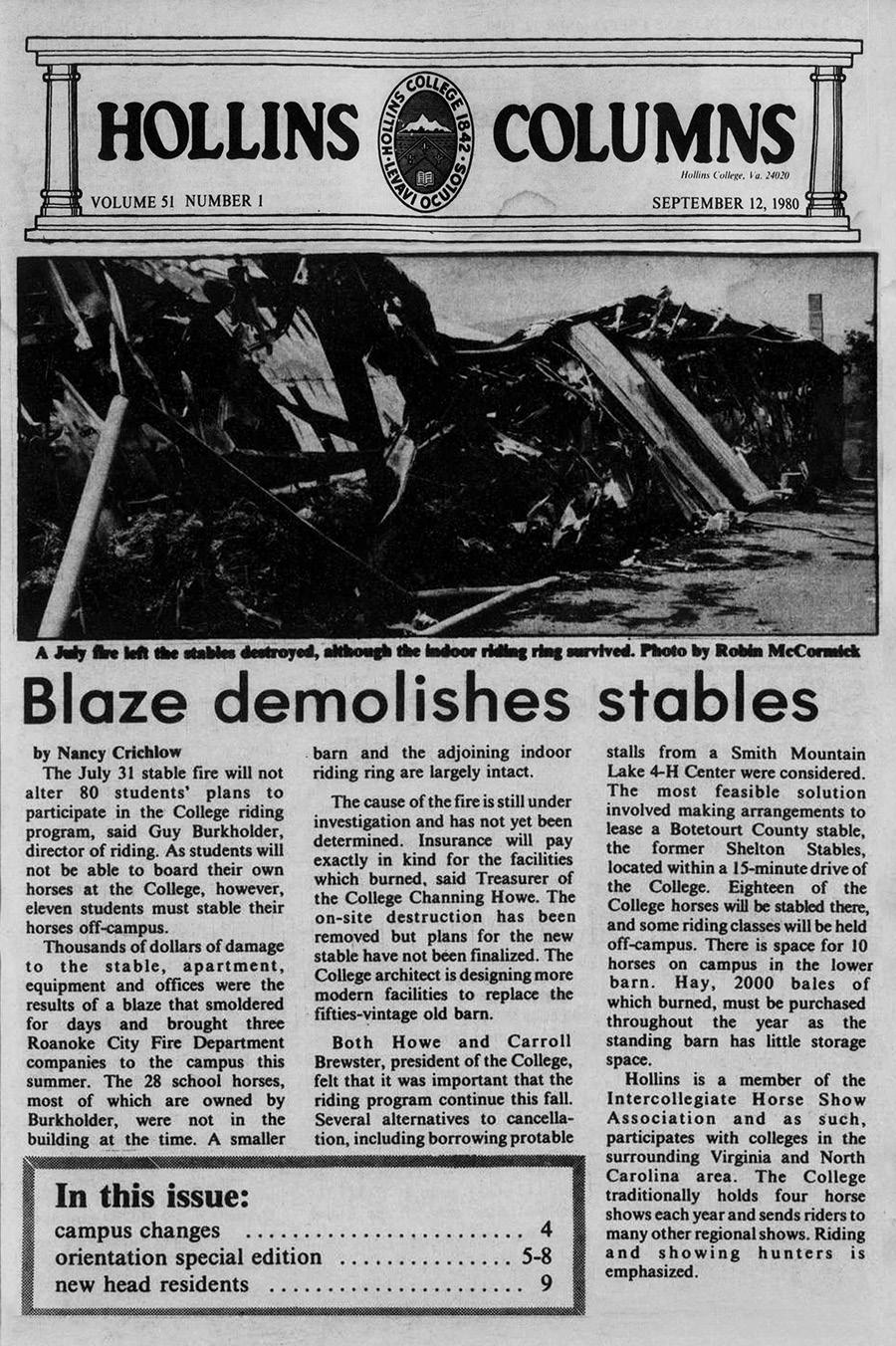
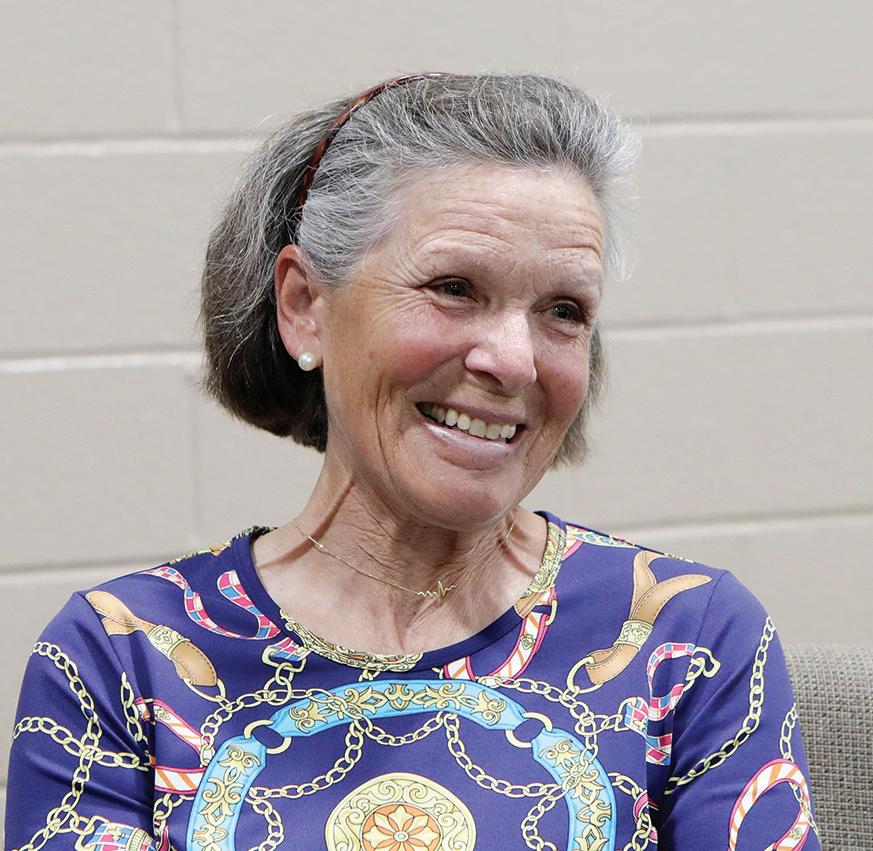
“Everybody worked together, and we kept going,” recalls Paget Hirsch Bennett ’81, now a sales manager for the Fastig-Tipton, the nation’s oldest thoroughbred horse auction.
A year later, the indoor ring, which had escaped the blaze, was converted using fireretardant lumber into today’s stables, tack room, offices, and other amenities. In 1983, the new indoor ring and viewing lounge were completed, the same year as Hollins’ first IHSA Nationals appearance. Renamed the Kirby Indoor Ring in 1985, the expansive arena includes the Burkholder Lounge in honor of Mr. B.’s retirement.
That year, Peterson became director, bringing Roschen with her as a groom and stable manager. Peterson would shepherd the program to its next level, retiring in 2018. When Roschen arrived, there was “one syringe and one needle in the whole place,” she recalls. For four decades, her knowledge, steady kindness, and high standards have elevated the care of the Hollins horses and the horsemanship of the riders. In both NCEA and IHSA competitions, riders draw horses at random, and thanks to the quality of donated horses and Roschen’s expert care, Hollins horses are renowned at regional and national events.
And competitions aren’t just about ribbons. “It’s about building responsibility, self-reliance, and problem-solving,” Peterson once said. Her guiding principle — create a competitive program on the outside, not on the inside — remains central at Hollins. West continues that legacy today.
Convinced she had to be recruited to ride on a college team, novice Sadie Henshaw ’28 assumed she would take lessons and nothing more. During her admissions tour, Henshaw learned she could be part of the team. Two days before the other first-year students arrived, she moved into Tinker dormitory and attended her first Hollins event: a riding team bonding activity.
“I immediately had 30 new best friends,” Henshaw laughs.
“I was scared because I knew Hollins’ riding pedigree and thought there would be a hierarchy,” she says. “But that’s not true at all.” Teammates taught her what she didn’t know about horse care, “which was a lot,” she admits — and she’s already paying it forward with a first-time rider on her hall. “We talk about her lessons and the horses.”
“You can be whoever you want on this team,” Schmidt adds. “You can take lessons for recreation or be on the Practice Squad and not compete. Or you can compete here or outside of Hollins. There’s so much I’ve learned from all the riders and even more to learn from the NCEA riders.”
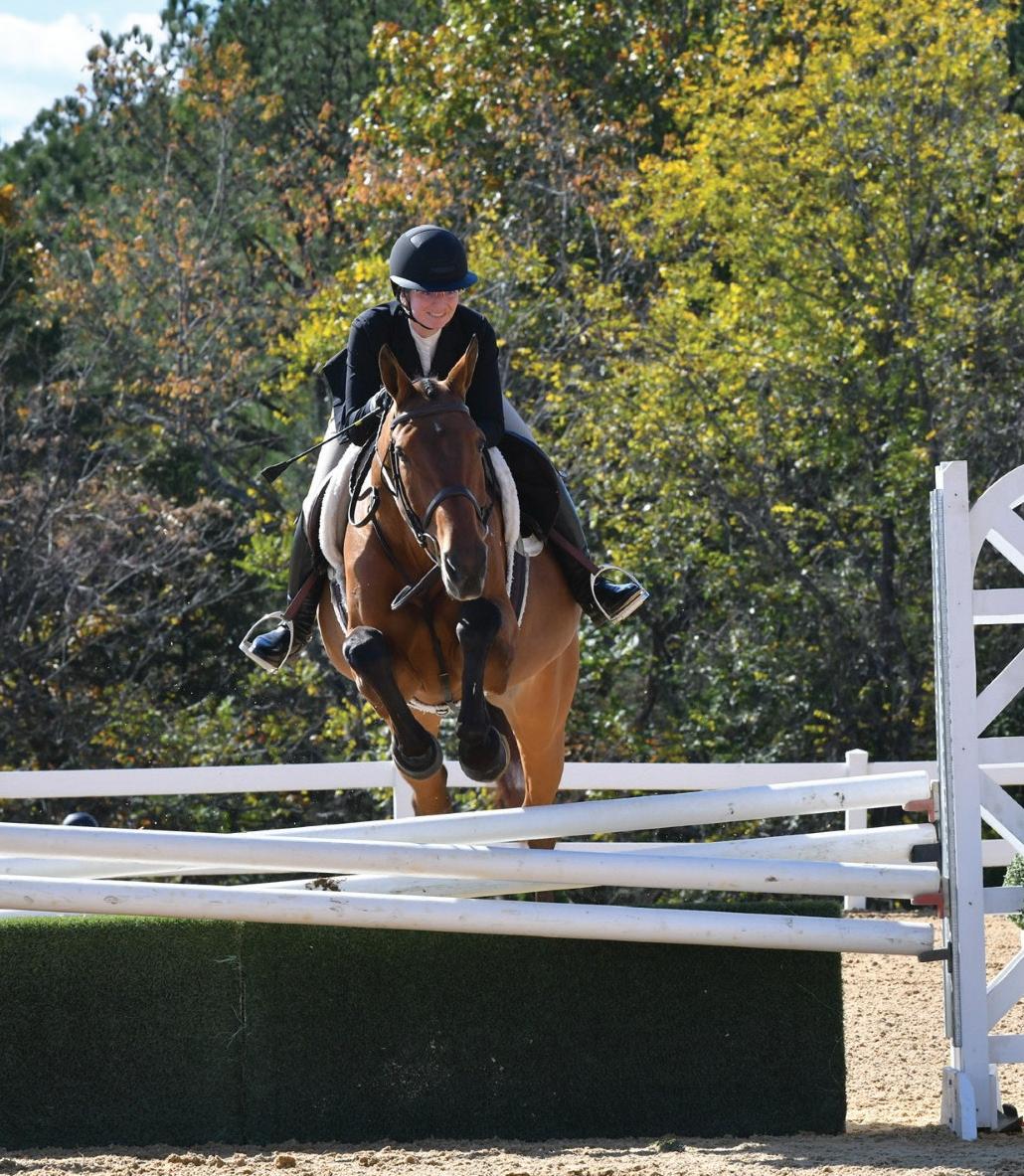
he barn was a place where friends came together early in the morning and late at night,” reflects Maria Shannon ’96, a professional trainer, rider, and teacher at the national and international level and co-owner of The Barracks Farm, her family’s business in Charlottesville. “It grounded the work I was doing in class with something physical, practical, and collaborative.”
That connectedness paid off. During Shannon’s four years on the Hollins riding team, she and her teammates won four straight ODAC championships and the National Championship in Open Equitation Over Fences in 1994. She was named ODAC Rider of the Year three times and won the individual Open Equitation Over Fences title in 1993 and 1995. She’s a double Hollins Athletics Hall of Fame inductee, recognized individually in 2010 and as part of the 1993 National Champion team, the first Hollins team in any sport to be inducted.
Shannon says IHSA competition teaches adaptability, preparation, and resilience, especially because riders compete on horses they’ve never ridden before.
“You learn to deal with the ups and downs, work with teammates and coaches, and show up consistently even when things are hard or unpredictable,” she says.
Goshtigian, who is applying to graduate programs in social work, credits the program with teaching her how to work with many personalities and roles.
“It takes a village, especially on the scale needed for shows to run smoothly,” she explains. That means 5 a.m. at the Riding Center cleaning tack and stalls, setting equipment, and preparing the ring. “Riding has really taught me what teamwork is, especially because collegiate riding can be very individual.”
“For some, riding is not always accessible,” she adds. “So, for it to be accessible to the Hollins community through physical education classes and the team is amazing. College is where you should try new things, and the barn is a public place. Anyone can come up and pet the horses, hang out, and enjoy their presence.”
A self-described “barn rat,” Sarah Jarosinski Holy ’12, Doctor of Veterinary Medicine boardcertified in Veterinary Anesthesia and Analgesia, earned an equally impressive list of Hollins ribbons. Co-president of the riding club for two years, Jarosinski Holy was IHSA Nationals
Reserve Champion in 2011 in Novice Fences, earned All-ODAC honors, and was a member of the 2011 ODAC Champion Team and the 2012 ODAC Reserve Champion Team.
Prior to Hollins, Jarosinski Holy had only competed as an individual.
“In IHSA, everyone plays an important role, even the really green riders in walk-trot,” she says. “It leveled the playing field, and it was so fun to have the whole team on the rail cheering.”
She also found support for her academic ambition.
“There are many schools with equestrian programs,” she says, “but I found the balance between my academic and athletic goals at Hollins.”
When she had morning practice, team members or Roschen would untack and put away her horse. Another teammate helped get her to Dana Science Building in time for class. Her time management skills allowed her to pursue student government, tutor on campus, and commute frequently to Lexington to ride her own horse.
One teammate’s photo still graces the lock screen on Jarosinski Holy’s phone: Tres Coronas, the Hollins horse she rode for most of her college career.
The quality of Hollins’ donated horses has been a constant across generations.
“Hollins had and has great horses,” Macfarlane adds. “It’s important to learn to ride anything you sit on. Mr. B. taught me to feel a horse. It’s not a car. It’s a living, 1,200-lb. being you have to have a relationship with.”
Today, the Riding Center houses 30 horses, 22 owned by Hollins.
“We have a tradition of exceptional donated horses,” Roschen says. “Sometimes it takes a bit to figure out what they need — more turnout, more playtime, a specific ride. And then they become this wonderful addition to the program.”
Competing and recruiting at the NCEA level creates new opportunities for donations, Roschen adds. “That expansion is going to need to be reflected in the horses as well.”
“The horses are really loved here,” Henshaw says. One of her favorite traditions is the twicemonthly Adopt-a-Horse program, in which every Hollins rider “adopts” a horse, grooming, bathing, grazing, and bringing treats. Her favorite is My Way, a warmblood. He’s also President Mary Dana Hinton’s favorite. She often visits him
during her commute from the President’s house across the road from the Riding Center.
“I tell every rider to listen to the horses because they have so much to teach,” West says. “When riders aren’t opening their ears to what the horses are saying nonverbally, they miss part of that conversation. Horses are truly magical creatures. I want every rider to maximize their capabilities and learn to love and respect the horses.”
“You have to accept early on that it’s not about you. It’s about the horse,” Henshaw says. “Coach West tells us that every horse has something to teach us.”
The discipline and adaptability she has developed — learning to maintain her position regardless of which horse she draws in competition — will serve her well in medical school, where she hopes to become an OB/GYN or pediatrician. “Riding is great for my academics,” she adds.
Learning to trust the horse has taught Schmidt to trust herself.
“Patience is key,” she says, something she expects to draw on in her dream career in occupational therapy, working with dysregulated children. “My goal is to keep improving, keep learning, keep having fun, and keep supporting my teammates, but also stay humble, with an open mind and an open heart.”
“It’s a new, exciting chapter for Hollins riding,” Roschen adds. “We’re eager to dig our heels in and come out on top.”
West knows that a learning curve with the new NCEA format is inevitable.
“But our goal is simple,” she says. “We want riders to seek out Hollins, where we give them the tools they need to ride exceptional horses and show excellence in everything we do.”

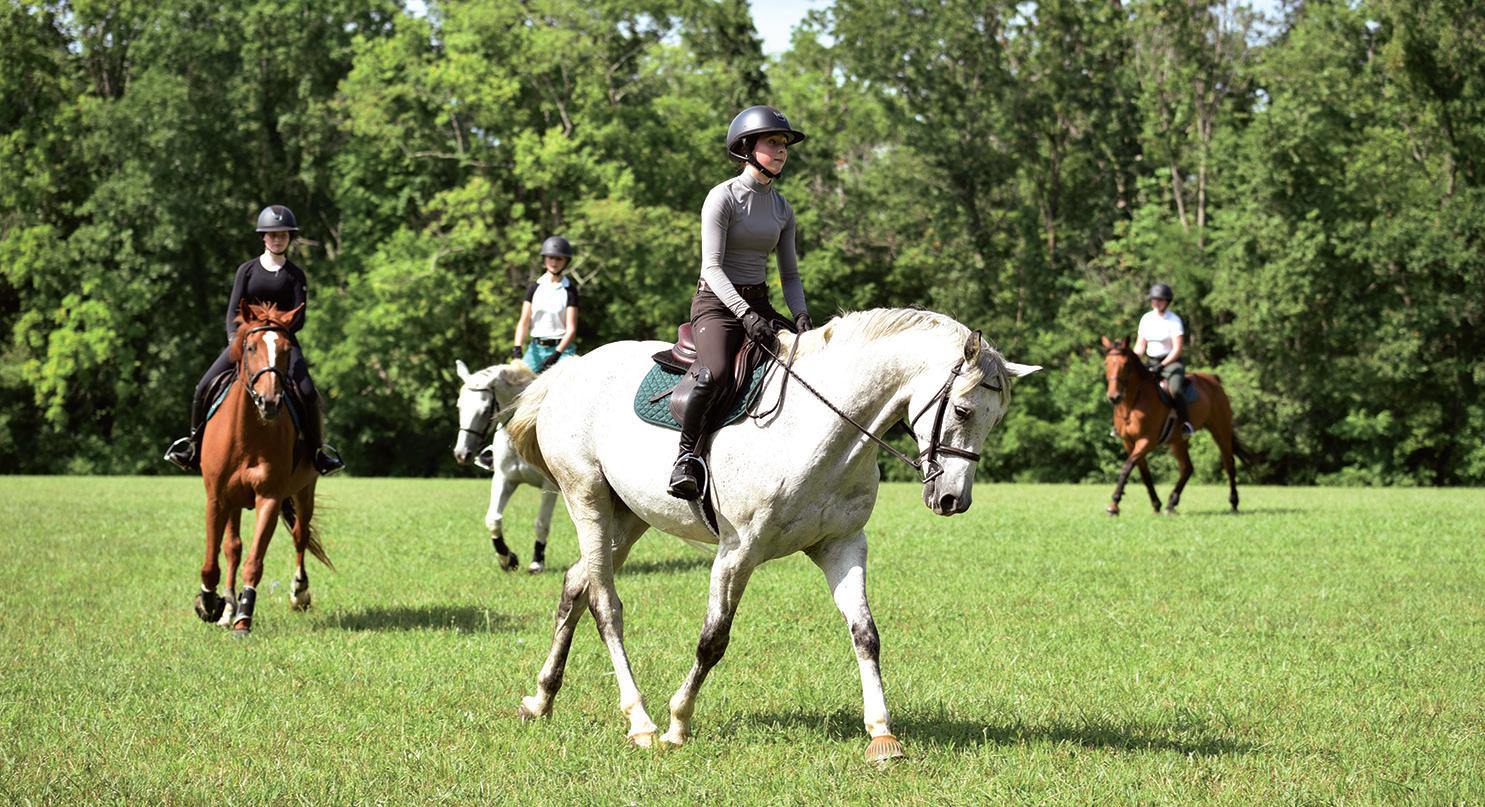
This summer, give the rising young women in your life an unforgettable week of exploration, growth, and joy at Hollins University’s Hollinsummer pre-college programs.
July 12–18
Discover and celebrate her unique voice in one of the nation’s most beloved creative writing communities. Through workshops in fiction, poetry, and personal narrative, plus feedback and visits from published authors, students grow as writers and thinkers.
July 12–18
A hands-on STEM experience for curious minds. Students explore environmental studies, chemistry, and emerging research through real lab and field work and collaborative discovery.
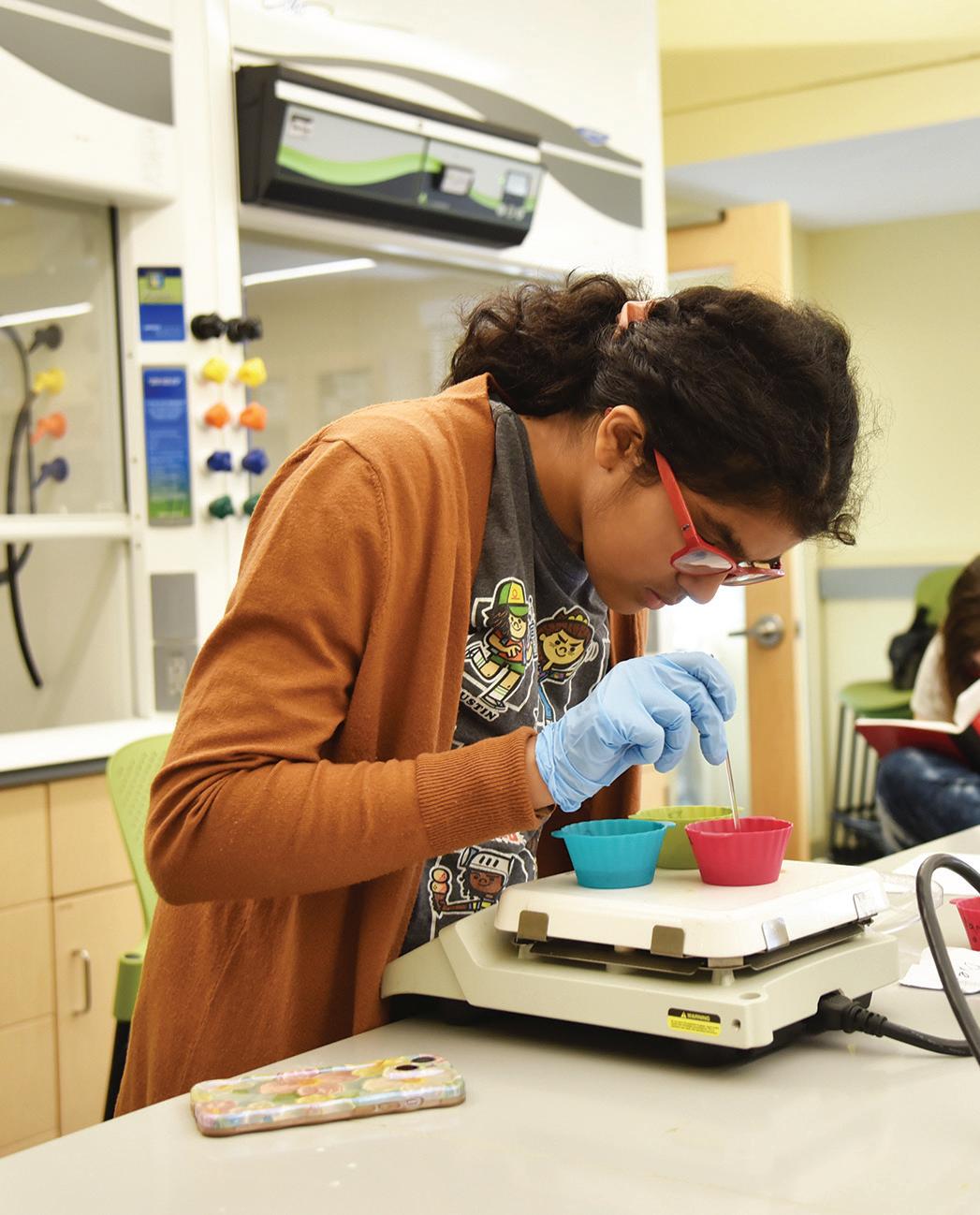
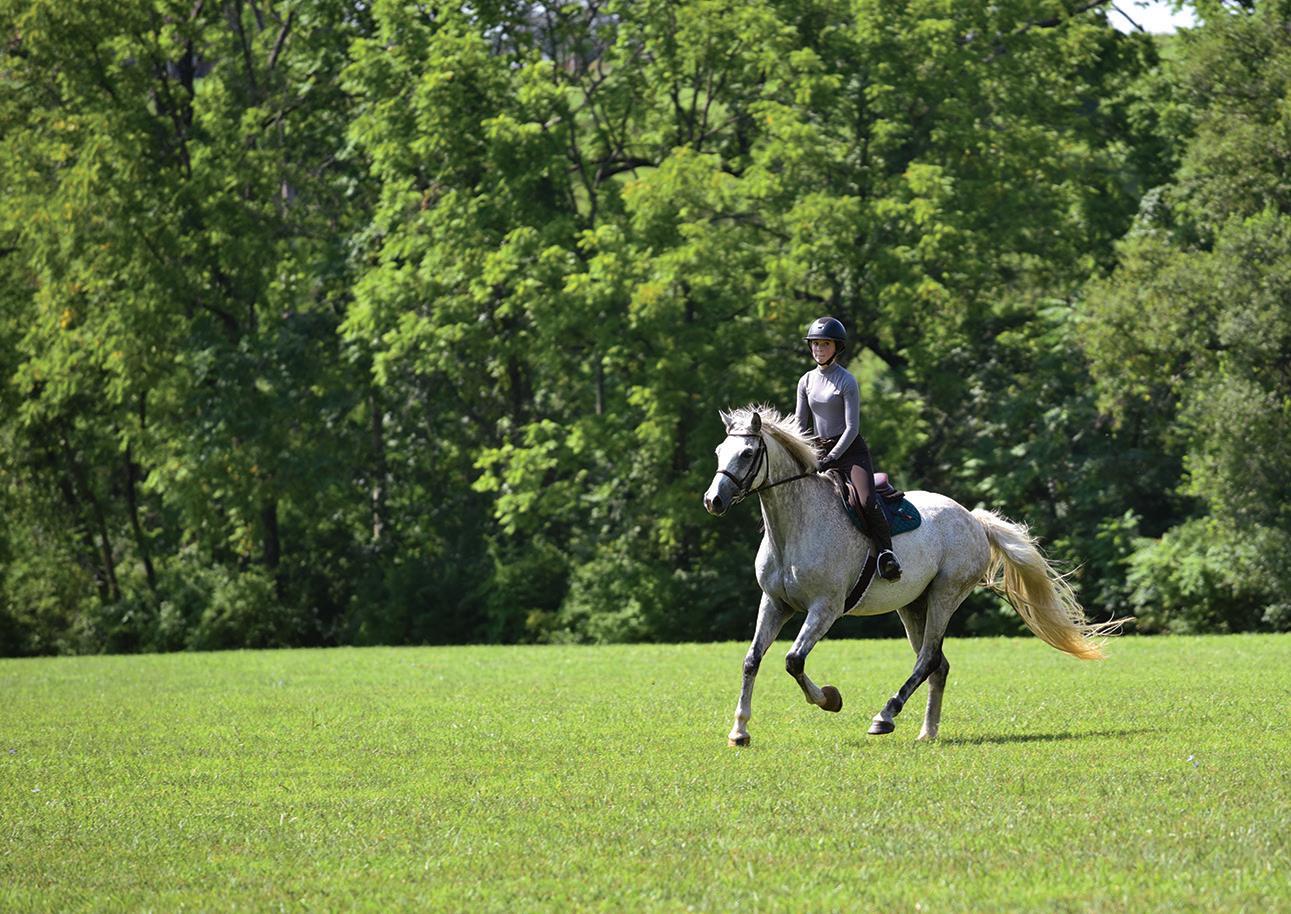
July 12–18 and July 19–25
Experienced riders deepen skills in hunter/jumper technique, equine care, and barn management with expert collegiate instructors.
Note that demand for this program typically exceeds capacity; it is likely we will be unable to accommodate all applicants. Email hollinsummer@hollins.edu to check availability.
STUDENTS LIVE ON CAMPUS, SHARE MEALS, ENJOY EVENING ACTIVITIES, AND BUILD CONFIDENCE AND CONNECTION IN AN IMMERSIVE HOLLINS EXPERIENCE.
more and register at hollins.edu/hollinsummer.

Celebrate May 29-31, 2026!
All classes ending in 6s and 1s plus the class of 2024.
Attendees can join a new one-day Friday leadership experience focused on growth, connection, and confident leadership, featuring interactive learning, expert insights, and optional coaching. Look for the Alumnae College option when registration opens in late March.
Scan the QR code to view the Reunion schedule or register.
#HollinsDayofGiving2026
Day of Giving is a 24-hour celebration of the Hollins community and our memories, connections, and shared commitment to supporting today’s students.
Join alumnae/i, families, faculty, staff, and friends as we move mountains through mentorship, opportunity, and philanthropy.
Interested in establishing a matching challenge, serving as a Day of Giving ambassador, or getting involved in another way? Contact Noelle N. Cook, Hollins Fund director, cooknn@hollins.edu.
Be part of the movement. Give. Connect. #MoveMountains

Scan the QR code or visit: alumnae.hollins.edu/movemountains2026