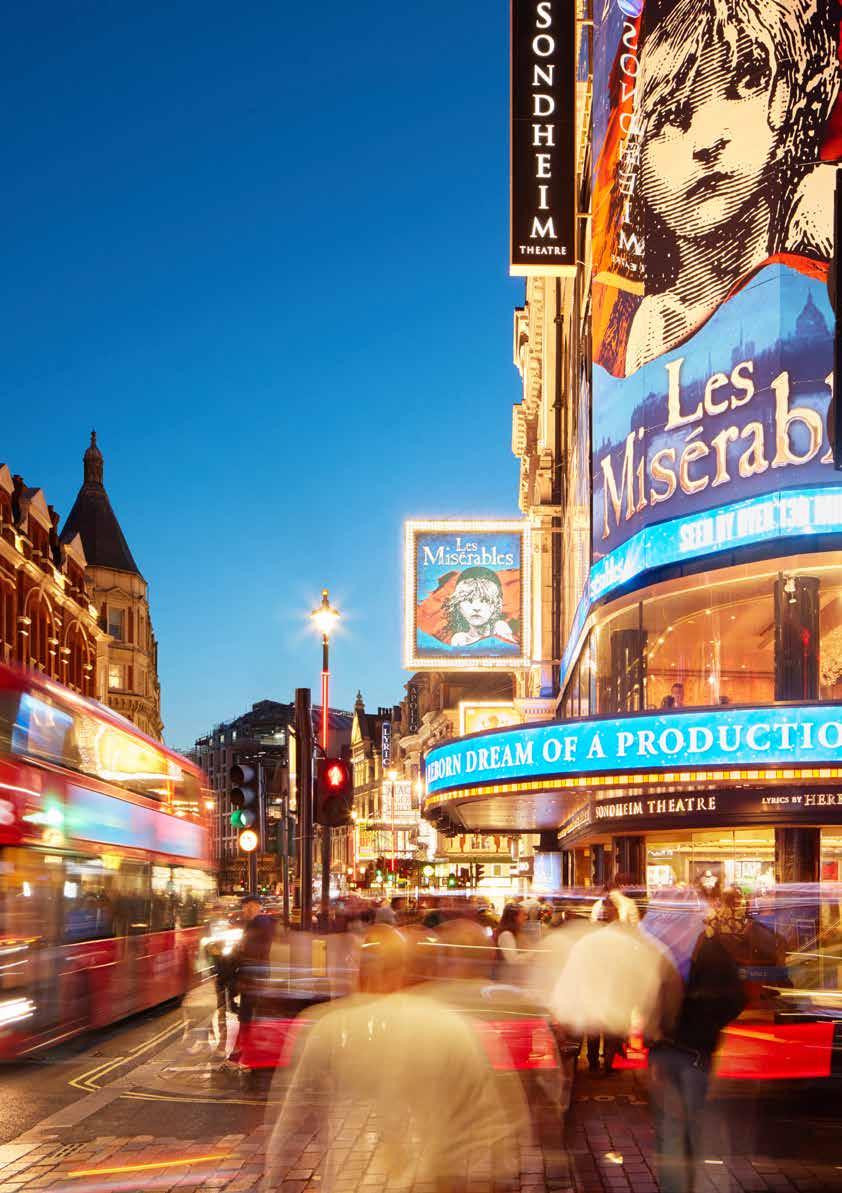

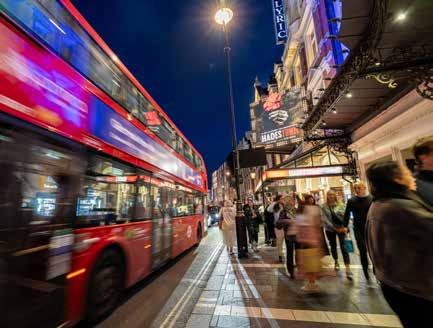
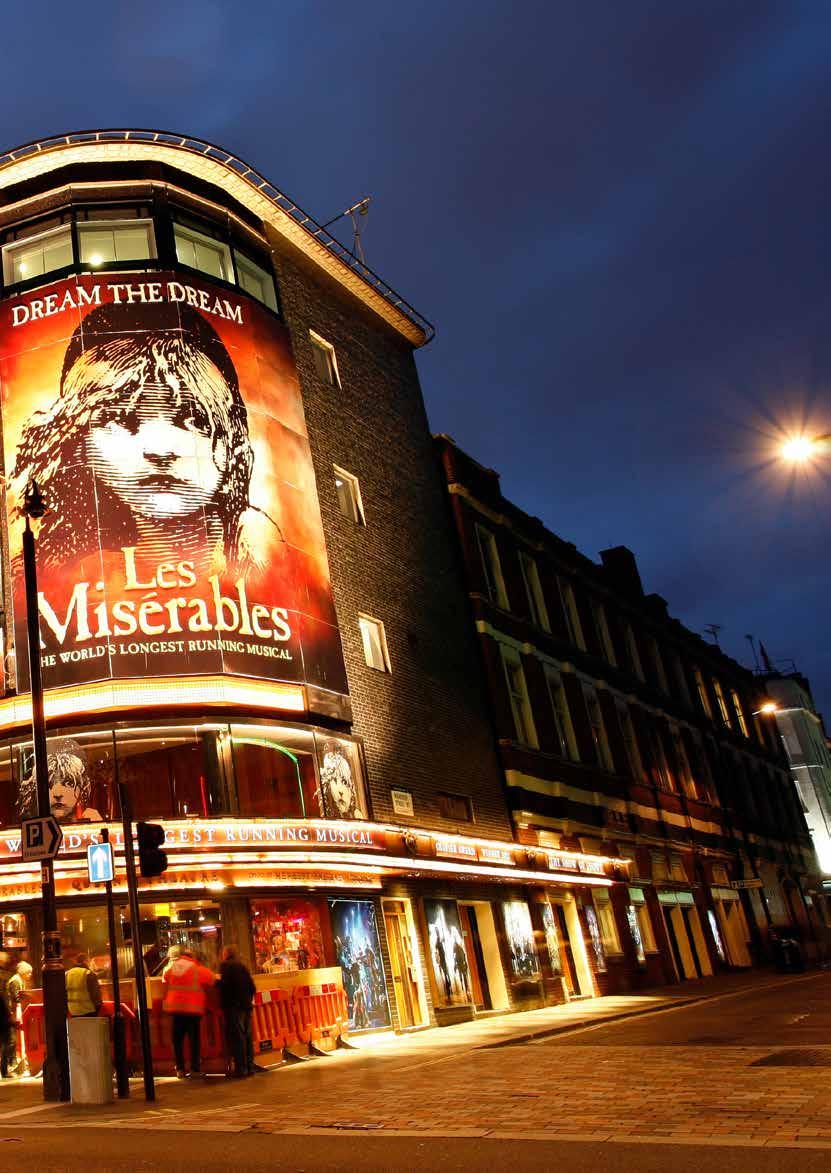
The West End is one of the world’s foremost clusters of culture, leisure, hospitality, and the night-time economy

Stifled By Ineffective Policy
As a global icon, the West End is not only London’s – but the United Kingdom’s – biggest platform for attracting international investment in the experience economy
generating over £55B in annual GVA1 an industry worth £3.8T globally4 projected to more than double by 20284 hosting 58K businesses2 supporting 500K jobs1 welcoming 280M visitors3 a year
This global growth potential is why it is one of the London Growth Plan’s 5 Key Growth Sectors.
A portion of the West End has held International Centre status since the inception of London Plan in 2004 - a designation intended to recognise its importance and unlock growth to support London’s position as a leading global city.
However, since then, the designation’s lack of actionable policy and dedicated resource has failed to unlock the area’s full potential.
The West End needs a new approach: the 2027 London Plan presents an opportunity for the West End International Centre to take on a bolder remit and broader geography underpinned by bespoke policies, governance, and investment to unleash its potential as a world-class growth engine.

A maze of overlapping designations and policy areas undermines focus and accountability.
Contradictory decision-making across boroughs and agencies inhibits a joined-up growth strategy.
Clarify and expand the WEIC boundary to reflect London’s full experience economy district. Affirm the London Plan as the sole authority on International Centre policy geographies.
Establish a dedicated International Centre Mission Team with cross-stakeholder authority, reporting to the GLA.
As a uniquely specialised, high-footfall destination, the West End has been designated an International Centre for two decades, yet lacked the bespoke policy, governance, and investment to drive growth.
One-size-fits-all policies fail to reflect the West End’s unique economic activity and international role.
Despite the West End’s economic scale and footfall, resourcing consistently falls short of need.
The 2027 London Plan needs a bolder West End International Centre (WEIC) designation.
Develop a bespoke WEIC Growth Plan, with tailored planning, licensing, and measurable KPIs embedded in the London Plan Annual Monitoring Report.
Back ambition with ringfenced investment and proportionate resource for the UK’s most productive and highfootfall destinations.
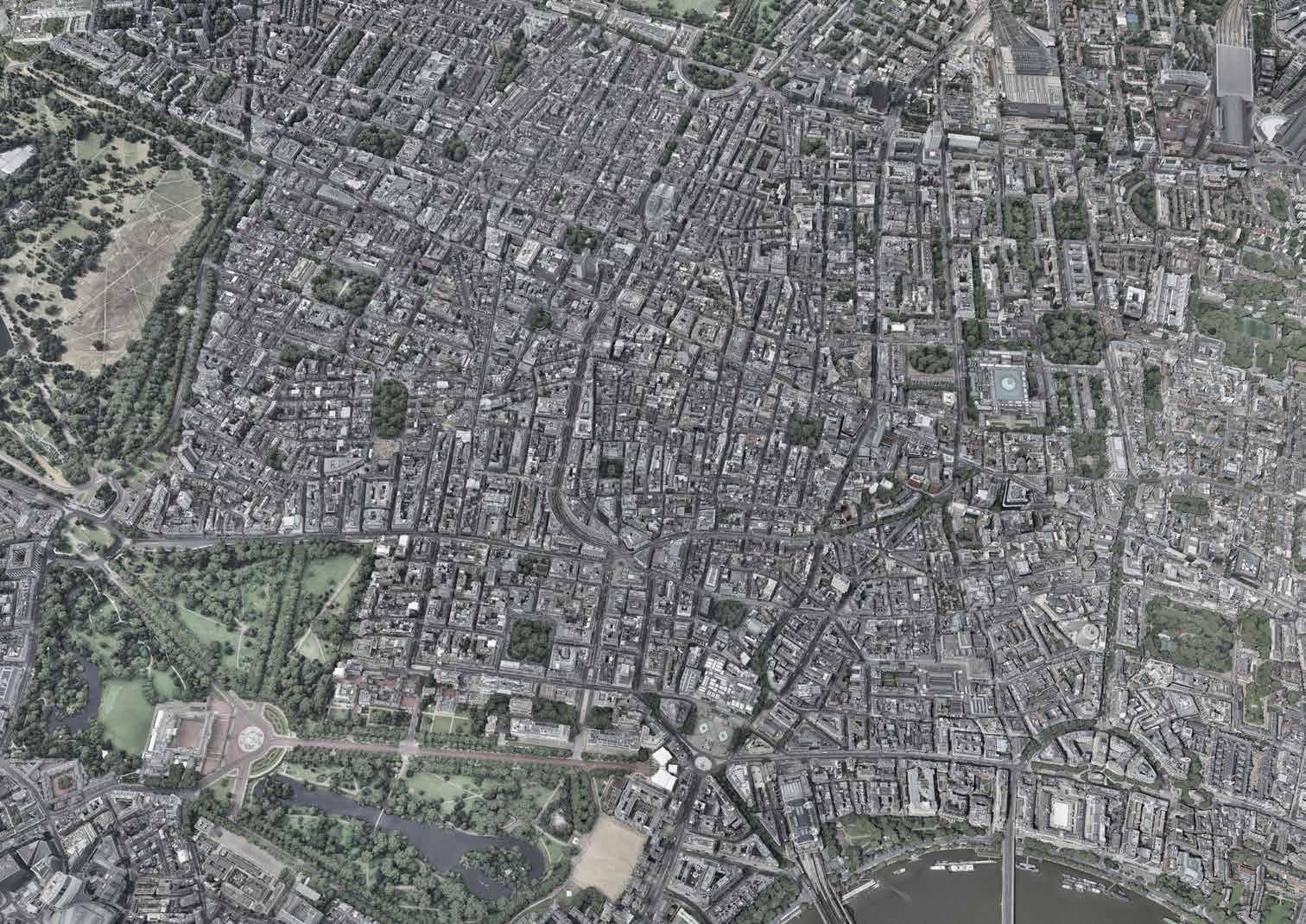
This proposed geography for the International Centre simplifies and augments the historic International Centre boundary to reflect the totality of today’s West End Experience Economy ecosystem. has some of London’s highest footfall, but is highly concentrated toward economically active consumers and workers who power London’s economy.
Establishing an expanded West End International Centre geography in the 2027 London Plan will bring boroughs, Business Improvement Districts (BIDs), and growth sectors into alignment - matching policy objectives with growth ambitions to turbocharge London’s world-leading experience economy.
21M visits across a typical month with footfall surging 48% on the busiest days1,3 1 Resident 9 Workers 16 Visitors On A Typical Weekday2 1 Resident 7 Workers 27 Visitors On A Typical Weekend2























International
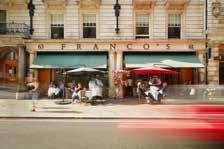
Safe, inclusive, well-equipped, and high-quality spaces that encourage business investment, consumer spend, and visitor dwell time
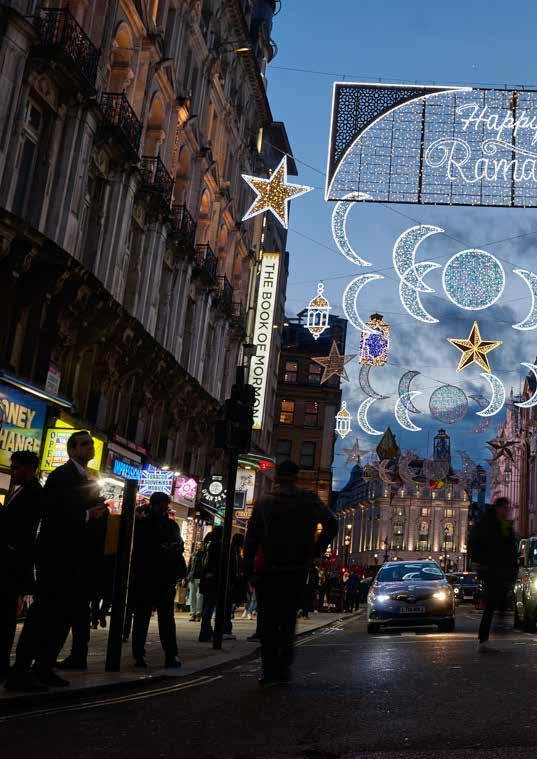
Crowded and Chaotic Streets: Vehicle dominance and crowded footways create an unwelcoming environment for visitors.
Underinvestment in the Street Experience: Maintenance issues, inadequate lighting and poor wayfinding all impact on the pedestrian experience.
Cluttered Streets: Redundant utility boxes, unnecessary street furniture and poor management of e-bikes and pedicabs limit accessibility and reduce comfort for pedestrians.

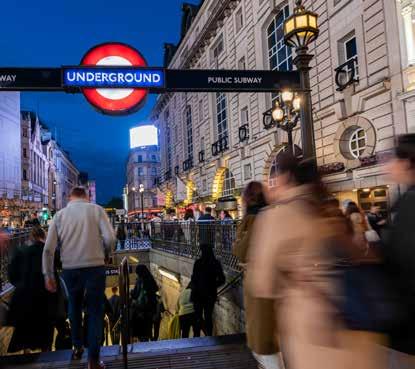
24-hour connectivity for people and goods with convenience amenities to support longer dwell times
“London must use its planning, licensing, placemaking and infrastructure powers to nurture the city centre.”
London Growth Plan, 2025
Second-Rate Infrastructure
Standards: A lack of late-night amenities (such as public toilets) and step-free access at key transport hubs limits inclusivity and accessibility.
Late-Night Transport Options: Misalignment between public transport operating hours and changing consumer habits.
Unmanaged Egress: Venue closing times can create bottlenecks for people travelling home from the West End, increasing safety risks.
Servicing and Freight Passengers: Narrow, congested streets in the West End create conflicts between delivery vehicles, pedestrians, and residents.
Planning & Licensing
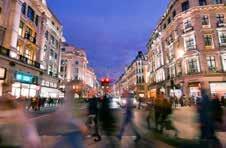
Bold, aligned policy framework that streamlines decisions to drive sustainable growth and enable innovation and investment across the West End
Severe Misalignment: Planning permissions are often granted but licensing can then be refused or restricted, creating risk and uncertainty for operators.
Cumulative Impact Zone: Often applied rigidly, blocking even well-managed and culturally valuable venues, reducing diversity of uses and stifling innovation.
High Costs and Delays: Lengthy processes, costly appeals, and under-resourced teams deter investors.
Unbalanced Representation: Existing processes over-represent certain groups while underweighting business voices and economically active users of the West End.
Competitive Disadvantage: Perception of delivering development in the West End is slow and bureaucratic which can drive investment elsewhere.
Safety & Security

Coordinated safety measures, proportionate to footfall
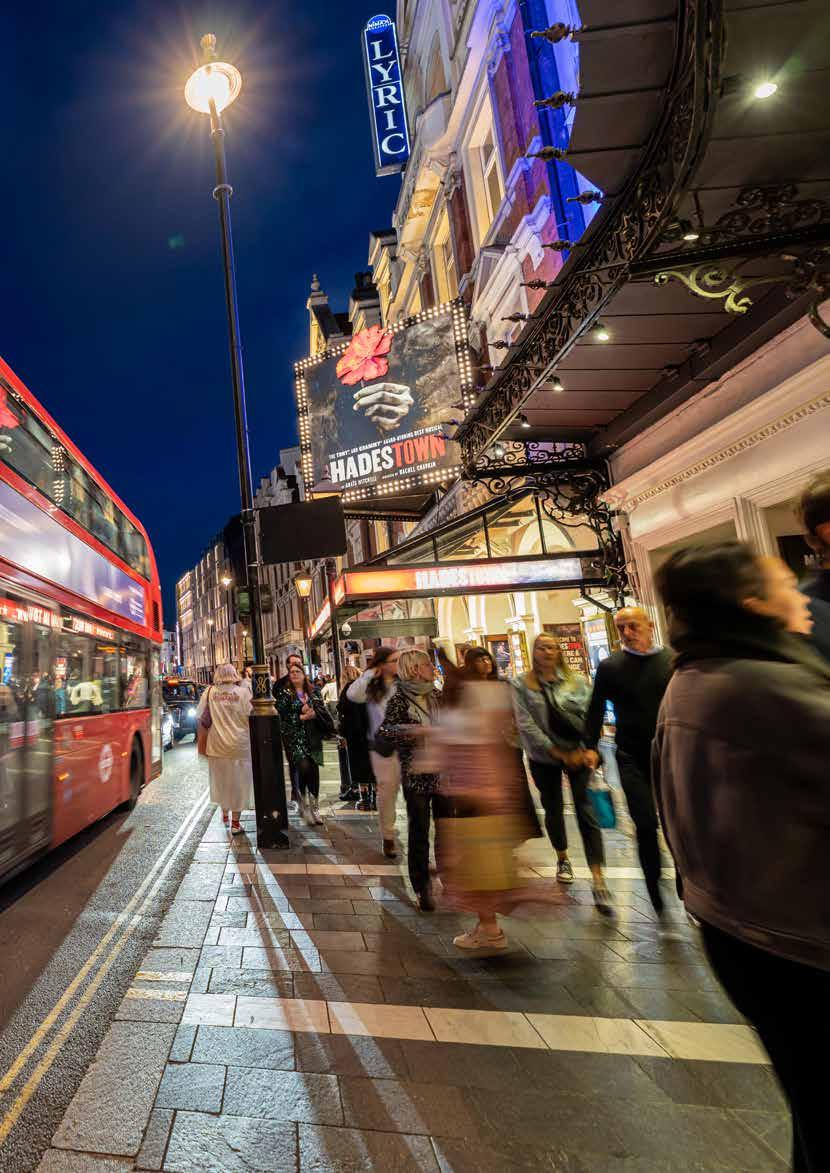
Limited Visibility: Inadequate police patrols and welfare officers erode public confidence, creating a perception that the West End is unsafe and unmanaged.
Crime Concentration: High levels of theft, assault, and antisocial behaviour damage the area’s reputation.
Safety Perceptions: Online content fuels fear of crime, deterring families and visitors after dark.
Economic Obstruction: Due to a lack of resources, the police cannot support new licensed premises, stifling investment, creativity, and the reputation of the West End.
Coordinated Management
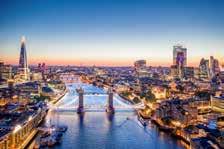
Unified place management across boroughs & agencies with resource proportionate to footfall
Fragmented Governance:
No single authority oversees activity in the public realm, transport, policing, and major investment levers, utilities/ environment, creating an “interagency vacuum”
A One-Size-Fits-All Approach: A lack of dedicated enabling policies and resourcing that deals with the specific challenges in the West End.
No Economic Development Strategy or Unified Mission Team: Multiple overlapping geographies (International Centre, WERLSPA, BID boundaries) prevent coordinated management.
From Sydney to New York, cities are developing special designations and tools – spatial, legal, and institutional – to protect vibrancy, coordinate action, and give experience economies room to grow.
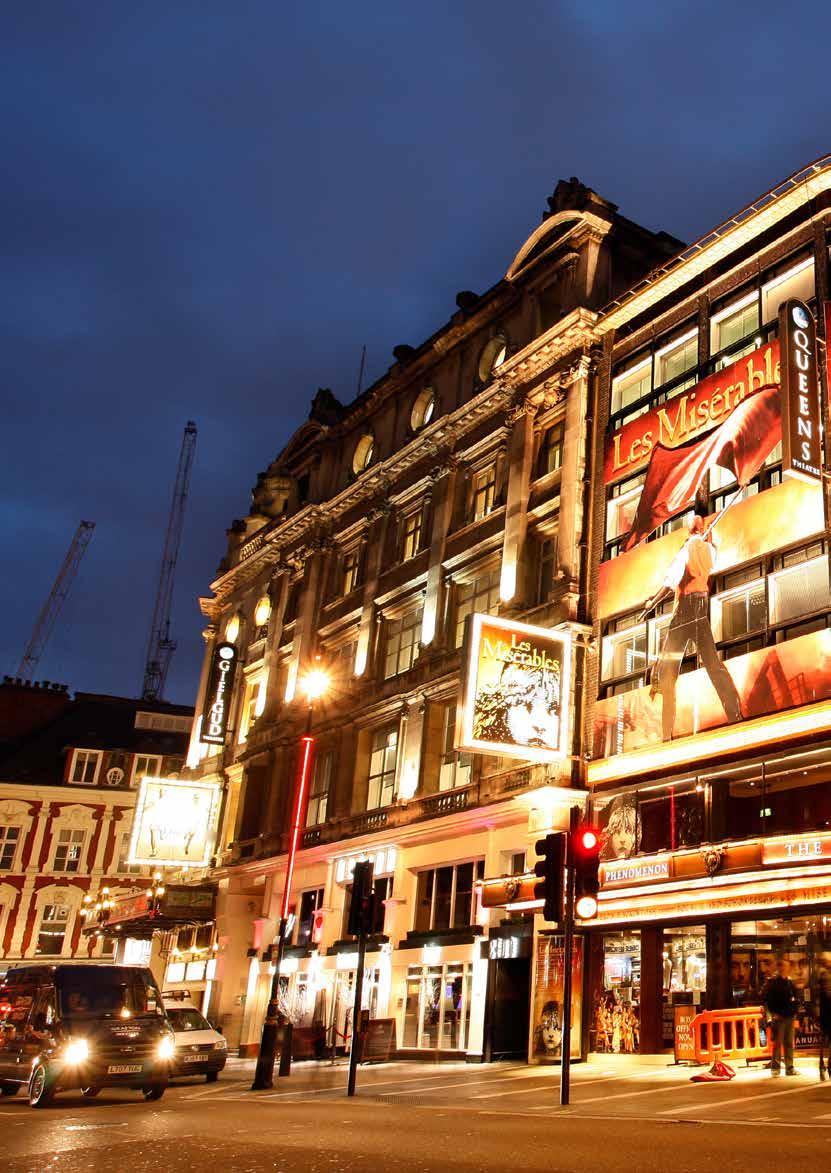
“The West End is a global player in a global competition. Other entertainment districts aren’t waiting for permission to act. The West End shouldn’t either”
– Ros Morgan, Chief Exec, HOLBA
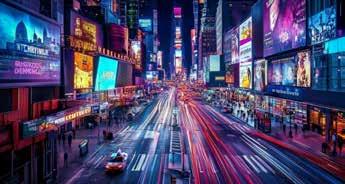
The Times Square Theatre Subdistrict is a planning designation that protects historic venues, incentivises cultural uses, and even mandates illuminated signage to preserve the area’s glowing character.
Combines zoning, cultural planning, and BID-led place management into an integrated planning and operational delivery model.
Funds from zoning bonuses are reinvested locally, channeling uplift into area enhancements.
Zoning rules require illuminated signage and incentivise cultural uses, preserving the district’s iconic visual identity and experiential appeal.
Cultural Protection via Planning
Special permits and transfer of development rights preserve theatre venues, embedding cultural protection in planning policy.
Dedicated Enforcement Support
NYPD Theatre Squad and public safety partnerships address density-related challenges and anti-social behaviour.
Bespoke Cultural Support
Theatre-specific grants and outreach programmes reinforce the area’s role as a cultural anchor.
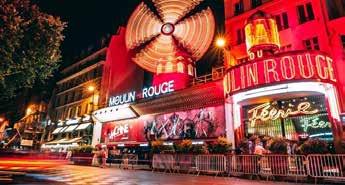
Montmartre, while compact, is one of Paris’s most iconic districts. In 2015, it received the International Tourist Zone (ZTI) designation from the French Government - a planning status aimed at unlocking the full economic potential of high-density visitor areas.
Enables late-night and Sunday trading aligned with visitor demand.
Established centrally, refined and implemented locally.
Promotes a mix of retail, food, and local craft to support a layered, placebased economy.
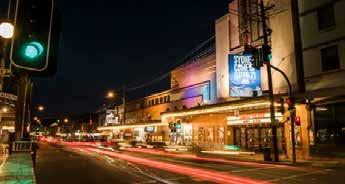
In 2024, the New South Wales 24-Hour Economy Commissioner launched Special Entertainment Precincts (SEPs), giving local councils the power to rezone areas for live performance, extended trading, and noise resilience. To date, 10 SEPs have been designated across Greater Sydney.
Unified reforms link zoning, sound, and late trading to dissolve silos between planning and licensing.
Worker consent for night work shows how economic intensity can be balanced with social responsibility.
Despite global fame, Montmartre retains strong cultural and artisanal character, balancing tourism with local authenticity.
Supportive Infrastructure
Grants, templates, and toolkits are provided as supporting mechanisms for local management.
Councils locally implement designation within a supportive state-level policy framework.
International Tourist Zone (ZTI) status recognises the area’s cultural, commercial and transport significance.
SEPs offer extended trading hours and alcohol license discounts for live venues, incentivising cultural contribution with regulatory benefits.
Formal Recognition of Night-Time Economy
Treats experience and cultural activity as economic assets to drive growth.
Design-Led Vibrancy
Night-time vibrancy is no longer framed as a regulatory burden, with councils now treating it as a creative challenge and design opportunity.
Implement a growthorientated planning & licensing framework tailored to London’s Experience Economy ambitions & potential

Enhance coordination of security & area-based management across stakeholders
“Tackle crime & antisocial behaviour in the city”
Mobilise ringfenced, proportionate & area-based management resource
Unify boroughs and stakeholders under a streamlined, dedicated IC Mission Team

Integrate planning & licensing processes to accelerate and balance outcomes
“Use the procurement and planning systems more strategically to achieve local inclusive growth ambitions”
An empowered International Centre can deliver on the London Growth Plan’s 5-point approach to improve Local Places 2025 London Growth Plan, p.97.

“Increase the capacity for boroughs to develop more local growth strategies & to win the investment to make them happen”
Provide Oxford Street MDC with a unified multi-stakeholder collaborative partner

Prioritise accessibility improvements in & around transit hubs & nodes, particularly to enhance evening & night-time safety
“Improve transport between town centres, particularly in outer London”
Tackle limited onward connections to outer London which dissuade ENTE activities

“Create local places where people want to spend time and money, day and night”
Attract new commercial concepts and investment through planning and licencing policy certainty
Scale successful innovations (such as the Purple Flag programme) to create a safer, more inclusive 24-hour economy
a Bolder Designation
By 2030, the West End International Centre can be the world’s leading experience economy district — powering London’s growth, protecting its culture, and propelling the UK forward on the global stage.
We are calling for bold action to equip the West End with the right tools to unlock sustainable growth and global competitiveness. Our ambition will be delivered through a four-point plan: Redefine, Empower, Enable, Resource.
We have already urged that the International Centre boundary be reviewed as part of the 2027 London Plan. The next critical step is the formation of a dedicated International Centre Mission Team convened by the relevant statutory bodies and empowered to unite business leaders, investors, landowners and policymakers. This team will shape governance, unlock investment and drive delivery at scale.
We therefore call on statutory bodies to establish this Mission Team now - a decisive step to secure the West End’s continued future as a world-leading destination for commerce, culture, and innovation.
London must develop a sustainable, longterm solution to fund London’s experience economy sector.
London Growth Plan, 2025. Promotion Plan, Action 2.
Ros Morgan Chief Executive ros@holba.london
Mark Williams Deputy Chief Executive mark@holba.london
Disclaimer & Copyright
This document was prepared for the exclusive use of the Heart of London Business Alliance. This information is considered conceptual in nature and is provided for policy and strategic development purposes only, so should not be used for detailed design discussions. Hatch Associates acts in all professional matters as a faithful advisor to its clients and exercises all reasonable skill and care in the provision of its professional services.
The information presented herein has been compiled from a number of sources using a variety of methods. Hatch Associates does not attempt to verify the accuracy, validity or comprehensiveness of any information supplied to Hatch Associates by third parties. Hatch Associates makes no warranty, express or implied, or assumes any legal liability or responsibility for the accuracy, validity or comprehensiveness of this document, or the misapplication or misinterpretation by third parties of its contents. Reference herein to any specific commercial product, process, or service by trade name, trademark, manufacturer, or otherwise, does not necessarily constitute or imply its endorsement, recommendation, or favouring by Hatch Associates.
This document cannot be copied or reproduced in whole or part for any purpose without the prior written consent of Hatch Associates. © Hatch 2025. All Rights Reserved.