HOK is a global design, architecture, engineering and planning firm. Founded in 1955, the firm has grown into one of the world’s most respected and diverse design practices, recognized for creating innovative, high-performance buildings and spaces that enrich communities, advance sustainability, and respond to the needs of people and the planet.
70
Years in the Industry
3x
Honoree Fast Company Most Innovative Architecture Firm
#1
A/E Firm by Architectural Record Top 300 + Engineering NewsRecord Top 500 Design Firms
55+
Million Square Feet of Workplace Designed Annually
120
Design Awards 2023-2024
#3
Most Admired Firm by Interior Design Magazine
GLOBAL NETWORK
With 27 offices working as a single integrated practice, HOK’s global network brings local insight and worldwide resources. Our team of visionary, human-centered designers blends science and art to create innovative, high-performance environments— actively delivering world-class solutions in 50+ countries.
EUROPE
London
NORTH AMERICA
Canada
Calgary | Ottawa | Toronto
United States
Atlanta | Austin | Boston | Chicago | Dallas | Denver
Houston | Kansas City | Los Angeles | Miami | New York
Philadelphia | Salt Lake City | San Francisco | Seattle
St. Louis | Tampa | Washington D.C.
MIDDLE EAST
Dubai
ASIA
Beijing | Hong Kong |
Shanghai | Mumbai
OUR ETHOS
HOK is a collective of future-forward thinkers and designers who are driven to face the critical challenges of our time. We are dedicated to improving people’s lives, serving our clients and healing the planet. Together, we cultivate a culture of design excellence at the confluence of art and science, blending the power of creative expression with a clear sense of purpose.
CULTURE OF EXCELLENCE
We champion a culture of excellence by integrating design innovation, technical rigor, interdisciplinary collaboration, and thought leadership. Our commitment to design excellence reflects our belief that great design improves lives, inspires communities, and sets new standards for the built environment.
IMPROVING PEOPLE’S LIVES
We design with empathy and purpose— creating spaces that promote health, equity, and well-being. Whether through inclusive design, community engagement, or human-centered solutions, we strive to positively impact the lives of those who experience our work.
HEALING THE PLANET
We embrace our responsibility to heal the planet through sustainable design practices that reduce environmental impact, enhance resilience, and regenerate ecosystems. Every project is an opportunity to advance climate-conscious design and environmental stewardship.
SERVING OUR CLIENTS
We serve our clients by listening deeply, thinking holistically, and delivering solutions that align with their goals and values. Our integrity, responsiveness, and design excellence ensure that we build lasting partnerships and create enduring value.
THOUGHT LEADERSHIP + RESEARCH
HOK’s thought leadership reflects a legacy of research and design innovation. Through our integrated, practitioner-led Research Program, architects and designers conduct in-house research alongside project work, allowing discoveries to be rapidly applied to real-world challenges. Current initiatives focus on neuroinclusive design, sustainable material tracking, and future-casting design, which are informed by evidence-based research, publications, and industry engagement. By sponsoring roundtables, speaking at conferences, and publishing articles and white papers, HOK regularly shares knowledge widely, advancing sustainability, equity, and innovation while driving creative, multidisciplinary design solutions for our clients.
Samples of recent white papers can be found at the following links:
HOK Forward 2025: The Evolution of Neuroinclusive Workplaces
A Call for Purpose-Driven Design to Redefine the Workplace
HOK Forward 2024: New Ways of Working
How Coworking & Shared Spaces Are Impacting Work: Navigating Post-Pandemic Opportunities
HOK’s Sustainable Material Tracking: A Journey Toward Healthier Space
How HOK Is Designing Its Offices to Support Hybrid Work, Collaboration and Culture
RECEIVING 20+ INDUSTRY AWARDS FOR RESEARCH, HOK HAS 8 ACTIVE RESEARCH INITIATIVES.
ELEVATING HUMAN EXPERIENCE
Part of what draws us to design is our deep desire to effect positive change. With equity and inclusion at the forefront of global conversations, HOK is taking decisive action to embed these values into the built environment and our design process. HOK’s commitment to equity and inclusive design is both structured and proactive. HOK has developed an internal Designing for Equity Toolkit, grounded in five guiding principles. This toolkit embeds equitable design into every project milestone and has already been tested across notable projects—like AstraZeneca’s R+D center in Cambridge and NYCFC’s future stadium in Queens.
5
18
guiding principles member advisory group
Partnering with communities
Planning for inclusion
Equity of experience
Promoting health and wellbeing for all
Championing environmental justice
Advisory group actively pilots and leads HOK's Firmwide Equity Platform
Working in tandem with the Diversity Advisory Council (DAC), focusing on internal initiatives like mentoring programs, career and opportunity surveys, and partnerships with organizations like NOMA.
HOK WAS NAMED DEI COMPANY OF THE YEAR BY THE LOS ANGELES BUSINESS JOURNAL IN 2023.
SUSTAINABILITY
HOK is a proven leader in sustainable design, combining deep technical expertise, data-driven innovation, and firmwide commitment to reduce environmental impact and advance human well-being. Two decades ago, when we wrote The HOK Guidebook to Sustainable Design, green design was an emerging field. Today, we have embedded sustainability into our culture, workflows, and technical rigor, tracking the projected energy performance of every project, and we are committed to achieving a carbon-neutral design portfolio by 2030. With a wide range of sustainability practices, tools, and strategies in-house, our work is backed by proven results. HOK has more than 500 projects certified under global standards, including LEED, WELL, EDGE, Estidama, GSAS, BREEAM, Green Mark and Green Globes and hundreds more actively pursuing certification. At the forefront of circular design, regenerative systems, and inclusive sustainability research, our Sustainable Material Tracking initiative, which evaluates embodied carbon, green chemistry, and sustainable sourcing on all interior projects, enables healthier, lower-impact material selections across our portfolio.
5
6 sustainability practices strategies + tools
Operational Carbon
Embodied Carbon
Materials and Product
Transparency
HOK Net Zero Carbon Commitment
Building Systems
Life Cycle Cost Analysis
Water Cycle Tool
Carbon Tracking Tool
Energy Modeling
Existing Building Survey and
Gap Analyses Daylight
Analyses + Modeling
WE HAVE WON 10 AIA COTE AWARDS FOR SUSTAINABLE DESIGN EXCELLENCE AND ENR’S RECENT SURVEY RANKED HOK AS THE NO. 1 GREEN
BUILDING ARCHITECTURE/ ENGINEERING FIRM.
NAMED METROPOLIS PLANET POSITIVE AWARDS “2025 SUSTAINABLE FIRM OF THE YEAR”
SERVING OUR CLIENTS
HOK is built to support our clients wherever they work— consistently, efficiently, and at scale. For decades, we have managed hundreds of Master Service Agreement (MSA) client relationships, where we operate as an extension of our clients’ real estate teams, delivering the same high-quality service whether a project is 1,500 sf or a global headquarters.
Our centralized account model provides a single point of contact and a core team that maintains standards, ensures consistency, and coordinates regional HOK teams for on-theground delivery. This structure accelerates project launch, strengthens quality, and ensures every location reflects the same brand, experience, and operational expectations.
Through long-term partnerships, we help clients manage their entire portfolio—supporting them across regions, time zones, and project types with seamless communication, reliable delivery, and deep knowledge of their processes and goals. Our approach improves efficiency, reduces costs, and ensures a unified experience across every project, everywhere.
WE MAINTAIN OVER 100 GLOBAL MSA ACCOUNTS FOR MANY FORTUNE 500 CLIENTS LIKE ABBVIE, AMAZON, BANK OF AMERICA, CHEVRON AND MORE.
MULTI-SECTORED + INTERDISCIPLINARY
HOK is a truly multidisciplinary design firm, integrating interior design, architecture, engineering, planning, and consulting under one roof. This breadth allows us to address complex challenges from every angle, delivering innovative, resilient, and future-forward interior environments tailored to each client’s unique needs.
market sectors service areas
Aviation + Transportation
Civic + Justice
Corporate + Commercial
Government
Healthcare
Higher Education
Lifestyle
Mixed Use
Renovation + Refurbishment
Science + Technology
Sports + Rec + Entertainment
Architecture
Landscape Architecture
Lighting Design
Experience Design
Interiors
Planning + Urban Design
Sustainable Design
Engineering
Consulting
ENHANCED DESIGN SERVICES
Beyond our core architectural expertise, we provide in-house services in Engineering, Experience Design, Landscape Design, Lighting Design, Stylization, Workplace Consulting, and Enhanced Visualization. This integrated model allows us to seamlessly align design intent with technical precision, human experience, and organizational strategy. By embedding these enhanced services directly within our studio, HOK ensures cohesive, innovative, and highly tailored environments that inspire, perform, and endure. More information on these specialities can be found on the following pages.
Ranked as the #1 green building firm by Engineering News Record, HOK’s engineering teams bring deep experience in complex project types—from corporate workplaces and aviation terminals to science + technology facilities, stadiums and healthcare environments. Our solutions are rooted in technical excellence, data-driven analysis, and a commitment to innovation, delivering systems that perform on day one and evolve with our clients’ needs. Our engineers collaborate closely with HOK’s planners, architects, and consultants to create coordinated, efficient, and resilient environments that elevate occupant comfort, reduce operational costs, and meet ambitious sustainability goals.
SERVICES
structural engineering
Structural engineering design
Façade engineering
Foundation design
Seismic design
Long-span + special structures
Technical planning + conceptual studies
Existing building assessments
Renovation + retrofit design
Structural modeling + analysis
Blast + vibration analysis
MEP engineering
Air distribution systems
Central utility plants
Heating, ventilation + air conditioning
Mission-critical systems + clean rooms
Sanitary systems
Water retention + reuse
Fire alarm + smoke detection
Climate + micro-climate analysis
Energy modeling + analysis
Life cycle analysis
EXPERIENCE DESIGN
Our expertise goes beyond shaping physical spaces – we specialize in seamlessly integrating diverse media platforms that maximize user engagement, enhance spatial flow and leave a memorable impact. Our team of 20 designers creates dynamic, immersive experiences that strengthen our clients’ brand identity and foster meaningful connections. The practice draws on proprietary tools, sustainability and wellness standards, and a deep understanding of human behavior to deliver environments that inspire, delight, and foster lasting connections between people and place.
SERVICES
Identity + logo design
Brand applications
Media integration
Change management
Naming and positioning
Visualization brand design digital experience
Interactive content
Immersive environment
Content design
VR and AR
#1
+ Wayfinding by
Interior Design
Experiential graphics
Public art
Sponsorship
Donor recognition
Exhibits
Identification + numbering placemaking wayfinding
Design + standards
Assessments
ADA + life safety
Master plan strategies
LANDSCAPE DESIGN
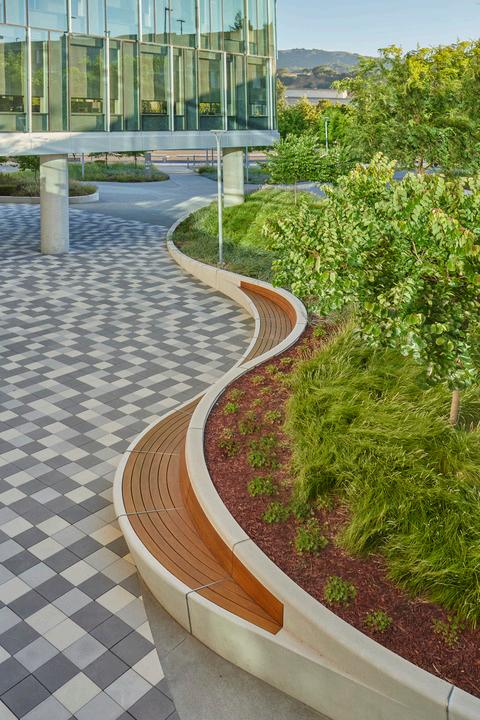
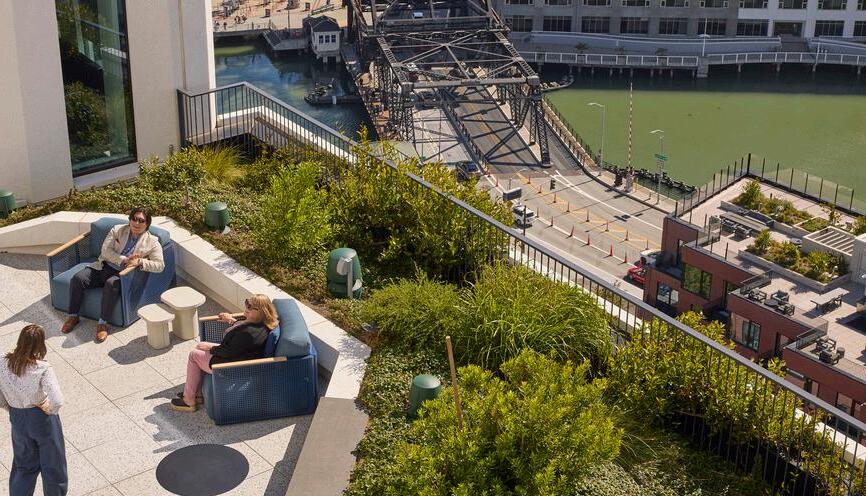
HOK’s landscape designers work hand-in-hand with architects, planners, engineers and environmental specialists to create resilient, high-performance outdoor environments that enrich communities, support ecological health and elevate the human experience. Our approach emphasizes regenerative design, long-term maintenance strategies and the creation of adaptable, future-ready landscapes that enrich both people and place. Working across scales—from urban districts and campus environments to workplace terraces, plazas and restorative landscapes—our designers blend design excellence, environmental stewardship and technical expertise.
SERVICES
site planning + site design
Establishing overall site organization, circulation, open space networks, and program relationships.
Streetscapes, plazas, promenades, waterfronts, public realm enhancements, and pedestrianfocused environments. urban design
Long-range planning for campuses, mixed-use sites, corporate environments, civic spaces, and institutional settings. landscape master planning
Green infrastructure, stormwater management, habitat restoration, carbon-conscious design, and native/ecological systems. sustainable strategies
Landscape performance modeling, climate response analysis, and integration of ecosystem services into design. performance + environmental analysis
LIGHTING DESIGN
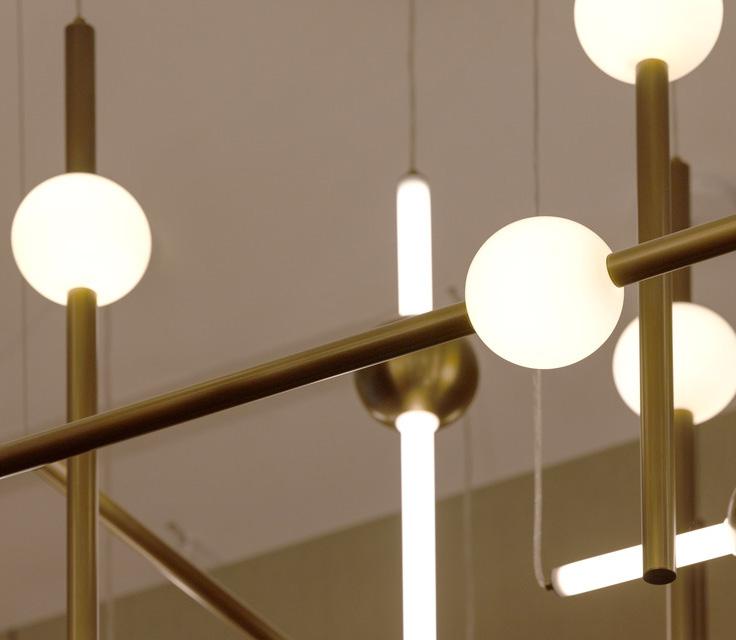
Light does more than illuminate—it has a significant impact on our health, our mood, and our experience of a space. Whether bold or subtle, lighting is an integral part of design, capable of bringing greater clarity and resonance to the environments we inhabit. HOK’s lighting group consists of six full-time dedicated lighting designers who collaborate with project teams to create unified lighting solutions, reinforcing a project’s design aesthetic with reduced energy consumption and maintenance targets.
SERVICES
lighting expertise
Architectural Lighting Design
Circadian Lighting Consulting + Design
Custom Light Fixture Design
Daylight Consulting + Design
Lighting Master Planning
Site + Landscape Lighting Design
STYLIZATION
Stylization plays a crucial role in creating meaningful connections between people and the spaces they inhabit. It influences emotions, productivity, social connections, and mental well-being. Design elements can evoke awe, spark curiosity, admiration, and socialization. These captivate individuals, encouraging exploration and interaction. Design elements can also facilitate flow, help individuals slow down, focus, and reflect. These promote a sense of calm, enhancing productivity and well-being.
Stylization involves curating elements such as artwork, plants, objects, textures, and more to breathe life into a space. At HOK, the aim is to infuse personality without overwhelming the sensory experience. Artwork reinforces the overall aesthetic and adds visual interest. Objects and artifacts connect to local culture and history, fostering a sense of place and identity. Natural elements like foliage, textiles, and wood bring nature to the human environment with a sense of tranquility and biophilia. Experiential design creates a positive and engaging atmosphere. Visual harmony, symmetry, and balance are essential for all categories
HOK published an article in Work Design Magazine titled “Stylization: The Overlooked Design Strategy That Complements Hybrid Work.” This article delves deeper into the subject and provides insights into the benefits and implementation of stylization in the context of the evolving work landscape.
OBJECTS + ARTIFACTS
WORKPLACE CONSULTING
Practicing across industries—from technology to professional services to healthcare— HOK’s workplace consultants bring innovative strategies for the ever-changing workplace environment. Our team of ten seasoned strategists delivers integrated consulting services that elevate performance, strengthen culture, and align the built environment with business goals.
We specialize in three core areas. Workplace Strategy to help organizations use space as a strategic asset—supporting new ways of working, improving operational effectiveness, fostering cultural and behavioral shifts, and enhancing the overall employee experience. Change Management to minimize disruption, accelerate adoption, and maintain productivity throughout transitions, ensuring employees feel informed, supported, and engaged. Facility Strategy to translate business drivers into clear, data-driven facility programs that optimize space, integrate amenities, and create environments that empower people and reflect organizational values. Together, these services provide a holistic, future-ready approach that enables clients to adapt with confidence and unlock the full potential of their people and workplaces.
workplace strategy change management SERVICES
Workplace Strategy
Interactive Visioning Programming + Strategy
Workplace Experience Evaluation
Vision + Messaging Gap Analysis
Change Strategies
Change Program + Roadmap
facility strategy
Utilization + Occupancy Targets
Utilization Audit + Analysis
Workplace Metrics + Efficiencies
DESIGN DRIVERS
The modern workplace is evolving at an unprecedented pace, shaped by the convergence of technology, workforce expectations, and organizational priorities. Today’s firms are rethinking how space can enhance efficiency, support hybrid work models, and attract the next generation of talent.
From the strategic placement of individual work points to the creation of dynamic gathering spaces, from fostering a strong sense of community and culture to providing thoughtfully designed amenities, these drivers guide environments that are functional, engaging, and adaptable. Optimization and flexibility ensure spaces can evolve with changing needs, while accessibility and neuroinclusion make workplaces welcoming to all. Health and wellness are prioritized through daylight, air quality, and movement-friendly design, and integrated tools and technology create seamless, connected experiences.
Drawing from benchmarking data, our own research, and industry best practices, this section provides actionable insights into how forward-thinking design can deliver spaces that balance performance, well-being, and lasting impact.
KEY DESIGN DRIVERS
WORK POINTS
OPTIMIZATION + ADAPTABILITY
GATHER SPACES
COMMUNITY + CULTURE
AMENITIES
ACCESSIBILITY + NEUROINCLUSION
HEALTH + WELLNESS
TOOLS + TECHNOLOGY
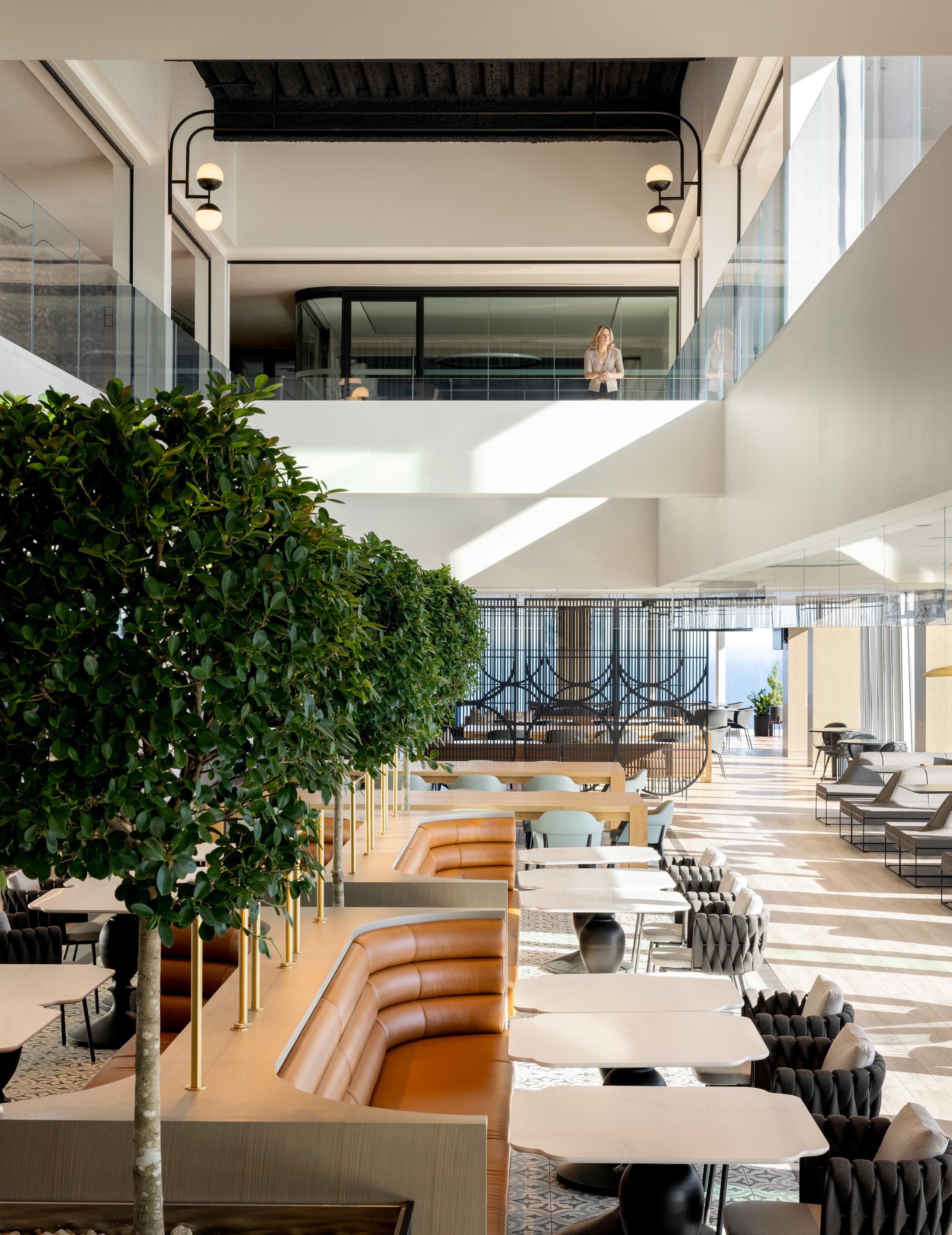
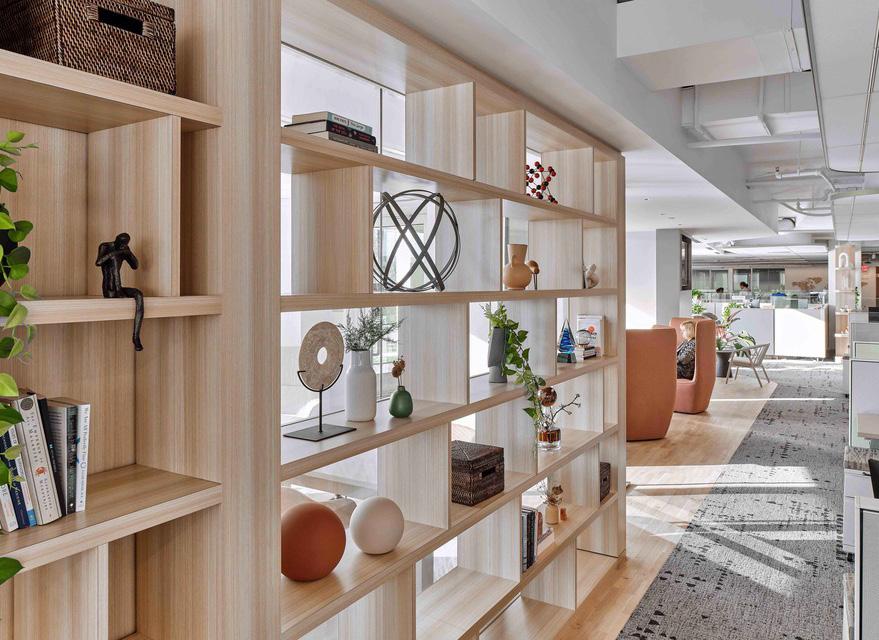
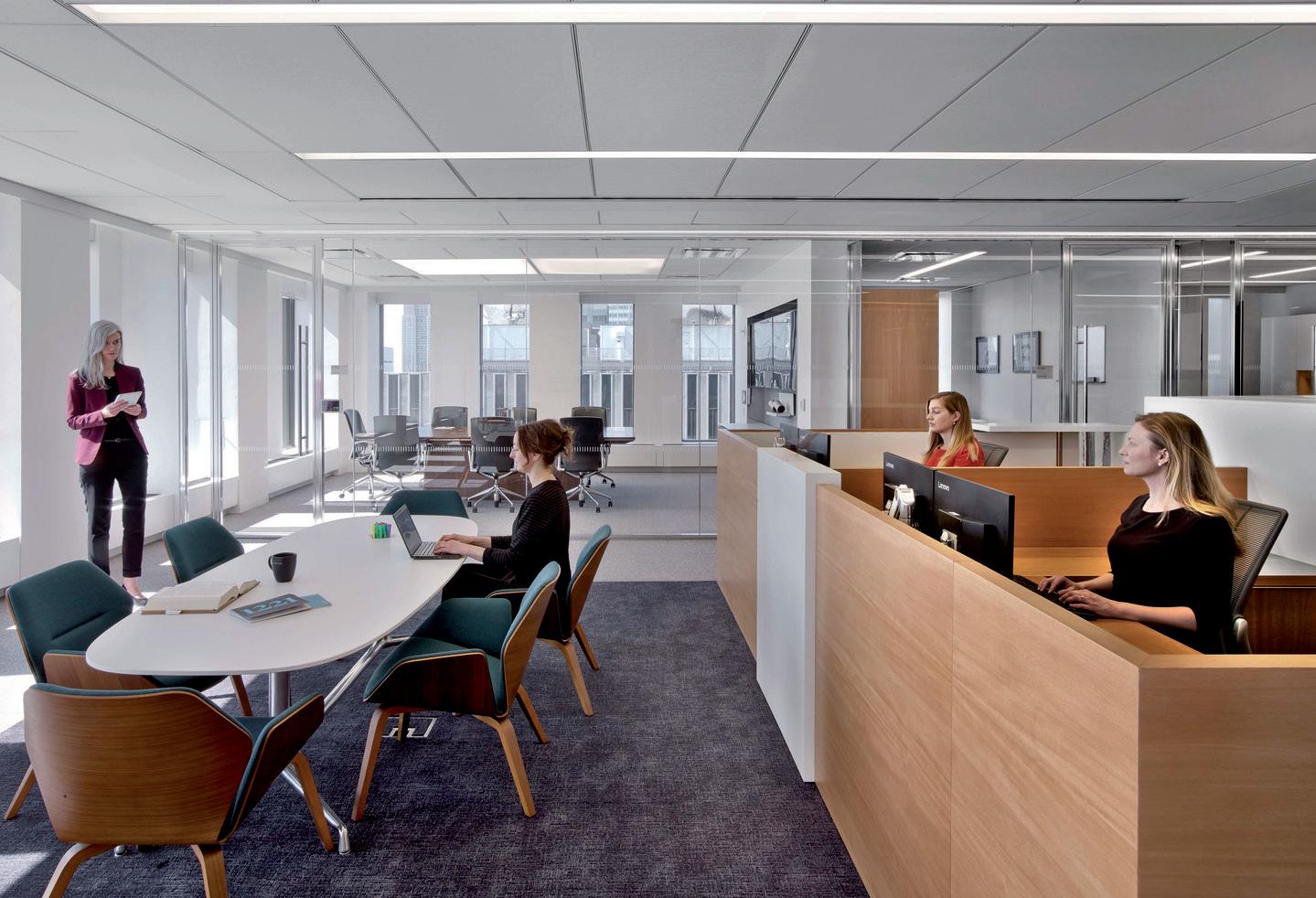
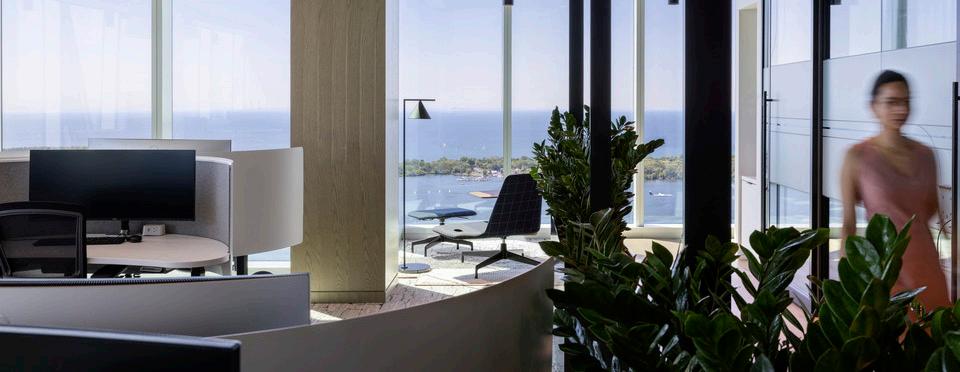
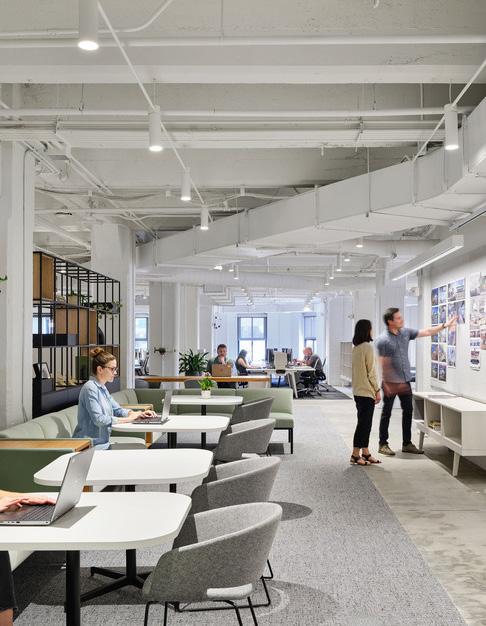
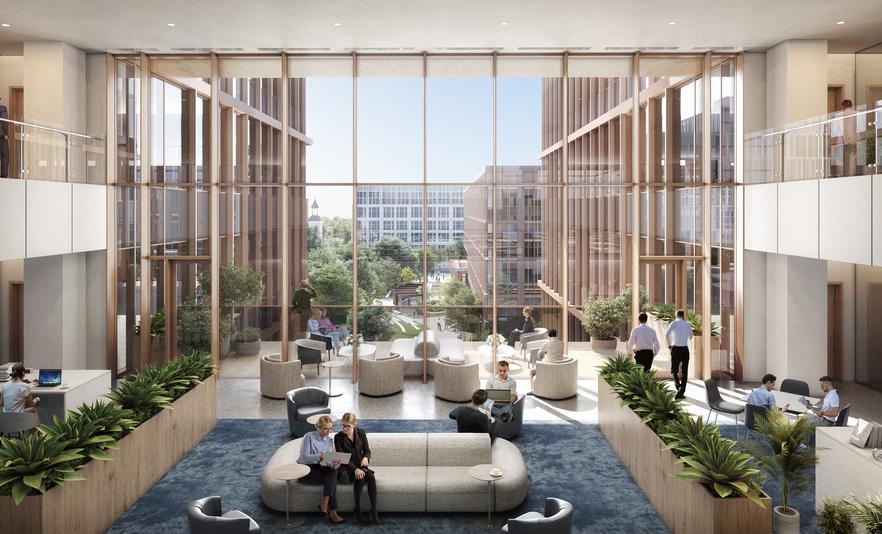
Inclusion of plants and greenery helps to divide spaces and provide sight lines to natural materials.
WORK POINTS
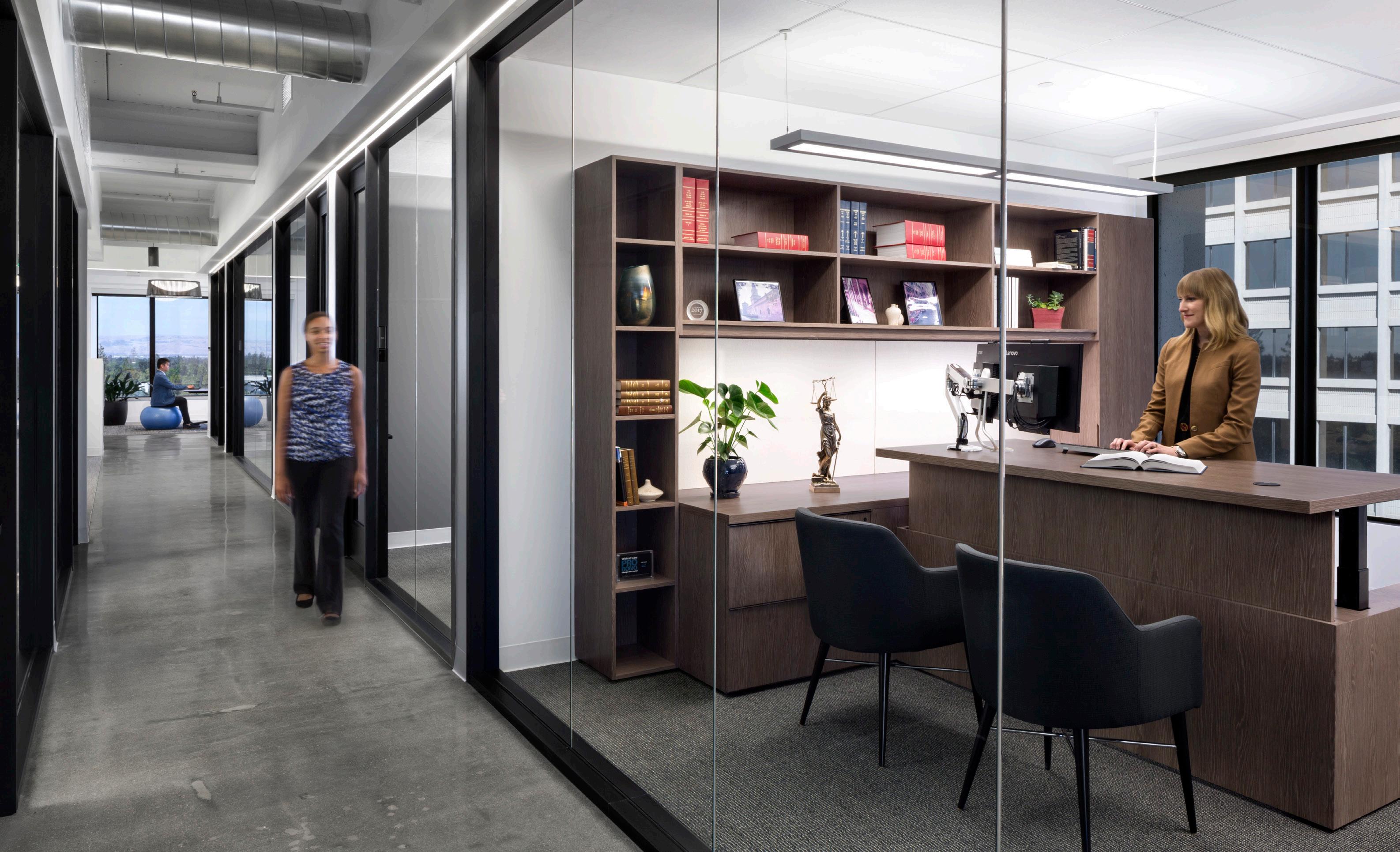
Modern legal workplaces offer employees a variety of space types and settings for solo and group work. Attorneys have always required private spaces to perform concentrative work and communicate privately with clients, yet the function and feel of today’s private offices are evolving as more firms adopt standardsize offices and attorneys spend more of their time communicating with clients and courts via video. Meeting rooms are also evolving to be more adaptable to accommodate both in-person meetings and video conferences. Below are examples of how firms are incorporating new solo and group spaces into the workplace:
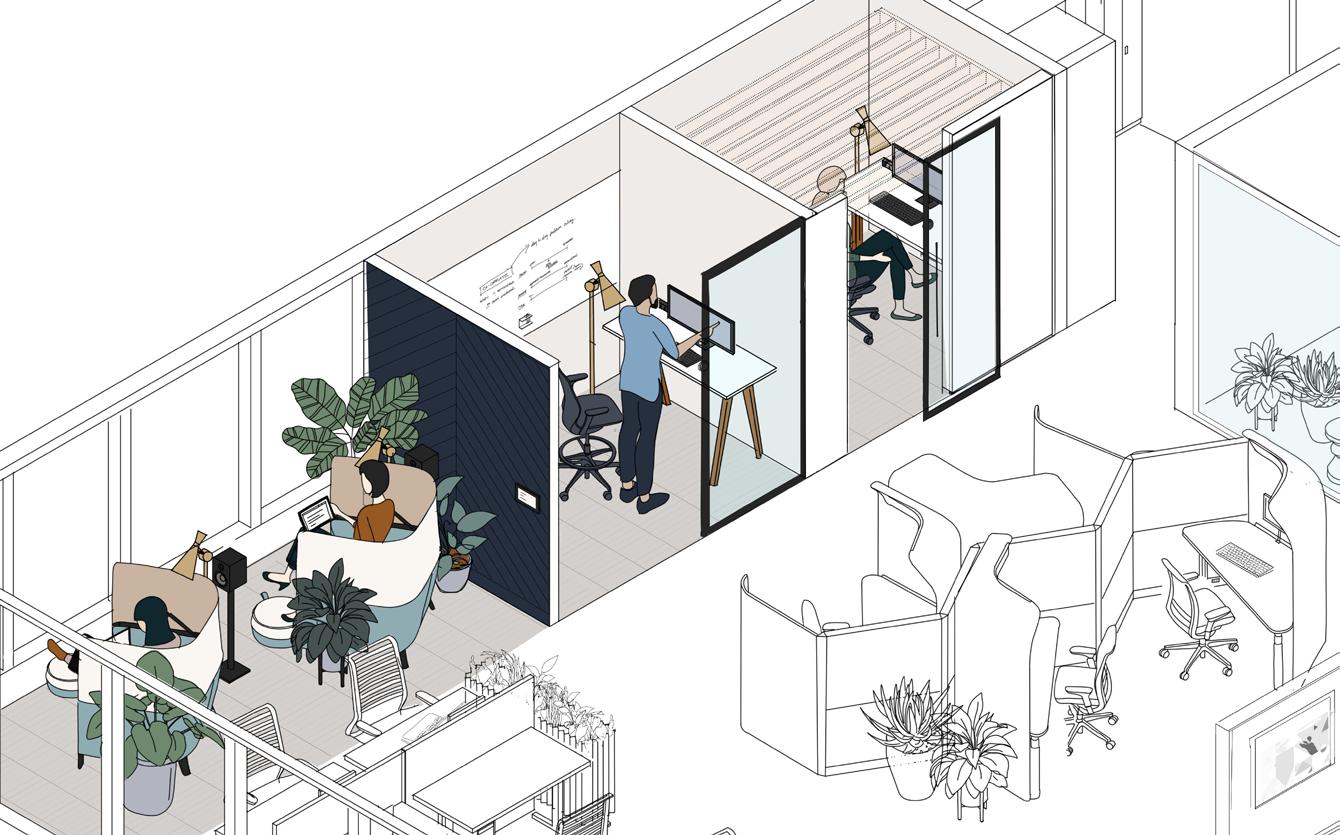
Highly Complex Spaces: These designated areas offer individuals a place to focus and concentrate on complex tasks. These spaces should be acoustically sound and provide good lighting (ideally natural light) to create a comfortable and stimulating work environment.
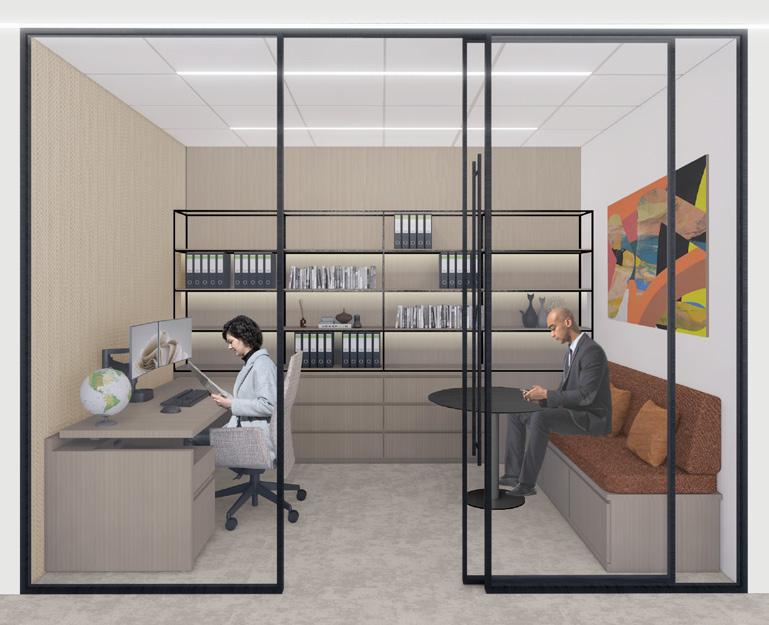
Private Offices with Alternative Work Points:
These flexible private spaces can be adapted to individual needs and preferences, such as
the ability to work standing or sitting. These workplaces can also have alternative work points, such as semi-enclosed and open office options that cater to different work styles and collaboration requirements.
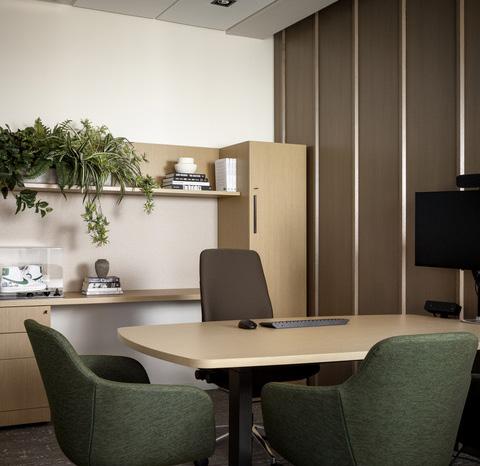
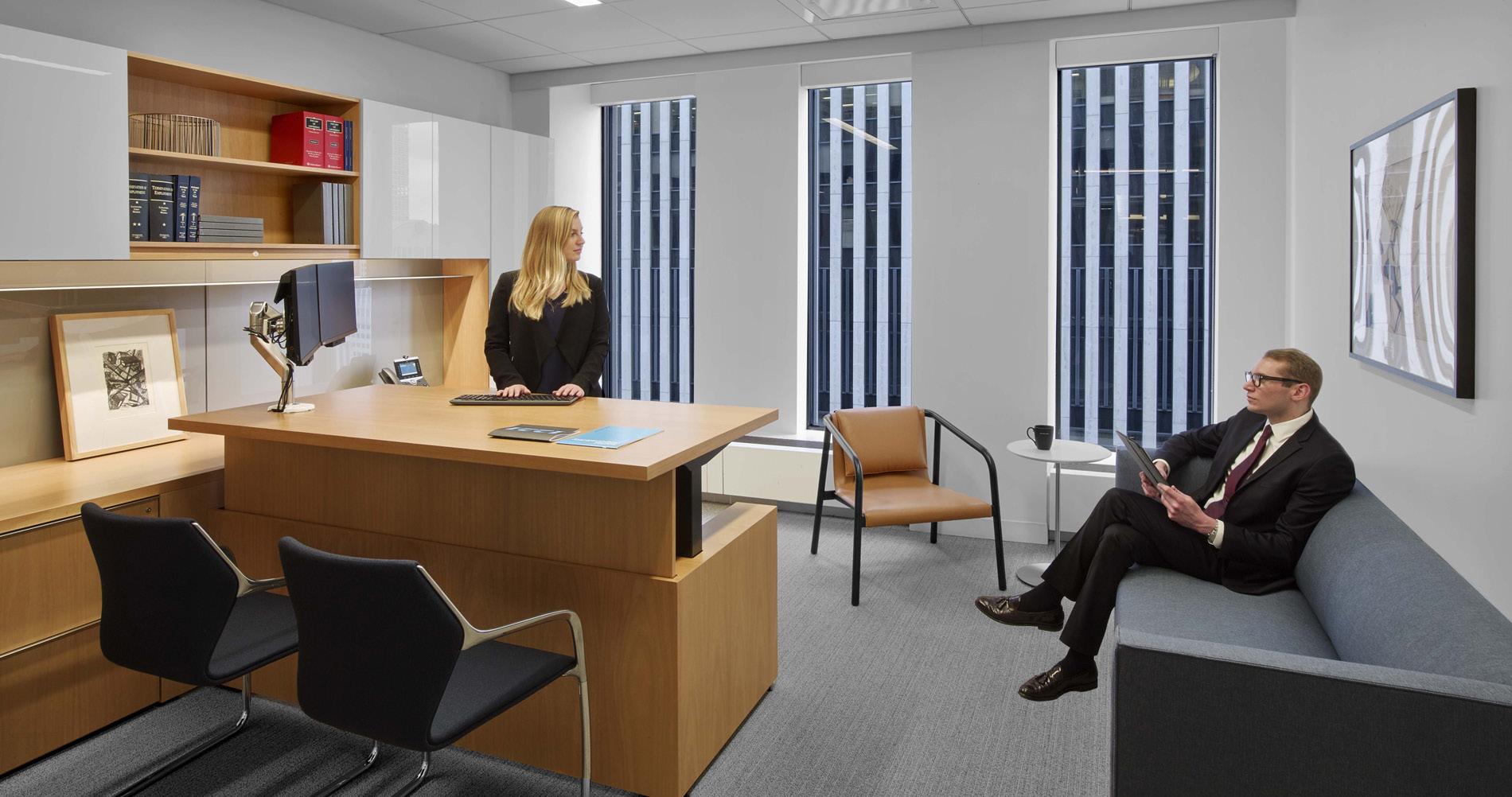
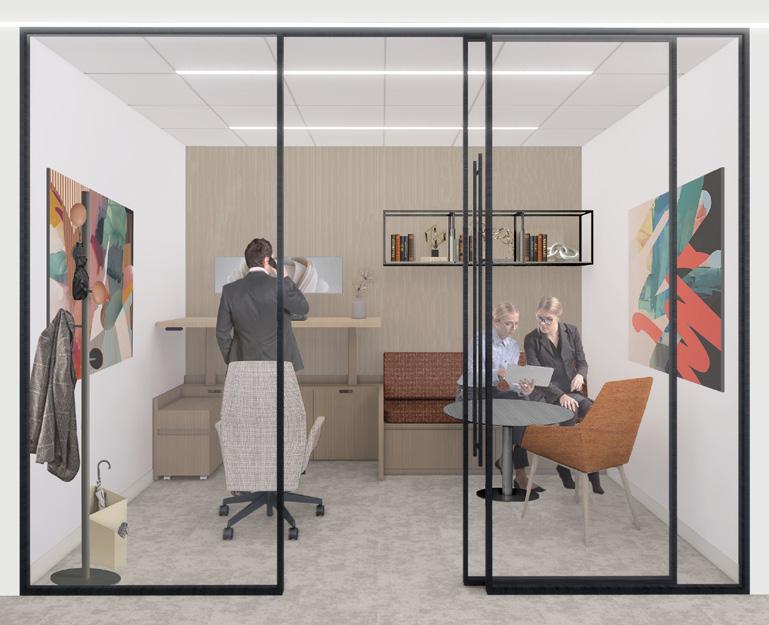
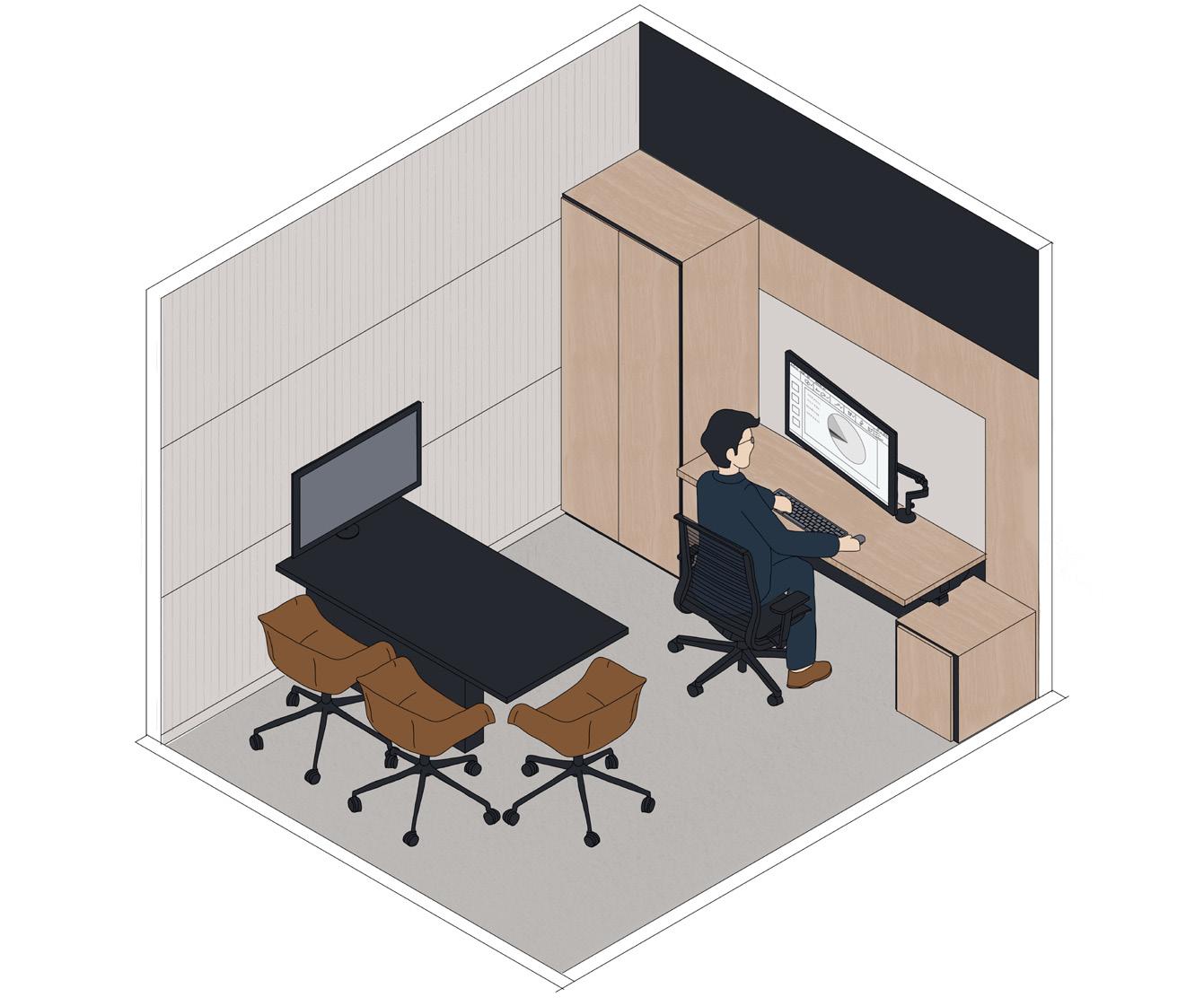
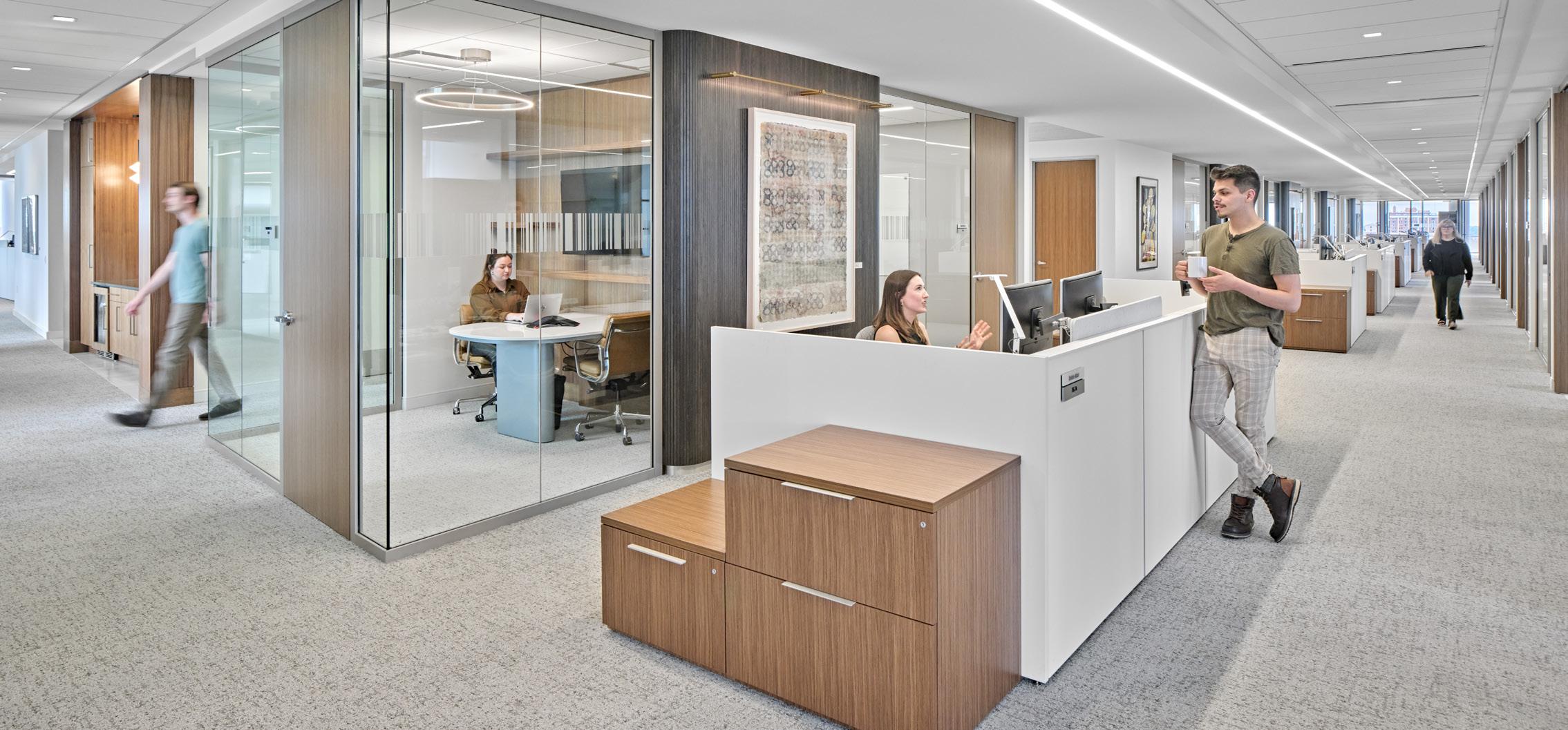
Optimized Private Offices: These private offices are optimized for heads-down work while remaining flexible enough to accommodate small group meetings of 2-4 people. This can be achieved by offering a kit of parts with curated options for furniture and layout, allowing individuals to customize their workspace based on their specific needs.
High-Performance Micro-Offices: These small, individual-only offices allow attorneys to perform concentrative work in a soundproof, distractionfree space.
By incorporating these elements into the workplace design, law firms can provide an environment that supports the primary activities of analyzing, writing, and corresponding while accommodating the diverse needs and preferences of their employees.
A variety of workspaces support different work behaviours and postures. Room type variety considers size, scale, quantity, level of openness.
High-performance micro offices that are individual-only Soundproof, distraction-free zone for concentrative work
for acoustical privacy with sound absorptive material.
suites that can be used for heads down work and 3-4 person meetings.
Optimized
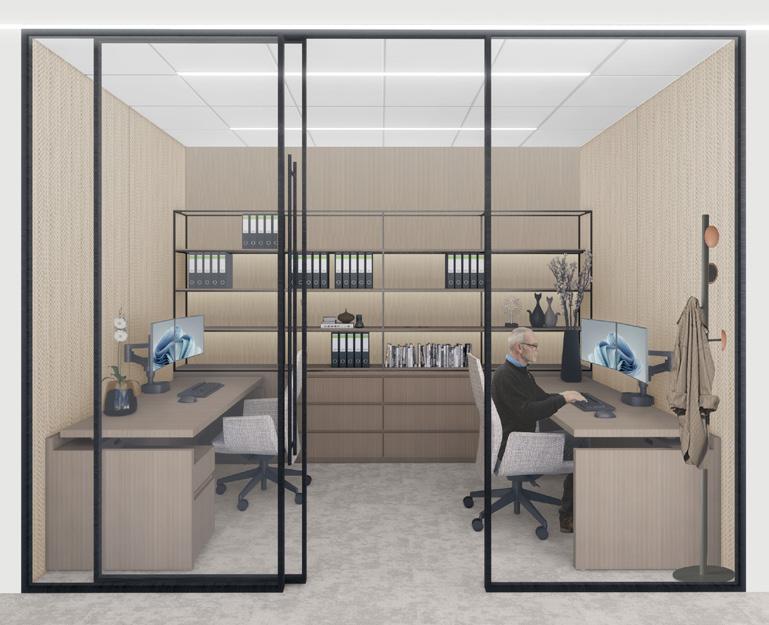
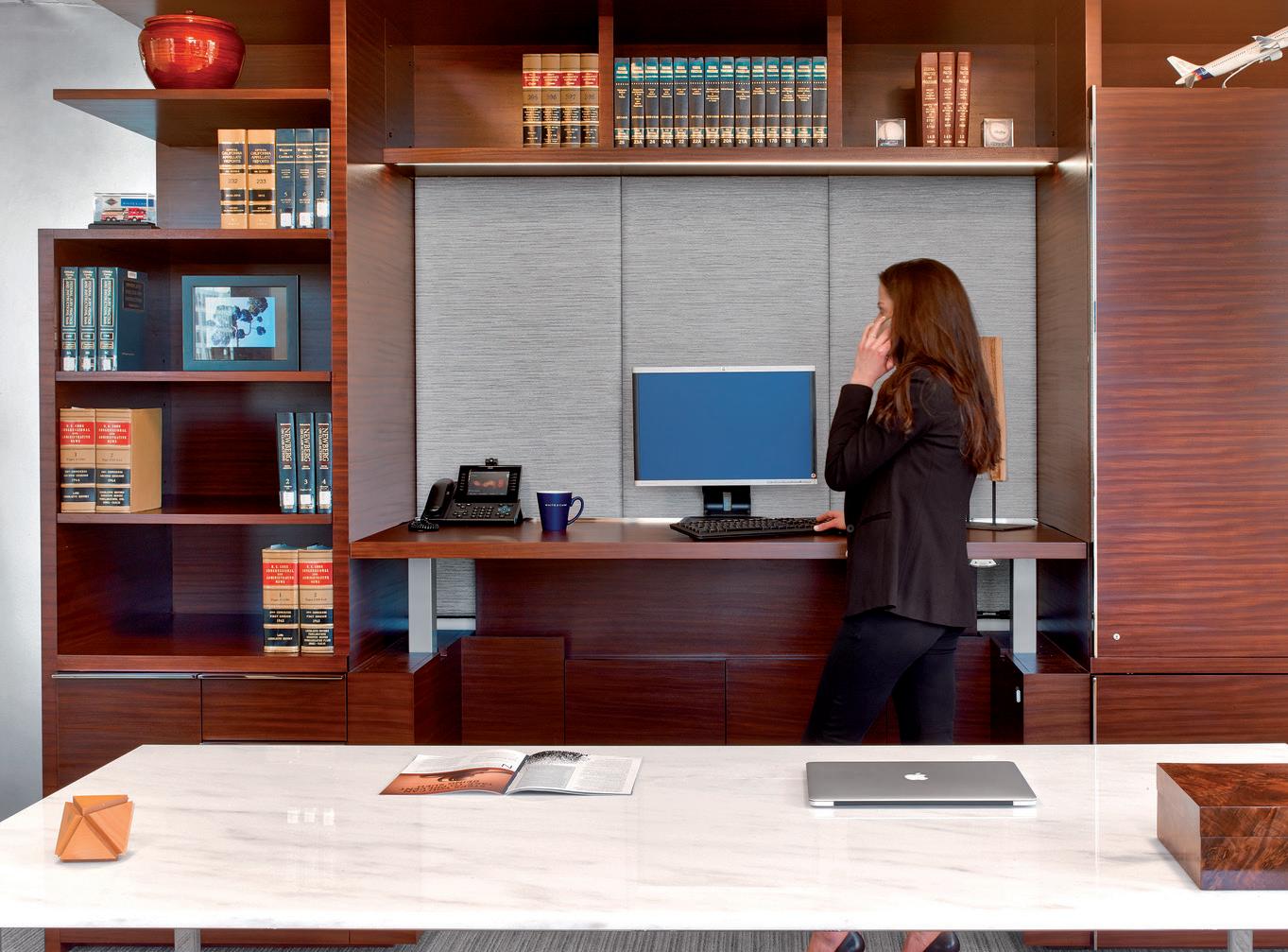
Work wall with ample storage, acoustic surfaces and dual monitors.
Optimized background view for frequent video conferencing within office suites.
OPTIMIZATION + ADAPTABILITY
Law firms are increasingly optimizing their workplaces by embracing flexible and adaptable workspaces that can easily adjust to changing work styles, team sizes, and technology requirements. Designers can facilitate this shift by implementing modular planning, which allows the office to respond to evolving needs.
Current trends and workplace solutions emphasize the reduction in square footage of individual private offices in favour of creating more collaborative and meeting areas. This shift is facilitated through the implementation of modular planning, enabling ongoing adaptation in response to evolving needs. Workspaces can be effortlessly reconfigured to accommodate additional space, different types of workstations, or emerging technologies. This approach stands in contrast to traditional law office design, which often neglected factors like flexibility, scalability, and adaptability when creating workspaces.
Flexible and modular workspaces empower organizations to maximize their resources and utilize space efficiently, all while minimizing costs and disruptions. They offer the inherent adaptability required to accommodate fluctuations in hierarchy needs, business activity and support staff numbers. With the ability to perform light-touch renovations and furniture reconfigurations, planning blocks can be rearranged to align with changing requirements.
QUICK SNAPSHOT
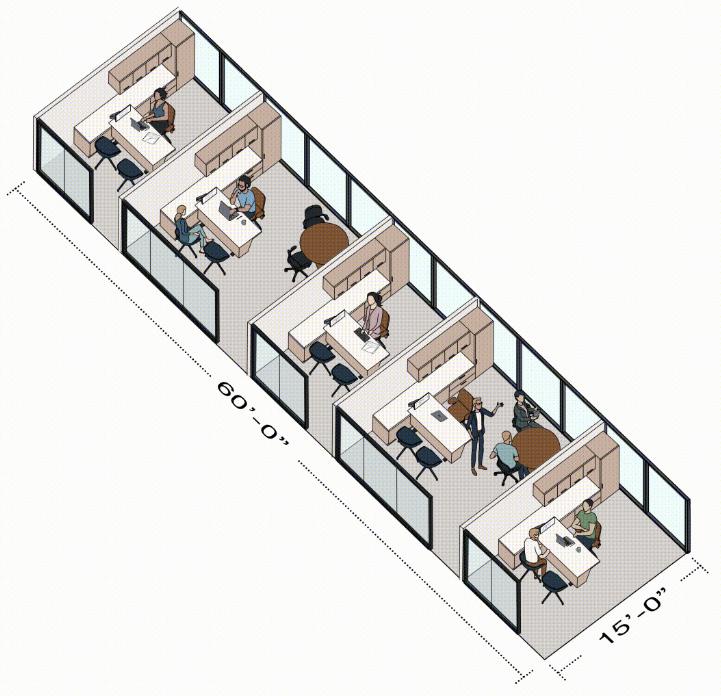
• Single-size offices at approximately 150 square feet offer maximum flexibility
• Flexibility is further increased by co-locating office administrators together
• 1:1 meeting seats and alternative workpoints to legal professionals on each practice floor
• Micro offices ranging from 85-100 square feet are becoming more popular
• 1:1 attorney to meeting seat still holds, with more collaboration and meeting rooms distributed on practice floors
• Open plan workstations or doubling offices for junior associates increases the adaptability of the office
GATHER SPACES
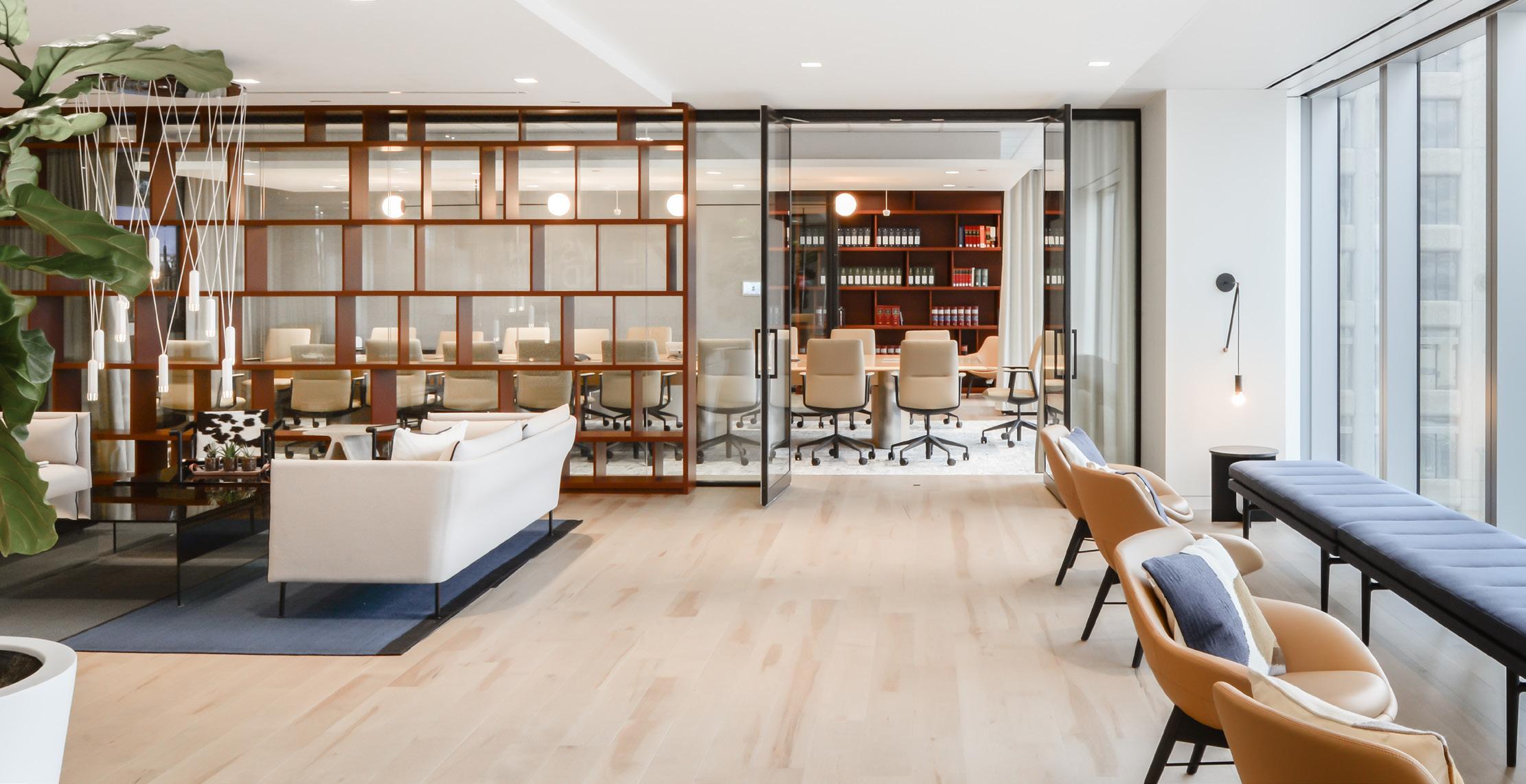
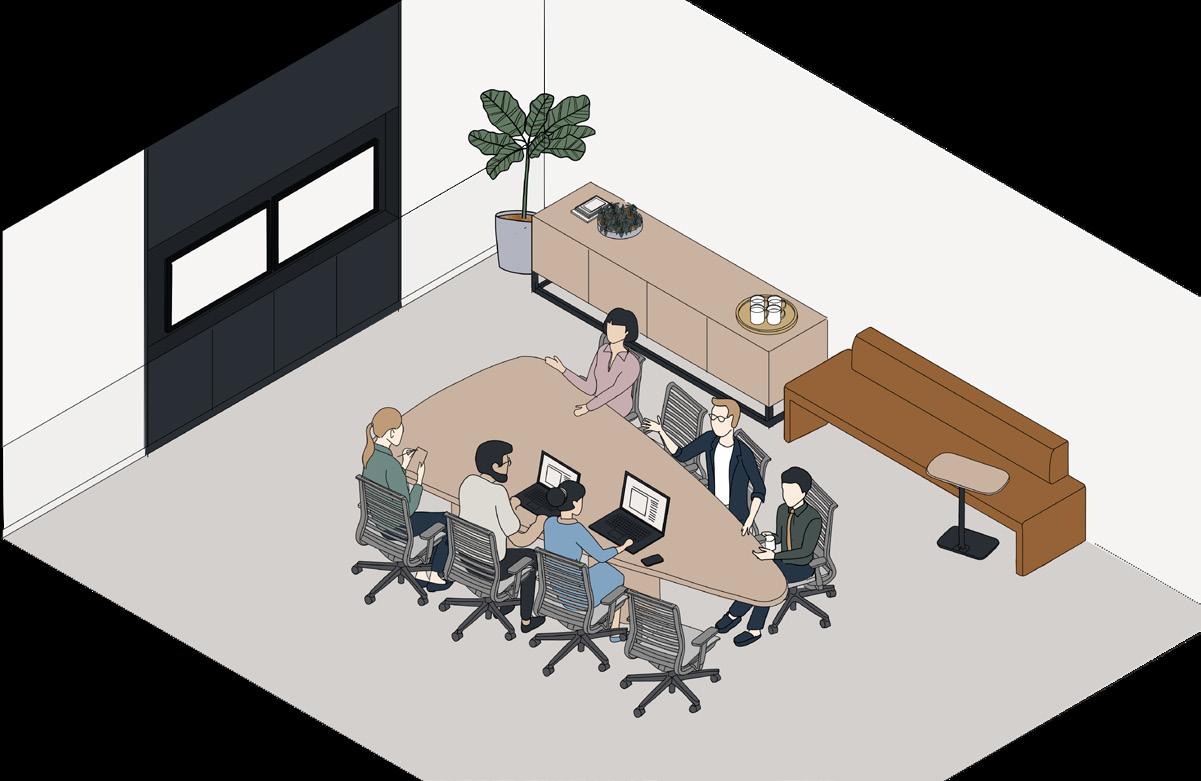
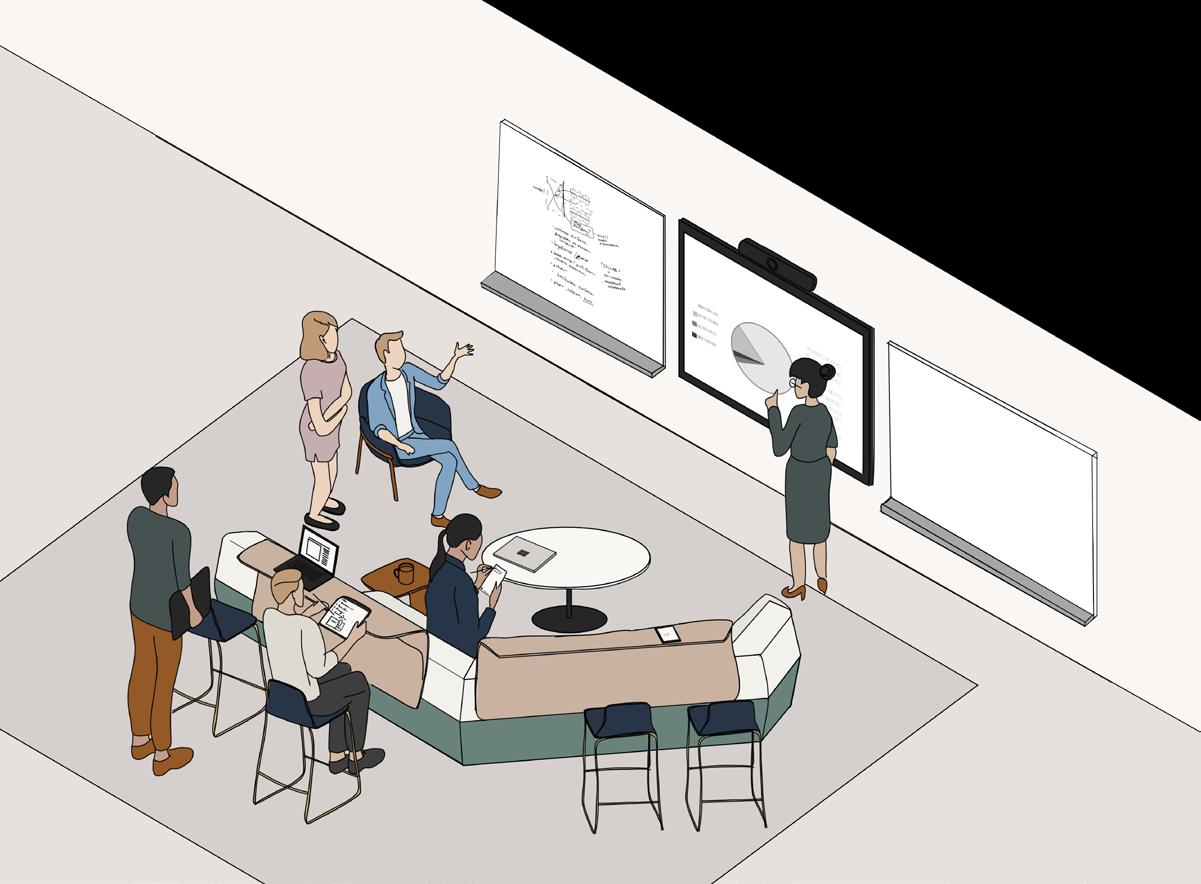
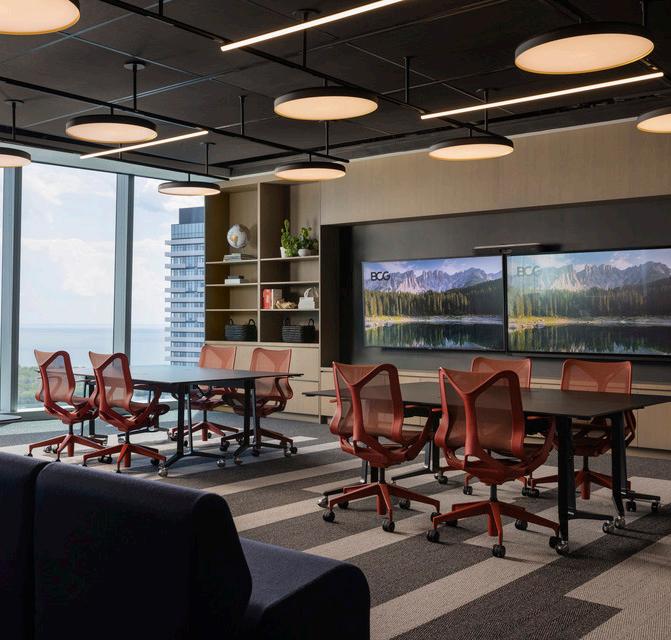
Today’s meeting room needs to accommodate more than just the people in the room. Fluid meeting spaces are using technology and furniture to support in-person and virtual attendees. Smart room navigators and embedded wall monitors provide intuitive, easy access to meeting rooms and remote participants. Furniture in these spaces is also changing to ensure everyone participating in a meeting can see and be seen. To ensure that meeting spaces effectively serve their purpose, incorporating research, behavioural science, creativity, and intention can greatly enhance their functionality. Consideration of factors such as posture, mood, props, adjacencies, and modularity can contribute to shaping these spaces to meet specific objectives.
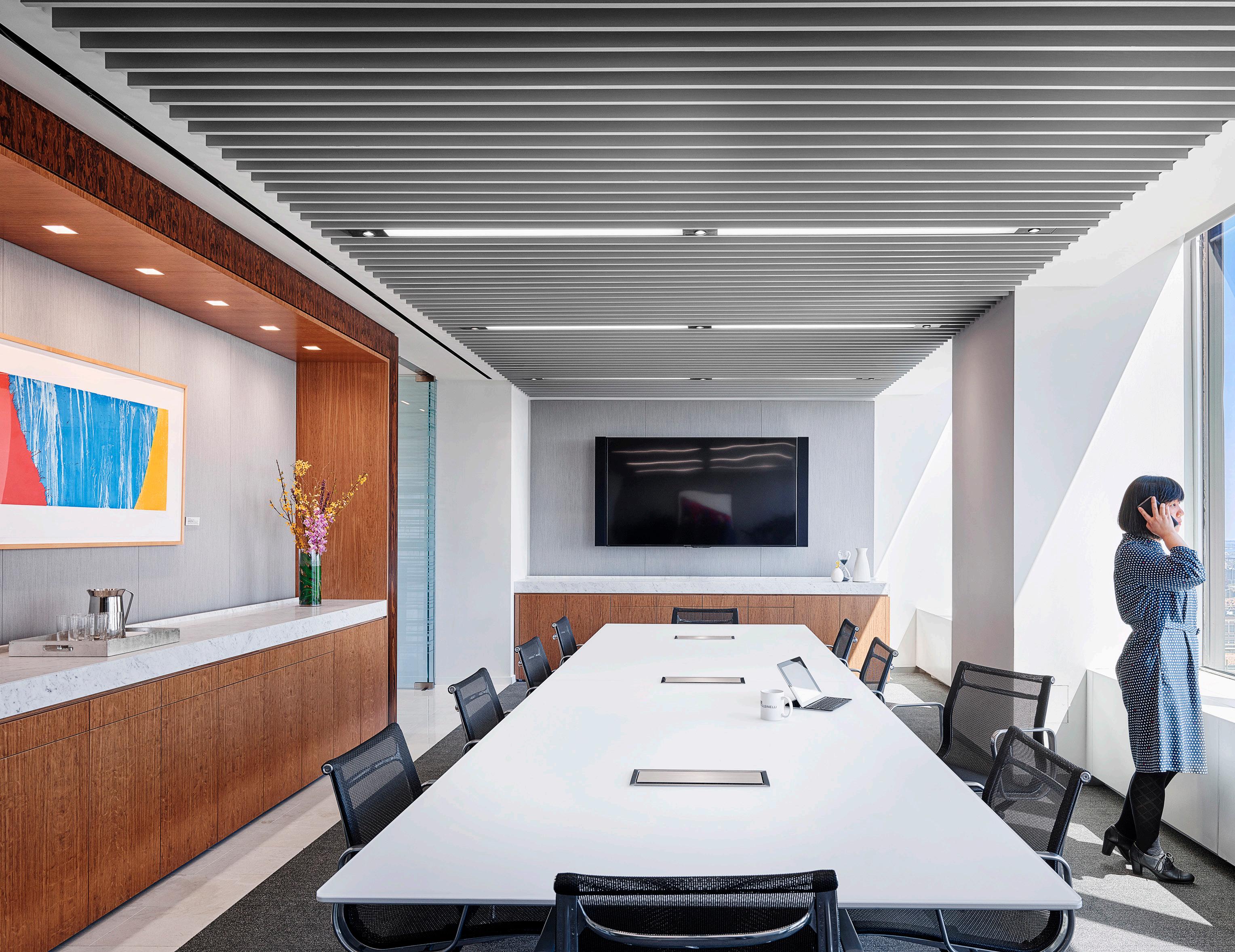
In the context of law firms, purpose-built spaces like deposition rooms, mock court rooms, client spaces, and anterooms are designed to fulfill specific functions. These spaces require careful consideration of acoustic design, appropriate materials, and lighting choices to create the desired outcomes.
Flexible spaces, such as multipurpose and training facilities, should be adaptable to accommodate
the changing needs of the business. This involves considering technology integration, furniture selection, and mechanical considerations to create spaces that can be easily modified and reconfigured.
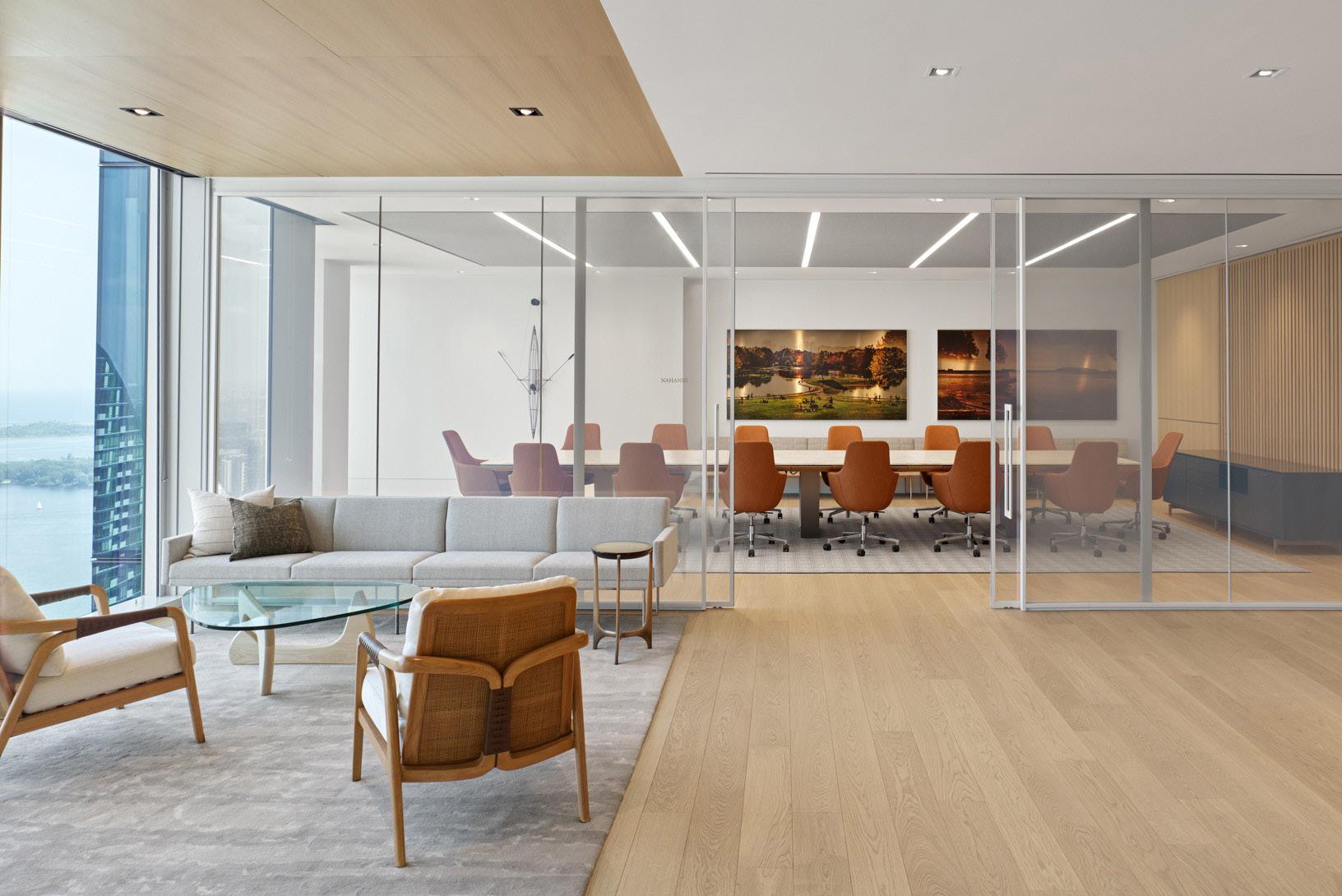
On practice floors, a variety of meeting spaces in different sizes, scales, and locations are necessary to support the specific needs of different practice areas. This can include traditional, hybrid and innovative meeting spaces that are tailored to the unique requirements of each practice area.
Overall, meeting spaces in law firms should be designed with the needs of clients, staff, and lawyers in mind. They should prioritise comfort, be wellequipped with appropriate technology and amenities, and foster an environment conducive to productive discussions and meetings.
By incorporating research, behavioural science, creativity, and intention into the design process, law firms can create meeting spaces that are not only functional but also enhance the overall experience and contribute to the success of the firm.
Configurable space for virtual hearing rooms.
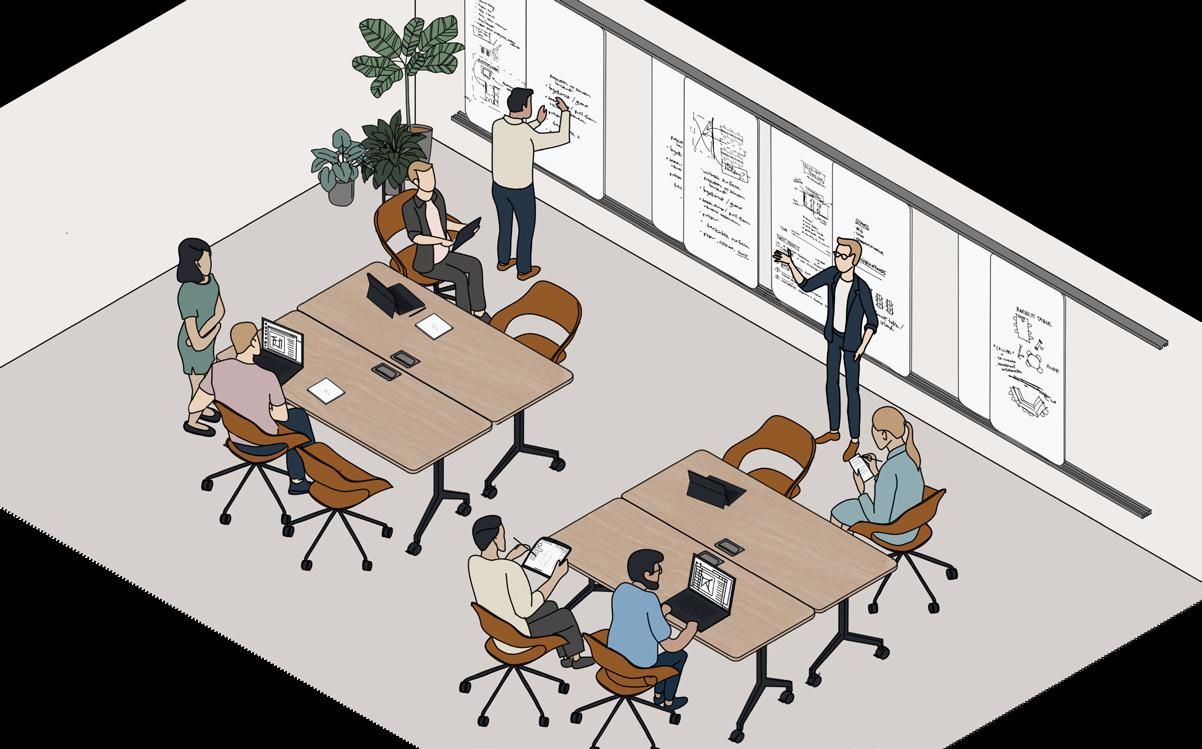
Flexible room typologies for various configurations. Movable furniture, writable surfaces and technology to support team collaboration. Technology tools / whiteboards to support collaboration and group think
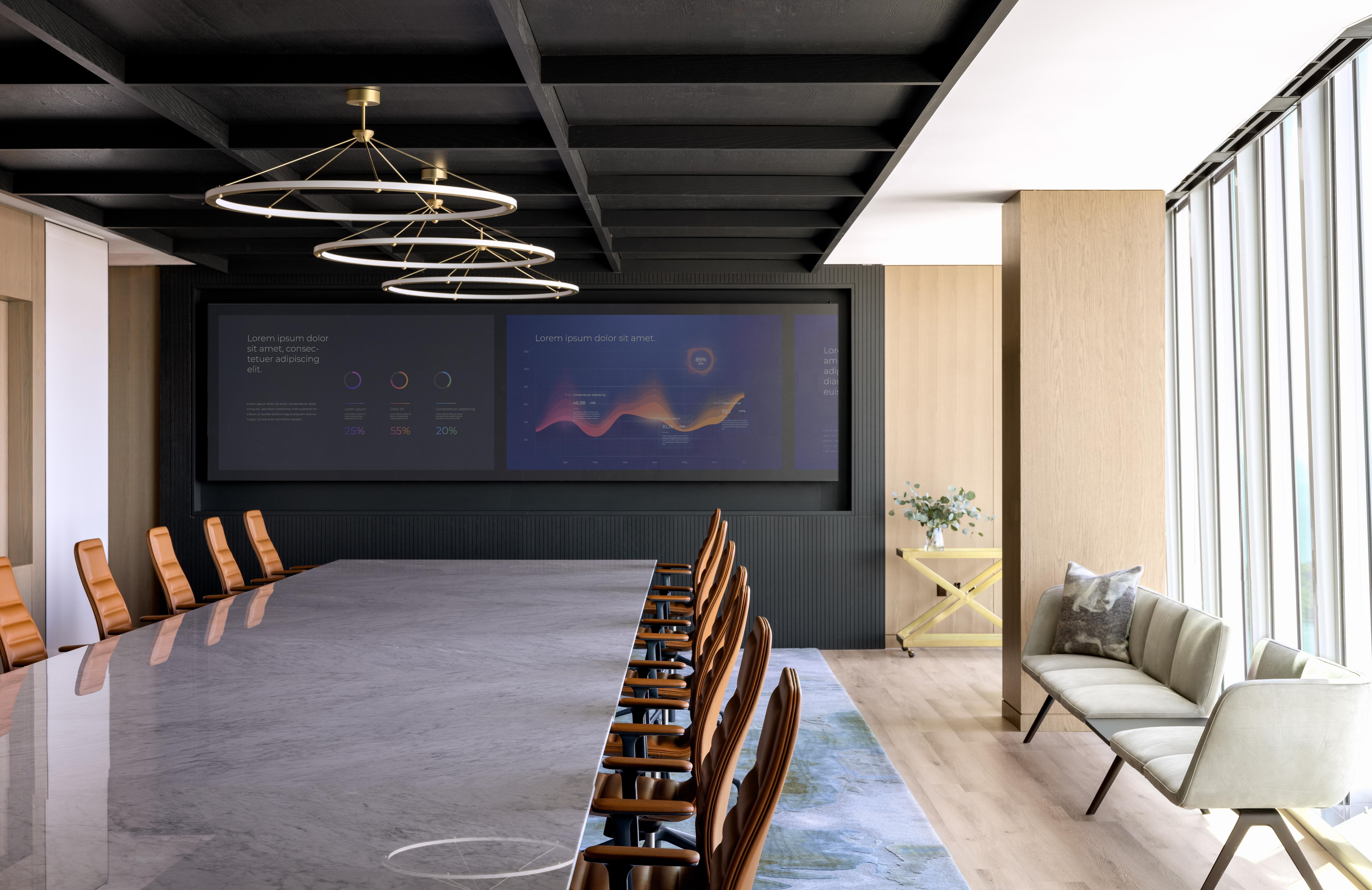
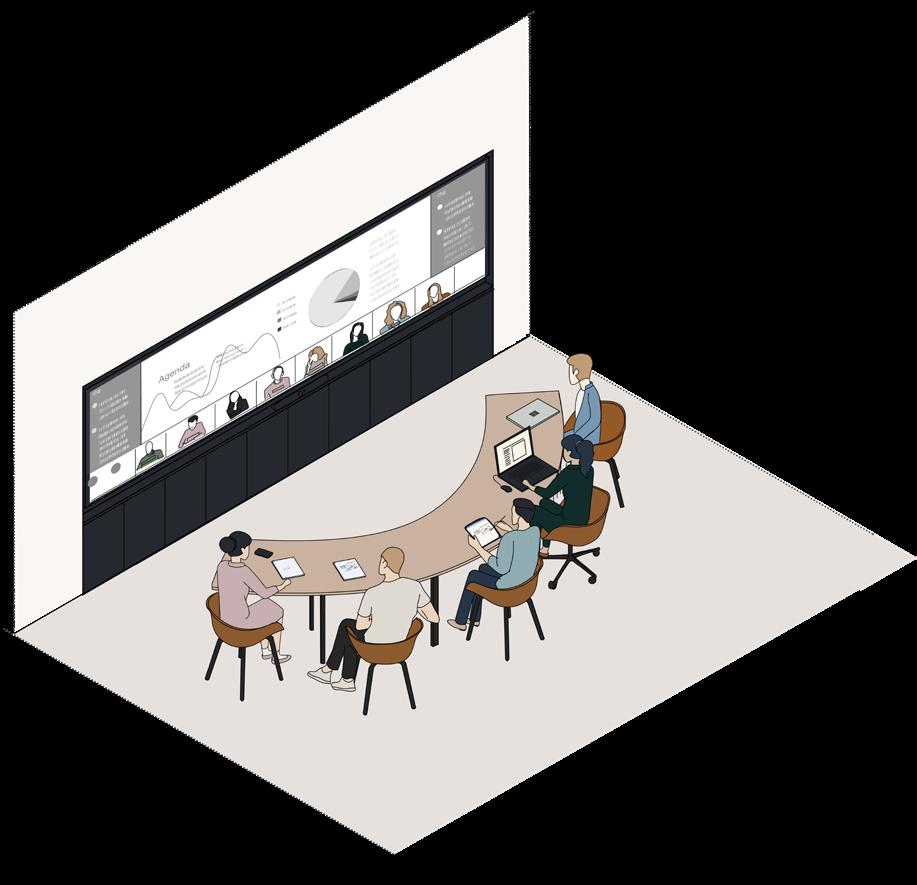
Table size and shape to accommodate video conferencing.
Seating variety for overflow. Food and beverage setup
A variety of room types to support various work behaviours and use cases that support teams need.
Meeting rooms that support a variety of postures, infield and outfield.
COMMUNITY + CULTURE
The office is critical for the support and development of firm culture. As echoed in our recent survey, attorneys viewed the workplace as particularly important for fostering collegiality and mentorship and aiding in recruitment and retention. By incorporating these design considerations into their office space, law firms can create workspaces that attract and retain top talent, thereby contributing to the overall success of the firm.
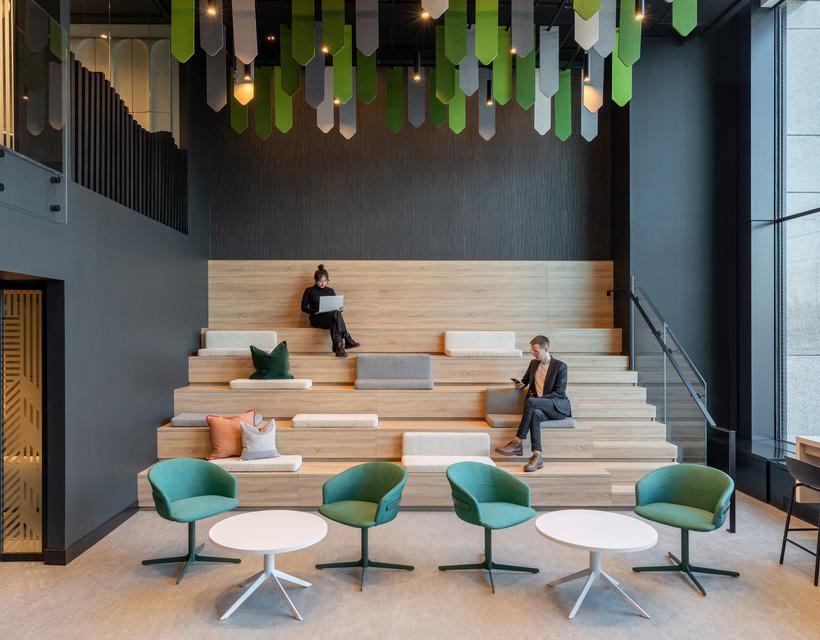
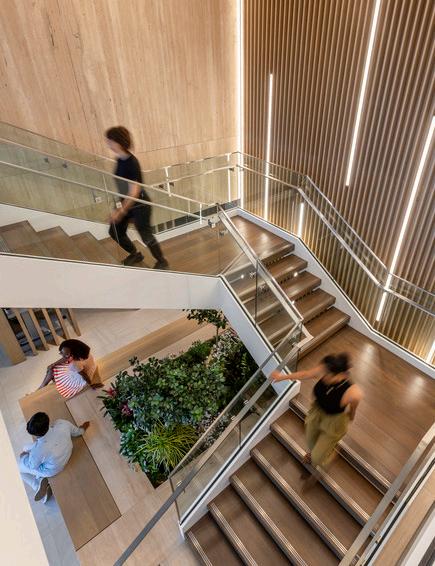
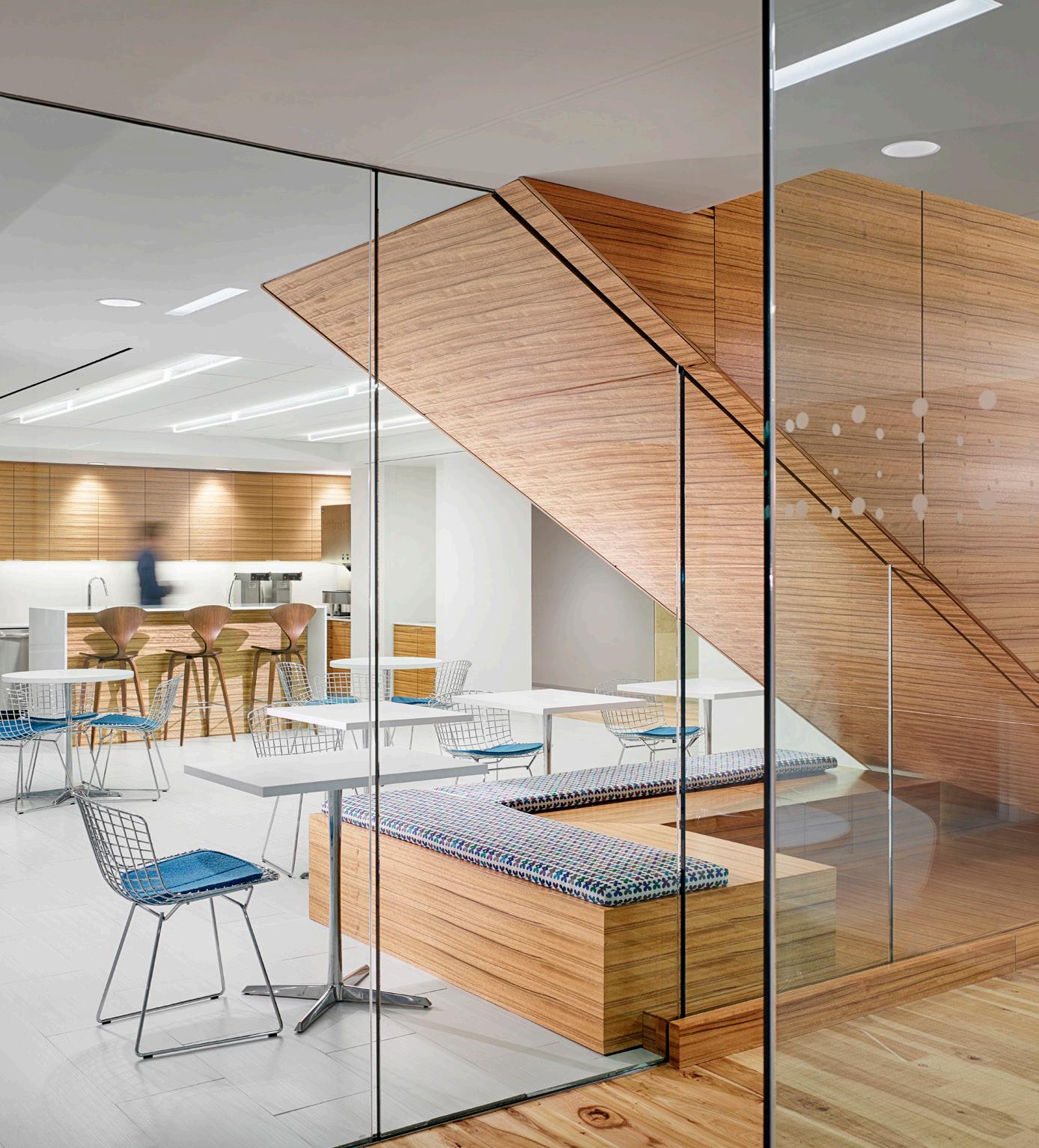
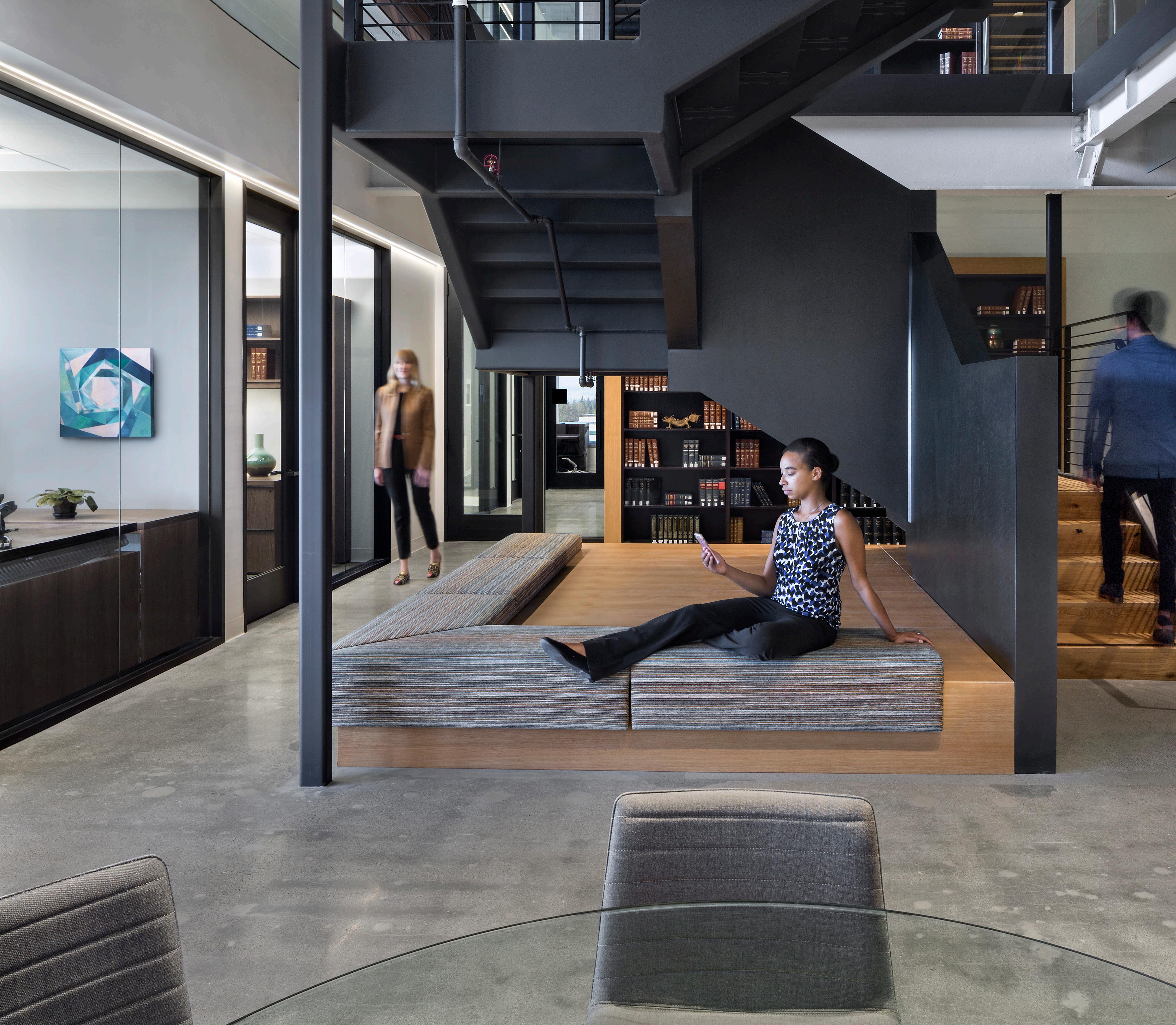
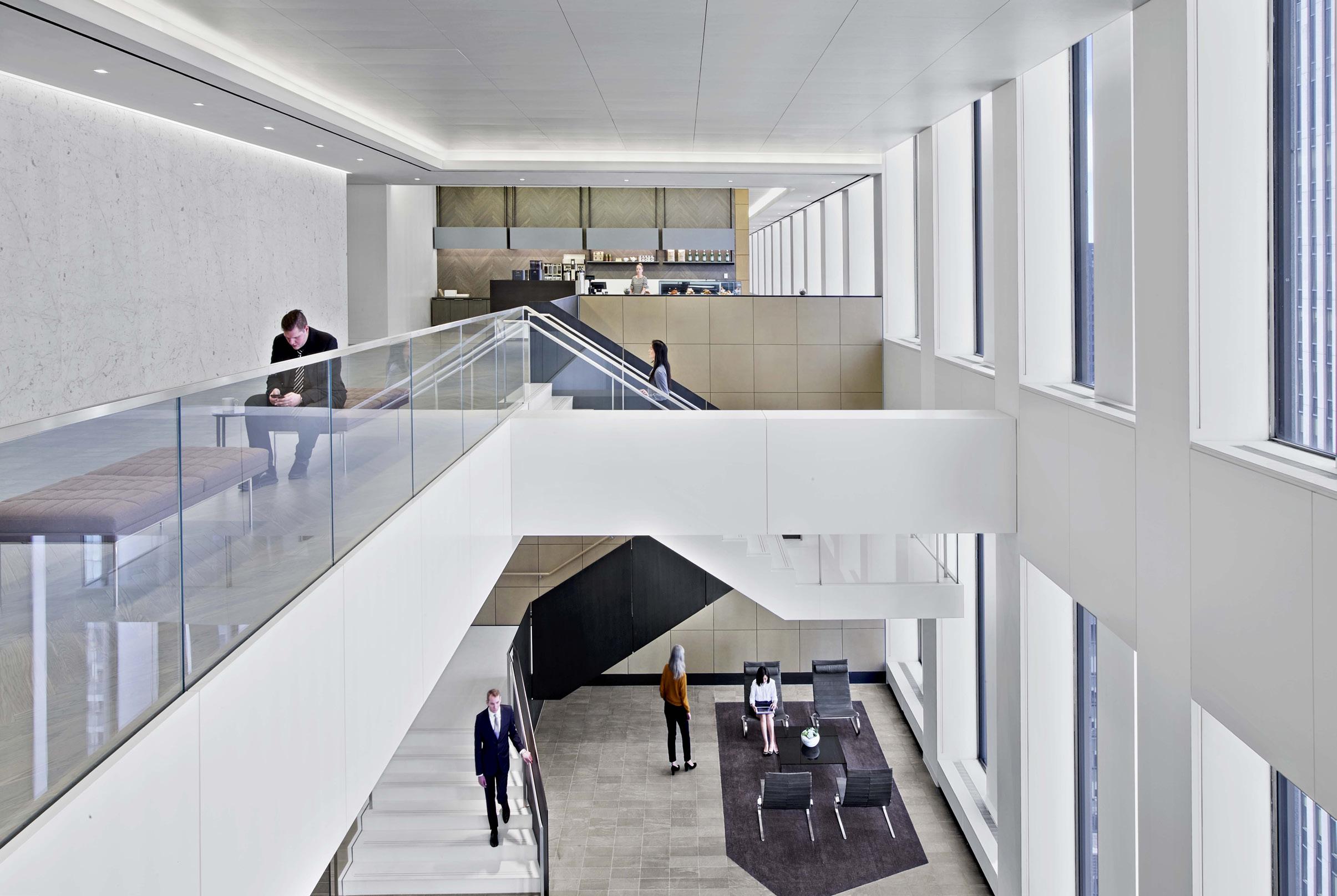
Interconnected Stairs: Interconnected stairs open up the workplace, providing views across departments and allowing for serendipitous encounters among colleagues. Informal seating areas adjacent to these stairways allow people to continue conversations and create community.
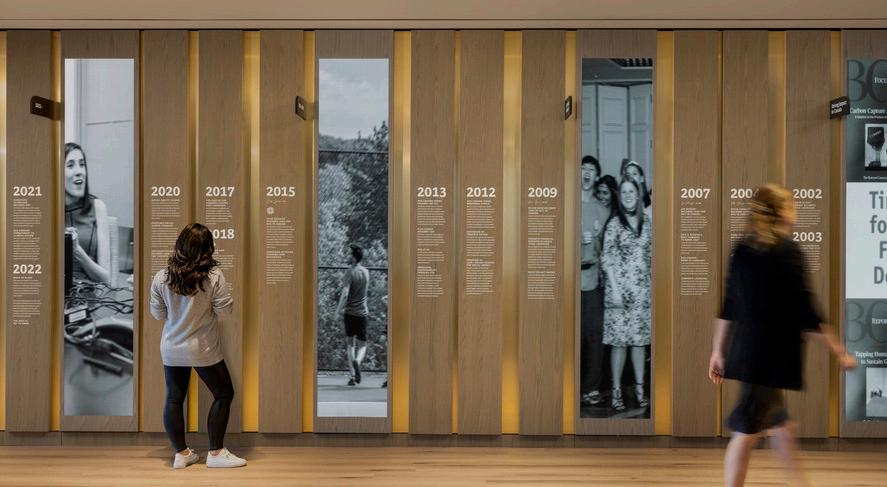
Branding and Culture: The office is the physical embodiment of a firm and an important tool for shaping brand and culture. Artwork, wall graphics, and signage infused within the office help tell the firm’s story and reinforce its vision and goals for clients, visitors, and new employees.
Convertible Cafés and Lobbies: Flexible dining and reception areas allow firms to leverage their real estate. Such spaces can perform double duty by serving a primary function and also transforming, as need be, to host client events, all-hands meetings, and other large gatherings.
AMENITIES
Legal practices are increasingly recognizing the importance of amenity spaces in fostering employee health, well-being, and overall organizational culture. These spaces not only contribute to building social connections among employees but also play a role in attracting and retaining top talent. Additionally, there is a growing emphasis on creating clientfocused spaces that offer a variety of amenities for hosting events, entertaining, and private dining. Some common types of amenity spaces that are being incorporated in legal practices include:
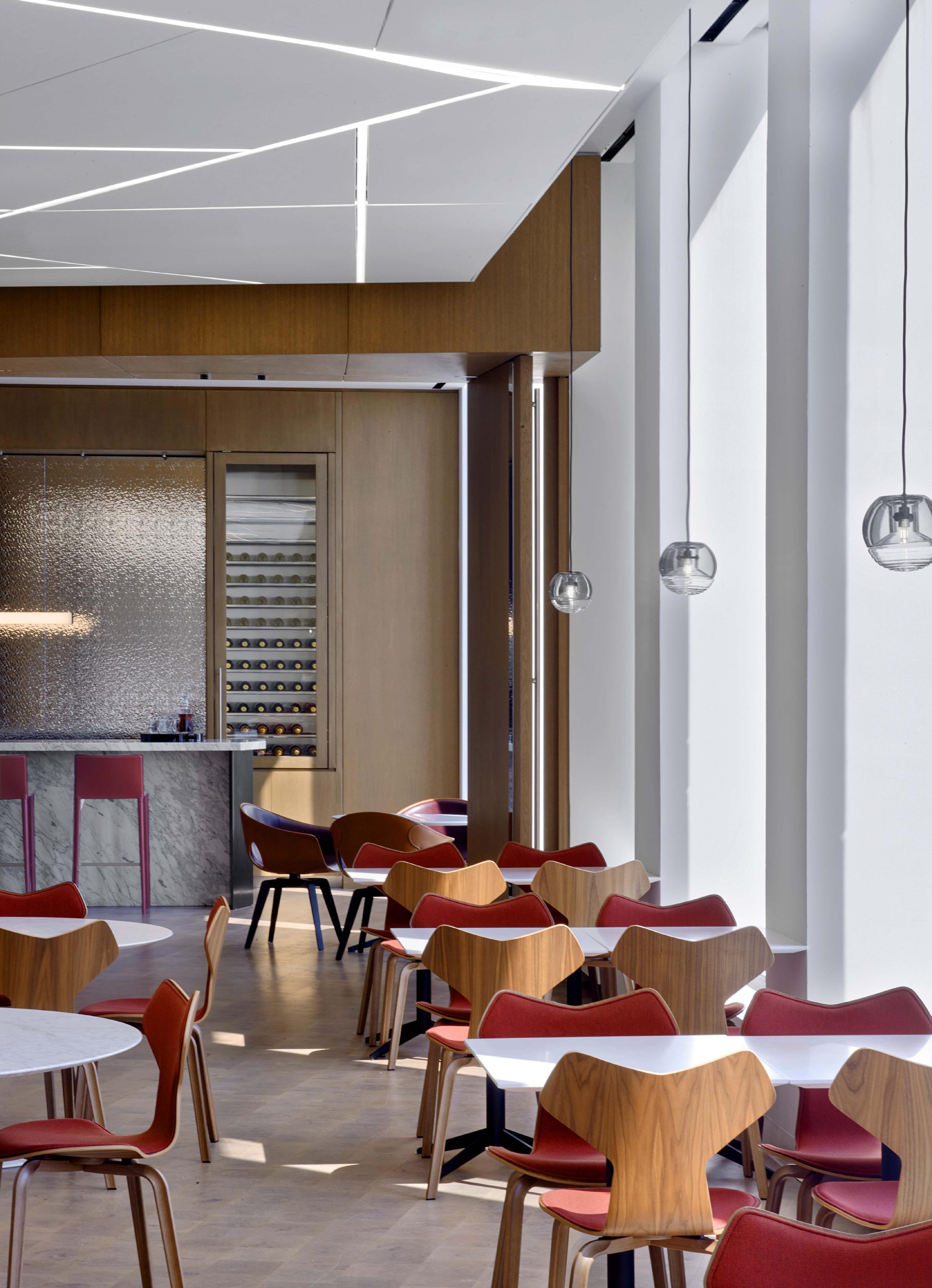
Large-Scale Cafés: These spaces serve as a central gathering point for team members to use on a day-to-day basis. Spaces can also be flexed to accommodate town halls or casual firm events.
Entertaining Spaces: Flexible café spaces can be transformed into event spaces to host clients and networking events. They have high-touch hospitality influences with dining and cocktail capability.
Client Zones and Multipurpose Spaces: These areas are specifically designed to cater to client meetings, board meetings, lectures and other events.
Fuel Stations: Many firms are looking beyond central dining hubs to also include spaces where
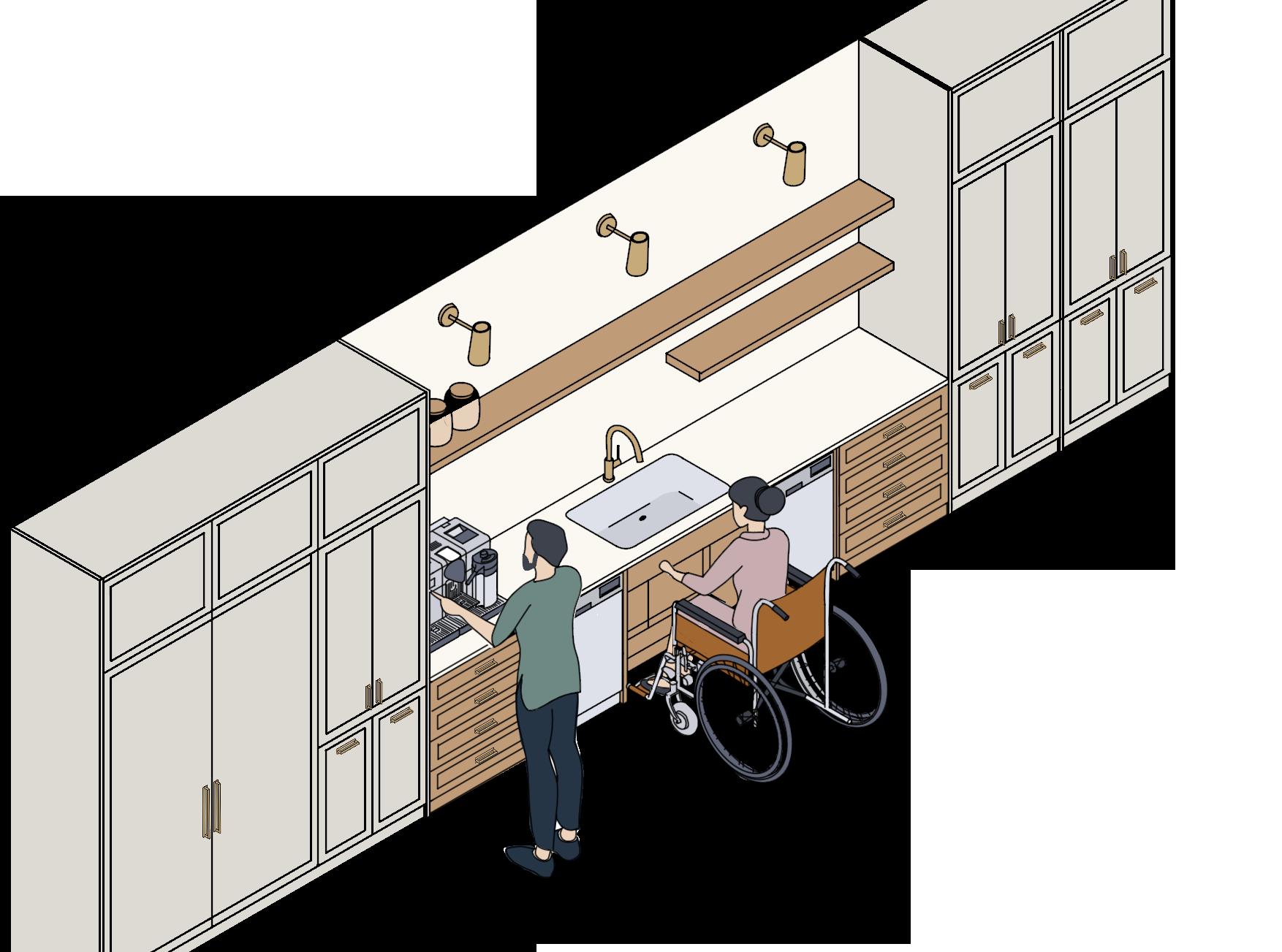
employees can refuel throughout the day. These smaller destination spaces can include coffee, cold brew, or tea bars or grab-and-go fuel stations. Healthy food options are particularly popular, with some firms providing juice, kombucha, and fresh fruit. Alternatively, some firms are also including bespoke spaces for employees to unwind, socialize, and entertain with in-house bars and speakeasies.
Fitness Centers and Showers: On-site exercise rooms and showers allow employees to exercise before and after work or even during the lunch hour. Bike and scooter storage is another way law firms are encouraging physical fitness and active commuting.
Technology Resources: Equipping the office with easy to access, centralized, and advanced technology resources, such as state-of-the-art computer systems, genius bars with tech support, and advanced video conferencing equipment, improves productivity and facilitates efficient communication both internally and externally.
By incorporating these amenity spaces into the workplace, legal practices can create environments that support employee well-being, foster a sense of community, and provide a positive experience for both employees and clients.
ACCESSIBILITY + NEUROINCLUSION
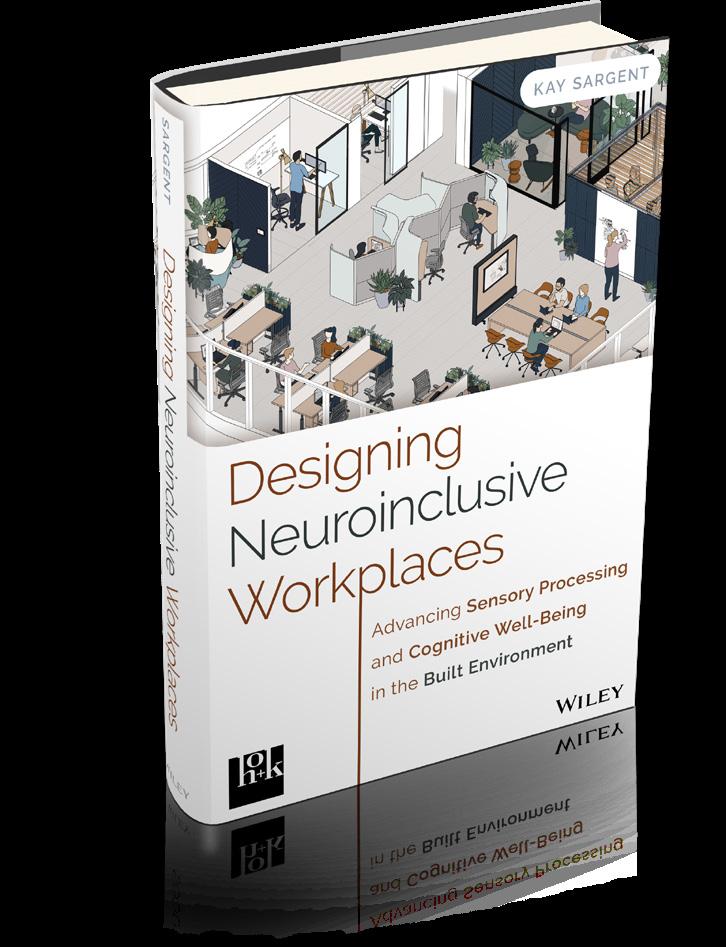
n recent years, there has been a growing awareness about the variation in neurocognitive functioning. Neurodiversity is the unique ways we think, process, feel, and act that differ from the predominant neurotype. The estimate that 17 percent of the workforce is neurodivergent is likely conservative, given that many individuals’ conditions remain undiagnosed. A 2024 survey by Neurodiversikey found that:
• More than three quarters of neurodivergent attorneys have not disclosed their condition to employers to avoid discrimination.
• 66% of neurodivergent lawyers felt that legal education and training were not neuroinclusive.
• 40% encountered difficulty in obtaining reasonable accommodations during their legal education and training, with a similar percentage facing challenges in receiving adjustments in the workplace.
• 74% expressed the belief that the legal sector lacks neuroinclusivity.
Law firms increasingly recognize that
accommodating individuals who think differently can provide a huge competitive advantage. Our design approach extends beyond a simple “do no harm” philosophy and is committed to creating fitfor-purpose, inclusive spaces. Based on the findings from our research, neuroinclusive workplace design relies on three core principles:
1. Options and variety provide settings with different attributes to accommodate a range of needs and work styles.
2. Choice means enabling individuals to select from diverse workplace settings.
3. Control allows individuals to adjust their immediate environment to match their preferences.
Today’s spaces need to reflect the diverse makeup of organizations to set everyone up for success. Legal workplaces are evolving into tech-infused, highly flexible offices that cater to the emotional and physical health, and the diversity of its employees. To truly enable all individuals to thrive, the design of all workspaces needs to address mindfulness, health, safety, well-being, and inclusivity.
Regularly planned fuel stations for access to water. Compliance with WELL standards requires access to potable water every 90 feet within a floor plan
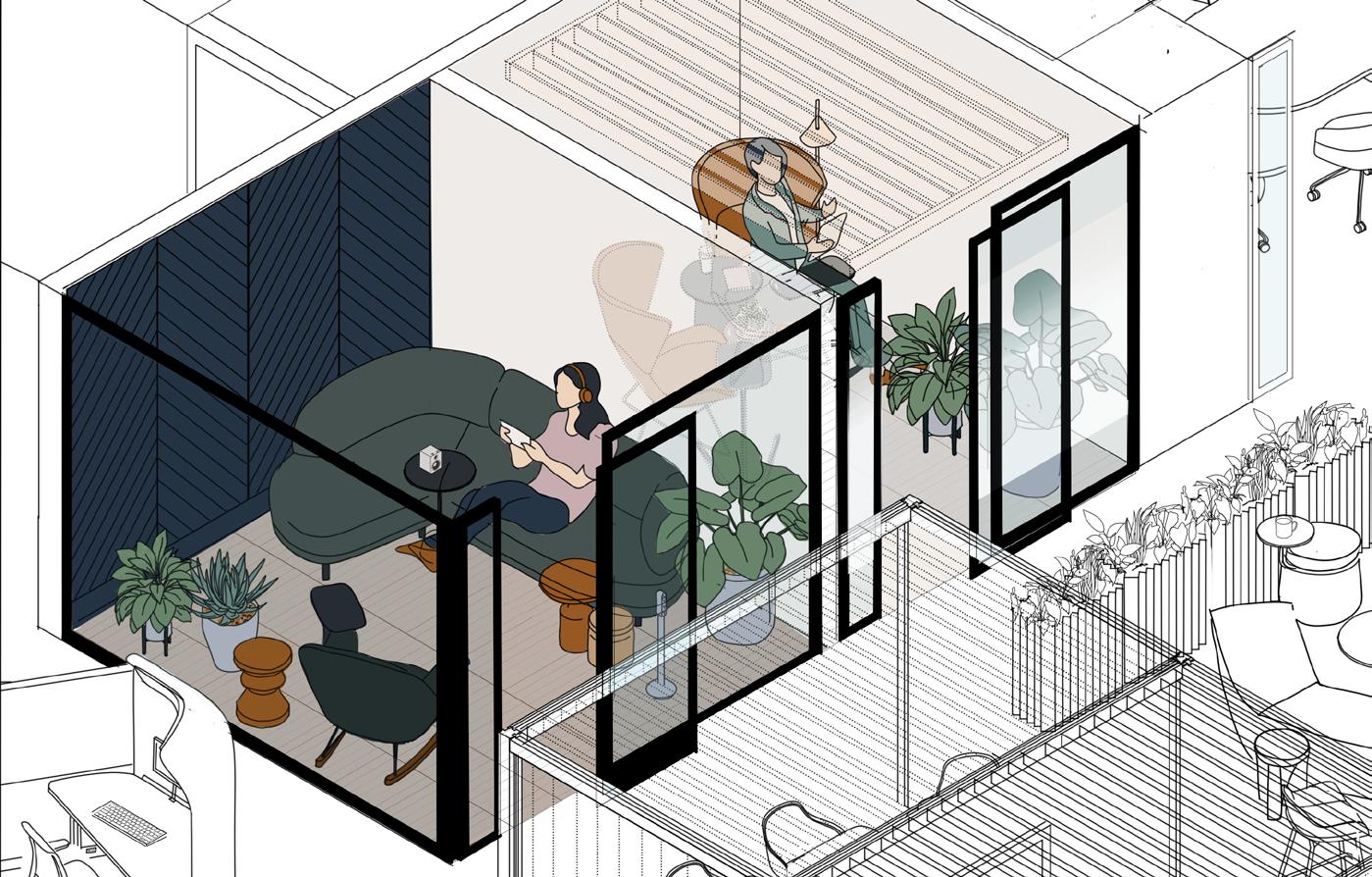
Areas for respite that include biophilic elements like plants and greenery along with visual and audio privacy.
Seating posture variety: a mixture of conference soft seating with perch/ standing settings to cater to creative and big picture thinking.
Writable surfaces that flank monitors for video conferencing allowing staff the ability to chose to collaborate physically or digitally.
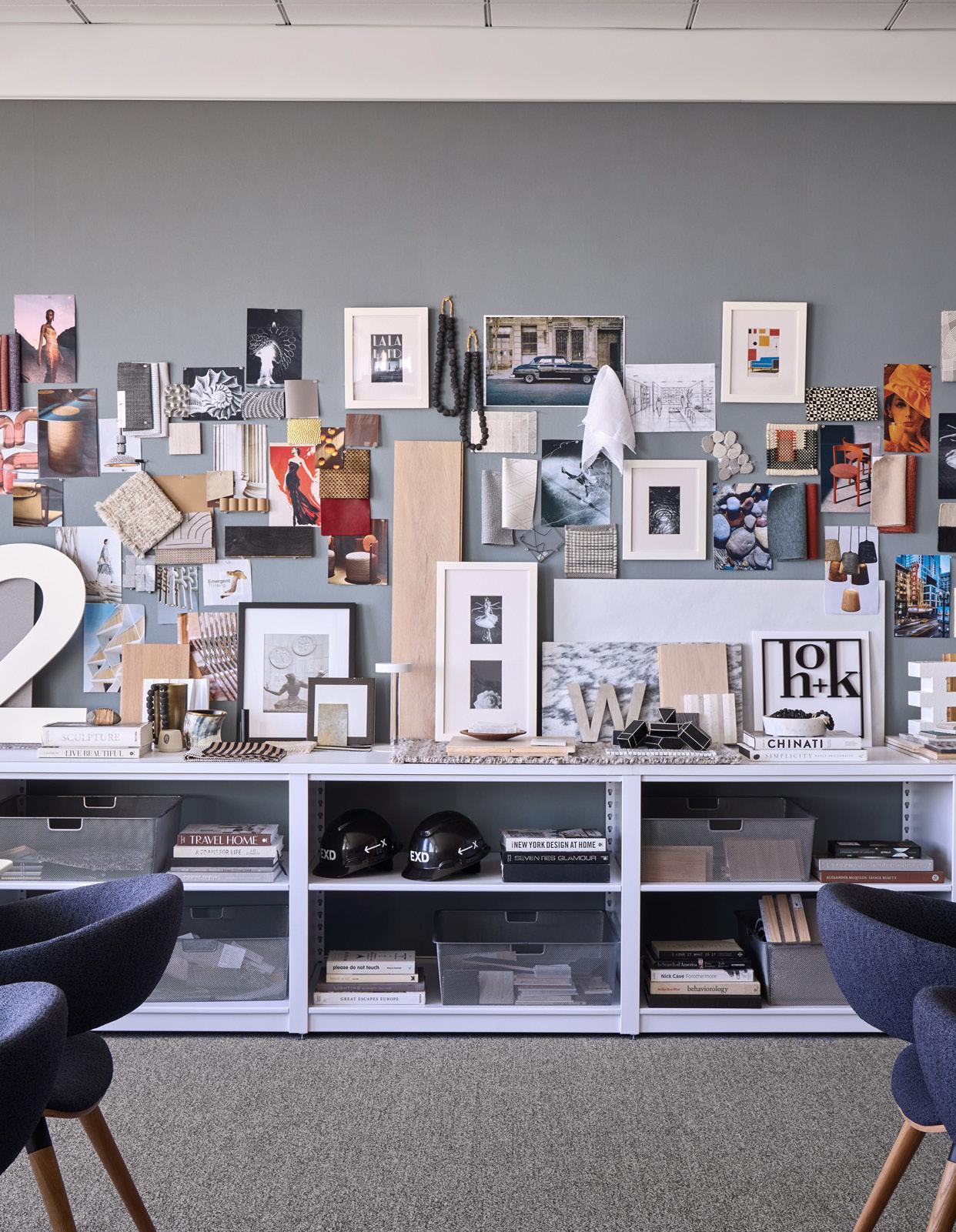
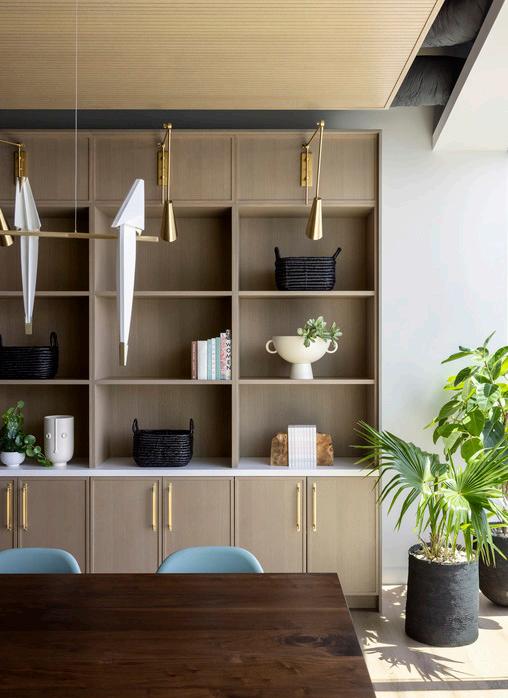
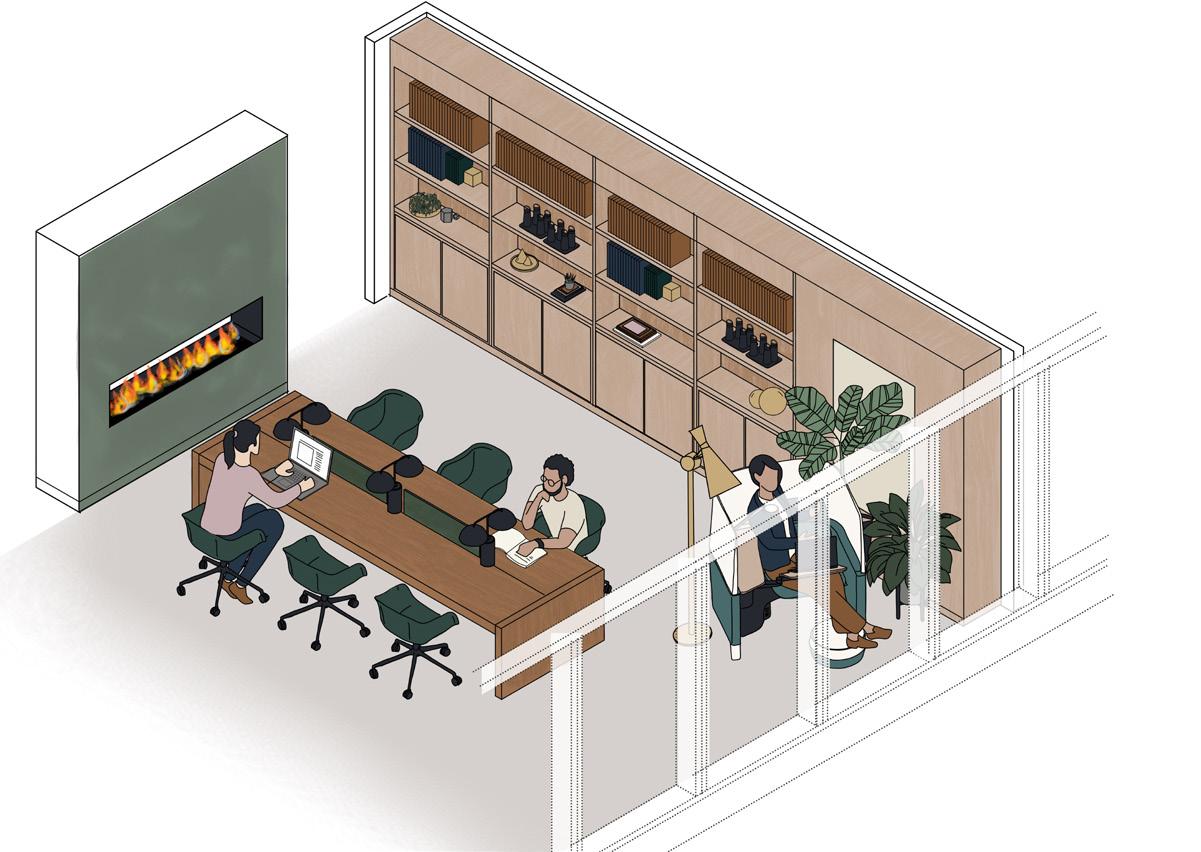
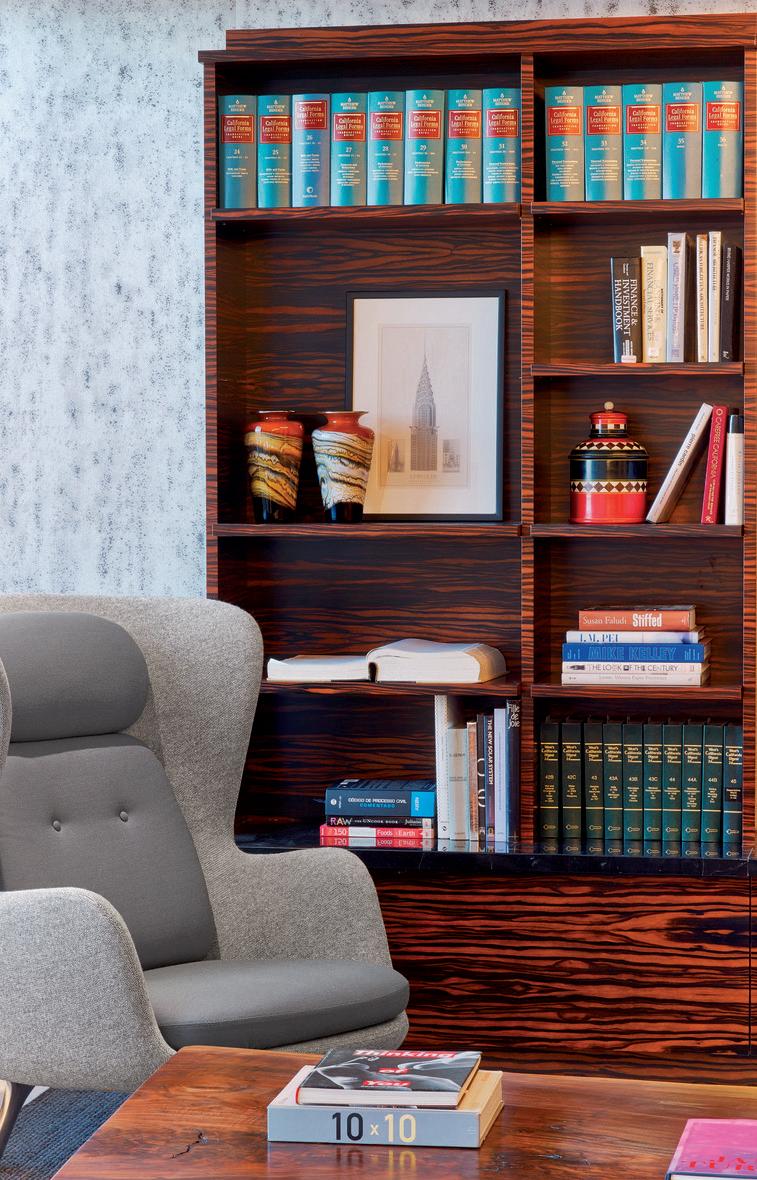
Access to references and tools close at hand. An opportunity for stylization to filter through in display areas which help soften the space.
Comfortable areas for respite that have heads-down settings for deep focus work.
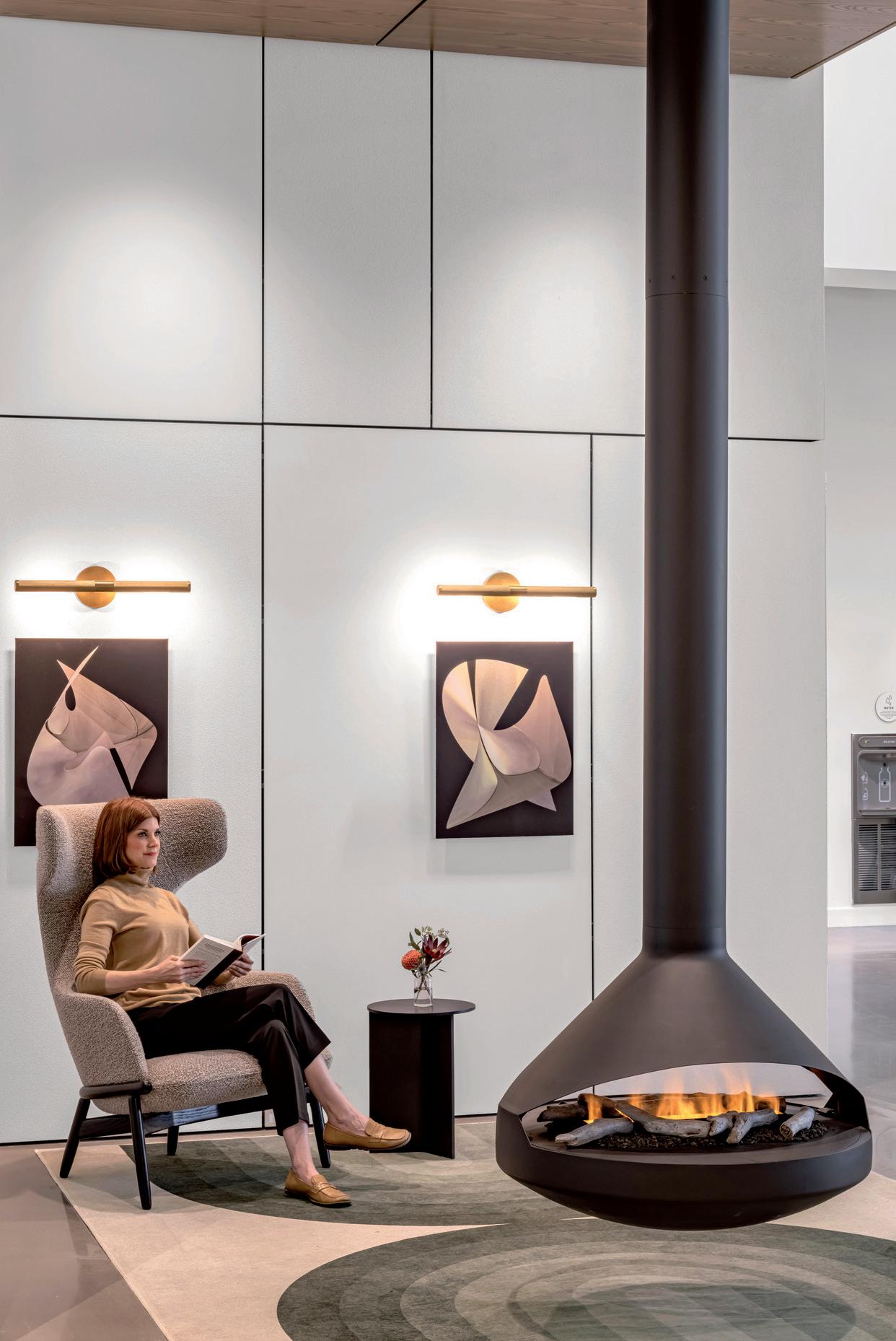
Add residential/ hospitality touches like a hearth
Biophilia
Accessible design embedded into all spaces.
Acoustically sound materials and soft materials palette.
HEALTH + WELLNESS
Organizations are placing greater emphasis on health and wellness in the workplace, and law firms are no exception. Spaces that support choice, relieve stress and foster community can help employees manage work-life balance, resulting in happier and more productive staff, which aids in recruitment and retention. Here are some ways law firms are prioritizing health and wellness within the office:
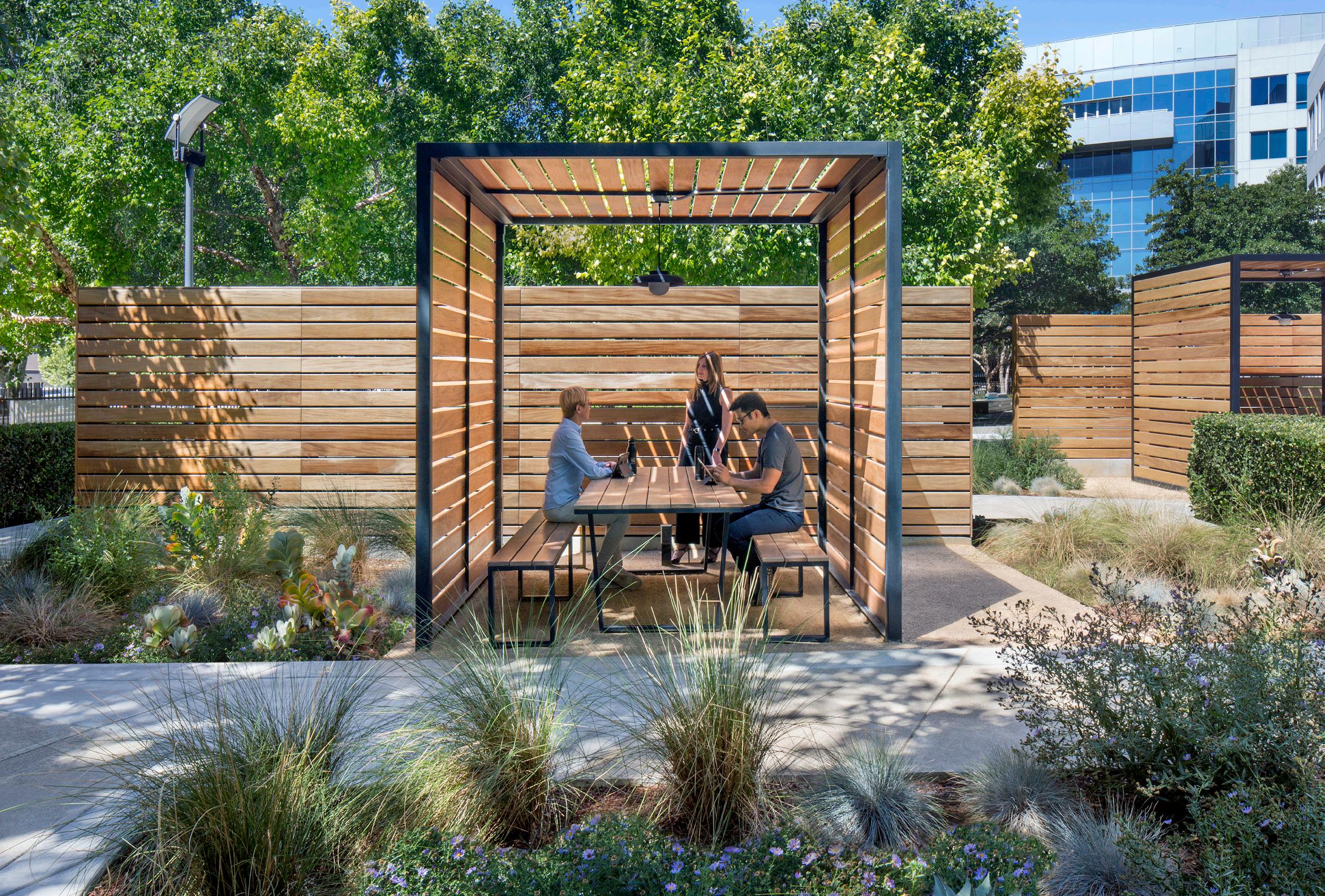
Nature and Daylight: Studies have shown that biophilia—access to nature and daylight—improves physical and emotional health. Ways that law firms are introducing biophilia into the office include green walls and live plantings, furniture and finishes made from natural materials, rugs and wall graphics with organic shapes and diffused lighting. Wi-Fi-enabled terraces and decks are another great way firms are providing staff with access to the outdoors while remaining connected.
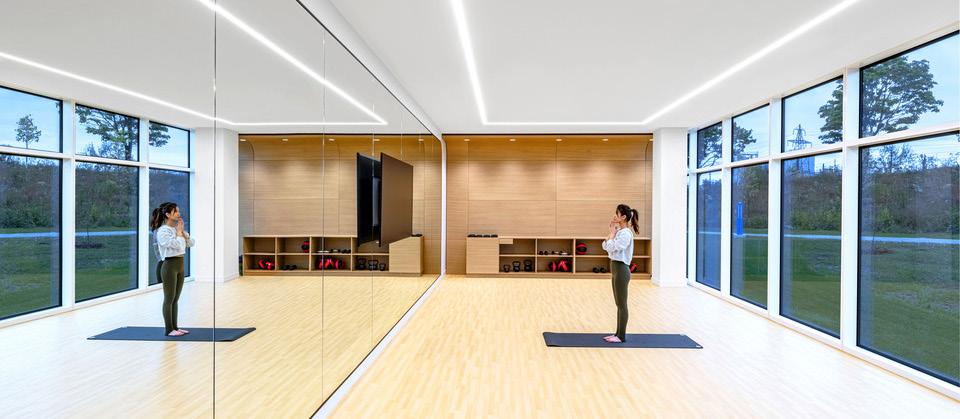
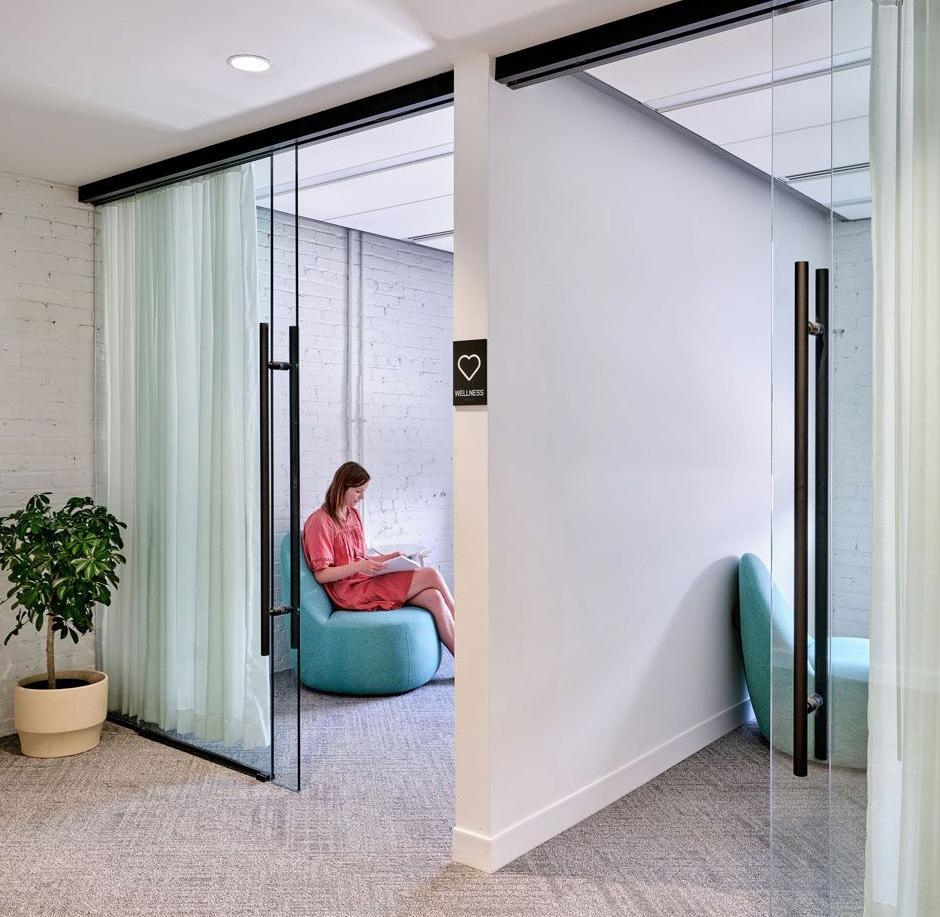
Wellness Rooms: The legal profession can be stressful, so providing rest and respite areas can have a high impact on burnout. Dedicated rooms for individual meditation and prayer or quiet group activities, such as yoga and tai-chi, help attorneys and staff to support their mental health. Many firms are also providing lactation rooms for new mothers to further promote work-life balance and whole family health.
Ergonomics and Choice: Furniture selection and work setting choices are important, with attorneys and staff wanting the option to sit and stand while working and to work from different spaces within the office. Adjustable work surfaces allow spaces to meet the needs of someone who is 6’-5” or 5’-5”. Combining standing height tables with adjustable seated solutions offers ease of access for individuals and groups. This type of work setting choice supports employees across the neurodiversity spectrum from hyposensitive individuals (those who prefer greater stimulation) to hypersensitive individuals (those who prefer quiet and solitude).
Executives estimate that an almost 22 percent increase in the company’s performance can be achieved if their offices are well designed. Getting people up and moving is not only essential for their own personal health and well-being, but studies show that active workers are happier, healthier, more engaged, and more productive. With up to 80 percent of expenses devoted to human resources, it’s vital that your workforce is healthy, productive, and engaged. Our health and well-being guidance helps to promote higher lease rates and improve human performance.
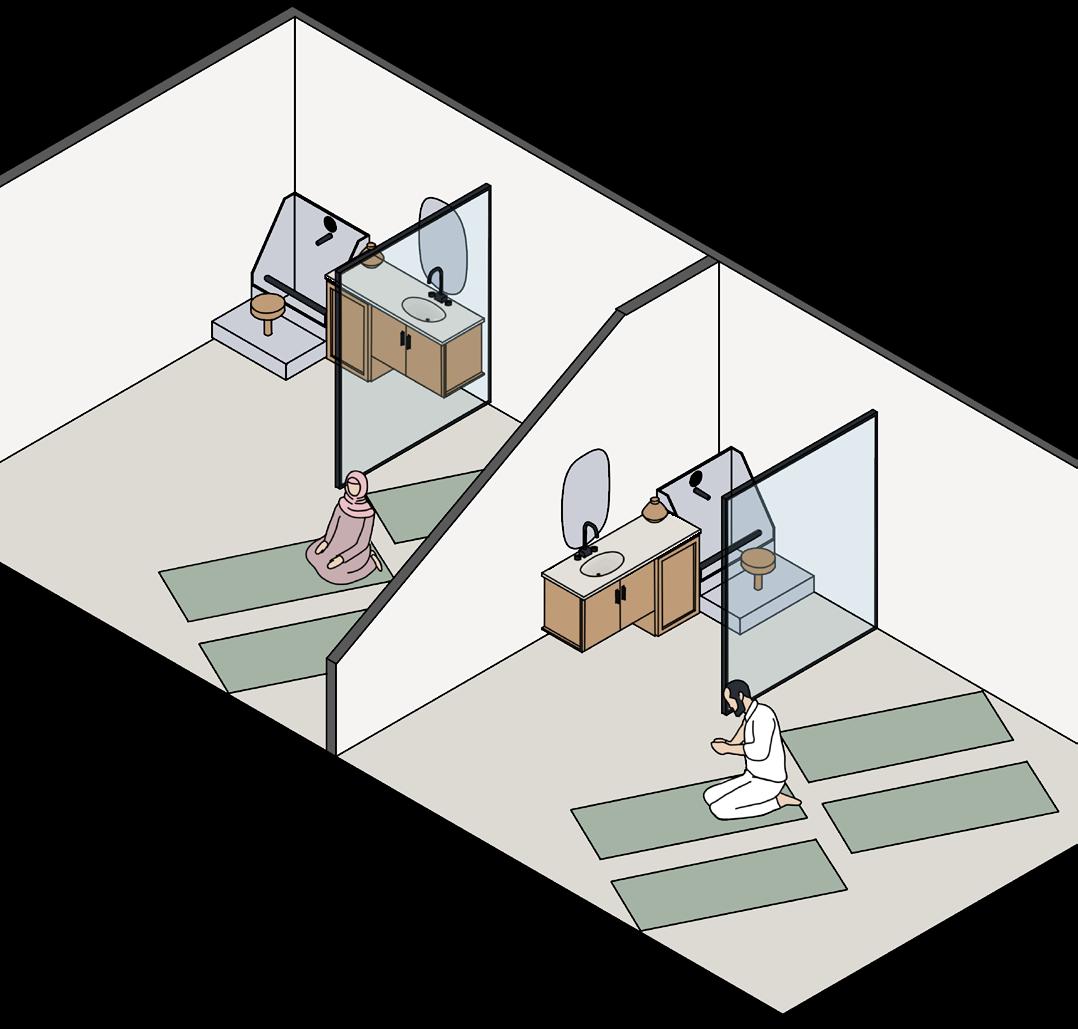
Multi-faith prayer rooms that vary in size and scale. Shown here are gendered prayer rooms with ablution and sacred space.
TOOLS + TECHNOLOGY
Modern law offices are leveraging technology to provide employees greater control over their work environment and the ability to connect with internal and external partners. At the same time, technology is allowing firms to store fewer paper files at the office, freeing up space for other uses. Advancements in technology, particularly artificial intelligence, could further reduce the need for certain staffing roles, including administrative assistants and paralegals. Here are a few ways law firms are using technology to enhance and reshape the office:
Virtual Hearing Rooms: More and more courts are allowing virtual hearings. While certainly more convenient than trudging into court, these remote hearings still follow the same rules and decorum as in-person sessions. They also offer a training opportunity for junior associates to prep for trial in a true life context. To ensure their attorneys comply with court regulations and best represent themselves and their clients, firms are now creating specialized virtual hearing rooms within the office. These tech-enabled spaces include high-quality cameras, speakers and mics; excellent lighting and acoustics; and clean backgrounds as required by the court.
The room and furniture shape and configuration can accommodate wider screen ratio for optimal camera angles to better view virtual participants and/of participants within the space.
Data Storage and Admin Services: Technology is being used to free up real estate within the legal workplace as never before. Documents are being digitized instead of being housed on-site in row after row of file cabinets. Space needs for administrative assistants is also declining with project and planning software allowing attorneys to perform certain admin tasks themselves. More admins are also being allowed to work remotely, further reducing the need for on-site desking.
Education and Branding: Media rooms outfitted with recording equipment and greenscreens or branded backdrops are being used to create promotional and educational content, such as podcasts and webinars, which can be used for branding as well as recruitment.
While technology offers many advantages, it should be implemented in ways that align with the unique needs and practices of the legal profession. Balancing the benefits of technology with the privacy, security and ethical considerations inherent to the legal field is crucial for successful implementation and adoption.
OUR APPROACH
In the fast-paced world of workplace design, we believe great design starts with a thoughtful, disciplined process that is both rigorous and adaptable. Our methodology is organized into four integrated phases—Discover, Develop, Design, and Deliver each building on the last to ensure every decision is purposeful, every space is functional, and every detail is considered.
In the Discover phase, we immerse ourselves in your organization’s culture, operations, and goals, engaging stakeholders, studying workflows, and leveraging research and benchmarking to identify opportunities. Develop translates these insights into strategic concepts, exploring spatial layouts, adjacencies, and design directions that balance functionality, flexibility, and brand identity. During Design, ideas are refined into compelling, coordinated environments where aesthetics, performance, and technology converge, guided by meticulous documentation and quality control. Finally, in Deliver, we bring the vision to life, managing construction, commissioning, and move-in with precision while remaining responsive to emerging needs and opportunities.
Collaboration is central throughout—our process is structured yet flexible, allowing us to adapt to each client’s unique culture, objectives, and evolving requirements. By combining stakeholder engagement, data-driven insights, and forward-looking workplace strategies, we create environments that are operationally effective, visually compelling, and futureready. Ultimately, HOK’s approach goes beyond designing space; it shapes workplaces that inspire, enhance performance, and reflect the distinct identity of your organization, all delivered efficiently, collaboratively, and with unwavering attention to detail.
“We are no longer designing the environments — we are designing the experience.”
— Kay Sargent, Director of Thought Leadership
HOW WE WORK TOGETHER
The whole process — Discover, Develop, Design, Deliver — is designed to be as collaborative as it is creative. It ensures that the finished workplace doesn’t just look beautiful, but functions as a catalyst for productivity, culture, and innovation.
DISCOVER DEVELOP DESIGN DELIVER
We begin our engagement by uncovering the organization’s identity and what makes them unique
We then ensure the guiding principles are integrated into the plan and program.
We analyze, test and ideate on the possibilities to make sure the client is comfortable before proceeding with design.
Our imaginative designers explore design possibilities to create something bespoke and amazing for each client.
From furniture to materials, we narrow in on a vision that is informed by our previous phases and made robust through our methods and tools.
Technical excellence combined with onsite observations and robust deliverables will ensure the design intent is reflected in the final outcome
DISCOVER
Every successful project begins with listening. In this first phase,
we work hand-in-hand with your team to uncover what makes your organization unique and how your workplace can bring that identity to life.
KICKOFF + ALIGNMENT
We begin with immersive conversations and workshops to ensure we understand your vision, culture, and goals from day one.
UNCOVERING YOUR IDENTITY
By studying your company’s story, values, and aspirations, we highlight the qualities that should shine through in your workplace. Over the past several years, HOK has refined its toolkit of research, processes, and engagement methods that explore the human side of workplace strategy. Our Engagement Toolkit is a robust and highly organized framework that goes far beyond traditional visioning exercises. Designed to engage stakeholders at multiple levels, it offers a flexible menu of workshops and tools that can be tailored to each client’s goals. These interactive sessions help uncover insights that might otherwise remain hidden—ensuring that design solutions are inclusive, evidence-based, and future-focused. Clients can select from 10 discovery workshops, including: Framing the Possible, Designing for Equity, Change Management, Personas, Gathering Spaces, Work Points, Amenities, Neurodiversity, Designing the Brand Experience, and Programming.
PROGRAMMING + DATA ANALYSIS
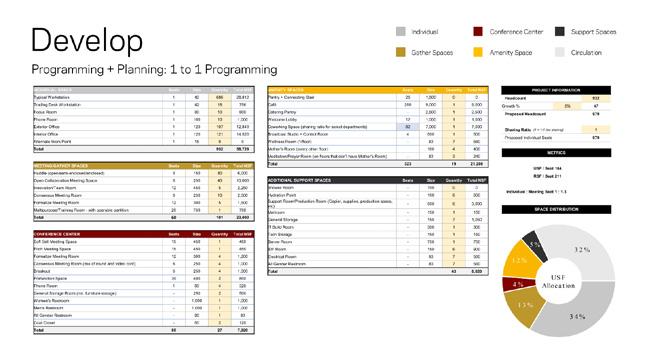
Taking into account everything we have learned from visioning, we ground insights in data—reviewing metrics, utilization studies, and employee feedback—then translate them into a clear, actionable program. Using HOK’s proprietary programming tools, we can quickly test different workplace scenarios, from mobility strategies and Activity-Based Working (ABW) to opportunities for right-sizing space. We build on your existing programming and test-fit, proposing targeted enhancements and refinements. This process ensures more informed design recommendations and leasing decisions, delivered with greater speed and accuracy.
DEFINING SUCCESS
Together, we establish guiding principles and measurable goals that will steer every design decision. Success is defined not only by how well the design embodies your organization’s values but also by our alignment on cost, schedule, and scope. HOK will prepare a detailed schedule with critical milestones to ensure timely delivery and a budget framework to keep the project on track.
This phase is about creating a strong foundation—a blueprint not just for space, but for possibility.
ENGAGEMENT TOOLKITS
Change Management
Personas
Defining worker personas and identifying a mix of settings to support diverse individual needs.
Framing the Possible A comprehensive workplace and leadership alignment and gap analysis tool.
Gathering Spaces
Establishing characteristics for different meeting types and spaces that best support these activities.
Work Points
Helping determine the right type and variety of work points to support diverse workstyles.
Amenities
Elevating the employee experience by identifying services and amenities that align with your needs and create inviting destinations
Defining the change, achieving leadership buy-in, and creating a roadmap for success with strategies that engage and inspire.
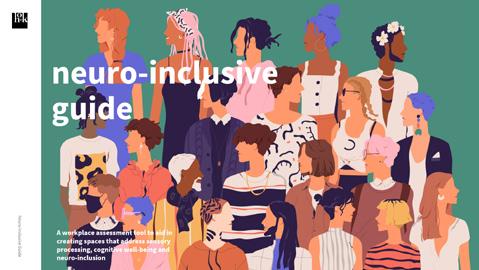
Neurodiversity Tools for crafting spaces that support sensory processing, cognitive well-being, and neuroinclusion.
Designing the Brand Experience
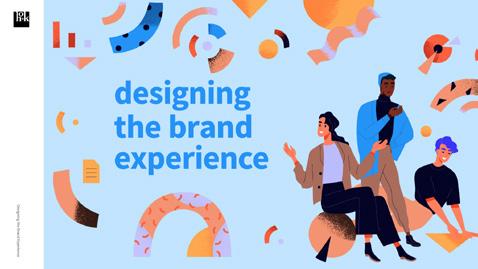
Exploring audience, brand, and content to build a holistic experiential story that infuses your brand into every corner of the workplace
Designing for Equity
A guide to creating inclusive environments that are diverse, welcoming, and supportive for all.
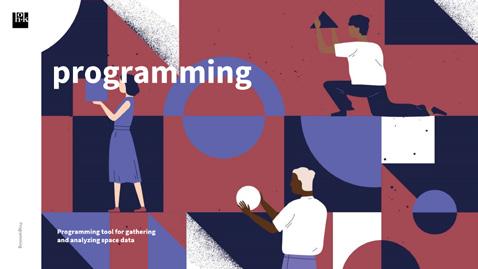
Programming Leveraging discoveries to create scenarios that optimize requirements within available space.
Designing for Sustainability
Guiding clients to make environmentally responsible choices for a healthier, more sustainable workplace.
DEVELOP
With a deep understanding of your organization, we move into shaping solutions that balance imagination with practicality. This is where ideas begin to take form.
SPACE PLANNING + BLOCKING/STACKING
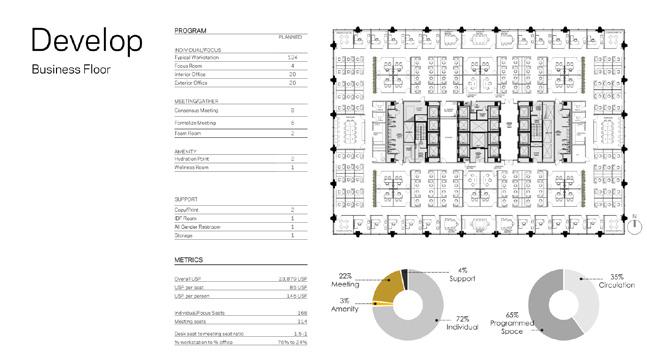
We test how the approved program fits into a real floorplate— validating square footage requirements, exploring initial layout concepts, and comparing multiple building options if needed. Blocking and stacking studies help visualize how departments, teams, and amenities align vertically across floors and horizontally within floorplates. These tools optimize workflow, adjacencies, and collaboration while also informing real estate and site selection decisions.
EXPLORING POSSIBILITIES
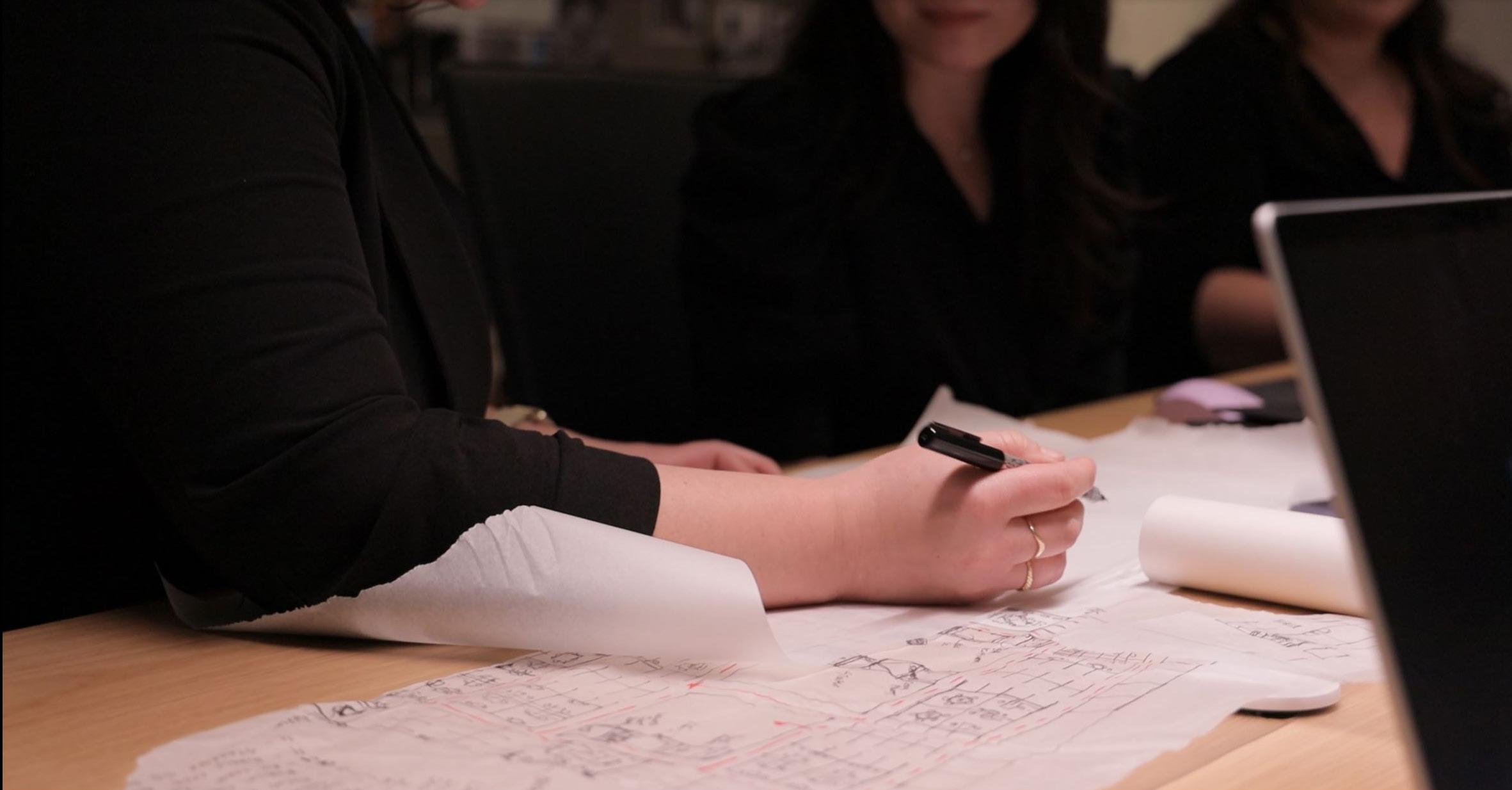
Through sketching, diagrams, and scenario testing, we evaluate multiple approaches, ensuring you’re comfortable with the direction before moving forward.
CONCEPTUAL DIRECTION
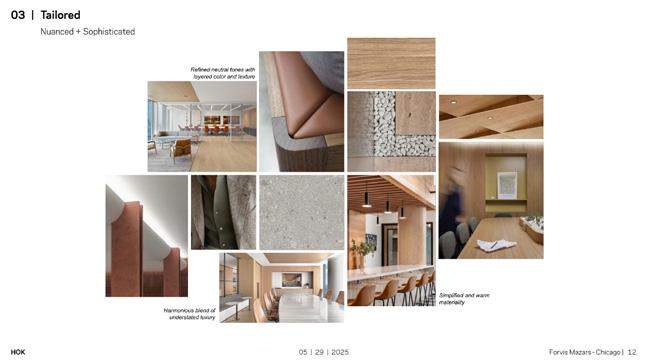
We define the tone and vibe of the workplace, presenting moodboards and narratives that capture the spirit of the space.
This step is iterative, collaborative, and forward-looking— building confidence that the design will work beautifully for today and flex seamlessly into the future.
MASSING STUDIES
SITE SELECTION
PROGRAM VALIDATION
AESTHETIC DIRECTION
CONCEPTUAL PLANNING
ADJACENCY STUDY
BLOCKING AND STACKING
TEST FITTING
DESIGN
Here is where strategy transforms into a vision you can see, touch, and feel. Our designers take inspiration from your culture, brand, and story to create a workplace that is both functional and extraordinary.
BESPOKE DESIGN SOLUTIONS + STORYTELLING
We craft spaces that reflect your unique identity—not a one-size-fits-all template, but a vision designed exclusively for your organization.From the big gestures to the smallest details, every choice contributes to a cohesive narrative that reinforces your values.
MATERIALITY + SUSTAINABILITY
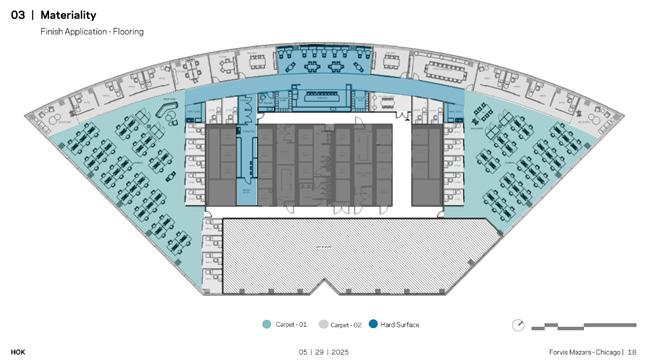
Colors, textures, and finishes are carefully selected to set the mood and express your brand, while HOK’s material tracking initiative, which is naturally ingrainded in our design process, ensures products are responsibly sourced, healthier, and aligned with ESG goals.
FURNITURE STRATEGY + DEVELOPMENT
We curate and customize furniture solutions that balance function, comfort, and aesthetics. From ergonomic work points to collaborative hubs, furniture plays a critical role in creating adaptable, high-performing environments.
VISUALIZATION TOOLS
Clients can experience their future workplace through renderings, 360° walkthroughs, immersive VR, and interactive scenario testing—providing clarity and confidence in decisionmaking.
TECHNICAL DEVELOPMENT
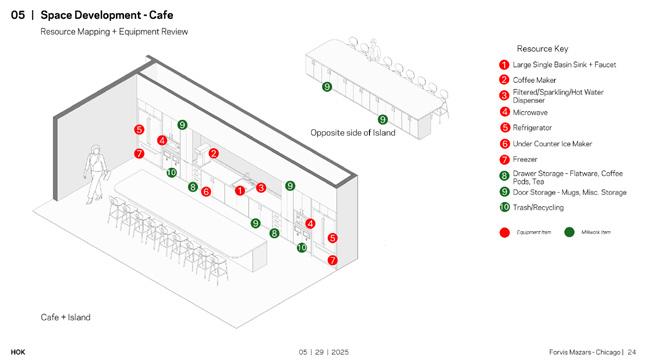
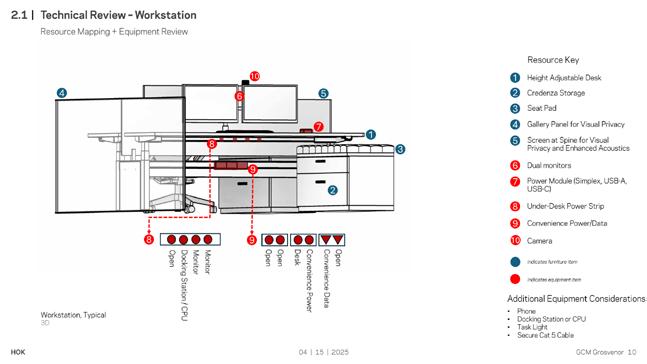
Behind the creativity is precision. We integrate performance-driven tools— such as resource mapping, lighting and power strategies, and technology planning—while documenting every detail to ensure flawless delivery.
This phase blends artistry with expertise, narrowing in on a design that feels both inspired and achievable while preparing the foundation for seamless implementation.
3D Rendering: visualize the final design with realistic details, lighting, and textures for informed decisions
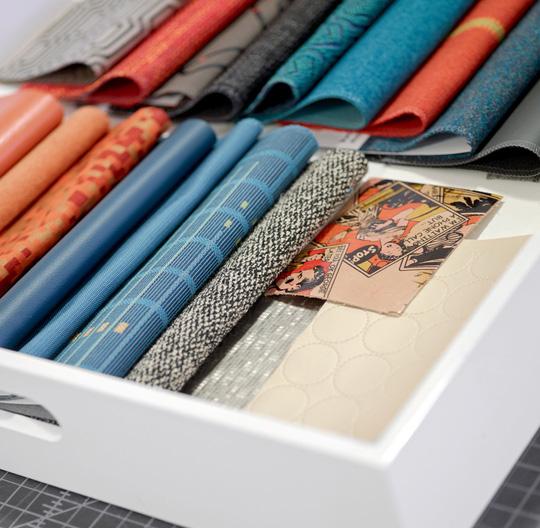
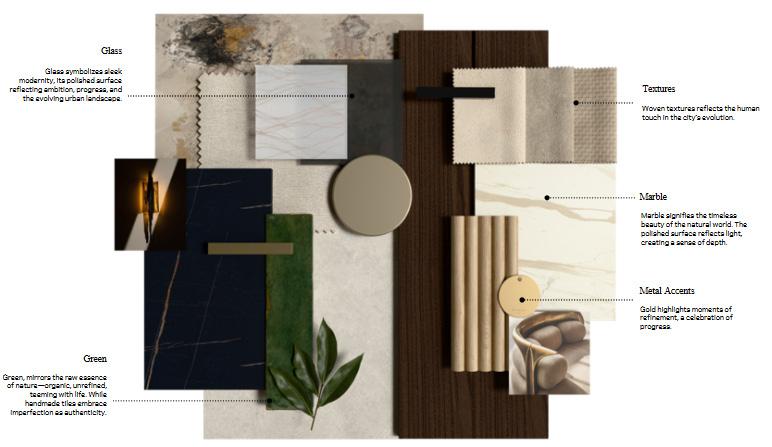
material palettes: define the look, feel, and mood of a space through coordinated finishes and textures
hand sketches: quickly explore ideas and communicate spatial concepts. It's imaginative, iterative and flexible
DELIVER
Here is where strategy transforms into a vision you can see, touch, and feel. Our designers take inspiration from your culture, brand, and story to create a workplace that is both functional and extraordinary.
CONSTRUCTION
DOCUMENTS + PERMITTING
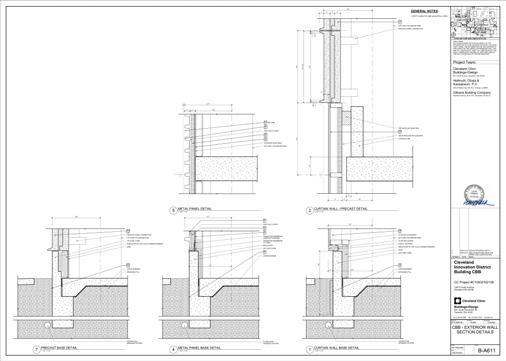
Comprehensive, coordinated documentation provides a clear roadmap for builders and regulators alike.
CONSTRUCTION
ADMINISTRATION
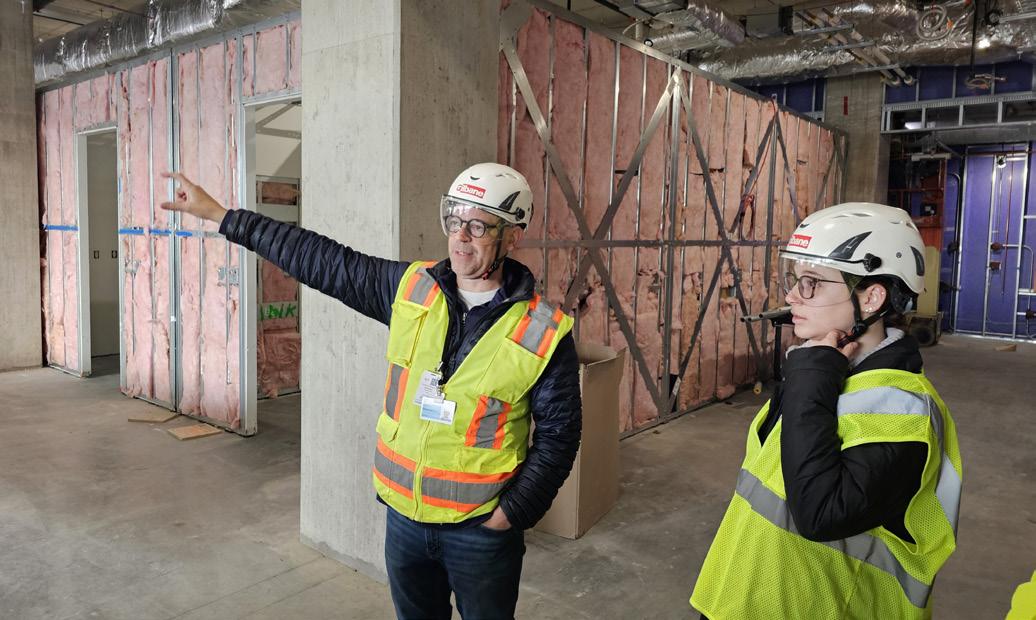
We remain by your side throughout construction—visiting the site, addressing questions, resolving issues, and coordinating with vendors to ensure furniture, technology, and specialty finishes are delivered and installed according to design intent. Our team monitors installations, materials, and finishes to ensure accuracy down to the smallest detail.
PROJECT
CLOSEOUT
From punch lists to as-built documentation, we provide a thorough handoff so your team can move in seamlessly.
LEVERAGING TECHNOLOGY
HOK’s suite of tools—including BIM 360, Revit, dRofus, Trimble Connect, ProjectSight, Bluebeam Studio, MS Teams, Smartsheet, ConceptBoard, and Office 365—enables transparent, efficient, and collaborative project delivery. Clients and external team members can access many of these platforms, enhancing communication, coordination, and oversight throughout the project.
Deliver is where vision meets craftsmanship—bringing your new workplace to life with precision, care, and the confidence that every detail has been considered. on-site construction administration meetings
SAMPLE DELIVERABLES
SPACE PLANNING
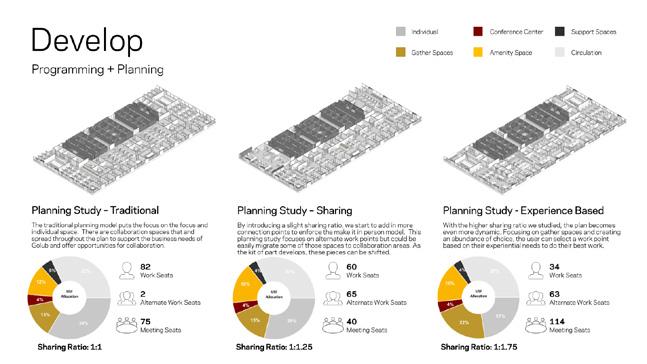
Our program and planning templates layer in our thought leadership, program data, space plans and graphic “dials” that represent how space is being utilized between collaborative and focused space. HOK is able to create scenarios quickly, so our clients can make informed decisions more quickly and with confidence.
DESIGN DEVELOPMENT
Our Design Development presentation is a compilation of the information gathered in the aesthetic and technical workshops. This package is a refinement of the schematic design presentation, with furniture forms, light fixtures and material locations and specifications identified.
SCHEMATIC DESIGN
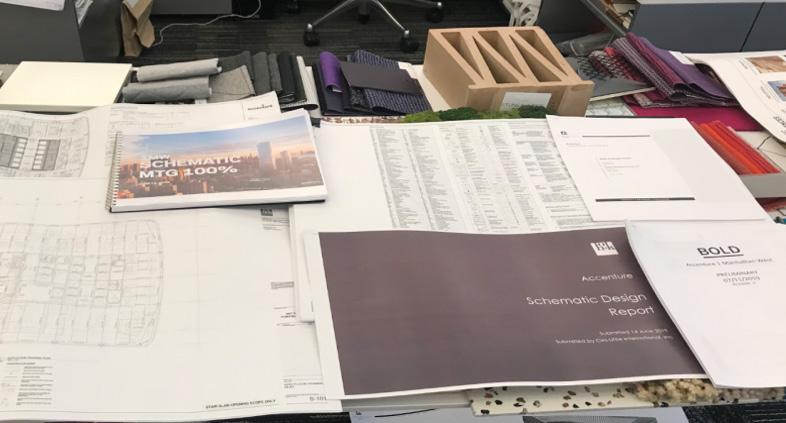
Our Schematic Design presentation is a compilation of the information gathered in the aesthetic and technical workshops. We gather equipment information in schematic design, so that spaces are correctly sized and configured. The Schematic package captures the look and feel of the space.
EARLY RELEASE MATERIAL / EQUIPMENT RELEAS E
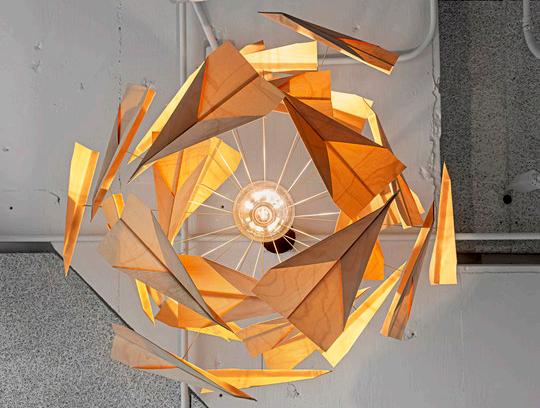
The Early Release Package is a set of contract drawings that are issued prior to the permit set. This allows the General Contractor on behalf of Origami Risk to order long lead items for an on-time delivery of the new workplace.
BUDGET PACKAGE
The Schematic Budget Pricing Package includes floor plans, reflected ceiling plans, renderings, schedules and a scope narrative.
FURNITURE TYPICALS + INSPIRATION
The furniture package for the RFP identifies the type, location, specifications and aesthetic direction of the furniture package. The furniture dealer is able to provide an accurate furniture bid
CLIENT STORIES
HOK has collaborated with an extensive number of world renowned law firms. Nurturing these relationships by promoting brand, culture and devising healthier and more rewarding workspaces is what we do best. We genuinely understand the value and importance of a client’s expectations and core philosophies that has led us to develop successful, awardwinning environments around the globe.
SELECT CLIENT EXPERIENCE
Akin, Gump, Strauss, Hauer + Feld
A+O Sherman
Armstrong Teasdale
Arnold + Porter
Ausley + McMullen
Baker Botts
Baker McKenzie
Barristers and Solicitors
Bingham McCutchen
Blake Cassels + Graydon
Bondurant, Mixson + Elmore
Borden Ladner Gervais
Broad + Cassel
Bryan Cave
Carlton Fields
Cleary Gottlieb Steen + Hamilton
Cook, Yancey, King + Galloway
Crosby, Heafey, Roach + May
Crowe Collison + Kaplan
Davis + Company
Debevoise + Plimpton
Dechert
Dentons
DLA Piper
Dreier Stein + Kahan
Dutton Brock LLP
Ferruzzo + Ferruzzo
Fraser Milner Casgrain
Gaedertz, Quack, Krelle, Vieregge
Gallop Johnson Chromalloy
Gibson, Dunn + Crutcher
Guilfoil Symington Petzall + Shoemake
Gunderson Dettmer
Gunster, Yoakley, Criser + Stewart
Hall, Booth, Smith + Slover
Hancock Rothert + Bunshoft
Haynes + Boone
Heller Ehrman
Holland + Knight
Husch + Eppenberger
Irell + Manella
Jenner + Block
Jones, Day, Reavis + Pogue
Katten Muchin Rosenman
Kirkland + Ellis
Latham + Watkins
Littler, Mendelson, Fastiff, Tichy + Mathiason
Lillick + McHose
Locke Lord, LLP
Los Angeles County Bar Association
Lynberg + Watkins
Lyon + Lyon
Mayer Brown
McCarthy Tetrault LLP
McGuire Woods LLP
Morgan Lewis & Bockius LLP
Nossaman LLP
O’Donnell Shaeffer
O’Melveny + Myers
Oppenhoff + Rädler
Orrick, Herrington + Sutcliffe
Parker Hudson Rainer + Dobbs
Pillsbury Madison + Sutro
Polsinelli
Reynolds Porter Chamberlain
Riordan + McKinzie
Rogers + Hardin
Senniger Powers
Shaw, Pittman, Potts + Trowbridge
Sheppard, Mullin, Richter + Hampton
SJ Berwin
Skadden, Arps, Slate, Meagher + Flom
Stein + Kahan
Stroock + Stroock + Lavan
Sullivan + Cromwell
Van Etten
Suzumoto + Becket
Vinson + Elkins
Wessing
White + Case
Williams Shifino
Wilmer, Cutler + Pickering
Wilson Elser
BROWN AND CROUPPEN
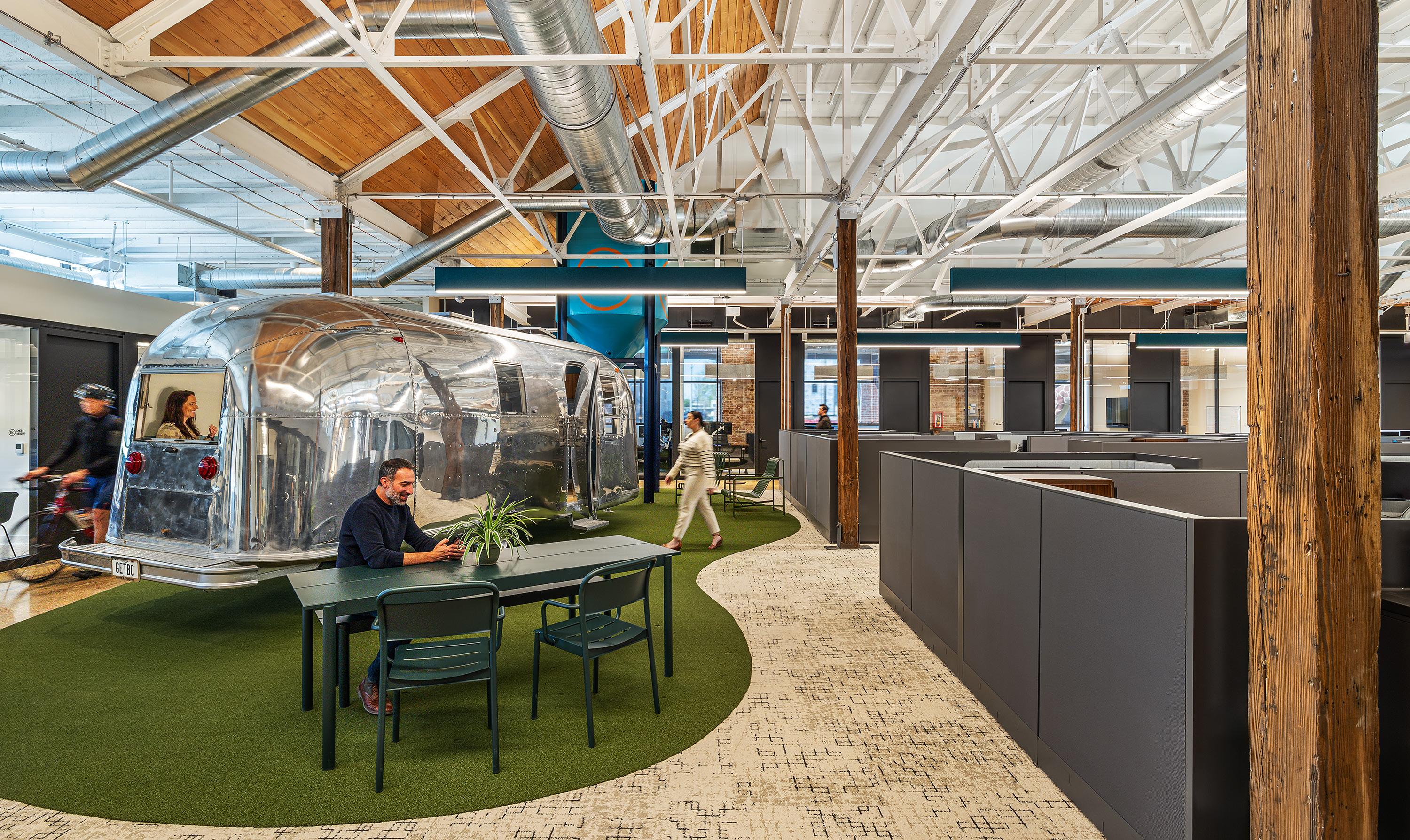
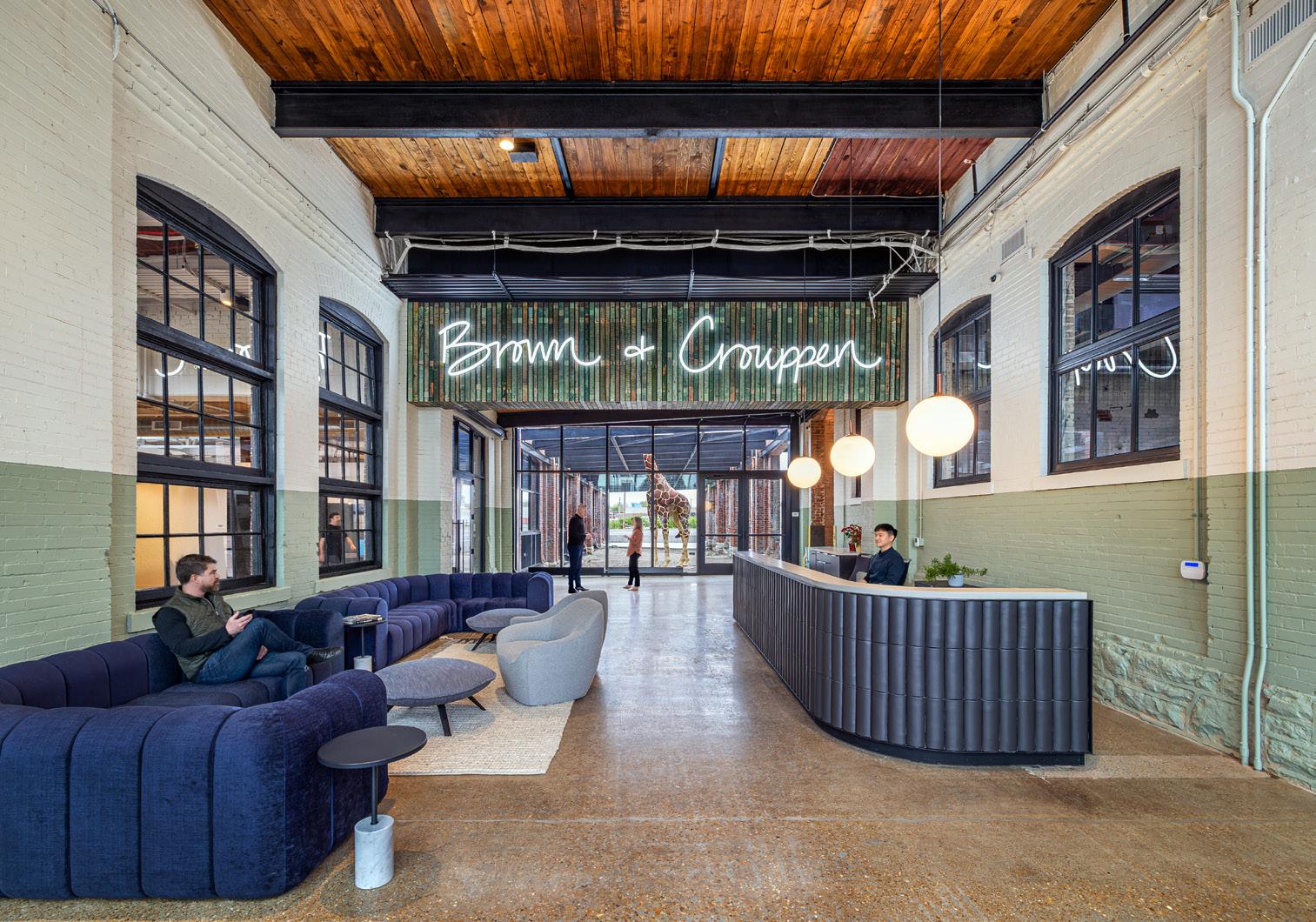
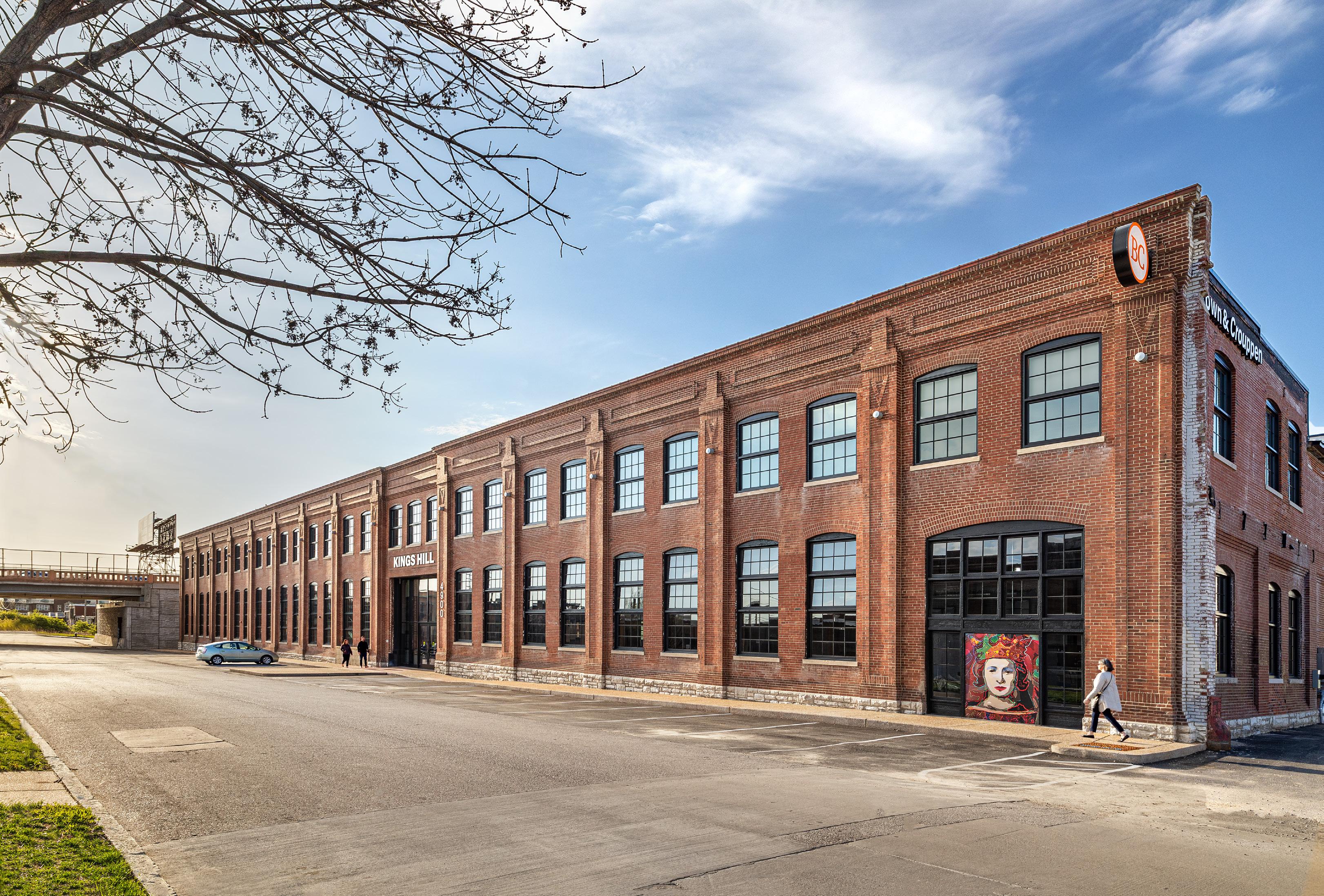
In a powerful expression of adaptive reuse and interior design innovation, HOK has transformed a long-abandoned 1910 Magic Chef stove factory into a vibrant, human-centered headquarters for Missouri’s largest injury law firm, Brown + Crouppen.
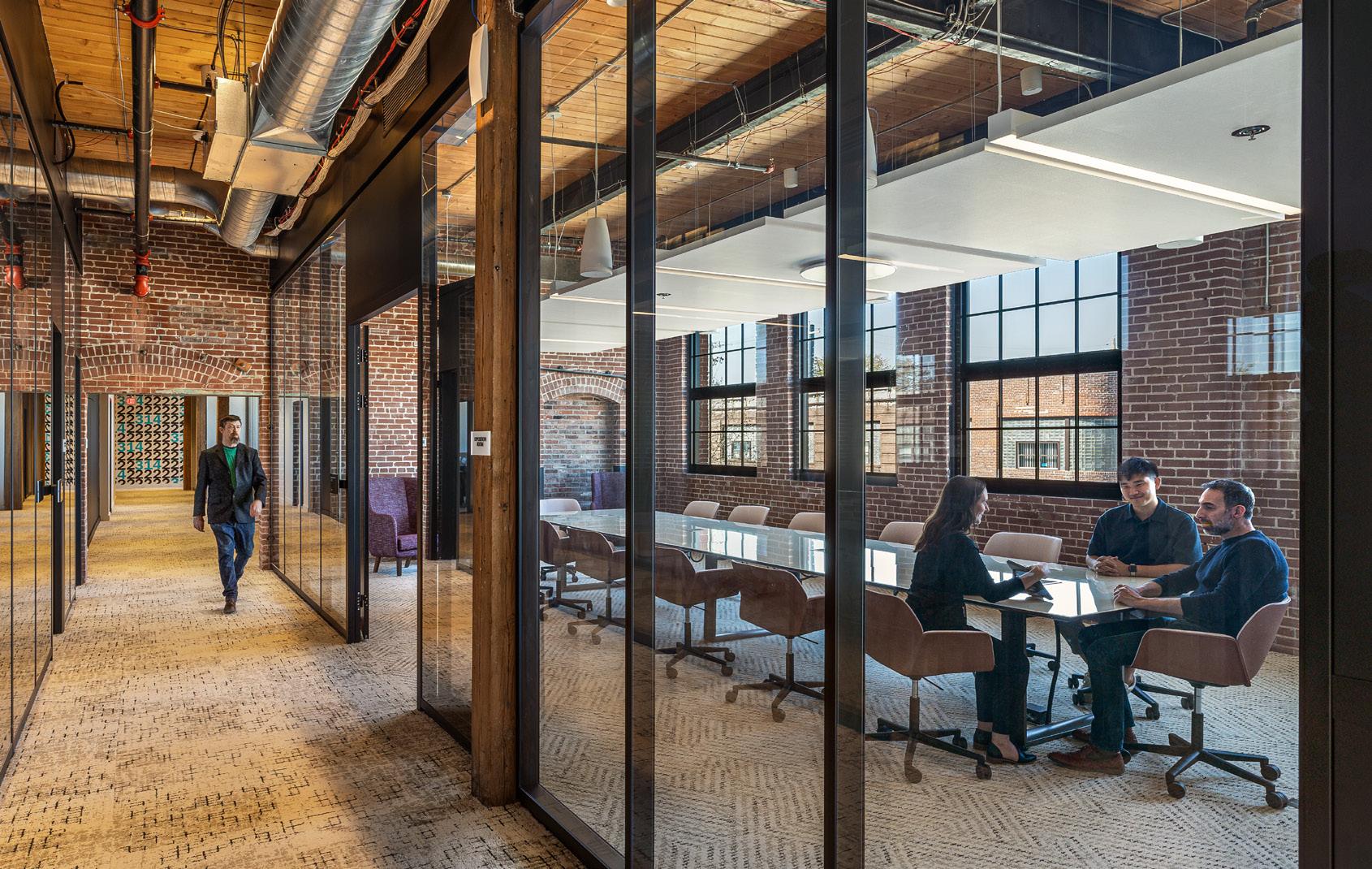
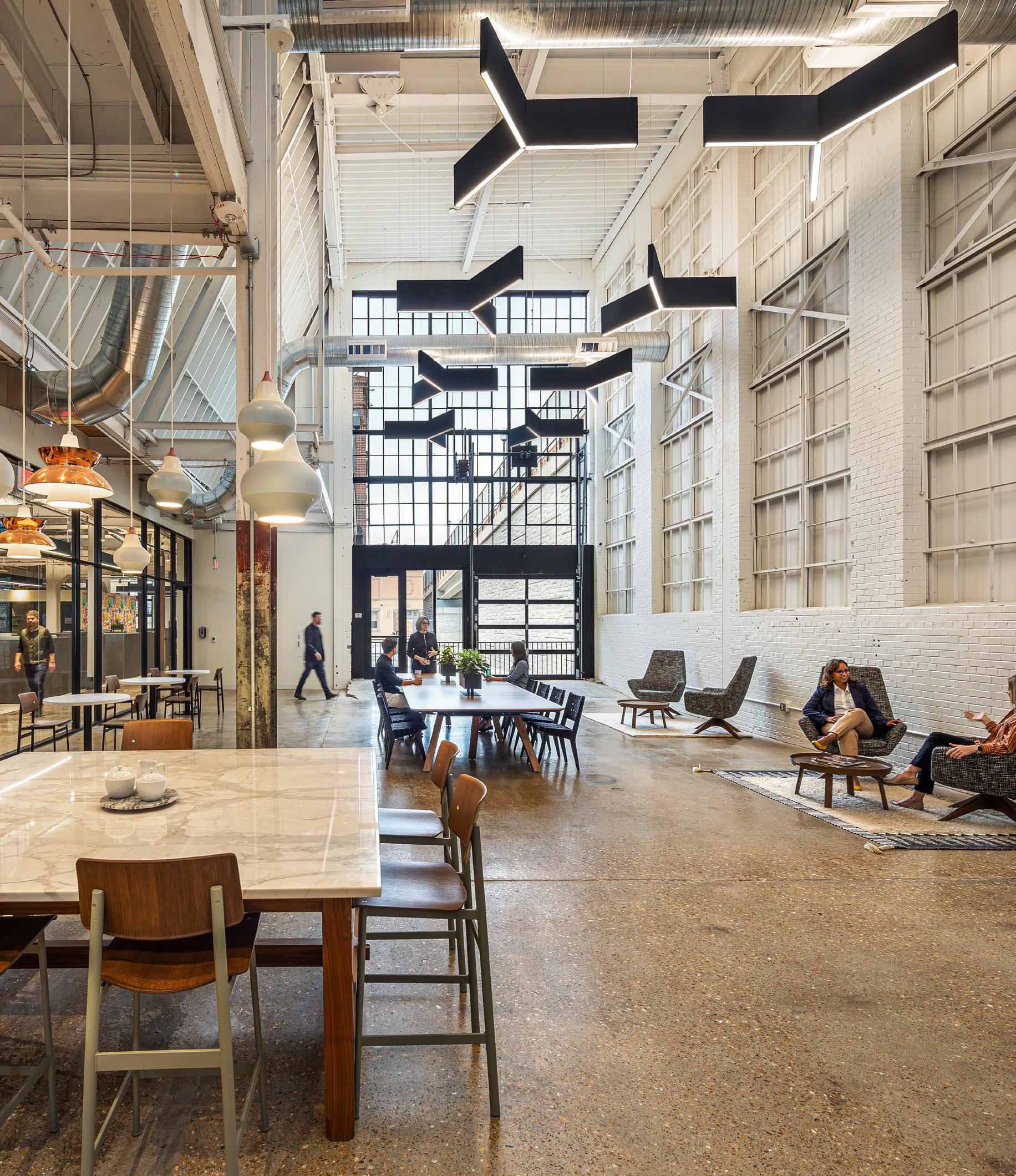
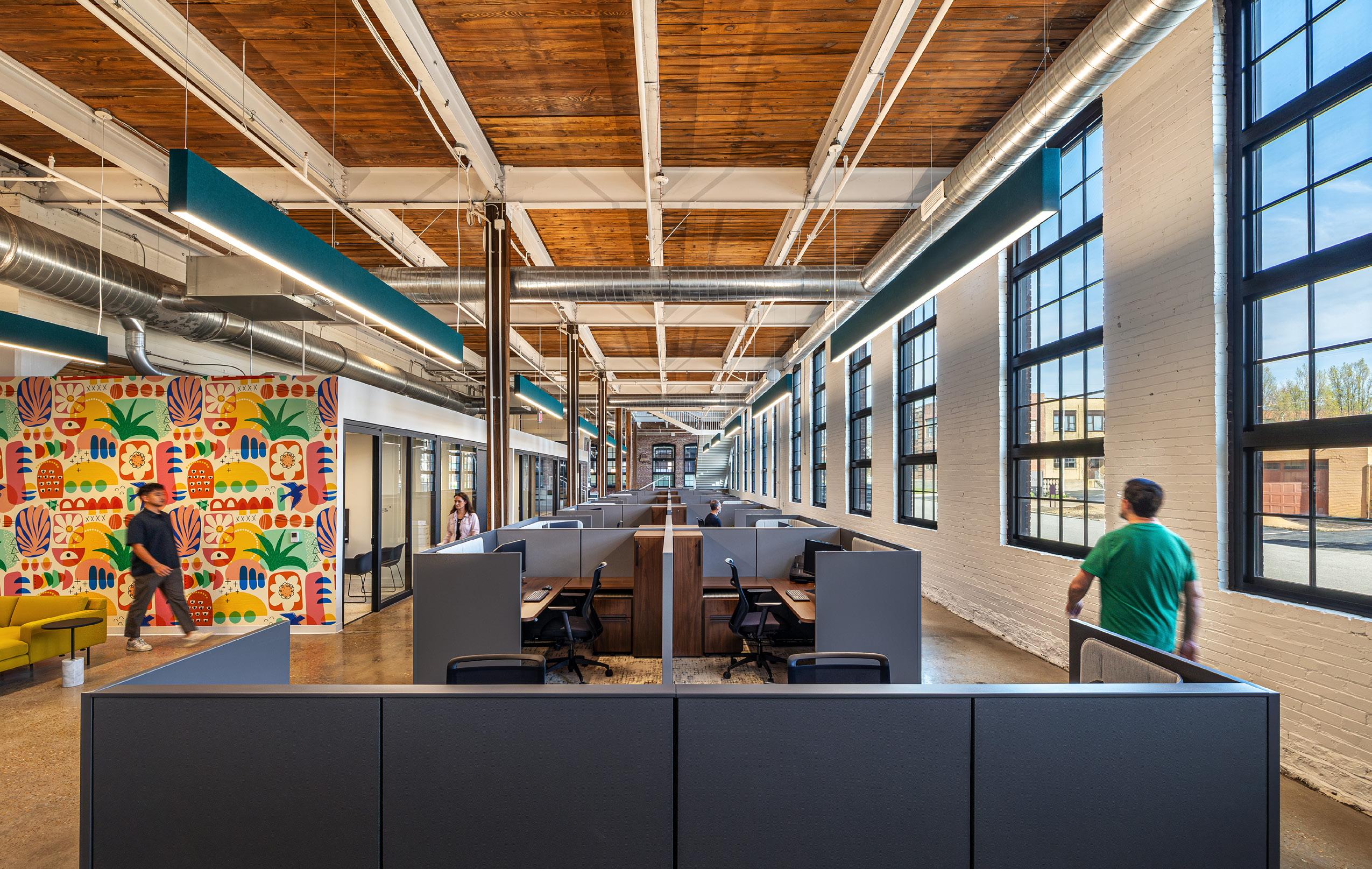
The uniquely bold workplace presents a compelling alternative to remote work that honors the building’s industrial past while fostering collaboration, flexibility, and community. The dynamic loft-inspired design balances historic character with contemporary performance. A neutral, warm material palette—paired with custom graphics, exposed concrete, acoustic solutions, and patterned carpets— is a distinctive departure from traditional legal workplace design. With a blend of dedicated offices and flexible sit-stand workstations, the design accommodates varying occupancy levels on any given day and is an inviting and productive environment tailored to a hybrid workforce.
IIDA Gateway Chapter – More Than Built Project Award
IIDA Gateway Chapter – Built Project Award
214 1:1.3
169 10x12
EMBRACING HISTORY
Vacant
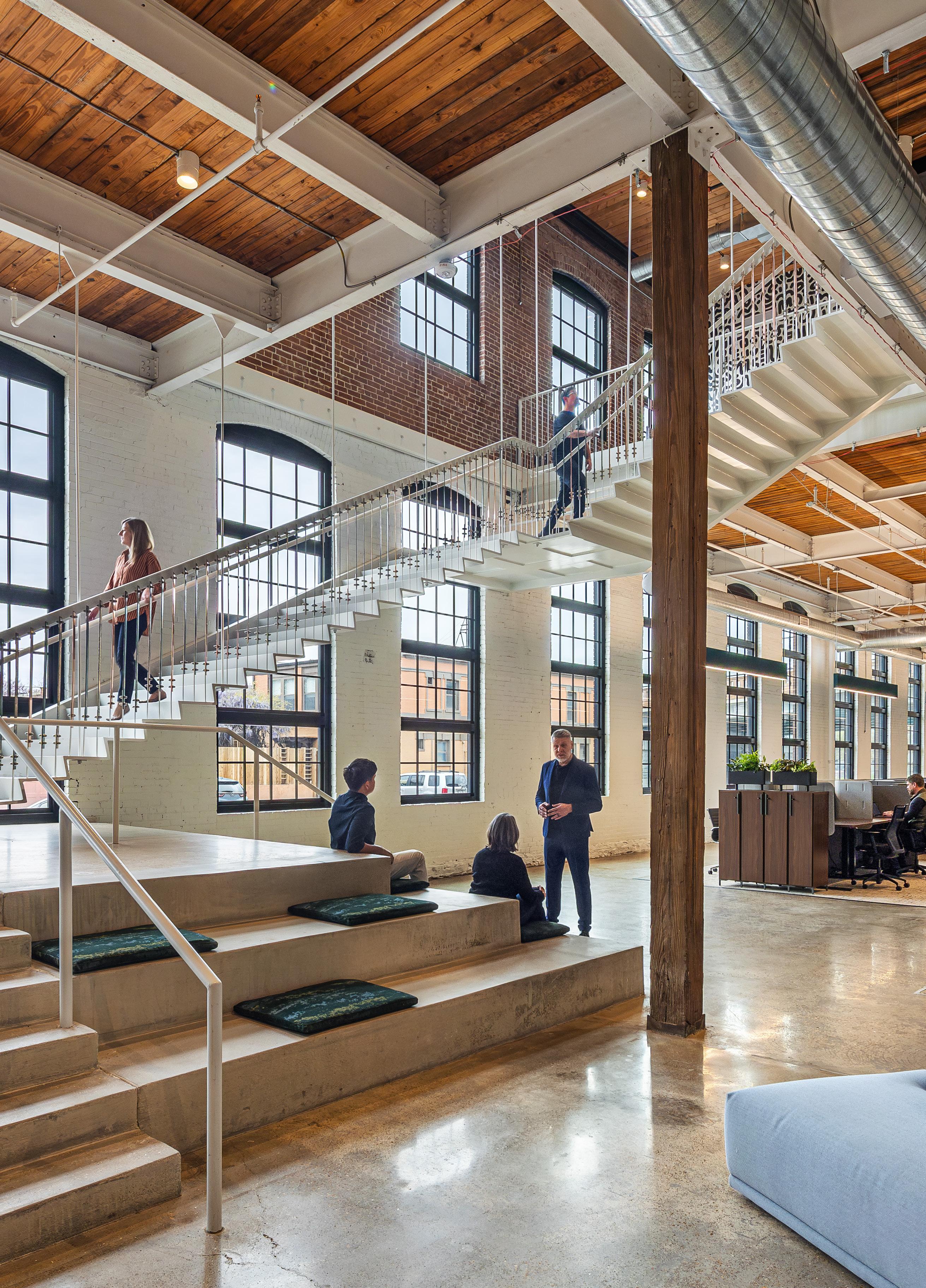
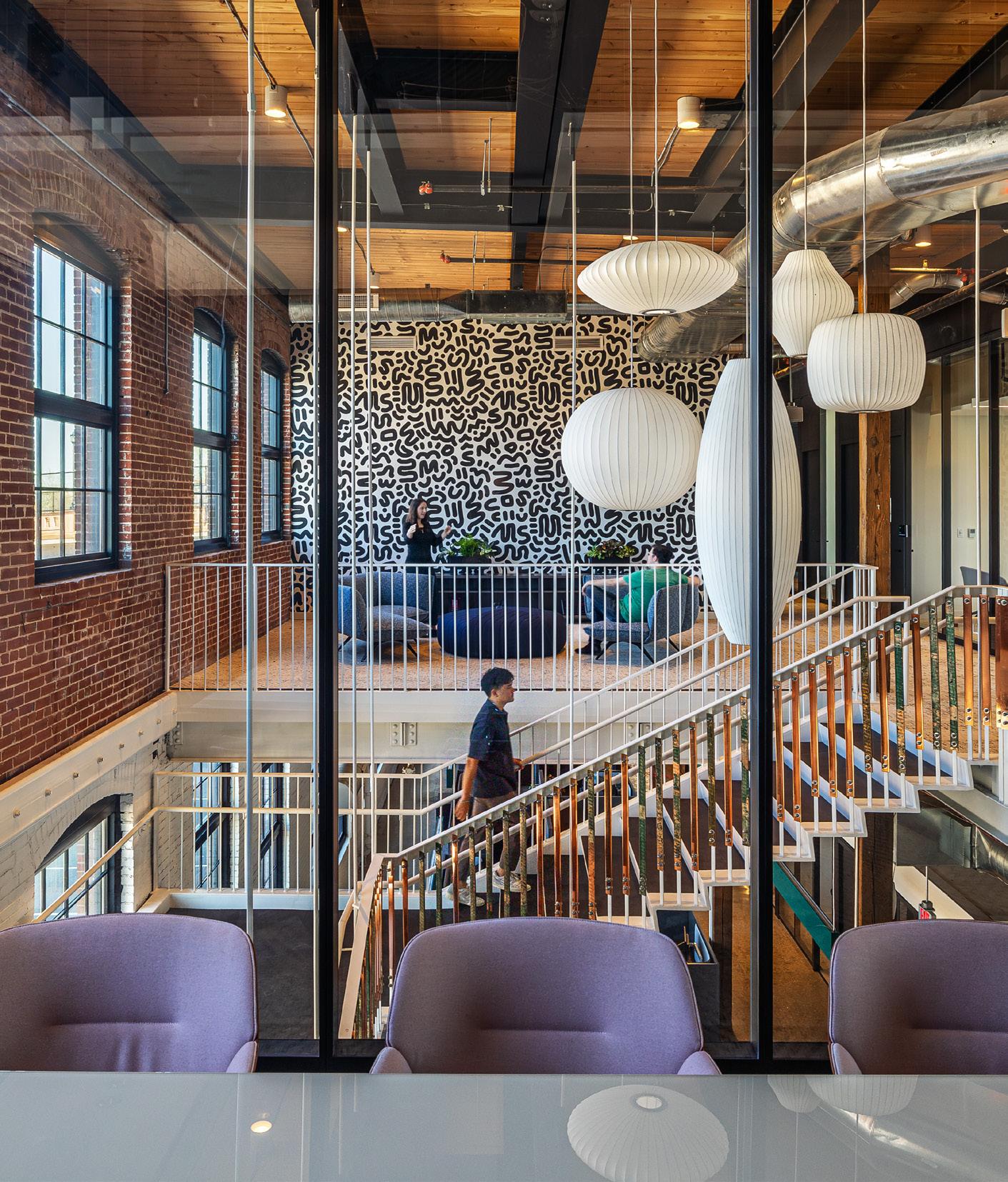
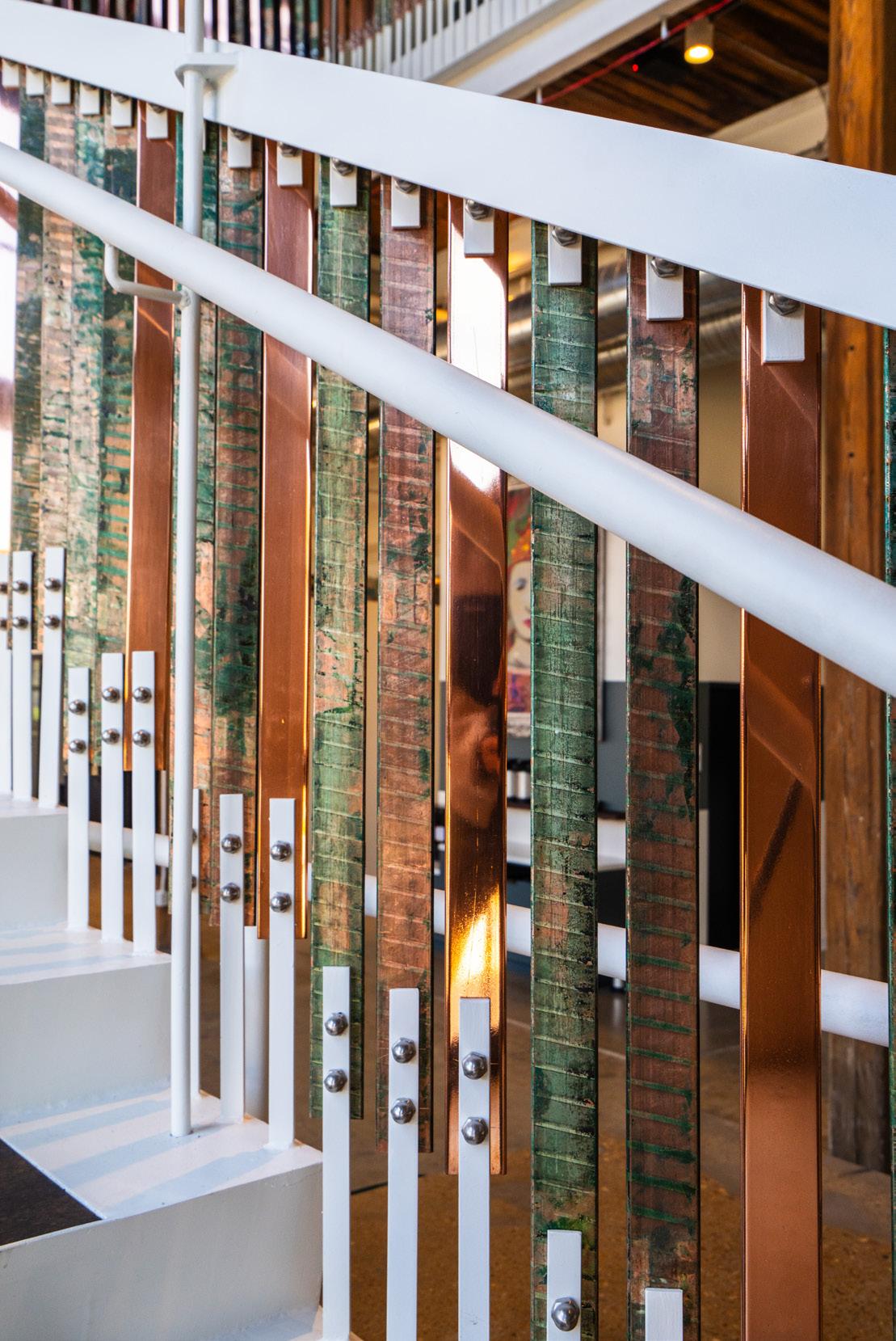
for nearly five decades and scarred by a fire that once destroyed an adjoining structure, the building posed significant architectural and technical challenges. Yet, rather than erasing its story, HOK used design to reveal and celebrate it. The team preserved original features—such as tongue-and-groove wood floors, exposed brick, and timber columns—infusing the space with warmth, texture, and authenticity. Nearly 1,500 feet of salvaged solid copper bars, once part of the factory’s power supply, were repurposed into statement-making design elements, including wall cladding, wayfinding, and pickets for a monumental stair. With sustainability and historic preservation in mind, some unique relics remain, like the former water tank.
MAKING THE MOST OF SPACE
A central internal staircase anchors the “town hall,” the collaborative heart of the space, surrounded by breakout zones, private meeting rooms, a mezzanine library, and a dedicated training center. Playful and unexpected design moments—like a vintage Airstream trailer converted into a conference room and another meeting space outfitted with exercise bikes—energize the workplace and foster a sense of creativity and ease. A lush, 3,000-square-foot courtyard visible from reception extends the workplace outdoors, while mini-golf greens, a fitness center, event space, and a recording studio round out a suite of amenities that rival the comforts of home. For more traditional legal office functions, high-tech, daylit conference and deposition rooms integrate hospitality principles and underscore the seriousness of the firm’s client-facing work.
Despite the absence of original parking, HOK helped the firm navigate complex site challenges, including partial demolition to make room for 150 new parking spaces— crucial for accessibility and employee returnto-office adoption. Brown + Crouppen’s relocation from downtown St. Louis to the historic Hill neighborhood not only marks a new chapter for the firm but also contributes to the broader revitalization of the area.
King’s Hill stands as a model of workplace transformation—deeply rooted in its past, yet unmistakably designed for the future.
“The new $15.5 million historic factory-turned-office … is designed to compete with staffers’ homes.”
-
St. Louis Business Journal
CONFIDENTIAL CLIENT
By blending elegance with adaptability, tradition with innovation, Skadden’s new Los Angeles headquarters captures the essence of modern legal practice—refined, resilient, and deeply connected to its people and place.
The relocation of one of the world’s most prestigious law firms to Century City presented an opportunity to completely redefine how a top-tier legal workplace could look and feel. For decades, this firms reputation has been anchored in precision, intellect, and presence. This move, however, asked a deeper question: what does prestige mean in a post-pandemic world that values flexibility, wellness, and connection just as much as reputation? HOK’s design team answered by crafting a workplace that is at once luxurious and restrained, grounded in natural beauty yet unmistakably urban—a space that embodies confidence without excess and innovation without compromise.
It embodies the firm’s evolution—leaner, more connected, and more sustainable—without losing the gravitas that defines its legacy.
LOCATION
Century City, California
SIZE
57,000 SF
SERVICES
Interior Design, Consulting
STATUS
Completed in 2024
SUSTAINABILITY
LEED Silver Track
RECOGNITION
IIDA Southern California Calibre
Award – Work Large, 2025
scan
QR code to view the space
1.7
13
EFFICIENCY ABOVE ALL
The 13-month project was as much an exercise in strategy as in design. This law firm intentionally downsized its footprint by 50,000 square feet—effectively cutting its real estate in half—while enhancing efficiency and experience. With 124 total seats and a lean 1.7 attorney-per-administrator ratio, the space is meticulously optimized to support focused legal work, mentoring, and client engagement. Every square foot performs multiple roles: hosting large-scale seminars, continuing legal education sessions, client meetings, and community outreach events with ease. Within the strict regulatory framework of Century City, flexibility was essential, and HOK’s approach ensured the office could transform seamlessly between these diverse functions without sacrificing quality or character.
CALIFORNIA COASTAL COUTURE
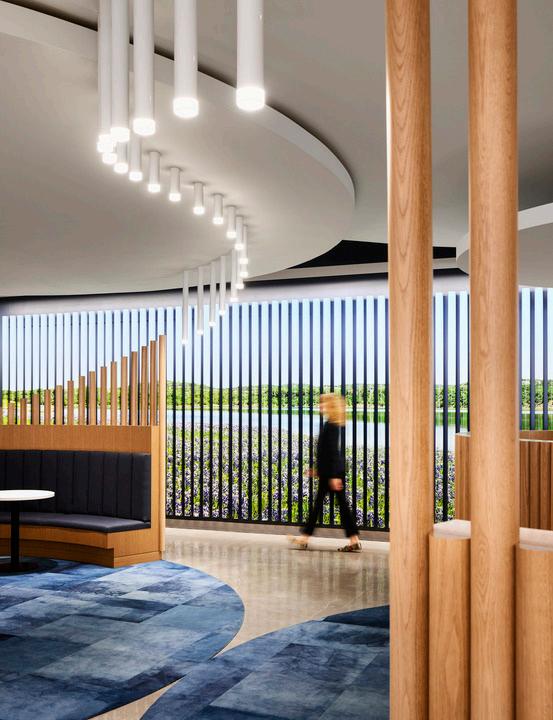
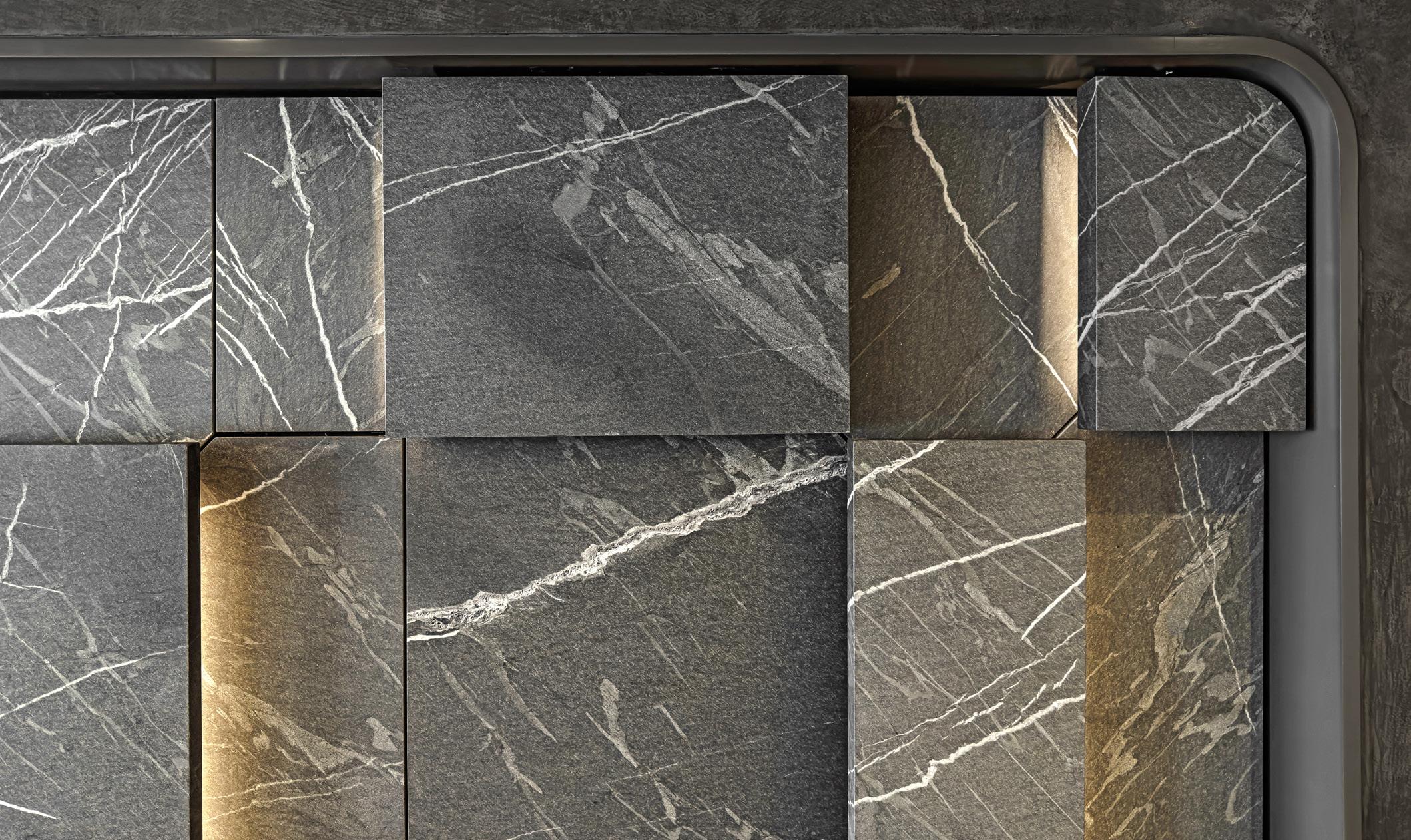
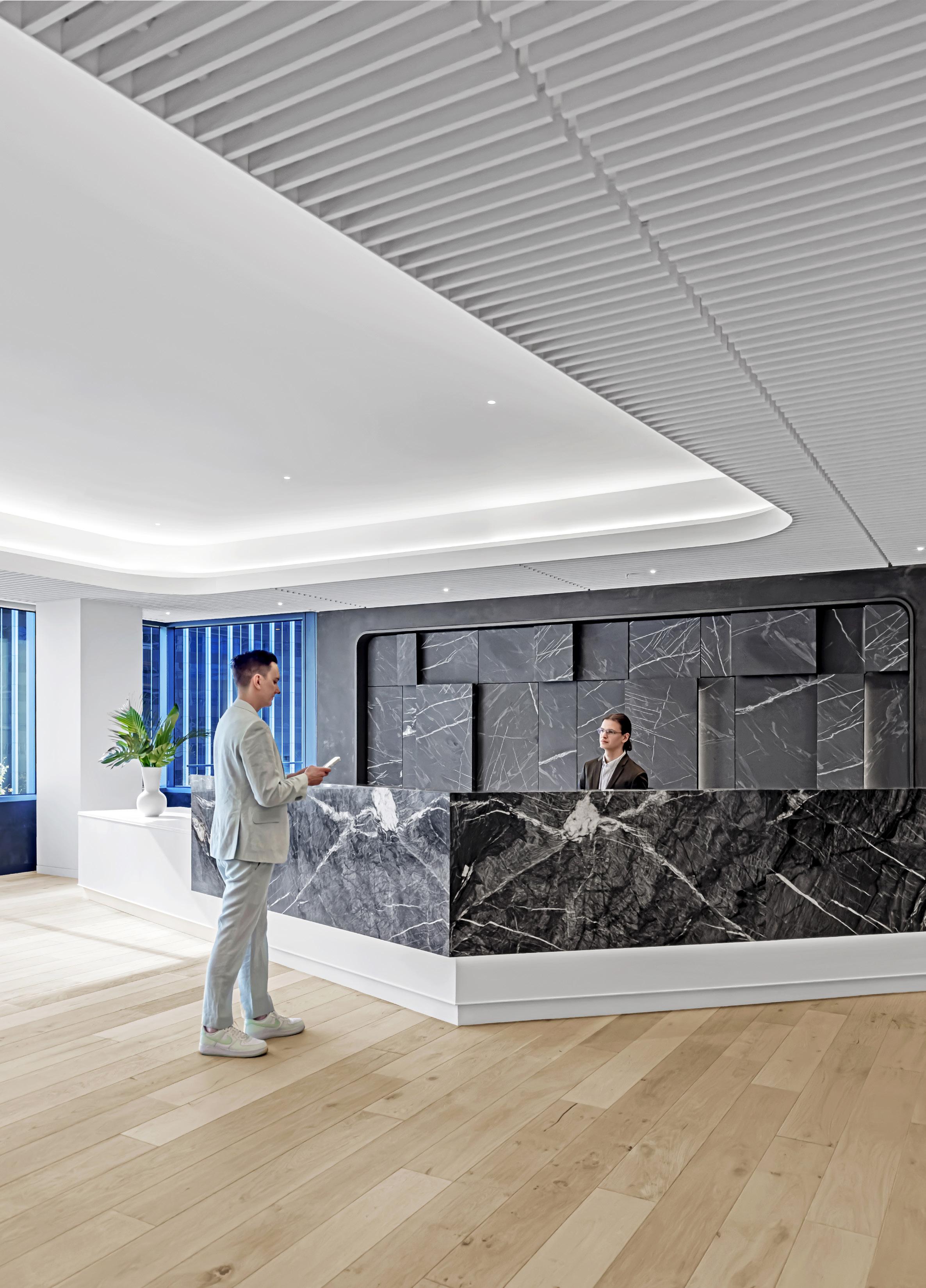
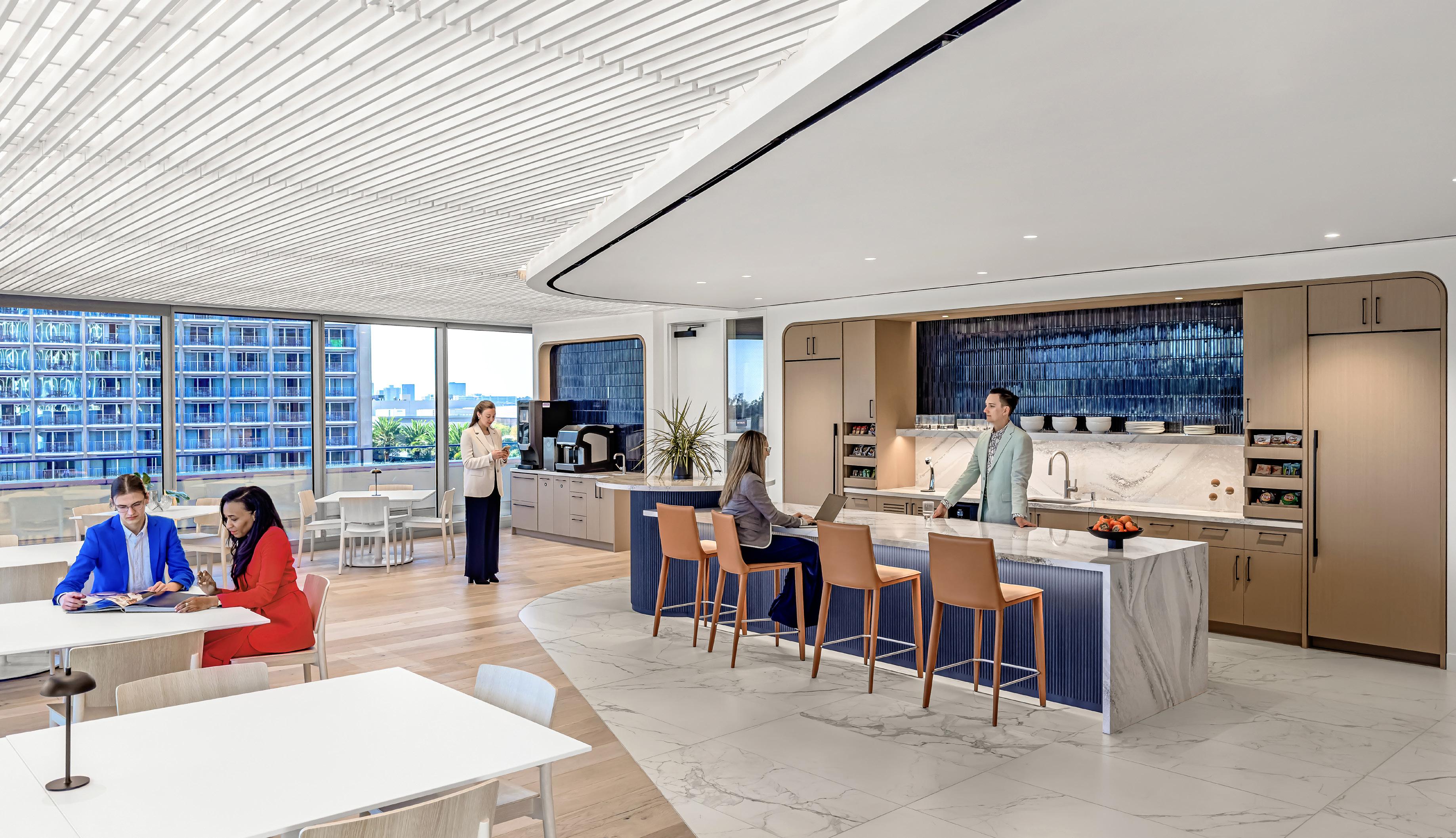
The guiding concept, “California Coastal Couture,” anchors the design in the natural rhythm of the Pacific while celebrating the precision of bespoke tailoring. Sweeping curves echo the motion of waves, subtly guiding circulation through the space, while refined architectural detailing reflects the rigor and sophistication of the legal profession. A palette of oceanic blues, soft neutrals, and warm woods creates a tranquil yet vibrant atmosphere. Light plays across sculpted ceilings and curved glass partitions, enriching a composition of natural textures and contemporary furnishings. Every material was chosen with intention— FSC-certified wood, low-VOC finishes, and durable, low-carbon surfaces that express sustainability not as a feature but as a value.
At its heart, the space centers around a social hub that bridges the professional and the personal. Here, colleagues and clients mingle informally; mentors and associates connect over coffee; and the
vertical circulation—a sculptural open stair— encourages movement and spontaneous exchange. Flexible meeting rooms and technology-rich collaboration areas extend this sense of openness, enabling the firm to adapt fluidly to evolving work patterns and client needs. The environment supports the rhythm of legal life: deep focus balanced with shared energy, structure balanced with flow.
SUSTAINABILITY
Achieving high performance within a reduced footprint demanded technical finesse and an integrated approach to energy efficiency, material health, and wellness. Advanced lighting and mechanical systems—featuring high-efficiency HVAC, smart controls, and daylight-responsive LED illumination— significantly reduce energy consumption while maintaining optimal comfort and productivity. Material choices reflect a commitment to circularity and well-being, with FSC-certified wood, recycled-content finishes, low-VOC materials, and durable, lowcarbon surfaces extending the life cycle of the interior while minimizing waste. Generous daylight access, enhanced air quality, ergonomic planning, and an open stair that encourages movement all support occupant wellness and social sustainability. The result is a workplace that feels lighter, breathes better, and performs more efficiently—an elegant, low-impact environment that embodies both HOK’s and Skadden’s shared commitment to carbon reduction, adaptability, and human-centered design.
Skadden’s Los Angeles headquarters stands as both a design achievement and a cultural statement. It translates the language of law into space—disciplined, elegant, and human—where the coast’s organic calm meets the couture precision of practice. In this new home, the firm’s heritage and future coexist seamlessly, proving that excellence today is measured not in scale, but in purpose, grace, and enduring impact.
POLSINELLI
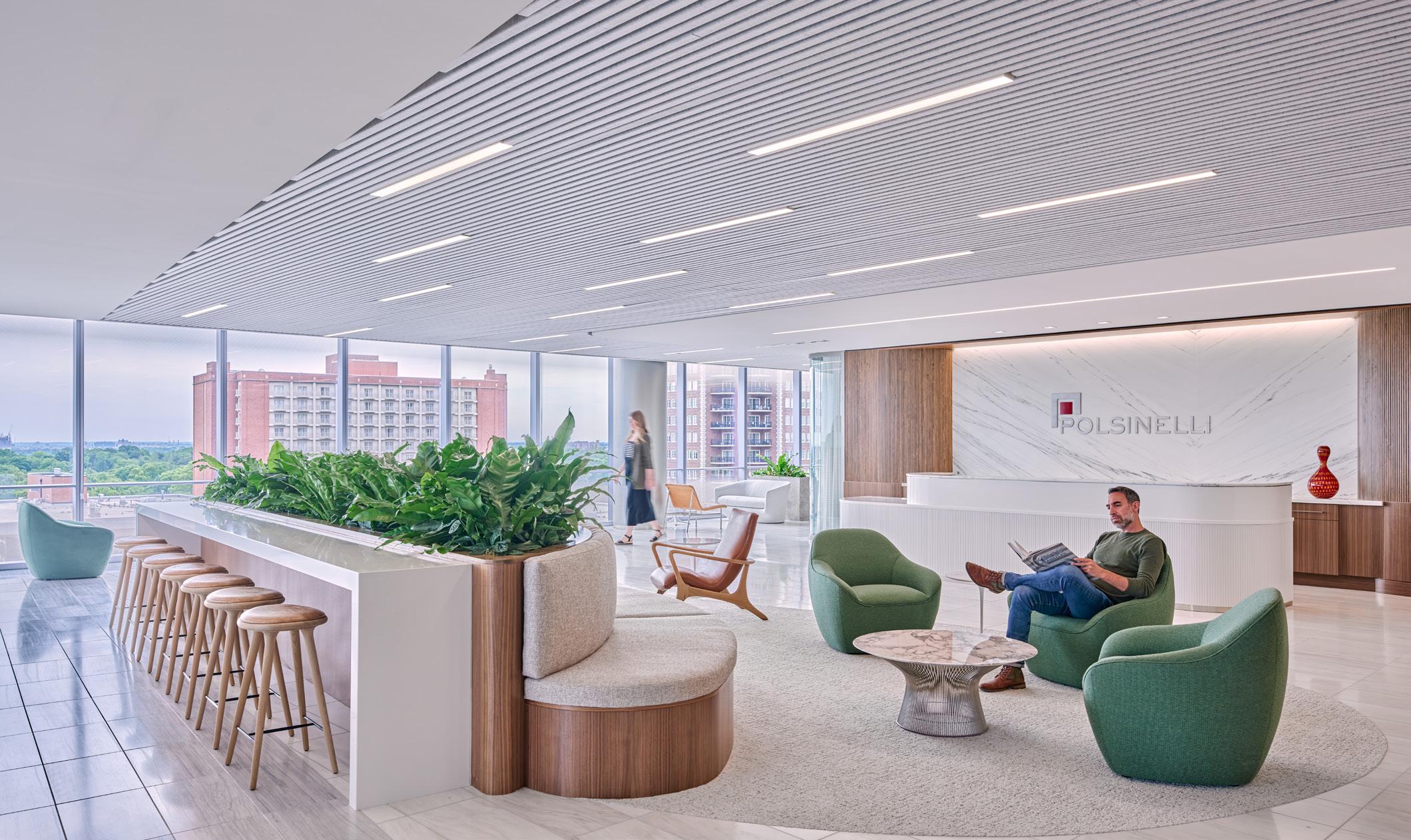
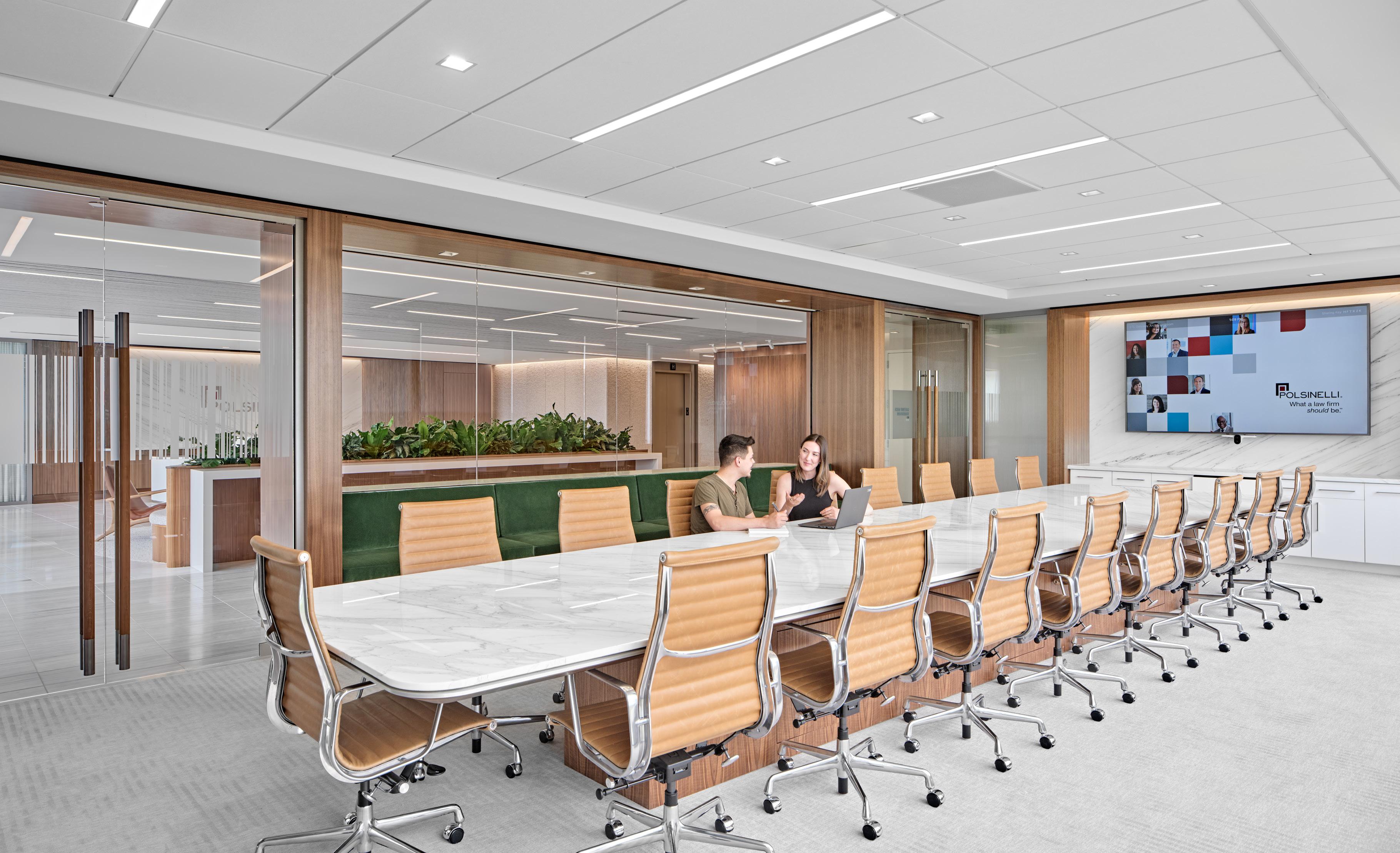
One of the country’s fastest-growing law firms, Polsinelli, has partnered with HOK on more than 30 projects in 20 cities. From New York to Denver, these projects have played an integral role in establishing Polsinelli’s workplace design standards and creating a consistent brand experience across its offices.
Across all locations, HOK's design approach emphasizes flexibility, scalability, and adaptability, allowing Polsinelli to create spaces that reflect its unique culture while maintaining consistency across offices. This collaboration has resulted in workplace environments that are powerful tools for recruiting, marketing, and community engagement, aligning with Polsinelli's mission to provide real answers to real challenges.
IIDA Mid-America – Corporate Medium Gold Award, 2025
IIDA Gateway Chapter – Built Project Award, 2025
ENR Best of the Best Projects
– Interior/Tenant Improvement Award, 2017
AIA Kansas City Merit Award –Interior Architecture, 2016
IIDA Mid-America Silver Award, 2015
“It has attracted younger generations with the idea that the firm is clear about the Polsinelli way, that this is our value proposition to our clients, and this is the story we tell,”
— Peter Sloan, HOK Director of Design, Interiors
In New York, the firm expanded its office at 600 Third Avenue, increasing its footprint to 52,516 square feet. HOK's design maximized natural light and views of the city skyline, incorporating a refined, modern aesthetic that aligns with Polsinelli’s culture and position within the legal community. The space features a gallerystyle lobby that connects visitors to an open view of the adjacent urban park, and a movable wall system in the boardroom allows the space to become part of the lobby for hosting community and legislative events. This flexibility supports the firm's goal of increasing visibility and enhancing its position as a desirable employer in the competitive New York legal market.
In Kansas City, Polsinelli's headquarters in the Plaza Vista mixed-use development showcases a sevenstory cantilevered stairwell that acts as a sculptural wood ribbon, creating visual and physical connectivity throughout the space. Strategic adjacencies optimize operational efficiencies and provide flexibility for future reconfiguration. The modern workplace features collaborative seating areas and sit-stand workstations to accommodate its 450 employees. Multipurpose training rooms provide space for mock trials, and an attorney lounge offers flexible seating options. This design has become a powerful tool for recruiting, marketing, and community engagement.
In Washington, D.C., HOK designed an office space that maximizes attorney space along the perimeter while creating a refined, modern aesthetic. A gallerystyle lobby greets visitors and connects them to an open view of the adjacent urban park. A movable wall system in the boardroom allows the space to become part of the lobby for hosting community and legislative events, enhancing the firm's visibility and position in the market.
The Dallas office fosters a progressive culture through a relaxed, collaborative, and hospitality-focused workplace. A grand staircase at the center of the lobby offers views of the city’s skyline and seamlessly connects the two-level conferencing center. Conference rooms are positioned to create a gallery hall that offers dramatic views of the city and serves as an event space connected to a rooftop terrace.
A hospitality lounge features casual client breakout spaces with sofas, lounge chairs, a coffee bar, and an open café, reflecting Polsinelli's commitment to client engagement and community involvement.
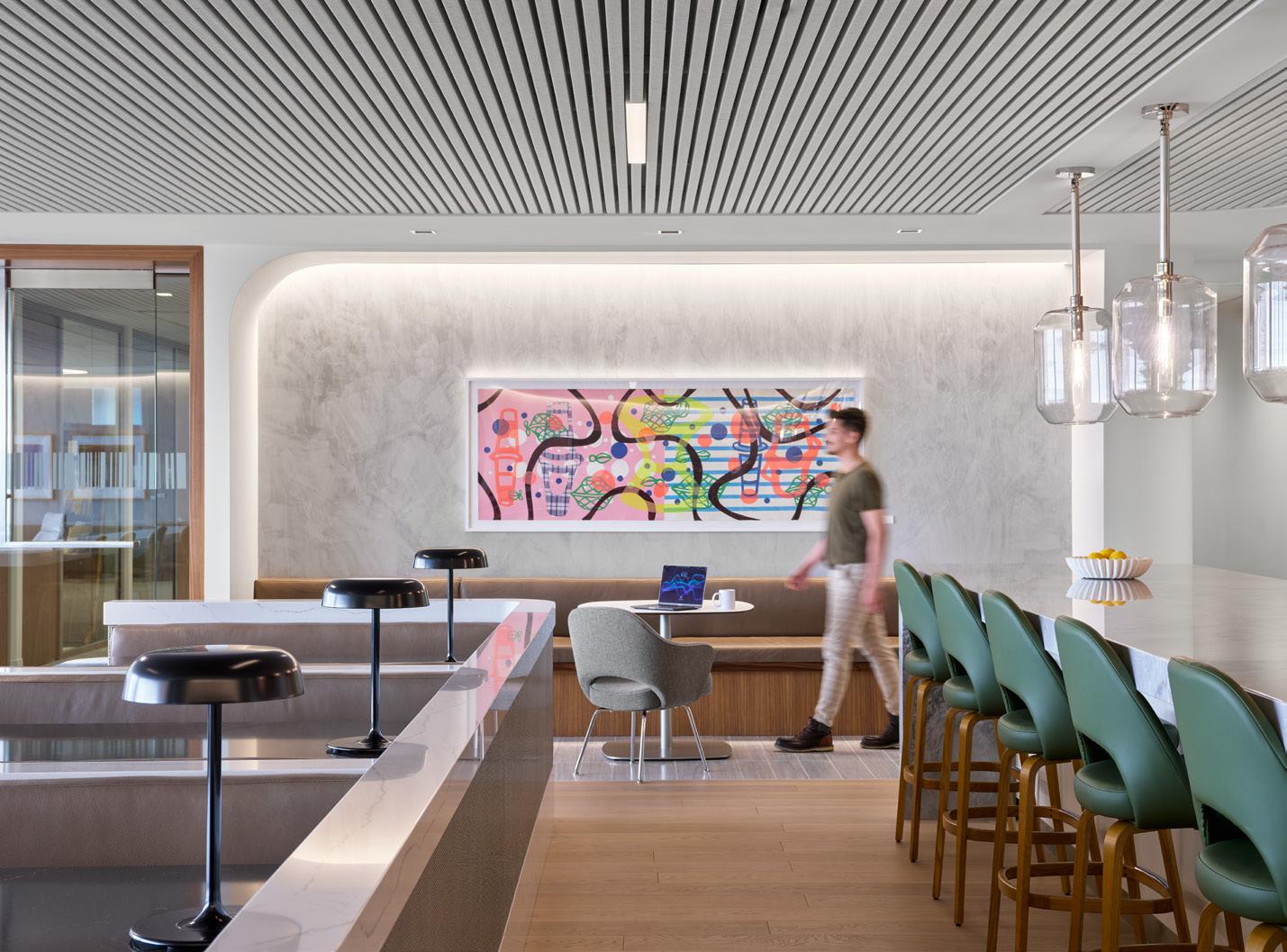
In Denver, the office features generous hospitalitycentered corridors with social spaces, work islands, coffee bars, and conversation niches. These design elements reflect Polsinelli's commitment to fostering a collaborative and inclusive work environment.
In St. Louis, Polsinelli's new office in the Centene Plaza C Tower reflects the law firm's timeless identity while supporting the flexibility and evolving needs of hybrid work. The interior design features deep green accents, natural walnut finishes, and textured stone walls, inspired by views of nearby Forest Park. Expansive windows flood the office with daylight, reinforcing a calming connection to nature. A hospitality-inspired reception lounge greets visitors with sweeping views of downtown, setting a warm and professional tone. It doubles as a pre-function space for client events and firm gatherings in an adjacent multi-purpose room. Wood-clad gallery walls in the circulation zones display Polsinelli’s curated art collection, with curved forms and organic textures promoting creativity and wellbeing. Wellness is woven throughout the experience, with ergonomic furnishings, biophilic design features, and a range of settings that support focused work, informal collaboration, and mental recharge.
As each new office is created, younger associates have been brought to the table to take part in the design dialog. The result is an increased desire to host events and engage with the community, a highlighted importance of diversity and a genuine desire to be better connected. Health and wellness initiatives have arisen as well, whether it is wellness rooms, sit-tostand desks, or better connecting people and spaces through an impressive stairway like the seven-story winding staircase at Plaza Vista. In Denver, dedicated bike storage allows employees in that office to build upon the culture of what wellness looks like in each community.
WHITE + CASE
Headline statement reserved for what our client driver was and how we solved for: improving peoples lives, serving our clients and healing the planet.
Spanning the top nine floors of Manhattan’s iconic Rockefeller Center, White + Case’s New York office redefines what a contemporary law firm can be. With HOK leading the design of the building’s amenity-rich upper levels, the project exemplifies a shift from traditional legal environments toward spaces that prioritize well-being, collaboration, and hospitality— without compromising on sophistication or function.
LOCATION
New York, New York
Los Angeles, California
Palo Alto, California
SIZE
33,000 SF - 440,000 SF
SERVICES
Interior Design, Workplace
Standards, Programming
STATUS
Completed in 2018
RECOGNITION
NYCxDESIGN Awards Best
Corporate Office
CoreNet Global NYC Commercial
Interior Project of the Year
A TECH-SAVVY LEGAL WORKPLACE
To reflect the innovation culture of Silicon Valley, White + Case’s Palo Alto office breaks from tradition with a sleek, tech-forward environment that aligns with the expectations of its client base. Located in Stanford Research Park, the 40,000-sq.-ft. office spans three floors and blends hospitality, flexibility, and seamless technology to foster collaboration and client engagement.
Key spaces—like the multifunctional reception hall that transforms into an event venue or business lounge—are crafted for versatility. A repurposed stair was cleverly hoisted into place to connect shared spaces across all three floors, saving cost while creating a bold architectural gesture. With modular offices, wellness rooms, breakout lounges, and a barista-style reception, the design prioritizes comfort, agility, and sophistication—positioning the firm as both approachable and forward-thinking in the heart of tech country.
BY THE NUMBERS
ROOTED IN RESEARCH
HOK’s design process began with deep engagement: extensive interviews with White + Case attorneys and leadership, combined with benchmarking visits to peer firms, allowed the team to understand the evolving expectations of a high-performance legal workplace. The result is a spatial and experiential strategy that balances gravitas with warmth, and efficiency with elegance.
Across all floors, HOK introduced a planning logic grounded in flexibility. A modular “kitof-parts” system supports various practice needs while enabling future adaptation. At the heart of the project is a dramatic glassand-smoked-steel staircase—a sculptural vertical connector that not only links floors physically but symbolizes the firm’s commitment to openness, accessibility, and interaction across levels and roles.
REDEFINING LEGAL AMENITIES
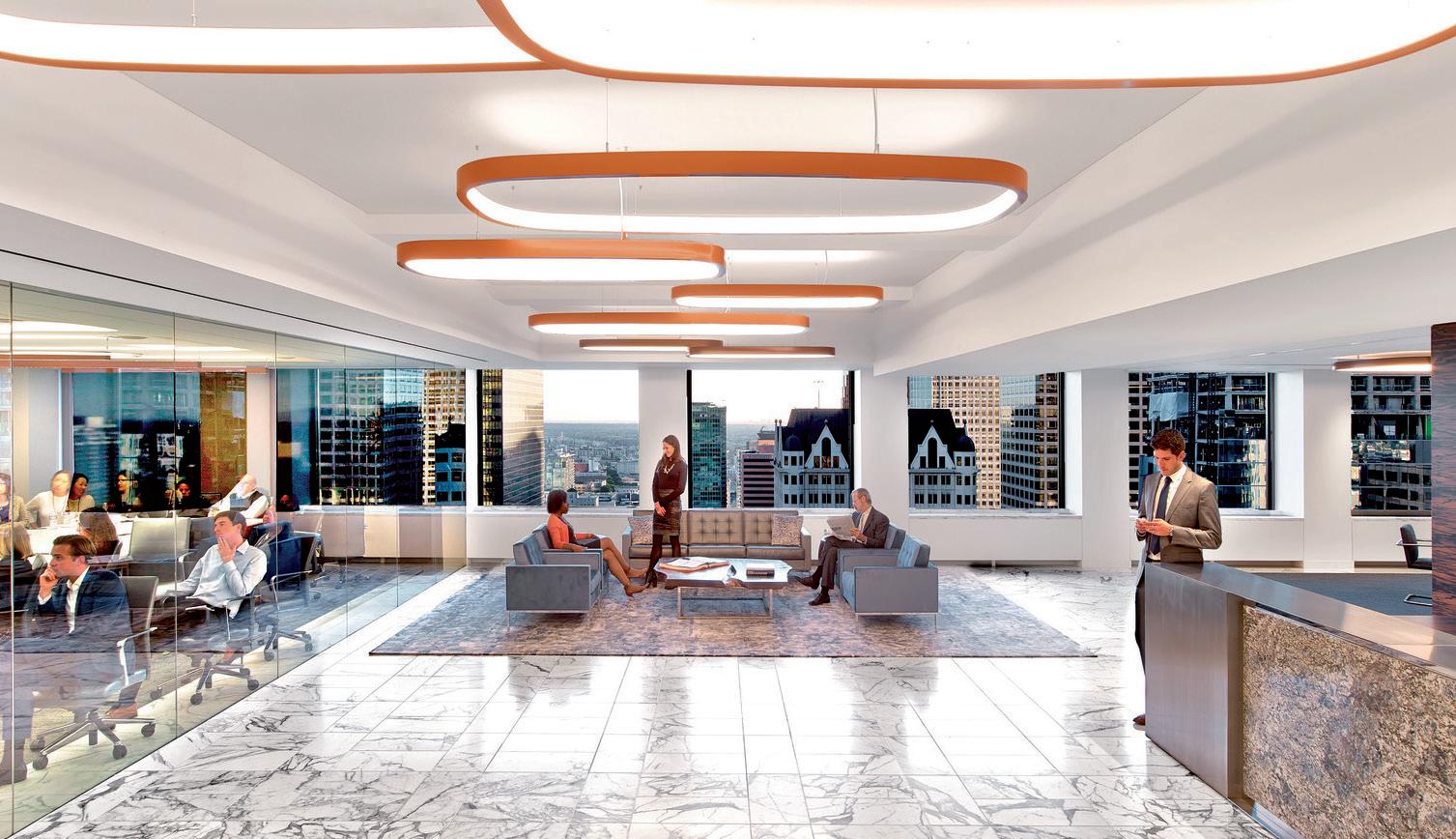
HOK transformed the firm’s amenity floors into a hospitality-infused destination—what Interior Design magazine described as “a quiet kind of buzz.” The reception area, once conventional and static, was reimagined to double in size through sliding glass partitions that flex between public and private use. Daylit and expansive, the reconfigured zone now offers integrated conference rooms and a dynamic lunch space with sweeping views of Manhattan.
The adjacent library and lounge blur the line between professional and personal. Outfitted with low-slung, residential-style furniture and softened by layers of warm materials, the space invites casual gathering, solitary work, or simply quiet reflection. An elegant internal stair anchors the room and leads to a wellness-focused suite of amenities designed by HOK to enhance daily life in the office.
WELLNESS AND THE WORKDAY EXPERIENCE
From the elevated coffee bar to a fullservice, restaurant-style café, HOK’s amenity design supports both physical and social nourishment. The dedicated fitness center—framed by skyline views of the Empire State Building—includes not just workout equipment but also a wellness suite, reinforcing White + Case’s commitment to the health of its employees.
Natural light and biophilic principles are central to the design. HOK carefully positioned communal and client-facing zones to maximize exposure to daylight and exterior views, helping reduce stress and increase cognitive function throughout the workday.
MATERIAL EXPRESSION
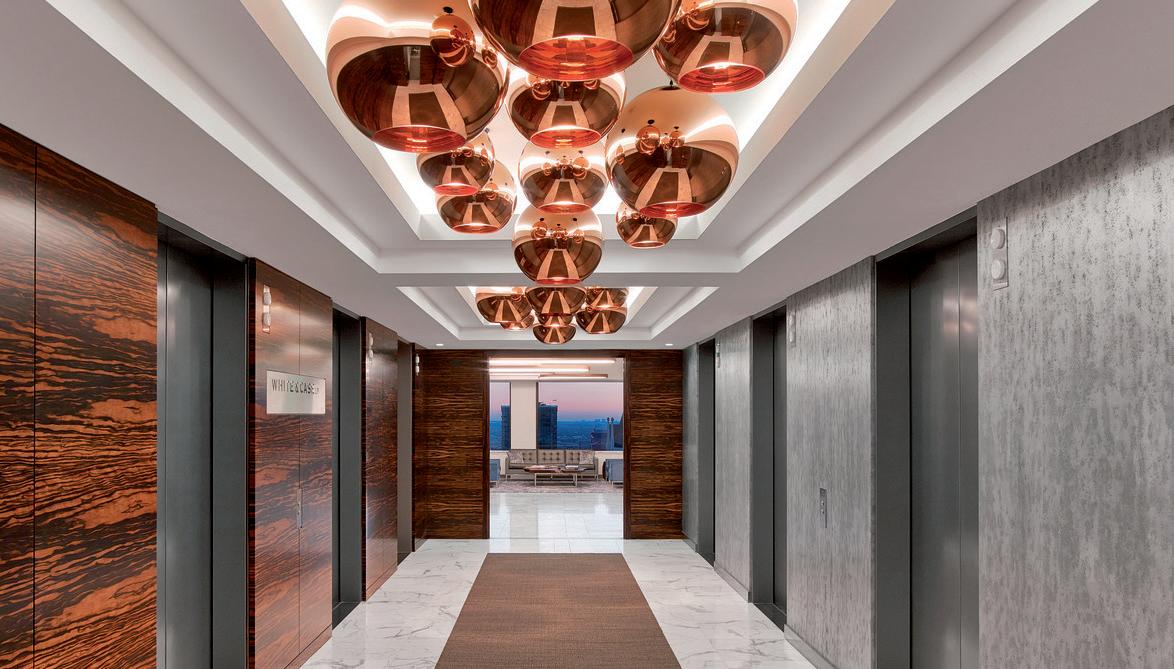
HOK’s material palette is tailored to evoke refinement without excess. In the elevator lobbies, white marble flooring meets ebony veneer paneling, while silver-patterned wallcoverings and copper pendant lighting introduce layers of texture and tone. The effect is both luxurious and restrained— drawing on classic New York sophistication but applying it through a modern, international lens.
The transition from client areas to internal work zones is seamless yet deliberate, marked by subtle shifts in materiality and spatial rhythm. Throughout, HOK uses finishes and forms not just as decoration, but as narrative—telling a story of a law firm confidently stepping into the future, rooted in legacy but designed for today’s pace and values.
DECHERT
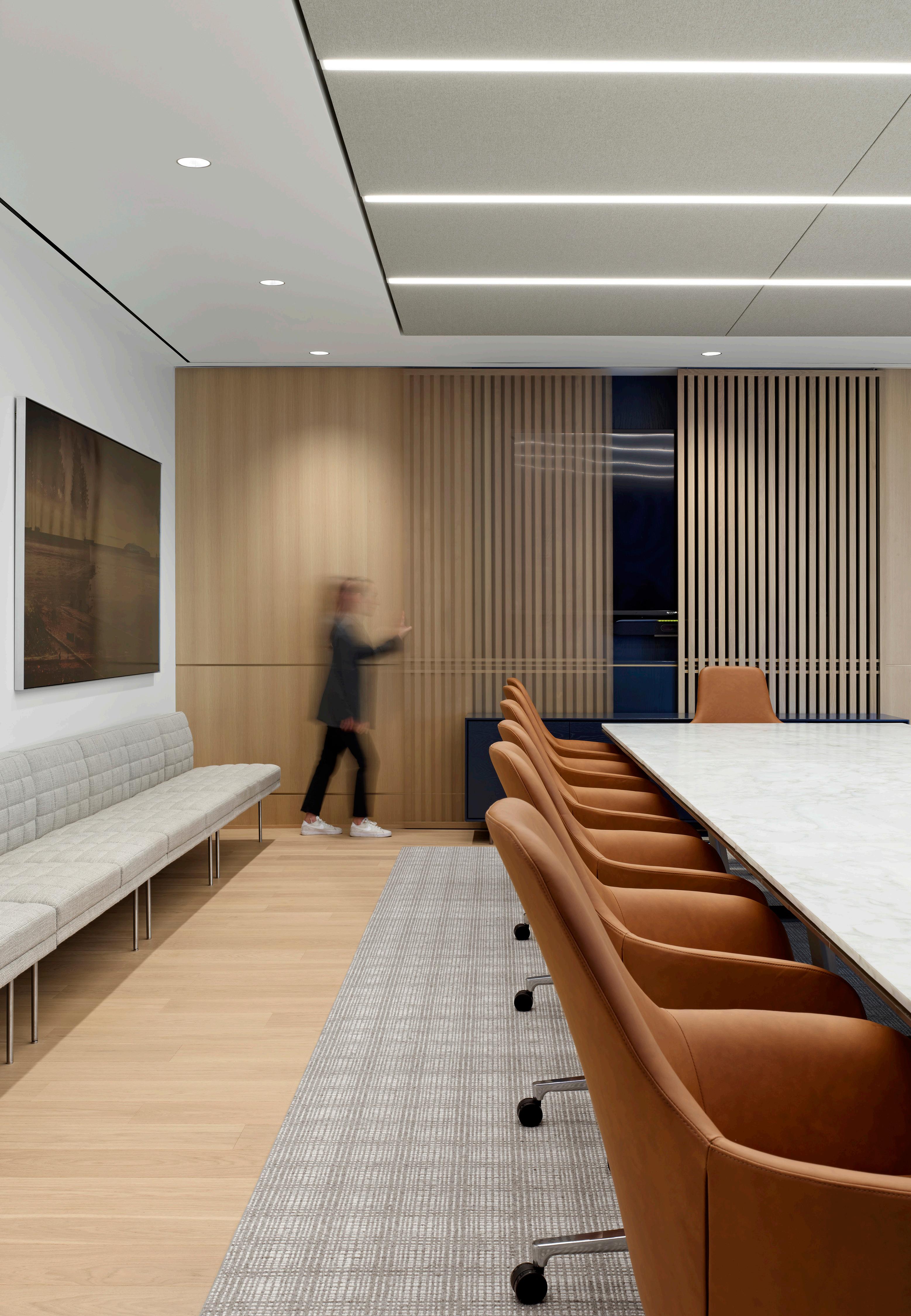
Carefully crafted with exquisite details and refined materials, Dechert’s fresh yet timeless Washington DC workplace was completed from design through move-in in just 10 months..
The space was designed to adapt to the firm’s evolving needs without compromising grace, comfort or the permanence that signifies Dechert’s prominence in the legal marketplace. Punctuated by the law firm’s vibrant art collection, the interior architecture is restrained and the detailing is precisely executed.
The spaciousness and sense of openness belie the population density afforded by the space plan; the office is among the more efficient law firm spaces in Washington, DC. The refined, natural materials and strategic combination of architectural features –including glass partitions at all offices, soft indirect lighting and wide corridors – create airy volumes that blur the distinction between interior and perimeter space. Interior offices have been upgraded with the same glass partition system used on perimeter offices. A painted accent wall illuminated by a light cove simulates daylight.