Hokkaido University
Integrated Report Hokudai Oruspe Uwomare Kanpi
The Trillium flower is symbolic of Hokkaido University and used as its official logo. In this design, the flower symbolizes ʻʻhumanʼʼ by combining intelligence, individuality, and diversity. The overlapping elegant lines of the flowers represent human relationships and knowledge. The flowersʼ silhouettes reflect academic and contemporary values, suitable for Hokkaido University.
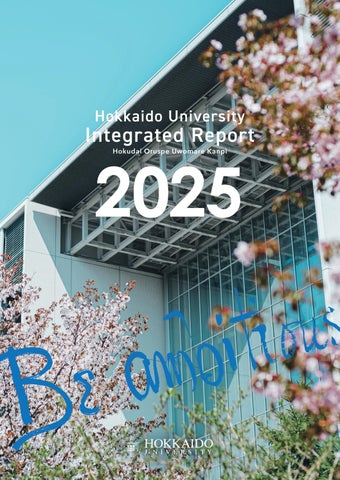
Hokudai Oruspe Uwomare Kanpi On the front cover: Hokudai Oruspe Uwomare Kanpi is the Ainu translation of the Japanese name of the Hokkaido University Integrated Report. Hokudai is the Japanese contraction of Hokkaido University, introduced into Ainu as a loanword; Oruspe, Uwomare, Kanpi are Ainu for topic, collected, and booklet, respectively. To respect the history and culture of the Ainu, the indigenous people of Hokkaido, we are promoting the use of the Ainu language on campus.
Hokkaido University Integrated Report 2025 (Abridged version in English) Published by: Office of Public Relations and Social Collaboration / Public Relations Division, Department of Public Engagement Address: Kita 8, Nishi 5, Kita–ku, Sapporo, Hokkaido 060–0808, Japan Tel.: +81–(0)11–716–2111 Published: December 2025 The previous English integrated reports are available on the website. https://www.global.hokudai.ac.jp/about/brochures/#integrated-report
2025
From an Unparalleled University to Unmatched Growth
as a government-established university to promote collaboration
diversity of Japan’s scientific research capacity will be lost. As
with society and address regional challenges.
Darwin’s theory of evolution suggests, this would greatly diminish our ability to adapt to environmental changes. Even if the ultimate
Throughout its history, a strong characteristic—such as one
goals are the same, Hokkaido University adds diversity to Japan’s
typically seen in private universities—has been nurtured and
research capacity and strengthens its resilience by remaining a
symbolized by the words “Be ambitious.” Meanwhile, as a
distinctive university, developing our own identity, and pursuing a
comprehensive research university, we have sought to integrate
different process to become a new style of top university. We
The Two Foundations that Make Us an “Unparalleled University”
2,000, the college invited top-notch educators from the United
two forms of research and education: “laboratory-based research”
believe this holds profound significance not only for the
States, gathered talented individuals from Tokyo, offered classes
conducted on the Sapporo and Hakodate campuses, and “field
University, but also for Japan’s higher education system as a
in English, adopted liberal arts education, and nurtured a
research outside the laboratory,” which involves social
whole.
Hokkaido University stands out among Japan's 85 national
broad-minded school culture blending Christian ideals and the
implementation and the acquisition of real-world data. We believe
universities for two reasons. The first lies in its spirit. The
open liberalism of the Meiji period harmoniously. In my view, to
that such integration has led the University’s continued growth as
University has several remarkable characteristics; it originated
make all of these possible, unshakable spiritual support was
an “unparalleled university.”
from co-creation with the local community; it was founded with a
essential, and its very essence is embodied in the words of Dr.
clear purpose and guiding philosophy; in its early days, it was
William S. Clark: “Be ambitious.”
influenced by Christian ideals; and it has a symbolic founding
HU VISION 2030 Acceleration Plan Since its incorporation, Hokkaido University has accelerated
While reflecting on the history of our institution, we must also
reforms to strengthen its financial structure, aiming at a
remember that many of its campuses, experimental forests and
university management that is less dependent on the
facilities are located on lands bearing Ainu names that once
governmental Management Expenses Grants, which have been
“unparalleled university.” It lies in the uniqueness of its
served as the living areas of the indigenous Ainu people. It is our
continuously reduced. For example, external funding revenues
development. The University was granted national land by the
responsibility, as those who study and work here, to respect this
have increased significantly, from 7.2 billion yen in FY 2004 to
Sapporo Agricultural College, which later became Hokkaido
government as a financial foundation for its operations, enabling
history and to approach the University’s origins with imagination
24.4 billion yen in FY 2024. These efforts have produced
University, was a typical government-run institution established
it to acquire an expansive campus in Sapporo and one of the
and understanding.
substantial results.
by the Meiji government. Its primary mission, in line with the
world’s largest university-owned experimental forests, both of
national policy at the time, was to develop agricultural technology
which have continued to support its growth and development.
Toward Unmatched Growth
However, in recent years, the circumstances surrounding national
However, unlike other imperial or regional universities, which
expanding its research fields outside the laboratory, including
were established in cities that had already matured during the
vast farms and orchards, Hokkaido University as we know it today
At the same time, as one of Japan’s top-level universities, our
late Edo and Meiji periods, Sapporo Agricultural College was
was further shaped.
institution is committed to fostering a strong identity and
To this end, we are currently implementing an acceleration plan
pursuing our unique path, with the mission of contributing to the
to realize HU VISION 2030 early, focusing on financial reforms to
university corporations have changed at an unprecedented pace.
Viewed from this perspective alone, it can hardly be called an
With numerous fisheries and marine research facilities and
Today, Japan’s national universities stand at a major turning
With the sharp rise in essential expenses, the management
“unparalleled” national university, but rather a typical former
training vessels located across Hokkaido, an island surrounded by
point. To enhance the nation’s overall research capacity, the
environment has rapidly grown harsher. While this presents a
imperial university.
the sea, the University has also conducted education and research
government is implementing initiatives on an unprecedented
major crisis for universities, it also offers an opportunity to
in oceanography and even in the Arctic Ocean. By greatly
scale.
further strengthen autonomous financial management and
founded in Sapporo, a town with a population of only about 2,000
transform the very structure of the institution.
at the time. The University itself thus became the core of regional
In this way, since its founding, the University has continually
realization of sustainable well-being in society. Towards this
strengthen donation acceptance and fund management, personnel
development, clearly setting it apart from other universities.
expanded its diverse and vast fields of education and research—
mission, we presented HU VISION 2030, which outlines the
system reforms, proactive DX through the full-scale introduction
In the harsh northern land, among a population of only about
from forests and farms to the ocean—thereby fulfilling its mission
mechanism by which the University will grow into a Novel Japan
of AI, and enhanced engagement both within and outside the
University Model—an institution that possesses internationally
University. To accelerate HU VISION 2030 in education and
outstanding research and educational capabilities, referred to as
research, we are also promoting a wide range of advanced
Excellence, and the dynamic capacity to implement them in
educational initiatives and interdisciplinary research. In
society, referred to as Extension.
education, we are promoting initiatives to develop globally minded human resources, while in research, we are advancing
Against this backdrop, the University emphasizes the “field
studies in semiconductors, sustainable food production, and
research” cultivated throughout its long history and applied to the
renewable energy, among others.
governmental initiative J-PEAKS, aiming to generate ambitious research outcomes that address both national food security and
The second major challenge for the University, as we approach
the achievement of the SDGs. By leveraging J-PEAKS, for which
the 150th anniversary of our founding in 2026, is to contribute to
we were successfully selected, we are steadily enhancing our
the Hokkaido Government’s “Hokkaido Digital Park” initiative,
research capacity while simultaneously pursuing both Excellence
which is driven by next-generation semiconductors. This
and Extension.
endeavor, set on the stage of Hokkaido, Japan, and the world, represents the Second Ambitious Challenge in our 150th year, and
It is essential to respond flexibly to rapidly changing trends
we regard it as a new mission we have to support.
across universities worldwide, as well as to national policies, and
HOUKIN Kiyohiro 20th President of Hokkaido University
we are fully aware that the Times Higher Education (THE)
We are called upon to strengthen our research and educational
rankings and the QS rankings serve as important standards.
capacities, our ability to co-create with society, and our efforts to become a world-class university. To meet the expectations of the
However, if Japan’s leading universities were to move toward
people of Hokkaido, as well as those across Japan and all over
graduated from the Hokkaido University School of Medicine in
uniformity—like clones sharing the same genetic information—and,
the world who support and cherish Hokkaido University, we will
1979, and has worked as a neurosurgeon at Hokkaido
as a result, implement similar organizational and structural
continue to devote our utmost efforts.
University Hospital and private hospitals. He was appointed
reforms, we believe there is a real danger that the overall
Born in Sapporo in 1954. Doctor of Medicine. Dr. Houkin
the Director of Hokkaido University Hospital in 2013, and has served as President since October 2020.
02 M e s s a g e f ro m t h e Pre s i d e n t
01 M e s s a g e f ro m t h e Pre s i d e n t
in cold regions and develop the human resources for them.
Vision & Strategy
There is another major reason the University can be called an
exceptional among national universities.
Vision & Strategy
figure, Dr. William S. Clark. These features set it apart as highly
From an Unparalleled University to Unmatched Growth
as a government-established university to promote collaboration
diversity of Japan’s scientific research capacity will be lost. As
with society and address regional challenges.
Darwin’s theory of evolution suggests, this would greatly diminish our ability to adapt to environmental changes. Even if the ultimate
Throughout its history, a strong characteristic—such as one
goals are the same, Hokkaido University adds diversity to Japan’s
typically seen in private universities—has been nurtured and
research capacity and strengthens its resilience by remaining a
symbolized by the words “Be ambitious.” Meanwhile, as a
distinctive university, developing our own identity, and pursuing a
comprehensive research university, we have sought to integrate
different process to become a new style of top university. We
The Two Foundations that Make Us an “Unparalleled University”
2,000, the college invited top-notch educators from the United
two forms of research and education: “laboratory-based research”
believe this holds profound significance not only for the
States, gathered talented individuals from Tokyo, offered classes
conducted on the Sapporo and Hakodate campuses, and “field
University, but also for Japan’s higher education system as a
in English, adopted liberal arts education, and nurtured a
research outside the laboratory,” which involves social
whole.
Hokkaido University stands out among Japan's 85 national
broad-minded school culture blending Christian ideals and the
implementation and the acquisition of real-world data. We believe
universities for two reasons. The first lies in its spirit. The
open liberalism of the Meiji period harmoniously. In my view, to
that such integration has led the University’s continued growth as
University has several remarkable characteristics; it originated
make all of these possible, unshakable spiritual support was
an “unparalleled university.”
from co-creation with the local community; it was founded with a
essential, and its very essence is embodied in the words of Dr.
clear purpose and guiding philosophy; in its early days, it was
William S. Clark: “Be ambitious.”
influenced by Christian ideals; and it has a symbolic founding
HU VISION 2030 Acceleration Plan Since its incorporation, Hokkaido University has accelerated
While reflecting on the history of our institution, we must also
reforms to strengthen its financial structure, aiming at a
remember that many of its campuses, experimental forests and
university management that is less dependent on the
facilities are located on lands bearing Ainu names that once
governmental Management Expenses Grants, which have been
“unparalleled university.” It lies in the uniqueness of its
served as the living areas of the indigenous Ainu people. It is our
continuously reduced. For example, external funding revenues
development. The University was granted national land by the
responsibility, as those who study and work here, to respect this
have increased significantly, from 7.2 billion yen in FY 2004 to
Sapporo Agricultural College, which later became Hokkaido
government as a financial foundation for its operations, enabling
history and to approach the University’s origins with imagination
24.4 billion yen in FY 2024. These efforts have produced
University, was a typical government-run institution established
it to acquire an expansive campus in Sapporo and one of the
and understanding.
substantial results.
by the Meiji government. Its primary mission, in line with the
world’s largest university-owned experimental forests, both of
national policy at the time, was to develop agricultural technology
which have continued to support its growth and development.
Toward Unmatched Growth
However, in recent years, the circumstances surrounding national
However, unlike other imperial or regional universities, which
expanding its research fields outside the laboratory, including
were established in cities that had already matured during the
vast farms and orchards, Hokkaido University as we know it today
At the same time, as one of Japan’s top-level universities, our
late Edo and Meiji periods, Sapporo Agricultural College was
was further shaped.
institution is committed to fostering a strong identity and
To this end, we are currently implementing an acceleration plan
pursuing our unique path, with the mission of contributing to the
to realize HU VISION 2030 early, focusing on financial reforms to
university corporations have changed at an unprecedented pace.
Viewed from this perspective alone, it can hardly be called an
With numerous fisheries and marine research facilities and
Today, Japan’s national universities stand at a major turning
With the sharp rise in essential expenses, the management
“unparalleled” national university, but rather a typical former
training vessels located across Hokkaido, an island surrounded by
point. To enhance the nation’s overall research capacity, the
environment has rapidly grown harsher. While this presents a
imperial university.
the sea, the University has also conducted education and research
government is implementing initiatives on an unprecedented
major crisis for universities, it also offers an opportunity to
in oceanography and even in the Arctic Ocean. By greatly
scale.
further strengthen autonomous financial management and
founded in Sapporo, a town with a population of only about 2,000
transform the very structure of the institution.
at the time. The University itself thus became the core of regional
In this way, since its founding, the University has continually
realization of sustainable well-being in society. Towards this
strengthen donation acceptance and fund management, personnel
development, clearly setting it apart from other universities.
expanded its diverse and vast fields of education and research—
mission, we presented HU VISION 2030, which outlines the
system reforms, proactive DX through the full-scale introduction
In the harsh northern land, among a population of only about
from forests and farms to the ocean—thereby fulfilling its mission
mechanism by which the University will grow into a Novel Japan
of AI, and enhanced engagement both within and outside the
University Model—an institution that possesses internationally
University. To accelerate HU VISION 2030 in education and
outstanding research and educational capabilities, referred to as
research, we are also promoting a wide range of advanced
Excellence, and the dynamic capacity to implement them in
educational initiatives and interdisciplinary research. In
society, referred to as Extension.
education, we are promoting initiatives to develop globally minded human resources, while in research, we are advancing
Against this backdrop, the University emphasizes the “field
studies in semiconductors, sustainable food production, and
research” cultivated throughout its long history and applied to the
renewable energy, among others.
governmental initiative J-PEAKS, aiming to generate ambitious research outcomes that address both national food security and
The second major challenge for the University, as we approach
the achievement of the SDGs. By leveraging J-PEAKS, for which
the 150th anniversary of our founding in 2026, is to contribute to
we were successfully selected, we are steadily enhancing our
the Hokkaido Government’s “Hokkaido Digital Park” initiative,
research capacity while simultaneously pursuing both Excellence
which is driven by next-generation semiconductors. This
and Extension.
endeavor, set on the stage of Hokkaido, Japan, and the world, represents the Second Ambitious Challenge in our 150th year, and
It is essential to respond flexibly to rapidly changing trends
we regard it as a new mission we have to support.
across universities worldwide, as well as to national policies, and
HOUKIN Kiyohiro 20th President of Hokkaido University
we are fully aware that the Times Higher Education (THE)
We are called upon to strengthen our research and educational
rankings and the QS rankings serve as important standards.
capacities, our ability to co-create with society, and our efforts to become a world-class university. To meet the expectations of the
However, if Japan’s leading universities were to move toward
people of Hokkaido, as well as those across Japan and all over
graduated from the Hokkaido University School of Medicine in
uniformity—like clones sharing the same genetic information—and,
the world who support and cherish Hokkaido University, we will
1979, and has worked as a neurosurgeon at Hokkaido
as a result, implement similar organizational and structural
continue to devote our utmost efforts.
University Hospital and private hospitals. He was appointed
reforms, we believe there is a real danger that the overall
Born in Sapporo in 1954. Doctor of Medicine. Dr. Houkin
the Director of Hokkaido University Hospital in 2013, and has served as President since October 2020.
02 M e s s a g e f ro m t h e Pre s i d e n t
01 M e s s a g e f ro m t h e Pre s i d e n t
in cold regions and develop the human resources for them.
Vision & Strategy
There is another major reason the University can be called an
exceptional among national universities.
Vision & Strategy
figure, Dr. William S. Clark. These features set it apart as highly
Value Creation Process at Hokkaido University Aiming to Realize a Sustainable Well-Being in Society through a Virtuous Circle of Excellence and Extension With “Excellence” in education and research in the fields of science and technology, as well as “Extension,” the ability to expand education and research into society to solve regional issues, as its two driving engines, Hokkaido University will steer its own innovation and move vigorously toward the realization of a sustainable well-being in society.
Society (local and global)
Ecosystem that Creates a
HU VISION 2030
Novel Japan University Model
This medium-term vision of Hokkaido University,
A Japanese flagship university model that Hokkaido University aims
targeting the year 2030, clearly articulates the
to achieve through the realization of HU VISION 2030. As a public
concepts of “Excellence” and “Extension,” as well as
good and responsible institutional actor, it will significantly
their integration in creating a virtuous cycle and
strengthen its partnerships with international and local communities
ecosystem.
and create social impact and innovation through collaboration.
Virtuous Cycle of University Reform Creation of Sustainable Well-being in Society
Hokkaido University
Ideal vision for our university
History
Novel Japan University Model
Climate
・Practical learning in the vast milieu of Hokkaido ・The world’s largest research forests and marine research
Advanced human resources development
・The largest number of faculties of any national university in Japan
Human resources
・Unique ideas from a diverse range of personnel ・International activities with broad perspectives
Setting
・International campuses ・Interdisciplinary environment
S olv
Science and technology research
Academic knowledge
・Leading-edge, top-level research and education
Pursuit of Sustainability
04
ing
p ro b
l em
Comprehensive knowledge
Significantly strengthened ties with international and local communities
Innovation
Public assets and a management body that generate social impact and innovation
Social Implementation
HU VISION 2030
Extension
Regional and global problemsolving
Ability to expand education and research into society and solve regional issues
Strengthened cooperation with society
s an
d un
cove
Va l u e C re a t i o n Pro c e s s
Va l u e C re a t i o n Pro c e s s
・150-year history ・Accumulation of knowledge as a national university
Ex in c e l sc i
Vision & Strategy
Capital as sources of value creation
shaped by education, research, and social co-creation related to the earth, society, and human beings
a nd re s e arc h a ti o n y duc og f e chnol e o d te n c an le nce e
Vision & Strategy
03
Management resources
llence e c Ex
ring
n ew
issu
Various issues
es
・Low birthrate and aging society ・Global warming ・Energy and food issues ・Ethnic conflicts
Value Creation Process at Hokkaido University Aiming to Realize a Sustainable Well-Being in Society through a Virtuous Circle of Excellence and Extension With “Excellence” in education and research in the fields of science and technology, as well as “Extension,” the ability to expand education and research into society to solve regional issues, as its two driving engines, Hokkaido University will steer its own innovation and move vigorously toward the realization of a sustainable well-being in society.
Society (local and global)
Ecosystem that Creates a
HU VISION 2030
Novel Japan University Model
This medium-term vision of Hokkaido University,
A Japanese flagship university model that Hokkaido University aims
targeting the year 2030, clearly articulates the
to achieve through the realization of HU VISION 2030. As a public
concepts of “Excellence” and “Extension,” as well as
good and responsible institutional actor, it will significantly
their integration in creating a virtuous cycle and
strengthen its partnerships with international and local communities
ecosystem.
and create social impact and innovation through collaboration.
Virtuous Cycle of University Reform Creation of Sustainable Well-being in Society
Hokkaido University
Ideal vision for our university
History
Novel Japan University Model
Climate
・Practical learning in the vast milieu of Hokkaido ・The world’s largest research forests and marine research
Advanced human resources development
・The largest number of faculties of any national university in Japan
Human resources
・Unique ideas from a diverse range of personnel ・International activities with broad perspectives
Setting
・International campuses ・Interdisciplinary environment
S olv
Science and technology research
Academic knowledge
・Leading-edge, top-level research and education
Pursuit of Sustainability
04
ing
p ro b
l em
Comprehensive knowledge
Significantly strengthened ties with international and local communities
Innovation
Public assets and a management body that generate social impact and innovation
Social Implementation
HU VISION 2030
Extension
Regional and global problemsolving
Ability to expand education and research into society and solve regional issues
Strengthened cooperation with society
s an
d un
cove
Va l u e C re a t i o n Pro c e s s
Va l u e C re a t i o n Pro c e s s
・150-year history ・Accumulation of knowledge as a national university
Ex in c e l sc i
Vision & Strategy
Capital as sources of value creation
shaped by education, research, and social co-creation related to the earth, society, and human beings
a nd re s e arc h a ti o n y duc og f e chnol e o d te n c an le nce e
Vision & Strategy
03
Management resources
llence e c Ex
ring
n ew
issu
Various issues
es
・Low birthrate and aging society ・Global warming ・Energy and food issues ・Ethnic conflicts
HU VISION 2030 Since it opened in 1876 as Sapporo Agricultural College, Hokkaido
Eight Visions that Define Specific Principles
University has focused on fostering human resources who will contribute to the development of Hokkaido and spread their wings across the world. Building on the spirit of Dr. William S. Clark, the
Education
University has continued to lead the world as one of Japan’s core
Hokkaido University fosters human resources who play an active role in global and regional societies by acquiring
universities, and will celebrate the memorable 150th anniversary of
advanced expertise based on cutting-edge research and broad knowledge and skills necessary to co-create a
its founding in 2026. In 2014, the “Future Strategy for the 150th Anniversary of Hokkaido University” was established to present specific reform strategies for the University targeting the year 2026. In 2023, the University formulated HU VISION 2030, a medium-term vision for Hokkaido University targeting the year 2030. It is the
diverse future society, including Society 5.0, through interaction with a diverse group of people in a rich natural environment.
Research Hokkaido University further enhances its world-class research capabilities through innovation and resolution of issues by leveraging the vast and diverse geographical fields and a wide range of scientific research in which it excels.
manifestation of the University’s strong will and concrete strategy to realize a sustainable well-being society through its own
Co-Creation with Society
research in the fields of science and technology; and “Extension,”
Hokkaido University promotes the creation of research results, social implementation, and the resolution of issues
the ability to extend education and research into society and solve
for the future of the region and the world through co-creation with society and contributes to the achievement of
regional issues.
sustainable development and well-being.
HU VISION 2030 is published on the University’s website at:
International Collaboration
https://w w w.global.hokudai.ac.jp/about/hu-vision-2030/
Hokkaido University creates an international campus where students, researchers, faculty, and staff of diverse
05
backgrounds thrive and contribute to solving global issues in partnership and collaboration with people from
Creation of Sustainable Well-being in Society
Diversity, Equity, and Inclusion
Pursuit of Sustainability
To ensure diversity, equity, and inclusion at Hokkaido University, the University fosters its education and research environment, contributes to the development of human resources, and strives to fulfill the Hokkaido University Diversity Statement.
Supports university operations through transverse initiatives
HU VISION 2030
Governance Hokkaido University ensures fair and transparent decision-making through the separation of duties and strong collaboration of the executive board that supports the President's leadership. The University establishes the foundation on which all university members create values with pride, hope, and a sense of fulfillment and realizes university operation broadly recognized by society.
Education & Research Excellence in Science and Technology
Education Fosters people who play an active role in global and regional societies by acquiring advanced expertise, broad knowledge, and skills through interaction with diverse groups of people
Foundation of Activities
Governance
Research Enhances world-class research capabilities by leveraging the vast and diverse geographical fields and the wide range of scientific research that HU excels in
Financial Base
Promotes the resolution of issues for the future on both the local and global level and contributes to the achievement of sustainable development and well-being
Hokkaido University pursues sustainable growth through self-sustained administration and a “virtuous cycle of human resources, knowledge, and funds” by expanding its diverse and robust financial resources.
Achieves the proper university operation by ensuring fair and transparent decision-making
Financial Base Pursues sustainable growth through autonomous administration and a "virtuous cycle of people, knowledge, and funds"
Extension
Ability to Expand Education and Research into Society and Solve Regional Issues
Core Values of Hokkaido University
Co-Creation with Society
Four Basic Philosophies
Frontier Spirit
Global Perspectives
All-Round Education
Practical Learning
Pursuit of Sustainability Hokkaido University leads the social transformation to realize a sustainable society through education, research, and co-creation with society by maximizing its physical and intellectual assets developed on the campus environment with vast and rich fields.
06 HU VISION 2030
Novel Japan University Model
Excellence
HU VISION 2030
various countries, regions, and organizations to lead a sustainable and prosperous society of the future.
Vision & Strategy
Vision & Strategy
innovation, using two driving forces: “Excellence” of education and
HU VISION 2030 Since it opened in 1876 as Sapporo Agricultural College, Hokkaido
Eight Visions that Define Specific Principles
University has focused on fostering human resources who will contribute to the development of Hokkaido and spread their wings across the world. Building on the spirit of Dr. William S. Clark, the
Education
University has continued to lead the world as one of Japan’s core
Hokkaido University fosters human resources who play an active role in global and regional societies by acquiring
universities, and will celebrate the memorable 150th anniversary of
advanced expertise based on cutting-edge research and broad knowledge and skills necessary to co-create a
its founding in 2026. In 2014, the “Future Strategy for the 150th Anniversary of Hokkaido University” was established to present specific reform strategies for the University targeting the year 2026. In 2023, the University formulated HU VISION 2030, a medium-term vision for Hokkaido University targeting the year 2030. It is the
diverse future society, including Society 5.0, through interaction with a diverse group of people in a rich natural environment.
Research Hokkaido University further enhances its world-class research capabilities through innovation and resolution of issues by leveraging the vast and diverse geographical fields and a wide range of scientific research in which it excels.
manifestation of the University’s strong will and concrete strategy to realize a sustainable well-being society through its own
Co-Creation with Society
research in the fields of science and technology; and “Extension,”
Hokkaido University promotes the creation of research results, social implementation, and the resolution of issues
the ability to extend education and research into society and solve
for the future of the region and the world through co-creation with society and contributes to the achievement of
regional issues.
sustainable development and well-being.
HU VISION 2030 is published on the University’s website at:
International Collaboration
https://w w w.global.hokudai.ac.jp/about/hu-vision-2030/
Hokkaido University creates an international campus where students, researchers, faculty, and staff of diverse
05
backgrounds thrive and contribute to solving global issues in partnership and collaboration with people from
Creation of Sustainable Well-being in Society
Diversity, Equity, and Inclusion
Pursuit of Sustainability
To ensure diversity, equity, and inclusion at Hokkaido University, the University fosters its education and research environment, contributes to the development of human resources, and strives to fulfill the Hokkaido University Diversity Statement.
Supports university operations through transverse initiatives
HU VISION 2030
Governance Hokkaido University ensures fair and transparent decision-making through the separation of duties and strong collaboration of the executive board that supports the President's leadership. The University establishes the foundation on which all university members create values with pride, hope, and a sense of fulfillment and realizes university operation broadly recognized by society.
Education & Research Excellence in Science and Technology
Education Fosters people who play an active role in global and regional societies by acquiring advanced expertise, broad knowledge, and skills through interaction with diverse groups of people
Foundation of Activities
Governance
Research Enhances world-class research capabilities by leveraging the vast and diverse geographical fields and the wide range of scientific research that HU excels in
Financial Base
Promotes the resolution of issues for the future on both the local and global level and contributes to the achievement of sustainable development and well-being
Hokkaido University pursues sustainable growth through self-sustained administration and a “virtuous cycle of human resources, knowledge, and funds” by expanding its diverse and robust financial resources.
Achieves the proper university operation by ensuring fair and transparent decision-making
Financial Base Pursues sustainable growth through autonomous administration and a "virtuous cycle of people, knowledge, and funds"
Extension
Ability to Expand Education and Research into Society and Solve Regional Issues
Core Values of Hokkaido University
Co-Creation with Society
Four Basic Philosophies
Frontier Spirit
Global Perspectives
All-Round Education
Practical Learning
Pursuit of Sustainability Hokkaido University leads the social transformation to realize a sustainable society through education, research, and co-creation with society by maximizing its physical and intellectual assets developed on the campus environment with vast and rich fields.
06 HU VISION 2030
Novel Japan University Model
Excellence
HU VISION 2030
various countries, regions, and organizations to lead a sustainable and prosperous society of the future.
Vision & Strategy
Vision & Strategy
innovation, using two driving forces: “Excellence” of education and
Our Education: Fostering Talent for Global and Local Communities
c Edu
interview
at io
n
HU VISION 2030
Ideal for English improvement and study abroad preparation TERAGAKI Honoka, 4th Year, Department of Humanities and Human Sciences, School of Humanities and Human Sciences
Message from the Executive in Charge
I wanted to absorb a wide range of knowledge, so I took courses on climate change and on comparing
To All Who Take the Initiative for Their Studies
cultural differences across regions. HSI provides an opportunity for those who struggle with English to overcome their difficulties. For those who are strong in English and considering studying abroad, it
sense of “self-directed learning,” can return again and again in pursuit of further academic enlightenment. Education at the University is not limited to students alone—it is open to all who take the initiative for their studies. We are committed to building and enhancing such an educational environment.
YAMAMOTO Fumihiko Executive Vice President Chief Education Officer
before going abroad. Overall, I think HSI is a valuable intensive course for everyone.
Expanding Opportunities for Practice and Financial Support to Foster Advanced Human Resources “Collaborative Research Internships” for Graduate Students to Address Regional Issues
“Nitobe College” for Developing Global Leaders
07
Distinctive Features of Education at Nitobe College
● Education that cultivates the mindset and skills required of global leaders ● Overseas study to foster autonomous individuals and enhance specialized expertise (undergraduate)
● Provision of a cross-disciplinary environment that serves as a microcosm of the international community (graduate school) ● Career support through fellows and mentors
Nitobe College https://nitobe-college.academic.hokudai.ac.jp/en
Japan’s Most Extensive International Summer School: Hokkaido Summer Institute (HSI) Hokkaido Summer Institute (HSI), launched in 2016, is a program that takes advantage of Hokkaido’s cool climate to invite distinguished researchers from around the world with outstanding educational and research achievements to teach intensive courses in collaboration with our own faculty members. Not only our own students, but also students and professionals from elsewhere in Japan and abroad can participate. Each year, around 150 cutting-edge, highly engaging courses are offered, including active-learning classes that develop global human resources and field training programs that make the most of Hokkaido’s vast natural environment.
In FY 2024, the University launched “Collaborative Research Internships” within the “Problem-Solving DX Consortium,” a partnership of industry, government, and academia across Hokkaido and in which we serve as the central institution. Through this internship, students who have acquired basic knowledge of digital transformation (DX) propose data-driven solutions to challenges faced by companies and local governments, thereby cultivating the
applied, practical skills required in society. Graduate students gain firsthand experience of social needs and demand, giving them the opportunity to objectively assess the potential of their own research and to open new career paths. For host companies and local governments, the program provides tangible benefits by demonstrating the effectiveness of DX in solving real issues, leading to the further application of DX.
“Doctoral Fellowships” for Students to Focus on Research The Japan Science and Technology Agency (JST) supports universities that take the initiative to provide financial assistance and develop diverse career paths. At Hokkaido University, 709 students have been awarded support under the Support for Pioneering Research Initiated by the Next Generation system (at the
University: the EXEX Doctoral Fellowship), and 30 students under the Support for Next-Generation AI Human Resource Development (at the University: the Next Generation AI Doctoral Fellowship). Many students currently engaged in research benefit from this support.
interview
Fellowship that Imparts Peace of Mind and Valuable Opportunities FUJIKI Takumi, 3rd year doctoral student, Division of Agriculture, Graduate School of Agriculture I am currently conducting research to improve the quality of strawberries grown in Hokkaido, particularly by visualizing taste differences within individual strawberries. Since I was awarded the EXEX Doctoral Fellowship in April 2023, I have experienced a complete change in my state of mind, since my financial concerns have been alleviated. Additional support is also available when attending academic conferences. For example, I had the opportunity to participate in an international conference in Australia last year, where I had an invaluable experience of interacting with top-level
Extensive fieldwork programs taking advantage of Hokkaido’s rich natural environment
Hokkaido Summer Institute https://hokkaidosummerinstitute.oia.hokudai.ac.jp/
researchers.
08 Education
Education
Nitobe College is an interdisciplinary educational program designed to equip students with the mindset and skills necessary to thrive in global society, offered alongside the specialized education and research in respective undergraduate and graduate schools. Based on the University’s philosophies and the spirit learned from NITOBE Inazo, the program aims to cultivate global leaders. It stands out as a distinctive feature of our educational services and has received high recognition since its launch in 2013.
serves as an important factor in their decision-making. In fact, I had friends who took it as preparation
Core Activities
Core Activities
The category of “education” encompasses many elements. In addition to undergraduate and graduate education, it includes student support, admissions, the acceptance of international students and study abroad programs for Japanese students, recurrent education, and career education. HU VISION 2030 highlights seven such items with the aim of fostering individuals who not only possess advanced expertise, but also broad knowledge that will enable them to thrive in the future society. Among these diverse elements of education, “self-directed learning” is valued most highly. Students enter the University with various aspirations. While supporting them closely, we provide an academic education that emphasizes “self-directed learning.” We also wish to create an environment where our graduates, who have become professionals with a
Our Education: Fostering Talent for Global and Local Communities
c Edu
interview
at io
n
HU VISION 2030
Ideal for English improvement and study abroad preparation TERAGAKI Honoka, 4th Year, Department of Humanities and Human Sciences, School of Humanities and Human Sciences
Message from the Executive in Charge
I wanted to absorb a wide range of knowledge, so I took courses on climate change and on comparing
To All Who Take the Initiative for Their Studies
cultural differences across regions. HSI provides an opportunity for those who struggle with English to overcome their difficulties. For those who are strong in English and considering studying abroad, it
sense of “self-directed learning,” can return again and again in pursuit of further academic enlightenment. Education at the University is not limited to students alone—it is open to all who take the initiative for their studies. We are committed to building and enhancing such an educational environment.
YAMAMOTO Fumihiko Executive Vice President Chief Education Officer
before going abroad. Overall, I think HSI is a valuable intensive course for everyone.
Expanding Opportunities for Practice and Financial Support to Foster Advanced Human Resources “Collaborative Research Internships” for Graduate Students to Address Regional Issues
“Nitobe College” for Developing Global Leaders
07
Distinctive Features of Education at Nitobe College
● Education that cultivates the mindset and skills required of global leaders ● Overseas study to foster autonomous individuals and enhance specialized expertise (undergraduate)
● Provision of a cross-disciplinary environment that serves as a microcosm of the international community (graduate school) ● Career support through fellows and mentors
Nitobe College https://nitobe-college.academic.hokudai.ac.jp/en
Japan’s Most Extensive International Summer School: Hokkaido Summer Institute (HSI) Hokkaido Summer Institute (HSI), launched in 2016, is a program that takes advantage of Hokkaido’s cool climate to invite distinguished researchers from around the world with outstanding educational and research achievements to teach intensive courses in collaboration with our own faculty members. Not only our own students, but also students and professionals from elsewhere in Japan and abroad can participate. Each year, around 150 cutting-edge, highly engaging courses are offered, including active-learning classes that develop global human resources and field training programs that make the most of Hokkaido’s vast natural environment.
In FY 2024, the University launched “Collaborative Research Internships” within the “Problem-Solving DX Consortium,” a partnership of industry, government, and academia across Hokkaido and in which we serve as the central institution. Through this internship, students who have acquired basic knowledge of digital transformation (DX) propose data-driven solutions to challenges faced by companies and local governments, thereby cultivating the
applied, practical skills required in society. Graduate students gain firsthand experience of social needs and demand, giving them the opportunity to objectively assess the potential of their own research and to open new career paths. For host companies and local governments, the program provides tangible benefits by demonstrating the effectiveness of DX in solving real issues, leading to the further application of DX.
“Doctoral Fellowships” for Students to Focus on Research The Japan Science and Technology Agency (JST) supports universities that take the initiative to provide financial assistance and develop diverse career paths. At Hokkaido University, 709 students have been awarded support under the Support for Pioneering Research Initiated by the Next Generation system (at the
University: the EXEX Doctoral Fellowship), and 30 students under the Support for Next-Generation AI Human Resource Development (at the University: the Next Generation AI Doctoral Fellowship). Many students currently engaged in research benefit from this support.
interview
Fellowship that Imparts Peace of Mind and Valuable Opportunities FUJIKI Takumi, 3rd year doctoral student, Division of Agriculture, Graduate School of Agriculture I am currently conducting research to improve the quality of strawberries grown in Hokkaido, particularly by visualizing taste differences within individual strawberries. Since I was awarded the EXEX Doctoral Fellowship in April 2023, I have experienced a complete change in my state of mind, since my financial concerns have been alleviated. Additional support is also available when attending academic conferences. For example, I had the opportunity to participate in an international conference in Australia last year, where I had an invaluable experience of interacting with top-level
Extensive fieldwork programs taking advantage of Hokkaido’s rich natural environment
Hokkaido Summer Institute https://hokkaidosummerinstitute.oia.hokudai.ac.jp/
researchers.
08 Education
Education
Nitobe College is an interdisciplinary educational program designed to equip students with the mindset and skills necessary to thrive in global society, offered alongside the specialized education and research in respective undergraduate and graduate schools. Based on the University’s philosophies and the spirit learned from NITOBE Inazo, the program aims to cultivate global leaders. It stands out as a distinctive feature of our educational services and has received high recognition since its launch in 2013.
serves as an important factor in their decision-making. In fact, I had friends who took it as preparation
Core Activities
Core Activities
The category of “education” encompasses many elements. In addition to undergraduate and graduate education, it includes student support, admissions, the acceptance of international students and study abroad programs for Japanese students, recurrent education, and career education. HU VISION 2030 highlights seven such items with the aim of fostering individuals who not only possess advanced expertise, but also broad knowledge that will enable them to thrive in the future society. Among these diverse elements of education, “self-directed learning” is valued most highly. Students enter the University with various aspirations. While supporting them closely, we provide an academic education that emphasizes “self-directed learning.” We also wish to create an environment where our graduates, who have become professionals with a
ca Edu
Contributing to the Creation of Semiconductor Complex Base for Manufacturing, Research, and Human Resource Development
e Re s
HU VISION 2030
The predecessor of the University, Sapporo Agricultural College, was established with the mission of developing agricultural technology and cultivating human resources for cold regions. In 2026, as Hokkaido University marks the 150th anniversary of its founding, we are embarking on a new challenge by positioning the cultivation of semiconductor talent and the enhancement of research capacity as our “Second Ambitious Challenge.” Our initiatives in the semiconductor field also contribute to the realization of the Hokkaido Government’s “Hokkaido Digital Park” initiative. We consider these efforts extremely important in connection with all eight perspectives outlined in “HU VISION 2030.”
Building Collaborative Frameworks with Domestic and International Institutions Hokkaido University has concluded partnership agreements and memorandums of understanding with institutions in Japan and abroad that have outstanding achievements in the semiconductor field, thereby further advancing semiconductor-related education and research at the University. Agreements concluded in 2024
Building a Global Research Ecosystem Utilizing Japan’s Largest Field Sites
research functions. As a practical base for education and research, we are also developing a “Semiconductor Prototyping Lab” equipped with key devices covering design, front-end processes, back-end processes, and evaluation. This facility will accelerate the cultivation and production of advanced human resources in the semiconductor field, as well as the social implementation of research outcomes.
h
Message from the Executive in Charge
Providing Solutions by Leveraging Our Strengths in Agriculture and Fisheries Hokkaido University was selected for the Japan Society for the Promotion of Science (JSPS) Program for Forming Japan’s Peak Research Universities (J-PEAKS) with the research theme: “Building a Regenerative Agri-Fishery System for Sustainable Food Production and Global Well-being Based on Field Science.” Under this program, we are pursuing the following initiatives: (1) the development of a regenerative food production system utilizing the University’s distinctive strength in field-based research, (2) a collaborative research platform project that promotes advanced interdisciplinary research and leads to industrial creation, and (3) efforts to strengthen collaboration with other universities, research institutions, and local governments in Hokkaido, as well as research institutions overseas.
Through these initiatives, we aim to become a next-generation university that contributes to sustainable well-being in society, taking the lead among universities in Hokkaido, and further strengthening our research capacity and infrastructure.
SETOGUCHI Tsuyoshi Executive Vice President Chief Research Officer
Regenerative Agri-Forest-Fishery Research conducted under J-PEAKS aims to develop a new system of agriculture, forestry, and fisheries that enhances productivity and profitability while simultaneously restoring soil health and marine ecosystems, and conserving and regenerating biodiversity, water, and forest resources. By bringing together the strengths of the Field Science Center for Northern Biosphere, the Research Faculty of Agriculture, the Faculty of Fisheries Sciences, and other core units of the University, we aim to develop and implement sustainable food production systems that take global-scale ecological environments, as well as material and energy cycles, into account.
Future Compact AI Robots As part of implementing smart agriculture to build regenerative, sustainable food production systems, these AI robots can perform optimal farming operations by applying positioning Quasi-Zenith technology available Satellite System Earth through the Quasi-Zenith observation satellite Satellite System, as well as remote sensing Drone technology using Earth observation satellites and drones.
Conceptual image of a compact smart agriculture robot
Institute for Frontier Education and Research on Semiconductors https://w w w.semicon.hokudai.ac.jp/en/
Copyright© 2008 AGCO
“Collaborative Research Platform Project” Promoting Interdisciplinary Research to Enhance Research Capacity Since FY 2024, Hokkaido University has launched the “Collaborative Research Platform Project” under J-PEAKS. With this initiative, the University aims to establish a new research hub that will become its next defining brand. Under this project, interdisciplinary research units are being established to conduct advanced cross-disciplinary research and studies that can lead to
the creation of new industries. Depending on the stage of progress, concentrated support is provided through funding and dedicated research support personnel. In FY 2024, the University invited applications for research units from within the institution and selected 6 projects for the Acceleration Stage and 12 projects for the Incubation Stage.
10 Research
Achievements in the Semiconductor Field
Signing of the agreement (from left: Luc Van den hove, CEO of imec; HOUKIN Kiyohiro, President of Hokkaido University)
a rc
HU VISION 2030
Building a Regenerative and Sustainable Food Production System — Regenerative Agri-Forest-Fishery Research
Establishment of the Institute for Frontier Education and Research on Semiconductors (IFERS) In October 2023, Hokkaido University established the Office for Promotion of Semiconductor Hub Formation. In April 2025, this office was reorganized into the Institute for Frontier Education and Research on Semiconductors (IFERS), serving as the central headquarters for promoting semiconductor education and research at the University. IFERS formulates university-wide policies, effectively integrates educational and research resources on campus, and strengthens collaboration with external institutions, thereby enhancing the University’s educational and
h
e Re s
Core Activities
Core Activities
09
a rc
n atio y e r t C Co - S o ci e h wit
The “Second Ambitious Challenge” on Our 150th Anniversary
● Partnership agreement with Tohoku University (January 2024) ● Comprehensive partnership agreement with Rapidus Corporation (June 2024) ● Memorandum of understanding with National Yang Ming Chiao Tung University, Taiwan (June 2024) ● Memorandum of understanding with Rensselaer Polytechnic Institute, U.S.A (August 2024) ● Memorandum of understanding with imec, Belgium (November 2024)
tion
ca Edu
Contributing to the Creation of Semiconductor Complex Base for Manufacturing, Research, and Human Resource Development
e Re s
HU VISION 2030
The predecessor of the University, Sapporo Agricultural College, was established with the mission of developing agricultural technology and cultivating human resources for cold regions. In 2026, as Hokkaido University marks the 150th anniversary of its founding, we are embarking on a new challenge by positioning the cultivation of semiconductor talent and the enhancement of research capacity as our “Second Ambitious Challenge.” Our initiatives in the semiconductor field also contribute to the realization of the Hokkaido Government’s “Hokkaido Digital Park” initiative. We consider these efforts extremely important in connection with all eight perspectives outlined in “HU VISION 2030.”
Building Collaborative Frameworks with Domestic and International Institutions Hokkaido University has concluded partnership agreements and memorandums of understanding with institutions in Japan and abroad that have outstanding achievements in the semiconductor field, thereby further advancing semiconductor-related education and research at the University. Agreements concluded in 2024
Building a Global Research Ecosystem Utilizing Japan’s Largest Field Sites
research functions. As a practical base for education and research, we are also developing a “Semiconductor Prototyping Lab” equipped with key devices covering design, front-end processes, back-end processes, and evaluation. This facility will accelerate the cultivation and production of advanced human resources in the semiconductor field, as well as the social implementation of research outcomes.
h
Message from the Executive in Charge
Providing Solutions by Leveraging Our Strengths in Agriculture and Fisheries Hokkaido University was selected for the Japan Society for the Promotion of Science (JSPS) Program for Forming Japan’s Peak Research Universities (J-PEAKS) with the research theme: “Building a Regenerative Agri-Fishery System for Sustainable Food Production and Global Well-being Based on Field Science.” Under this program, we are pursuing the following initiatives: (1) the development of a regenerative food production system utilizing the University’s distinctive strength in field-based research, (2) a collaborative research platform project that promotes advanced interdisciplinary research and leads to industrial creation, and (3) efforts to strengthen collaboration with other universities, research institutions, and local governments in Hokkaido, as well as research institutions overseas.
Through these initiatives, we aim to become a next-generation university that contributes to sustainable well-being in society, taking the lead among universities in Hokkaido, and further strengthening our research capacity and infrastructure.
SETOGUCHI Tsuyoshi Executive Vice President Chief Research Officer
Regenerative Agri-Forest-Fishery Research conducted under J-PEAKS aims to develop a new system of agriculture, forestry, and fisheries that enhances productivity and profitability while simultaneously restoring soil health and marine ecosystems, and conserving and regenerating biodiversity, water, and forest resources. By bringing together the strengths of the Field Science Center for Northern Biosphere, the Research Faculty of Agriculture, the Faculty of Fisheries Sciences, and other core units of the University, we aim to develop and implement sustainable food production systems that take global-scale ecological environments, as well as material and energy cycles, into account.
Future Compact AI Robots As part of implementing smart agriculture to build regenerative, sustainable food production systems, these AI robots can perform optimal farming operations by applying positioning Quasi-Zenith technology available Satellite System Earth through the Quasi-Zenith observation satellite Satellite System, as well as remote sensing Drone technology using Earth observation satellites and drones.
Conceptual image of a compact smart agriculture robot
Institute for Frontier Education and Research on Semiconductors https://w w w.semicon.hokudai.ac.jp/en/
Copyright© 2008 AGCO
“Collaborative Research Platform Project” Promoting Interdisciplinary Research to Enhance Research Capacity Since FY 2024, Hokkaido University has launched the “Collaborative Research Platform Project” under J-PEAKS. With this initiative, the University aims to establish a new research hub that will become its next defining brand. Under this project, interdisciplinary research units are being established to conduct advanced cross-disciplinary research and studies that can lead to
the creation of new industries. Depending on the stage of progress, concentrated support is provided through funding and dedicated research support personnel. In FY 2024, the University invited applications for research units from within the institution and selected 6 projects for the Acceleration Stage and 12 projects for the Incubation Stage.
10 Research
Achievements in the Semiconductor Field
Signing of the agreement (from left: Luc Van den hove, CEO of imec; HOUKIN Kiyohiro, President of Hokkaido University)
a rc
HU VISION 2030
Building a Regenerative and Sustainable Food Production System — Regenerative Agri-Forest-Fishery Research
Establishment of the Institute for Frontier Education and Research on Semiconductors (IFERS) In October 2023, Hokkaido University established the Office for Promotion of Semiconductor Hub Formation. In April 2025, this office was reorganized into the Institute for Frontier Education and Research on Semiconductors (IFERS), serving as the central headquarters for promoting semiconductor education and research at the University. IFERS formulates university-wide policies, effectively integrates educational and research resources on campus, and strengthens collaboration with external institutions, thereby enhancing the University’s educational and
h
e Re s
Core Activities
Core Activities
09
a rc
n atio y e r t C Co - S o ci e h wit
The “Second Ambitious Challenge” on Our 150th Anniversary
● Partnership agreement with Tohoku University (January 2024) ● Comprehensive partnership agreement with Rapidus Corporation (June 2024) ● Memorandum of understanding with National Yang Ming Chiao Tung University, Taiwan (June 2024) ● Memorandum of understanding with Rensselaer Polytechnic Institute, U.S.A (August 2024) ● Memorandum of understanding with imec, Belgium (November 2024)
tion
e Re s
Aiming to Establish a Knowledge-Based GX Hub for Carbon Neutrality from Hokkaido to the World
a rc
h
HU VISION 2030
Institute for Chemical Reaction Design and Discovery (WPI-ICReDD)
Launch of the “Green Transformation Innovation Center” In the future, we plan to launch the “Hokkaido GX Consortium” to promote organizational collaboration with universities in Hokkaido, industry, and local governments. Through this initiative, we aim to develop into a world-class GX hub that disseminates knowledge and innovation from Hokkaido to the world.
The kickoff symposium featured presentations of Hokkaido University’s latest GX-related research achievements GX Innovation Center (In Japanese) https://hu-gxc.eng.hokudai.ac.jp/
The Institute for Chemical Reaction Design and Discovery (WPI-ICReDD) was selected for the Ministry of Education, Culture, Sports, Science and Technology’s subsidy program “World Premier International Research Center Initiative (WPI)” and was established at Hokkaido University in October 2018. It is one of 18 research centers in Japan that provide a highly international research environment and conduct research at the world’s top level. At this institute, we integrate three academic fields—computational science, information science, and experimental science—to rationally design and control “chemical reactions,” which are indispensable for humanity to thrive in the future. We aim to establish a new academic field called "Chemical Reaction Design and Discovery," which enables the rational and efficient development of chemical reactions, with the goal of creating new chemical reactions and materials.
12 Research
Research
Formation of Research Hubs Contributing to the Solution of Global Issues
Expanding New Research Possibilities through Exchanges among Students and Researchers Worldwide
Core Activities
Core Activities
11
In April 2025, Hokkaido University established the “Green Transformation Innovation Center (hereinafter GX Innovation Center),” a joint project hub. As a “knowledge GX hub” in Hokkaido, the center has commenced operations with the aim of strengthening the concentration of GX industries and promoting regional revitalization through green transformation. Leveraging the University’s strengths and traditions in sustainability, we are promoting the development of an industry-government-academia collaboration platform and fostering the next generation of GX leaders. In FY 2024, we decided to establish a donor-funded division in the Faculty of Engineering. It is called the “Division of Circular Innovation,” and it involves collaboration among industry, government, academia, civil society, finance, and students to create technological and social systems that circulate materials and energy.
Institute for Vaccine Research and Development (IVReD)
Research, Development, and Social Implementation of Domestic Vaccines to Lead the Preemptive Strategy The Institute for Vaccine Research and Development (IVReD) promotes research on influenza, coronavirus disease, tuberculosis, and viral zoonotic diseases. It employs the Preemptive Strategy, aiming to build a library of microorganisms capable of causing human infections, advance fundamental research for vaccine development, and deliver its products to the community. Specifically, pathogenic microorganisms from humans, wildlife, domestic animals, arthropods, and other sources are isolated, identified, and stored in the library. Their pathogenicity and infectivity are analyzed to select candidates for vaccine development. Furthermore, IVReD is working to establish a rapid supply system for domestically produced vaccines, including the preparation of vaccine virus stocks and pandemic-model vaccine prototypes. The highly pathogenic avian influenza strain isolated from wild animals by IVReD was provided to the Research Center for Influenza and Respiratory Viruses at the National Institute of Infectious Diseases. The Center used this strain to produce a vaccine candidate strain (NIID-002), which, in February 2024, was selected as the
Promotion of the “List Platform” Project
WHO-recognized vaccine candidate strain. In May 2024, the Infectious Disease Subcommittee of the Health Science Council under the Ministry of Health, Labour and Welfare decided to stockpile this strain as a pre-pandemic vaccine, and production is currently underway. Building on these achievements, IVReD is collaborating with pharmaceutical companies, universities, and research institutions in Japan and abroad to accelerate the development and supply of domestically produced vaccines for future pandemics.
Lecture by Specially Appointed Professor Benjamin List
Isolated from nature (81 types) Created in the laboratory (63 types)
Research Center for Influenza and Respiratory Viruses, National Institute of Infectious Diseases (NIID)
In 2022, for the first time in Japan, an H5N1 highly pathogenic avian influenza virus strain was isolated from an Ezo Red Fox in Hokkaido, and archived in the Hokkaido University Influenza Library. In 2024, a vaccine strain (NIID-002) was developed from this strain.
The List Sustainable DX Catalyst Collaboration Research Platform (List PF) is a joint research project launched in April 2023. It is led by Specially Appointed Professor Benjamin List, principal investigator at ICReDD and recipient of the 2021 Nobel Prize in Chemistry. The List PF aims to make significant advances in the development of next-generation organic catalysts (sustainable DX catalysts) that take environmental impact and the SDGs into account by integrating DX technologies such as computational science, robotics, machine learning, and artificial intelligence. Through these efforts, Hokkaido University seeks to establish itself as a global research hub for next-generation organic catalyst development. In FY 2024, a symposium was held to coincide with the visit of Specially Appointed Professor Benjamin List. In addition to promoting interaction among researchers, the event further strengthened the relationship between Hokkaido University and the Max Planck Society.
e Re s
Aiming to Establish a Knowledge-Based GX Hub for Carbon Neutrality from Hokkaido to the World
a rc
h
HU VISION 2030
Institute for Chemical Reaction Design and Discovery (WPI-ICReDD)
Launch of the “Green Transformation Innovation Center” In the future, we plan to launch the “Hokkaido GX Consortium” to promote organizational collaboration with universities in Hokkaido, industry, and local governments. Through this initiative, we aim to develop into a world-class GX hub that disseminates knowledge and innovation from Hokkaido to the world.
The kickoff symposium featured presentations of Hokkaido University’s latest GX-related research achievements GX Innovation Center (In Japanese) https://hu-gxc.eng.hokudai.ac.jp/
The Institute for Chemical Reaction Design and Discovery (WPI-ICReDD) was selected for the Ministry of Education, Culture, Sports, Science and Technology’s subsidy program “World Premier International Research Center Initiative (WPI)” and was established at Hokkaido University in October 2018. It is one of 18 research centers in Japan that provide a highly international research environment and conduct research at the world’s top level. At this institute, we integrate three academic fields—computational science, information science, and experimental science—to rationally design and control “chemical reactions,” which are indispensable for humanity to thrive in the future. We aim to establish a new academic field called "Chemical Reaction Design and Discovery," which enables the rational and efficient development of chemical reactions, with the goal of creating new chemical reactions and materials.
12 Research
Research
Formation of Research Hubs Contributing to the Solution of Global Issues
Expanding New Research Possibilities through Exchanges among Students and Researchers Worldwide
Core Activities
Core Activities
11
In April 2025, Hokkaido University established the “Green Transformation Innovation Center (hereinafter GX Innovation Center),” a joint project hub. As a “knowledge GX hub” in Hokkaido, the center has commenced operations with the aim of strengthening the concentration of GX industries and promoting regional revitalization through green transformation. Leveraging the University’s strengths and traditions in sustainability, we are promoting the development of an industry-government-academia collaboration platform and fostering the next generation of GX leaders. In FY 2024, we decided to establish a donor-funded division in the Faculty of Engineering. It is called the “Division of Circular Innovation,” and it involves collaboration among industry, government, academia, civil society, finance, and students to create technological and social systems that circulate materials and energy.
Institute for Vaccine Research and Development (IVReD)
Research, Development, and Social Implementation of Domestic Vaccines to Lead the Preemptive Strategy The Institute for Vaccine Research and Development (IVReD) promotes research on influenza, coronavirus disease, tuberculosis, and viral zoonotic diseases. It employs the Preemptive Strategy, aiming to build a library of microorganisms capable of causing human infections, advance fundamental research for vaccine development, and deliver its products to the community. Specifically, pathogenic microorganisms from humans, wildlife, domestic animals, arthropods, and other sources are isolated, identified, and stored in the library. Their pathogenicity and infectivity are analyzed to select candidates for vaccine development. Furthermore, IVReD is working to establish a rapid supply system for domestically produced vaccines, including the preparation of vaccine virus stocks and pandemic-model vaccine prototypes. The highly pathogenic avian influenza strain isolated from wild animals by IVReD was provided to the Research Center for Influenza and Respiratory Viruses at the National Institute of Infectious Diseases. The Center used this strain to produce a vaccine candidate strain (NIID-002), which, in February 2024, was selected as the
Promotion of the “List Platform” Project
WHO-recognized vaccine candidate strain. In May 2024, the Infectious Disease Subcommittee of the Health Science Council under the Ministry of Health, Labour and Welfare decided to stockpile this strain as a pre-pandemic vaccine, and production is currently underway. Building on these achievements, IVReD is collaborating with pharmaceutical companies, universities, and research institutions in Japan and abroad to accelerate the development and supply of domestically produced vaccines for future pandemics.
Lecture by Specially Appointed Professor Benjamin List
Isolated from nature (81 types) Created in the laboratory (63 types)
Research Center for Influenza and Respiratory Viruses, National Institute of Infectious Diseases (NIID)
In 2022, for the first time in Japan, an H5N1 highly pathogenic avian influenza virus strain was isolated from an Ezo Red Fox in Hokkaido, and archived in the Hokkaido University Influenza Library. In 2024, a vaccine strain (NIID-002) was developed from this strain.
The List Sustainable DX Catalyst Collaboration Research Platform (List PF) is a joint research project launched in April 2023. It is led by Specially Appointed Professor Benjamin List, principal investigator at ICReDD and recipient of the 2021 Nobel Prize in Chemistry. The List PF aims to make significant advances in the development of next-generation organic catalysts (sustainable DX catalysts) that take environmental impact and the SDGs into account by integrating DX technologies such as computational science, robotics, machine learning, and artificial intelligence. Through these efforts, Hokkaido University seeks to establish itself as a global research hub for next-generation organic catalyst development. In FY 2024, a symposium was held to coincide with the visit of Specially Appointed Professor Benjamin List. In addition to promoting interaction among researchers, the event further strengthened the relationship between Hokkaido University and the Max Planck Society.
Cultivating the Future of the Region and the World in Collaboration with Local Governments, Companies, and Other Universities Message from the Executive in Charge
Returning the University’s Knowledge to Society and Contributing to the Development of the Region and Future Generations utilizing our campus resources—thereby making broad contributions to society. Through our engagement with society, we seek to further accelerate these initiatives, enabling the University to gain new opportunities for learning and growth. In doing so, we aim to remain a university of increasing value to society, with each member of the University fully committed to fulfilling their respective roles.
YUKIMATSU Yasuhiro Executive Director Chief Administrative Officer
On January 31, 2025, the University concluded a comprehensive partnership agreement with Hakodate City, where our Hakodate Campus is located. Under this agreement, both parties confirmed their commitment to cooperate on the following initiatives: (1) Regional revitalization through industry–academia collaboration (2) Development of human resources who will lead the future of the region (3) Creation of added value through integration of the University’s expertise and regional development efforts (4) Promotion of the SDGs From left: OIZUMI Jun, Mayor of Hakodate, and HOUKIN Kiyohiro, President of Hokkaido University
Establishing Environmentally Friendly Aquaculture: “Hakodate Mariculture Project” Through the Cabinet Office’s Regional University and Regional Industry Creation Grant Program, the “Hakodate Mariculture Project” brings together Hakodate City, our School of Fisheries Sciences, and local research institutes. The project aims to establish Japan’s first “Regional Carbon Neutral (RCN) Aquaculture” system by combining the aquaculture production of “king salmon” and “kelp.” At the University, in addition to working toward the
establishment of full-cycle aquaculture technologies for king salmon and kelp, we also promote matching of regional and corporate needs with research seeds through the “Regional Fisheries Co-Creation Center” established within the School of Fisheries Sciences. Through the “CREEN Human Resource Development Program,” we are also focusing on cultivating human resources that will contribute to the Hakodate region.
HU VISION 2030
The Local Governments × Hokkaido University Exchange Festival provides an opportunity for people both inside and outside the University to learn about local governments and build connections. In FY 2024, a total of six sessions were held involving local government representatives from various regions. The event aims to expand and accelerate the flow of people from Hokkaido University to local governments, explore opportunities for education and research, and build networks through collaboration between the University and local Group photo of the Shiretoko/Shari Town × Hokkaido University governments. Exchange Festival event
Development of Experiential Outdoor and Environmental Learning Programs through Partnership with Montbell On July 3, 2024, the University’s Institute for the Promotion of Business-Regional Collaboration and Montbell Co., Ltd. (hereinafter “Montbell”) concluded a comprehensive partnership agreement for social and regional collaboration. Through this agreement, Montbell’s expertise in outdoor activities will be combined with the learning programs developed in the Institute’s Social and Regional Emergence Department, utilizing Hokkaido’s natural resources to realize experiential learning opportunities unique to Hokkaido. As a first step in FY 2024, we implemented a new experiential learning program, “SEA TO SUMMIT for Children in Hidaka,” which combines Montbell’s outdoor
learning program with the University’s creativity education involving snow and ice. This program was performed in collaboration with Hokkaido University of Education and the National Hidaka Youth Outdoor Learning Center.
14
SEA TO SUMMIT for Children in Hidaka
Envisioning the Future of Primary Industries: Launch of Vision-Sharing Collaborative Research with NTT Japan’s primary industries are facing a severe labor shortage due to population decline and aging. It is projected that by 2050, the number of people engaged in agriculture will decrease to one-quarter of the 2020 level, and the productivity per farmer will have to increase fourfold to maintain the nation’s food self-sufficiency rate. To address this situation, the University and Nippon Telegraph and Telephone Corporation (renamed NTT Corporation in July 2025; hereinafter “NTT”) launched a vision-sharing collaborative research project in April 2025. This project seeks to leverage the strengths of both parties Shared Vision of Hokkaido University and NTT
Digital twin AI
to build a sustainable, highly labor-saving model of primary industries producing high-quality goods and implement it in society. To realize future production models, we are combining the University’s robotics and digital twin technologies with NTT’s IOWN, AI, and digital twin technologies, endeavoring to create the necessary elemental technologies. Labor shortages in primary industries pose a global challenge, and the insights from this research are expected to be instrumental in establishing a virtuous cycle that serves as a foundation for further studies.
Future primary industry model
Ultra-labor-saving, high-quality production
Robotics Sustainable IOWN
Co-creation with Society
Co-creation with Society
Conclusion of a Comprehensive Partnership Agreement with Hakodate City
Thinking About the Future of Communities and the University: “Local Governments × Hokkaido University Exchange Festival”
Core Activities
Core Activities
13
The University upholds “co-creation with society” as a core principle alongside “education” and “research.” Through co-creation with society, we aim to generate research outcomes and promote their social implementation, address challenges with a view toward the future of both the region and the world, and contribute to sustainable development and the realization of well-being in society. Until now, the University has, through a university-wide framework, strengthened collaboration with local governments, companies, and other universities, aiming to create knowledge that contributes to solving social issues, foster human resources, and revitalize local communities. We have also performed a wide range of activities—such as establishing industry–academia collaboration hubs in Japan and abroad, disseminating and implementing research outcomes in society, supporting university-launched startups, promoting entrepreneurship education, and
n atio y e r t C Co - S o ci e h t wi
Cultivating the Future of the Region and the World in Collaboration with Local Governments, Companies, and Other Universities Message from the Executive in Charge
Returning the University’s Knowledge to Society and Contributing to the Development of the Region and Future Generations utilizing our campus resources—thereby making broad contributions to society. Through our engagement with society, we seek to further accelerate these initiatives, enabling the University to gain new opportunities for learning and growth. In doing so, we aim to remain a university of increasing value to society, with each member of the University fully committed to fulfilling their respective roles.
YUKIMATSU Yasuhiro Executive Director Chief Administrative Officer
On January 31, 2025, the University concluded a comprehensive partnership agreement with Hakodate City, where our Hakodate Campus is located. Under this agreement, both parties confirmed their commitment to cooperate on the following initiatives: (1) Regional revitalization through industry–academia collaboration (2) Development of human resources who will lead the future of the region (3) Creation of added value through integration of the University’s expertise and regional development efforts (4) Promotion of the SDGs From left: OIZUMI Jun, Mayor of Hakodate, and HOUKIN Kiyohiro, President of Hokkaido University
Establishing Environmentally Friendly Aquaculture: “Hakodate Mariculture Project” Through the Cabinet Office’s Regional University and Regional Industry Creation Grant Program, the “Hakodate Mariculture Project” brings together Hakodate City, our School of Fisheries Sciences, and local research institutes. The project aims to establish Japan’s first “Regional Carbon Neutral (RCN) Aquaculture” system by combining the aquaculture production of “king salmon” and “kelp.” At the University, in addition to working toward the
establishment of full-cycle aquaculture technologies for king salmon and kelp, we also promote matching of regional and corporate needs with research seeds through the “Regional Fisheries Co-Creation Center” established within the School of Fisheries Sciences. Through the “CREEN Human Resource Development Program,” we are also focusing on cultivating human resources that will contribute to the Hakodate region.
HU VISION 2030
The Local Governments × Hokkaido University Exchange Festival provides an opportunity for people both inside and outside the University to learn about local governments and build connections. In FY 2024, a total of six sessions were held involving local government representatives from various regions. The event aims to expand and accelerate the flow of people from Hokkaido University to local governments, explore opportunities for education and research, and build networks through collaboration between the University and local Group photo of the Shiretoko/Shari Town × Hokkaido University governments. Exchange Festival event
Development of Experiential Outdoor and Environmental Learning Programs through Partnership with Montbell On July 3, 2024, the University’s Institute for the Promotion of Business-Regional Collaboration and Montbell Co., Ltd. (hereinafter “Montbell”) concluded a comprehensive partnership agreement for social and regional collaboration. Through this agreement, Montbell’s expertise in outdoor activities will be combined with the learning programs developed in the Institute’s Social and Regional Emergence Department, utilizing Hokkaido’s natural resources to realize experiential learning opportunities unique to Hokkaido. As a first step in FY 2024, we implemented a new experiential learning program, “SEA TO SUMMIT for Children in Hidaka,” which combines Montbell’s outdoor
learning program with the University’s creativity education involving snow and ice. This program was performed in collaboration with Hokkaido University of Education and the National Hidaka Youth Outdoor Learning Center.
14
SEA TO SUMMIT for Children in Hidaka
Envisioning the Future of Primary Industries: Launch of Vision-Sharing Collaborative Research with NTT Japan’s primary industries are facing a severe labor shortage due to population decline and aging. It is projected that by 2050, the number of people engaged in agriculture will decrease to one-quarter of the 2020 level, and the productivity per farmer will have to increase fourfold to maintain the nation’s food self-sufficiency rate. To address this situation, the University and Nippon Telegraph and Telephone Corporation (renamed NTT Corporation in July 2025; hereinafter “NTT”) launched a vision-sharing collaborative research project in April 2025. This project seeks to leverage the strengths of both parties Shared Vision of Hokkaido University and NTT
Digital twin AI
to build a sustainable, highly labor-saving model of primary industries producing high-quality goods and implement it in society. To realize future production models, we are combining the University’s robotics and digital twin technologies with NTT’s IOWN, AI, and digital twin technologies, endeavoring to create the necessary elemental technologies. Labor shortages in primary industries pose a global challenge, and the insights from this research are expected to be instrumental in establishing a virtuous cycle that serves as a foundation for further studies.
Future primary industry model
Ultra-labor-saving, high-quality production
Robotics Sustainable IOWN
Co-creation with Society
Co-creation with Society
Conclusion of a Comprehensive Partnership Agreement with Hakodate City
Thinking About the Future of Communities and the University: “Local Governments × Hokkaido University Exchange Festival”
Core Activities
Core Activities
13
The University upholds “co-creation with society” as a core principle alongside “education” and “research.” Through co-creation with society, we aim to generate research outcomes and promote their social implementation, address challenges with a view toward the future of both the region and the world, and contribute to sustainable development and the realization of well-being in society. Until now, the University has, through a university-wide framework, strengthened collaboration with local governments, companies, and other universities, aiming to create knowledge that contributes to solving social issues, foster human resources, and revitalize local communities. We have also performed a wide range of activities—such as establishing industry–academia collaboration hubs in Japan and abroad, disseminating and implementing research outcomes in society, supporting university-launched startups, promoting entrepreneurship education, and
n atio y e r t C Co - S o ci e h t wi
n atio y e r t C Co - S o ci e h t wi
Providing Overall Transplantation Medicine Services to Hokkaido Aiming to Be the “Stronghold of Transplantation Medicine” in the Region
“HSFC”: Hokkaido-Wide Platform Supporting University-Based Startups
HU VISION 2030
In 2021, the University established HSFC (H-Force), a Hokkaido-wide platform that promotes the creation and growth of research- and development-oriented startups. As of April 2025, the platform has built an industry–academia–government–finance network that includes 21 universities, 4 colleges of technology, as well as local governments, financial institutions, and major regional companies. Entrepreneurship education programs are also offered to a wide range of participants, from elementary, junior high, and high school students to university and graduate students, as well as working adults.
HSFC Organizational Structure Partner institutions:
14 universities, 3 colleges of technology, 1 organization
Lead institution Cooperating institutions:
6 universities, 1 college of technology, 1 vocational school 8 private companies and related organizations
6 local governments and 5 public organizations
https://hsfc.jp/
Toward New Challenges Built on Proven Achievements
Changes in the Number of Participants in the Entrepreneurship Education Program People 14,000
13,009
12,000 Hokkaido Star tup Future Creation Development by Mutual Suppor t Networks (HSFC) (In Japanese)
12 financial organizations and venture capital firms
10,618
10,000
22%
increase compared to the previous fiscal year
8,000 6,000 4,000
HSFC Entrepreneurship Education Program (In Japanese) https://www.youtube.com/@HSFC-Entrepreneurship
0
2022
2023
2024
FY
NASUHARA Yasuyuki
“GAP Fund”: Research Acceleration Funding Program for Commercialization Changes in the Number of Applications for the HSFC / GAP Fund Applications 50
16 Hospital
Co-creation with Society
The “GAP Fund” is a support program providing research acceleration funding for commercialization, targeting researchers and students from HSFC member institutions. To date, six startups have been launched using this fund, with two deep-tech companies in particular raising a total of 7 billion yen. In FY 2025, it is scheduled to establish a new “zebra-type” GAP Fund, focusing on initiatives aimed at solving regional issues.
Director, Hokkaido University Hospital
Total: 48
40
Total: 32 15 17
19
26
17
(HU: 9)
2021
2022
2024
1st year of implementation
2nd year of implementation
1st year of the fund program
HU
Aiming to Perform the First Lung Transplant in Hokkaido
Agriculturerelated field:
9
20
0
48
Total: 26
30
10
Grand total:
22
FY
Other than HU
Number of Startups and Venture Companies Related to Hokkaido University Increases to 147 According to the Ministry of Economy, Trade and Industry’s Survey on University-spawned Venture Businesses, the number of startups and venture companies related to Hokkaido University reached 147 in FY 2024, an increase of 44 from the previous year. In line with the government’s Startup Development Five-year Plan, the University is strengthening its support system for the creation and growth of startup companies.
147
Changes in the Number of Startups and Venture Companies Related to Hokkaido University
(FY 2024)
147
Companies 150
103
Companies 60
44
100
40
54
57
63
40
50
20
6 0
2020 Newly established
6
3 2021
2022
2023
Cumulative number of companies
2024
Core Activities
Core Activities
15
1,481
2,000
Hokkaido University Hospital has pursued and obtained the necessary certifications for organ transplantations, continuously reinforced staff skills, and has performed more than 860 successful transplantations to date. In March 2025, the hospital became the first facility in Hokkaido certified to perform lung transplantations. As a result, it is now the only medical institution in Hokkaido that can handle transplantations of all solid organs—heart, lung, liver, kidney, pancreas, and small intestine. The fact that our hospital can now perform all solid organ transplantations is highly significant for patients in Hokkaido who are waiting for transplants while continuing to live in the region. Looking ahead, beyond all solid organ transplantations, our hospital is also striving to implement tissue transplantations. Step by step, we come closer to being the true center of transplantation medicine in Hokkaido, both in name and in reality.
FY
0
In 2022, our hospital welcomed Dr. KATO Tatsuya, a graduate of Hokkaido University School of Medicine who had gained extensive experience at the University of Toronto in Canada, renowned for its outstanding achievements in lung transplantation. With his arrival, the Department of Thoracic Surgery was established as an independent clinical department, and we have since been working toward the long-cherished goal of performing lung transplantations. Lung transplantation cannot be accomplished by thoracic surgeons alone; it requires the unified efforts of diverse medical professionals, including physicians from other specialties, nurses, pharmacists, clinical engineers, and transplant coordinators. Alongside other types of transplantation, it is truly a field in which the full capabilities of our hospital as a comprehensive medical institution are put to the test. Now that we have been certified as a lung transplantation facility, centered on the Department of Thoracic Surgery, we are preparing all the specific details to perform the first lung transplantation in Hokkaido. These include patient evaluation, admission, and waiting
list registration for those requiring a lung transplantation. At the same time, we continue to strengthen cooperation with leading medical institutions in Japan and abroad with extensive expertise, while further refining our skills and striving to establish an even more advanced system of medical care.
KATO Tatsuya Professor Department of Thoracic Surgery, Hokkaido University Hospital
n atio y e r t C Co - S o ci e h t wi
Providing Overall Transplantation Medicine Services to Hokkaido Aiming to Be the “Stronghold of Transplantation Medicine” in the Region
“HSFC”: Hokkaido-Wide Platform Supporting University-Based Startups
HU VISION 2030
In 2021, the University established HSFC (H-Force), a Hokkaido-wide platform that promotes the creation and growth of research- and development-oriented startups. As of April 2025, the platform has built an industry–academia–government–finance network that includes 21 universities, 4 colleges of technology, as well as local governments, financial institutions, and major regional companies. Entrepreneurship education programs are also offered to a wide range of participants, from elementary, junior high, and high school students to university and graduate students, as well as working adults.
HSFC Organizational Structure Partner institutions:
14 universities, 3 colleges of technology, 1 organization
Lead institution Cooperating institutions:
6 universities, 1 college of technology, 1 vocational school 8 private companies and related organizations
6 local governments and 5 public organizations
https://hsfc.jp/
Toward New Challenges Built on Proven Achievements
Changes in the Number of Participants in the Entrepreneurship Education Program People 14,000
13,009
12,000 Hokkaido Star tup Future Creation Development by Mutual Suppor t Networks (HSFC) (In Japanese)
12 financial organizations and venture capital firms
10,618
10,000
22%
increase compared to the previous fiscal year
8,000 6,000 4,000
HSFC Entrepreneurship Education Program (In Japanese) https://www.youtube.com/@HSFC-Entrepreneurship
0
2022
2023
2024
FY
NASUHARA Yasuyuki
“GAP Fund”: Research Acceleration Funding Program for Commercialization Changes in the Number of Applications for the HSFC / GAP Fund Applications 50
16 Hospital
Co-creation with Society
The “GAP Fund” is a support program providing research acceleration funding for commercialization, targeting researchers and students from HSFC member institutions. To date, six startups have been launched using this fund, with two deep-tech companies in particular raising a total of 7 billion yen. In FY 2025, it is scheduled to establish a new “zebra-type” GAP Fund, focusing on initiatives aimed at solving regional issues.
Director, Hokkaido University Hospital
Total: 48
40
Total: 32 15 17
19
26
17
(HU: 9)
2021
2022
2024
1st year of implementation
2nd year of implementation
1st year of the fund program
HU
Aiming to Perform the First Lung Transplant in Hokkaido
Agriculturerelated field:
9
20
0
48
Total: 26
30
10
Grand total:
22
FY
Other than HU
Number of Startups and Venture Companies Related to Hokkaido University Increases to 147 According to the Ministry of Economy, Trade and Industry’s Survey on University-spawned Venture Businesses, the number of startups and venture companies related to Hokkaido University reached 147 in FY 2024, an increase of 44 from the previous year. In line with the government’s Startup Development Five-year Plan, the University is strengthening its support system for the creation and growth of startup companies.
147
Changes in the Number of Startups and Venture Companies Related to Hokkaido University
(FY 2024)
147
Companies 150
103
Companies 60
44
100
40
54
57
63
40
50
20
6 0
2020 Newly established
6
3 2021
2022
2023
Cumulative number of companies
2024
Core Activities
Core Activities
15
1,481
2,000
Hokkaido University Hospital has pursued and obtained the necessary certifications for organ transplantations, continuously reinforced staff skills, and has performed more than 860 successful transplantations to date. In March 2025, the hospital became the first facility in Hokkaido certified to perform lung transplantations. As a result, it is now the only medical institution in Hokkaido that can handle transplantations of all solid organs—heart, lung, liver, kidney, pancreas, and small intestine. The fact that our hospital can now perform all solid organ transplantations is highly significant for patients in Hokkaido who are waiting for transplants while continuing to live in the region. Looking ahead, beyond all solid organ transplantations, our hospital is also striving to implement tissue transplantations. Step by step, we come closer to being the true center of transplantation medicine in Hokkaido, both in name and in reality.
FY
0
In 2022, our hospital welcomed Dr. KATO Tatsuya, a graduate of Hokkaido University School of Medicine who had gained extensive experience at the University of Toronto in Canada, renowned for its outstanding achievements in lung transplantation. With his arrival, the Department of Thoracic Surgery was established as an independent clinical department, and we have since been working toward the long-cherished goal of performing lung transplantations. Lung transplantation cannot be accomplished by thoracic surgeons alone; it requires the unified efforts of diverse medical professionals, including physicians from other specialties, nurses, pharmacists, clinical engineers, and transplant coordinators. Alongside other types of transplantation, it is truly a field in which the full capabilities of our hospital as a comprehensive medical institution are put to the test. Now that we have been certified as a lung transplantation facility, centered on the Department of Thoracic Surgery, we are preparing all the specific details to perform the first lung transplantation in Hokkaido. These include patient evaluation, admission, and waiting
list registration for those requiring a lung transplantation. At the same time, we continue to strengthen cooperation with leading medical institutions in Japan and abroad with extensive expertise, while further refining our skills and striving to establish an even more advanced system of medical care.
KATO Tatsuya Professor Department of Thoracic Surgery, Hokkaido University Hospital
Toward an International Campus Where People from Diverse Countries and Regions Gather and Resonate with One Another
HU VISION 2030
Promoting Diversity, Equity, and Inclusion (DEI) through University-wide Awareness-building and Institutional Development
Strategic Recruiting Activities to Attract International Students
2024 DEI Campaign Lecture Series
In line with Hokkaido University’s international strategy, Global Vision 2040, a recruiting office was established in 2023 to promote the recruitment of outstanding graduate-level international students. In FY 2024, a dedicated website for prospective international students was launched. A “Pre-Admission Support System” has also been developed and fully implemented to ensure that applicants can securely contact researchers with whom they wish to study. Efforts are underway to enhance the efficiency and effectiveness of recruiting activities using AI and various data sources.
The University is committed to developing its educational and research environment and fostering university-wide awareness to ensure diversity, equity, and inclusion on campus. On November 15, 2024, we held a Purple Ribbon Lecture entitled “Do You Know About Dating Violence? — How Not to Be a Bystander.” In conjunction with Disability Week (December 3-9), we also hosted a special lecture on December 4 entitled “Even If You Can’t Hear — From Raising a Child with an Intractable Disease to Leaving a Major Company and Starting a Business.”
HU VISION 2030
Special lecture during Disability Week
Participation in Study Abroad Fairs For Future Graduate Students of Hokkaido University https://futuregrad.oia.hokudai.ac.jp/?lang=en
First Participation in the “Sapporo Rainbow Pride 2024” Parade
Strategic International Partnerships with Partner Universities Since 1998, the two universities have co-hosted an academic symposium every year. Following long-term research collaborations with the University of Melbourne, we established a jointly funded research workshop fund in 2022 and launched a doctoral dual degree program in the field of nanomaterials research in October 2024. With the University of Massachusetts Amherst, we held online symposia on polymer engineering in FY 2023 and geopolitics in FY 2024. We are also contributing to the joint funding of researchers’ mobility support.
Our delegation at the “Sapporo Rainbow Pride 2024” parade
On September 15, 2024, students, faculty, and staff of the University took part in the “Sapporo Rainbow Pride 2024” parade for the first time. “Sapporo Rainbow Pride” is an annual event held in September with the aim of eliminating discrimination against LGBTQ and other sexual minorities and realizing a society that embraces sexual diversity. Participation in the parade became a reality based on a proposal by Japan Airlines Co., Ltd., with which the University signed a comprehensive partnership agreement in 2022.
Creating a Campus that Fosters Coexistence between Ainu People On and Off Campus and Members of the University Community Education Programs about Ainu People Expanded
With the Vice-Chancellor and senior leaderships of the University of Melbourne
With the Vice Chancellor for Research and Engagement and others at the University of Massachusetts Amherst
Launch of “I-Colleague” Website to Support International Researchers As part of our efforts to create an inclusive, multicultural campus, Hokkaido University launched a website called “Information for International Colleagues at Hokkaido University: I-Colleague” in November 2024. The site consolidates essential information for international researchers as well as the faculty and staff who support
them, helping ensure a smooth transition into life in Japan. It covers everything from entry procedures and on-campus administrative processes to useful information for daily life and departure arrangements. “I-Colleague” website suppor ting international researchers https://i-colleague.oia.hokudai.ac.jp/en/home
The University is working to create an environment where students, faculty, and staff of Ainu descent can feel secure, while also promoting initiatives aimed at fostering coexistence between Ainu people both on and off campus and members of the university community. In FY 2024, initiatives were incorporated in the areas of “student education,” “faculty and staff training,” “cultural promotion,” “passing down of historical experiences,” and “measures against racial harassment.” Under “student education,” graduate-level education about Ainu people was formally launched. Faculty and staff development initiatives were also promoted through the introduction of roundtable-style interviews with individuals
of Ainu heritage to provide participants with multifaceted perspectives. A total of 2,494 people participated in the year, a 41% increase from the previous year.
A screenshot of a roundtable-style interview video
18 DEI - Ainu People
International Collaboration
The University has designated Seoul National University (South Korea), the University of Melbourne (Australia), and the University of Massachusetts Amherst (United States) as strategic international partners, and complementary research and education with these institutions are promoted. With Seoul National University, we have continued collaboration not only in the sciences—such as materials science, information science, aerospace engineering, ophthalmology, digital health, environmental health sciences, and climate change—but also in the humanities.
uity, q E , rsity n Dive Inclusio and
Core Activities
Core Activities
17
al tion n a n o r i I n t e a b o rat l l Co
Toward an International Campus Where People from Diverse Countries and Regions Gather and Resonate with One Another
HU VISION 2030
Promoting Diversity, Equity, and Inclusion (DEI) through University-wide Awareness-building and Institutional Development
Strategic Recruiting Activities to Attract International Students
2024 DEI Campaign Lecture Series
In line with Hokkaido University’s international strategy, Global Vision 2040, a recruiting office was established in 2023 to promote the recruitment of outstanding graduate-level international students. In FY 2024, a dedicated website for prospective international students was launched. A “Pre-Admission Support System” has also been developed and fully implemented to ensure that applicants can securely contact researchers with whom they wish to study. Efforts are underway to enhance the efficiency and effectiveness of recruiting activities using AI and various data sources.
The University is committed to developing its educational and research environment and fostering university-wide awareness to ensure diversity, equity, and inclusion on campus. On November 15, 2024, we held a Purple Ribbon Lecture entitled “Do You Know About Dating Violence? — How Not to Be a Bystander.” In conjunction with Disability Week (December 3-9), we also hosted a special lecture on December 4 entitled “Even If You Can’t Hear — From Raising a Child with an Intractable Disease to Leaving a Major Company and Starting a Business.”
HU VISION 2030
Special lecture during Disability Week
Participation in Study Abroad Fairs For Future Graduate Students of Hokkaido University https://futuregrad.oia.hokudai.ac.jp/?lang=en
First Participation in the “Sapporo Rainbow Pride 2024” Parade
Strategic International Partnerships with Partner Universities Since 1998, the two universities have co-hosted an academic symposium every year. Following long-term research collaborations with the University of Melbourne, we established a jointly funded research workshop fund in 2022 and launched a doctoral dual degree program in the field of nanomaterials research in October 2024. With the University of Massachusetts Amherst, we held online symposia on polymer engineering in FY 2023 and geopolitics in FY 2024. We are also contributing to the joint funding of researchers’ mobility support.
Our delegation at the “Sapporo Rainbow Pride 2024” parade
On September 15, 2024, students, faculty, and staff of the University took part in the “Sapporo Rainbow Pride 2024” parade for the first time. “Sapporo Rainbow Pride” is an annual event held in September with the aim of eliminating discrimination against LGBTQ and other sexual minorities and realizing a society that embraces sexual diversity. Participation in the parade became a reality based on a proposal by Japan Airlines Co., Ltd., with which the University signed a comprehensive partnership agreement in 2022.
Creating a Campus that Fosters Coexistence between Ainu People On and Off Campus and Members of the University Community Education Programs about Ainu People Expanded
With the Vice-Chancellor and senior leaderships of the University of Melbourne
With the Vice Chancellor for Research and Engagement and others at the University of Massachusetts Amherst
Launch of “I-Colleague” Website to Support International Researchers As part of our efforts to create an inclusive, multicultural campus, Hokkaido University launched a website called “Information for International Colleagues at Hokkaido University: I-Colleague” in November 2024. The site consolidates essential information for international researchers as well as the faculty and staff who support
them, helping ensure a smooth transition into life in Japan. It covers everything from entry procedures and on-campus administrative processes to useful information for daily life and departure arrangements. “I-Colleague” website suppor ting international researchers https://i-colleague.oia.hokudai.ac.jp/en/home
The University is working to create an environment where students, faculty, and staff of Ainu descent can feel secure, while also promoting initiatives aimed at fostering coexistence between Ainu people both on and off campus and members of the university community. In FY 2024, initiatives were incorporated in the areas of “student education,” “faculty and staff training,” “cultural promotion,” “passing down of historical experiences,” and “measures against racial harassment.” Under “student education,” graduate-level education about Ainu people was formally launched. Faculty and staff development initiatives were also promoted through the introduction of roundtable-style interviews with individuals
of Ainu heritage to provide participants with multifaceted perspectives. A total of 2,494 people participated in the year, a 41% increase from the previous year.
A screenshot of a roundtable-style interview video
18 DEI - Ainu People
International Collaboration
The University has designated Seoul National University (South Korea), the University of Melbourne (Australia), and the University of Massachusetts Amherst (United States) as strategic international partners, and complementary research and education with these institutions are promoted. With Seoul National University, we have continued collaboration not only in the sciences—such as materials science, information science, aerospace engineering, ophthalmology, digital health, environmental health sciences, and climate change—but also in the humanities.
uity, q E , rsity n Dive Inclusio and
Core Activities
Core Activities
17
al tion n a n o r i I n t e a b o rat l l Co
THE Impact Rankings 2025 – Ranked 1st in Japan for the Sixth Consecutive Year and 44th in the World
Growing On- and Off-Campus Initiatives with Sustainability as a Shared Language Formulation of the Hokkaido University Sustainability Declaration The University formulated the “Hokkaido University Sustainability Declaration” on August 1, 2024, in which the University aims to achieve the following. The University encourages members of its community to realize that their activities are connected to sustainability and strive to create an environment in which they can maximize their potential by acting with pride and dignity. The University will promote on-campus unity through "sustainability" as a common language to
improve its overall capabilities and achieve the ambition of becoming “Hokkaido University that contributes to solving global challenges.” Through these efforts, the University aims to deepen its contribution to solving global challenges, to become a core institution within the community, and to cultivate engagement and empathy with the world outside the campus, thereby further increasing its social impact.
Hokkaido University Sustainability Declaration https://w w w.sustainability.hokudai.ac.jp/repositor y/declaration/
emissions status. Covering all activities under the University’s operational control, it establishes a highly reliable database in line with international standards. Building on this inventory, the University will proceed to set specific targets and action plans to achieve carbon neutrality in the future.
University GHG emissions in FY2022
5.9%
17.9 %
6.3%
Scope1
12.1%
Total GHG emissions:
275,820 t-CO2e
23.6 %
(2022)
34.1% Note: Since the table’s totals are calculated including decimals, may not correspond with the total in the breakdown.
33, 478 t-CO2e 12.1%
・CO 2 (Originated from energy) 30,433 t-CO2e ・CO 2 (Originated from non-energy) 44 t-CO2e ・CH4 546 t-CO2e ・N2O 317 t-CO2e ・HFCs 2,125 t-CO2e ・PFCs 0 t-CO2e ・SF6 12 t-CO2e ・NF3 0 t-CO2e
Scope2 (Market-based) ・Indirect emissions
65,116 t-CO2e 23.6% 65,116 t-CO2e
・Category 1 ・Category 2 ・Category 3 ・Category 4〜15
Scope3
177,226 t-CO2e 64.3% 94,071 t-CO2e 49,396 t-CO2e 16,367 t-CO2e 17,393 t-CO2e
Total (Scope1+2) Total (Scope1+2+3)
98,594 t-CO2e 275,820 t-CO2e
Hokkaido University GHG Inventor y 2022 (Summar y version, full repor t, and explanator y video) https://w w w.sustainability.hokudai.ac.jp/en/repositor y/ghg/
In June 2025, the Times Higher Education (THE) released THE Impact Rankings 2025. Hokkaido University was ranked 44th in the world and has been 1st in Japan for the sixth consecutive year, out of the 2,318 universities included in the overall ranking. The rankings assess universities’ contributions to achieving the United Nations Sustainable Development Goals (SDGs). Of the 17 SDG goals, the University was ranked within the global top 100 in the following categories: SDG 2: Zero Hunger (2nd); SDG 9: Industry, Innovation and Infrastructure (49th); SDG 14: Life Below Water (17th); SDG 15: Life on Land (21st); SDG 16: Peace, Justice and Strong Institutions (35th); and SDG 17: Partnerships for the Goals (41st). This result reflects that the University possesses vast and rich fields of study and excels in field science.
Uryu Experimental Forest and Sapporo Campus Registered in the World Database on OECMs Japan has set the 30by30 1 target to halt and reverse biodiversity loss and realize a nature-positive future. To achieve this goal, the Ministry of the Environment has established a system to designate privately managed areas that contribute to biodiversity conservation as Nationally Certified Sustainably Managed Natural Sites. Under this initiative, Hokkaido University’s Uryu Experimental Forest and Sapporo Campus are certified as such sites. In August 2024, approximately 48,000 ha of these sites (84,000 ha in total)— excluding overlapping protected areas—were registered in the World Database on OECMs 2 for the first time from Japan. The Uryu Experimental Forest (approx. 24,000 ha) and Sapporo Campus (126 ha) areas together account for about half of the total area in Japan that has been registered, making a significant contribution to achieving the 30by30 target. 1 A global target to effectively conserve at least 30% of the land and sea area as healthy ecosystems by 2030 2 Abbreviation for Other Effective area-based Conservation Measures. Areas other than protected areas, such as national parks, that contribute to biodiversity conservation
“REREC” Aims to Achieve Both Nature and Community-Positive Outcomes In June 2024, the University established the Renewable Energy Research & Education Center (REREC). The center promotes research with a comprehensive view of the entire life cycle of renewable energy utilization—from planning and development to environmental impact assessment, installation, operation, management, and
decommissioning. It also aims to foster human resources who can address challenges in a balanced manner that achieves both “nature-positive” and “community-positive” outcomes, while contributing to regional benefits and the sustainable use of natural capital.
The Only University in Japan to Respond to the “CDP Climate Change Questionnaire” In 2022, Hokkaido University became the first university in Japan to submit a response to the CDP Climate Change Questionnaire, and it has continued to do so in subsequent years. The University received a “B” score (management level) for the third consecutive year, indicating steady progress in establishing systems and implementing initiatives to address climate change risks and impacts. Our commitment to reducing greenhouse gas emissions has been recognized with this global evaluation.
20 Sustainability
Sustainability
In October 2024, Hokkaido University compiled and released the “Hokkaido University GHG Inventory 2022,” a systematic summary of data on greenhouse gas (GHG) emissions. This inventory was developed as a fundamental resource for achieving carbon neutrality and for accurately assessing the University’s current GHG
HU VISION 2030
Core Activities
Core Activities
19
Climate Change Countermeasures Highlight: Visualizing Hokkaido University’s Emissions
s u i t ility Pu r stainab u of S
THE Impact Rankings 2025 – Ranked 1st in Japan for the Sixth Consecutive Year and 44th in the World
Growing On- and Off-Campus Initiatives with Sustainability as a Shared Language Formulation of the Hokkaido University Sustainability Declaration The University formulated the “Hokkaido University Sustainability Declaration” on August 1, 2024, in which the University aims to achieve the following. The University encourages members of its community to realize that their activities are connected to sustainability and strive to create an environment in which they can maximize their potential by acting with pride and dignity. The University will promote on-campus unity through "sustainability" as a common language to
improve its overall capabilities and achieve the ambition of becoming “Hokkaido University that contributes to solving global challenges.” Through these efforts, the University aims to deepen its contribution to solving global challenges, to become a core institution within the community, and to cultivate engagement and empathy with the world outside the campus, thereby further increasing its social impact.
Hokkaido University Sustainability Declaration https://w w w.sustainability.hokudai.ac.jp/repositor y/declaration/
emissions status. Covering all activities under the University’s operational control, it establishes a highly reliable database in line with international standards. Building on this inventory, the University will proceed to set specific targets and action plans to achieve carbon neutrality in the future.
University GHG emissions in FY2022
5.9%
17.9 %
6.3%
Scope1
12.1%
Total GHG emissions:
275,820 t-CO2e
23.6 %
(2022)
34.1% Note: Since the table’s totals are calculated including decimals, may not correspond with the total in the breakdown.
33, 478 t-CO2e 12.1%
・CO 2 (Originated from energy) 30,433 t-CO2e ・CO 2 (Originated from non-energy) 44 t-CO2e ・CH4 546 t-CO2e ・N2O 317 t-CO2e ・HFCs 2,125 t-CO2e ・PFCs 0 t-CO2e ・SF6 12 t-CO2e ・NF3 0 t-CO2e
Scope2 (Market-based) ・Indirect emissions
65,116 t-CO2e 23.6% 65,116 t-CO2e
・Category 1 ・Category 2 ・Category 3 ・Category 4〜15
Scope3
177,226 t-CO2e 64.3% 94,071 t-CO2e 49,396 t-CO2e 16,367 t-CO2e 17,393 t-CO2e
Total (Scope1+2) Total (Scope1+2+3)
98,594 t-CO2e 275,820 t-CO2e
Hokkaido University GHG Inventor y 2022 (Summar y version, full repor t, and explanator y video) https://w w w.sustainability.hokudai.ac.jp/en/repositor y/ghg/
In June 2025, the Times Higher Education (THE) released THE Impact Rankings 2025. Hokkaido University was ranked 44th in the world and has been 1st in Japan for the sixth consecutive year, out of the 2,318 universities included in the overall ranking. The rankings assess universities’ contributions to achieving the United Nations Sustainable Development Goals (SDGs). Of the 17 SDG goals, the University was ranked within the global top 100 in the following categories: SDG 2: Zero Hunger (2nd); SDG 9: Industry, Innovation and Infrastructure (49th); SDG 14: Life Below Water (17th); SDG 15: Life on Land (21st); SDG 16: Peace, Justice and Strong Institutions (35th); and SDG 17: Partnerships for the Goals (41st). This result reflects that the University possesses vast and rich fields of study and excels in field science.
Uryu Experimental Forest and Sapporo Campus Registered in the World Database on OECMs Japan has set the 30by30 1 target to halt and reverse biodiversity loss and realize a nature-positive future. To achieve this goal, the Ministry of the Environment has established a system to designate privately managed areas that contribute to biodiversity conservation as Nationally Certified Sustainably Managed Natural Sites. Under this initiative, Hokkaido University’s Uryu Experimental Forest and Sapporo Campus are certified as such sites. In August 2024, approximately 48,000 ha of these sites (84,000 ha in total)— excluding overlapping protected areas—were registered in the World Database on OECMs 2 for the first time from Japan. The Uryu Experimental Forest (approx. 24,000 ha) and Sapporo Campus (126 ha) areas together account for about half of the total area in Japan that has been registered, making a significant contribution to achieving the 30by30 target. 1 A global target to effectively conserve at least 30% of the land and sea area as healthy ecosystems by 2030 2 Abbreviation for Other Effective area-based Conservation Measures. Areas other than protected areas, such as national parks, that contribute to biodiversity conservation
“REREC” Aims to Achieve Both Nature and Community-Positive Outcomes In June 2024, the University established the Renewable Energy Research & Education Center (REREC). The center promotes research with a comprehensive view of the entire life cycle of renewable energy utilization—from planning and development to environmental impact assessment, installation, operation, management, and
decommissioning. It also aims to foster human resources who can address challenges in a balanced manner that achieves both “nature-positive” and “community-positive” outcomes, while contributing to regional benefits and the sustainable use of natural capital.
The Only University in Japan to Respond to the “CDP Climate Change Questionnaire” In 2022, Hokkaido University became the first university in Japan to submit a response to the CDP Climate Change Questionnaire, and it has continued to do so in subsequent years. The University received a “B” score (management level) for the third consecutive year, indicating steady progress in establishing systems and implementing initiatives to address climate change risks and impacts. Our commitment to reducing greenhouse gas emissions has been recognized with this global evaluation.
20 Sustainability
Sustainability
In October 2024, Hokkaido University compiled and released the “Hokkaido University GHG Inventory 2022,” a systematic summary of data on greenhouse gas (GHG) emissions. This inventory was developed as a fundamental resource for achieving carbon neutrality and for accurately assessing the University’s current GHG
HU VISION 2030
Core Activities
Core Activities
19
Climate Change Countermeasures Highlight: Visualizing Hokkaido University’s Emissions
s u i t ility Pu r stainab u of S
Introduction of Executives
G
Hokkaido University Governance
rn ove
anc
e
HU VISION 2030
President, Executive Directors, Auditors, Vice Presidents HOUKIN Kiyohiro
YUKIMATSU Yasuhiro
NASUHARA Yasuyuki
20th President of Hokkaido University
Executive Director
Vice President
Chief Administrative Officer
Director, Hokkaido University Hospital
Decision-Making Structure of Hokkaido University 2 Auditors
President
Auditing operations
Selection of President, confirmation of performance
Office of Audit Support YAMAGUCHI Junji
KOUDA Akira
LA FAY MICHELLE
Executive Vice President
Executive Director
Vice President,
Chief Executive Vice President (Provost)
Chief Financial Officer
Professor, Faculty of Humanities and Human Sciences
CHRISTINA AHMADJIAN
ISHIMORI Kouichirou
Executive Vice President
Executive Director (adjunct)
Vice President,
Chief Sustainability Officer
Education and Research Council
Board of Executives
Deliberations on important matters related to education and research
Deliberations on important matters concerning the University
Members: President, Executives, Deans, Council Members
Deans and Directors Sync Up Meeting
Members: President, 8 Executives
Hearing of opinions on important matters, liaison and coordination
Members: 5 external members 5 members from the University Executives shall not be members (assurance of neutrality)
Deliberations on important matters related to management
Members: President, Executives, Deans
Administrative Council Members: 12 external members 10 members from the University Management
Management
YOKOTA Atsushi
Support for auditors
Presidential Selection and Supervisory Committee
Professor, Faculty of Science
Executive Board
21
TAKAHASHI Tomoe
HASEYAMA Miki
Executive Vice President
Auditor
Vice President
Chief Education Officer
Professor, Faculty of Information Science and Technology
TAKAHASHI Aya
KITAMURA Yoshitaka
NISHIMURA Takanori
Executive Vice President
Auditor (adjunct)
Vice President
Chief International Officer
SETOGUCHI Tsuyoshi
Specially Appointed Professor Institute for Integrated Innovations
AMITSUKA Hiroshi
Executive Vice President
Vice President
Chief Research Officer
Professor Faculty of Science
Prior discussion of matters to be deliberated by the Board of Executives, Administrative Council, and Education and Research Council, as well as exchanging of opinions and liaison and coordination among the executives Members: President, 8 Executives
Organization to strengthen support for the President and Chief Executive Vice President
Organization of ongoing planning/drafting to realize the mid-term goals
Planning and formulation
Executive Offices Planning and drafting of important matters related to operations
Office of Management and Planning Strategic planning for key initiatives
Executive Office for Education Reform Executive Office for Research Strategy Executive Office for Facilities and Environmental Planning
Organization of the planning, drafting and implementation of university-wide, cross-functional operations Office for the Integrated Technical Core Hub (reorganized in July 2025)
Office for International Collaboration
ICT Promotion Office
Institute for the Advancement of Sustainability
Office of Admissions
Office of Ainu Relations and Initiatives
Institute for Integrated Innovations (reorganized in January 2025)
Institute for the Advancement of Graduate Education
Institute for the Advancement of Higher Education
Office of Diversity, Equity, and Inclusion
Office of Health and Safety
Office of Public Relations and Social Collaboration
Institute for the Promotion of Business-Regional Collaboration
Office for the Advancement of Quality Assurance
Office of Institutional Research
Institute for Frontier Education and Research on Semiconductors (reorganized in April 2025) Integrated URA Office
Decision-Making Structure
Introduction of Executives
YAMAMOTO Fumihiko
22
Introduction of Executives
G
Hokkaido University Governance
rn ove
anc
e
HU VISION 2030
President, Executive Directors, Auditors, Vice Presidents HOUKIN Kiyohiro
YUKIMATSU Yasuhiro
NASUHARA Yasuyuki
20th President of Hokkaido University
Executive Director
Vice President
Chief Administrative Officer
Director, Hokkaido University Hospital
Decision-Making Structure of Hokkaido University 2 Auditors
President
Auditing operations
Selection of President, confirmation of performance
Office of Audit Support YAMAGUCHI Junji
KOUDA Akira
LA FAY MICHELLE
Executive Vice President
Executive Director
Vice President,
Chief Executive Vice President (Provost)
Chief Financial Officer
Professor, Faculty of Humanities and Human Sciences
CHRISTINA AHMADJIAN
ISHIMORI Kouichirou
Executive Vice President
Executive Director (adjunct)
Vice President,
Chief Sustainability Officer
Education and Research Council
Board of Executives
Deliberations on important matters related to education and research
Deliberations on important matters concerning the University
Members: President, Executives, Deans, Council Members
Deans and Directors Sync Up Meeting
Members: President, 8 Executives
Hearing of opinions on important matters, liaison and coordination
Members: 5 external members 5 members from the University Executives shall not be members (assurance of neutrality)
Deliberations on important matters related to management
Members: President, Executives, Deans
Administrative Council Members: 12 external members 10 members from the University Management
Management
YOKOTA Atsushi
Support for auditors
Presidential Selection and Supervisory Committee
Professor, Faculty of Science
Executive Board
21
TAKAHASHI Tomoe
HASEYAMA Miki
Executive Vice President
Auditor
Vice President
Chief Education Officer
Professor, Faculty of Information Science and Technology
TAKAHASHI Aya
KITAMURA Yoshitaka
NISHIMURA Takanori
Executive Vice President
Auditor (adjunct)
Vice President
Chief International Officer
SETOGUCHI Tsuyoshi
Specially Appointed Professor Institute for Integrated Innovations
AMITSUKA Hiroshi
Executive Vice President
Vice President
Chief Research Officer
Professor Faculty of Science
Prior discussion of matters to be deliberated by the Board of Executives, Administrative Council, and Education and Research Council, as well as exchanging of opinions and liaison and coordination among the executives Members: President, 8 Executives
Organization to strengthen support for the President and Chief Executive Vice President
Organization of ongoing planning/drafting to realize the mid-term goals
Planning and formulation
Executive Offices Planning and drafting of important matters related to operations
Office of Management and Planning Strategic planning for key initiatives
Executive Office for Education Reform Executive Office for Research Strategy Executive Office for Facilities and Environmental Planning
Organization of the planning, drafting and implementation of university-wide, cross-functional operations Office for the Integrated Technical Core Hub (reorganized in July 2025)
Office for International Collaboration
ICT Promotion Office
Institute for the Advancement of Sustainability
Office of Admissions
Office of Ainu Relations and Initiatives
Institute for Integrated Innovations (reorganized in January 2025)
Institute for the Advancement of Graduate Education
Institute for the Advancement of Higher Education
Office of Diversity, Equity, and Inclusion
Office of Health and Safety
Office of Public Relations and Social Collaboration
Institute for the Promotion of Business-Regional Collaboration
Office for the Advancement of Quality Assurance
Office of Institutional Research
Institute for Frontier Education and Research on Semiconductors (reorganized in April 2025) Integrated URA Office
Decision-Making Structure
Introduction of Executives
YAMAMOTO Fumihiko
22
Organizational Enhancement toward the Realization of HU VISION 2030
G
rn ove
HU VISION 2030
anc
e F
Initiatives to Strengthen the Financial Base
Issuance of Hokkaido University’s First University Bond: the “HU Ambitious Bond”
In January 2025, Hokkaido University launched the Institute for Integrated Innovations (I³). The institute comprises five research and research support organizations, three research centers that report directly to the President, and 17 educational and research organizations. Building on the policies of its predecessor, the Creative Research Institution, I³ actively promotes the creation of new interdisciplinary research centers, the establishment of shared facilities on campus, and the
On November 29, 2024, the University issued its first bond, the Hokkaido University Bond (nicknamed “HU Ambitious Bond”), which is also the first sustainability/blue bond issued by a Japanese national university corporation. This bond stands out for not only having social and green characteristics but also incorporating blue elements, thereby contributing significantly to both society and the global environment. The funds raised through this bond will be allocated to the development of a symbolic co-creation hub—tentatively named “D-Square”—as part of the realization of HU VISION 2030. In collaboration not only with members of the University but also with diverse stakeholders, Hokkaido Concept Image of the New Co-Creation Hub “D-Square” (tentative name)
University will accelerate its growth and contribute to solving social challenges. HU Ambitious Bond Overview Maturity: 20 years (bullet redemption at maturity) Issue amount: 3.37 billion yen Coupon rate: 1.942% per annum Credit ratings: AA+ by Rating and Investment Information, Inc. (R&I) AAA by Japan Credit Rating Agency, Ltd. (JCR) Rated on par with the Government of Japan by both agencies
Startup development managers
URA
Matching social needs with knowledge Returning research outcomes to society
Creating new interdisciplinary fields
Fisheries Sciences
Veterinary Medicine
Life Science
Local communities
Industry National government Local governments
Investors
International community
Strategic Asset Management Based on HU VISION 2030 Hokkaido University’s asset management aims to strengthen its medium- to long-term financial foundation. In accordance with annual asset management plans, funds are managed into two categories: “short-term investments,” with an investment period of less than one year, and “long-term investments,” with an investment period of one year or longer. For long-term investments, the University obtained certification from the Minister of Education, Culture, Sports, Science and Technology in March 2024 regarding surplus operational funds, enabling the management of higher-yield financial instruments. While asset management had previously focused primarily on self-managed bond investments, in line with the strategic asset management goals set forth in HU VISION 2030, the University began entrusted asset management—made possible by this certification—in October 2024.
Changes in Investment Balance and Returns 100 million yen
100 million yen
200
2.00
1.44 1.11 150
1.00
0.63 0.33 166
100
110 50
10
104 50
40 0
0.00
153
2021
2022
Short-term investment balance
60
60
2023
2024
FY
Long-term investment balance (self-managed)
Long-term investment balance (entrusted)
Total returns
Investment returns
Example of an announcement list screen for students
In its HU VISION 2030, Hokkaido University set forth the goal of “realizing diverse working styles by improving productivity through the standardization and streamlined operations, and by establishing a flexible work environment that allows tasks to be performed from anywhere using advanced information and communication technologies. Through these efforts, each faculty and staff member will be able to focus on new duties that will shape the University’s future.” As part of this initiative, the University developed the integrated information-sharing platform “Unire” for all faculty, staff, and students and introduced it in April 2025. This system will enable users to view all "announcements" in one place, which has been dispersed across groupware, email, and bulletin boards. Through centralized information management, the University aims to improve operational efficiency and reduce the administrative burden of faculty and staff.
Humanities and Social Sciences
External stakeholders
Investment balance
Development of the Integrated Information-Sharing Platform
Financial Initiatives
Governance
Information Science
24
Medicine Science Dentistry Pharmaceutical Engineering Sciences
Diverse research fields within the University
Taken at the Institute for Integrated Innovations Opening Ceremony held on January 20, 2025
Finance
Management
Industry– academia collaboration managers
Strengthening the research infrastructure with technical human resources
Agriculture
se
Highly skilled professionals Technical staff
23
l Ba
HU VISION 2030
Launch of the “Institute for Integrated Innovations (I 3)” large-scale development of research projects that drive industrial innovation. These efforts aim to advance interdisciplinary research and the social implementation of the results. By fostering an ecosystem that synergizes global “Excellence” with the “Extension” capabilities of the University’s field sciences—particularly in agriculture and fisheries—Hokkaido University seeks to contribute to the realization of sustainable well-being in society and the resolution of global challenges.
cia inan
Organizational Enhancement toward the Realization of HU VISION 2030
G
rn ove
HU VISION 2030
anc
e F
Initiatives to Strengthen the Financial Base
Issuance of Hokkaido University’s First University Bond: the “HU Ambitious Bond”
In January 2025, Hokkaido University launched the Institute for Integrated Innovations (I³). The institute comprises five research and research support organizations, three research centers that report directly to the President, and 17 educational and research organizations. Building on the policies of its predecessor, the Creative Research Institution, I³ actively promotes the creation of new interdisciplinary research centers, the establishment of shared facilities on campus, and the
On November 29, 2024, the University issued its first bond, the Hokkaido University Bond (nicknamed “HU Ambitious Bond”), which is also the first sustainability/blue bond issued by a Japanese national university corporation. This bond stands out for not only having social and green characteristics but also incorporating blue elements, thereby contributing significantly to both society and the global environment. The funds raised through this bond will be allocated to the development of a symbolic co-creation hub—tentatively named “D-Square”—as part of the realization of HU VISION 2030. In collaboration not only with members of the University but also with diverse stakeholders, Hokkaido Concept Image of the New Co-Creation Hub “D-Square” (tentative name)
University will accelerate its growth and contribute to solving social challenges. HU Ambitious Bond Overview Maturity: 20 years (bullet redemption at maturity) Issue amount: 3.37 billion yen Coupon rate: 1.942% per annum Credit ratings: AA+ by Rating and Investment Information, Inc. (R&I) AAA by Japan Credit Rating Agency, Ltd. (JCR) Rated on par with the Government of Japan by both agencies
Startup development managers
URA
Matching social needs with knowledge Returning research outcomes to society
Creating new interdisciplinary fields
Fisheries Sciences
Veterinary Medicine
Life Science
Local communities
Industry National government Local governments
Investors
International community
Strategic Asset Management Based on HU VISION 2030 Hokkaido University’s asset management aims to strengthen its medium- to long-term financial foundation. In accordance with annual asset management plans, funds are managed into two categories: “short-term investments,” with an investment period of less than one year, and “long-term investments,” with an investment period of one year or longer. For long-term investments, the University obtained certification from the Minister of Education, Culture, Sports, Science and Technology in March 2024 regarding surplus operational funds, enabling the management of higher-yield financial instruments. While asset management had previously focused primarily on self-managed bond investments, in line with the strategic asset management goals set forth in HU VISION 2030, the University began entrusted asset management—made possible by this certification—in October 2024.
Changes in Investment Balance and Returns 100 million yen
100 million yen
200
2.00
1.44 1.11 150
1.00
0.63 0.33 166
100
110 50
10
104 50
40 0
0.00
153
2021
2022
Short-term investment balance
60
60
2023
2024
FY
Long-term investment balance (self-managed)
Long-term investment balance (entrusted)
Total returns
Investment returns
Example of an announcement list screen for students
In its HU VISION 2030, Hokkaido University set forth the goal of “realizing diverse working styles by improving productivity through the standardization and streamlined operations, and by establishing a flexible work environment that allows tasks to be performed from anywhere using advanced information and communication technologies. Through these efforts, each faculty and staff member will be able to focus on new duties that will shape the University’s future.” As part of this initiative, the University developed the integrated information-sharing platform “Unire” for all faculty, staff, and students and introduced it in April 2025. This system will enable users to view all "announcements" in one place, which has been dispersed across groupware, email, and bulletin boards. Through centralized information management, the University aims to improve operational efficiency and reduce the administrative burden of faculty and staff.
Humanities and Social Sciences
External stakeholders
Investment balance
Development of the Integrated Information-Sharing Platform
Financial Initiatives
Governance
Information Science
24
Medicine Science Dentistry Pharmaceutical Engineering Sciences
Diverse research fields within the University
Taken at the Institute for Integrated Innovations Opening Ceremony held on January 20, 2025
Finance
Management
Industry– academia collaboration managers
Strengthening the research infrastructure with technical human resources
Agriculture
se
Highly skilled professionals Technical staff
23
l Ba
HU VISION 2030
Launch of the “Institute for Integrated Innovations (I 3)” large-scale development of research projects that drive industrial innovation. These efforts aim to advance interdisciplinary research and the social implementation of the results. By fostering an ecosystem that synergizes global “Excellence” with the “Extension” capabilities of the University’s field sciences—particularly in agriculture and fisheries—Hokkaido University seeks to contribute to the realization of sustainable well-being in society and the resolution of global challenges.
cia inan
F
Hokkaido University FY 2024 Financial Highlights
cia inan
l Ba
HU VISION 2030
se
Ambition to Enlighten the World toward the 150th Anniversary
National University Corporations prepare annual financial statements, clarify their financial and operational status, and submit these to the Minister of Education, Culture, Sports, Science and Technology for approval. Hokkaido University’s main financial statements are outlined here.
Balance sheet (B/S) University assets, etc., on the closing date (March 31) Land, buildings, machinery, etc.
Liabilities
44.5
Fixed assets
billion yen
254.4
Long-term deferred subsidies, donation-related liabilities, etc.
Fixed assets
billion yen
Current assets
36.4
billion yen
billion yen
253.8
Net assets
246.4
53.4
billion yen
billion yen Cash, deposits, securities, etc.
Long-term deferred subsidies, national university corporation bonds, donation-related liabilities, etc.
Liabilities
Capital stock, capital surplus, earned surplus
244.4
billion yen
44.1
billion yen
FY 2023
150th Anniversary Fund
5 billion yen Target amount
The Hokkaido University Frontier Foundation has been redesigned as the “150th Anniversary Fund” for the four years from FY 2023 to FY 2026, offering a variety of new programs.
Net assets Current assets
Hokkaido University will celebrate its 150th anniversary in 2026. Established in 1876 as Sapporo Agricultural College, the University has served as one of Japan’s earliest degree-granting institutions and has achieved remarkable development over the course of its 150-year history. Marking 2026 as a significant milestone, the University will launch a series of commemorative projects under the slogan “Ambition to Enlighten the World,” looking ahead to the next 150 years.
Donations made as “support for the University as a whole” will serve as vital resources to implement and sustain Hokkaido University’s unique initiatives: (1) developing human resources who can thrive in both global and local communities, (2) further enhancing the University’s world-class research capabilities, and (3) promoting solutions to regional and global challenges. They will also be used to help preserve our beautiful, nature-rich campus, which is cherished by the local community.
FY 2024
In November 2024, Hokkaido University, a national university corporation, issued its first bond—the “HU Ambitious Bond” (3.3 billion yen). Together with subsidies received, including those for the Program for Forming Japan’s Peak Research Universities (J-PEAKS), this led to an increase of 7 billion yen in assets (both fixed and current), as well as in liabilities and net assets.
Profit-and-loss statement (P/L) Operational status of the University in one business year (April 1 to March 31) Finance
25 Financial Highlights
Education expenses, research expenses, personnel expenses, etc.
Ordinary expenses
Ordinary revenue
109.4
110.3
billion yen
Operating expense subsidies, student fees, income from the affiliated hospital, etc.
Ordinary expenses
26
114
113.9
Courtesy of Tadao Ando Architect & Associates
billion yen
0.4 billion yen
0.2 billion yen
Current gross loss
Current gross loss
0.1 billion yen
Extraordinary loss
0.9 billion yen
01.
Extraordinary profit, etc.
Extraordinary profit, etc.
0.4 billion yen
Extraordinary loss
0.4 billion yen
FY 2024
FY 2023
Exterior image after restoration
Ordinary revenue
billion yen
billion yen
Conceptual image
Human Resource Development Project Fostering Innovation Front-Runners
02.
Children’s Book Forest Project
03.
Renovation and Utilization of Furukawa Hall Project
A new educational program, inheriting the spirit of
Designed by world-renowned architect ANDO
The historic building Furukawa Hall will be
Nitobe College, has been launched. It aims to
Tadao and donated to the University, the children’s
restored to its original appearance from when it
nurture individuals who will drive innovation in
library (Children’s Book Forest) is scheduled to
was donated to the University. It will serve as a
emerging industries and help solve global
open in the summer of 2026. This space, created to
“place of co-creation” with society and contribute
challenges and achieve the SDGs.
nurture children’s imagination and curiosity
to the creation of the future society.
Ordinary expenses increased by 3.5 billion yen due to the revitalization of industry–academia collaboration activities, which led to higher contract
through reading, aims to provide a place where
and joint research expenses, as well as the impact of rising prices. On the other hand, ordinary revenues grew by 4.6 billion yen, driven by the
they can encounter and discover new books.
expansion of contract and joint research and an increase in the number of surgical procedures at the University Hospital. As a result, the balance of income and expenditure improved by 0.8 billion yen in FY 2024.
Topics
All amounts are rounded down to the nearest unit, so totals may not add up.
1 Dates Set for the 150th Anniversary Commemorative Ceremony and Events
Dates: September 26 (Sat.) and 27 (Sun.), 2026 Venues: Sapporo Cultural Arts Theater hitaru / Sapporo Cultural Arts Community Center SCARTS
Changes in External Funding and Miscellaneous Revenues In addition to research funding received through contracts and joint research via industry–academia collaboration, the University is diversifying and increasing its revenue sources by utilizing university assets, receiving donations from a wide range of stakeholders, and engaging in initiatives such as crowdfunding and naming rights.
100 million yen 300
of app In c re a s e
ro x . 19 b
il l i o n y e
250 200 150 100 50 0
78 6 6 23 5 1 37 2004
External funding
200 21 14 25 18 35
215 21 14 28 19
180 19 14 25 15 28
186 17 14 28 14 33
79
80
87
95
2019
2020
2021
2022
15 0 t h A n n i v e r s a r y
Specified Commemorative Projects
n 246 21 13 29 17 41
2 Campus Decorations including Tapestries and Other Displays for the 150th Anniversary
269 25 15 35 17
A tapestry was installed in the gymnasium, marking the completion of installations at all seven designated locations.
3 Hokkaido University 150-Year History Publication Project
46
To convey the historical appeal of the University through archival materials, Hokkaido University 150-Year History: Archival Materials, Volume 1 was published in March 2024. A booklet aimed at students and a photo collection are also scheduled for publication in 2026.
38 125
2023
131
2024
1
FY
Contract research Joint research Contract projects Donation income Miscellaneous income Grants-in-Aid for Scientific Research (indirect expenses)
Note: Amounts for each fiscal year include amounts carried over from the previous year (excluding FY 2004).
University-Wide Support Application Page https://www.hokudai.ac.jp/fund/en/Regist
Hokkaido University Frontier Fund (150th Anniversary Fund) website https://www.hokudai.ac.jp/fund/en/
2
150th anniversary special website https://150th.hokudai.ac.jp/en/
F
Hokkaido University FY 2024 Financial Highlights
cia inan
l Ba
HU VISION 2030
se
Ambition to Enlighten the World toward the 150th Anniversary
National University Corporations prepare annual financial statements, clarify their financial and operational status, and submit these to the Minister of Education, Culture, Sports, Science and Technology for approval. Hokkaido University’s main financial statements are outlined here.
Balance sheet (B/S) University assets, etc., on the closing date (March 31) Land, buildings, machinery, etc.
Liabilities
44.5
Fixed assets
billion yen
254.4
Long-term deferred subsidies, donation-related liabilities, etc.
Fixed assets
billion yen
Current assets
36.4
billion yen
billion yen
253.8
Net assets
246.4
53.4
billion yen
billion yen Cash, deposits, securities, etc.
Long-term deferred subsidies, national university corporation bonds, donation-related liabilities, etc.
Liabilities
Capital stock, capital surplus, earned surplus
244.4
billion yen
44.1
billion yen
FY 2023
150th Anniversary Fund
5 billion yen Target amount
The Hokkaido University Frontier Foundation has been redesigned as the “150th Anniversary Fund” for the four years from FY 2023 to FY 2026, offering a variety of new programs.
Net assets Current assets
Hokkaido University will celebrate its 150th anniversary in 2026. Established in 1876 as Sapporo Agricultural College, the University has served as one of Japan’s earliest degree-granting institutions and has achieved remarkable development over the course of its 150-year history. Marking 2026 as a significant milestone, the University will launch a series of commemorative projects under the slogan “Ambition to Enlighten the World,” looking ahead to the next 150 years.
Donations made as “support for the University as a whole” will serve as vital resources to implement and sustain Hokkaido University’s unique initiatives: (1) developing human resources who can thrive in both global and local communities, (2) further enhancing the University’s world-class research capabilities, and (3) promoting solutions to regional and global challenges. They will also be used to help preserve our beautiful, nature-rich campus, which is cherished by the local community.
FY 2024
In November 2024, Hokkaido University, a national university corporation, issued its first bond—the “HU Ambitious Bond” (3.3 billion yen). Together with subsidies received, including those for the Program for Forming Japan’s Peak Research Universities (J-PEAKS), this led to an increase of 7 billion yen in assets (both fixed and current), as well as in liabilities and net assets.
Profit-and-loss statement (P/L) Operational status of the University in one business year (April 1 to March 31) Finance
25 Financial Highlights
Education expenses, research expenses, personnel expenses, etc.
Ordinary expenses
Ordinary revenue
109.4
110.3
billion yen
Operating expense subsidies, student fees, income from the affiliated hospital, etc.
Ordinary expenses
26
114
113.9
Courtesy of Tadao Ando Architect & Associates
billion yen
0.4 billion yen
0.2 billion yen
Current gross loss
Current gross loss
0.1 billion yen
Extraordinary loss
0.9 billion yen
01.
Extraordinary profit, etc.
Extraordinary profit, etc.
0.4 billion yen
Extraordinary loss
0.4 billion yen
FY 2024
FY 2023
Exterior image after restoration
Ordinary revenue
billion yen
billion yen
Conceptual image
Human Resource Development Project Fostering Innovation Front-Runners
02.
Children’s Book Forest Project
03.
Renovation and Utilization of Furukawa Hall Project
A new educational program, inheriting the spirit of
Designed by world-renowned architect ANDO
The historic building Furukawa Hall will be
Nitobe College, has been launched. It aims to
Tadao and donated to the University, the children’s
restored to its original appearance from when it
nurture individuals who will drive innovation in
library (Children’s Book Forest) is scheduled to
was donated to the University. It will serve as a
emerging industries and help solve global
open in the summer of 2026. This space, created to
“place of co-creation” with society and contribute
challenges and achieve the SDGs.
nurture children’s imagination and curiosity
to the creation of the future society.
Ordinary expenses increased by 3.5 billion yen due to the revitalization of industry–academia collaboration activities, which led to higher contract
through reading, aims to provide a place where
and joint research expenses, as well as the impact of rising prices. On the other hand, ordinary revenues grew by 4.6 billion yen, driven by the
they can encounter and discover new books.
expansion of contract and joint research and an increase in the number of surgical procedures at the University Hospital. As a result, the balance of income and expenditure improved by 0.8 billion yen in FY 2024.
Topics
All amounts are rounded down to the nearest unit, so totals may not add up.
1 Dates Set for the 150th Anniversary Commemorative Ceremony and Events
Dates: September 26 (Sat.) and 27 (Sun.), 2026 Venues: Sapporo Cultural Arts Theater hitaru / Sapporo Cultural Arts Community Center SCARTS
Changes in External Funding and Miscellaneous Revenues In addition to research funding received through contracts and joint research via industry–academia collaboration, the University is diversifying and increasing its revenue sources by utilizing university assets, receiving donations from a wide range of stakeholders, and engaging in initiatives such as crowdfunding and naming rights.
100 million yen 300
of app In c re a s e
ro x . 19 b
il l i o n y e
250 200 150 100 50 0
78 6 6 23 5 1 37 2004
External funding
200 21 14 25 18 35
215 21 14 28 19
180 19 14 25 15 28
186 17 14 28 14 33
79
80
87
95
2019
2020
2021
2022
15 0 t h A n n i v e r s a r y
Specified Commemorative Projects
n 246 21 13 29 17 41
2 Campus Decorations including Tapestries and Other Displays for the 150th Anniversary
269 25 15 35 17
A tapestry was installed in the gymnasium, marking the completion of installations at all seven designated locations.
3 Hokkaido University 150-Year History Publication Project
46
To convey the historical appeal of the University through archival materials, Hokkaido University 150-Year History: Archival Materials, Volume 1 was published in March 2024. A booklet aimed at students and a photo collection are also scheduled for publication in 2026.
38 125
2023
131
2024
1
FY
Contract research Joint research Contract projects Donation income Miscellaneous income Grants-in-Aid for Scientific Research (indirect expenses)
Note: Amounts for each fiscal year include amounts carried over from the previous year (excluding FY 2004).
University-Wide Support Application Page https://www.hokudai.ac.jp/fund/en/Regist
Hokkaido University Frontier Fund (150th Anniversary Fund) website https://www.hokudai.ac.jp/fund/en/
2
150th anniversary special website https://150th.hokudai.ac.jp/en/
Hokkaido University
Integrated Report Hokudai Oruspe Uwomare Kanpi
The Trillium flower is symbolic of Hokkaido University and used as its official logo. In this design, the flower symbolizes ʻʻhumanʼʼ by combining intelligence, individuality, and diversity. The overlapping elegant lines of the flowers represent human relationships and knowledge. The flowersʼ silhouettes reflect academic and contemporary values, suitable for Hokkaido University.
Hokudai Oruspe Uwomare Kanpi On the front cover: Hokudai Oruspe Uwomare Kanpi is the Ainu translation of the Japanese name of the Hokkaido University Integrated Report. Hokudai is the Japanese contraction of Hokkaido University, introduced into Ainu as a loanword; Oruspe, Uwomare, Kanpi are Ainu for topic, collected, and booklet, respectively. To respect the history and culture of the Ainu, the indigenous people of Hokkaido, we are promoting the use of the Ainu language on campus.
Hokkaido University Integrated Report 2025 (Abridged version in English) Published by: Office of Public Relations and Social Collaboration / Public Relations Division, Department of Public Engagement Address: Kita 8, Nishi 5, Kita–ku, Sapporo, Hokkaido 060–0808, Japan Tel.: +81–(0)11–716–2111 Published: December 2025 The previous English integrated reports are available on the website. https://www.global.hokudai.ac.jp/about/brochures/#integrated-report
2025