After ten years, the AAUP officially begins negotiations with Hofstra
By Hannah Mudry FEATURES EDITOR
In 2021, Hofstra University’s chapter of the American Association of University Professors (AAUP) agreed not to pursue negotiations of their contract and not to take their contractual raise because of the university’s concerns about the effects of the COVID-19 pandemic.
“[In 2022,] when they came to us to maybe push another year, we were having a new president and provost in,” said Anthony Basile, the Hofstra Chapter AAUP president. “Then, the union said to them in response, ‘Why don’t we just extend the existing contract until 2026 instead of doing a new contract or expecting the new administration to negotiate the minute they get here. They don’t
know the faculty.’”
The AAUP has not negotiated its contract since 2016. This year, they’re looking for some changes.
“From our side, because I can really only speak from our side, we’re just looking for fairness,” Basile said. “You know, things that will keep up with the cost of living. We are really committed to the students. The overwhelming sentiment among the faculty is that we really want to make sure that we can do what we do for the benefit of the students.”
The AAUP represents both adjunct and full-time faculty. The union wants to make sure they fairly represent both employment types.
“Faculty are important to any university,” Basile said. “We have always tried to have the best faculty and in order to do that you
FEATURES
have to be competitive and you have to be fair. We’re finding that – especially with the adjuncts –that we’re losing adjuncts to other schools that do a little bit better financially.”
Currently, the AAUP has completed three of their 15 meetings to discuss contractual changes.
“We’re gonna be talking about [issues] like, ‘Are we gonna keep the same healthcare? What’s the cost gonna be? Are we gonna change it? How will those things be determined? When can they be changed?’” said Mary Anne Trasciatti, Hofstra’s director of the Labor Studies Program and member of the bargaining committee. “Hofstra’s changing. We’re a [Research 2] university now, so we’re becoming more research focused. What does that mean for faculty?”
Senior send-off: A bittersweet farewell
By Madeline Sisk

Senior send-offs are so bittersweet. They’re both a celebration of the work and the people who made it happen, but also a person’s last words in The Hofstra Chronicle. It’s the culmination of four incredible, life-changing years for me, and it’s not easy to let that go. From my first position as copy editor to my current place as editor-in-chief, the Chronicle has had my whole heart and I truly wouldn’t be the person I am today without it.
I knew from the
first day of college that I wanted to join the Chronicle. I came in with AP Style experience from high school, so I knew joining the copy editing section would be a natural place to start. I loved editing, but I discovered that the Chronicle had so much more to offer. I wrote my first article for the Opinion section on Barbie, and what the doll had done for beauty standards and body positivity. I poured so much time into that piece and was incredibly proud of it. And then I saw it in print –heavily edited.
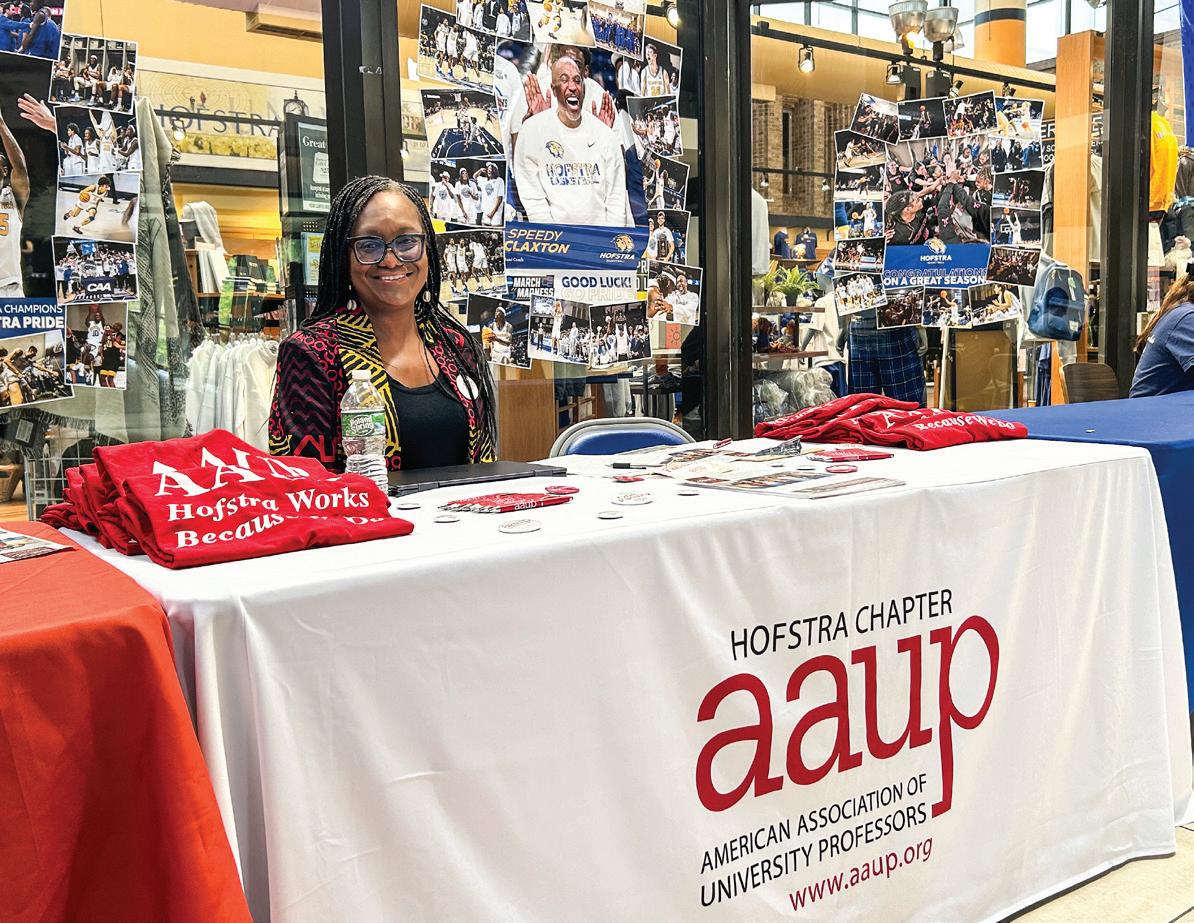
Hofstra University’s Chapter of the American Association of University Professors (AAUP) current contract ends August 31.
At their meetings, the university and the AAUP each address amendments that they would like to see, and they negotiate each term until an agreement is made.
“We didn’t have to give up our raise during COVID,” Basile said. “It was contractually negotiated. We were entitled to it, and our membership took a vote. Almost all of us agreed to forgo that raise
we were entitled to. The university had the best year during COVID, and we didn’t get that raise back. The administration did, but we did not. We didn’t think that was fair. We’re hoping that this administration will be fair and we’re certainly going to be fair in our request.”
OPINION
Is our empathy becoming more selective?
By Hiba Khan SPECIAL TO THE CHRONICLE
Waking up to news of another bombing led by images of destruction, lives lost and families torn apart, and then walking into my class only to overhear a conversation about the new, annoying cup lid they added at Dunkin’ creates a cognitive dissonance within me that is difficult to ignore. There is a strange disbelief in how easily attention shifts, how quickly global tragedy is replaced by everyday inconvenience and a return to normalcy. It raises an uncomfortable question: Why do some events feel so unspeakable in our
daily lives while others, drastically less life-altering, dominate our conversations so effortlessly?
This disconnect reflects a deeper issue rooted not only in what we choose to talk about, but also in what we collectively avoid. I’ve come to notice a pattern in the depth to which people feel comfortable speaking about political issues. It’s almost as if they were taboo or too uncomfortable to acknowledge to one another. Why are people who are unjustifiably dying anywhere in the world not a topic of conversation?
Sahana Shastry / The Hofstra Chronicle
Joe Orovitz / The Hofstra Chronicle

Hofstra University partners with Bideawee to streamline campus cat care
By Katelyn Buchalter NEWS EDITOR
Hofstra University’s campus has been home to cats since before its founding. However, Hofstra’s administration has recently created a new partnership with Bideawee, a nonprofit organization dedicated to largescale Trap-Neuter-Return (TNR) and community cat care.
“As the secretary of our school’s animal rights club, I and the rest of my board felt that before this partnership was announced, it was very unclear what the stance or attitude was towards the Hofstra cats or how to get involved with caring for them,” said Arietta Xylas, a senior biology major and secretary of the Student Organization for Animal Rights (SOAR).
Up until now, there has been no set procedure for caring for the population of cats around campus. Through Bideawee, new programs will be created.
“SOAR is really happy about Bideawee’s plan to introduce ‘Kitty Tubes’ to Hofstra, which are much more durable winter housing for our cats than the shelters they currently have,” Xylas said. “We’re also really excited that Bideawee and Hof-
stra will want to train student volunteers to properly care and manage our cats.”
Bideawee’s connection to Hofstra has a deep and rich history. Founder Kate Mason Hofstra was vice president of the Bideawee Home Association in New York City from 1903 to her death in 1933. In her will, she left behind money for her 25 cats, four dogs and three parrots.
“What I appreciate about Bideawee is the acknowledgement that there is no getting rid of these cats,” Xylas said. “They are a part of campus and trying to get rid of them is futile, because more will always come.”
Chanda Washington, Hofstra’s associate to the president for Government and Community Affairs, said that the new collaboration will function based on three core principles.
“The partnership will support three core areas: [TNR], which is the only humane and proven way to safely manage the feral cat population, workshops that will share [the] best practices for feeding and caring for cats in a safe and healthy way [and] creating a system for identifying and approving shelter and feeding locations,” Washington said.
Spencer Hamilton, a fresh-
man forensics science major and treasurer of SOAR, emphasized the mutual goal between Hofstra and Bideawee.
“[TNR] will be key to keeping the population from growing too much,” Hamilton said. “[Bideawee is] also meant to assist with getting them some better shelters, which is wonderful. Overall, I think everyone has the same goal of helping the cats.”
The partnership between Hofstra and Bideawee stemmed from rabies concerns around the Long Island area.
“Nassau County’s alert regarding rabid raccoons is what prompted us to develop a safer way to address the requirements in the alert while still allowing individuals to care for the cats,”
Washington said. “Bideawee provides the expertise we need to do that.”
Although the program aims to protect cats throughout the campus, Xylas expressed SOAR’s concern around the bird sanctuary as well.
“As we have many cats on campus that I believe are fed [and] given shelter near the bird sanctuary, a lot of the cats will go in and kill a lot of the birds,” Xylas said. “This is a concern with cats in general and is valid. I do not believe there is a perfect
solution, but I suggested in a meeting with Bideawee that we keep this in mind and that they try to avoid that region of campus when placing shelters or selecting designated feeding grounds. It’s important we try and consider all the animals in our ecosystem, while also acknowledging that no choice will be perfect for all of them.”
Leslie Granger, certified animal welfare administrator and president and chief executive officer of Bideawee, expressed the organization’s perspective on the partnership in a statement.
“For years, many of Hofstra’s staff, faculty, students and surrounding community residents have tirelessly provided daily care for the cats on its campus,” Granger said. “However, without coordination and additional resources, it can be nearly impossible for individuals to humanely and effectively manage such a large population. Together, as partners, we will help provide the supportive services and resources necessary to create the healthiest and most humane future for Hofstra’s residents – feline and human alike.”
The blood drive lasted 12 hours, from 8 a.m. to 8 p.m.
The Hofstra Chronicle is published on Tuesdays during the academic year by the students of Hofstra University. The Chronicle is located
Hofstra University, Hempstead, New York 11549. Advertising and subscription rates
by The Chronicle
its staff.
Photo courtesy of Amelia Lynch
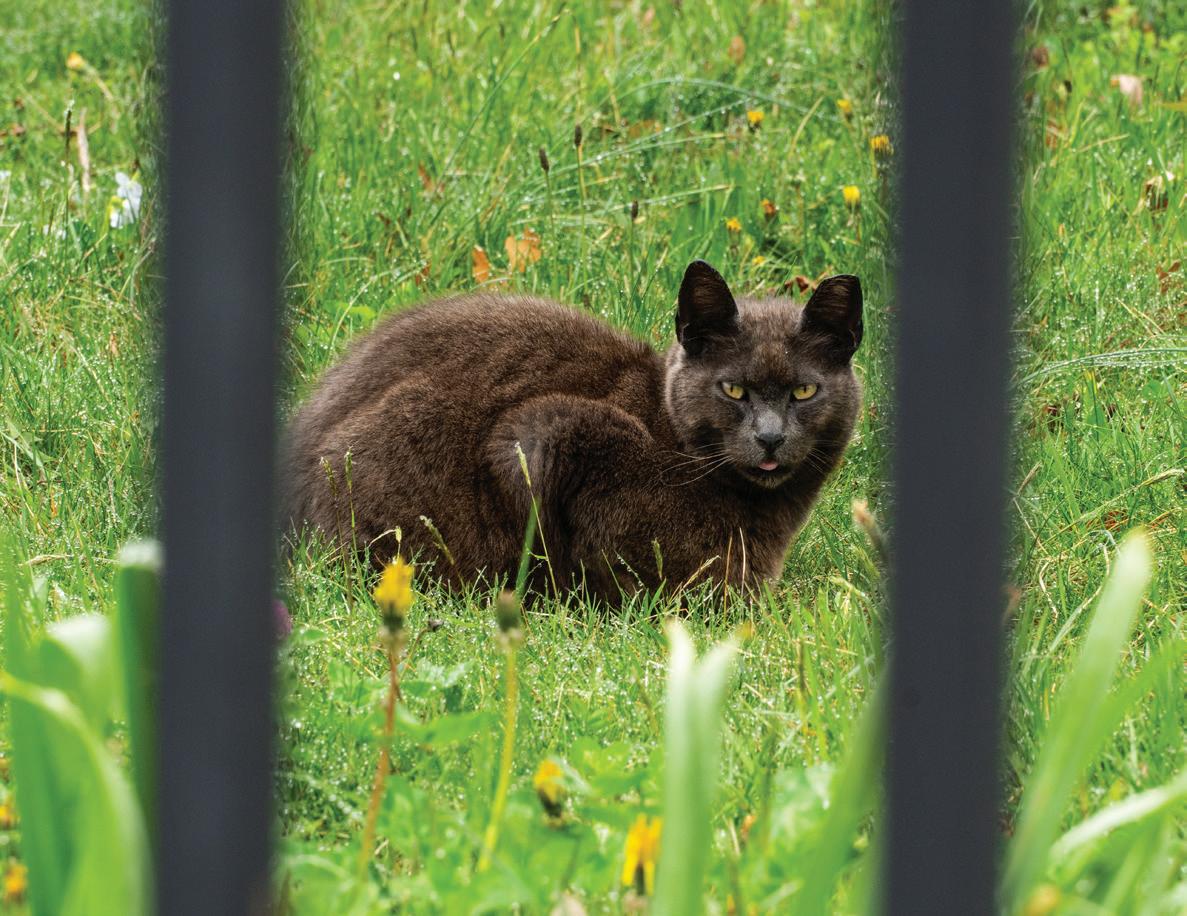
The cats on campus are often referred to as “Hof-cats” by students.
Kumba Jagne / The Hofstra Chronicle
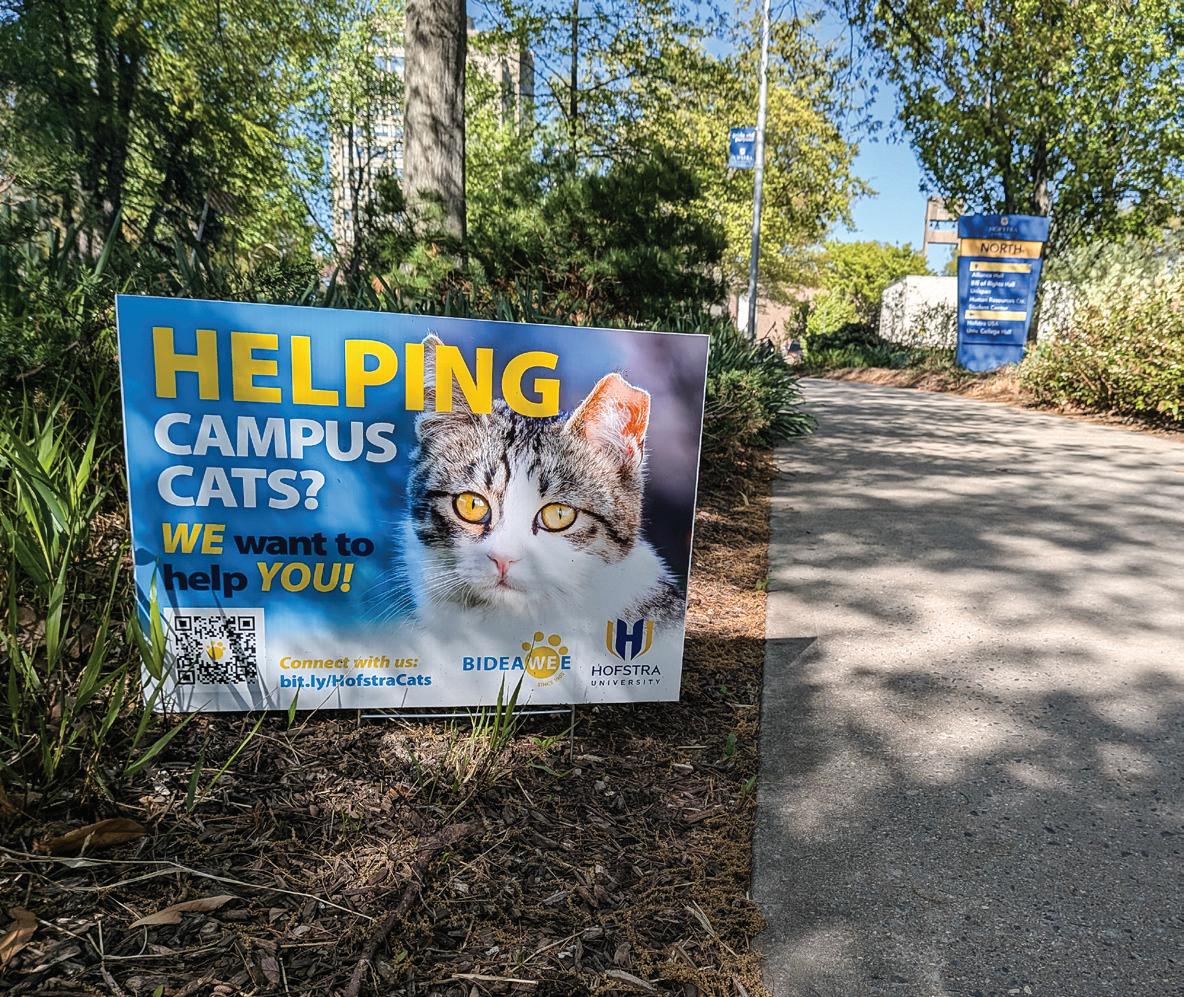
Bideawee placed several signs around campus for caretakers of the cats to offer helpful information via QR code.
7:45 AM
What you may have missed
Japan deploys firefighters to battle northern wildfires - Monday, April 27
Japan deployed about 1,400 firefighters and Japan Self-Defense Forces personnel to battle fast-spreading wildfires in the northern town of Otsuchi, officials said. The fires have burned over 1,300 hectares – about 3,212 acres – and forced evacuation orders for over 3,000 residents as flames threatened nearby homes. The efforts to put the fire out remain ongoing, with the weather making the effort difficult.
Buddhist monks charged with cannabis possession in Sri Lanka - Tuesday, April 28
Police arrested 22 Buddhist monks at Sri Lanka’s main international airport after customs officials found about 110 kilograms of high-grade cannabis, known as kush, hidden in false compartments in their luggage, authorities said. The monks, mostly trainees returning from a trip, were each carrying about 5 kilograms of the drug. Officials described the seizure as the largest-ever kush bust at the airport.
German barge carries Timmy the humpback whale to the North Sea - Wednesday, April 29
A humpback whale nicknamed Timmy, who had been stranded in shallow waters off Germany since March, was placed on a barge and transported toward the North Sea, reaching Danish waters on Wednesday, April 29, officials said. The rescue operation used a dredged channel and straps to move the whale onto a flooded cargo vessel after repeated failed attempts to guide it back to deeper waters. While authorities called the effort a success, some marine experts criticized it as risky and potentially harmful to the already weakened whale.
Rebel Wilson testifies in Australian defamation case - Wednesday, April 29
Actor Rebel Wilson returned to court for a third day of testimony in a defamation trial brought by Charlotte MacInnes, who alleges Wilson’s social media posts falsely portrayed her as lying about and retracting a sexual harassment complaint for career gain. Wilson denied the allegations and said MacInnes had confided discomfort about an incident, which MacInnes disputes. The court also heard Wilson deny involvement in alleged smear websites as she faced continued cross-examination in the Federal Court.
Senior send-off: Going out in AP Style
By Meredith Tarsi COPY CHIEF


Editing is the first thing I knew I loved. Leaving high school, I cycled through career paths like a dressing-room montage, but there was nothing that really stuck. The only thing that stayed with me through all the changes was editing.
Before finding my major, getting involved in campus events or joining production-based clubs at Hofstra University, I signed up to be a staff editor for the copy editing section. At first it wasn’t much, I’d edit a couple articles a week and honestly sometimes forget I was even on their email list until the next article rolled in. It wasn’t enough. When the assistant copy chief position opened up, I knew I wanted to apply, but if you knew me sophomore year, you know that I would’ve never put myself out there for that. However, a while after scrapping my chance, I was with Madeline Sisk behind the Hofstra Intramural Fields and I told her that I wanted to apply.
I remember it so vividly. “Meredith, we think you’re a great editor. If you apply for that position, you will get it,” Madeline said.
That very day, I went home and submitted my application. Now I’ve been a copy chief for over a year and I’ve loved every
long night, tense moment and frustrating edit. It’s all part of being in the copy editing section and I wouldn’t have it any other way.
I know that I am leaving the copy editing section in the most capable hands that Hofstra has. Gianna Costanzo, it has been so amazing to watch you grow as a copy chief – and to grow alongside you – and I am so jazzed to see what you can do as our next editor-in-chief, I know you’ll do great things. Maddie Demko,
that. You did that.
I have to thank Josie Racette and Nell Stultz, who taught me what copy editing was all about and allowed me to flourish and hone my editing skills as much as I have with this paper. And of course, Madeline, you’ve done so much for this paper with the copy section and as editor-inchief, and I absolutely would not be writing this today without your confidence and friendship. Thank you copy! Thank you to all the amazing section editors
“I have to leave The Hofstra Chronicle office for the last time, but at least I’m going out in style ... AP Style.”
Emily Hyman and Paula Amoroso Lomeli, you are more prepared than you know to take on this section without us next year. You are all great copy editors; have faith in what you can do. I know that you will raise Juliana Calcao and Ellen McCarville through the copy ranks the same way we did you. The five of you will make a great copy team. When I started, copy was lucky to see the door for Room 203 close before 2:30 a.m., but now, we leave before 11 p.m. almost every issue. We did
who got so many copy-jargon emails from me and had to have midnight debates over one single word. It’s not for nothing, we work for an amazing paper and it’s because of every single one of you.
I used to joke that I would quit the paper before graduation so I never had to write a sad, sappy senior send-off, but here I am. I have to leave The Hofstra Chronicle office for the last time, but at least I’m going out in style … AP Style.
Graphic designed and information compiled by Natalia Rivera
Meredith Tarsi hopes to utilize her love of editing in the film industry.
Gianna Costanzo / The Hofstra Chronicle
By Marilyn Steele MULTIMEDIA EDITOR
Hofstra’s American Cancer Society hosts the 19th annual Relay for Life
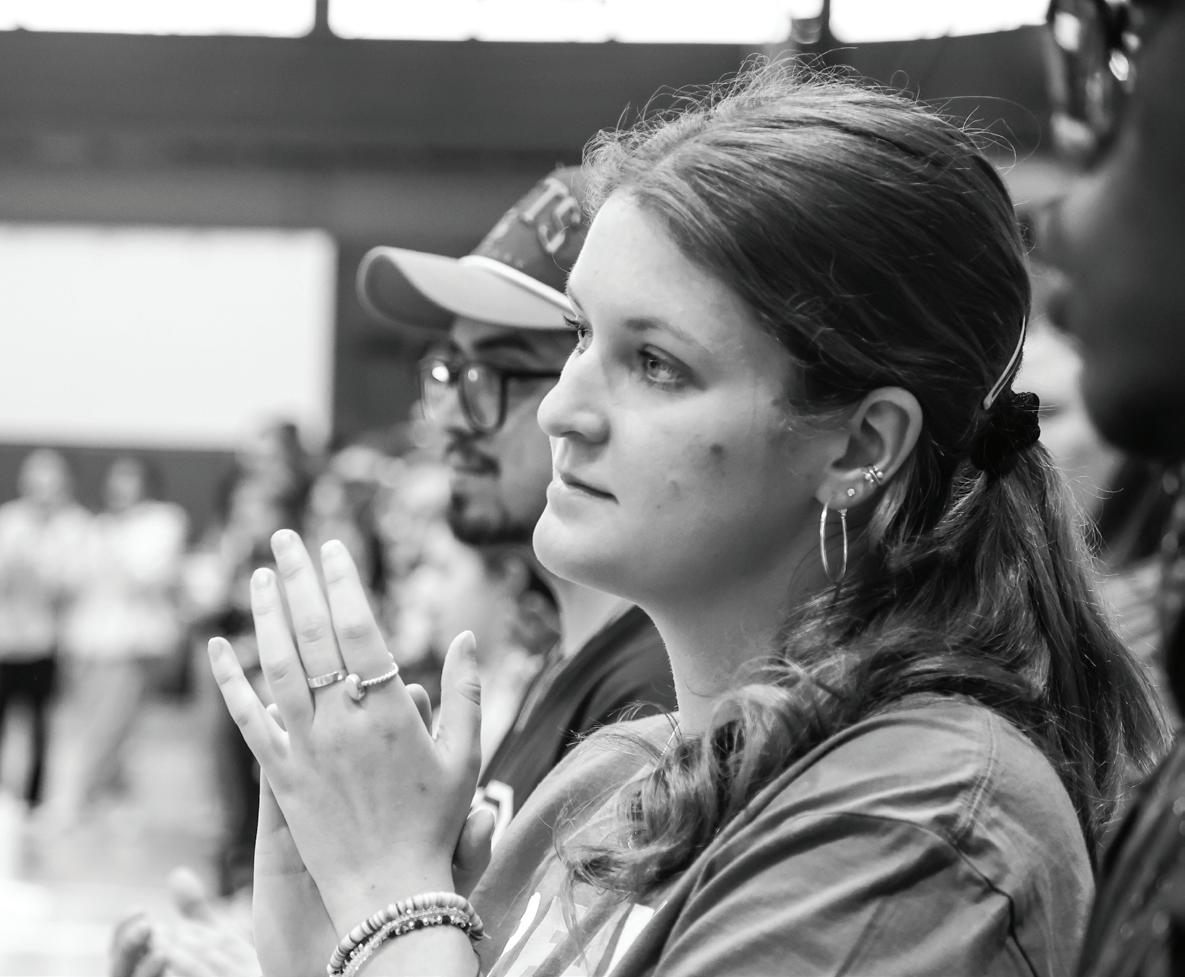
Hofstra University’s American Cancer Society hosted the 19th annual Relay for Life ceremony on April 25 to raise funds for cancer research across the world. Hundreds of students, faculty and community members came out to support the cause, with many oncampus clubs and organizations assisting with setup as well as fundraising efforts.
The event took place from 2 p.m. to 8 p.m. in the Hofstra Fitness Center to bring awareness to both people diagnosed with cancer and people who have been caregivers and understand the toll of cancer.
Gabriella DeLeon, a junior health science major and president of Hofstra’s American Cancer Society, has participated in Relay for Life since high school, joining the university club in her freshman year.
DeLeon has lost multiple family members to cancer, which is why the Relay for Life event is so meaningful for her.
“We have so many students that come and bring their families, and we get to honor them,” DeLeon said. “I think it really gives our students perspective on what having cancer could
be like for someone. It gives our students more empathy and the ability to relate to populations different than their own ... That’s a really important part of our club and this event.”
Relay for Life is about bringing together community. However, it’s the students that truly help make a difference.
Julia Fielding, a junior public relations major and public relations chair for Hofstra’s American Cancer Society, was one of the primary club members using advertising to make this event possible.
Fielding said that, while she advertised Relay for Life through social media, it was more meaningful when she personally contacted people on campus to help.
“Seeing people come and represent their different clubs
together as Hofstra students, but we’re coming together as different forms of our identities that represent us here on campus ... An event like this is not only targeted towards the Hofstra population, but it allows people to also represent what they do here at school.”
While on-campus organizations began to set up their fundraising tables surrounding the fitness center’s basketball court, others set up colorful paper bags with motivational messages for the luminaria ceremony at the end of Relay for Life. Each bag was hand decorated by students and community members, bringing color to the track.
Later into the night, participants were invited to walk the path created by the luminarias in honor of those who are still
their lives to cancer.
Ryan Fettinger, a senior
“I think that we can do more to educate people and make them aware of cancer, as well as what you can do in terms of early screenings and taking care of yourself.”
here is really cool,” Fielding said. “We’re not just coming
fighting the battle against cancer and those that have lost
drama and sociology double major and member of Alpha Psi Omega, walked the second lap with several others, holding a banner to represent those who were caregivers of those with the disease.
“[My mom] was diagnosed [with cancer] when I was 12 years old, and she passed away when I was a sophomore in college,” Fettinger said. “So, I started to do it in memory of her.”
Several survivors of cancer and students that had personally been impacted by the disease gave speeches at the beginning of the ceremony. These speeches, while sentimental, were also inspirational to those who may be struggling.
Lexy Mealing, a cancer awareness advocate and a previous speaker for Hofstra’s Relay for Life, found that sharing
her story with college students helped to raise awareness about preventative measures against cancer and the impacts cancer may have in their future.
“I believe that sharing your story is the most powerful tool because sharing your story can save someone’s life,” Mealing said. “Sharing your story could encourage someone to be their biggest advocate.”
According to the World Health Organization, cancer impacts nearly one in five of the population directly and indirectly harms millions more each year. Even so, college students are often less aware of how to see the warning signs and how to prevent the disease early on.
“There are definitely those in our own Hofstra community that are impacted by cancer, but I feel like on the surface, that’s something that not everybody would be thinking about,” Fielding said. “I think that we can do more to educate people and make them aware of cancer, as well as what you can do in terms of early screenings and taking care of yourself. It makes [life more] meaningful, and I think that is what makes this event more special to us.”
Every participant and attendee received two “Relay Bucks” to use at the tables for sweet treats or activities like face painting, temporary tattoos or games.
Marilyn Steele / The Hofstra Chronicle
Marilyn Steele / The Hofstra Chronicle
Julia Fielding serves as publicity chair for Relay for Life.
After ten years, the AAUP officially begins negotiations with Hofstra cont.
CONTINUED FROM A1
The contracts expire every five years. Since the AAUP has not negotiated their contract in 10 years, they began preparing during the summer months of 2025, looking line by line to modify sections that needed revisions.
The AAUP is the largest union to represent university faculty, and they understand their benefit to Hofstra students.
“We’re the ones who write the recommendation letters for the students,” Basile said. “When you hear about mentors in their life, it’s usually the faculty and not the administration.”
Throughout the process, the goal is to complete negotiations in the most efficient way possible, possibly even ending before the 15th meeting.
“The best-case scenario is we come to an agreement, even if it’s at 2:00 a.m. on August 31,” Trasciatti said. “We come to an agreement that our faculty
overwhelmingly support, and the administration feels good about that respects our teaching and our research and our service to the community, the campus community and elsewhere.”
Although the best-case scenario is to agree on a contract, some universities across the country are struggling to make fair negotiations.
At St. John’s University, also located in New York, the administration stated they no longer recognize St. John’s AAUP Chapter’s collective bargaining agreement. The union has now taken legal action against the university, filing an Unfair Labor Practice offense with New York State’s Public Employment Relations Board.
“They struck on March 23, and it was a wildly successful strike,” Trasciatti said. “Two days, it lasted. On the evening of March 24 – the second day of the strike – they came to an agreement and
they got significant salary increases in their faculty contract.”
Hofstra’s chapter of the AAUP is hoping negotiations won’t end in a negative way.
“In [the worst] case [scenario], we might consider a strike,” Trasciatti said. “No faculty wants to do that. We want to teach; we want to work; we want our stu-
dents to get the education they’re here for.”
Hofstra University’s AAUP contract will expire on August 31. As negotiations continue, the outcome will not only shape faculty working conditions, but also the academic experience of students across the university. Hofstra University did not respond for comment.
Disclosure:
The Hofstra Chronicle’s faculty advisor Brian McFadden is a member of AAUP. The faculty advisor provides guidance on professional standards and supports student staff but does not affect content.
Public Safety Briefs
Compiled by Katelyn Buchalter
Key:
PS – Public Safety
HU – Hofstra University
NCPD – Nassau County Police Department
CS – Community Standards
On Friday, April 17, 2026, at 8:10 p.m., PS received a call that there was a strong smell of gas emanating from the first floor of Nassau & Suffolk Halls. A search of the area was conducted, and it was determined that the odor was coming from a can of insect repellent in one of
the dorms. The windows were opened to allow the odor to air out. The students residing in the dorm were not present at the time.
On Saturday, April 18, 2026, at 4:42 a.m., while on routine patrol, PS observed an HU student doing donuts with their vehicle in parking field 7N. Another vehicle, which was trailing the first vehicle, revved their engine and drove recklessly by the Colonial Square Complex at a high speed. PS stopped the vehicle, and the three occupants became argumentative and
refused to show identification. NCPD responded and identified the driver of the second vehicle as a non-HU student, whereas one of the passengers was identified as an HU student. The third passenger refused to identify themself. The non-HU student was banned from campus. The HU student will be referred to CS and an investigation is being conducted into this matter.
On Sunday, April 19, 2026, at 6 p.m., an HU student reported to PS that while traveling back from a trip to Canada, they were
involved in a verbal dispute with two HU students. An investigation is being conducted into this matter.
On Monday, April 20, 2026, at 8:40 p.m., an HU student reported to PS that they discovered several unauthorized charges on their campus dining account. An investigation is being conducted into this matter.
On Friday, April 24, 2026, at noon, an HU student reported to PS that at noon on Thursday, April 23, while walking on Huntington Place street by California Avenue,
they were followed by an unknown person driving a black Mercedes. Police assistance was declined and an investigation is being conducted into this matter.
On Sunday, April 26, 2026, at 2:42 p.m., an HU student reported to PS that over the past several weeks, numerous items of clothing had been taken by unknown persons from the laundry room in Constitution Hall. An investigation is being conducted into this matter.
The American Association of University Professors (AAUP) was founded in 1915 and has chapters at universities all across the United States.
Sahana Shastry / The Hofstra Chronicle
Senior send-off: A bittersweet farewell cont.
CONTINUED FROM A1
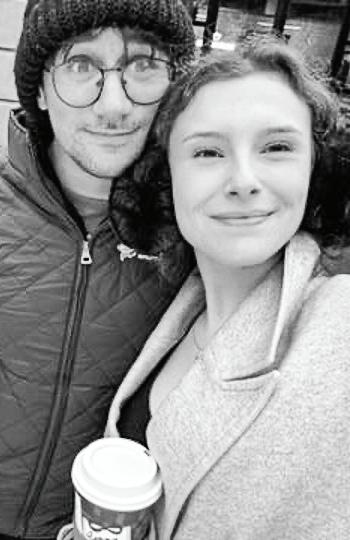
At the time, it bruised my ego more than I’d like to admit. As the former editor-in-chief of my high school magazine, I wasn’t used to that. I wish I could tell my freshman-year self that this happens to everyone, but maybe it’s better that I didn’t know. That moment pushed me to grow.
I also had some … ambitious expectations. I thought that if I wrote a standout opinion piece, I’d naturally become an Opinion editor. That didn’t happen. Ethan Albin got the position, and, to make matters worse, he was the one who had edited my article in the first place.
What followed was a threeyear “rivalry” full of copy editing scuffles and friendly competition, like the secretary election. Looking back, I wouldn’t change that experience for anything; it made me work even harder, and
little did I know that, nearly four years later, Ethan and I would be living together in our first apartment.
So, Ethan, thank you for being my rock this past year. You’ve made every tough decision easier, listened to every rant with patience and a genuine drive to help. You’ve been the Chronicle’s hidden hero more than once this semester. Few people would be as kind and understanding as you were when I woke you up to come to the Chronicle office at 2 a.m. to fix the layout. You never had to, but you always did. For that and so much more, I’m endlessly grateful.
I continued to work as a staff copy editor until their assistant applications came out, and this time, I got the position. In hindsight, this was always where I was meant to be. Julia Razzante, Antonia Moffa, Nell Stultz and Annabel Hofmann brought me in alongside Josie Racette. I’m so grateful for all they showed me that spring. To Nell, who continued to guide Josie and I for the next year, thank you. You taught me so much about copy editing and AP Style, and to this day I sometimes think, “What would Nell do about this one?”
Josie, my dear copy twin, I miss your presence so much in the office. We grew together and made this section what it is. We laughed, cried and made mistakes side by side, and I always knew I had you with me. Not having you around this year has been really weird, but I know you’re doing great things.
Coming up in the Chronicle with another person at your side makes everything better, and I’ll always be grateful I had that.
The editorial board has arguably doubled in size from when I started, but even then, the room of people felt impossibly vast. It’s intimidating walking into the office not knowing anyone. I remember the first layout I attended. I got here earlier than anyone else on the copy team. I was so worried that I would do something wrong, say something stupid or make a fool out of myself. It’s funny looking back, knowing how much of a home the office became for me. To anyone new to the Chronicle reading this: It may feel overwhelming at first, but every person in that room is there for the same reason – to create something meaningful. You’ll find your place, just give it time.
During my time as copy chief, Josie and I had the privilege of hiring two of our own assistants, and they joined the fold just as we did, integrating seamlessly into the Chronicle.
Meredith Tarsi, you’ve been a friend of mine, not just in the Chronicle, but outside of it too, and I’m so glad you’ve been a part of my journey. When we brought you on as an assistant, I believed in you 100%. Your attention to detail, your “copy tweaking” and your uncanny knowledge of movie reviews will be deeply missed. The GoHofstra rosters fear you. Thank you for being such a great part of this team and being a great friend too.
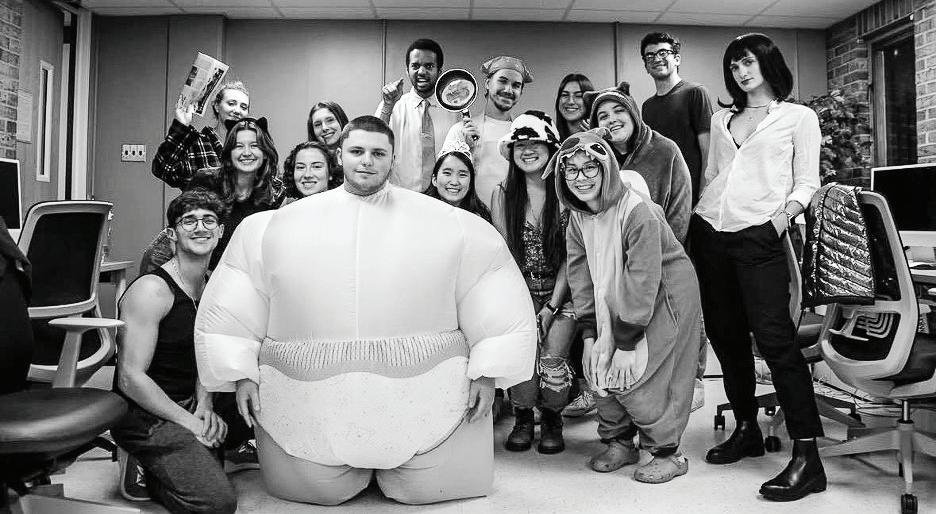
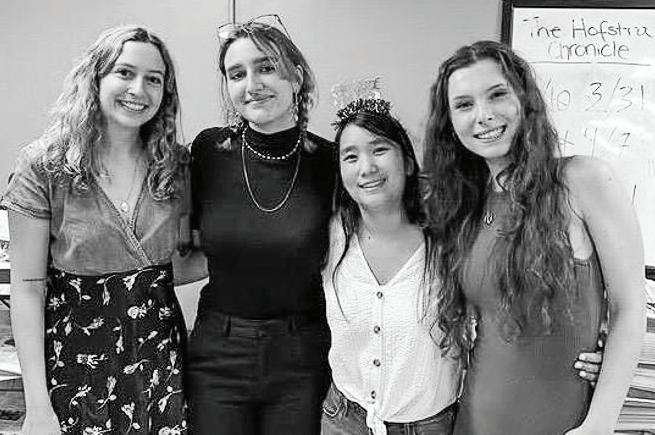
Gianna Costanzo, despite your shyness in your interview, you’ve truly come into your own. You’ve shined in every position we put you in, from assistant, to copy chief, to secretary and now the incoming editor-in-chief. I’m so very excited to see what you will do in your time as editor-in-chief. If you make even half the impact you made on the copy team, I know this paper will be left in excellent hands with you and Hannah Mudry taking the lead.
Madison Demko, Emily Hyman, Paula Amoroso Lomelí, Ellen McCarville and Juliana Calcao, I know you all will do great things with the copy team. Remember, the AP Style guide is your friend, but pick your battles wisely. The copy team is very important to this paper. Take this lesson from experience: kindness and understanding takes you much further than “technical correctness.”
I would be remiss not to thank Makenzie Hurt, my wonderful predecessor as editor-in-chief, who is doing amazing things right now in law school. I remember our chats from last year fondly. I happily did anything I could do as business manager to support you, and you did the same in turn for me. You developed this paper into something beautiful, and I can only hope that I took what you did and made you proud with my efforts this year.
Ryan Monke, thank you for everything you’ve done for me and this paper this year. Truly, I couldn’t have done it without you, and I hope every editor-in-chief from now on can have a managing editor like you.
You’re the good cop to my bad cop and a voice of reason when I need it. I wish you the best of luck after college – I know you’ll knock it out of the park.
To our advisor, Brian McFadden, thank you for everything you’ve done for me over the years. You’ve helped me so many times – not just within the Chronicle, but in my education as a whole. For this, I will always be so grateful.
To incoming leadership, I’m so excited to see what you all do with this paper and I fully believe in you all. You are all wonderful leaders, and I trust you to do great things.
While I may be graduating with a major in public relations and strategic communications, journalism has such a special place in my heart. I’ve been working in journalism for seven years now, and it’s clear to me that its landscape is changing. I’ve done my best during my time as editor-in-chief to consider the longevity of this paper, strengthening our digital presence through the website, app and other various forms of digital media. I’m proud of the way this paper has expanded and I know that it will continue to thrive for years to come.
For the Chronicle staff as a whole, you are all doing amazing, powerful work. In a time that print journalism is dying and journalism as a whole is under attack, know that you are still doing important work. As this paper goes into its 91st year, remember what you stand for and remember what you are capable of. Continue to share powerful stories.
Photo provided by Madeline Sisk
Photo provided by Madeline Sisk
Photo provided by Madeline Sisk
FEATURES
Personal Essay: I love being a big sister
By Hannah Mudry
FEATURES EDITOR
For the first nine years of my life, it was always George and me. Our parents got divorced when we were toddlers, so it was just the two of us going back and forth throughout the week – a brother and sister tied at the hip.
My mom and dad each got remarried to new people, so we knew that new siblings weren’t out of the picture.
Ethan was born a few days
before I turned 9 years old. To be honest, I don’t even remember my stepmom and my dad telling me that they were having another baby. In my memories, Ethan just appeared one day. A little kid who liked to clean and dance in nothing but a diaper.
When I was 10 years old, my mom sat George and me down and said that she had an announcement. I looked her dead in the eye and said, “You’re pregnant.” I remember that clearly because I think it was the day that my life really did change.

By Gianna Costanzo COPY CHIEF
Crossplay, The New York Times’ newest addition to their repertoire of mind-enhancing games, was released in Jan. 2026. Like The New York Times’ other games, Crossplay will excite, anger and teach players. In this two-player competitive word game, players are invited to go “word-to-word” against each other. Similar to Scrabble, players are given seven tiles, each with a letter and number value on it. Players then must use the tiles to spell various words on the 15 by 15 grid, ensuring that each word is connected to another. To maximize the number of points earned, players must strategically and creatively connect different words on the board.
Then, the player’s points are added based on the tiles’ values and the value of the “premium squares,” cells on the board that feature special promotions which either double or triple the player’s
At this point, I had two brothers whom I loved and cherished, and I was excited for the possibility that I would have a sister.
That didn’t happen.
I cut the cake and there was stupid blue frosting drawn all over the knife.
“Another freaking brother,” I remember thinking at the ripe age of 10.
Not long after my mom announced her pregnancy, Ethan walked out of his room in a blue T-shirt with orange writing that said “I’m gonna be a big brother.” What? My dad and my stepmom were having a second baby, and around Christmas time that baby was announced to be a boy. Number four.
I had four brothers.
I remember thinking, “Couldn’t I have gotten one sister?” It’s just me with four boys. Everyone always told me, “You’re going to be the princess. You’re going to get everything you want. All the attention’s going to be on you.”
And let me tell you, I am the princess.
But the attention is not always
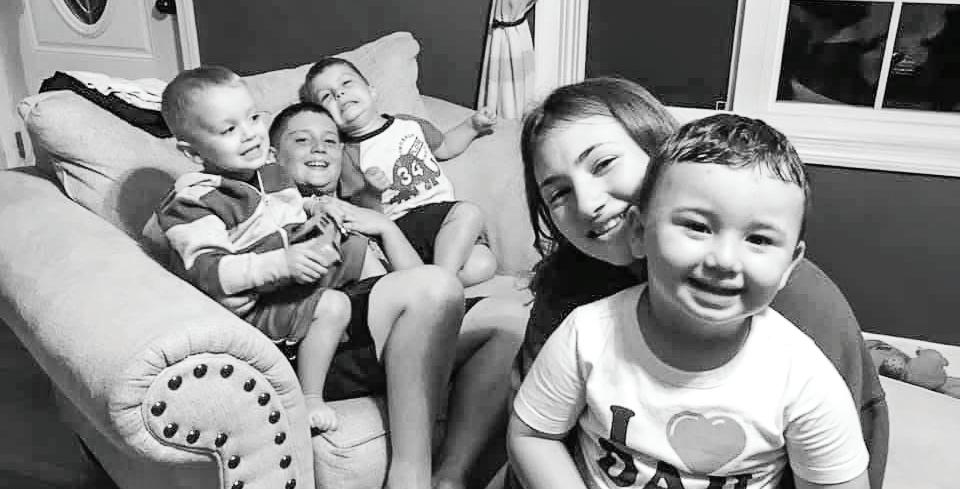
on me, and that’s my fault. I give those boys every ounce of attention that everyone thought I was going to have.
I take pictures at their baseball, soccer and football games and celebrate everything they accomplish. It has been the joy of my life, and I’m only 19.
Although I have four brothers by blood, four years ago I welcomed a fifth sibling. My little sister. She would probably die if I said this, but my boyfriend’s sister is the little sister God was waiting to send me. She’s funny, she’s obnoxious and she’s perfect.
As I’m writing this, it’s Thursday, April 30, and college decision day is tomorrow.
Chron Critique: Crossplay
entire word score or the value for a specific tile. The added element of the premium squares makes the game especially exciting, as a typical 10-point word might accelerate to 20 points, depending on where it is placed on the board.
Crossplay is especially unique because players are able to see the definition of the words they play. This is a great feature that allows players to expand their vocabulary and improve their language comprehension. The game uses the NASPA Word List, 2023 Edition, and the acceptable words are based on traditions set by Scrabble and Words with Friends.
Crossplay is extremely user-friendly and includes many features which make the game addictive and educational.
Paid subscribers and new users also have access to Cross Bot, which helps players “learn, improve and find the fun in Crossplay,” according to The New York Times’ help center. Cross Bot Game Review is an artificial intelligence analysis tool that
gives players access to insights on their completed games. Players view what went right and wrong in the game, including insights on the strategy and luck of each player. Cross Bot Game Review is extremely beneficial for players looking to up their game.
Other features include the ability to skip your turn, cancel the game, view the game’s history, view the tile bag and swap tiles.
Players have the opportunity to play against other players or play against a computer. This allows players to make connections with other word-loving players or just play for fun.
Unlike The New York Times’ other games, Crossplay is not available through the New York Times website but is available for download on Apple and Android devices.
Whether you’re looking to expand your vocabulary, make connections with other intellects or just pass the time by playing a fun word game, Crossplay is the game for you.
Georgie’s going to wake up and put on his University of Rhode Island T-shirt, and I’m going to cry because life moved so fast. It’s such a cliché thing to say, but it’s true.
With this big day ahead, I reflect on when I was deciding on a school. I knew I couldn’t go far. I wanted to be there for the fifth-grade graduations, concerts, baseball games and birthdays.
Sometimes I lie and say I chose New York for the media landscape or whatever. Really, it’s because I wanted to get away, but I love being a big sister so much that I couldn’t leave.
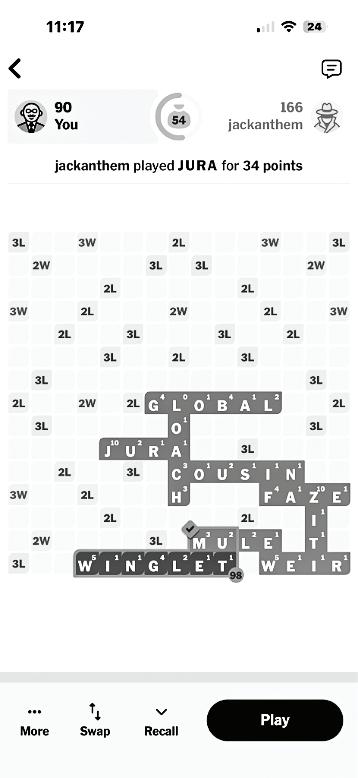
Photo courtesy of Jason Smith
Photo courtesy of Samantha Fair
Photo courtesy of Samantha Fair
MAN ON THE UNISPAN
“What’s your favorite finals-week study habit?”
By Denivia Rivera and Joe Orovitz FEATURES EDITOR AND MULTIMEDIA EDITOR
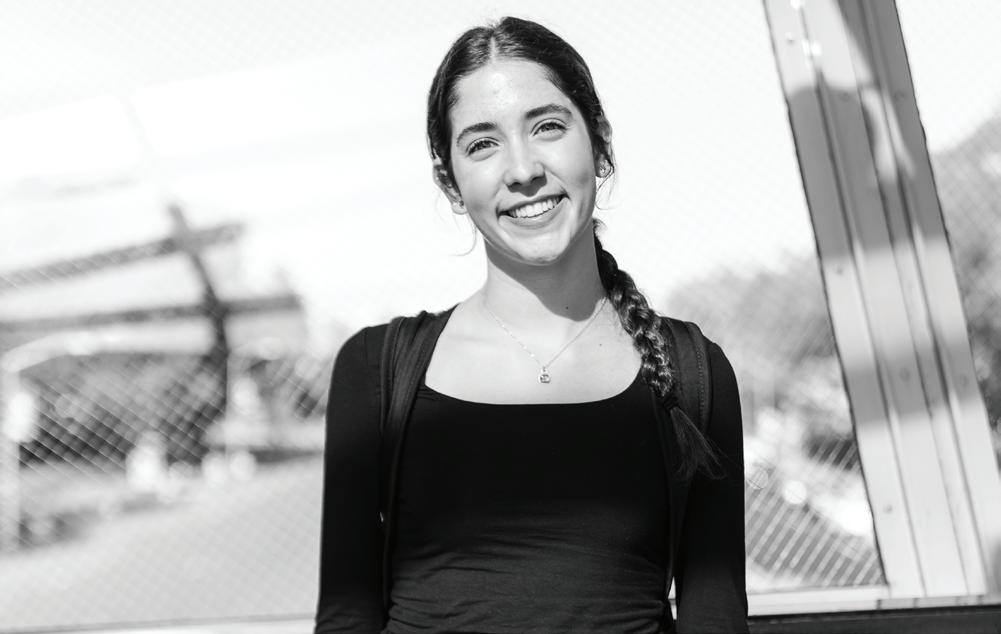
“Getting up really early and getting a lot of work done before everyone else is awake.”

O verheard @ h O fstra
“Did you know soy sauce in Spanish is I’m sauce?”
“When I close my eyes, I can’t really see.’”
“Being a twink is genetic, but a femboy? You’re free to fly.”
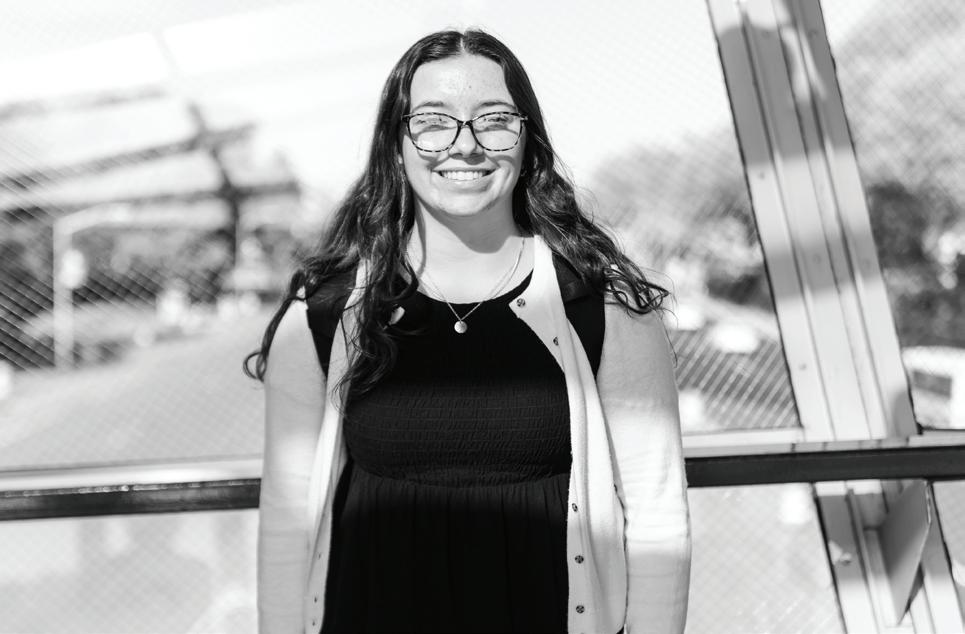
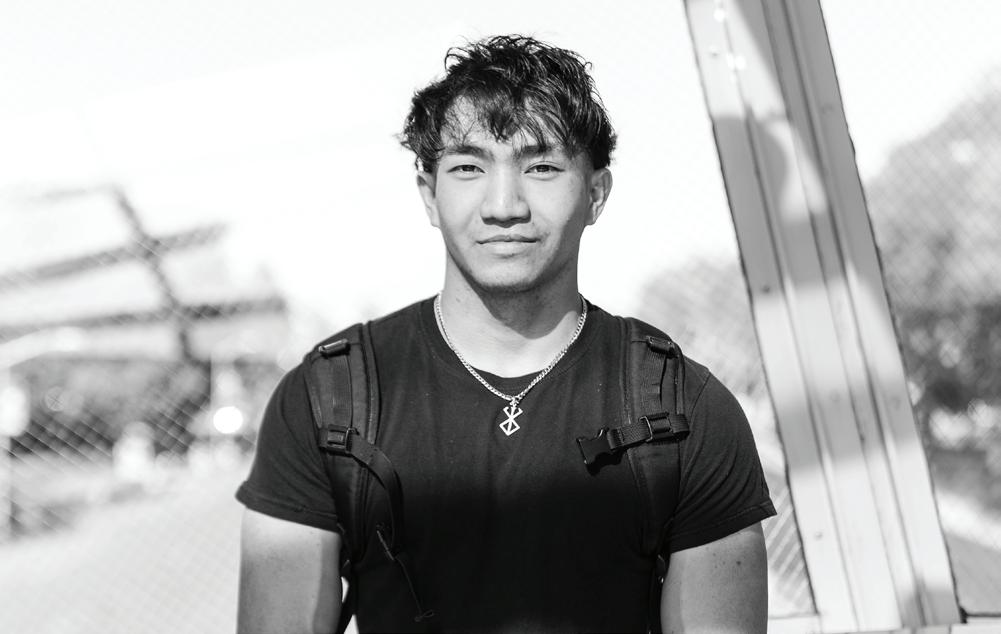
“I don’t really study.”
- Justin Chan, sophomore
“I’m trying my monkey impression because I already perfected my chicken.”
“You’re basically a woman; you can’t be sexist.”
“I’m waiting until after I graduate to kill myself so nobody thinks I’m a quitter.”
“Good morning to the most exquisite chuds to grace this Earth.”
“I’m getting a ragtagged group together.”
“Gun to your head, would you let Noah Kahan gaff your senior?”

If there’s something funny you overhear, you can now submit it here!
Spread by Hannah Mudry, Emilie Morrissette and Denivia Rivera
- Calleigh McCracken, freshman
“Having a good snack.”
- Chloe Hitschler, freshman
Marilyn Steele / The Hofstra Chronicle
FEATURES
Personal Essay: Mama Annie, Katie and Kat – the three Ann
By Kat Powers STAFF WRITER
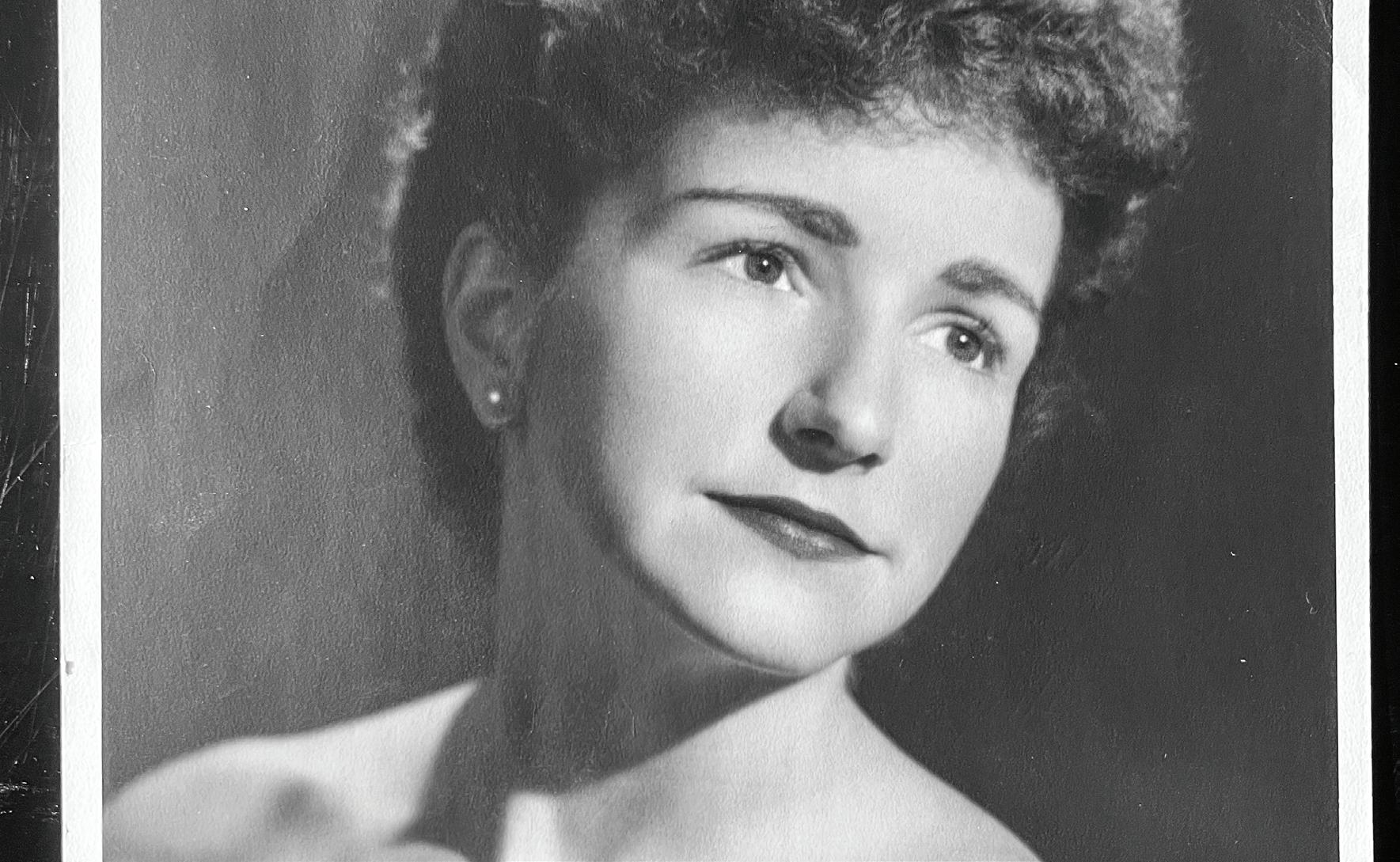
I have seen my name – Ann Catherine Hurley – on a gravestone. In fact, I have seen my name on two gravestones.
Even though I never met my grandmother, “Mama Annie,” or my Aunt Katie, I was named after them. The more I learn about them, the more I realize that their legacies live on inside me.
Loyal, outgoing, strong, caring, independent and creative – these are traits I am honored to share with them.
Mama Annie was not only our family matriarch, but she was also a mother to everybody. Her heart was big; it often extended beyond the confines of her home and the 10 children she provided for. She was always taking in strays: kids invited in from the convenience store across the street, neighbors’ kids and friends of her children. If there was someone who she knew wasn’t being provided for, they had a place in her home.
Like her mother, Katie was protective to the core and loyal to the bone. She put her six sisters before herself and truly believed that they deserved the best in life. If a man Katie was interested in asked her to dinner on a night she had plans with my mom – her much younger baby sister – she said no, every time, without fail. Katie worked as a cocktail waitress with one of her younger sisters, and whenever men would hit on her sister, she shooed them away. These men knew not to mess with or cross Katie. What she said was law. My aunt tells me that Katie was not afraid to speak her mind.
Like Katie, I wear my heart on my sleeve, and like Mama Annie, my heart has always been notably big. Whenever I found someone alone at a lunch table, I befriended them and brought them into my group. I hated seeing anyone alone, especially when I could tell it wasn’t by choice. It is said
Catherines
that Hurleys will give you the shirt off their back. I would give crayons, pencil lead and notebook paper to anyone who needed it. My generosity knew no bounds, but it would quickly get rescinded from those I had given it to if they hurt one of my own. Beyond losing the priv-
the hopeless romantic in me comes from: a grandmother who literally got up in the middle of the night to do laundry, giving up sleep to spend time with her husband. Maybe this is why my mom gets up hours earlier than she would need so that she can help my dad get out the door on
before I can even remember. My mom gave me blank paper instead of coloring sheets, signed me up for art class before kindergarten when she noticed my interest on it and always encouraged me to do what I felt passionate about. Katie didn’t have that.
fore me weren’t. I may be sick of spending my afternoons and evenings painting for my art course, and the fumes from the oil paints may make me slightly dizzy, but I get to be here. I get to be here finishing my last semester of my college education. I get to take a creative writing class where I learn to write about my own life. Not only do I have the freedom to make my own choices, but I also have the agency to speak about them.
Mama Annie drank hot tea out of a plastic tumbler all year long, all day long. Maybe this memory is the reason why my mom started a tradition of drinking tea with me when I was little. My grandmother would sit at the kitchen table between the hours of 9 p.m. and 11 p.m., drinking her tea, at the ready to receive the children who sought her counsel. She would ask, “What’s going on in your young life?” and really care about the answer.
“Loyal, outgoing, strong, caring, independent and creative – these are traits I am honored to share with them.”
On nights when my mom and I are in the same house, both growing up, we sit on the couch and just talk about anything and everything: work or school, boys and heartbreak, life paths for the future and how much we love each other. Some of my favorite memories are curled up on the couch with my mom, each of us clasping a cup of tea in our once-cold hands, sometimes with a movie that is more of a fountain of tears than an actual movie playing while I cuddle up next to her.
ilege to share my belongings, they were likely to receive a serious tongue lashing. My family comes first.
Mama Annie not only dedicated her life to taking care of her 10 children, but she also prioritized being a wife to her husband. He would get back from his third job at midnight. Every night at 11 p.m., like clockwork, she would take a bath and ready herself for his arrival. Their romance never ended. Maybe this is where
days when he has an hour-long commute and a 6 a.m. start time. Katie was wonderfully creative. She was able to spin poems as if it were as easy as breathing. She knew how to draw a picture that caught attention, although she did not have the privilege of going to college or having any special training in writing or the arts. Katie struggled to see a life for herself that was as good as the ones she saw for those around her.
I have been an artist since
With nine siblings, there isn’t much money for lessons or after-school activities. There wasn’t even money for kid number three to go to college. Every advantage that Katie did not have was bestowed upon me. It is as if Katie and Mama Annie are my fairy godmothers, smiling down on me with pixie dust and wands.
I am beyond grateful for the life I have and for the opportunities I have been afforded that the women only one generation be-
The warmth of these women cannot possibly be conveyed through the confines of the written word. You’d just have to feel it. And I am lucky to say I can feel them with me every day.
It’s not the same as knowing them, and it never will be, but I am grateful for the memories that have been passed down to me. I am the eldest daughter of the youngest of Mama Annie’s 10 children, and I get to know the joy and the pain that was never mine.
Photo provided by Kat Powers
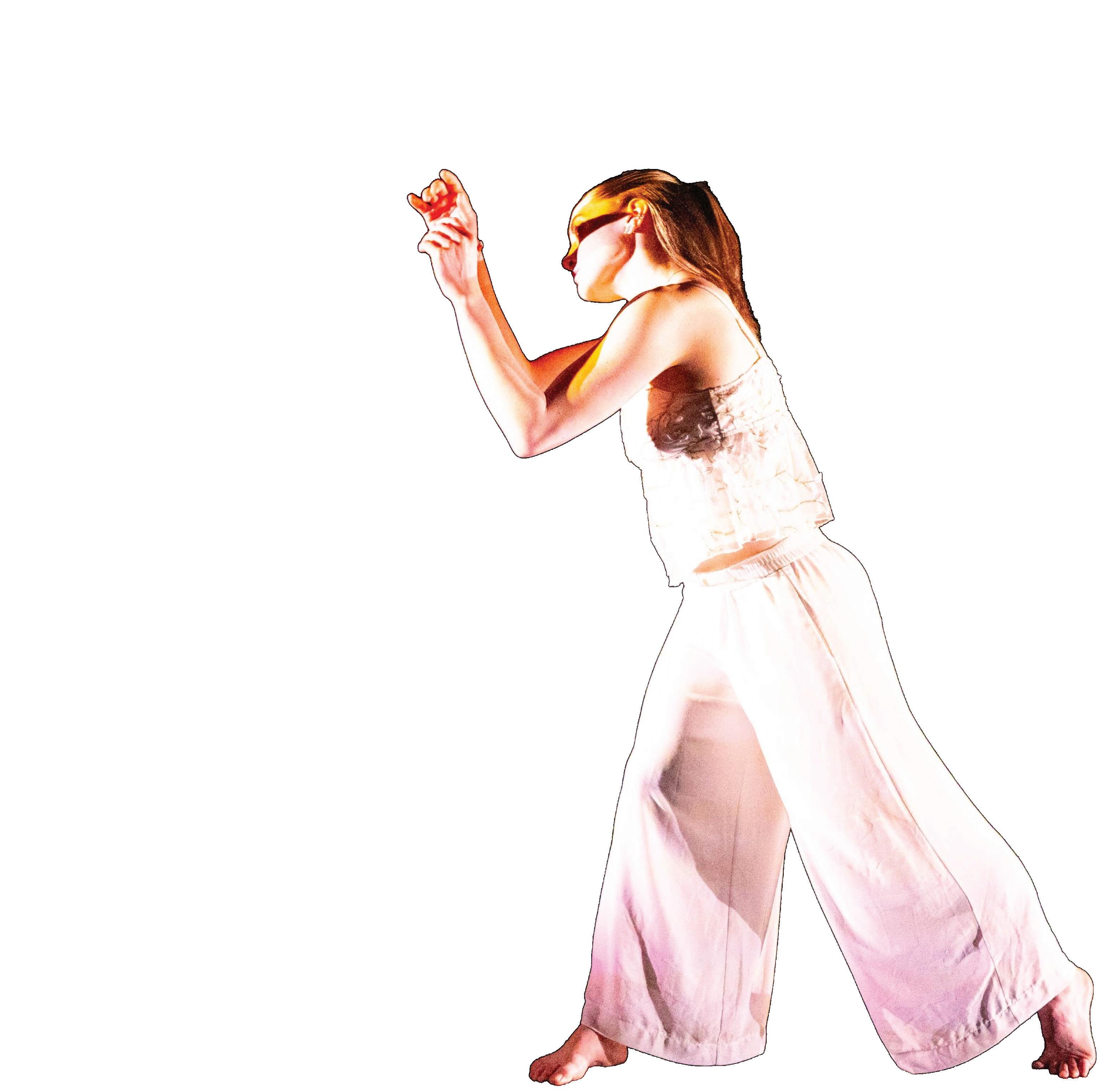
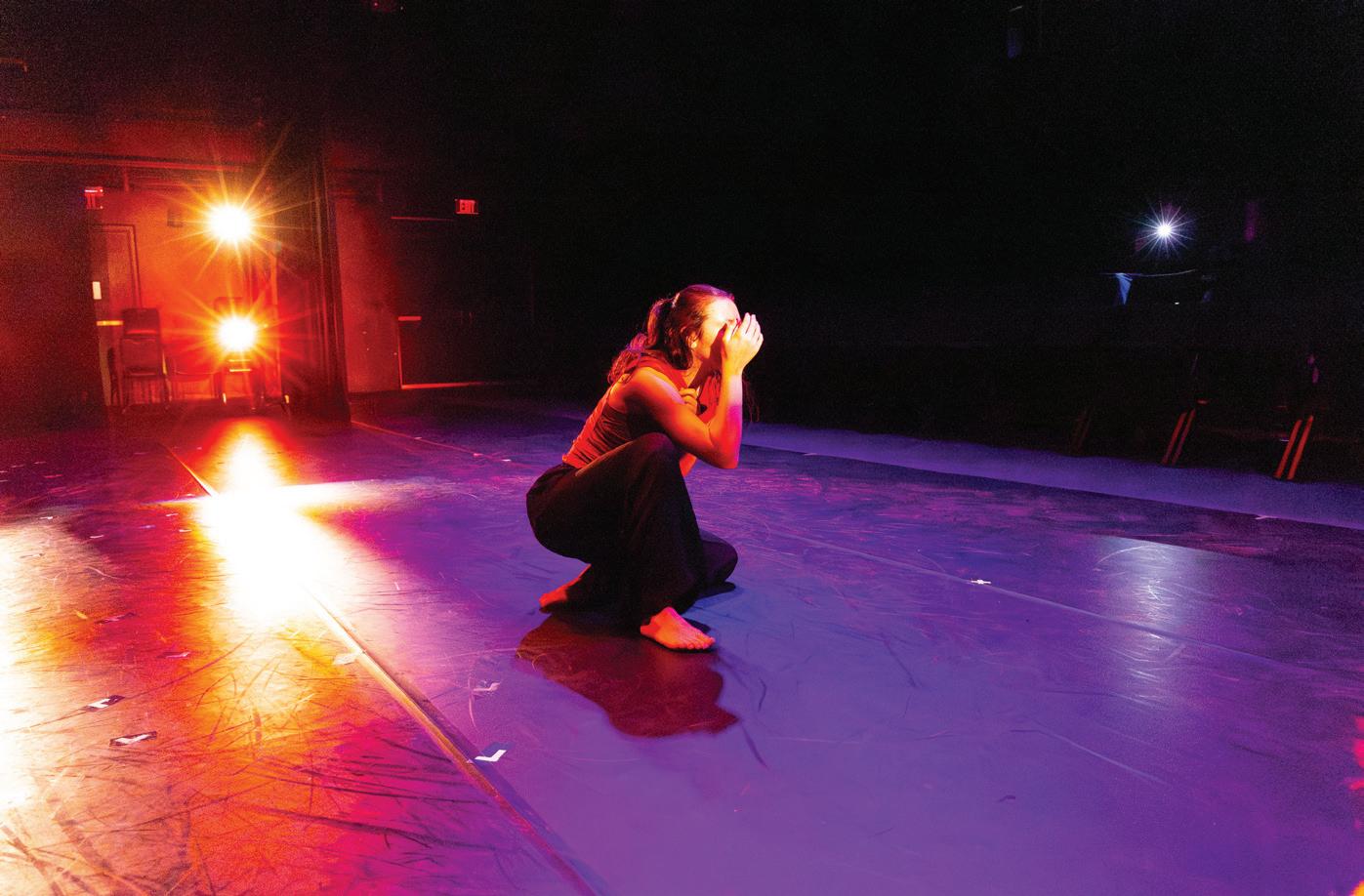
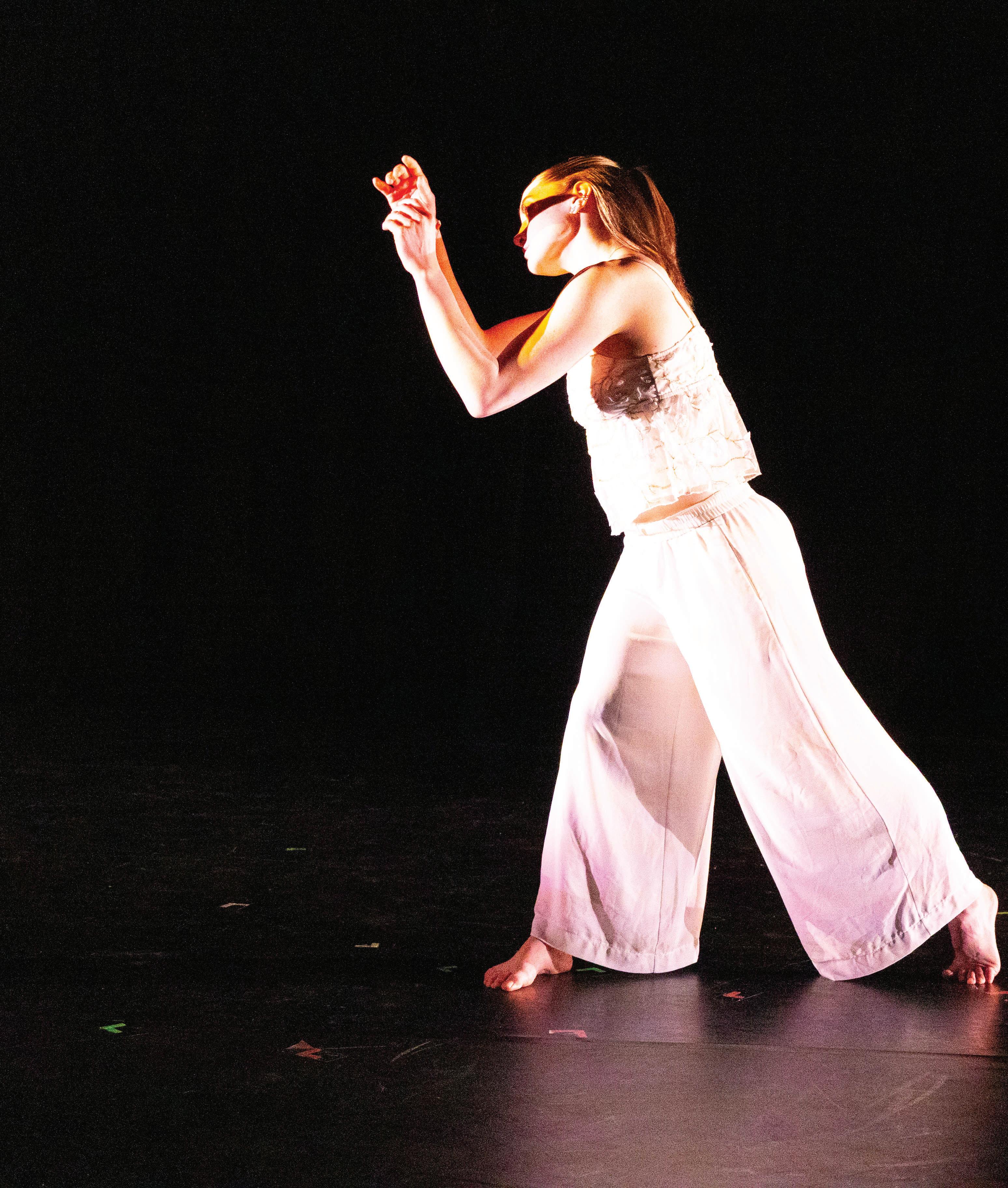
In preparation for their senior capstone performance, dancers teched their show on Friday, May 1. The Senior Dance Bachleor’s of Fine Arts capstone show will take place on Wednesday, May 6 at 7:30 p.m. in the Joan and Donald Schaeffer Black Box Theater. Bella Aldaz, Alyssa Chelton, Josephine Ferrante, Camille Gordon, Kelly Guberman and CJ Mason – all senior dance majors – choregraphed and will perform their dances they’ve been working on throughout the semester. The show will feature the art and years of talent these dancers have.

MARRIED IN MONROE
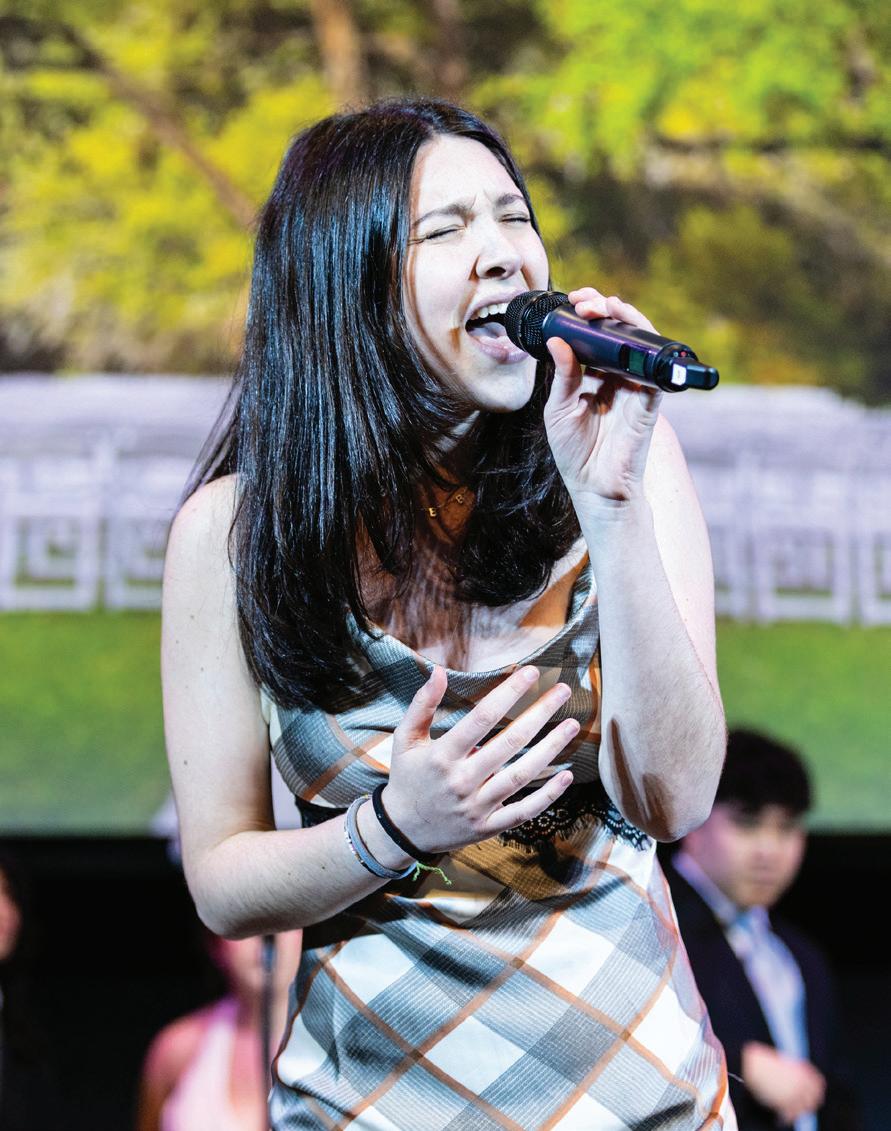
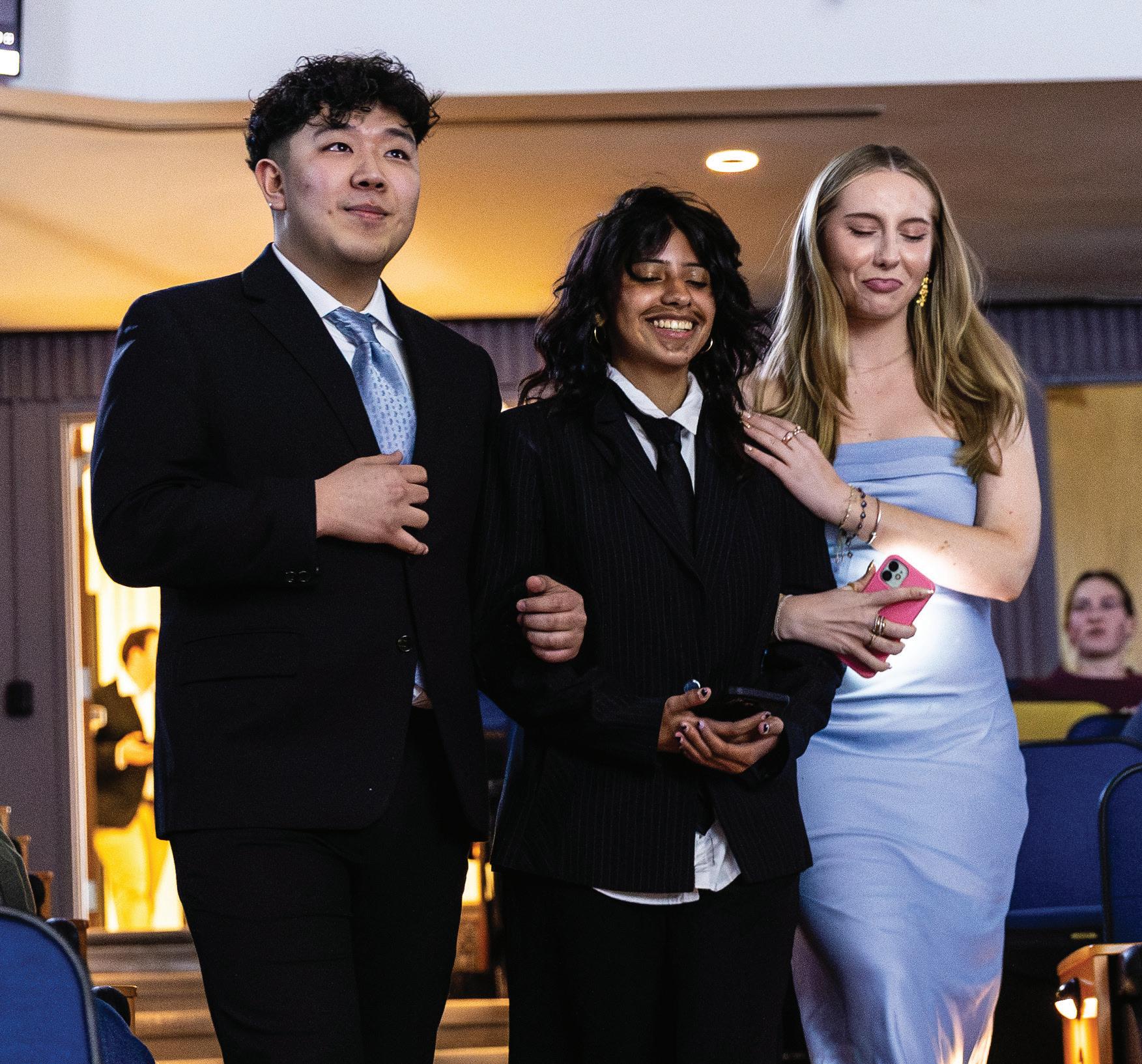
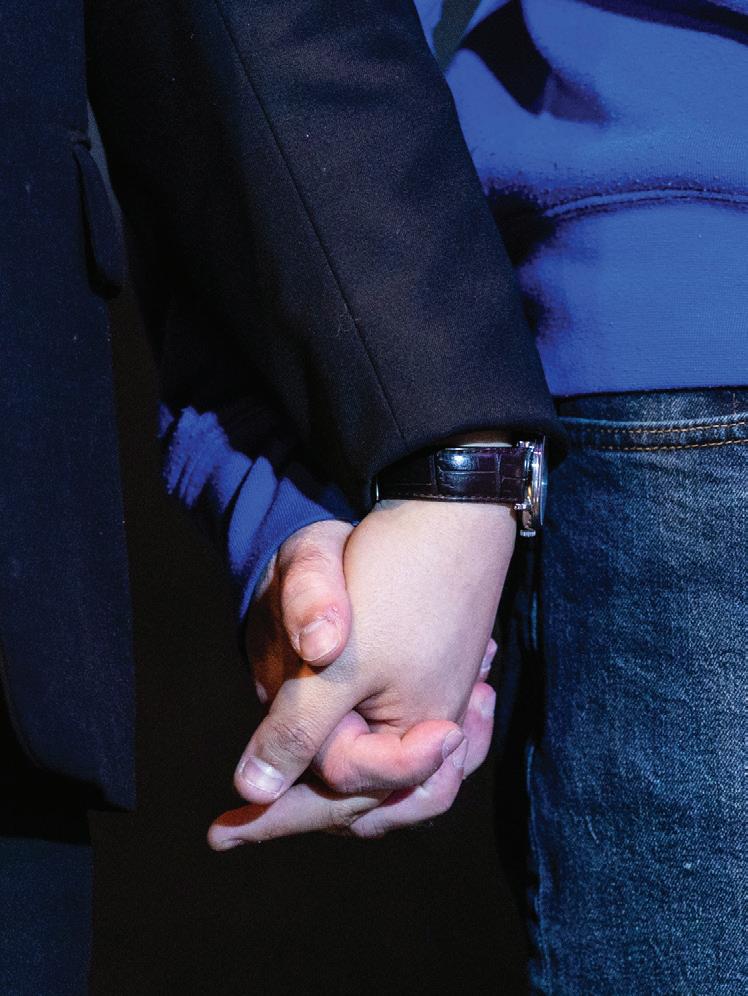
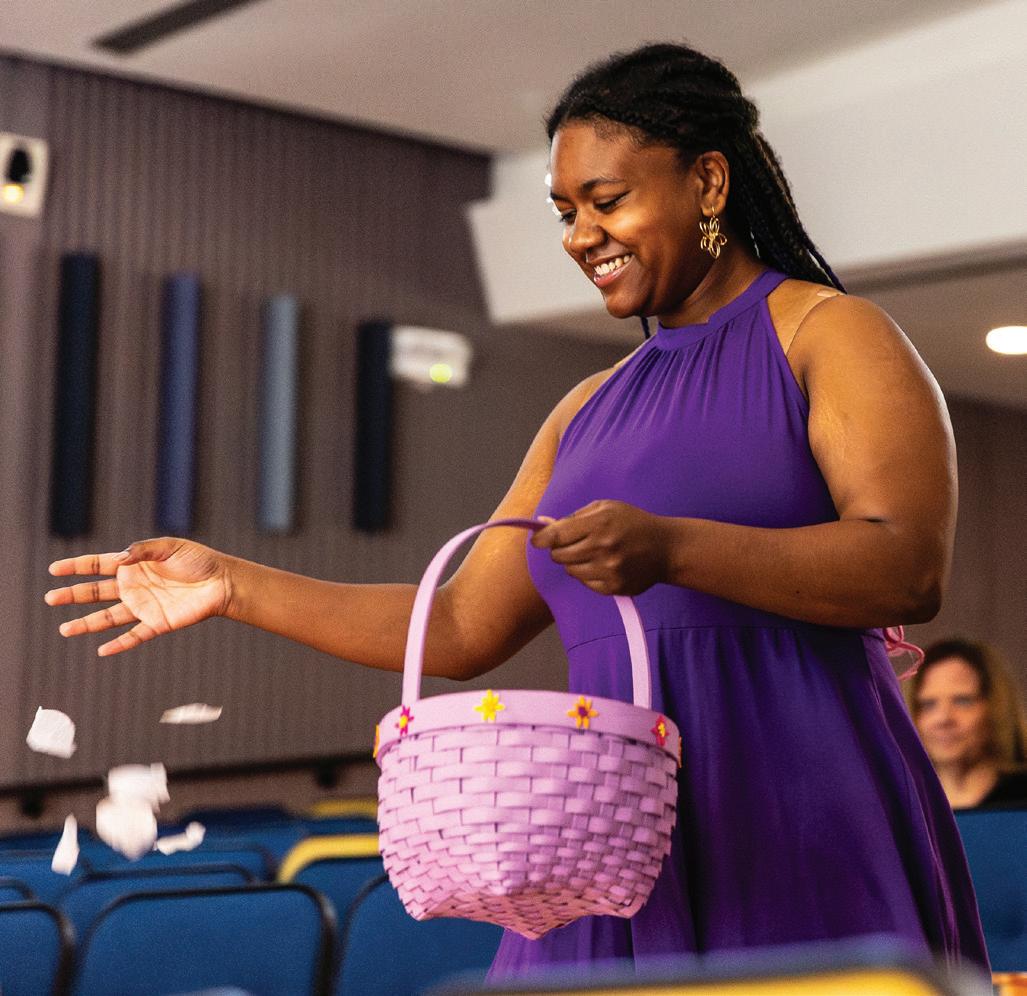
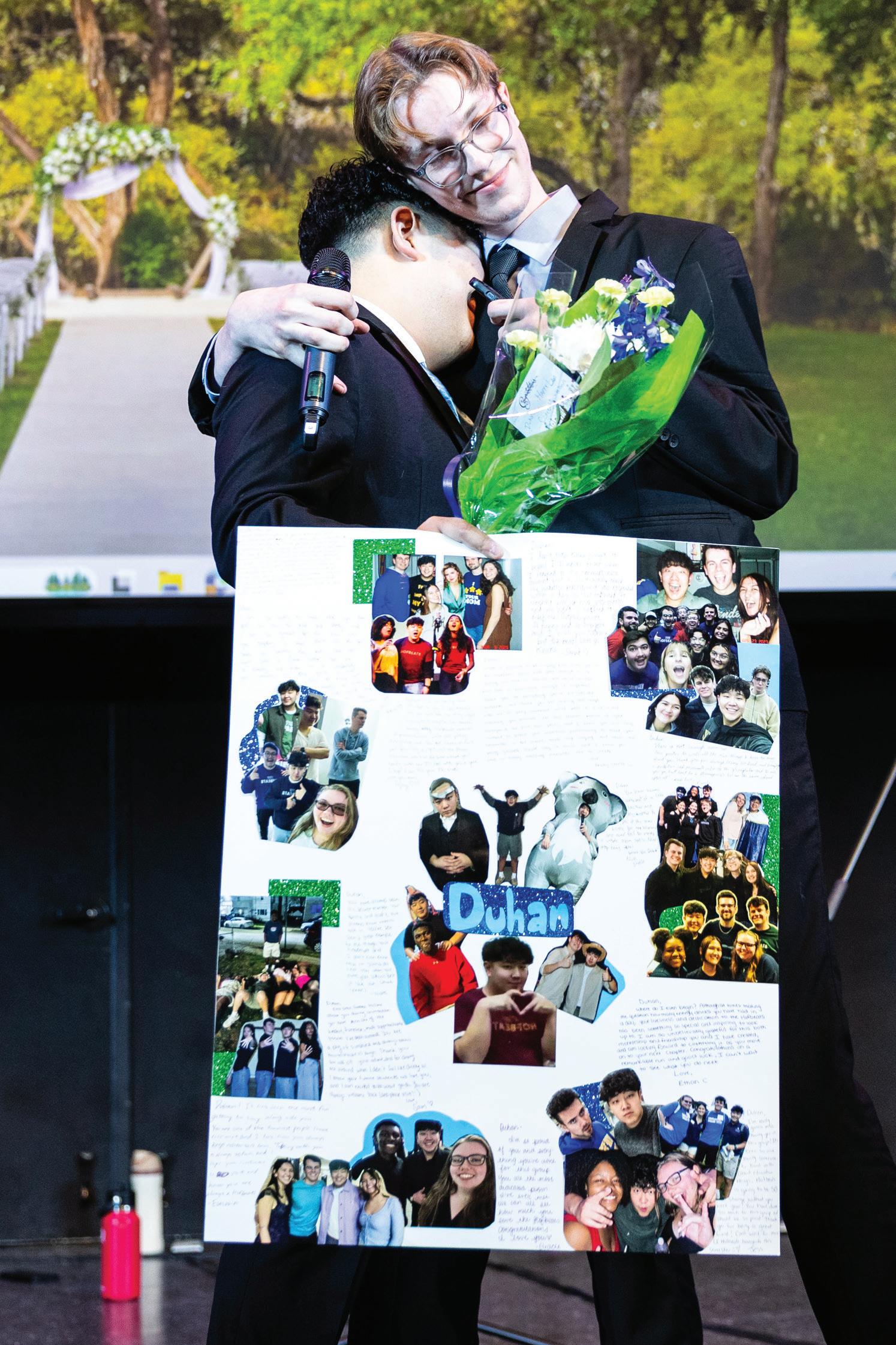
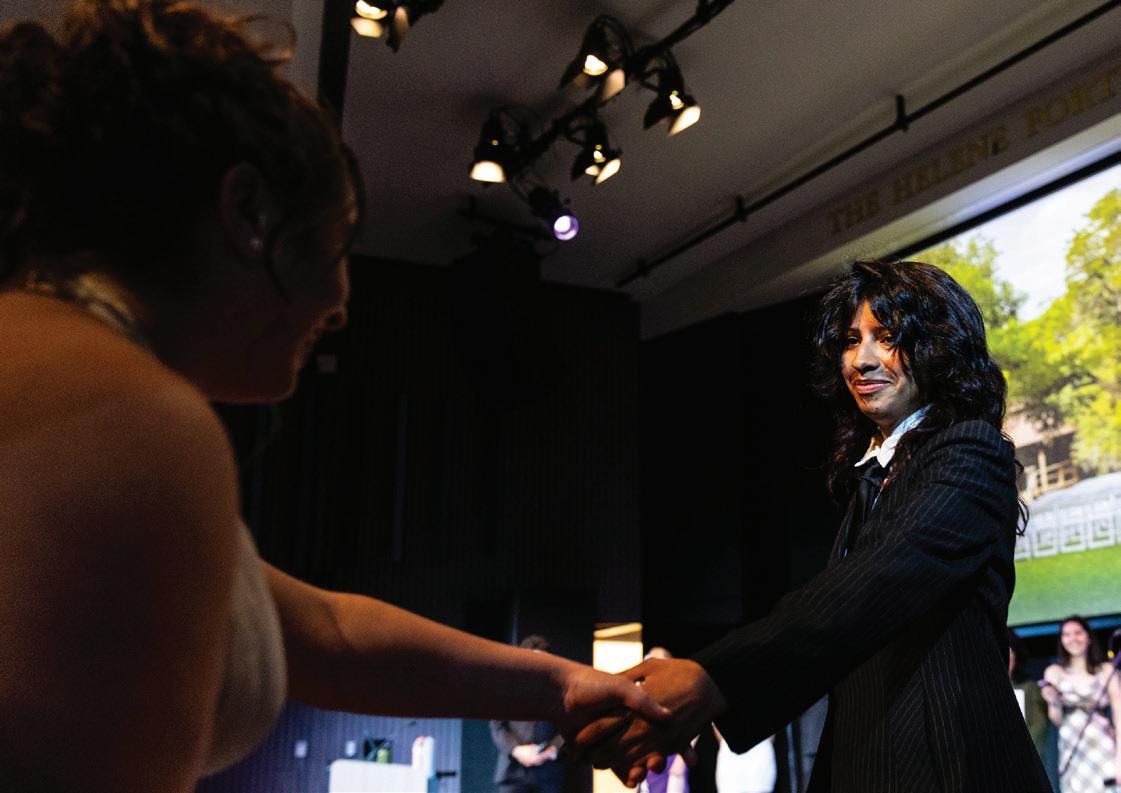
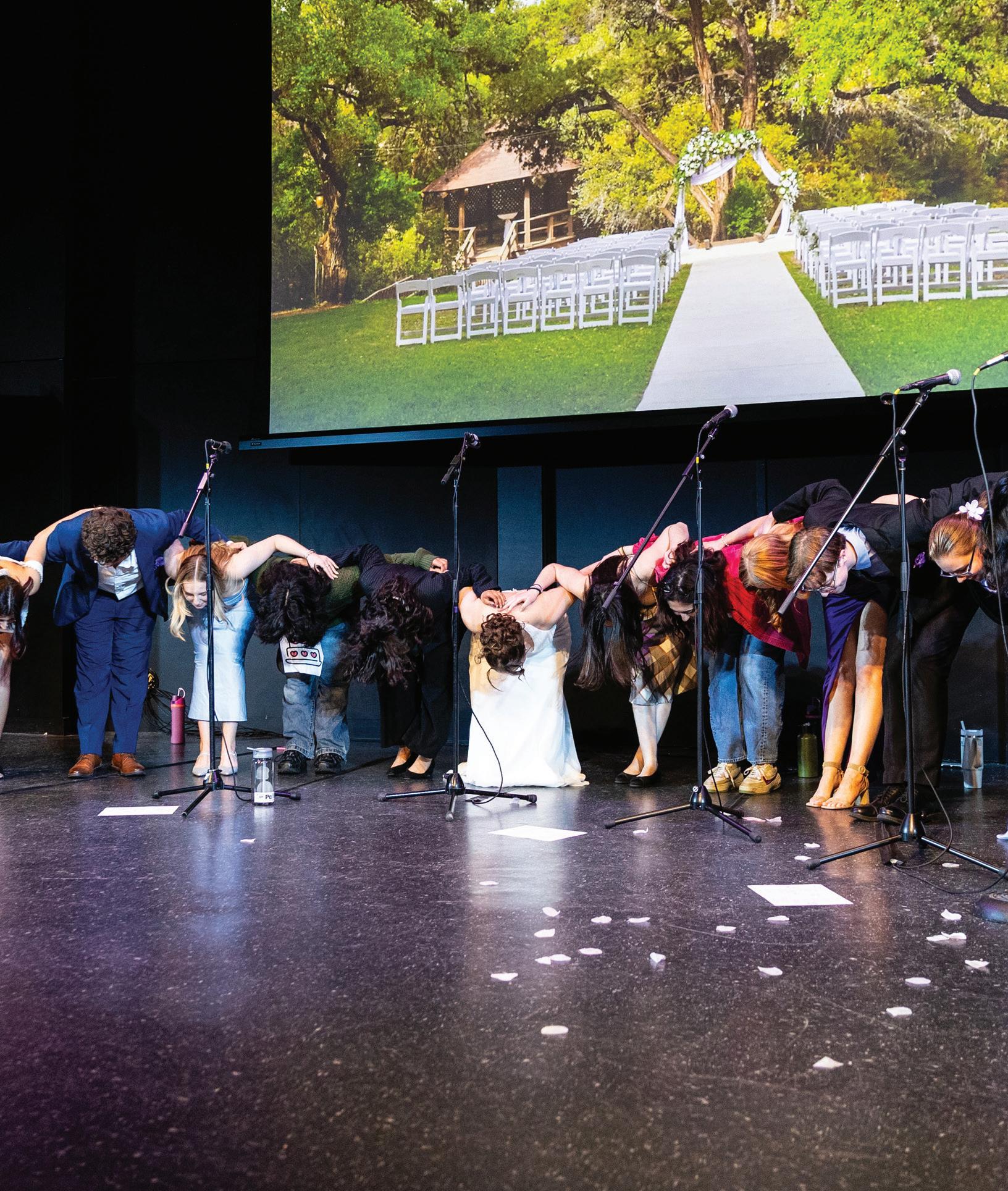
One of Hofstra University’s premiere a cappella groups, The Hofbeats, hosted their spring concert in Monroe Hall on Saturday, May 2. The wedding-themed extravaganza opened with a short skit that saw two members “tie the knot,” and outgoing seniors were honored with sendoff videos, flowers and posters with memories from their college experience. Each senior gave their own solo performance to finish their Hofbeats career with a bang!
Background by Kumba Jagne / The Hofstra Chronicle
Kumba Jagne / The Hofstra Chronicle
Background by Joe Orovitz / The Hofstra Chronicle
Joe Orovitz / The Hofstra Chronicle Joe Orovitz / The Hofstra Chronicle Joe Orovitz / The Hofstra Chronicle
Joe Orovitz / The Hofstra Chronicle
Joe Orovitz / The Hofstra Chronicle
Joe Orovitz / The Hofstra Chronicle
Joe Orovitz / The Hofstra Chronicle
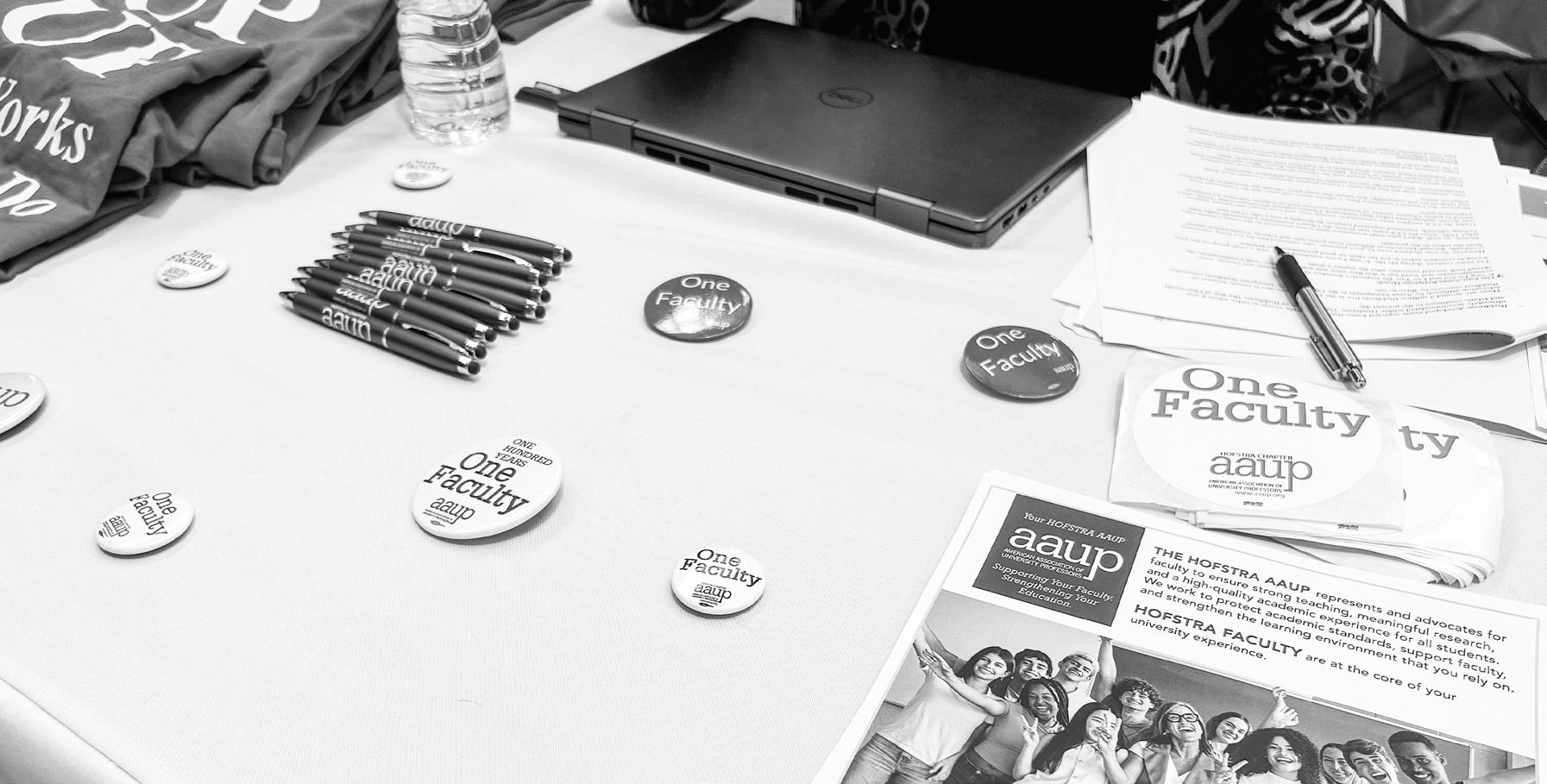
Supporting Your Faculty. Strengthening Your Education.

WE ARE…
• Educators
• Mentors
• Researchers
• Advisors
Your time at Hofstra University has prepared you for what comes next, and each of you leaves with a strong academic foundation built through dedication, curiosity, and guidance from your faculty. The foundation we helped you create will continue to grow with you as you pursue meaningful careers, achieve your personal goals, and take the next steps in your life. It has been our privilege to be part of your journey.
WE HELP...
• Guide your academic journey
• Support your career goals
• Write letters of recommendation
• Conduct research that advances knowledge
• We bring experience, insight, and dedication
• We are the face of the university alongside you
STRONG FACULTY MEANS...
• Better instruction
• Greater access to mentorship
• More opportunities for research and growth
• A stronger, more respected university
THE HOFSTRA AAUP represents and advocates for faculty to ensure strong teaching, meaningful research, and a high-quality academic experience for all students. We work to protect academic standards, support faculty, and strengthen the learning environment that you rely on.
Senior send-off: Still untitled
By Craig Mannino ARTS & ENTERTAINMENT EDITOR
I have a hard time reckoning with the end of something before it has actually ended. So, the fact that a few days after writing this, I’ll be attending my last layout for The Hofstra Chronicle – and that this is the last article I’ll write for this publication – is something I doubt I’ll fully reckon with until it happens.
I wrote my first article, “Laundry is not that hard … right?” in a fit of unbridled rage at the state of my dorm’s laundry room. What I did not realize, writing what bordered on a manifesto about laundry, was that the Chronicle would dominate my life for three years and be the defining piece of my college experience. Never once in writing that article did I think that I would work my way up to editor, that I would learn so much from a failed run to be editor-in-chief and that I would place so much emotional stock into a college newspaper. But, here we are.
The Chronicle is among the most unique organizations on Hofstra University’s campus. The logistical nightmare of getting any paper to print is enough to make anybody who knows about it wish they didn’t.
Six near-independently run sections brainstorm, write and edit anywhere from four to six articles each week. Those sections’ editors send those articles to our copyeditors who make changes and send them back to the editors. After that, editors put the articles into our layouts and our copy editors look once again. And finally, our managing editor gives it a last look before sending it off to print.
It is a miracle that this paper hits stands as often and as polished as it does, and to be a part of that miracle hits harder than anything else I’ve done on campus. I’m proud to have been a writer, I’m proud to have been an editor and I’m proud to be passing the torch to such a talented group of individuals. Every person working on this paper
at every level contributes to a shared experience that is worth far more than anything I’m talented enough to put into words. A few months ago, my aunt asked me what my favorite Hofstra memory is – what single experience could encapsulate my four years here. I told her that that experience was, of course, losing my run for editor-in-chief.
Though I did not come out victorious (hell, I wasn’t even close to winning), that election and the months of my life leading up to it forced me to grow at a rate far faster than I ever had before. It was a culmination of months of work, dozens of meetings and so much joy and pain. It forced me to gain an intimate understanding of this paper and the people in it, and it brought me on a journey throughout this organization. Without the fire and curiosity I developed throughout the campaign, I would never have been brave enough to push myself to my limit. I never would have written for News, never would have contributed to Multimedia
and never would have stepped out of my comfort zone to write for Sports. I built relationships in this paper I would never have had if I decided to remain complicit and not even try, and I reckoned with parts of myself I never would have engaged with otherwise.
Though the demands of my senior year – an internship, a few on-campus jobs, other clubs and my thesis – have pulled me away from being as involved with the Chronicle as I once was, the Sondra and David S. Mack Student Center Room 203 will always be my second home. And to anybody lucky enough to contribute to this paper – or even to lose an election for leadership of this paper – congratulations, and enjoy driving yourself crazy on Adobe InDesign, hoping you never have to touch the program again but walking away wishing you could do it just one more time.
The Devil still wears Prada
By Vanessa Flanagan ARTS & ENTERTAINMENT EDITOR
“The Devil Wears Prada 2” is a legacy sequel released on Friday, May 1, 20 years after the iconic “The Devil Wears Prada.” Reprising their roles, the starstudded cast is made up of Emily Blunt, Anne Hathaway, Meryl Streep and Stanley Tucci.
Although this sequel was not necessary, as the story was concluded in the first movie, it takes a relevant route as we find Andy (Hathaway) and Miranda (Streep) navigating the challenging new world of journalism in an increasingly digital world.
We first see Andy getting fired from her job as an investigative reporter; her paper laid everyone off amidst the changing industry. Andy reunites with Miranda after getting an offer to become Runway Magazine’s features editor.
Miranda is the same icy editorin-chief of Runway that she
was in the first movie, with new assistants in a “woke” environment. She’s forced to hang her own coat as she’s not allowed to throw it over her assistants’ desks anymore and she must keep rude comments to a minimum during staff meetings.
Like the first film, this one showcased stunning fashion and snappy one-liners from Miranda and Andy running around trying to produce a hot story. Although Andy has already made it in the journalism industry and doesn’t have anything to prove, like she did 20 years earlier, she hasn’t lost the spark behind her work. She still takes all the challenges thrown at her and turns them around.
We find Emily (Blunt) working for Dior as a major advertising client for Runway. She is still not the easiest person to please, but she softens up to Andy at the end. She reveals that after Andy left Runway years ago, Emily called her because she thinks they could
have been friends.
A side plot in the movie has Andy finding a man she can settle down with. It’s said earlier in the movie that she just never found the right one. It was very easy to make this the entire plot of the movie and get lost in Andy trying to find a partner, but it was kept a small plotline to not overshadow her classic problems while working for Miranda.
There were a handful of cameos from iconic figures and influencers in pop culture throughout the film, such as Donatella Versace, Heidi Klum, Law Roach and Amelia Dimoldenberg.
“Bridgerton” actress Simone Ashley plays Miranda’s newest first assistant, taking over Blunt’s role from the first film. Miranda’s second assistant is played by comedian and TikTok star, Caleb Hearon.
Lady Gaga and Lucy Liu also have small roles in the film. The soundtrack features three Lady
Quick Hits

Want more A&E Content? Scan to learn more about what's happening in the world of entertainment!


Gaga songs, one of which she performs as herself in the movie. The soundtrack is made up of 100% female artists, including Dua Lipa and RAYE. Streep has famously stayed away from sequels over the course of her career, “Mamma Mia! Here We Go Again” and, of course, “The Devil Wears Prada 2” being the exceptions. Talks for a “The Devil Wears Prada” sequel began as early as 2009 but, according to The Hollywood Reporter, Streep said, “We all waited until we had that good idea.”
Revisiting a classic story with a modern lens shows how everything and nothing can change at the same time. Miranda and Andy are still the same journalists fighting for groundbreaking stories in a time when people scroll past them while using the bathroom.

Harry Styles and Zoe Kravitz officially engaged after dating for eight months.
Ariana Grande to release her seventh studio album 'petal' on July 31.
Photo courtesy of Vogue
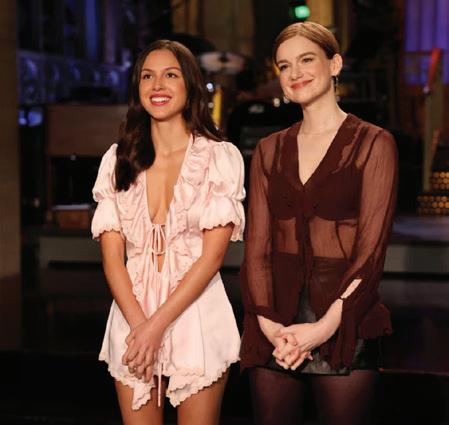
Connor Storrie introduced Olivia Rodrigo on SNL where she was the host and musical guest.
'Evita,' a musical starring Rachel Zegler, is coming to Broadway in 2027.
Photo courtesy of The Boston Globe
Photo courtesy of Deadline
Photo courtesy of Spotify
Editor's Picks

MOVIE
'La La Land' (2016)
Director: Damien Chazelle

MOVIE
'A Real Pain' (2024)
Director: Jesse Eisenberg

BOOK
'Thirty, Flirty, and Forever Alone' (2026)
Author: Christine Riccio

ALBUM
'Middle of Nowhere' (2026)
Artist: Kacey Musgraves

TV SHOW
'Steel Ball Run' (2026)
Director: Yasuhiro Kimura
Senior send-off: Turning the page
By Paige Sanacora ARTS & ENTERTAINMENT EDITOR
I feel like I’ve been in college for all of two minutes. I graduated high school in June of 2023 – not even three years ago at the time of writing this. I have only been at Hofstra University for five semesters, which came following a panicked transfer from my original school after only one semester. After Wednesday, May 6, I will never have to sit through another class again. After Wednesday, May 13, I will never have to submit another essay again. After Sunday, May 17, I will never be a student again.
But I will also no longer be an editor at The Hofstra Chronicle.
After a lot of internal contemplation and agony, I showed up to the first Arts & Entertainment (A&E) budget meeting of the Fall 2024 semester. There, I met Aidan Judge, Abby Gibson and Matt Fisher for the first time (more on them later). I don’t remember the nitty gritty of that first budget, but I know that I somehow agreed to write a review of “Beetlejuice Beetlejuice” for the first print edition of the semester.
Already feeling out of my depth, I soon attended my first Features meeting. I was thinking about submitting a recipe or two, which I knew the section published through my brief internet stalking. Someone named Zoe Casselman was the primary writer of the existing recipe articles I could find, and I was worried that my s’mores brownie recipe would step on her toes. Little did I know, at the time, the Features section was “on life support,” according to Zoe, and the recipe articles were a result of what she called “The Zoe Show.” She wrote most of, if not all of, the articles for many of the editions on which she worked
due to lack of writers, and she used recipes to fill space on the pages.
That fall, I wrote two articles for almost every issue we published – one for Features and one for A&E – totaling 12 articles for the semester. I was encouraged by both sections to apply for their available assistant editor positions. After only two and a half months with the paper, I was hired as an assistant editor for A&E.
I will miss my job as an editor of the paper. I’ll miss hearing our writers pitch their stories at budget meetings. I’ll miss spending my Sundays in the office doing our layout. I’ll miss brainstorming new ideas for our section with upper management. I’ll miss writing and editing articles.
But I’ll also miss the things that aren’t in my job description.
I’ll miss fighting over chairs on Monday nights. I’ll miss watching five different sports games simultaneously between people’s phones and laptops at layout. I’ll miss driving my on-campus colleagues back to their dorms, even if it did double my commute home. I’ll miss sending absurd celebrity news to our group chat as potential quick hits. I’ll miss watching Joe Orovtiz juggle his many cameras at the basketball games. I’ll miss going out to dinner with my section on the one night we would all have free.
To Aidan, thank you for hiring me. Taking on larger roles in the spaces I exist has always intimidated me, but I think you saw my potential before it was fully realized. It is because of your overwhelmingly friendly nature that our section has continued to be filled with friendship and laughter, both inside and outside of the paper. You turned what I thought would be a valuable professional experience into lifelong friendships.
To Abby, thank you for being
my first friend at Hofstra. I forgive you for not going to Rome with me – although you would have made it infinitely better. Not knowing when we will next share a meal is a genuinely distressing thought to me. You’re the glue that has held this section together through all the last-minute articles and late nights. Travel safely down Bobo Road.
To Craig, I’ll always be grateful that A&E decided to hire us together because, otherwise, we may never have become friends. Much of my time at Hofstra, I felt I have walked in stride with you. You have always been the person here whom I’ve turned to for every little thing, no matter how serious or silly the task may be.
To Matt, I forgot you even worked here! You’re my favorite person to not see walking through the door. Your Texas Roadhouse birthday will live rent free in my head until the end of time. In all seriousness, you are the least serious person in our section. You keep us grounded, you make us laugh and we missed you this semester.
To our wonderful, wonderful successors Vanessa and Kimberly, I’m so sad we only got one year together, but I know we’re leaving A&E in capable hands
with you two. You are both such dedicated and passionate writers with many ideas and a lot of potential. You guys are the models of what A&E editors should be like, and I can’t wait to see the legacy you leave.
To Hannah, layouts wouldn’t be the same without you to kiki with every week. It’s very easy to talk to you about anything and everything. You’ve brought such innovation to the Chronicle, and you still have so much more you plan to do. Wishing you nothing but the best for next year and beyond! I may not have been here the longest or contributed the most, but the impact that the Chronicle has had on me is immense. I’ll never forget the first time I held a paper with my stories published in it. I’ve brought home three copies of every issue of the paper since that day.
I have never been a part of an organization that makes me even slightly mournful to be leaving an academic space. I have been looking forward to the day I can say that I’m done with school for a long time. School has not been kind to me, and I truly can’t say that I will miss it. I can, however, confidently say that I will miss the Chronicle.
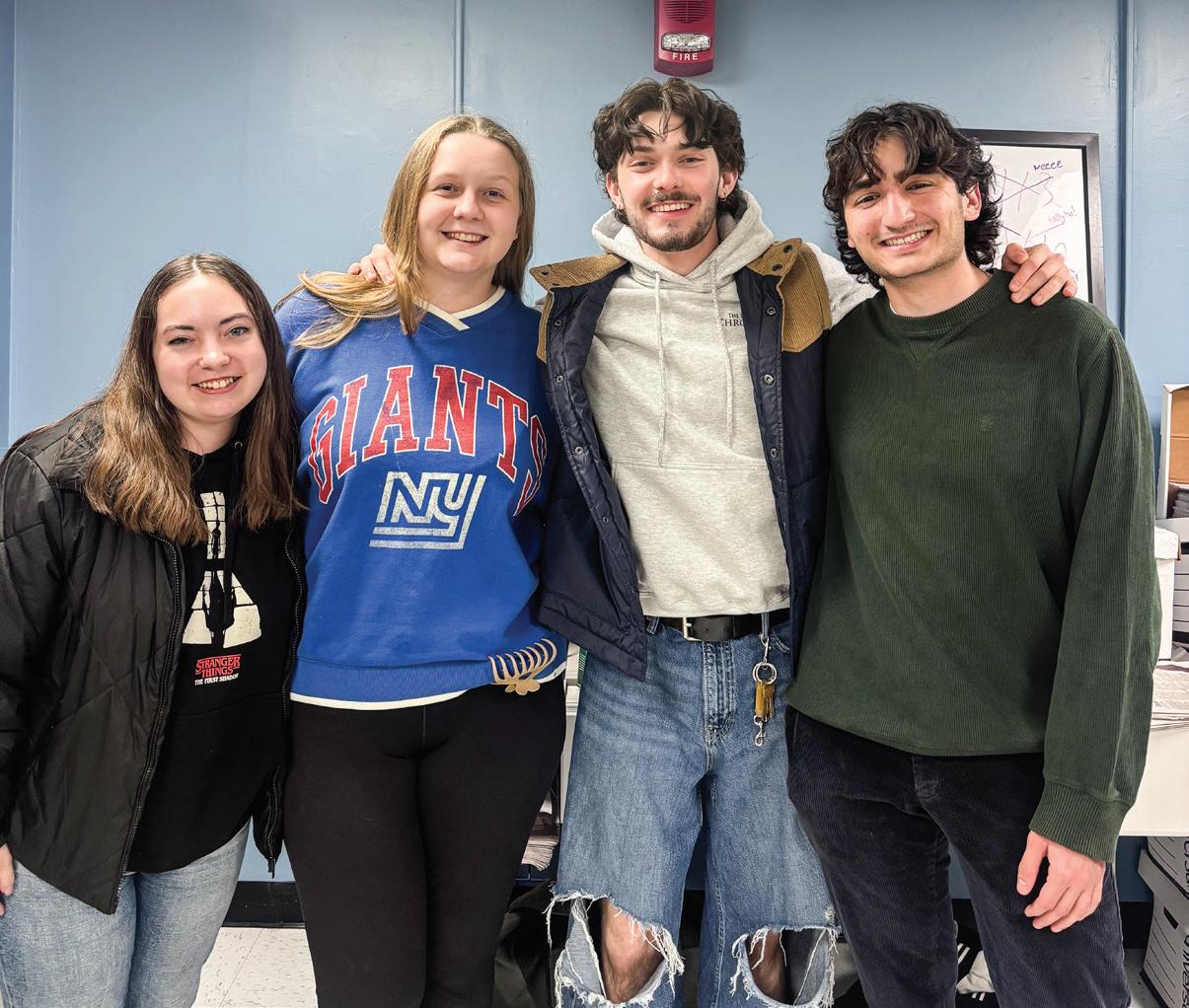
Photo courtesy of Netflix
Photo courtesy of Barnes and Noble
Photo courtesy of Purdue Exponent
Photo courtesy of Spotify
Photo courtesy of Netflix
Left to right: Abby Gibson, Paige Sanacora, Matt Fisher and Craig Mannino
Photo courtesy of Vanessa Flanagan
By Abby Gibson ARTS & ENTERTAINMENT EDITOR
I consider myself a sentimental person, especially when writing about what has been an integral part of my college career. When I first sat in The Hofstra Chronicle office in May 2023, listening to seniors speak about their time at the paper, the tradition of writing send-offs was introduced to me, and I began thinking about it a lot. Over the three years I have been at the Chronicle, I’ve had ideas pop up on how I wanted to write this but decided I would let myself write it during my last semester at Hofstra University because it would feel better coming from my present-day self. My first article for the Chronicle was published just 14 days after my first day of classes on Sept. 14, 2022 and was about Harry Styles’ residencies at Madison Square Garden. I remember being so nervous about pitching it because it would be my first piece of published work. Seeing the article in print enforced my sense of belonging not just at Hofstra, but also in the field of journalism. At my first layout, I remember feeling so nervous because I knew I would be walking into a room with people who had more experience than me both
Senior send-off: Sign of the times
in journalism and in late-night layouts. That all changed when I was greeted by then Sports editor Frankie DiCalogero, who called me Abby Lee Miller because my first name is Abby. That was when I realized layouts could be filled with just as much, if not more, laughter and joy than anxiety and fear.
I will forever remember the times I played the Roblox game “Dress to Impress” with former Features editor Zoe Casselman as we waited for the copy team, managing editor and editor-inchief to give a final look to our layouts.
The Chronicle has guided me toward opportunities that I never would have thought possible four years ago, such as attending a movie screening and college roundtable for “After the Hunt” and interviewing “The Voice’s” Season 14 winner Brynn Cartelli for her debut album. I have been so grateful to write 26 articles for the Arts & Entertainment (A&E) section and one personal essay for the Features section. What I love most about the A&E section is how it gives me a place to fangirl and deep-dive into my interests in entertainment, no matter if it’s television, music, film or something in the pop culture world.
Since I got the role as an assis-
tant in May 2023, I’ve treated the A&E section as my baby. I wanted to make sure I was bringing my best ideas and my best effort to learn Adobe InDesign to the table each layout. This space has helped me understand that entertainment journalism is what I want to pursue after graduation, even if the field might be tough to break into. The Chronicle has also helped me become a better writer and leader as I navigated Adobe InDesign, copyediting, managing our staff writers and writing last-minute articles to make sure our section was able to produce a full layout.
I remember when I was little, watching compilation videos of One Direction and Taylor Swift interviews and thinking of what questions I would ask them if given the opportunity. Part of me found that being a writer for the A&E section helped make that version of myself proud while the other half hopes that this is just the beginning.
To Vanessa Flanagan and Kimberly Lopez, our newest A&E Editors, I am so excited to see what you are able to bring to the section. Already, they’ve implemented ‘Editor’s Picks’ where we choose a piece of recent media we’ve enjoyed. I can’t wait to watch your confidence grow and see what you’re
writing about and reviewing until you graduate.
To Matt Fisher, thank you for all the laughs you’ve provided me with since you stepped foot onto Hofstra’s campus. Being able to work with you at the Chronicle and see you grow has been so much fun. I’m going to miss your quick wittiness and time spent both in the Chronicle office and through events in Zeta Phi Eta, Hofstra’s co-ed pre-professional communications fraternity on campus.
To Paige Sanacora, I will dearly miss us waiting for Matt to walk through the door at layout and I apologize for not going to Rome last summer. When we were looking for assistants, it was kismet that you would become one for the A&E section as I don’t know what we would do without your deep knowledge of books, interest in Scooby Doo and your Adobe InDesign knowledge of kerning.
To Craig Mannino, thank you for bringing in more silliness to the A&E team and hopefully your Google Calendar can rest easy after Sunday, May 17. Your Hofstra ghost will have a place in the Chronicle office.
To Kat Salmon and Aidan Judge, thank you for taking me in as an assistant and teaching me the ropes to what would become
Our seniors' all-time favorites
ABBY GIBSON'S FAVORITE...
MOVIE: 'Where the Heart is' (2000)
TV SHOW: 'Gilmore Girls' (2000 - 2007)
BOOK: 'Daisy Jones and The Six' (2019)
ARTIST: Taylor Swift
ALBUM: 'Red (Tayloe's Version)' by Taylor Swift (2021)
ACTRESS: Jennifer Lawrence
PAIGE SANACORA'S FAVORITE...
MOVIE: 'Titanic' (1997)
TV SHOW: 'Scooby-Doo! Mystery Incorporated' (2010 - 2013)
BOOK: 'The Secret History' (1992)
AUTHOR: Taylor Jenkins Reid
ALBUM: 'Rumours' by Fleetwood Mac (1977)
MUSICAL: 'Waitress' (2015)
one of my favorite things I’ve been a part of at Hofstra. With Kat graduating in May 2023, Aidan was there for most of my time in this section and helped introduce me to the world of AP Style and Adobe InDesign while simultaneously becoming one of my great friends at Hofstra.
To Brian McFadden, who I have only seen in person a couple of times, I don’t think I could thank you enough for the amount of snacks you have provided the Chronicle staff. There is no better pick-me-up than whatever selection of snacks you have provided us to get through layout.
I know that by the time September rolls around, and I’m not in the Chronicle office joking around with the A&E staff or freaking out because Adobe InDesign is being difficult, I’m going to wonder where the past three and a half years of my life went. I will always look back with fondness on the late-night laughs on Monday nights, the adrenaline rush to finish layout on Sundays and everything in between until the end of time. Being the sentimental person I am though, this isn’t something I will section off as a phase of my life; the Chronicle will be a part of me personally and professionally no matter where I end up.
CRAIG MANNINO'S FAVORITE...
MOVIE: 'Another Round' (2020)
TV SHOW: 'Malcolm in the Middle' (20002006)
BOOK: 'Catch-22' (1961)
ARTIST: Kendrick Lamar
ALBUM: 'Bando Stone & the New World' by Childish Gambino (2024)0
VIDEO GAME: 'Resident Evil 4' (2023)
The views and opinions expressed in the Opinion section are those of the authors. They are not an endorsement of the views of the Chronicle or its staff. The Chronicle does not discriminate based on the opinions of the authors.
Senior send-off: Monk e business concluded
By Ryan Monke MANAGING EDITOR
Once upon a Thursday evening, I was dragged into a meeting by a friend. That meeting, up in Room 203 of the Sondra and David S. Mack Student Center, was my first of many Opinion section budget meetings. I remember walking in and meeting Makenzie Hurt and Ethan Albin, both of whom became some of my biggest mentors at Hofstra University.
As the calendar turned into sophomore year and I hit my stride as a staff writer within the Opinion section, I jumped at the opportunity to become an editor, which I did alongside my closest colleagues, Tim Daly and Tom Norman. Throughout my time in the Opinion sec-
tion, I saw the impact of hyperlocal student journalism as writers demanded that their perspectives be heard, on several occasions sparking productive conversations on campus. I now watch our mentees, Anthony Favilla and Tom Saxa continue to uphold the highest levels of scrutiny and analysis of increasingly tumultuous current events.
This past year, I’ve had the honor of serving as The Hofstra Chronicle’s managing editor. Alongside Madeline Sisk, our editorin-chief, I’ve watched the News section reinvent itself, the Opinion section continue to advocate for students and the Arts & Entertainment section keep the Hofstra community connected to the world of art. I’ve seen the
Features section highlight the voices that give Hofstra its character, the Sports section follow the Pride to our first March Madness appearances in 25 years and the Multimedia section grow into a powerhouse. While I leave this paper in an increasingly hostile environment for student journalism, I have peace of mind knowing that the Chronicle has, and will always, stand tall. It’s been an honor to have called the Chronicle home for the last few years, and I will forever be grateful for the friends and perspectives I’ve gained up in Room 203.
Ryan Monke is a senior mass media studies and politcal science double major.
Fanfiction is underrated
By Matt Carlinsky STAFF WRITER
When I was younger, I honestly did not have the highest opinion of fanfiction. I admit I carried this perception for a while, until at least high school. Fortunately, as I have grown older, I have come to realize that this perception is a gross generalization. Fanfiction does not deserve the reputation of being poor quality. Like all literature, it is a nuanced spectrum. Some people will have a better understanding of writing than others, and no writing styles are going to land with everyone. For example, if I decided to write Star Wars fanfiction, that is probably going to be better
appreciated by Star Wars fans than someone who does not enjoy science fiction. It is also worth noting that fanfiction has value beyond just what an audience can get out of it. I know for a fact that fanfiction is where a number of authors have gotten their start in writing. After all, why not start with something you know you already enjoy? I personally have written fanfiction for settings I enjoy, such as Warhammer 40,000 and BattleTech, because they are large enough worlds to create new stories out of.
However, there is more to fanfiction than just writing for a hobby.
Fanfiction also has a lot of value for those within queer communities,
The importance of slowing down
By Ricky Hubert STAFF WRITER
I’ve always been a fast walker – just ask anyone that has tried to walk next to me, and they’ll tell you. Recently, when power walking through the university, I felt my heart beating too fast. The next day, it was the same story. This led me to have an epiphany: this doesn’t feel good on my body, and perhaps it’s time to slow down.
I then thought about all my power walking and all the times that I might’ve missed conversations with people because I was too focused on trying to get where I was going instead of the person talking to me. Additionally, because I walk so fast, people sometimes struggle to keep up with me, this usually leads to people being so out of breath that we cannot
have a conversation at all!
There might’ve also been times when I was so caught up in my stride that I might have seen someone in passing try and stop to chat with me, but I already had such a fast stride going I missed them entirely and the moment passed.
Something else I noticed while walking is the classic text and walk: people looking down at their screens, scrolling, texting, etc. I, too, have been guilty of this. I feel an immediate need to review emails, texts and social media notifications while I power walk through life because the world moves very fast and I want to stay on top of things.
In an era of scrolling, texting and emailing, I feel a pressure to respond as fast as I possibly can, because I feel if I do not, then I’m leav -
ing people in limbo. We live in a 24/7 news cycle where people update every facet of their lives online. If I stay off a social media platform for an hour, do not check LinkedIn constantly as I’m looking for jobs or don’t answer a text right away, I feel I’m going to miss something. The same concept applies with fast walking; I’m a person who likes to have an eye on whatever is coming next, whether it be that class I have to get to, the meeting that starts in five minutes or the radio program that goes live in 10 minutes. I had this idea that there was always something coming up and that the object of the present moment was to get there as fast as possible. What propels this belief is that some situations can be very nerve wracking, such as a big test or interview. Sometimes, we have the phi-
losophy that the quicker we go toward that moment, the quicker it will pass. But what about the moment we’re currently in? Doesn’t that count for something?
In fact, it might calm the anxieties that propel fast walking to find out that the person in that class walking beside you – maybe a little slower than you are – might also be nervous about the exam coming up and wants to share their thoughts on the class. Or maybe, the slowerwalking guy next to you on your way to the career fair also doesn’t have a job lined up for after graduation and is just as terrified as you. In my experience, finding things that people have in common with you usually makes you feel calmer about the world you’re in because you realize there are people like you in it.
for example. I have heard it mentioned that writing fanfiction can be a great way forpeople to explore their sense of identity and their sense of self. It is like a blank canvas where you can present yourself as you truly want and freely express yourself without the worry of others judgement. It may not always be something that you mesh with, but even if its quality may not be the best, it is still at least an important stepping stone towards something greater.
If we spend our time trying to bypass these moments and speed up our lives just to get to the next thing, we’re going to miss what’s around us. Whatever new Instagram story, text message or email we’ve been notified of on our phone will be waiting when we get back from where we’re going and what we’re doing. The future assignments, goals and plans that we have to check off our lists will be waiting for us – the present moment won’t be. So let’s try to slow down and enjoy it, shall we?
Ricky Hubert is a senior podcasting and audio storytelling major. You can find him on Instagram @therichardhubert.
Matthew Carlinsky is a senior English major.
ACROSS 1 Theatrical object 5 Egg producers 9 Food-chain target 13 Napkin spots 14 Gambler's calculation 15 Adornment for a princess 16 One represented by a blue and yellow flag 18 "Previously on..." segment
19 One of seven watery expanses
20 Butterfly-catchin g tool
21 Hits hard 23 Bar purchases, maybe 25 Celebrate a birthday
26 Reflective Joni Mitchell classic 33 Soft, stinky cheese 36 Showed sleepiness
Wonder
101 class, maybe 40 Official in stripes, for short
Shouts
Living room fixtures, for short
Spiffy
Final 48 "Matilda"'s Miss Trunchbull, for one
51 Holiday at the end of Ramadan
OPINION
52 Nephew's sister 55 Something protected by 7-Down, maybe 58 According to 59 Ambulance figure, for short 61 Social media action
62 Cozy alcove with natural light 65 Sheet music symbols 66 Achy 67 Cold climate cryptid 68 Misplace 69 Begged 70 Genesis Garden DOWN 1 Upside 2 Collects, as leaves 3 "You get a car!" daytime host 4 Educational advertisement, for short 5 The best policy 6 Proofread 7 Confidentiality document, for short 8 Federal IDs, for short 9 Puzzle components 10 Garage storage unit 11 Significant periods 12 Talk incessantly, in modern slang 15 Comedy counterpart 17 Look ___ (investigate) 22 Created
Show feeling
"Get lost!"
Dines 57 Recipe's small amount, for short 58 Sacrificial fire 60 Dorm bed size 61 Comedy show with celebrity hosts, familiarly 63 Email pioneer
Ball drop night, abbr.
24 Succeed at Simon Says 27 Angelic instruments 28 Used a broom 29 Conclude based on context 30 "The Lion King," queen 31 Creatures of wisdom 32 Direction from Long Island to NYC 33 Quiet "Little Women" sister 34 Rambunctious party 35 Comedian Rae of Insecure 39 Looks up to 42 Otherwise 45 Deputy 46 Extended, as a library loan 49 Royal declaration 50 Apple assistant greeted with "hey?" 53 Relinquished, as property
OPINION
The views and opinions expressed in the Opinion section are those of the authors. They are not an endorsement of the views of the Chronicle or its staff. The Chronicle does not discriminate based on the opinions of the authors.
Senior send-off: Sayonara
By Tom Norman OPINION EDITOR
It is a little surreal that this is the last thing I will ever write for The Hofstra Chronicle. This club has held such a special place in my life ever since I walked into my first budget meeting as a freshman. It’s hard to imagine a version of my life without it.
I would like to first thank my predecessors, Ethan Albin and Makenzie Hurt. If it wasn’t for the two of them and the welcoming environment they created in the Opinion section, I don’t know how long I would have stayed with the Chronicle. I am very fortunate to have had the opportu-
nity to work with both of them, but I am even more fortunate to be able to call them my friends.
I would like to recognize the two people that I watched grow right under my nose: Anthony Favilla and Tom Saxa. Seeing what the two of them have developed into before my eyes has been one of the most validating things in my life.
To say I am impressed would be an understatement, and I could not be more confident in the hands the Opinion section is left in.
Lastly, my partners in crime, Tim Daly and Ryan Monke. I could not have picked two better people to run a section with. From running
Opinion together to the many adventures we have been on in our personal lives, I am honored to have done it all with the two of them.
The Chronicle is truly a special place full of so many special people. I would like to thank anyone who has read anything I have written. Though my time has come to an end, I cannot overstate the gratitude I have for this organization and the opportunities it has provided me.
Tom Norman is a senior journalism major with a creative writing minor. You can find him on Instagram @tomnorm.
Senior send-off: Grandpa’s retiring
By Tim Daly OPINION EDITOR
As per The Hofstra Chronicle tradition, I was tasked with writing a senior send-off; however, I found it quite difficult to put into words what my relationship with this organization is. Did I learn from this experience? Quite a bit. Was it enjoyable? Most of the time. I certainly am better off for joining. While I do not have much to say about this experience, I am grateful to the friends I have made in this club, particularly those whom I have worked with in the Opinion section and business manager position: Mackenzie, Ethan, Anthony, T-bone and Julia
and, especially, Thomas “Normal” and Ryan “Monkey.”
I think it is these friendships that make us all willing to do unpaid labor for the Chronicle – trust me, it is a lot of responsibility. I think anyone who participates in this organization should be proud of themselves for contributing to student journalism.
I grew a lot as a writer and editor of the Chronicle, and I think I am better off because of that. When I first joined, I wrote a couple of stinkers for the Opinion section that, in hindsight, were really bad. I still contemplate asking them to be deleted. But I think that I have gotten better, even if it is just marginally so.
I also very much valued the relationships with all of the staff writers of the Opinion section. It was a pleasure editing their articles. I was also very pleasantly surprised to see many of the younger writers of Opinion move on to become editors of other sections.
I leave the Chronicle in hands better than mine: Thomas Saxa and Anthony Favilla will do a great job as editors. Anthony and Katie Buchalter will be the business managers, and I am sure that they will do a great job.
I hope that I improved the organization in some way over the course of my time here.
Tim Daly is a senior journalism major.
Is our empathy becoming more selective? cont.
CONTINUED FROM A1
Unfortunately, empathy is not universally distributed but rather directed toward those who already align with one’s values and identity. Selective empathy is not a moral failure, but rather a structural feature of emotional cognition, holding its own implications in politics, media influence and public morality. It is not the fault of a person, but of a system.
According to a study by the University of Michigan Institute for Social Research, a 2011 analysis found a 40% decline in self-reported empathy among college students compared to students in the 1980s. This cannot be attributed to a single cause, but rather an overlapping of a variety of problems that coincide with one another. While one cannot
blame someone for not feeling strongly for marginalized groups, it is worth questioning when people instantaneously categorize conflicts and refuse to address things with nuance. We must move beyond black and white thinking and instead begin to examine what drives our lack of obligation to speak up.
In Psychoanalytic Film Theory, Todd McGowan explains how we are part of a system derived from symbols. “Unwritten social rules” dictate what is spoken about and what is not, influencing how we interact, communicate and behave. These rules are enforced by a third entity, a force that makes us conform. If we, as a demographic of young individuals, are not taught that it is common sense to discuss global issues, then they will remain unspoken.
The significance in this lies not only in what is said, but also in what is left unsaid.
Selective expression of empathy has broader social consequences that extend beyond individual behavior.
This emotional bias contributes to intergroup hatred, political polarization and double standards. Reactions to victims of war often differ based on nationality, ethnicity or religious differences that cannot be explained by media framing alone but point to deeper emotional structures. A more nuanced framework is needed to understand why empathy is directed selectively.
One way to better understand these differences is through the lens of intersectionality. Referring to how overlapping identities shape experiences, intersectionality encourages understanding
individuals as products of their environments rather than viewing issues one-dimensionally. Empathy is ultimately encouraged by approaching conversations with openness and respect which allows for more meaningful dialogue and the exchange of ideas. These ideas become even more apparent when examining real-world examples of how empathy is distributed. Moral psychology highlights the limits of empathy, especially its attention-driven nature. The viral spread of videos showing a baby monkey named Punch being mistreated drew millions of emotional responses online, while the bombing of Shajareh Tayyebeh, an all-girls elementary school in Iran that killed 120 children, received far less engagement. This contrast illustrates how our empathy is
rarely guided by the severity of suffering and much more by visual appeal. People tend to be more empathetic to animals, viewing them as pure and innocent, yet they do not extend that same perception to children killed in crossfires. We need the weight of global tragedy to once again make its way into everyday conversation. It is imperative that we protest the very conflicts that we are uncomfortable with and move to seek reform and change. Our empathy loses all meaning when selective, as its true value lies in its ability to reach beyond ourselves.
Hiba Khan is a sophomore business management major.
Pride fall in conference semifinals battle
By Ethan Poole SPORTS EDITOR
Nikki Mennella’s six-goal masterclass was not enough for the Hofstra University women’s lacrosse team, whose championship dreams ended in a 14-11 loss to Towson University on Thursday, April 30, in the Coastal Athletic Association semifinals. The Pride finished their season at 10-7 with a 6-2 record against conference opponents.
“You never want to be on the losing side,” said Hofstra head coach Shannon Smith. “Our team fought hard and showed a lot of resiliency for the whole, entire game; we just couldn’t get that extra bounce in our direction.”
Despite the tight game, Hofstra never led the score, they fell behind 2-0 in the first quarter and had to play catch-up all afternoon. Mennella scored the Pride’s first three goals, but each time, Towson found a way to respond, consistently keeping Hofstra at a two-goal
deficit. The Pride trailed 4-3 in the final minute and had possession, but Luca DeMaio forced a turnover from Melina Sarlo. With five seconds to go in the half, DeMaio scored her first of six goals to reestablish Towson’s two-goal cushion.
Three third-quarter goals from DeMaio were sandwiched by tallies from Mennella and Kate Lemery to bring the score to 8-5. Facing their largest deficit of the game, Mennella and Julia Harris chipped in consecutive goals to bring the Pride into the fourth quarter with just one goal away.
Valerie Thompson scored 16 seconds into the fourth quarter for the Tigers and reestablished a pattern that stood all game: The two teams exchanged goals while Towson maintained their two-goal advantage. Kayleigh Bender scored two man-up goals to keep the Pride afloat. Then, trailing 11-9, the Pride found the net twice in a row for only the second time in the game. Natalie DeMeo cut the Tigers’ lead to one, and Men -
nella buried the equalizer, tying the game 11-11 with just under seven minutes remaining.
“[Mennella] is Attacker of the Year in our conference for a reason,” Smith said. “She played absolutely unbelievable today and really put the team on her back.”
Both teams turned the ball over on their next possession. Throughout the game, Towson gave the ball away 20 times and Hofstra gave it away 17 times. Bender stepped into Jenna Cardeno’s crease on a scoring opportunity, ending the threat for Hofstra and giving the Tigers the ball. Thompson completed her hat trick one minute later and gave Towson the lead permanently.
Shannon Steck’s tying attempt was stopped by Cardeno, and Grace Varley took a yellow card, which gave DeMaio the chance to put the game out of reach with her sixth goal. Hannah Lewis added an exclamation point to bring the affair to its 14-11 final score.
Luchianna Cardello only had
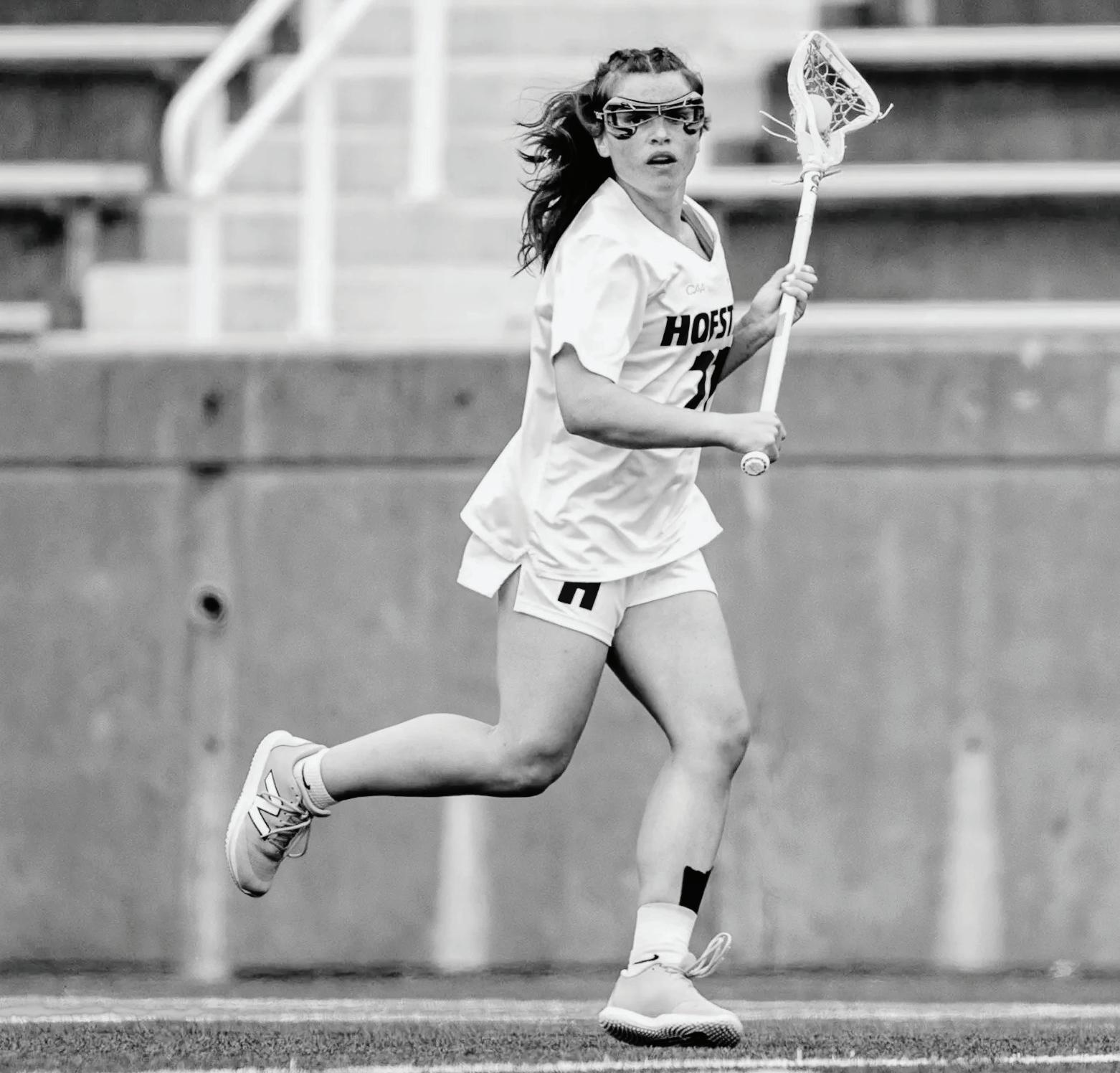
five saves on 19 shots in the final game of her college career. Madeleine Rudolph and Harris are also graduating.
“I’m so thankful for the commitment that [the graduating seniors] put into this program,” Smith said. “Watching them
grow up from freshman and sophomore year to where they are now is truly incredible. They’re incredible people, and they’re going to make a huge impact and be successful in any career path that they choose.”
Pride secure first seed in conference championship
By Frank Chiapperino STAFF WRITER
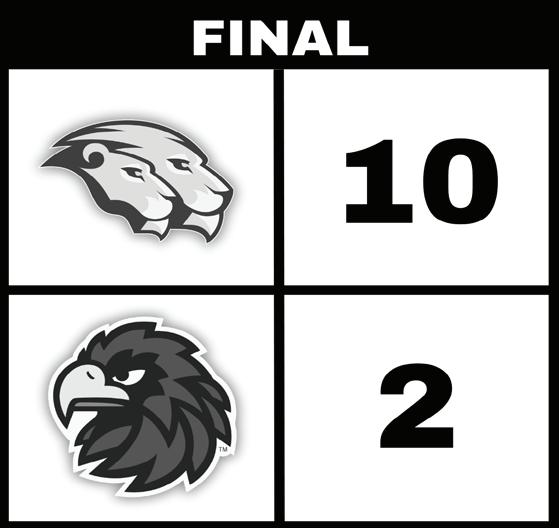
The Hofstra University softball team closed out the 2026 season with a series sweep over Monmouth University, winning 10-2 in five innings on Senior Day.
The Pride finished with a 21-3 record in Coastal Athletic Association (CAA) play, marking the fewest losses in a season since 2015.
With the win, the Pride clinched the No.1 seed in the CAA Championship and are the North Division champions.
Before first pitch, the program
honored Lily Yepez, Alanna Morse, Emma Falen and Emma Brennan with a Senior Day ceremony.
Falen earned her 13th victory of the season for the Pride. She allowed five hits and two runs, striking out three across four innings. Jillian Locher came in for the fifth and recorded the first save of her collegiate career.
Monmouth’s Alissa Eimont started for the second time in the series. Through 2.2 innings pitched, she allowed nine hits and six runs, while striking out four hitters.
The Pride broke through in the first inning with three runs. Morse led off with a single on a 1-0 count. Dahlia Palacio placed runners in scoring position after an error from Bri Lawson. Gabby Sultan followed with a single to left field to load the bases.
Chelsea Villar drove a ball to left center to clear the bases and give Hofstra a 3-0 lead.
In the second inning, the Pride added one run on two hits. After
Morse lined out and Palacio flew out, Sultan singled for her second hit of the game and scored on a double from Villar.
Six hitters came up to the plate for Hofstra in the third inning, as they tacked on three more runs to extend their lead to seven.
Gemma D’Orazio kicked off the inning with a walk and stole second for her ninth stolen base of the year. Yepez singled to place runners on the corners and followed with a stolen base of her own to put runners on second and third with no outs. Kimmya Sims picked up a two-RBI single on the first pitch she saw, driving a ball through the right side of the infield.
The Hawks responded with back-to-back solo home runs in the top of the fourth inning to trim the lead to five runs. Ella Stevinson homered to left field, and Mackenzie Bloss homered to left-center on the first pitch of the at-bat.
The Pride looked to seal the game in the bottom of the fifth
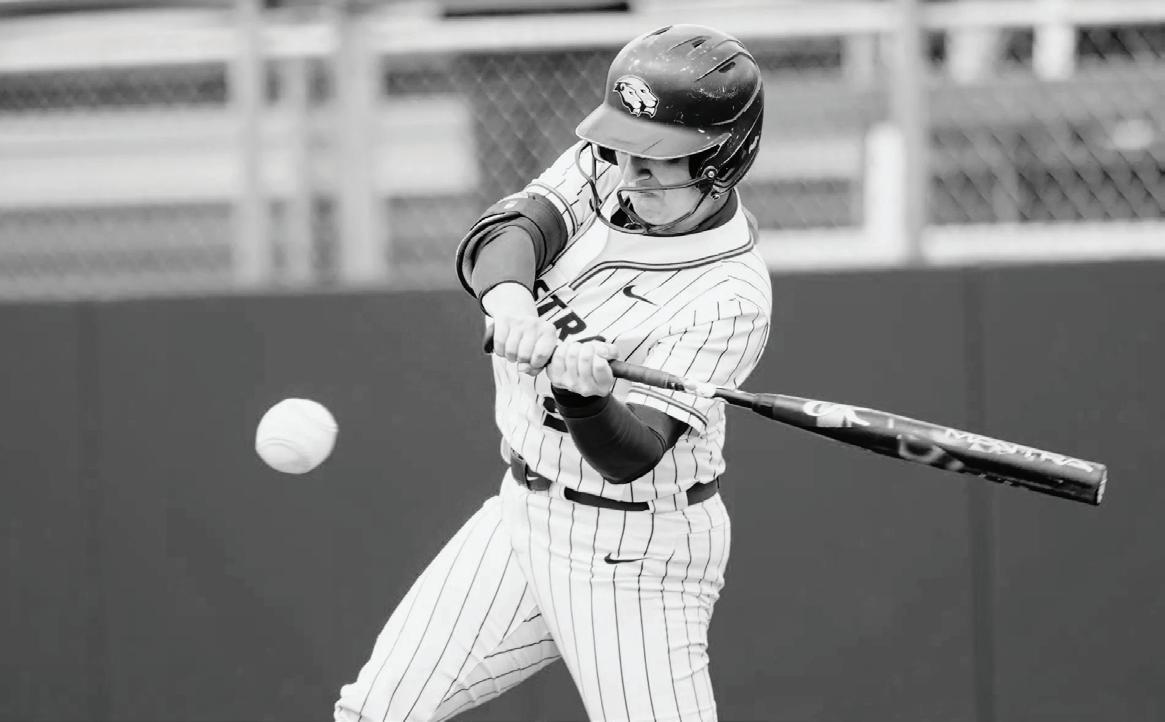
inning as the Hawks faced a possible run-rule loss. Yepez kickstarted the offense with a double to left field. Victoria Frobosilo entered the game as a pinch hitter for Nicole Cancel and placed runners on first and third after a single to center field. Sims reached base on a bunt toward the circle to score Yepez. Morse lifted a sacrifice fly to left field to score Frobosilo for the second run of the inning. Sims scored from second base on Sultan’s
single to end the game. Hofstra improved to 13-4 alltime against Monmouth, as they recorded five stolen bases for the first time since their March 31 game against Saint Peter’s University.
The Pride earned a first-round bye and will face the winner of No. 4 Stony Brook University and No. 5 College of Charleston on Thursday, May 7. First pitch from Hunt Softball Park is scheduled for noon.
Nikki Mennella’ s 65 goals are the second-most of a single season in Hofstra University’ s program history.
Lily Yepez went 3-3 with a double and stolen base. She ended the regular season leading the Pride in batting average.
Photo courtesy of Matthew Zender/CAA / Hofstra Athletics
Joe Orovitz / The Hofstra Chronicle
SPORTS
Hofstra women’s lacrosse: The bounce back season
By Ethan Poole SPORTS EDITOR
The Hofstra University women’s lacrosse team returned to postseason play this season after missing the Coastal Athletic Association (CAA) tournament in 2025. Despite the heartbreaking 14-11 loss to Towson University in the CAA Semifinals, this season marked significant progress both for the program and several individual players. The Pride won 10 games for the first time since 2019 and had six players honored with individual CAA honors. In addition, head coach Shannon Smith shared the CAA Coach of the Year award with Stony Brook University’s bench boss, Joe Spallina.
“[Losing] doesn’t take away from the success that this team had this year,” Smith said. “Once they get over the sadness and being upset from the loss, and being mad about it, hopefully they can take a step back and have a sense of
gratitude and appreciation for how far we came this season. We truly got better every game, and there was a lot of hard work and commitment and accountability on the player’s side.”
Nikki Mennella had yet another historic season and was honored as the CAA Attacker of the Year for the second year in a row. Her 65 goals are the second most in a single season in Hofstra history, and her 90 points are the third most. She climbed the all-time conference leaderboards as well. Mennella now sits 13th all-time in the CAA with 180 goals and 13th in points with 260.
The Robin to Mennella’s Batman this year was Kayleigh Bender. After 31 goals and a CAA Rookie of the Year nod in her freshman campaign, the Long Island native potted 36 and added 15 assists, earning herself a spot on the All-CAA second team.
Madeleine Rudolph, Hofstra’s main draw taker,
made the second team as well. Rudolph won 89 draw controls this season.
Christine Dannenfelser displayed her usual defensive prowess, picking up 42 ground balls, 39 draw controls and causing 37 turnovers en route to her second straight All-CAA First Team selection.
Perhaps the biggest boon for Hofstra was the emergence of freshman attackers Charli Joyce and Shannon Steck, both of whom were awarded spots on the All-CAA Rookie Team. The duo often played off of each other to obtain great success. Steck started the season with an explosive 15 goals in Hofstra’s first eight games. After a slow start to conference play, she had six goals in the final three regular-season games, finishing with 24 scores. Joyce had 18 goals and 13 assists with eight multi-point games along the way.
While Mennella is expected to come back for her redshirt senior season, the other three
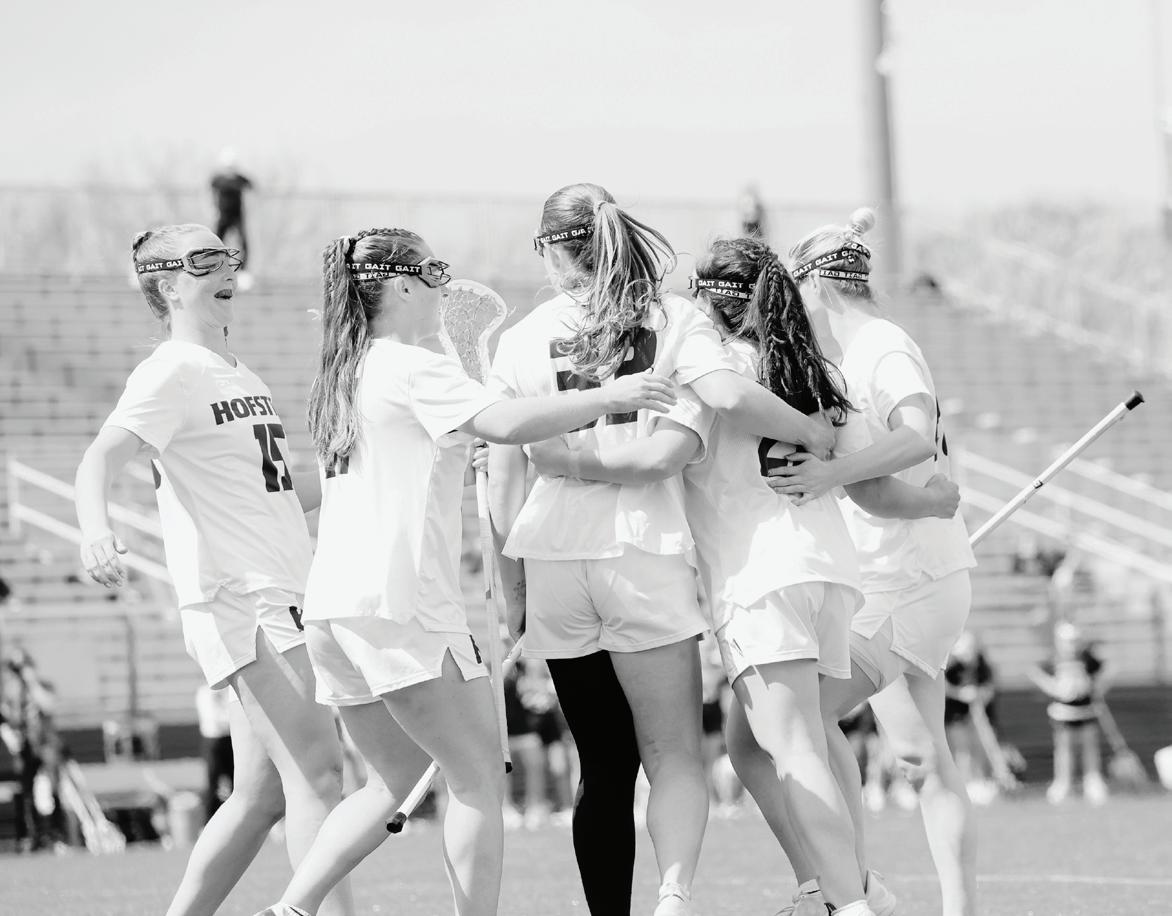
seniors who were honored on Senior Day will be departing the program. Rudolph, Luchianna Cardello and Julia Harris have all played their last game for the Pride. Harris struggled to find offense at times this season, following up 22 goals last year with just nine this season, but she scored in the semifinal game and had two goals on Senior Day.
Cardello started 61 games in the net in her career, winning 29 games and finishing her collegiate career with a .416 save percentage. Stony Brook University ended up winning the CAA championship; they clinched their fourth straight title with an 18-7 win over Towson.
Pride struck early, taking series over Tigers
By Samantha Nadler ASSISTANT SPORTS EDITOR
The Hofstra University baseball team secured another series win, shutting out Towson University 8-0 on Sunday, May 3. Due to turf issues on the mound, the game lasted only five innings. One game after an unsuccessful comeback, this brief victory was a palate cleanser for the Pride and showed a different approach by the team.
“I thought the guys were a little more patient [today],” said Hofstra head coach Frank
Catalanotto. “We walked a bunch, and we were swinging at strikes. Yesterday, I felt they were swinging at balls. Much better approach – if we can stay in that approach, I think we’re going to continue to have success offensively.”
With the win, Hofstra improved to 17-24 on the season and 11-13 in Coastal Athletic Association (CAA) play. Towson fell to 18-27 overall and 6-18 in conference play. The Pride and the Tigers hold the fourth and fifth spots of the CAA North division standings, respectively. Nick Reese pitched his

second complete game of the season. He gave the Pride their first complete-game victory on April 26, a seven-inning mercyrule victory over Northeastern University. In his five-inning appearance against Towson, Reese allowed only three hits, walked one batter and struck out two hitters.
“[Reese] has been great,” Catalanotto said. “The first inning, he looked a little dicey there, and he pitched out of it. And then, it’s nothing spectacular; it’s throwing strikes. He’s not walking batters; he’s letting [hitters] put the ball in play, and he’s hitting his spots.”
Hofstra attacked early in the game, putting up the first of two multi-run innings in the bottom of the first. With no outs, Towson starter Liam Diehl gave up singles to Michael Brown and CJ Griggs and dealt a walk to Tyler Cox before Nick Gallello sent Brown home on a fielder’s choice. After that, Gabriel Melara grounded out to plate Griggs. Then, Michael Craig reached first
base on the first of the Tigers’ two errors, and Cox came in as an unearned run.
Nick Biddle contributed to a second run in the bottom of the third, earning his lone RBI of the game on a single that drove in Melara from second base.
The Pride doubled their lead in the bottom of the fourth thanks to Tigers relief pitcher Joey Tuttoilmondo. After Diehl placed runners on first and second base, Tuttoilmondo struck out his first batter but gave up a tworun double to Gallello. Melara extended the inning by getting hit by pitch and stealing second base, setting up Craig to hit his own two-run double.
Mound issues prevailed as the game continued. Pitchers from both teams were affected by loose patches of turf on the mound. While the game was declared complete after the top of the fourth, play continued for one more batter. Sam Leonard got the last at-bat of the game, bunting to the pitcher’s mound. After Tuttoilmondo tripped on a patch
toward the front of the mound, an attempt to repair some turf was made before the game was ultimately terminated.
“We thought we were going to be able to fix [the mound] and have it not be dangerous for the pitchers,” Catalanotto said. “So, they put some turf underneath and some pellets, and we thought it would be good. And [Towson head coach Matt Tyner and I] both said, ‘Hey, we’ve got to make sure that the health of the pitchers is the biggest concern,’ and we saw on the bunt, when the guy went to field it, he kind of got caught in the turf. And then that’s when the umpires and both head coaches determined that it’s probably not safe to continue because we don’t want guys to get hurt.”
The Pride will travel to the University of New Haven on Wednesday, May 6. Then, they will play their penultimate CAA series – and their final CAA home series – of the season against Monmouth University starting on Friday, May 8.
This season, the Pride averaged 11.82 goals per game.
Kim Nadler / The Hofstra Chronicle
Across the final two games of the series, Michael Craig recorded two RBI and three hits.
Rachel Rothke / The Hofstra Chronicle
Pride eye 14th conference tournament title
By Shannon Bickert SPORTS EDITOR
The Hofstra University softball team’s quest to earn an automatic bid to the NCAA Tournament for the first time since 2023 begins on Thursday, May 7. The Pride earned the first seed in the Coastal Athletic Association (CAA) North Division, finishing the regular season with a 21-3 CAA record, earning a first-round bye. The Pride ran away with the North, as the second-best teams in the division, Drexel University and Stony Brook University, finished with an 11-13 record.
With the new postseason format, the top two teams in terms of conference record from both the North and South divisions automatically qualify for the CAA Tournament. The fifth and sixth seeds are picked based on the highest conference winning percentage, excluding the top two seeds in each division. The CAA Tournament is a double-elimination bracket, which allows a team to lose a game and still have a chance to be crowned CAA Champions.
UNC-Wilmington earned the second seed with an 18-6 CAA record. The Seahawks have the best hitter in the conference,
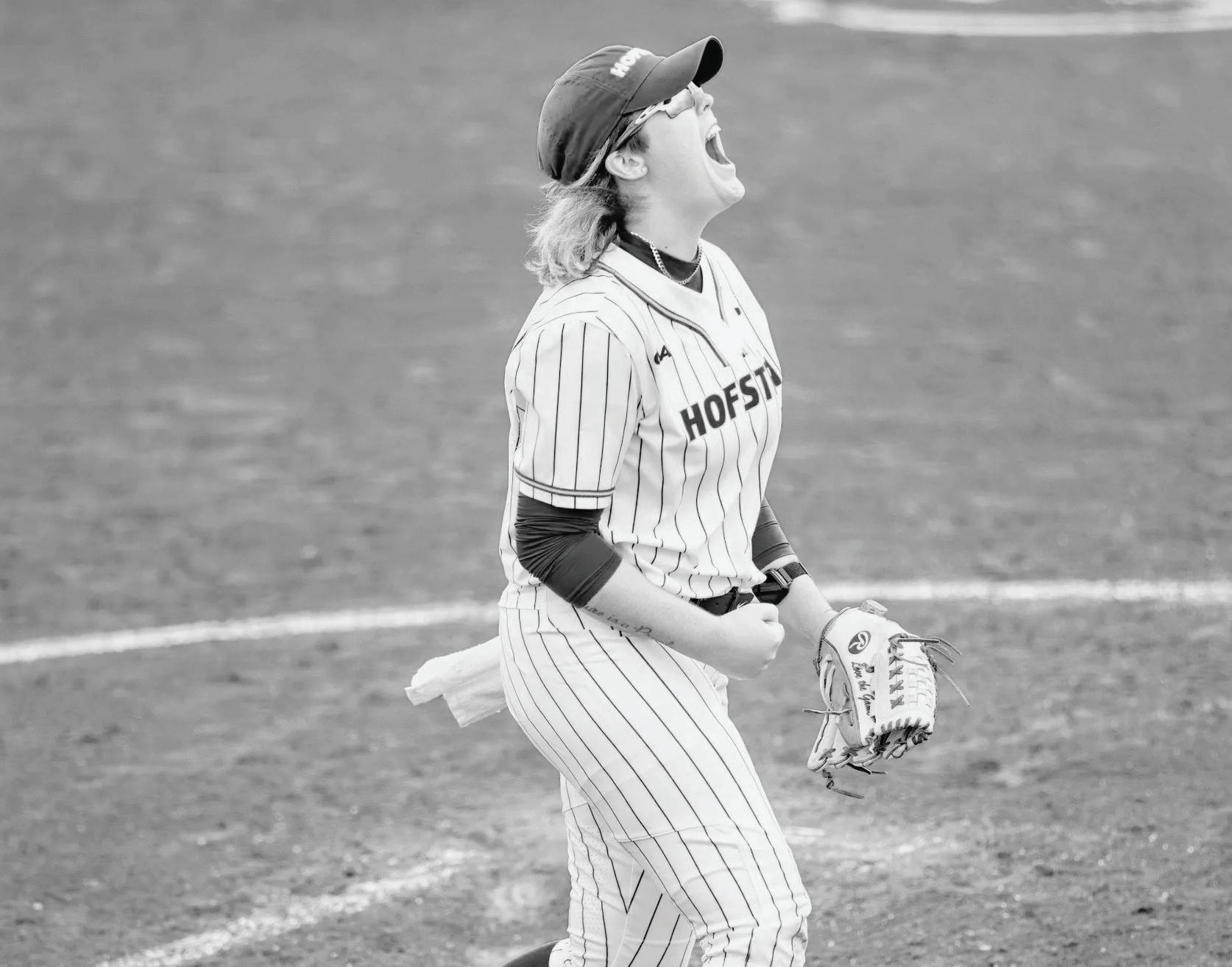
Cassidy Relay, who is hitting at a .448 clip, and the best pitcher, Camille Hamilton, who is pitching to a sub-two ERA.
Campbell University, the third seed in tournament, was the only conference series loss the Pride suffered this season. The Fighting Camels finished the season with an 18-6 conference record but placed third due to the tiebreaker rules. Campbell has the best team batting average, at .327. The Camels freshman ace, Katelyn Hubley, has been spectacular in the circle this season, pitching to a 2.16 ERA. Hubley earned two wins against Hofstra this season, including a shutout.
Stony Brook earned the fourth seed thanks to a walk-off from Malorie Hill in the regular season finale against Drexel. The Seawolves and Dragons both finished the regular season with the same conference record, but the Seawolves won the series over Drexel, earning them a spot in the tournament. The Pride swept the Seawolves 6-0 this season.
The College of Charleston enters as the fifth seed after a 14-10 regular season campaign. The Cougars have two hot bats, Bronwyn Conroy and Leela Langston, who are hitting .381 and .382, respectively.
The South Division will send
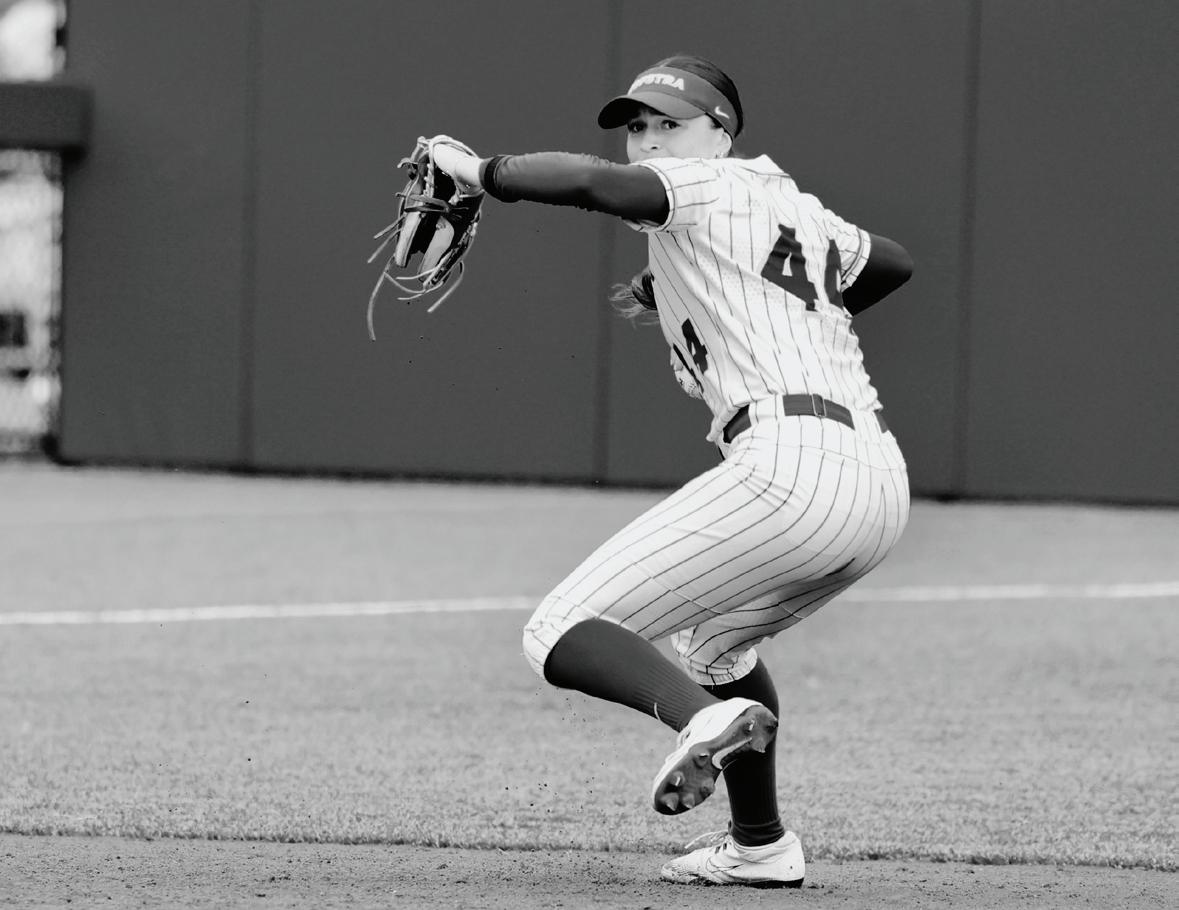
four schools to the tournament. Their final bid is the sixthseeded Elon University, who won the CAA Tournament just last season. The Phoenix are .500 in CAA play, and as a team, hit .257 this regular season. Ana Dew ranks third in the CAA in innings pitched and has been a reliable arm all season for Elon, tossing to a 2.87 ERA.
The first-seeded Pride put on their best regular season since entering the CAA in 2002, under first-year head coach Susan Cassidy-Lyke. Hofstra can be expected to rely on the best one-two pitching punch in the conference – Emma Falen and Madison Steppe.
Offensively, the Pride has been sound all season, with a one through nine who can explode at any opportunity. Lily Yepez has been integral in the Pride’s lineup, batting .412. Power isn’t a problem for the Pride either. Alanna Morse ranks second in the CAA in home runs this season with nine, and Ryleigh Smith is tied for ninth with seven. The long ball can certainly have an impact in the Pride’s tournament run, as they have launched 40 on the year.
As the Pride looks to earn their 14th CAA championship, their first opponent will be the winner of Stony Brook vs. Charleston on Thursday, May 7.
Swinging for a cause: Hofstra softball’s charity home run derby
By Ethan Poole SPORTS EDITOR
On Thursday, April 30, the Hofstra University softball team hosted a home run derby at Bill Edwards Stadium after the Pride’s 3-2 win over Monmouth University. Participants paid for the chance to hit balls over the fence, with all proceeds going towards multiple sclerosis (MS) awareness. Members of Hofstra’s baseball, field hockey and volleyball teams were all in attendance and participated, with some baseball players hitting particularly long home runs. The Pride’s first baseman and outfielder Dahlia Palacio acted as
the event’s master of ceremonies, offering encouragement and some light teasing to the participants as they hit while music blared throughout the stadium. Other members of Hofstra’s softball team were in the outfield retrieving hit balls.
Junior infielder Mackenzie Fitzgerald’s mother suffers from MS. Fitzgerald addressed participants and spectators, including her mother, before the festivities.
“When Chelsea [Villar] asked if anyone had ideas for a cause, I wanted nothing more than to be able to raise money for something that means so much to me and many people in my life,” Fitzgerald said.
Many of the upperclassmen, such as Villar, Fitzgerald and Alanna Morse helped to put the event together. Morse values not only the ability to make a difference but also being able to bring the Hofstra community together.
“It’s just a great way to get the community together, to get athletics combined with the whole campus,” Morse said. ”It’s a great experience for a good cause.”
While Morse was excited for the event, she made clear that the game they played beforehand took priority.
“We have to always prioritize the game when we have these fun events,” Morse said. “We
debrief the game, we chat with our coaches and then we hit the reset button.”
First year Hofstra head coach Susan Cassidy-Lyke was one of the pitchers for the event. She was not only happy for the opportunity to raise money for MS, but also to spend time together as a team without the pressure of a game.
“It’s a good opportunity to take a rest and appreciate everything,” Cassidy-Lyke said. “[But] I’m not going to take some swings, I take enough swings in practice.”
This is the third year of the event. Last year, the team raised $1,100 and broke one window.
“Last year one of our dads was participating, and he hit it so far
that he hit the [David S. Mack Sports and Exhibition Complex] and broke the window,” Morse said. “This year we put some nets up.”
The philanthropic aspect of the event means a lot to Morse.
“College athletics is realizing that you’re a part of something bigger than yourselves,” Morse said. “When you’re part of this tight-knit community … I would say that athletics is like a family. Just having the opportunity to use our platform for the greater good really benefits us and makes us happy and excited to help the community in any way we can.”
Emma Falen pitched to a 1.16 ERA in conference play.
Hofstra’s shortstop Alanna Morse led the Pride with nine home runs this season.
Joe Orovitz / The Hofstra Chronicle
Lilith Walpole / The Hofstra Chronicle
Senior send-off: Writing my story
By Olivia Hillestad EDITOR AT LARGE
I hated writing as a kid. “Free writing” or any kind of creative exercise was my nightmare. Whether it was being told to write about “my last vacation” or being left with the impossible task of inventing my own characters and plot, I dreaded it all.
Eventually, we moved on to essay writing, and for a while, my misery subsided. I managed to do well on book reports, research papers and AP practice-test essays, but I never truly felt comfortable.
When I arrived at Hofstra University, I was convinced I was a bad writer yet chose journalism as my major, hoping I could work with podcasts instead. Now, as my time here ends and I’ve been asked to write about my experience for a newspaper, it feels a bit ironic, and that old childhood dread came creeping back in.
It probably sounds contradictory, so let me explain. The only reason I’m writing this is because I learned along the way that I didn’t have to tell my own story or make up a story at all; I could tell other people’s stories instead. After four years of doing just that, writing my own doesn’t seem as scary anymore. I might not have the usual quotes or the atmosphere of writing about an
athlete, but I have memories, and that’s enough for me.
I got involved with The Hofstra Chronicle almost against my will – not literally, but close. One of the first things people learn about me is that I love wrestling, but back during freshman year, I kept it under wraps. I thought I was more of a “culture and society” person than sports. But I let it slip in class, and soon after that, the professor set up a meeting with the Chronicle’s Sports editors. I wasn’t exactly eager, but I had no reason not to hear them out. Despite my protests that I was a bad writer, they convinced me to attend my first budget meeting and cover a women’s soccer game. My first soccer recap was nothing special, but it was acceptable. The first real spark came after I covered a preseason wrestling intersquad dual. You have to understand,
my thing. Then, it turned into talking about wrestling, calling matches, taking photos, basically, anything and everything related to the sport. But it also became more than wrestling. I learned the rules of other sports, got to know the players, the culture and the stories. I realized that a great story is a great story, regardless of the sport, and that I had a knack for helping to tell them.
By sophomore year, I was Sports editor. I moved the budget meetings from late at night to the middle of the day. I expanded our section to include photography and strengthened our online and social media presence. Meetings went from rushed affairs to long conversations about sports and life.
Everything I’ve done at Hofstra, and outside of it, is because of my experience as
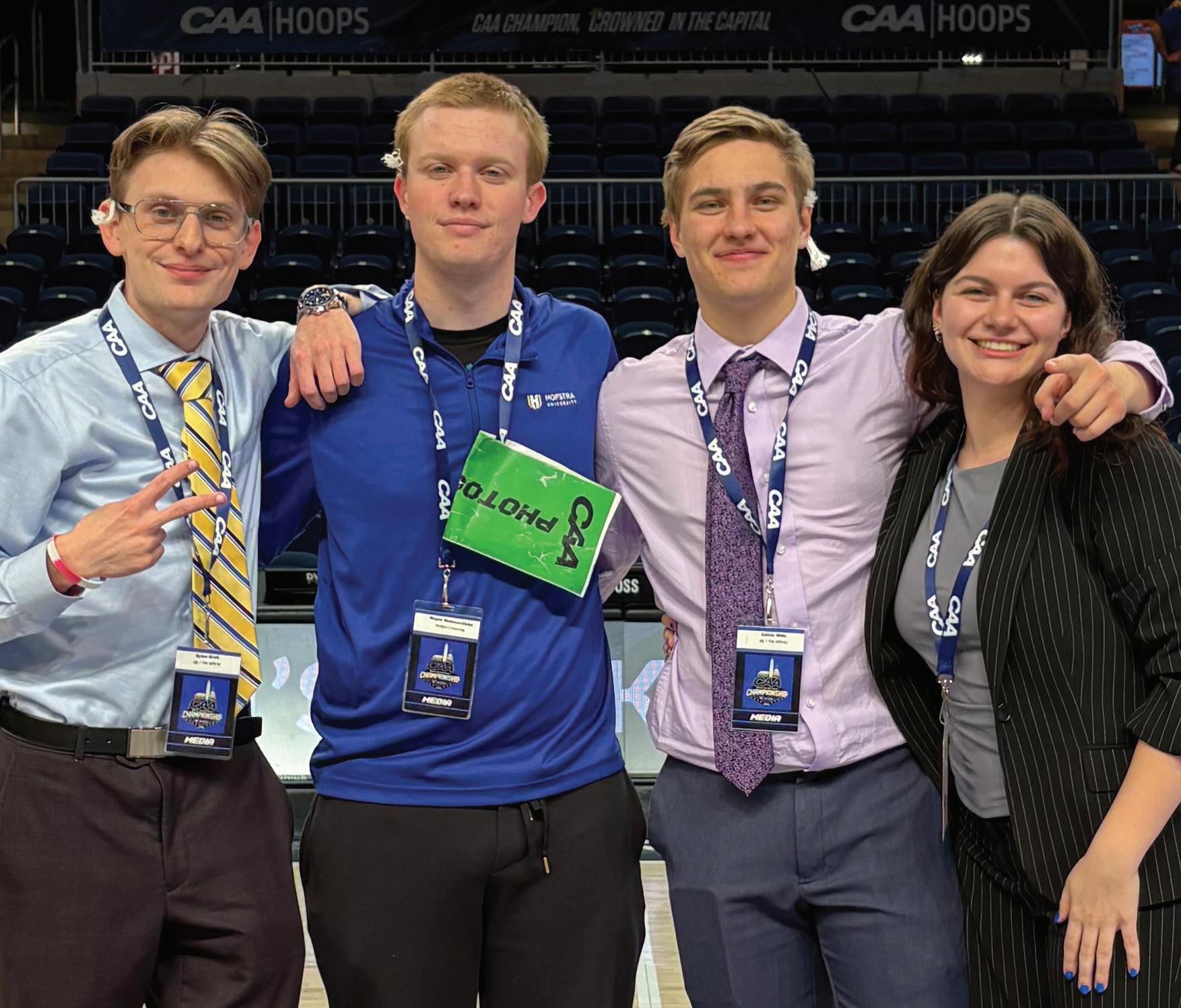
to the boys I live with now, who make me laugh, and to the one who inspired me early on. To the girls I miss every day and could talk with for
“There’s so much to discover, but you have to believe you deserve to try.”
the bar for wrestling coverage wasn’t high, so people were surprised when I not only knew who was winning but could identify every move and even suggest what the athletes could have done differently.
Wrestling coverage became
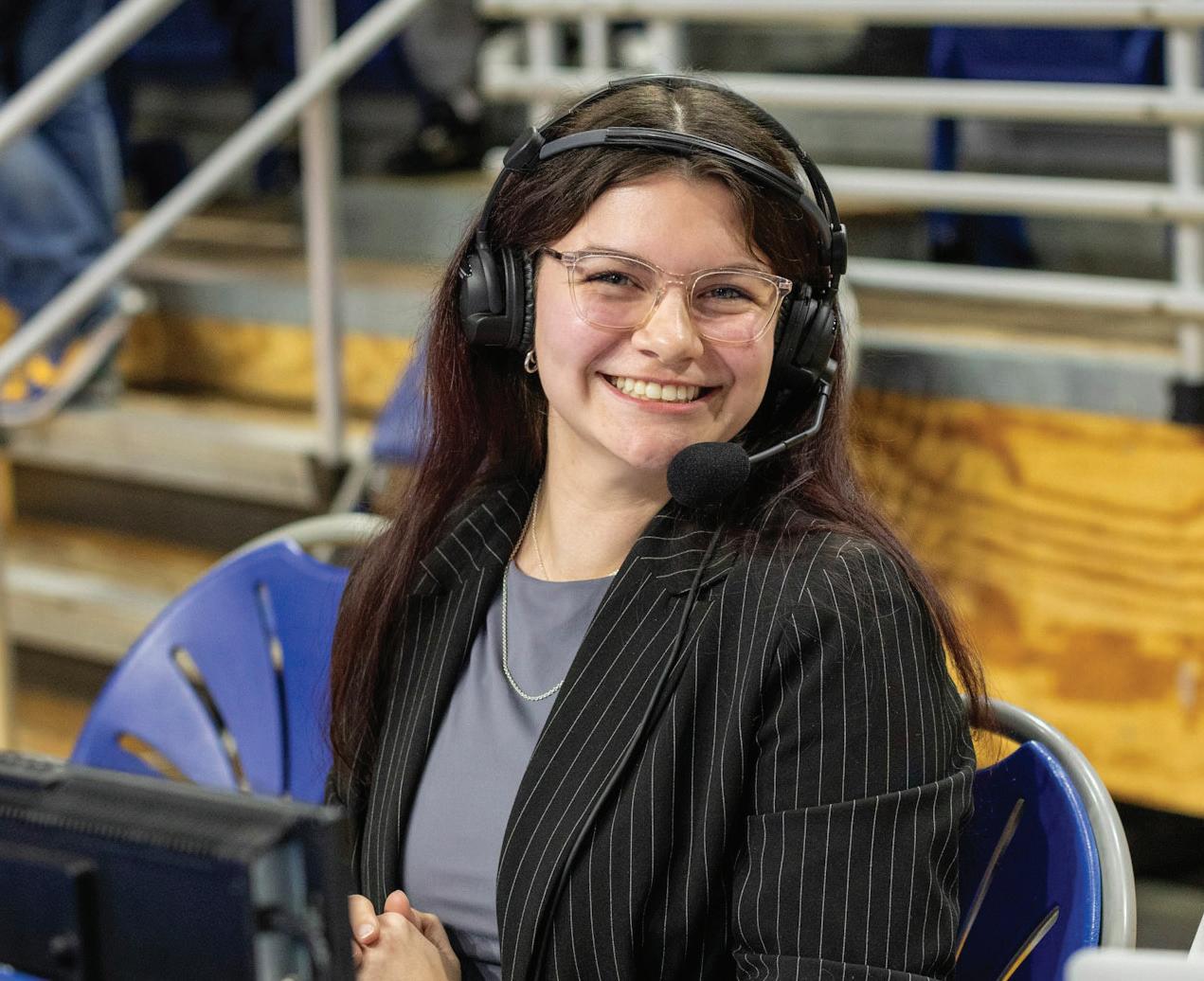
Sports editor and covering wrestling. All the leadership roles, internships, jobs, travel and memories trace back to the Chronicle giving me a chance.
Now, the story is ending, figuratively, as I graduate soon, and literally, as this is the end of the story of how I learned to love writing. But since I still have a lot of space to fill and words left, I’ll use them to thank as many people as possible and give a little unsolicited advice, as every senior is entitled to do.
Thank you to my parents, who let me move across the country and have always supported my journey in sports. To my sister, who somehow knows more about sports than I do. To my grandparents, who keep up with everything I do.
Thank you to my first roommate and one of my closest friends, who is so smart and somehow makes me miss living in the dorms. Thank you
hours: I wish you all the best in the world. Thank you to my favorite person, who has made this year so special and makes me want to be better every day.
Thank you to the alumni who mentored and advocated for me. Even if I don’t still bother you for advice, you made everything possible. Thank you to the professors who pushed me to explore knowledge in every direction.
Thank you to everyone I’ve
worked with at the Chronicle, WRHU and the HEAT Network. I couldn’t have done any of this without you and the effort you put in. And thank you to everyone at Hofstra Athletics for letting me cover these programs over the years; to the wrestling coaches and the whole team, thank you for everything.
Most of all, thank you to every person who let me tell their story. I hope I did it justice.
For once in my life, I’ll be under the word count, so I’ll just leave you with this: If I’ve learned anything, it’s to not be the person who holds yourself back. There’s so much to discover, but you have to believe you deserve to try. Believe that your story is worth telling and that you can be the one to do it.
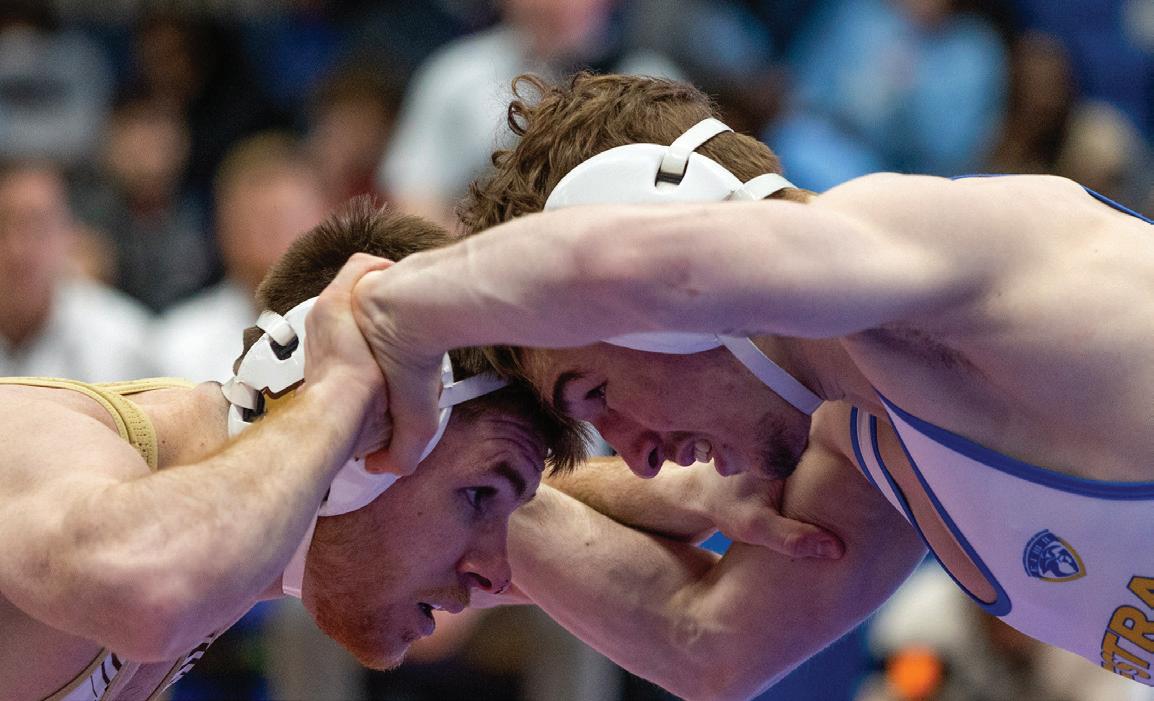
Olivia Hillestad became a Sports editor in her sophomore year.
Olivia Hillestad traveled to Washington D.C. and Tampa, Florida to cover the Hofstra University men’ s basketball team’ s tournament run.
Olivia Hillestad served as a manager of the wrestling team.
Eric Leaf / The Hofstra Chronicle
Photo courtesy of Amelia Bashy Olivia Hillestad / The Hofstra Chronicle
SPORTS
Emma Von Essen: Etched in Hofstra history
By Thomas Montana STAFF WRITER
Not every athlete picks up the game they love at a young age, and even fewer get to play at the collegiate level. For Emma Von Essen, who now is graduating after spending all four years at Hofstra University, basketball has been there at every stage.
Before she was born, Von Essen’s father founded Game 7 Sports Inc., an organization based in Rockville Centre, New York, where students can progress their skills in a variety of sports through programs and summer camps. At around 5-years-old, she picked up basketball for the first time.
“I played other sports growing up, but basketball I was doing every day,” Von Essen said. “I was playing with boys. I was playing in outdoor city leagues with boys, crazy stuff.”
When she was in high school, Von Essen played for the Long Island Lutheran Middle & High School basketball team, where she would have an illustrious career. She was a top 100 player on Long Island in 2021, began her senior season ranked 22nd in the country by ESPN and led the Lady Crusaders to as high as fourth in the nation as a junior.
“No other team is traveling across the country to go to
at you – [Lutheran High] prepared me 100 percent.”
The college decision wasn’t too hard for Von Essen.
Having played on Hofstra’s court as a young girl and being as close to home as she was, it felt like fate.
“Playing on the court, it’s like ‘Wow, I did this when I was 8-years-old, except the basket looked a lot scarier back then,’” Von Essen said. “On my visit, they actually showed a video of one of the players I used to watch, Nicole Capurso, talking to me and telling me to come to the school. It was a full-circle moment for me; it already felt like home.”
The home crowd was always louder for Von Essen as her family would show out at every game at the David S. Mack Sports and Exhibition Complex.
“My mom’s parents always come super early because they live down the block and they always sit in the same spots,”
Von Essen said. “Then, my other grandparents and my parents would come in; then my brothers would come in; then my cousins would come in; then my aunts, uncles, everyone. When I was in high school, I didn’t like when people came to my games, I’m not sure why, but then in college I started to love it.”
Von Essen’s relationship with Hofstra head coach
Danielle Santos Atkinson
[coaching]. Sticking with her for four years was great.”
Most freshmen don’t get much playing time, if any at all. Santos believed in Von Essen’s ability and praised her confidence after her first career start against Long Island University. Von Essen finished the game with 17 points, two steals, four made 3-pointers and the gamesealing free throws.
“[Von Essen] comes out, and she plays with confidence; she had a huge impact for us,” Santos said postgame. “She came out, [and] she’s looking to score. She’s a freshman, we talk about that, and we talk about having grace through some of those mistakes. That confidence and that aggressiveness has got to be there, and she does that really well as a freshman.”
Her humility shows when looking back on this game, claiming it wasn’t that good of a game. Seventeen points for a freshman in her first start is something most players would dream of. When featured in post-game press conferences, her performances are always at the grace of her teammates. Trash-talk or outward confidence isn’t in her nature.
“When other players talk down on people, especially in basketball, it’s kind of crazy,’” Von Essen said. “I’m like ‘Nobody’s perfect, you have no right to down somebody else because you’re not this insane player. You haven’t accomplished everything.’ I don’t talk crap to anybody; I try to stay composed because let’s say I do get out of myself and go crazy, then the next possession I turn the ball over –you look stupid.”
Her senior season was one that was filled with many emotions. After her first career start in her freshman season, Von Essen started 71 of her next 72 games. Against University of Kentucky in her senior season, Santos decided to play Von Essen off the bench.
“I definitely struggled my senior year with confidence because I was starting as a freshman, and now I’m not
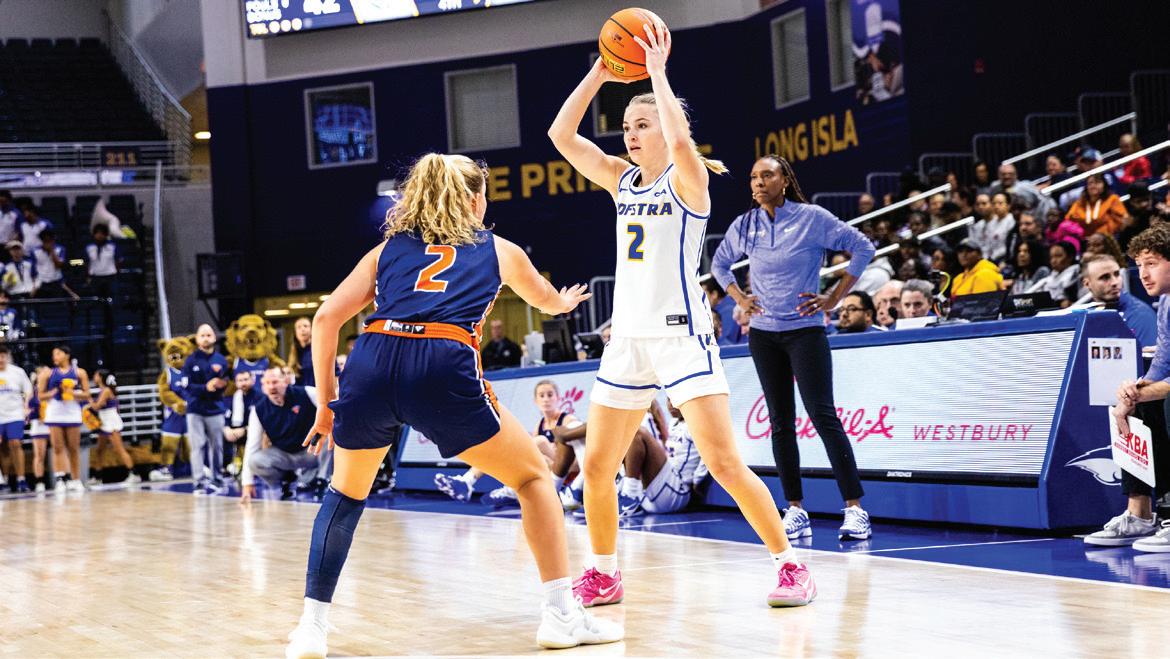
starting as a senior,” Von Essen said. “I’m thinking, ‘What is going on; am I not good?’”
Despite the portal acquisitions and returning players becoming upperclassmen, it wasn’t the season they had hoped. Hofstra reached a nightmarish 3-18 record and 1-8 in conference play on an eightgame losing streak. Everyone in the building and even other teams in the conference knew they were better than that.
“It felt like a fever dream; it made no sense,” Von Essen said. “We know we’re the most talented team in the [conference. Santos] would shake hands with the opposing coach, and they’d say we have the best team, but we would lose the game.”
That mindset was all the Pride needed. Down the stretch they finally put it together. The Pride went 5-3 in the final eight games going into the Coastal Athletic Association Tournament with multiple double-digit wins. They matched up against Towson University in their first game, and Von Essen made one of the biggest shots in program history.
Hofstra forced a miss with less than 20 seconds remaining down two points. Unable to inbound from the half court off the timeout, the Pride were forced to advance the full 94 feet. Santos drew up the play for Von Essen to take the final shot, and you’d think that taking the final shot in what could be the final game of your collegiate career would be nerve-racking, right?
“I’m sitting on the bench, down two and I’m fine,” Von
Essen said. “I don’t know why I was so, so calm. It’s like I didn’t even know what was going on. We’re in the huddle, and the play gets drawn up for me, and that’s the coolest thing because I either want to win the game or lose the game for my team, as a senior. I have to do that.”
Nevaeh Brown took the ball up and passed it to Chloe Sterling to drain the clock. Von Essen ran by the baseline and caught a pass while splitting between an elevator screen from Sandra Magolico and Brown. A jab step and a stepback put Masyn Marchbanks on the ground, and Von Essen knocked down the gamewinning 3-pointer with less than three seconds to go.
“I didn’t even realize [I broke Marchbanks’ ankles] until I watched it after,” Von Essen said. “I didn’t know she fell. The best part, she was the same one who was clapping in my face during the game. I’ve never had someone clap in my face like that before. Look what happens, she looks bad at the end of the game.”
The conference didn’t have the storybook ending everyone was hoping for, but the run was special, and the program left a mark on Von Essen’s life.
“[Hofstra has meant] so much more than words,” Von Essen said. “Now that it’s ending, I don’t want to leave. It’s so sad because I’ve built so much and made so many connections and memories, and now it’s just over. When am I gonna get that in another part of my life?”
CONTINUED ONLINE
Emma Von Essen finished her college career with 244 made 3-pointers.
Kim Nadler / The Hofstra Chronicle
Joe Orovitz / The Hofstra Chronicle
May 5, 2026
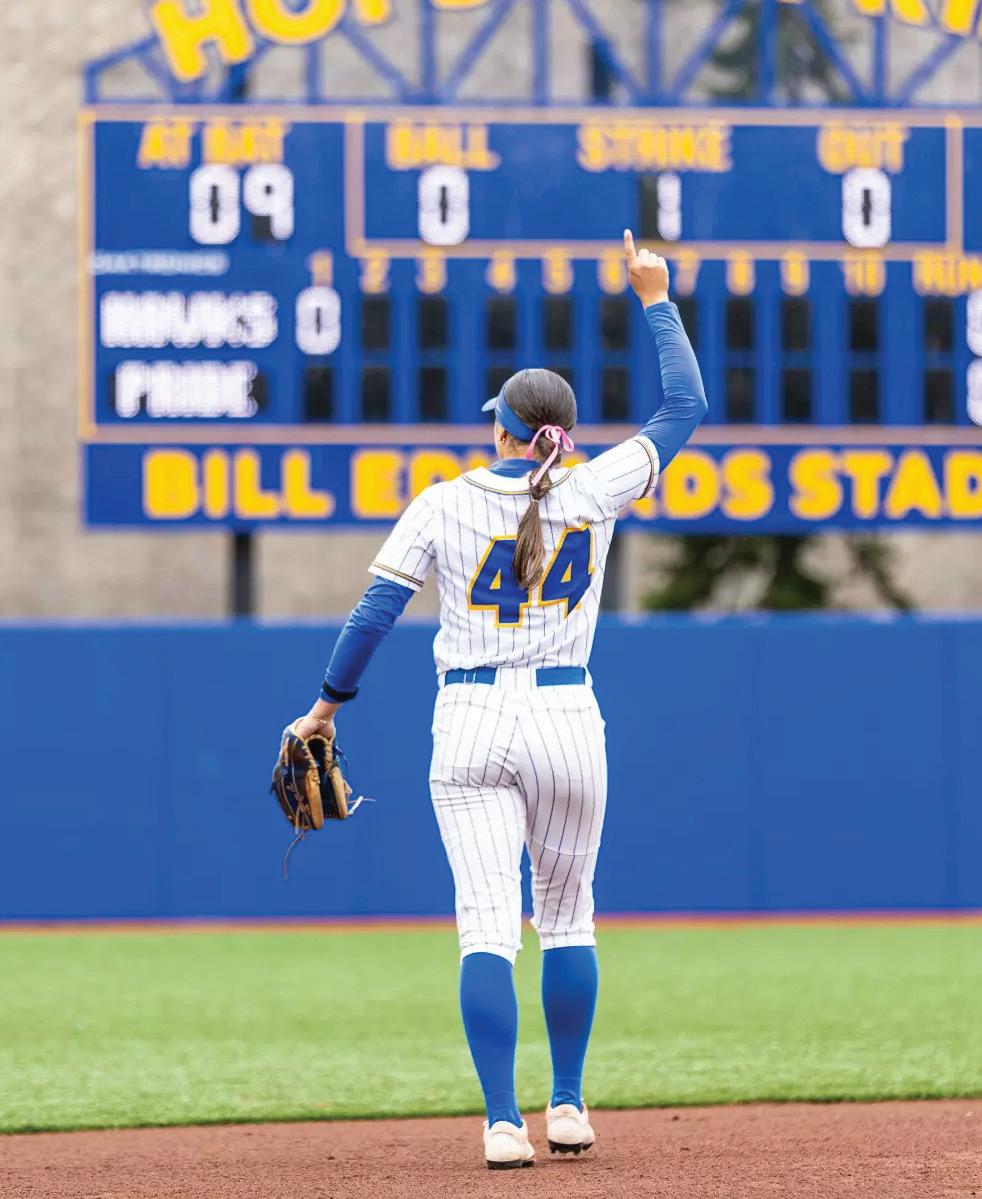
B ack on top
The Pride finished their conference slate with a 21-3 record, earning the top seed in the Coastal Athletic Association Championship.
Joe Orovitz / The Hofstra Chronicle