HEMPSTEAD, NY
VOLUME 91 ISSUE 6

HEMPSTEAD, NY
VOLUME 91 ISSUE 6
 By Evelyn Quail
We are living in a time of unprecedented nuclear instability. The nuclear-armed powers of Israel and Russia are both engaged in devastating wars with no clear end in sight. World leaders Vladimir Putin and Kim
Jong Un issue frequent explicit nuclear threats, and the authoritarian regime in Iran could be mere months away from creating a fully functional nuclear bomb. Even the United States is in the midst of a $1.5 trillion plan to modernize its nuclear arsenal. I could go on, but you get the point.
In January, the Bulletin of the Atomic Scientists announced the Doomsday Clock is still set at 90 seconds to midnight; this is, by their metrics, the closest the world has ever been to destruc-
tion (midnight). Though the Doomsday Clock encompasses all types of danger – including AI and the climate crisis – the current threat assessment is in no small part due to nuclear weapons. As the devastating nuclear reactor accidents at Three Mile Island and Chernobyl showed us, nuclear weapons are dangerous even in times of peace. And as Hiroshima and Nagasaki showed us, they are exponentially more so in times of conflict.
Even though the current threat level is unprecedented, this is not the first time we have been
TUESDAY April 23, 2024

CONTINUED ON A10
 By Annie MacKeigan
PHOTOGRAPHY EDITOR
By Annie MacKeigan
PHOTOGRAPHY EDITOR
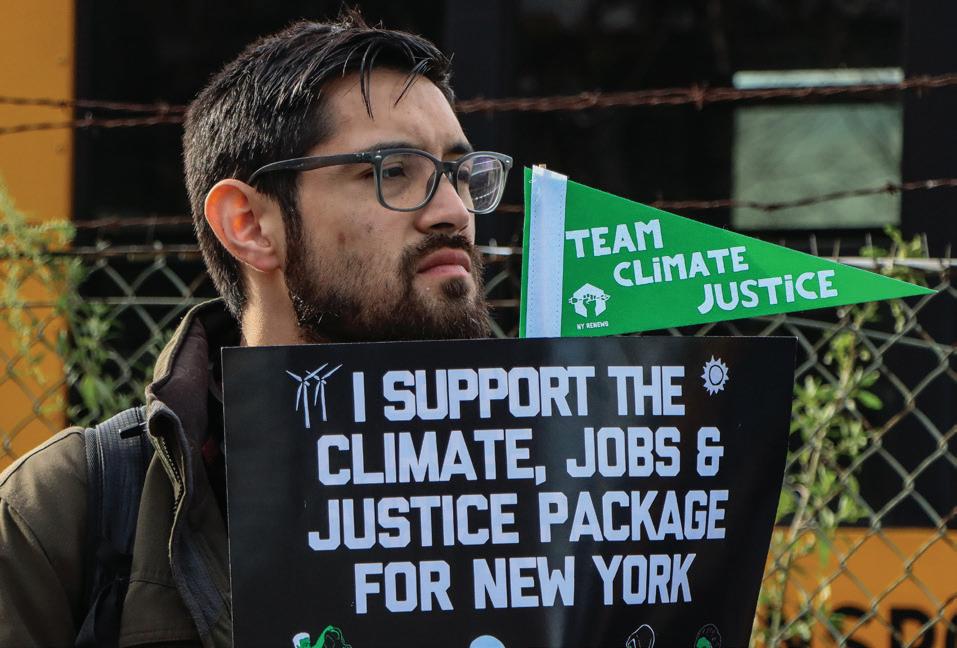
On Wednesday, April 17, Hofstra geared up for Earth Day by hosting a panel about the portrayal of violent and nonviolent climate activism in the media. The panelists included Professor Paul Fritz from the department of political science, Professor Scott Brinton from the department of journalism, mass media and public relations, and Professor Phillip Dalton from
the department of rhetoric. Dalton also serves as the director of the Center for Civic Engagement. Each of the three panelists brought unique perspectives from their areas of expertise and tied their ideas back to the mainstream media coverage of environmental activism.
“What we’re doing in journalism today isn’t really what the world needs,” Brinton said.
“One of the most important ways [to promote climate stories] is at the local level.”
The panelists spoke about the influential role the media plays
in climate activism. Brinton himself has written 44 articles, accounting for over 60,000 words, about diesel exhaust pollution at Freeport Power Plant No. 2; his work contributed to the eventual shutdown and replacement of the plant.
Hannah Ardiff, a senior labor studies and political science double major who organized the event, was inspired by Hofstra’s LEAF Club to put together the panel. Ardiff attended a climaterelated protest in Manhattan in the fall of 2023.
“I started thinking about, well, what kind of protests are effective? Are these non-violent protests effective?” Ardiff said. Her questions were one of the motivations she had to create Wednesday afternoon’s event.
“Peaceful, non-violent protesting movements have achieved much more when it comes to environmental advocacy than violent movements,” Fritz said. He continued by stat-
ing that no casualties have ever been recorded in association to violent climate-related protests in the United States.
“I learned a lot about the media framing and its effectiveness and how the local media is so important,” Ardiff said following the event.
Brinton suggested that much of the framing in the media coverage of climate events began during a time of “media mixedmessaging.”
“There’s this thing we call ‘objectivity’ in journalism, where we have to get both sides,” Brinton said. He explained that a transition from pure environmental journalism to media mixed-messaging occurred during the emergence of pro-business environmental agencies.
“That’s where confusion starts to come in,” Brinton said. “What we’ve seen is this idea that we have to get both sides, even though we know one side is wrong.”
“I learned a lot about the media’s involvement,” said Lauryn Priester, a sophomore film studies and production major. Priester’s interest in activism was what drew her to the event. She is also working on an environmental justice paper, so she found the event to be informative for her writing.
Each of the three panelists emphasized the importance of the local angle for environmental news coverage. Long Island is no stranger to climate issues. The maintenance of clean drinking water, the threat of rising sea levels and the pollution caused by a majorly car-dependent road system are just a few issues residents are concerned with. Groups like NY Renews and the Long Island Progressive Coalition have coalesced in hopes of mitigating potential climate crises on Long Island.

 By Donald Proctor
STAFF WRITER
By Donald Proctor
STAFF WRITER
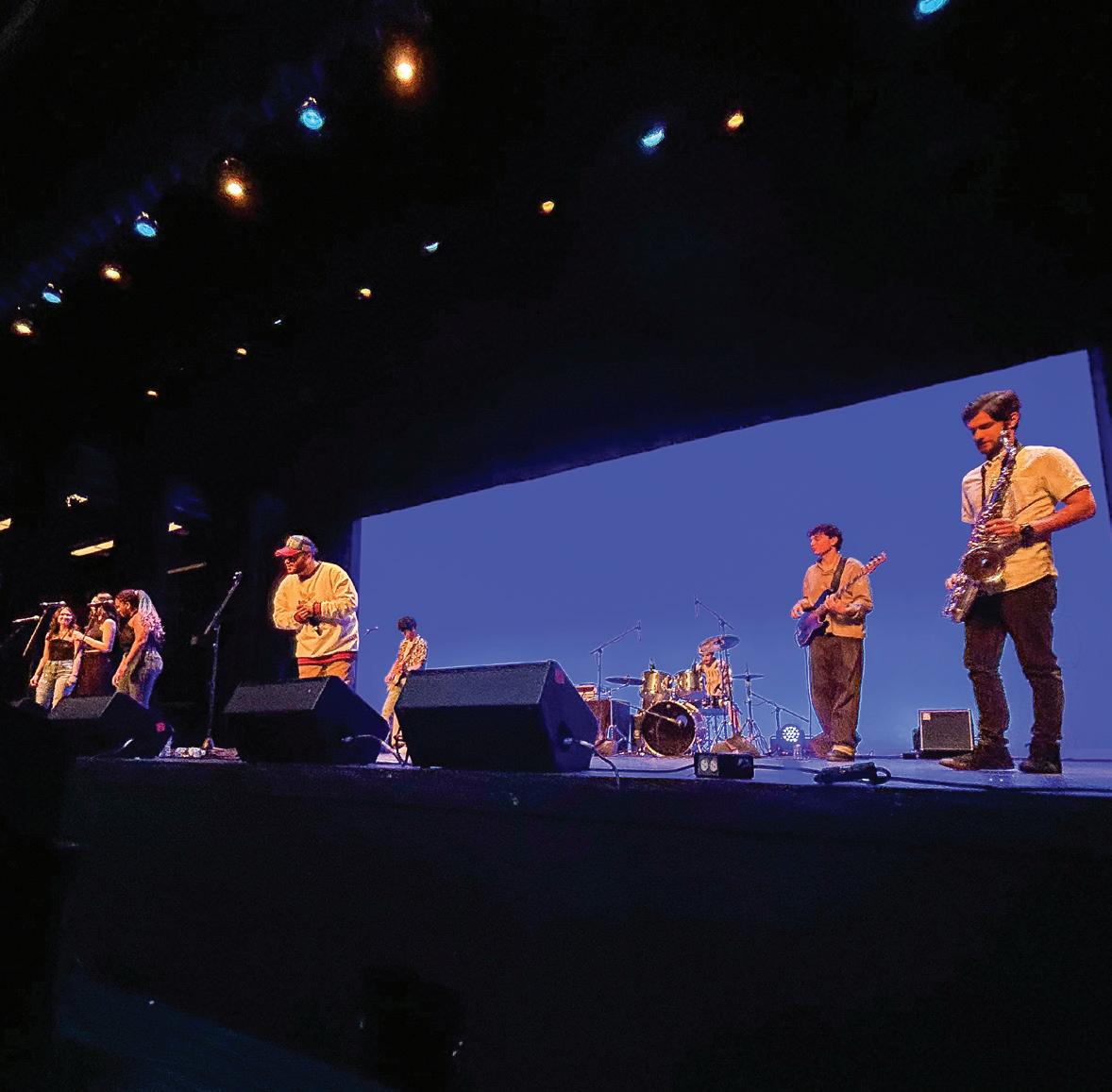
This year’s Music Fest electrified crowds with three acts at the John Cranford Adams Playhouse on Saturday, April 13. Atlanta-based rap artist Baby Tate headlined the show, with special guests Ice Man Mir and Tino the Incredible all bringing audience members to their feet.
Baby Tate has had her music featured on the popular HBO series “Euphoria.” Her debut album “Girls” was praised by XXL as one of the best hip-hop projects of 2019. Baby Tate’s one-hour set at Hofstra saw her groove and engage with the crowd to hits such as “Hey, Mickey!” “Rainbow Cadillac” and “Mean Girl.”
Baby Tate said performing on college campuses offers an opportunity to show that her music is “intentional” in embracing female empowerment. She is also the first woman to headline a concert of this scale at Hofstra in over a decade.
“The floodgates keep opening for female rappers and female artists,” Baby Tate said. Her first professional tape, “ROYGBIV,” granted her full creative control. Since 2014, she has released her album “Girls” along with six EPs.
Ice Man Mir graduated from
Hofstra last December as a music business major. Tino the Incredible is a current Hofstra senior also majoring in music business.
Ice Man Mir, who is from North Babylon, has utilized the insights he gained at Hofstra while navigating the industry. His 30-minute opener brought vigorous energy with songs like “GEEK OUTTA LOT” and “Drinkin Hennessy,” which boasts over 100,000 streams on Spotify.
Ice Man said learning the ins and outs of streaming, shows and merchandising from the university has helped to elevate his stature on Long Island and beyond.
Nevertheless, he was excited to return home. “After graduating in December, I was feeling pretty homesick. It took some adjustments not being here,” Ice Man said. “But to come back for an event like this is surreal.”
Following Ice Man Mir’s set, Tino the Incredible took the stage for a 45-minute set with a full band and three background singers.
He says his music blends R&B, pop and rap to create a distinct sound.
Tino said many of his bandmates met within the past year and a half, but this was not
planning for the event in the fall. According to Hofstra Concerts president Katie Rogers, artist selection began in January. Rogers said it was especially important to find a female headliner.
As for the openers, students selected one performer at the Battle for Music Fest in March. Tino the Incredible won out of the pool of four artists. Ice Man Mir was brought in late to replace Unispan Records rap artist CIV.
Music Fest is funded by the Student Government Association as part of the Hofstra Concerts budget. Rogers appreciates engagement from the Hofstra community at large in making the event a success.
apparent to the audience as they seamlessly performed songs such as the melodic “Glass Eyepiece” and new release “Pillow Talk in Boston.”
“It’s more hanging out and having a good time with my band,” Tino said. “If they’re feeling good up there, I’m feeling good, and I hope that translates to the audience.”
Music Fest is presented by Hofstra Concerts, who began
“The show was really entertaining; [Baby Tate] really did her thing,” said Morgan Green, a sophomore psychology major. Baby Tate will be releasing a new album in the summer called “C U Next Tuesday.”
Hofstra Concerts’ next event will be partnering with WRHU on Wednesday, April 24, during common hour to host a concert featuring Hofstra rock band Shy Flyer on the Bits & Bytes quad.
 By Christine Rice and Sarah Rios
SPECIALS TO THE CHRONICLE
By Christine Rice and Sarah Rios
SPECIALS TO THE CHRONICLE
On Wedesday, April 17, the Hofstra Graduate Marketing Association (GMA) organized an executive guest speaker event at the Sondra & David S. Mack Student Center. At this semester’s event, Gary Kreissman and Raz Choudhury talked about pivoting your career in the era of artificial intelligence.
In the hub of Hofstra student
perfect overlap between marketing and technology. In the last few years, Kreissman has been involved in advising companies that use AI.
“[AI] is not going to replace people, but it will change how people work,” Kreissman said.
Growing up in Queens, New York, featured speaker Raz Choudhury, the founder of SAM.AI, began his undergraduate career as a finance major and later transitioned into informa-
with different types of technology, especially AI.
“Today, the major takeaway was to hop on AI,” said AnnaMaria Lampe-Önnerud, a firstyear business administration in marketing student. “If you want to start learning now, start small. Start by asking the right questions and then citing where you are getting the information.”
“I think I learned a lot of things today, like AI is not the enemy,” said Poojan Patel, a
“[AI] is not going to replace people, but it will change how people work.”
life, the multipurpose room was buzzing with motivated undergraduate and graduate students from an array of diverse disciplines, racial, religious and career backgrounds.
Featured speaker Gary Kreissman, the managing partner of Group PRM and ex-president of Remy Martin, always dreamed of a career in advertising.
After five years in the industry, he decided it would be more interesting to be “on the other side of the coin,” finding the
tion technology. Finding inspiration from his entrepreneurial father, he founded SAM.AI in 2016 with a vision to create an AI company that is more human-like by creating a program that you can use to talk based on conversational intelligence.
“Be resilient, learn how to talk to other people, and have a sense of humanity,” Choudhury said.
Kreissman and Choudhury emphasized the importance of getting hands-on experience
first-year business administration in marketing student and the vice president of GMA. “You have to work with it, not against it.”
Through the diligent efforts of the GMA, under the leadership of club President Muhammad Maaz, the executive board and faculty advisor Luke Ng, Zarb students were able to truly engage with the executive speakers and leave the event ready to take on the ever-changing global business world.
 By Jacob Aurelus
SPECIAL TO THE CHRONICLE
By Jacob Aurelus
SPECIAL TO THE CHRONICLE
Artificial intelligence is the technology of the future. It has already had a massive effect on many industries, and its impact and influence will only continue to grow as there becomes more opportunities for it to develop. It is important for the public to understand how AI operates
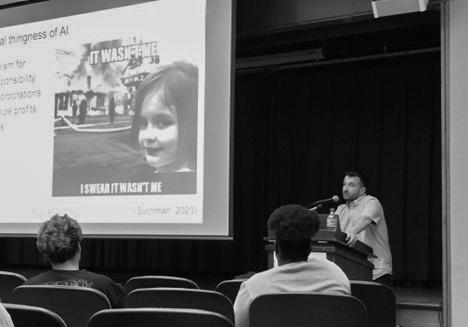
so we can create a future that has technological prowess and remains ethical in the process. That was the goal of Eric Leonardis’ talk, “Explaining AI,” on Tuesday, April 16, in partnership with the Hofstra Cultural Center and philosophy department. Leonardis is a postdoctoral fellow at Talmo Pereira and Tom Albright Labs and studies hu-
man and animal behavior using computational neuroscience.
The talk opened with the most prominent question on a lot of people’s minds when it comes to AI: will it become evil? Leonardis questioned that logic, positing that if AI was to grow to be this dangerous force, why were the world’s largest companies continuing their research into it? To Leonardis, it is nothing but late-stage capitalist fearmongering.
Discussions about the ethics of AI were a major component of the talk. Much focus was placed on the impact that bias has on the results that an AI can give you, especially if the AI was trained on the entire internet, which can have major biases.
If people want AI tools to give them objective answers, Leonardis argued, they need to be extremely careful with the data that AI is trained on. According to Leonardis, such biases can lead to awful results
like unfair criminal sentencing. This is why he urged that AI tools be only trained on curated data and not the whole internet.
Leonardis said that “smaller datasets and smaller networks” are the way forward for artificial intelligence.
Leonardis also discussed many other issues that are connected to AI such as the clear errors that AI commonly makes, the fact that there is a lack of total transparency in how AI tools are made, the history of automation, the mathematical functions necessary to train these large language models and the neuroscience behind AI.
This talk intrigued many people from multiple disciplines and the Q&A session was full of engaged discussion on the topic from students, professors and other attendees.
Anthony Dardis, a professor of philosophy at Hofstra, gave an interesting perspective on the event.
“I particularly liked the in-
teraction towards the end when a computer science professor and Leonardis went back and forth on the need for interdisciplinary engagement because this is a massive societal issue that requires everyone to work together,” Dardis said.
“Explaining AI” served as a catalyst for starting conversations and instilling deeper understanding across multiple perspectives. The event underscored the importance of exploring and collaborating with others in order to confront the opportunities and challenges ahead. If this can be done, society can expect a future where innovations are not only welcomed but guided by ethics and justice.
On Tuesday, April 16, Campus Dining Services and the University Senate held Hofstra’s Farmer’s Market and Vendor Fair outside the student center.
Lexis Meehan, the marketing manager for Campus Dining, said the purpose of the event was to allow clubs to raise money and for students to purchase fresh groceries.
“With the arrival of the nice weather, we aimed to host an outdoor Farmer’s Market and Vendor Fair for our students, offering them the chance to purchase locally grown produce and homemade bakery items using their Dining Dollars,” Meehan said.
Senior psychology major and Student Affairs Committee chair Lila Campbell said the idea for a farmer’s market came after the University Senate determined that Hofstra needed more community-based events.
“I really like to go to farmer’s markets,” Campbell said. “That’s just kind of my thing,
so I always grew up going to farmer’s markets, and I thought it was a really cool idea. So I emailed [Meehan], and she was like, ‘Yeah, we can do that.’”
While Campus Dining primarily planned the farmer’s market side of the event, the University Senate planned the club side. While preparing for the event, Campbell saw an opportunity to include Hofstra’s clubs.
According to Campbell, her big dream was to have “fruit and desserts and honey and flowers and all that stuff. But farmer’s markets also have artisanal things. People make candles and people make lotions. I was like, maybe we should do something like that for our clubs.”
The Clay Club, which is new to campus as of this semester, was one of six clubs to attend the event. Sophie Weisman, a freshman pre-medical studies major, said the club’s goal was to attract more students and encourage them to relax and have fun being creative with clay.
“This type of exposure and ability to fundraise is something
that we’re really grateful for,” Weisman said. “Being able to offer clay to the student body is really incredible because everyone needs creativity in their lives. And the goal of our club is really to improve access to creative outlets for people.”
The highlight of the event was the farmer’s market, where students could shop for an assortment of fruits, vegetables and baked goods.
Campbell hoped that the event would give students more opportunities to use their meal points by allowing those who like to cook to be able to make food without having to find their way to a grocery store.
“[The] farmer’s market uses Dining Dollars, which [Campus Dining hasn’t] done that much,” Campbell said. “I really, really enjoy the idea of students being able to get fresh produce because I know there are some students that do have dietary restrictions or allergies, or maybe you just want a fresh banana in the morning.”
For many students, including
Weisman, the farmer’s market was a hit.
“This is really incredible because I hear people talking all the time on campus about how they wish there were more fresh foods,” Weisman said. “I have so many extra Dining Dollars. I got a baguette, I got the focaccia and I got three potatoes because I make mashed potatoes in the microwave.”
Due to permit issues, studentowned businesses could not sell their goods.
Instead, students were encouraged to promote their businesses while supporting their clubs’ fundraising efforts.
The event is set to reoccur in the fall,
giving clubs another opportunity to promote and fundraise. Additionally, the produce and products available will increase.
“Since we’d have so much time to plan it, we could get Red Bull to come, and Poppi, and like all of our collaborative organizations – they could do raffles,” Campbell said. “And we could do it at Pride Park, so then we can have more room for clubs.”

Members of the Haitian diaspora community met in the Monroe Lecture Center on Saturday, April 13, to discuss Haiti’s current security crisis and the diaspora’s role in standing against crime.
The town hall was organized by Mara Vilme, the chief executive of the nonprofit organization United for Restoration of Haiti Ministries. Over the threehour event, attendants heard from three guest speakers and had the opportunity to ask them questions.
Haiti has been embroiled in internal conflict and political instability since its last prime minister, Jovenel Moïse, was assassinated in 2021. However, the most recent escalation of violence began on Feb. 29 of this year when gangs in the capital city of Port-au-Prince coordinated attacks on police stations, prisons, airports and seaports to take power and force interim Prime Minister Ariel Henry to step down.
According to the Associated Press, more than 200 gangs currently control 80% of the capital, with scores of the population killed and at least 15,000 displaced in the recent attacks.
Although the power of gangs in Haiti have become more dominant and violent only in recent years, the conditions
that led to their creation formed much earlier.
Kim Ives, a speaker at the event, is an editor of the weekly Haitian newspaper Haïti Liberté and has helped produce several documentaries about Haiti. “In many ways, the current instability is a result of the last two foreign military actions in the past 30 years,” Ives said.
In the last major foreign intervention in 1994, the U.S. sent 25,000 troops as part of a multinational operation to reinstate the democratically elected President Jean-Bertrand Aristide to power after a military coup. Despite Aristide’s successful return to power, the operation ultimately failed to create a lasting democracy in Haiti.
When Aristide was overthrown a second time in 2004, the U.S. sent troops again to similar effect; from then until the U.N. peacekeeping mission was replaced in 2017 by a smaller one that ended in 2019, the country has remained in relative turmoil. “If they were to come with a third military intervention, it is just going to be pouring gasoline on the fire,” Ives said.
According to Ives, the widespread poverty and crime in Haiti is also a result of exploitation by the government and private companies of the U.S. “The U.S. has squeezed the economy, destroyed [Haiti’s] agriculture
… and the result is now we’re paying consequences,” Ives said. “People can no longer survive because their agriculture and industry has been throttled by our ruling groups in this country.”
This troubled history is the reason why many Haitians regard another foreign intervention, which the U.N. is currently considering, with much skepticism.
The chaos in Haiti hits close to home for many in communities near Hofstra: roughly 22,000 people of Haitian descent live in Nassau County, according to a recent American Community Survey.
Although few Hofstra students were present at the town hall, many have personal connections to the country and are concerned about the unfolding crisis.
Rachel Lande, a HaitianAmerican junior majoring in criminology and sociology, has relatives who forego trips to the supermarket to avoid gangs roaming the streets. “It’s very upsetting to know that we’re unsure if our families [will make it] another day or not, because of how serious the situation is,” Lande said.
Keving Pierre, a junior international student from Haiti majoring in psychology and computer science, sees the crisis as a consequence of selfish and
On April 8, at 4 a.m., the RSR working in Bill of Rights Hall reported to PS that two HU students and a non-student failed to comply with
corrupt politicians. “Everyone who goes into power, they try to make their money … they don’t really care about the country, and they are easily manipulated,” Keving Pierre said.
Lande also expressed her dissatisfaction with the prevalent corruption and abuse of power by the Haitian government.
“The government itself was stealing from its people, which is why Haiti suffers politically as well as economically,” Lande said.
Instead of a foreign-led intervention, many argue that foreign powers should act only in a supportive capacity to let Haitians themselves take charge of restoring peace and stability.
Key:
PS – Public Safety
HU – Hofstra University
NCPD – Nassau County Police Department
RL – Residence Life
RSR – Resident Safety
Representative
On Sunday, April 7, at 9:44 p.m., an RA reported that an HU student escorted two nonstudents into a building without
Lande believes that the gangs have to be dismantled before lasting peace can take place. “They may not be able to run Haiti politically, but they will be running Haiti socially,” Lande said. “Citizens will be afraid to speak up, they’re going to be afraid to vote.”
Despite the challenging situation in his home country, Keving Pierre is optimistic about the future. “I believe that in the future we’re going to have a new Haiti because I know that as a country, we are resilient,” he said. “We’re resilient people. We are powerful. We believe in ourselves and then we believe in a brighter future.”
Raynand Pierre, a crime and labor law specialist and former member of the Haitian Journalist Association who spoke at the town hall, argues that Haitians should be the ones to make lasting change. “The most important thing [is that] we [Haitians] have to assume our responsibility in that crisis,” Raynand Pierre said. “We have to solve the problem, not waiting for Biden to solve it for us. That’s our problem.”

On April 8, at 11:14 p.m., the RA in Utrecht House reported to PS that, while conducting rounds, there were loud noises coming from a
Hofstra guest policy and verbally harassed the RSR. The nonstudent was banned from campus, and the two students were issued referrals to CS for their actions.
signing them in. PS spoke to the student on the phone, who stated they were showing their parent and a friend where they would live next year.
Compiled by Moriah Sukhlal
room. PS responded and discovered open bottles of alcohol. Six students were issued referrals to CS.
that there was a disturbing message posted on the chalkboard in a Roosevelt Hall classroom. An investigation is being conducted into this matter.
On April 8, at 11:14 p.m., the RA in Utrecht House reported to PS that, while conducting rounds, there were loud noises coming from a room. PS responded and discovered open bottles of alc
On Saturday, April 13, at 9:30 p.m., while on routine patrol, PS found unauthorized fliers posted in Berliner Hall, CV Starr Hall and the Monroe Lecture Center. An investigation is being conducted into this.
On Sunday, April 14, at 1:40 p.m., an HU student reported
On April 8, at 4 a.m., the RSR working in Bill of Rights Hall reported to PS that two HU students and a non-student failed to comply with Hofstra guest policy and verbally harassed the RSR. The non-student was banned from campus, and the two students were issued referrals to CS for their actions.
On Monday, April 15, at 5:55 p.m., an HU student discovered a clear plastic bag containing an unknown yellowcolored substance in a hallway of Suffolk Hall. The HU student informed their RA, who called PS. The student requested a police response. NCPD responded and took a report.
On Tuesday, April 16, at 1:43 a.m., an HU student was found in possession of possible marijuana and a lit candle that caused a fire alarm activation in Constitution Hall. The student was referred to CS.
On April 11, at 10:20 a.m., an HU plant employee reported to PS that he accidentally damaged a vehicle owned by another Hofstra employee on Holland Road while working on the main campus. The owner of the vehicle was notified about the damage and responded to PS.
On Tuesday, April 16, at 10:10 p.m., PS received a call about a vehicle driving erratically on campus. PS observed the vehicle and spoke with the occupant who was a non-student visitor. The vehicle left campus without incident.
On April 11, at 2:18 p.m., it was reported to PS that an unknown person wrote messages in chalk on the sidewalk on the south side of Hofstra Hall. Photos were taken of the graffiti, and an investigation is being conducted into this matter. The plant department was notified for cleanup.
On Tuesday, April 16, at 12:10 p.m., an HU student called PS seeking to file a report regarding a barking dog in their residence hall. The case was referred to RL.
On Wednesday, April 17, at 6:59 p.m., an RSR reported that an HU student used another student’s ID card to gain entrance to Alliance Hall. Both students were referred to Community Standards.
On April 12, at 9:50 p.m., the fire alarm in Estabrook Hall was activated due to hair care products. The alarm sounded, and the building was evacuated. PS, the plant department and the Uniondale Fire Depart-
My sister and I are attached at the hip. It doesn’t matter that we’re both adults now, me being 21 and her almost 19, and it especially doesn’t matter that she’s in Ohio and I’m in New York. Even though we are 696 miles apart (I checked), we are – and will always be – inseparable. We feel the distance, definitely, and that is often reflected in our near-daily “I miss you so much” or “I wish you were here” texts. While we don’t lament about the absence all the time, we do text, call and talk pretty much all day, every single day, without fail. If I’m texting someone, chances are it’s my sister on the other end. Morgan is undoubtedly my best friend. We have nearly two decades of inside jokes, commentary, and secret, silent understanding. She can see an expression cross my face for no more than a second and know exactly what I’m feeling and exactly what to say. I have never been more in tune with another person. We didn’t come out of the womb this close, however. From birth until about elementary school, all we would do was fight. I can’t even remember how many time-outs I got in for provoking my sister, much less how many times I was in the proverbial slammer for starting a physical altercation with her.
We would go handto-hand like the living room was a boxing ring. Biting, kicking, hair pulling and screaming were all fair game. Morgan had a special move she titled “the windmill,” where she would lay on her back and kick her feet in the air like a bicycle trying to fend off my incoming attacks. It always worked, and I usually got a foot to the face.
“You’re her big sister,” I remember him telling me, gently grabbing my small hands in his. “You’re supposed to watch out
both of us would pile into the bed and play games until we passed out. Then, when we weren’t having sleepovers, we would knock
felt lost – I was actively losing myself. I was always angry and combative, volatile and depressed. I shut myself in my room
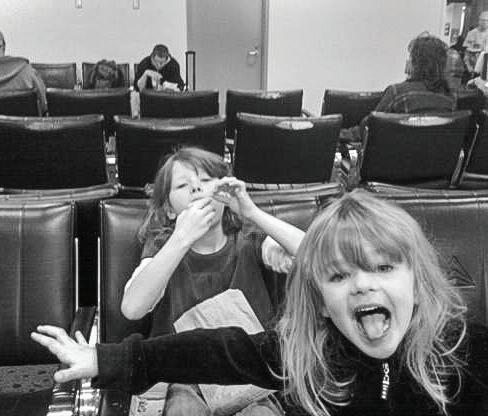
wordlessly come in to lay at the end of my bed and keep me company, something she still does now whenever we’re both home.
After the restrictions started to lift and we could start to return to the outside world, our closeness didn’t subside. We began hanging out every day, and if not that, texting about our separate days. This continued all through the summer before my freshman year of college, and then it was time for me to pack up and go.
We sobbed for days as I packed and prepared. Leaving my home, my family and my sister was one of the hardest things I have ever done. She and I had been through so much together that it really was like I was abandoning my best friend.
“Morgan is undoubtedly my best friend. We have nearly two decades of inside jokes, commentary, and secret, silent understanding. She can see an expression cross my face for no more than a second and know exactly what I’m feeling and exactly what to say.”
for her, make sure she’s okay. You’re supposed to protect her. It should be the two of you versus everyone else, not each other.” He was right.
I remember how desperate our parents were to make us be nice to each other. Once, my dad called a family meeting (something he had never done before) to sit my sister and I down to explain why we should be close and not constantly in combat.
The message and all of its weight didn’t immediately stick, but it at least got me thinking. It took a while, but slowly, fights turned into play, and play turned into talking and talking turned into friendship.
We started having “sleepovers,” where, despite usually only being separated by a thin, thin wall, we would pick one of our rooms and
on the wall between us in various complicated patterns, repeating them exactly over and over until somebody messed up. Then we would just laugh through the wall and start all over until someone would inevitably yell “Be quiet! It’s late!” – to that we’d just laugh more.
Through the angst of middle school and the melodrama of high school, Morgan was a constant. That period of time was hard. Extremely hard. Between growing pains, plunges in mental health and eventually the pandemic, I
and began to let the days wash over me, living through them, but never in them. I was a shell.
Despite this, Morgan would knock on my bedroom door every single day. It started out with little excuses to get me out of bed, like making food or asking if I wanted to go on a short walk. Slowly, it began to work. I started leaving my room more and more, solely to hang out with her, the only friend I had in person during quarantine.
Even when I didn’t leave my room, she would knock and
When it came time to finally leave my house and drive the 12 hours to New York, we hugged and cried for no less than 15 minutes, saying goodbye and then deciding that that wasn’t long enough, and hugging and crying and saying goodbye all over again. I cried while my dad and I drove, only stopping after I wore myself out enough to fall asleep. I was scared to leave behind all I had ever known for something entirely new without knowing if it was worth it. She texted me the whole drive there, giving hourly updates on how much she missed me and already couldn’t wait for winter break. During breaks and whenever I’m home, we go right back to hanging out all the time. Whenever we’re free, we go right back to knocking on each other’s doors, sitting in each other’s beds and keeping each other company. Even now that I am well acclimated to college and love the life I have made for myself here, Morgan is still part of my every day. She is in college now, too, and often busy herself, but from good morning to good night, we still keep each other updated. Even when we’re both out of college and thrust into the real adult world, I know we’ll do the same. We’re inseparable.
Many freshmen are eager to live independently and fully immerse themselves in the college experience. However, there are also many students who either do not have the option to live on campus or would rather stay at home.
Rob Spiteri is one of many commuters at Hofstra University, and he feels that there is a misconception about students who do not live on campus. “I love staying at home,” Spiteri said. “A lot of people think commuters don’t have friends or don’t care about school, but I feel the opposite.”
Spiteri, a senior English major, feels that being a commuter has actually enhanced his ability to connect with others. He transferred from Binghamton University, where he lived on campus during his sophomore year which he said he hated.
“The food was awful, my roommate was awful and it was just a bad experience,” Spiteri said. “I also missed my family, my dog, my neighbors and my job.”
When he’s not studying, applying for graduate school or
practicing for Hofstra’s concert band, Spiteri works at New Wave Seafood near his home in Wantagh. “I’m busy, but I love it,” Spiteri said. “I couldn’t do this if I were a residential student.”
Some of the perks of living at home while in college include home-cooked meals, a guaranteed quiet place to study, a lower cost of living and the ability to work part-time. Additionally, many commuters like Spiteri have responsibilities at home that they must attend to.
Senior mathematics major Nicole Pietrafesa finds that living at home saves money and allows her to save up for life after college. She commutes from Franklin Square, but the 20-minute drive does not bother her.
She says that the drive “isn’t a huge annoyance” in comparison to the benefits of commuting.
“I’m able to work at Roosevelt Field Mall after class, and I don’t pay rent at home, so I’m saving a ton of money.”
Spiteri also says that he was able to pay for his car with the money he has saved by working and living at home.
While Spiteri and Pietrafesa are commuters who enjoy their circumstances, they acknowledge that not all commuters feel the
same. There are commuters at every college that struggle to make friends, get involved and fully embrace the college experience. Some commuters struggle to make friends during classes since there is not much time to connect with other students.
“It’s hard if you’re shy, and Commuting Services doesn’t do much,” Pietrafesa said.
Spiteri also feels that Commuting Student Services could expand their resources and do more promotional work for commuters who are struggling. Spiteri said that he “hasn’t seen any advertising” for Commuting Student Services.
Commuting Student Services has a lounge in the student center, but many note that it is often empty. Spiteri also feels that it is in an inconvenient location, so many commuters likely do not even know that it exists.
“Commuters don’t really explore the student center since it’s over the Unispan,” Spiteri said. “We spend most of our time on South Campus for classes.”
Commuting Student Services’ website states, “The office assists students in finding a place to live, being safe off campus, and other general tips and tricks to being a commuter student.” Yet Pietrafe-
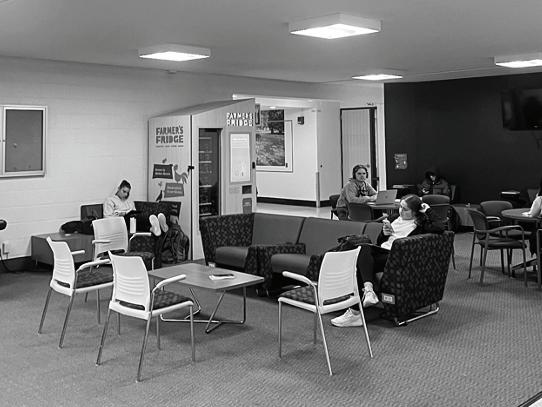
sa and Spiteri feel that the office does not offer enough resources to commuters like themselves.
“I don’t think they have ever reached out to me in an email or anything,” Pietrafesa said.
Commuting Student Services has an Instagram page that allows students to stay updated on events for commuters. Spiteri believes that more emails or text messages should be sent to commuters to advertise their services, as not everyone uses social media or is aware of the Instagram page.
Pietrafesa and Spiteri have never been to the commuter
i woke up in galveston (that’s where i met you) the dark stained with blue like a wish
i watched you for hours, asleep right below me the up & the down of your skin what it is that i wanted was nothing;
just that you’d save me from wanting but i was 15, i would have called you
a pink evening primrose or something
i now know why nobody goes to galveston, texas & stays the sea wall is honest, high tide is expected
no work can be done in this place so i grew up in austin & had awful dreams of june making strides with aplomb when i found you, i could breathe easy (despite all the pain in my lungs)
you already know why i had to set sail
i’m not abbott’s favorite son but i wound up all over with so many faces & loved you again with each one
lounge, and they both said that they have made most of their friends through campus activities. Spiteri said that joining the concert band introduced him to new people, and Pietrafesa said the same through the mathematics club and her job as a tutor. Most residential students hold the assumption that commuters are lonely or cannot make friends. Some commuters may struggle, but it is not the majority. Spiteri and Pietrafesa’s commuting experiences display that living off campus does not ultimately ruin the “college experience.”

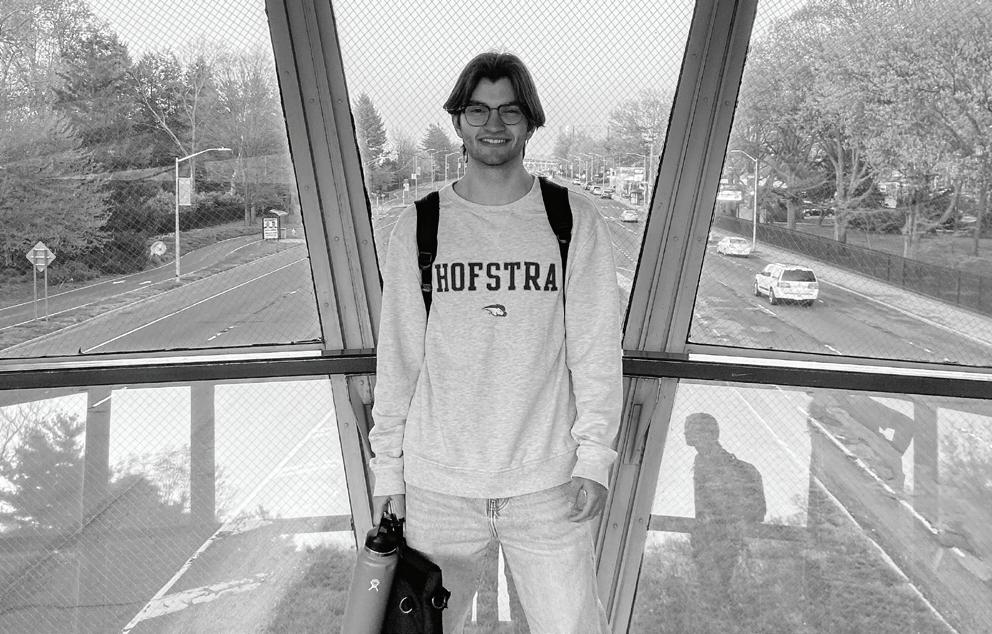
“I would be Lawrence in ‘Saw.’ I really like screaming.”
- Christian Pensa, freshman
“It’s not psychological torture, YouTubers do it all the time.”
“There are so many Dorito crumbs in my bra right now.”
“I’m in Chipotle and there’s a knockoff Jojo Siwa butch gay in front of me.”

“I would be Adam from ‘Saw.’ I like his craftsmanship.”
- Baz Hamilton, freshman
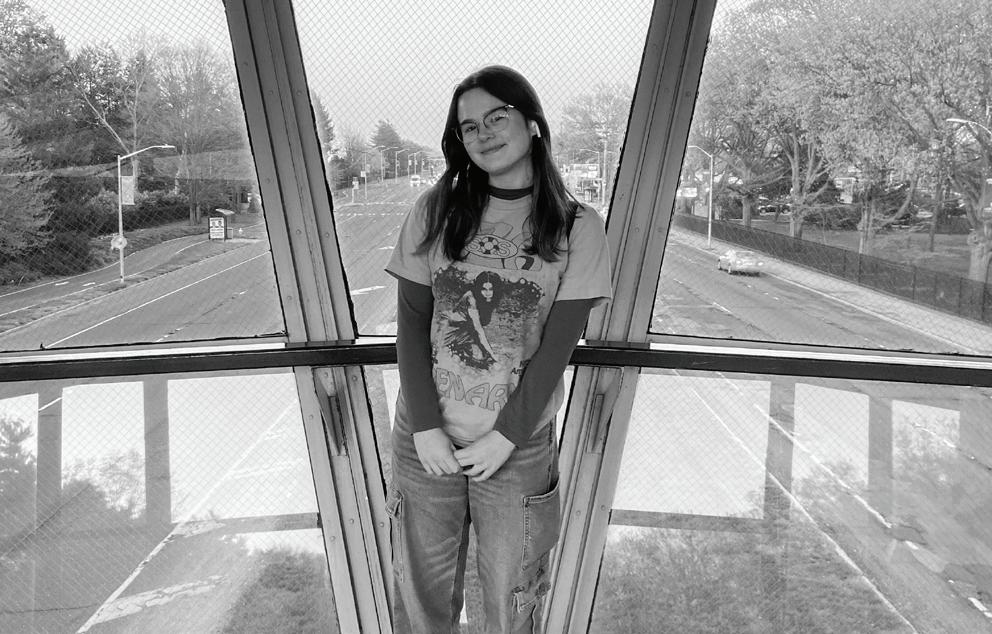
“I would be Amanda from ‘Saw.’ She’s a boss ass bitch. I think she’s cunty.”
- Sophia Zalewski, freshman
“You don’t give gender, you give gay.”
“My Pikmin beat the Catholic Church.”
“Please don’t put the crayon up your nose.”
“Sometimes I can’t use the urinal because I pull my asscheeks out too much.”
“Gotta get some Spanish nuts in there.”
“I’ve got two pigs popping out of me.”
“I’m not an academic weapon, I’m an academic casualty.”
When you’re looking for a simple to make but not simple tasting dish, this chicken tikka masala recipe is perfect. Many of the meal’s components are customizable, from the spice level to any vegetables you may want to add.
This dish makes four servings or makes for delicious leftovers.
Ingredients:
2 chicken breasts
1 jar of tikka masala sauce (I use Maya Kaimal brand, but any 12.5 ounce jar works)
1 tikka masala seasoning packet (I use Indian Essentials, but any works)
1 ½ cups of jasmine rice
1 tablespoon of olive oil
Salt and pepper
Optional: Package of naan
1. Cut the chicken breasts in half vertically, then cut those halves into small chunks.
2. Coat the chicken with the seasoning packet, making sure to fully rub the seasoning into the meat.
3. Place seasoned chicken into a bowl, cover with plastic wrap and let marinate in the refrigerator for at least 2 hours.
4. Place a large saucepan on medium heat and coat the bottom with olive oil.
5. Remove the chicken from the fridge and put it into the pan, then cook until slightly browned.
6. Add the entire jar of sauce and reduce heat to a simmer.
7. Stir frequently for 15 minutes or until chicken is fully cooked.
8. At the same time, add the rice to a pot and cook according to the package’s instructions.
9. Optionally, brush each side of the packaged naan with olive oil and cook in a heated pan until soft and warm.
10. Once done, remove from heat, plate and serve.
11. Enjoy!


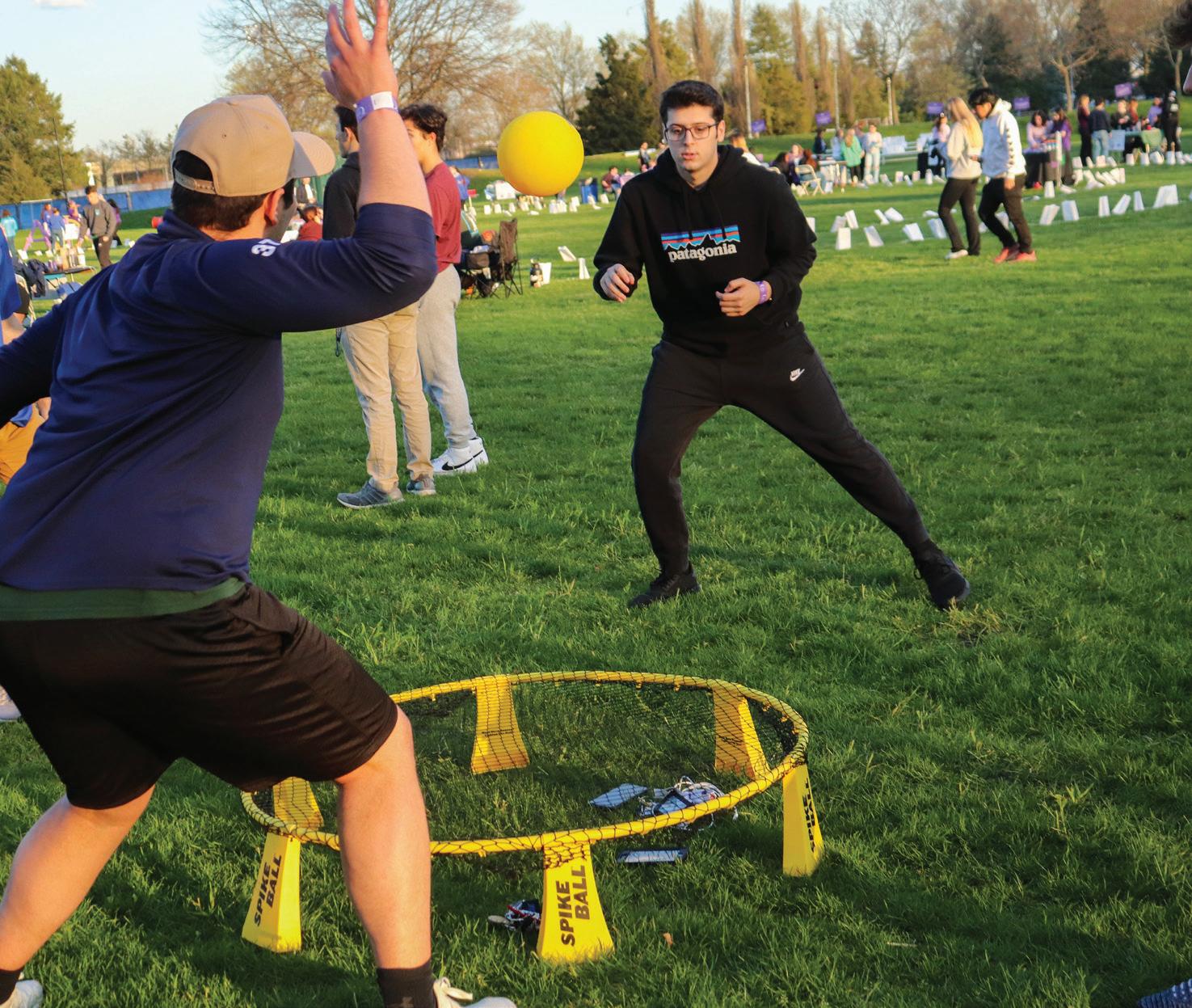
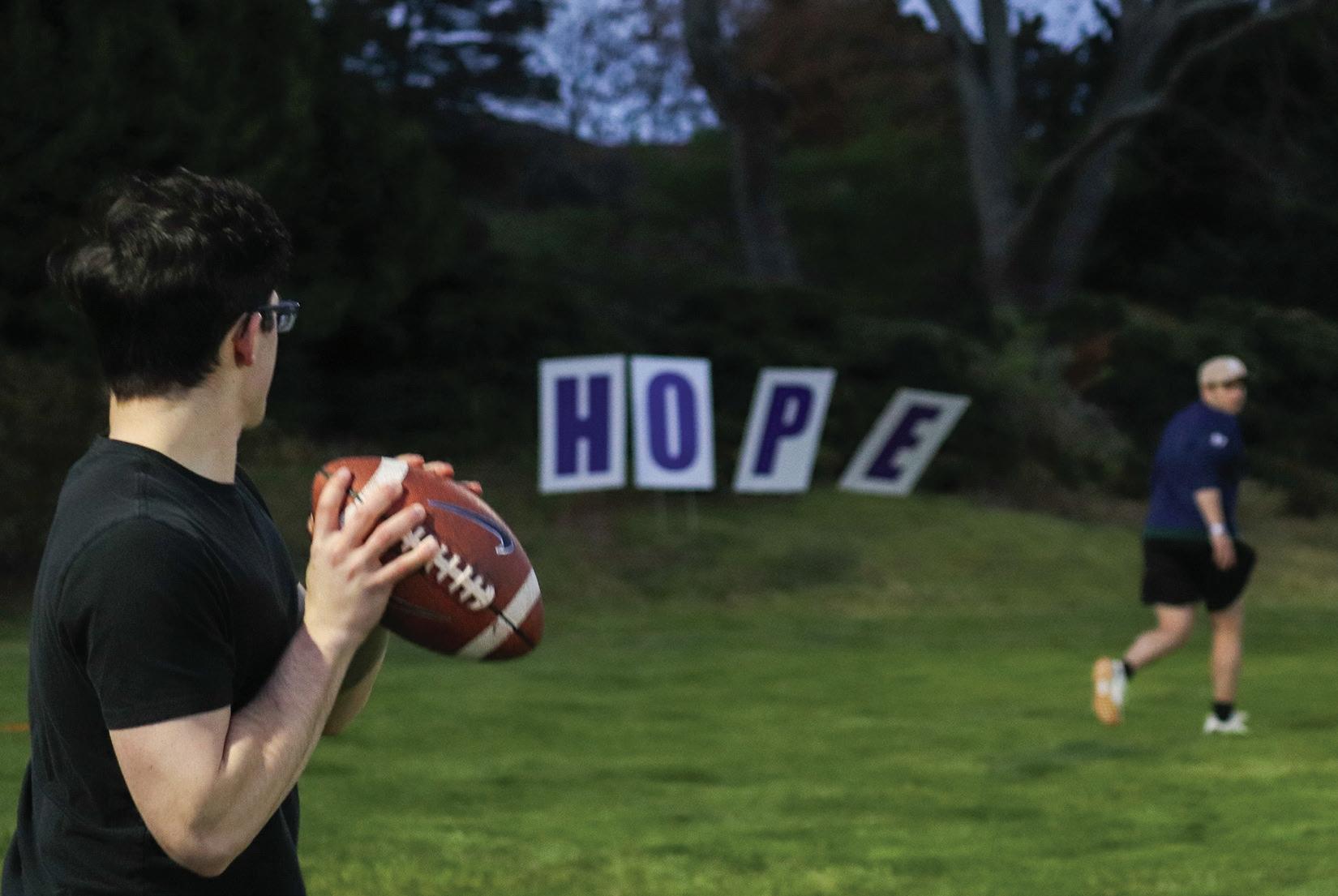
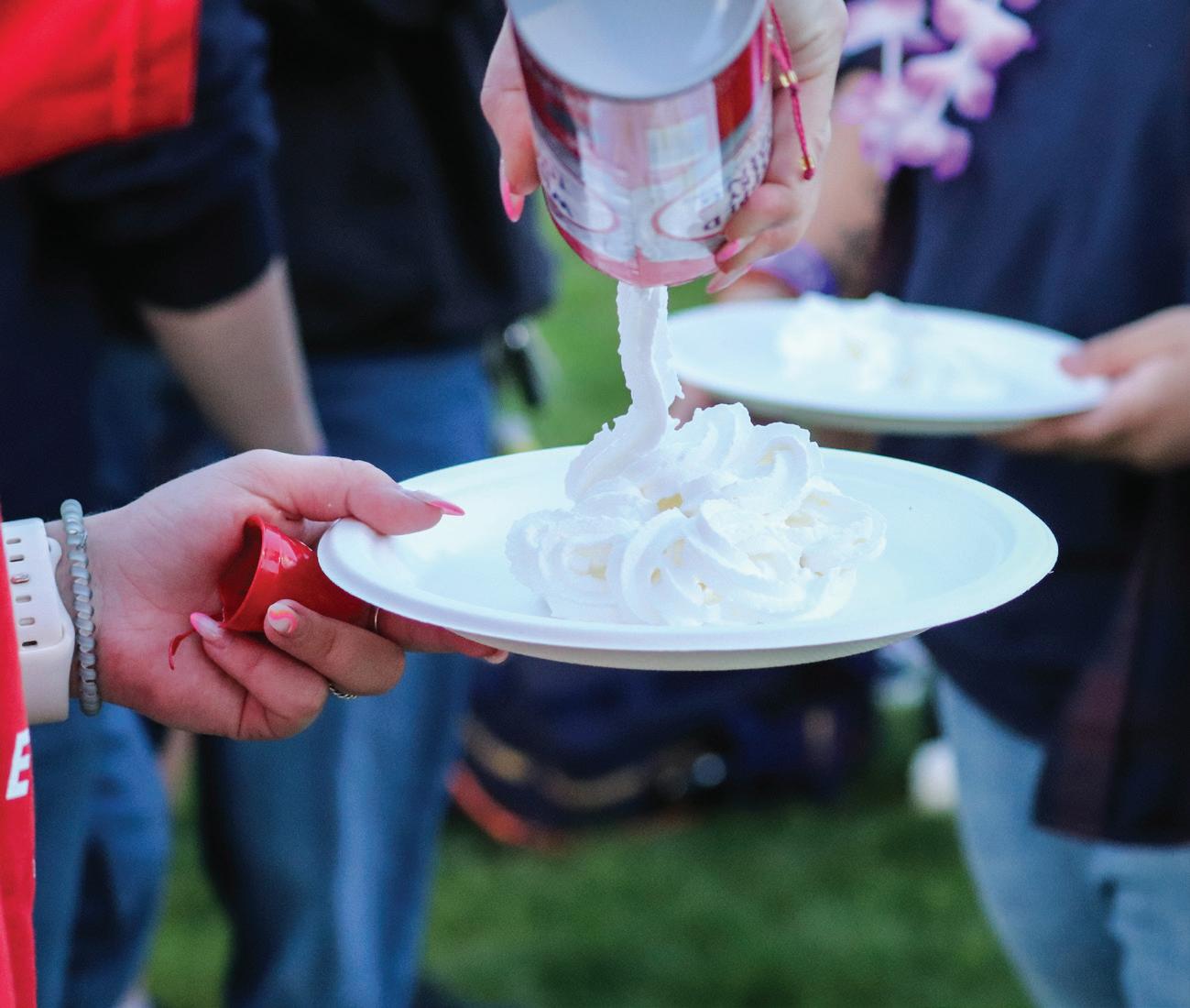
The American Cancer Society at Hofstra University hosted “Relay for Life” on Saturday, April 20. Over 25 student clubs and organizations came to the event in hopes of raising money for those affected by cancer. Survivors and caregivers were honored at the event, as well as those who lost their lives in their battle.
Students, faculty and staff enjoyed “Pie a Professor,” an event that allowed event participants to throw pies in the faces of professors and representatives from the Student Government Association. The event also highlighted stories from survivors and caregivers, a hip hop class and student performances – one of which included student a capella group, Makin Treble.





by
Spread Annie MacKeigan Photo courtesy of Alex Ferreira Photo courtesy of Alex Ferreira Photo courtesy of Alex Ferreira Photo courtesy of Alex Ferreira Photo courtesy of Alex Ferreira Photo courtesy of Alex Ferreira Photo courtesy of Alex Ferreira Photo courtesy of Alex Ferreira
Out with one era, in with another: once again, megapopstar Taylor Swift has returned with a new installment to her discography. Poignantly titled “THE TORTURED POETS DEPARTMENT,” Swift’s 11th studio album is a carefully curated look into a shattered heart following the end of a passionate relationship. This time, she’s letting listeners hear more about her life than ever before (which, in comparison to Swift’s previous work, is quite the statement in itself).
Despite being thematically comparable to her previous works, the four-time Album of the Year winner infuses a new voice of intensity into the record’s whopping 31-track run, recounting the agonizing details of a broken connection through diaristic retellings and intense self-introspection. From disparaging tales of humor in songs, like the album’s title track and “But Daddy I Love Him,” to raw, calamitous themes of romantic affiliation in tracks like “loml” and “The Black Dog,” Swift lays her heart out in drastic detail for listeners to dissect and translate into their own feelings.
As soon as you hit play on the opening track “Fortnight,” featuring rapper Post Malone, Swift makes it clear that this album has no limits on what topics will be touched upon, with only the guideline of relentless honesty hanging over each track. Moments into the first track of the album, Swift remarks about how she was “supposed to be sent away, but they forgot to come and get me,” setting the virtuous tone of the record, while also introducing its relaxed, indie-adjacent sound. Lyrically, there is no shortage of vigor and transparency throughout the subsequent songs. In the title track “The Tortured Poets Department,” Swift recounts her mental health struggles and the impractical structure of her previous relationships while also holding on to the desperation of wanting to revive a romantic connection. The melancholy of
Swift’s vocals also plays greatly into the emotions blanketed over each track, with the alluring delivery of lines like “Who’s gonna hold you like me?” The title track is worthy of being the record’s namesake, as it perfectly encapsulates the haunting and wistful emotions baked into each song on the record.
Swift’s brushes with heartbreak are poetically discussed in several ways throughout the album. In anthems like “Down Bad,” Swift reaches into her ferocious resentment for her
singer-songwriter. Songs where Swift pours her heart into a glass for the world to see never feel like arm-twisting on this record, as every heartbreak song is not only genuine but also a creative way of expressing the burn of losing one that you love.
In an engaging diversion from the central theme of romantic anguish, Swift also uses some of the record’s tracks to address topics of the self in songs like “Clara Bow,” “I Hate It Here” and “The Manuscript.” In a rare instance, Swift addresses herself

ex-lovers, expressing herself through the sincerity of lines like “I might just die, it would make no difference” which is about not being with a desired partner. Songs like “Guilty as Sin?” and “Florida!!!” (featuring indie-pop star Florence Welch) touch on similar themes of letting passion overtake you in the name of love. The quality and classic nature of Swift’s discography comes from when her feelings are laid out in their purest form, and this album does an excellent job of making sure the picture is painted perfectly for the listener.
Of course, it wouldn’t be a work of Swift’s if there wasn’t a handful of tracks set aside to unleash the feeling of unfiltered heartbreak. Songs like “The Albatross,” “The Prophecy” and “So Long, London” tap into the somber side of Swift’s innermost feelings, letting listeners know the pain of the 34-year-old
is on a similar wavelength in terms of sound, and many of the songs quickly begin to blur into each other from the first couple of chords. Fans have criticized Swift in the past for not wavering on her production choices for each record, working pretty much solely with producers Jack Antonoff and Aaron Dessner for each album since “folklore” was released in 2020. Unfortunately, the lack of diversity in producers is apparent on this record. Although Swift’s lyrics are strong, each track has a hard time standing on its own with the production it’s given.
“THE TORTURED POETS DEPARTMENT” is a celebration of the maturity and wisdom Swift has gained since the start of her career and a triumph of a record for the chart-topping pop icon. The record manages to be a different take on Swift’s lyrical style despite its familiar production, and the project firmly stands apart from the rest of her releases, cementing it as its own unique “era.” Through sharp-cutting lyrics, brutal honesty and bittersweet self-reflection, Swift immerses herself and her fans into a new world of possibilities for future projects.

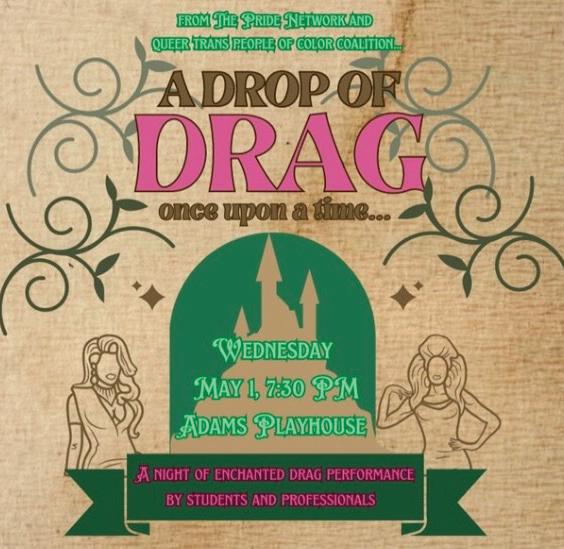
May 1 at 7:30
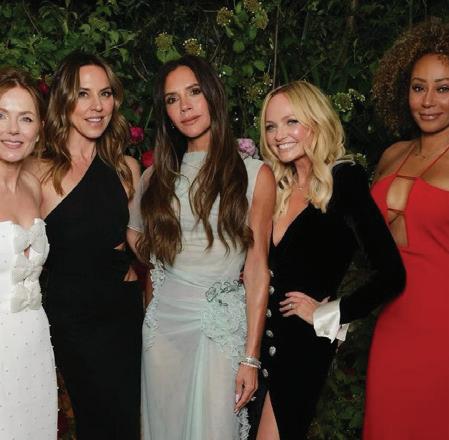
by name in “Clara Bow,” adding an interesting fourth wall break about the standards and ideas that people have surrounding the exterior women in entertainment put on to succeed. The tracks addressing Swift herself are a superb addition to the record, emphasizing the songwriter’s ability to weave her personal style into an array of unique topics discussed through song. As powerful as the album is lyrically, it can fall a bit flat sonically. As nice as the indie sound is for the project, it does not take long for the listener to grow jaded by the album’s frequent use of synth waves, soft piano chords and recycled beats. In all honesty, it’s a shame, as the album could have easily soared to new heights if the lyrics were coupled with diverse, more compelling backdrops behind them. With 31 tracks, it doesn’t help that much of the record
Even in her most ambitious endeavors of music, Swift manages to stay relatable, connecting with her listeners on hyper-specificities that even the consumers themselves didn’t know they related to. It’s hard to not be excited about where Swift will take her career in the subsequent months and years following this record, whether there’s another heartbreak in the pipeline or another hard series of conversations with the self in the future, one thing remains certain: Swift will always keep writing, and we will have the privilege of hearing what she has to say.

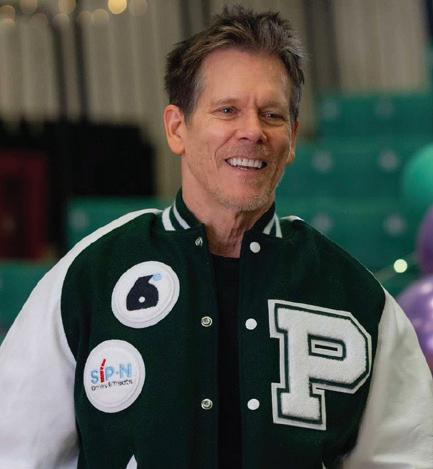
Week one of the famous music festival, Coachella, started with many iconic performances and collaborations, from Lana Del Rey sharing the stage with Billie Eilish to Will Smith getting on stage with J. Balvin. The first day of the festival took place on Friday, April 12, in Coachella Valley, California.
Coachella has indispituably become one of the biggest festival events in the last decade. From the audience’s fashion choices to the electric performers, the festival has become one of the most talked-about events on social media. This year’s headliners were Lana Del Rey, Tyler, the Creator and Doja Cat. The festival also hosted international artists like Peso Pluma, Le Sserafim, FLO, Young Miko and many more.
There were many surprise appearances at the festival, such as Reneé Rapp bringing Kesha on stage, Bizarrap with Shakira and No Doubt with Olivia Rodrigo. One of the collaborations that shocked the internet
‘BoyBy Lara Rydesky STAFF WRITER
The Hudson Guild Theater, an off-off-Broadway theater in New York City, was packed on March 8 as almost 100 guests awaited the world premiere of “Boy My Greatness,” a play that explores the lives and loves of the teenage boys who originally portrayed Shakespeare’s female characters.
The play follows four male players ranging from 12 to 22 years old, as well as a former player turned puritanical priest and an adult actor who takes the boys under his wing. Playwright and director Zoe SeneseGrossberg, who has studied and directed Shakespearean plays for many years, first conceived “Boy My Greatness” last summer. It was inspired by the lack of stories about this aspect of Shakespeare’s legacy.
“I think like anybody who does Shakespeare, this is always some-
the most was Lana Del Rey and Billie Eilish. The first song that the artists performed was “ocean eyes” by Eilish. Del Rey later expressed that this was her favorite song of Eilish’s, and that was the reason why they performed it. They also performed Del Rey’s 2012 hit “Video Games.”
Kesha joining Reneé Rapp’s set also made the rounds on social media.
against Sean Combs, known as P. Diddy.
On the last day of week one, Will Smith made a surprise appearance during J. Balvin’s

One moment that went viral was when both singers changed the lyrics from Kesha’s 2010 single “TiK ToK.”
The song originally started with the lyrics “Wake up in the morning feelin’ like P. Diddy,” but both performers changed it to “Wake up in the morning like f*** P. Diddy.” The lyric change comes after several accusations of sexual misconduct were made
set. While Balvin’s stage was filled with dancers dressed as aliens, Smith suddenly rose from underneath the stage to sing his 1997 single, “Men in Black.” The actor was also dressed like his character in the 1997 film of the same name. There were also downsides to some performances at the festival. During musician Grimes’
set, she had to stop her DJ session to express how she was having a “major technical error” with the tempo of her songs, as they were at double speed. She continued to say that she had “not practiced the math” because she is “not fast at math.”
The musician later took to social media to apologize for the incident. “I will not let such a thing happen again,” she said.
Over the years, Coachella has become a place where it’s common to see top celebrities and influencers enjoy the festival like any concertgoer would. However, one celebrity couple in particular shocked people with their presence the most. Taylor Swift and Travis Kelce attended the performances of Ice Spice,
Dom Dolla and Bleachers. Spice performed one of Swift’s songs, “Karma,” which features the rapper on the remix. The singer was seen dancing and vibing along with Kelce throughout Spice’s set. Moments after they were spotted at the festival, social media was flooded with videos and photos of the couple from various angles, in which they were seen dancing and enjoying the music.
Week one of Coachella gave many performances and moments to talk about – and there is no doubt that the week two performances will be no exception.
thing that I’ve wondered about and thought about these boys,”
Senese-Grossberg said.
While based on historical truths, “Boy My Greatness” relies heavily on what Senese-Grossberg calls “historical imagining,” which uses research and cultural understanding of the time to craft a fictional story that feels true.
“There’s not an insane amount out there,” she said, referring to existing research into the boy players. “But also, I wanted to have the freedom to write the story that I wanted to write.”
All under the looming threat of a plague, “Boy My Greatness” carefully yet poignantly examines gender identity and expression, child sexual assault and religious conservativism.
“I find it easier to write about the past than I do about the present, especially when I want to write about things that feel
tion and arts education company founded in 2013 by Leo Lion, who also portrayed the character John Sharpe in the play.

political,” Senese-Grossberg said. “You can do a lot of reflecting when you have the distance of time.”
The play was produced by The Firebird Project, a theater produc-
“It’s a great opportunity for us to both do what we do best,” Lion said, “which is to look at these very iconic, classical themes but in a really fresh and original way, which is a real treat.”
In addition to the play’s discussion of gender, most of the actors are gender non-conforming. This includes Eli Wassertzug, a nonbinary, transfeminine actor who played Henry “Hal” Fletcher, a boy player who struggles to imagine life as an adult man.
“From the moment I saw the audition sides, [Hal] was a pretty
special character for me to read,” Wassertzug said.
They consider it their project as an actor to dare directors and audiences to ask, “Why can’t I play this character that might not have been written for someone exactly like me?”
“But then, every so often, very rarely, there will be a character who is, in fact, written for someone like me, which is an amazing thing,” they said.
Social media has been a focal point of the marketing for “Boy My Greatness.” One promotional video reached over 112,000 views on TikTok, prompting viewers from around the country to seek an online version of the play. In turn, The Firebird Project has since made the production available on their Patreon for $10 subscribers after the show’s closing on March 16 and has plans to tour the show around the tri-state area this fall.
Benson Boone’s debut studio pop-rock album, titled “Fireworks & Rollerblades,” was released on Friday, April 5. The 21-year-old upstart has risen to prominence over the past year with notable songs such as “Ghost Town” and “In the Stars.” As his following continued to grow on platforms such as TikTok, his first album received more anticipation than he could’ve ever hoped for.
“Fireworks & Rollerbladers” has been a momentous success, with the album debuting at No. 6 on the Billboard 200. The lead single, “Beautiful Things,” was a powerful and electric song that reached No. 2 on the Billboard Hot 100, making it his highestcharting single to date.
Boone’s second single off the album, “Slow it Down,” also performed well in the charts, rising to No. 40 on the Billboard Hot 100. The track has a unique style, with a transition from a pianoled beginning to a crushing rock performance.
“Fireworks & Rollerblades”
By Matt Fisher SPECIAL TO THE CHRONICLE
is diverse in its style, and it has become clear that Boone has found his niche in the genre. His lyrics are consistent, and the entire album tells a well-polished story throughout the songs. Boone has quickly become a master of storytelling through his themes of
love, heartbreak, loss and excitement.
A highlight of the album is the fifth track, titled “Cry.” From the moment Boone teased this song on social media, it became an instant earworm. It starts as a slow ballad but then quickly
turns into an upbeat, freeflowing and powerful song with strong instrumentals that keep the track moving in the right direction.
“Drunk in My Mind” is another mustlisten track. This song displays Boone’s vocal range immensely and is a personal favorite of mine. The song details heartbreak and the imperfections or hesitation of love.
The melody is spot-on, raw and vulnerable in the best conceivable way.
Both “Friend” and “Forever and a Day” are two slow-moving, ballad-like numbers that diversify themselves from others of the
album. The lyrics on “Friend” are heartfelt and simplistic in their message, while the latter has its moments of high beats that then quickly switch back to the piano, making this a track that can take you on a journey of its own.
In all sincerity, there are virtually no skips on this record.
Other notables like “My Greatest Fear” and “Love of Mine” will be memorable, to say the least, after just one listen. “Fireworks & Rollerblades” is the perfect example of an artist honing their craft and putting out a body of work that is not only great but also leaves a lasting impression, which is massively important for Boone as a relatively undiscovered commodity in the music industry.
Do yourself a favor and carve out around 50 minutes to listen to this album. The opportunity to witness someone at his age grow into a mainstream star is special, and there is no chance of being disappointed by Boone’s craft.
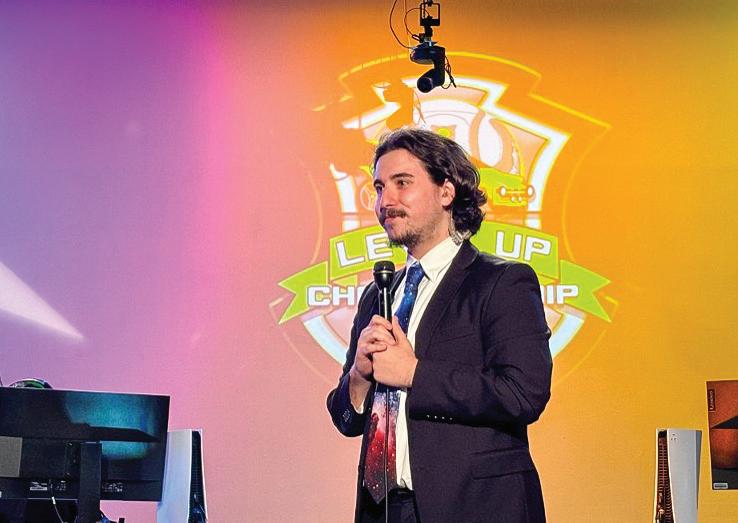
Hofstra University’s Lawrence Herbert School of Communication (LHSC) hosted its first-ever esports championship on Monday, April 15.
The competition, called “Level Up: Esports Championship,” was the RTVF 165 class senior capstone project for Tim Eletto, Justin Brown, Jason Spiller and Jo Ricci.
The event took place in Studio A of the LHSC and served as both a class project and a charity event. Proceeds from “Level Up” were donated to Child’s Play, which donates therapeutic games and technology to pediatric hospitals worldwide.
Brown said he felt Child’s Play was the perfect organization for the event to donate to because he believes they symbolize why video games are important.
“[Video games] bring people together so effectively and allow
for a space to escape from the troubles of the real world,” said Brown. “Offering that escape to children in hospitals, who may be scared or feel like everything is a lost cause, that’s powerful.”
The game selected for the competition was Rocket League, described by its developers as a “high-powered hybrid of arcade-style soccer and vehicular mayhem.”
Junior journalism major Antonio Schoenhardt hosted the event, and he said the production was one of the most “unique” and “entertaining” he’s been a part of.
The two teams facing off were Neon Phoenix and Dark Eclipse, led by alumnus Jason Valverde and Kieran Morrisey, respectively. Both teams were made up of Hofstra and non-Hofstra students. Ricci said finding players was one of the most challenging aspects of the production.
“I did everything I possibly could to recruit players, including printing out flyers, connect-
ing with local gaming leagues, emailing every college esports team I could find, and DMing people on Instagram, Discord and Twitter,” Ricci said. “We also had a very high-ranked player drop the week before our show, and I scrambled to replace them. I truly had never felt the weight lift off my shoulders faster than when I got the Discord message from Kieran [Morrisey] saying he would play for us.”
The matches garnered huge levels of excitement among fans in the crowd who expressed admiration for their respective teams.
“When there’s 100 Dark Eclipse fans, I’m gonna be one of them; if there’s 10 Dark Eclipse fans, I’m gonna be one of them; and if there are no Dark Eclipse fans, I’m dead,” said junior television production and studies major Noah Fields, parodying a popular meme format.
Students in the crowd also shared how they were excited to see something new come to Hofstra’s campus.
“I’m so excited; I’ve been at Hofstra for three years and never experienced anything like this,” said Melina Lazarou, a junior music business major.
Those who attended the championship in person were entered into a raffle to win one of three
PlayStation 5s donated by Sony. By the end of the night, Dark Eclipse emerged victorious, over $1,000 was raised for Child’s Play and three lucky winners went home with brand-new PlayStation 5s.
While the production proved to be a hefty load for its producers, they say their enjoyment from doing it made it all worthwhile.
“The most fun was seeing the entire thing come together,” Spiller said. “Even though it was a lot of stress and a lot of me running around between 30 different rooms, it was awesome to see these high-level Rocket League players play against each other.”
The views and opinions expressed in the Opinion section are those of the authors. They are not an endorsement of the views of the Chronicle or its staff. The Chronicle does not discriminate based on the opinions of the authors.
Disgruntled students often complain that there is no value in reading Shakespeare for a variety of reasons. One could argue that it’s not relevant to how people speak today because it’s written in Early Modern English, or that reading a play isn’t as worthwhile as watching one.
While Shakespeare’s works can be challenging, the idea that they aren’t useful as texts due to their different language style is shortsighted. If anything, much of the usefulness of reading Shakespeare’s plays is due to their antiquated language, especially in the context of English curriculums that typically emphasize texts that are more thematically than linguistically challenging.
With the close reading that Shakespeare’s language necessitates, these classic plays are
often the first time that high school students encounter a text that is hard to understand. Students are forced to use context clues while they read, which is a valuable skill. The experience of reading Shakespeare prepares students to read texts from different eras that have been translated or that use vocabulary and modes of speaking that they have not encountered.
Reading texts from different generations also helps students learn about how our language has changed over time and gives students a greater understanding and appreciation of Modern English. These works guide students to think critically about our current language conventions in a similar way to foreign language classes. Both teach students about rules in the English language that may be a subconscious practice or no longer used.
Shakespeare’s texts are
perfect for this, as they are some of the most impactful texts of the English language. Shakespeare’s works have standardized many spellings and grammatical rules, contributing greatly to the development of Modern English. According to the Shakespeare Birthplace Trust, Shakespeare’s works contain the first documented uses of over 1,700 words.
Shakespeare also changed many existing words by making them compound words and adding prefixes or suffixes, further cementing these types of words in the English language. Shakespeare is credited with the introduction of common words like bedroom, eyeball, worthless, downstairs and undress.
While students often take issue with the fact that Shakespeare plays are intended to be acted out rather than read, simply watching a Shakespeare play does not allow students to
properly analyze the language. The idea that you shouldn’t read parts of larger visual or auditory works such as plays, movies, television shows and songs discounts the textual content of these works.
Shakespeare’s plays are so dialogue heavy that they can still be understood and enjoyed as written works. Most of all, Shakespeare’s plays are just good and deserve to be read. They are universal stories that speak to the human condition, transcending the era in which they were conceived.
Con:By Craig Mannino
I am an English major. I have spent countless hours reading books and talking about them.
I am well-read, and I am a big fan of the classics – “The Catcher in the Rye,” “The Picture of Dorian Gray,” and even “Crime and Punishment.” That being said, my love of old stories only goes so far, and I cannot understate how awful it feels when I enter a classroom and have to learn about Shakespeare.
Shakespeare’s plays are just that: plays. They were meant to be performed or read out loud, and our teachers and professors know this. These texts lose so much when they are not performed. That is why you were forced to sit through hours of your peers’ stilted English-class performance of “Romeo and Juliet” in high school. Imagine watching a play where the actors do not want to act … it
sucks.
Plus, without a physical performance, many plays’ scenes become unintelligible. For instance, in Act 2, Scene 1 of “Othello,” Iago references a moment earlier in the scene where Cassio kisses the hand of Othello’s wife, Desdemona, but this act is not necessarily explicitly stated in the stage directions, so anyone with an alternate edition who has not consulted the SparkNotes beforehand has no clue what Iago is talking about.
Another barrier to the understanding of Shakespeare as a written text is the writing itself. We are all familiar with Shakespeare’s flowery language, which gives even the best readers a headache. Of course, some editions of Shakespeare’s plays include an abundance of handy footnotes which can somewhat help understanding, but I would argue that any text that requires a footnote to
Oftentimes when Shakespeare is taught, performance is still in mind. In my high school English classes, we supplemented our readings with viewings of performances and read lines out loud. While students are not necessarily expected to act out the plays, having students read lines is an opportunity for students to read aloud, which is an important skill that they are expected to do less and less as they go through their education.
Many of the negative experiences that students have with Shakespeare’s texts could be the fault of teachers. Teachers perhaps forced socially anxious students to embarrass themselves by acting or did not emphasize the etymological importance of Shakespeare’s plays.
When taught properly with a focus on the language and an appropriate amount of emphasis on performance, Shakespeare’s plays can be a valuable and entertaining unit in English classes that give students a break from a novelheavy curriculum. Teachers who do not make the most of these works are disrespecting both the works themselves and their students.
Tim Daly is a sophomore journalism major.
explain every third line is not an effective read. This, again, stresses the importance of performing these plays: a good actor can help an audience make sense of whatever 16th-century babble their character is saying.
I do not think that Shakespeare has no place in academia. There is a reason his plays are studied, and I think everyone should experience them – but a literature class is not necessarily the best place to do so.
Learning about Shakespeare’s plays in a performance setting, like a drama class, would significantly enhance the experience. With that being said, I do not think Shakespeare can’t be taught in a literature classroom. A class focused specifically on his work would be effective – more effective than shoehorning them in with everything else the class is reading. Not only does this give Shakespeare’s works room to
breathe, but it also opens up literature classrooms to teach the neglected works of other writers of Shakespeare’s day. However, learning Shakespeare in a literature class is not all bad. If the reference to “Othello” did not make it obvious, I recently finished studying that text in my literature class. Although I didn’t enjoy the experience – I am writing this article, after all – I cannot say I hated it. My literature professor did a good job in the face of our lack of enthusiasm, and when a professor brings energy, it is only right to give energy back. Unfortunately, many of my peers did not give that energy back – not that I blame them; Shakespeare is not a fun read. In my experience, that lack of energy can kill the lesson plan of an unprepared professor, which it so often does.
Being unprepared to teach Shakespeare isn’t the biggest
problem in the world, but there is something wrong with wasting students’ time. If a professor’s strengths lie in areas that are not Shakespeare, why waste students’ energy on a text that would only be half-taught?
The picture our literature classes paint of Shakespeare’s work is far more negative than it has to be. Studying Shakespeare in this setting is a slog, and I cannot say I’m looking forward to the next time I have to study one of his texts. As such, Shakespeare’s work should be studied in drama classes and classes geared specifically towards him. The insights of literature professors are often wasted on Shakespeare’s work, especially in a setting where many students, myself included, do not care.
Craig Mannino is a sophomore English and writing studies double major.
The views and opinions expressed in the Opinion section are those of the authors. They are not an endorsement of the views of the Chronicle or its staff. The Chronicle does not discriminate based on the opinions of the authors.
Across
3. Walton Goggins stars in this newly released show adapted from a hit video game.
7. Jewish unleavened bread
8. Poem with 5 lines and an AABBA rhyme scheme
10. Author of the “Percy Jackson” book series
11. Strong, flexible reflexive tissue that protects human bones and joints
12. Name of the lead rodent character in “Ratatouille”
14. U.S. state with the lowest population
Down
1. New York Knicks star guard
2. President of France since 2017
4. Salad consisting of basil, tomatoes and mozzarella cheese
5. Side of a right triangle opposite the right angle
6. Marshall Mathers' stage name, star of “8 Mile”
9. Official summons to appear before a court or an act of quoting
13. Yoga practitioner
The views and opinions expressed in the Opinion section are those of the authors. They are not an endorsement of the views of the Chronicle or its staff. The Chronicle does not discriminate based on the opinions of the authors.
close to midnight. During the 1970s and ‘80s, the U.S. and the Soviet Union were engaged in an incredibly tense nuclear arms race, and at the same time, nuclear weapons programs were popping up in other countries across the globe. In 1984, the clock got as close as three minutes to midnight. In 1985, there were over 60,000 nuclear warheads across the globe. However, something was critically different in those decades. A lot of everyday people were fighting back. Huge grassroots peace and anti-nuclear movements took off across the globe, especially among young people and on college campuses. In fact, in 1982, a crowd of 1 million people demonstrated in Central Park calling for nuclear
disarmament. Hundreds of thousands of people protested across Europe as well.
Though it took a few years, this global outrage yielded results. In 1987, a treaty agreement was signed by the U.S. and Soviet Union that limited the type and number of nuclear weapons the nations could possess. One treaty led to another, and by 1991, the world had turned the clock back to 17 minutes to midnight. By 2000, global nuclear warheads had been reduced by half to 33,000. By 2020, that number had decreased to 13,000. But since 2000, the clock has crept closer and closer to midnight as nuclear tensions escalate once again.
It is also important to consider that nuclear weapons are not just dangerous, but they are also
expensive. Americans contribute over $900 billion in taxes to the military budget annually. Nassau and Suffolk counties alone contribute $15 billion. In turn, much of that money goes toward creating, storing and upgrading nuclear weapons. Consider what $15 billion a year could do for Long Island. For example, it could create 1.2 million public housing units to solve the affordable housing crisis. It could also provide wind power to 50 million homes, or it could even put 430,000 students through four years of college for free.
Despite the ever-growing and ever-costly threat of nuclear weapons, only two in 10 Americans report wanting to get more involved in impacting U.S. nuclear policy. While anti-nuclear groups certainly still exist and work tirelessly towards a
non-nuclear world, they do not garner even a fraction of the momentum they had in the ‘70s and ‘80s.
If we want our kids to live in a peaceful world (really in any world at all), it’s not that we should be doing more to fight for peace, it’s that we need to do more. I do not think I need to tell you what the world would look like in the event of a nuclear war. Instead, I want you to imagine a world where the money spent on nuclear weapons ($157,000 a minute globally) was instead diverted to social needs. We are paying into a system that makes the world more dangerous, and we should all be worried about it.
Americans and young people must take the first steps towards a more peaceful world. When young people protest, the media
is more inclined to cover it and elected officials are more inclined to listen. It is in their interest to capture lifelong viewers and voters. Use that to your advantage, and wage peace for the sake of having a world to grow up in. It works.
Evelyn Quail is a sophomore political science and public policy and public service double major. You can find her on Instagram @evelynquail.
Content warning:
Mention of sexual assault.
The topic of abortion has always been a hot-button issue in the U.S., and after the Supreme Court overturned Roe v. Wade in 2022, the button has gotten even hotter. But even with the overturning of this case, it is still important that people have the right to choose for themselves whether or not to have an abortion.
There are plenty of reasons people may choose to have an abortion. They may not be able to afford to care for a child or health concerns pose a risk to the pregnant person or child, and they may have other obligations, such as university or work that take precedent. Additionally, they may just not want to have a child.
As common as giving birth is, according to both Forbes and Investopedia, the average cost of giving birth in a hospital
is about $18,865. The average out-of-pocket cost, with insurance, is around $3,000. Planned Parenthood states that the average abortion cost depends on the trimester, but the lowest price is $600 and highest is $2,000. According to the CDC, most abortions take place in the first trimester, which is also when the cost of an abortion is at its lowest. If the person cannot afford to give birth, they might be able to afford an abortion, in which case it is better to abort rather than have a child they cannot financially care for.
Abortion is also, in many cases, a medical necessity. While uncommon, an ectopic pregnancy may cause serious health risks that can result in death if the pregnancy is not terminated. Medical technology has made pregnancies easier for many people, but it still isn’t perfect. According to the CDC, the maternal mortality rate in 2021 was 32.9% and ended in the death of the parent.
If a fetus is not viable but
will not cause any harm to the person carrying it, some may still opt to carry the fetus to term, even if they know it will not make it. That’s completely within their rights to do so. In the same vein, being pregnant takes a large toll on the body, and some people may not want to go through that; especially if they know that the fetus won’t survive. It would be unfair to force the person in the first scenario, who wants to carry their fetus, to have an abortion in the same way that it would be unfair to prevent someone who doesn’t want to carry their fetus from having an abortion.
Many people choose not to have an abortion because they feel it is against their religion, and that’s fine – it’s their choice. The argument that abortion should be banned nationwide due to religious reasoning, however, makes key points about both America and religion.
Firstly, the constitution states that America cannot
have national religion nor may it prohibit the free exercise thereof. According to a study done by the Pew Research Center, six out of 10 Americans believe America should not be a Christian nation. Not everyone follows the same religion, and not every religion is against abortion. Secondly, just because your religion says you shouldn’t have an abortion doesn’t mean someone else shouldn’t. The rules of your religion are for you and others who follow it, not for those who don’t.
Another common argument against abortion is that the fetus has a life. Well, so does the parent. The parent already has their own life and obligations to consider, and in some cases where a parent is unable to terminate a pregnancy, their own life or safety could be in danger.
It isn’t as simple as telling someone not to have sex. That’s an unfair demand, and even if multiple contraception steps
are taken, a pregnancy can still occur. Not to mention, factors such as rape can cause a person to become pregnant against their will.
Most importantly, banning legal abortion won’t stop abortion. It will just result in people seeking out unsafe treatment options. Researchers at the University of Colorado Boulder calculated a 24% increase in maternal mortality if there were to be a nationwide abortion ban.
Whether against abortions or not, the decision isn’t yours to make for the entire nation. The idea of choice in itself is giving people the right to have an abortion if they want, and if they don’t believe in it, or don’t want to, then they don’t have to.
Lee Cusack is a freshman audio/radio production and studies major.

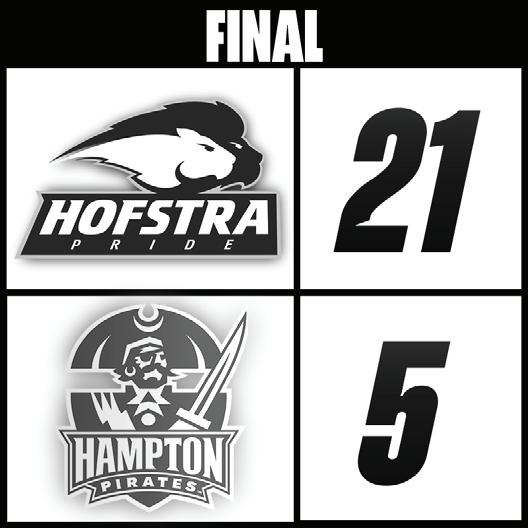
The Hofstra University men’s lacrosse team got themselves back in the win column by defeating the Hampton University Pirates 21-5 on Saturday, April 20. Hofstra now sits at 2-4 in Coastal Athletic Association (CAA) play and is tied with Stony Brook University, Drexel University and Monmouth University. This win is just the Pride’s second since Feb. 17, when the Pride beat Siena College. Before the game, Hofstra had their senior day festivities to
honor 10 graduating players. On the field, Hofstra emptied their bench, getting 33 different players into the game, including all 10 seniors. Gerard Kane led the attack with four goals and two assists in just his second game of the season. Anthony Mollica, John Madsen and Justin Sykes all tallied hat tricks.
“Today’s game was bittersweet,” said Hofstra head coach Seth Tierney. “Senior day means putting an emphasis on what could be the end of 10 guys’ time with the program. It’ll be hard to see these guys go.”
Hofstra jumped Hampton early with a goal from Sykes less than three minutes into the game.
Everything continued to go Hofstra’s way as the Pride put up a nine spot in the first quarter with three goals from Sykes and one each from Madsen, Sam Lutfi, Griffin Turner, Vincent McDermott and Trey Parkes.
The Pride looked to be in a different class than Hampton
with Chase Patterson winning eight of nine draws and the team outshooting Hampton 15-2.
With Hofstra pulling away after the first, Tierney made some changes to the lineup. The second midfield line of McDermott, Parkes and Trevor Natalie played the majority of the game after the first quarter.
Hofstra continued to pour on the goals in the second quarter when Madsen completed the hat trick to put the Pride up by 10 after 30 minutes.
Starting in the second half, all of the Pride’s starters were taken out of the game. Every senior played in the game and made an impact in their own way.
On offense, Tierney inserted younger players who have had limited time all year. On defense, senior players came off the bench.
The Pride were an excellent 19-22 on clears in large part thanks to senior defender John Recher. He filled Blake Cooling’s usual role and provided support to Hofstra in transition and was rewarded
with two assists. He had just two career points entering the day.
Senior defenders Diego Zimmerman and Grayson Feick in conjunction with senior goalie Max May held Hampton to just two goals in the second half.
Kane and Mollica combined for seven goals to push the Pride over the 20-goal mark for just the second time this season.
Kane, a 19-goal man last year, registered his first of the season
while Mollica netted his first collegiate hat trick. Up next for the Pride is Long Island rival Stony Brook. Currently, four teams sit at 2-4 in CAA play and are all vying for the last spot in the CAA tournament. Hofstra must beat Stony Brook and needs Monmouth to beat Drexel to make the tournament.
Game time for the Pride and Seawolves from LaValle Stadium on Saturday, April 27, is at noon.
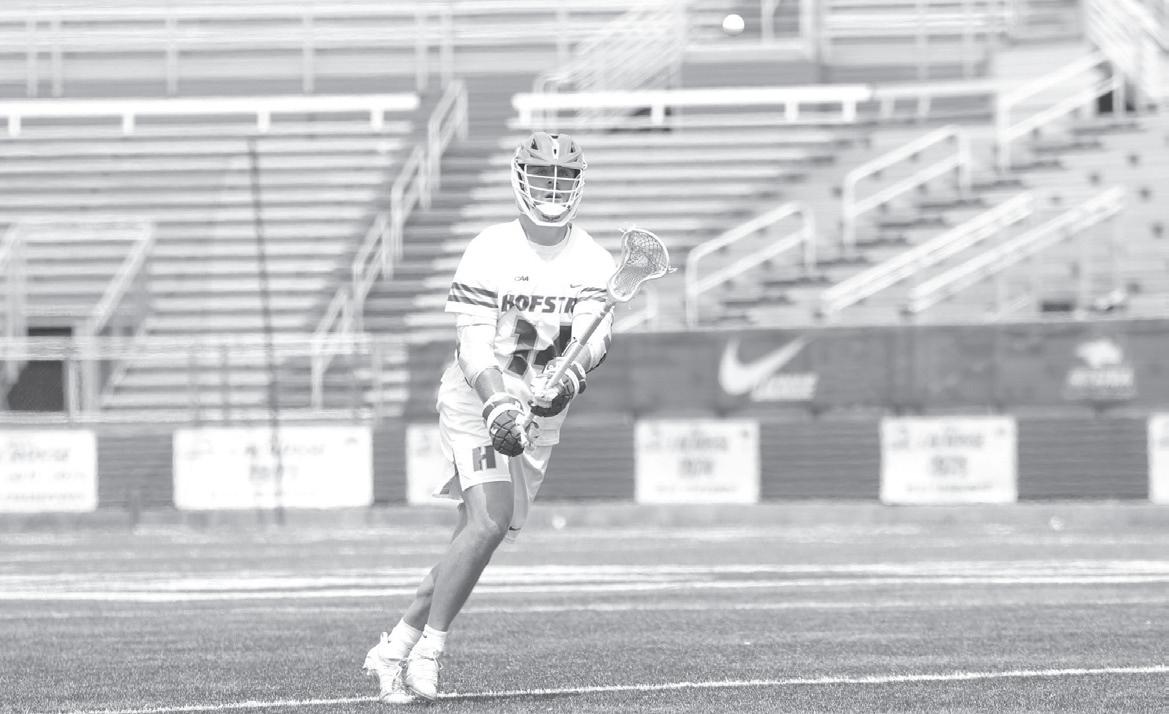
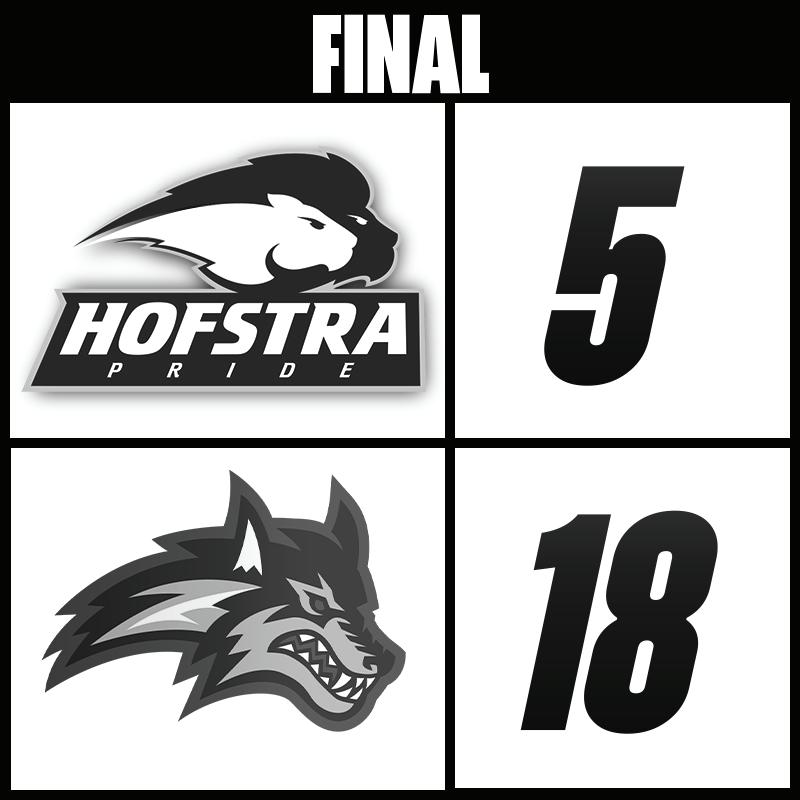
The Hofstra University women’s lacrosse team was demolished in the Battle of Long Island by the Stony Brook University Seawolves by a score of 18-5.
The win gave Stony Brook their 11th straight regular season conference championship across their days in the America East conference and into the Coastal Athletic Association. The Pride now sit at 9-6 overall and 6-1 in CAA play, putting them in third place in
By Eric Leaf STAFF WRITERthe conference. The Seawolves finished their conference slate with a perfect record for the ninth consecutive season, wrapping up at 8-0 with a 14-2 overall record.
Stony Brook had command of this game from the opening draw, quickly scoring the first four goals of the game and never looking back, leading by as much as 14 and never trailing.
Despite giving up 18 goals, Luchianna Cardello had a solid performance, saving 10 Stony Brook shots, including an impressive second quarter where she stopped seven out of 10 shots on goal, many of which were at point-blank range.
Kerry Walser had another multi-goal game, putting two shots behind Stony Brook goalkeepers Emily Manning and Aaliyah Jones. Walser also added an assist to secure her ninth three-point game of the season, and her third in a row.
Lauren Coletti also had a
solid showing, scoring twice for her fourth two-goal game this season. Taylor Mennella added a goal and an assist to round out the Hofstra goal scorers.
Stony Brook entered this game with the fifth highestranked offense in the country with 16.3 goals per game. They had no trouble scoring against the Pride’s defense, making 15 goals in the first three quarters before pulling their starters in the fourth.
Ellie Masera ended the game as the second-leading scorer in the country, scoring five goals and two assists to bring her season total to 88 points. After a slightly messy first goal, Masera controlled the game offensively and at the draw circle, winning nine draws.
Stony Brook’s Alex Finn entered the game ninth in the country in assists with 46 to go along with 23 goals. Finn tied Masera for the game lead

in points with seven, scoring four goals and assisting on three. On two of her goals, Finn faked out Cardello at point-blank range before easily scoring.
Kailyn Hart scored five times on Sunday, upping her season goal total to 57. The Stony Brook big three of Masera, Finn and Hart had a combined 19 points. Hofstra wrapped up their
regular season on Saturday, April 21, against second-place Drexel University. Game time was noon at the James M. Shuart Stadium.
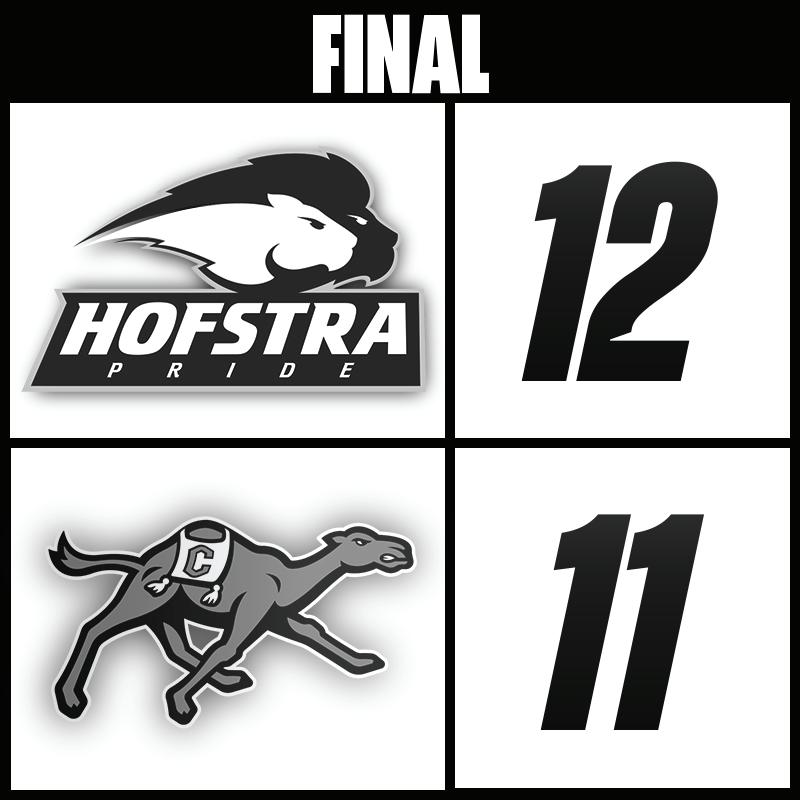
In a thrilling finish, the Hofstra University baseball team secured a dramatic 12-11 victory over Campbell University on Sunday, April 21, with a walk-off hit in extra innings. This crucial win marks their first series victory in Coastal Athletic Association (CAA) play and increases the Pride’s record to 5-10. Hofstra was able to get out of the top of the 10th inning with only one conceded run, once again putting all the pressure on the offense to win this game. This one-run lead did not scare the offense as Dylan Palmer smacked a double
down the right field line, tying the game in the bottom of the 10th. Santino Rosso flew out to shallow center field and Palmer’s speed propelled him home, sealing the walk-off victory and completing the remarkable five-run comeback.
“The morale is high. I think we needed this,” said Hofstra head coach Frank Catalanotto. “The guys really wanted to play hard and win this series. We needed this big time if we’re gonna have a chance to sneak into the playoffs, so the morale is really high right now.”
Right from the start, the Pride’s starting pitcher Tanner Sanderoff opened with three up and three down in the first inning. His stellar pitching would continue in the second inning, not giving up a hit. Along with the strong start from Sanderoff, the bats came out swinging, scoring two early runs in the first inning.
Unfortunately for Hofstra, Sanderoff found himself in a grueling third inning. A huge issue for the Pride all season
has been pitching; on average, Hofstra gives up 7.7 runs per game. This issue continued with Sanderoff surrendering six runs in the third. Despite allowing only three hits in the inning, a three-run homer by Reed Stallman put Campbell up 6-2.
“It’s funny, the first two innings [Sanderoff] looked unhittable,” Catalanotto said. “He was filling up the strike zone, his breaking ball was good and his fastball looked like it had some ride on it. And then it just seemed like he kinda hit a roadblock and couldn’t locate his pitches … to me, it looked like he might have been a little tired.”
The Pride’s pitching struggles persisted as senior pitcher Steven Kaenzig came in during the fourth inning and had a quick outing for Hofstra. He was only able to pitch twothirds of the inning, giving up three hits and three runs and leaving the Pride in a 9-3 hole. Despite the pitching staff giving up three runs in the fourth, Hofstra’s bats would
come alive and start chipping away at the lead, salvaging some of the fourth. Matt Pelcher ignited a scoring flurry for the Pride with a single to left field, driving Joseph Mennella to home. Hofstra added another run when Palmer delivered a single to left field.
The sixth inning was where the heroic comeback was born. Although Hofstra gave up another run in the inning before, it didn’t faze the offense. With runners on first and second, the Pride had a golden opportunity to make a significant dent in the five-run deficit. Rosso rose to the occasion and crushed a three-run homer, slashing the lead to just two runs.
Entering the bottom of the ninth inning, Hofstra’s pitching staff effectively kept Campbell in check, allowing no runs and giving the offense a chance to pull off their improbable comeback. Steve Harrington took his turn at the plate and launched his 18th homer of the year out of the ballpark, narrowing the Pride’s deficit to just one run. With
the game hanging in the balance, Will Kennedy delivered a clutch base hit to left field, allowing the tying run to score and extending the game into extra innings.
This was Hofstra’s first CAA series win all season long, keeping the Pride’s playoff hopes alive.
The Pride will take on the New Jersey Institute of Technology (NJIT) in Newark, New Jersey, on Tuesday, April 23, at 7 p.m.
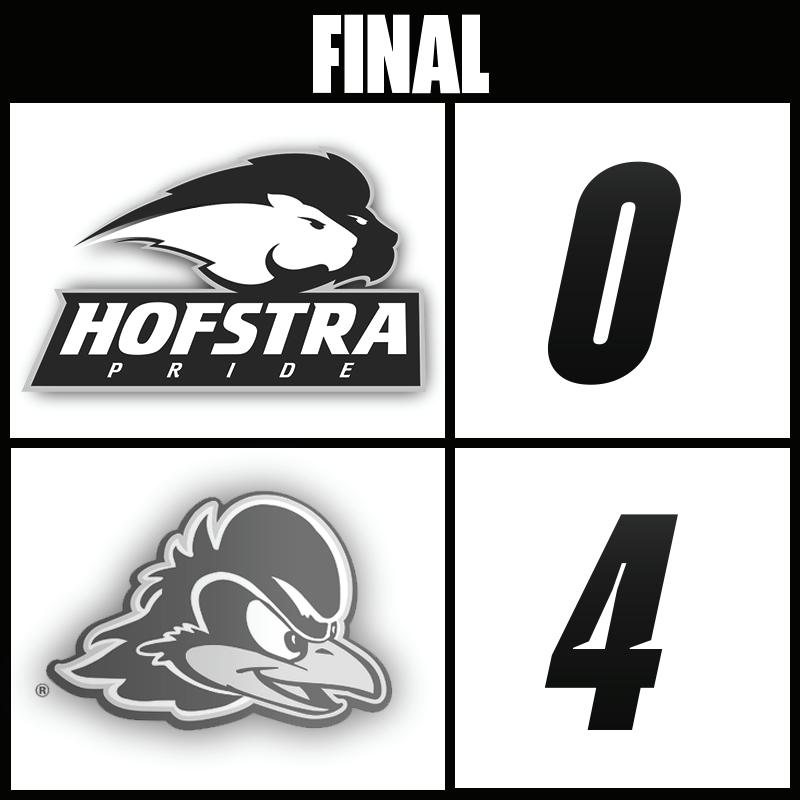
The Hofstra University softball team dropped the final game of their three-game series against the University of Delaware Fightin’ Blue Hens 4-0 on Sunday, April 21.
The Pride fell to 15-23 overall and 12-9 in the Coastal Athletic Association (CAA). The Fightin’ Blue Hens improved to 33-9 overall and 18-3 in the CAA, increasing their conference lead by two games over second-place Campbell University.
Up 1-0 in the bottom of the fifth, Delaware tacked on three insurance runs to pad their lead. With one out in the inning, Lillie Scheivert singled down the left-field line. Morgan Hess helped herself out as she doubled down the left-field line to set up runners on second and third with one out for Katie Scheivert.
Katie Scheivert smoked a baseclearing double down the left-field line to increase the team’s lead to 3-0. Julia Boyet
knocked in Katie Scheivert on an RBI single, as the Blue Hens took a commanding 4-0 lead.
After a no-hitter for game two, Hofstra recorded just three hits in game three. The Pride had one hit heading into the sixth inning and it was a leadoff double off the bat of Becca Vaillancourt to begin the game. Kayla Wilson singled in the same inning and then Nicole Cancel singled in the seventh. Three hits over the last 14 innings for Hofstra.
Julia Apsel entered the circle for the 12th-straight CAA game. Apsel’s day ended after five innings of work where she surrendered four runs, three of which were earned on six hits. She also struck out three batters in the loss as she fell to 13-10 on the season. Annabella Pisapia relieved Apsel in the sixth, tossing one no-hit inning and allowing one walk.
Hess pitched for the second consecutive game for Delaware and three-hit the Pride after tossing the program’s 17th no-hitter the day before.
Hess tossed a shutout in this one as she fanned four.
Hofstra’s last two CAA series are against Hampton University, who are 6-15 in the CAA, and the College of Charleston, who sit at 3-18 in conference. Three spots remain as Delaware and Campbell both clinched CAA tournament berths on Saturday and Stony Brook University clinched on Sunday. The Pride is in sixth place, one game behind Elon
University, which is 13-8, and UNC-Wilmington, who is 14-7 in the standings respectively. Drexel University is right behind Hofstra in seventh place with an 8-12 record.
The Pride is back in action for some midweek non-conference play against Fordham University on Wednesday, April 24. The first pitch is set for 4 p.m. at Bill Edwards Stadium.

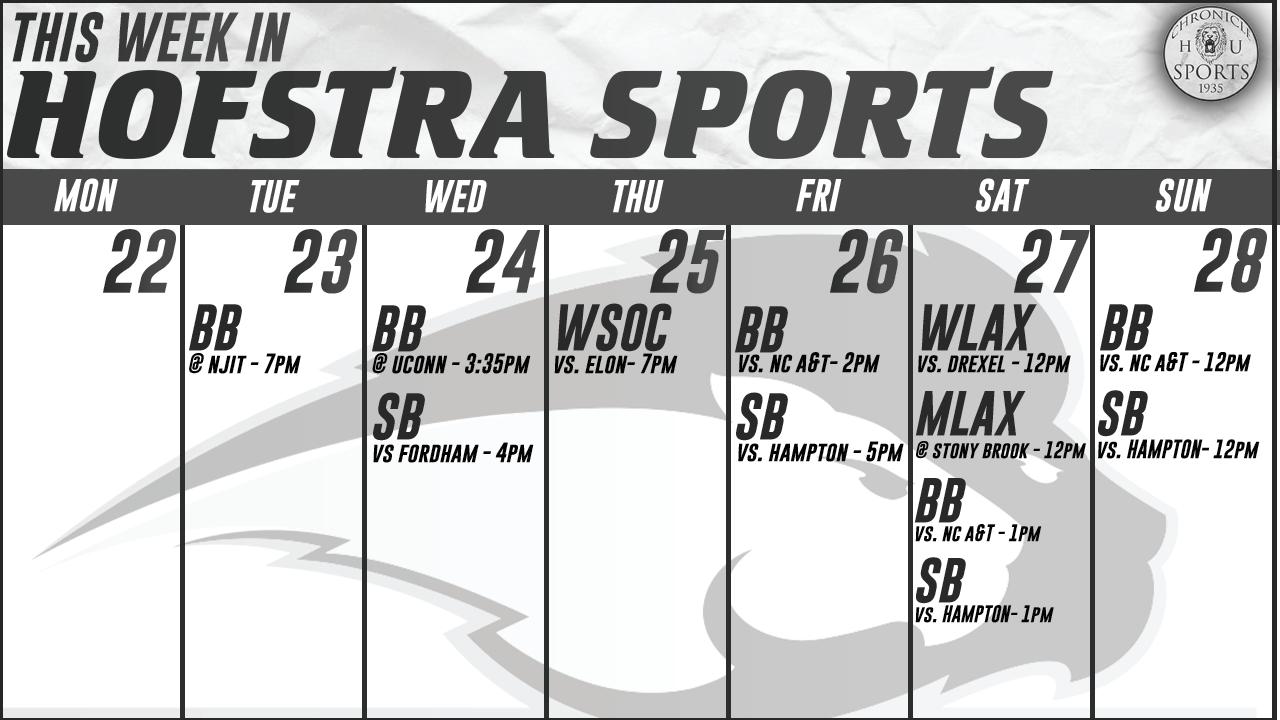
After being a reliable midfielder for Hofstra for the last half-decade, men’s lacrosse’s Justin Sykes is ready to move on.
In his Hofstra career, Sykes has played multiple crucial roles in the Pride’s most important games and scored clutch goals in the biggest moments. He had the game-winning goal in the 2022 season opener against Merrimack College where Hofstra won 8-7.
What turned into an excellent collegiate career started in doubt. The Oakville, Ontario, native wasn’t always so sure he would like being at Hofstra.
“My first fall here I was very homesick, and I still am to some extent,” Sykes said. “Now I live in a house with my best friends. The environment in the locker room makes Hofstra feel like home. I’m not sad about being eight hours away.”
Family was an important selling point to Sykes. His earliest lacrosse memories are of him playing in the driveway with his older brothers, so he knew it would take a lot for him to leave home. But Hofstra head coach Seth Tierney was determined to get Sykes on the squad.
Due to the NCAA’s recruiting rule changes, Sykes could not receive scholarship offers until Sept. 1, 2022, in his junior year, and the familial aspect of Hofstra became more prominent.
“I remember that day so clearly,” Sykes said. “I was at
a Zac Brown Band concert, and as soon as the clock struck midnight, I got a call from Coach Tierney. It showed me how much he cared about me.
After that call, my parents and I visited campus and saw all the amazing facilities. It was hard to turn down.”
Sykes was one of Tierney’s top recruits in the class of 2019. Once joining the program, Tierney discovered there was much more to Sykes than just his play on the field.
“He’s a real quiet guy,” Tierney said. “But he leads by example, and he’ll always be an emotional balance for the team.”
Tierney praised Sykes stability and consistency. He is a team-first guy who is willing
Goals have come in bunches throughout Sykes’ career. This season, there has yet to be a game where Sykes was held off the scoresheet.
He’s reached new career highs this season in goals and points, 22 and 27, respectively, something that wouldn’t have been possible if he hadn’t decided to take his fifthyear option. For Sykes, it came down to a feeling of unfinished business at Hofstra.
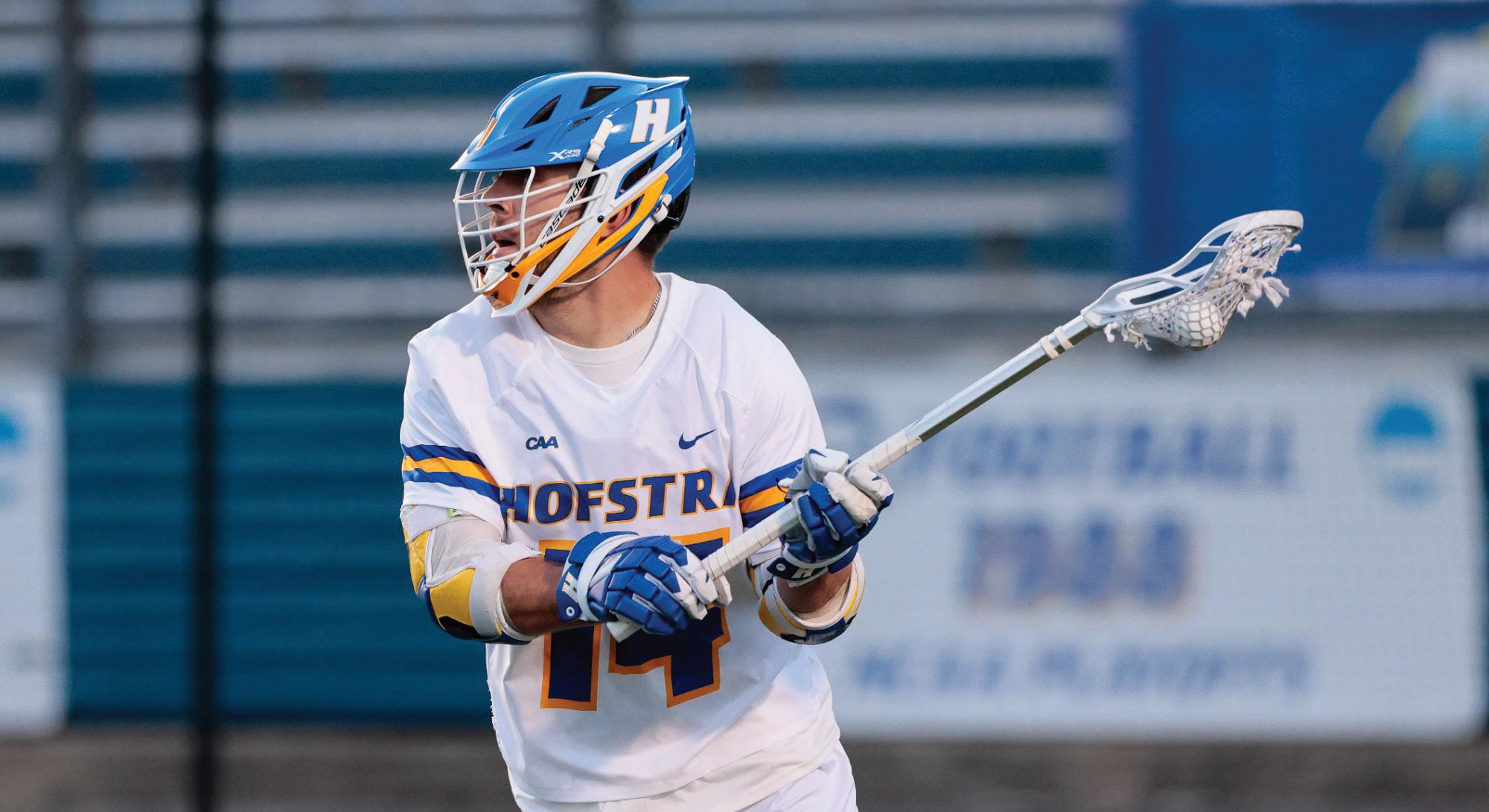
seeing from Sykes from early on, especially as a guy who scored two points per game as a freshman.
“I wasn’t happy with the way
“When playing offense, you
“His highs are never too high and his lows are never too low... When he scores a big goal, his teammates are more excited than he is. He’s very even-keeled.”
to blend in with others to get the best results for the program.
“His highs are never too high and his lows are never too low,”
Tierney said. “Justin no longer gets upset when he misses a ball he should’ve put away. When he scores a big goal, his teammates are more excited than he is. He’s very even-keeled.”
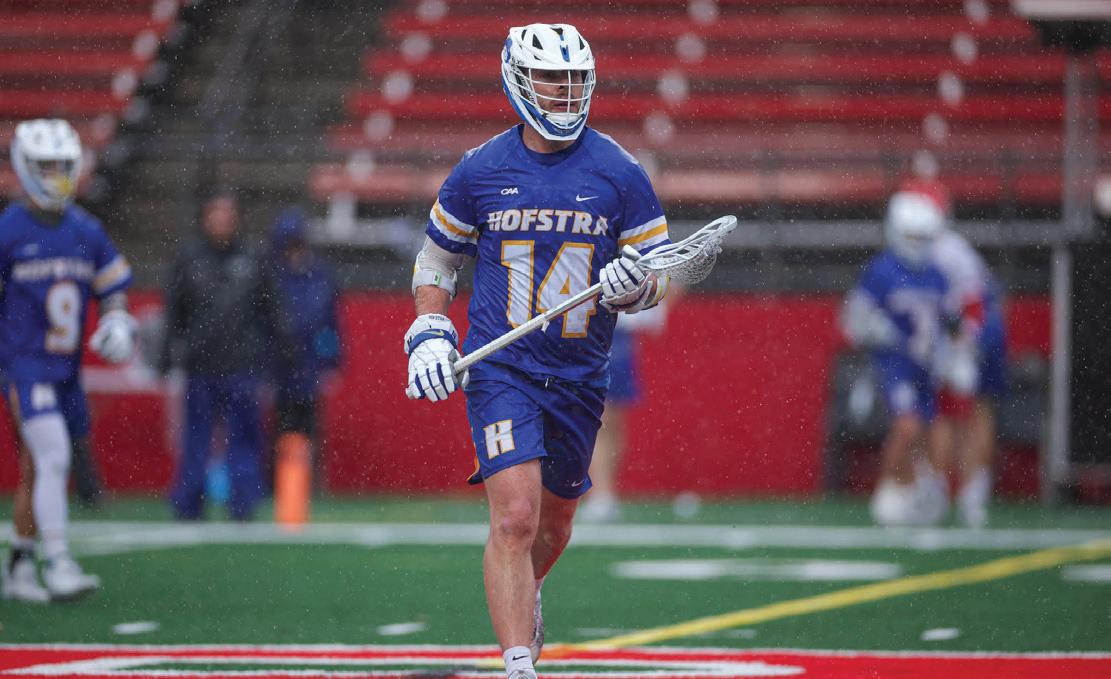
things ended. I was coming off shoulder surgery and had to sit out most of the fall,” Sykes said. “I wanted that no-regrets mentality. This year hasn’t gone the way we wanted it to so far. Right now, we’re just pushing in the pile and working to extend the season.”
This season, Sykes’ approach to the game has changed from his years prior. He is more relaxed and trusting with the rest of the Pride’s top midfield unit, including the likes of Rory Jones and Griffin Turner. He credits his increased production to the work of his teammates.
“Coach [Michael] Gongas tells me to let the game come to me. I feel like the guys I’m playing with are just finding me open,” Sykes said. “The chemistry we have on the field is top-notch. I enjoy playing with the guys.”
Tierney has liked what he’s
need six different instruments in your band,” Tierney said. “He’s the quietest of those instruments, but you’re gonna need to get that consistent sound from him.”
It may come as a surprise to know that Sykes has had two shoulder surgeries during the offseason. He took the injuries in stride, putting together the big plays and the leadership to turn Hofstra into a force. He wanted to make his last year count by playing his best lacrosse for the team, and himself.
“It’s been a lot of ups and downs this year. Morale has been a little low sometimes,” Sykes said. “I’ve kept that ‘next man up’ mentality just like you have on the field. We just gotta move on. Win or lose on Saturday, come ready to work on Monday.”
A stand-out point for Sykes in the past two years has been
a relationship with fellow Oakville native Matt Vilas, as the short-stick defensive midfielder grew up in the same hometown as Sykes playing box lacrosse.
“Matt’s two years younger than me, the same age gap between me and my brother,” Sykes said. “As a hometown guy, he knows what I’m going through. He and I are very close. It’s nice to have someone like that here.
With the end of his collegiate career approaching, lacrosse will very much still be a part of Sykes’ future. Once this season wraps, Sykes’ next season will be in Fort Worth, Texas, with Panther City Lacrosse Club in the National Lacrosse League (NLL) as part of his second round, where he will play box lacrosse.
“I thought there’d be a chance to play professional lacrosse,” Sykes said. “I put in so much work as a kid and had the chance to be coached by people that played professionally. I feel like the hard work is starting to pay off.”
Before that, Sykes still has two more regular-season games for the Pride, including his senior day game which will honor all the accomplishments of his storied career at Hofstra.
The Hofstra University baseball team entered this season hoping to alleviate their minds of 2023 and start fresh in 2024. Big pitching changes were made throughout the offseason, but the lineup has mostly stayed the same. However, when you look at the team, one player stands out from the rest in every way imaginable.
Standing at 6 foot, 6 inches and 260 pounds, Alex McCoy is the power hitter Hofstra never knew they needed. Now that he’s here, the impact he’s had on this team is memorable.
McCoy came in as one of the big offseason acquisitions for the Pride, and he made his presence known before the season even started. In a fall league scrimmage in October, during his first game and second at-bat in a Hofstra uniform, McCoy clobbered a home run over the tall left-field wall at University Field.
McCoy walked out onto the diamond ready to play, and head coach Frank Catalanotto knew what kind of player he had and how he was going to use him.
“He’s a dynamic player,” Catalanotto said. “He’s got incredible speed and he’s got great power.”
McCoy played last season with the University of Maryland Eastern Shore as a junior. He provided a stable bat for the Hawks, starting in 52 games at third and first base. From the batter’s box, McCoy slugged a .253 average with 24 RBIs,
seven doubles and three home runs in his tenure. His time in the Northeast Conference (NEC) was short-lived as McCoy wanted a different challenge.
“Coming from a lower D1 school to a higher one is a big change, going from Maryland to New York,” McCoy said. “The coaches here are great. They take time with us and make sure we’re prepared for every game … I can learn from around me to try and develop my game and make me a better player. Overall, it was a great decision to come to this school.”
As he entered the Coastal Athletic Association (CAA), McCoy understood that this D1 team would be different, and he couldn’t wait for Catalanotto to
and they’re building me up into a great player.”
With an already-stacked lineup, all the Pride needed was to plug McCoy in the clean-up spot, demonstrating that one person can change the trajectory of the team.
McCoy has excelled during the 2024 season, batting fourth in the lineup for the Pride. He plays mostly in the designated hitter position but sometimes manages the outfield over in center. He has slugged .303 in 38 games played so far this season. In 155 at-bats, McCoy has compiled 47 hits, 10 doubles, 33 RBIs and nine home runs. Even with his recent success, McCoy still feels the pressure of being so high in the
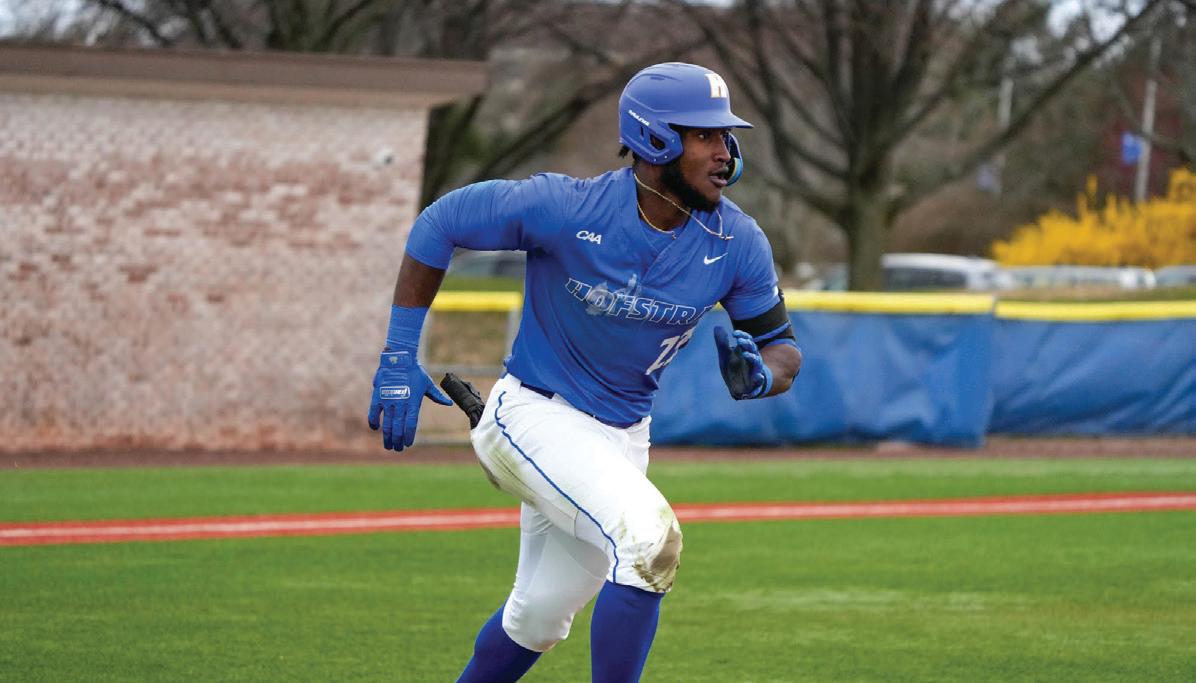
but he’s learning the game a lot … [He] told me he hasn’t been taught the game the way he’s being taught right now, so I expect him to be a professional player when the year is over, and I think he’s going to
“The pressure is there, but if I stay true to my game the way they teach me, everything will play out the way it is supposed to be.”
work with him throughout the season.
“For a month and a half, I felt that I really couldn’t hit a baseball,” McCoy said. “But I stuck with their process, and after a while, I’m hitting balls over the fence and into the gap. I put my career into their hands,
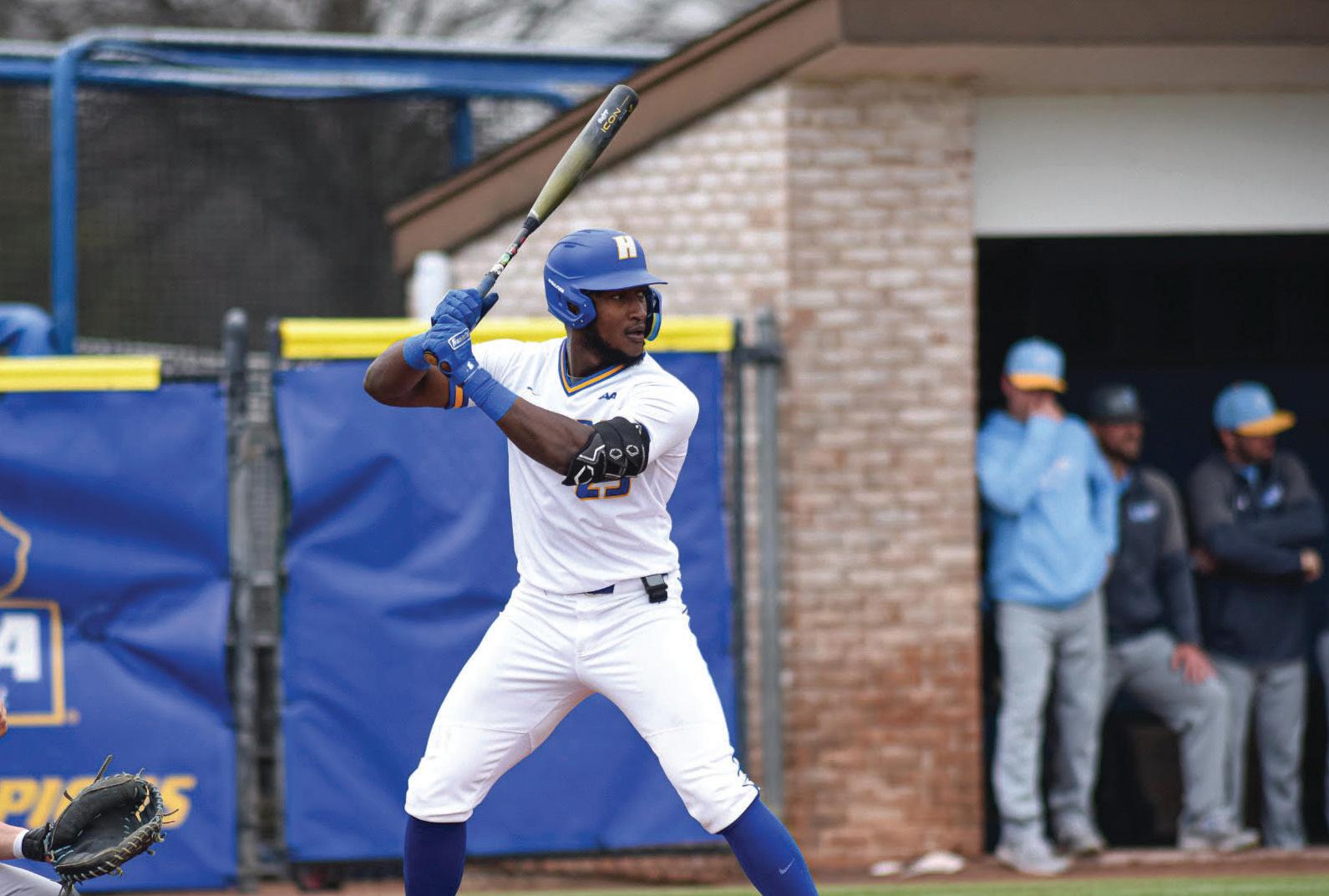
lineup.
“I do a little bit,” McCoy said. “In baseball, the more pressure you put on yourself, the harder you make it, so I try to go out there and put the bat on the ball. So, the pressure is there, but if I stay true to my game the way they teach me, everything will play out the way it is supposed to be.”
Even with his recent success at Hofstra, there are some areas McCoy is still working on.
In a recent game against the St. John’s University Red Storm, in a bases-loaded situation, McCoy struck out on three straight breaking balls to end the inning and a chance to take the lead. After the game, Catalanotto expressed how there are holes in the game that McCoy is still grasping to learn.
“For McCoy, he’s a work in progress,” Catalanotto said. “He’s going to be a good player,
improve the mental part of the game.”
As a player, McCoy also understands that there are always different parts of the game that need to be studied. In the long run, those little moments between Catalanotto and his teammates will push McCoy to bigger and better heights.
Off the playing field, McCoy relayed how he jelled with his new teammates since the end of last year and how he has loved the connections he’s made thus far.
“We’re all together all the time,” McCoy said. “There’s never a time where I can’t go to the cafe, and I’ll see six dudes together. We’re all together all the time, so there’s never a doubt when baseball is around.”
One player McCoy feels the closest with since his departure from the NEC into the CAA is
catcher Mike Dorcean. McCoy and Dorcean played in the same conference last season and that connection helped him ease into new life in Hempstead.
“There’s always that guy that you’re always seen with,” McCoy said. “And that’s Mike Dorcean. We played in the same conference last year. I never knew who he was, and I heard he committed here … We kind of just became close, so that’s my guy. We have class together and we talk most often.”
As the season has passed the midpoint, the Pride currently holds a 14-25 record while trailing behind CAA opponents at 5-10. As Hofstra tries to maintain a grip in the conference, McCoy will aim to be one of the many players to try to win the CAA title with his newfound home in Hempstead.
“I feel like this team is a very tight-knit team,” Catalanotto said. “More so than last year or the year before. They all like being together, and they’ve got each other’s backs. It doesn’t seem like there are any cliques. They’re all on the same page and they’re always hanging out, so it does feel a little bit different. It’s a team that cares for each other.”
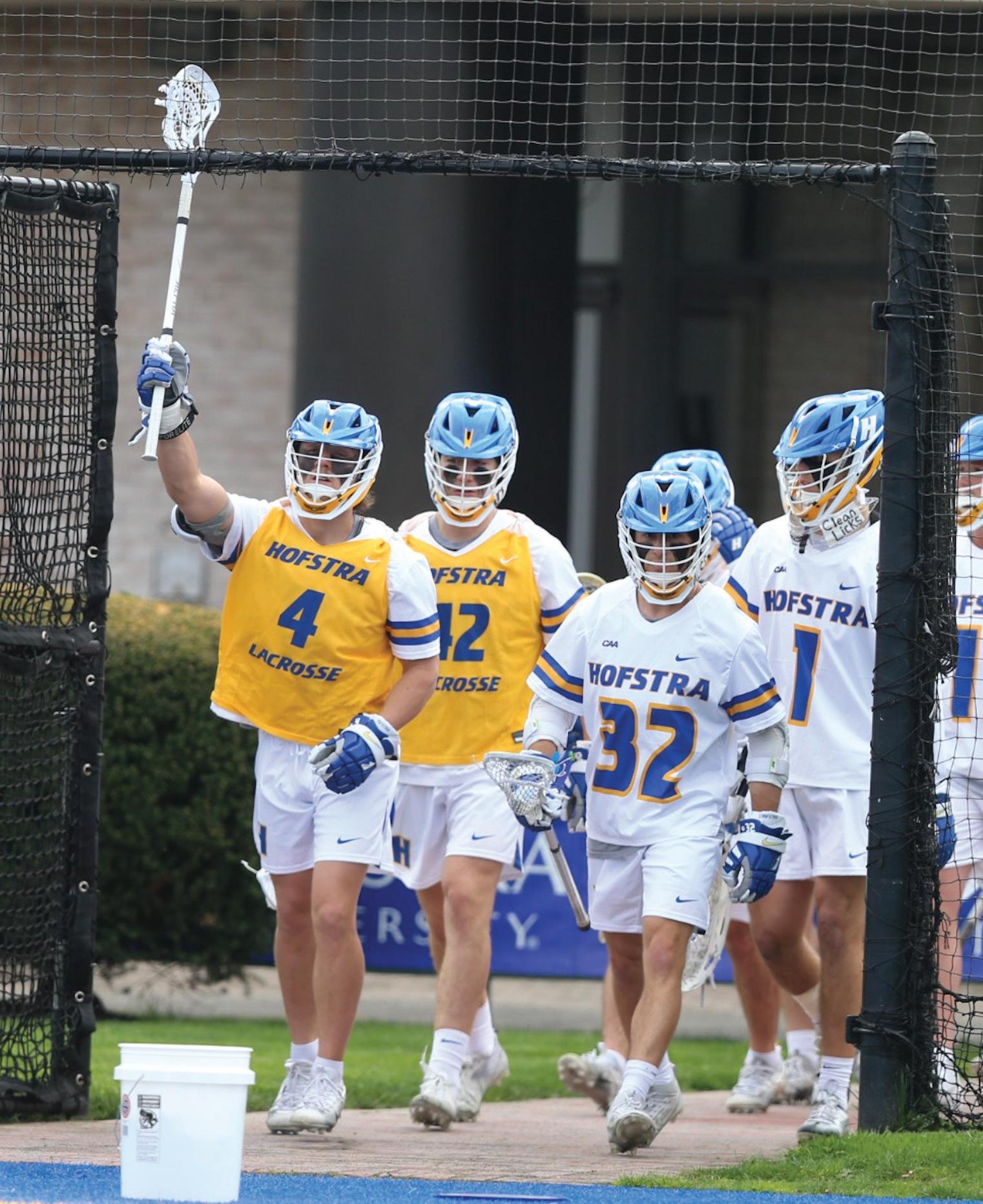
Hofstra prepares for Stony Brook in Battle of Long Island to clinch berth in CAA championships.