THE HOFSTRA CHRONICLE
KEEPING THE HOFSTRA COMMUNITY INFORMED SINCE 1935
Supreme Court strikes down 40 years of affirmative action
TUESDAY
Septmeber 12, 2023
By Moriah Sukhlal NEWS EDITOR
Over the course of eight months, 40 years of legal precedent and progress toward diversity in education has been struck down by the Supreme Court. On
June 29, in the landmark case of Students for Fair Admissions, Inc. v. President and Fellows of Harvard College, the Supreme Court came to a historic 6-3 decision rejecting race-conscious admissions in higher education.

The case was brought by activist and founder of the nonprofit organization Students for Fair Admissions (SFFA), Edward Blum. SFFA aims “to defend human and civil rights secured by law, including the right of individuals to equal protection under the law.” Blum and the SFFA filed separate lawsuits petitioning Harvard College and the University of North Carolina (UNC), claiming that the race-conscious admissions system utilized by both higher education institutions were illicit under the Fourteenth Amendment’s Equal Protection Clause and violated Title VI of the Civil Rights Act of 1964. The term affirmative action first originated in 1961 when President John F. Kennedy issued an executive order to address racial disparity. The
Acting on New York’s illegal cannabis market
ine health concern for cannabis users. A study published in an Environmental Health Perspectives study found that those who used cannabis heavily from 2005-2018 had increased levels of lead and cadmium in their bodies.
By Tim Daly
SPECIAL TO THE CHRONICLE
With a big green marijuana leaf sign brightly on display, Empire Cannabis Clubs on 8th Avenue is just one of the many illicit cannabis dispensaries of New York City. These retailers are not only illegal but also unsafe. An investigative report from the New York Medical Cannabis Industry found that

Empire Cannabis Clubs’ cannabis flower contained E. coli, salmonella and the pesticide myclobutanil. In addition, its vape cartridges contained the chemical pesticides piperonyl butoxide and pyrethrins in its vape cartridges.
Despite receiving cease and desist letters, they have not stopped operating. Heavy metals in cannabis have been a genu-
With the fentanyl crisis at an all-time high, it is vital that there be better ingredient regulation. The National Institute on Drug Abuse states that “drug overdose deaths rose from 2019 to 2021 with more than 106,000 drug overdose deaths reported in 2021. Deaths involving synthetic opioids other than methadone (primarily fentanyl) continued to rise with 70,601 overdose deaths reported in 2021.”
American Bar Association (ABA) stated that the order mandated “government contractors to ‘take affirmative action’ to realize the national goal of ‘nondiscrimination.’”
Subsequently, colleges adopted affirmative action policies in the 1960s and 1970s for the purpose of “expand[ing] access to disadvantaged and underrepresented segments of society, including racial minorities.”
In general, affirmative action was used to “elevate groups that were historically disadvantaged [by] giving them access to resources and opportunities that were denied to them in the past and the ability to build up capital – to build up the same kind of starting point as members of more advantaged groups,” said Alex Sinha, associate professor of law at the Maurice A.
Deane School of Law at Hofstra University. In the context of education, Sinha explained that affirmative action “take[s] into account certain features of applicants’ or candidates’ identities to start building in diversity into the classes and to start elevating groups that historically didn’t have access to educational opportunities, since those are so predictive of certain career pathways and success in their [students’] careers.”
Ever since its conception, critics of affirmative action have questioned the practicality of race-conscious admissions and disputed the policy methods higher education institutions have employed.
“There is also a negative stigma about affirmative ac-
The state of the CAA
be welcomed into the conference starting July 1, 2022.
By Michelle Rabinovich SPORTS EDITOR
With the recent upheaval in college athletics, Hofstra’s conference of over 20 years, the Coastal Athletic Association (CAA), is no different. Let’s go through the recent changes to fully understand the “State of the CAA.”
On Jan. 25, 2022, the CAA announced that Stony Brook University, Monmouth University and Hampton University will
“All three institutions fit perfectly into the framework of the conference’s vision that calls for our membership to work together to advance nationally competitive athletic programs, coupled with outstanding academic programs, that empower student-athletes as whole persons to strive at the highest level in every aspect of their lives,” said CAA commissioner Joe D’Antonio in a press release. “The CAA is excited for what the future holds and will continue to be focused on making decisions that ensures its membership a competitive and sustainable model.”
CONTINUED ON A15 NEWS
VOLUME 70 ISSUE 1
HEMPSTEAD, NY
SPORTS OPINION
An empire cannabis club in Syracuse opening in fall of 2022.
The Coastal Athletic Association announced a name change from the Colonial to the Coastal on July 20.
CONTINUED ON A13
Julia Nikhinson / AP Photo
Photo courtesy of the Coastal Athletic Association
ON A4
Photo courtesy of Eric Lee for The Washington Post via Getty Images Students protest the Students for Fair Admission’s case against affirmative action.
CONTINUED
Class of 2027’s Welcome Week
203 Student Center hofstrachronicle@gmail.com Editor-in-Chief
 By Lily Spinda
NEWS EDITOR
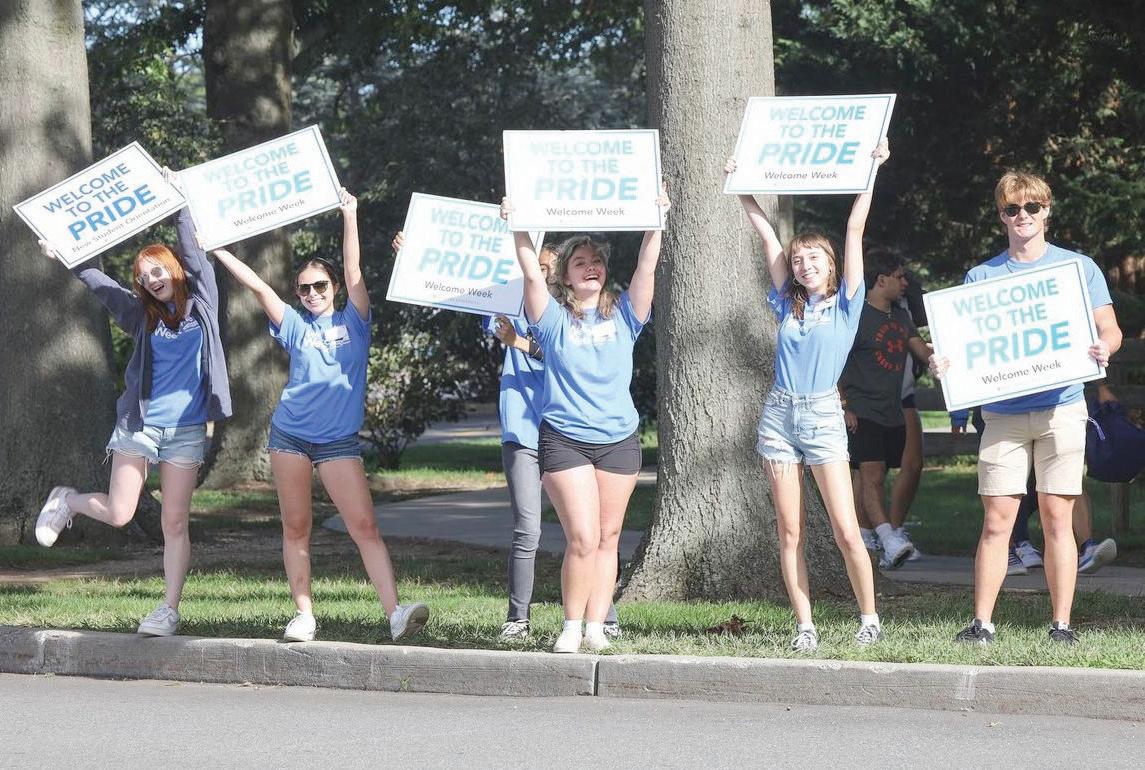
The 2024 fall semester kicked off on Aug. 31 with Welcome Week leaders cheering on new first-year and transfer students as they drove onto campus for the first time. Hofstra’s class of 2027 was welcomed with a week-long schedule of events designed to introduce them to
with each other.”
All undergraduate first-year and transfer students are encouraged to sign up for Hofstra’s END program, allowing new students to go on free trips to various New York City and Long Island locations for their entire first year. The fall semester END trips are reserved for newly registered freshmen and
public policy and public service and English major.
Other activities included a student involvement fair that hosted over 200 of Hofstra’s clubs and organizations for all students to explore. From sports clubs to Greek life to academicbased clubs, there was something for every student to join and further their passions.
trivia night and a 360 degree photo booth.
“The involvement fair is always a highlight of the fall semester,” Heyman said. “I also thought there were a lot of fun and interactive events this year, like tarot card reading and ramen tasting.”
Along with the wide range of activities, there were mandatory events for new students, covering topics such as Title IX and drug awareness.
“The mandatory events are to help educate students on college situations they may come across. All of this together helps students feel more comfortable at Hofstra,” Grynberg said.
“I think Hofstra’s Welcome Week activities were just right,” Schwarz said. “There wasn’t an overwhelming amount, so we were able to adjust to our new lifestyles, but just enough to acclimate us into the school.”
Last year, Heyman volunteered to become one of Hofstra’s global mentors during International Welcome Week and to continue her leadership at Hofstra. “It was an amazing feeling assisting all the parents or new students with any questions they had and offering a warm welcome to Hofstra,”
campus and make friends.
“We really try to allow students to meet their peers from the start. We want them to learn, grow and thrive during their first semester, not stress,” said Hannah Grynberg, a senior public relations and Spanish major who is also the Welcome Week coordinator for the Explore Next Door (END) trips.
“Specifically with trips to the city and other social events such as [the] silent disco, we want students to become acclimated
transfer students and range from interactive museums to ballpark games that capture the heart of New York City. Some trips include Madame Tussaud’s Wax Museum, the Bronx Zoo, the Brooklyn Botanical Gardens and a Mets game.
“[First-years] seemed really excited to attend all of the nonmandatory events during Welcome Week, and the students I took on my END trip were a delight,” said Welcome Week leader Tal Heyman, a senior
Carly Schwarz, a freshman mass media major, found the student involvement fair her favorite event during Welcome Week. “I loved being able to express my interest in new activities and see what the school had to offer!” Schwarz said.
For many students, this week is the first step to meeting new friends and engaging in activities designed to make every student feel welcome at Hofstra. Some highlighted events included a pickleball tournament,
Heyman said.
“I love the thought of being one of the helpers for the freshmen class and having an opportunity to meet other Welcome Week leaders,” Heyman continued. “I also wanted to give back to the Hofstra community that gave so much to me and helped me come out of my shell.”
A2 • SEPTEMBER 12, 2023 THE CHRONICLE NEWS
Anna
Managing
Julian
Secretary Makenzie
Moriah
News
Moriah
Lily
Sophia
A&E
Aidan
Assistant A&E
Mac
Abby
Sports
Frankie
Max
Michelle
Olivia
Features
Zoe
Ethan
Makenzie
Copy
Nell
Assistant
Josie
Madeline Sisk Photography
Emma
Media
Lily Spinda Editor-at-Large Andrew
The Chronicle is published onTuesdays during the academic year by the students of Hofstra University. The Chronicle is located in Room 203 Student Center, 200 Hofstra University, Hempstead, N.Y. 11549. Advertising and subscription rates may be obtained by calling (516) 463-6921. The Chronicle reserves the right to reject any submission, in accordance with our written policies. All advertising which may be considered fraudulent, misleading, libelous or offensive to the University community, The Chronicle or its advertisers may be refused. The products and opinions expressed within advertisement are not endorsed by The Chronicle or its staff.
DeGoede
Editor
Rocha
Hurt Business Manager
Sukhlal
Editors
Sukhlal
Spinda Assistant News Editor
Guddemi
Editors
Judge
Editors
Sykes
Gibson
Editors
DiCalogero
Edelman
Rabinovich Assistant Sports Editor
Hillestad
Editor
Casselman Opinion Editors
Albin
Hurt
Chief
Stultz
Copy Chiefs
Racette
Editor
Fabilli Social
Manager
Fantucchio
“I loved being able to express my interest in new activities and see what the school had to offer!”
Welcome Week leaders greeted the Class of 2027 upon their arrival on Hofstra’s campus.
Photo courtesy of Hofstra University Relations
Hofstra hosts inaugural Inclusive Belonging Reception
The reception started with interactive questions posed to the audience about how they were feeling during their first week of classes. Gathered at round tables were mixed groups of first-year students, faculty, administrators and upperclassmen, all from different departments and schools of the university.
“It was a good way to meet new people and socialize,” said Richard Creary, a sophomore transfer student and supply chain management major. “Trying to feel like you belong, I relate to that.”
Prior to the panel discussion, Hugo Morales, assistant director of student leadership and engagement, and Brittany Rhoden, Title IX coordinator of student issues, spoke about their experience with belonging on Hofstra’s campus.
 By Sophia Guddemi ASSISTANT NEWS EDITOR

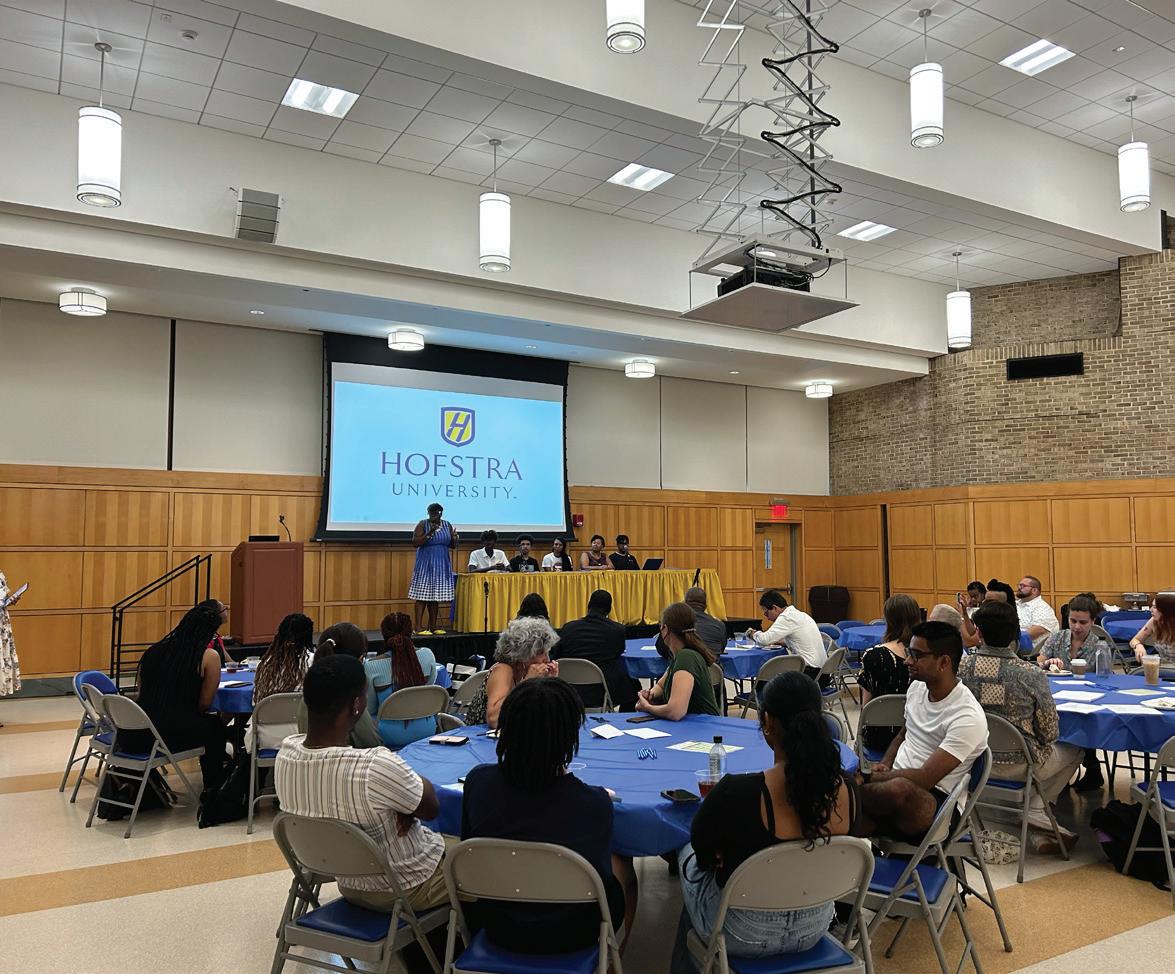
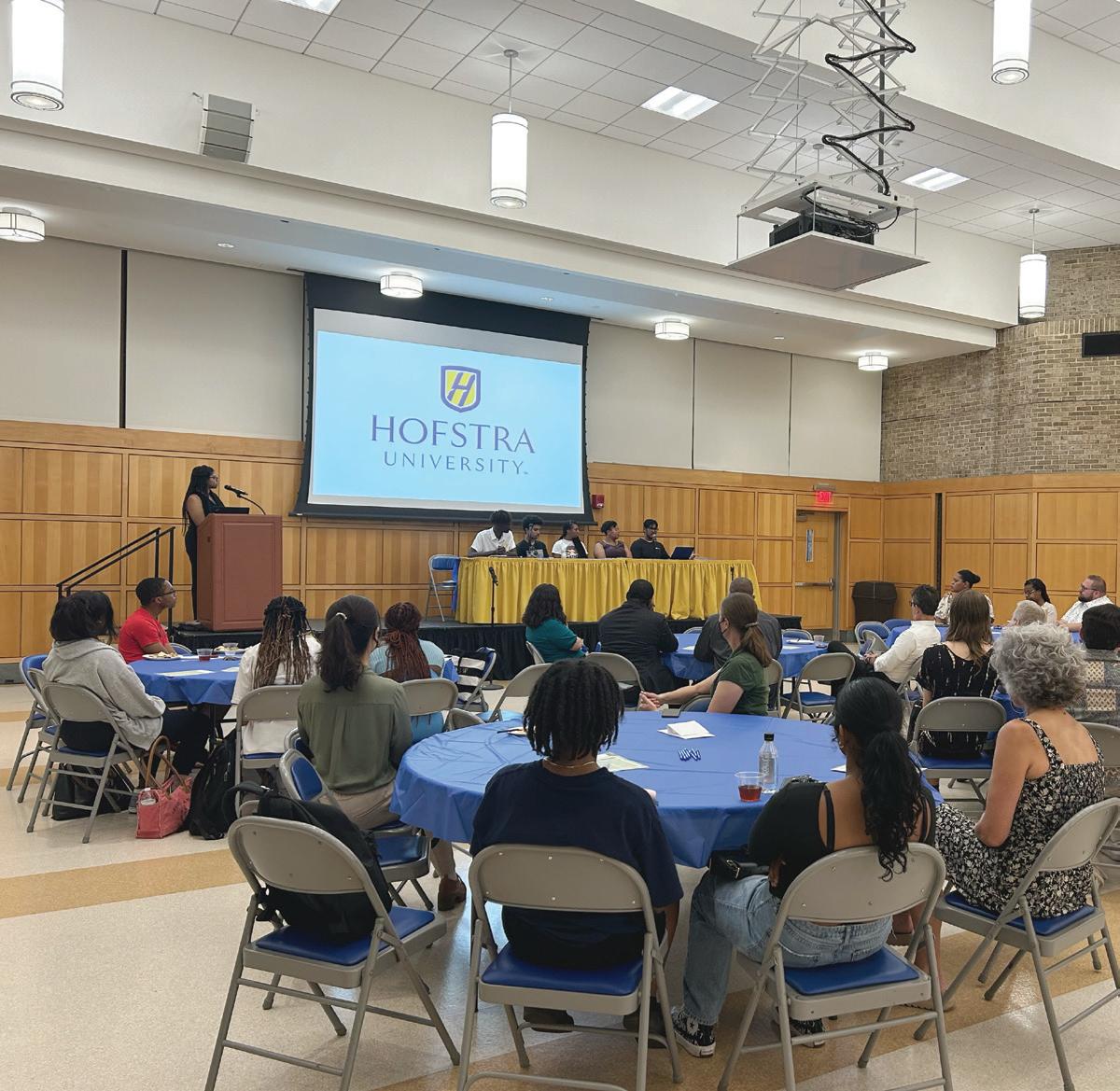
Hofstra upperclassmen, faculty and administration met with first-year students to discuss fostering a sense of belonging while at college during the inaugural Inclusive Belonging Reception on Thursday, Sept. 7. The event was hosted in collaboration with the Division of Student Enrollment, Engagement and Success, the Office of Student Leadership and Engagement, and the Office of Equity and Inclusion.
“Feeling good and feeling that sense of belonging is vital to academic success,” said Aisha Wilson-Carter, the associate director of equity and inclusion. The departments associated with this event aim to create more initiatives that holistically target the student experience.
“If you feel like you’re an outsider or you’re on the outskirts, those are the things you are worried about rather than the paper that’s due or the test you have to study for,” WilsonCarter said. “You do better academically when you have people to reach out to and you feel comfortable.”
“If you don’t feel like you belong on the campus, you’re
not going to want to immerse yourself in it,” said Aliza Ortega, graduate assistant for the Office of Student Leadership and Engagement.
“We want to do everything in our power to ensure that when you step on that campus, when you step into a classroom, you feel that you belong here,” said Dean of Students Michelle VanEss Grant during her introductory speech for the event.
Afterward, student moderator Destiny Dacilas, a senior psychology and criminology major, and five student panelists took the stage. They shared the challenges they faced when they first came to Hofstra and how they fostered a sense of belonging. The panelists included Abdul Sanz, a sophomore civil engineering and dance major; Jonas Fredonis, a junior English major; Sasha Ferdenand, a sophomore health sciences major; Natalie Correa, a junior sustainability studies and geog-
THE CHRONICLE SEPTEMBER 12, 2023 • A3 NEWS
Student moderator Destiny Dacilas (far left) asks panellists Abdul Sanz (second to the left), Jonas Perdonas (first to left), Sasha Ferdenand (middle), Natalie Correa (first to the right) and Ajesh Sukhai (far right) questions about their experience with belonging at Hofstra.
Information compiled by Sophia Guddemi Graphic by Moriah Sukhlal
CONTINUED ON A5
Photo courtesy of Sophia Guddemi
Dean of Students Michelle Van-Ess Grant (far left) introduces the inaugural Inclusive Belonging Reception.
Photo courtesy of Sophia Guddemi
Looking towards the future of higher education
CONTINUED FROM A1
tion, that the people who get into a school or a job via affirmative action don’t deserve to be there,” said Iyanna Prioleau, a junior criminology and global studies major. “Affirmative action is supposed to help diversify the college and university population by giving minorities a better chance at getting into higher education.”
The precedent for affirmative action in education relied upon 20 years of cases (i.e. Bakke (1978), Grutter v. Bollinger (2003), Fisher I (2013) and Fisher II (2016)) that allowed for race-conscious admissions. The Court’s decision overrules prior cases that upheld that it is compelling for universities to assemble a diverse class.
“If they [colleges and universities] employ race-conscious admissions in the right way, if they count race and ethnicity as one favorable factor among others, for their candidates –they can do that,” Sinha said. “It’s important for a variety of pedagogical reasons and other social reasons.”
In a Key Facts document about the case, Harvard explained that its admission policy “considers race as one factor among many in a whole-person review of each applicant.”
Furthermore, Harvard asserted that the Court “has twice cited Harvard’s admission process as a model for how other colleges and universities can consider race consistent with the law and the Constitution.”
Prior to the case brought by
the SFFA, the Court has permitted race-conscious admissions on the grounds that the program complies with “strict scrutiny, may never use race as a stereotype or negative, and must – at some point – end.”
Yet, after much deliberation, the Supreme Court found both Harvard College and UNC’s admissions programs “impermissible under the Equal Protection Clause.” The Court held that the principles of the Equal Protection Clause did not permit lawbased distinctions based on race or color. The Court explained that their interpretation of the clause was “that the law in the States shall be the same for the black as for the white; that all persons, whether colored or white, shall stand equal before the laws of the States.”
Additionally, the Court stated that Harvard and UNC’s raceconscious admissions policies failed to operate in a manner that was “sufficiently measurable to permit judicial [review] under the rubric of strict scrutiny.”
The shift in the Court’s perspective on affirmative action, according to Sinha, is a result of the makeup of the Court. “In the last 20 years, nothing has changed materially that would explain that shift, except the composition of the Court,” Sinha said. “A majority of the justices on the Court now just don’t like the idea of affirmative action.” Since 2020, the Court contains six conservative justices and three liberal justices.
In their recently published article, “Racial Justice Without Affirmative Action: Embracing International Law after SFFA v. Harvard,” Sinha and his coauthor Ian M. Kysel, an assistant clinical professor of law at Cornell Law School, shed light on the uniqueness of the SFFA case. Unlike previous cases that challenged affirmative action, the SFFA case neglected the role of international law. Specifically, under the United Nations’ International Convention on the Elimination of All Forms of Racial Discrimination treaty (ICERD), the United States is still obligated to “adopt immediate and effective measures, particularly in the fields of teaching, education, culture and information.” Kysel and Sinha suggested that under ICERD the U.S. is required to adopt “temporary measures designed to boost access to resources and opportunities for historically disadvantaged groups.” Until two months ago, one such measure included affirmative action.
After the release of the Court’s decision, President Joe Biden remarked that he “strongly disagree[s] with the Court’s decision.” The Departments of Justice and Education also offered guidance, suggesting that educational institutions continue their efforts to “seek the admission and graduation of diverse student bodies” through “targeted outreach, recruitment and pathway programs.”
However, despite the Biden administration’s active message on racial justice, Sinha stated that “they [the Biden administration] never really publicly acknowledged that we are legally obligated to do these things.” Kysel and Sinha noted that “the administration’s ‘friend of the court’ amicus brief in SFFA also omitted any reference to the [ICERD] treaty.” In other words, Sinha explained that the administration never explicitly recognized “that we signed and ratified this treaty [ICERD]. For almost 30 years, we’ve been bound to eliminate racial discrimination both functionally and deliberately.”
During the trial, the SFFA suggested that higher education institutions use socioeconomic status as a substitute for race.
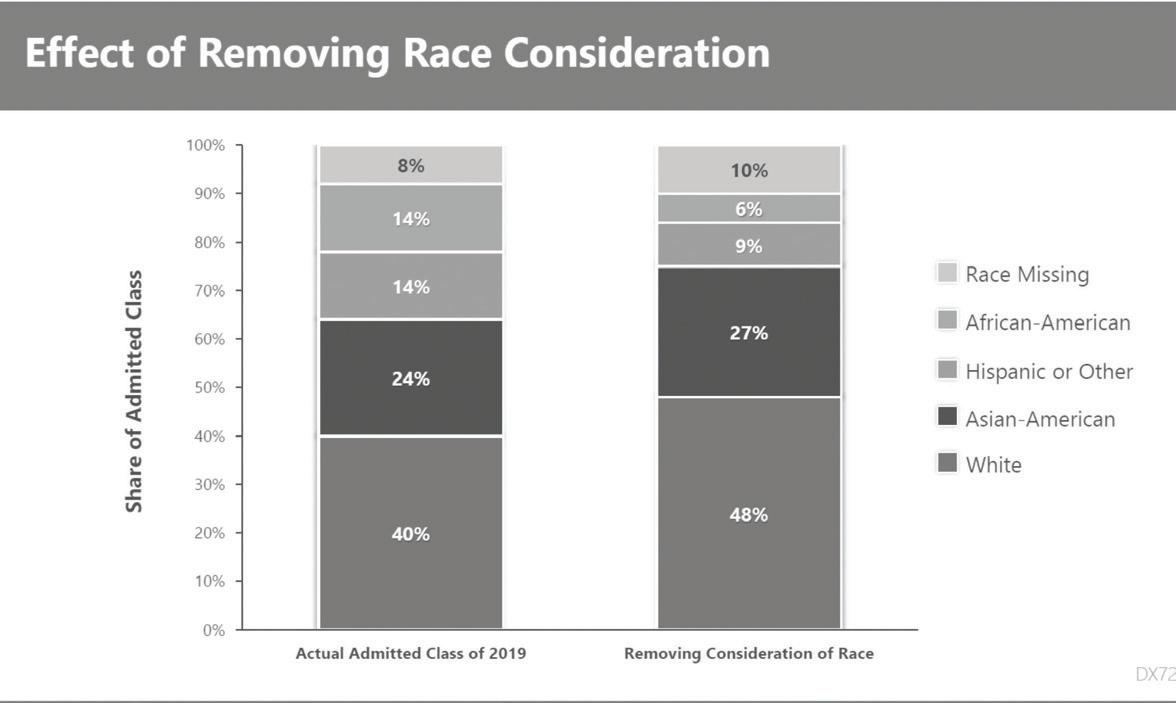
William Lee, Harvard University’s lead trial counsel, disclosed that Harvard had considered the SFFA’s alternative propositions and concluded that they would not “permit Harvard to achieve its educational goals as well as build the diverse learning community central to its educational mission if race were not taken into consideration.” In the Harvard Gazette, Lee stated that an analysis performed by economist David Card “found that such an approach would result in a class that was less academically qualified and would have 40% fewer African American students.”
“If affirmative action was class-based, it could still help some minority students get into higher education while also helping poor students in general have a higher chance of attending good colleges,” Prioleau said.
“The goal from the antiaffirmative action position is for there to be race blind policies, race neutral policies [or] colorblind policies where we just don’t give any credence to our awareness of racial or ethnic identity,” said Cornell Craig, Hofstra University’s chief diversity and inclusion officer. “History has shown that when you do have colorblind or race-neutral approaches that dominates perspectives, dominant identities will over represent and identities of minoritized communities – of people of color, even of women – will be well overrepresented in exclusion.”
Although the nation has been focused on remedying educational diversity at the higher institution level, Craig suggested that the public also focus on the K-12 education system. “We are asking universities, really on the back end of the education journey, to make up for other inequities that are throughout the education system writ large,” Craig said. “When we’re talking about competency or qualifications to even apply to a univer-
sity, that’s something that has nothing to do with the university – that has to do with K-12.”
According to Craig, these issues include school funding, redlining and ongoing segregation within communities.
Regarding Hofstra University, the SFFA case is not foreseen as having a great impact on the university’s approach to recruiting students. According to Craig, Hofstra did not have an affirmative action policy. “We really use a holistic approach,” Craig said. “So that’s looking at all the qualities that a student brings to their admission application.” A message issued by president Susan Poser on June 29 stated that Hofstra “will continue to follow a holistic admissions process that has helped to create a campus environment that embodies our community’s core values of diversity, equity, inclusion, and multiculturalism.”
Consequently, the Court’s momentous decision bequeaths the public with anxiety as it awaits the impact of upending affirmative action. Cara McClellan, the director of the Advocacy for Racial and Civil Justice Clinic and an associate professor of law at the University of Pennsylvania Carey Law School, told CNBC that “there’s a real risk that the incoming classes will look different.” She predicted that “without considering race, there would be a reduction in the number of underrepresented students of color.”
In 1996, the University of California witnessed a 12% decrease in underrepresented students after eliminating affirmative action in its admission policy. The SFFA case has resulted in a period of uncertainty for higher education institutions as they await to witness the impact on their campus diversity.
Those who are interested on learning more about the recent SCOTUS decision are advised to attend the Affirmative Action Symposium hosted by Hofstra’s Office of Equity and Inclusion on Oct. 10, at the Guthart Theater.
A4 • SEPTEMBER 12, 2023 THE CHRONICLE NEWS
An analysis performed by Harvard University based on modeling from the class of 2019 shows a 8% decrease in African American students and 5% decrease in Latinx students if race-concious admissions was removed.
Graphic courtesy of Harvard University
Upperclassmen discuss belonging with the class of 2027
CONTINUED FROM A3
raphy major; and Ajesh Sukhai, a sophomore computer science major.
“Once I overcame my challenges and felt more comfortable, to start to find a feeling like I belong at Hofstra, I needed to be like those people that made me feel like I belong
here in the first place,” Sanz said, referring to his involvement with becoming a resident assistant and resident safety director.
“Not only am I creating that community for myself, but I am also giving it to other people,” Fredonis, who is also president of The Pride Network, said. “I never thought I would excel in a
leadership position like this, but it is something that I found a lot of purpose in.”
“I resonated with what they were saying, and it showed me that things do get better,” said Sydney Balroop, a freshman nursing major.
After the panelists told their stories to the first years, those who attended the event partici-
On April 8, at 4 a.m., the RSR working in Bill of Rights Hall reported to PS that two HU students and a non-student failed to comply with Hofstra guest policy and verbally harassed the RSR. The non-student
Key:
PS - Public Safety
CS - Community Standards
NCPD - Nassau County Police Department
UFD - Uniondale Fire Department
HFD - Hempstead Fire Department
HIC - Hofstra Information Center
pated in a bingo game, encouraging students and faculty alike to meet new people.
“The energy here was really great. Everyone was very welcoming. I’m very thankful,” said Ryan Ketterer, a junior art history and fine arts major.
Ketterer hoped first-year students would leave the event and know “to not be afraid.” “Espe-
Public Safety Briefs
Compiled by Moriah Sukhlal
cially as a freshman, you’re in a new environment and even hearing people talk about their experiences is intimidating because everyone goes through their own experience, and you don’t know what yours is going to be like,” Ketterer said. “Everyone is here for each other; you are not alone, so don’t be afraid.”
was banned from campus, and the two students were issued referrals to CS for their actions.
the location. The situation was corrected, and the fire alarm was reset.
On Aug. 17, at 11:10 a.m., a Hofstra University student reported to PS that they left their bicycle by the Netherlands North bike rack while living on campus during the summer. When they went to retrieve their bicycle on Aug. 9, the bike was missing. An investigation is being conducted.
cycle, and one pushed it up the pathway by the Hofstra Bubble. Nassau County Police responded and took a report. The investigation is ongoing.
On April 8, at 11:14 p.m., the RA in Utrecht House reported to PS that, while conducting rounds, there were loud noises coming from a room. PS responded and discovered open bottles of alc
On April 8, at 4 a.m., the RSR working in Bill of Rights Hall reported to PS that two HU students and a non-student failed to comply with Hofstra guest policy and verbally harassed the RSR. The non-student was banned from campus, and the two students were issued referrals to CS for their actions.
On Aug. 15, at 1:00 p.m., a Hofstra University employee reported to PS that while opening the driver’s side door of one of their golf carts, the door accidentally struck a security gate by Shuart Stadium, causing the glass window of the golf cart to shatter. Police assistance was declined at the time.
On Aug. 20, at 6:43 a.m., The fire alarm in the student center was activated due to the waxing of the floors near one of the rooms. The fire alarm sounded, and the building was evacuated within three minutes without incident. PS, Plant and UFD responded to the location. The situation was corrected, and the fire alarm was reset.
activated due to burnt food in the kitchen. The alarm sounded, and the building was evacuated. PS, the plant department and the Uniondale Fire Department responded to the location. The situation was corrected, and the fire alarm was reset.
evacuated within one minute without incident. PS, Plant and UFD responded to the location. The situation was corrected, and the fire alarm was reset.
fire alarm was reset.
On Aug. 23, at 12:36 a.m., the fire alarm at Constitution Hall was activated due to an infuser in one of the rooms. The fire alarm sounded, and the building was evacuated within five minutes without incident. PS, Plant and UFD responded to the location. The situation was corrected, and the fire alarm was reset.
On April 8, at 11:14 p.m., the RA in Utrecht House reported to PS that, while conducting rounds, there were loud noises coming from a room. PS responded and discovered open bottles of alcohol. Six students were issued referrals to CS.
On April 11, at 10:20 a.m., an HU plant employee reported to PS that he accidentally damaged a vehicle owned by another Hofstra employee on Holland Road while working on the main campus. The owner of the vehicle was notified about the damage and responded to PS.
On Aug. 16, at 1:51 p.m., the fire alarm at Constitution Hall was activated due to cooking on the 13th floor. The fire alarm sounded, and the building was evacuated within nine minutes without incident. PS, Plant and UFD responded to the location. The situation was corrected, and the fire alarm was reset.
On Aug. 21, at 3:20 p.m., the fire alarm in the student center was activated due to grilling in a kitchen. The fire alarm sounded, and the building was evacuated within two minutes without incident. PS, Plant and UFD responded to the location. The situation was corrected, and the fire alarm was reset.
On April 15, at 6:53 p.m., an HU student reported to PS that they lost their wallet containing their driver’s license, Hofstra ID, debit card and cash. The wallet was lost in a location off campus. The NCPD responded and took a report.
On April 16, at 9:44 a.m., an HU student reported to PS that some of their laundry was missing from the laundry room in Alliance Hall. The student requested a police response.
On Sept. 4, at 6:16 p.m., the fire alarm at Weed Hall was activated due to an unknown cause on the second floor. The fire alarm sounded, and the building was evacuated within one minute without incident. PS, Plant and HFD responded to the location. The situation was corrected, and the fire alarm was reset.
On April 16, at 10:26 p.m., an HU student was issued a referral to CS for swiping an unknown person into Netherlands South.
On Aug. 23, at 1:06 a.m., a Hofstra University student was issued a referral to CS for using an infuser, which caused the fire alarm to activate in Constitution Hall.
On Aug. 30, at 6:24 p.m., the fire alarm at Bill of Rights Hall was activated due to haircare products in a room. The fire alarm sounded, and the building was evacuated within one minute without incident. PS, Plant and UFD responded to the location. The situation was corrected, and the fire alarm was reset.
On April 11, at 2:18 p.m., it was reported to PS that an unknown person wrote messages in chalk on the sidewalk on the south side of Hofstra Hall. Photos were taken of the graffiti, and an investigation is being conducted into this matter. The plant department was notified for cleanup.
On April 12, at 9:50 p.m., the fire alarm in Estabrook Hall was activated due to hair care products. The alarm sounded, and the building was evacuated. PS, the plant department and the Uniondale Fire Department responded to the location. The situation was corrected, and the fire alarm was reset.
On Aug. 17, at 8:29 a.m., the fire alarm in the Netherlands Core activated due to cleaning supplies in the women’s bathroom and kitchen. The fire alarm sounded, and the building was unoccupied at the time. PS, Plant and UFD responded to
On Aug. 22, at 10:10 a.m., a non-student reported to PS that they parked their motorcycle in front of the Hofstra Bubble around 8 p.m. Upon return, the non-student discovered that their motorcycle was missing. A review of surveillance tape revealed that two unknown persons approached the motor-
On April 17, at 9 a.m., an HU student reported to PS that an unknown vehicle struck their vehicle in the law school parking lot. The student had a dashcam video, and the Hempstead police responded and took a report.
On Aug. 26, at 12:30 p.m., the fire alarm at Axinn Library was activated due to construction on the 10th floor. The fire alarm sounded, and the building was unoccupied at the time. PS and Plant responded to the location. The situation was corrected, and the fire alarm was reset.
On Aug. 31, at 10:40 a.m., a non-university student reported to PS that they parked their vehicle in the Parking Field A on Aug. 30, between 12 p.m. and 9 p.m. After returning, the student discovered damage to the rear driver-side panel. Police assistance was declined at the time.
On Sept. 5, at 12:15 p.m., a non-university student reported to PS that they parked their vehicle in the Breslin Hall parking lot around 9 a.m. When they returned, the student discovered damage to the driver’s side door. Police assistance was declined at the time.
On April 18, at 4:08 p.m., an HU student was issued a referral to CS for giving their Hofstra ID to a non-student so they could enter Colonial Square East.
On April 18, at 10:40 p.m., the fire alarm in Bill of Rights Hall was activated due to hair care products. The alarm sounded, and the building was evacuated. PS, the plant department and the Uniondale Fire Department responded to the location. The situation was corrected, and the fire alarm was reset.
On Aug. 26, at 4:13 p.m., a Hofstra University student reported to PS that while playing basketball in the fitness center, they ran into one of the glass doors, causing damage. The student was not injured.
On April 14, at 5:25 p.m., the fire alarm in Hampton House was activated due to burnt food in the kitchen. The alarm sounded, and the building was evacuated. PS, the plant department and the Uniondale Fire Department responded to the location. The situation was corrected, and the fire alarm was reset.
On Aug. 29, at 10:30 p.m., the fire alarm at Stuyvesant Hall was activated due to a curling iron in a room. The fire alarm sounded, and the building was
On April 15, at 10:19 a.m., the fire alarm in New York House was
On Sept. 2, at 1:40 p.m., the fire alarm at the Graduate Residence Hall was activated due to a toaster in a room. The fire alarm sounded, and the building was evacuated within four minutes without incident. PS, Plant and UFD responded to the location. The situation was corrected, and the fire alarm was reset.
On Sept. 5, at 4:55 p.m., the fire alarm at Emily Lowe was activated due to an unknown cause. The fire alarm sounded, and the building was evacuated within one minute without incident. PS, Plant and HFD responded to the location. The situation was corrected, and the fire alarm was reset.
On April 20, at 5:40 p.m., an HU student reported to PS that, upon returning to their vehicle that they parked near the student center bus stop, they discovered damage to the front passenger side bumper. Police assistance was declined at the time. ohol. Six students were issued referrals to CS.
On Sept. 6, at 4:16 a.m., the fire alarm at Enterprise Hall was activated due to a water flow issue in a room. The fire alarm sounded, and the building was evacuated within four minutes without incident. PS, Plant and UFD responded to the location. The situation was corrected, and the fire alarm was reset.
On April 11, at 10:20 a.m., an HU plant employee reported to PS that he accidentally damaged a vehicle owned by another Hofstra employee on Holland Road while On April 8, at 4 a.m., the RSR working in Bill of Rights Hall reported to PS that two HU students and a non-student failed to comply with Hofstra guest policy and verbally harassed the RSR. The non-student was banned from campus, and the two students were issued referrals to CS for their actions.
On Sept. 2, at 11:00 p.m., the fire alarm in Breslin Hall was activated due to the ducts. The fire alarm sounded, and the building was unoccupied at the time. PS, Plant and UFD responded to the location. The situation was corrected, and the
On April 8, at 11:14 p.m., the RA in Utrecht House reported to PS that, while conducting rounds, there were loud noises coming from a room. PS responded and discovered open bottles of alcohol. Six stu-
THE CHRONICLE SEPTEMBER 12, 2023 • A5 NEWS
By Zoe Casselman FEATURES EDITOR
One of the most difficult realizations I’ve had as a creative writer is that not every piece of writing I produce in my lifetime will be some massive, groundbreaking literary epic.
Despite my love of writing, the idea that what I create must somehow be revolutionary felt formidable and discouraging, impairing my motivation to write at all. The pressure I placed on myself to produce something never seen before completely stifled my creativity, causing my work to feel disingenuous and lackluster. What I was trying to write just wasn’t me.
For a long time, my fiction works consisted of grand, confusing and complicated plots with extensive, unnecessary worldbuilding. The story was often muddled and hard to fully understand. However, I wanted to realize my goal of creating a universe from scratch, even if I felt unfulfilled. In the end, those pieces always remained unfinished; I could never decide
FEATURES
Writing the Mundane

where to take them next. I would, without fail, concoct some monumental idea in my head, begin writing and then subsequently abandon it. Each of those pieces lacked clear direction and voice, always leaving me feeling detached from my own work.
Before last year, I felt stuck, like I had hit a wall as a writer and couldn’t manage to get past it. My unfinished drafts had piled high and I felt love for very few, if any. During a creative writing class last semester, we were tasked to wander around outside for a few minutes and find something, anything, to write about. Unsure how to proceed with such a vague task, I sat down on the grass next to a large metal fence and began to watch the world around me.
From the ground, I saw three men painting and enthusiastically laughing with one another. I couldn’t help but wonder what they were talking about, but didn’t want to get too close and interrupt them. So instead of eavesdropping, I pulled my notebook out of my bag and crafted a story about their conversation.
What began as a small exercise I started on a whim because of a class turned into pages and pages of a story and characters. Within the day, I had a completed piece. A short story on a conversation between three men is by no means world-changing. And yet, for the first time in a long time, I was proud of what I had written and finally inspired to write more.
There is a beauty in depicting the supposedly uninteresting parts of life that I had not discovered for much of my writing career. I had been so afraid of my work being boring or cliche that I had not considered the value of writing about menial joys. To me, there is an undeniable satisfaction in knowing what I write about, as insignifigant or small
as the subject matter may seem, is a sentiment that can be shared by many more people than some grand yet empty plot. It is so incredibly human to write about an experience or feeling many others have or have already written about. The idea that in writing about these trivial things I can make them mean something inspires me even more.
Poem: Partition
By Aidan Judge ARTS AND ENTERTAINMENT EDITOR
the smell of smoke lingering underneath your pointed jaw blackened hearts served on a plastic platter flesh wrapped in chiffon as the sun bakes our skin a chilled zephyr blowing dust out of our sockets and the sinking rays of violet intermissions seeping into frosted grass with marrow in a golden chalice a wish to be wistful for the release of breath and the suffocation from a thicket of trees.
Now, writing about the “mundane” has become my niche. From lengthy poems about leaves or lamp posts to short fiction about an old state park employee, I have fallen in love with writing about the so-called boring every day.

A6 • SEPTEMBER 12, 2023 THE CHRONICLE
Interested in writing for Features? Email us at chroniclefeatures@gmail.com for more information on joining our section!
“To me, there is an undeniable satisfaction in knowing that what I write about, as insignifigant or small as the subject matter may seem, is a sentiment shared by many more people than some grand yet empty plot.”
Photo courtesy of Pheobe Strafford / Unsplash
Photo courtesy of Jan Kahanek / Unsplash
By Allison Seigel SPECIAL TO THE CHRONICLE
My Popop is the most generous, giving person I have ever encountered. He is retired from a long career as a successful ophthalmologist, loved by patients and respected by colleagues. Popop is the father of four and a devoted husband. He is now 86 years old, but when he was 60, he experienced severe heart failure. A transplant was his only hope, but doctors feared he would not survive the wait on the transplant list. To save his life, the doctors opted to implant a left ventricular assist device (LVAD) just above his abdomen. This revolutionary machine did the job of pumping his blood to compensate for the damaged heart muscle.
My grandfather was one of the first patients to ever be saved
Searching for community in action
by this remarkable device. After nine months of waiting, he was taken off the transplant list. He received a healthy heart from a 19-year-old motorcyclist and was given a second chance at life. In what is just his style, my grandfather wrote a heartfelt note to the anonymous family of the donor. The enormity of that family’s gift of life is forever on his mind. I have often heard him describe himself as “a very lucky man.” He expresses his gratitude to his doctors by regularly donating to their research projects and supporting a charitable organization that provides funds to patients who cannot afford the very expensive transplant medications. I grew up knowing that opportunities for second chances are rare and to be cherished. The value of giving back and helping those in need was instilled in me as far back as I can remember.
Before I reached the age of 10, I was aware that other people in this world were experiencing hardships. Many weekends, I could be found selling pencils to raise money for disabled veterans or raking leaves to earn money to purchase Christmas gifts for hospitalized children.
I too experienced a second chance, though not nearly as life-altering as Popop’s. In my sophomore year of high school, I was given the chance to make a fresh start. I was awarded a scholarship to attend a local private school. My parents and I enthusiastically embraced the opportunity for me to make this change. Academically, the public high school I left had a good reputation, but there was no outlet to express my passion for community service.
I began at Lawrence-Woodmere Academy as a high school
sophomore. My new school fostered a close-knit community and emphasized the need to interact with our community.
Within two months’ time, I helped revive the nearly defunct “Helping Hands Club,” a school-sponsored organization dedicated to community service. When I arrived, this club had less than a handful of members and had accomplished very little. Seeing this, I launched a campaign to increase membership. As president of the club, I worked with faculty advisors to organize events to support worthy causes. The students responded and embraced our ideas. The Helping Hands Club was a second chance for me to be my best and true self.
In Aug. 2019, I began my freshman year of college at Bucknell University. I was eager to expand upon my previous
Chron Cooks ft. Makenzie Hurt Game Day Sliders
By Makenzie Hurt OPINION EDITOR
This recipe for Philly cheesesteak sliders is the perfect meal or appetizer for any game day! It takes quite a few ingredients, but it’s still relatively easy to make. The buns taste exactly like Auntie Anne’s pretzels, which is probably because I had leftover garlic dipping sauce from Domino’s and decided to use it as a glaze. These sliders were a huge hit for the first Giants game of the season. Using the right seasoning is super important when it comes to steak, so don’t be afraid to go heavy-handed. If you’re looking to make something fun to share with a group, definitely try this recipe.
Ingredients:
2 14 ounce packages of beef shaved steak. I used Old Neighborhood brand.
1-2 large green pepper(s)
1 yellow onion
2 ½ tablespoons of Worcestershire sauce
Salt and pepper to taste

1 teaspoon onion powder
2 teaspoons minced garlic
2 packs of party rolls (Martin’s or King’s Hawaiian are best)
Mayonnaise
Provolone Cheese
1 tablespoon dried Italian parsley
3 tablespoons butter (or Domino’s garlic dipping sauce. Trust me.)
experiences and continue to work to make positive changes in my new community. Unfortunately, I was disappointed. My efforts to find projects to help those in need or clean up our environment were unsuccessful. When I came home to visit, I got together with some of the friends I still had at Lawrence-Woodmere Academy and participated in community events. I’m looking for my second chance at Hofstra to find a community that nurtures the human spirit and inspires its students not only to care but also to take action.
My experience with the Helping Hands Club taught me that once people take the first step to make a change in this world, they are likely to continue because making a difference is intoxicating.
Instructions:
1. Begin by sautéing your chopped onions and pepper(s) sprinkled with salt, pepper, onion powder and garlic of choice in a pan with olive oil. Once they are aromatic, remove them from heat.
2. In a separate large pan, heat the olive oil with the beef and add Worcestershire sauce, salt and pepper. Once it is browned, add the peppers and onion.
3. Preheat oven to 325 degrees. Cut rolls down the center and spread the bottom rolls with mayonnaise. Then evenly spread your provolone cheese on top.
4. Put the beef into the buns, and close the top. Melt butter with Italian parsley, then brush it over the buns.
5. Cook for 10-15 minutes.
6. Let cool, pull off some sandwiches and enjoy!
THE CHRONICLE SEPTEMBER 12, 2023 • A7
FEATURES
Makenzie Hurt / The Hofstra Chronicle
M AN ON THE U NISPAN
What is one movie you will always recommend?
By Zoe Casselman and Varun Raju FEATURES EDITOR
O verheard @ h O fstra
“It wasn’t the lyme disease that did him in.”
“‘How To Train Your Dragon’ because I feel like it has very emotional storytelling.”
“He looked like he was thinking so I wanted him.”
“If I’m going to learn about capitalism I want it to come from a communist. Like, get me Karl Marx.”
“I used to read fanfiction on my laptop cause my parents bugged my phone.”
“Hellen Keller had to be lying. No shot that girl flew a plane.”
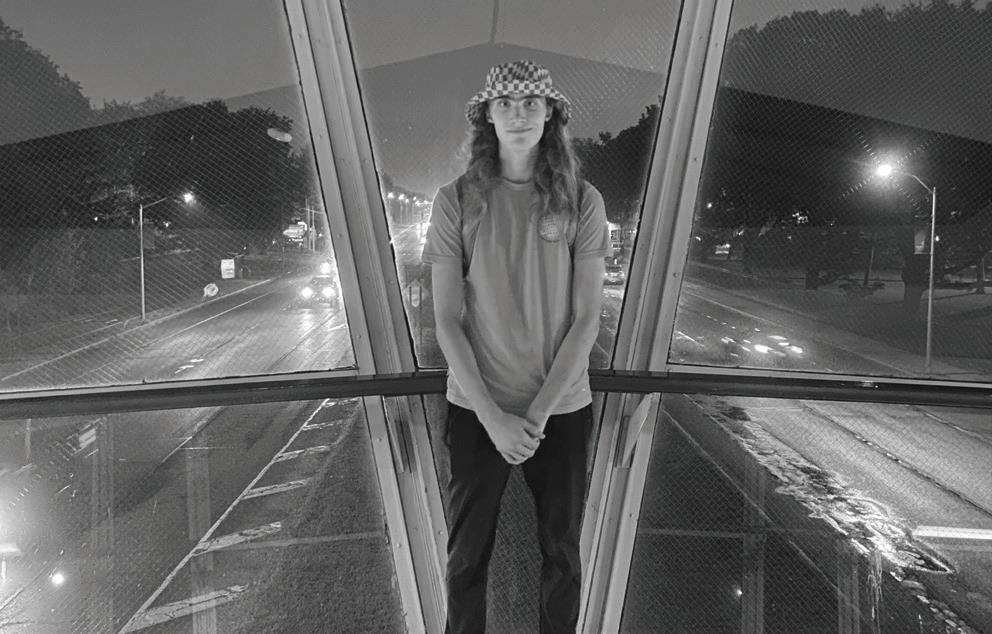

“‘The Godfather’ because it is a very intregal part of being a Hofstra student.”
“I made jorts, though.”
“You’re so Watergate.”

“‘Train to Busan.’ It just has a very good plot. ”
- Parker Hipp, freshman
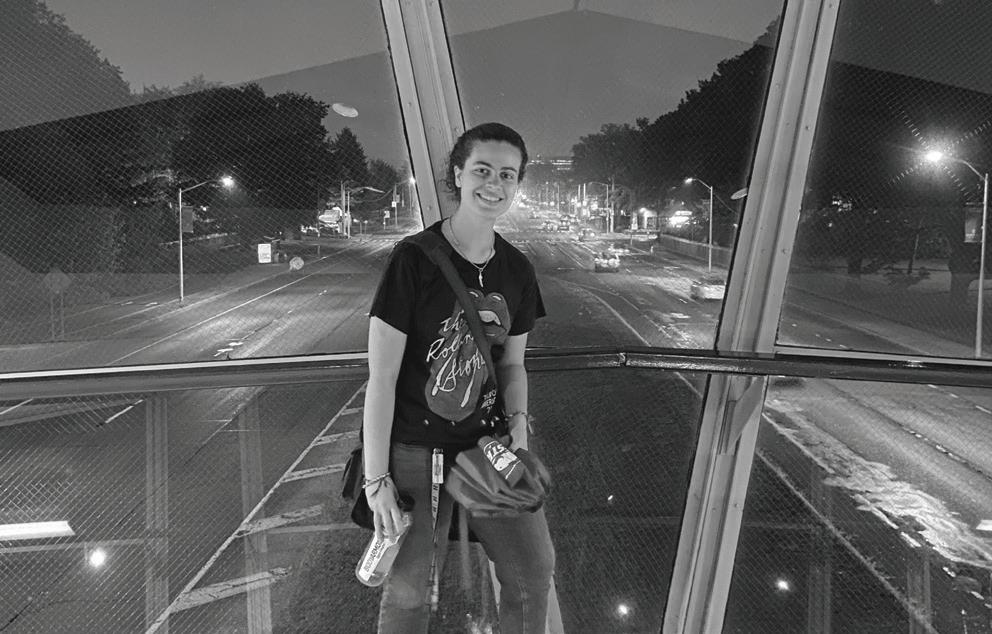
“Did she go to clown college? No offense to your cousin.”
“I dunno if he’s bi or something, he’s from Philly.”
“Did you tell her the HIV story?”
A8 • SEPTEMBER 12, 2023 THE CHRONICLE FEATURES
AND SPECIAL TO THE CHRONICLE
Spread by Audra Nemirow
- Maiah Massotti, sophomore
- Brooke Baker, sophomore
Julian Rocha / The Hofstra Chronicle
Chron Cooks ft. Esmee Van Brandenburg and Lisa Van Pieterson: Hutspot
By Esmee Van Brandenburg and Lisa Van Pieterson SPECIALS TO THE CHRONICLE
You don’t have to be a Flying Dutchman or live in the Netherlands housing complex to experience a taste of the Netherlands. You can still savor a bit of Dutch cuisine by following this recipe.
As exchange students from the Netherlands (the country), we present to you a very Dutch meal: Hutspot. It’s basically mashed potatoes with vegetables mixed in, usually eaten with rookworst (smoked sausage) and gravy.

Roughly 500 years ago, from 1573-1574 during the 80s war, the Spanish army tried to capture Leiden. Throughout this time, the food supplies had decreased tremendously. Citizens were starving to death. After the siege of Leiden on Oct. 3, the tale goes that a brave young man went to the abandoned camps of the Spanish Army and found a pot filled with hutspot. This dish then became the symbol of surviving the famine. Next to white bread and herring, Hutspot is still eaten to this day on Oct. 3 to celebrate Leids Ontzet (the siege of Leiden).
Ingredients:
750 grams potatoes (1.65 pounds)
750 grams carrots (1.65 pounds)
1 large onion
25 grams butter (1 ½ tablespoon)
50 milliliters of milk (3 tablespoons + 1 teaspoon)
A pinch of salt and pepper
Smoked sausage
Veggie option: Vegetarian meatballs or any kind of your liking
Instructions:
1. Peel the potatoes and cut them into evenly sized pieces. Next, slice the onion into half rings. Peel the carrots and chop them into smaller pieces.
2. To a deep cooking pan, add the potatoes, carrots and onion. Fill the pan with water until the ingredients are fully submerged, and add a pinch of salt for taste. Let it come to a boil, and cook for approximately 20-25 minutes.
3. Meanwhile, prepare the chosen meat as its packaging states.
4. Once the vegetables are tender, drain the water and use a potato masher to mash everything together. It’s okay if there are a few small bits remaining.
5. Incorporate the butter and milk into the mashed stew, and season it to your liking with salt and pepper.
6. Serve the hutspot with the sausage. Do you want to eat like a real Dutchy? Make a well in the Hutspot to make a place for the gravy.
7. Congrats! You have made the foundation of Hutspot. You can also add more vegetables, such as leek, or experiment with different combinations. Enjoy!
THE CHRONICLE SEPTEMBER 12, 2023 • A9 FEATURES
Esmee Van Brandenburg and Lisa Van Pieterson/ The Hofstra Chronicle
Feeling the heat during the first week
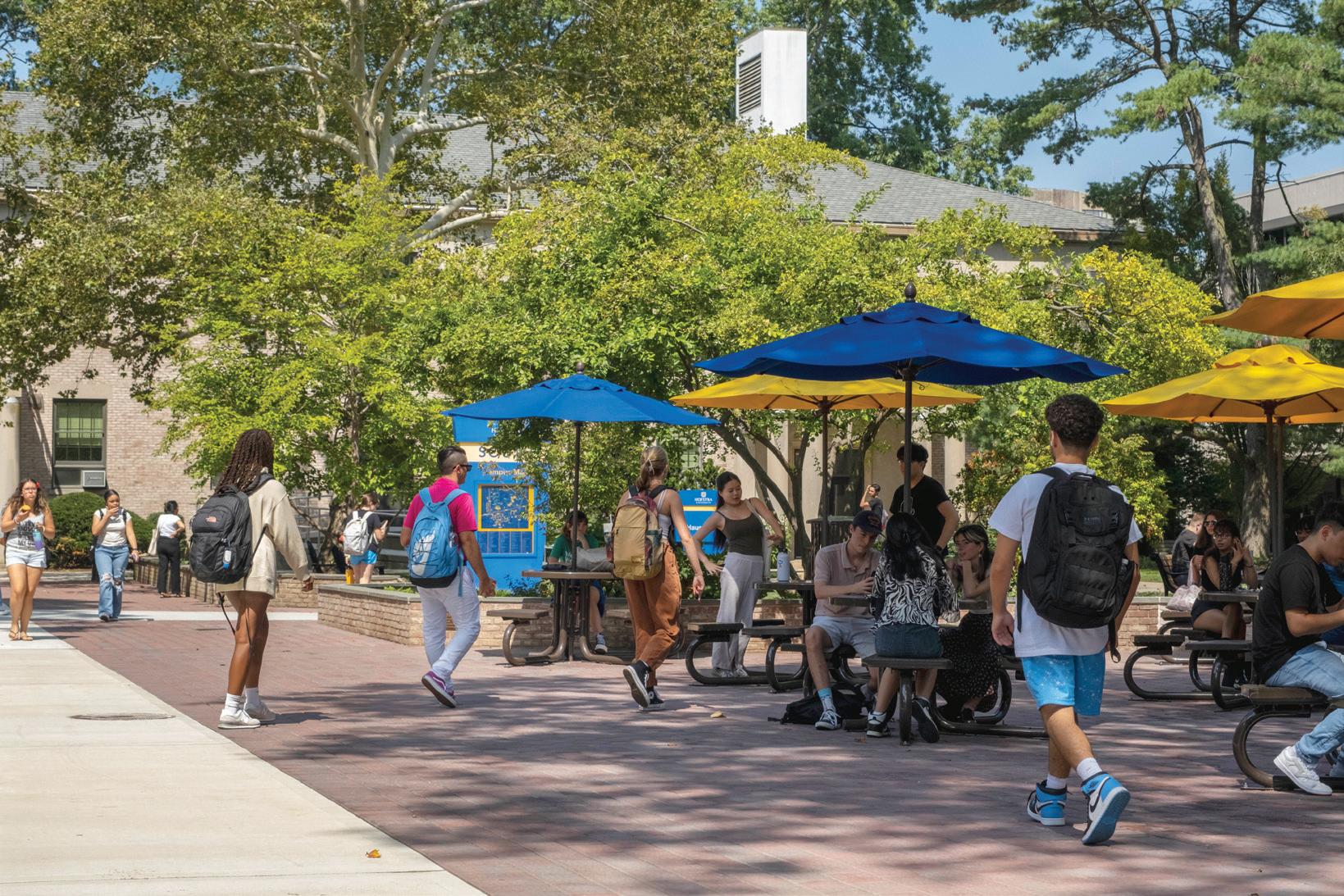
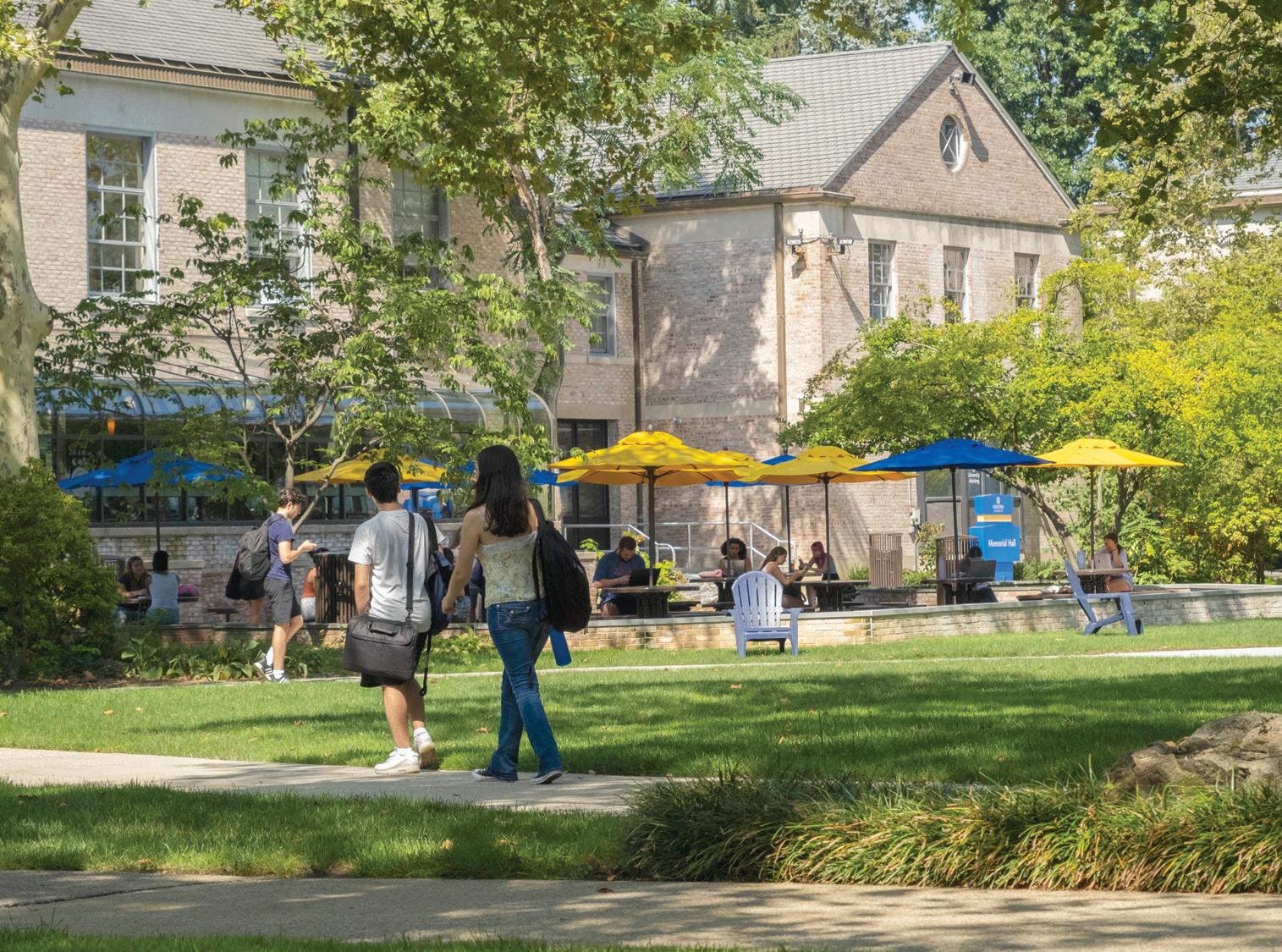
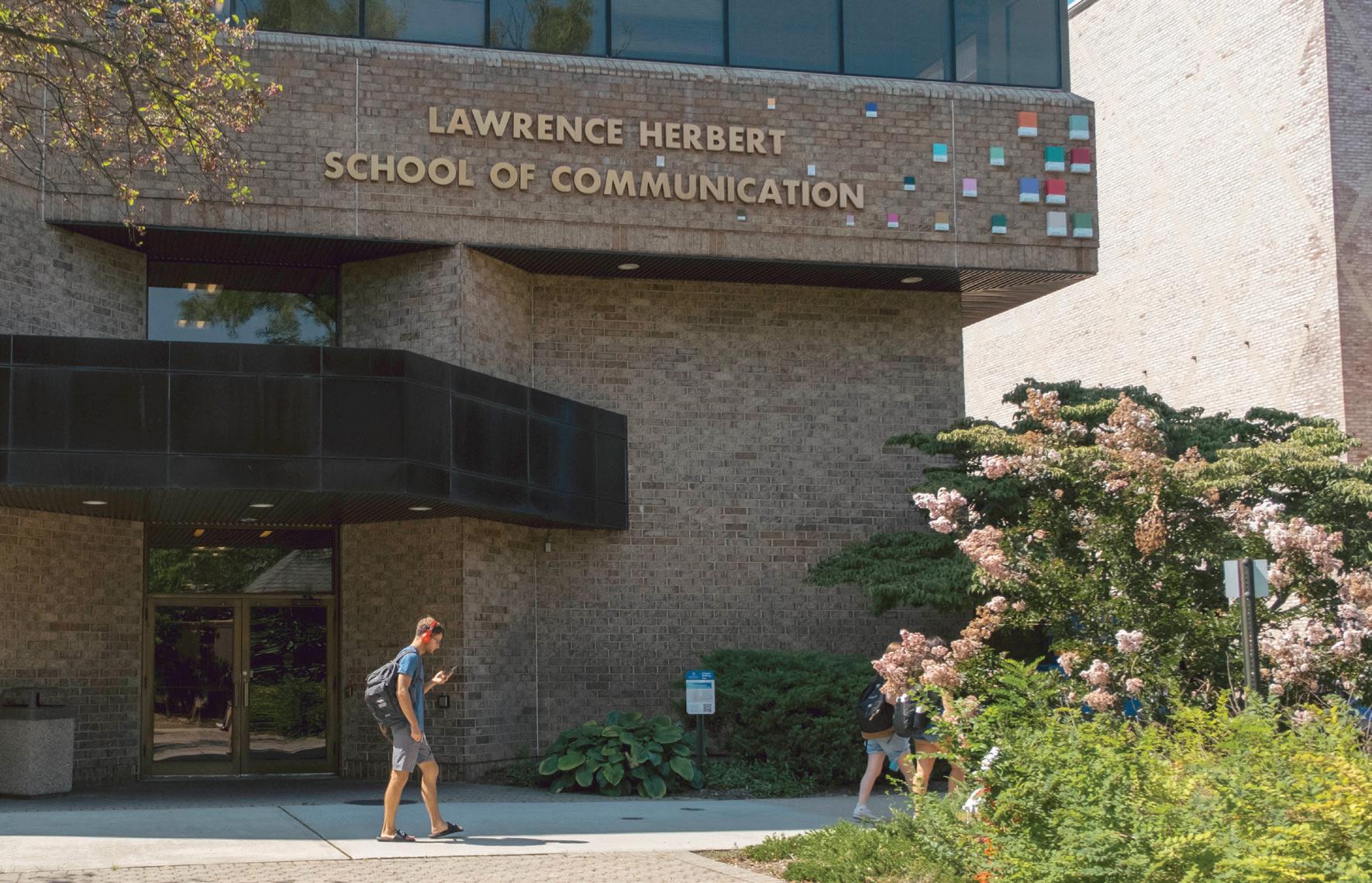
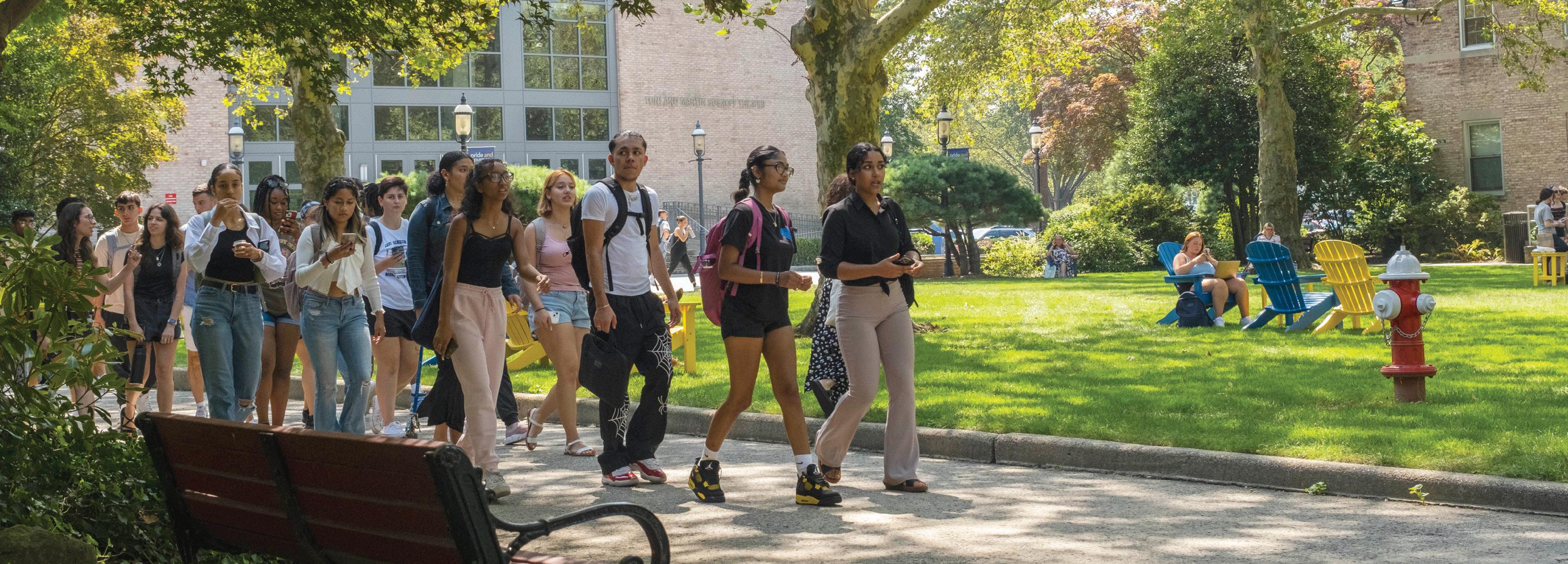
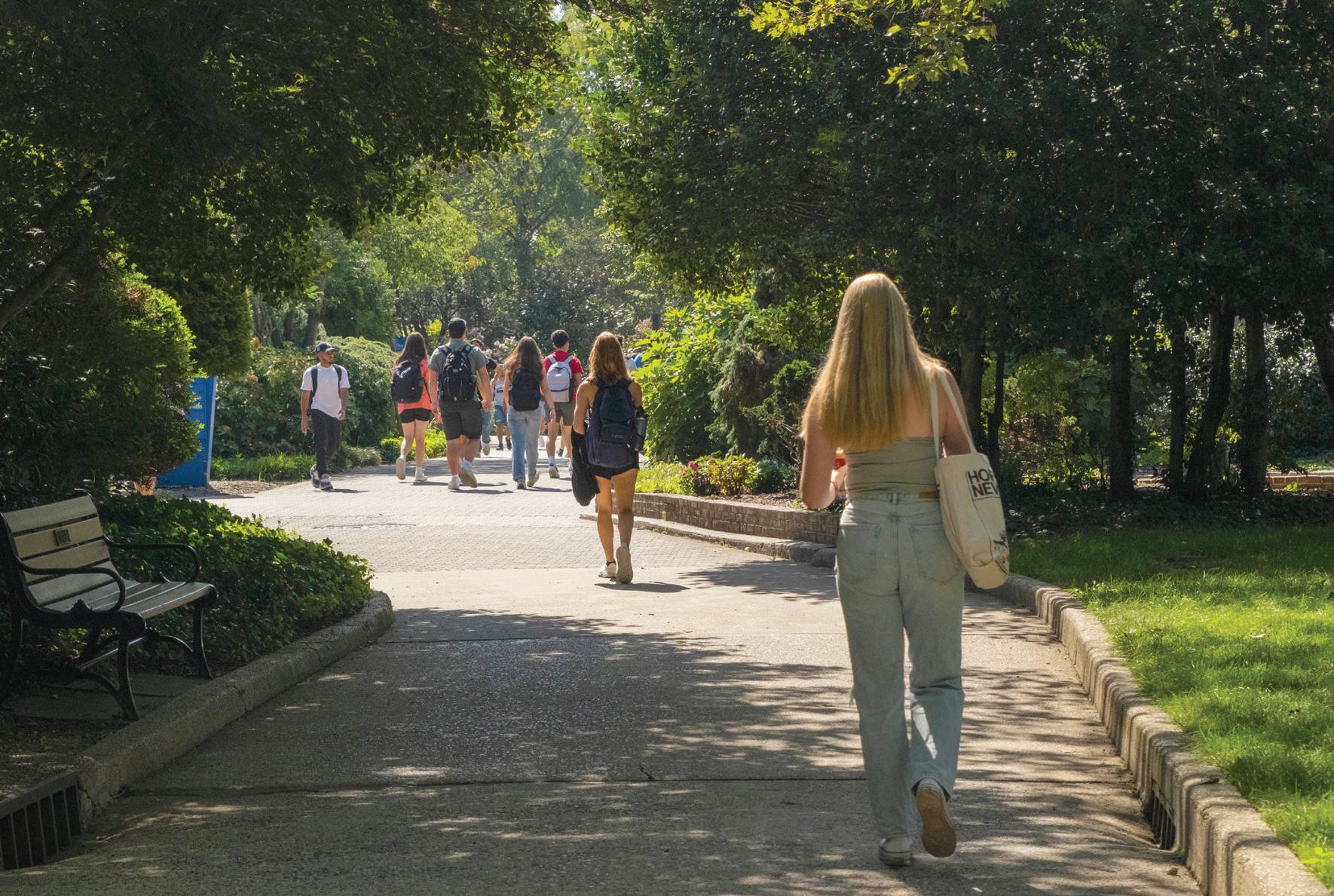
Hofstra welcomed the Pride back to campus this past week for the fall 2023 semester. The campus grounds were filled with students, both old and new, ready to start the new year. Students, still facing the summer heat, took advantage of the beautiful greenery of Hofstra’s campus. Many of them spent their free time outside with their friends.

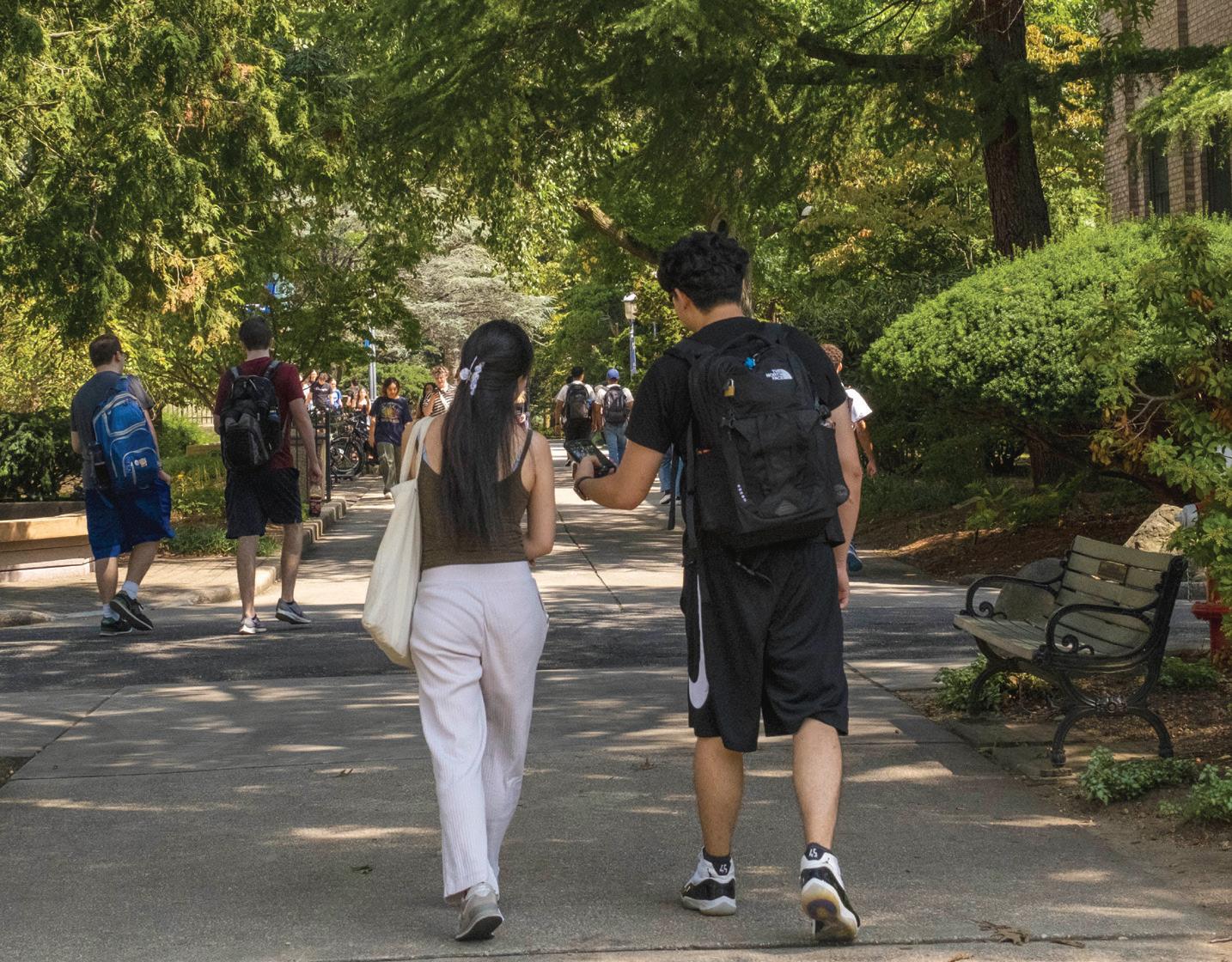
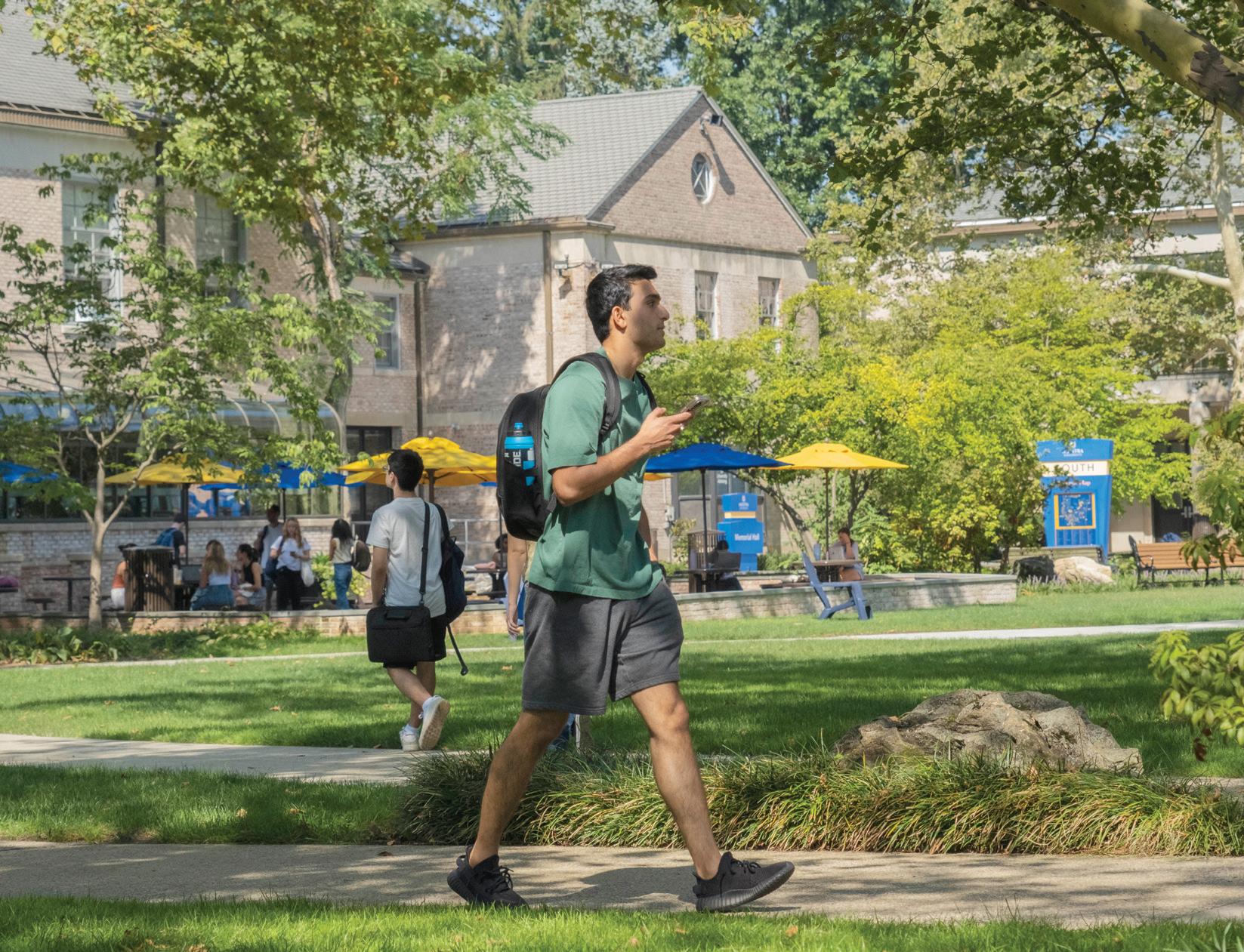
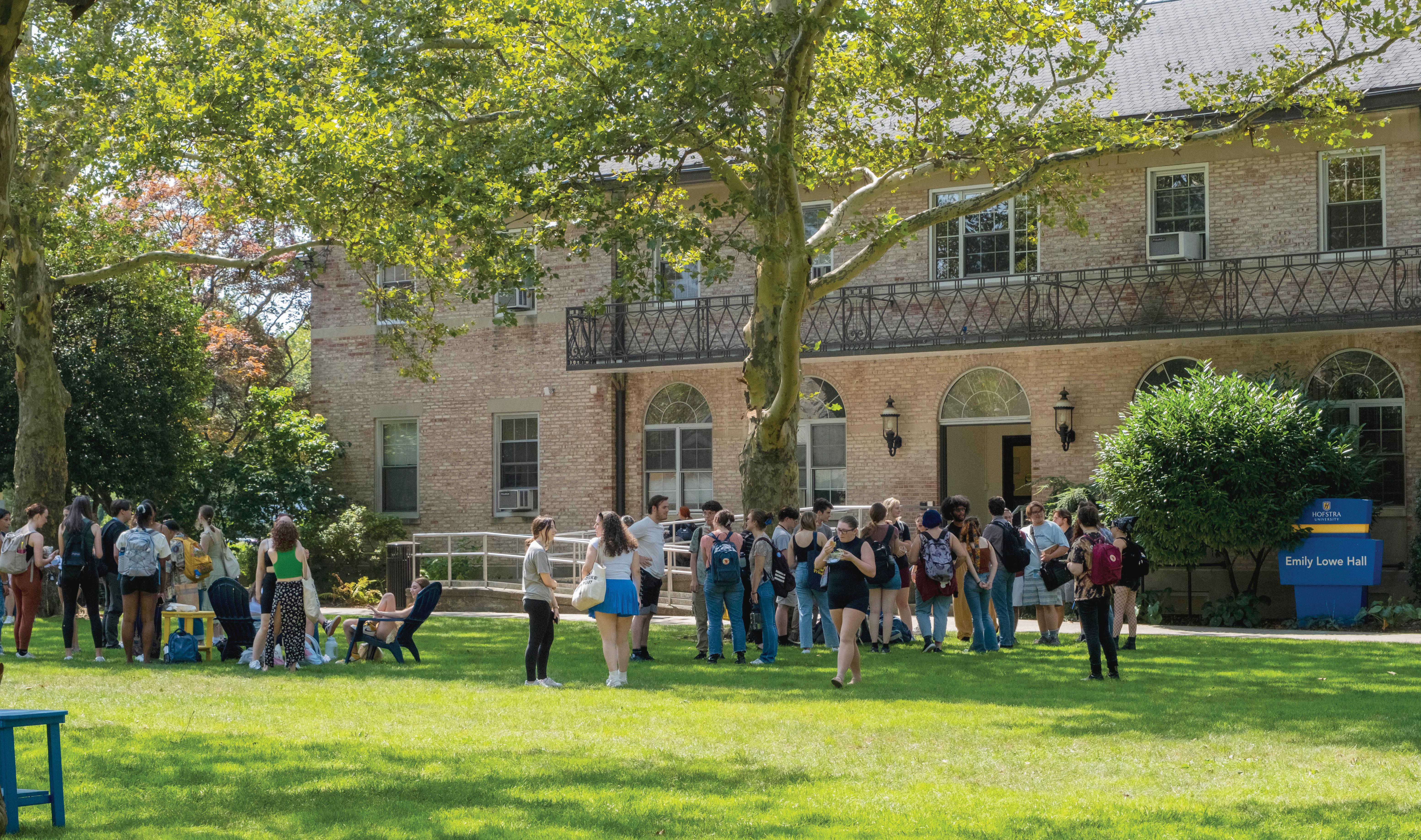 Spread by Emma Fabilli
Photos by Emma Fabilli / The Hofstra Chronicle
Spread by Emma Fabilli
Photos by Emma Fabilli / The Hofstra Chronicle
Arts And EntErtAinmEnt
VOL. 90 ISSUE 1

of IMDB
Courtesy
By Nell Stultz
COPY CHIEF
Greta Gerwig’s “Barbie,” released on July 21, was the poppy, pink and star-studded blockbuster comedy event of the summer. Starring Margot Robbie as Barbie and Ryan Gosling as Ken, the film made over $150 million on opening weekend in the United States and was also the largest domestic opening for a female director, according to Deadline.
The accolades received and records broken exemplify just how much fun the movie is: it’s comedic and joyous, with playful references to cultural touchstones and original songs complete with choreographed dance numbers. It’s also an ode to femininity and a toy that has been both beloved and despised for generations, although the movie tends to fumble on some of its themes of womanhood, humanity and feminism.
“Barbie” is everything you could want from a summer blockbuster: the cast of supporting characters features names such as Kate McKinnon, Will Ferrell and
By Anna DeGoede EDITOR-IN-CHIEF


On Friday, Sept. 8, fans of the wildly popular “The Conjuring” films had the opportunity to kick off the start of spooky season with the franchise’s latest addition: “The Nun II.” However, those looking to repeat the sinisterly religious experience of “The Nun” might find the newest film lacking the same qualities that made the first one so powerful.
On paper, “The Nun II” had plenty of opportunities to capitalize on the strong foundations of the first film with the returning cast: Taissa Farmiga reprises her role as psychic Sister Irene, and Jonas Bloquet returns as demon-possessed Maurice. These two characters offer strong, emotionally charged performances; unfortunately for them, they perform from a script that lacks significant forethought and development.
“The Nun II” isn’t helped by the pre-existing “Conjuring”
Hi Barbie!
America Ferrera, and alongside stars Robbie and Gosling, all do a wonderful job of portraying their characters. Barbieland is bright and colorful, and the movie manages to make everything feel big and show-stopping without being overwhelming. It pivots between drama and comedy, laughing at the flaws in the patriarchy while still emphasizing how hard it makes it to be a woman.
These pivots, however, can result in many of the movie’s central themes feeling oddly unsupported. One of the film’s best moments is a speech by Gloria (Ferrera) in which she describes all the impossible double standards for women, inspiring Barbie to try and take back Barbieland from the Kens, who have introduced patriarchy to their world. It’s a beautifully acted scene, but the fact that the rest of the movie’s dialogue regarding these double standards and the difficulty of being a woman has been in the form of one-liners or other comedic scenes, giving the speech little emotional basis within the film.
Barbie’s own normalness –
she is, of course, Stereotypical Barbie – also occasionally makes her overshadowed by Ken’s goofiness and bizarre lines. Gosling acts his heart out as Ken and is an absolute delight, but the zaniness granted to his character ultimately makes his performance more memorable – ironic, considering Ken’s role as the sidekick and his own overshadowing of Barbie as he introduces patriarchy to Barbieland.
“Barbie” has been lauded for its diverse cast, including Issa Rae, Sharon Rooney, Hari Nef and Ritu Arya, among others, but it does little to meaningfully incorporate that diversity. The actresses’ respective Barbies have prestigious jobs in Barbieland, such as president, lawyer, doctor and journalist, and while the film does incorporate their jobs as more than just the title in front of their Barbie names, there’s little examination of the intersectionality of feminism with being a person of color, being transgender or not conforming to traditional expectations of appearance. The movie glosses over any ways to incor-
porate these identities into its themes and is instead frequently gender essentialist, cisnormative and prescribed to exclusively one cultural worldview.
It is difficult to judge any media by what it doesn’t do; there’s no way of knowing that those themes would have been executed well had they been included. But when “Barbie” centers so much around feminism, patriarchy and systems of oppression, it feels strange – or simply lazy – that intersectionality is never touched upon. Of course, at the end of the day, “Barbie” is a movie produced in part by Mattel, making it in many ways a very expensive ad for the company. Anything more complex than the white, American, cisheteronormative feminism that the film presents probably wouldn’t help sell toys. For the most part, though, Gerwig covers up this fact with ease, and Barbie is still a remarkably fun time – as long as you don’t try to pick it apart.
Quick Hits
films that spoil the ending ahead of time. All die-hard fans already go into the film with the knowledge that a) Ed and Lorraine Warren will exorcize Maurice, not Sister Irene, and b) the demon Valak will go on to terrorize more generations of intrepid demon hunters. As a result, the film has the complex dilemma of having to create a goal for Valak out of nothing and yet also must allow Valak to escape... again.
The movie focuses on the fact that Valak managed to escape the abbey featured in “The Nun” and is now embarking on a murderous rampage across Europe.

Sister Irene and fresh-faced nun Sister Debra (Storm Reid) are sent to investigate the string of murders connected to the
Catholic church and figure out the demon’s motivations.
While the first hour of the movie successfully shows the audience why they should care about each character with charming bonding moments and backstory flashbacks, the movie begins to fall apart with each wildly implausible plot point it adds toward the middle of the film. Some of the worst additions include random reveals about Sister Irene’s family and another historical artifact that proves essential to fighting the demon –even though “The Nun” already put the audience through having to believe that a group of nuns in Romania had access to the blood of Christ.

Despite major mistakes in story progression, “The Nun II” also failed to capitalize on what really drew audiences to the first film – the sheer power of
religious iconography to create truly terrifying ambiances in the film. Some of its scariest locations, including a high-ceilinged, humongous church, are only seen for a few minutes, while the majority of the movie takes place at a boarding school with limited spiritual gravitas in comparison.
While “The Nun II” struggles in some essential aspects, it’s still an anxiety-inducing film with plenty of jump scares and tense moments that will leave viewers covering their eyes out of fear. Its execution overall puts it solidly above other “Conjuring” films such as “The Curse of La Llorona” and “Annabelle Comes Home,” but places significantly below franchise stand-outs “Annabelle,” “The Conjuring” and even “The Nun.”
Overall, “The Nun II” is a solid movie choice to set the mood, but those looking to poke holes in its plot will leave hoping that “The Conjuring” franchise will finally put Valak to bed before it loses its scare factor.
B2 • SEPTEMBER 12, 2023 THE CHRONICLE A&E
Courtesy of Deadline
Courtesy of Rolling Stone
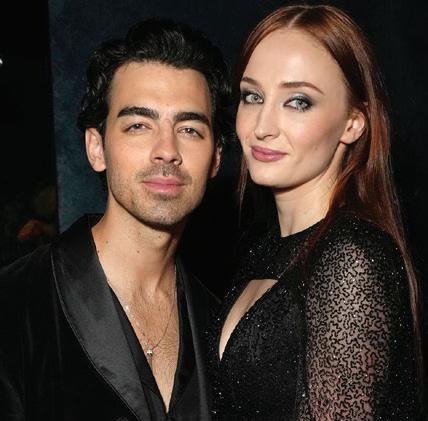
Joe Jonas and Sophie Turner announced their divorce on Sept. 6.
Mila Kunis and Ashton Kutcher face controversy after defending convict Danny Masterson.
Olivia Rodrigo released her second studio album “Guts” on Sept. 8.
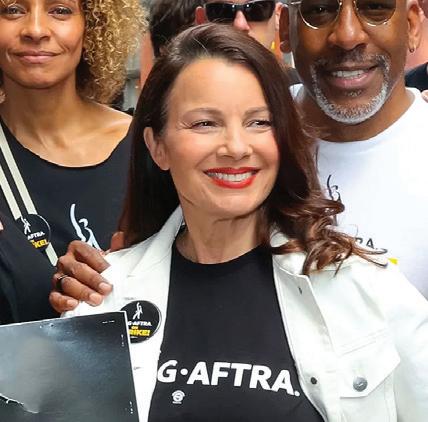
Fran Drescher was reelected as the president of SAG-AFTRA.
Courtesy of People
“The Nun II”: Nun, two, three-ish stars
Courtesy of The Hollywood Reporter
“The Circle” begins filming in Downtown Atlanta after the UK set was closed.
The Nun II has made $85 million in just its first week.
Courtesy of Dork
Photo courtesy of Men’s Health
This or That - The Story of Barbenheimer 2023
By Aidan Judge ARTS AND ENTERTAINMENT EDITOR
July 21, 2023; a day that has already cemented itself in history for hardcore filmgoers and fans alike. It was unlike any moviegoing experience ever before: a brooding group of film junkies ready for a three-hour telling of the story of the atomic bomb by acclaimed director Christopher Nolan versus a storm of sparkly pink outfits, in tribute to America’s original sweetheart, ready to view Greta Gerwig’s latest feminist concoction. The doublefeature event earned itself the catchy nickname “Barbenheimer” – describing a war between fandoms over which film they would view first: “Barbie” (directed by Gerwig) or “Oppenheimer” (directed by Nolan).
Both films were highly anticipated by fans and critics alike, likely due to their attachments to prestigious directors in the American film industry. However, what separated “Barbenheimer” from other dueling film releases in the past was the stark contrast be-
By Peter Pistone STAFF WRITER
The Marvel Cinematic Universe (MCU) has become one of the most iconic and recognizable adaptations in film history. Their films have brought many fan favorites to life in a way that tells a much bigger story than what’s seen within one movie.
The decade-plus long film universe has been known as one of the greatest to be produced in Hollywood, even if some films are better than others. The MCU has managed to create stories that made many invested and excited for what’s to come, but something has changed within the MCU. The series doesn’t feel like the one that we’ve come to know and love. It feels like it’s slowly descending into an inconsistent, directionless mess, riddled with character assassination and too much happening at once.
One of the few things that are
tween both films; “Barbie” has a spunky, glittery and hot-pink flare, while “Oppenheimer” has a dark, deeply serious tone. Fans found humor in the contrast between the films, prompting die-hard moviegoers to purchase tickets to both films in celebration of “Barbenheimer.”
Perhaps the most remarkable factor regarding “Barbenheimer” was that it was (almost) completely unintentional on both studios’ parts; Warner Brothers selected their release date for “Barbie” during filming, which took place from March 2022 to July 2022. “Oppenheimer,” released by Universal Pictures, operated on a similar schedule, with filming taking place in the first quarter of 2022. The release dates for both films were announced without the intention of creating the “Barbenheimer” phenomenon; a coincidence that worked out excellently in the favor of both studios. Not soon after the announcements of release dates

and the first trailers were dropped for both films, fans rushed to purchase double-feature tickets to see both films after social media popularized the idea of seeing both films on their shared release
the global box office. “Oppenheimer” also saw major success, surpassing the $800 million mark for box office revenue in Aug. 2023.
weekend.
Ultimately, Warner Brothers and Universal Pictures had huge success at the 2023 box office. “Barbie” became the highestgrossing film of 2023, grossing more than one billion dollars at
After seeing immense success with “Barbenheimer,” media fans across the world have taken acute notice of films and other projects being released on the same day. For example, Taylor Swift’s “Taylor Swift - The Eras Tour Concert Film” quickly snagged up Swift’s signature lucky number 13 for an October 13th release date, which was also the original release for Jason Blum’s reboot of “The Exorcist.” Blum announced that the film would be pushed up a week to release on Oct. 6, but that didn’t stop fans from coining the second coming of “Barbenheimer,” aptly titled “Exorswift.” Just like its counterpart, “Exorswift” pits two very opposite films against each other; Swift’s colorful, joyous
The MCU’s Fall From Grace
dragging the MCU down by its legs is its lack of a consistent story. The main goal of phases four through six focuses on the concept of the multiverse, with projects such as “Loki” and “Spider-Man: No Way Home” striving to go into more detail with this storyline.
That being said, there’s no consistent rule for the other timelines within the MCU.
From “WandaVision” to “Quantumania,” there’s hardly any consistency within the story of different universes. The writers of each production continuously contradict each other, combining the concepts of time travel, alternate universes and different timelines under one roof. Whenever some rules are set up, they’re quickly countered with rules for something else. In comparison, Sony Pictures’ “Spider-Man: Into the Spider-Verse” has a consistent set of rules for their multiverse story, and they stick with it in the
second film.
It’s also worth mentioning that not every movie follows this plot device. While it’s understandable that not every movie would follow the storyline of the multiverse, the MCU has too much going on at once. Some of them expand on older characters with subpar results depending on the character. This can either be in favor of a character, like Falcon or Hawkeye, or complete character assassination from a character’s previous appearance. There’s also an incredible amount of tonal whiplash that makes the projects in question, show or film, feel like they’re supposed to be super dark and interesting when they’re really the exact opposite. “Quantumania” is a perfect example of this tonal whiplash: the advertisements made it seem like this movie was meant to be a big deal that would’ve led to AntMan being possibly killed off.
concert film is stacked against a very gruesome, petrifying remake of the classic horror flick. In a similar vein, Swift’s highly anticipated re-release of her 2014 album “1989,” set for Oct. 27, also happens to fall on the same day as the release of “Five Nights at Freddy’s,” a movie adaptation of the 2010s classic horror video game, harkening back to “Barbenheimer” and “Exorswift” comparisons yet again.
So, it seems two major film releases by competing studios have proven themselves to be beneficial in a way that studios had never expected before – rather than being opposed to blockbuster films being released around the same time, some studios have decided to embrace the humor of seeing very opposite films released at the same time. In the future, the trend could stick, cementing itself as a mutually beneficial relationship between competition, and perhaps each calendar year will have a “Barbenheimer” moment that will be remembered by fandoms for the ages.
When the movie was released, however, it was filled with loads of unnecessary comedy to the point where it’s not even funny. This phenomenon is so prevalent that people have started to label this sort of comedy “MCU Humor.”
So many issues with the MCU currently could all be changed if they had one major and very important detail: direction. Long ago, the MCU brilliantly told the story leading up to Thanos. They were able to tell several different stories that may not have added up at first but would eventually play a huge role in the story they wanted to tell. The writers and directors had a clear path ahead, leading to an endgame during a time when this seemed impossible.
Phases four and five have zero direction for what they want to achieve. Sure, they have a path to Kang, but they’re suffocating to get there by adding unneces-
sary details, extra characters who serve no purpose other than shock value and storylines that overflow Marvel’s basket. They want to add more characters to the MCU, but they don’t realize they’re overwhelming the story down to the point where it’s tasteless fanservice in some areas.
That being said, not everything in the MCU has been awful. Despite the criticism given to the cinematic universe, some of their projects have been received well by fans. Fans are hoping for something to change within the MCU, but it’s sad to say that whenever the MCU seems to reach its peak, it manages to fall back into the same rut it just climbed out of.
THE CHRONICLE SEPTEMBER 12, 2023 • B3
A&E
Both films have reestablished the importance of movie theaters.
Photo courtesy of IGN
Overlooked Masterpieces: War and Anxiety
By Daniella McCoy SPECIAL TO
Originating in the late 19th century, cinema is very much on the younger side compared to many other art forms, yet its power and influence is just as inestimable and transformative as any of them. Unfortunately, but perhaps unavoidably, the intimidating scope of the cinematic canon all but guarantees that many will go mostly unnoticed. There are enough films from each and every era of the medium to keep one occupied for a lifetime, and the following five are among some of the finest.
“The Human Condition” (Japan, 1959-1961) dir. by Masaki Kobayashi
Where to Watch: Internet Archive
Based on Junpei Gomikawa’s novel and formed into a trilogy, this nine-and-a-half-hour treatise on humanism in the face of wartime cruelty and corruption is unquestionably hard to stomach. Kobayashi’s fully realized and deeply unglamorous
epic is harsh, bleak and devastating. The story of a single soldier desperately clinging on to his pacifist ideologies despite being constantly tortured, ridiculed and attacked by various parties (including his own) is one that will grip and often break the viewer, but those who can withstand its brutal realities will find themselves fundamentally changed by this soul-shattering plea for humanity during conflict.
“The Vanishing” (Netherlands/France, 1988) dir. by George Sluizer Where to Watch: Available to rent on Apple, Prime For fans of psychological thrillers, there are very few as stomach-churning and fascinating as this cruelly intelligent and intelligently cruel character study. Chronicling a husband’s attempt to unveil the truth about his wife’s disappearance, the film uses a subversive structure that almost completely reinvents the audience’s conception of cinematic mysteries. Its methodical crawl requires patience, and it is
this exacting narrative focus that makes the film so unforgettably haunting.

New York City paramedic is a phantasmagoric, expressionist ride that is brilliantly brought to life by some of Scorsese’s most experimental direction and an uncomfortably, captivatingly raw performance from Nicolas Cage. The otherworldly atmosphere and gorgeous imagery are tied together by exemplary editing and populated by a stacked supporting cast that eats up the scenery. The film tackles many themes familiar to Scorsese, and the auteur’s even-punchier-than-usual approach yields one of his most rewarding and memorable works.
90-minute panic attack that intelligently executes its disorienting and unpredictable plot.
“Quo Vadis, Aida?” (Bosnia and Herzegovina, 2020) dir. by Jasmila Žbanić
Where to Watch: Hulu
“Bringing Out the Dead” (United States, 1999) dir. by Martin Scorsese
Where to Watch: MGM+, Paramount+, Prime
With an oeuvre as extensive and celebrated as Scorsese’s, it’s understandable that some of his more “minor” works fall through the cracks, though many such films are anything but minor. This example about a tormented
“Coherence” (United States, 2014) dir. by James Ward Byrkit
Where to Watch: Peacock, Pluto TV, Prime, Tubi
One of 21st century cinema’s most original and unsettling puzzle boxes, Byrkit’s brisk yet wholly developed vision of identity and paranoia is best experienced with as little prior knowledge as possible, but viewers can expect a gleefully brain-breaking
The most recent film on this list is nevertheless one of the most hard-hitting and important. It takes place during the Srebrenica Massacre in 1995, taking the point of view of a schoolteacher-turned-United Nations translator. Its runtime is relatively short, but it manages to explore multiple aspects of the conflict concisely and respectfully. The entire film is far from easy viewing, but the last 20 minutes present some of the most gut-wrenching and horrifying depictions of real-life atrocities in recent memory without ever feeling exploitative. Žbanić’s work serves as a horribly effective microcosm for the cost of war.
CBS and Paramount face controversy with ‘Big Brother’ Live Feeds
Nicholas Stella
SPECIAL TO THE CHRONICLE
CBS has been bringing the reality show “Big Brother” to television screens every summer since the 2000s. Host Julie Chen Moonves has led this risqué and game-changing competition show since the beginning.
Each season, a new cast of twelve to eighteen contestants from the ages of 21 and up enter and are locked into a house together where they are forced to compete and vote each other out for a cash prize.
What makes “Big Brother” so different from other reality competition shows is their live feeds. The name of this competition show is derived from the George Orwell novel “1984” which coined the phrase “Big Brother is watching you.” This title is used purposefully, as the entire house is under constant surveillance by 94 HD cameras and 113 microphones. These are available to watch by
anyone now, as they are being aired on Pluto TV for free. These live feeds are a major topic of conversation, as in recent seasons they have begun to cause a lot of controversy for the Paramount company.
“Big Brother” is not shy of controversy. In the past, the show didn’t have a strict policy on bigotry and discrimination, causing many houseguests to use slurs and derogatory terms without punishment. This problem continued to cause many minority groups to feel outcast and misrepresented by CBS and their reality shows.
Recently, CBS introduced a policy surrounding their casting for these reality competitions where at least 50% of the cast must be a person of color. This was implemented alongside a zero-tolerance policy surrounding hate speech, which has mostly been affecting “Big Brother,” as everything the houseguests say is documented and broadcast live.
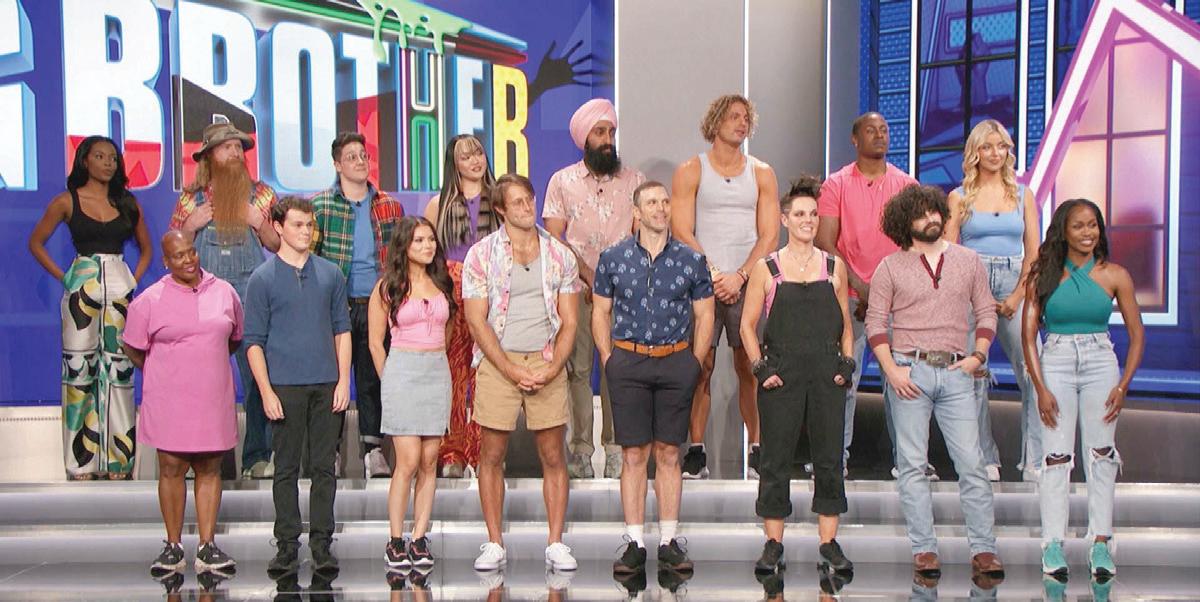
In season twenty-five, which is
currently airing, viewers have watched this rule go into effect.
Luke Valentine, a white contestant cast on the 25th season, was caught using a racial slur on the live feeds during the first week of the season before anyone had been eliminated. Because of this, he was removed from the house. This action was met with some love and some hate from the audience. Some said that this should’ve been done in earlier seasons.
For example, season 24 featured Taylor Hale, the eventual winner of the season who in the early episodes was being bullied and discriminated against by her fellow castmates through several micro-aggressions because of her skin color. Many felt that production should’ve removed houseguests who were constantly spewing these hateful words towards her, but no action was taken. Many felt that removing Valentine was the right thing to do and applauded the new steps production was taking to be more
inclusive. But, two weeks later, Jared Fields, another contestant on the show who had just won the powerful position of Head of Household, used a derogatory slur while speaking about another contestant’s mental capacity. So far, as of Tuesday, Sept. 5, there has been no statement or movement made by production to remove Fields from the show. But critics online have made a movement asking for his removal.
Overall, “Big Brother” has
historically had a bad run-in with controversy, and it seems to stem from the fact that the houseguests are under 24/7 surveillance. This aspect is one of the big draws of the show, and with many rumors floating around that it could be removed for the next season, could “Big Brother” survive any more controversy?
B4 • SEPTEMBER 12, 2023 THE CHRONICLE A&E
THE CHRONICLE
Anti-war films have become more popular in recent years.
Big Brother has been criticized for its lack of diversity in the past.
Photo courtesy of Slant Magazine
Photo courtesy of US Weekly
staff. The Chronicle does not discriminate based on the opinions of the authors.
Book banning: Detrimental to education
By Allison Siegel
Book bans in the United States have reached an all-time high. This is a product of ongoing debates that stem from our nation’s communal values. Librarians and teachers who were once viewed as heroic civil servants are now being demonized. Librarians and teachers are experts in their fields. They go through many tests and enlist in various classes to meet the requirements to be able to teach. Teachers and librarians have credibility and are knowledgeable.
I understand parents being concerned about their child’s wellbeing. However, I believe that any decisions that are going to be made need to go through a process to avoid decisions being made based solely on politics. Our culture
of education has taken a major pivot, and it is our choice as Americans to decide which direction to take.
When children read, they are given a chance to dive into a different life completely, they can form empathy and understanding for different types of people and cultures. “To Kill a Mockingbird,” written by Harper Lee, is a book that is known through generations as transformative; however, it was recently listed as one of The Los Angeles Times’ “15 Most Banned Books in America.”
While the paperback version has been knocked off the shelves in many states, the story appears on Broadway.
Parents want to filter their children’s education through the books they read. Education is a “discovery processs” meant to teach what simply can’t be
learned from home. This process is being completely hindered by adults and it is unfair. I can understand and appreciate parents having values that they want to be taught to their children, but that takes place in the home.
Bans on books are not “perstudent” or individualized. A book ban affects every current student, as well as future students to come. What happens when children aren’t able to access stories of other viewpoints, or even stories of controversial topics that have the potential to start meaningful conversations? How does it look to a child of an LGBTQ family that a book that says “gay” in it was banned from their school library?
At school, students are taught a wide range of information, so that they can form their own thoughts and opinions. If we
change our curriculum or book lists, children won’t be able to learn for themselves, they will be just a product of their parents. Books are great pathways to new knowledge and understanding of others. When we filter the books students can read, we are also filtering what they learn and the empathy they can gain.
In ninth grade, we often read “The Catcher in the Rye.” This is a book that focuses on themes such as depression, loss of identity, innocence, etc. The book captured themes that I could relate to at the time. I resonated with Holden and his personal struggles in the real world. As a student, I craved conversation on the subjects covered in the book, but these topics were barely even discussed. I then read the book again in 10th grade English
class at a new high school. This time around, I felt that we were able to hold a discussion free of judgment.
Engaging in these important conversations was extremely beneficial to my growth as a student and as a person. I was so thankful that my new school allowed their students to have freedom of thought.
We don’t all have to agree, but learning from each other and holding conversations on things we don’t agree with is so valuable. Eliminating controversial books means eliminating controversial conversations.
Acting on New York’s illegal cannabis market
One of the promises of cannabis legalization was the creation of a safe drug market, yet retailers who offer unsafe products still wrongly dominate the city’s cannabis market.
Before legal dispensaries were opened in New York, these gray-market shops popped up as New York’s own homegrown quirky way of legalizing the drug, almost as a protest of New York’s cannabis laws, taxes and strict regulations. These shops do not follow the same safety regulations as their competing legal dispensaries, leaving consumers exposed to dangerous products.
Many people shop at unsafe dispensaries without realizing that they are illegal. Some of these shops impersonate legal businesses, which effectively
fools people into purchasing these illegal and unregulated products. For instance, the inside of Empire Cannabis Clubs looks like the inside of an Apple store, with its shiny white countertops and glass cases displaying products. Generally, people are more aware of the safety risks when purchasing cannabis from a street dealer, but these shops have an easier time tricking people.
While these illegal operations are slow to be shut down, not enough is being done to incentivize people to opt for legal cannabis. Even people who know which dispensaries are legal often choose illegal shops because of product cost and quality. The rollout of legal dispensaries has been underwhelming and unsuccessful as they often offer overpriced products, leading to low sales.
At legal dispensaries such as
Housing Works in Manhattan, an eighth of an ounce of cannabis flower can go for as much as $50, when illegal operations often sell the same amount for less than half that price. Along with the pricing, there is also the convenience of the illegal retailers. Currently, there are only five legal dispensaries in New York City, while earlier this year, Sheriff Anthony Miranda said that authorities were investigating over 1,400 illegal shops.
New York State has absolutely failed to follow through with its promise of a robust cannabis market, which would have pushed people away from illegal sales. The small number of retailers, slow openings and lofty taxes makes it difficult for the legal market to take off. While more dispensaries have been approved, the process for their opening has been tedious
and delayed.
More needs to be done to urge people to shop at legal dispensaries, and this may need to come with lower taxes. While a lower tax on cannabis would result in less revenue in the short term, it would help capture more customers and sales would increase as the illegal market loses strength.
These problems seem to be unique to cannabis as a newly regulated industry because of the robust market before its legalization. If more illegal operations shut down and more legal dispensaries open with affordable prices, then people won’t choose to buy unsafe cannabis. Cannabis users should not have to be unsure of the safety and validity of the cannabis retailers in the city and of the safety of the products they are buying.
More steps need to be taken
to make the cannabis market operate like any other regulated industry. For example, alcohol isn’t taxed to the point that people buy bacteria-contaminated products from illegal sources; if it was, we would still have speakeasies lining the city streets.
When restaurants fail their safety inspections, they get shut down; why aren’t unsafe cannabis retailers shut down as easily? Consumers want markets free of bad actors, impersonators and unsafe products; what makes the cannabis market any different?
Timothy Daly is a sophomore journalism major. You can find him at @timdaly5 on Instagram.
A12 • SEPTEMBER 12, 2023 THE CHRONICLE OPINION
The views and opinions expressed in the Opinion section are those of the authors. They are not an endorsement of the views of The Chronicle or its
Allison Siegel is a mathematics major and journalism minor. You can find her @allison.siegel.
Have an opinion? We want to hear it. Email us at huchronicle.op.ed@gmail.com
CONTINUED FROM A1
THE CHRONICLE SEPTEMBER 12, 2023 • A13 OPINION Email us at huchronicle.op.ed@gmail.com for the answers.
Chron Crossword 9/12 Untitled Across
Graphic by Makenzie Hurt / The Hofstra Chronicle
1. Award show for Broadway stars
5. Lincoln ___, current SGA president
7. Social media platform frequently used for making mood boards
8. Surname of the 19th-century sisters who were also a writing duo
9. Gemstone symbolic of wealth and power
10. Hailey Bieber's husband
11. "I'm ___": Ken's sweatshirt slogan in the movie "Barbie"
Down
2. Film about the man responsible for the atomic bomb
3. Artist behind "The Water Lily Pond"
4. Kobe Bryant's basketball team
6. Hofstra's radio station
1 2 3 4 5 6 7 8 9 10 11 12
12. Open America's tennis championship held in Queens, New York
Equal opportunities for players, but not fans
By Makenzie Hurt
Each year, the US Open Tennis Championships are held in Queens, New York. It is the fourth grand slam tournament to occur yearly, preceded by the Australian Open, the French Open and Wimbledon. However, the US Open is inarguably the most anticipated event. This year’s US Open celebrates 50 years of equal pay thanks to female tennis player Billie Jean King, who initiated female and male tennis players receiving equal pay for participating in matches.
Although the players themselves are now receiving equal pay and plenty of opportunities with the cumulative reward for winning the final match set at $65 million, it is not an equal experience for tennis fans. It can’t be argued that tennis isn’t an expensive sport to play. Rackets, balls, clothing and lessons all add up. But you shouldn’t have to be rich to
watch tennis.
Celebrities like Anna Wintour, Hailey and Justin Bieber, Barack and Michelle Obama, Danny Devito and Michael Phelps have all been in attendance this year. What do they all have in common? Wealth. In addition, the sponsors and brand partners of the US Open are all prestigious, luxury brands such as Polo, Cadillac, Tiffany & Co., American Express, Rolex and J.P. Morgan.
The prices of food and merchandise are remarkably higher than those of most sports arenas. Citi Field, the New York Mets’ stadium, charges around 63 cents per ounce of beer while the US Open charges around 93 cents per ounce when I viewed their menu prices. Location isn’t a factor either, considering Citi Field is only a few minutes from Arthur Ashe Stadium.
The argument that the duration of the US Open is much
shorter than baseball season – so their food and beverage prices ought to be higher – can easily be torn down as the ticket prices for the US Open are much higher than any regular-season Mets ticket. The median rate for Mets tickets is currently between $50 and $60, but they are also available for less than $10 on different ticketing websites. On the other hand, the least expensive US Open tickets, depending on the match, could go for hundreds on Ticketmaster.
So, why would the US Open only cater to the wealthy? With the rise of the “old money aesthetic” on social media, tennis has in turn become more popular than ever. The sheer fact that the fabulously wealthy are now being directly associated with tennis goes to show that it is a sport only being catered to those who can afford it.
The organization’s sponsors and partners are most popular
with those in high tax brackets – no lower-class individual would be able to afford the 2024 Cadillac, which is being heavily advertised at the US Open. The organization gets partnership funding from luxury corporations, and they are banking on the wealthy attendants seeing sponsored items and thinking, “Well, if this item is associated with the US Open, which is perceived as prestigious, then I’ll be perceived similarly if I buy this.”
Matt, a US Open attendee from Queens said, “I don’t want to say I’m shocked... but [the prices] were high, you expect it to be high.” Another attendee, Johannas, said that they intentionally came to the free day event on Thursday, Sept. 7, but remarked that “the plan is to come here for free and buy nothing, just enjoy the sport. We’ve played tennis for nine years... For [these prices] you can take a helicopter
around New York City for 15 minutes.” So, it’s no secret that tennis fans who simply enjoy the sport are feeling the heat from the high dining and ticket prices.
The US Open intentionally sets high prices to draw in a specific crowd, which will in turn make them more profits, keep the audience in the specific class that they want and make their brand partners and sponsors continue to work with them.
If the US Open wants to preach the achievement of equal pay, they should also make the event equally accessible. The stadium is surely big enough, and if the Mets can have low-priced tickets and relatively inexpensive food, can’t the US Open?
Makenzie Hurt is a junior English major and journalism minor. You can find her on Instagram @makenziehurt.
By Ethan Albin
The day someone turns 21 is supposed to be a marvelous one, celebrated by downing beverages that one wouldn’t ordinarily be able to drink until they come of age. Despite being a legal tax-paying citizen for three years beforehand, the age at which one can start drinking is a rite of passage for all Americans.
College students plan out wild parties to celebrate the occasion, but why 21? Supposedly because brain development tops out then, according to the Addiction Resource Council. Yet, I find it odd that I can get drafted into the military to fight wars for this country and fund its economy with my taxpayer dollars all before I can crack open a cold one.
The minimum legal drinking age is, in fact, 21, but millions of Americans begin drinking
before then. According to the National Institute on Alcohol Abuse and Alcoholism, “5.9 million youth ages 12 to 20 reported drinking alcohol beyond “just a few sips” in the past month” in their 2021 study. So regardless of whether they are underage or not, Americans will still find a way to get their hands on booze. Whether that means through a parent or guardian or on their own, kids will find a way to get it.
A study done by Mothers Against Drunk Driving found that “a third of parents allow youth access to alcohol according to both teen and parent responses. Of the parents surveyed, one in five (21%) say they allow alcohol consumption from time to time, while a smaller amount (9%) allow it fairly often.”
Parents might harp on others that allow their children access to alcohol; however, if underage
drinkers are going to get alcohol regardless, wouldn’t it make more sense for it to be safe?
Even with the nation’s past of
the economy. They can vote, they can be plucked from their homes and drafted into war, and they are taxpayers. Logically, with all these responsibilities, it’d make sense for them to have the right to drink legally. They can fight for their country, but they can’t consume liquor. Make that make sense. They can elect the leader of the free world, supposedly the “greatest country on Earth,” but they cannot drink legally. That’s absurd, and America is lacking on the policy.
confines one of the freedoms a majority of the world has.
banning alcohol during Prohibition, Americans still found a way to obtain it. Speakeasies ran rampant as bootleggers moved their own products. Historically speaking, the regulation of alcohol by the government has never gone smoothly. Also, Americans who are below the drinking age are a huge part of the workforce and
The U.S. is one of the few countries left to have a legal drinking age of 21. You can purchase all forms of alcohol in the majority of European countries at 18. Germany, Belgium and Switzerland are all among the countries that allow for alcohol to start being purchased at the mere age of 16. America touts itself as the nation of the free, but the government
All in all, the case for a lower drinking age can be made 1,000 times over. Americans under the legal drinking age still engage in the activity of alcohol consumption regardless of it being illegal. They contribute to the economy and are treated as adults under the law but aren’t given the privilege of alcohol consumption until years after “adulthood.” If one can be drafted into a war that they didn’t start but can’t crack open a cold one, something’s wrong.
Ethan Albin is a junior journalism major with a minor in creative writing. He’s also the co-editor of the Opinion section. You can find him on Instagram @ethanalb.
A14 • SEPTEMBER 12, 2023 THE CHRONICLE OPINION
The minimum legal drinking age is proposterous
The views and opinions expressed in the Opinion section are those of the authors. They are not an endorsement of the views of The Chronicle or its staff. The Chronicle does not discriminate based on the opinions of the authors.
“If one can be drafted into a war they didn’t start but can’t crack open a cold one, something’s wrong.”
CONTINUED FROM A1
“I think that there’s been an effort made by the presidents and the athletic directors to really try to look down the road to see where the enterprise of college athletics is going, from a membership perspective and how we support our student athletes collectively,” said Hofstra Athletic Director Rick Cole on the topic of CAA expansion. “I’ve been optimistic about where we’re going and I’m optimistic about the opportunities it provides, most importantly, for our studentathletes here at Hofstra.”
The CAA has shown steps of doubling down on its core values, with the addition of North Carolina A&T effective July 1, 2022 and their FBS Football team joining the conference effective July 1, 2023, along with Campbell University joining as a full member on July 1 of this year, based on a decision to expand
State of the CAA
made as far back as three years ago according to Commissioner D’Antonio.
“In a time and place right now in college athletics where, from a conference membership standpoint, there’s a tremendous amount of instability,”
D’Antonio said. “If you’ve been following the bouncing ball over the last month, there has been a decent amount of instability, especially in the [Power] Five conferences. In the CAA, I really feel like at this point in time, we have a tremendous about of stability.”
“There’s a lot of change that faces college athletics, I mean look at what’s going on with the [Power] Five; conference reformational has been constant since I’ve been in college athletics,” Cole said. “I think it’s been going on forever and I don’t think it’s going to slow down, that’s my opinion. Presidents and institutions are making decisions based on
geography, based on finances, [trying] to be around likeminded institutions, so I do think that stability in the league is important.”
That stability, according to D’Antonio, exists as (in no particular order): geographical fit, academic fit and a commitment to elevating the existing athletics programs.
“We’re really concentrated and focused on providing the best opportunities and experiences we can for our members and our student athletes,” he said. “If we weren’t doing that, I wouldn’t be doing my job.”
“I do think there’s a passion to be committed to the overall growth and development of our student-athletes,” Cole said. “Especially as a mid-major where it can be very competitive and very tough, I think that the league has shown that it’s committed to those values and I think that’s important.”
Those same opportunities also extend beyond those of the student-athletes, going as far as media rights as seen by contract extensions with CBS Sports and FloSports. With it, FloSports, who has been in contract with the CAA since 2019, is extended to the 2026-27 season.
“Number one, we wanted an opportunity to be able to showcase our men’s and women’s basketball programs on national linear television,” D’Antonio said. “Number two, we wanted an opportunity to be able to monetize our digital rights on the streaming site. And with FloSports, we’re with a great partner that cares about the conference and is paying the conference a fairly substantial rights fee in order to have our content on their air.”
What’s unique about all this, is that even while under broadcast media contracts with FloSports, schools like Hofstra have had the chance
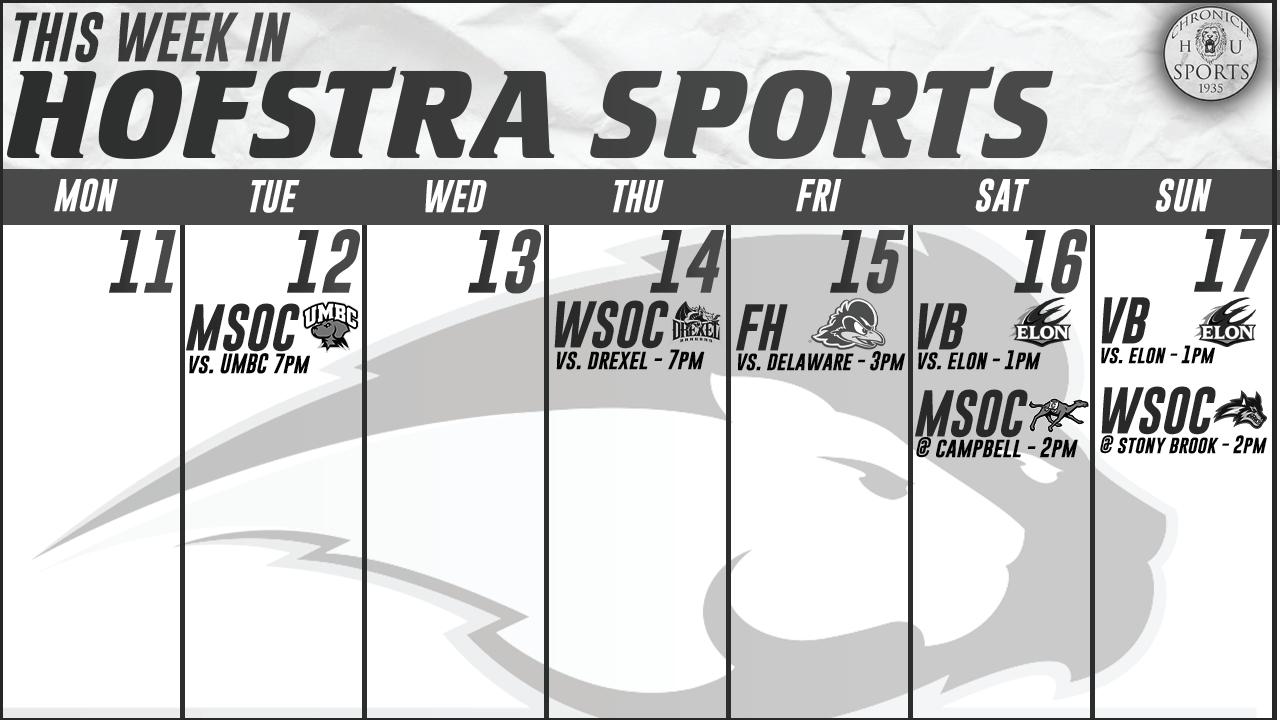
to sign with MSG Networks, and other peer institutions like Towson University have signed with NBC Sports Washington/ Monumental Sports Network to stream their games as well.
“We wanted an opportunity to be able to monetize our digital rights on the streaming site,” D’Antonio explained. “Through the great partnership with CBS and with FloSports, we’ve been able to allow our institutions to maximize their ability to utilize the local linear rights.”
Overall, the landscape of college athletics has changed. It’s up to those in it to react accordingly.
“Membership is going to be a constant agenda item for presidents and athletic directors throughout the country,” Cole said. “I just think it’s important to be aware of the landscape, you want to keep your finger on the pulse.”
Andrew Fantucchio contributed to this story.
THE CHRONICLE SEPTEMBER 12, 2023 • A15
SPORTS
Graphic courtesy of Dylan Brett
By Max Edelman SPORTS EDITOR
Hofstra dominates Dartmouth, moves to 10-1
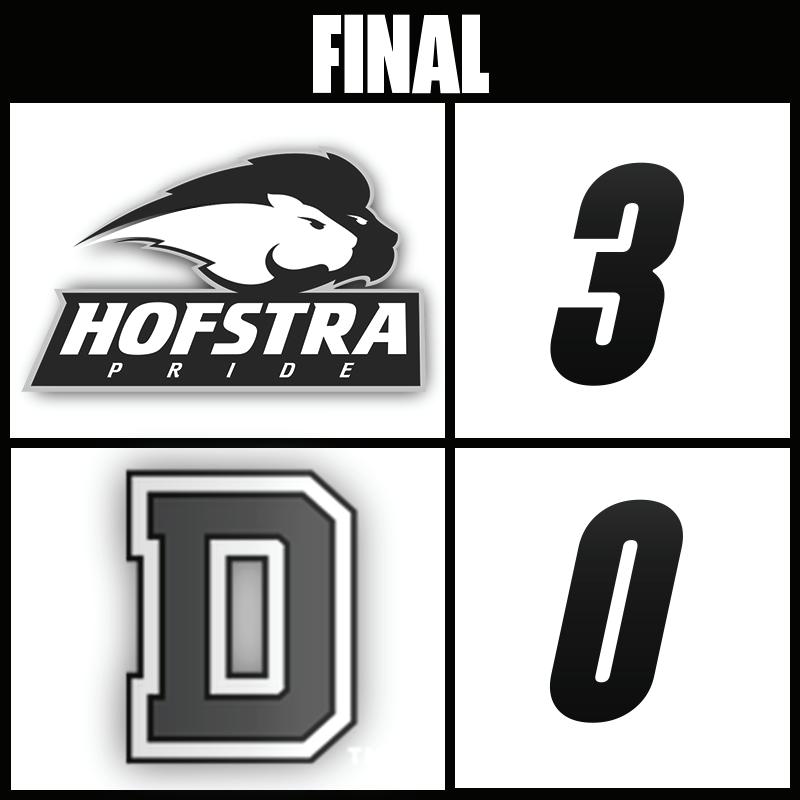
she has 132 kills at this point in the season, leading the Coastal Athletic Association (CAA).
Sophomore Izadora Stedile followed Bal with nine kills of her own, followed by graduate student Sarah Pierre who posted six.
the team, highlighted by her CAA Player of the Week award on Monday, Sept. 11. Alvez has 401 assists on the season, putting her at the top of the CAA.
The Hofstra University volleyball team continued their early season success, taking down the Dartmouth College Big Green on the road in Hanover, New Hampshire, in three sets on Saturday, Sept. 9. The win marks Hofstra’s 10th in its first 11 games on the season and concludes Hofstra’s nonconference schedule.
Sophomore Clara Bal led the Pride in kills with 11. In total,
By Arcangelo Iurato STAFF WRITER
Junior Beatriz Alves and senior Yagmur Cinel both recorded four service aces each in the contest. Cinel and Alvez continue to dominate serving the ball, with both women ranking in the top four in service aces in the entire conference with Alvez in first with 24 and Cinel in fourth with 17.
Alvez and Pierre also both led Hofstra in blocks in the contest with two apiece. Pierre currently ranks sixth in the conference in total blocks with 38. Alvez also led the team in assists with 32. With no other player on the Pride collecting more than two, Alvez continued to show her versatility and importance to
The Pride dominated the game from the opening serve, holding double digit leads at multiple points during the contest and took the first set by a score of 25-19.
The second set was much closer than the first, with neither team being able to pull away from the other. Neither team led by more than three points until the score was tied at 18. It was at that point when the Pride took control of the second set. Rattling off five straight points to take a 23-18 lead, they won the set 25-23 despite a comeback attempt by Dartmouth.
The third set mirrored the first set, as both teams traded points in the early stages of
the contest. Despite Dartmouth seemingly taking control of the set with a 13-8 lead, the Pride roared back, outscoring the Big Green 17-6 the rest of the way en route to a 25-19 three victory, thus sealing the match for Hofstra.
With the 10-1 start to their season, the team has their best start to a season since 1988. The Pride will now open
Battle of Long Island ends in 1-1 draw
of huffing and puffing without much continuity. The continuity was sucked on a regular basis, wrongly in my opinion.”
There was no shortage of drama in the battle of Long Island as the Hofstra University men’s soccer team finished with a 1-1 draw against the Stony Brook University Seawolves at Hofstra Soccer Stadium in Hempstead, New York, on Saturday, Sept. 9. The Pride’s Coastal Athletic Association (CAA) record dropped to 0-0-1, but their conference account opened with a bang.

“It had many of the characteristics of a local derby,” said Hofstra head coach Richard Nuttall. “Toe-to-toe, lots of battling from both teams, lots of energy, lots of hard work, lots
Reigning CAA Player of the Year Ryan Carmichael snatched his third goal in five games and put the Pride in front with a header in the 19th minute via a cross sent in by defender Stefan Mason. Hofstra’s lead didn’t last long though, as Jonas Bickus scored the equalizer only seven minutes later. It was the Seawolves’ first shot attempt of the match, and it was enough to save the draw. It was also the Pride’s first goal scored against them at home this season. However, much of the focus was on what took place outside the two goals. In the 71st minute, Stony Brook defender Jacson Coppack was sent off via red card for a foul on opposing defender Pierce Infuso. Hofstra had a one-man advantage for approximately a quarter-of-anhour until the 88th minute when midfielder Eoin Farrell was sent off in the aftermath of a foul on opposing midfielder Amit Magoz. The final minutes were played 10-a-piece.
“I thought we were good in many ways,” Nuttall said. “But when they [Stony Brook] were down to 10 [players], we committed the wrong bodies at the wrong times to get forward. We were fortunate not to concede when they had 10 and we had 11 [players].”
In addition to the two reds, three yellow cards were also handed out to each side. There were 27 total fouls called throughout 90 minutes.
“I’ve got to be careful with what I say,” Nuttall said. “I think some of my actions spoke out loud, I thought the continuity of the game wasn’t good when it didn’t have to be that great. That’s the best way I can put it.”
Hofstra outnumbered Stony Brook 19-8 in total shots and had twice as many shots on goal with 10 shots on goal to Stony Brook’s five. They had seven more corners and forced nine saves out of Seawolves goalkeeper Edmond Kaiser.
“We had loads of chances,” Nuttall said. “A lot of our better players, I think, played well. There are your positives. A
conference play, with their first pair of matches taking place at the David S. Mack Physical Education Center against Elon University. The first of the two games will take place on Saturday, Sept. 16, at 1 p.m.
disappointing draw, though, without a shadow of a doubt.”
From the chants of support from Hofstra supporters to the chorus of boos that rang down the stands amid Farrell’s dismissal, the match encapsulated a heated rivalry and a close battle in its own right.
“It was a nice crowd here, good atmosphere,” Nuttall said. “Everyone’s fired up, including their coaches, our coaches and all the players. I think that was the good part about it, loads of energy out there. That was fun.”
The Pride’s overall record is 3-1-1, and they’ve yet to lose a match at home. The team will be put to the test once again as they host the University of Maryland Baltimore County Retrievers on Tuesday, Sept. 12. Kickoff is scheduled for 7 p.m.
A16 • SEPTEMBER 12, 2023 THE CHRONICLE SPORTS
Hofstra is now 19-12-7 all time against their Long Island rivals.
Photo courtesy of Alexis Friedman/Hofstra Athletics
The team is currently hitting .275, third highest in the league.
Photo courtesy of Hofstra Athletics
Hofstra beats Stonehill before going into conference play
By Olivia Hillestad ASSISTANT SPORTS EDITOR
five minutes.’ It was a goal of theirs, and they capitalized and got two [goals] in the first five [minutes].”
The rainy first quarter started quickly for the Pride, starting with Jamie Mc Millan who found the back of the net just 52 seconds into the game off a corner by Teresa Karoff and an assist by Kesia Richardson. Karoff took all 11 of the Pride’s penalty corners during the game, eight of which happened in the first quarter.
off her leg guard.
“All three goalkeepers were trying to get time and get them playing experience and seeing who organizes and connects with the backfield,” Veinotte said. “[Roos] had an incredible game; I think she had an incredible lie-down penalty corner save with a high kick, a high leg guard save, which is just an incredibly athletic movement. She’s got great skillsets, great organizational skills.”
On Sunday, Sept. 10, the Hofstra University field hockey team beat Stonehill College 4-1 at home, thanks to a speedy start with two goals in the first five minutes.
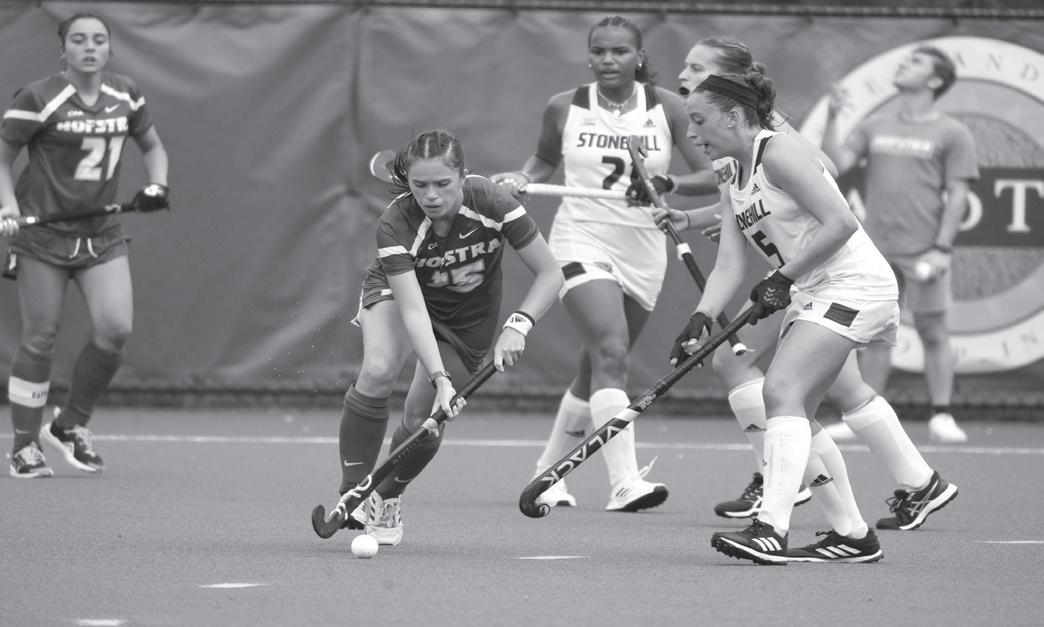
“It’s something they were intentional with,” said Hofstra head coach Courtney Veinotte. “The past couple of games have been a bit slow to the start. Today they said, ‘Hey, the minute the whistle blows, let’s get some pressure and take care of the ball in the first
Hofstra’s second goal came just under five minutes into the game when Samantha Spera dribbled down the end line before feeding the ball to Gabriela Espinoza to net a goal. The Pride dominated the first quarter, ending with 14 shots.
Both teams failed to score in the second quarter, and energy died down from the Pride, who had only one shot to the Seahawks four. Hofstra keeper Pieke Roos made three saves during the quarter, including one
The Pride earned their third goal early in the third quarter after Cami Valor dribbled in, putting the ball in front of Spera who made the shot.
The action picked up in the fourth quarter with a goal apiece by both the Seahawks and the Pride. Stonehill player Lacy Moran got ahold of the ball off a turnover and nailed her shot to the right of Hofstra’s Meghan Reilly.
In dramatic fashion, with only one second left in the game,
Maya Williams passed the ball inside to Logan Oswalt who tipped it in with a backhand shot to earn the Pride their fourth and final goal.
“Winning is not easy, at all, any game,” Veinotte said. “You have to show up and you have to put together your best that you can, so any win needs to be celebrated.”
Hofstra’s next appearance on the field will be home to open conference play against the University of Delaware on
Friday, Sept. 15, at 3 p.m.
“Going into every game we’ve just been focusing on what can we pull from this game, how can we get better this week, what can we implement in practice and we’re seeing small growths as we go here with this group and every game getting a little bit better,” Veinotte said. “We’ve got all eyes on Delaware right now and putting together the best plan.”
Hofstra beats Campbell 1-0 to open CAA play
 By Marisa Dambach STAFF WRITER
team and took a beating there, so we thought going into this game was going to be a little bit fresher and have the ability to push the tempo of the game, and I thought we did that well. Fortunately, we came away with a fantastic goal to seal the deal.”
The Pride improved 4-2 in the season and 1-0 in conference play, while Campbell drops to 2-3-2 overall and 0-1-1 in conference play.
Riddiough said. “It was not only a great strike, but the ability to see the goalkeeper off the line and then execute is what makes it special. Not only that, but she put in a good shift defensively. In the last couple of minutes, she killed the clock very well, so really happy for her, and hopefully, this is the lightbulb moment for her.”
Riddiough said. “Obviously, having Skylar back with all the 80 million games she played in college allows you a bit of experience and comfortability, so I think our back five were excellent today.”
Goalkeeper Skylar Kuzmich made one save on the afternoon, and Varada made five for the Fighting Camels.
The Pride returns to the pitch on Thursday, Sept. 14, to face the Drexel University Dragons in a CAA matchup at the Hofstra Soccer Stadium at 7 p.m.
On Sunday, Sept. 10, the Hofstra University women’s soccer team defeated the Campbell University Fighting Camels 1-0 in the Coastal Athletic Association (CAA) opener. Midfielder Wiktoria Fronc scored the winning goal in the 52nd minute to record three goals in three games.
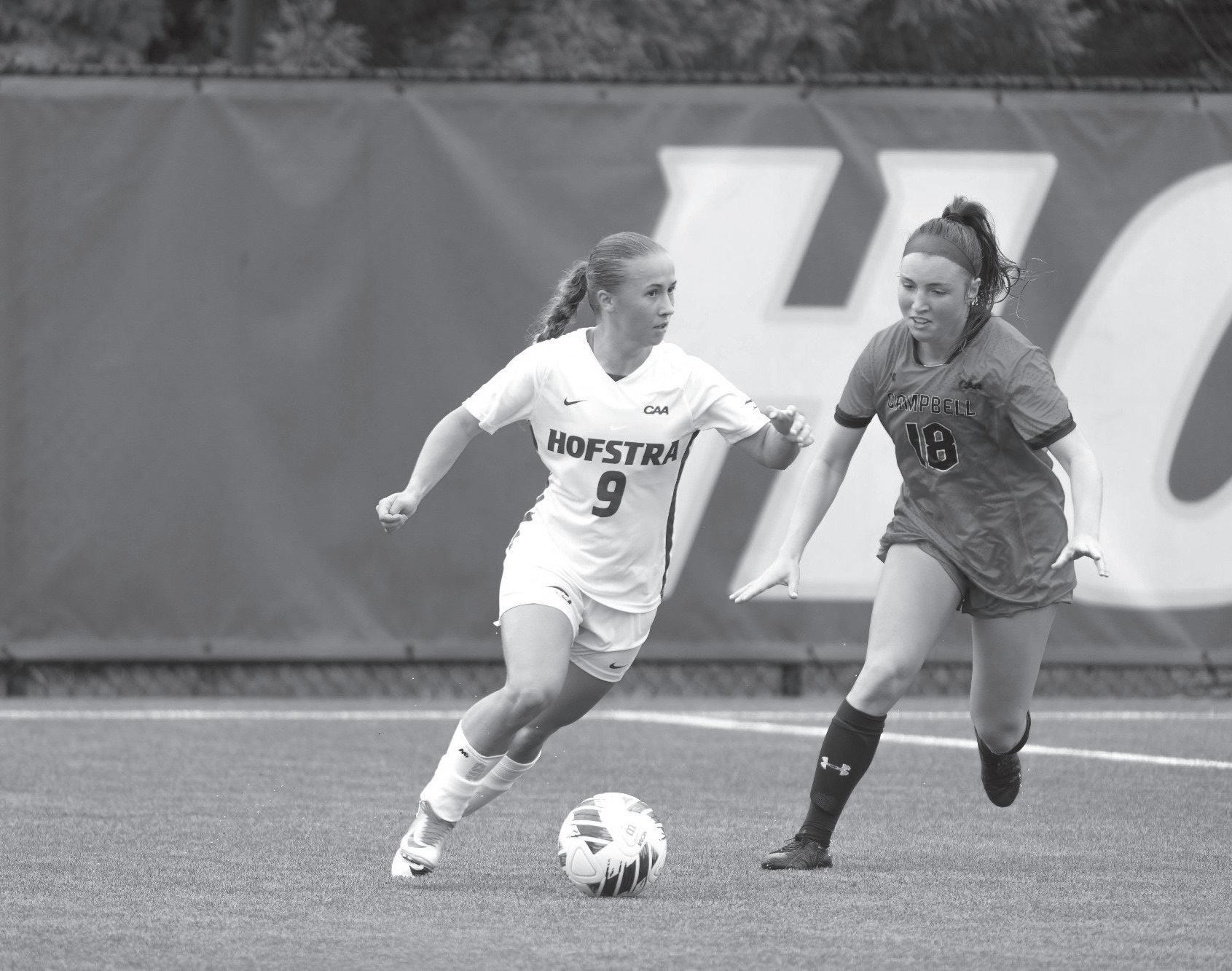
“It was your typical CAA battle, two good teams going at it,” said Hofstra head coach Simon Riddiough. “We were fortunate with the scheduling. Campbell played on Thursday against a tough Stony Brook
In the 52nd minute, Hofstra finally broke the deadlock. Fronc dribbled the ball up the field, starting the counterattack. As she dribbled, the play became a three-on-three where she saw goalkeeper JLo Varada off her line. At this point, she chose to strike the ball, lofting it over Varada and landing in the back of the net. The Pride led 1-0 for the remainder of the game.
“We’ve moved [Fronc] to a different position, a position she’s not 100% committed to yet. She’s finding little pockets; she’s three goals in three games. Today’s goal was world-class,”
Hofstra almost had their first goal prior to Fronc’s, but it was saved by the goalkeeper. Midfielder Millie Davies got fouled at the top of the box resulting in a free kick at a good spot. Midfielder Aimee Hodgson stepped up to take the kick, sending it toward the top right corner only for Varada to tip it over the bar at the last second.
The Pride’s defense held the Fighting Camels down, as they only allowed three total shots and only one on target.
“The back four was solid. I thought they stepped well and covered well for each other. We simplified a couple of things for them which I think makes it easy for them to execute,”
THE CHRONICLE SEPTEMBER 12, 2023 • A17
SPORTS
The win was Hofstra’s third shutout victory of the season.
Photo courtesy of Alexis Friedman/ Hofstra Athletics
Hofstra has outscored their teams 14-1 in three victories this season.
Photo courtesy of Alexis Friedman/Hofstra Athletics
Men’s soccer: chasing their third straight ring
By Arcangelo Iurato STAFF WRITER
After two consecutive Coastal Athletic Association (CAA) titles, the Hofstra University men’s soccer team seeks a third when it takes to the pitch in 2023, led by head coach Richard Nuttall for a 35th consecutive season.

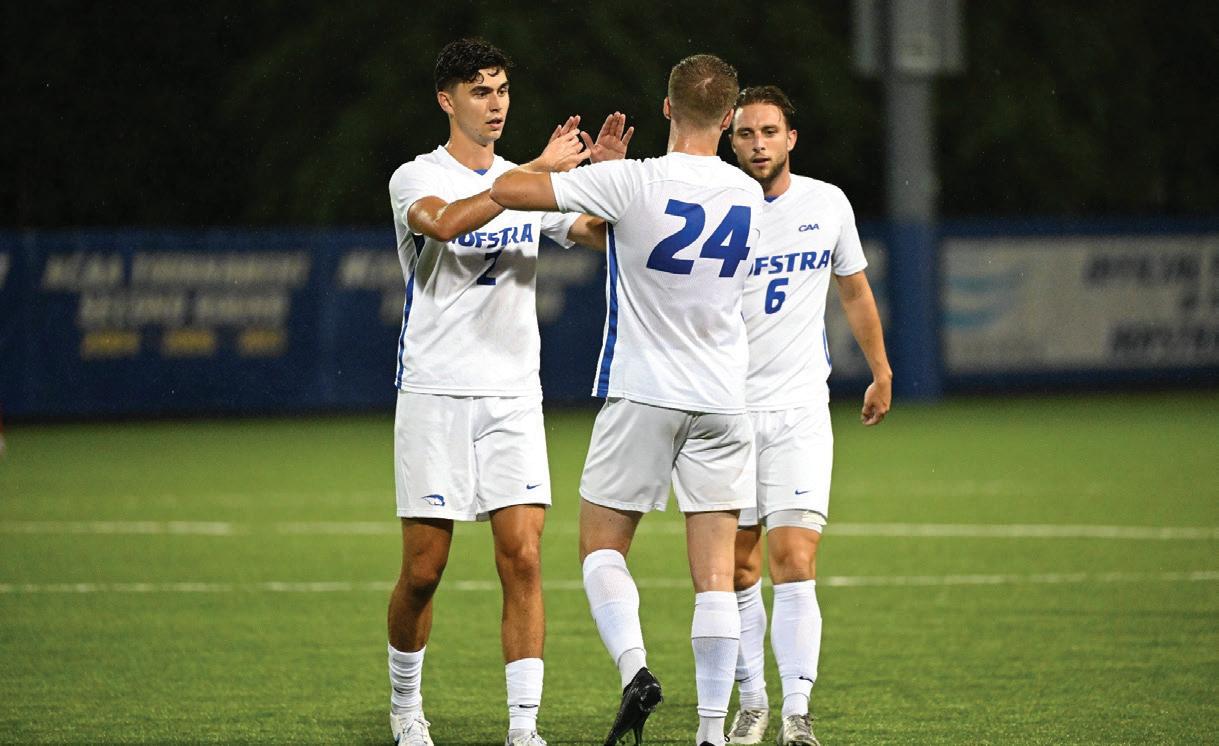
“There are quite a few emotions,” Nuttall said. “The biggest one is that I’m more excited than ever about the prospects of the season.”
The Pride is experiencing some of its greatest success in program history, however, Nuttall, having been around for nearly as long as the program has existed, believes more has to be done.
“Last year wasn’t good enough,” Nuttall said. “We won the CAA championship, but we lost in the NCAA first round, and we’ve got some cracking players.”
Hofstra followed up a historic 2021 campaign with 14 wins in 2022. They finished the regular season with a 5-2-2 record in conference games and entered the CAA championship as the third seed. They took down the College of William & Mary, UNC-Wilmington and top-seed Elon University in that order to return to the big stage. The season ended at the hands of the University of South Florida in the NCAA first round, but that didn’t mean their ambitions ended there.
“Just winning the conference is not going to be our mindset,” Nuttall said. “I don’t want to keep looking back, but this program was well-supported.
We’ve got a great stadium, a brand-new field, a brand-new scoreboard and an incredible alumnus.”
Many of the biggest players which helped lead Hofstra to success last season are returning this year. Ryan Carmichael, reigning CAA Player of the Year, will play up front alongside last season’s top-scorer, Eliot Goldthorp. Goldthorp is entering his second season with the Pride after a groundbreaking 2022 campaign where he accumulated 17 goals and 40 points, finishing second nationwide in individual
talented player in the country,” Nuttall said. “But there are other parts to his game that he knows he’s got to improve on. We’ve got to move him forward on the mental side, such as his concentration and his consistency.”
Despite his weaknesses, Nuttall still has high hopes for his star forward.
“You’ve got to learn how to deal with adverse conditions, both on and off the field, a little bit better,” said Nuttall. “But he’s come so far, and we’re so excited about him. Hopefully, he can fill out the dream of being a
will get help at the back with two experienced defenders. The acquisitions were made following the departure of
next game. We’re not about what might be, we’re about what is, and that’s it.”
The Pride’s first regular season match is at home against Marist College on Thursday, Aug. 24. The team hopes to get off to a flying start with a match that’ll be played in front of their own fans. It’s followed by their first away game against Farleigh Dickinson University on Monday, Aug. 28.
“A win, start the season off right,” Carmichael said. “Hopefully, I can get a goal or two to start my season off right as well. A win and a good performance will get us off the mark and we’ll keep it going on Monday.”
scoring. Both Carmichael and Goldthorp made the 2022 AllCAA First Team.
“He’s a brilliant player,” Carmichael said. “He always knows where I’m going to be, and I think we’ve got a decent connection. He can put a cross wherever he wants to put it, so it helps me because he puts it on my head, and I score some goals as well.”
“I can’t see a more skillfully
professional soccer player.”
On the other end of the lineup is goalkeeper Wessel Speel who is entering his senior year. With two years of eligibility, Speel acknowledges the importance of the upcoming campaign.
“I think there’s more on the line,” Speel said. “You want to finish your college career in a good way. On the other hand, it’s the same as always, just trying to prepare for the best season ever while working with your teammates and having fun.”
Nuttall understands Speel’s influence in between the pipes and the progress he’s made over the years while at Hofstra. He describes Speel as a “grafter,” a British slangterm describing a hard worker.
Last spring, the Pride acquired three players in the transfer portal: centerbacks Gabriel Pacheco and McKray Tuma and forward Andrew Weiner. Speel
graduate student Marcelo Lage, the only one of seven Hofstra players named to the All-CAA in 2022 who is not coming back.
“Especially for me, defenders are really important,” said Speel. “We already had some experience, but after some people left, we had to acquire new ones. I’m really happy with the ones that came in.”
Hofstra enters the season as favorites in the CAA and first in the preseason coach’s poll. In addition, Goldthorp, Carmichael and Speel were named to the Preseason All-CAA Team, with Goldthorp named the CAA Preseason Player of the Year.
Preseason accolades bring hope to teams as well as expectations. It begs the question as to how it will affect Nuttall’s coaching mentality.
“It hopefully doesn’t,” Nuttall said. “It’s a badge of honor, but it means absolutely zero. What means something is how hard we work, how we come together and how ready we are for the
Coming into a season full of promise and high-expectations, Nuttall chooses to stay aware of the bigger picture.
“I want it to be a great experience for our student athletes,” Nuttall said. “It’s not just about on the field; it’s about their experience at Hofstra. I’m very proud of what we provide as a program, as an athletic department and as a university. It’s second-to-none.”
The 35th season is a new milestone for Nuttall, but he will share the spotlight with his team.
“I want them to enjoy it,” Nuttall said. “I want them to love coming to practice, love coming to games and love being a part of Hofstra University.”
A18 • SEPTEMBER 12, 2023 THE CHRONICLE SPORTS
“There are quite a few emotions. The biggest one is that I’m more excited than ever about the prospect of this season.”
Hofstra outscored their opponents 44-23 last season.
Photo courtesy of Marc Levine
The Pride won the conference title as the No. 3 seed in 2022.
Photo courtesy of Julio Aguilar
Women’s soccer: ready to add another CAA title
By Marisa Dambach STAFF WRITER
With another winning season under head coach Simon Riddiough in 2022, the Hofstra University Pride women’s soccer team continues their 2023 campaign as they look to capture their third straight Coastal Athletic Association (CAA) championship and a bid to the NCAA tournament.
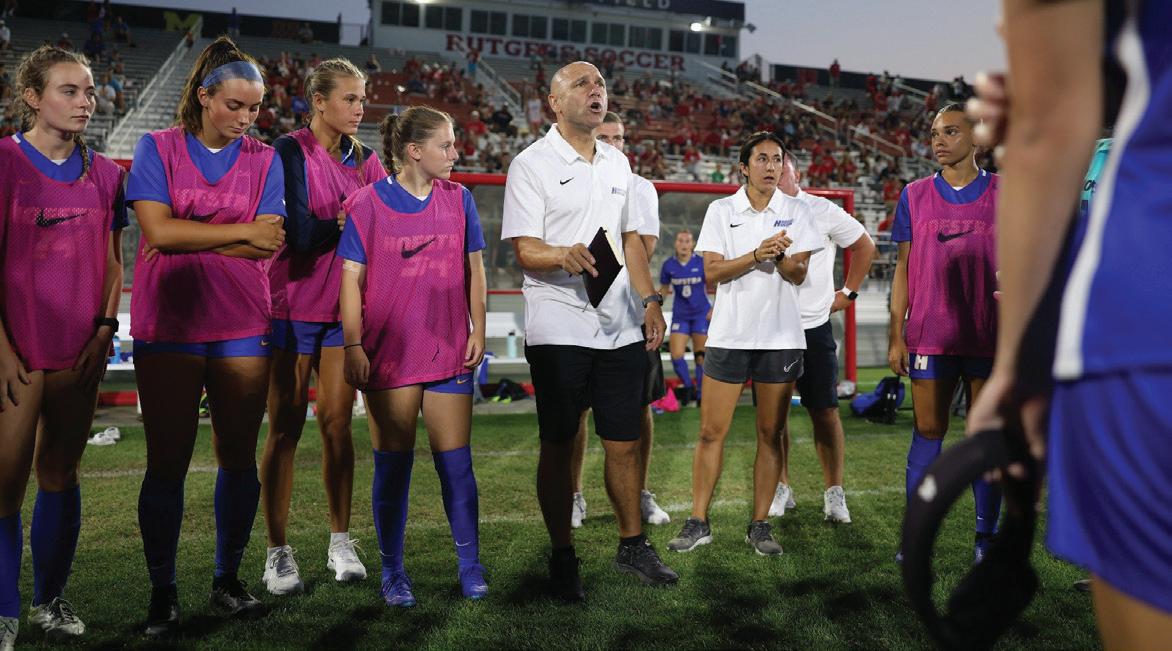
Hofstra finished with an overall record of 10-8-4, winning their second straight CAA tournament championship. The Pride carried on to the first round of the NCAA tournament, where they suffered a defeat to Georgetown 1-0.
“We lose five, six, seven good players every year, and you hope you can replace them with freshman, transfers or within the team, and it’s an evolutionary thing. Freshmen last year were better than they were, sophomores were better than they were juniors, and so on,” said Riddiough. “It’s part of the college process. We miss a lot of them. We’ve replaced them from within the team and we’re pretty excited with what we’ve got right now.”
The Pride lost seven seniors from last year’s team but gained seven freshmen. Coach Riddiough explains that it will be an easier transition for the players this year compared to previous seasons.
“[The freshman transition] is a bit similar each year. [It’s] easier this year because we had a lot of sophomores on the team from last year. A lot of those guys are playing more integral roles in our team, so not necessarily relying on the freshman to come in and make a huge impact,” Riddiough said. “We just need them to come in when we require them to and be effective, so it’s easier than most years. We are pretty much a good returning core, and we’re just going to trust and believe that they can carry us to another championship.”
Different personnel can also mean different styles of play used throughout the season. Coach Riddiough mentioned that there’s a blueprint in place
from game to game, and if adjustments are needed, they can be made.
“We have a blueprint which we try and stick with, which deviates depending on personnel and the team. We’re kind of fluid with that stuff. There is a foundational thing that we stick to: we high press, we’re gonna work hard defensively, and we’re gonna be positive in possession, not necessarily negative or direct,” Riddiough said. “It’s a style where we can get the ball forward quickly, under control, and we’ll be in people’s faces. Sometimes we’ll be a bit more indirect,
“The thing I remember the most is [the seniors] always gave everything no matter if it was like a recovery practice or if it was pregame practice or even a game it’s always to get the best. The best is always different depending on what day it is,” Hayden said. “You can’t always be an outstanding player, but you can always work your very hardest, so that’s the biggest thing I took away from my freshman and sophomore year. Then also how important it is to become a team, and we have developed team chemistry right now, and I think that’s an important thing to bring onto
I thought we practiced hard, I thought we were prepared, but usually in the early games, you’re missing the final product. Usually, the final product is scoring goals and minimizing mistakes defensively, and we made a couple of mistakes defensively. We didn’t score goals, so that was the first game against Albany,” Riddiough said.
The Pride bounced back in their next game as they defeated Rutgers 1-0.
“We played Rutgers, and we put a high demand on the players because Rutgers is a top 25 program. We knew that
next two months.”
The CAA is once again expanding as last year, rivals Stony Brook along with Hampton and Monmouth University joined. This year, Campbell University joins the conference, and Riddiough believes it’s exciting to have a brand new opponent to face.
“I think Campbell is a good addition. It also adds to the blueprint of the CAA and extends it a little bit. It gives us stability moving through the NCAA right now. I think conferences are collapsing, other conferences are building, and the fact that we’ve got 14 members in our conference gives us a bit of stability moving forward. I like the fact that it’s a new team and it’s somebody we’ve never played. I think it’ll be exciting for the girls, and it’s going to be a good competition,” Riddiough said. Riddiough talked about the goals for the season which include winning the conference and advancing to the NCAA Tournament.
sometimes we’ll be more direct. This team is quite technical, so I can see us being a little bit less direct as this group develops and goes through the season.”
One face that will be familiar to the Pride is defender Louise Hayden. Hayden was a big part of the defensive line last year, as she played in all 22 games and started 21 while helping the Pride to seven shutouts on the season. She mentions that the preseason went well before the team started their nonconference schedule.
“[Preseason’s] been good. I was really looking forward to coming back over the summer, and going to the new team because you always lose some players and get some new players, but it’s been good energy, good practices and a good win against Rutgers. So good start,” Hayden said.
As Hayden enters her fourth season with the Pride, she reflects on what it’s like being a senior, and what she learned from the seniors her freshman year.
the field to be able to win games when they get hard.”
Along with gaining and losing players, Hofstra lost assistant head coach Gerry Lucey to another coaching job. To fill his place on the coaching staff, the Pride elected to bring on Tom Bowen as an assistant coach.
“Tom’s come on, and he has a great reputation in the men’s game. I know a lot of men’s soccer players who played for him in the summer, and they had only nice things to say about him,” said Riddiough.
“Anybody on Long Island who’s dealt with Tom being around him from a coaching perspective or soccer perspective speaks tremendously highly about his abilities and intelligence as a coach. It came back as a pretty clear option for the next assistant coach of our program.”
The Pride have played the University of Albany and Rutgers University in their nonconference schedule. Hofstra suffered a 2-1 loss to Albany to kick off their season 0-1.
“We had a good preseason.
we had to play as well as we could to get any kind of result, and the positive about that is we got a tremendous result against an excellent group. It was purely down to the team working hard for each other, staying organized, and being disciplined, and you usually don’t get those traits this early in the season,” Riddiough said. “I think if we can recreate that discipline and hard work and energy that we brought against Rutgers, I think it’s gonna be difficult to beat Hofstra over the
“The main goal is to win the conference. I think it’d be a wonderful accomplishment. As a coaching staff, you always want your student-athletes to leave with lots of good memories,” Riddiough said. “Winning the championship, I think is a better memory than you can ever have. We want to experience nationallevel competition and get to the NCAA’s again, and from then on, it’s all about student-athlete welfare and making sure that they’re happy.”
THE CHRONICLE SEPTEMBER 12, 2023 • A19
SPORTS
“I think if we can recreate that discipline and hard work and energy that we brought against Rutgers, I think it’s gonna be difficult to beat Hofstra over the next two months.”
Despite winning back to back titles, Hofstra was ranked 3rd in the preseason CAA poll.
Photo courtesy of Ariel Fox
THE HOFSTRA CHRONICLE
September 12, 2023
10-1, B ut N ot D o N e
Hofstra volleyball has their best start to a season since 1988.
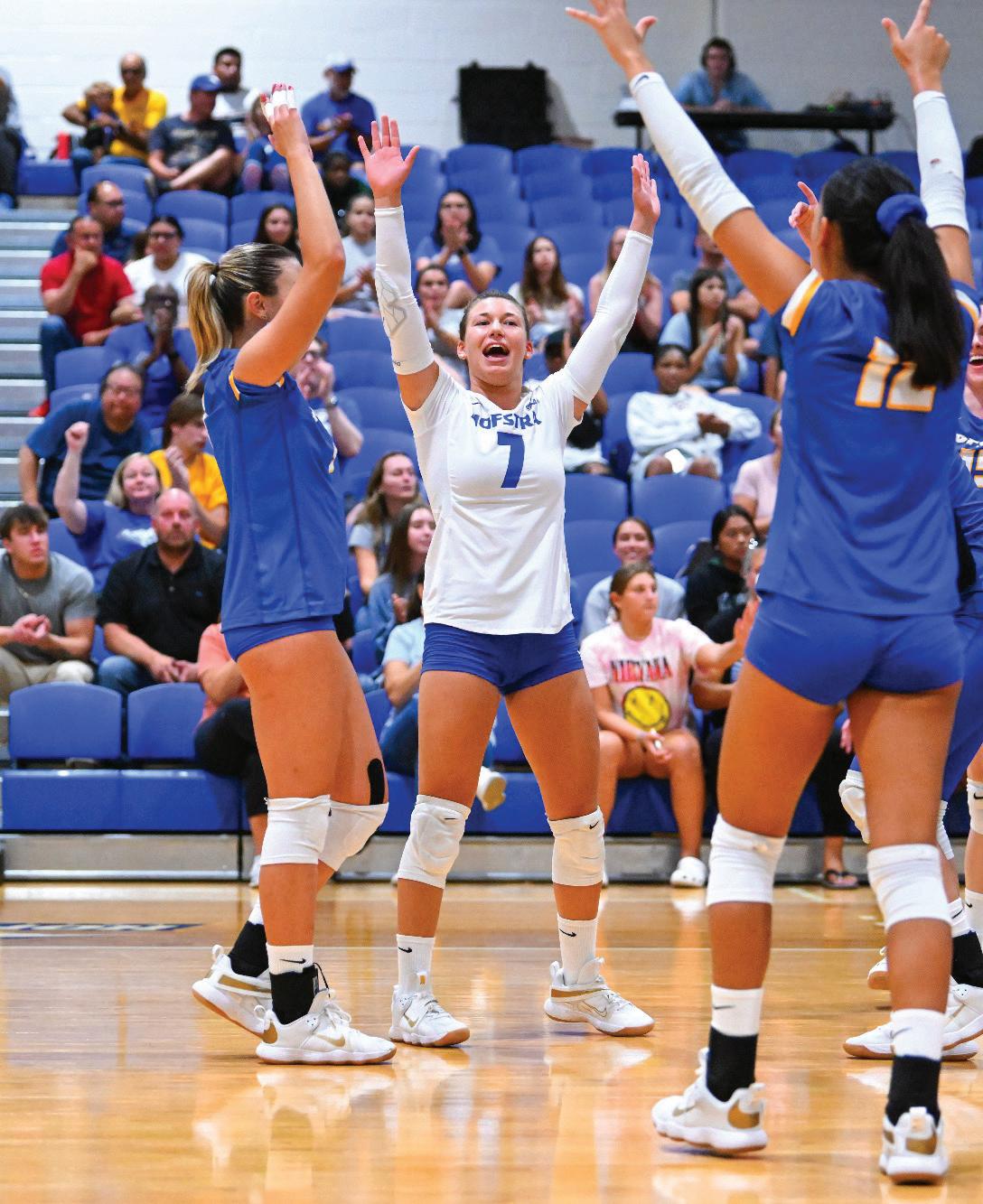
SPORTS
Photo courtesy of 2023 GameDay PhotosNYC
