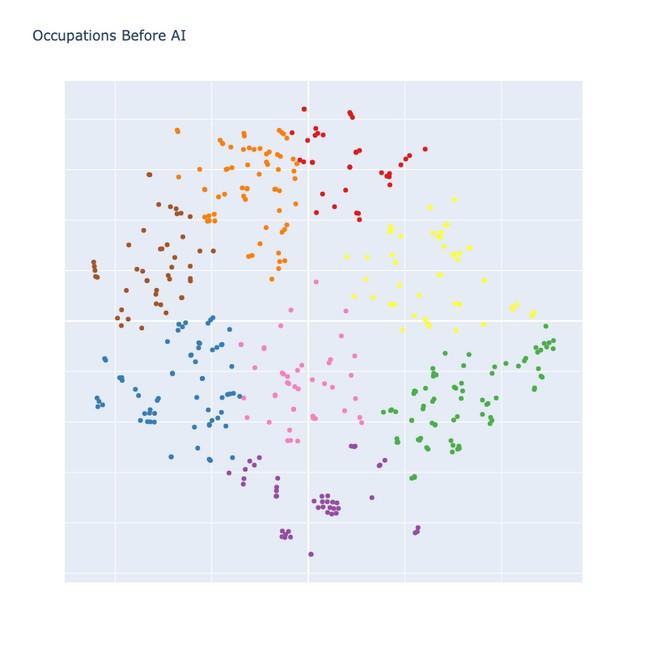
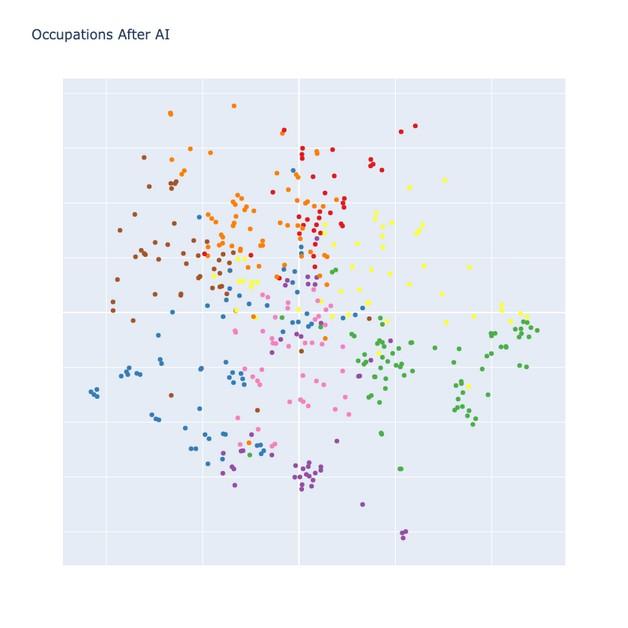
General Purpose Technologies like AI or the internet change many more jobs than they eliminate. They first change how we perform tasks before later transforming workflows and creating new jobs.
New Tools New Workflows New Jobs
GPTs first enable the creation of new tools (e.g., emails instead of memos, CRMs instead of rolodexes) that support specific workplace tasks, yielding new efficiencies that enable workers to refocus.
Next, GPTs embed into workflows. The internet changed how marketers do customer research, how barbers schedule appointments & how publishers layout content.
Only later do GPTs impact jobs themselves. Some jobs go away: travel agents are now a rarity. Some are created (think: social media managers). These changes can take decades to bear out.
Task Automation Is No Longer Job Automation
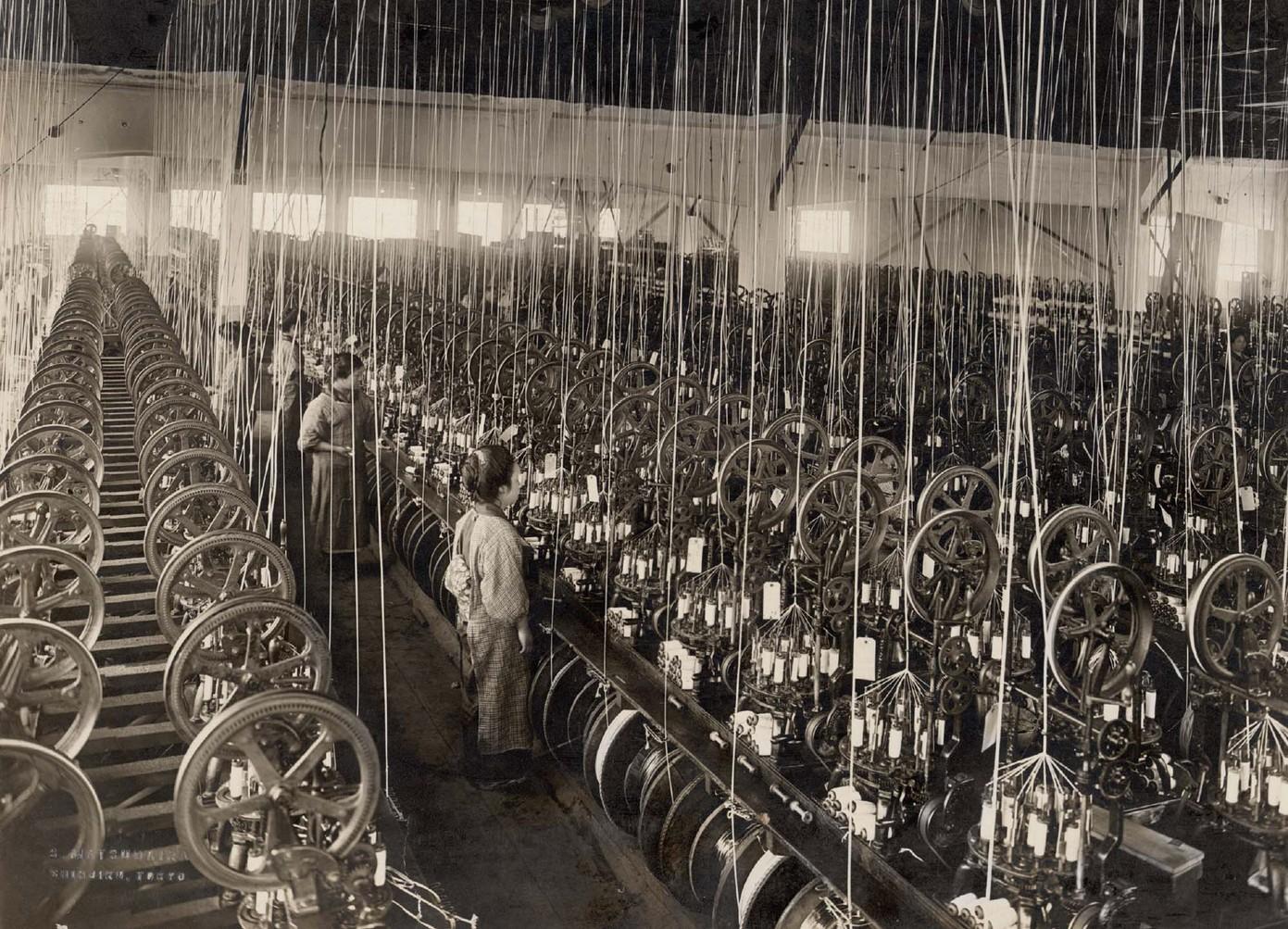
In the industrial era, tasks were largely comprised of a single job. New machinery that automated the task automated the job.
In today’s human economy, most jobs are a complex assortment of tasks. Today, automating tasks can free humans to take on new tasks and refocus on higher order work.
AI’s Biggest Impacts Will Be on Skills, Not Jobs
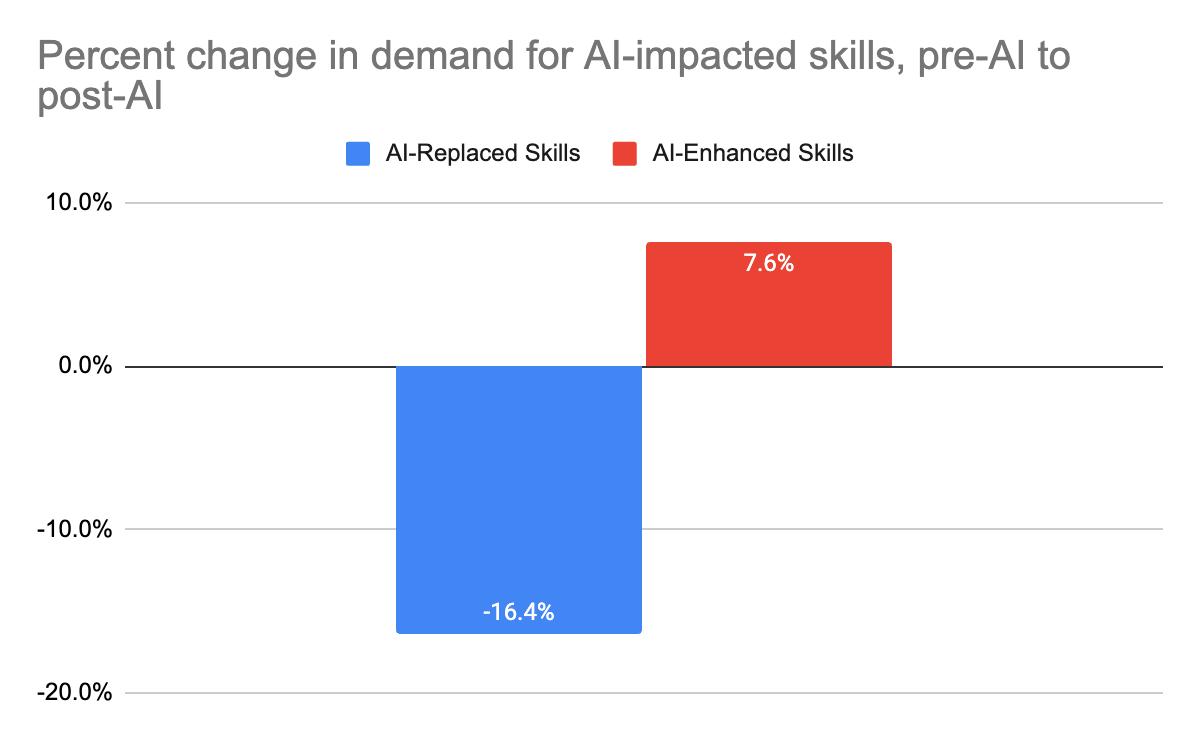
The skills AI can automate are declining in demand, while demand for AI-augmented skills is rising
Demand Shifts for AI Impacted Skills vs. Baseline, Pre- vs. Post-LLM
AI automated skills are 16.4% more likely than others to be declining in prevalence vs. others, while AI augmented skills are 7.6% more likely to be growing in demand
AI-automated skills are overrepresented among skills that are declining…
…While AIaugmented skills are overrepresented among skills that are in increasing demand
Emerging Skills Aren’t Just Cut and Paste
Technologies like GenAI promise to disrupt roles more broadly by transforming skills
skills transform the role of the actuary
Several skills traditionally needed by Actuaries – risk management, finance, statistics, and actuarial science –are no longer even sought from those with ML skills.
In their place are brand new skills – data science, advanced analytics, advanced programming languages like R, and peer review – that point to a transformation of the job itself for actuaries with ML skills
Nature Abhors a Vacuum
Instead of replacing workers, AI is more often boosting productivity and making people more valuable by augmenting skills. Highly skilled knowledge work is poised to be the biggest beneficiary.
Methodology: We sorted skills into automation and augmentation exposure percentiles by occupation. We then weighted these percentiles by the number of postings for each occupation to derive aggregate replacement and enhancement exposure percentiles for each skill, laddering up to occupation. We find that jobs that are experiencing the greatest replacement effects are also experiencing the greatest enhancement effects, with the skills no longer used being replaced by new ones.
New Skills for a New Age
Students don’t just need AI skills. As AI automates and augments, workers will need new skills to stay relevant. A new set of power skills will cut across the workforce.
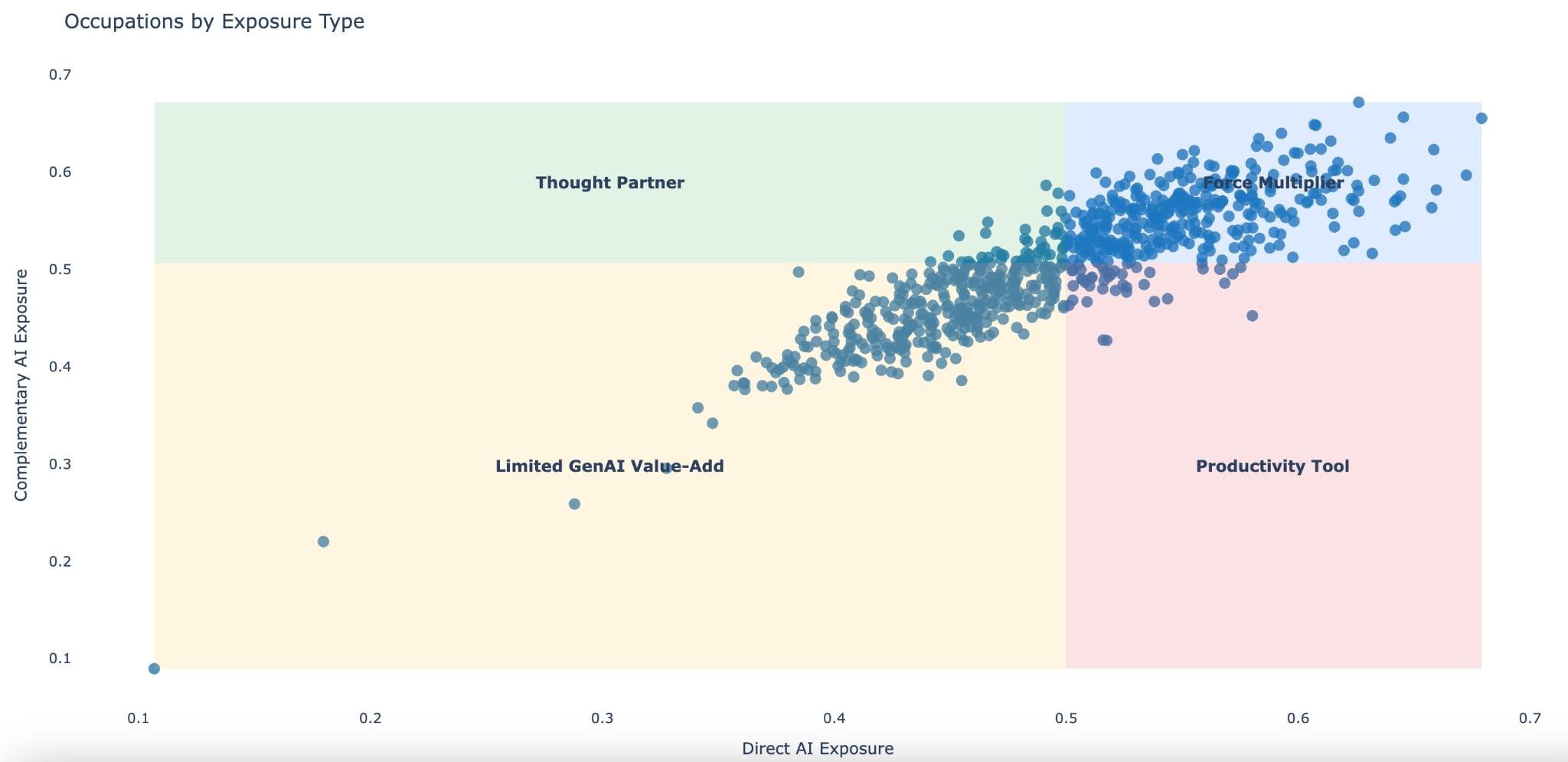
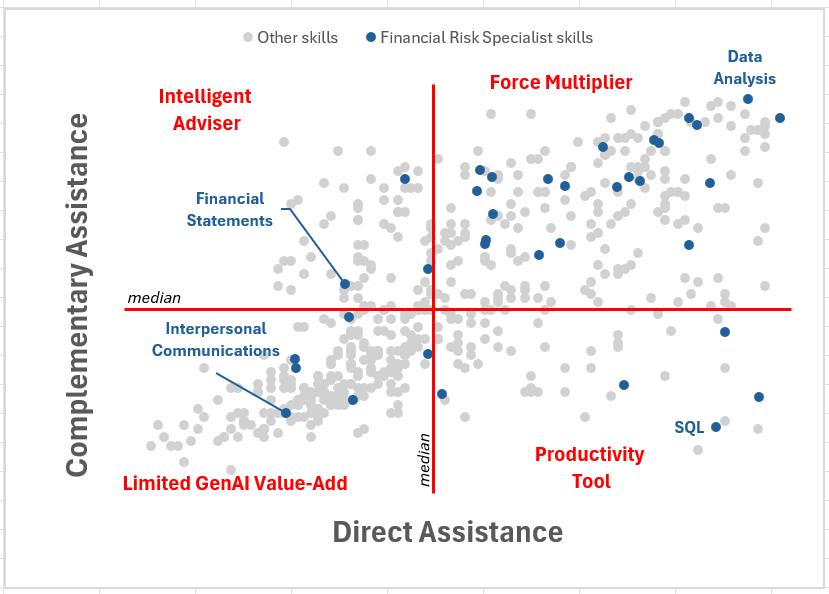
Automation and augmentation aren’t opposing forces. Some AIenabled capabilities make workers both more efficient and more effective
.
These force multipliers will yield a new set of Power Skills every student needs to thrive in an AI era.
The New Power Skills of the AI Era
• Writing
• Statistical Analysis
• Problem Solving
• Risk Management
• Customer Service
• Technical Communication
• Editing
• Regulatory Compliance
• Marketing
• Sales Prospecting
• Budgeting
• Investigation
• Technical Training
• Forecasting
• Research
• New Product Development
• Financial Analysis
• Data Visualization
• Business Intelligence
• Incident analysis
A New Breed of Generalist
Skills currently the domain of specialists will become part of every job. Core skills of PhD research position graduates to work effectively alongside AI.
Excel and similar tools made spreadsheet skills highly accessible to a wide audience
In much the same way, skills like coding and data analysis don’t go away in the age of AI. Rather, they become integrated into a wide array of fields.
AI-generated graphics and logos
AI is Rewiring the Career Map
Skills-level modeling of occupational transitions suggests specific transition pathways could be impacted by AI; early observations are showing these impacts bear out.
GenAI’s impact on the skills of each job will rewire the career map, moving some jobs closer together and opening new pipelines of talent.
We are seeing these changes unfolding in real time, with rises in cross-industry job transitions, increased accessibility for technical roles and increasing elimination of skill bridges as some roles become more specialized.
The Expertise Upheaval
The value of expertise itself is transforming. The growing demand for deep expertise bodes well for PhDs.
AI makes some jobs more accessible, shortening learning curves. But in others AI reduces the need for entry-level workers while increasing demand for expertise.
Software Developer Job Postings ‘23 to ‘25
Data Scientist Job Postings ‘23 to ‘25
More workers will need to start their careers in the middle without formal work experience. PhDs already do so.
Postings for entry-level Software Developers and Data Scientists are declining while demand for experts is surging—a pattern visible in many fields.
Fewer entry level roles and greater demand for expertise at the middle layer will reshape traditional routes to work
Upheaval May Lead To New Opportunity
New efficiencies unlock latent demand while new technologies create new jobs – but students will need the right skills to capture them
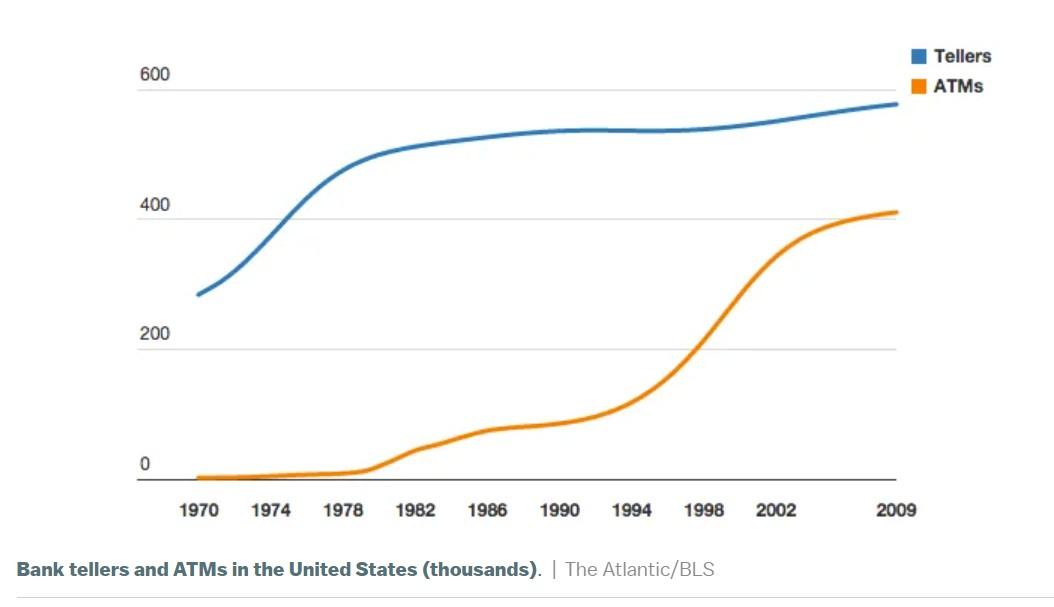
In theory, the invention of ATMs threatened the jobs of bank tellers. In practice, ATMs changed the unit economics of banking, driving up demand for tellers.
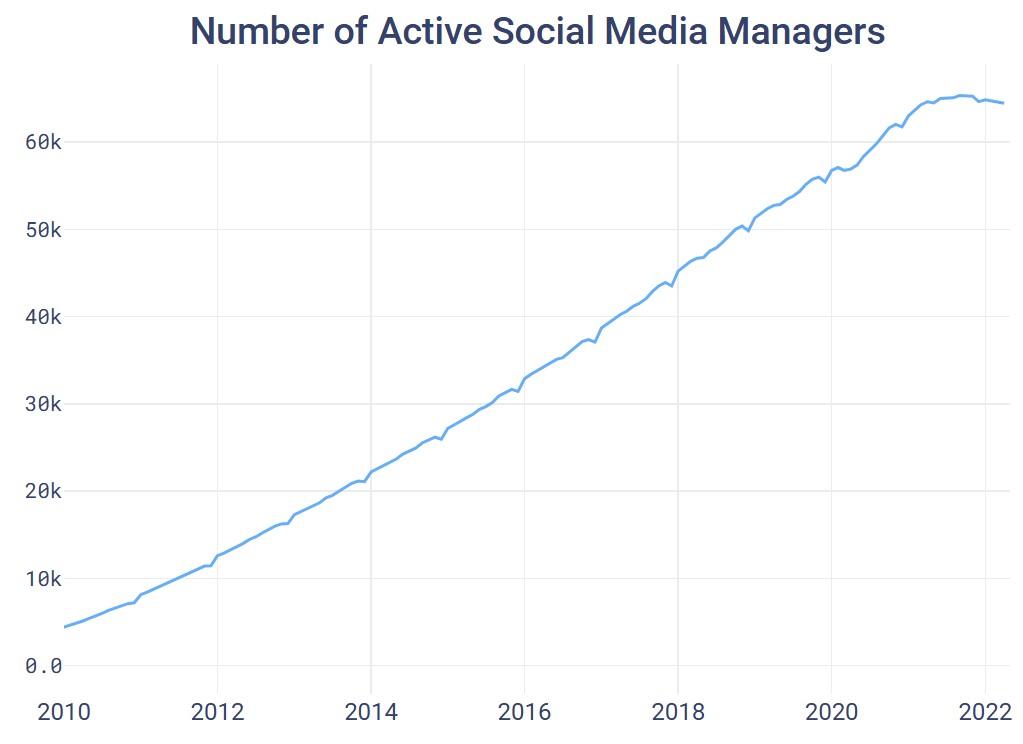
No one could conceive of social media at the dawn of the Internet, let alone the profession of Social Media Manager. Last year there were 65,000 US job openings in the field.
Source: Revelio Labs
Where AI Will Create New Jobs
Previous tech revolutions offer clues as to the ways AI could create new opportunity
Upstream Foundations
Build Out
AI Infrastructure Develop & Manage New AI Tech
• Power, fiber, cooling, data centers
• Analog: Railroads, cloud buildout
Adoption & Scaling
Integrate & Deploy AI
• Embed AI into workflows
• Analog: ERP/CRM rollout
• Emerging AI sectors/tech
• Analog: Social media
Support New AI Business Models
• AI platform economy
• Analog: Ecommerce warehouses ‑
Downstream Impacts
Wealth Effects & Trickle-Down Job Growth
• Rising prosperity more consumption →
• Analog: Postindustrial leisure boom ‑
Cheaper Products, Greater Demand
• New tech lowers cost of production & distribution
• Analog: Streaming boom
Unlock Latent Demand for Services
• Productivity Labor demand ↑→
• Analog: Adobe More graphic → designers; Java More developers →
What Does This Mean for PhDs?
Closing the Gap
Humanities graduates close the gap with their STEM peers over time – a trend that is especially prevalent at more selective institutions
PhD’s Contribute Well Beyond Their Fields
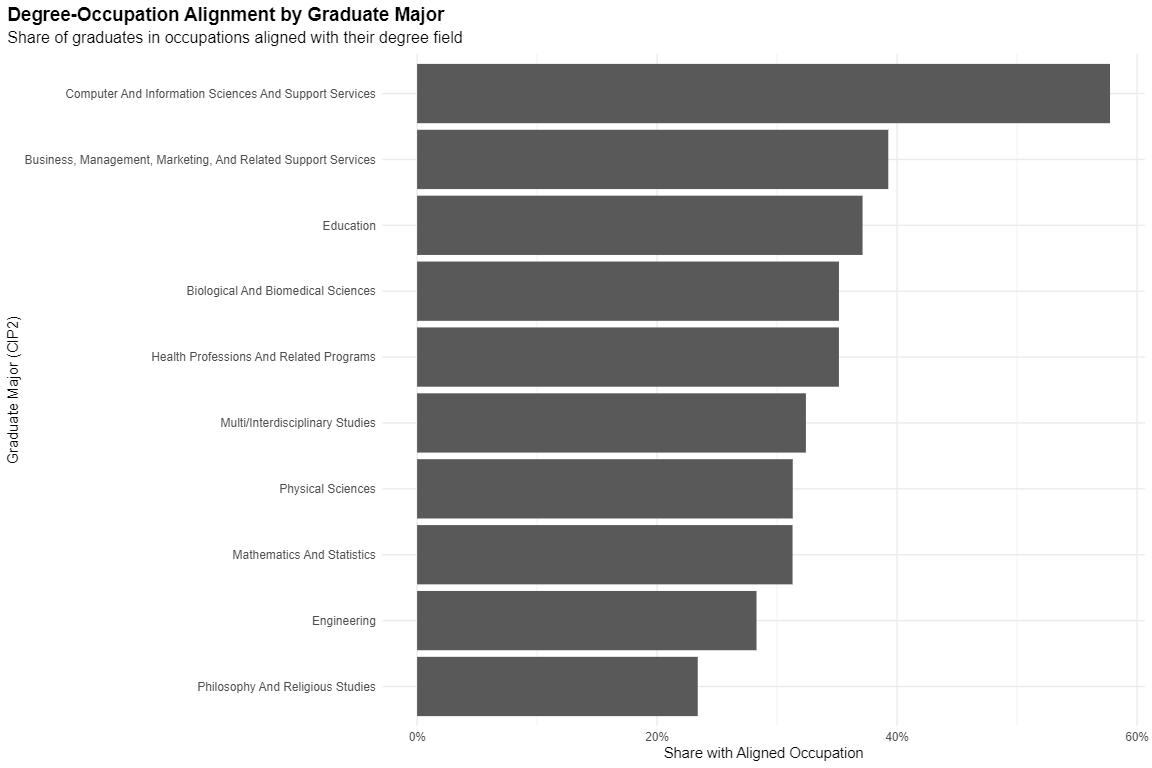
The majority of PhDs work in roles that are not directly related to their field, underscoring the importance of building broad cross-functional skills
Beyond Academia
While research and academia are the most common PhD careers, two-thirds of PhD’s are in other fields, from management to the sciences to engineering
Most common occupations for PhDs
Physicians, All Other
Project Management Specialists Chemists
Clinical and Counseling Psychologists
Education Administrators,
Postsecondary
Computer and Information Research
Scientists
Engineers, All Other
Software Developers
Data Scientists
Postsecondary Teachers
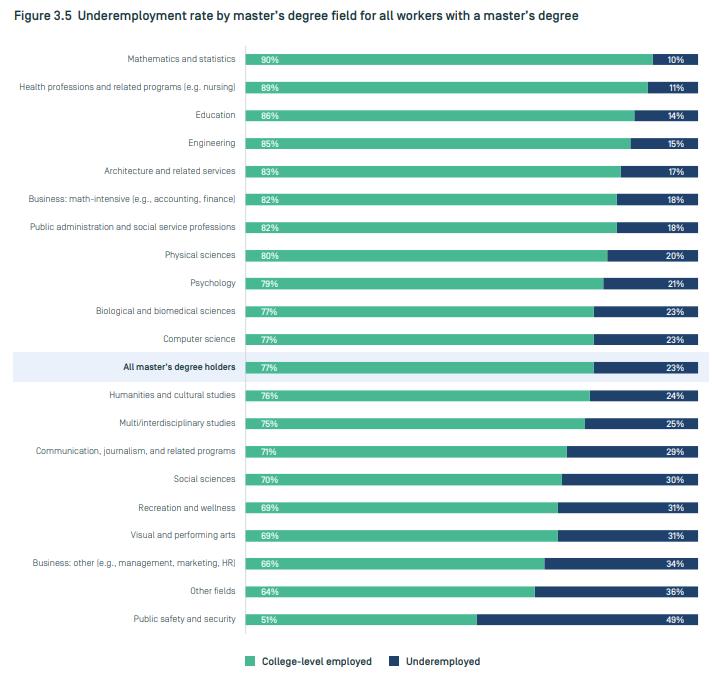
Advanced Degrees Offer A Bulwark
Across a range of disciplines spanning technical programs to the humanities, advanced degree holders are far more likely to avoid underemployment
PhD Skills Will Endure
In a turbulent economy, foundational skills will remain critical to career success
A core set of human skills, digital skills, and business skills are transversal to high-value 21st century work
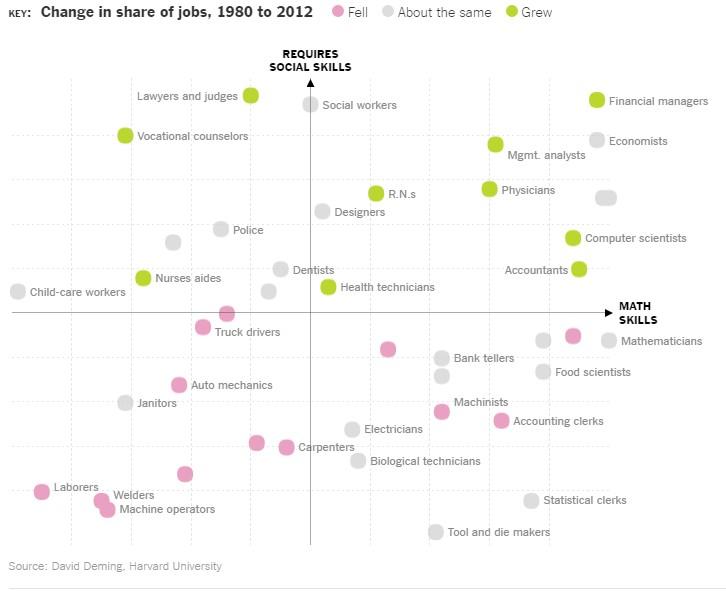
Harvard economist David Deming: Careers that mix social skills & math skills are growing the fastest
Skills at the Bedrock of PhD Work are Core
to Opportunity
The jobs that are most tech-enabled have highest demand for human skills
% of high-value jobs requesting key foundational skills vs. % of all jobs
Source: Burning Glass Institute analysis of Lightcast data
Vulnerability to Automation
The Skills To Acquire New Skills Foundational Skills: Worth
More As You Rise
Share of Openings Requesting Skills
Senior/Manager-Level Jobs
Other
All foundational Human Skills Business Enablers Digital Building Blocks
Some Skills Make Degrees More Valuable
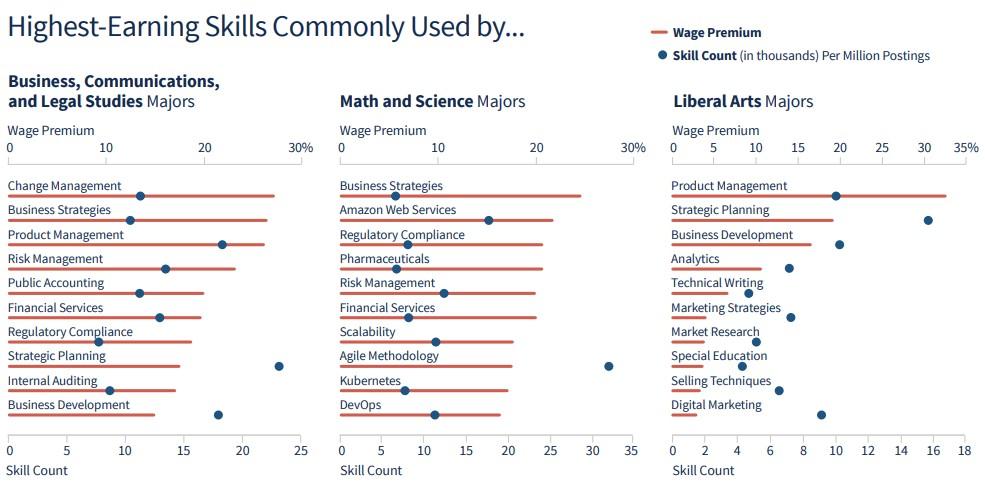
The value of a degree isn’t just about the program of study. Much of the value is in the skills accrued along the way.
Foundational Skills
Common across majors –but still carry huge value
Skills Differentiate Careers
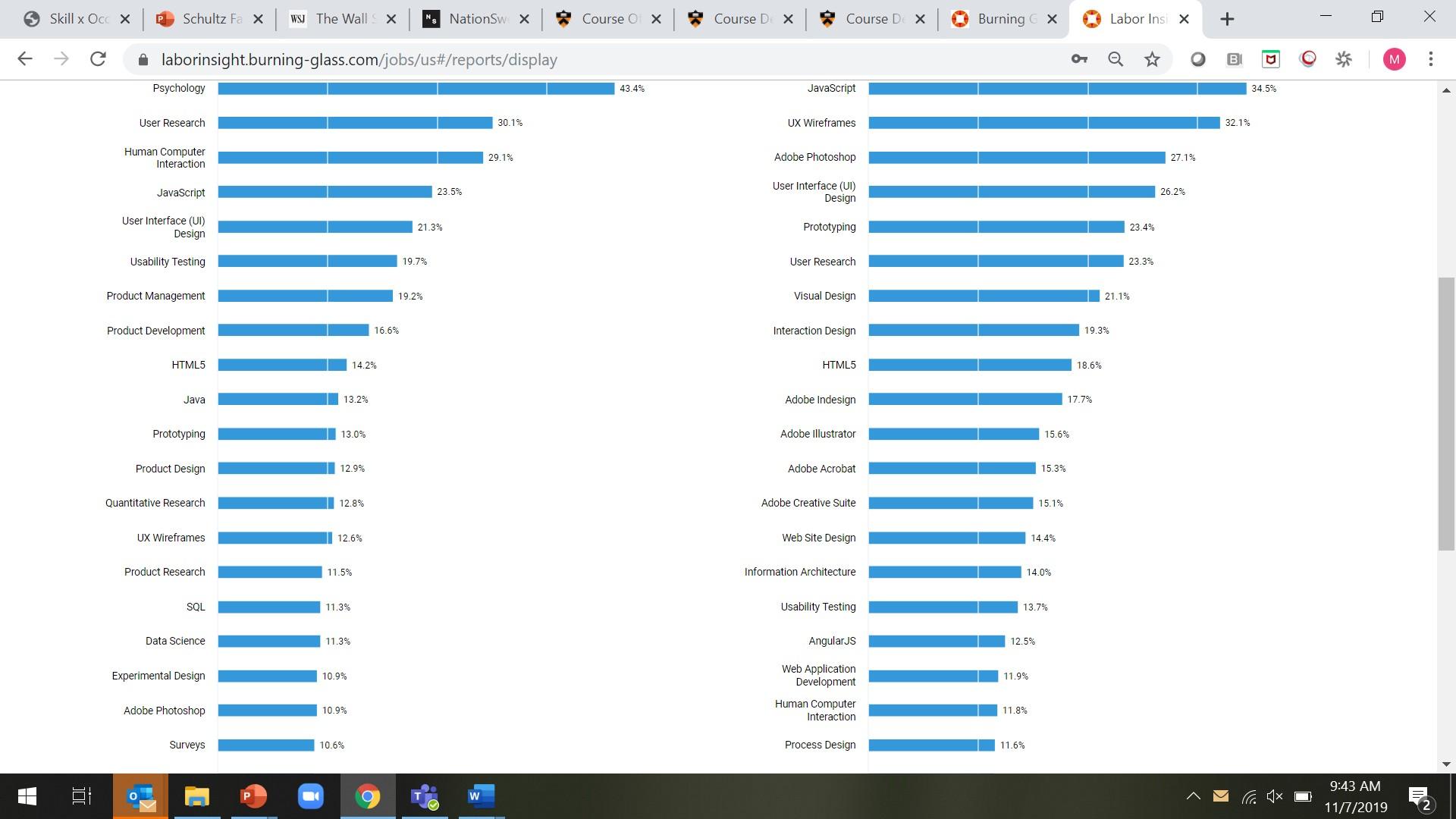
When employers seek PhD’s, it’s because they bring with them more advanced skills
Top skills for PhD-level UI/UX Designers
Top skills for UI/UX Designers – All levels
A New Paradigm of Productivity
The new, AI-enabled economy will come with new paradigms around expertise and productivity for which PhDs are well positioned
Historically, we have focused on driving down the cost of inputs
The new AI knowledge economy will focus on outputs – a function of skills, expertise, and the ability to effectively leverage new tools