TINAGL1 enhances cisplatin resistance in Head and Neck Squamous Cell Carcinoma Seikwon Z. Witherspoon, Mariela L. Contreras, and Matthew L. Fisher Department of Biology, Hofstra University, Hempstead NY, 11549
Introduction: Head and neck squamous cell carcinoma (HNSCC) is an aggressive type of cancer, with overall survival averaging ten months, even after first-line of treatment. Most HNSCCs arise from the epithelial mucosal linings of the pharynx, larynx, sinonasal tract, and oral cavity. Globally, the majority of cases are driven by tobacco and alcohol consumption, although additional risk factors include exposure to environmental pollutants and infection to viral agents such as HPV.
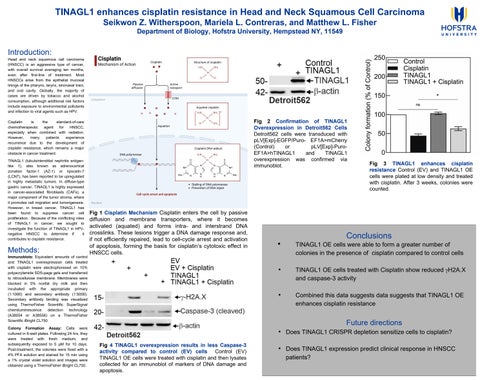
Fig 2 Confirmation of TINAGL1 Overexpression in Detroit562 Cells Detroit562 cells were transduced with pLV[Exp]-EGFP/Puro- EF1A>mCherry (Control) or pLV[Exp]-PuroEF1A>hTINAGL1 and TINAGL1 overexpression was confirmed via immunoblot.
Cisplatin is the standard-of-care chemotherapeutic agent for HNSCC, especially when combined with radiation. However, many patients experience recurrence due to the development of cisplatin resistance, which remains a major obstacle in cancer treatment. TINAGL1 (tubulointerstitial nephritis antigenlike 1), also known as adrenocortical zonation factor-1 (AZ-1) or lipocalin-7 (LCN7), has been reported to be upregulated in highly metastatic tumors. In diffuse-type gastric cancer, TINAGL1 is highly expressed in cancer-associated fibroblasts (CAFs), a major component of the tumor stroma, where it promotes cell migration and tumorigenesis. However, in breast cancer, TINAGL1 has been found to suppress cancer cell proliferation. Because of the conflicting roles of TINAGL1 in cancer, we sought to investigate the function of TINAGL1 in HPVnegative HNSCC to determine if it contributes to cisplatin resistance.
Methods: Immunoblots: Equivalent amounts of control and TINAGL1 overexpression cells treated with cisplatin were electrophoresed on 10% polyacrylamide SDS-page gels and transferred to nitrocellulose membrane. Membranes were blocked in 5% nonfat dry milk and then incubated with the appropriate primary (1:1000) and secondary antibody (1:5000). Secondary antibody binding was visualized using ThermoFisher Scientific SuperSignal chemiluminescence detection technology (A38554 or A38556) on a ThermoFisher Scientific iBright CL750 Colony Formation Assay: Cells were cultured in 6-well plates. Following 24 hrs, they were treated with fresh medium, and subsequently exposed to 5 μM for 10 days. Post-treatment, the colonies were fixed with a 4% PFA solution and stained for 15 min using a 1% crystal violet solution and images were obtained using a ThermoFisher iBright CL750.
Fig 3 TINAGL1 enhances cisplatin resistance Control (EV) and TINAGL1 OE cells were plated at low density and treated with cisplatin. After 3 weeks, colonies were counted.
Fig 1 Cisplatin Mechanism Cisplatin enters the cell by passive
diffusion and membrane transporters, where it becomes activated (aquated) and forms intra- and interstrand DNA crosslinks. These lesions trigger a DNA damage response and, if not efficiently repaired, lead to cell-cycle arrest and activation of apoptosis, forming the basis for cisplatin’s cytotoxic effect in HNSCC cells.
Conclusions
•
TINAGL1 OE cells were able to form a greater number of colonies in the presence of cisplatin compared to control cells
•
TINAGL1 OE cells treated with Cisplatin show reduced H2A.X and caspase-3 activity
•
Combined this data suggests data suggests that TINAGL1 OE enhances cisplatin resistance
Future directions • Does TINAGL1 CRISPR depletion sensitize cells to cisplatin? Fig 4 TINAGL1 overexpression results in less Caspase-3 activity compared to control (EV) cells Control (EV) TINAGL1 OE cells were treated with cisplatin and then lysates collected for an immunoblot of markers of DNA damage and apoptosis.
• Does TINAGL1 expression predict clinical response in HNSCC patients?