
Sami Abdelal
& Paul Dearman
INTRODUCTION
• Attachment Theory: The availability and responsiveness of a supportive figure during childhood encourages development of attachment patterns that persist throughout life (Bowlby,1969/1982; Mikulincer & Shaver, 2005). Prior research has focused on how attachment affects work relations and behavior, but attachments can extend to objects and ideas; as a result, they might have broader impacts on work than has been previously studied.
Participants
METHOD Measures
• 426 MTurkers provided usable data: Ages ranged from 20-72 (M=40.9, SD=12.1); 50% male, 50% female; 75% of sample marked “White or Caucasian”
• Participants compensated $0.50
Procedure
• Cross-Sectional: Participants found current job code on O*NET and completed attachment scales
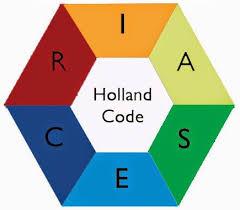
• O*Net Data entered to avoid common-method bias
RESULTS
• Experiences in Close Relationships Scale (Wei et al., 2007)
• O*NET Job Interests via ONET.com
• 6 survey questions of career length, current job & org tenure, and total number of jobs, organizations, and industries over the lifetime
DISCUSSION
• The hypothesized relationships with interests and values were not supported.
o However, the inclusion of ANY available covariate makes the relationship significant. Further analysis and consideration is in progress.
• In contrast, all stability -related hypotheses were supported or partially supported.
o Lower levels of anxious-attachment increase stability in jobs, organizations, and even careers.
o Lower levels of avoidant-attachment increase stability in jobs and industries, but not organizations.
o When examining current job and organizational tenure, only anxiousattachment was significant.
• Limitations
o Few measured variables = limited explanatory power
Interests & Values
• H1a & b: Not Supported [Social: F(2, 337) = 1.96, p > .05] [Relationship: F(2, 337) = 0.53, p > .05]
• However, exploratory analyses suggest that control variables not hypothesized a priori (i.e. gender) render anxious attachment predictive of social interest but not relationship valuing.
• H2a & b: Not Supported [Realistic: F(2, 337) = 1.47, p > .05] [Independence: F(2, 337) = 1.15, p > .05]
• Similar to above, exploratory analyses suggest that non-hypothesized control variables render anxious attachment predictive of independence valuing but not realistic interest.
• Additional Exploratory Analyses
• All other possible interests and values (Investigative, Artistic, Enterprising, & Conventional) (Achievement, Support, Recognition, & Working Conditions) were not significant.
Stability: Job Tenure, Organizational Tenure, and Industry Change Frequency
• H3a: Supported
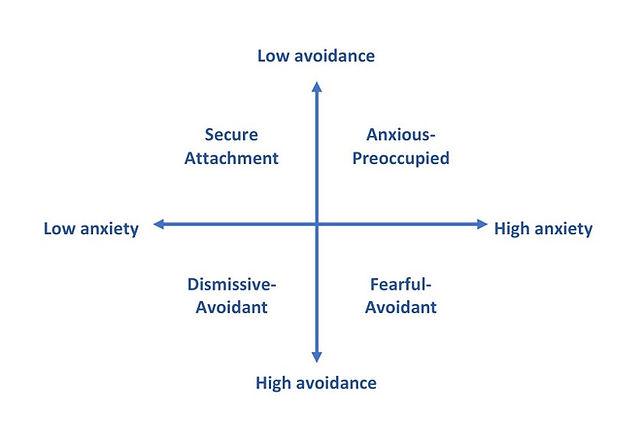
Anxious Dimension: The anxious dimension leads to rumination on the quality of relationships, often feelings of dissatisfaction, unappreciation, or misunderstanding (Krauz et al, 2001). In the workplace, these individuals are more sensitive to social cues and view their own performance as inadequate (Davidowitz et al., 2007; Ein-Dor & Hirschberger, 2016). However, despite these consequences, the underlying social need may lead to preferences for sociality in jobs.
H1a. Greater anxious-attachment predicts jobs that are more fulfilling of social interests.
H1b. Greater anxious-attachment predicts jobs that are more valuing of relationships.
Avoidant Dimension: The avoidant dimension leads to greater self-focus and a preference to distance themselves from others (Mikulincer & Florian, 1995). In the workplace, this means preference to not collaborate and being viewed as poorer teammates due to their lack of collaboration.
H2a. Greater avoidant-attachment predicts jobs that are more fulfilling of realistic interests.
H2b. Greater avoidant-attachment predicts jobs that are more valuing of independence.
Secure Attachment: Securely attached individuals are low in anxious and avoidant attachment (Ein-Dor & Hirschberger, 2016). They form more positive and trusting relationships compared to insecurely attached individuals (Adams, 2004). Attachment may occur to whole jobs, organizations, or even entire industries/career fields.

H3a. Less anxious-attachment and less avoidant-attachment both leads to longer job tenure.

H3b. Less anxious-attachment and less avoidant-attachment both leads to longer organizational tenure.
H3c. Less anxious-attachment and less avoidant-attachment both leads people to change industries less frequently.
o Lower scores on both dimensions predicted longer average job tenure, F(2,423)=8.88, p<.001, R2=.04
o Unstandardized Regression Equation: Y = 6.00 -.33 Anxious - .29 Avoidant
• H3b: Partially Supported
o Lower anxiousness predicted longer average organization tenure, but avoidance was not significant, F(2,423)=6.47, p=.002, R2=.03
o Prior research has suggested that avoidance can be seen as leadership by others, so within-organization promotions may account for nonsignificance.
o Unstandardized Regression Equation: Y = 6.724 - .36 Anxious
• H3c: Supported
o Lower scores on both dimensions predicted fewer industry changes, F(2, 423)=5.49, p=.004, R2=.03
o Unstandardized Regression Equation: Y = .03 + .02 Anxious + .04 Avoidant
§ Successive studies can include mediation/moderation, role of attraction-selection-retention

§ Individual differences such as relational status & participation in therapy were not measured
§ Incompleteness of O*Net data resulted in ~50 omissions, enough to impact statistical conclusions
o Study design
§ Inferences depend upon prior research on the stability of attachment over adulthood
§ Convenience sample means that group means may not generalize to broader public (5-year average job tenure for secure attachment may be overestimate of true population parameter)
§ Some risk of history threat, especially COVID -related (differential systematic retention/attrition could have affected results)
• Contributions & Implications
o Attachment styles formed early in childhood can have impacts on career stability.
o The ethical and legal implications need consideration.
o Attachment may have differential impact on groups, which would have implications for workforce planning and fairness in hiring, as well as present opportunities for social justice considerations.
o Though life outcomes are a key interest/concern for developmental psychology, organizational psychology may have contributions to make in expanding that understanding.
o As the work -life integration concept grows, increasingly subclinical constructs may need consideration as to the roles they might play, even if not immediately apparent.
REFERENCES
Adams, S. (2004). The Relationship among Adult Attachment, General Self-Disclosure, and Perceived Organizational Trust. Unpublished doctoral dissertation, Virginia Polytechnic Institute and State University, Falls Church, Va. Ainsworth, M. S. (1979). Infant–mother attachment. American Psychologist 34(10), 932. Ainsworth, M. S. (1989). Attachments beyond infancy. American Psychologist 44(4), 709. Beal, D. J., Cohen, R. R., Burke, M. J., & McLendon, C. L. (2003). Cohesion and performance in groups: meta-analytic clarification of construct relations. Journal of Applied Psychology 88(6), 989. Benjamin, L. S. (1974). Structural analysis of social behavior. Psychological Review 81(5), 392. Bowlby, J. (1982). Attachment and loss: Attachment. New York, NY: Basic Books (Original work published 1969) Carron, A.V. (1982), “Cohesiveness in Sport groups: Interpretation and Considerations”, Journal of Sport Psychology 4, 123-138. Cartwright, D. (1968). The nature of group cohesiveness. In D. Cartwright & A. Zander (Eds.), Group Dynamics: Research and Theory (3rd ed., pp. 91–109). New York: Harper & Row. Cassidy, J., & Kobak, R. R. (1988). Avoidance and its relation to other defensive processes. Clinical Implications of Attachment 1, 300-323. Collins, N. L., Guichard A. C., Ford, M. B., & Feeney, B. C. (2004). Working Models of Attachment: New Developments and Emerging Themes. In W. S. Rholes & J. A. Simpson (Eds.), Adult attachment: Theory, research, and clinical implications (pp. 196–239). Guilford Publications. Davidovitz R., Mikulincer M., Shaver, P. R., Izsak, R., & Popper, M. (2007). Leaders as attachment figures: Leaders' attachment orientations predict leadership-related mental representations and followers' performance and mental health. Journal of Personality and Social Psychology 93(4), 632. Ein-Dor T. (2014). Facing danger: how do people behave in times of need? The case of adult attachment styles. Frontiers in Psychology 5, 1452. Ein-Dor T., & Doron, G. (2015). Attachment and psychopathology. In J. A. Simpson & S. Rholes (Eds.), Attachment theory and research: New directions and emerging themes (pp. 346–373). Ein-Dor T., & Hirschberger, G. (2016). Rethinking attachment theory: From a theory of relationships to a theory of individual and group survival. Current Directions in Psychological Science, 25(4), 223-227. Feeney, J. A., & Noller P. (1990). Attachment styles as a predictor of adult romantic relationships. Journal of Personality and Social Psychology 58, 281-291. Fraley, R.C., & P.R. Shaver (2008). Attachment theory and its place in contemporary personality theory and research. In: O.P. John, R.W. Robins, & L.A. Pervin (Eds.), Handbook of Personality: Theory and Research (pp. 518-541). New York, N.Y.: Guilford Press.
Krauz M., A. Bizman & D. Braslavsky (2001). Effects of attachment style on preferences for and satisfaction with different employment contracts: an exploratory study Journal of Business and Psychology 299-316. Lavy S., Bareli, Y., & Ein-Dor T. (2015). The effects of attachment heterogeneity and team cohesion on team functioning. Small Group Research 46(1), 27-49. Michalisin M. D., Karau, S. J., & Tangpong C. (2004). The effects of performance and team cohesion on attribution: longitudinal simulation. Journal of Business Research 57(10), 11081115. Mikulincer M. (1998). Attachment working models and the sense of trust: An exploration of interaction goals and affect regulation. Journal of Personality and Social Psychology 1,2091,224. Mikulincer M., & V. Florian (1995). Appraisal of and coping with real-life stressful situation: the contribution of attachment styles. Personality and Social Psychology 406-414. Mikulincer M., & O. Nachshon (1991). Attachment styles and patterns of self-disclosure. Journal of Personality and Social Psychology 321-331. Mikulincer M., & Shaver, P.R. (2003). The attachment behavioral system in adulthood: activation, psychodynamics, and interpersonal processes. In: Zanna, M.P. (Ed.), Adv. Exp. Soc. Psychol. vol. 35. Academic Press, San Diego, pp. 53 – 152. Mikulincer M., & Shaver, P. R. (2005). Attachment theory and emotions in close relationships: Exploring the attachment-related dynamics of emotional reactions to relational events. Personal Relationships 12(2), 149-168. Richards, D. A., & Schat A. C. (2011). Attachment at (not to) work: Applying attachment theory to explain individual behavior in organizations. Journal of Applied Psychology 96(1), 169. Rom, E., Mikulincer M. (2003). Attachment theory and group processes: The association between attachment styles and group-related representations, goals, memories, and functioning. Journal of Personality and Social Psychology 84, 1220-1235. Singaram, V. S., Dolmans, D. H. J. M., Lachman, N., & Van der Vleuten, C. P. M. (2008). Perceptions of problem-based learning (PBL) group effectiveness in a socially-culturally diverse medical student population. Education for Health 21(2), 116. Wei, M., Russell, D. W., Mallinckrodt, B., Vogel, D. L. (2007). The Experiences in Close Relationship Scale (ECR)-short form: Reliability, validity, and factor structure. Journal of Personality Assessment 88(2), 187-204.
Figure
Matrix Anx Avoid Soc Relat. Real Independ Cur_Job Cur_Org Ave_Job Ave_Or Ind_Cha Age Gender Anx Avoid 0.033 Soc -0.093 0.048 Relat. 0.024 0.058 0.682 *** Real -0.049 -0.082 -0.290 *** -0.313 *** Indepen -0.044 -0.072 0.127 * 0.161 ** -0.272 *** Cur_Job -0.188 *** -0.027 -0.007 0.016 0.043 0.113 * Cur_Org -0.206 *** -0.040 0.000 -0.003 0.016 0.153 ** 0.816 *** Ave_Job -0.174 *** -0.107 * 0.045 0.041 0.062 -0.016 0.422 *** 0.435 *** Ave_Or -0.148 ** -0.093 0.071 0.064 -0.040 0.090 0.484 *** 0.576 *** 0.646 *** Ind_Cha 0.104 * 0.124 * -0.032 0.004 0.103 -0.080 -0.264 *** -0.261 *** -0.341 *** -0.300 *** Age -0.240 *** -0.065 -0.043 -0.034 -0.062 0.055 0.516 *** 0.506 *** 0.406 *** 0.434 *** -0.285 *** Gender 0.135 ** 0.028 0.161 ** 0.114 * -0.068 -0.186 *** -0.069 -0.051 0.045 0.018 -0.023 -0.051 Note. * p < .05, ** p < .01, *** p < .001
2: Correlation
Figure 1: Median Split Attachment Styles on Job Tenure