HOFSTRA UNIVERSITY MUSEUM OF ART
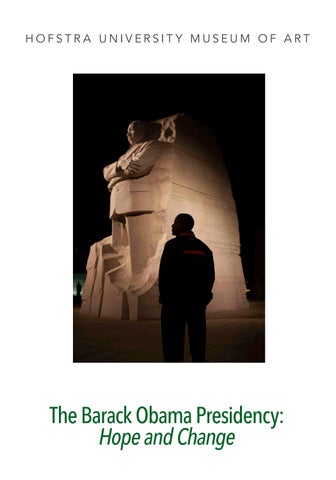
© 2023 Hofstra University Museum of Art
All rights reserved. No part of this publication may be reproduced, stored in a retrieval system, or transmitted, in any form or by any means, electronic, mechanical, photocopying, recording, or otherwise, without prior permission of the Hofstra University Museum of Art.
February 14-June 16, 2023 | David Filderman Gallery
Presented in conjunction with Hofstra University’s 13th Presidential Conference: The Barack Obama Presidency – Hope and Change, April 19-21, 2023.
The Hofstra University Museum of Art’s programs are made possible by the New York State Council on the Arts with the support of the Office of the Governor and the New York State Legislature
Hofstra University has garnered a reputation for its international conferences that focus on the leadership of American presidents in the 20th and 21st centuries. Beginning with an examination of the presidency of Franklin Delano Roosevelt, FDR: The Man, The Myth, The Era – 1882-1945, in 1982, Hofstra has provided scholars, students, and general audiences with unique opportunities to examine the legacy of each of the modern American presidents. The April 19-21, 2023, conference on the Barack Obama presidency is Hofstra’s 13th presidential conference. This associated exhibition has been collaboratively curated with Meena Bose, PhD, conference director, executive dean for Hofstra’s Public Policy and Public Service Programs, director of Hofstra’s Peter S. Kalikow Center for the Study of the American Presidency, Peter S. Kalikow Chair in Presidential Studies, and professor of political science; Richard Himelfarb, PhD, associate conference director and professor of political science; and Paul Fritz, PhD, conference research director and associate professor of political science. The Public Policy and Public Service Programs, Kalikow Center, and Political Science Department are all part of Hofstra’s Peter S. Kalikow School of Government, Public Policy and International Affairs within Hofstra College of Liberal Arts and Sciences.
The Barack Obama Presidency: Hope and Change exhibition offers an examination of eight topics or issues, among scores of other challenges that were addressed by the Obama administration. The exhibition focuses on the following topics: Presidential Elections 2008 and 2012, The Great Recession, Health Care, Immigration, War in Iraq, Combating Terrorism, Climate Change and the Environment, and Race Relations. We hope that all visitors will examine the content of this exhibition and draw their own conclusions about leadership and policymaking in the Obama presidency, as well as the legacy for American politics.
The Hofstra University Museum of Art acknowledges and expresses our deep gratitude for the significant contributions of our colleagues at Hofstra University: Athelene A. Collins, executive director of the Hofstra Cultural Center; Michael J. O’Connor, University archivist; and Debra Willett, senior library assistant, Special Collections, Axinn Library. We also extend our thanks to the following professionals at the Barack Obama Presidential Library, National Archives and Records Administration: Brooke Clement and Jill N. Zawacki, supervisory archivists; and Erin R. McKeen, collections manager and registrar. This exhibition has been greatly enhanced by contributions from editorial cartoonists who have graciously lent their work: Mike Keefe, Steve Kelley, and Signe Wilkinson.
Karen T. Albert Director, Hofstra University Museum of Art
The Barack Obama presidency marked many milestones in American politics. From Obama’s intense campaign for the 2008 Democratic presidential nomination, to his historic victory to become the country’s first Black president, to a two-term presidency marked with significant leadership expectations, political challenges, and policy initiatives, the highly consequential legacy of the Obama presidency elicits continuing scholarly and public interest. Hofstra’s 13th Presidential Conference: The Barack Obama Presidency – Hope and Change (to be held April 19-21, 2023) and this exhibit examine key debates and decisions that define Obama’s legacy.
Of the many topics that merit attention in a comprehensive study of the Obama presidency, this exhibit highlights eight areas of leadership and policymaking. Obama’s extraordinary election in 2008 and reelection in 2012 are examined, with special attention to his visits to Hofstra University for the third presidential debate on October 15, 2008, and the second presidential debate on October 16, 2012. Once in office, Obama immediately had to address major economic concerns for the Great Recession. Following through on a signature campaign promise, Obama achieved major healthcare reform, albeit without bipartisan support, increasing access to health insurance for millions of Americans, and expanding healthcare guarantees for all Americans. Obama also promised in his first presidential campaign to address climate change through environmental policies, though this goal was achieved more through domestic regulation and international diplomacy than legislation.
From his predecessor, President Obama inherited an ongoing war in Iraq as well as the imperative to develop a strategy to combat terrorism, following the devastating attack on the United States on September 11, 2001. The conference exhibit examines in detail the Iraq war and Obama’s actions to combat terrorism. The exhibit also examines Obama’s efforts to address the complexities of comprehensive immigration reform. Finally, and perhaps most fundamentally for the Obama presidency, the exhibit examines race relations, focusing on how being the first Black president in U.S. history informed President Obama’s leadership as well as how the American public responded to this monumental change.
Obama’s messages of hope and change energized supporters in the 2008 presidential campaign, particularly voters under age 30, of whom nearly two-thirds voted for him.1 Hofstra students enjoyed the distinction of having the University host the third presidential debate on October 15, 2008, bringing Obama and Republican presidential candidate U.S. Senator John McCain to campus three weeks before the election. Four years later, the Commission on Presidential Debates selected Hofstra again as a debate site, and Hofstra hosted the town hall debate between President Obama and Republican presidential candidate Mitt Romney on October 16, 2012. In the months leading up to the debate, Hofstra hosted multiple public and nonpartisan educational programs on major campaign and policy issues.
1 Tom Rosentiel, “Young Voters in the 2008 Election,” Pew Research Center, 13 November 2008, https://www.pewresearch.org/2008/11/13/young-voters-in-the-2008-election /
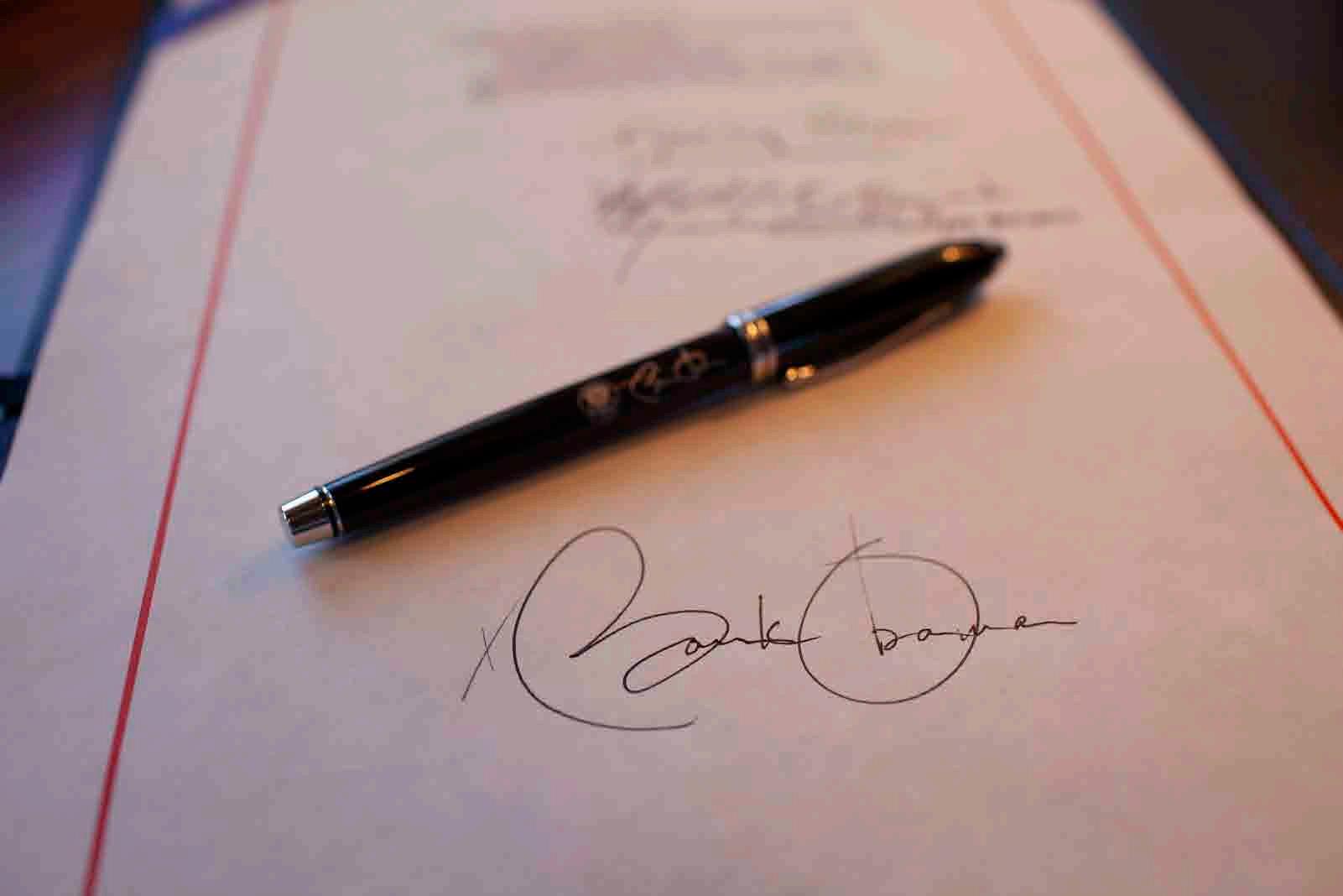
After Obama’s election, the pressing circumstances of the Great Recession, which marked the most severe U.S. economic downturn since the Great Depression in the 1930s, prompted some comparisons to the Democratic president of that era, Franklin Delano Roosevelt. In November 2008, Time magazine published a cover image of Obama modeled on FDR, sitting in a car with hat, glasses, and a cigarette holder, with the title “The Ne w [emphasis added] New Deal – What Barack Obama Can Learn From FDR – And What the Democrats Need to Do.” 2 In his first few months in office, Obama signed into law a $787 billion economic stimulus package, the American Recovery and Reinvestment Act of 2009, and issued an ultimatum to U.S. automobile manufacturers General Motors and Chrysler that they would have to make major business changes to continue to receive U.S. government bailout loans that President George W. Bush had approved in late December 2008. The extent of the financial crisis and the need for major federal stimulus funding prompted much debate in the early Obama administration.
Obama’s most consequential legacy in domestic politics may be enactment of the Patient Protection and Affordable Care Act, popularly known as the Affordable Care Act (ACA), in 2010. As Obama wrote in his memoirs about building support on Capitol Hill, “‘This is it,’ [italics in original] ‘I’d say to [members of Congress], finally. The point of it all. To have that rare chance, reserved for very few, to bend history in a better direction.’” 3 Passed on a party line vote (and with a special budgetary measure known as reconciliation to avoid a Senate filibuster), the ACA created a health insurance mandate for Americans, required health insurers to provide specific benefits, established a marketplace for people to compare health insurance plans before purchasing, and provided subsidies for individuals who required financial assistance for health insurance. Although public opinion polls did not show high support for the ACA during Obama’s presidency – Gallup recorded a high of 48% approval for the law in November 2012, when it first measured support, and that dropped to a low of 37% two years later – public approval topped 50% after Obama left office, reaching an all-time high of 55% in 2017 and 2020.4
Another policy priority for Obama from the start of his first presidential campaign was climate change and the environment. As he memorably stated in his November 2007 speech at the Iowa Jefferson-Jackson dinner, “We are in a defining moment in our history. Our nation is at war. The planet is in peril. The dream that so many generations fought for feels as if it’s slowly slipping away.” 5 In December 2008, President-elect Obama met with former Vice President Al Gore, who received the 2007 Nobel Peace Prize (with the Intergovernmental Panel on Climate Change) for his extensive efforts to educate people about the dangers of global warming. The 2010 BP-operated Deepwater Horizon rig explosion and resulting oil spill – the largest ever from offshore drilling – heightened calls for the administration to regulate the process more strictly and enact energy conservation legislation.
2 Peter Beinart, “The New New Deal,” Time, 24 November 2008. For a critique of the Obama-FDR comparison, see Aaron David Miller, “Obama and FDR: A Faulty Comparison,” The History Reader, 24 January 2015.
3 Barack Obama, A Promised Land (New York: Crown, 2020), 423.
4 Jeffrey M. Jones, “Affordable Care Act Approval Tied for High,” Gallup, 9 December 2020, https://news.gallup.com/poll/327431/ affordable-care-act-approval-tied-high.aspx
5 Barack Obama, “Speech at the Jefferson-Jackson Dinner,” Des Moines, Iowa, 10 November 2007, https://www.americanrhetoric.com / speeches/barackobama/barackobamajeffersonjacksondinner.htm
But due to obstacles in Congress, Obama made progress in environmental policy largely through executive actions, including investments in solar and wind power, negotiations to increase fuel economy for automobiles, and rejection of the Keystone XL oil pipeline. In 2016, Obama also signed the 2015 Paris Climate Accords, an international agreement to address climate change developed by more than 190 countries, though the Senate did not ratify the agreement.
In foreign policy, Obama campaigned in the 2008 presidential race to end the U.S. war in Iraq, which he had opposed even before it started in 2003. As a state senator in Illinois, Obama famously stated during the national debate in the fall of 2002 over whether the United States should invade Iraq for noncompliance with international inspections for weapons of mass destruction, “I am not opposed to all wars. I’m opposed to dumb wars.” 6 In October 2011, Obama announced that the U.S. combat mission in Iraq would conclude by the end of the year, completing a withdrawal of more than 100,000 U.S. troops that had started the previous year.7 In 2014, however, Obama sent U.S. military forces back to Iraq, and then to Syria, to destroy the growing terrorist network (the Islamic State of Iraq and Syria, or ISIS) in the region.
Obama’s strategy for combating terrorism extended into other areas of foreign policy as well. He pledged in his 2008 presidential campaign to refocus American priorities abroad on the war in Afghanistan, and subsequently increased U.S. military forces there from approximately 30,000 to more than 100,000 in his first term. Obama announced an end to U.S. combat operations in Afghanistan in 2014, but more than 8,000 U.S. forces remained in the country two years later to train Afghan forces and assist with counterterrorism efforts.8
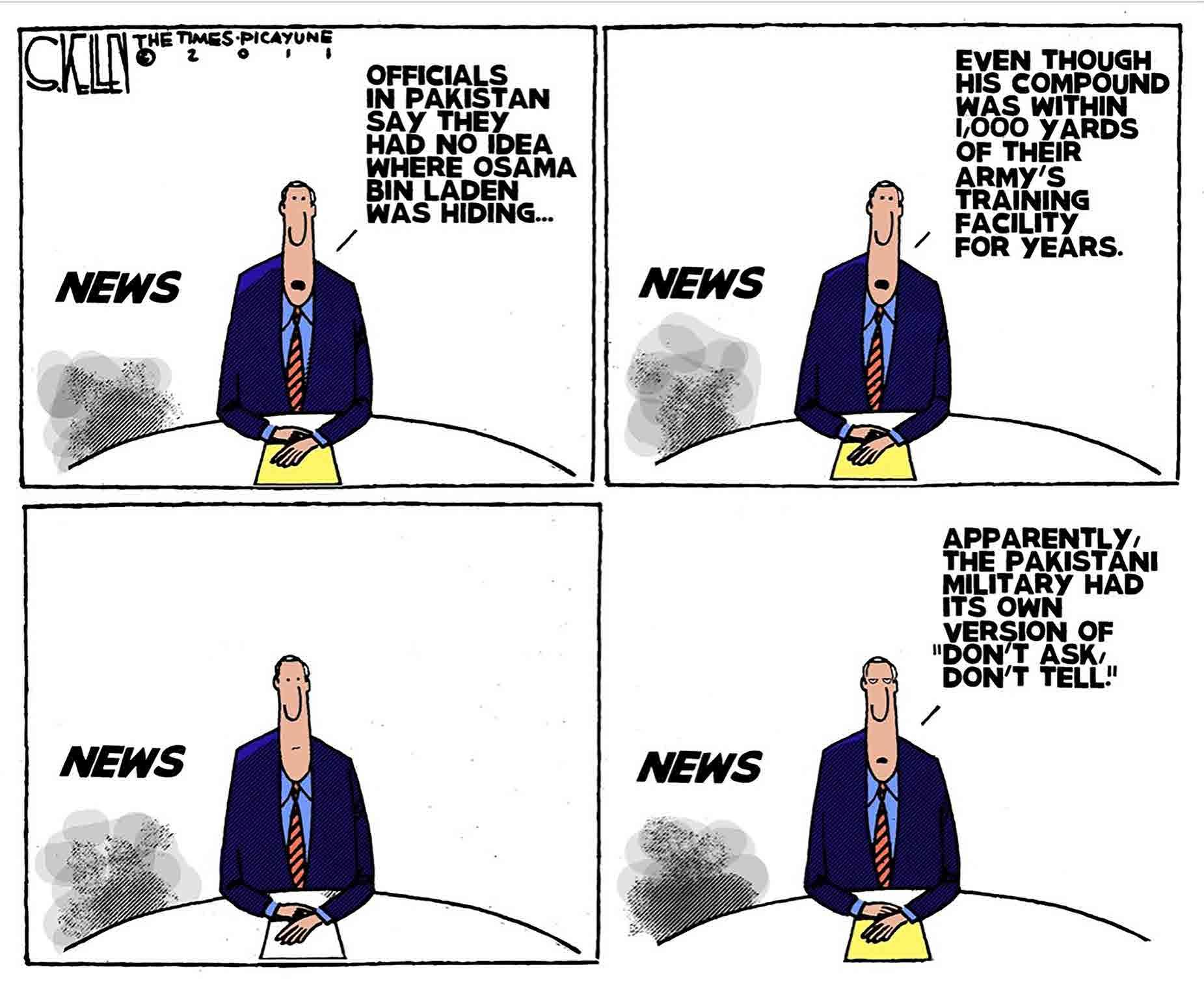
In May 2011, U.S. Special Operations forces killed al Qaeda terrorist organization founder Osama bin Laden, who had planned the terrorist attacks against the United States on September 11, 2001. In March 2011, Obama sent U.S. troops to Libya as part of a NATO military intervention to combat humanitarian atrocities by dictator Muammar Qaddafi, who was captured and killed later that year. To limit U.S. military engagements abroad, Obama sharply increased the number of U.S. drone strikes against suspected terrorists, which sparked much controversy because of the many civilian casualties that resulted from those attacks.
To collect information on suspected terrorists, Obama renewed contentious provisions of the USA Patriot Act, which originally was enacted in 2001 to facilitate surveillance measures by federal intelligence agencies. He then signed new legislation, the USA Freedom Act, in 2015. The Obama administration also negotiated a historic, and highly controversial, multilateral agreement with Iran to end its nuclear weapons program in exchange for sanctions relief.
6 “Transcript: Obama’s Speech Against the Iraq War,” 2 October 2002, reprinted by National Public Radio, 20 January 2009, https://www.npr.org/templates/story/story.php?storyId=99591469
7 “President Obama Has Ended the War in Iraq,” 21 October 2011, at https://obamawhitehouse.archives.gov/blog/2011/10/21/presidentobama-has-ended-war-iraq
8 Danielle Kurtzleben, “CHART: How the U.S. Troop Levels in Afghanistan Have Changed Under Obama,” National Public Radio, 6 July 2016, https://www.npr.org/2016/07/06/484979294/chart-how-the-u-s-troop-levels-in-afghanistan-have-changed-under-obama.
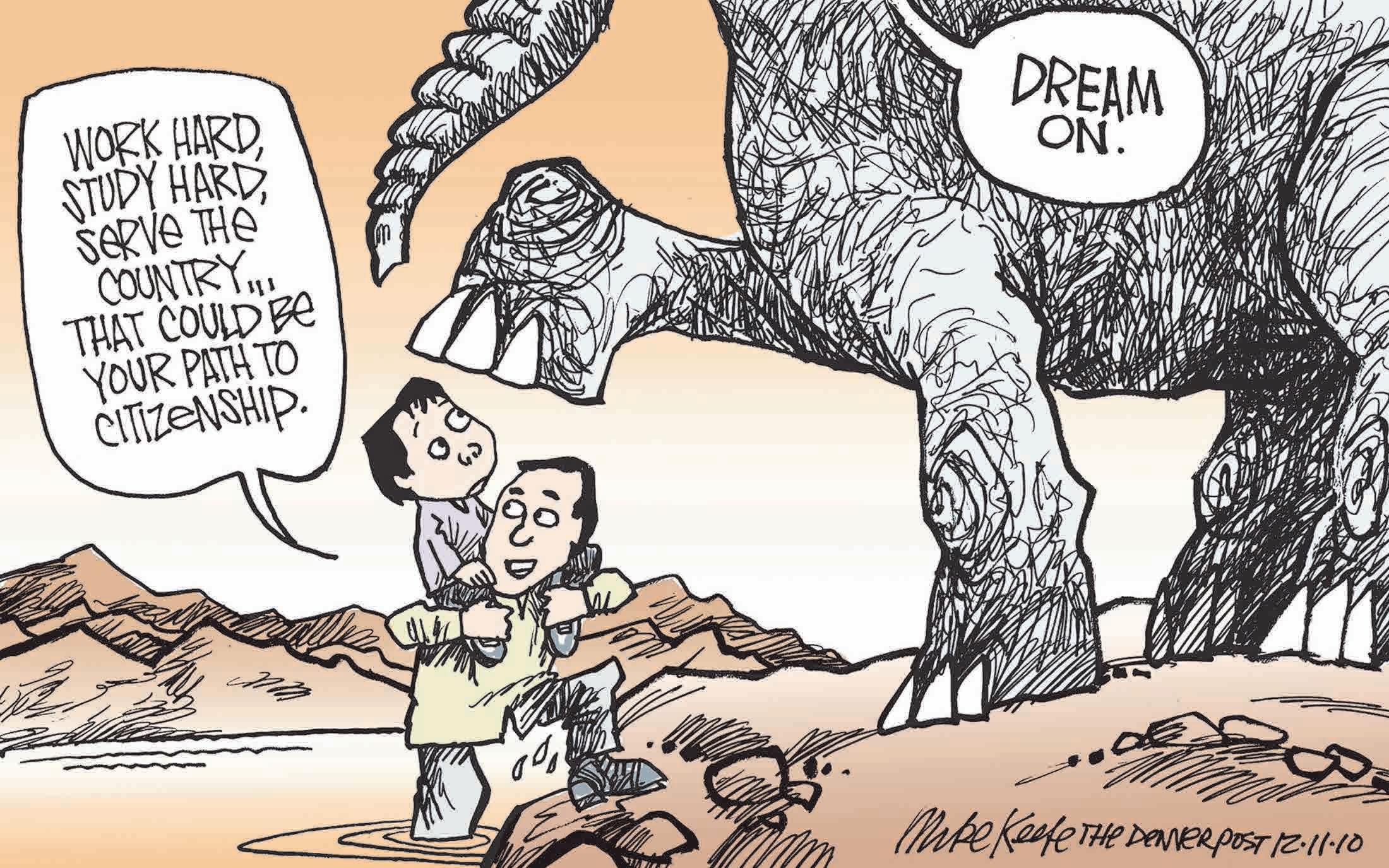
A significant topic for the Obama administration – with expectations that greatly exceeded policy results – was immigration reform. Obama had pledged to enact comprehensive immigration reform as president, but major legislation stalled twice in Congress. In December 2010, the DREAM (Development Relief and Education for Alien Minors) Act, which would have provided a path to citizenship for undocumented immigrants who had arrived in the United States as children, was filibustered in the Democratic-led Senate with five Democrats voting against the bill. In 2013, the Democratic-majority Senate passed bipartisan immigration legislation, but it failed in the Republican-led House. Obama also faced criticism from immigration advocates for deporting more undocumented immigrants than any of his predecessors. Through executive action in 2012, Obama established the Deferred Action for Childhood Arrivals (DACA) program, which allowed undocumented immigrants who came to the United States as children to receive temporary work permits and protection from deportation. But without legislation, DACA’s long-term future was uncertain.9
Obama’s historic election as the first Black president of the United States informed his entire presidency. The personal connection for individuals was clear in moments that became iconic public images, such as the 2009 photo of the 5-year-old boy in the Oval Office who asked if he and the president had the same hair.10 The public significance for the United States of having a Black president represented a victory for the civil rights movement that had pressed for political change for decades, from school desegregation to voting rights.11 Obama recognized the magnitude of this achievement in his first inaugural address, noting that “a man whose father less than 60 years ago might not have been served in a local restaurant can now stand before you to take a most sacred oath.”12
As you view the exhibit, we encourage you to reflect on how the artifacts, documents, and images represent the Obama presidency and their meaning for President Obama’s election, leadership, and legacy. These topics will be addressed throughout the conference, and we invite you to join the continuing discussion about the enduring effects of the Obama presidency in American politics.
Meena Bose
Director, Hofstra’s 13th Presidential Conference: The Barack Obama Presidency – Hope and Change
Executive Dean, Public Policy and Public Service Programs
Director, Peter S. Kalikow Center for the Study of the American Presidency
Peter S. Kalikow Endowed Chair in Political Science
Professor of Political Science
Peter S. Kalikow School of Government, Public Policy and International Affairs
9 Scott Wong and Shira Toeplitz, “DREAM Act Dies in Senate,” Politico, 18 December 2010, https://www.politico.com / story/2010/12/dream-act-dies-in-senate-046573; Amanda Sakuma, “Obama Leaves Behind A Mixed Legacy on Immigration,” www.nbcnews.com , 15 January 2017, https://www.nbcnews.com/storyline/president-obama-the-legacy/obama-leaves-behindmixed-legacy-immigration-n703656
10 Sarah Cater, “Barack Obama Catches Up With the Boy Who Asked to Touch His Hair in Pete Souza’s Iconic Oval Office Photo,” www.cbsnews.com , 27 May 2022, https://www.cbsnews.com/news/barack-obama-jacob-philadelphia-boy-who-touched-hair-ovaloffice-photo/
11 Seven Icons of the Civil Rights Movement, “One Dream Realized: Civil Rights and the Obama Presidency,” Time, https://content.time.com/time/specials/packages/completelist/0,29569,1871648,00.htm l
12Barack Obama, First Inaugural Address, 20 January 2009, The American Presidency Project by Gerhard Peters and John T. Woolley, https://www.presidency.ucsb.edu/node/217053
Fairey Hope, 2008
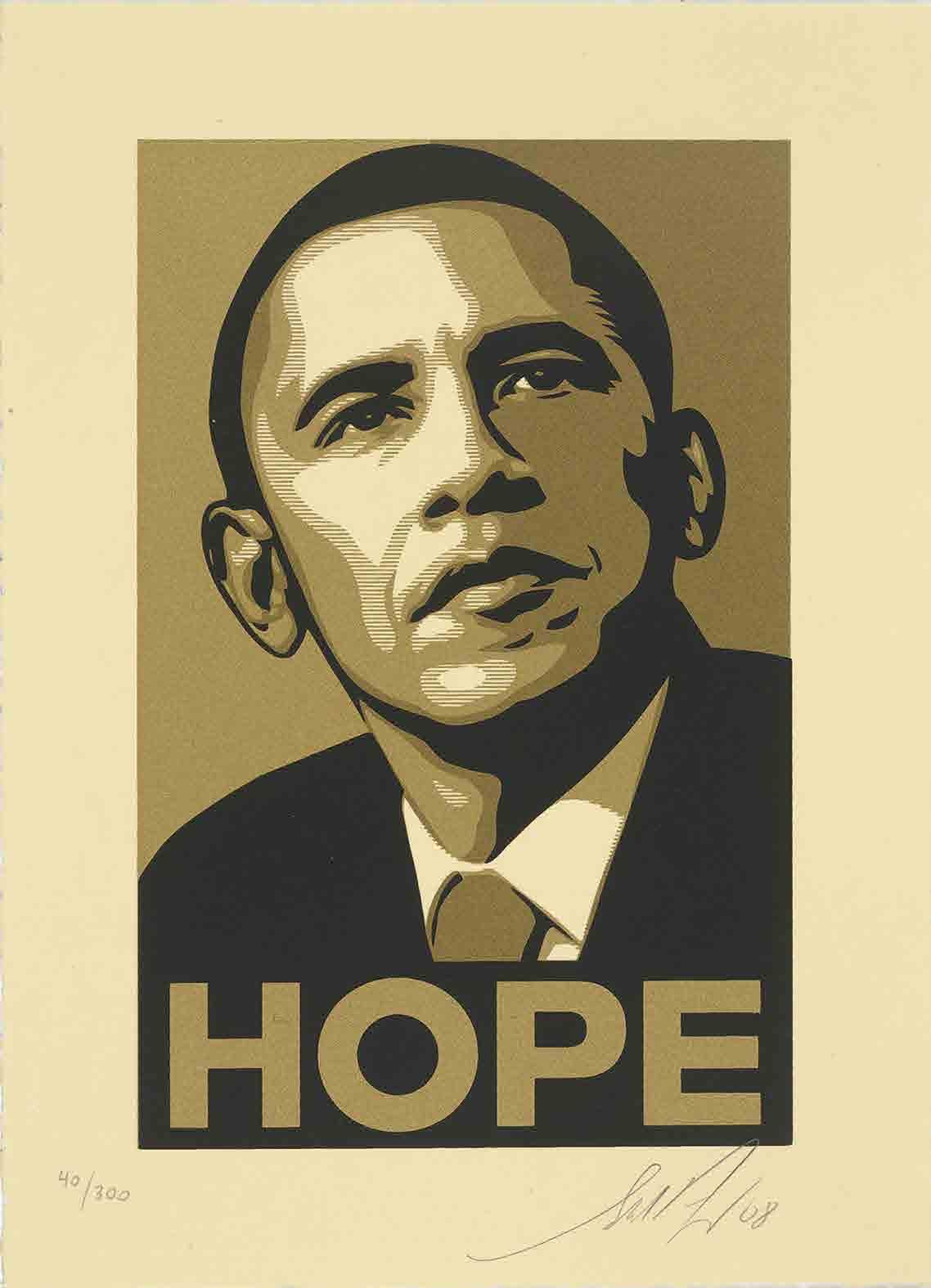
Poster, Edition 205/300
10.187 x 14 in.
of Barack Obama Presidential Library, National Archives and Records Administration
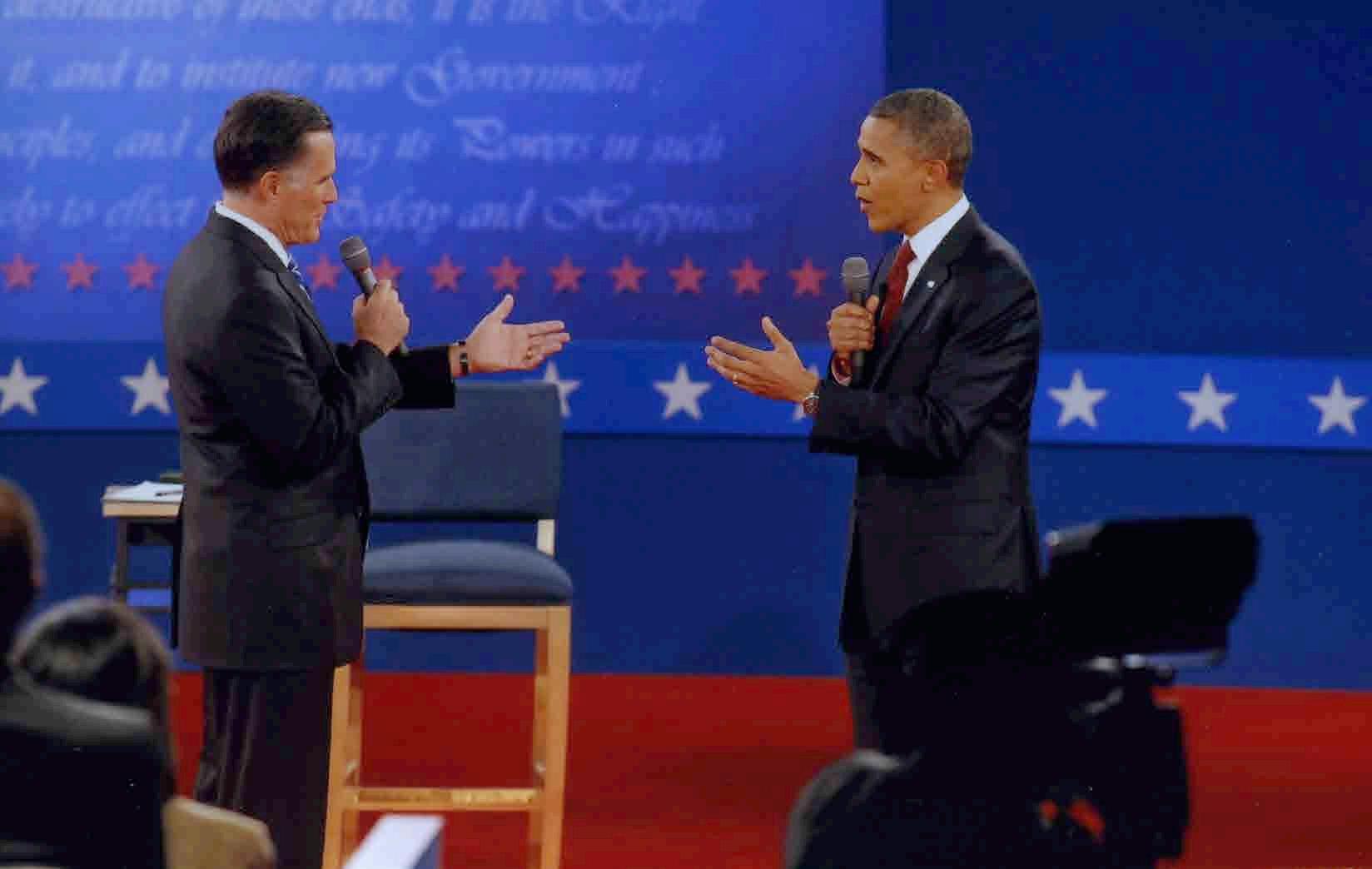
Presidential Debate, Mitt Romney and Barack Obama, Hofstra University, 2012
Digital print 12 x 18 in.
Courtesy of University Archives, Hofstra University Library
Pete Souza
Close-up detail of President Obama’s signature on the American Recovery and Reinvestment Act, and a pen used for the signing, aboard Air Force One on a flight from Buckley Air Force Base, Denver, Colorado, to Phoenix, Arizona, February 17, 2009
Digital print 12 x 18 in.
Courtesy of Barack Obama Presidential Library, National Archives and Records Administration
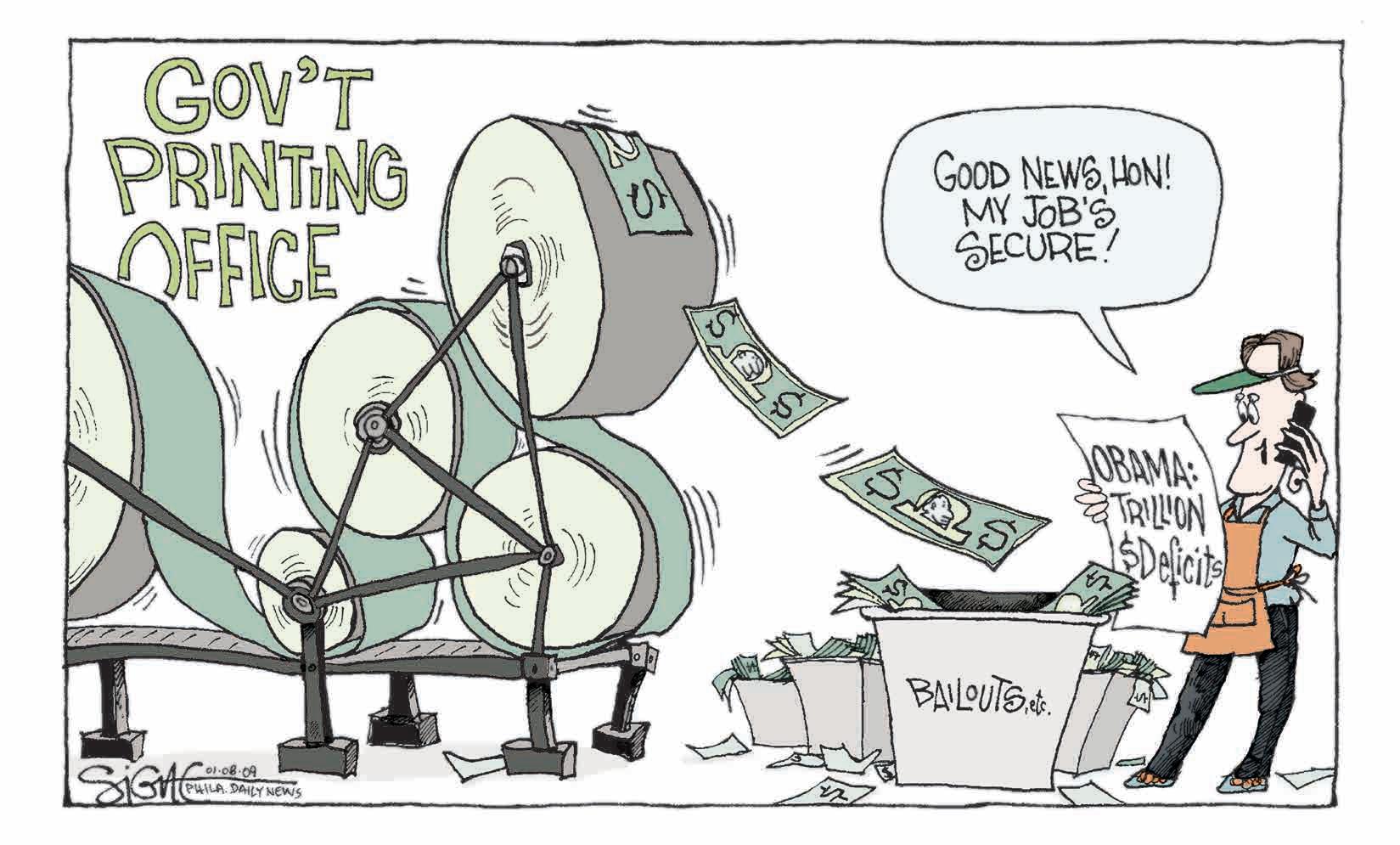
Signe Wilkinson Government Printing Office, January 8, 2009
Digital print 11 x 14 in.
of the artist
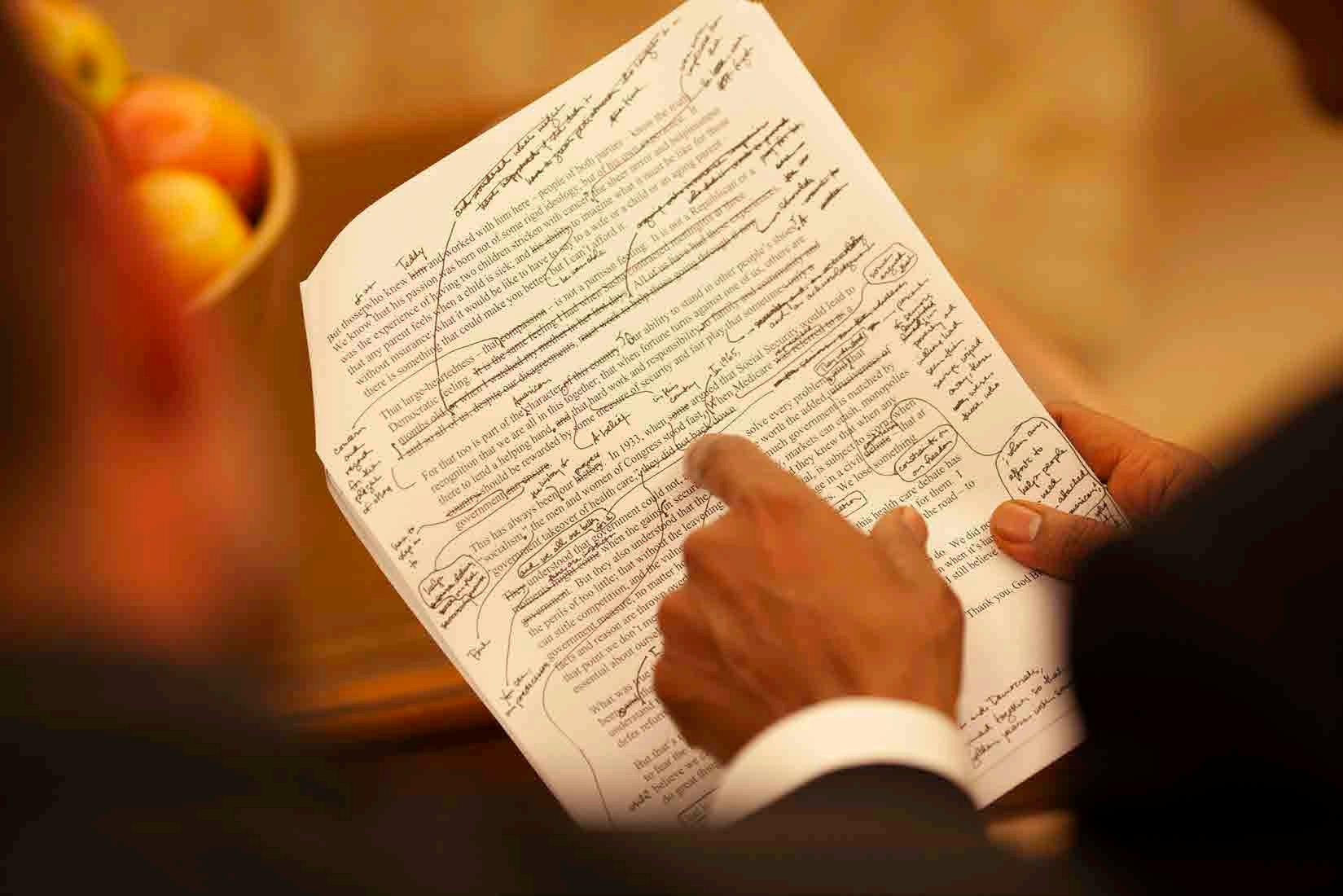
Editing a speech on health care with Jon Favreau, September 9, 2009
Digital print 11 x 14 in.
of Barack Obama Presidential Library, National Archives and Records Administration
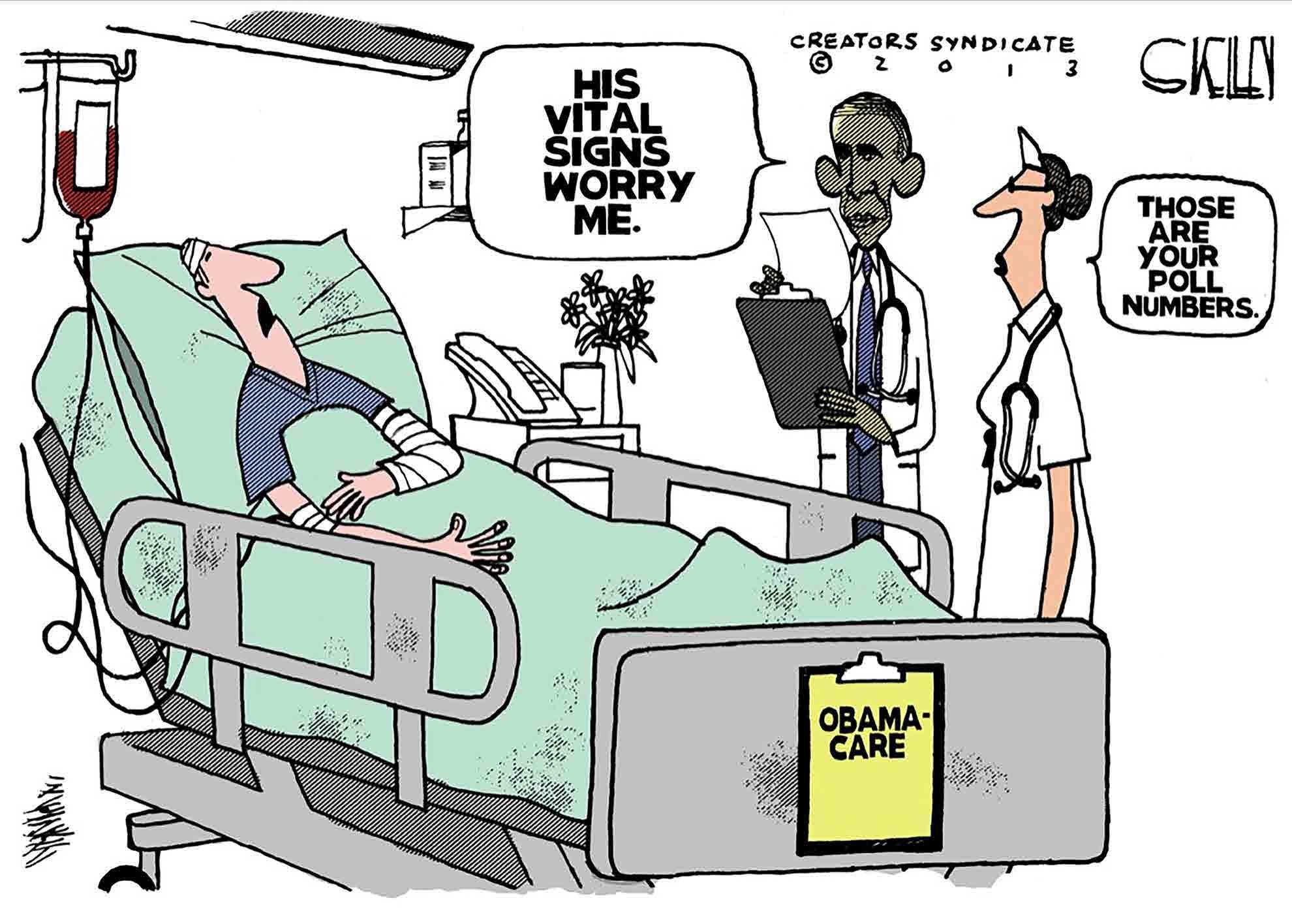
Kelley Obamacare, November 6, 2013
Digital print 11 x 14 in.
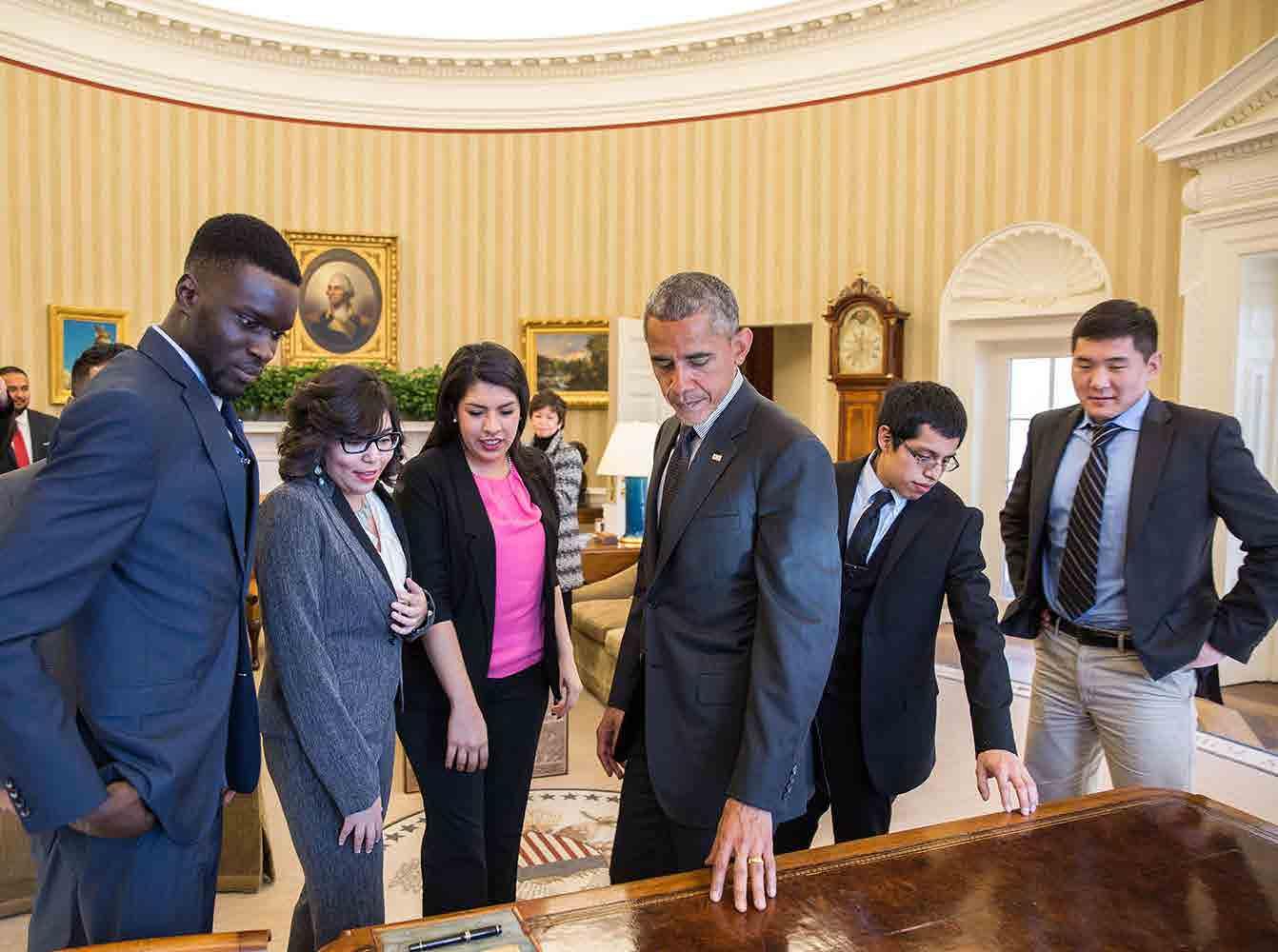
President Barack Obama shows the Resolute Desk to a group of DREAMers, following their Oval Office meeting in which they talked about how they have benefited from the Deferred Action for Childhood Arrivals (DACA) program, February 4, 2015
Digital print
12 x 18 in.
Courtesy of Barack Obama Presidential Library, National Archives and Records Administration
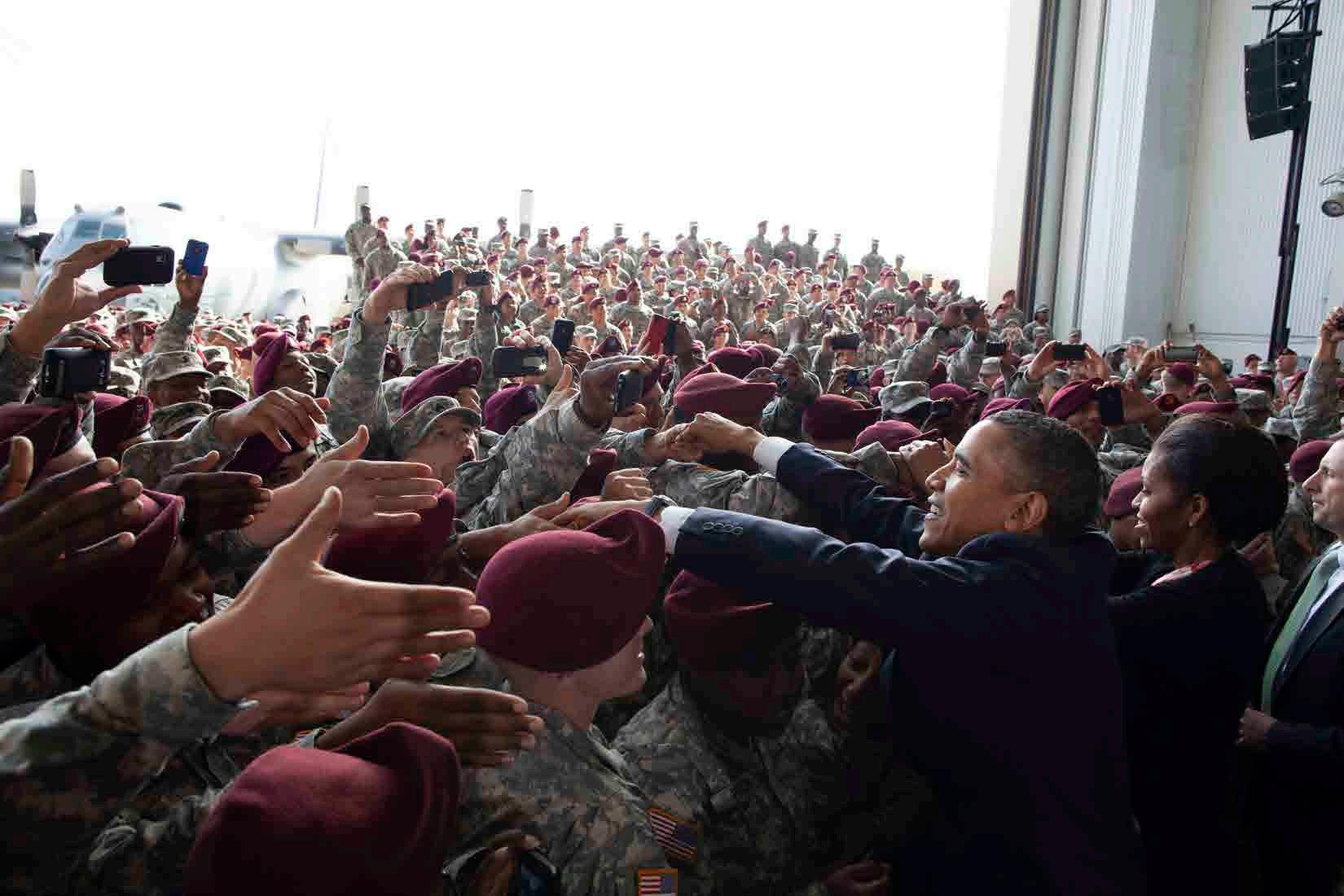
With troops at Fort Bragg, North Carolina, marking the end of America’s combat role in Iraq, December 14, 2011
Digital print
12 x 18 in.
Courtesy of Barack Obama Presidential Library, National Archives and Records Administration
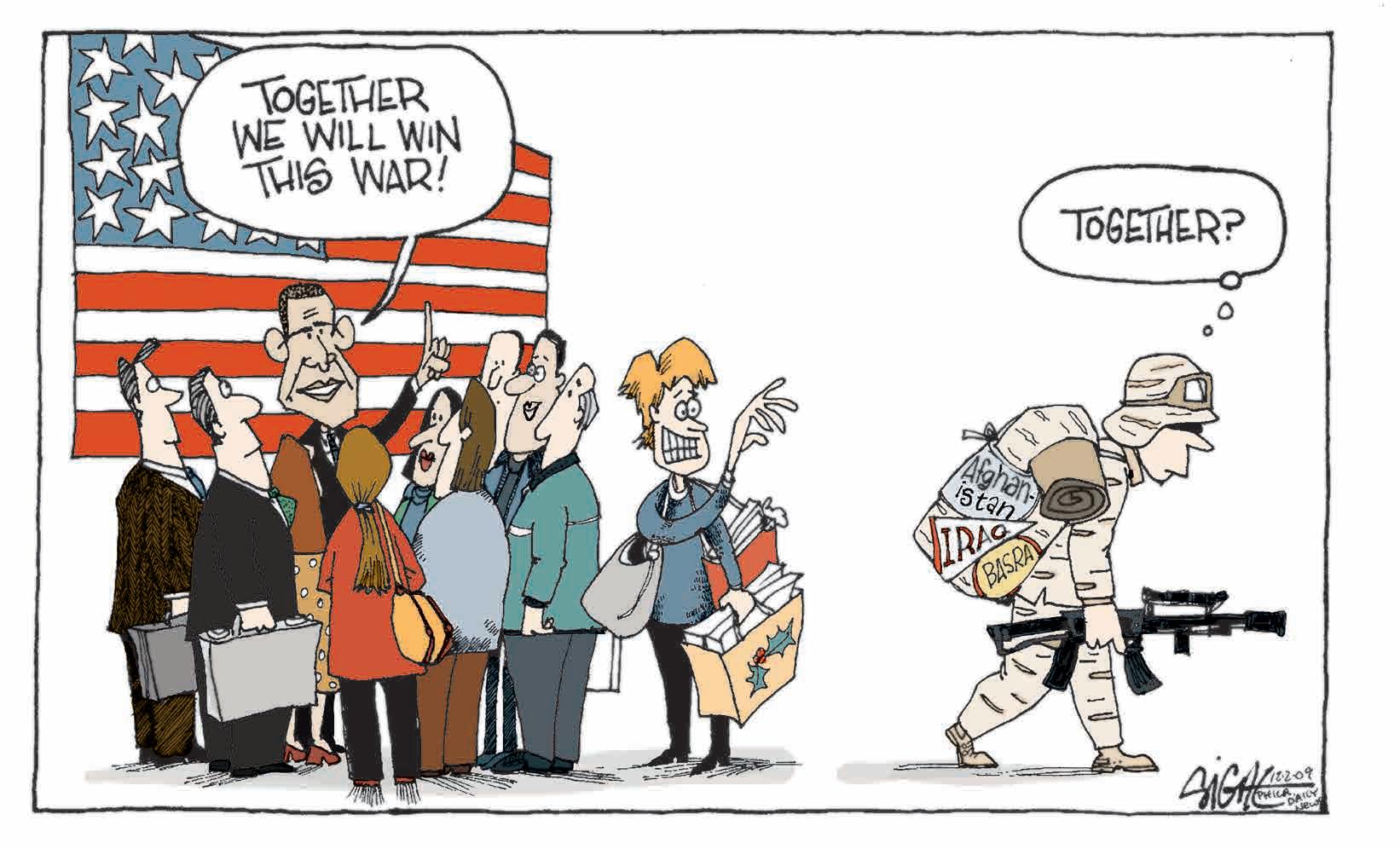
Wilkinson Iraq War, December 2, 2009
Digital print 11 x 14 in.
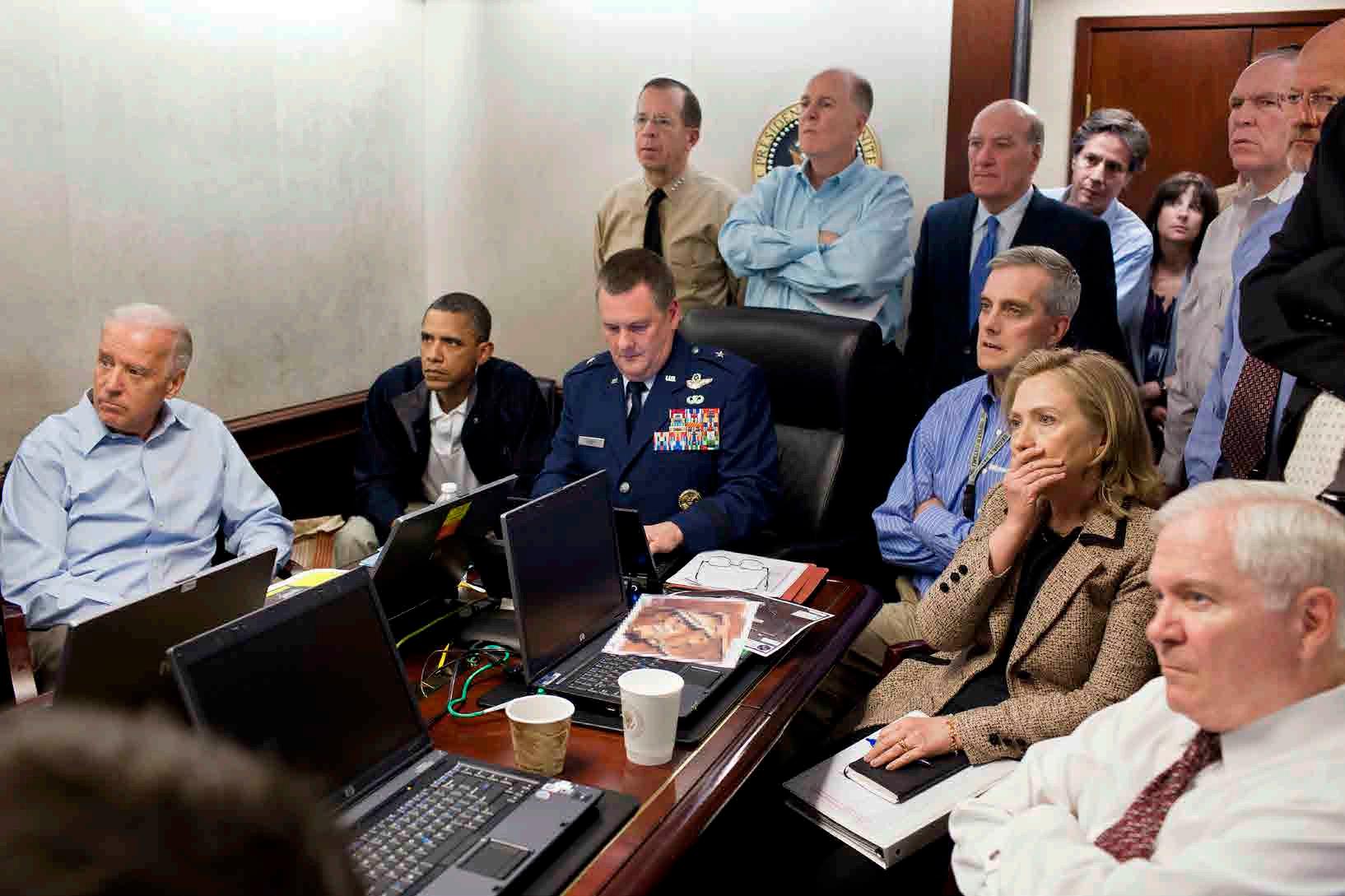
Obama national security team receives updates in Situation Room on mission against Osama bin Laden, May 1, 2011
Digital print
12 x 18 in.
Courtesy of Barack Obama Presidential Library, National Archives and Records Administration
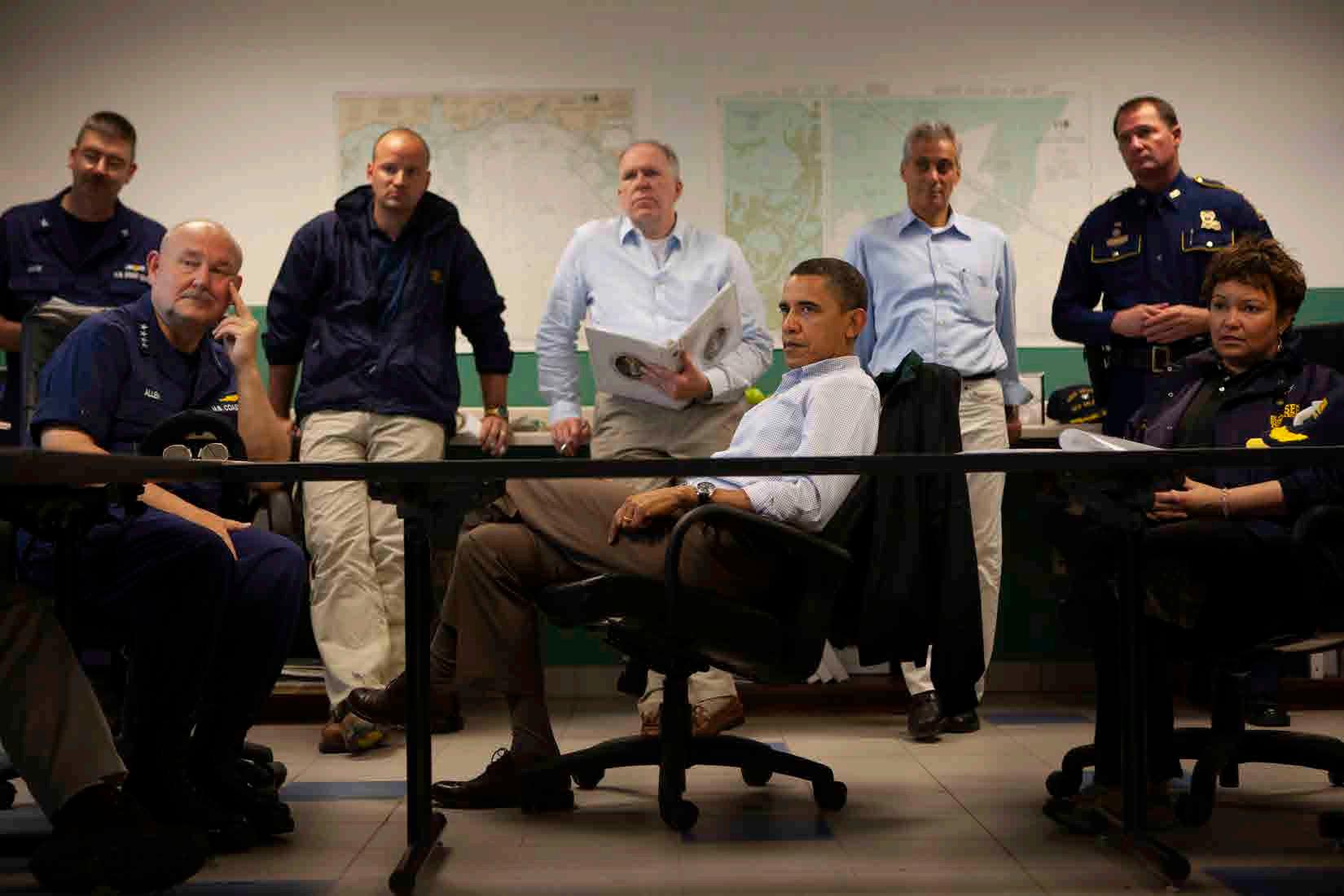
Responding to the oil spill with Louisiana state and federal officials, Venice, Louisiana, May 2, 2010
Digital print 11 x 14 in.
of Barack Obama Presidential Library, National Archives and Records Administration
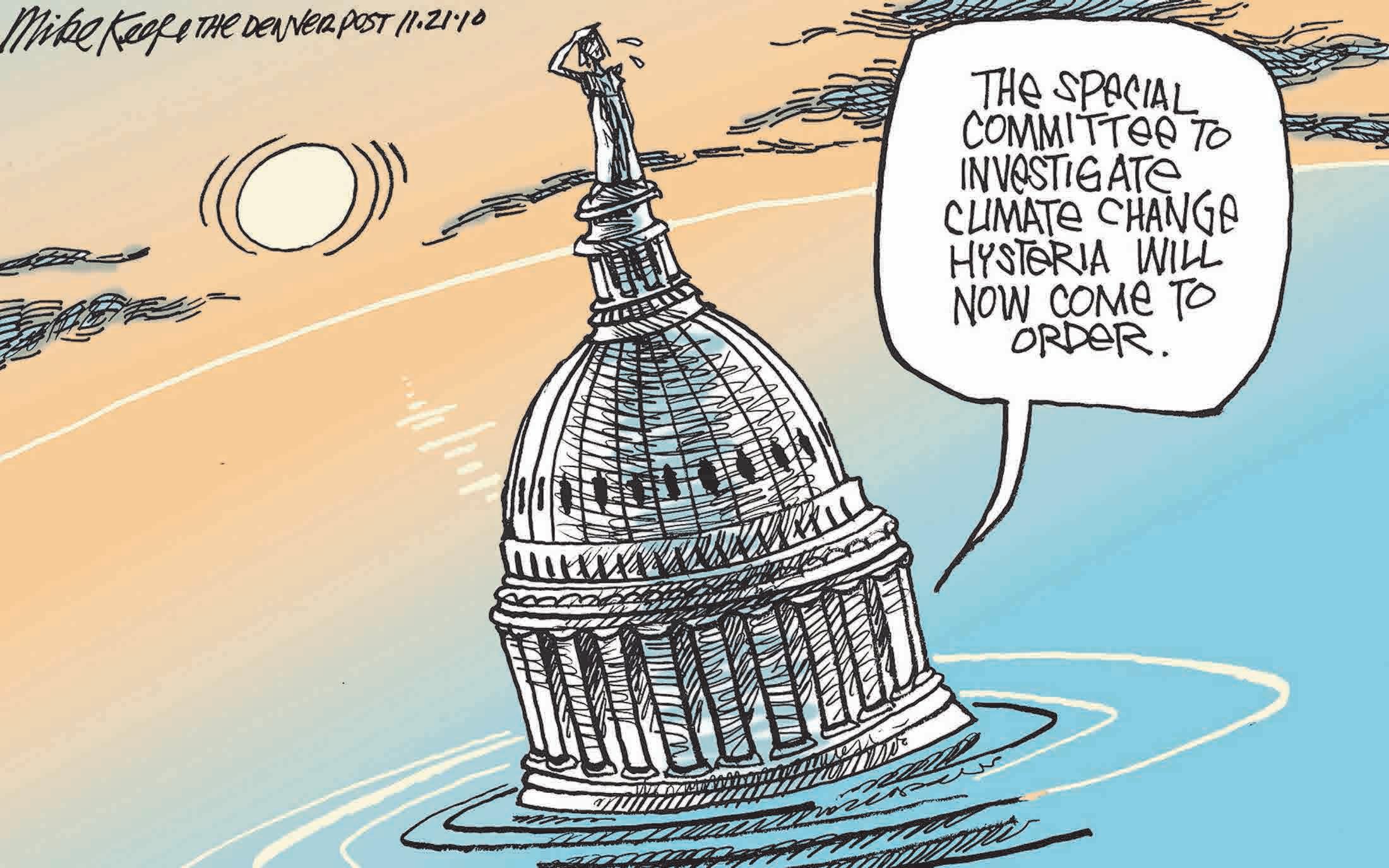
Climate Change Hysteria, November 21, 2010
Digital print 11 x 14 in.
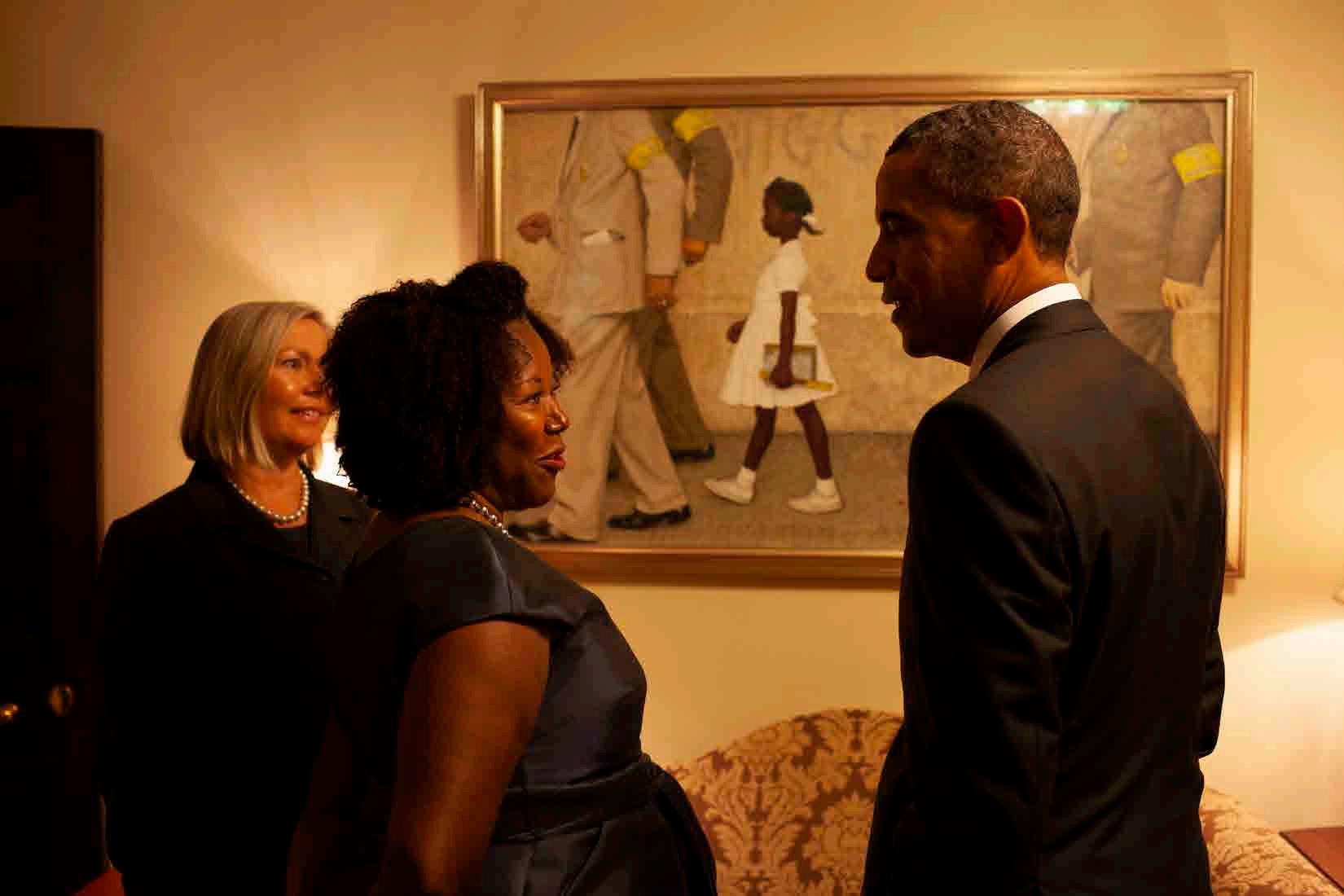
Oval Office, July 15, 2011
Digital print
12 x 18 in.
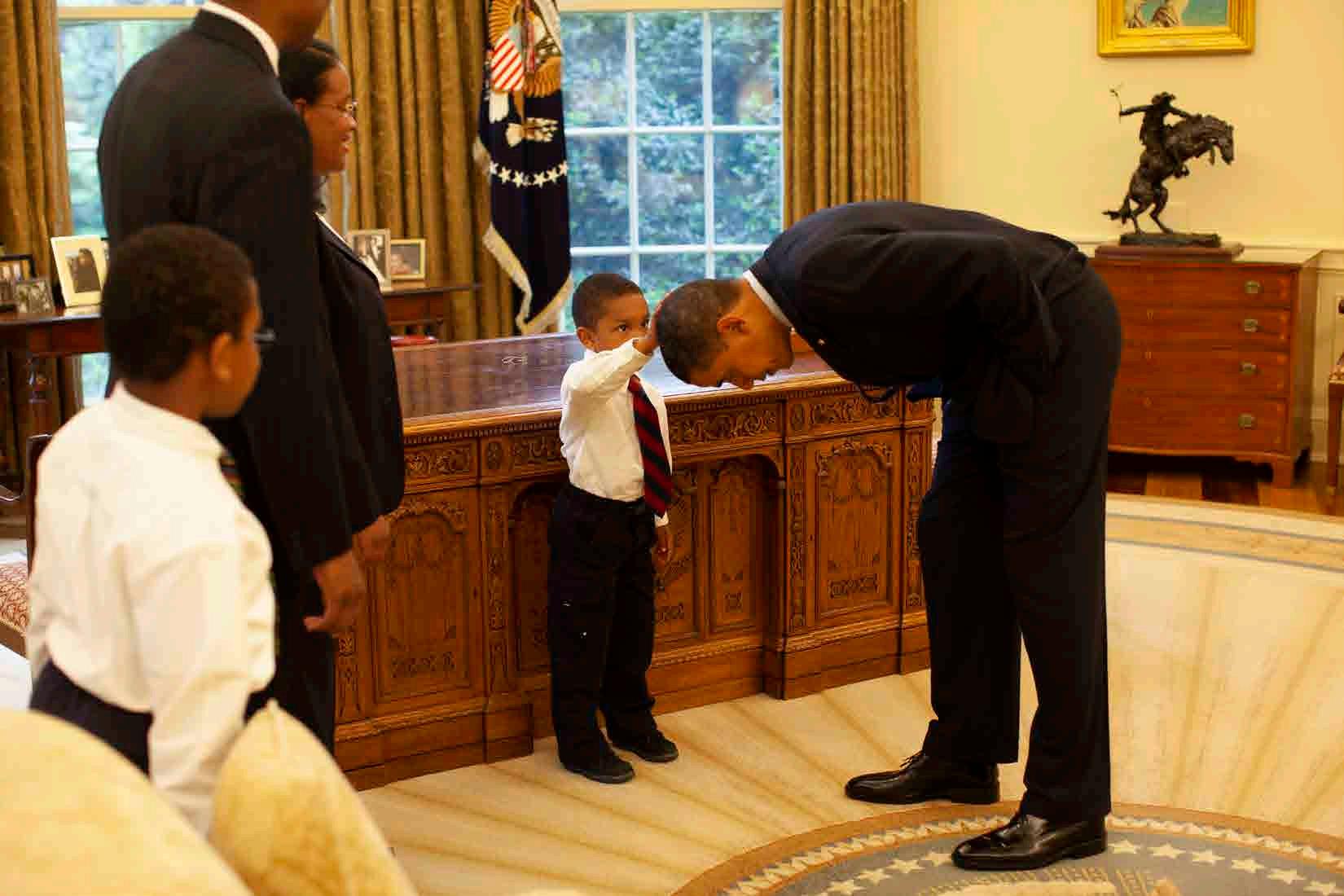
the Oval Office, May 8, 2009
Digital print 12 x 18 in.
Presidential Elections 2008 and 2012
Barack Obama’s Victory Speech, Chicago, Illinois, November 5, 2008
Facsimile document
5 pages, 11 x 8.5 in. each National Public Radio transcript
Change We Need, 2008
Double-sided card stock
10.875 x 16.75 in.
Courtesy of University Archives, Hofstra University Library
Debate ’08 Badge with Hofstra University Logo, 2008
Pin back button
2.625 x 1.625 in.
Courtesy of University Archives, Hofstra University Library
Debate ’08 Press Bag with Pens, Sticker, and Sticky Notes, 2008
13 x 17 in. plus 12 in. straps
Courtesy of University Archives, Hofstra University Library
Debate 2012 Button Pin, 2012
Pin back button
2.125 in. diameter
Courtesy of University Archives, Hofstra University Library
Debate 2012 Coffee Mug, 2012
7 x 3 in. diameter
Courtesy of University Archives, Hofstra University Library
Debate 2012 Parking Hang Tag, 2012
3.75 x 9 in.
Courtesy of University Archives, Hofstra University Library
Debate 2012 White Writing Pen, 2012
5.75 x .5 in.
Courtesy of University Archives, Hofstra University Library
Shepard Fairey Hope, 2008
Poster, Edition 205/300 10.187 x 14 in.
Courtesy of Barack Obama Presidential Library, National Archives and Records Administration
David Lienemann
President Barack Obama, First Lady Michelle Obama, daughters Sasha and Malia, Vice President Joe Biden, Dr. Jill Biden, and the Biden family wave to the crowd as confetti rains down following the President’s election night remarks at McCormick Place in Chicago, Illinois, November 6, 2012.
Digital print
12 x 18 in.
Courtesy of White House Archives
Presidential Debate, Mitt Romney and Barack Obama, Hofstra University, 2012
Digital print
12 x 18 in.
Courtesy of University Archives, Hofstra University Library
The 2012 Presidential Debates by the Commission on Presidential Debates, 2012
Book
11 x 8.5 in.
Courtesy of University Archives, Hofstra University Library
Signe Wilkinson
An Election? You think we need an election?
October 26, 2006
Digital print
11 x 14 in.
Courtesy of the artist
The Great Recession
American Recovery and Reinvestment Act of 2009 (ARRA), February 17, 2009
Facsimile document
2 pages, 11 x 8.5 in. each
Courtesy of Barack Obama Presidential Library, National Archives and Records Administration
Mike Keefe
You’ll be pleased to know..., May 28, 2008
Digital print
11 x 14 in.
Courtesy of the artist
Pete Souza
Close-up detail of President Obama’s signature on the American Recovery and Reinvestment Act, and a pen used for the signing, aboard Air Force One on a flight from Buckley Air Force Base, Denver, Colorado, to Phoenix, Arizona, February 17, 2009
Digital print
12 x 18 in.
Courtesy of Barack Obama Presidential Library, National Archives and Records Administration
Pete Souza
Meeting with his economic team on a Sunday night, before calling the heads of General Motors and Chrysler to tell them the government was effectively taking over their companies, March 29, 2009
Digital print
12 x 18 in.
Courtesy of Barack Obama Presidential Library, National Archives and Records Administration
Signe Wilkinson
Government Printing Office, January 8, 2009
Digital print
11 x 14 in.
Courtesy of the artist
Health Care
Cross Signing Pen, 2010
Metal, lacquer, and ink
.625 x 5.875 in.
Courtesy of Barack Obama Presidential Library, National Archives and Records Administration
Steve Kelley
Obamacare, November 6, 2013
Digital print
11 x 14 in.
Courtesy of the artist
Patient Protection and Affordable Care Act, March 23, 2010
Facsimile document
2 pages, 11 x 8.5 in. each
Courtesy of Barack Obama Presidential Library, National Archives and Records Administration
Pete Souza
Editing a speech on health care with Jon Favreau, September 9, 2009
Digital print
11 x 14 in.
Courtesy of Barack Obama Presidential Library, National Archives and Records Administration
Pete Souza
Watching a television broadcast of Congress passing the Affordable Care Act, March 21, 2010
Digital print
11 x 14 in.
Courtesy of Barack Obama Presidential Library, National Archives and Records Administration
Deferred Action for Childhood Arrivals, Executive Branch Memorandum, June 15, 2012
Facsimile document
3 pages, 11 x 8.5 in. each
Courtesy of Barack Obama Presidential Library, National Archives and Records Administration
Sonya N. Hebert
President Barack Obama delivers remarks on the Department of Homeland Security’s immigration announcement in the Rose Garden of the White House, June 15, 2012
Digital print
12 x 18 in.
Courtesy of Barack Obama Presidential Library, National Archives and Records Administration
Mike Keefe
Dream Ac t, December 11, 2010
Digital print
11 x 14 in.
Courtesy of the artist
Steve Kelley
Immigration, November 26, 2013
Digital print
11 x 14 in.
Courtesy of the artist
Pete Souza
President Barack Obama shows the Resolute Desk to a group of DREAMers, following their Oval Office meeting in which they talked about how they have benefited from the Deferred Action for Childhood Arrivals (DACA) program, February 4, 2015
Digital print
12 x 18 in.
Courtesy of Barack Obama Presidential Library, National Archives and Records Administration
Mike Keefe
My friends, I will never surrender in Iraq, May 29, 2008
Digital print
11 x 14 in.
Courtesy of the artist
Operation Iraqi Freedom, no date
Military Patch
3.75 in. diameter
Courtesy of Barack Obama Presidential Library, National Archives and Records Administration
Remarks by the President on Ending the War in Iraq, October 21, 2011
Facsimile document
3 pages, 11 x 8.5 in. each
Courtesy of Barack Obama Presidential Library, National Archives and Records Administration
Pete Souza
President Barack Obama addresses his remarks to hundreds of U.S. troops during his visit to Camp Victory, Baghdad, Iraq, April 7, 2009
Digital print
12 x 18 in.
Courtesy of Barack Obama Presidential Library, National Archives and Records Administration
Pete Souza
With troops at Fort Bragg, North Carolina, marking the end of America’s combat role in Iraq, December 14, 2011
Digital print
12 x 18 in.
Courtesy of Barack Obama Presidential Library, National Archives and Records Administration
Signe Wilkinson
Iraq War, December 2, 2009
Digital print
11 x 14 in.
Courtesy of the artist
Mike Keefe
Patriot Act Renewal, May 28, 2011
Digital print
11 x 14 in.
Courtesy of the artist
Steve Kelley
Terrorism, May 4, 2011
Digital print
11 x 14 in.
Courtesy of the artist
Remarks of President Barack Obama on the Capture and Killing of Osama bin Laden, May 1, 2011
Facsimile document
4 pages, 11 x 8.5 in. each
Courtesy of Barack Obama Presidential Library, National Archives and Records Administration
Pete Souza
Greeting US troops at Bagram Airfield after a secret all-night trip to Afghanistan, December 3, 2010
Digital print
12 x 18 in.
Courtesy of Barack Obama Presidential Library, National Archives and Records Administration
Pete Souza
Obama national security team receives updates in Situation Room on mission against Osama bin Laden, May 1, 2011
Digital print
12 x 18 in.
Courtesy of Barack Obama Presidential Library, National Archives and Records Administration
Pete Souza
Visiting with 9/11 families, accompanied by First Lady and former President George W. Bush and former First Lady Laura Bush, at the National September 11 Memorial, New York, 10th anniversary of 9/11, September 11, 2011
Digital print
12 x 18 in.
Courtesy of Barack Obama Presidential Library, National Archives and Records Administration
Mike Keefe
Climate Change Hysteria, November 21, 2010
Digital print
11 x 14 in.
Courtesy of the artist
Steve Kelley
The Evening News, December 1, 2015
Digital print
11 x 14 in.
Courtesy of the artist
Our Choice: A Plan to Solve the Climate Crisis by Al Gore, 2009
Book
1 x 7.5 x 9 in.
Courtesy of Barack Obama Presidential Library, National Archives and Records Administration
Remarks by President Obama on the United States
Formally Entering into the Paris Agreement, September 3, 2016
Facsimile document
3 pages, 11 x 8.5 in. each
Courtesy of Barack Obama Presidential Library, National Archives and Records Administration
Pete Souza
Responding to the oil spill with Louisiana state and federal officials, Venice, Louisiana, May 2, 2010
Digital print
11 x 14 in.
Courtesy of Barack Obama Presidential Library, National Archives and Records Administration
Pete Souza
With Secretary of Homeland Security Janet Napolitano nine days after BP’s Deepwater Horizon oil spill, April 29, 2010
Digital print
11 x 14 in.
Courtesy of Barack Obama Presidential Library, National Archives and Records Administration
Race Relations
Civil Rights Pioneers, 2009 Commemorative stamps
7.25 x 6.25 in.
Courtesy of Barack Obama Presidential Library, National Archives and Records Administration
Mike Keefe
The Race Issue, March 21, 2008
Digital print 11 x 14 in.
Courtesy of the artist
Steve Kelley
Another First, 2009
Digital print 11 x 14 in.
Courtesy of the artist
Obama Speech on Race, “A More Perfect Union,” National Constitution Center, Philadelphia, PA, March 18, 2008
Facsimile document
12 pages, 11 x 8.5 each
National Public Radio transcript
Selma, Alabama, Decorative Plate, no date
Porcelain, glaze, and pigment
1 x 10.5 x 10.5 in.
Courtesy of Barack Obama Presidential Library, National Archives and Records Administration
Pete Souza
Obama and Ruby Bridges view Norman Rockwell painting “The Problem We All Live With,” featuring Bridges, in hallway near Oval Office, July 15, 2011
Digital print
12 x 18 in.
Courtesy of Barack Obama Presidential Library, National Archives and Records Administration
Pete Souza
President Barack Obama bends over so the son of a White House staff member can pat his head during a visit to the Oval Office, May 8, 2009
Digital print
12 x 18 in.
Courtesy of Barack Obama Presidential Library, National Archives and Records Administration
Pete Souza
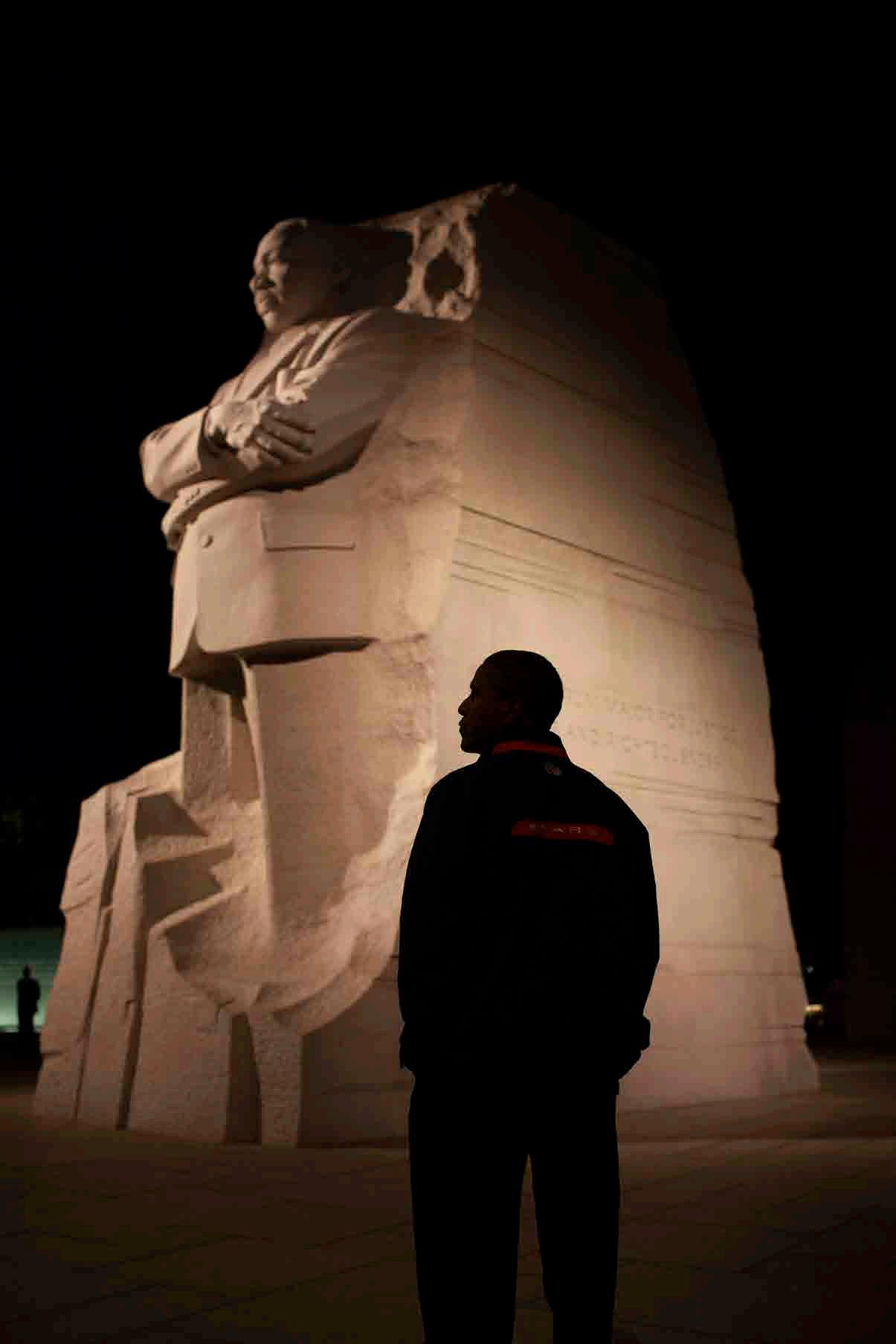
Visiting the Martin Luther King, Jr. National Memorial in Washington, D.C., October 14, 2011
Digital print 12 x 18 in.
Courtesy of Barack Obama Presidential Library, National Archives and Records Administration
Pete Souza
Walking across the Edmund Pettus Bridge with his family, Representative John Lewis of Georgia, former President George W. Bush, former First Lady Laura Bush, and other dignitaries, commemorating the march from Selma to Montgomery, March 7, 2015
Digital print
11 x 14 in.
Courtesy of Barack Obama Presidential Library, National Archives and Records Administration
HOFSTRA UNIVERSITY
SUSAN POSER President
CHARLES G. RIORDAN
Provost and Senior Vice President for Academic Affairs
COMILA SHAHANI-DENNING
Interim Senior Vice Provost
HOFSTRA UNIVERSITY MUSEUM OF ART
KAREN T. ALBERT Director
JESSICA DISIBIO Museum Educator
KRISTEN DORATA Collection Manager
JACKIE GEIS Senior Assistant to Director
ALEXANDRA GIORDANO Assistant Director of Exhibition and Collection
STEPHANIE MCGEE Museum Educator
EILEEN MCKENNA Museum Educator
SARA SCHAEFER Museum Educator
AMY G. SOLOMON Director of Education
GRADUATE ASSISTANTS
Samrath Kaur Batra, Margarita Lopez
GRADUATE ASSISTANTSHIP
Mary Conroy
UNDERGRADUATE ASSISTANTS
Christianne Binondo, Makayla Egolf, Corinne Hemmer, Angelina Olivo, Bella Palaia, Josie Racette, Paxton Splittorff, Caitlin Treacy