
Empowering and Educating Hispanic Populations to Improve Maternal Care
Freda Hasselbring2, Andrea Martinez, MD1, and Joshua Younger, MD1
1Department of Anesthesia, Northwell Health, New Hyde Park, NY
2Donald and Barbara Zucker School of Medicine at Hofstra/Northwell
Background
● Many women experience significant childbirth pain associated with labor and delivery, which has been associated with severe maternal morbidity.
● Pain management options available to women who desire them, including neuraxial analgesia, can facilitate a more comfortable labor and delivery experience and decrease maternal morbidity risks.
● In a 27-state report, the US Department of Health and Human Services found that the overall rate of neuraxial anesthesia is 61% for singleton, vaginal delivery, while rates among Hispanic populations are low at 47.7% based on subgroup analyses.
● This disparity is influenced, in part, by the belief among some Hispanic women that childbirth pain is a positive, sometimes necessary, component of the birthing process and motherhood.
● A lack of widely accessible, language-concordant information on neuraxial anesthesia and its side effects further contributes.
● Previous studies aimed at addressing this disparity in the Hispanic population have developed educational materials to increase awareness and acceptance rates of neuraxial anesthesia.
● These prior efforts have noted the importance of considering cultural differences and values when addressing epidural analgesia in Hispanic populations.
Hypothesis
Hispanic patients who receive language-concordant educational materials and complete a follow-up conversation with an anesthesia provider before laboring will have higher epidural acceptance rates.
Methods
● This study includes pregnant Hispanic patients aged 18 and older enrolled in Medicaid and planning for delivery at Long Island Jewish Medical Center.
● Patients are randomized into two groups: those who receive pre-admission language-concordant educational materials and those who receive their baseline standard of care. Patient-reported characteristics and pre-existing beliefs are collected in the patient’s preferred language via a survey at enrollment.
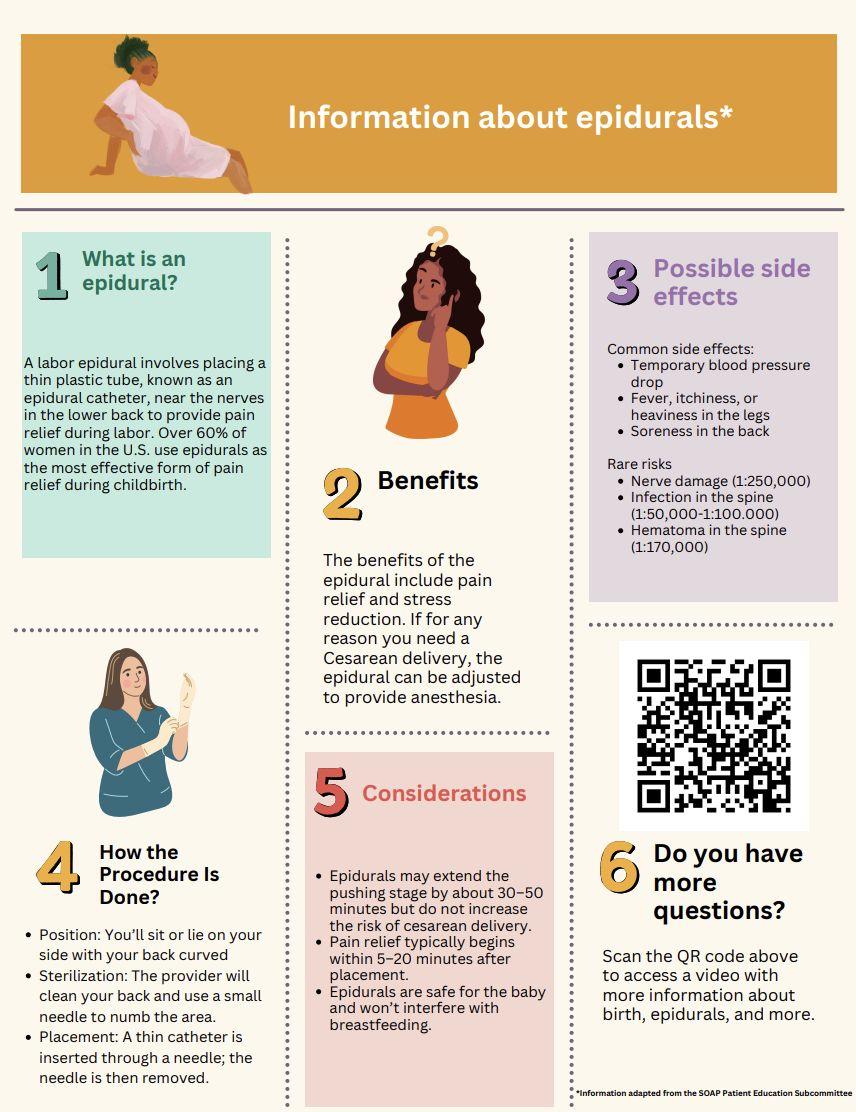
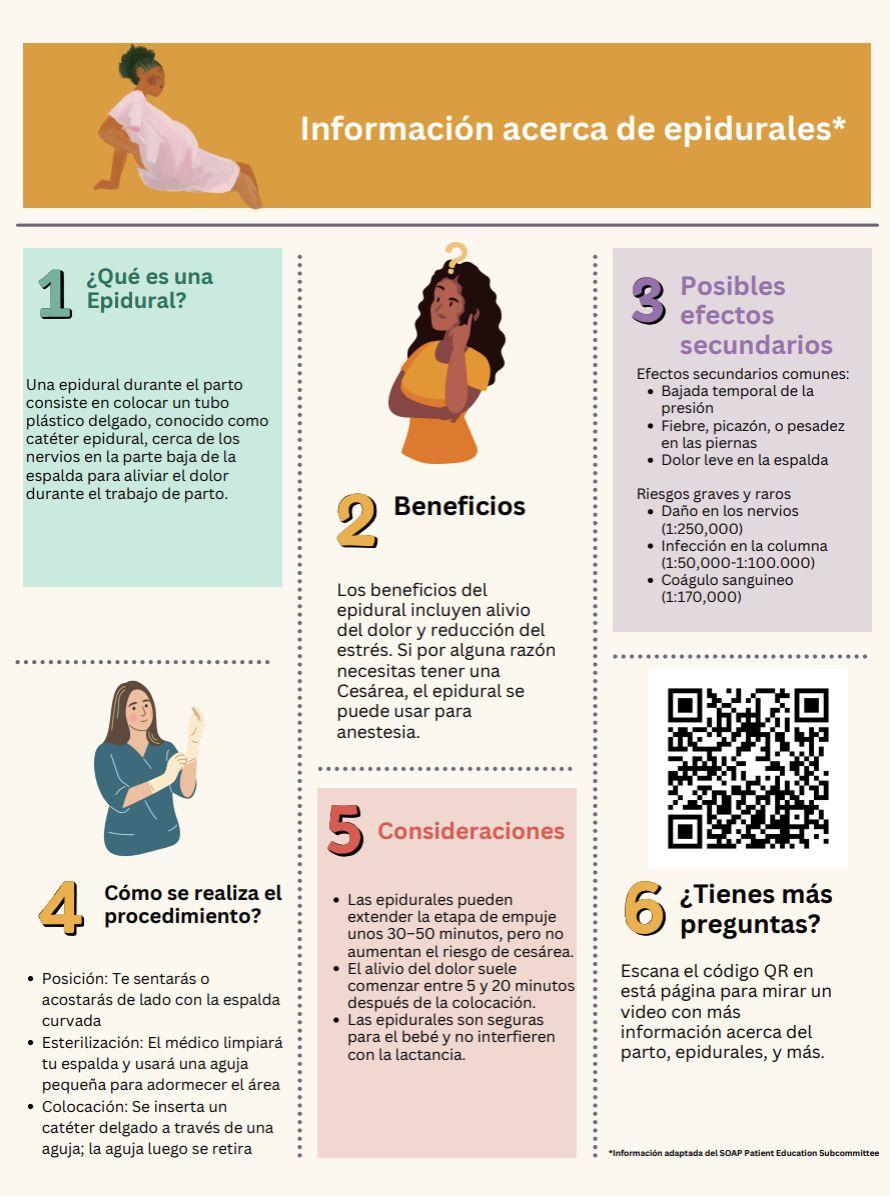
● Patients in the pre-admission education arm receive a phone call conducted in their preferred language with an anesthesia provider to answer questions about the handout. Patients in both the education and non-experimental arms are administered the State Trait Anxiety Inventory via phone call.
● The Anesthesiologist Patient Satisfaction Questionnaire is administered in the patient’s language of choice to both arms after delivery, and clinical measures are gathered.
Results
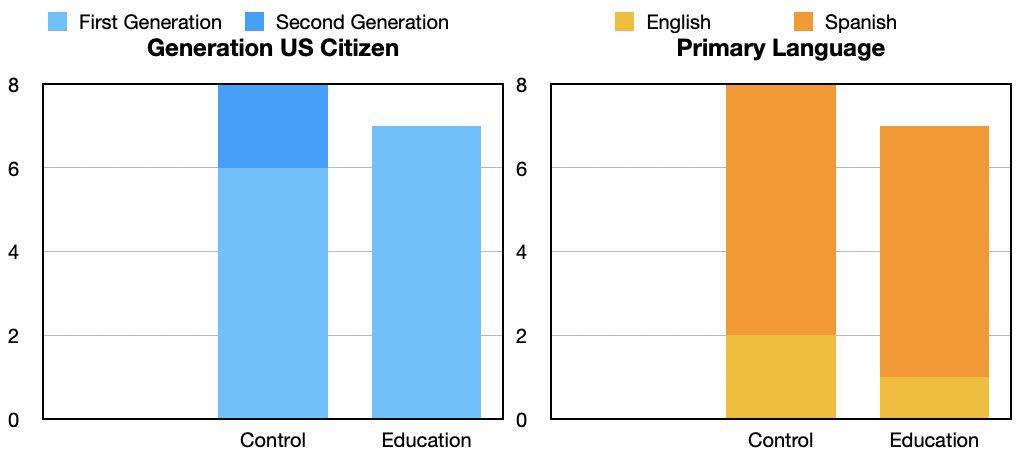
● A total of 15 women have been enrolled in the study out of 100 projected enrollees at the time of an interim analysis performed in mid-September.
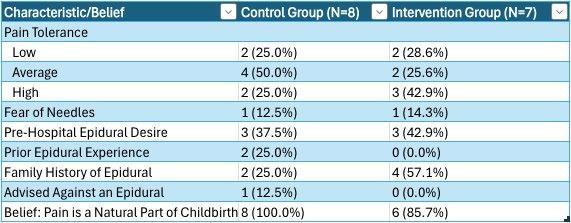
● All study participants had their pre-anesthesia beliefs recorded during enrollment.
● Anxiety surveys, scheduled for completion during patients’ third trimester, have been completed with a subset of patients.
● Most of the enrollees have not delivered, and thus, satisfaction score data have not yet been calculated; clinical outcomes have not been included in this interim study.
● A Mann-Whitney test was used to compare anxiety scores between the two groups.
● Initial results reveal that the intervention group display higher scores on both the anxious and calm states.

Conclusions
● The data suggest that the intervention group experiences higher levels of anxiety than the control group.
● The anxiety survey is administered after having a discussion surrounding epidural procedures, benefits, and side effects with the intervention group, which can cause anxiety even if there is some reassurance.
● These preliminary findings from 15% of the total projected sample size may change when more data are available for analysis.
Future Direction
● Next steps include continued recruitment and data collection, including anxiety and satisfaction survey intake.
● Future analyses will aim to determine if there is a statistically significant difference in epidural analgesia acceptance rate, as well as secondary measures of anxiety and satisfaction scores.
● Future applications of this research include adaptation of epidural education materials in other languages and the creation of a perioperative patient counseling service for pregnant patients to discuss analgesic and anesthetic options during labor.
Resources
Guglielminotti, J., Landau, R., Daw, J., Friedman, A.M., Chihuri, S. & Li, G. Use of labor neuraxial analgesia for vaginal delivery and severe maternal morbidity. JAMA Network Open 5, e220137 (2022)
Hansen, D., Measom, R. & Scott, B. Epidural analgesia in hispanic parturients: A single-blinded prospective cohort study on the effects of an educational intervention on epidural analgesia utilization. Journal of Obstetric Anaesthesia and Critical Care 7, 90 (2017)
Togioka, B. M. et al. Education Program Regarding Labor Epidurals Increases Utilization by Hispanic Medicaid Beneficiaries: A Randomized Controlled Trial. Anesthesiology 131, 840–849 (2019)
Osterman, M. J. K. & Martin, J. A. Epidural and spinal anesthesia use during labor: 27-state reporting area, 2008. Natl Vital Stat Rep 59, 1–13, 16 (2011)
Table 1. Patient-Reported Characteristics at Enrollment
Figure 1. Patient Demographics at Interim Analysis